Requested Name: Dimity

Tags

, , , , , , , , , ,

il_fullxfull.248146234

Dimity is a type of corded fabric, which since the 18th century has been made with cotton. The name was applied to two different types of corded cotton – one a heavy material used for bedcovers and curtains, and the other a lightweight, sheer fabric, often white with gingham checks, used for women’s dresses, skirts, blouses and lingerie. People usually think of the second meaning when they talk about dimity. The word comes from the medieval Latin dimitum, derived from the Greek dimitos, meaning “double thread”.

There is a great daintiness and femininity to the fabric, but at the same time it is surprisingly tough because of its double weave. These days, dimity is often part of vintage fashion and considered a lovely “old-fashioned” textile.

Its image in the past was twofold. On the one hand, it was seen as very ladylike and respectable, so that in her diaries, the novelist Virginia Woolf used the word in the sense of “niminy-piminy”, to indicate an overly refined and fussy femininity. On the other, it had rather a saucy side, because in Victorian tableau vivants of an erotic nature, the women wore body stockings and were draped in see-through dimity to preserve their modesty.

Information on the history of Dimity as a girl’s name is rather thin, but it seems to be much more common in Britain and Australian than elsewhere, and to be a name from the 20th century. The earliest Dimity I could find in the records dates to World War I, with an apparent peak in the years after World War II, from the late 1940s to the early 1960s.

Although the name can be found in records from the United States, it’s a bit confusing, because there the name seems to have been used as a short form of the Russian name Dimitrya. I can’t even tell if the women were actually called Dimity in real life, or if this is used as a shorthand for Dimitrya by the people writing  the records. So although the English name Dimity might have a history of use in the US, it is not possible for me to be sure.

The whimsical and lightly tripping sound of the name Dimity has made it very suitable for fiction, with Australian children’s author Bob Graham penning Dimity Dumpty, about the sister of Humpty Dumpty, and American children’s author Jane Yolen writing of Dimity Duck, the friend of Frumity Frog.

Another American author, Nancy Atherton, has an entire series about an Aunt Dimity who manages to solve mysteries from beyond the grave. Interestingly, Ms Atherton’s novels are set in Britain rather than her homeland, and she also has to explain to her readers how to pronounce the name Dimity (DIM-uh-tee). This lends weight to the notion that the name Dimity is less familiar in the United States.

I get the impression that in times past, Dimity was seen as rather upper-class, and like Verity, had the image of being a Head Girl/Debating Team Captain/Pony Club Champion sort of a name. These days I think it seems much more accessible, with the number of successful women named Dimity in the public eye giving it greater exposure. I suspect that the popularity of the similar-sounding Trinity may also broaden its appeal.

Famous namesakes include news reporter Dimity Clancey, opera singer Dimity Shepherd, ballerina Dimity Azoury, violinist Dimity Hall, United Nations Women Australia board member Dimity Hodge, and speech pathologist Dr Dimity Dornan, who has been honoured for her lifetime working with deaf and hearing-impaired children. There seems to be many successful women called Dimity, considering that the name is apparently quite rare.

Dimity is a dainty, feminine name with a hint of whimsy, but not one to be underestimated. Like the fabric it is named after, there is a strength to delicate Dimity. Although it is an uncommon name, it isn’t unfamiliar in Australia, and has many high-achieving namesakes.

Thank you to Brooke for suggesting Dimity as a featured name.

POLL RESULT: Dimity received an approval rating of 69%. People saw it as poetic and whimsical (20%), delightful (19%), delicate but strong (15%) and dainty and demure (10%). However, its detractors thought it was too odd and eccentric (10%), or even “frightful” (8%). Nobody thought Dimity was a lower-class name.

(Picture is of a 1930s-style white dimity dress)

Celebrity Baby News: Kelly Nestor and Scott Matthews

Tags

,

448629-kelly-nestorMedia personality Kelly Nestor, and her fiancé Scott Matthews, welcomed their son Austin on February 7. Austin Matthews joins big brother Oliver, aged 2; Kelly and Scott lost two babies before conceiving Austin.

Kelly worked as a television presenter in Adelaide for many years; she presented Stateline for three years, and also worked on The 7.30 Report. She has been a newsreader for the ABC, Channel Ten, Channel Nine, Sky News, and radio station 5AA, as well as a stint at a Los Angeles TV channel. Since leaving television in 2009, Kelly has co-founded a training consultancy, Spruikit; she also writes for The Adelaide Advertiser.

Waltzing with … Orange

Tags

, , , , , , , , , , , , , , , , , , , , , , , , , ,

Orange jacket Postcard autumn leavesToday is Banjo Paterson’s birthday, and as we have already covered his name, I thought it would be interesting to look at the name of his birthplace.

At the time of Paterson’s birth, his parents were living at Buckinbah Station, near the town of Yeoval (then known as Buckinbah). Because of the station’s isolation, Banjo’s mother Rose went to stay with her aunt and uncle, Rose and John Templer, at their homestead Narrambla, and it was here that she gave birth to her son. Narrambla is about 2 miles from the centre of Orange, and today lies on the city’s outskirts. Rose herself was born on a homestead near Orange, so it was rather a family tradition.

Orange is a city in the Central West region of New South Wales. It was founded in the early 1820s as a convict settlement, and farmers began settling in the area in 1829. The first discovery of gold in Australia was made in 1851 near Orange, leading to the gold rush. Orange became a trading centre for gold, and continued growing due to its good position for agriculture. It was declared a city in 1946. Orange is known for its fruit growing, especially apples, pears and stone fruits; ironically it is too cool to grow oranges in Orange. It is also a thriving wine making area, and has both gold and copper mining. It is a sister city to Orange in California.

Orange was first called Blackman’s Swamp, after John Blackman, the guide who brought the first explorers there. The name was changed to Orange by the Surveyor-General Sir Thomas Mitchell, in honour of William, Prince of Orange. Mitchell and the Prince had both been aides-de-camp to the Duke of Wellington during the Peninsular War in Spain in the early 19th century. The Prince of Orange later became the first King of the Netherlands.

The Prince’s title originally came from the Principality of Orange in the south of France. It began life as a settlement called Arausio, named after a local Celtic water god; the god’s name is said to mean “temple”, meaning the temples that are on the forehead, not a temple as in a building for worship.

The town’s name was corrupted into Orange, and by the Middle Ages, conflated with the word orange, which comes from the Sanskrit for “orange tree”, naranga. The colour was named after the fruit, and first used this way in the 16th century.

As a personal name, Orange has a longer history than you might imagine, for the girl’s names Orenge and Orengia are found in the 13th century. As this predates the name for the fruit, their etymology is extremely uncertain, and possibly has the same source as the French town, which first became a principality of the Holy Roman Empire in the 12th century.

The surname Orange is either from the place name, or derived from the female name, and when the English name Orange appears in the early 17th century, it may have been after the surname. The name first arises in Devon, and in the beginning was exclusively given to girls, although the name became unisex after William III of England, or William of Orange, gave it a masculine feel.

As a first name, Orange is extremely rare in Australian records, and given to only a few girls, but as a middle name is much more common, and given to boys in almost equal numbers as girls (the middle name Orange was sometimes combined with William in the case of boys, showing that William of Orange still had some naming clout).

Colour names for girls are popular at the moment, with many little girls named Scarlet or Jade; tree names such as Olive and Willow are in the girls’ Top 100, surnames such as Marlowe and Quinn are fashionable for girls, and it’s not unusual to see baby girls named after European cities, such as London or Vienna. Orange seems a more vibrant continuation of these trends. Indeed, you could see it as a hyper juiced-up Clementine.

Orange is such a bright, outgoing, fun colour that it seems very cheerful as a person’s name, but it also has a more serious side, because orange is connected to religion and spirituality. There’s a real yin/yang, East/West dichotomy with the name Orange. Is it as crazy as a clown’s wig? Or as serene as a meditating Buddhist monk?

Orange fruit gains its colour from carotenes, the same thing which makes deciduous leaves turn orange. By chance, the city of Orange is known for its spectacular displays of autumn leaves, and it is therefore known as “The Colour City” (also a play on its name). You might see Orange as a name that evokes the changing of the seasons, and the turn of the year.

Although Orange started life as a girl’s name, it did become unisex, and is so rare that it could be worn by either boys or girls. If you are shy about using this vivid name, it would make an eye-catching middle.

Orange is a bold choice as a baby name, though not without shades of subtlety, and it celebrates Australian geography and history. I think Orange is one of the more distinctive of the patriotic names, and has a real tang to it.

Name Combinations for Orange

Orange Beatrice, Orange Eliza, Orange Lily, Orange May, Orange Ruby, Orange Victoria

Brothers for Orange

Eden, Hartley, Fitzroy, Paterson, Sunny, Tennyson

Sisters for Orange

Audley, Breeza, Corindi, Junee, Kendall, Marinna

Note: Name combinations from historical documents; just for fun, sibsets include names of other towns in New South Wales

POLL RESULT: Orange received an approval rating of only 27% – the lowest-rated featured name of 2013, and the only one to score less than 50%. 40% of people hated the name Orange, and nobody loved it.

(Picture shows a postcard from the city of Orange)

Does This Baby Name Have Too Much Baggage?

Tags

, , ,

Baby kneeling, packing the suitcaseKylie is pregnant with her second child, and doesn’t yet know the sex, so she is making name lists for both boys and girls.

She would love to add Azaria to her girls’ list, but isn’t quite sure. She wonders if it is still too soon to use the name Azaria, because of Azaria Chamberlain, and worries that she would be condemning her daughter to a lifetime of dingo jokes.

Kylie also likes the names Gaia and Juniper, but not nearly as much as Azaria.

The full name would be Azaria Lucienne, and the nickname would be Azra. Kylie isn’t interested in giving the name an unusual spelling in order to make it seem different to the original.

~ ~ ~ ~ ~ ~ ~

Kylie, this is a very interesting question, because it touches on that sensitive issue of whether some names are too controversial, or have too much baggage to be usable.

Nearly all of us feel that that there are least some names that should be “off limits”, and many people can get quite worked up at the thought of such names being given to a child. The trouble is that we don’t all agree on what these “off limits” names are!

There’s no right or wrong answer to this one, because different people are going to have different opinions. That’s really all I can give you – an opinion.

It is more than a generation since Azaria Chamberlain died, and last year the long drawn-out legal case finally came to an end. I tend to feel that by now, enough time has gone by and enough closure has been gained that we should be ready to move on. There must be a few people who agree with this, because some parents have already chosen this pretty name for their daughters in recent years.

I don’t think someone named Azaria would have a lifetime of dingo jokes ahead of her. For one thing, I haven’t actually heard a dingo joke since the 1990s. For another, the children being born now, your child’s peers, won’t know about Azaria Chamberlain, and when (or if) they learn of it, they won’t find it funny at all.

And while I can easily believe there are adults moronic enough to find a dingo joke funny, I have trouble imagining one so utterly bereft of brain cells that they would find it amusing to repeat it to a little girl named Azaria, or her parents.

I do think some older people might find the name Azaria a bit confronting at first, but I also think that if they actually knew a child called Azaria, they would soon stop associating the name with the Chamberlain case, and associate it with the child they know.

However, it doesn’t really matter what I think. What’s important is what you think. Do you feel that enough time has gone by? Do you feel comfortable using the name Azaria? And how does your partner feel about it?

Being practical, you don’t even know if you’re having a girl yet, and are just making lists of names that you like. You love the name Azaria, and it fits beautifully with the middle name you have chosen. I would leave it on the list at least until you know the sex of the baby. Give yourself more time to think this over before you decide.

NAME UPDATE: The baby was a boy, and his name is Kaelan!

POLL RESULTS
78% of people were generally okay with the idea of a baby named Azaria. 39% thought that it would be a little strange at first, but that people would soon get used to the idea, while another 39% couldn’t see anything wrong with it at all.

22% people weren’t in favour. 11% thought the name wasn’t usable yet, but might be in another 25 years, while 3% thought that just another 5 years could make all the difference to the name’s fortunes. A pessimistic 3% didn’t think the name could ever be used again, while 5% just weren’t sure whether it was a good idea or not.

Luna Dee and Orion Duy

Tags

, ,

chinese-new-year-640px-090213Twins

Jarvis Westgarth and Ciara Ellen

Rose Elizabeth Jonty and Zoe Vera Pat (Finley)

Scarlett Elaine and Logan Stanley (Rogue)


Girls

Arizona Brigitte

Atalia Leeza

Audrey Primrose

Bronte Tienelle

Capri Ella

Chevi-le Jaz

Cora Brynn

Haven Jayne

Isla Olwyn

Lilah Elise Leonore (Hugo)

Luna Dee (Trey)

Madeleine Bruna (Charlie)

Margaret Eloise

Mila Rue

Olivia Francesca Joy (Sienna)

Sibylla Daphne

Starla Claire (Patrick)

Takara Marie

Talullah Belle

Willa Grace


Boys

Arthur Gordon

Braith Ashton John

Campbell Charles Turner (James)

Cruz Tane

Dexter Maxwell

Fabian Marcus

Finn Creagh (Liam, Connor, Niamh)

Griffin Leonard (Alexandra)

Koa Chase

Orion Duy

Rory Glenn Linton (Arrabella, Keenan)

Ryder Holt

Sebastian Lars (Nadja)

Sullivan Deter

Sven Erik James

Thomas Mockridge – surname a’ Beckett

Toby Cleveland

Tripp Ollie

Vedder Wolfgang

Vila Benjamin


Most popular names this week

Girls: Charlotte

Boys: Noah

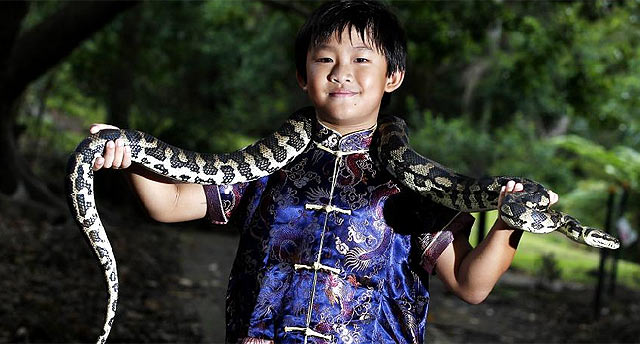
(Photo shows Ian Ng from the Gold Coast, modelling a python for the Chinese New Year; according to this article, a baby born in the Year of the Snake will be lucky)

Requested Famous Name: Banjo

Tags

, , , , , , , , , , , , , , ,

146168-banjp-paterson-grapphicOn Sunday February 17 this year it will be the 149th birthday of Andrew Barton Paterson, affectionately known as “Banjo” Paterson. To celebrate, The Orange and District Historical Society will be throwing him a birthday party, with a car rally, picnic lunch in Banjo Paterson Park, poetry readings, stories of Banjo’s life, and walk around the historic property where he was born.

Because this is a name blog, I feel obliged to explain that Paterson was named Andrew after his Scottish-born father, and his middle name Barton was a family name from his mother’s side; he was related to Edmund Barton, who would later become Australia’s first prime minister. Because he and his dad had the same name, Paterson went by his middle name, and was always known as Barty to his friends and family.

Paterson lived with his grandmother while he was attending the prestigious Sydney Grammar School, and she encouraged in him a love of poetry. He was 21 when he first began submitting poems to The Bulletin, under the pseudonym of “The Banjo” (sometimes shortened to a simple “B”). Full of fierce nationalism and a desire for a fairer society, he had some aspirations to write fiery polemic, and had even written a political pamphlet. However, The Bulletin had other ideas.

In the late 19th century, there was a movement towards the British colonies of Australia becoming one country, a feeling that Australia should be a united nation, and Australians a united people. In the effort to provide Australia with a unifying mythology that would instil nationalistic pride, it seemed that the Australian bush and outback would be the symbol to draw everyone together.

The Bulletin suggested that Banjo Paterson try his hand at bush poetry in line with its nationalist editorial policy. Banjo had been born in the Central West, but spent most of his childhood and youth growing up on the family property near Yass, north of Canberra. It was here he learned to ride, and watched the horsemen from the Murrumbidgee River and Snowy Mountains country play polo and take part in picnic races. He gained a great love of horses, and an admiration for horsemanship.

When he wrote The Man from Snowy River, it was a poem of reckless horse-riding heroism which immediately captured the nation’s imagination, and which still has our heart. It made his name, and his first poetry collection, under the title The Man from Snowy River, is the most-sold collection of Australian bush poetry ever, and is still reprinted today. During his lifetime, Banjo Paterson was second only to Rudyard Kipling in popularity among living poets writing in English.

Banjo Paterson was a colleague and friend of Henry Lawson, but had a very different way of seeing the bush. In Banjo Paterson poems, the bush is a place of adventure, romance and beauty, populated by heroes who live in freedom amongst the gum trees, honest freckle-faced youths, and characters with funny names and odd yarns about them.

Australia is the Outback, and pioneers, and songs around the campfire under the starry sky, and swagmen camped by billabongs. It’s a country of warmth and humour, and although it never quite existed, like all good mythology it lives in our hearts and minds. Banjo Paterson gave us a dream of Australia – one from which we have never truly awakened.

When it comes to names from history, often times there is a tinge of tragedy to them; some sadness attached to the real person who bore them, or even a whiff of scandal. There is no darkness to the name Banjo – Paterson was a decent, highly intelligent man who cared very much about the less fortunate, but he was essentially a happy person who was popular and sociable, and liked sport and the outdoors.

He wore his fame easily, remained modest about his talents, and never had any scandal attached to him. He was able to fulfil many of his dreams, and those that were denied him didn’t set him back. He enjoyed the ordinary love of friends and family, as well as the extraordinary love and devotion given to him by his nation. He is the model of what we hope for and expect from our celebrities.

The equine-loving Paterson took his pen name name of The Banjo from that of a horse owned by his family. This always seems to be described as “a favourite horse”, or even “his favourite horse”, but I cannot find any original source for this. Paterson himself simply describes it, no doubt with affection, as a “so-called racehorse“.

The origin of the horse’s name is apparently lost to history, but the word banjo has a history as a slang word in Australia. Slang dictionaries suggest as possible meanings “frying pan”, and “shoulder of mutton”. Another meaning was “shovel used for mining”, which during World War I, became used for any military entrenching tool – in other words, there are some correlations between the slang terms banjo and digger!

A banjo is military slang for a bacon and egg roll, because the motion of constantly dealing with crumbs while eating is reminiscent of someone playing the banjo. And Banjo Paterson himself has added another slang term – a banjo is a $10 note, because Paterson’s picture is on it, along with the words to The Man from Snowy River (Henry Lawson was on the old $10 note).

The banjo is the descendant of musical instruments brought to Colonial America by African slaves, and long seen as a staple of country music, the music of the poor and downtrodden (the kind of people that Banjo Paterson cared about). It is not known where the word banjo comes from, but the most likely source is West Africa, where it may be the same word they used for bamboo.

There are quite a few men named Banjo in Australian records, with the name most common as a nickname or alias. Many must have been named in honour of the poet, with some families named Paterson apparently finding it hard to resist having their own “Banjo Paterson”. The name isn’t unusual in Aboriginal communities, where it is given as a nickname.

The name Banjo gained fresh impetus when actress Rachel Griffiths named her son Banjo Patrick in 2003; since then the name has received more use, with 12 baby boys named Banjo last year in Victoria alone.

Banjo is an uniquely Australian name; one which seems strange in other countries, yet cosy and familiar in our own. It’s patriotic and honours one of our most beloved national poets. It’s cute, cool, and has a very Aussie nickname too – Joey.

Thank you to Brooke for suggesting Banjo as a featured name.

POLL RESULT: Banjo received an approval rating of 86%, making it one of the most highly esteemed names of the year. It was seen as uniquely Australian and patriotic (36%), cool and different (30%), and cute and spunky (20%). The remaining 14% of people thought it was over the top, weird, or ridiculous.

(Picture shows Banjo Paterson with the score to Waltzing Matilda)

Happy Second Birthday, Waltzing More Than Matilda!

Tags

, , , , , , , , , , , , ,

2nd-birthdayMy blog turns two years old today. I have to admit, I didn’t think very deeply about what I was doing when I started the blog, and didn’t know any more about blogging than what I’d read in a few articles with titles like Any Idiot Can Blog, or Get Blogging, Stupid! I had finished one part of my life and hadn’t started on the next bit, so a blog seemed like a good idea at the time.

When my account came up for renewal at the end of the first twelve months, I didn’t think twice about it. Of course I had to continue the blog; I’d only been doing it for a year, and felt I had barely started. When I received my second renewal notice at the end of last year, for the first time I actually sat down and asked myself if I wanted to keep going. I pondered deeply for over a month, and some days I seriously considered cancelling my account.

At last I decided that the blog was still growing, and I still had a lot to learn, so for the first time I made a conscious choice to continue Waltzing More Than Matilda. It’s taken me two years, but I have finally begun to think about what I’m doing. It will be interesting to see if this makes any difference!

Thank You, Thank You, to You and You and You

No blogger is an island, and many thanks go to these people for their help and support.

  • To Abby at Appellation Mountain, who for another year has sent me more views than any other blog. Abby’s generosity to others is inspiring, and it’s wonderful to see her go from strength to strength.
  • To Linda at Nameberry for giving me the opportunity to contribute my article, Aussie Names – Big there, not here. Thanks also to Angie at Upswing Baby Names, who was kind enough to provide an American perspective on the names I selected.
  • To Kate at Matilda magazine for inviting me to write an article on The Best Baby Name Blogs. Matilda magazine has been a very exciting innovation in the world of baby names.
  • To Michelle Horton from parenting website Babble for including Waltzing More Than Matilda in her article 20 Favorite Blogs for Baby Names. It came as a genuine, but very welcome, surprise to be mentioned alongside such great name blogs.
  • To Cristina at Once Upon a Time Baby Names for interviewing me about my name. Cristina has recently given her blog a complete reboot, and it looks amazing.
  • To Ebony at Babynameobsessed for being my most loyal commenter, and also reblogging several of my blog entries. Ebony is another Aussie name blogger.
  • To Lou at Mer de Noms for reblogging Boys Names of Australian Aboriginal Origin. Even after a big lifestyle change, Lou’s blog is still going strong.
  • To Brooke at Baby Name Ponderings for turning the 2012 Victorian name data into a fantastic spreadsheet. Brooke is another Australian name blogger, with very creative name ideas.
  • To my 140-odd subscribers, and my 50-odd Twitter followers, and to everyone who reads and comments and sends nice e-mails, and just all round makes blogging worth it!

Nerdy Number-Crunching

  • I have almost half a million views. The country which sent me the most views was Australia, which is good – it would be embarrassing to have a blog on Australian baby names that Australians didn’t read!
  • The most views I ever got were on June 21, when thousands of people suddenly all wanted to read about Jude Bolton’s daughter Siarra at the same time for some reason. As a result, this article was my most popular for the year.
  • The article which has gained the most comments is Girls Names of Australian Aboriginal Origin.
  • The most common search term was waltzing more than matilda, so I guess by now people do know about the blog.
  • The name most often searched for was Ruby, which reflects this name’s high popularity.
  • By posting this, I will have brought my number of posts up to 764. I have 23 categories and 618 tags. The most popular category was Name Themes and Lists.
  • There are 196 featured boys names, 192 featured girls names, and 119 featured unisex names, making over 500 names in total. About a hundred additions to the name database were made based on web searches people made to the blog, looking for baby names as familiar as Rose or Archer, and as unexpected as Australia or Zephyr.
  • The photo which was clicked on the most was the christening of Lauren Newton’s baby daughter Lola, which showed the entire Newton family together.
  • The most popular newspaper article linked to was the one announcing the birth of Addison, the son of ABC presenter Virginia Trioli.
  • The most popular website link was to ABC presenter Leigh Sales’ blog, Well Redhead, at The Punch.
  • The most popular document accessed was Australian Celebrity Baby Names 2011.
  • The most popular YouTube video was this one – basically my version of Rickrolling!
  • The blog on my Blog Roll most often clicked is Upswing Baby Names. Angie has a very professional-looking and practical name blog, and I’m glad to see it gaining such well-deserved interest.

Birthday Present

My present to Waltzing More Than Matilda is her own Facebook page. There are two main reasons I got one: (1) I promised myself I would once I got over 100 subscribers and (2) despite having a Twitter account, I get more views via Facebook than Twitter, so it makes sense. It seems much more complicated and scary than Twitter, but I’m sure I’ll get used to it in time.

Many happy returns, Waltzing More Than Matilda, and here’s to another year blogging together!

Late Celebrity Baby News: Alexander and Zorica Gavrylyuk

Tags

464086-alexander-gavrylyukClassical pianist Alexander Gavrylyuk, and his wife Zorica, welcomed their daughter Anna Emilia thirteen months ago.

Alexander is originally from the Ukraine, and came to Australia as a teenager to study before becoming an Australian citizen. He won the Vladimir Horowitz Competition in 1999, the Hamamatsu Competition in 2000, and the Arthur Rubinstein Competition in 2005. Alexander has played with major orchestras all over the world, including Russia, Australia, New Zealand, Japan, Israel, Portugal, Mexico, Britain, Germany, Italy, Belgium, Switzerland, France, South Korea, Poland, Taipei, the Netherlands, Canada and the United States. Now living in Berlin, he visits Australia every year, and this year will be performing at the Melbourne Recital Centre.

Alexander and Zorica met when they were both in high school in Sydney, and he was tutoring her for her piano exams. Zorica now has her Masters in Cultural Administration and is Alexander’s manager; they were married in 2008.

Celebrity Baby News: Melissa Barbieri and Geoff Hudson

Tags

Melissa-BarbieriSoccer star Melissa Barbieri, and her husband Geoff Hudson, welcomed their first child on January 30, and have named their daughter Holly Marie.

Melissa began her career with Richmond FC, becoming the first woman to play in the professional men’s league. She joined the national women’s team, the Matildas, in 2002; on her début, Australia beat Canada 1-0. She signed with Melbourne Victory in 2008, and currently plays for the Newcastle Jets. Melissa has a scholarship with the Victorian Institute of Sport, and is captain of the Matildas as well as their goalkeeper.

Melissa and Geoff have been married for about five years.

Underused Names for Boys

Tags

, , , , , , , , , , , , , , , , , , , , , , , , , , , , , , , , , , ,

Time-For-Bed-Said-ZebedeeThis follows on from last week’s Underused Names for Girls; to briefly recap, they are names which aren’t common here (used less than six times in the 2012 Victorian data, have never charted in Australia), but still have a history of use in Australia (can be found in historical records).

Alaric

Alaric is from the Gothic name Alareiks, meaning “ruler over all”. Alaric I was the king of the Visigoths who sacked Rome in 410, and his great-grandson, Alaric II, was ruler of the Visigothic kingdom, covering most of Spain and the south of France. Another Alaric was a legendary king of Sweden, skilled in battle and sport, and a masterful horseman. He had a brother Eric, and for some unknown reason, the pair of them killed each other with their horses’ bridles, which seems an awfully strange choice of weapon. The name Alaric is far commoner in fiction than in real life, where it tends to be either chosen for comedies, in the belief that the name Alaric sounds amusingly high-faluting, or science-fiction/fantasy, in the belief that it sounds geekily exotic. In the TV series, The Vampire Diaries, there is a character named Alaric; he says his name uh-LAHR-ik, although most sources say the name is pronounced AL-uh-rik. Powerful and commanding, this is unusual, but sounds similar to familiar names like Alan and Eric.

Blaise

In Arthurian legend, Blaise was the priest who baptised the wizard Merlin, became his tutor and friend, then took the trouble to write down all Merlin’s deeds for posterity. There is a Saint Blaise, who is a saint of healing, as he cures sore throats (the saint was a doctor as well as a bishop). He seems to have been quite popular in England, perhaps because his feast day of February 3 is right after the Celtic festival of Imbolc and the Christian feast of Candlemas, and often marked by bonfires. Blaise sounds like the word blaze, so a pleasing coincidence for fire-lovers. The most famous namesake is Blaise Pascal, the French theologian and philosopher. The meaning could be from either Latin or Greek. If Latin, it means “stuttering, lisping”; if Greek it means “bow-legged”, so either way it’s not flattering. Saint Blaise was Greek, but the Blaise of Arthurian legend is probably meant to be Roman or Romanised, so you can take your pick. It’s a name loved for its sound, namesakes and associations rather than its meaning.

Corin

Corin is a French surname derived from Quirinus; Saint Quirinus was part of a Roman missionary group sent to convert Gaul, and legend has attached to this popular saint all the standard saintly stories, such as killing a dragon and going for a stroll after getting his head chopped off. The original Quirinus was an early Roman god, probably a Sabine war deity. The Sabines had an altar to Quirinus on the Quirinal Hill, one of the Seven Hills of Rome. The Romans considered him to be a deified Romulus, and in the early days he was a major god, although they gradually lost interest in worshipping him. However, even after the fall of Rome, the Quirinal Hill remained a place of power, so that it was chosen as the seat of royalty, and later the residence of the Presidents of the Italian Republic. The name is linked to the name of the Sabine town Cures, and may come from the Sabine word for “spear”. There is a shepherd named Corin in Shakespeare’s As You Like It, and a Prince Corin in C.S. Lewis’ The Horse and His Boy. You can also see this name from another perspective, for in British legend, Corineus was a great warrior and giant-killer who founded Cornwall; his name may be an echo of Cernunnos, the Celtic god, whose name is usually translated as “horn”, or “horned one”. There are several place names in Cornwall apparently derived from Cernunnos (including Cornwall itself), and the name Corin enjoyed early popularity in Cornwall and Devon – so you can see this as a British name just as much as a French one. This packs a double mythological punch, and doesn’t seem much different than names such as Corey or Colin.

Edgar

Edgar is an Old English name meaning “rich spear”. Saint Edgar the Peaceful was a king of England; a Scottish King Edgar was a son of Saint Margaret. The name became rare after the Norman Conquest, but had a revival in the 19th century, after Sir Walter Scott’s historical novel, The Bride of Lammermoor, told the story of tragic lovers Lucy and Edgar – a tale which ends in madness, murder and quicksand. Edgar is also a character in William Shakespeare’s King Lear; disinherited by his father, he wanders the heath disguised as a babbling madman. Noble and clever, he is also enigmatic with a touch of darkness; he enjoys playing the crazy beggar just a little too much. The most famous person named Edgar is probably the American writer, Edgar Allen Poe, said to have been named after Shakespeare’s character. Poe’s works are also quite dark and enigmatic, dealing with topics such as grief, guilt, mystery, murder, madness, doom, death, drugs, and being buried alive. Edgar is related to the other Ed- names, such as Edward and Edwin, but seems more vintage, a bit edgier, and a touch more Gothic. This name might be uncommon, but it’s also traditional and comes with all the usual Ed and Eddie nicknames.

Giles

This is based on the Latin name Aegidius, derived from the Greek for “young goat”. Aegidius was a 7th century hermit from Athens who lived in the south of France with a tame deer; in Old French his name became Gidie, then Gide, and finally Gilles; when the Normans took his name to Britain, it became Giles. A noted miracle worker, Saint Giles was very popular in the Middle Ages, and his name became common; it was also given quietly but steadily to girls (even into the 20th century). Although we often think of Giles as a terribly “English” name, Saint Giles is the patron saint of Edinburgh, and the name Giles is traditional in Scotland; many Gileses in Australian records have Scottish surnames. The English haven’t done this name many favours, as it’s a favourite in English books and TV shows for good-natured upper class twits. However, this doesn’t reflect the reality of the name, or the Australian experience of it, and I think it’s possible to see Giles in quite a different light. I can see Giles as a solid country-style name, a brother to Archie and Will, or slightly hipster, a brother to Hugo and Barnaby. If you crossed Gus with Miles, you might end up with something that looks a little like Giles …

Huxley

Huxley is an English surname. The Huxley family were Normans who came to Britain after the Conquest and settled in Cheshire, taking their name from a village near Chester, which was originally named Holdesieia, and corrupted into Huxley. The original name may be from the Anglo-Saxon for “sloping land”, and Huxley is believed to mean’s “Hucc’s wood”, with Hucc being an Anglo-Saxon nickname meaning “insult, taunt”. Huxley has been used as a personal name since the 18th century, and early examples are from the Cheshire area, suggesting they may have been named directly after the village. The Huxley family have produced an astonishing number of brilliant thinkers, from the biologist T.H. Huxley, supporter of Charles Darwin, to the author Aldous Huxley, who wrote Brave New World. T.H. Huxley came to Australia as a young man, and did such excellent work in natural history that he was made an immediate Fellow of the Royal Society on his return (Mount Huxley in Tasmania is named in his honour). T.H. Huxley’s distant cousin, Sir Leonard Huxley, migrated to Australia in childhood, and became one of our most distinguished physicists. With its fashionable X and intellectual pedigree, this name seems very hip, and comes with the nicknames Huck or Hux.

Jethro

Jethro is translated as “excellence, abundance” in Hebrew, and in the Old Testament, Jethro is the father-in-law of Moses, and a priest (it is never made clear in what religion he was a priest, but by the end he accepted Yahweh as his God). Jethro is revered as a prophet in Islam, and is held in the highest regard by the Druzes. The most famous person with this name is Jethro Tull, an English agricultural pioneer who helped bring about the British Agricultural Revolution which formed the basis of modern farming practices. The rock band Jethro Tull is named after him. You may also remember the dull-witted Jethro Bodine from The Beverly Hillbillies. Jethro is a little bit hick and a whole lot hip – it’s hickster.

Rufus

Rufus started life as a Roman nickname, but afterwards became a family name; it’s from the Latin for “red haired”. There are many famous men with the surname Rufus, including the Stoic philosopher Gaius Musonius Rufus. His views on philosophy were moderate and practical, encouraging all men and women to follow a philosophical life, and giving advice on all manner of topics, including diet (vegetarian, raw) and hairstyles (long, beardy). He was so highly-regarded that when all other philosophers were expelled from Rome by the Emperor Vespasian, Rufus was allowed to stay. There are at least ten saints named Rufus, one of whom is mentioned in the New Testament as a disciple of St. Paul; his father was the man who carried the cross for Jesus on the way to Calvary. There is also the Gaelic saint Mael Ruba, whose name is Anglicised as either Maree or Rufus. King William II of England was nicknamed “Rufus” for his ruddy complexion. Famous people named Rufus include the Canadian-American singer Rufus Wainwright, and the British actor Rufus Sewell; Roger Taylor from Queen has a son named Rufus Tiger. With names ending in -us becoming fashionable, Rufus looks set to become the new Atticus.

Wolfgang

Wolfgang is a German name meaning “wolf path, wolf journey”, and interpreted by folklorist Jakob Grimm as being the name of a hero who follows in the wake of the “wolf of victory”. It has two heavy-duty namesakes: composer Wolfgang Amadeus Mozart, and writer Johann Wolfgang von Goethe; there is also a Saint Wolfgang, one of the patrons of Germany. Eddie Van Halen chose this name for his son. Nearly all Wolfgangs in Australian records have German surnames, and although this would make a striking heritage choice, it could work even if you don’t have a scrap of German ancestry. Wolfgang is one of those names that people seem to either love or loathe, so it attracts some extreme reactions. The usual nicknames are Wolf or Wolfie.

Zebedee

In the New Testament, Zebedee was a fisherman, and the father of the Apostles John and James. He is mentioned as being left behind in the boat when Jesus called the brothers to “become fishers of men”; we never learn whether he was supportive of his sons’ career change, or thought they should have remained fishers of fish. Zebedee’s wife was one of the women present at the crucifixion. The name Zebedee is the Greek form of the Hebrew name Zebadiah, meaning “Yahweh has bestowed”, and nearly always interpreted as “gift of God”. There is an English painter named Zebedee Jones and an English newsreader named Zebedee Soanes; both these Zebedees were born in the 1970s, when the cult children’s show, The Magic Roundabout, was first on television. In the show, Zebedee was a jack-in-the-box who is popularly recalled as ended the show by bouncing down out of nowhere and intoning, “Time for bed, children” (although I’m not sure how often this occurred). With Old Testament names for boys becoming a bit old hat, it could be time to consider some of the more unusual New Testament names. This one is full of zest, and the nickname Zeb is as cowboy cool as Zeke and Jed.

POLL RESULT: People’s favourite names were Huxley, Alaric, and Corin, and their least favourite were Wolfgang, Zebedee, and Giles.

(Picture shows Zebedee from The Magic Roundabout)