• About
  • Best Baby Names
  • Celebrity Baby Names
  • Celebrity Baby Names – Current
  • Celebrity Baby Names – Past
  • Featured Boys Names
  • Featured Girls Names
  • Featured Unisex Names
  • Links to Name Data
  • Waltzing on the Web

Waltzing More Than Matilda

~ Names with an Australian Bias of Democratic Temper

Waltzing More Than Matilda

Tag Archives: vintage names

Famous Name: Duke

14 Wednesday Jan 2015

Posted by A.O. in Famous Names

≈ Comments Off on Famous Name: Duke

Tags

aristocratic titles, famous namesakes, historical records, honouring, Irish names, middle names, name history, name meaning, name popularity, naming laws, nicknames, screen names, slang terms, stage personae, surname names, UK name popularity, US name popularity, vintage names

Front page only -Dukes_Day_A4_Jack McCoy 27 June

Famous Namesake
Last weekend there was a festival at Freshwater, on Sydney’s northern beaches, in honour of Hawaiian surfer Duke Kahanamoku. A century ago, Duke introduced surfing to Australia, riding a board he fashioned from Sydney timber on Christmas Eve, 1914. It was so popular that he gave a second demonstration on January 10 1915.

It was Australian swimmer Cecil Healy who brought Duke here. Cecil was one of Australia’s greatest competitive swimmers at the turn of the twentieth century, saving numerous people from drowning as a surf lifesaver, touring Europe to demonstrate the daring new “crawl” stroke, and competing in the earliest modern Olympic Games.

At the 1912 Games in Stockholm, Cecil and Duke both qualified for the semi-finals in the 100 metre event, but because the American team missed the bus, none of the US swimmers qualified for the finals. Cecil intervened, and helped the Americans appeal: because of his assistance, the Americans were allowed to swim another race, and Duke qualified for the finals. In the final, Duke won easily, and Cecil came second.

His good sportsmanship had cost Cecil a gold medal, but it gained him a friend. When Cecil invited Duke to come to Australia and give swimming and surfing exhibitions, he could hardly refuse. Just two years after introducing surfing to California, Duke was at Freshwater to demonstrate the Hawaiian sport. The crowd went wild, and in a heartbeat, Australia’s love affair with surfing had begun.

Today Freshwater boasts the title Home of Australian Surfing. Duke’s board is on display at the Freshwater Surf Life Saving Club, and there is a bronze statue of Duke Kahanamoku on the headland at Freshwater. Freshwater is a sister city to Waikiki in Honolulu, and every year it celebrates Duke’s Day, to honour the Hawaiian athlete who made such a huge contribution to Australian culture.

Duke Kahanamoku continued to win Olympic medals, and later became a Hollywood actor. In 1940, he married Nadine Alexander, an American dancer whose mother had been an opera singer from South Australia. Sadly, Cecil Healy was killed on the Somme in 1918, the only Australian gold medal-winning Olympian to die in battle.

Name Information
Duke is an aristocratic title, traditionally the highest rank of the nobility, just below a monarch. Dukes can also rule their own countries as monarchs, but today there is only one ruling duke – His Royal Highness Henri, Grand Duke of Luxembourg. Although we usually think of dukes as being male, Queen Elizabeth is both Duke of Normandy and Duke of Lancaster.

The word comes from the Latin dux, meaning “leader”. It could be given to a military commander, and also governors of provinces. Later it meant the highest-ranking military officer in a province.

As a slang term, the dukes are the fists, and thus “to duke it out” means to settle a score using your fists. This is probably from Cockney rhyming slang, where Duke of York means “fork”; fork is Cockney slang for “hand”, because they have a similar shape.

The surname Duke could have been given to someone who worked in a duke’s household or was part of his entourage, and as medieval dukes tended to have other nobles around them, many of the early Dukes were of aristocratic origins. The surname can also be derived from the Irish name Marmaduke, meaning “follower of Saint Maedoc”, and it has a long history in Ireland, especially Northern Ireland.

Just as with the surname, Duke can be used as a nickname for the first name Marmaduke, however it is often bestowed or self-chosen as an honorific nickname. Jazz legend Edward “Duke” Ellington was given his nickname in childhood from his elegant manners. Hollywood star John Wayne (born Marion Morrison) also became known as Duke in childhood, because he was always in the company of his dog, Duke. Understandably he preferred Duke to his given name Marion, and when he started out as an actor tried using Duke Morrison as his screen name, but the producers preferred John Wayne. The Thin White Duke was one of David Bowie’s stage personae.

Duke has been used as a personal name since at least the 16th century, and although it originated in England, has historically been more common in the United States. In case you were wondering, Duke Kahanamoku was named after his father, and Duke Kahanamoku Senior was given his name in honour of Prince Alfred, Duke of Edinburgh, who was visiting Hawaii in 1869.

Duke has been on and off the US Top 1000 since 1880, and after a break of more than forty years, it returned in 2013 and is currently #718. In England/Wales, there were 21 baby boys named Duke last year.

Duke can be found as a personal name in Australian historical records from the late 19th century onwards. It is much more common as a middle name, and as it was sometimes given to girls in this position, suggests it was inspired by the surname in many cases. It is often found as a common law nickname, and in one case at least, the baby was christened rather humorously, as his name was Duke Wellington.

The name became problematic in Australia during the 1990s when name laws were introduced, because titles as names were not permitted. This wasn’t much of an issue at the time, as the numbers of parents wanting to call their sons Duke were few and far between – flourishing at the turn of the twentieth century, the name Duke was very much out of fashion back then.

However, things have changed. Not only are vintage names firmly back in style, there have been a number of recent fictional Dukes to raise interest in the name, including Duke from GI Joe (played by Channing Tatum in the movies), Duke Crocker from supernatural drama Haven, Duke Nukem from the video games, and maybe even the Dukes of Hazzard, who got a big-screen outing.

As a result, some parents have begun to chafe against this restriction, and in New South Wales, the name Duke was successfully challenged in 2009, so that it is now permitted in this state. Queensland has revealed that it has registered Duke as a baby name, and in South Australia the name Duke was registered 4 times last year. In Victoria, the name Duke was registered 8 times in 2012, and in Tasmania, Duke was registered twice in 2010.

Some parents may still be avoiding the name in the belief it is outlawed (I have seen babies named Juke and Djuke in a possible attempt to circumvent the name laws), but all signs point to it being an accepted choice. So if you want to use this rather cool vintage name for your son – go for it!

POLL RESULTS
Duke received an approval rating of 52%. 22% of people thought the name Duke was strong and masculine, but 12% thought it was inappropriate because it was a title.

Famous Name: Georgette

03 Wednesday Dec 2014

Posted by A.O. in Famous Names

≈ 6 Comments

Tags

fabric names, famous namesakes, French names, historical records, name history, name meaning, names of ships, nicknames, vintage names

786px-SSGeorgette-450x343

The SS Georgette was a steamship with a short, unsuccessful career, but in the four years of her existence, played a role in two daring rescues. Built in Scotland in 1872, she came to Western Australia the following year as part of a passenger service between Fremantle, Albany, and Geraldton.

In April 1876, an American whaler called the Catalpa rescued Fenian political prisoners from Fremantle Gaol: the Fenians were Irish republican nationalists, and the organisation was founded in the United States and named after the Fianna. The Catalpa dropped anchor in international waters, and sent a whaleboat to collect the prisoners. While they were still rowing back to the Catalpa, the Georgette (which had been commandeered by the navy) was sent to intercept them, but was too late – the prisoners had already boarded the Catalpa.

The next day, having received official orders, the Georgette returned and demanded the prisoners back, but being in international waters, the Catalpa told them to buzz off. After firing a warning shot and risking a diplomatic incident, the Georgette rather pointlessly pursued the Catalpa until it was low on fuel. The Fenians made it safely to America in a few months, and I think we’ll hear more of their story next year, because now we have to get back to the Georgette.

1876 wasn’t a good year for the Georgette, because around midnight on December 1, while taking passengers and jarrah wood from Fremantle to Adelaide, she sprung a leak near Margaret River. The ship’s pumps would not work, and by 4 am, all the passengers and crew were desperately bailing water out with buckets while the captain made for the shore. The rising water extinguished the ship’s fires, leaving her drifting a few kilometres from the coastline. Lifeboats were lowered, but the first one was thrown against the ship by a wave and broke in half; some of its occupants were rescued by a second lifeboat, but several women and children perished.

As the Georgette drifted into Calgardup Bay, it was spotted from the shore by an Indigenous stockman named Sam Yebble Isaacs, who was employed by the Bussells, a prosperous family of early settlers that the city of Busselton is named for. Sam ran for the homestead to raise the alarm, but the only people there were the Bussells’ sixteen-year-old daughter, Grace, and her mother.

Grace and Sam rode down to the bay on horseback to find the Georgette had now run aground and was breaking up. To the amazement of the watching shipwreck victims, Grace and Sam rode straight down the cliffs and out into the surf, swimming their horses into the sea. They carried as many people to shore as they could, and Grace and Sam continued their exhausting rescue mission for four hours, as the captain kept launching lifeboats which immediately capsized in the dangerous surf. Out of the fifty people on board the Georgette, all but a dozen were saved.

When the survivors had all been carried to Redgate Beach, the Bussell family sent a bullock dray to collect them, and provided food and accommodation for two days, until a ship could be found to take them to Fremantle.

Grace Bussell’s heroism was reported around the world, and she was hailed as “the Grace Darling of the West” – Grace Darling was a young Englishwoman who became extremely famous for helping to rescue the survivors of a shipwreck. Poems were written in Grace Bussell’s honour; the Royal Humane Society awarded her a silver medal for bravery, and the British government gave her a gold watch and chain.

In contrast, Sam Isaacs received far less attention, even though it had been he who first found the shipwreck, and who had worked alongside Grace for hours. His role was underplayed, or even left out altogether, and when he was mentioned, he was often just identified as a “black servant”.

Sam was awarded a bronze medal for bravery by the Royal Humane Society, and Isaacs family history tells us that he was granted 100 acres of land as part of his reward, became a farmer, and raised a large family. There is a monument to Sam Isaacs in Bussellton Park, and another intriguing American connection is that Sam’s father was a Native American who had worked as a whaler. Sam still has descendants in the area.

Grace’s story had a rather romantic twist because a young surveyor from Perth named Frederick Drake-Brockman heard of her heroic actions. Deciding that this was the girl who must become his future wife, he rode 300 kilometres to meet her, and four years later the couple got married in Bussellton.

Frederick, who was also from a prominent pioneering family, later took on the important role of Surveyor General. As a surveyor, he named the coastal village of Gracetown after his wife, as well as the wheatbelt town of Lake Grace. Grace and Frederick had seven children, and two of their sons became decorated World War I heroes.

At Redgate Beach a large rock that sits off the coast is called Isaacs Rock, and there is a plaque commemorating Grace’s bravery; the ship’s bell from the Georgette is on display at the Augusta Historical Museum. The Georgette itself, which ended lives and changed others, lies beneath the waves, and on a clear day, when the tide is low, you may still be able to see her remains.

Georgette is a feminine form of Georges, the French form of George. A famous namesake is actress Georgette “Googie” Withers, who married an Australian actor and moved here in the 1950s. She had a successful career in the theatre, on Broadway, and on television. She was named an Honourary Officer of the Order of Australia in the 1980s, and only passed away a few years ago at the age of 90.

The name will probably remind many people of British author Georgette Heyer, who wrote popular novels from the 1920s to the 1970s. She virtually created the genre of the historical romance, and any name nerd who has become enamoured with the Georgian and Regency eras has probably read a few of Heyer’s well-researched escapist melodramas, filled with dashing highwaymen, damsels in distress, rich earls, bounders, cads, and beautiful girls who become the toast of society but want to marry for love.

Georgette is also a fabric, a thin crêpe material originally made from silk. It was named after the early 20th century French dressmaker, Georgette de la Plante. Georgette is notable for its crinkly appearance, and was a particular favourite for dresses in the 1930s.

Although it has never charted in Australia, Georgette is found reasonably often in historical records from the late 19th century up to the 1970s. Some of the Australian Georgettes have French surnames, and it also made a rather handy middle name, going well with a variety of first names.

Georgette has something of a period flavour, as it was most popular around the turn of the century, and associated with Regency romances and 1930s fashions. On the other hand, it also seems like a viable choice for a baby born today. Vintage names are back in style, George names for girls are fairly common, and we’re used to names ending in -ette, like Juliette.

This is an elegant name that’s more sophisticated than the standard Georgia or Georgina. It doesn’t appeal to everyone, but some will discern its charms. Georgie would be the standard nickname in Australia, but the French would use Gigi (tres chic!), and Jette would be a very cool nickname.

POLL RESULTS
Georgette received an approval rating of 55%. 21% of people saw it as an unusual, stylish vintage choice, but 16% thought it was ugly and frumpy. Only one person thought Georgette should just be used as a middle name.

Name News – War Time Edition

13 Thursday Nov 2014

Posted by A.O. in Names in the News

≈ 1 Comment

Tags

baby name campaigns, birth notices, controversial names, Facebook, famous name trends, middle names, mythological names, name petitions, name trends, names of terrorist organisations, popular names, vintage names

Article Lead - narrow6119138610g24r1410499067381.jpg-300x0

Honour a War Veteran … With a Baby
ABC Radio publicised an interesting new campaign for the centenary of World War I. Martin Hamilton-Smith, the South Australian Minister for Veterans Affairs, has a plan to encourage new parents to give their children the names of World War I Anzac soldiers as a way to honour the country’s war veterans.

Martin’s own parents gave him the idea, because they bestowed on him the middle name of his paternal and maternal grandfathers, one of whom served on the Western Front in World War I, and the other who was a Rat of Tobruk in World War II. Martin followed their pattern, giving his son Thomas the middle name Theodore, which was the name of Martin’s great-uncle who was killed in France, and has been able to pass on to his son stories and letters about Theo.

He is calling on parents to consider giving their baby either the first or middle name of an ancestor who served in World War I, and to post their story to his Facebook page. He encourages those who don’t have a direct ancestor to go to a war memorial and pick the name of a soldier. Girls could be named after a nurse who served in World War I, or after a wife or mother bereaved by the war, or who cared for their returned loved ones, many of whom were left with injuries or post-traumatic stress.

The national secretary of the RSL thinks it’s a good idea, but wonders whether children will find it an honour, or a burden. In his wife’s family, a boy has been named after a great-uncle killed in World War I, and it doesn’t seem to have affected him in a negative way.

ABC Radio pictures the playgrounds of the near future filled with children named Bert, Clarry, Reg, Olive, and Edith, but Olive is already in the Top 100, and vintage names are on trend, so it may be difficult to gauge how much influence this campaign will wield on baby names.

POLL RESULTS
57% of people would consider naming their baby after a World War I veteran. 43% saw it as a way to connect their child to our history, while 14% saw it as a way to honour our heroes.
12% were in favour of the idea, but didn’t think it was suitable for their family.
19% of people were against the idea, with 17% saying that children deserved their own identity and a name all their own, while 2% thought it was too much of a burden.
12% weren’t sure how they felt about the idea.
Nobody thought that names from World War I were too old-fashioned for modern children.

Hot Baby Name Trend, 1914 Style
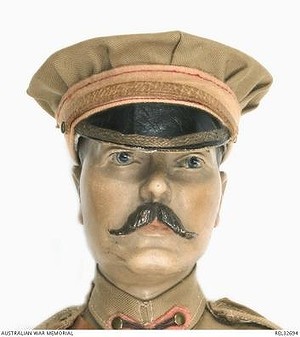
The Canberra Times had a column looking at the events of a century ago. Back in 1914, British army officer Earl Kitchener was the face of the war effort, and a popular subject for Toby jugs, statuettes, and souvenirs. The newspaper looked at the patriotic column of “Clio” in Melbourne’s humorous Punch magazine:

Do you know the baptismal names of Lord Kitchener?”

Not one person in a dozen does. Horatio Herbert. Perfectly appalling names, aren’t they? Shakespeare was perfectly right, you know, when he pertinently inquired, “What’s in a name?” for after all it is not the name but the man who bears it that matters most; and if Lord Kitchener bore any other names … he would still be the most splendid figure in English history to day.

Horatio Herbert is to be the fashionable name for boy babies this year. It is a curious medical fact that during war there are more boys born than girls, and mothers delight in choosing the name of some great soldier for their sons. And so this year the fad is in full swing. It began last week in the birth columns of a daily paper, when the announcement of the birth of a son was followed by his name in brackets (Earl Kitchener). But most mothers are quite content to drop the title, and bestow on their babies the plain names ‘Horatio Herbert.’

I did not find an Earl Kitchener born in 1914 (he might still be alive, or the story might refer to a British newspaper), but there were several born during World War I, and one born during the Boer War, where Earl Kitchener also played a leading role. I only found one Horatio Herbert, and he was born in the 1870s; however, Earl Kitchener went by his middle name, and there are quite a number of Herbert Horatios, and many Herbert Kitcheners. More than a hundred babies were given Kitchener as their middle name, and quite a few had Kitchener as their first name.

Note: “Clio” does not seem to have realised that there are always more boys born than girls, with an estimated 107 boys born for every 100 girls. There is some backing for their statement that more boys than usual are born during war-time, although the reason why is not known. However an Australian newspaper reported in 1941 that Australia bucked this trend, as numbers of boy babies decreased here during World War I, and the first years of World War II.

POLL RESULTS
People’s top choice to honour Earl Kitchener was to make Kitchener the middle name, with a third of respondents voting for it. The least favourite choice was the name combination Herbert Horatio, which got only one vote.

The First Casualties of War Are … Names
And on a very sombre note, a baby name which has been a casualty of war: Isis. The Daily Mail reports that an eight-year-old girl from Sydney named Isis Leskien has suffered the effects of her name.

I know it seems absolutely stupid (because it is), but since the terrorist group often referred to as ISIS has been in the news, people have been distancing themselves from her family, scared to be associated with her. Her brother Maximus has noticed that when they go to soccer together people stare when they hear the name Isis, and mum and dad Sheridan and Frank remember the days when people used to say, “What a beautiful name”, when they heard the name Isis; alas, not any more.

In the US, a petition has been started by a woman named Isis Martinez to ask media outlets to stop referring to the terrorist organisation as ISIS – it currently has more than 35 000 signatures, and the Leskiens are urging people to sign it. Whether it’s the petition or not, I have noticed that on the news here the organisation is now usually called ISIL or the Islamic State, but that may be slender comfort to people called Isis, as the name ISIS continues to be commonly used elsewhere.

POLL RESULTS
66% of people said they didn’t feel any differently about the name Isis
17% said the name Isis now made them feel very uncomfortable
15% said the name Isis now made them feel a little uncomfortable
2% said the name now made them feel so extremely uncomfortable that they would prefer to avoid someone named Isis

(Photo is of a statuette of Earl Kitchener, from the Australian War Memorial)

Requested Names: Maida and Maeva

15 Wednesday Oct 2014

Posted by A.O. in Requested Names

≈ 6 Comments

Tags

aristocratic titles, dog names, english names, fictional namesakes, flower names, French name popularity, French names, Greek names, historical records, Irish names, Italian names, locational names, military events, mythological names, name history, name meaning, name trends, names of businesses, names of ships, nature names, plant names, polynesian names, rare names, Scottish names, Tahitian names, UK name popularity, US name popularity, vintage names, Waltzing More Than Matilda

agriturismo-costantino

Michelle’s partner has suggested the girls’ names Maida and Maeva to add to their name list. At first, Michelle thought these were “made up”, but once she discovered they were genuine names, became a lot more interested in using them, as she quite likes them. She’s asked that Maida and Maeva be featured on Waltzing More Than Matilda, so she can learn more about them.

Maida
This name was popularised in Britain during the 19th century because of the Battle of Maida, which was a British victory against the French during the Napoleonic Wars. It took place in the town of Maida, in Italy, and the British were able to inflict significant losses while incurring far fewer casualties on their side. Through the battle, the British were able to prevent a French invasion of Sicily.

The commander during the Battle of Maida was John Stuart, who was named Count of Maida by Ferdinand IV of Naples and Sicily in thanks for his efforts (the British knighted him, and gave him £1000 a year). Not long after his victory, he received another honour: a pub on the Edgeware Road in London was named The Hero of Maida, and when this area was developed for residential housing in the mid-19th century, it was named Maida Vale after the pub (and indirectly after Sir John Stuart). Maida Vale is now quite an affluent area.

Maida Vale in London has given its name to a suburb in outer Perth, which still has plenty of natural bushland. There is a rare wildflower unique to this area called the Maida Vale Bell (Blancoa canescans), which is a type of kangaroo paw with reddish bell-like flowers. Another Western Australian connection is that the pioneer Sir Richard Spencer took part in the Battle of Maida as a naval captain (the British navy captured a French vessel, and renamed it the Maida). After emigrating to Australia, Spencer ended his days on the heritage-listed Strawberry Hill Farm in Albany.

A Scottish connection is that Sir Walter Scott was given a deer-hound named Maida, reputedly his favourite dog. It was a gift from Sir Walter’s friend, Colonel Alexander MacDonnell of Glengarry, known as Glengarry after his estate. Glengarry’s brother, James MacDonnell, had led the 78th Highlanders Regiment of Foot at the Battle of Maida, and won a Gold Medal for his services. The 78th fought valiantly, and are said to have lost only one man: the name Maida has ever after had particular resonance in Scotland, and is still in some use.

The rural town of Maida, where the Battle of Maida was fought, is in Calabria in southern Italy: often identified as the “toe” of the country’s shape. The name of the town is derived from Greek, and may have the same source as the name Medea, familiar in Greek mythology as the wife of the hero Jason. Her name literally means “cunning”, but with connotations of “rule over, protect”, from an ancient root meaning “to measure, give advice, to heal”.

While the Battle of Maida was behind the name’s surge of popularity in 19th century Britain, it doesn’t explain the handful of times it was used prior to 1806, nor does it explain the name’s use in the United States, where the name Maida occasionally made the Top 1000 between 1880 and 1920. In such cases, the name may be a pet form of names such as Magdalene or Madeline; in Scotland, it could be seen as a variant of Maisie. It also can’t be ruled out that it was sometimes based on the English word maid, shorthand for maiden, meaning “young girl, virgin”.

A 20th century influence on the name in the United States was the Maida series of children’s books by Inez Haynes Irwin, a feminist and socialist author and journalist. The books revolve around a beautiful motherless little girl named Maida Westabrook who possesses both fabulous wealth and a fantastic personality, recovering from severe illness that has left her with a slight disability. It turns out some wholesome child labour and the friendship of a whole neighbourhood of ordinary kids is what she needs to put the roses in her cheeks, and further adventures follow with her posse of plebeian pals.

I read the first book online and was charmed: it’s an urban fairytale, and the sort of vintage book I would have loved reading when I was about nine. I can quite understand why this series of books, spanning from 1909 to 1955, has gained generations of loyal fans, and was not surprised to see several comments from people who had been named for the character or had named their daughters after her.

Last year there were 26 baby girls named Maida in the United States, and 18 in England/Wales. Maida doesn’t show up in recent Australian birth data, although is occasionally seen on older women. There are over a hundred Maidas in Australian historical records, mostly from the late 19th century to the early 20th century.

Maeva
This is from Tahiti, and means “welcome”; it is used as a word and a name in Polynesia, and is a Top 100 name in France, as Tahiti is part of France’s overseas territories. Maeva is pronounced mah-AY-va in Tahitian, but judging from one example on forvo, French people seem to say the name very much like MAY-va.

Maeva is used as a name in Australia too, appearing in historical records from the late 19th century. Most likely it was an elaboration of the Irish name Maeve rather than of Polynesian origin. Maeva was the middle name of Gladys Cumpston, who transcribed texts into Braille. If you look at Maevas in Australia currently, many seem to be French, although there are also Australians, including those of Islander heritage. Last year there were 34 babies named Maeva in the United States, and 4 in England/Wales.

* * * * * * * * * *

Michelle, what an intriguing pair of names your partner has suggested! I am very impressed by his style, because these are both very rare names which are nonetheless bang on for current trends. They fit in so beautifully with the trend for vintage names, and with names beginning with M, and with the AY sound, so that you’d have a baby name different from everyone else’s, without sounding too glaringly different.

Maeva in particular would blend in almost seamlessly, as it sounds like a mixture of Mae, and Maeve, and Ava. It would be very easy to explain to others as “Spelled like Maeve, but with an A at the end”, or “Pronounced like Ava, but with a M at the front”. You might even worry that it blended in a bit too easily, and could be confused with other names – there might be a few moments of “No, it’s Maeva, not Maeve”, although that doesn’t sound like a big deal.

Maida seems a bit more daring, although it reminded me a little of a contracted Matilda, or Maia with a D. I feel as if some people might be slightly taken aback by the Maid- part, as we use the word “maid” to mean “servant, serving girl”. But what a rich and interesting history the name Maida has, with so many layers of meaning and evocation. The more I learned about the name Maida and its many associations, the more I was mentally barracking for you to choose it.

I think these are both beautiful names, rare yet accessible, vintage but in line with current trends. What do you think of Maida and Maeva, readers?

POLL RESULTS
Maida received an approval rating of 56%, while Maeva did extremely well, with its approval rating of 76% making it one of the highest-rated names of 2014.

Thank you to Michelle for requesting Maida and Maeva be featured on Waltzing More Than Matilda

(Photo shows the farmland around the town of Maida in Italy)

Urgent Name Help Needed: They’re Completely Stressed About Their Big Baby Name Mess!

20 Saturday Sep 2014

Posted by A.O. in Naming Assistance

≈ 9 Comments

Tags

birth registration, choosing baby names, classic names, family interference, middle names, name trends, nicknames, sibsets, UK name trends, vintage names

stressed-couple-shutterstock_76236865-617x416

The Situation
Charlotte and Jake have been blessed with a beautiful daughter, and they couldn’t be happier – except that she was born seven weeks ago and they still haven’t decided on a name for her. Charlotte was relieved to read on the blog that no terrible fate awaits parents who don’t make the 60 day registration deadline, but they still need to choose a name as soon as possible.

During the pregnancy they considered the names Myrtle, Elsie, Rosie, Mabel, Maeve, Mae, Agnes, Florence, Iris, Ida, Fern, and Pearl. Jake’s #1 choice for the name is Rosie, which Charlotte isn’t that keen on, while he completely vetoed Pearl. During the name process, Jake went off Iris and Ida.

Just before the birth, their short list of front runners was:
* Myrtle
* Agnes
* Elsie
* Mabel
* Rosie

How the Problem Started
As Charlotte was wheeled off to recover after giving birth, she and Jake were in complete agreement: the baby’s name was Elsie. Charlotte was sure she was an Elsie, and told the doctor that was her daughter’s name. Meanwhile, Jake was telling all the nurses they had chosen the name Elsie.

Unfortunately, Charlotte couldn’t bring herself to commit to Elsie because of a family issue. Elsie is the name of a family member, no longer in the land of the living, that Charlotte didn’t know or have contact with. However, other family members who did know Elsie didn’t get along with her, and weren’t pleased at the prospect of another Elsie in the family.

The baby came home without a name, and Jake was annoyed, believing they should have just stuck with the name Elsie.

Everyone Has an Opinion!
Jake and Charlotte have an older daughter called Olive, and Olive instantly recognised the baby as Myrtle, and called her such. However, Jake and Charlotte had already decided she definitely wasn’t a Myrtle.

Mostly Jake and Charlotte have been calling their daughter Mabel since she was born, and Charlotte is getting a strong emotional attachment to it. However, Charlotte also reasons that if Mabel was such a good name, wouldn’t they have committed to it by now?

Furthermore, they have shared the name Mabel with others, and received extremely negative reactions to it. They’ve been told it’s an awful name, a cow’s name, a scullery maid’s name, and an elderly relative said they could call the baby anything they wanted – but not Mabel.

Charlotte loves the name Fern, but this has resulted in people “pulling faces” when the idea is floated past them. She also worries that Olive and Fern are too botanical together, and wonders if Fern really has vintage charm, or is it actually a hippie name? She also wonders if Maeve really has that vintage feel as well.

Everyone loves the name Rosie, but Charlotte thinks of it as a “dog name”, and a bit too common.

What Charlotte and Jake Want
* Ideally, a vintage-style name
* A soft, beautiful name to suit their gentle, placid daughter
* A name that isn’t a “burden”
* Jake likes names that have a nickname

Current Name List

* Elsie (Charlotte is still concerned about the family issue, and isn’t sure about the -ie ending)
* Mabel
* Maeve
* Fern
* Martha
* Maggie
* Alice
* Nora
* Edith or Edie (Charlotte not keen)
* Mae (too short, but maybe a nickname for Mabel or Maeve?)
* Agnes, Ida, and Rosie are still in the mix and seem usable, although Jake has gone off Agnes

Middle names they are considering are Birdie, Josephine, and Rose. Charlotte quite fancies Birdie as a short form of Brigid (and it could be her name for everyday use), Jake really loves the thought of an Elsie Josephine, and the Rose is a sop to Jake, so that he can still have the option of calling his daughter Rosie as a nickname.

Where They Are Now
Going around and around in circles and getting stressed and anxious. Charlotte can’t let go of any of the names, and has been through the complete register of all births from 1880 to 1920 to find fresh name inspiration. The 60 day deadline expires next week ….

* * * * * * * * * *

Goodness, you two have got yourself in a real pickle, haven’t you?

This is the fourth time on the blog I have heard of a couple having trouble choosing a baby name after the birth – three of you have written in, and one was a news story. What you all have in common is that other people have become involved in the baby naming process, and in each case, this wasn’t the slightest bit of help, and turned the whole thing into a huge drama that went on for weeks.

You both chose the name Elsie, which I think is a beautiful name which sounds lovely with Olive, and with your surname, and pretty much ticked all your boxes, being vintage, and soft-sounding, and nicknamey. It sounds as if you would have happily come home with a baby called Elsie if not for the opinions of family members.

I tend to agree with Jake – I think you should have just named her Elsie, and announced that as her name. Despite the family disagreement, I don’t think it would have taken them more than a few minutes (a few weeks for anyone of exceptional stubborness) to realise that the Elsie they didn’t care for is gone forever and will never bother them again, while little baby Elsie is a completely separate person and utterly sweet and delightful in every way.

That’s another problem with choosing a baby name several weeks after the birth. Your heart is bursting with love for your daughter, and every minute you fall more and more in love with her. And each day she’s getting cuter and cuter, developing winning little ways and adorable baby quirks. No name is going to seem good enough for her, and a great enough expression of your love, and if you wait until she’s giggling and cooing, you’ll be toast.

You look down at her and think, “Oh she’s such a beautiful baby, so soft and gentle and placid and cuddly and happy. We need an extra specially soft and beautiful and cuddly and happy name for her”. But what name is ever going embody that unique combination of beauty and softness and gentleness and placidity and happiness to your perfect satisfaction?

And she’s so tiny and perfect and fragile and defenceless that you can’t bear the thought of anyone poking fun of her name, and every name you consider seems to have a hidden trap in it. Of course you don’t want her to grow up in a family where people say, “The last Elsie in the family wasn’t very nice”, or amongst friends who say, “Mabel sounds like a cow”, or pull a face when they hear her name. The more time you think about it, the more every name will seem as if it has tease potential.

Also the longer you wait, the more you feel under pressure to come up with something amazing. It will seem ridiculous that it took you three months to pick the name Elsie Josephine or Mabel Rose or Fern Maeve. You have to drop the idea that there’s a perfect name out there that will match your daughter’s personality with exqusisite taste, silence all criticism, be utterly tease-immune, and make everyone think, “Oh well no wonder it took them all this time to find a name that good”.

I have two main pieces of advice for you, and even if you ignore everything else, please please please PLEASE follow these two things in the headline.

1. Nobody Else Gets to Name Your Baby Girl
It’s time the committee meetings on what to call the baby come to a complete halt. Other people haven’t helped, and have made you second guess all the names you’re considering. I feel absolutely furious that people have been so rude about the names you like, and I agree it’s absolutely none of their business. On the other hand – why did you ask?

You worry that their opinions show what your daughter will have to face in the future, yet, being extremely blunt, some of these people will have passed on by the time your daughter reaches adulthood, and your colleagues aren’t going to be part of her life (they won’t even be part of your life forever).

In any case, asking a ton of people for their opinions is a waste of time. The kind of names that  won’t be criticised are ones like Amelia Mae, Chloe Elizabeth or Olivia Grace – “safe” names. And besides, if you were going to pick a name based on what other people approve of, Charlotte would have agreed to Rosie – Jake’s favourite name, which everyone else likes, including me. But none of that matters, because Charlotte doesn’t really like it.

Baby name discussions should only be held between the two of you, in private. Don’t ask other people for their opinions, and if they offer them, just say something like, “Thank you, we’ll have to think that one over”. Don’t let people see that the process is getting you stressed, because that’s an opportunity for them to “help” you. If they ask how the baby name choosing is going, smile brightly and say, “Oh we’re nearly there – we’ll be announcing the name soon”.

If they make a comment about how long it’s taking, say something like, “I know the time we’re taking must seem a little silly to an outsider”, then change the subject at once. That lets them know that it’s no big deal, and puts them firmly on the outside – and the bigger fuss they make, the more of an outsider they become. It’s a polite way of letting them know it’s none of their concern.

2. Your Name List Should Be Getting Shorter, Not Longer!
I’m bewildered as to how you had five names on your name list before going to hospital, and now you have around fifteen. I know you said that you were having trouble letting go of the names, but you’re still adding to your name list, which means you’ll never pick a name at this rate. You’ve even put names that have been vetoed back on the list!

You’ve got to stop thinking up more names, and just stick to what you’ve got. That means no getting out of the shower with a great name you thought up while shampooing your hair, no wondering if a name you vetoed is really that bad and could still be considered, and definitely no going through four decades of birth registers!

Let’s see what names could be trimmed:

Elsie – I think this name has been ruined for Charlotte by her family’s interference, and she’s gone off it because it’s too much like Rosie.
Rosie – Charlotte thinks it’s a dog name, and too common. I disagree, but to heck with me, it’s not my baby.
Maggie – I’m getting the feeling Charlotte isn’t mad about two syllable names ending with -ie. And Maggie is actually a common name for dogs, so if Rosie is out for those reasons, then Maggie should be triply out.
Edith and Edie – Charlotte doesn’t like them.
Mae – you both agreed it’s too short.
Agnes – Jake has gone off it.
Ida – Jake has gone off it.
Iris – Jake has gone off it
Florence – neither has vetoed it, but you never mentioned it again either, so you can’t be that keen

And what’s left:

Maeve, possibly nn Mae
I think it’s a beautiful name, but you did wonder if it sounded vintage, and I don’t think it really sounds vintage at all – it’s only come into common use in Australia quite recently.

Fern
I love the name Fern too, and although some people might see it as hippie, it was quite popular in the late 19th century, mostly in the middle. It does sound botanical with Olive, if that’s an issue. Blog contributor Madelyn suggested Fern as a nickname for Frances – could something like that work?

Martha
This is a very dignified name, and I think it does have that gentle image you were after – although it also seems strong. Very much in line with British name trends too.

Alice
I think this is bang on for beautiful, soft and sweet, and a nice match with Olive, but if you wanted to get technical, it’s a classic rather than a vintage choice. It seems like a great replacement for Elsie – it’s got a vaguely similar sound, without being so alike that it brings back memories of Elsie (as Elsa would, for example).

Nora
Very hip choice, excellent match with Olive, well ahead of the trends. I wonder if it might be too nicknamey for Charlotte’s taste though. If so, what about Eleanor, nn Nora?

Mabel
This just leaves Mabel, which seems like the obvious choice. It’s beautiful, soft and sweet but still spunky; it literally means “lovable”; it’s vintage-style; it makes an awesome match with Olive; it sounds adorable with your surname, and it’s the name you are already calling her, and have taught Olive to call her.

You’ve said that you’re getting emotionally attached to Mabel, which makes me think that you may have already chosen it without quite admitting it to yourselves. You say that the fact that you haven’t committed to it yet shows it can’t really be that great, but you haven’t given yourselves a chance to.

I know other people have been critical about Mabel, but there’s a good reason for that – you’re slightly ahead of the trends, because Mabel only came back on the charts in the 2000s, and it’s not zooming up in a bothersomely trendy way, but remaining fairly stable. People just aren’t used to it yet because it’s so fresh. And your friend who thinks it’s a scullery maid name? Hasn’t she been watching Downton Abbey – doesn’t she know that “scullery maid names” are hot right now?

I love both the middle names you have picked out, and I think Mabel Birdie Rose is utterly, utterly lovely. It gives you the option of calling her either Mae, Birdie, or Rosie for everyday, and luckily you don’t have to register nicknames so you can take as long as you want to decide which one (or use all three if you want – there’s no law on nicknames!)

If it was up to me, I’d say Mabel Birdie Rose. But it’s not up to me – it’s your privilege to name your daughter, and no one else’s. So what will it be?

NAME UPDATE: The baby’s name was Mabel!

POLL RESULT: The overwhelming choice of the public was Mabel, which received more than 50% of the vote.

Boy’s Names are Giving Them a Headache! Can You Help This Couple Find a Pain-Free Boy’s Name?

23 Saturday Aug 2014

Posted by A.O. in Naming Assistance

≈ 10 Comments

Tags

British Baby Names, choosing baby names, classic names, middle names, nicknames, popular names, vintage names


hypnotherapy-for-headachesRachel and Nathan are expecting their first baby at the end of the year, and are having some difficulties deciding on a baby name. Rachel and Nathan like old-style and vintage names that aren’t too common, but not too strange or made up.

For a girl, they have pretty much decided on Lottie Grace. At first, Rachel was concerned with how it sounded with their surname, which is a long one ending in an -ee sound, such as DuHannitay. However, she feels happy with it now, and Nathan likes it as well. They chose Grace because it sounds nice with Lottie, but would be open to hearing other middle name suggestions.

Rachel’s first choice was Frankie, but Nathan didn’t like it, and then Rachel rather went off it as well. She also likes Audrey, Millie, Poppy, Elsie – but Lottie is definitely the front runner. Names that they like but can’t use for various reasons include Clara, Edie, Lucy, Hattie, and Maisie.

The real problem is boy’s names. Nathan doesn’t seem keen on many of Rachel’s suggestions, and Rachel is starting to feel that the harder she looks for names, the more confused she feels. These are the names they have discussed so far:

Albie: Rachel likes it, Nathan isn’t sure
Alfie: Nathan prefers this to Albie, but Rachel thinks it’s getting too popular, and dislikes the short form Alf
Arthur: Rachel likes it, but thinks it might be a bit much, and Nathan dislikes it; they don’t like short forms of the name such as Art or Artie
Clem: has been vetoed by Nathan
Jimmy: Nathan likes it, Rachel doesn’t mind it
Max: has been ruled out because it’s too common
Rex: it’s okay, but neither of them love it
George: Rachel has always really liked it, but feels it might be getting a bit too common

Names they like but can’t use include Charlie, Spencer, Louie, Lenny, and Vincent.

The middle name hasn’t been settled yet. They have a family name Bernie (Bernard) in mind, which could be used, but if it doesn’t fit with the name, would drop it for something else.

* * * * * * * * * *

I’m glad you’ve picked a girl’s name, and Lottie seems just your style. I think Grace is a nice middle name, and very fuss-free. The only other short name that occurred to me is Lou – just because Lottie Lou is so adorable. I also think Lottie Amelia and Lottie Matilda make nice combinations. Middle names I’ve seen for Lottie in real life are: Lottie Violet, Lottie Estelle, Lottie Alice, Lottie Scarlett, Lottie Elizabeth, Lottie Margaret, Lottie Harriet, Lottie Olive, and Lottie Lux.

For boy’s names, I can see why you’re having problems. First, you haven’t agreed on many names, and even the agreements have been a bit half-hearted. That might be a sign you have to compromise. Sometimes you get to pick a name that you both love, and sometimes just one of of you likes the name, and the other one can live with it. Or maybe both of you are just okay with the name, and that might work too – you can learn to love a name as your son grows into it.

There’s something I notice with people who say they “can’t think of any names”, or “don’t really like any names”. What they tend to have in common is a lot of rules restricting their choices, so that the pool of baby names to consider is more of a teaspoon.

I always give a little inward sigh when someone tells me that what they want is an unpretentious traditional name that isn’t weird or unusual, but not common at all. In fact, it can’t even become common in the future. In other words, they want a nice normal name that’s exactly like everyone else’s baby name, but they don’t want anyone else to have actually chosen the name for their child, or to do so at a later date.

That’s a tall order. And once they find the four or five names that might fit this paradoxical profile, what are the odds that they even like those names, let alone love them?

Looking at some of your comments on the boy’s names you’ve discussed, I see that Alfie, which is around the #200 mark, is already “too popular” for you, while classic and gently rising Arthur might be slightly over the top. The name that you really like, George, is too common, and Rex, which fits every single one of your requirements, just gets a “meh”.

I confess to being stumped, and I’m not surprised that you’re stumped as well. I  think something has to give – either you start liking names that are a bit more unusual, or you accept that the names you like are gaining in popularity. It’s very hard to force yourself to be attracted to names that aren’t your style, and it would be much easier to come to terms with name popularity, and maybe even discover it’s not such a spooky bogeyman after all.

Let’s have a look at those names which you might actually use, and see if some of their problems aren’t so bad.

Albie or Alfie
You both seem to like the similar sounds of these two names, with Rachel suggesting Albie, and Nathan preferring Alfie. I’m not sure either of you have convinced the other, although I really don’t think Alfie is too common – I wonder if the idea of someone nicknaming him Alf is the real problem?

Albie made me think of Paddy, Rory and Finley, while cheeky Alfie reminded me of a list Elea has at British Baby Names called Lively Lads. I wonder if any of these names might appeal, such as Freddie or Ollie?

Jimmy
This seems like a genuine possibility, with Nathan liking it and Rachel okay with it. It does seem like a boyish version of Lottie, as both are pet forms of very popular names (James and Charlotte). It fits all of your requirements, and is a real charmer of a name. Other names that seem similar are Johnny, Billy, Sonny, Gus, and Ted.

Rex
Poor old Rex – it’s everything you’ve asked for, yet neither of you are that keen on it. That suggests that your feelings for a name are much more important than how many boxes it ticks. Names that remind me of Rex are Roy, Stanley, Victor, Leon, Lawrence, and Theodore.

George
And then there’s George, which Rachel has always liked. Wouldn’t it be wonderful to give your son a name that you’ve always had warm feelings for? And if you’re worried about it becoming too common, here’s something to consider. It already is common. Which sounds like a bad thing, except that here’s something else to consider. It’s always been common. George has never been out of the Top 100, making it one of those sturdy, reliable classics where you don’t have to worry about them becoming popular, because there’s never been a time they weren’t popular. Doesn’t that give you a feeling of security? And it hasn’t been higher than #50 since the 1980s, so it’s popular, but not too popular. Isn’t that a comforting thought?

I think your worries about popularity have made it so hard to think of names that it’s worth starting from scratch, and this time don’t think about how popular a name is at all, or how much more frequently you’ve seen it lately.

I’d like to see the two of you each write down ten boys’ names you really like – names that you can imagine giving your son, names that fit well into your family, names that feel right. Then compare lists, and see if there are any names you’ve both chosen. If so, that’s a great starting point. If not, perhaps there are points of such similarity that you can reach a compromise together.

You’ve got a fair way to go before your due date, so you have time to write in for another blog consultation if you would like one. And take heart – you’ve already chosen a fantastic girl’s name that you both like, and which fits all your needs, so there’s no reason you can’t be just as successful choosing a boy’s name.

UPDATE: Unfortunately Rachel never got back to me, and when I tried to contact her, her email had been disabled.

POLL RESULT: The public’s choice for a boy’s name was George with 35% of the vote, and Alfie was not too far behind on 30%.

Irish Names For Girls

08 Sunday Jun 2014

Posted by A.O. in Name Themes and Lists

≈ 10 Comments

Tags

classic names, famous namesakes, fictional namesakes, French names, Gaelic names, Irish Gaelic names, Irish name popularity, Irish names, Italian names, middle names, modern classics, mythological names, name history, name meaning, name popularity, nicknames, Old Irish names, popular names, royal names, saints names, underused classics, unisex names, vintage names

3478061055_c7f655e9d0

Irish people have played an important role in Australia’s history, with many arriving in the 18th century as convicts or free settlers. By the late 19th century, a third of Australia’s population was Irish, and today around 30% of us claim some Irish ancestry. It is said that Australia is the most Irish country in the world outside Ireland.

The Irish have made an indelible mark on our history, culture, religion, sport and perhaps most especially, our politics – six of our prime ministers have had Irish ancestors. They have also helped create much of our national character: both the good bits, like our dry sense of humour and love of language, and the bad bits, like our pessimism and thin-skinned “touchiness”. When I did Italian names, I said that I could imagine an Australian without an Italian history, I just didn’t care to, but it’s impossible to imagine Australia without an Irish history.

Here’s ten Irish girls’ names, some of which have become popular here, and others which are less common. Just a heads up that I haven’t included any fadas (accent marks) on any of the names, since they are not legal in all states.

Aisling
Modern name meaning “dream, vision” in Irish Gaelic. It can be seen as a literary name, because the aisling is a poetic genre developed in 17th century Ireland, where a woman appears in a vision and predicts a turn for the better in Ireland’s fortunes. Earlier, the dream-woman was young and beautiful, and didn’t have a political message, but symbolised nature or love. Aisling can be pronounced ASH-ling or ASH-leen, and to English-speakers, seems like a fresh alternative to Ashley; it has also spawned variants such as Ashlynn. Aisling is #41 in Ireland.

Aoife
From the Gaelic for “beauty, radiance”. In Irish legend, Aífe is a warrior woman, and rival of her (possible) sister Scáthach. Legend tells that she fought the hero Cú Chulainn, but he overcame her with trickery, and promised to spare her life if she stopped fighting with Scáthach, spent a night with him, and bore him a son. She fulfilled her side of the bargain, but the story didn’t end happily. In the tale of The Children of Lir, Aoife is the wicked queen who transformed her stepchildren into swans; she was cursed by being turned into a demon by her own father as punishment. Despite this unpleasant namesake, Aoife was used by medieval Irish nobility, with a notable example being Aoife MacMurrough. This 12th century Irish princess conducted battles on behalf of her husband, and is an ancestor of the current British royal family. Aoife is pronounced like EE-fuh; although complex to spell, it sounds rather like popular Eva, and has a lovely meaning. Aoife is #11 in Ireland and #10 in Northern Ireland.

Bridget
Anglicised form of the Old Irish name Brigit, meaning “high, exalted”. In Irish mythology, Brigit is a goddess; her name is derived from the word for “fire” and most likely her title. Brigit was a poet, and the inventor of keening – the lament over a body at a burial that is a mixture of singing and weeping. She is also patron of healing, smithing, arts and crafts, cattle and livestock, sacred wells, and serpents. She ruled all things high-reaching, as well as lofty attributes, such as intelligence, wisdom, excellence, knowledge, and skill. Brigit is associated with the home and hearth, and with early spring. Her special day is Imbolc, on February 1. She has become fused with St Brigid of Kildare, one of the patron saints of Ireland – probably an attempt to Christianise the goddess. St Brigid is patron of smiths, cattle, poets and scholars, and her feast day is February 1. In Ireland, the name Bridget was too sacred to use until the 17th century, but later became extremely popular – so much so that an Irishwoman was called a “Biddy“, just as an Irishman was called “Paddy”. Bridget was #104 in the 1900s, and dropped to its lowest ranking in the 1950s, at 0. It hit a minor peak in the early 2000s at #166, and is currently in the 200s in Victoria and the 400s in New South Wales. Bridget is an underused classic which has remained on the charts while never becoming popular.

Caitlin
Anglicised form of Caitlín, Irish form of Cateline, Old French pet form of Catherine. While the Irish say it something like kat-LEEN, English-speakers say KAYT-lin, and turn the Irish pronunciation into another name, Kathleen. Caitlin has been used in Ireland since the 19th century, and became well known in the 20th. In Australia, Caitlin has ranked since the 1970s, making its debut at #554, and soaring until it entered the Top 100 in 1987 at #86. By 1990 it was in the Top 50 at #38; by 1994 it was in the Top 20 at #15. It peaked in the late 1990s at #12, and since then has declined. Currently Caitlin is #99 nationally, #78 in New South Wales, and #103 in the Australian Capital Territory. Last year Caitlin was one of the names that fell the most in popularity, suggesting its day is coming to a close (although its many variant spellings would significantly boost its ranking). Caitlin is #64 in Ireland and #33 in Northern Ireland.

Ciara
Feminine form of Ciar, meaning “black”. There is a 6th century St Ciara and a 7th century one, or else just one long-lived St Ciara. According to legend, St Ciara was of royal blood, and founded an abbey; another story says that she (unless it is a different St Ciara) saved a town from a noxious fire through her prayers. Ciara is pronounced KEER-uh, and must be one of the most heavily Anglicised Irish names, for you rarely see it with its native spelling, but more often Keira or Kira. Although to me the Ciara spelling looks more elegant, it risks being confused with the Italian Chiara. Ciara fits in with Australian’s love of names such as Kirrily and Kirra, and has a native sound to our ears. Ciara is #32 in Ireland.

Deirdre
Deirdre of the Sorrows is a tragic heroine from Irish mythology. The daughter of King Conchobar’s bard, when she was a baby a druid predicted she would be very beautiful, but that much blood would be shed for her sake. Conchobar decided he wanted this beauty for himself, and had her brought up in seclusion. As an adult, Deirdre was as stunning as the druid had foreseen, and she fell in love with a handsome warrior named Naoise. The couple eloped, and were blissfully happy until the furious Conchobar tracked them down. In the ensuing battle, Naoise was amongst those killed. Conchobar triumphantly took his gorgeous wife home, but was angry that she remained cold and depressed. To teach her a lesson, he told her that he would give her to the man who had murdered Naoise – the man she hated above all others. On the journey to deliver her, the unhappy Deirdre threw herself from the chariot and split her head open. In some versions of the story, she simply wastes away with grief. Deidre is derived from the Gaelic name Derdriu, whose meaning is debated, but is implied in the original story as meaning “noise, murmuring”, related to the word for “storm”. It could thus be understood as “weeping, wailing, storm of tears”, and is often glossed as “sorrow”. Deirdre came into use as a girl’s name in the 19th century, and became more common in the 20th, when there had been many popular re-tellings of the legend. Deirdre first ranked in the 1930s at #183, peaked in the 1940s at #180, and hasn’t charted since the 1970s. This is a vintage name which has had very little use, so hasn’t become dated. It is rather lovely, although very sad.

Erin
Derived from Éirinn, from the Irish word for Ireland, Éire. Erin was used as a poetic and nationalistic name for Ireland, or the feminine personification of Ireland. According to folklore, the country’s name comes from Ériu, the mother goddess of Irish mythology, and a symbol of Irish sovereignty. Her name is believed to come from an ancient root meaning “fat”, to indicate that Ireland was a land of abundance. Erin came into common use as an Irish name in the 19th century. It has sometimes been given to boys, perhaps because it sounds like Aaron and Eric, but has only charted for girls. The name Erin first charted in the 1950s, debuting at #457, and reached the Top 100 in 1978, at #71. By 1980 it was in the Top 50 at #46, the following year it was in the Top 20 at #17, and it peaked in 1984 at #12. Erin has been a long-time favourite, and only left the Top 100 in 2012. This modern classic is no longer popular, but still getting a reasonable level of use. It is #39 in Ireland and #19 in Northern Ireland.

Maeve
Anglicised form of the Gaelic name Medb, meaning “intoxicating”, and related to the English word mead (a fermented honey drink). In Irish legend, Queen Medb was a powerful and seductive queen known for taking a succession of husbands as her consorts. She was once married to King Conchobar, from the story about Deirdre. Medb couldn’t stick him either and walked out; she ended up defeating Conchobar and ruling in his place. She demanded that her wealth be at least equal to her husbands’, and insisted her consorts be without fear, meanness, and jealousy – the last was very important, because Medb also took lovers to supplement her husbands. Folklorists believe that Queen Medb was originally a sovereignty goddess in a matrinlineal society who the king would symbolically “marry” in order to gain power over the land. This explains her many husbands. In modern times, she has become a feminist symbol of women’s power and female sexuality. This is a sweet, spunky name which fits in with the trend for names with a V in them, like Ava, and makes a great middle name. Maeve is in the 100s in Victoria, so not particularly unusual, while it is #100 in Ireland.

Orla
Anglicised form of Órfhlaith or Órlaith, meaning “golden princess”. Órlaith was a very popular name in medieval Ireland, and there are several queens and princesses from Irish history with this name. The famous High King of Ireland Brian Boru had a sister named Órlaith who married another High King (she unfortunately came to a sticky end after getting over-involved with her stepson), and Brian also had a daughter and a grand-niece named Órlaith. For some reason, Orla is a man in The Poems of Ossian by James McPherson, a young warrior and chieftain of Lochlin who falls in battle. In Scandinavia, Orla is used as a male name, and that might be because of McPherson’s poetry, which was very popular in Scandinavia. Orla is simple to spell and pronounce, and the princessy meaning would be attractive to many parents. Orla is #82 in Ireland.

Sinead
Anglicised form of Sinéad, the Irish form of Jeanette, the pet form of the French name Jeanne. It is the equivalent of the English name Janet, which is a pet form of Joan. In practice, Sinead is often understood as the Irish form of Jane or Jean; it has even been used as an Irish form of Jennifer since Jenny is an old pet form of Jane. The name is pronounced shi-NAYD. A famous Irish namesake is Sinéad de Valera, the wife of the Rebublican leader and Ireland’s third president, Éamon de Valera. A teacher of the Irish language, Mrs de Valera was named Jane by her parents, but changed her name to Sinéad not long after she was married. Sinéad de Valera was a successful children’s writer, who wrote in both English and Irish. She helped to popularise the name in Ireland, and the Irish singer-songwriter Sinéad O’Connor was named after her. Sinéad has lost popularity in Ireland in recent years, and has never charted in Australia, although still seen occasionally.

POLL RESULTS
The public’s favourite names were Maeve, Bridget and Aoife, and their least favourite were Ciara, Deirdre and Sinead.

(Picture shows detail from an Irish pound note, which bears the likeness of Queen Medb or Maeve; the pound hasn’t been used in Ireland since 2002 when the euro was introduced)

Celebrity Baby News: Therese and Cedric Creed

29 Tuesday Apr 2014

Posted by A.O. in Celebrity Baby News

≈ 2 Comments

Tags

celebrity baby names, character names, retro names, vintage names

Therese-Creed-edited

Novelist Therese Creed, and her husband Cedric, welcomed their fifth child and first daughter on April 28, and have named her Annette Kathleen. Annette Creed weighed 3.2 kg (7lb 2oz).

Therese’s first romance novel, Redstone Station, was published last year and became a best seller. Her latest book, Charlotte’s Creek, will be released next month. When not writing, Therese helps run the family cattle station in Queensland. Cedric is a farmer; he met Therese when she was riding the Bicentennial National Trail from Victoria to Queensland in 2003/2004. They live in Bajool, about an hour from Gladstone.

Therese’s heroines are named Alice and Lucy, but her daughter has a much less common name. Parents in country areas seem more likely to choose retro and vintage names, and I think this one is charming.

Famous Name: Henrietta

05 Wednesday Mar 2014

Posted by A.O. in Famous Names

≈ 6 Comments

Tags

birth notices, famous namesakes, French names, germanic names, honouring, name history, name popularity, name trends, nicknames, royal names, UK name popularity, US name popularity, vintage names

henrietta_dugdale-australian-feminist-suffrageThis Saturday, March 8, marks International Women’s Day. I haven’t covered a name specifically for Women’s Day before, but thought it would be a good opportunity to look at one of Australia’s early feminists.

Henrietta Dugdale was originally from London, and arrived in Melbourne in the early 1850s, becoming a pioneer of the women’s movement in Victoria in 1869, after separating from her second husband. She formed the Victorian Suffrage Society in 1884, and became its president; this was the first Australian organisation to work towards voting equality for women. By this time, women could vote on Norfolk Island, and South Australia had brought in limited female suffrage.

(It should be remembered that male suffrage was only introduced during the 1850s, so women weren’t so far behind, although obviously they didn’t want to be behind at all).

Henrietta was confident, passionate and quick-witted in her quest for an equal society, and believed in the possibility of a Utopian future which could be achieved through the use of reason, and co-operation between the sexes. She fought for female suffrage as an essential step towards female emancipation, and bitterly spoke against the Victorian courts, and their failure to protect women from violent crimes. She noted that women’s anger was compounded by the fact that those who inflicted violence on women had a share in making the laws, while their victims did not.

Henrietta believed that women’s lives could be improved through gaining access to the professions, sensible clothing, birth control, and harsh penalties for sexual assault. She was a proponent of temperance, universal education, a more equal distribution of wealth, and the eight hour day as means towards improving the lives of the working class. A member of the Secular Association, she saw Christianity as an oppressive force in women’s lives, and also opposed monarchy and imperialism.

In her private life, she was a wife, and mother to three sons. She made her own clothes, grew her own vegetables, was a skilled carpenter, and an excellent chess player. She outlived three husbands and was over 90 when she died – a good advertisement for teetotalism and fresh vegetables!

Henrietta was recognised as a pioneer of female suffrage when the Commonwealth gave women the vote in 1902, shortly after Federation. Australia was the second country in the world to grant women equal voting rights, after New Zealand, in 1893; however we were the first in the world to allow women to stand for parliament. Henrietta’s own state of Victoria was the last to grant women the vote, in 1908.

When you look at modern Australian society, there must be much of which Henrietta Dugdale would approve. Women can vote, and be elected to power; they can enter the professions, have access to birth control, and don’t have to wear corsets. Presumably she would give the thumbs up to state school education, Dry July, Family Planning clinics, the fall of the Empire, and the rise of secularism.

However, the fight against violence towards women still has a long way to go. 57% of Australian women have experienced physical or sexual violence. One in three will suffer violence in an intimate relationship. The incidence of sexual violence against women in this country is more than double the global average. In Victoria, domestic violence is the leading contributor of death, injury and illness amongst women aged 15-44. Almost every week, a woman will die at the hands of her spouse or partner.

The Dugdale Trust for Women & Girls in Victoria was set up last year to to reduce violence against women and girls, with women and men working to address the root causes of violence. It is proudly named in honour of Henrietta Dugdale, and I am sure she would applaud this initiative.

Henrietta is a feminine form of the Germanic Henry. Although a traditional name amongst European royalty, the name only became widely used in England after the marriage of Charles I to Henriette-Marie of France, the youngest sister of the future King Louis XIII. In England, her name was Anglicised to Henrietta Maria; the king called her Maria, and the English public thought of her as Queen Mary.

Henriette-Marie wasn’t a popular queen, due to her Frenchness, which included staunch Catholicism, and failure to learn English very well. Nonetheless her name made an impact, and she bestowed it on her daughter Princess Henrietta of England, who married the son of Louis XIII, Phillipe I, Duke of Orleans. Unlike her mother, Henrietta seemed popular in her adopted country, although she died young, possibly from poisoning.

Another (semi) royal Henrietta was the illegitimate daughter of King James II, an ancestor of Diana, Princess of Wales, and her sons William and Henry (Harry). The name Henrietta became commonly used amongst the English nobility, and still has a rather aristocratic air. It isn’t particularly common in English-speaking countries, and has been less popular in Australia than in either the United States, where it left the charts in the 1960s, or in England/Wales, where it has remained fairly stable since the 1990s, and is currently in the 500s.

In New South Wales, Henrietta was #158 in the 1900s, and fell in popularity so that it had left the charts altogether by the 1930s. You could call it a dated name, as it hasn’t charted for more than 80 years, but as it was never popular, I prefer to think of it as a vintage name. In Victoria, there were 7 babies named Henrietta in 2012.

Although Henrietta could never be accused of trendiness, it feels like a great time to give your daughter this name. Vintage and retro names are in style, four-syllable names for girls are popular, and there is a fresh appreciation for names associated with royalty. Princess Mary of Denmark has a daughter whose second name is Henrietta: not named for a queen or princess, but for Mary’s mother, Henrietta Donaldson.

This is a lovely dignified vintage name with a royal history and the attraction of never having become popular. The short form Etta is very fashionable (Henrietta Donaldson’s nickname), Hettie would be adorable, Hennie is sweet, and I have even seen a little girl named Henri in a birth notice.

POLL RESULT
Henrietta received an excellent approval rating of 77%, making it one of the highest-rated names of 2014. People saw the name Henrietta as strong and intelligent (21%), classy and dignified (17%), beautiful and charming (16%), and a vintage name ready for revival (16%). However, 7% of people thought it was ugly and frumpish.

What I Know About Australian Names

09 Sunday Feb 2014

Posted by A.O. in Naming Issues

≈ 13 Comments

Tags

Appellation Mountain, Arabic names, Australian Aboriginal names, birth notices, blogging, middle names, name trends, popular names, royal baby names, unisex names, vintage names, Waltzing More Than Matilda

1000posts

This will be my 1000th blog post since I started blogging nearly three years ago in 2011 – something which fills me with a certain amount of awe, coupled with a strong feeling I may have posted too often!

When Abby from Appellation Mountain reached her 1000th blog post in 2010, she decided to share a few of the things she had learned about names as a blogger. I thought about doing that, then realised how embarrassing it would be to admit how little I knew to begin with. And I’ve learned so many things that I’d need another blog with 1000 blog posts to explain all that I’ve learned writing this blog.

So instead I will share a few things I have learned about Australian names.

1. Australia, like other countries, has its own unique name trends

Matilda, Lachlan and Banjo mean more to us than in other countries. Darcy is a boy’s name here, Asher is unisex, and Avery is only for girls. We have a special connection with Talia, but prefer to spell it Tahlia.

Adrian was popular here for much longer than in other countries; Mitchell and Chelsea are still popular here while they have disappeared from the Top 100s of other places; Mervyn and Dulcie were only ever popular in Australia, while Derek and Gillian never became popular here.

Because of our relatively small population size, name trends often show up earlier in Australia than elsewhere, so that names such as Isabella and Jayden were Top 100 here long before anywhere else. Does that mean that current Australian favourites like Amity and Braxton will become popular elsewhere? Only time will tell!

Although Australia’s name trends are heavily influenced by both the UK and US, and sometimes by Europe, only one country can claim to be our baby name twin, and that is New Zealand. It’s seldom acknowledged, but we share more than 70% of our popular names with our Trans-Tasman cousins.

2. Every state and territory is a little different when it comes to names

Queensland is crazy for royal baby names – any name chosen by royalty will invariably rise in popularity this state. New South Wales is the only state with Arabic names in the Top 100 – Muhammad would be in the Top 30 there if all spellings were combined. Tasmanians adore vintage names, Western Australians tend to shun the classics for the contemporary, the Northern Territory has many names of Indigenous significance, and South Australians love a quirky middle name. The ACT has the strictest naming laws, and are therefore the most conservative at choosing baby names. Victorians are the name nerds of Australia – they are deeply interested in name trends, worry about popularity, and are the most likely to announce their baby’s name in the newspapers. I probably couldn’t function (as a blogger) without them.

3. Rural and regional Australians are the best at choosing interesting names

I love name stories and birth notices from country Australia, because they always have the most diverse selection of names, and the most unusual names and colourful name combinations. If it wasn’t for local newspapers, I don’t think I could keep doing the Birth Announcements each week.

4. Australians are patriotic namers

When I first started Waltzing More Than Matilda, I couldn’t help wondering if anyone would be interested in a blog about Australian names, and more importantly, I wasn’t sure if Australians would be interested!

Happily, my doubts have been proven wrong, because every day people come to the blog searching for Indigenous Australian names, names of Australian plants, names of Australian towns and cities, names of famous Australians, and asking for “patriotic Australian names” to use for their son or daughter.

It seems that there are many people at least considering a name with an Australian “flavour” for their children.

5. Australian parents are AWESOME namers!

There’s a vocal, mean-spirited and ignorant group of people who think it’s fun (or funny) to insist that Australians are too stupid or tasteless to be allowed to name their own children. According to this mob, who often seem to work in the media, you only have to read a few birth notices to see that Australian babies are given increasingly bizarre “made up names” with a bewildering range of spellings and punctuation that render them barely comprehensible.

Well, I read birth notices every day, and have done for years, and I can tell you that that is absolute tripe. Most babies are given fairly common names like Emily and Liam, and even less common names are usually traditional like Walter and Patricia, familiar like Axel and Clementine, or are from other cultures, like Malini and Ngemba. Variant spellings are generally low-key and easily coped with, such as Scarlette or Jaxson – out of the thousands of babies’ names I read each year, perhaps four or five have given me real difficulties in understanding them.

Australian parents, let me tell you that you are doing a great job! A brilliant job! An outstanding job at naming your babies! You make reading birth announcements a joy and an adventure!

Whether you chose the name Audrey or Behati. Whether you preferred Thomas or Zephyr. If you picked Felix or Kylen or Huckleberry or Lenny or Percival or Diamond. Opted for Eloise or Mietta or Taiyah or Rafferty or Storm or Xanthe. If your heart told you that the perfect name was Acacia or Digger or Lawson. Or you knew straight away that only Jack or Charlotte or Hamish would do. You all did the right thing, and you all did very well.

You impress and amaze me every day. Thank you.

← Older posts
Newer posts →

Enter your email address to follow this blog

Categories

Archives

Recent Comments

A.O.'s avatarwaltzingmorethanmati… on Zarah Zaynab and Wolfgang…
Madelyn's avatarMadelyn on Zarah Zaynab and Wolfgang…
JD's avatardrperegrine on Can Phoebe Complete This …
A.O.'s avatarwaltzingmorethanmati… on Rua and Rhoa
redrover23's avatarredrover23 on Rua and Rhoa

Blogroll

  • Appellation Mountain
  • Baby Name Pondering
  • Babynamelover's Blog
  • British Baby Names
  • Clare's Name News
  • For Real Baby Names
  • Geek Baby Names
  • Name Candy
  • Nameberry
  • Nancy's Baby Names
  • Ren's Baby Name Blog
  • Sancta Nomina
  • Swistle: Baby Names
  • The Art of Naming
  • The Baby Name Wizard
  • The Beauty of Names
  • Tulip By Any Name

RSS Feed

  • RSS - Posts

RSS Posts

  • Celebrity Baby News: Melanie Vallejo and Matt Kingston
  • Names from the TV Show “Cleverman”
  • Can Phoebe Complete This Sibset?
  • Zarah Zaynab and Wolfgang Winter
  • Baby, How Did You Get That Name?
  • Celebrity Baby News: Media Babies
  • Celebrity Baby News: Adelaide Crows Babies
  • Celebrity Baby News: Chris and Rebecca Judd
  • Names at Work: Name News From the World of Business and Employment
  • Celebrity Baby News: Sporting Round Up

Currently Popular

  • Celebrity Baby News: Jacinta Allan and Yorick Piper
  • Celebrity Baby News: Jacinta Allan and Yorick Piper
  • The Top 100 Names of the 1940s in New South Wales
  • Celebrity Baby News: Craig Thomson and Zoe Arnold
  • Celebrity Baby News: Ed Husic and Bridget Tilley

Tags

celebrity baby names celebrity sibsets english names famous namesakes fictional namesakes honouring locational names middle names name combinations name history name meaning name popularity name trends nicknames popular names saints names sibsets surname names twin sets unisex names

Blog at WordPress.com.

Privacy & Cookies: This site uses cookies. By continuing to use this website, you agree to their use.
To find out more, including how to control cookies, see here: Cookie Policy
  • Subscribe Subscribed
    • Waltzing More Than Matilda
    • Join 517 other subscribers
    • Already have a WordPress.com account? Log in now.
    • Waltzing More Than Matilda
    • Subscribe Subscribed
    • Sign up
    • Log in
    • Report this content
    • View site in Reader
    • Manage subscriptions
    • Collapse this bar
 

Loading Comments...