• About
  • Best Baby Names
  • Celebrity Baby Names
  • Celebrity Baby Names – Current
  • Celebrity Baby Names – Past
  • Featured Boys Names
  • Featured Girls Names
  • Featured Unisex Names
  • Links to Name Data
  • Waltzing on the Web

Waltzing More Than Matilda

~ Names with an Australian Bias of Democratic Temper

Waltzing More Than Matilda

Tag Archives: unisex names

Waltzing With … Billy

08 Sunday Apr 2012

Posted by A.O. in Waltzing with ...

≈ 5 Comments

Tags

Easter names, english names, famous namesakes, fictional namesakes, Irish name popularity, name history, name meaning, name popularity, nicknames, rhyming slang, slang terms, UK name popularity, unisex names, US name popularity, vocabulary words

This article was first published on April 8 2012, and revised and re-posted on March 9 2016.

Fictional Namesake
The blog entry for Pasco looked at a religious side to Easter, so this one will be about a secular aspect of the holiday.

One of the most popular symbols of the season is the Easter Bunny; this was an old German custom, and originally a hare rather than a rabbit (which is why the word bunny is used, to cover both creatures). Hares and rabbits are famous for being prolific breeders, so they make obvious fertility symbols for a festival which occurs in the northern spring and celebrates new life.

However in Australia, this prolificness of the rabbit has made it an invasive pest and an environmental disaster. Rabbits first arrived on the First Fleet and were bred for food in hutches, but don’t seem to have become a problem in mainland Australia until 1859.

In this fateful year, some bright spark named Thomas Austin thought it would be utterly spiffing to release 24 English rabbits onto his country property in Victoria so that he could continue the rabbit hunting lifestyle he had enjoyed in England. Austin opined the rabbits would do little harm, and might provide a touch of “home”.

Austin released both wild grey rabbits and domestic rabbits; the two varieties intermingled to become an extremely hardy and resilient Super Rabbit. Even then it might not have been such a mess, except that all the landowners living around Austin got in on this new fad, and released stacks of rabbits onto their own farms.

Within a decade, there were so many rabbits that 2 million could be killed each year without making the slightest difference to their numbers. By Federation in 1901, they were already holding a Royal Commission to see how the “rabbit problem” could be brought under control.

Rabbits are thought to be the most significant factor in loss of native species. They kill young trees, compete with native animals for resources, and cause horrific soil erosion which takes centuries to recover. They cost the agricultural sector millions of dollars in damages each year.

During the 1980s and ’90s, the environmental movement in Australia made a stand by using a new Easter symbol – the Easter Bilby. Bilbies (pictured) are cute native marsupials with a long muzzle and long ears, and they are an endangered species. The Foundation for a Rabbit-Free Australia used the Easter Bilby to educate people about the damage that feral rabbits do to our delicate ecology.

Haigh’s Chocolates got on board by stopping making chocolate bunnies, and making the very first chocolate bilbies. Darrell Lea also make chocolate bilbies, with part of the profits going to the Save the Bilby Fund. You can buy cheap chocolate bilbies from supermarkets as well, but it’s probably a toss-up whether any of the money you spend will go towards helping real bilbies.

The campaign has been successful, because thirty years ago there was no such thing as a chocolate bilby, and now they are an established part of Easter. Schools and school holiday programs often use the Easter Bilby for egg hunts and other activities, as an opportunity to teach kids about the environment as they play games and munch chocolate. Buying a bilby instead of a bunny feels patriotic and environmentally responsible.

There have been many picture books about the Easter Bilby, but the first one, and the first mention of the Easter Bilby, was Billy the Aussie Easter Bilby, by Queensland children’s author Rose-Marie Dusting, in 1979. Rose-Marie’s first version of the story was written in 1968, when she was only nine years old. Most likely, Rose-Marie chose the name Billy because it sounds like the word bilby.

Name Information
Billy is a pet form of Bill, which is short for William; it has been used an an independent name since the 18th century. People often ask how Bill became short for William (which doesn’t start with a B), but nobody seems to know for sure. It is presumed to be part of that medieval initial letter swapping which saw Richard become Dick, and Robert become Bob.

Billy is also a vocabulary word which has a particular resonance in Australia – a billy is a cooking pot used to boil water on a campfire. It’s thought that the word billycan comes from the large cans used to transport bully beef (corned beef) on ships sent to Australia or during exploration in the outback.

It’s a word which reminds us of the outback and our history, and even now some older Australians will say they are going to put the billy on for tea, when they just mean the kettle. Billy Tea is a brand of strong tea which has been sold since the late 19th century, and many arcane methods are suggested for making the perfect brew of tea over a campfire. You can read of billies in the poems of Henry Lawson and Banjo Paterson, the most famous reference being the jolly swagman in Waltzing Matilda, who sang as he watched and waited ’til his billy boiled.

A billy lid is not just a lid for a billy, but also affectionate rhyming slang for “kid” (child). There’s also the Puffing Billy steam train network near Melbourne, a major tourist attraction, and billy buttons, a type of native daisy.

One of the most famous Australian men who went by the name was Billy Blue, the first Australian convict to become a celebrity. Described in the records as a “Jamaican Negro”, Billy claimed to be a freed slave with some Native American heritage who had fought with the British during the War of Independence. When convicted, he was living in London, and had stolen sugar to use in his chocolate-making business.

In Australia, he became popular with the government and the public for his whimsical personality and witty banter. When he completed his sentence, he became a ferryman, and was granted 80 acres of land in the North Sydney area – Blues Point and William Street are two of several local landmarks named after him.

Other namesakes include Billy the Native, a bushranger who passed into folklore as “the traveller’s friend”; Billy Lynch, an Aboriginal community leader in the Katoomba area with hundreds of proud descendants; Billy Sing, a Chinese-Australian soldier who served with distinction in the Gallipoli Campaign; Billy Thorpe, rock singer from the 1960s and 70s; Billy Elliot, the jockey who rode Phar Lap to victory seven times; and NRL star Billy Slater.

Billy entered the Australian charts in the 1970s at #427, and began climbing steeply. It hasn’t reached the national Top 100, but is often seen around the bottom of popularity charts in certain states, and would not be far off. William is a very popular name, and it is possible that some of those Williams also go by Billy.

In the US (home of Billy the Kid and fictional sailor Billy Budd), Billy has been almost continually on the charts, and was a Top 100 name from the early 1920s until the end of the 1970s, peaking in the 1930s at #20. After that very impressive run, it has been on the decline and is now #794. It also charted as a girl’s name (a variant of Billie) from the 1920s until the 1940s, peaking in 1930 at #527.

In the UK (home of Billy Idol and fictional schoolboy Billy Bunter), Billy was a Top 100 name in the 1990s; it left the Top 100 in 2009 and is currently #122, and has been occasionally used for girls. Billy is still a popular name in Ireland. In Australia, Billy has never had a long run of popularity as in other English-speaking countries, so feels a bit fresher here.

Billly is an environmentally-friendly Easter creation; a name from history; a name from poetry; a name from the landscape; the name of a host of colourful Australian characters. Billy is a name which says, “I’m coming at you world, ready or not!” He’s a true blue wild colonial boy who is cute as a button, and sweet as a chocolate bilby.

POLL RESULTS
Billy received an approval rating of 78%, making it one of the highest-rated names of 2012. 42% of people thought the name Billy was okay, while 11% hated it.

Luscious and Rusty: Vocabulary Names from the Bonds Baby Search

31 Saturday Mar 2012

Posted by A.O. in Baby Contests

≈ 5 Comments

Tags

Bonds Baby Search, days of the week names, english names, month names, title names, unisex names, vocabulary names

GIRLS

Aria

Belle

Cadence

Calix

Calliope

Caprice

Chance

Envy

Gypsy

Harmony

Honour

June

Kustom

Lady

Liberty

Luscious

Lyric

Maniah

May

Melody

Paisley

Remedy

Sass

Sovereign

Steele

Stellar

Story

Sunday

Tiara


BOYS
Ace

Aeon

Arrow

Aryan

Astro

Axis

Axle

Banjo

Baron

Beau

Blade

Blaze

Breh

Buddy

Caesar

Cash

Cleaver

Coda

Dash

Deacon

Deja

Diesel

Duke

Juke

Link

Lucky

Maverick

Nytro

Patch

Rhythm

Rock

Rowdy

Rusty

Saxon

Sonny

Spike

Styles

Urban

Zenith

Zheppelin

Saturday Celebrity Sibset: The Rockers – Brody Dalle and Josh Homme

03 Saturday Mar 2012

Posted by A.O. in Sibsets in the News

≈ Comments Off on Saturday Celebrity Sibset: The Rockers – Brody Dalle and Josh Homme

Tags

famous namesakes, honouring, nicknames, pseudonyms, unisex names

This is yet another celebrity baby from 2011 I didn’t see, so made it a Celebrity Sibset instead.

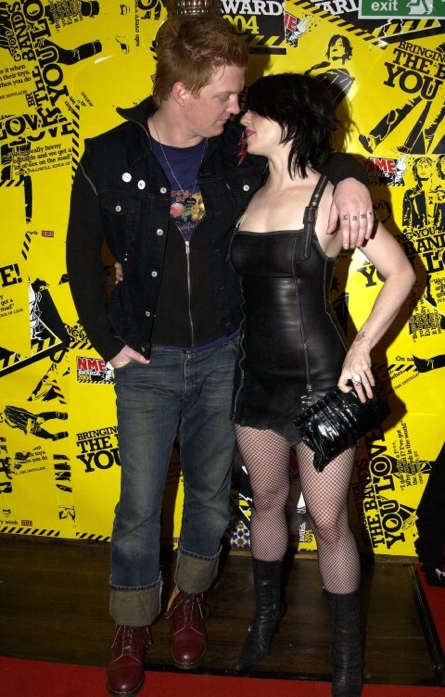
Brody Dalle is a punk rocker who is originally from Melbourne. Her parents named her Bree, and she picked the unisex name Brody for herself as a teenager. Apparently as a child she was called Breezy Wheezy by her family because she had asthma, which rather ruined the name Bree for her.

She has used the middle names Leslie and Joanna Alice; I’m not sure if either of them are her original middle name/s. She has managed an impressive seven surnames during her life, and it’s unclear what the original surname was. She went by Pucilowski, Mayer and Robinson just as a teenager. Eventually she chose Dalle in reference to Béatrice Dalle, her favourite actress. Béatrice Dalle is best known for the film Betty Blue.

Brody began her career in punk at the age of thirteen, and at sixteen she met Tim Armstrong, the vocalist for punk rock band Rancid at a music festival. They began a relationship, although Tim was more than thirteen years her senior. They married when Brody turned 18, and she moved to Los Angeles with her husband, where she founded the band The Distillers. Brody and Tim divorced six years later.

In 2007, Brody married Josh Homme, lead singer from rock band Queens of the Stone Age, and founded the indie rock band Spinnerette; the couple live in Palm Springs, California.

Josh also has an interesting name – he was named after the town he was born in, Joshua Tree, in the Mojave Desert of California. He pronounces his Norwegian surname to rhyme with Tommy, although the Norwegian pronunciation is to rhyme with puma. He has adopted the pseudonym Carlo von Sexron for some of his work, and his nicknames include King Baby Duck, J. Ho, Joe’s Hoe, and the Ginger Elvis.

Brody and Josh have two children, and as they have enjoyed re-naming themselves so much, it’s interesting to see what names they would choose for their children.

Camille Harley Joan was born in 2006. Camille is named after Josh’s grandmother, and Josh collects motorcycles, which probably explains Harley. Although Joan looks like Brody’s middle name Joanna, it also reminds me of rock queen Joan Jett, who must have had some influence on Dalle herself. However, for all I know it’s another family name.

Orrin Ryder was born in 2011. Rumour has it that just as Camille is named after Josh’s grandma, Orrin is named for his grandfather, but I can’t confirm that. Josh has both his grandmother’s and grandfather’s nicknames tattooed on his knuckles – CAM and CAP – so it does have some symmetry. It’s hard not to connect the name Ryder with Josh’s motorcycle hobby as well.

Being called after a family member seems cosy and non-punk, although being named after Dad’s tattoos and motorbikes gives them a bit more of a rock edge.

I wonder if Camille and Orrin will follow the family tradition of giving new names to themselves, and what names they will choose?

Celebrity Baby News: Virginia Trioli and Russell Skelton

01 Thursday Mar 2012

Posted by A.O. in Celebrity Baby News

≈ 14 Comments

Tags

celebrity baby names, unisex names

ABC television presenter, Virginia Trioli, and her husband, journalist Russell Skelton, recently welcomed their son, Addison Marcello Skelton.

Virginia has been a journalist in print, on radio, and on TV for many years; she has won two Walkley Awards. Since 2008, she has been co-host on ABC News Breakfast.

Russell is a contributing editor to The Age newspaper, and has been reporting on Indigenous issues since 2005. He has won the Grant Hattam Quill Award for investigative journalist, and a United Nations Association Peace Award for his reports on Aboriginal disadvantage. Russell has children from a previous relationship.

Virginia and Russell were married in 2003 in Italy.

Addison is a bold choice for a boy, as it is a Top 100 name for girls in Victoria, where the Skelton family live. I’m pleased to see that gender take-backs can occur at any point, if parents only have the gumption to do so.

Boys Names of Australian Aboriginal Origin

26 Sunday Feb 2012

Posted by A.O. in Name Themes and Lists

≈ 18 Comments

Tags

Australian Aboriginal names, Buddhist names, famous namesakes, fictional namesakes, Indian names, Indonesian names, Japanese names, Korean names, locational names, Maori names, name history, name meanings, Native American names, New Zealand names, nicknames, Quechuan names, Samoan names, scandinavian names, scientific names, seasonal names, Slavic names, South American names, Spanish names, surname names, unisex names

This follows on from last week’s list, Girls Names of Aboriginal Origin. It was more challenging to find boys’ names, because many, if not most, Aboriginal words end in a vowel, and easily conform to we think of a “feminine sounding” name. They are similar to names in Hebrew, Arabic, and in the Indian languages in that regard, and even now you will find people who insist that Ezra must be a female name, because it ends in -a.

These are not traditional or tribal Aboriginal names for men, but rather words from Aboriginal languages that I thought could be used as names by people from any culture. Some of them coincide with words or names from other languages, as I thought people may be interested to know that a word from their own heritage has a distinct Australian meaning as well.

Dural

Dural is a pleasant semi-rural suburb of Sydney, and its meaning has been in some dispute. It is said that dural was a word from the Dharug language, meaning “gully, valley”, and this information came from a traditional owner of the land in the 19th century. It was also said to mean “burning logs”, from the word dooral dooral, but this belief only dates from the 1940s, and is taken from the Wiradjuri language. As the Wiradjuri people are from central New South Wales, the local meaning is claimed to be the correct one. Translations of this name as “hollow tree” or “burned out tree” in baby name books can be safely discarded as invention. I think Dural seems very usable as a personal name, and I considered it for Sydney Suburbs That Could Be Used as Boy’s Names. It sounds like familiar names such as Darrell, and sturdily similar to the word endure.

Jarli

This word means “barn owl” in the Jiwarli language of northern Western Australia. As in many other societies, several Australian Aboriginal cultures saw owls as symbols of wisdom, mystery, secrets and sacred knowledge; messengers from one world to another, and companions of the medicine men. The owl features in several myths and legends, and is sometimes depicted in Aboriginal art. This name seems familiar to us, because Jarli is also a Scandinavian boy’s name based on the word for “earl”, and I have seen one or two boys with this name. I like the sound and the meaning of this name, and it is similar to another Jiwarli word: jali, meaning “friend”.

Kaiya

This word from a Queensland language refers to a spear with two barbs, and is pronounced KY-uh. It has been used in the Latin name for a species of caddisfly – Chimarra kaiya – who is so called because of its distinctive barb-like projections. In the Kaurna language of South Australia, the similar sounding kaya means “spear”, although in Nyungar it means “hello; yes”. This is always listed as a girl’s name in baby name books, but the name Kai makes this name look masculine to me. I don’t see how the sound of it is any more “girly” than, say, Hezekiah. The meaning does not seem feminine either. I would say it is a unisex name, and suitable for a boy.

Kuparr

This means “red earth, burnt earth” in the Ngiyampaa language of New South Wales. It refers to the ochre used for making body paint for the Coroborees; the sacred ceremonies of Indigenous Australians involving ritual, dance and music. Red ochre is also used in other Aboriginal forms. Kuparr was the basis for the name of the mining town Cobar, and because copper was mined there, it has also been suggested that it may have been the local way of translating the word copper. Most likely the similarity between the words is a coincidence though. The attraction of this name is that it sounds a bit like Cooper. If you like the sound of Cooper but think it seems a bit boring or surnamey, Kuparr might be for you.

Miro

Miro (MEE-roh) is a Nyungar word for a type of spear thrower which propels the aim of the gidgee; a fearsome qaurtz-tipped spear about 8 feet long. Miro exists as a name or word in several other languages. It’s a Slavic name which is short for Miroslav, meaning “glorious peace”. In Japanese, it’s short for Miroku, a Japanese form of Maitreya, the fifth (future) incarnation of the Buddha. In New Zealand, it’s the name for a species of conifer tree. In Korea, it means “maze”. It’s also the surname of Spanish artist, Joan Miró i Ferrà (Joan was a man) – his surname was short for Ramiro, the Spanish form of a Germanic name meaning “famous counsel”. It’s very multicultural, and none of the meanings that I’ve seen are negative. I think it’s attractive. We had a baby boy in a recent birth announcement named Finn Joseph Miro, so it’s considered usable in Australia.

Monti

This is one of the Aboriginal names for the Black-necked Stork, which is found across the tropical north of Australia, and is the only stork species native to Australia. I have not been able to track down which language it is from, except that it’s not from the Northern Territory, where this bird is called a jabiru. It’s therefore either from Queensland or northern New South Wales, as the only other places where this bird exists. It’s listed as one of the Indigenous names by museums, so I feel fairly confident it’s authentic. The stork is mentioned in several Aboriginal legends, one of them an extremely touching love story. The attraction of this name is that it sounds exactly like the fashionable name Monty, but has its own significance.

Tarka

This means “eggshell” in the Kaurna language of South Australia. I thought of it because I have seen the name Tarka used in the birth announcements from the London Telegraph. It has a number of meanings in other contexts. There is a well-loved English children’s book called Tarka the Otter, so famous that it has given its name to a railway line and a bike path in the West Country. It was made into a film in the 1970s. In the book, Tarka’s name was meant to suggest the barking sound that an otter makes. In India, tarka is a word for seasoning added to a meal, and in Quechuan, a tarka is a type of flute played by the Indigenous people of the Andes. Tarka Cordell was a British musician who died in tragic circumstances a few years ago; I’m not sure where his name was taken from, or whether he is the inspiration for British children having Tarka as one of their names. This is the second name with the meaning of “eggshells” I have suggested; the other was Keid. Because eggshells appear so fragile, and yet are surprisingly strong under compression, I find this meaning very evocative.

Tau

Means “evening, dusk, twilight” in the Kaurna language of South Australia, and is said to rhyme with the word cow. In Maori, it can mean a number of different things, including “sweetheart”, “song, chant”, “string”, or “ridge”. In one of the Indigenous languages of Indonesia, it means “man”. In Samoan, it can mean “anchor” or “war”. It’s known to many people in the context of the Tau Cross, a symbol of life which was used by the Egyptians, and became important in a number of different religions and spiritual paths, including Christianity. I have met men named Tau, but I’m not sure which meaning was associated with their names. I think Tau fits in very well with other popular names for boys, such as Ty, Tai and Taj, and would be readily accepted.

Warragul

Warragul, pronounced WOHR-uh-guhl, is a town in the West Gippsland region of rural Victoria, the birthplace of legendary Aboriginal boxer Lionel Rose. Its name is said to come from a local word, warrigal, meaning either “wild” or “wild dog”, referring to the dingo. The dingo is Australia’s largest predator on land, and its ancestor is thought to have been introduced to Australia by seafarers from south east Asia thousands of years ago, when dogs were less domesticated and more closely related to wolves. Dingoes play a major role in Aboriginal myths and legends; in stories they are often guardians of humans who can warn them of the supernatural or evil spirits. There are also myths of dingo-people shapeshifters, or “were-dingoes”, and often the dingo in legends is a rebel or trickster figure. In everyday life, dingoes were tamed and kept in Aboriginal camps as guard dogs. They were treated with great affection, given names, slept with their human companions, and were even breastfed. At least sometimes they were buried alongside humans. I saw someone in a parenting forum say they had already used Warragul as a baby name.

Warrin

Warrin meant “winter, cold and frosty season” in one the language spoken around the Sydney region when Europeans first arrived. However, there are a number of similar words used throughout Indigenous languages. Warran or Warrung was the original name for the place we call Sydney Cove, and by extension, Sydney itself; it is said to mean “the other side [of the harbour]”. In the Brisbane area, Warun was a place name in the suburb now called Redcliffe; it may have meant “neck”. There are historical records of a man from south-west Queensland named Warun, so it was used as a personal name. In the Melbourne area, warun meant “eel” in the local language, a fish prized as a valuable food source; there is a suburb of Geelong named Warun Ponds. I have also seen the word warun translated to mean “diving ducks” in the Northern Territory. Baby name books translate Warun as meaning “sky”, but I don’t know which language they are deriving it from. From this I deduce that the English name Warren is the most “indigenous sounding” of our names, and perhaps it deserves a closer look.

(The photo is of young actor Brandon Walters, who starred in Baz Luhrman’s film, Australia).

Saturday Sibset: The Children Born of Elvis and Silence

25 Saturday Feb 2012

Posted by A.O. in Sibsets in the News

≈ 8 Comments

Tags

African names, english names, famous namesakes, name meaning, Puritan names, Shona names, sibsets, unisex names, virtue names, vocabulary names, Zimbabwean names

Just as I began writing this article, Nameberry tweeted: Did you hear a name today you’d never heard before? Most days, my answer would be, Nope, pretty much the same old, but that day I could proudly say, Yes indeedy. Well actually I didn’t tweet back because I was too busy writing this, but I’m saying it now.

The Australia Day citizenship ceremonies are always a wonderful source for discovering new names. This is one where some of the childrens’ names were new to me, but the parents’ names were familiar. And yet it was the parents’ names that knocked me for six.

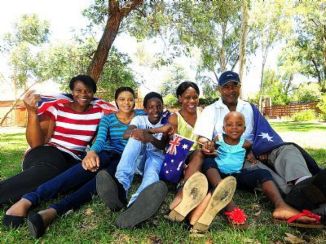
The Matanhire family moved here from Zimbabwe in 2006; they came from the predominantly Shona-speaking city of Mutare, whose name translates as “gold”. They started off in Melbourne, but are now happily settled in Adelaide.

The Matanhire family admit to being motivated by a spirit of adventure, loving to travel and see new places. Mrs Matanhire used to tour African countries as a nurse, educating other healthcare professionals about HIV and AIDS. When a relative who lived in Sydney told them how beautiful Australia was, it seemed like another adventure for them.

Mr Matanhire said becoming a citizen was like “taking a step into a new life”. “It feels very good, you feel like you can plan your life,” he said. Mrs Matanhire said becoming a citizen meant “you belong to the country; you belong to Australia”.

Elvis (aged 45): This is Mr Matanhire’s first name, which was covered as a Famous Name around the time of The King’s birthday anniversary. Once I would have thought this was too over-the-top for a regular person’s name, but now I actually love seeing it in general use. You pretty much assume the parents of anyone called Elvis were massive Presley fans, and this (rightly or wrongly) is how I am picturing Mr Matanhire’s mum and/or dad.

Silence (aged 41): Mrs Matanhire’s first name is a virtue name I saw covered at Names from the Dustbin. When I saw it, I admit to being quite horrified, because as a parent, the thought of your baby becoming completely silent is your worst nightmare. And as a Puritan name almost exclusively given to girls, it has connotations of women being forced into silence in an oppressive way. However, seeing it on an attractive, confident, well-travelled adult, who is clearly not being kept silent and in fact had to do a lot of talking as part of her career, I have softened a little. Now I can see a certain beauty in it, and it makes me think of the inner silence that comes through prayer and meditation.

Caroline (19): Usually the name Caroline doesn’t stand out in a family, but in this case it seems unusual compared to the others. Being the eldest born, I wonder if Caroline was given a family name.

Anesu (15): This is a Shona name which can be given to both boys and girls. For boys, it is the pet form of Isheanesu; for girls, the pet form of Anesuishe. In either case, it means “God is with us”. This Anesu is a boy.

Rumbidzai (4): A female name which means “praise”. I have read that it was originally a royal name, but don’t know if that’s correct. Rumbidzai was born in Australia, so is already a citizen.

Edret: Edret is Elvis’ sister who lives with the family; it’s possible she was the person who first suggested they come to Australia. Her name is a complete mystery to me, mostly because the Edrets I found online tended to be Hispanic men. Perhaps it is short for a longer name. Elvis and Edret make an impressive sibset.

Celebrity Baby News: Eddie Perfect and Lucy Cochran

25 Saturday Feb 2012

Posted by A.O. in Celebrity Baby News

≈ 10 Comments

Tags

celebrity baby names, celebrity sibsets, honouring, unisex names

Comedian Eddie Perfect, and his wife, Lucy Cochran, welcomed their second daughter on February 21. Her name is Lottie Lux, and she was born at 3 pm in Melbourne, weighing 3.94 kg (8 pounds 11 ounces). Lottie joins big sister Kitty, aged 18 months. Eddie jokes that as a father of only daughters, he will soon come to resemble Mr Bennett from Pride and Prejudice.

Eddie is a comedian and musician who has appeared on television for many years, as well as in his stage shows. He has written a satirical musical about cricketer Shane Warne which won multiple awards, and was named Best Entertainer in the Bulletin‘s 100 Brightest Australians for his caustic lyrics, impeccable timing and boy-next-door looks. He currently plays Mick Holland on the Channel 10 series Offspring; Eddie’s fellow cast member Kat Stewart welcomed her own baby, Archie, last month.

Lucy is a strategic planner with advertising firm Saatchi & Saatchi. She and Eddie met in 2006, and were married last year.

Lottie Perfect’s middle name seems a definite nod to her mother, and as we had a celebrity baby called Lux Edward last year, the name Lux seems to be in unisex territory.

(In case you were wondering, Perfect is Eddie’s real name and not a stage name).

Celebrity Baby News: Late Baby News

18 Saturday Feb 2012

Posted by A.O. in Celebrity Baby News

≈ 8 Comments

Tags

famous namesakes, fictional namesakes, locational names, nicknames, unisex names


NRL player John Sutton, the co-captain of the South Sydney Rabbitohs, and his partner Stacey Shumack, welcomed a daughter named Pippi Rae 10 months ago.

Comedienne Sarah Kendall, and her fiancé, comedian Henry Naylor, welcomed a daughter named Viv 20 months ago. Sarah has been living and working in London for twelve years now, which I assume is why we have not heard of Viv’s birth until now. Sarah is currently visiting Australia to perform her show, Persona.

Henry Naylor is a Cambridge Footlights alumnus and one of its former Presidents. He is best known in the UK for his comedy partnership with Andy Parsons and their BBC radio show Parson’s and Naylor’s Pull-Out Sections. He has also written for several TV shows, including Dead Ringers.

Viv Naylor is named after her mother’s favourite fashion designer, Vivienne Westwood, the punk pioneer who set up shop in once-fashionable Chelsea, and her father’s favourite cricketer, Viv Richards, the scintillating former batsman for the West Indies side.

Saturday Celebrity Sibset: A Taste of Scotland – Leigh McClusky and Simon Haigh

18 Saturday Feb 2012

Posted by A.O. in Sibsets in the News

≈ Comments Off on Saturday Celebrity Sibset: A Taste of Scotland – Leigh McClusky and Simon Haigh

Tags

celebrity sibsets, famous namesakes, fictional namesakes, food names, nature names, plant names, Scottish names, surname names, twin sets, unisex names

Last year we featured celebrity mum, Rosanna Mangiarelli, who took maternity leave from Channel 7’s current affairs show, Today Tonight, after the birth of her second daughter, Olivia.

The Today Tonight presenter that Rosanna took over from was Leigh McClusky, who was the show’s anchor from 1995 to 2007. She left when she became pregnant with twins, and later founded her own media and public relations firm in Adelaide. Leigh is currently the host of SA Life, a lifestyle show promoting South Australia. On her team of presenters is Michael Keelan, Grant Cameron, Briony Hume, Rosa Matto, and Pete Michell.

In 2000, Leigh married Simon Haigh, owner of Haigh’s Chocolates. This family-owned boutique chocolate business was started by Simon’s great-great grandfather, Alfred Ernest Haigh in 1915, and continued on by his son Claude. He left the business to John, Simon’s father, who trained in Switzerland, and now Simon and his brother Alister run the business together.

The family motto? “If you’re born a Haigh, you eat dark chocolate,” says Simon.

I’m so glad I am not writing this story at the age of six, for I would have cried with jealousy at children who had a dad with his own chocolate factory, and where you inherit a family tradition of eating dark chocolate.

Now grown-up, and unable even to finish my Valentine chocolates without generous assistance, I feel I can press on without too many tears.

The Haighs chocolate-inheriting children are:

Murdoch (born 2002)

Sigourney (born 2006)

Jock and Tansy (born December 2007, and 18 months younger than Sigourney)

The twins were born with the help of IVF, and according to Leigh, made their different personalities apparent even as new babies – Jock serious, Tansy laid-back.

There’s a Scottish theme going with the boy’s names, suitable for sons of someone named McClusky. Interestingly for the son of a journalist, Murdoch also has the name of a famous family of media magnates; most of us will have heard of Keith Rupert Murdoch, so often in the news recently because of his newspaper, The Sun. Leigh never seems to have worked for the Murdochs, so it may just be a coincidence. Jock seems to have been given the Scottish version of the popular boy’s name Jack.

Sigourney reminds us of American actress Sigourney Weaver. Ms Weaver’s real name was Susan, and she chose Sigourney as a stage name from an off-page character barely mentioned in F.Scott Fitzgerald’s The Great Gatsby, Mrs Sigourney Howard, who is the aunt of the sporting Jordan Baker. It’s a surname occasionally used as a first name, often for males. Because of the actress and the classic novel, it seems very American, although Sigourney Weaver is of Scottish heritage too.

Tansy is the name of a bitter and toxic herb, considered useful in cooking, gardening and medicine for thousands of years. It has cheery yellow flowers, and is a good companion plant as it keeps away insects. A tansy is also a type of sweet omelette pudding, flavoured with the herb; British comedian Sue Perkins got slightly poisoned eating one on the entertaining Supersizers Go … series. The plant grows abundantly wild in Scotland.

(Both photos from the Herald Sun archives).

Famous Names: Ita and Cleo

08 Wednesday Feb 2012

Posted by A.O. in Famous Names

≈ 16 Comments

Tags

celebrity baby names, famous namesakes, Greek names, Irish names, nicknames, popular culture, saints names, unisex names

The Australian Academy of Cinema and Television Arts was established last year as a subsidiary of the Australian Film Institute; its job is to administer the AACTA Awards, which replace the old AFI Awards. Every news report on television seemed to feel it necessary to point out that AACTA is said just like the word actor, which I think most of us would have understood without help, seeing as they just said it aloud to us.

The Australian Academy has been deliberately set up in a similar way to the American Academy of Motion Picture Arts and Sciences, and the awards ceremony has been moved to late January, in order to fit in with the prize-giving season in the United States, which holds the Golden Globes and the Academy Awards in January and February. The AACTA Awards ceremony has been moved to Sydney and held at the Opera House, possibly because that seems more Hollywood than Melbourne. The AACTA statuette has also been remodelled, with some commenting that it looks like a flamboyant Australian Oscar.

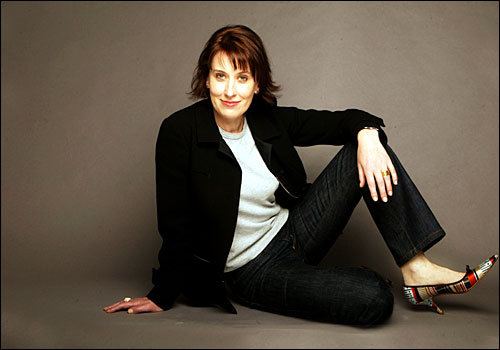
Amongst the prize-winners was Asher Keddie, who won the Switched on Audience Choice Award for Best Performance in a Television Drama, for her role as Ita Buttrose in the mini-series Paper Giants: The Birth of Cleo. I must confess to not voting in this contest, or even knowing it existed until too late (obviously I’m not a very switched on audience member), but I do approve of the choice, as I thought Ms Keddie did an excellent job of portraying famous editor, Ms Buttrose.

Ita Buttrose, like Barry Humphries and Father Bob, is another super septuagenarian. She was named after her maternal grandmother, Ita Clare Rodgers (nee Rosenthal). Her ambition since the age of 11 was to be a journalist, and she began working as a copy girl at 15. Ita was a force in the Australian media for many years, including as youngest editor of The Australian Woman’s Weekly, the largest magazine in Australia. She became the first woman to edit a major metropolitan newspaper, the Daily Telegraph. Always perfectly presented, cultured and refined, she is instantly recognisable for her trademark lisp. She’s been granted several awards and honours, and supports a multitude of causes, from AIDS to Alzheimer’s. Ita is also an author of many practical books; her latest is a guide to etiquette.

Ita (IE-ta) is an Anglicisation of the Irish name Íte (EE-ta). Saint Ita of Killeedy was a 6th century Irish nun who headed a community of women. One of their tasks was to run a school for small boys; among her students was Saint Brendan the Navigator. According to tradition, Ita was of royal blood and baptised Deirdre; the name Ita she chose herself from the Old Irish word ítu, “thirst”. This was to signify her thirst for divine goodness. Today it sounds mildly vampiric.

Ita Buttrose became the founding editor of Cleo magazine in 1972, and made it an instant success – the first edition sold out in two days. Cleo was something new in Australian publishing: a magazine for women that spoke openly about sexuality. There were articles on masturbation, abortion, contraception and sex toys, and a nude centrefold – the first model for the centrefold was actor Jack Thompson. It made the sexual revolution accessible to the average woman. In Paper Giants, the title Cleopatra is suggested for the magazine, as befitting a strong yet sexual woman, but Cleo is chosen because it fits better on the masthead. It intrigues me that Cleo sounds similar to Ita’s middle name – Clare – and wonder whether she unconsciously selected a title that sounded like her own name. Cleo is also the name of Ita’s pet dog (Clare is her grand-daughter).

Cleo is usually thought of as being a short form of Cleopatra, but it can be short for any name beginning with Cleo-, such as Cleophas. It is therefore a unisex name, and there are several prominent men named Cleo, including American motorcyclist and World War I flying ace Cleo Pineau. The father of Elizabeth Short, the Black Dahlia murder victim, was named Cleo. It is from the Greek for “glory, fame, pride”. This gorgeous little name is right on trend for o-enders, and was also a celebrity baby name last year. It would make a great alternative to popular Chloe.

← Older posts
Newer posts →

Enter your email address to follow this blog

Categories

Archives

Recent Comments

A.O.'s avatarwaltzingmorethanmati… on Zarah Zaynab and Wolfgang…
Madelyn's avatarMadelyn on Zarah Zaynab and Wolfgang…
JD's avatardrperegrine on Can Phoebe Complete This …
A.O.'s avatarwaltzingmorethanmati… on Rua and Rhoa
redrover23's avatarredrover23 on Rua and Rhoa

Blogroll

  • Appellation Mountain
  • Baby Name Pondering
  • Babynamelover's Blog
  • British Baby Names
  • Clare's Name News
  • For Real Baby Names
  • Geek Baby Names
  • Name Candy
  • Nameberry
  • Nancy's Baby Names
  • Ren's Baby Name Blog
  • Sancta Nomina
  • Swistle: Baby Names
  • The Art of Naming
  • The Baby Name Wizard
  • The Beauty of Names
  • Tulip By Any Name

RSS Feed

  • RSS - Posts

RSS Posts

  • Celebrity Baby News: Melanie Vallejo and Matt Kingston
  • Names from the TV Show “Cleverman”
  • Can Phoebe Complete This Sibset?
  • Zarah Zaynab and Wolfgang Winter
  • Baby, How Did You Get That Name?
  • Celebrity Baby News: Media Babies
  • Celebrity Baby News: Adelaide Crows Babies
  • Celebrity Baby News: Chris and Rebecca Judd
  • Names at Work: Name News From the World of Business and Employment
  • Celebrity Baby News: Sporting Round Up

Currently Popular

  • The Top 100 Names of the 1930s in New South Wales
  • Rare Boys Names From the 1950s
  • The Top 100 Names of the 1940s in New South Wales
  • Girls Names From Stars and Constellations
  • Celebrity Baby News: Alisa Camplin and Oliver Warner

Tags

celebrity baby names celebrity sibsets english names famous namesakes fictional namesakes honouring locational names middle names name combinations name history name meaning name popularity name trends nicknames popular names saints names sibsets surname names twin sets unisex names

Blog at WordPress.com.

Privacy & Cookies: This site uses cookies. By continuing to use this website, you agree to their use.
To find out more, including how to control cookies, see here: Cookie Policy
  • Subscribe Subscribed
    • Waltzing More Than Matilda
    • Join 517 other subscribers
    • Already have a WordPress.com account? Log in now.
    • Waltzing More Than Matilda
    • Subscribe Subscribed
    • Sign up
    • Log in
    • Report this content
    • View site in Reader
    • Manage subscriptions
    • Collapse this bar
 

Loading Comments...