• About
  • Best Baby Names
  • Celebrity Baby Names
  • Celebrity Baby Names – Current
  • Celebrity Baby Names – Past
  • Featured Boys Names
  • Featured Girls Names
  • Featured Unisex Names
  • Links to Name Data
  • Waltzing on the Web

Waltzing More Than Matilda

~ Names with an Australian Bias of Democratic Temper

Waltzing More Than Matilda

Tag Archives: Scottish names

Famous Name: Errol Flynn

22 Thursday Oct 2015

Posted by A.O. in Famous Names

≈ 2 Comments

Tags

aristocratic titles, Disney names, Disney princes, famous namesakes, Irish names, locational names, name history, name meaning, name popularity, names from films, Old English names, popular names, Scottish names, surname names, Turkish names, Welsh names
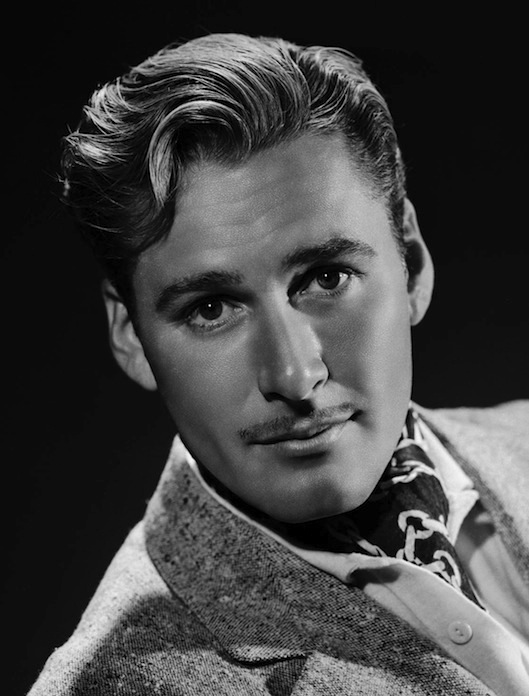
Errol-Flynn

Errol Flynn is one of Australia’s most famous actors, even though he died more than 50 years ago, on October 14 1959. Born in Hobart in 1909, he is seen as a particularly Tasmanian export, although in Hollywood he passed himself off as Irish before he became an American citizen (he also said he was a descendant of a Bounty mutineer, which wasn’t true either).

Flynn became an immediate sensation in Hollywood from his very first role – a 17th century pirate in the 1935 film Captain Blood, although other stand out roles were as Fletcher Christian and Robin Hood. He was typecast as a derring-do swashbuckling action hero, famous for his well-choreographed sword fighting scenes. At the height of his career he was one of the most popular actors in America, and was roguishly handsome, with a dashing, debonair, devil-may-care image.

His reputation was as a womaniser, a highly-sexed, caddish, unscrupulous seducer. The expression in like Flynn is said to have been inspired by the ease at which Flynn was able to obtain women, and dates to 1942, when Flynn was up on charges of statutory rape. Accused of raping two 17-year-old girls, Flynn was acquitted by a jury made of mostly of women: during the trial he flirted with a teenager who he went on to respectably marry, after carefully verifying she was over 18.

Flynn was blunt about his proclivities, saying I like my scotch old and my women young. He was tickled enough by the slang expression that he tried to call his autobiography In Like Me, but the publishers changed it to My Wicked, Wicked Ways.

The rape trial didn’t seriously damage Flynn’s reputation, earning a round of backslaps and you-rascal-yous. He did face criticism for not serving in the US military during World War II. The studio kept secret that he had failed his medical, as their supposedly athletic star was in terrible physical shape. He had multiple heart problems, recurrent malaria, chronic back pain, chronic tuberculosis, and a dizzying array of sexually transmitted diseases.

To self-medicate these various ills, he drank heavily, and sometimes used morphine and heroin. When his career went downhill and he lost most of his money, he became old and bloated, sailing around on his yacht developing hepatitis and cirrhosis of the liver. However, he still managed to get a 15-year-old mistress to sail around with (Orry-Kelly had been their go-between), and planned to marry her except that she was barely 17 when he died. She never stopped loving him.

Whatever he had – charm, charisma, sex appeal – he never lost it. Controversial to the end, he became a figure of which almost anything could be believed, and biographies have variously suggested that he was a closet bisexual, a Nazi, a Communist, a sexual predator, a paedophile, a murderer, and a drug-runner (the Nazi claim is definitely debunked; the others are unsubstantiated).

Flynn was one of the original Hollywood bad boys, celebrated in film and song, and still making headlines today. Love him or loathe him, he was unforgettable.

ERROL
Scottish surname, usually said to be from the village of Errol in Perthshire, the meaning of whose name is lost in the mists of time. However, the surname came into use late enough as to cast some doubt on this theory, and it may be a corruption of an earlier surname.

Errol has been used as a first name since the 18th century, originating in Scotland. One of the factors helping its use was probably the aristocratic title the Earl of Erroll, in the Scottish peerage since the Middle Ages. Erroll is the older spelling of the village of Errol, and the first Earl was William Hay, who was born in Errol. The title is still in the Hay family.

Errol was #160 in the 1900s when Errol Flynn was born, and peaked in the 1940s at the height of his career – just outside the Top 100 at #103. After the rape trial, the name fell sharply, and left the charts in the 1970s.

The name has been a favourite in the Caribbean, with a famous example being British singer Errol Brown, who was born in Jamaica. The first prime minister of Barbados was Errol Barrow, an enormously popular leader regarded as a hero of his country, although Errol Flynn lived in Jamaica in the 1950s and was a great boost to the island’s tourism.

Errol joined the US Top 1000 in 1936, the year after Errol Flynn’s Hollywood career began. It peaked in 1941 at #355 – the 1942 rape charges may not have killed off his career, but it did damage his brand as a namesake for babies. It hasn’t been in the Top 1000 since 1985, and last year 20 baby boys were named Errol. In the UK, there were 11 baby boys named Errol in 2014, and numbers are actually rising.

Errol is well known to Harry Potter fans as the name of the Weasley family’s owl. J.K. Rowling may have had in mind the Latin word erro, meaning “to go astray, to wander about, to go amiss”, as Errol is a feeble old owl who often gets lost while delivering the Weasley’s mail. It’s the basis for the English word error.

Errol seems rather vintage and cool, while still lovably eccentric. It could work well cross-culturally, as its similar to the Old English name Eorl, meaning “earl”, the Welsh name Eryl, meaning “a look out post”, and the Turkish name Erol, meaning “brave”.

FLYNN
Irish surname which is an Anglicised form of Ó Floinn, meaning “son of Flann”; the name Flann means “reddish, ruddy of complexion”.

Flann Fína mac Ossu was a 7th century king of Northumbria who was the son of an Anglo-Saxon king and an Irish princess – his English name was Aldfrith. Flann Sinna was a 9th century High King of Ireland, and there are also medieval Irish poets with the name. Flynn has been used as a personal name since the 18th century, mostly for boys: from the beginning the name was used in Ireland as well as other English-speaking countries.

The name Flynn began charting in the 1990s, and was #342 for the decade, although it made the Top 100 in 1997 at #93. This was the year after Flynn was released, a film about the early life of Errol Flynn with Guy Pearce in the title role. Coincidentally, it was also the year that Sean Flynn, the grandson of Errol Flynn, began his acting career.

In 2001 Flynn was back in the Top 100 at #98 – this was the year after David Bret published a salacious biography about Errol Flynn called Satan’s Angel. It had a burst of popularity in 2004, getting to #73: the year before, Flynn’s 1959 autobiography My Wicked Wicked Ways was republished, and the 1938 film The Adventures of Robin Hood was released on DVD.

The next jump for the name was in 2011, when it got to #51: this was the year after the Disney film Tangled, with the Disney prince Flynn Rider based on Errol Flynn himself, and named in his honour. It was also the same year that model Miranda Kerr chose the name Flynn for her son. The name peaked in 2013 at #32 (the same year that Kerr separated from her husband, British actor Orlando Bloom).

Last year Flynn was #45 nationally, #40 in New South Wales, #38 in Victoria, #34 in Queensland, #40 in Western Australia, #37 in Tasmania, and #42 in the Australian Capital Territory.

Flynn is only popular in Australia and New Zealand – it is #48 and stable across the Tasman. It is #137 in the UK, and has been rising steadily since Tangled and the birth of Flynn Bloom, while in the US it joined the Top 1000 in 2011, and is currently #659 and still rising. It will be interesting to see how it fares in other countries since reaching its peak here.

Flynn is a popular name with a strong Australian connection. Unlike Errol, it has gained a cool Disney namesake and become a celebrity baby name, giving it a significant boost. No longer rising in Australia, Flynn seems to have settled in, perhaps on its way to becoming a modern classic. Handsome, Irish, Australian, on trend, and stable, Flynn seems like a popular yet safe choice.

POLL RESULTS
Errol received an approval rating of 27%. 53% of people weren’t keen on Errol, and 8% loved it.

Flynn did much better, receiving an excellent approval rating of 82%, making it one of the top-rated names of 2015. 44% of people thought Flynn was a good name, while only 4% thought it was a terrible one.
Girls Names from International Destinations

27 Sunday Sep 2015

Posted by A.O. in Name Themes and Lists

≈ 2 Comments

Tags

Arabic names, car names, Celtic names, Dutch names, english names, ethnonyms, fabric names, famous namesakes, fictional namesakes, gemstone names, honouring, locational names, mythological names, name history, name meaning, name popularity, names of deserts, names of rivers, names of US states, Native American names, nicknames, Sanskrit names, Scottish names, slave names, stage names, surname names, unisex names, vocabulary names

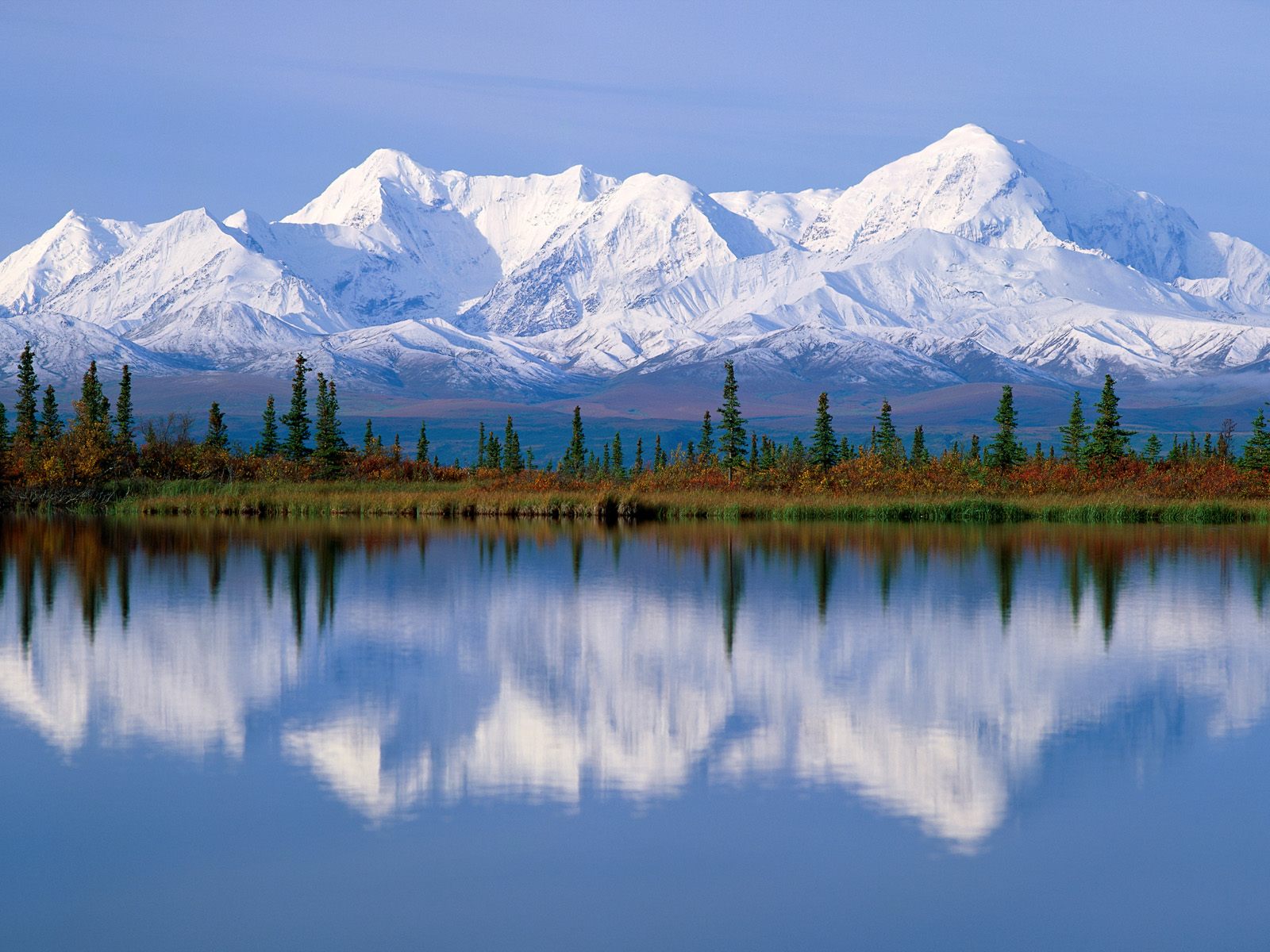
alaska-mountains

Aberdeen
The third largest city in Scotland, often called The Energy Capital of Europe because of its North Sea oil reserves, and Scotland’s most important city economically. Another of its claims to fame is that it is the coldest city in the UK. The original name for Aberdeen was Aberdon, a Celtic name meaning “mouth of the Don” – the River Don empties into the North Sea north of Aberdeen’s original site. The river’s name may be derived from Devona, a Celtic deity whose name means “river goddess”. I saw a baby girl named Aberdeen in the newspaper, and her mother emailed me to explain that her name is in honour of Kurt Cobain, lead singer for the rock band Nirvana, who was born in Aberdeen, Washington (Aberdeen’s father is a great admirer). The American city’s name is after a salmon cannery which was named for the Scottish city, because it is also situated on a rivermouth. A rare name with a possible feminine origin which can be shortened to Abby or Deeni.

Alaska
The most northern state of the USA, separated from the continental US by Canada. First colonised by Russia, it was purchased by the United States in the 19th century, and eventually became a state in 1959. Once famous as a gold rush area and wild frontier, it is now known for its vast gas and oil reserves, and stunning natural beauty. The state’s name was adopted during the Russian colonial period, derived from an Aleut word meaning “mainland” (literally “that which the sea breaks against”). The name has become better known since the 2005 publication of John Green’s first young adult novel, Looking for Alaska, with the character of Alaska Young a beautiful but unstable teenage girl who is the hero’s love interest.

Calais
A town and major seaport in northern France and a major trading centre since the Middle Ages. It is famously located at the narrowest point of the English Channel, and a popular place to make for when swimming the Channel (or crossing by ferry). It was once a territory of England, and called “the brightest jewel in the English crown” for its rich commercial opportunities. The Romans called it Caletum, apparently in reference to the local Celtic tribespeople; it was from Calais that Caesar launched his invasion of Britain. Pronounced kal-ay, Calais sounds similar to names such as Callie and Carly while having the fashionable AY sound. Calais is also a boy’s name – in Greek mythology, Calaïs was a son of the North Wind, and one of the Argonauts. The name means “turquoise” or “chrysolithe” (another blue-green jewel), so is a rare masculine gemstone name. It is pronounced KAL-uh-ees. I’ve seen several boys in Australia named Calais, but more likely because of the car, the Holden Commodore Calais, than after the Greek hero.

Havana
The capital of Cuba, and a popular tourist destination that’s almost instantly recognisable from its colourful architecture and vintage cars. Under American occupation before the revolution, it was a playground for the middle classes, a sort of offshore Las Vegas with an exciting tinge of corruption and decadence. The city was founded by the Spanish in the early 16th century and named San Cristóbal de la Habana. Saint Christopher is the city’s patron, but the meaning of Habana isn’t certain. It may come from Habaguanex, the name of a Native American chief who controlled the region. The name has become fairly well known in Australia because of the DJ, singer, and dancer Havana Brown. Born in Melbourne to parents from Mauritius, Havana’s birth name is Angelique Meunier. The name Havana was #339 in Victoria in 2012. Pronounced huh-VAH-nuh, it fits in with the trend for names with a strong V sound, and looks like a natural successor to Ava and Harper.

Holland
A historic region of the Netherlands, sometimes informally used to refer to the country itself (Dutch people outside North and South Holland may not appreciate this, just as Scots don’t care for being told they’re from England). The name comes from the Middle Dutch holtland, meaning “wooded land”, but folk etymology connects it to the modern Dutch hol land, meaning “hollow land”, because the Netherlands is famously low-lying. Holland is also an area of Lincolnshire, similarly flat and famous for tulips, but its name comes from the Old English for “hill spur land, ridge land”. It is from this area that the English surname Holland comes, and you can see Holland as a surname name too. Both Holland Park in London and the Holland Tunnel in New York are from the Lincolnshire connection. Holland is also a fabric; this heavy linen was in the past often imported from the Netherlands. Long in use for both sexes, on a girl this name easily shortens to Holly.

India
India is named for the Indus River, one of the longest rivers of Asia, which flows from Tibet into the Arabian Sea; the Sanskrit name for the river is Sindhu, which means “body of trembling water”. Alexander the Great crossed the Indus, and the ancient Greeks called the people of present-day Pakistan and India Indoi, meaning “people of the Indus” – it’s the origin of the word for the Hindu religion as well. The Indus Valley was the birthplace for an ancient civilisation, the oldest urban culture in South Asia. In Britain, India was often given as a name in reference to the British Raj, and still has a rather upper class image in the UK. In the US, India had steady use in Indiana, but overall was more common in the south – a famous fictional namesake is India Wilkes from Gone With the Wind, the sister of Ashley. India was also given as a slave name in colonial America, perhaps because it was associated with a dark complexion. It’s always been a name which symbolises exoticism to Europeans, and is around the 200s in Australia, a natural successor to popular Indiana and sharing the nickname Indi.

Mississippi
An American state in the south, named for the Mississippi River, another inspiration for the name. The Mississippi is the chief river of North America, and one of the largest in the world, rising in Minnesota and meandering to the Gulf of Mexico. The Mississippi River Valley is one of the country’s most fertile areas, and was the focus for the steamboat era, brought to life in the works of Mark Twain. It features in songs such as Johnny Cash’s Big River, Creedence Clearwater Revival’s Proud Mary, and Charley Pride’s Roll on Mississippi. The river’s name comes from Misi-ziibi, the Objibwe or Algonquin for “great river”. Lengthy, and a spelling minefield for the unwary, this comes with two snappy nicknames: Missi and Sippi.

Odessa
A city in the Ukraine founded by Catherine the Great. It was named thus because of a belief that it was the site of an ancient Greek city called Odessos – Odessos is now thought to have been where Varna, in modern Bulgaria, is today. The name is probably pre-Greek, and its meaning and origin unknown. A free port, Odessa was a city where people of many cultures and languages mingled; its cosmopolitan nature made it a place for freethinkers to congregate, and Mark Twain predicted it would become one of the great cities of the world. The first tremors of the Russian Revolution could be felt here in 1905, after a workers’ uprising was put down with a brutal massacre. Odessa looks as if it could be related to all kinds of familiar names, and is sometimes even touted as a feminine form of Odysseus, so it feels like a “real name”. It’s right on trend and would make a great alternative to popular Olivia.

Sahara
The largest desert in Africa, and the largest hot desert of the world, the Sahara stretches right across northern Africa, often very beautiful in its shifting sandscapes. Its name is an intensifier of ṣaḥrā , the Arabic word for desert, to suggest “great desert”. The singer-songwriter Sahara Smith received her name because her father hiccuped while suggesting the name Sara, and liked the result. This is a pretty name which is so similar to names like Sara, Sarah, Zara and Zahara that its main issue is probably being confused with them.

Venice
A city in northern Italy built on a series of islands separated by a maze of canals and linked by bridges. It is seen as one of the most beautiful cities in the world and a very romantic destination, thanks to its ornate architecture and the gondolas providing transport through its waterways. A wealthy city for most of its history, it has a particularly strong connection with the arts and music, and has featured in many plays, novels, and films. The city’s name comes from the Veneti, the tribespeople who populated the area in ancient times. Etymologists believe their name comes from an ancient root meaning “strive, wish for, love” (to suggest strong kinship bonds), giving it a very attractive meaning as well. The name seems to have been used since the 16th century, although in at least some records, may have been confused with the related names Venus or Venetia. This artistic name would make a good alternative to rising Florence.

POLL RESULTS
People’s favourite names were Odessa, India and Holland, and their least favourite were Havana, Venice and Mississippi.

(Photo is of Denali National Park in Alaska)

Waltzing With … Lachlan

06 Sunday Sep 2015

Posted by A.O. in Waltzing with ...

≈ 4 Comments

Tags

aristocratic names, celebrity baby names, classic names, famous namesakes, Gaelic names, name history, name meaning, New Zealand name popularity, nicknames, patriotic names, popular names, Scottish names, UK name popularity, US name popularity

2010-australia-post-booklet-governor-lachlan-macquarie-stamp-packs-and-booklets-a3440-1500x700

Famous Namesakes
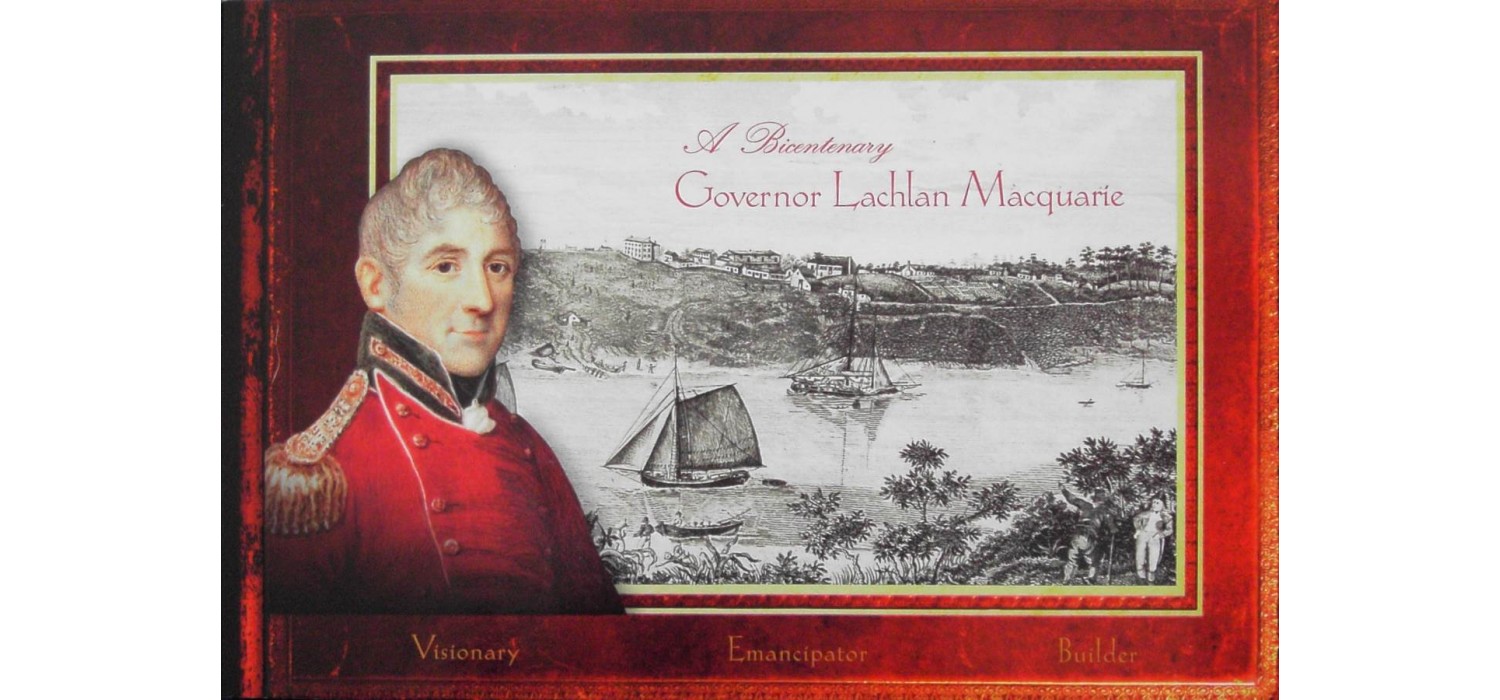
The name Lachlan has a long history in Australia because of Lachlan Macquarie, a British military officer born in the Hebrides who served as the fifth and last Governor of New South Wales. While still a teenager, he served during the American War of Independence, and saw active service in India and Egypt, eventually being promoted to the rank of Major-General.

Lachlan served his term as Governor from 1810-1821, and he had plenty to cope with, as the colony was disorderly following the Rum Rebellion against the former Governor, William Bligh. There was also a severe drought during his term, which brought about a financial depression, and the end of the Napoleonic Wars in 1815 led to a huge increase in Australia’s population from both settlers and convicts. Despite these challenges, Lachlan loved Sydney’s climate and setting, and saw the colony in very positive terms.

This was the period of Australia’s history where it was in transition from a penal colony to a free settlement. Lachlan held liberal views towards convicts, pardoning them as often as possible. He scandalised settlers by accepting freed convicts into society, and appointing them to government positions – even as magistrates. He sponsored massive exploration, and established Bathurst, the first inland city.

He spent lavishly on public works, which the British government strongly opposed, as they still saw Australia as a dumping ground for convicts, to be run as cheaply as possible. Sydney’s layout is based on Lachlan’s street plan for the central city, and the colony’s most prestigious buildings were on Macquarie Street. He designed the Georgian-style Rum Hospital, which today is the state’s Parliament House, while its stables house the Sydney Conservatorium of Music. He also designed the city centre of Hobart in Tasmania.

So much of the modern Australia we know was first begun by Governor Macquarie. He established the British system of justice, and the first Supreme Court. He encouraged the creation of the colony’s first bank, The Bank of New South Wales (now Westpac), and produced Australia’s first official currency. Towards the end of his term, he decreed that all traffic should keep to the left in New South Wales in line with British custom.

Perhaps the most important change he made was a symbolic one – he recommended that the name Australia be formally adopted, giving the seal of approval to Matthew Flinders’ choice. Little wonder that on Lachlan Macquarie’s tomb on the Island of Mull in Scotland he is called The Father of Australia.

Happy Father’s Day! And Happy Father’s Day to Lachlan Macquarie, the father of our country.

Name Information
Lachlan is a Scottish name from the Highlands. It is from the Gaelic Lochlann, meaning “land of the lochs” (land of the lakes). It was originally given as a nickname for someone from Norway: Norway has almost half a million freshwater lakes, so it well deserves this epithet. The name is pronounced LOK-lun.

The word Lochlann was first used to indicate “a Viking, a raider”, but gradually came to mean anyone of Norse descent. There was a strong link between the neighbouring lands of Norway and Scotland during the Middle Ages, as both battled for control of the Western Isles of Scotland. As part of the effort to improve the Scotland-Norway relationship, there were diplomatic missions between the two nations, and even intermarriage between the royal houses.

The name Lachlan (or Lochlann) was commonly used amongst the noble families of Scotland, who were often of part Norse descent. The name was traditional in the Clan Maclean, an old Highland clan who owned land in Argyllshire and the Hebrides. (Lachlan Macquarie’s mother was the daughter of the chieftain of the Clan Maclaine, another spelling of Mclean, and his father was the chieftain’s cousin). The current chief of Clan Maclean is Sir Lachlan Maclean of Duart and Morven, 12th Baronet of Nova Scotia.

The name Lachlan is only popular in Australia and New Zealand (it is #27 in New Zealand). In the UK Lachlan was #546 in 2013, while Lochlan was #709; the name is fairly stable there. In the US, the name Lachlan first joined the Top 1000 in 2013, and is currently #902 – a long way off being popular, but gaining in popularity. In the US, the name was given to 14 girls last year, which seems very wrong from an Australian viewpoint!

The name Lachlan was #173 in the 1900s, and went off the charts altogether during the 1920s and ’30s. It returned in the 1940s at #220, and gradually increased in popularity. There was a surge in popularity during the 1970s, most likely because media magnate Rupert Murdoch named his eldest son Lachlan in 1971. Rupert’s grandfather was from Scotland, and the choice of Lachlan’s name may have been inspired by his Scottish heritage as much as a tribute to Lachlan Macquarie.

Lachlan first joined the Top 100 in 1982 at #96, joined the Top 50 in 1989, and the Top 25 in 1996 – fairly brisk progress up the charts. It suddenly leapt into the Top 5 in 1997, the year after Lachlan Murdoch joined the board of Newscorp. However, it never made #1, peaking at #2 in 2002 and 2005, and has now left the Top 10. Currently it #11 nationally, #15 in New South Wales, #10 in Victoria, #12 in Queensland, #7 in South Australia, #12 in Western Australia, #6 in Tasmania, #8 in the Northern Territory, and #4 in the Australian Capital Territory.

This is a strong handsome Australian classic with a connection to Australian colonial history. A popular name for many years, it is by no means fresh or original, but still a worthy choice.

POLL RESULT
Lachlan received an outstanding approval rating of 91%, making it one of the highest-rated names of 2015. 39% of people loved the name Lachlan, and only one person hated it.

(Picture shows a 2010 stamp booklet issued in honour of Lachlan Macquarie’s bicentenary as governor)

Famous Names: Bowie and Pluto

20 Thursday Aug 2015

Posted by A.O. in Famous Names

≈ 2 Comments

Tags

astronomical names, Disney names, dog names, english names, famous namesakes, Gaelic names, Greek names, historical records, Irish names, middle names, mythological names, name trends, names of weapons, nicknames, rare names, Scottish names, slave names, stage names, surname names, UK name popularity, unisex names, US name popularity

get-ready-for-david-bowie-to-take-over-melbourne-1432194284

Names in the News
On July 14 this year NASA’s New Horizons space probe made its closest encounter with the dwarf planet Pluto. Australia was the first place on Earth to receive images of Pluto from New Horizons, at the CSIRO’s Canberra Deep Space Communication Complex at Tidbinbilla. The CDSCC has been tracking New Horizons since it was launched in 2006, and it will take more than a year to receive all the data.

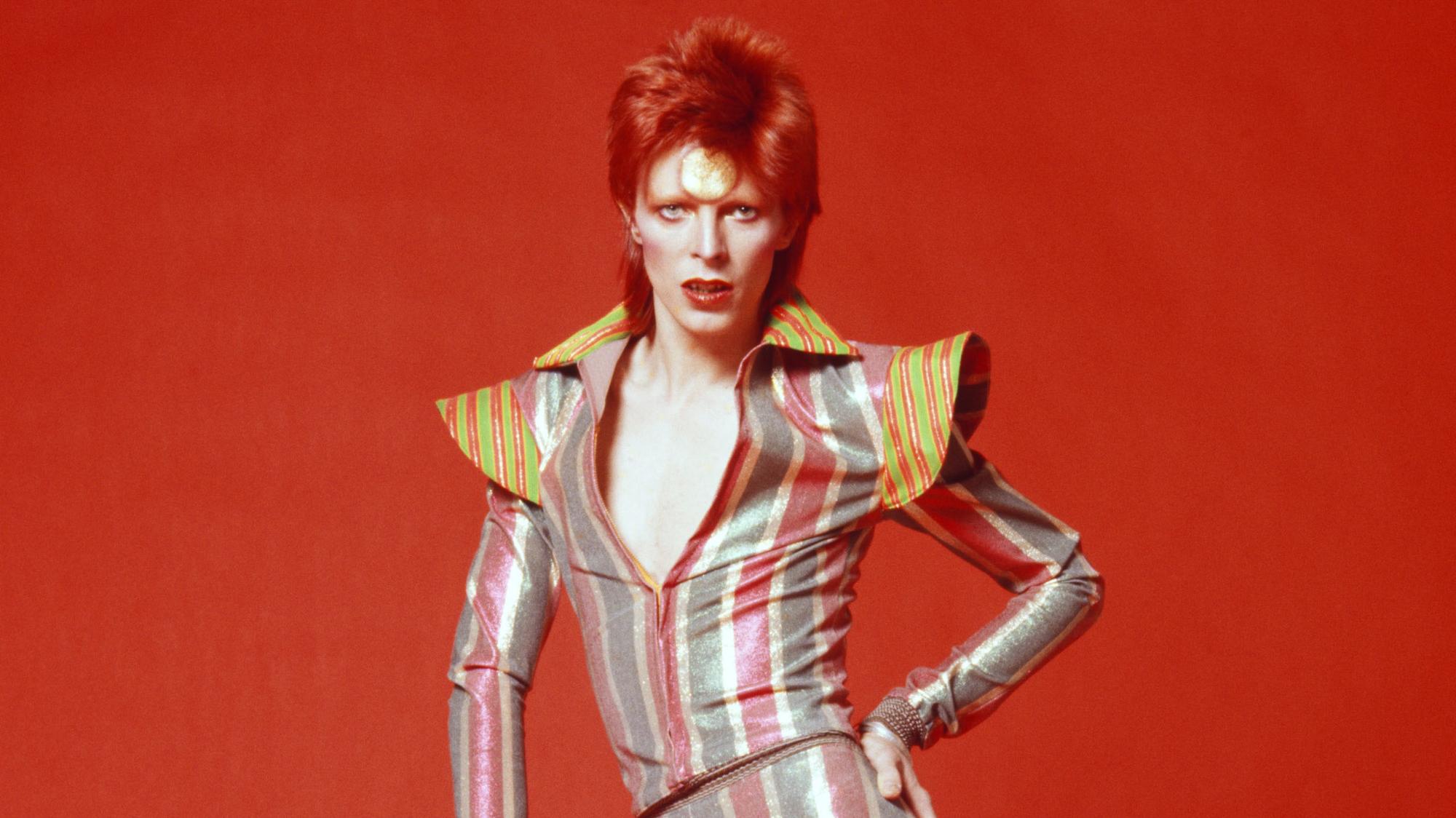
Two days later, the David Bowie Is touring exhibition opened at Melbourne’s Australian Centre for the Moving Image, and broke all records for ticket sales before anyone stepped inside the doors. First staged at the Victoria and Albert Museum in London, it has already been seen by more than 1 million people around the world. The show includes costumes, video, photographs, and items from Bowie’s own collection, including notes and sketches.

David Bowie has a special significance in Melbourne. His first Australian tour was in 1978, and the biggest concert of his career to that point was at the Melbourne Cricket Ground. People queued for three weeks to buy tickets, and the fact that it poured with rain did nothing to dampen the spirits of 40 000 fans. His experiences in Australia in the 1970s inspired the music video for Let’s Dance, filmed in Sydney and outback Carinda).

Besides having key Australian events at around the same time, there isn’t an obvious connection between Bowie and Pluto. Except that Bowie has had so many references to space in his music – Space Oddity, Ashes to Ashes, Ziggy Stardust, Moonage Daydream, The Stars (Are Out Tonight), Life on Mars?, Star Man – that it doesn’t seem too much of a stretch to cover these names together.

BOWIE
Scottish surname derived from the Gaelic nickname Buidhe, meaning “yellow”, to denote someone blond or fair haired. It has also been used to Anglicise the Irish surname Ó Buadhaigh, meaning “son of Buadhach”, with Buadhach meaning “victorious”, although more commonly that’s Anglicised to Boyce. In rare cases it may be a variant of the English surname Bye, from the Old English for “bend”, referring to someone who lived on a river bend.

The Bowie surname originates from Kintyre in western Scotland, and the Bowie family were early colonists to America, with John Bowie Snr one of the founders of Maryland in the early 18th century. He was the grandfather of James “Jim” Bowie, who played a prominent role during the Texas Revolution, and died at the Battle of the Alamo in 1836.

The thick heavy blade known as a Bowie knife is named after Jim, who carried a hunting knife with him and had a reputation as a skilled knife fighter. His brother Rezin Bowie is supposed to have been the creator of the Bowie knife, although Bowie family history relates that it was Rezin’s blacksmith who created the knife.

David Bowie was born David Jones, and first performed as Davie Jones, which risked being confused with Davy Jones from The Monkees. He chose his stage name after seeing the movie The Alamo in 1963, with Richard Widmark as Jim Bowie; allegedly he wanted a name with a “cutting” feel to it, like Mick Jagger’s, and the Bowie knife gave it some edge. He deliberately chose the name of a famous American, as American music and culture had first inspired him.

Bowie has been used as a personal name since the 18th century, and originated in Scotland. Mostly used as a middle name, it was first given as a family name, but in 19th century America increasingly given to honour Jim Bowie: it was particularly found in the southern states. The name Bowie has been given to both sexes, but mostly to boys.

Jagger, Lennon, and Hendrix are reasonably common names, but even with the fame of David Bowie, the name Bowie is in rare use. It doesn’t chart in Australia, while in the UK there has been a smattering of Bowies on the charts since 2003; in 2013 there were 5 baby boys named Bowie. In the US last year, there were 59 baby boys named Bowie and 30 baby girls (numbers rose considerably for boys, but fell for girls).

It is slightly puzzling why Bowie isn’t used more. It sounds like familiar names like Beau, Bohdi, and Brodie, is a counterpoint to popular Archer, and as a knife it fits the trend for weaponry names like Blade.

One issue is that the pronunciation is slightly confused. In the US, Bowie tends to be said BOO-ee, the usual pronunciation of the surname and the Bowie knife. The British sometimes say the first syllable of David Bowie’s surname like the bough of a tree, whereas Bowie himself says it like bow and arrows.

PLUTO
In Greek mythology, Pluto is the god of the Underworld and the afterlife. His earlier name was Hades, but gradually this was used to mean the Underworld itself. Pluto is the Latinised form of the Greek Plouton, meaning “wealth, riches”, and the name is sometimes glossed as “giver of wealth”.

It makes sense that Pluto should be associated with wealth, because he has dominion over all the precious metals, gems, and resources under the earth, and all crops planted in soil. He was a god of abundance, and from early on was associated with agricultural fertility – which is why he was the natural husband for the agricultural goddess Persephone. Pluto and Persephone were revered as a divine couple with knowledge of the mysteries of birth and rebirth.

In the Christian era, there was often a horror of gods of death and the Underworld, who tended to be associated with Satan or demons. Pluto’s image, never a particularly cheerful one, became positively macabre, with Hades a place of torment. In Dante’s Inferno, Pluto rules the fourth circle of Hell, where those who have squandered their wealth are sent. Medieval English writers sometimes conflated Hades with Fairyland, giving Pluto a magical elf-king quality.

The dwarf planet Pluto was discovered in 1930 by a young astronomer named Clyde Tombaugh who had just started working at the Lowell Observatory in Arizona. It was named by an eleven-year-old Oxford schoolgirl named Venetia Burney. She made the suggestion to her grandfather Falconer Madan, retired from the University of Oxford’s Bodleian Library. He had the connections to ensure that Venetia’s idea got to the right people, they unanimously agreed, and Venetia was paid £5 (around $450 in today’s money). A big help was that the first two letters were PL – the initials of Percival Lowell, who had founded the observatory.

When Walt Disney studios created a pet dog for Mickey Mouse in 1930, he was named Pluto – apparently after the planet, although nobody is able to confirm that. So Pluto went from being a god name to a dog name!

Pluto is a gloomy god, a dwarf planet, a cartoon dog … but the name has also been rarely used for humans. The name is first found in colonial America in the 18th century, as a slave name. Pluto can be found in Australian historical records (Pluto Riches and Pluto Surprise are two interesting finds), and was also given to Aboriginal servants. Overall, Pluto has mostly been used in the United States. Use of the name, always low, fell after 1930 and never recovered, although it isn’t clear whether parents were put off by the astronomical body or the Disney character.

Pluto is probably too much of a space oddity to use as a first name, but would make a memorable middle.

Two rare names from the stars: which one will rate better?

POLL RESULTS
The name Bowie received an approval rating of 50%. 42% of people weren’t keen on it, although 17% loved it.

The name Pluto was much less popular, with an approval rating of 15%. 46% of people weren’t keen on it, and only 7% thought it was a good name.

(Picture of David Bowie in 1973 by Masayoshi Sukita; photo from Urban Walkabout)

Suburbs of Adelaide and Hobart Which Could Be Used as Boys Names

26 Sunday Jul 2015

Posted by A.O. in Name Themes and Lists

≈ 2 Comments

Tags

Anglo-Saxon names, aristocratic names, aristocratic surnames, astronomical names, car names, colour names, dated names, english names, famous namesakes, fictional namesakes, gemstone names, germanic names, honouring, locational names, middle names, mythological names, name history, name meaning, name popularity, names from movies, names of animals, names of ships, nature names, nicknames, Old French names, plant names, popular names, rare names, retro names, Roman names, royal names, saints names, Scottish names, surname names, tree names, unisex names, vocabulary names


OLYMPUS DIGITAL CAMERAAustin
Austins Ferry is a suburb of Hobart, named after convict James Austin. Austin and his cousin was transported to Australia in 1803, and after their sentences expired, were given small land grants on the River Derwent near Hobart. In 1818 they established a ferry service across the river, and became very wealthy. You can still visit James Austin’s original cottage. Austin is an Old French shortening of the name Agustin, the equivalent of the English Augustine, and the surname Austin has the same source. Austin was #108 in the 1900s, and left the charts in the 1950s. It returned in the 1990s at #196, the decade of the Austin Powers spy comedies with Mike Myers in the title role. Groovy, baby! It climbed steeply and joined the Top 100 in 2011. It is currently #61, and was the fastest-rising name in Queensland and a fast-rising name in South Australia last year. It was a fast-rising name in New South Wales in 2013 too, so this retro name is doing very well for itself, and is now more popular than it has ever been before.

Cornelian
Cornelian Bay is a suburb of Hobart, whose bay on the River Derwent provides anchorage for yachts; there are boathouses and a waterside restaurant along its foreshore. The first English navigator to explore the Derwent was Lieutenant John Hayes; he came ashore here in 1793, and named the bay after the semi-precious cornelian stones which he found on the beach. Cornelian (also known as carnelian) is a dark red mineral whose name is from the Latin for the cornel cherry, a flowering dogwood tree which has small dark red fruit just the colour of the gemstone. Cornelian was used in Roman times for signet rings used to seal important documents, as hot wax doesn’t stick to it. It was a gemstone often associated with courage and good luck. Cornelian has been in very rare use as a personal name since the 17th century, and overall has been given fairly evenly to both boys and girls. Not many gemstones work well as boys’ names, but this sounds very similar to Cornelius, yet seems much more up-to-date. This would also make a great middle name, and is suitable for both sexes.

Fitzroy
Fitzroy is an inner-city suburb of Adelaide, and an exclusive area overlooking the North Adelaide Parklands. The houses are mostly 19th century mansions along a few tree-lined streets, as this is where the upper class settlers lived in the city’s early days. It may have been named after Fitzroy in Melbourne, which is named after Sir Charles FitzRoy, the governor of New South Wales in the mid 19th century. Another suggestion is that it was named for historic Fitzroy Square in London, whose name comes from Charles FitzRoy, 2nd Duke of Grafton, an 18th century politician who was a distant ancestor of Diana, Princess of Wales. The English surname Fitzroy (or FitzRoy) comes from the Old French for “son of the king”, and was traditionally given to illegitimate sons and daughters of a monarch, and could be inherited as a surname by their descendants. For example, the father of the 2nd Duke of Grafton was an illegitimate son of King Charles II by his mistress Barbara Villiers. Fitzroy has been used as a personal name since the 18th century, and was sometimes used to indicate a family relationship with illegitimate royalty. Roy- (and royal) names are on trend, and this is one you could consider that has Fitz or Fitzy as the nickname.

Hobart
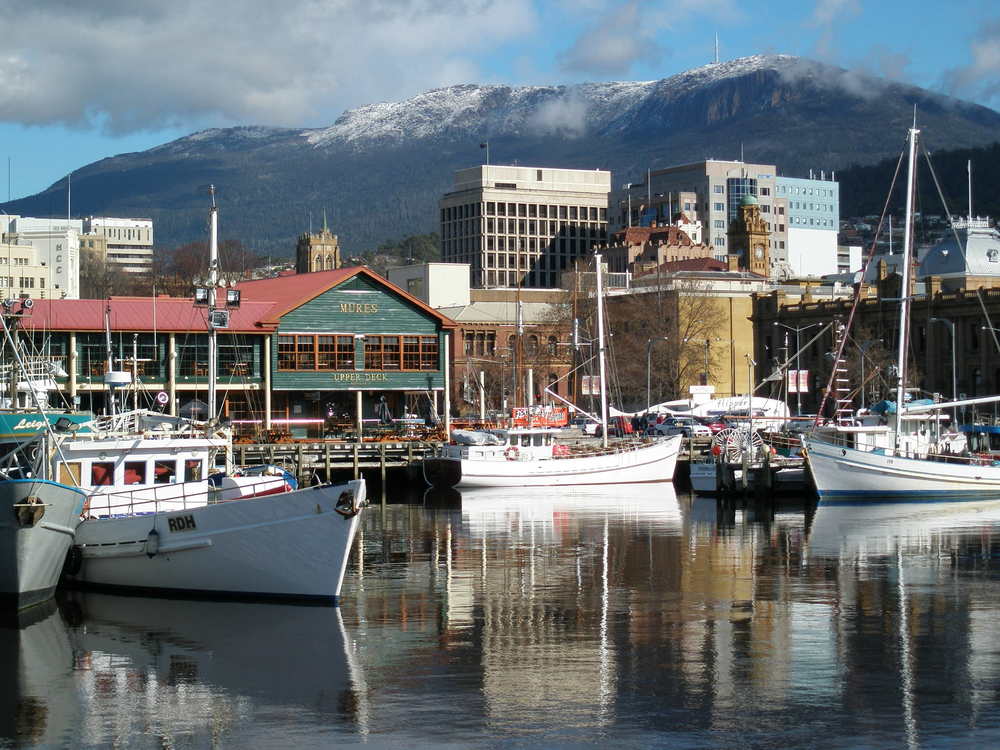
Hobart is the capital of Tasmania; it is Australia’s second-oldest capital city after Sydney, and is our most southern capital city, serving as a hub for Australian and French Antarctic operations. It is located on an estuary of the Derwent River at the foot of Mount Wellington, and more than half of the city is taken up with bushland, so it contains much natural beauty. A small city with many historical buildings from its colonial past, Hobart has a great deal of charm. Hobart was named after Robert Hobart, 4th Earl of Buckinghamshire: Lord Hobart was the Colonial Secretary at the beginning of the 19th century. The surname Hobart is derived from the personal name Hubert, meaning “bright mind”. Hobart has long use as a personal name, and can be found often in historical records, with it being a bit of a favourite in Tasmania – indeed one example I found was Tasman Hobart. The Ho- at the beginning is rousing yet problematic, but you could use Bart or Barty as a nickname. A patriotic choice that may work better as a middle name.

Holden
Holden Hill is an inner-city suburb of Adelaide. It was named after a road extension called Halden’s Hill in the mid 19th century, as the land the road ran through was owned by a Mr Halden. The name was corrupted into Holden Hill. Holden is an English surname after a small village in Lancashire; it comes from the Anglo-Saxon meaning “deep valley”. Its most famous literary namesake is Holden Caulfield from J.D. Salinger’s Catcher in the Rye. It’s quite likely that Salinger named the character after a friend called Holden Bowler he met while they were both working on a ship. Mr Bowler went on to run his own advertising business and was godfather to singer Judy Collins. In Australia Holden will remind people of the car company, its name coming from South Australian manufacturer Sir Edward Holden (although it is owned by General Motors). Sadly, Holden will cease production in Australia in 2017. A very uncommon name in Australia because of the car.

Jupiter
Jupiter Creek is a semi-rural suburb of Adelaide which was once part of a gold-mining area, and still a place to go fossicking. Its name was given by gold-miners, possibly after a bull named Jupiter who was fond of running away to graze there. In Roman mythology, Jupiter is king of the gods, and the god of the sky and thunder, the equivalent of the Greek god Zeus. Ruler of the heavens, he was a divine witness to oaths and the protector of the state and justice; his symbols were the oak tree, the eagle, and the thunder bolt. His name is from an ancient root meaning “O Father Sky-god”, so his name is an invocation: to speak the name of Jupiter aloud is to call upon the god. The Romans named the largest planet in the solar system after Jupiter, and believed those born under its influence to be especially fortunate. As Juno is a hip name for girls, and so is Juniper, Jupiter for boys doesn’t seem too strange. A possible issue is the movie Jupiter Ascending, which has Mila Kunis as a heroine named Jupiter.

Linden
Linden Park is an affluent suburb of Adelaide. It was named after a house and estate which was built by Sir Alexander Hay in 1861. Linden trees (Tilia) are also called lime trees, although they are not closely related to the tree which produces lime fruit. They are tall, shady trees that have great significance in Germany and Eastern Europe, where they were seen as sacred; in German folklore, the linden is said to be the tree of lovers. Lindens have often featured in stories and poems, often as a symbol of love, protection, or resurrection. In Marcel Proust’s Swann’s Way, the narrator dips his madeleine cake into a cup of lime-flower tea, which opens up a flood of memories. The word linden is from an ancient Germanic root which may mean “mild, soft”: the timber of the linden tree is soft and easily worked, making it ideal for carving. Linden has been used as a name since the 18th century, overwhelmingly for boys, and is found in Australian records quite often, mostly from around the late 19th and early 20th centuries, although I know a few men around my age named Linden. I haven’t seen it on a young child, but this is a handsome, soft-sounding tree name, not so different in sound from popular Lincoln.

Montrose
Montrose is a northern suburb of Hobart. It is named after Montrose House which was built in 1813 by a Scottish settler named Robert Littlejohn, a renowned painter, botanist and teacher. It is the third oldest house in the state, and is named after Montrose, on Scotland’s east coast. A picturesque resort town, it is regarded as a cultural centre, and known for its sculpture. The town’s name is usually thought to be from the Gaelic monadh, meaning “moor”, and ros, meaning “peninsula”. Folk etymology understands it as “mount of roses”, and the town’s Latin motto is Mare Didat, Rosa Decorat, meaning “the sea enriches, the rose adorns”. Montrose is also a surname, and the Duke of Montrose is a title in the Scottish peerage, held by the Graham family. Montrose has been used as personal name since the 18th century, and first used by the Grahams. It has been used for both sexes, but is more common as a male name. Scottish and aristocratic, this is like a cross between Montgomery and Ambrose, and has Monty as the obvious nickname.

Sorell
Sorell is a historic market town north-east of Hobart, now a dormitory suburb of the city. It is named after William Sorell, the state’s third Lieutenant-Governor. William Sorell did a good job of cleaning up the colony, which he had found in a fairly lawless and untidy position. The English surname Sorell is from the Old French nickname Sorel, meaning “chestnut”, and given to someone with reddish-brown hair. It has been in rare use since the 19th century, and is given to both sexes, although more common overall as a male name. It may be known from Sir Julian Sorell Huxley, biologist and brother of Aldous Huxley. An interesting, intelligent name that may sound too close to the word sorrow for some parents.

Stuart
Mount Stuart is a suburb of Hobart on a ridge with the wonderful name of Knocklofty. The suburb is named because of Mountstuart Elphinstone, a Scottish statesman and historian who was Governor of Bombay (now Mumbai). A ship named in the governor’s honour as the Mountstuart Elphinstone visited Hobart in 1836, bringing the welcome news that the cruel and unpopular Lieutenant-Governor George Arthur was ordered to return to London. In celebration of getting rid of him, two roads were named Mount Stuart Road and Elphinstone Road, and eventually the area became known as Mount Stuart. Mountstuart Elphinstone was probably named after Mount Stuart House on the Isle of Bute in Scotland, the seat of the Stuarts of Bute. They are descended from Robert II of Scotland, the first of the Stuart kings (the Elphinstones are related to the Stuarts). The name of the Stuart dynasty comes from Stewart, the Scottish form of steward, meaning a governor. The first of this surname was Walter Stewart of Dundonald, High Steward of Scotland. The Stuart dynasty ended up ruling Great Britain for more than a century, and it’s because of them that Stuart was used as a personal name. Stuart was #135 in the 1900s, joined the Top 100 in the 1940s and peaked in 1969 at #31. It left the Top 100 in the 1990s and hasn’t charted since 2010. Stewart was less popular, never reached the Top 100, and hasn’t charted since the early 2000s.

POLL RESULTS
People’s favourite names were Linden, Austin and Holden, and their least favourite were Montrose, Jupiter and Hobart.

(Photo shows Hobart)

Uncommon Boys Names from the Birth Announcements of 2011-12

21 Sunday Jun 2015

Posted by A.O. in Name Themes and Lists, Requested Names

≈ 4 Comments

Tags

aliases, aristocratic surnames, Australian slang terms, Biblical names, english names, epithets and titles, famous namesakes, fictional namesakes, food names, fruit names, germanic names, hebrew names, honouring, imperial titles, Irish names, Italian names, Latin names, locational names, mythological names, name history, name meanings, name popularity, name trends, names from movies, names of bands, Old Norse names, plant names, Polish names, rare names, royal names, saints names, Scottish names, Slavic names, surname names, unisex names, US name popularity, US name trends, weaponry terms

Billy-Slater-5941649Augustus
The Emperor Augustus was the founder of the Roman Empire and its first emperor; the month of August was named after him. His reign initiated the Pax Romana, a relatively conflict-free period which lasted for more than two centuries. Born Gaius Octavius, he was granted the title of Imperator Caesar Divi Filius Augustus, meaning “Military Commander and Caesar, the Son of God, the Venerable”, with the Augustus part meaning “venerable”, from the Latin augeo, meaning “increase, growth, honour”. Before it became an imperial title, Augustus was an epithet used to signal something that was sacred, and the title was adopted by the Holy Roman Emperors in the Middle Ages. Augustus has been a favourite name amongst European royalty, and traditionally used by the Hanoverians in the British monarchy. Hazel has shot into the Top 100 since The Fault in Our Stars, and I wonder if it could also boost regal Augustus, as this is the name of Hazel’s love interest? The name is already rising in the US, so maybe. Gus is a popular short form, although I have seen a lot of interest in Augie because of the Australian rock band Augie March, named for a character in a Saul Bellow novel.

Brasco
Scottish surname referring to someone from the village of Brisco in Cumbria, once part of the Strathclyde kingdom of Scotland. The place name comes from the Old Norse for “wood of the Britons”. Also an extremely rare Italian surname which is probably from the Germanic brakia, meaning “struggle”, used as a nickname. The name is well known because of the undercover alias Donnie Brasco used by FBI agent Joseph Pistone during the 1970s: his autobiography inspired the movie Donnie Brasco, with Johnny Depp in the title role. It has an unfortunate meaning in Australia, as brasco is slang for “toilet”, from the manufacturer Brass Co. Brasco is an extremely cool-sounding name, and as for the toilet association – better tell everyone to just forget about it!

Casimir
Latinised form of the Polish name Kazimierz, from the Slavic for “to destroy fame”, referring to someone who annihilates their opponent in battle so completely that they lose all honour. Four medieval rulers of Poland have been named Casimir, and St Casimir, the son of Casimir IV, is the patron saint of Poland and Lithuania. Kazimierz is a reasonably popular name in Poland, but Casimir is rare around the world, even in countries with high immigration from Poland. However, this is a handsome heritage choice, not so different from fashionable Casper and hip Caspian, with Caz as the obvious nickname, although Cass and even Cash seem possible.

Fintan
Irish name thought to mean “white fire”. In Irish mythology, Fintan mac Bóchra was a seer who accompanied Noah’s granddaughter to Ireland before the Great Flood. When the floodwaters hit, his family were all drowned, but Fintan managed to survive under the sea in the form of a salmon for a year; he also lived as an eagle and a hawk before returning to human form. He lived for more than 5000 years after the Deluge, becoming the repository of all wisdom. Once Christianity arrived in Ireland, Fintan decided to leave the world of mortals with a magical hawk who was born at the same time as he. There are a staggering 74 Irish saints named Fintan, which shows what a common name it must have been, and it is still in regular use in Ireland. The popular boy’s name Finn, and all the similar names, such as Finlay and Finnian, make this seem on trend.

Gage
English surname which can be related to the word gauge, meaning “measure”, and would have started as an occupational surname for someone who checked weights and measures. It can also be an occupational surname for a moneylender, as gage meant “pledge” – that which the person would put up as surety against the money loaned (as when objects are pawned). Its related to the words wage and mortgage, and also to the word engage: when you get engaged to someone, you make a pledge to them. Gage is an aristocratic surname; Sir William Gage first introduced the plum-like greengage into England in the 18th century, which is where its English name comes from. Gage has been used as a personal name since the 18th century, originating in the west country. It first joined the US charts in 1989, the same year that Stephen King’s Pet Sematary was made into a horror film; the protagonist’s toddler son is named Gage, played by Miko Hughes (from Full House). Although Gage takes on a particularly macabre role in the story, the cuteness of little blond Miko must have had an effect. Still in fairly common use in the US, Gage is a rare name in Australia and the UK – its similarity to the word gauge, used in the context of guns, makes this an on-trend weaponry name.

Loki
In Norse mythology, Loki is a mysterious figure, sometimes depicted as a trickster or god of deceit. Other times he is a troublemaker, or commits outright evil. Although said to be one of the giant folk, he is sometimes numbered amongst the gods, and seems to have been on friendly terms with them at some point. However, after many acts of mischief and malice, they punished him by having him bound by the entrails of one of his sons, with a serpent dripping venom on him, making him writhe in pain, which causes earthquakes. It is foretold that at the end of the world, he will slip free from his bonds and fight against the gods on the side of the giants, and be slain. Fittingly for such an enigmatic character, the meaning of Loki isn’t known. However, he is also called Lopt, meaning “air”, suggesting he was associated with that element. In Scandinavian folklore, the phenomenon where the air shimmers on a hot day is said to be caused by Loki. The name has been used more often since the Marvel comics world was brought to life on film, with Loki as a super-villain played by Tom Hiddleston. Hiddleston portrays a complex, vulnerable, intelligent character whose charisma and style has won him legions of fans. Not only a cute-sounding mischievous name, Loki is quite similar to popular names like Luca and Lachlan, so it doesn’t seem strange.

Nazareth
Biblical place name; in the New Testament it is described as the home town of Jesus and his family. It’s also a title, because Jesus is often called Jesus of Nazareth. In early times, Christians were called Nazarenes (“people of Nazareth”) by non-Christians, and the modern Jewish word for Christians is notzrim, while in the Quran Christians are known as naṣārā – all coming from the name Nazareth. Archaeologists think that Nazareth would have been a small, insignificant village at the time of Jesus; today it is a city in northern Israel with most of its citizens Arabs, both Muslim and Christian. A place of Christian pilgrimage, it also has several sites of Islamic significance. The meaning of the city’s name is uncertain – it may come from the Hebrew for “branch”, or “watch, guard, keep”, implying it was originally on a hill, or protected in a secluded spot. Nazareth has been used as a personal name since at least the 16th century, and is of Puritan origin. Originally used mostly for girls, overall it has been given fairly evenly to both sexes, and has never been very common. An unusual Biblical name which is overtly Christian.

Roland
Derived from the Germanic name Hruodland, translated as “famous land”, or perhaps “fame of his country”. Roland was an 8th century Frankish military leader under Charlemagne, responsible for defending France against the Bretons. It is recorded that he was killed at the Battle of Roncevaux Pass in northern Spain by a group of rebel Basques. He became a major figure in medieval legend, and his death an epic tale of a Christian hero slain in battle against Muslims (the real Roland was killed by Christians, although Charlemagne was engaged in a war against Islamic forces in Spain). The 11th century La Chanson de Roland (The Song of Roland) describes Roland fighting a rearguard action against thousands of Muslims with a magical sword given to Charlemagne by an angel. Against the sensible advice of his best friend Oliver, Roland proudly refuses to call for reinforcements until it is too late, then dies a martyr’s death before angels take his soul to Paradise. In an English fairy tale based on a Scottish ballad, Childe Rowland is a prince who rescues his sister from the Dark Tower of the King of Elfland; the story is mentioned in Shakespeare’s King Lear. It helped inspire the poem Childe Roland to the Dark Tower Came by Robert Browning, and in turn this informed Stephen King’s fantasy series, The Dark Tower, with Roland Deschain as the flawed hero. Roland was #107 in the 1900s and continued falling until it left the charts altogether in the 1990s. This is a traditional underused name which is heroic and noble.

Slater
English surname referring to someone who worked with slate, especially in laying slate roof tiles. The surname comes from Derbyshire, and although it is of Norman-French origin, possibly existed before the Conquest. It has been used as a personal name since the 17th century, and from the beginning was associated with Derbyshire and the Midlands, which has a long history as a centre for slate quarrying. An unfortunate association in Australia is that slater is another word for a wood louse. The surname has several sporting namesakes, including former cricketer and media personality Michael Slater, rugby league star Billy Slater, and American surfing champion Kelly Slater. That probably helps explain use of the name Slater at present, and it seems like a tougher, edgier version of Tyler.

Willoughby
English surname after a village in Lincolnshire, meaning “homestead by the willows, settlement by the willows”. Willoughby’s main claim to fame is that it was the birthplace of John Smith, who was one of the leaders of the Virginia Colony in early colonial America, and connected with the Native American girl known as Pocahontas. Willoughby is an aristocratic surname connected with several baronies; the family trace their lineage to a Norman knight who was granted land in Lincolnshire by William the Conqueror. Since the 17th century, the Barony of Willoughby de Eresby has been associated with the office of the Lord Great Chamberlain, who has charge of the royal apartments and hall at Westminster Palace, and plays a major role at coronations: the current baroness was one of the maids of honour at Queen Elizabeth’s coronation. Willoughby is also a suburb of Sydney on the Lower North Shore, first settled as farmland under Captain Arthur Phillip. Some people believe Surveyor-General Sir Thomas Mitchell chose the suburb’s name in honour of Sir James Willoughby Gordon, whom he had served under during the Peninsular War. In use as a personal name since the 17th century, Willoughby is a hip boy’s name which seems like a spin on popular William, while also boosted by looking like a masculine form of Willow. Will is the obvious nickname.

Thank you to Leah for suggesting the name Willoughby be featured on Waltzing More Than Matilda.

POLL RESULTS
People’s favourite names were Augustus, Willoughby and Fintan, and their least favourite were Nazareth, Brasco and Slater.

(Photo of Billy Slater from the Herald Sun)

Girls Names from the British Royal Family

10 Sunday May 2015

Posted by A.O. in Name Themes and Lists

≈ 1 Comment

Tags

Arabic names, British names, celebrity baby names, classic names, created names, epithets and titles, famous namesakes, fictional namesakes, French names, germanic names, Greek names, honouring, Italian names, locational names, middle names, mythological names, name history, name meaning, name popularity, names from songs, nature names, nicknames, Old Irish names, plant names, popular names, royal names, saints names, Scottish names, Shakespearean names, UK name trends, virtue names

1893042-embijoutee

I hope everyone had a very happy Mother’s Day! It’s expected that the new princess will increase the current trend for baby names inspired by royal traditions, so here are some names for girls from the House of Windsor. I’ve focused particularly on the names of some of the younger royals.

Alexandra
Alexandra is one of the most common girls’ names in the British royal family. It was introduced to it by Queen Alexandra, the wife of King Edward VII. A Danish royal, she was extremely popular with the British public, and much admired as a setter of fashion. After her, the name became a favourite to pass down, including to Queen Alexandra’s granddaughter, Lady Alexandra Duff, and her great-granddaughter, Princess Alexandra, the queen’s cousin; Alexandra is one of the queen’s middle names. Alexandra is the feminine form of Alexander, and unlike many other feminisations of masculine names, Alexandra seems to have come first. It was an epithet of the Greek goddess Hera in her role as protector, and can be understood as “she who saves warriors”. St Alexandra was a legendary martyr, and the name is traditional amongst European royalty. Alexandra was #239 in the 1900s, and dropped off the charts in the 1910s and ’20s. Returning in the 1930s, its popularity jumped in the 1950s, and it was Top 100 by the early 1970s. It peaked in 1995 at #14, and is currently #75. A dignified classic with a host of nickname options, including popular Lexi.

Cosima
Lady Cosima Windsor is the daughter of the Earl of Ulster, and a great-granddaughter of King George V; born in 2010, she is 27th in line to the throne. Cosima is the feminine form of the Cosimo, the Italian form of Greek Cosmas, meaning “order” (related to the British name Cosmo). A famous musical namesake is Cosima Wagner, the daughter of Franz Liszt and wife of Richard Wagner. British socialite Countess Cosima von Bülow Pavoncelli has given the name a very fashionable air, and the name has been chosen for their daughters by celebrities Nigella Lawson, Sofia Coppola, and Claudia Schiffer. You may also remember young actress Cosima Littlewood, who played Adele in the mini-series Jane Eyre, while Australians will be reminded of Cosima De Vito, singer and Australian Idol contestant. Elegant and sophisticated, Cosima is an upper-class choice that works well multiculturally.

Eloise
Eloise Taylor is the eldest daughter of Lady Helen Taylor, a granddaughter of Prince Edward, Duke of Kent, and great-granddaughter of King George V; born in 2003, she is 39th in line to the throne. Eloise is the English form of Éloïse, from the Old French Héloïse. It’s thought to be from the Germanic Helewidis, from name elements meaning “healthy, whole”, and “wood, forest”. The name became famous because of Héloïse, a brilliant medieval scholar and feminist, famous for her scandalous affair and secret marriage to her distinguished teacher, Pierre Abélard, who was castrated in punishment. Their tragic romance has captured people’s imaginations for centuries, and it is a tradition for lovers and the lovelorn to leave letters on their reputed grave in Paris. Eloise entered the charts in the 1970s, making #498. It was the same decade that 8-year-old Eloise Worledge was abducted from her home in Melbourne, with the case still unsolved. Eloise rose steeply in the 1990s, when the song Eloise featured at Eurovision, and joined the Top 100 in 2011. One of the fastest risers of 2013, this pretty, stylish name is currently #71 and still rising. I picked this name to be in the Top 10 by 2028.

Imogen
Imogen Lascelles is a daughter of Mark Lascelles, and a great-great-granddaughter of George V; born in 1998, she is not in line to the throne as her father was born out of wedlock. Imogen is a name created by William Shakespeare for his romance Cymbeline: in the play, Imogen is a princess of ancient Britain, and a virtuous wife who is falsely accused of infidelity. The name is a variation of Innogen, which comes from the Old Irish Ingen, meaning “maiden, daughter”; Innogen was a legendary British queen. Modern scholars consider that the substitution of Imogen for Innogen was a misprint, especially as Shakespeare already used the name Innogen in Much Ado About Nothing, so this would be a rare example of a name created from a printing error. Imogen first entered the charts in the 1970s, debuting at #724 for the decade, perhaps inspired by sexy English pin-up and actress Imogen Hassall. The name Imogen rose steeply during the 1990s, and entered the Top 100 in 2001. Currently Imogen is #34 and stable, and was one of the fastest-rising names in New South Wales for 2013. Chic and British with a superior literary heritage – not too shabby for a “made up” name!

Isla
Isla Phillips is the daughter of Mark Phillips, a granddaughter of Princess Anne, and great-granddaughter of Queen Elizabeth; born in 2012, she is 15th in line to the throne. Isla is a Scottish name taken from an archaic spelling of the island of Islay in the Hebrides, which is said IE-luh, not IZ-lay. The island’s name is of unknown origin and meaning. Islay began as a male name in the 18th century, and Isla gradually became seen as a specifically feminine spelling of the name which overtook the male form in the 19th century (Islay is more commonly given to girls now too). Isla first entered in the charts in the 1990s, debuting at #891 for the decade – propelled there by actress Isla Fisher, who was then in popular soap opera Home and Away. The name zoomed up the charts during the 2000s when Fisher became a gossip mag staple as aspiring Hollywood actress and partner of British comedian Sacha Baron Cohen. Isla entered the Top 100 in 2008 at #74 and is currently #13 and rising. I picked this name to be in the Top 5 by 2028.

Ophelia
Ophelia is one of the middle names of Lady Gabriella Windsor, a writer known professionally as Ella Windsor. She is the sister of Lord Frederick Windsor, who has been featured on the blog as a royal dad. Lady Gabriella is the daughter of Prince Michael of Kent, and a great-granddaughter of King George V; born in 1981, she is 45th in line to the throne. Ophelia is well known as the title character’s tragic love interest in William Shakespeare’s Hamlet. Shakespeare did not create the name, but took it from the Italian form Ofelia in Jacopo Sannazaro’s 1504 pastoral romance, Arcadia – Sannazaro was a huge influence on 16th century literature. The name Ophelia looks to be taken from the ancient Greek ophelus, meaning “help”, to suggest “assistant”. Sannazaro may have invented the name, but there are examples of men in ancient Greece with male forms of the name, such as Ophelion, so it seems plausible that the ancient Greeks could have used Ophelia as a female name. Beautiful and elaborate, Ophelia is rising in the UK, and this seems like a very hip alternative to popular Olivia.

Senna
Senna Lewis is the daughter of Lady Davina Lewis; she has received quite a bit of press in the Antipodes, because her father is a New Zealander, the first Maori to marry into the British royal family. Senna is a granddaughter of Prince Richard, Duke of Gloucester, and a great-great-granddaughter of King George V; born in 2010, she is 29th in line to the throne. Senna can be a variant of the Arabic name Sana, meaning “brilliance, radiance, splendour”; it is one of the five daily prayers in Islam. It can also be a nature name after the flowering senna plants, whose name has the same Arabic source and meaning. There are numerous varieties of senna, some of which are grown as ornamental trees and shrubs, but widely familiar as a herbal laxative. The name Senna was used for a minor character in the Twilight series, sparking recent interest in the name, but the name had been used several times previously in science-fiction and fantasy. It’s also associated with the Brazilian Formula 1 champion, Ayrton Senna, often considered the best of all time. Similar to popular Sienna, this unusual botanical name has potential.

Sophia
Sophia is one of the middle names of Lady Amelia Windsor, a daughter of George Windsor, granddaughter of Prince Edward, Duke of Kent, and great-great-granddaughter of King George V; born in 1995, she is 36th in line to the throne. Sophia of Hanover was the heiress to the throne of Great Britain, and mother of King George I, and only her descendants can be in the line of succession. It was a very popular name amongst Hanoverian royalty. Sophia is from the Greek for “wisdom”, a cardinal virtue of Greek philosophy that was taken up by Christian theologians, who have seen Holy Wisdom as a divine energy, and in Orthodox Christianity especially, the second person in the Trinity. In Christian legend, St Sophia was a martyr who had daughters named Faith, Hope, and Love – personifications of the chief Christian virtues. Sophia was #181 in the 1900s, and dropped off the charts in the 1930s and ’40s. It came back in the 1950s, the same decade Sophia Loren became an international film star, at #414. It charged up the charts in the 1980s and joined the Top 100 in 1997. Currently it is #16 and rising; when combined with the variant Sofia (climbing faster than Sophia), it is in the Top Ten at #7. Lovely and gracious with a wonderful meaning and history, expect Sophia to keep climbing.

Tanit
Tanit Lascelles is a daughter of James Lascelles, and a great-granddaughter of King George V; born in 1981, she is not in the line of succession because she was born out of wedlock. Tanit is the name of a Punic and Phoenician goddess who was the chief deity of ancient Carthage, the equivalent of the goddess Astarte. She was a goddess of the sun, moon and stars, a goddess of war and civic protector, a mother goddess, patron of sailors, good luck figure, and fertility symbol. The meaning of her name is disputed – one theory is that it comes from the word for lament, and should be translated as “she who weeps”, perhaps to indicate that she mourns for a dying god, such as Adonis. Others translate her name as “serpent lady”, linking her with Tannin, the dragon-like sea monster of Near Eastern mythology (sometimes called Leviathan), and believe her name is one of the titles of Asherah, from the Bible. Pronounced TAN-it, this is an exotic and unusual name that fits in with Australian name trends.

Zenouska
Zenouska Mowatt is the daughter of Marina Ogilvy, a granddaughter of Princess Alexandra, and great-great-granddaughter of King George V. Born in 1990, she works for a luxury gifts company, and is 52nd in line to the throne. Zenouska is a name her parents created from putting sounds together – she uses Zen as a nickname, and it seems plausible that the inspiration was the Buddhist school of Zen. However, it sounds like a genuine Russian nickname, in the style of Anouska, and seems very suitable for someone of Russian heritage. Zenouska Mowatt is a great-granddaughter of Princess Marina of Greece and Denmark, who was a granddaughter of Tsar Alexander II of Russia. It just shows that a “made up” name can sometimes work very well.

POLL RESULTS
People’s favourite names were Eloise, Imogen and Isla, and their least favourite were Senna, Tanit, and Zenouska.

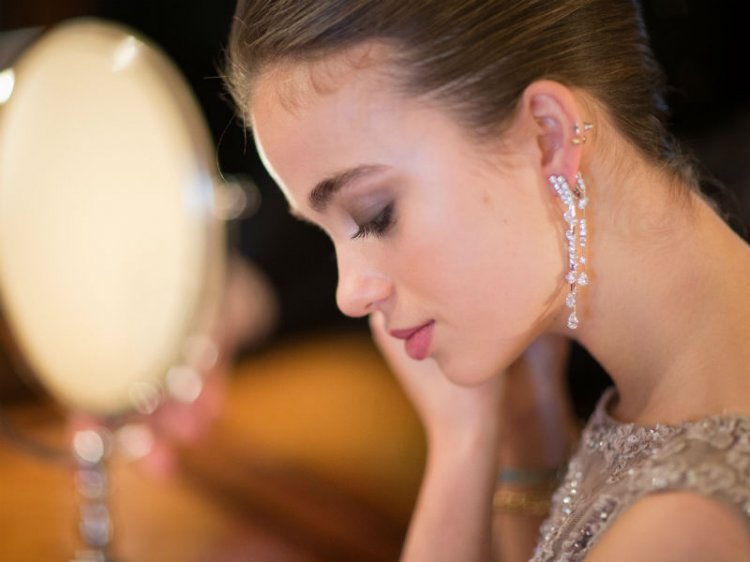
(Picture shows Lady Amelia Sophia Theodora Mary Margaret Windsor, who made her début into society in Paris, 2013; photo from Le Journal des Femmes)

Rare Boys Names from the 1940s

12 Sunday Apr 2015

Posted by A.O. in Name Themes and Lists

≈ 7 Comments

Tags

animal names, aristocratic names, car names, Cornish names, english names, famous namesakes, fictional namesakes, flower names, French names, germanic names, Greek names, honouring, Italian names, locational name, musical names, mythological names, name history, name meaning, names from comics, nature names, nicknames, Old English names, Old Norse names, papal names, plant names, rare names, saints names, scientific names, Scottish names, surname names, twin sets, unisex names, vintage names

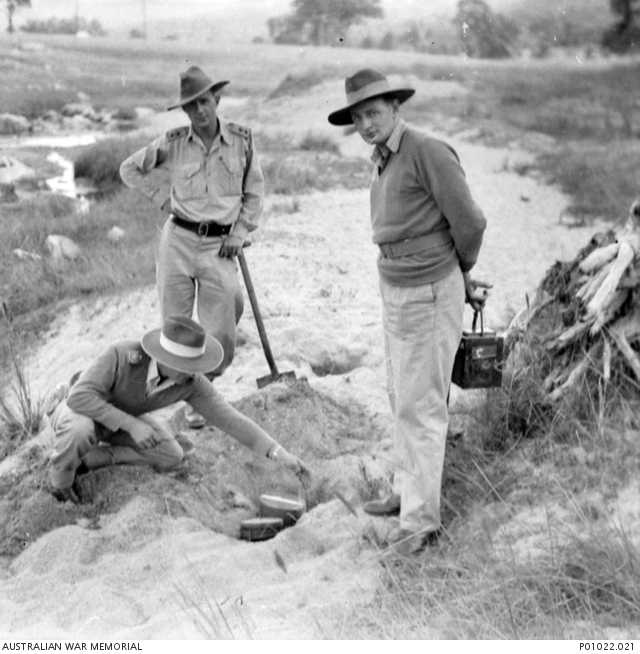
P01022.021

The most popular boys names of the 1940s were John, Peter, Robert, and David, but what were the least popular names? Here are ten names which were only chosen once in any year between 1944 and 1949 in South Australia, making them unique names for their time and place. Still rare, some feel surprisingly contemporary, while one or two have perhaps had their day.

Aston
English surname of multiple origins. It can be from a common place name meaning “east settlement”, to indicate a village to the east of a larger town, although occasionally it seems to be a corruption or variant of Ashton, meaning “settlement near the ash trees”. It can also mean “at the stone”, to indicate someone who lived near a prominent stone. Finally, it can be a contraction of a personal name such as Aethelstan, meaning “noble stone”, and there are examples of men with Aston as a first name in the Middle Ages from this derivation. Sir Aston Cockayne, 1st Baronet, was a 17th century writer who was on the Royalist side during the English Civil War, and a close friend of the future Charles II. The name might remind you of Aston Villa Football Club, in the English Premier League, or Aston Martin luxury cars – both familiar in the 1940s as well. I see the name Aston name sometimes in birth notices, perhaps inspired by Aston Merrygold from English boy band JLS.

Bramwell
English surname from an unknown place name meaning “stream surrounded by broom” – broom is a hardy European shrub with yellow flowers. The name has a strong connection with the Salvation Army, because Bramwell Booth was the second General of the Salvation Army who served during World War I, the eldest son of its founder, William Booth. We know the name was used by Salvationists, because Bramwell Tillsley, a Canadian who was the son of British Salvationists, was the 14th General of the Salvation Army. The Salvation Army has a strong history in South Australia, with the first official Salvation Army corps formed in Adelaide in 1880. Booth was also used as a baby name during the 1940s, with the Salvation Army’s support of the troops being greatly appreciated. Bramwell is an attractive, little-used surname that has the appealing nickname Bram.

Cosmo
Form of the Greek name Kosmas, meaning “order”, and thus the opposite of “chaos”. The Greeks also used the word to mean “the world”, because they believed the world was perfectly put in order. We use the word cosmos to mean “the universe, all of creation”. According to tradition, Saint Cosmas was a skilled doctor; along with his twin brother Damian, he performed many miraculous cures before his martyrdom. The name Cosmo was introduced to Britain by the Scottish peer Alexander Gordon, 2nd Duke of Gordon, when he named his son Cosmo in 1720. Cosmo’s name was in honour of his father’s close friend Cosimo di Medici – Cosimo is the Italian form of Kosmas. The name has always had a rather exotic and aristocratic image, and Scottish associations. There were several famous Cosmos that could have inspired the name in the 1940s, including popular British playwright Cosmo Hamilton, and Archbishop of Canterbury Cosmo Lang. Cosmos is also a type of daisy, whose name comes from the same Greek origin, so with some imagination, the name Cosmo could honour someone named Daisy.

Denzil
Variant of Denzel, a Cornish surname. The name was traditional in the aristocratic Holles family, with one of the earliest and most famous of their number to bear the name Denzil Holles, 1st Baron Holles, a 17th century statesman who is best known for being part of a group who attempted to arrest King Charles I, sparking the Civil War, but also took a leading role in bringing about the Restoration. The Denzel spelling came first, as Denzil Holles’ grandfather was Denzel Holles. These Denzils and Denzels were named in honour of their ancestor John Denzel, who had large estates in Cornwall in the 16th century and was Attorney-General to Elizabeth of York, queen of Henry VII. John Denzel took his surname from the Denzell manor house in St Mawgan, Cornwall, and the meaning of its name is not known for sure, although perhaps from the Celtic for “hill fortress in open view”. A 1940s Australian namesake is Sir Denzil Macarthur-Onslow, a World War II general regarded as a “cracker of a bloke”. Denzil still seems contemporary because of American actor Denzel Washington, and is very usable.

Everard
Derived from the ancient Germanic name Eberhard, often translated as “brave as a wild boar”. The name was introduced by the Normans to Britain, where there was already an Old English form of the name, Eoforheard. A famous namesake is Sir Everard Digby, who was executed for his part in the failed Gunpowder Plot, and another was Everard Calthrop, a railway engineer who helped develop the modern parachute. Although in use since the Middle Ages, modern usage has probably been influenced by the surname, as the Everards are an aristocratic family who have been created baronets in both Ireland and England. Everard Park is a suburb of Adelaide, named after the prominent pioneer Sir Charles Everard, said to have the best orchard in the colony, giving this a strong South Australian feel. Everard is an interesting twist on classic Evan, and the trend for girls’ names starting with Ev- may also be a help.

Garfield
English surname referring to someone living near a triangular field; the word gar means spear in Old English, and a gar field is one that is shaped like the point of a spearhead. The surname is well known in the United States, as their 20th president was James A. Garfield, and his sons also went on to have illustrious public careers – there is a town in Victoria named Garfield in honour of the American president. A namesake from the 1940s was Hollywood  actor John Garfield, while one with Garfield as his first name is Garfield “Gar” Wood, an American inventor, showman, and record-breaking motorboat racer – the first to travel over 100 miles an hour on water. An Australian namesake from this era is Sir Garfield Barwick, a barrister who came to prominence during a 1943 court case involving the Archibald Prize. He later became a Liberal MP, Attorney-General, and Chief Justice of the High Court of Australia. He was the legal advisor to Sir John Kerr during the controversial dismissal of Prime Minister Gough Whitlam (an old enemy of Barwick’s), so he well and truly made history. Garfield would be a charming and unusual vintage name, except for one thing – the obese cartoon cat!

Linus
In Greek mythology, Linus was a Thracian prince who was so musically talented that he was said to have been the son of Apollo, god of music, and Calliope, the muse of epic poetry. According to legend, Linus invented melody and rhythm, and taught music to his brothers Orpheus and Heracles. Unfortunately, Heracles didn’t appreciate the music lessons, and killed Linus with his own lyre after he tried to give Heracles some constructive criticism. Although the meaning of the name is not certain, there was a type of dirge in classical Greece called a linos, and it’s possible that the mythological character was a personification of this song of mourning. The name has a Christian association because Linus is said to have been a Bishop of Rome in the early church, and is listed as the second pope. The name Linus is especially popular in Scandinavia, although many people will connect it to Linus Pauling, the American scientist who won both the Nobel Chemistry Prize and the Nobel Peace Prize, and whose work was aleady known by the 1940s. The name might also remind you of security blanket-hugging philosopher Linus from the Peanuts comics. A sweet, smart name with a mythological musical connection.

Neon
Greek name meaning “new”. It wasn’t an unusual name in ancient Greece, and there are several prominent men named Neon from history. However, in modern times the name is strongly associated with neon lighting – bright electrified glass tubes often used for signs. They are named after neon gas, which is used to give off a bright orange light, but other gases provide different colours. Neon has has the same meaning as the name Neon. Neon lighting was invented in 1910, and was in its heyday between 1920 and 1940, the bright colours suddenly bringing dark streets to life. It’s probably not a coincidence that the name Neon peaked in the 1940s and ’50s, usually given to boys. Neon feel both space age and vintage, and has been used as a comic book hero name, for both a male and female character. As neon is often used in an artistic context today, you might think of this as an arty name, and it’s otherwise bright and energetic.

Revel
A revel is a festive celebration, while to revel is to make merry. The word comes from Old French, and is directly related to the Latin rebello, from which our word (and name) Rebel is derived. This is probably because we think of celebrations as tending to be rather unruly or disorderly, and sometimes they can even get out of hand! This fun-loving word has been used as a personal name since the Middle Ages in both England and France, and was also given as a nickname to people who were known for partying particularly hard. It is from this that the surname derives, and it is especially associated with Yorkshire. A famous Australian namesake is Western Australian Indigenous artist Revel Cooper, whose career began in the 1940s. Although he was just a child then, he was one of a number of children in state care who were given specialised art training, and their artwork exhibited in Perth, New Zealand, India, and Europe. Unlike many of the children, Revel continued his art career into adulthood. Revel is a boisterous medieval boys’ name that still sounds contemporary.

Rollo
Rollo was a powerful 9th century Viking leader who was the founder and first ruler of the area of France now known as Normandy. He was the great-great-great grandfather of William the Conqueror, and through William, is the ancestor of the present day British royal family, as well as all current European monarchs. His name is a Latinised form of the Old Norse name Hrólfr, which in modern times is known as Rolf. It’s a shortened form of Hrodulf, now known as Rudolf, meaning “famous wolf”. Rollo is also a Scottish surname, the Clan Rollo being descended from the Normans, and in particular the nephew of William the Conqueror, Erik Rollo. Because the Lords Rollo is a title in the Scottish peerage, the name gains further aristocratic credentials. Rollo fitted in well with 1940s name trends, when Rolf and Roland were fashionable, and Australian artist Rollo Thompson flourished in this decade. Like Cosmo, it fits in with current trends for boys names ending in -o, and this is a fun yet blue-blooded choice.

POLL RESULTS
People’s favourite names were Linus, Aston and Bramwell, and their least favourite were Neon, Denzil and Garfield.

(Picture shows Denzil Macarthur-Onslow, on the right, supervising a training exercise in Queensland in 1942; photo from the Australian War Memorial)

Rare Girls Names From the 1940s

05 Sunday Apr 2015

Posted by A.O. in Name Themes and Lists

≈ 1 Comment

Tags

animal names, controversial names, created names, Easter names, english names, fictional namesakes, flower names, French names, germanic names, Greek names, honouring, Irish names, Latin names, locational names, middle names, name history, name meaning, name trends, names from films, names from songs, nature names, nicknames, plant names, rare names, Roman names, saints names, Scottish names, Spanish names, surname names, unisex names, vintage names, virtue names, vocabulary words

Dymphna_Cusack,_1947

The most popular girls names of the 1940s were Margaret, Patricia, Judith, and Helen, but what were the least popular names? Here are ten names which were only chosen once in any year between 1944 and 1949 in South Australia, making them unique names for their time and place. They continue to be rare, and some parents will still find them appealing.

Avis
Thought to be a Latinised form of the Germanic name Aveza, most likely a long form or elaboration of the familiar Ava. Introduced to England by the Normans, it was reasonably common in the Middle Ages, and quickly became associated with the Latin word avis, meaning “bird”. Avis Rent a Car was founded in the 1940s by Warren Avis, but did not become big in Australia for some time – it’s now quite difficult to disassociate the name Avis from the rental company, although it’s very much on trend and still seems contemporary and pretty. It was also a good fit in the 1940s, when names such as Avril and Averil were fashionable.

Bunty
An old British term of endearment, dating back to perhaps the 17th century. In Scotland, buntin means “short and plump”, while in Wales, bontin means “the bottom, the rump” (a part of the body usually seen as quite plump). It’s interesting that in both Scottish and English dialect, bunt and bun refer to a rabbit’s tail, which recalls the bottom meaning. You probably remember the nursery rhyme, Bye Baby Bunting, where bunting meant “a plump little child”, and it’s amusing that they have “a rabbit skin to wrap the Baby Bunting in”, given the etymological connection between chubby babies and bunnies’ bottoms. By the 19th century, bunty was a country word for a lamb, because they bunt (or butt) with their heads, giving bunty another adorable baby-related association. The name Bunty was popularised by the Scottish comedy Bunty Pulls the Strings, which was a hit in 1911 in the West End and on Broadway (Bunty was a canny Highland lass). However, even before this, Bunty was used as a nickname, especially by the aristocracy. It was occasionally given to boys, and in Seven Little Australians, young John is called Bunty, because he is prone to be greedy and a bit overweight. In his case, the nickname literally meant “little fatty”, but Bunty can be understood as “cute wee bairn, bonny babe”. This could be a charming vintage-style nickname, and if you’re worried it’s too infantile, Babe and Baby were both used as names in the 1940s!

Cosette
Cosette is one of the main characters in Victor Hugo’s Les Misérables, considered one of the greatest novels of the 19th century. In the novel, Cosette is the daughter of Fantine, a poor girl who must leave her child in the care of some innkeepers, while she works to provide for her. Cosette is badly treated by her guardians, and becomes a Cinderella-like figure, but is rescued by the ex-convict Jean Valjean. They take refuge in a convent, where Cosette develops into a beautiful young girl, and eventually finds her happy ending. Cosette’s real name is Euphrasie (meaning “good cheer”), but her mother’s pet name for her is the one which sticks – Cosette is from the French word chosette, meaning “little thing”. Les Misérables was made into a successful film in 1935, with child star Marilyn Knowlden in the role of the young Cosette; this would have increased interest in the name. Les Misérables was made into an award-winning musical film in 2012, this time with British actress Isabelle Allen playing young Cosette. Her face was used for the publicity posters, and with her arresting blue eyes, this may bring Cosette into the baby name spotlight again.

Dymphna
Anglicised form of the Irish name Damhnait, meaning “fawn”. Saint Dymphna is a 7th century Irish saint with a truly disturbing story, because legend has it that when she was fourteen, her father went mad and developed an unnatural desire for her. She ran away and devoted herself to helping the sick and the poor, but her father discovered her whereabouts, and killed her in a rage. Called the Lily of Eire, Saint Dymphna is the patron of the mentally ill, as well as vctims of incest, and many miraculous cures have been claimed on her behalf. A famous namesake is the author Dymphna Cusack, and another is Dymphna Clark, married to the historian Manning Clark, so the name has strong Australian credentials. Despite this, and the pretty meaning, Saint Dymphna’s tragic life has probably not been a help. Said DIMF-na, Dymphna has a lovely sound though, like a quirkier Daphne.

Jinx
According to superstition, a jinx is something, or someone, who brings bad luck, often without meaning to. The word is American English, first used in the context of baseball, and its origins are obscure. One suggestion is that it comes from the 1887 musical comedy Little Puck, which had a character named Jinks Hoodoo, who is a curse to everyone he meets, as well as to himself. Although Hoodoo is fairly obviously a “bad luck” word, Jinks is just a surname based on the name John, and not too unusual as a first name. Perhaps it was given with the phrase high jinks in mind, meaning “boisterous fun”. After the popular musical comedy, jinks and jinx seem to have rapidly come into use as slang terms to describe an unlucky person or object. Jinx was known as a girl’s name in the 1940s because of Jinx Falkenburg, one of the highest-paid cover-girls of the 1930s and ’40s – an early example of a supermodel. Considered one of the most beautiful and glamorous women of her time, she was also a talented sportswoman and Hollywood actress, and went on to have successful chat shows on radio and TV. Born Eugenia, her mother nicknamed her Jinx in the belief that it would bring her good luck – I’m not sure how that was meant to work, but Jinx did indeed have a fortunate life. Jinx has quite often been used as a name for (mostly female) fictional characters, from L’il Jinx from the Archie comics to Jinx Johnson in the James Bond film, played by Halle Berry. This is a playful modern nickname for the non-superstitious.

Marigold
The flower name marigold is attached to several plants with yellow blooms, but usually refers to the Calendula or pot marigold – although sometimes called English marigold, the plant probably originated in southern Europe, but became widely naturalised elsewhere from an early date. The name seems to have been first used for the wildflower Caltha palustris, also known as marsh marigold and kingcup. Marigold literally means “Mary gold”, and the name came about because the spring wildflower was a favourite in medieval churches at Easter, a tribute to the Virgin Mary. Shakespeare refers to the “golden eyes” of “Marybuds” in his play Cymbeline, and the marsh marigold is one of the UK’s most ancient plants, being an Ice Age survivor. Marigold has been used as a name since the 19th century, when flower names were fashionable, and is a hip underused floral choice which could honour a Mary.

Rilla
Rilla Blythe is the main character in L.M. Montgomery’s Rilla of Ingleside; the daughter of the famous Anne Shirley (later Anne Blythe), she is a carefree teenager who must grow up fast when World War I is declared. Rilla’s full name is Bertha Marilla, with her middle name in honour of Anne’s strict but loving adoptive mother, Marilla Cuthbert. Marilla may be a short form of Amaryllis or an elaboration of Mary, and it’s notable that the name Marilla was used more than once during the 1940s. Perhaps the wartime courage of Rilla Blythe struck a chord during World War II, or maybe the 1939 publication of Anne of Ingleside played a role, where Rilla is said to be sweetest baby of all, and shown as an adorably pretty and plump lisping toddler. Rilla is a trendy name from the wartime era that still seems cute, especially knowing Rilla Blythe was affectionately known as “Rilla, my Rilla”. One for Montgomery fans!

Thais
Thaïs of Athens was a famous Greek hetaera who accompanied Alexander the Great on his campaigns. Hetaera were high status courtesans; educated, influential, and sophisticated women who were paid companions to men – not just in the bedroom, but as stimulating conversationalists and talented musicians and dancers. Thaïs was the lover of Ptolemy I Soter, one of Alexander’s generals, and she is said to have been witty and entertaining company. After Alexander’s death, Ptolemy became the king of Egypt, and Thaïs was his wife, or at least a high ranking concubine, and mother of his children (he had other wives to provide him with heirs to the throne). Saint Thaïs was from 4th century Egypt, a beautiful and wealthy courtesan who repented of her life and converted to Christianity. It is hard not to wonder if her story was influenced by Thaïs of Athens, who also lived in Egypt during the 4th century. The saint inspired a novel by Anataloe France, and an opera by Massenet; as a result, Thaïs is a popular name in France. The Greek name Thaïs means “head band”, referring to the plain cloth bands that women in ancient Greece commonly wore to keep their hair in place. Like the hair covering, this name is both simple and sophisticated, with a fascinating historical namesake, and fits in with Australian name trends. The French pronunciation is rather like tah-EES, while English speakers may prefer TAY-is or ty-EES.

Unity
The word unity means “oneness”, familiar in both religious and political contexts, and used as a virtue name since at least the 17th century. It seems a rather strange choice for the 1940s, because Unity Mitford was an aristocratic English girl who was a rabid supporter of the Nazis and fervent devotee of Adolf Hitler, her close personal friend. When Britain declared war on Germany, Unity tried to commit suicide by shooting herself in the head, but survived, although permanently affected by her brain injuries. She died from an infection caused by the bullet in 1948, a controversial figure to the end. Unity Mitford was the inspiration behind evil Bellatrix Lestrange in the Harry Potter series, and it’s interesting that J.K. Rowling named her eldest daughter after Jessica Mitford, a staunch Communist and Unity’s sister. If you can get over the connection to Unity Mitford, Unity is a rather attractive name, and similar in sound to Una, which still charted in the 1940s.

Valencia
A large port city in Spain, famous for its vibrant culture and delicious cuisine. Founded as a Roman colony in the 2nd century, its name was originally Valentia, meaning “strength, valour”, in recognition of the bravery of former Roman soldiers who settled there. The name is closely related to the familiar Valentine. During the period of Muslim rule, Valencia was nicknamed Medina bu-Tarab, “City of Joy”. The name might remind you of Valencia oranges, grown in California but named after the Spanish city, which had a reputation for very sweet oranges. Valencia has long been used as a personal name in Spanish-speaking countries, but is not common in English-speaking ones. It may have got a boost from the 1926 romantic film Valencia, where the title character is an exotic Spanish dancer, played by Mae Murray. A box office success, its title song was one of the biggest hits of that year. Valencia fitted in with popular names of the 1940s such as Valerie, and still seems rather glamorous.

POLL RESULTS
People’s favourite names were Marigold, Cosette and Rilla, and their least favourite were Unity, Dymphna and Bunty.

(Photo shows Australian author Dymphna Cusack in 1945: her play Red Sky At Morning was one of few produced during the war years, and was made into film in 1944)

Famous Name: Malcolm

01 Wednesday Apr 2015

Posted by A.O. in Famous Names

≈ 1 Comment

Tags

classic names, famous namesakes, name history, name meaning, name popularity, names from television, royal names, Scottish names, Shakespearean names, UK name popularity, underused classics, US name popularity

687166-malcolm-fraser

Famous Namesake
Just a few months after saying farewell to Gough Whitlam, the 21st Prime Minister of Australia, we sadly lost our 22nd Prime Minister, when John Malcolm Fraser, always known by his middle name, unexpectedly passed away after a brief illness in the early hours of March 20. He was 84.

You will remember he came to power in a controversial way, instructing Coalition Senators to delay government budget bills in hopes of forcing an early election. His plan worked when, after several months of political deadlock, governor-general Sir John Kerr suddenly sacked Prime Minister Gough Whitlam on November 11 1975, on the day that became known as The Dismissal.

Malcolm was sworn in as caretaker Prime Minister, and later led the Liberal-Country Party Coalition to a landslide victory, his 55 seat majority the largest yet in Australian history. He had a second victory in 1977, and the Liberal Party won a majority in their own right, not needing the support of the (National) Country Party, which is almost unheard of.

As Prime Minister, Malcolm was active in foreign policy, showing a commitment to racial equality that was to be a keynote of his character. He supported the campaign to abolish apartheid in South Africa, and strongly opposed white rule in Rhodesia, being one of the architects of the new Zimbabwe.

His policy was for humanitarian resettlement, allowing more refugees to enter Australia, and greatly expanding immigration from Asia. A strong believer in a multicultural Australia, he established government-funded multilingual radio and television, the Special Broadcasting Service (SBS). He also gave Indigenous Australians control of their traditional lands in the Northern Territory, was a supporter of environmental concerns, and banned whaling around the Australian coast.

Although he managed to win another election in 1980 with a greatly reduced majority, he lost the 1983 election to Bob Hawke in a heavy defeat. He was the last non-caretaker Prime Minister to come from a rural seat, and is remembered not just as a Prime Minister, but an excellent farmer from a distinguished pastoral family who understood the needs of regional Australia.

After leaving office, Malcolm served in key roles at the United Nations, with a focus on South Africa and other African nations. He helped to establish humanitarian agency CARE International in Australia, demonstrating again his commitment to helping vulnerable people around the world. He reconciled with his old enemy, Gough Whitlam, and the two men were able to be good friends, finding common ground on many issues.

At the same time, Malcolm gradually became estranged from the Liberal Party, with many of even his own party unable to forget the role he had played in The Dismissal. A man of conviction, Malcolm did not hesitate to speak out on important issues of the day, such as the human rights of asylum seekers in detention, civil liberties, and treatment of Aborigines, even when his opinions were at odds with those of the Liberals.

After years of criticising Liberal Party policy, bemoaning the lack of integrity in Australian politics, and supporting the campaign for a change of policy on Iraq, Malcolm finally handed in his Liberal Party membership in 2009, when Tony Abbot became the party’s leader, saying that it was no longer a liberal party, but a conservative party. In 2013, he endorsed a Green Party Senator and urged his Twitter followers to vote Green in the upcoming election.

Just before he died, Malcolm was working to set up a new political party called Renew Australia. It was to stand for an Australian republic, to reconcile with Indigenous Australians through a treaty, to support a larger population with an independent foreign policy and a post-carbon economy, recognising climate change and the urgent need to avoid its most catastrophic effects, as well as a central commitment to human rights obligations.

Malcolm’s memorial service was on March 27, and his son Hugh spoke of his father as someone who never ceased to care about current affairs, his strong sense of responsibility enduring to the end. According to Hugh Fraser, his father loved Australia, and was not merely one of its sons, but one of its most fervent custodians.

With the passing of Gough Whitlam and Malcolm Fraser, political giants who defined the 1970s (and physical giants, as they were our tallest prime ministers at 1.94 and 1.93 metres tall respectively), it does feel like the end of an era. Gough was the most progressive Labor prime minister, followed by Malcolm, the most progressive Liberal prime minister, and with them gone, the political future feels rather bleak.

Malcolm was famous for his quote from George Bernard Shaw: Life wasn’t meant to be easy. Most people forget that the quote continues … but take courage child, for it can be delightful. We must remember our courage now.

Name Information
Malcolm is the Anglicised form of the Scottish name Máel Coluim, meaning “follower of Saint Columba”. You will remember that Columba means “dove”. It was a traditional name amongst Scottish royalty and nobility, and there have been four medieval kings of Scotland with the name Malcolm.

Malcolm III is the basis for the King Malcolm who is the son of Duncan in William Shakespeare’s play Macbeth, although in real life he did not immediately avenge his father by killing Macbeth, as he was only a little boy at the time. Only after he had grown up did he kill Macbeth, and then Macbeth’s heir, so that he could take the throne at last. Malcolm III was the husband of the English princess who became Saint Margaret of Scotland. Despite Malcolm not being particularly religious, they had a strong and loving marriage, and Margaret is said to have died of sorrow after hearing of Malcolm’s death in battle.

The name Malcolm was #81 in the 1900s, and peaked in the 1950s at #52, when Malcolm Fraser entered parliament as the youngest MP, aged 25 (this was also the decade that Malcolm Young from AC/DC was born). It left the Top 100 by the 1980s, the time when Malcolm Fraser suffered the worst defeat of a non-Labor government since Federation, and lost the prime ministership. After that it fell steadily, and despite a small boost in the late 2000s, when the sit-com Malcolm in the Middle was aired, it has not charted since 2009, the year Malcolm Fraser left the Liberal Party.

There has been another prominent Malcolm in the Liberal Party, Minister for Communications Malcolm Turnbull, and celebrity grandfather on the blog. This may not have been a help to the name, as politicians generally don’t assist a name’s fortunes. The name can now be said to be in rare use.

In the UK, there were 14 baby boys named Malcolm in 2013, so it is uncommon there as well. Malcolm is most popular in the US, where it has never gone off the charts and is in the mid-400s; it is associated there with civil rights hero Malcolm X.

Malcolm is a strong, handsome underused Scottish classic with a slightly quirky feel. It honours one of our greatest statesman, a gentleman who had the courage to speak out and work towards constructive change, who was uncompromising yet compassionate, and who placed his duty higher than his popularity.

POLL RESULTS
Malcolm received an excellent approval rating of 81%, making it one of the highest-rated names of 2015. People saw Malcolm as a normal name that is still a bit quirky (27%), strong and handsome (22%), and a good Scottish heritage choice (22%). However, 14% thought it was harsh and ugly. Nobody thought the name Malcolm was too Scottish, and 3% were put off the name by former prime minister Malcolm Fraser.

(Photo shows Malcolm Fraser on his rural property, Nareen Station, in 1982)

← Older posts
Newer posts →

Enter your email address to follow this blog

Categories

Archives

Recent Comments

A.O.'s avatarwaltzingmorethanmati… on Zarah Zaynab and Wolfgang…
Madelyn's avatarMadelyn on Zarah Zaynab and Wolfgang…
JD's avatardrperegrine on Can Phoebe Complete This …
A.O.'s avatarwaltzingmorethanmati… on Rua and Rhoa
redrover23's avatarredrover23 on Rua and Rhoa

Blogroll

  • Appellation Mountain
  • Baby Name Pondering
  • Babynamelover's Blog
  • British Baby Names
  • Clare's Name News
  • For Real Baby Names
  • Geek Baby Names
  • Name Candy
  • Nameberry
  • Nancy's Baby Names
  • Ren's Baby Name Blog
  • Sancta Nomina
  • Swistle: Baby Names
  • The Art of Naming
  • The Baby Name Wizard
  • The Beauty of Names
  • Tulip By Any Name

RSS Feed

  • RSS - Posts

RSS Posts

  • Celebrity Baby News: Melanie Vallejo and Matt Kingston
  • Names from the TV Show “Cleverman”
  • Can Phoebe Complete This Sibset?
  • Zarah Zaynab and Wolfgang Winter
  • Baby, How Did You Get That Name?
  • Celebrity Baby News: Media Babies
  • Celebrity Baby News: Adelaide Crows Babies
  • Celebrity Baby News: Chris and Rebecca Judd
  • Names at Work: Name News From the World of Business and Employment
  • Celebrity Baby News: Sporting Round Up

Currently Popular

  • Celebrity Baby News: Jacinta Allan and Yorick Piper
  • Celebrity Baby News: Jacinta Allan and Yorick Piper
  • Celebrity Baby News: Josh and Amie Frydenberg
  • The Top 100 Names of the 1940s in New South Wales
  • Rare Boys Names From the 1950s

Tags

celebrity baby names celebrity sibsets english names famous namesakes fictional namesakes honouring locational names middle names name combinations name history name meaning name popularity name trends nicknames popular names saints names sibsets surname names twin sets unisex names

Blog at WordPress.com.

Privacy & Cookies: This site uses cookies. By continuing to use this website, you agree to their use.
To find out more, including how to control cookies, see here: Cookie Policy
  • Subscribe Subscribed
    • Waltzing More Than Matilda
    • Join 517 other subscribers
    • Already have a WordPress.com account? Log in now.
    • Waltzing More Than Matilda
    • Subscribe Subscribed
    • Sign up
    • Log in
    • Report this content
    • View site in Reader
    • Manage subscriptions
    • Collapse this bar
 

Loading Comments...