• About
  • Best Baby Names
  • Celebrity Baby Names
  • Celebrity Baby Names – Current
  • Celebrity Baby Names – Past
  • Featured Boys Names
  • Featured Girls Names
  • Featured Unisex Names
  • Links to Name Data
  • Waltzing on the Web

Waltzing More Than Matilda

~ Names with an Australian Bias of Democratic Temper

Waltzing More Than Matilda

Tag Archives: saints names

Diminutive Names for Girls – 2

21 Sunday Sep 2014

Posted by A.O. in Name Themes and Lists

≈ 6 Comments

Tags

aristocratic names, celebrity baby names, famous namesakes, fictional namesakes, French names, Greek names, international name trends, Italian names, mythological names, name history, name meaning, name popularity, name trends, names from movies, names from television, names of mascots, popular names, retro names, royal names, saints names, Spanish names, unisex names
907393-underbelly-razor

It’s been more than a year since we had a list of short form names, and as this is a huge growth area, it’s time for another.

Ada
Short form of Adelaide and related names. It has been an independent name since the Middle Ages, and was used by royalty and the nobility; an example is the Ada who was reputedly the sister of Charlemagne. There is also a 7th century St Ada, who was a French nun and abbess. Ada was especially popular during the 19th century, and a famous namesake from this era is (Augusta) Ada King, Countess of Lovelace, a daughter of Lord Byron and his only child born in wedlock – nearly always known as Ada Lovelace. Ada was a gifted mathematician who produced an algorithm designed to be used by a machine; in effect, the first computer program. A famous contemporary example is Australian actress Ada Nicomedou. Ada was #40 in the 1900s, and left the Top 100 in the 1920s; it was off the charts by the 1950s. Ada made a comeback in the 1990s at #845, and is currently around the 300s. Fitting in perfectly with the trend for short simple names like Ava, and for traditional old-fashioned names like Elsie, this is a hip retro short form that not too many people are using.

Bella
Short form of Isabella, and other names ending in -bella, such as Annabella or Arabella. However, many people connect it to the Italian word for “beautiful”, and understand it that way. Bella has been an independent name since the Middle Ages, and has had particular use by Jewish families from Russia and Central Europe – two examples are American feminist Bella Abzug, and writer Bella Rosenfeld, the wife of Russian-French artist Marc Chagall. A famous Australian namesake is actress Bella Heathcote, best known for her role on Neighbours a few years ago. Bella first joined the charts in the 1990s at #541, rising on the heels of Isabella, which began its impressive ascent in the 1980s. Bella entered the Top 100 in 2002, debuting at #99; it peaked in 2010 at #41, and is currently #48 nationally. Like Isabella, Bella’s success is often attributed to the Twilight series, although as you can see, it was rising and even popular before the first novel was released in 2005. Stephenie Meyer’s Bella Swan (an irritating character name because it describes the story’s outcome) probably did help though, if only by increasing visibility.

Demi
Short form of the Greek name Demetria, the feminine form of Demetrius, which is derived from the name of the agricultural goddess Demeter. The goddess’ name is often translated as “earth mother” or “barley mother”. Demi is also sometimes connected with the French word demi, meaning “half”, to suggest “small” (as in half-pint). This name has a big dose of star power, thanks to Hollywood actress Demi Moore, and from a generation younger, pop singer and actress Demteria “Demi” Lovato. The name is usually pronounced duh-MEE, but English-speakers sometimes prefer it to be said to rhyme with Emmie. Demi is around the 500s in Australia, and is rising in the US, but falling in the UK, so international trends are at odds on this one.

Ellie
Short form of any name starting with El-, such as Eleanor, Ellen, Elizabeth, or Eloise, and long used as an independent name. It is well known from British pop singer Elena “Ellie” Goulding, and a favourite in the world of fiction. Fictional namesakes include the dainty little girl in The Water Babies, Ellie Linton, heroine of John Marsden’s Tomorrow When the War Began, Eleanor “Ellie” Arroway, brainy heroine of Carl Sagan’s Contact, adventurous Ellie Frederickson from Up, the woolly mammoth from the Ice Age series, and strong matriarch Eleanor “Miss Ellie” Ewing, from Dallas. Ellie joined the charts in the 1980s at #349, and was in the Top 100 as early as 1993, at #98. It managed to get in again a decade later in 2003, at #72, and has remained fairly stable in the bottom half of the Top 100 ever since. Currently it is #56. Ellie fits in perfectly with popular names like Ella, and is well-used without being overly common or rising alarmingly.

Frankie
Unisex nickname that in the case of boys is a pet form of Francis, Francesco, Francisco, Frank, or Franklin, and in the case of girls, of Frances, Francesca, Francisca, or Francine. Famous male Frankies include American crooner Frankie Valli, British comedian Frankie Howerd, American actor Frankie Muniz, who played the title role in Malcolm in the Middle, and Australian kick-boxer Frankie Georgi. A famous female Frankie is British pop singer Frankie Sandford, and the name has been chosen for their daughters by several celebrities, including Drew Barrymore, and in Australia by rugby league star Johnathan Thurston, weather presenter Sara Cumming, and news presenter Rebecca Morse. In the US, Frankie only charts for boys, while in the UK, it charts for both sexes, but is only popular as a boy’s name. In Australia, Frankie is a unisex name, and significantly more common for girls. The reason for its increasingly feminine image here is no doubt because of the hip women’s fashion magazine, frankie.

Gigi
French nickname for any name with a G sound, such as Georgine or Ghislaine. Its most famous namesake is the charming Parisian schoolgirl in Colette’s 1942 novella, Gigi, who is being trained to be a courtesan by her family. Their plans go awry when the gamine Gigi attracts a wealthy older man, and becomes his wife instead of his mistress. It has been turned into a musical and a couple of films, including the 1958 Hollywood production starring Leslie Caron as Gigi, which is surprisingly faithful to the book, except for discreetly upping Gigi’s age from twelve to around sixteen, and adding songs like Thank Heavens For Little Girls. Gigi’s name is short for Gilberte, by the way. In Italy it is a male nickname, short for Luigi. An Australian with this name is actress Gigi Edgely, who has starred in Farscape. A flirty French Lolita, Gigi is currently a hip girl’s name in the style of Coco. It was recently chosen as a celebrity baby name by swimmer Geoff Huegill.

Millie
Short for any name with a mil sound, such as Millicent, Mildred, Camilla, Emilia, or Amelia, and is also spelled Milly. You can see Millie as a vintage charmer, all bonnets and hoop skirts, but there’s also something a little Swinging Sixties about it, thanks to My Boy Lollipop, sung by Millie Small, and the 1967 film Thoroughly Modern Millie, starring Julie Andrews. It has a very Australian connection as Millie the Echidna was one of the official mascots for the Sydney Olympics (her name is short for Millenium). Millie was #196 in the 1900s, and left the charts in the 1930s. It returned in the 1990s at #501, had a definite upsurge after the 2000 Olympics, and in 2011 was only just outside the Top 100, its highest point ever gained. It fits in perfectly with popular names like Milla and Mila, and is right on trend for sprightly vintage names, so it feels as if popularity must be just around the corner for suddenly modern-again Millie.

Stevie
Unisex nickname for either the boys’ name Stephen or Steven, or the girl’s name Stephanie; these are Greek in origin, and mean “crown”. Stevie has been an independent name since the Middle Ages, and although you might think of it as very modern for girls, it’s been a female name since the 18th century. Famous male Stevies include Stevie Wonder, Stevie Ray Vaughan, and Australia’s first international pop star, Stevie Wright. A famous female one is English novelist and confessional poet Stevie Smith, whose real name was Florence, and who gained her nickname from a perceived resemblance to jockey Steve Donaghue. However, the most well known female example is singer-songwriter Stevie Nicks, and it is no doubt her popularity in the 1970s and 1980s which made Stevie seem more feminine. In Australia, Stevie can be only be found in current use as a girl’s name, and it’s around the 300s. While writing this, I realised what a musical name Stevie is – look at all those namesakes from the world of pop and rock!

Tess
Short form of Teresa or Theresa, a rather mysterious name, because the various meanings suggested for it are always Greek, but the name itself is of Spanish origin. Nobody has been able to explain this to my satisfaction. Tess has a very famous literary namesake, the beautiful, tormented title character of Thomas Hardy’s rural tragedy, Tess of the D’Urbervilles. Tess Harding is the celebrated journalist trying to cope with marriage as well as a career in rom-com classic Woman of the Year (1941), with Tess played by Katharine Hepburn in her first outing with Spencer Tracy. Another Tracy connection is the adorably-named Tess Trueheart, eventual wife of comic strip detective, Dick Tracy. Tess Mcleod is one of the sisters in Australian drama series McLeod’s Daughters, played by the popular Bridie Carter. Last year comedian Dave Hughes welcomed a daughter named Tess Clementine, voted the most popular celebrity baby name of 2013. Tess joined the charts in the 1980s at #352, and peaked in the early 2000s at #209. Simple yet strong, pert and practical, Tess is a short and stylish choice.

Tilly
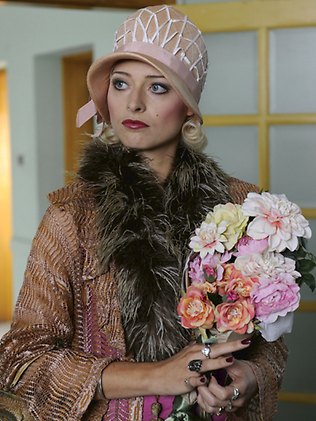
Short for Matilda, this can also be spelled Tillie. Apart from being a short form of a patriotic name, Tilly has a notorious namesake in Australia. Tilly Devine was an infamous figure of the Sydney underworld between the two world wars, who became known first as a prostitute, then as a brothel madam and gang member. Her wealth was legendary – she owned real estate, luxury cars, gold and diamonds, threw lavish parties, and always travelled first class. Operating out of Woolloomooloo, Tilly was known as the “Queen of the ‘Loo”, and in the 1953 travelled to London for the coronation of Queen Elizabeth II. Tilly’s story, and her violent gang war with rival vice queen Kate Leigh, was covered in Channel Nine’s drama series, Underbelly: Razor. Tilly is around the 100s in Australia, so not rare at all, while Tillie does not chart. It is something of a puzzle as to why Millie is preferred to Milly, but Tilly preferred to Tillie. Tilly is a sweet and spunky short form in line with British name trends, with an Australian identity all its own.

Thank you to Brooke for suggesting the name Millie be featured on Waltzing More Than Matilda.

POLL RESULTS

The public’s favourite names were Ada, Tess and Millie, and their least favourite were Frankie, Stevie and Bella.

(Photo shows New Zealand actress Chelsie Preston Crayford as Tilly Devine in Underbelly: Razor)

Waltzing With … Acacia

31 Sunday Aug 2014

Posted by A.O. in Waltzing with ...

≈ 9 Comments

Tags

english names, flower names, Greek names, historical records, name history, name meaning, name popularity, nature names, patriotic names, plant names, saints names, tree names

Floral Emblem Golden Wattle

Tomorrow is the official first day of spring, which means it is also Wattle Day. The Golden Wattle (Acacia pycnantha) is Australia’s official national flower, proclaimed as our floral emblem on September 1 1988, and marked by planting a Golden Wattle in the National Botanic Gardens by then Prime Minister’s wife, Hazel Hawke. Four years later, September 1 was officially declared National Wattle Day, and it is traditional to celebrate by wearing a sprig of wattle (any type of wattle; it doesn’t have to be Golden Wattle).

Long before that date, wattle had been an unofficial national flower by popular choice. A wreath or sprig of wattle appears on many official government documents, including the Commonwealth Coat of Arms, the Order of Australia, and the Governor-General’s crest. Our national colours of green and gold (so difficult to co-ordinate on sporting uniforms) are inspired by the green leaves and golden bloom of the wattle.

Wattle is a symbol of remembrance for us too. During World War I, mothers sent their sons sprigs of wattle as a reminder of all they were fighting for back home, and has been used to mourn and remember loss of Australian life, such as in ceremonies for the victims of the Bali bombings. You may have noticed that when the first victims of MH17 were brought to the Netherlands, the Australian Governor-General’s wife wore a sprig of wattle.

As early as 1838, Tasmania encouraged wearing Silver Wattle (Acacia dealbata) sprigs to celebrate the discovery of its island. In the nationalistic fervour which preceded Federation, a Wattle Club was founded by naturalist Archibald Campbell, promoting a Wattle Day demonstration each September 1. Outings into the bush to revel in the glories of an Australian spring were part of his plan, and patriotic Wattle Days continued to be celebrated until World War II.

Australian love of wattle has been satirised in Monty Python’s Flying Circus, with the immortal lines of the Australian philosopher Bruce: “This here’s the Wattle, the emblem of our land. You can stick it in a bottle, you can hold it in your hand.” These words have been used to promote a Wattle Day Festival in Victoria this year!

Acacia is the genus which contains wattle trees and shrubs. Its name, pronounced uh-KAY-shuh, comes from the Greek akis, “thorn”, because most acacia species outside Australia are thorny, although nearly all Australian acacias don’t have thorns. There are around 1300 species of acacia, and almost a thousand of them are native to Australia, with over 98% of these unique to Australia. The others can be found in all continents except Europe and Antarctica; they are particularly widespread in Africa, and were first observed by Europeans along the Nile River.

Acacia is not just an important symbol to Australia. According to Easton’s Bible Dictionary, acacia may have been the “burning bush” Moses encountered in the wilderness, and a table of acacia wood was part of the Tabernacle he built for the Ark of the Covenant. In Egyptian mythology, acacia is the Tree of Life, and in Christian tradition, the crown of thorns worn by Jesus Christ were made from acacia. Freemasonry uses acacia as a symbol of resurrection and immortality, while in Asia, acacia incense is believed to drive away ghosts and demons.

It’s powerful stuff. In fact, it is said that the first plant to bloom in Hiroshima after its bombing in 1945 was a wattle tree. Resurrection indeed! Every Wattle Day, Hiroshima’s Acacia Appreciation Society sends hundreds of yellow ribbons to the Australian National Botanic Gardens as a gesture of friendship and appreciation.

The name wattle comes from Old English, the word Anglo-Saxons gave to interlaced branches and twigs used to form fences, walls, and roofs. Wattle and daub is a construction technique, used since prehistoric times, for filling the spaces between the wattle with a combination of wet soil, clay, sand, animal dung, and straw, which is then allowed to dry until it hardens.

When British settlers to Sydney made their own wattle and daub buildings, they used acacia trees as the wattle, so gave the name to the plants. (I remember reading about wattle and daub houses in Neolithic Britain when I was in primary school history class, and wondering where they got the wattle trees from!). The uses of acacia are too many to list, but one worth mentioning is that Australian Aborigines often make boomerangs from its wood.

Wattles grow all over Australia, and are numerous in the desert, although uncommon in dense rainforest and alpine regions. In southern Australia, wattles tend to flower in springtime, while in the north, many species come into bloom in the autumn and winter. Because of this, it is said that on any given day in Australia, there will be a wattle blossoming somewhere.

Acacia has a long history as a personal name, for it is the feminine form of the Greek name Acacius. This comes from a different Greek derivation – akakia, meaning “without guile, innocent”. Byzantine emperors held a purple silk roll filled with dust called the akakia: it symbolised human mortality. There are several saints named Acacius, and quite a number of other notables from the early Christian era. Acacia has been a particular favourite amongst Spanish-speaking people, who bestowed it as a saint’s name.

Acacia came into use as an English name in the 19th century, when flower and plant names were the fashion. Golden and Silver Wattle was introduced to Europe in the mid-19th century; Silver Wattle became a great favourite in the south of France, where it blooms around Candlemas and is a harbinger of spring and golden sunshine. Outside Australia, wattle is often known as mimosa.

There are several people named Acacia in Australian records, going back to the mid-19th century, and it is almost certain their names were given patriotically – one is even named Acacia Golden, as if to signify Golden Wattle. Another is named Marginata Acacia; marginata is a species of eucalyptus tree. That reminds me that I saw a woman named Acacia Silver on the news, which reminded me of Silver Wattle: as she was an environmentalist, her name was so appropriate that I wondered if she’d chosen it herself.

In Australia, the name Acacia is around the 300-400s, while in England/Wales it is #1639 (18 babies last year), and in the US, 80 baby girls were named Acacia, the same number as ones called Adah, Jazlene, Legacy, Saoirse, Story, and Zarah. While Acacia isn’t a bizarre name in other English-speaking countries, it’s definitely far better known and higher-charting in Australia, which makes perfect sense. As with the trees, Acacia isn’t uniquely Australian, but is more widely found here, and has a particular meaning to us.

Wattles are perhaps not the most beautiful of trees – rather than being slender and elegant, or solid and imposing, most of them are short and scrubby. And yet when they come into bloom, there is no more cheering sight on a grey late winter’s day than their riotous mass of bright yellow fuzzy blossom. I cannot help but smile when I see a wattle tree in full fragrant bloom abuzz with bees, a promise of the sunshine that is soon to come. That’s why I have Golden Wattle as my avatar, and Silver Wattle decorating my blog: to keep me smiling every day.

Familiar without being common, the name Acacia has a rich and interesting history, and is a very patriotic choice. It evokes the beauty of spring and the Australian bush, it’s a remembrance for those we mourn, and rises from the ashes of death with new life and hope. Pretty and floral, bright and burning, silver and golden – could this sunshiney name hit your personal sweet spot?

POLL RESULT
Acacia received an excellent approval rating of 84%. 34% of people loved the name Acacia, and 30% liked it. Only 2% of people hated the name.

Royal Baby News: Lord and Lady Nicholas Windsor

28 Thursday Aug 2014

Posted by A.O. in Celebrity Baby News

≈ 3 Comments

Tags

honouring, royal baby names, royal sibsets, saints names

lord-nicholas-windsor--a

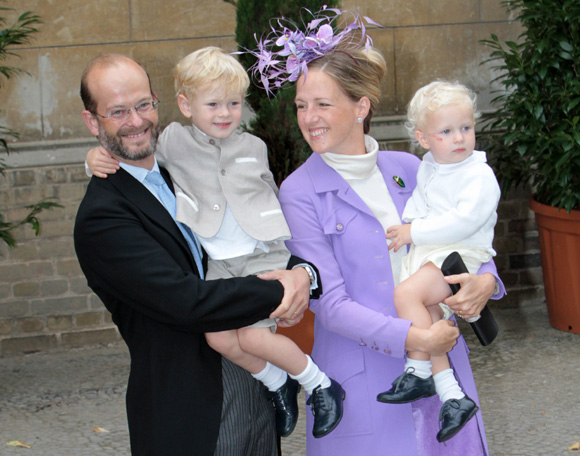
Lord and Lady Nicholas Windsor welcomed their third child on May 27 and named their son Louis Arthur Nicholas Felix. Louis’ older brothers are Albert Louis Philip Edward, aged nearly seven, and Leopold Ernest Augustus Guelph, aged nearly five. Louis is 37th in line to the throne, and is to be known as Mr Louis Windsor.

Lord Nicholas is the youngest son of the Duke and Duchess of Kent, and a great-grandson of King George V. Prince Edward, the Duke of Kent, is a cousin of Queen Elizabeth, so Lord Nicholas is a first cousin once removed of the queen. In 2001, Lord Nicholas was received into the Roman Catholic Church, following the lead of his mother Katharine, who converted in 1994. This makes him the first male member of the blood Royal to convert to Catholicism since King Charles II. Because of his conversion, he forfeited the right of succession to the British throne, but is still in the line of succession to the Dukedom of Kent.

Lady Nicholas Windsor was born Paola Doimi de Lupis de Frankopan; her father is a member of the Croatian and Italian nobility, while her mother is a distinguished Professor Emeritus at Stockholm University. Under her maiden name Paola Frankopan, she writes for The Tatler, where she is a contributing editor. She and Lord Nicholas were married on September 4 2006 in Vatican City, making Lord Nicholas the first member of the Royal Family to marry at the Vatican, and the first to marry in a Catholic ceremony since the Reformation. By having Louis shortly before her 45th birthday, Lady Nicholas became the oldest royal to give birth.

Louis is most likely in honour of Lady Nicholas’ father, Louis, Prince de Frankopan, Count Doimi de Lupis, a barrister and businessman. The children’s maternal grandfather was earlier honoured by having Louis as Albert’s middle name. Louis also has a Catholic saint’s name, like his brothers Albert and Leopold.

Arthur has previously been used in the royal family; most recently by Prince Arthur of Connaught, the son of Prince Arthur, son of Queen Victoria. Perhaps coincidentally, Arthington is a name traditionally used in the family of Lord Nicholas’ mother Katharine, whose maiden name was Worseley.

Nicholas is after the baby’s father. It is one of the middle names of Prince Edward, Duke of Kent, the father of Lord Nicholas, and Prince Nicholas of Greece and Denmark was Prince Edward’s grandfather, the father of Princess Marina, Duchess of Kent. Lady Nicholas’ brother is also named Nicholas, so it’s a name from both sides of the family.

Felix may be in honour of Lord Nicholas’ great-uncle, Sir Felix Brunner, 3rd Baronet, the uncle of his mother Katharine (and her godfather) The meaning of “lucky” seems apt, because the Windsors were not expecting to have any more children, and felt very fortunate to be blessed with a child; indeed Louis has been hailed as a “miracle baby”.

(Photo of Lord and Lady Nicholas Windsor with their two eldest sons from Hello!)

Boys Names From Australian Children’s Literature

24 Sunday Aug 2014

Posted by A.O. in Name Themes and Lists

≈ 10 Comments

Tags

aristocratic names, aristocratic surnames, Australian slang terms, Biblical names, classic names, colour names, english names, famous namesakes, fictional namesakes, Gaelic names, German names, germanic names, Greek names, hebrew names, Irish names, Latin names, locational names, modern classics, mythological names, name history, name meaning, name popularity, names from songs, names from television, names of businesses, nature names, nicknames, Old Gaelic names, Persian names, plant names, popular names, retro names, royal names, saints names, Scottish names, surname names, tree names, underused classics, unisex names

Cyan Magenta Yellow Black

Darius
Odo Hirsch’s Darius Bell and the Glitter Pool (2009) tells the story of the Bells, a proud family fallen on hard times; plucky youngest son Darius must save the family’s estate. (Name nerd bonus info: Odo is the older form of the German name Otto). Darius is the Latin form of Dareios, the Greek form of the Persian name Dārayavahush, meaning “holding on to goodness”. This name was traditional amongst the Persian kings, and Darius I was known as Darius the Great, as he ruled over the Achaemenid Empire at the height of its power. Darius III was defeated by Alexander the Great, and there are a number of minor princes with the name. Darius is mentioned several times in the Old Testament, so it is a Biblical name as well (nobody is sure which historical Darius it means). Although rare, this name is known in Australia from NRL star Darius Boyd, while there is also a Darius in The Hunger Games trilogy. Darius is a cool-sounding name that might appeal to a broad range of people.

Felix
Terry Denton’s first picture book was Felix and Alexander (1985), about a little boy named Alexander who gets lost, and his toy dog Felix must find him. Felix is a Latin name meaning “fortunate”. It was first given as a nickname to the Roman general and statesman Lucius Cornelius Sulla, a free translation of the Greek nickname he acquired during his military campaigns – Epaphroditos, meaning “beloved of Aphrodite”. The Roman procurator Felix is mentioned in the New Testament, although not in a positive way – he imprisoned St Paul. Felix was a favourite name amongst early Christians, and there are heaps of saints named Felix, including the 7th century Felix of Burgundy, who introduced Christianity to East Anglia, and three popes. Two Australian connections are Felix the Cat, and Australia Felix, the name given to the lush farmland of western Victoria by explorer Sir Thomas Mitchell. Felix was #172 in the 1900s, and left the charts in the 1920s. It returned in the 1980s at #396 and climbed steadily; it’s been on and off the Top 100 since 2011. It’s now #86, and was one of the fastest-rising names last year. A hip retro favourite growing in recognition.

Harley
Sleepy Harley (2011), written by Karen Treanor and illustrated by Kelly Iveson, is a picture book about a cat named Harley who tries to find a place to nap in a Perth suburb. Harley is a surname which comes from a place name meaning “hare meadow” in Old English. The de Harley family were nobles whose history can be traced before the Conquest, and Sir Robert Harley, first Earl of Oxford, was from a prominent political family. One of them, William Cavendish-Bentinck, became British Prime Minister in the 18th and 19th centuries; he was the maternal great-great-great grandfather of Queen Elizabeth. The name will remind many of Harley-Davidson motorycles, giving Harley a pretty cool image. Harley was #212 in the 1900s, and went up and down before dropping off the charts in the 1950s. It returned in the 1970s at #462, and rose before peaking at #70 in 1992. It dropped again before starting to rise in the early 2000s, and is not far out of the Top 100. You could see Harley as an underused classic – in use for many years, but never very popular. I have occasionally seen Harley on girls as well.

Jude
Me and Jeshua (1984) by award-winning author Eleanor Spence is a historical novel about the childhood of Jesus of Nazareth, as seen through the eyes of his cousin Jude. Jude is a variant of the name Judas, Greek form of the Hebrew name Judah, meaning “praised”. In the New Testament, Jude is used for the Apostle whose name was Judas, to distinguish him from Judas Iscariot. Jude is also listed in the New Testament as one of the brothers of Jesus (Eleanor Spence follows a tradition they were cousins), but it is not clear if Jude the Apostle was Jesus’ brother. The Apostle Jude is usually connected with the Apostle Simon the Zealot, and according to tradition they were both martyred in Beirut. Jude is well known as the patron saint of lost causes, and this has made him one of the most venerated saints. Contemporary associations are the actor Jude Law, and the Beatles song Hey Jude. Jude can also be used as a girl’s name, short for Judith, as in the YA novel by Maureen McCarthy, Queen Kat, Carmel, and St. Jude Get a Life (1995). This attractive name has quietly been gaining in popularity, and last year joined the Top 100 in Victoria.

Leonard
The Lockie Leonard series by Tim Winton (1990-97) stars a surf rat named Lachlan “Lockie” Leonard who moves to the Western Australian town of Angelus (based on Albany). Leonard is a Germanic name which can be translated as “brave lion” or “brave as a lion”. St Leonard is a legendary 6th century saint, a Frankish nobleman at the court of Clovis I who could liberate prisoners from their chains when invoked. The Normans brought the name to England, although it didn’t become particularly common until the 19th century. Famous Australians with the name include distinguished chemist Leonard Lindoy, and hard-hitting post-war cricketer Leonard “Jock” Livingston, also a talented rugby league footballer. Leonard has been a popular name amongst Jews in the past, including Jock Livingston: other examples are Canadian folk singer Leonard Cohen and actor Leonard Nimoy. Leonard was #39 in the 1900s, and peaked in the 1910s at #35. It didn’t leave the Top 100 until the 1960s, and remained in steady but low use until getting a little boost after The Big Bang Theory, with main character Leonard Hofstadter, began airing in the late 2000s. Clunky cool, this underused classic provides a way to get the popular nickname Lenny.

Nathaniel
In Isobelle Carmody’s YA novel The Gathering (1993), Nathaniel Delaney is a teenager who moves to a grim seaside town and finds himself locked in a battle between the forces of Light and Dark. Nathaniel is a variant of Nathanael, the Greek form of Hebrew Netan’el, meaning “God has given”, nearly always understood as “gift of God”. In the Bible, Nathaniel is usually identified with the Apostle Bartholomew; as Bartholomew means “son of Talmai”, it is taken to be Nathaniel’s surname. Nathaniel was in use as an English name by the 16th century, and became more common after the Protestant Reformation. It was used amongst the aristocracy, and also became a favourite in America, with author Nathaniel Hawthorne a notable bearer. Nathaniel was #179 in the 1900s, and left the charts the following decade. It returned in the 1970s at #296, and climbed steadily until it reached the Top 100 last year at #79, making it one of the fastest-rising names of 2013. A handsome retro name that gives the popular nickname Nate, it’s well known from Australian actor Nathaniel Buzolic, from The Vampire Diaries, and Australian singer-songwriter Nathaniel Willemse, who was on The X-Factor.

Rafferty
The Rafferty series by Joan Woodberry (1959-62) are the adventures of an English boy named Rafferty who moves to a fishing village on the Queensland coast. Rafferty is a common Irish surname, an Anglicised form of O’Raithbheartaigh, meaning “son of Rabhartach”. The Old Gaelic personal name Rabhartach means “wielder of prosperity”. The name has a particular Australian resonance, due to iconic Australian actor John “Chips” Rafferty. He was seen as the quintessential Australian, and took part in a marketing campaign convincing British people to migrate to Australia in the 1950s – this might explain the choice of Rafferty’s name in Woodberry’s books. Another Australian reference is the slang term Rafferty’s rules, meaning “no rules at all”. It gives the name Rafferty a pleasantly raffish, lawless feel. This name is around the 200s in Australia, and although it is rising in the UK, is more popular here than anywher else. I have also begun to see a few girls named Rafferty.

Rowan
The Rowan of Rin fantasy series by Emily Rodda (1993-2003) takes place in a fictional world. Rowan is the unlikely hero, considered a bit of a wimpy weakling by the sturdy villagers of Rin, but when danger strikes, his resourcefulness and courage saves the day. Rowan is a Scottish name that’s an Anglicised form of Ruadhán, a pet form of Ruadh, Gaelic for “red”, often given as a nickname to a man with red hair. You may remember that the red-headed Scottish outlaw Raibeart “Ruadh” MacGregor is known as Rob Roy by the English. Rowan can also be unisex when named after the rowan tree; its English name comes from the Germanic for “to redden”, because of the tree’s red berries, so either way the meaning has a connection with the colour. A pleasant association with the tree is that according to folklore it has the power to ward off evil. The name Rowan has charted for boys since the 1940s, debuting at #205, and climbing until it peaked in the 1980s at #164. It’s now around the 300s-400s. Rowan is an underused modern classic which alludes to a vibrant colour, and a magical tree.

Silvander
Norman Lindsay is famous for writing and illustrating The Magic Pudding (1918), a comic fantasy deservedly recognised as a classic. For some reason, his other children’s book, The Flyaway Highway (1936), is neglected, even though it’s just as funny and fantastical. I loved this story, which relates how Egbert and Muriel Jane meet a “bloke with horns and cows’ hooves” named Silvander Dan, who take them on a journey down the Flyaway Highway. As a child, I thought that the name Silvander was made up for the book (although I’m afraid I was already junior name nerd enough to know what it meant). However, I’ve since found that Silvander was a literary name in the 18th century, and in most of the sources I’ve read, characters named Silvander are untrustworthy bounders! The name is derived from Silvanus, the Roman god of woods and fields, from the Latin silva, meaning “wood, forest”. Although an extremely rare name, it is just enough like Silas and Alexander to not be completely outrageous, and has an agreeably silvery sound. For those who like Leander and Evander, here is another to consider.

Theodore
I told myself I would not choose more than one book from a single author, but was forced to make an exception for Odo Hirsch, from whose oeuvre I could happily fill two lists. Antonio S and the Mystery of Theodore Guzman (1997) is his first novel, a charming story about a boy who lives in a grand old house, and is fascinated by a reclusive actor. (Name nerd bonus info: Odo Hirsch is the pen name of Dr David Kausman). Theodore is from the Greek name Theodorus, meaning “God’s gift”. Theodorus wasn’t uncommon in ancient times; ironically one of its famous bearers was the 4th century BC philosopher Theodorus the Atheist. Because of its meaning, the name was a popular choice for early Christians, and saints named Theodore are numerous, including a 7th century Archbishop of Canterbury and two popes. Theodore was also traditional mongst the Byzantine Emperors, and the Russian Tsars. Theodore was #116 in the 1900s, and reached its lowest point in the 1970s at #383. It began rising steeply in the 1990s, and last year joined the Queensland Top 100 at #79, making it one of the state’s highest-rising names. A sophisticated classic name which comes with cool short forms Theo and Ted, I’d call this underused except I’m not sure how long it will stay that way.

POLL RESULTS
The public’s favourite names were Theodore, Jude and Felix, and their least favourite were Leonard, Darius and Harley.

(Picture shows cover of Lockie Leonard – Human Torpedo by Tim Winton)

Famous Name: Hope

13 Wednesday Aug 2014

Posted by A.O. in Famous Names

≈ 3 Comments

Tags

birth notices, classic names, english names, locational names, middle names, mythological names, name history, name meaning, name popularity, Old English names, saints names, surname names, underused classics, unisex names, virtue names, vocabulary names

z-wwi-centenary-candlelit-vigil-candles

Last week there were commemorations around the world for the centenary of the start of World War I. I chose the name Hope to mark this solemn occasion, because even during those dark days, when the “lamps went out all over Europe”, there still remained a glimmer of hope for eventual peace.

Britain declared war on Germany on August 4 1914, to take effect at 11 pm. Less than four hours later, the first shot was fired by the British Empire – not in Europe, but thousands of miles away at Point Nepean, near Melbourne.

On August 5 1914, at 12.45 pm, the German cargo ship SS Pfalz was in Port Phillip, desperately trying to leave Australian waters, for they were now in enemy territory. Just minutes after learning that war had been declared, Fort Queenscliff gave the order to Fort Nepean: “Stop her or sink her”.

The first shot was sent across the bow, fired by Sergeant John Purdue. The Australian pilot Captain Montgomery Robinson, who was guiding the Pfalz through the heads, tussled with the German captain for a little while, because Robinson was adamant the Pfalz must stop, or the next shot would go into the ship.

The Pfalz, which was carrying consular officials and contraband, surrendered and was requisitioned by the Australian navy. Her crew were captured and interned, so nobody was killed or even injured. So quietly began the war which would claim 16 million lives and change the world forever.

I also chose to feature Hope because it feels as if the world has become a darker place in the last twelve months. Every day I hear of war and strife, of fear and cruelty, of genocide and bloodshed, of my countrymen and women lying in foreign fields, or at the bottom of the sea.

At such times, all one can do is light a little candle against the darkness, and its flickering flame, which sometimes wavers, and sometimes leaps up tall and strong, is hope.

Hope is a familiar vocabulary word which suggests confident optimism and positivity, a belief that things will improve, or an expectation that a good outcome will be achieved.

Hope is one of the three theological virtues in Christianity, along with faith and love. It refers to the hope of attaining heaven, and means much more than a vague optimism – it’s a complete trust in God’s guidance, and a firm assurance of a reward in the next life.

Saint Hope is one of a trio of legendary martyred saints named Faith, Hope, and Charity, the daughters of Saint Sophia (Wisdom). Their story is very old, and they are clearly personifications of theological virtues. There is also a male Saint Hope, a 6th century Italian abbot.

Modern psychology also views hope in a very favourable light, with many seeing it as harnessing the power of positive thinking to overcome difficult circumstances. Like religion, it also sees hope as more than just optimism, being stronger, and more goal-oriented. While an optimistic person has a passive “something will turn up” attitude, a hopeful person actively works towards the attainment of their desires.

Hope makes an appearance in Greek mythology, in the story of Pandora, who curiously opened a jar which released all the evils of the world. When everything had gone, only Hope remained in the jar. The Greeks generally depicted Hope as a young woman carrying flowers in her hands, and the Romans worshipped her as a goddess, and a power which came from the gods.

Hope has been used as a girl’s name since the late 16th century, and although name sites often say it was first bestowed as a virtue name by the Puritans, there isn’t much evidence of that. In fact, early births suggest that it may have orignally been inspired by places, such as the Hope Valley in Derbyshire, or Hope Cove in Devon.

These place names don’t have anything to do with being hopeful, but are from an Old English word meaning “a small enclosed valley”; it’s one of the sources of the Hope surname. However, later on a Christian meaning does seem more obvious. The name Hope has sometimes been given to boys as well, and you may remember that war hero Hugo Throssell had Hope as one of his middle names.

The name Hope was #247 in the 1900s, and has been on the charts almost constantly, only dropping out for brief periods. It began rising in the 1970s, and seems to have peaked in 2010 at #177; currently it’s in the 200s.

Interestingly, the name seems to have gone down a little in popularity since the sitcom Raising Hope has been on the air; the baby who gives her name to the show’s title is called Hope Chance, and her father changed her name from Princess Beyonce, given to her by her serial killer mother. The eccentric Chance family may have dampened enthusiasm for the name.

I often see the name Hope in birth notices and newspaper stories, most often in the middle, and I think in almost every case, the name was given because the baby was conceived against the odds, or born in difficult circumstances. It adds an extra layer of meaning to the name Hope.

Hope isn’t as popular as Grace, or climbing in popularity like Faith, but that may make this underused classic virtue name all the more desirable. Simple, clean, sweet, and wholesome, it’s a pretty name evoking a state of mind almost magical in its power. May your little Hope glow like a candle in the darkness, may she shine like a star in the night sky.

POLL RESULTS

Hope received an outstanding approval rating of 86%, making it one of the highest-rated names of 2014, and the highest-rated Famous Name for girls of the year. People saw the name Hope as a simple and elegant classic (29%), sweet and wholesome (21%), beautiful or pretty (16%), and having a very positive meaning (13%). However, 6% thought it was tacky and downmarket. Nobody was put off the name by the TV show Raising Hope.

(Photo shows candlelit vigil for World War I centenary service)

What Makes a Baby Name Trendy?

03 Sunday Aug 2014

Posted by A.O. in Your Questions Answered

≈ 3 Comments

Tags

Baby Name Explorer, Biblical names, classic names, modern classic names, name data, name popularity, name trends, names from popular culture, popular names, saints names, trendy names

trendy baby

Trendy baby names are a hot topic that’s leaving parents feeling anxious. Parents write in to the blog to say they don’t want a trendy name, or are worried that their favourite baby name might be too trendy.

Yet what exactly is a trendy baby name? Even the authors of articles on trendy baby names disagree on the subject, or are vague as to what “trendy” actually means (many seem to think it just means popular, although parents often say popularity doesn’t bother them, as long as the name isn’t trendy).

We could fall back on that old chestnut, “I know it when I see it”, but I thought we might try for something a little more concrete. So instead we’ll look at the factors which might be linked with a name being considered “trendy”.

Going up rapidly in popularity …

This is the one which nearly everyone first thinks of – a name which is going up steeply in popularity, so that its progress through the charts looks like a mountainside or a cliff; even more so, a name which suddenly jumps in popularity in a single year.

This gets some parents so worried that even a modest increase can have them fretting because a name went up seven or eight places, but I think a name has to go up at least twenty places before it really draws attention to itself. Names in this category from last year include Aria, Penelope, Louis, and Nathaniel.

Nathaniel rising

But here’s the good news: often after a huge boost in the charts, a name will settle down and continue rising at a steadier pace, or even stabilise. Names such as Harper, Flynn, Ivy, and Sienna have had a big jump in previous years, but are now just comfortably trundling along.

… only to come down just as rapidly …

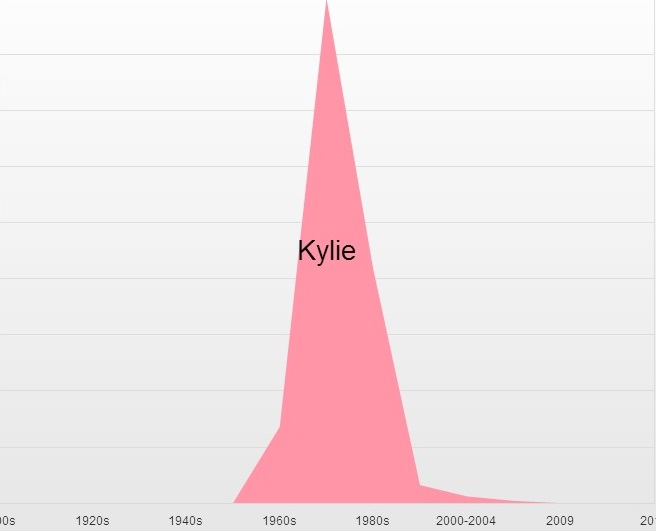
This really is a classic sign of a trendy name – it not only goes up the charts steeply, it comes down again at a similar rate, so that its progress through the charts has a cone shape; the skinnier the cone, the less years it was popular, and the more spectacular has been the name’s rise and fall. Kylie‘s cone, for example, looks quite thin.

kylie trendy

The trouble is that this isn’t very helpful for predicting whether a particular name will be trendy. It’s strictly a post mortem technique, so by the time you realise you chose a trendy name, it’s too late – your child is thirty six years old and nobody cares anyway.

Some people fear that any name going up steeply in popularity is sure to come down steeply as well, but this isn’t necessarily the case. For example, imagine you chose the name Jennifer for your daughter in the 1930s. It jumped straight into the Top 100 from nowhere, which seems very alarming, but it remained in the Top 100 for seven more decades. Your little Jenny would have collected her old age pension before her name stopped being popular, and even today Jennifer is only around the 200-300s and fairly stable. It never fell as dramatically as it rose.

Jennifer

For this reason, it seems a bit silly to avoid a name that’s trending upwards. If anything, the message seems to be to jump on a trend as early as possible, because it’s cooler to be a Jennifer born in 1935 than one born in 2000, even though the popularity was around the same in those two years.

… and has reached a certain level of popularity

Even though trendiness and popularity are not the same thing, it’s only once a name becomes reasonably popular that most people start to call it trendy, even if it’s been zooming up the charts for several years. It needs to be used by enough people that it can have those impressive rises in rank, as well as enough visibility to be considered trendy.

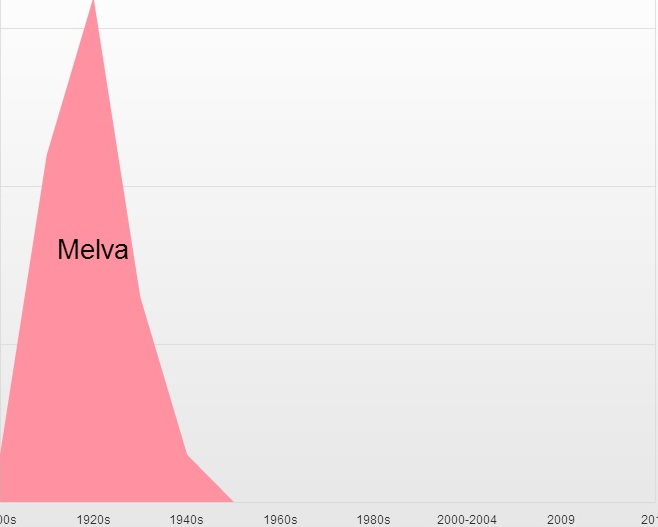
So Melva might have a steep rise and descent, but as it never reached the Top 100, it doesn’t get mentioned as a past trendy name. Persistently low usage does help protect a name against a charge of trendiness from most people (not all).

melva

New to the charts

I know many will disagree with this one, but I believe that no matter how rapidly a name is rising, it’s not trendy if it has previously been on the charts. Otherwise you get comments like “Leo is both classic and trendy“. Which is absurd when you think about it – like describing someone as an extremely tiny giant, or a colour as a very pale shade of black – because classic and trendy are opposing terms. I would say Leo is a rising contemporary classic, not a trendy classic.

Leo rising classic

Names that have been on the charts previously and disappeared before returning again are retro names. No matter how much Nathaniel may be zooming up the charts at present, I don’t consider it to be trendy, as it already has a history as a traditional name.

Inspired or boosted by popular culture

Any name that has suddenly got a boost in the charts (or even just in the public consciousness) due to a popular song, movie, TV show, celebrity, or celebrity baby is liable to be labelled “trendy”, whether it’s Elsa, Khaleesi, Penelope, Jagger, George, or Banjo.

I think that’s very unfair, because if you look through the history of naming, people have always named their children after the celebrities and culture of their day. By this standard, familiar names such as William, Eleanor, Alexander, Cordelia, Stanley, Fiona, Eric, and Rosamund have all been “trendy”. In fact, you could include all the Bible names and saints’ names in that group as well, since saints were the celebrities of the Middle Ages, and the Bible everyone’s favourite book.

Fitting in with one or more name trends

Another thing that can get a name labelled trendy, even if it’s in rare use, is if it fits in with current naming trends, especially with multiple trends. So you might claim that Liliana is a trendy name, because it fits in with the trend for L-L names for girls, like Lila, and with the trend for elaborate names for girls, like Isabella.

The trouble is that by this logic, practically every name being used today could be labelled as “trendy” – it’s very difficult to avoid ALL name trends.

This article mentions some of the current baby name trends in Australia: patriotic names, surnames as first names, place names as first names, nicknames as first names, and biblical names. Remove all those, and the choices dwindle significantly. And this isn’t even touching on mythological names, vintage names, unisex names, rare names, uniquely spelled names, literary names, virtue names, nature names, vocabulary names, and boys’ names ending with N.

* * * * * * * * * *

There you have it: six things might get your baby name labelled trendy. And the more categories it fits into, the more likely that it will seem trendy to somebody. So the current most “trendy” name in the Top 100 is Aria – it’s climbing fast, quite popular, new to the charts, inspired by popular culture, and fitting in with current trends, such as the AR sound in names.

Of course, in the 1970s there was a name which rocketed into the Top 100 from nowhere, had never been on the charts before, with use boosted by a popular singer, and whose sound fit in with other popular girls’ names such as Emily and Felicity. That name was Olivia, and although it may have been trendy in 1978, it isn’t any more. Aria could become equally as established, or even a modern classic, so there’s no guarantee that a trendy name will stay trendy.

Olivia

The big question is: what exactly is so terrible about a trendy baby name anyway? We’re always being told to avoid trendy baby names, and rarely are we given a reason. It’s just taken for granted that of course you don’t want to give your child a trendy name, in the same way that of course you don’t want them to put their hand on a hot stove.

About the only thing I can come up is that trendy names tend to become dated, except that a) sometimes they don’t eg William and b) most names date eventually anyway, even classics eg Susan.

And even if your name doesn’t become dated, it isn’t going to make your life especially wonderful. I have a non-trendy classic name which is still reasonably popular, and not only has it failed to provide me with a magically charmed life where nothing ever went wrong, its impact has been minimal at best. Meanwhile, my peers with the trendy names of our generation, such as Jodi and Jason, don’t seem to have had their lives ruined by their names.

* * * * * * * * * *

So there you have it – trendy names are something to be avoided, even though there’s no compelling evidence they’re particularly awful, or that a trendy name will remain trendy; there’s not even any real proof that trendy names actually exist as an objective phenomenon. And the criteria as to what is trendy is so broad that almost any name you can think of can be labelled as such.

Perhaps it’s time to put this baby name bogeyman behind us.

POLL RESULTS
The things that most people thought made a name trendy were:

* destined to fall as quickly as it rose – 23%
* rapidly rising in popularity – 13%
* boosted by popular culture – 12%

26% of people thought a name had to fulfil at least two or more of the stated requirements before being considered trendy, while 7% thought that it had to fulfil all six of the requirements to be a trendy name.

Just 1% of people thought that being new to the charts made a name trendy.

2% of people did not think there was any such thing as a “trendy” name.

(Popularity charts from Baby Names Explorer)

Perth Suburbs That Could Be Used As Boys Names

20 Sunday Jul 2014

Posted by A.O. in Name Themes and Lists

≈ 4 Comments

Tags

animal names, aristocratic names, aristocratic titles, Australian slang terms, Biblical names, bird names, birth notices, British names, car names, celebrity baby names, Celtic names, english names, famous namesakes, fictional namesakes, Gaelic names, germanic names, hebrew names, historical records, Latin names, locational names, middle names, mythological names, name history, name meaning, name popularity, names from television, names of boats, nature names, nicknames, Puritan names, saints names, Scottish names, surname names, unisex names, US name popularity, US name trends

2725210-01

Ashby
Ashby is a residential northern suburb, first developed in the late 1990s. It is named after the original landowner, Mr E.E. Ashby, who lived here before World War I. Ashby is a surname which means “farm among the ash trees” in a mixture of Old English and Old Norse; it is more common in Lincolnshire, Leicestershire and the East Midlands, which have a history of Scandinavian influence. Ashby has been used as a name for boys since the 17th century, and seems to have been especially popular amongst Puritan families. The town of Ashby-de-la-Zouch in Leicestershire was an important centre for Puritan preaching and education, which may be an inspiration for the name. Ashby isn’t rare in Australian records, although more common as a middle name, and has occasionally been given to girls. I saw this is a boy’s middle name in a birth notice, and thought this might make an appealing Ash- name for boys, which seems more obviously masculine than Ashley. Unfortunately, it could easily be confused with Ashley too.

Bentley
Bentley is 8 km south of the city, and is the location of the main campus of Curtin University. The area has been settled since 1830, and was developed in the post-war period with government housing, including homes for returned servicemen. Today Bentley is very varied: it has a light industrial area, but part of it is still used for grazing. The suburb is named after John Bentley, a veteran of the Crimean War who arrived in the Swan River Colony as a pensioner guard, and supervised convicts building what is now the Albany Highway. Bentley is a surname after the common English place name, meaning “bent-grass meadow”; bent-grass refers to rushes or reeds. Bentley has been used as a boy’s name since the 17th century, and has recently leaped up the charts in the United States to become a Top 100 name. Its jump in popularity is attributed to a baby named Bentley on reality show 16 and Pregnant. In Australia, Bentley is around the high 100s, which is still a lot more popular than it is in the UK. People often connect the name to the luxury car company, founded in 1919 by W.O. Bentley.

Bertram
Bertram is a new suburb of the City of Kwinana, in Perth’s south (for more information, see Leda in Perth Suburbs That Could Be Used As Girls Names). It is named after an assisted migrant from the 1920s, who came here under the group settlement scheme. Bertram is a Germanic name which means “bright raven”; it was introduced to Britain by the Normans. A famous Australian namesake is Sir Bertram Stevens, who was Premier of New South Wales in the years before the Second World War. Bertram has been quite a popular name in fiction, including the main character of Shakespeare’s All’s Well That Ends Well. Unfortunately, Bertram is not, on the face of it, a very sympathetic character, although he gets his regulation happy ending anyway. Another fictional Bertram is Bertie Wooster, from P.G. Wodehouse’s Jeeves books; a good-natured idler, this Bertram is not without charm, although perhaps not the most sturdy namesake. The short form Bertie would be very cute though.

Carlisle
Carlisle is south of the CBD, and close enough to offer views of the city. Originally farmland, it was developed in the late 19th century, and is a fairly typical older suburb. The name Carlisle was chosen by the suburb’s ratepayers, who called it after the northern English city of Carlisle in Cumbria. Their logic was that just as Cumbrian Carlisle is famously near the border between England and Scotland, so was Australian Carlisle right on the border between the city of Perth and its suburbs. However, it is interesting to note that one of the landowners at the time was named Carlisle; it is possible his surname put the idea in the ratepayers’ minds. Carlisle is an ancient city which was one of the most heavily fortified towns of pre-Roman Briton: its name means “stronghold of the god Lugus”. Lugus was one of the most prominent of the Celtic gods, and the Romans identified him with Mercury, as he was known as a god of trade and skill. Carlisle has been used as a boy’s name since the 18th century, and was originally used most often in Cumbria. It has recently received some interest since the name was chosen for one of the more sympathetic vampires in the Twilight series.

Falcon
Falcon is one of the suburbs of Mandurah, a coastal city 45 km from Perth, within the metropolitan area. It is popular with tourists and retirees, making it the least affordable city in Australia. Falcon has a number of beaches, and is named after Falcon Bay, which is pronounced FAWL-kin, rather than FAL-kin – an earlier English pronunciation of the word. Falcon was a yacht whose crew won a silver medal at the 1956 Olympics in Melbourne, and many of Falcon’s streets are named for yachts. Falcon has been used as a boy’s name since medieval times – there is even an obscure St. Falcon, and Falcon was the middle name of Antarctic explorer Robert Scott. The name may be from the Latin Falco, meaning “falcon”, or derived from the Germanic name Fulco, meaning “people”. I did find a few Falcons born in Australia, and for some reason they were nearly all South Australian. In Australia, this name will remind people strongly of the car, the Ford Falcon, and perhaps also the slang term in rugby league for being accidentally hit in the head by the ball. I’m not sure whether the pronunciation will make any difference.

Murdoch
Murdoch is in the south, and the home of Murdoch University. The university is named in honour of Sir Walter Murdoch, a former chancellor of the University of Western Australia, and its founding Professor of English. Sir Walter was a essayist famous for his wit and intelligence, and an active proponent of international peace and justice, political freedom, women’s rights, and affordable childcare. His great-nephew is the media mogul Rupert Murdoch. The surname Murdoch is the Anglicised form of two Gaelic personal names that became conflated with one another, and were written as Muireadhach. One name was Muiredach, meaning “mariner”, and the other was Murchad, meaning “sea warrior”. Muireadhach was a traditional name amongst the Earls of Monteith, and Murdoch has seen particular use in their seat of Perthshire. Murdoch is commonly found in Australian records amongst Scottish families, but although we have enthusiastically embraced Lachlan, Murdoch has been less successful. Fun fact: Murdoch was an early name crush for a particular Australian blogger, which makes you wonder if this could have been a contender without the prominent Murdoch family.

Samson
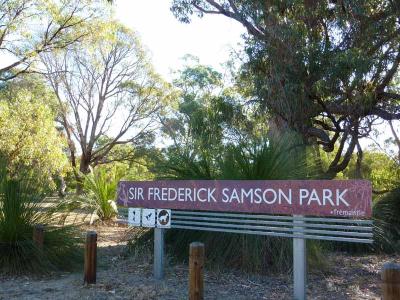
Samson is a small suburb of Fremantle, a southern port city in the Perth metropolitan area. The suburb was only developed in the 1970s, as before this it had belonged to the army, and was a military camp during World War II. The suburb is named after the Samson family, who have been prominent in the Fremantle area for nearly two centuries. Sir Frederick Samson was mayor of Fremantle for twenty years, from the 1950s to the 1970s, and his home, Samson House, is one of Fremantle’s landmarks. The suburb of Samson contains Sir Frederick Samson Park, Fremantle’s only bush reserve. Sir Frederick was the grandson of Lionel Samson, a wealthy Jewish merchant who settled in the Swan River Colony in 1829 and became one of its most successful pioneers. Popular for his charm and wit, respected for his integrity, the business he founded is still run by the Samson family, making it Western Australia’s oldest family business. Samson is one of the most famous characters in the Old Testament, a judge of the Israelites known for his superhuman strength. His name is from the Hebrew for “man of the sun”, leading some scholars to suspect he was originally a sun god, or demi-god. Samson was in use as an English name during the Middle Ages, and there is a Welsh St Samson, one of the Apostles of Brittany. This is a very masculine name which provides another way to get the popular short form Sam.

Sawyer
Sawyers Valley is on the eastern fringe of Perth’s outer suburbs, and 40 km from the city. Its name came about because it was originally a saw mill and timber processing area. It’s now a semi-rural suburb in the bush-covered hills surrounding Perth. Sawyer is an occupational surname for someone who sawed wood for a living – and in the days when most things were made of wood, an important trade. Sawyer has been used as a personal name since the 17th century, mostly as a male name. In Australian records, I can only find it as a man’s first name, although not unusual as a female middle name. Sawyer doesn’t chart in Australia, but has been in the US Top since 1991; it had a huge jump up the charts after Steven Spielberg chose the name for his son in 1992. In America, it is a unisex name, but more common for boys. Although it is in rare use here, I have seen it a few times, on both sexes. Its most famous namesake is Tom Sawyer, the young scamp from the stories by Mark Twain, while it has also been alias for Josh Holloway’s character on Lost.

Stirling
Stirling is a residential suburb 10 km north of the city. The area has a multicultural history, because in the 1920s it attracted retired Chinese miners from the goldfields, returned servicemen from the First World War, and many Italian migrant. It became a successful market gardening region producing almost every vegetable possible, some for export. Even after development in the 1960s and ’70s, the suburb remains one of Perth’s most ethnically diverse, with a third of the population having Italian heritage, and many from Macedonian, Greek and Asian backgrounds. The suburb is named after James Stirling, who was the first governor of Western Australia, and who lobbied for a colony to be founded on the Swan River. Stirling is a Scottish Clan name which comes from the city of that name in central Scotland; it is known as the “Gateway to the Highlands”. The meaning of its name is not known, although folk etymology says that it is from the Gaelic for “place of battle”. Another theory is that it is British, and means “dwelling place of Melyn”; the name Melyn is said to mean “yellow-skinned, sallow-skinned”. Stirling has been used as a boy’s name since the 18th century, and was first used this way in Stirlingshire. I have seen this name quite a few times in birth notices, and it’s one with a great deal of dignity.

Warwick
Warwick is in the northern suburbs of Perth, and a large section of it is still native bushland. It originally belonged to a railway company, and is named after Warwick Road, the major road which goes through it, and pre-dates the suburb’s development. It may have been inspired by Warwick Road in London. The name Warwick comes from the English city of Warwick in the Midlands; its name means “dwellings by the weir” in Old English, as the River Avon flows through it. It’s pronounced WOR-ik. The Earl of Warwick is one of the most prestigious titles in the British peerage, and Guy of Warwick a legendary English hero, which may help explain why Warwick has been used as a boy’s name since at least the 16th century. However, it seems to have originated in Devon, in the seat of a family named Warwick who belonged to the minor nobility. Warwick first charted in the 1910s at #203, joining the Top 100 in the 1940s, where it peaked at #80. It left the Top 100 in the 1960s, and hasn’t charted since the 1990s. Famous Australians with this name include the racing driver Warwick Brown, and flamboyant former AFL star, Warwick Capper.

POLL RESULTS
The public’s favourite names were Sawyer, Samson and Ashby, and their least favourite were Stirling, Warwick and Murdoch.

(Photo shows the entrance to Sir Frederick Samson Park, in Samson)

Famous Name: June

25 Wednesday Jun 2014

Posted by A.O. in Famous Names

≈ 1 Comment

Tags

Biblical names, english names, famous namesakes, Latin names, middle names, mythological names, name history, name meaning, name organisations, name popularity, names from songs, names of months, nicknames, Roman names, saints names, unisex names, US name popularity, US name trends

art-353-june-300x0

Here we are at the end of June, and our last chance to cover the name of this month. On Sunday, I covered the winter solstice, where I said how mild it was – June was all blue skies and sunshine then. Little did I know the very next day a blizzard would hit, with massive snowfalls in the mountains, and freezing, gale-force winds and heavy rain elsewhere. So winter has definitely started now.

June Wright was once Australia’s queen of crime fiction; her first novel, Murder in the Telephone Exchange, was the best-selling mystery novel of 1948 in Australia, outselling the latest Agatha Christie. It featured feisty telephonist-turned-amateur-detective Maggie Byrnes, and was set during a blazing hot February in post-war Melbourne. These were the days when young working ladies lived in boarding houses where gentleman callers were not permitted, and leaving your bedroom clad only in pyjamas and dressing gown was an absolute no-no.

June went on to write five more novels, including a second Maggie Byrne mystery where the post-war housing shortage leads her into another interesting case to solve. The Devil’s Caress, which has a female doctor as the detective, was described as making Murder in the Telephone Exchange look like a bedtime story, and her last three novels featured Mother Mary St. Paul, an unassuming yet strong-willed Catholic nun detective that June Wright based on the head of the maternity ward where she gave birth to twins.

While June’s wartime experience as a telephone operator was the inspiration for Murder in the Telephone Exchange, it was her career as housewife and mother to six children, one severely intellectually disabled, that was seized upon by the women’s magazines of the day, who brought out articles with titles like “Wrote Thriller With Baby on Her Knee” and “Books Between Babies”. The writer of dark, gory murder mysteries with strong female protagonists was careful to present herself as charming and and feminine, and pointed out that both housewives and writers had to be practical, disciplined, and used to monotony.

June’s last novel was published in 1966. Her husband had a nervous breakdown, and June went back to work as a telephonist to support the family, before she and her husband started a cleaning business together. Although there are no hints she regretted having to abandon her literary career, she lived a long life (she only passed away recently), and it’s hard not to think of the many years she could have kept writing under different circumstances.

June lapsed into literary obscurity, and her works have been out of print for many years. However, in February this year Murder in the Telephone Exchange was re-issued by Dark Passage, an imprint of US publisher Verse Chorus Press. They will be bringing out all her novels, including previously unpublished Duck Season Death.

I haven’t bought my own copy yet, but this is welcome news for lovers of vintage fiction, women’s fiction, and Australian crime fiction. I think the books would be especially interesting for Melburnians from a historical perspective.

The name June is after the sixth month of the year. The Romans called the month Junius, commonly believed to be named in honour of the goddess Juno, the wife of Jupiter and queen of the gods. Do you remember the Happy June group, who celebrated June Day on June 1 every day? Well, on the first day of June, the ancient Romans had a festival dedicated to Juno’s “birthday”, in her role as goddess of war and protector of the state. So in a way, there is a “June Day” just as much as a “May Day”.

Because Juno was the goddess of marriage, the month of June was thought an auspicious time for weddings. This makes a lot of sense in the northern hemisphere, where it is early summer: in the United States, June is the most popular month for weddings, and in Italy, June is still a popular month to be married. In Australia, November is the most popular month for weddings (just to confuse things, in the United Kingdom August is the traditional wedding month – in Italy this is considered incredibly bad luck and very unhealthy).

As June is the start of summer in the northern hemisphere, there the name June may seem ripe and womanly, full of vitality and promise – as the song says, June is Bustin’ Out All Over. Here June is the start of winter, and to me it seems cool and fresh as a mountain breeze, and pure as snow.

June has been commonly used as a girl’s name since the 19th century, and part of its appeal must have been that it sounded similar to popular names such as Joan and Jane. It would have also seemed like a “real name” because of Latin names such as Junia – Saint Junia is venerated in the Orthodox tradition, and is mentioned in the New Testament as having a leadership role in the early Christian church. In the US, June has also been used as a male name, derived from Junius.

In Australia, June began charting in the 1910s, debuting at #162, and climbing so steeply that it was #15 for the 1920s. It peaked in the 1930s at #10, fell until it left the Top 100 in the 1950s, and last charted in the 1970s.

June does not chart in either Australia or the UK, but in the US June is already in the 300s and rising very briskly after only re-joining the Top 1000 in 2008. The United States is leading the way, and I think this is an American name trend well worth considering.

June is sweet and charming, and has the fashionable OO sound in it, like Ruby and Lulu. This is a hip vintage choice, and also a simple nature name, like Wren or Rain. Not only can it be used to honour a relative named June, or for cases where June is a special month for you, this would make a great name for someone who wanted something that was traditional and “old-fashioned”, while still seeming fresh and underused.

June could be used as a short form of names such as Juniper, Junia or Juno, and is getting some use as a middle name, but it would be lovely to see it up front as the full name. Junie is the usual pet form.

POLL RESULTS
June received an excellent approval rating of 80%, making it one of the highest-rated names of 2014. People saw the name June as vintage and hip (26%), sweet and charming (23%), traditional yet fresh (15%), and pretty or cute (10%). However, 9% saw it as only a middle name. Only one person thought the name June was too trendy.

Famous Name: Isaac

18 Wednesday Jun 2014

Posted by A.O. in Famous Names

≈ 8 Comments

Tags

Biblical names, famous namesakes, hebrew names, name history, name meaning, name popularity, nicknames, popular names, retro names, saints names, slang terms

SirIsaacIsaacs

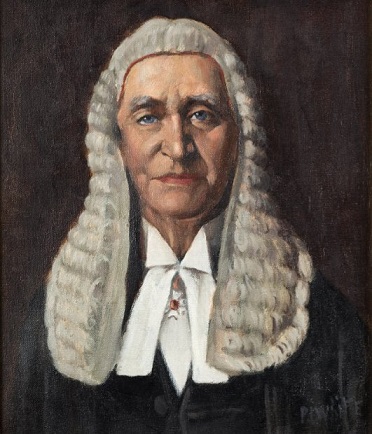
On June 6 it was the 159th birthday of Sir Isaac Isaacs, who is famous for being the first Australian-born Governor-General of Australia. He is also our first Jewish Governor-General.

The appointment of Sir Isaac Isaacs in 1930 by Prime Minister James Scullin was a controversial one at the time, because it was fiercely opposed by the British government. They didn’t have anything much against Sir Isaacs personally (apart from being a bit old and unknown to them), but were greatly offended by the idea of an Australian representing the British monarch. However, Scullin stuck to his guns and eventually King George V agreed to the appointment with great reluctance.

This landmark moment led to the Statute of Westminster 1931 and the formal separation of the Crowns of the Dominions. From now on, the monarch would be bound by constitutional convention to accept the advice of the Australian Prime Minister on Australian constitutional matters.

Despite the stain of his Australianness, Sir Isaac Isaacs did everything he could to make himself agreeable. He was an ardent monarchist and, although very proud to be an Australian, a strong supporter of the British Empire. He agreed to accept a lower salary, and conducted himself very frugally, which went down well during the Great Depression. He was the first Governor-General to live permanently at Government House in Canberra, and the public approved of this, as well as his general air of austere dignity, while following his duties with obvious enjoyment.

I’d like to be able to say that after Sir Isaacs, all Governor-Generals were Australian, but conservative governments immediately reverted to appointing British Governor-Generals. There was only one more Australian-born Governor-General until 1965 – since then, they have all been Australian-born, except Sir Ninian Stephen, who emigrated here as a child.

Isaac has one of the better known name stories in the Bible, and is one of the few characters in the Bible to be named directly by God.

When the patriarch and prophet Abraham was ninety-nine years old, God made a covenant with him, that he would be a “father of many nations”, and that his descendants would possess the land of Canaan forever. As Abraham and his wife Sarah did not have any children, God promised he would bless them, so that Sarah would soon bear a son.

Abraham laughed when he heard that, for by the time the baby was due to be born, he would be one hundred years old, and Sarah would be ninety. Sarah secretly listened to this prophecy, and had a good chuckle to herself at the idea that a very old couple would be able to conceive a child together, and a woman long past her child-bearing years could give birth.

Despite their scepticism, the prophecy was fulfilled, and Abraham and Sarah had a son together. They gave him the name that God had chosen, which was Yitzhak, meaning “laughter” in Hebrew. In English the name is Isaac.

The other key story about Isaac is that during his childhood, God commanded Abraham to build an altar in the wilderness and sacrifice his son on it. However, just at the point the knife was raised above Isaac, an angel appeared and told Abraham that it had just been a test of his faith, and that he should sacrifice a ram which happened to be around at the time instead. Because of Abraham’s show of faith, and Isaac’s obedient willingness to be sacrificed, God blessed them both many times over.

Christians have tended to see Isaac as a forerunner of Christ, and both Jews and Christians see him as a model for the martyr, who goes willingly to the slaughter for his faith. Isaac is venerated as a saint in Catholicism, and revered by Muslims as a prophet of Islam.

The story of Abraham and Isaac has made Biblical commentators uncomfortable enough that they feel it needed to be explained. Some Jewish writers felt that human sacrifice was so revolting that God couldn’t possibly have requested it even as a test, and suggested that it must have been a delusion of Abraham’s imagination, or even some trickery by Satan. Others thought that Isaac was in fact sacrificed, but that God had resurrected him straight away.

Modern philosophers don’t seem to feel that the story shows God in a very attractive light. Some scholars believe that it preserves an ancient memory of a tradition of child sacrifice, with the “happy ending” tacked on later, when such sacrifice was viewed with abhorrence and needed to be explained away.

Isaac has been used as an English name in the Middle Ages, and became more common after the Protestant Reformation. One of its most famous namesakes is Sir Isaac Newton, the mathematician and scientific genius. This gives Isaac a rather brainy image – and Sir Isaac Isaacs was very intelligent too.

For many years, the name Isaac was particularly associated with Jewish people – to such an extent that even in the twentieth century, Jews were referred to in a derogatory way as ike or ikey (short for Isaac), in the same way that Catholics were called micks (short for Michael).

Isaac was #147 in the 1900s, and left the charts in the 1920s. It didn’t return until the 1970s, when its position was #326. It climbed very steeply in the 1980s, and joined the Top 100 in 1991 at #86. After pottering along in the bottom third of the Top 100, it suddenly gave a massive jump in 1997, when it made #25. Is it a coincidence that the teen pop band Hanson, with singer Isaac Hanson as the singer, had their biggest success in 1997? Hmm! Or should I say MMMBop?

After this Hanson-led surge of popularity, Isaac settled down, but remained in the Top 50; it has been fairly steadily climbing since 2005. It is currently #19 nationally, #14 in New South Wales, #28 in Victoria, #34 in Queensland, #23 in Western Australia, #41 in Tasmania, #17 in the Northern Territory, and #31 in the Australian Capital Territory.

In a rather cheeky post, I suggested that if Isaac kept climbing, it could be the #1 name by 2028. I’m not sure if it will, but it is a good strong name, and many people find the meaning of “laughter” attractive. In the Bible, Isaac was a true “miracle baby”, born to two people very late in life who never expected to be parents, making it an excellent choice for couples blessed with a surprise or against-the-odds baby. As well as the traditional Ike or Ikey, you could also use Iggy or Zac as the nickname, should you want one.

POLL RESULT
Isaac received an excellent approval rating of 84%, making it one of the highest-rated names of 2014. People saw the name Isaac as cute on a boy, but solid on a man (29%), strong and handsome (20%), intelligent and professional (16%), and having a very attractive meaning (12%). However, 8% were put off the name by the Bible story of Abraham and Isaac. Nobody thought the name Isaac sounded creepy or evil.

(Picture shows a portrait of Sir Isaac Isaacs from the Victorian Bar’s collection)

Irish Names for Boys

15 Sunday Jun 2014

Posted by A.O. in Name Themes and Lists

≈ 8 Comments

Tags

animal names, celebrity baby names, ethnonyms, famous namesakes, Gaelic names, hebrew names, Irish name popularity, Irish names, Latin names, modern classic names, mythological names, name history, name meaning, name popularity, name trends, names of political organisations, nicknames, Old Irish names, popular names, retro names, royal names, saints names, underused names, Welsh names

a07442ad-b5ca-4bfe-8a64-ab471fc44a87

It was very hard to choose just ten Irish boys’ names, as there are so many commonly used Irish names for boys in Australia, especially if you include Irish surnames. It’s not surprising when you consider our strong Irish heritage, and because the Irish were here from the beginning of European settlement, they were never marginalised as happened in other countries.

Famous Australians with Irish heritage include bushranger Ned Kelly, Peter Lalor who led the Eureka Rebellion, actor Erroll Flynn, artist Sidney Nolan, rock singer Doc Neeson, philanthropist Daisy Bates, and our greatest prime minister, Ben Chifley. Those alive today include Governor-General Peter Cosgrove, Nicole Kidman, Kylie Minogue, surfer Mick Fanning, Socceroo Lucas Neill, author Tom Keneally, and former prime ministers Paul Keating and Kevin Rudd.

A reminder I haven’t included any names with fadas (accent marks), as they aren’t permitted in all states and territories.

Aidan
Anglicised form of Aodhán, a pet form of Aodh or Áed, meaning “fire” in Old Irish; there are many characters from Irish mythology named Aodh. St Aidan of Lindisfarne was an Irish-born monk known as the Apostle of Northumbria; he was famous for converting people by simply walking from village to village, politely chatting with people and introducing them to Christian beliefs by helping them in their daily lives. The name Aidan first ranked in the 1970s at #533, and by the 1980s was already #177. Aidan joined the Top 100 in 1993 at #92, and peaked in 2008 at #51. Currently Aidan is #99 in Victoria and #102 in the Australian Capital Territory. The Aiden spelling is more popular: this first charted in the 1980s at #368, joined the Top 100 in 1997 at #62 and peaked in 2009 at #35. Currently Aiden is #41 nationally, #45 in New South Wales, #45 in Victoria, #65 in Queensland, #47 in Western Australia, and #39 in the Australian Capital Territory. Even combining spellings, Aidan/Aiden is only #51 nationally. This doesn’t seem as if Aidan is very popular, yet it still has a reputation as an “overused” name because of the massive trend for sound-alike names, such as Hayden, Brayden, Caden, Jayden, Zayden etc. Aidan is #50 in Ireland and #43 in Northern Ireland.

Cian
In Irish mythology, Cian was a god and father of the hero Lugh of the Long Hand. According to folk tales, Cian possessed a magical cow which produced a superabundance of milk. During a quest to recover his cow after she had been stolen, he seduced a princess who had been locked up in a tower (it was the princess’ father who had stolen the cow). The tale sounds very much like the Greek myth of Danae, and the princess was imprisoned for the same reason – a prophecy said that the princess’ father would be killed by his grandson. Lugh the Longhand was born from this union, and eventually the prophecy was fulfilled when Lugh killed his grandfather in revenge for locking his mother in a tower. The name Cian means “long, enduring, far, distant” in Gaelic, and is pronounced KEE-in. It is often anglicised to Kian, which is in the 400s in Victoria. Cian is #15 in Ireland.

Connor
Variant of Conor, Anglicised form of the Gaelic name Conchobhar, meaning “lover of hounds”. There have been several real life Irish kings with this name, including a High King, and also the legendary Conchobhar mac Nessa, who was unsuccessfully married to both Queen Medb and Deirdre, but had many other wives. The name is the basis for the Irish surname O’Connor, meaning “grandson of Conchobhar”, and the Clan O’Conchubhair is a royal Irish dynasty whose lineage has provided one hundred kings of Connacht, and two High Kings of Ireland: some members of the noble O’Conor family of Ireland are the living descendants of the last High King of Ireland. Connor is a truly royal name, which must have an influence on its use. The name Connor has charted since the 1980s, debuting at #418. It joined the Top 100 in 1994 at #83, and peaked at #21 in 2003. Currently it is #43 nationally, #74 in New South Wales, #61 in Victoria, #33 in Queensland, #31 in Western Australia, #40 in Tasmania, and #69 in the Australian Capital Territory. Connor is #97 in Northern Ireland; Conor is #5 in Ireland and #17 in Northern Ireland.

Darragh
Variant of Dara, derived from from the Gaelic for “oak grove”. The oak was sacred to the Celts, and the word druid is directly related to the word for oak. The city of Derry in Northern Ireland has the same meaning. Darragh can also be an Anglicisation of the Old Irish name Dáire, meaning “fertile, fruitful, virile, sexually aroused”, but also “agitated, raging, violent, tumultuous”. It’s a very explicit meaning in regard to masculine sexuality, suggesting a sort of bestial lust. The Darini were an ancient peoples from Northern Ireland, and it would seem that Dáire was their ancestor or ancestral god. Several Irish noble families and Scottish clans claim descent from the Darini, as do the current British royal family. There are many kings and heroes from Irish legend named Dáire, but folklorists believe they are ultimately versions of the same mythological figure, who may have been a god of the battlefield. Darragh can be pronounced DAH-ruh, or DA-ra, and may seem like an updated Darren to Australians. Darragh is #20 in Ireland and #30 in Northern Ireland; Dara is #86 in Ireland, and Dáire is #88 in Northern Ireland.

Finn
Both the older Irish and Anglicised form of Fionn, meaning “blond, fair, white, bright”. Its most famous namesake is the mythical warrior and giant Find mac Cumail, transcribed in English as Finn McCool. Finn was a nickname – his real name was Deimne, meaning “sureness, certainty”, and gained his nickname after his hair turned prematurely white. Finn was brought up by a warrior woman who trained him in war and hunting, then he studied under a poet and druid. One day Finn was cooking a mystical salmon for his master which would give him all the knowledge in the world: he burned his thumb in the process, and instinctively put his thumb in his mouth to cool it, swallowing a piece of salmon skin. This gave Finn the wisdom of the salmon, and whenever he needed to draw on its power, he needed only to suck his thumb. Finn’s followers were called the Fianna, and it is from them the Fenian Brotherhood gained their name. According to legend, Finn is sleeping in a cave beneath Ireland, and will one day awake to defend Ireland in her hour of greatest need. Finn first charted in the 1990s at #287, and by 1997 was already in the Top 100 at #88. Currently it is #62 nationally, #68 in New South Wales, #60 in Victoria, #76 in Queensland, #40 in Western Australia, and #30 in the Australian Capital Territory. This is a handsome popular name that has helped drive the popularity of names such as Flynn and Finlay. Finn in #38 in Ireland and #56 in Northern Ireland; Fionn is #27 in Ireland and #70 in Northern Ireland.

Lorcan
Anglicised form of Lorcán, derived from the Irish Gaelic word for “fierce”. There have two been ancient Irish kings named Lorcán, and a medieval saint Lorcán Ua Tuathail whose name is Anglicised to Lawrence O’Toole. St. Lorcán was of royal blood, and became Archbishop of Dublin. He played a prominent role in the religious reform of the 12th century, spearheading a movement of spiritual renewal while bringing the church in Ireland closer to Rome. He was admired by both members of the church and the secular community for his many acts of charity to the poor – much needed at the time due to a severe famine. This is a cool Irish name which could be an alternative to names as Lachlan, Liam, or Declan. Lorcán is #67 in Northern Ireland.

Malachy
Anglicised form of Máel Sechlainn, meaning “follower of St. Seachnall”. St. Seachnall is an obscure 5th century Irish bishop who seems to have been of Italian origin; his name may be an Irish form of the Latin name Secundus, meaning “second (born)”, as he is also known as St. Secundius. The modern spelling of Malachy has been influenced by the Hebrew name Malachi, meaning “my messenger”, and therefore understood as “my angel”. However, Malachy is pronounced MAL-uh-kee, not MAL-uh-kie. There have two medieval High Kings of Ireland named Malachy, and also a St. Malachy, who was the first native-born Irish saint to be canonised. The saint’s name is an Anglicisation of Máel Máedóc, meaning “follower of St. Madoc”; Madoc was a 7th century Irish monk, and his name may come from the Welsh for “fortunate”. Malachy is an attractive name in occasional use, and AFL footballer Liam Picken has a young son named Malachy.

Oscar
Believed to mean “deer friend”. In Irish mythology, Oscar was the son of the warrior Oisin (“young deer”) and the fairy queen Niamh; he was the grandson of Finn McCool, and one of his warriors. Oscar was killed by a member of the increasingly corrupt Fianna, and upon his death, Finn wept for the first time in his life. The name Oscar was popularised in the 18th century by the poems of James McPherson; Napoleon was a great admirer of McPherson and gave his godson Oscar as one of his middle names. Later Napoleon’s godson became Oscar I of Sweden, and the name Oscar became traditional in Scandinavia. The Irish writer Oscar Wilde may have received his name because his mother collected Irish folk tales, but perhaps also because his father had travelled in Sweden, where he received honours from King Carl XV – Carl had a son named Oscar, born two years before Oscar Wilde, and sadly the little prince died just months before Oscar Wilde’s birth. Oscar was #103 for the 1900s, and sank before leaving the charts in the 1940s. It returned in the 1970s at #478, joined the Top 100 in 1998 at #98, and the Top 50 in 2004 at #47. Currently Oscar is #24 nationally, #27 in New South Wales, #20 in Victoria, #39 in Queensland, #34 in Western Australia, #19 in Tasmania, and #20 in the Australian Capital Territory. This tough, masculine yet snuggly retro name is more popular than it has ever been. Oscar is #61 in Ireland and #64 in Northern Ireland.

Ronan
Anglicised form of Rónán. Irish and Scottish legend tells of selkies, who swim in the sea as seals, but can shed their sealskin and become human on land. Male selkies were handsome and seductive; female selkies were said to make excellent wives, but could never forget their true home, and would gaze longingly out to sea – selkie tales are nearly always romantic tragedies. The children born of selkie women were called ronans, or “little seals”. The lovely film The Secret of Roan Inish, set in Ireland, is about the selkie legend, and an Irish animated movie is due to come out this year on the same topic. St. Ronan was an educated Irish bishop who sought exile in Brittany and a peaceful life as a hermit. A magical fairytale name that sounds smooth and handsome, Ronan could replace popular Ryan; it will remind many of Irish singer Ronan Keating from The X-Factor. Ronan is #52 in Ireland and #40 in Northern Ireland.

Rory
Anglicised form of the Irish Gaelic name Ruaidhrí or Ruairí. The name means “red king”, referring to fox-coloured hair. There have been many Irish kings named Ruaidhrí, including Ruaidrí Ua Conchobair, the last High King of Ireland before the Norman invasion. Rory has charted since the 1950s, debuting at #289; after a bumpy start (when it sank to #420 in the 1960s) it began climbing steadily, and peaked in the late 2000s at #125. Currently it’s in the mid 100s, and this is a rare example of a modern classic which has never become popular. Not only underused, Rory is cute but with a “tough boy” vibe, and could be an alternative to popular Riley, or fashionable Remy. Rory is #42 in Ireland and #44 in Northern Ireland; Ruairí is #81 in Ireland and #74 in Northern Ireland.

POLL RESULTS
The public’s favourite names were Finn, Rory and Oscar, and their least favourite were Lorcan, Cian and Darragh.

(Picture of a Harbour Seal or Common Seal from the Belfast Telegraph)

← Older posts
Newer posts →

Enter your email address to follow this blog

Categories

Archives

Recent Comments

A.O.'s avatarwaltzingmorethanmati… on Zarah Zaynab and Wolfgang…
Madelyn's avatarMadelyn on Zarah Zaynab and Wolfgang…
JD's avatardrperegrine on Can Phoebe Complete This …
A.O.'s avatarwaltzingmorethanmati… on Rua and Rhoa
redrover23's avatarredrover23 on Rua and Rhoa

Blogroll

  • Appellation Mountain
  • Baby Name Pondering
  • Babynamelover's Blog
  • British Baby Names
  • Clare's Name News
  • For Real Baby Names
  • Geek Baby Names
  • Name Candy
  • Nameberry
  • Nancy's Baby Names
  • Ren's Baby Name Blog
  • Sancta Nomina
  • Swistle: Baby Names
  • The Art of Naming
  • The Baby Name Wizard
  • The Beauty of Names
  • Tulip By Any Name

RSS Feed

  • RSS - Posts

RSS Posts

  • Celebrity Baby News: Melanie Vallejo and Matt Kingston
  • Names from the TV Show “Cleverman”
  • Can Phoebe Complete This Sibset?
  • Zarah Zaynab and Wolfgang Winter
  • Baby, How Did You Get That Name?
  • Celebrity Baby News: Media Babies
  • Celebrity Baby News: Adelaide Crows Babies
  • Celebrity Baby News: Chris and Rebecca Judd
  • Names at Work: Name News From the World of Business and Employment
  • Celebrity Baby News: Sporting Round Up

Currently Popular

  • Rare Boys Names From the 1950s
  • The Top 100 Names of the 1940s in New South Wales
  • Celebrity Baby News: Livinia Nixon and Alistair Jack
  • Girls Names From Stars and Constellations
  • Celebrity Baby News: Jacinta Allan and Yorick Piper

Tags

celebrity baby names celebrity sibsets english names famous namesakes fictional namesakes honouring locational names middle names name combinations name history name meaning name popularity name trends nicknames popular names saints names sibsets surname names twin sets unisex names

Blog at WordPress.com.

Privacy & Cookies: This site uses cookies. By continuing to use this website, you agree to their use.
To find out more, including how to control cookies, see here: Cookie Policy
  • Subscribe Subscribed
    • Waltzing More Than Matilda
    • Join 517 other subscribers
    • Already have a WordPress.com account? Log in now.
    • Waltzing More Than Matilda
    • Subscribe Subscribed
    • Sign up
    • Log in
    • Report this content
    • View site in Reader
    • Manage subscriptions
    • Collapse this bar
 

Loading Comments...