• About
  • Best Baby Names
  • Celebrity Baby Names
  • Celebrity Baby Names – Current
  • Celebrity Baby Names – Past
  • Featured Boys Names
  • Featured Girls Names
  • Featured Unisex Names
  • Links to Name Data
  • Waltzing on the Web

Waltzing More Than Matilda

~ Names with an Australian Bias of Democratic Temper

Waltzing More Than Matilda

Tag Archives: rare names

Their Rare Baby Name Isn’t Rare Enough!

19 Saturday Jan 2013

Posted by A.O. in Naming Assistance

≈ 7 Comments

Tags

choosing baby names, classic names, famous namesakes, locational names, name popularity, names of magazines, nicknames, patriotic names, rare names, sibsets, surname names, US name popularity
gulgong-35961Elise and Alex are expecting their third child, and had already decided that if it was a boy, his name would be Digby. Digby is a rare name; unfortunately, it has been used often enough amongst Elise and Alex’s circle that they no longer feel as enthusiastic about using it.

They are now looking for a new boy’s name, and would ideally like something which is uncommon without being particularly unusual, and would sound at home in a country community. They like surname names for boys, and don’t mind if the name they choose becomes popular later, just as long as it isn’t popular now.

They would like it to match with their son’s name, Law$on, and as their daughter’s name also starts with L, they don’t want another name starting with that letter. Elise and Alex’s surname starts with M and ends in S eg Matthews.

Names on their short list so far:

  • Banjo
  • Baxter
  • Fred

Names they’ve crossed off or can’t use for some reason:

Abraham, Angus/Gus, Benjamin/Ben, Cameron, Charles/Charlie, Elliot, Eustie, Fletcher, George, Guy, Hamish, Henry/Harry, Hugo, Jack, Jed, Luke, Remington, Samuel/Sam, Sawyer, Spencer, Stirling, Sullivan, Thomas/Tom, Wilbur, Wilhelm, William/Will, Winston

~ ~ ~ ~ ~ ~ ~ ~ ~ ~

I felt quite distraught on first reading your e-mail, because Digby is one of my favourite names too, and it’s so uncommon that it doesn’t seem fair that it’s become overly used in your corner of the world. Unfortunately, there’s no guarantee that choosing a name not on the Top 100, or even not ranked at all, ever, means you will be the only parents who like it. Underused doesn’t mean unused.

I grew up in a small town, so I understand why you want a name that nobody else is currently using. When you live in a small community, you see each so often on a daily basis that it almost feels like you’re one big family. Nobody really wants 8 Uncle Jacks and 13 cousins named Mia – not to mention all your brothers being named Sam.

You’ve already discovered that rare names can prove disconcertingly popular in pockets – the good news is that quite common names may be almost unheard of in your community. When I was born, my name was in the Top 50, and yet I was the only one, of any age, called Anna in our little town, or in all the towns surrounding us. It was only when I went to the city for holidays that I met other Annas – it just didn’t seem to be used in my region.

If you are concerned about too many other people choosing the same name, I wouldn’t worry too much about the overall popularity charts, but more about what’s popular and unpopular on a local level. Keep an eye on birth notices in your local paper, and also watch out for regional popularity lists (I have been putting these on Twitter as they come out).

The perfect name is probably one which your friends and neighbours think sounds “a bit different” the first time they hear it, but are used to within two days, and in two weeks time, are starting to really like it. That means you might want to consider a few names that you think sound a bit different at first!

It’s also a good idea to have several names on your list, in case someone else uses one you’ve picked out while you’re still pregnant. Luckily, you have plenty of time left to thoroughly explore your options.

YOUR SHORT LIST

Banjo

This is such a cool name, but for me, Banjo and Law$on are a little too much as brothers. Also, if your daughter’s name isn’t super-Aussie, I wonder if she might be a little left out of the theme?

Baxter

I think Baxter is a definite keeper. It’s got that perfect balance of being uncommon, yet sounding completely normal, and the nickname Bax fits in with familiar names like Max and Jax.

Fred

You’ve absolutely got me over a barrel on this one, because Fred is my dad’s name. To me Fred sounds kind and funny and sweet, just like my dad. Yes, I’m very biased. But being non-biased, I do think Fred sounds brilliant with your surname.

SUGGESTIONS

Archie

To me, Archie is very much like Digby – it’s cute and boyish, yet also sounds grown-up and dignified. Unfortunately, Archie is popular, increasing in popularity, and seems to be used more in the country than the city. However, I’m suggesting it because I love the way this sounds with your surname – it seems really happy and I just can’t help smiling when I hear it.

Arthur “Artie”

Arthur is one of those useful classic names which have been stable for decades (a “normal name”), yet also underused (“uncommon”). It’s very slowly increasing in popularity, but in no way trendy. The nickname Artie makes it seem like a replacement for Archie, for people worried about popularity. This is another name I think suits your surname

Dexter

Dexter is really similar in sound to Baxter, and has a similar level of popularity. I like this better with your surname, but I think Baxter makes a better sibset with your son’s name.

Huxley

Huxley reminds me both of Baxter and Digby – I feel as if someone who likes both these names might appreciate Huxley. And like Banjo, it has an Australian connection, because the naturalist T.H. Huxley travelled to Australia, which is where his scientific career began (he has a mountain named after him here). Huxley’s descendant Sir Leonard Huxley became a famous Australian physicist. You get the nickname Huck from Huxley, which somehow seems to tie in with Sawyer.

Beckett

Beckett is another name which reminds me of Baxter. It does have an Australian literary connection, because Beckett’s Budget was a famous men’s magazine of the 1920s and ’30s which combined hard journalism with saucy pictures (tame by today’s standards). Not quite as idealistic as Banjo, I admit!

Jasper

Jasper is another name which reminds me, in sound, of Baxter, yet somehow also has a little of Digby’s image. It might seem mad to consider this when it’s a Top 100 name, but when I thought about it, I couldn’t recall often seeing this name in birth announcements from rural areas. Could this be one of those names which are popular overall, but underused where you live?

Camden

I really like the sound of this surname, which as a place name, has played an important role in Australia’s colonial history. You’ve crossed Cameron off your list, so I wondered if Camden might appeal instead? This name, growing in popularity in the US, is extremely rare in Australia.

Theodore “Ted”

Like Arthur, Theodore is a classic, but rapidly growing in popularity, while still not a common name. I mostly thought of it because Ted is very much like Fred, and to me it sounds “country” but also quite patrician – Ted is  the gentleman farmer, while Fred is his trusty right-hand-man!

My favourites from your list are Baxter and Fred, and from my suggestions, I feel as if Huxley fits your criteria better than any other.

If you still feel unsure about your name list in 6-8 weeks time, write in to the blog again, and we’ll take another look at it. In the meantime, happy name hunting!

UPDATE: Elise and Alex decided to stick with Digby.

POLL RESULTS: The most popular choices for a new baby name were Fred, Archie, Arthur and Beckett, which each got around 10% of the vote.

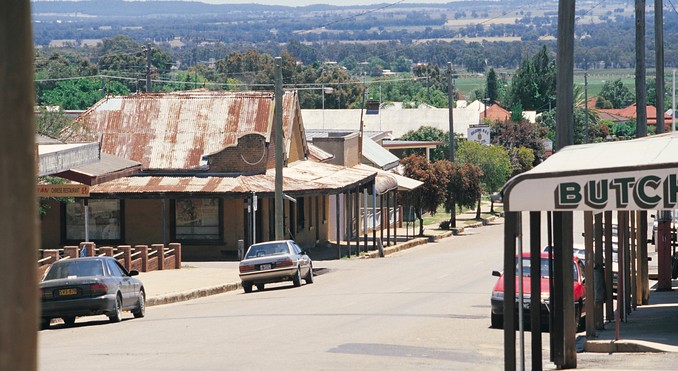
(Photo is of Gulgong in New South Wales, the childhood home of Henry Lawson; in no way is this meant to identify where Elise and Alex live)
Waltzing With … Meira

09 Sunday Dec 2012

Posted by A.O. in Waltzing with ...

≈ Comments Off on Waltzing With … Meira

Tags

hebrew names, holiday names, name history, name meaning, name trends, rare names

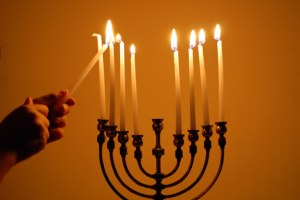
menorah

This post was first published on December 9 2012 and revised and re-posted on June 29 2016.

Today is the first day of the eight-day Jewish holiday of Hanukkah (with the day beginning at sunset yesterday, according to the Jewish calendar). It celebrates the re-dedication of the Second Temple in Jerusalem in the 2nd century BC, and Hanukkah literally means “dedication” or “establishing”.

According to tradition, there was only a single container of ritual olive oil to use, enough for one day, yet miraculously the oil lasted for eight days – in the meantime they got some more oil ready. Because of this, Hanukkah traditions are to light candles each day in a menorah, a candelabra which which holds eight candles for each day of the festival (and an extra one to provide available light). It is also traditional to eat foods cooked in oil, such as doughnuts, and potato pancakes, called latkes.

The first Jews to arrive in Australia were convicts with at least 15 on the First Fleet, and by the early 19th century, immigration from Britain and Germany meant that organised communities could exist in Sydney and Melbourne. The first synagogue was built in Sydney in 1844, with others soon following in other metropolitan centres. The gold rush rush of the mid-19th century attracted more Jewish immigrants, and numbers were swelled by refugees from the 1890s pogroms of Russia and Poland.

During the 1930s, 8000 Jews took up the Australian government’s offer of a visa for “victims of oppression” so they could escape Nazi Germany, and after the Second World War there was further European immigration from displaced person’s camps. Since then, more immigrants have arrived from Egypt, Iraq, South Africa and the former Soviet Union. At the last census, more than 97 000 people identified themselves as Jewish, with 80% of them living in Sydney or Melbourne.

Australia is the only country in the world, besides Israel, whose founding members included Jews. This meant that Jewish people were treated as equal citizens from the beginning, and were free to contribute in and help develop our scientific, economic and cultural life.

One of the first theatres in Australia was founded by Barnett Levey, whose mansion Waverley gave its name to the suburb. The composer Isaac Nathan was the first well-known European musician to settle in Australia, and the first to attempt a serious study of Aboriginal music. Sir Isaac Isaacs was the first Australian-born Governor-General in 1931, and during World War I, Sir John Monash led Australian troops in Gallipoli and on the Western Front. Both Isaacs and Monash have Canberra suburbs named in their honour, and Monash’s face is on the $100 bill.

Name Information
Meira is the feminine form of the Hebrew name Meir, meaning “(one who) illuminates”. Because Hanukkah is also known as The Festival of Lights, names that mean light, or which refer to light, clarity or brightness, are considered traditional choices for babies born during Hanukkah, or near that time.

The Israeli pronunciation of the name is something like meh-EER-ah, but it can be Anglicised to the simpler MEER-ah. If you wish to highlight this as a specifically Jewish name and don’t want it to be confused with other names, then I would go with the former pronunciation. However, if you prefer a name which blends in easily, then the second one would work very well.

The name is not a common one: last year there were 53 baby girls in the US named Meira, and in 2014 there were 5 babies given the name the name in the UK. Neither is it common in Israel for babies, being rather out of fashion.

But although Meira is not a stylish choice in Israel, it is right on trend in Australia, fitting in perfectly with Milla, Mila, Mira, Miranda and Almira, which are all rising in popularity. The name sounds similar to ones that are English, Latinate, Indian, Spanish, Arabic, Slavic, and Scandinavian, giving it a very multicultural feel.

Not only do we need light to exist, but in almost every culture light stands as a symbol for goodness, and most religions see it as a gift from, or an expression of, Divinity. As we get closer each day to the Summer Solstice, when the sun’s light reaches its peak, it’s easy to appreciate the blessings light brings us.

Names whose meanings and associations are connected to light nearly always seem beautiful, encouraging the bearer to let their own light shine the brighter.

POLL RESULTS
Meira received an excellent approval rating of 87%, making it one of the highest-rated names of 2012. 35% of people thought the name was okay, and only one person hated it.

Famous Names: Sandy and Sable

28 Wednesday Nov 2012

Posted by A.O. in Famous Names

≈ 2 Comments

Tags

African-American names, animal names, colour names, english names, French names, French vocabulary words, Google Earth, Google Maps, historical records, Hurricane Sandy, Mer de Noms, name combinations, name history, name meaning, name trends, names of hurricanes, names of ships, nature names, nicknames, Paradise Lost, rare names, Southern Surveyor, The New York Times, Times Atlas of the World, unisex names, University of Sydney, US National Geophysical Data Center, vocabulary names, Wikipedia

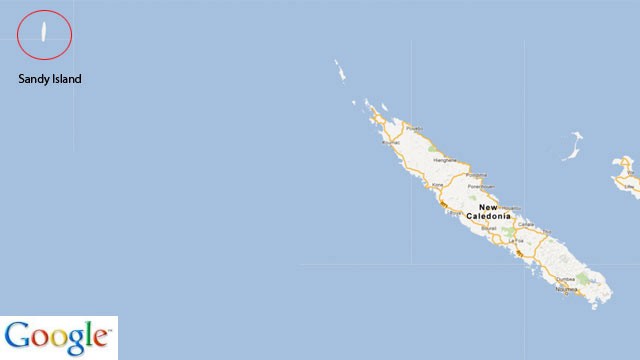
A group of Australian scientists from the University of Sydney have undiscovered an island that was supposed to be in between Australia and New Caledonia.

Sandy Island showed up on Google Earth and Google Maps, as well as marine and scientific maps all over the world, including the US National Geophysical Data Center. According to the maps, Sandy Island was about 16 miles long and 3 miles wide – just slightly bigger than Manhattan.

Geologists on the Southern Surveyor, an Australian maritime research vessel, were puzzled by the island which appeared on their weather maps, yet navigation charts showed that the water in that area was very deep – 1400 metres (4620 feet). They decided that they had to go check it out, and found nothing there except sea. The scientists recorded the information so that maps can be changed.

According to the Wikipedia article on Sandy Island, the island was erased from Google Maps on November 26, but although the name Sandy Island doesn’t show up in the search bar, when I looked in the Coral Sea I found the phantom island quite easily, but there was no name attached to it.

If I zoomed in on the island, it simply disappeared, and if I switched to satellite, the island showed up as a black streak surrounded by blue streaks, looking remarkably like someone had scribbled on it with two different felt-tip pens.

Interestingly, if Sandy Island had existed, it would have been in French territorial waters – and the island is not on any recent French government charts. Perhaps because of this, the Times Atlas of the World deleted Sandy Island from its maps after 1999.

The history of the discovery of Australia involved – indeed, was dependent on – faulty maps, necessitating voyages to check out what was here or not, so it makes a strange sort of sense that now Australians must voyage forth to check faulty maps for themselves.

The episode shows that this part of the world is still not well known, and incompletely charted. It’s not quite a matter of Here be dragons, but the reply from most of the map-providers when the error was pointed out was along the lines of, Well it is in the middle of nowhere …

Tens of thousands of years of human occupation, and centuries since the first mapping, and we’re still close to the middle of nowhere. Which is rather exciting – what else in our region is still waiting to be discovered, or undiscovered?

Apart from the Pythonesque nuttiness of this story (no wonder the geologists got the giggles as they sailed through the invisible island), the thing that got my attention was the name Sandy, which has been in the news internationally since Hurricane Sandy hit the north-east coast of the United States in late October, after devastating the Caribbean.

According to this article in The New York Times, names of hurricanes can help to influence the way we name our babies. It’s not as simple as everyone suddenly choosing Sandy as a baby name, but it seems that once we hear a word or a name many times, we instinctively like names that sound similar to it. So experts are expecting a spike in the numbers of babies of 2012 whose names begin with an S, as well as those with an and sound in them, and ones that end in -ee.

There was a story in the Australian press, about an expat couple in New York, whose baby arrived at the height of Sandy’s fury. The parents did consider calling their new daughter Sandy, but in the end chose Sophie. The analysts would be rubbing their hands, because they chose a two-syllable name that starts with S and ends with an -ee sound, just like Sandy.

Sandy is a unisex name which is short for Alexander or Alexandra, but also for any name related to them, such as Alistair, Sander, Alessandra, Sanette, Sandrine, or Sandra. You could use it as a short form of Cassandra, Santos, Sanford, Sandon, Santiago or any similar name. Sandy is a traditional pet name for people with reddish or sandy-blonde hair, and you could see it as a vocabulary, colour, and nature name meaning “sand-coloured, like sand, covered in sand”.

However, another possibility occurred to me while reading about The Case of the Non-Existent Island. On a French chart from 1875, the island is called Île de Sables, which is French for Sandy Island. Because of this, The Times Atlas of the World partly Anglicised the name back again to Sable Island.

While in French, sable means “sand”, the same word in English means something quite different. (I feel that I must be channelling Lou from Mer de Noms, who quite often finds name inspiration in French words). I should point out that the two words are said differently: in French, SAH-bluh; in English, SAY-buhl.

A sable is a species of marten (a relative of minks, weasels and ferrets) which is found mostly in Eurasia and still hunted in Russia. The pelt of the animal has been highly valued since medieval times, because the fur of the sable feels soft whichever way you stroke you; it’s not possible to “go against the grain”.

Because of the animal’s colour, the word sable is also a literary way to say “black”, such as when John Milton refers to “a sable cloud” in Paradise Lost. It amuses me that sandy and sable are opposites as colours, with one signifying a pale shade and the other one that is very dark.

Sable can also be used as a personal name, with the first one I can find in the records dating to the 17th century. It’s used for both boys and girls, although from the beginning more often a female name – maybe because it seems like it could be short for names such as Isabel or Sabella.

Sable is more common in the United States, where it has sometimes been used amongst African-Americans as a positive and beautiful word to denote darkness (similar to the name Ebony, which doesn’t have that connotation here).

In Australia, it appears rarely in the records, nearly always as a female name. One of my favourite combinations for this name was Brightie Sable. It also belonged to a 1900s French immigrant to Australia, who had the French form – Sablé.

So if you feel subconsciously influenced to use a name similar to Sandy, or would like to be part of a name trend, then Sable or Sablé seem like possibilities to choose from, and may please trend analysts immensely.

(Satellite image from Google Maps)

Famous Name: Eclipse

21 Wednesday Nov 2012

Posted by A.O. in Famous Names

≈ 2 Comments

Tags

astronomical names, english names, Greek names, historical records, name combinations, name history, name meaning, names of ships, Nancy's Names, nature names, nicknames, rare names, unisex names, vocabulary names

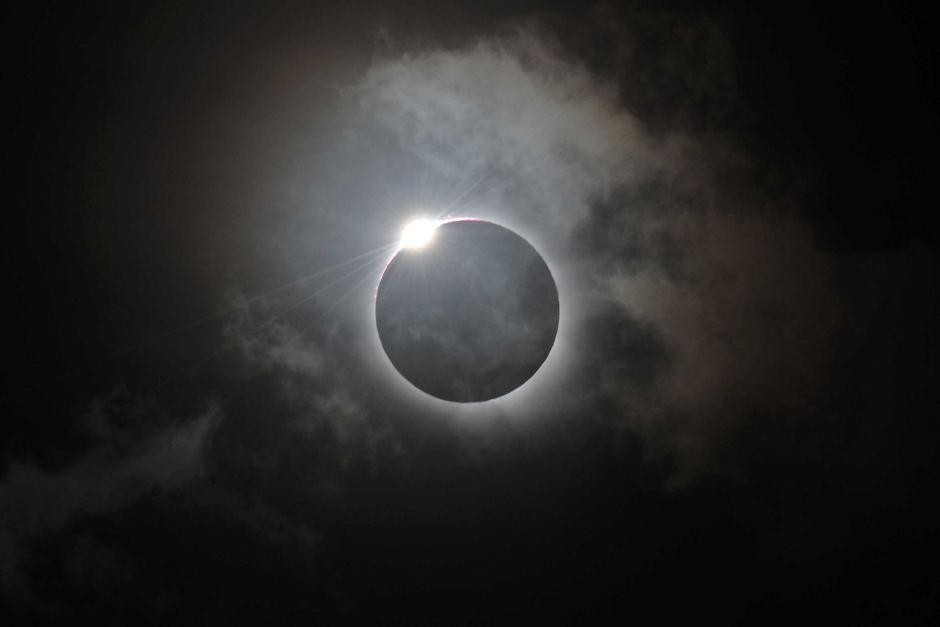
An eclipse is when an astronomical body is obscured, either by passing into the shadow of another body, or having another body pass between it and the viewpoint. The word comes from the ancient Greek ékleipsis, meaning “abandonment, downfall or darkening of a heavenly body”.

Although there are several different types of eclipse possible in the universe, the ones we can see from Earth are the solar and lunar eclipses. We tend to get more excited by solar eclipses, when the Moon appears to pass in front of the Sun, blotting out its light temporarily. The most impressive of all is a total eclipse of the Sun, when the Moon appears to perfectly cover the Sun, so that it disappears from view.

A total eclipse of the Sun can only be viewed along a very narrow band of the Earth’s surface, and on November 13, a total eclipse could be seen in far north-eastern Australia. Although many had gloomily predicted that cloud cover would ruin the eclipse-enjoying experience, just before dawn the clouds obligingly parted, and the Moon passed in front of the Sun. For two minutes it became darker and colder, the birds stopped singing, and tens of thousands of spectators from all over the world gaped in wonder, just as our ancestors did thousands of years ago.

Many indigenous groups, including in Arnhem Land, were watching the event, which has deep spiritual meaning for them. Most Aboriginal cultures believe the Sun is female and the Moon male. In their myths, the Sun is in love with the Moon, but he doesn’t return her feelings, so she chases him around the sky. Occasionally she manages to catch him, and in a jealous rage tries to kill him, but the Moon convinces the spirits which hold up the sky to save him, which they always do.

However, another version is that a solar eclipse marks those rare times when the Sun-woman is hidden by the Moon-man while he relents and makes loves to her, while a similar tale is that a spirit man covers the Earth with his hand to leave it in darkness, so that the Sun and Moon may have privacy together.

In Queensland, the celebrations for the eclipse included a Solar Eclipse Marathon in Port Douglas, and a week long Eclipse Festival at the remote Palmer River Roadhouse. More than 50 000 tourists arrived from Europe, North America and Asia, with some hotels booked out three years in advance. The eclipse was big news, and big business. And why shouldn’t they party? It was the first time in the past thousand years that this part of Australia had experienced a total solar eclipse.

Eclipse can be found as a unisex name in occasional use since the late 18th century. According to blogger Nancy Man at Nancy’s Names, the births of many of those given the name Eclipse can be correlated with either solar or lunar eclipses.

In Australian records, there are only a small number of people listed as having the name Eclipse, and it is exclusively used as a middle name. It is balanced between the sexes, with three women and two men having Eclipse as part of their name. My favourite combinations were Pearl Eclipse and Thomas Eclipse Vivian.

Only a year of birth is given, so it isn’t possible to correlate their dates of birth with eclipses, but it is reasonable to assume that it might have been the inspiration for at least some births. However, there was also a convict ship called Eclipse, although it doesn’t seem to match up with any of the places or dates of birth in the records in any obvious way.

Scientist Dr Natalie Dillon from Mareeba attended the eclipse viewing this year and said:

When it goes dark and the temperature drops, you get a sense of the fragility of life. I just feel in awe. It is like the Moon has wiped a cloth over the face of the Sun and we can start afresh.

An eclipse is a rare celestial event, and one which fills us with a mixture of awe and dread, as well as great joy and a sense of renewal when the light of the Sun is returned. It reminds us how much we need the Sun, and gives us a brief uneasy taste of what Earth would be like without it – chill, dim and silent.

The basis of the word eclipse is the Greek for “I leave behind”. To eclipse someone means to cast them into your shadow, to surpass others with your superior talents or skills – to leave them behind, so that they can never catch up.

As a name, Eclipse has power, a certain foreboding, and perhaps a touch of arrogance. It is little seen, and that gives it an even greater significance. Perhaps it’s not surprising it has been timidly tucked away in the middle.

Nicknames for Eclipse include Clip, Clipper and Clipsie, which give it a much friendlier and more approachable sound.

What do you think – a viable baby name, or a little too much?

MYTH: A “Weird” Baby Name Can Ruin Your Child’s Life

18 Sunday Nov 2012

Posted by A.O. in Baby Name Mythbusters

≈ 19 Comments

Tags

African names, alphanumeric names, British Baby Names, celebrity baby names, created names, Dr Martin Ford, Herald Sun, Indian names, Irish names, name image, name popularity, name studies, parenting blogs, popular names, psychology of names, Radio National, rare names, US birth notices, US name data, variant spellings, Vietnamese names, Who's Who, William Shakespeare, Yiddish names

This is an idea you cannot help running across if you frequent baby name forums, attend a few parent group meetings, or just read the papers – that the bestowing of a name considered strange or highly unusual upon a child is a cruel thing to do, and has the potential to impact on their life in negative ways.

A short-lived parenting blog at the Herald Sun which was written by Cheryl Critchley asked, Are Weird Names Child Abuse? It might seem a bit extreme to suggest that calling your son Raiyybanzi is the equivalent of hitting him around the head or locking him in his room for three weeks without food, but Cheryl goes to the child psychologists for further information.

According to child psychologist Dr Michael Carr-Gregg, yes, an unusual name is a form of child abuse, as it will lead to non-stop teasing in the schoolyard. Another psychologist, Dr Janet Hall, said a poor choice of name could lead to the child developing self-esteem problems. A name that others constantly question and mock is a “constant attack on your self-esteem”. It’s all sounding pretty dire for poor little Raiyybanzi.

A dim ray of light shone through when an education psychologist named Dr Helen McGrath suggested that while shy children probably won’t appreciate an unusual name, an extroverted one might enjoy the attention that it brings. She noted that unusual names do tend to change people’s perceptions, and even self-perception. However, there was no research which suggested any negative impact, and that factors such as social skills and family relationships were far more important.

The interesting thing is that Cheryl got her inspiration for the article from the names of AFL footballers she had seen in the newspapers – names such as Ayce, Jarryn, Jarrhan, Cheynee and Sharrod. These horrified her, and yet it would seem that Ayce and friends hadn’t had their lives ruined, but embarked on potentially lucrative and rewarding sporting careers. The photo of Ayce used for the article showed him looking cheerful and confident, with his self-esteem firmly intact.

This article was published a few years ago, but journalistic opinion doesn’t seem to have moved forward very much in the meantime. There’s a good reason for that – if you’ve been following the ‘Twas Ever Thus series at Elea’s blog, British Baby Names, you will see that when it comes to getting worked up over “weird” baby names, the media is pretty much churning out the same stuff they produced in the 19th century. Only the names have been changed, as the saying goes.

On Radio National a few months ago, on their popular Life Matters show, presenter Natasha Mitchell had a programme called You’ve Named Your Baby What?!. Generally light-hearted in tone, the show discussed unusual celebrity baby names (Natasha confessed she rather liked Sparrow), old-fashioned names like Mavis and Alfie, little boys just called H, and little girls named Rach’elle.

Guest Mia Freedman, who runs the successful parenting website Mamamia, while not actually accusing anyone of child abuse, opined that a strange name, especially one spelled strangely, could be a “burden” for a child. A burden in so much as they would be constantly questioned about their name – perhaps not damaging to their self-esteem, but a downright nuisance to them nonetheless.

In these sort of shows/articles, everyone is very careful to explain that when they say “unusual names”, they don’t mean names from other cultures, which to our ears may be difficult to pronounce, or sound like rude words, or appear to be on the “wrong” sex. No, these names are a wonderful sign of our diversity, and people should be proud to possess them as part of their culture, and it would be very wrong indeed to poke fun of them.

To my mind, this is the downfall of their argument, because it’s never explained why it’s not a “burden” to be named Caoilfhionn, even though that must surely involve at least as many requests to explain spelling and pronunciation as Rach’elle does. If it’s not such a terrible burden to be named Caoilfhionn, then I don’t see how Rach’elle is any heavier for a child to bear.

And if we as a society should be able to cope with Caoilfhionn, Purushottama, Oluwakanyinsola, Dudel and Phuc as names, then I don’t see why we cannot also cope with Mavis, Alfie, Sparrow, Ayce, Jarryn, Rach’elle and H. For that matter, how could anyone be confused by the spelling of the name H? Surely the strange-names-as-a-burden club should be heaping praise on H for its unburdensome simplicity? However, for some reason that never happens.

Oddly enough, Mia, who has an extremely simple and popular name, says that she needs to often correct people on the spelling and pronunciation of it. And yet, this burden doesn’t seem to have really been much bother, or held her back in life. From this I deduce that almost everyone has to explain their name at some point (“No, it’s John – J-O-H-N, not Jon – J-O-N”), and that it’s just one of those little things you have to deal with.

To befuddle the argument even further, Mia poked mild fun at “cutesy pet names” for children, singling out Jools Oliver for naming her children Poppy, Daisy, Petal and Buddy. Fun fact: Mia’s daughter is named Coco. I know: go figure.

Although these examples are not the most convincing you’ll come across, and don’t even manage to present a cogent argument, there are no lack of studies which purport to reveal the dreadful consequences of giving your child a strange name.

They tell us that your child will do worse at school, be less popular with their classmates, drop out of tertiary education, and have their resumes ignored by prospective employers (although, after doing so badly at school and flunking university, you’d think a boss would have pretty good grounds for ignoring their resume).

Furthermore, they were more likely to be diagnosed as psychotic and to end up in prison – the bitter conclusion to a life of failure and misery. After reading this terribly sad story, which seems like the stuff of nightmare and soap opera, how could a parent be so heartless as to inflict on their child any name other than one selected by the Chamber of Commerce, heads of all major universities, and a panel of psychiatrists?

However, other researchers crunched the numbers and came up with opposing results. It was noted that men with rare names were over-represented in Who’s Who, suggesting that a life of success was just as possible as one of failure for those with less common names. Other researchers noted that many children with uncommon names came from lower socio-economic backgrounds, and that once this was allowed for, there was no difference in academic outcomes that could be attributed to the person’s name.

One interesting finding by development psychologist Dr. Martin Ford is that everyone tends to attach a particular image or set of expectations to a name – up and until they confronted with a person with that name. People might say that they think of Berthas as being unattractive, but if shown the photo of a beautiful woman and told she is named Bertha, they rate the photo more or less the same as someone told the lovely woman is called Jacqueline or Christine.

In other words, Shakespeare was clearly on the money in regard to roses smelling just as sweet.

So here we have two competing theories: one is that unusual names are little more than child abuse, will damage self-esteem, prove an unnecessary burden, and be a severe handicap in regards to academic and social success. At worst, they may even send your child mad, or force them into a life of crime.

The other is that names, once attached to a real person, become almost meaningless – that what we are judged on is not our names, but our appearance, voice, grooming, hygiene, mannerisms, personality, social skills, motivations, abilities, intelligence, beliefs, income, education, job, family, friends, hobbies, home, influences, aspirations, and indeed the whole “package” that is ourselves.

I’m not sure I am completely convinced by either side – mostly because I am sceptical as to whether any of them have considered genuinely “weird” names. I feel as if they have looked at unpopular or uncommon names, or names judged to be undesirable by others, but that’s not really the same thing.

I mean come on, how sheltered must your life be to think that Ayce and Rach’elle are weird!

From what can I gather, Dr. Ford’s photo experiment was just using “outdated” names of the time like Hazel and Harriet – not only in no way weird, but by now very much back in fashion.

His original name study was done in 1984, on children who would have been born in the early 1970s. Very rare names of people born in 1972 include Atticus, Briar, Bristol, Coco, Darcey, Denzel, Emmeline, Fallon, Heaven, Jaxon, Jorja, Kourtney, Larkin, Lourdes, Marigold, Reeve, Rosamond, Sonnet, Star, Theodoric, and Wilder.

These names aren’t weird any more – some of them look pretty hip, and others seem unsurprising; a couple are even quite dull. In just forty years, a name can go from Woah, what the heck? to Meh. Maybe the rare names of today, such as Cameo and Twain, will seem equally familiar by the early 2050s.

That’s looking at US data of course, but in Australia we know that just twenty years ago Olive was a strange and awkward name to give a baby, and it is now Top 100 in Victoria, and getting there in New South Wales.

If name-weirdness is dependent on time, it is equally so on space. I know that when I look at some names on the American charts, or in American birth notices, they seem odd to me because names such as Legend, Princess, Race, Tinsley,  and Dutch are rarely or never used in Australia. Likewise, Americans look at Australian-used names like Lachlan, Jacinta, Hamish, Bronte and Zali, and think What the dealio?

A normal name can become weird just by crossing the Pacific; conversely, an American boy named Hamish who moves to Australia will blend in instantly. Fun fact: in the US, 8 baby boys were named Hamish last year.

What an individual person believes is weird seems to be almost entirely subjective. To Cheryl it’s Jarryn. To Natasha it’s Apple. To me it’s Race. To 1972 it’s Coco. To a commenter I saw on Mamamia it’s Felix (in the Top 100). To this journalist it’s Becket. To my mother it’s Madison. To you maybe it’s Hamish. Or Metallica. Or Banjo. Or Justus. Or Crew. Or Dudel.

I genuinely thought that this myth would be either BUSTED or CONFIRMED by the time I finished the blog entry, but not only has it not been answered, the very myth itself seems to be retreating over the horizon the closer we get to it, like heat shimmering on a bitumen road in January.

I am becoming less and less convinced that a weird name will ruin anyone’s life, and moreover, I am becoming less and less certain that weird names even exist, in any useful sense of the word “weird”.

Even Raiyybanzi isn’t that strange once you get used to it – it’s really just a juiced-up Raymond.

Famous Name: Sapphire

05 Wednesday Sep 2012

Posted by A.O. in Famous Names

≈ 4 Comments

Tags

celebrity baby names, english names, gemstone names, Greek names, historical records, name history, name meaning, name popularity, nature names, nicknames, opinions on names, popular culture, popular names, rare names, stripper names

The Australian movie The Sapphires was released here on August 9, after making it’s premiere at the Cannes Film Festival in May, where it received a resounding ten-minute standing ovation. The film is set in 1968, and the plot involves four sisters from a remote Aboriginal mission who are given the opportunity to go to Vietnam as entertainers to the troops – billed as The Sapphires. It’s based on a true story, with the screenwriter’s mum and auntie serving as the inspiration, as they performed as part of a quartet during the war. The “original Sapphires” are thrilled by the film’s portrayal of them, and the movie is making the Indigenous community they work in proud of their achievements.

The Sapphires has received mostly warm reviews from critics, and became the highest-earning Australian film on its opening weekend. I can see why it’s winning the hearts of audiences, because it’s charmingly unpolished, and is one of those feel-good movies where you end up laughing, crying, singing and tapping your feet. Serious topics such as racial prejudice are touched on (in fact are essential to the plot), but they don’t overshadow what is basically a light-hearted comedy-drama. Chris O’Dowd is hilarious, Jessica Mauboy’s singing fantastic, and Deborah Mailman is, as always, luminously charismatic.

If you are a fan of these warm-hearted underdogs-put-on-a-show stories and also love soul music, I urge you to check this movie out when it comes to your own part of the world. It’s being compared to Dreamgirls, but I can’t actually see they have much in common – the movie is probably closer to The Commitments. Of course what I spent most of the movie doing (in between laughing, crying, singing, tapping my feet, and trying to make sure no major popcorn disasters took place) was wondering how Sapphire could work as a name.

The name Sapphire is after the gemstone, which comes from the Greek meaning “blue stone”. However, the Greeks were most likely referring to lapis lazuli. Sapphires can actually come in a range of colours, but never red – red sapphires are called rubies.

In ancient Persia, sapphires were said to be a manifestation of heaven, and there is a tradition that the original Ten Commandments given to Moses by God were written on sapphire (although the Bible itself merely says that God could be seen standing on something that looked like a pavement of “clear sapphire”). In the Middle Ages, sapphires were said to have healing properties, and they have long been popular as royal jewels. Sapphires are favourites amongst the British royal family for their personal jewellery, as well as the Crown Jewels; Princess Anne and Princess Diana both had sapphire engagement rings, and Diana’s was inherited by Catherine, Duchess of Cambridge.

Sapphires have been mined in Australia for over a century, and commercially for more than fifty years. Australia was once the leading source of gem-quality sapphires, but we were overtaken by Madagascar; even today, many sapphires sold as coming from Asia are actually from Australia. Many Australian sapphire mines are in central Queensland, and indeed there is a mining town in that state named Sapphire, although the best are said to be found in the New England region of New South Wales. You can also have a go fossicking for your own sapphires – in New South Wales, you don’t even need a license to do so.

Sapphire has been used as an uncommon personal name for centuries, and got a boost in popularity around the early twentieth century, when other gemstone names such as Ruby and Emerald became fashionable. Not surprisingly, records show that most Australians named Sapphire came from New England or central Queensland, so here it seems to have local significance connected to the mining trade.

If you look online for opinions on the name Sapphire, you are almost certain to find the phrase “stripper name” attached to it. Granted, there are strippers with the stage name Sapphire – then again, there are strippers named Ruby, Lola, Angie, Madison, Abby, Victoria, Lucy, Alicia, Katie, Sarah, Rebecca, Elizabeth and basically any vaguely “girly” contemporary name you can think of. There are strippers using my own name, and nobody has ever assumed I simply must be a stripper with a sexy name like Anna, or shoved money down my bra and asked me to dance around a pole.

In fact, when Ruby became fashionable a few years ago, some of the most common complaints about it was that it sounded “trashy”, “stripperish”, and “too sexy”. Well, guess what? Ruby is now one of the most popular name for girls, being in the Top 10 of every state, and #1 in several states; it’s also been used as a baby name by several celebrities. It seems more like a cute little girl name that a sexy one, and the chances of all those thousands of young Rubys growing up to become strippers is statistically improbable.

If you love Ruby, but worry it’s too popular, you might might want to consider this beautiful gemstone name. Whether you have an attachment to Indigenous culture, Australian film, soul music, the gemstone trade, fossicking, sapphire mining areas, the Sapphire Coast in southern New South Wales, or simply love these deep blue jewels, Sapphire makes a lovely and unusual choice. Some may like Saffy as a nickname.

NOTE: Information on stripper’s names from Australian businesses online.

Less Commonly Used Girls Names

03 Sunday Jun 2012

Posted by A.O. in Name Themes and Lists

≈ 20 Comments

Tags

Abby Sandel, alphanumeric names, Arabic names, Baby Name Wizard, Bonds Baby Search, celebrity baby names, Celtic names, created names, english names, famous namesakes, fictional namesakes, French names, Greek names, hebrew names, Italian names, locational names, Mer de Noms, modern names, mythological names, name data, name history, name meaning, name popularity, Nameberry, Names from the Dustbin, nicknames, popular culture, pseudonyms, rare names, Scottish names, Semitic names, Shakespearean names, stage names, surname names, The Nameberry Nine, Turkish names, unisex names, vocabulary names

When all the name data for the most popular names was released, there were also several articles which looked at some of the names closer to the bottom of the popularity lists than the top. Dorcas at Names from the Dustbin calls these names Bottom of the Barrel – not meaning that they are necessarily of poor quality, but just low in the rankings.

Most names at the bottom of the lists are just re-spellings of common names, or short forms of names that are usually kept as nicknames rather than a full name. However, if you sift through these, there’s some interesting finds at the “bottom of the barrel”, and even some neglected gems.

These names are from the popularity charts of New South Wales, Victoria, Queensland, and Tasmania. Nearly all of them are taken from the very rarest names in their state.

Adeline

This is a pet form of the French name Adele; the French pronunciation is a-de-LEEN, but the English is AD-uh-line. The name is well known from the American ballad Sweet Adeline, which was a standard for Australian folk band, The Seekers. There’s also the piece, Ballade pour Adeline, written for the composer’s baby girl, which I had to thump out tunelessly with my chubby fingers during many a childhood music lesson. However, Adeline has got considerably cooler since then; Kasey Chambers has a song called Adeline, Green Day’s Adeline Records handles indie rock bands, and Elliot Smith released his own darker version of Sweet Adeline. I read at Abby’s Nameberry Nine that Simon Helberg from The Big Bang Theory welcomed a daughter named Adeline last month, making it an up-to-the minute celebrity baby name. Adeline has never been on the Top 100; it was #162 for the 1900s, and then sank until it was out of regular use by the 1940s. Today it fits in well with Adelaide, Addison, Madison and Madeline; however it may be difficult for short form Addie to stand out amongst the sea of Maddies and Abbies.

Allegra

Allegra means “cheerful, lively” in Italian, related to the musical term allegro, and has a long history as a celebrity baby name. Romantic poet Lord Byron re-named his illegitimate daughter Clara Allegra Byron (called by her middle name, and originally named Alba by her mother). Despite poor little Allegras’s life being brief and marked by neglect, the name seems to have been an apt one, because she was described as a vivacious child. Her story didn’t stop American poet Henry Longfellow from using it as his daughter’s middle name; in his poem The Children’s Hour, he describes her as “laughing Allegra”. The American inventor and designer, Buckminster Fuller, also gave this name to his daughter. Allegra Versace is the daughter of Italian designer Donatella Versace, and Allegra Kurer is the daughter of British radio host Vanessa Feltz. In Australia, news presenter Jessica Rowe chose it for her eldest daughter in 2007, and last year it was chosen for the daughter of Emmy Kubainski. Frothy and elegant, with a positive meaning, this fashionable favourite would also make a good Italian heritage choice.

Bonnie

Bonnie is taken from the Scottish word bonnie, meaning “pretty, beautiful”; it’s derived from the French bon, meaning “good”. Bonnie has been used as a personal name since the 19th century, and was even sometimes given to boys, but received a huge boost when it was used in Margaret Mitchell’s popular romance, Gone with the Wind. Bonnie Blue Butler is the daughter of Scarlett and Rhett, and receives her name because she has eyes the colour of the Bonnie Blue Flag – the banner of the Confederate States in the American Civil War. British rocker Billy Idol, who sang Rebel Yell, named his daughter Bonnie Blue, and we had a Bonnie Blue competing in the Bonds Baby Search. Another famous Bonnie is Bonnie Parker, one half of notorious crime duo Bonnie and Clyde. Bonnie has been on the charts almost continuously, albeit in rare use in the 1950s and ’60s. It had a peak in the 1920s at #172, then peaked again in the 1990s at #157; it’s currently climbing in the mid-100s in New South Wales, but is obviously rarer in other states. It’s a sweet old-fashioned name which is also linked to rebellion, giving it a spunkier image.

Cleopatra

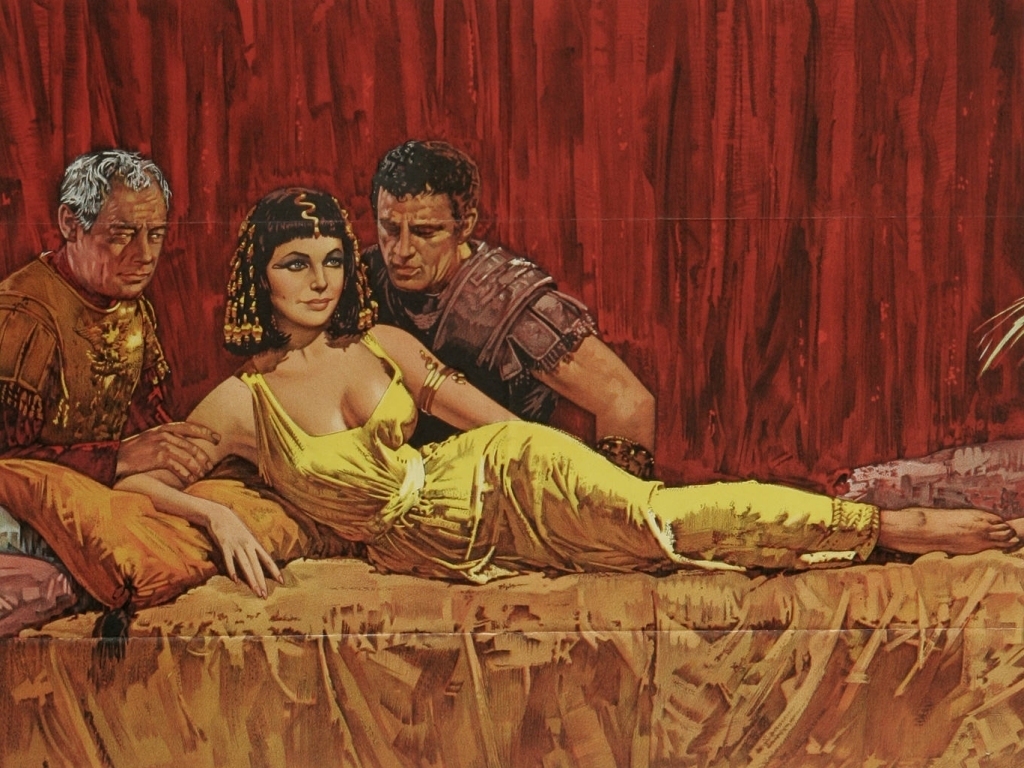
This Greek name means “glory of the father”, and is almost impossible for us to disassociate from the famous Queen of Egypt. From a dangerously inbred family of Macedonian Greek origin, she ruled Egypt alongside her father, and then her brothers (who were also her husbands), but then seized control and reigned alone for many years. She was able to align herself with Rome as both ally and lover to both Julius Caesar and Mark Antony, but after Mark Antony’s death, is said to have poisoned herself before she could be captured and humiliated. According to tradition, she killed herself with an asp. Her story captured the imagination of William Shakespeare, who based his play Antony and Cleopatra on the last part of her life, and her story has been made into several films, including the lavishly dreadful one starring Elizabeth Taylor and Richard Burton. Cleopatra is always depicted as a woman of great beauty, although early traditions suggest her attractiveness was based more on enormous charm and sex appeal. This ancient, glamorous name carries a lot of weight, but with short form Cleo becoming fashionable, some parents may wish for a long form of the name.

Elif

This Turkish name is after Alif, the first letter of the Arabic alphabet, and has connotations of “tall and slender”, as if the person is shaped like the letter, which is a long vertical line. It is pronounced ay-LEEF. You probably recall that Natalie Portman had a son named Aleph last year; Aleph is the Hebrew form of the same letter. The meaning of the letter goes back to the West Semitic word for “ox”, as the cuneiform originally represented the shape of an ox’s head. In Arabic, the word is connected via folk etymology to the word for “coy, tamed”, giving it a subtly demure feeling. It’s a common girl’s name in Turkey, and there are several Turkish celebrities with this name. There’s also a town in Turkey called Elif. I’m not sure a non-Turkish person would ever use it, but it’s certainly an attractive name that is easy enough for an English-speaker to understand and pronounce, once they’ve learned how it’s said.

Harlow

This name is inspired by Jean Harlow, a Hollywood superstar of the 1930s. With her platinum hair and vampish image, she was the forerunner to many blonde bombshells of the movies. Despite her beauty and success, Harlow’s life contained much tragedy, and she died of kidney failure while only in her twenties. Harlow took her mother’s maiden name as her stage name; her birth name was Harlean Carpenter. The surname Harlow is from several places in England. Harlow in Yorkshire means “hill of rocks” in Old English, while the meaning of Harlow in Essex is disputed. One theory is that it means “army hill”, with the idea being that local landmark Mulberry Hill was a meeting place for the local people. Another is that it means “temple mound”, as there is an Iron Age burial mound in the area which later had a Roman temple built on the site. Harlow is a unisex name, but more common for girls; the name came to public attention when Nicole Richie named her daughter Harlow in 2008. There were 20 babies named Harlow in Queensland last year, up from 12 the year before. Although numbers are still low, that’s a significant jump.

Pixie

This name is after the small mythological being of English folklore, tales of which come from Cornwall and Devon. They are usually depicted as small sprites who could be mischievous, but were often helpful to humans. A famous Australian with this name was the prolific illustrator and artist Pixie O’Harris (aunt of singer-artist Rolf Harris). Her real name was Rhona Olive Harris, but when she migrated to Australia from Wales she changed her name to Pixie because she was nicknamed “the Welsh pixie” on the boat over. A printer’s error changed her name from Pixie O. Harris to Pixie O’Harris, and she stuck with it as her pseudonym. Last year, businesswoman Roxy Jacenko named her new baby Pixie-Rose. I think some people will find the name Pixie adorably cute, and others impossibly twee; it’s bound to get some interesting reactions, and does have the fashionable X in it.

Sippie

The only person I know of named Sippie is the blues singer Sippie Wallace, who was born Beulah Thomas. Her career spanned seven decades, and although she found fame as a young woman in the 1920s, she was rediscovered in the 1960s and ’70s and was a big influence on Bonnie Raitt, who went on tour with her. Her album Sippie won the Blues Album of the Year in 1983, so her comeback was a definite success. The name Sippie is one that she gained in childhood because the gap in her teeth meant that she had to “sip” all her food and drink. Coincidentally, there is a place on the Gold Coast called Sippy Downs; its name is a corruption of an Aboriginal word meaning “winged creatures”, and interpreted as meaning “birds”. As Sippie Wallace was billed as “The Texas Nightingale”, I find this juxtaposition very charming. Sippie is an unusual name, but what a wonderful namesake. This would be very suitable for a family who loves music, especially jazz and blues.

Torah

In Australia, this name is well known as belonging to snowboarder Torah Bright, who won gold at the 2010 Winter Olympics. Her parents named her after the Torah, which is the Jewish word for the first five books of the Old Testament. The word is from the Hebrew, meaning “teaching, instruction”, however, Torah Bright’s mother believed that it meant “bearer of a great message”. Torah Bright is a member of the Church of Latter Day Saints (Mormon), and lives in Salt Lake City, Utah. There was slight disbelief at this name on The Baby Name Wizard, with a couple of people feeling that it seemed rather offensive, or at least strange. Torah’s name was reported on in Washington Jewish Week; there was no mention of it being offensive to Jews, but they did appear to find it slightly amusing. Like calling your child Bible or Gospel, many will find this name a head-scratcher. It would be given in honour of our Olympic champion, but the religious ramifications may be lost on some people. The fact that it sounds as if it could be short for Victoria is probably a help.

Zahlia

This name is pronounced ZAH-lee-uh, and as far as I’m aware, it’s a modern invention. It seems to be an elaboration of the name Zali; Zali Steggall is Australia’s most internationally successful alpine skier (now retired). Her name has proven a great success here, and spawned many variants, such as Zarly, Zahlee, Zalie etc. It’s unclear where the Stegalls got the name Zali from, and to the best of my knowledge, it’s made up. Zahlia does well in Australia, because it sounds rather exotic, while also being similar to popular names such as Zara and Tahlia (it even looks like a combination of those names). Despite being listed as a rare name, I have seen some parents dismiss Zahlia as being “too common”; perhaps it’s not rare enough to seem “unique”, or perhaps the many variants and sound-alike names make it appear to be one of the pack.

(Picture is from one of the posters for the 1963 movie Cleopatra)

Waltzing With … Chrysanthe

13 Sunday May 2012

Posted by A.O. in Waltzing with ...

≈ 1 Comment

Tags

famous namesakes, flower names, French names, Greek names, name combinations, name history, name meaning, nature names, nicknames, plant names, rare names, saints names, unisex names

This blog post was first published on May 13 2012, and revised and re-posted on March 23 2015

Today is Mother’s Day, which is a special day for anyone who is a mother, or has ever had a mother or mother figure to care for them – hopefully that’s all of us.

Celebrations of motherhood are not a new idea; the ancient Greeks and Romans had festivals in honour of the mother goddess Cybele, and the Christian Church commemorates Mothering Sunday on the fourth Sunday in Lent. Although the mother being honoured on this day is the Virgin Mary, traditionally it was a day for people to spend with their own mum, and bring her flowers and cake.

The Mother’s Day we celebrate in May was started in the United States, and came out of the women’s peace movement. In 1868, Ann Jarvis tried to promote a pacifist Mother’s Day, and when she died in 1904, her vision was still just a dream. Ann’s daughter Anna Jarvis was determined to continue her mother’s campaign, and by 1914, US Congress had passed a law proclaiming the second Sunday in May would be called Mother’s Day.

Unfortunately for Anna and all her hard work, she soon became horrified by the commercialisation of Mother’s Day; greeting cards and boxes of chocolates were not at all what she had had in mind. For the rest of her life, she protested against it, and in the process was arrested for disturbing the peace. Anna spent all her savings trying to stop what she had accomplished, and died in poverty in 1948.

The tradition of giving gifts on Mother’s Day was begun in Australia by a Sydney woman named Janet Heyden. In 1924, Mrs Heyden made a visit to someone in a state women’s home, and was saddened to find so many neglected mothers. To cheer them up, she organised schoolchildren to help bring them gifts donated by local businesses.

Janet was also disappointed by the commercialism of her idea, but sensible enough to realise that more good than harm would come of it. She continued visiting lonely mothers and cheering their days until she died in 1960.

Name Information
The traditional flower to give your mum for Mother’s Day in Australia is the chrysanthemum, because it is an autumn flower, suitable for the season, and ends in mum. The flowers originate in China, where they symbolise cleansing and health, and when they were introduced to Europe, they were named chrysanthemums, meaning “golden flower” in Greek. The Ancient Greeks also had this flower name, but they used it to refer to the daisy-like weed we call the corn marigold, which has been brought to Australia and grows wild here too.

Chrysanthos or Chrysanthus is an Ancient Greek name meaning “golden flower”. Saint Chrysanthus was an early Christian martyr, the husband of the supposed Vestal Virgin named Daria who converted to Christianity. That part of the legend can’t be true, but nonetheless Chrysanthus and Daria were very popular saints, and the name was well known. There was a Roman governor in Britain in the 4th century named Chrysanthus, and Chrysanthos has been used in modern Greece.

Chrysanthe is the feminine form of Chrysanthus, and can also be spelled Chrysanthi (the more obviously Greek spelling). The name is pronounced kri-ZAN-thee. Chrysanthe is also the French form of Chrysanthus, so has been used as a male name in French-speaking countries, including French Canada.

Chrysanthe is a rare name, and has mostly been used in Greece, and by those of Greek heritage. It doesn’t show up in the data in either the US or the UK. However I have seen it used in Australia, and not only on people from a Greek background. A famous contemporary namesake is American/Australian composer and violinist Chrysanthe Tan, who is of Greek heritage, and may be giving the name some publicity.

There’s something a little extravagant about Chrysanthe – it’s gilded, artistic and showy. Yet it doesn’t sound much different to the more familiar Christina, Anthea, and Xanthe. It is tied by sound and meaning to the chrysanthemum flower, which makes it an ideal name for a daughter born on, or near, Mother’s Day.The traditional nickname is Chryssa, but you could also use Chrys, Chryssie, Thea, or Zan.

POLL RESULT
Chrysanthe received an approval rating of 65%. Opinions on the name were fairly evenly divided – 25% of people thought it was an okay name, while 18% of people hated it.

Waltzing With …Toci

04 Sunday Mar 2012

Posted by A.O. in Waltzing with ...

≈ 4 Comments

Tags

Aztec names, holiday names, Mexican names, mythological names, Nahuatl names, name history, name meaning, Native American names, rare names

This blog post was first published on March 4 2012, and edited and republished on February 24 2016

Today is the first Sunday in March, which means it’s Clean Up Australia Day. This environmental effort encourages people to clean up their own communities, and the concept went global after Australia pitched the idea to the United Nations – hence the birth of Clean Up The World, whose clean-up campaign is held on the third weekend in September (the northern hemisphere autumn).

Cleaning up seems suitable for the Lenten season, when we are supposed to be ridding ourselves of bad habits, and pulling back from the excesses of Christmas and New Year. Although Lent is an important period on the Christian calendar, it must have seemed natural to our ancestors, since late winter/early spring was a time of cleansing and purification to both the ancient Romans and the ancient Celts. This season was also the natural time for them to do their spring cleaning, and may have been inspired by the spring rains washing the land.

In the southern hemisphere, Lent occurs in the late summer and autumn. However, many cultures hold their festivals of cleansing and purification in the autumn instead of the spring, tying them to the harvest and preparations for winter.

For example, the Aztecs of central Mexico had Ochpaniztli, the Month of Sweeping, corresponding to the first twenty days of September. They didn’t just have a Clean Up Day – for three weeks, not only houses were cleaned, but everyone pitched in and cleaned the entire city. They also took communal sweat baths, that were designed to cleanse the body, mind and spirit. Then they fasted – not for a mere forty days, like Lent, but for eighty days.

The presiding goddess of the Month of Sweeping was Toci, who was called The Mother of the Gods, and also Heart of the Earth. She was a goddess of healing, and venerated by healers and midwives. Another of her names was the “grandmother of sweat baths”, and she was also a war goddess. Her war epithet was Woman of Discord.

The Month of Sweeping was not only cleansing, but also a time for sowing corn, ritual dancing, and military ceremonies. It was a busy time of year. (If you have even a dim knowledge of Aztec society, you will be able to guess what else was performed during Ochpaniztli to honour Toci).

Another of her names was Tlazolteotl, a goddess of purification who could cleanse both the body and the spirit. People confessed their sins to Tlazolteotl through a priest, upon which they were forgiven (although people confess their sins during Lent too, the Aztecs did it only once in their lives; I don’t know what happened if you sinned after your confession).

Tlazolteotl sent people sexually transmitted diseases to punish them for lechery, but she would heal and forgive them too. She also inspired people with the desires to commit acts of lewdness … clearly she was a complicated goddess. She was called She Who Eats Sin, The Death Caused by Lust, and She of Two Faces. Slightly confusingly, under her two-faced designation, she was believed to consist of four different sisters representing different stages of a woman’s life: Tiacapan, Teicu, Tlaco and Xocotzin.

Toci means “our grandmother” in the Nahuatl language, as she was a very ancient goddess. It might seem strange to give a baby a name that means “grandmother”. And yet obviously we hope our baby daughters will grow up to be old and wise, and we don’t have any problems giving them the names of their grandmother, or our own grandmother. There are several names in Native American languages which mean “grandmother”, so they must have been seen as appropriate.

Toci only shows up a few time in the records as a name given to girls in Mexico, so this is a rarity even in its country of origin. English-speakers can pronounce the name something like TOH-see, to rhyme with Josie. Not only an interesting heritage choice, Toci has an elusive multicultural feel.

Toci does almost qualify as a truly unique name. It’s simple, it’s not frilly, and is difficult to turn into a nickname. Its meaning is venerable, and its history dark and mysterious. I don’t think for a moment that the average person would choose the name Toci, but for some reason it fascinates me.

POLL RESULTS
Toci received an approval rating of 43%. 40% of people disliked the name, and only 8% liked it.

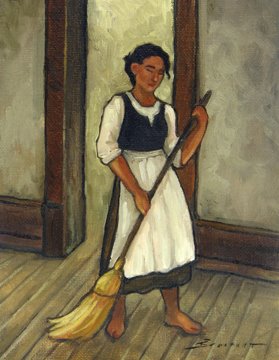
(Picture is Woman Sweeping the Floor, by Deb Schmit)

Famous Name: Australia

26 Thursday Jan 2012

Posted by A.O. in Famous Names

≈ 17 Comments

Tags

english names, holiday names, Latin names, locational names, name history, name meaning, rare names, unisex names

FAMOUS PLACE
Today is Australia Day, which commemorates the landing of the First Fleet in Sydney Cove on January 26 1788. The date was first celebrated by emancipated convicts and their families, who had grown to love their new land, and identified themselves as Australian rather than British. It was the popular Governor Lachlan Macquarie who first declared it an official holiday in New South Wales.

When you think about it, it’s a funny date to choose for our national public holiday, because the landing of the First Fleet wasn’t the foundation of Australia, or even the foundation of Sydney or New South Wales (which took place on February 7 1788). It would be more logical to celebrate Federation Day, the day in 1901 when all the colonies were united, and we were given the right to self-govern – our Independence Day, in fact.

Unfortunately, the worthy bureaucrats who helped forge us into one nation chose the most bureaucratically sensible day to begin our independence – January 1. Apparently they never thought we might have something else to celebrate on that date: a little thing called New Year’s Day.

Despite other days being suggested, in the end we stuck with January 26, and by 1935, it had been called Australia Day. It wasn’t until 1994 that it was accepted by all state and been made a national public holiday.

It’s the biggest celebration in Australia, but is also a controversial one, as it is a celebration of European arrival in Australia – a narrative which ignores our Indigenous history and culture. Let’s hope we can find a way to make Australia Day a holiday to bring us all together and include all Australians.

NAME INFORMATION
Even before anyone knew Australia existed, there was Terra Australis Incognita (Latin for “unknown southern land”). The ancients hypothesised that there must be a land mass in the south to balance all the land in the north.

This idea persisted into the Renaissance, and it began showing up on maps as Terra Australis or Australia, even though it was fictitious. Travellers’ tales of actually reaching this land, or at least seeing it in the distance or hearing about it down the pub, resulted in the British government ordering Captain James Cook to investigate.

It was discovered that this mammoth land-mass, envisaged as stretching from South America and including Antarctica, just didn’t exist. There were lots of small countries and islands, and there was Australia, which is biggish, but by no means a great super-continent covering most of the southern hemisphere. Being the biggest thing they managed to find, it was decided the place we live now must be Terra Australis, or at least be given the name of that legendary land.

It was explorer Matthew Flinders who pushed for the name Australia as early as 1804, and in his charts, notes that the sound of Australia “is more agreeable to the ear”. The term gradually caught on, and once again the enlightened Lachlan Macquarie stepped in, and recommended that the name be formally adopted, which the British Admiralty agreed to in 1824. (You can see why the name Lachlan has prospered).

Australia has been occasionally used as a personal name since the 19th century, and has been nearly always given to girls – as a middle name it is more gender-flexible. It is very rarely given to babies today, even in the middle.

In Australia the name would have been bestowed for patriotic reasons, while in other nations it is not possible to be certain that the name had anything to do with the country at all. In Latin America, for example, the name could have been given simply from the Spanish or Portuguese for “southern”, while in the US it could have at least sometimes been from the Latin for “south”.

Australia is probably the most patriotic name you could choose, and it certainly makes a statement. It’s a part of history – not just our history, but world history and ancient history. It was chosen by Lachlan Macquarie and judged aurally pleasing by Matthew Flinders. It has classical etymology, and it’s a name for a nation that rose out of legend.

← Older posts
Newer posts →

Enter your email address to follow this blog

Categories

Archives

Recent Comments

A.O.'s avatarwaltzingmorethanmati… on Zarah Zaynab and Wolfgang…
Madelyn's avatarMadelyn on Zarah Zaynab and Wolfgang…
JD's avatardrperegrine on Can Phoebe Complete This …
A.O.'s avatarwaltzingmorethanmati… on Rua and Rhoa
redrover23's avatarredrover23 on Rua and Rhoa

Blogroll

  • Appellation Mountain
  • Baby Name Pondering
  • Babynamelover's Blog
  • British Baby Names
  • Clare's Name News
  • For Real Baby Names
  • Geek Baby Names
  • Name Candy
  • Nameberry
  • Nancy's Baby Names
  • Ren's Baby Name Blog
  • Sancta Nomina
  • Swistle: Baby Names
  • The Art of Naming
  • The Baby Name Wizard
  • The Beauty of Names
  • Tulip By Any Name

RSS Feed

  • RSS - Posts

RSS Posts

  • Celebrity Baby News: Melanie Vallejo and Matt Kingston
  • Names from the TV Show “Cleverman”
  • Can Phoebe Complete This Sibset?
  • Zarah Zaynab and Wolfgang Winter
  • Baby, How Did You Get That Name?
  • Celebrity Baby News: Media Babies
  • Celebrity Baby News: Adelaide Crows Babies
  • Celebrity Baby News: Chris and Rebecca Judd
  • Names at Work: Name News From the World of Business and Employment
  • Celebrity Baby News: Sporting Round Up

Currently Popular

  • Rare Boys Names From the 1950s
  • The Top 100 Names of the 1930s in New South Wales
  • The Top 100 Names of the 1940s in New South Wales
  • Girls Names of Australian Aboriginal Origin
  • Girls Names From Stars and Constellations

Tags

celebrity baby names celebrity sibsets english names famous namesakes fictional namesakes honouring locational names middle names name combinations name history name meaning name popularity name trends nicknames popular names saints names sibsets surname names twin sets unisex names

Blog at WordPress.com.

Privacy & Cookies: This site uses cookies. By continuing to use this website, you agree to their use.
To find out more, including how to control cookies, see here: Cookie Policy
  • Subscribe Subscribed
    • Waltzing More Than Matilda
    • Join 517 other subscribers
    • Already have a WordPress.com account? Log in now.
    • Waltzing More Than Matilda
    • Subscribe Subscribed
    • Sign up
    • Log in
    • Report this content
    • View site in Reader
    • Manage subscriptions
    • Collapse this bar
 

Loading Comments...