Tags
GIRLS
|
BOYS
|
Note: It is not possible to quantify which names rose or fell because Western Australia has changed its way of calculating the Top 50 names to bring it into line with the rest of the country.

21 Thursday Jan 2016
Posted in Name Data
≈ Comments Off on The Top 50 Names in Western Australia for 2015
Tags
GIRLS
|
BOYS
|
Note: It is not possible to quantify which names rose or fell because Western Australia has changed its way of calculating the Top 50 names to bring it into line with the rest of the country.
20 Wednesday Jan 2016
Posted in Blog News
Tags
celebrity baby names, created names, famous namesakes, fictional namesakes, French names, German names, name combinations, names of cats, nicknames, popular names, Roman names, royal names, saints names, sibsets, Spanish names, triplet sets
Welcome to the third annual Matilda Awards, where we try to discover what names on the blog were the favourites of the public.
Waltzing With … Category
It was controversy corner in this category, with ANNA gaining a frankly unbelievable 100% rating from the public. I can only think that people were reluctant to say they didn’t like my name, and now wish I had covered Anna as a Famous Name, where people might have been more comfortable making negative comments.
Because of this I am scratching the name Anna, and declaring the winners of this category LUCINDA, which scored an approval rating of 96%, and FELIX, which was rated 93%.
Lucinda was created as a pen name by the 17th century Spanish poet Lope de Vega from the Latin for “light”, made famous by Miguel de Cervantes in Don Quixote. It quickly became a literary favourite, and was covered on the blog because of Peter Carey’s novel Oscar and Lucinda. It’s a modern classic which has never reached the Top 100 in Australia, but is vastly more popular here than anywhere else.
Felix was first given as a nickname which signified “luck” to the Roman general and statesman Lucius Cornelius Sulla. Common in Roman times, it became a favourite of early Christians and is well known as a saints name. Once in the Top 200, retro Felix is back on the charts and has reached the Top 100, being one of the fastest-rising names of 2014. The name was covered in relation to the cartoon character Felix the Cat.
Two “made up” names with Latin roots and extremely positive meanings, there was a lot of love for these light and lucky names with creative Australian associations. 40% of people loved the name Lucinda and nobody hated it, while 45% loved the name Felix and only 3% hated it. They were the overall top-rated names of the year, with Lucinda the favourite name overall.
Famous Name Category
The most popular names featured in the Famous Name Category were ELEANOR, which scored an approval rating of 91% and JASPER, which scored 89%.
Eleanor is a French name with a solid royal history, and a classic never out of the charts. It reached the Top 100 in 2014 as one of the fastest-rising names of the year. Eleanor was praised for being elegant and refined, dignified and intellectual, and beautiful or attractive. It was chosen for the birthday of author Eleanor Dark.
Jasper is a name with ties to the ancient Middle East. It originally honoured the legendary Saint Jasper, who was one of the three wise men to visit the baby Jesus. Jasper has been on the charts since the 1990s, and at the bottom of the Top 100 for several years. People saw the name Jasper as hip and quirky, handsome or cute, and cool and sophisticated. It was chosen to commemorate the Epiphany.
Two popular names dating from the Middle Ages, both with connections to royalty and aristocracy.
Names Themes and Lists
The most popular names which were featured in the Names Themes and Lists Category were THEA and ARLO, which both had very convincing wins.
Thea is a short form of Dorothea or Theodora with several famous Australian namesakes that has recently been boosted as a celebrity baby name. It was covered on a list of German names for girls.
Arlo is a possible surname variant and literary place name which originated in the United States. Made famous by folk singer Arlo Guthrie, and chosen as a celebrity baby name, it is rising so steeply that it was chosen for a list of fresh names for boys.
Two short names with little history, but tons of style. They’ve been rising steeply since being chosen for their children by celebrities.
Celebrity Baby Names
The most popular celebrity twins were WILLIAM DAVID “BILLY” AND ELIZABETH ANN “BETTY” CAMPBELL, son and daughter of singer David Campbell and his wife Lisa, a producer. The twins’ brother is named Leo. Although they were the only celebrity twins, they had an overwhelmingly favourable reception.
The most popular celebrity baby girl name was MATILDA VICTORIA WATSON. Matilda is the daughter of cricketer Shane Watson, and his wife Lee Furlong, a former sports reporter. Her brother is named Will.
The most popular celebrity baby boy name was JUDE DAL SANTO. Jude is the son of Australian rules footballer Nick Dal Santo from North Melbourne and his wife Julie.
Last year the favoured celebrity baby names were all about European style and elegance: this year readers have chosen popular baby names. It’s a big win for celebrities who picked “normal” names for their children.
Names from the Birth Announcements
The most popular names for multiples were triplets HENRY, RUFUS AND PEARL who were absolutely unbeatable. I saw the triplets in a news story as they had been born prematurely and managed to beat the odds for all three to survive. The Dunstan triplets have become online fan favourites, and their hip, beautifully matched names made them poll winners as well. They were nominated in July by Madelyn, CeeCee, and Prue.
In the girls section, LUELLA WINTER was the winner. This stylish portmanteau name with several nickname options was from a set in August, so she really was a winter baby.
For the boys, it was a severe case of deja vu as HUGO FREDERICK won for the second year in a row by a wide margin. This came from a set of announcements in November, and I was interested to see if it could win against a whole new batch of names. It could and did, so I am retiring this name combination.
It was a very tight race among the sibsets, but eventually ARCHIE, OLIVE AND IRIS won the day. This charming vintage vowel-starting sibset was nominated in March by Prue.
17 Sunday Jan 2016
Posted in Names in the News
Tags
Baby Name Explorer, classic names, middle names, name data, name popularity, Nancy's Baby Names, popular names, retro names, Sydney Morning Herald
 A wave of articles on “endangered” names has been flooding my inbox since last year, and eventually some poor sap from the Sydney Morning Herald with minimal interest in names got roped into providing some scary statistics for New South Wales, so now I have to cover it too.
(I know they’re not interested in names because they think Jessica is a Hebrew name meaning “rich” – it isn’t Hebrew, and doesn’t mean anything of the sort).
By accessing the Baby Name Explorer database of names in NSW from 1900 to 2011, they found that the names that were fast disappearing were John, Robert, Peter, and David for boys, and Mary, Margaret, Susan, and Karen for girls.
In the world of manufactured name problems, this is surely one of the daftest. Here is why the sudden concern over endangered names is nonsensical.
The Statistics are Wrong
John and David are still in the Top 100, which they have never left after more than a century, and the Baby Name Explorer actually shows them increasing in usage in 2011. This is surely the exact OPPOSITE of disappearing or endangered.
Mary, Peter and Robert were only just outside the Top 100 in 2011 (Mary was #101), and the graph shows that both Mary and Robert had increased usage in 2011, while Peter’s position had remained extremely stable for some time.
Margaret increased in usage in 2011, and even Karen had an uptick which brought into back onto the charts that year. Susan was the only name on the list which had actually dropped off the charts by 2011.
How did they get it so wrong? By selecting names that had been #1 for a particular decade, so that their drop in popularity would look alarmingly steep, and then completely ignoring the names’ ranking and usage.
Mary was #1 in 1900 and had dropped to #101 in 2011 – in other words it only went down 100 places in 111 years! That’s very stable: the kind of stability that made Mary the overall #1 girl’s name of the twentieth century.
The “resurrected” names were equally silly, with William, Jack, Ruby, and Grace cited as names which had made brave comebacks against the odds. William has never been out of the Top 50, so it can hardly be said to have ever gone away, while Jack and Grace are classics which have never been lower than #400. Retro Ruby is the only name which has ever been off the charts and returned.
Why couldn’t the article identify any names which actually were still in use yet fast disappearing? Because the Baby Name Explorer only covers the 1200 most popular names of the century, so that any name still on the charts by 2011 was getting reasonable, and often increasing, usage. You can’t make useful statistics out of insufficient data.
The Data Doesn’t Include Middle Names
Margaret may only be around the 400s as a first name, but it’s a fairly common middle name for girls – probably in the Top 100 of middle names. Dorothy may not chart any more, but it’s not unusual in the middle. It doesn’t really matter whether a name is in the first or middle position: if it’s in use either way, you can hardly claim it as disappearing or long gone.
It’s Misleading to Apply Scientific Terms to Names
Terms like endangered or extinct, taken from environmental science, don’t make any sense when applied to names.
If a plant or animal is endangered, it is very difficult to ensure its survival, and will require specialised breeding programs or seed collecting initiatives, all of which depend on funding. Losing some species may have dire consequences for the planet; for example, we need bees and beetles to pollinate our crops and plants. Worst of all, once they are all gone, we cannot bring them back – no matter how much we long for the dodo, it is done for, and nothing will return it to us.
If a name isn’t used much any more, no great calamity will result. Brangien and Althalos have been rarely used since the Middle Ages, but nobody has suffered as a result of Brangien deficiency, and no awful disaster has ensued from the loss of Althalos.
Furthermore, if we decided we’d like to see more of a particular name which has gone out of use, it costs no money or effort to bring it back. You simply slap the name onto your child’s birth certificate, and hey presto – you’ve got yourself a rare and beautiful specimen of an Althalos.
As long as we still know of a name’s existence from books and records, it is a potential baby name, no matter how many centuries or even millennia since it was last used. (Thank you Nancy from Nancy’s Baby Names for pointing out this absurdity).
I hope you can all sleep more soundly now, knowing that herds of Johns and Davids wander at will, the Mary and the Peter are gambolling freely, and numbers of Margarets and Roberts are secure for the foreseeable future. We even have high hopes for the diminished Susan, which may yet return to a sustainable population as 1950s names prepare to come back into fashion.
I do wonder what effect these kinds of articles have on people though. Does it make them more likely to “save” the “endangered” names, knowing that not as many people are using them now, or does it put people off the names even more, in the belief that they would be choosing a baby name heading for the scrapheap?
POLL RESULTS
74% of people said being told a name was in danger of disappearing didn’t make any difference as to whether they would use it or not. 21% said they would be more likely to use the name, knowing it was a normal name that was currently underused. 5% would be less likely to use the name, knowing it had gone out of fashion and may be disliked by others.
39% of people thought we should save the name Susan, while 61% believed we shouldn’t bother.
11 Monday Jan 2016
Posted in Name Data
Tags
GIRLS
|
BOYS
|
GIRLS
Biggest Risers
Billie (+40), Hazel (+36), Eleanor (+27 at least), Frankie (+25), Eve and Victoria (+21), Penelope (+18), Aria and Sarah (+15), Aurora (+13 at least)
Biggest Fallers
Paige (-28), Jessica (-23), Ayla (-20), Emilia (-19), Isabel (-18), Indiana (-17), Alexis and Lola (-16), Pippa (-13 at least), Alexandra (-13)
New to List
Eleanor, Aurora, Aisha, Natalie
Gone from List
Sara, Lilly, Millie, Amy
BOYS
Biggest Risers
Beau (+30 at least), Louis (+23), Leo (+19), Jett (+18 at least), Chase (+16), Connor (+15), Finn and Hamish (+14), Lewis (+13 at least), Archer and Theodore (+13)
Biggest Fallers
Jaxon (-36), Caleb (-27 at least), Aaron (-25), Nicholas (-23), Hayden (-18), Felix and Matthew (-17), Blake (-16), Alex (-14), Mitchell (-13)
New to List
Beau, Jett, Lewis, Darcy, Billy, Julian, Arlo
Gone
Caleb, Evan, Bailey, Anthony, Zac, Jude, Lenny
Notes
Aria continues to rise for another year, with Arlo and Aurora the latest names to follow in its wake. (Did the aurora event of 2015 inspire the name Aurora to join the Top 100?). Mitchell continues to fall, and falling Lilly and Zac from 2014 have left the Top 100.
Volatile girls names are Emilia, Indiana, Ayla and Eve; the first three were top risers last year, big fallers this year, while Eve fell last year, but was a top riser for this year.
Volatile boys names are Caleb and Felix, who were top risers last year and big fallers this year (Caleb leaving the Top 100), and Beau and Lewis, who dropped right off the Top 100 last year, but are back with a bang as top risers. Connor fell last year but is a top riser this year.
28 Saturday Nov 2015
Posted in Naming Assistance
 Ailsa and Tom are expecting their third child next year, who will be a brother or sister to their daughters Matilda (called Tilly) and Sophie.
If it’s a boy, Tom would love to name him Lennox, but Ailsa isn’t sure about it. If it’s a girl, Ailsa really loves the name Penelope, with the nickname Penny. However, Tom isn’t as keen on the idea.
Ailsa wonders if either Lennox or Penelope (Penny) are a good match with Tilly and Sophie’s names, and if there are any names that would work better for them?
~~~~~~~~~~~~
I have to agree with each of you, as I think both Lennox and Penelope are excellent matches with Matilda and Sophie. As you both have a favourite name you are longing to use, and as neither of you actually hates the other person’s choice, perhaps you could come to an amicable agreement?
If it’s a boy, Lennox – a name which his father loves, and his mother can hopefully accept (especially when it’s attached to her darling son). If it’s a girl, Penelope – a name which her mother adores, and which her father can hopefully learn to live with (especially as it belongs to his precious smallest daughter).
It’s a little gamble for each of you to take, but the stakes don’t seem too high, and it is entirely fair. It would mean that at least one parent will love the name, while the other one won’t really dislike it, and will have the good sportsmanship to accept the decision, knowing that it could just as easily have been their choice which was successful.
Do you think something like that could work for you both?
I don’t think there are any names you could use that are better than Lennox and Penelope, but if you wanted to consider other names, to see if you might be able to agree on one together, you could look at names that are similar to your favourites.
Matilda, Sophie and Penelope seem like a natural match because they are all popular traditional names. (With the nicknames, they all end in an EE sound as well.)
Similar sisterly sibsets could be
Matilda, Sophie and Charlotte
Matilda, Sophie and Georgia
Matilda, Sophie and Grace
Matilda, Sophie and Harriet
Matilda, Sophie and Hazel
Matilda, Sophie and Imogen
Matilda, Sophie and Lucy
Matilda, Sophie and Phoebe (this might put you off having a Penelope in the future?)
Matilda, Sophie and Victoria
Matilda, Sophie and Violet
Some of these could have a nickname like Lottie or Gracie, to continue the pattern.
If Tom loves the X sound in Lennox, he might like Alexander, Baxter, Dexter, Felix, Huxley, or Knox. Or perhaps Lennon or Leon are names that could give the nickname Lenny, if that’s what he was hoping for. He might consider other Scottish names, such as Campbell, Frazer, Jamison, or Reid.
But I’m rather hoping you decide that you can make your favourites work for you, and stick with Lennox for a boy and Penelope for a girl.
Readers, do you think Ailsa’s and Tom’s favourites work with their daughters’ names? And can you think of any names they might both love?
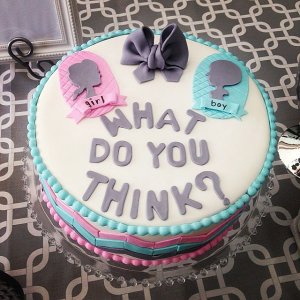
(Picture shows a “gender reveal” cake from Pop Sugar)
22 Thursday Oct 2015
Posted in Famous Names
Tags
aristocratic titles, Disney names, Disney princes, famous namesakes, Irish names, locational names, name history, name meaning, name popularity, names from films, Old English names, popular names, Scottish names, surname names, Turkish names, Welsh names
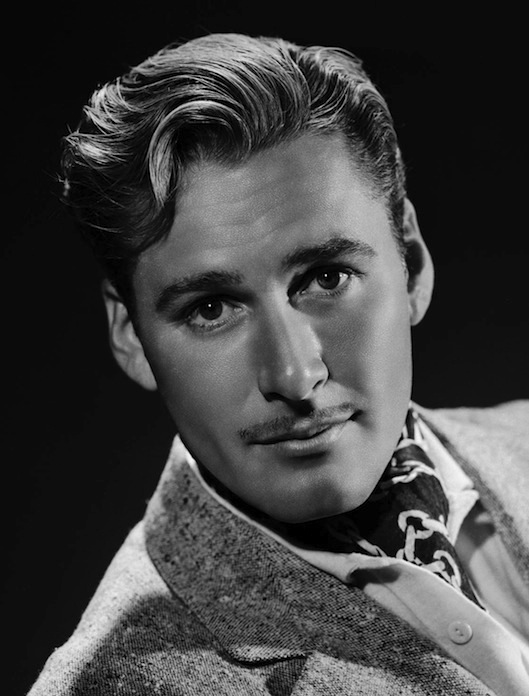
Errol Flynn is one of Australia’s most famous actors, even though he died more than 50 years ago, on October 14 1959. Born in Hobart in 1909, he is seen as a particularly Tasmanian export, although in Hollywood he passed himself off as Irish before he became an American citizen (he also said he was a descendant of a Bounty mutineer, which wasn’t true either).
Flynn became an immediate sensation in Hollywood from his very first role – a 17th century pirate in the 1935 film Captain Blood, although other stand out roles were as Fletcher Christian and Robin Hood. He was typecast as a derring-do swashbuckling action hero, famous for his well-choreographed sword fighting scenes. At the height of his career he was one of the most popular actors in America, and was roguishly handsome, with a dashing, debonair, devil-may-care image.
His reputation was as a womaniser, a highly-sexed, caddish, unscrupulous seducer. The expression in like Flynn is said to have been inspired by the ease at which Flynn was able to obtain women, and dates to 1942, when Flynn was up on charges of statutory rape. Accused of raping two 17-year-old girls, Flynn was acquitted by a jury made of mostly of women: during the trial he flirted with a teenager who he went on to respectably marry, after carefully verifying she was over 18.
Flynn was blunt about his proclivities, saying I like my scotch old and my women young. He was tickled enough by the slang expression that he tried to call his autobiography In Like Me, but the publishers changed it to My Wicked, Wicked Ways.
The rape trial didn’t seriously damage Flynn’s reputation, earning a round of backslaps and you-rascal-yous. He did face criticism for not serving in the US military during World War II. The studio kept secret that he had failed his medical, as their supposedly athletic star was in terrible physical shape. He had multiple heart problems, recurrent malaria, chronic back pain, chronic tuberculosis, and a dizzying array of sexually transmitted diseases.
To self-medicate these various ills, he drank heavily, and sometimes used morphine and heroin. When his career went downhill and he lost most of his money, he became old and bloated, sailing around on his yacht developing hepatitis and cirrhosis of the liver. However, he still managed to get a 15-year-old mistress to sail around with (Orry-Kelly had been their go-between), and planned to marry her except that she was barely 17 when he died. She never stopped loving him.
Whatever he had – charm, charisma, sex appeal – he never lost it. Controversial to the end, he became a figure of which almost anything could be believed, and biographies have variously suggested that he was a closet bisexual, a Nazi, a Communist, a sexual predator, a paedophile, a murderer, and a drug-runner (the Nazi claim is definitely debunked; the others are unsubstantiated).
Flynn was one of the original Hollywood bad boys, celebrated in film and song, and still making headlines today. Love him or loathe him, he was unforgettable.
ERROL
Scottish surname, usually said to be from the village of Errol in Perthshire, the meaning of whose name is lost in the mists of time. However, the surname came into use late enough as to cast some doubt on this theory, and it may be a corruption of an earlier surname.
Errol has been used as a first name since the 18th century, originating in Scotland. One of the factors helping its use was probably the aristocratic title the Earl of Erroll, in the Scottish peerage since the Middle Ages. Erroll is the older spelling of the village of Errol, and the first Earl was William Hay, who was born in Errol. The title is still in the Hay family.
Errol was #160 in the 1900s when Errol Flynn was born, and peaked in the 1940s at the height of his career – just outside the Top 100 at #103. After the rape trial, the name fell sharply, and left the charts in the 1970s.
The name has been a favourite in the Caribbean, with a famous example being British singer Errol Brown, who was born in Jamaica. The first prime minister of Barbados was Errol Barrow, an enormously popular leader regarded as a hero of his country, although Errol Flynn lived in Jamaica in the 1950s and was a great boost to the island’s tourism.
Errol joined the US Top 1000 in 1936, the year after Errol Flynn’s Hollywood career began. It peaked in 1941 at #355 – the 1942 rape charges may not have killed off his career, but it did damage his brand as a namesake for babies. It hasn’t been in the Top 1000 since 1985, and last year 20 baby boys were named Errol. In the UK, there were 11 baby boys named Errol in 2014, and numbers are actually rising.
Errol is well known to Harry Potter fans as the name of the Weasley family’s owl. J.K. Rowling may have had in mind the Latin word erro, meaning “to go astray, to wander about, to go amiss”, as Errol is a feeble old owl who often gets lost while delivering the Weasley’s mail. It’s the basis for the English word error.
Errol seems rather vintage and cool, while still lovably eccentric. It could work well cross-culturally, as its similar to the Old English name Eorl, meaning “earl”, the Welsh name Eryl, meaning “a look out post”, and the Turkish name Erol, meaning “brave”.
FLYNN
Irish surname which is an Anglicised form of Ó Floinn, meaning “son of Flann”; the name Flann means “reddish, ruddy of complexion”.
Flann Fína mac Ossu was a 7th century king of Northumbria who was the son of an Anglo-Saxon king and an Irish princess – his English name was Aldfrith. Flann Sinna was a 9th century High King of Ireland, and there are also medieval Irish poets with the name. Flynn has been used as a personal name since the 18th century, mostly for boys: from the beginning the name was used in Ireland as well as other English-speaking countries.
The name Flynn began charting in the 1990s, and was #342 for the decade, although it made the Top 100 in 1997 at #93. This was the year after Flynn was released, a film about the early life of Errol Flynn with Guy Pearce in the title role. Coincidentally, it was also the year that Sean Flynn, the grandson of Errol Flynn, began his acting career.
In 2001 Flynn was back in the Top 100 at #98 – this was the year after David Bret published a salacious biography about Errol Flynn called Satan’s Angel. It had a burst of popularity in 2004, getting to #73: the year before, Flynn’s 1959 autobiography My Wicked Wicked Ways was republished, and the 1938 film The Adventures of Robin Hood was released on DVD.
The next jump for the name was in 2011, when it got to #51: this was the year after the Disney film Tangled, with the Disney prince Flynn Rider based on Errol Flynn himself, and named in his honour. It was also the same year that model Miranda Kerr chose the name Flynn for her son. The name peaked in 2013 at #32 (the same year that Kerr separated from her husband, British actor Orlando Bloom).
Last year Flynn was #45 nationally, #40 in New South Wales, #38 in Victoria, #34 in Queensland, #40 in Western Australia, #37 in Tasmania, and #42 in the Australian Capital Territory.
Flynn is only popular in Australia and New Zealand – it is #48 and stable across the Tasman. It is #137 in the UK, and has been rising steadily since Tangled and the birth of Flynn Bloom, while in the US it joined the Top 1000 in 2011, and is currently #659 and still rising. It will be interesting to see how it fares in other countries since reaching its peak here.
Flynn is a popular name with a strong Australian connection. Unlike Errol, it has gained a cool Disney namesake and become a celebrity baby name, giving it a significant boost. No longer rising in Australia, Flynn seems to have settled in, perhaps on its way to becoming a modern classic. Handsome, Irish, Australian, on trend, and stable, Flynn seems like a popular yet safe choice.
POLL RESULTS
Errol received an approval rating of 27%. 53% of people weren’t keen on Errol, and 8% loved it.
Flynn did much better, receiving an excellent approval rating of 82%, making it one of the top-rated names of 2015. 44% of people thought Flynn was a good name, while only 4% thought it was a terrible one.
23 Wednesday Sep 2015
Posted in Famous Names
Tags
Biblical names, classic names, famous namesakes, hebrew names, international name popularity, mythological names, name history, name meaning, name popularity, popular names, royal names, saints names, Semitic names, US name popularity

Famous Namesake
Next week it will be the 143rd birthday of David Unaipon, who was born September 28 1872 – Unaipon is an Anglicised form of the name Ngunaitponi. David was a writer, mythologist, inventor, motivational speaker, lecturer, religious leader, and political activist; in his lifetime he was hailed as a genius. Yet he was given no schooling after the age of 13, and was often denied service because of the colour of his skin.
Born on a South Australian mission, his high intelligence was obvious even as a child. Frustrated by the scarcity of career paths open to him, and almost complete lack of educational ones, after work he would devour books on literature, science and philosophy until the early hours of the morning. He became obsessed with the idea of inventing a perpetual motion machine (a hot topic of the day), and this led to his first patented invention: an innovative design for shearing machines which is the basis for modern mechanical shears.
In all, David took out 19 provisional patents on his inventions, but could not afford to fully patent them: he made no money from his inventions, and received no credit apart from one newspaper article. His other inventions include a centrifugal motor, a multi-radial wheel, and a mechanical propulsion device. One of his ideas was a basic design for a helicopter in 1914, based on the spinning motion of a boomerang; this earned him the title of “Australia’s Leonardo”. A recognised authority on ballistics, he also had a great interest in lasers which he foresaw might one day have military applications – this was some years before Einstein’s pioneering work on lasers.
David worked as a lay preacher and missionary, but was also keen to educate white people on Indigenous mythology and culture. David compiled his versions of Aboriginal legends, influenced by his study of classical and Egyptian mythology, and written in a style reminiscent of John Milton. They were published in a series of booklets and articles, and eventually commissioned as Myths and Legends of the Australian Aboriginals in 1930: David was paid $150 for his work, but received no credit. He was the first Indigenous Australian writer to be published.
Urbane and cultured, dignified in bearing, formal of manner, and fastidious in speech, David defied the stereotypes then held about Aboriginal Australians, and confounded expectations. Even when sympathetic, the newspapers spoke of him in ways which now make us squirm.
He was not just a genius: he was a “black genius” or “Australia’s cleverest darkie”. One journalist calls him “a remarkably intelligent specimen of primitive man”, and writes that people can barely believe he is a “full blooded Aborigine”. “An outstanding representative of the primitive race”, and “remarkably able … even amongst superior whites”, it was made clear that he was an exception to every rule, and one fine shining hour for a people who were inevitably dying out.
David lived to the age of 94, packing many lifetimes into his generous span of years; he continued working on his inventions into old age, and right to the end remained determined to discover the secret of perpetual motion.
He had lobbied the government on Aboriginal rights, been the first Aboriginal person to attend a royal levee, and received a Coronation Medal. The David Unaipon Literary Award is given to an unpublished Indigenous author each year, and the David Unaipon College of Indigenous Education And Research at the University of South Australia is named after him. You may also have David in your wallet – he is on the $50 note.
An extraordinary Australian with an original mind, he was neither mute nor inglorious, yet his story is one of undeveloped potential. Howard Florey was sent to Oxford University as a Rhodes Scholar, and he changed the world: what might David Unaipon have done if given similar opportunities and advantages?
Name Information
David is derived from the Hebrew name Dawid, from the Semitic root dwd, meaning “to love”. It is usually translated as “beloved” or “my darling”. There were a number of Semitic deities with names from the same source, and it is possible the name David was originally given in honour of these gods, or came to be understood as “beloved of God”.
The name has come into common use because of the character from the Bible. In the Old Testament, David was an armour-bearer to Saul, the first king of Israel. David was a talented musician, and whenever Saul was feeling particularly wretched, David would play the lyre to him until he felt better. David was a great warrior, and Saul made him commander over his armies: eventually he became so popular that after Saul’s death David was anointed king.
A popular story from the Bible is about David’s youth. Saul’s armies were facing those of the Philistines, and their opponents sent their largest warrior to fight someone in single combat – a huge giant named Goliath (around six foot nine, or just over 2 metres tall). Everyone was afraid to take on the big boy, until David stepped forward and accepted the challenge. He brought Goliath down with a slingshot, then cut off his head using the giant’s own sword. In modern parlance, a David and Goliath battle is one where the underdog wins, and we all love a story where the “little guy” is victorious over someone more powerful.
King David is a central figure in Judaism, a symbol of Jewish kingship. According to the Hebrew canon, a descendant of King David will one day sit on the throne of Israel, heralding an era of global peace. Christianity views David as a divinely appointed king, and the ancestor of Jesus Christ. In Islam, David (Dāwūd) is revered as one of the great prophets.
David has been a popular figure in art and literature, most notably Michelangelo’s statue of him as a young man, the epitome of masculine strength and beauty. In the Bible, David is described as a handsome youth with beautiful eyes, and ruddy in colour. This has often been taken to mean David was red-haired (Jewish tradition makes David a redhead), but the word used refers to the same coppery-brown skin tone assigned to Adam. There is another connection between these two characters: Adam is the first name in the Bible, while David is the last.
David has been used as an English name since the Middle Ages; in medieval Europe, David was seen as the ideal chivalrous hero, and a model for kingship. Saint David is the patron saint of Wales, and his icons include the leek, a Welsh national symbol. A Welsh short form of his name, Taffy, was used to refer to a Welshman (often insultingly) for many years, just as a Paddy meant an Irishman. King Edward VIII went by David, which was his final middle name, given in honour of the national saint.
The name David also has a strong history in Scotland, as David I was a powerful medieval Scottish king who supported his niece, the Empress Matilda, in her claim to the English throne. A defender of the Scottish church’s independence from the English church, contemporary historians describe him as pious and just. He is regarded as a saint in Roman Catholicism.
David is a solid classic which has never left the Top 100. It was #28 in the 1900s, and peaked at #1 through most of the 1960s, making it the most popular boy’s name for that decade. Currently it is #91 nationally, #92 in New South Wales, #76 in Queensland (where it was one of the fastest rising names of last year), #98 in Tasmania, and #83 in the Australian Capital Territory.
Thanks to the fame of King David, David is a popular name around the world, including in eastern and western Europe, Scandinavia, and Latin America. It is most popular in Croatia, at #4. It is popular in all English-speaking countries, and most popular in the United States, at #18. It is still a popular name in Israel, and seems a patriotic choice as the national flag has a Star of David on it.
David is an attractive classic name with a beautiful meaning. An ancient name with a heroic royal namesake, it has never gone out of style and remains popular. Widely recognised around the world, it travels well and can work cross-culturally. A beloved name for thousands of years, it would not be surprising if this name was perfect for your darling son.
POLL RESULTS
David received a creditable approval rating of 70%. People saw the name David as a timeless classic which would never go out of style (27%), clean and wholesome (19%), and handsome or attractive (16%). However, 21% thought it was too common and boring. Only person thought David seemed too mature to give to a little boy, and just one thought it was too biblical.
(The photo of David Unaipon is the same one used for the bank note).
16 Wednesday Sep 2015
Posted in Famous Names
Tags
aristocratic names, British Baby Names, classic names, created names, Eleanor Nickerson, famous namesakes, flower names, French names, germanic names, Greek names, honouring, name history, name meaning, name popularity, popular names, Provencal names, royal names, Sanskrit names, Sindarin names, UK name popularity, US name popularity

Famous Namesakes
Last month was the 114th birthday of author Eleanor Dark, who was born August 26 1901. Her most famous novel is The Timeless Land, published in 1941, the first in a trilogy about early European settlement. Sympathetic towards Aboriginal people and meticulously researched, the book was part of the high school curriculum for many years and is now considered an Australian classic. It even inspired the famous historian Manning Clark. It was turned into a successful TV series in 1980.
When Eleanor married Eric Dark, a widowed doctor, she asked for three things: an equal partnership, a child, and the freedom to write. Eleanor got a studio in the garden where she could write in peace, a maid to help with the housework, and emotional support and encouragement for her writing. Her other wish was granted when she and Eric had a son named Michael; they already had a son named John, from Eric’s first marriage.
Thoughtful and generous, the Darks shared progressive ideals. An active member of the Labor left, Eric wrote political books and pamphlets which attracted attention from the anti-communist Menzies government and ASIO, and the entire Dark family was probably under surveillance. Although she considered herself apolitical, Eleanor’s socialist and feminist views permeate her work, and she was a scathing critic of middle-class suburbia.
The Darks moved to Katoomba in the Blue Mountains in 1923, and enjoyed bush walking, camping, climbing, and exploring. Eleanor was one of the first gardeners to grow Australian native plants as well as exotics. In her novels, the Australian landscape is not just a backdrop but almost another character. She believed that as people change the environment, the environment also changes us, and that we are part of the country in both mind and body. In her books are some of the most beautiful and loving evocations of the bush; its scents and sounds, its silence and spirit.
After Eleanor died in 1985, her son Michael gave the Dark family home in Katoomba to the Eleanor Dark Foundation. Named Varuna after the Hindu god of the ocean, the night sky, and the underworld, the house sits on a ridge overlooking the valleys of the Blue Mountains. Varuna is now a residential retreat, where authors can find a room of their own, and uninterrupted writing time; Eleanor’s studio is still in use. It was a wonderful gift for Eleanor as an author, and now for many others too.
Name Information
Eleanor is the modern form of Éléonore, the Old French form of the Provençal name Aliénor. Eleanor of Aquitaine (born around 1122) is often identified as the first bearer of the name Aliénor, and a popular story is that her name came about because she was christened Aénor, and as her mother’s name was also Aénor, she was known as alia Aénor, meaning “the other Aénor”. This suggestion was labelled “ridiculous” by a French scholar in the 17th century, but is still going strong.
There were earlier women with similar names – Eleanor of Aquitaine’s own great-grandmother is listed as Aleanor. However, the records for these early Eleanors post-date Eleanor of Aquitaine, so their names could have been conveniently translated into Eleanor (or Alienor or Aleanor) by later writers.
Eleanor of Aquitaine’s great-grandmother’s name seems to have been more like Adenorde, sometimes written as Ainor. It would be a reasonable assumption that Aénor was a variant of this name, and Aliénor was too. The origin of Adenorde is obscure, but looks to be Germanic.
Eleanor “Elea” Nickerson from British Baby Names suggests it could be from the Germanic name element adal, meaning “noble”, or from ald, meaning “old, mature, grown up”. The norde looks like the Germanic for “north. Another of Eleanor Nickerson’s suggestions is that it could be related to those Germanic names starting with aud-, meaning “wealth, riches”.
Another popular theory is that Eleanor is a Provençal form of Helen, Ellen, or Elena – also of ancient and obscure origin. Helen is usually said to be from the Greek for “light, bright”, although it may be ultimately from Sanskrit and mean “running, swift” (quite suitable for a runaway bride like Helen of Troy!). The reason for the Eleanor = Helen idea is probably because Eleanor of Aquitaine had her name Latinised as Helienordis. At the very least it is possible that the name Eleanor was influenced by the various Helen names, becoming fused (or confused?).
At least everyone agrees that Eleanor of Aquitaine popularised the name Eleanor. One of the wealthiest and most influential women of the Middle Ages, Eleanor was Duchess of Aquitaine in her own right, making her such an eligible bride that she was snapped up by both Louis VII and Henry II, so she became a queen of France, then of England. She was the mother of Richard the Lionheart and King John, and one of her daughters was named after her – Eleanor who became queen of Castile, and was a similarly powerful figure.
Eleanor of Aquitaine was clever, charming, sophisticated, and high-spirited, and contemporary sources all agree that she was very beautiful. She survived into her eighties, and outlived both husbands and most of her children. She was perhaps more woman than most medieval men could handle, and she was let go by her first husband, and imprisoned for years by her second.
The name Eleanor became common amongst both French and English royalty and nobility. King John named one of his daughters Eleanor after his mother, and French noblewoman Eleanor of Provence married Henry III, becoming the mother of Edward I. Edward married Eleanor of Castile, who was named after her great-grandmother, the daughter of Eleanor of Aquitaine. In turn, Edward I named his eldest daughter Eleanor, and her daughter was given the name Eleanor; Edward II also named a daughter Eleanor after Eleanor of Aquitaine.
Eleanor is a classic name which has never left the charts. It was #98 in the 1900s, and reached its lowest point in the 1960s at #454. It climbed steadily until the 1990s, after which it levelled off for many years, remaining stable in the 100s. Eleanor joined the Top 100 for the first time since the 1900s last year, climbing 31 places to reach #84, the second-highest rise in rank after Ariana. It is #82 in New South Wales, where it was one of the fastest-rising names for the year, #77 in Queensland, where it was one of the fastest-rising names, #54 in Tasmania, and #45 in the Australian Capital Territory.
Eleanor also joined the US Top 100 last year, and is #78 there. It was popular in the US from the end of the 19th century until World War II, and peaked in 1920 at #25. Long-serving First Lady Eleanor Roosevelt gave it a lot of publicity; her first name was Anna, but she went by her middle name. Eleanor was popular in the UK from the middle of the 19th century until the 1930s, and returned to the Top 100 in the 1980s. It peaked at #18 in 1999, and is currently #60 in England/Wales.
Up until this year, I would have said that Eleanor was a perfect, classic, underused choice. It was too perfect and classic to remain underused forever, as it has now become a Top 100 name. You can understand why, as it has both strength and elegance, a marvellous royal namesake, and the option of nicknames such as Elle, Ella, Ellie, Elea, Nell, Nellie, and Nora.
Spelling variants such as Elinor and Ellanore are not unusual; the name Elanor is from The Lord of the Rings and means “sun star” in the invented Sindarin language – in Tolkien’s universe, an elanor was a small yellow pimpernel-like flower, and the name was given to Sam Gamgee’s golden-haired daughter. In Australia, Eleanor is usually said EL-uh-nawr, similar to the American pronunciation, although you will sometimes hear a British pronunciation here, which is more like EL-en-uh.
POLL RESULTS
Eleanor received an outstanding approval rating of 91%, making it the highest-rated Famous Name for girls in 2015, and the highest-rated Famous Name overall. People saw the name Eleanor as elegant and refined (28%), dignified and intellectual (23%), and beautiful or attractive (17%). However 5% thought it was too popular. Only one person thought Eleanor seemed snobbish or elitist, and likewise just one was bothered by the number of spellings and pronunciations.
(Photo of the Blue Mountains near Varuna from Hook to Book by Christine Bell; Christine gives a wonderful insight into what life is like as a writer at Varuna).
07 Monday Sep 2015
Posted in Name Updates

Kristel and David were expecting a baby girl – to their great surprise and delight, as they had been told they would not be able to have children. There was just one name they both agreed on, but Kristel wrote in to the blog because she was worried they might have chosen the wrong name. Not only was it very popular, but it was just one syllable long, and people told them it was too short with their one-syllable surname.
Kristel and Dave’s daughter arrived on July 14 weighing 2.8 kg and with wisps of blonde hair. They didn’t rush in to choosing a name, but got to know her for a few days first. It soon became apparent there could be only one name for her, the name they had always loved and wanted from the beginning, so she is called
GRACE AUDREY,
with Audrey a middle name shared with three generations.
They couldn’t be happier with their precious girl, and with her name, which suits her so well. Kristel would like to thank everyone for helping them, and nearly all who responded to their story encouraged them to choose the name they loved best.
Congratulations to Kristel and David!
06 Sunday Sep 2015
Posted in Waltzing with ...
Tags
aristocratic names, celebrity baby names, classic names, famous namesakes, Gaelic names, name history, name meaning, New Zealand name popularity, nicknames, patriotic names, popular names, Scottish names, UK name popularity, US name popularity
Famous Namesakes
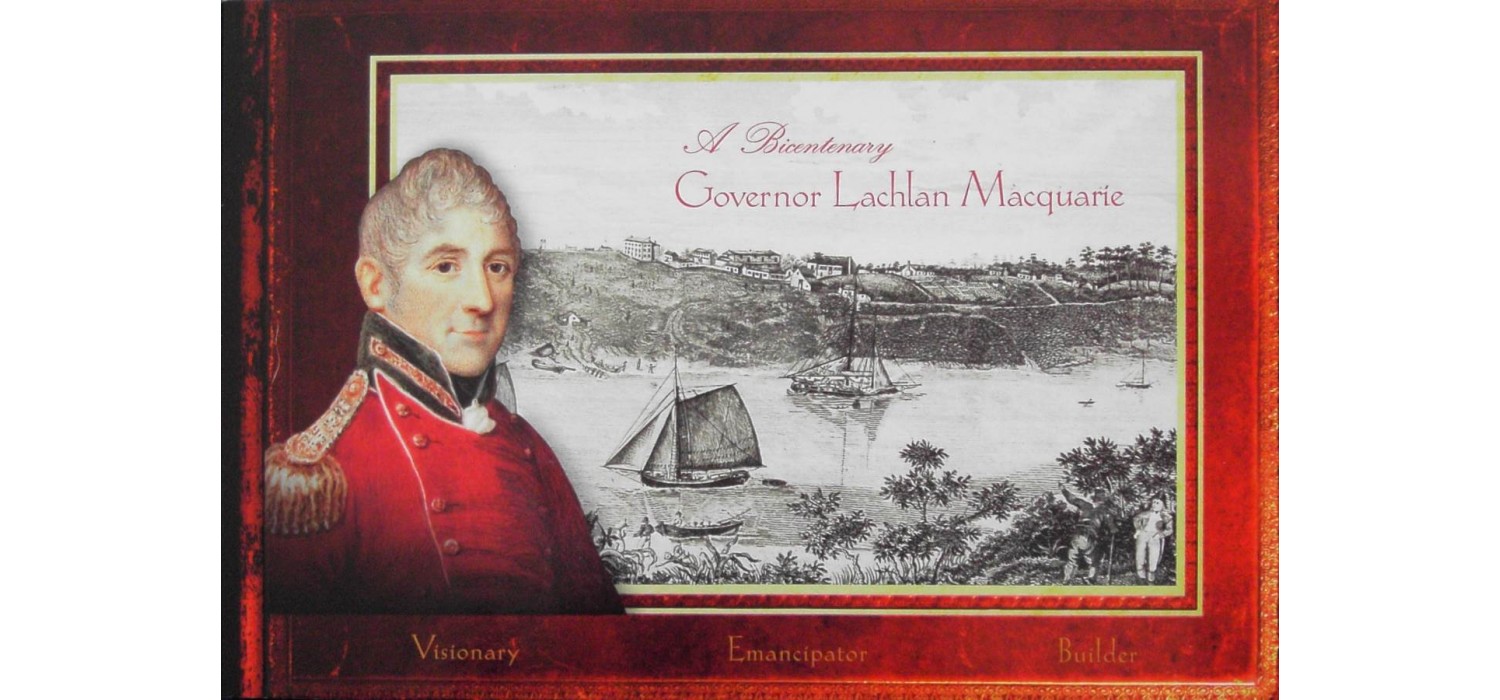
The name Lachlan has a long history in Australia because of Lachlan Macquarie, a British military officer born in the Hebrides who served as the fifth and last Governor of New South Wales. While still a teenager, he served during the American War of Independence, and saw active service in India and Egypt, eventually being promoted to the rank of Major-General.
Lachlan served his term as Governor from 1810-1821, and he had plenty to cope with, as the colony was disorderly following the Rum Rebellion against the former Governor, William Bligh. There was also a severe drought during his term, which brought about a financial depression, and the end of the Napoleonic Wars in 1815 led to a huge increase in Australia’s population from both settlers and convicts. Despite these challenges, Lachlan loved Sydney’s climate and setting, and saw the colony in very positive terms.
This was the period of Australia’s history where it was in transition from a penal colony to a free settlement. Lachlan held liberal views towards convicts, pardoning them as often as possible. He scandalised settlers by accepting freed convicts into society, and appointing them to government positions – even as magistrates. He sponsored massive exploration, and established Bathurst, the first inland city.
He spent lavishly on public works, which the British government strongly opposed, as they still saw Australia as a dumping ground for convicts, to be run as cheaply as possible. Sydney’s layout is based on Lachlan’s street plan for the central city, and the colony’s most prestigious buildings were on Macquarie Street. He designed the Georgian-style Rum Hospital, which today is the state’s Parliament House, while its stables house the Sydney Conservatorium of Music. He also designed the city centre of Hobart in Tasmania.
So much of the modern Australia we know was first begun by Governor Macquarie. He established the British system of justice, and the first Supreme Court. He encouraged the creation of the colony’s first bank, The Bank of New South Wales (now Westpac), and produced Australia’s first official currency. Towards the end of his term, he decreed that all traffic should keep to the left in New South Wales in line with British custom.
Perhaps the most important change he made was a symbolic one – he recommended that the name Australia be formally adopted, giving the seal of approval to Matthew Flinders’ choice. Little wonder that on Lachlan Macquarie’s tomb on the Island of Mull in Scotland he is called The Father of Australia.
Happy Father’s Day! And Happy Father’s Day to Lachlan Macquarie, the father of our country.
Name Information
Lachlan is a Scottish name from the Highlands. It is from the Gaelic Lochlann, meaning “land of the lochs” (land of the lakes). It was originally given as a nickname for someone from Norway: Norway has almost half a million freshwater lakes, so it well deserves this epithet. The name is pronounced LOK-lun.
The word Lochlann was first used to indicate “a Viking, a raider”, but gradually came to mean anyone of Norse descent. There was a strong link between the neighbouring lands of Norway and Scotland during the Middle Ages, as both battled for control of the Western Isles of Scotland. As part of the effort to improve the Scotland-Norway relationship, there were diplomatic missions between the two nations, and even intermarriage between the royal houses.
The name Lachlan (or Lochlann) was commonly used amongst the noble families of Scotland, who were often of part Norse descent. The name was traditional in the Clan Maclean, an old Highland clan who owned land in Argyllshire and the Hebrides. (Lachlan Macquarie’s mother was the daughter of the chieftain of the Clan Maclaine, another spelling of Mclean, and his father was the chieftain’s cousin). The current chief of Clan Maclean is Sir Lachlan Maclean of Duart and Morven, 12th Baronet of Nova Scotia.
The name Lachlan is only popular in Australia and New Zealand (it is #27 in New Zealand). In the UK Lachlan was #546 in 2013, while Lochlan was #709; the name is fairly stable there. In the US, the name Lachlan first joined the Top 1000 in 2013, and is currently #902 – a long way off being popular, but gaining in popularity. In the US, the name was given to 14 girls last year, which seems very wrong from an Australian viewpoint!
The name Lachlan was #173 in the 1900s, and went off the charts altogether during the 1920s and ’30s. It returned in the 1940s at #220, and gradually increased in popularity. There was a surge in popularity during the 1970s, most likely because media magnate Rupert Murdoch named his eldest son Lachlan in 1971. Rupert’s grandfather was from Scotland, and the choice of Lachlan’s name may have been inspired by his Scottish heritage as much as a tribute to Lachlan Macquarie.
Lachlan first joined the Top 100 in 1982 at #96, joined the Top 50 in 1989, and the Top 25 in 1996 – fairly brisk progress up the charts. It suddenly leapt into the Top 5 in 1997, the year after Lachlan Murdoch joined the board of Newscorp. However, it never made #1, peaking at #2 in 2002 and 2005, and has now left the Top 10. Currently it #11 nationally, #15 in New South Wales, #10 in Victoria, #12 in Queensland, #7 in South Australia, #12 in Western Australia, #6 in Tasmania, #8 in the Northern Territory, and #4 in the Australian Capital Territory.
This is a strong handsome Australian classic with a connection to Australian colonial history. A popular name for many years, it is by no means fresh or original, but still a worthy choice.
POLL RESULT
Lachlan received an outstanding approval rating of 91%, making it one of the highest-rated names of 2015. 39% of people loved the name Lachlan, and only one person hated it.
(Picture shows a 2010 stamp booklet issued in honour of Lachlan Macquarie’s bicentenary as governor)
 Waltzing More Than Matilda