• About
  • Best Baby Names
  • Celebrity Baby Names
  • Celebrity Baby Names – Current
  • Celebrity Baby Names – Past
  • Featured Boys Names
  • Featured Girls Names
  • Featured Unisex Names
  • Links to Name Data
  • Waltzing on the Web

Waltzing More Than Matilda

~ Names with an Australian Bias of Democratic Temper

Waltzing More Than Matilda

Tag Archives: popular names

Popular Names in England/Wales and Their Australian Chart Position

05 Thursday Sep 2013

Posted by A.O. in Name Data

≈ 1 Comment

Tags

name popularity, popular names, rare names, UK name popularity

As a follow up to the article on shared popular names, this shows where Top 100 names in England/Wales that aren’t popular here appear on our own charts, if they appear at all.

GIRLS

Already Left the Top 100

  • #73 Bethany – #160 in NSW, #196 in Vic (last on Top 100 in early 2000s)
  • #59 Brooke – #142 in NSW, #212 in Vic (last on Top 100 in late 2000s)
  • #36 Erin – ? in NSW, #160 in Vic (last on Top 100 in late 2011)
  • #79 Julia – #211 in NSW, #153 in Vic (last on Top 100 in early 2000s)
  • #66 Katie – #143 in NSW, #181 in Vic (last on Top 100 in 2009)
  • #92 Keira – #126 in NSW, #115 in Vic (last on Top 100 in 2009)
  • #94 Maria – #145 in NSW, #200 in Vic (last on Top 100 in 1980s)
  • #41 Megan – #273 in NSW, #262 in Vic (last on Top 100 in early 2000s)
  • #99 Sara – #144 in NSW, still Top 100 in Vic – #92 (last on NSW Top 100 in 2009)

Still Rising Toward the Top 100

  • #70 Elsie – #155 in NSW, #134 in Vic
  • #73 Faith – #125 in NSW, #146 in Vic
  • #34 Florence – #284 in NSW, #199 in Vic
  • #90 Francesca – #245 in NSW, #224 in Vic
  • #67 Harriet – #198 in NSW, already Top 100 in Vic (#97)
  • #26 Millie – #114 in NSW, already Top 100 in Vic (#99)

Possibly Rising Toward the Top 100

  • #87 Aisha – #194 in Vic
  • #22 Daisy – #134 in NSW, #108 in Vic
  • #63 Eleanor – #164 in NSW, #109 in Vic
  • #56 Emilia – #170 in NSW, #110 in Vic
  • #65 Esme – #613 in Vic
  • #19 Freya – #174 in NSW, #129 in Vic
  • #52 Gracie – #165 in Vic
  • #54 Hollie – #370 in Vic
  • #98 Isobel – #186 in NSW, #166 in Vic
  • #46 Lexi – #107 in Vic
  • #96 Lydia – #282 in NSW, #227 in Vic
  • #30 Maisie – #383 in NSW, #253 in Vic
  • #77 Martha – #533 in Vic
  • #81 Maryam – #284 in Vic
  • #84 Niamh – #263 in Vic
  • #92 Tilly – #136 in Vic

Falling Without Reaching Top 100

  • #84 Mollie – #567 in NSW, #538 in Vic
  • #48 Rosie – #319 in NSW, #183 in Vic

In Rare Use

  • #89 Darcey – unranked

BOYS

Already Left the Top 100

  • #69 Aaron – ? in NSW, still on Top 100 in Vic – #97 (last on NSW Top 100 in 2011)
  • #94 Kyle – #309 in NSW, #256 in Vic (last on Top 100 in early 2000s)
  • #84 Rhys – #120 in NSW, #121 in Vic (last on Top 100 in 2009)
  • #96 Robert – #107 in NSW, #182 in Vic (last on Top 100 in early 2000s)
  • #91 Seth – #111 in NSW, still on Top 100 in Vic – #89 (last on Top 100 in 2009)

Still Rising Toward the Top 100

  • #52 Arthur – #219 in NSW, #163 in Vic
  • #46 Harley – #117 in NSW, #118 in Vic
  • #71 Jude – #111 in Vic
  • #81 Louis – #113 in NSW, already on Top 100 in Vic (#88)
  • #43 Lewis – #116 in NSW, #112 in Vic
  • #60 Mohammad – #150 in NSW, #213 in Vic
  • #68 Reuben – #158 in NSW, #178 in Vic
  • #97 Theodore – #186 in NSW, #155 in Vic

Possibly Rising Toward the Top 100

  • #7 Alfie – #201 in Vic
  • #57 Bobby – #378 in Vic
  • #70 Dexter – #218 in Vic
  • #95 Elliott – #224 in Vic
  • #83 Finlay – #273 in Vic
  • #34 Finley – #231 in Vic
  • #66 Frankie – #405 in Vic
  • #87 Frederick – #212 in NSW, #172 in Vic
  • #64 Jamie – #186 in Vic
  • #54 Jenson – #233 in Vic
  • #92 Kayden – #194 in Vic
  • #89 Kian – #416 in Vic
  • #72 Leon – #118 in NSW, #144 in Vic
  • #79 Louie – #418 in Vic
  • #26 Mohammed – #147 in NSW, #210 in Vic
  • #73 Ollie – #329 in Vic
  • #99 Rory – #159 in NSW, #167 in Vic
  • #90 Sonny – #156 in Vic
  • #74 Stanley – #317 in NSW, #555 in Vic
  • #44 Theo – #333 in Vic
  • #55 Tommy – #334 in Vic

Falling Without Reaching the Top 100

  • #75 Elliot – #181 in NSW, #145 in Vic
  • #86 Evan – #130 in NSW, #127 in Vic
  • #48 Harvey – #169 in NSW, in Top 100 in Vic (#73)
  • #93 Taylor – #251 in NSW, #259 in Vic (more popular for girls)

In Rare Use

  • #100 Ellis – unranked
  • #38 Freddie – unranked

Famous Names: Muhammad

04 Wednesday Sep 2013

Posted by A.O. in Famous Names

≈ 4 Comments

Tags

Arabic names, celebrity baby names, famous namesakes, name data, name discrimination, name history, name meaning, name popularity, name studies, NSW name popularity, popular names, saints names, UK name popularity, US name popularity

PMUZ058

The name Muhammad joined the national Top 100 last year, which was also its first time in the New South Wales Top 100. However, data from the NSW Registry of Births, Deaths and Marriages shows that, if you combine all the variant spellings, Muhammad has been in the Top 25 of the state since 2010, giving it a similar level of popularity to Xavier, Jayden, Mason and Charlie.

This trend looks likely to continue, with 161 baby boys named Muhammad, Mohamed, Muhammed or Mohammed already born in the state this year between January and August.

Muslin leader and community spokesperson, Keysar Trad, who has a son named Muhammad, believes that these statistics are a sign that Australian Muslims are becoming more confident in giving their children Islamic names.

He thinks that they show a greater acceptance of Muslim names in the wider community, and a healthier connection with their religion amongst Muslims.

Mr Trad says that religious names not only allow an expression of devotion to God, but allow parents to reclaim an aspect of their culture.

By choosing the name of a significant religious figure, they hope that their child will share in the good qualities of that name, and perhaps be inspired to learn more about it when they get older.

“You think that one day, maybe they will read up on the significance on the name,” he said.

The prophet Muhammad’s full name was Abū al-Qāsim Muḥammad ibn ʿAbd Allāh ibn ʿAbd al-Muṭṭalib ibn Hāshim, and he was a 6th century leader from Mecca in Arabia who unified his country under Islam.

According to his own testimony, at the age of 40, he began receiving revelations from God through the archangel Gabriel, and a few years later began preaching these revelations. He proclaimed that “God is One”, and that complete surrender to Him was the only acceptable path to God – the word Islam itself means “surrender”. Muhammad declared himself a prophet, and a messenger sent by God.

The revelations which Muhammad reported receiving until his death in his early 60s form the Quran, which is the basis of the Muslim religion, and regarded by Muslims as the Word of God.

The name Muhammad means “praised, praiseworthy” in Arabic, and it is a very popular name amongst Muslims. It has a variety of transliterations and spellings because of the different languages used in the Islamic world.

It is believed that Muhammad, counting all variant spellings, is the most common personal name in the world, with an estimated 150 million men and boys bearing the name. It is the most common boys name in England/Wales, and in the United States, if all the spelling variants were combined, Muhammad would be in the Top 200 and rising, with a similar popularity to Silas, Maddox, Weston and Greyson.

There is a popular theory that names which are too “ethnic” sounding should be avoided lest they lead to discrimination, and you can find studies which show that in many cases, it can be harder to get a job interview if the name on your resume looks “foreign” (although this Australian study showed it depended where you lived and what kind of “ethnic” your name was).

Kayser Trad acknowledged that there have been cases where people with an obviously Muslim name had trouble getting a job, but he doesn’t believe the answer is to “go into hiding”, or change your name to Charlie Edwards to get an interview.

It also occurs to me that this theory assumes that all businesses are owned and all industries are controlled by people from an Anglo background, and that all people in charge of such businesses would prefer not to employ non-Anglo people. That just isn’t true.

I watched the daily business report on television yesterday, and noted that of the half dozen spokespeople from major businesses interviewed, four of them had ethnic names, including two with Arabic names. Furthermore, many businesses are owned by people from non-Anglo heritages, and having a Muslim name may prove an advantage in some areas.

Businesses in areas with a strong migrant community could prefer to hire people from a similar background for greater rapport with and understanding of their customer base, and your name shouldn’t be any disadvantage in the public and non-profit sector – about 25% of the workforce, and in some areas, up to 80% of the workforce.

Muhammad joining the Top 100 is a watershed in Australian society, but it should also be remembered that the majority of names on the boys Top 100 are of Jewish or Christian origin, with many names of pagan origin only coming into popular use through saints, such as George and Aidan, and even surname names developing because of saints, such as Mitchell and Jackson.

If you are interested how names of other religious figures fare in New South Wales, during the 2000s more than one baby each year, but less than six, were named Jesus or Moses, and in the same period most years saw about 7-11 babies named Abraham. By July this year, 10 babies named Krishna had been born. Hmm, this could be another growth area …

POLL RESULT: Muhammad received an approval rating of 49%. 27% of people thought the name Muhammad connected its bearer to his culture, and as a result, 24% believed the name was only suitable for Muslims. 14% saw the name as “too Muslim”.   

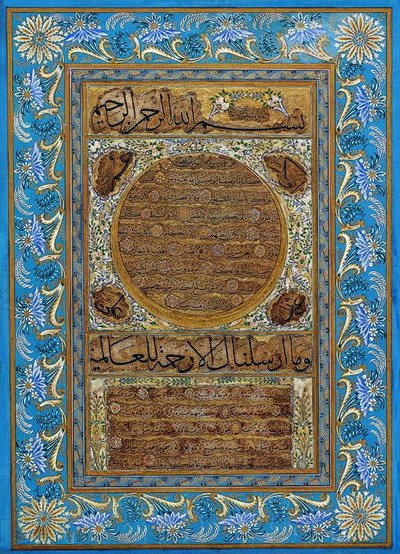
(The picture shows a 17th century Ottoman calligraphy panel by Hafiz Osman, describing the physical appearance of the prophet Muhammad; it is not permitted to show images of Muhammad in Islam)

Popular Here and There: Comparing the Shared Top 100 Names of England/Wales and Australia

03 Tuesday Sep 2013

Posted by A.O. in Name Data

≈ 5 Comments

Tags

name popularity, popular names, UK name popularity, US name popularity

In May I compared the popular names Australia shares with the US, and now that the data for England/Wales has come out, I’m going to do the same with them. I think it’s interesting to see not only see how we compare with England/Wales, but to compare our results with the earlier ones for the United States. I used the Top 100 charts drawn up by Elea at British Baby Names.

BOYS

Similar Level of Popularity (within 10 places of each other)

Alexander, Ethan, Henry, Isaac, Jack, Jacob, Jake, James, Jayden, Joshua, Kai, Logan, Luke, Matthew, Max, Michael, Nathan, Oliver, Owen, Riley, Sebastian, Thomas, Tyler, William

More Popular in Australia (11-40 places higher)

Aiden, Bailey, Benjamin, Blake, Caleb, Connor, Elijah, Harrison, Hugo, Liam, Lucas, Mason, Noah, Ryan, Samuel

Much More Popular in Australia (more than 40 places higher)

No results

More Popular in England/Wales (11-40 places higher)

Adam, Aidan, Alex, Archie, Cameron, Charles, Charlie, Daniel, David, Dylan, Edward, Gabriel, Harry, Leo, Luca, Oscar, Toby, Zachary

Much More Popular in England/Wales (more than 40 places higher)

Callum, George, Joseph, Muhammad

GIRLS

Similar Level of Popularity (within 10 places of each other)

Amelia, Amy, Anna, Ava, Bella, Eliza, Elizabeth, Ella, Emily, Eva, Evelyn, Grace, Heidi, Imogen, Isabella, Isla, Jasmine, Layla, Lilly, Lily, Lucy, Maya, Mia, Olivia, Ruby, Scarlett, Skye, Sophia, Sophie

More Popular in Australia (11-40 places higher)

Abigail, Annabelle, Caitlin, Charlotte, Chloe, Emma, Georgia, Hannah, Matilda, Paige, Rose, Sienna, Summer, Violet, Willow, Zara

Much More Popular in Australia (more than 40 places higher)

Ivy, Maddison, Madison, Sarah, Zoe

More Popular in England/Wales (11-40 places higher)

Alice, Amber, Amelie, Ellie, Evie, Holly, Isabel, Isabelle, Jessica, Leah, Molly, Phoebe, Sofia

Much More Popular in England/Wales (more than 40 places higher)

Lacey, Lola, Poppy

Australia shares 62 boys names with the US, and 61 with England/Wales, which is pretty even. But we share 13 boys names of very similar popularity with the US, and 24 with England/Wales. You can see how hard it is to decide whether our boys names are more “American” or more “English”! Interestingly, we shared more boys names with Wales than with England, so perhaps our boys names are more “Welsh” than anything else.

Australia shares 54 girls names with the US, with 19 of those at a similar level of popularity, and 67 girls names with England/Wales, with 29 of them at a similar level of popularity – in several cases, they had exactly the same popularity ranking. This is a much more clear-cut situation – our girls names are significantly closer to those in England/Wales than to the United States.

An Interview with Linda Rosenkrantz from Nameberry

25 Sunday Aug 2013

Posted by A.O. in Blog Reviews

≈ 3 Comments

Tags

baby name blogs, baby name books, Berry Juice, Beyond Jennifer & Jason, celebrity baby names, changing names, Glamour magazine, honouring, Linda Rosenkrantz, Nameberry, Pamela Redmond Satran, popular names, rare names, The Baby Name Bible, US name popularity

pamlinda8486

The baby name world changed forever when Pamela Redmond Satran and Linda Rosenkrantz penned their seminal work, Beyond Jennifer & Jason, back in the 1980s. Many more books were to follow, and along the way they educated a generation of parents on naming babies, and made it possible to admit to being interested in names – even obsessed with them. Now they have the Nameberry website, which provides a massive amount of information and opinion on names, creates a space for name nerds everywhere to meet up with other devotees, and inspires many a name blogger. Pam and Linda are the fairy godmothers of the baby name community, and you can link with them on Facebook and Twitter too.

Linda has been kind enough to take some time from her busy schedule to be interviewed on names, writing Jennifer & Jason, creating Nameberry, and how their love of names changed all our lives.

What is your name? 

Linda Rosenkrantz aka Linda Ruth Rosenkrantz Finch.

Have you ever changed your name?

This is a story that I’ve told in a Nameberry blog. It’s about how I was give a name at birth, but never called by that name. I was so traumatised when I began kindergarten and was called by that unfamiliar name that my wise mother allowed me to pick a new one for myself at the age of 5 or 6.

When did you first become interested in baby names?

I would say names in general rather than just baby names have always been a passion of mine from a very early age – a shrink might say it dates back to that kindergarten experience. And being a compulsive list-maker, I was constantly making lists of names, including names for fictional characters, names of prospective husbands, and of course, future children.

How did you and Pam meet?

A mutual friend brought her over for dinner to where I was then living, in Greenwich Village [in New York City], and we hit it off immediately – bonding, in part, over our mutual love for and attitudes towards names. Strangely enough, that was one of the few times we lived in the same city – she later moved to England, then the Bay area [of San Francisco], and then New Jersey. I settled in Los Angeles.

What made you decide to write Beyond Jennifer & Jason together, and how did the process of writing and publishing go?

Pam had been frustrated at the fact that there were no good name books around when she was naming her first child, Rory, and I had the idea of writing an article about the subject for Glamour magazine where Pam was an editor. We both realized that this had the makings of a book that would be a perfect project for a collaboration.

We wrote a very short outline of Beyond Jennifer & Jason and brought it to an agent, who thought it was so original – no one had ever looked at names this way, taking in their contemporary social context and categorising them – that he was sure he could sell it. It was bought by St. Martin’s Press, who published all ten of our name books, all edited by the excellent Hope Dellon.

Over the years, we have gone from communicating via thermal faxes to the internet – I’d say we email an average of 25 times a day, plus phone confabs and New York meeting several times a year. Responsibilities have been divided along the lines of our various strengths. But when it comes to working on some large project, we might split the boys and girls, then switch and edit each others’ efforts. It’s been a remarkably congenial, long-term marriage.

How did the success of your first book change your lives? Did you wake up one morning and discover you were now international baby name gurus?

First of all, here’s Pam’s answer to this question:

The first book changed my life in that it allowed me to quit my full-time job as an editor at “Glamour”, work at home as a writer full-time, and spend more time with my children – at that time, my oldest was only three years old. Although “Beyond Jennifer & Jason” was a big hit, we didn’t feel like international baby name gurus. Just writing books, you have so much less relationship with your readers, and it was difficult for us to tell how much influence our work really had. Our books were not published outside the US until the early 2000s, so we certainly didn’t feel like we were having an international impact overnight … or for a really long time.

Yes, it was a gradual process – and, although our books were successful in the UK, it wasn’t until the internet hit that we expanded into international “gurus”. Cumulatively, it has changed my life completely – widening my world in all sorts of ways, providing immense gratification. And it’s also been VERY HARD WORK.

When did you and Pam start the Nameberry website?

We started off with a smaller site, based on our book The Baby Name Bible. (We were fortunate enough to retain the digital rights to all our books – which is a very unusual situation). Nameberry began in 2008; we were excited to expand the word to a larger audience. We had no idea at the time that such a huge community of name lovers would form around the forums and blogs – an incredible group of informed, helpful people – now reaching two million people a month!

Do you have a favourite blog post that you have written for Nameberry?

Hard to come up with one post, but I especially enjoy those that require a lot of research, and feel good when I can come up with a topic that hasn’t been touched on before. (Which gets harder and harder with all the input we’re now getting from our great Berry Juice bloggers.)

There’s been some new developments on the site recently – what else is in the pipeline?

We are working on some new features, but we’re most excited about two new e-books – best girls’ names and best boys’ names.

What are some of your favourite names?

Pam and I did a slideshow of our faves on Nameberry, which includes several names I never tire of – Barnaby, Mirabella, Dinah, Duncan, and Araminta.

What names do you dislike?

Herman and Sherman.

Are there any names you love that don’t seem practical in real life?

That area is definitely narrowing. Some of the multi-syllabic and exotic names that once seemed too heavy for a baby to carry now seem perfectly wearable – like Persephone, Peregrine, Zinnia, Amaryllis and Peridot. The baby-naming climate is so much more “anything goes” than it was when Pam and I started.

What are your favourite names in the US Top 100?

Girls: Amelia, Lydia and Violet. Boys: Josiah, Julian and Lucas.

What are your favourite names in the rest of the US Top 1000?

Girls: Ivy, Maeve, Paloma and Arabella. Boys: Declan, Edison, Finnegan and Jedidiah.

What are your favourite names that have never been in the US 1000?

Verity, Boaz and Barnaby.

What is your child’s name?

Chloe Samantha (the Samantha was for my father, Samuel, who had recently died).

Did you and your husband agree easily on a baby name together?

Since my husband is British, we had some varying perceptions of names, especially boys names – and in fact never did find a boy’s name we both really loved. But when we hit on Chloe, there was instant agreement.

What is something that we may not know about you?

That I’ve written books on subjects ranging from Old Hollywood to collectibles to the history of telegrams to animation art to memoir to fiction. And Pam is a New York Times best-selling writer of fiction and humorous books.

(Photo of Linda and Pam from Nameberry; Linda is on the left)

Upper Class Baby Names

18 Sunday Aug 2013

Posted by A.O. in Your Questions Answered

≈ 17 Comments

Tags

Anglo-Saxon names, birth registries, classic names, dog names, famous namesakes, fictional namesakes, flower names, Google, Greek names, hyphenated names, Latin names, Latinate names, middle names, name image, nature names, nicknames, popular names, rare names, retro names, royal baby names, royal names, Scottish names, surname names, underused classics, unisex names, vintage names

aristocrats-600x525

Class, baby names, and judgement thereof seems to be a topic under discussion everywhere at the moment. BRW magazine told us how to name our babies like a rich person, Wendy Harmer set high, perhaps unattainable standards for baby names, an American blogger told us how names are done in Old Blighty’s class system, and a random Devonian reality television contestant decided nobody’s baby names were good enough, not even hers. Perhaps the royal baby is the catalyst for all this reflection – he didn’t escape the scrutiny either; the reality TV contestant decided he had a “dog name”.

And then I checked my search engine stats this week, and found that someone had Googled what baby names do upper class australians use.

Strictly speaking, Australia doesn’t have an upper class, because we don’t have a hereditary aristocracy. It’s usual to consider the richest people of a country the de facto upper class, but when we talk of someone being “upper class”, it has connotations of more than mere possession of a large disposable income. Some of the richest families in Australia are from traditionally working class or middle class backgrounds – they’re just regular people with vast fortunes.

While Australia does have a class system, it’s a flattened-out one, with fewer social divisions, and a large middle ground. Class is more fluid and less structured here than some other places. Of course, that doesn’t mean we are free of all status markers and snobbery – including name snobbery.

So if we don’t have an upper class, do we have upper class baby names? I don’t think so, because any particular name is used by a wider variety of people than you might suppose. Although in our imaginations, poor people have children named Jaidyn and Tayylah, and rich people send Agatha and Lucius off to St Barnaby’s or the Kindergarten of Higher Consciousness, in real life it is a lot less stereotypical.

When you register your baby name, the registry doesn’t ask for your family tree or your bank balance. They won’t ever say, Look, I think Peregrine is out of your price range. Might I suggest something more affordable, like Cooper? All names are equal, because they cost the same amount to register. No matter how humble your circumstances, you can give your baby any name you want – elegant, serious, trendy, sassy, bold, or eye-raising.

And because all names are equal, they won’t make any difference to your own social position, or to your child’s. A poverty-stricken family won’t receive an invitation to join the Yacht Club just because their daughter is named Agatha, and a Jaidyn born into wealth will have just as privileged a life as if his name had been Lucius, and will be just as welcome at St Barnaby’s.

Although some people fret that their baby’s name needs to sound like a doctor, a judge, a professor, or a prime minister for them to succeed, in real life surgeons are named Kellee, chief justices are named Wayne, academics are named Tiffany and Brandy, and prime ministers are named Kevin. Not only does your name not indicate where you came from, it doesn’t indicate where you are going either.

However, it’s fair to say that some names have an upper class image. I don’t think Australia is significantly different from other English-speaking countries when it comes to what names may be perceived as upper class.

Names Which May Be Seen as Upper Class

Please note: This is by no means an exhaustive list, just a few ideas as to what I think sounds “upper class”, what others may perceive as upper class, or that I have noticed upper-middle class people choosing. I am not recommending these styles of name, or suggesting you use them.

  • Classic English-style names eg Thomas and Lucy
  • Anglo-Saxon type names eg Alfred and Edith
  • Names from European royalty eg Leopold and Adelaide
  • Latin and Latinate names eg Rufus and Aurelia; Hugo and Miranda
  • Classical names eg Leander and Hermione
  • Retro names eg Arthur and Florence
  • So old-fashioned that they’re hip eg Reginald and Gertrude
  • Vintage-style nicknames as full names eg Monty and Lottie
  • Names that have remained in use while never becoming popular eg Theodore and Susannah
  • Uncommon Scottish-style names for boys eg Cormac and Fergus
  • Uncommon flower names for girls eg Dahlia and Saffron
  • Historical surname names for boys eg Forbes and Monash
  • Whimsical names eg Huckleberry and Tuppence (while putting the whimsical name in the middle is the prudently middle class thing to do)
  • Fashionable “arty” names eg Ziggy and Coco (strike me as more aspirational middle class for some reason)
  • Literary names eg Caspian and Evangeline (these definitely seem middle class, as the middle class is keenest on reading)

How Middle to Upper-Middle Class Australian People Tend to Judge Names

Please note: I am not suggesting you follow any of this advice. It is for information only.

  • They like names that are spelled the more commonly accepted way. People are really fussy about this for some reason, and even slight changes to a name can bring on eye-rolling.
  • Any name that looks or sounds recently “made up” is frowned upon (although it’s fine if it was created a long time ago and therefore has a history behind it).
  • If a name has several variations, the simpler one is usually considered more upper class than the more elaborate eg Isabel rather than Isabella, Alice rather than Alicia, Sophie rather than Sophia.
  • Classic and retro names are usually considered more upper class than modern classics. However, Sophia is a classic name and Sophie is a modern classic, yet Sophie is more upper class than Sophia – so this does have exceptions, or can be overwritten by another rule.
  • Hyphenated names for girls, like Emma-Rose or Ruby-Lee, are often viewed with suspicion. This could be because “double” names are elaborations by their very nature.
  • Masculine or unisex names on girls are generally considered downmarket, while a unisex or feminine-sounding name on a boy often has quite a bit of cachet. So Mackenzie on a girl = thumbs down, Mackenzie on a boy = thumbs up.
  • It is fashionable to show pride in your cultural heritage, so Lorenzo, Agnieszka, Tevita, Silka and Johannes can be more stylish than Laurence, Agnes, David, Cecilia and John.
  • Conversely, many people seem to think that using names from a culture that you don’t have any immediate tie to looks distasteful. I think it’s silly, but it seems to be a widespread idea.
  • One or two middle names are fine, but once you reach three or more middle names (and you’re not royalty), you are considered to have gone beyond the bounds of good taste. It’s a little arbitrary, but it does seem to be the rule.

Names Not Obviously One Class or Another

  • Many names that have been highly popular for a length of time – by their nature, popular names are “of the people”; it’s easier for a name to remain very popular if many groups of people use them. Names like Charlotte, William, Chloe and Lachlan could belong to almost anyone, and do.
  • Hickster names – those that are fashionable-sounding yet slightly countrified, like Mayella and Elroy. Even after reading the birth notices carefully, looking for clues as to which kind of families choose these names, I still don’t know.
  • Uncommon nature names – names like Leaf or Snow are hard to place, I think. I have seen these names on children from absolutely everywhere on the social spectrum.
  • Extremely rare or obscure but genuine names – due to the fact they are almost never heard of, they don’t have any social context to put them into. You may only meet one Harmon in your whole life – so how can you generalise about the name?

What names do you think have an upper class image? And do you think there is any such thing as an upper class name? 

Celebrity Sibset: Wendy Harmer

17 Saturday Aug 2013

Posted by A.O. in Sibsets in the News

≈ 4 Comments

Tags

baby name advice, celebrity baby names, celebrity sibsets, choosing baby names, classic names, famous namesakes, fictional namesakes, honouring, Irish names, locational names, name popularity, popular names, products with human names, surname names

8487-1_n

Wendy Harmer is a highly successful comedian, who for many years has entertained on stage, television and radio. She was the first woman in Australia to host her own comedy show, The Big Gig, in 1989, and for more than a decade she was co-host of a top-rating breakfast show on 2-Day FM, when she became one of the nation’s highest paid entertainers.

Wendy is a prolific and successful author, having written humour for adults, chick lit novels, teen fiction, kid’s books, two plays, and the libretto for an opera. Her best-selling children’s series, Pearlie the Fairy, has been turned into an animated TV show. She is also editor of The Hoopla, a women’s news and opinion site.

Wendy is married to Brendan Donohoe, and has two children. Her son is named Marley (aged about 15), and her daughter is named Maeve (aged about 13).

Wendy appears to be yet another star of radio with a bee-lined bonnet in regard to baby names, because she has written an article about them for The Hoopla. It’s one of those “names not to call your baby” lists, which I must admit I don’t usually care for, because they don’t seem to really be helpful to parents so much as bullying anyone who happens to have different tastes and opinions from yourself.

Interestingly, Rule Number 2 on the list states that you shouldn’t use a famous person’s surname as your child’s name. Her son is named after Bob Marley. Okaaaay. Number 4 is that you musn’t name all your children with same letter. Mmmmm.

This article is an “update” of an earlier one, where one of the pieces of advice was that the pronunciation of your child’s name should be clear from the way it is spelled. Even now, when the name is quite well-known, some people don’t know how to pronounce Maeve from its spelling, and think that it must be MAY-vee or mah-EEV.

I do notice that so often when parents criticise baby names, the same criticisms could be levelled at their own children’s names. The most obvious example is that rather ghastly woman who said that place names as baby names were lower-class, when her own daughter was named after a country in Asia. I guess we all have mother-blindness about our baby names, and I have been guilty of the same thing myself – it’s an easy trap to fall into, but luckily I didn’t do it on TV or anything.

When we come up with rules on naming babies which we ourselves cannot stick to, it may be a sign that the rules aren’t all that useful. Just a thought!

Wendy doesn’t like her own name, which peaked at #15 in the 1950s, when Wendy was born. Part of her disappointment is that her mother chose the name out of a knitting pattern book, when the layette she was knitting was called the “Wendy”. She imagined that she had been named after Wendy Darling from Peter Pan, so being named after a knitting pattern didn’t seem so special.

Wendy much prefers her father’s choice for her name, which was Claire, the name of her beloved great-aunt. In the 1950s, Claire was #224; it rose steeply in popularity during the 1960s and ’70s, and has been in the Top 100 since the 1980s.

Now I think that’s really useful naming advice taken from real life. It may not be the best idea to choose a baby name peaking in popularity and about to fall and become dated, or select one virtually at random.

A better choice could be a classic which is lower in popularity and about to start rising, to become very popular in the long-term future. And it’s probably preferable to honour a beloved family member than to name your baby after a product – it’s nice to have a name which has some significance.

Think about the name story you are going to pass on to your child – a knitting pattern clearly doesn’t cut it. And sometimes dad knows best.

PS Wendy did manage to give the name Claire to one of her characters, the heroine of her novel, Farewell My Ovaries.

(Picture of Wendy and her family taken some years ago at Uluru; photo from Body + Soul)

Rich List Baby Names

15 Thursday Aug 2013

Posted by A.O. in Names in the News

≈ 4 Comments

Tags

classic names, famous namesakes, name popularity, name studies, popular names, rare names

0dfda646-ffc9-11e2-82b3-338937740ac4_556245252--646x363

BRW magazine puts out the Rich 200 list of the top 200 richest people in Australia each year, and has looked through all the names on their Rich List since the magazine was founded in 1984, to see which names are most common for rich people. They then suggest that parents may like to choose these names for their babies, in hopes that they will then become rich, or at least not look out of place just in case they ever do become rich.

You probably won’t be staggered to learn that the most common name on the Rich Lists was John, with fifty men of this name being included since 1984.

Top Ten Rich List Names for Boys

  • John
  • Peter
  • David
  • Michael
  • Robert
  • William
  • Ian
  • Paul
  • George
  • Andrew

Girls names were rather more problematic, since only 7% of the Rich List have been women, and only two female names have turned up more than once – Rose and Christina, of which there are just two examples of each. Despite having virtually no data to work with, they still manage to come up with a Top Ten for girls names as well. It seems to be based on simply putting the rest of them in alphabetical order.

Top Ten Rich List Names for Girls

  • Rose
  • Christina
  • Andrea
  • Angela
  • Charlotte
  • Elizabeth
  • Gina (short for Georgina)
  • Nicole
  • Penelope
  • Therese

You can probably see a major flaw in their name-your-baby-the-rich-way plan, in that the names on the boys list are classic names which have retained high levels of popularity over time.

John has never been off the Top 100, and was the #1 name from 1910 to 1940; it didn’t leave the Top Ten until the 1970s. So there are lots of rich men named John, but there are also lots of high school teachers, auto mechanics, scientists, discharged bankrupts, and murderers named John as well. It’s not so much a “rich man name” as an “everyman” name.

Even BRW admits that an unusual name will not disqualify you from wealth, because there are people on the Rich List named Ranald, Sinclair, Wolf, Brettney, and Merlin as well. (They also include Iris for some reason, although Iris is not particularly unusual even now, and was Top 100 from 1900-1940.)

John and Rose are nice names, well worth choosing if you like them, but they won’t make a difference to your child’s bank account. A name cannot magically bring wealth, and if you look at the Top Ten of the Rich 200, you can see that at least half of them inherited all, or the bulk of, their fortune.

The richest person in Australia is Gina Rinehart, who got her money, not because was named Georgina, but because her wealthy father died and left her his fortune. In other words, if you would like your children to be rich, the best thing to do is become rich yourself, and leave them all your money in your will. They will be able to inherit from you no matter what their first name is.

How did most people on the Top Ten get rich? Mining and property development. So go buy a mine, and turn it into a block of flats, and your child is well on its way to financial security.

A Sibling Name for Harper

03 Saturday Aug 2013

Posted by A.O. in Naming Assistance

≈ 5 Comments

Tags

birth notices, choosing baby names, honouring, middle names, modern names, name combinations, name popularity, names of businesses, nature names, nicknames, popular names, rare names, sibsets, surname names, unisex names, US name popularity, vocabulary names

tumblr_mndd1obcEF1rrnekqo1_1280

Carissa and Nick Taylor are expecting their second child towards the end of the year, and they have a daughter named Harper Joy – Harper’s middle name is a family name.

If Harper had been a boy, the name they had picked out was Jensen, so that seemed an obvious choice for a boy’s name. However, they seem to be gradually losing interest in Jensen, and are now thinking of Carson instead. The only thing that bothers Carissa is that she wonders if Carson is too close in sound to her own name. The middle name for a boy will be Carissa’s maiden name, Fero.

They are having real problems deciding on a girl name that will match Harper. They love Avery, but dislike the idea of Ava as the nickname, and Carissa is concerned that the name will always remind her of Avery the stationery company.

They also love Quinn, but when they try to match it with a feminine middle name, it sounds too much like Queen ____. For example, Quinn Mary = Queen Mary. If they go with a more unisex middle name, it sounds “too American” to them. The middle names they are likely to use for a girl are Grace, May or Poppy (family names).

The Taylors don’t have any problems with popular names, but nothing in the Top 100 happens to appeal to them – except Willow, which isn’t possible for them to use for personal reasons.

~ ~ ~ ~ ~ ~ ~ ~ ~ ~

Name for a Boy

I get the feeling that Jensen is slipping away from you – part of the reason is probably that you think of it as Harper’s-name-if-she-had-been-a-boy, so it’s now hard for you to get enthusiastic about it on a new baby.

To me, Carson and Carissa sound similar, but not too similar, but I think this is something you have to decide for yourself. It might be a good idea to have Nick call out “Carson!” and then call out “Carissa!” and see if you can easily tell which one is your name from a distance (say, out in the back yard).

There’s nothing like road-testing a name for a week, so start using the name Carson in sentences all the time and see if it feels right to you. Talk to each other about Carson – “Carson came top of his class in maths this term; I think that extra tutoring is really helping” or “Carson has this weird rash on his left ankle. If I take him to the doctor, will they think I’m over-reacting?”.

Talk to Carson as if he’s there and already been part of your family for years. Call him to dinner, tell him to take those muddy football boots outside, talk to him about the family holiday you’re planning, ask him what colour he’d like his room to be painted. Does Carson sound like a name you can imagine saying for a lifetime? Is it a name that feels like it fits into your family? Can you imagine saying, “These are my children, Harper and Carson”?

You asked whether Jensen or Carson was more popular: Jensen is #149 in Victoria, and Carson doesn’t chart at all in Australia, although it is a Top 100 name in the US. I see Jensen fairly often in birth notices, but I can only remember seeing Carson a couple of times – once as a girl’s middle name. If popularity is a factor for you, then Carson is definitely the less common name.

Name for a Girl

If you had asked me to pick a sister for Harper, with no other information given, my top two suggestions would have been Avery and Quinn, so I think you have two excellent choices there.

Avery

It never occurred to me until you wrote it that Ava could be a nickname for Avery. While it’s hard to control what nicknames people will bestow on your child, I do feel as if Ava is the type of nickname which is not likely to take off if the parents don’t approve of it and give it their blessing. If I knew a little girl called Avery, and her mum and dad always referred to her as Ava, then I might call her that too, but I’d never think of just deciding to call her Ava on my own – maybe because I’d figure that if they’d wanted the name Ava, they would have chosen it in the first place.

As far as the stationery company goes, how often do you come across Avery? Do you have to use their products every day at work, or is it more that you’ll sometimes buy a box of labels for your Christmas cards? If you love the name Avery, I really don’t think you’ll be reminded of the stationery company once your baby girl arrives – Avery will be your daughter, and that will be it. Stationery isn’t a horrible association, and buying from Avery might even give you a bit of a buzz – seeing her name on a box of labels will probably be a thrill for a little girl named Avery anyway.

While Avery Grace or Avery May sounds nice, I think your own middle name would be lovely with Avery – Avery Elizabeth. If you were willing to share it, I think that one’s a winner.

Quinn

I see what you mean about the middle name issue with Quinn, which does make it slightly trickier for a girl’s name. I see girls named Quinn quite often in birth announcements, and what I’ve noticed is that they tend to be paired with a fairly modern or slightly gender-ambiguous middle name. Some from the blog are Quinn Eden, Quinn Gracyn, Quinn Cedar, and Quinn Brielle. I don’t think these sound “too American” – they just sound modern.

I don’t think Quinn sounds awful with any of the middle names on your list, but I wonder whether you might prefer it with a nature name eg Quinn Aspen, Quinn Autumn, Quinn Maple, Quinn Meadow, Quinn Saffron, Quinn Winter? To me, that solves the problem of Quinn + Girl Name, but at the same time, nearly everyone would recognise Quinn Meadow as a female name. It also fits in with Harper, who has a vocabulary word as her middle name.

If your heart is set on a family name, I like Quinn Poppy best, as it’s a nature name. You might also want to separate the names with another middle name, such as Quinn Winter Poppy.

Other Unisex Names for Girls

  • Arden
  • Ariel
  • Aubrey
  • Emerson
  • Fallon
  • Frankie
  • Marley
  • Morgan
  • Peyton
  • Remy

These names are all unisex, but more common on girls (like Avery), or fairly equally given to boys and girls (like Quinn). The one which appeals to me most is Arden, but I admit that might make a boy named Carson seem less usable down the track.

Well I hope that’s given you some food for thought. You’re still quite a way from your due date, so feel free to write in again as more ideas come to you!

NAME UPDATE: The baby was a boy, and his name is Jensen!

(Picture shows a vintage card with a female harpist)

Names in the News

30 Tuesday Jul 2013

Posted by A.O. in Names in the News

≈ 4 Comments

Tags

created names, epithets and titles, Game of Throne names, honouring, name campaigns, name combinations, name contests, name popularity, name social groups, name studies, names from television, nicknames, popular names, sibsets, vintage names

News

Dr Benjamin Pitcher, from the University of London, analysed the most popular names in the UK, Australia, and the US, and found that boys names are more likely to have “large” vowel sounds, while girls are more likely to have “small” vowel sounds in their names. Larger sounding vowels pull the tongue to the back of the mouth, creating more airspace and releasing lower frequency sounds, while smaller vowels force the tongue forwards and upwards, giving high pitched sounds. Examples of “large” vowels in names include Jack, Lachlan, Cooper, Noah and Tom, while “small” vowels can be found in Isabella, Olivia, Mia, Lily and Ella. Dr Pitcher says this is an example of biological evolution, but only looked at names between 2001 and 2010, which doesn’t seem like enough of a time period to evolve in. I was interested to see that a Dr Pitcher would end up studying pitch, and that his first name, Benjamin, tends towards the more feminine vowels.

More studies into gender differences in names show that in English-speaking countries, girls names tend to be longer, to have unstressed “weak” initial syllables, end on a vowel sound, and to have more vowel sounds generally. It is thus supposed that girls names are more “decorative”, and boys names more “functional”. I wonder what they think in non-English countries, because in India, Arabic countries, and Polynesian islands, male names are often just as long and vowel-heavy as female ones, and I’m sure they don’t think of their boys names as “weak” or “girly”. Perhaps we should we be asking ourselves why we see our girls names as “weak and decorative” – it probably says a lot more about our own attitudes than it does about their vowels. Because take away all our value judgements, and there is no real reason while a girls name like Jane is “stronger” and more “functional” than one such as Olivia or Isabella.

The invented word Khaleesi, from Game of Thrones, has the meaning of “queen” in the fictional Dothraki language, although it is a title and not a personal name. Khaleesi has been used as a baby name since the TV show aired in Australia, and it turns out that it is more popular in Queensland – 15 babies named Khaleesi have been born in Queensland so far this year, compared to 4 each in Victoria and South Australia, and 6 in New South Wales. Could it be the meaning of “queen” which unconsciously makes it more appealing to Queenslanders? Two Queensland fans of the show who chose the name for their daughter say that they couldn’t agree on any name until the first season of Game of Thrones began airing. They thought Khaleesi was a really nice name which would be suitable for an adult too, and found out the spelling from the show’s website. Makes you wonder what all these Khaleesis would be called if the books hadn’t been turned into a TV series …

The town of Busselton on Western Australia’s south-west coast has a social group for women named June, and on June 1 each year, they celebrate Happy June Day. (Because if the first of May is May Day, then obviously the first of June is June Day … right?) In existence since 2010, this year eight women named June got together for a cuppa and to find out what else they have in common. Two of the Junes were born in June (well, actually, one of them was born on May 31, but so close to midnight it was practically June). One of the Junes has four children born during the month of June, half the Junes had a mother named Mary, and two Junes have a sister named Barbara. June peaked in the 1930s at #10, and this is something cool to look forward to if you have a popular name – starting your own name group.

This year’s mission for the Junes was to see more newborn babies named June – a wish which was granted instantly, because after a friend sent her the story about June Day in the Busselton paper, Eleisha Whiston contacted the June group to tell them she named her daughter June on May 25. Baby June is named after her 83-year-old great-grandmother, who was born in June. Her brother Hugo also has a June birthday. The Happy Junes were “overwhelmed” to hear of a new June so soon. You know what? June is a lovely name. Seriously consider having a little June – no matter what the moon, or whether born at morn or afternoon, that name would be a real boon, bringing great fortune. Then every day would mean a Happy June.

Meanwhile, Dave Noonan from Hobart’s Heart 107.3 radio station became alarmed at the thought that his own name might die out, and initiated a Save Dave campaign, to convince the women of Hobart to call their sons Dave. Eventually, Matt and Melissa Moore welcomed their son at 4.33 am on July 19, and named him David Xander, to be rewarded with a newly-renovated kitchen. Melissa plans to call her son Davey as his nickname, which she finds “cuter”, making the contest seem a bit pointless.

Girls Names of Australian Aboriginal Origin – Part 2

28 Sunday Jul 2013

Posted by A.O. in Name Themes and Lists

≈ 16 Comments

Tags

animal names, astronomical names, Australian Aboriginal names, baby name books, bird names, birth notices, famous namesakes, fictional namesakes, flower names, Greek names, hebrew names, historical records, Italian names, Japanese names, locational names, mythological names, name history, name meaning, name popularity, name trends, names from books, names from fairy tales, names from movies, names from television, names of businesses, names of horses, names of ships, nature names, nicknames, plant names, Polish names, popular names, Romanian names, Slavic names, unisex names, varieties of fruit

OLYMPUS DIGITAL CAMERA

My first lists of names from Aboriginal languages are the most popular articles on the blog, so it seemed time for another selection. These names are all ones which have been used as personal names in Australia. I have done my best to elucidate meaning and history as much as possible.

Alinta

Alinta means “flame” in one of the traditional languages of South Australia; it was published in a dictionary by the Royal Society of South Australia in 1891. The name was popularised in 1981 when it was featured in the award-winning mini-series Women of the Sun. Each episode portrayed fictionalised accounts of lives of Aboriginal women in Australian society through history, and the first was Alinta: The Flame. It shows first contact between an Aboriginal tribe and Europeans, when early settlers encounter a tribe while searching for grazing land. The tribe’s culture is threatened by the newcomers, and the tribe is wiped out. The only survivors are a woman named Alinta and her child; Alinta vows that her daughter will “carry the torch” for her culture. There are several businesses in Australia named Alinta, most notably a Western Australian energy company, one of the largest in Australia, and named with the Aboriginal meaning in mind. There is also an Australian-bred variety of strawberry called Alinta. It’s not a very unusual name here, and there are several young actresses with the name. Alinta is also used as a name in Romania, where it means “caress”.

Arika

Arika is a name from the Waka Waka people of south-east Queensland, meaning “blue water lily”. There are several species of blue water lily native to Queensland, and they are used as bush food, for all parts of the plant are edible. In Aboriginal mythology, water lilies are a gift from the Rainbow Serpent, and sometimes in Indigenous astronomy, small stars were seen as water lily bulbs. In the novel Book of Dreams by Traci Harding, the meaning of the name is translated, and it says that in the past, Aboriginal women named Arika were given the name Lily by white people – which suggests that Arika might be a good name to honour a great-grandma Lily. Australians named Arika include Indigenous artist Arika Waulu Onus, and Arika Errington, who works in Aboriginal health, and contacted the blog to tell us about her name. I saw several children and teens named Arika online, mostly from Queensland, so it seems as if this name could be today’s Nerida. Arika sounds a bit like Erica, and is an angram of the Japanese name Akira, while having a similar meaning to Lotus. Possible nicknames that occur to me are Ari and Riki.

Jedda

Jedda (1955) was the first Australian film in colour, the last film of famous director Charles Chauvel, and the first film to star two Aboriginal actors in leading roles. In the movie, Jedda is an Aboriginal girl raised from infancy by a white woman after her mother died giving birth to her. Although she is curious about her own culture, her adoptive mother forbids her from learning anything about it, with tragic consequences. The film was nominated for the main prize at Cannes, and was a commercial success in Australia. In the movie, the name Jedda means “little wild goose” – a forerunner of the chase she will engender. I am not sure if the meaning was invented for the film, or drew on local knowledge; Jedda certainly exists as an Aboriginal name in historical records before 1955. An Aboriginal lady told me that she understood the name Jedda (which was her daughter’s name) as “little child”, but she didn’t say what language that was from. This is reasonably well used as a girl’s name, being similar to Jenna and Jetta – but I have seen it on a boy, because it shortens to Jed, and is also a plant name, because jedda (Jedda multicaulis) is a native shrub.

Kalina

Kalina means “love” in the extinct Wemba-Wemba language of north-west Victoria and south-west New South Wales. It has often been used as a place name, street name, a name for businesses and organisations, and sometimes as a girl’s name in Australia, but I’m not sure whether it was used as a personal name by the Wemba-Wemba people. It is also a literary name, because Kalina is one of the brumbies in the Australian classic children’s series, The Silver Brumby, by Elyne Mitchell – although in this case, Kalina is a white stallion, and his name is understood to mean (in horse language) “marvellous beauty of frost on snow”. Kalina is also a Slavic name which means “cranberry bush”; in Romania it means “rowan tree”, and in Poland it means “virburnum bush”. This is a pretty cross-cultural name which has several attractive meanings, and seems very easy to wear, being similar to Karina, Katrina and Kalista.

Leumeah

Leumeah is an outer southern suburb of Sydney, in the Macarthur region. It was settled by John Warby, a convict explorer who was transported here in 1792. In 1802, Warby was given the job of protecting cattle roaming free south-west of Sydney. Here he befriended the Tharawal people who lived in the area, and learned some of their language. In 1816 he was granted land on which to build a house, barn and stables; the barn and stables are still standing – one of them is a restaurant and the other a motel. (Just to confuse things, the stables is called The Barn Restaurant). Warby named his farm Leumeah, which means “here I rest” in the Tharawal language, and this became the name of the suburb. It is pronounced LOO-mee-uh. I have seen one or two girls given this name, and it seems like an especially happy name for an Australian, as it came about from a rare case of friendship between Aborigines and European settlers. The sound of it is quite on trend, and Lulu could be a nickname.

Marlee

Marlee is a small town in mid-northern New South Wales, whose name means “elder tree” in the local Biripi language. Native Elderberry or Yellow Elderberry is Sambucus australasica; its berries are bush food and they are sweeter than the variety from the northern hemisphere. Marlee is a popular name for houses and streets, suggesting leafy abundance, and it is not uncommon as a girl’s name here. Marlee also means “swan” in the Nyungar language of Western Australia, so it has a nice meaning in two languages. It is a rare week when I don’t see a baby named Marli, Marlie, Mahli or Mali in the birth notices, and Marlee fits in perfectly – in fact there was a Marlee in this week’s birth announcements. You could see these names as attempts to “feminise” Marley, but they could just as easily be short forms of Marlene, Mahlia or Malia. Marlee seems like a great way to join this trend with a specifically Australian meaning.

Narelle

Queen Narelle was the wife of King Merriman (or Umbarra), an important elder of the Yuin people in the latter part of the 19th century. The Yuin people are the traditional owners of the South Coast region of New South Wales, in the Bermagui area. Aboriginal people traditionally did not have kings or chiefs, and the title of “king” was given to certain elders by white people as a (misguided) mark of respect. There is a famous photo of Queen Narelle’s well-attended funeral taken around 1895, which shows black and white people mourning for her together, so it does seem as if Narelle and Merriman were able to form a bridge between cultures, or that relations in the 19th century could be harmonious. You may see Narelle translated as “woman from the sea” in baby name books, but in fact the meaning isn’t known; it is pronounced nuh-REL. Narelle first charted in Australia in the 1920s at #362, and reached the Top 100 in the 1940s. It peaked in the 1950s at #50, and was out of the Top 100 in the 1970s. It hasn’t ranked since the 1980s or charted since the 1990s. The name took a dive in the late 1970s, when it featured on highly popular comedy series The Naked Vicar Show. Narelle was a slightly dim-witted, mildly tarty woman – hence the plummeting popularity of the name, which immediately lost all cachet. However, Narelle is actually a pretty name, and the TV show has long been off the air. It even fits in with the trend for -ell names for girls, and could have fashionable Nell or Nellie as the nickname. Names from the 1950s are predicted to make a comeback: could Narelle be one of them?

Nyah

Nyah is a small town in Victoria on the banks of the Murray River, pronounced NY-ah. It began as a utopian socialist community in the late 19th century, but as utopian socialism went out of fashion, it lost the necessary government support, and it isn’t now any more utopian or socialist than the next country town. Its name means “this bend (of the river)” in the local Boorung language – the bend of the Murray River at Nyah was an important boundary marker for the Boorung people. The region around Nyah has several Indigenous sacred sites, and in the surrounding state forests, anthropologists have discovered many interesting artefacts of Aboriginal culture. I know of someone with this name, and it seems attractive and simple, similar in sound to popular names like Maya, while also a place name important to Indigenous heritage.

Talia

Talia is a small town on the Eyre Peninsula in South Australia whose name means “near water” in one of the local languages – appropriately enough for a town by the sea. It may be from Wirangu, or one of its closely related languages. Talia has charted in Australia since the 1970s, which seems to follow its inclusion in Aboriginal Words and Place Names by Alexander Wyclif Reed (1965). It first ranked in the 1980s at #483, and hit its peak in 2009, when it joined the New South Wales Top 100 at #91. Since then it has rapidly declined, and is now #222. The variant spelling of Tahlia has been much more successful, which has been in the Top 100 since the 1990s, peaked in 2009 at #36, and is now #78. Tahlia may be more than an attempt to make clear the Australian pronunciation of Talia – it may also be to differentiate it from international names, because Talia is known as a girl’s name in several other cultures. Talia is a variant of the modern Hebrew name Talya, meaning “dew of God”, and the Italian form of the Greek name Thalia, meaning “blooming”. It can also be used as a short form of Natalia. Talia was the name of the princess in an Italian folk tale on which Sleeping Beauty was based. This is a pretty cross-cultural name with a specifically Australian meaning, and although it is less popular than Tahlia, that may make it more attractive to some parents.

Yindi

Yindi was the name of a ship, one of four that the Australian government presented to the navy of the Philippines as a gift in 1958. Each of them were given Aboriginal names taken from The Australian Language by Sidney J. Baker (1945). The first ship was the Yindi, whose name is translated as “sun”; in most Aboriginal cultures, the sun is female. Yindi also means “to descend” in the Yindjibarndi language of Western Australia, and the name may remind you of the Australian band Yothu Yindi, which means “child and mother” in the Yolngu language of the Northern Territory. I saw a baby girl named Yindi in a birth notice last year, and it struck me as a really stylish choice, which stands out from the crowd and has a sunny meaning.

POLL RESULT: People’s favourite names were Talia, Alinta, and Kalina, and their least favourite were Leumeah, Jedda, and Narelle.

(Photo shows Nymphaea gigantea – a species of blue water lily native to south-east Queensland; © Raimond Spekking / CC-BY-SA-4.0 (via Wikimedia Commons)

← Older posts
Newer posts →

Enter your email address to follow this blog

Categories

Archives

Recent Comments

A.O.'s avatarwaltzingmorethanmati… on Zarah Zaynab and Wolfgang…
Madelyn's avatarMadelyn on Zarah Zaynab and Wolfgang…
JD's avatardrperegrine on Can Phoebe Complete This …
A.O.'s avatarwaltzingmorethanmati… on Rua and Rhoa
redrover23's avatarredrover23 on Rua and Rhoa

Blogroll

  • Appellation Mountain
  • Baby Name Pondering
  • Babynamelover's Blog
  • British Baby Names
  • Clare's Name News
  • For Real Baby Names
  • Geek Baby Names
  • Name Candy
  • Nameberry
  • Nancy's Baby Names
  • Ren's Baby Name Blog
  • Sancta Nomina
  • Swistle: Baby Names
  • The Art of Naming
  • The Baby Name Wizard
  • The Beauty of Names
  • Tulip By Any Name

RSS Feed

  • RSS - Posts

RSS Posts

  • Celebrity Baby News: Melanie Vallejo and Matt Kingston
  • Names from the TV Show “Cleverman”
  • Can Phoebe Complete This Sibset?
  • Zarah Zaynab and Wolfgang Winter
  • Baby, How Did You Get That Name?
  • Celebrity Baby News: Media Babies
  • Celebrity Baby News: Adelaide Crows Babies
  • Celebrity Baby News: Chris and Rebecca Judd
  • Names at Work: Name News From the World of Business and Employment
  • Celebrity Baby News: Sporting Round Up

Currently Popular

  • Celebrity Baby News: Toby Allen and Darren Weller
  • Girls Names of Australian Aboriginal Origin
  • Rare Boys Names From the 1950s
  • The Top 100 Names of the 1920s in New South Wales
  • Rare Girls Names From the 1940s

Tags

celebrity baby names celebrity sibsets english names famous namesakes fictional namesakes honouring locational names middle names name combinations name history name meaning name popularity name trends nicknames popular names saints names sibsets surname names twin sets unisex names

Create a free website or blog at WordPress.com.

Privacy & Cookies: This site uses cookies. By continuing to use this website, you agree to their use.
To find out more, including how to control cookies, see here: Cookie Policy
  • Subscribe Subscribed
    • Waltzing More Than Matilda
    • Join 517 other subscribers
    • Already have a WordPress.com account? Log in now.
    • Waltzing More Than Matilda
    • Subscribe Subscribed
    • Sign up
    • Log in
    • Report this content
    • View site in Reader
    • Manage subscriptions
    • Collapse this bar
 

Loading Comments...