• About
  • Best Baby Names
  • Celebrity Baby Names
  • Celebrity Baby Names – Current
  • Celebrity Baby Names – Past
  • Featured Boys Names
  • Featured Girls Names
  • Featured Unisex Names
  • Links to Name Data
  • Waltzing on the Web

Waltzing More Than Matilda

~ Names with an Australian Bias of Democratic Temper

Waltzing More Than Matilda

Tag Archives: name trends

Famous Names: Sandy and Sable

28 Wednesday Nov 2012

Posted by A.O. in Famous Names

≈ 2 Comments

Tags

African-American names, animal names, colour names, english names, French names, French vocabulary words, Google Earth, Google Maps, historical records, Hurricane Sandy, Mer de Noms, name combinations, name history, name meaning, name trends, names of hurricanes, names of ships, nature names, nicknames, Paradise Lost, rare names, Southern Surveyor, The New York Times, Times Atlas of the World, unisex names, University of Sydney, US National Geophysical Data Center, vocabulary names, Wikipedia
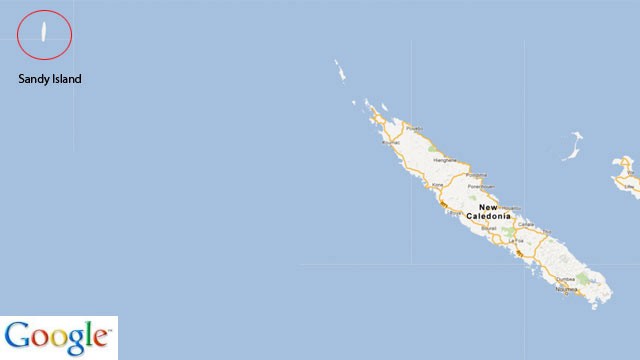
A group of Australian scientists from the University of Sydney have undiscovered an island that was supposed to be in between Australia and New Caledonia.

Sandy Island showed up on Google Earth and Google Maps, as well as marine and scientific maps all over the world, including the US National Geophysical Data Center. According to the maps, Sandy Island was about 16 miles long and 3 miles wide – just slightly bigger than Manhattan.

Geologists on the Southern Surveyor, an Australian maritime research vessel, were puzzled by the island which appeared on their weather maps, yet navigation charts showed that the water in that area was very deep – 1400 metres (4620 feet). They decided that they had to go check it out, and found nothing there except sea. The scientists recorded the information so that maps can be changed.

According to the Wikipedia article on Sandy Island, the island was erased from Google Maps on November 26, but although the name Sandy Island doesn’t show up in the search bar, when I looked in the Coral Sea I found the phantom island quite easily, but there was no name attached to it.

If I zoomed in on the island, it simply disappeared, and if I switched to satellite, the island showed up as a black streak surrounded by blue streaks, looking remarkably like someone had scribbled on it with two different felt-tip pens.

Interestingly, if Sandy Island had existed, it would have been in French territorial waters – and the island is not on any recent French government charts. Perhaps because of this, the Times Atlas of the World deleted Sandy Island from its maps after 1999.

The history of the discovery of Australia involved – indeed, was dependent on – faulty maps, necessitating voyages to check out what was here or not, so it makes a strange sort of sense that now Australians must voyage forth to check faulty maps for themselves.

The episode shows that this part of the world is still not well known, and incompletely charted. It’s not quite a matter of Here be dragons, but the reply from most of the map-providers when the error was pointed out was along the lines of, Well it is in the middle of nowhere …

Tens of thousands of years of human occupation, and centuries since the first mapping, and we’re still close to the middle of nowhere. Which is rather exciting – what else in our region is still waiting to be discovered, or undiscovered?

Apart from the Pythonesque nuttiness of this story (no wonder the geologists got the giggles as they sailed through the invisible island), the thing that got my attention was the name Sandy, which has been in the news internationally since Hurricane Sandy hit the north-east coast of the United States in late October, after devastating the Caribbean.

According to this article in The New York Times, names of hurricanes can help to influence the way we name our babies. It’s not as simple as everyone suddenly choosing Sandy as a baby name, but it seems that once we hear a word or a name many times, we instinctively like names that sound similar to it. So experts are expecting a spike in the numbers of babies of 2012 whose names begin with an S, as well as those with an and sound in them, and ones that end in -ee.

There was a story in the Australian press, about an expat couple in New York, whose baby arrived at the height of Sandy’s fury. The parents did consider calling their new daughter Sandy, but in the end chose Sophie. The analysts would be rubbing their hands, because they chose a two-syllable name that starts with S and ends with an -ee sound, just like Sandy.

Sandy is a unisex name which is short for Alexander or Alexandra, but also for any name related to them, such as Alistair, Sander, Alessandra, Sanette, Sandrine, or Sandra. You could use it as a short form of Cassandra, Santos, Sanford, Sandon, Santiago or any similar name. Sandy is a traditional pet name for people with reddish or sandy-blonde hair, and you could see it as a vocabulary, colour, and nature name meaning “sand-coloured, like sand, covered in sand”.

However, another possibility occurred to me while reading about The Case of the Non-Existent Island. On a French chart from 1875, the island is called Île de Sables, which is French for Sandy Island. Because of this, The Times Atlas of the World partly Anglicised the name back again to Sable Island.

While in French, sable means “sand”, the same word in English means something quite different. (I feel that I must be channelling Lou from Mer de Noms, who quite often finds name inspiration in French words). I should point out that the two words are said differently: in French, SAH-bluh; in English, SAY-buhl.

A sable is a species of marten (a relative of minks, weasels and ferrets) which is found mostly in Eurasia and still hunted in Russia. The pelt of the animal has been highly valued since medieval times, because the fur of the sable feels soft whichever way you stroke you; it’s not possible to “go against the grain”.

Because of the animal’s colour, the word sable is also a literary way to say “black”, such as when John Milton refers to “a sable cloud” in Paradise Lost. It amuses me that sandy and sable are opposites as colours, with one signifying a pale shade and the other one that is very dark.

Sable can also be used as a personal name, with the first one I can find in the records dating to the 17th century. It’s used for both boys and girls, although from the beginning more often a female name – maybe because it seems like it could be short for names such as Isabel or Sabella.

Sable is more common in the United States, where it has sometimes been used amongst African-Americans as a positive and beautiful word to denote darkness (similar to the name Ebony, which doesn’t have that connotation here).

In Australia, it appears rarely in the records, nearly always as a female name. One of my favourite combinations for this name was Brightie Sable. It also belonged to a 1900s French immigrant to Australia, who had the French form – Sablé.

So if you feel subconsciously influenced to use a name similar to Sandy, or would like to be part of a name trend, then Sable or Sablé seem like possibilities to choose from, and may please trend analysts immensely.

(Satellite image from Google Maps)

Name News Round-Up

13 Saturday Oct 2012

Posted by A.O. in Names in the News

≈ 4 Comments

Tags

Australian Aboriginal names, baby name superstitions, birth records, birth registries, changing a baby's name, choosing baby names, locational names, name changes, name combinations, name meanings, name popularity, name trends, nicknames, popular names, vintage names

I’ve read quite a few odd little snippets abut names in the news, and the holidays seems like a good opportunity to share them.

The same names popular across New South Wales

Data from the NSW Registry of Births, Deaths and Marriages shows that most areas followed the same name trends last year, despite cultural and ethnic differences. One of the major exceptions to the rule was the name Aaliyah, which is #77 across the state, but a Top Ten name in Blacktown, in Sydney’s western suburbs. At the public hospitals of Royal North Shore and Royal Prince Alfred, Oliver and Chloe were the most popular names; Olivia was the favourite name at Westmead, St George and Nepean hospitals, while Isabella topped the girl’s list at Randwick, Blacktown and Liverpool hospitals. Ethan was #1 in Liverpool, while the Central Coast was the only region to appreciate Cooper in significant numbers. Amelia proved an across-the-board favourite in almost every region, only failing to make the Top Ten in Newcastle, St Leonards, Central Coast and Blacktown.

Lismore bucks the trend

Despite this uniformity, up in Lismore in the state’s far north, they pride themselves on doing things a little differently, including baby names. In the Northern Rivers region, the most popular baby names are Riley and Mia (#20 and #5 in the state respectively). Cooper is the #2 boy’s name in Lismore, adding weight to the idea that it is coastal areas which tend to go for this name. Grace is #4 in Lismore, although #14 in the state.

Baby name regret, 1909 style

This is a story sent in by a reader to one of those columns where people send in their odd little stories.

The Unthank family of Somerville welcomed their baby daughter Hazel Ethel in 1909. Today Somerville is a suburb of Melbourne, but back then it was a rural orchard town. In order to register his daughter’s birth, Mr Unthank had to drive 10 km (6 miles) by horse and carriage to Hastings, a bustling seaside town (now another suburb).

On his way to the registry office, he dropped into the local pub to visit his wife’s family, who owned the pub, and share the good news. They all had a few drinks, and decided Hazel Ethel wasn’t suitable after all. They picked a new name, wrote it down on a piece of paper, and Mr Unthank continued his journey.

When Mr Unthank got home, he casually told his wife that he and her sisters had changed the baby’s name, but unfortunately he couldn’t remember what it was, as he had handed the slip of paper to the registrar and thought no more about it.

It was six weeks before they could find the time to visit their relatives again, and in the meantime, they had no idea what their daughter’s name was. They just called her Bubby. Eventually, they discovered her name was Zalie Vivienne Unthank, but for the rest of her life, Zalie was known by her family as Bub.

Perhaps not so strangely, both Hazel and Zalie now sound perfectly suitable as contemporary baby names. Do you think her dad and aunties made the right choice for 1909? And which one sounds better today?

(You can see the birth record for Zalie here, where her name is given as Zalie Vyvian).

Baby name superstitions

In a newspaper article from Tasmania dated 1936, it is claimed that in times gone by, it was considered lucky to choose a baby’s name before it was born. The name had to be chosen in the first nine days after birth, or it would be an unlucky child. The article unfortunately doesn’t say how long ago these superstitions were in effect.

The town that got its name back

This isn’t about baby names, but I checked my blog’s title, and it says it is about Australian names, not just baby or even people names.

The town of Mutchilba in far north Queensland is on the small side, but famed for its mangoes. In 1999, the town was quietly downgraded and removed from the map. The population of Mutchilba was (statistically speaking) moved to swell the ranks of nearby Dimbulah, which has the same postcode.

It’s said that life moves at a slower pace in the tropical heat, and perhaps that explains why the good people of Mutchilba failed to notice the change in status to their little town until July of this year. Perhaps nobody bought any new maps in the interim. Certainly nobody bothered telling them.

However, when the local paper published an article informing them of what had occurred, they were hopping mad, and launched a campaign to get their town back.

I’m happy to say they were successful, and as of October 12 this year, Mutchilba is now officially a town once more. Queensland Natural Resources and Mines Minister Andrew Cripps says the State Government fast-tracked the process, and that he took personal interest in the case, being from the far north himself.

The mayor of Mutchilba is now hoping to re-launch the Mutchilba Mango Mardi Gras, the annual festival celebrating the mango harvest, as a means of highlighting the town’s unique identity.

Mutchilba has a lovely meaning in the local language – “place of many birds”.

Waltzing With … Octavia

30 Sunday Sep 2012

Posted by A.O. in Waltzing with ...

≈ 6 Comments

Tags

celebrity baby names, famous namesakes, fictional namesakes, honouring, name combinations, name history, name meaning, name trends, names from television, Roman names, Shakespearean names, sibsets, UK name popularity, US name popularity

OLYMPUS DIGITAL CAMERA

This blog post was first published on September 30 2012, and revised and re-posted on June 1 2016.

It’s a long weekend in New South Wales, South Australia and the ACT, and in those places, Monday will be Labour Day, celebrating the Australian labour movement. This vibrant and influential strand in Australian politic began in the early 19th century with the first craft unions, who banded together to seek higher wages and lower working hours.

This was in the days when any servant who left their employment without their master’s permission would be hunted down as a bushranger, and even taking off from work for an hour would see you put in prison. In those times, a fifth of the prison population were there for that reason.

It was in August 1855 that the Stonemasons Associations in Sydney went on strike, demanding to work only eight hours each day. They won their cause and celebrated with a victory dinner on October 1. The following year, the stonemasons of Melbourne formed a protest march to demand an eight-hour working day; they were the first organised group in Australia to achieve their goal with no loss of pay.

The goal of “eight hours labour, eight hours recreation, eight hours rest” was one that unionists had been working towards since the early 19th century, and in 1916 it became law in Victoria, but didn’t come in nationally until the 1920s, with the forty-hour week enshrined in 1948.

It would be nice to say that was the end of the workers’ struggle, but the forty-hour week is still under threat. Indeed, thanks to e-mail and mobile phones sometimes it feels as if we never leave work at all. So tomorrow please switch off your laptop, and have your calls sent to voicemail, because we deserve at least one day a year free from employment.

In honour of the Eight Hour Movement we will look at a name connected to the number eight.

Name Information
Octavia is the feminine form of Octavius, a Roman family meaning “eighth”, from the Latin octavus, and taken from a personal name. Although the personal name is believed to have been given to an eighth child, it’s also thought that it could have been bestowed on those born in the eighth month (originally, October).

The Octavii originated from the town Velletri, in the Alban Hills just south of Rome. The area belonged to the Volsci people, who in ancient times were one of the most dangerous enemies of the Romans. The famous warrior queen Camilla was one of the Volsci.

The most famous member of this family is the Emperor Augustus, whose original name was Gaius Octavius Thurinus. Coincidentally, he went on to give his name to the month of August, which is the modern-day eighth month. Augustus had both a sister and a half-sister named Octavia, and the younger one, his sister, was the wife of Mark Antony.

The marriage was one of political convenience, but Octavia appears to have been a loyal and faithful wife. Famously, Mark Antony abandoned her and their children to take up with the fascinating Queen Cleopatra; he divorced her and not long after, committed suicide. Octavia was left as sole caretaker of their children, as well as the children from her first marriage, and she was also guardian to Mark Antony’s children to one of his previous wives, and to those he had by Cleopatra.

While Cleopatra was seen as the alluring temptress, glamorous, brilliantly intellectual and powerful, Octavia was cast in the role of the good wife and mother, who does what is best for her husband, her family, and Roman society. In his play Antony and Cleopatra, Shakespeare portrays poor Octavia as short and round-faced with brown hair, to ensure the dichotomy between the two is even sharper. I’m not sure what is supposed to be so hideous about being short, round-faced and brown-haired (sounds quite cute), but to the Elizabethans it meant “ugly”.

She may not have been the sexy one, but the Romans esteemed Octavia for her strength of character and nobility, and when she died, she was given a state funeral and several honours, including being one of the first Roman women to have coins minted in her image. Her great-granddaughter was named Octavia after her, and this young lady was so beloved by the Roman people that they rioted to protest her cruel treatment at the hands of her psychotic husband, Nero. Unhappy marriages yet great popularity was the fate of these Roman Octavias.

Octavia has been used as an English name since the 17th century, becoming more common in the 19th. A famous namesake from the Victorian era was social reformer Octavia Hill, who worked towards housing for the poor; she was named Octavia because she was her father’s eighth daughter. An American namesake from this era was socialite Octavia Le Vert, a lavish hostess and supporter of the arts. More recently we might think of actress Octavia Spencer, from The Help.

In the US, Octavia was on the Top 1000 from the 19th century until the 1930s, then returned in the 1970s. This coincided with the career of African-American science-fiction novelist Octavia E. Butler, who began writing in 1971. Octavia’s final novel in her Parable series was published in 1998, the last time Octavia was on the Top 1000. In the 20th century, the name never got any higher than #484 in 1987.

In 2015, 173 girls were named Octavia – a huge increase on the previous year, when 71 babies were given the name. Rebellious teen Octavia Blake on The 100, played by Marie Avgeropoulos, may be an inspiration in its sudden rise. In the UK in 2014, 26 baby girls were named Octavia.

Octavia could be used for an eighth child or grandchild, or for a baby born in August or October. Both these months celebrate milestones in the Sydney labour movement, and the number eight is the cornerstone of the Eight Hour Movement. Earlier this year, Labor MP Michelle Rowland welcomed a daughter named Octavia, a very suitable name for someone in labour politics.

The meaning of the name is connected to music, because an octave is the interval between one musical pitch and another and each scale has eight notes. In addition, the Octavia is a sound effects pedal used by Jimi Hendrix. The number eight is important in several spiritual or philosophical systems, such as Judaism, Wicca, Hinduism, Buddhism, and Taoism, and to the Chinese, the number eight symbolises prosperity and good luck.

Boosted by science fiction, Octavia may be a rarity, but doesn’t sound too unusual next to popular Olivia and Ava. Octavia is dignified, formal, strong, intelligent, and slightly clunky – a beautiful name with its own elegance.

POLL RESULT
Octavia received an excellent approval rating of 84%, making it one of the highest-rated names of 2012. 36% of people loved the name Octavia, and only one person hated it.

(Picture is of the Eight Hour Day Monument in Melbourne; photo from Monument Australia).

MYTH: Australian Baby Names Follow English Trends More Closely Than American Ones

09 Sunday Sep 2012

Posted by A.O. in Baby Name Mythbusters

≈ 7 Comments

Tags

Arabic names, British Baby Names, Gone With The Wind, Greek names, international name trends, Italian names, Legitimate Baby Names, name data, name poopularity, name trends, popular names, Southern names, UK name trends, US name trends, Welsh names

Last time we went mythbusting, we looked at whether Australian names are becoming increasingly Americanised, and didn’t find a lot of evidence. This is the flip side to that myth – the one that comforts us that we are essentially more British in our ways than American, and so are our baby names. That despite an increasing tendency to call our children Jett and Harlow, most of us will trustingly follow dear old Mother England, and choose something like Archie, Evie, Callum or Isla.

Again, this myth sounded quite plausible to me. But we have to look and make sure, so once more I prepared myself to examine the Top 100 from each nation. The first hurdle is that both of us are slightly data-challenged, so I was forced to rely on data from Victoria only (the only state with stats going back to 1929), while the data from the UK would include both England and Wales, but not Scotland or Northern Ireland. I did feel that already the waters were getting slightly muddied, only to find that England/Wales doesn’t publicise historical Top 100s.

I express my heartfelt gratitude to Elea at British Baby Names, who has provided on her blog, through her own labours, Top 100s for England/Wales for each decade from 1904 to 1984. Upon e-mailing her to enquire where I might find the one for 1994, she very kindly sent me a copy of her own personal spreadsheets so I could have that one as well.

Now I acknowledge this leaves me with some flaws in my methodology before even starting. I only had data from one state of Australia; furthermore this state has a reputation of being slightly more “English” than average. I only had data from England/Wales, and only had access to years ending in a 4. As I had already examined the earlier myth using data from the United States in years ending with a 0, it was possible I wasn’t going to be comparing apples to oranges so much as bananas to hedgehogs to timeshare villas in Spain.

However, we won’t get too gloomy, but show a bit of British pluck and press on. No, this won’t be the most statistically persuasive thing you’ll read all year, but we’re not doing a study, not trying to prove anything, just having a keen yet amateurish look around us to see if anything obvious shows up. And after all, if the myth is clearly and inarguably true, then broad trends should be pretty obvious even through a fog of slightly dodgy data.

1934

Boys – 82% the same (17% higher than US)

Girls – 69% the same (18% higher than US)

1954

Boys – 75% the same (16% higher than US) – down 7% overall, down 1% relative to US

Girls – 68% the same (21% higher than US) – down 1% overall, up 3% relative to US

1974

Boys – 72% the same (16% higher than US) – down 3% overall, no change relative to US

Girls – 62% the same (11% higher than US) – down 6% overall, down 10% relative to US

1994

Boys – 67% the same (11% higher than US) – down 10% overall, down 3% relative to US

Girls – 61% the same (5% higher than US) – down 1% overall, down 6% relative to US

2011

Boys – 63% the same (4% higher than US) – down 4% overall, down 7% relative to US

Girls – 63% the same (16% higher than US) – up 2% overall, up 11% relative to US

Based on these numbers, I would say that’s a MYTH CONFIRMED – at no time in history did the the amount of popular names shared with the US overtake the amount of popular names shared with England/Wales.

However, you can clearly see that while the number of shared girls names went down only very slightly between 1934 and 2011, the number of shared boys names sunk by almost 20%. In fact, yes, we still share more boys names with England/Wales than with the United States, but only by 4% – four names! Statistically, that’s what I call a big-whooping-deal difference, and if this trend continues, future Australian boy’s names are going to look much more like those in the US than the Top 100 for England/Wales.

Girl’s name did not show this steady decline, and in fact last year had a slight increase since the 1990s, while also showing a significant gain relative to the US data. This makes me think that when we say that our names are more English than American, we are primarily thinking of our names for girls.

GENTLE MUSINGS

Last time I ended the article with “conclusions”; this now seems far too definite and perhaps arrogant considering that we are left with far more questions than answers. So I will not reach any conclusions, but merely gently muse on some of the issues that have been raised.

Questions

  • Many names are shared by the Top 100s of all three countries. Therefore, can you really label names such as Olivia, Jacob, Ella and Liam as “English” or “American”, or are they more properly “international trends”?
  • If determined to designate a name as “English” or “American”, do you rely upon the place which provided the cultural impetus for the name, or the place where it became popular first, or the place where it reached the highest levels of popularity? If the first, then many popular names could be classed as American; if the second or third, a large number would be classed as Australian more than anything else.
  • I used the example of Scarlett as an “American-style” name in the preceding article (I admit without much forethought), and Sebastiane from Legitimate Baby Names quite correctly pointed out that Scarlett was more popular in England than in the United States. Now, it cannot be disputed that Scarlett hails from the United States, because the name became known through Margaret Mitchell’s novel, Gone with the Wind, and was popularised by American actress, Scarlett Johansson. However, the name is #19 in Victoria, #25 in England/Wales, and #80 in the USA. It reached the Top 100 of both Victoria and England/Wales in the same year, 2004, New South Wales in 2005, but only became Top 100 in the USA last year. So which country, if any, claims it?
  • Sometimes my blog entries end up being copied and discussed in some odd places, so my Referrer stats tell me; occasionally they end up somewhere rather disturbing. I found the Mythbuster on Australian and US trends on a not-very-nice forum (not baby name or parenting related), where the poster claimed that supposedly “trashy” American names that were popular in Australia but not the USA (eg Beau) were in fact, not American, but “Southern” names. Did the Civil War not end? I wondered. Is the lower portion of America not part of the United States, but a separate nation? It does raise the issue, what qualifies as an “American” name? Must it be in the Top 100 of every state in the USA to be called American? In which case, I have a feeling that “American” names would end up being those that are popular internationally, like Michael and Emily.

Observations

  • Immigration made a difference between the Top 100s of England/Wales and Victoria. Mohammed and Abdul have been popular names since the 1930s in the UK, while post-war immigration saw names such as Antonio and Ioannis reach the Top 100 in Victoria during the 1970s.
  • Although Australia has a history of being very keen on Welsh-inspired names such as Mervyn and Gweneth, I was amused to notice that not only were these not popular in England/Wales, but they had Welsh names, presumably used by actual Welsh people, which we didn’t, such as Ivor and Glynis.
  • While we all are influenced by each other’s name trends, each country had its names that the others were seemingly oblivious to. The name Gillian seems to be a quintessentially English name, appearing decade after decade on their Top 100, whilst never making the Top 100 in Australia, or the Top 1000 of the US. Meanwhile the US had quite a thing for Melvin – a name which still ranks on their Top 1000. In turn, we had a long-standing fascination with the name Bronwyn.
  • Each country also had their own favourite names. Adrian was a name we took to early – it was Top 100 by the 1930s and stayed there until quite recently. In England/Wales, it took a bit longer to reach the Top 100 and they tired of it sooner. In the US, Adrian only reached the Top 100 in 1989. England/Wales had an inordinate passion for the name Derek, which continued for decades – a name that has never been Top 100 in Australia, and only reached the Top 100 of the USA in 1970, a good half-century after England/Wales. In the US, Douglas seemed to enjoy favour much longer than elsewhere, being still Top 100 as late as the 1980s.
  • In other words, we might all be influenced by international trends, but we also have our own tastes in names, and don’t necessarily abandon a favoured name just because everyone else is doing so.
  • I have noticed that some people, amongst them many Australians I’m sorry to say, assume that a name which becomes popular in England/Wales is somehow more “classy” or “stylish” that one whose popularity originated in the United States or Australia. Granted, whether a name is stylish or not is completely subjective, but I did not feel that this assumption stood up to even casual investigation. From my perusal of popular names from three places across seven decades, it seemed to me that all were capable of being inspired by names that have been considered stylish, and its opposite.
  • For example, the name Isabella became popular in Australia much earlier than elsewhere, and I think most people would say Isabella is a pretty, stylish name. Yet we were also the first (by many years) to jump aboard the Hayden/Aidan/Jayden/Brayden craze. While I don’t consider this the black hole of name taste that others do, I acknowledge it’s not generally thought of as a stylish trend. While England has some lovely aristocratic names on its Top 100s, such as Constance and Daphne, can a land which adored the name Derek really take the title of Stylemeister? America has brought us no end of cool names, from glamourpuss Marilyn to zippy Jett. There’s a freshness and vigour to American name trends which I love, and a world without their names would be a far less interesting one. However, sometimes they’re a trifle overenthusiastic – and besides, Derek was on their Top 100 for 15 years, so they forfeit the style crown too.
  • Oh, and Barry and Sheila? Barry was Top 100 in England/Wales for longer than it was here, and Sheila, although popular in both England/Wales and the United States, didn’t show up in the Australian data, because by the 1930s it had already peaked and dropped off our Top 100. Who’d have thunk it?

More About Matilda

29 Sunday Jul 2012

Posted by A.O. in Your Questions Answered

≈ 15 Comments

Tags

angel names, Australian Aboriginal names, Australian names, Biblical names, celebrity baby names, famous namesakes, fictional namesakes, germanic names, Google, Irish names, name combinations, name history, name meaning, name popularity, name trends, names of convicts, names of roses, names of ships, names of stars, names of trains, rhyming names, saints names, Shakespearean names, sibsets, US name popularity, Waltzing More Than Matilda

I love the title I chose for my blog, and as time goes by, it seems to be growing into its name even better. Although I don’t suffer from one ounce of name regret, an unintended side effect of its title is that it when people Google anything to do with the name “Matilda”, they often seem to be guided to Waltzing More Than Matilda.

They have been sent here under false pretences, because the blog isn’t dedicated to the name Matilda, or people named Matilda, or the song Waltzing Matilda. Even though Matilda is a Featured Name, in the wider scheme of things, it doesn’t rate too many mentions at all on the blog. I feel bad that so often, the information they are looking for just isn’t here.

So this is my attempt to answer as many of the Googled questions as I can about the name Matilda. They are all genuine questions, but I have added punctuation and corrected the odd typo to make things easier (it seemed fair enough as people don’t write their Google searches for publication). I’ve added information in brackets to make questions clearer, and where there were several questions asking similar things, I have amalgamated them into a generic enquiry.

I hope you enjoy learning more about Matilda; I ended up learning a great deal myself!

Matildas in the Bible/What is the Biblical significance of the name Matilda?

There aren’t any, and there is none.

Is Matilda the name of an angel?

No. Angels are always given male Hebrew names by tradition.

Is Matilda a saints name?

Yes. Saint Matilda was the wife of King Henry I of Germany, and she was therefore Queen Matilda too. She is said to have been very beautiful and virtuous, and was famous for her devotion to prayer and works of charity. Her feast day is March 14, and she is the patron saint of parents with large families, although she only had five children herself – Hedwig, Otto, Gerberga, Henry and Bruno.

Is there a character named Matilda in Shakespeare?

No.

Is there a star or constellation named Matilda?

No.

Is there a rose named Matilda?

Yes. There’s a hybrid named Rosa “Matilda” which was registered in France in 1988. It’s a hardy perennial shrub, and its scentless blooms are white with delicate pink edges.

Is Matilda an Irish or an Australian name?

Neither – it’s the Latinised form of a Germanic name, Mahthildis.

What is the Irish form of Matilda?

Maitilde. It was never a common name in Ireland though.

Why do Australians claim Matilda (as their own)? It’s not really Australian

It’s because of our national song, Waltzing Matilda. I’m sorry if it annoys you – you sound annoyed. You’re right that it’s not Australian, it’s German originally, but a German migrant to Australia helped to inspire the song.

What was Waltzing Matilda‘s first name?

As far as I know, the song’s title was always Waltzing Matilda.

Is Waltzing Matilda a train?

Not that I know of.

Did James Cook have a kid named Matilda?

No. His children were called James, Nathaniel, Elizabeth, Joseph, George and Hugh.

Were any of the convicts named Matilda?

When I searched the Australian Convict Collection at Ancestry.com.au, I got almost 2000 hits for the name “Matilda”. Some of those would be middle names, and some would be doubled-up entries, so maybe around 1000 convicts had the name Matilda.

There was also a convict ship named the Matilda; she came out in 1791 as part of the Third Fleet. However, she only carried male convicts, so there were no Matildas on the Matilda, alas.

How popular is the name Matilda in Australia?

It made #19 on the national chart for 2011.

A beautiful rocking Australian girl named Matilda?

I’m sure there’s absolutely tons of them.

Is there an Aboriginal name that’s the equivalent of Matilda?

It depends what you mean by “equivalent”. If you mean, Is there an Aboriginal girl’s name with the same meaning as Matilda?, then I don’t think so. Matilda means something like “strong in battle”, as the ancient Germanic tribes had a warrior culture. Aboriginal names tend to be inspired by nature.

However, if you mean, Is there a girl’s name of Aboriginal origin which, like Matilda, is considered to be a stereotypically Australian girl’s name?, then I would suggest that the name Talia fits that description, and Allira seems to be preparing to take its place.

Famous people named Matilda

One of the most notorious in Australia is Matilda Mary “Tilly” Devine, who was a prostitute and madam prominent in the 1920s and ’30s. The press called her “The Worst Woman in Sydney” and “The Queen of the Night”. Her colourful career continued until the late 1960s, and she died relatively well off.

Celebrity babies named Matilda

Matilda Esma Birmingham – Simon Birmingham (2011)

Matilda Thomson – Craig Thomson (2009)

Matilda Kewell – Harry Kewell and Sheree Murphy (2008)

Matilda Rose Ledger – Heath Ledger and Michelle Williams (2005)

Matilda Elizabeth Ramsay – Gordon Ramsay (2002)

In what year was Matilda a name?

Wow, that’s very specific. The name’s origins go back to the Dark Ages, but I’m not sure at which point it was Latinised as Matilda. I do know that it became an English name in 1066, as this was the name of William the Conqueror’s wife. However, her name was pronounced Maude. I think the modern-day pronunciation dates to the 18th century.

There must be a “first Matilda” – the first person with both the modern spelling and pronunciation of the name – but who she is, and what year she was born, I’m afraid I cannot say. I welcome input and suggestions from others more knowledgeable than myself.

Is Matilda too trendy?

No, I don’t think so. It’s trending downwards in Australia and the UK, and is still underused in the United States.

Will Matilda reach Top 100 in North America?

It’s been back on the US Top 1000 for only four years, and you are already worrying about it getting into the Top 100? Sheesh. It’s not even going up in popularity very quickly! If it does, it won’t be for years and years, so quit stressing already.

Is Matilda a boy or a girl name?/Matilda as a boy’s name/Any boys named Matilda?

It’s a girl’s name, and although you are free to use it on a boy, it’s an idea that doesn’t appeal to me. I’ve never heard of a boy named Matilda; they may all call themselves Matt to avoid terminal embarrassment.

What’s a good boy’s name to match with Matilda?

Angus, Banjo, Barnaby, Charlie, Darcy, Harry, Henry, Jack, Jasper, Lachlan, Liam, Sam, William

What girl names go good with Matilda?

Adelaide, Alice, Charlotte, Clementine, Harriet, Edith, Emmeline, Lucy, Poppy, Rose, Ruby, Sophie

An Aussie-style sibset for Matilda?

I think the quintessential Australian sibset is Jack, Matilda, Lachlan, and Ruby.

Names to go with the middle name Matilda?

Annabel Matilda, Caroline Matilda, Eloise Matilda, Jane Matilda, Phoebe Matilda, Violet Matilda

A boy’s name that rhymes with Matilda?

Bob the Builder? Seriously, I don’t think there is one.

Name of story about mean stupid couple who have nice smart kid called Matilda?

Matilda, by Roald Dahl. It was originally published in 1988, made into a film in 1996, and adapted as a musical in 2012.

What’s that song at the start of (the movie) Matilda where she makes stuff spin round?

Little Bitty Pretty One. It was written and originally recorded by Bobby Day; the movie features the 1957 version sung by Thurston Harris.

What are the cast of (the movie) Matilda all doing now?

The whole cast? For flip’s sake, that’s dozens of people! Go look it up at the Internet Movie Database or something.

Matilda is an awesome name

Too right it is!

(Image from Flickr)

Famous Name: Apollo

25 Wednesday Jul 2012

Posted by A.O. in Famous Names

≈ 5 Comments

Tags

Babylonian names, epithets and titles, famous namesakes, fictional namesakes, Greek names, honouring, locational names, middle names, mythological names, name history, name meaning, name trends, Sumerian names, title names

Last Friday marked the anniversary of the first moon landing, which took place on July 20 1969. The NASA spaceflight programme responsible was famously named Apollo, and the name was chosen in 1960, during the administration of President Eisenhower.

It was named after the Greek god of the sun by NASA manager Abe Silverstein, and he later said that he named it as carefully as if he was naming his baby. Dr Silverstein had been reading a book of Greek mythology, and was struck by an illustration of the god Apollo riding his chariot across the sun; this seemed in line with the grand scale of the project they had in mind.

It became far grander after the election of President John F. Kennedy, for while Eisenhower was on the fence about the whole space thing, Kennedy had made winning the Space Race against the Soviet Union a key campaign promise. Like many people on their way to power, President Kennedy hadn’t considered how much such a promise would cost, and when he found out the price, he also started to go a bit lukewarm on the idea.

Once the Soviet Union became the first to send a man (cosmonaut Yuri Gargarin) into space in 1961, it all suddenly seemed a lot more pressing, and President Kennedy vowed that the United States must be the first nation to land a man on the moon, and would do so by the end of the decade.

Even some people at NASA thought this was going a bit far, and wondered if the President understood how difficult it would be. No he didn’t, but that’s what leaders are for – to come up with big impossible dreams, and then let the brainiacs sort out the technical details.

As we all know, they did manage to get to the moon by the end of the 1960s, on spaceflight Apollo 11, and history was made – not just American history, but world history. Around the globe, 500 million people watched the moon landing on their TV sets, and Australia played a vital role in the television broadcast of the moon landing.

The images broadcast from the moon were received by three tracking antennae – one in California, one in the delightfully named Honeysuckle Creek near Canberra, and one in Parkes, New South Wales. The very first television pictures were received by Honeysuckle Creek, and then NASA alternated between California and Parkes, trying to find the best quality pictures. Less than ten minutes into the broadcast, the signals from Parkes were so superior that NASA stayed with them for the rest of the two-and-a-half hour television broadcast.

The behind-the-scenes of the television broadcast seems to have been very confused. One of the biggest mysteries to me is how NASA managed to lose all the footage we sent them. They didn’t throw them in a cupboard and forget about them, they actually taped over them. I mean, this isn’t the family holiday to Fiji we’re talking about, it’s the freaking moon landing! With baffling carelessness, they also lost the back-up copy Australia sent them. After an exhaustive search, a bootleg copy of the original broadcast was found in Australia in time for the fortieth anniversary of the moon landing. Phew!

The god Apollo who had inspired the name of the space programme was one of the most important and complex in the Greek and Roman pantheon. Always depicted as a handsome and gloriously athletic young man, he was the god of many things – light, the sun, prophecy, healing, music and poetry amongst them. I think of him as a very appropriate god for Australia, because (apart from all the sunshine he’s blessed us with), he was also a god who ruled colonists, and protected flocks and herds. As a former colony with a strong interest in farming, it’s a wonder we don’t celebrate him more often in official imagery.

His name is so ancient that the meaning of it is now very obscure. The Greeks themselves tried to link the name to Greek words that sounded similar such as those for “destroy”, “redeem”, “purification”, “simple” and “ever-shooting”. The name was connected to the word apella, meaning “assembly”; the Apella was a Spartan political meeting held on each full moon, aptly enough. This word originally meant “a wall, a fence”, so you can see that the Greeks saw the political process as being protected by the god, just as he protected flocks of animals. Apollo’s earliest role seems to have been as a protector against evil.

The name is likely to be older than Greek, as there are a number of gods from the Middle East with similar-sounding names. The official title of the Babylonian sun god Nergal was Aplu Enlil, meaning “son of Enlil”. Enlil means “lord of the storm”, and he was the chief god of the Sumerians. Not only does Aplu sound like Apollo, but the parallels between chief storm gods Enlil and Zeus, and their sons, sun gods Nergal and Apollo are obvious. If so, the name Apollo simply means “the son of”, like the Gaelic prefix Mac.

The meaning is far less important than what it symbolises, for classical Greece made Apollo the principle of light, harmony, order and reason. This is the Apollo who presided over contests of music, art and literature, and who inspired the greatest composers and poets. But he had a darker side too from his Eastern origins, which were shamanistic and oracular. His Delphic priestesses sometimes perished in their efforts to hear his divine voice, people who died suddenly were said to have been struck down by the god, and he also brought plague and pestilence as a mark of his displeasure. He demonstrates that everything being light, bright, clear and intellectual are not enough – we also need intuition, awe and mystery in our psychological make-up.

Apart from the god and the space programme, the name may remind you of fictional characters Apollo Creed, from the Rocky movies, and Captain Apollo from Battlestar Galactica. A famous example of a real life Apollo from our own region is the Samoan-New Zealand rugby player Apollo Perelini, a relative of Australian soccer star Tim Cahill. Perelini got his name because he was born the day the Apollo 11 space project was launched – July 16 1969. His middle name is 11. An Australian link is the tourist town of Apollo Bay on the Victorian coast, so named because the ship Apollo sheltered from a storm there.

Apollo is a strong, handsome and spectacular name which commands attention. It’s garnering some interest and perhaps greater use, as it fits in with the trends for mythological names and names ending in O. I suspect this might be a name where many people love the sound and associations, but fear that calling their son after such a divine figure may seem a little hubristic. If so, it makes a brilliant middle name. Many parents are becoming a bit more daring with boy’s names, and if you prefer names without a built-in nickname, Apollo is one to consider.

Celebrity Baby News: Shelley Craft and Christian Sergiacomi

02 Monday Jul 2012

Posted by A.O. in Celebrity Baby News

≈ 6 Comments

Tags

celebrity baby names, celebrity sibsets, name trends, popular names

Television presenter Shelley Craft, and her husband Christian Sergiacomi, welcomed their daughter Eadie Rose on June 12. Eadie Sergiacomi joins big sister Milla Grace, who is nearly two.

Shelley is a popular presenter who was on Channel 7 for many years, until she moved to Channel 9 in 2008. She currently hosts Australia’s Funniest Home Videos, and is a co-host on Domestic Blitz and The Block. This year’s season of The Block had its final episode last night, with each couple’s renovated house going successfully to auction.

Christian is a cameraman on The Block, and he and Shelley were married in 2009, at their beach house in Byron Bay. He and Shelley have recently started their own business venture together, The Builder App.

You may remember that 2011 celebrity baby Sailor Shelley Denyer gained her middle name in honour of Shelley Craft.

Shelley and Christian proved that they had an eye for baby names when they chose Milla, as it is now Top 100 and still climbing. As Eadie is also on trend, it will be interesting to see how the name fares in the next couple of years.

MYTH: Australian Baby Names are Becoming Increasingly Influenced by American Trends

01 Sunday Jul 2012

Posted by A.O. in Baby Name Mythbusters

≈ 20 Comments

Tags

Australian names, Biblical names, classic names, created names, famous namesakes, fictional namesakes, flower names, French names, germanic names, Greek names, Irish names, Italian names, Mer de Noms, name data, name popularity, name trends, nicknames, Old English names, popular names, saints names, Scottish names, Spanish names, surname names, unisex names, US name trends, US popularity, Welsh names

Since I last went mythbusting, the 2011 name data from the United States has been released, and this week it’s American Independence Day. To celebrate both events, I decided to compare Australian and US name data. (Lou at Mer de Noms brought out her own comparison of the data for the United States and England/Wales in May, and did something pretty interesting with it.)

That Australians are becoming increasingly Americanised, including their choice of baby names, is something not debated, but accepted as a truism. It is often mourned by older generations that Australians used to call their children good solid Aussie names like Barry and Sheila, and now give them sleek American-style names like Logan and Scarlett.

It’s a myth which sounds very plausible – I certainly know far more children named Logan and Scarlett than I do Barry and Sheila (actually I don’t know any children called Barry or Sheila). But I thought we should try to get some numbers to back the myth up.

So I decided to look at the Top 100 names from both countries, in the years 1930, 1950, 1970, 1990 and 2011. If the number of names shared by both countries went steadily up, that could help support the theory that Australian names were becoming increasingly “American”. By no means conclusive proof, but it would be a start, and frankly I couldn’t think of any other way of doing it.

As I went through calculating the number of shared names, I also took note of those trends at work in Australia and the United States, where they were the same and where they differed. This gave me a picture of changing trends through the years. (The data is from Victoria, because theirs go back to 1929).

1930

MALE – 65% shared with US Top 100

1930 marked the highest percentage of shared names between the countries. This wasn’t because Australians were more “American” in 1930, but because in every year, the common denominator for both countries were classic names like John, Thomas and William, and these sort of names took up more space of both countries’ Top 100.

Trends noticeable on the Australian Top 100 were names from Ireland, Scotland and Wales, such as Kevin, Malcolm and Trevor, and aristocratic English surnames, such as Neville. Americans preferred prominent surnames of their own citizens, such as Elmer and Lee. Popular names from America we didn’t share were “cowboy” names – Wayne, Earl and Jesse. In America, nicknames for boys were all the rage, including Billy, Bob and Jimmie.

FEMALE – 51% shared with US Top 100

Popular girls names in both countries were homespun names such as Margaret and Dorothy, as well as plant names like Hazel and Rose.

Australian trends for girls included names from Ireland and Wales, such as Sheila and Gweneth, saints names such as Carmel and Veronica, and literary inventions like Doreen and Mavis. American trends were for Germanic names such as Emma and Clara, and the clunky Old English Mildred and Bertha. America’s Hispanic population meant that Delores and Juanita were Top 100 there.

1950

MALE – 59% shared with US Top 100 (down 6%)

American trends for boys we had picked up by 1950 include Gary, after Hollywood star Gary Cooper, and that supposed Australian favourite, Bruce, also popular in the US.

America continued its love of nicknames, with Bobby, Joe and Fred all Top 100. Several of the Irish boys names such as Kevin and Barry were now on the US Top 100 as well, but new Irish-style names such as Shane were still to gain American acceptance. Already in the US you can see a reluctance to use “feminine sounding” or unisex names such as Lindsay and Noel, which were Top 100 in Australia. In Australia, that same 1950s gender-anxiety produced the opposite result, with some unisex names like Leslie becoming male-only.

FEMALE – 47% shared with US Top 100 (down 4%)

The most noticeable shared trends for girls were those glamorous Hollywood names such as Marilyn (Monroe) and Rita (Hayworth). Even when Australians did take a name from America, such as Jennifer from Hollywood star Jennifer Jones, it didn’t always follow that Americans would embrace it as rapidly themselves. Jennifer was a 1950s name in Australia, but didn’t peak in the US until the 1970s.

Australian girls were being given French names like Annette and Jeanette, while Americans girls had Jacqueline. Another popular Australian “French” name was Lorraine, given in honour of St Joan of Arc, sometimes called The Maid of Lorraine. The American love of the nickname meant that names such as Judy and Peggy were Top 100 for girls.

1970

MALE – 56% shared with US Top 100 (down 3%)

Popular 1970 names which we think of as “American style” were in evidence on both charts, such as Bradley, Jason, Glenn, Darren and Craig.

Australian boys names not picked up in the US included Scottish-style names such as Ross, Graham, Stuart and Gavin, and the “feminine sounding” Ashley and Jamie. Differing ethnicities also made their mark, with Spanish Carlos in the US Top 100, and Italian and Greek names like Giovanni and Giorgio in the Australian Top 100. American nicknames powered on, with Larry, Terry and Jerry amongst them.

FEMALE – 51% shared with US Top 100 (up 4%, return to 1930 level)

It was the decade of those 1970s names Sharon and Tracey, although Sharon in particular had been popular in America for some time and we’d only just caught up.

Names such as Samantha and Amanda were already popular in Australia in 1970, but would have to wait until the 1980s to make it big in the US. Conversely, Amy was popular in the US, but wouldn’t be here until the 1980s. French Nicole was in vogue in both countries, and we’d caught up with Jacqueline; however Australia also had Danielle, Louise, Justine, Natalie, Simone and Josephine – typical 1970s girls names that were underused in the US. Scottish and Welsh names like Fiona, Megan and Bronwyn were popular here but didn’t get a look-in in the US. We were proudly using names of Australian origin, like Kylie and Narelle; naturally these were unknown in the US.

1990

MALE – 56% shared with US Top 100 (no change)

Trends from the US we were embracing were Old Testament names, such as Jacob and Zachary; and the new surname names, such as Ryan and Mitchell.

A new generation of “too feminine” boys names that were popular in Australia were ignored in the US, such as Shannon, Tristan and Leigh, as were more Scottish, Welsh and Irish-ish names, such as Lachlan, Rhys and Kane. Hayden and Jayden were already Top 100 in Australia, but not in the US. America had finally gone off nickname names, while Australia now had Jack, Jake and Ricky. American names Beau, Jackson and Tyson were popular then, as now, in Australia; of the three, only Jackson has hit the US Top 100 so far.

FEMALE – 56% the same as the US Top 100 (up 5%)

Names that both countries had in common were those typical 1990s names, like Tiffany, Brittany, Kayla and Caitlin.

Americana we were still to discover included unisex names for girls like Ariel, Shelby and Paige. Although the US had Danielle and Natalie by now, French names such as Monique, Elise, Renee and Madeleine which were popular here had apparently failed to make an impression. Although Welsh Caitlin was all the rage, the US were not on board with Tegan and Rhiannon, as we were. Most notably, Emma, Amelia, Charlotte, Sophie, Chloe and Zoe were missing from the US Top 100 – while American parents who chose these names in 1990 were ahead of the trends, in Australia, parents choosing these names in 1990 were just following the trends.

2011

MALE – 59% shared with US Top 100 (up 3%, return to 1950 level)

Congruence in popularity between the two nations has risen to 1950 levels, with many name trends in common, mostly a fresh crop of Biblical names, such as Elijah, and surname names, such as Mason.

American parents are now avoiding a new generation of Scottish names, such as Angus and Hamish, while Irish names like Declan and Flynn are also neglected in the US. Oddly enough, Kevin is still Top 100 in the US, while it’s considered a bit dated here. The scunner against nicknames continues as Americans shun Australian populars Charlie, Harry, Archie, Sam and Nate. No longer merely  shying away from “feminine sounding” names for boys like Bailey and Riley, parents in the US have actually given these names to their daughters in such numbers that they are now Top 100 for girls, while Top 100 for boys here. Several names we have taken from the US, such as Jett, Hudson and Jasper, are still not popular in America.

FEMALE – 47% shared with US Top 100 (down 9%, return to 1950 level)

Girls names have also returned to 1950s levels. Many names are shared because America has caught up with our popular names from 1990, but Australian parents have also begun to use unisex names for girls like Madison and Addison.

America has abandoned many names as “outdated” such as Amy, Jessica, Holly and Amber that have taken on “modern classic” status here. While America has accepted Lily, it is less keen on our popular plant names Daisy, Ivy, Violet, Willow, Olive and Rose. British-style names such as Isla and Imogen cut no mustard in the States. Meanwhile, popular American virtue names like Genesis, Serenity, Trinity, Nevaeh and Destiny do not resonate here. Perhaps they will in the future.

CONCLUSIONS

I did not manage to bust this myth, but neither did I find much evidence to support it, so I will give its status as MYTH UNCONFIRMED.

As I compared popularity charts from the two countries, I realised more and more that it was a case of apples and oranges. Names took longer to gain popularity in the US, and it was harder for them to stay in the Top 100; name popularity was a competitive environment there. Australia has a much smaller population size, which means that name trends show up faster here. We’re also more likely to hold onto our favourite names once we’ve found them, sometimes for generations.

I don’t think it’s an exaggeration to say that American parents are absolutely obsessed with getting ahead of the current trends, and can watch the slowly rising popularity of their chosen names with almost comical anxiety. This makes some sense, because trending names can take so long to reach the Top 100 that they have a good chance of having ten to twenty years before that happens. In Australia, this behaviour makes no sense at all, because as soon as a name begins to show up in the data, it’s basically already quite popular. As we keep names around for longer, there’s no real rush to “catch” a name on the way up either; we can always wait until it’s a cosy, familiar “classic”.

In any given year, Australia and the US will share around half the names on their respective Tops 100s, and this has not changed across time. We share many name trends, and since at least 1950, Australia has been drawn to names from America. Sometimes it took us a long time to get onto a particular trend from America, and other times we took to it with greater enthusiasm than Americans did themselves.

Both countries also have their own styles of naming. Australia has always been fond of Irish-inspired names, and although Barry and Sheila have fallen by the wayside, we now have Finn and Molly. Scottish names continue to be a growth area, with Angus, Hamish, Callum and Isla seeming rather stylish to us. Through the years, there were many names unique to the Australian popularity charts. Names that I thought of as typical of their period, such as Dulcie in 1930, Glenys in 1950, and Jacinta in 1970 seemed to be unknown in the US.

Americans are slow to adopt Irish names, but often touchingly faithful to them, and are wary of Scottish and Welsh names. They have a deep suspicion of unisex names for boys or anything that even sounds remotely feminine, while comfortable with briskly masculine names for girls. Flower names are not popular there; perhaps they seem too girlish even for girls.

Due to going overboard on nicknames in the past, America has developed almost a horror of them, much in the same way I can no longer stomach gingerbread after overindulging on it a few Christmases ago. As nicknames are currently internationally popular, this has seen them unfairly branded as a bit stuffy on the issue, when they’re really just over the whole thing.

We don’t have to try to follow American trends, and in fact a couple of them would be downright foolish for us to imitate. But the United States has proved a rich source of name inspiration for many decades, and I know it will continue to be so for many decades to come.

The Top Ten Boys Names of 2028

27 Sunday May 2012

Posted by A.O. in Your Questions Answered

≈ 16 Comments

Tags

name data, name popularity, name predictions, name trends, nicknames, popular culture, popular names, surname names, UK name popularity, UK name trends, Upswing Baby Names, US name data, US name popularity, vocabulary names

This follows on from The Top Ten Girls Names of 2028, so if you want to know the methods used, and what this is all about, and whether it’s really the Top 10 of 2028, then go read that first. If you’ve read it, you’ll know I ran into a few frustrations doing the girls names, and if anything, the boys names ended up being even more of a headache.

Angie, the discerning blogger behind Upswing Baby Names, was kind enough to leave me a long and thoughtful comment, which in part wondered whether posting predictions itself could change the future.

For example, a parent worried about a name they like gaining popularity may avoid it, even if the name is currently under-used. Therefore, names tipped to become popular are less likely to actually become popular. (Hmm, if this is true, pick a name that is touted as being popular in the future, because that will scare everyone else off!)

Angie herself, in her article Warning: Your Baby’s Name Could Become #1, notes that the number of popular names is shrinking markedly each decade, and that in effect, the popularity of names is virtually meaningless today. Yet somehow, we worry about it more than ever. Pretty crazy, huh?

Now I didn’t fret myself too much over Angie’s concerns, because I didn’t really imagine many people would read my blog entry, and didn’t think those that did would pay any attention. So I was somewhat disconcerted to see that it had been posted on a parenting forum, in part as an alert that the name a woman had chosen for her daughter, Freya, had been pegged for potential eventual #1 status by yours truly.

Fortunately, at least one of my predictions was proved right, because nobody appeared to pay much attention to me, and several flat-out said I was wrong. (These tended to be the type of people who didn’t think Olivia was popular, because they hardly knew anyone of that name, so their views on name popularity may not be particularly au courant).

The overwhelming advice given was exactly what I would have said myself: Don’t worry about whether a name will be popular in the future, that isn’t something you are able to control, and it would be foolish to avoid using a name you love for fear of what may happen later.

Sage, sane and sensible advice. Follow it!

Current Top Ten

  • William #24 in ’95 and #37 for the 1980s (gradual rise up the Top 50)
  • Lucas #87 in ’95 and #105 for the 1980s (steady rise into the Top 100)
  • Lachlan #26 in ’95 and #75 for the 1980s (steady rise up the Top 100)
  • Ethan #61 in ’95 and #323 for the 1980s (precipitious rise into the Top 100)
  • Oliver #75 in ’95 and #140 for the 1980s (steep rise into the Top 100)
  • Jack #7 in ’95 and #91 for the 1980s (steady rise up the Top 100)
  • Noah #161 for the 1990s and in rare use for the 1980s (new name that skyrockets)
  • Thomas #6 in ’95 and #27 for the 1980s (gradual rise into the Top 10)
  • Joshua #1 in ’95 and #11 for the 1980s (gradual rise to #1)
  • Cooper #125 for the 1990s, in rare use in the 1980s (new name that skyrockets)

1. ISAAC

Isaac is currently #19, and in 2001 he was #40. This is pretty close to William’s stately progress through the Top 50, and as such, I am picking him as the #1 name of the future. It did come as a bit of surprise to me, but it’s the only name that even comes near to matching William’s pattern. When I checked the Top 100 for the US and England/Wales, both of them still have Isaac around where he was for us ten years ago, but making similar progress. The popularity of Isaac may become apparent here earlier due to our smaller population size.

2. KAI

Kai is #83 right now, and he was #105 for the early 2000s. This is an extremely good match with Lucas, almost perfect in fact. Now the question is, will Kai shoot up the Top 100 the way Lucas did? I’m a bit sceptical, because I can’t help feeling that Lucas got quite a big boost from popular culture. I think someone is going to have to produce a TV show with a likeable main character named Kai. Even without such a TV show, it’s clear that Kai is doing very well for himself.

3. LOGAN

Logan is currently #34, and in 2001 he was #78. That’s not quite a good enough match to please me, but it’s the best I could get. Although the two names sound a bit alike, I don’t think Logan is going to be the next Lachlan, because Logan simply doesn’t mean as much in Australia as Lachlan does; it doesn’t have the same history and resonance. As you can see, it hasn’t climbed as high in the same space of time either. However, Logan is a common place name in Australia, and I’m still tipping it to continue rising.

4. CHASE

Chase is currently #85, and he was #407 for the early 2000s. I couldn’t find a name which mimicked Ethan very closely, and Chase was the best I could do. As you can see, he has actually climbed faster than Ethan did, and Ethan was no slouch. If Chase continues at his current rate, he will be Top Ten sooner than 2028. We’ll have to wait and see.

5. HUGO

Hugo is currently #90, and he was #143 for the early 2000s. This is a similar pattern to Oliver, but Hugo hasn’t climbed quite as high as Oliver did in the same space of time. However, you can see that he is still making good progress, and looks set to continue. He also has the fashionable OH sound we saw on the girls’ list – although can anyone really believe in a Top Ten which contains both a Harlow for girls and a Hugo for boys? It boggles the mind.

6. LUCAS

Lucas is currently #2, and ten years ago he was #82. This looks quite similar to Jack’s climb from the bottom of the Top 100 into the Top 10. Jack has of course proved himself a real stayer, and we’ll have to see whether Lucas has similar powers of endurance. I was going to say I doubted it, and then I looked back through the blog and saw I had earlier tipped Lucas to be only just outside the Top 10 in thirty years, based on comparisons with the Top Ten of 1982. So for reasons of consistency, I now feel compelled to say that yes, Lucas will still be in the Top Ten seventeen years later.

7. BENTLEY OR GRAYSON (???)

I knew I was going to hit a horrible snag at some point, and this was the point where that occurred. I needed to find a name that, like Noah in 1995, is around #160 at the moment, but ten years ago, did not even chart. The trouble is, it’s not possible to find that on the present chart, because it’s too new to show up yet. Left struggling in the dark, all I could think of was that since Noah was a name that became popular in the United States before it did here, I would see where Noah was on the US charts in 1995. It had just scraped its way onto the very bottom of the Top 100, after climbing a very brisk 59 places. I had a look at the 2011 US chart to see if there were any names that looked similar to that, which might possibly be around #160 here, and drew a blank. The names on the US Top 100 which climbed the highest last year were Bentley and Grayson, but only 25 places – not even half what Noah managed. Are Bentley and Grayson in the mid-100s here at the moment? I have no idea. If I go down just outside the Top 100, Easton (#102) climbed 43 places, and Jace (#106) climbed 40 places, which comes closer to Noah, but I can’t really see either of them in the mid-100s. I don’t think there is an equivalent to Noah, but without any solid data to draw on, I’m left dangling. Your guess is very much as good (or bad) as mine – and that is all this is, complete guesswork.

8. ETHAN

Ethan is currently #4, and in 2001 he was #17. That isn’t a perfect match with Thomas, but it does show Ethan moving up the Top 50 into the Top 10, like Thomas. I could have chosen either Oliver or Noah, but the idea of having both Olive and Oliver in the Top 10 seemed ludicrous, and I was quite out of patience with poor Noah by this stage. I also saw that I had earlier tipped Ethan to be a real stayer, so once more felt that I had little choice but to choose him again.

9. WILLIAM

William is currently the #1 name, and in 2001 he was #10. This is virtually a perfect match with long-lasting Joshua, who was #1 in 1995, and #11 for the 1980s. Basically if trends in boys’ names continue as they have been, 30% of the Top 10 in seventeen years will consist of names that are in the present Top 10. I feel as if boys’ names are becoming less conservative and there will be greater change coming in the future, but that may just be wishful thinking on my part.

10. ARCHER

With finding an equivalent for Cooper, I was in a similar position to finding an equivalent to Noah (ie there would be no data available at this early stage). However, I felt I had more freedom to choose, because Cooper seems to be a name which is much more popular in Australia than anywhere else. Therefore, there was no need to look through overseas data, or do any number crunching – it was just a matter of thinking of a new name which has grown wildly in popularity over the past few years, yet isn’t in the Top 100 yet. I was also hoping it would be an English surname/vocabulary name like Cooper. It really didn’t take much thought to light upon Archer; after reading birth announcements for months, I can see Archer is a name taking off like wildfire, and anyone can see it will be in the Top 100 within a few years or so. Can I see it reaching the Top 10? Yes, easily. It has better nickname options than Cooper, and a more romantic meaning, so I wouldn’t be surprised if it does better than Cooper.

My Tips for Coming Trends

  • IE sounds, as in Isaac and Kai
  • OH sounds, as in Logan and Hugo
  • Hard K sounds, as in Isaac, Kai and Lucas
  • S-enders, like Chase and Lucas
  • The rise and rise of the surname name for boys
  • Stronger influence from the US than from the UK
  • The names that are popular now still hanging on and becoming standards

Famous Name: Lockyer

23 Wednesday May 2012

Posted by A.O. in Famous Names

≈ 6 Comments

Tags

english names, famous namesakes, honouring, locational names, name history, name meaning, name popularity, name trends, nicknames, surname names

Tonight is the first game in the best-of-three State of Origin Series for the National Rugby League, which pits traditional rival states, Queensland (the Maroons) and New South Wales (the Blues), against each other. Mention of the series tends to make people from New South Wales a little prickly and defensive, for they are all too conscious that for the past six years, they have been bested by a superior Queensland side.

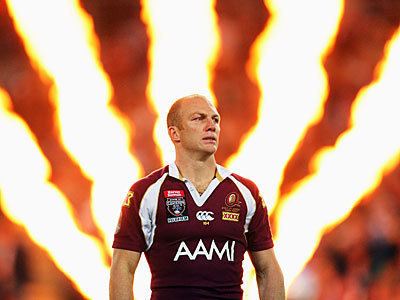
Some may be hoping desperately for a reprieve this year, because Queensland’s former captain, Darren Lockyer, retired at the end of the 2011 season. Generally acknowledged as the greatest rugby league player in history, he has set the record for most number of games played during his seventeen season career, and his list of achievements rolls on and on like the credits at the end of a movie, including a slab of stats that reduces everyone to a sort of silent awe.

Amongst his many well deserved honours include being named in the Queensland Team of the Century, a 2 metre tall bronze statue of his likeness at Suncorp Stadium in Brisbane, and part of the Warrego Highway being re-named Darren Lockyer Way.

As well as his feats of athleticism and natural talent, his inner strength and personal courage, he was also a model of good sportsmanship, a consummate professional, a successful leader, and a gentleman of the game. He is a champion, a king, and a legend of rugby league, who has left behind a legacy of which to be proud.

Lockyer is an English surname which can either refer to someone who was a locksmith by trade, or who was a lock-keeper on a river or canal (or possibly even someone who lived near a lock on a river or canal). It’s pronounced very much as it looks: LOCK-yehr.

According to Ancestry.com, it is a name originating in Dorset, and if you check the British census records, there do seem to be many Lockyer families in the West Country of England compared to the rest of the nation. Although Lockyer is a fairly common name in England and Australia, it appears to be quite rare in the United States.

Apart from Darren Lockyer, the name is well known in Queensland, because the Lockyer Valley is an area of rich farmland in the Brisbane region. It is named after Edmund Lockyer, who came to Australia in the early 19th century as captain of the 57th regiment (he was from Devon, so the West Country heritage theory is holding firm). One of his first tasks was to explore the Brisbane River area, which is why the valley bears his name.

I thought of adding the name Lockyer because I have already seen reports of parents choosing it for a baby name, and seen it on babies in birth announcements and baby contests. One man commented in a sports news forum that his neighbours had named their son Lockyer in honour of Darren Lockyer; his response was Why Lockyer for chrissake? What’s wrong with calling him Darren?

It’s pretty obvious – Darren is currently out of favour, in the low 400s and falling. Meanwhile, the enormous popularity of Lachlan has made similar-sounding names very usable. Australian babies named Loki, Loic and Link, although unusual, do not seem strange or out of place here.

Lockyer fits in perfectly with this trend, and seems like a name that would go down very well in Queensland, or anywhere which appreciates the greats of National Rugby League. The nickname Locky, shared with Darren Lockyer himself, almost makes it seem like a variant of Lachlan, which has the nicknames Lachie and Lockie.

← Older posts
Newer posts →

Enter your email address to follow this blog

Categories

Archives

Recent Comments

A.O.'s avatarwaltzingmorethanmati… on Zarah Zaynab and Wolfgang…
Madelyn's avatarMadelyn on Zarah Zaynab and Wolfgang…
JD's avatardrperegrine on Can Phoebe Complete This …
A.O.'s avatarwaltzingmorethanmati… on Rua and Rhoa
redrover23's avatarredrover23 on Rua and Rhoa

Blogroll

  • Appellation Mountain
  • Baby Name Pondering
  • Babynamelover's Blog
  • British Baby Names
  • Clare's Name News
  • For Real Baby Names
  • Geek Baby Names
  • Name Candy
  • Nameberry
  • Nancy's Baby Names
  • Ren's Baby Name Blog
  • Sancta Nomina
  • Swistle: Baby Names
  • The Art of Naming
  • The Baby Name Wizard
  • The Beauty of Names
  • Tulip By Any Name

RSS Feed

  • RSS - Posts

RSS Posts

  • Celebrity Baby News: Melanie Vallejo and Matt Kingston
  • Names from the TV Show “Cleverman”
  • Can Phoebe Complete This Sibset?
  • Zarah Zaynab and Wolfgang Winter
  • Baby, How Did You Get That Name?
  • Celebrity Baby News: Media Babies
  • Celebrity Baby News: Adelaide Crows Babies
  • Celebrity Baby News: Chris and Rebecca Judd
  • Names at Work: Name News From the World of Business and Employment
  • Celebrity Baby News: Sporting Round Up

Currently Popular

  • The Top 100 Names of the 1920s in New South Wales
  • Girls Names of Australian Aboriginal Origin
  • Rare Boys Names From the 1950s
  • Girls Names of Australian Aboriginal Origin – Part 2
  • The Top 100 Names of the 1940s in New South Wales

Tags

celebrity baby names celebrity sibsets english names famous namesakes fictional namesakes honouring locational names middle names name combinations name history name meaning name popularity name trends nicknames popular names saints names sibsets surname names twin sets unisex names

Blog at WordPress.com.

Privacy & Cookies: This site uses cookies. By continuing to use this website, you agree to their use.
To find out more, including how to control cookies, see here: Cookie Policy
  • Subscribe Subscribed
    • Waltzing More Than Matilda
    • Join 517 other subscribers
    • Already have a WordPress.com account? Log in now.
    • Waltzing More Than Matilda
    • Subscribe Subscribed
    • Sign up
    • Log in
    • Report this content
    • View site in Reader
    • Manage subscriptions
    • Collapse this bar
 

Loading Comments...