• About
  • Best Baby Names
  • Celebrity Baby Names
  • Celebrity Baby Names – Current
  • Celebrity Baby Names – Past
  • Featured Boys Names
  • Featured Girls Names
  • Featured Unisex Names
  • Links to Name Data
  • Waltzing on the Web

Waltzing More Than Matilda

~ Names with an Australian Bias of Democratic Temper

Waltzing More Than Matilda

Tag Archives: name history

Italian Names for Boys

17 Sunday Mar 2013

Posted by A.O. in Name Themes and Lists

≈ 15 Comments

Tags

Austrian name popularity, Belgian name popularity, birth notices, celebrity baby names, Chilean name popularity, Dutch name popularity, english names, ethnonyms, famous namesakes, fictional namesakes, French name popularity, germanic names, Greek names, Hungarian name popularity, Hungarian names, Italian name popularity, Italian names, Latin names, locational names, mythological names, name history, name meaning, name popularity, nicknames, Orlando Furioso, Portuguese names, Roman names, saints names, Scottish name popularity, Shakespearean names, Spanish name popularity, Spanish names, surname names, The Divine Comedy, theological names, tribal names, UK name popularity, unisex names, William Shakespeare

romeo_and_juliet_01Angelo

Angelo is the Italian form of the Latin name Angelus, meaning “angel”. The Angelus is a Christian devotion, which traditionally involves praying three times a day, accompanied by the the ringing of church bells. It was common during the Middle Ages, so the name can be seen as after the prayer as much as after the heavenly creature. Angels are mentioned in the Old Testament as spiritual beings who bring communications from God; the word angel is derived from the Greek for “messenger”. Angels play a much bigger role in the New Testament, where they make several important announcements, including the birth and resurrection of Christ. A famous Italian named Angelo was Father Angelo Secchi, a 19th century astronomer and one of the first scientists to state that the sun is a star. Cricket fans know the name well from Angelo Matthews, the Sri Lankan captain. The name is rarely used in Australia, where angel-type names for boys aren’t common – even though angels are traditionally masculine. However, singer Adele welcomed a baby boy last year, rumoured to be named Angelo, and this may be a help. The Italian and English pronunciation are very similar – AHN-jel-oh and AN-jel-oh.

Dante

Dante is a short form of Durante, the Italian form of the Latin name Durans, meaning “enduring”. Its most famous namesake is undoubtedly medieval Italian poet, Dante degli Alighieri, nearly always known by his first name only. His Divine Comedy is considered the greatest work of Italian literature, and in Italy he is known as il Poeto (“the Poet”), just as Shakespeare is called The Bard in England. He is famous for his adoration of Beatrice, a girl he knew only slightly and who died in her twenties; he plays an important role in the literature of “courtly love”. Dante is a name which seems to be gaining more use in recent years, perhaps because of the number of fictional characters named Dante on TV and in video games. I see this handsome name quite a bit in birth notices, and have met a number of small boys named Dante, from a variety of backgrounds. The Italian pronunciation is DAHN-tay, and this is commonly used in Australia, but I have heard it said DAN-tay as well.

Eduardo

Eduardo is the Italian form of the English name Edward. The name is used in Spanish and Portuguese-speaking countries as well, where it is much more popular than in Italy – it is a Top 100 name in Spain and Chile. Famous Italians include actor, playwright and screenwriter Eduardo De Filippo; songwriter Eduardo di Capua, who composed the famous song O Sole Mio; and quantum physicist and cyberneticist Eduardo Caianiello (all these Eduardos were from Naples). The name is pronounced ed-WARD-oh, with the ward part rhyming with hard rather than horde. Last year, Australian soccer player Vince Grella welcomed a son named Eduardo, and so far it’s the only celebrity baby boy’s name which has been rated as “perfect” by blog readers.

Lorenzo

Lorenzo is the Italian form of the Roman name Laurentius, which means “from Laurentum”; Laurentum was an ancient city in Italy, south of Rome, and its name probably comes from the laurel, or bay tree. Laurel wreaths were used by the Romans as a symbol of victory. The English form of the name is Laurence. One of the most famous Italian namesakes is Lorenzo de Medici, known as Lorenzo the Magnificent. A Florentine ruler during the Renaissance, he was famed for presiding over Florence’s Golden Age, and for being a great patron of the arts. Lorenzo’s grandson also bore his name; he is best known for being the ruler to whom Machiavelli dedicated his practical political handbook, The Prince. Lorenzo has been in the Top 5 in Italy for several years, and is currently #4; it’s also Top 100 in France. The Italian pronunciation is loh-REN-tso, and in English it’s pretty much the same except we say the final syllable -zo. Reality TV star Snooki, from Jersey Shore, welcomed a baby boy named Lorenzo last year. Possible nicknames include Enzo, Ren, Renzo and Zo.

Luca

Luca is the Italian equivalent of the name Luke, derived from the Greek name Loukas, meaning “from Lucania”. Lucania was an ancient district of southern Italy, and the name comes from the tribe of the Lucani who inhabited the area. One theory is that the tribe’s name comes from the Greek word for “wolf”; another that it means “sacred wood” in Latin. A famous Italian with this name is medieval sculptor Luca della Robbia; another is Fra Luca de Pacioli, a mathematician and Franciscan friar who worked with Leonardo da Vinci. You may also know the name from Luca Cordero di Montezemolo who is chairman of Ferrari. Luca is incredibly popular internationally: it is #12 in Italy, and also makes the Top 100 in the UK, Scotland, Austria, Belgium, the Netherlands and France. It has charted in Australia since the 1980s, and joined the Top 100 in the late 2000s; currently it is #79. You will sometimes see Luca described as a unisex name, and that’s because it is also the Hungarian form of Lucia, and is #10 for girls in Hungary. However, the two names are pronounced differently – the Italian boy’s name is said LOO-kah, while the Hungarian girl’s name is said LOO-tsah.

Massimo

Massimo is the Italian form of Maximus, a Roman family name derived from the Latin for “greatest”. There is a very old and noble Roman family named Massimo, and they claim to be descended from the Maximi family of ancient Rome, including the famous general Fabius Maximus. This cannot be proven, as the family history only goes back about a thousand years, but what’s on the record is impressive enough. Extremely rich and influential, great patrons of the arts, they have produced numerous cardinals, ambassadors, politicians and military leaders, and have married into some of the most important royal houses of Europe, so that the family now bears a princely title. Massimo is one of the most common Italian boy’s names I see in birth notices, with Massi the usual nickname. It is pronounced mahs-SEE-mo.

Orlando

Orlando is the Italian form of Roland, a Germanic name meaning “famous land” or perhaps “fame of his country”. According to history, Roland was a Frankish military commander in Charlemagne’s army, responsible for defending France against the Bretons; he died in a skirmish against the Basques after Charlemagne was defeated in a battle against Islamic forces. His death must have captured people’s imaginations, because while history says very little about Roland, legend says much. His life became an epic drama about a great nobleman of royal blood who dies in battle, defending his land and faith from Muslims. Just in case this seemed a bit tame, legend gave him a magic sword and threw in a giant, and the story was a massive medieval minstrel-sung hit all across western Europe. In Italy, he not only appears in Dante’s Divine Comedy, but starred in a whole line of epics as Orlando. The most famous of these is Orlando Furioso (it basically means Crazy Orlando) by Ludovico Ariosto. As the title suggests, Orlando goes doolally from unrequited love of a pagan princess and gallops around the world in a frenzy. There’s wizards and hippogriffs and sea monsters and a trip to the moon involved, and the story was hugely influential in European literature. We know this name well from actor Orlando Bloom, married to Miranda Kerr, and since their wedding I see this attractive name regularly in birth notices. The Italian pronunciation is or-LAHN-do, and the English or-LAND-oh.

Rocco

Saint Rocco is an Italian saint who was born a nobleman but came to Rome on a pilgrimage. Turning up while the city was suffering from a plague, he spent his time tending the sick. When he succumbed himself, he was banished from populated areas, but miraculously provided with water, and a dog who brought him food and licked his wounds, which cured him. Returning home, he was thrown into prison as a spy and died, refusing to reveal his noble identity. However, he was recognised by a cross-shaped birthmark, and canonised as a saint by popular acclaim. When the Black Death swept through Europe, it was said that this plague could be averted by praying to Saint Rocco, and when a town was apparently spared in this manner, his popularity went through the roof. Although his cult had begun in northern Italy, it soon spread across Europe; in France his name became Roch, in Spain Roque, and in England, Rock. You’d be forgiven for thinking Rocco had something to do with rocks, but it’s an ancient Germanic name meaning “rest”, and pronounced ROK-ko. Even though the Black Death isn’t such a worry any more, Saint Rocco is still popular as a healer of the sick and patron of dogs. Rocco has charted in Australia since the 1940s, hitting a peak in the 1960s at #193. Since the early 2000s, when Madonna welcomed her son Rocco, it has been climbing steeply and is currently #228. Expect to hear more of this cute yet macho name in the future.

Romeo

Romeo is the Italian form of the Latin name Romaeus, meaning “pilgrim to Rome”. When we hear the name Romeo, we think of the young and ardent lover from William Shakespeare’s Romeo and Juliet, whose pubescent romance goes so tragically wrong. Shakespeare’s plot wasn’t original – he based it on retellings of 16th century Italian romances, and in turn, these used the story of Pyramus and Thisbe from Roman mythology as inspiration. However, one of the Italian authors, Luigi Da Porto, fell for an enchanting young woman at a ball and she returned his feelings; things never got off the ground because their families were feuding. By the time he had the chance to write about Romeus and Giulietta in Verona, the object of his desire had been married off to someone else. His version of the story, including the principals’ names, proved enduring – perhaps because it had the personal touches of someone who has loved and lost. Romeo is such an ultra-romantic name that it’s used as an epithet for any male lover. David and Victoria Beckham welcomed their son Romeo in 2002, giving this name some star appeal as well. We say it RO-mee-oh, but we know the Italian pronunciation of ro-MAY-oh from the car manufacture, Alfa Romeo.

Valentino

Valentino is the Italian form of the Latin name name Valentinus, the saint of lovers, also called Valentine. It got an extra helping of Latin Loverboyishess from Italian actor Rudolph Valentino, a seductive sex symbol and star of the silent screen. He made women swoon, and men snipe at his annoying amount of attractiveness. The gals screamed with desire during his movies; the guys stormed out in disgust and threw hissy fits. We know the name well from Italian motorcycle racer and MotoGP World Champion, Valentino Rossi, giving this name quite a sporty image as well. I don’t know if it’s because of Rossi, but I do see the name Valentino quite often in birth notices, where it seems to be especially popular in the middle position.

POLL RESULT: People’s favourite names were Luca, Rocco, and Massimo, and their least favourite were Orlando, Valentino, and Eduardo.

(Picture shows scene from Baz Luhrman’s Romeo + Juliet)
Famous Name: Mason

14 Thursday Mar 2013

Posted by A.O. in Famous Names

≈ 4 Comments

Tags

english names, famous namesakes, name history, name meaning, name popularity, popular names, surname names

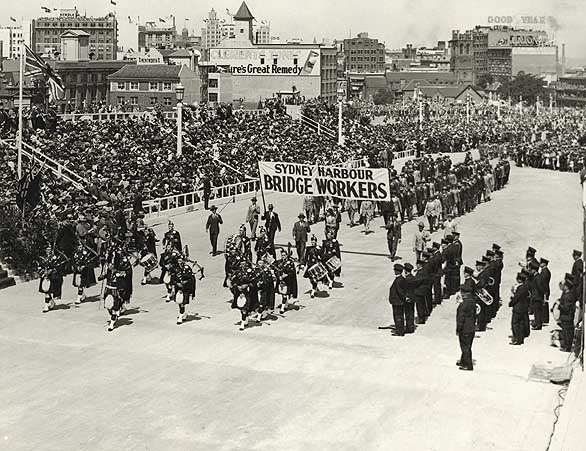
pngviewerOn March 19 this year, it will be the 81st anniversary of the opening of the Sydney Harbour Bridge. It’s an iconic symbol of Sydney, and of Australia itself; Sydneysiders refer to it with affection as “The Coathanger”, and more respectfully as “The Grand Old Lady”. The place where the bridge stands today is where Europeans first set foot on Australian soil, back in 1788.

There are many famous names connected with the bridge that I could cover, but when I think of its history, I see its true heroes as the workers who toiled long hours to build it, without any modern safety equipment, often risking their own lives in the process. So I dedicate this blog entry to the stonemasons who worked on the Sydney Harbour Bridge.

The bridge’s pylons are 89 metres high, made of concrete and faced with granite. While much of the steel for the bridge was imported from Britain, the materials for the pylons are all Australian, with most of the granite quarried from the seaside town of Moruya, 300 km south of Sydney. The pylons were designed by Thomas Tait of Scotland, and many of the stonemasons who worked in the quarry were from Scotland and Italy, as well as Australia.

There were perhaps 300 masons in all, who cut and dressed 40 000 stones for the pylons, with just two stonemasons facing them with granite. The stonemasons also built the Cenotaph in Martin Place, which commemorates all those who died during the Anzac campaign. You can read more about the building of the bridge and those who worked on it in this little booklet from The Pylon Lookout.

When the bridge was opened in 1932, the foreman stonemason, Jock McKay, proudly led 100 workers at the start of the Bridge Parade. We’ve already learned that it was the Stonemasons Association which first campaigned for an eight-hour working day, so this was another landmark day for them.

Mason is an English surname which is easy to understand, as it refers to the occupation of being a stonemason. It comes from the Old French word masson, introduced by the Normans; the word is derived from an ancient Germanic word meaning “cut, hew”. Mason is one of the oldest English surnames, being found from the early 12th century.

The trade of masonry is likewise one of the the most ancient, dating back to the Stone Age and the dim beginnings of civilisation. Indeed, when we think of the great works of civilisations, we tend to focus on their building projects, such as Egyptian pyramids, Greek temples or Roman aqueducts. During the Middle Ages, when the surname Mason first began to be used, masons were in demand for building castles and cathedrals, and they had a high status as skilled craftsmen.

I think from its earliest beginnings, stonemasonry had a spiritual or religious side, for the first large structures seem to nearly always be temples or other places of worship. It seems probable that the building of such temples would involve knowledge of spiritual symbols and motifs to be worked into their designs, and even the mathematics necessary to design such a temple may have seemed almost a magical art – it certainly required high intelligence, and greater knowledge than the average person.

The organisation of Freemasonry, or the Masons, seems to draw on myths that stonemasons were given secret knowledge that was handed down through the generations. These always seem to go back to the architect of King Solomon’s Temple of ancient Jerusalem, but includes Euclid, Pythagoras, Moses, the Essenes, and the Culdees, with Noah, the ancient Egyptians, the Knights Templar and the Druids thrown in for good measure. Even Jesus Christ is claimed as a Freemason, with his assertion of being the prophesied “cornerstone” a supposed indication.

These myths seem very far-fetched to me, but I can see how they might have an extremely tiny grain of truth to them, and they do add a bit of intrigue to stonemasonry and the name Mason.

Mason has been used as a first name for boys since at least the 16th century, and seems to have originated in East Anglia. It’s much more common in the United States than elsewhere, and that may partly be because of the distinguished Mason family of Virginia, which has played a prominent role in American history and politics. George Mason IV is considered one of the Founding Fathers of the United States, and an author of the Bill of Rights.

In Australia, although Martin Mason was one of our first pioneers, I tend to think of it as a rather sporty name, because of hockey player James Mason, cricketer Scott Mason, NRL star Willie Mason, and AFL player Mason Wood, from the North Melbourne Kangaroos.

Mason first charted here in the 1980s, debuting at #429 for the decade, and rose steadily to make the Top 100 by 2005. The year after Kourtney Kardashian welcomed her son Mason in 2009, Mason jumped 36 places in the charts, and rapidly ascended to #24 in New South Wales for 2012. (Although often connected with the Kardashians, Mason is quite the favourite amongst celebrity baby namers).

Name data for 2012 in so far shows Mason as one of the fastest rising names in Queensland, Western Australia and the Australian Capital Territory, and Top 20 in Queensland, Western Australia and Victoria.

Mason is a name which denotes physical strength applied skilfully, and even has quite a spiritual side to it. It would be a great name to honour a tradition of stonemasonry in your family history, or a tradition of skilled craftsmen. Although we think of it as quite a modern name, it has a very long history, and is far older than most surname names. It is rising in popularity, but mostly not soaring like a trendy name; more the solid progress of a name set to be a modern classic.

There is plenty to appreciate about the name Mason, but one thing you can’t hope to do is keep it to yourself.

POLL RESULT: Mason received an approval rating of 26%. People saw the name Mason as too trendy (23%), too popular (21%), too much of a celebrity baby name (10%), and rising too quickly in popularity (9%). However, 7% thought the name was strong and handsome.

(Photo of the bridge opening from State Records NSW)

Italian Names for Girls

10 Sunday Mar 2013

Posted by A.O. in Name Themes and Lists

≈ 4 Comments

Tags

Arthurian legends, Arthurian names, Austrian name popularity, Belgian name popularity, Biblical names, birth notices, celebrity baby names, compound names, English idioms, famous namesakes, fictional namesakes, food names, French names, Greek names, Harry Potter names, hebrew names, Italian name popularity, Italian names, J.K. Rowling, locational names, modern classics, mythological names, name history, name meaning, names from movies, names from songs, nicknames, Orlando Furioso, Percy Bysshe Shelley, popular names, Roman names, saints names, Shakespearean names, The Sleeping Beauty, William Shakespeare

William_Dyce_-_Francesca_da_Rimini_-_Google_Art_ProjectItalian-Australians are the largest ethnic group in Australia after those of British and Irish heritage, and about a million people identify as having Italian ancestry – around 5% of the population. The first Italian migrants arrived in the 19th century (Australia’s first police officer was an Italian), but immigration soared after World War II. They have made an incalculable contribution to Australia’s economy and culture, with noteworthy Italians in business, politics, sport, the arts and entertainment. It’s not that I can’t imagine Australia without an Italian history; it’s just that imagining such an Australia appals me.

This is a selection of Italian names for girls which I think are usable in Australia, whether you have Italian ancestry or not.

Alessandra

Alessandra is the feminine form of Alessandro, the Italian form of Alexander. Alessandra has been popular in Italy for many years, remaining in the Top 10 throughout the 1970s. It is still in the Top 100 today, and has only recently slipped off the Top 30. I see many instances of this name in birth notices, particularly in families with Italian surnames (although not exclusively). Not only is it the Italian form of the popular Alexandra, but is well known due to Brazilian supermodel Alessandra Ambrosio, who is of part-Italian descent. It is also an Australian celebrity baby name, since Casey Stoner and his wife Adriana welcomed their daughter Alessandra Maria last year. This pretty name is an Italian modern classic, and the Italian pronunciation is ahl-e-SAHN-dra, although I suspect many Australians would say it more like al-uh-SAN-dra. Nicknames abound, including Allie, Alessa, Alessia and Lissa, and it is one of the names tipped to rise in the wake of Hurricane Sandy.

Arianna

Arianna is the Italian form of the Greek name Ariadne, meaning “most holy, utterly pure”. In Greek mythology, Ariadne was a princess of Crete, the daughter of King Minos, and helped the hero Theseus escape from the Minotaur (Ariadne’s monstrous half-brother). The two of them escaped together, but Theseus abandoned her on the island of Naxos, where she married the god Dionysus. It seems likely that Ariadne was originally an ancient Cretan mother goddess, and some suggest that she was a goddess of weaving, thus perhaps a goddess who ruled fate. Arianna is currently #24 in Italy, and although there are a few famous Italians with this name, it’s probably best known as the name of Arianna Huffington, who co-founded The Huffington Post. The Italian pronunciation is ah-RYAHN-na, and the English is ah-ree-AH-nuh or ar-ee-AN-uh, which allows Ari as the obvious nickname.

Bianca

Bianca is the Italian equivalent of the French name Blanche, meaning “white, fair”. The name was used amongst the Italian nobility during the Middle Ages and the Renaissance; one example being Bianca Visconti, a 15th century Duchess of Milan who is a distant ancestor of both Diana, Princess of Wales and Princess Michael of Kent. There are two characters named Bianca in the plays of Shakespeare, in Othello and The Taming of the Shrew, but the name doesn’t seem to have been used in Britain until the 19th century, during the Victorian veneration of the Bard and his works. It does seem to have been attractive to families with Italian ancestry from early on. The name Bianca did not chart here until the 1960s, and was in the Top 100 by the 1980s. It peaked in the 1990s at #45, and fell until it left the Top 100 in 2009. In 2011 it rose again to make #103, only just outside the Top 100. Bianca is a modern classic in Australia which hasn’t been lower than the 100s since the 1960s, although it is rather dated in Italy. The Italian pronunciation is something like BYAHN-ka, but here we say it bee-AN-ka.

Chiara

Chiara is the original Italian form of the names Clara, Clare and Claire, meaning “clear, bright, famous”. Chiara Offreduccio was one of the followers of Saint Francisof Assisi, and founded the Order of Poor Ladies; she is the first woman known to have written a monastic Rule. She was a great encouragement and support to Saint Francis, and nursed him during his final illness. Today we know her as Saint Clare, and her order is affectionately known as The Poor Clares. This medieval saint has a very modern connection, because she is the patron of television. Chiara has been a Top 10 name in Italy for several years now, and is currently #6. It is also Top 100 in Austria and Belgium. Chiara is one of the most popular Italian names that I see in Australian birth notices, and it is known to us as the name of cyclist Cadel Evans’ Italian wife. We say this name kee-AH-ra, which isn’t exactly the Italian pronuciation, but not too far off it either.

Eliana

Eliana is the Italian form of the Roman name Aeliana, the feminine form of Aelianus. The name is from the Roman family name Aelius, derived from the Greek word helios, meaning “sun”. One of the Titans was named Helios, a handsome sun god who drove his chariot across the skies each day. There is a Saint Eliana, an early Roman martyr. Eliana can also be understood as a modern Hebrew name meaning “my God has answered”. This name is not on the Italian Top 30, but I have seen many examples of it in Australian birth notices, with a variety of spellings. The Italian pronunciation is eh-LYAH-na, but I think most Australians would prefer el-ee-AH-na, as it opens the name up to nicknames such as Ella, Elle or Ellie.

Francesca

Francesca is the feminine form of Francesco, the Italian original of the name Francis. One of the most famous people with this name is Francesca da Rimini, whose story features in Dante’s Divine Comedy. Francesca was married off to a brave but crippled man named Giovanni, and fell in love with his younger brother, Paolo. Although Paolo was married too, they managed to carry on an affair for about ten years. Her story reached a tragic conclusion when her husband killed both she and her lover after finding them together in her bedroom. In Dante’s poem, he meets she and Paolo in the second circle of Hell, where those who have committed sins of lust are punished; Dante faints in pity at her sad plight. Her story has been turned into numerous operas, plays and artworks. Francesca has been on the Australian charts since the 1940s, but has never reached the Top 100. It peaked in the 1960s at #241; currently it is #245 and climbing, so looks likely to overtake this high point fairly soon. The name has been popular in Italy for many years, and is currently #12. The Italian pronunciation of frahn-CHES-ka, and the English fran-CHES-ka are both used here; Frankie is fast becoming the fashionable nickname.

Ginevra

Ginevra is the Italian form of Guinevere, so you can consider it to be the Italian Jennifer as well. By coincidence, it is also the Italian name for the Swiss city of Geneva. The Arthurian legends were known in Italy, and on the cathedral of Modena in Italy, it shows King Arthur rescuing Guinevere from her abduction by the villain Maleagant. A 15th century Florentine noblewoman named Ginevra de’ Benci was painted by Leonardo da Vinci and there was an also a 17th century Italian painter named Ginevra Cantofoli. There are several Ginevras in fiction, including Princess Ginevra of Scotland in Orlando Furioso, the Ginevra who has a tragic wedding day in the poem by Shelley, and Ginevra “Ginny” Weasley from the Harry Potter books. Ginevra is #25 and rising in Italy, but this romantic name is not often used in Australia. The Italian pronunciation is something like jeh-NEEV-rah, while the English pronunciation is ji-NEHV-ruh; I think both sound usable, and allow nicknames such as Jenny, Ginny, Ginger, June, Neve and Evie.

Lia

Lia is the Italian form of the Hebrew name Leah, who in the Bible was one of Jacob’s two wives, or it can be used as a short form of names such as Rosalia or Aurelia. I’m not sure how popular this name is in Italy (it’s not in the Top 30), but there are quite a few Australians named Lia, including politician Lia Finocchiaro. Italian girls names don’t have to be elaborate or ornate; here is one as sweet and simple as you could desire, fitting in perfectly with short popular names like Mia and Ava. Although Lia does not chart in Australia, Leah is in the Top 100 and has been climbing since the 1990s.

Mietta

Mietta is the Italian form of the French name Miette, which literally means “bread crumb”, but is a term of endearment, like “sweet little morsel, sweet little thing” (compare with how you might call a little girl muffin in English). One of the fairies in The Sleeping Beauty ballet is named Miettes qui tombent, meaning “falling breadcrumbs”. It presumably began life as a nickname, but at some point was accepted as a full name, probably because it seemed like a pet form of names such as Marie. In Australia we best know the name from the chef Mietta O’Donnell, whose parents were Italian migrants and restaurateurs. Mietta and her partner opened the famous Mietta’s restaurant during the 1970s, a Melbourne institution for twenty years. Mietta O’Donnell was not just a contributor to Australian cuisine, she changed and defined Australian cuisine and raised the standard immeasurably, as well as teaching people about good food through her restaurant guides and cookbooks. Mietta was a charismatic and ardent supporter of the arts in her city; little wonder I see so many birth notices for little Miettas in Melbourne. In O’Donnell’s case, Mietta was a nickname; her real name was Maria. The Italian pronunciation of this name is MYEHT-ah, but most Australians would prefer mee-EH-tah. The popularity of Mia must surely have made Mietta more appealing.

Rosabella

Rosabella combines the names (or words) Rosa and Bella, and even if you don’t know much Italian, you can probably figure out what Rosabella means – “beautiful rose”. The two original words were used together in a medieval Italian poem by Leonardo Giustiniani, O Rosa Bella, which later became a popular English chant. A 1940s Italian love song featuring the name is Rosabella Del Molise; the song tells of a beautiful woman from southern Italy loved by a shepherd; he begs Rosabella to marry him, and plans a wedding to be speedily followed by a bambino. A piece of film trivia is that in the Italian version of Citizen Kane, the sled is called Rosabella instead of Rosebud. I get the feeling that in Italy this is a very old-fashioned name, and as it is also a variety of luncheon meat, may even appear comical. However, I have seen this name several times in recent Australian birth notices, along with Rosa-Bella, Rosabel and Rosebelle. Here it seems like a compound of popular Rose with popular Isabella; it’s slightly operatic, but does fit the trend for frilly girls names, and has simple nicknames like Rosie and Bella.

POLL RESULT: People’s favourite names were Eliana, Arianna, and Francesca, and their least favourite were Bianca, Rosabella, and Mietta.

(Picture shows Francesca da Rimini (1837), painted by William Dyce)

Famous Name: Griffin

06 Wednesday Mar 2013

Posted by A.O. in Famous Names

≈ 7 Comments

Tags

Anglo-Saxon names, animal names, english names, famous namesakes, honouring, Irish names, mythological names, name history, name meaning, nicknames, surname names, vocabulary names, Welsh names

520px-Heraldic_figures_-_Griffin.svgOn March 12 the city of Canberra, Australia’s capital, will celebrate one hundred years since its foundation in 1913. Special events are planned for the entire year, with the major festivities taking place on the long weekend preceding the actual date.

A baby called Allegra Bluebelle Sofo born this year was named in honour of Canberra’s centenary – the royal bluebell is the floral emblem of the Australian Capital Territory. Her story was featured in The Canberra Times, and as further inspiration for potential Canberran baby-namers, the paper went on to make more suggestions for names with a Canberra connection, which you can read about on Nancy’s Baby Names blog.

I couldn’t help noticing that all the suggestions were for girls names, which seemed very unfair, given that boys will make up about half of all the babies born in Canberra during 2013, and an obvious suggestion is staring them in the face.

In 1911, King O’Malley held an international competition to find a designer for the layout of the new city, which was won by Chicago architect Walter Burley Griffin. Walter produced the design in colloboration with his wife and business partner, the architect Marion Mahony Griffin. The Griffins moved to Australia to oversee the project, and fell in love with the Australian landscape, becoming enthusiastic bushwalkers with a keen interest in botany and conservation. The building of a city set in bushland seemed perfect for their idealistic vision inspired by the Garden City movement.

Unfortunately, World War I put a dent in everyone’s plans, and Walter Burley Griffin was treated shamefully by bureaucrats, who undermined him to further their own interests, eventually forcing him to resign. Many of his ideas were discarded or altered, but the basic plan of the central city is undeniably that drawn up by Walter Burley Griffin.

It wasn’t until the 1960s that the artificial lake he had envisioned was built in the heart of Canberra (not to his plans, it must be said), and in the first kind gesture Canberra had made toward its designer, Prime Minister Robert Menzies refused to have the lake named after himself, and insisted it be called Lake Burley Griffin. Australians had rather cluelessly misunderstood American naming conventions, and imagined that Burley must be part of Walter’s surname, rather than his middle name, so the lake doesn’t even have his correct name.

It’s never been rightfully re-named Lake Griffin, which would also have honoured co-designer Marion, but it’s the only monument that Walter Burley Griffin has in Australia. One was planned in the 1960s, and an American architect hired, but a change of government left it shelved indefinitely.

With so little appreciation during his lifetime (Walter died in 1937), why not name your son Griffin to honour the man and his wife who helped bring the city of Canberra into being?

The surname Griffin has several sources. It can be a Latinised form of the Welsh name Gruffud, which is also Anglicised as Griffith. There was also an Anglo-Saxon name Griffin, derived from High German grifan, meaning “snatch, grab”, and an allusion to dragons. The Irish surname is taken from the Gaelic name Grioghtha, meaning “griffin”.

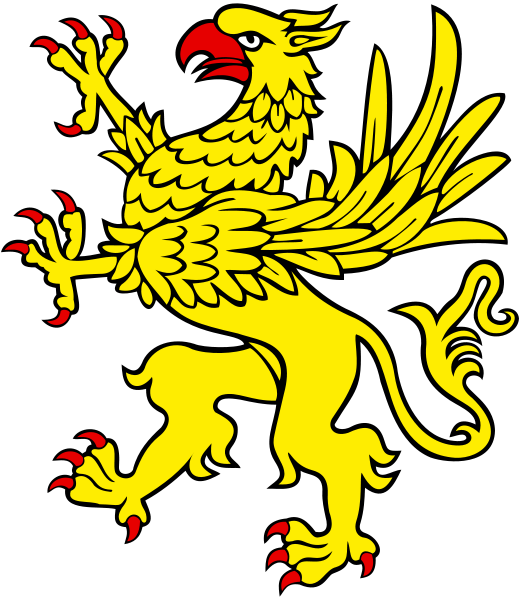
This legendary animal (also spelled gryphon or griffon) is a combination of an eagle and a lion, thus blending the king of the beasts with the king of the birds. How this combination was achieved was a matter to be decided by the artist, but by accepted convention the griffin has the body, tail and hindquarters of a lion, with the head, wings and talons of an eagle, and has prominent pointed ears. The word griffin is derived from the Greek for “hook”, possibly denoting the creature’s hooked beak or curved talons.

Griffins were prominent in the art and design of Ancient Greece, where they were seen as powerful protectors against evil. Greek writers described the griffin as native to mountainous areas of Asia, sacred to the sun, and a hoarder of gold. Other ancient legends tell of the griffin’s prodigious strength and intelligence, its hatred of horses, and wars against the Amazons. The griffin seems to be a symbol of good, of light, and of the masculine principle.

You will sometimes see griffins carved into old churches and cathedrals, because during the medieval era, the griffin was considered a symbol of Christ, who, like the griffin, has dominion over both the heavens and the earth. It was also thought that the winged cherubim mentioned in the Bible could have been griffins, as they are described as having the face of a lion and an eagle (although this ignores the fact cherubim also have the face of a man and an ox). It is possible that the legends of cherubim and griffins had the same source – the winged beasts of ancient Middle Eastern art.

Just to confuse things, the griffin was also associated with Satan, probably in the belief that anything so fierce must be up to no good (the hoarding of gold might have looked sinfully avaricious as well). This miserable idea doesn’t seem to have persisted, probably because it doesn’t make sense, since griffins were always noble, majestic, and on the side of good.

Griffins are a popular symbol in heraldry, with the first known person to have a griffin on his coat of arms being Richard de Redvers, the Earl of Exeter, in 1167 (the coat of arms was much older than that). A symbol of strength and vigilance, the griffin is said to be the perfect emblem for a hero in battle. For some reason, male griffins are always shown in heraldry without wings, but adorned with spikes denoting the sun’s rays. They are less common than winged female griffins. Canberra doesn’t have any griffins on its coat of arms, which I think would have been an appropriate choice.

Griffins are often found in fantasy literature, and the first one appears to be Lewis Carroll’s Alice’s Adventures in Wonderland. You may also read stories that involve griffins in the works of Frank Stockton, Diana Wynne Jones, Tamora Pierce, Neil Gaiman, Mercedes Lackey, Patricia A. McKillip and Rick Riordan. Readers of the Harry Potter series will remember that Harry’s house at school was Gryffindor. These fantasy novels had a noble forerunner, because the poet Dante sees Beatrice in a chariot drawn by a griffin in The Divine Comedy.

Griffin is a strong, handsome and very masculine name which can either be taken as Celtic or English. The legendary creature gives it many layers of mystical associations, nearly all of them extremely positive. You could use either Griff or Finn as nicknames.

POLL RESULT: Griffin received a worthy approval rating of 77%. People saw the name Griffin as strong and handsome (33%), cool (18%), noble and chivalrous (13%), and cute and brainy (13%). However, 9% thought the connection to mythological griffins made the name seen ridiculous – half as many as those who thought the mythological connection made the name cool.

(Picture shows a heraldic griffin)

Requested Famous Name: Naomi

27 Wednesday Feb 2013

Posted by A.O. in Famous Names, Requested Names

≈ 3 Comments

Tags

Biblical names, classic names, famous namesakes, hebrew names, Japanese names, name history, name meaning, name popularity, unisex names

85th Annual Academy Awards - Arrivals

Name in the News
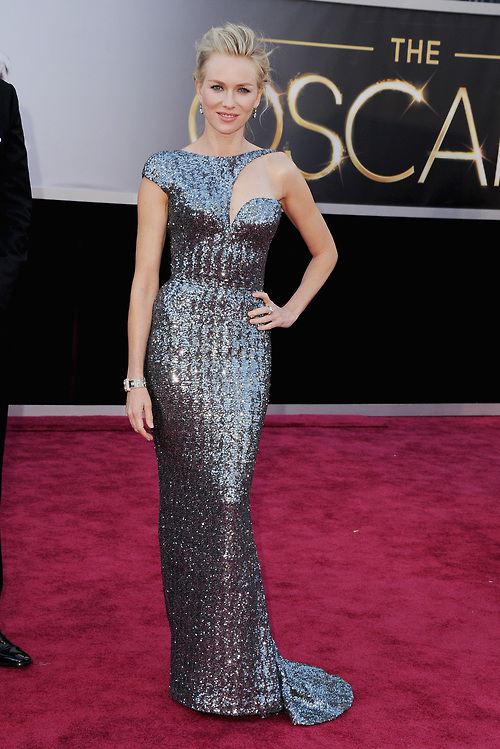
The 85th Academy Awards ceremony was held on February 24, and as with every year at this time, there was intense speculation in the Australian media as to whether any Australians would manage to win an Oscar.

One who was under consideration was actress Naomi Watts, who was born in England and came to Australia as a teenager, where she attended high school in Sydney (Nicole Kidman was one of her classmates). Her first acting jobs were in Australia, gaining experience in film and television. In the 1990s she moved to Los Angeles to continue her career; her big break came when she was chosen as the star of Mulholland Drive.

This year, she was nominated for the Academy Award for Best Actress, for her role of Maria Bennett in The Impossible. She lost to Jennifer Lawrence, but has won several other awards for the film, as well as being judged one of the best-dressed on the red carpet at the Oscars.

Name Information
Naomi is a Hebrew name interpreted as “pleasant, agreeable, sweet”. In the Old Testament, Naomi is a central character in The Book of Ruth, and despite the lovely meaning of her name, things went so wretchedly for her that she told others to call her Mara, meaning “bitterness”.

Because of a famine in Judea, Naomi and her family travelled to the land of Moab, where her husband and both her sons died, leaving her alone with her daughters-in-law Orpah and Ruth. Although her daughters-in-law were foreigners and pagans, they did not desert Naomi, and when she told them she was going back to her own people at Bethlehem, both girls offered to accompany her.

Naomi managed to convince Orpah that she should return to her family and her own customs, but Ruth famously says:

Entreat me not to leave thee, or to return from following after thee: for whither thou goest, I will go; and where thou lodgest, I will lodge: thy people shall be my people, and thy God my God: Where thou diest, will I die, and there will I be buried: the LORD do so to me, and more also, if ought but death part thee and me.

Naomi must have been a pretty wonderful mother-in-law to have evoked such love and loyalty. As mother-in-laws tend to get a bad rap, she really stands out as something special.

When Naomi returned to Bethlehem with Ruth (the famine was over by then), both of them were destitute, and poverty and misery had changed Naomi’s appearance so much that she was barely recognisable; no wonder that she felt she had been treated bitterly and deserved a bitter name.

However, she made lemonade from the lemons life had given her. She arranged for one of her husband’s relatives to marry Ruth, and after the happy couple had a child, she became the little boy’s nanny, caring for him as devotedly as if he had been her own son. I hope the rest of her life was as pleasant as her name.

Naomi is a Japanese name too, most frequently translated as “honest and beautiful” or “beautiful above all”. It is said differently to the Hebrew name, for while we generally pronounce Naomi as nay-OH-mee, the Japanese name is said something like NOW-mee. Although it is a unisex name, it seems to be much more common as a female name in Japan. You will often see Naomi suggested as a cross-cultural baby name for couples where one person is Japanese and the other from an English-speaking country.

Naomi is a classic girl’s name in Australia which has never left the charts. In rare use in the 1900s, it reached the Top 100 in the 1970s, and peaked in the 1980s at #67. It left the Top 100 in the early 2000s, and since then has been up and down the popularity charts in the 100s – most recently up, when it reached #152 in 2011.

As Naomi peaked in the 1970s and ’80s, it would be easy to dismiss it as a “mum” name. However, it never reached the Top 50, and is still in the 100s; it hasn’t been lower than the 100s since the 1950s. I think it manages to avoid being dated by never becoming highly popular, nor uncommon, so it seems very usable. I feel as if this name could belong to someone of almost any age group.

Despite being a familiar name, Naomi still seems slightly unusual, even exotic. It doesn’t sound like other Old Testament girls’ names which have reached the Top 100, like Deborah, Sarah, Rachel, Rebecca or Hannah. These seem solid and homely, perhaps to some ears, even stodgy. If you had never heard the name Naomi before, I wonder if you would guess it to be a name from the Bible? I might have picked it as Polynesian or Native American, if I didn’t know otherwise.

Naomi is a classic name with a distinctive sound and even a distinctive narrative, for the Old Testament Naomi has a Bible story quite unlike other Biblical heroines. I think this is a great choice of baby name for someone who wants something slightly different, yet not at all obscure.

Thank you to Brooke for suggesting Naomi as a featured name.

POLL RESULT
Naomi received an excellent approval rating of 84%, making it one of the best-liked names of the year. The name Naomi was seen as beautiful and distinctive (24%), still suitable as a baby name (17%), a good cross-cultural choice (15%), having an inspiring Bible story (15%), and a pretty classic (13%). However, 9% were put off by the fact that the name is “I moan” backwards. Nobody thought the Bible story of Naomi was depressing.

(Picture shows Naomi Watts at the 2013 Oscars)

Requested Name: Dimity

20 Wednesday Feb 2013

Posted by A.O. in Requested Names

≈ 10 Comments

Tags

english names, fabric names, famous namesakes, fictional namesakes, historical records, name history, name meaning, nicknames, rare names, Russian names, vocabulary names

il_fullxfull.248146234

Dimity is a type of corded fabric, which since the 18th century has been made with cotton. The name was applied to two different types of corded cotton – one a heavy material used for bedcovers and curtains, and the other a lightweight, sheer fabric, often white with gingham checks, used for women’s dresses, skirts, blouses and lingerie. People usually think of the second meaning when they talk about dimity. The word comes from the medieval Latin dimitum, derived from the Greek dimitos, meaning “double thread”.

There is a great daintiness and femininity to the fabric, but at the same time it is surprisingly tough because of its double weave. These days, dimity is often part of vintage fashion and considered a lovely “old-fashioned” textile.

Its image in the past was twofold. On the one hand, it was seen as very ladylike and respectable, so that in her diaries, the novelist Virginia Woolf used the word in the sense of “niminy-piminy”, to indicate an overly refined and fussy femininity. On the other, it had rather a saucy side, because in Victorian tableau vivants of an erotic nature, the women wore body stockings and were draped in see-through dimity to preserve their modesty.

Information on the history of Dimity as a girl’s name is rather thin, but it seems to be much more common in Britain and Australian than elsewhere, and to be a name from the 20th century. The earliest Dimity I could find in the records dates to World War I, with an apparent peak in the years after World War II, from the late 1940s to the early 1960s.

Although the name can be found in records from the United States, it’s a bit confusing, because there the name seems to have been used as a short form of the Russian name Dimitrya. I can’t even tell if the women were actually called Dimity in real life, or if this is used as a shorthand for Dimitrya by the people writing  the records. So although the English name Dimity might have a history of use in the US, it is not possible for me to be sure.

The whimsical and lightly tripping sound of the name Dimity has made it very suitable for fiction, with Australian children’s author Bob Graham penning Dimity Dumpty, about the sister of Humpty Dumpty, and American children’s author Jane Yolen writing of Dimity Duck, the friend of Frumity Frog.

Another American author, Nancy Atherton, has an entire series about an Aunt Dimity who manages to solve mysteries from beyond the grave. Interestingly, Ms Atherton’s novels are set in Britain rather than her homeland, and she also has to explain to her readers how to pronounce the name Dimity (DIM-uh-tee). This lends weight to the notion that the name Dimity is less familiar in the United States.

I get the impression that in times past, Dimity was seen as rather upper-class, and like Verity, had the image of being a Head Girl/Debating Team Captain/Pony Club Champion sort of a name. These days I think it seems much more accessible, with the number of successful women named Dimity in the public eye giving it greater exposure. I suspect that the popularity of the similar-sounding Trinity may also broaden its appeal.

Famous namesakes include news reporter Dimity Clancey, opera singer Dimity Shepherd, ballerina Dimity Azoury, violinist Dimity Hall, United Nations Women Australia board member Dimity Hodge, and speech pathologist Dr Dimity Dornan, who has been honoured for her lifetime working with deaf and hearing-impaired children. There seems to be many successful women called Dimity, considering that the name is apparently quite rare.

Dimity is a dainty, feminine name with a hint of whimsy, but not one to be underestimated. Like the fabric it is named after, there is a strength to delicate Dimity. Although it is an uncommon name, it isn’t unfamiliar in Australia, and has many high-achieving namesakes.

Thank you to Brooke for suggesting Dimity as a featured name.

POLL RESULT: Dimity received an approval rating of 69%. People saw it as poetic and whimsical (20%), delightful (19%), delicate but strong (15%) and dainty and demure (10%). However, its detractors thought it was too odd and eccentric (10%), or even “frightful” (8%). Nobody thought Dimity was a lower-class name.

(Picture is of a 1930s-style white dimity dress)

Waltzing with … Orange

17 Sunday Feb 2013

Posted by A.O. in Waltzing with ...

≈ 2 Comments

Tags

Banjo Paterson, Celtic names, colour names, Devon names, english names, famous namesakes, French names, fruit names, historical records, locational names, middle names, mythological names, name combinations, name history, name meaning, name trends, nature names, patriotic names, plant names, rare names, royal names, Sanskrit names, sibsets, surname names, tree names, unisex names, vocabulary names

Orange jacket Postcard autumn leavesToday is Banjo Paterson’s birthday, and as we have already covered his name, I thought it would be interesting to look at the name of his birthplace.

At the time of Paterson’s birth, his parents were living at Buckinbah Station, near the town of Yeoval (then known as Buckinbah). Because of the station’s isolation, Banjo’s mother Rose went to stay with her aunt and uncle, Rose and John Templer, at their homestead Narrambla, and it was here that she gave birth to her son. Narrambla is about 2 miles from the centre of Orange, and today lies on the city’s outskirts. Rose herself was born on a homestead near Orange, so it was rather a family tradition.

Orange is a city in the Central West region of New South Wales. It was founded in the early 1820s as a convict settlement, and farmers began settling in the area in 1829. The first discovery of gold in Australia was made in 1851 near Orange, leading to the gold rush. Orange became a trading centre for gold, and continued growing due to its good position for agriculture. It was declared a city in 1946. Orange is known for its fruit growing, especially apples, pears and stone fruits; ironically it is too cool to grow oranges in Orange. It is also a thriving wine making area, and has both gold and copper mining. It is a sister city to Orange in California.

Orange was first called Blackman’s Swamp, after John Blackman, the guide who brought the first explorers there. The name was changed to Orange by the Surveyor-General Sir Thomas Mitchell, in honour of William, Prince of Orange. Mitchell and the Prince had both been aides-de-camp to the Duke of Wellington during the Peninsular War in Spain in the early 19th century. The Prince of Orange later became the first King of the Netherlands.

The Prince’s title originally came from the Principality of Orange in the south of France. It began life as a settlement called Arausio, named after a local Celtic water god; the god’s name is said to mean “temple”, meaning the temples that are on the forehead, not a temple as in a building for worship.

The town’s name was corrupted into Orange, and by the Middle Ages, conflated with the word orange, which comes from the Sanskrit for “orange tree”, naranga. The colour was named after the fruit, and first used this way in the 16th century.

As a personal name, Orange has a longer history than you might imagine, for the girl’s names Orenge and Orengia are found in the 13th century. As this predates the name for the fruit, their etymology is extremely uncertain, and possibly has the same source as the French town, which first became a principality of the Holy Roman Empire in the 12th century.

The surname Orange is either from the place name, or derived from the female name, and when the English name Orange appears in the early 17th century, it may have been after the surname. The name first arises in Devon, and in the beginning was exclusively given to girls, although the name became unisex after William III of England, or William of Orange, gave it a masculine feel.

As a first name, Orange is extremely rare in Australian records, and given to only a few girls, but as a middle name is much more common, and given to boys in almost equal numbers as girls (the middle name Orange was sometimes combined with William in the case of boys, showing that William of Orange still had some naming clout).

Colour names for girls are popular at the moment, with many little girls named Scarlet or Jade; tree names such as Olive and Willow are in the girls’ Top 100, surnames such as Marlowe and Quinn are fashionable for girls, and it’s not unusual to see baby girls named after European cities, such as London or Vienna. Orange seems a more vibrant continuation of these trends. Indeed, you could see it as a hyper juiced-up Clementine.

Orange is such a bright, outgoing, fun colour that it seems very cheerful as a person’s name, but it also has a more serious side, because orange is connected to religion and spirituality. There’s a real yin/yang, East/West dichotomy with the name Orange. Is it as crazy as a clown’s wig? Or as serene as a meditating Buddhist monk?

Orange fruit gains its colour from carotenes, the same thing which makes deciduous leaves turn orange. By chance, the city of Orange is known for its spectacular displays of autumn leaves, and it is therefore known as “The Colour City” (also a play on its name). You might see Orange as a name that evokes the changing of the seasons, and the turn of the year.

Although Orange started life as a girl’s name, it did become unisex, and is so rare that it could be worn by either boys or girls. If you are shy about using this vivid name, it would make an eye-catching middle.

Orange is a bold choice as a baby name, though not without shades of subtlety, and it celebrates Australian geography and history. I think Orange is one of the more distinctive of the patriotic names, and has a real tang to it.

Name Combinations for Orange

Orange Beatrice, Orange Eliza, Orange Lily, Orange May, Orange Ruby, Orange Victoria

Brothers for Orange

Eden, Hartley, Fitzroy, Paterson, Sunny, Tennyson

Sisters for Orange

Audley, Breeza, Corindi, Junee, Kendall, Marinna

Note: Name combinations from historical documents; just for fun, sibsets include names of other towns in New South Wales

POLL RESULT: Orange received an approval rating of only 27% – the lowest-rated featured name of 2013, and the only one to score less than 50%. 40% of people hated the name Orange, and nobody loved it.

(Picture shows a postcard from the city of Orange)

Requested Famous Name: Banjo

14 Thursday Feb 2013

Posted by A.O. in Famous Names, Requested Names

≈ 10 Comments

Tags

aliases, Australian Aboriginal names, Australian names, Australian slang terms, english names, famous namesakes, historical records, musical instruments, name history, name meaning, names of horses, nicknames, patriotic names, pen names, pseudonyms, vocabulary names

146168-banjp-paterson-grapphicOn Sunday February 17 this year it will be the 149th birthday of Andrew Barton Paterson, affectionately known as “Banjo” Paterson. To celebrate, The Orange and District Historical Society will be throwing him a birthday party, with a car rally, picnic lunch in Banjo Paterson Park, poetry readings, stories of Banjo’s life, and walk around the historic property where he was born.

Because this is a name blog, I feel obliged to explain that Paterson was named Andrew after his Scottish-born father, and his middle name Barton was a family name from his mother’s side; he was related to Edmund Barton, who would later become Australia’s first prime minister. Because he and his dad had the same name, Paterson went by his middle name, and was always known as Barty to his friends and family.

Paterson lived with his grandmother while he was attending the prestigious Sydney Grammar School, and she encouraged in him a love of poetry. He was 21 when he first began submitting poems to The Bulletin, under the pseudonym of “The Banjo” (sometimes shortened to a simple “B”). Full of fierce nationalism and a desire for a fairer society, he had some aspirations to write fiery polemic, and had even written a political pamphlet. However, The Bulletin had other ideas.

In the late 19th century, there was a movement towards the British colonies of Australia becoming one country, a feeling that Australia should be a united nation, and Australians a united people. In the effort to provide Australia with a unifying mythology that would instil nationalistic pride, it seemed that the Australian bush and outback would be the symbol to draw everyone together.

The Bulletin suggested that Banjo Paterson try his hand at bush poetry in line with its nationalist editorial policy. Banjo had been born in the Central West, but spent most of his childhood and youth growing up on the family property near Yass, north of Canberra. It was here he learned to ride, and watched the horsemen from the Murrumbidgee River and Snowy Mountains country play polo and take part in picnic races. He gained a great love of horses, and an admiration for horsemanship.

When he wrote The Man from Snowy River, it was a poem of reckless horse-riding heroism which immediately captured the nation’s imagination, and which still has our heart. It made his name, and his first poetry collection, under the title The Man from Snowy River, is the most-sold collection of Australian bush poetry ever, and is still reprinted today. During his lifetime, Banjo Paterson was second only to Rudyard Kipling in popularity among living poets writing in English.

Banjo Paterson was a colleague and friend of Henry Lawson, but had a very different way of seeing the bush. In Banjo Paterson poems, the bush is a place of adventure, romance and beauty, populated by heroes who live in freedom amongst the gum trees, honest freckle-faced youths, and characters with funny names and odd yarns about them.

Australia is the Outback, and pioneers, and songs around the campfire under the starry sky, and swagmen camped by billabongs. It’s a country of warmth and humour, and although it never quite existed, like all good mythology it lives in our hearts and minds. Banjo Paterson gave us a dream of Australia – one from which we have never truly awakened.

When it comes to names from history, often times there is a tinge of tragedy to them; some sadness attached to the real person who bore them, or even a whiff of scandal. There is no darkness to the name Banjo – Paterson was a decent, highly intelligent man who cared very much about the less fortunate, but he was essentially a happy person who was popular and sociable, and liked sport and the outdoors.

He wore his fame easily, remained modest about his talents, and never had any scandal attached to him. He was able to fulfil many of his dreams, and those that were denied him didn’t set him back. He enjoyed the ordinary love of friends and family, as well as the extraordinary love and devotion given to him by his nation. He is the model of what we hope for and expect from our celebrities.

The equine-loving Paterson took his pen name name of The Banjo from that of a horse owned by his family. This always seems to be described as “a favourite horse”, or even “his favourite horse”, but I cannot find any original source for this. Paterson himself simply describes it, no doubt with affection, as a “so-called racehorse“.

The origin of the horse’s name is apparently lost to history, but the word banjo has a history as a slang word in Australia. Slang dictionaries suggest as possible meanings “frying pan”, and “shoulder of mutton”. Another meaning was “shovel used for mining”, which during World War I, became used for any military entrenching tool – in other words, there are some correlations between the slang terms banjo and digger!

A banjo is military slang for a bacon and egg roll, because the motion of constantly dealing with crumbs while eating is reminiscent of someone playing the banjo. And Banjo Paterson himself has added another slang term – a banjo is a $10 note, because Paterson’s picture is on it, along with the words to The Man from Snowy River (Henry Lawson was on the old $10 note).

The banjo is the descendant of musical instruments brought to Colonial America by African slaves, and long seen as a staple of country music, the music of the poor and downtrodden (the kind of people that Banjo Paterson cared about). It is not known where the word banjo comes from, but the most likely source is West Africa, where it may be the same word they used for bamboo.

There are quite a few men named Banjo in Australian records, with the name most common as a nickname or alias. Many must have been named in honour of the poet, with some families named Paterson apparently finding it hard to resist having their own “Banjo Paterson”. The name isn’t unusual in Aboriginal communities, where it is given as a nickname.

The name Banjo gained fresh impetus when actress Rachel Griffiths named her son Banjo Patrick in 2003; since then the name has received more use, with 12 baby boys named Banjo last year in Victoria alone.

Banjo is an uniquely Australian name; one which seems strange in other countries, yet cosy and familiar in our own. It’s patriotic and honours one of our most beloved national poets. It’s cute, cool, and has a very Aussie nickname too – Joey.

Thank you to Brooke for suggesting Banjo as a featured name.

POLL RESULT: Banjo received an approval rating of 86%, making it one of the most highly esteemed names of the year. It was seen as uniquely Australian and patriotic (36%), cool and different (30%), and cute and spunky (20%). The remaining 14% of people thought it was over the top, weird, or ridiculous.

(Picture shows Banjo Paterson with the score to Waltzing Matilda)

Underused Names for Boys

10 Sunday Feb 2013

Posted by A.O. in Name Themes and Lists

≈ 14 Comments

Tags

Anglo-Saxon names, Arthurian legends, Arthurian names, band names, Biblical names, British names, celebrity baby names, Celtic names, Cornish names, english names, famous namesakes, fictional namesakes, French names, German names, Gothic names, Greek names, hebrew names, Jakob Grimm, Latin names, locational names, mythological names, name history, name meaning, nicknames, Old English names, Old French names, Roman names, royal names, Sabine names, saints names, Scottish names, Shakespearean names, Sir Walter Scott, surname names, unisex names, William Shakespeare

Time-For-Bed-Said-ZebedeeThis follows on from last week’s Underused Names for Girls; to briefly recap, they are names which aren’t common here (used less than six times in the 2012 Victorian data, have never charted in Australia), but still have a history of use in Australia (can be found in historical records).

Alaric

Alaric is from the Gothic name Alareiks, meaning “ruler over all”. Alaric I was the king of the Visigoths who sacked Rome in 410, and his great-grandson, Alaric II, was ruler of the Visigothic kingdom, covering most of Spain and the south of France. Another Alaric was a legendary king of Sweden, skilled in battle and sport, and a masterful horseman. He had a brother Eric, and for some unknown reason, the pair of them killed each other with their horses’ bridles, which seems an awfully strange choice of weapon. The name Alaric is far commoner in fiction than in real life, where it tends to be either chosen for comedies, in the belief that the name Alaric sounds amusingly high-faluting, or science-fiction/fantasy, in the belief that it sounds geekily exotic. In the TV series, The Vampire Diaries, there is a character named Alaric; he says his name uh-LAHR-ik, although most sources say the name is pronounced AL-uh-rik. Powerful and commanding, this is unusual, but sounds similar to familiar names like Alan and Eric.

Blaise

In Arthurian legend, Blaise was the priest who baptised the wizard Merlin, became his tutor and friend, then took the trouble to write down all Merlin’s deeds for posterity. There is a Saint Blaise, who is a saint of healing, as he cures sore throats (the saint was a doctor as well as a bishop). He seems to have been quite popular in England, perhaps because his feast day of February 3 is right after the Celtic festival of Imbolc and the Christian feast of Candlemas, and often marked by bonfires. Blaise sounds like the word blaze, so a pleasing coincidence for fire-lovers. The most famous namesake is Blaise Pascal, the French theologian and philosopher. The meaning could be from either Latin or Greek. If Latin, it means “stuttering, lisping”; if Greek it means “bow-legged”, so either way it’s not flattering. Saint Blaise was Greek, but the Blaise of Arthurian legend is probably meant to be Roman or Romanised, so you can take your pick. It’s a name loved for its sound, namesakes and associations rather than its meaning.

Corin

Corin is a French surname derived from Quirinus; Saint Quirinus was part of a Roman missionary group sent to convert Gaul, and legend has attached to this popular saint all the standard saintly stories, such as killing a dragon and going for a stroll after getting his head chopped off. The original Quirinus was an early Roman god, probably a Sabine war deity. The Sabines had an altar to Quirinus on the Quirinal Hill, one of the Seven Hills of Rome. The Romans considered him to be a deified Romulus, and in the early days he was a major god, although they gradually lost interest in worshipping him. However, even after the fall of Rome, the Quirinal Hill remained a place of power, so that it was chosen as the seat of royalty, and later the residence of the Presidents of the Italian Republic. The name is linked to the name of the Sabine town Cures, and may come from the Sabine word for “spear”. There is a shepherd named Corin in Shakespeare’s As You Like It, and a Prince Corin in C.S. Lewis’ The Horse and His Boy. You can also see this name from another perspective, for in British legend, Corineus was a great warrior and giant-killer who founded Cornwall; his name may be an echo of Cernunnos, the Celtic god, whose name is usually translated as “horn”, or “horned one”. There are several place names in Cornwall apparently derived from Cernunnos (including Cornwall itself), and the name Corin enjoyed early popularity in Cornwall and Devon – so you can see this as a British name just as much as a French one. This packs a double mythological punch, and doesn’t seem much different than names such as Corey or Colin.

Edgar

Edgar is an Old English name meaning “rich spear”. Saint Edgar the Peaceful was a king of England; a Scottish King Edgar was a son of Saint Margaret. The name became rare after the Norman Conquest, but had a revival in the 19th century, after Sir Walter Scott’s historical novel, The Bride of Lammermoor, told the story of tragic lovers Lucy and Edgar – a tale which ends in madness, murder and quicksand. Edgar is also a character in William Shakespeare’s King Lear; disinherited by his father, he wanders the heath disguised as a babbling madman. Noble and clever, he is also enigmatic with a touch of darkness; he enjoys playing the crazy beggar just a little too much. The most famous person named Edgar is probably the American writer, Edgar Allen Poe, said to have been named after Shakespeare’s character. Poe’s works are also quite dark and enigmatic, dealing with topics such as grief, guilt, mystery, murder, madness, doom, death, drugs, and being buried alive. Edgar is related to the other Ed- names, such as Edward and Edwin, but seems more vintage, a bit edgier, and a touch more Gothic. This name might be uncommon, but it’s also traditional and comes with all the usual Ed and Eddie nicknames.

Giles

This is based on the Latin name Aegidius, derived from the Greek for “young goat”. Aegidius was a 7th century hermit from Athens who lived in the south of France with a tame deer; in Old French his name became Gidie, then Gide, and finally Gilles; when the Normans took his name to Britain, it became Giles. A noted miracle worker, Saint Giles was very popular in the Middle Ages, and his name became common; it was also given quietly but steadily to girls (even into the 20th century). Although we often think of Giles as a terribly “English” name, Saint Giles is the patron saint of Edinburgh, and the name Giles is traditional in Scotland; many Gileses in Australian records have Scottish surnames. The English haven’t done this name many favours, as it’s a favourite in English books and TV shows for good-natured upper class twits. However, this doesn’t reflect the reality of the name, or the Australian experience of it, and I think it’s possible to see Giles in quite a different light. I can see Giles as a solid country-style name, a brother to Archie and Will, or slightly hipster, a brother to Hugo and Barnaby. If you crossed Gus with Miles, you might end up with something that looks a little like Giles …

Huxley

Huxley is an English surname. The Huxley family were Normans who came to Britain after the Conquest and settled in Cheshire, taking their name from a village near Chester, which was originally named Holdesieia, and corrupted into Huxley. The original name may be from the Anglo-Saxon for “sloping land”, and Huxley is believed to mean’s “Hucc’s wood”, with Hucc being an Anglo-Saxon nickname meaning “insult, taunt”. Huxley has been used as a personal name since the 18th century, and early examples are from the Cheshire area, suggesting they may have been named directly after the village. The Huxley family have produced an astonishing number of brilliant thinkers, from the biologist T.H. Huxley, supporter of Charles Darwin, to the author Aldous Huxley, who wrote Brave New World. T.H. Huxley came to Australia as a young man, and did such excellent work in natural history that he was made an immediate Fellow of the Royal Society on his return (Mount Huxley in Tasmania is named in his honour). T.H. Huxley’s distant cousin, Sir Leonard Huxley, migrated to Australia in childhood, and became one of our most distinguished physicists. With its fashionable X and intellectual pedigree, this name seems very hip, and comes with the nicknames Huck or Hux.

Jethro

Jethro is translated as “excellence, abundance” in Hebrew, and in the Old Testament, Jethro is the father-in-law of Moses, and a priest (it is never made clear in what religion he was a priest, but by the end he accepted Yahweh as his God). Jethro is revered as a prophet in Islam, and is held in the highest regard by the Druzes. The most famous person with this name is Jethro Tull, an English agricultural pioneer who helped bring about the British Agricultural Revolution which formed the basis of modern farming practices. The rock band Jethro Tull is named after him. You may also remember the dull-witted Jethro Bodine from The Beverly Hillbillies. Jethro is a little bit hick and a whole lot hip – it’s hickster.

Rufus

Rufus started life as a Roman nickname, but afterwards became a family name; it’s from the Latin for “red haired”. There are many famous men with the surname Rufus, including the Stoic philosopher Gaius Musonius Rufus. His views on philosophy were moderate and practical, encouraging all men and women to follow a philosophical life, and giving advice on all manner of topics, including diet (vegetarian, raw) and hairstyles (long, beardy). He was so highly-regarded that when all other philosophers were expelled from Rome by the Emperor Vespasian, Rufus was allowed to stay. There are at least ten saints named Rufus, one of whom is mentioned in the New Testament as a disciple of St. Paul; his father was the man who carried the cross for Jesus on the way to Calvary. There is also the Gaelic saint Mael Ruba, whose name is Anglicised as either Maree or Rufus. King William II of England was nicknamed “Rufus” for his ruddy complexion. Famous people named Rufus include the Canadian-American singer Rufus Wainwright, and the British actor Rufus Sewell; Roger Taylor from Queen has a son named Rufus Tiger. With names ending in -us becoming fashionable, Rufus looks set to become the new Atticus.

Wolfgang

Wolfgang is a German name meaning “wolf path, wolf journey”, and interpreted by folklorist Jakob Grimm as being the name of a hero who follows in the wake of the “wolf of victory”. It has two heavy-duty namesakes: composer Wolfgang Amadeus Mozart, and writer Johann Wolfgang von Goethe; there is also a Saint Wolfgang, one of the patrons of Germany. Eddie Van Halen chose this name for his son. Nearly all Wolfgangs in Australian records have German surnames, and although this would make a striking heritage choice, it could work even if you don’t have a scrap of German ancestry. Wolfgang is one of those names that people seem to either love or loathe, so it attracts some extreme reactions. The usual nicknames are Wolf or Wolfie.

Zebedee

In the New Testament, Zebedee was a fisherman, and the father of the Apostles John and James. He is mentioned as being left behind in the boat when Jesus called the brothers to “become fishers of men”; we never learn whether he was supportive of his sons’ career change, or thought they should have remained fishers of fish. Zebedee’s wife was one of the women present at the crucifixion. The name Zebedee is the Greek form of the Hebrew name Zebadiah, meaning “Yahweh has bestowed”, and nearly always interpreted as “gift of God”. There is an English painter named Zebedee Jones and an English newsreader named Zebedee Soanes; both these Zebedees were born in the 1970s, when the cult children’s show, The Magic Roundabout, was first on television. In the show, Zebedee was a jack-in-the-box who is popularly recalled as ended the show by bouncing down out of nowhere and intoning, “Time for bed, children” (although I’m not sure how often this occurred). With Old Testament names for boys becoming a bit old hat, it could be time to consider some of the more unusual New Testament names. This one is full of zest, and the nickname Zeb is as cowboy cool as Zeke and Jed.

POLL RESULT: People’s favourite names were Huxley, Alaric, and Corin, and their least favourite were Wolfgang, Zebedee, and Giles.

(Picture shows Zebedee from The Magic Roundabout)

Famous Name: Miriam

06 Wednesday Feb 2013

Posted by A.O. in Famous Names

≈ 10 Comments

Tags

Ancient Egyptian names, Biblical names, classic names, famous namesakes, hebrew names, mythological names, name history, name meaning, name popularity, names in songs, nicknames, underused classics

4485672-3x2-940x627On Australia Day this year, more than 17 000 people from 145 countries took the pledge and became Australian citizens. Prime Minister Julia Gillard, presiding over a ceremony in Canberra, told the crowd that the first citizenship ceremony was in 1949, and since then more than 4 million people had sworn loyalty to Australia. In fact, Ms Gillard was one of them – she was born in Wales and moved to South Australia as a child.

Amongst the 17 000-odd people becoming Australian citizens was British-born actress, Miriam Margolyes. Miriam has long been a mainstay in film, television and theatre, delighting audiences in such favourites as Blackadder, Little Dorrit, Babe, the Harry Potter films (she played Professor Sprout), and Wicked. A massive Charles Dickens tragic, Miriam has taken her one-woman show, Dickens’ Women, all over the world.

Miriam apparently got a bit of a crush on Australia when she was only a child, and kept on meeting wonderful Australian people, until at last, in 1968, she met her Australian partner Heather, which cemented the deal for good and all. She bought a house in the southern highlands of New South Wales around the time she was in Babe, and for many years now has been based in Australia.

Miriam promised that she hasn’t become Australian just for the beach and barbies, she wants to make a contribution to Australian society. Although she loves her country, she plans to use her democratic right to protest and speak out against things that need to change, and also wants to learn more about disadvantaged Australians. In other words, she will be a fantastic Aussie citizen.

Miriam is the original name on which the familiar Mary is based. In the Old Testament, Miriam is the older sister of Moses, and it is she who came up with the clever plan to save her baby brother’s life. Because Pharoah had decreed that newborn Hebrew boys were to be killed, she took Moses and hid him by the side of a river. She secretly watched as Pharoah’s daughter found and adopted him, then suggested that the princess use Miriam’s mother as a wet nurse, so that Moses was cared for in his infancy by his own family.

The Old Testament depicts Miriam as a strong, outspoken woman, and a leader amongst the Hebrews. One of the oldest parts of the Bible tells how she led the women in triumphant song and dance after the crossing of the Red Sea, the female chorus echoing the men, who were led by Moses. She was a prophetess, with the Bible implying that God spoke to her through dreams; the Bible speaks of the prophets Moses, Aaron and Miriam as if all three of them played vital roles in the Hebrews’ escape from Egypt.

According to Jewish tradition, the Hebrews were blessed by a well which followed them through the desert due to Miriam’s righteousness. When she died and was buried (in present-day Syria), God caused a spring of abundant fresh water to open up for the people. The spring was called Meribah, which means “quarrelling”, as everyone was grumpy from thirst. This story is very similar to another where the Hebrews were suffering from severe water shortage, only to find a well filled with bitter water. Moses turned the brackish water sweet with a particular tree, but the well was still called Marah – “bitterness”.

These two stories probably help to explain two suggested Hebrew etymologies for the name Miriam – “rebellious”, and “bitterness”. These are generally thought to be unpleasant meanings for a girl’s name, but as you can see, the stories were positive ones, although they don’t actually have anything to do with Miriam. In fact, it’s unlikely that Miriam’s name was Hebrew at all – she was born and raised in Egypt, and it is believed that both her brothers’ names were of Egyptian origin.

Miriam may be derived from the Ancient Egyptian word for “love” or “beloved”, or it could be a form of the Ancient Egyptian name Meritamen which means “beloved of Amun” – Amun was the chief god of the Ancient Egyptians, and his name means “hidden”. For this reason you will sometimes see Miriam and Mary translated as “beloved by God”, even though it doesn’t mean the God of the Abrahamic religions.

Miriam has never disappeared from the charts, but never been in the Top 100. It was #133 in the 1900s, which is the highest point it ever reached; its current rank of #458 is the lowest it has ever reached. After climbing steeply in 2009, the name Miriam fell dramatically in 2011 – although in real terms, that equates to just ten fewer babies called Miriam than there were in 2009.

I think the name Miriam has much to recommend it. It’s an underused classic, which means it’s familiar to everyone, yet rarely encountered. It is feminine, strong, sounds quite intellectual, and suits any age. In Jewish tradition Miriam was associated with water, and I do think Miriam has a liquid feel to it – cool and deep. It has a range of possible nicknames, including Mim, Mimi, Mima, Minnie, Mirri, Mirra, Mira, Mia, Mitzi and Remi.

Even a murderous Norah Jones sang that Miriam was “such a pretty name“. When your most vengeful enemy admits you’ve got a nice name, that takes some beating.

POLL RESULT: Miriam received an astounding 91% approval rating, making it one of the highest-rated names of the year. Miriam was praised for being strong and intelligent (45%), pretty and feminine (23%), having great nickname options (15%), and a desirable level of popularity (8%). However, 8% thought the name was too old-fashioned. Nobody thought that the name Miriam was “too Jewish”.

(Photo shows Miriam Margolyes receiving her citizenship certificate from Prime Minister Gillard)

← Older posts
Newer posts →

Enter your email address to follow this blog

Categories

Archives

Recent Comments

A.O.'s avatarwaltzingmorethanmati… on Zarah Zaynab and Wolfgang…
Madelyn's avatarMadelyn on Zarah Zaynab and Wolfgang…
JD's avatardrperegrine on Can Phoebe Complete This …
A.O.'s avatarwaltzingmorethanmati… on Rua and Rhoa
redrover23's avatarredrover23 on Rua and Rhoa

Blogroll

  • Appellation Mountain
  • Baby Name Pondering
  • Babynamelover's Blog
  • British Baby Names
  • Clare's Name News
  • For Real Baby Names
  • Geek Baby Names
  • Name Candy
  • Nameberry
  • Nancy's Baby Names
  • Ren's Baby Name Blog
  • Sancta Nomina
  • Swistle: Baby Names
  • The Art of Naming
  • The Baby Name Wizard
  • The Beauty of Names
  • Tulip By Any Name

RSS Feed

  • RSS - Posts

RSS Posts

  • Celebrity Baby News: Melanie Vallejo and Matt Kingston
  • Names from the TV Show “Cleverman”
  • Can Phoebe Complete This Sibset?
  • Zarah Zaynab and Wolfgang Winter
  • Baby, How Did You Get That Name?
  • Celebrity Baby News: Media Babies
  • Celebrity Baby News: Adelaide Crows Babies
  • Celebrity Baby News: Chris and Rebecca Judd
  • Names at Work: Name News From the World of Business and Employment
  • Celebrity Baby News: Sporting Round Up

Currently Popular

  • Celebrity Baby News: Toby Allen and Darren Weller
  • Girls Names of Australian Aboriginal Origin
  • The Top 100 Names of the 1930s in New South Wales
  • Girls Names From Native Australian Flowers
  • Rare Boys Names From the 1950s

Tags

celebrity baby names celebrity sibsets english names famous namesakes fictional namesakes honouring locational names middle names name combinations name history name meaning name popularity name trends nicknames popular names saints names sibsets surname names twin sets unisex names

Create a free website or blog at WordPress.com.

Privacy & Cookies: This site uses cookies. By continuing to use this website, you agree to their use.
To find out more, including how to control cookies, see here: Cookie Policy
  • Subscribe Subscribed
    • Waltzing More Than Matilda
    • Join 517 other subscribers
    • Already have a WordPress.com account? Log in now.
    • Waltzing More Than Matilda
    • Subscribe Subscribed
    • Sign up
    • Log in
    • Report this content
    • View site in Reader
    • Manage subscriptions
    • Collapse this bar
 

Loading Comments...