• About
  • Best Baby Names
  • Celebrity Baby Names
  • Celebrity Baby Names – Current
  • Celebrity Baby Names – Past
  • Featured Boys Names
  • Featured Girls Names
  • Featured Unisex Names
  • Links to Name Data
  • Waltzing on the Web

Waltzing More Than Matilda

~ Names with an Australian Bias of Democratic Temper

Waltzing More Than Matilda

Tag Archives: mythological names

Famous Names: Asher and Hamish

16 Thursday May 2013

Posted by A.O. in Famous Names

≈ 7 Comments

Tags

Assyrian names, Biblical names, famous namesakes, fictional namesakes, hebrew names, Irish names, mythological names, name history, name meaning, name popularity, names from movies, names from television, popular names, Scottish names, Semitic names, tribal names, unisex names

4615398-16x9-512x288Last month the Logie Awards were held to honour those deemed most excellent or most popular in the TV industry (the public votes on the “popular” categories via the TV Week website). The Gold Logie for most popular personality on Australian television overall went to actress Asher Keddie, for her work in popular thirty-something drama Offspring (she also won Most Popular Actress).

Comedian Hamish Blake won the Gold Logie last year, but this year had to be satisfied with Most Popular TV Presenter, for Hamish and Andy’s Euro Gap Year and Hamish and Andy’s Caravan of Courage: Australia vs New Zealand.

We’ve already seen Asher Keddie and Hamish Blake on the blog before – Asher for her award-winning role playing Ita Buttrose, and we covered Hamish’s surname, Blake, a year ago. So this seemed like a good opportunity to cover both their first names.

In the Bible, Asher is one of the sons of Jacob and the founder of one of the twelve tribes of Israel. Because Asher’s mother is said to be one of Jacob’s handmaids, rather than one of his wives, some scholars believe this means the tribe of Asher had non-Israelite origins, of which there is some evidence from outside sources.

The tribe of Asher was believed to be especially blessed, for they were very wealthy, produced an abundance of sons and beautiful daughters, and had a reputation for great wisdom. This fits very well with the Hebrew meaning of Asher given in the Bible: “happy, blessed, fortunate”.

However, meanings of names given in the Old Testament are nearly always just folk etymology, and Asher may be named after Asherah, the Semitic mother goddess; she was worshipped as the consort of Yahweh before the Israelites became monotheistic. Her ancient name may mean “straight, upright”, with reference to trees, or “holy place, shrine”, or perhaps “lady”. It is pronounced uh-SHEER-uh.

Another possibility is that Asher is after the East Semitic god Ashur, which means “the whole of heaven”. He was the major Assyrian deity, and seems to have been a god of the weather – both sunshine and tempests.

An interesting theory put forward is that the tribe of Asher descended from the Uash people, one of the mysterious Peoples of the Sea who were seafaring raiders. As nobody is quite sure where the Uash people came from (they may have been Trojans), I doubt that the meaning of their name is even known.

So quite a range of attractive meanings to choose from, and quite possibly the real meaning is so ancient and mysterious as to be unknowable.

Although usually listed as a boy’s name, in Australia the name Asher is unisex, and in Victoria at least (Asher Keddie’s home state), is given fairly equally to boys and girls (it is #168 for boys and #195 for girls).

Apart from Ms Keddie herself, another reason for its unisex status here is that in an Australian accent, this is said the same way as the girl’s Asha. And if you believe the name Asher is related to Asherah, then it has a feminine meaning.

Hamish is an Anglicised form of Seumas, the Scottish form of James, and obviously based on the Irish form of the name, Séamas. The Scottish pronunciation SHAY-mas is similar to how Hamish is said – HAY-mish. (Hamish shouldn’t remind you of ham any more than James reminds you of jam).

Apart from all the famous Hamishes (on the blog alone we have already had Hamish Blake, Hamish Rosser and Hamish McLachlan) there are several Hamishes in fiction, including Hamish Campbell in Braveheart, and TV detective Hamish Macbeth, played by Robert Carlyle. Another detective connection is that Hamish is the middle name of Dr. John Watson, Sherlock Holmes’ sidekick.

Hamish first charted in Australia in the 1950s, and from the 1980s onwards, rose steadily to make the Top 100 in the early 2000s. It peaked in 2010 at #60, and since then has been on a decline. Currently it is #85 in New South Wales, #58 in Victoria, #77 in Queensland, #28 in Tasmania and #67 in the Australian Capital Territory.

Apart from its obvious Scottish heritage associations, Hamish is often seen as a rather upper class name in Australia. It’s still popular, and outside New South Wales at least, is probably set to have a fairly gentle decline.

POLL RESULT: Hamish received an approval rating of 81%, and Asher a slightly higher approval rating of 83%. This makes Hamish and Asher two of the most highly-rated names of the year.

(Photo is of Asher Keddie with her Logie)

Waltzing with … May

28 Sunday Apr 2013

Posted by A.O. in Waltzing with ...

≈ 11 Comments

Tags

anagram names, birth notices, double names, famous namesakes, flower names, middle names, month names, mythological names, name combinations, name popularity, nature names, nicknames, plant names, popular names, retro names, sibsets

eucalyptus-flower-bookIt will be May very soon, and whenever that month comes around, it reminds me of one of my favourite Australian authors from childhood – May Gibbs. Born in England, May grew up in Western Australia, and it was while riding her pony around the bush as a little girl that she began writing stories and drawing pictures based on the native flora.

After going to art school, she became a professional illustrator in the early twentieth century, and was most famed for her “gumnut babies” – plump little cherubs scantily dressed in gumnuts, gumblossom and gumleaves. She even produced postcards of the gumnut babies to support the war effort during WW I, and her house was called Nutcote.

Later she wrote stories to accompany her enchanting drawings, the best-known being the Snugglepot and Cuddlepie series. Adults are charmed by the stories’ sense of fun, but for small children, they are filled with adventure and excitement, and can even be frightening, due to the villains of the story, the wicked Banksia Men. Without being sickly or sentimental, the subtle message of the stories is always that we must care for each other, and for the world around us.

After growing up with May Gibbs’ picture books, it is impossible to walk through the Australian bush and not see it differently; she gave us our own fairy tales and our own mythology of nature. And because many eucalyptus trees flower in autumn (not to mention some banksia species), you can see “gumnut babies” and “banksia men” for yourself in May.

The name May appears to have begun life as a short form of names such as Mary and Margaret, but very soon was associated with the fifth month of the year.

The month of May is generally said to be named by the Romans in honour of the goddess Maia, whose name may mean “greater”. She probably didn’t have a connection to the Greek goddess Maia originally, but the two goddesses became gradually merged into one. Maia was a mother goddess, an earth goddess, and encouraged growth and abundance. May is in the spring in the northern hemisphere, so readily suggests the idea of fecundity.

The poet Ovid said that the month was named for the ancestors, also connected to the word for “greater”; I’m not sure if this was his own idea or one in wide circulation in his day. On the first of May, the Romans sacrificed both to the goddess Maia and to the ancestor spirits who were guardians of the city.

The first of May has quite a history as a day of celebration. In Ireland, it is the Celtic festival of Beltane, which marks the beginning of the summer; this is observed by Neo-Pagans around the world. Related to this is May Day, a European celebration of spring and fertility which often involves dancing around a phallic Maypole decorated in blooms, and choosing a Queen of the May, as if still honouring a spring goddess. In Catholic tradition, the month of May is sacred to the Virgin Mary and the flowering of her spirituality; a continuation of the devotion to floral mother figures.

Another floral connection is the word mayflower, which can refer to several different flowering species, but traditionally is the hawthorn, also known as may, mayblossom, may tree or may thorn. The hawthorn is one of the flowers associated with Beltane, and in Ireland you can make wishes on the maytree during this festival. It is also said that they are inhabited by fairies, especially if you see a lone hawthorn bush out in the wild. To bring us back full circle, hawthorn was sacred to the goddess Maia.

The name May was at its highest popularity in the 1900s, when it was #41 for the decade, and had left the Top 100 by the 1930s. It left the charts entirely between the 1960s and 1980s, but has remained in modest use since the 1990s. Currently it is #557 (11 births) in New South Wales and #489 (10 births) in Victoria.

I should have said in modest use as a first name, because May gets a real workout in the middle position. You can’t read through a few pages of birth notices without seeing name combinations such as Charlotte May, Emma May, Harper May, Pippa May and Zara May – not to mention double names like Gracie-May, Ella-May and Lily-May.

You might say that other names are similarly popular in the middle, such as Elizabeth, Grace and Rose – and Alice is quickly joining their ranks. However, all these names are in the Top 100 and either rising or stable, so they are clearly not being neglected as first names.

Poor May lies in the doldrums, with parents preferring Maya and Mia. Even May’s big sister Mary and anagram twin Amy are much more popular, and April is far more common as a name than the following month.

Yet there is something so simple and sweet about May; it sounds old-fashioned without being the least bit musty. If you would like an underused retro name which still seems fresh and youthful, why not consider rescuing May from the middle, and putting her front, rather than centre?

Name Combinations for May

May Amelia, May Elizabeth, May Kathleen, May Luella, May Sophia, May Victoria

Brothers for May

Charlie, George, Harry, Samuel, Tobias, William

Sisters for May

Alice, Clara, Lillian, Nettie, Rose, Sadie

POLL RESULT: May received an approval rating of 93% – just 1% behind the highest-rated girls name, Layla. 37% of people liked the name May, and 35% loved it.

Celebrity Baby News: Sporting Babies

18 Thursday Apr 2013

Posted by A.O. in Celebrity Baby News

≈ 4 Comments

Tags

celebrity baby names, celebrity sibsets, choosing baby names, mythological names, scandinavian names

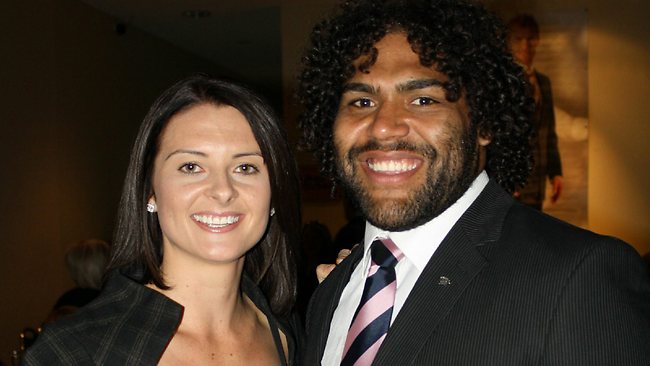
255240-sam-and-rachel-thaidayNRL star Sam Thaiday, and his wife Rachel, welcomed their first child on April 10, and have named their daughter Gracie Willow. Gracie Thaiday was born at 6.30 pm, and she wasn’t named straight away, as Sam and Rachel wanted to spend some time with her before making the decision. One of the names on their shortlist was Wednesday Thursday Thaiday (Thaiday is pronounced to rhyme with Friday). Sam is captain of the Brisbane Broncos, and has also played for Queensland, the Australian national squad, the Prime Minister’s XIII, and the Indigenous All Stars (he is of Torres Strait Islander descent). Tomorrow he will be playing for Australia against New Zealand in the Anzac Day Test.

NRL player Glenn Hall, and his wife Kylie, welcomed their son Hendrix on April 10, just a few hours before the Thaidays welcomed their daughter Gracie. Hendrix Hall has a brother Lachlan, who died before he was born. Glenn plays for the North Queensland Cowboys.

NRL star Daly Cherry-Evans, and his partner Vessa Rockliff, welcomed their first child two months ago, and have named their daughter Navi. Daly and Vessa must have had quite a few comments and questions on their daughter’s name, because Daly says that people are “reading too much into it”. Navi Cherry-Evans’ name is a variant of Navy, and said exactly the same way. Daly plays for the Manly-Warringah Sea Eagles, and is also a member of the national squad.

NRL player Beau Ryan, and his wife Kara, welcomed their first child in January, and have named their daughter Remi. Beau and Kara are childhood sweethearts, and were married in October last year. As well as playing for the Cronulla Sharks, Beau also does comedy segments on Channel Nine’s The Footy Show, and Remi’s birth was recently announced on the show.

Rugby union player Luke Burgess, and his wife Emilie, welcomed their first child in November last year and have named their daughter Freya. Freya’s name is right on trend for mythological Scandinavian names, and is already gaining notice in Australia. Luke has played for both the Canberra Brumbies and the New South Wales Waratahs and is a member of the national squad, and in 2011 he signed with French team Stade Toulousain. Luke will be returning to Australia to play for the Melbourne Rebels in the 2014 season.

AFL player Jed Anderson, and his partner Nicky, welcomed their first child last week and have named their son Elijah. Jed, who is still a teenager, just made his début with the Hawthorn Hawks. Elijah Anderson was born in his parents’ home town of Darwin.

Rally driver Eli Evans, and his wife Madeline, welcomed their first child before Easter, and have named their son James. Eli is the younger brother of driver Simon Evans, drives for Honda, and recently won the Quit Forest Rally in Western Australia.

(Photo shows Sam and Rachel Thaiday)

Famous Name: Thor

17 Wednesday Apr 2013

Posted by A.O. in Famous Names

≈ 2 Comments

Tags

Ancient Germanic names, birth notices, celebrity baby names, historical records, mythological names, name history, name meaning, name trends, Nameberry, names from movies, Old English names, scandinavian names

kinopoisk.ruThe Hollywood movie Thor came out a couple of years ago; last year it was followed by The Avengers, and a sequel will be coming out at the end of this year. The movie character is based on the Marvel Comics superhero, created by the famous Stan Lee, and the films place ancient gods in the modern world, interacting with humans and having spectacular magic vs science showdowns.

The Australian connection to this story is that Thor is played by Chris Hemsworth, who appeared on the blog as a celebrity dad last year, after welcoming daughter India Rose with his lovely wife Elsa. Thor‘s world premiere was held in Sydney.

In Norse mythology, Thor is the god of thunder, lightning, storms, oak trees, strength, healing and fertility. He is a protector of humanity, and the god who makes things holy. He is generally depicted as a large, muscular, red-haired and red-bearded man with fierce eyes, wielding a hammer that can pretty much smash through, well, everything.

Medieval epics describe Thor’s exploits in battle, and his fearsome wrath with anyone who crosses him. He is no steroidal oaf though, and capable of outwitting others and being clever with words; he sits as a judge at the foot of the World Tree. It is foretold that at the world’s destruction, Thor will do battle with his arch-enemy The Great Serpent and slay it, but will succumb to its venom and meet his end.

I think it’s too tempting for us moderns to imagine Thor as some sort of beefcake with anger management problems, but to his worshippers he was a source of strength and protection for their homes and possessions, giving security to family and community, and warding off plague and famine.

As the product of a divine marriage between the sky god Odin, and the earth mother Fjörgyn, he was a potent fertility symbol, and like lightning, he was a conduit between the heavens and the earth. The storms he brought with him watered the fields and made life grow.

Thor was worshipped by Germanic peoples, including those in Anglo-Saxon England, and the Vikings of Scandinavia, but it is from Norse mythology that most of our information about him is gained. His name is derived from an Ancient Germanic word for “thunder”; the Old English form of Thor is Thunor (pronounced THOO-nor), which makes the connection even more obvious.

It is a testament to his vast popularity how many names used in Britain there were that derived from Thor. A few that have survived into modern times, although rare, are Thora, a feminised form of Thor; Thurstan, meaning “Thor’s stone”; and Torquil, meaning “Thor’s cauldron”. His name is also in Thursday, meaning “Thor’s day”.

In Scandinavia the name Thor isn’t uncommon, and is pronounced TOR. Some famous Thors you may have heard of are Norwegian ethnographer Thor Heyerdahl (who crossed the Pacific on a raft named Kon-Tiki), Norwegian cyclist Thor Hushovd, Danish poker player Thor Hansen, Venezuelan human rights activist Thor Halvorssen, and Belgian singer Thor Salden.

Although the name Thor continued to be occasionally used in Britain, it is much more common in the United States, which has had significant migration from Scandinavia. Quite a few people named Thor can be found in Australian records, and most of them have Scandinavian surnames, or emigrated here from Scandinavia.

I recently saw a birth announcement for a baby boy named Thor, born in Tasmania; remarkably there was a Loki announced that same week, and an Odyn the following week.

Not long ago, Nameberry announced Thor was shaping up as one of the hot names of 2013 (along with other mythological names), and at the end of last year, told us that Scandinavian would be the ethnic name group most likely to rise in popularity. Meanwhile Abby’s Nameberry Nine this week pointed out that boy’s names are getting cooler all the time – even her little girl has noticed.

If you are considering the name Thor for your son, it is not only strong and interesting, with an ancient history that plugs in to European culture, but also right on trend.

With the Chris Hemsworth movies in the public consciousness, Thor is a name we’re all more familiar with, and for dads who hanker after a tough cool baby name, they might find it easier to persuade their partners if they have been smitten by Hemsworth’s hunkiness.

POLL RESULT: Thor received an approval rating of 59%. People were divided on the name Thor, with 16% thinking it was unusual, but something we’ve all heard of, while the same percentage thought it was over the top. 11% thought the god Thor gave the name greater substance and dignity, while 8% thought the god made the name seen heavy and oppressive. 7% considered that the movie made the name seem more accessible, while 5% saw the movie as making the name geekier.

Girls Names Which Rose in Popularity in 2012

14 Sunday Apr 2013

Posted by A.O. in Name Themes and Lists

≈ 25 Comments

Tags

celebrity baby names, classic names, english names, epithets, famous namesakes, fictional namesakes, Gaelic names, germanic names, Hollywood names, locational names, mythological names, name history, name meaning, name popularity, name trends, names from television, Native American names, nature names, nicknames, Old French names, Old Norse names, plant names, popular names, retro names, royal names, Scottish names, Slavic names, Spanish names, surname names, Twilight names, unisex names, vocabulary names

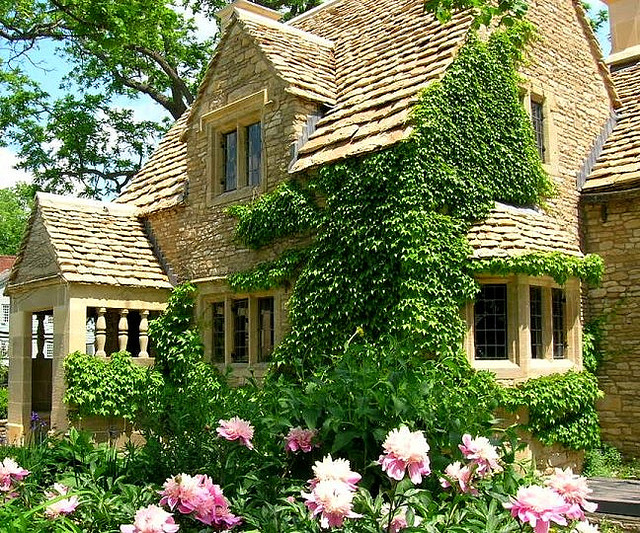
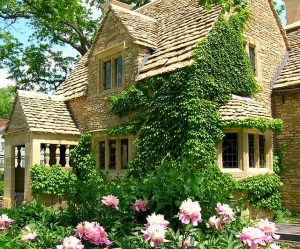
213495458_f0e01eb1bf_z-Cotswold-Cottage-2These names became noticeably more popular in Australia last year. If you are considering using any of them, don’t panic. Most are making solid progress rather than madly storming upward. It would be foolish to reject them based on their current popularity, and silly to fret if you chose one of these names in 2012.

The list indicates the diversity of girls’ names at present, with a mix of classic and modern; places and nature; Hollywood and royalty. There’s something for nearly everyone amongst these popular names.

Ivy

Ivy was the fastest-rising girl’s name both nationally and in Western Australia last year, and made the top 5 fastest-rising names in South Australia, Queensland and the Australian Capital Territory. It became more popular across the board in 2012, and nationally rose 18 places. This is its second time around in the Top 100 – Ivy was #17 in the 1900s, and didn’t leave the Top 100 until the 1940s. It vanished from the charts in the 1970s, but reappeared in the 1990s. Ivy soared during the 2000s, making the Top 100 by the end of that decade. It is currently #22 in Australia, #21 in NSW, #27 in Victoria, #25 in Queensland, #22 in SA, #28 in WA, #44 in Tasmania, and #30 in the ACT. Ivy is named for the plant, and like its namesake, is presently climbing; Beyonce‘s daughter Blue Ivy may have given the name publicity. Chances are we’ll be seeing more of this fresh, pretty retro name, which sounds similar to popular Ava, Eva and Evie.

Savannah

Savannah was in the top 5 fastest-rising names in South Australia, went up 9 places nationally, and increased in popularity in New South Wales, Victoria, Queensland, Western Australia and Tasmania. It is currently #35 in Australia, #38 in NSW, #74 in Victoria, #28 in Queensland, #43 in SA, #35 in WA and #94 in Tasmania. Savannah first charted in the 1990s, and climbed until it reached the Top 100 at the end of the 2000s. Savannah is an alternate spelling of the word savanna, referring to grasslands that have scattered trees, or where the trees are open to the sky; large tracts of northern Australia are savanna. The word comes from the Spanish sabana, derived from the Arawak (Native American) word zabana, which originally meant a treeless grassy plain. Savannah is a place name in the United States, most famously the city in Georgia. The city’s name comes from the Savannah River, which may be derived from the Shawnee people, or from Native American words for “southerner” or “salt”. The city featured in 1990s soap, Savannah, which probably accounts for its début in the charts that decade. While I imagine Savannah originally got its foot in the door because it sounds like Susannah, here it fit in with those other hip names of the ’90s, Ava and Sienna. Like Harper, this is another American South-inspired name, but also a royal one, because the queen’s first great-granddaughter is named Savannah.

Harper

Harper was the fastest-rising name in Tasmania and Victoria, made the top 5 fastest-rising names in South Australia and Western Australia, and became more popular in every state. Currently it is #39 in Australia, #37 in NSW, #29 in Victoria, #36 in Queensland, #44 in SA, #29 in WA, and #31 in Tasmania. Harper began as a surname from the English word for a professional harp player. The surname  originates from the west coast of Scotland, and is especially associated with the Clan Buchanan. The name also has Christian overtones, for heaven is said to be filled with the sound of harp music. Harper has been used as a first name since the 17th century, and was originally given to boys. The fame of (Nelle) Harper Lee, author of To Kill a Mockingbird, gave it a feminine slant. Harper only began charting in 2011, after David and Victoria Beckham welcomed their first daughter. Harper Beckham was named by her brothers after a character in Wizards of Waverley Place (although Victoria Beckham also happened to be working for Harper’s Bazaar at the time). The Beckhams said they wanted a name to honour their time in the United States, and chose this American-style name. Many Australians have followed in their footsteps.

Alice

Alice was the #1 fastest-rising name in South Australia, and has just joined the Top 20 in the Northern Territory, so it has gained popularity in central Australia. Intriguingly, the town of Alice Springs is in the middle of the Australia, offering food for thought. Alice also went up in popularity nationally, in Victoria, and in Tasmania. It is currently #43 in Australia, #49 in NSW, #34 in Victoria, #53 in Queensland, #34 in SA, #49 in WA, #41 in Tasmania, #20 in the NT and #43 in the ACT. Alice is a classic name which has never left the charts. It was #4 in the 1900s, and just missed out on the Top 100 in the 1940s, at #105. It reached its lowest point in the 1960s at #265, then began climbing, reaching the Top 100 for the second time in the 1990s. Since the beginning of the 2000s it has made staid but steady progress up the charts, and become middle name de jour. Alice is from the Old French name Aalis, short for Adelais, which is a short form of the Germanic name Adelheidis, meaning “noble kind” (which Adelaide is based on). Alice became popular in the Middle Ages, and got a boost during the 19th century after Queen Victoria had a Princess Alice. It’s been a favourite in fiction ever since Lewis Carroll penned Alice in Wonderland, and is the name of a main character in the Twilight series. Sensible, yet with a touch of magic, sweet Alice is one to keep your eye on.

Willow

Willow was in the top 5 fastest-rising names in Western Australia, went up  nationally, and increased in popularity in New South Wales, Victoria and the Australian Capital Territory. It is currently #44 in Australia, #43 in NSW, #33 in Victoria, #39 in Queensland, #32 in WA, #73 in Tasmania and #68 in the ACT. Willow first charted in the 1990s, and rose precipitously to make the Top 100 by the late 2000s. Willow is named for the genus of small trees and shrubs which symbolise both wisdom and deep loss. It has been used as a personal name since the 18th century, and was originally given equally to boys and girls. It has only ever charted for girls in Australia, but is still occasionally used for boys. The 1988 fantasy film Willow, which possibly played a role in Willow joining the charts in the ’90s, has a hero named Willow. In 2011, pop singer Pink welcomed a daughter named Willow, and that doesn’t seem to have done this name any harm. Flower names mostly didn’t do well in 2012; Ivy and Willow show that greenery is more appreciated than petals at present.

Mackenzie

Mackenzie made the top 5 fastest-rising lists in New South Wales and Victoria, and increased its popularity in other states and the Australian Capital Territory. Currently it is #46 in Australia, #57 in NSW, #44 in Victoria, #45 in Queensland, #33 in SA, #37 in WA, #45 in Tasmania, and #48 in the ACT. Mackenzie has charted since the 1990s, and zoomed up the charts to make the Top 100 by the early 2000s. It dipped out of the Top 100 in 2009, but was back the next year. Mackenzie is a Scottish surname, an Anglicised form of of the Gaelic Mac Coinnich, meaning “son of Coinneach” (Coinneach is the original form of Kenneth). The Clan Mackenzie is from the Highlands, and of Celtic origin; they trace their clan name back to the pagan god Cernunnos. Mackenzie has been used as a first name since the 18th century in Scotland; it was nearly always given to boys in the beginning, but not exclusively so. Mackenzie first charted in the US as a female name, popularised by actress (Laura) Mackenzie Phillips, who was in American Graffiti. Since then there have been other Mackenzies on our screens; most recently, Mackenzie Foy played Renesmee in Breaking Dawn – Part 2. 

Audrey

Audrey made the national Top 50 last year, and according to my estimate, rose almost as many places as Ivy. However, it’s harder to see where the gains were made than it is with Ivy, although Audrey made significant increases in New South Wales and Victoria, and modest ones in Tasmania and the Australian Capital Territory. Currently it is #50 in Australia, #36 in NSW, #32 in Victoria, #55 in Queensland, #96 in Tasmania and #35 in the ACT. Like Ivy and Alice, Audrey has been Top 100 before. Although it was #156 in the 1900s, it made the Top 100 the following decade, and shot up to peak at #32 in the 1920s. It sank faster than it had risen, and was #197 in the 1940s, reaching its lowest point in the 1980s with a ranking of #0. Since then it has climbed, and reached the Top 100 again at the end of the 2000s. It looks likely to overtake its earlier peak, but Audrey seems to be under the radar at present. This is one of those names which is probably more popular than you think, and has an Australian connection, for the famous Skipping Girl Vinegar neon sign in Melbourne is affectionately known as Little Audrey.

Mila

Mila was the #1 fastest-rising name in the Australian Capital Territory, and grew more popular in New South Wales, Western Australia and Tasmania. It is currently #59 in NSW, #46 in Victoria, #65 in Queensland, #44 in WA, #70 in Tasmania, and #48 in the ACT. Mila only began charting in 2011, so has been extremely successful in a brief space of time. The fame of Hollywood actress Mila Kunis must have had an impact; Mila entered the charts the year after Ms Kunis appeared in Black Swan. Mila is a short form of Slavic names containing the element mil, meaning “gracious, dear”. Mila Kunis’ full name is Milena, which is the feminine form of the Slavic name Milan, meaning something like “dear one”, and often translated as “sweetheart”. Mila sounds similar to other popular names such as Mia and Milla, and at the moment is doing very well.

Freya

Freya is a name just beginning to make an impression, for it joined the Top 100 in Tasmania and the Australian Capital Territory last year, and was in the top 5 fastest-rising names in Tasmania. Both these regions have small population sizes, so you can be forgiven for being a little sceptical; Freya is currently #174 in NSW and #129 in Victoria. Freya is the English spelling of the Old Norse goddess Freyja – her name means “lady”, and was originally an epithet. In Norse mythology, Freyja is a goddess of love, sex, beauty, fertility, sorcery, gold, war and death. Immensely beautiful and clever, she rules over a field in the afterlife. The name Freya has been popular in the UK for several years now, and is well known here due to Tasmanian actress Freya Stafford; it doesn’t seem too far-fetched that we should follow Britain’s lead, but we shall have to wait and see.

Josephine

Josephine just managed to squeeze onto the Top 100 in New South Wales last year. That may not sound impressive, but the amount Josephine climbed was phenomenal – it went up 99 places, far outstripping Ivy’s mere 18. For that reason alone, it deserves a place on this list. Josephine is a solid classic which has never been off the charts, or left the Top 200; on the other hand it has never enjoyed high popularity either. It was #86 for the 1900s, and peaked the following decade at #76. It just failed to reach the Top 100 of the 1940s at #103, and dipped in the 1980s to make #172. Its progress has been up and down, but never too high or low, and it reached its lowest point in the charts in 2011, at #199. It has more than made up for this by getting back to the Top 100 in 2012, where it hasn’t been since the 1930s. Currently it is #100 in NSW and #105 in Tasmania. Josephine has recently made its mark as a royal and celebrity baby name, with Josephine chosen for the daughter of Prince Frederik and Princess Mary of Denmark, and also the grand-daughter of former prime minister Kevin Rudd. Will Josephine continue its ascent? Historically it’s unlikely, for Josephine seems most comfortable in the low to mid 100s, and may very well drop back this year. Stay tuned!

POLL RESULT: People’s favourite names were Alice, Ivy, and Freya, and their least favourite were Harper, Savannah, and Mackenzie.

Famous Names: Ellen and Portia

28 Thursday Mar 2013

Posted by A.O. in Famous Names

≈ 1 Comment

Tags

Arthurian names, car names, changing names, classic names, english names, fairytale names, famous namesakes, fictional namesakes, German names, Latin names, mythological names, name history, name meaning, name popularity, name trends, nicknames, Roman names, Shakespearean names, surname names, William Shakespeare

531523_10151298153817261_581124430_nAmerican chat show host, Ellen DeGeneres, was in Australia this week. She follows in the footsteps of Oprah Winfrey, another American chat show host who brought her show to Australia, in 2010. However, while Oprah managed to get around quite a bit, Ellen (who was recovering from ‘flu), just popped in to Sydney and Melbourne.

She did seem to take a bit of a shine to Melbourne, saying it reminded her of Boston and New Orleans, and even said that it was possible she and Portia would live there one day. Ellen is practically an Australian-in-law, because her wife, model and actress Portia de Rossi, is from Australia.

Portia was born Amanda Lee Rogers in Geelong. She changed her name as a teenager to sound more exotic and interesting – Portia is after the heroine of Shakespeare’s The Merchant of Venice, and de Rossi is an Italian surname, which probably means “red” (like Russell).

Portia de Rossi is the name of the mother of famous Italian poet Torquato Tasso, but I’m not sure whether the young Amanda Rogers was aware of that. Since her marriage, Portia has legally changed her name to Portia Lee James DeGeneres. I don’t know where the James comes from.

The name Ellen is a medieval form of Helen, making it the English equivalent of Elaine. Ellen was a fairly common name in the Middle Ages, and features in the English fairy tale Childe Rowland, where Burd Ellen is Rowland’s sister, who must be rescued from Elfland. Childe and Burd don’t mean how they sound – childe was a title given to the eldest son in a noble family, while burd means “lady, maiden”. In some versions of the tale, they are the children of Queen Guinevere, and Merlin also plays a significant role in the story.

Ellen is a classic name in Australia, which was at its most popular in the 1900s, when it was #20. It remained on the Top 100 until the 1950s, and made its way back there in the 1990s, when it reached #92. It’s been fairly stable for a few years now, and in 2011 rose slightly from #517 to #470. Although this looks like quite a jump, it represents just two more babies named Ellen.

With Ella and Ellie in the Top 100, and Elle, Eleanor and Elena rapidly gaining in popularity, and retro Nelly, Nellie, Nella and Nelle becoming increasingly hip name choices, Ellen seems extremely usable, with a host of cute and fashionable nicknames. Simple, pretty and unpretentious, I feel that we will see more of this name in years to come.

Portia is a variant of Porcia, the feminine form of the Roman family name Porcius, from the Latin for “pig”. A lot of people have problems with this name meaning, but the Fabii were named after the broad bean, and perhaps the Porcii gained their name from pig farming.

Another possibility is that in many parts of the ancient world, pigs were sacred animals of the Underworld, fertility and the moon, and there may have been some religious connotations to the name (and in fact pig farming itself had a distinctly religious side, as the Romans were very fond of sacrificing pigs to the gods). Many ancient gods and goddesses were connected with swine, such as Osiris, Adonis, Attis, Demeter, Persephone, Freya and Ceridwen. They were beasts of a mysterious and ancient power, and held in awe.

The most illustrious branch of the Porcius family were the Catones, which included Cato the Elder and his great-grandson, Cato the Younger. Cato the Younger had a beautiful, intelligent daughter named Porcia, and she married her cousin, Marcus Junius Brutus – famous for being one of the key people in the assassination plot against Julius Caesar. Porcia was the only woman who knew of the conspiracy, and as such she plays a role in William Shakespeare’s play, Julius Caesar.

However, when we think of Portia, we automatically think of Portia from Shakespeare’s Merchant of Venice, a beautiful and brilliantly intelligent lady who manages to get her own way while still showing obedience. She steals the show and saves the day in a gripping cross-dressing courtroom drama as her fine legal mind swoops in on a loophole in the law. Even now we sometimes call a gifted female lawyer a Portia. The role of Portia was once famously played by actress Ellen Terry.

Portia is an elegant literary name, with historical and fictional namesakes who have both beauty and brains. People seem to either love it, or find it pretentious. Another issue is that it sounds like the name of the car company, Porsche. (Porsche is a German surname derived from the name Boris). Because some people do use Porsche as a girl’s name, a certain type of parent does worry that a daughter named Portia will have her name confused with little girls named Porsche.

So Portia is not without her issues as a baby name, but still a very lovely one nonetheless.

POLL RESULT: Ellen received an approval rating of 46%, and Portia a rating of 31%.

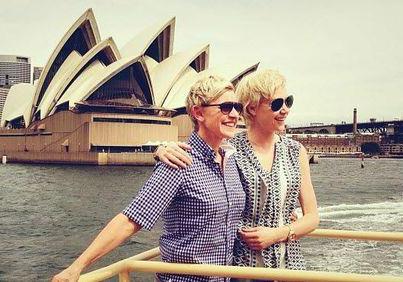
(Photo shows Ellen and Portia on Sydney Harbour)

Italian Names for Boys

17 Sunday Mar 2013

Posted by A.O. in Name Themes and Lists

≈ 15 Comments

Tags

Austrian name popularity, Belgian name popularity, birth notices, celebrity baby names, Chilean name popularity, Dutch name popularity, english names, ethnonyms, famous namesakes, fictional namesakes, French name popularity, germanic names, Greek names, Hungarian name popularity, Hungarian names, Italian name popularity, Italian names, Latin names, locational names, mythological names, name history, name meaning, name popularity, nicknames, Orlando Furioso, Portuguese names, Roman names, saints names, Scottish name popularity, Shakespearean names, Spanish name popularity, Spanish names, surname names, The Divine Comedy, theological names, tribal names, UK name popularity, unisex names, William Shakespeare

romeo_and_juliet_01Angelo

Angelo is the Italian form of the Latin name Angelus, meaning “angel”. The Angelus is a Christian devotion, which traditionally involves praying three times a day, accompanied by the the ringing of church bells. It was common during the Middle Ages, so the name can be seen as after the prayer as much as after the heavenly creature. Angels are mentioned in the Old Testament as spiritual beings who bring communications from God; the word angel is derived from the Greek for “messenger”. Angels play a much bigger role in the New Testament, where they make several important announcements, including the birth and resurrection of Christ. A famous Italian named Angelo was Father Angelo Secchi, a 19th century astronomer and one of the first scientists to state that the sun is a star. Cricket fans know the name well from Angelo Matthews, the Sri Lankan captain. The name is rarely used in Australia, where angel-type names for boys aren’t common – even though angels are traditionally masculine. However, singer Adele welcomed a baby boy last year, rumoured to be named Angelo, and this may be a help. The Italian and English pronunciation are very similar – AHN-jel-oh and AN-jel-oh.

Dante

Dante is a short form of Durante, the Italian form of the Latin name Durans, meaning “enduring”. Its most famous namesake is undoubtedly medieval Italian poet, Dante degli Alighieri, nearly always known by his first name only. His Divine Comedy is considered the greatest work of Italian literature, and in Italy he is known as il Poeto (“the Poet”), just as Shakespeare is called The Bard in England. He is famous for his adoration of Beatrice, a girl he knew only slightly and who died in her twenties; he plays an important role in the literature of “courtly love”. Dante is a name which seems to be gaining more use in recent years, perhaps because of the number of fictional characters named Dante on TV and in video games. I see this handsome name quite a bit in birth notices, and have met a number of small boys named Dante, from a variety of backgrounds. The Italian pronunciation is DAHN-tay, and this is commonly used in Australia, but I have heard it said DAN-tay as well.

Eduardo

Eduardo is the Italian form of the English name Edward. The name is used in Spanish and Portuguese-speaking countries as well, where it is much more popular than in Italy – it is a Top 100 name in Spain and Chile. Famous Italians include actor, playwright and screenwriter Eduardo De Filippo; songwriter Eduardo di Capua, who composed the famous song O Sole Mio; and quantum physicist and cyberneticist Eduardo Caianiello (all these Eduardos were from Naples). The name is pronounced ed-WARD-oh, with the ward part rhyming with hard rather than horde. Last year, Australian soccer player Vince Grella welcomed a son named Eduardo, and so far it’s the only celebrity baby boy’s name which has been rated as “perfect” by blog readers.

Lorenzo

Lorenzo is the Italian form of the Roman name Laurentius, which means “from Laurentum”; Laurentum was an ancient city in Italy, south of Rome, and its name probably comes from the laurel, or bay tree. Laurel wreaths were used by the Romans as a symbol of victory. The English form of the name is Laurence. One of the most famous Italian namesakes is Lorenzo de Medici, known as Lorenzo the Magnificent. A Florentine ruler during the Renaissance, he was famed for presiding over Florence’s Golden Age, and for being a great patron of the arts. Lorenzo’s grandson also bore his name; he is best known for being the ruler to whom Machiavelli dedicated his practical political handbook, The Prince. Lorenzo has been in the Top 5 in Italy for several years, and is currently #4; it’s also Top 100 in France. The Italian pronunciation is loh-REN-tso, and in English it’s pretty much the same except we say the final syllable -zo. Reality TV star Snooki, from Jersey Shore, welcomed a baby boy named Lorenzo last year. Possible nicknames include Enzo, Ren, Renzo and Zo.

Luca

Luca is the Italian equivalent of the name Luke, derived from the Greek name Loukas, meaning “from Lucania”. Lucania was an ancient district of southern Italy, and the name comes from the tribe of the Lucani who inhabited the area. One theory is that the tribe’s name comes from the Greek word for “wolf”; another that it means “sacred wood” in Latin. A famous Italian with this name is medieval sculptor Luca della Robbia; another is Fra Luca de Pacioli, a mathematician and Franciscan friar who worked with Leonardo da Vinci. You may also know the name from Luca Cordero di Montezemolo who is chairman of Ferrari. Luca is incredibly popular internationally: it is #12 in Italy, and also makes the Top 100 in the UK, Scotland, Austria, Belgium, the Netherlands and France. It has charted in Australia since the 1980s, and joined the Top 100 in the late 2000s; currently it is #79. You will sometimes see Luca described as a unisex name, and that’s because it is also the Hungarian form of Lucia, and is #10 for girls in Hungary. However, the two names are pronounced differently – the Italian boy’s name is said LOO-kah, while the Hungarian girl’s name is said LOO-tsah.

Massimo

Massimo is the Italian form of Maximus, a Roman family name derived from the Latin for “greatest”. There is a very old and noble Roman family named Massimo, and they claim to be descended from the Maximi family of ancient Rome, including the famous general Fabius Maximus. This cannot be proven, as the family history only goes back about a thousand years, but what’s on the record is impressive enough. Extremely rich and influential, great patrons of the arts, they have produced numerous cardinals, ambassadors, politicians and military leaders, and have married into some of the most important royal houses of Europe, so that the family now bears a princely title. Massimo is one of the most common Italian boy’s names I see in birth notices, with Massi the usual nickname. It is pronounced mahs-SEE-mo.

Orlando

Orlando is the Italian form of Roland, a Germanic name meaning “famous land” or perhaps “fame of his country”. According to history, Roland was a Frankish military commander in Charlemagne’s army, responsible for defending France against the Bretons; he died in a skirmish against the Basques after Charlemagne was defeated in a battle against Islamic forces. His death must have captured people’s imaginations, because while history says very little about Roland, legend says much. His life became an epic drama about a great nobleman of royal blood who dies in battle, defending his land and faith from Muslims. Just in case this seemed a bit tame, legend gave him a magic sword and threw in a giant, and the story was a massive medieval minstrel-sung hit all across western Europe. In Italy, he not only appears in Dante’s Divine Comedy, but starred in a whole line of epics as Orlando. The most famous of these is Orlando Furioso (it basically means Crazy Orlando) by Ludovico Ariosto. As the title suggests, Orlando goes doolally from unrequited love of a pagan princess and gallops around the world in a frenzy. There’s wizards and hippogriffs and sea monsters and a trip to the moon involved, and the story was hugely influential in European literature. We know this name well from actor Orlando Bloom, married to Miranda Kerr, and since their wedding I see this attractive name regularly in birth notices. The Italian pronunciation is or-LAHN-do, and the English or-LAND-oh.

Rocco

Saint Rocco is an Italian saint who was born a nobleman but came to Rome on a pilgrimage. Turning up while the city was suffering from a plague, he spent his time tending the sick. When he succumbed himself, he was banished from populated areas, but miraculously provided with water, and a dog who brought him food and licked his wounds, which cured him. Returning home, he was thrown into prison as a spy and died, refusing to reveal his noble identity. However, he was recognised by a cross-shaped birthmark, and canonised as a saint by popular acclaim. When the Black Death swept through Europe, it was said that this plague could be averted by praying to Saint Rocco, and when a town was apparently spared in this manner, his popularity went through the roof. Although his cult had begun in northern Italy, it soon spread across Europe; in France his name became Roch, in Spain Roque, and in England, Rock. You’d be forgiven for thinking Rocco had something to do with rocks, but it’s an ancient Germanic name meaning “rest”, and pronounced ROK-ko. Even though the Black Death isn’t such a worry any more, Saint Rocco is still popular as a healer of the sick and patron of dogs. Rocco has charted in Australia since the 1940s, hitting a peak in the 1960s at #193. Since the early 2000s, when Madonna welcomed her son Rocco, it has been climbing steeply and is currently #228. Expect to hear more of this cute yet macho name in the future.

Romeo

Romeo is the Italian form of the Latin name Romaeus, meaning “pilgrim to Rome”. When we hear the name Romeo, we think of the young and ardent lover from William Shakespeare’s Romeo and Juliet, whose pubescent romance goes so tragically wrong. Shakespeare’s plot wasn’t original – he based it on retellings of 16th century Italian romances, and in turn, these used the story of Pyramus and Thisbe from Roman mythology as inspiration. However, one of the Italian authors, Luigi Da Porto, fell for an enchanting young woman at a ball and she returned his feelings; things never got off the ground because their families were feuding. By the time he had the chance to write about Romeus and Giulietta in Verona, the object of his desire had been married off to someone else. His version of the story, including the principals’ names, proved enduring – perhaps because it had the personal touches of someone who has loved and lost. Romeo is such an ultra-romantic name that it’s used as an epithet for any male lover. David and Victoria Beckham welcomed their son Romeo in 2002, giving this name some star appeal as well. We say it RO-mee-oh, but we know the Italian pronunciation of ro-MAY-oh from the car manufacture, Alfa Romeo.

Valentino

Valentino is the Italian form of the Latin name name Valentinus, the saint of lovers, also called Valentine. It got an extra helping of Latin Loverboyishess from Italian actor Rudolph Valentino, a seductive sex symbol and star of the silent screen. He made women swoon, and men snipe at his annoying amount of attractiveness. The gals screamed with desire during his movies; the guys stormed out in disgust and threw hissy fits. We know the name well from Italian motorcycle racer and MotoGP World Champion, Valentino Rossi, giving this name quite a sporty image as well. I don’t know if it’s because of Rossi, but I do see the name Valentino quite often in birth notices, where it seems to be especially popular in the middle position.

POLL RESULT: People’s favourite names were Luca, Rocco, and Massimo, and their least favourite were Orlando, Valentino, and Eduardo.

(Picture shows scene from Baz Luhrman’s Romeo + Juliet)

Italian Names for Girls

10 Sunday Mar 2013

Posted by A.O. in Name Themes and Lists

≈ 4 Comments

Tags

Arthurian legends, Arthurian names, Austrian name popularity, Belgian name popularity, Biblical names, birth notices, celebrity baby names, compound names, English idioms, famous namesakes, fictional namesakes, food names, French names, Greek names, Harry Potter names, hebrew names, Italian name popularity, Italian names, J.K. Rowling, locational names, modern classics, mythological names, name history, name meaning, names from movies, names from songs, nicknames, Orlando Furioso, Percy Bysshe Shelley, popular names, Roman names, saints names, Shakespearean names, The Sleeping Beauty, William Shakespeare

William_Dyce_-_Francesca_da_Rimini_-_Google_Art_ProjectItalian-Australians are the largest ethnic group in Australia after those of British and Irish heritage, and about a million people identify as having Italian ancestry – around 5% of the population. The first Italian migrants arrived in the 19th century (Australia’s first police officer was an Italian), but immigration soared after World War II. They have made an incalculable contribution to Australia’s economy and culture, with noteworthy Italians in business, politics, sport, the arts and entertainment. It’s not that I can’t imagine Australia without an Italian history; it’s just that imagining such an Australia appals me.

This is a selection of Italian names for girls which I think are usable in Australia, whether you have Italian ancestry or not.

Alessandra

Alessandra is the feminine form of Alessandro, the Italian form of Alexander. Alessandra has been popular in Italy for many years, remaining in the Top 10 throughout the 1970s. It is still in the Top 100 today, and has only recently slipped off the Top 30. I see many instances of this name in birth notices, particularly in families with Italian surnames (although not exclusively). Not only is it the Italian form of the popular Alexandra, but is well known due to Brazilian supermodel Alessandra Ambrosio, who is of part-Italian descent. It is also an Australian celebrity baby name, since Casey Stoner and his wife Adriana welcomed their daughter Alessandra Maria last year. This pretty name is an Italian modern classic, and the Italian pronunciation is ahl-e-SAHN-dra, although I suspect many Australians would say it more like al-uh-SAN-dra. Nicknames abound, including Allie, Alessa, Alessia and Lissa, and it is one of the names tipped to rise in the wake of Hurricane Sandy.

Arianna

Arianna is the Italian form of the Greek name Ariadne, meaning “most holy, utterly pure”. In Greek mythology, Ariadne was a princess of Crete, the daughter of King Minos, and helped the hero Theseus escape from the Minotaur (Ariadne’s monstrous half-brother). The two of them escaped together, but Theseus abandoned her on the island of Naxos, where she married the god Dionysus. It seems likely that Ariadne was originally an ancient Cretan mother goddess, and some suggest that she was a goddess of weaving, thus perhaps a goddess who ruled fate. Arianna is currently #24 in Italy, and although there are a few famous Italians with this name, it’s probably best known as the name of Arianna Huffington, who co-founded The Huffington Post. The Italian pronunciation is ah-RYAHN-na, and the English is ah-ree-AH-nuh or ar-ee-AN-uh, which allows Ari as the obvious nickname.

Bianca

Bianca is the Italian equivalent of the French name Blanche, meaning “white, fair”. The name was used amongst the Italian nobility during the Middle Ages and the Renaissance; one example being Bianca Visconti, a 15th century Duchess of Milan who is a distant ancestor of both Diana, Princess of Wales and Princess Michael of Kent. There are two characters named Bianca in the plays of Shakespeare, in Othello and The Taming of the Shrew, but the name doesn’t seem to have been used in Britain until the 19th century, during the Victorian veneration of the Bard and his works. It does seem to have been attractive to families with Italian ancestry from early on. The name Bianca did not chart here until the 1960s, and was in the Top 100 by the 1980s. It peaked in the 1990s at #45, and fell until it left the Top 100 in 2009. In 2011 it rose again to make #103, only just outside the Top 100. Bianca is a modern classic in Australia which hasn’t been lower than the 100s since the 1960s, although it is rather dated in Italy. The Italian pronunciation is something like BYAHN-ka, but here we say it bee-AN-ka.

Chiara

Chiara is the original Italian form of the names Clara, Clare and Claire, meaning “clear, bright, famous”. Chiara Offreduccio was one of the followers of Saint Francisof Assisi, and founded the Order of Poor Ladies; she is the first woman known to have written a monastic Rule. She was a great encouragement and support to Saint Francis, and nursed him during his final illness. Today we know her as Saint Clare, and her order is affectionately known as The Poor Clares. This medieval saint has a very modern connection, because she is the patron of television. Chiara has been a Top 10 name in Italy for several years now, and is currently #6. It is also Top 100 in Austria and Belgium. Chiara is one of the most popular Italian names that I see in Australian birth notices, and it is known to us as the name of cyclist Cadel Evans’ Italian wife. We say this name kee-AH-ra, which isn’t exactly the Italian pronuciation, but not too far off it either.

Eliana

Eliana is the Italian form of the Roman name Aeliana, the feminine form of Aelianus. The name is from the Roman family name Aelius, derived from the Greek word helios, meaning “sun”. One of the Titans was named Helios, a handsome sun god who drove his chariot across the skies each day. There is a Saint Eliana, an early Roman martyr. Eliana can also be understood as a modern Hebrew name meaning “my God has answered”. This name is not on the Italian Top 30, but I have seen many examples of it in Australian birth notices, with a variety of spellings. The Italian pronunciation is eh-LYAH-na, but I think most Australians would prefer el-ee-AH-na, as it opens the name up to nicknames such as Ella, Elle or Ellie.

Francesca

Francesca is the feminine form of Francesco, the Italian original of the name Francis. One of the most famous people with this name is Francesca da Rimini, whose story features in Dante’s Divine Comedy. Francesca was married off to a brave but crippled man named Giovanni, and fell in love with his younger brother, Paolo. Although Paolo was married too, they managed to carry on an affair for about ten years. Her story reached a tragic conclusion when her husband killed both she and her lover after finding them together in her bedroom. In Dante’s poem, he meets she and Paolo in the second circle of Hell, where those who have committed sins of lust are punished; Dante faints in pity at her sad plight. Her story has been turned into numerous operas, plays and artworks. Francesca has been on the Australian charts since the 1940s, but has never reached the Top 100. It peaked in the 1960s at #241; currently it is #245 and climbing, so looks likely to overtake this high point fairly soon. The name has been popular in Italy for many years, and is currently #12. The Italian pronunciation of frahn-CHES-ka, and the English fran-CHES-ka are both used here; Frankie is fast becoming the fashionable nickname.

Ginevra

Ginevra is the Italian form of Guinevere, so you can consider it to be the Italian Jennifer as well. By coincidence, it is also the Italian name for the Swiss city of Geneva. The Arthurian legends were known in Italy, and on the cathedral of Modena in Italy, it shows King Arthur rescuing Guinevere from her abduction by the villain Maleagant. A 15th century Florentine noblewoman named Ginevra de’ Benci was painted by Leonardo da Vinci and there was an also a 17th century Italian painter named Ginevra Cantofoli. There are several Ginevras in fiction, including Princess Ginevra of Scotland in Orlando Furioso, the Ginevra who has a tragic wedding day in the poem by Shelley, and Ginevra “Ginny” Weasley from the Harry Potter books. Ginevra is #25 and rising in Italy, but this romantic name is not often used in Australia. The Italian pronunciation is something like jeh-NEEV-rah, while the English pronunciation is ji-NEHV-ruh; I think both sound usable, and allow nicknames such as Jenny, Ginny, Ginger, June, Neve and Evie.

Lia

Lia is the Italian form of the Hebrew name Leah, who in the Bible was one of Jacob’s two wives, or it can be used as a short form of names such as Rosalia or Aurelia. I’m not sure how popular this name is in Italy (it’s not in the Top 30), but there are quite a few Australians named Lia, including politician Lia Finocchiaro. Italian girls names don’t have to be elaborate or ornate; here is one as sweet and simple as you could desire, fitting in perfectly with short popular names like Mia and Ava. Although Lia does not chart in Australia, Leah is in the Top 100 and has been climbing since the 1990s.

Mietta

Mietta is the Italian form of the French name Miette, which literally means “bread crumb”, but is a term of endearment, like “sweet little morsel, sweet little thing” (compare with how you might call a little girl muffin in English). One of the fairies in The Sleeping Beauty ballet is named Miettes qui tombent, meaning “falling breadcrumbs”. It presumably began life as a nickname, but at some point was accepted as a full name, probably because it seemed like a pet form of names such as Marie. In Australia we best know the name from the chef Mietta O’Donnell, whose parents were Italian migrants and restaurateurs. Mietta and her partner opened the famous Mietta’s restaurant during the 1970s, a Melbourne institution for twenty years. Mietta O’Donnell was not just a contributor to Australian cuisine, she changed and defined Australian cuisine and raised the standard immeasurably, as well as teaching people about good food through her restaurant guides and cookbooks. Mietta was a charismatic and ardent supporter of the arts in her city; little wonder I see so many birth notices for little Miettas in Melbourne. In O’Donnell’s case, Mietta was a nickname; her real name was Maria. The Italian pronunciation of this name is MYEHT-ah, but most Australians would prefer mee-EH-tah. The popularity of Mia must surely have made Mietta more appealing.

Rosabella

Rosabella combines the names (or words) Rosa and Bella, and even if you don’t know much Italian, you can probably figure out what Rosabella means – “beautiful rose”. The two original words were used together in a medieval Italian poem by Leonardo Giustiniani, O Rosa Bella, which later became a popular English chant. A 1940s Italian love song featuring the name is Rosabella Del Molise; the song tells of a beautiful woman from southern Italy loved by a shepherd; he begs Rosabella to marry him, and plans a wedding to be speedily followed by a bambino. A piece of film trivia is that in the Italian version of Citizen Kane, the sled is called Rosabella instead of Rosebud. I get the feeling that in Italy this is a very old-fashioned name, and as it is also a variety of luncheon meat, may even appear comical. However, I have seen this name several times in recent Australian birth notices, along with Rosa-Bella, Rosabel and Rosebelle. Here it seems like a compound of popular Rose with popular Isabella; it’s slightly operatic, but does fit the trend for frilly girls names, and has simple nicknames like Rosie and Bella.

POLL RESULT: People’s favourite names were Eliana, Arianna, and Francesca, and their least favourite were Bianca, Rosabella, and Mietta.

(Picture shows Francesca da Rimini (1837), painted by William Dyce)

Famous Name: Griffin

06 Wednesday Mar 2013

Posted by A.O. in Famous Names

≈ 7 Comments

Tags

Anglo-Saxon names, animal names, english names, famous namesakes, honouring, Irish names, mythological names, name history, name meaning, nicknames, surname names, vocabulary names, Welsh names

520px-Heraldic_figures_-_Griffin.svgOn March 12 the city of Canberra, Australia’s capital, will celebrate one hundred years since its foundation in 1913. Special events are planned for the entire year, with the major festivities taking place on the long weekend preceding the actual date.

A baby called Allegra Bluebelle Sofo born this year was named in honour of Canberra’s centenary – the royal bluebell is the floral emblem of the Australian Capital Territory. Her story was featured in The Canberra Times, and as further inspiration for potential Canberran baby-namers, the paper went on to make more suggestions for names with a Canberra connection, which you can read about on Nancy’s Baby Names blog.

I couldn’t help noticing that all the suggestions were for girls names, which seemed very unfair, given that boys will make up about half of all the babies born in Canberra during 2013, and an obvious suggestion is staring them in the face.

In 1911, King O’Malley held an international competition to find a designer for the layout of the new city, which was won by Chicago architect Walter Burley Griffin. Walter produced the design in colloboration with his wife and business partner, the architect Marion Mahony Griffin. The Griffins moved to Australia to oversee the project, and fell in love with the Australian landscape, becoming enthusiastic bushwalkers with a keen interest in botany and conservation. The building of a city set in bushland seemed perfect for their idealistic vision inspired by the Garden City movement.

Unfortunately, World War I put a dent in everyone’s plans, and Walter Burley Griffin was treated shamefully by bureaucrats, who undermined him to further their own interests, eventually forcing him to resign. Many of his ideas were discarded or altered, but the basic plan of the central city is undeniably that drawn up by Walter Burley Griffin.

It wasn’t until the 1960s that the artificial lake he had envisioned was built in the heart of Canberra (not to his plans, it must be said), and in the first kind gesture Canberra had made toward its designer, Prime Minister Robert Menzies refused to have the lake named after himself, and insisted it be called Lake Burley Griffin. Australians had rather cluelessly misunderstood American naming conventions, and imagined that Burley must be part of Walter’s surname, rather than his middle name, so the lake doesn’t even have his correct name.

It’s never been rightfully re-named Lake Griffin, which would also have honoured co-designer Marion, but it’s the only monument that Walter Burley Griffin has in Australia. One was planned in the 1960s, and an American architect hired, but a change of government left it shelved indefinitely.

With so little appreciation during his lifetime (Walter died in 1937), why not name your son Griffin to honour the man and his wife who helped bring the city of Canberra into being?

The surname Griffin has several sources. It can be a Latinised form of the Welsh name Gruffud, which is also Anglicised as Griffith. There was also an Anglo-Saxon name Griffin, derived from High German grifan, meaning “snatch, grab”, and an allusion to dragons. The Irish surname is taken from the Gaelic name Grioghtha, meaning “griffin”.

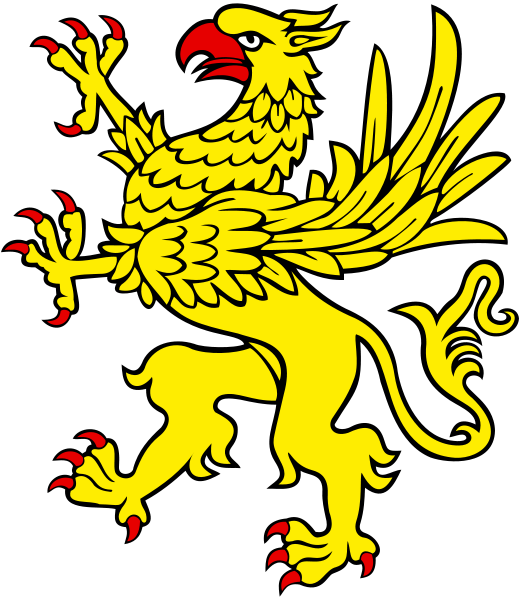
This legendary animal (also spelled gryphon or griffon) is a combination of an eagle and a lion, thus blending the king of the beasts with the king of the birds. How this combination was achieved was a matter to be decided by the artist, but by accepted convention the griffin has the body, tail and hindquarters of a lion, with the head, wings and talons of an eagle, and has prominent pointed ears. The word griffin is derived from the Greek for “hook”, possibly denoting the creature’s hooked beak or curved talons.

Griffins were prominent in the art and design of Ancient Greece, where they were seen as powerful protectors against evil. Greek writers described the griffin as native to mountainous areas of Asia, sacred to the sun, and a hoarder of gold. Other ancient legends tell of the griffin’s prodigious strength and intelligence, its hatred of horses, and wars against the Amazons. The griffin seems to be a symbol of good, of light, and of the masculine principle.

You will sometimes see griffins carved into old churches and cathedrals, because during the medieval era, the griffin was considered a symbol of Christ, who, like the griffin, has dominion over both the heavens and the earth. It was also thought that the winged cherubim mentioned in the Bible could have been griffins, as they are described as having the face of a lion and an eagle (although this ignores the fact cherubim also have the face of a man and an ox). It is possible that the legends of cherubim and griffins had the same source – the winged beasts of ancient Middle Eastern art.

Just to confuse things, the griffin was also associated with Satan, probably in the belief that anything so fierce must be up to no good (the hoarding of gold might have looked sinfully avaricious as well). This miserable idea doesn’t seem to have persisted, probably because it doesn’t make sense, since griffins were always noble, majestic, and on the side of good.

Griffins are a popular symbol in heraldry, with the first known person to have a griffin on his coat of arms being Richard de Redvers, the Earl of Exeter, in 1167 (the coat of arms was much older than that). A symbol of strength and vigilance, the griffin is said to be the perfect emblem for a hero in battle. For some reason, male griffins are always shown in heraldry without wings, but adorned with spikes denoting the sun’s rays. They are less common than winged female griffins. Canberra doesn’t have any griffins on its coat of arms, which I think would have been an appropriate choice.

Griffins are often found in fantasy literature, and the first one appears to be Lewis Carroll’s Alice’s Adventures in Wonderland. You may also read stories that involve griffins in the works of Frank Stockton, Diana Wynne Jones, Tamora Pierce, Neil Gaiman, Mercedes Lackey, Patricia A. McKillip and Rick Riordan. Readers of the Harry Potter series will remember that Harry’s house at school was Gryffindor. These fantasy novels had a noble forerunner, because the poet Dante sees Beatrice in a chariot drawn by a griffin in The Divine Comedy.

Griffin is a strong, handsome and very masculine name which can either be taken as Celtic or English. The legendary creature gives it many layers of mystical associations, nearly all of them extremely positive. You could use either Griff or Finn as nicknames.

POLL RESULT: Griffin received a worthy approval rating of 77%. People saw the name Griffin as strong and handsome (33%), cool (18%), noble and chivalrous (13%), and cute and brainy (13%). However, 9% thought the connection to mythological griffins made the name seen ridiculous – half as many as those who thought the mythological connection made the name cool.

(Picture shows a heraldic griffin)

Waltzing with … Orange

17 Sunday Feb 2013

Posted by A.O. in Waltzing with ...

≈ 2 Comments

Tags

Banjo Paterson, Celtic names, colour names, Devon names, english names, famous namesakes, French names, fruit names, historical records, locational names, middle names, mythological names, name combinations, name history, name meaning, name trends, nature names, patriotic names, plant names, rare names, royal names, Sanskrit names, sibsets, surname names, tree names, unisex names, vocabulary names

Orange jacket Postcard autumn leavesToday is Banjo Paterson’s birthday, and as we have already covered his name, I thought it would be interesting to look at the name of his birthplace.

At the time of Paterson’s birth, his parents were living at Buckinbah Station, near the town of Yeoval (then known as Buckinbah). Because of the station’s isolation, Banjo’s mother Rose went to stay with her aunt and uncle, Rose and John Templer, at their homestead Narrambla, and it was here that she gave birth to her son. Narrambla is about 2 miles from the centre of Orange, and today lies on the city’s outskirts. Rose herself was born on a homestead near Orange, so it was rather a family tradition.

Orange is a city in the Central West region of New South Wales. It was founded in the early 1820s as a convict settlement, and farmers began settling in the area in 1829. The first discovery of gold in Australia was made in 1851 near Orange, leading to the gold rush. Orange became a trading centre for gold, and continued growing due to its good position for agriculture. It was declared a city in 1946. Orange is known for its fruit growing, especially apples, pears and stone fruits; ironically it is too cool to grow oranges in Orange. It is also a thriving wine making area, and has both gold and copper mining. It is a sister city to Orange in California.

Orange was first called Blackman’s Swamp, after John Blackman, the guide who brought the first explorers there. The name was changed to Orange by the Surveyor-General Sir Thomas Mitchell, in honour of William, Prince of Orange. Mitchell and the Prince had both been aides-de-camp to the Duke of Wellington during the Peninsular War in Spain in the early 19th century. The Prince of Orange later became the first King of the Netherlands.

The Prince’s title originally came from the Principality of Orange in the south of France. It began life as a settlement called Arausio, named after a local Celtic water god; the god’s name is said to mean “temple”, meaning the temples that are on the forehead, not a temple as in a building for worship.

The town’s name was corrupted into Orange, and by the Middle Ages, conflated with the word orange, which comes from the Sanskrit for “orange tree”, naranga. The colour was named after the fruit, and first used this way in the 16th century.

As a personal name, Orange has a longer history than you might imagine, for the girl’s names Orenge and Orengia are found in the 13th century. As this predates the name for the fruit, their etymology is extremely uncertain, and possibly has the same source as the French town, which first became a principality of the Holy Roman Empire in the 12th century.

The surname Orange is either from the place name, or derived from the female name, and when the English name Orange appears in the early 17th century, it may have been after the surname. The name first arises in Devon, and in the beginning was exclusively given to girls, although the name became unisex after William III of England, or William of Orange, gave it a masculine feel.

As a first name, Orange is extremely rare in Australian records, and given to only a few girls, but as a middle name is much more common, and given to boys in almost equal numbers as girls (the middle name Orange was sometimes combined with William in the case of boys, showing that William of Orange still had some naming clout).

Colour names for girls are popular at the moment, with many little girls named Scarlet or Jade; tree names such as Olive and Willow are in the girls’ Top 100, surnames such as Marlowe and Quinn are fashionable for girls, and it’s not unusual to see baby girls named after European cities, such as London or Vienna. Orange seems a more vibrant continuation of these trends. Indeed, you could see it as a hyper juiced-up Clementine.

Orange is such a bright, outgoing, fun colour that it seems very cheerful as a person’s name, but it also has a more serious side, because orange is connected to religion and spirituality. There’s a real yin/yang, East/West dichotomy with the name Orange. Is it as crazy as a clown’s wig? Or as serene as a meditating Buddhist monk?

Orange fruit gains its colour from carotenes, the same thing which makes deciduous leaves turn orange. By chance, the city of Orange is known for its spectacular displays of autumn leaves, and it is therefore known as “The Colour City” (also a play on its name). You might see Orange as a name that evokes the changing of the seasons, and the turn of the year.

Although Orange started life as a girl’s name, it did become unisex, and is so rare that it could be worn by either boys or girls. If you are shy about using this vivid name, it would make an eye-catching middle.

Orange is a bold choice as a baby name, though not without shades of subtlety, and it celebrates Australian geography and history. I think Orange is one of the more distinctive of the patriotic names, and has a real tang to it.

Name Combinations for Orange

Orange Beatrice, Orange Eliza, Orange Lily, Orange May, Orange Ruby, Orange Victoria

Brothers for Orange

Eden, Hartley, Fitzroy, Paterson, Sunny, Tennyson

Sisters for Orange

Audley, Breeza, Corindi, Junee, Kendall, Marinna

Note: Name combinations from historical documents; just for fun, sibsets include names of other towns in New South Wales

POLL RESULT: Orange received an approval rating of only 27% – the lowest-rated featured name of 2013, and the only one to score less than 50%. 40% of people hated the name Orange, and nobody loved it.

(Picture shows a postcard from the city of Orange)

← Older posts
Newer posts →

Enter your email address to follow this blog

Categories

Archives

Recent Comments

A.O.'s avatarwaltzingmorethanmati… on Zarah Zaynab and Wolfgang…
Madelyn's avatarMadelyn on Zarah Zaynab and Wolfgang…
JD's avatardrperegrine on Can Phoebe Complete This …
A.O.'s avatarwaltzingmorethanmati… on Rua and Rhoa
redrover23's avatarredrover23 on Rua and Rhoa

Blogroll

  • Appellation Mountain
  • Baby Name Pondering
  • Babynamelover's Blog
  • British Baby Names
  • Clare's Name News
  • For Real Baby Names
  • Geek Baby Names
  • Name Candy
  • Nameberry
  • Nancy's Baby Names
  • Ren's Baby Name Blog
  • Sancta Nomina
  • Swistle: Baby Names
  • The Art of Naming
  • The Baby Name Wizard
  • The Beauty of Names
  • Tulip By Any Name

RSS Feed

  • RSS - Posts

RSS Posts

  • Celebrity Baby News: Melanie Vallejo and Matt Kingston
  • Names from the TV Show “Cleverman”
  • Can Phoebe Complete This Sibset?
  • Zarah Zaynab and Wolfgang Winter
  • Baby, How Did You Get That Name?
  • Celebrity Baby News: Media Babies
  • Celebrity Baby News: Adelaide Crows Babies
  • Celebrity Baby News: Chris and Rebecca Judd
  • Names at Work: Name News From the World of Business and Employment
  • Celebrity Baby News: Sporting Round Up

Currently Popular

  • Celebrity Baby News: Toby Allen and Darren Weller
  • Girls Names of Australian Aboriginal Origin
  • Rare Boys Names From the 1950s
  • The Top 100 Names of the 1920s in New South Wales
  • Rare Girls Names From the 1940s

Tags

celebrity baby names celebrity sibsets english names famous namesakes fictional namesakes honouring locational names middle names name combinations name history name meaning name popularity name trends nicknames popular names saints names sibsets surname names twin sets unisex names

Blog at WordPress.com.

Privacy & Cookies: This site uses cookies. By continuing to use this website, you agree to their use.
To find out more, including how to control cookies, see here: Cookie Policy
  • Subscribe Subscribed
    • Waltzing More Than Matilda
    • Join 517 other subscribers
    • Already have a WordPress.com account? Log in now.
    • Waltzing More Than Matilda
    • Subscribe Subscribed
    • Sign up
    • Log in
    • Report this content
    • View site in Reader
    • Manage subscriptions
    • Collapse this bar
 

Loading Comments...