• About
  • Best Baby Names
  • Celebrity Baby Names
  • Celebrity Baby Names – Current
  • Celebrity Baby Names – Past
  • Featured Boys Names
  • Featured Girls Names
  • Featured Unisex Names
  • Links to Name Data
  • Waltzing on the Web

Waltzing More Than Matilda

~ Names with an Australian Bias of Democratic Temper

Waltzing More Than Matilda

Tag Archives: middle names

Famous Name: Honoré

11 Wednesday Jun 2014

Posted by A.O. in Famous Names

≈ 2 Comments

Tags

celebrity baby names, famous namesakes, food names, French names, Latin names, middle names, nicknames, royal names, saints names, street names, unisex names

vb-31

On June 6 it was the 70th anniversary of D-Day – the beginning of the invasion of Normandy by the Allied forces during World War II. D-Day was a turning point in the war, as the Normandy invasion provided a decisive victory for the Allied forces. More than 3000 Australians fought in the campaign, mostly in the air force.

D-Day veterans from all over the world gathered at the beaches of Normandy for the D-Day commemorations, and Australian former pilots Robert Cowper, Stuart Davis, Phillip Elger, Francis Evans, Ronald Houghton, Billy Purdy, and Frederick Riley joined the Australian Prime Minister on his visit to France for the official international ceremony. Six of these men were awarded France’s highest decoration, the Legion of Honour, for their part in D-Day’s aerial assault (Robert Cowper had already received the Legion of Honour in 2012).

The day after the commemorations, the Prime Minister continued his tour of France by visiting a town near Amiens, the scene of a 1918 battle on the Western Front which was a crucial turning point in World War I. Two Australian brigades took part in the counter-attack, with many losing their lives in the successful attempt to secure the town of Villers-Bretonneux, ending the German offensive in the Somme, and keeping the town out of enemy hands for the rest of the war.

After World War I, money donated by school children in Victoria was used to build a new school in Villers-Bretonneux, called the Victoria School. A plaque at the school pledges Australian friendship with France, and in the playground, and above every blackboard, is written Do not forget Australia. The townspeople never have forgotten: kangaroos decorate the town hall where the Australian flag flies, a service is held every Anzac Day, and the town maintains a war memorial to commemorate all Australians who died on the Western Front with no known grave.

To thank the people of Villers-Bretonneux for their kindness and warm welcome given to all Australian visitors to their town, and in recognition of the D-Day veterans given the Legion of Honour, today I am covering a name from northern France associated with honour.

Honoré is a French form of the Latin name Honoratus, meaning “esteemed, distinguished, honoured”. There are two French saints named Honoratus, and I will look at the one who was a 6th century bishop of Amiens – not only because of where he was born, but because he is most often called St. Honoré (the other one tends to be known as St. Honorat).

St Honoratus of Amiens was born in the Somme to a noble family, and is said to have been virtuous from birth. Because he was so humble, he didn’t want to become a bishop, considering himself unworthy of the role, but once he had been elected, a beam of light descended on his forehead and he found himself anointed with a mysterious sacred oil. That pretty much sealed the deal.

Legend says that when his hometown heard he been proclaimed bishop, his childhood nursemaid, who was baking bread at the time, refused to believe it. She said that she would believe the news only if the wooden shovel she was using to put the loaves of bread in the oven put down roots and turned into a tree.

Sure enough, when she planted the shovel in the ground, it turned into a mulberry tree which produced both flowers and fruit. The tree was still being shown to visitors in the 16th century, which is an extradordinarily long lifespan (some might say, suspiciously long) for a mulberry tree.

The cult of St Honoratus really took off after 1060 when the saint’s body was exhumed, and many miracles were said to have occurred. Reputedly, processions of his relics managed to prevent both droughts and floods, ensuring good wheat harvests, and therefore happy bakers.

In 1202, a baker donated land to the city of Paris to build a chapel in honour of St Honoratus. It became one of the richest chapels in the city, and gave its name to the rue du Faubourg Saint-Honoré, now one of the most fashionable streets in the world, as it is filled with high-end boutiques.

In 1400 the bakers of Paris established their guild in the church of St Honoratus, and in 1659 Louis XIV ordered that every baker celebrate the feast day of St Honoratus on May 16, and give donations in the saint’s name to benefit the community. Even in modern France, bakers hold bread and pastry festivals on May 16, and during that week, bakers hold their annual meeting.

You may know the name of St. Honoré from the Gateau St. Honoré, a classic French dessert which has a puff pastry base with a ring of choux pastry around the edge. On top are small cream puffs dipped in caramelised sugar, and traditionally it is filled with crème pâtissière and whipped cream. It’s a popular birthday cake in France, and is also traditionally served at first communion parties.

The cake is said to have been created in the 19th century by the famous pastry chef Monsieur Chiboust, who named it both in honour of the saint, and because his own shop was on Rue St. Honoré in Paris – the street gaining its name from the church dedicated to St. Honoratus.

Honoré was a traditional name in the royal family of Monaco, and one its most famous namesakes is 19th century French novelist Honoré de Balzac. This is also an Australian celebrity baby name, because radio host Kate Langbroek has a son named Art Honore.

Honoré is an elegant, sophisticated boy’s name which could honour your French heritage, a connection to France, or even a family tradition of baking. The name is pronounced on-eh-RAY or o-no-RAY, making Onni or Ray fairly natural nicknames for an English-speaker. Although it might seem too challenging as a baby name in Australia, we have grown accustomed to Remy as a name here, so why not another French saint? Something to think about it is that, like Remy, Honoré has historically been used as a unisex name in Australia.

POLL RESULT
Honoré received an approval rating of 56%. 22% of people thought it was too feminine to be used as a boy’s name, but 17% saw it as a great French heritage choice. Only one person believed the name Honoré was too closely associated with the Gateau St. Honoré dessert.

(Photo shows the plaque at the Victoria School in Villers-Bretonneux)

Irish Names For Girls

08 Sunday Jun 2014

Posted by A.O. in Name Themes and Lists

≈ 10 Comments

Tags

classic names, famous namesakes, fictional namesakes, French names, Gaelic names, Irish Gaelic names, Irish name popularity, Irish names, Italian names, middle names, modern classics, mythological names, name history, name meaning, name popularity, nicknames, Old Irish names, popular names, royal names, saints names, underused classics, unisex names, vintage names

3478061055_c7f655e9d0

Irish people have played an important role in Australia’s history, with many arriving in the 18th century as convicts or free settlers. By the late 19th century, a third of Australia’s population was Irish, and today around 30% of us claim some Irish ancestry. It is said that Australia is the most Irish country in the world outside Ireland.

The Irish have made an indelible mark on our history, culture, religion, sport and perhaps most especially, our politics – six of our prime ministers have had Irish ancestors. They have also helped create much of our national character: both the good bits, like our dry sense of humour and love of language, and the bad bits, like our pessimism and thin-skinned “touchiness”. When I did Italian names, I said that I could imagine an Australian without an Italian history, I just didn’t care to, but it’s impossible to imagine Australia without an Irish history.

Here’s ten Irish girls’ names, some of which have become popular here, and others which are less common. Just a heads up that I haven’t included any fadas (accent marks) on any of the names, since they are not legal in all states.

Aisling
Modern name meaning “dream, vision” in Irish Gaelic. It can be seen as a literary name, because the aisling is a poetic genre developed in 17th century Ireland, where a woman appears in a vision and predicts a turn for the better in Ireland’s fortunes. Earlier, the dream-woman was young and beautiful, and didn’t have a political message, but symbolised nature or love. Aisling can be pronounced ASH-ling or ASH-leen, and to English-speakers, seems like a fresh alternative to Ashley; it has also spawned variants such as Ashlynn. Aisling is #41 in Ireland.

Aoife
From the Gaelic for “beauty, radiance”. In Irish legend, Aífe is a warrior woman, and rival of her (possible) sister Scáthach. Legend tells that she fought the hero Cú Chulainn, but he overcame her with trickery, and promised to spare her life if she stopped fighting with Scáthach, spent a night with him, and bore him a son. She fulfilled her side of the bargain, but the story didn’t end happily. In the tale of The Children of Lir, Aoife is the wicked queen who transformed her stepchildren into swans; she was cursed by being turned into a demon by her own father as punishment. Despite this unpleasant namesake, Aoife was used by medieval Irish nobility, with a notable example being Aoife MacMurrough. This 12th century Irish princess conducted battles on behalf of her husband, and is an ancestor of the current British royal family. Aoife is pronounced like EE-fuh; although complex to spell, it sounds rather like popular Eva, and has a lovely meaning. Aoife is #11 in Ireland and #10 in Northern Ireland.

Bridget
Anglicised form of the Old Irish name Brigit, meaning “high, exalted”. In Irish mythology, Brigit is a goddess; her name is derived from the word for “fire” and most likely her title. Brigit was a poet, and the inventor of keening – the lament over a body at a burial that is a mixture of singing and weeping. She is also patron of healing, smithing, arts and crafts, cattle and livestock, sacred wells, and serpents. She ruled all things high-reaching, as well as lofty attributes, such as intelligence, wisdom, excellence, knowledge, and skill. Brigit is associated with the home and hearth, and with early spring. Her special day is Imbolc, on February 1. She has become fused with St Brigid of Kildare, one of the patron saints of Ireland – probably an attempt to Christianise the goddess. St Brigid is patron of smiths, cattle, poets and scholars, and her feast day is February 1. In Ireland, the name Bridget was too sacred to use until the 17th century, but later became extremely popular – so much so that an Irishwoman was called a “Biddy“, just as an Irishman was called “Paddy”. Bridget was #104 in the 1900s, and dropped to its lowest ranking in the 1950s, at 0. It hit a minor peak in the early 2000s at #166, and is currently in the 200s in Victoria and the 400s in New South Wales. Bridget is an underused classic which has remained on the charts while never becoming popular.

Caitlin
Anglicised form of Caitlín, Irish form of Cateline, Old French pet form of Catherine. While the Irish say it something like kat-LEEN, English-speakers say KAYT-lin, and turn the Irish pronunciation into another name, Kathleen. Caitlin has been used in Ireland since the 19th century, and became well known in the 20th. In Australia, Caitlin has ranked since the 1970s, making its debut at #554, and soaring until it entered the Top 100 in 1987 at #86. By 1990 it was in the Top 50 at #38; by 1994 it was in the Top 20 at #15. It peaked in the late 1990s at #12, and since then has declined. Currently Caitlin is #99 nationally, #78 in New South Wales, and #103 in the Australian Capital Territory. Last year Caitlin was one of the names that fell the most in popularity, suggesting its day is coming to a close (although its many variant spellings would significantly boost its ranking). Caitlin is #64 in Ireland and #33 in Northern Ireland.

Ciara
Feminine form of Ciar, meaning “black”. There is a 6th century St Ciara and a 7th century one, or else just one long-lived St Ciara. According to legend, St Ciara was of royal blood, and founded an abbey; another story says that she (unless it is a different St Ciara) saved a town from a noxious fire through her prayers. Ciara is pronounced KEER-uh, and must be one of the most heavily Anglicised Irish names, for you rarely see it with its native spelling, but more often Keira or Kira. Although to me the Ciara spelling looks more elegant, it risks being confused with the Italian Chiara. Ciara fits in with Australian’s love of names such as Kirrily and Kirra, and has a native sound to our ears. Ciara is #32 in Ireland.

Deirdre
Deirdre of the Sorrows is a tragic heroine from Irish mythology. The daughter of King Conchobar’s bard, when she was a baby a druid predicted she would be very beautiful, but that much blood would be shed for her sake. Conchobar decided he wanted this beauty for himself, and had her brought up in seclusion. As an adult, Deirdre was as stunning as the druid had foreseen, and she fell in love with a handsome warrior named Naoise. The couple eloped, and were blissfully happy until the furious Conchobar tracked them down. In the ensuing battle, Naoise was amongst those killed. Conchobar triumphantly took his gorgeous wife home, but was angry that she remained cold and depressed. To teach her a lesson, he told her that he would give her to the man who had murdered Naoise – the man she hated above all others. On the journey to deliver her, the unhappy Deirdre threw herself from the chariot and split her head open. In some versions of the story, she simply wastes away with grief. Deidre is derived from the Gaelic name Derdriu, whose meaning is debated, but is implied in the original story as meaning “noise, murmuring”, related to the word for “storm”. It could thus be understood as “weeping, wailing, storm of tears”, and is often glossed as “sorrow”. Deirdre came into use as a girl’s name in the 19th century, and became more common in the 20th, when there had been many popular re-tellings of the legend. Deirdre first ranked in the 1930s at #183, peaked in the 1940s at #180, and hasn’t charted since the 1970s. This is a vintage name which has had very little use, so hasn’t become dated. It is rather lovely, although very sad.

Erin
Derived from Éirinn, from the Irish word for Ireland, Éire. Erin was used as a poetic and nationalistic name for Ireland, or the feminine personification of Ireland. According to folklore, the country’s name comes from Ériu, the mother goddess of Irish mythology, and a symbol of Irish sovereignty. Her name is believed to come from an ancient root meaning “fat”, to indicate that Ireland was a land of abundance. Erin came into common use as an Irish name in the 19th century. It has sometimes been given to boys, perhaps because it sounds like Aaron and Eric, but has only charted for girls. The name Erin first charted in the 1950s, debuting at #457, and reached the Top 100 in 1978, at #71. By 1980 it was in the Top 50 at #46, the following year it was in the Top 20 at #17, and it peaked in 1984 at #12. Erin has been a long-time favourite, and only left the Top 100 in 2012. This modern classic is no longer popular, but still getting a reasonable level of use. It is #39 in Ireland and #19 in Northern Ireland.

Maeve
Anglicised form of the Gaelic name Medb, meaning “intoxicating”, and related to the English word mead (a fermented honey drink). In Irish legend, Queen Medb was a powerful and seductive queen known for taking a succession of husbands as her consorts. She was once married to King Conchobar, from the story about Deirdre. Medb couldn’t stick him either and walked out; she ended up defeating Conchobar and ruling in his place. She demanded that her wealth be at least equal to her husbands’, and insisted her consorts be without fear, meanness, and jealousy – the last was very important, because Medb also took lovers to supplement her husbands. Folklorists believe that Queen Medb was originally a sovereignty goddess in a matrinlineal society who the king would symbolically “marry” in order to gain power over the land. This explains her many husbands. In modern times, she has become a feminist symbol of women’s power and female sexuality. This is a sweet, spunky name which fits in with the trend for names with a V in them, like Ava, and makes a great middle name. Maeve is in the 100s in Victoria, so not particularly unusual, while it is #100 in Ireland.

Orla
Anglicised form of Órfhlaith or Órlaith, meaning “golden princess”. Órlaith was a very popular name in medieval Ireland, and there are several queens and princesses from Irish history with this name. The famous High King of Ireland Brian Boru had a sister named Órlaith who married another High King (she unfortunately came to a sticky end after getting over-involved with her stepson), and Brian also had a daughter and a grand-niece named Órlaith. For some reason, Orla is a man in The Poems of Ossian by James McPherson, a young warrior and chieftain of Lochlin who falls in battle. In Scandinavia, Orla is used as a male name, and that might be because of McPherson’s poetry, which was very popular in Scandinavia. Orla is simple to spell and pronounce, and the princessy meaning would be attractive to many parents. Orla is #82 in Ireland.

Sinead
Anglicised form of Sinéad, the Irish form of Jeanette, the pet form of the French name Jeanne. It is the equivalent of the English name Janet, which is a pet form of Joan. In practice, Sinead is often understood as the Irish form of Jane or Jean; it has even been used as an Irish form of Jennifer since Jenny is an old pet form of Jane. The name is pronounced shi-NAYD. A famous Irish namesake is Sinéad de Valera, the wife of the Rebublican leader and Ireland’s third president, Éamon de Valera. A teacher of the Irish language, Mrs de Valera was named Jane by her parents, but changed her name to Sinéad not long after she was married. Sinéad de Valera was a successful children’s writer, who wrote in both English and Irish. She helped to popularise the name in Ireland, and the Irish singer-songwriter Sinéad O’Connor was named after her. Sinéad has lost popularity in Ireland in recent years, and has never charted in Australia, although still seen occasionally.

POLL RESULTS
The public’s favourite names were Maeve, Bridget and Aoife, and their least favourite were Ciara, Deirdre and Sinead.

(Picture shows detail from an Irish pound note, which bears the likeness of Queen Medb or Maeve; the pound hasn’t been used in Ireland since 2002 when the euro was introduced)

How Do You Resolve Baby Name Disagreements?

31 Saturday May 2014

Posted by A.O. in Naming Assistance

≈ 6 Comments

Tags

choosing baby names, compromising on baby names, middle names, sibsets

Couple arguing

Scarlett and Toby have a baby daughter, and it took them eight weeks after her birth to choose the name (they went a little over the deadline for registration). It was a very stressful process and they disagreed on basically everything. Part of the problem was that they waited until she was born to choose the name beause they were convinced they were having a boy, so they weren’t prepared with girls’ names. Then everybody else seemed to have an opinion on what name they should choose, and that made it harder to decide, rather than easier.

Eventually they managed to compromise on a name, but Scarlett was unhappy that her favourite girl’s name couldn’t be used. She feels that choosing a baby name is often portrayed as one that’s fair and equal, with the parents choosing a name together they both really love, but she knows from her own experience that this isn’t always the case.

Scarlett would like to know which parent should have the final say on the baby’s name in cases where there is clear disagreement. During the time that she and Toby were arguing over their daughter’s name, often in front of other people, she was told many times, by both men and women, that the mother should have the final choice.

After all, the mother has carried the baby for nine months and birthed it (no small task!), will probably be doing the majority of child care, and therefore using the name more frequently. Scarlett is aware this isn’t how everyone’s family situation works, but it’s the reality of her life, and of most women she knows.

Then again, Scarlett wonders how important this is when being a baby and child is such a small part of a person’s life, and their name should really be for their adulthood and old age, not their few years of childhood growing up with mum and dad.

Scarlett wonders what couples should do if they can’t reach an agreement. Does one choose the first name and the other the middle name, then reverse for the next child? Would it be a bad idea to pick the name out of a hat and let fate decide? In other words, is there a simple rule to be followed that can eliminate arguments?

* * * * * * * * * *

You’ve asked the $64 000 question there, Scarlett (or the $600 000 one, allowing for inflation and currency conversion). And the short answer is that no, there is no standard rule to be followed to decide who gets to make the final decision in naming disputes.

As you’ve discovered, many people subscribe to the idea that the mother should get to make the final choice, due to her unique role in pregnancy and childbirth, and historic tendency to be more involved with childcare. I’m not completely convinced by it, because it seems as if you could make a case to say that since the father is so left out of the pregnancy/birth/childcare, the least you could do is let him name the baby.

I know some men say that since they are the ones most likely to be making the greater economic contribution, and for a lot longer than nine months, the father should get more of a say (I’m not convinced by that argument either – apart from anything else, you shouldn’t get to buy your child’s name).

I’m uncomfortable with the whole idea of “mum chooses” or “dad chooses”, because it seems to be setting the parents up as antagonists, with one of them the victorious winner, and the other the despondent loser. As you’ve found, the stress of the baby naming process can bring on quite enough conflict as it is without creating a system that pits you against each other.

Ideally, you should work together to come up with a system that reduces the amount of conflict you have, and facilitates open communication. I think already you’ve learned a few things that you won’t do again that will make it easier in the future.

You know now to start the baby naming process well before you give birth, and to make sure you have a list for both boys and girls names, and not to let other people get involved in your baby name arguments. As you’ve found out, no matter how well meaning your friends and relatives are, they rarely prove helpful, and can often just confuse things further.

If you reach a point where you just flat out disagree on what the name should be, then there isn’t one single option which will suit everyone, and it’s up to the two of you to negotiate on an outcome which suits you best (or you dislike the least).

It might work out for one of you to choose the first name and the other the middle name, but there could also be problems with it too. What if mum wants the name Gemma and dad wants Emma – how happy would you be with Gemma Emma? Or if there’s a severe style mis-match, could you live with Doris Mikailyah? And if you swap the next time around, will your children’s names sound a bit odd together if you have a Harper and a Demetrius? And what if you end up having only one child?

Choosing a name out of a hat sounds like it might work better if you both agreed on several names, liked them all fairly equally, and just couldn’t pick between them. If you actually dislike each other’s name choices, I can imagine it might be quite a blow to have a name you really loathe forced on you by a hat. I think you’d have to come up with some rules, such as vetoeing in advance anything you really hated.

Compromising on the name, as you and Toby did, can work out well. They say the sign of a good compromise is that both people are unhappy with the result, but that’s not good enough for your child’s name – you both need to be happy with the name you choose. You might have a pang of disappointment that your favourite name didn’t make it, but the chosen name should be one that you both like and can imagine using for the rest of your lives.

The important thing is that you see yourselves as a team working towards the same goal: a great name for your child. But in the end, how you go about it is whatever works for you and Toby. Nobody can tell you how to choose a baby name – there’s no right or wrong way.

Readers, what do you think is the best way to resolve differences when it comes to baby names? And what methods have you used successfully?

POLL RESULT: A clear majority (69%) thought that if parents didn’t agree on the baby’s name, they should resolve their differences and reach a compromise together. However, a significant minority (18%) believed that in the case of a baby name deadlock, the mother’s choice should take precedence. In contrast, just 2% of people thought that the father’s choice should be used to break a deadlock. In fact, Dad getting to choose the name fared worse than blind chance, with 7% voting for a coin toss or the name being pulled from a hat. 4% were in favour of a trusted outsider, such as a grandparent, best friend, or family adviser (perhaps a minister of religion) being given the responsibility of choosing the name – quite eye-opening that this was twice as popular as the father getting to choose the name. Nobody thought that complete strangers should be entrusted with choosing the baby name, with online polls and radio phone-ins completely rejected as options.

Name Update: The Hospital Helped With The Baby’s Name

29 Thursday May 2014

Posted by A.O. in Name Updates

≈ 4 Comments

Tags

choosing baby names, honouring, middle names, nicknames

pop-ink-csa-images-nurse-holding-baby

Fiona and Brent had agreed on a list of boy’s names for their fourth child, but Fiona was still worried that Brent’s preference for names popular in his own era would mean their baby’s name would seem out of place next to his peers. After writing in to the blog, she felt reassured that the names they had chosen were still quite popular, and even rising in popularity. (It’s nice to know some parents are actually pleased to find out their favourite name is a popular one!).

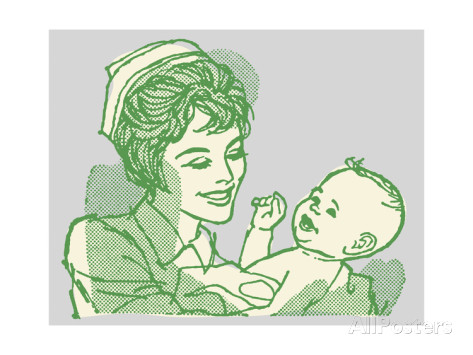
Before their baby was born, Fiona and Brent chose the name John together, but decided to leave the middle name until they had met their son. After the baby was born, the nurse commented that her son was also named John – John Patrick. Later, a wardsmen told them that her father was named John, and his middle name was Patrick too. Patrick was also a name they had considered as either a first or a middle, and the encounters at the hospital confirmed that the right name was

JOHN PATRICK FRANCIS “JOHNNY“,

youngest of three boys and one girl.

John is Fiona’s father’s middle name, and Francis is her grandmother’s maiden name, so her family is very pleased, and her dad terribly excited to have a little namesake. Fiona says her dad’s excitement and happiness has convinced her that they made the right choice.

Congratulations to Fiona and Brent! What a handsome name combination, and lovely name story to pass on.

Celebrity Baby News: Alistair and Yasmin Coe

22 Thursday May 2014

Posted by A.O. in Celebrity Baby News

≈ 4 Comments

Tags

celebrity baby names, honouring, middle names

1400546175157.jpg-300x0

Politician Alistair Coe, and his wife Yasmin, welcomed their first child on May 16, and have named their son Angus Bruce. Angus Coe was born at John James Hospital, weighing 3.2 kg and 50 cm in length. He and his father share the same middle name – and the same initials, ABC.

Alistair is a member of the Liberal Party, and was elected to the Australian Capital Territory Legislative Assembly in the Ginninderra electorate in 2008. He is the deputy leader of the ACT Liberals, and holds several shadow portfolios. Yasmin is in the public service, and she and Alistair were married last year.

Famous Name: Grace

21 Wednesday May 2014

Posted by A.O. in Famous Names

≈ 6 Comments

Tags

British name popularity, classic names, colour names, contemporary classics, english names, famous namesakes, germanic names, Latin names, middle names, mythological names, name history, name meaning, name popularity, New Zealand name popularity, nicknames, popular names, royal names, saints names, theological names, virtue names, vocabulary names

Thumbnail_320

Last month it was the 121st birthday of Grace Cossington Smith, one of the most important Australian artists of the 20th century, and a contemporary of Clarice Beckett.

Grace was born in Sydney, and studied under Antonio Dattilo Rubbo, an inspiring and extremely supportive art teacher who encouraged his students to experiment; he affectionately called Grace “Mrs Van Gogh”. Her painting The Sock Knitter, showing her sister knitting socks for the war effort, is considered to be Australia’s first post-Impressionist painting, and she exhibited in galleries from 1915.

Her paintings are notable for their bright patterns and vibrant energy, using careful square brushstrokes to create images of colour shimmering through sunlight. She painted scenes of Sydney, and is famous for her iconic representations of the Harbour Bridge, showing the bridge’s construction. Grace’s Sydney was bustling, busy, exciting; filled with crowds, colour and sunshine. Later in life, she became known for her still lifes and interiors.

Art museums began buying Grace’s work in the 1940s, but she did not become famous until the 1960s, and in 1973 was appointed an Order of the British Empire as an exhibition of her work toured with the Art Gallery of New South Wales. Grace was 81, and let it be known that she would have welcomed recognition a little earlier. She received her OBE while in a nursing home, and by then was too frail to paint any more.

Grace is an English word which can be understood in several different ways. We might think of grace in terms of physical elegance and poise, but there is also social grace, where a person is charming and well-mannered.

The theological concept of Divine Grace is present in several religions. In Christianity, it means the undeserved love and mercy given to us by God – a gift that allows us a share in divinity. Although there are many theological disagreements, nearly all Christians believe that the grace of God is necessary for salvation, and that it is through divine grace that we are able to resist sin.

The word grace comes from the Latin gratia, meaning “kindness, favour, esteem”, ultimately from an ancient root which means “praise, welcome”. The word is related to grateful. Both the secular and spiritual senses of the word grace have connotations of effortlessness – no matter how many lessons in physical movement or etiquette you might have, you can only appear graceful if it seems natural and easy for you. And the grace of God comes not through our own efforts, but is a gift that we are freely given without earning it.

The English name Grace was not originally linked to either of these meanings, but from a Germanic name Grece, meaning “grey”, and pronounced like Grace. However, it quickly became associated with the Latin Gratia or Gracia, to suggest “charming, pleasant”, and it is thought that women with these names would have been known as Grece or Grace in everyday life.

St Gracia of Lerida may have been an influence on the name’s development; she was the daughter of a Spanish Muslim caliph who converted to Christianity and was martyred in the 12th century. Born Zaida, she took Gracia as her Christian name, and is sometimes known as St Grace. There is also an obscure pre-Norman English saint named Grace connected with St Probus of Cornwall; some speculate that she was his wife, and others that she was a great lady who supported him in his ministry. There doesn’t seem to be any evidence that she ever existed.

In Greek mythology, the Graces are goddesses of charm, beauty, nature, creativity, and fertility, patronesses of amusements and festivities. Despite this seemingly frivolous purview, in some mysterious way they were connected to the Underworld and the secrets of the afterlife – perhaps a taste of the joys which might await us on the other side. In Renaissance art, they are usually depicted as three beautiful young women who are either naked or lightly draped in diaphanous garments, and often embracing each other or clasping hands.

These attractive figures might have influenced the choice of the name Grace from the late Middle Ages, but it is usually thought that after the Reformation, Grace would have been given by Puritans as a virtue name, with the religious meaning in mind.

Grace is a classic name which has never left the charts. It was #29 in the 1900s, left the Top 100 in the 1940s, and reached its lowest point in the 1970s at #373. It then began climbing steeply, around the time of Princess Grace of Monaco’s death, and reached the Top 100 in 1988 at #89.

By 1991, Grace was in the Top 50 at #45, and in the Top 20 by 1998 at #13 – the highest point it had ever gained historically. Grace reached the Top 10 in 2002 at #9, however it did not stay there long, and stabilised just outside the Top 10, where it remains today.

Currently Grace is #12 nationally, #11 in Victoria, #14 in New South Wales, #12 in Queensland, #11 in Western Australia, #9 in Tasmania, #11 in the Northern Territory and #10 in the Australian Capital Territory. Highly popular in all states and territories, it is also a Top 100 name in other English-speaking countries, and is most popular in Northern Ireland and Ireland at #3 and #4 respectively. Its popularity in Britain and New Zealand is much the same as here.

Grace is a true timeless classic; a solid choice as an English name which has never gone out of fashion or fallen into disuse in nearly a thousand years. Yet it is more popular now that it has been at any other time in Australia’s history, making it a contemporary classic which feels both traditional and up-to-date.

Grace is a beautiful name with simple elegance; sophisticated and unpretentious, and even more popular as a middle name. It’s a saint, a princess, a goddess, and millions upon millions of ordinary women throughout the ages. There may be many little girls named Grace, but that’s no reason why your daughter cannot join their ranks. Gracie is a common pet form, and quite a few parents are choosing this as the name on the birth certificate.

POLL RESULT
Grace received an excellent approval rating of 83%, making it one of the highest-rated names of 2014. People saw the name Grace as a beautiful timeless classic (29%), simple yet sophisticated (18%), suitable for all ages (18%), and intelligent and professional (11%). However, 6% thought it was too popular. Nobody thought the name Grace was harsh or ugly.

(Picture shows Church Interior by Grace Cossington Smith, c 1941)


Celebrity Baby News: Hamish Blake and Zoe Foster Blake

12 Monday May 2014

Posted by A.O. in Celebrity Baby News

≈ 2 Comments

Tags

celebrity baby names, choosing baby names, honouring, joke names, middle names

Hamish-Blake-with-Zoe-Foster

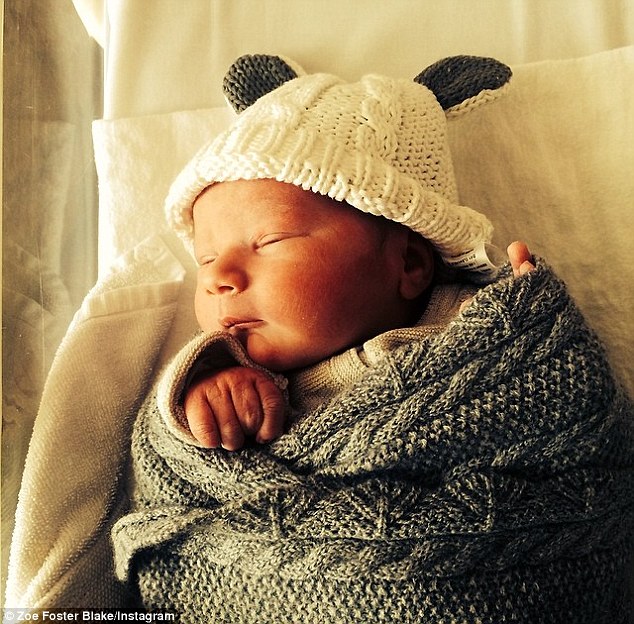
Comedian Hamish Blake, and his wife Zoe Foster Blake, welcomed their first child on May 10 and have named their son Sonny Donald. Sonny Blake shares his middle name with his father.

Hamish has been covered on the blog twice, once for his surname, and again for his first name. Zoe is a writer; her first novel, Air Kisses, was published in 2008, and her fourth, The Wrong Girl was released a few months ago. Zoe is also a blogger on beauty website Fruity Beauty, has written a book of beauty tips called Amazing Face, and has her own skin care range called Go To. She is the dating columnist at Cosmopolitan, and has written a dating and relationship guide called Textbook Romance, with contributions from Hamish. She writes a pop culture column for Sunday Style. Hamish and Zoe were married on December 11 2012, which was Hamish’s birthday.

Zoe and Hamish joked that they had called their baby Dracula Von Sandwich Twinklestar, and back in February, Zoe said in an interview that they still hadn’t decided on names, although there were several they liked and kept changing their minds. She noted that “odd” names are really popular now, and everyone is used to “kooky” names, so whatever name they picked would fit in. She did say they wouldn’t go “really crazy weird” though, as they would be naming an adult rather than a baby.

It sounds as if they were after a name that was “different but not too different”, and Sonny fits the bill, as it is not in the Top 100, but not too far away from it either.

article-2625402-1DBC8AF300000578-49_634x624 (1)

Boys Names from the Top 100 of the 1920s

11 Sunday May 2014

Posted by A.O. in Name Themes and Lists

≈ 7 Comments

Tags

Anglo-Saxon names, aristocratic surnames, classic names, dated names, english names, epithets, famous namesakes, Gaelic names, germanic names, Irish names, locational names, middle names, name history, name meaning, name popularity, name trends, nicknames, Norman-French names, Old English names, Old Norse names, retro names, Roman names, royal names, saints names, Scottish names, surname names, unisex names, Welsh names

161695_medium

Happy Mother’s Day! One of my mum’s favourite hobbies is browsing in antique shops and vintage stores: sometimes you find the most wonderful items in these places, and marvel that we ever stopped making such beauties. On the other hand, sometimes there’s nothing but junk in them. But either way, you get to lose yourself in the past for a while. Here are ten boys names from the 1920s, and I will let you decide whether I have dug up something worthwhile, or whether they should be allowed to lie under dust sheets for a few years longer. 

Athol
Based on the place name Atholl, a district of the Scottish Highlands which means “New Ireland” in Gaelic. One of its towns is named Blair Atholl, and the Duke of Atholl is a member of the Scottish peerage – the only person in Europe legally commanding his own private army, the Atholl Highlanders. Both Sydney and Adelaide have suburbs named Blair Athol; the one in Sydney is named after a historic house. A famous Australian namesake is Athol Guy, from folk group The Seekers – he’s the one with glasses. Athol has been used as a first name since the 18th century, and originates from the Atholl region of Scotland. Athol was #86 in the 1900s, and peaked in the 1910s at #70; by the 1920s it was #72. It left the Top 100 in the 1940s, and hasn’t ranked since the 1950s. Athol unfortunately sounds a lot like the female name Ethel, and can be mispronounced to sound like a rude word (I went to primary school with an Athol, and can testify to this). It might be better suited as a middle name.

Bernard
Germanic name translated as “brave as a bear”. It was brought to England by the Normans, where it replaced the Old English equivalent, Beornheard. There are several saints named Bernard, including St Bernard of Mentone, founder of a famous refuge for pilgrims in the French Alps; the St Bernard dogs used to rescue people are named after him. Another is St Bernard of Clairvaux, who founded the Cistercian Order and is a Doctor of the Church, famed for his eloquence. Two Australian celebrities demonstrate the different ways this name can be pronounced: Bernard Fanning from Powderfinger says his name with the accent on the first syllable, while tennis player Bernard Tomic has his name pronounced with the emphasis on the second. Bernard was #62 in the 1900s, and peaked in the 1920s at #53. It didn’t leave the Top 100 until the 1970s, and last ranked in the 1990s. With more than sixty years in the Top 100, yet never in the Top 50, Bernard seems very usable. It’s a strong, masculine name that is quite funky, and comes with cute nicknames like Bernie, Barney, and Bear.

Herbert
Germanic name translated as “bright army”, and found very early in the form Charibert, who was King of the Franks in the 6th century; his daughter married a king of Kent. The Anglo-Saxons had their own form of the name, Hereberht, and there is a 7th century saint with this name, as well as an obscure French St Herbert. When the Normans conquered England, they brought the name with them, and it replaced the Old English form. Unlike many other medieval names, Herbert managed to remain in use because it is an aristocratic surname – the Herbert family have been Earls of Pembroke in an unbroken line since 1501. The first Earl of Pembroke was a courtier married to the sister of Catherine Parr, one of Henry VIII’s wives, and the present Earl still lives on the estate built by the first Earl. The name Herbert became popular during the 19th century, when Sidney Herbert, the 14th Earl, was a distinguished politician famous for being the most handsome MP of his day. Herbert was #23 in the1900s, and #48 by the 1920s. It left the Top 100 in the 1940s, and hasn’t ranked since the 1960s. I have seen one or two small children named Herbert, and this is one for the serious lover of vintage names, with the nicknames Herb, Herbie, and Bertie.

Ian
Anglicised form of Iain, a modern Scottish Gaelic form of John, derived from the medieval Irish name Eoin. Both Iain and Ian date from the 19th century, and it is not impossible that Iain was an attempt to Gaelicise English Ian. Ian was #128 in the 1900s, and joined the Top 100 the following decade. It was #57 in the 1920s, and peaked in the 1950s at #10. It didn’t leave the Top 100 until the 1990s, and is currently stable in the mid-200s. This makes Ian a very safe choice – it’s a classic which was popular for eighty years, and is still in reasonable use.

Lloyd
English form of the Welsh Llwyd, commonly translated as “grey”, which in practice referred to various shades of brown in different contexts, and white, in the sense of grey hair being white. Although Llwyd was sometimes used as a personal name, it became better known as an epithet, which came to describe someone with mouse-brown hair, and then developed into a surname. By this stage, the original meaning of “grey” was pretty much lost, and it was understood as “brown-haired”. The word llwyd could also be understood as meaning “holy, blessed”, although this doesn’t seem to have contributed to the surname. In Britain, Lloyd has some heavy-duty business clout, due to Lloyds Bank, and the insurance market Lloyd’s of London. Use of the name may have been boosted by David Lloyd George, Britain’s only Welsh Prime Minister. Lloyd was #148 in the 1900s, and peaked in the 1910s at #80. By the 1920s it was #91, and it left the Top 100 the following decade. However, the name Lloyd continued to chart until the late 2000s. It’s still in occasional use, and I see it quite often as a middle name in birth notices. Lloyd may be a little clunky, but it’s not an outrageous choice.

Ross
A region in north-west Scotland, said to mean “headland” in Gaelic, perhaps referring to the Black Isle, a peninsula in the Scottish Highlands. Another possibility is that it means “horse island” in Old Norse, in reference to the island of Orkney. The Scottish surname Ross originates from this area. However, the surname has English roots too, because there are places in England named Ross, with the meaning “headland”, and Rozzo was an Anglo-Saxon name meaning “fame” (related to the name Rose). The Rosses were a large Yorkshire family who came over with William the Conqueror from the village of Ros in Normandy (the name means “red’); in the Middle Ages they bought up large tracts of Ayrshire, so their surname also became Scottish. Ross has been used as a personal name since at least the 16th century, and first used in England rather than Scotland. Ross was #203 for the 1900s, and hit the Top 100 in the 1920s at #75. It peaked in the 1950s at #37, didn’t leave the Top 100 until the 1980s, and still ranked in the late 2000s. Ross is fairly common in the middle, and wouldn’t be too surprising up front.

Roy
Anglicised form of Ruadh, a Gaelic name meaning “red”, often used as a nickname for someone with red hair. One of the most famous bearers is Scottish outlaw Raibeart Ruadh MacGriogair, known in English as Rob Roy MacGregor. His story was turned into a best-selling novel by Sir Walter Scott, and Liam Neeson starred in a film about him. The name can also be derived from the surname, which can be from Ruadh, but also from Norman-French Roi, meaning “king”. This could be used as a nickname, but was a medieval personal name as well. Roy was #25 in the 1900s, and #34 by the 1920s. It left the Top 100 in the 1950s, and reached its lowest point in 2010 with a ranking of 0. Since then, Roy has begun to pick up steam, and has become rather fashionable, along with similar names like Royce, Elroy and Leroy. This classic is once again on trend.

Sidney
Aristocratic surname which probably comes from a place name meaning “at the water-meadows” in Old English. However, folk etymology derives it from the French Saint-Denis, a suburb of Paris named after the city’s first bishop. The Sidney family became prominent during the Tudor period; Sir William Sidney was squire to Henry VIII. Sir William’s grandson was poet Sir Philip Sidney, famous for creating the name Stella. The story goes he had a noble and gallant death, for as he lay dying in battle, he gave his water to another wounded soldier, with the words, “Thy necessity is yet greater than mine”. Sir Philip’s great-nephew was Algernon Sidney, a 17th century republican executed for treason, and afterwards revered as a heroic patriot and martyr. Although Sidney had been used as a first name since the 16th century, it became much more popular in the United States during the 18th and 19th, because Algernon Sidney’s anti-monarchist views were highly influential to the American conception of liberty. Although it has charted for both sexes in the US, in Australia Sidney has only charted as a male name. Sidney was #48 in the 1900s, and peaked in the 1910s at #47; by the 1920s it was #63. It left the Top 100 in the 1940s, and dropped from the charts in the 1980s. However, it ranked again in the late 2000s at #450, and has been gently increasing. This retro name is back in style, along with its short form, Sid.

Terence
English form of the Roman family name Terentius, of unknown meaning. The Roman comic playwright we call Terence was named Publius Terentius Afer, and he was a slave (probably from Libya) of a Roman senator from the Terentius family, who educated him, and later freed him; he adopted the name Terentius after gaining his freedom. There are several saints we call Terence, although most of them were named things like Terentianus, Terentian, or Tertius. Terence has been used as an English name since the 17th century, and in Ireland was used to Anglicise the name Toirdhealbhach, meaning “instigator”. Terence was #141 for the 1900s, and joined the Top 100 in the 1920s at #71. It peaked in the 1940s at #30, and left the Top 100 in the 1960s. It hasn’t ranked since the 1990s, but Terence still seems usable, and could be seen as either a “posh” choice or an Irish one.

Wallace
English surname derived from the Norman French waleis, meaning “foreigner”. Although often translated as “Welsh”, the word waleis could refer to someone from Wales, or from the English counties bordering Wales, or to Cornish Celts, or to Bretons who came to England after the Norman Conquest and settled in East Anglia. The surname became associated with Scotland because of the early medieval Kingdom of Strathclyde, which straddled northern England and southern Scotland. The people of Strathclyde spoke Cumbric, a British language closely related to Old Welsh, and were known as walensis. Even after becoming part of Scotland, it remained a distinctive area into the 12th century. The surname is famous because of Sir William Wallace, a commander during the 13th century Wars of Scottish Independence who has become an iconic Scottish national hero. There have been many books and poems written about Wallace’s exploits, and he features in the film Braveheart, played by Mel Gibson. Wallace has been used as a first name since the 17th century, and originates from Scotland. Wallace was #74 for the 1900s, and peaked in the 1920s at #68. It left the Top 100 in the 1940s, and hasn’t ranked since the 1950s. Wallace really deserves to make a comeback, and the nicknames Wally and Wal are cute.

POLL RESULTS
The public’s favourite names were Sidney, Wallace and Ian, and their least favourite were Terence, Athol and Herbert.

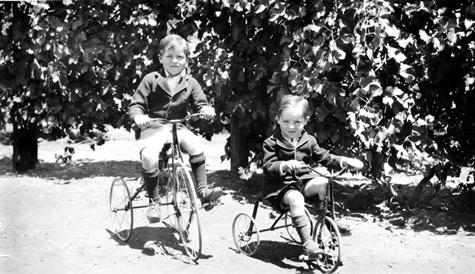
(Picture shows two boys riding their tricycles amongst grape vines in Mildura, Victoria in the 1920s; photo from Museum Victoria)

Can You Help This Mum Find Some Baby Name Inspiration?

03 Saturday May 2014

Posted by A.O. in Naming Assistance

≈ 9 Comments

Tags

baby name websites, choosing baby names, classic names, honouring, Laura Wattenberg, middle names, name popularity, nicknames, Nymbler, sibsets, The Baby Name Wizard

images

Elizabeth and Thomas are expecting their second child later this month, but are yet to seriously discuss names. They already have a little boy named Xavier, but Elizabeth isn’t too fussed about “sibset flow” – she just wants the children to have names they like.

What they would like in a name

  • Not extremely popular
  • Not very uncommon
  • No unusual spellings
  • A name that can stand the test of time, and suit an adult as well as a child
  • Elizabeth would most like a classic or traditional name, combined with a more modern or contemporary middle, such as Zali or Eden

Names currently being considered
Girls: Grace or Kate, with Olive or Victoria as the middle name. Elizabeth loves the name Zara, but Thomas isn’t convinced.
Boys: Elizabeth really likes the name Jack, but believes it is too popular. She likes Ned, Ted, and Sam, but isn’t 100% sold on them. They earlier considered the name Lenny, but weren’t sure they could love it forever as much as they did initially. They may use the family name Geoffrey as the middle name.

Names that have been crossed off the list
Girls: Maggie
Boys: Elizabeth has crossed off Harry and Charlie, and Thomas has crossed off Ben, Benjamin, Clancy and Chas. Noah and Joe are also off the list.

The family surname begins with M and ends with R with an L sound in it eg Marler. Because of this, they have eliminated Amelia as a possibility, and any two-syllable name ending with -la, such as Ella or Layla. Elizabeth loves alliterative names, and would be happy with a name starting with M.

Elizabeth is feeling quite stuck in regard to name inspiration, and is hoping blog readers can help her out with some ideas. She wishes she could just have a list of names in front of her, so she could tick or cross off ones she likes or doesn’t.

* * * * * * * * * *

Elizabeth, when you said you would like a list of names that you could either say Yes or No to, that reminded me of the Nymbler website, run by Laura Wattenberg of the Baby Name Wizard.

To use it, you choose up to six names you like as your name inspirations, and then press Find Names – you can also select boy or girl names, or both. Once you receive your list of names, you can either save the names you like by pressing the heart symbol, or you can block the ones you dislike so you won’t see them again. I find the longer you go on from the same set of names, the more crazy and random the name suggestions get.

Another online tool that is a bit more focused is the Baby Name Expert on Behind the Name. You have to register to use the site (it’s free), and then you will find it under the Tools menu. You select a gender, and the country you are from (Australia is included), and then it starts suggesting names at random.

At this point, you can tell the BNE that you love the name, and save it to your list. Or you can tell it that the name is okay, and the reasons that you don’t mind it. Or you can give it the flick, and explain why this name is completely wrong for you.

Each time you either save, okay, or ditch a name, you will receive suggestions based on your preferences. Unlike Nymbler, the longer you use this app, the more focused and sensible the suggestions tend to get, and it’s very fast to move from one name to the next.

Anyway, that’s two methods of getting a long list of names that you can tick or cross off. It might be fun to do this with Thomas, so you can choose names together, and discuss your preferences. Or if he finds this kind of thing boring or stressful, it’s a way to immediately get a list of names you like that he can either agree to or nix in his own time.

I can’t give you hundreds of name ideas, but I did notice that all the names you chose were short and simple. You seem to like sensible, wholesome names for girls, like Grace and Kate, with maybe something more elaborate, trendy, retro, or modern in the middle. For boys, you seem to like cute, nicknamey names like Jack, Ned, Ted, Sam, or Lenny.

Girls names that reminded me a bit of Grace and Kate include

  • Alice
  • April
  • Audrey
  • Bonnie
  • Claire
  • Daisy
  • Hope
  • Ivy
  • Lucy
  • Maisie
  • Rose
  • Zoe

Possible middle names could be

  • Aria
  • Clementine
  • Eleanor
  • Eloise
  • June
  • Pearl
  • Penelope
  • Tess
  • Sadie
  • Scarlett
  • Susannah
  • Vivienne

Cute boys names could be names like

  • Alfie
  • Digby
  • Finn
  • Freddie
  • Gus
  • Jed
  • Jem
  • Kit
  • Mack
  • Nico
  • Rafe
  • Roy
  • Sid
  • Sonny
  • Toby
  • Vince

It seems as if you have already picked out nice names though – Grace and Kate are perfect, and Grace Victoria or Kate Victoria is quite regal.

There are several boy’s names you like, but you don’t seem ready to commit to any of them yet. I wonder whether you just need more time, or need to meet your baby first before you decide? Or maybe you’d prefer choosing a formal name for the birth certificate, with a nickname for everyday use, like Edward nn “Ned”, or Theodore nn “Ted”, or Lennox nn “Lenny”.

I know you are getting close to your due date, but don’t let that panic you. Take some time to get a list of names that you and Thomas like – names that you can imagine calling your child, and that fits in with your lifestyle. You don’t need to decide on one until after the baby is born, and if you still don’t have a name, you have weeks after the birth to choose one.

Good luck Elizabeth – for some reason I feel as if you are closer to finding a baby name than you think, even if you end up with something completely different than the names you are considering. Do let us know what name you choose for your baby once she or he arrives!

NAME UPDATE: The baby’s name is Patrick!

Famous Name: Digger

30 Wednesday Apr 2014

Posted by A.O. in Famous Names

≈ 5 Comments

Tags

Australian slang terms, birth notices, birth registries, choosing baby names, controversial names, english names, historical records, middle names, military terms, name history, name meaning, nicknames, vocabulary names


4120733_origLast Friday it was Anzac Day, marking 99 years since the landing at Anzac Cove for the Gallipoli Campaign. One of the enduring military terms from the conflict, still very much in use today, is Digger, to refer to an Australian soldier who has seen active service. More than that, the word is patriotic, symbolising a particular type of Australian-ness that is rugged, resilient, and resourceful.

The word Digger has a relatively long history in Australia, dating to the goldfields of the 1850s to refer to miners. Already it had an aura to it, for the Diggers of the Eureka Stockade were a powerful symbol of grass-roots democracy. A Digger was not only tough enough to thrive in the harsh conditions of the goldfields, he was ready to stand up for his mates and resist oppressive authority. Furthermore, the blue work clothes of the miners which were used to make the Eureka Flag were part of the inspiration for the phrase “true blue Australian” – the working man who fought for his rights.

How the word became used for the Anzacs is a matter of some debate. It is documented that British commander General Ian Hamilton urged the Anzac leader William Birdwood, You have got through the difficult business [of landing], now you have only to dig, dig, dig until you are safe. This advice was handed down through the ranks, and official war historian Charles Bean believed that it was the troop’s dry sense of humour which led them to refer to themselves as Diggers.

Another view is that the word came into use even before Australians reached Gallipoli. A former soldier recalled an occasion when Birdwood addressed the men of the 11th Battalion near Cairo, in preparation for the landings on Gallipoli. Birdwood warned the troops that they had to be good diggers and good soldiers. The soldier insisted that the term caught on from that point, and it seems likely that the impetus to dig and tunnel at Gallipoli made the term more widespread.

Australians must have gained a reputation for their digging, because in 1915 it was reported of Australian soldiers in Gallipoli, They are the best trench diggers in the [British] Army. They work like bullocks, fight like tigers … yet are so cheerful and work together like old pals.

Although Digger may have originated as a military term at Gallipoli, it first came into prominence in 1916 on the Western Front, possibly following a speech by Brigadier James Cannan, commander of the 11th Brigade, about the digging prowess of the 44th Battalion in the trenches of northern France, who were then derisively labelled the diggers. Many of these men had been miners in the Western Australian goldfields before enlisting, so these miners-turned-soldiers may be a direct connection between the use of Digger for miners, and for soldiers.

By mid-1917, Digger was in wide use amongst Australian soldiers, and became the accepted mode of address for the Anzacs. While Australian and New Zealand soldiers called each other Digger, the British called only the Australians Diggers, and the New Zealanders Kiwis. (One soldier wrote home from France: … the name Digger came from the Tommies [British], who think we Australians are all miners or cowboys.)

Digger was already recognised in Australia as a term for miners, and already part of the Australian image. This might explain why Australians so warmly embraced the word, and why it became such a vital part of the Anzac identity.

After the war, the word Digger became part of the Anzac legend, embodying the qualities of endurance, courage, ingenuity, good humour, and mateship. Many Australians who had served in the war were nicknamed Digger, and Prime Minister Billy Hughes was proud that he had been called “The Little Digger” by the troops. There was an entertainment troupe of Australian and New Zealander World War I veterans called The Diggers. They went on to make several “Digger” films, which received poor reviews from the critics, but were popular with audiences, especially in rural areas. It was even suggested in Parliament that that the rank of Private in the Australian Army should be re-named Digger.

Digger can often be found as a name in Australian records, yet rarely as an official baby name. Digger has been commonly used as a nickname, not only by returned servicemen, but on children as well. Despite this, I could only find Digger on a very few birth records, and each time only as a middle name. (There was a baby in the Birth Announcements with Digger as his middle name too).

It’s interesting that while we are apparently very happy to call men and boys Digger, there doesn’t seem much evidence of us putting it down on the birth certificate as a first name. I wonder if parents worry it will seem disrespectful to Australian soldiers or the Anzacs, or if they have even been dissuaded at the birth registry. A little while ago, I received an e-mail from someone who was considering the name Digger for her baby – did they choose the name in the end?

I think Digger seems cute yet masculine as a name, and it shouldn’t be forgotten that it can be used as an endearment, like mate or cobber – nor that the word was in use even before World War I. Some may find the name quite heavily value-laden in Australian society, perhaps too heavily.

I have read this definition of the Digger: “A man for whom freedom, comradeship, a wide tolerance, and a strong sense of the innate worth of man, count for more than all the kingdoms of the world, and the glory in them.” That’s quite a big meaning for a name to carry, but what a magnificent meaning for your son’s name to hold.

POLL RESULT
Digger received an approval rating of 35%. 28% of people thought it was only suitable as a nickname, but 21% saw it as uniquely Australian.

(Photo shows Western Australian miners who enlisted in 1916).

← Older posts
Newer posts →

Enter your email address to follow this blog

Categories

Archives

Recent Comments

A.O.'s avatarwaltzingmorethanmati… on Zarah Zaynab and Wolfgang…
Madelyn's avatarMadelyn on Zarah Zaynab and Wolfgang…
JD's avatardrperegrine on Can Phoebe Complete This …
A.O.'s avatarwaltzingmorethanmati… on Rua and Rhoa
redrover23's avatarredrover23 on Rua and Rhoa

Blogroll

  • Appellation Mountain
  • Baby Name Pondering
  • Babynamelover's Blog
  • British Baby Names
  • Clare's Name News
  • For Real Baby Names
  • Geek Baby Names
  • Name Candy
  • Nameberry
  • Nancy's Baby Names
  • Ren's Baby Name Blog
  • Sancta Nomina
  • Swistle: Baby Names
  • The Art of Naming
  • The Baby Name Wizard
  • The Beauty of Names
  • Tulip By Any Name

RSS Feed

  • RSS - Posts

RSS Posts

  • Celebrity Baby News: Melanie Vallejo and Matt Kingston
  • Names from the TV Show “Cleverman”
  • Can Phoebe Complete This Sibset?
  • Zarah Zaynab and Wolfgang Winter
  • Baby, How Did You Get That Name?
  • Celebrity Baby News: Media Babies
  • Celebrity Baby News: Adelaide Crows Babies
  • Celebrity Baby News: Chris and Rebecca Judd
  • Names at Work: Name News From the World of Business and Employment
  • Celebrity Baby News: Sporting Round Up

Currently Popular

  • Celebrity Baby News: Alisa Camplin and Oliver Warner
  • Rare Boys Names From the 1950s
  • Sad Celebrity Baby News (contents may cause distress)
  • The Top 100 Names of the 1930s in New South Wales
  • The Top 100 Names of the 1940s in New South Wales

Tags

celebrity baby names celebrity sibsets english names famous namesakes fictional namesakes honouring locational names middle names name combinations name history name meaning name popularity name trends nicknames popular names saints names sibsets surname names twin sets unisex names

Blog at WordPress.com.

Privacy & Cookies: This site uses cookies. By continuing to use this website, you agree to their use.
To find out more, including how to control cookies, see here: Cookie Policy
  • Subscribe Subscribed
    • Waltzing More Than Matilda
    • Join 517 other subscribers
    • Already have a WordPress.com account? Log in now.
    • Waltzing More Than Matilda
    • Subscribe Subscribed
    • Sign up
    • Log in
    • Report this content
    • View site in Reader
    • Manage subscriptions
    • Collapse this bar
 

Loading Comments...