• About
  • Best Baby Names
  • Celebrity Baby Names
  • Celebrity Baby Names – Current
  • Celebrity Baby Names – Past
  • Featured Boys Names
  • Featured Girls Names
  • Featured Unisex Names
  • Links to Name Data
  • Waltzing on the Web

Waltzing More Than Matilda

~ Names with an Australian Bias of Democratic Temper

Waltzing More Than Matilda

Tag Archives: historical records

Australian Beaches That Could be Used as Girls Names

30 Sunday Dec 2012

Posted by A.O. in Name Themes and Lists

≈ 8 Comments

Tags

Albanian words, animal names, Australian Aboriginal names, Bonds Baby Search, celebrity baby names, code names, english names, ethnonyms, famous namesakes, fictional namesakes, French names, Gaelic names, historical records, Italian names, Latin words, literary names, locational names, meteorological names, middle names, mythological names, name history, name meaning, name popularity, names from movies, names in songs, names of rivers, Native American names, nature names, nicknames, Polish names, retro names, Robert Louis Stevenson, Russian names, Scottish names, season names, Slavic names, spiritual concepts, surname names, unisex names, vintage names, vocabulary names

morningtideYou may have noticed that all the names that have been featured on the blog since the weather got warmer have had some connection with water or the sea. With summer holidays upon us, it is only fitting that the last Name List for the year is one of Australian beach names.

Airlie

The town of Airlie Beach in the Whitsunday region of north Queensland is a popular tourist destination and one of the departure points for the Great Barrier Reef. Because James Cook thought he arrived here on Whitsunday, every year there is a Blessing of the Fleet on Whitsunday (Pentecost) – although Cook almost certainly got the day wrong and it was really Whitmonday. The town’s beach is quite small, and infested by sea wasps, the most lethal jellyfish in the world. For the convenience of those wishing to avoid a painful death, a swimming lagoon has been built on the foreshore. The town is named after Airlie in Scotland, the seat of the Earl of Airlie. Airlie Castle is referenced in the ballad, The Bonnie House o’ Airlie, and mentioned in Robert Louis Stevenson’s novel, Kidnapped. The meaning is not known, although it’s possibly from the Gaelic for “edge of a ridge”. Airlie is a name reasonably well-known in Australia, although rare elsewhere; there’s ABC presenter Airlie Ward, hockey player Airlie Ogilvie, policy analyst Dr Airlie Worrall, and actress Airlie Dodds. This is a modern name with ties to Scottish history, and would be a great choice if Airlie Beach is meaningful to you.

Bondi

Bondi Beach is extremely popular with locals and tourists alike, one of Sydney’s iconic destinations, and heritage listed. In the fashionable eastern suburbs, it’s a place to see and be seen, lined with hotels, cafes and restaurants from where you can view the beach and beachgoers. Bondi has always had a reputation for showing a lot of flesh, and in stricter times the American actress Jean Parker was booted off it for wearing a bikini. These days topless bathing is common on Bondi. If almost-naked humans aren’t your thing, there is always the chance of seeing dolphins, fairy penguins, and in season, whales. Bondi Beach has many cultural events, including the annual City to Surf charity run, and it stars in TV shows such as Bondi Rescue and Bondi Vet. The name Bondi (said BON-dye) is said to be from boondi, a local Aboriginal word meaning “sound of water breaking over rocks”. The rare use of this name in records may be from the Italian surname Bondi (said bon-DEE), meaning “good day”. I saw a baby girl named Bondi in this year’s Bonds Baby Search. This is an unusual choice, but rather patriotic, and seems ideal for beach-loving Sydneysiders.

Etty

Etty Bay is a picturesque little bay in far north Queensland; the nearest town is Innisfail. Enclosed by rainforest filled with wildlife, it attracts bushwalkers, birdwatchers and picnickers, and is known as one of the best places to see endangered cassowary birds in the wild – cassowaries are large flightless birds around six feet tall. Etty Beach is considered safe for swimming, as long as you avoid saltwater crocodiles and deadly jellyfish. Etty is a pet form of names such as Esther, Ethel, Henrietta and Harriet, and was most common in the nineteenth and early twentieth centuries. With Etta tipped as the next retro-chic name, and Arrietty from The Borrowers receiving notice, Etty seems not only cute and usable, but positively stylish. It fits in with other vintage nicknames such as Elsie, Hattie and Millie.

Miami

Miami is a suburb of the Gold Coast which was first developed in the 1920s to entice tourists, and is still a popular place for people to visit. Its clean sandy surf beach make it a favourite destination for family holidays. It is named after Miami in Florida, as being somewhere else that’s hot, humid and beachy – during the 1920s, Miami enjoyed such prosperity and growth that it was dubbed “The Magic City”. This success the Queensland developers no doubt hoped to emulate. The city of Miami was named after the Miami River, and this in turn was named for the Native American people called the Maiyami. They took their name from the lake they lived by (later known as Lake Okeechobee); the name simply means “big water”. Miami is a name I see sometimes on little girls, and its not only an American place name, but an Australian one as well. It fits in with popular names such as Mia, Maya and Amy.

Pippi

The town of Yamba in northern New South Wales lies at the mouth of the Clarence River, and boasts eleven beaches, including Pippi. It’s primarily known for surfing, and the Pippi Beach Classic is a surfing event held here each January. At one end of the beach is the enticingly-named Lovers Point, and from here is an easy walk up to a rock shelf which gives magnificent views of the sea. Dolphins are plentiful, and whales can be seen during winter and early spring. Pippi Beach is named after the pippis or pipis which can be found here – small edible clams which are often used for fish bait. You may recall that John Sutton, co-captain of the South Sydney Rabbitohs team in the NRL, welcomed a daughter named Pippi last year. As John is a keen surfer, I wondered if Pippi Sutton may have been named after this popular surf beach. You probably also know the name from the Pippi Longstocking books by Astrid Lindgren – the character’s name was invented by Mrs Lindgren’s nine-year-old daughter, Karin. You can see Pippi as short for Phillipa, and if Pippa or Piper delight you, yet seem too common, then sprightly Pippi may fit the bill.

Rainbow

Rainbow Beach is a small town in southern Queensland which was once a centre for sand-mining, but is now a popular tourist destination with an attractive beach and many bushwalking tracks. The town get its name from the brilliant coloured sand dunes which surround it. According to a local Aboriginal legend, the dunes received their colours when the spirit of the rainbow plunged into the cliffs after coming off second-best in battle. More prosaically, the colours stem from the sand’s rich mineral content. The evanescent beauty of rainbows have made them part of mythology for many thousands of years. Both Greek and Norse myth saw the rainbow as a path between heaven and earth; in Irish folklore there is a pot of gold at the end of the rainbow; and in the familiar story of Noah and the Ark from the Old Testament, the rainbow is a sign of God’s promise to never destroy the earth again. In Australian Aboriginal mythology, the rainbow serpent is of great significance and power, creating and marking the earth’s territories, and controlling its water resources. The subject of artists, singers and poets, the stuff of hopes and dreams, the rainbow has long been used as a symbol of social change. The striking name Rainbow is not that rare in old records, and used for both sexes, but is most common as a middle name.

Trinity

Trinity Beach is a suburb of Cairns in far north Queensland; the city lies on Trinity Bay, which is where the suburb gets its name. Captain James Cook named it on his 1770 voyage, as he arrived there on Trinity Sunday, which is the first Sunday after Pentecost (hopefully he had his dates sorted out by this stage). It is a festival to celebrate the Holy Trinity of the three Persons of God: Father, Son, and Holy Spirit. Although the Holy Trinity is a Christian concept, the idea of a triple deity is found in several religions. The name Trinity was used from the 17th century, and was given to both sexes, in honour of the Holy Trinity. In recent years, it has gained a sci-fi image, for there has not only been a cult science-fiction film called Trinity, but Trinity is the love interest in The Matrix movie series, and Trinity Wells a newsreader in Doctor Who, Torchwood and The Sarah Jane Adventures. More ominously, the Trinity Test was the code name for the first detonation of a nuclear bomb in 1945, heralding the start of the Atomic Age.

Vera

Vera View Beach is just north of famous Cottlesloe Beach, in Perth, Western Australia. It isn’t one you will see promoted as a major tourist destination; not the most stunning beach in the world, it nonetheless makes a pleasant walk from the main beach, and is near the main cafe strip. It is also a good place to go snorkelling, as there a small reef nearby teeming with sea life. The beach’s name comes from the fact that it is near Vera View Parade in Cottlesloe. Vera is a Russian name which means “faith”; we tend to be struck by its similarity to the Latin for “truth”, while Albanians notice that it sounds like their word for “spring”. Vera was #15 in the 1900s, and by the 1940s was out of the Top 100. It ceased to chart in the 1980s, but has very recently made a comeback, and was #626 in 2011. Its image was severely dented by the sour-faced prison guard, Vera “Vinegar Tits” Bennett, in the 1970s-80s TV series, Prisoner (no wonder it disappeared from the charts then). However, with simple old names firmly back in fashion, and the V sound becoming increasingly popular, retro Vera could do very well.

Vivonne

Vivonne Bay is on Kangaroo Island in South Australia; the island is off the coast of Cape Jervis. The pristine beach at Vivonne Bay is several kilometres long, and popular for surfing and fishing. There is a tiny town of Vivonne beside the bay. Vivonne Bay was named by the French explorer Nicolas Baudin, who came here in 1803. He was the first to map the western and southern coasts of Australia, and his expedition was a great success, discovering more than 2500 new species and meeting the Indigenous people of Australia. Apparently his expedition harboured a spy – one of his men prepared a report for Napoleon on how to invade and capture the British colony in Sydney Cove, but recommended not to. Baudin died of TB in Mauritius on the way home. He named Vivonne Bay after the French town of Vivonne, near Poitiers (or the aristocratic surname which comes from the town – the town’s name comes from the nearby river Vonne). Readers of Marcel Proust will remember he used the name Vivonne for the river in Swann’s Way. I think this name is pretty, and seems like a cross between Vivienne and Yvonne. It’s different, but not too different.

Wanda

Wanda Beach lies on Bate Bay in the suburb of Cronulla; this is in Sutherland shire, in the southern districts of Sydney. Wanda has a dark past, because there were two murders here in 1965. Two teenage girls, Marianne Schmidt and Christine Sharrock, best friends and neighbours, disappeared at Wanda Beach while on a picnic, and their bodies, partially covered in sand, were found the next day. The murder is still unsolved. Wanda Beach gets its name from an Aboriginal word, wanda, said to mean “beach” or “sand dunes”. Wanda is also a Polish name; there is a medieval Polish legend about a Princess Wanda, and the name was popularised in the English-speaking world by English author Ouida’s 1883 novel, Wanda. The name may come from the West Slavic people known as the Wends; their name possibly means “tribe, kinship, alliance”, ultimately from an ancient word for “love, desire”, and related to the name Venus.

(Photo shows the morning tide coming in at Etty Bay)
The Historical Naming of British Monarchs

23 Sunday Dec 2012

Posted by A.O. in Naming Issues

≈ 11 Comments

Tags

choosing baby names, famous namesakes, historical records, honouring, Mer de Noms, middle names, names of piercings, Nook of Names, regnal names, Robin Hood, royal names, royal naming traditions, saints names, You Can't Call It "It"!

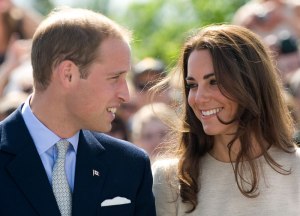
william-kate-canada-love5With the announcement early this month that Prince William and the Duchess of Cambridge are expecting their first child, the baby name blogosphere went slightly gaga. A few people even had a go at predicting the name of the royal baby, with Lou at Mer de Noms and Elisabeth at You Can’t Call It “It”! doing a great job. Of course, Kay at Nook of Names got a jump on all of us, and did her excellent analysis more than a year ago.

I’m going to admit right now that I don’t know what the royal baby will be named, and I can’t guess. I haven’t even been able to guess the baby names chosen by family and close friends, and these are people I know well.

But what I can do is to look at the names of the ruling monarchs of Britain and England (back to William the Conqueror), see how they were named, and then see what the royal baby might be called if the same principles were applied this time. As this gives a wide selection of choice, I have eliminated those names which seem  unlikely as they are still in use by other members of the royal family who have the title Prince or Princess, or which are too obviously “foreign”.

Although this doesn’t actually tell us what the baby will be called, as I studied the names of past monarchs, a few things stood out as to how they weren’t named.

  • Monarchs could be named for someone from several generations back, but almost none were named after a ruler from long ago in history. This makes the idea that the royal baby might be named after someone from many hundreds of years ago, such as Edmund or Matilda, seem rather fanciful.
  • Apart from being named after one of their parents, monarchs were almost never named after a relative who was still alive. For the baby princess to be named Elizabeth, for example, is by no means impossible, but would be historically unusual.
  • The Duchess of Cambridge is not the only commoner to marry a British royal, as the mother of Queen Anne was one. Although royal babies could be named after their commoner mother, they were not named after her relatives. If the royal baby is named after one of the Middletons, it would be a genuine break with tradition, and a sign we have entered a new age.
  • Only one female monarch was given a feminine form of a man’s name, with Queen Victoria named Alexandrina after her godfather, Alexander I of Russia (she didn’t keep the name after she became queen). The idea that the princess could be named Charlotte after Prince Charles, or Phillipa after Prince Phillip, would thus be a very unusual one.
  • The most obvious: nearly all English and British monarchs are named after a relative. The only two I could find who weren’t were Edward I and John. Edward I was named after Saint Edward the Confessor, which was considered wildly eccentric at the time, although Edward is now a traditional royal name. John was named after St. John the Baptist. Very much a younger son, he was not expected to rule, and interestingly his name was shunned by subsequent royalty – there was never a John II.
  • Apart from the occasional deceased uncle or foreign godparent, monarchs were nearly all named after a direct ancestor – a parent, grandparent or great-grandparent, for example. It’s fun looking through the royal family tree and wondering if the royal baby might be given the name of a great-great-great-aunt, or one of Queen Victoria’s sons, but this seems a very distant hope.

Now, with our expectations in check, let’s see what names are available, if we follow history.

POTENTIAL PRINCESSES

Alice

This seems to be almost everyone’s #1 choice for a baby princess, who would be named after her great-great grandmother, Princess Alice of Battenberg, the mother of Prince Philip. There have been four British princesses named Alice, but no queens – in fact, there are many more Queen Alices in fiction than in real life, giving this sweet name a distinct fairy-tale quality on a modern-day monarch.

Elizabeth

Elizabeth is seen as a front-runner, presumably because it’s thought Queen Elizabeth would happily endorse a tiny namesake. Princess Elizabeth would be named after both her great-grandmother and great-great grandmother, and as a bonus, Elizabeth is the middle name of the Duchess of Cambridge. There have been five English queens named Elizabeth, two of them rulers in their own right, and one Scottish Queen Elizabeth. However, as Queen Elizabeth II is still alive, this would be a historically unusual choice.

Diana

The favourite choice of the gossip magazines, and the name of the baby’s grandmother. When the royal couple visited our region, they were asked in an interview if they would call their first daughter Diana, and William said it would be one of her middle names. I actually think it would be nice if Diana was left for Prince Harry to use for his daughter’s first name, since Prince William got his mother’s engagement ring.

Mary

A solid choice that many are tipping, with the princess to be named after her great-great-great-great grandmother, Mary of Teck. There have been six British princesses named Mary, and four queens, two of them rulers; it’s also been used amongst Scottish royalty. Historically speaking, Mary stacks up extremely well.

Victoria

Another favourite choice for the baby princess, who would be named after her great-great-great-great-great grandmother, Queen Victoria. There has only ever been one queen with this name, but eight British princesses called Victoria – in fact it’s the birth name of Alice of Battenberg. A Victoria II would probably go down well with the British populace, although the Crown Princess of Sweden (related to the royal family) will be one day be Queen Victoria as well.

Catherine

Few seem enthusiastic about a baby Princess Catherine, but historically, it’s the most likely option. Eighteen monarchs have been named after a parent, and of the three queens who have ruled Britain, two of them were named after their mother – and the third one took her mother’s name, Victoria, as her regnal name. Queen Elizabeth II herself is named after her mother, Lady Elizabeth Bowes-Lyons. There have been five English queens named Catherine, and at least one of them, Catherine of Aragon, was deeply loved by her subjects.

Margaret

Margaret is a name from Scottish royalty, and a medieval Queen Margaret is one of the patron saints of Scotland. There has been only one English Queen Margaret, and she came to a sad end. A Princess Margaret would be named after Queen Elizabeth’s sister, and I somehow feel that this namesake, who attracted much scandal (whether deserved or not), would not be a help. However, one of Prince Philip’s sisters was named Margarita, and this is the English form of her name too.

Charlotte

A Princess Charlotte would be named after her great-great-great-great-great grandmother, Princess Charlotte of Denmark, whose birth name was Louise. There have been two British princesses called Charlotte; one of them went on to become a queen, but not of Britain. Lady Diana’s brother Charles had a daughter named Charlotte last year, who will be the royal baby’s second-cousin.

Henrietta

Queen Victoria is the only ruling queen to be named after a man – her godfather. We don’t know who will be the royal baby’s godfather, but traditionally the best man from the wedding is chosen as one of them, which makes Prince Harry a shoo-in. Could the princess be given the feminine form of his name? Unlikely, although there has been both a Queen and Princess Henrietta of Britain.

Augusta

A Princess Augusta would be named after her great-great-great-great-great grandmother, Princess Augusta of Hesse-Kassel (who was married to a Duke of Cambridge). There have been five British princesses named Augusta, and although a few of them were in line to one day become queen, by mischance none of them made it that far, giving this name an unlucky feeling for a monarch. This seems very unlikely as a possible royal baby name.

POSSIBLE PRINCES

George

Everyone’s #1 choice for a prince, and you can see why. It’s not only a traditional royal name, held by six British kings and three princes, but also one of the patron saints of England. Prince George could be named in honour of his great-great grandfather, King George VI, although that monarch’s birth name was Albert. The name is also a traditional one in the Spencer family, and Prince William has a cousin named George on the Spencer side, as well as a relative called George on the royal side, the Earl of St Andrews.

Alexander

This name was a traditional one in the monarchy of Scotland, but has never been used in England. The Prince could be named after his great-great-great-great grandfather, Prince Alexander of Hesse and by Rhine, and his great-great-great-great-great grandfather, Duke Alexander of Württemberg. There are two minor royals with this name, Alexander Windsor and Alexander Ogilvy, and a Spencer cousin, Alexander Fellowes, reportedly close friends with Princes William and Harry.

Louis

This is thought to have a reasonable chance of being selected, as Louis is one of Prince William’s middle names, and it’s a traditional one in the British royal family, although more often connected to the French monarchy. Prince Louis could be named after his great-great-great grandfather, Louis Mountbatten (formerly Prince Louis of Battenberg), and his great-great-great-great-great grandfather, Louis IV, Grand Duke of Hesse. However, some royal-watchers think that Louis Lopes, the toddler grandson of Camilla, Duchess of Cornwall, may scupper Louis as a royal name.

Frederick

This is sometimes mentioned as a possible baby name, because it is a traditional one in the royal family. Although there are three princes named Frederick in British history, there are no kings. Lord Frederick Windsor is the son of Prince and Princess Michael of Kent and there is a Spencer cousin named Frederick (the heir to the earldom); another family connection is that the Duchess of Cornwall has a baby grandson named Freddy. Prince Frederick could be named after his great-great-great-great-great grandfather, Friedrich, Duke of Schleswig-Holstein-Sonderburg-Glücksburg. Friedrich is an ancestor of both Queen Elizabeth and Prince Philip.

Francis

This would greatly appeal to fans of Lady Diana, as it is the masculine form of her middle name, Frances. As such, it may not meet with the approval of Queen Elizabeth. However, the prince could be named after his great-great-great-great grandfather, Francis, Duke of Teck – the duke’s son is the only Prince Francis the royal family have had.

Nicholas

Very much an outside chance, for there has never been an English king or prince named Nicholas. There is a minor royal named Nicholas Windsor, but he is not in line to the throne. Prince Nicholas could be named after his great-great-great-great-great grandfather, Nicholas I of Russia.

Joseph

I consider this a very unlikely choice for the royal baby, who would be named after his great-great-great-great-great grandfather, Joseph, Duke of Saxe-Altenburg.

Albert

Queen Victoria longed to have a King Albert on the throne, but her dream was never realised, as even royals called Albert have preferred to take another regnal name. The prince could be named after his great-great grandfather, or after his great-great-great-great-great grandfather, Prince Albert of Saxe-Coburg, and as a bonus to Lady Diana fans, Albert was the name of her grandfather. I fear the genital piercing of this name has ruined the chances of another Prince Albert for some time.

Adolphus

Prince Adolphus was the great-great-great-great-great grandfather of the royal baby to be. Let’s face it – this name would go down like a lead balloon. It’s not happening.

John

Count John Hauke was another great-great-great-great-great grandfather. The British royal family avoid the name John, as it is supposedly an unlucky one for them. King John is a storybook villain, thanks to Robin Hood, and two Prince Johns died young. Diana wanted to call her eldest son John, after her father, but she was not allowed to because of this royal tradition.

What would you like the prince or princess to be named? And do you want the royal family to continue their naming traditions, or start creating new ones?

NOTE: Thank you to Elea from British Baby Names for explaining where King John got his name from.

Famous Names: Neptune and Taylor

12 Wednesday Dec 2012

Posted by A.O. in Famous Names

≈ 1 Comment

Tags

astronomical names, english names, Etruscan names, fairy tales, famous namesakes, historical records, honouring, Indo-European names, Irish names, Italian names, Latin words, locational names, mythological names, name combinations, name history, name meaning, name popularity, names of ships, nicknames, Roman names, surname names, UK name popularity, unisex names, US name popularity

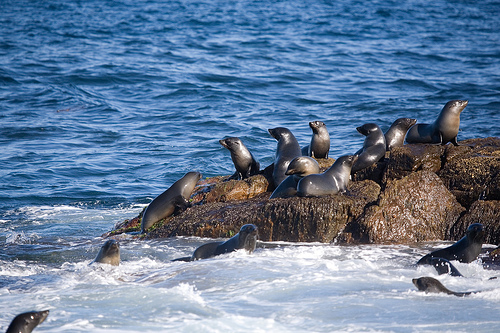
seals on neptuneAt the end of November, the Premier of South Australia announced that the Neptune Islands Group Marine Park would be renamed the Neptune Islands Group (Ron and Valerie Taylor) Marine Park. This is no mere change of name, for a network of 19 marine parks has taken effect in order to protect the seas from over-fishing. The premier noted that the southern oceans had more diversity than the Great Barrier Reef, and contained many plants and animals that cannot be found anywhere else.

The marine park has been named in honour of Ron and Valerie Taylor; divers, film-makers, shark experts, and conservationists who were ardent proponents of preserving marine habitats. Their skills in underwater filming were used on such films as Jaws and The Blue Lagoon, but more importantly, they wrote books and made documentaries to highlight the beauty and fragility of marine ecology. They won many awards for both photography and conservation. Ron passed away this year, and Valerie continues to be an advocate for marine protection.

The Neptune Islands, near Port Lincoln, were named by the navigator and cartographer Matthew Flinders in 1802. Rugged and remote, they seemed to him inaccessible, as if they would would always belong to King Neptune.

Neptune is the English form of Neptunus, the Roman god of fresh water springs, lakes, rivers, and the sea; he is the Roman equivalent of the Greek god Poisedon. He was worshipped in a festival that fell at the height of summer, when rainfall was at its lowest, and water most needed and valuable. As you know, his name has been given to the eighth planet from the Sun.

The meaning and origin of his name is obscure, with etymologists in disagreement over which language/s Neptune might be derived from. The general view is that it means something like “moistness”, “damp, wet”, “clouds, fog”, or “to water, irrigate”.

Another theory is that it is from the Italian town of Nepi, north of Rome, which was anciently known as Nepet or Nepete. This town is famous for its mineral springs, and traditionally connected to the god Neptune, who would presumably have approved of its watery wonders.

The town’s name is Etruscan, from the Etruscan name for Neptune, which was Nethuns. This may be related to the Irish god Nechtan, who had a sacred well, and thus another liquid connection. In fact there are several Indo-European deities with similar names and aqueous roles, and it is speculated that their names may go back to an ancient word meaning “nephew, grandson”.

One of the ships of the Second Fleet was called Neptune, and unfortunately it had the worst reputation of all for its appalling mistreatment of convicts.

Neptune sounds as if it should be ultra rare in Australian name records, but there are quite a few from the 19th century – at least quite a few more than I expected to find. It was mostly used in the middle, such as Cecil Neptune, and Samuel Caesar Neptune, but you can also find men named Neptune Persse and Neptune Frederick. Two of them rejoiced in the full names of Neptune Love and Neptune Blood; I believe the name Neptune is traditional in the Blood family.

Neptune would be very unusual as a baby name today, and I can’t quite imagine what you would use as a nickname – Neppy sounds too much like “nappy” to me. At the very least, please not Tuna.

A complete change of pace brings us to the name Taylor, a very common English surname referring to someone who made clothes as their occupation; the word tailor is ultimately from the Latin talea, meaning “a cutting”. In the Middle Ages, tailoring was a high-status craft, as only the wealthy could afford to have their clothing professionally made, and tailors could command good fees. Both men and women were employed as tailors.

There are many folk tales and fairy stories about tailors, and nearly always the tailor is depicted as being extremely clever, and confidently able to outwit others. Tailors having to be so precise and painstaking in their work, and no doubt with plenty of diplomatic skill to handle their rich clients, they must have gained a reputation for being as sharp as pins and as smooth-talking as silk.

The earliest Taylor-as-a-first-name I can find in the records is from the 16th century, and it was on a female. This may be an error in transcription, as subsequent early Taylors seem to be male (with plenty of girls who had Taylor as a middle name). In the United States, Taylor has always charted as a boy’s name, and only charts for girls from the late 1970s onwards, but is currently Top 100 for girls, and in the 300s for boys. In the UK, it only charts for boys, where it is barely on the Top 100 and falling.

In Australia, Taylor has charted for both boys and girls since the 1980s, when it was #383 for boys and #785 for girls. It peaked for both sexes in the 1990s, when it was #38 for girls and #130 for boys. At the moment, Taylor is only just outside the Top 100 for girls at #108, is #251 for boys, and falling for both sexes.

So that’s a quick survey of Taylor popularity around the world: Top 100 for girls in the US, Top 100 for boys in the UK, and not on the Top 100 at all in Australia.

Here are two very different names which evoke the sea and honour its protectors, as well as having a strong connection to the history of South Australia.

(Picture shows seals on Neptune Island; photo from Flickr)

Famous Names: Sandy and Sable

28 Wednesday Nov 2012

Posted by A.O. in Famous Names

≈ 2 Comments

Tags

African-American names, animal names, colour names, english names, French names, French vocabulary words, Google Earth, Google Maps, historical records, Hurricane Sandy, Mer de Noms, name combinations, name history, name meaning, name trends, names of hurricanes, names of ships, nature names, nicknames, Paradise Lost, rare names, Southern Surveyor, The New York Times, Times Atlas of the World, unisex names, University of Sydney, US National Geophysical Data Center, vocabulary names, Wikipedia

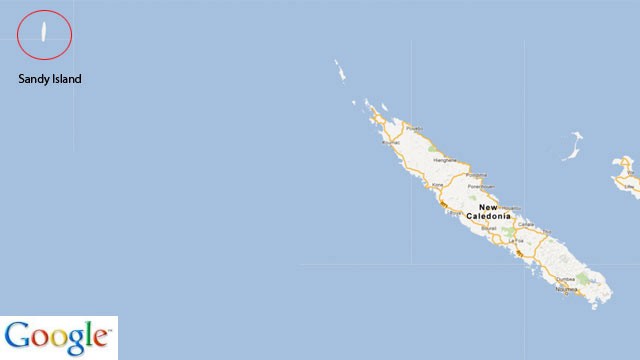
A group of Australian scientists from the University of Sydney have undiscovered an island that was supposed to be in between Australia and New Caledonia.

Sandy Island showed up on Google Earth and Google Maps, as well as marine and scientific maps all over the world, including the US National Geophysical Data Center. According to the maps, Sandy Island was about 16 miles long and 3 miles wide – just slightly bigger than Manhattan.

Geologists on the Southern Surveyor, an Australian maritime research vessel, were puzzled by the island which appeared on their weather maps, yet navigation charts showed that the water in that area was very deep – 1400 metres (4620 feet). They decided that they had to go check it out, and found nothing there except sea. The scientists recorded the information so that maps can be changed.

According to the Wikipedia article on Sandy Island, the island was erased from Google Maps on November 26, but although the name Sandy Island doesn’t show up in the search bar, when I looked in the Coral Sea I found the phantom island quite easily, but there was no name attached to it.

If I zoomed in on the island, it simply disappeared, and if I switched to satellite, the island showed up as a black streak surrounded by blue streaks, looking remarkably like someone had scribbled on it with two different felt-tip pens.

Interestingly, if Sandy Island had existed, it would have been in French territorial waters – and the island is not on any recent French government charts. Perhaps because of this, the Times Atlas of the World deleted Sandy Island from its maps after 1999.

The history of the discovery of Australia involved – indeed, was dependent on – faulty maps, necessitating voyages to check out what was here or not, so it makes a strange sort of sense that now Australians must voyage forth to check faulty maps for themselves.

The episode shows that this part of the world is still not well known, and incompletely charted. It’s not quite a matter of Here be dragons, but the reply from most of the map-providers when the error was pointed out was along the lines of, Well it is in the middle of nowhere …

Tens of thousands of years of human occupation, and centuries since the first mapping, and we’re still close to the middle of nowhere. Which is rather exciting – what else in our region is still waiting to be discovered, or undiscovered?

Apart from the Pythonesque nuttiness of this story (no wonder the geologists got the giggles as they sailed through the invisible island), the thing that got my attention was the name Sandy, which has been in the news internationally since Hurricane Sandy hit the north-east coast of the United States in late October, after devastating the Caribbean.

According to this article in The New York Times, names of hurricanes can help to influence the way we name our babies. It’s not as simple as everyone suddenly choosing Sandy as a baby name, but it seems that once we hear a word or a name many times, we instinctively like names that sound similar to it. So experts are expecting a spike in the numbers of babies of 2012 whose names begin with an S, as well as those with an and sound in them, and ones that end in -ee.

There was a story in the Australian press, about an expat couple in New York, whose baby arrived at the height of Sandy’s fury. The parents did consider calling their new daughter Sandy, but in the end chose Sophie. The analysts would be rubbing their hands, because they chose a two-syllable name that starts with S and ends with an -ee sound, just like Sandy.

Sandy is a unisex name which is short for Alexander or Alexandra, but also for any name related to them, such as Alistair, Sander, Alessandra, Sanette, Sandrine, or Sandra. You could use it as a short form of Cassandra, Santos, Sanford, Sandon, Santiago or any similar name. Sandy is a traditional pet name for people with reddish or sandy-blonde hair, and you could see it as a vocabulary, colour, and nature name meaning “sand-coloured, like sand, covered in sand”.

However, another possibility occurred to me while reading about The Case of the Non-Existent Island. On a French chart from 1875, the island is called Île de Sables, which is French for Sandy Island. Because of this, The Times Atlas of the World partly Anglicised the name back again to Sable Island.

While in French, sable means “sand”, the same word in English means something quite different. (I feel that I must be channelling Lou from Mer de Noms, who quite often finds name inspiration in French words). I should point out that the two words are said differently: in French, SAH-bluh; in English, SAY-buhl.

A sable is a species of marten (a relative of minks, weasels and ferrets) which is found mostly in Eurasia and still hunted in Russia. The pelt of the animal has been highly valued since medieval times, because the fur of the sable feels soft whichever way you stroke you; it’s not possible to “go against the grain”.

Because of the animal’s colour, the word sable is also a literary way to say “black”, such as when John Milton refers to “a sable cloud” in Paradise Lost. It amuses me that sandy and sable are opposites as colours, with one signifying a pale shade and the other one that is very dark.

Sable can also be used as a personal name, with the first one I can find in the records dating to the 17th century. It’s used for both boys and girls, although from the beginning more often a female name – maybe because it seems like it could be short for names such as Isabel or Sabella.

Sable is more common in the United States, where it has sometimes been used amongst African-Americans as a positive and beautiful word to denote darkness (similar to the name Ebony, which doesn’t have that connotation here).

In Australia, it appears rarely in the records, nearly always as a female name. One of my favourite combinations for this name was Brightie Sable. It also belonged to a 1900s French immigrant to Australia, who had the French form – Sablé.

So if you feel subconsciously influenced to use a name similar to Sandy, or would like to be part of a name trend, then Sable or Sablé seem like possibilities to choose from, and may please trend analysts immensely.

(Satellite image from Google Maps)

Famous Name: Eclipse

21 Wednesday Nov 2012

Posted by A.O. in Famous Names

≈ 2 Comments

Tags

astronomical names, english names, Greek names, historical records, name combinations, name history, name meaning, names of ships, Nancy's Names, nature names, nicknames, rare names, unisex names, vocabulary names

An eclipse is when an astronomical body is obscured, either by passing into the shadow of another body, or having another body pass between it and the viewpoint. The word comes from the ancient Greek ékleipsis, meaning “abandonment, downfall or darkening of a heavenly body”.

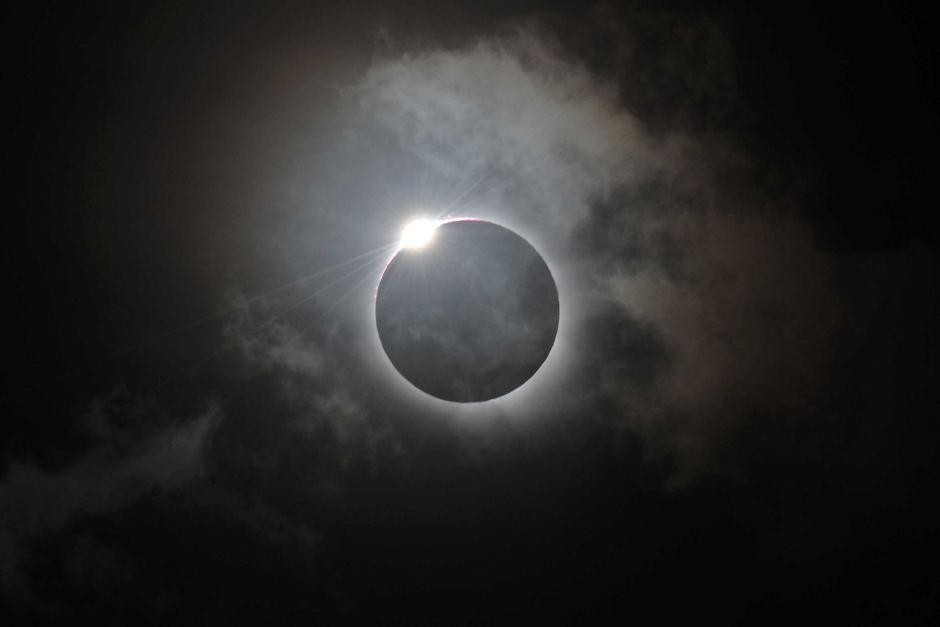
Although there are several different types of eclipse possible in the universe, the ones we can see from Earth are the solar and lunar eclipses. We tend to get more excited by solar eclipses, when the Moon appears to pass in front of the Sun, blotting out its light temporarily. The most impressive of all is a total eclipse of the Sun, when the Moon appears to perfectly cover the Sun, so that it disappears from view.

A total eclipse of the Sun can only be viewed along a very narrow band of the Earth’s surface, and on November 13, a total eclipse could be seen in far north-eastern Australia. Although many had gloomily predicted that cloud cover would ruin the eclipse-enjoying experience, just before dawn the clouds obligingly parted, and the Moon passed in front of the Sun. For two minutes it became darker and colder, the birds stopped singing, and tens of thousands of spectators from all over the world gaped in wonder, just as our ancestors did thousands of years ago.

Many indigenous groups, including in Arnhem Land, were watching the event, which has deep spiritual meaning for them. Most Aboriginal cultures believe the Sun is female and the Moon male. In their myths, the Sun is in love with the Moon, but he doesn’t return her feelings, so she chases him around the sky. Occasionally she manages to catch him, and in a jealous rage tries to kill him, but the Moon convinces the spirits which hold up the sky to save him, which they always do.

However, another version is that a solar eclipse marks those rare times when the Sun-woman is hidden by the Moon-man while he relents and makes loves to her, while a similar tale is that a spirit man covers the Earth with his hand to leave it in darkness, so that the Sun and Moon may have privacy together.

In Queensland, the celebrations for the eclipse included a Solar Eclipse Marathon in Port Douglas, and a week long Eclipse Festival at the remote Palmer River Roadhouse. More than 50 000 tourists arrived from Europe, North America and Asia, with some hotels booked out three years in advance. The eclipse was big news, and big business. And why shouldn’t they party? It was the first time in the past thousand years that this part of Australia had experienced a total solar eclipse.

Eclipse can be found as a unisex name in occasional use since the late 18th century. According to blogger Nancy Man at Nancy’s Names, the births of many of those given the name Eclipse can be correlated with either solar or lunar eclipses.

In Australian records, there are only a small number of people listed as having the name Eclipse, and it is exclusively used as a middle name. It is balanced between the sexes, with three women and two men having Eclipse as part of their name. My favourite combinations were Pearl Eclipse and Thomas Eclipse Vivian.

Only a year of birth is given, so it isn’t possible to correlate their dates of birth with eclipses, but it is reasonable to assume that it might have been the inspiration for at least some births. However, there was also a convict ship called Eclipse, although it doesn’t seem to match up with any of the places or dates of birth in the records in any obvious way.

Scientist Dr Natalie Dillon from Mareeba attended the eclipse viewing this year and said:

When it goes dark and the temperature drops, you get a sense of the fragility of life. I just feel in awe. It is like the Moon has wiped a cloth over the face of the Sun and we can start afresh.

An eclipse is a rare celestial event, and one which fills us with a mixture of awe and dread, as well as great joy and a sense of renewal when the light of the Sun is returned. It reminds us how much we need the Sun, and gives us a brief uneasy taste of what Earth would be like without it – chill, dim and silent.

The basis of the word eclipse is the Greek for “I leave behind”. To eclipse someone means to cast them into your shadow, to surpass others with your superior talents or skills – to leave them behind, so that they can never catch up.

As a name, Eclipse has power, a certain foreboding, and perhaps a touch of arrogance. It is little seen, and that gives it an even greater significance. Perhaps it’s not surprising it has been timidly tucked away in the middle.

Nicknames for Eclipse include Clip, Clipper and Clipsie, which give it a much friendlier and more approachable sound.

What do you think – a viable baby name, or a little too much?

Saturday Historical Sibsets: Sibsets from the Wells Family Tree

10 Saturday Nov 2012

Posted by A.O. in Sibsets in the News

≈ Comments Off on Saturday Historical Sibsets: Sibsets from the Wells Family Tree

Tags

historical records, name combinations, sibsets, twinsets

A selection of sibsets from the family tree of Claris Wells. You can see the complete family tree here. Simply click through each page to see all nine generations.

EIGHTEENTH CENTURY

The Wells Family of Kent

Parents: Thomas and Alice Wells

  • Eliza
  • Ann
  • Thomas
  • Alice
  • Sarah
  • Mary
  • John
  • Jane
  • Susanna

NINETEENTH CENTURY

The Wells Family of Ide Hill, Kent

Parents: Joseph and Rebecca Wells

  • Charlotte
  • Jane
  • Joseph
  • John Thomas
  • William
  • George
  • Isaac
  • Alfred
  • Harriet Emily (Harriet’s mother-in-law was named Philadelphia)
  • Mary Ann

The Walter Family of New Zealand

Parents: Elizabeth and George Walter (m. 1821)

  • Harriet
  • Thomas
  • Elizabeth
  • Henry Shilock
  • Sarah
  • Mary
  • Avice

The Wickens Family of Kent

Parents: Elizabeth and Edward Wickens

  • Twins John Wells Barden and Mary Thorp Barden
  • Barden Edward George
  • James Morgan Barden
  • Charlotte Katherine Barden

The Walter Family of Tonbridge, Kent

Parents: Henry and Hester Walter (m. 1852)

  • Eleanor Avis
  • George

The Steed Family of Kent

Parents: Mary and Robert Steed (m. 1868)

  • William
  • Elizabeth
  • Mary
  • Minnie
  • Amy
  • Robert
  • Hester

The Wells Family of Surrey

Parents: George and Martha Wells (m. 1870)

  • Rosa
  • Lily

The Wells Family of Plumstead, Kent

Parents: Isaac and Sophia Wells (m. 1870)

  • Arthur Isaac
  • Florence Ellen
  • Elizabeth
  • William Walter

The Wells Family of Essex

Parents: Alfred and Eliza Wells (m. 1870)

  • Alfred Edward
  • Mary Ann
  • Charles
  • Beatrice Eliza

The Smith Family of Kent

Parents: Mary and Benjamin Smith (m. 1877)

  • Miriam Rebecca
  • Olive Annetta
  • Maurice Rudolph
  • Lillian Wells
  • Mabel Sylvia

The Earl Family of Kent

Parents: Jane and John Earl (m. 1884)

  • Twins Archibald and Reginald
  • Arthur
  • Percival
  • Frederick

The Ward Family of Kent

Parents: Harriett and Frederick Ward (m. 1886)

  • Alfred Herbert
  • Ellen Frances
  • Mary Charlotte
  • Harriet
  • Thomas James
  • Elizabeth Jane
  • Marjorie
  • Rose Emily
  • Walter Henry
  • Frederick George

The Wells Family of Canada

Parents: Henry John and Lavinia Rosetta Wells

  • Susan
  • Henry John
  • Rosie Marie
  • Margaret Jane

The Wells Family of Sussex

Parent: Susanna Wells

  • Gertrude Susanna
  • Cecil
  • Ethel
  • Lillie

TWENTIETH CENTURY

The Ward Family of Canada

Parents: Rosie Marie and Frederick George Ward

  • Ellen Frances
  • Lavinia
  • Frederick
  • Susan May
  • Elizabeth
  • Daisey

The Ward Family of Canada (2nd generation)

Parents: Susan and Frederick Ward

  • Emma
  • Doris
  • Joseph
  • Frank
  • Henry
  • Freda

The Johnson Family of Canada

Parents: Margaret and Joseph Johnson

  • George
  • Rosie
  • Thomas
  • Ernest
  • Florence
  • Elsie
  • Joseph
  • John

The Best Family of Australia

Parents: Sarah and Thomas Best (Sarah was a daughter of Claris Wells)

  • Elizabeth Sarah
  • Ivy May
  • Twins Gladys Maud and William Thomas
  • Daphne Margaret
  • Hazel Doreen
  • Pansy Myrtle

The Short Family of Australia

Parents: Sussannah and James Short (Sussannah was a daughter of Claris Wells)

  • Evelyn May
  • Roy James
  • Pearl Annie
  • Hazel Amy Maud
  • Keith Thomas
  • Myrtle Sarah
  • Harold George
  • Cecily Eton

The Gale Family of Australia

Parents: Ivy and Aubrey Gale (Ivy was a granddaughter of Claris Wells; Aubrey’s mother’s name was Mary Christmass)

  • May Doris
  • Leslie Thomas
  • Roma Joyce

The Douglas Family of Australia

Parents: Gladys and Roy Douglas (Gladys was a granddaughter of Claris Wells)

  • Phyllis Lorraine
  • Mervyn Laurence
  • Mavis Estelle
  • Neville Thomas
  • Robert John

The Best Family of Australia (2nd generation)

Parents: William and Constance Eveline Best (William was a grandson of Claris Wells)

  • Joan Patricia
  • Merylea May
  • Elaine Constance
  • Colin William
  • Raymond Thomas

The Wood Family of Australia

Parents: Hazel and Frank Wood (Hazel was a granddaughter of Claris Wells)

  • Raymond William
  • Barrington Duncan
  • Leslie George
  • Lillian May
  • Allen Burkinshaw
  • Kenneth Victor
  • Christine Frances

The Ward Family of Hampshire

Parents: Mark and Deborah Jane Ward (m. 1989)

  • Aaron Mark
  • Leah Jacqueline

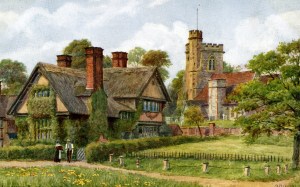
(Picture is of the village of Leigh in Kent – the Wells family originated from this area; image from Old UK Photos)

Famous Name: Bede

07 Wednesday Nov 2012

Posted by A.O. in Famous Names

≈ 5 Comments

Tags

Anglo-Saxon names, Australian Dictionary of BIography, birth notices, english names, famous namesakes, historical records, name history, name meaning, name popularity, Old English names, popular names, royal names, saints names

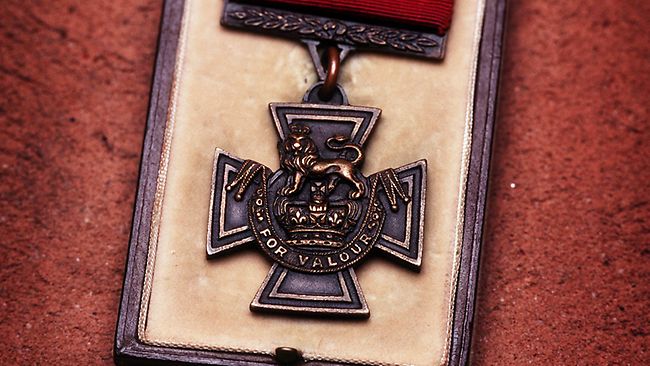
On November 1, Corporal Daniel Keighran became the third Australian soldier serving in Afghanistan to receive the Victoria Cross, the highest military decoration awarded for bravery in Australia. Corporal Keighran is the first member of the Royal Australian Regiment, and the 99th Australian, to receive a VC, and did so with great modesty and humility. Daniel’s wife Kathryn had no idea of the courage her husband had displayed under fire in battle two years ago until she learned he was about to be decorated for it. The Victoria Cross was awarded in a ceremony at Government House in Canberra.

Watching this story on the news reminded me to look at the list of those Australians awarded the Victoria Cross in the past, as I wanted to cover the name of a World War I hero for Armistice Day, which is on Sunday. As I ran my eye down the list, one name stuck out because it has been in my Request file for ages, and I briefly covered it in my article at Nameberry a short time ago. So it was quite an easy choice for me to select Bede as this week’s Famous Name.

Corporal Thomas James Bede Kenny, always known as Bede, was born in Sydney in 1896. The son of a butcher, he had just begun training as a chemist’s assistant when he enlisted with the Australian Imperial Force in 1915. He initially served in Egypt, then was sent to northern France in 1916 to take part in the second phase of the battle of Pozières, in the battalion bombing platoon.

It was in the spring of 1917, as British and Australians captured the outpost villages of the Hindenberg Line, that he performed the acts of valour that were to earn him the Victoria Cross. In the attack on Hermies, his platoon came under heavy fire from a machine-gun post which caused severe casualties. Bede rushed at the enemy single-handed, hurling three bombs, the last of which knocked out the post. He then took the surviving Germans prisoner, his actions contributing significantly to the success of the operation.

Later he was injured in battle and invalided home to Australia, arriving in Sydney to a hero’s welcome a few weeks before the Armistice. He was offered the chance to join the military police, and rejected it immediately, as for some reason he had a great dislike of them.

In civilian life, he worked as a salesman, and was happily married; he is remembered as a popular man with many friends, and a fondness for innocent pranks. He was left partially deaf from the war, and also suffered the effects of trench foot throughout his life. The great tragedy of his life was the deaths of two of his three children, which he never recovered from.

Like Corporal Keighran, Corporal Kenny never talked about his wartime experiences, and the only sign that he was proud of his military service was that he always led the VC winners at the Sydney Anzac Day marches. He died in 1953, and by a cruel irony, his pallbearers were military policemen.

The most famous person with the name Bede is the 7th/8th century English saint, Venerable Bede. Although it is not certain, it is thought that his Anglo-Saxon name, Beda, is from the Old English word bēd, meaning “prayer”. If so, it’s possible that his parents chose a religious life for him from his birth. The name wasn’t a common one, but interestingly, one of the kings of Lindsey, in England’s north, was named Beda; as Venerable Bede was from this area, it’s tempting to wonder if he was named after an ancestor, or a famous local namesake.

Venerable Bede is most famous for his prolific writing career, eventually completing over sixty books, most of which have survived. He wrote on a wide variety of subjects, including science, history, grammar, hagiography and theology; his best known work is An Ecclesiastical History of the English People, which begins with Caesar’s invasion of Britain, and ends with Bede’s own times. His use of AD to refer to events after the birth of Christ helped it become standard. He was also a teacher, a music lover, and was said to be accomplished at singing and poetry recitation, even writing some poetry of his own.

Bede is the only Englishman to be declared a Doctor of the Church; he is also the only Englishman to be mentioned in Dante’s Paradiso, where he appears amongst the theologians and doctors of the church. He is regarded as a saint in both the Catholic and Anglican churches.

If you are thinking that Bede (pronounced BEED) sounds a lot like the word bead, you would be correct. That’s because the Old English word bede, meaning “prayer” is the source of the modern word bead – because beads are used as a means of keeping count of prayers, a practice in Christianity which dates to the 5th century (although prayer beads are ancient and used in many religions). Because of this, you will sometimes see the name Bede interpreted as “bead” or “prayer bead”.

Bede isn’t a common name in Australia; at the same time, it isn’t all that unusual either. There are plenty of Bedes in the records, and if you go to the Australian Dictionary of Biography, you will find quite a few famous Australians with Bede as part of their name. What you primarily notice is that these Bedes tend to be from Catholic backgrounds (and some High Anglicans), and that Bede is usually one of their middle names. It is also the name of Bede Durbidge, who won Surfer of the Year a few years ago, giving the name a more cool laidback image.

I can imagine some people thinking that Bede sounds weird and ungainly; something only a staunchly Catholic family would use; a name best suited to leaving in the middle position. Which sounds perfectly reasonable – except that less than half a century ago, there was another boy’s name that seemed weird and ungainly, was used almost exclusively by Catholics, and generally relegated to the middle position, usually after Francis.

That name was Xavier, which is now #22 and rising. Could Bede be the Xavier of the future?

It’s a very old name with a solid history of use in Australia, part of the Catholic tradition, and with spiritual associations. It’s short yet substantial, clunky yet surprisingly cool. It’s the name of our heroes, our leaders, our intellectuals, our athletes, our artists, our businessmen, and for many of us, our dads and uncles and grandfathers too.

Wherever it might be headed, I see this name often enough in birth notices to know that it is not going away, which gives me a strange feeling of comfort.

(Photo of the Victoria Cross from The Australian)

Saturday Historical Sibsets: Nine Generations of the Wells Family, from 1660-1960

27 Saturday Oct 2012

Posted by A.O. in Historical Records, Sibsets in the News

≈ 4 Comments

Tags

historical records, name combinations, sibsets, twinsets

This follows the direct family line of Claris Wells, who we met last week, tracing it from his great-great-great grandfather John Wells, who was born around 1660, and ending with his great-great grandson Brett, born in 1960. As we travel through history, we can see how family naming traditions were maintained, and altered, and how fashions in names changed during these three hundred years.

The Children of John and Elizabeth Wells (m. 1681) – Claris’ great-great-great grandparents, who came from Kent

John (1699-1709)

Thomas (b. 1703)

Robert (b. 1706)

Alexander (1709-1784)

John (1710-1800)

Elizabeth (b. 1714)

The Children of Alexander and Martha Wells (m. 1733) – Claris’ great-great grandparents

Elizabeth (1736-1737)

John (b. 1738)

Thomas (1740-1816)

Alexander (b. 1741)

Martha (1743-1743)

Robert (1745-1745)

Robert (1746-1812)

The Children of Alexander and Elizabeth Wells (m. 1764) – Claris great grandparents

Rose (1764-1829)

Thomas (b. 1766)

Thomas (b. 1773)

Mary Ann (b. 1774)

The Children of Thomas and Sarah Wells (m. before 1812) – Claris’ grandparents

Thomas (b. 1812)

Sarah (b. 1814)

John (b. 1816)

Alexander (1817-1863)

The Children of Alexander and Caroline Emily Wells (m. circa 1850) – Claris’ parents, who left Kent in 1857 and emigrated to Western Australia

Martha (1852-1936)

Alexander Thomas (b. 1855)

Alfred John Claris (1857-1937)

Amelia Ann (b. 1858)

Ellen – known as Eliza (1859-1937)

Emily (b. 1862)

Alexander (b. 1864)

The Children of Claris and Sarah Jane Wells (m. 1877) – Claris and his wife

Susan Maud (1878-1878)

Sarah Mary (1879-1952)

Alexander James (1881-1921)

Susannah Maud (1884-1972)

Eva Emily (1886-1943)

Clarence Alfred (1892-1953)

The Children of Clarence Alfred and Margot Linton Wells (m. ?) – Claris’ son and daughter-in-law

Douglas Howie (b. ?)

Hugo Clarence (b. 1919)

Undine Margot (b. 1921)

Bruce Alexander (1922-1927)

Ivor Stewart (b. 1925)

Marcus James Pierce (b. 1928)

Roderick Ramon (1932-1933)

Twins Rodney Brian and Neville Brice (b. 1933)

Haidee Clare (b. 1935)

Harold George (?)

The Children of Neville Brice and Dolores Wells (m. ?) – Claris’ grandson and granddaughter-in-law; their children are his great-great grandchildren

Donna Dianne (b. 1954)

Vicki Suzanne (b. 1955)

Kerry Janette (b. 1956)

Debbie Lee (b. 1958)

Gregory Mark (b. 1959)

Brett Ramon (b. 1960)

The records end in 1960 – I presume because we are now in the realm of living Wells family members who would like their privacy protected.

You can see how important handing down family names was, with the name of their direct ancestor, Alexander, being used in every generation until the 1950s. Claris Wells was the first not to use the name Thomas amongst his children, but he did start his own naming tradition. He named his son Clarence, and his grandson had Clarence as his middle name. This is another family tradition which didn’t last into the post-war era.

It also seemed to be a tradition for the names of children who did not survive to be used again for later siblings. This is something which has definitely gone out of fashion. You can see it changing with Claris‘ children, for his first child Susan did not live a year, and he gave his daughter Susannah a variation of her name instead of the name itself. Two of Claris‘ grandsons died young, Bruce and Roderick, but their names were not recycled for future siblings (although they did have a Rodney).

The “Alexander” branch of the family ended up in Western Australia, and another branch went to Canada, so the Wells family spread far from England. However, one branch of the family did remain in the Sevenoaks district of Kent, and stayed there until quite recently. The youngest Wellses in the records are a brother and sister in their early twenties, living in England.

One interesting thing I discovered by chance is that the Wells family has some distant connection with the Armytages of Como House, who we met in an earlier blog entry. It’s either a small world, or a small country.

Next week we will conclude the Wells family saga with some of the names from other branches of the family.

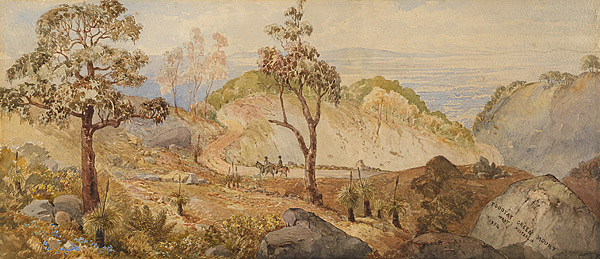
(The painting is of Toodyay, Greenmount, by Edward du Cane – 1854; image from the National Gallery of Australia)

Saturday Historical Sibsets: The Siblings of the Sea-Born Babe

20 Saturday Oct 2012

Posted by A.O. in Sibsets in the News

≈ 8 Comments

Tags

Baby Names from Yesteryear, historical events, historical records, honouring, name combinations, names of ships, sibsets

This is a story I read on Baby Names from Yesteryear, and with Zeffy’s blessing, I have investigated some of the history behind it.

On March 21 1857, a baby was born on board a convict ship, two days after leaving England for Western Australia. He was named Alfred John Claris Wells – Alfred and John were family names, but Claris was in honour of the ship he was born on, the Clara. It seems that he went by the name Claris in everyday life.

Claris’ parents weren’t convicts. His father, Alexander Wells, was a pensioner guard employed to watch over the convicts on board ship. These guards tended to be recruited from the rural working class, and offered farmland in Australia as an inducement. The Wells family had been in villages around Sevenoaks in Kent since at least the 17th century, and Alexander’s branch of it had lived in the village of Leigh for several generations.

Claris’ mother was named Caroline Emily Minnor Goulding, and she married Alexander when she was in her early twenties, while he was in his early thirties.

The Clara arrived in Fremantle, Western Australia on July 3 1857 with its one very small extra passenger. The Wells family was offered farmland in Newcastle (now called Toodyay), one of the first inland towns to be established in Western Australia. It’s in the Avon Valley about 85 km from Perth, and today at least, Toodyay is a very pleasant country town, an easy drive from the city and popular for weekends away. Back then, it would been just a village, and farming difficult, even with free convict labour offered as part of the deal.

Claris wasn’t the only child of Alexander and Emily. His siblings were:

Martha (1852-1936) She was born in Kent, and was five years old when she arrived in Australia. She was living in Fremantle when she died at a ripe old age.

Alexander Thomas (b. 1855) He was born in Kent, and seems to have died before the family came to Australia.

Amelia Ann (b.1858-?) Amelia is missing from some family records, which makes me suspect she died during early childhood.

Ellen – known as Eliza (1859-1937) Eliza married a local man named Alfred Hutchings when she was 20, and had twelve children. The Hutchings moved to Northam, a town very close to Toodyay.

Emily (b. 1862-?)

Alexander (1864-?)

Alexander Wells died in 1863 aged 45, leaving his widow Caroline in a fairly desperate situation. She was 34 years old, had at least three children still living, and must have been pregnant.

In 1864 she married a convict called Esau Wetherall, a name that wouldn’t look out of place in a novel by Thomas Hardy. Esau was born in London, and had lived in Somerset. At the age of 35, he was transported to Fremantle on the Scindian, sentenced to fifteen years for horse-stealing. He was in the first group of convicts to arrive in Western Australia, and because they weren’t really prepared for convicts at the time, they only sent those who had a record of good behaviour. While in Toodyay, he was accused of stealing a sheep and brought to trial, but was acquitted. At the time of his marriage to Caroline, he was 49.

Caroline and Esau had only one child together, a baby girl who was stillborn in 1865. This was Claris’ half-sister.

Esau had been married before – his first wife was Mary Mallaby, and they were married in Toodyay the same year that the Wells family had arrived, in 1857, just after Esau was granted his ticket of leave. Mary died in 1864, so like Caroline, Esau had been left widowed and no doubt in equally desperate circumstances.

Esau and Mary had five children together, and these were Claris’ step-siblings.

Sarah (1858-1874) Sarah died when she was only 16 years old.

Mary Ann (b. 1859-1941) Mary married a man named Donald Lee when she was 18, and had fourteen children. She lived her whole life in Toodyay.

Ellen – known as Elizabeth (1861-1941) Elizabeth married a man named Thomas McKnoe when she was 17 and had eleven children. She was living in Perth when she died.

Twins Edwin and Frederick (1864-1864) Mary left behind her newborn twins when she died, and it’s not surprising they only lived for a few months. It’s very possible that Mary died giving birth to the twins, or shortly after the birth.

So Claris Wells had six siblings, one half-sister and five step-siblings.

Esau Wetherall died in 1889, at the age of 73. Although he has numerous descendants living today, for many years the family was deeply ashamed of having convict ancestry, and he wasn’t talked about or even mentioned.

Caroline Wetherall died in 1905 at the age of 75. However, the Wells family continued through her son Claris, and next time I will follow his family line through all the generations.

NOTE: Passenger list for the Clara is here.

(Picture is of a painting of Fremantle Harbour in the 19th century, close to where the Clara would have docked when she arrived)

The People’s Choice of Boy’s Names

23 Sunday Sep 2012

Posted by A.O. in Name Themes and Lists

≈ 15 Comments

Tags

African-American names, alphanumeric names, American slang, anagram names, Anglo-Saxon names, animal names, aristocratic names, Australian Aboriginal names, Australian slang terms, banned names, bird names, birth notices, Bonds Baby Search, celebrity baby names, computer hacker names, controversial names, created names, english names, famous namesakes, germanic names, Google, Greek names, historical records, Indian names, J.R.R. Tolkien, locational names, Maori names, meteorological names, middle names, mythological names, name history, name meaning, nature names, nicknames, Old English names, Old Norse, polynesian names, popular culture, royal names, saints names, scandinavian names, slang terms, Spanish dialect words, surname names, tree names, unisex names, US name popularity, vintage names, vocabulary words, Welsh names

Adolf

A form of the Germanic name Adalwolf, meaning “noble wolf”. The Old English form is Æthelwulf, and there are a few famous men of this name in English history, most notably the father of Alfred the Great. The name was often used amongst the royal houses of northern Europe, and the Latinised form Adolphus turns up in the monarchy of the United Kingdom. There is a saint called Adolf of Osnabrück, a 9th century German monk. Up until the mid-twentieth century, the name was common in central and northern Europe, and can be found in Australia due to immigration from Germany and Scandinavia. The reason this name has been included is because barely a day goes by without someone Googling: “Is it legal to call your child Adolf?”, to which I can say, yes, it is legal here, and you can find quite a few Australians in the records with this name – including ones born during and shortly after World War II. I have met a man named Adolf (born around the early 1960s), and I believe he was named after his grandfather. The other chestnut is, “Is it legal to call your child Adolf Hitler in Australia?” to which I reply, Why would you want to do that? Seriously, why? As the name Ned Kelly is banned because he is considered too wicked, I’m pretty sure Adolf Hitler would also be illegal here.

Buster

This spunky name has more history than you might think. In England, it was first used in the middle position; Buster is a variant of the surname Bustard, after the bird. In 18th century America, it seems to have been more common for African-Americans, and may have started as a pet name in the sense of “breaker”. Later it took on the meaning of “unusual, prodigious, amazing”. Buster is used to address males in the same way as pal or fella (“Now listen up, buster”). This comes from the Spanish dialect busté, meaning “you”. It’s gone on to have negative connotations. One of the most famous men with this name is actor Joseph “Buster” Keaton, who started his career in vaudeville as a small child. He claimed to have received his nickname as a toddler from Harry Houdini, after falling down a flight of stairs unhurt. Houdini allegedly remarked, “That was a real buster!”, meaning “a fall with the potential to cause injury”. So Keaton’s name indicated he was tough enough to take a tumble. Buster Brown was a cartoon strip boy who was an angelic-looking blond prankster. In Australian slang, come a buster means to fall or fail by misfortune, while buster is a term for a strong wind – especially the Southerly Buster. This is a name Sydneysiders give to the abrupt cool change that sometimes blows in from the south during the warmer months. Vintage name Buster has recently become rather an Australian favourite for boys, although in the novel, The Shiralee, by D’arcy Niland, Buster is a little girl.

Chester

Chester is a city in Cheshire, England, founded by the Romans as a fortress in 79; its size has led some historians to speculate that the Romans intended it to be the capital, rather than London. Its current name comes from the Old English Ceaster, meaning “Roman fort”, and its early history was very military, with wars seemingly constant. Even King Arthur is supposed to have won a major battle here, and it was the last city to fall to the Normans during the Conquest. Today it’s a thriving modern city which still tries to preserve its historic buildings. Chester has been used as a personal name since the 16th century, probably after the surname, although early births in Cheshire suggest they may have been named directly for the city itself. Although it’s been a popular name in the US in its time, and only left the Top 1000 in the mid-1990s, for some reason it never caught on in a big way here. I was surprised to see it on a baby in the Bonds Baby Search Competition this year. For some reason, this baby name is often Googled, although the slang term chester is an impediment to its use.

Digby

An English surname from a place name meaning “settlement by the ditch”, derived from a combination of Old English and Old Norse. The name seems to have been first given in honour of the aristocratic Digby family, Anglo-Irish peers whose family seat in Coleshill, Warwickshire was granted to them by Henry VII. It is from the town of Coleshill that the personal name originates in the 17th century. One of the most famous of this clan was Sir Kenelm Digby, a Catholic philosopher considered a great eccentric for his exuberant personality and fascination with science, which extended to studying alchemy, astrology and magic (not considered incompatible with science then); he was the first person to note the importance of oxygen to plants. A man of action as well as thought, he became a privateer, and killed a man in a duel; he also wrote several cookbooks, invented the modern wine bottle and managed to fit in a secret romance to a famous beauty which led to their marriage. A true all-rounder. This name regularly appears in birth notices here, especially from Victoria, and may be encouraged by comedienne Cal Wilson, who welcomed a son named Digby a few years ago. People seem to either loathe this name or find it irresistibly cute; I must confess to being in the second category.

Elfyn

This is the Welsh form of the Old English name Ælfwine, meaning “elf friend”; it went out of use after the Norman Conquest. J.R.R. Tolkien liked to think of the name as meaning “friend of the elves”, and invented two fictional characters with this name who formed close bonds with elves. Modern forms include Alvin and Elvin, both taken from the surname form of the name. There are several famous people in Wales with Elfyn as either their first name or surname, including young rally driver Elfyn Evans and poet Menna Elfyn. For reasons I cannot explain, it is Googled several times a week.

Jharal

Jharal Yow Yeh is an NRL star who plays for the Brisbane Broncos. An Aboriginal Australian from the Margany people of Queensland, he also has Torres Straits Islander, Vanuatuan and Chinese heritage. Now aged 22, he has been playing for the Broncos since 2009, for the Indigenous All-Stars since 2010, and for both the Queensland state team, the Maroons, and the Australian national side, the Kangaroos, since last year. Early this season he sustained a serious leg injury, and is still recovering. People Google Jharal’s name all the time, asking for its meaning, and often querying whether it’s of Indigenous origin. In fact, his name was created for him by his grandmother. His mother couldn’t decide what to call him, so she asked nana Iris to name him. Iris cleverly arranged the letters of all the strongest men in her family into a name, and came up with Jharal. It is taken from the initials of James, Harold, Anthony, Reece, Arthur and Linc. The name is pronounced JHUH-rahl, and Iris says that most people think it is an Indian name. In fact, by coincidence, a jharal is a mountain goat from India. Names created for celebrities often seem too unique for others to use, but I have seen Jharal a few times in birth notices recently. Looking for a nickname? Jharal is known to his family as Joe.

Koa

This unisex name has several different origins. There is a Hawaiian male name Koa meaning “strong, brave, fearless”, and it’s also the name of a Hawaiian tree, the Acacia koa. The wood was traditionally used to make dug-out canoes and certain types of surfboards. In Maori, the word koa means “happiness”. In the Kaurna language of South Australia, the word koa means “crow”, and the Koa people come from south-east Queensland, so it’s also a tribal name. There has been a sudden proliferation of this name in Australian birth notices, and that might be because Tom Dumont from No Doubt welcomed a son named Koa last year. However, I am beginning to see far more girls named Koa in birth notices than boys. This may be because of model and actress Koa Whelan, a contestant on this year’s dating show, Please Marry My Boy. I think this works equally well for boys and girls, although the first meaning is male only.

Neo

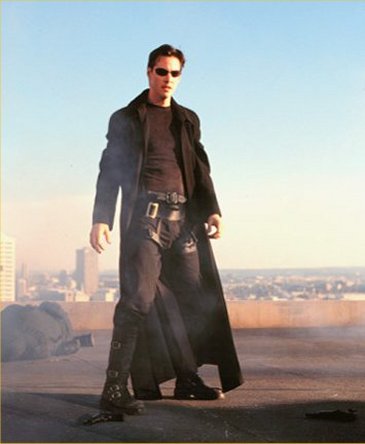
This is from an Ancient Greek prefix meaning “new, young, fresh”. It turns up in words such as neonatal, meaning “pertaining to the newborn”, or neologism, meaning “a freshly coined word”. The name has become well-known since 1999 because Neo is the protagonist of the cyberpunk Matrix film series. In the films, the character’s name is Thomas Anderson, and Neo is his computer hacker identity (Anderson does have the letters N, E and O in it). Neo is also an anagram of One, and the films seek to discover whether Neo is “The One”, a Messiah-like figure who will be able to rescue humanity. The films have become cult classics, and intermingle a range of philosophical and spiritual ideals from the East and the West – it’s even spawned its own religion, Matrixism. From the amount of times that people have Googled neo baby name or neo for a boy, there are quite a few parents considering using this name. Neo fits right in with current trends, and doesn’t sound any stranger than Leo. It is very strongly associated with the film character though. However, Australians have a solid history of gaining name inspiration from the movies, and most of The Matrix series was filmed in Sydney, giving it an Australian connection.

Rune

A Scandinavian name derived from Old Norse meaning “secret”. The runes are the letters of the runic alphabets, which were used to write different Germanic languages, dating from at least the first or second century AD. Runic inscriptions seem to have been for magical and divinatory use, and perhaps their knowledge was restricted to an elite in early times. According to Norse mythology, the runes were originally stolen from the god Odin. They are part of English history, because the Anglo-Saxons had their own runic alphabet. If you have read The Hobbit, you will have seen Anglo-Saxon runes used on a dwarven map; Tolkien later invented his own runic alphabet which appears in The Lord of the Rings. Rune stones are  used for divination today, often in a similar way to tarot cards. The name isn’t unusual in Scandinavia, and you may know the name from the Polish speedway rider Rune Holta, born in Norway. I think this is a simple, attractive name with layers of history and meaning.

Zephyr

A zephyr is a light, warm wind. It comes from the name Zephyrus, who was the Greek god of the west wind – the gentlest of breezes, which served as a harbinger of spring. He married both Iris, the goddess of the rainbow, and Chloris, the goddess of flowers – who is also seen as a deity of spring (and named Flora by the Romans). Children may know the name as that of a bat in the Silverwing book series, and, in the form Zephir, as the monkey in the Babar the Elephant stories. Grown ups may be reminded of The Zephyr Song by the Red Hot Chilli Peppers. If you take the name as derived directly from the god, then it is male, but if you accept it as a nature name and vocabulary name, it is unisex. It only seems to be Googled to my blog as a male name however. Pronounced ZEF-uhr, this name is unsual but not outrageous; it seems like a breezy alternative to popular Z names like Zachary, Zeke or Zane. The obvious nickname is Zeff or Zeffy.

(Picture shows actor Keanu Reeves in his role of Neo from The Matrix; Sydney skyline in background)

← Older posts
Newer posts →

Enter your email address to follow this blog

Categories

Archives

Recent Comments

A.O.'s avatarwaltzingmorethanmati… on Zarah Zaynab and Wolfgang…
Madelyn's avatarMadelyn on Zarah Zaynab and Wolfgang…
JD's avatardrperegrine on Can Phoebe Complete This …
A.O.'s avatarwaltzingmorethanmati… on Rua and Rhoa
redrover23's avatarredrover23 on Rua and Rhoa

Blogroll

  • Appellation Mountain
  • Baby Name Pondering
  • Babynamelover's Blog
  • British Baby Names
  • Clare's Name News
  • For Real Baby Names
  • Geek Baby Names
  • Name Candy
  • Nameberry
  • Nancy's Baby Names
  • Ren's Baby Name Blog
  • Sancta Nomina
  • Swistle: Baby Names
  • The Art of Naming
  • The Baby Name Wizard
  • The Beauty of Names
  • Tulip By Any Name

RSS Feed

  • RSS - Posts

RSS Posts

  • Celebrity Baby News: Melanie Vallejo and Matt Kingston
  • Names from the TV Show “Cleverman”
  • Can Phoebe Complete This Sibset?
  • Zarah Zaynab and Wolfgang Winter
  • Baby, How Did You Get That Name?
  • Celebrity Baby News: Media Babies
  • Celebrity Baby News: Adelaide Crows Babies
  • Celebrity Baby News: Chris and Rebecca Judd
  • Names at Work: Name News From the World of Business and Employment
  • Celebrity Baby News: Sporting Round Up

Currently Popular

  • Celebrity Baby News: Toby Allen and Darren Weller
  • Girls Names From Native Australian Flowers
  • Girls Names of Australian Aboriginal Origin
  • Celebrity Baby News: Katie Underwood and Darren McCoy
  • Celebrity Baby News: Victoria Samba and Mitch Hoare

Tags

celebrity baby names celebrity sibsets english names famous namesakes fictional namesakes honouring locational names middle names name combinations name history name meaning name popularity name trends nicknames popular names saints names sibsets surname names twin sets unisex names

Blog at WordPress.com.

Privacy & Cookies: This site uses cookies. By continuing to use this website, you agree to their use.
To find out more, including how to control cookies, see here: Cookie Policy
  • Subscribe Subscribed
    • Waltzing More Than Matilda
    • Join 517 other subscribers
    • Already have a WordPress.com account? Log in now.
    • Waltzing More Than Matilda
    • Subscribe Subscribed
    • Sign up
    • Log in
    • Report this content
    • View site in Reader
    • Manage subscriptions
    • Collapse this bar
 

Loading Comments...