• About
  • Best Baby Names
  • Celebrity Baby Names
  • Celebrity Baby Names – Current
  • Celebrity Baby Names – Past
  • Featured Boys Names
  • Featured Girls Names
  • Featured Unisex Names
  • Links to Name Data
  • Waltzing on the Web

Waltzing More Than Matilda

~ Names with an Australian Bias of Democratic Temper

Waltzing More Than Matilda

Tag Archives: fictional namesakes

Boys Names of Australian Aboriginal Origin

26 Sunday Feb 2012

Posted by A.O. in Name Themes and Lists

≈ 18 Comments

Tags

Australian Aboriginal names, Buddhist names, famous namesakes, fictional namesakes, Indian names, Indonesian names, Japanese names, Korean names, locational names, Maori names, name history, name meanings, Native American names, New Zealand names, nicknames, Quechuan names, Samoan names, scandinavian names, scientific names, seasonal names, Slavic names, South American names, Spanish names, surname names, unisex names

This follows on from last week’s list, Girls Names of Aboriginal Origin. It was more challenging to find boys’ names, because many, if not most, Aboriginal words end in a vowel, and easily conform to we think of a “feminine sounding” name. They are similar to names in Hebrew, Arabic, and in the Indian languages in that regard, and even now you will find people who insist that Ezra must be a female name, because it ends in -a.

These are not traditional or tribal Aboriginal names for men, but rather words from Aboriginal languages that I thought could be used as names by people from any culture. Some of them coincide with words or names from other languages, as I thought people may be interested to know that a word from their own heritage has a distinct Australian meaning as well.

Dural

Dural is a pleasant semi-rural suburb of Sydney, and its meaning has been in some dispute. It is said that dural was a word from the Dharug language, meaning “gully, valley”, and this information came from a traditional owner of the land in the 19th century. It was also said to mean “burning logs”, from the word dooral dooral, but this belief only dates from the 1940s, and is taken from the Wiradjuri language. As the Wiradjuri people are from central New South Wales, the local meaning is claimed to be the correct one. Translations of this name as “hollow tree” or “burned out tree” in baby name books can be safely discarded as invention. I think Dural seems very usable as a personal name, and I considered it for Sydney Suburbs That Could Be Used as Boy’s Names. It sounds like familiar names such as Darrell, and sturdily similar to the word endure.

Jarli

This word means “barn owl” in the Jiwarli language of northern Western Australia. As in many other societies, several Australian Aboriginal cultures saw owls as symbols of wisdom, mystery, secrets and sacred knowledge; messengers from one world to another, and companions of the medicine men. The owl features in several myths and legends, and is sometimes depicted in Aboriginal art. This name seems familiar to us, because Jarli is also a Scandinavian boy’s name based on the word for “earl”, and I have seen one or two boys with this name. I like the sound and the meaning of this name, and it is similar to another Jiwarli word: jali, meaning “friend”.

Kaiya

This word from a Queensland language refers to a spear with two barbs, and is pronounced KY-uh. It has been used in the Latin name for a species of caddisfly – Chimarra kaiya – who is so called because of its distinctive barb-like projections. In the Kaurna language of South Australia, the similar sounding kaya means “spear”, although in Nyungar it means “hello; yes”. This is always listed as a girl’s name in baby name books, but the name Kai makes this name look masculine to me. I don’t see how the sound of it is any more “girly” than, say, Hezekiah. The meaning does not seem feminine either. I would say it is a unisex name, and suitable for a boy.

Kuparr

This means “red earth, burnt earth” in the Ngiyampaa language of New South Wales. It refers to the ochre used for making body paint for the Coroborees; the sacred ceremonies of Indigenous Australians involving ritual, dance and music. Red ochre is also used in other Aboriginal forms. Kuparr was the basis for the name of the mining town Cobar, and because copper was mined there, it has also been suggested that it may have been the local way of translating the word copper. Most likely the similarity between the words is a coincidence though. The attraction of this name is that it sounds a bit like Cooper. If you like the sound of Cooper but think it seems a bit boring or surnamey, Kuparr might be for you.

Miro

Miro (MEE-roh) is a Nyungar word for a type of spear thrower which propels the aim of the gidgee; a fearsome qaurtz-tipped spear about 8 feet long. Miro exists as a name or word in several other languages. It’s a Slavic name which is short for Miroslav, meaning “glorious peace”. In Japanese, it’s short for Miroku, a Japanese form of Maitreya, the fifth (future) incarnation of the Buddha. In New Zealand, it’s the name for a species of conifer tree. In Korea, it means “maze”. It’s also the surname of Spanish artist, Joan Miró i Ferrà (Joan was a man) – his surname was short for Ramiro, the Spanish form of a Germanic name meaning “famous counsel”. It’s very multicultural, and none of the meanings that I’ve seen are negative. I think it’s attractive. We had a baby boy in a recent birth announcement named Finn Joseph Miro, so it’s considered usable in Australia.

Monti

This is one of the Aboriginal names for the Black-necked Stork, which is found across the tropical north of Australia, and is the only stork species native to Australia. I have not been able to track down which language it is from, except that it’s not from the Northern Territory, where this bird is called a jabiru. It’s therefore either from Queensland or northern New South Wales, as the only other places where this bird exists. It’s listed as one of the Indigenous names by museums, so I feel fairly confident it’s authentic. The stork is mentioned in several Aboriginal legends, one of them an extremely touching love story. The attraction of this name is that it sounds exactly like the fashionable name Monty, but has its own significance.

Tarka

This means “eggshell” in the Kaurna language of South Australia. I thought of it because I have seen the name Tarka used in the birth announcements from the London Telegraph. It has a number of meanings in other contexts. There is a well-loved English children’s book called Tarka the Otter, so famous that it has given its name to a railway line and a bike path in the West Country. It was made into a film in the 1970s. In the book, Tarka’s name was meant to suggest the barking sound that an otter makes. In India, tarka is a word for seasoning added to a meal, and in Quechuan, a tarka is a type of flute played by the Indigenous people of the Andes. Tarka Cordell was a British musician who died in tragic circumstances a few years ago; I’m not sure where his name was taken from, or whether he is the inspiration for British children having Tarka as one of their names. This is the second name with the meaning of “eggshells” I have suggested; the other was Keid. Because eggshells appear so fragile, and yet are surprisingly strong under compression, I find this meaning very evocative.

Tau

Means “evening, dusk, twilight” in the Kaurna language of South Australia, and is said to rhyme with the word cow. In Maori, it can mean a number of different things, including “sweetheart”, “song, chant”, “string”, or “ridge”. In one of the Indigenous languages of Indonesia, it means “man”. In Samoan, it can mean “anchor” or “war”. It’s known to many people in the context of the Tau Cross, a symbol of life which was used by the Egyptians, and became important in a number of different religions and spiritual paths, including Christianity. I have met men named Tau, but I’m not sure which meaning was associated with their names. I think Tau fits in very well with other popular names for boys, such as Ty, Tai and Taj, and would be readily accepted.

Warragul

Warragul, pronounced WOHR-uh-guhl, is a town in the West Gippsland region of rural Victoria, the birthplace of legendary Aboriginal boxer Lionel Rose. Its name is said to come from a local word, warrigal, meaning either “wild” or “wild dog”, referring to the dingo. The dingo is Australia’s largest predator on land, and its ancestor is thought to have been introduced to Australia by seafarers from south east Asia thousands of years ago, when dogs were less domesticated and more closely related to wolves. Dingoes play a major role in Aboriginal myths and legends; in stories they are often guardians of humans who can warn them of the supernatural or evil spirits. There are also myths of dingo-people shapeshifters, or “were-dingoes”, and often the dingo in legends is a rebel or trickster figure. In everyday life, dingoes were tamed and kept in Aboriginal camps as guard dogs. They were treated with great affection, given names, slept with their human companions, and were even breastfed. At least sometimes they were buried alongside humans. I saw someone in a parenting forum say they had already used Warragul as a baby name.

Warrin

Warrin meant “winter, cold and frosty season” in one the language spoken around the Sydney region when Europeans first arrived. However, there are a number of similar words used throughout Indigenous languages. Warran or Warrung was the original name for the place we call Sydney Cove, and by extension, Sydney itself; it is said to mean “the other side [of the harbour]”. In the Brisbane area, Warun was a place name in the suburb now called Redcliffe; it may have meant “neck”. There are historical records of a man from south-west Queensland named Warun, so it was used as a personal name. In the Melbourne area, warun meant “eel” in the local language, a fish prized as a valuable food source; there is a suburb of Geelong named Warun Ponds. I have also seen the word warun translated to mean “diving ducks” in the Northern Territory. Baby name books translate Warun as meaning “sky”, but I don’t know which language they are deriving it from. From this I deduce that the English name Warren is the most “indigenous sounding” of our names, and perhaps it deserves a closer look.

(The photo is of young actor Brandon Walters, who starred in Baz Luhrman’s film, Australia).

Girls Names of Australian Aboriginal Origin

19 Sunday Feb 2012

Posted by A.O. in Name Themes and Lists

≈ 52 Comments

Tags

Australian Aboriginal names, famous namesakes, fictional namesakes, locational names, name history, name meaning

It is not difficult to find little lists of Aboriginal words that can be used as personal names, accompanied by their purported meanings; what is harder is to ascertain their origins. Even reliable baby name books are content to say that such-and-such a name comes from “an Aboriginal language”, without specifying which one. Often it seems that no-one knows: as languages became extinct, certain words and phrases were recorded for posterity, without any knowledge of which peoples the words were spoken by, and perhaps even without an understanding that there were different Indigenous peoples.

Historian Watkin Tench, a British officer who arrived on the First Fleet, noted that many Aboriginal names and words sounded pleasing and even familiar to the ears of English speakers, and recorded that the chaplain’s wife was so taken with the name of an Aboriginal woman she met named Milba that she christened her own baby, born in the new colony, Milba Maria Johnson.

It’s therefore not a new phenomenon for non-indigenous people to use words from Aboriginal languages as personal names, although some people may find the idea inappropriate or disrespectful. I’ve chosen names very conservatively, tending to pick out ones that are already in common use as personal names, as place names, or as business and organisation names.

You should also be aware that a word from one language may mean something completely different in another part of the country, so you may believe your child’s name means “desert flower”, but someone who speaks a different language may tell you that it means “swamp” or “elbow”. Hopefully it won’t be anything worse than those.

Names from Aboriginal languages tend to be easy for us to spell and pronounce. Because Aboriginal languages were not written down, they are now spelled exactly as they sound. The emphasis is placed very much as it is in familiar names, so that Kalinda is kuh-LIN-da, just like Amanda or Samantha. That could very well be due to European influence; I’m not sure.

This is my first Name List done under my resolution to rely on failed Google searches for blog entry ideas. “Aboriginal baby names” has been Googled many times to get to my blog, but I never felt that I knew enough about the subject to devote a blog entry to it. I still don’t know enough, but I now realise that waiting until I do know enough may mean never doing it at all.

Allira

This name is a corruption of the word allirea meaning “clear crystal quartz” and comes from the languages from around the Melbourne area of Victoria. There are extensive quartz supplies in the area around Melbourne, and Aborigines would have mined them for spear and knife edges. Quartz crystal was also used in rain-making ceremonies, and was both practical and spiritual in nature. However, in the language of the Arrernte people from Alice Springs, Allira means “niece”, and there is a character from legend with this name. Allira is not infrequently used as a brand name, which may be one reason why so many spelling variants exist for it: Alira, Allyra, Aleera, Aleerah, and so on. Another is probably to make the pronunciation clearer – uh-LEER-uh. Allira is commonly used as a girl’s name in Australia. Prominent people called Allira include glamour model Allira Cohrs, and surf Ironwoman Allira Richardson.

Bindi

Bindi is said to mean “little girl” in an Aboriginal dialect, and that is how it seems to be understood by Indigenous people, although I cannot discover what dialect it is from. Famous people with the name include Bindi Irwin, the daughter of conservationist Steve Irwin, and Aboriginal artist Bindi Cole. In the Nyungar language from the area around Perth in Western Australia, bindi bindi means “butterfly”, and I can imagine using just one of the bindis to make a name. There was a West Australian Aboriginal activist in the early twentieth century called Daisy Bindi, and her surname was taken from a nickname given to her by her husband. Something that usually crops up in relation to this name is that bindi, or bindii, is also the name of different types of noxious weed. These have nasty prickles that get stuck in your feet, and I presume it means “horrible spiky things” in some Indigenous language. These are an introduced species though, so the name of the plant only dates to the mid 19th century. Bindi isn’t an unusual name for girls to have in Australia.

Lowanna

In the Gumbaynggir language from mid-north New South Wales, this means “girl”. There is a village near Coffs Harbour called Lowanna. In one of the dialects from Tasmania, it meant “woman”. I have seen Indigenous people translate it as “beauty” or “beautiful woman”, but do not know which languages they are drawing upon. There was a school story for girls from the 1920s about a rich, worldly girl called Lowanna Laurenson who ends up working in films in America, and this may have brought the name to people’s attention. It’s a popular name for businesses and organisations, and is also a type of strawberry. A prominent person with this name is Lowanna Gibson, a figure skater from an Indigenous background, but I’ve seen quite a few Aboriginal girls and women with this name.

Kalinda

According to Australian Aboriginal Words and Place Names and Their Meanings by Sydney J. Endacott (1955), this word means, “See!”, as if someone is exclaiming at something they have espied and wish to draw other’s attention to it. Endacott’s little book is a pamphlet which lists all the words and their meanings, but doesn’t give any further information about them or their origins. Baby name books gloss it as “a lookout”, and some add with a touch of imagination, “a lookout over the sea”. It’s commonly used as a place name and organisation name, and is popular as a name for houses which have a nice view. A prominent person with this name is Kalinda Griffiths, who last year won the Northern Territory Young Australian of the Year Award. Kalinda is of part-Aboriginal heritage, and is carrying out research in Indigenous health. There’s also a left-wing writer called Kalinda Ashton.

Kirra

Kirra Beach is the name of a seaside suburb on the Gold Coast in Queensland, and kirra is said to mean either “leaf” or “boomerang” in a local language. According to The Australian Race by Edward M. Curr, kirra means “white cockatoo”; this is another book which gives lists of words and meanings, with no indication of which language or origin they are from. In the Murri language of southern Queensland, kirra means “to live”. This is a well used name in Australia, because it fits in so well with popular name such as Keira; Kirra-Lee is a common double name, and you can see how this fits in with Kirrily. Prominent people named Kirra include artist Kirra Jamison, and photographer Kirra Prendergast (both are from Byron Bay).

Maya

Maya (MY-uh) means “house, home” in the Jiwarli language of Western Australia’s Kimberley region. However, there are a number of similar words in other languages to denote some kind of hut or shelter, including maya or mia in Nyungar, and mya, mai, and mimi amongst the peoples of Victoria around Melbourne (often duplicated into maya-maya, mia-mia etc). It may help to explain why the names Maya and Mia are so popular in Australia – they have a native sound to our ears.

Merindah

This word means “beautiful”, and seems to be from one of the languages around the Sydney area, although I’m not sure which one. Apart from being used as a girl’s name, it is often used as a place name or name for businesses and houses as well. It sounds very similar to the name Miranda. It’s common to spell it Mirinda; however in the Kaurna language from the Adelaide area of South Australia, mirinda means “leech”. Prominent people named Merindah include Merindah Donnelly, who was nominated for NSW Young Australian of the Year for her work promoting social justice for Indigenous people, and photographer Merindah Bernoth.

Merri

Merri Creek is in southern Victoria and joins the Yarra River, which flows through the city of Melbourne. The point where the creek and river meet was traditionally an important meeting place for the Wurundjeri people, and it is thought to be where an important treaty between Indigenous Australians and Europeans took place. Unfortunately, this creek was very badly treated, and became heavily polluted, but efforts are now being made to turn things around, with some promising results. Its name comes from the local phrase merri merri, “very rocky”; the doubling of a word is usually an intensifier in Indigenous languages. Although the meaning is not particularly feminine, it sounds similar to the name Mary, and of course exactly like the English word merry. If you like the sound of Merry, but worry it seems too light and frivolous, Merri gives it a little more oomph. The pollution aspect I admit is not appealing, but things are changing, and it is a testament to the resilience of nature. Merri is a surprisingly tough little name.

Rianna

This means “small caterpillar” in a Tasmanian dialect. Caterpillars are important in the mythology of some Aboriginal cultures, because they are the precursor to the butterfly, which is seen as a soul of the departed. I haven’t been able to find out if they were especially important to the Tasmanians, but they may very well have been used as a food source. I haven’t seen anyone use Rianna in this way, but it seems to me an attractive name with a rather sweet meaning that isn’t too cutesy or pretty-pretty.

Tarni

Tarni-warra is an onomatopoeic word to describe the sound of the surf in the Kaurna language of South Australia. Tarni is therefore taken to mean “surf, wave, breaker”, and is often assumed to be one of the influences upon the name Tahnee. I can’t confirm that, but Tarni Warra is a common name for houses on or near the beach, and Tarni is used as a place and business name as well as a personal name. Prominent people named Tarni include ice hockey player Tarni Loreggian, and Tarni Carter who sings with rock band Radio Flyer, but it’s not difficult to find Australian women and girls with this name. It does not seem to be heavily used by Indigenous people.

Celebrity Baby News: Late Baby News

18 Saturday Feb 2012

Posted by A.O. in Celebrity Baby News

≈ 8 Comments

Tags

famous namesakes, fictional namesakes, locational names, nicknames, unisex names


NRL player John Sutton, the co-captain of the South Sydney Rabbitohs, and his partner Stacey Shumack, welcomed a daughter named Pippi Rae 10 months ago.

Comedienne Sarah Kendall, and her fiancé, comedian Henry Naylor, welcomed a daughter named Viv 20 months ago. Sarah has been living and working in London for twelve years now, which I assume is why we have not heard of Viv’s birth until now. Sarah is currently visiting Australia to perform her show, Persona.

Henry Naylor is a Cambridge Footlights alumnus and one of its former Presidents. He is best known in the UK for his comedy partnership with Andy Parsons and their BBC radio show Parson’s and Naylor’s Pull-Out Sections. He has also written for several TV shows, including Dead Ringers.

Viv Naylor is named after her mother’s favourite fashion designer, Vivienne Westwood, the punk pioneer who set up shop in once-fashionable Chelsea, and her father’s favourite cricketer, Viv Richards, the scintillating former batsman for the West Indies side.

Saturday Celebrity Sibset: A Taste of Scotland – Leigh McClusky and Simon Haigh

18 Saturday Feb 2012

Posted by A.O. in Sibsets in the News

≈ Comments Off on Saturday Celebrity Sibset: A Taste of Scotland – Leigh McClusky and Simon Haigh

Tags

celebrity sibsets, famous namesakes, fictional namesakes, food names, nature names, plant names, Scottish names, surname names, twin sets, unisex names

Last year we featured celebrity mum, Rosanna Mangiarelli, who took maternity leave from Channel 7’s current affairs show, Today Tonight, after the birth of her second daughter, Olivia.

The Today Tonight presenter that Rosanna took over from was Leigh McClusky, who was the show’s anchor from 1995 to 2007. She left when she became pregnant with twins, and later founded her own media and public relations firm in Adelaide. Leigh is currently the host of SA Life, a lifestyle show promoting South Australia. On her team of presenters is Michael Keelan, Grant Cameron, Briony Hume, Rosa Matto, and Pete Michell.

In 2000, Leigh married Simon Haigh, owner of Haigh’s Chocolates. This family-owned boutique chocolate business was started by Simon’s great-great grandfather, Alfred Ernest Haigh in 1915, and continued on by his son Claude. He left the business to John, Simon’s father, who trained in Switzerland, and now Simon and his brother Alister run the business together.

The family motto? “If you’re born a Haigh, you eat dark chocolate,” says Simon.

I’m so glad I am not writing this story at the age of six, for I would have cried with jealousy at children who had a dad with his own chocolate factory, and where you inherit a family tradition of eating dark chocolate.

Now grown-up, and unable even to finish my Valentine chocolates without generous assistance, I feel I can press on without too many tears.

The Haighs chocolate-inheriting children are:

Murdoch (born 2002)

Sigourney (born 2006)

Jock and Tansy (born December 2007, and 18 months younger than Sigourney)

The twins were born with the help of IVF, and according to Leigh, made their different personalities apparent even as new babies – Jock serious, Tansy laid-back.

There’s a Scottish theme going with the boy’s names, suitable for sons of someone named McClusky. Interestingly for the son of a journalist, Murdoch also has the name of a famous family of media magnates; most of us will have heard of Keith Rupert Murdoch, so often in the news recently because of his newspaper, The Sun. Leigh never seems to have worked for the Murdochs, so it may just be a coincidence. Jock seems to have been given the Scottish version of the popular boy’s name Jack.

Sigourney reminds us of American actress Sigourney Weaver. Ms Weaver’s real name was Susan, and she chose Sigourney as a stage name from an off-page character barely mentioned in F.Scott Fitzgerald’s The Great Gatsby, Mrs Sigourney Howard, who is the aunt of the sporting Jordan Baker. It’s a surname occasionally used as a first name, often for males. Because of the actress and the classic novel, it seems very American, although Sigourney Weaver is of Scottish heritage too.

Tansy is the name of a bitter and toxic herb, considered useful in cooking, gardening and medicine for thousands of years. It has cheery yellow flowers, and is a good companion plant as it keeps away insects. A tansy is also a type of sweet omelette pudding, flavoured with the herb; British comedian Sue Perkins got slightly poisoned eating one on the entertaining Supersizers Go … series. The plant grows abundantly wild in Scotland.

(Both photos from the Herald Sun archives).

Waltzing with … Skyler

29 Sunday Jan 2012

Posted by A.O. in Waltzing with ...

≈ 5 Comments

Tags

American names, celebrity baby names, Dutch names, famous namesakes, fictional namesakes, name combinations, name history, name meaning, name popularity, name trends, nicknames, sibsets, surname names, UK name popularity, unisex names, US name popularity, US name trends

4c86fe452cad39ae2f1075e407eda5e1

This post was first published on January 29 2012, and heavily revised on February 10 2016.

Tomorrow school goes back in three different states and territories (Queensland has already been back a week), which means that the summer holidays are drawing to a close. I chose this name as suitable for the start of term, thanks to its educational meaning.

Name Information
Skyler is a variant of Schuyler; a Dutch surname of German origin meaning “scholar”, said SKIE-luh. This name was brought to what is now the United States by Dutch colonists, who settled in the east during the 17th century.

The Schuylers were a prominent New York family. Pieter Schuyler was the first mayor of Albany in New York, and a commander of the British forces at the Battle of La Prairie, near Montreal. His descendants were numerous and distinguished, including his grand-nephew Philip Schuyler, who was a general in the American Revolution and Senator for the state of New York. It is said that the first use of the names Schuyler and Skyler was in honour of this family.

Schuyler has only appeared on the US Top 1000 a smattering of times. It shows up first at the beginning of the twentieth century, and then again between the mid 1980s and mid 1990s, only charting as a male name, and never getting higher than the bottom of the Top 1000. Currently Schuyler is almost equally given to both sexes in the US – 17 girls and 15 boys last year.

Famous people with the name include Schuyler Colefax, the 17th US Vice-President, who was a distant cousin of Philip Schuyler, and Schuyler Wheeler, inventor of the electric fan. Schuyler has been chosen as a baby name by actors Michael J. Fox and Sissy Spacek – both times for daughters. The name is barely used outside the United States, and pronunciation would be a puzzle to most.

During the 1940s and 1950s there was a popular American radio and television series called Sky King, about an Arizona rancher and pilot called Schuyler “Sky” King. During the 1950s, the spelling variant Skyler begins showing up in the data. It’s tempting to imagine that people tuned into the show, and began spelling the name as it sounded, or in such a way as to make the nickname Sky more obvious.

Skyler joined the US Top 1000 in 1981 for boys, and for girls in 1990 – it began showing up in data as a girls name in the late 1970s, so it had a brisk rise as a girls name. Skyler peaked for boys in 1996 at #217, and is currently #351. For girls, it peaked in 2000 at #250, and is currently #302.

Famous Skylers include Skyler Green, a footballer who played for the Dallas Cowboys in the NFL, and actress Skyler Samuels, who played Gigi on Wizards of Waverley Place. A fictional Skyler is Skyler White from the TV series Breaking Bad, played by Anna Gunn. Fashion stylist Rachel Zoe has a son named Skyler.

In the UK, Skyler has charted for boys and girls since the late 1990s. Currently it is #406 for girls, while in 2014, there were 13 boys named Skyler. It is rising rapidly for both sexes.

Rising alongside Skyler is the variant Skylar. While it has never been higher for boys in the US than the 300s, and is currently #635, it is Top 100 for girls, being #48 and rising. A famous namesake is American singer and songwriter Skylar Grey, born Holly Hafermann – her stage name a reference to mysterious “grey skies”.

In the UK, Skylar is #212 for girls and rising steeply. It is occasionally used for boys, and in 2014 there were 5 baby boys named Skylar.

There are also spelling variants of Skyler/Skylar which are specifically feminine. Skyla is #531 in the US, #156 and rising in the UK, and in 2012 made the Top 100 in New Zealand. It is much more popular than Skylah, but that is rising rapidly as well.

Skyla and Skylah are much more common in Australia than any other spellings of Skyler, and the numbers in the UK and New Zealand suggest that this spelling makes the most sense for someone with a British/Commonwealth accent. I estimate that if Skyla and Skylah were added together, the name would be in the Australian Top 100 by now, or very close to it, while other spelling variants are extremely rare for either sex.

You can see that if all the different spellings of Skyler were added up, it would be an extremely common name in the English speaking world. So Skyla or Skylah may not be an original choice for girl, but a boy named Skyler would stand out in Australia. Some of the other spelling variants would be worth considering, although I think Schuyler will cause more problems than it is worth.

By now this name has become almost completely divorced from its true meaning, and we now connect it with such things as clear or cloudy skies, free-wheeling flight, and the wild blue yonder. The obvious nicknames are Sky and Skye, and it fits in with names like Shyla, Myla, Kayla, Kai, and Tyler. Its sound is at least part of the reason for its success.

POLL RESULTS
As a girl’s name Skyler received an approval rating of 52%. 38% of people thought it seemed okay, although only 5% of people actually loved it.

Skyler had a lower approval rating as a boy’s name, at 46%. 28% disliked Skyler on a boy, and only 4% loved it.

The favoured spelling of the name was Skyler, with 37% of the vote, although Schuyler was not far behind on 33%. The least popular was Skyla, which only one person voted for.

(Photo is of the NSW Schoolhouse Museum of Education in Sydney)

Famous Name: Edna

28 Saturday Jan 2012

Posted by A.O. in Famous Names

≈ 14 Comments

Tags

Biblical names, famous namesakes, fictional namesakes, hebrew names, Irish names, mythological names, name history, name meaning, name popularity, saints names

Each year on Australia Day, an Australian of the Year is chosen from amongst our highest achievers. The United Kingdom also chooses its own Australian of the Year, and we seem to send them so many people that there are plenty to choose from.

This year the winner was Barry Humphries, who, at the age of 77, accepted his award with the words, “It’s about time, really”.

Barry Humphries has created many comedy characters: vulgar Sir Les Patterson; gentle Sandy Stone; underground film-maker Martin Agrippa; sleazy trade unionist Lance Boyle; and failed tycoon Owen Steele, amongst others. But the most famous and successful is Dame Edna Everage.

Edna began in the 1950s as the average Melbourne housewife, and if she had stayed that way, would soon have become as quaint and irrelevant as a comic char or a music hall “turn”. The genius of Dame Edna is that she has continued to re-invent and update herself, whilst never losing the integrity of the character or even the back-story which accompanies her.

From her humble beginnings, she has evolved into a glamorous Gigastar, icon and diva in an ever-more extravagant wardrobe , while retaining the trademark wisteria-coloured hair, cats-eye spectacles, bunches of gladioli and cheery “Hello, possums!” greeting.

I feel her evolution owes a certain debt to Lady Thatcher at the the height of the powers – in particular the almost limitless self-confidence and meaningless charm, combined with an iron determination to remain “nice”.

Edna is a vehicle for Humphries to utilise his powers of satire against the cult of celebrity and modern vapidity, but also to make sly jests at the expense of his friends, and take gentle stabs at his enemies; sometimes, perhaps, even to slip in his real opinions on issues that he only dares to offer in the guise of Edna. As a result, you are never quite sure what Edna will say, and this glittering unpredictability is part of her fascination. It goes without saying that many of her sharpest barbs are aimed accurately at Australia.

Barry Humphries called his creation Edna after his childhood nanny, and Everage of course is the word average said in an Australian accent (or at least an Australian accent of the 1950s). Edna peaked in the 1910s in Australia, so in the 1950s she was supposed to be middle-aged, although by now the name sounds elderly – in fact, Edna must be nearing a century by now.

Edna is the name of several women in the Biblical apocrypha, including the wife of Methusaleh. It’s a Hebrew name translated as “pleasure”, and some believe the name for Eden comes from the same source, as if it was one of the “pleasure gardens” of the ancient Middle East.

However, in Ireland it has been used to Anglicise the name Edana; St Edana is an obscure saint from the west of Ireland. She may be linked to or named after a goddess called Eadaoin (AY-deen), and although it’s not at all certain, this name may be a feminine linguistic relative of Aidan.

In Australia, the Edana connection is far more likely as a source for Edna, as obscure Irish names are more common here than obscure Biblical ones.

Call me crazy, but I think if it wasn’t for La Grand Dame, Edna could be coming into vogue now, as others from her era have. It’s not too different from Edith, Edie and Eden, which are getting quite fashionable, it may be related to popular Aidan, and could ride on the back of Ed- male names, such as Edward and Eddie.

I won’t try to suggest Edna, but could I interest anyone in an Edana?

Names of Convicts on the First Fleet

15 Sunday Jan 2012

Posted by A.O. in Name Themes and Lists

≈ 31 Comments

Tags

Aramaic names, Biblical names, english names, famous namesakes, fictional namesakes, germanic names, Greek names, hebrew names, Latin names, locational names, mythological names, name history, name meaning, name popularity, popular names, royal names, saints names, Shakespearean names, Spanish names, surname names

It is Australia Day next week, and so my name lists for January are names of convicts from the First and Second Fleets.

Convicts were the prisoners who filled overcrowded British prisons in the 18th and early 19th centuries. Because the death penalty was applied even to what we would consider minor offences, people were sent to prison for what we would consider to be misdemeanours, such as petty theft, or not crimes at all, such as being in debt.

Many convicts were disposed of by sending them to the colonies as cheap labour – nearly always North America – until the term is now understood as those prisoners sent to the colonies. The American War of Independence putting an end to America as a colony, another place had to be thought up to send convicts, and the east coast of Australia seemed a likely spot.

The First Fleet sailed from Portsmouth, Hampshire on May 13 1787, and consisted of eleven ships, led by Captain Arthur Phillips. Aboard were around 1487 people, including 778 convicts (192 women, 586 men). They travelled 24 000 km (15 000 miles) across the sea for 252 days.

On January 26 1788, the ships sailed into Port Jackson, which Phillips called “the finest harbour in the world” – an opinion many have shared since. They anchored in a sheltered place they called Sydney Cove, after British Home Secretary, Lord Sydney.

Life was very difficult in the new colony, and punishments could be extremely harsh. Convicts were basically slaves, mostly used on public works, but also assigned to individuals as a personal labour force.

The names of the convicts were those common in Britain in the 18th century, with names from the Bible being often used. Rather than cover historically famous convicts, I chose people for their names, giving a rather random selection of ordinary people and their unremarkable fates.

[All convicts’ names can be found here. Information on convicts from the First Fleet Database].

WOMEN

Deborah (Elam/Ellam/Elias)

At the age of 20, Deborah was found guilty of stealing 36 shillings worth of clothing, and sentenced by the court in Chester to seven years transportation. She sailed to Australia on the Prince of Wales. She married a fellow convict and brought a complaint against him; it was judged to be “trivial” and she received 25 lashes in punishment. The couple had seven children and have many descendants. Deborah died in 1819, “universally respected by her numerous friends and acquaintances”. The name Deborah means “bee” in Hebrew, and in the Old Testament Deborah was a prophetess, judge, advisor and warrior. The Song of Deborah, which she is said to have composed, may be the earliest Hebrew poetry we know of. Deborah didn’t rank in Australia until the 1940s, and peaked in the 1960s at #12. It left the Top 100 in the 1980s and hasn’t ranked since the 1990s.

Dorothy (Handland aka Dorothy Gray)

Dorothy made her living as a dealer in old clothes. In her early 60s, she was found guilty of perjury at the Old Bailey and sentenced to 7 years transportation. She sailed to Australia on the Lady Penrhyn. Dorothy is believed to be the oldest convict, and despite her age, she survived the voyage and returned to England when she had completed her sentence. Dorothy is the English form of Dorothea, from the Greek meaning “gift of God”. There are three saints named Dorothea, one of whom we call Saint Dorothy. A legendary virgin martyr of the 4th century, said to be of surpassing beauty, her cult spread across Europe in the Middle Ages. The name Dorothy was #2 in the 1900s and 1910s, and remained Top 100 until the 1950s. It has been unranked since the 1980s.

Flora (Lara/Larah, aka Laura Zarah)

Flora is thought to have been Jewish. She was found guilty of stealing a mahogany tea chest and money to the value of 5 shillings, and sentenced by the court in Westminster to seven years transportation. She sailed to Australia on the Prince of Wales. She was described in the court records as being of an evil disposition; she married in Australia and left the colony in 1801. Flora was the Roman goddess of spring, married to the west wind, Zephyr; her name is from the Latin for “flower”. Flora is the scientific term for all plant life. Flora was first used as a personal name in France, and it’s especially famous in Scotland, because of Jacobite heroine Flora MacDonald. Flora has never been Top 100 in Australia – it peaked at #112 in the 1900s, and left the charts in the 1950s.

Lydia (Munro, aka Letitia Munro)

At the age of 17 Lydia was found guilty of stealing material to the value of 20 shillings. She was sentenced to death by the court in Kingston-upon-Thames, which was later commuted to 14 years transportation. She sailed to Australia on the Prince of Wales. The convict records show that she was the victim of a sexual assault and attempted rape by another convict. She married, and she and her husband went to Tasmania where they raised a family of eleven children; they have numerous descendants. She died in 1856. Lydia of Thyatira is a character in the New Testament, regarded as the first convert to Christianity in Europe. She was a successful merchant who was baptised by St Paul and became a deacon in the early church; she is considered a saint by several denominations. Her Greek name is after the place name Lydia, an area of the ancient world now part of modern Turkey. Lydia has charted almost continually without ever hitting the Top 100. It peaked in the 1900s at #137, disappeared from the rankings in the 1930s and ’40s, and is currently #322.

Rachel (Earley/Early/HurleyHarley/Arrly)

At the age of 25 Rachel was found guilty of stealing tea and silk worth 3 shillings, and sentenced by the court in Reading to seven years transportation. She sailed to Australia on The Friendship, and spent time in irons onboard, for the twin crimes of “theft and dirtyness”. As a convict, she once received 10 lashes for not obeying orders. She married twice, and had a daughter, but was left by both husbands; she has living descendants. She died in Tasmania in 1842. In the Old Testament, Rachel was one of the wives of Jacob. Her name is Hebrew for “ewe”, perhaps with connotations of purity and submissiveness, although in the Bible Rachel did literally take care of her father’s sheep. Rachel is said to have been of overwhelming beauty, and Jacob loved her best of his wives. She was plagued by infertility issues, but managed to give birth to Joseph and Benjamin, her husband’s favourite children. Unfortunately, she died in childbirth, and her tomb is still a place of pilgrimage. The name Rachel has charted almost continually since 1900, dropping from the rankings during the 1940s. It peaked in the 1970s at #19, and is currently #118.

MEN

Barnaby (Denison/Dennison/Deneson)

At the age of 28 Barnaby was found guilty of “intent to rob”, and sentenced by the court in Bristol to seven years transportation. He sailed to Australia on the Alexander. According to the convict records, he was once sentenced to 50 lashes for “singing loudly at an improper time”, and became a night watchman. He died in 1811. The name Barnaby is a medieval English form of Barnabas. In the New Testament, Barnabas was a companion of St Paul and fellow missionary. His name was Joseph, but when he converted from Judaism to Christianity he was given the name Barnabas, which is a Greek form of Aramaic, and can be translated as “son of prophecy” or “son of encouragement”. There are many literary characters named Barnaby, most notably Dickens’ eponymous Barnaby Rudge.

Cooper (Handy/Handley/Henley)

Cooper made his living as a weaver. At the age of 33 he was found guilty of assault and highway robbery to the value of 20 shillings and sentenced to death by the court in Salisbury. This was commuted to seven years transportation, and he sailed to Australia on the Friendship. Cooper was held in a hulk at Dunkirk before he left, and at one point managed to escape during an uprising, but was recaptured. His report says that he behaved “remarkably well” otherwise. Not long after his arrival in Australia, Cooper was killed by Aborigines while gathering greens. Cooper is an English surname referring to someone who makes barrels as their occupation. Apart from being a popular name, Cooper is well known in Australia as the surname of the family who owns Cooper’s Brewery in South Australia. The name Cooper first joined the charts in the 1990s and peaked in 2009 at #4. It’s currently #7.

Ferdinand (Dowland/Dowlan/Doolan)

Ferdinand was a dustman. At the age of 32 he was found guilty of stealing a horse worth 30 shillings. He was sentenced to death at the Old Bailey, commuted to seven year’s transportation, and sailed to Australia on the Scarborough. He died in 1827. The name Ferdinand is from the Spanish form of a Germanic name meaning “daring journey”. Brought to Spain by the Visigoths, it was used amongst the royal houses of Spain and Portugal, and through them became common in the Hapsburg family, rulers of the Holy Roman Empire. One of its most famous namesakes is Ferdinand Magellan, a Portuguese explorer whose expedition was the first to circumnavigate the globe (although Ferdinand himself did not survive the voyage). Ferdinand is also a character in Shakespeare’s play The Tempest; a prince who is shipwrecked on Propsero’s island, and falls in love with his daughter Miranda.

Ishmael (Colman)

At the age of 32 Ishmael was found guilty of stealing woollen blankets worth 14 shillings, and sentenced to seven years transportation by the court in Dorchester. Ishmael was held in a hulk at Dunkirk before sailing, where he was described as “decent and orderly”. He died after only 16 days at sea on the Charlotte; the report from the ship’s doctor says that his death was brought about through his long confinement before the trip, which had brought about “low spirits and debility”. Ishmael is a name from the Bible which is translated as “God has heard”. In the Old Testament, Ishmael was the son of Abraham and his wife’s handmaiden, Hagar; Ishmael and his mother are two Biblical characters who get a raw deal, being cast into the wilderness to fend for themselves and not receiving any inheritance from Abraham. According to tradition, he is the father of the Arabic people, and is considered such in Islam, Judaism and Christianity, although this isn’t historically accurate. The prophet Muhammad traced his bloodline from Ishmael, and he is one of the prophets of Islam. In literature, Ishmael is the brooding narrator of Herman Melville’s famous novel, Moby Dick.

Job (Hollister)

At the age of 21 Job was found guilty of stealing tobacco and sentenced to seven years transportation by the court in Gloucester. He sailed to Australia on the Alexander. When he completed his sentence, Job left the colony and migrated to Vancouver Island in Canada. Job is another Old Testament character who has a miserable time. A righteous man, God allows Satan to take away his wealth, his children and his health in an effort to tempt him to curse his Creator. He never does so, although he is aggrieved by the process, and spends a lot of time wondering why all these dreadful things keep happening to him. The story ends happily, with God rewarding him many times over, but with no reasonable explanation for his treatment. Although the tale bears all the hallmarks of an allegory on the human condition, Job is regarded as a prophet in Judaism and Islam, and is given a saint’s day in several Christian denominations. In line with the narrative, Job’s name is translated as “hated, persecuted”.

Image is of The First Fleet in Sydney Cove, January 27, 1788 by John Allcott (1938). Painting held by the National Library of Australia.

Boys Names from Stars and Constellations

18 Sunday Dec 2011

Posted by A.O. in Name Themes and Lists

≈ 21 Comments

Tags

Akkadian names, Arabic names, astronomical names, Chinese names, colour names, english names, fictional namesakes, gemstone names, Greek names, Latin names, locational names, mythological names, name history, name meaning, popular culture, popular names, surname names, unisex names, vocabulary names

It is only a few days until the Christmas holidays, or the holidays have already begun. Although the stars seem more crisp and vivid in winter, and some constellations of spring and autumn are spectacular, it is summer I connect with star-gazing. The warm nights and long lazy Christmas holidays seem to go with lying in your backyard looking upwards, or watching the night sky glittering above you on camping trips. Little wonder that the stars of summer are often the first we learn to identify, and the first we yearn towards as we gaze into infinitude.

This is the companion list to Girls Names from Stars and Constellations, and should be read in conjunction with it. Need a super quick guide to the southern skies? Go here! The picture used is a Christmas card created by Thomas Le, a refugee from Vietnam. He donated this artwork to help other migrants, and it is on show at the Museum of Victoria.

Altair

Altair is the common name for Alpha Aquila, the brightest star in the constellation Aquila (“The Eagle”), and one of the brightest overall. Altair is a translation of the Arabic for “the flying eagle”, and the identification of the star with an eagle goes back to the Babylonians and Sumerians, who called Altair “The Eagle Star”. The Kulin people of central Victoria also saw the star as an eagle; it is Bunjil, their creator, who was blown into the sky by a great wind and became a star. Other peoples of southern Australia saw Altair as a hunter; it is his Boomerang thrown across the sky which became the constellation in which Gemma can be found. This cool star name can either be said al-TAH-yir, or al-TARE, and is also on the list Boys Names from Video Games. You can see Altair from Australia in winter and spring, and it’s in the north of the Milky Way.

Asterion

Asterion is the common name for Beta Canes Venatici, the second-brightest star in the constellation Canes Ventatici. This constellation began as the club of the constellation Boötes (“The Herdsman, The Ploughman”). However, due to a number of errors in translation from Greek to Arabic to Latin, “club” became “dogs”. Having invented these dogs, astronomers had a good squint and decided that the constellation looked like two greyhounds. It’s never explained why a herdsman would have hunting dogs rather than herding dogs. Astronomers named one star Chara (“dear”) and the other Asterion (“starry”) – then they swapped the names around to create further confusion. In Greek mythology, Asterion was the personal name of the Minotaur, a bull-headed monster who was the product of an unnatural coupling between a queen of Crete and a bull. It’s a flamboyant name, but it is actually a star name with a starry meaning; it’s said as-TEH-ri-on. Canes Ventatici is visible in the autumn from Australia, but its stars are not bright or easy to see.

Atlas

Atlas is the common name for 27 Tauri, a triple-star system in the constellation Taurus and part of the Pleiades cluster. As well as the Seven Sisters, which include Maia, the Pleiades cluster contains their parents, Atlas and Pleione. Atlas was one of the Titans, and after warring against the Olympians, he was sentenced to hold up the heavens on his shoulders (before this, the Sky and the Earth, parents of the Titans, were free to lie together in a lingering embrace, so Atlas is basically being used as a birth control device for deities). He has come to be a symbol of superhuman strength and stoic endurance. The name is so ancient that its meaning is very uncertain, but it may mean “endure”, “support”, or “sea”. Atlas has given his name to the Atlas Mountains in North Africa, and the Atlantic Ocean, as well as the word for a book filled with maps. The name is starting to have a mild vogue here. You will be able to see Atlas in the Pleiades during summer in Australia.

Garnet

The star Mu Cephei is commonly known as Herschel’s Garnet Star, because when astronomer William Herschel described it, he wrote that it was “a very fine deep garnet colour”. Indeed it is, being a red supergiant that is one of the largest in the Milky Way. It’s in the constellation Cepheus, which represents Andromeda’s father. Without doubt he is the dullest creature in the whole Andromeda drama, but I guess since they put the sea monster in the sky, it would have seemed rude to leave him out. You may recall that the aliens in TV comedy 3rd Rock From The Sun came from a planet in a galaxy on the Cepheus border. Unfortunately, Cepheus is only visible in the northern hemisphere, so we cannot see the Garnet Star from here. The colour garnet is named for the red gemstone; its name is said to be derived from the (also red) pomegranate fruit which means “seeded apple”. It’s a unisex name, but historically better known as masculine in Australia.

Keid

Keid is a common name for Omicron2 Eridani, or 40 Eridani, a triple star system in the constellation Eridanus consisting of two red dwarfs and a white dwarf. Eridanus represents a great river, and is meant to be the water pouring from the jar of the Water Bearer, the constellation Aquarius. In ancient times, it was said to be the path of souls. Eridanus can be easily seen from Australia; it is virtually overhead during the summer months. You can see one of the red dwarf stars in Keid with the naked eye; however the other two stars can only be viewed through a telescope. In the TV series Star Trek, 40 Eridani is the location of the planet Vulcan, home of Mr Spock. Eridanus is also a system of planets in the video game Halo, so it’s got sci-fi credentials galore. Keid is from the Arabic word for “eggshells”, and can be pronounced KYED or KEED. I prefer KEED, but KYED sounds like popular Kai (maybe too much, as people will no doubt confuse the two names).

Kio

Kio (KEE-oh) is the ancient Chinese name for Spica, the common name for Alpha Virginis, a blue giant binary star and the brightest in the constellation Virgo. While Spica means “ear of wheat” in Latin, Kio comes from the Chinese for “horn, spike”, as it was seen as “the horn of Jupiter”. Spica was the star used to discover the precession of the equinoxes, and the constellation Virgo contains the spring equinox point (autumn equinox in the northern hemisphere). The constellation has represented a goddess holding sheaves of grain from the earliest beginnings of astronomy in Babylonia. Not only is Kio one of those perky three-letter names that appeal to many people, but the Chinese saw Spica as a “lucky star” – what could be more positive than being named after a lucky star? The constellation Virgo can be seen throughout autumn and winter in Australia, and the very brightness of Spica makes it easy to find.

Leo

Leo is a familiar constellation, because it is one of those in the zodiac. It’s already in the list Boys Names From the Top 100 of the 1930s, however I think it is worth revisiting from an astronomical viewpoint. The constellation’s name means “lion”, and seems to have been pictured as a lion by many ancient civilisations. I’m not sure if there was a single original Lion in mythology, but the Babylonians had many leonine protective gods, and a winged lion was the symbol for the city of Babylon. The Ancient Greeks identified it with the Nemean lion, a monstrous beast, both fierce and cunning, which was killed by Heracles as the first of his twelve labours. Its hide was impervious to attack, so Heracles wore it as his armour. The constellation Leo is truly majestic, and contains many bright stars. The chief of these is Regulus, also called The King Star, and The Heart of the Lion. Leo can be seen for most of the year, but is easiest to view in late summer to early autumn from Australia.

Nash

Nash is a common name for Gamma Sagitarrii, an orange giant binary star in the constellation Sagittarius. Sagittarius depicts a centaur, said to represent the wise teacher and healer Chiron. The Milky Way is at its densest in Sagittarius, as this is where the centre of the galaxy lies, so it contains many star clusters and nebulae. In Australia this impressive constellation is easy to find, and we also get the best view of it, being able to see the Milky Way so much more clearly. Look in the west part of the sky in the early evening, halfway between the horizon and the point directly overhead. Its brightest stars form a recognisable shape which is called The Teapot; Nash is the spout of this teapot. Sagittarius is most visible in the middle of winter, and bright enough that you can see it even if there is a moon. The name Nash is from the Arabic for “arrowhead”, for this star is the tip of the archer’s arrow, which points toward the star Antares, in Scorpius. It’s also a surname derived from the word for “ash tree”.

Orion

Orion is a constellation representing a character from Greek mythology. This gigantic hunter seems to be a bawdy folk hero – larger than life and twice as natural. It is lusty Orion who pursued the Pleiades, so that Zeus had to turn them to stars for their protection. One version of his ending is that Orion boasted of being able to kill any animal on Earth, and so the Earth goddess, in her displeasure, created the Scorpion to sting him to death. Both Orion and the Scorpion were placed in the sky as constellations. Orion contains many brilliant stars, such as Betelgeuse, Rigel and Bellatrix, and even the astronomical novice can locate the three stars forming Orion’s Belt; I was taught these were The Three Sisters (a South African name). Orion is clearly visible in the summer from Australia, and because it is positioned differently in the southern hemisphere, we sometimes call this constellation The Saucepan. The name Orion is from the Akkadian for “heaven’s light”.

Perseus

Perseus is a constellation representing a character from Greek mythology; he was a hero, the son of Zeus and a mortal princess. Perseus led an extremely exciting life, part fairytale, part soap opera, but he is probably best known for killing the Gorgon Medusa, a woman who had snakes on her head, and thus had a permanent bad hair day of epic proportions. Perseus had nifty flying sandals to zip around on, although much later people liked to imagine him riding the flying horse Pegasus (this never actually happened in the legends). Perseus rescued and married Princess Andromeda, and the constellation has his hand reaching up to Andromeda’s foot, to show the moment of deliverance. The star Algol in Perseus is called The Demon Star, and represents the head of Medusa. We can see the constellation in late spring and summer from Australia, and the meaning of Perseus is not certain; it may mean “to destroy”. Percy is the obvious nickname, and the one used in the novel series Percy Jackson and the Olympians by Rick Riordan.

Phoenix

Phoenix is a minor constellation in the southern sky named after the mythical bird. The Phoenix can be found in the mythologies of many lands, from Egypt to China to Russia, and is famous for being able to renew itself in fire, which made it a popular symbol of resurrection in Christianity. Its name is from the Greek for “crimson”. Phoenix has become a popular name lately; it’s unisex, but used more for boys. It’s hard not to connect it to The Order of the Phoenix in the Harry Potter books; Fawkes the phoenix is the loyal pet of Albus Dumbledore. A phoenix is also a major character in the children’s book The Phoenix and the Carpet by Edith Nesbit. The constellation Phoenix can be seen from Australia during the summer, however it is faint and only possesses two stars bright enough to be seen with the naked eye.

Sirius

Sirius is the common name for Alpha Canis Majoris, a binary star which is the brightest in the constellation Canis Major (“Great Dog”), and the brightest in the sky, being almost twice as bright as Canopus, the second-brightest. Canis Major is seen as one of the dogs following the hunter Orion, with Sirius representing its doggy nose. However, Sirius was considered to be a dog in his own right, and is called The Dog Star. In the northern hemisphere, Sirius rises in summer, and so the very hottest time of year is called “the dog days”. Although Sirius rises in the winter here, we don’t call the coldest time of year the dog days, although strictly speaking, we should! In July, you can see Sirius both evening and morning. Almost every culture in the world has connected Sirius with dogs or wolves, but the Boorong people of Victoria saw it as part of a constellation representing the Wedge-Tailed Eagle – one of the most important of the spirit elders. The Sirius was also the flagship for the First Fleet to Australia, giving it another Australian connection. Its name comes from the Greek for “burning, scorching”.

Baby Center Australia Releases Its Name List for 2011

10 Saturday Dec 2011

Posted by A.O. in Name Data

≈ 6 Comments

Tags

Baby Center Australia, Biblical names, famous namesakes, fictional namesakes, name data, name popularity, name trends, nature names, nicknames, popular culture, popular names, royal names, unique names, unisex names

There have been several stories in the press about how babycenter.au has revealed the top names of 2011. What they don’t say is that this isn’t based on birth data from registries, but just on names chosen and made public by the members of the website.

Baby Center also combines spelling of names, which in some ways gives a more accurate impression of the most popular names; on the other hand, it won’t necessarily gel with what the official data says. So yes, take notice of these trends (especially as they are the closest thing we have to a national survey) but they are not the final word on the subject by any means.

Most Popular Girls’ Names

  1. Chloe
  2. Sophie
  3. Ruby
  4. Charlotte
  5. Olivia
  6. Lily
  7. Ava
  8. Ella
  9. Emily
  10. Mia
  11. Sienna
  12. Amelia
  13. Isabella
  14. Lucy
  15. Zoe
  16. Grace
  17. Isabelle
  18. Maddison
  19. Emma
  20. Charlie (tied with Hannah)

Most Popular Boys’ Names

  1. Oliver
  2. Noah
  3. William
  4. Lachlan
  5. Ethan
  6. Jack
  7. Lucas
  8. Charlie
  9. Joshua
  10. Thomas
  11. Max
  12. Riley
  13. Jacob
  14. Aiden
  15. Liam
  16. Jackson
  17. Cooper
  18. Alexander
  19. Xavier
  20. Benjamin

Trends in Boys Names

Jack declines in popularity, and loses his position at #1 to Oliver. Old Testament names for boys continue to increase in popularity; big risers include Jacob, Noah and Joshua. William went to #3, which they attribute to the Royal Wedding, although William has been extremely popular for many years.

Dropping from the list are James, Samuel and Ryan, to be replaced by Alexander, Xavier and Benjamin. If Ryan really does drop significantly it will be interesting, as it has remained stable for around two decades.

Trends in Girls Names

Chloe moves into the #1 spot, while Lily declines in popularity. Isabella falls further down the charts, which Baby Center assures us is due to the Twilight series coming to an end. I’m not sure how they make this tally with the fact that Isabella was popular in the 1990s, while the first Twilight novel wasn’t published until 2005. Nor does this explain the increasing popularity of Jacob, which is also a name from Twilight.

Baby Center places Charlie for girls in the Top 20, because they combine it with the spellings for Charli. Although I think Charlie will be in the Girls Top 100 for 2011, I don’t think it will be Top Twenty. Baby Center also assures us most girls named Charlotte (#4) will be called Charlie in everyday life. I’m not sure where they have gained this information from.

Matilda and Georgia have dropped off the list altogether.

Unique Names

So if these are the popular names, what about the names that were given to only one baby on the website?

Boys: Audi, Brisbane, Fonzie, Harlem, Hawk, Haze, Hendrix, Hercules, Matisse, Rocky, Rome, Spirit, Toohey, Voltaire, Westin

Girls: Breeze, Clover, Deep, Halo, Justice, Lake, Oceana, Rain, Rainbow, Sailor, Serenity, Spring, Star, Storm, Vanilla, Zen

I somehow think that more than one baby received at least some of these names this year, although I expect all of them will be rare.

Waltzing With … Taiga

20 Sunday Nov 2011

Posted by A.O. in Waltzing with ...

≈ 9 Comments

Tags

fictional namesakes, Japanese name popularity, Japanese names, nature names, Russian names, unisex names

This post was first published on November 20 2011, and heavily edited and reposted on November 25 2015.

It’s been a little more than eight months since Japan was hit by the terrible earthquake off its eastern coastline – with a magnitude of 9.0, it was the strongest earthquake to ever hit Japan, and one of the five most powerful in the world since modern record-keeping began in 1900.

The earthquake triggered a massive tsunami, with waves reaching more than 40 metres (133 feet) high; as well as bringing destruction to life and property, the tsunami caused a number of nuclear accidents, which meant that hundreds of thousands of people had to be evacuated.

This could not help but evoke a response from people all around the world. We were shocked and appalled as we saw it unfold on our TV screens, and deeply moved by the plight of the Japanese people, who reacted so calmly and bravely to their national tragedy.

We had recently suffered a summer of terrible cyclones and floods, and the disaster in Japan put our own problems in perspective; suddenly things didn’t seem quite so terrible, suddenly we realised that things could have been a lot worse for us. Australia was one of the many countries who went to Japan’s assistance during the crisis, and one of the few that Japan specifically asked for help from.

Things are still pretty bad in the coastal regions of Japan which suffered the worst during the catastrophe. There are whole towns that have been evacuated, and it may be years before it is safe for people to return. Nuclear contamination is still a major issue, and people worry about whether food is safe to eat or not. There are many farming districts in the nuclear-affected areas of Japan, and it’s been devastating for the agricultural economy there.

Taiga is a name I heard of from Japanese families who had fled the disaster zone to live in Australia, although later on I met an Australian family with a small boy named Taiga in memory of an extended visit to Japan.

Note: Since 2011, the areas of Japan worst affected by the tsunami are still struggling to rebuild, and the path to recovery looks likely to be a very long and painful one.

Name Information
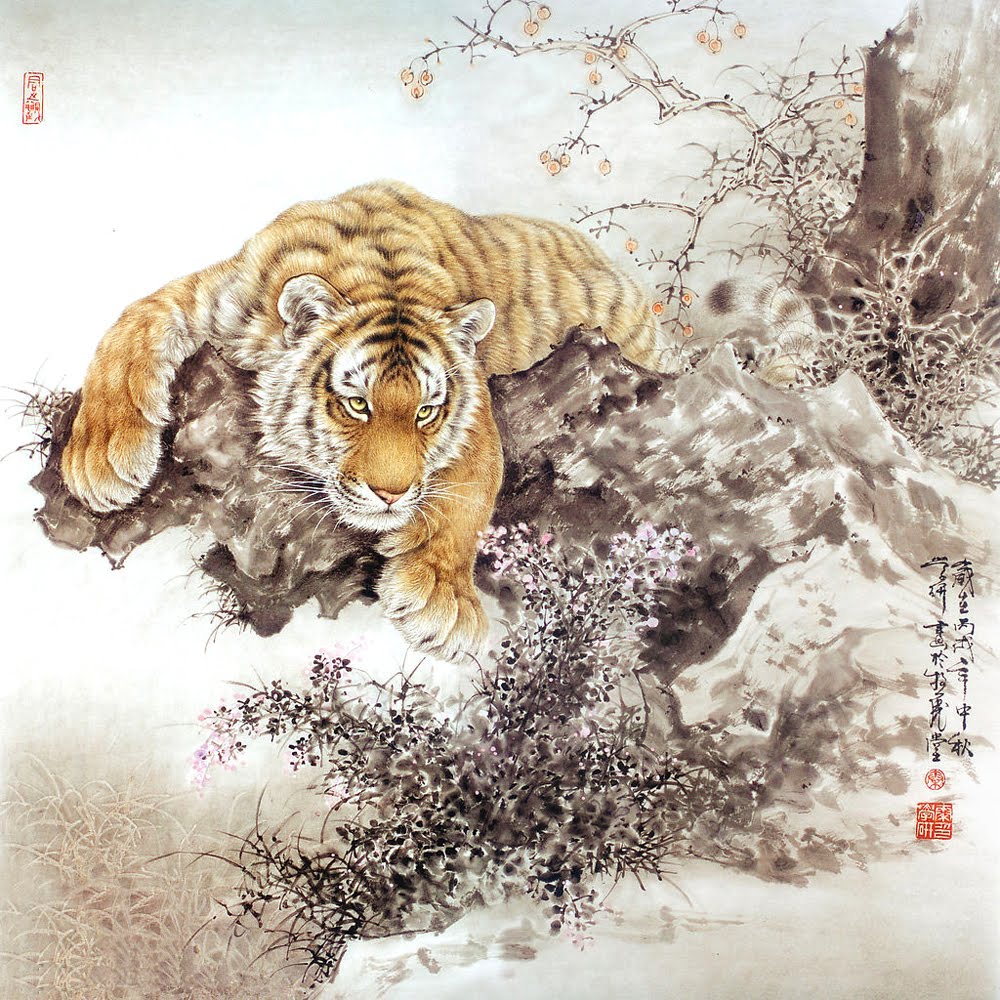
Taiga is a common name for boys in Japan. In Japanese, Taiga is pronounced TAH-ee-gah, but in English it is said TIE-gah. The Japanese are aware that it sounds similar to the English word tiger, and this may even be an attraction for some.

Depending on the kanji used, the name can be given a range of meanings, but the most commonly given is “large and graceful”, or “big and gracious”. It can also be translated as “big river”, and is the Romanised form of “tiger”. Despite these different meanings, when you put them together the overall impression is of something large and powerful, yet with all the majestic beauty and grace of a great river or a tiger.

By coincidence, taiga is also a word for the large coniferous forest areas which cover the far north of the planet, in Alaska, northern Canada, Russia, Poland, Scandinavia, northern Kazakhstan, northern Mongolia, and even the far north of Japan. The word for this is Russian, and ultimately from Turkic or Mongolian. Sometimes taiga is specifically used to designate the more barren part of the forested area. It’s pronounced TIE-guh.

I’m not sure how many Japanese girls are named Taiga, but there is a manga series for young readers called Toradora! where the lead female is a junior high school girl named Taiga. Beautiful yet very short, clumsy and socially maladept, her name is given to her in the sense of the word tiger – lovely, but very fierce!

This gives it a slight chance as a unisex name – if used as the Japanese transliteration of the word tiger, this makes it a different name than the Japanese boy’s name Taiga. And there’s no reason why a girl can’t be named after the forest area anyway, as forests are not intrinsically male or female in nature.

Taiga seems a very usable name – it sounds similar to an English word, and even references that word without actually being that word. Taiga can be a way to get the same sound and even the same meaning from a different spelling and origin.

I think Taiga is a far more interesting name than Tiger, as it has so many layers of meaning. It reminds me of the popular name Kai, which similarly has a European and a Japanese origin, although Taiga manages to bring the two cultures closer together.

Taiga gives the nickname Tai, which links it with other popular boy’s names like Tyson and Tyler; Taiga is unusual, yet a Tai in the playground will blend right in with the other boys named Ty and Tye.

POLL RESULTS
Taiga received an approval rating of 82%, making it one of the most highly-regarded names of 2011. 41% of respondents thought it was okay, and only 6% of people disliked it. The number of people who loved or hated it was exactly the same – 12%.

← Older posts
Newer posts →

Enter your email address to follow this blog

Categories

Archives

Recent Comments

A.O.'s avatarwaltzingmorethanmati… on Zarah Zaynab and Wolfgang…
Madelyn's avatarMadelyn on Zarah Zaynab and Wolfgang…
JD's avatardrperegrine on Can Phoebe Complete This …
A.O.'s avatarwaltzingmorethanmati… on Rua and Rhoa
redrover23's avatarredrover23 on Rua and Rhoa

Blogroll

  • Appellation Mountain
  • Baby Name Pondering
  • Babynamelover's Blog
  • British Baby Names
  • Clare's Name News
  • For Real Baby Names
  • Geek Baby Names
  • Name Candy
  • Nameberry
  • Nancy's Baby Names
  • Ren's Baby Name Blog
  • Sancta Nomina
  • Swistle: Baby Names
  • The Art of Naming
  • The Baby Name Wizard
  • The Beauty of Names
  • Tulip By Any Name

RSS Feed

  • RSS - Posts

RSS Posts

  • Celebrity Baby News: Melanie Vallejo and Matt Kingston
  • Names from the TV Show “Cleverman”
  • Can Phoebe Complete This Sibset?
  • Zarah Zaynab and Wolfgang Winter
  • Baby, How Did You Get That Name?
  • Celebrity Baby News: Media Babies
  • Celebrity Baby News: Adelaide Crows Babies
  • Celebrity Baby News: Chris and Rebecca Judd
  • Names at Work: Name News From the World of Business and Employment
  • Celebrity Baby News: Sporting Round Up

Currently Popular

  • Rare Boys Names From the 1950s
  • Celebrity Baby News: Toby Allen and Darren Weller
  • Celebrity Baby News: Bernard Fanning and Andrea Moreno
  • Celebrity Baby News: Ed Husic and Bridget Tilley
  • Why Your Child Will Hate Their Name

Tags

celebrity baby names celebrity sibsets english names famous namesakes fictional namesakes honouring locational names middle names name combinations name history name meaning name popularity name trends nicknames popular names saints names sibsets surname names twin sets unisex names

Create a free website or blog at WordPress.com.

Privacy & Cookies: This site uses cookies. By continuing to use this website, you agree to their use.
To find out more, including how to control cookies, see here: Cookie Policy
  • Subscribe Subscribed
    • Waltzing More Than Matilda
    • Join 517 other subscribers
    • Already have a WordPress.com account? Log in now.
    • Waltzing More Than Matilda
    • Subscribe Subscribed
    • Sign up
    • Log in
    • Report this content
    • View site in Reader
    • Manage subscriptions
    • Collapse this bar
 

Loading Comments...