• About
  • Best Baby Names
  • Celebrity Baby Names
  • Celebrity Baby Names – Current
  • Celebrity Baby Names – Past
  • Featured Boys Names
  • Featured Girls Names
  • Featured Unisex Names
  • Links to Name Data
  • Waltzing on the Web

Waltzing More Than Matilda

~ Names with an Australian Bias of Democratic Temper

Waltzing More Than Matilda

Tag Archives: Biblical names

Boys Names from the Top 100 of the 1940s

08 Sunday Mar 2015

Posted by A.O. in Name Themes and Lists

≈ 4 Comments

Tags

Anglo-Saxon names, animal names, aristocratic names, aristocratic surnames, aristocratic titles, Biblical names, Breton names, CB radio voice procedures, classic names, english names, ethnonyms, fictional namesakes, French names, Gaelic names, germanic names, Greek names, Irish names, Latin names, locational names, mythological names, name history, name meaning, name trends, names from television, names from video games, names of flags, nicknames, Norse names, papal names, Roman names, royal names, saints names, Scottish names, slang terms, surname names, US name trends, Welsh names
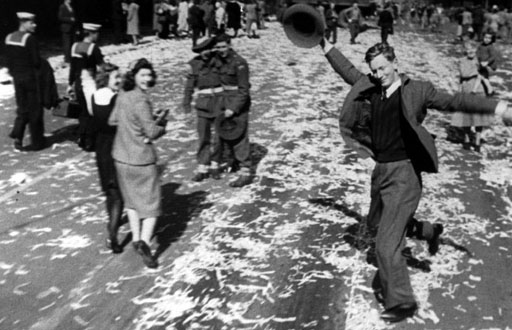
AUGUST-15-1945-Ern-Hill-the-Dancing-Man-in-Eliza-5741858

Alan
Breton name, common amongst aristocracy, introduced to England by the Normans, where it became one of the most popular names. The meaning is uncertain – the word alan was used in Brittany to mean “fox”, but evidence suggests it originally meant “deer”. The two meanings may both refer to someone with red hair, or to indicate speed. There is also an Irish name Ailin, meaning “little rock”, very similar to the Irish/Scots Gaelic word alainn, meaning “handsome”, while the Welsh Alun may mean either “nurturing” or “wandering”. When the Normans brought Alan with them, the name spread to Scotland as Breton lords gained lands there – perhaps partly because the Scots already had similar names. Another theory is that the name comes from the Alans, Indo-Iranian peoples who settled in parts of France and Brittany in the Middle Ages; their name has the same origin as Aryan, meaning “noble”. There are several saints named Alan. Alan is a classic name which has never left the charts. It was #55 in the 1900s, and peaked in the 1940s at #20, leaving the Top 100 in the 1980s. It has recently had a small rise in popularity, and is around the 300s. Surname variants Allan and Allen have also been popular; Allen is back on the charts, while Allan has disappeared. I have seen a few babies named Alan and Allen lately.

Cecil
English form of the Roman family Caecilius. The Caecilii traced their ancestry back to the mythical figure Caeculus, a son of the smith god Vulcan. According to legend, Caeculus had mastery over fire, and was unharmed by it, although the smoke damaged his eyes, which were smaller than usual – his name means “little blind boy” in Latin. Another story is that the Caecilii were descended from Caecas, a follower of the legendary Roman hero Aeneas: his name means “blind” as well, although it also can be translated as “dark, secret”. Of course both these tales are just folklore. The name Cecil has been used since the Middle Ages, and it was also given in honour of the noble Cecil family, whose surname comes from the name Seisyll, Welsh form of the Roman name Sextilius, from Sextus, meaning “sixth”. Cecil was #18 in the 1900s, and was #89 in the 1940s. It left the Top 100 the following decade, and dropped off the charts in the 1970s. I recently saw a baby Cecil, and I think this name seems pretty hip.

Clifford
English surname, from a village in Herefordshire meaning “ford at the cliff”. The Cliffords are a noble family who originally came over with the Normans, and were prominent in medieval England. One of their members was Rosamund Clifford, “The Fair Rosamund”, who was the mistress of Henry II. Clifford has been used as a first name since at least the 16th century. Clifford was #61 in the 1900s, peaking in the 1910s and 1920s at #59. It was #92 in the 1940s, left the Top 100 the following decade, and was off the charts by the 1990s. This name will remind many parents of the classic children’s book series, Clifford the Big Red Dog. It seems strong and solid.

Desmond
Anglicised form of the Irish surname O’Deasmhumhnaigh, meaning “son of the man from Desmond”. Desmond is the original name for South-West Munster, and means “south Munster”. Munster means “land of Muma”; Muma was a goddess associated with writing. Desmond became prominent as an aristocratic title, as the Earls of Desmond were lords of Ireland, related to royal houses in England and France. Their family name was FitzGerald, and US President J.F. Kennedy is believed to have been descended from them. Desmond has been used as a personal name since the 18th century, and originated outside Ireland. Desmond was #127 in the 1900s, joined the Top 100 in the 1920s, and peaked in the 1940s at #66. It left the Top 100 in the 1960s, and dropped off the charts in the early 2000s. This name is rising in popularity in the US, and I wonder if that could happen here too? Desmond Miles from the Assassin’s Creed video game series, and Desmond from Lost are contemporary namesakes.

Gregory
From the Greek name Gregorios, meaning “watchful”. Because the Latin for “flock” is grex, it became understood as “shepherd”, the idea being that the shepherd would keep watch over his flock. Because of this, it became a popular name for monks and bishops to adopt, and there have been dozens of saints and 16 popes with the name Gregory. Pope Gregory I was known as Gregory the Great, and he is famous for sending Christian missionaries to England to covert the Anglo-Saxons, and for the Gregorian chant, which is attributed to and named after him. Because of him, Gregory has been a common English name since the Middle Ages. Gregory is a classic name which has never left the charts. It was #143 in the 1900s, and joined the Top 100 in the 1930s. It was #34 in the 1940s, and peaked in the 1950s at #7 (when Gregory Peck was big in Hollywood). It didn’t leave the Top 100 until the 1990s, and is currently around the 600s and fairly stable. It may not be stylish, but this is a solid choice.

Maurice
French form of Roman name Mauritius, derived from Maurus, meaning “man from Mauretania”. Mauretania was a region of the Roman Empire where north Africa is today, so the name is often understood as “dark-skinned”, and sometimes translated as “a Moor” (the old name for someone from northern Africa). The name became commonly used because of St Maurice, a 3rd century Egyptian who served in the Roman army. According to legend, he was part of a Christian legion who refused to kill other Christians, and were martyred together. As a Roman soldier, St Maurice was patron of the Holy Roman Emperors and many of the royal houses of Europe, so his name became used by royalty and nobility. Prince Maurice of Battenberg was Queen Victoria’s youngest grand-child; he was killed in action during World War I. Maurice was #71 in the 1900s and peaked in the 1920s at #52. It was #82 in the 1940s, and left the Top 100 the following decade; it dropped off the charts in the 1990s. Maurice has a rather nerdy image, although AFL fans may be reminded of footballing great Maurice Rioli. It can be said muh-REES or MOR-is, with Reese or Morrie as the nicknames.

Norman
Germanic nickname or surname meaning “north man”, referring to Vikings. The Normans were descendants of Vikings who had taken over and settled the region of northern France now known as Normandy. Later a Norman duke named William conquered England, so that the Normans became an important part of British history and culture. The name Norman or Normant was used in England even before the Conquest, and became more common after 1066, although dropped off again in the late Middle Ages. It never went out of use, but became much more popular in the 19th century, due to the Victorian love of anything antique-sounding. In Scotland, it was used to Anglicise the Norse/Gaelic name Tormod, meaning “courage of Thor”. Norman was #19 in the 1900s, and peaked in the 1920s at #14. It was #46 in the 1940s, left the Top 100 in the 1960s, and disappeared from the charts in the 1990s. There are many Australian namesakes, from artist Norman Lindsay to comedian Norman Gunston to pop star Normie Rowe. Many people still remember Norm, from the Life. Be in it fitness campaign, representing a pot-bellied man as “the norm”.

Raymond
The Germanic name Raginmund is composed of ragin, meaning “advice, counsel” and mund, “protection”; it is sometimes translated as “protected by good counsel”. The Normans introduced it to England in the form Reimund, where it became very common in the Middle Ages. It was a traditional name amongst medieval nobility, and there are several medieval saints called Raymond. Never out of use, Raymond is a classic name which has always remained on the charts. It was #33 in the 1900s, and peaked in the 1940s at #9. It left the Top 100 in the 1990s, and hit its lowest point in 2009 at #326. Since then it has improved its popularity ranking, and is currently in the 200s. With Roy- names so fashionable, Ray- names cannot help getting a boost as well, and Raymond is not only a solid classic choice, but one which has recently gained some cachet. Plenty of parents love Raymond!

Roger
From a Germanic name meaning “famous spear”. The Normans introduced the name to England in the form Rogier, where it replaced the Anglo-Saxon form, Hroðgar or Hrothgar, which is found in the poem Beowulf as the name of a Danish king. The name was common in medieval England, heavily used by the aristocracy, and there are a couple of saints named Roger. It has never gone out of common use, even though roger was a slang term for “penis” – possibly because of the spear connection. More recently, roger has become understood as “to have sexual intercourse”. It has often been chosen for comic characters, such as the Beano‘s Roger the Dodger, Roger Ramjet, Roger Rabbit, Roger the alien from American Dad, and Roger the Shrubber from Monty Python’s Holy Grail (not to mention “Welease Woger” in The Life of Brian). Roger was #155 in the 1900s, joined the Top 100 in the 1930s and peaked in the 1940s at #57. It left the Top 100 in the 1970s, and dropped off the charts in the late 2000s, albeit with a sudden burst of use in 2009, when it got up to #384. Although perhaps too many jokes have been made at its expense, the pirate flag of the Jolly Roger, and radio procedure call of Roger give it a rollicking feel.

Stephen
English form of the Greek name Stephanos, meaning “wreath, crown”, to denote the laurel wreath worn by those who achieved victory in contests. In the New Testament, St Stephen was a deacon of the early church who was martyred by stoning. As the first martyr, St Stephen’s name seems apt, and he is often said to have won his martyr’s crown. There are several other saints with the name, and nine popes. The name Stephen became more popular in England after the Norman Conquest, and although it is a common name for royalty in eastern Europe, there has only ever been one English king with the name. Stephen of Blois was a grandson of William the Conqueror who took the throne in controversial circumstances; his rule marked a period of anarchy as he fought the Empress Matilda for the right to rule. In the end he failed, and his name has never been used again for a British king. Never out of common use, Stephen is a classic name which has remained on the charts. It was #72 in the 1900s, was #36 in the 1940s, and peaked in the 1950s at #5. It didn’t leave the Top 100 until the early 2000s, and is currently fairly stable around the 300s. The variant Steven, in use since the Middle Ages, is more popular than Stephen, around the 200s.

POLL RESULTS
People’s favourite names were Desmond, Stephen and Gregory, and their least favourite were Roger, Maurice and Norman.

(Picture shows the famous “dancing man” from the joyous celebrations in the streets of Sydney which marked the end of World War II in August 1945)

Girls Names from the Top 100 of the 1940s

01 Sunday Mar 2015

Posted by A.O. in Name Themes and Lists

≈ 10 Comments

Tags

animal names, aristocratic names, Biblical names, classic names, colour names, controversial names, created names, dated names, english names, fictional namesakes, French names, gemstone names, German names, Greek names, hebrew names, Latin names, middle names, mythological names, name history, name meaning, name popularity, nature names, nicknames, plant names, rare names, retro names, royal names, saints names, Spanish names, underused classics, unisex names, vocabulary names

029692

These are names of babies born during World War II, and the first baby boomers, born in the years just after the war. If you are an older parent, your own mother might have been born in this decade, while young parents may see 1940s names as “grandma” names. For those wanting a name that’s ahead of the curve, there are rich pickings from this time period.

Coral
Coral is a gemstone made from the polished shells or exoskeletons of coral polyps – originally, and typically, Corallium rubrum, from the Mediterranean. Because this species has a pink or red colouring, the word coral also refers to a pinkish colour. The ancient Romans believed coral would protect children, and it was common for baby toys and teething rings to be made from coral, even in the 19th century. Coral jewellery has been worn since prehistoric times, although it was the Victorian era which made coral fashionable. Today, with greater awareness of the environmental impact of harvesting coral, many jewellers will no longer sell coral items, and consumers are urged to boycott jewellery made from coral. The name Coral was #194 in the 1900s, and joined the Top 100 in the 1930s. It peaked in the 1940s at #79, left the Top 100 the following decade, and was off the charts by the 1980s, perhaps partly due to growing environmental concerns. Leaving aside the gemstone, you could see this name as a way to celebrate our beautiful coral reefs, and marine environment.

Daphne
In Greek mythology, Daphne was a naiad; a nymph of fresh water, and daughter of a river god. Acording to legend, she was so beautiful that the god Apollo pursued her. Just as he was about to catch her, she pleaded with her father to help her, and he turned her into a laurel tree – Daphne literally means “laurel”, and it’s also the scientific name for the plant. The laurel became sacred to Apollo, and wreaths of laurel were traditionally given to those who had achieved victory. The name Daphne has been use since the 18th century, when classical names became fashionable, but only became common in the 19th, because of the interest in botanical names. Daphne was #82 in the 1900s, and peaked in the 1920s at #22. It was #76 in the 1940s, left the Top 100 the following decade, and was off the charts by the 1970s. Recently it been in the charts again, and is around the 300s. Charming retro Daphne makes a distinguished choice, not a daffy one.

Frances
Feminine form of Francis, often given in tribute to St Francis of Assisi, although St Frances of Rome provides a medieval female saintly namesake. The name was commonly used by the British aristocracy, with examples such as Frances Cobham, a close friend of Elizabeth I, and Frances Grey, the mother of queen-for-nine-days Lady Jane Grey. The great Restoration beauty Frances Stewart, Duchess of Richmond and Lennox, drove King Charles II batty with desire, but she refused to become his mistress. Her lovely face was used as the model for Brittania on coins, medals, and statues, and can still be seen today. In common use since the 16th century at least, Frances is a classic name which has never disappeared from the charts. It was #52 in the 1900s, and peaked in the 1940s at #47, leaving the Top 100 in the 1970s. It sank into obscurity in the late 2000s, but had a boost at the start of this decade which saw it move into the 500s, and is now around the 200s. More solid than Francesca, Frances is a quiet achiever which gets royal glamour from being the middle name of Diana, Princess of Wales, and offers the cool nickname Frankie.

Irene
From the Greek Eirene, meaning “peace”. In Greek mythology, Eirene was the personification of peace, depicted as a beautiful young girl carrying symbols of plenty. Another mythological Eirene was a daughter of Poisedon. The name was in use in ancient Greece, and one Eirene was a famous artist. There are a number of saints named Irene, with Irene of Thessalonica martyred with her sisters Love and Purity, so personifications of theological virtues. Originally more popular in eastern Christianity, it was the name of a Byzantine Empress, and has been used by European royalty. The name was originally pronounced e-REE-nee, but is usually said IE-reen now. Irene is a classic name which has never left the charts. It was #19 in the 1900s, and peaked the following decade at #17. It was #56 in the 1940s, and left the Top 100 in the 1960s. It reached its lowest point in the late 2000s at #684, and since then become more popular, perhaps because it’s been used for several fictional characters in the past few years. Currently it’s around the 400s. This is a hip, underused classic with a lovely meaning.

Lois
In the New Testament, Lois was the pious grandmother of Saint Timothy. It’s not known what the name means: it may be from the Greek meaning “more desirable, more agreeable”, and understood as “the most beautiful, the best”. However, as Lois was Jewish, it could be an attempt to Hellenise a Hebrew name. Lois is also a male name – an Occitan and Galician form of Louis. The female name Lois has been in use since the 16th century, and was used by Puritan families. Lois Lane, Superman’s love interest, has given the name publicity for many decades, but more recently it has become a “mum name” on TV, with Lois Wilkerson from Malcolm in the Middle, and Lois Griffin from Family Guy. Lois joined the charts in the 1910s, debuting at #181. It joined the Top 100 in the 1930s, when it peaked at #84, and was #93 in the 1940s. It left the Top 100 the following decade, and was off the charts by the 1970s. Soft sounding Lois would make an interesting alternative to popular names such as Eloise.

Marlene
German name combining Maria/Marie and Magdalene, so it commemorates Mary Magdalene from the New Testament, the chief female disciple of Jesus Christ. The German pronunciation is mahr-LE-nuh, but it is often said MAHR-leen in English. The name became well known in the English speaking world because of iconic German-American film star Marlene Dietrich, whose real name was Marie Magdalene. The name Marlene rocketed into the Top 100 from nowhere in the 1930s when Dietrich became a star after appearing as the uberdesirable Lola Lola in Josef von Sternberg’s movie The Blue Angel. It both debuted and peaked at #63 in the 1930s. The name Marlene was #68 in the 1940s, when Dietrich did valuable war work, such as performing for the troops and raising war bonds. By the 1950s, when Dietrich became a cabaret star, the name Marlene had left the Top 100. It left the the charts in the 1980s, when Dietrich’s career was over. Despite being a dated name which spiked in popularity only briefly, Marlene still seems glamorous and sexy, fitting in with modern names such as Marley and Elena.

Pamela
Created by Sir Philip Sidney for his 16th century epic, the Arcadia; in the story, Pamela is an attractive main character. It is usually thought that Sidney based the name on the Greek for “all sweetness”. The name was given publicity by Samuel Richardson’s best-selling 18th century novel, Pamela, where a lovely teenaged maidservant is threatened with rape by her employer, but she successfully resists him, and is rewarded for her virtue by being allowed to marry him. Not only are there so many things wrong with that sentence, it was apparently based on a true story. Pamela was originally pronounced pa-MEE-luh, but PAM-eh-luh is more usual now. Pamela has been used since the 17th century, and an early namesake was Lady Edward Fitzgerald; although her real name was Stephanie, she named her eldest daughter Pamela. Pamela joined the charts in the 1910s, debuting at #310, and peaked in the 1940s at #9. It left the Top 100 in the 1970s, and hasn’t been on the charts since the early 2000s. This is an elegant literary name which is dated, but still seems very usable.

Ruth
In the Old Testament, Ruth was the loyal widowed daughter-in-law of Naomi, who famously offered to follow her mother-in-law wherever she went. Naomi married Ruth to one of her relatives, who called Ruth a “noble character”; she is one of the nicest people in the Bible, blessed with a loving spirit. Her name comes from the Hebrew ru’at, meaning “friend, companion” – it seems chosen for the story, as she was such a good friend to Naomi. Ruth is also an English word meaning “mercy, compassion” – it’s one of those words which only seems to be used in its negative form, as we often describe people as ruthless, but rarely ruthful. Ruth has been in common use throughout the modern era, and is a classic name which has never left the charts. It was #66 in the 1900s, and peaked in the 1920s at #41. It was #58 in the 1940s, and left the Top 100 in the 1970s. It’s currently around the 500s. An underused classic with two lovely meanings and a sweet namesake, this is a great name. After all, you can’t spell truth without Ruth!

Thelma
Popularised by Marie Corelli’s 1887 novel Thelma; in Corelli’s romance, Thelma is an enchantingly beautiful, snow-pure Norwegian princess who marries an English nobleman. The name Thelma had been in use since at least the 18th century, but the meaning is not known. One theory is that it is based on the Greek word thelema, meaning “will”, but there is no evidence to support it. It may be a variant of Selma, since Selma is a common name in Scandinavia even today, and Thelma was used in Norway before the novel was published. The name Thelma was also used in Spanish-speaking countries before Corelli’s novel, and Anselma (the long form of Selma) is a Spanish name. Thelma was #18 in the 1900s and peaked the following decade at #9. It was #96 in the 1940s, left the Top 100 by the following decade, and was off the charts by the 1970s. With the name Selma now receiving a boost from the film, could its clunky sister Thelma be in with a chance?

Valerie
English form of the French name Valérie, from the Latin name Valeria, the feminine form of Valerius, meaning “strong, healthy”. It comes from the same source as the name Valentine. St Valerie was a legendary French saint who was martyred by beheading, then went for a walk carrying her head. This was a popular thing for French saints to do in medieval legends, so the name Valerie got quite a boost. Valerie is a classic name which has never left the charts. It was #180 in the 1900s, and joined the Top 100 the following decade. Peaking in the 1930s at #12, it was #38 in the 1940s. It left the Top 100 in the 1960s, and has remained in uncommon use. It had a small boost at the start of this decade, when it was in the 400s. Valerie is a classic with a rather luscious feel to it. It makes a great middle name too.

POLL RESULTS
People’s favourite names were Daphne, Coral and Frances, and their least favourite were Marlene, Thelma, and Pamela.

(Picture shows members of the Women’s Auxiliary Air Force working on a RAAF plane; photo from the Australian War Memorial)

Waltzing With … Anna

08 Sunday Feb 2015

Posted by A.O. in Waltzing with ...

≈ 1 Comment

Tags

Anglo-Saxon names, aristocratic names, Biblical names, British names, classic names, Disney names, Disney princesses, Etruscan names, European name popularity, famous namesakes, fictional namesakes, Greek names, hebrew names, Irish names, Latin names, mythological names, name days, name history, name meaning, name popularity, names from films, names of cakes, popular names, Roman names, royal names, unisex names

Pavlova RM90_01

Famous Namesake
On Thursday February 12, it will be the 134th birthday of the Russian prima ballerina Anna Pavlova. At a time when the rules of classical ballet were rigidly enforced, the dainty Anna performed in a graceful, romantic style, with less emphasis on precision and acrobatics. The principal artist with the Imperial Ballet and the Ballets Russes, she formed her own company and became the first ballerina to tour as an international star.

It was during one of her tours to Australia and New Zealand in the 1920s that Anna Pavlova would be honoured with the creation of an iconic Australasian dish, and in the process spark a rivalry between the two Trans-Tasman nations, who both claim it as their national dessert.

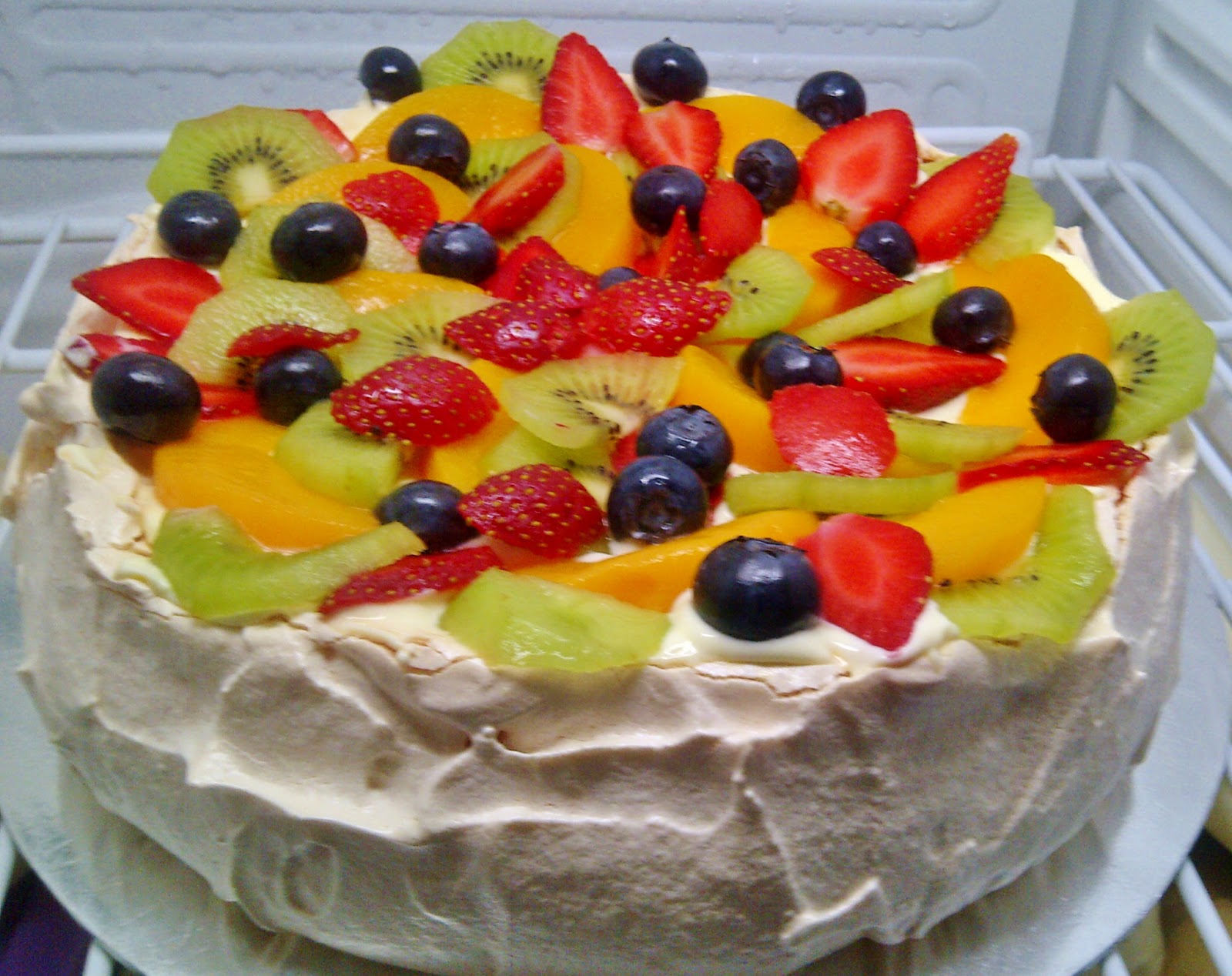
A pavlova is a meringue cake which has a crisp outer shell, and a soft marshmallow-y filling; a delectable, sweet, melt-in-your-mouth treat which is traditionally smothered in whipped cream and fresh summer fruit. Supposedly, the fragile pavlova was inspired by light-as-air Anna Pavlova, with its meringue casing designed to emulate the soft folds of her white ballet skirt.

Both New Zealand and Australia have some rather dubious stories as to how the pavlova first came to be made and named, but indefatigable research by a New Zealand food historian shows that it definitely originated in New Zealand, with a 1929 recipe being found in a New Zealand magazine. Meanwhile, it didn’t make an appearance in Australia until the early 1930s. So New Zealand gets the honours for inventing the pavlova, although it really does feel as if Australia has embraced the pavlova more heartily – it is a favourite choice to celebrate Australia Day.

I always have a pavlova for my Name Day cake: it not only reflects my name, Anna, but is perfect for a hot summery February Name Day. It’s also very appropriate, because my dad is from New Zealand and my mum born in Australia, so it symbolises the two countries coming together.

Name Information
Anna is the Latinised Greek form of the Hebrew name Hannah, meaning “favour, grace, graciousness”, sometimes translated more freely as “God has favoured me”, or “the grace of God”. The New Testament uses the Greek form Anna, in contrast to the Old Testament Hannah.

The Gospel of Luke tells of Anna the Prophetess, an old widow perhaps more than a century in age, who was very devout, and spent all her time fasting and praying. At the Presentation of Jesus in the Temple, celebrated as Candlemas in early February, she immediately recognised the infant Jesus as the redeemer, and gave thanks to God for having been allowed to see Jesus in her lifetime. Despite having a walk-on role in the Gospels, Anna is recognised as a saint.

According to Christian legend, the mother of the Virgin Mary was also named Anna (or Hannah), but she is usually referred to as Saint Anne in order to avoid confusion with Anna the Prophetess. The use of the name Anna was inspired by Saint Anne rather than the aged prophetess.

In classical mythology, Anna was the sister of Dido, Queen of Carthage; she appears in Virgil’s Aeneid. According to the poet Ovid, this Anna was the same being as the Roman goddess Anna Perenna, whose name refers to the “circle of the year” (per annum, in Latin). Her feast day marked the first full moon of the year, and people offered sacrifices so that the year should be successful.

Ovid relates that Anna escaped from Carthage to Italy, where she accidentally drowned and became a river nymph – he translated her name as meaning “perennial stream” (amnis perennis). Ovid says that the goddess was a tiny old woman who baked cakes, and that crude jokes and songs were sung at her festivals. She may have been a mother goddess, and originally Etruscan – if so, her name might be from the Etruscan nanas, meaning “to bear, to beget (a child)”.

Another mythological Anna is the half-sister of King Arthur, usually referred to as Morgause; in many stories she bears Arthur a son, to his downfall. Morgause seems to be a title, meaning “of the Orkneys”, so Anna would have been her personal name.

It may be that she is based on the Irish goddess Anu, sometimes called Ana or Annan. One possibility is that Anu is another name for the mother goddess Danu/Dana, while the war goddess the Morrigan was sometimes called Anand. The British had a winter storm goddess that they referred to as Gentle Annie or Annis, apparently from terror of her hideous powers (this is another link with the name Agnes in Britain). The name is speculated to come from the ancient Celtic anon, meaning “deity, spirit”.

While we’re looking at the name Anna in different cultures, it is worth mentioning that it is also a man’s name, because Anna (or Onna) was an Anglo-Saxon king. One theory is that his name was a nickname for Ethelmund, meaning “noble protection”, or one of the other Ethel- names. Don’t ask me how Anna is short for Ethelmund!

The name Anna has been in common use in the west since the Middle Ages, and has historically been more popular in Eastern Europe and Scandinavia, where it was used by the nobility. It was traditional in the Russian royal family, and the 18th century Empress Anna of Russia was a nasty piece of work. Apart from Anna Pavlova, another famous Russian Anna is the beautiful Anna Karenina, title character of the tragic novel by Leo Tolstoy, considered one of the greatest works of fiction ever written.

Anna is a classic name which has never left the charts. It was #208 in the 1900s, and sunk to its lowest level in the 1920s at #353. After that, it began climbing and joined the Top 100 in the 1950s at #89. The rise into popularity may have been influenced by the 1948 film version of Anna Karenina, starring Vivien Leigh, and helped along by the 1956 film The King and I, with Deborah Kerr in the role of Anna. These movies probably helped give Anna a touch of exoticism.

The King and I was based on the Broadway musical of the same name, in turn based on the book Anna and the King of Siam by Margaret Landon, from the memoirs of Anna Leonowens about her experiences as a royal teacher in Bangkok in the 1860s (Anna Leonowens lived for a few years in Western Australia). Anna and the King was made into a TV show in 1972, and although it flopped in the US, had a decent lifespan on Australian television as re-runs, giving the name Anna a fair amount of exposure during the 1970s.

Anna peaked at the start of the 1980s at #34, then gradually sank into the bottom half of the Top 100. It has not shown any signs of serious decline, but remained relatively stable. In 2013, Anna was #64 nationally, #60 in New South Wales, #81 in Victoria, #87 in Queensland, where it rejoined the Top 100 and was one of its fastest-rising names, #47 in Western Australia, and #71 in the Australian Capital Territory. Preliminary results for 2014 suggest Anna may have improved its position, and is one of Victoria’s fastest-rising names of last year.

One of the factors helping the name along must surely be Princess Anna from the 2013 hit Disney film Frozen, the younger sister of “snow queen” Elsa. Anna is an attractive heroine who is brave and hopeful, with a strong, loving heart. I know many little girls – and even some not so little ones – who adore Anna for being sweet and genuine, with an endearing awkwardness. I wonder how many baby Annas have had their name suggested by an older sister?

Anna is still popular and stable after many decades, and even shows signs of a recent boost. It is a popular name all over the world, but tends to be most popular in central and Eastern Europe, and is the #1 name in Austria. Last year blog readers voted Anna their favourite internationally recognisable girls’ name.

I have found Anna a very easy name to wear. It’s a common name never out of use, but has never been highly popular, so I don’t actually know many people with my name, although everyone has heard of it. Nobody has had any problems spelling it (I learned to write my name as a toddler in about a minute!), and everyone can pronounce it to my satisfaction, even those who don’t speak English. The biggest issue is that it sounds similar to other names, such as Hannah and Emma, which can cause a slight hold-up over the phone.

I can’t pretend that Anna is a very exciting name, but for such a short and simple one, I don’t think it is completely boring either. It’s a palindrome, which tickled me as a child, and it has quite an interesting history – it fascinates me that so many Annas from legend have been elderly women, sometimes with quite a dark side! Its “foreignness” made it popular in the mid twentieth century, and even now I think it has a slight touch of European exoticism: Disney chose it for a Scandinavian princess, after all.

POLL RESULT
Anna received a frankly unbelievable approval rating of 100%, making it the highest-rated girls name in the Waltzing With … category, the highest-rated girls name overall, and the highest-rated overall name of 2015. 46% of people loved the name Anna, and nobody disliked or hated it. I have trouble accepting that I have the perfect name, and can’t help thinking that everyone was too polite to say they didn’t like it!

(Picture shows a pavlova; photo from Just LilDaisy)

Famous Name: Philip

04 Wednesday Feb 2015

Posted by A.O. in Famous Names

≈ 3 Comments

Tags

animal names, Biblical names, classic names, Disney names, Disney princes, english names, European name popularity, famous namesakes, fictional namesakes, Greek names, honouring, locational names, middle names, name history, name meaning, name popularity, nicknames, royal names, surname names, UK name popularity, US name popularity

159088

Famous Namesake
Australia Day is a day not just to celebrate, but to honour Australians for their achievements and service to the community. However, this year even the Australian of the Year was almost completely forgotten as everyone was swept up in a media maelstrom when Prince Philip was named a Knight of Australia.

Former Prime Minister Gough Whitlam replaced the British honours system in 1975 with the Order of Australia, and Knights and Dames were added to it in 1976 by former prime minister Malcolm Fraser. Knights and Dames were then dumped by the Hawke government in 1986.

Last year Knights and Dames were re-instated by the current prime minister, who declared that they would celebrate pre-eminent Australians such as Governors-Generals, chief justices and the like. The prime minister didn’t consult his senior colleagues over the decision, which many felt to be a mistake which could come back to bite him. This is the moment it bit.

There are several reasons why declaring Prince Philip a Knight of Australia went down badly. For one thing, the prime minister didn’t consult any of his colleagues over the decision, which re-ignited fears of an arrogant leader making “captain’s calls” which could alienate his own cabinet. For another, Prince Philip wasn’t a pre-eminent Australian, so the appointment was outside the stated brief.

The prime minister’s decision has been widely criticised, and had scorn poured upon it. The decision has been described as “a time warp” and “ludicrous … cultural cringe” by some in the Opposition, while those on the prime minister’s own side labelled it “April Fool’s Day”, “total craziness”, and “a joke”. High profile supporters of the prime minister, such as conservative commentator Andrew Bolt and media baron Rupert Murdoch thought it was “pathetically stupid” and “an embarrassment”. No wonder the newspapers have dubbed it a “Knightmare“.

Comedian Adams Hills commented that, “Giving a Knighthood to Prince Philip is like giving a Beyonce CD to Jay-Z. Surely he could just pick one up at home”. In fact, Prince Philip, the Duke of Edinburgh, already has three British knighthoods, and has had knighthoods bestowed upon him numerous times by various countries, including Nepal, Peru, and a whole bunch of others you never knew cared.

So an Australian knighthood isn’t completely bizarre, and Prince Charles is already a Knight of Australia, while Prince Philip is a Companion of the Order of Australia. In fact, in Vanuatu Prince Philip is worshipped as a god, which makes a knighthood look pretty low-key in a “least we could do” sort of way.

The problem is that the prime minister was already floundering in a sea of unpopularity, and when you are in dangerous waters, you cannot afford to make a mistake. The knighthood to Prince Philip was the equivalent of a drowning swimmer cutting his leg open, and now (to continue this laboured metaphor), the sharks have the scent of blood and are circling in a menacing sort of way.

The Coalition have already lost the Victorian state election after only one term, and after the Prince Philip debacle, it performed so dismally in the Queensland state election that it is predicted to have lost its majority from a seemingly unassailable 78 seats, and former premier Campbell Newman has lost his seat and left politics. Many pundits are now predicting a federal leadership spill.

Name Information
Philip is the English form of the Greek name Philippos, meaning “friend of horses”. The name isn’t just about being an animal-lover – in ancient Greece, only the wealthiest people could afford to own horses, so the name proclaims a high status. (In the same way, knights are also high-status and connected with horses). Aptly, Prince Philip is a keen equestrian who still participates in carriage driving, a sport which he helped develop.

The name Philip was traditional in the Macedonian royal family, and Alexander the Great‘s father was named Philip. Because of this, it was a highly popular name in Macedonia, although common in the rest of the Hellenic world. Prince Philip was born in Greece to a prince of Greece and Denmark, so his royal Greek name is very suitable.

There are two saints named Philip from the New Testament. One is the Apostle Philip, who seems to have been a friend of Peter and Andrew; according to tradition, he was martyred by being crucified upside down. The other is Saint Philip the Evangelist, mentioned as being one of the deacons chosen to help care for the poor.

The name Philip came into common use in western Europe by the Middle Ages, and was a traditional name in several royal houses, including France, Spain, and Portugal. Philip was used in England from medieval times too, with a notable example being the Elizabethan courtier Sir Philip Sidney, who created the name Stella for a poem.

However, the name became less common for a time because of King Philip II of Spain, who tried to invade England, and whose Spanish Armada was famously defeated by the English in 1588. Philip had actually been king of England for a short time, due to his marriage to Mary I, and they hadn’t been a popular couple. However, under Philip’s rule Spain reached the peak of its power, and was called “the empire on which the sun never sets”. The Philippines is named after him.

By the 19th century, everyone was over the whole Spanish Armada thing, and Philip was completely rehabilitated, no doubt assisted by Phillip, the surname form of the name – which has an Australian link, thanks to Captain Arthur Phillip, the founder of Sydney (Phillip Island in Melbourne, and the suburb of Phillip in Canberra are named after him).

It’s not hard to think of famous Philips and Phillips, including poet Philip Larkin composer Philip Glass, self-help guru Dr Phil McGraw, novelist Philip Pullman, singer Phillip Everly from The Everly Brothers, actor Philip Seymour-Hoffman, and record producer Phil Spector, to name a few. Funnily enough, when I think of fictional Philips, most of them seem to be cartoons, such as Philip J. Fry from Futurama, Phillip Argyle from South Park, and Prince Phillip (!) from Sleeping Beauty.

Philip was #69 in the 1900s and Phillip was #95; they both peaked in the 1950s at #33 and #19 respectively. Philip left the Top 100 in 1989, while Phillip managed to last slightly longer, until 1996. Philip has fallen more dramatically, with not enough births since 2009 to show up in the records, while Phillip is around the 400s.

Philip is still getting reasonable use in the UK and US, but while Phillip has a similar popularity to Philip in the United States, in the 300s, Phillip (#709) is far less common in the UK than Philip (#288). One can only speculate why we all have taken a different position in regard to Philip and Phillip. Philip is most popular in Denmark and Norway.

As I already covered my brother Edward’s name, I will mention that Philip was the name my dad chose for my youngest brother, named for his cousin and best friend. Philip’s middle name is Andrew, after my mother’s favourite great-uncle, who was from the Scottish Highlands.

However, both these choices turned out to be superfluous, because almost as soon as Philip was brought home and settled into his cot, my dad said admiringly, “He’s so brown – like a little brown bear”, and from then on he was Little Brown Bear, and eventually just Bear. He never goes by Philip.

(I should probably add that my family are otherwise very fair skinned with light hair, so Philip’s handsome olive skin and dark hair seemed like an exciting novelty to us. This colouring turns up in many families of Cornish heritage, and legend has it that they are descendants of the Spanish Armada, or Moorish pirates, which is almost certainly complete fiction).

Philip is a classic name with ancient roots, a royal history, and a biblical heritage. It has become less common than its surname twin Phillip, although neither is used extensively. It has some great nicknames – if you’re not excited about Phil, there’s always Pip, the hero of Charles Dickens’ Great Expectations, while Philo, Flip and Pippin would also be possibilities.

POLL RESULTS
Philip received an approval rating of 57%. 21% of people saw Philip as too dated and old-fashioned, but 19% thought it was sensible and honest. 10% were put off the name by Prince Philip, while nobody thought the name was snobbish or stuck-up.

(Picture shows Prince Philip with a friend at the Royal Windsor Horse Show last year; photo from The Express).

Names of Australian Prime Ministers

01 Sunday Feb 2015

Posted by A.O. in Name Themes and Lists

≈ 1 Comment

Tags

Anglo-Saxon names, aristocratic titles, Biblical names, birth notices, Christmas names, classic names, colour names, english names, famous namesakes, Gallo-Roman names, Greek names, holiday names, honouring, Italian names, Latin names, locational names, middle names, name history, name meaning, names of universities, nicknames, Occitan names, Roman names, saints names, Scottish name popularity, Scottish names, surname names, unisex names

voice-fed-r2-c1

Some people say you should give your son the kind of name that will sound good on a prime minister. Here’s ten names borne by prime ministers, as either first names, middle names, or surnames. Maybe one of them is right for your child.

Aloysius
Joseph Aloysius Lyons was the 10th prime minister, swapping from the Labor Party to lead the conservative United Australia Party. Genial and laidback, he was one of the most popular of our prime ministers, and the nation mourned when he died suddenly in 1939, becoming the first PM to die in office. He is the only Tasmanian prime minister, and his widow Dame Enid Lyons became the first woman to sit in the House of Representatives. Aloysius is the Latin form of Aloys, an old Occitan form of Louis, used to Latinise the Italian form, Luigi. Aloysius Gonzaga is a 16th century Italian saint from a noble family, who lost his life caring for plague victims not long after becoming accepted as a Jesuit. Because of the saint, Aloysius is seen as a specifically Catholic name, and is more common in the middle position. It has strong scientific credentials, as Aloysius Lilius was the first to propose the Gregorian calendar, and Dr Aloysius Alzheimer identified the first case of the disease which bears his name. Rich and flamboyant, Aloysius is usually pronounced al-uh-WISH-us in Australia.

Andrew
Andrew Fisher was the 5th prime minister, a Labor leader who served as PM three times. Originally from Scotland, he had a background working for the miner’s union. He was prime minister at the time of the Gallipoli campaign, and ultimately responsible for getting Australian troops out. Andrew is the English form of the Greek name Andreas, meaning “manly, brave”. The name came into common use because of Saint Andrew, one of the Apostles, and the brother of Saint Peter; Andrew was the first Apostle, who led the other disciples to Jesus. Tradition says Andrew preached around the Black Sea, and legend has it that he was crucified on an X-shaped cross, now called the St Andrew’s cross, or saltire. Saint Andrew is the patron of Scotland, where his relics are supposed to have been taken in the 6th century. The place of their safekeeping was renamed St Andrews, and the saltire is on the Scottish flag. Andrew is a classic which has never left the charts. It was #56 in the 1900s, and peaked in the 1970s at #4; it only left the Top 100 last year. A handsome classic with ties to Scotland, this name has had some recent bad publicity.

Christmas
Earle Christmas Grafton Page was the 11th prime minister, and leader of the Country Party, the forerunner to the National Party. He is our longest-serving federal parliamentarian, spending nearly 42 years in parliament, but was only prime minister as caretaker for three weeks after the death of Joseph Lyons. Christmas is the holiday in honour of the birth of Jesus Christ, literally meaning “Christ’s mass”. Christmas has been celebrated since the 4th century, with the December 25 date originating in Rome. While a Christian festival in origin, Christmas is commonly seen as a secular holiday that brings everyone together. Christmas has been given as a first name since at least the 16th century, and early examples were born around Christmas time. Originally Christmas was given fairly equally to boys and girls, but overall is historically much more common as a boy’s name. This may be because Christmas is also a surname, perhaps originally a nickname given to someone who organised Christmas festivities. A sweet middle name for a baby born during the Christmas season (although Earle Page was born in August), as a first name it can shorten to Chris, Christy, or Chrissie.

Deakin
Alfred Deakin was a leader in the movement towards federation who became the 2nd prime minister, serving as PM three times. The founder of the Commonwealth Liberal Party, he is honoured as a founding father by the modern Liberal Party. A man liked and admired by almost everyone, he is almost certainly Australia’s most spiritual prime minister. A sincere spiritualist, his diaries show that he prayed constantly for divine guidance, read scriptures and mystical works, and wanted his influence on the world to be one of light and truth. The surname Deakin is a variant of Deacon, an occupational surname for someone who served in the church ranking just below a priest, and whose duties included assisting the priest and carrying out parish work; the word is ultimately from the Greek for “servant”. A very old surname, it originates from Suffolk, and possibly dates to before the Norman Conquest. I have quite often seen Australian boys named Deakin (far more than ones named Deacon), and the prime minister may well be an inspiration, although Deakin University means it could be after an alma mater.

Fraser
Malcolm Fraser was the 22nd prime minister, who came to power after the controversial Dismissal of Gough Whitlam. He won three successive elections for the Liberal Party, and has had a distinguished retirement in roles for the UN and Care International. He is now estranged from the Liberal Party, and often speaks out on human rights issues. The Scottish Clan Fraser trace their origins to France, although the surname’s meaning is uncertain. One theory is that it is derived from a (now lost place name) La Frezeliere in Anjou. Another idea is that it comes from fraise, the French word for “strawberry”, and the Clan Fraser displays strawberries on its coat of arms. Although a charming notion, this is almost certainly folk etymology. Known for their skills as warriors, the Frasers fought with William Wallace and Robert the Bruce, and took part in the Battles of Bannockburn and Culloden; at the last, they were massacred in great numbers, and a great stone marks where the Frasers fell. This is a handsome name, popular in Scotland, that I quite often see in birth notices.

Grey
John Grey Gorton was the 19th prime minister and a Liberal leader, the only Senator to become PM. Although a popular man with a bit of a larrikin streak, he was a poor public speaker, and the media portrayed him as a buffoon, in contrast to the eloquent Opposition leader, Gough Whitlam. The surname Grey, a variant of Gray, could be a nickname given to someone with grey hair. It can also be a Norman name, coming from the place name Graye in Normandy; this is from the Gallo-Roman personal name Gratus, meaning “welcoming, pleasing”. This second origin seems to be the earliest, and comes from the north of England. Grey can also be given directly as a colour name – the colour grey is associated with modesty and humility, business and professional life, twilight and elves, and also ambiguity (shades of grey). The subdued Grey has been used as a personal name since at least the 16th century, and is historically more common for boys, although it works well in the middle for either sex.

Melbourne
Stanley Melbourne Bruce was the 8th prime minister, a leader of the conservative Nationalist Party. He oversaw the transfer of the national capital to Canberra, became the first PM to live at The Lodge, and modernised federal government administration. He later became an excellent ambassador and highly influential in British politics, taking a key role at the League of Nations. He was eventually raised to the peerage; the royal family attended his memorial service in London, although his ashes are scattered over Lake Burley Griffin in Canberra. Melbourne is the capital of Victoria, and considered our cultural capital. In the 19th century, it became the richest city in the world, and the second-largest after London, gaining the moniker of “Marvellous Melbourne”. Stanley Bruce was from a wealthy Melbourne family, and born in the 1880s when the city was booming and bustling, so the name was a badge of pride. Founded by John Batman from Tasmania, Melbourne was originally called Batmania, but almost immediately someone re-named it after the British prime minister William Lamb, 2nd Viscount Melbourne. A member of the Irish peerage, Lamb’s title was after his Derbyshire estate, Melbourne Hall; the nearby town of Melbourne means “mill stream”. A distinguished middle name, although Batmania has its attractions.

Paul
Paul Keating was the 24th prime minister, delivering a shock record fifth election victory for the Labor Party during the recession years of the 1990s. Cultured and intellectual with an acerbic wit and colourful range of insults, he loves Mahler and collects French antique clocks. Paul is the English form of the Roman name Paulus, meaning “small, humble” in Latin; it seems to have begun as a nickname, and gradually become accepted as a personal name. Although common in ancient Rome, the name has become widespread because of Saint Paul, the Apostle most responsible for spreading Christianity throughout the Western world. Both a Jew and a Roman citizen, the saint’s name was Saul, but his Roman name was Paulus. The New Testament tells of his dramatic conversion. A zealous persecutor of Christians, Saul had a vision on the road to Damascus where the resurrected Christ reproached him for his actions, leaving him temporarily blinded. From then on, he became an equally zealous Christian, and in the process, changed history. By tradition, Paul was martyred in Rome. Paul is a classic name which was #132 in the 1900s, and joined the Top 100 in the 1920s before peaking in 1967 at #3. It left the Top 100 in the early 2000s, and is currently in the mid-200s. A softer-sounding boy’s classic which works well as both a first and middle name.

Reid
Sir George Reid was the 4th prime minister, and leader of the conservative Free Trade Party. A humorous and entertaining orator, audiences flocked to his election meetings, although his enemies viewed him as a clown. After his term in office, he was appointed Australia’s first High Commissioner in London, where he made himself so popular that he was elected to the British House of Commons during World War I. The surname Reid is a variant of Read, Reade and Reed, and generally accepted as a Scottish form, as the reid spelling comes from Northumberland near the Scottish border. It is derived from read, the Old English word for “red”, and began as a nickname for someone with red hair or a ruddy complexion. Reid has been used as a first name since the 17th century, and was first used this way in Scotland. Strong, short and simple, I occasionally see this in birth notices, although more commonly as a middle name: I have even seen it chosen for a girl.

Winston
John Winston Howard was the 25th prime minister, winning a record number of seats for the Liberal Party at the 1996 election so that the party would have been able to govern in its own right. He served four terms as PM, spending almost twelve years in the role. The name Winston is strongly associated with inspirational wartime British prime minister, Sir Winston Churchill, who John Winston Howard is named for. Churchill was named after his 17th century ancestor Sir Winston Churchill, whose name was his mother’s maiden name: she was Sarah Winston, daughter of Sir Henry Winston of Gloucestershire. After this, the name became traditional in the Churchill family. There is an Anglo-Saxon personal name Wynstan, meaning “joy stone”, usually given as the origin of Winston. The Churchill’s Winston surname is probably from the village of Winstone in Gloucestershire, which means “Wynna’s stone”, with Wynna meaning “joy”, so having much the same meaning. However, if it ultimately comes from the village of Winston in Suffolk, it means “Wine’s settlement”, with Wine meaning “friend”, so “friend town”. Nice either way. This is fast becoming seen as a hip, sophisticated choice.

POLL RESULTS
People’s favourite names were Winston, Reid, and Fraser, and their least favourite were Paul, Melbourne and Christmas.

(Picture shows a poster for the centenary of Federation at an exhibition at Deakin University in Victoria)

Names of Australian Prime Ministers’ Wives

25 Sunday Jan 2015

Posted by A.O. in Name Themes and Lists

≈ 5 Comments

Tags

Anglo-Saxon names, Aramaic names, Biblical names, celebrity baby names, classic names, dated names, Etruscan names, famous namesakes, fictional namesakes, Finnish names, French names, gemstone names, German names, Greek names, hebrew names, Hindi names, honouring, Hungarian names, Indian names, Italian names, middle names, name history, name meaning, name popularity, names from movies, names from songs, nicknames, Old French names, rare names, Roman names, royal names, Russian names, saints names, Scottish names, Shakespearean names, UK name popularity, underused modern classics, unisex names, vintage names

a1200_l96496_tcm13-22475

It is Australia Day tomorrow, and for our patriotic lists, I thought it must be about time to have names of our prime ministers and their spouses. Ladies first!

Antonia
Antonia Watson (nee Dowlan) was the second wife of Chris Watson; she was a 23 year old waitress and he was 58. Antonia is the feminine form of the Roman family name Antonius. The Antonia was a very old family who claimed descent from Anton, a son of Hercules – Anton seems to have been invented, and the name may be Etruscan in origin. The most famous of the Antonii was Marcus Antonius (Mark Antony), made famous by Shakespeare’s play Antony and Cleopatra. Mark Antony’s first wife was his cousin Antonia, and he had three daughters, all named Antonia. The youngest Antonia was famed for her beauty and virtue, and became the mother of the Emperor Claudius, and grandmother of Caligula. There is a Saint Antonia who seems to be Saint Theodora under another name, and the name has been used amongst continental royalty – it was a middle name of Maria Antonia, otherwise known as Marie Antoinette. Antonia has charted since the 1950s, when it debuted at #346, and it peaked in the early 2000s at #279. Currently it is around the 400s, so this elegant name is an underused modern classic.

Bettina
Lady Bettina Gorton (nee Brown) was the wife of John Gorton. Bettina was an American student at the Sorbonne who met John while on holiday in Spain; he was a student at Oxford. After marrying in England, they moved to his family’s farm in Australia, and Bettina supported her husband in his political career. On an official visit to Sarawak, Bettina became interested in Asian languages and culture; she later graduated with honours in Oriental Studies from ANU and worked on the English-Malay dictionary. When John became prime minister, her knowledge of South East Asian languages made her a great asset when travelling overseas, and she established a native garden at The Lodge which is named in her honour. The name Bettina can have two possible origins. If German, it is a pet form of Elisabeth, while if Italian, it is a pet form of Benedetta, the feminine form of Benedetto, the Italian form of Benedict. One of the world’s first supermodels was Simone Bodin, who worked under the professional name “Bettina” in the 1940s and ’50s. The French model gave the name Bettina a little boost in the postwar era, but it’s never been common.

Blanche
(Josephine) Blanche d’Alpuget is the second wife of Bob Hawke; she was named after her great-aunt Blanche d’Alpuget, a pioneering journalist. Blanche lived in South East Asia for several years, and after returning to Australia, began writing about her experiences, winning a number of literary awards for both fiction and non-fiction. She later became Bob Hawke’s biographer: his wife tolerated their open relationship for many years, and after retiring from politics he divorced to marry Blanche. Blanche was originally an Old French nickname meaning “white”, to suggest “pure”. The name became common in the Middle Ages, perhaps because very fair skin was considered beautiful and aristocratic. It was popularised by Blanche of Navarre, who had a French mother; as she became Queen of Castile, the name was traditional in her royal family. A famous namesake is Blanche of Lancaster, the mother of King Henry IV, said to be pretty and fair. Blanche was #125 in the 1900s, and left the charts in the 1940s. This is a vintage name which works well in the middle; it might remind you of The Golden Girls or A Streetcar Named Desire.

Ethel
Ethel Bruce (nee Anderson) was the wife of Stanley Bruce. She and Stanley were a devoted couple, and the first to live at The Lodge. Ethel is a short form of names starting with Ethel-, such as Ethelinde. The Old English word ethel meant “noble”, and it was a common name element in royal and aristocratic names. The Victorians were mad keen on Anglo-Saxon names, and began using Ethel as a name in its own right; usually for girls, but occasionally for boys, as there were plenty of male names starting with Ethel-, such as Ethelred. The name was popularised by two 1850s novel – The Newcombes, by W.M. Thackery and The Daisy Chain by C.M. Yonge. Ethel was #14 in the 1900s, and left the top 100 in the 1940s before dropping off the charts in the 1960s. It recently became a celebrity baby name, when pop singer Lily Allen named her first child Ethel, and would appeal to someone looking for an old-fashioned alernative to the current crop of fashionable E names, such as Esther and Eloise.

Ilma
Ilma Fadden (nee Thornber) was the wife of Arthur Fadden. Ilma was a supportive political wife who campaigned for her husband and accompanied him on official visits overseas. The name Ilma can be a short form of Wilhelmina, as well as a Finnish name meaning “air”; I have also seen it listed as a Hungarian form of Amelia. I suspect that in everyday usage, it was often given as a variant of Elma – a name of obscure origin, possibly sometimes created from other names, such as Elizabeth and Mary. Ilma was #176 in the 1900s, and fell until it left the charts in the 1940s – it was a minor trend of the early twentieth century and almost a twin in popularity of Elma. Now this vintage name seems like an interesting multicultural choice not much different to Isla and Emma.

Jean
Lady Jean Page (nee Thomas) was the second wife of Earle Page, and originally his secretary. Like Joan and Jane, Jean is a medieval form of the Old French name Jehanne, introduced by the Normans, and a popular choice in both England and Scotland during the Middle Ages. In England, Jean was eventually surpassed in popularity by Jane, but continued being used in Scotland. In the 19th century, the name was re-introduced back to England, where it now seemed a Scottish name choice. Jean is also a man’s name, the French form of Old French Jehan, and thus the French equivalent of John. Jean first charted in Australia as a unisex name, peaking in the 1910s and ’20s (in the Top 50 if most of the Jeans were girls). In the 1950s, Jean joined the charts as a specifically feminine name, where it peaked at #140, and left the charts altogether in the 1990s. Never popular in the postwar era, it remains very well used as a middle name.

Margaret
Margaret Whitlam (nee Dovey) was the wife of Gough Whitlam. A former champion swimmer, Margaret was a social worker who seemed the perfect match for her husband, and the couple were deeply in love. Margaret was an outspoken advocate for women’s rights, a regular guest on radio and television, and a columnist for Woman’s Day. She died just two years before her husband, acknowledged as one of Australia’s National Treasures. Margaret is derived from the Greek for “pearl”. The name came into common use because of Saint Margaret of Antioch, a legendary saint who was tortured for her faith. She was supposedly swallowed by Satan in the form of a dragon but escaped unharmed, which made her enormously popular. Margaret has been used by European royalty since medieval times. Queen Margaret of Scotland was an Englishwoman married to Malcolm III canonised as a saint: the name has particularly strong associations with Scotland. Princess Margaret was the younger sister of Queen Elizabeth; her grandfather was a Scottish peer. Margaret is a classic name which has never left the charts. It was #6 in the 1900s, and the #1 name of the 1930s and ’40s. It left the Top 100 in the 1980s, and is currently in the 400s, where it has remained fairly stable for decades. An intelligent, dignified classic with tons of nicknames, including Daisy, Greta, Maggie, Maisie, Margot, Meg, Meta, Peggy, and Rita.

Martha
(Elizabeth) Martha “Pattie” Deakin (nee Browne) was the wife of Alfred Deakin. Alfred was a lifelong spiritualist, and Pattie shared his faith; their marriage was long and happy. Martha is the Latin form of the Aramaic name Marta, meaning “lady, mistress”. In the New Testament, Martha was the sister of Lazarus and Mary of Bethany. Many remember the story when Martha was busy in the kitchen cooking for the disciples, while her sister Mary sat listening to Jesus. Worried and distracted, Martha asked Jesus to rebuke her sister for not helping her, but Jesus said that Mary had chosen the better path (tough advice for those who wear themselves out working for others). Practical and caring, Saint Martha is a role model for those seeking an active helping role in the spiritual life. Martha was #92 in the 1900s, and left the Top 100 the following decade, dropping off the charts briefly in the 1940s, and again in the 1990s. It had a minor comeback in the late 2000s, and is already a Top 100 name in the UK, and climbing. A strong, capable, and attractive name which has never been very popular.

Sonia
Lady Sonia McMahon (nee Hopkins) was the wife of William McMahon. The grand-daughter of one of Australia’s wealthiest men, she was an occupational therapist before her marriage. Glamorous and charming, Sonia made international headlines when she wore a revealing dress to a dinner at the White House, showing more leg than was usual. Sonia is a variant of Sonya, Russian pet form of the name Sophia, from the Greek for “wisdom”; Sonja is another common variant. Sonia is also an Indian name, meaning “golden” in Hindi. The name was popularised in the English speaking world through a 1917 best-selling novel called Sonia: Between Two Worlds by Stephen McKenna. The title character is an upper class English girl with big brown eyes and a face like a Sistine Madonna. Sonia first entered the charts in the 1920s, debuting at #309. It entered the Top 100 in 1967, around the time Sonia McMahon came into the public eye, and peaked in 1971 at #52 – the year she wore “that dress”. Leaving the Top 100 in the 1980s, it hasn’t charted since the early 2000s, having been well and truly taken over by popular Sophia.

Tamara
Tamara “Tamie” Fraser (nee Beggs) is the wife of Malcolm Fraser. Ambivalent about being in the public eye, she proved an excellent political campaigner, and was the first prime ministerial wife to employ her own secretary; Tamie also oversaw extensive renovations in The Lodge. She continues to be active in community affairs. Tamara is the Russian form of Tamar, a Hebrew name meaning “date palm”. The name became better known in the English speaking world because of Russian ballerina Tamara Karsavina, who moved to London as a ballet teacher in the 1930s. Tamara first joined the charts in the 1950s, debuting at #522. Its rise in the 1950s seems to be as a formal option for the name Tammy, which became popular because of a Debbie Reynolds romantic comedy called Tammy and the Bachelor: the song Tammy from the film became a smash hit. Tamara joined the Top 100 in 1975, when Tamie Fraser came into the public eye, and peaked in 1989 at #56, leaving the Top 100 in the early 2000s. Currently it is around the 300s, and shows some signs of a slight recovery.

POLL RESULTS
People’s favourite names were Margaret, Antonia and Martha, and their least favourite were Blanche, Ethel and Ilma.

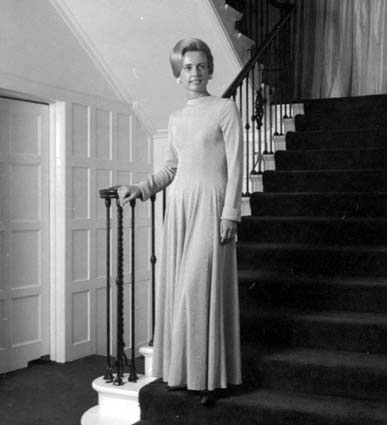
(Photo shows Sonia McMahon in the entrance hall of The Lodge, 1971)

The 2014 Matilda Awards

18 Sunday Jan 2015

Posted by A.O. in Blog News

≈ 2 Comments

Tags

aristocratic names, Biblical names, celebrity baby names, classic names, english names, famous namesakes, flower names, gemstone names, Greek names, hebrew names, historical records, middle names, name combinations, nature names, Old French names, patriotic names, plant names, popular names, rare names, retro names, royal names, Scottish names, sibsets, surname names, twin sets, underused classics, virtue names

165256

Welcome to the second annual Matilda Awards, a quest to discover which names featured on the blog in 2014 gained the greatest approval from the public.

Waltzing With … Category

The most popular names featured in the Waltzing With … category were CONSTANCE for girls, which scored an approval rating of 85% and FORREST for boys, which was rated 78%.

Constance is an Old French name dating to medieval times, traditional amongst aristocracy and royalty, but also valued as a virtue name. It hasn’t charted since the 1990s, and hasn’t been popular since the 1920s. The name Constance was chosen to honour courageous World War I nurse, Sister Constance Keys.

Forrest is an English surname with strong Scottish associations, in use as a first name since at least the 16th century, and possibly even earlier. It has never charted, but is found fairly often in Australian historical records. The name Forrest was chosen for the wealthy Forrest family, prominent in conservative politics.

Once again, the key to winning this category, which has a very simple voting system, is for people to have a high level of tolerance for the name. Both Constance and Forrest were names which hardly anybody had animosity towards, and most people thought were perfectly fine.

Famous Name Category

The most popular names featured in the Famous Name Category were HOPE and OPAL for girls, which both scored an approval rating of 86% and SAMUEL for boys, which scored 88% and was the top-rated name overall for the year.

Hope is a virtue name which is an underused classic; almost constantly on the charts, it has never become popular. Hope was praised as a simple and elegant classic which was both pretty and wholesome, and had a very positive meaning. The name was chosen to commemorate the centenary of the start of World War I.

Opal is a gemstone name with a patriotic meaning – the opal is Australia’s national gem, and the black opal is the state gem for New South Wales. A name most used during the Victoria era, it has never charted, but is often found in Australian records, especially in opal mining regions. Opal gained approval as an unusual and refreshing choice which was both pretty and simple, and hip and quirky. The name was chosen for the roll-out of the Opal public transport card in Sydney.

It’s interesting that Hope and Opal tied for first place, as they are quite similar – both short, simple English names with a strong OPE sound to them.

Samuel is a Hebrew name from the Bible; in the Old Testament, Samuel was a prophet and judge of Israel who brought peace to the land. Samuel is a classic name which has never been out of the Top 200, and is very popular, with a stable position for twenty years. Samuel was seen as a handsome classic which was both strong and gentle; a “nice guy” name which aged well and suited a variety of people. The name was chosen for the actor Samuel Johnson, who broke the world unicycling record to raise funds for breast cancer research; coincidentally, Samuel did this feat for his sister, who is named Constance, another favourite name.

Name Themes and Lists Category

The most popular names which were featured in the Names Themes and Lists Category were VIOLET and THEODORE. Violet won very convincingly, and also managed to win its original poll, while Theodore had a comfortable win.

Violet is a retro flower name first used in Scotland. Popular in the 1900s, it left the charts from the 1960s to the 2000s, but is now back with a bang, and zooming up the Top 100. The name was chosen for a spring-time list of native Australian flowers.

Theodore is a Greek name common in ancient times, which gained popularity amongst early Christians. An underused classic, Theodore has been rising steeply for decades, and seems likely to join the Top 100 soon. Theodore was chosen from the Australian children’s book Antonio S and the Mystery of Theodore Guzman by Odo Hirsch, part of a list for Book Week.

Celebrity Baby Names

The most popular celebrity baby girl name was CLEMENTINE FRANCES LOGAN, which proved a clear favourite right from the start. Clementine is the daughter of Peter and Hannah Logan, and this is proof you do not need to be an A-lister to have a great baby name, because the Logans are local celebrities from the Mudgee area, who run a successful wine company. Tess Clementine was the favourite baby name in 2013, and it looks as if blog-readers are Clementine-crazy.

The most popular celebrity baby boy name was EVANDER MAXWELL GLEAVE, who managed to win by a single vote in an extremely tight contest, as many boys’ names were nominated this year. Evander is the son of Australian model and Miss Australia winner Erin McNaught, and British rapper Example (Elliot Gleave).

Clementine and Evander both have elegance and substance, with classical roots, and a European vibe, being fairly popular in France, while uncommon here. The middle names are solid classics which aren’t popular as first names. Celebrities, take note!

There was no favourite amongst the celebrity twins, as none of them received enough approval to be eligible. Yes, this is a tough audience.

Names from the Birth Announcements

The most popular names for multiples were boy/girl twins FLORENCE AND HENRY, who proved solid performers. This handsome twin set from March was nominated by Madelyn.

In the girls section, ARABELLA HERMIONE ROSE scraped through by one vote. Elegant and a little off-beat, this pretty girl’s name from April was nominated by Sophia.

Amongst the boys, HUGO FREDERICK had a very comfortable win. This stylish boy’s name from early November was nominated by Nana Patricia.

The sibsets were dominated by LILY, WINTER, BEAU AND VIOLET, who absolutely destroyed all opposition. Note that Violet had a second victory. These four siblings, whose names have a simple, natural feel, were nominated in late November by both Nicole and Names For Real (Sarah from For Real Baby Names).

Some themes were clear this year: Scottish names did very well, as Forrest, Violet, Clementine Logan and Arabella all have links with Scotland. It did not win independence, but the land of loch and legend clearly won our hearts. Nature names and virtue names were also clear favourites – a positive meaning seems to be a real help.

Interesting Boys Names from the 2014 Birth Announcements

07 Sunday Dec 2014

Posted by A.O. in Name Themes and Lists

≈ 1 Comment

Tags

Anglo-Saxon names, Arabic names, Biblical names, birth notices, car names, celebrity baby names, english names, famous namesakes, fictional namesakes, Gaelic names, Greek names, hebrew names, Irish names, Japanese names, locational names, mythological names, name history, name meaning, name trends, names of herbs, names of horses, nature names, nicknames, Old English names, Old Norse names, Oscan names, Pictish names, plant names, rare names, regnal names, Roman names, royal names, saints names, Scottish names, surname names, Swedish names, unisex names

old

Do you worry there are no interesting names left for boys, or that only girls can have unusual names? Not so! For the final list of the year, here are a dozen rare names for boys that were recently used for real babies by Australian parents. 

Arion
In Greek mythology, Arion was an immortal talking horse who was the son of the sea god Poseidon, known for being extremely swift. The horse is referenced in the Percy Jackson fantasy series, and the Mistubishi Starion is meant to be a cross between star and Arion. There was a real person named Arion in Greek history – a famous poet and singer. However, even he became legend, as a folk tale sprung up that he had been kidnapped by pirates and miraculously rescued by dolphins, who were attracted by his beautiful singing and carried him safely to shore on their backs. The name may be from the Greek for “braver”, and is pronounced AR-ee-on. This name fits in well with the trend for AR names, has fashionable Ari as the nickname, and sounds similar to Aryan and Orion.

Basil
From the Greek name Basileios, meaning “king”. Saint Basil the Great was a 4th century bishop and one of the fathers of early Christianity. A great theologian and preacher, he cared for the poor and was one of the founders of monasticism. Recognised as a Doctor of the Church, in Greek tradition he brings gifts to children on New Year’s Day, making him an eastern version of Santa Claus. A common name in the east, there are numerous other saints named Basil (including Basil the Great’s father), and a few Byzantine rulers. Brought to Britain by the Crusaders, we often think of Basil as a particularly “English” name, thanks to actor Basil Rathbone, who played Sherlock Holmes, Basil Fawlty, and Basil Brush, and it has a rather old-school gentlemanly feel. The herb basil has the same meaning as the Greek name. Basil is also an Arabic name meaning “valiant, courageous”, so this would be an unexpected cross-cultural choice with the Australian nickname Baz or Bazza.

Cassius
Roman family name. The Cassii were of great antiquity, and said to be one of the noblest families in Rome; the Via Cassia in the city is named after them. They seem to have been from southern Italy, where they owned large estates, and their name may not be Latin in origin, but Oscan; the meaning of Cassius is probably not traceable. One of the best known of the family is the Cassius who instigated the plot to assassinate Julius Caesar. Famously, William Shakespeare writes of him as having “a lean and hungry look” in his tragedy Julius Caesar, while in Dante’s Inferno, he is chewed by Satan in the centre of Hell, alongside Judas Iscariot. Despite this, the name came to be associated with those who stood up to tyranny and injustice. There are two saints of the name – Cassius of Clermont, and Cassius of Narnia (are you able to resist a saint of Narnia?). The name is strongly associated with boxer Muhammad Ali, who was named Cassius Clay after his father, and his father was named in turn after a politician who worked for the abolition of slavery. Depending on how you pronounce it, you can use either Cass or Cash as the nickname, both of which are on trend.

Fenris
Norse mythology tells of a monstrous wolf who is the son of Loki and a giantess; Odin raised the wolf himself, but the gods kept him bound in fear of his power. It is foretold that at the end of the world, one of this wolf’s sons will swallow the sun, and the other swallow the moon. All fetters will break, and the great wolf will go free, with flames burning from his eyes and nose. In a great battle, he will swallow the god Odin, killing him, but Odin’s son will in turn slay the wolf. The wolf is called Fenrir, meaning “fen-dweller” (a fen is a type of wetland), or Fenrisúlfr, translated into English as Fenris Wolf. Fenris has appeared as a character in comic books and video games, and in fantasy novels such as Arthur Quinn and the Fenris Wolf. Norse mythology names are in fashion at present, and this one is very cool.

Fyfe
Scottish surname after the historic kingdom of Fife, on a peninsula in east Scotland between the Firth of Tay and the Firth of Forth. The region is one of the country’s historic counties, and is the location of St. Andrews. Once a Pictish stronghold, Fife became a politically important area, and until the 15th century, the Earl of Fife was the highest peer in Scotland, and had the privilege of crowning the nation’s monarchs. The meaning of Fife is not known – it was originally Fib, and according to legend, Fib was one of the sons of the founder of the Picts. The name Fyfe has nothing to do with the flute known as a fife, which comes from the German for “pipe”, although this does give it a rather musical feel. Known in Australia as the surname of AFL footballer Nat Fyfe, and cartoonist Andrew Fyfe, this is a handsome Scottish choice with plenty of history.

Joachim
From the Latinised form of Yehoyaqim, a Hebrew name meaning “established by Yahweh”. In the Old Testament, there was a king of Judah with this name, and his name is transliterated as Jehoiakim; it seems to be a throne name, because he was named Eliakim by his parents. According to early Christian tradition, Joachim was the name of the Virgin Mary’s father, and he is venerated as a saint in Christianity and honoured in Islam under the name Imran. Legend states that Joachim was a wealthy, pious man married to a woman named Anne; although they loved each other dearly, they were unhappy at their childless state, believing it to be a sign of God’s displeasure. At the climax of their story, an angel tells Anne that she is pregnant, and that her child will be known throughout the world. Anne joyfully rushes to meet her husband, embracing him at the city gate to tell him the glad tidings. The name Joachim has been more common in continental Europe than in English-speaking countries, and was used amongst royalty: a contemporary example is Prince Joachim of Denmark, the younger brother of Crown Prince Frederik. Strong and distinctive, this has familiar Joe as the obvious nickname.

Lazarus
From the Greek form of Eleazar, a Hebrew name meaning “God is my help”. In the New Testament, Lazarus of Bethany was the brother of Martha and Mary, and one of the followers of Jesus. He was famously brought to life by Jesus, four days after his death, and his story contains the shortest and perhaps most quoted sentence in the Bible: “Jesus wept”. This is the biggest miracle performed by Jesus in the New Testament, and one which leads directly to his own death and resurrection, which Lazarus foreshadows. Lazarus is regarded as a saint, and according to Christian tradition, he lived another thirty years after his raising, and never smiled again. Jesus also told a parable about a beggar covered in sores named Lazarus, and because of this, the name Lazarus became associated with the care of those with leprosy, with leper hospitals called lazar houses. It’s currently in the news as the surname of Glenn Lazarus or “the brick with eyes”, rugby league star turned senator. A name that embodies a spectacular miracle of hope, Lazarus is an eye-catching choice that fits in with current trends, and has Laz, Lazar, and Lazy as nicknames.

Makoto
Japanese name meaning “truth, faith, sincerity”, and pronounced mah-ko-to. It is unisex, but more common for boys. Makoto is often used in Japanese video games and manga, so may be reasonably familiar to some English-speakers. It’s an attractive boy’s name with a very positive meaning and easy to pronounce; exotic but not too strange. The baby I saw in a birth notice had Mako as his nickname; if this sounds similar to Marco, it would make the name seem like an appealing cross-cultural name choice.

Riordan
Anglicised form of the Irish surname O’Rioghbhardain, meaning “son of Rioghbhardan”. Rioghbhardan is a Gaelic byname meaning “royal bard”. Poets and singers were held in high regard in ancient Irish society; they were not mere entertainers, but also historians, scholars and advisers to the king. The O’Riordans came from Tipperary, and are strongly associated with Cork. Ballyrearden in Cork is named for them. The surname has recently become well known because of American novelist Rick Riordan, author of the Percy Jackson fantasy series, and others. Riordan is pronounced REER-dun, or REE-uh-dun, but the surname has taken on such a variety of pronunciations, like ROAR-den, ROY-uh-dun and RYE-uh-dun, that you might feel free to say it in almost any way you like. Rio could be used as the nickname.

Royce
English surname derived from Royse, a medieval form of Rose; it is thus one of those rare surnames taken from a female name rather than a male one, and could honour someone named Rose . The name is strongly associated with the luxury car brand Rolls-Royce, co-founded by English engineer Sir Frederick Royce. A famous Australian namesake is botanist Robert Royce, for whom the genus of shrubs Roycea is named. There are several famous sporting Royces in Australia, including former AFL star Royce Hart, who played for Richmond in the 1960s and ’70s. Roy names are bang on trend at the moment, and if you’re one of those people who get all het up about girls with masculine surnames like Addison and Mackenzie, here’s your chance to even the score slightly.

Stellan
Swedish name of obscure origin. The first known person with the name came to Sweden from Germany in the 16th century, so it may be from the German language, yet the name is not used in Germany, which casts doubt on that theory. It isn’t a particularly common name in Sweden, but has become known here because of Swedish actor Stellan Skarsgård, who has been in such films as Good Will Hunting, The Girl With the Dragon Tattoo, and Thor. Stellan became a celebrity baby name when actors Paul Bettany and Jennifer Connolly named their son Stellan after their friend Stellan Skarsgård. This is a handsome heritage choice which sounds to English-speakers like a masculine form of Stella, and so may be understood as having the same meaning – “star”.

Wulfric
Anglo-Saxon name meaning “wolf power, wolf ruler”, and pronounced with the first syllable to sound like the word wolf. Wolves were numerous in Anglo-Saxon times, and it’s not surprising that wulf was a common element in Old English names. The Anglo-Saxons saw the wolf as a symbol of warrior strength, and in stories wolves were protectors of the god Woden, and of royalty. The gloriously named Wulfric Spot was chief councillor to King Ethelred the Unready; his mother was a noble lady named Wulfrun, and the city of Wolverhampton is said to be named after her. Saint Wulfric of Haselbury was a 12th century hermit who managed to wield quite a bit of influence as a prophet and healer even over royalty; he correctly predicted the death of Henry I. Despite these interesting namesakes, Wulfric is a name more common in fiction than real life, and you may know it as one of the middle names of the wizard Albus Dumbledore in Harry Potter. An English name with plenty of history but little contemporary use, this fits in well with the current fashion for animal names. Despite its ferocious meaning, it seems eccentric and lovable to me.

POLL RESULTS
The public’s favourite names were Stellan, Cassius and Riordan, and their least favourite were Joachim, Royce and Makoto.

(Photo shows St Andrews golf course in Fife, recognised as the home of golf)

Interesting Girls Names From the 2014 Birth Announcements

30 Sunday Nov 2014

Posted by A.O. in Name Themes and Lists

≈ 2 Comments

Tags

Arabic names, Biblical names, birth notices, celebrity baby names, controversial names, Disney names, epithets and titles, famous namesakes, fictional namesakes, flower names, French names, German names, germanic names, Greek names, hebrew names, Indian names, Latin American names, Latin names, locational names, mythological names, name history, name meaning, names from ballet, names from films, names of businesses, names of cocktails, nature names, nicknames, plant names, rare names, Roman names, saints names, Sanskrit names, Spanish names, surname names, unisex names, yoga names

ArtworkGraphic19PurpleRobe

I’m always on the look-out for unusual names in the birth notices, and here are a dozen that are little used, but have intriguing histories. If you are looking for a rare yet genuine name, but fear choosing something too strange, you can take heart that these names have all been recently used by real life Australian parents.

Anjali
Sanskrit name meaning “divine offering”, from the word anj, meaning “to honour, to celebrate”. The Añjali Mudrā is a gesture of respect used in India as a greeting, where the palms join over the heart. If you go to yoga classes, you may greet each other with an Añjali Mudrā; it’s also part of several yoga positions. Anjali is quite a common name in India, and you may know the name as that of the wife of Indian cricket star, Sachin Tendulkar. A pretty Indian name that works very well in English-speaking countries, it is usually pronounced UN-juh-lee, although English-speakers may prefer an-JAH-lee.

Cataleya
Latin American form of cattleya, a type of South American tropical orchid with large, showy flowers. The orchid is named after English horticulturist William Cattley, who was the first European to successfully bring one into bloom. His surname comes from Catley in Herefordshire, meaning “wildcat wood”. Readers of Marcel Proust may recall that in Swann’s Way, the courtesan Odette wore a cattleya as decoration on her gown one evening, and her lover Swann removed it for her. As one thing led to another, they used cattleya as a private word between them for lovemaking. Cataleya was the highest-rising girls’ name in the United States last year, rocketing into the Top 500 from nowhere. The reason is the 2011 action film Colombiana, where the heroine is the assassin Cataleya, who leaves a cattleya as her calling card. Exotic and with a tough girl namesake, it is pronounced kah-tah-LAY-uh.

Damaris
In the New Testament, a woman named Damaris is mentioned as a convert of Saint Paul in Athens. Very little is known about her, although it is assumed she was a woman of high social status, but she is recognised as a saint in the Orthodox faith, and there is a street named after her in Athens. Her name is a matter of debate: the most popular theory is that is from the Greek word damalis, which literally means “heifer”, but is understood as “young girl”. Another is that it is derived from damar, the Greek word for “wife”. Once fashionable in 17th century England, this is a little-used biblical name that has gained modern glamour by American swimsuit model Damaris Lewis. The name is pronounced DAM-uh-ris.

Esperanza
Spanish form of the Latin name Sperantia, meaning “to hope”; esperanza is the Spanish vocabulary word for “hope”. The name got some publicity in 2010 because of Campamento Esperanza (“Camp Hope”), set up in Chile by friends and relatives after a cave-in at a mine; many weeks later their prayers were answered when all 33 miners were rescued. The following year, jazz singer Esperanza Spalding was named Best New Artist at the Grammy Awards. The name also has a motherly vibe, for Esperanza is the wife of Zorro, and mother of his beloved daughter Elena in The Mask of Zorro, while the mare who gives birth to the stallion Spirit in the animated movie is named Esperanza. Another famous mum is Oscar Wilde’s mother, who wrote under the pen name Speranza. Esperanza is a cool name that’s unusual, but not unfamiliar.

Farrah
Variant of Farah, a unisex Arabic name meaning “joy”. The name is well known because of the glamorous 1970s actress Farrah Fawcett, who passed away a few years ago. Farrah Fawcett posed for an iconic photograph wearing a red Speedo swimsuit, so there is an Australian connection to her. More recently, Farrah King from the hip hop outfit Cherish has given it fresh publicity. Soft and pretty, Farrah is an Arabic name which works well cross-culturally.

Fauve
Modern French name, which is pronounced to rhyme with the word mauve. Fauve literally means “wild beast” in French, referring to beasts of prey, and especially the big cats, such as lions and tigers. The word has a very artistic heritage, because in the early twentieth century, les Fauves were a group of modern artists who were known for their bold use of bright colours; they got their name because their work was criticised as looking like something a wild beast would produce. Henri Matisse is one of the most famous of this group. However, fauve has another meaning in French, and that is “yellowish-brown” – a tawny lion colour which would suit someone with dark blonde hair. Fauve is an uncommon name in France, and a rare one here, although not unheard of. It’s very daring, but also on trend.

Jerusha
In the Old Testament, Jerusha was the daughter of a high priest, and a queen of Judah, the wife of King Uzziah. Uzziah was considered one of the greatest rulers of the kingdom, but he became too proud, and began to usurp the role of the priests. Struck down with a disfiguring skin disease, he was replaced by his son Jotham, who is listed as one of the ancestors of Jesus in the New Testament. The name means “possession” in Hebrew, in the sense of something precious, and is said jeh-ROO-sha. A literary namesake is the teenage girl in the children’s book Daddy Long-Legs: she goes by the name Judy, although Roo would be a very Australian nickname.

Odette
French name which is a pet form of the Germanic names Oda or Odilia. These names may both be feminine forms of names which became the German name Otto, meaning “wealth”, although Odilia might instead mean “fatherland”. The name is forever associated with swans, because Princess Odette is the White Swan in the ballet Swan Lake; a sweet, gentle girl, she has been transformed into a swan, and can only take human form at night. Only true love can break the spell, but thanks to nefarious scheming by the baddies, Odette’s story ends in tragedy. Odette is a dated name in France, but to English-speakers, sounds glamorous and romantic. The Disney movie The Swan Princess, based on the ballet, makes it more accessible as well.

Persephone
In Greek mythology, Persephone was the daughter of the agriculture goddess Demeter, and she is central to one of the oldest myths. Legend says that Demeter kept her daughter hidden away from the other gods, so the two could live in companionship with nature. Hades, the god of death, fell in love with Persephone, and one day when she was gathering flowers, he kidnapped her and took her to live in the Underworld as his wife. Demeter was so grief-stricken that she neglected the earth, and nothing would grow: seeing that people were starving to death, Zeus demanded that Persephone be returned. However, Persephone had eaten a few pomegranate seeds in the Underworld, and having tasted its food, was obliged to spend several months of the year with Hades. While Persephone is underground, Demeter mourns for her, and it is winter: when she returns in spring, life is renewed. This ancient myth of death and rebirth comes from the Near East: many rituals and mystery traditions are associated with it, with special significance for girls and women. The name Persephone is interpreted as “female thresher of corn”, because she is an agricultural goddess, but another theory is that her name means “bringer of death”, as she is goddess of the Underworld. The Greeks had so many forms of her name that it would seem they had trouble pronouncing it, suggesting that her name was pre-Greek; it is said per-SEF-uh-nee. Beautiful and elaborate, primal to the human urge for life everlasting, this would be a wonderful choice for someone who thought that Penelope had become too popular to use.

Reeva
Variant of Riva, a pet form of Rivka, modern Hebrew form of the familiar name Rebecca. This comes from the Hebrew word ribhquh, which literally means “a connection”; it can thus be understood as “joining together, securing”. Reeva is also used as a name in India, a variant of Reva, which is Sanskrit for “one who moves”, and often translated as “swift, agile”. It is one of the epithets of Rati, the Hindu goddess of love. The name came into the public eye in a shocking way when South African model Reeva Steenkamp was shot and killed by her boyfriend, world renowned paralympian Oscar Pistorius, now serving a prison sentence for culpable homicide. Due to the notoriety of the high-profile legal trial, Reeva became the fastest-rising girls’ name in England and Wales last year. Reeva fits in with popular names like Ava and Eva, but the very public tragedy of Reeva Steenkamp’s death may make some parents uneasy about using it.

Sephora
Greek form of Zipporah, variant of the Hebrew name Tzipporah, meaning “bird”. In the Old Testament, Zipporah is mentioned as the daughter of the priest Jethro, and the wife of Moses. When Moses fled Egypt after killing an Egyptian man, he took refuge in the desert country of Midian, on the Arabian Peninsula. When Zipporah and her sisters went to water their flocks, they were driven off by shepherds who wanted the water for themselves, and Moses went to their defence. Moses ended up living with Jethro and working for him, and was given Zipporah in marriage. Zipporah had problems with the in-laws, because Moses’ sister Miriam criticised him for marrying a dark-skinned woman, but she was struck down with leprosy in punishment, showing that God approved of the marriage. Sephora is more popular in France than elsewhere, because of the Parisian cosmetics company of that name, but this lovely name isn’t common anywhere.

Vesper
Roman form of the Greek name Hesperus. In Greek mythology, Hesperus was the personalification of the Evening Star (the planet Venus as seen in the evening); his half-brother Phosphorus was the Morning Star. Vesper can be intepreted as “evening, supper time, west”, and Vespers is the name for the evening prayer service in the Christian church. You may know the poem Vespers by A.A. Milne, about Christopher Robin saying his nightly prayers: it was made part of the minature library collection for Queen Mary’s Doll House. Although a rare name in real life, Vesper has had several outings in the world of fiction. Vesper Lynd was James Bond’s lover in Casino Royale, played by Eva Green in the 2006 movie; her parents gave her the name because she was born on a “dark and stormy night”. The famous “shaken not stirred” martini that Bond invents is named the Vesper after her. Vesper has been picked used as a celebrity baby name – one is the daughter of American rock musician Sam Farrar, whose parents are Australian.

POLL RESULTS
The public’s favourite names were Persephone, Odette and Vesper, and their least favourite were Cataleya, Damaris and Jerusha.

(Picture shows Purple Robe and Anemones by Fauvist Henri Matisse – 1937)

Famous Name: Caleb

19 Wednesday Nov 2014

Posted by A.O. in Famous Names

≈ Comments Off on Famous Name: Caleb

Tags

animal names, baby name books, Biblical names, controversial names, famous namesakes, fictional namesakes, hebrew names, modern classics, name history, name meaning, name trends, nicknames, popular names, saints names, tribal names

148170-a35f84fa-ca7d-11e3-9aee-4ab1c4ff1b91

Duckbour Caleb James Shang, known as Caleb, or by his Chinese name Lee, or the nickname “Charlie”, was one of the more unlikely heroes of World War I. Quiet, soft-spoken and shy, the slightly-built Queenslander from far north Cairns was 170 cm tall and weighed 51 kg. Furthermore, as the son of a Chinese-born father and Australian-born mother, nobody expected him to even enlist, as only those of European ancestry were considered eligible for military service at this time, and it was unusual for people of Asian ancestry to join the armed forces.

Yet both Caleb and his brother Sidney enlisted in 1916, and in 1917 Caleb joined the 47th Battalion in time to join heavy fighting in Flanders on the Western Front. He later fought on the Somme during the heaviest attack ever faced by Australian soldiers, and after his battalion was disbanded due to severe casualties, he served in the 45th Battalion during the Battle of Amiens. Here he was wounded, and evacuated to England before being sent back to Australia when the war was over.

Caleb was a runner, signaller, and scout, tirelessly running messages and bringing supplies at all hours, signalling while exposed to the enemy, constantly volunteering for dangerous missions into enemy territory, and attacking snipers in broad daylight. The runner’s job was one of the most dangerous on the Western Front, and had a terrifying casualty rate, yet for most of his war service, Caleb got through these perilous situations without a scratch.

Caleb’s outstanding endurance, contempt for danger, gallantry, skilful resourcefulness, and devotion to duty inspired those around him, and earned him the admiration of both the officers and men. The first Australian soldier of Chinese descent to be decorated, the most highly decorated Chinese Australian soldier of World War I, and the most highly decorated Queensland soldier of his time, he received the Distinguished Conduct Medal twice, and was awarded the Military Medal.

When he returned home to Cairns in 1919, Private Caleb Shang received a hero’s welcome, with 3000 people turning out to jubilantly greet him on the wharf at dawn. The mayor was there, as were the Returned Soldiers League, and the Cairns Citizen Brass Band played See the Conquering Hero Comes. The Cairns Post raised a subscription fund to start him off in civilian life, and more than £45 was raised by the townspeople.

During World War II, Caleb served with the Volunteer Defence Force in Cairns; during his service he suffered several head injuries, which may explain why he later spent time in a psychiatric hospital. In the 1940s, there was heightened anti-Asian feeling due to the war against Japan, and Caleb was sometimes the target of racist slurs, as few people knew of his distinguished war record and volunteer service. In 1943, he attended his only Anzac Day parade, apparently in response to the racism he encountered during World War II.

According to Caleb’s sister Alma, he never talked about the war to his family. In 2002, Caleb’s daughter Delta, then in her 70s, described her father as reserved, modest, understanding, kind and gentle, speaking very little about his war service. She could not guess what motivated him to enlist, but knew that her father loved a challenge.

Caleb Shang’s story is not completely unlike that of Caleb in the Bible. According to the Old Testament, Caleb was one of twelve spies sent out by Moses into the land of Canaan. Each spy was the head of one of the twelve tribes of Israel, and Caleb represented the tribe of Judah. Ten of the spies reported back that it would be impossible to conquer the land, but Joshua and Caleb brought back encouraging reports to Moses. Because of Caleb and Joshua’s courage and faith, they were the only two ancient Israelites allowed to reach the Promised Land, and Caleb was granted lands around Hebron, now in Palestine.

There is another Caleb mentioned in the Bible, the great-grandson of Judah. Jewish tradition says these two Calebs are the same person, which would explain why Caleb was the head of the tribe. However, biblical scholars find this unlikely – in fact, they are not even sure that Caleb the spy was an Israelite by birth, as the Bible indicates he was a Kenizzite, from a desert tribe. He might have been accepted into the tribe of Judah, and if so, becoming its head would have indicated someone of really superior ability. That’s more impressive than just inheriting the role from great-granddaddy.

Bible historians believe the story of Caleb represents the movement of a clan which invaded Palestine from the south, settled around Hebron, and became gradually absorbed into the tribe of Judah. According to Bible genealogies, the Calebites were descendants of Esau, twin brother to Jacob, so were closely related to the Israelites, and natural friends and allies. (Nabal, the grumpy first husband of the prophetess Abigail, was a Calebite). The Bible story is a way to explain how a non-Israelite desert people became part of the tribe of Judah.

The original Hebrew spelling of the name Caleb is identical with the Hebrew word kelev, meaning “dog”. Animal names are not unusual in the Old Testament, although nobody knows for sure why Caleb might have been called this. Considering his non-Israelite origins, it’s possible that his name was non-Hebrew, and just sounded like the Hebrew word for dog.

However, some scholars think it may have been given to indicate his original tribal totem as an ethnic signifier; if so, the totem would have referred to the Canaan dog. This is a breed of pariah dog which has existed since biblical times, and is one of the oldest breeds of dog in the world. The Old Testament makes several references to these dogs, both wild ones roaming in packs through the desert, and those which worked alongside humans. The Canaan dog is modern Israel’s national dog.

Canaan dogs are strong, athletic, agile and healthy, with a well-developed survival instinct. Highly intelligent and naturally defensive, they make excellent watch dogs, who bark readily as a warning. They are not aggressive towards humans, being cautious and even docile, and remain strongly attached and loyal to their owners. They are still used as sheep dogs by the Bedouins.

For a tribe to take the Canaan dog as their totem, they would have seen themselves as survivors in the harsh desert – not fighters ready to attack, but willing to defend their territory. Baby name books are generally reluctant to admit the meaning of “dog” to Caleb, and often gloss it as “faithful” or “devoted to God”. Although you can see the Caleb from the Bible story as having canine faithfulness, the original tribal totem seems much more likely to indicate a people tough enough to get through anything.

Caleb has a long history as a Christian name, because a 5th century king of Axum (around modern-day Ethiopia) was named Kaleb; he is considered a saint in the Orthodox tradition. Caleb has been used as an English name since at least the 16th century, and became much more common after the Protestant Reformation (Kaleb has been used almost as long by English-speakers, but not so widely).

A fictional namesake is the hero of William Godwin’s radical 18th century novel, Things as They Are, or The Adventures of Caleb Williams. A raging commercial success, the book was both condemned as dangerous anarchist propaganda, and glorified as an inspiring work of genius. Another is Caleb “Cal” Trask from John Steinbeck’s East of Eden, portrayed on film by James Dean. There have been many other Calebs in fiction, right up to the present, with Pretty Little Liars, and Divergent.

Caleb has charted since the 1970s, when it debuted at #443. It rose steeply until joining the Top 100 in 1996 at #83, but has never been higher than #50. Currently it is #72 nationally, #71 in New South Wales, #95 in Victoria, #66 in Queensland, #61 in Tasmania, where it was one of the fastest-rising boy’s names of last year, and #78 in the Australian Capital Territory.

This is a handsome modern classic – one of the Old Testament biblical names for boys which sounded fresher and more exotic than the familiar Bible classics. Despite being popular for many years, it has remained relatively stable in the bottom half of the Top 100, making it a safe choice. Perhaps the meaning has dogged its footsteps, but I can’t really see any problem as dogs are our beloved companions, known for their beautiful, faithful natures. Cal, Cale or Cabe can be used as nicknames.

POLL RESULTS
Caleb received an excellent approval rating of 84%, making it one of the highest-rated names of 2014. People saw the name Caleb as a modern classic with plenty of history (30%), strong and masculine (19%), and handsome or cute (13%). However, 9% thought it was too popular. 15% of people thought the possible meaning of “dog” wasn’t a problem, as dogs are faithful, smart, and loving, while 6% were really bothered by the canine connection. Nobody thought the name Caleb was harsh or ugly.

← Older posts
Newer posts →

Enter your email address to follow this blog

Categories

Archives

Recent Comments

A.O.'s avatarwaltzingmorethanmati… on Zarah Zaynab and Wolfgang…
Madelyn's avatarMadelyn on Zarah Zaynab and Wolfgang…
JD's avatardrperegrine on Can Phoebe Complete This …
A.O.'s avatarwaltzingmorethanmati… on Rua and Rhoa
redrover23's avatarredrover23 on Rua and Rhoa

Blogroll

  • Appellation Mountain
  • Baby Name Pondering
  • Babynamelover's Blog
  • British Baby Names
  • Clare's Name News
  • For Real Baby Names
  • Geek Baby Names
  • Name Candy
  • Nameberry
  • Nancy's Baby Names
  • Ren's Baby Name Blog
  • Sancta Nomina
  • Swistle: Baby Names
  • The Art of Naming
  • The Baby Name Wizard
  • The Beauty of Names
  • Tulip By Any Name

RSS Feed

  • RSS - Posts

RSS Posts

  • Celebrity Baby News: Melanie Vallejo and Matt Kingston
  • Names from the TV Show “Cleverman”
  • Can Phoebe Complete This Sibset?
  • Zarah Zaynab and Wolfgang Winter
  • Baby, How Did You Get That Name?
  • Celebrity Baby News: Media Babies
  • Celebrity Baby News: Adelaide Crows Babies
  • Celebrity Baby News: Chris and Rebecca Judd
  • Names at Work: Name News From the World of Business and Employment
  • Celebrity Baby News: Sporting Round Up

Currently Popular

  • Celebrity Baby News: Alisa Camplin and Oliver Warner
  • Rare Boys Names From the 1950s
  • Sad Celebrity Baby News (contents may cause distress)
  • Kai Erik Lassila: A Son for Lydia and Lauri Lassila
  • Celebrity Baby News: Jacinta Allan and Yorick Piper

Tags

celebrity baby names celebrity sibsets english names famous namesakes fictional namesakes honouring locational names middle names name combinations name history name meaning name popularity name trends nicknames popular names saints names sibsets surname names twin sets unisex names

Create a free website or blog at WordPress.com.

Privacy & Cookies: This site uses cookies. By continuing to use this website, you agree to their use.
To find out more, including how to control cookies, see here: Cookie Policy
  • Subscribe Subscribed
    • Waltzing More Than Matilda
    • Join 517 other subscribers
    • Already have a WordPress.com account? Log in now.
    • Waltzing More Than Matilda
    • Subscribe Subscribed
    • Sign up
    • Log in
    • Report this content
    • View site in Reader
    • Manage subscriptions
    • Collapse this bar
 

Loading Comments...