Names of Fictional Characters for Girls

Tags

, , , , , , , , , , , , , , , , , , , , , , , , , , , , , , , , , , , , , , ,

Wallpaper-Iridessa-Summer-1

Arrietty

Arrietty Clock is a teenage “borrower” from Mary Norton’s classic children’s fantasy book series, The Borrowers. The borrowers are tiny people who live by “borrowing” everyday items from the Big People, who they call “human beans”. Because of the spirited Arrietty’s curiosity, she and her family end up having far more adventurous lives than the average borrower. In the UK issue of the Japanese animated film Arietty’s World, inspired by the books, Arrietty is voiced by Saoirse Ronan; in the US issue, by Disney actress Bridgit Mendler. Like everything else they own, the borrowers’ names have also been “borrowed”, and used in new ways. Arrietty is reminiscent of the word arietta, meaning “little song, a small aria” in Italian. However, it is also very similar to the name Harriet, and the short form Etty. As Aria and Harriet are quite popular, and Etta very hip, Arrietty is one of those invented names which we are half-surprised wasn’t used before the books’ publication.

Arwen

In J.R.R. Tolkien’s classic fantasy novel, The Lord of the Rings, Arwen Undómiel is an Elven princess, said to be the most beautiful of the last generation of the High Elves. She is the lover of the hero Aragorn, and because she is an immortal, Arwen must sacrifice a great deal to be with her love. In the Peter Jackson films, she is played by Liv Tyler. In the Elvish Sindarin language created by Tolkien, Arwen is said to mean “noble maiden”. However, Tolkien did not invent the name itself, which is a modern Welsh name. It may be a feminine form of Arwyn, which I have seen translated as “very fair, greatly blessed, splendid”. In the UK, the name began charting around the time The Fellowship of the Ring came out, and is currently #654 and rising. This does have a (short) history as a genuine Welsh name, and was given to a very lovely fantasy princess.

Bellatrix

Bellatrix Lestrange is an evil witch in the Harry Potter fantasy series, the Dark Lord Voldemort’s most faithful follower. In the films, she is played by Helena Bonham-Carter. Bellatrix was born into the Black family, and like all members of that clan, she is named after a star. Bellatrix is the common name of Gamma Orionis, a bright star in the constellation of Orion. Its name is Latin for “female warrior”, which was originally given to Capella, and then transferred to Gamma Orionis. It is also known as the Amazon Star, a loose translation of its Arabic name, which means “the conqueror”. Bellatrix Lestrange’s name is apt because she is a skilled warrior for Voldemort, and has won many duels. This name sounds very usable, because it has the popular Bella in it, and the -trix from hip Beatrix. However, while the Harry Potter character has raised the name’s profile, it’s also a stumbling block, because the character is evil – and not in a cool “strong yet misunderstood woman” way. Bellatrix is a fanatical racist with a love for murder and torture, and a starstruck Voldie fangirl with an annoying little-girl voice. So on one hand: great name. On the other: horrible association.

Iridessa

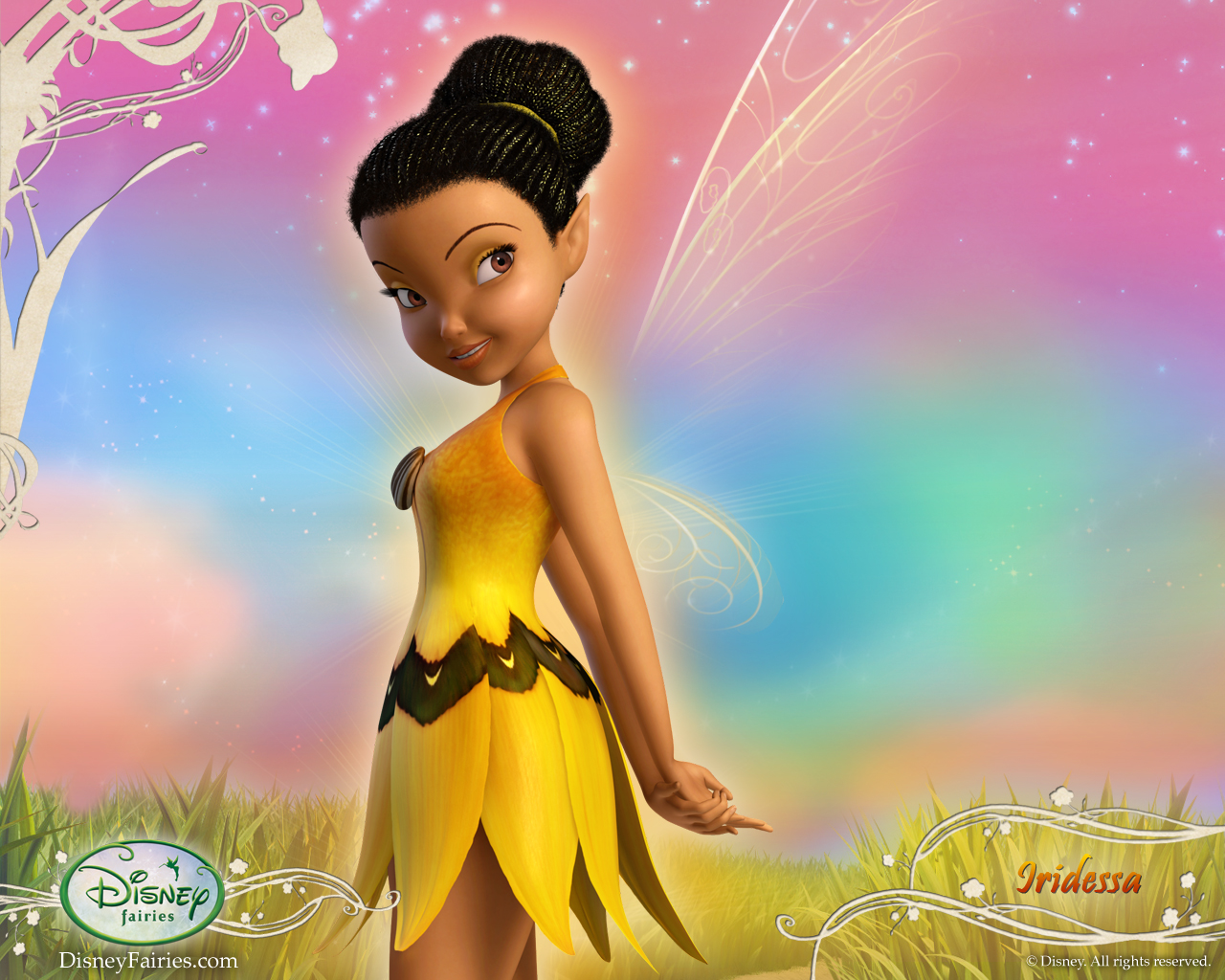
Iridessa is the name of one of the fairies in the Disney Fairies franchise. Her talent is working with light, and she wears a yellow dress, lives in a sunflower, and has clear fairy wings. In the movies, she is voiced by Raven-Symoné. Iridessa is a perfectionist and a worrier; she likes to look on the bright side of things, but can usually sense trouble approaching. When disaster strikes, she rushes in to save the day, and brings sunshine, light and brightness to every situation. The name Iridessa seems to be based on the word iridescent, meaning “producing rainbow-like colours; brilliant, lustrous, prismatic”. The word is derived from Iris, the name of the goddess of the rainbow, so you could see Iridessa as a modern spin on the older name. I have seen a baby with this name, and it’s been frequently Googled, so it seems that people find the name of this fairy intriguing. It’s not surprising, with such an attractive namesake associated with light. Looking for a nickname? Iridessa goes by Dess.

Khaleesi

Khaleesi is extremely unusual as an invented name, because it is not the name of a fictional character, but rather her title. In George R.R. Martin’s fantasy series, A Song of Ice and Fire, khaleesi is the word for the wife of a khal or ruler, in the Dothraki language from the novels. The Dothraki are a nomadic indigenous people without a written language, so the spelling of khaleesi in the novels must come from another culture. In Martin’s novel series, shy Daenerys Targaryen adopts the title of Khaleesi when she weds powerful Dothraki warlord Khal Drogo, and as his queen, grows in strength and confidence, becoming a leader in her own right known as “the Mother of Dragons”. In the television series based on the books, A Game of Thrones, the role of Daenerys is played by Emilia Clarke. Since the television series began airing in Australia, there has been a spike of interest in the name, with about 25 baby girls called Khaleesi born this year. For some reason, the name is far more popular in Queensland than elsewhere – possibly because of the connection with queens.

Lorelei

The Lorelei is the name of a famous rock on the River Rhine in Germany, and also the name of a beautiful water sprite or siren associated with the rock, who is supposed to lure men to their doom. More prosaically, the current of the river is very strong here, which explains the many accidents which have occurred in the area. The character of the Lorelei comes from a 19th century German ballad which poet Heinrich Heine turned into a poem called Die Lorelei, where a golden-haired siren unwittingly distracts men with her beauty so they crash onto the rocks. The poem has often been set to music and turned into songs, and is part of German popular culture. The name Lorelei is a combination of German dialect and Celtic, and means “murmuring rock”. Lorelei is the name of the alluring blonde in Gentlemen Prefer Blondes; in the film she is played by Marilyn Monroe. The name also features in garrulous gabfest Gilmore Girls, where both mother and teen daughter share the name Lorelei (the younger goes by Rory). Comedienne Kat Davidson named her daughter Lorelei “Rory” this year. Said LOR-uh-lie, this is better known in the US, where it is #531.

Pollyanna

Pollyanna Whittier is the title character of the Pollyanna books by Eleanor H. Porter; the series was continued by a number of writers. Pollyanna is an eleven-year-old orphan who is sent to live with her Aunt Polly in New England, and her sunny disposition soon teaches her stern relative, and the whole town, how to play the “Glad Game” – where you always look for something to feel glad about. While many are charmed by the heroine’s upbeat view of life, cynics find her too syrupy and her philosophy simplistic. Because of this, the word Pollyanna has entered our language to mean someone optimistic to the point of naivety or refusal to face facts. Pollyanna is a combination of Polly and Anna – Polly is a medieval variant of Molly, a pet form of Mary. This would be a difficult name to give a child in many ways, but would make a sunshiney middle, and easily shortens to Polly.

Rogue

Rogue is a character from the X-Men Marvel comic books created by Stan Lee and Jack Kirby. She is one of the team of mutant superheroes under the auspices of Professor Xavier, who recruits and trains young mutants to use their powers for the benefit of humanity. Rogue considers her special ability something of a curse, as she involuntarily absorbs, and sometimes removes, the memories, strength, and superpowers of anyone who touches her. For most of her life, she limited her physical contact with others, even loved ones, until after many years she was able to gain full control of her abilities. It was eventually revealed that Rogue was a code name, and her real name Anna Marie. In the movies, she is played by Anna Paquin. A rogue is a scoundrel or rascal. More to the point, a rogue animal is one which separates itself from the herd, and in horticulture the word rogue is used to describe a plant which has an undesirable mutation and must be destroyed. Anna Marie seems to have chosen Rogue as her code name to express her bitterness at the biological difference she had been lumbered with. This name can be used for both sexes; I saw it on a baby girl last year.

Scarlett

Scarlett O’Hara is the protagonist of Margaret Mitchell’s best-selling Civil War novel, Gone with the Wind; in the film version she was played by Vivien Leigh. Slender and attractive, Scarlett is flirtatious and charming, but doesn’t fit the mould of a typical Southern Belle. Smart, feisty, stubborn and very strong-willed, she nevertheless is inwardly insecure. What makes Scarlett such an interesting character are her many flaws – she is vain, selfish, spoiled, unscrupulous and manipulative, but hard as nails, with an overpowering survival instinct. Scarlett is an English surname from Norman French, referring to someone who dyed or sold brightly-coloured cloth, which was often red. It has been used as a unisex name since the 17th century, but is now usually thought of as feminine. The character’s full name is Katie Scarlett O’Hara, and she was named after her grandmother. Margaret Mitchell originally planned to call her heroine Pansy, and changed it to Scarlett just before the novel went to print. Scarlett first ranked in the 1990s at #467, the decade in which American actress Scarlett Johansson made her film debut. It climbed precipitately to join the Top 100 in the mid-2000s, and is currently #25 nationally, #23 in New South Wales, #17 in Victoria, #33 in Queensland, #17 in South Australia, #22 in Western Australia, #21 in Tasmania, and #26 in the Australian Capital Territory.

Velvet

Velvet Brown is the heroine of Enid Bagnold’s novel, National Velvet, about a teenager who rides to victory in the brutally difficult Grand National Steeplechase, the most valuable jump race in Europe. The story is about the ability of ordinary people to achieve great things – Velvet is a plain, rather sickly girl from a working-class family, and the horse she wins on is a piebald. The movie version chucks most of this inspiring message aside so they can show a radiantly pretty pre-teen Elizabeth Taylor galloping about on a chestnut thoroughbred. Velvet is a fabric which was originally very expensive to make, and therefore associated with nobility and royalty. The word is from Old French, and comes from the Latin for “tuft, down”, because of velvet’s distinctive texture. It has been used as a name since the 19th century, and has been given to both genders, but mostly to girls. This unusual fabric name is warm and luxurious, perhaps even rather sensual.

POLL RESULT: People’s favourite names were Lorelei, Arrietty, and Scarlett, and their least favourite were Rogue, Pollyanna, and Khaleesi.

(Picture is of Iridessa, from Disney website)

Can Your Son be Named Barnaby if the Dog is Named Barney?

Tags

, , , ,

little-boy-and-dog

Louise is expecting her first child in less a month, a boy. She feels that there isn’t much time left, and she and her husband have not yet managed to settle their baby name dilemma.

Their favourite name for a boy, and the one they would very much like to use, is Barnaby. However, they have a pet dog named Barney. Although they aren’t planning to use Barney as a nickname for Barnaby, Louise is realistic enough to know that it isn’t impossible he’ll end up being a Barney, at least sometimes. In any case, she wonders whether Barnaby and Barney are too close in sound, or too closely related to each other.

If they decide not to go with Barnaby, their “back up” name is Jasper, which they both like a lot, but they don’t love it the way they love Barnaby. They would definitely feel a pang of regret or disappointment if they didn’t get to use the name Barnaby.

Louise wants to know if people think it’s possible for them to use the name Barnaby? Will others think it’s weird if their son and the dog have a similar name? Is it cruel to give their son the same name as the family pooch?

The baby’s middle name will be Ross, after his dad, and their surname begins with M and ends with N eg Macklin.

~ ~ ~ ~ ~ ~ ~ ~ ~ ~

Louise, I think most people would cross a baby name off their list if it was the same as, or even very similar to, the name of the family pet. No matter how much they liked it, it would be regretfully banished to the land of Not-to-Be.

That you are still seriously considering the name Barnaby, and in fact it is still your front-runner, tells me you are extremely attached to it. If you are still considering the name Barnaby, then I would say, yes it is a real possibility.

Will other people think it is weird? Quite likely some of them will. Are you obligated to fulfil the expectations of others in your choice of baby name? No. The most important thing is whether you think it is weird or not. (If you are writing in for opinions, and have a “back up” name, then at least part of you must think it’s a little weird).

I don’t think that it’s a great idea for your son and your dog to share very similar names, but being practical, these things are often more of a big deal in our heads before they happen than they are in real life. It’s not ideal, but it may be workable.

I think the biggest mistake you are making is thinking that you are running out of time, and need to make a decision before your son is born. Please consider taking your new baby home before choosing the name – once you have your son in the same house with the dog, using both their names, you will have a real life situation in which to make a decision, rather than a theoretical one.

I suspect that either you will find that it is actually a bit too weird and just isn’t going to work, or else that it feels more easy and natural than you feared. Although if you stick with Barnaby, I would be prepared to laugh off a few jokes from friends and family about your choice.

Please write back and let us know what you decide!

NAME UPDATE: The baby’s name is Archer!

POLL RESULTS: Almost 85% of respondents thought that the name Barnaby was acceptable for a couple who owned a dog named Barney. 44% thought it would be unusual, but would work out fine, 28% didn’t like the idea, but thought that it would probably be okay, while a relaxed 12% couldn’t even see what the problem was. Only 4% of people thought that it would be very wrong to name your son Barnaby if the dog was named Barney.

More than half of respondents preferred Jasper Ross to Barnaby Ross, with 55% choosing the first option and 38% picking the second. 7% of people couldn’t decide as they liked both names equally.

Levayah and Cohen

Tags

, , ,

tas157

Multiples

Rosalie and Ruby May

Sophia, Evie and Isabelle (Amelia, Peter)


Girls

Annika Rosealine (Claudia)

Clementine Sally (Arabella)

Georgia Doriana Giulia

Henri Kate

Jeanie Claire (Sadie)

Levayah Rose

Lucy Gale (Ruby, April)

Mei Judith

Millie Margaret (Max)

Paige Marilyn (Phoebe)

Phillipa Catherine Elizabeth (Mary)

Sadie Elizabeth Florence (Louie)


Boys

Anton Maurizio

Cohen Sun Chul

Dustin Toby (Charlotte)

Eemil August (Niilo)

Jag Cooper (Aylah)

Jock Leo Edward (Ainsley)

Julian Peter (Aaliya)

Kirby Des

Landon Michael

Noah Bassett Alan (Isla, Finlay)

Olly Benjamin

Wesley Troy (Maliyah)


Most popular names this week

Girls: Madeleine

Boys: Hudson and Joshua

(Photo shows a shopping district in Launceston, Tasmania)

Famous Name: Hugo

Tags

, , , , , , , , , ,

Hugo_Throssell

It will be Remembrance Day next Monday, so we are going to look at the name of another First World War hero.

Hugo Vivian Hope Throssell was from the country town of Northam in Western Australian, the son of former Western Australian premier George Throssell, who had also been Mayor of Northam, and the town’s first official citizen. George was prominent in local business and conservative politics, and was known as “the Lion of Northam”.

Hugo was sent to an elite boy’s boarding school in Adelaide, where he was captain of the football team, and a champion athlete and boxer. After leaving school, Hugo became a jackaroo on cattle stations in the north, then he and his older brother Frank Erick Cottrell (“Ric”) bought a farm together in the wheat belt. The brothers had a close bond, and were later described as “David and Jonathan” in their devotion to each other.

When war broke out in 1914, Hugo and Ric joined the 10th Light Horse Regiment, and Hugo was commissioned as a second lieutenant. Hugo arrived at Gallipoli in August 1915, just before the assault on the Nek, which he called “that FOOL charge”. Within minutes, 9 officers and 73 men from his regiment were killed.

Hugo was eager to avenge the 10th Light Horse, and on August 29, the regiment were brought into action to take a trench full of Turkish troops near the summit of Hill 60. The surrounds became a slaughterhouse, with the bodies of the dead piling up so quickly there was no time to bury them.

A fierce bomb fight began, described by Hugo as a sort of gruesome tennis match – it was one of the most intensive bomb fights of the Australians at Gallipoli. During the night, more than 3000 bombs were thrown, with the Western Australians picking up bombs thrown at them and hurling them back.

At one point, Hugo was in sole command of the regiment, and was wounded twice, continuing to yell encouragement to the men with his face covered in blood. For his bravery and inspirational leadership, Hugo received the Victoria Cross; it was the first VC a Western Australian had won during the war.

Promoted to captain, Hugo joined his regiment in Egypt, where he was wounded in April 1917 at the second battle of Gaza. It was here that his brother was killed; the night Ric disappeared, Hugo crawled across the battlefield under enemy fire, searching in vain for his brother amongst the dead and dying, whistling for him with the signal they had used since they were boys. Hugo took part in the final offensives in Palestine, and led the 10th Light Horse guard of honour at the fall of Jerusalem.

Soon after the war’s end, Hugo married an idealistic young Australian writer named Katherine Susannah Prichard, who he had met while in London for medical treatment, and settled on a farm near Perth. Already an award-winning novelist when she married Hugo, Katherine’s career continued to flourish. In 1920, Katherine became a founding member of the Communist Party of Australia, with Hugo joining her as a speaker to support the unemployed and striking workers.

Hugo’s experience of war had made him a pacifist and a socialist, but his views on the futility of war outraged many, especially coming from a war hero, and the son of a conservative political figure. His political opinions damaged his chances of employment during the Depression, and he fell into serious debt. At one point he pawned his VC just so he could take his son to the movies.

Believing that he could provide better for his family if he left them a war service pension, he shot himself in 1933, and was buried with full military honours. His wife, who had been on tour in the former Soviet Union at the time, suffered another unbearable anguish on top of losing her husband. She would never know if Hugo had read the manuscript of her unfinished novel, Intimate Strangers, in which an unwanted husband kills himself (Katherine changed the ending to the novel before publication).

Friends blamed Hugo’s depression on an attack of meningitis he had suffered in the trenches of Gallipoli which almost killed him. Depression and disordered thinking can be an after-effect of meningitis, and Hugo had undoubtedly been under severe post-traumatic stress since his arrival at Gallipoli. The tragedy of his war was that it damaged him psychologically to the point where he felt he could not continue.

In 1954 a memorial was built to Hugo outside his home, and a ward at Hollywood Private Hospital in Perth is named after him. In 1983 his son Ric Throssell gave his Victoria Cross to the People for Nuclear Disarmament. The Returned Servicemen’s League bought the medal and presented it to the Australian War Memorial in Canberra, where it is on display in the Hall of Valour.

Hugo is the Latinised form of the Germanic name Hugh, meaning “mind, heart, spirit”, which was introduced to Britain by the Normans. In medieval times, the name Hugo would have been commonly used in Latin documents, but the person would have been called Hugh in everyday life.

Another famous Australian with this name is actor Hugo Weaving, who has been in several Hollywood blockbusters, as well as many Australian films. The name Hugo has been in the charts since the 1970s, and began ranking in the 1980s at #421 – the same decade that Hugo Weaving’s screen career began, in the 1984 cricketing miniseries Bodyline.

During the 1990s, when Hugo Weaving gained international attention for Priscilla, Queen of the Desert, Hugo was #248, and by the early 2000s, when Hugo Weaving was starring in The Matrix series as Agent Smith, and The Lord of the Rings as Elrond, it was #143. In the mid to late 2000s, when Hugo Weaving was providing the voice of the villainous Megatron in The Transformers, it had risen to #117.

The name Hugo made the NSW Top 100 in 2009, debuting at #93, and last year was one of the biggest risers for boys nationally, going up eleven places. Currently it is #76 nationally, #67 in New South Wales, #79 in Victoria, #83 in Queensland, #79 in Tasmania, and #76 in the Australian Capital Territory. Hugo went up 10 places in Victoria and 23 places in New South Wales, so it is making significant gains. Based on its current trajectory of popularity, I have picked it to be a Top Ten name by 2028.

Hugo is more popular here than in either the US or the UK, where it is not yet in the Top 100. However, it is extremely popular in Europe, and is a Top Ten name in France, Spain and Sweden, so we are following the lead of European countries rather than English-speaking ones.

This is a handsome name with a touch of European sophistication, and a fashionable OOH sound as well as a trendy O ending. It doesn’t really surprise me that Hugo is rising through the rankings while steady classic Hugh continues to plod along in the mid-100s, where it’s been since the 1980s. Hugo is more stylish and fits in better with current trends. If you love the name Hugo, you certainly won’t be alone!

POLL RESULT: Hugo received an approval rating of 80%, making it one of the most well-liked names of the year. People saw the name Hugo as handsome or attractive (27%), stylish and sophisticated (19%), hip and cool (15%), and cute and quirky (15%). However, 8% preferred classic Hugh, and 5% gloomily prognosticated that Hugo would soon be too popular. Only one person thought it was already too popular.

(Photo of Hugo Throssell from the State Library of Western Australia)

Interview with Clare from Name News

Tags

, , , , , , , , , , , , , ,

DIGITAL CAMERA

Clare has a wonderful Name News page on the Scoop.it website, which collects interesting blog posts and stories in the news about names. Her collection includes posts in languages other than English, so if you want to know what they think about names in Portugal or The Netherlands, click the “Google translate” button and read on! One of the most useful functions is the “Find” key, where you can search for topics which interest you. Name News is so handy for keeping up to date with what’s going on around the blogosphere that I consult it every day – it’s easier than subscribing to hundreds of sites, or getting dozens of e-mail alerts. Attractive and user-friendly, Name News is an invaluable contribution to the naming community.

What is your name?

Yvonne Clare.

Have you ever changed your name?

I went by my first name until I was four, when I decided to use my middle name instead. Now my first name only appears in official situations, and on the odd family Christmas card – and in messages from a friend called Yvonne, who is tickled that we have a hidden name connection. I don’t dislike the name, but it feels like an old toy or a piece of baby clothing: it was great when I was little, and I’m still attached to it, but it no longer fits for everyday use. I’m happy as a Clare and I like the fact it’s more typical for someone my age.

How did you start getting interested in names?

When I was about six, I was visiting a relative who was clearing out some books, and someone handed me The Pan Book of Boys’ Names and The Pan Book of Girls’ Names. I took them home and have been dipping into them ever since. They are particularly strong on literary and legendary figures and references to names in poetry. I’m sure that they contributed to my love of languages, as they gave me a first taste of Latin, Greek, Old English, Welsh, and many others. Each book has a wonderful appendix of names considered unusual by the authors. A couple of decades on I have dozens of name books, but those two are still among my favourites.

What inspired you to sign up with Scoop.it in order to share name stories with the wider community?

At the beginning of this year I became aware of the many name blogs that are out there. I wanted to read everything, but was a bit overwhelmed by the sheer number of posts. I wanted to contribute in some way, but didn’t feel inspired to write a blog. I’m not so good at regular research and writing; I prefer reading, organising and making accessible the work of others. (That’s why I’m a librarian in real life.)

An acquaintance started a Scoop.it page gathering stories about rare books and manuscripts, and I decided to try something similar for name stories. It’s straightforward to create a Scoop.it account and set up a page, and to add “scoops” – I normally use a button on my browser. It’s pretty much as simple as reading name stories that come up on my feeds and alerts, and adding them.

I would do it just for personal interest, which sounds rather nerdy, but it’s very encouraging that others are looking at the site too. I know there’s been a huge leap in the number of views whenever the site has been mentioned by other bloggers, especially in Appellation Mountain’s Sunday Summaries, so many thanks to you all for getting the momentum going!

I know I’m a bit of a vulture, existing on other people’s hard work, but I hope the site achieves two things: providing a one-stop feed of name stories for people who don’t want to follow lots of different sites, and enabling people to easily search the archives of all the name blogs and articles.

Any other way to connect with you online?

Name News has a Facebook page, although at the moment I’m using it for following news and the odd “like”, rather than anything more dynamic. I also keep a list of my name books on LibraryThing. If anyone uses that site, feel free to connect! I doubt the list is of much use to anyone else, but it’s quite handy for me, as my collection is currently scattered between two houses.

What is it about a name story that makes you interested to know more?

I always get excited when I see one of my favourite names in the title. For example, the very first scoop I made was Appellation Mountain’s post Edith, Everild, and Eden: Getting to Edie. Everild was the catalyst – I just couldn’t resist sharing it! I also enjoy birth announcements, clever data analysis, gems from historical records, personal stories … pretty much anything that’s informative, positive, and open-minded.

Do you have a pet peeve when it comes to names?

My peeves are with writing about names, rather than the names themselves. I’m sure I’m not alone in disliking:

  • proscriptive advice and “rules” that will make precious little difference to naming habits as a whole
  • unhelpful criticism and negativity about parents’ name choices
  • false claims about the “meaning” of names – and false information in general
  • overuse of the word “unique” (I know: now who’s being proscriptive?!)

What are some of your favourite names?

Girls: Annest/Annice, Everil/Everild, Freda/Frida, Hilda, Miriam, Naomi, Tamsin, Tess

Boys: Arthur, David, Edward, Henry, Hugh/Huw, Robin

What names do you dislike?

I’m not so keen on names with excess “frilly” syllables. I usually prefer the streamlined option, so Isabel over Isabella, Mark over Marcus. Maybe even Em over Emma, or is that going a bit far? By that logic, I should prefer Hild to Hilda, and in some ways I do, but sadly it crosses the threshold of being a bit too much to inflict on an unsuspecting British child.

Are there are names you love, but could never use?

Names that would be hard to spell and pronounce, culturally unsuitable, and more about me showing off than the child’s best interests. For example, Ælfric (“Alf-rich”), Buddug (“Biðig“, the Modern Welsh form of Boudicca), and Elestren, which I’ve loved since I saw it in a book of Cornish names years ago. I’ll save them for pets and inanimate objects! I’d also be wary of names that sound similar to mine or my partner’s, like Cleo and Robin.

What are your favourite names in the England/Wales Top 100?

Amy (#62) and Arthur (#52).

What are your favourite names which have never been in the England/Wales Top 1000 (since 1996)?

Hilda and Clem.

Do you have any names picked out for your future children?

I have an ongoing list of favourites, but don’t really have a clue how my partner and I will feel if/when the time comes. I expect that choosing a name for a real person will bring out sides of us that we never knew existed.

What is something we don’t know about you?

I’ve recently taken up morris dancing, a traditional English dance style with props such as sticks, bells and handkerchiefs. It’s great fun, but a challenge as I’m not very co-ordinated!

What advice would you give someone who was choosing a name for their baby?

I’ve tried and failed to come up with a wise, snappy, universal answer to this question. Every time I think I’ve got it, I think Oh, but there could be exceptions, or But that might not work for everyone. Maybe that’s a cop-out, but it’s a personal, sometimes complicated decision, with no clear right or wrong way to do it. Plus it’s not something I’ve had experience of yet. I think I’d have to ask for a few more specifics before feeling qualified to give advice. Or, true to form, I could point people towards helpful books and websites.

(Clare’s profile photo of her favourite name books supplied by interviewee)

Celebrity Baby News: Celebrity Baby Round-Up

Tags

rea

Local cricketer Matt Scheiser welcomed his daughter Ella last month. Matt plays for the Port Douglas Mudcrabs in Queensland.

Northern Ireland’s motorcycle racer, Jonathan Rea, and his Australian wife Tatia, welcomed their first child on September 27, and have named their son Jake Elijah [pictured]. Jonathan competes in the Superbike World Championships for Castrol Honda, and has been named Irish Motorcyclist of the Year three times. Tatia is from Philip Island in Victoria, and she and Jonathan live on the Isle of Man.

Bookmakers Luke and Claire Behrmann welcomed their first child on September 24, and have named their son Noah. Luke is the managing director of the Behrmann Group in Sydney.

Golfer Steve Jones welcomed his son Jackson in August. Steve is from Victoria.

Chef Ben Willis, and his wife Andy, welcomed their first child on July 7, and named their daughter Chloe. Ben owns the Aubergine restaurant in Canberra, which won the Sydney Morning Herald Good Food Guide Regional Restaurant of the Year.

Australasian International Boxing Federation lightweight champion Brett W. Smith, and his wife Taryn, welcomed their daughter Zara in May. Brett has been a professional fighter for five years, and is an electrical foreman on the Sunshine Coast in Queensland.

Author Felicity Castagna welcomed her son Zain this year. Felicity teaches writing in the community, and at the University of Western Sydney, where she is a doctoral candidate. She recently launched her first novel, a story for young adults set in Parramatta called The Incredible Here and Now; she completed writing it the same day she went into labour with her son, who the book is dedicated to.

AFL footballer Michael Walters, and his partner Marnie Tyers, welcomed their daughter Laila last year. Michael has been playing for the Fremantle Dockers since 2009, and as a junior player won the Kevin Sheehan Medal as the best player in the Under 16 Championship. Michael and Marnie are currently expecting another child.

Saoirse and Malachy

Tags

, , ,

818398-isabel-amy-and-nicola-james

Multiples

Mila Charlotte and Makenna Rahni

Sahib, Abia and Arav – boy/girl/boy


Girls

Charlotte Deirdre

Eleanora Victoria Maria Rose

Elizabeth Louise “Eliza” (Maximus, Genevieve)

Evelyn Hazel (Emily)

Harriet Kelva Grace

Ivy Clarice (Meg, Ada, Pippa)

June Marion (Maggie)

Lucy Marguerite

Mahalia Ruth (Wesley)

Nina Jo (Grayson)

Saoirse Nellie

Sia Avy (Bon)

Willow Evangeline (Lilly, Xavier)


Boys

Alec James (Tahlia, Ella, Nate)

Allan Walter

Ari Daniel (Kayley, Bryn, Jakob)

Dexter Ryleigh (Ava)

Emerson William (Darcy, Archie)

Griffin Lindgren

Hugo Craig Terrence

Jordan Ashley (Jaida, Rhia)

Malachy Ahohako (Pisila)

Oscar Frederick (Annabelle)

Quade James Winston (Charlise)

Rafie Mac (Milla, Scout, Sonny)

Tejay John (Maddison, Kaia)


Most popular names this week

Girls: Isla

Boys: Jack

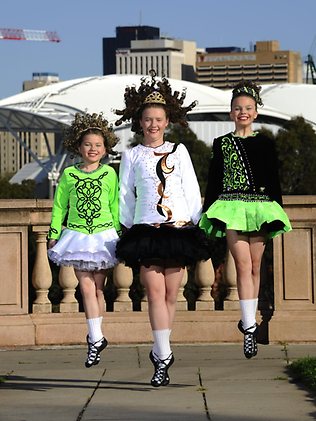
(Photo shows Isabel, Amy and Nicola James preparing for the National Irish Dancing Championships, which were held in Adelaide)

Famous Name: Winsome

Tags

, , , , , , , , , , , , , , ,

giovanni_boccaccio_women_playing

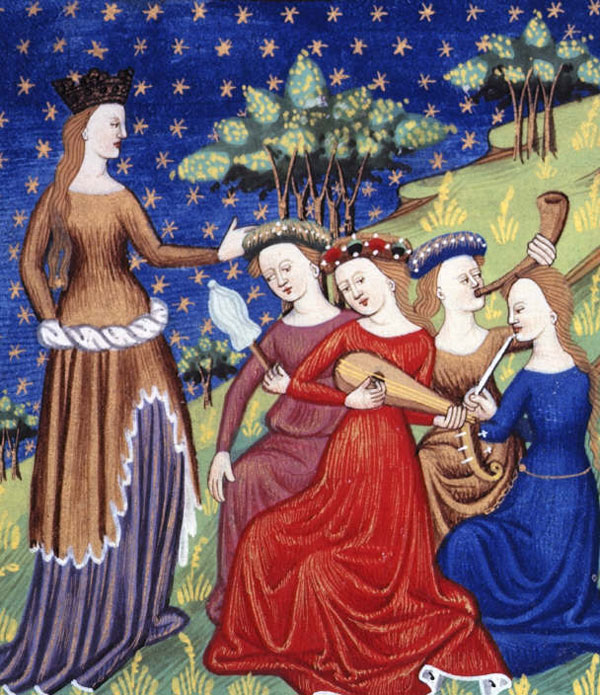
If you were in Sydney in early October, you could have attended the Royal Australian Navy International Fleet Review, celebrating one hundred years of our navy. Or, if you were of a more musical bent, you could have been there for The Renaissance Player’s 35th Runnymede Pop Festival. Held at Sydney University in its Gothic-style Great Hall, this is a unique concert of music, mime and poetry from medieval Europe, performed in brightly-coloured costumes.

The Runnymede Pop Festival has been going since 1973, and from the beginning has featured early music specialist Winsome Evans. Winsome is the director of the Renaissance Players, Australia’s oldest early music ensemble, and she is a professional harpsichordist, composer, and arranger. She conducted the first Renaissance Players concert while still a student.

Winsome is a recipient of the British Empire Medal in the Queen’s Birthday Honours List, The Order of Australia, and a NSW Jaycees Award for services to music.

Winsome is an English word meaning “charming in an innocent manner”. A winsome person is cheerful and open-hearted, engaging, and perhaps slightly naive, in a completely delightful way. The word comes from the Old English for “joy”, and is ultimately from an ancient root meaning “wish, love”.

Winsome is also an English surname, coming from the village of Winchcombe in Gloucester, or from Winscomb in Somerset. In either case, the name is Old English, and means “remote valley”. However, in some cases, the surname may have come directly from the Old English word winsom, meaning “attractive, lovely”, used as a personal name. If so, it means that the first name Winsome could date back to medieval times.

The first name Winsome can be found in records from the middle of the 19th century in North America, and seems to have been especially associated with Ontario, Canada. The reason for this may be Winsome Lake, which is one of the many thousands of smaller lakes in the Great Lakes region of Ontario, but why it inspired baby names is something of a mystery to me. I have been unable to discover how Winsome Lake received its name, because it is relatively obscure.

There are over one hundred women named Winsome in Australian records, most of them born around the turn of the twentieth century. There is another famous Winsome in Australia – Winsome McCaughey, who was Lord Mayor of Melbourne in the late 1980s. And another Australian musical connection too – Peggy Winsome Glanville-Hicks was a Melbourne-born opera composer and music critic who flourished in the middle of the 20th century.

Other successful Winsomes include British playwright Winsome Pinnock, and US Republican politician Winsome Sears. Interestingly, Sears was born in Jamaica and Pinnock’s parents were Jamaican, so there seems to be a West Indian connection. There was a grassroots playwright in Jamaica who wrote under the code name “Winsome” about 20-30 years ago. You can still find the name Winsome in use in Jamaica today, including singer Winsome Benjamin, and prize-winning cook Winsome Murphy.

Although Winsome is a secular virtue name like Felicity or Honour, the word winsome has come to have a particular meaning for evangelical Christians. The book Winsome Christianity by Henry Durbanville was published in 1952, and Winsome Evangelism by Ponder W. Gilliland came out in 1973.

I can’t pretend to be an expert on the subject, but my understanding is that the general message is to be winsome in your Christianity in order to attract more converts, and that some evangelists even use the word winsome to mean “capable of winning souls to Christ”. Author Neil Gaiman is apparently a big fan of the meaning of language changing over time, so I expect this example would be of great pleasure to him. It does give the name Winsome a special meaning for some Christians, so that it could become a religious virtue name in this context.

Winsome is a name I find very intriguing – the meaning of the word winsome seems very feminine to me, and Winsome is overwhelmingly used as a female name. Yet the name itself isn’t frilly in the least, having a similar sound to the male name Winston (which also comes from the Old English for “joy”). It’s a strong-sounding name for a girl, but with a dainty meaning.

Winsome isn’t a name I’ve ever seen on a baby or a child, and its heyday (if it can ever be said to have had one) was over many years ago. However, Winnie is becoming hip once more, and Winsome would be a rare and unusual way to reach it.

POSTSCRIPT: Abby Sandel mentioned Winsome in her Nameberry Nine column, and I was surprised and pleased at how many Berries liked or even loved the name Winsome.

POLL RESULT: Winsome received an approval rating of 61%. 21% of people thought it was an interesting modern virtue name, while 19% loved the idea of Winnie as the short form. However, 18% were reminded too strongly of the phrase win some, lose some. Only one person thought the name Winsome was too cutesy.

Celebrity Baby News: Alisa Camplin and Oliver Warner

Tags

,

131202_finnansgiftOlympic aerial ski-er Alisa Camplin, and her husband, Oliver Warner, welcomed their daughter Florence on October 3. Florence Warner was born at the Royal Women’s Hospital in Melbourne. Alisa and Oliver lost their first child, Finnan, in 2011, and set up the charity Finnan’s Gift in his honour.

(Photo of Alisa, Oliver and baby Florence from Collingwood Football Club)

Celebrity Baby News: James Tamou and Brittney McGlone

Tags

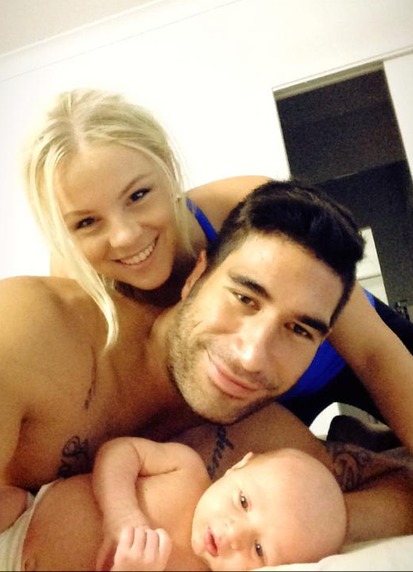
1381675_10151682101531127_951431220_nNRL football player James Tamou, and his partner Brittney McGlone, welcomed their first child in August, and have named their son Brooklyn Knox.

James is originally from New Zealand, and moved to Australia when he was 13. He has played for the North Queensland Cowboys since 2009, and in 2010 he was named their most improved player. He has played for the New Zealand Maori team, and has recently represented both Australia and New South Wales. Currently James is in England for the Rugby League World Cup, playing for the Australian national squad.

Brittney is a full-time professional athlete, a 400-metre hurdler at the Australian Institute of Sport. One of her hobbies is running in stilettos, and she has won all four races that have been held in Australia – two of them for Guinness world records. She has also been entering fashion-on-the-field competitions on race days since she was a teenager, and last year was crowned Myer Face of Canberra Racing.

(Photo from Facebook)