Famous Name: Isaac

Tags

, , , , , , , , , ,

SirIsaacIsaacs

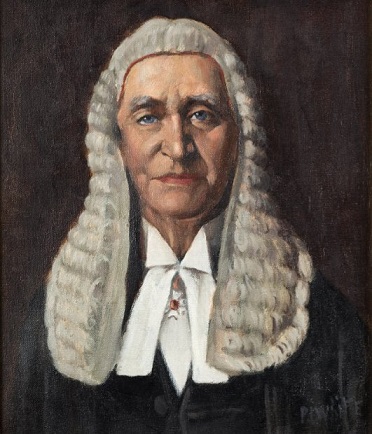
On June 6 it was the 159th birthday of Sir Isaac Isaacs, who is famous for being the first Australian-born Governor-General of Australia. He is also our first Jewish Governor-General.

The appointment of Sir Isaac Isaacs in 1930 by Prime Minister James Scullin was a controversial one at the time, because it was fiercely opposed by the British government. They didn’t have anything much against Sir Isaacs personally (apart from being a bit old and unknown to them), but were greatly offended by the idea of an Australian representing the British monarch. However, Scullin stuck to his guns and eventually King George V agreed to the appointment with great reluctance.

This landmark moment led to the Statute of Westminster 1931 and the formal separation of the Crowns of the Dominions. From now on, the monarch would be bound by constitutional convention to accept the advice of the Australian Prime Minister on Australian constitutional matters.

Despite the stain of his Australianness, Sir Isaac Isaacs did everything he could to make himself agreeable. He was an ardent monarchist and, although very proud to be an Australian, a strong supporter of the British Empire. He agreed to accept a lower salary, and conducted himself very frugally, which went down well during the Great Depression. He was the first Governor-General to live permanently at Government House in Canberra, and the public approved of this, as well as his general air of austere dignity, while following his duties with obvious enjoyment.

I’d like to be able to say that after Sir Isaacs, all Governor-Generals were Australian, but conservative governments immediately reverted to appointing British Governor-Generals. There was only one more Australian-born Governor-General until 1965 – since then, they have all been Australian-born, except Sir Ninian Stephen, who emigrated here as a child.

Isaac has one of the better known name stories in the Bible, and is one of the few characters in the Bible to be named directly by God.

When the patriarch and prophet Abraham was ninety-nine years old, God made a covenant with him, that he would be a “father of many nations”, and that his descendants would possess the land of Canaan forever. As Abraham and his wife Sarah did not have any children, God promised he would bless them, so that Sarah would soon bear a son.

Abraham laughed when he heard that, for by the time the baby was due to be born, he would be one hundred years old, and Sarah would be ninety. Sarah secretly listened to this prophecy, and had a good chuckle to herself at the idea that a very old couple would be able to conceive a child together, and a woman long past her child-bearing years could give birth.

Despite their scepticism, the prophecy was fulfilled, and Abraham and Sarah had a son together. They gave him the name that God had chosen, which was Yitzhak, meaning “laughter” in Hebrew. In English the name is Isaac.

The other key story about Isaac is that during his childhood, God commanded Abraham to build an altar in the wilderness and sacrifice his son on it. However, just at the point the knife was raised above Isaac, an angel appeared and told Abraham that it had just been a test of his faith, and that he should sacrifice a ram which happened to be around at the time instead. Because of Abraham’s show of faith, and Isaac’s obedient willingness to be sacrificed, God blessed them both many times over.

Christians have tended to see Isaac as a forerunner of Christ, and both Jews and Christians see him as a model for the martyr, who goes willingly to the slaughter for his faith. Isaac is venerated as a saint in Catholicism, and revered by Muslims as a prophet of Islam.

The story of Abraham and Isaac has made Biblical commentators uncomfortable enough that they feel it needed to be explained. Some Jewish writers felt that human sacrifice was so revolting that God couldn’t possibly have requested it even as a test, and suggested that it must have been a delusion of Abraham’s imagination, or even some trickery by Satan. Others thought that Isaac was in fact sacrificed, but that God had resurrected him straight away.

Modern philosophers don’t seem to feel that the story shows God in a very attractive light. Some scholars believe that it preserves an ancient memory of a tradition of child sacrifice, with the “happy ending” tacked on later, when such sacrifice was viewed with abhorrence and needed to be explained away.

Isaac has been used as an English name in the Middle Ages, and became more common after the Protestant Reformation. One of its most famous namesakes is Sir Isaac Newton, the mathematician and scientific genius. This gives Isaac a rather brainy image – and Sir Isaac Isaacs was very intelligent too.

For many years, the name Isaac was particularly associated with Jewish people – to such an extent that even in the twentieth century, Jews were referred to in a derogatory way as ike or ikey (short for Isaac), in the same way that Catholics were called micks (short for Michael).

Isaac was #147 in the 1900s, and left the charts in the 1920s. It didn’t return until the 1970s, when its position was #326. It climbed very steeply in the 1980s, and joined the Top 100 in 1991 at #86. After pottering along in the bottom third of the Top 100, it suddenly gave a massive jump in 1997, when it made #25. Is it a coincidence that the teen pop band Hanson, with singer Isaac Hanson as the singer, had their biggest success in 1997? Hmm! Or should I say MMMBop?

After this Hanson-led surge of popularity, Isaac settled down, but remained in the Top 50; it has been fairly steadily climbing since 2005. It is currently #19 nationally, #14 in New South Wales, #28 in Victoria, #34 in Queensland, #23 in Western Australia, #41 in Tasmania, #17 in the Northern Territory, and #31 in the Australian Capital Territory.

In a rather cheeky post, I suggested that if Isaac kept climbing, it could be the #1 name by 2028. I’m not sure if it will, but it is a good strong name, and many people find the meaning of “laughter” attractive. In the Bible, Isaac was a true “miracle baby”, born to two people very late in life who never expected to be parents, making it an excellent choice for couples blessed with a surprise or against-the-odds baby. As well as the traditional Ike or Ikey, you could also use Iggy or Zac as the nickname, should you want one.

POLL RESULT
Isaac received an excellent approval rating of 84%, making it one of the highest-rated names of 2014. People saw the name Isaac as cute on a boy, but solid on a man (29%), strong and handsome (20%), intelligent and professional (16%), and having a very attractive meaning (12%). However, 8% were put off the name by the Bible story of Abraham and Isaac. Nobody thought the name Isaac sounded creepy or evil.

(Picture shows a portrait of Sir Isaac Isaacs from the Victorian Bar’s collection)

Irish Names for Boys

Tags

, , , , , , , , , , , , , , , , , , , , , , ,

a07442ad-b5ca-4bfe-8a64-ab471fc44a87

It was very hard to choose just ten Irish boys’ names, as there are so many commonly used Irish names for boys in Australia, especially if you include Irish surnames. It’s not surprising when you consider our strong Irish heritage, and because the Irish were here from the beginning of European settlement, they were never marginalised as happened in other countries.

Famous Australians with Irish heritage include bushranger Ned Kelly, Peter Lalor who led the Eureka Rebellion, actor Erroll Flynn, artist Sidney Nolan, rock singer Doc Neeson, philanthropist Daisy Bates, and our greatest prime minister, Ben Chifley. Those alive today include Governor-General Peter Cosgrove, Nicole Kidman, Kylie Minogue, surfer Mick Fanning, Socceroo Lucas Neill, author Tom Keneally, and former prime ministers Paul Keating and Kevin Rudd.

A reminder I haven’t included any names with fadas (accent marks), as they aren’t permitted in all states and territories.

Aidan
Anglicised form of Aodhán, a pet form of Aodh or Áed, meaning “fire” in Old Irish; there are many characters from Irish mythology named Aodh. St Aidan of Lindisfarne was an Irish-born monk known as the Apostle of Northumbria; he was famous for converting people by simply walking from village to village, politely chatting with people and introducing them to Christian beliefs by helping them in their daily lives. The name Aidan first ranked in the 1970s at #533, and by the 1980s was already #177. Aidan joined the Top 100 in 1993 at #92, and peaked in 2008 at #51. Currently Aidan is #99 in Victoria and #102 in the Australian Capital Territory. The Aiden spelling is more popular: this first charted in the 1980s at #368, joined the Top 100 in 1997 at #62 and peaked in 2009 at #35. Currently Aiden is #41 nationally, #45 in New South Wales, #45 in Victoria, #65 in Queensland, #47 in Western Australia, and #39 in the Australian Capital Territory. Even combining spellings, Aidan/Aiden is only #51 nationally. This doesn’t seem as if Aidan is very popular, yet it still has a reputation as an “overused” name because of the massive trend for sound-alike names, such as HaydenBrayden, Caden, Jayden, Zayden etc. Aidan is #50 in Ireland and #43 in Northern Ireland.

Cian
In Irish mythology, Cian was a god and father of the hero Lugh of the Long Hand. According to folk tales, Cian possessed a magical cow which produced a superabundance of milk. During a quest to recover his cow after she had been stolen, he seduced a princess who had been locked up in a tower (it was the princess’ father who had stolen the cow). The tale sounds very much like the Greek myth of Danae, and the princess was imprisoned for the same reason – a prophecy said that the princess’ father would be killed by his grandson. Lugh the Longhand was born from this union, and eventually the prophecy was fulfilled when Lugh killed his grandfather in revenge for locking his mother in a tower. The name Cian means “long, enduring, far, distant” in Gaelic, and is pronounced KEE-in. It is often anglicised to Kian, which is in the 400s in Victoria. Cian is #15 in Ireland.

Connor
Variant of Conor, Anglicised form of the Gaelic name Conchobhar, meaning “lover of hounds”. There have been several real life Irish kings with this name, including a High King, and also the legendary Conchobhar mac Nessa, who was unsuccessfully married to both Queen Medb and Deirdre, but had many other wives. The name is the basis for the Irish surname O’Connor, meaning “grandson of Conchobhar”, and the Clan O’Conchubhair is a royal Irish dynasty whose lineage has provided one hundred kings of Connacht, and two High Kings of Ireland: some members of the noble O’Conor family of Ireland are the living descendants of the last High King of Ireland. Connor is a truly royal name, which must have an influence on its use. The name Connor has charted since the 1980s, debuting at #418. It joined the Top 100 in 1994 at #83, and peaked at #21 in 2003. Currently it is #43 nationally, #74 in New South Wales, #61 in Victoria, #33 in Queensland, #31 in Western Australia, #40 in Tasmania, and #69 in the Australian Capital Territory. Connor is #97 in Northern Ireland; Conor is #5 in Ireland and #17 in Northern Ireland.

Darragh
Variant of Dara, derived from from the Gaelic for “oak grove”. The oak was sacred to the Celts, and the word druid is directly related to the word for oak. The city of Derry in Northern Ireland has the same meaning. Darragh can also be an Anglicisation of the Old Irish name Dáire, meaning “fertile, fruitful, virile, sexually aroused”, but also “agitated, raging, violent, tumultuous”. It’s a very explicit meaning in regard to masculine sexuality, suggesting a sort of bestial lust. The Darini were an ancient peoples from Northern Ireland, and it would seem that Dáire was their ancestor or ancestral god. Several Irish noble families and Scottish clans claim descent from the Darini, as do the current British royal family. There are many kings and heroes from Irish legend named Dáire, but folklorists believe they are ultimately versions of the same mythological figure, who may have been a god of the battlefield. Darragh can be pronounced DAH-ruh, or DA-ra, and may seem like an updated Darren to Australians. Darragh is #20 in Ireland and #30 in Northern Ireland; Dara is #86 in Ireland, and Dáire is #88 in Northern Ireland.

Finn
Both the older Irish and Anglicised form of Fionn, meaning “blond, fair, white, bright”. Its most famous namesake is the mythical warrior and giant Find mac Cumail, transcribed in English as Finn McCool. Finn was a nickname – his real name was Deimne, meaning “sureness, certainty”, and gained his nickname after his hair turned prematurely white. Finn was brought up by a warrior woman who trained him in war and hunting, then he studied under a poet and druid. One day Finn was cooking a mystical salmon for his master which would give him all the knowledge in the world: he burned his thumb in the process, and instinctively put his thumb in his mouth to cool it, swallowing a piece of salmon skin. This gave Finn the wisdom of the salmon, and whenever he needed to draw on its power, he needed only to suck his thumb. Finn’s followers were called the Fianna, and it is from them the Fenian Brotherhood gained their name. According to legend, Finn is sleeping in a cave beneath Ireland, and will one day awake to defend Ireland in her hour of greatest need. Finn first charted in the 1990s at #287, and by 1997 was already in the Top 100 at #88. Currently it is #62 nationally, #68 in New South Wales, #60 in Victoria, #76 in Queensland, #40 in Western Australia, and #30 in the Australian Capital Territory. This is a handsome popular name that has helped drive the popularity of names such as Flynn and Finlay. Finn in #38 in Ireland and #56 in Northern Ireland; Fionn is #27 in Ireland and #70 in Northern Ireland.

Lorcan
Anglicised form of Lorcán, derived from the Irish Gaelic word for “fierce”. There have two been ancient Irish kings named Lorcán, and a medieval saint Lorcán Ua Tuathail whose name is Anglicised to Lawrence O’Toole. St. Lorcán was of royal blood, and became Archbishop of Dublin. He played a prominent role in the religious reform of the 12th century, spearheading a movement of spiritual renewal while bringing the church in Ireland closer to Rome. He was admired by both members of the church and the secular community for his many acts of charity to the poor – much needed at the time due to a severe famine. This is a cool Irish name which could be an alternative to names as Lachlan, Liam, or Declan. Lorcán is #67 in Northern Ireland.

Malachy
Anglicised form of Máel Sechlainn, meaning “follower of St. Seachnall”. St. Seachnall is an obscure 5th century Irish bishop who seems to have been of Italian origin; his name may be an Irish form of the Latin name Secundus, meaning “second (born)”, as he is also known as St. Secundius. The modern spelling of Malachy has been influenced by the Hebrew name Malachi, meaning “my messenger”, and therefore understood as “my angel”. However, Malachy is pronounced MAL-uh-kee, not MAL-uh-kie. There have two medieval High Kings of Ireland named Malachy, and also a St. Malachy, who was the first native-born Irish saint to be canonised. The saint’s name is an Anglicisation of Máel Máedóc, meaning “follower of St. Madoc”; Madoc was a 7th century Irish monk, and his name may come from the Welsh for “fortunate”. Malachy is an attractive name in occasional use, and AFL footballer Liam Picken has a young son named Malachy.

Oscar
Believed to mean “deer friend”. In Irish mythology, Oscar was the son of the warrior Oisin (“young deer”) and the fairy queen Niamh; he was the grandson of Finn McCool, and one of his warriors. Oscar was killed by a member of the increasingly corrupt Fianna, and upon his death, Finn wept for the first time in his life. The name Oscar was popularised in the 18th century by the poems of James McPherson; Napoleon was a great admirer of McPherson and gave his godson Oscar as one of his middle names. Later Napoleon’s godson became Oscar I of Sweden, and the name Oscar became traditional in Scandinavia. The Irish writer Oscar Wilde may have received his name because his mother collected Irish folk tales, but perhaps also because his father had travelled in Sweden, where he received honours from King Carl XV – Carl had a son named Oscar, born two years before Oscar Wilde, and sadly the little prince died just months before Oscar Wilde’s birth. Oscar was #103 for the 1900s, and sank before leaving the charts in the 1940s. It returned in the 1970s at #478, joined the Top 100 in 1998 at #98, and the Top 50 in 2004 at #47. Currently Oscar is #24 nationally, #27 in New South Wales, #20 in Victoria, #39 in Queensland, #34 in Western Australia, #19 in Tasmania, and #20 in the Australian Capital Territory. This tough, masculine yet snuggly retro name is more popular than it has ever been. Oscar is #61 in Ireland and #64 in Northern Ireland.

Ronan
Anglicised form of Rónán. Irish and Scottish legend tells of selkies, who swim in the sea as seals, but can shed their sealskin and become human on land. Male selkies were handsome and seductive; female selkies were said to make excellent wives, but could never forget their true home, and would gaze longingly out to sea – selkie tales are nearly always romantic tragedies. The children born of selkie women were called ronans, or “little seals”. The lovely film The Secret of Roan Inish, set in Ireland, is about the selkie legend, and an Irish animated movie is due to come out this year on the same topic. St. Ronan was an educated Irish bishop who sought exile in Brittany and a peaceful life as a hermit. A magical fairytale name that sounds smooth and handsome, Ronan could replace popular Ryan; it will remind many of Irish singer Ronan Keating from The X-Factor. Ronan is #52 in Ireland and #40 in Northern Ireland.

Rory
Anglicised form of the Irish Gaelic name Ruaidhrí or Ruairí. The name means “red king”, referring to fox-coloured hair. There have been many Irish kings named Ruaidhrí, including Ruaidrí Ua Conchobair, the last High King of Ireland before the Norman invasion. Rory has charted since the 1950s, debuting at #289; after a bumpy start (when it sank to #420 in the 1960s) it began climbing steadily, and peaked in the late 2000s at #125. Currently it’s in the mid 100s, and this is a rare example of a modern classic which has never become popular. Not only underused, Rory is cute but with a “tough boy” vibe, and could be an alternative to popular Riley, or fashionable Remy. Rory is #42 in Ireland and #44 in Northern Ireland; Ruairí is #81 in Ireland and #74 in Northern Ireland.

POLL RESULTS
The public’s favourite names were Finn, Rory and Oscar, and their least favourite were Lorcan, Cian and Darragh.

(Picture of a Harbour Seal or Common Seal from the Belfast Telegraph)

What Would You Name a Sister for Allegra?

Tags

, , , , , , , ,

IRISES-SAINT-REMY-C-1889_03

Imogen and Charles are expecting their second child later this year, and while they have had no difficulty choosing a boy’s name, they are struggling with girls’ names.

The couple already have a daughter named Allegra, and her name was always such a stand out for them that nothing else ever had a chance. Now they wish they could find that perfect name again: one that is strong, but still feminine, and not in the Top 100. It also has to be something that isn’t overshadowed by Allegra. Allegra has two family names as her middle names, one of which is Claire.

Imogen and Charles’ Short List

  • Iris
  • Clara
  • Margot
  • Greta
  • Greer

Other names they like (as an idea of their tastes):

  • Celine
  • Viola
  • Virginie
  • Sloane
  • Inneka

Charles favours the name Margot, while Imogen prefers Clara, Greta, and Greer. However, they have recently come up with Iris together, and at the moment this is their front runner.

Claire is a middle name which all the women in Imogen’s family carry, and they will use it again, unless they choose Clara as the first name. Their surname begins with H and ends with an -ee sound eg Hillary, Hardesty.

Imogen would love to know what people think of their name list, and if they have suggestions for other names they might like.

* * * * * * * * * *

This is such a common problem with a second baby – the name you chose for your first child was so utterly perfect it didn’t need to be thought about, but the name for the second doesn’t come as easily. Of course you want your second daughter to have a name as equally beautiful, distinctive and loved as her elder sister, and it will happen, even if it takes a bit more work to get there.

Iris
I went for a walk this morning, and saw a garden where there were some winter-blooming blue irises; I thought what beautiful flowers irises are, and what a lovely name Iris makes. I know Iris is your front-runner at the moment , and it’s probably my favourite on your list too. It does seem both strong and feminine, and I don’t believe it’s overshadowed by Allegra – it has its own style, and a beauty all it own. I also like that it’s a name you both chose together.

Clara
This is one of my favourite names, but I’m not sure about it with Allegra. You probably know that Allegra was the daughter of the poet Lord Byron, and her name was actually Clara Allegra – she went by her middle name. To me the two names seem a bit too much as sisters, especially as poor little Clara Allegra didn’t have a long life.

Margot
This is interesting, because just a few weeks ago a couple wrote in to the blog considering the name Margot for their second daughter. Margot suddenly feels like a name of the moment! No wonder, as it’s such a beautiful, stylish choice, and a great favourite with the public too, if the poll attached to the earlier post is anything to go by. I do like the way Margot sounds with your surname, and Allegra and Margot are gorgeous together.

Greta
Greta is definitely a strong name, and isn’t overshadowed by Allegra. Somehow when I say the two names together, they sound rather alike to me … They both have a strong GR and short e sound in them, and end with an -a sound. Some people really like similar-sounding sibling names like this, but I must admit to preferring them to sound more distinctive.

Greer
You seem to really like the GR sound in names! In theory, Greer should be the best match with Allegra as neither of them have ever charted, but to me this has the same issue as Greta, but even more so. Allegra and Greer almost seem to run into each other, as if Greer is the final syllable in Allegra given a little twist.

Other names you might like

  • Beatrice or Beatrix
  • Celia or Cecilia
  • Cora (a little like Clara)
  • Cosima (another Italian name, like Allegra)
  • Dahlia (another flower name like Iris)
  • Genevieve
  • Ingrid or Sigrid (other GR names)
  • Isadora
  • Marguerite (as you seem to like “Margaret” names)
  • Miriam
  • Pearl (literal meaning of Margaret)
  • Saskia
  • Seraphina or Sapphira
  • Theodora or Thea
  • Vivian or Vivienne

To me, all these names are very feminine, but still have strength to them, and they don’t seem mis-matched as sisters to Allegra. None of them are any more popular than the 200s; most are lower than that, and many don’t chart at all or have never charted.

However, I wonder if you have already picked out the perfect name? Good luck with your name search, and do let us know what name you eventually choose.

Readers, what do you think of the names Imogen and Charles are considering, and do you have any suggestions of names they might like?

UPDATE
The baby was a boy, and his name is Fitzpatrick!

POLL RESULTS
People’s favourite choice for a girl’s name to go with Allegra was Iris, with 39% of the vote, and Margot was close behind at 35% of the vote.

(Painting shown is Irises by Vincent Van Gogh, 1889)

Atreyu Alexander and Max Vader

Tags

, , ,

heimat-chalets

Twins

Tekoah and Ezekiel

Girls
Adeline Lily (Matthew)
Alice Jemima
Bella Ruby (Olivia)
Cienna Lucia Maree
Eliza Poppy (Georgia)
Elle Harper (Logan, Ethan)
Esther Ruth (Lachlan, Samuel, Charlotte)
Francesca Violet
Georgina Helen (Henry)
Gwenna Jean (Leilah)
Lola Charlize
Maisy Kate (Tyler, Reuben)
Mia Stefania
Millie Rose (Evie, Lola)
Remi May (Nash)
Rose Annabelle
Sabella Ivy (Leilani, Cooper)
Sylvia Teresa
Vala Lovelle (Myka)
Zoey Dimitra (Stephanie)

Boys
Angus Ferguson (William)
Asten Ray
Atreyu Alexander
Benhamin James
Chad Charles Elliot
Copeland Joseph (Ava)
Dan Bryan (Meg, Tom, Lachlan, Archer, Kepler)
Douglas Malcolm
Easton Hutch
Egan Patrick
Isaiah Samuel (Brielle)
Jedd Kane (Jack)
Lenny Michael (Ruby, Tessa)
Miles William
Max Vader
Perrin Johannes
Reid Nathaniel
Sebastian John Hendrick
Tristan Tommy
Zander Christopher Jarvis (Izaiah, Aleira)

Note: Birth notice for Max Vader from Brooke’s blog, Baby Name Pondering.

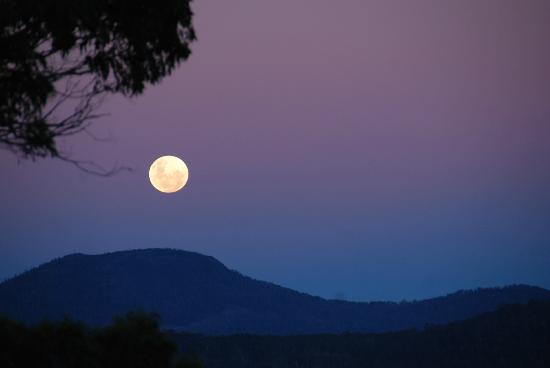
(Photo shows the full moon over New Norfolk, Tasmania; tonight it is a full moon on Friday 13th!)

Celebrity Baby News: Matthew Le Nevez and Michelle Smith

Tags

096261-d19e6214-e968-11e3-873b-5e8c286cce93

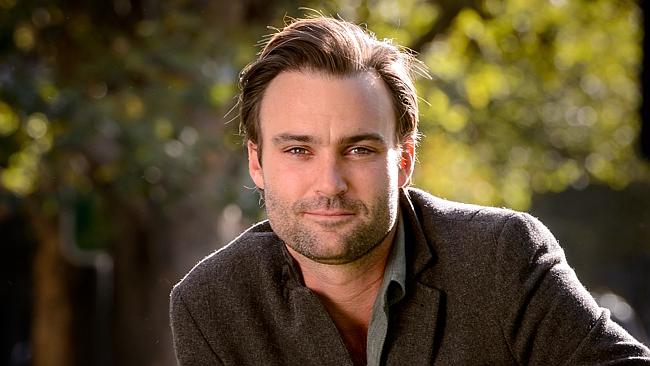
Actor Matthew Le Nevez, and his partner Michelle Smith, welcomed their first child last month and have named their son Levi.

Matthew is a NIDA graduate who has appeared in several films and television series. He won an AFI Award for the mini-series Marking Time, and a Logie for the television movie The Society Murders. He has appeared in sci-fi show Farscape, and fantasy series The Seeker. Matthew became a fan favourite after joining the cast of hit drama series Offspring in 2011 as Dr Patrick Reid, and there was an outpouring of grief when Patrick was killed off last year. Despite leaving Offspring to pursue acting in the United States, Matthew will be joining the cast of Australian drama series Love Child, and has made appearances on Offspring in imagination sequences, with more appearances tipped for the future.

Michelle is an American who works in hospital equipment supply; she and Matthew live together in Los Angeles.

Famous Name: Honoré

Tags

, , , , , , , , , ,

vb-31

On June 6 it was the 70th anniversary of D-Day – the beginning of the invasion of Normandy by the Allied forces during World War II. D-Day was a turning point in the war, as the Normandy invasion provided a decisive victory for the Allied forces. More than 3000 Australians fought in the campaign, mostly in the air force.

D-Day veterans from all over the world gathered at the beaches of Normandy for the D-Day commemorations, and Australian former pilots Robert Cowper, Stuart Davis, Phillip Elger, Francis Evans, Ronald Houghton, Billy Purdy, and Frederick Riley joined the Australian Prime Minister on his visit to France for the official international ceremony. Six of these men were awarded France’s highest decoration, the Legion of Honour, for their part in D-Day’s aerial assault (Robert Cowper had already received the Legion of Honour in 2012).

The day after the commemorations, the Prime Minister continued his tour of France by visiting a town near Amiens, the scene of a 1918 battle on the Western Front which was a crucial turning point in World War I. Two Australian brigades took part in the counter-attack, with many losing their lives in the successful attempt to secure the town of Villers-Bretonneux, ending the German offensive in the Somme, and keeping the town out of enemy hands for the rest of the war.

After World War I, money donated by school children in Victoria was used to build a new school in Villers-Bretonneux, called the Victoria School. A plaque at the school pledges Australian friendship with France, and in the playground, and above every blackboard, is written Do not forget Australia. The townspeople never have forgotten: kangaroos decorate the town hall where the Australian flag flies, a service is held every Anzac Day, and the town maintains a war memorial to commemorate all Australians who died on the Western Front with no known grave.

To thank the people of Villers-Bretonneux for their kindness and warm welcome given to all Australian visitors to their town, and in recognition of the D-Day veterans given the Legion of Honour, today I am covering a name from northern France associated with honour.

Honoré is a French form of the Latin name Honoratus, meaning “esteemed, distinguished, honoured”. There are two French saints named Honoratus, and I will look at the one who was a 6th century bishop of Amiens – not only because of where he was born, but because he is most often called St. Honoré (the other one tends to be known as St. Honorat).

St Honoratus of Amiens was born in the Somme to a noble family, and is said to have been virtuous from birth. Because he was so humble, he didn’t want to become a bishop, considering himself unworthy of the role, but once he had been elected, a beam of light descended on his forehead and he found himself anointed with a mysterious sacred oil. That pretty much sealed the deal.

Legend says that when his hometown heard he been proclaimed bishop, his childhood nursemaid, who was baking bread at the time, refused to believe it. She said that she would believe the news only if the wooden shovel she was using to put the loaves of bread in the oven put down roots and turned into a tree.

Sure enough, when she planted the shovel in the ground, it turned into a mulberry tree which produced both flowers and fruit. The tree was still being shown to visitors in the 16th century, which is an extradordinarily long lifespan (some might say, suspiciously long) for a mulberry tree.

The cult of St Honoratus really took off after 1060 when the saint’s body was exhumed, and many miracles were said to have occurred. Reputedly, processions of his relics managed to prevent both droughts and floods, ensuring good wheat harvests, and therefore happy bakers.

In 1202, a baker donated land to the city of Paris to build a chapel in honour of St Honoratus. It became one of the richest chapels in the city, and gave its name to the rue du Faubourg Saint-Honoré, now one of the most fashionable streets in the world, as it is filled with high-end boutiques.

In 1400 the bakers of Paris established their guild in the church of St Honoratus, and in 1659 Louis XIV ordered that every baker celebrate the feast day of St Honoratus on May 16, and give donations in the saint’s name to benefit the community. Even in modern France, bakers hold bread and pastry festivals on May 16, and during that week, bakers hold their annual meeting.

You may know the name of St. Honoré from the Gateau St. Honoré, a classic French dessert which has a puff pastry base with a ring of choux pastry around the edge. On top are small cream puffs dipped in caramelised sugar, and traditionally it is filled with crème pâtissière and whipped cream. It’s a popular birthday cake in France, and is also traditionally served at first communion parties.

The cake is said to have been created in the 19th century by the famous pastry chef Monsieur Chiboust, who named it both in honour of the saint, and because his own shop was on Rue St. Honoré in Paris – the street gaining its name from the church dedicated to St. Honoratus.

Honoré was a traditional name in the royal family of Monaco, and one its most famous namesakes is 19th century French novelist Honoré de Balzac. This is also an Australian celebrity baby name, because radio host Kate Langbroek has a son named Art Honore.

Honoré is an elegant, sophisticated boy’s name which could honour your French heritage, a connection to France, or even a family tradition of baking. The name is pronounced on-eh-RAY or o-no-RAY, making Onni or Ray fairly natural nicknames for an English-speaker. Although it might seem too challenging as a baby name in Australia, we have grown accustomed to Remy as a name here, so why not another French saint? Something to think about it is that, like Remy, Honoré has historically been used as a unisex name in Australia.

POLL RESULT
Honoré received an approval rating of 56%. 22% of people thought it was too feminine to be used as a boy’s name, but 17% saw it as a great French heritage choice. Only one person believed the name Honoré was too closely associated with the Gateau St. Honoré dessert.

(Photo shows the plaque at the Victoria School in Villers-Bretonneux)

Celebrity Baby News: NRL Babies

Tags

,

488671-akuila-and-tatianna-uate

Newcastle Knights player Akuila Uate, and his wife Samantha, recently welcomed their daughter Miriama Alumeci, a sister for Tatianna, aged 3; Tatianna’s birth was announced on the blog. Akuila is originally from Fiji, and moved to Australia to play rugby league while still a schoolboy. Even as a teenager, he was tipped to become a future star of the game. He has been with the Newcastle Knights for all his career so far, since 2008, and has won Winger of the Year three years in a row, in 2010, 2011, and 2012. Akuila has also played for Fiji, Australia, New South Wales, Country Origin, the NRL All Stars, and the Prime Minister’s XIII. The family’s surname is said yoo-AH-tay.

Former player Luke Patten, and his wife Rebecca, recently welcomed their son Brody Zane. Brody Patten’s birth was announced on ABC’s Grandstand this evening. Luke began his career playing for the Illawarra Steelers in 1998, and for the St George Illawarra Dragons after the clubs’ merger in 1999. He was with the Canterbury Bulldogs for almost ten years, and ended his career in the UK, playing for the Salford City Reds. When he retired in 2010, he was one of the last remaining former Illawarra Steelers players in the NRL. Last year, Luke took up a new role as a video referee, and often appears on Grandstand and other ABC shows to explain reffing decisions.

(Photo shows Akuila with his daughter Tatianna, from The Daily Telegraph)

Irish Names For Girls

Tags

, , , , , , , , , , , , , , , , , , , , , ,

3478061055_c7f655e9d0

Irish people have played an important role in Australia’s history, with many arriving in the 18th century as convicts or free settlers. By the late 19th century, a third of Australia’s population was Irish, and today around 30% of us claim some Irish ancestry. It is said that Australia is the most Irish country in the world outside Ireland.

The Irish have made an indelible mark on our history, culture, religion, sport and perhaps most especially, our politics – six of our prime ministers have had Irish ancestors. They have also helped create much of our national character: both the good bits, like our dry sense of humour and love of language, and the bad bits, like our pessimism and thin-skinned “touchiness”. When I did Italian names, I said that I could imagine an Australian without an Italian history, I just didn’t care to, but it’s impossible to imagine Australia without an Irish history.

Here’s ten Irish girls’ names, some of which have become popular here, and others which are less common. Just a heads up that I haven’t included any fadas (accent marks) on any of the names, since they are not legal in all states.

Aisling
Modern name meaning “dream, vision” in Irish Gaelic. It can be seen as a literary name, because the aisling is a poetic genre developed in 17th century Ireland, where a woman appears in a vision and predicts a turn for the better in Ireland’s fortunes. Earlier, the dream-woman was young and beautiful, and didn’t have a political message, but symbolised nature or love. Aisling can be pronounced ASH-ling or ASH-leen, and to English-speakers, seems like a fresh alternative to Ashley; it has also spawned variants such as Ashlynn. Aisling is #41 in Ireland.

Aoife
From the Gaelic for “beauty, radiance”. In Irish legend, Aífe is a warrior woman, and rival of her (possible) sister Scáthach. Legend tells that she fought the hero Cú Chulainn, but he overcame her with trickery, and promised to spare her life if she stopped fighting with Scáthach, spent a night with him, and bore him a son. She fulfilled her side of the bargain, but the story didn’t end happily. In the tale of The Children of Lir, Aoife is the wicked queen who transformed her stepchildren into swans; she was cursed by being turned into a demon by her own father as punishment. Despite this unpleasant namesake, Aoife was used by medieval Irish nobility, with a notable example being Aoife MacMurrough. This 12th century Irish princess conducted battles on behalf of her husband, and is an ancestor of the current British royal family. Aoife is pronounced like EE-fuh; although complex to spell, it sounds rather like popular Eva, and has a lovely meaning. Aoife is #11 in Ireland and #10 in Northern Ireland.

Bridget
Anglicised form of the Old Irish name Brigit, meaning “high, exalted”. In Irish mythology, Brigit is a goddess; her name is derived from the word for “fire” and most likely her title. Brigit was a poet, and the inventor of keening – the lament over a body at a burial that is a mixture of singing and weeping. She is also patron of healing, smithing, arts and crafts, cattle and livestock, sacred wells, and serpents. She ruled all things high-reaching, as well as lofty attributes, such as intelligence, wisdom, excellence, knowledge, and skill. Brigit is associated with the home and hearth, and with early spring. Her special day is Imbolc, on February 1. She has become fused with St Brigid of Kildare, one of the patron saints of Ireland – probably an attempt to Christianise the goddess. St Brigid is patron of smiths, cattle, poets and scholars, and her feast day is February 1. In Ireland, the name Bridget was too sacred to use until the 17th century, but later became extremely popular – so much so that an Irishwoman was called a “Biddy“, just as an Irishman was called “Paddy”. Bridget was #104 in the 1900s, and dropped to its lowest ranking in the 1950s, at 0. It hit a minor peak in the early 2000s at #166, and is currently in the 200s in Victoria and the 400s in New South Wales. Bridget is an underused classic which has remained on the charts while never becoming popular.

Caitlin
Anglicised form of Caitlín, Irish form of Cateline, Old French pet form of Catherine. While the Irish say it something like kat-LEEN, English-speakers say KAYT-lin, and turn the Irish pronunciation into another name, Kathleen. Caitlin has been used in Ireland since the 19th century, and became well known in the 20th. In Australia, Caitlin has ranked since the 1970s, making its debut at #554, and soaring until it entered the Top 100 in 1987 at #86. By 1990 it was in the Top 50 at #38; by 1994 it was in the Top 20 at #15. It peaked in the late 1990s at #12, and since then has declined. Currently Caitlin is #99 nationally, #78 in New South Wales, and #103 in the Australian Capital Territory. Last year Caitlin was one of the names that fell the most in popularity, suggesting its day is coming to a close (although its many variant spellings would significantly boost its ranking). Caitlin is #64 in Ireland and #33 in Northern Ireland.

Ciara
Feminine form of Ciar, meaning “black”. There is a 6th century St Ciara and a 7th century one, or else just one long-lived St Ciara. According to legend, St Ciara was of royal blood, and founded an abbey; another story says that she (unless it is a different St Ciara) saved a town from a noxious fire through her prayers. Ciara is pronounced KEER-uh, and must be one of the most heavily Anglicised Irish names, for you rarely see it with its native spelling, but more often Keira or Kira. Although to me the Ciara spelling looks more elegant, it risks being confused with the Italian Chiara. Ciara fits in with Australian’s love of names such as Kirrily and Kirra, and has a native sound to our ears. Ciara is #32 in Ireland.

Deirdre
Deirdre of the Sorrows is a tragic heroine from Irish mythology. The daughter of King Conchobar’s bard, when she was a baby a druid predicted she would be very beautiful, but that much blood would be shed for her sake. Conchobar decided he wanted this beauty for himself, and had her brought up in seclusion. As an adult, Deirdre was as stunning as the druid had foreseen, and she fell in love with a handsome warrior named Naoise. The couple eloped, and were blissfully happy until the furious Conchobar tracked them down. In the ensuing battle, Naoise was amongst those killed. Conchobar triumphantly took his gorgeous wife home, but was angry that she remained cold and depressed. To teach her a lesson, he told her that he would give her to the man who had murdered Naoise – the man she hated above all others. On the journey to deliver her, the unhappy Deirdre threw herself from the chariot and split her head open. In some versions of the story, she simply wastes away with grief. Deidre is derived from the Gaelic name Derdriu, whose meaning is debated, but is implied in the original story as meaning “noise, murmuring”, related to the word for “storm”. It could thus be understood as “weeping, wailing, storm of tears”, and is often glossed as “sorrow”. Deirdre came into use as a girl’s name in the 19th century, and became more common in the 20th, when there had been many popular re-tellings of the legend. Deirdre first ranked in the 1930s at #183, peaked in the 1940s at #180, and hasn’t charted since the 1970s. This is a vintage name which has had very little use, so hasn’t become dated. It is rather lovely, although very sad.

Erin
Derived from Éirinn, from the Irish word for Ireland, Éire. Erin was used as a poetic and nationalistic name for Ireland, or the feminine personification of Ireland. According to folklore, the country’s name comes from Ériu, the mother goddess of Irish mythology, and a symbol of Irish sovereignty. Her name is believed to come from an ancient root meaning “fat”, to indicate that Ireland was a land of abundance. Erin came into common use as an Irish name in the 19th century. It has sometimes been given to boys, perhaps because it sounds like Aaron and Eric, but has only charted for girls. The name Erin first charted in the 1950s, debuting at #457, and reached the Top 100 in 1978, at #71. By 1980 it was in the Top 50 at #46, the following year it was in the Top 20 at #17, and it peaked in 1984 at #12. Erin has been a long-time favourite, and only left the Top 100 in 2012. This modern classic is no longer popular, but still getting a reasonable level of use. It is #39 in Ireland and #19 in Northern Ireland.

Maeve
Anglicised form of the Gaelic name Medb, meaning “intoxicating”, and related to the English word mead (a fermented honey drink). In Irish legend, Queen Medb was a powerful and seductive queen known for taking a succession of husbands as her consorts. She was once married to King Conchobar, from the story about Deirdre. Medb couldn’t stick him either and walked out; she ended up defeating Conchobar and ruling in his place. She demanded that her wealth be at least equal to her husbands’, and insisted her consorts be without fear, meanness, and jealousy – the last was very important, because Medb also took lovers to supplement her husbands. Folklorists believe that Queen Medb was originally a sovereignty goddess in a matrinlineal society who the king would symbolically “marry” in order to gain power over the land. This explains her many husbands. In modern times, she has become a feminist symbol of women’s power and female sexuality. This is a sweet, spunky name which fits in with the trend for names with a V in them, like Ava, and makes a great middle name. Maeve is in the 100s in Victoria, so not particularly unusual, while it is #100 in Ireland.

Orla
Anglicised form of Órfhlaith or Órlaith, meaning “golden princess”. Órlaith was a very popular name in medieval Ireland, and there are several queens and princesses from Irish history with this name. The famous High King of Ireland Brian Boru had a sister named Órlaith who married another High King (she unfortunately came to a sticky end after getting over-involved with her stepson), and Brian also had a daughter and a grand-niece named Órlaith. For some reason, Orla is a man in The Poems of Ossian by James McPherson, a young warrior and chieftain of Lochlin who falls in battle. In Scandinavia, Orla is used as a male name, and that might be because of McPherson’s poetry, which was very popular in Scandinavia. Orla is simple to spell and pronounce, and the princessy meaning would be attractive to many parents. Orla is #82 in Ireland.

Sinead
Anglicised form of Sinéad, the Irish form of Jeanette, the pet form of the French name Jeanne. It is the equivalent of the English name Janet, which is a pet form of Joan. In practice, Sinead is often understood as the Irish form of Jane or Jean; it has even been used as an Irish form of Jennifer since Jenny is an old pet form of Jane. The name is pronounced shi-NAYD. A famous Irish namesake is Sinéad de Valera, the wife of the Rebublican leader and Ireland’s third president, Éamon de Valera. A teacher of the Irish language, Mrs de Valera was named Jane by her parents, but changed her name to Sinéad not long after she was married. Sinéad de Valera was a successful children’s writer, who wrote in both English and Irish. She helped to popularise the name in Ireland, and the Irish singer-songwriter Sinéad O’Connor was named after her. Sinéad has lost popularity in Ireland in recent years, and has never charted in Australia, although still seen occasionally.

POLL RESULTS
The public’s favourite names were Maeve, Bridget and Aoife, and their least favourite were Ciara, Deirdre and Sinead.

(Picture shows detail from an Irish pound note, which bears the likeness of Queen Medb or Maeve; the pound hasn’t been used in Ireland since 2002 when the euro was introduced)

Gemma and Jewel

Tags

, , , , , ,

WoodenFood_m

Twins
Luella Miette and Emmeline Maeve

Girls
Alina Dawn (Nicholas, Kiara)
Anika Josephine (Tane, Kieran)
Bonnie Lola
Camilla Elizabeth (Gus, Claudia)
Coco Zara
Doreen “Dora”
Eriana Jade
Essie Florence (Henry)
Gemma Catherine
Greta Geni
Halle Sofia (Rafael)
Isabelle Rosalie (Eva)
Ivy Meyer
Jewel Grace (Chanel)
Kora Mae
Luna Piper
Lydia Ashleigh (Kyra)
Matia Rose (Charli)
Orla McIntosh
Pia Joan (Lenny)

Boys
Ash Julian (Tori, Taj)
Axel William
Beau Francis
Billy McGuffie
Callan George (Hayden)
Chaz Isaac (Zoe, Ikaia, Levi)
Dominik Ivan (Abbey, Sammi, Luka, Hudson)
Ewan Jack (Milla)
Finnlay Karoly (Cailin, Riley)
Harry Lennox
Innes James (Leliyn, Maya)
Jack Dao (Frances)
Jase Leo (Thomas)
KC Robald
Kiah Aaron (Caitlin, Jacob, Sophia)
Kingsley Ryan
Miller Thomas (Charlotte)
Monty Carlin (Saylah, Maya, Elky)
Nash Kyle (Quinn, Archer)
Tanner Reid (Harry, Kaden, Jarran)

Note: Thank you to Abby Sandel from Appellation Mountain for contributing the twins’ names via Twitter.

(Photo of little girls having a tea party from Tiger Tribe toy company, from their Facebook page)

Celebrity Baby News: Artistic Babies

Tags

, , ,

d870038eb17511e3a90f12d3efa47a40_8

Alternative country-rock singer Henry Wagons, and his wife Melvis Crawford, welcomed their daughter Casper Henrietta eight months ago. Henry refers to his daughter as “Casper the friendly girl”. Henry is the front man for Melbourne band Wagons, who are about to release their sixth studio album, and are on an Australian tour. Melvis was once a DJ on the Team Disgusting radio show on Life FM in the UK, which included alternative comedian Noel Fielding.

Artist Bindi Cole, and her husband Daniel Chocka, welcomed a baby boy named Eli earlier this year. Bindi is an award-winning Melbourne artist who works principally with photography, and her works have been exhibited at the National Gallery of Australia, Gallery of Modern Art, Art Gallery of Western Australia, and Horsham Regional Art Gallery. Many of her works explore Indigenous culture and heritage, and also her Christian faith. Bindi’s name has been covered on the blog, and it is worth mentioning that her father ascribes the meaning “morning star” to it.

(Photo of Henry, Melvis, and Casper from Melvis Crawford’s Facebook page)