Famous Names: Azalea and Amethyst

Tags

, , , , , , , , , , , , , , , , , ,

May-purpleazalea

Australian rapper and model Iggy Azalea has been in the news recently, as she performed at the Billboard Music Awards last month. Her song Fancy recently reached #1 on the Billboard Top 100 in the same week that Ariana Grande’s Problem, which features Azalea, made #2. This makes Iggy Azalea the first act to reach #1 and #2 simultaneously since the Beatles did it in 1964 with I Wanna Hold Your Hand, and She Loves You.

Iggy grew up in the hippie town of Mullumbimby in northern New South Wales, and began rapping at the age of fourteen after developing an obsession with Tupac when she was eleven. Unsuccessful and unpopular at school, Iggy dropped out. Shortly before her sixteenth birthday, she left for a “holiday” in the United States, during which she phoned her parents and broke it to them that she wasn’t coming home, but going to seek her fortune as a professional rapper. She lived in the southern states, and developed a southern American accent for professional purposes.

As a rapper in America, Iggy was at first unsuccessful and unpopular, but Mullumbimby had accustomed her to this, and it didn’t faze her. Later she moved to Los Angeles, and began uploading her own videos to YouTube: her career began to grow when her first official music video, for her song Pu$$y, went viral. Her first studio album, The New Classic, was released in April this year and debuted at #3 on the Billboard charts, also making #1 on Billboard’s Top R&B/Hip-Hop albums, and Top Rap Albums. She is the first non-American female rapper to reach the summit of these charts.

We are told that screen names are no longer necessary in Hollywood, but stage names are still common in the world of rap and hip-hop. Iggy Azalea invented hers using the old chestnut of combining her pet dog’s name with the name of the street she grew up on (her family still lives on Azalea Street in Mullumbimby). While some people might use this method and end up with something uninspiring, like Pickles Main or Mr. Bunny Wunny Commercial Estate, Iggy Azalea got pretty lucky with hers, although her real name of Amethyst Kelly seems marketable enough.

I have been seeing quite a few Azaleas and Amethysts in birth notices in the past few years, and wonder whether Amethyst Kelly aka Iggy Azalea has had an effect? I haven’t seen any girls named Iggy though.

The azalea is a flowering ornamental shrub native to Asia, Europe and North America; it is a member of the rhododendron family. Azaleas bloom in the spring, and have beautiful frilly flowers in shades of pink, purple, and white.

Its name comes from the Greek for “dry”, because it grows in dry soil and is tough enough to thrive in harsh conditions. In Chinese culture, azaleas are a symbol of womanhood and love for the home. Azalea festivals are held in Japan, China, Korea, and in many cities of the United States; the azalea is the state wildflower of Georgia in the US.

Azalea has been used as a girl’s name since the 18th century, originating in both Britain and the US. Although there is some dispute as to when azaleas were introduced to England from the Americas, they were definitely imported by the early 18th century. Azalea first turns up in Ohio in the US, where there is a small town named Azalea, so it can be seen as a place name. The name Azalea is currently rising in popularity in the United States.

As a name, Azalea seems flouncy and feminine, and also quite tough – the “dry” meaning seems very appropriate in Australia. It can be pronounced either uh-ZAY-lee-uh or uh-ZAYL-yuh, and fits in with trendy names such as Zalia and Zahlia, so that it seems a little exotic but doesn’t sound particularly strange. Zay or Zaylie could be used as short forms.

An amethyst is a semi-precious gemstone which is a violet-shaded quartz, ranging from a pinkish colour to a deep purple. The name comes from Greek, and means “not intoxicated”, due to a belief that amethysts were a protection against drunkenness.

The ancient Greeks and Romans drank wine from cups made from amethyst, thinking this would stop them being affected by alcohol. In medieval times, amethyst amulets were worn in battle, in the belief that they had healing properties, and kept the wearer cool-headed; they are supposed to have the ability to dispel illusions.

Amethysts are mined all over the world, with the highest quality coming from Brazil and Sri Lanka. You can fossick for amethysts yourself in Australia, with the most promising locations being in northern Queensland. You can also find “desert amethysts” – very old glass bottles which have baked in the sun until they turn a pretty violet colour.

Amethysts seem to capture the imagination of writers, and there are many stories and poems about them, even in ancient times. If you have read the Anne of Green Gables books by L.M. Montgomery, you will remember that as a child, Anne thought that diamonds would be “purply-sparkling” like amethysts and was disappointed to find they were colourless. One of her fancies was that amethysts were the souls of good violets.

Amethyst has been used as a personal name since the 19th century, when other gemstone names were fashionable; it can be shortened to Amy. Although amethysts are not rare or valuable, there is something pure and wholesome about them, even spiritual. As Anne says: “I think amethysts are just sweet”.

Two pretty nature names starting with A, both belonging to the same person. Which one do you prefer?

POLL RESULT
Azalea received a very good approval rating of 74%, but people were less enthusiastic about Amethyst, which had an approval rating of 43%.
azalea-st

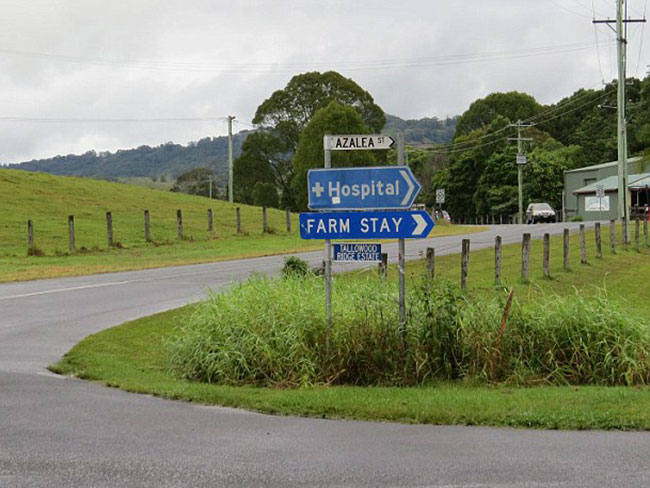
(Top photo shows purple azalea flowers; bottom photo shows Azalea Street in Mullumbimby)

Celebrity Baby News: Kate Waterhouse and Luke Ricketson

Tags

1401500390830.jpg-620x349

Journalist and socialite Kate Waterhouse, and her husband Luke Ricketson, welcomed their first child on May 30, and have named their daughter Sophia Edie. Sophia Ricketson was born at the Mater Hospital in Sydney, weighing 3.1 kg (7 lb).

Kate is a freelance fashion journalist with her own blog, and has a weekly interview column at The Sun-Herald called Date With Kate. She is the daughter of horse trainer Gai Waterhouse and former bookmaker Robbie Waterhouse, and is the sister of bookmaker Tom Waterhouse. Tom and his wife Hoda had a baby girl named Rose last year, who is Sophia’s cousin.

Luke is a former rugby league star and captain of the Sydney Roosters who began his career in the 1990s. He was chosen for City and New South Wales in rep football, and played for both Australia and Ireland internationally. Luke retired in 2005 after playing 301 games with the Roosters, which still stands as the club record. He is the son of Doug Ricketson, who played rugby league for the Eastern Suburbs and Penrith in the 1960s. Kate and Luke were married in Italy in 2012.

Interview with Nancy from Nancy’s Baby Names

Tags

, , , , , , , , , , , , , ,

canyon75

Nancy is the anthroponomastic maven at Nancy’s Baby Names, a rich repository of name information delivered with a wry sense of humour. Nancy has been blogging indefatigably since 2006, making Nancy’s Baby Names one of the oldest baby name blogs out there. She has thousands of blog posts on all manner of names, but especially loves hunting down rare and unusual names, and discovering the stories behind them. Nancy also adores name data – there’s popular names from around the world, and tons of US data from well beyond the Top 1000. At Nancy’s blog you will find names that are bizarre, puzzling, curious … and they are all real.

What is your name?

Nancy Man.

Have you ever wished you had a different name?

I didn’t like the name Nancy when I was young, and I remember asking my parents for permission to legally change it. They laughed at me. These days I don’t mind my name as much, so I no longer think about changing it.

How did you first become interested in names?

The graveyards are what got me hooked, though I don’t think I would have been so fascinated by the names on the headstones had I not been so dissatisfied with my own name.

I was unhappy with my own name because I’d been named for the wrong grandmother (or so I believed throughout childhood). I got the name of the distant grandmother we hardly knew, not the awesome grandmother (Helen) we saw all the time. This was a problem.

The upside, though, was that it made me very curious about names in general. So when I began using a local graveyard as a short cut through town (around age twelve) I couldn’t help but check out all the names. I was especially attracted to the unfamiliar and bizarre names I’d never seen before – Peleg, Huldah, Zenas, Experience, etc.

After exploring that first graveyard thoroughly, I began visiting other graveyards, where I discovered even more curious names, and … that’s how the name obsession began.

What inspired you to begin a name blog?

I had an interest in names and a writing habit, so I started a blog in early 2006 to put the two together. My first posts were mostly tongue-in-cheek, but I began to take things more seriously once I started getting traffic and comments.

You seem to have a special fascination with unusual names of real people – how did that come about, and what is the most unusual name you have ever found on a real person?

It must have been the graveyards. In a sea of Sarahs and Johns, you can’t help but wonder about the one random Flavilla or Micajah.

The most unusual name? Wow, that’s tough. I’ll go with one I blogged about recently: Laxative Bromo Quinine. He was born in rural Texas in the early 1900s and named after the medicine that his mother credited with saving his life.

Do you have a favourite post on Nancy’s Baby Names?

I really like the Kasara/Casara post. That name had me stumped for a long time until it finally dawned on me that Kasara was a mondegreen. My extensive knowledge of long-forgotten ’80s pop hits finally comes in handy!

Are there are any other ways to follow you online?

Twitter is probably the best way. Pinterest is another option.

Do you have a pet peeve in regard to names?

My only pet peeve is that the U.S. Social Security Administration doesn’t release all its name data. Other countries do it, SSA, why not us? Come on! Privacy, shmivacy.

What are your favourite names?

I have two types of favourites.

One type, of course, would be the bizarre names: Zeppelina, Captivity, Oleomargarine, Emancipation Proclamation and the like. I especially love the ones that come with cool stories and explanations.

The other would be short, simple classics like Jane, John, Adam, Emma, Paul, and Rose. They’re familiar, unpretentious, and easy to live with. These are the names I’m always recommending to people in real life.

What names do you dislike?

I don’t care for names that are easy to make fun of. Not a fan of Abcde, for example.

Are there any names you love, but could never use?

Duncan. I’ve always loved the name, but I can’t say it without mentally adding “Donuts.” (Dunkin’ Donuts is a coffee/donut chain very popular in the North-eastern U.S., where I grew up.)

What are your favourite names in the US Top 100?

Girls: Elizabeth (#10). Runners-up: Hannah (#23) and Sarah (#48).

Boys: Thomas (#61). Runners-up: James (#13) and Sebastian (#45).

What are your favourite names in the rest of the US Top 1000?

Girls: Jane (#355). Runners-up: Daphne (#397) and Catherine (#172).

Boys: Duncan (#821). Runners-up: Paul (#198) and Theodore (#170).

What are your favourite names that have never charted in the US?

Girls: Mehitable. It’s a variant of the biblical Mehetabel, though I actually prefer the Mehitable spelling because that’s the way I always see it written on the headstones back home. (I kinda prefer Phebe to Phoebe for the same reason.) I’m slightly surprised that the belle/bella trend hasn’t brought Mehetabel back, even just a little. I wonder if spelling it Mehetabelle or Mehetabella would help…?

Boys: Chucknorris. I was so happy when I discovered this name in the wild, years after wondering aloud (via the blog) if it could possibly exist. It’s like that Walt Disney quote, “If you can dream it, you can do it,” except my version is “If you can dream it, you can find it on a birth certificate.”

If you found out you were pregnant right now, what names might you be considering?

I like classic names, but my husband prefers trendy names, so finding a name that suits both his tastes and mine would be the goal. I know Chloe would be a contender – it’s been a favourite of his for a while, and it happens to fit my criteria pretty well.

What is something we don’t know about you?

I cannot drink soda, beer, champagne, or anything carbonated. It’s like swallowing shards of glass to me. I’m amazed that so many people find bubbly beverages refreshing.

What advice would you give someone who was choosing a baby name?

This one is tricky to answer without a specific person in mind. For instance, the advice I’d give to the person deciding between Emma and Claire would be completely different from the advice I’d give the person seriously considering Kardashianette.

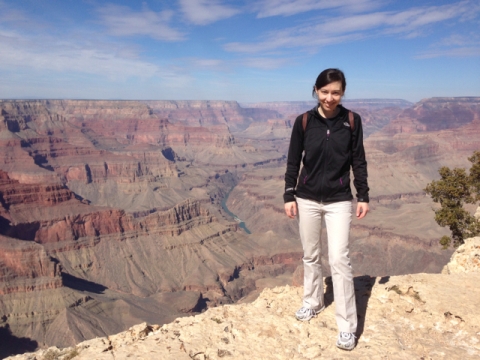
(Photo shows Nancy at the Grand Canyon, from her blog)

How Do You Resolve Baby Name Disagreements?

Tags

, , ,

Couple arguing

Scarlett and Toby have a baby daughter, and it took them eight weeks after her birth to choose the name (they went a little over the deadline for registration). It was a very stressful process and they disagreed on basically everything. Part of the problem was that they waited until she was born to choose the name beause they were convinced they were having a boy, so they weren’t prepared with girls’ names. Then everybody else seemed to have an opinion on what name they should choose, and that made it harder to decide, rather than easier.

Eventually they managed to compromise on a name, but Scarlett was unhappy that her favourite girl’s name couldn’t be used. She feels that choosing a baby name is often portrayed as one that’s fair and equal, with the parents choosing a name together they both really love, but she knows from her own experience that this isn’t always the case.

Scarlett would like to know which parent should have the final say on the baby’s name in cases where there is clear disagreement. During the time that she and Toby were arguing over their daughter’s name, often in front of other people, she was told many times, by both men and women, that the mother should have the final choice.

After all, the mother has carried the baby for nine months and birthed it (no small task!), will probably be doing the majority of child care, and therefore using the name more frequently. Scarlett is aware this isn’t how everyone’s family situation works, but it’s the reality of her life, and of most women she knows.

Then again, Scarlett wonders how important this is when being a baby and child is such a small part of a person’s life, and their name should really be for their adulthood and old age, not their few years of childhood growing up with mum and dad.

Scarlett wonders what couples should do if they can’t reach an agreement. Does one choose the first name and the other the middle name, then reverse for the next child? Would it be a bad idea to pick the name out of a hat and let fate decide? In other words, is there a simple rule to be followed that can eliminate arguments?

* * * * * * * * * *

You’ve asked the $64 000 question there, Scarlett (or the $600 000 one, allowing for inflation and currency conversion). And the short answer is that no, there is no standard rule to be followed to decide who gets to make the final decision in naming disputes.

As you’ve discovered, many people subscribe to the idea that the mother should get to make the final choice, due to her unique role in pregnancy and childbirth, and historic tendency to be more involved with childcare. I’m not completely convinced by it, because it seems as if you could make a case to say that since the father is so left out of the pregnancy/birth/childcare, the least you could do is let him name the baby.

I know some men say that since they are the ones most likely to be making the greater economic contribution, and for a lot longer than nine months, the father should get more of a say (I’m not convinced by that argument either – apart from anything else, you shouldn’t get to buy your child’s name).

I’m uncomfortable with the whole idea of “mum chooses” or “dad chooses”, because it seems to be setting the parents up as antagonists, with one of them the victorious winner, and the other the despondent loser. As you’ve found, the stress of the baby naming process can bring on quite enough conflict as it is without creating a system that pits you against each other.

Ideally, you should work together to come up with a system that reduces the amount of conflict you have, and facilitates open communication. I think already you’ve learned a few things that you won’t do again that will make it easier in the future.

You know now to start the baby naming process well before you give birth, and to make sure you have a list for both boys and girls names, and not to let other people get involved in your baby name arguments. As you’ve found out, no matter how well meaning your friends and relatives are, they rarely prove helpful, and can often just confuse things further.

If you reach a point where you just flat out disagree on what the name should be, then there isn’t one single option which will suit everyone, and it’s up to the two of you to negotiate on an outcome which suits you best (or you dislike the least).

It might work out for one of you to choose the first name and the other the middle name, but there could also be problems with it too. What if mum wants the name Gemma and dad wants Emma – how happy would you be with Gemma Emma? Or if there’s a severe style mis-match, could you live with Doris Mikailyah? And if you swap the next time around, will your children’s names sound a bit odd together if you have a Harper and a Demetrius? And what if you end up having only one child?

Choosing a name out of a hat sounds like it might work better if you both agreed on several names, liked them all fairly equally, and just couldn’t pick between them. If you actually dislike each other’s name choices, I can imagine it might be quite a blow to have a name you really loathe forced on you by a hat. I think you’d have to come up with some rules, such as vetoeing in advance anything you really hated.

Compromising on the name, as you and Toby did, can work out well. They say the sign of a good compromise is that both people are unhappy with the result, but that’s not good enough for your child’s name – you both need to be happy with the name you choose. You might have a pang of disappointment that your favourite name didn’t make it, but the chosen name should be one that you both like and can imagine using for the rest of your lives.

The important thing is that you see yourselves as a team working towards the same goal: a great name for your child. But in the end, how you go about it is whatever works for you and Toby. Nobody can tell you how to choose a baby name – there’s no right or wrong way.

Readers, what do you think is the best way to resolve differences when it comes to baby names? And what methods have you used successfully?

POLL RESULT: A clear majority (69%) thought that if parents didn’t agree on the baby’s name, they should resolve their differences and reach a compromise together. However, a significant minority (18%) believed that in the case of a baby name deadlock, the mother’s choice should take precedence. In contrast, just 2% of people thought that the father’s choice should be used to break a deadlock. In fact, Dad getting to choose the name fared worse than blind chance, with 7% voting for a coin toss or the name being pulled from a hat. 4% were in favour of a trusted outsider, such as a grandparent, best friend, or family adviser (perhaps a minister of religion) being given the responsibility of choosing the name – quite eye-opening that this was twice as popular as the father getting to choose the name. Nobody thought that complete strangers should be entrusted with choosing the baby name, with online polls and radio phone-ins completely rejected as options.

Rocky Levi and Tex Zade

Tags

, ,

article-2151512-1358CD81000005DC-780_636x758

Twins
Anthony Peter and Christian Peter (Zander, Xavier)
Hudson Job and Frankie Alexander

Girls
Adeline Grace
Amalie Florence
Brinley Blaise
Cataleya Karen-Rose (Mikaila, Jasper)
Daisy Elizabeth
Esther Mary
Francesca Lucy Dominique
Layne Kara (Noah)
Lillian Roslyn “Lilly Rose”
Matilda Vi
Millie Margaret
Sassinia Eva-May (Archer, Jaxon)
Scarlett Adrienna (Axel)
Violette Zofia (Bella, Ruby)
Willow Isla (Audrey)

Boys
Andy Frederick
Charlie Leon
Dimitri Paul
Hamish Menzies (Piper, Lottie)
Harry Alexander (Fenella)
Jock Isaak Lewis
Kosta Thom
LJ
Lucan Leo Cole
Montgomery Peter
Nicholas Andrew Valentine (Georgia, Tony, Marykia, Jacob)
Robbie Danger
Rocky Levi
Santino Saverio (Alessio)
Tex Zade

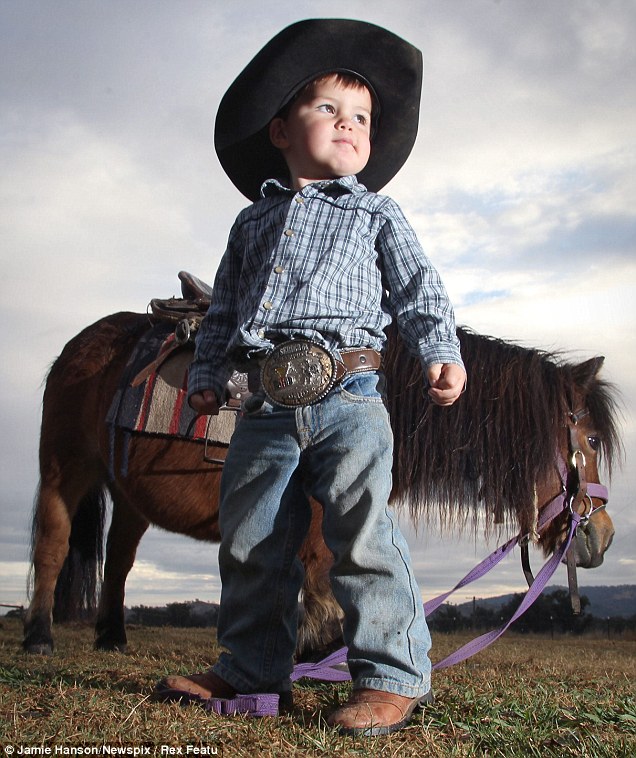
(Photo shows Royce Gill, a very young rodeo rider from Upper Horton in northern New South Wales, and his pony Maybelline; photo from the Daily Mail)


Name Update: The Hospital Helped With The Baby’s Name

Tags

, , ,

pop-ink-csa-images-nurse-holding-baby

Fiona and Brent had agreed on a list of boy’s names for their fourth child, but Fiona was still worried that Brent’s preference for names popular in his own era would mean their baby’s name would seem out of place next to his peers. After writing in to the blog, she felt reassured that the names they had chosen were still quite popular, and even rising in popularity. (It’s nice to know some parents are actually pleased to find out their favourite name is a popular one!).

Before their baby was born, Fiona and Brent chose the name John together, but decided to leave the middle name until they had met their son. After the baby was born, the nurse commented that her son was also named John – John Patrick. Later, a wardsmen told them that her father was named John, and his middle name was Patrick too. Patrick was also a name they had considered as either a first or a middle, and the encounters at the hospital confirmed that the right name was

JOHN PATRICK FRANCISJOHNNY“,

youngest of three boys and one girl.

John is Fiona’s father’s middle name, and Francis is her grandmother’s maiden name, so her family is very pleased, and her dad terribly excited to have a little namesake. Fiona says her dad’s excitement and happiness has convinced her that they made the right choice.

Congratulations to Fiona and Brent! What a handsome name combination, and lovely name story to pass on.

Famous Name: Harvey

Tags

, , , , , , , , , , , , , , , , , ,


world-no-tobacco-day-rose-graphicFamous Namesake
On May 31 it will be World No Tobacco Day, encouraging smokers to abstain from tobacco for just 24 hours. World No Tobacco Day was started by the UN’s World Health Organization in 1987, and each year there is a new theme: this year it is “Raise taxes on tobacco”. Should you wish to celebrate No Tobacco Day by giving up smoking, information and support can be gained from a number of government and community services.

The number of Australian smokers has dropped dramatically since World War II. In 1945, about three-quarters of men and a quarter of women smoked every day. Today it’s 16% of men and 13% of women, with numbers continuing to fall, making us one of the most successful countries at reducing smoking in the English-speaking world. That can be attributed to vigorous public anti-tobacco campaigns running since the 1980s.

Australia’s campaign against smoking began with William Harvey, a distinguished thoracic physician who devoted his lengthy career to the study and treatment of tuberculosis after his father (also a doctor) contracted the disease. Harvey had the satisfaction of seeing TB become less common, due to better testing and treatment, but over time he became concerned at the growing incidence of lung cancer.

In 1965 he helped found the Australian Council on Smoking and Health as part of his campaign against smoking, and was its president from 1966 to 1975. This didn’t make him popular with some, especially tobacco companies, who continued to deny there was any link between smoking and disease. However, William Harvey had been a POW during World War II who continued caring for his patients even as disease threatened his own life. He didn’t believe in giving up.

He visited schools and sporting bodies, he wrote to the newspapers, and he persuaded other doctors and medical organisations to join him in his campaign against tobacco. One of his achievements was the banning of cigarette vending machines in hospitals. Progress seemed slow, but he persisted, saying that he had great faith in “the inevitability of gradualness”. A devoted family man, Harvey was a keen gardener and surfer into his twilight years, and played golf, tennis and bowls. He passed away suddenly in 1981 at the age of 84 – a good advertisement for a life of healthy non-smoking.

William Harvey didn’t live to see the big government campaigns against smoking of the 1980s, but their existence and determination owe a great debt to his dedication and energy. And if I can reveal my hand, I have friends and family members who have given up smoking, and as a result I have got to spend many more years with them, or seen them live happier, healthier lives. Every one of them was convinced to give up by anti-smoking campaigns, so from the bottom of my heart, I thank you William Harvey.

Name Information
Harvey is an English surname, and one of the earliest recorded. It is derived from the Breton personal name Huiarnuiu derived from the Old Breton name Huiarnviu, meaning “blazing iron”. The Gallic form of the name is Hervé, and St Hervé (or St Harvey) is one of Brittany’s most popular saints.

Hervé was born blind, and was a 6th century hermit and bard known for his humility. According to legend, he had the power to cure animals, and was always accompanied by a wolf. The story goes the wolf had eaten the ox that the saint used for ploughing, and St Hervé made such an eloquent sermon that the wolf volunteered to pull the plough instead, in penitence.

One of the followers of William the Conqueror during the Conquest was named Hereueu, another form of the Breton name. Use of the name as a surname followed almost immediately after the arrival of men with the first name, and is first found in Norfolk, where the Harvey family were granted lands for their services at the Battle of Hastings.

In Ireland, Harvey was used to Anglicise the Gaelic surname O’hAirmheadhaigh, meaning “grandson of Airmed”. Airmed is a goddess from Irish mythology, known for being a healer during a great battle. As she wept over the grave of her brother, who had been slain by her father, all the healing herbs of the world sprang up, watered by her tears. Airmed gathered them into her cloak, but her father scattered the herbs, so that no person can ever know all the secrets of herbalism – only Airmed. Her name is identical to a word meaning “a measure of grain”, although I’m not sure if that is the origin of the name.

Harvey was also used to Anglicise the Gaelic surname Ó hEarchaidh, meaning “son of Earchadh”. Earchadh is an Irish name that I have seen translated as “noble warrior”. By the way, William Harvey was very proud of his Irish Protestant heritage, so his surname was Irish, although most likely of English origin rather than Gaelic.

The name Harvey was #167 in the 1900s, and peaked in the 1940s at #141 – perhaps because of a family of cricketers from Victoria with the surname Harvey who flourished around this time. Harvey disappeared from the charts from the 1960s to the 1980s, but made a comeback in the 1990s when it ranked at #581.

Interestingly, this was the time when retail chain Harvey Norman, co-founded by maverick businessman Gerry Harvey, became a “superstore” business, with massive expansion. The name Harvey zoomed up the charts to make #314 for the early 2000s and #243 for the late 2000s. Harvey peaked in 2010 at #149, and then began dipping the next year – this coincides with Gerry Harvey’s unpopular campaign to make consumers pay Goods and Services Tax on items bought online from overseas websites.

Although Harvey is in the 100s in New South Wales, it is a Top 100 name in Victoria. Harvey entered the Victorian Top 100 in 2010, debuting at #100, and last year made #64. If you are in Victoria you probably think of Harvey as a popular and rising name, while in other states, Harvey may seem fashionable but underused. It is not clear at present if other states will follow Victoria’s lead, but as Harvey is Top 100 in the UK, and rising in the US, international trends suggest Harvey’s popularity here may be increasing.

Harvey is a cute, spunky name for boy, but there’s also something strong and masculine about it. This retro name has been underused for most of its history, and is now making a comeback – in at least one state, it is more popular now than at any other time. This may give some parents the jitters. Although it has only ever charted as a boy’s name, I have seen Harvey on a few girls in birth notices, and the Irish goddess does give this some legitimacy as a name for both genders.

POLL RESULT
Harvey received an excellent approval rating of 75%, making it one of the highest-rated names for 2014. People saw the name Harvey as strong and manly (20%), cute and boyish (16%), and traditional without being stuffy (13%). However, 11% were reminded too strongly of Harvey Norman stores. There was a strong preference for Harvey being reserved for boys only, with 18% saying it was only suitable for boys, and just 2% believing it could be used for both genders.

Thank you to Vanessa for suggesting the name Harvey be featured on Waltzing More Than Matilda.

Popular Names in Regional Australia for 2013

Tags

, , , ,

7mudgee1M_m

All the birth data from 2013 is in, both national and state, but what about the names that are popular in your particular city or region? For most of you, I can’t really help out. But in those few cases where local papers published some statistics, they provided some interesting comparisons with the data overall.

In only a few cases does the information come from birth registries. Most of it is taken from birth notices, and you have to remember that not everyone puts a birth notice in the paper when they have a baby – these days many people prefer to use social media, or even just send everyone a text. It is also becoming less common for local papers to have a section in the paper for birth notices.

Information from hospitals can be incomplete too, because (apart from people having home births) parents haven’t always chosen a baby name in advance to give the paper. I notice from viewing baby photos released from hospitals that people from other cultures usually don’t give a name when they are photographed, and I’m not sure whether that’s because it’s usual to choose the name some time after birth, or whether it isn’t customary to tell strangers the name of a new baby.

So by no means official, but still worth a read, especially if you are from one of these areas.

In the Newcastle area, in the Hunter Valley region, the most popular boy’s name was William, and the most popular girl’s name was Olivia. Other popular boys’ names were Lachlan at #2, Charlie at #3, and Cooper and Darcy at #4 and #5. For girls, it was Lilly at #2, Lucy #3, Mia #4 and Ruby #5. During the year, I looked through all the baby photos released by Newcastle hospitals, and was surprised at how few Jacks and Charlottes there were, while Stellas and Calebs abounded.

The NSW birth registry revealed that the most popular names for babies in the Clarence Valley region around the city of Grafton were Harrison and Ruby, and there was an equal number of babies with either of these names.

In Tamworth, in the New England region, Lachlan and Matilda were the most popular names, and for boys, William and Liam were the next-most popular boys’ names. Popular girls’ names included Chloe, Elizabeth, Indi and Willow. There were significantly more boys in the paper than girls – 93 to 57.

In Orange, in New South Wales’ Central West region, the most popular baby names were James, Amelia and Annabelle. Other popular boys’ names were Isaac, William, Thomas and George, while popular girls’ included Isabella, Isabelle, and Lara.

In Mudgee, also in the Central West, the most popular baby name was Charlie as a boy’s name, with Archer, David, Logan and Liam all appearing more than once. There don’t seem to have been any girls’ names which appeared more than once.

I saw all the baby photos released from the hospital in the city of Queanbeyan, in the Eden-Monaro region, and the #1 baby name overall was Henry – 30% of all babies bore this name, with about two-thirds of the boys called Henry.

In Wagga Wagga, in the Riverina region, the most popular boy’s name was Brock (not in the Top 100), and the most popular girl’s name was Evie. Charlie, Darcy, Isaac, Jacob, Mason and Tom came second for boys, with Ivy the second-most popular girl’s name, and Matilda and Georgie tieing for third spot. There was no third place winners for boys.

In Albury and Wodonga, which straddle the border between New South Wales and Victoria, the most popular boy’s name was Jack, and the most popular girls’ names were Grace and Lily. Harry and Oliver were second for the boys, and Chloe for the girls. Patrick and William were third for the boys, while there was no clear winner for third place amongst the girls, with nine names receiving the same amount of use – Ella, Elsie, Evie, Imogen, Isla, Lara, Mia, Pippa and Scarlett.

In Ballarat, in Victoria’s Central Highlands, the most popular names for boys were Jack or Jackson #1, Tom or Thomas #2, Hudson and William #3, Cooper #4, and Harrison, Harry or Henry #5. For girls it was Charlotte and Ruby #1, Emily #2, Ella #3, Annabelle, Isabelle, Mila, Mia and Sophie at #4, and Ava, Isabella, Indianna, Matilda and Madison at #5. It was noted how the number of birth notices had dwindled over the years, with the rise of Facebook and other social media.

In Warrnambool, on Victoria’s south-west coast, William and Liam were the most popular boys’ names, with Matilda most popular for girls. Jackson, in all its spelling variants, was second for boys, and Charlotte second for girls.

In Hamilton in western Victoria, the most popular baby names were William and Mia, with other popular names for boys being Aiden and Thomas, while Amelia, Ava, Beatrice, Emma, Fiona, Grace, Lucy, Olivia, Jessica, Matilda, Ruby and Sophie were popular for girls. Hamilton also counts middle name usage, with Grace the most common middle name overall.

In the Wimmera region around the city of Horsham in western Victoria, the most popular boy’s name was Jack, and there was no clear winner for girls’ names, although Evie, Holly, Layla, Mia, Pippa, Zara and Zoe were all used more than once. There were more birth notices for boys – 107 boys to 80 girls.

In Queensland, birth registries made some note of regional popularity. Lachlan was the #1 name in Townsville, and tied with Jack for first place in Cairns and the Rockhampton area. Cooper was the most popular boy’s name name in Ipswich, while Hunter came first in the Wide Bay region. Mia was #1 in both the Gold Coast and Sunshine Coast regions, Olivia was #1 for girls in Ispwich, and Ruby was #1 for girls in Cairns.

Hospitals in Mackay in Central Queensland revealed that the top names for boys were Braxton and Nate, while for girls they were Lilly and Seanna (which has never charted – is this a misprint for Sienna?).

In Port Lincoln, on the Eyre Peninsula in South Australia, the most popular names for boys were Noah, Levi and Hunter, while Ella, Olive and Mila were most popular for girls. The paper noted that two out of three of the Ellas had the same middle name – they were both Ella Michelle. The most popular middle name for girls was Rose, and William and James were the most popular middle names for boys.

(Photo is of the town of Mudgee)

Is Margot the Next Big Thing?

Tags

, , , , , , , , , , ,


Margot-Robbie-Wallpapers-14-624x630Melissa and Luke have a little girl named Audrey, and are expecting their second child in a few months. Audrey doesn’t have a middle name, since they have a hyphenated surname, and this will be the case for the new baby as well, whether it’s a boy or a girl.

Mel and Luke have quite compatible naming styles, with both preferring traditional or slightly retro names. Mel likes the idea of older names which are familiar, but not overly common; however, a popular name isn’t an issue unless it seems “trendy”.

Mel and Luke’s Name List
Girls – Genevieve, Margot, Eliza (not in order)
Boys – Elliot is the front runner, but Mel can’t seem to let go of Theo, Sonny, and Remy. These last three names were possibilities for Audrey’s name if she had been a boy, and went on and off the list during the last pregnancy too. Mel thinks that the reason she feels uncertain about them is because they feel too “nicknamey”.

Luke’s preference for a girl’s name is Genevieve, but Mel worries it’s slightly too clunky, and doesn’t much like the nickname Jenny/Genny. Mel’s preference is for Margot, which she thinks is quite spunky, but every time Luke sees actress Margot Robbie in a magazine, he says that he’s concerned that Margot is going to be the next celebrity-inspired trendy name. Mel thinks that it’s celebrity baby names which are more likely to become trendy, not the names of celebrities themselves.

Mel wants to know whether a celebrity name like Margot might really become too trendy as a baby name, and would be especially interested to know what we think of their boys names? In particular, what about Sonny? Is it a “proper” name?

* * * * * * * * * *

I love all the girls names you are considering. I must say, I never thought of Genevieve as clunky before – it’s so elegant, but with real substance. Jenny was the usual nickname for Genevieve during the loooong period that Jennifer was popular, but these days I think Evie is the more obvious short form.

Margot is simply gorgeous, and so stylish. I think one thing Margot Robbie has done for the name is give it more oomph, because I didn’t really think of it as a “sexy” name before (in fact it seemed quite cool and intellectual to me).

That’s an interesting question about whether celebrities or their children are more likely to influence popular names. I had a look at the Top 50 girls names, and I noticed that a few names do seem to have been influenced by celebrities.

Mia first charted in the 1960s, at the same time as Mia Farrow became known from soap opera Peyton Place, but didn’t reach the Top 100 until the 1990s. Olivia first ranked after Olivia Newton-John’s career started, and appeared in the Top 100 in the late 1970s. Sienna has ranked since the 1990s, but suddenly took off in the 2000s when Sienna Miller began her career, and reached the Top 100 almost instantly. The name Isla only began charting in the 1990s, when Isla Fisher joined the cast of Home and Away, and it became a Top 100 name in the late 2000s.

So I can see where Luke’s concerns come from – he’s thinking, “Sienna Miller and Isla Fisher were pretty young women in the magazines a decade or so ago, and now there’s thousands of Siennas and Islas. What if the same thing happens with Margot?”

Well, for a start, there can be quite a wait before the name becomes popular – Mia took thirty years! And even if it happens relatively quickly, as with Olivia, Sienna and Isla, there might still be 10-15 years between the names beginning to be known, and becoming popular. To me it feels as if celebrity baby names have a more immediate effect on name popularity.

And there’s another thing to consider: Mia, Olivia, Sienna, and Isla were “new” names, in that they had never been in the charts before. Margot has already been in the charts – which in my view, saves it from being a “trendy name”. It charted from the 1930s to the 1970s, coinciding with the career of ballerina Margot Fonteyn, and it never became popular – the highest it got was #218.

At the moment there’s not really any sign of an imminent Margot revival, although in 2012 six babies were named Margot in Victoria (where Margot Robbie began her career); just enough to show up in official data. So, while anything is possible (and Margot is rising in both the UK and US), it still seems a safe choice, as far as trendiness goes.

I rather hope one of you will convince the other to choose either of these names, as they are both so lovely. Otherwise, there’s always Eliza, which both of you like, and which makes a wonderful match with Audrey.

Elliot is a great choice for a boy, and I think it’s brilliant as a brother to Audrey, although I suppose it does make having an Eliza later a bit less likely. However, there’s those three names you just can’t quit …. I’ve had that experience too, of those names you just can’t give up, even though you keep tossing them off the list, and I know family and friends who have been through the same thing.

In my experience, two things might cause this issue:

  • The name you keep being drawn to is the right name, and your head just keeps over-ruling your heart by coming up with excuses like, “Too nicknamey”.
  • The name is one that you genuinely love, but a more sensible part of you knows that no matter how desirable the name is, it’s not really right for you. (This is the part of your brain that stops you from buying a stunning evening gown that you know you will only wear once, or from going trekking in Nepal with five children under the age of six).

I can see that part of the reason you can’t really say Yes or No to the names is that you originally picked them for your first child. If you had had a boy first, you could have taken these names with you to the hospital, and one might have been a perfect fit and you would have called your son Sonny (or Remy, or Theo). Or you might have realised they weren’t for you after all, and your son would have been Elliot (or Leon or Hugh or something else). But instead you had Audrey, so you never got a chance to try them out for size in the real world.

I think you should stop throwing them off your list, and grant them amnesty. Wait until the baby is born, because you might be bringing Audrey home a sister rather than a brother anyway, and once again the names could end up in the Maybe One Day category of baby names.

But if you do have a son, this will be your chance to try the names out on a real live little boy. Maybe Remy (or Theo or Sonny) will be so completely his name that you will finally understand why your heart could never let that name go. Or maybe you’ll think they are lovely names, but not quite right after all.

They don’t really seem to be traditional or retro, which you said was your style, but then again, neither is Elliot, exactly. I wonder if your style is actually traditional or retro for girls, and something more modern for boys? I’ve noticed that we Australians often seem to like girls to have fairly conservative names, but will choose contemporary names for our boys. Theo, Remy and Sonny are cute and modern-sounding, although Remy is not a “nickname” name – it’s French for the Latin name Remigius. I think they’re all adorable, and very cool.

As to whether Sonny is a “proper” name: to me if you are allowed to put a name on the birth certificate, it’s a “proper” name. Yes, its origins are definitely nicknamey and affectionate, like Buddy and Buster, but that doesn’t mean it’s not a real name. It’s been in use since the 16th century, so it has a surprisingly long history, and it’s actually in the Top 100 and rising in the UK, while in the US it has charted consistently since the 1920s. So not only is it a “proper” name, it isn’t even very new or very uncommon.

What do you think, readers? Will Margot Robbie make the name Margot trendy? Is Sonny a proper name? And what do you think of the names Mel and Luke have chosen?

UPDATE: The baby was a girl, and her name is Margot!

POLL RESULTS: A majority of people felt that Margot was a safe choice, with 34% thinking it probably wasn’t coming to become trendy, and 22% saying that it couldn’t become trendy, as it was already an established name. However, there were still plenty of people who weren’t convinced of this, with 27% believing it probably would become trendy, and 8% absolutely sure it would become trendy. A cautious 9% weren’t sure what the future held for Margot.

A majority also thought that Sonny was a proper name, with 40% saying it wasn’t exactly a traditional name, but still acceptable, and 16% deciding that it definitely was a proper name. A tolerant 4% believed that all names were “proper names”. However 32% thought Sonny was more of a nickname, and 8% were adamant that Sonny wasn’t a real name at all.

Margot was the clear favourite for a girl’s name, with 50% of the vote going to Margot, 28% to Eliza, and 22% to Genevieve.

Elliot was the favourite for a boy’s name, with 39% of the vote going to Elliot, 33% to Theo, 18% to Remy, and 10% to Sonny.

(Photo is of Margot Robbie)