How Can They Solve the Riddle of What Name to Use in the Middle?

Tags

, , ,

Riddle-me-this

Emma and Dane are expecting a baby boy at the end of the year, and have reached a stalemate in their baby name discussions. They are both extremely busy, and it has been easier to just avoid talking about it.

The first issue is that Dane doesn’t want the baby to have a middle name. He thinks it seems like a hassle, as just another thing that will need to be filled out on forms. Emma thinks it would be nice for their son to have a middle name, and notes that both she and Dane have one.

Emma is also fairly sure what she would like in the middle: one of their grandfather’s names, or a name derived from a grandfather’s name. That gives them a choice of either Michael, Solomon, Felix, or Jack (or a name which is related to one of these names in some way).

Out of these, Emma’s preference is for Michael, which is the name of Dane’s grandfather. Dane was the eldest grandson, and was close to his grandfather. And as Grandpa Michael lived until Dane was in his late twenties, they got to spend a lot of time together. To Emma, it makes sense that they choose the name of the grandfather who was best known and loved.

Apart from thinking middle names might very well be a nuisance, Dane is concerned that a middle name which honours someone could end up being a burden. It will be the name of someone their son doesn’t know, so may not feel any connection to. Dane also worries that choosing one grandfather over the three others risks causing family friction, especially as Emma’s mother is pushing them to use her father’s name, Jack.

They haven’t reached any agreement on a first name either. Dane’s preference is for Spencer or Cy, while Emma leans towards Quentin or Jarvis. Other names they have considered are Jared, Ike, Jarrah, Hank, Miles, Carl, and Carson. Emma and Dane’s surname starts with F eg Firman.

Emma would be grateful for any feedback or ideas as to how to get past their stalemate.

* * * * * * * * * *

I’ll deal with the middle name issue first, since I get the feeling this is really holding up the baby name discussions.

I think Dane is wrong about middle names being an administrative hassle – it’s actually not having a middle name which is a hassle. People who work in places like banks and passport offices expect you to have a middle name, so if you leave it blank they often query it, thinking you have forgotten to write it down, or are possibly trying to pull some sort of scam (they don’t tend to be the most trusting lot).

One of my cousins doesn’t have a middle name, and it was a real pain for her, as there was no way to tell her apart from someone else with the same name eg Jennifer (no middle name) Brown. She had trouble graduating from university as there was another Jennifer (no middle name) Brown, and eventually had to agree to have Jenny Brown on her degree instead of Jennifer. Her bank mixed her up with another customer from the same street who was also called Jennifer (no middle name) Brown, and they routinely received each other’s bank statements and so on. This isn’t just a hassle – it left both of them open to identity theft and fraud.

She married reasonably early to someone with an unusual surname, like Casamiagiento, and as she’s now the only Mrs Jennifer Casamiagiento in Australia, her identity woes are at an end. (Spelling her name is now the big problem). However, she still resents not having a middle name, and feels that her parents ripped her off by not giving her one.

I’m going to go out on a limb, and suggest that the reason Dane is resisting the idea of a middle name might be because he wants to avoid the stress of dealing with “honouring grandpa”. (That’s actually how Cousin Jennifer lost out on a middle name – due to family honouring issues, it went into the too hard basket).

I think it would be a bad idea to coerce Dane into honouring his grandfather with his son’s name, and that it should be his choice whether he honours Grandpa Michael. It might seem obvious that as Dane had the closest relationship with Grandpa Michael, Michael needs to be your son’s middle name. It would make perfect sense – as long as Dane wanted it.

It’s a sensitive subject, as people might have all sorts of reasons for not wanting to choose the name of a beloved family member who has passed away. They might still be grieving their loss, so don’t want to give their child a name connected with sadness. They might feel that the name still “belongs” to their family member, and it would feel disrespectful to give it to someone else.

It seems as if Dane doesn’t relish the idea of choosing sides by picking the name Michael. As your mum is very keen on the name Jack, he may not want to hurt or offend his mother-in-law, and may not want to connect Grandpa Michael’s name with potential conflict and injured feelings.

I think you need to talk to Dane, and ask him to identify where the real problem lies. Does he not want to use the name Michael to honour his grandfather, or would he prefer not to use family names in the middle at all? If you said, “Forget about Michael as it’s too much of a problem – we’ll just go with my grandfather Jack’s name”, would he welcome that decision or feel that now his grandfather was being slighted?

I feel as if you have quite a few options.

-Use Michael
– Use one of the other grandfather”s names, such as Felix, Solomon, or Jack
– Use a similar name to Michael, such as Mitchell, Micah, Moses, Miller, or Miles, so that you get a little reminder of Grandpa Michael without actually using his name
– Honour Grandpa Michael in some other way, such as using a family surname, or something connected to him
– Choose a middle name that doesn’t have anything to do with your family if it’s going to do nothing but cause arguments and stress: there’s no rule that you have to honour your family using your child’s name, and not choosing a family name doesn’t mean that you don’t love or respect your family

It’s really completely up to you and Dane what you decide to do (and it’s ultimately Dane’s decision in regard to using Michael). If possible, try to leave pressure from other people out of your discussions, as it seems like a distraction.

I wouldn’t worry one bit about your son never having met his great-grandfather: apart from having a blood connection, you can talk to him about his great-grandfather, show him photos and mementos, share special memories, and explain what a wonderful person he was. These are the ways we keep a beloved person alive in our hearts, long after they’ve gone.

I can’t help feeling that once you’ve sorted out the middle name, the first name will come a lot easier. I notice you’ve both chosen surnames like Spencer and Jarvis as possible names, so that seems to be something you’ve got in common. You might like Beckett, Jacoby, or Miller. And you’ve thought of a few unusual, American-style nicknames too, like Cy, Ike and Hank, that seem quite hip.

I like Cyrus, but unfortunately Cy reminds me of Cy Walsh, who recently murdered his famous father, the AFL coach: it’s bad timing, because I received your e-mail around the time he had his court hearing. How do you feel about Silas? Actually you’ve got a few names ending in S – what about Darius, Amos, Tobias, Rufus, Otis, Magnus, or Linus? Or Gus?

You’ve also considered three names starting with Jar-. I like the idea of Jarrah, because not only is it an Australian tree, but it’s very much like the Hebrew male name Jarah, meaning “honeycomb, honeysuckle”. Very sweet! Jarvey is a nickname for Jarvis which reminds me a lot of popular Harvey. It seems jaunty.

I really hope you can find time for a good talk about this very soon – those few months until your son is due will disappear like magic. I think it’s time to move past your stalemate, and start making some choices that work for both of you.

NAME UPDATE: The baby’s name was Spencer Moses!

Famous Name: Eleanor

Tags

, , , , , , , , , , , , , , , , , , , ,

dsc04745

Famous Namesakes
Last month was the 114th birthday of author Eleanor Dark, who was born August 26 1901. Her most famous novel is The Timeless Land, published in 1941, the first in a trilogy about early European settlement. Sympathetic towards Aboriginal people and meticulously researched, the book was part of the high school curriculum for many years and is now considered an Australian classic. It even inspired the famous historian Manning Clark. It was turned into a successful TV series in 1980.

When Eleanor married Eric Dark, a widowed doctor, she asked for three things: an equal partnership, a child, and the freedom to write. Eleanor got a studio in the garden where she could write in peace, a maid to help with the housework, and emotional support and encouragement for her writing. Her other wish was granted when she and Eric had a son named Michael; they already had a son named John, from Eric’s first marriage.

Thoughtful and generous, the Darks shared progressive ideals. An active member of the Labor left, Eric wrote political books and pamphlets which attracted attention from the anti-communist Menzies government and ASIO, and the entire Dark family was probably under surveillance. Although she considered herself apolitical, Eleanor’s socialist and feminist views permeate her work, and she was a scathing critic of middle-class suburbia.

The Darks moved to Katoomba in the Blue Mountains in 1923, and enjoyed bush walking, camping, climbing, and exploring. Eleanor was one of the first gardeners to grow Australian native plants as well as exotics. In her novels, the Australian landscape is not just a backdrop but almost another character. She believed that as people change the environment, the environment also changes us, and that we are part of the country in both mind and body. In her books are some of the most beautiful and loving evocations of the bush; its scents and sounds, its silence and spirit.

After Eleanor died in 1985, her son Michael gave the Dark family home in Katoomba to the Eleanor Dark Foundation. Named Varuna after the Hindu god of the ocean, the night sky, and the underworld, the house sits on a ridge overlooking the valleys of the Blue Mountains. Varuna is now a residential retreat, where authors can find a room of their own, and uninterrupted writing time; Eleanor’s studio is still in use. It was a wonderful gift for Eleanor as an author, and now for many others too.

Name Information
Eleanor is the modern form of Éléonore, the Old French form of the Provençal name Aliénor. Eleanor of Aquitaine (born around 1122) is often identified as the first bearer of the name Aliénor, and a popular story is that her name came about because she was christened Aénor, and as her mother’s name was also Aénor, she was known as alia Aénor, meaning “the other Aénor”. This suggestion was labelled “ridiculous” by a French scholar in the 17th century, but is still going strong.

There were earlier women with similar names – Eleanor of Aquitaine’s own great-grandmother is listed as Aleanor. However, the records for these early Eleanors post-date Eleanor of Aquitaine, so their names could have been conveniently translated into Eleanor (or Alienor or Aleanor) by later writers.

Eleanor of Aquitaine’s great-grandmother’s name seems to have been more like Adenorde, sometimes written as Ainor. It would be a reasonable assumption that Aénor was a variant of this name, and Aliénor was too. The origin of Adenorde is obscure, but looks to be Germanic.

Eleanor “Elea” Nickerson from British Baby Names suggests it could be from the Germanic name element adal, meaning “noble”, or from ald, meaning “old, mature, grown up”. The norde looks like the Germanic for “north. Another of Eleanor Nickerson’s suggestions is that it could be related to those Germanic names starting with aud-, meaning “wealth, riches”.

Another popular theory is that Eleanor is a Provençal form of Helen, Ellen, or Elena – also of ancient and obscure origin. Helen is usually said to be from the Greek for “light, bright”, although it may be ultimately from Sanskrit and mean “running, swift” (quite suitable for a runaway bride like Helen of Troy!). The reason for the Eleanor = Helen idea is probably because Eleanor of Aquitaine had her name Latinised as Helienordis. At the very least it is possible that the name Eleanor was influenced by the various Helen names, becoming fused (or confused?).

At least everyone agrees that Eleanor of Aquitaine popularised the name Eleanor. One of the wealthiest and most influential women of the Middle Ages, Eleanor was Duchess of Aquitaine in her own right, making her such an eligible bride that she was snapped up by both Louis VII and Henry II, so she became a queen of France, then of England. She was the mother of Richard the Lionheart and King John, and one of her daughters was named after her – Eleanor who became queen of Castile, and was a similarly powerful figure.

Eleanor of Aquitaine was clever, charming, sophisticated, and high-spirited, and contemporary sources all agree that she was very beautiful. She survived into her eighties, and outlived both husbands and most of her children. She was perhaps more woman than most medieval men could handle, and she was let go by her first husband, and imprisoned for years by her second.

The name Eleanor became common amongst both French and English royalty and nobility. King John named one of his daughters Eleanor after his mother, and French noblewoman Eleanor of Provence married Henry III, becoming the mother of Edward I. Edward married Eleanor of Castile, who was named after her great-grandmother, the daughter of Eleanor of Aquitaine. In turn, Edward I named his eldest daughter Eleanor, and her daughter was given the name Eleanor; Edward II also named a daughter Eleanor after Eleanor of Aquitaine.

Eleanor is a classic name which has never left the charts. It was #98 in the 1900s, and reached its lowest point in the 1960s at #454. It climbed steadily until the 1990s, after which it levelled off for many years, remaining stable in the 100s. Eleanor joined the Top 100 for the first time since the 1900s last year, climbing 31 places to reach #84, the second-highest rise in rank after Ariana. It is #82 in New South Wales, where it was one of the fastest-rising names for the year, #77 in Queensland, where it was one of the fastest-rising names, #54 in Tasmania, and #45 in the Australian Capital Territory.

Eleanor also joined the US Top 100 last year, and is #78 there. It was popular in the US from the end of the 19th century until World War II, and peaked in 1920 at #25. Long-serving First Lady Eleanor Roosevelt gave it a lot of publicity; her first name was Anna, but she went by her middle name. Eleanor was popular in the UK from the middle of the 19th century until the 1930s, and returned to the Top 100 in the 1980s. It peaked at #18 in 1999, and is currently #60 in England/Wales.

Up until this year, I would have said that Eleanor was a perfect, classic, underused choice. It was too perfect and classic to remain underused forever, as it has now become a Top 100 name. You can understand why, as it has both strength and elegance, a marvellous royal namesake, and the option of nicknames such as Elle, Ella, Ellie, Elea, Nell, Nellie, and Nora.

Spelling variants such as Elinor and Ellanore are not unusual; the name Elanor is from The Lord of the Rings and means “sun star” in the invented Sindarin language – in Tolkien’s universe, an elanor was a small yellow pimpernel-like flower, and the name was given to Sam Gamgee’s golden-haired daughter. In Australia, Eleanor is usually said EL-uh-nawr, similar to the American pronunciation, although you will sometimes hear a British pronunciation here, which is more like EL-en-uh.

POLL RESULTS
Eleanor received an outstanding approval rating of 91%, making it the highest-rated Famous Name for girls in 2015, and the highest-rated Famous Name overall. People saw the name Eleanor as elegant and refined (28%), dignified and intellectual (23%), and beautiful or attractive (17%). However 5% thought it was too popular. Only one person thought Eleanor seemed snobbish or elitist, and likewise just one was bothered by the number of spellings and pronunciations.

(Photo of the Blue Mountains near Varuna from Hook to Book by Christine Bell; Christine gives a wonderful insight into what life is like as a writer at Varuna).

Celebrity Baby News: Football Babies

Tags

,

470be803966a8bd34de6b191208d57ad

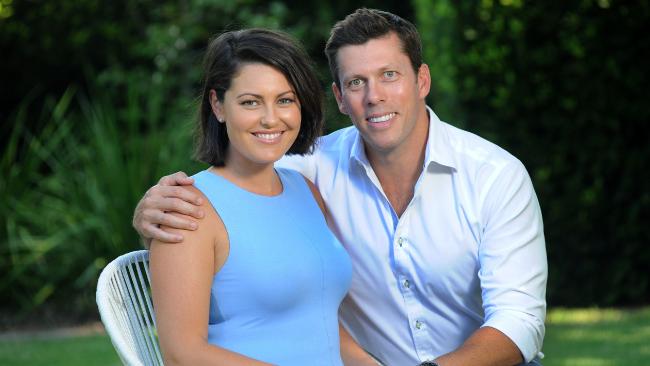
AFL administrator Andrew Fagan, and his partner Alana Smith, welcomed their daughter GiselleGigi” on August 12 [pictured]. Andrew is the CEO of the Adelaide Crows, and Alana is a former sports reporter for Fox News.

NRL footballer Jared Waerea-Hargreaves, and his partner Chelsea Cormack, welcomed their daughter Zahli Rae on August 12. Originally from New Zealand, Jared moved to Australia as a schoolboy, and began playing rugby league in 2009. He has been with the Sydney Roosters since 2010, and has also been selected for the New Zealand national squad, and for the NRL All Stars.

NRL footballer Tyrone Roberts, and his partner Brittany Doran, welcomed a daughter named Leilani Blue Tayla late last year. Tyrone is with the Newcastle Knights, and is signed with the Gold Coast Titans for next season. He was selected for the Indigenous All Stars this year.

Former A-League footballer Clayton Zane, and his wife Cassie, welcomed their son Harry last year, a brother for Abbey. Zane’s playing career was from 1995 to 2005, and he played for clubs in Australia, Norway, and Belgium. He played for the Australian team, including at the 2000 Olympics in Sydney. He was coach at the Newcastle Jets until recently, and still coaches their youth team.

Naming a Baby of Two Continents

Tags

, , , , ,

download

Sara and Jonathan are expecting their second child in a couple of months, and would like some name help. Sara is Australian and her husband is American: they currently live in the United States, but plan to move to Australia within the next few years. They think it likely their children will spend time in both countries as they grow up.

What they would like in a baby name:

*Not highly popular in either Australia or the US (eg no Lachlan or Aubrey)
* Sounds basically the same in either an American or Australian accent – Sara routinely has her name pronounced like Sarah or Serah in the US, and when she tries to correct people, in the confusion of unfamiliar vowels, they sometimes hear it as Zara, or even something completely different, like Claire
* the pronunciation is fairly obvious from seeing the name in writing
* the spelling is reasonably easy to guess from hearing the name said aloud

Sara and Jonathan already have a son named Felix, and frequently receive comments on what a great name he has, so feel some pressure to come up with something equally as good for their second child. Sara really likes that Felix can be translated as “happy”, and thinks it would be great if Felix’s brother or sister had a name with a positive meaning too.

So far they have these names on their lists:

Girls
Eleanor
Louise
Cora
Ivy
Talia

Boys
Leopold nn Leo
Edison
Bodhi
Sage

However, none of these names are really grabbing them at the moment. They have a number of family names they could use in the middle, and will go with one that matches the first name they eventually use.

Sara and Jonathan have a cute one-syllable surname starting with R eg Rudge. They would prefer a name that didn’t start with R.

They would love to hear of any suggestions that sound good with Felix, are suitable in both North America and Australia, and fit all their other criteria.

~ ~ ~ ~ ~ ~ ~ ~ ~ ~

It’s nearly always harder to choose the second child’s name, as there are so many factors to consider. When you chose Felix‘s name, you were naming a baby, but when you choose your next child’s name, you will effectively be naming a family. The name that you choose will put Felix’s name in context, so deserves careful thought.

One thing that occurs me to wonder is whether you want a sibset which sounds more Australian than American, more American than Australian, evenly American-Australian, a comfortable mix and match of the two, or neither American nor Australian.

The reason I ask is because Felix is much more popular in Australia than in the US. So if you went with another name which was more popular in Australia in the US, you would end up with a very Australian-sounding sibset.

For example, Ivy is another name that is much more popular here than in the US, so to me Felix and Ivy sounds like an Australian family. But Cora is much more popular in the US, so that sounds more of a mix-and-match: Felix ahead of the trends in the US, Cora ahead of the trends in Australia. Meanwhile, Eleanor has a similar popularity in both countries, so Felix and Eleanor sounds evenly American-Australian – it would be hard to pick which country they were from from their names.

None of these choices are right or wrong: it all comes down to what suits your family best. It might be quite good to have names like Felix and Ivy, where Australia is slightly ahead of the trends in the US, as they will sound quite fresh in America. However, if you come back to live in Australia, Felix and Ivy will fit in easily. That may not be a bad thing: having lived overseas, it might be nice for them to have names which are already popular here, giving them an immediate normality.

A different scenario would arise with a name like Leopold. Felix and Leopold doesn’t sound either Australian or American – the names sound quite European together. I think this is a rather attractive idea, as the names would sound fresh in both countries, and wouldn’t strongly mark them as being of either nationality.

The other issue to think about is that you have received rave reviews for the name Felix, and naturally want your second child’s name to be widely admired too. You don’t want your second child’s name to seem like the B side to Felix.

You might also find that people no longer judge Felix’s name on its own merits, but as part of a set. So people might think Felix and Ivy sounds hip, Felix and Eleanor sounds classy, and Felix and Leopold sounds distinguished. Be prepared to hear different things about Felix’s name when he’s a brother – but hopefully just as positive.

If you are really keen to have a repeat success with your second child’s name, I think the secret is to choose a name which is rapidly rising in popularity. These tend to be names which most people like (that’s why they’re rising), and I’ve noticed people often like having a name that’s rising in popularity too, due to them getting lots of love.

Felix is zipping up the charts in both the US and Australia, and it’s also a familiar name with a long history that hasn’t become overly popular yet. That makes it a “sweet spot” name which seems fresh without being too strange or challenging, and well-established without being stuffy or boring. Add a cool letter X which is right on trend, and no wonder you are getting compliments right and left.

I feel that I’ve probably given you a lot to think about, and possibly even more questions that you need answered!

You did ask for suggestions, so I will offer a few to give you some ideas.

BOYS

Jasper
I think Felix and Jasper are a perfect match as brothers. Like Felix, Jasper is rising steeply, and is another sweet spot name that has a bit of quirk to it. Means “master of the treasure house”.

August
Another fast-rising name. I think Felix and August sound quite European together. It has a positive meaning too: “venerable”. It’s also a month, which means that everyone can spell and pronounce it.

Maxwell
I couldn’t resist another X name. Rising Maxwell just hit the Top 100 in Australia and is only a little outside it in the US. The name ultimately comes from the Latin for “great” – very positive. Or would you prefer Maximus?

Theodore
Similar popularity to Maxwell in both countries, and has a very positive meaning – “gift of God” (it predates Christianity). The nickname Theo is very stylish; I love Felix and Theo.

Otto
A stylish, rising name that goes well with Felix, and means “riches, wealth”. There is a pronunciation difference in the US though, which makes me wonder if you’d prefer the rarer surname form Otis?

GIRLS

Thea
Short for Theodora or Dorothea, this is basically a feminine form of Theo. Rising very swiftly, this is a neat, stylish little name.

Hazel
This has just reached the Top 100 here, and is very close to it in the US. I just love how Felix and Hazel sound together. Hazel trees are symbolic of protection – quite similar to the original meaning of Felix.

Iris
Much less common than Ivy in Australia, but similar-sounding and very hip. Felix and Iris sounds adorable. Means “rainbow”.

Esme
This is big in the UK, but much less common in the UK or Australia, and would sound very British matched with Felix. Means “esteemed, loved”.

Eloise
Reminds me of Louise, and is a similar popularity to Felix when comparing countries. I think Felix and Eloise sound very elegant together. The name most likely means “healthy”.

Sara I hope that this has given you some ideas, or even led you to see your original name list in a new light. Do feel free to write in again before your due date, especially if you get a new name list or a front-runner. And we look forward to hearing all about your American-Australian baby!

NAME UPDATE: The baby was a boy, and his name is Sage!

Léa Love and Lola Lark

Tags

, ,


Magpie-Lark_male_kobble_aug06

Twins
Flynn and Lennix (Harley)
Luca and Alexander

Girls
Amalia Lily Louise (Tyler, Harlen)
Anna Sally
Audrey Jean (Edith Louise)
Brea Mary (Tahlie)
Calli Jae (Stella)
Cleo Kay (Chelsea, Lara, Annabel)
Dahlia Grace
Demi Ashlan (Ella, Chloe)
Elsie Andie (Livinia)
Haddasha Melanie (Moshe, Shekinah)
Heidi Lou (Marni)
Léa Love
Liesel Margot Amlie (Laetitia)
Lola Lark (Nixon)
Mae Everley
Malakia Alexander
Margaret Scout
Marli Reece (Gypsy)
Phoebe Jo (Billy)
Posy Jade
Roisin Matilda
Sadie Lorna (Mason, Layla)
Sapphire Maree (Zander)
Savannah Winter (Lachlan)
Shelbie Jane (Scarlett)
Tabitha Rose (Levi, Mahalia, Scarlett)
Tara Ebony (Michaela)
Tia Elizabeth (Alina)
Veronica “Ronni”
Winnie May

Boys
Adrijan Borc
Alby Michael (Nina)
Aled Craig
Austin Dafydd
Casper Beau (Oscar)
Cooper Lez
Dominic Cruz
Dustin McAndrew
Edan Francis (Cooper)
Isaiah (Amirah-Megan)
Judd Thomas (Sully, Flynn)
Kingsley Damien (Alicia, Holly)
Korbin Lars (Reegan, Ashton)
Leon Daniel
Loch Alexander (Willa)
Louis Clarence (Felix)
Max John Flower (Sam, Charlotte)
Morris Deny
Nash Travis (Bohdi)
Nico Andreas
Oscar Charles Alfred (Hamish, Phoebe, Louisa)
Oxley Arran Garry
Patrick Joseph (Francesca, James)
Rory Aidan (Molly)
Stirling Louis (Brandon, Dominic, Parker)
Tennyson James
Veer Denzel
Xavier Lionel

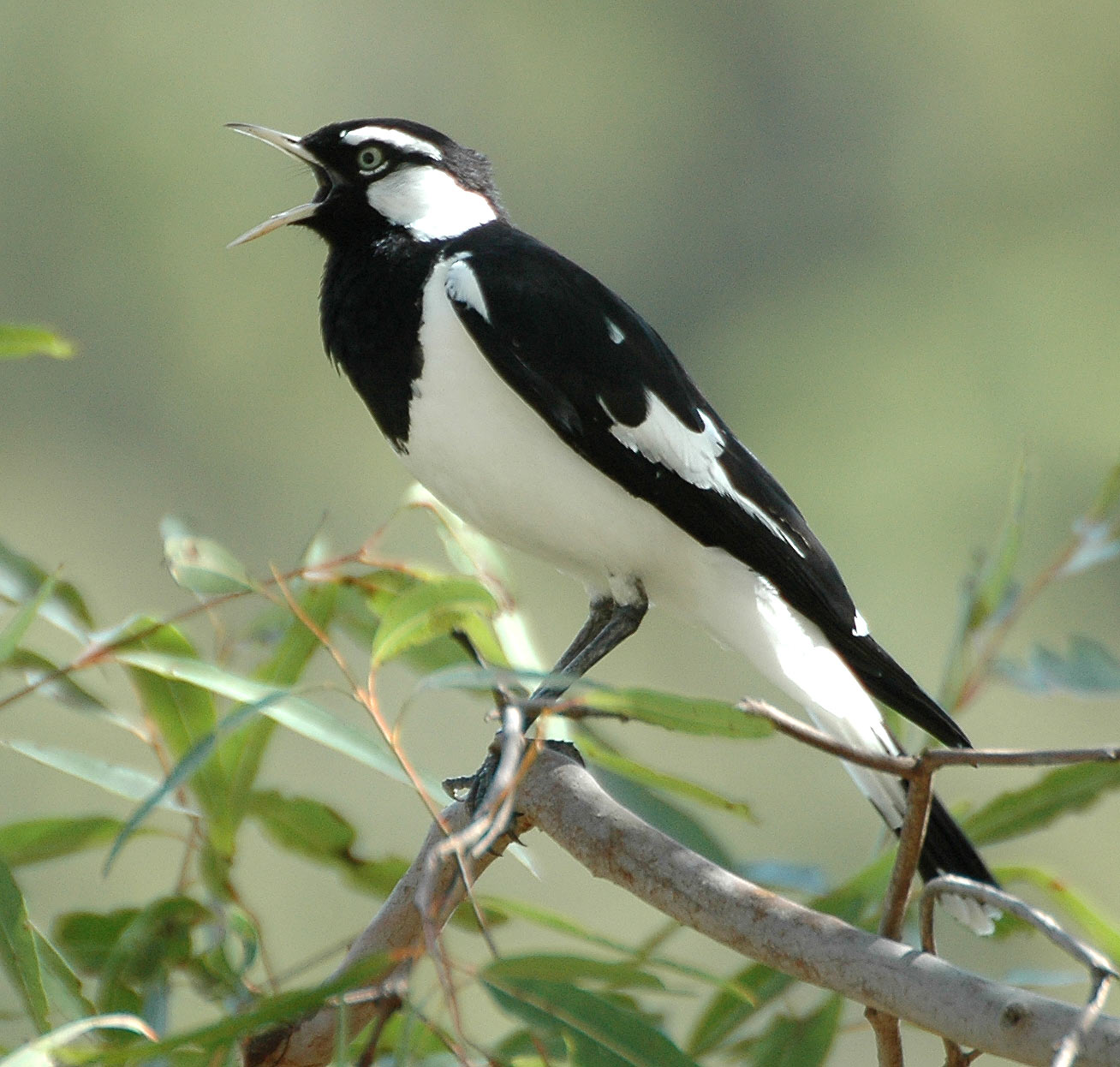
(Picture is of a magpie lark in Kobble Creek, near Brisbane; photo by Aviceda)

Famous Name: Howard

Tags

, , , , , , , , , , , , , , , , , ,

62-tvrrevbbc

Famous Namesakes
On September 24 it will be the 117th birthday of Howard Florey, the Australian scientist who was part of the team which developed penicillin for medical use. Although it was Sir Alexander Fleming who discovered the antibiotic properties of penicillin in 1928, it was Howard Florey and his research team who actually made penicillin into an effective medication.

While Professor of Pathology at Oxford, Howard and his team treated their first patient with penicillin in 1941. A police constable named Albert Alexander had been accidentally scratched with a rose thorn in his mouth, and was now suffering from severe infection, to such an extent that one of his eyes had to be removed. Within a day of receiving penicillin Albert began to recover, but due to the difficulties of making enough penicillin to continue treating him, he relapsed and died.

Let’s just take a moment to think about that. When did you ever hear of someone you knew who died from a scratch from a rose thorn? That was what the world was like before antibiotics – simple things like cuts, abrasions, and burns could kill you in prolonged, painful, and particularly nasty ways. If you somehow survived, you might be left chronically ill, crippled, or missing an eye or a limb.

It was too late to save Albert Alexander, but he hadn’t died in vain. Howard interested pharmaceutical companies in the United States in mass-producing quantities of penicillin, and the first patient was successfully treated for septicemia in 1942. By the end of World War II, penicillin had made a significant difference in saving the lives of wounded Allied forces, and Australia was the first country to make penicillin available for civilian use after the war.

In 1944 Howard was made a Knight Bachelor, and in 1945 shared the Nobel Prize for Physiology and Medicine with his fellow researcher Sir Ernst Chain, and with Sir Alexander Fleming. That same year he received the Lister Medal for contributions to surgical science, and in 1948 the US awarded him the Medal of Merit. Elected to the Royal Society in 1941, he became its president in 1958. In 1962 he became provost of Queen’s College at Oxford, and the college’s residential Florey Building was named in his honour.

In 1965 he was appointed a life peer, and became Baron Florey, as well as being appointed a Member of the Order of Merit. From that year until his death three years later, he was Chancellor of the Australian National University, and after he died he was given a memorial service at Westminster Abbey. The one thing that his discoveries didn’t bring him was money – he never patented penicillin, being advised that it would be unethical.

The discoveries of Howard Florey, along with Alexander Fleming and Ernst Chain, are estimated to have saved more than 82 million lives. Long-serving Australian Prime Minister Sir Robert Menzies said: In terms of world well-being, Florey was the most important man ever born in Australia.

I have particular reason to be grateful to Howard Florey, as one of that club with 82 million members. When I was a child, I contracted a serious lung infection, and only just pulled through, even with the assistance of modern antibiotics. Without them, I would have been toast. So if you enjoy reading this blog, give thanks to Howard Florey! It couldn’t exist without him.

Name Information
The English surname Howard could be derived from Huard or Heward: related to the name Hugh, it combines the Germanic elements hug, meaning “mind, heart, spirit” and hard, meaning “brave, tough”. It could thus be translated as “brave heart”. Another possibility is that it is from Haward, an English form of the Old Norse Hávarðr, meaning “high guardian, chief guardian”. The surname Howard is first found in Norfolk.

The Howards are an aristocratic family which have been in the English Peerage since the 15th century, and remain the Premier Dukes of the Realm. The Howard family holds the Dukedom of Norfolk, as well as numerous earldoms and baronies. They hold the title of Earl Marshal, the highest hereditary position in the United Kingdom outside the Royal Family, responsible for organising coronations, state funerals, and the State Opening of Parliament.

The family’s founder was John Howard, 1st Duke of Norfolk: on his father’s side he was descended from King John, and on his mother’s from King Edward I. John Howard was the great-grandfather of two English queens: Anne Boleyn and Catherine Howard, both married to King Henry VIII. Queen Elizabeth I was the first English monarch to be descended from John Howard, and Queen Elizabeth II the first British monarch to be one of his descendants.

After the English Reformation, many of the Howards remained in the Catholic faith, and they are still the highest profile Catholic family in England. Philip Howard, 20th Earl of Arundel, has been canonised as a saint and martyr: he was imprisoned for ten years by his second cousin Queen Elizabeth I, and died in the Tower of London. Philip’s grandson William Howard, 1st Viscount Stafford, was falsely implicated in a fictitious conspiracy to assassinate King Charles II, and executed: he has been beatified as a Catholic martyr.

The Howards dubiously claim descent from Hereward the Wake, a semi-legendary hero who led a resistance against the Normans after the Conquest. Hereward is an Old English name meaning “guardian of the army”. A possibly dodgy old pedigree says the Howards are descended from the Howarth family of Yorkshire – this surname means either “homestead on the hill” or “homestead with hawthorn hedges”. Howard has been used as a boy’s name since at least the 16th century, most likely due to the aristocratic family.

Famous namesakes include Howard Carter, the British archaeologist who discovered Tutankhamen’s tomb; classic film director Howard Hawks; and eccentric tycoon Howard Hughes. Fictional Howards tends to be dads (such as Howard Cunningham on Happy Days, Howard “Ward” Cleaver from Leave it to Beaver, and Howard Stark, the father of Iron Man superhero Tony Stark), or offbeat (like Howard the Duck, Howard Wolowitz from The Big Bang Theory, and Howard Moon from The Mighty Boosh).

In Australia, Howard was #122 in the 1900s, and peaked in the 1940s at #101; it hasn’t charted since the 1980s. In the UK, Howard was in the Top 100 from the late 19th century until the 1920s, but never got very high; in 2013 there were 16 babies named Howard born in England/Wales. The name has been much more popular in the United States: it was in the Top 100 from the late 19th century to 1958, peaked during World War I at #25, and has only been off the Top 1000 once, in 2013; it returned last year and is currently #986.

Howard is a dated name, although it has never been popular and might more properly be described as vintage. It sounds sturdy and dependable, has a good meaning, and can be shortened to either Howie or Ward. An issue in Australia is that it’s strongly associated with former conservative Prime Minister John Howard, whose term was from 1996 to 2007, often called the Howard Years or Howard Era; it may not be pure coincidence that the name disappeared from the charts in the 1980s when John Howard was Federal Treasurer.

POLL RESULTS
Howard received an approval rating of 51%. 18% of people thought the name Howard was too dated, while 16% were put off the name by former prime minister John Howard. However, 14% saw it as old-fashioned yet charming.

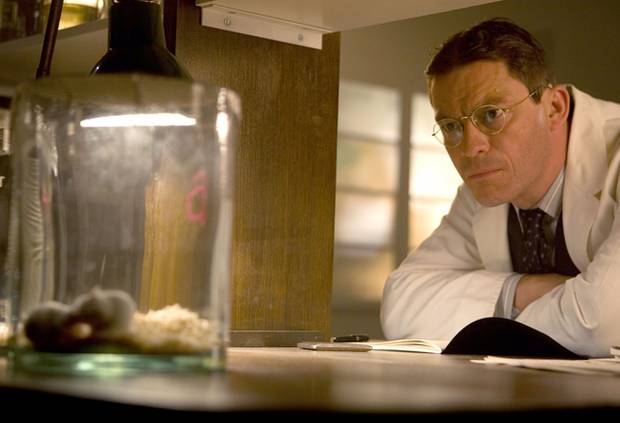
(Picture shows a scene from the 2009 film Breaking the Mould, with Dominic West as Howard Florey)

Celebrity Baby News: Sporting Babies

Tags

, , , , , ,

kobe_aberton_landscape32_1au7mrj-1au7ms6

Former cricketer Glenn McGrath, and his wife Sara, welcomed their daughter Madison Mary Harper on September 4. One of Australia’s greatest cricketers, Glenn was regarded as one of the best fast bowlers in the world, and holds the record for the most wickets in a Cricket World Cup. He was inducted into the ICC Hall of Fame in 2013. Currently he is the director of the MRF Pace Foundation in Chennai, India, and is the President of the McGrath Foundation, a breast cancer support charity he founded with his deceased first wife, Jane McGrath. Glenn has two children named James and Holly from his first marriage. Sara is an interior designer.

Former swimmer Libby Trickett (nee Lenton), and her husband Luke, welcomed their daughter Poppy Frances on August 31. Libby has won gold at the 2004, 2008 (twice), and 2012 Olympics, silver in 2008, and bronze in 2004 and 2008. At the 2006 Commonwealth Games, she won 5 gold medals and 2 silver. She remains the world record holder for the 100 metre freestyle. Luke is also a former swimmer.

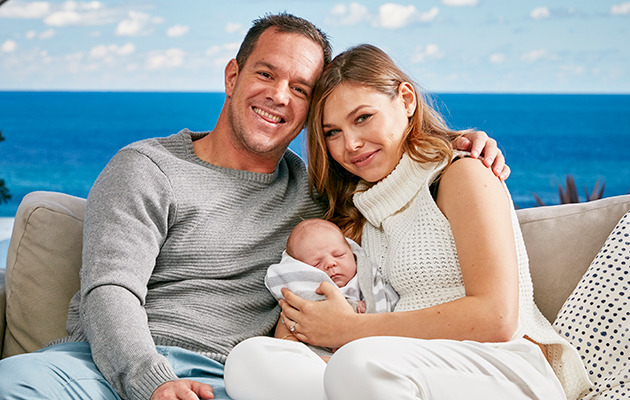
Former professional surfer Koby Abberton, and his fiancee, Olya Nechiporenko, welcomed their son Makua Sunny on July 22 [pictured]. Koby took up surfing as a way to escape a difficult home environment, and he and he and his brothers Jai, Sunny, and Dakota are all members of the Bra Boys Surf Gang from Maroubra, the inspiration for the fictional Braxton brothers and the River Gang in Home and Away. Olya is a Ukrainian-born model. Makua is a Hawaiian name meaning “parent, elder, ancestor”, while the middle name is after the baby’s uncle. Other ideas that Koby had for his son’s name were Wolfgang, Classic, Legend, Kaos, Ai, Storm, and Chrome – Wolfgang was vetoed, and Olya suggested Kainoa.

Celebrity Baby News: Celebrity Round Up

Tags

,

emily_symons_landscape_1aui9k2-1aui9kn

Actress Emily Symons, and her partner Paul Jackson, welcomed their son Henry Richard Francis on August 3 [pictured]. Henry was conceived with the help of IVF, and was brought home from hospital on Emily’s birthday, August 10. Emily has been a favourite on soap opera Home and Away for many years, first playing the role of Marilyn Chambers in 1989. She was on British soap Emmerdale during the 2000s, but is now permanently back in Australia, and back in Summer Bay as sweet bubbly Marilyn. Paul is the program director for DMG radio Australia, and has three children from a previous relationship.

Bookmaker Tom Waterhouse, and his wife Hoda, welcomed their son William on August 28, a little brother for their daughter Rose, aged 2 (Rose’s birth was featured on the blog).

Reality TV contestant Amber Nichols, and her husband Pete, welcomed their daughter Olive Eva in early September, a little sister for their son Charlie, aged 1. Amber was a contestant on The Voice, and continued singing even while heavily pregnant. She was eliminated a few weeks ago.

Name Update: Sweet and Petite

Tags

, , ,

grace1

Kristel and David were expecting a baby girl – to their great surprise and delight, as they had been told they would not be able to have children. There was just one name they both agreed on, but Kristel wrote in to the blog because she was worried they might have chosen the wrong name. Not only was it very popular, but it was just one syllable long, and people told them it was too short with their one-syllable surname.

Kristel and Dave’s daughter arrived on July 14 weighing 2.8 kg and with wisps of blonde hair. They didn’t rush in to choosing a name, but got to know her for a few days first. It soon became apparent there could be only one name for her, the name they had always loved and wanted from the beginning, so she is called

GRACE AUDREY,

with Audrey a middle name shared with three generations.

They couldn’t be happier with their precious girl, and with her name, which suits her so well. Kristel would like to thank everyone for helping them, and nearly all who responded to their story encouraged them to choose the name they loved best.

Congratulations to Kristel and David!

Waltzing With … Lachlan

Tags

, , , , , , , , , , , , ,

2010-australia-post-booklet-governor-lachlan-macquarie-stamp-packs-and-booklets-a3440-1500x700

Famous Namesakes
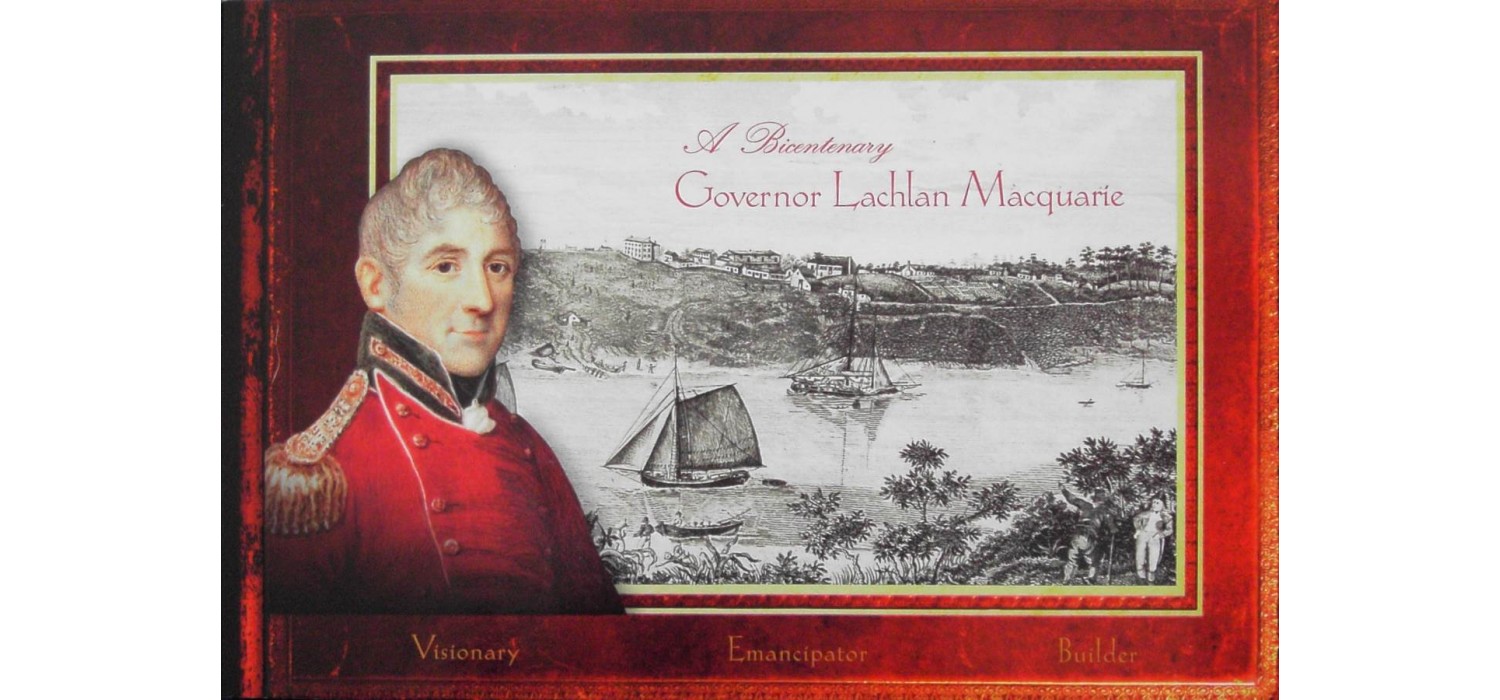
The name Lachlan has a long history in Australia because of Lachlan Macquarie, a British military officer born in the Hebrides who served as the fifth and last Governor of New South Wales. While still a teenager, he served during the American War of Independence, and saw active service in India and Egypt, eventually being promoted to the rank of Major-General.

Lachlan served his term as Governor from 1810-1821, and he had plenty to cope with, as the colony was disorderly following the Rum Rebellion against the former Governor, William Bligh. There was also a severe drought during his term, which brought about a financial depression, and the end of the Napoleonic Wars in 1815 led to a huge increase in Australia’s population from both settlers and convicts. Despite these challenges, Lachlan loved Sydney’s climate and setting, and saw the colony in very positive terms.

This was the period of Australia’s history where it was in transition from a penal colony to a free settlement. Lachlan held liberal views towards convicts, pardoning them as often as possible. He scandalised settlers by accepting freed convicts into society, and appointing them to government positions – even as magistrates. He sponsored massive exploration, and established Bathurst, the first inland city.

He spent lavishly on public works, which the British government strongly opposed, as they still saw Australia as a dumping ground for convicts, to be run as cheaply as possible. Sydney’s layout is based on Lachlan’s street plan for the central city, and the colony’s most prestigious buildings were on Macquarie Street. He designed the Georgian-style Rum Hospital, which today is the state’s Parliament House, while its stables house the Sydney Conservatorium of Music. He also designed the city centre of Hobart in Tasmania.

So much of the modern Australia we know was first begun by Governor Macquarie. He established the British system of justice, and the first Supreme Court. He encouraged the creation of the colony’s first bank, The Bank of New South Wales (now Westpac), and produced Australia’s first official currency. Towards the end of his term, he decreed that all traffic should keep to the left in New South Wales in line with British custom.

Perhaps the most important change he made was a symbolic one – he recommended that the name Australia be formally adopted, giving the seal of approval to Matthew Flinders’ choice. Little wonder that on Lachlan Macquarie’s tomb on the Island of Mull in Scotland he is called The Father of Australia.

Happy Father’s Day! And Happy Father’s Day to Lachlan Macquarie, the father of our country.

Name Information
Lachlan is a Scottish name from the Highlands. It is from the Gaelic Lochlann, meaning “land of the lochs” (land of the lakes). It was originally given as a nickname for someone from Norway: Norway has almost half a million freshwater lakes, so it well deserves this epithet. The name is pronounced LOK-lun.

The word Lochlann was first used to indicate “a Viking, a raider”, but gradually came to mean anyone of Norse descent. There was a strong link between the neighbouring lands of Norway and Scotland during the Middle Ages, as both battled for control of the Western Isles of Scotland. As part of the effort to improve the Scotland-Norway relationship, there were diplomatic missions between the two nations, and even intermarriage between the royal houses.

The name Lachlan (or Lochlann) was commonly used amongst the noble families of Scotland, who were often of part Norse descent. The name was traditional in the Clan Maclean, an old Highland clan who owned land in Argyllshire and the Hebrides. (Lachlan Macquarie’s mother was the daughter of the chieftain of the Clan Maclaine, another spelling of Mclean, and his father was the chieftain’s cousin). The current chief of Clan Maclean is Sir Lachlan Maclean of Duart and Morven, 12th Baronet of Nova Scotia.

The name Lachlan is only popular in Australia and New Zealand (it is #27 in New Zealand). In the UK Lachlan was #546 in 2013, while Lochlan was #709; the name is fairly stable there. In the US, the name Lachlan first joined the Top 1000 in 2013, and is currently #902 – a long way off being popular, but gaining in popularity. In the US, the name was given to 14 girls last year, which seems very wrong from an Australian viewpoint!

The name Lachlan was #173 in the 1900s, and went off the charts altogether during the 1920s and ’30s. It returned in the 1940s at #220, and gradually increased in popularity. There was a surge in popularity during the 1970s, most likely because media magnate Rupert Murdoch named his eldest son Lachlan in 1971. Rupert’s grandfather was from Scotland, and the choice of Lachlan’s name may have been inspired by his Scottish heritage as much as a tribute to Lachlan Macquarie.

Lachlan first joined the Top 100 in 1982 at #96, joined the Top 50 in 1989, and the Top 25 in 1996 – fairly brisk progress up the charts. It suddenly leapt into the Top 5 in 1997, the year after Lachlan Murdoch joined the board of Newscorp. However, it never made #1, peaking at #2 in 2002 and 2005, and has now left the Top 10. Currently it #11 nationally, #15 in New South Wales, #10 in Victoria, #12 in Queensland, #7 in South Australia, #12 in Western Australia, #6 in Tasmania, #8 in the Northern Territory, and #4 in the Australian Capital Territory.

This is a strong handsome Australian classic with a connection to Australian colonial history. A popular name for many years, it is by no means fresh or original, but still a worthy choice.

POLL RESULT
Lachlan received an outstanding approval rating of 91%, making it one of the highest-rated names of 2015. 39% of people loved the name Lachlan, and only one person hated it.

(Picture shows a 2010 stamp booklet issued in honour of Lachlan Macquarie’s bicentenary as governor)