Celebrity Baby News: Ryan and Brooke Hinchcliffe

Tags

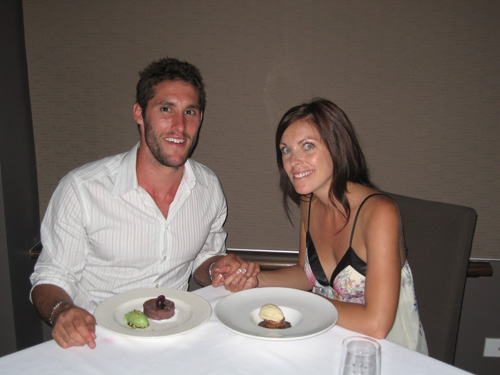
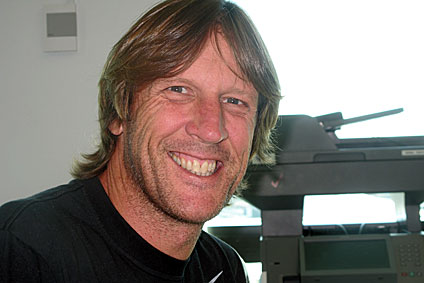
NRL footballer Ryan Hinchcliffe, and his wife Brooke, welcomed their first child earlier this month, and have named their daughter Ivy. Ivy Hinchcliffe is cousin to Ava McCrone, daughter of Josh McCrone; Ava and Ivy were born around the same time.

Ryan started out playing for the Canberra Raiders in 2007, and since 2009 has been with the Melbourne Storm. In 2010 he was named the team’s Player of the Year. He has also played for Country Origin both this season and last season.

Brooke (nee O’Connor) and Ryan are childhood sweethearts who have been together since primary school – Brooke has it written down in her diary since Year Three. The couple were married in January this year.

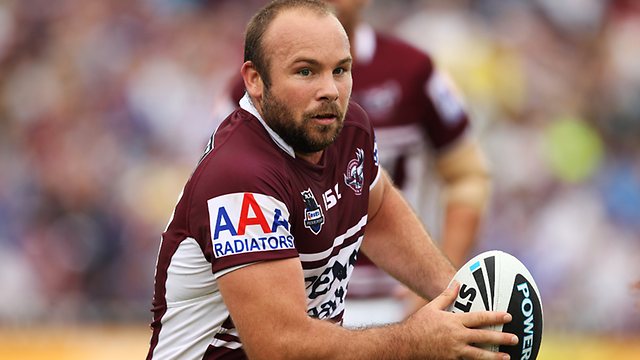
(Photo of Ryan from the Brisbane Courier)

Names of Australian Female Olympic Swimmers

Tags

, , , , , , , , , , , , , , , , , , , , , , , , , , , , , , , , ,

During the winter, I compiled lists of names from Olympic medalists, and perhaps you noticed that no swimmers were included. That’s because swimmers are such a big part of our team, and historically the big medal winners, so that they really needed lists all to themselves. Now that it’s hot again, maybe they will inspire you to hit the pool!

Alva (Colquohuon)

Alva Colquhuon won silver at the 1960 Olympics. Alva is the feminine form of the Scandinavian name Alf, from the Old Norse for “elf”. Alva is also a male name, a variant of the Hebrew name Alvah, meaning “his highness”. As a male name, it is best known as the middle name of American inventor Thomas Alva Edison. Today it almost seems like a cross between Ava and Alba.

Brittany (Elmslie)

Brittany Elmslie is a young swimmer who attended her first Olympics this year, where she won a gold and two silvers. Brittany is the name of a region in north-west France, which in French is known as Bretagne. It was once known as Little Britain in order to distinguish it from Great Britain, hence its name. The Breton language is Celtic, related to Welsh and Cornish, and the history of the land and its people is intimately connected to Great Britain. Even today, Brittany retains its own identity and culture within France. Brittany has been used as an English girl’s name since the late 18th century – perhaps originally because Brittany was known for its resistance to the French Revolution. The name first entered the charts in the 1970s, making #245 by the 1980s. It peaked in the 1990s at #31, then sharply dropped, leaving the Top 100 in the early 2000s. It hasn’t charted at all since 2009 (the year actress Brittany Murphy died), and this is a good example of a name which reaches popularity very quickly, then becomes just as rapidly dated.

Dawn (Fraser)

Dawn Fraser is one of our most famous swimmers, who has received many honours; she is considered the greatest sprint swimmer of all time. She won two golds and a silver at the 1956 Olympics, a gold and two silvers in 1960, and a gold and a silver at the 1964 Games, setting two world records and two Olympic records. She is well known for her blunt speech and larrikin character, and one of the ferries on Sydney Harbour is named after her. Dawn is the period just before sunrise, where there is pale sunlight, but the sun itself is still below the horizon. The word comes from the Old English for “to become day”. The name is found from the 16th century onwards, and must at least sometimes have been given to girls born at daybreak. Dawn first entered the Australian charts in the 1910s, reaching #103 for the 1920s. It peaked in the 1930s at #32, and left the Top 100 in the 1950s. It hasn’t ranked since the 1980s, and the 1970s song Delta Dawn, about a crazy middle-aged woman, probably didn’t do its image any good – although covering it gave Australian singer Helen Reddy her first #1 hit. I wonder whether it might be time for a revival of this 1930s name? Apart from the fragile beauty of dawn, the word is filled with hope and optimism, and a sense of renewal.

Emily (Seebohm)

Emily Seebohm has been a champion swimmer since 14 and is now 20. She won gold at the 2008 Olympics, and a gold and two silvers at the London Games. Emily is the English form of the Roman name Aemilia, the female form of the family name Aemilius. The Aemilii were one of the noblest and most ancient patrician houses of Rome, and were probably of Sabine origin. They interpreted their name as meaning “persuasive”, and others derived it from Latin aemulus, meaning “rival”, but most likely these are both false etymologies. The English form is first found in Chaucer’s Canterbury Tales; he adapted it from a character named Emilia in a poem by Giovanni Boccaccio, where two men are rivals for the affections of the same woman. Although in use from early on, it didn’t become popular until the Hanoverians came to the throne in the 18th century, as Princess Amelia, daughter of George II, was called Emily by her family. Emily was #36 for the 1900s, but fell until it had left the Top 100 by the 1930s. It reached its lowest point in the 1950s at #455, then climbed steeply; it skyrocketed to make #26 for the 1980s. Emily peaked at #1 in 1998, and remained there for most of the early 2000s. Currently this pretty classic is #12.

Hayley (Lewis)

Hayley Lewis was at her peak during the 1990s, when she won many medals internationally, but although she attended three Olympics, only won silver and bronze at the 1992 Games. Hayley is now the host of Channel Ten’s weight-loss show, The Biggest Loser. Hayley is an English surname from a common English place name meaning “hay clearing” in Old English; the surname dates from the 13th century and is especially associated with Yorkshire. It’s been used as a personal name for both boys and girls since the early 18th century, but only became popular in the 20th century, and only as a girl’s name. This was because of English actress Hayley Mills, who was the most popular child star of the 1960s, and made several Disney films as a teenager. Hayley first entered in the charts in the 1960s, when Mills began her career, debuting at #489. It climbed steeply during the 1970s, and was Top 100 by the 1980s. Hayley peaked in 2005 at #21, and is currently #50. It dropped just one place in 2011, and looks set to maintain a graceful decline that could see it in the Top 100 for several more years.

Jacinta (van Lint)

Jacinta van Lint won silver at the 2000 Olympics. Jacinta is the feminine form of the name Jacinto, a Spanish/Portuguese name meaning “hyacinth”. The Spanish pronunciation is something like ha-SEEN-tah, but in English we say it juh-SIN-tah. It is best known as the name of Blessed Jacinta Marto, who was one of the three children of Fátima in Portugal, who reported witnessing visions of an angel and the Virgin Mary in 1916-17. Jacinta has been rather a favourite in Australasia, first entering the charts in the 1950s, and climbing until it peaked at #101 for the early 2000s. It fell to #197 in 2009, and since then has picked up slightly, to make #189 last year. The fact that it entered the charts in the 1950s makes me wonder if use of the name was originally inspired by the 1952 Hollywood movie, The Miracle of Our Lady of Fatima, which starred Sherry Jackson as Jacinta (the name had the English pronunciation in the film). It’s a pretty name which has had steady use without ever becoming highly popular in New South Wales – although more common in Victoria.

Lisbeth (Trickett)

Lisbeth “Libby” Trickett won gold and bronze at the 2004 Olympics, two golds, a silver and a bronze in 2008 while setting a world record, and gold at the London Games this year. Lisbeth is a variant spelling of Lisbet, a Scandinavian short form of Elisabeth. The name has recently become well-known due to Lisbeth Salander, the antiheroine of Swedish author Stieg Larsson’s crime thriller Millennium series. The first novel, The Girl with the Dragon Tattoo, was turned into a Hollywood movie last year, with Rooney Mara as Lisbeth. Lisbeth Salander is a disturbed computer hacker with a punk-Goth style, and a victim who refuses to lie down, but instead turns vigilante. It’s definitely given sweet Lisbeth a far more dangerous and edgy image.

Marilyn (Wilson)

Marilyn Wilson won silver at the 1960 Olympics. Marilyn is a portmanteau name combining Mary and Lynn. It can be found from the late 18th century, and seems to have sprung up in several countries almost simultaneously, so that an origin for the name isn’t obvious. Its most famous namesake is Hollywood sex symbol Marilyn Monroe, and thanks to Elton John’s Candle in the Wind, nearly everyone knows her birth name was Norma Jeane. The name Marilyn was chosen for her by a studio executive because she reminded him of Broadway beauty Marilyn Miller (oddly enough, Marilyn later married writer Arthur Miller). Marilyn Miller was born Mary, and combined her name with her mother’s middle name to create her stage name. Marilyn first entered the charts in the 1920s, when Marilyn Miller began her career, and by the 1930s was #146. It skyrocketed to make the Top 100 in the 1940s, and peaked in the 1950s, the era in which Monroe enjoyed her greatest success, at #44. It then plummeted into the 200s during the 1960s after Monroe’s death, and hasn’t ranked at all since the 1980s. This is a dated name, yet still possesses some of the lustre of its two glamorous namesakes.

Nadine (Neumann)

Nadine Neumann had to battle against the odds, first recovering from chronic fatigue syndrome as a teenager, then breaking her neck before she could attend the 1992 Olympics. She made it to the 1996 Games, but failed to win a medal. After retiring, Nadine became an educator and writer. Nadine is the French form of the Russian name Nadia, a short form of Nadezdha, meaning “hope”. The French pronunciation is na-DEEN, but in Australia we usually say it nay-DEEN. Its most famous namesake is South African novelist and political activist Nadine Gordimer, who won the Nobel Prize for Literature in 1991. In the 1960s, the name got its own popular song when Chuck Berry released Nadine, describing his object of desire as moving “like a wayward summer breeze”. Nadine first charted in the 1950s, the decade that Nadine Gordimer published her first novel; it debuted at #535. The name peaked in the 1970s at #145, and by 2009 no longer charted at all. However, Nadine recently made a minor comeback, reaching #573 last year. Irish singer Nadine Coyle, from pop group Girls Aloud, may have been a help; her first solo album was released at the end of 2010.

Sarah (Ryan)

Sarah Ryan won silver at the 1996 Olympics, silver in 2000 and gold in 2004. In the Bible, Sarah was the wife of the prophet Abraham, and a woman of surpassing beauty; she is honoured in Judaism, Christianity and Islam. She was barren until extreme old age, when God blessed her and Abraham with a son named Isaac. Her name was originally Sarai (said suh-RYE), but when she and Abraham made their covenant with God, her name was changed to Sarah. As both names have the same meaning (“woman of high rank, female ruler of the court”, translated as “princess”), it is unclear what the purpose of the change was. It’s possible the ah sound in Sarah suggested the name of Yahweh more closely, as if to demonstrate she was now a woman of the Lord, not of the world. In fact, Sarah is the only prophetess in the Bible who is spoken to directly by God. Although Sarah is a Hebrew name, its origins are Babylonian, and some scholars identify the Biblical Sarah with the goddess Ishtar. This vaguely fits with the Old Testament story, which says Abraham and his wife were originally pagans from Sumeria. Sarah was #43 in the 1900s, but had left the Top 100 by the 1920s, and reached its lowest point in the 1940s at #284. By the 1960s it was Top 100 again, and peaked in the 1980s at the #1 name. Currently it is #31, and remains a lovely classic.

(Picture is of Dawn Fraser at the 1956 Olympics in Melbourne; photo from Wikimedia Commons)

Celebrity Baby News: Darren and Alicia Glass

Tags

, ,

AFL star Darren Glass, captain of the West Coast Eagles, and his wife Alicia, welcomed their son Nixon John at the start of the month. Nixon Glass joins big sisters Mila and Zara, who have been previously mentioned on the blog.

I remember this sibset was quite a hit with blog readers, and wonder what you think about the addition of baby Nixon?

This is the second celebrity baby named Nixon this year, and it’s a name I have often seen in birth notices. Can anyone tell me why Nixon is suddenly the new Jaxon?

(Photo from Eating WA website)

Posy and Dempsey: Birth Announcements from Hobart (October)

Tags

, ,


Twins

Maggie Lee and Pippa May (Archie)


Girls

Amelia Vicki (Isabella)

Beatrice Ellen (Ailish, Lily, Fred)

Frankie Michelle (Xavier)

Jemima Rose (Gretel)

Joy Taria

Lila Grace (Riley, Logan)

Madeline Ada Rose

Maeve Adele

Posy Fay (Louis, Jemima)

Sofia Isabelle Nancy


Boys

Alby Neville

Archer Kevin Lucas

Bernard Michael

Bobby Robert Daniel

Charles Lawrence “Charlie” (Harry, Sabrina)

Dempsey Allanby

James Mason (Huntar)

Jobe Hudson (Georgia, Bryce, Thomas, Harvey)

Kruiz Daniel

Yianni (Harry, Antonia, Alexia, Georgio)

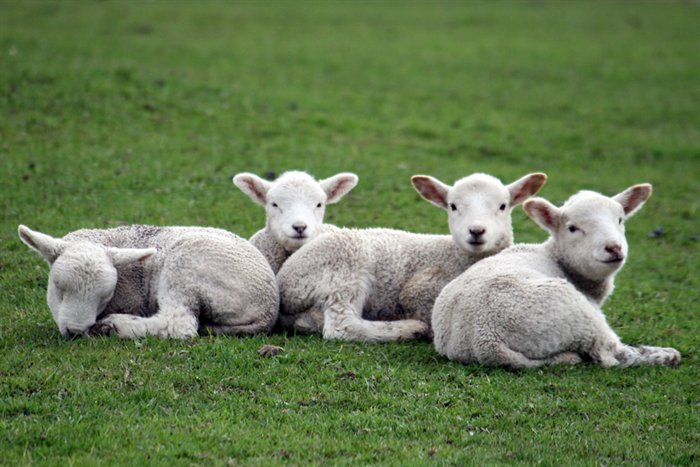
(Picture of spring lambs in Tasmania; photo from 936 ABC Hobart’s Facebook page)

Famous Name: Eclipse

Tags

, , , , , , , , , , , , ,

An eclipse is when an astronomical body is obscured, either by passing into the shadow of another body, or having another body pass between it and the viewpoint. The word comes from the ancient Greek ékleipsis, meaning “abandonment, downfall or darkening of a heavenly body”.

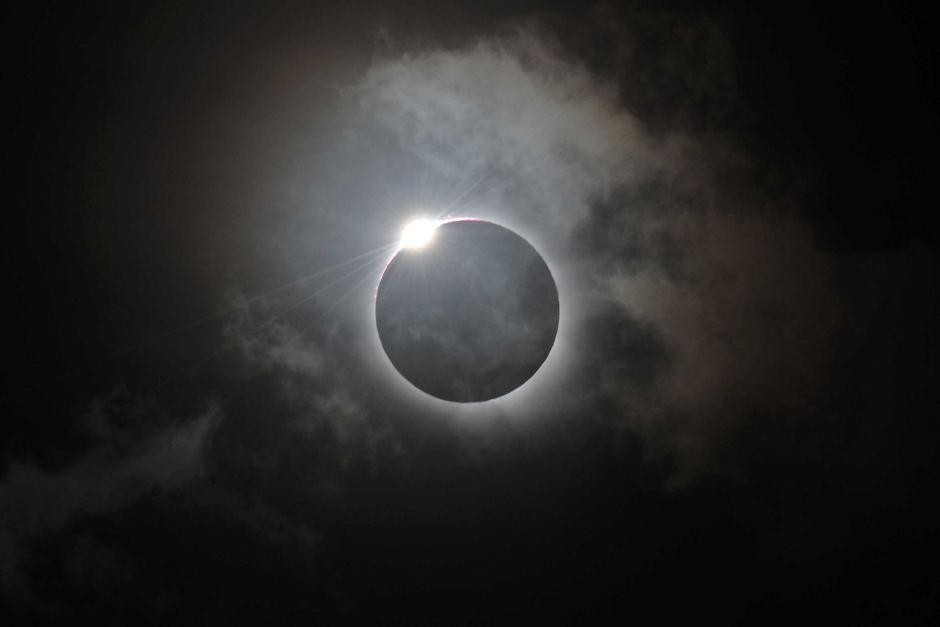
Although there are several different types of eclipse possible in the universe, the ones we can see from Earth are the solar and lunar eclipses. We tend to get more excited by solar eclipses, when the Moon appears to pass in front of the Sun, blotting out its light temporarily. The most impressive of all is a total eclipse of the Sun, when the Moon appears to perfectly cover the Sun, so that it disappears from view.

A total eclipse of the Sun can only be viewed along a very narrow band of the Earth’s surface, and on November 13, a total eclipse could be seen in far north-eastern Australia. Although many had gloomily predicted that cloud cover would ruin the eclipse-enjoying experience, just before dawn the clouds obligingly parted, and the Moon passed in front of the Sun. For two minutes it became darker and colder, the birds stopped singing, and tens of thousands of spectators from all over the world gaped in wonder, just as our ancestors did thousands of years ago.

Many indigenous groups, including in Arnhem Land, were watching the event, which has deep spiritual meaning for them. Most Aboriginal cultures believe the Sun is female and the Moon male. In their myths, the Sun is in love with the Moon, but he doesn’t return her feelings, so she chases him around the sky. Occasionally she manages to catch him, and in a jealous rage tries to kill him, but the Moon convinces the spirits which hold up the sky to save him, which they always do.

However, another version is that a solar eclipse marks those rare times when the Sun-woman is hidden by the Moon-man while he relents and makes loves to her, while a similar tale is that a spirit man covers the Earth with his hand to leave it in darkness, so that the Sun and Moon may have privacy together.

In Queensland, the celebrations for the eclipse included a Solar Eclipse Marathon in Port Douglas, and a week long Eclipse Festival at the remote Palmer River Roadhouse. More than 50 000 tourists arrived from Europe, North America and Asia, with some hotels booked out three years in advance. The eclipse was big news, and big business. And why shouldn’t they party? It was the first time in the past thousand years that this part of Australia had experienced a total solar eclipse.

Eclipse can be found as a unisex name in occasional use since the late 18th century. According to blogger Nancy Man at Nancy’s Names, the births of many of those given the name Eclipse can be correlated with either solar or lunar eclipses.

In Australian records, there are only a small number of people listed as having the name Eclipse, and it is exclusively used as a middle name. It is balanced between the sexes, with three women and two men having Eclipse as part of their name. My favourite combinations were Pearl Eclipse and Thomas Eclipse Vivian.

Only a year of birth is given, so it isn’t possible to correlate their dates of birth with eclipses, but it is reasonable to assume that it might have been the inspiration for at least some births. However, there was also a convict ship called Eclipse, although it doesn’t seem to match up with any of the places or dates of birth in the records in any obvious way.

Scientist Dr Natalie Dillon from Mareeba attended the eclipse viewing this year and said:

When it goes dark and the temperature drops, you get a sense of the fragility of life. I just feel in awe. It is like the Moon has wiped a cloth over the face of the Sun and we can start afresh.

An eclipse is a rare celestial event, and one which fills us with a mixture of awe and dread, as well as great joy and a sense of renewal when the light of the Sun is returned. It reminds us how much we need the Sun, and gives us a brief uneasy taste of what Earth would be like without it – chill, dim and silent.

The basis of the word eclipse is the Greek for “I leave behind”. To eclipse someone means to cast them into your shadow, to surpass others with your superior talents or skills – to leave them behind, so that they can never catch up.

As a name, Eclipse has power, a certain foreboding, and perhaps a touch of arrogance. It is little seen, and that gives it an even greater significance. Perhaps it’s not surprising it has been timidly tucked away in the middle.

Nicknames for Eclipse include Clip, Clipper and Clipsie, which give it a much friendlier and more approachable sound.

What do you think – a viable baby name, or a little too much?

Celebrity Baby News: Josh and Courtney McCrone

Tags

NRL footballer Josh McCrone, and his wife Courtney, welcomed their first child earlier this month, and have named their daughter Ava Lulu.

Josh has been with the Canberra Raiders since 2009, and this year was also a member of the Country Origin team.

Courtney (nee Hinchcliffe) is the sister of Ryan Hinchcliffe, who plays for the Melbourne Storm; the McCrones and the Hinchcliffes come from the same town, Temora. Courtney and Josh were married about a year ago.

(Photo from Zimbio)

Celebrity Baby News: Glenn and Jo Stewart

Tags

NRL star Glenn Stewart, and his wife Jo, welcomed their son Mack on November 15. Mack Stewart was born at 10.08 pm, weighing 3.5 kg (7lb 11oz).

Glenn has been playing for the Manly-Warringah Sea Eagles since 2003, and he has also played for the New South Wales state team, the New South Wales country team, and for the national squad. He was named the Dally M Second-Rower of the Year in 2008. Glenn is the older brother of his team-mate, Brett Stewart.

Joanne or “Jo” (nee Long) and Glenn were married at the start of this year.

Celebrity Baby News: David and Eleanor Armstrong

Tags

News presenter David Armstrong, and his wife Eleanor, welcomed their daughter Chloe Elizabeth on November 15.

David started his radio career on Danger: Low Brow, a comedy show on Melbourne community radio station Triple R in the late 1980s, where he went by the pseudonym The Audio Assassin. He currently reads the news on 3AW.

You can leave a message of congratulations for David and Eleanor on the 3AW blog.

MYTH: A “Weird” Baby Name Can Ruin Your Child’s Life

Tags

, , , , , , , , , , , , , , , , , , , , , , ,

This is an idea you cannot help running across if you frequent baby name forums, attend a few parent group meetings, or just read the papers – that the bestowing of a name considered strange or highly unusual upon a child is a cruel thing to do, and has the potential to impact on their life in negative ways.

A short-lived parenting blog at the Herald Sun which was written by Cheryl Critchley asked, Are Weird Names Child Abuse? It might seem a bit extreme to suggest that calling your son Raiyybanzi is the equivalent of hitting him around the head or locking him in his room for three weeks without food, but Cheryl goes to the child psychologists for further information.

According to child psychologist Dr Michael Carr-Gregg, yes, an unusual name is a form of child abuse, as it will lead to non-stop teasing in the schoolyard. Another psychologist, Dr Janet Hall, said a poor choice of name could lead to the child developing self-esteem problems. A name that others constantly question and mock is a “constant attack on your self-esteem”. It’s all sounding pretty dire for poor little Raiyybanzi.

A dim ray of light shone through when an education psychologist named Dr Helen McGrath suggested that while shy children probably won’t appreciate an unusual name, an extroverted one might enjoy the attention that it brings. She noted that unusual names do tend to change people’s perceptions, and even self-perception. However, there was no research which suggested any negative impact, and that factors such as social skills and family relationships were far more important.

The interesting thing is that Cheryl got her inspiration for the article from the names of AFL footballers she had seen in the newspapers – names such as Ayce, Jarryn, Jarrhan, Cheynee and Sharrod. These horrified her, and yet it would seem that Ayce and friends hadn’t had their lives ruined, but embarked on potentially lucrative and rewarding sporting careers. The photo of Ayce used for the article showed him looking cheerful and confident, with his self-esteem firmly intact.

This article was published a few years ago, but journalistic opinion doesn’t seem to have moved forward very much in the meantime. There’s a good reason for that – if you’ve been following the ‘Twas Ever Thus series at Elea’s blog, British Baby Names, you will see that when it comes to getting worked up over “weird” baby names, the media is pretty much churning out the same stuff they produced in the 19th century. Only the names have been changed, as the saying goes.

On Radio National a few months ago, on their popular Life Matters show, presenter Natasha Mitchell had a programme called You’ve Named Your Baby What?!. Generally light-hearted in tone, the show discussed unusual celebrity baby names (Natasha confessed she rather liked Sparrow), old-fashioned names like Mavis and Alfie, little boys just called H, and little girls named Rach’elle.

Guest Mia Freedman, who runs the successful parenting website Mamamia, while not actually accusing anyone of child abuse, opined that a strange name, especially one spelled strangely, could be a “burden” for a child. A burden in so much as they would be constantly questioned about their name – perhaps not damaging to their self-esteem, but a downright nuisance to them nonetheless.

In these sort of shows/articles, everyone is very careful to explain that when they say “unusual names”, they don’t mean names from other cultures, which to our ears may be difficult to pronounce, or sound like rude words, or appear to be on the “wrong” sex. No, these names are a wonderful sign of our diversity, and people should be proud to possess them as part of their culture, and it would be very wrong indeed to poke fun of them.

To my mind, this is the downfall of their argument, because it’s never explained why it’s not a “burden” to be named Caoilfhionn, even though that must surely involve at least as many requests to explain spelling and pronunciation as Rach’elle does. If it’s not such a terrible burden to be named Caoilfhionn, then I don’t see how Rach’elle is any heavier for a child to bear.

And if we as a society should be able to cope with Caoilfhionn, Purushottama, Oluwakanyinsola, Dudel and Phuc as names, then I don’t see why we cannot also cope with Mavis, Alfie, Sparrow, Ayce, Jarryn, Rach’elle and H. For that matter, how could anyone be confused by the spelling of the name H? Surely the strange-names-as-a-burden club should be heaping praise on H for its unburdensome simplicity? However, for some reason that never happens.

Oddly enough, Mia, who has an extremely simple and popular name, says that she needs to often correct people on the spelling and pronunciation of it. And yet, this burden doesn’t seem to have really been much bother, or held her back in life. From this I deduce that almost everyone has to explain their name at some point (“No, it’s John – J-O-H-N, not Jon – J-O-N”), and that it’s just one of those little things you have to deal with.

To befuddle the argument even further, Mia poked mild fun at “cutesy pet names” for children, singling out Jools Oliver for naming her children Poppy, Daisy, Petal and Buddy. Fun fact: Mia’s daughter is named Coco. I know: go figure.

Although these examples are not the most convincing you’ll come across, and don’t even manage to present a cogent argument, there are no lack of studies which purport to reveal the dreadful consequences of giving your child a strange name.

They tell us that your child will do worse at school, be less popular with their classmates, drop out of tertiary education, and have their resumes ignored by prospective employers (although, after doing so badly at school and flunking university, you’d think a boss would have pretty good grounds for ignoring their resume).

Furthermore, they were more likely to be diagnosed as psychotic and to end up in prison – the bitter conclusion to a life of failure and misery. After reading this terribly sad story, which seems like the stuff of nightmare and soap opera, how could a parent be so heartless as to inflict on their child any name other than one selected by the Chamber of Commerce, heads of all major universities, and a panel of psychiatrists?

However, other researchers crunched the numbers and came up with opposing results. It was noted that men with rare names were over-represented in Who’s Who, suggesting that a life of success was just as possible as one of failure for those with less common names. Other researchers noted that many children with uncommon names came from lower socio-economic backgrounds, and that once this was allowed for, there was no difference in academic outcomes that could be attributed to the person’s name.

One interesting finding by development psychologist Dr. Martin Ford is that everyone tends to attach a particular image or set of expectations to a name – up and until they confronted with a person with that name. People might say that they think of Berthas as being unattractive, but if shown the photo of a beautiful woman and told she is named Bertha, they rate the photo more or less the same as someone told the lovely woman is called Jacqueline or Christine.

In other words, Shakespeare was clearly on the money in regard to roses smelling just as sweet.

So here we have two competing theories: one is that unusual names are little more than child abuse, will damage self-esteem, prove an unnecessary burden, and be a severe handicap in regards to academic and social success. At worst, they may even send your child mad, or force them into a life of crime.

The other is that names, once attached to a real person, become almost meaningless – that what we are judged on is not our names, but our appearance, voice, grooming, hygiene, mannerisms, personality, social skills, motivations, abilities, intelligence, beliefs, income, education, job, family, friends, hobbies, home, influences, aspirations, and indeed the whole “package” that is ourselves.

I’m not sure I am completely convinced by either side – mostly because I am sceptical as to whether any of them have considered genuinely “weird” names. I feel as if they have looked at unpopular or uncommon names, or names judged to be undesirable by others, but that’s not really the same thing.

I mean come on, how sheltered must your life be to think that Ayce and Rach’elle are weird!

From what can I gather, Dr. Ford’s photo experiment was just using “outdated” names of the time like Hazel and Harriet – not only in no way weird, but by now very much back in fashion.

His original name study was done in 1984, on children who would have been born in the early 1970s. Very rare names of people born in 1972 include Atticus, Briar, Bristol, Coco, Darcey, Denzel, Emmeline, Fallon, Heaven, Jaxon, Jorja, Kourtney, Larkin, Lourdes, Marigold, Reeve, Rosamond, Sonnet, Star, Theodoric, and Wilder.

These names aren’t weird any more – some of them look pretty hip, and others seem unsurprising; a couple are even quite dull. In just forty years, a name can go from Woah, what the heck? to Meh. Maybe the rare names of today, such as Cameo and Twain, will seem equally familiar by the early 2050s.

That’s looking at US data of course, but in Australia we know that just twenty years ago Olive was a strange and awkward name to give a baby, and it is now Top 100 in Victoria, and getting there in New South Wales.

If name-weirdness is dependent on time, it is equally so on space. I know that when I look at some names on the American charts, or in American birth notices, they seem odd to me because names such as Legend, Princess, Race, Tinsley and Dutch are rarely or never used in Australia. Likewise, Americans look at Australian-used names like Lachlan, Jacinta, Hamish, Bronte and Zali, and think What the dealio?

A normal name can become weird just by crossing the Pacific; conversely, an American boy named Hamish who moves to Australia will blend in instantly. Fun fact: in the US, 8 baby boys were named Hamish last year.

What an individual person believes is weird seems to be almost entirely subjective. To Cheryl it’s Jarryn. To Natasha it’s Apple. To me it’s Race. To 1972 it’s Coco. To a commenter I saw on Mamamia it’s Felix (in the Top 100). To this journalist it’s Becket. To my mother it’s Madison. To you maybe it’s Hamish. Or Metallica. Or Banjo. Or Justus. Or Crew. Or Dudel.

I genuinely thought that this myth would be either BUSTED or CONFIRMED by the time I finished the blog entry, but not only has it not been answered, the very myth itself seems to be retreating over the horizon the closer we get to it, like heat shimmering on a bitumen road in January.

I am becoming less and less convinced that a weird name will ruin anyone’s life, and moreover, I am becoming less and less certain that weird names even exist, in any useful sense of the word “weird”.

Even Raiyybanzi isn’t that strange once you get used to it – it’s really just a juiced-up Raymond.

Celebrity Baby News: Stav and Kat Davidson

Tags

,

Comedy couple Stav and Kat Davidson welcomed their first child on November 16, and have named their daughter Lorelei, nicknamed Rori. Lorelei Davidson was born at 10.40 am, weighing 4.69 kg (10lb 5oz) and 58 cm long.

Stewart or “Stav” is originally from Scotland, moving here as a child, and taking out Australian citizenship last year. He started his comic career by entering the Raw Comedy Competition in 2000, and then becoming a stand-up regular, especially in Brisbane. He has appeared on The Comedy Channel’s Hahn Ice Headliners, and is heard nationally on Austereo as a member of the B105 Breakfast Crew.

Katrina or “Kat” (nee Shiels) started out in Theatresports in 1993, and has been doing stand-up since 1997. She is a regular on ABC radio, tours internationally, and is also in demand as an MC. Kat also writes her own blog on her website, where she has shared some of her thoughts on pregnancy. The Davidsons have been married for seven years.