• About
  • Best Baby Names
  • Celebrity Baby Names
  • Celebrity Baby Names – Current
  • Celebrity Baby Names – Past
  • Featured Boys Names
  • Featured Girls Names
  • Featured Unisex Names
  • Links to Name Data
  • Waltzing on the Web

Waltzing More Than Matilda

~ Names with an Australian Bias of Democratic Temper

Waltzing More Than Matilda

Category Archives: Name Themes and Lists

Boys Names from the British Royal Family

17 Sunday May 2015

Posted by A.O. in Name Themes and Lists

≈ 4 Comments

Tags

animal names, Basque names, bird names, Castilian names, Disney names, ethnonyms, famous namesakes, fictional namesakes, German names, germanic names, honouring, Italian names, Latin names, Maori names, middle names, mythological names, name history, name meaning, name popularity, name trends, Native American names, New Zealand names, nicknames, popular names, retro names, royal names, saints names, Spanish names, surname names, UK name trends, unisex names, vintage names
850145ee0e54efe11041a453f7acdfec

Christian
Christian Mowatt is the younger brother of Zenouska Mowatt, grandson of Princess Alexandra, and great-great-grandson of King George V; born in 1993, he is 51st in line to the throne. Christian is one of the most common names in the British royal family, especially in the middle. Prince Christian of Schleswig-Holstein, a member of the Danish royal family, was the husband of Princess Helena, the daughter of Queen Victoria. Their son was also called Prince Christian, and he was Queen Victoria’s favourite grandson, a British army officer who fell in the Boer War. Christian is from the Latin name Christianus, meaning “follower of Christ”. It has been used as a personal name since the Middle Ages, and was originally more common for girls amongst English-speakers. It became seen as a boy’s name after John Bunyan’s highly popular The Pilgrim’s Progress (1678), where the hero is a man named Christian. Christian has been a traditional name for Danish kings since the 15th century, and Prince Christian of Denmark, the son of Prince Frederik and Princess Mary, is second in line to the Danish throne. Christian was #178 in the 1900s, and disappeared from the charts the following decade. It returned in the 1950s at #280, perhaps inspired by French fashion designer Christian Dior, or Danish fairy tale writer Hans Christian Anderson, both popular at the time. It rose in the 1960s, and reached the Top 100 in 1971. Its progress has been up and down, and it’s currently #85. It’s a retro name that feels like a modern classic, popular for decades without feeling overused.

Columbus
Columbus Taylor is the eldest son of Lady Helen Taylor, a grandson of Prince Edward, Duke of Kent, and a great-great-grandson of King George V; born in 1994, he is 38th in line to the throne. The name Columbus is best known as the surname of Christopher Columbus, the 15th century Italian explorer and navigator under the patronage of the Spanish monarchy. In his efforts to find a safe passage to Asia by sailing west, he initiated the Spanish colonisation of the New World, leading to lasting European contact with the Americas that changed the world forever. The explorer’s Italian name was Cristoforo Colombo; Colombo is the Italian form of the saint’s name Columba, Latin for “dove”, and used by Christians in reference to the Holy Spirit, often symbolised as a dove. A name with Transatlantic appeal, nearly always given in honour of the explorer, and a more eyebrow-raising form of Callum.

Guelph
Guelph is one of the middle names of Leopold Windsor, the son of Nicholas Windsor, who has been featured on the blog as a royal dad. A grandson of Prince Edward, Duke of Kent, and great-great-grandson of King George V, Leopold was born in 2009, and as a Roman Catholic, is not in the line of succession to the throne. The House of Guelph was a European dynasty which played a major role in the politics of medieval Italy, but whose territories moved towards Germany early on, and was eventually succeeded by the Kingdom of Hanover – thus giving strong ties to the British royal family. The current head of the House of Guelph is Ernest August, Prince of Hanover, a descendant of King George II, and husband of Princess Caroline of Monaco. The House of Guelph was founded by Welf IV, Duke of Bavaria, of Italian and German heritage; his name is a Germanic one meaning “young dog”, and thus the equivalent of the English word whelp. A very noble name – perhaps even too aristocratic for most.

Hubert
Hubert was one of the middle names of George Lascelles, the 7th Earl of Harewood, who was the son of Princess Mary, and grandson of King George V, cousin to Elizabeth II. He passed his middle name down to his son, Mark Hubert Lascelles, born 1964, and not in line to the throne due to being born out of wedlock. Hubert is a Germanic name meaning “bright mind”, and became well known because of St Hubert, an 8th century Bishop of Liege. A French nobleman, he became addicted to hunting after his wife died in childbirth, until he had a vision of a crucifix between the antlers of the stag he was pursuing. Even though this legend was taken from the story of St Eustace, St Hubert is honoured as the patron of ethical hunting, having compassion for animals as God’s creatures. Widely venerated during the Middle Ages, St Hubert’s noble ancestry made him a favourite with chivalric and military orders. Hubert has been used in two Disney films – King Hubert is the father of Sleeping Beauty, while in Brave, Hubert is one of Princess Merida’s three brothers. Hubert was #102 in the 1900s, and had left the charts by the 1940s, so this vintage name may appear dated, although it is rising in the UK, and fits in with Hugh and Hugo.

Inigo
Inigo is one of the middle names of Charles Armstrong-Jones, the son of Viscount Linley, grandson of Princess Margaret, and great-grandson of King George VI; Queen Elizabeth II is his great aunt. Born in 1999, he is 19th in line to the throne, and his middle name is in honour of Inigo Jones, a personal hero of his father. Inigo Jones was a 17th century British architect and stage designer, a royal Surveyor-General, and hugely influential. Some of his many works include the Queen’s House in Greenwich, now used to house the art collection of the National Maritime Museum, the Banqueting House in the Palace of Whitehall, now a museum, and the Queen’s Chapel at St James’ Palace. He also designed Covent Garden square, and undertook repair and remodelling of St Paul’s Cathedral. Inigo is a British form of Íñigo, a Castilian form of the Basque name Eneko, translated as “my little love, my little dear one”. It may go back to Roman times, but from the Middle Ages was traditional amongst Spanish royalty and nobility. Pronounced IN-i-go, this was first used as an English name in Cornwall, but became traditional amongst descendants of Inigo Jones. Those descendants in Australia include meteorologist Inigo Owen Jones, and wealthy grazier Arthur Triggs, whose brother was named Inigo. A sweet yet solid choice, Inigo has been given further dash and a famous catchphrase by Inigo Montoya from The Princess Bride.

Maximilian
Maximilian Lascelles is the son of Henry Lascelles, the great-grandson of Princess Mary, and great-great-grandson of King George V; born in 1991, he is 66th in line to the throne. The name Maximilian is from the Roman name Maxmilianus, derived from Maximus, meaning “greatest”. There are a few saints named Maximilian, with the 3rd century martyr St Maximilian of Tebessa regarded as the first conscientious objector, because he believed that as a Christian, he could not serve in the Roman army. He has been a hero to the anti-war movement ever since. Maximilian I was a 15th century Holy Roman Emperor, named for one of the St Maximilians – probably Germanic missionary and martyr Maximilian of Celeia – and the name has been traditional amongst European monarchy ever since (the tradition that his name was a cross between two Roman emperors is just folklore). Maximilian is around the 400s here, but significantly higher in the UK. Handsome and regal, Maximilian sounds very imposing – but shortens to popular, friendly Max.

Otis
Otis Shard is the son of Lady Emily Shard, and the great-great-grandson of King George V; born in 2011, he is not in the line of succession because his mother was born out of wedlock. Otis is a surname derived from an English form of the medieval Germanic name Ode or Odo, an earlier form of the German name Otto. The surname is very well known in the United States, as the Otises are a prominent family influential in early American politics; aviation pioneer Amelia Earhart was one of their members. Famous musical namesakes include Otis Redding, Otis Rush, Otis Span, rapper Otis Jackson Jr, and Otis Williams, from The Temptations, and another musical connection is the song Otis by Kanye West and Jay-Z, sampling Otis Redding. A rising name in the UK, Otis is around the 300s here, and a very fashionable choice.

Tane
Tane Lewis is the brother of Senna Lewis, and great-great-grandson of King George V; born in 2012, he is 30th in line to the throne. As earlier discussed, Tane’s father is New Zealander Gary Lewis, the only Maori to have married into the British royal family, and Tane has a name to honour his heritage. Tane is the god of trees and birds in Maori mythology, the son of the sky father and the earth mother, who clothed his father in the stars and his mother with vegetation. In some legends, he made the first man, and in others he made the first woman, moulding her from soil so she could be his wife. The word tāne means “man” in Maori, and it is pronounced TAH-neh, although I have met boys in New Zealand and Australia called Tane who say their name TAYN. A strong, simple yet evocative name which is a wonderful heritage choice, fitting in with familiar names such as Tanner, Tate, and Talon.

Tewa
Tewa Lascelles is the brother of Tanit Lascelles, a great-grandson of Princess Mary, and great-great-grandson of King George V; born in 1985, he is 58th in line to the throne. Tewa’s mother was Lori Lee, known as “Shadow”, of Native American descent, and his name was chosen to honour his heritage. The Tewa people are from New Mexico, and the name Tewa comes from a Keres word meaning “moccasins”; it is pronounced TAY-wuh, rather like Taylor with a W instead of an L. Tewa Lascelles, an American citizen, was born in New Mexico, and perhaps the name reflects his birthplace as well. Tewa is in a progressive punk band, following in his family’s musical footsteps, as James Lascelles is a keyboardist with an interest in world music, and grandfather George Lascelles devoted most of his career to opera.

Xan
Xan Windsor, Lord Culloden, is the brother of Lady Cosima Windsor, son of the Earl of Ulster, and great-great-grandson of King George V; born in 2007, he is 26th in line to the throne. Xan is named in honour of his father, Major Alex Ulster, and this snappy short form of Alexander seems very versatile. Fresh and futuristic, Xan could belong to either gender, and is of ambiguous cultural background, making it the perfect choice for the modern age.

POLL RESULTS
People’s favourite names were Otis, Christian and Tane, and their least favourite were Columbus, Tewa and Guelph.

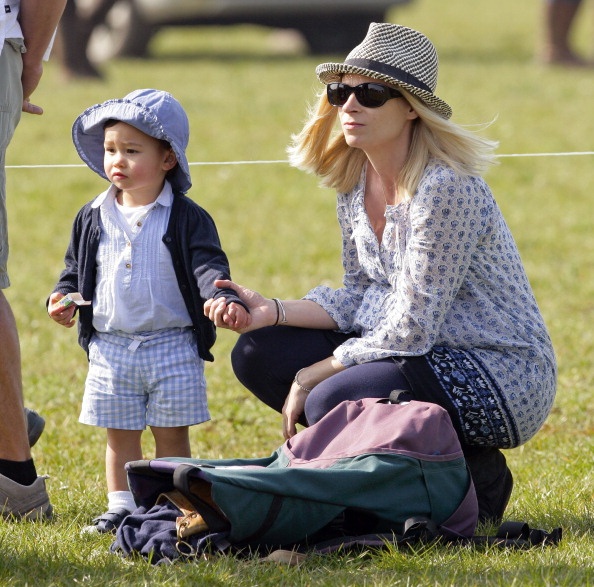
(Picture shows Tane Lewis, accompanied by his mother, Lady Davina Lewis; photo from The Daily Mail)
Girls Names from the British Royal Family

10 Sunday May 2015

Posted by A.O. in Name Themes and Lists

≈ 1 Comment

Tags

Arabic names, British names, celebrity baby names, classic names, created names, epithets and titles, famous namesakes, fictional namesakes, French names, germanic names, Greek names, honouring, Italian names, locational names, middle names, mythological names, name history, name meaning, name popularity, names from songs, nature names, nicknames, Old Irish names, plant names, popular names, royal names, saints names, Scottish names, Shakespearean names, UK name trends, virtue names

1893042-embijoutee

I hope everyone had a very happy Mother’s Day! It’s expected that the new princess will increase the current trend for baby names inspired by royal traditions, so here are some names for girls from the House of Windsor. I’ve focused particularly on the names of some of the younger royals.

Alexandra
Alexandra is one of the most common girls’ names in the British royal family. It was introduced to it by Queen Alexandra, the wife of King Edward VII. A Danish royal, she was extremely popular with the British public, and much admired as a setter of fashion. After her, the name became a favourite to pass down, including to Queen Alexandra’s granddaughter, Lady Alexandra Duff, and her great-granddaughter, Princess Alexandra, the queen’s cousin; Alexandra is one of the queen’s middle names. Alexandra is the feminine form of Alexander, and unlike many other feminisations of masculine names, Alexandra seems to have come first. It was an epithet of the Greek goddess Hera in her role as protector, and can be understood as “she who saves warriors”. St Alexandra was a legendary martyr, and the name is traditional amongst European royalty. Alexandra was #239 in the 1900s, and dropped off the charts in the 1910s and ’20s. Returning in the 1930s, its popularity jumped in the 1950s, and it was Top 100 by the early 1970s. It peaked in 1995 at #14, and is currently #75. A dignified classic with a host of nickname options, including popular Lexi.

Cosima
Lady Cosima Windsor is the daughter of the Earl of Ulster, and a great-granddaughter of King George V; born in 2010, she is 27th in line to the throne. Cosima is the feminine form of the Cosimo, the Italian form of Greek Cosmas, meaning “order” (related to the British name Cosmo). A famous musical namesake is Cosima Wagner, the daughter of Franz Liszt and wife of Richard Wagner. British socialite Countess Cosima von Bülow Pavoncelli has given the name a very fashionable air, and the name has been chosen for their daughters by celebrities Nigella Lawson, Sofia Coppola, and Claudia Schiffer. You may also remember young actress Cosima Littlewood, who played Adele in the mini-series Jane Eyre, while Australians will be reminded of Cosima De Vito, singer and Australian Idol contestant. Elegant and sophisticated, Cosima is an upper-class choice that works well multiculturally.

Eloise
Eloise Taylor is the eldest daughter of Lady Helen Taylor, a granddaughter of Prince Edward, Duke of Kent, and great-granddaughter of King George V; born in 2003, she is 39th in line to the throne. Eloise is the English form of Éloïse, from the Old French Héloïse. It’s thought to be from the Germanic Helewidis, from name elements meaning “healthy, whole”, and “wood, forest”. The name became famous because of Héloïse, a brilliant medieval scholar and feminist, famous for her scandalous affair and secret marriage to her distinguished teacher, Pierre Abélard, who was castrated in punishment. Their tragic romance has captured people’s imaginations for centuries, and it is a tradition for lovers and the lovelorn to leave letters on their reputed grave in Paris. Eloise entered the charts in the 1970s, making #498. It was the same decade that 8-year-old Eloise Worledge was abducted from her home in Melbourne, with the case still unsolved. Eloise rose steeply in the 1990s, when the song Eloise featured at Eurovision, and joined the Top 100 in 2011. One of the fastest risers of 2013, this pretty, stylish name is currently #71 and still rising. I picked this name to be in the Top 10 by 2028.

Imogen
Imogen Lascelles is a daughter of Mark Lascelles, and a great-great-granddaughter of George V; born in 1998, she is not in line to the throne as her father was born out of wedlock. Imogen is a name created by William Shakespeare for his romance Cymbeline: in the play, Imogen is a princess of ancient Britain, and a virtuous wife who is falsely accused of infidelity. The name is a variation of Innogen, which comes from the Old Irish Ingen, meaning “maiden, daughter”; Innogen was a legendary British queen. Modern scholars consider that the substitution of Imogen for Innogen was a misprint, especially as Shakespeare already used the name Innogen in Much Ado About Nothing, so this would be a rare example of a name created from a printing error. Imogen first entered the charts in the 1970s, debuting at #724 for the decade, perhaps inspired by sexy English pin-up and actress Imogen Hassall. The name Imogen rose steeply during the 1990s, and entered the Top 100 in 2001. Currently Imogen is #34 and stable, and was one of the fastest-rising names in New South Wales for 2013. Chic and British with a superior literary heritage – not too shabby for a “made up” name!

Isla
Isla Phillips is the daughter of Mark Phillips, a granddaughter of Princess Anne, and great-granddaughter of Queen Elizabeth; born in 2012, she is 15th in line to the throne. Isla is a Scottish name taken from an archaic spelling of the island of Islay in the Hebrides, which is said IE-luh, not IZ-lay. The island’s name is of unknown origin and meaning. Islay began as a male name in the 18th century, and Isla gradually became seen as a specifically feminine spelling of the name which overtook the male form in the 19th century (Islay is more commonly given to girls now too). Isla first entered in the charts in the 1990s, debuting at #891 for the decade – propelled there by actress Isla Fisher, who was then in popular soap opera Home and Away. The name zoomed up the charts during the 2000s when Fisher became a gossip mag staple as aspiring Hollywood actress and partner of British comedian Sacha Baron Cohen. Isla entered the Top 100 in 2008 at #74 and is currently #13 and rising. I picked this name to be in the Top 5 by 2028.

Ophelia
Ophelia is one of the middle names of Lady Gabriella Windsor, a writer known professionally as Ella Windsor. She is the sister of Lord Frederick Windsor, who has been featured on the blog as a royal dad. Lady Gabriella is the daughter of Prince Michael of Kent, and a great-granddaughter of King George V; born in 1981, she is 45th in line to the throne. Ophelia is well known as the title character’s tragic love interest in William Shakespeare’s Hamlet. Shakespeare did not create the name, but took it from the Italian form Ofelia in Jacopo Sannazaro’s 1504 pastoral romance, Arcadia – Sannazaro was a huge influence on 16th century literature. The name Ophelia looks to be taken from the ancient Greek ophelus, meaning “help”, to suggest “assistant”. Sannazaro may have invented the name, but there are examples of men in ancient Greece with male forms of the name, such as Ophelion, so it seems plausible that the ancient Greeks could have used Ophelia as a female name. Beautiful and elaborate, Ophelia is rising in the UK, and this seems like a very hip alternative to popular Olivia.

Senna
Senna Lewis is the daughter of Lady Davina Lewis; she has received quite a bit of press in the Antipodes, because her father is a New Zealander, the first Maori to marry into the British royal family. Senna is a granddaughter of Prince Richard, Duke of Gloucester, and a great-great-granddaughter of King George V; born in 2010, she is 29th in line to the throne. Senna can be a variant of the Arabic name Sana, meaning “brilliance, radiance, splendour”; it is one of the five daily prayers in Islam. It can also be a nature name after the flowering senna plants, whose name has the same Arabic source and meaning. There are numerous varieties of senna, some of which are grown as ornamental trees and shrubs, but widely familiar as a herbal laxative. The name Senna was used for a minor character in the Twilight series, sparking recent interest in the name, but the name had been used several times previously in science-fiction and fantasy. It’s also associated with the Brazilian Formula 1 champion, Ayrton Senna, often considered the best of all time. Similar to popular Sienna, this unusual botanical name has potential.

Sophia
Sophia is one of the middle names of Lady Amelia Windsor, a daughter of George Windsor, granddaughter of Prince Edward, Duke of Kent, and great-great-granddaughter of King George V; born in 1995, she is 36th in line to the throne. Sophia of Hanover was the heiress to the throne of Great Britain, and mother of King George I, and only her descendants can be in the line of succession. It was a very popular name amongst Hanoverian royalty. Sophia is from the Greek for “wisdom”, a cardinal virtue of Greek philosophy that was taken up by Christian theologians, who have seen Holy Wisdom as a divine energy, and in Orthodox Christianity especially, the second person in the Trinity. In Christian legend, St Sophia was a martyr who had daughters named Faith, Hope, and Love – personifications of the chief Christian virtues. Sophia was #181 in the 1900s, and dropped off the charts in the 1930s and ’40s. It came back in the 1950s, the same decade Sophia Loren became an international film star, at #414. It charged up the charts in the 1980s and joined the Top 100 in 1997. Currently it is #16 and rising; when combined with the variant Sofia (climbing faster than Sophia), it is in the Top Ten at #7. Lovely and gracious with a wonderful meaning and history, expect Sophia to keep climbing.

Tanit
Tanit Lascelles is a daughter of James Lascelles, and a great-granddaughter of King George V; born in 1981, she is not in the line of succession because she was born out of wedlock. Tanit is the name of a Punic and Phoenician goddess who was the chief deity of ancient Carthage, the equivalent of the goddess Astarte. She was a goddess of the sun, moon and stars, a goddess of war and civic protector, a mother goddess, patron of sailors, good luck figure, and fertility symbol. The meaning of her name is disputed – one theory is that it comes from the word for lament, and should be translated as “she who weeps”, perhaps to indicate that she mourns for a dying god, such as Adonis. Others translate her name as “serpent lady”, linking her with Tannin, the dragon-like sea monster of Near Eastern mythology (sometimes called Leviathan), and believe her name is one of the titles of Asherah, from the Bible. Pronounced TAN-it, this is an exotic and unusual name that fits in with Australian name trends.

Zenouska
Zenouska Mowatt is the daughter of Marina Ogilvy, a granddaughter of Princess Alexandra, and great-great-granddaughter of King George V. Born in 1990, she works for a luxury gifts company, and is 52nd in line to the throne. Zenouska is a name her parents created from putting sounds together – she uses Zen as a nickname, and it seems plausible that the inspiration was the Buddhist school of Zen. However, it sounds like a genuine Russian nickname, in the style of Anouska, and seems very suitable for someone of Russian heritage. Zenouska Mowatt is a great-granddaughter of Princess Marina of Greece and Denmark, who was a granddaughter of Tsar Alexander II of Russia. It just shows that a “made up” name can sometimes work very well.

POLL RESULTS
People’s favourite names were Eloise, Imogen and Isla, and their least favourite were Senna, Tanit, and Zenouska.

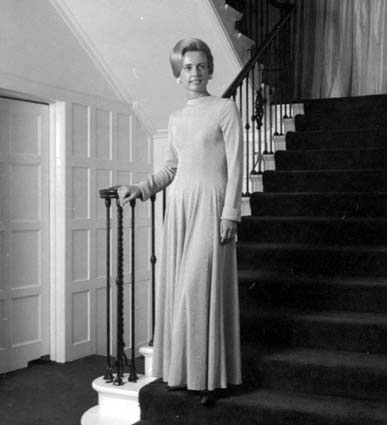
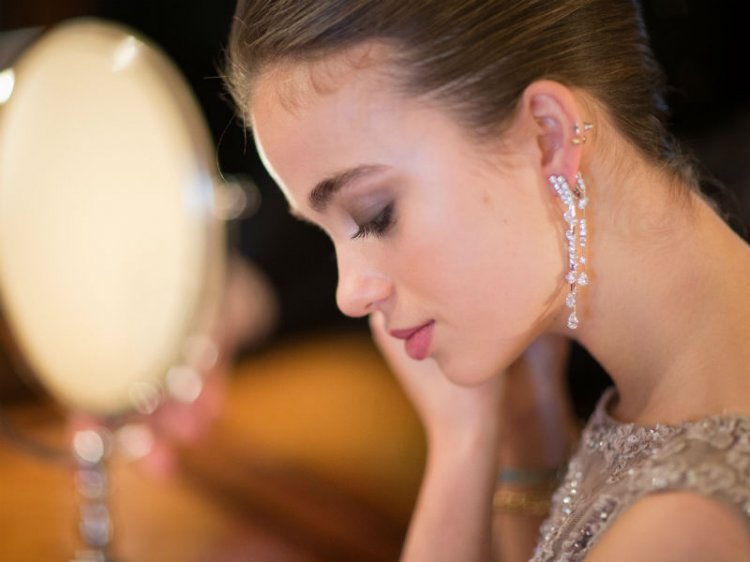
(Picture shows Lady Amelia Sophia Theodora Mary Margaret Windsor, who made her début into society in Paris, 2013; photo from Le Journal des Femmes)

Rare Boys Names from the 1940s

12 Sunday Apr 2015

Posted by A.O. in Name Themes and Lists

≈ 7 Comments

Tags

animal names, aristocratic names, car names, Cornish names, english names, famous namesakes, fictional namesakes, flower names, French names, germanic names, Greek names, honouring, Italian names, locational name, musical names, mythological names, name history, name meaning, names from comics, nature names, nicknames, Old English names, Old Norse names, papal names, plant names, rare names, saints names, scientific names, Scottish names, surname names, twin sets, unisex names, vintage names

P01022.021

The most popular boys names of the 1940s were John, Peter, Robert, and David, but what were the least popular names? Here are ten names which were only chosen once in any year between 1944 and 1949 in South Australia, making them unique names for their time and place. Still rare, some feel surprisingly contemporary, while one or two have perhaps had their day.

Aston
English surname of multiple origins. It can be from a common place name meaning “east settlement”, to indicate a village to the east of a larger town, although occasionally it seems to be a corruption or variant of Ashton, meaning “settlement near the ash trees”. It can also mean “at the stone”, to indicate someone who lived near a prominent stone. Finally, it can be a contraction of a personal name such as Aethelstan, meaning “noble stone”, and there are examples of men with Aston as a first name in the Middle Ages from this derivation. Sir Aston Cockayne, 1st Baronet, was a 17th century writer who was on the Royalist side during the English Civil War, and a close friend of the future Charles II. The name might remind you of Aston Villa Football Club, in the English Premier League, or Aston Martin luxury cars – both familiar in the 1940s as well. I see the name Aston name sometimes in birth notices, perhaps inspired by Aston Merrygold from English boy band JLS.

Bramwell
English surname from an unknown place name meaning “stream surrounded by broom” – broom is a hardy European shrub with yellow flowers. The name has a strong connection with the Salvation Army, because Bramwell Booth was the second General of the Salvation Army who served during World War I, the eldest son of its founder, William Booth. We know the name was used by Salvationists, because Bramwell Tillsley, a Canadian who was the son of British Salvationists, was the 14th General of the Salvation Army. The Salvation Army has a strong history in South Australia, with the first official Salvation Army corps formed in Adelaide in 1880. Booth was also used as a baby name during the 1940s, with the Salvation Army’s support of the troops being greatly appreciated. Bramwell is an attractive, little-used surname that has the appealing nickname Bram.

Cosmo
Form of the Greek name Kosmas, meaning “order”, and thus the opposite of “chaos”. The Greeks also used the word to mean “the world”, because they believed the world was perfectly put in order. We use the word cosmos to mean “the universe, all of creation”. According to tradition, Saint Cosmas was a skilled doctor; along with his twin brother Damian, he performed many miraculous cures before his martyrdom. The name Cosmo was introduced to Britain by the Scottish peer Alexander Gordon, 2nd Duke of Gordon, when he named his son Cosmo in 1720. Cosmo’s name was in honour of his father’s close friend Cosimo di Medici – Cosimo is the Italian form of Kosmas. The name has always had a rather exotic and aristocratic image, and Scottish associations. There were several famous Cosmos that could have inspired the name in the 1940s, including popular British playwright Cosmo Hamilton, and Archbishop of Canterbury Cosmo Lang. Cosmos is also a type of daisy, whose name comes from the same Greek origin, so with some imagination, the name Cosmo could honour someone named Daisy.

Denzil
Variant of Denzel, a Cornish surname. The name was traditional in the aristocratic Holles family, with one of the earliest and most famous of their number to bear the name Denzil Holles, 1st Baron Holles, a 17th century statesman who is best known for being part of a group who attempted to arrest King Charles I, sparking the Civil War, but also took a leading role in bringing about the Restoration. The Denzel spelling came first, as Denzil Holles’ grandfather was Denzel Holles. These Denzils and Denzels were named in honour of their ancestor John Denzel, who had large estates in Cornwall in the 16th century and was Attorney-General to Elizabeth of York, queen of Henry VII. John Denzel took his surname from the Denzell manor house in St Mawgan, Cornwall, and the meaning of its name is not known for sure, although perhaps from the Celtic for “hill fortress in open view”. A 1940s Australian namesake is Sir Denzil Macarthur-Onslow, a World War II general regarded as a “cracker of a bloke”. Denzil still seems contemporary because of American actor Denzel Washington, and is very usable.

Everard
Derived from the ancient Germanic name Eberhard, often translated as “brave as a wild boar”. The name was introduced by the Normans to Britain, where there was already an Old English form of the name, Eoforheard. A famous namesake is Sir Everard Digby, who was executed for his part in the failed Gunpowder Plot, and another was Everard Calthrop, a railway engineer who helped develop the modern parachute. Although in use since the Middle Ages, modern usage has probably been influenced by the surname, as the Everards are an aristocratic family who have been created baronets in both Ireland and England. Everard Park is a suburb of Adelaide, named after the prominent pioneer Sir Charles Everard, said to have the best orchard in the colony, giving this a strong South Australian feel. Everard is an interesting twist on classic Evan, and the trend for girls’ names starting with Ev- may also be a help.

Garfield
English surname referring to someone living near a triangular field; the word gar means spear in Old English, and a gar field is one that is shaped like the point of a spearhead. The surname is well known in the United States, as their 20th president was James A. Garfield, and his sons also went on to have illustrious public careers – there is a town in Victoria named Garfield in honour of the American president. A namesake from the 1940s was Hollywood  actor John Garfield, while one with Garfield as his first name is Garfield “Gar” Wood, an American inventor, showman, and record-breaking motorboat racer – the first to travel over 100 miles an hour on water. An Australian namesake from this era is Sir Garfield Barwick, a barrister who came to prominence during a 1943 court case involving the Archibald Prize. He later became a Liberal MP, Attorney-General, and Chief Justice of the High Court of Australia. He was the legal advisor to Sir John Kerr during the controversial dismissal of Prime Minister Gough Whitlam (an old enemy of Barwick’s), so he well and truly made history. Garfield would be a charming and unusual vintage name, except for one thing – the obese cartoon cat!

Linus
In Greek mythology, Linus was a Thracian prince who was so musically talented that he was said to have been the son of Apollo, god of music, and Calliope, the muse of epic poetry. According to legend, Linus invented melody and rhythm, and taught music to his brothers Orpheus and Heracles. Unfortunately, Heracles didn’t appreciate the music lessons, and killed Linus with his own lyre after he tried to give Heracles some constructive criticism. Although the meaning of the name is not certain, there was a type of dirge in classical Greece called a linos, and it’s possible that the mythological character was a personification of this song of mourning. The name has a Christian association because Linus is said to have been a Bishop of Rome in the early church, and is listed as the second pope. The name Linus is especially popular in Scandinavia, although many people will connect it to Linus Pauling, the American scientist who won both the Nobel Chemistry Prize and the Nobel Peace Prize, and whose work was aleady known by the 1940s. The name might also remind you of security blanket-hugging philosopher Linus from the Peanuts comics. A sweet, smart name with a mythological musical connection.

Neon
Greek name meaning “new”. It wasn’t an unusual name in ancient Greece, and there are several prominent men named Neon from history. However, in modern times the name is strongly associated with neon lighting – bright electrified glass tubes often used for signs. They are named after neon gas, which is used to give off a bright orange light, but other gases provide different colours. Neon has has the same meaning as the name Neon. Neon lighting was invented in 1910, and was in its heyday between 1920 and 1940, the bright colours suddenly bringing dark streets to life. It’s probably not a coincidence that the name Neon peaked in the 1940s and ’50s, usually given to boys. Neon feel both space age and vintage, and has been used as a comic book hero name, for both a male and female character. As neon is often used in an artistic context today, you might think of this as an arty name, and it’s otherwise bright and energetic.

Revel
A revel is a festive celebration, while to revel is to make merry. The word comes from Old French, and is directly related to the Latin rebello, from which our word (and name) Rebel is derived. This is probably because we think of celebrations as tending to be rather unruly or disorderly, and sometimes they can even get out of hand! This fun-loving word has been used as a personal name since the Middle Ages in both England and France, and was also given as a nickname to people who were known for partying particularly hard. It is from this that the surname derives, and it is especially associated with Yorkshire. A famous Australian namesake is Western Australian Indigenous artist Revel Cooper, whose career began in the 1940s. Although he was just a child then, he was one of a number of children in state care who were given specialised art training, and their artwork exhibited in Perth, New Zealand, India, and Europe. Unlike many of the children, Revel continued his art career into adulthood. Revel is a boisterous medieval boys’ name that still sounds contemporary.

Rollo
Rollo was a powerful 9th century Viking leader who was the founder and first ruler of the area of France now known as Normandy. He was the great-great-great grandfather of William the Conqueror, and through William, is the ancestor of the present day British royal family, as well as all current European monarchs. His name is a Latinised form of the Old Norse name Hrólfr, which in modern times is known as Rolf. It’s a shortened form of Hrodulf, now known as Rudolf, meaning “famous wolf”. Rollo is also a Scottish surname, the Clan Rollo being descended from the Normans, and in particular the nephew of William the Conqueror, Erik Rollo. Because the Lords Rollo is a title in the Scottish peerage, the name gains further aristocratic credentials. Rollo fitted in well with 1940s name trends, when Rolf and Roland were fashionable, and Australian artist Rollo Thompson flourished in this decade. Like Cosmo, it fits in with current trends for boys names ending in -o, and this is a fun yet blue-blooded choice.

POLL RESULTS
People’s favourite names were Linus, Aston and Bramwell, and their least favourite were Neon, Denzil and Garfield.

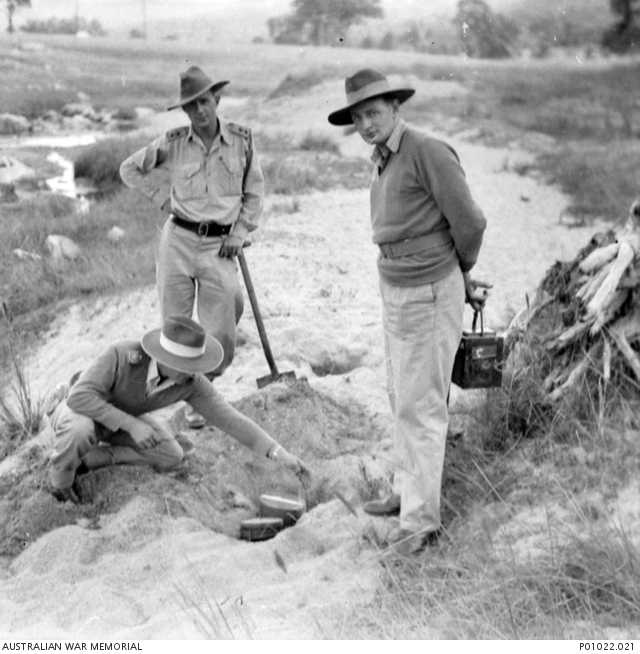
(Picture shows Denzil Macarthur-Onslow, on the right, supervising a training exercise in Queensland in 1942; photo from the Australian War Memorial)

Rare Girls Names From the 1940s

05 Sunday Apr 2015

Posted by A.O. in Name Themes and Lists

≈ 1 Comment

Tags

animal names, controversial names, created names, Easter names, english names, fictional namesakes, flower names, French names, germanic names, Greek names, honouring, Irish names, Latin names, locational names, middle names, name history, name meaning, name trends, names from films, names from songs, nature names, nicknames, plant names, rare names, Roman names, saints names, Scottish names, Spanish names, surname names, unisex names, vintage names, virtue names, vocabulary words

Dymphna_Cusack,_1947

The most popular girls names of the 1940s were Margaret, Patricia, Judith, and Helen, but what were the least popular names? Here are ten names which were only chosen once in any year between 1944 and 1949 in South Australia, making them unique names for their time and place. They continue to be rare, and some parents will still find them appealing.

Avis
Thought to be a Latinised form of the Germanic name Aveza, most likely a long form or elaboration of the familiar Ava. Introduced to England by the Normans, it was reasonably common in the Middle Ages, and quickly became associated with the Latin word avis, meaning “bird”. Avis Rent a Car was founded in the 1940s by Warren Avis, but did not become big in Australia for some time – it’s now quite difficult to disassociate the name Avis from the rental company, although it’s very much on trend and still seems contemporary and pretty. It was also a good fit in the 1940s, when names such as Avril and Averil were fashionable.

Bunty
An old British term of endearment, dating back to perhaps the 17th century. In Scotland, buntin means “short and plump”, while in Wales, bontin means “the bottom, the rump” (a part of the body usually seen as quite plump). It’s interesting that in both Scottish and English dialect, bunt and bun refer to a rabbit’s tail, which recalls the bottom meaning. You probably remember the nursery rhyme, Bye Baby Bunting, where bunting meant “a plump little child”, and it’s amusing that they have “a rabbit skin to wrap the Baby Bunting in”, given the etymological connection between chubby babies and bunnies’ bottoms. By the 19th century, bunty was a country word for a lamb, because they bunt (or butt) with their heads, giving bunty another adorable baby-related association. The name Bunty was popularised by the Scottish comedy Bunty Pulls the Strings, which was a hit in 1911 in the West End and on Broadway (Bunty was a canny Highland lass). However, even before this, Bunty was used as a nickname, especially by the aristocracy. It was occasionally given to boys, and in Seven Little Australians, young John is called Bunty, because he is prone to be greedy and a bit overweight. In his case, the nickname literally meant “little fatty”, but Bunty can be understood as “cute wee bairn, bonny babe”. This could be a charming vintage-style nickname, and if you’re worried it’s too infantile, Babe and Baby were both used as names in the 1940s!

Cosette
Cosette is one of the main characters in Victor Hugo’s Les Misérables, considered one of the greatest novels of the 19th century. In the novel, Cosette is the daughter of Fantine, a poor girl who must leave her child in the care of some innkeepers, while she works to provide for her. Cosette is badly treated by her guardians, and becomes a Cinderella-like figure, but is rescued by the ex-convict Jean Valjean. They take refuge in a convent, where Cosette develops into a beautiful young girl, and eventually finds her happy ending. Cosette’s real name is Euphrasie (meaning “good cheer”), but her mother’s pet name for her is the one which sticks – Cosette is from the French word chosette, meaning “little thing”. Les Misérables was made into a successful film in 1935, with child star Marilyn Knowlden in the role of the young Cosette; this would have increased interest in the name. Les Misérables was made into an award-winning musical film in 2012, this time with British actress Isabelle Allen playing young Cosette. Her face was used for the publicity posters, and with her arresting blue eyes, this may bring Cosette into the baby name spotlight again.

Dymphna
Anglicised form of the Irish name Damhnait, meaning “fawn”. Saint Dymphna is a 7th century Irish saint with a truly disturbing story, because legend has it that when she was fourteen, her father went mad and developed an unnatural desire for her. She ran away and devoted herself to helping the sick and the poor, but her father discovered her whereabouts, and killed her in a rage. Called the Lily of Eire, Saint Dymphna is the patron of the mentally ill, as well as vctims of incest, and many miraculous cures have been claimed on her behalf. A famous namesake is the author Dymphna Cusack, and another is Dymphna Clark, married to the historian Manning Clark, so the name has strong Australian credentials. Despite this, and the pretty meaning, Saint Dymphna’s tragic life has probably not been a help. Said DIMF-na, Dymphna has a lovely sound though, like a quirkier Daphne.

Jinx
According to superstition, a jinx is something, or someone, who brings bad luck, often without meaning to. The word is American English, first used in the context of baseball, and its origins are obscure. One suggestion is that it comes from the 1887 musical comedy Little Puck, which had a character named Jinks Hoodoo, who is a curse to everyone he meets, as well as to himself. Although Hoodoo is fairly obviously a “bad luck” word, Jinks is just a surname based on the name John, and not too unusual as a first name. Perhaps it was given with the phrase high jinks in mind, meaning “boisterous fun”. After the popular musical comedy, jinks and jinx seem to have rapidly come into use as slang terms to describe an unlucky person or object. Jinx was known as a girl’s name in the 1940s because of Jinx Falkenburg, one of the highest-paid cover-girls of the 1930s and ’40s – an early example of a supermodel. Considered one of the most beautiful and glamorous women of her time, she was also a talented sportswoman and Hollywood actress, and went on to have successful chat shows on radio and TV. Born Eugenia, her mother nicknamed her Jinx in the belief that it would bring her good luck – I’m not sure how that was meant to work, but Jinx did indeed have a fortunate life. Jinx has quite often been used as a name for (mostly female) fictional characters, from L’il Jinx from the Archie comics to Jinx Johnson in the James Bond film, played by Halle Berry. This is a playful modern nickname for the non-superstitious.

Marigold
The flower name marigold is attached to several plants with yellow blooms, but usually refers to the Calendula or pot marigold – although sometimes called English marigold, the plant probably originated in southern Europe, but became widely naturalised elsewhere from an early date. The name seems to have been first used for the wildflower Caltha palustris, also known as marsh marigold and kingcup. Marigold literally means “Mary gold”, and the name came about because the spring wildflower was a favourite in medieval churches at Easter, a tribute to the Virgin Mary. Shakespeare refers to the “golden eyes” of “Marybuds” in his play Cymbeline, and the marsh marigold is one of the UK’s most ancient plants, being an Ice Age survivor. Marigold has been used as a name since the 19th century, when flower names were fashionable, and is a hip underused floral choice which could honour a Mary.

Rilla
Rilla Blythe is the main character in L.M. Montgomery’s Rilla of Ingleside; the daughter of the famous Anne Shirley (later Anne Blythe), she is a carefree teenager who must grow up fast when World War I is declared. Rilla’s full name is Bertha Marilla, with her middle name in honour of Anne’s strict but loving adoptive mother, Marilla Cuthbert. Marilla may be a short form of Amaryllis or an elaboration of Mary, and it’s notable that the name Marilla was used more than once during the 1940s. Perhaps the wartime courage of Rilla Blythe struck a chord during World War II, or maybe the 1939 publication of Anne of Ingleside played a role, where Rilla is said to be sweetest baby of all, and shown as an adorably pretty and plump lisping toddler. Rilla is a trendy name from the wartime era that still seems cute, especially knowing Rilla Blythe was affectionately known as “Rilla, my Rilla”. One for Montgomery fans!

Thais
Thaïs of Athens was a famous Greek hetaera who accompanied Alexander the Great on his campaigns. Hetaera were high status courtesans; educated, influential, and sophisticated women who were paid companions to men – not just in the bedroom, but as stimulating conversationalists and talented musicians and dancers. Thaïs was the lover of Ptolemy I Soter, one of Alexander’s generals, and she is said to have been witty and entertaining company. After Alexander’s death, Ptolemy became the king of Egypt, and Thaïs was his wife, or at least a high ranking concubine, and mother of his children (he had other wives to provide him with heirs to the throne). Saint Thaïs was from 4th century Egypt, a beautiful and wealthy courtesan who repented of her life and converted to Christianity. It is hard not to wonder if her story was influenced by Thaïs of Athens, who also lived in Egypt during the 4th century. The saint inspired a novel by Anataloe France, and an opera by Massenet; as a result, Thaïs is a popular name in France. The Greek name Thaïs means “head band”, referring to the plain cloth bands that women in ancient Greece commonly wore to keep their hair in place. Like the hair covering, this name is both simple and sophisticated, with a fascinating historical namesake, and fits in with Australian name trends. The French pronunciation is rather like tah-EES, while English speakers may prefer TAY-is or ty-EES.

Unity
The word unity means “oneness”, familiar in both religious and political contexts, and used as a virtue name since at least the 17th century. It seems a rather strange choice for the 1940s, because Unity Mitford was an aristocratic English girl who was a rabid supporter of the Nazis and fervent devotee of Adolf Hitler, her close personal friend. When Britain declared war on Germany, Unity tried to commit suicide by shooting herself in the head, but survived, although permanently affected by her brain injuries. She died from an infection caused by the bullet in 1948, a controversial figure to the end. Unity Mitford was the inspiration behind evil Bellatrix Lestrange in the Harry Potter series, and it’s interesting that J.K. Rowling named her eldest daughter after Jessica Mitford, a staunch Communist and Unity’s sister. If you can get over the connection to Unity Mitford, Unity is a rather attractive name, and similar in sound to Una, which still charted in the 1940s.

Valencia
A large port city in Spain, famous for its vibrant culture and delicious cuisine. Founded as a Roman colony in the 2nd century, its name was originally Valentia, meaning “strength, valour”, in recognition of the bravery of former Roman soldiers who settled there. The name is closely related to the familiar Valentine. During the period of Muslim rule, Valencia was nicknamed Medina bu-Tarab, “City of Joy”. The name might remind you of Valencia oranges, grown in California but named after the Spanish city, which had a reputation for very sweet oranges. Valencia has long been used as a personal name in Spanish-speaking countries, but is not common in English-speaking ones. It may have got a boost from the 1926 romantic film Valencia, where the title character is an exotic Spanish dancer, played by Mae Murray. A box office success, its title song was one of the biggest hits of that year. Valencia fitted in with popular names of the 1940s such as Valerie, and still seems rather glamorous.

POLL RESULTS
People’s favourite names were Marigold, Cosette and Rilla, and their least favourite were Unity, Dymphna and Bunty.

(Photo shows Australian author Dymphna Cusack in 1945: her play Red Sky At Morning was one of few produced during the war years, and was made into film in 1944)

Boys Names from the Top 100 of the 1940s

08 Sunday Mar 2015

Posted by A.O. in Name Themes and Lists

≈ 4 Comments

Tags

Anglo-Saxon names, animal names, aristocratic names, aristocratic surnames, aristocratic titles, Biblical names, Breton names, CB radio voice procedures, classic names, english names, ethnonyms, fictional namesakes, French names, Gaelic names, germanic names, Greek names, Irish names, Latin names, locational names, mythological names, name history, name meaning, name trends, names from television, names from video games, names of flags, nicknames, Norse names, papal names, Roman names, royal names, saints names, Scottish names, slang terms, surname names, US name trends, Welsh names

AUGUST-15-1945-Ern-Hill-the-Dancing-Man-in-Eliza-5741858

Alan
Breton name, common amongst aristocracy, introduced to England by the Normans, where it became one of the most popular names. The meaning is uncertain – the word alan was used in Brittany to mean “fox”, but evidence suggests it originally meant “deer”. The two meanings may both refer to someone with red hair, or to indicate speed. There is also an Irish name Ailin, meaning “little rock”, very similar to the Irish/Scots Gaelic word alainn, meaning “handsome”, while the Welsh Alun may mean either “nurturing” or “wandering”. When the Normans brought Alan with them, the name spread to Scotland as Breton lords gained lands there – perhaps partly because the Scots already had similar names. Another theory is that the name comes from the Alans, Indo-Iranian peoples who settled in parts of France and Brittany in the Middle Ages; their name has the same origin as Aryan, meaning “noble”. There are several saints named Alan. Alan is a classic name which has never left the charts. It was #55 in the 1900s, and peaked in the 1940s at #20, leaving the Top 100 in the 1980s. It has recently had a small rise in popularity, and is around the 300s. Surname variants Allan and Allen have also been popular; Allen is back on the charts, while Allan has disappeared. I have seen a few babies named Alan and Allen lately.

Cecil
English form of the Roman family Caecilius. The Caecilii traced their ancestry back to the mythical figure Caeculus, a son of the smith god Vulcan. According to legend, Caeculus had mastery over fire, and was unharmed by it, although the smoke damaged his eyes, which were smaller than usual – his name means “little blind boy” in Latin. Another story is that the Caecilii were descended from Caecas, a follower of the legendary Roman hero Aeneas: his name means “blind” as well, although it also can be translated as “dark, secret”. Of course both these tales are just folklore. The name Cecil has been used since the Middle Ages, and it was also given in honour of the noble Cecil family, whose surname comes from the name Seisyll, Welsh form of the Roman name Sextilius, from Sextus, meaning “sixth”. Cecil was #18 in the 1900s, and was #89 in the 1940s. It left the Top 100 the following decade, and dropped off the charts in the 1970s. I recently saw a baby Cecil, and I think this name seems pretty hip.

Clifford
English surname, from a village in Herefordshire meaning “ford at the cliff”. The Cliffords are a noble family who originally came over with the Normans, and were prominent in medieval England. One of their members was Rosamund Clifford, “The Fair Rosamund”, who was the mistress of Henry II. Clifford has been used as a first name since at least the 16th century. Clifford was #61 in the 1900s, peaking in the 1910s and 1920s at #59. It was #92 in the 1940s, left the Top 100 the following decade, and was off the charts by the 1990s. This name will remind many parents of the classic children’s book series, Clifford the Big Red Dog. It seems strong and solid.

Desmond
Anglicised form of the Irish surname O’Deasmhumhnaigh, meaning “son of the man from Desmond”. Desmond is the original name for South-West Munster, and means “south Munster”. Munster means “land of Muma”; Muma was a goddess associated with writing. Desmond became prominent as an aristocratic title, as the Earls of Desmond were lords of Ireland, related to royal houses in England and France. Their family name was FitzGerald, and US President J.F. Kennedy is believed to have been descended from them. Desmond has been used as a personal name since the 18th century, and originated outside Ireland. Desmond was #127 in the 1900s, joined the Top 100 in the 1920s, and peaked in the 1940s at #66. It left the Top 100 in the 1960s, and dropped off the charts in the early 2000s. This name is rising in popularity in the US, and I wonder if that could happen here too? Desmond Miles from the Assassin’s Creed video game series, and Desmond from Lost are contemporary namesakes.

Gregory
From the Greek name Gregorios, meaning “watchful”. Because the Latin for “flock” is grex, it became understood as “shepherd”, the idea being that the shepherd would keep watch over his flock. Because of this, it became a popular name for monks and bishops to adopt, and there have been dozens of saints and 16 popes with the name Gregory. Pope Gregory I was known as Gregory the Great, and he is famous for sending Christian missionaries to England to covert the Anglo-Saxons, and for the Gregorian chant, which is attributed to and named after him. Because of him, Gregory has been a common English name since the Middle Ages. Gregory is a classic name which has never left the charts. It was #143 in the 1900s, and joined the Top 100 in the 1930s. It was #34 in the 1940s, and peaked in the 1950s at #7 (when Gregory Peck was big in Hollywood). It didn’t leave the Top 100 until the 1990s, and is currently around the 600s and fairly stable. It may not be stylish, but this is a solid choice.

Maurice
French form of Roman name Mauritius, derived from Maurus, meaning “man from Mauretania”. Mauretania was a region of the Roman Empire where north Africa is today, so the name is often understood as “dark-skinned”, and sometimes translated as “a Moor” (the old name for someone from northern Africa). The name became commonly used because of St Maurice, a 3rd century Egyptian who served in the Roman army. According to legend, he was part of a Christian legion who refused to kill other Christians, and were martyred together. As a Roman soldier, St Maurice was patron of the Holy Roman Emperors and many of the royal houses of Europe, so his name became used by royalty and nobility. Prince Maurice of Battenberg was Queen Victoria’s youngest grand-child; he was killed in action during World War I. Maurice was #71 in the 1900s and peaked in the 1920s at #52. It was #82 in the 1940s, and left the Top 100 the following decade; it dropped off the charts in the 1990s. Maurice has a rather nerdy image, although AFL fans may be reminded of footballing great Maurice Rioli. It can be said muh-REES or MOR-is, with Reese or Morrie as the nicknames.

Norman
Germanic nickname or surname meaning “north man”, referring to Vikings. The Normans were descendants of Vikings who had taken over and settled the region of northern France now known as Normandy. Later a Norman duke named William conquered England, so that the Normans became an important part of British history and culture. The name Norman or Normant was used in England even before the Conquest, and became more common after 1066, although dropped off again in the late Middle Ages. It never went out of use, but became much more popular in the 19th century, due to the Victorian love of anything antique-sounding. In Scotland, it was used to Anglicise the Norse/Gaelic name Tormod, meaning “courage of Thor”. Norman was #19 in the 1900s, and peaked in the 1920s at #14. It was #46 in the 1940s, left the Top 100 in the 1960s, and disappeared from the charts in the 1990s. There are many Australian namesakes, from artist Norman Lindsay to comedian Norman Gunston to pop star Normie Rowe. Many people still remember Norm, from the Life. Be in it fitness campaign, representing a pot-bellied man as “the norm”.

Raymond
The Germanic name Raginmund is composed of ragin, meaning “advice, counsel” and mund, “protection”; it is sometimes translated as “protected by good counsel”. The Normans introduced it to England in the form Reimund, where it became very common in the Middle Ages. It was a traditional name amongst medieval nobility, and there are several medieval saints called Raymond. Never out of use, Raymond is a classic name which has always remained on the charts. It was #33 in the 1900s, and peaked in the 1940s at #9. It left the Top 100 in the 1990s, and hit its lowest point in 2009 at #326. Since then it has improved its popularity ranking, and is currently in the 200s. With Roy- names so fashionable, Ray- names cannot help getting a boost as well, and Raymond is not only a solid classic choice, but one which has recently gained some cachet. Plenty of parents love Raymond!

Roger
From a Germanic name meaning “famous spear”. The Normans introduced the name to England in the form Rogier, where it replaced the Anglo-Saxon form, Hroðgar or Hrothgar, which is found in the poem Beowulf as the name of a Danish king. The name was common in medieval England, heavily used by the aristocracy, and there are a couple of saints named Roger. It has never gone out of common use, even though roger was a slang term for “penis” – possibly because of the spear connection. More recently, roger has become understood as “to have sexual intercourse”. It has often been chosen for comic characters, such as the Beano‘s Roger the Dodger, Roger Ramjet, Roger Rabbit, Roger the alien from American Dad, and Roger the Shrubber from Monty Python’s Holy Grail (not to mention “Welease Woger” in The Life of Brian). Roger was #155 in the 1900s, joined the Top 100 in the 1930s and peaked in the 1940s at #57. It left the Top 100 in the 1970s, and dropped off the charts in the late 2000s, albeit with a sudden burst of use in 2009, when it got up to #384. Although perhaps too many jokes have been made at its expense, the pirate flag of the Jolly Roger, and radio procedure call of Roger give it a rollicking feel.

Stephen
English form of the Greek name Stephanos, meaning “wreath, crown”, to denote the laurel wreath worn by those who achieved victory in contests. In the New Testament, St Stephen was a deacon of the early church who was martyred by stoning. As the first martyr, St Stephen’s name seems apt, and he is often said to have won his martyr’s crown. There are several other saints with the name, and nine popes. The name Stephen became more popular in England after the Norman Conquest, and although it is a common name for royalty in eastern Europe, there has only ever been one English king with the name. Stephen of Blois was a grandson of William the Conqueror who took the throne in controversial circumstances; his rule marked a period of anarchy as he fought the Empress Matilda for the right to rule. In the end he failed, and his name has never been used again for a British king. Never out of common use, Stephen is a classic name which has remained on the charts. It was #72 in the 1900s, was #36 in the 1940s, and peaked in the 1950s at #5. It didn’t leave the Top 100 until the early 2000s, and is currently fairly stable around the 300s. The variant Steven, in use since the Middle Ages, is more popular than Stephen, around the 200s.

POLL RESULTS
People’s favourite names were Desmond, Stephen and Gregory, and their least favourite were Roger, Maurice and Norman.

(Picture shows the famous “dancing man” from the joyous celebrations in the streets of Sydney which marked the end of World War II in August 1945)

Girls Names from the Top 100 of the 1940s

01 Sunday Mar 2015

Posted by A.O. in Name Themes and Lists

≈ 10 Comments

Tags

animal names, aristocratic names, Biblical names, classic names, colour names, controversial names, created names, dated names, english names, fictional namesakes, French names, gemstone names, German names, Greek names, hebrew names, Latin names, middle names, mythological names, name history, name meaning, name popularity, nature names, nicknames, plant names, rare names, retro names, royal names, saints names, Spanish names, underused classics, unisex names, vocabulary names

029692

These are names of babies born during World War II, and the first baby boomers, born in the years just after the war. If you are an older parent, your own mother might have been born in this decade, while young parents may see 1940s names as “grandma” names. For those wanting a name that’s ahead of the curve, there are rich pickings from this time period.

Coral
Coral is a gemstone made from the polished shells or exoskeletons of coral polyps – originally, and typically, Corallium rubrum, from the Mediterranean. Because this species has a pink or red colouring, the word coral also refers to a pinkish colour. The ancient Romans believed coral would protect children, and it was common for baby toys and teething rings to be made from coral, even in the 19th century. Coral jewellery has been worn since prehistoric times, although it was the Victorian era which made coral fashionable. Today, with greater awareness of the environmental impact of harvesting coral, many jewellers will no longer sell coral items, and consumers are urged to boycott jewellery made from coral. The name Coral was #194 in the 1900s, and joined the Top 100 in the 1930s. It peaked in the 1940s at #79, left the Top 100 the following decade, and was off the charts by the 1980s, perhaps partly due to growing environmental concerns. Leaving aside the gemstone, you could see this name as a way to celebrate our beautiful coral reefs, and marine environment.

Daphne
In Greek mythology, Daphne was a naiad; a nymph of fresh water, and daughter of a river god. Acording to legend, she was so beautiful that the god Apollo pursued her. Just as he was about to catch her, she pleaded with her father to help her, and he turned her into a laurel tree – Daphne literally means “laurel”, and it’s also the scientific name for the plant. The laurel became sacred to Apollo, and wreaths of laurel were traditionally given to those who had achieved victory. The name Daphne has been use since the 18th century, when classical names became fashionable, but only became common in the 19th, because of the interest in botanical names. Daphne was #82 in the 1900s, and peaked in the 1920s at #22. It was #76 in the 1940s, left the Top 100 the following decade, and was off the charts by the 1970s. Recently it been in the charts again, and is around the 300s. Charming retro Daphne makes a distinguished choice, not a daffy one.

Frances
Feminine form of Francis, often given in tribute to St Francis of Assisi, although St Frances of Rome provides a medieval female saintly namesake. The name was commonly used by the British aristocracy, with examples such as Frances Cobham, a close friend of Elizabeth I, and Frances Grey, the mother of queen-for-nine-days Lady Jane Grey. The great Restoration beauty Frances Stewart, Duchess of Richmond and Lennox, drove King Charles II batty with desire, but she refused to become his mistress. Her lovely face was used as the model for Brittania on coins, medals, and statues, and can still be seen today. In common use since the 16th century at least, Frances is a classic name which has never disappeared from the charts. It was #52 in the 1900s, and peaked in the 1940s at #47, leaving the Top 100 in the 1970s. It sank into obscurity in the late 2000s, but had a boost at the start of this decade which saw it move into the 500s, and is now around the 200s. More solid than Francesca, Frances is a quiet achiever which gets royal glamour from being the middle name of Diana, Princess of Wales, and offers the cool nickname Frankie.

Irene
From the Greek Eirene, meaning “peace”. In Greek mythology, Eirene was the personification of peace, depicted as a beautiful young girl carrying symbols of plenty. Another mythological Eirene was a daughter of Poisedon. The name was in use in ancient Greece, and one Eirene was a famous artist. There are a number of saints named Irene, with Irene of Thessalonica martyred with her sisters Love and Purity, so personifications of theological virtues. Originally more popular in eastern Christianity, it was the name of a Byzantine Empress, and has been used by European royalty. The name was originally pronounced e-REE-nee, but is usually said IE-reen now. Irene is a classic name which has never left the charts. It was #19 in the 1900s, and peaked the following decade at #17. It was #56 in the 1940s, and left the Top 100 in the 1960s. It reached its lowest point in the late 2000s at #684, and since then become more popular, perhaps because it’s been used for several fictional characters in the past few years. Currently it’s around the 400s. This is a hip, underused classic with a lovely meaning.

Lois
In the New Testament, Lois was the pious grandmother of Saint Timothy. It’s not known what the name means: it may be from the Greek meaning “more desirable, more agreeable”, and understood as “the most beautiful, the best”. However, as Lois was Jewish, it could be an attempt to Hellenise a Hebrew name. Lois is also a male name – an Occitan and Galician form of Louis. The female name Lois has been in use since the 16th century, and was used by Puritan families. Lois Lane, Superman’s love interest, has given the name publicity for many decades, but more recently it has become a “mum name” on TV, with Lois Wilkerson from Malcolm in the Middle, and Lois Griffin from Family Guy. Lois joined the charts in the 1910s, debuting at #181. It joined the Top 100 in the 1930s, when it peaked at #84, and was #93 in the 1940s. It left the Top 100 the following decade, and was off the charts by the 1970s. Soft sounding Lois would make an interesting alternative to popular names such as Eloise.

Marlene
German name combining Maria/Marie and Magdalene, so it commemorates Mary Magdalene from the New Testament, the chief female disciple of Jesus Christ. The German pronunciation is mahr-LE-nuh, but it is often said MAHR-leen in English. The name became well known in the English speaking world because of iconic German-American film star Marlene Dietrich, whose real name was Marie Magdalene. The name Marlene rocketed into the Top 100 from nowhere in the 1930s when Dietrich became a star after appearing as the uberdesirable Lola Lola in Josef von Sternberg’s movie The Blue Angel. It both debuted and peaked at #63 in the 1930s. The name Marlene was #68 in the 1940s, when Dietrich did valuable war work, such as performing for the troops and raising war bonds. By the 1950s, when Dietrich became a cabaret star, the name Marlene had left the Top 100. It left the the charts in the 1980s, when Dietrich’s career was over. Despite being a dated name which spiked in popularity only briefly, Marlene still seems glamorous and sexy, fitting in with modern names such as Marley and Elena.

Pamela
Created by Sir Philip Sidney for his 16th century epic, the Arcadia; in the story, Pamela is an attractive main character. It is usually thought that Sidney based the name on the Greek for “all sweetness”. The name was given publicity by Samuel Richardson’s best-selling 18th century novel, Pamela, where a lovely teenaged maidservant is threatened with rape by her employer, but she successfully resists him, and is rewarded for her virtue by being allowed to marry him. Not only are there so many things wrong with that sentence, it was apparently based on a true story. Pamela was originally pronounced pa-MEE-luh, but PAM-eh-luh is more usual now. Pamela has been used since the 17th century, and an early namesake was Lady Edward Fitzgerald; although her real name was Stephanie, she named her eldest daughter Pamela. Pamela joined the charts in the 1910s, debuting at #310, and peaked in the 1940s at #9. It left the Top 100 in the 1970s, and hasn’t been on the charts since the early 2000s. This is an elegant literary name which is dated, but still seems very usable.

Ruth
In the Old Testament, Ruth was the loyal widowed daughter-in-law of Naomi, who famously offered to follow her mother-in-law wherever she went. Naomi married Ruth to one of her relatives, who called Ruth a “noble character”; she is one of the nicest people in the Bible, blessed with a loving spirit. Her name comes from the Hebrew ru’at, meaning “friend, companion” – it seems chosen for the story, as she was such a good friend to Naomi. Ruth is also an English word meaning “mercy, compassion” – it’s one of those words which only seems to be used in its negative form, as we often describe people as ruthless, but rarely ruthful. Ruth has been in common use throughout the modern era, and is a classic name which has never left the charts. It was #66 in the 1900s, and peaked in the 1920s at #41. It was #58 in the 1940s, and left the Top 100 in the 1970s. It’s currently around the 500s. An underused classic with two lovely meanings and a sweet namesake, this is a great name. After all, you can’t spell truth without Ruth!

Thelma
Popularised by Marie Corelli’s 1887 novel Thelma; in Corelli’s romance, Thelma is an enchantingly beautiful, snow-pure Norwegian princess who marries an English nobleman. The name Thelma had been in use since at least the 18th century, but the meaning is not known. One theory is that it is based on the Greek word thelema, meaning “will”, but there is no evidence to support it. It may be a variant of Selma, since Selma is a common name in Scandinavia even today, and Thelma was used in Norway before the novel was published. The name Thelma was also used in Spanish-speaking countries before Corelli’s novel, and Anselma (the long form of Selma) is a Spanish name. Thelma was #18 in the 1900s and peaked the following decade at #9. It was #96 in the 1940s, left the Top 100 by the following decade, and was off the charts by the 1970s. With the name Selma now receiving a boost from the film, could its clunky sister Thelma be in with a chance?

Valerie
English form of the French name Valérie, from the Latin name Valeria, the feminine form of Valerius, meaning “strong, healthy”. It comes from the same source as the name Valentine. St Valerie was a legendary French saint who was martyred by beheading, then went for a walk carrying her head. This was a popular thing for French saints to do in medieval legends, so the name Valerie got quite a boost. Valerie is a classic name which has never left the charts. It was #180 in the 1900s, and joined the Top 100 the following decade. Peaking in the 1930s at #12, it was #38 in the 1940s. It left the Top 100 in the 1960s, and has remained in uncommon use. It had a small boost at the start of this decade, when it was in the 400s. Valerie is a classic with a rather luscious feel to it. It makes a great middle name too.

POLL RESULTS
People’s favourite names were Daphne, Coral and Frances, and their least favourite were Marlene, Thelma, and Pamela.

(Picture shows members of the Women’s Auxiliary Air Force working on a RAAF plane; photo from the Australian War Memorial)

Names of Australian Prime Ministers

01 Sunday Feb 2015

Posted by A.O. in Name Themes and Lists

≈ 1 Comment

Tags

Anglo-Saxon names, aristocratic titles, Biblical names, birth notices, Christmas names, classic names, colour names, english names, famous namesakes, Gallo-Roman names, Greek names, holiday names, honouring, Italian names, Latin names, locational names, middle names, name history, name meaning, names of universities, nicknames, Occitan names, Roman names, saints names, Scottish name popularity, Scottish names, surname names, unisex names

voice-fed-r2-c1

Some people say you should give your son the kind of name that will sound good on a prime minister. Here’s ten names borne by prime ministers, as either first names, middle names, or surnames. Maybe one of them is right for your child.

Aloysius
Joseph Aloysius Lyons was the 10th prime minister, swapping from the Labor Party to lead the conservative United Australia Party. Genial and laidback, he was one of the most popular of our prime ministers, and the nation mourned when he died suddenly in 1939, becoming the first PM to die in office. He is the only Tasmanian prime minister, and his widow Dame Enid Lyons became the first woman to sit in the House of Representatives. Aloysius is the Latin form of Aloys, an old Occitan form of Louis, used to Latinise the Italian form, Luigi. Aloysius Gonzaga is a 16th century Italian saint from a noble family, who lost his life caring for plague victims not long after becoming accepted as a Jesuit. Because of the saint, Aloysius is seen as a specifically Catholic name, and is more common in the middle position. It has strong scientific credentials, as Aloysius Lilius was the first to propose the Gregorian calendar, and Dr Aloysius Alzheimer identified the first case of the disease which bears his name. Rich and flamboyant, Aloysius is usually pronounced al-uh-WISH-us in Australia.

Andrew
Andrew Fisher was the 5th prime minister, a Labor leader who served as PM three times. Originally from Scotland, he had a background working for the miner’s union. He was prime minister at the time of the Gallipoli campaign, and ultimately responsible for getting Australian troops out. Andrew is the English form of the Greek name Andreas, meaning “manly, brave”. The name came into common use because of Saint Andrew, one of the Apostles, and the brother of Saint Peter; Andrew was the first Apostle, who led the other disciples to Jesus. Tradition says Andrew preached around the Black Sea, and legend has it that he was crucified on an X-shaped cross, now called the St Andrew’s cross, or saltire. Saint Andrew is the patron of Scotland, where his relics are supposed to have been taken in the 6th century. The place of their safekeeping was renamed St Andrews, and the saltire is on the Scottish flag. Andrew is a classic which has never left the charts. It was #56 in the 1900s, and peaked in the 1970s at #4; it only left the Top 100 last year. A handsome classic with ties to Scotland, this name has had some recent bad publicity.

Christmas
Earle Christmas Grafton Page was the 11th prime minister, and leader of the Country Party, the forerunner to the National Party. He is our longest-serving federal parliamentarian, spending nearly 42 years in parliament, but was only prime minister as caretaker for three weeks after the death of Joseph Lyons. Christmas is the holiday in honour of the birth of Jesus Christ, literally meaning “Christ’s mass”. Christmas has been celebrated since the 4th century, with the December 25 date originating in Rome. While a Christian festival in origin, Christmas is commonly seen as a secular holiday that brings everyone together. Christmas has been given as a first name since at least the 16th century, and early examples were born around Christmas time. Originally Christmas was given fairly equally to boys and girls, but overall is historically much more common as a boy’s name. This may be because Christmas is also a surname, perhaps originally a nickname given to someone who organised Christmas festivities. A sweet middle name for a baby born during the Christmas season (although Earle Page was born in August), as a first name it can shorten to Chris, Christy, or Chrissie.

Deakin
Alfred Deakin was a leader in the movement towards federation who became the 2nd prime minister, serving as PM three times. The founder of the Commonwealth Liberal Party, he is honoured as a founding father by the modern Liberal Party. A man liked and admired by almost everyone, he is almost certainly Australia’s most spiritual prime minister. A sincere spiritualist, his diaries show that he prayed constantly for divine guidance, read scriptures and mystical works, and wanted his influence on the world to be one of light and truth. The surname Deakin is a variant of Deacon, an occupational surname for someone who served in the church ranking just below a priest, and whose duties included assisting the priest and carrying out parish work; the word is ultimately from the Greek for “servant”. A very old surname, it originates from Suffolk, and possibly dates to before the Norman Conquest. I have quite often seen Australian boys named Deakin (far more than ones named Deacon), and the prime minister may well be an inspiration, although Deakin University means it could be after an alma mater.

Fraser
Malcolm Fraser was the 22nd prime minister, who came to power after the controversial Dismissal of Gough Whitlam. He won three successive elections for the Liberal Party, and has had a distinguished retirement in roles for the UN and Care International. He is now estranged from the Liberal Party, and often speaks out on human rights issues. The Scottish Clan Fraser trace their origins to France, although the surname’s meaning is uncertain. One theory is that it is derived from a (now lost place name) La Frezeliere in Anjou. Another idea is that it comes from fraise, the French word for “strawberry”, and the Clan Fraser displays strawberries on its coat of arms. Although a charming notion, this is almost certainly folk etymology. Known for their skills as warriors, the Frasers fought with William Wallace and Robert the Bruce, and took part in the Battles of Bannockburn and Culloden; at the last, they were massacred in great numbers, and a great stone marks where the Frasers fell. This is a handsome name, popular in Scotland, that I quite often see in birth notices.

Grey
John Grey Gorton was the 19th prime minister and a Liberal leader, the only Senator to become PM. Although a popular man with a bit of a larrikin streak, he was a poor public speaker, and the media portrayed him as a buffoon, in contrast to the eloquent Opposition leader, Gough Whitlam. The surname Grey, a variant of Gray, could be a nickname given to someone with grey hair. It can also be a Norman name, coming from the place name Graye in Normandy; this is from the Gallo-Roman personal name Gratus, meaning “welcoming, pleasing”. This second origin seems to be the earliest, and comes from the north of England. Grey can also be given directly as a colour name – the colour grey is associated with modesty and humility, business and professional life, twilight and elves, and also ambiguity (shades of grey). The subdued Grey has been used as a personal name since at least the 16th century, and is historically more common for boys, although it works well in the middle for either sex.

Melbourne
Stanley Melbourne Bruce was the 8th prime minister, a leader of the conservative Nationalist Party. He oversaw the transfer of the national capital to Canberra, became the first PM to live at The Lodge, and modernised federal government administration. He later became an excellent ambassador and highly influential in British politics, taking a key role at the League of Nations. He was eventually raised to the peerage; the royal family attended his memorial service in London, although his ashes are scattered over Lake Burley Griffin in Canberra. Melbourne is the capital of Victoria, and considered our cultural capital. In the 19th century, it became the richest city in the world, and the second-largest after London, gaining the moniker of “Marvellous Melbourne”. Stanley Bruce was from a wealthy Melbourne family, and born in the 1880s when the city was booming and bustling, so the name was a badge of pride. Founded by John Batman from Tasmania, Melbourne was originally called Batmania, but almost immediately someone re-named it after the British prime minister William Lamb, 2nd Viscount Melbourne. A member of the Irish peerage, Lamb’s title was after his Derbyshire estate, Melbourne Hall; the nearby town of Melbourne means “mill stream”. A distinguished middle name, although Batmania has its attractions.

Paul
Paul Keating was the 24th prime minister, delivering a shock record fifth election victory for the Labor Party during the recession years of the 1990s. Cultured and intellectual with an acerbic wit and colourful range of insults, he loves Mahler and collects French antique clocks. Paul is the English form of the Roman name Paulus, meaning “small, humble” in Latin; it seems to have begun as a nickname, and gradually become accepted as a personal name. Although common in ancient Rome, the name has become widespread because of Saint Paul, the Apostle most responsible for spreading Christianity throughout the Western world. Both a Jew and a Roman citizen, the saint’s name was Saul, but his Roman name was Paulus. The New Testament tells of his dramatic conversion. A zealous persecutor of Christians, Saul had a vision on the road to Damascus where the resurrected Christ reproached him for his actions, leaving him temporarily blinded. From then on, he became an equally zealous Christian, and in the process, changed history. By tradition, Paul was martyred in Rome. Paul is a classic name which was #132 in the 1900s, and joined the Top 100 in the 1920s before peaking in 1967 at #3. It left the Top 100 in the early 2000s, and is currently in the mid-200s. A softer-sounding boy’s classic which works well as both a first and middle name.

Reid
Sir George Reid was the 4th prime minister, and leader of the conservative Free Trade Party. A humorous and entertaining orator, audiences flocked to his election meetings, although his enemies viewed him as a clown. After his term in office, he was appointed Australia’s first High Commissioner in London, where he made himself so popular that he was elected to the British House of Commons during World War I. The surname Reid is a variant of Read, Reade and Reed, and generally accepted as a Scottish form, as the reid spelling comes from Northumberland near the Scottish border. It is derived from read, the Old English word for “red”, and began as a nickname for someone with red hair or a ruddy complexion. Reid has been used as a first name since the 17th century, and was first used this way in Scotland. Strong, short and simple, I occasionally see this in birth notices, although more commonly as a middle name: I have even seen it chosen for a girl.

Winston
John Winston Howard was the 25th prime minister, winning a record number of seats for the Liberal Party at the 1996 election so that the party would have been able to govern in its own right. He served four terms as PM, spending almost twelve years in the role. The name Winston is strongly associated with inspirational wartime British prime minister, Sir Winston Churchill, who John Winston Howard is named for. Churchill was named after his 17th century ancestor Sir Winston Churchill, whose name was his mother’s maiden name: she was Sarah Winston, daughter of Sir Henry Winston of Gloucestershire. After this, the name became traditional in the Churchill family. There is an Anglo-Saxon personal name Wynstan, meaning “joy stone”, usually given as the origin of Winston. The Churchill’s Winston surname is probably from the village of Winstone in Gloucestershire, which means “Wynna’s stone”, with Wynna meaning “joy”, so having much the same meaning. However, if it ultimately comes from the village of Winston in Suffolk, it means “Wine’s settlement”, with Wine meaning “friend”, so “friend town”. Nice either way. This is fast becoming seen as a hip, sophisticated choice.

POLL RESULTS
People’s favourite names were Winston, Reid, and Fraser, and their least favourite were Paul, Melbourne and Christmas.

(Picture shows a poster for the centenary of Federation at an exhibition at Deakin University in Victoria)

Names of Australian Prime Ministers’ Wives

25 Sunday Jan 2015

Posted by A.O. in Name Themes and Lists

≈ 5 Comments

Tags

Anglo-Saxon names, Aramaic names, Biblical names, celebrity baby names, classic names, dated names, Etruscan names, famous namesakes, fictional namesakes, Finnish names, French names, gemstone names, German names, Greek names, hebrew names, Hindi names, honouring, Hungarian names, Indian names, Italian names, middle names, name history, name meaning, name popularity, names from movies, names from songs, nicknames, Old French names, rare names, Roman names, royal names, Russian names, saints names, Scottish names, Shakespearean names, UK name popularity, underused modern classics, unisex names, vintage names

a1200_l96496_tcm13-22475

It is Australia Day tomorrow, and for our patriotic lists, I thought it must be about time to have names of our prime ministers and their spouses. Ladies first!

Antonia
Antonia Watson (nee Dowlan) was the second wife of Chris Watson; she was a 23 year old waitress and he was 58. Antonia is the feminine form of the Roman family name Antonius. The Antonia was a very old family who claimed descent from Anton, a son of Hercules – Anton seems to have been invented, and the name may be Etruscan in origin. The most famous of the Antonii was Marcus Antonius (Mark Antony), made famous by Shakespeare’s play Antony and Cleopatra. Mark Antony’s first wife was his cousin Antonia, and he had three daughters, all named Antonia. The youngest Antonia was famed for her beauty and virtue, and became the mother of the Emperor Claudius, and grandmother of Caligula. There is a Saint Antonia who seems to be Saint Theodora under another name, and the name has been used amongst continental royalty – it was a middle name of Maria Antonia, otherwise known as Marie Antoinette. Antonia has charted since the 1950s, when it debuted at #346, and it peaked in the early 2000s at #279. Currently it is around the 400s, so this elegant name is an underused modern classic.

Bettina
Lady Bettina Gorton (nee Brown) was the wife of John Gorton. Bettina was an American student at the Sorbonne who met John while on holiday in Spain; he was a student at Oxford. After marrying in England, they moved to his family’s farm in Australia, and Bettina supported her husband in his political career. On an official visit to Sarawak, Bettina became interested in Asian languages and culture; she later graduated with honours in Oriental Studies from ANU and worked on the English-Malay dictionary. When John became prime minister, her knowledge of South East Asian languages made her a great asset when travelling overseas, and she established a native garden at The Lodge which is named in her honour. The name Bettina can have two possible origins. If German, it is a pet form of Elisabeth, while if Italian, it is a pet form of Benedetta, the feminine form of Benedetto, the Italian form of Benedict. One of the world’s first supermodels was Simone Bodin, who worked under the professional name “Bettina” in the 1940s and ’50s. The French model gave the name Bettina a little boost in the postwar era, but it’s never been common.

Blanche
(Josephine) Blanche d’Alpuget is the second wife of Bob Hawke; she was named after her great-aunt Blanche d’Alpuget, a pioneering journalist. Blanche lived in South East Asia for several years, and after returning to Australia, began writing about her experiences, winning a number of literary awards for both fiction and non-fiction. She later became Bob Hawke’s biographer: his wife tolerated their open relationship for many years, and after retiring from politics he divorced to marry Blanche. Blanche was originally an Old French nickname meaning “white”, to suggest “pure”. The name became common in the Middle Ages, perhaps because very fair skin was considered beautiful and aristocratic. It was popularised by Blanche of Navarre, who had a French mother; as she became Queen of Castile, the name was traditional in her royal family. A famous namesake is Blanche of Lancaster, the mother of King Henry IV, said to be pretty and fair. Blanche was #125 in the 1900s, and left the charts in the 1940s. This is a vintage name which works well in the middle; it might remind you of The Golden Girls or A Streetcar Named Desire.

Ethel
Ethel Bruce (nee Anderson) was the wife of Stanley Bruce. She and Stanley were a devoted couple, and the first to live at The Lodge. Ethel is a short form of names starting with Ethel-, such as Ethelinde. The Old English word ethel meant “noble”, and it was a common name element in royal and aristocratic names. The Victorians were mad keen on Anglo-Saxon names, and began using Ethel as a name in its own right; usually for girls, but occasionally for boys, as there were plenty of male names starting with Ethel-, such as Ethelred. The name was popularised by two 1850s novel – The Newcombes, by W.M. Thackery and The Daisy Chain by C.M. Yonge. Ethel was #14 in the 1900s, and left the top 100 in the 1940s before dropping off the charts in the 1960s. It recently became a celebrity baby name, when pop singer Lily Allen named her first child Ethel, and would appeal to someone looking for an old-fashioned alernative to the current crop of fashionable E names, such as Esther and Eloise.

Ilma
Ilma Fadden (nee Thornber) was the wife of Arthur Fadden. Ilma was a supportive political wife who campaigned for her husband and accompanied him on official visits overseas. The name Ilma can be a short form of Wilhelmina, as well as a Finnish name meaning “air”; I have also seen it listed as a Hungarian form of Amelia. I suspect that in everyday usage, it was often given as a variant of Elma – a name of obscure origin, possibly sometimes created from other names, such as Elizabeth and Mary. Ilma was #176 in the 1900s, and fell until it left the charts in the 1940s – it was a minor trend of the early twentieth century and almost a twin in popularity of Elma. Now this vintage name seems like an interesting multicultural choice not much different to Isla and Emma.

Jean
Lady Jean Page (nee Thomas) was the second wife of Earle Page, and originally his secretary. Like Joan and Jane, Jean is a medieval form of the Old French name Jehanne, introduced by the Normans, and a popular choice in both England and Scotland during the Middle Ages. In England, Jean was eventually surpassed in popularity by Jane, but continued being used in Scotland. In the 19th century, the name was re-introduced back to England, where it now seemed a Scottish name choice. Jean is also a man’s name, the French form of Old French Jehan, and thus the French equivalent of John. Jean first charted in Australia as a unisex name, peaking in the 1910s and ’20s (in the Top 50 if most of the Jeans were girls). In the 1950s, Jean joined the charts as a specifically feminine name, where it peaked at #140, and left the charts altogether in the 1990s. Never popular in the postwar era, it remains very well used as a middle name.

Margaret
Margaret Whitlam (nee Dovey) was the wife of Gough Whitlam. A former champion swimmer, Margaret was a social worker who seemed the perfect match for her husband, and the couple were deeply in love. Margaret was an outspoken advocate for women’s rights, a regular guest on radio and television, and a columnist for Woman’s Day. She died just two years before her husband, acknowledged as one of Australia’s National Treasures. Margaret is derived from the Greek for “pearl”. The name came into common use because of Saint Margaret of Antioch, a legendary saint who was tortured for her faith. She was supposedly swallowed by Satan in the form of a dragon but escaped unharmed, which made her enormously popular. Margaret has been used by European royalty since medieval times. Queen Margaret of Scotland was an Englishwoman married to Malcolm III canonised as a saint: the name has particularly strong associations with Scotland. Princess Margaret was the younger sister of Queen Elizabeth; her grandfather was a Scottish peer. Margaret is a classic name which has never left the charts. It was #6 in the 1900s, and the #1 name of the 1930s and ’40s. It left the Top 100 in the 1980s, and is currently in the 400s, where it has remained fairly stable for decades. An intelligent, dignified classic with tons of nicknames, including Daisy, Greta, Maggie, Maisie, Margot, Meg, Meta, Peggy, and Rita.

Martha
(Elizabeth) Martha “Pattie” Deakin (nee Browne) was the wife of Alfred Deakin. Alfred was a lifelong spiritualist, and Pattie shared his faith; their marriage was long and happy. Martha is the Latin form of the Aramaic name Marta, meaning “lady, mistress”. In the New Testament, Martha was the sister of Lazarus and Mary of Bethany. Many remember the story when Martha was busy in the kitchen cooking for the disciples, while her sister Mary sat listening to Jesus. Worried and distracted, Martha asked Jesus to rebuke her sister for not helping her, but Jesus said that Mary had chosen the better path (tough advice for those who wear themselves out working for others). Practical and caring, Saint Martha is a role model for those seeking an active helping role in the spiritual life. Martha was #92 in the 1900s, and left the Top 100 the following decade, dropping off the charts briefly in the 1940s, and again in the 1990s. It had a minor comeback in the late 2000s, and is already a Top 100 name in the UK, and climbing. A strong, capable, and attractive name which has never been very popular.

Sonia
Lady Sonia McMahon (nee Hopkins) was the wife of William McMahon. The grand-daughter of one of Australia’s wealthiest men, she was an occupational therapist before her marriage. Glamorous and charming, Sonia made international headlines when she wore a revealing dress to a dinner at the White House, showing more leg than was usual. Sonia is a variant of Sonya, Russian pet form of the name Sophia, from the Greek for “wisdom”; Sonja is another common variant. Sonia is also an Indian name, meaning “golden” in Hindi. The name was popularised in the English speaking world through a 1917 best-selling novel called Sonia: Between Two Worlds by Stephen McKenna. The title character is an upper class English girl with big brown eyes and a face like a Sistine Madonna. Sonia first entered the charts in the 1920s, debuting at #309. It entered the Top 100 in 1967, around the time Sonia McMahon came into the public eye, and peaked in 1971 at #52 – the year she wore “that dress”. Leaving the Top 100 in the 1980s, it hasn’t charted since the early 2000s, having been well and truly taken over by popular Sophia.

Tamara
Tamara “Tamie” Fraser (nee Beggs) is the wife of Malcolm Fraser. Ambivalent about being in the public eye, she proved an excellent political campaigner, and was the first prime ministerial wife to employ her own secretary; Tamie also oversaw extensive renovations in The Lodge. She continues to be active in community affairs. Tamara is the Russian form of Tamar, a Hebrew name meaning “date palm”. The name became better known in the English speaking world because of Russian ballerina Tamara Karsavina, who moved to London as a ballet teacher in the 1930s. Tamara first joined the charts in the 1950s, debuting at #522. Its rise in the 1950s seems to be as a formal option for the name Tammy, which became popular because of a Debbie Reynolds romantic comedy called Tammy and the Bachelor: the song Tammy from the film became a smash hit. Tamara joined the Top 100 in 1975, when Tamie Fraser came into the public eye, and peaked in 1989 at #56, leaving the Top 100 in the early 2000s. Currently it is around the 300s, and shows some signs of a slight recovery.

POLL RESULTS
People’s favourite names were Margaret, Antonia and Martha, and their least favourite were Blanche, Ethel and Ilma.

(Photo shows Sonia McMahon in the entrance hall of The Lodge, 1971)

Interesting Boys Names from the 2014 Birth Announcements

07 Sunday Dec 2014

Posted by A.O. in Name Themes and Lists

≈ 1 Comment

Tags

Anglo-Saxon names, Arabic names, Biblical names, birth notices, car names, celebrity baby names, english names, famous namesakes, fictional namesakes, Gaelic names, Greek names, hebrew names, Irish names, Japanese names, locational names, mythological names, name history, name meaning, name trends, names of herbs, names of horses, nature names, nicknames, Old English names, Old Norse names, Oscan names, Pictish names, plant names, rare names, regnal names, Roman names, royal names, saints names, Scottish names, surname names, Swedish names, unisex names

old

Do you worry there are no interesting names left for boys, or that only girls can have unusual names? Not so! For the final list of the year, here are a dozen rare names for boys that were recently used for real babies by Australian parents. 

Arion
In Greek mythology, Arion was an immortal talking horse who was the son of the sea god Poseidon, known for being extremely swift. The horse is referenced in the Percy Jackson fantasy series, and the Mistubishi Starion is meant to be a cross between star and Arion. There was a real person named Arion in Greek history – a famous poet and singer. However, even he became legend, as a folk tale sprung up that he had been kidnapped by pirates and miraculously rescued by dolphins, who were attracted by his beautiful singing and carried him safely to shore on their backs. The name may be from the Greek for “braver”, and is pronounced AR-ee-on. This name fits in well with the trend for AR names, has fashionable Ari as the nickname, and sounds similar to Aryan and Orion.

Basil
From the Greek name Basileios, meaning “king”. Saint Basil the Great was a 4th century bishop and one of the fathers of early Christianity. A great theologian and preacher, he cared for the poor and was one of the founders of monasticism. Recognised as a Doctor of the Church, in Greek tradition he brings gifts to children on New Year’s Day, making him an eastern version of Santa Claus. A common name in the east, there are numerous other saints named Basil (including Basil the Great’s father), and a few Byzantine rulers. Brought to Britain by the Crusaders, we often think of Basil as a particularly “English” name, thanks to actor Basil Rathbone, who played Sherlock Holmes, Basil Fawlty, and Basil Brush, and it has a rather old-school gentlemanly feel. The herb basil has the same meaning as the Greek name. Basil is also an Arabic name meaning “valiant, courageous”, so this would be an unexpected cross-cultural choice with the Australian nickname Baz or Bazza.

Cassius
Roman family name. The Cassii were of great antiquity, and said to be one of the noblest families in Rome; the Via Cassia in the city is named after them. They seem to have been from southern Italy, where they owned large estates, and their name may not be Latin in origin, but Oscan; the meaning of Cassius is probably not traceable. One of the best known of the family is the Cassius who instigated the plot to assassinate Julius Caesar. Famously, William Shakespeare writes of him as having “a lean and hungry look” in his tragedy Julius Caesar, while in Dante’s Inferno, he is chewed by Satan in the centre of Hell, alongside Judas Iscariot. Despite this, the name came to be associated with those who stood up to tyranny and injustice. There are two saints of the name – Cassius of Clermont, and Cassius of Narnia (are you able to resist a saint of Narnia?). The name is strongly associated with boxer Muhammad Ali, who was named Cassius Clay after his father, and his father was named in turn after a politician who worked for the abolition of slavery. Depending on how you pronounce it, you can use either Cass or Cash as the nickname, both of which are on trend.

Fenris
Norse mythology tells of a monstrous wolf who is the son of Loki and a giantess; Odin raised the wolf himself, but the gods kept him bound in fear of his power. It is foretold that at the end of the world, one of this wolf’s sons will swallow the sun, and the other swallow the moon. All fetters will break, and the great wolf will go free, with flames burning from his eyes and nose. In a great battle, he will swallow the god Odin, killing him, but Odin’s son will in turn slay the wolf. The wolf is called Fenrir, meaning “fen-dweller” (a fen is a type of wetland), or Fenrisúlfr, translated into English as Fenris Wolf. Fenris has appeared as a character in comic books and video games, and in fantasy novels such as Arthur Quinn and the Fenris Wolf. Norse mythology names are in fashion at present, and this one is very cool.

Fyfe
Scottish surname after the historic kingdom of Fife, on a peninsula in east Scotland between the Firth of Tay and the Firth of Forth. The region is one of the country’s historic counties, and is the location of St. Andrews. Once a Pictish stronghold, Fife became a politically important area, and until the 15th century, the Earl of Fife was the highest peer in Scotland, and had the privilege of crowning the nation’s monarchs. The meaning of Fife is not known – it was originally Fib, and according to legend, Fib was one of the sons of the founder of the Picts. The name Fyfe has nothing to do with the flute known as a fife, which comes from the German for “pipe”, although this does give it a rather musical feel. Known in Australia as the surname of AFL footballer Nat Fyfe, and cartoonist Andrew Fyfe, this is a handsome Scottish choice with plenty of history.

Joachim
From the Latinised form of Yehoyaqim, a Hebrew name meaning “established by Yahweh”. In the Old Testament, there was a king of Judah with this name, and his name is transliterated as Jehoiakim; it seems to be a throne name, because he was named Eliakim by his parents. According to early Christian tradition, Joachim was the name of the Virgin Mary’s father, and he is venerated as a saint in Christianity and honoured in Islam under the name Imran. Legend states that Joachim was a wealthy, pious man married to a woman named Anne; although they loved each other dearly, they were unhappy at their childless state, believing it to be a sign of God’s displeasure. At the climax of their story, an angel tells Anne that she is pregnant, and that her child will be known throughout the world. Anne joyfully rushes to meet her husband, embracing him at the city gate to tell him the glad tidings. The name Joachim has been more common in continental Europe than in English-speaking countries, and was used amongst royalty: a contemporary example is Prince Joachim of Denmark, the younger brother of Crown Prince Frederik. Strong and distinctive, this has familiar Joe as the obvious nickname.

Lazarus
From the Greek form of Eleazar, a Hebrew name meaning “God is my help”. In the New Testament, Lazarus of Bethany was the brother of Martha and Mary, and one of the followers of Jesus. He was famously brought to life by Jesus, four days after his death, and his story contains the shortest and perhaps most quoted sentence in the Bible: “Jesus wept”. This is the biggest miracle performed by Jesus in the New Testament, and one which leads directly to his own death and resurrection, which Lazarus foreshadows. Lazarus is regarded as a saint, and according to Christian tradition, he lived another thirty years after his raising, and never smiled again. Jesus also told a parable about a beggar covered in sores named Lazarus, and because of this, the name Lazarus became associated with the care of those with leprosy, with leper hospitals called lazar houses. It’s currently in the news as the surname of Glenn Lazarus or “the brick with eyes”, rugby league star turned senator. A name that embodies a spectacular miracle of hope, Lazarus is an eye-catching choice that fits in with current trends, and has Laz, Lazar, and Lazy as nicknames.

Makoto
Japanese name meaning “truth, faith, sincerity”, and pronounced mah-ko-to. It is unisex, but more common for boys. Makoto is often used in Japanese video games and manga, so may be reasonably familiar to some English-speakers. It’s an attractive boy’s name with a very positive meaning and easy to pronounce; exotic but not too strange. The baby I saw in a birth notice had Mako as his nickname; if this sounds similar to Marco, it would make the name seem like an appealing cross-cultural name choice.

Riordan
Anglicised form of the Irish surname O’Rioghbhardain, meaning “son of Rioghbhardan”. Rioghbhardan is a Gaelic byname meaning “royal bard”. Poets and singers were held in high regard in ancient Irish society; they were not mere entertainers, but also historians, scholars and advisers to the king. The O’Riordans came from Tipperary, and are strongly associated with Cork. Ballyrearden in Cork is named for them. The surname has recently become well known because of American novelist Rick Riordan, author of the Percy Jackson fantasy series, and others. Riordan is pronounced REER-dun, or REE-uh-dun, but the surname has taken on such a variety of pronunciations, like ROAR-den, ROY-uh-dun and RYE-uh-dun, that you might feel free to say it in almost any way you like. Rio could be used as the nickname.

Royce
English surname derived from Royse, a medieval form of Rose; it is thus one of those rare surnames taken from a female name rather than a male one, and could honour someone named Rose . The name is strongly associated with the luxury car brand Rolls-Royce, co-founded by English engineer Sir Frederick Royce. A famous Australian namesake is botanist Robert Royce, for whom the genus of shrubs Roycea is named. There are several famous sporting Royces in Australia, including former AFL star Royce Hart, who played for Richmond in the 1960s and ’70s. Roy names are bang on trend at the moment, and if you’re one of those people who get all het up about girls with masculine surnames like Addison and Mackenzie, here’s your chance to even the score slightly.

Stellan
Swedish name of obscure origin. The first known person with the name came to Sweden from Germany in the 16th century, so it may be from the German language, yet the name is not used in Germany, which casts doubt on that theory. It isn’t a particularly common name in Sweden, but has become known here because of Swedish actor Stellan Skarsgård, who has been in such films as Good Will Hunting, The Girl With the Dragon Tattoo, and Thor. Stellan became a celebrity baby name when actors Paul Bettany and Jennifer Connolly named their son Stellan after their friend Stellan Skarsgård. This is a handsome heritage choice which sounds to English-speakers like a masculine form of Stella, and so may be understood as having the same meaning – “star”.

Wulfric
Anglo-Saxon name meaning “wolf power, wolf ruler”, and pronounced with the first syllable to sound like the word wolf. Wolves were numerous in Anglo-Saxon times, and it’s not surprising that wulf was a common element in Old English names. The Anglo-Saxons saw the wolf as a symbol of warrior strength, and in stories wolves were protectors of the god Woden, and of royalty. The gloriously named Wulfric Spot was chief councillor to King Ethelred the Unready; his mother was a noble lady named Wulfrun, and the city of Wolverhampton is said to be named after her. Saint Wulfric of Haselbury was a 12th century hermit who managed to wield quite a bit of influence as a prophet and healer even over royalty; he correctly predicted the death of Henry I. Despite these interesting namesakes, Wulfric is a name more common in fiction than real life, and you may know it as one of the middle names of the wizard Albus Dumbledore in Harry Potter. An English name with plenty of history but little contemporary use, this fits in well with the current fashion for animal names. Despite its ferocious meaning, it seems eccentric and lovable to me.

POLL RESULTS
The public’s favourite names were Stellan, Cassius and Riordan, and their least favourite were Joachim, Royce and Makoto.

(Photo shows St Andrews golf course in Fife, recognised as the home of golf)

Interesting Girls Names From the 2014 Birth Announcements

30 Sunday Nov 2014

Posted by A.O. in Name Themes and Lists

≈ 2 Comments

Tags

Arabic names, Biblical names, birth notices, celebrity baby names, controversial names, Disney names, epithets and titles, famous namesakes, fictional namesakes, flower names, French names, German names, germanic names, Greek names, hebrew names, Indian names, Latin American names, Latin names, locational names, mythological names, name history, name meaning, names from ballet, names from films, names of businesses, names of cocktails, nature names, nicknames, plant names, rare names, Roman names, saints names, Sanskrit names, Spanish names, surname names, unisex names, yoga names

ArtworkGraphic19PurpleRobe

I’m always on the look-out for unusual names in the birth notices, and here are a dozen that are little used, but have intriguing histories. If you are looking for a rare yet genuine name, but fear choosing something too strange, you can take heart that these names have all been recently used by real life Australian parents.

Anjali
Sanskrit name meaning “divine offering”, from the word anj, meaning “to honour, to celebrate”. The Añjali Mudrā is a gesture of respect used in India as a greeting, where the palms join over the heart. If you go to yoga classes, you may greet each other with an Añjali Mudrā; it’s also part of several yoga positions. Anjali is quite a common name in India, and you may know the name as that of the wife of Indian cricket star, Sachin Tendulkar. A pretty Indian name that works very well in English-speaking countries, it is usually pronounced UN-juh-lee, although English-speakers may prefer an-JAH-lee.

Cataleya
Latin American form of cattleya, a type of South American tropical orchid with large, showy flowers. The orchid is named after English horticulturist William Cattley, who was the first European to successfully bring one into bloom. His surname comes from Catley in Herefordshire, meaning “wildcat wood”. Readers of Marcel Proust may recall that in Swann’s Way, the courtesan Odette wore a cattleya as decoration on her gown one evening, and her lover Swann removed it for her. As one thing led to another, they used cattleya as a private word between them for lovemaking. Cataleya was the highest-rising girls’ name in the United States last year, rocketing into the Top 500 from nowhere. The reason is the 2011 action film Colombiana, where the heroine is the assassin Cataleya, who leaves a cattleya as her calling card. Exotic and with a tough girl namesake, it is pronounced kah-tah-LAY-uh.

Damaris
In the New Testament, a woman named Damaris is mentioned as a convert of Saint Paul in Athens. Very little is known about her, although it is assumed she was a woman of high social status, but she is recognised as a saint in the Orthodox faith, and there is a street named after her in Athens. Her name is a matter of debate: the most popular theory is that is from the Greek word damalis, which literally means “heifer”, but is understood as “young girl”. Another is that it is derived from damar, the Greek word for “wife”. Once fashionable in 17th century England, this is a little-used biblical name that has gained modern glamour by American swimsuit model Damaris Lewis. The name is pronounced DAM-uh-ris.

Esperanza
Spanish form of the Latin name Sperantia, meaning “to hope”; esperanza is the Spanish vocabulary word for “hope”. The name got some publicity in 2010 because of Campamento Esperanza (“Camp Hope”), set up in Chile by friends and relatives after a cave-in at a mine; many weeks later their prayers were answered when all 33 miners were rescued. The following year, jazz singer Esperanza Spalding was named Best New Artist at the Grammy Awards. The name also has a motherly vibe, for Esperanza is the wife of Zorro, and mother of his beloved daughter Elena in The Mask of Zorro, while the mare who gives birth to the stallion Spirit in the animated movie is named Esperanza. Another famous mum is Oscar Wilde’s mother, who wrote under the pen name Speranza. Esperanza is a cool name that’s unusual, but not unfamiliar.

Farrah
Variant of Farah, a unisex Arabic name meaning “joy”. The name is well known because of the glamorous 1970s actress Farrah Fawcett, who passed away a few years ago. Farrah Fawcett posed for an iconic photograph wearing a red Speedo swimsuit, so there is an Australian connection to her. More recently, Farrah King from the hip hop outfit Cherish has given it fresh publicity. Soft and pretty, Farrah is an Arabic name which works well cross-culturally.

Fauve
Modern French name, which is pronounced to rhyme with the word mauve. Fauve literally means “wild beast” in French, referring to beasts of prey, and especially the big cats, such as lions and tigers. The word has a very artistic heritage, because in the early twentieth century, les Fauves were a group of modern artists who were known for their bold use of bright colours; they got their name because their work was criticised as looking like something a wild beast would produce. Henri Matisse is one of the most famous of this group. However, fauve has another meaning in French, and that is “yellowish-brown” – a tawny lion colour which would suit someone with dark blonde hair. Fauve is an uncommon name in France, and a rare one here, although not unheard of. It’s very daring, but also on trend.

Jerusha
In the Old Testament, Jerusha was the daughter of a high priest, and a queen of Judah, the wife of King Uzziah. Uzziah was considered one of the greatest rulers of the kingdom, but he became too proud, and began to usurp the role of the priests. Struck down with a disfiguring skin disease, he was replaced by his son Jotham, who is listed as one of the ancestors of Jesus in the New Testament. The name means “possession” in Hebrew, in the sense of something precious, and is said jeh-ROO-sha. A literary namesake is the teenage girl in the children’s book Daddy Long-Legs: she goes by the name Judy, although Roo would be a very Australian nickname.

Odette
French name which is a pet form of the Germanic names Oda or Odilia. These names may both be feminine forms of names which became the German name Otto, meaning “wealth”, although Odilia might instead mean “fatherland”. The name is forever associated with swans, because Princess Odette is the White Swan in the ballet Swan Lake; a sweet, gentle girl, she has been transformed into a swan, and can only take human form at night. Only true love can break the spell, but thanks to nefarious scheming by the baddies, Odette’s story ends in tragedy. Odette is a dated name in France, but to English-speakers, sounds glamorous and romantic. The Disney movie The Swan Princess, based on the ballet, makes it more accessible as well.

Persephone
In Greek mythology, Persephone was the daughter of the agriculture goddess Demeter, and she is central to one of the oldest myths. Legend says that Demeter kept her daughter hidden away from the other gods, so the two could live in companionship with nature. Hades, the god of death, fell in love with Persephone, and one day when she was gathering flowers, he kidnapped her and took her to live in the Underworld as his wife. Demeter was so grief-stricken that she neglected the earth, and nothing would grow: seeing that people were starving to death, Zeus demanded that Persephone be returned. However, Persephone had eaten a few pomegranate seeds in the Underworld, and having tasted its food, was obliged to spend several months of the year with Hades. While Persephone is underground, Demeter mourns for her, and it is winter: when she returns in spring, life is renewed. This ancient myth of death and rebirth comes from the Near East: many rituals and mystery traditions are associated with it, with special significance for girls and women. The name Persephone is interpreted as “female thresher of corn”, because she is an agricultural goddess, but another theory is that her name means “bringer of death”, as she is goddess of the Underworld. The Greeks had so many forms of her name that it would seem they had trouble pronouncing it, suggesting that her name was pre-Greek; it is said per-SEF-uh-nee. Beautiful and elaborate, primal to the human urge for life everlasting, this would be a wonderful choice for someone who thought that Penelope had become too popular to use.

Reeva
Variant of Riva, a pet form of Rivka, modern Hebrew form of the familiar name Rebecca. This comes from the Hebrew word ribhquh, which literally means “a connection”; it can thus be understood as “joining together, securing”. Reeva is also used as a name in India, a variant of Reva, which is Sanskrit for “one who moves”, and often translated as “swift, agile”. It is one of the epithets of Rati, the Hindu goddess of love. The name came into the public eye in a shocking way when South African model Reeva Steenkamp was shot and killed by her boyfriend, world renowned paralympian Oscar Pistorius, now serving a prison sentence for culpable homicide. Due to the notoriety of the high-profile legal trial, Reeva became the fastest-rising girls’ name in England and Wales last year. Reeva fits in with popular names like Ava and Eva, but the very public tragedy of Reeva Steenkamp’s death may make some parents uneasy about using it.

Sephora
Greek form of Zipporah, variant of the Hebrew name Tzipporah, meaning “bird”. In the Old Testament, Zipporah is mentioned as the daughter of the priest Jethro, and the wife of Moses. When Moses fled Egypt after killing an Egyptian man, he took refuge in the desert country of Midian, on the Arabian Peninsula. When Zipporah and her sisters went to water their flocks, they were driven off by shepherds who wanted the water for themselves, and Moses went to their defence. Moses ended up living with Jethro and working for him, and was given Zipporah in marriage. Zipporah had problems with the in-laws, because Moses’ sister Miriam criticised him for marrying a dark-skinned woman, but she was struck down with leprosy in punishment, showing that God approved of the marriage. Sephora is more popular in France than elsewhere, because of the Parisian cosmetics company of that name, but this lovely name isn’t common anywhere.

Vesper
Roman form of the Greek name Hesperus. In Greek mythology, Hesperus was the personalification of the Evening Star (the planet Venus as seen in the evening); his half-brother Phosphorus was the Morning Star. Vesper can be intepreted as “evening, supper time, west”, and Vespers is the name for the evening prayer service in the Christian church. You may know the poem Vespers by A.A. Milne, about Christopher Robin saying his nightly prayers: it was made part of the minature library collection for Queen Mary’s Doll House. Although a rare name in real life, Vesper has had several outings in the world of fiction. Vesper Lynd was James Bond’s lover in Casino Royale, played by Eva Green in the 2006 movie; her parents gave her the name because she was born on a “dark and stormy night”. The famous “shaken not stirred” martini that Bond invents is named the Vesper after her. Vesper has been picked used as a celebrity baby name – one is the daughter of American rock musician Sam Farrar, whose parents are Australian.

POLL RESULTS
The public’s favourite names were Persephone, Odette and Vesper, and their least favourite were Cataleya, Damaris and Jerusha.

(Picture shows Purple Robe and Anemones by Fauvist Henri Matisse – 1937)

← Older posts
Newer posts →

Enter your email address to follow this blog

Categories

Archives

Recent Comments

A.O.'s avatarwaltzingmorethanmati… on Zarah Zaynab and Wolfgang…
Madelyn's avatarMadelyn on Zarah Zaynab and Wolfgang…
JD's avatardrperegrine on Can Phoebe Complete This …
A.O.'s avatarwaltzingmorethanmati… on Rua and Rhoa
redrover23's avatarredrover23 on Rua and Rhoa

Blogroll

  • Appellation Mountain
  • Baby Name Pondering
  • Babynamelover's Blog
  • British Baby Names
  • Clare's Name News
  • For Real Baby Names
  • Geek Baby Names
  • Name Candy
  • Nameberry
  • Nancy's Baby Names
  • Ren's Baby Name Blog
  • Sancta Nomina
  • Swistle: Baby Names
  • The Art of Naming
  • The Baby Name Wizard
  • The Beauty of Names
  • Tulip By Any Name

RSS Feed

  • RSS - Posts

RSS Posts

  • Celebrity Baby News: Melanie Vallejo and Matt Kingston
  • Names from the TV Show “Cleverman”
  • Can Phoebe Complete This Sibset?
  • Zarah Zaynab and Wolfgang Winter
  • Baby, How Did You Get That Name?
  • Celebrity Baby News: Media Babies
  • Celebrity Baby News: Adelaide Crows Babies
  • Celebrity Baby News: Chris and Rebecca Judd
  • Names at Work: Name News From the World of Business and Employment
  • Celebrity Baby News: Sporting Round Up

Currently Popular

  • The Top 100 Names of the 1920s in New South Wales
  • Rare Boys Names From the 1950s
  • The Top 100 Names of the 1940s in New South Wales
  • Girls Names of Australian Aboriginal Origin
  • The Top 100 Names of the 1930s in New South Wales

Tags

celebrity baby names celebrity sibsets english names famous namesakes fictional namesakes honouring locational names middle names name combinations name history name meaning name popularity name trends nicknames popular names saints names sibsets surname names twin sets unisex names

Blog at WordPress.com.

Privacy & Cookies: This site uses cookies. By continuing to use this website, you agree to their use.
To find out more, including how to control cookies, see here: Cookie Policy
  • Subscribe Subscribed
    • Waltzing More Than Matilda
    • Join 517 other subscribers
    • Already have a WordPress.com account? Log in now.
    • Waltzing More Than Matilda
    • Subscribe Subscribed
    • Sign up
    • Log in
    • Report this content
    • View site in Reader
    • Manage subscriptions
    • Collapse this bar
 

Loading Comments...