• About
  • Best Baby Names
  • Celebrity Baby Names
  • Celebrity Baby Names – Current
  • Celebrity Baby Names – Past
  • Featured Boys Names
  • Featured Girls Names
  • Featured Unisex Names
  • Links to Name Data
  • Waltzing on the Web

Waltzing More Than Matilda

~ Names with an Australian Bias of Democratic Temper

Waltzing More Than Matilda

Category Archives: Famous Names

Famous Names: Indi and Mirabella

13 Wednesday Nov 2013

Posted by A.O. in Famous Names

≈ 4 Comments

Tags

Australian Aboriginal names, celebrity baby names, english names, famous namesakes, Italian names, Latin names, Latinate names, Linda Rosenkrantz, locational names, name trends, Nameberry, names of businesses, names of electorates, nicknames, popular names, unisex names

murray_river

The 44th Parliament of Australia opened yesterday at 10.40 am, with the swearing in of new MPs. When I covered a name from the election back in September, I hinted that there might be more political names coming up when all the votes had been counted. Now more than two months later, after an extraordinary vote-counting process which seems to have been more than usually disorganised, all results seem to have been declared, and we can go ahead with some names from politics.

One of the electorates which political pundits were keeping a close eye on was Indi. The division of Indi is in north-eastern Victoria, and its northern border is the Murray River, while in the south-east it is bordered by the Australian Alps. Its largest settlement is the city of Wodonga, on the border between Victoria and New South Wales. Although one of the largest electorates in Victoria, much of it lies within the Alpine National Park and is uninhabited.

Indi has existed continuously since Federation, being one of the original 75 electorates formed in 1900, and for almost all of its history has voted conservative. The last time Labor won here was in 1928, and that was because the conservative candidate rather carelessly forgot to nominate. The first person to represent Indi was Sir Isaac Isaacs, who went on to become Attorney-General, Chief Justice of the High Court, and the first Australian-born Governor-General.

The name Indi is taken from a local Indigenous name for the Murray River. Names starting with Ind- are very trendy in Australian, such Indiana, India, Indigo, Indie and Indy, and Indi seems like a great way to follow this trend with a specifically Australian meaning. It could be used for either sex, although many people feel an -i ending seems “feminine” eg Toni is for girls, Tony for boys.

Traditionally, Indi has been represented by what has been described as the “rural gentry”, but this changed in 2001 when former Melbourne barrister Sophie Panopulous (later Sophie Mirabella) won the seat with a primary vote of 40%. She was dubbed “Uptown Girl” by those who didn’t relish the thought of a young, female, Greek-Australian city lawyer representing their rural seat; however she had no trouble gaining pre-selection for the seat from the Liberal Party, and easily defeated her opponents.

Sophie continued to win elections in the safe Liberal seat, however some residents felt that she was taking them for granted. They formed a grassroots movement, Voice for Indi, to find an Independent candidate to run against Sophie Mirabella, and eventually Cathy McGowan accepted.

Cathy had been a staffer for Indi’s Liberal MP in the 1970s and ’80s, a regional councillor for the Victorian Farmer’s Federation, and President of Australian Women in Agriculture. She has a Masters in Applied Science in Agricultural and Rural Development, and received an Order of Australia for raising awareness of women’s issues in regional, rural and remote areas. Cathy lives in Indigo Valley, where she was born and raised, and works as a farmer and rural consultant.

The contest in Indi was extremely close, and counting of votes went on for eleven days, but on September 18, Sophie Mirabella conceded defeat and Cathy McGowan claimed victory by 431 votes, giving her a swing of 9.2% and a slender majority of 0.2% – the first time an Independent has won in rural Victoria since World War II, and the first Independent to ever win Indi. I believe this was the narrowest win in the lower house for this year’s election, and Sophie Mirabella was the only Liberal incumbent to lose her seat.

I can’t help feeling rather tickled that an Independent from Indigo Valley won the seat of Indi. Amazingly, nobody thought to use this as a headline, which would have been rather fetching.

An important message from the Voice for Indi election campaign is that a sitting MP should never take a safe seat for granted in the long term. The good news is that if you are stuck with a lacklustre MP in your electorate, you may be able to get rid of them with the right candidate, a well-orchestrated campaign, and grassroots support. Yay, people power!

Although she didn’t manage to make herself very popular in politics, Sophie Mirabella has a fantastic surname.

Mirabella is an Italian name which is the Latinate form of the English name Mirabel, from the Latin for “wonderful”. In the Middle Ages, Mirabel was a unisex name, but is now considered feminine, while Mirabella is specifically feminine (the male form is Mirabello – Mirabello Cavalori was an Italian painter during the Renaissance).

Beautiful, elaborate and right on trend, Mirabella would be a great choice for someone who loves Miranda and Isabella, but worries they seem too common. This has been chosen as a name for his daughter by Canadian rock singer Bryan Adams, and it’s a long-time favourite of Linda Rosenkrantz from Nameberry – that’s a very high recommendation! You could use hip Mira or popular Bella as the short form.

One other issue is that Mirabella is the name of an Australian company which makes electric light-bulbs, but when you think about it, light is a positive association. Unfortunately, I fear that the widely-loathed Mrs Mirabella may have done this pretty name more harm than a few light globes ever could.

POLL RESULTS: Indi received an approval rating of 60%, while Mirabella enjoyed more success with a rating of 75%.

(Photo shows the Murray River near Wondoga, from where the Division of Indi receives its name)

Famous Name: Hugo

06 Wednesday Nov 2013

Posted by A.O. in Famous Names

≈ 3 Comments

Tags

classic names, European name popularity, famous nameksakes, germanic names, Latinised names, name history, name meaning, name popularity, name trends, UK name popularity, US name popularity

Hugo_Throssell

It will be Remembrance Day next Monday, so we are going to look at the name of another First World War hero.

Hugo Vivian Hope Throssell was from the country town of Northam in Western Australian, the son of former Western Australian premier George Throssell, who had also been Mayor of Northam, and the town’s first official citizen. George was prominent in local business and conservative politics, and was known as “the Lion of Northam”.

Hugo was sent to an elite boy’s boarding school in Adelaide, where he was captain of the football team, and a champion athlete and boxer. After leaving school, Hugo became a jackaroo on cattle stations in the north, then he and his older brother Frank Erick Cottrell (“Ric”) bought a farm together in the wheat belt. The brothers had a close bond, and were later described as “David and Jonathan” in their devotion to each other.

When war broke out in 1914, Hugo and Ric joined the 10th Light Horse Regiment, and Hugo was commissioned as a second lieutenant. Hugo arrived at Gallipoli in August 1915, just before the assault on the Nek, which he called “that FOOL charge”. Within minutes, 9 officers and 73 men from his regiment were killed.

Hugo was eager to avenge the 10th Light Horse, and on August 29, the regiment were brought into action to take a trench full of Turkish troops near the summit of Hill 60. The surrounds became a slaughterhouse, with the bodies of the dead piling up so quickly there was no time to bury them.

A fierce bomb fight began, described by Hugo as a sort of gruesome tennis match – it was one of the most intensive bomb fights of the Australians at Gallipoli. During the night, more than 3000 bombs were thrown, with the Western Australians picking up bombs thrown at them and hurling them back.

At one point, Hugo was in sole command of the regiment, and was wounded twice, continuing to yell encouragement to the men with his face covered in blood. For his bravery and inspirational leadership, Hugo received the Victoria Cross; it was the first VC a Western Australian had won during the war.

Promoted to captain, Hugo joined his regiment in Egypt, where he was wounded in April 1917 at the second battle of Gaza. It was here that his brother was killed; the night Ric disappeared, Hugo crawled across the battlefield under enemy fire, searching in vain for his brother amongst the dead and dying, whistling for him with the signal they had used since they were boys. Hugo took part in the final offensives in Palestine, and led the 10th Light Horse guard of honour at the fall of Jerusalem.

Soon after the war’s end, Hugo married an idealistic young Australian writer named Katherine Susannah Prichard, who he had met while in London for medical treatment, and settled on a farm near Perth. Already an award-winning novelist when she married Hugo, Katherine’s career continued to flourish. In 1920, Katherine became a founding member of the Communist Party of Australia, with Hugo joining her as a speaker to support the unemployed and striking workers.

Hugo’s experience of war had made him a pacifist and a socialist, but his views on the futility of war outraged many, especially coming from a war hero, and the son of a conservative political figure. His political opinions damaged his chances of employment during the Depression, and he fell into serious debt. At one point he pawned his VC just so he could take his son to the movies.

Believing that he could provide better for his family if he left them a war service pension, he shot himself in 1933, and was buried with full military honours. His wife, who had been on tour in the former Soviet Union at the time, suffered another unbearable anguish on top of losing her husband. She would never know if Hugo had read the manuscript of her unfinished novel, Intimate Strangers, in which an unwanted husband kills himself (Katherine changed the ending to the novel before publication).

Friends blamed Hugo’s depression on an attack of meningitis he had suffered in the trenches of Gallipoli which almost killed him. Depression and disordered thinking can be an after-effect of meningitis, and Hugo had undoubtedly been under severe post-traumatic stress since his arrival at Gallipoli. The tragedy of his war was that it damaged him psychologically to the point where he felt he could not continue.

In 1954 a memorial was built to Hugo outside his home, and a ward at Hollywood Private Hospital in Perth is named after him. In 1983 his son Ric Throssell gave his Victoria Cross to the People for Nuclear Disarmament. The Returned Servicemen’s League bought the medal and presented it to the Australian War Memorial in Canberra, where it is on display in the Hall of Valour.

Hugo is the Latinised form of the Germanic name Hugh, meaning “mind, heart, spirit”, which was introduced to Britain by the Normans. In medieval times, the name Hugo would have been commonly used in Latin documents, but the person would have been called Hugh in everyday life.

Another famous Australian with this name is actor Hugo Weaving, who has been in several Hollywood blockbusters, as well as many Australian films. The name Hugo has been in the charts since the 1970s, and began ranking in the 1980s at #421 – the same decade that Hugo Weaving’s screen career began, in the 1984 cricketing miniseries Bodyline.

During the 1990s, when Hugo Weaving gained international attention for Priscilla, Queen of the Desert, Hugo was #248, and by the early 2000s, when Hugo Weaving was starring in The Matrix series as Agent Smith, and The Lord of the Rings as Elrond, it was #143. In the mid to late 2000s, when Hugo Weaving was providing the voice of the villainous Megatron in The Transformers, it had risen to #117.

The name Hugo made the NSW Top 100 in 2009, debuting at #93, and last year was one of the biggest risers for boys nationally, going up eleven places. Currently it is #76 nationally, #67 in New South Wales, #79 in Victoria, #83 in Queensland, #79 in Tasmania, and #76 in the Australian Capital Territory. Hugo went up 10 places in Victoria and 23 places in New South Wales, so it is making significant gains. Based on its current trajectory of popularity, I have picked it to be a Top Ten name by 2028.

Hugo is more popular here than in either the US or the UK, where it is not yet in the Top 100. However, it is extremely popular in Europe, and is a Top Ten name in France, Spain and Sweden, so we are following the lead of European countries rather than English-speaking ones.

This is a handsome name with a touch of European sophistication, and a fashionable OOH sound as well as a trendy O ending. It doesn’t really surprise me that Hugo is rising through the rankings while steady classic Hugh continues to plod along in the mid-100s, where it’s been since the 1980s. Hugo is more stylish and fits in better with current trends. If you love the name Hugo, you certainly won’t be alone!

POLL RESULT: Hugo received an approval rating of 80%, making it one of the most well-liked names of the year. People saw the name Hugo as handsome or attractive (27%), stylish and sophisticated (19%), hip and cool (15%), and cute and quirky (15%). However, 8% preferred classic Hugh, and 5% gloomily prognosticated that Hugo would soon be too popular. Only one person thought it was already too popular.

(Photo of Hugo Throssell from the State Library of Western Australia)

Famous Name: Winsome

30 Wednesday Oct 2013

Posted by A.O. in Famous Names

≈ Comments Off on Famous Name: Winsome

Tags

Abby Sandel, American names, english names, famous namesakes, historical records, locational names, modern names, name history, name meaning, Nameberry, Nameberry Nine, nicknames, rare names, surname names, virtue names, vocabulary names

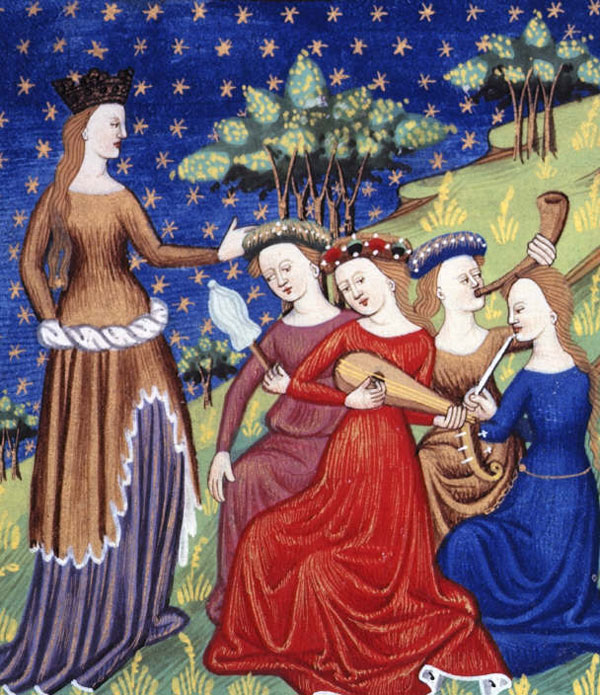
giovanni_boccaccio_women_playing

If you were in Sydney in early October, you could have attended the Royal Australian Navy International Fleet Review, celebrating one hundred years of our navy. Or, if you were of a more musical bent, you could have been there for The Renaissance Player’s 35th Runnymede Pop Festival. Held at Sydney University in its Gothic-style Great Hall, this is a unique concert of music, mime and poetry from medieval Europe, performed in brightly-coloured costumes.

The Runnymede Pop Festival has been going since 1973, and from the beginning has featured early music specialist Winsome Evans. Winsome is the director of the Renaissance Players, Australia’s oldest early music ensemble, and she is a professional harpsichordist, composer, and arranger. She conducted the first Renaissance Players concert while still a student.

Winsome is a recipient of the British Empire Medal in the Queen’s Birthday Honours List, The Order of Australia, and a NSW Jaycees Award for services to music.

Winsome is an English word meaning “charming in an innocent manner”. A winsome person is cheerful and open-hearted, engaging, and perhaps slightly naive, in a completely delightful way. The word comes from the Old English for “joy”, and is ultimately from an ancient root meaning “wish, love”.

Winsome is also an English surname, coming from the village of Winchcombe in Gloucester, or from Winscomb in Somerset. In either case, the name is Old English, and means “remote valley”. However, in some cases, the surname may have come directly from the Old English word winsom, meaning “attractive, lovely”, used as a personal name. If so, it means that the first name Winsome could date back to medieval times.

The first name Winsome can be found in records from the middle of the 19th century in North America, and seems to have been especially associated with Ontario, Canada. The reason for this may be Winsome Lake, which is one of the many thousands of smaller lakes in the Great Lakes region of Ontario, but why it inspired baby names is something of a mystery to me. I have been unable to discover how Winsome Lake received its name, because it is relatively obscure.

There are over one hundred women named Winsome in Australian records, most of them born around the turn of the twentieth century. There is another famous Winsome in Australia – Winsome McCaughey, who was Lord Mayor of Melbourne in the late 1980s. And another Australian musical connection too – Peggy Winsome Glanville-Hicks was a Melbourne-born opera composer and music critic who flourished in the middle of the 20th century.

Other successful Winsomes include British playwright Winsome Pinnock, and US Republican politician Winsome Sears. Interestingly, Sears was born in Jamaica and Pinnock’s parents were Jamaican, so there seems to be a West Indian connection. There was a grassroots playwright in Jamaica who wrote under the code name “Winsome” about 20-30 years ago. You can still find the name Winsome in use in Jamaica today, including singer Winsome Benjamin, and prize-winning cook Winsome Murphy.

Although Winsome is a secular virtue name like Felicity or Honour, the word winsome has come to have a particular meaning for evangelical Christians. The book Winsome Christianity by Henry Durbanville was published in 1952, and Winsome Evangelism by Ponder W. Gilliland came out in 1973.

I can’t pretend to be an expert on the subject, but my understanding is that the general message is to be winsome in your Christianity in order to attract more converts, and that some evangelists even use the word winsome to mean “capable of winning souls to Christ”. Author Neil Gaiman is apparently a big fan of the meaning of language changing over time, so I expect this example would be of great pleasure to him. It does give the name Winsome a special meaning for some Christians, so that it could become a religious virtue name in this context.

Winsome is a name I find very intriguing – the meaning of the word winsome seems very feminine to me, and Winsome is overwhelmingly used as a female name. Yet the name itself isn’t frilly in the least, having a similar sound to the male name Winston (which also comes from the Old English for “joy”). It’s a strong-sounding name for a girl, but with a dainty meaning.

Winsome isn’t a name I’ve ever seen on a baby or a child, and its heyday (if it can ever be said to have had one) was over many years ago. However, Winnie is becoming hip once more, and Winsome would be a rare and unusual way to reach it.

POSTSCRIPT: Abby Sandel mentioned Winsome in her Nameberry Nine column, and I was surprised and pleased at how many Berries liked or even loved the name Winsome.

POLL RESULT: Winsome received an approval rating of 61%. 21% of people thought it was an interesting modern virtue name, while 19% loved the idea of Winnie as the short form. However, 18% were reminded too strongly of the phrase win some, lose some. Only one person thought the name Winsome was too cutesy.

Famous Names: Henry and Navy

23 Wednesday Oct 2013

Posted by A.O. in Famous Names

≈ 3 Comments

Tags

American names, classic names, colour names, english names, famous namesakes, germanic names, historical records, honouring, military terms, name history, name meaning, name popularity, nicknames, patriotic names, popular names, royal names, saints names, unisex names, vocabulary names

5000830-3x2-940x627

Early in October, the Royal Australian Navy International Fleet Review was held, celebrating the 100th anniversary of the first Royal Australian Navy fleet in Sydney Harbour, on October 4 1913. Around 40 warships from twenty countries, and 16 tall ships took part, with seven RAN ships symbolising the 1913 entry itself. A stunning fireworks display on the Harbour used huge projections on the Sydney Opera House to tell the story of our century-old navy.

Although the Governor General Quentin Bryce reviewed the Fleet as the Queen’s Representative, it is traditional to have a member of the royal family in attendance for the Review, and Prince Henry of England, otherwise known as Captain Wales, or Prince Harry, got the gig. It was his first official visit to Australia, and although only here for 36 hours, he made himself immensely popular.

The famous names this week are in honour of the Royal Australian Navy, and our royal visitor.

Henry is from the Germanic name Heimrich, meaning “home ruler”. It has been commonly used amongst European royalty, and there are many rulers of Germany, France, Spain and Portugal named Henry, or one of its equivalents. There have also been six Holy Roman Emperors named Henry, one of them a saint. Other saints named Henry include a legendary bishop of Sweden, and Henry of Coquet, a Danish hermit who lived on an island off the coast of Northumberland.

Henry is a traditional name in the British royal family, and there have been eight English kings named Henry. Henry I was the son of William the Conqueror, and probably named after his great-uncle, King Henry I of France. The last king named Henry was Henry VIII, who is best remembered for his six wives, and for the English Reformation, which saw the Church of England break away from the Roman Catholic Church and the pope’s authority. In his prime handsome and powerful, he is considered to be one of the most charismatic of English rulers.

There have been a few British princes named Henry, and Prince Harry may have been named after his great-uncle Prince Henry, the Duke of Gloucester, who was Governor-General of Australia, and married to Princess Alice, whose middle name was covered in Rare Royal Names for Girls.

Some people find it hard to understand why Harry is a short form of Henry. In the Middle Ages, Herry or Harry was how the name Henry was pronounced in England, so anyone named Henry was automatically a Harry once their name was said aloud. Today the medieval Harry is used as a pet form of Henry.

It is sometimes forgotten that Prince Harry’s official name is Henry, so that when he was introduced as an ambassador of the 2012 Olympic Games, some viewers wondered who this “Prince Henry” chap was. Bizarrely, one online news source (now removed) even reported that Prince Harry and Prince Henry of England attended the closing ceremony together (well, I guess they did, in a way).

Henry is a classic name in Australia which has never left the charts. It was #11 in the 1900s, and gradually fell until the left the Top 100 in the 1950s, hitting its lowest point in the 1970s at #265. Since then, it has gradually climbed, and was back on the Top 100 by the 1990s, where it has continued to increase in popularity. It isn’t shooting up dramatically, but making steady gains.

Currently it is #33 nationally, #27 in New South Wales, #23 in Victoria, #35 in Queensland, #17 in South Australia, #33 in Western Australia, #15 in Tasmania, #19 in the Northern Territory, and #10 in the Australian Capital Territory.

Henry is a handsome classic that seems intelligent and solidly unpretentious. It’s a popular name, and rising in popularity, but in a sensible, steady way. It seems unlikely at this point to match Prince Harry’s brother’s name, William, in the popularity stakes, and get to #1.

Navy is an English vocabulary name; the word navy refers to a fleet of military watercraft. Although navies have been used since ancient Greek and Roman times, navy is quite a modern word in English, dating back to around the 17th century, it is from the Old French meaning “fleet of ships” – ultimately from the ancient Greek for “ship”.

You can also see Navy as a colour name, since navy blue or navy is the very dark blue named after the traditional colour of naval uniforms.

Navy has been used as a personal name since the very late 18th century, and is first found in the United States, more specifically New England. The births of the first babies named Navy coincide with the establishment of the US Navy in 1794, so it seems to be a very patriotic name, and likely to be given to children of people connected with the navy itself.

Navy is much more common in the US than anywhere else, although rare in America too, and overall it has been given to boys and girls in fairly equal numbers. It is an extremely rare name in Australian historical records, and seems to be slightly more common as a girls name here; I have only ever seen Navy on girls, but so infrequently that it seems an entirely unisex name.

Rare, unisex, and rather modern, the name Navy would honour a naval connection in the family, or a family naval tradition.

POLL RESULTS: Henry received an astonishing approval rating of 95%. Navy received a more modest approval rating of 25%.

Famous Name: Thorn

25 Wednesday Sep 2013

Posted by A.O. in Famous Names

≈ 3 Comments

Tags

botanical names, craft names, english names, famous namesakes, historical records, name history, name meaning, names of runes, nature names, Old Norse words, plant names, rare names, surname names, unisex names, vocabulary names

4978915726_62d35a67eb_o

October 2 will be the 96th birthday of Rosaleen Norton. She was originally from New Zealand, born into a middle-class English family; the Norton family emigrated to Sydney when Rosaleen was eight. She was an unconventional child who disliked other children and all authority figures, including her mother; she slept in a tent in the garden, and preferred the company of her many pets, which included a spider named Horatius. Later in life, she claimed that she had been born a witch, and bore physical proofs of this, including pointed ears and blue markings on her left knee.

From early in life, her favourite time was the night, and while still very young, she began to experience strange fantasies of mystical ghouls and spirits. She liked to draw, and the pictures she drew were inspired by her nightly fantasies. This got her into trouble, because teachers and classmates alike were disturbed by her drawings of demons and vampires, and when she was 14, she was expelled from her private Church of England girl’s school in the belief that she was a corrupting influence. It was not the last time she was to be condemned for her art.

Rosaleen went to art college, where her talent for drawing was more appreciated, and gained work here and there as a writer and illustrator. She lived at the Ship and Mermaid Inn in The Rocks, a run-down pub that attracted artistic types – Joseph Conrad and Jack London both stayed there while visiting Sydney (not together, I presume). It was here that she began reading books on Greek mythology, psychology, magic, occultism, demonology, and the Quabalah.

Rosaleen began experimenting with self-hypnosis and automatic writing as techniques to heighten her artistic perception; these methods were popular with surrealist artists like Salvador Dali and Andrew Breton. During her experiments, she received visions of supernatural figures, and from her occult studies, believed she had not merely accessed her subconscious, but an “astral plane”. She came to see the spiritual entities as having an independent reality of their own, and was able to communicate with them.

Rosaleen turned her symbolic visions into art, but attempts to exhibit or publish her work led to court cases where she was charged with obscenity, and attempting to corrupt public morals. It turned out the adult world still thought like the headmistress of a girl’s school. Rosaleen defended her work as pagan archetypes based on Greek mythology, but even when she won her case, the result was that the exhibition was cancelled, or the book censored. If you think Australia was peculiarly backward in the 1950s, her treatment was even more severe in America, where her book was banned entirely, and copies burned.

Already a notorious figure, Rosaleen settled in King’s Cross, the red light district of Sydney, which attracted many bohemians, artists, writers and poets. She became well known in the area and some of her artwork was displayed in local cafes. Curious visitors came to see the “Witch of King Cross”, who had decorated her house with occult murals, and put up a placard on the door which read: Welcome to the house of ghosts, goblins, werewolves, vampires, witches, wizards and poltergeists.

The police had her arrested for “vagrancy”, which in those days could be used against anyone not in steady employment, and a mentally ill homeless woman claimed that her life had fallen apart after taking part in a Satanic “black mass” with Rosaleen. Being a pagan, Rosaleen didn’t believe in Satan, and eventually the woman admitted she had made the whole thing up. However the tabloids went crazy and she was accused in their pages of doing everything from drinking blood to animal sacrifice – a practice she found abhorrent, for she had a very strong bond with animals.

Rosaleen had her own style of pantheistic witchcraft, based on worshipping Pan as the embodiment of natural forces, and rituals inspired by the works of Aleister Crowley. She was a practitioner of sex magic, and due to a couple of high-profile court cases where this led to further charges of obscenity by her coven, there is a public record of her religious beliefs and practices, given by herself, which make for fascinating reading for the student of comparative religion. You get the distinct impression that the courts were just slightly more interested in the sexual aspects of her magic rituals than strictly necessary.

Interestingly, Rosaleen herself said that her style of magic, called The Goat Fold Path, was not of her own devising, but what she thought was an old Welsh tradition which had existed in inner Sydney from the city’s earliest days, brought here by convicts. There is no way of proving or disproving this, but if correct, it means that European pagans have been in Australia from the beginning, along with Christians, Jews, and atheists.

Rosaleen estimated that she was in personal contact with hundreds of witches, which means that even in the socially repressive 1940s and ’50s, witchcraft was alive and well in Australia before the arrival of contemporary Wicca in the late 1960s. Witchcraft was illegal in Australia until 1971; one of the few religions to be banned in Australia. On the 2011 census, about 32 000 Australians identified themselves as Neopagan, and of those, over 8 000 identified their religion as either Wicca or Witchcraft.

Rosaleen Norton’s craft name was Thorn, perhaps a counterpoint to the Rose suggested by her birth name. The sharp name suited her, because she found spiritual energy in a dark approach to her religion, apparent in her artwork. By no means was she a “fluffy bunny” witch, and was keen on hexing people, and selling curses. She asserted the need to explore the dark parts of her psyche, and embrace them, rather than denying their power.

I think that by taking the name Thorn, she was indicating a willingness to face the pain of life unflinchingly. Even while dying from colon cancer, she said to a friend: I came into the world bravely; I’ll go out bravely.

Thorn is a nature nature which is seldom used, but one which I find very strong and attractive. In botany, a thorn is a branch or stem which ends in a sharp point; their function seems to be to protect a plant from being eaten, and also to provide shade or insulation. The English word thorn may be from an ancient root meaning “stiff”.

In Genesis, thorns are said to be one of Adam and Eve’s punishments, with the earth producing thorns and thistles in order to make food gathering more difficult, and generally ruin their day. In the New Testament, Christ was forced to wear a crown of thorns as a mocking punishment, seemingly a parody of the crown worn by the Roman emperor. In Christian tradition a crown of thorns is a symbol of great humility.

Thorn or thorn tree is also one of the many names by which hawthorn is known (see May). Hawthorn bushes are often used as hedging plants, so that their spiny thorns may protect livestock. The English surname Thorn probably denoted someone who lived near a prominent hawthorn.

Thorn is also a rune letter; despite the way it sounds, it is from the Old Norse for “giants”. However, the Anglo-Saxons do seem to have connected it to thorns, and it is often seen as a rune of warning or even misfortune, although others say that the power it represents can serve as protection – if you dare to grasp the thorn.

In the records, most people named Thorn are male, but I can imagine a girl named Thorn as well – the flipside of Rose (although strictly speaking roses don’t have thorns but prickles). I only found a couple of people named Thorn in Australian records, and they were both male, but as a middle name it was well used by both sexes.

The many associations of this name are double-edged, and some may think of pain and punishment, while others reminded of its protection and power. After all, from a plant’s point of view, thorns are healthy and necessary. It’s a glass half-full situation. Do you weep because roses have thorns, or rejoice that thorn bushes are laden with flowers?

POLL RESULT: Thorn received an approval rating of 44%. 20% of people couldn’t see the name Thorn on a real person, while 16% were reminded of the word prick, or the phrase thorn in my side. However, 15% thought it was an attractive and original nature name, and 11% saw it as strong and protective.

(Photo of thorn from Flickr)

Famous Name: Jason

18 Wednesday Sep 2013

Posted by A.O. in Famous Names

≈ 3 Comments

Tags

Beyond Jennifer & Jason, Biblical names, famous namesakes, fictional namesakes, Greek names, hebrew names, historical records, honouring, Linda Rosenkrantz, mythological names, name history, name meaning, name popularity, name trends, names from movies, names from television, Pamela Redmond Satran, royal names, saints names, US name popularity

51WNMTYA9qL

A federal election was held on September 7, and we have had a change of government. Votes are still being counted, so the election isn’t over, and we may have some names from it when the process is complete.

However, in a much more frivolous political poll held in August, Cleo magazine rated the male politicians on their sex appeal, and decided that Labor MP Jason Clare, described as the “Rob Lowe of Australian politics”, was the winner. I can’t help thinking if a men’s magazine had rated female politicians like this it would be considered very wrong.

Jason Clare represents the seat of Blaxland in western Sydney, which he won in 2007, and until recently was the Federal Home Affairs Minister. Jason grew up in the western suburbs, made dux of his class, and completed a law degree while pursuing an interest in politics. While Labor lost the election with a significant swing against it, Jason managed to increase his hold over the electorate by 6%.

To show that he is not vain about his appearance, Jason modestly joked that his wife’s preference in the Cleo poll was for the runner-up, Stephen Smith. Hello ladies – he’s a smart, handsome law graduate and his wife doesn’t appreciate him! (is the message I think we’re meant to be receiving there).

Jason is from the Greek name Iason, derived from the Greek for “to heal”. Iaso was the Greek goddess of recuperation from illness, so you could see Jason as a masculine form of her name. Although Jason is often translated as “healer” or even “physician”, to me the meaning of the name is more about the body’s natural ability to heal itself.

The name is best known from the mythological prince of Thessaly, who led a hand-picked crew of heroes on the good ship Argo, in quest of the Golden Fleece, with the aid of the goddess Hera. Jason and the Argonauts had a series of adventures, in which they didn’t behave very nobly for much of the time, then arrived in Colchis, which today is in Georgia, on the Black Sea.

The Golden Fleece was owned by King Aeetes, and to obtain it, the king gave Jason three tasks which seemed impossible to perform. Hera arranged for Aeetes’ daughter Medea to fall in love with Jason, and as she was a great sorceress, she was able to use her knowledge of magic to help him succeed, after he promised her that they would get married.

Jason and Medea then fled with the Fleece and sailed away on the Argo, because King Aeetes knew that Jason could only have completed the tasks by cheating, and wanted his property back. He pursued them until Medea came up with the horrible plan to kill her own brother and throw him into the sea, piece by piece, to distract her father.

Medea’s interest in dismembering family members continued when she and Jason returned to Greece, and she arranged for his Uncle Pelias to get chopped up into soup. Pelias had tried to drown Jason as a baby, then sent him off on the dangerous Golden Fleece quest hoping he’d die, so she had her reasons. With her penchant for murdering relatives, you’d think that Jason would have been blissfully happy with Medea, but instead he betrayed her love by becoming engaged to another woman.

When Medea tried to point out that all Jason’s luck in life was because of her, and he was being very ungrateful, he replied, “Babe, you’re the one who got lucky when the gods made you fall in love with me”. Medea wasn’t the type to take this treatment lying down, and she promptly burned her rival to death before murdering the children she and Jason had had together. Although Jason was ungallant, Medea’s tendency to see her own flesh and blood as collateral damage is disturbing.

Because Jason had broken his vow to love Medea forever, the goddess Hera abandoned him, and he wound up lonely and miserable. He was killed when the Argo, now old and rotting, broke and fell on top of him while he was asleep – a suitably ironic finish.

A king of Thessaly named Jason was a contemporary of Alexander the Great‘s father. A successful and ambitious general, it is thought that he must have been at least one of the inspirations of the great Alexander himself. It seems very likely he was named after the Thessalian hero.

There is a Jason in the New Testament, one of the Seventy Disciples of Christ, who ran a “safe house” for Christians in Thessalonica, and was once arrested for it. Saint Paul appointed him bishop of Tarsus, and he is known as Saint Jason. Unusually for an early Christian saint, Jason lived to a ripe old age. The Jewish historian Josephus tells us that Hellenised Jews used the name Jason to replace Yeshua (Joshua or Jesus), and this may apply to Saint Jason too.

Being Biblical, Jason was acceptable for use as a Christian name, and can be found in the records from at least the 16th century. The name Jason became very popular in the 1970s, and it looks as if this was due to the original Jason, because the movie Jason and the Argonauts came out in 1963 (it cut out most of the revolting parts). A special effects tour de force, it’s a cult classic, and according to Tom Hanks, the greatest film ever made. It must have made a huge impression.

Jason was already rising in popularity at the time of the film’s release, but soon zoomed up the charts to make the US Top 100 three years later. It was Top 10 in the US for all of the 1970s, which coincides with popular TV series, The Waltons, having a Jason. Even in the late 1980s, when Jason was #27, Pamela Redmond Satran and Linda Rosenkrantz were urging parents to “go beyond Jennifer and Jason”. Despite their book’s success, Jason has still not left the Top 100 in the United States, so American parents only partially heeded their call.

Jason has charted in Australia since the 1950s, when it was #290 for the decade. By the 1960s it had climbed phenomenally to make the Top 50, at #43 for the decade. It peaked in the 1970s (when Jason Clare was born) at #3, was still #18 in the 1980s, and #35 in the 1990s. Did nobody feel like going beyond Jason? It finally left the Top 100 in the mid-2000s, and is currently #133 and stable – not popular any more, but by no means plummeting into obscurity.

Jason has been a real 1960s success story, and continues to influence popular names for boys, because parents are still attracted to similar names, such as Mason, Jacob, Jayden, Jackson, Jasper and Jordan. In fact, Jason is staging a comeback under the short form Jace – already Top 100 in the United States, and no doubt rising here too.

It turns out we’re not ready to go beyond Jason yet – at least, not very far.

POLL RESULT: Jason received an approval rating of 38%. People saw the name Jason as a “dad name” (30%), and common and boring (20%). However, 12% saw it as a “nice guy” name, and 10% thought it attractive. Nobody thought the name Jason was sexy.

Famous Name: Declan

11 Wednesday Sep 2013

Posted by A.O. in Famous Names

≈ 4 Comments

Tags

Baby Name Pondering, famous namesakes, historical records, Irish name popularity, Irish names, name history, name meaning, name popularity, Old Irish names, popular names, saints names, UK name popularity, US name popularity

5922793578_4acfc9253e_z

September 8 marked the 74th birthday of folk singer Declan Affley, who was born in Wales to parents of Irish descent. He joined the British navy at 16, and travelled to Japan and Australia; he jumped ship in Australia and based himself in Sydney. At a harbourside pub called the Royal George (now The Slip Inn), he discovered the libertarian movement known as the Sydney Push, and joined its folksinging scene.

He became a regular performer in the folk clubs of Sydney and Melbourne, and appeared at folk festivals. He also busked on the streets, and was occasionally censored for singing left-wing political material, but this encouraged rather than deterred him. He was invited to sing some of his political songs on ABC radio, and also appeared in the 1966 award-winning ABC documentary, The Restless Years, presenting Australian history through poems, stories and songs. He also contributed to films, including the 1970 version of Ned Kelly.

Declan regarded himself as a socialist with anarchist leanings, and was an active supporter of the New South Wales Builders Labourers’ Green Bans, Irish hunger strikers, and Aboriginal land rights. He taught music at the Eora Centre in Redfern as his contribution to the advancement of Australian Indigenous people. Irish people are often thought of as having the gift of the gab, and Declan loved to talk for hours about history, music, politics and sport over a beer.

He died unexpectedly at the age of 45 – a very great loss to the folk community. The Declan Affley Memorial Award for excellence in a young performer is awarded each year at the National Folk Festival.

Declan is an Anglicisation of the Irish name Declán or Deaglán; it is usually translated as coming from the Old Irish for “full of goodness”. The name is known because of Saint Declán of Ardmore, a 4th or 5th century Irish bishop credited with the Christianisation of southern Ireland before the arrival of Saint Patrick.

The village of Ardmore in County Waterford is believed to be the oldest Christian settlement in Ireland, and by tradition, Saint Declán built a monastry here. He has been steadily popular in Waterford, with many churches dedicated to him, and each year on his feast day of July 24, devotions are held in his honour. This year, a five-day pilgrimage walk was held in late July, on a 100 km path between Cashel in Tipperary and Ardmore, which Saint Declán is said to have taken.

There is a long tradition of Christians taking new names, or being given new names, to mark their new lives, and in particular many of the Irish saints have created descriptive names. Declan looks to be one of them, for the meaning “filled with goodness” seems to have Christian significance.

I can first find Declan in Irish records from the late 18th century, and they were all born in southern Ireland; in Munster, where Declan is the patron saint, and in Waterford, near his centre of Ardmore. That suggests very strongly that the name was given in honour of the saint, and that it had an element of local pride as well.

Declan was quite a popular name in Ireland during the mid-twentieth century, and as well as Declan Affley, is borne by several musicians. These include Declan de Barra, an Irish-born Australian punk-folk singer, English pop singer Declan Galbraith who covers traditional Irish tunes amongst his own work, Declan Nerney, an Irish country singer, and Declan Sinnot, an Irish folk-rock singer. You may also have heard of Declan MacManus, who performs under the name Elvis Costello.

Declan has charted in Australia since the 1980s, and ranked since the 1990s, when it debuted at #145. It has been Top 100 since the early 2000s, and last year it was in the top ten fastest rising boys names in Australia, when it rose 12 places on the national chart. Currently it is #84 nationally, #74 in Victoria, #60 in Queensland, #50 in Western Australia, #71 in Tasmania and #56 in the Australian Capital Territory.

Unusually for a name in the national Top 100, Declan hasn’t been Top 100 in New South Wales since 2010. We seem to be caught between international trends, with New South Wales following the lead of England/Wales, where Declan has left the Top 100 and is declining in popularity, and Victoria and other states, who appear to be following the United States, where Declan is still rising towards the Top 100. Declan has a similar popularity to us in Scotland, but isn’t Top 100 in either Ireland or Northern Ireland.

If you love the name Declan, you won’t find yourself alone in your preference, but it’s still a good Irish heritage choice. It’s a handsome name, with an attractive, lilting sound to it, and it’s not wildly popular. Brooke from Baby Name Pondering chose it as her favourite boys name in the Victorian Top 100, and tells me that she finds it really charming – great recommendation!

POLL RESULT: Declan received an approval rating of 70%. People saw the name Declan as a good Irish heritage choice (25%), handsome or attractive (23%), and sweet and charming (11%). However, 11% thought the name was too trendy, and destined to be the next Aidan or Liam.

(Photo is of Ardmore in Ireland, where Saint Declan is supposed to have lived and preached)

Famous Names: Muhammad

04 Wednesday Sep 2013

Posted by A.O. in Famous Names

≈ 4 Comments

Tags

Arabic names, celebrity baby names, famous namesakes, name data, name discrimination, name history, name meaning, name popularity, name studies, NSW name popularity, popular names, saints names, UK name popularity, US name popularity

PMUZ058

The name Muhammad joined the national Top 100 last year, which was also its first time in the New South Wales Top 100. However, data from the NSW Registry of Births, Deaths and Marriages shows that, if you combine all the variant spellings, Muhammad has been in the Top 25 of the state since 2010, giving it a similar level of popularity to Xavier, Jayden, Mason and Charlie.

This trend looks likely to continue, with 161 baby boys named Muhammad, Mohamed, Muhammed or Mohammed already born in the state this year between January and August.

Muslin leader and community spokesperson, Keysar Trad, who has a son named Muhammad, believes that these statistics are a sign that Australian Muslims are becoming more confident in giving their children Islamic names.

He thinks that they show a greater acceptance of Muslim names in the wider community, and a healthier connection with their religion amongst Muslims.

Mr Trad says that religious names not only allow an expression of devotion to God, but allow parents to reclaim an aspect of their culture.

By choosing the name of a significant religious figure, they hope that their child will share in the good qualities of that name, and perhaps be inspired to learn more about it when they get older.

“You think that one day, maybe they will read up on the significance on the name,” he said.

The prophet Muhammad’s full name was Abū al-Qāsim Muḥammad ibn ʿAbd Allāh ibn ʿAbd al-Muṭṭalib ibn Hāshim, and he was a 6th century leader from Mecca in Arabia who unified his country under Islam.

According to his own testimony, at the age of 40, he began receiving revelations from God through the archangel Gabriel, and a few years later began preaching these revelations. He proclaimed that “God is One”, and that complete surrender to Him was the only acceptable path to God – the word Islam itself means “surrender”. Muhammad declared himself a prophet, and a messenger sent by God.

The revelations which Muhammad reported receiving until his death in his early 60s form the Quran, which is the basis of the Muslim religion, and regarded by Muslims as the Word of God.

The name Muhammad means “praised, praiseworthy” in Arabic, and it is a very popular name amongst Muslims. It has a variety of transliterations and spellings because of the different languages used in the Islamic world.

It is believed that Muhammad, counting all variant spellings, is the most common personal name in the world, with an estimated 150 million men and boys bearing the name. It is the most common boys name in England/Wales, and in the United States, if all the spelling variants were combined, Muhammad would be in the Top 200 and rising, with a similar popularity to Silas, Maddox, Weston and Greyson.

There is a popular theory that names which are too “ethnic” sounding should be avoided lest they lead to discrimination, and you can find studies which show that in many cases, it can be harder to get a job interview if the name on your resume looks “foreign” (although this Australian study showed it depended where you lived and what kind of “ethnic” your name was).

Kayser Trad acknowledged that there have been cases where people with an obviously Muslim name had trouble getting a job, but he doesn’t believe the answer is to “go into hiding”, or change your name to Charlie Edwards to get an interview.

It also occurs to me that this theory assumes that all businesses are owned and all industries are controlled by people from an Anglo background, and that all people in charge of such businesses would prefer not to employ non-Anglo people. That just isn’t true.

I watched the daily business report on television yesterday, and noted that of the half dozen spokespeople from major businesses interviewed, four of them had ethnic names, including two with Arabic names. Furthermore, many businesses are owned by people from non-Anglo heritages, and having a Muslim name may prove an advantage in some areas.

Businesses in areas with a strong migrant community could prefer to hire people from a similar background for greater rapport with and understanding of their customer base, and your name shouldn’t be any disadvantage in the public and non-profit sector – about 25% of the workforce, and in some areas, up to 80% of the workforce.

Muhammad joining the Top 100 is a watershed in Australian society, but it should also be remembered that the majority of names on the boys Top 100 are of Jewish or Christian origin, with many names of pagan origin only coming into popular use through saints, such as George and Aidan, and even surname names developing because of saints, such as Mitchell and Jackson.

If you are interested how names of other religious figures fare in New South Wales, during the 2000s more than one baby each year, but less than six, were named Jesus or Moses, and in the same period most years saw about 7-11 babies named Abraham. By July this year, 10 babies named Krishna had been born. Hmm, this could be another growth area …

POLL RESULT: Muhammad received an approval rating of 49%. 27% of people thought the name Muhammad connected its bearer to his culture, and as a result, 24% believed the name was only suitable for Muslims. 14% saw the name as “too Muslim”.   

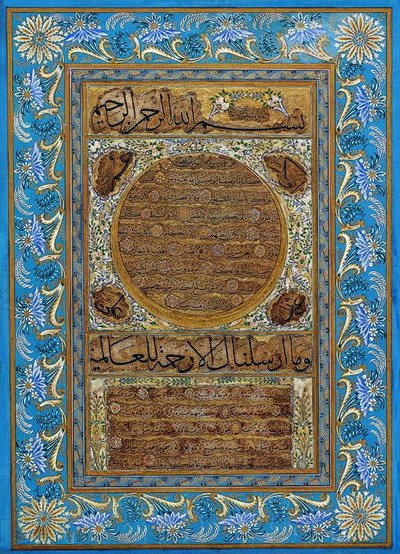
(The picture shows a 17th century Ottoman calligraphy panel by Hafiz Osman, describing the physical appearance of the prophet Muhammad; it is not permitted to show images of Muhammad in Islam)

Famous Name: North West

28 Wednesday Aug 2013

Posted by A.O. in Famous Names

≈ 4 Comments

Tags

Ancient Germanic names, aristocratic surnames, celebrity baby names, english names, famous namesakes, historical records, locational names, middle names, name history, name meaning, names of compass directions, names of railway lines, nature names, surname names, unisex names, vocabulary names, Wikipedia

1

The Hills Shire is in the north-west region of Sydney. Big news in The Hills at the moment is the North West Rail Link, which will connect Rouse Hill to Epping, and involve the construction of eight new railway stations. To assist with the necessary disruptions, The Hills Shire council has put out a pamphlet: Is your business north-west rail ready? The pamphlet suggests you may want to stagger your work times, or work from home until the North West Rail Link is complete.

The North West Rail Link is the “baby” of the Hills Shire council, and as often happens, their baby name was “stolen” when Kanye West and Kim Kardashian called their daughter North West. However, in this case New South Wales has precedence, because they came up with the name North West in 1998. Why it takes 15 years between the proposal and sending out pamphlets is a question only local government can explain. (If you’re really curious, Wiki it). There is no date set for ending the project, which may not occur until 2020. Hope you’re north-west rail ready!

North is one of the four major compass points, and in Western culture, it is considered the primary direction, and the one from which all other directions are taken. By convention, north is placed at the top of globes and maps, although the word comes from an ancient Germanic root which means “down, under”. This may come from an ancient root meaning “left, below”, because north is to the left when you face the rising sun.

For people in the northern hemisphere, north is the direction towards the Arctic, and when they think of “northern lands”, they probably envisage ice and snow, or at least cooler temperatures. In many fantasy tales, dangerous or evil creatures come out of the north, such as Hans Anderson’s Snow Queen, and the dragon in Tolkien’s The Hobbit. However, the ancient Greeks believed that in the far north lay the country of the happy Hypoboreans, who lived in a land of eternal sunshine (kind of on the right track due to the Midnight Sun).

In the southern hemisphere, north is the direction of the Equator, and we may think of northern places as hot and dry, or steamy and tropical. In Australia, the northern part of the country Australia has a certain mystique as vast, hot, empty of people, and rich in natural resources.

North is also an English surname. The aristocratic North family hold the title of Earls of Guildford, and Frederick North, the second Earl, was Prime Minister of Great Britain during the American War of Independence. Frederic Dudley North, descended from the British Prime Minister, emigrated to Western Australia in the 19th century and undertook several important posts, including representing the state during Queen Victoria’s Jubilee.

The origin of the surname is unclear – it could refer to someone who lived to the north of a particular town, or possibly someone with Norse ancestry, or who looked as if they might have.

West is another major compass point, conventionally placed on the left side of maps, and lying in the direction of the setting sun. It seems to be from an ancient root which means “downward”, referring to sundown, and is closely related to the word evening.

Because the west points toward the sunset, in many cultures it represents death (to go west, means “to die”). The ancient Celts imagined the Otherworld could be found far out in the western sea, while the ancient Greeks believed the paradisaical Fortunate Isles were located in the western ocean. The island of Atlantis was also thought of as being to the west, far out in the Atlantic.

In Britain, the West End is the posh part of London, while Westminster is the seat of power, and the West Country the land of legends and fairy tales. Westward Ho!, by Charles Kingsley, is set in the West Country and deals with adventures in the West Indies. Its title is the same as a Jacobean satire by Dekker and Webster on west London, taken from the call of Thames watermen. The playwrights later wrote Northward Ho!, set in north London.

In the United States, the western frontier lands in the 19th century symbolised freedom, adventure, opportunity and progress, as in the famous phrase, Go west young man. The Old West is not so much a time and a place as part of the American psyche, and the American West helped inspire imaginative works as diverse as Little House on the Prairie, Star Wars, The Great Gatsby, On The Road, Breaking Bad, and The Wizard of Oz (which has a Wicked Witch of the West).

The iconic Wild West played a major role in the development of the Australian myth of The Bush, and there is much we can identify with, as we have our own frontier country, the Outback. Here the west is Western Australia, the largest state, and the most geologically ancient part of the country, at over 4 billion years old. The oldest life forms on Earth, the stromatolites, can be found in Shark Bay, and the world’s oldest fossil, 3.4 billion year old bacteria, was discovered in Port Hedland.

The West also refers to Western civilisation, an idea which goes back to the ancient Greeks. Today it has political connotations, with people believing that “the West” stands for any number of values they might like or dislike. It is political rather than geographic, because “western” countries are all over the world.

The English surname West denotes someone who lived to the west of a town, or someone who had moved to the area from the west. It turns up early on in Essex, the most easterly part of England. This is another aristocratic surname, for the Wests were an old family originally from Devon, in the West Country.

North and West have both been used as personal names since at least the 16th century, with West much more common overall. Most Norths and Wests have been male, although the first North I can find in the records was a girl, and there are many female examples of both names. A larger proportion of Wests have been female, compared to Norths. There are thousands of Norths and Wests of both sexes in Australian records, although most of these are middle names.

North and West are names which sound a little out of the ordinary, and yet are straightforward and instantly recognisable. Everyone can spell and pronounce them, and they’re easy to explain: “North, like the North Pole”, “West, like the Wild West”.

They seem modern, but have surprisingly long histories, and layers of meanings, of which you are free to choose the ones which appeal to you the most. Kanye and Kim reportedly chose North because they saw it as meaning “the furthest up”, and therefore the pinnacle of their relationship, which strikes me as very northern-centric, and making a second child’s name problematic. If the first child’s name marks the pinnacle of your relationship, what’s left for Number 2?

POLL RESULTS: North received an approval rating of 40%, and West a rating of 35%. Most people preferred the names North and West on a boy rather than a girl. 98% of people thought the name North West was more suitable for a railway than a human.

(Picture shows an artist’s impression of a station on the North West Rail Link)

Famous Names: Aria and Delta

14 Wednesday Aug 2013

Posted by A.O. in Famous Names

≈ 8 Comments

Tags

alphanumeric names, celebrity baby names, english names, famous namesakes, fictional namesakes, geographical names, Greek names, historical records, Italian names, locational names, musical names, musical terms, name popularity, name trends, names from songs, names from television, nature names, nicknames, saints names, vocabulary names

thumbThe Australian music industry celebrated an important birthday a month ago, because July 10 this year marked thirty years since the Australian Recording Industry Association (ARIA) began collating sales information from music stores. The ARIA charts developed from the Kent Music Report, and the first Australian charts began in the 1960s, collated by Go-Set magazine, the music “bible” of its time which later spawned Australian Rolling Stone, and whose weekly music columnist Ian “Molly” Meldrum would go on to host seminal music show Countdown.

The first single to top the ARIA charts way back in 1983 was Total Eclipse of the Heart by Bonnie Tyler, the first #1 album was Michael Jackson’s Thriller, and the most consistently popular performer over the many years of her career has been Madonna. However, Kylie Minogue equalled Madonna for the most #1 singles (10), and was equal second with the Black Eyed Peas for most weeks (30) spent at #1 in the singles charts.

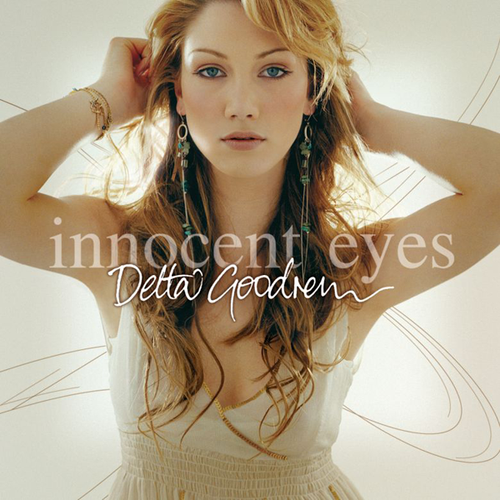
Pop singer Delta Goodrem’s debut album, Innocent Eyes, spent longer at #1 than any other Australian album at 29 weeks, and she is the first ever music artist to have five #1 singles from a debut album. Innocent Eyes went on to be the best-selling album of the 2000s. Delta played aspiring singer Nina Tucker on soapie Neighbours, where she sang Born to Try, scoring Delta her first #1 spot on the ARIA charts. She has won ten ARIA Awards, and all her albums have gone to #1, making her one of Australia’s best-selling female artists. Delta is currently a judge, coach and mentor on The Voice.

In music, an aria is a vocal piece performed by a singer, usually as part of a larger work. We often connect arias to opera, although they can be part of classical concert music too, and usually think of them as very beautiful and elaborate pieces of music that only an expert singer can do justice to.

Some famous arias are Ave Maria, O Sole Mio, La Donne e Mobile from Rigoletto, and Nessun Dorma from Turandot (if you think you don’t know them, click on the links to listen, and you’ll probably find that you have heard them before). In Italian, aria means “air”, and is from the Latin word for “atmosphere”.

As a girl’s name, Aria is usually said to be a modern English name. It’s hard to track it through historical records, as any Arias you find could easily be a misprint for Maria, so while there are hundreds of Arias in Australian records, with both English and Italian surnames, your guess is as good as mine whether they were really named Aria.

There is a Saint Aria, an obscure early Christian who was martyred in Rome, but her name seems to have been short for Ariadne.

Aria catapulted into the national Top 100 last year, debuting at #83, the second-highest rising name for girls in Australia, and possibly the highest, if we had access to all the data. The name has been popularised by the character of Aria Montgomery, from the Pretty Little Liars books and TV series, and young singer and actress Aria Wallace; it’s also been boosted by its similarity to other fashionable names, like Arya, Arianna, Ariel, Allira and Allegra. Musician Ash Grunwald welcomed a daughter named Aria earlier this year.

Delta is the fourth letter of the Greek alphabet; it’s based on a letter in several Semitic alphabets which is supposed to represent a door. The Greek letter is shaped like a triangle when capitalised, and it is for this reason that the landmass at the mouth of river became known as a “delta”. If you want to get geographically technical, it is wave-dominated deltas which tend to have this triangular form; the most obvious example is that of the River Nile, and it is the Nile Delta which was first given the name, and is the “original” delta.

The Mississippi Delta region is the area which lies between the Mississippi and Yazoo Rivers, and includes parts of the states of Tennessee, Mississippi and Arkansas. Here’s another geographical technicality – the Mississippi Delta isn’t actually a delta – it’s an alluvial plain. The Mississippi River Delta is 300 miles to the south, in Louisiana, where the river meets the Gulf of Mexico. Just in case you have, in this short space of time, due to my scintillating prose style, become obsessed with river deltas, the Mississippi River has a bird-foot delta, where long finger-like projections reach out into the sea, and isn’t actually delta-shaped in the least.

The Mississippi Delta (the region, not the actual river delta in Louisiana – gosh I hope all this geography isn’t getting too confusing) is associated with the very beginning of several genres of popular music, such as Delta blues and rock and roll. You can no doubt get yourself into some very stimulating arguments over whether Delta blues is significantly different to any other kind of blues, or just how rock and roll got started anyway, but the Mississippi Delta would be crazy not to cash in with tons of music festivals, and they’re not, so they do.

Rita Coolidge is an American singer who inspired the song Delta Lady, by her one-time boyfriend, singer-songwriter Leon Russell. I always assumed that the name came about because Ms Coolidge is from the Mississippi Delta, but – more geographical technicalities – she’s from Macon county in Tennessee, which isn’t in the Delta region. So we may be talking poetic license here rather than geographical technicalities, although from the song’s lyrics, Russell seems to be using delta as a metaphor for ladyparts (as in the erotica collection, Delta of Venus, by Anais Nin).

(Just as an aside, the faded southern belle of unsound mind in the song Delta Dawn, which became Helen Reddy’s first #1 hit, was from Brownsville in Tennessee, which prides itself on being the “heart of the Tennessee Delta”. Dawn was a real Delta Lady.)

It was the song Delta Lady which inspired Delta Goodrem’s parents to name their daughter Delta, so that is one possible source of the name, but you could see it as a geographic name, a nature name or an alphanumeric name as well. You can also see it as a musical name, because a major 7th chord is sometimes called a Delta Chord.

There are many, many women named Delta in Australian historical records, dating back to the 19th century, and it is currently #412 in Victoria.

So here’s two pretty, modern-sounding musical names for girls, both with an Australian focus. Cross-cultural Aria is much more on trend that Delta, and consequently more popular, yet Delta has a more solid history of use as a personal name. Which one do you like better?

POLL RESULTS: Aria received an approval rating of 78%, and Delta of 33%.

https://www.youtube.com/watch?v=TOz6Mt2t084

← Older posts
Newer posts →

Enter your email address to follow this blog

Categories

Archives

Recent Comments

A.O.'s avatarwaltzingmorethanmati… on Zarah Zaynab and Wolfgang…
Madelyn's avatarMadelyn on Zarah Zaynab and Wolfgang…
JD's avatardrperegrine on Can Phoebe Complete This …
A.O.'s avatarwaltzingmorethanmati… on Rua and Rhoa
redrover23's avatarredrover23 on Rua and Rhoa

Blogroll

  • Appellation Mountain
  • Baby Name Pondering
  • Babynamelover's Blog
  • British Baby Names
  • Clare's Name News
  • For Real Baby Names
  • Geek Baby Names
  • Name Candy
  • Nameberry
  • Nancy's Baby Names
  • Ren's Baby Name Blog
  • Sancta Nomina
  • Swistle: Baby Names
  • The Art of Naming
  • The Baby Name Wizard
  • The Beauty of Names
  • Tulip By Any Name

RSS Feed

  • RSS - Posts

RSS Posts

  • Celebrity Baby News: Melanie Vallejo and Matt Kingston
  • Names from the TV Show “Cleverman”
  • Can Phoebe Complete This Sibset?
  • Zarah Zaynab and Wolfgang Winter
  • Baby, How Did You Get That Name?
  • Celebrity Baby News: Media Babies
  • Celebrity Baby News: Adelaide Crows Babies
  • Celebrity Baby News: Chris and Rebecca Judd
  • Names at Work: Name News From the World of Business and Employment
  • Celebrity Baby News: Sporting Round Up

Currently Popular

  • Rare Boys Names From the 1950s
  • The Top 100 Names of the 1940s in New South Wales
  • Girls Names From Stars and Constellations
  • Celebrity Baby News: Livinia Nixon and Alistair Jack
  • Celebrity Baby News: Jacinta Allan and Yorick Piper

Tags

celebrity baby names celebrity sibsets english names famous namesakes fictional namesakes honouring locational names middle names name combinations name history name meaning name popularity name trends nicknames popular names saints names sibsets surname names twin sets unisex names

Create a free website or blog at WordPress.com.

Privacy & Cookies: This site uses cookies. By continuing to use this website, you agree to their use.
To find out more, including how to control cookies, see here: Cookie Policy
  • Subscribe Subscribed
    • Waltzing More Than Matilda
    • Join 517 other subscribers
    • Already have a WordPress.com account? Log in now.
    • Waltzing More Than Matilda
    • Subscribe Subscribed
    • Sign up
    • Log in
    • Report this content
    • View site in Reader
    • Manage subscriptions
    • Collapse this bar
 

Loading Comments...