• About
  • Best Baby Names
  • Celebrity Baby Names
  • Celebrity Baby Names – Current
  • Celebrity Baby Names – Past
  • Featured Boys Names
  • Featured Girls Names
  • Featured Unisex Names
  • Links to Name Data
  • Waltzing on the Web

Waltzing More Than Matilda

~ Names with an Australian Bias of Democratic Temper

Waltzing More Than Matilda

Tag Archives: unisex names

Names of Australian Female Olympic Swimmers

25 Sunday Nov 2012

Posted by A.O. in Name Themes and Lists

≈ 11 Comments

Tags

Babylonian names, Biblical names, classic names, english names, famous namesakes, fictional namesakes, flower names, French names, hebrew names, Hollywood names, Latin names, locational names, mythological names, name meaning, name popularity, names in songs, Old English names, Old Norse names, popular names, portmanteau names, Portuguese names, Roman names, royal names, Russian names, Sabine names, scandinavian names, screen names, Spanish names, Sumerian names, surname names, The Canterbury Tales, time of day names, unisex names, vocabulary names

During the winter, I compiled lists of names from Olympic medalists, and perhaps you noticed that no swimmers were included. That’s because swimmers are such a big part of our team, and historically the big medal winners, so that they really needed lists all to themselves. Now that it’s hot again, maybe they will inspire you to hit the pool!

Alva (Colquohuon)

Alva Colquhuon won silver at the 1960 Olympics. Alva is the feminine form of the Scandinavian name Alf, from the Old Norse for “elf”. Alva is also a male name, a variant of the Hebrew name Alvah, meaning “his highness”. As a male name, it is best known as the middle name of American inventor Thomas Alva Edison. Today it almost seems like a cross between Ava and Alba.

Brittany (Elmslie)

Brittany Elmslie is a young swimmer who attended her first Olympics this year, where she won a gold and two silvers. Brittany is the name of a region in north-west France, which in French is known as Bretagne. It was once known as Little Britain in order to distinguish it from Great Britain, hence its name. The Breton language is Celtic, related to Welsh and Cornish, and the history of the land and its people is intimately connected to Great Britain. Even today, Brittany retains its own identity and culture within France. Brittany has been used as an English girl’s name since the late 18th century – perhaps originally because Brittany was known for its resistance to the French Revolution. The name first entered the charts in the 1970s, making #245 by the 1980s. It peaked in the 1990s at #31, then sharply dropped, leaving the Top 100 in the early 2000s. It hasn’t charted at all since 2009 (the year actress Brittany Murphy died), and this is a good example of a name which reaches popularity very quickly, then becomes just as rapidly dated.

Dawn (Fraser)

Dawn Fraser is one of our most famous swimmers, who has received many honours; she is considered the greatest sprint swimmer of all time. She won two golds and a silver at the 1956 Olympics, a gold and two silvers in 1960, and a gold and a silver at the 1964 Games, setting two world records and two Olympic records. She is well known for her blunt speech and larrikin character, and one of the ferries on Sydney Harbour is named after her. Dawn is the period just before sunrise, where there is pale sunlight, but the sun itself is still below the horizon. The word comes from the Old English for “to become day”. The name is found from the 16th century onwards, and must at least sometimes have been given to girls born at daybreak. Dawn first entered the Australian charts in the 1910s, reaching #103 for the 1920s. It peaked in the 1930s at #32, and left the Top 100 in the 1950s. It hasn’t ranked since the 1980s, and the 1970s song Delta Dawn, about a crazy middle-aged woman, probably didn’t do its image any good – although covering it gave Australian singer Helen Reddy her first #1 hit. I wonder whether it might be time for a revival of this 1930s name? Apart from the fragile beauty of dawn, the word is filled with hope and optimism, and a sense of renewal.

Emily (Seebohm)

Emily Seebohm has been a champion swimmer since 14 and is now 20. She won gold at the 2008 Olympics, and a gold and two silvers at the London Games. Emily is the English form of the Roman name Aemilia, the female form of the family name Aemilius. The Aemilii were one of the noblest and most ancient patrician houses of Rome, and were probably of Sabine origin. They interpreted their name as meaning “persuasive”, and others derived it from Latin aemulus, meaning “rival”, but most likely these are both false etymologies. The English form is first found in Chaucer’s Canterbury Tales; he adapted it from a character named Emilia in a poem by Giovanni Boccaccio, where two men are rivals for the affections of the same woman. Although in use from early on, it didn’t become popular until the Hanoverians came to the throne in the 18th century, as Princess Amelia, daughter of George II, was called Emily by her family. Emily was #36 for the 1900s, but fell until it had left the Top 100 by the 1930s. It reached its lowest point in the 1950s at #455, then climbed steeply; it skyrocketed to make #26 for the 1980s. Emily peaked at #1 in 1998, and remained there for most of the early 2000s. Currently this pretty classic is #12.

Hayley (Lewis)

Hayley Lewis was at her peak during the 1990s, when she won many medals internationally, but although she attended three Olympics, only won silver and bronze at the 1992 Games. Hayley is now the host of Channel Ten’s weight-loss show, The Biggest Loser. Hayley is an English surname from a common English place name meaning “hay clearing” in Old English; the surname dates from the 13th century and is especially associated with Yorkshire. It’s been used as a personal name for both boys and girls since the early 18th century, but only became popular in the 20th century, and only as a girl’s name. This was because of English actress Hayley Mills, who was the most popular child star of the 1960s, and made several Disney films as a teenager. Hayley first entered in the charts in the 1960s, when Mills began her career, debuting at #489. It climbed steeply during the 1970s, and was Top 100 by the 1980s. Hayley peaked in 2005 at #21, and is currently #50. It dropped just one place in 2011, and looks set to maintain a graceful decline that could see it in the Top 100 for several more years.

Jacinta (van Lint)

Jacinta van Lint won silver at the 2000 Olympics. Jacinta is the feminine form of the name Jacinto, a Spanish/Portuguese name meaning “hyacinth”. The Spanish pronunciation is something like ha-SEEN-tah, but in English we say it juh-SIN-tah. It is best known as the name of Blessed Jacinta Marto, who was one of the three children of Fátima in Portugal, who reported witnessing visions of an angel and the Virgin Mary in 1916-17. Jacinta has been rather a favourite in Australasia, first entering the charts in the 1950s, and climbing until it peaked at #101 for the early 2000s. It fell to #197 in 2009, and since then has picked up slightly, to make #189 last year. The fact that it entered the charts in the 1950s makes me wonder if use of the name was originally inspired by the 1952 Hollywood movie, The Miracle of Our Lady of Fatima, which starred Sherry Jackson as Jacinta (the name had the English pronunciation in the film). It’s a pretty name which has had steady use without ever becoming highly popular in New South Wales – although more common in Victoria.

Lisbeth (Trickett)

Lisbeth “Libby” Trickett won gold and bronze at the 2004 Olympics, two golds, a silver and a bronze in 2008 while setting a world record, and gold at the London Games this year. Lisbeth is a variant spelling of Lisbet, a Scandinavian short form of Elisabeth. The name has recently become well-known due to Lisbeth Salander, the antiheroine of Swedish author Stieg Larsson’s crime thriller Millennium series. The first novel, The Girl with the Dragon Tattoo, was turned into a Hollywood movie last year, with Rooney Mara as Lisbeth. Lisbeth Salander is a disturbed computer hacker with a punk-Goth style, and a victim who refuses to lie down, but instead turns vigilante. It’s definitely given sweet Lisbeth a far more dangerous and edgy image.

Marilyn (Wilson)

Marilyn Wilson won silver at the 1960 Olympics. Marilyn is a portmanteau name combining Mary and Lynn. It can be found from the late 18th century, and seems to have sprung up in several countries almost simultaneously, so that an origin for the name isn’t obvious. Its most famous namesake is Hollywood sex symbol Marilyn Monroe, and thanks to Elton John’s Candle in the Wind, nearly everyone knows her birth name was Norma Jeane. The name Marilyn was chosen for her by a studio executive because she reminded him of Broadway beauty Marilyn Miller (oddly enough, Marilyn later married writer Arthur Miller). Marilyn Miller was born Mary, and combined her name with her mother’s middle name to create her stage name. Marilyn first entered the charts in the 1920s, when Marilyn Miller began her career, and by the 1930s was #146. It skyrocketed to make the Top 100 in the 1940s, and peaked in the 1950s, the era in which Monroe enjoyed her greatest success, at #44. It then plummeted into the 200s during the 1960s after Monroe’s death, and hasn’t ranked at all since the 1980s. This is a dated name, yet still possesses some of the lustre of its two glamorous namesakes.

Nadine (Neumann)

Nadine Neumann had to battle against the odds, first recovering from chronic fatigue syndrome as a teenager, then breaking her neck before she could attend the 1992 Olympics. She made it to the 1996 Games, but failed to win a medal. After retiring, Nadine became an educator and writer. Nadine is the French form of the Russian name Nadia, a short form of Nadezdha, meaning “hope”. The French pronunciation is na-DEEN, but in Australia we usually say it nay-DEEN. Its most famous namesake is South African novelist and political activist Nadine Gordimer, who won the Nobel Prize for Literature in 1991. In the 1960s, the name got its own popular song when Chuck Berry released Nadine, describing his object of desire as moving “like a wayward summer breeze”. Nadine first charted in the 1950s, the decade that Nadine Gordimer published her first novel; it debuted at #535. The name peaked in the 1970s at #145, and by 2009 no longer charted at all. However, Nadine recently made a minor comeback, reaching #573 last year. Irish singer Nadine Coyle, from pop group Girls Aloud, may have been a help; her first solo album was released at the end of 2010.

Sarah (Ryan)

Sarah Ryan won silver at the 1996 Olympics, silver in 2000 and gold in 2004. In the Bible, Sarah was the wife of the prophet Abraham, and a woman of surpassing beauty; she is honoured in Judaism, Christianity and Islam. She was barren until extreme old age, when God blessed her and Abraham with a son named Isaac. Her name was originally Sarai (said suh-RYE), but when she and Abraham made their covenant with God, her name was changed to Sarah. As both names have the same meaning (“woman of high rank, female ruler of the court”, translated as “princess”), it is unclear what the purpose of the change was. It’s possible the ah sound in Sarah suggested the name of Yahweh more closely, as if to demonstrate she was now a woman of the Lord, not of the world. In fact, Sarah is the only prophetess in the Bible who is spoken to directly by God. Although Sarah is a Hebrew name, its origins are Babylonian, and some scholars identify the Biblical Sarah with the goddess Ishtar. This vaguely fits with the Old Testament story, which says Abraham and his wife were originally pagans from Sumeria. Sarah was #43 in the 1900s, but had left the Top 100 by the 1920s, and reached its lowest point in the 1940s at #284. By the 1960s it was Top 100 again, and peaked in the 1980s at the #1 name. Currently it is #31, and remains a lovely classic.

(Picture is of Dawn Fraser at the 1956 Olympics in Melbourne; photo from Wikimedia Commons)
Famous Name: Eclipse

21 Wednesday Nov 2012

Posted by A.O. in Famous Names

≈ 2 Comments

Tags

astronomical names, english names, Greek names, historical records, name combinations, name history, name meaning, names of ships, Nancy's Names, nature names, nicknames, rare names, unisex names, vocabulary names

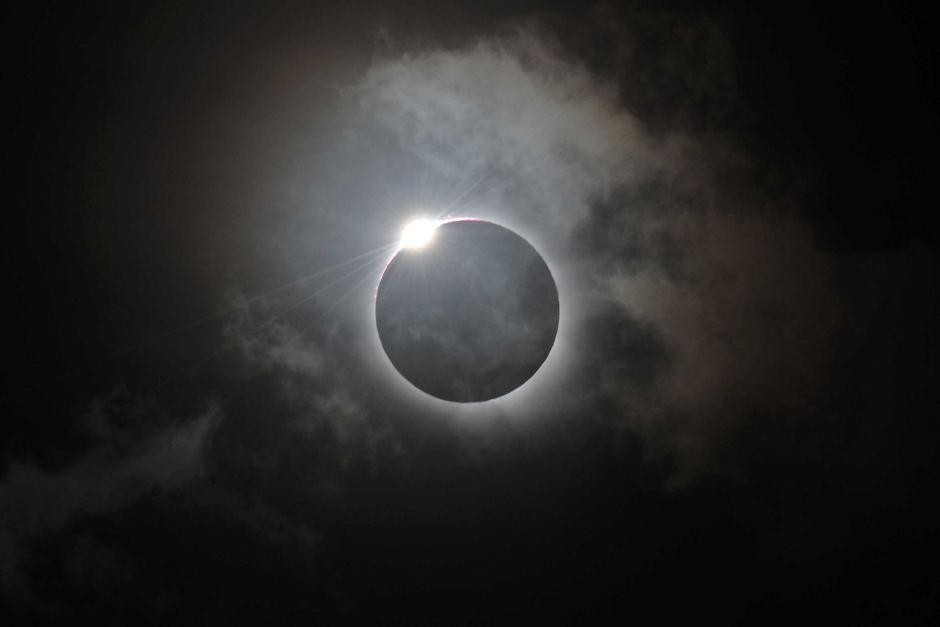
An eclipse is when an astronomical body is obscured, either by passing into the shadow of another body, or having another body pass between it and the viewpoint. The word comes from the ancient Greek ékleipsis, meaning “abandonment, downfall or darkening of a heavenly body”.

Although there are several different types of eclipse possible in the universe, the ones we can see from Earth are the solar and lunar eclipses. We tend to get more excited by solar eclipses, when the Moon appears to pass in front of the Sun, blotting out its light temporarily. The most impressive of all is a total eclipse of the Sun, when the Moon appears to perfectly cover the Sun, so that it disappears from view.

A total eclipse of the Sun can only be viewed along a very narrow band of the Earth’s surface, and on November 13, a total eclipse could be seen in far north-eastern Australia. Although many had gloomily predicted that cloud cover would ruin the eclipse-enjoying experience, just before dawn the clouds obligingly parted, and the Moon passed in front of the Sun. For two minutes it became darker and colder, the birds stopped singing, and tens of thousands of spectators from all over the world gaped in wonder, just as our ancestors did thousands of years ago.

Many indigenous groups, including in Arnhem Land, were watching the event, which has deep spiritual meaning for them. Most Aboriginal cultures believe the Sun is female and the Moon male. In their myths, the Sun is in love with the Moon, but he doesn’t return her feelings, so she chases him around the sky. Occasionally she manages to catch him, and in a jealous rage tries to kill him, but the Moon convinces the spirits which hold up the sky to save him, which they always do.

However, another version is that a solar eclipse marks those rare times when the Sun-woman is hidden by the Moon-man while he relents and makes loves to her, while a similar tale is that a spirit man covers the Earth with his hand to leave it in darkness, so that the Sun and Moon may have privacy together.

In Queensland, the celebrations for the eclipse included a Solar Eclipse Marathon in Port Douglas, and a week long Eclipse Festival at the remote Palmer River Roadhouse. More than 50 000 tourists arrived from Europe, North America and Asia, with some hotels booked out three years in advance. The eclipse was big news, and big business. And why shouldn’t they party? It was the first time in the past thousand years that this part of Australia had experienced a total solar eclipse.

Eclipse can be found as a unisex name in occasional use since the late 18th century. According to blogger Nancy Man at Nancy’s Names, the births of many of those given the name Eclipse can be correlated with either solar or lunar eclipses.

In Australian records, there are only a small number of people listed as having the name Eclipse, and it is exclusively used as a middle name. It is balanced between the sexes, with three women and two men having Eclipse as part of their name. My favourite combinations were Pearl Eclipse and Thomas Eclipse Vivian.

Only a year of birth is given, so it isn’t possible to correlate their dates of birth with eclipses, but it is reasonable to assume that it might have been the inspiration for at least some births. However, there was also a convict ship called Eclipse, although it doesn’t seem to match up with any of the places or dates of birth in the records in any obvious way.

Scientist Dr Natalie Dillon from Mareeba attended the eclipse viewing this year and said:

When it goes dark and the temperature drops, you get a sense of the fragility of life. I just feel in awe. It is like the Moon has wiped a cloth over the face of the Sun and we can start afresh.

An eclipse is a rare celestial event, and one which fills us with a mixture of awe and dread, as well as great joy and a sense of renewal when the light of the Sun is returned. It reminds us how much we need the Sun, and gives us a brief uneasy taste of what Earth would be like without it – chill, dim and silent.

The basis of the word eclipse is the Greek for “I leave behind”. To eclipse someone means to cast them into your shadow, to surpass others with your superior talents or skills – to leave them behind, so that they can never catch up.

As a name, Eclipse has power, a certain foreboding, and perhaps a touch of arrogance. It is little seen, and that gives it an even greater significance. Perhaps it’s not surprising it has been timidly tucked away in the middle.

Nicknames for Eclipse include Clip, Clipper and Clipsie, which give it a much friendlier and more approachable sound.

What do you think – a viable baby name, or a little too much?

Famous Name: Poppy

14 Wednesday Nov 2012

Posted by A.O. in Famous Names

≈ 7 Comments

Tags

english names, famous namesakes, flower names, German names, name history, name image, name meaning, name popularity, nature names, nicknames, plant names, popular names, Remembrance Day, surname names, The Wizard of Oz, UK name popularity, unisex names, US name popularity, vocabulary names

Last week I covered the name Bede for Remembrance Day, partly with the idea that it had “been in my Request file for ages”. When I went to cross if off the list, I found it wasn’t there at all – it seems I imagined it. So today I’m going to make up for it by covering a Remembrance Day name that really has been in my Request file for ages (I double checked!).

It has long been tradition to associate November 11 with poppy flowers. During the First World War, red corn poppies (Papaver rhoeas) were among the first plants to spring up on the battlefields of northern France and Belgium, blooming between the trenches and no man’s lands on the Western Front. In soldier’s folklore, the red of the poppies came from the blood of their fallen comrades soaking the ground, and were perhaps a poignant reminder that life went on regardless.

The sight of poppies on the battlefield at Ypres in 1915 inspired Lieutenant Colonel John McCrae, of Canada, to write the poem In Flanders Fields. An American woman named Moina Michael, who worked for the YMCA, read McCrae’s poem just before the Armistice, and was so moved that she wrote a poem in response, and promised to wear a red poppy as a way of keeping faith.

At an international YMCA conference in 1918, Moina spoke about the poem and the poppies, and Anna Guérin, the French YMCA secretary, took the idea further by selling poppies to raise money for widows, orphans, and needy veterans and their families.

The poppy soon became widely accepted throughout the allied nations as the flower of remembrance to be worn on Armistice Day, and the Australian Returned Soldiers and Sailors Imperial League (the forerunner to the RSL) first sold poppies for Armistice Day in 1921, with the money going to children’s charities and the League’s own welfare work. Today you can still buy a poppy pin from the RSL to help veterans of war.

At the Australian War Memorial in Canberra, it is customary on Remembrance Day to place a poppy on the Roll of Honour, as a small personal tribute to the memory of a particular person. Another ritual is to lay a single poppy flower on the Tomb of the Unknown Australian Soldier at the Memorial.

Even before World War I, poppies had a long history as symbols of sleep and death – sleep because poppy seeds have since ancient times been used as sedatives, and death because the colour of poppies reminds people of blood, or possibly because if over-prescribed, a poppy-induced sleep may become permanent. Today, poppies are still grown to obtain opium, morphine and codeine for medicinal use, with Australia being one of the major producers of poppy crops.

In Greek myths, poppies were given as offerings for the dead, with the suggestion that they were also a promise of resurrection in the life to come. The symbol of the mother goddess Demeter, she is depicted carrying both sheaves of wheat and poppies, and it has been theorised that the taking of opium was part of her worship in the sacred Mysteries.

These twin symbols of sleep and death were put to good effect in what must be one of the most famous images of poppies in literature and cinema – the field of scarlet poppies in The Wizard of Oz, the poison scent of which sends Dorothy into such a deep sleep that she is in danger of dying from it.

The English word poppy is ultimately derived from Latin, but the meaning is not known for sure; it may be from the word for “to feed”, because as anyone who has munched a poppy seed muffin or a bread roll topped with poppy seeds can tell you, poppies are yummy.

Poppy can be found as an English name as early as the 18th century, and the first examples are male, taken from the surname. This is derived from a German name Poppo or Boppo, used as a pet form of the name Bodebert, meaning “bright messenger”. However, by the 19th century, it was firmly established as a female name and associated with the flower, coming into common use along with other floral names.

Poppy only entered the Australian popularity charts in the 1980s, and in the 1990s was #602. It skyrocketed during the 2000s to reach the Top 100 by 2009, debuting at #69. Last year it was #79, and with such a brief history behind it, it is far too soon to make any predictions about its future.

Poppy is even more popular in the UK, where it has been Top 100 since the 1990s, and is currently in the Top 20. However, it has never been in the US Top 1000 at all. Last year 130 baby girls were named Poppy in the United States.

I think one of my first clues to how differently names are seen in other countries is that I kept reading in name forums from American contributors advising that Poppy might sound adorable on a little girl, but can you imagine a woman in her thirties named Poppy? Um yes, easily – Australian actress Poppy Montgomery must be in her mid-thirties by now. Poppy seems to suit her equally well as it does a toddler.

Another popular Poppy putdown is The name doesn’t sound serious enough, your daughter will never become a businesswoman, doctor or lawyer if you name her Poppy. Oh really? Then how did Poppy King manage to start her own cosmetics company? How did Doctor Poppy Sindhusake become senior lecturer in the school of medicine at the University of Western Sydney? And how did Poppy Matters start her practice in family law? By what occult means did they crash through this poppy-red ceiling to make the grade? Unless such a ceiling does not exist …

Some complain that the name, with its cheeky sound and link to a flaunting red colour, sounds too cute and flippant for a woman’s name – how will she ever be taken seriously, they fret? My own thought is that with its associations to such a solemn day, its death symbolism, and connection to drugs, it’s a jolly good thing that Poppy sounds so cheerful and light-hearted in order to offset what could otherwise seem rather gloomy.

Poppies are colourful, sturdy little flowers that bloom and blow easily in our gardens and the “pop” sound in their name makes us think of pop music, pop art and pop-up books – things that seem bright and lively and youthful. But beneath it is something dark and ancient and powerful. It stands for death, and life rising again, and the blood of heroes, and eternal flame, and rows of crosses in northern France, and keeping the faith. It is a memory in honour of those who died in foreign fields.

Do not underestimate Poppy. She is spunky and sprightly, but also strong and deep and enigmatic. She can survive almost anywhere, and, not content in being merely decorative, is useful too. She can feed the hungry, she can allay pain, she can understand sacred mysteries. Sometimes she can even be dangerous.

She can run her own business, or become a doctor, or lawyer, or politician, or anything else she wants to be. And she will sound fabulous when she is forty!

(Picture is of poppies growing in the Somme, northern France; photo from Keynsham People)

Team Pink, Team Blue, or Team Lavender?

11 Sunday Nov 2012

Posted by A.O. in Your Questions Answered

≈ 13 Comments

Tags

dog names, english names, famous namesakes, fictional namesakes, French names, Gaelic names, locational names, mythological names, name meaning, name popularity, names for budgies, nature names, nicknames, popular culture, popular names, Sanskrit names, surname names, unisex names, US name popularity, vocabulary names

I wasn’t going to do another one of these, but it turned out the list of questions on unisex names could almost be eliminated if I did just one more, so I couldn’t resist doing an end-of-year clean up.

Some names are easy for most of us to assign to Team Pink or Team Blue – for example, a straw poll would probably show strong support for Amelia as a girl’s name, and Archibald as a more masculine moniker. But there are quite a few others that we have to think about a bit more, and some seem to be both feminine and masculine in such equal measure that we could probably call them Team Lavender.

Of course, for practical purposes, all names are unisex, so this is only designating them according to linguistic meaning, historical use, and current popularity.

I. ARE THESE GIRL NAMES?

Sydney as a girl’s name

Sydney is historically a unisex name in Australia, but hasn’t charted at all since the 1960s. I think it’s up for grabs by either gender, and is a definite member of Team Lavender.

Rory girl name popularity Australia

According to the data at hand, the popularity of Rory as a girl’s name in Australia is zero. It’s charted as a boy’s name since the 1940s and is currently #159; it’s never charted as a girl’s name. This makes it (for the purposes of this question) Team Blue.

Is Indiana a girl’s name? (multiple asks)

Yes, historically it is, for the first people named Indiana in the records are female. It’s only since the Indiana Jones movies that the name has widely been seen as potentially masculine – although the movie’s protagonist is named Dr Henry Walton Jones. From Utah rather than the state of Indiana, we learn in The Last Crusade that he took his nickname from the name of the family dog. I’m not sure whether the dog was male or female. Indiana has only ever charted as a girl’s name, and is currently #78 and climbing steeply. I call Team Pink.

Bodhi as a girl’s name

Bodhi is a Sanskrit word meaning “awakened”, referring to the enlightenment of the Buddha. As men and women are equally capable of spiritual enlightenment, I think this is for both boys and girls and can join Team Lavender.

Can Russell be a female name?

The surname Russell simply means “red” or “reddish”, and there’s nothing specifically masculine about it. However, Russell has a reasonable history of acceptance as a male name. Currently it doesn’t chart for either gender, and I think it could be used for a girl’s name. You could also use the vocabulary word Rustle. Maybe a Deep Indigo?

Is Campbell a girl name?

In Australia it is accepted as a male name, and has charted for boys since the 1950s, being now at #384. In the US it is more common as a female name. The surname means “crooked mouth”, which doesn’t sound at all pretty to me, but isn’t technically masculine. In Australia, I think it’s still Team Blue.

II: ARE THESE BOY NAMES?

Marlo as a boy’s name

Marlo Hoogstraten is a Dutch-born Australian DJ; he works under the name MaRLo. Marlo Stanfield is a character in the TV show, The Wire, who is head of his own drug crew. There seem to be more references to Marlo as a male name than a female one. This may be a pale Blue-Toned Lavender.

Is Riley a boy’s name in Australia?

Yes, it’s charted as a male name only since the 1970s, and is currently #20. Team Blue.

Can Autumn be a boy’s name?

There’s no reason why not, except that it is widely accepted as a female name. In Australia, Autumn is a fairly rare name for either sex, so it might be easier to be a boy named Autumn here than elsewhere. It would be unusual though. A very pale Pink-Toned Lavender.

Boys name Kirra

The town in Queensland is nearly always given as a female name in Australia. Besides sounding similar to girl’s names Keira and Kira, part of the reason may be because in Greek mythology, there are a couple of nymphs named Kirra, giving it a distinctly feminine vibe. I’m assigning this one to Team Pink.

Tahgan boys name

I only know of Taghan as a place name in the Middle East, which sounds unisex to me. It looks similar to boy’s name Teagan and girl’s name Tegan, so I’m calling this for Team Lavender.

Bay as a boy’s name

Although this nature name could be either male or female, in practice I’ve only seen this given to boys in Australia – maybe because it sounds like it could be short for Bailey. I guess it could be seen as Blue-Toned Lavender.

III: ARE THESE BOY OR GIRL NAMES?

Is Lyndall male or female?

Historically, it’s a girl’s name. Lyndall charted as a female name only from the 1930s to the 1990s. It currently doesn’t chart for either sex. Pink, or at least Pinkish.

Jordan – boys name or girls name?

Jordan has charted as a boy’s name since the 1960s, peaked in the 1990s at #23, and is currently #63. It has charted as a girl’s name since the 1980s, peaked in the 1990s at #85, and is currently #389. So it’s both a boy’s name and a girl’s name, but more boyish, since it’s been used longer as a boy’s name, hit a higher peak as a boy’s name, and is still Top 100 for boys. Deep Blue-Toned Lavender.

Is Jagger more a boy or girl name?

I’d say it’s more of a boy name, just by usage. I have seen people use Jagga or Jaggah for girls though. Blue, at present.

Kayley “unisex name”?

I think technically Kayley is two separate names, one unisex or male, and the other one female. The surname Kayley can be from several origins, and if English or  French, it refers to place names (unisex). On the other hand, if Gaelic, it means “son of Caollaidhe” (male). It’s been overwhelmingly used as a girl’s name though, probably with the idea it’s an elaboration of Kay, a pet form of Katherine. There have been a very few men named Kayley. Confusingly, I think this is Pink, Blue and Lavender all at the same time.

IV: ADVICE NEEDED

What boy’s name can Gigi be short for?

There’s a few choices. According to Wikipedia, famous men using Gigi as their nickname have Luigi, Luigino, Gianluigi or George as their full name – although my own first thought was Giglio. Another possibility is that in the story Gigi, the protagonist’s full name was Gilberte, so maybe a boy called Gilbert could be a Gigi.

Will people automatically assume someone called Kelly is a girl?

I would probably assume an adult named Kelly to be a woman, but I could easily adjust if it turned out to be a man instead. For a new baby, I wouldn’t assume it was either a boy or girl.

Are guys put off by women with male names?

There are quite a few studies on what names men and women find sexy, but these name-image polls are useless in real life, when you are confronted with a living breathing human being. I don’t believe any man would turn down a beautiful woman because her name was John; conversely, no matter how alluring and feminine your name, if you look and smell like you’ve been living in a sewer, I don’t think you are going to be besieged by suitors. Just from my own observations, I’ve noticed a lot of guys say they are intrigued by girls who have unisex nicknames, like Jamie, Charlie or Teddie.

A good unisex name for a budgie

You could use a nickname that could be short for either a girl or boy name, such as Charlie, Joey or Sam, otherwise I think a nature name would be nice, such as Ash, Blueberry, Midnight, Sky, Sunny, or Snowflake. You could also use a cutesy sort of name such as Pippet, Peep, Peck, Pixel, Tweety, Chirp, Happy, or Fidget. Apparently budgies can’t say words with a hard G sound in them, so avoid Giggles, Goldy or anything like that if you’re hoping to teach it to talk.

Celebrity Baby News: Wes Carr and Charlotte Gregg

08 Thursday Nov 2012

Posted by A.O. in Celebrity Baby News

≈ 4 Comments

Tags

celebrity baby names, nicknames, unisex names

Singer Wes Carr, and his wife, actress Charlotte Gregg, welcomed their first child on November 5, and have named their son Willow Harrison. Willow Carr was born in Sydney at 11.49 pm, and weighed 4.2 kg (9lb 4oz).

Wes was already a professional musician with his first album just out when he won the sixth season of Australian Idol in 2008. Since then he has released another album, seen his first single, You, debut at #1, and announced his new independent music project, Buffalo.

Charlotte has appeared in many TV dramas, including Underbelly, Home and Away, Offspring and Lowdown. She met Wes at a barbecue in 2008, and the couple were married last April, honeymooning in Europe.

There’s been several celebrities this year who have used a unisex name for their son, even though it is popular for girls. This one comes with an inbuilt boyish nickname – Will.

Famous Name: Piper

24 Wednesday Oct 2012

Posted by A.O. in Famous Names

≈ 12 Comments

Tags

Anglo-Saxon names, english names, famous namesakes, Hollywood names, locational names, musical names, name history, name meaning, name popularity, popular culture, popular names, surname names, unisex names, US name popularity, vocabulary names

Sydney was recently named the second most expensive city in the world, after Tokyo; luckily it was also revealed that Australians are now the richest people in the world, so we can afford it! The most expensive suburb in Sydney is Point Piper, where the median house value is $7.38 million, and the most expensive privately owned house in Australia, costing $70 million to build, is located here. Point Piper’s Wolsley Road is the tenth most expensive street in the world, with 16% of Australia’s priciest houses on this 1 km stretch.

Point Piper is a little piece of land which juts into Sydney Harbour, a small enclave of just eleven streets and 148 houses. As Sydney’s most exclusive suburb, it is only 4 km from the CBD and offers views of the Harbour Bridge and Opera House. Despite its size, it has two beaches and two yacht clubs. The suburb is named after Captain John Piper, a Scottish-born military officer of Cornish parentage and German descent who arrived in the colony in 1792 and became an immediate social success.

Piper’s career got off to an interesting start when he asked to be posted to the penal settlement in Norfolk Island after a scandalous love affair which ended with an illegitimate daughter in his care. Later he became acting commandment of Norfolk, and ruled it so kindly that even one of the convicts wrote home to say how outstandingly nice he was. While on Norfolk, he took as his mistress a teenage girl who was the daughter of convicts; they eventually married, but not before she had borne him four children (they had nine more).

He became very rich by collecting custom duties and excises, and after being granted land by the governor, built a mansion on the point which is now named after him in 1816 at a cost of £10,000 (about $11 million in today’s money). He continued gathering wealth, real estate and respectability, until he ran into financial difficulties in the 1820s, and was suspended from his position after mismanagement of funds was discovered.

Piper tried to drown himself in Sydney Harbour, but was rescued. He had to sell everything he owned to settle his debts, and moved to Bathurst, where he ran a farm and became a figure of local importance. When he ran into problems there as well, his friends bailed him out and bought him a riverside property, where he and his wife and numerous children could be comfortable. He was just so nice, you see – blithe, unsinkable, amiable, and eminently forgiveable for his lack of business acumen.

Piper is an English surname which refers to someone who played the bagpipes. Although we think of bagpipes as being uniquely Scottish, their origins go back to the ancient world; it’s said that the Roman emperor Nero could play them. Their use spread through Europe in the Middle Ages, with their first explicit mention in Britain being in Chaucer’s Canterbury Tales. However, it was in Scotland that bagpipe music became most sophisticated and highly developed.

The piper was a well-paid and highly-respected professional, who would have been employed by a great lord or chief; it was often a hereditary position. The piper’s job was to entertain his lord at home and while travelling; this sometimes included military service. While traditions of pipers rallying the troops before battle go back centuries, the first documented case is 1549, when they were played by the troops of the Earl of Argyll. Later, pipers could be employed by a town to play each day, as well as at fairs and other events.

There is a myth that in times of old only men were pipers, and one ancient saw is that a woman found playing the bagpipes would have her fingers cut off in punishment, but this simply isn’t true. There are many documented cases of women pipers, and they were employed as teachers in a famous piping school on the Isle of Skye. Today women pipers are still out-numbered by the men, but there are plenty of them, and they are equally good.

The surname Piper goes back to the 13th century, and seems to have historically been most common in Sussex in England. However, the personal name may predate the surname, for the name Pipere has been found in an Anglo-Saxon charter from Sussex, which could make Piper one of the oldest English names – and another possible source for the surname.

Piper, with the modern spelling, comes directly from the surname, and dates to the 18th century, when it was nearly always given to boys (although as a middle name, much more evenly divided between the sexes). The name became seen as a girl’s name when a teenager from Detroit changed her name from Rosetta Jacobs to Piper Laurie and got a contract in Hollywood.

Although Ms Laurie says in her autobiography that she had to change her name because it sounded “too Jewish”, she gives no clues as to where she got the name Piper Laurie from. It almost sounds like a girl’s name – Laurie Piper – backwards.

Piper Laurie was in The Hustler and Carrie, but would have become well-known here for her role in the miniseries The Thorn Birds, based on the best-selling novel by Australian author Colleen McCullough. The Thorn Birds was originally broadcast in 1983, and the name Piper first charts in Australia the same decade.

The name skyrocketed in the 1990s to reach #128 by the early 2000s; I can’t help feeling this has a lot to do with the character of Piper Halliwell in the TV show Charmed. The actress who played Piper, Holly Marie Combs, confessed to having a large and inexplicable fan base in Australia.

Piper made the Top 100 in 2009, and is currently #70 and rising. Although we think of this as an American-style name, it’s only been on the US Top 1000 since 1999, and is still not Top 100, although not far off at #110, so Piper has charted in Australia longer than in the US and is more popular here. Australian parents do seem quick to pick up on Hollywood names.

I saw someone on a name blog say Piper is a name which will please everyone, which seemed going a bit far. However, I do think it has a lot to recommend it. It references luxury real estate, an ancient form of music, a Hollywood star with an Aussie connection, and an appealing namesake with a history unusually free of tragedy.

It’s a very old Anglo-Saxon name, but seems bright and modern. It’s a surname name for girls that doesn’t have any “son of” or male-only occupation issues, or significant prior use as a male name. It’s a vocabulary word which everyone can spell, pronounce and understand, and it’s a popular but not too popular name that still has room for growth.

So while Piper may perhaps not please all people, if Piper pleases you, then you may be pleased enough with Piper to pick it!

(Photo of Point Piper from the Sydney Morning Herald)

Names of Australian Female Paralympic Medalists

21 Sunday Oct 2012

Posted by A.O. in Name Themes and Lists

≈ 8 Comments

Tags

Arabic names, Arthurian legends, Arthurian names, astronomical names, Biblical names, english names, ethnonyms, famous namesakes, fictional namesakes, French names, gemstone names, germanic names, Greek names, hebrew names, honouring, Indian names, Irish names, Latin names, locational names, military events, mythological names, name history, name meaning, name popularity, names of dolls, nature names, nicknames, Norman-French names, Old French names, popular names, royal names, saints names, Sanskrit names, street names, surname names, unisex names, vocabulary names

Amber (Merritt)

Amber Meritt was born with a club foot, and is originally from England; she came to Australia as a child (she’s now 19). She started playing wheelchair basketball in 2007, and won silver at the London Games. Amber is fossilised tree resin, and since prehistoric times has been valued as a gemstone. The word amber is derived from Arabic, and means ambergris, the waxy substance regurgitated by the sperm whale; it was only later realised these were different substances. Amber has been used as a girl’s name since the 17th century, but wasn’t popular until the 20th. The name became notorious in 1944, when the racy historical romance, Forever Amber, was published, with its heroine the sleep-her-way-to-the-top Amber St. Clare. Despite being condemned, and even banned here until 1958, the book was a bestseller, and made into a film. Amber was in rare use in the 1950s, and during the 1960s made #647 (about one Amber per year). It absolutely skyrocketed during the 1970s up to #135, peaked in the early 2000s at #49, and is now #91. This pretty gemstone name is still popular, and it’s all thanks to a “dirty” book! If looking for a nickname, Miss Merritt goes by Bambi.

Danae (Sweetapple)

Danae Sweetapple was blind from birth, and started swimming in 1990. She won a silver and two bronzes at the 1992 Paralympics. In Greek mythology, Danaë was a Greek princess and the mother of the hero Perseus. Her father shut her up in a bronze tower due to a prophecy that he would be killed by her son, but she was impregnated by Zeus, who came to her in the form of golden rain. The king had Danaë and Perseus cast into the sea, and they washed ashore onto an island, where a kind fisherman raised Perseus as his own son (as an adult, the prophecy was fulfilled when Perseus did kill his grandfather). Getting it on with a godly shower of gold was either supremely satisfying or very traumatising for Danaë, as she had no interest in mortal men afterwards, and never married or had further children. Her name is derived from the Danaans, one of the names the Greeks used for themselves, with the idea that they were partly descended from Danaus, a mythical prince of Egypt. I’m not sure how the Greeks would have said her name (nobody seems to agree), but not like the way it is usually said in Australia, which is dan-AY.

Elaine (Schreiber)

Elaine Schreiber won a bronze in table tennis, a gold in club throw, and a silver in javelin at the 1964 Paralympics, and a silver in table tennis at the 1968 Games. Elaine is a name shared by several characters in Arthurian legend, who are occasionally confused with each other. One of the most famous is the fair Elaine of Astolat, who dies of unrequited love for Sir Lancelot. The story inspired Tennyson’s poem, The Lady of Shalott, and it was only after the popularity of his poem that Elaine became a commonly-used English name. Elaine is an Old French variant of Helen. Elaine was #254 in 1900, joined the Top 100 in the 1920s, and peaked in the 1930s at #18. It left the Top 100 in the 1960s, and reached its lowest point in the late 2000s, when it was in rare use. Since then, it has been very gently rising, and is currently #457.

Gloria (Pascoe)

Gloria Pascoe developed epilepsy at the age of 9, and became totally blind by 55. At 61, she attended the 1980 Paralympics, where she took gold in lawn bowls. Gloria is the Latin for “glory, fame, renown”, and in Christian tradition it denotes the manifestation of God’s presence, often associated with a divine light. The name Gloria has been in use since at least the 16th century, but received a boost in popularity in the 19th from two literary works. One was Gloria, a romantic novel by popular American novelist E.D.E.N. Southworth in 1891; the other was George Bernard Shaw’s 1897 comedy of errors, You Never Can Tell. Both these works feature very attractive heroines who seem to have done the name more good than all of God’s glory. Gloria was #257 in 1900, Top 100 by the 1920s, and peaked in the 1930s at #23. It left the Top 100 in the 1960s, and hit its lowest point in 2009 when it was in rare use. Since then it has risen again, and is currently #427. If you’ve been paying attention, you will see this makes it the virtual twin of Elaine in terms of popularity.

Jemima (Moore)

Jemima Moore became paraplegic at the age of 6 from a virus, and is now 20. She won a silver medal in the 100 metres relay at the 2008 Paralympics, and attended the London Games. In the Bible, Jemima was the eldest of Job’s three daughters, and she and her sisters are described as being the fairest in the land. The name Jemima literally means “warm” in Hebrew, and can be translated as “day”. The name could actually be derived from Arabic, as there is an ancient land in Arabia who had a queen called Jemama; if so, Jemima from the Bible could be inspired by the queen of Arabic folklore. This does fit in with the Biblical story, because Job and his family were said to be from an Arabic country. The name Jemama means “turtledove”. It first charted in the 1960s, the same decade children’s show Playschool first broadcast, which has a rag doll named Jemima. Never in the Top 100, it peaked at #196 in the late 2000s and is currently #254 and stable. This is a fashionable name which has never gained popularity or lost cachet.

Lorraine (Dodd)

Lorraine Dodd became paraplegic at the age of 13, after contracting transverse myelitis. She attended the 1968 Paralympic Games, where she won three golds for swimming, and a silver and a bronze in athletics. Lorraine is a region in north-eastern France; its name comes from an earlier kingdom named Lotharingia, meaning “Lothar’s kingdom. Lothar I was a Frankish king and a great-grandson of Charlemagne; his name is Germanic and means “famous army”. As a personal name, Lorraine has been used since the 18th century, a century in which Lorraine first became part of France. It’s sometimes said to be a Catholic name, since St Joan of Arc was also known as The Maid of Lorraine. There was a World War I Battle of Lorraine, which probably boosted numbers, and the area’s importance during World War II reflects a peak in popularity at this time. Lorraine was in rare use in the 1900s, and reached the Top 100 in the 1930s. Peaking in the 1940s, it left the Top 100 in the 1970s, and hasn’t charted since the 1990s. You can see how Lorraine helped Lauren appear feminine, and Lauren also seems to have replaced Lorraine.

Madison (de Rozario)

Madison de Rozario became paralysed by a rare neurological condition at the age of 3 and is now 18. She won silver in 2008 as the youngest Paralympian on the team, and was also at the London Games. Madison is a surname meaning “son of Matthew“, although in some rare cases it may be derived from “son of Maddy”, with Maddy being a pet form of Maud. It’s been used as a personal name since the 18th century, and seems to have been given almost exclusively to boys in the beginning. Although certainly used in England, it was much more common in America, where it may often have been given in honour of James Madison, the fourth president of the United States (I only found one man named Madison in Australian records). Madison is famous in baby name circles for only becoming popular, and only becoming common for girls, after the movie Splash in 1984. This romantic fantasy, a rewrite of The Little Mermaid, stars Daryl Hannah as the mermaid, who chooses her “human name” from a street sign for Madison Avenue in New York City, named after the former president – although Tom Hanks’ character tells her this isn’t a “real name”. Madison was #606 for the 1980s, with about three born each year. It then absolutely screeched up the charts to make #52 for the 1990s, and peaked in the early 2000s at #22. It sunk to #44 in 2010, then rose last year to make #41. It’s been a real success story, with its nickname Maddie fitting in with Madeline.

Priya (Cooper)

Priya Cooper was born with cerebral palsy, and spends most of her time in a wheelchair. She began swimming competitively while still at school, and is one of our greatest disabled swimmers, winning nine gold medals and breaking world records at the 1992, 1996 and 2000 Paralympics. She was twice team co-captain, and twice a flag-bearer at closing ceremonies. She has received many honours, and since retiring has become a spokesperson and fundraiser for several charities. Priya is an Indian girl’s name which means “dear, beloved” in Sanskrit. In Hindu legend, Priya was one of the daughters of King Daksha, a son of the god Brahma. The name is pronounced PREE-yuh, and has been rather a favourite in Australia for many years.

Siobhan (Paton)

Siobhan Paton is an intellectually disabled swimmer who holds thirteen world records, and won six gold medals at the 2000 Olympics. She was named Paralympian of the Year in 2000, and also received an Order of Australia. Siobhán is the Irish form of the Norman-French name Jehanne, a variant of Jeanne. There were several medieval queens named Siobhán. It is said that the twentieth century popularity of Siobhan owes a great deal to the actress Siobhán McKenna, who was born in Belfast. She was most famous as a stage actress, but also appeared in King of Kings (playing Mary), Of Human Bondage, and Dr Zhivago. Ms McKenna’s son, Donnacha O’Dea, was an Olympic swimmer for Ireland in 1968. Siobhan first charted in the 1950s, and during the 1960s was #571, which represents about one Siobhan a year. Use of the name increased sharply during the 1970s and ’80s, and it peaked in the 1990s at #211. It hasn’t charted since 2009, so this is another attractive name which has never made the Top 100. Pronunciation is an issue, because the usual Irish pronunciation is SHIV-on, but in Australia it’s usually said shi-VAWN.

Ursula (King)

Usula King was a swimmer who won a silver and two bronze at the 1984 Paralympics. The name Ursula means “little she-bear”, derived from the Latin ursa (which we know from constellations Ursa Major and Minor – the Great and Little Bears). According to legend, Saint Ursula was a Romano-British princess who was sent by her father to marry the pagan governor of Armorica (Brittany). Possibly to stall proceedings, she got all bridezilla and declared that before the wedding she must go all over Europe on a pilgrimage, taking an unbelievable 11 000 virgins with her as her handmaids. On their way to Cologne, they were besieged by Huns, who had a busy day beheading the lot of them. The story doesn’t fit with any known historic facts, and one theory is that Ursula is a Christianised form of the goddess Freya. However, Cologne has a magnificent basilica dedicated to St Ursula and her companions, and a little village in Wales also has a church in their honour, in the belief that Ursula was originally from Wales (in the legend, she is from the West Country). Because of the saint, the name came into use in medieval times, and got a little boost in the 20th century from beautiful Swedish actress Ursula Andress, who was the first Bond girl, in Dr No. It’s clunky by contemporary standards, but strangely alluring.

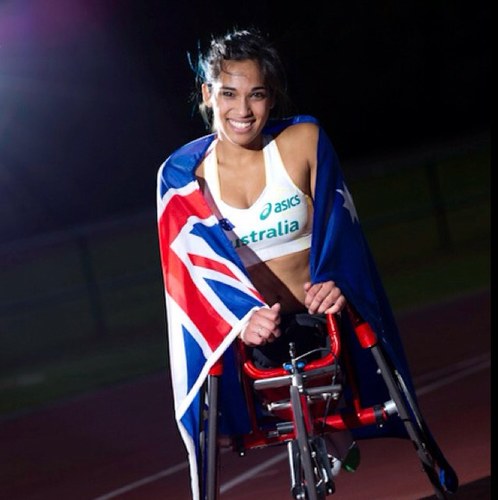
(Photo of Madison de Rozario from her Twitter account)

My Top Five Name Blog-Related Peeves

14 Sunday Oct 2012

Posted by A.O. in Naming Issues

≈ 18 Comments

Tags

Australian slang terms, Babynameobsessed, celebrity baby names, choosing character names, eBay, father-son rule, Google, name meanings, pet peeves, twinsets, Twitter, unisex names

This week was Pet Peeves Week (which I think only exists on the Internet), and several bloggers took the opportunity to get a few of life’s little annoyances off their chest, including Ebony at Babynameobsessed.

Many name bloggers say that they started out with some naming peeves, but that continual blogging about names tended to dilute or even reverse their irritation, leaving them with a great sense of well-being and peace. Maybe a couple of years ago they couldn’t stand matchy twin names, boyish names on girls, or attention-seeking celebrity baby names, but now they think Doris and Boris as twins is cool, Frederick is actually kind of spunky on a girl, and some minor celeb calling their kid Gusty Glock requires only an amused and tolerant chuckle in response.

To an extent I can relate, but to an even bigger extent I can’t, because while blogging about names may have finished off some of my pet peeves, it has given me a whole new bunch to get annoyed by. After some twenty months of blogging, I have got quite a few things that now grate on my nerves beyond all endurance. I’ve cut it down to only the top five though, in order not to grate on yours too much.

1. Reborners who call their reborn dolls “babies”

In case you don’t know, reborn dolls are baby dolls which are incredibly lifelike in appearance – so much so that they can be mistaken for an actual baby (and have been). Reborners are hobbyists who make and/or collect reborn dolls. I don’t any problems with reborn dolls, or those who make or own them. However, I do have a problem with calling them babies. Reborn dolls are not babies. They are dolls.

Each day I ask Google to trawl through the Internet for me and bring me information tagged with the word baby, and each day I get a stack of threads from reborn dolls forums or entries from reborning blogs.

People call other things their “baby”, and it doesn’t seem to bother me. If someone writes, I’ve been riding my baby all day, I somehow immediately understand they are referring to a motorcycle, and if someone says, My poor baby had to be locked outside, I get an automatic picture in my mind that it’s a dog they’re talking about. I skim past and go on to the next item.

But when I read, I sold my first baby on eBay!, My baby’s leg fell off and I can’t reattach it, or I just rooted my baby’s head (if not Australian, check slang guide as to why that’s so disturbing), I practically have a heart attack. Even knowing they mean a doll, I can’t stop the racing heartbeat, sweaty palms, nausea, and instinctive need to phone the police I’d feel if it was a real baby I was reading about.

I’ve asked Google to eliminate the words doll and reborn from the search, but of course, they don’t call their dolls “dolls”, they call them “babies”. Unless a baby poos, wees, needs to be fed, and wakes you up in the night, it’s not a baby, it’s a doll. Call it by its correct name.

2. Celebrity pregnancy stories in the media that go nowhere

When a story appears in the press announcing that a celebrity (or celebrity’s partner) is pregnant, I add them to my watchlist and ask Google to e-mail me when the baby is announced. Then months and months go by, and no baby story appears. Half the time I have to stalk them on Twitter to find out what the baby was called, and often I end up in a dead end.

I can’t see the point of teasing us with a celebrity pregnancy if we don’t get to find out if the baby is born and what its name is. I don’t know why they do this, but it’s very annoying. Follow through on celebrity pregnancies, newspapers!

3. The notion that baby names need to be short and simple, otherwise they will be too hard for children to spell when they reach school-age

This advice is constantly handed out, by parents on forums and even on professional baby name sites. It has to be the most depressing advice ever. Your poor baby isn’t even born yet, and already you are being told it will probably be too stupid to reach normal literacy levels by the age of five, and you’d better dumb its name right down.

I notice with further despondency that names for boys seem to be especially prone to this line of thought. Apparently girls can handle having a long name like Anastasia or Penelope, but a boy named Demetrius or Sebastian won’t be able to cope, and it’s better to call him something like Max or Liam.

We’re always being told that boys tend to lag behind girls in communications skills, and urged to make more effort to get our sons interested in reading and writing. Children tend to perform to expectation, and I can’t help but wonder if setting low goals for them while they’re still in the womb is the way to improve things.

Short names are great. Short names can be spunky and cool. If you choose a short, simple name for your baby, fantastic – as long as you do so because you love the name, and not because you think that’s all your idiot child can manage.

4. The father-son rule in Australian Rules Football

The AFL has a rule that the son of a senior player can be immediately recruited to the same club his father played for. The good news is that when a star player has a baby boy, it’s cause for enormous celebration and congratulations. The bad news is that when he has a baby girl, it is, at best, a big “meh”.

So often the names of footballer’s babies are not announced in the press, and when that happens, I know in my bones he had a daughter. Sadly, this always turns out to be true. If the media isn’t too interested, fans can be positively vicious to a newborn daughter of a man without sons.

Often the kindest comment you will read in fan forums is Better luck next time. I have read, not once or twice, but again and again, What a waste of good sperm, Throw it away and try again, If it has a [profane word for female genitalia] we don’t give a [profane], and the chilling, Maybe we can still breed from it.

I have found myself in tears of rage at these revolting comments; I can’t imagine what the parents’ reactions would be, and I hope they never read them. There may be many benefits to the father-son rule; frankly I don’t really care as the results of it are so sickening. Celebrating boys shouldn’t have to mean ignoring and denigrating girls.

5. Writers who pick bad names for their characters

Not everyone on a name website is looking for a name for their child – many are just interested in names and language in general, and there are lots of budding authors who want advice on picking character names.

Unfortunately, most of the time the way they pick character names is terrible. One of the most common clangers they make is to ask for a name “that means something”. I’m writing a story about a ballerina, and I need a name that means “dancer”. So her parents deliberately gave her a name meaning dancer, to make her become a dancer, and then it happened? If it worked that way, we’d all be calling our kids High Court Judge or Lottery Winner.

Another no-no is a character name which gives away what’s going to happen. I’m writing a fantasy story about a boy who ends up being able to control fire, what’s a name that means “fire” or “flame”? It’s not going to come as a huge shock to the reader if the character is basically called Mister Fireball, and then, amazingly, he turns out to be able to spit fireballs at will. It would seem pretty unlikely that a parent would give their kid a name with a particular meaning, and then by some astounding turn of fate, their name is what they become. Seriously, how many boys named Aidan do you know who possess a mystical power over fire?

My biggest peeve is probably when the character’s name is an obvious description of their personality, usually with protagonists given names meaning “kind”, “innocent”, “brave” and so on, while the bad guys end up with names meaning “cruel”, “evil”, or “slimy”. What parent would give their child a name which means “evil”? They would have to be so sick that if the person did end by going a bit wrong, you could only sympathise with them and put it down to the burden of being named Devious. If the heroine is called Pure Sweetangel, and her childhood pal is called Creepy Nastypants, any normal reader is going to be expecting that Creepy will turn out a bit of a rotter.

That’s the problem with naming characters – they shouldn’t look like an author named them, they should look as if their parents named them. Because that’s how people get named – by their parents. In other words, if your heroine is a sweet, simple girl, but her parents are pretentious jerks, then she won’t have a sweet simple name, but a pretentious jerky one. If she doesn’t, then you’ve got to explain why not (sweet simple godmother picked the name, family name handed down to every third daughter that’s left-handed, whatever).

Name your character the way a person is named, and then your character will seem like a person, not a character. Because no good reader wants to read a book peopled by characters. And you should only be writing for good readers. Bad readers have enough authors writing for them already.

Meanings of Names

07 Sunday Oct 2012

Posted by A.O. in Your Questions Answered

≈ 3 Comments

Tags

African names, Ancient Egyptian names, Anglo-Saxon names, animal names, Arabic names, astronomical names, bird names, Chinese names, choosing baby names, English idioms, english names, epithets, flower names, French names, German names, Google, Google searches, Greek names, hebrew names, Hindi names, Igbo Names, Indian names, Indonesian names, Japanese names, Latin names, Maori names, musical terms, mythological names, name meaning, names of constellations, nature names, Old French names, Old Norse names, Persian names, popular culture, prefixes, royal titles, Sanskrit names, scandinavian names, Spanish names, surname names, Swedish names, unisex names, Viking names, vocabulary names, Yiddish names, Zulu names

There’s many different ways to choose baby names. Some people pick out a name they like, and perhaps quickly check to make sure it doesn’t mean something horrible, like “he who has the face of a deranged warthog”, or maybe not even care what it means. Others think of a meaning they would like to associate with their baby, and then hunt around for a name that fits that meaning.

These are all the web searches people used to get to the blog this year, looking for names with particular meanings. I don’t know if I’ve always come up with a name they wanted to know about, and I’m not even completely sure that I’m correct on each one, but I did my best.

NAMES WITH MEANINGS RELATED TO STARS

Boys name that means “star”

The English word Sterling, referring to sterling silver, is said to most likely mean “little star”, as some early Norman pennies were imprinted with a small star. The Old French word for the pennies is Esterlin. We also use the word sterling to mean “excellent, of high quality”, so you get another layer of meaning from it.

Latin boy’s name meaning “star”

The Latin for star is Astrum. Astro is a Latin prefix meaning “pertaining to the stars”, as in the word astronomy. I have seen this used as a name.

Swedish girl’s name that means “star”

Stjarna.

A boy’s name that means “bright star”

Nayyar is an Arabic boy’s name which is understood as meaning “bright star”. It also refers to the sun, which of course is our nearest, and thus brightest, star.

Male name meaning “bright star in the southern hemisphere”

There’s isn’t a star name which means that, but Sirius is the brightest star in the sky, and is visible in both hemispheres. However, Canopus, the second brightest, is more often connected with the southern hemisphere; it is always visible from some parts of Australia. It is occasionally called Soheil in English, and the Maori name for it is Atuatahi, meaning “stand alone”.

Spanish girls name that means “constellation”

I’m not sure there is one, but the Spanish for constellation is Constelación. I haven’t heard of it being used as a person’s name, but Constelacia might look a bit more name-like. I don’t speak Spanish, so apologies if this looks absurd to Hispanophones.

Boy name that means “many constellations”

The Japanese name Ikuto has this meaning, although I’ve only seen it used as a fictional surname.

A constellation name which means “small”

All the constellations have names which are nouns or “things”, not adjectives, so there isn’t one. A few have Minor as part of their name, to indicate they are the smaller of two eg Ursa Minor. The closest I could find was Equuleus, meaning “little horse, foal”.

Name meaning “starry sky”

In Japanese, Hoshizora means “starry sky”. It’s used as a surname in the Japanese anime Smile Pretty Cure!

Boys name that means “galaxy”

I have seen Galaxos as a character name in online games, and Galaxian would mean “of the galaxy” or “from the galaxy”.

NATURE NAMES

Boys name that means “beach”

Beach, Bay or Cove.

Names that mean “songbird”

Hebrew has both a male and female name with this meaning. Efrona for a girl (meaning “lark”), and Zalmir for a boy.

Flower name that means “peaceful”

There’s a native plant from Western Australia called the Gunniopsis pax – it’s a succulent, and it does have small flowers. There is also the Peace Lily, and the Peace Rose, and a type of guzmania (a bromeliad) called Pax. The White Poppy, the Lotus and the Daisy have all been used as symbols of peace.

Boy name meaning “otter”

In Japanese, Rakko means “sea otter”. That seemed to be the most usable word for otter in another language I could find.

POSITIVE MEANINGS

Indian boy’s name meaning “one who cannot be defeated”

It seems to be a popular meaning for boy’s names in India, for there are several. I managed to find Adityendra, Ajay, Ajeenkya, Ajeesh, Ajit, Aparajita, and Durjaya. Take your pick!

Viking name meaning “prince”

Balder is translated as meaning “lord, prince, king”, and it was used as an epithet for heroes. In Norse mythology, Balder was the son of Odin and Frigg.

Girl name that means “independence”

Liberty or Freedom.

Sanskrit girl’s name meaning “bright, happy”

Nandita.

Girl’s name that means “beautiful”

There’s a lot. A few you may not be familiar with are Mei (Chinese), Shayna (Yiddish) and Ziba (Persian).

Name that means “bewitching”

Mohana is an Indian unisex name which means “bewitching, infatuating, charming” in Sanskrit. It is used as an epithet of several gods and goddesses.

The word for “lovely” in some other language

Delightfully vague! I pick French – Jolie.

NEGATIVE MEANINGS

Baby name that means “spiteful”

I hope this is for a story and not a real baby! The German surname Sauer means “spiteful” (related to the word sour, acid), and it can be Anglicised as either of the unrelated names Sawyer or Sayer, so I guess those are possible options.

Hindi word for “proud”

Ooh there’s quite a few. Garvi, Garvit and Nidar look the most like names, to me.

DOESN’T EXIST

Name that means “daughter of a princess”

Hmm, seems a bit narcissistic as a baby name, somehow! Anyway, there’s no term for a princess’ daughter, and the daughter of a princess doesn’t necessarily have any special status – Princess Anne’s daughter Zara is just Mrs Tindall. I would choose a name that simply means “princess” or is royal-related. However, the Indonesian name Putri means both “daughter” and “princess”.

Norse name which means “female knight”

Vikings didn’t generally fight with a cavalry, and although there were some female warriors, it’s very unlikely they would have ridden horses, as this was usually reserved for leaders of a warband. It does make me think of the Valkyries, who were mythological women of the afterlife, always depicted on horseback. Valkyrie means “chooser of the slain”.

Norse name meaning “hunter”

There isn’t one. The Old Norse word for hunter is Veiðimaður, and some think this word is the basis of the English surname Waitman. This is occasionally used as a first name.

Name for a girl that means something

More specific, please!

NAMES FOR SPECIAL CIRCUMSTANCES

Name that means “perfect time”

I know it’s not quite right, but I keep thinking Serendipity. Also Season, because of the saying that “For everything there is a season, and a time for everything under heaven”. The Japanese girl’s name Aya means “design”, suggesting a planned pregnancy. Musical names like Rhythm or Cadence come to mind, as music must be perfectly timed. Ogechukwukama is an Igbo girl’s name meaning “God’s time is the best” – good for a surprise, but very welcome, baby.

Name that means “beating the odds”

Lucky or Chance.

Boy’s name that means “when two souls join”

I’d probably be thinking of names that mean “bliss, joy”. Anand is a Sanskrit name meaning “bliss”, while Anglo-Saxon has Wynn, meaning “joy, bliss”. The word Bliss itself can be used for both sexes. The Chinese unisex name Zheng or Zeng means “harmony, union”, which seems to describe the state of soul togetherness.

Zulu name for boys that gives hope for the future

Mduduzi is a Zulu boy’s name that means “bringer of hope”.

Boy’s name meaning “not meant to be”

Oh how sad, and what a sad meaning. I’m so sorry. I thought long and hard about this one, and it seems to me that the concept behind “meant to be” and “not meant to be” is the same, that is, some idea of Fate, Fortune or Destiny. We usually think of it as feminine (“Dame Fortune” etc), but the Ancient Egyptians had a god of fate, named Shai or Shay, meaning “that which is ordained”. I think that’s a nice name for a boy, and has the sense of the meaning you’re looking for.

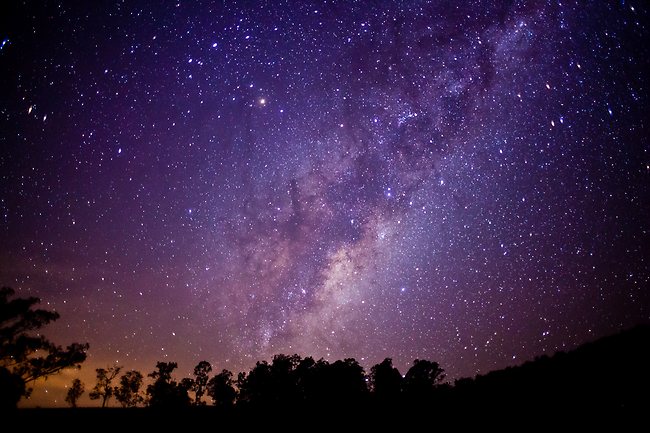
(Picture shows the Milky Way above Lake Moogerah in south-east Queensland; photo from Perth Now)

Celebrity Baby News: Celebrity Baby Round-Up

04 Thursday Oct 2012

Posted by A.O. in Celebrity Baby News

≈ 15 Comments

Tags

celebrity baby names, celebrity sibsets, honouring, unisex names

I’ve been very busy and got behind with the celebrity babies, so it seems like a good time to do a quick catch-up.

NRL player Gareth Widdop, and his fiancee Carley, welcomed their daughter Harper Rose on September 30, just hours after Gareth’s team, the Melbourne Storm, won the NRL Premiership. She was born unexpectedly in Bowral as they were travelling between Sydney and Melbourne. Harper joins big brother Brayden, aged 2. Gareth is originally from Yorkshire, in England, and moved to Melbourne as a teenager. He has been signed with the Storm since 2010, although he played for several years in their Under 18s and Under 20s programmes. He has also played for England internationally.

Actress Madeleine West, and her husband Shannon Bennett, welcomed their daughter Xanthe fairly recently. Xanthe joins big sisters Phoenix and Xascha, and big brother Hendrix (a real X-theme there). Madeleine became a household name on soapie Neighbours, and regularly appears in other television series. Shannon is the restaurateur at Vue de Monde, recently named Restaurant of the Year by The Age Good Food Guide.

NRL player Anthony Cherrington, and his on-off girlfriend, bikini model Monique Mears, welcomed their daughter Christine not long ago. Christine Cherrington joins big brother Moses, aged 17 months. Anthony is originally from New Zealand, and plays for the Sydney Roosters, but has been sidelined by injury since 2010.

Paralympian Erik Horrie, and his fiancee Michelle, welcomed their son Lewis in early September during the Paralympic Games; they already have two daughters together. Erik was in a car accident at the age of 21 which left him with paraplegia, and he started out playing wheelchair basketball. Last year he took up rowing, and he won a silver medal at the 2012 Paralympic Games.

NRL veteran Steve Menzies, and his wife Suyin, welcomed their son Harper Mackie on August 22. Harper Menzies was born at at 4.24pm at Royal North Shore Private Hospital weighing 2.79kg (just under 6 lb). His middle name is after his great-grandfather, Mackie Campbell, a pioneer with the Manly Sea Eagles. He joins big sister Miller, aged 2. Steve played for the Manly-Warringah Sea Eagles from 1993-2008; he then played for the Bradford Bulls in England, and is currently with the Catalans Dragons in France. Yep, two NRL babies named Harper – one male, one female.

Netball champion Sharelle McMahon, and her husband Brek Mansfield, welcomed their first child on August 30 and have named their son Xavier Gaz. Sharelle is the former captain of the Melbourne Vixens, has played for the national team, the Diamonds, and has won three gold medals and a silver at the Netball World Championships, and two gold and two silver at Commonwealth Games.

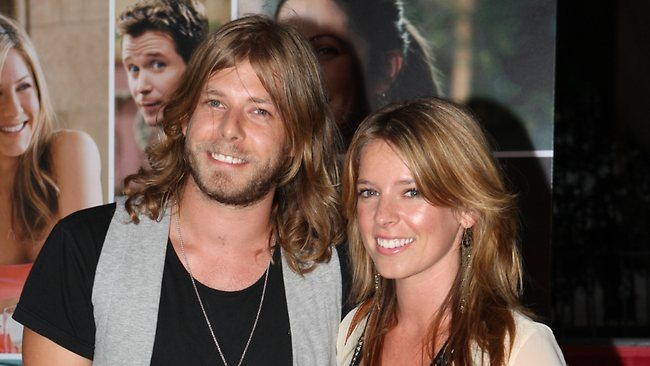
Dating show contestant Jenny Blake, and her husband Mark Geppert, welcomed their son Angus – Gus for short – back in the autumn [pictured]. Angus Geppert joins big sister Olive, aged 2. Jenny is one of the few female farmers to have appeared on rural romance reality show, The Farmer Wants a Wife. Although love didn’t work out for Jenny on the show, she soon became engaged to Mark, who she’d been friends with for years, but considered slightly too young for her. The happy Geppert family now live on their farm in southern New South Wales.

Comedian Julian Morrow, and his wife Lisa Pryor, welcomed their second child early in the year and named their son Ed. I’m not sure whether Ed is short for Edward/Edwin/Edgar/Edmund etc, or if that’s his whole name. Ed Morrow has a big sister named Anna, aged 3. Julian has been a comedy staple on television for many years, and is best known for his work with the satiric and sometimes controversial show, The Chaser. Lisa is a former journalist who is now training in medicine.

← Older posts
Newer posts →

Enter your email address to follow this blog

Categories

Archives

Recent Comments

A.O.'s avatarwaltzingmorethanmati… on Zarah Zaynab and Wolfgang…
Madelyn's avatarMadelyn on Zarah Zaynab and Wolfgang…
JD's avatardrperegrine on Can Phoebe Complete This …
A.O.'s avatarwaltzingmorethanmati… on Rua and Rhoa
redrover23's avatarredrover23 on Rua and Rhoa

Blogroll

  • Appellation Mountain
  • Baby Name Pondering
  • Babynamelover's Blog
  • British Baby Names
  • Clare's Name News
  • For Real Baby Names
  • Geek Baby Names
  • Name Candy
  • Nameberry
  • Nancy's Baby Names
  • Ren's Baby Name Blog
  • Sancta Nomina
  • Swistle: Baby Names
  • The Art of Naming
  • The Baby Name Wizard
  • The Beauty of Names
  • Tulip By Any Name

RSS Feed

  • RSS - Posts

RSS Posts

  • Celebrity Baby News: Melanie Vallejo and Matt Kingston
  • Names from the TV Show “Cleverman”
  • Can Phoebe Complete This Sibset?
  • Zarah Zaynab and Wolfgang Winter
  • Baby, How Did You Get That Name?
  • Celebrity Baby News: Media Babies
  • Celebrity Baby News: Adelaide Crows Babies
  • Celebrity Baby News: Chris and Rebecca Judd
  • Names at Work: Name News From the World of Business and Employment
  • Celebrity Baby News: Sporting Round Up

Currently Popular

  • Celebrity Baby News: Alisa Camplin and Oliver Warner
  • Rare Boys Names From the 1950s
  • The Top 100 Names of the 1930s in New South Wales
  • Sad Celebrity Baby News (contents may cause distress)
  • Girls Names From Stars and Constellations

Tags

celebrity baby names celebrity sibsets english names famous namesakes fictional namesakes honouring locational names middle names name combinations name history name meaning name popularity name trends nicknames popular names saints names sibsets surname names twin sets unisex names

Create a free website or blog at WordPress.com.

Privacy & Cookies: This site uses cookies. By continuing to use this website, you agree to their use.
To find out more, including how to control cookies, see here: Cookie Policy
  • Subscribe Subscribed
    • Waltzing More Than Matilda
    • Join 517 other subscribers
    • Already have a WordPress.com account? Log in now.
    • Waltzing More Than Matilda
    • Subscribe Subscribed
    • Sign up
    • Log in
    • Report this content
    • View site in Reader
    • Manage subscriptions
    • Collapse this bar
 

Loading Comments...