• About
  • Best Baby Names
  • Celebrity Baby Names
  • Celebrity Baby Names – Current
  • Celebrity Baby Names – Past
  • Featured Boys Names
  • Featured Girls Names
  • Featured Unisex Names
  • Links to Name Data
  • Waltzing on the Web

Waltzing More Than Matilda

~ Names with an Australian Bias of Democratic Temper

Waltzing More Than Matilda

Tag Archives: UK name popularity

Famous Names: Neptune and Taylor

12 Wednesday Dec 2012

Posted by A.O. in Famous Names

≈ 1 Comment

Tags

astronomical names, english names, Etruscan names, fairy tales, famous namesakes, historical records, honouring, Indo-European names, Irish names, Italian names, Latin words, locational names, mythological names, name combinations, name history, name meaning, name popularity, names of ships, nicknames, Roman names, surname names, UK name popularity, unisex names, US name popularity
seals on neptuneAt the end of November, the Premier of South Australia announced that the Neptune Islands Group Marine Park would be renamed the Neptune Islands Group (Ron and Valerie Taylor) Marine Park. This is no mere change of name, for a network of 19 marine parks has taken effect in order to protect the seas from over-fishing. The premier noted that the southern oceans had more diversity than the Great Barrier Reef, and contained many plants and animals that cannot be found anywhere else.

The marine park has been named in honour of Ron and Valerie Taylor; divers, film-makers, shark experts, and conservationists who were ardent proponents of preserving marine habitats. Their skills in underwater filming were used on such films as Jaws and The Blue Lagoon, but more importantly, they wrote books and made documentaries to highlight the beauty and fragility of marine ecology. They won many awards for both photography and conservation. Ron passed away this year, and Valerie continues to be an advocate for marine protection.

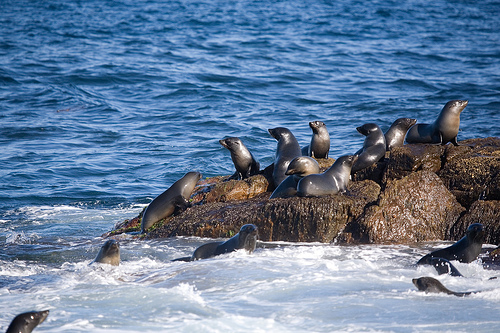
The Neptune Islands, near Port Lincoln, were named by the navigator and cartographer Matthew Flinders in 1802. Rugged and remote, they seemed to him inaccessible, as if they would would always belong to King Neptune.

Neptune is the English form of Neptunus, the Roman god of fresh water springs, lakes, rivers, and the sea; he is the Roman equivalent of the Greek god Poisedon. He was worshipped in a festival that fell at the height of summer, when rainfall was at its lowest, and water most needed and valuable. As you know, his name has been given to the eighth planet from the Sun.

The meaning and origin of his name is obscure, with etymologists in disagreement over which language/s Neptune might be derived from. The general view is that it means something like “moistness”, “damp, wet”, “clouds, fog”, or “to water, irrigate”.

Another theory is that it is from the Italian town of Nepi, north of Rome, which was anciently known as Nepet or Nepete. This town is famous for its mineral springs, and traditionally connected to the god Neptune, who would presumably have approved of its watery wonders.

The town’s name is Etruscan, from the Etruscan name for Neptune, which was Nethuns. This may be related to the Irish god Nechtan, who had a sacred well, and thus another liquid connection. In fact there are several Indo-European deities with similar names and aqueous roles, and it is speculated that their names may go back to an ancient word meaning “nephew, grandson”.

One of the ships of the Second Fleet was called Neptune, and unfortunately it had the worst reputation of all for its appalling mistreatment of convicts.

Neptune sounds as if it should be ultra rare in Australian name records, but there are quite a few from the 19th century – at least quite a few more than I expected to find. It was mostly used in the middle, such as Cecil Neptune, and Samuel Caesar Neptune, but you can also find men named Neptune Persse and Neptune Frederick. Two of them rejoiced in the full names of Neptune Love and Neptune Blood; I believe the name Neptune is traditional in the Blood family.

Neptune would be very unusual as a baby name today, and I can’t quite imagine what you would use as a nickname – Neppy sounds too much like “nappy” to me. At the very least, please not Tuna.

A complete change of pace brings us to the name Taylor, a very common English surname referring to someone who made clothes as their occupation; the word tailor is ultimately from the Latin talea, meaning “a cutting”. In the Middle Ages, tailoring was a high-status craft, as only the wealthy could afford to have their clothing professionally made, and tailors could command good fees. Both men and women were employed as tailors.

There are many folk tales and fairy stories about tailors, and nearly always the tailor is depicted as being extremely clever, and confidently able to outwit others. Tailors having to be so precise and painstaking in their work, and no doubt with plenty of diplomatic skill to handle their rich clients, they must have gained a reputation for being as sharp as pins and as smooth-talking as silk.

The earliest Taylor-as-a-first-name I can find in the records is from the 16th century, and it was on a female. This may be an error in transcription, as subsequent early Taylors seem to be male (with plenty of girls who had Taylor as a middle name). In the United States, Taylor has always charted as a boy’s name, and only charts for girls from the late 1970s onwards, but is currently Top 100 for girls, and in the 300s for boys. In the UK, it only charts for boys, where it is barely on the Top 100 and falling.

In Australia, Taylor has charted for both boys and girls since the 1980s, when it was #383 for boys and #785 for girls. It peaked for both sexes in the 1990s, when it was #38 for girls and #130 for boys. At the moment, Taylor is only just outside the Top 100 for girls at #108, is #251 for boys, and falling for both sexes.

So that’s a quick survey of Taylor popularity around the world: Top 100 for girls in the US, Top 100 for boys in the UK, and not on the Top 100 at all in Australia.

Here are two very different names which evoke the sea and honour its protectors, as well as having a strong connection to the history of South Australia.

(Picture shows seals on Neptune Island; photo from Flickr)

Famous Name: Poppy

14 Wednesday Nov 2012

Posted by A.O. in Famous Names

≈ 7 Comments

Tags

english names, famous namesakes, flower names, German names, name history, name image, name meaning, name popularity, nature names, nicknames, plant names, popular names, Remembrance Day, surname names, The Wizard of Oz, UK name popularity, unisex names, US name popularity, vocabulary names

Last week I covered the name Bede for Remembrance Day, partly with the idea that it had “been in my Request file for ages”. When I went to cross if off the list, I found it wasn’t there at all – it seems I imagined it. So today I’m going to make up for it by covering a Remembrance Day name that really has been in my Request file for ages (I double checked!).

It has long been tradition to associate November 11 with poppy flowers. During the First World War, red corn poppies (Papaver rhoeas) were among the first plants to spring up on the battlefields of northern France and Belgium, blooming between the trenches and no man’s lands on the Western Front. In soldier’s folklore, the red of the poppies came from the blood of their fallen comrades soaking the ground, and were perhaps a poignant reminder that life went on regardless.

The sight of poppies on the battlefield at Ypres in 1915 inspired Lieutenant Colonel John McCrae, of Canada, to write the poem In Flanders Fields. An American woman named Moina Michael, who worked for the YMCA, read McCrae’s poem just before the Armistice, and was so moved that she wrote a poem in response, and promised to wear a red poppy as a way of keeping faith.

At an international YMCA conference in 1918, Moina spoke about the poem and the poppies, and Anna Guérin, the French YMCA secretary, took the idea further by selling poppies to raise money for widows, orphans, and needy veterans and their families.

The poppy soon became widely accepted throughout the allied nations as the flower of remembrance to be worn on Armistice Day, and the Australian Returned Soldiers and Sailors Imperial League (the forerunner to the RSL) first sold poppies for Armistice Day in 1921, with the money going to children’s charities and the League’s own welfare work. Today you can still buy a poppy pin from the RSL to help veterans of war.

At the Australian War Memorial in Canberra, it is customary on Remembrance Day to place a poppy on the Roll of Honour, as a small personal tribute to the memory of a particular person. Another ritual is to lay a single poppy flower on the Tomb of the Unknown Australian Soldier at the Memorial.

Even before World War I, poppies had a long history as symbols of sleep and death – sleep because poppy seeds have since ancient times been used as sedatives, and death because the colour of poppies reminds people of blood, or possibly because if over-prescribed, a poppy-induced sleep may become permanent. Today, poppies are still grown to obtain opium, morphine and codeine for medicinal use, with Australia being one of the major producers of poppy crops.

In Greek myths, poppies were given as offerings for the dead, with the suggestion that they were also a promise of resurrection in the life to come. The symbol of the mother goddess Demeter, she is depicted carrying both sheaves of wheat and poppies, and it has been theorised that the taking of opium was part of her worship in the sacred Mysteries.

These twin symbols of sleep and death were put to good effect in what must be one of the most famous images of poppies in literature and cinema – the field of scarlet poppies in The Wizard of Oz, the poison scent of which sends Dorothy into such a deep sleep that she is in danger of dying from it.

The English word poppy is ultimately derived from Latin, but the meaning is not known for sure; it may be from the word for “to feed”, because as anyone who has munched a poppy seed muffin or a bread roll topped with poppy seeds can tell you, poppies are yummy.

Poppy can be found as an English name as early as the 18th century, and the first examples are male, taken from the surname. This is derived from a German name Poppo or Boppo, used as a pet form of the name Bodebert, meaning “bright messenger”. However, by the 19th century, it was firmly established as a female name and associated with the flower, coming into common use along with other floral names.

Poppy only entered the Australian popularity charts in the 1980s, and in the 1990s was #602. It skyrocketed during the 2000s to reach the Top 100 by 2009, debuting at #69. Last year it was #79, and with such a brief history behind it, it is far too soon to make any predictions about its future.

Poppy is even more popular in the UK, where it has been Top 100 since the 1990s, and is currently in the Top 20. However, it has never been in the US Top 1000 at all. Last year 130 baby girls were named Poppy in the United States.

I think one of my first clues to how differently names are seen in other countries is that I kept reading in name forums from American contributors advising that Poppy might sound adorable on a little girl, but can you imagine a woman in her thirties named Poppy? Um yes, easily – Australian actress Poppy Montgomery must be in her mid-thirties by now. Poppy seems to suit her equally well as it does a toddler.

Another popular Poppy putdown is The name doesn’t sound serious enough, your daughter will never become a businesswoman, doctor or lawyer if you name her Poppy. Oh really? Then how did Poppy King manage to start her own cosmetics company? How did Doctor Poppy Sindhusake become senior lecturer in the school of medicine at the University of Western Sydney? And how did Poppy Matters start her practice in family law? By what occult means did they crash through this poppy-red ceiling to make the grade? Unless such a ceiling does not exist …

Some complain that the name, with its cheeky sound and link to a flaunting red colour, sounds too cute and flippant for a woman’s name – how will she ever be taken seriously, they fret? My own thought is that with its associations to such a solemn day, its death symbolism, and connection to drugs, it’s a jolly good thing that Poppy sounds so cheerful and light-hearted in order to offset what could otherwise seem rather gloomy.

Poppies are colourful, sturdy little flowers that bloom and blow easily in our gardens and the “pop” sound in their name makes us think of pop music, pop art and pop-up books – things that seem bright and lively and youthful. But beneath it is something dark and ancient and powerful. It stands for death, and life rising again, and the blood of heroes, and eternal flame, and rows of crosses in northern France, and keeping the faith. It is a memory in honour of those who died in foreign fields.

Do not underestimate Poppy. She is spunky and sprightly, but also strong and deep and enigmatic. She can survive almost anywhere, and, not content in being merely decorative, is useful too. She can feed the hungry, she can allay pain, she can understand sacred mysteries. Sometimes she can even be dangerous.

She can run her own business, or become a doctor, or lawyer, or politician, or anything else she wants to be. And she will sound fabulous when she is forty!

(Picture is of poppies growing in the Somme, northern France; photo from Keynsham People)

Waltzing With … Archer

04 Sunday Nov 2012

Posted by A.O. in Waltzing with ...

≈ 8 Comments

Tags

Australian idioms, english names, famous namesakes, fictional namesakes, horse names, name combinations, name history, name meaning, New Zealand name popularity, nicknames, popular names, surname names, UK name popularity, US name popularity, vocabulary names

This article was first posted on November 4 2012, and revised and re-published on June 16 2016.

Famous Namesake
On Tuesday it is Melbourne Cup Day, which, more than any other day on the calendar, holds Australia in thrall. On the second Tuesday in November, at 3 pm, the nation collectively holds its breath while its most famous horse race, the Melbourne Cup, is run at Flemington in Melbourne.

It’s known as “the race that stops a nation”, because at 3 pm you are expected to drop whatever you’re doing to tune in and watch the Melbourne Cup. Workplaces and schools may take the afternoon off to hold Melbourne Cup lunches, or at the very least switch a TV on just before 3 pm. It’s a day when almost everyone will place a bet on the race – even if it’s just putting a dollar on the favourite, or taking part in the office sweep. In Melbourne, the day of the race is a public holiday.

American author Mark Twain went to the 1895 Melbourne Cup and commented, Nowhere in the world have I encountered a festival of people that has such a magnificent appeal to the whole nation. The Cup astonishes me. More than 110 000 people attend the race, and it’s a huge fashion-fest, with ladies frocking up, and gentlemen wearing formal suits. Others relish the opportunity to dress in outrageous costumes. It’s a day to eat, drink, gamble and be merry – a big, bright, boozy, and rather garish carnival.

The Melbourne Cup itself is the jewel in the crown of the Spring Racing Carnival, and is said to be the richest and most prestigious “two mile” handicap in the world. The prize money is over $6 million, and the trophy itself is a hand-crafted golden cup worth $125 000. It’s the biggest prize in any Australian sporting event.

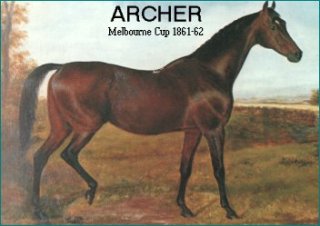
The first Melbourne Cup was run in 1861, and the winner that year was a horse named Archer. Race horses are often named quite logically, and Archer’s sire was William Tell. Born near Braidwood, in country New South Wales, he was trained near Nowra. Archer was a large horse, standing over 16 hands high with a powerful body. He ran badly in his first two races, and was rated poorly, until he won seven races in 1861, and was entered in the Melbourne Cup.

The first Melbourne Cup was action-packed. Three horses fell during the race (two of them died), two jockeys suffered broken bones, and one horse bolted off the course entirely, but the race gamely continued, and Archer won by six lengths in a time of 3 minutes and 52 seconds – the slowest in which a horse has ever won the Melbourne Cup.

He set another record the following year by winning the Melbourne Cup again; until the 1930s, he was the only horse to have won back-to-back Melbourne Cups. He was meant to enter in 1863 as well, but unfortunately there was a mix-up with telegrams and he didn’t manage to make the deadline in time.

Many legends have sprung up around Archer, such as that he had to walk all the way from Sydney to Melbourne in order to take part in the race, and that his jockey, Johnny Cutts, was an Aborigine from the Nowra area. Neither of these stories is true – Archer travelled to the race by steamship and rail, and Johnny Cutts wasn’t Aboriginal, and was from Sydney. The phrase since Archer won the Cup has entered our language, to refer to a long time distant.

Name Information
Archer is an English occupational surname referring to someone who uses a bow and arrows. The surname was introduced to Britain by the Normans, and by the end of the Middle Ages the Norman-French word archer had replaced the English bowman.

People have been hunting and fighting with bow and arrows since the Stone Age, and there are many famous archers in world mythology. During the Middle Ages, professional archers were rare, and most archers during war were recruited from the peasantry so archery was often seen as a lower-class pursuit. However, by the 14th century archers were used effectively in battle, making it a more attractive option. The use of firearms made archers obsolete, and the last recorded use of them in battle in England was in 1642.

The last known person to die from a British archer in battle was in 1940, when a German was killed during the retreat from Dunkirk by a delightfully eccentric officer named Jack Churchill, who insisted on fighting throughout World War II with bow, arrows and a sword; he also played the bagpipes while setting off grenades, to add to the effect. Incredibly brave and highly decorated, Churchill, known as Mad Jack, was later a military instructor in Australia, where he became an enthusiastic surfer. A shame we didn’t manage to keep him, as this man is now my personal hero!

Archer has been used as a personal name since the 17th century, and an early namesake was the British MP Sir Archer Croft, 2nd Baronet – Archer was his mother’s maiden name. Another who had Archer as a family name was the 18th century American politician Archer Mathews, a founder of Lewisburg in Virginia. In the 19th century, escaped slave Archer Alexander served as the model for the Emancipation Memorial in Lincoln Park, built by T.S. Eliot’s grandfather.

Archer joined the Australian Top 100 in 2012, and since then has continued rising. Currently it is #39 nationally, #49 in New South Wales, #27 in Victoria, #33 in Queensland, #29 in South Australia, #51 in Tasmania, and #38 in the Australian Capital Territory. It was one of the fastest rising names in Victoria last year.

Archer was a Top 1000 name in the US in the late 19th century, but spent many years off the charts until it returned in 2009. It has risen steeply since then, and is now #289. In the UK Archer has been in the Top 500 since 2012 and is currently #359. Archer is Top 100 in New Zealand – the only other country besides Australia where Archer is popular, although its popularity is highest in Australia.

No wonder this handsome name is so popular – it feels both vintage and contemporary, and fits in with the trend for names with an AR sound, and names connected with hunting and weaponry. One of its attractions is that it provides a way to get the popular nickname Archie without using Archibald, although Arch is another possibility.

Archer is a name from Australian history which celebrates the biggest sporting event of the year – one that almost everyone will participate in. It’s a name from the hunt and battlefield, but also referencing daring archers, from Robin Hood to the Hunger Games, and perhaps even comedy super-spy Sterling Archer from the animated show.

Could Archer follow its equine namesake and gallop to the #1 position on the charts? The odds are against it, but chances are it will continue cantering along the home stretch.

POLL RESULT
Archer received an outstanding approval rating of 93%, making it one of the most popular names of 2012. 36% of people loved the name Archer, and nobody hated it.

Waltzing With … Octavia

30 Sunday Sep 2012

Posted by A.O. in Waltzing with ...

≈ 6 Comments

Tags

celebrity baby names, famous namesakes, fictional namesakes, honouring, name combinations, name history, name meaning, name trends, names from television, Roman names, Shakespearean names, sibsets, UK name popularity, US name popularity

OLYMPUS DIGITAL CAMERA

This blog post was first published on September 30 2012, and revised and re-posted on June 1 2016.

It’s a long weekend in New South Wales, South Australia and the ACT, and in those places, Monday will be Labour Day, celebrating the Australian labour movement. This vibrant and influential strand in Australian politic began in the early 19th century with the first craft unions, who banded together to seek higher wages and lower working hours.

This was in the days when any servant who left their employment without their master’s permission would be hunted down as a bushranger, and even taking off from work for an hour would see you put in prison. In those times, a fifth of the prison population were there for that reason.

It was in August 1855 that the Stonemasons Associations in Sydney went on strike, demanding to work only eight hours each day. They won their cause and celebrated with a victory dinner on October 1. The following year, the stonemasons of Melbourne formed a protest march to demand an eight-hour working day; they were the first organised group in Australia to achieve their goal with no loss of pay.

The goal of “eight hours labour, eight hours recreation, eight hours rest” was one that unionists had been working towards since the early 19th century, and in 1916 it became law in Victoria, but didn’t come in nationally until the 1920s, with the forty-hour week enshrined in 1948.

It would be nice to say that was the end of the workers’ struggle, but the forty-hour week is still under threat. Indeed, thanks to e-mail and mobile phones sometimes it feels as if we never leave work at all. So tomorrow please switch off your laptop, and have your calls sent to voicemail, because we deserve at least one day a year free from employment.

In honour of the Eight Hour Movement we will look at a name connected to the number eight.

Name Information
Octavia is the feminine form of Octavius, a Roman family meaning “eighth”, from the Latin octavus, and taken from a personal name. Although the personal name is believed to have been given to an eighth child, it’s also thought that it could have been bestowed on those born in the eighth month (originally, October).

The Octavii originated from the town Velletri, in the Alban Hills just south of Rome. The area belonged to the Volsci people, who in ancient times were one of the most dangerous enemies of the Romans. The famous warrior queen Camilla was one of the Volsci.

The most famous member of this family is the Emperor Augustus, whose original name was Gaius Octavius Thurinus. Coincidentally, he went on to give his name to the month of August, which is the modern-day eighth month. Augustus had both a sister and a half-sister named Octavia, and the younger one, his sister, was the wife of Mark Antony.

The marriage was one of political convenience, but Octavia appears to have been a loyal and faithful wife. Famously, Mark Antony abandoned her and their children to take up with the fascinating Queen Cleopatra; he divorced her and not long after, committed suicide. Octavia was left as sole caretaker of their children, as well as the children from her first marriage, and she was also guardian to Mark Antony’s children to one of his previous wives, and to those he had by Cleopatra.

While Cleopatra was seen as the alluring temptress, glamorous, brilliantly intellectual and powerful, Octavia was cast in the role of the good wife and mother, who does what is best for her husband, her family, and Roman society. In his play Antony and Cleopatra, Shakespeare portrays poor Octavia as short and round-faced with brown hair, to ensure the dichotomy between the two is even sharper. I’m not sure what is supposed to be so hideous about being short, round-faced and brown-haired (sounds quite cute), but to the Elizabethans it meant “ugly”.

She may not have been the sexy one, but the Romans esteemed Octavia for her strength of character and nobility, and when she died, she was given a state funeral and several honours, including being one of the first Roman women to have coins minted in her image. Her great-granddaughter was named Octavia after her, and this young lady was so beloved by the Roman people that they rioted to protest her cruel treatment at the hands of her psychotic husband, Nero. Unhappy marriages yet great popularity was the fate of these Roman Octavias.

Octavia has been used as an English name since the 17th century, becoming more common in the 19th. A famous namesake from the Victorian era was social reformer Octavia Hill, who worked towards housing for the poor; she was named Octavia because she was her father’s eighth daughter. An American namesake from this era was socialite Octavia Le Vert, a lavish hostess and supporter of the arts. More recently we might think of actress Octavia Spencer, from The Help.

In the US, Octavia was on the Top 1000 from the 19th century until the 1930s, then returned in the 1970s. This coincided with the career of African-American science-fiction novelist Octavia E. Butler, who began writing in 1971. Octavia’s final novel in her Parable series was published in 1998, the last time Octavia was on the Top 1000. In the 20th century, the name never got any higher than #484 in 1987.

In 2015, 173 girls were named Octavia – a huge increase on the previous year, when 71 babies were given the name. Rebellious teen Octavia Blake on The 100, played by Marie Avgeropoulos, may be an inspiration in its sudden rise. In the UK in 2014, 26 baby girls were named Octavia.

Octavia could be used for an eighth child or grandchild, or for a baby born in August or October. Both these months celebrate milestones in the Sydney labour movement, and the number eight is the cornerstone of the Eight Hour Movement. Earlier this year, Labor MP Michelle Rowland welcomed a daughter named Octavia, a very suitable name for someone in labour politics.

The meaning of the name is connected to music, because an octave is the interval between one musical pitch and another and each scale has eight notes. In addition, the Octavia is a sound effects pedal used by Jimi Hendrix. The number eight is important in several spiritual or philosophical systems, such as Judaism, Wicca, Hinduism, Buddhism, and Taoism, and to the Chinese, the number eight symbolises prosperity and good luck.

Boosted by science fiction, Octavia may be a rarity, but doesn’t sound too unusual next to popular Olivia and Ava. Octavia is dignified, formal, strong, intelligent, and slightly clunky – a beautiful name with its own elegance.

POLL RESULT
Octavia received an excellent approval rating of 84%, making it one of the highest-rated names of 2012. 36% of people loved the name Octavia, and only one person hated it.

(Picture is of the Eight Hour Day Monument in Melbourne; photo from Monument Australia).

The People’s Choice of Girl’s Names

16 Sunday Sep 2012

Posted by A.O. in Name Themes and Lists

≈ 14 Comments

Tags

Australian Aboriginal names, Biblical names, birth announcements, celebrity baby names, doll names, Dutch names, English idioms, english names, famous namesakes, fictional namesakes, Finnish names, French names, germanic names, Google, Google searches, hebrew names, Hungarian name popularity, Hungarian names, Indian names, Irish name popularity, Irish names, Japanese names, locational names, mythological names, name history, name meaning, name popularity, Native American names, nicknames, Polish name popularity, Polish names, popular culture, royal names, saints names, Sanskrit names, Slavic names, Spanish names, tribal names, Turkish names, UK name popularity, unisex names, US name popularity, Visigothic names, vocabulary names, Welsh names

I have been trying to add Featured Names from those in the search terms, when possible. To celebrate the start of spring, I’m choosing ten names for each gender that people have used as search terms to reach my blog. I tried to concentrate on those that had been Googled multiple times, or which had questions attached to them, and I’ve chosen names which don’t make the Top 100.

Of course, if you would like to see a particular name featured on the blog, you don’t need to type it into a search engine and cross your fingers – you can always e-mail me directly and put in a request.

Arya

Arya is a unisex Indian name which means “noble, honourable” in Sanskrit. Common in India, it’s become known in the English-speaking world through two fantasy novelists. In George R.R. Martin’s A Song of Fire and Ice series, Lady Arya Stark is a beautiful free-spirited noblewoman who leads a very adventurous life. In Christopher Paolini’s Inheritance cyle, Arya Dröttning is an elf, later queen of the elves, and the romantic interest of the hero, Eragon. Both these characters are strong and independent, good at swordplay, horse-riding and taking care of themselves. Although there are several famous men and women in India called Arya, English-speakers probably think of it as a female name, because of the fictional characters. The Indian pronunciation is AHR-yuh, but both Martin’s and Paolini’s ladies say their names AHR-ee-uh (I’m basing this on how they are said in the TV series and the movie, as some written guides suggest AR-ee-uh or AYR-yuh). So there’s quite a selection of pronunciations. Arya recently joined the US Top 1000, and is currently #711. It would make a good heritage choice, or else an attractive literary name.

Carmel

Mount Carmel is a mountain range in Israel, and its name means “garden”. Our Lady of Mount Carmel is the title given to the Virgin Mary in her role as patroness of the Carmelite Order. The first Carmelites were Christian hermits who lived on Mount Carmel during the 12th century, and built a chapel dedicated to the Virgin Mary. They were approved as an order devoted to contemplative prayer, but didn’t stay in the Holy Land for long. They soon made their way to Sicily and Cyprus, and from there throughout Europe. Carmel was first used as a name in honour of Our Lady of Mount Carmel, perhaps especially for girls born on or near her feast day of July 16. Carmel was in rare use in 1900, then climbed steeply to make the Top 100 in 1930. It peaked in the 1940s at #77, and was off the Top 100 by the 1960s. It hasn’t charted since the 1990s. Although this name originated amongst Catholics, Mount Carmel is a place name mentioned in the Bible, and is important in Judaism, Protestantism, Islam, and the Bahá’í Faith as well, so it is usable by anyone who feels a connection to it.

Elodie

This is the Anglicised form of French Élodie, derived from the Spanish name Alodia; Saint Alodia was a 9th century Spanish martyr. The meaning of the name is uncertain, but it has been interpreted as Visigothic, from the Germanic meaning “foreign wealth”. In English it’s pronounced like Melody without the M, but the French pronunciation is ay-lo-DEE. There are several fashion boutiques in Australia with the name Elodie in them, giving it a self-consciously stylish air, and it’s a name often seen in birth announcements here, especially from Melbourne. This pretty name makes a good alternative to popular Eloise, and I can see it becoming another Amelie in the future (although a movie called Elodie would be a real help).

Kinga

Saint Kinga was born a Hungarian princess, and her name is the pet form of Kunigunde, which is from the Germanic for “family war”. Kinga had several saintly family connections, because she was the niece of St. Elizabeth of Hungary, and the great-niece of St. Hedwig. One of her sisters became St. Margaret of Hungary, while the other, Blessed Jolenta of Poland, is still being considered for canonisation. Saint Kinga was married off to Bolesław V, who became High Duke of Poland; she insisted that the marriage remain chaste, and although her husband wasn’t happy about the situation, he reluctantly agreed. During her marriage, she devoted herself to charitable works, and after being widowed, became a nun and spent the rest of her life in contemplative prayer. She is the patron saint of Poland and Lithuania, and her name is a popular one in both Hungary and Poland. This name has turned up repeatedly in the search terms ever since comedian Merrick Watts and his wife welcomed their daughter Kinga Rose in December last year. It’s apparently pronounced KEEN-gah, and makes an unusual and attractive heritage choice.

Mika

This little name has several different origins. Mika is a Japanese girl’s name translated as “beautiful fragrance”. It is also a Native American word, meaning “racoon” in the Osage and Omaha-Ponca languages of Oklahoma and Nebraska. However, it’s an Australian Aboriginal word too, because mika means both “moon” and “month” in the Nyungar language of south-west Western Australia. This is a name I’ve seen used a lot in the past, although not so much lately. It often appears in variant spellings, such as Meeka or Meekah – presumably to make the pronunciation clearer, because it is said MEE-kuh, and not like the boy’s name Micah. However, it’s possible that these variants were trying to provide a phonetic spelling of the Dutch name Mieke, which is a pet form of Maria, and said exactly the same way. Mika is similar to popular names such as Mia and Mila; it could also be understood as a short form of Mikayla. Just to confuse things further, Mika is an unrelated boy’s name as well – it’s a pet form of Mikael, the Finnish form of Michael. I suspect the reason I see less babies with this name is the British singer Mika, who now makes it seem male.

Niamh

Niamh is an Irish name meaning “bright, radiant”. In Irish mythology, Niamh was a goddess, the daughter of the god of the sea, and a fairy queen in the Otherworld known as the Land of Eternal Youth. Called Niamh of the Golden Hair, she lured the poet Oisin away to her own world, and together they were the parents of two children, Oscar and Plúr na mBan (meaning “flower of women”). Oisin thought he had been with Niamh for three years, but when he returned to Ireland, he found that three centuries had passed. Niamh gave him her white horse to ride, and warned him not to let his feet touch the ground, or he would never return to her. Later, he accidentally fell off the horse, and the three hundred years caught up with him; he became a very old man, near death. According to legend, his grave site is in Scotland. Depending on accent, the Irish pronunciation is either NEE-av or NEEV, but English-speakers tend to opt for NEEV as easier to say. This fairytale name is Top 100 in England/Wales, Scotland, Northern Ireland and Ireland, and you can see why.

Saskia

This Germanic name is derived from the name of the Saxons, a tribe from the north of Germany. We know them well, because some of them migrated to the British Isles and merged with the Angles to become the Anglo-Saxons of English history; their lands were in the south of England. The name of the tribe may come from the seax, a type of knife that the Saxons were known for using as a weapon. The seax is still an important symbol in the English counties of Essex and Middlesex, both of whom feature three seaxes in their ceremonial emblem. The Saxons who stayed behind in Germany resisted the Christian Franks for some time, but were defeated by Charlemagne and forced to convert; their lands became the Duchy of Saxony. Saxons also gained territories in the Netherlands and northern France. The name became famous through Saskia van Uylenburgh, who was the wife of the Dutch artist Rembrandt vn Rijn, and often served as a model for his paintings. In Australia the name is well known because of the actress Saskia Burmeister, who appeared in the film Hating Alison Ashley, and from the British-Australian children’s TV series Noah and Saskia, where Saskia is the Australian girl. Here the name is pronounced either SAHS-kee-ah, or SASS-kee-ah, and can be seen as a Dutch heritage choice.

Seren

This is a modern Welsh name meaning “star”, and it’s said SEH-ren. It can apparently be used for both sexes, but in Wales it is highly popular as a girl’s name and doesn’t chart for boys. Its similarity to female names such as Sarah, Serena and Serenity probably makes it seem more feminine. I’m including this one because amongst the most common search terms I receive are those asking for baby names which mean “star”, and I think this is a very pretty and simple one. Seren is also a popular unisex Turkish name, which, according to a Turkish dictionary I consulted, refers to the spar of a boat, which juts out from the sail. I’m not sure if the name is taken directly from the word, though. This might be a good name for yachties to consider – especially as boats once used the stars to navigate.

Tuppence

Tuppence means “two pennies” in the pre-decimal currency or old money. We use the word tuppence to signify a very small amount, as in the phrase, I don’t care tuppence, and is also used in the same way as my two cents to indicate you are proffering an opinion (“Well, that’s my tuppence worth”). Tuppence is theoretically unisex, and in Australia “Tuppence” was the nickname of Desmond Moran, from the notorious crime family. However, it’s usually seen as feminine, as in the British actress, Tuppence Middleton, or the nickname of Agatha Christie’s detective, Prue Beresford, in Tommy and Tuppence. Little Tuppence was a New Zealand fashion doll sold throughout Australasia in the late ’60s (a slight rip-off of American Penny Brite), and this gives it a definite girly flavour. To me it seems distinctly vintage, with a touch of English eccentric. It’s Penny to the power of two!

Zaria

Zaria is a goddess of beauty in Slavic mythology, and her name means “dawn” – the time of day when people would pray to her. She is a goddess of warriors, and was invoked to protect against death in battle. The Dutch royal family have a little Countess Zaria, aged six; she is the daughter of Prince Friso and Princess Mabel of Orange-Nassau. Although her first name is Joanna, she is officially known as Zaria, and was named after the goddess. Zaria seems like a great alternative to popular Zara, and very much like Azaria without the baggage. In the US, Zaria has been Top 1000 since the mid 1990s, and is currently #753.

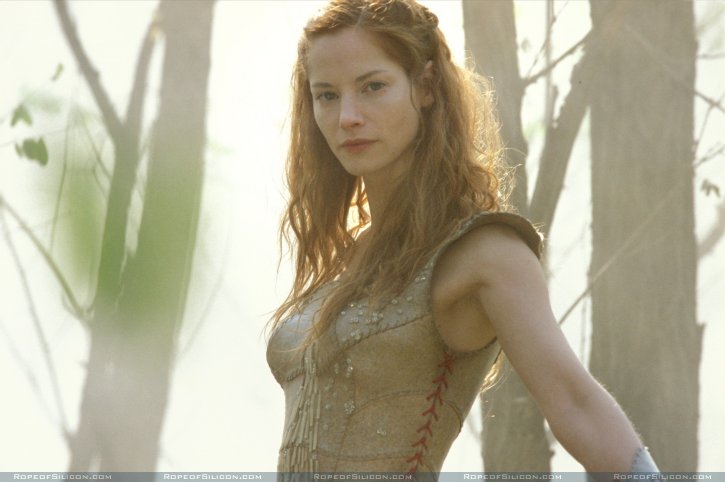
(Picture shows actress Sienna Guillory in the role of Arya from the movie Eragon)

Waltzing With … Darwin

26 Sunday Aug 2012

Posted by A.O. in Waltzing with ...

≈ 1 Comment

Tags

Anglo-Saxon names, english names, famous namesakes, locational names, name history, name meaning, surname names, UK name popularity, US name popularity

This blog post was first published on August 26 2012, and revised and re-posted on May 18 2016.

Famous City, Famous Namesake
Today is the last day of the Darwin Festival, a Top End cultural extravaganza of art, music, dance, comedy, film, theatre, cabaret, and festivities. The city of Darwin is known for its laid-back lifestyle and unique multicultural mix, with people of over fifty nationalities living side-by-side and intermingling.

If you attended the festival, you could have learnt how to make Chinese dumplings, watched an Aboriginal drag queen, got a make-over at an African beauty salon staffed by children, picnicked with teddy-bears, been seduced at a Bollywood burlesque show, swum at a pool party, gone to a Rio-style cabaret, and attended a rock concert in someone’s back yard.

Darwin is the capital of the Northern Territory, the smallest Australian capital, and the most northerly of our capital cities. It looks towards Asia, across the Timor Sea, and is geographically closer to the capital cities of five other countries than it is to the capital of its own.

It has the highest Indigenous population of any capital city, with perhaps 10% of the city’s residents being Aboriginal, and has a significant Asian population from China, Indonesia, Vietnam and the Philippines. Darwin swelters in tropical heat year-round, and is one of the most lightning-prone areas of the world. Having been bombed by the Japanese in World War II, and flattened by Cyclone Tracey in 1974, it’s been rebuilt twice and looks very modern.

The first British person to see Darwin harbour was Lieutenant John Stokes in 1839, who was on HMS Beagle. The ship’s captain, John Wickham, named the port after naturalist Charles Darwin, who had sailed with them on the Beagle‘s previous voyage. Charles Darwin had spent almost five years sailing the world on the Beagle, and it was his adventure of a lifetime.

He accumulated enough specimens to make his reputation and keep him occupied for years, not to mention surviving an earthquake and discovering a new species of dolphin. In Australia, he found the platypus and kangaroo-rat so odd that it seemed to him two distinct Creators must have been at work making life on earth – a radical thought for someone who had just finished studying to become a clergyman (not surprisingly, he went with a scientific career instead).

Darwin returned to England a celebrity, but what he didn’t do on his trip was discover evolution, for that idea was decades old, and familiar to Darwin’s own grandfather, Erasmus. What he did (when he got home) was come up with natural selection as a means to help explain the mechanism behind evolutionary theory.

His masterwork On the Origin of Species proved a bestseller, but Darwin avoided using the word evolution in case it proved too controversial, and only vaguely alluded to humans being part of the evolutionary framework. However, it resonated with both the scientific community and popular imagination, inspired the ideas of others, and made evolutionary theory an established part of the modern world-view.

Name Information
The English surname Darwin has two separate meanings. Originally it was from the Anglo-Saxon personal name Deorwine, meaning “dear friend”. Later it was taken from the town of Darwen, which stands on the river of that name in Lancashire. The river’s original name seems to have been Darwent, from the British meaning “valley thickly grown with oaks”. The surname Darwin is most often found in the north of England, suggesting the origin from the town is more common.

Darwin has been used as a personal name since at least the 18th century, and in England was first associated with Lincolnshire. Charles Darwin was descended from the Darwins of Lincolnshire, and he inherited the family estate there, which came down to him through his grandfather.

Even in the 19th century, a link with Lincolnshire continued, but the name became more common in the Midlands, a focal point for the Darwin family as it married into the Wedgwood family, famous for its pottery. So many Darwins went on to do interesting and worthy things that it isn’t possible to say everyone called Darwin had their name inspired by Charles Darwin – it might well have been another admired family member.

The name Darwin has always been more common in the United States, where it was first associated with the New England area. Although some of the towns and natural features in America called Darwin are named in honour of Charles Darwin, unlike in other countries, several are named are local people whose first name was Darwin.

The name Darwin has been on and off the US Top 1000 since the 19th century, with a long continuous stretch from the early 20th century until the mid 1990s. It peaked in 1938 at #279. It has been on the Top 1000 again since 2001; it is currently #876 and generally fairly stable. In the UK, the name Darwin has been generally rising, and 27 baby boys were given the name Darwin in 2014.

In Australia, Darwin is extremely rare as a first name, and only slightly more common as a middle name. Although it can be found a handful of times in records, most Australians probably think of it as a “modern” name. While Adelaide and Sydney are accepted as baby names here, I suspect for many people Darwin seems more of a “place” name than a “person” name. However, Darwin is genuinely Australian, and honours a wonderful namesake – a great thinker and humanitarian scientist who changed our world forever.

POLL RESULT
Darwin received a decent approval rating of 68%. 26% of people thought the name was okay, and 14% hated it.

(Picture of a storm over Darwin from the NT News; the photo was snapped from Darwin’s Evolution Building)

Waltzing With … Olivia

22 Sunday Jul 2012

Posted by A.O. in Waltzing with ...

≈ 5 Comments

Tags

anagram names, created names, english names, European name popularity, famous namesakes, fictional namesakes, Latin names, locational names, name combinations, name history, name meaning, name popularity, New Zealand name popularity, popular names, saints names, Shakespearean names, sibsets, tree names, UK name popularity, US name popularity

This blog post was first published on July 22 2012, and substantially revised and re-posted on May 4 2016.

This Friday, July 27, it is Schools Tree Day. I always think this is a great way to start off the Spring Term, as it gets students out of the classroom and connecting with nature. This year there will be an emphasis on programs where children plant and care for trees in public bushland, teaching them about the environment and community responsibility.

National Tree Day (on Sunday July 29), and its “junior partner”, Schools Tree Day, are Australia’s biggest tree-planting events. National Tree Day was co-founded by pop singer Olivia Newton-John and Australian environmental group Planet Ark in 1996; since then more than 3.8 million people have planted over 22 million trees and shrubs.

Olivia Newton-John is an ambassador to the United Nations Environmental Program, and has won awards for her efforts on behalf of the environment from the Environmental Media Association and the Rainforest Alliance. This year she was named one of Australia’s Living Treasures by the National Trust. In honour of Ms Newton-John’s achievements and charity work, I am taking a closer look at her first name.

Name Information
Olivia is a name invented by William Shakespeare for his play Twelfth Night. It is generally believed that Shakespeare based it on the Latin name Oliva, meaning “olive” and pronounced oh-LEEV-ah.

Oliva of Brescia was a Roman saint martyred in the 2nd century. Interestingly, the saint is now often known as Saint Olivia, to distinguish her from a legendary saint from the 9th century called Oliva of Palermo, and known as Blessed Olive.

Blessed Olive was a beautiful thirteen year old girl of noble family who was kidnapped by Muslims and martyred by them after the usual imprisonment and torture. It’s clearly a piece of propaganda, but she is still a patron saint of music. Confusingly, sometimes she is also known as Saint Olivia, to distinguish her from Saint Oliva of Brescia.

Shakespeare chose the name Olivia for a beautiful countess of Illyria, an ancient land in the Balkans on the Adriatic Coast, where Slovenia, Croatia, Montenegro and Albania are now. As its name suggests, Twelfth Night was written as an entertainment for the end of the Christmas season; its first performance was after Candlemas in 1602.

The eve of Epiphany was supposed to be a time when all the usual rules were turned topsy-turvy, so it is not surprising that cross-dressing plays a big part in the plot. The countess Olivia falls in love with a woman named Viola (an anagram of Oliva, while Olivia is an anagram of I, Viola) believing her to be a man named Cesario. The joke in Shakespeare’s day, when only males were permitted on stage, was that the role of Viola was played by a boy pretending to be a woman pretending to be man.

Olivia is such a stunning beauty that Viola’s twin brother Sebastian marries her virtually on sight, in an almost dreamlike state, while she thinks he is “Cesario”. They both marry under false pretences, but it is less illegal than Olivia marrying Viola. It’s a comedy, so everything works out.

The name Olivia was too good not be used by other writers, so a character named Olivia is in William Wycherley’s 1676 play The Plain Dealer, cleverly utilising a similar plot to Twelfth Night. In Oliver Goldsmith’s 1766 novel The Vicar of Wakefield, Olivia is the vicar’s strikingly beautiful daughter. In an impetuous rush of passion, she is tricked into a fake marriage with a womanising squire; luckily, it turns out the squire himself was tricked and the marriage is real.

A real marriage to an evil womaniser doesn’t sound like much of a happy ending for Olivia, but it’s happier than not being married at all, it seems. Arresting beauty and dodgy weddings seem the hallmark of the literary Olivia.

Olivia has been in use as an English name since the 17th century, and became more common in the 19th. An early famous namesake was the English socialite Olivia Devenish, who married Thomas Raffles, the vice-governor of Java.

Olivia Miss Newton-John emigrated to Australia from Britain in the 1950s, and during the 1960s was a regular on Australian radio and television before becoming a successful country-pop singer overseas. The name Olivia first appeared on the Top 100 in 1978 at #64, the same year that Olivia starred as Sandy in the hit musical film Grease.

The name Olivia was only on the Top 100 sporadically in the 1980s, never getting any higher than its initial position (Newton-John’s “sexy” image in this decade probably wasn’t a help). It began rising in the 1990s after Olivia’s career quietened down and she put away the spandex, shooting up to #46 in 1990. By 1998 it was in the Top 10 at #5, and it peaked at #1 in 2005, and then again in 2014.

Currently Olivia is #2 nationally, #2 in New South Wales, #1 in Victoria, #2 in Queensland, #3 in South Australia, #1 in Western Australia, #26 in Tasmania, #6 in the Northern Territory, and #4 in the Australian Capital Territory.

In the US, the name Olivia has charted consistently in the Top 1000 since the 19th century, rarely leaving the Top 500. It has been in the Top 100 since the 1990s, and is currently at its peak position of #2. In the UK it has been in the Top 100 since the 1990s, and peaked at #1 in 2008-2010. It is currently #2. Olivia is also #2 in New Zealand, and is popular across the English-speaking world as well as East and West Europe, and Scandinavia. Olivia is a name that travels very well.

Coincidentally or not, the rise and stability of Olivia looks similar to the trajectory of the name Oliver, which is now at #1 – in fact, the two names were #1 together in 2014. Olivia’s success may have helped her twin sister Olive rise through the ranks, for this retro charmer began zooming up the charts in the 2000s, and is now in the Top 100.

Other famous namesakes include Hollywood star Olivia de Havilland; author Olivia Manning; George Harrison’s widow, Olivia Harrison; and actresses Olivia Wilde and Olivia Williams. Although there are many fictional Olivias, one of the most famous is the adorable pig from the children’s book and TV series, named after the author’s niece (I’ve noticed many baby Olivias seem to get toy pigs as gifts).

Lovely Olivia has become one of our modern classics, currently at the peak of its success and still stable after 17 years in the Top 10. I think, like that other Shakespearean coinage Jessica, it will be with us for some time to come.

POLL RESULT
Olivia scored an approval rating of 89%, making it the most popular girl’s name of 2012 in this category. 35% of people thought the name Olivia was okay, while only 4% hated it.

(Picture shows old olive trees in Albania).

Waltzing With … Lawson

17 Sunday Jun 2012

Posted by A.O. in Waltzing with ...

≈ 3 Comments

Tags

english names, famous namesakes, locational names, name history, name meaning, names of bands, nicknames, Norwegian names, surname names, UK name popularity, US name popularity

This blog entry was first posted on June 17 2012, and revised and re-published on April 6 2012.

Today is the birthday of the Australian poet Henry Lawson, who was born June 17 1867. Public celebrations to mark this event were held last weekend, to coincide with the Queen’s Birthday long weekend.

There are two festivals in his honour in the Western Plains region of New South Wales. The town of Grenfell has one because that’s where Henry Lawson was born, and so does the town of Gulgong because Henry’s parents moved there when he was just six weeks old, and spent his first five or six years there.

Willoughby council in Sydney holds a bush poetry reading every two years at Henry Lawson’s Cave, and this year it fell on Henry Lawson’s actual birthday. Henry Lawson’s Cave is a small cavern which the author used as an occasional refuge, and perhaps wrote some of his work there. Another site for Lawson-lovers to visit in Sydney is the statue of Henry Lawson near the Domain, an area that Lawson enjoyed walking in, and perhaps sometimes slept out in.

Henry Lawson is said to one of our three national poets, the other two being Banjo Paterson and C.J. Dennis, yet it is as a writer of short fiction that he really shone. His style is quite modern, being spare and unflinching, with plot being less important than powerful imagery. He has sometimes been compared to Hemingway and Chekhov in terms of a lean, raw writing style. His mother was the feminist Louisa Lawson, and the political bent of his work was greatly influenced by her and her radical friends.

His importance as an Australian bush writer is that he wrote of the realities of the Australian bush, rather than the romanticised version you get from Banjo Paterson. Henry Lawson was born to a struggling family on the goldfields, and his parents’ marriage broke up; as a man who greatly admired his mother, he had a deep appreciation of how hard bush life could be for women, and how strong they needed to be just to survive, let alone thrive. The outback frequently appalled Lawson, and he saw it as a place of suffering.

Yet his perceptions of the bush have helped to shape our identity, and he had a gift for capturing and evoking the national character in just a few words. He stressed the egalitarianism and mateship of the Australian psyche, and championed the underdog and the urban poor. He understood the laconic Australian sense of humour, with its sharp sense of irony.

Lawson’s life was a sad one; he was bullied as a child and never felt that he fit in, his little sister died, his parents split up, he went deaf early in life which increased his sense of isolation, he struggled to gain recognition and find steady work, his marriage was unhappy and mirrored his parents’ by ending in separation, and he drank to ease his sadness which made things worse. He spent time in gaols, convalescent homes, and mental asylums.

It’s tempting to think that he inherited a strain of Nordic gloom from his Scandinavian father, and that depression was at the back of many of his misfortunes. Because of this, last year two men did the Henry Lawson Walk, which re-enacted a walk Lawson took with a friend from Bourke in outback New South Wales to Hungerford in outback Queensland – a trip of around 450 km (280 miles).

They did it to raise awareness and funds for Beyond Blue, the national depression initiative. Beyond Blue has programs which focus on men’s health, alcoholism, and those facing isolation in rural areas – in fact many of the problems suffered by Lawson in the late 19th and early 20th centuries are still being battled today. He is truly one of the moderns, both in life and art.

Name Information
Lawson is an English surname meaning “son of Law”, with Law a popular medieval nickname for the name Lawrence. The name was especially associated with Yorkshire, as the Lawson family was prominent during the War of the Roses. Lawson has been used as a personal name since the 17th century, with use concentrated in the north of England – an apparent legacy of its Yorkshire origins.

It should be noted that Henry Lawson’s father Anglicised his surname from the Norwegian form of the name, Larsen. There is a suburb of Canberra named after Henry Lawson – not to be confused with the town of Lawson in the Blue Mountains. Although Henry Lawson did live in the Blue Mountains at one point, the town is named after the explorer, William Lawson.

In the US, Lawson was especially associated with the southern states: John Lawson explored North Carolina in the 18th century, and Gaines Lawson was a Confederate captain in the American Civil War. Alfred Lawson was a popular philosopher in the Midwest, promoting vegetarianism, the end of banking, and racially integrated baseball; an aviation pioneer, he is cited as the inventor of the airliner, although it immediately crashed.

The name Lawson charted in the US Top 1000 from the late 19th century until World War II, then had a long break from 1950 to 2000. Since then, the name has been steadily going up the charts and is now #485 – the highest the name has been since the early 20th century.

In the UK, the name Lawson has been in the Top 1000 since 2003, and has been climbing since 2010, when the British band Lawson formed. Since their first album came out in 2012, the name has gone up even more steeply, and is now #409.

In Australia, Lawson is in steady use, and perhaps also around the 400s here. It’s a name which pays tribute to the first Australian writer to be given a state funeral, and is less popular and more modern-sounding than his first name, Henry, and fits in with popular names such as Lincoln and Logan.

Historian Manning Clark wrote that Australia was “Lawson writ large”, and this patriotic name honours the man who who been called “the people’s poet”, “our poet-prophet”, and “the real voice of Australia”. It’s a voice that is not always comfortable to hear, but this is a great name for anyone who loves the real Australia, and not an idyllic vision of it.

POLL RESULTS
Lawson received an approval rating of 89%, making it one of the highest rated names of 2012. 39% of people loved the name Lawson, and nobody hated it.

The Top Ten Boys Names of 2028

27 Sunday May 2012

Posted by A.O. in Your Questions Answered

≈ 16 Comments

Tags

name data, name popularity, name predictions, name trends, nicknames, popular culture, popular names, surname names, UK name popularity, UK name trends, Upswing Baby Names, US name data, US name popularity, vocabulary names

This follows on from The Top Ten Girls Names of 2028, so if you want to know the methods used, and what this is all about, and whether it’s really the Top 10 of 2028, then go read that first. If you’ve read it, you’ll know I ran into a few frustrations doing the girls names, and if anything, the boys names ended up being even more of a headache.

Angie, the discerning blogger behind Upswing Baby Names, was kind enough to leave me a long and thoughtful comment, which in part wondered whether posting predictions itself could change the future.

For example, a parent worried about a name they like gaining popularity may avoid it, even if the name is currently under-used. Therefore, names tipped to become popular are less likely to actually become popular. (Hmm, if this is true, pick a name that is touted as being popular in the future, because that will scare everyone else off!)

Angie herself, in her article Warning: Your Baby’s Name Could Become #1, notes that the number of popular names is shrinking markedly each decade, and that in effect, the popularity of names is virtually meaningless today. Yet somehow, we worry about it more than ever. Pretty crazy, huh?

Now I didn’t fret myself too much over Angie’s concerns, because I didn’t really imagine many people would read my blog entry, and didn’t think those that did would pay any attention. So I was somewhat disconcerted to see that it had been posted on a parenting forum, in part as an alert that the name a woman had chosen for her daughter, Freya, had been pegged for potential eventual #1 status by yours truly.

Fortunately, at least one of my predictions was proved right, because nobody appeared to pay much attention to me, and several flat-out said I was wrong. (These tended to be the type of people who didn’t think Olivia was popular, because they hardly knew anyone of that name, so their views on name popularity may not be particularly au courant).

The overwhelming advice given was exactly what I would have said myself: Don’t worry about whether a name will be popular in the future, that isn’t something you are able to control, and it would be foolish to avoid using a name you love for fear of what may happen later.

Sage, sane and sensible advice. Follow it!

Current Top Ten

  • William #24 in ’95 and #37 for the 1980s (gradual rise up the Top 50)
  • Lucas #87 in ’95 and #105 for the 1980s (steady rise into the Top 100)
  • Lachlan #26 in ’95 and #75 for the 1980s (steady rise up the Top 100)
  • Ethan #61 in ’95 and #323 for the 1980s (precipitious rise into the Top 100)
  • Oliver #75 in ’95 and #140 for the 1980s (steep rise into the Top 100)
  • Jack #7 in ’95 and #91 for the 1980s (steady rise up the Top 100)
  • Noah #161 for the 1990s and in rare use for the 1980s (new name that skyrockets)
  • Thomas #6 in ’95 and #27 for the 1980s (gradual rise into the Top 10)
  • Joshua #1 in ’95 and #11 for the 1980s (gradual rise to #1)
  • Cooper #125 for the 1990s, in rare use in the 1980s (new name that skyrockets)

1. ISAAC

Isaac is currently #19, and in 2001 he was #40. This is pretty close to William’s stately progress through the Top 50, and as such, I am picking him as the #1 name of the future. It did come as a bit of surprise to me, but it’s the only name that even comes near to matching William’s pattern. When I checked the Top 100 for the US and England/Wales, both of them still have Isaac around where he was for us ten years ago, but making similar progress. The popularity of Isaac may become apparent here earlier due to our smaller population size.

2. KAI

Kai is #83 right now, and he was #105 for the early 2000s. This is an extremely good match with Lucas, almost perfect in fact. Now the question is, will Kai shoot up the Top 100 the way Lucas did? I’m a bit sceptical, because I can’t help feeling that Lucas got quite a big boost from popular culture. I think someone is going to have to produce a TV show with a likeable main character named Kai. Even without such a TV show, it’s clear that Kai is doing very well for himself.

3. LOGAN

Logan is currently #34, and in 2001 he was #78. That’s not quite a good enough match to please me, but it’s the best I could get. Although the two names sound a bit alike, I don’t think Logan is going to be the next Lachlan, because Logan simply doesn’t mean as much in Australia as Lachlan does; it doesn’t have the same history and resonance. As you can see, it hasn’t climbed as high in the same space of time either. However, Logan is a common place name in Australia, and I’m still tipping it to continue rising.

4. CHASE

Chase is currently #85, and he was #407 for the early 2000s. I couldn’t find a name which mimicked Ethan very closely, and Chase was the best I could do. As you can see, he has actually climbed faster than Ethan did, and Ethan was no slouch. If Chase continues at his current rate, he will be Top Ten sooner than 2028. We’ll have to wait and see.

5. HUGO

Hugo is currently #90, and he was #143 for the early 2000s. This is a similar pattern to Oliver, but Hugo hasn’t climbed quite as high as Oliver did in the same space of time. However, you can see that he is still making good progress, and looks set to continue. He also has the fashionable OH sound we saw on the girls’ list – although can anyone really believe in a Top Ten which contains both a Harlow for girls and a Hugo for boys? It boggles the mind.

6. LUCAS

Lucas is currently #2, and ten years ago he was #82. This looks quite similar to Jack’s climb from the bottom of the Top 100 into the Top 10. Jack has of course proved himself a real stayer, and we’ll have to see whether Lucas has similar powers of endurance. I was going to say I doubted it, and then I looked back through the blog and saw I had earlier tipped Lucas to be only just outside the Top 10 in thirty years, based on comparisons with the Top Ten of 1982. So for reasons of consistency, I now feel compelled to say that yes, Lucas will still be in the Top Ten seventeen years later.

7. BENTLEY OR GRAYSON (???)

I knew I was going to hit a horrible snag at some point, and this was the point where that occurred. I needed to find a name that, like Noah in 1995, is around #160 at the moment, but ten years ago, did not even chart. The trouble is, it’s not possible to find that on the present chart, because it’s too new to show up yet. Left struggling in the dark, all I could think of was that since Noah was a name that became popular in the United States before it did here, I would see where Noah was on the US charts in 1995. It had just scraped its way onto the very bottom of the Top 100, after climbing a very brisk 59 places. I had a look at the 2011 US chart to see if there were any names that looked similar to that, which might possibly be around #160 here, and drew a blank. The names on the US Top 100 which climbed the highest last year were Bentley and Grayson, but only 25 places – not even half what Noah managed. Are Bentley and Grayson in the mid-100s here at the moment? I have no idea. If I go down just outside the Top 100, Easton (#102) climbed 43 places, and Jace (#106) climbed 40 places, which comes closer to Noah, but I can’t really see either of them in the mid-100s. I don’t think there is an equivalent to Noah, but without any solid data to draw on, I’m left dangling. Your guess is very much as good (or bad) as mine – and that is all this is, complete guesswork.

8. ETHAN

Ethan is currently #4, and in 2001 he was #17. That isn’t a perfect match with Thomas, but it does show Ethan moving up the Top 50 into the Top 10, like Thomas. I could have chosen either Oliver or Noah, but the idea of having both Olive and Oliver in the Top 10 seemed ludicrous, and I was quite out of patience with poor Noah by this stage. I also saw that I had earlier tipped Ethan to be a real stayer, so once more felt that I had little choice but to choose him again.

9. WILLIAM

William is currently the #1 name, and in 2001 he was #10. This is virtually a perfect match with long-lasting Joshua, who was #1 in 1995, and #11 for the 1980s. Basically if trends in boys’ names continue as they have been, 30% of the Top 10 in seventeen years will consist of names that are in the present Top 10. I feel as if boys’ names are becoming less conservative and there will be greater change coming in the future, but that may just be wishful thinking on my part.

10. ARCHER

With finding an equivalent for Cooper, I was in a similar position to finding an equivalent to Noah (ie there would be no data available at this early stage). However, I felt I had more freedom to choose, because Cooper seems to be a name which is much more popular in Australia than anywhere else. Therefore, there was no need to look through overseas data, or do any number crunching – it was just a matter of thinking of a new name which has grown wildly in popularity over the past few years, yet isn’t in the Top 100 yet. I was also hoping it would be an English surname/vocabulary name like Cooper. It really didn’t take much thought to light upon Archer; after reading birth announcements for months, I can see Archer is a name taking off like wildfire, and anyone can see it will be in the Top 100 within a few years or so. Can I see it reaching the Top 10? Yes, easily. It has better nickname options than Cooper, and a more romantic meaning, so I wouldn’t be surprised if it does better than Cooper.

My Tips for Coming Trends

  • IE sounds, as in Isaac and Kai
  • OH sounds, as in Logan and Hugo
  • Hard K sounds, as in Isaac, Kai and Lucas
  • S-enders, like Chase and Lucas
  • The rise and rise of the surname name for boys
  • Stronger influence from the US than from the UK
  • The names that are popular now still hanging on and becoming standards

Waltzing With … Billy

08 Sunday Apr 2012

Posted by A.O. in Waltzing with ...

≈ 5 Comments

Tags

Easter names, english names, famous namesakes, fictional namesakes, Irish name popularity, name history, name meaning, name popularity, nicknames, rhyming slang, slang terms, UK name popularity, unisex names, US name popularity, vocabulary words

This article was first published on April 8 2012, and revised and re-posted on March 9 2016.

Fictional Namesake
The blog entry for Pasco looked at a religious side to Easter, so this one will be about a secular aspect of the holiday.

One of the most popular symbols of the season is the Easter Bunny; this was an old German custom, and originally a hare rather than a rabbit (which is why the word bunny is used, to cover both creatures). Hares and rabbits are famous for being prolific breeders, so they make obvious fertility symbols for a festival which occurs in the northern spring and celebrates new life.

However in Australia, this prolificness of the rabbit has made it an invasive pest and an environmental disaster. Rabbits first arrived on the First Fleet and were bred for food in hutches, but don’t seem to have become a problem in mainland Australia until 1859.

In this fateful year, some bright spark named Thomas Austin thought it would be utterly spiffing to release 24 English rabbits onto his country property in Victoria so that he could continue the rabbit hunting lifestyle he had enjoyed in England. Austin opined the rabbits would do little harm, and might provide a touch of “home”.

Austin released both wild grey rabbits and domestic rabbits; the two varieties intermingled to become an extremely hardy and resilient Super Rabbit. Even then it might not have been such a mess, except that all the landowners living around Austin got in on this new fad, and released stacks of rabbits onto their own farms.

Within a decade, there were so many rabbits that 2 million could be killed each year without making the slightest difference to their numbers. By Federation in 1901, they were already holding a Royal Commission to see how the “rabbit problem” could be brought under control.

Rabbits are thought to be the most significant factor in loss of native species. They kill young trees, compete with native animals for resources, and cause horrific soil erosion which takes centuries to recover. They cost the agricultural sector millions of dollars in damages each year.

During the 1980s and ’90s, the environmental movement in Australia made a stand by using a new Easter symbol – the Easter Bilby. Bilbies (pictured) are cute native marsupials with a long muzzle and long ears, and they are an endangered species. The Foundation for a Rabbit-Free Australia used the Easter Bilby to educate people about the damage that feral rabbits do to our delicate ecology.

Haigh’s Chocolates got on board by stopping making chocolate bunnies, and making the very first chocolate bilbies. Darrell Lea also make chocolate bilbies, with part of the profits going to the Save the Bilby Fund. You can buy cheap chocolate bilbies from supermarkets as well, but it’s probably a toss-up whether any of the money you spend will go towards helping real bilbies.

The campaign has been successful, because thirty years ago there was no such thing as a chocolate bilby, and now they are an established part of Easter. Schools and school holiday programs often use the Easter Bilby for egg hunts and other activities, as an opportunity to teach kids about the environment as they play games and munch chocolate. Buying a bilby instead of a bunny feels patriotic and environmentally responsible.

There have been many picture books about the Easter Bilby, but the first one, and the first mention of the Easter Bilby, was Billy the Aussie Easter Bilby, by Queensland children’s author Rose-Marie Dusting, in 1979. Rose-Marie’s first version of the story was written in 1968, when she was only nine years old. Most likely, Rose-Marie chose the name Billy because it sounds like the word bilby.

Name Information
Billy is a pet form of Bill, which is short for William; it has been used an an independent name since the 18th century. People often ask how Bill became short for William (which doesn’t start with a B), but nobody seems to know for sure. It is presumed to be part of that medieval initial letter swapping which saw Richard become Dick, and Robert become Bob.

Billy is also a vocabulary word which has a particular resonance in Australia – a billy is a cooking pot used to boil water on a campfire. It’s thought that the word billycan comes from the large cans used to transport bully beef (corned beef) on ships sent to Australia or during exploration in the outback.

It’s a word which reminds us of the outback and our history, and even now some older Australians will say they are going to put the billy on for tea, when they just mean the kettle. Billy Tea is a brand of strong tea which has been sold since the late 19th century, and many arcane methods are suggested for making the perfect brew of tea over a campfire. You can read of billies in the poems of Henry Lawson and Banjo Paterson, the most famous reference being the jolly swagman in Waltzing Matilda, who sang as he watched and waited ’til his billy boiled.

A billy lid is not just a lid for a billy, but also affectionate rhyming slang for “kid” (child). There’s also the Puffing Billy steam train network near Melbourne, a major tourist attraction, and billy buttons, a type of native daisy.

One of the most famous Australian men who went by the name was Billy Blue, the first Australian convict to become a celebrity. Described in the records as a “Jamaican Negro”, Billy claimed to be a freed slave with some Native American heritage who had fought with the British during the War of Independence. When convicted, he was living in London, and had stolen sugar to use in his chocolate-making business.

In Australia, he became popular with the government and the public for his whimsical personality and witty banter. When he completed his sentence, he became a ferryman, and was granted 80 acres of land in the North Sydney area – Blues Point and William Street are two of several local landmarks named after him.

Other namesakes include Billy the Native, a bushranger who passed into folklore as “the traveller’s friend”; Billy Lynch, an Aboriginal community leader in the Katoomba area with hundreds of proud descendants; Billy Sing, a Chinese-Australian soldier who served with distinction in the Gallipoli Campaign; Billy Thorpe, rock singer from the 1960s and 70s; Billy Elliot, the jockey who rode Phar Lap to victory seven times; and NRL star Billy Slater.

Billy entered the Australian charts in the 1970s at #427, and began climbing steeply. It hasn’t reached the national Top 100, but is often seen around the bottom of popularity charts in certain states, and would not be far off. William is a very popular name, and it is possible that some of those Williams also go by Billy.

In the US (home of Billy the Kid and fictional sailor Billy Budd), Billy has been almost continually on the charts, and was a Top 100 name from the early 1920s until the end of the 1970s, peaking in the 1930s at #20. After that very impressive run, it has been on the decline and is now #794. It also charted as a girl’s name (a variant of Billie) from the 1920s until the 1940s, peaking in 1930 at #527.

In the UK (home of Billy Idol and fictional schoolboy Billy Bunter), Billy was a Top 100 name in the 1990s; it left the Top 100 in 2009 and is currently #122, and has been occasionally used for girls. Billy is still a popular name in Ireland. In Australia, Billy has never had a long run of popularity as in other English-speaking countries, so feels a bit fresher here.

Billly is an environmentally-friendly Easter creation; a name from history; a name from poetry; a name from the landscape; the name of a host of colourful Australian characters. Billy is a name which says, “I’m coming at you world, ready or not!” He’s a true blue wild colonial boy who is cute as a button, and sweet as a chocolate bilby.

POLL RESULTS
Billy received an approval rating of 78%, making it one of the highest-rated names of 2012. 42% of people thought the name Billy was okay, while 11% hated it.

← Older posts
Newer posts →

Enter your email address to follow this blog

Categories

Archives

Recent Comments

A.O.'s avatarwaltzingmorethanmati… on Zarah Zaynab and Wolfgang…
Madelyn's avatarMadelyn on Zarah Zaynab and Wolfgang…
JD's avatardrperegrine on Can Phoebe Complete This …
A.O.'s avatarwaltzingmorethanmati… on Rua and Rhoa
redrover23's avatarredrover23 on Rua and Rhoa

Blogroll

  • Appellation Mountain
  • Baby Name Pondering
  • Babynamelover's Blog
  • British Baby Names
  • Clare's Name News
  • For Real Baby Names
  • Geek Baby Names
  • Name Candy
  • Nameberry
  • Nancy's Baby Names
  • Ren's Baby Name Blog
  • Sancta Nomina
  • Swistle: Baby Names
  • The Art of Naming
  • The Baby Name Wizard
  • The Beauty of Names
  • Tulip By Any Name

RSS Feed

  • RSS - Posts

RSS Posts

  • Celebrity Baby News: Melanie Vallejo and Matt Kingston
  • Names from the TV Show “Cleverman”
  • Can Phoebe Complete This Sibset?
  • Zarah Zaynab and Wolfgang Winter
  • Baby, How Did You Get That Name?
  • Celebrity Baby News: Media Babies
  • Celebrity Baby News: Adelaide Crows Babies
  • Celebrity Baby News: Chris and Rebecca Judd
  • Names at Work: Name News From the World of Business and Employment
  • Celebrity Baby News: Sporting Round Up

Currently Popular

  • The Top 100 Names of the 1940s in New South Wales
  • Rare Boys Names From the 1950s
  • Celebrity Baby News: Jacinta Allan and Yorick Piper
  • The Top 100 Names of the 1930s in New South Wales
  • Celebrity Baby News: Jason Morrison and Heidi Tiltins

Tags

celebrity baby names celebrity sibsets english names famous namesakes fictional namesakes honouring locational names middle names name combinations name history name meaning name popularity name trends nicknames popular names saints names sibsets surname names twin sets unisex names

Blog at WordPress.com.

Privacy & Cookies: This site uses cookies. By continuing to use this website, you agree to their use.
To find out more, including how to control cookies, see here: Cookie Policy
  • Subscribe Subscribed
    • Waltzing More Than Matilda
    • Join 517 other subscribers
    • Already have a WordPress.com account? Log in now.
    • Waltzing More Than Matilda
    • Subscribe Subscribed
    • Sign up
    • Log in
    • Report this content
    • View site in Reader
    • Manage subscriptions
    • Collapse this bar
 

Loading Comments...