• About
  • Best Baby Names
  • Celebrity Baby Names
  • Celebrity Baby Names – Current
  • Celebrity Baby Names – Past
  • Featured Boys Names
  • Featured Girls Names
  • Featured Unisex Names
  • Links to Name Data
  • Waltzing on the Web

Waltzing More Than Matilda

~ Names with an Australian Bias of Democratic Temper

Waltzing More Than Matilda

Tag Archives: surname names

Celebrity Baby News: Celebrity Round Up

29 Monday Jun 2015

Posted by A.O. in Celebrity Baby News

≈ 1 Comment

Tags

Arabic names, celebrity baby names, celebrity sibsets, German names, honouring, name meaning, surname names

jamila-feat-720x547

Editor Jamila Rizvi, and her husband Jeremy Smith, welcomed their first child on June 2 and have named their son Rafi Fileborn [pictured]. Rafi is an Arabic name meaning “noble”, while Fileborn is also Jeremy’s middle name, and is Jeremy’s mother’s maiden name – it’s German. Jamila is editor-in-chief of the Mamamia website.

Perth socialites Sophia and Troy Barbagallo welcomed their daughter Madison Mia almost a year ago, a sister for Troy’s teenaged son Dom. The couple are expecting another child this year, and Troy predicts it will be a girl again – apparently he has some kind of gender-predicting superpower, as he is never wrong when he guesses. Sophia is a former Miss World WA, and she and Troy are the organisers for Miss Universe WA and Toybox International.

Councillor Belinda Murphy, and her husband Wayne, welcomed their son Liam last October, a brother for Madeline. Belinda is the mayor of McKinlay Shire, which is in north-western Queensland, centred around the town of Julia Creek. She became the shire’s first female mayor in 2012, and was elected unopposed. An experienced pilot, Belinda runs a cattle transport and earthmoving business with Wayne. She is currently taking part in a campaign to run seven marathons in seven days in six different states to raise money for Bravehearts.

Human rights advocate Gillian Triggs became a grandmother this year when her son, Paris-based lawyer James Brown, and his partner Marie, welcomed a daughter named Sia. A specialist in international law, Gillian is currently the President of the Human Rights Commission. She is married to former diplomat Alan Brown.

Uncommon Boys Names from the Birth Announcements of 2011-12

21 Sunday Jun 2015

Posted by A.O. in Name Themes and Lists, Requested Names

≈ 4 Comments

Tags

aliases, aristocratic surnames, Australian slang terms, Biblical names, english names, epithets and titles, famous namesakes, fictional namesakes, food names, fruit names, germanic names, hebrew names, honouring, imperial titles, Irish names, Italian names, Latin names, locational names, mythological names, name history, name meanings, name popularity, name trends, names from movies, names of bands, Old Norse names, plant names, Polish names, rare names, royal names, saints names, Scottish names, Slavic names, surname names, unisex names, US name popularity, US name trends, weaponry terms

Billy-Slater-5941649Augustus
The Emperor Augustus was the founder of the Roman Empire and its first emperor; the month of August was named after him. His reign initiated the Pax Romana, a relatively conflict-free period which lasted for more than two centuries. Born Gaius Octavius, he was granted the title of Imperator Caesar Divi Filius Augustus, meaning “Military Commander and Caesar, the Son of God, the Venerable”, with the Augustus part meaning “venerable”, from the Latin augeo, meaning “increase, growth, honour”. Before it became an imperial title, Augustus was an epithet used to signal something that was sacred, and the title was adopted by the Holy Roman Emperors in the Middle Ages. Augustus has been a favourite name amongst European royalty, and traditionally used by the Hanoverians in the British monarchy. Hazel has shot into the Top 100 since The Fault in Our Stars, and I wonder if it could also boost regal Augustus, as this is the name of Hazel’s love interest? The name is already rising in the US, so maybe. Gus is a popular short form, although I have seen a lot of interest in Augie because of the Australian rock band Augie March, named for a character in a Saul Bellow novel.

Brasco
Scottish surname referring to someone from the village of Brisco in Cumbria, once part of the Strathclyde kingdom of Scotland. The place name comes from the Old Norse for “wood of the Britons”. Also an extremely rare Italian surname which is probably from the Germanic brakia, meaning “struggle”, used as a nickname. The name is well known because of the undercover alias Donnie Brasco used by FBI agent Joseph Pistone during the 1970s: his autobiography inspired the movie Donnie Brasco, with Johnny Depp in the title role. It has an unfortunate meaning in Australia, as brasco is slang for “toilet”, from the manufacturer Brass Co. Brasco is an extremely cool-sounding name, and as for the toilet association – better tell everyone to just forget about it!

Casimir
Latinised form of the Polish name Kazimierz, from the Slavic for “to destroy fame”, referring to someone who annihilates their opponent in battle so completely that they lose all honour. Four medieval rulers of Poland have been named Casimir, and St Casimir, the son of Casimir IV, is the patron saint of Poland and Lithuania. Kazimierz is a reasonably popular name in Poland, but Casimir is rare around the world, even in countries with high immigration from Poland. However, this is a handsome heritage choice, not so different from fashionable Casper and hip Caspian, with Caz as the obvious nickname, although Cass and even Cash seem possible.

Fintan
Irish name thought to mean “white fire”. In Irish mythology, Fintan mac Bóchra was a seer who accompanied Noah’s granddaughter to Ireland before the Great Flood. When the floodwaters hit, his family were all drowned, but Fintan managed to survive under the sea in the form of a salmon for a year; he also lived as an eagle and a hawk before returning to human form. He lived for more than 5000 years after the Deluge, becoming the repository of all wisdom. Once Christianity arrived in Ireland, Fintan decided to leave the world of mortals with a magical hawk who was born at the same time as he. There are a staggering 74 Irish saints named Fintan, which shows what a common name it must have been, and it is still in regular use in Ireland. The popular boy’s name Finn, and all the similar names, such as Finlay and Finnian, make this seem on trend.

Gage
English surname which can be related to the word gauge, meaning “measure”, and would have started as an occupational surname for someone who checked weights and measures. It can also be an occupational surname for a moneylender, as gage meant “pledge” – that which the person would put up as surety against the money loaned (as when objects are pawned). Its related to the words wage and mortgage, and also to the word engage: when you get engaged to someone, you make a pledge to them. Gage is an aristocratic surname; Sir William Gage first introduced the plum-like greengage into England in the 18th century, which is where its English name comes from. Gage has been used as a personal name since the 18th century, originating in the west country. It first joined the US charts in 1989, the same year that Stephen King’s Pet Sematary was made into a horror film; the protagonist’s toddler son is named Gage, played by Miko Hughes (from Full House). Although Gage takes on a particularly macabre role in the story, the cuteness of little blond Miko must have had an effect. Still in fairly common use in the US, Gage is a rare name in Australia and the UK – its similarity to the word gauge, used in the context of guns, makes this an on-trend weaponry name.

Loki
In Norse mythology, Loki is a mysterious figure, sometimes depicted as a trickster or god of deceit. Other times he is a troublemaker, or commits outright evil. Although said to be one of the giant folk, he is sometimes numbered amongst the gods, and seems to have been on friendly terms with them at some point. However, after many acts of mischief and malice, they punished him by having him bound by the entrails of one of his sons, with a serpent dripping venom on him, making him writhe in pain, which causes earthquakes. It is foretold that at the end of the world, he will slip free from his bonds and fight against the gods on the side of the giants, and be slain. Fittingly for such an enigmatic character, the meaning of Loki isn’t known. However, he is also called Lopt, meaning “air”, suggesting he was associated with that element. In Scandinavian folklore, the phenomenon where the air shimmers on a hot day is said to be caused by Loki. The name has been used more often since the Marvel comics world was brought to life on film, with Loki as a super-villain played by Tom Hiddleston. Hiddleston portrays a complex, vulnerable, intelligent character whose charisma and style has won him legions of fans. Not only a cute-sounding mischievous name, Loki is quite similar to popular names like Luca and Lachlan, so it doesn’t seem strange.

Nazareth
Biblical place name; in the New Testament it is described as the home town of Jesus and his family. It’s also a title, because Jesus is often called Jesus of Nazareth. In early times, Christians were called Nazarenes (“people of Nazareth”) by non-Christians, and the modern Jewish word for Christians is notzrim, while in the Quran Christians are known as naṣārā – all coming from the name Nazareth. Archaeologists think that Nazareth would have been a small, insignificant village at the time of Jesus; today it is a city in northern Israel with most of its citizens Arabs, both Muslim and Christian. A place of Christian pilgrimage, it also has several sites of Islamic significance. The meaning of the city’s name is uncertain – it may come from the Hebrew for “branch”, or “watch, guard, keep”, implying it was originally on a hill, or protected in a secluded spot. Nazareth has been used as a personal name since at least the 16th century, and is of Puritan origin. Originally used mostly for girls, overall it has been given fairly evenly to both sexes, and has never been very common. An unusual Biblical name which is overtly Christian.

Roland
Derived from the Germanic name Hruodland, translated as “famous land”, or perhaps “fame of his country”. Roland was an 8th century Frankish military leader under Charlemagne, responsible for defending France against the Bretons. It is recorded that he was killed at the Battle of Roncevaux Pass in northern Spain by a group of rebel Basques. He became a major figure in medieval legend, and his death an epic tale of a Christian hero slain in battle against Muslims (the real Roland was killed by Christians, although Charlemagne was engaged in a war against Islamic forces in Spain). The 11th century La Chanson de Roland (The Song of Roland) describes Roland fighting a rearguard action against thousands of Muslims with a magical sword given to Charlemagne by an angel. Against the sensible advice of his best friend Oliver, Roland proudly refuses to call for reinforcements until it is too late, then dies a martyr’s death before angels take his soul to Paradise. In an English fairy tale based on a Scottish ballad, Childe Rowland is a prince who rescues his sister from the Dark Tower of the King of Elfland; the story is mentioned in Shakespeare’s King Lear. It helped inspire the poem Childe Roland to the Dark Tower Came by Robert Browning, and in turn this informed Stephen King’s fantasy series, The Dark Tower, with Roland Deschain as the flawed hero. Roland was #107 in the 1900s and continued falling until it left the charts altogether in the 1990s. This is a traditional underused name which is heroic and noble.

Slater
English surname referring to someone who worked with slate, especially in laying slate roof tiles. The surname comes from Derbyshire, and although it is of Norman-French origin, possibly existed before the Conquest. It has been used as a personal name since the 17th century, and from the beginning was associated with Derbyshire and the Midlands, which has a long history as a centre for slate quarrying. An unfortunate association in Australia is that slater is another word for a wood louse. The surname has several sporting namesakes, including former cricketer and media personality Michael Slater, rugby league star Billy Slater, and American surfing champion Kelly Slater. That probably helps explain use of the name Slater at present, and it seems like a tougher, edgier version of Tyler.

Willoughby
English surname after a village in Lincolnshire, meaning “homestead by the willows, settlement by the willows”. Willoughby’s main claim to fame is that it was the birthplace of John Smith, who was one of the leaders of the Virginia Colony in early colonial America, and connected with the Native American girl known as Pocahontas. Willoughby is an aristocratic surname connected with several baronies; the family trace their lineage to a Norman knight who was granted land in Lincolnshire by William the Conqueror. Since the 17th century, the Barony of Willoughby de Eresby has been associated with the office of the Lord Great Chamberlain, who has charge of the royal apartments and hall at Westminster Palace, and plays a major role at coronations: the current baroness was one of the maids of honour at Queen Elizabeth’s coronation. Willoughby is also a suburb of Sydney on the Lower North Shore, first settled as farmland under Captain Arthur Phillip. Some people believe Surveyor-General Sir Thomas Mitchell chose the suburb’s name in honour of Sir James Willoughby Gordon, whom he had served under during the Peninsular War. In use as a personal name since the 17th century, Willoughby is a hip boy’s name which seems like a spin on popular William, while also boosted by looking like a masculine form of Willow. Will is the obvious nickname.

Thank you to Leah for suggesting the name Willoughby be featured on Waltzing More Than Matilda.

POLL RESULTS
People’s favourite names were Augustus, Willoughby and Fintan, and their least favourite were Nazareth, Brasco and Slater.

(Photo of Billy Slater from the Herald Sun)

Uncommon Girls Names from the Birth Announcements of 2011-12

14 Sunday Jun 2015

Posted by A.O. in Name Themes and Lists

≈ 3 Comments

Tags

animal names, Arabic names, Australian Aboriginal names, birth notices, celebrity baby names, Celtic names, Chinese names, Cornish names, created names, english names, famous namesakes, fictional namesakes, French names, Gaelic names, German names, Greek names, honouring, Irish names, Japanese names, Latin names, literary names, locational names, middle names, mythological names, name history, name meaning, names from films, names from video games, names of businesses, nicknames, rare names, surname names, UK name popularity, unisex names, vocabulary names, Welsh names

satine (1)

Althea
Variant of the ancient Greek name Althaea, perhaps derived from the Greek word althos, meaning “healing”. In mythology, Althaea was a queen with a son named Melager. When Melager was a baby, the Three Fates turned up, rather like the fairy godmothers in a certain tale. One said he would be noble, the second that he would be brave, but the third did the usual grumpy godmother routine, and said his life would last only as long as a certain piece of wood burning on the fire. Althaea immediately took the wood and blew it out, burying it secretly so that none should ever find it again. When Melager was grown into the brave and noble prince predicted by The Fates, he got into a quarrel while hunting, and killed his uncles. When Althaea discovered Melager had murdered her brothers, she took revenge by setting fire to the piece of wood, so that her son died. Afterwards she committed suicide. This isn’t the happiest name story ever, but the poet Richard Lovelace wrote To Althea, From Prison while imprisoned for a political protest. The famous poem is very romantic, and the name Althea has been used since the 17th century because of it, while never being very common. One attraction of this literary name is the potential to use fashionable Thea as a nickname.

Carys
Modern Welsh name derived from caru, meaning “to love”, and given the common -ys ending found in Welsh names, such as Gladys and Glenys. It has been in use since the early 20th century, and is currently #328 in England/Wales, although falling in popularity. The name gained interest as a celebrity baby name, when Welsh-born actress Catherine Zeta Jones chose it for her daughter. It is meant to be pronounced KAH-ris, but the few people called Carys I know in Australia all say their name to rhyme with Paris, and this pronunciation is even used in Wales sometimes (kuh-REES is really pushing it though). Leaving aside possible pronunciation pitfalls, this is a modern name that is feminine without being frilly.

Isolde
In medieval romance, Isolde the Fair is a stunningly beautiful golden-haired Irish princess with a gift for healing, who is married off to King Mark of Cornwall. Due to a mix-up with a love potion, Isolde falls passionately in love with Tristan, her husband’s nephew and adopted son, with tragic consequences. Tristan actually ends up married to a different Isolde, a Breton princess called Isolde of the White Hands, who he weds for the curious reason that she has the same name as his true love. Their marriage is never consummated, and fed up and jealous, Isolde of the White Hands eventually takes her revenge. The stories originally had nothing to do with Arthurian legends, but became part of them. Adapted by Gottfried von Strassberg in the 12th century, Isolde is a German translation of Iseult, used in French versions of the tale. The Welsh form of the name is Esyllt, and although there are many arguments over the name’s meaning, the most convincing theory is that it is from the Celtic for “she who is gazed upon”, to suggest an overwhelming beauty. The name Isolde has been used since the Middle Ages due to the Tristan and Isolde legend, without ever becoming common: the composer Richard Wagner, who wrote the opera Tristan and Isolde, had an illegitimate daughter named Isolde. A romantic literary name fit for a fairytale princess, you can say Isolde almost any way you like, but common pronunciations would be i-SOL-duh or i-ZOL-duh.

Jamilla
Variant of the Arabic name Jamila, the feminine form of Jamil, meaning “beautiful”. The name became better known in the English-speaking world in 1944 through the romantic fantasy film Kismet, starring Marlene Dietrich as Lady Jamilla, a captive queen who falls in love with a rascally beggar. Set in an Arabian Nightsy type world, at one point, Dietrich does an erotic dance with her legs painted gold, so the name got a rather sexy image. Jamilla works well cross-culturally, and is easy to explain to people, as it is said like Camilla with a J. The popular short form Milla is an added attraction.

Lowenna
Modern Cornish name meaning “joy”, used since the early 20th century, and in rare but fairly steady use in England/Wales. The name is something of a favourite in fiction, even being chosen for historical novels set in Cornwall hundreds of years ago, when it is unlikely the name was in use. Lowenna can be found in the US in the 19th century, where it may be a variant of Louanna, or other names based on Louisa. It was used in the stage version of Rip Van Winkle, written in 1859 (Lowenna is Rip’s daughter; in the original story, his daughter was called Judith). A drawcard is that the name is very similar to the Indigenous name Lowanna, meaning “girl, woman”, giving this name a rather Australian feel.

Lux
Latin for “light”. Lux was used as a male name in medieval Germany, as a short form of Lukas, or a corruption of the German nickname Luchs, meaning “lynx” – this is the origin of the Lux surname. Lux began to be used as an English name by the 17th century, when it was used for girls: in general, English-speakers have preferred it as a female name, although it has been used as a male name too, particularly in North America, which has a history of high immigration from central Europe. The name may be used in a Christian sense, as Fiat lux means “Let there be light”, a famous quote from Genesis to show the beginnings of creation, or even a specifically Catholic context as Lux Aeterna (“eternal light”) is used in Latin prayers to refer to heaven. However, the meaning of light is positive to almost everyone, and the name also has a science-fiction feel to it, because lux is a scientific measurement of luminosity (there is a video game character named Lux, Lady of Luminosity). The name has had publicity from the film The Virgin Suicides, with Kristen Dunst as Lux Lisbon, and from the daughter of One Direction’s stylist – once known in the press as Baby Lux, and almost a celebrity in her own right. A short, cool, luxurious-sounding name that also works well in the middle.

Posy
Can be used as a short form of other names, or with the meaning “a small bouquet of flowers” in mind. The word posy comes from poesy, meaning “poetry”, and has been used to mean a bunch of flowers since the late 16th century – a slightly earlier definition of the word was a motto inscribed inside a ring. Posy has been used as a personal name since the 18th century, and although it sounds very dainty and feminine, it has quite often been given to boys. The reason is because Posy is also a surname, after the town of Pusey in Oxfordshire, meaning “pea island”. Although the name Posy has never been very common, there are a few Posys in fiction to give it some publicity. Posy Fossil is one of the main characters in Noel Streatfeild’s Ballet Shoes, a brilliant young dancer filled with ambition. More recently, Posy Hawthorne is a sweet little sister in The Hunger Games, and in the romantic comedy About Time, Posy Lake is the protagonist’s eldest daughter. Although Posy began as a short form of Josephine, you could use it for a wide variety of names, including Sophia and Penelope – British cartoonist Posy Simmonds, from The Guardian, is named Rosemary.

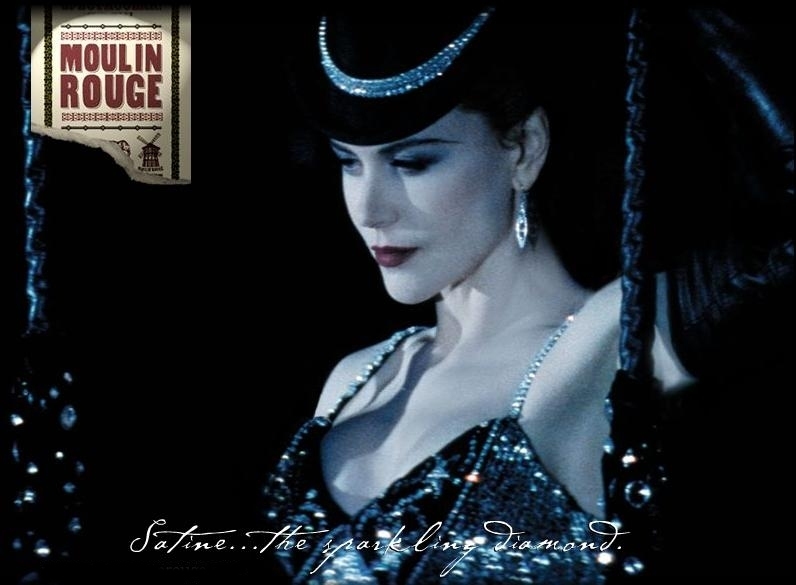
Satine
In the 2001 movie Moulin Rouge!, Nicole Kidman plays the role of Satine, a Parisian cabaret star and courtesan who has never known love until she falls for a poor English writer. Satine, which is presumably a professional or stage name, is French for satin, the familiar glossy fabric – its name comes from the Chinese city of Quanzhou (once a major shipping port for silk), which was called by the Arabic name of Zayton during the Middle Ages. Zayton is the Arabic word for “olive”, to symbolise peace, perhaps due to the mix of cultures living and working in the city. This makes Satin or Satine a possible honour name for Olive, weirdly enough. Satine has been used as a name since the 19th century, and although it is not a traditional French name, it has sometimes been used as a baby name in France since the film came out. A soft, exotic-sounding name with an Australian connection.

Shiseido
The name of a highly successful Japanese cosmetics company, and one of the oldest in the world, being founded in 1872. The company’s name is taken from the classic Chinese text, the I Ching (Book of Changes), and can be translated as “How wonderful is the virtue of the earth, from which all things are born!”. The company believes that this embodies its resolve to create new products that will enhance clients’ well being, and also helps to promote an image which is healthy and environmentally sound. Although there are many brand names used as personal names (such as Chanel and Armani), and some existing personal names used for brands (such as Mercedes and Nike), I have only ever seen one baby given the name Shiseido. That makes it very unusual, but it’s rather attractive, and has a lovely, carefully-crafted meaning. Pronounced shi-SAY-doh, you could use Sadie as a short form, although the baby I saw had Sass as her nickname.

Sorcha
Gaelic name meaning “brightness, radiance”. It can be found in medieval Irish documents, so it has a long history. In Ireland it is sometimes Anglicised as Sarah, because of the similar sound, while in Scotland it is more often Anglicised as Clara, which has the same meaning. The Irish actress Sorcha Cusack, who came to prominence in the 1970s as Jane Eyre, and is still on TV now as the housekeeper in Father Brown, has given it publicity in recent decades, and the name isn’t uncommon in Ireland. The correct pronunciation is SAWR-kuh or SAWR-i-kuh, but in practice a wide variety of pronunciations is tolerated in Ireland and Scotland, including SAWR-sha, which is probably easier for English-speakers, and sounds like familiar Sasha (although liable to be confused with another Irish name, Saoirse). An unusual yet very usable name.

POLL RESULTS
People’s favourite names were Carys, Isolde and Posy, and their least favourite were Lowenna, Jamilla and Shiseido.

(Picture shows Nicole Kidman as Satine in Moulin Rouge!)

Famous Name: Humphrey

10 Wednesday Jun 2015

Posted by A.O. in Famous Names

≈ Comments Off on Famous Name: Humphrey

Tags

animal names, aristocratic names, Disney names, famous namesakes, fictional bears, fictional namesakes, germanic names, honouring, Irish names, name history, name meaning, names from television, nicknames, Old English names, rare names, royal names, saints names, Shakespearean names, surname names, UK name popularity, US name popularity, vintage names

PH_greenguideJAN2_wide_networking-20140101124709427910-620x349

Famous Namesake
May 24 marked the 50th anniversary of Humphrey B. Bear‘s first television appearance, on the Channel Nine’s children’s program, Here’s Humphrey in 1965. I cannot say it was Humphrey’s birthday, because he is eternally four years old, and can never age.

He was originally named Bear Bear, but feeling that this perhaps lacked some imagination, the makers of the show ran a competition, and he was renamed Humphrey B. Bear, with his middle initial standing for Bear. I’m not sure whether the contest winner had ever heard of Walt Disney’s Humphrey Bear (who debuted in 1950), but the coincidence is remarkable.

In the show, the honey-loving Humphrey lives in a tree-house in the middle of the magic forest, and loves to explore, play, dance, spend time with friends, and use his imagination. Humphrey is prone to accidents and often makes mistakes – as the theme song says, He’s a funny old fellow who gets in all manner of strife. Humphrey never speaks, but has a companion and assistant who serves as narrator.

Here’s Humphrey is one of the most successful programs for preschoolers in Australia, and is second only to Playschool for longevity. It won Logies for Best Children’s Series, and Humphrey himself has won a number of awards, including Citizen of the Year in 1994. He still makes frequent public appearances, including to sick children in hospitals, and to promote road safety.

Humphrey made generations of children smile, but there was an inner sadness to the outwardly happy bear. The first performer to play Humphrey, often considered the best of all time, was a talented actor, dancer and playwright named Edwin Duryea – aptly nicknamed “Teddy”.

Constrained by the anonymity of the role, he came to resent it, and led a lonely life. Teddy died a few years ago, and with no known family, was given a pauper’s funeral (Channel Nine wouldn’t pay to bury the actor who had made Humphrey a star). There are no photos of Edwin as Humphrey, as it is considered sacrilege to dispel the illusion that Humphrey isn’t “real”.

There is no doubt that playing Humphrey could be challenging: the bear suit is very hot, just for a start. That may not be a problem in Humphrey’s future, as discussions are underway to turn Humphrey B. Bear into an animated series – and if it goes ahead, he will have a voice at last!

Name Information
Humphrey is derived from the ancient Germanic name Hunfrid, which probably means “to grant peace”, but is often translated as “peaceful warrior”.

There is a 9th century French saint called St Hunfrid, and because of him the name Humphrey was introduced to England by the Normans, where it quickly overtook the Old English form, Hunfrith. In Ireland, it was used to Anglicise Amhlaoibh, which is the Irish form of Olaf.

The name Humphrey was a common one amongst the Norman aristocracy, and one of the first bearers to come to England was the strikingly named Humphrey with the Beard, who fought at the Battle of Hastings. His nickname came about because it was unusual for Normans to have a beard at that time – the fashion was for a clean-shaven look. Bearded Humphrey was the founder of the noble de Bohun family, and his name became traditional amongst the Bohuns.

One of their line was Humphrey of Lancaster, called the “son, brother, and uncle of kings”. He was the son of King Henry IV by his wife Mary de Bohun, the brother of Henry V, and the uncle of Henry VI. Romantic and chivalrous, he was a successful military strategist and diplomat, and a scholarly patron of the arts. Popular with the public, he was disgraced when his second wife was found guilty of witchcraft (she consulted an astrologer and sought herbal fertility treatment). He appears as a character in Shakespeare’s Henry VI – one of the few historical people to be shown in an almost completely positive light.

A famous namesake of modern times is American film star Humphrey Bogart, an iconic leading man of the 1940s who appeared in such classics as The Maltese Falcon and Casablanca. He usually played a cynical tough-guy character, who would prove in the end to have his heart generally in the right place. A true screen legend, he is often regarded as the greatest Hollywood actor of all time. Humphrey Bogart was named for his mother’s maiden name – he was the son of artist Maud Humphrey.

The name Humphrey is a favourite for all kinds of animals, both in real life and in fiction. One example is the cat Humphrey, who was chief mouser at Number 10 Downing Street for many years, until apparently ousted by the Blairs. Cat Humphrey was named after Sir Humphrey Appleby, the urbanely Machiavellian bureaucrat from Yes, Minister and Yes, Prime Minister. The name has also been given to a real life humpback whale, and a camel on The Simpsons, because the name starts with the word hump.

Although never going out of use, the name Humphrey peaked in the 19th century, and isn’t very common. It has never charted in Australia, and is rarely seen today, although there are many examples in historical records. In England/Wales, Humphrey peaked in the 1860s in the mid-100s; in 2013, 20 baby boys were named Humphrey. In the US, Humphrey peaked in 1893 at #650, leaving the Top 1000 a year or two later. Last year less than 5 babies received the name Humphrey in the US.

Humphrey is a rare vintage name, and one that seems rather cuddly and lovable – which is probably why it’s often been chosen for animals, such as friendly bears! It’s an interesting, upper class, and somehow quite a sweet name, but I’m not sure if Humphrey B. Bear is much help to it. Apart from the familiar song about the “funny old fellow”, there has been a rather mean tendency to poke fun at the iconic bear, and even to make lewd jokes at his expense. With the possibility of Humphrey returning in animated form, will this help give the name more publicity, or make it less appealing?

POLL RESULTS
Humphrey received an approval rating of 32%. People saw the name Humphrey as old-fashioned and comical (19%) and too strongly associated with Humphrey B. Bear (15%), while 18% found the “hump” in the name off-putting. However 8% of people thought it was a vintage charmer.

Boys Names from the British Royal Family

17 Sunday May 2015

Posted by A.O. in Name Themes and Lists

≈ 4 Comments

Tags

animal names, Basque names, bird names, Castilian names, Disney names, ethnonyms, famous namesakes, fictional namesakes, German names, germanic names, honouring, Italian names, Latin names, Maori names, middle names, mythological names, name history, name meaning, name popularity, name trends, Native American names, New Zealand names, nicknames, popular names, retro names, royal names, saints names, Spanish names, surname names, UK name trends, unisex names, vintage names

850145ee0e54efe11041a453f7acdfec

Christian
Christian Mowatt is the younger brother of Zenouska Mowatt, grandson of Princess Alexandra, and great-great-grandson of King George V; born in 1993, he is 51st in line to the throne. Christian is one of the most common names in the British royal family, especially in the middle. Prince Christian of Schleswig-Holstein, a member of the Danish royal family, was the husband of Princess Helena, the daughter of Queen Victoria. Their son was also called Prince Christian, and he was Queen Victoria’s favourite grandson, a British army officer who fell in the Boer War. Christian is from the Latin name Christianus, meaning “follower of Christ”. It has been used as a personal name since the Middle Ages, and was originally more common for girls amongst English-speakers. It became seen as a boy’s name after John Bunyan’s highly popular The Pilgrim’s Progress (1678), where the hero is a man named Christian. Christian has been a traditional name for Danish kings since the 15th century, and Prince Christian of Denmark, the son of Prince Frederik and Princess Mary, is second in line to the Danish throne. Christian was #178 in the 1900s, and disappeared from the charts the following decade. It returned in the 1950s at #280, perhaps inspired by French fashion designer Christian Dior, or Danish fairy tale writer Hans Christian Anderson, both popular at the time. It rose in the 1960s, and reached the Top 100 in 1971. Its progress has been up and down, and it’s currently #85. It’s a retro name that feels like a modern classic, popular for decades without feeling overused.

Columbus
Columbus Taylor is the eldest son of Lady Helen Taylor, a grandson of Prince Edward, Duke of Kent, and a great-great-grandson of King George V; born in 1994, he is 38th in line to the throne. The name Columbus is best known as the surname of Christopher Columbus, the 15th century Italian explorer and navigator under the patronage of the Spanish monarchy. In his efforts to find a safe passage to Asia by sailing west, he initiated the Spanish colonisation of the New World, leading to lasting European contact with the Americas that changed the world forever. The explorer’s Italian name was Cristoforo Colombo; Colombo is the Italian form of the saint’s name Columba, Latin for “dove”, and used by Christians in reference to the Holy Spirit, often symbolised as a dove. A name with Transatlantic appeal, nearly always given in honour of the explorer, and a more eyebrow-raising form of Callum.

Guelph
Guelph is one of the middle names of Leopold Windsor, the son of Nicholas Windsor, who has been featured on the blog as a royal dad. A grandson of Prince Edward, Duke of Kent, and great-great-grandson of King George V, Leopold was born in 2009, and as a Roman Catholic, is not in the line of succession to the throne. The House of Guelph was a European dynasty which played a major role in the politics of medieval Italy, but whose territories moved towards Germany early on, and was eventually succeeded by the Kingdom of Hanover – thus giving strong ties to the British royal family. The current head of the House of Guelph is Ernest August, Prince of Hanover, a descendant of King George II, and husband of Princess Caroline of Monaco. The House of Guelph was founded by Welf IV, Duke of Bavaria, of Italian and German heritage; his name is a Germanic one meaning “young dog”, and thus the equivalent of the English word whelp. A very noble name – perhaps even too aristocratic for most.

Hubert
Hubert was one of the middle names of George Lascelles, the 7th Earl of Harewood, who was the son of Princess Mary, and grandson of King George V, cousin to Elizabeth II. He passed his middle name down to his son, Mark Hubert Lascelles, born 1964, and not in line to the throne due to being born out of wedlock. Hubert is a Germanic name meaning “bright mind”, and became well known because of St Hubert, an 8th century Bishop of Liege. A French nobleman, he became addicted to hunting after his wife died in childbirth, until he had a vision of a crucifix between the antlers of the stag he was pursuing. Even though this legend was taken from the story of St Eustace, St Hubert is honoured as the patron of ethical hunting, having compassion for animals as God’s creatures. Widely venerated during the Middle Ages, St Hubert’s noble ancestry made him a favourite with chivalric and military orders. Hubert has been used in two Disney films – King Hubert is the father of Sleeping Beauty, while in Brave, Hubert is one of Princess Merida’s three brothers. Hubert was #102 in the 1900s, and had left the charts by the 1940s, so this vintage name may appear dated, although it is rising in the UK, and fits in with Hugh and Hugo.

Inigo
Inigo is one of the middle names of Charles Armstrong-Jones, the son of Viscount Linley, grandson of Princess Margaret, and great-grandson of King George VI; Queen Elizabeth II is his great aunt. Born in 1999, he is 19th in line to the throne, and his middle name is in honour of Inigo Jones, a personal hero of his father. Inigo Jones was a 17th century British architect and stage designer, a royal Surveyor-General, and hugely influential. Some of his many works include the Queen’s House in Greenwich, now used to house the art collection of the National Maritime Museum, the Banqueting House in the Palace of Whitehall, now a museum, and the Queen’s Chapel at St James’ Palace. He also designed Covent Garden square, and undertook repair and remodelling of St Paul’s Cathedral. Inigo is a British form of Íñigo, a Castilian form of the Basque name Eneko, translated as “my little love, my little dear one”. It may go back to Roman times, but from the Middle Ages was traditional amongst Spanish royalty and nobility. Pronounced IN-i-go, this was first used as an English name in Cornwall, but became traditional amongst descendants of Inigo Jones. Those descendants in Australia include meteorologist Inigo Owen Jones, and wealthy grazier Arthur Triggs, whose brother was named Inigo. A sweet yet solid choice, Inigo has been given further dash and a famous catchphrase by Inigo Montoya from The Princess Bride.

Maximilian
Maximilian Lascelles is the son of Henry Lascelles, the great-grandson of Princess Mary, and great-great-grandson of King George V; born in 1991, he is 66th in line to the throne. The name Maximilian is from the Roman name Maxmilianus, derived from Maximus, meaning “greatest”. There are a few saints named Maximilian, with the 3rd century martyr St Maximilian of Tebessa regarded as the first conscientious objector, because he believed that as a Christian, he could not serve in the Roman army. He has been a hero to the anti-war movement ever since. Maximilian I was a 15th century Holy Roman Emperor, named for one of the St Maximilians – probably Germanic missionary and martyr Maximilian of Celeia – and the name has been traditional amongst European monarchy ever since (the tradition that his name was a cross between two Roman emperors is just folklore). Maximilian is around the 400s here, but significantly higher in the UK. Handsome and regal, Maximilian sounds very imposing – but shortens to popular, friendly Max.

Otis
Otis Shard is the son of Lady Emily Shard, and the great-great-grandson of King George V; born in 2011, he is not in the line of succession because his mother was born out of wedlock. Otis is a surname derived from an English form of the medieval Germanic name Ode or Odo, an earlier form of the German name Otto. The surname is very well known in the United States, as the Otises are a prominent family influential in early American politics; aviation pioneer Amelia Earhart was one of their members. Famous musical namesakes include Otis Redding, Otis Rush, Otis Span, rapper Otis Jackson Jr, and Otis Williams, from The Temptations, and another musical connection is the song Otis by Kanye West and Jay-Z, sampling Otis Redding. A rising name in the UK, Otis is around the 300s here, and a very fashionable choice.

Tane
Tane Lewis is the brother of Senna Lewis, and great-great-grandson of King George V; born in 2012, he is 30th in line to the throne. As earlier discussed, Tane’s father is New Zealander Gary Lewis, the only Maori to have married into the British royal family, and Tane has a name to honour his heritage. Tane is the god of trees and birds in Maori mythology, the son of the sky father and the earth mother, who clothed his father in the stars and his mother with vegetation. In some legends, he made the first man, and in others he made the first woman, moulding her from soil so she could be his wife. The word tāne means “man” in Maori, and it is pronounced TAH-neh, although I have met boys in New Zealand and Australia called Tane who say their name TAYN. A strong, simple yet evocative name which is a wonderful heritage choice, fitting in with familiar names such as Tanner, Tate, and Talon.

Tewa
Tewa Lascelles is the brother of Tanit Lascelles, a great-grandson of Princess Mary, and great-great-grandson of King George V; born in 1985, he is 58th in line to the throne. Tewa’s mother was Lori Lee, known as “Shadow”, of Native American descent, and his name was chosen to honour his heritage. The Tewa people are from New Mexico, and the name Tewa comes from a Keres word meaning “moccasins”; it is pronounced TAY-wuh, rather like Taylor with a W instead of an L. Tewa Lascelles, an American citizen, was born in New Mexico, and perhaps the name reflects his birthplace as well. Tewa is in a progressive punk band, following in his family’s musical footsteps, as James Lascelles is a keyboardist with an interest in world music, and grandfather George Lascelles devoted most of his career to opera.

Xan
Xan Windsor, Lord Culloden, is the brother of Lady Cosima Windsor, son of the Earl of Ulster, and great-great-grandson of King George V; born in 2007, he is 26th in line to the throne. Xan is named in honour of his father, Major Alex Ulster, and this snappy short form of Alexander seems very versatile. Fresh and futuristic, Xan could belong to either gender, and is of ambiguous cultural background, making it the perfect choice for the modern age.

POLL RESULTS
People’s favourite names were Otis, Christian and Tane, and their least favourite were Columbus, Tewa and Guelph.

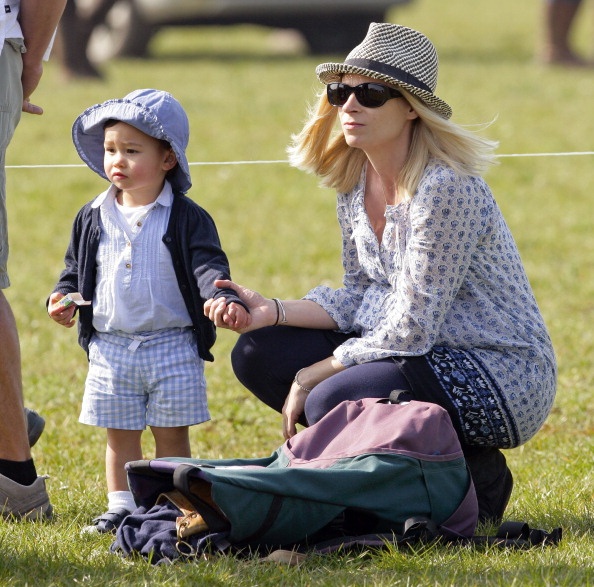
(Picture shows Tane Lewis, accompanied by his mother, Lady Davina Lewis; photo from The Daily Mail)

Famous Names: Birdie and Melody

30 Thursday Apr 2015

Posted by A.O. in Famous Names

≈ 4 Comments

Tags

American slang terms, animal names, birth notices, celebrity sibsets, english names, famous namesakes, fictional namesakes, historical records, middle names, name history, name meaning, name trends, names from television, nature names, nicknames, sporting terminology, surname names, UK name popularity, underused modern classics, US name popularity, vintage names, vocabulary names

3rs7ns2x-1391387260

You do not need to be an ornithologist to see that there is something special about Australian birds, whether you are listening to the extraordinary calls of the lyrebird, seeing bright wrens and colourful fruit-eating pigeons, or enjoying the antics of our clever parrots. In fact, the very specialness of Australian wildlife led the great naturalist Charles Darwin to ponder the possibility of two Creators – one a steady sort of chap, turning out sparrows and bunnies, and the other a total nutter who made things like emus and kangaroos.

For most of the twentieth century, European and North American scientists assumed that birds evolved in the northern hemisphere, and that they had the “normal” birds. Australian birds broke a few of the rules, but they could be comfortably dismissed as second-hand fauna from a lost continent where all kinds of wacky things happened.

As the ABC science program Catalyst explained last month, it is only in recent decades that Australian scientists dared to challenge that orthodoxy. In the 1980s Australian scientists used DNA evidence to show that the world’s 4 500 species of songbirds – like the jays, thrushes, robins, and mockingbirds – were all descended from Australian songbirds. Far from being some crazy breakaway branch on the evolutionary tree, our birds were the originals.

This rocked the science world, which demanded evidence from the fossil record. Nobody had ever bothered to look for any fossils, but once an Australian scientist did, he found the bones of a tiny finch-like bird in Queensland in the 1990s. It was the earliest songbird ever found in the world by a staggering amount – at 54 million years old, it was at least 25 million years earlier than anywhere else.

More DNA evidence revealed that Australia was the ancestral home of the world’s pigeons and parrots as well, meaning that the majority of birds in the world have Australian ancestors, and that Australia was the most important continent for bird evolution. Australian birds did not break the rules of evolution – they made the rules!

For example, Charles Darwin proposed that birdsong evolved so that male birds could attract females with their beautiful voices. That never made sense in Australia, where in most species female birds also sing (and sometimes sing more than males). Before, Australia could be written off as a weird exception to the rule, but now we know that birdsong evolved on a continent where both female and male birds sing, so the old assumption cannot be true.

Birds have helped shape our continent for tens of millions of years, and our land has echoed with their songs, even during the many millions of years that the rest of the globe lay silent. But they have also shaped the entire world by filling it with the most intelligent and melodious of birds. In other words, there is only one Creator – and it’s the nutty southern hemisphere one.

BIRDIE
Birdie (or birdy) is a diminutive of the word bird, nearly always seen as affectionate and child-like; the word dates to the late 18th century. The word was associated with the days of early photography, when photographers would show a little metal bird to their subjects, and tell them to Watch the birdie to keep them focused. In golf terminology, a birdie means a score of one under par, and originated in New Jersey in 1899 – it’s from the American slang bird, referring to something excellent.

Birdie has been used as a personal name since the 19th century, but probably more commonly as a nickname than as a legal name. Mostly given as a name to girls, Birdie can be seen as a pet form of names such as Bertha, Bridget, Barbara, Elizabeth, or almost any name with a strong B sound. On Mad Men, Elizabeth “Betty” Draper was called Birdie by her husband as an affectionate nickname.

On the other hand, it is often given as a true nickname – that is, with no connection to the given name at all. An example is the British singer Birdy, whose real name is Jasmine van den Boegarde – her parents called her Birdy from the time she was a baby, because she opened her mouth to be fed like a little bird. These types of nicknames are not uncommon amongst the British aristocracy.

Birdie was used as a name more often in the United States than other countries, and it was on the US Top 1000 for girls almost continuously from 1880 to 1948, peaking in 1882 at #151, and not leaving the Top 500 until 1927. In 2013, 37 girls were named Birdie in the US, while Birdie has only charted once in the UK since 1996, when 3 baby girls were named Birdie in 2010 (data doesn’t take into account people with Birdie as their nickname).

There are quite a few women named Birdie in Australian historical records, mostly born in the late 19th and early 20th century. It can be found occasionally given to boys in the middle position, where it may come from the surname – the surname has nothing to do with birds, but is a corruption of the oath, Par dieu, French for, “by God”. I have recently seen a baby girl named Birdie in a birth notice, while a blog reader named her daughter Mabel last year, but calls her “Birdie” as her nickname.

Vintage nicknames like Buddy and Buster are back in vogue, and Birdie is a very stylish example of the trend. It manages to be cute, without being overtly flirty or sexy, and has a rather upper class feel. Definitely one to watch!

MELODY
A melody is a sequence of notes which makes a musical phrase or motif – what we might otherwise call a tune. The word is ultimately from the ancient Greek meloidia, meaning “singing, chanting”.

Melody has been used as a girl’s name since at least the 18th century, but became more common in the 19th. The name Melody first charted in Australia in the 1960s, debuting at #543. It is currently around the 200s. In the US, where it has charted since the 1940s, Melody is #171 and rising, while in the UK it is #261, and appears to be rising slightly.

Melody is a popular choice for singers, who either seem to have been inspired by the meaning of their name, or have adopted it as a stage name. American singer-songwriter Melody Gardot took up music as therapy after an accident, Melody Thornton is a member of the Pussycat Dolls, while young Australian country singer Melody Pool’s career is just starting out. Japanese pop singer Melody Ishiwara has sisters named Harmony, Rhythmy and Christine (rather in the style of sisters named Grace, Faith, Hope, and Michelle).

There have been several characters named Melody in recent popular culture, such as the daughter of Ariel and Eric in the sequel to The Little Mermaid, the cute ditzy drummer from Josie and the Pussycats, and Melody Pond, the mysterious time-traveller from Dr Who, who goes by the name River Song.

I’ve noticed that people often dismiss Melody as a “dated” name, because it shares a similar sound to Melanie and Melissa, which both peaked as popular names in the 1970s. However, a look at the data shows that this isn’t correct, and underlines the dangers of judging a less-common name based on how it sounds.

Melody is an underused modern classic which has never been higher than the 200s, and is higher now than it has ever been; overseas data suggests that it may even be rising slowly. It’s pretty and music-themed, fitting in well with the current trend for names such as Aria, Harmony, and Cadence, while still feeling like a traditional choice. It’s well worth considering if you are searching for a lyrical, contemporary name without any baggage that has been overlooked by most others.

POLL RESULTS
The name Birdie received an approval rating of 56%. 36% of people loved the name Birdie, and 22% thought it was a terrible name.

The name Melody received a lower approval rating of 48%. 45% weren’t too keen on the name Melody, and 15% loved it.

Information on songbird evolution from Catalyst’s episode Where Birdsong Began, shown March 10 2015, and based on the book Where Song Began, by Australian biologist Tim Low.

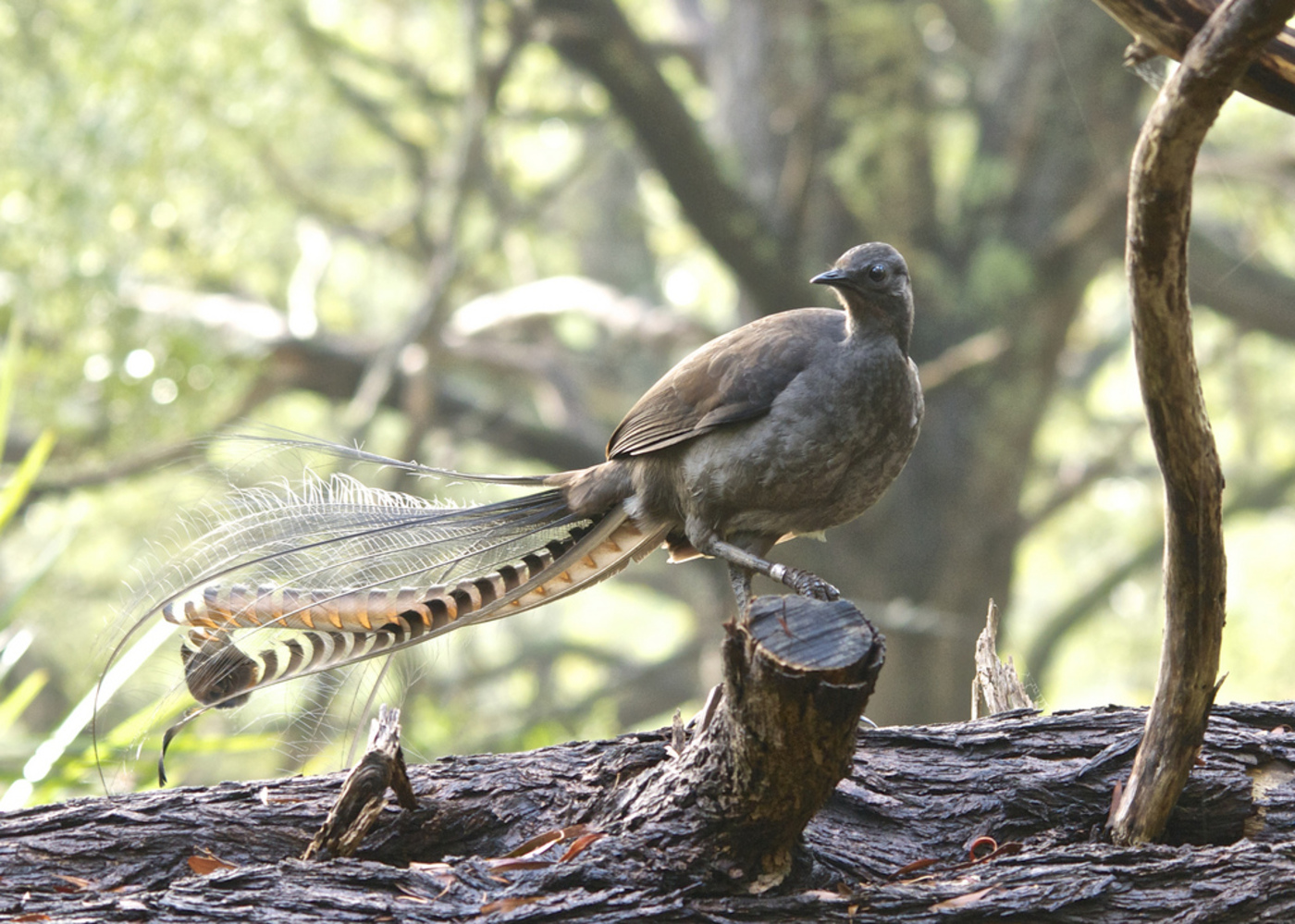
(Photo shows an adult male superb lyrebird, an astounding mimic; both males and females sing, but males are louder and more skilful).

Rare Boys Names from the 1940s

12 Sunday Apr 2015

Posted by A.O. in Name Themes and Lists

≈ 7 Comments

Tags

animal names, aristocratic names, car names, Cornish names, english names, famous namesakes, fictional namesakes, flower names, French names, germanic names, Greek names, honouring, Italian names, locational name, musical names, mythological names, name history, name meaning, names from comics, nature names, nicknames, Old English names, Old Norse names, papal names, plant names, rare names, saints names, scientific names, Scottish names, surname names, twin sets, unisex names, vintage names

P01022.021

The most popular boys names of the 1940s were John, Peter, Robert, and David, but what were the least popular names? Here are ten names which were only chosen once in any year between 1944 and 1949 in South Australia, making them unique names for their time and place. Still rare, some feel surprisingly contemporary, while one or two have perhaps had their day.

Aston
English surname of multiple origins. It can be from a common place name meaning “east settlement”, to indicate a village to the east of a larger town, although occasionally it seems to be a corruption or variant of Ashton, meaning “settlement near the ash trees”. It can also mean “at the stone”, to indicate someone who lived near a prominent stone. Finally, it can be a contraction of a personal name such as Aethelstan, meaning “noble stone”, and there are examples of men with Aston as a first name in the Middle Ages from this derivation. Sir Aston Cockayne, 1st Baronet, was a 17th century writer who was on the Royalist side during the English Civil War, and a close friend of the future Charles II. The name might remind you of Aston Villa Football Club, in the English Premier League, or Aston Martin luxury cars – both familiar in the 1940s as well. I see the name Aston name sometimes in birth notices, perhaps inspired by Aston Merrygold from English boy band JLS.

Bramwell
English surname from an unknown place name meaning “stream surrounded by broom” – broom is a hardy European shrub with yellow flowers. The name has a strong connection with the Salvation Army, because Bramwell Booth was the second General of the Salvation Army who served during World War I, the eldest son of its founder, William Booth. We know the name was used by Salvationists, because Bramwell Tillsley, a Canadian who was the son of British Salvationists, was the 14th General of the Salvation Army. The Salvation Army has a strong history in South Australia, with the first official Salvation Army corps formed in Adelaide in 1880. Booth was also used as a baby name during the 1940s, with the Salvation Army’s support of the troops being greatly appreciated. Bramwell is an attractive, little-used surname that has the appealing nickname Bram.

Cosmo
Form of the Greek name Kosmas, meaning “order”, and thus the opposite of “chaos”. The Greeks also used the word to mean “the world”, because they believed the world was perfectly put in order. We use the word cosmos to mean “the universe, all of creation”. According to tradition, Saint Cosmas was a skilled doctor; along with his twin brother Damian, he performed many miraculous cures before his martyrdom. The name Cosmo was introduced to Britain by the Scottish peer Alexander Gordon, 2nd Duke of Gordon, when he named his son Cosmo in 1720. Cosmo’s name was in honour of his father’s close friend Cosimo di Medici – Cosimo is the Italian form of Kosmas. The name has always had a rather exotic and aristocratic image, and Scottish associations. There were several famous Cosmos that could have inspired the name in the 1940s, including popular British playwright Cosmo Hamilton, and Archbishop of Canterbury Cosmo Lang. Cosmos is also a type of daisy, whose name comes from the same Greek origin, so with some imagination, the name Cosmo could honour someone named Daisy.

Denzil
Variant of Denzel, a Cornish surname. The name was traditional in the aristocratic Holles family, with one of the earliest and most famous of their number to bear the name Denzil Holles, 1st Baron Holles, a 17th century statesman who is best known for being part of a group who attempted to arrest King Charles I, sparking the Civil War, but also took a leading role in bringing about the Restoration. The Denzel spelling came first, as Denzil Holles’ grandfather was Denzel Holles. These Denzils and Denzels were named in honour of their ancestor John Denzel, who had large estates in Cornwall in the 16th century and was Attorney-General to Elizabeth of York, queen of Henry VII. John Denzel took his surname from the Denzell manor house in St Mawgan, Cornwall, and the meaning of its name is not known for sure, although perhaps from the Celtic for “hill fortress in open view”. A 1940s Australian namesake is Sir Denzil Macarthur-Onslow, a World War II general regarded as a “cracker of a bloke”. Denzil still seems contemporary because of American actor Denzel Washington, and is very usable.

Everard
Derived from the ancient Germanic name Eberhard, often translated as “brave as a wild boar”. The name was introduced by the Normans to Britain, where there was already an Old English form of the name, Eoforheard. A famous namesake is Sir Everard Digby, who was executed for his part in the failed Gunpowder Plot, and another was Everard Calthrop, a railway engineer who helped develop the modern parachute. Although in use since the Middle Ages, modern usage has probably been influenced by the surname, as the Everards are an aristocratic family who have been created baronets in both Ireland and England. Everard Park is a suburb of Adelaide, named after the prominent pioneer Sir Charles Everard, said to have the best orchard in the colony, giving this a strong South Australian feel. Everard is an interesting twist on classic Evan, and the trend for girls’ names starting with Ev- may also be a help.

Garfield
English surname referring to someone living near a triangular field; the word gar means spear in Old English, and a gar field is one that is shaped like the point of a spearhead. The surname is well known in the United States, as their 20th president was James A. Garfield, and his sons also went on to have illustrious public careers – there is a town in Victoria named Garfield in honour of the American president. A namesake from the 1940s was Hollywood  actor John Garfield, while one with Garfield as his first name is Garfield “Gar” Wood, an American inventor, showman, and record-breaking motorboat racer – the first to travel over 100 miles an hour on water. An Australian namesake from this era is Sir Garfield Barwick, a barrister who came to prominence during a 1943 court case involving the Archibald Prize. He later became a Liberal MP, Attorney-General, and Chief Justice of the High Court of Australia. He was the legal advisor to Sir John Kerr during the controversial dismissal of Prime Minister Gough Whitlam (an old enemy of Barwick’s), so he well and truly made history. Garfield would be a charming and unusual vintage name, except for one thing – the obese cartoon cat!

Linus
In Greek mythology, Linus was a Thracian prince who was so musically talented that he was said to have been the son of Apollo, god of music, and Calliope, the muse of epic poetry. According to legend, Linus invented melody and rhythm, and taught music to his brothers Orpheus and Heracles. Unfortunately, Heracles didn’t appreciate the music lessons, and killed Linus with his own lyre after he tried to give Heracles some constructive criticism. Although the meaning of the name is not certain, there was a type of dirge in classical Greece called a linos, and it’s possible that the mythological character was a personification of this song of mourning. The name has a Christian association because Linus is said to have been a Bishop of Rome in the early church, and is listed as the second pope. The name Linus is especially popular in Scandinavia, although many people will connect it to Linus Pauling, the American scientist who won both the Nobel Chemistry Prize and the Nobel Peace Prize, and whose work was aleady known by the 1940s. The name might also remind you of security blanket-hugging philosopher Linus from the Peanuts comics. A sweet, smart name with a mythological musical connection.

Neon
Greek name meaning “new”. It wasn’t an unusual name in ancient Greece, and there are several prominent men named Neon from history. However, in modern times the name is strongly associated with neon lighting – bright electrified glass tubes often used for signs. They are named after neon gas, which is used to give off a bright orange light, but other gases provide different colours. Neon has has the same meaning as the name Neon. Neon lighting was invented in 1910, and was in its heyday between 1920 and 1940, the bright colours suddenly bringing dark streets to life. It’s probably not a coincidence that the name Neon peaked in the 1940s and ’50s, usually given to boys. Neon feel both space age and vintage, and has been used as a comic book hero name, for both a male and female character. As neon is often used in an artistic context today, you might think of this as an arty name, and it’s otherwise bright and energetic.

Revel
A revel is a festive celebration, while to revel is to make merry. The word comes from Old French, and is directly related to the Latin rebello, from which our word (and name) Rebel is derived. This is probably because we think of celebrations as tending to be rather unruly or disorderly, and sometimes they can even get out of hand! This fun-loving word has been used as a personal name since the Middle Ages in both England and France, and was also given as a nickname to people who were known for partying particularly hard. It is from this that the surname derives, and it is especially associated with Yorkshire. A famous Australian namesake is Western Australian Indigenous artist Revel Cooper, whose career began in the 1940s. Although he was just a child then, he was one of a number of children in state care who were given specialised art training, and their artwork exhibited in Perth, New Zealand, India, and Europe. Unlike many of the children, Revel continued his art career into adulthood. Revel is a boisterous medieval boys’ name that still sounds contemporary.

Rollo
Rollo was a powerful 9th century Viking leader who was the founder and first ruler of the area of France now known as Normandy. He was the great-great-great grandfather of William the Conqueror, and through William, is the ancestor of the present day British royal family, as well as all current European monarchs. His name is a Latinised form of the Old Norse name Hrólfr, which in modern times is known as Rolf. It’s a shortened form of Hrodulf, now known as Rudolf, meaning “famous wolf”. Rollo is also a Scottish surname, the Clan Rollo being descended from the Normans, and in particular the nephew of William the Conqueror, Erik Rollo. Because the Lords Rollo is a title in the Scottish peerage, the name gains further aristocratic credentials. Rollo fitted in well with 1940s name trends, when Rolf and Roland were fashionable, and Australian artist Rollo Thompson flourished in this decade. Like Cosmo, it fits in with current trends for boys names ending in -o, and this is a fun yet blue-blooded choice.

POLL RESULTS
People’s favourite names were Linus, Aston and Bramwell, and their least favourite were Neon, Denzil and Garfield.

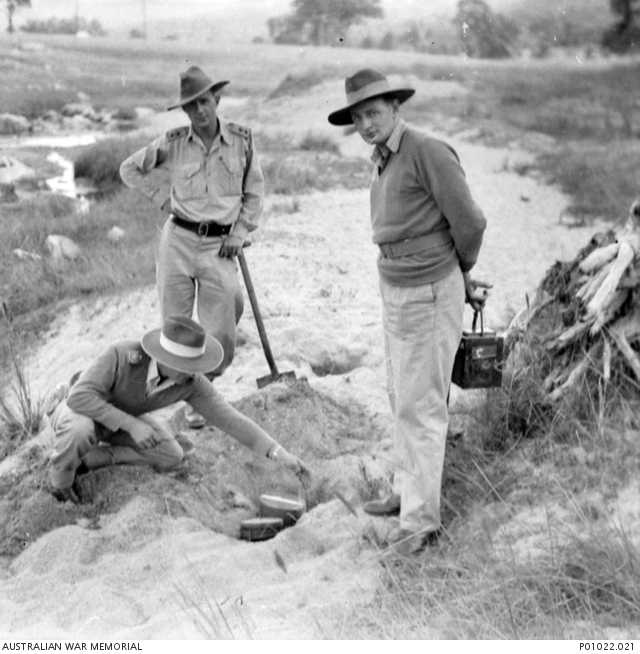
(Picture shows Denzil Macarthur-Onslow, on the right, supervising a training exercise in Queensland in 1942; photo from the Australian War Memorial)

Rare Girls Names From the 1940s

05 Sunday Apr 2015

Posted by A.O. in Name Themes and Lists

≈ 1 Comment

Tags

animal names, controversial names, created names, Easter names, english names, fictional namesakes, flower names, French names, germanic names, Greek names, honouring, Irish names, Latin names, locational names, middle names, name history, name meaning, name trends, names from films, names from songs, nature names, nicknames, plant names, rare names, Roman names, saints names, Scottish names, Spanish names, surname names, unisex names, vintage names, virtue names, vocabulary words

Dymphna_Cusack,_1947

The most popular girls names of the 1940s were Margaret, Patricia, Judith, and Helen, but what were the least popular names? Here are ten names which were only chosen once in any year between 1944 and 1949 in South Australia, making them unique names for their time and place. They continue to be rare, and some parents will still find them appealing.

Avis
Thought to be a Latinised form of the Germanic name Aveza, most likely a long form or elaboration of the familiar Ava. Introduced to England by the Normans, it was reasonably common in the Middle Ages, and quickly became associated with the Latin word avis, meaning “bird”. Avis Rent a Car was founded in the 1940s by Warren Avis, but did not become big in Australia for some time – it’s now quite difficult to disassociate the name Avis from the rental company, although it’s very much on trend and still seems contemporary and pretty. It was also a good fit in the 1940s, when names such as Avril and Averil were fashionable.

Bunty
An old British term of endearment, dating back to perhaps the 17th century. In Scotland, buntin means “short and plump”, while in Wales, bontin means “the bottom, the rump” (a part of the body usually seen as quite plump). It’s interesting that in both Scottish and English dialect, bunt and bun refer to a rabbit’s tail, which recalls the bottom meaning. You probably remember the nursery rhyme, Bye Baby Bunting, where bunting meant “a plump little child”, and it’s amusing that they have “a rabbit skin to wrap the Baby Bunting in”, given the etymological connection between chubby babies and bunnies’ bottoms. By the 19th century, bunty was a country word for a lamb, because they bunt (or butt) with their heads, giving bunty another adorable baby-related association. The name Bunty was popularised by the Scottish comedy Bunty Pulls the Strings, which was a hit in 1911 in the West End and on Broadway (Bunty was a canny Highland lass). However, even before this, Bunty was used as a nickname, especially by the aristocracy. It was occasionally given to boys, and in Seven Little Australians, young John is called Bunty, because he is prone to be greedy and a bit overweight. In his case, the nickname literally meant “little fatty”, but Bunty can be understood as “cute wee bairn, bonny babe”. This could be a charming vintage-style nickname, and if you’re worried it’s too infantile, Babe and Baby were both used as names in the 1940s!

Cosette
Cosette is one of the main characters in Victor Hugo’s Les Misérables, considered one of the greatest novels of the 19th century. In the novel, Cosette is the daughter of Fantine, a poor girl who must leave her child in the care of some innkeepers, while she works to provide for her. Cosette is badly treated by her guardians, and becomes a Cinderella-like figure, but is rescued by the ex-convict Jean Valjean. They take refuge in a convent, where Cosette develops into a beautiful young girl, and eventually finds her happy ending. Cosette’s real name is Euphrasie (meaning “good cheer”), but her mother’s pet name for her is the one which sticks – Cosette is from the French word chosette, meaning “little thing”. Les Misérables was made into a successful film in 1935, with child star Marilyn Knowlden in the role of the young Cosette; this would have increased interest in the name. Les Misérables was made into an award-winning musical film in 2012, this time with British actress Isabelle Allen playing young Cosette. Her face was used for the publicity posters, and with her arresting blue eyes, this may bring Cosette into the baby name spotlight again.

Dymphna
Anglicised form of the Irish name Damhnait, meaning “fawn”. Saint Dymphna is a 7th century Irish saint with a truly disturbing story, because legend has it that when she was fourteen, her father went mad and developed an unnatural desire for her. She ran away and devoted herself to helping the sick and the poor, but her father discovered her whereabouts, and killed her in a rage. Called the Lily of Eire, Saint Dymphna is the patron of the mentally ill, as well as vctims of incest, and many miraculous cures have been claimed on her behalf. A famous namesake is the author Dymphna Cusack, and another is Dymphna Clark, married to the historian Manning Clark, so the name has strong Australian credentials. Despite this, and the pretty meaning, Saint Dymphna’s tragic life has probably not been a help. Said DIMF-na, Dymphna has a lovely sound though, like a quirkier Daphne.

Jinx
According to superstition, a jinx is something, or someone, who brings bad luck, often without meaning to. The word is American English, first used in the context of baseball, and its origins are obscure. One suggestion is that it comes from the 1887 musical comedy Little Puck, which had a character named Jinks Hoodoo, who is a curse to everyone he meets, as well as to himself. Although Hoodoo is fairly obviously a “bad luck” word, Jinks is just a surname based on the name John, and not too unusual as a first name. Perhaps it was given with the phrase high jinks in mind, meaning “boisterous fun”. After the popular musical comedy, jinks and jinx seem to have rapidly come into use as slang terms to describe an unlucky person or object. Jinx was known as a girl’s name in the 1940s because of Jinx Falkenburg, one of the highest-paid cover-girls of the 1930s and ’40s – an early example of a supermodel. Considered one of the most beautiful and glamorous women of her time, she was also a talented sportswoman and Hollywood actress, and went on to have successful chat shows on radio and TV. Born Eugenia, her mother nicknamed her Jinx in the belief that it would bring her good luck – I’m not sure how that was meant to work, but Jinx did indeed have a fortunate life. Jinx has quite often been used as a name for (mostly female) fictional characters, from L’il Jinx from the Archie comics to Jinx Johnson in the James Bond film, played by Halle Berry. This is a playful modern nickname for the non-superstitious.

Marigold
The flower name marigold is attached to several plants with yellow blooms, but usually refers to the Calendula or pot marigold – although sometimes called English marigold, the plant probably originated in southern Europe, but became widely naturalised elsewhere from an early date. The name seems to have been first used for the wildflower Caltha palustris, also known as marsh marigold and kingcup. Marigold literally means “Mary gold”, and the name came about because the spring wildflower was a favourite in medieval churches at Easter, a tribute to the Virgin Mary. Shakespeare refers to the “golden eyes” of “Marybuds” in his play Cymbeline, and the marsh marigold is one of the UK’s most ancient plants, being an Ice Age survivor. Marigold has been used as a name since the 19th century, when flower names were fashionable, and is a hip underused floral choice which could honour a Mary.

Rilla
Rilla Blythe is the main character in L.M. Montgomery’s Rilla of Ingleside; the daughter of the famous Anne Shirley (later Anne Blythe), she is a carefree teenager who must grow up fast when World War I is declared. Rilla’s full name is Bertha Marilla, with her middle name in honour of Anne’s strict but loving adoptive mother, Marilla Cuthbert. Marilla may be a short form of Amaryllis or an elaboration of Mary, and it’s notable that the name Marilla was used more than once during the 1940s. Perhaps the wartime courage of Rilla Blythe struck a chord during World War II, or maybe the 1939 publication of Anne of Ingleside played a role, where Rilla is said to be sweetest baby of all, and shown as an adorably pretty and plump lisping toddler. Rilla is a trendy name from the wartime era that still seems cute, especially knowing Rilla Blythe was affectionately known as “Rilla, my Rilla”. One for Montgomery fans!

Thais
Thaïs of Athens was a famous Greek hetaera who accompanied Alexander the Great on his campaigns. Hetaera were high status courtesans; educated, influential, and sophisticated women who were paid companions to men – not just in the bedroom, but as stimulating conversationalists and talented musicians and dancers. Thaïs was the lover of Ptolemy I Soter, one of Alexander’s generals, and she is said to have been witty and entertaining company. After Alexander’s death, Ptolemy became the king of Egypt, and Thaïs was his wife, or at least a high ranking concubine, and mother of his children (he had other wives to provide him with heirs to the throne). Saint Thaïs was from 4th century Egypt, a beautiful and wealthy courtesan who repented of her life and converted to Christianity. It is hard not to wonder if her story was influenced by Thaïs of Athens, who also lived in Egypt during the 4th century. The saint inspired a novel by Anataloe France, and an opera by Massenet; as a result, Thaïs is a popular name in France. The Greek name Thaïs means “head band”, referring to the plain cloth bands that women in ancient Greece commonly wore to keep their hair in place. Like the hair covering, this name is both simple and sophisticated, with a fascinating historical namesake, and fits in with Australian name trends. The French pronunciation is rather like tah-EES, while English speakers may prefer TAY-is or ty-EES.

Unity
The word unity means “oneness”, familiar in both religious and political contexts, and used as a virtue name since at least the 17th century. It seems a rather strange choice for the 1940s, because Unity Mitford was an aristocratic English girl who was a rabid supporter of the Nazis and fervent devotee of Adolf Hitler, her close personal friend. When Britain declared war on Germany, Unity tried to commit suicide by shooting herself in the head, but survived, although permanently affected by her brain injuries. She died from an infection caused by the bullet in 1948, a controversial figure to the end. Unity Mitford was the inspiration behind evil Bellatrix Lestrange in the Harry Potter series, and it’s interesting that J.K. Rowling named her eldest daughter after Jessica Mitford, a staunch Communist and Unity’s sister. If you can get over the connection to Unity Mitford, Unity is a rather attractive name, and similar in sound to Una, which still charted in the 1940s.

Valencia
A large port city in Spain, famous for its vibrant culture and delicious cuisine. Founded as a Roman colony in the 2nd century, its name was originally Valentia, meaning “strength, valour”, in recognition of the bravery of former Roman soldiers who settled there. The name is closely related to the familiar Valentine. During the period of Muslim rule, Valencia was nicknamed Medina bu-Tarab, “City of Joy”. The name might remind you of Valencia oranges, grown in California but named after the Spanish city, which had a reputation for very sweet oranges. Valencia has long been used as a personal name in Spanish-speaking countries, but is not common in English-speaking ones. It may have got a boost from the 1926 romantic film Valencia, where the title character is an exotic Spanish dancer, played by Mae Murray. A box office success, its title song was one of the biggest hits of that year. Valencia fitted in with popular names of the 1940s such as Valerie, and still seems rather glamorous.

POLL RESULTS
People’s favourite names were Marigold, Cosette and Rilla, and their least favourite were Unity, Dymphna and Bunty.

(Photo shows Australian author Dymphna Cusack in 1945: her play Red Sky At Morning was one of few produced during the war years, and was made into film in 1944)


Famous Name: Quentin Bryce

11 Wednesday Mar 2015

Posted by A.O. in Famous Names, Requested Names

≈ 3 Comments

Tags

adult name changes, Celtic names, english names, famous namesakes, French name popularity, French names, Gaulish names, historical records, honouring, Latin names, locational names, middle names, modern classics, name popularity, Roman names, saints names, Scottish names, stage names, surname names, UK name popularity, unisex names, US name popularity

Defence_of_Darwin_18_Feb_2012crop_Brice__MG_5761

Famous Namesake
It was International Women’s Day on Sunday, so this seems like a good chance to cover the name of a prominent and ground-breaking Australian woman.

Quentin Bryce (nee Strachan) was one of the first women admitted to the Queensland Bar, and became the first woman appointed as a faculty member of the law school where she had studied, at the University of Queensland. As well as her teaching role, she was appointed to the new National Women’s Advisory Council in 1978, becoming its convenor a few years later.

She went on to take up other key roles in women’s issues, such as becoming the first Director of the Queensland Women’s Information Service, and Queensland Director of the Human Rights and Equal Opportunity Commission. She served as Federal Sex Discrimination Commissioner for five years, then became founding chair and CEO of the National Childcare Accreditation Council. A surprise move saw her become principal and CEO of the Women’s College at the University of Sydney, where she was able to combine her academic interests with her skills in administration.

In 2003 she was appointed Governor of Queensland by Premier Peter Beattie, only the second woman to take the role (the first was Leneen Forde, in the 1990s). Peter Beattie’s successor offered her an extension of her five-year term, but by then Dame Quentin had another appointment, and so she was succeeded as Governor of Queensland by Penelope Wensley – the first time a female governor of the state made way for another woman.

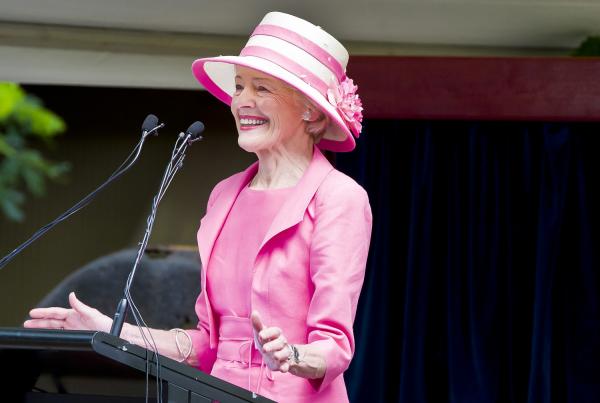
In 2008, the Queen approved Quentin’s appointment as Governor-General, on the recommendation of Prime Minister Kevin Rudd, and so she became the 25th Governor-General of Australia, and the first female Governor-General of this country. The decision gained approval on all sides of politics, and was seen as a positive move by commentators. Towards the end of her term, she made headlines after giving the annual Boyer Lecture, when she implied that she looked forward to Australia becoming a republic, and legalising gay marriage.

When her term was completed last year, Quentin Bryce was made a Dame of the Order of Australia, on the recommendation of the current prime minister. Shortly afterwards, Dame Quentin was announced as the chair of a new task force to combat domestic violence in Queensland, so she continues her valuable work on behalf of Australian women.

QUENTIN
French form of the Roman name Quintinus, derived from Quintus, meaning “fifth” in Latin, and traditionally given to a fifth child.

Saint Quentin is a 3rd century saint, and according to legend he was a Roman citizen who went to Gaul as a missionary, where he settled in Amiens in northern France. After performing many miracles, he was tortured and martyred before his body was thrown into the marshes of the Somme. By miraculous means, his body was later discovered and a shrine erected in his honour.

The cult of Saint Quentin was an important one in the Middle Ages, and Saint Quentin’s tomb was a major pilgrimage site, much favoured by the Carolingians. There are many places named after the saint in northern France. Because of the saint, the Normans introduced the name Quentin to England, where it may have contributed to the surname Quentin, although that could also come from Quinton in Warwickshire, meaning “the queen’s settlement” in Old English.

The name Quentin has been in use since medieval times, overwhelmingly as a male name. It is in the Top 500 in the United States, while in England/Wales, 17 baby boys were named Quentin in 2013. The name is most popular in France, where it is in the Top 50. There are not many Quentins in Australian historical records, and they are all male.

Besides Quentin Bryce, there are many famous Australians named Quentin in the media. Quentin Spedding was a journalist in the 1920s and 1930s, while ABC journalists include Quentin Dempster, Quentin McDermott, and Quentin Hull. There’s also film-maker and producer Quentin Kenihan, who first rose to fame as a little boy being interviewed on television.

You might also be reminded of American film director Quentin Tarantino, or British illustrator Quentin Blake. Homosexual author and performer Quentin Crisp changed his name to Quentin (born Denis Pratt), while Quentin Cook changed his name to Norman, and performed under the stage name Fatboy Slim.

These are all men named Quentin, but as a surname, Quentin refers to a queen, and even as a first name, Quentin could be used as a form of the female Roman name Quintina. I only know two people named Quentin, and they are both female, so the name seems very usable for girls to me, in addition to being a splendid choice for a boy.

BRYCE
Surname derived from the male name Brice. Saint Brice was a Bishop of Tours during the Dark Ages. Acccording to legend, he was an orphan rescued by Saint Martin and raised in an monastery as St Martin’s pupil. He took over as bishop from St Martin, but proved rather worldly, so he was exiled to Rome for seven years to have his sins absolved by the pope. When he returned, he was a changed man, and served with such humility that he was venerated as a saint.

He is remembered in England because his feast day is November 13, and on that day in 1002 there was a mass killing of the Danes living in England ordered by King Ethelred the Unready, who was fed up with England being ravaged in Viking raids each year. It is known as the St Brice’s Day Massacre.

The meaning of Brice is not known for sure, although it is assumed to be Celtic. It may come from the Gaulish word briccus, meaning “speckled”. As a surname, Bryce is particularly associated with Scotland, and is understood as meaning “follower of Saint Brice”.

The name is very well known in Australia because of best-selling author Bryce Courtenay, who was born in South Africa – his name was Arthur, but went by his middle name. Before becoming a published writer, Bryce worked in advertising, and headed many award-winning campaigns, including Louie the Fly, The Milkybar Kid, and It’s Time, on behalf of Gough Whitlam. His most famous work is his first novel, The Power of One, which has been made into a film.

Bryce entered the charts in the 1960s, debuting at #274 – its similarity to Bruce is so striking that you might suspect it was a replacement for the name, which was still popular in the ’60s, but falling steeply. Bryce rose into the Top 100 by the 1990s, just as Bryce Courtenay began his career as an author, and left the Top 100 in 2000. It is now around the 200s, so still fairly common.

It’s more popular in the US, where it has fallen much more slowly, and is not far out of the Top 100. It is least common in England/Wales, where 19 boys and 3 girls were named Bryce in 2013 (the second time that Bryce has charted as a female name in the UK, probably because of American actress Bryce Dallas Howard, who has recently been in the Twilight series and The Help).

Modern classic Bryce is still getting reasonable use, along with old favourites like Brock and Brody, and is also on trend, fitting in with fashionable rising choices like Byron. It’s a great way to honour a Bruce and a Bryan simultaneously, and I see this name more commonly in the middle, as it goes well with so many first names.

Two medieval French saints names – but which one do you like best?

POLL RESULTS
Quentin received an approval rating of 51%. 40% of people weren’t keen on the name Quentin, but 21% thought it was a good name.

Bryce received an approval rating of 37%. 53% of people weren’t keen on the name Bryce, although 10% loved it.

Thank you to Brooke for requesting that the name Quentin be featured on Waltzing More Than Matilda, and Dame Quentin Bryce be featured as part of the Famous Name series

(Picture shows Dame Quentin Bryce opening the Defence Museum in Darwin)

Boys Names from the Top 100 of the 1940s

08 Sunday Mar 2015

Posted by A.O. in Name Themes and Lists

≈ 4 Comments

Tags

Anglo-Saxon names, animal names, aristocratic names, aristocratic surnames, aristocratic titles, Biblical names, Breton names, CB radio voice procedures, classic names, english names, ethnonyms, fictional namesakes, French names, Gaelic names, germanic names, Greek names, Irish names, Latin names, locational names, mythological names, name history, name meaning, name trends, names from television, names from video games, names of flags, nicknames, Norse names, papal names, Roman names, royal names, saints names, Scottish names, slang terms, surname names, US name trends, Welsh names

AUGUST-15-1945-Ern-Hill-the-Dancing-Man-in-Eliza-5741858

Alan
Breton name, common amongst aristocracy, introduced to England by the Normans, where it became one of the most popular names. The meaning is uncertain – the word alan was used in Brittany to mean “fox”, but evidence suggests it originally meant “deer”. The two meanings may both refer to someone with red hair, or to indicate speed. There is also an Irish name Ailin, meaning “little rock”, very similar to the Irish/Scots Gaelic word alainn, meaning “handsome”, while the Welsh Alun may mean either “nurturing” or “wandering”. When the Normans brought Alan with them, the name spread to Scotland as Breton lords gained lands there – perhaps partly because the Scots already had similar names. Another theory is that the name comes from the Alans, Indo-Iranian peoples who settled in parts of France and Brittany in the Middle Ages; their name has the same origin as Aryan, meaning “noble”. There are several saints named Alan. Alan is a classic name which has never left the charts. It was #55 in the 1900s, and peaked in the 1940s at #20, leaving the Top 100 in the 1980s. It has recently had a small rise in popularity, and is around the 300s. Surname variants Allan and Allen have also been popular; Allen is back on the charts, while Allan has disappeared. I have seen a few babies named Alan and Allen lately.

Cecil
English form of the Roman family Caecilius. The Caecilii traced their ancestry back to the mythical figure Caeculus, a son of the smith god Vulcan. According to legend, Caeculus had mastery over fire, and was unharmed by it, although the smoke damaged his eyes, which were smaller than usual – his name means “little blind boy” in Latin. Another story is that the Caecilii were descended from Caecas, a follower of the legendary Roman hero Aeneas: his name means “blind” as well, although it also can be translated as “dark, secret”. Of course both these tales are just folklore. The name Cecil has been used since the Middle Ages, and it was also given in honour of the noble Cecil family, whose surname comes from the name Seisyll, Welsh form of the Roman name Sextilius, from Sextus, meaning “sixth”. Cecil was #18 in the 1900s, and was #89 in the 1940s. It left the Top 100 the following decade, and dropped off the charts in the 1970s. I recently saw a baby Cecil, and I think this name seems pretty hip.

Clifford
English surname, from a village in Herefordshire meaning “ford at the cliff”. The Cliffords are a noble family who originally came over with the Normans, and were prominent in medieval England. One of their members was Rosamund Clifford, “The Fair Rosamund”, who was the mistress of Henry II. Clifford has been used as a first name since at least the 16th century. Clifford was #61 in the 1900s, peaking in the 1910s and 1920s at #59. It was #92 in the 1940s, left the Top 100 the following decade, and was off the charts by the 1990s. This name will remind many parents of the classic children’s book series, Clifford the Big Red Dog. It seems strong and solid.

Desmond
Anglicised form of the Irish surname O’Deasmhumhnaigh, meaning “son of the man from Desmond”. Desmond is the original name for South-West Munster, and means “south Munster”. Munster means “land of Muma”; Muma was a goddess associated with writing. Desmond became prominent as an aristocratic title, as the Earls of Desmond were lords of Ireland, related to royal houses in England and France. Their family name was FitzGerald, and US President J.F. Kennedy is believed to have been descended from them. Desmond has been used as a personal name since the 18th century, and originated outside Ireland. Desmond was #127 in the 1900s, joined the Top 100 in the 1920s, and peaked in the 1940s at #66. It left the Top 100 in the 1960s, and dropped off the charts in the early 2000s. This name is rising in popularity in the US, and I wonder if that could happen here too? Desmond Miles from the Assassin’s Creed video game series, and Desmond from Lost are contemporary namesakes.

Gregory
From the Greek name Gregorios, meaning “watchful”. Because the Latin for “flock” is grex, it became understood as “shepherd”, the idea being that the shepherd would keep watch over his flock. Because of this, it became a popular name for monks and bishops to adopt, and there have been dozens of saints and 16 popes with the name Gregory. Pope Gregory I was known as Gregory the Great, and he is famous for sending Christian missionaries to England to covert the Anglo-Saxons, and for the Gregorian chant, which is attributed to and named after him. Because of him, Gregory has been a common English name since the Middle Ages. Gregory is a classic name which has never left the charts. It was #143 in the 1900s, and joined the Top 100 in the 1930s. It was #34 in the 1940s, and peaked in the 1950s at #7 (when Gregory Peck was big in Hollywood). It didn’t leave the Top 100 until the 1990s, and is currently around the 600s and fairly stable. It may not be stylish, but this is a solid choice.

Maurice
French form of Roman name Mauritius, derived from Maurus, meaning “man from Mauretania”. Mauretania was a region of the Roman Empire where north Africa is today, so the name is often understood as “dark-skinned”, and sometimes translated as “a Moor” (the old name for someone from northern Africa). The name became commonly used because of St Maurice, a 3rd century Egyptian who served in the Roman army. According to legend, he was part of a Christian legion who refused to kill other Christians, and were martyred together. As a Roman soldier, St Maurice was patron of the Holy Roman Emperors and many of the royal houses of Europe, so his name became used by royalty and nobility. Prince Maurice of Battenberg was Queen Victoria’s youngest grand-child; he was killed in action during World War I. Maurice was #71 in the 1900s and peaked in the 1920s at #52. It was #82 in the 1940s, and left the Top 100 the following decade; it dropped off the charts in the 1990s. Maurice has a rather nerdy image, although AFL fans may be reminded of footballing great Maurice Rioli. It can be said muh-REES or MOR-is, with Reese or Morrie as the nicknames.

Norman
Germanic nickname or surname meaning “north man”, referring to Vikings. The Normans were descendants of Vikings who had taken over and settled the region of northern France now known as Normandy. Later a Norman duke named William conquered England, so that the Normans became an important part of British history and culture. The name Norman or Normant was used in England even before the Conquest, and became more common after 1066, although dropped off again in the late Middle Ages. It never went out of use, but became much more popular in the 19th century, due to the Victorian love of anything antique-sounding. In Scotland, it was used to Anglicise the Norse/Gaelic name Tormod, meaning “courage of Thor”. Norman was #19 in the 1900s, and peaked in the 1920s at #14. It was #46 in the 1940s, left the Top 100 in the 1960s, and disappeared from the charts in the 1990s. There are many Australian namesakes, from artist Norman Lindsay to comedian Norman Gunston to pop star Normie Rowe. Many people still remember Norm, from the Life. Be in it fitness campaign, representing a pot-bellied man as “the norm”.

Raymond
The Germanic name Raginmund is composed of ragin, meaning “advice, counsel” and mund, “protection”; it is sometimes translated as “protected by good counsel”. The Normans introduced it to England in the form Reimund, where it became very common in the Middle Ages. It was a traditional name amongst medieval nobility, and there are several medieval saints called Raymond. Never out of use, Raymond is a classic name which has always remained on the charts. It was #33 in the 1900s, and peaked in the 1940s at #9. It left the Top 100 in the 1990s, and hit its lowest point in 2009 at #326. Since then it has improved its popularity ranking, and is currently in the 200s. With Roy- names so fashionable, Ray- names cannot help getting a boost as well, and Raymond is not only a solid classic choice, but one which has recently gained some cachet. Plenty of parents love Raymond!

Roger
From a Germanic name meaning “famous spear”. The Normans introduced the name to England in the form Rogier, where it replaced the Anglo-Saxon form, Hroðgar or Hrothgar, which is found in the poem Beowulf as the name of a Danish king. The name was common in medieval England, heavily used by the aristocracy, and there are a couple of saints named Roger. It has never gone out of common use, even though roger was a slang term for “penis” – possibly because of the spear connection. More recently, roger has become understood as “to have sexual intercourse”. It has often been chosen for comic characters, such as the Beano‘s Roger the Dodger, Roger Ramjet, Roger Rabbit, Roger the alien from American Dad, and Roger the Shrubber from Monty Python’s Holy Grail (not to mention “Welease Woger” in The Life of Brian). Roger was #155 in the 1900s, joined the Top 100 in the 1930s and peaked in the 1940s at #57. It left the Top 100 in the 1970s, and dropped off the charts in the late 2000s, albeit with a sudden burst of use in 2009, when it got up to #384. Although perhaps too many jokes have been made at its expense, the pirate flag of the Jolly Roger, and radio procedure call of Roger give it a rollicking feel.

Stephen
English form of the Greek name Stephanos, meaning “wreath, crown”, to denote the laurel wreath worn by those who achieved victory in contests. In the New Testament, St Stephen was a deacon of the early church who was martyred by stoning. As the first martyr, St Stephen’s name seems apt, and he is often said to have won his martyr’s crown. There are several other saints with the name, and nine popes. The name Stephen became more popular in England after the Norman Conquest, and although it is a common name for royalty in eastern Europe, there has only ever been one English king with the name. Stephen of Blois was a grandson of William the Conqueror who took the throne in controversial circumstances; his rule marked a period of anarchy as he fought the Empress Matilda for the right to rule. In the end he failed, and his name has never been used again for a British king. Never out of common use, Stephen is a classic name which has remained on the charts. It was #72 in the 1900s, was #36 in the 1940s, and peaked in the 1950s at #5. It didn’t leave the Top 100 until the early 2000s, and is currently fairly stable around the 300s. The variant Steven, in use since the Middle Ages, is more popular than Stephen, around the 200s.

POLL RESULTS
People’s favourite names were Desmond, Stephen and Gregory, and their least favourite were Roger, Maurice and Norman.

(Picture shows the famous “dancing man” from the joyous celebrations in the streets of Sydney which marked the end of World War II in August 1945)

← Older posts
Newer posts →

Enter your email address to follow this blog

Categories

Archives

Recent Comments

A.O.'s avatarwaltzingmorethanmati… on Zarah Zaynab and Wolfgang…
Madelyn's avatarMadelyn on Zarah Zaynab and Wolfgang…
JD's avatardrperegrine on Can Phoebe Complete This …
A.O.'s avatarwaltzingmorethanmati… on Rua and Rhoa
redrover23's avatarredrover23 on Rua and Rhoa

Blogroll

  • Appellation Mountain
  • Baby Name Pondering
  • Babynamelover's Blog
  • British Baby Names
  • Clare's Name News
  • For Real Baby Names
  • Geek Baby Names
  • Name Candy
  • Nameberry
  • Nancy's Baby Names
  • Ren's Baby Name Blog
  • Sancta Nomina
  • Swistle: Baby Names
  • The Art of Naming
  • The Baby Name Wizard
  • The Beauty of Names
  • Tulip By Any Name

RSS Feed

  • RSS - Posts

RSS Posts

  • Celebrity Baby News: Melanie Vallejo and Matt Kingston
  • Names from the TV Show “Cleverman”
  • Can Phoebe Complete This Sibset?
  • Zarah Zaynab and Wolfgang Winter
  • Baby, How Did You Get That Name?
  • Celebrity Baby News: Media Babies
  • Celebrity Baby News: Adelaide Crows Babies
  • Celebrity Baby News: Chris and Rebecca Judd
  • Names at Work: Name News From the World of Business and Employment
  • Celebrity Baby News: Sporting Round Up

Currently Popular

  • Girls Names From Stars and Constellations
  • The Top 100 Names of the 1900s in New South Wales
  • The Top 100 Names of the 1930s in New South Wales
  • Rare Boys Names From the 1950s
  • Celebrity Baby News: Ross Stevenson and Sarah Fallshaw

Tags

celebrity baby names celebrity sibsets english names famous namesakes fictional namesakes honouring locational names middle names name combinations name history name meaning name popularity name trends nicknames popular names saints names sibsets surname names twin sets unisex names

Create a free website or blog at WordPress.com.

Privacy & Cookies: This site uses cookies. By continuing to use this website, you agree to their use.
To find out more, including how to control cookies, see here: Cookie Policy
  • Subscribe Subscribed
    • Waltzing More Than Matilda
    • Join 517 other subscribers
    • Already have a WordPress.com account? Log in now.
    • Waltzing More Than Matilda
    • Subscribe Subscribed
    • Sign up
    • Log in
    • Report this content
    • View site in Reader
    • Manage subscriptions
    • Collapse this bar
 

Loading Comments...