• About
  • Best Baby Names
  • Celebrity Baby Names
  • Celebrity Baby Names – Current
  • Celebrity Baby Names – Past
  • Featured Boys Names
  • Featured Girls Names
  • Featured Unisex Names
  • Links to Name Data
  • Waltzing on the Web

Waltzing More Than Matilda

~ Names with an Australian Bias of Democratic Temper

Waltzing More Than Matilda

Tag Archives: saints names

Underused Names for Boys

10 Sunday Feb 2013

Posted by A.O. in Name Themes and Lists

≈ 14 Comments

Tags

Anglo-Saxon names, Arthurian legends, Arthurian names, band names, Biblical names, British names, celebrity baby names, Celtic names, Cornish names, english names, famous namesakes, fictional namesakes, French names, German names, Gothic names, Greek names, hebrew names, Jakob Grimm, Latin names, locational names, mythological names, name history, name meaning, nicknames, Old English names, Old French names, Roman names, royal names, Sabine names, saints names, Scottish names, Shakespearean names, Sir Walter Scott, surname names, unisex names, William Shakespeare

Time-For-Bed-Said-ZebedeeThis follows on from last week’s Underused Names for Girls; to briefly recap, they are names which aren’t common here (used less than six times in the 2012 Victorian data, have never charted in Australia), but still have a history of use in Australia (can be found in historical records).

Alaric

Alaric is from the Gothic name Alareiks, meaning “ruler over all”. Alaric I was the king of the Visigoths who sacked Rome in 410, and his great-grandson, Alaric II, was ruler of the Visigothic kingdom, covering most of Spain and the south of France. Another Alaric was a legendary king of Sweden, skilled in battle and sport, and a masterful horseman. He had a brother Eric, and for some unknown reason, the pair of them killed each other with their horses’ bridles, which seems an awfully strange choice of weapon. The name Alaric is far commoner in fiction than in real life, where it tends to be either chosen for comedies, in the belief that the name Alaric sounds amusingly high-faluting, or science-fiction/fantasy, in the belief that it sounds geekily exotic. In the TV series, The Vampire Diaries, there is a character named Alaric; he says his name uh-LAHR-ik, although most sources say the name is pronounced AL-uh-rik. Powerful and commanding, this is unusual, but sounds similar to familiar names like Alan and Eric.

Blaise

In Arthurian legend, Blaise was the priest who baptised the wizard Merlin, became his tutor and friend, then took the trouble to write down all Merlin’s deeds for posterity. There is a Saint Blaise, who is a saint of healing, as he cures sore throats (the saint was a doctor as well as a bishop). He seems to have been quite popular in England, perhaps because his feast day of February 3 is right after the Celtic festival of Imbolc and the Christian feast of Candlemas, and often marked by bonfires. Blaise sounds like the word blaze, so a pleasing coincidence for fire-lovers. The most famous namesake is Blaise Pascal, the French theologian and philosopher. The meaning could be from either Latin or Greek. If Latin, it means “stuttering, lisping”; if Greek it means “bow-legged”, so either way it’s not flattering. Saint Blaise was Greek, but the Blaise of Arthurian legend is probably meant to be Roman or Romanised, so you can take your pick. It’s a name loved for its sound, namesakes and associations rather than its meaning.

Corin

Corin is a French surname derived from Quirinus; Saint Quirinus was part of a Roman missionary group sent to convert Gaul, and legend has attached to this popular saint all the standard saintly stories, such as killing a dragon and going for a stroll after getting his head chopped off. The original Quirinus was an early Roman god, probably a Sabine war deity. The Sabines had an altar to Quirinus on the Quirinal Hill, one of the Seven Hills of Rome. The Romans considered him to be a deified Romulus, and in the early days he was a major god, although they gradually lost interest in worshipping him. However, even after the fall of Rome, the Quirinal Hill remained a place of power, so that it was chosen as the seat of royalty, and later the residence of the Presidents of the Italian Republic. The name is linked to the name of the Sabine town Cures, and may come from the Sabine word for “spear”. There is a shepherd named Corin in Shakespeare’s As You Like It, and a Prince Corin in C.S. Lewis’ The Horse and His Boy. You can also see this name from another perspective, for in British legend, Corineus was a great warrior and giant-killer who founded Cornwall; his name may be an echo of Cernunnos, the Celtic god, whose name is usually translated as “horn”, or “horned one”. There are several place names in Cornwall apparently derived from Cernunnos (including Cornwall itself), and the name Corin enjoyed early popularity in Cornwall and Devon – so you can see this as a British name just as much as a French one. This packs a double mythological punch, and doesn’t seem much different than names such as Corey or Colin.

Edgar

Edgar is an Old English name meaning “rich spear”. Saint Edgar the Peaceful was a king of England; a Scottish King Edgar was a son of Saint Margaret. The name became rare after the Norman Conquest, but had a revival in the 19th century, after Sir Walter Scott’s historical novel, The Bride of Lammermoor, told the story of tragic lovers Lucy and Edgar – a tale which ends in madness, murder and quicksand. Edgar is also a character in William Shakespeare’s King Lear; disinherited by his father, he wanders the heath disguised as a babbling madman. Noble and clever, he is also enigmatic with a touch of darkness; he enjoys playing the crazy beggar just a little too much. The most famous person named Edgar is probably the American writer, Edgar Allen Poe, said to have been named after Shakespeare’s character. Poe’s works are also quite dark and enigmatic, dealing with topics such as grief, guilt, mystery, murder, madness, doom, death, drugs, and being buried alive. Edgar is related to the other Ed- names, such as Edward and Edwin, but seems more vintage, a bit edgier, and a touch more Gothic. This name might be uncommon, but it’s also traditional and comes with all the usual Ed and Eddie nicknames.

Giles

This is based on the Latin name Aegidius, derived from the Greek for “young goat”. Aegidius was a 7th century hermit from Athens who lived in the south of France with a tame deer; in Old French his name became Gidie, then Gide, and finally Gilles; when the Normans took his name to Britain, it became Giles. A noted miracle worker, Saint Giles was very popular in the Middle Ages, and his name became common; it was also given quietly but steadily to girls (even into the 20th century). Although we often think of Giles as a terribly “English” name, Saint Giles is the patron saint of Edinburgh, and the name Giles is traditional in Scotland; many Gileses in Australian records have Scottish surnames. The English haven’t done this name many favours, as it’s a favourite in English books and TV shows for good-natured upper class twits. However, this doesn’t reflect the reality of the name, or the Australian experience of it, and I think it’s possible to see Giles in quite a different light. I can see Giles as a solid country-style name, a brother to Archie and Will, or slightly hipster, a brother to Hugo and Barnaby. If you crossed Gus with Miles, you might end up with something that looks a little like Giles …

Huxley

Huxley is an English surname. The Huxley family were Normans who came to Britain after the Conquest and settled in Cheshire, taking their name from a village near Chester, which was originally named Holdesieia, and corrupted into Huxley. The original name may be from the Anglo-Saxon for “sloping land”, and Huxley is believed to mean’s “Hucc’s wood”, with Hucc being an Anglo-Saxon nickname meaning “insult, taunt”. Huxley has been used as a personal name since the 18th century, and early examples are from the Cheshire area, suggesting they may have been named directly after the village. The Huxley family have produced an astonishing number of brilliant thinkers, from the biologist T.H. Huxley, supporter of Charles Darwin, to the author Aldous Huxley, who wrote Brave New World. T.H. Huxley came to Australia as a young man, and did such excellent work in natural history that he was made an immediate Fellow of the Royal Society on his return (Mount Huxley in Tasmania is named in his honour). T.H. Huxley’s distant cousin, Sir Leonard Huxley, migrated to Australia in childhood, and became one of our most distinguished physicists. With its fashionable X and intellectual pedigree, this name seems very hip, and comes with the nicknames Huck or Hux.

Jethro

Jethro is translated as “excellence, abundance” in Hebrew, and in the Old Testament, Jethro is the father-in-law of Moses, and a priest (it is never made clear in what religion he was a priest, but by the end he accepted Yahweh as his God). Jethro is revered as a prophet in Islam, and is held in the highest regard by the Druzes. The most famous person with this name is Jethro Tull, an English agricultural pioneer who helped bring about the British Agricultural Revolution which formed the basis of modern farming practices. The rock band Jethro Tull is named after him. You may also remember the dull-witted Jethro Bodine from The Beverly Hillbillies. Jethro is a little bit hick and a whole lot hip – it’s hickster.

Rufus

Rufus started life as a Roman nickname, but afterwards became a family name; it’s from the Latin for “red haired”. There are many famous men with the surname Rufus, including the Stoic philosopher Gaius Musonius Rufus. His views on philosophy were moderate and practical, encouraging all men and women to follow a philosophical life, and giving advice on all manner of topics, including diet (vegetarian, raw) and hairstyles (long, beardy). He was so highly-regarded that when all other philosophers were expelled from Rome by the Emperor Vespasian, Rufus was allowed to stay. There are at least ten saints named Rufus, one of whom is mentioned in the New Testament as a disciple of St. Paul; his father was the man who carried the cross for Jesus on the way to Calvary. There is also the Gaelic saint Mael Ruba, whose name is Anglicised as either Maree or Rufus. King William II of England was nicknamed “Rufus” for his ruddy complexion. Famous people named Rufus include the Canadian-American singer Rufus Wainwright, and the British actor Rufus Sewell; Roger Taylor from Queen has a son named Rufus Tiger. With names ending in -us becoming fashionable, Rufus looks set to become the new Atticus.

Wolfgang

Wolfgang is a German name meaning “wolf path, wolf journey”, and interpreted by folklorist Jakob Grimm as being the name of a hero who follows in the wake of the “wolf of victory”. It has two heavy-duty namesakes: composer Wolfgang Amadeus Mozart, and writer Johann Wolfgang von Goethe; there is also a Saint Wolfgang, one of the patrons of Germany. Eddie Van Halen chose this name for his son. Nearly all Wolfgangs in Australian records have German surnames, and although this would make a striking heritage choice, it could work even if you don’t have a scrap of German ancestry. Wolfgang is one of those names that people seem to either love or loathe, so it attracts some extreme reactions. The usual nicknames are Wolf or Wolfie.

Zebedee

In the New Testament, Zebedee was a fisherman, and the father of the Apostles John and James. He is mentioned as being left behind in the boat when Jesus called the brothers to “become fishers of men”; we never learn whether he was supportive of his sons’ career change, or thought they should have remained fishers of fish. Zebedee’s wife was one of the women present at the crucifixion. The name Zebedee is the Greek form of the Hebrew name Zebadiah, meaning “Yahweh has bestowed”, and nearly always interpreted as “gift of God”. There is an English painter named Zebedee Jones and an English newsreader named Zebedee Soanes; both these Zebedees were born in the 1970s, when the cult children’s show, The Magic Roundabout, was first on television. In the show, Zebedee was a jack-in-the-box who is popularly recalled as ended the show by bouncing down out of nowhere and intoning, “Time for bed, children” (although I’m not sure how often this occurred). With Old Testament names for boys becoming a bit old hat, it could be time to consider some of the more unusual New Testament names. This one is full of zest, and the nickname Zeb is as cowboy cool as Zeke and Jed.

POLL RESULT: People’s favourite names were Huxley, Alaric, and Corin, and their least favourite were Wolfgang, Zebedee, and Giles.

(Picture shows Zebedee from The Magic Roundabout)

Underused Names for Girls

03 Sunday Feb 2013

Posted by A.O. in Name Themes and Lists

≈ 20 Comments

Tags

Arabic names, Arthurian legends, celebrity baby names, Disney names, english names, ethnonyms, famous namesakes, fictional namesakes, flower names, French name popularity, French names, German names, germanic names, Greek names, historical records, How Green Was My Valley, Italian names, Latin names, mythological names, name data, name history, name meaning, name popuarity, names from movies, nature names, nicknames, Old French names, Old Welsh names, Oz: The Great and Powerful, plant names, Poldark, popular culture, Puritan names, rare names, royal names, saints names, Shakespearean names, surname names, The Iliad, The Wizard of Oz, tribal names, unisex names, virtue names, vocabulary names, Welsh names, William Shakespeare

sabine women detailLast week we had names from Victoria which were used less than ten times in 2012. Those names are uncommon – but what if you wanted something even rarer? These are names which don’t appear even once in the Victorian data from last year, and have never charted in Australia. However, they are not strange or obscure, and all of them can be found in Australian historical records.

Angharad

Angharad is an Old Welsh name meaning “greatly loved”. It was reasonably common in medieval times, and there are several Angharads in Welsh history. In Welsh mythology, Angharad Golden-Hand is the lover of Peredur, one of King Arthur’s knights. Angharad Morgan is a main character in How Green Was My Valley, and in the film version was played by Maureen O’Hara. Actress Angharad Rees became well known in the 1970s for playing the role of Demelza in the TV series Poldark. Lots of famous Angharads, yet I could find only one woman named Angharad in Australian records. The pronunciation, ang-HAH-rad, may have caused some concern. This is a strong and unusual name with a lovely meaning. It would definitely stand out.

Beatrix

Beatrix is based on the name Viatrix, the feminine form of the Latin name Viator, meaning “voyager, traveller”. Early on, the spelling was altered to associate it with the Latin word beatus, meaning “blessed”, and it was common amongst early Christians. Some baby name books sandwich these two meanings together and interpret it as “blessed traveller”. Saint Beatrix was an early Roman martyr; according to legend, she was strangled by her servants. The name became less common in England after the Middle Ages, but was revived in the 19th century. One of the most famous people with this name is Beatrix Potter, the children’s writer and illustrator, who gave us such delightful characters as Peter Rabbit, Jemima Puddleduck, Squirrel Nutkin and Mrs. Tiggy-Winkle. As well as these talents, she was also a scientific researcher, conservationist, farmer, and sheep breeder. Queen Beatrix of the Netherlands helps give this name a royal touch, and a famous literary character is Beatrix “Trixie” Belden, girl detective. To me, this charming name seems spunkier and more eccentric than her sister Beatrice.

Cressida

In Greek mythology, Chryseis was the daughter of a Trojan priest named Chryses, and she was captured by the Greek champion Agamemnon as part of the spoils of war; he refused to give her back even after being asked nicely. Chryseis’ dad prayed like blazes to the god Apollo, who obligingly sent a plague through the Greek soldiers until Chryseis was returned. A later legend says that she bore Agamemnon a son. Her name given in the Iliad simply means “daughter of Chryses”; appropriately for a priest of Apollo, Chryses’ name means “golden”, perhaps in reference to sunlight. Some writers say Chryseis’ real name was Astynome, meaning “possessor of the city”. When medieval authors retold the tale of the Trojan War, this story had a complete rewrite. Chryseis became Cressida (KRES-ih-duh), and one corner of a tragic love triangle; she is made the epitome of the false woman and the whore. Some authors were sympathetic to Cressida’s plight, and in Shakespeare’s version, Cressida is complex, highly intelligent and witty. A famous Australian with this name is the artist Cressida Campbell. I find this literary name quite bewitching.

Emmeline

Emmeline is the Old French form of the Germanic name Amelina, based on the word for “work”; it is therefore related to the name Amelia, and not to Emily. The name was introduced to Britain by the Normans, and many people prefer to give it a slightly French pronunciation as EM-uh-leen, while others seek to Anglicise the way it is said as EM-uh-line (like Caroline). My experience is that the British tend to say leen, Americans tend to say line, and Australians have a bob each way and can usually cope with either. There were several prominent suffragists named Emmeline, including Emmeline Pankhurst, Emmeline Pethick-Lawrence and Emmeline Wells. Australia mountaineer Emmeline Du Faur was the first woman to climb Mount Cook (in record time), and the first person to climb several peaks – always dressed in a skirt. Emmeline Pethick-Lawrence was a keen hiker and woodcrafter, and to me the name Emmeline sounds vigorous, healthy, and practical. Emmeline has a solid history of use in Australia, being commonly found in old records, and today its nickname Emmie means it fits in with popular names such as Emily, Emma and Emmerson.

Isadora

Isadora is a variant of the name Isidora, the feminine form of Isidore, from the Greek for “gift of Isis”; the Egyptian goddess Isis was worshipped widely in the ancient world, and she was also important to the Greeks and Romans. Saint Isidora was a 4th century Egyptian nun, considered to be a “holy fool”, and treated with contempt by the other nuns for her eccentric ways, such as wearing a dirty dishrag on her head instead of a veil, and eating only leftovers instead of proper meals. When a visiting saint came to the nunnery, he immediately picked out Isidora as the only person holier than himself; upset by the praise and attention, Isidora ran away into the desert to be a hermit, and nothing more is known of her. The most famous Isadora is the American dancer Isadora Duncan, who developed her own unique style of dance, based on the natural movements of the human body. Like the saint, she was considered eccentric and radical, and danced to the beat of her own drum. Isadora is a beautiful, glamorous and individualistic name!

Lavender

Lavender has been used as a personal name since the 17th century, and was given to both sexes. It may have originally been derived from the surname, which is Norman-French and based on the word lavandier, referring to a worker in the wool industry who washed the raw wool (this is an occupation that both men and women had). Even in the middle of the 20th century, you can still find boys named Lavender. By now, however, it is almost entirely thought of as a girl’s name, and considered to be from the flower. The flower name comes from the Old French lavendre, possibly from the Latin for “blue-coloured”, lividius, but also influenced by lavare, meaning “wash”, because lavender was used in washing clothes. Lavender is often used to scent soaps and beauty products, and has been used as a relaxation aid for thousands of years. The colour lavender is associated with sensuality and decadence, and at one time, was considered symbolic of homosexuality. Like Rose, this is a pretty old-fashioned flower name that is more complex that it first appears.

Sabine

Sabine is a French and German form of Sabina, the feminine form of the Latin name Sabinus, meaning “Sabine”. The Sabines were an Italian tribe who inhabited the region where the city of Rome stands today, and some of them fought against Rome for their independence. According to legend, the Romans abducted Sabine women to populate the city of Rome; the war between the Romans and Sabines ended when the women threw themselves and their children between the armies of their fathers and those of their husbands. The history behind the legend is that the conquered Sabines assimilated with the Romans, beginning a new line of inheritance. Many of the noble Roman families traced their ancestry to Sabine origins, and at least some of the deities and rituals of Rome came from the Sabines. The Sabines were said to have taken their name from the hero Sabus, who was worshipped as a deity. Although it is too long ago to be sure, one theory is that the tribal name Sabine meant “us, ourselves, our own people”. You can either say this name the French way, sa-BEEN, or the German way, za-BEE-nuh; most English-speakers use the French pronunciation. There is at least one famous man named Sabine – the writer Sabine Baring-Gould, whose name was after the surname (derived from the personal name). You can find both men and women named Sabine in Australian records. Sabine is smooth and sophisticated, but comes with a cute nickname – Bean.

Theodora

Theodora is the feminine form of the Greek name Theodoros, meaning “gift of God”. The name pre-dates Christianity, but its meaning appealed to early Christians, and there are a few saints with this name. One of them was Saint Theodora, who as punishment for her pious celibacy, was dragged into a brothel. Her first “customer” was a Christian man, who had came to save her; they were both martyred, but their virtue remained intact. This story is probably fictional, and may have been inspired by sacred prostitution, of which Christians obviously disapproved. An Eastern Orthodox Saint Theodora disguised herself as a man and joined a monastery. Her identity as a woman was only discovered after her death. The name was a very popular one for Byzantine empresses, and Theodora I is also regarded as a saint. A Roman Theodora was a senator, and supposedly the lover of one of the early popes. She was harshly condemned for daring to “exercise power like a man”. The hussy! The image you get from these historical Theodoras is of very strong, independent, determined women – which might explain why Disney has chosen this name for the Wicked Witch of the West in Oz: The Great and Powerful. Pop star Robbie William welcomed a daughter named Theodora Rose last year, called Teddy; he wanted a dignified full name for the cuddly nickname, and Theodora fit the bill perfectly.

Verity

Verity is an English word meaning “truth”, especially in regard to religious truth or doctrine. It has been used as a personal name since the 17th century, and would have been given as a virtue name by the Puritans. However, it was most likely also given in honour of the surname, for births of Veritys in Yorkshire are suggestive, given that the Verity family is a prominent one in that county. The surname is Anglo-Norman, and has the same meaning as the personal name. Originally, Verity was a unisex name, and in early records is given equally to boys and girls. The first Verity I can find born in the United States was a boy, and his family were Puritans in Massachusetts. You can find the name Verity given to both sexes in Australian records, but only as a middle name for boys, and it has never been very common here. Famous Australian women named Verity include the politicians Verity Barton and Verity Firth, the ABC presenter Verity James, and the actress Verity Hunt-Ballard, who played Mary Poppins in the Australian version of the musical. This is a crisp, clean name which sounds intelligent and upper-class to me.

Zia

Zia is a variant of the Arabic name Ziya, meaning “light, shine, splendour” – more specifically, it refers to light which shines by its own illumination, and is connected to the sun and sunlight. Traditionally, Zia is a male name, but Arabic baby name sites usually list it as female, and the name charts in France only for girls. There are quite a few people called Zia in Australian records, and they are not all Arabic men. There are women called Zia from different cultures, including Italian, where Zia may be short for a name such as Annunzia (zia means “aunt” in Italian, but this doesn’t seem to have been a hindrance to its use by Italians). Most women called Zia in the records seem to be of British descent, and I’m guessing either it was seen as a short form of other names, or parents just liked the sound of it. I can imagine parents today also liking the sound of it, because it is so similar to popular names such as Zara and Mia – indeed, it almost seems like a cross between these names. This is a zippy name which sounds a bit different, but won’t seem out of place in the playground.

POLL RESULT: People’s favourite names were Beatrix, Emmeline, and Isadora, and their least favourite were Lavender, Zia, and Angharad.

(Picture shows a detail from The Intervention of the Sabine Women (1799) by Jacques-Louis David)

Famous Names: Aneurin and Fortunato

09 Wednesday Jan 2013

Posted by A.O. in Famous Names

≈ 4 Comments

Tags

British names, famous namesakes, fictional namesakes, Italian names, Latin names, name history, name meaning, nicknames, Roman names, saints names, Welsh names

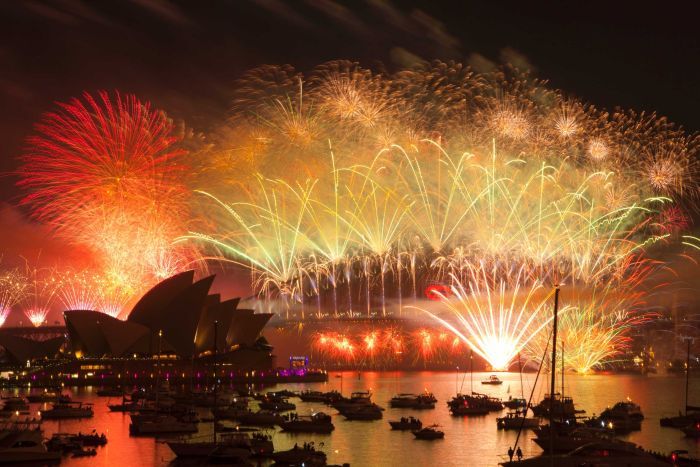
4448972-3x2-700x467New Year’s Eve is celebrated in Sydney with a huge firework display on the Harbour, the Harbour Bridge forming the centrepiece. Each year’s theme is displayed across the Bridge in words and pictures; for 2013 the theme was Embrace, asking us to embrace love, Sydney, possibilities, and the moment, illustrated by a butterfly and a pair of red lips.

Being one of the earliest places in the world to greet the New Year, the Sydney fireworks are amongst the first celebrations that people see, so they really do try to put on a show. Sydneysiders firmly believe their NYE firework display is the best in the world, although this year Abu Dhabi insisted theirs was clearly superior. I think London was my favourite, although Sydney was definitely the best city with a harbour fireworks display (sorry Hong Kong!).

Such an enormous spectacle necessitates a team of people working on it, but someone has to have their name at the top, and in this case it was Aneurin Coffey, the producer, Fortunato Foti, the director, and Kylie Minogue, the creative ambassador. As we have already covered Kylie in an earlier blog entry, when Ms Minogue was ambassador for the Sydney Mardi Gras, we are going to look at the names of Messrs Coffey and Foti instead.

Aneurin Coffey, originally from Perth, has been in event management and production co-ordination for many years, and been involved with the Sydney fireworks since the late 1990s. Fortunato Foti comes from a long line of pyrotechnicians; the Foti family have been creating firework displays since the 18th century in Italy. Fortunato’s grandfather Celestino migrated to Sydney in the 1950s, after being interned here during the war.

As you can imagine, in the lead-up to the Big Bang, these two gentlemen were often interviewed on the news and in newspapers, which is how I came to hear their intriguing names.

Aneurin is a variant of the name Aneirin, which has an important role in Welsh literature. Aneirin was a British bard in the Dark Ages, believed to have been a poet at a court which today is Edinburgh, and possibly the son of a queen of West Yorkshire. His best known work, Y Gododdin, is a series of elegies for warriors who fell in battle; there is a chance that it contains the earliest reference to King Arthur, although it isn’t certain. Revered in his own era, and rediscovered in Tudor times, he is still highly-regarded today.

The meaning of Aneirin is not certain, and it may be the British form of the Latin name Honorius, meaning “honourable, noble”. The name would have been familiar to Britons as that of the Emperor Honorius, under whose rule Rome was sacked in 410. There is a famous story that in this same year, Britain asked for Roman help against barbarian incursions, and Honorius, who had problems of his own, replied by telling them that Britain must guard itself. It is from this moment that the end of Roman control in Britain is dated.

From the 18th century, Aneirin’s name began to be spelled Aneurin, presumably to make it look as if it was derived from the Welsh for “all gold”. The name is usually pronounced a-NY-rihn, and the Welsh politician Aneurin Bevan, founder of the National Health Service, used Nye as his nickname.

The name has been mostly used in Wales, and by those with Welsh heritage. A contemporary namesake is attractive young Welsh actor Aneurin Barnard, who has won an award for his stage work, but also appears in films, and made guest appearances on TV shows such as Shameless.

Fortunato is the Italian form of the Latin name Fortunatus, meaning “fortunate, blessed”. There are several saints called Fortunatus, including Fortunatus the Apostle, listed as one of the Seventy Disciples of Christ, and mentioned by Saint Paul. Fortunatus also appears in literature as the hero of a German tale from the 16th century, who meets the goddess of Fortune and is given endless riches. Despite his charmed life, his heirs are unable to share his wealth, for they do not have the wisdom and honour to manage it.

Fortunato is not uncommon as an Italian surname, and there are quite a few streets and businesses in Australia bearing this name. A young namesake is Fortunato Caruso, who plays Australian rules football for West Adelaide.

The beginning of a new year, whatever it may bring, is always filled with hope for the future. Here are two rare names associated with luck, honour, gold and riches – good omens for the year ahead.

All the best for 2013!

POLL RESULTS: Aneurin received an approval rating of 23%, while Fortunato received a more favourable approval rating of 37%. More than 45% of people said they hated both names. One nice person said they loved both.

(Picture shows the fireworks on Sydney Harbour, January 1 2013; photo from ABC News)

The Historical Naming of British Monarchs

23 Sunday Dec 2012

Posted by A.O. in Naming Issues

≈ 11 Comments

Tags

choosing baby names, famous namesakes, historical records, honouring, Mer de Noms, middle names, names of piercings, Nook of Names, regnal names, Robin Hood, royal names, royal naming traditions, saints names, You Can't Call It "It"!

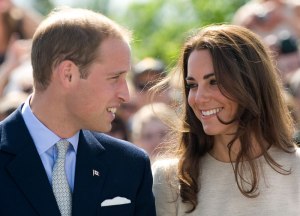
william-kate-canada-love5With the announcement early this month that Prince William and the Duchess of Cambridge are expecting their first child, the baby name blogosphere went slightly gaga. A few people even had a go at predicting the name of the royal baby, with Lou at Mer de Noms and Elisabeth at You Can’t Call It “It”! doing a great job. Of course, Kay at Nook of Names got a jump on all of us, and did her excellent analysis more than a year ago.

I’m going to admit right now that I don’t know what the royal baby will be named, and I can’t guess. I haven’t even been able to guess the baby names chosen by family and close friends, and these are people I know well.

But what I can do is to look at the names of the ruling monarchs of Britain and England (back to William the Conqueror), see how they were named, and then see what the royal baby might be called if the same principles were applied this time. As this gives a wide selection of choice, I have eliminated those names which seem  unlikely as they are still in use by other members of the royal family who have the title Prince or Princess, or which are too obviously “foreign”.

Although this doesn’t actually tell us what the baby will be called, as I studied the names of past monarchs, a few things stood out as to how they weren’t named.

  • Monarchs could be named for someone from several generations back, but almost none were named after a ruler from long ago in history. This makes the idea that the royal baby might be named after someone from many hundreds of years ago, such as Edmund or Matilda, seem rather fanciful.
  • Apart from being named after one of their parents, monarchs were almost never named after a relative who was still alive. For the baby princess to be named Elizabeth, for example, is by no means impossible, but would be historically unusual.
  • The Duchess of Cambridge is not the only commoner to marry a British royal, as the mother of Queen Anne was one. Although royal babies could be named after their commoner mother, they were not named after her relatives. If the royal baby is named after one of the Middletons, it would be a genuine break with tradition, and a sign we have entered a new age.
  • Only one female monarch was given a feminine form of a man’s name, with Queen Victoria named Alexandrina after her godfather, Alexander I of Russia (she didn’t keep the name after she became queen). The idea that the princess could be named Charlotte after Prince Charles, or Phillipa after Prince Phillip, would thus be a very unusual one.
  • The most obvious: nearly all English and British monarchs are named after a relative. The only two I could find who weren’t were Edward I and John. Edward I was named after Saint Edward the Confessor, which was considered wildly eccentric at the time, although Edward is now a traditional royal name. John was named after St. John the Baptist. Very much a younger son, he was not expected to rule, and interestingly his name was shunned by subsequent royalty – there was never a John II.
  • Apart from the occasional deceased uncle or foreign godparent, monarchs were nearly all named after a direct ancestor – a parent, grandparent or great-grandparent, for example. It’s fun looking through the royal family tree and wondering if the royal baby might be given the name of a great-great-great-aunt, or one of Queen Victoria’s sons, but this seems a very distant hope.

Now, with our expectations in check, let’s see what names are available, if we follow history.

POTENTIAL PRINCESSES

Alice

This seems to be almost everyone’s #1 choice for a baby princess, who would be named after her great-great grandmother, Princess Alice of Battenberg, the mother of Prince Philip. There have been four British princesses named Alice, but no queens – in fact, there are many more Queen Alices in fiction than in real life, giving this sweet name a distinct fairy-tale quality on a modern-day monarch.

Elizabeth

Elizabeth is seen as a front-runner, presumably because it’s thought Queen Elizabeth would happily endorse a tiny namesake. Princess Elizabeth would be named after both her great-grandmother and great-great grandmother, and as a bonus, Elizabeth is the middle name of the Duchess of Cambridge. There have been five English queens named Elizabeth, two of them rulers in their own right, and one Scottish Queen Elizabeth. However, as Queen Elizabeth II is still alive, this would be a historically unusual choice.

Diana

The favourite choice of the gossip magazines, and the name of the baby’s grandmother. When the royal couple visited our region, they were asked in an interview if they would call their first daughter Diana, and William said it would be one of her middle names. I actually think it would be nice if Diana was left for Prince Harry to use for his daughter’s first name, since Prince William got his mother’s engagement ring.

Mary

A solid choice that many are tipping, with the princess to be named after her great-great-great-great grandmother, Mary of Teck. There have been six British princesses named Mary, and four queens, two of them rulers; it’s also been used amongst Scottish royalty. Historically speaking, Mary stacks up extremely well.

Victoria

Another favourite choice for the baby princess, who would be named after her great-great-great-great-great grandmother, Queen Victoria. There has only ever been one queen with this name, but eight British princesses called Victoria – in fact it’s the birth name of Alice of Battenberg. A Victoria II would probably go down well with the British populace, although the Crown Princess of Sweden (related to the royal family) will be one day be Queen Victoria as well.

Catherine

Few seem enthusiastic about a baby Princess Catherine, but historically, it’s the most likely option. Eighteen monarchs have been named after a parent, and of the three queens who have ruled Britain, two of them were named after their mother – and the third one took her mother’s name, Victoria, as her regnal name. Queen Elizabeth II herself is named after her mother, Lady Elizabeth Bowes-Lyons. There have been five English queens named Catherine, and at least one of them, Catherine of Aragon, was deeply loved by her subjects.

Margaret

Margaret is a name from Scottish royalty, and a medieval Queen Margaret is one of the patron saints of Scotland. There has been only one English Queen Margaret, and she came to a sad end. A Princess Margaret would be named after Queen Elizabeth’s sister, and I somehow feel that this namesake, who attracted much scandal (whether deserved or not), would not be a help. However, one of Prince Philip’s sisters was named Margarita, and this is the English form of her name too.

Charlotte

A Princess Charlotte would be named after her great-great-great-great-great grandmother, Princess Charlotte of Denmark, whose birth name was Louise. There have been two British princesses called Charlotte; one of them went on to become a queen, but not of Britain. Lady Diana’s brother Charles had a daughter named Charlotte last year, who will be the royal baby’s second-cousin.

Henrietta

Queen Victoria is the only ruling queen to be named after a man – her godfather. We don’t know who will be the royal baby’s godfather, but traditionally the best man from the wedding is chosen as one of them, which makes Prince Harry a shoo-in. Could the princess be given the feminine form of his name? Unlikely, although there has been both a Queen and Princess Henrietta of Britain.

Augusta

A Princess Augusta would be named after her great-great-great-great-great grandmother, Princess Augusta of Hesse-Kassel (who was married to a Duke of Cambridge). There have been five British princesses named Augusta, and although a few of them were in line to one day become queen, by mischance none of them made it that far, giving this name an unlucky feeling for a monarch. This seems very unlikely as a possible royal baby name.

POSSIBLE PRINCES

George

Everyone’s #1 choice for a prince, and you can see why. It’s not only a traditional royal name, held by six British kings and three princes, but also one of the patron saints of England. Prince George could be named in honour of his great-great grandfather, King George VI, although that monarch’s birth name was Albert. The name is also a traditional one in the Spencer family, and Prince William has a cousin named George on the Spencer side, as well as a relative called George on the royal side, the Earl of St Andrews.

Alexander

This name was a traditional one in the monarchy of Scotland, but has never been used in England. The Prince could be named after his great-great-great-great grandfather, Prince Alexander of Hesse and by Rhine, and his great-great-great-great-great grandfather, Duke Alexander of Württemberg. There are two minor royals with this name, Alexander Windsor and Alexander Ogilvy, and a Spencer cousin, Alexander Fellowes, reportedly close friends with Princes William and Harry.

Louis

This is thought to have a reasonable chance of being selected, as Louis is one of Prince William’s middle names, and it’s a traditional one in the British royal family, although more often connected to the French monarchy. Prince Louis could be named after his great-great-great grandfather, Louis Mountbatten (formerly Prince Louis of Battenberg), and his great-great-great-great-great grandfather, Louis IV, Grand Duke of Hesse. However, some royal-watchers think that Louis Lopes, the toddler grandson of Camilla, Duchess of Cornwall, may scupper Louis as a royal name.

Frederick

This is sometimes mentioned as a possible baby name, because it is a traditional one in the royal family. Although there are three princes named Frederick in British history, there are no kings. Lord Frederick Windsor is the son of Prince and Princess Michael of Kent and there is a Spencer cousin named Frederick (the heir to the earldom); another family connection is that the Duchess of Cornwall has a baby grandson named Freddy. Prince Frederick could be named after his great-great-great-great-great grandfather, Friedrich, Duke of Schleswig-Holstein-Sonderburg-Glücksburg. Friedrich is an ancestor of both Queen Elizabeth and Prince Philip.

Francis

This would greatly appeal to fans of Lady Diana, as it is the masculine form of her middle name, Frances. As such, it may not meet with the approval of Queen Elizabeth. However, the prince could be named after his great-great-great-great grandfather, Francis, Duke of Teck – the duke’s son is the only Prince Francis the royal family have had.

Nicholas

Very much an outside chance, for there has never been an English king or prince named Nicholas. There is a minor royal named Nicholas Windsor, but he is not in line to the throne. Prince Nicholas could be named after his great-great-great-great-great grandfather, Nicholas I of Russia.

Joseph

I consider this a very unlikely choice for the royal baby, who would be named after his great-great-great-great-great grandfather, Joseph, Duke of Saxe-Altenburg.

Albert

Queen Victoria longed to have a King Albert on the throne, but her dream was never realised, as even royals called Albert have preferred to take another regnal name. The prince could be named after his great-great grandfather, or after his great-great-great-great-great grandfather, Prince Albert of Saxe-Coburg, and as a bonus to Lady Diana fans, Albert was the name of her grandfather. I fear the genital piercing of this name has ruined the chances of another Prince Albert for some time.

Adolphus

Prince Adolphus was the great-great-great-great-great grandfather of the royal baby to be. Let’s face it – this name would go down like a lead balloon. It’s not happening.

John

Count John Hauke was another great-great-great-great-great grandfather. The British royal family avoid the name John, as it is supposedly an unlucky one for them. King John is a storybook villain, thanks to Robin Hood, and two Prince Johns died young. Diana wanted to call her eldest son John, after her father, but she was not allowed to because of this royal tradition.

What would you like the prince or princess to be named? And do you want the royal family to continue their naming traditions, or start creating new ones?

NOTE: Thank you to Elea from British Baby Names for explaining where King John got his name from.

Names Spotted at Home and Abroad (Spring Edition)

22 Saturday Dec 2012

Posted by A.O. in Names Spotted at Home and Abroad

≈ 12 Comments

Tags

adult name changes, backwards names, brand names, car names, choosing baby names, classic names, controversial names, created names, english names, famous namesakes, fictional namesakes, French names, gemstone names, Greek names, guinea pig names, honouring, linguistic terms, Maori names, meteorological names, name combinations, name meaning, name sociology, names from movies, names of art styles, names of musical styles, names of pets, names of wines, naming traditions, nature names, plant names, saints names, Sanskrit names, sibsets, tree names, Twitter, unisex names, virtue names, vocabuary names

528324_419521648119669_1365182918_nA nurse saved the life of her daughter’s guinea pig Snowflake by giving it mouth-to-mouth. Her little girl is named Fauve, which in French literally means “wild beast”. In the early twentieth century, les Fauves were avant-garde artists whose style was characterised by wild brushstrokes and vibrant colours. Fauve as a name is as bold as the art it is named after, but still seems on trend.

A bittersweet baby story. Nei Nei Anderson, daughter of Pippin, is just about to have her first Christmas, but she never got to meet her father Jahminn, who died from cancer before she was born. Nei Nei is named after her Maori grandmother; neinei is the Maori word for a New Zealand tree whose Latin name is Dracophyllum traversii. These small trees can live up to 500-600 years.

Elvina Robson [pictured] was born very prematurely, and her little life hung in the balance for a while, but she is ready for her first Christmas too. Elvina’s mum and dad are Emma and Brendan, and her siblings are Marguerite, 16, Gilbert, 12, Lucy, 10, Walter, 4, Angelique, 3 and Stella (deceased). A very lovely and original sibset.

A baby who arrived in a great hurry was named Patience Mezzino. Her name was chosen before her birth, and turned out to be rather ironic.

I have been hoping to see a baby Diamond born in the Queen’s Diamond Jubilee Year, and finally I have. Diamond Andre Thomas Thompson arrived very unexpectedly, but that did not stop his mum Regine from attending her graduation ceremony the next day. Regine now has a Masters in Maritime and Logistics Management. Diamond’s dad is named Paul, and his big sister is Herleen, aged 3.

Hermione Quinn Penning was born just outside the local rubbish tip. Not the most glamorous start to life, but what a beautiful name parents Kelly and Travis picked out. Hermione’s older sister is Elena, aged 3.

Kellie-Anne, and her ex-partner Trent Ford, came up with their son’s name when they saw the back of of a Holden Commodore ute with Storm written on the back of it. They couldn’t afford the ute, but they could name their son after it, so they named him Storme Hunter Ford. Storme’s younger brother is Levi Ryder, who was named after a pair of jeans. Name inspiration can be found everywhere!

A gym for babies aged 2 months and over has opened on the Sunshine Coast. One of its first clients was a baby boy named Horizen Earle. The name seems to ask that he reach for the horizon – but in a totally Zen way. It somehow seems very Sunshine Coast!

A couple who each run their own winery have welcomed their first child, and their daughter is named Peggy Mignonne. Mignonne is French for “cute”, and I think this is an adorable name combination. Charles Mignon is a famous brand of French champagne, and Peggy’s Hill is a wine produced in Australia, but I don’t know whether they put two wine names together or not.

A gorgeous sibset I saw in the paper – Sebastian, Raphael and Augustine, sons of Emily and Mark Wolfenden. Emily and Mark have both donated kidneys to save Sebastian and Raphael’s lives; unfortunately Augustine did not survive.

Names of Adults

Peter Drouyn was a champion surfer in the 1960s and 1970s, but always felt different. Today she is Westerly Windina – she chose her new name because she had such happy memories of surfing in westerly winds. Ms Windina is now a lawyer.

Supreme Court Judge, Justice Emilios Kyrou, has a name which came as a shock to his parents. Born in a small Greek village, it was tradition there that the godparent would choose the baby name and have it baptised, and the name would be kept secret from the parents until announced by the local priest. Traditionally, the first-born son would be named after his paternal grandfather. However, Emilios’ godmother had other ideas, and named him after the hero of a best-selling romantic novel. Parents not pleased. His younger brother, now a doctor, was named Theodoros after grand-dad instead.

Names from Television

Did you watch Life at 7 on the ABC? The series has been following a group of children since they were babies, and now in this series they are seven years old, and for the first time, speak for themselves to us as they learn to navigate the world. The boys are Wyatt, Declan, Joshua, Jara’na and Daniel, and the girls are Haleema, Shine, Anastasia, Sofia and Loulou.

On the news, there was a young man who was the unfortunate victim of some white collar crime. He was called Armand d’Armagnac, and he was as romantic and exotic-looking as his name – but his Australian accent made it clear he probably wasn’t a French count after all.

Another news story: it was announced that the new head of Swimming Australia was a businessman named Barclay Nettlefold. His first name is said BARK-lee, like the British bank founder. I feel that just by telling you his name, you automatically know he is from a prominent family and a keen yachtsman.

Names from Real Life

I was persuaded to escort two young ladies to a posh hotel which throws children’s high tea parties each afternoon during the school holidays. I was informed by some mummy blog or other that only the hippest mothers and their progeny would be there (fathers, and most sons, seem to give it a miss). I was interested to see what the cool people are naming their kids; mostly they just seemed to have the same names as everyone else. However, I did manage to overhear a Bee/Bea, an Aspen, and a pair of sisters named Cleo/Clio and Isis. A rare and very small boy was named Roland.

Two brothers I met elsewhere were called Ziggy and Dash, which struck me as pleasingly zippy.

I also encountered a baby boy named Urban; I was too shy to ask his parents if he was named after the popes, or the cityscape, or the musical style, or Keith Urban.

Do some baby names seem controversial to you? I met a little boy named Aryan, which simply means “noble”, and is related to the Sanskrit name Arya. It refers to the Indo-Iranian languages, which together have one billion speakers, stretching from Russia to Sri Lanka. It really shouldn’t be any different from calling your daughter India or Persia. And yet …

I did part of my Christmas shopping with my friend Claire, who is in her 30s. As we joined the queue to pay, we heard someone talking to their baby girl in her stroller – the baby’s name was Claire. The plump grey-haired lady who served us had a name badge that said “Claire”. When I got home, I switched on the news and a pretty young reporter named Claire was covering the story. And the name Claire suited ALL of them perfectly! Go classic names.

On Twitter, Name Sociology mentioned the name Evolet, which is a character from the movie 10, 000 BC, and is “t(h)e love” written backwards. It reminded me of a woman I used to work with whose name was Evol, which is Love backwards. Sounds like a nice idea, except that until I saw her name written down, I thought she was called Evil.

Names of Babies Born to People I Know or Know Of:

Girls: Mary, Phoebe, Roma, Sanna

Boys: Boaz, Castel, Phoenix

If you are able to read this, it means the world probably hasn’t ended, yay! However, something has started – Christmas holidays – and I won’t be around much until January 7. Have a very merry Christmas season, and a happy New Year!

(Photo from The Blue Mountains Gazette Facebook page)

Names of Australian Male Olympic Swimmers

02 Sunday Dec 2012

Posted by A.O. in Name Themes and Lists

≈ 19 Comments

Tags

American names, animal names, Arthurian legends, Arthurian names, bird names, Celtic names, created names, english names, famous namesakes, fictional namesakes, French names, Gaelic names, Gone With The Wind, holiday names, Idylls of the King, Irish names, Italian names, locational names, Lord Tennyson, middle names, modern names, mythological names, name history, name meaning, name popularity, nature names, nicknames, Old French names, Old Provencal names, plant names, popular culture, popular names, saints names, Scottish names, Shakespearean names, soap opera names, surname names, unisex names, vocabulary names, Welsh names, William Shakespeare

kpAshley (Callus)

Ashley Callus won gold in 2000 and bronze in 2008. Ashley is an English surname from a common place name meaning “ash tree clearing”. It’s been used as a personal name since the 17th century, and was originally given to boys. It only became popular in Australia after the release of the 1939 movie Gone with the Wind, with the character of Ashley Wilkes (actually George Wilkes – Ashley is his middle name). Played by Leslie Howard, Ashley is a true Southern gentleman, and the one man Scarlett cannot get. The name Ashley first charted in the 1940s, and by the 1950s was #160; it made the Top 100 for the 1970s, and peaked in the 1980s at #62. It was during the 1980s that Ashley became a unisex name, making an impressive female debut at #55 – higher than the peak for boys. Coincidentally or not, it was in 1982 that the popular character Ashley Abbott joined soapie The Young and the Restless, first portrayed by Eileen Davidson. Ashley peaked for girls in the 1990s at #33, and although it left the Top 100 in 2009, it rose again and is now #93. As a boy’s name, Ashley left the Top 100 in the 1990s, and no longer ranked by 2010. However, last year Ashley increased for boys as well as girls, reaching #466. The usual nicknames is Ash.

Francis (Gailey)

Francis “Frank” Gailey won three silvers and a bronze at the 1904 Olympics. Born in Australia, Frank emigrated to the United States, and his medals are credited to the US. However, as he was an Australian citizen when he won them, we claim them toward our own medal count. This doesn’t seem to be accepted internationally. Francis is the English form of the Italian name Francesco. This began life as a nickname, because the 12th century Giovanni di Bernardone was known as Francesco, “the Frenchman”. This may have been because his father was on business in France when he was born, or because the young Giovanni quickly became fluent in French. While still a young man, Francesco began to turn away from the pleasures available to him as the son of a wealthy man, and to live a life of poverty and simplicity. Known as Saint Francis of Assisi, he is the patron saint of Italy, and also the environment. Many stories about him reflect on his deep love for animals, and his sense of kinship with all life. Francis charts as a unisex name from 1900, but by the 1950s was male-only, and in the Top 100. It left the Top 100 the following decade and remained stable for decades before falling out of use in 2010. However, last year Francis was back in the charts at #388.

Garrick (Agnew)

Sir Robert David Garrick Agnew, always known by the second of his middle names, attended the 1948 and 1952 Olympics. A graduate of Harvard, Sir Garrick became a very wealthy businessman, and also a champion fisherman. He died of a heart attack after going swimming in a pool. Garrick is an English surname which is the Anglicisation of two slightly different French surnames of Old Provencal origin. Garric means “kermes oak tree”, a small evergreen oak; Garrique means “grove of kermes oaks” – both names denoted someone who lived near such trees. The surname was introduced to Britain in the 17th century by French Huguenots, Protestants who fled persecution in France. The great 18th century English actor David Garrick was from a Huguenot family; his grandfather changed the name from Garric. Garrick has been used as a personal name since the 18th century, and first appears amongst British Huguenot families. It’s been reasonably well used in Australasia, and I think it still sounds rather distinguished and gentlemanly.

Jayden (Hadler)

Jayden Hadler is a young swimmer who attended his first Olympics this year. Jayden is a modern name of uncertain origin. It’s first found in the United States in the 19th century, and turns up around the same time as other J-D-N names then in vogue, including Jadin. Jadin is a French occupational surname for someone who made bowls, derived from the French word for bowl, jatte, and it’s hard not to wonder if Jayden began as a variant of this name, influenced by Jay, a surname after the bird, whose name means “joyful, lively”. Jaidan, Jadan and Jaden were also in use around this time – some of the variants we see today date back over a century. Jayden became popular in Australia earlier than other countries, and first charts in the 1970s. You can see that it fit perfectly with popular or fashionable names of that era such as Jason, Hayden and Aidan. By the 1980s it was #307, then zoomed up the charts to make #47 for the 1990s. It peaked in 2003 at #14, and by 2010 had fallen to #28. Last year it rose again to #21, and could be considered a modern classic. The question is – is Jayden from the 1970s “the same name” as Jayden from the 19th century?

Kieren (Perkins)

Kieren Perkins was considered one of the world’s best long-distance swimmers, specialising in the 1500 metre freestyle. He won gold and silver at the 1992 Olympics, gold in 1996, and silver in 2000. Since retiring from swimming, he has gained success in the media and the corporate world. Kieren is an Anglicised form of the Irish name Ciarán, a diminutive of the name Ciar, meaning “black, dark”. There are six Irish saints called Ciarán, the eldest of which is known as the first Irish-born saint. Although an educated man of noble birth, according to tradition he was a hermit, who lived like a wild man dressed in skins. Many legends describe him as having a love for and power over wild animals. Kieren is pronounced KEE-ren. Kieren has never charted in Australia, with parents preferring the variant Kieran, currently #240.

Leith (Brodie)

Leith Brodie won two bronzes at the 2008 Olympics. Leith is the port area in the city of Edinburgh; its name comes from the Gaelic word lìte, meaning “wet”. This makes sense when you realise that Leith is at the mouth of a river. Leith has played an important role in Scottish history and been the scene of many battles, as well as a major industrial centre. Leith is an aristocratic surname; the Leith family are of Scottish origin, and descend from William Leith, who was Lord Provost of Aberdeen in the 14th century. Leith has been reasonably well-used in Australia, and from the available records, seems to have been used almost equally on males and females. For boys, it probably seemed like a cross between Lee and Keith, and for girls, maybe a cross between Lee and Beth. This name still seems a bit “mum and dad” to me, but maybe it’s ready for an early retro-revival.

Moss (Christie)

Maurice “Moss” Christie won silver at the 1924 Olympics. Moss can be a nickname for names such as Moses, Mostyn or Maurice, or it can be from the surname. The surname Moss has several possible sources. As an Irish name, it is usually translated as “son of the follower of Saint Munnu”. Munnu was the nickname of Saint Fintán of Taghmon; his nickname means “teacher”. As an English surname, Moss can mean “swamp, peat bog”, given to someone who lived near one, or it can be taken from the name Moses. Although many of these sources are male, the swamp one is obviously unisex, and you could also see Moss as a nature name, directly after the soft springy green plant. This could be used on both boys and girls.

Noel (Ryan)

Noel Ryan was an international swimming champion who attended the 1932 Olympic Games. Noel is another word for Christmas which was introduced by the Normans and comes from the Old French. Ultimately it is from Latin, meaning “birth”, referring to the birth of Jesus Christ. It’s been used for both boys and girls in England since the Middle Ages, originally given to those who were born at Christmas time. Later on, it may have been influenced by the surname, which could be from the personal name, given as a nickname to someone born at Christmas, or to someone who played an important role in Yuletide celebrations. In Australia, Noel has only ever charted as a male name. It was #76 for the 1900s, and peaked in the 1930s at #21. It was out of the Top 100 by the 1970s, and hasn’t charted since the 1990s. This is another 1930s name I would like to see make a comeback, and think it works equally well for girls.

Percival (Oliver)

Percival “Percy” Oliver won thirteen Australian freestyle and backstroke titles, and attended the 1936 Olympics. After retiring from swimming, he became a teacher and was responsible for the administration of the Education Department’s swimming programme. He died last year aged 92. In Arthurian legend, Percival is one of King Arthur’s knights, and connected to the quest for the Holy Grail. In the romance Perceval by Chretien de Troyes, Perceval meets the crippled Fisher King in a mysterious castle, and sees a grail (in this poem, a wide deep dish with a communion wafer which feeds the king), but does not understood its importance. Brought up not to chatter too much, Perceval fails to ask the question that would have healed the king, and once he realises the mistake he’s made, vows to find the castle again and complete the quest. At this point, Chretien abandons his poem, and it was left to other writers to finish the story. In doing so, the role of Percival became much diminished. The name Perceval seems to have been created by Chretien de Troyes from the Old French meaning “pierce valley”. What he was trying to get across I have little idea. This is another Arthurian name which was revived by the Victorians due to Tennyson’s Idylls of the King, which depicts Sir Percival as a spiritual knight better suited to holy quests than the average warrior. Percival was #77 in the 1900s, and left the Top 100 by the 1920s; it hasn’t charted since the 1950s. This is a vintage name which seems very usable, especially with its cute nickname Percy.

Regan (Harrison)

Regan Harrison won silver at the 2000 Olympics. Regan (pronounced REE-guhn) is an Anglicised form of the Irish surname O’Riagain or O’Raogain, meaning “son of Riagain”. Riagain is a Gaelic name of uncertain meaning; one suggestion is that it comes from the Gaelic word for “impulsive, angry”; another that it means “little king”. There was a medieval Irish prince called Riagain; he may have given his name to the town of Ballyregan in Northern Ireland. Regan is also found as a female name in Shakespeare’s King Lear, where Regan is the middle of the king’s three daughters. She is a vile creature full of false flattery, who throws her elderly father out of her home in the middle of a storm. To nobody’s disappointment, she is poisoned by her older sister, who is even more horrible. This revolting namesake doesn’t seem to have put parents off using the name for their daughters. The meaning of it is unknown; Shakespeare got the story and characters from earlier British legends, and Regan is presumed to be Celtic. A popular notion is that (female) Regan is derived from the name of the Celtic goddess Rigantona, who we also know as Welsh Rhiannon. It makes the name slightly more appealing, but I can’t confirm if it’s true or not. Rigantona means “great queen”.

(Photo is of Kieren Perkins after winning gold at the Atlanta Olympics, becoming the only Australian since Dawn Fraser to successfully defend an individual Olympic championship)

Famous Name: Bede

07 Wednesday Nov 2012

Posted by A.O. in Famous Names

≈ 5 Comments

Tags

Anglo-Saxon names, Australian Dictionary of BIography, birth notices, english names, famous namesakes, historical records, name history, name meaning, name popularity, Old English names, popular names, royal names, saints names

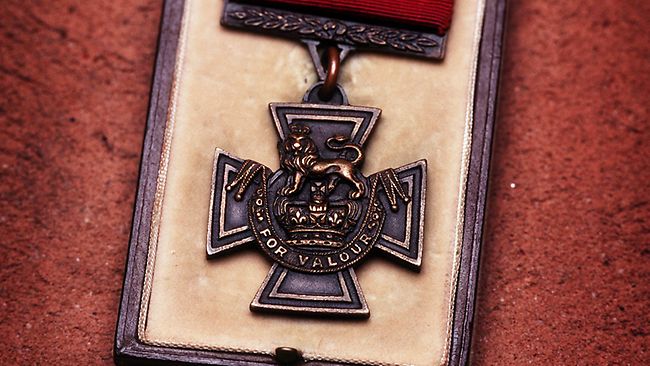
On November 1, Corporal Daniel Keighran became the third Australian soldier serving in Afghanistan to receive the Victoria Cross, the highest military decoration awarded for bravery in Australia. Corporal Keighran is the first member of the Royal Australian Regiment, and the 99th Australian, to receive a VC, and did so with great modesty and humility. Daniel’s wife Kathryn had no idea of the courage her husband had displayed under fire in battle two years ago until she learned he was about to be decorated for it. The Victoria Cross was awarded in a ceremony at Government House in Canberra.

Watching this story on the news reminded me to look at the list of those Australians awarded the Victoria Cross in the past, as I wanted to cover the name of a World War I hero for Armistice Day, which is on Sunday. As I ran my eye down the list, one name stuck out because it has been in my Request file for ages, and I briefly covered it in my article at Nameberry a short time ago. So it was quite an easy choice for me to select Bede as this week’s Famous Name.

Corporal Thomas James Bede Kenny, always known as Bede, was born in Sydney in 1896. The son of a butcher, he had just begun training as a chemist’s assistant when he enlisted with the Australian Imperial Force in 1915. He initially served in Egypt, then was sent to northern France in 1916 to take part in the second phase of the battle of Pozières, in the battalion bombing platoon.

It was in the spring of 1917, as British and Australians captured the outpost villages of the Hindenberg Line, that he performed the acts of valour that were to earn him the Victoria Cross. In the attack on Hermies, his platoon came under heavy fire from a machine-gun post which caused severe casualties. Bede rushed at the enemy single-handed, hurling three bombs, the last of which knocked out the post. He then took the surviving Germans prisoner, his actions contributing significantly to the success of the operation.

Later he was injured in battle and invalided home to Australia, arriving in Sydney to a hero’s welcome a few weeks before the Armistice. He was offered the chance to join the military police, and rejected it immediately, as for some reason he had a great dislike of them.

In civilian life, he worked as a salesman, and was happily married; he is remembered as a popular man with many friends, and a fondness for innocent pranks. He was left partially deaf from the war, and also suffered the effects of trench foot throughout his life. The great tragedy of his life was the deaths of two of his three children, which he never recovered from.

Like Corporal Keighran, Corporal Kenny never talked about his wartime experiences, and the only sign that he was proud of his military service was that he always led the VC winners at the Sydney Anzac Day marches. He died in 1953, and by a cruel irony, his pallbearers were military policemen.

The most famous person with the name Bede is the 7th/8th century English saint, Venerable Bede. Although it is not certain, it is thought that his Anglo-Saxon name, Beda, is from the Old English word bēd, meaning “prayer”. If so, it’s possible that his parents chose a religious life for him from his birth. The name wasn’t a common one, but interestingly, one of the kings of Lindsey, in England’s north, was named Beda; as Venerable Bede was from this area, it’s tempting to wonder if he was named after an ancestor, or a famous local namesake.

Venerable Bede is most famous for his prolific writing career, eventually completing over sixty books, most of which have survived. He wrote on a wide variety of subjects, including science, history, grammar, hagiography and theology; his best known work is An Ecclesiastical History of the English People, which begins with Caesar’s invasion of Britain, and ends with Bede’s own times. His use of AD to refer to events after the birth of Christ helped it become standard. He was also a teacher, a music lover, and was said to be accomplished at singing and poetry recitation, even writing some poetry of his own.

Bede is the only Englishman to be declared a Doctor of the Church; he is also the only Englishman to be mentioned in Dante’s Paradiso, where he appears amongst the theologians and doctors of the church. He is regarded as a saint in both the Catholic and Anglican churches.

If you are thinking that Bede (pronounced BEED) sounds a lot like the word bead, you would be correct. That’s because the Old English word bede, meaning “prayer” is the source of the modern word bead – because beads are used as a means of keeping count of prayers, a practice in Christianity which dates to the 5th century (although prayer beads are ancient and used in many religions). Because of this, you will sometimes see the name Bede interpreted as “bead” or “prayer bead”.

Bede isn’t a common name in Australia; at the same time, it isn’t all that unusual either. There are plenty of Bedes in the records, and if you go to the Australian Dictionary of Biography, you will find quite a few famous Australians with Bede as part of their name. What you primarily notice is that these Bedes tend to be from Catholic backgrounds (and some High Anglicans), and that Bede is usually one of their middle names. It is also the name of Bede Durbidge, who won Surfer of the Year a few years ago, giving the name a more cool laidback image.

I can imagine some people thinking that Bede sounds weird and ungainly; something only a staunchly Catholic family would use; a name best suited to leaving in the middle position. Which sounds perfectly reasonable – except that less than half a century ago, there was another boy’s name that seemed weird and ungainly, was used almost exclusively by Catholics, and generally relegated to the middle position, usually after Francis.

That name was Xavier, which is now #22 and rising. Could Bede be the Xavier of the future?

It’s a very old name with a solid history of use in Australia, part of the Catholic tradition, and with spiritual associations. It’s short yet substantial, clunky yet surprisingly cool. It’s the name of our heroes, our leaders, our intellectuals, our athletes, our artists, our businessmen, and for many of us, our dads and uncles and grandfathers too.

Wherever it might be headed, I see this name often enough in birth notices to know that it is not going away, which gives me a strange feeling of comfort.

(Photo of the Victoria Cross from The Australian)

Famous Name: Mungo

31 Wednesday Oct 2012

Posted by A.O. in Famous Names

≈ 8 Comments

Tags

British names, famous namesakes, film references, K.M. Sheard, literary references, locational names, name history, name meaning, nicknames, popular culture, saints names, Scottish names

Blue Juniper from Baby Name Ponderings has been profiling names from horror films all October in the lead-up to Halloween, and here you can read about such fabulous finds as Amity, Romero, Dresden and Mockingbird. Perhaps this helped inspire me to do a name from an Australian horror film for October 31.

Lake Mungo came out a few years ago, but I only managed to catch it last year on DVD, after missing it on television. It’s one of those movies which is probably better to see on the small screen, because the film is made in the style of a TV documentary. This makes comparisons to The Blair Witch Project and Paranormal Activity inevitable, but I think it’s better than both of these, and avoids any annoying shaky camerawork.

It’s not a horror movie with buckets of blood, hordes of screaming teens, or bizarre demonic cults, but a supernatural mystery thriller that is extremely tense and uneasy to watch – it is definitely a “scary” film. It’s about the grieving process after death, about the secrets that people take to the grave, and about the images left behind when someone dies that haunt us. It also asks the viewer to try to decide which events in the film are “real” and which aren’t – a process made all the more difficult that the closer you look, the less sure you become.

What I loved most about Lake Mungo was its complete authenticity – it’s one of the realest films I have ever seen, and even though when I put the DVD on, I knew it was “just a movie”, during the course of watching it I even began to doubt that. Rumour has it that this film is going to be remade by Hollywood, but I urge you to watch the original instead. For starters, the distinctive Australian voice of the film would be lost.

Although the movie is set in country Victoria, as the title suggests, Lake Mungo plays an important role. This is a salt lake in south-western New South Wales, which has been completely dry for several thousand years. Although geologically rich and part of the World Heritage listed Willandra Lakes region, it is most famous for the archaeological discoveries that were made there in the late 1960s and 1970s.

These were of human remains, the bones of a young woman and two men. The woman and one of the men had been ritually cremated and decorated with red ochre. The other man, of a later time period, had been carefully positioned in a shallow grave, his bones stained pink with the ochre surrounding him. The oldest archaeological site discovered in Australia, and amongst the oldest evidences of  cremation in the world, they demonstrate a culture which was sophisticated enough to have developed spiritual beliefs and elaborate funeral rites for their dead.

The dating of the remains has been difficult and controversial, but they are currently accepted as being at least 40 000 years old, and very possibly more. The bones have also been dated as being at around 68 000 thousand years. This was slightly upsetting for scientists, as it is thought that modern humans migrated from Africa around 60 000 years ago. 68 000 years would mean that the first humans to leave Africa went straight to Australia, which would involve at least some sea travel. This idea didn’t seem workable and it was revised down to 40 000 – however, some research hints that the older dating may not be as far fetched as first thought.

Even more controversially, when mitochondrial DNA testing of the bones was done, it was found that they were genetically different to Aborigines, and to all of us (although they would have looked much the same). As the theory is that modern humans came out of Africa (which explains why everyone on earth is very closely related), where did these Lake Mungo humans that weren’t closely related to us come from? Somewhere else, or is our genetic heritage more complex than first thought? This basically upset everyone, and as a result it seems to have been decided not to do any further research on them, lest we discover more upsetting things.

All in all, I think this makes Lake Mungo the most interesting place in Australia, and the remains that were found here the most fascinating things in Australia, and probably the world. There are secrets here more ancient and mysterious than anything you will see at Halloween.

Before it was declared a national park in 1979, the land Lake Mungo lies upon was part of Mungo sheep station. The station was named by the Cameron brothers who owned it, after St Mungo’s church in Scotland, of which they had seen a picture. It’s not known which St. Mungo’s church they named it after.

Mungo was the nickname of Saint Kentigern, who was born in the 6th century, in a British kingdom which is now part of Scotland. Of royal but illegitimate birth, he was brought up in Fife by Saint Serf, who was ministering to the Picts. Saint Serf is supposed to have given him his pet name Mungo, of which the meaning is unclear. It’s been suggested that it is British for “my dear one”, or “dearest”, based on similar-sounding words and phrases in Welsh.

K.M. Sheard says that the meaning of the name is linked to the saint’s real name, because Kentigern means “chief dog, lord hound” – a very common combination of words in ancient British names. She notes that Mungo looks to be derived from the British for “my dog”, which has close equivalents in Irish and Welsh. The name would thus have been an affectionate way of saying “my pet”, probably with connotations of “my dearest follower” or “my most loyal companion”.

According to legend, Saint Mungo performed four miracles, one of the most touching restoring to life Saint Serf’s pet robin. He is a patron saint of Scotland, and of the city of Glasgow, which has on its crest of arms images to represent the miracles of Saint Mungo. As such, it is a name with close ties to Scotland and the north of England, where the name was given in honour of the national saint.

You will find references to Saint Mungo in at least two works of fiction. In G.K. Chesterton’s Father Brown detective stories, Father’s Brown’s former parish was St. Mungo’s, in Essex. In the Harry Potter books by J.K. Rowling, the London hospital in the wizarding world is St. Mungo’s Hospital for Magical Maladies and Injuries. Rowling may have been influenced in her choice of saint because according to local traditions, Saint Mungo encountered the bard and prophet Merlin, cured him of madness, and converted him to Christianity.

In Australia, the MacCallums have produced four generations of intellectuals all named Mungo – the youngest a long-serving political commentator known for his staunchly pro-Labor views. The actor Mungo McKay has a horror connection, as he has been in the films Undead and Daybreakers. In Australian records, people called Mungo do mostly have Scottish surnames, and many in the 19th century seem to have been named in honour of Scottish explorer Mungo Park.

I can see that some people are going to have problems with the name Mungo, but there’s something rather endearing about the name and the saint, and it has several associations with mystery and magic. In Australia it connects us to the most ancient peoples of our land, and an enigma locked away forever. If you’re looking for a Scottish heritage choice with a fashionable O-ending, yet yearn for something out of the ordinary, Mungo may be one to consider.

(The picture is a publicity shot from the movie Lake Mungo, not a photo of the place Lake Mungo)

Names of Australian Male Paralympic Medalists

28 Sunday Oct 2012

Posted by A.O. in Name Themes and Lists

≈ 4 Comments

Tags

Anglo-Saxon names, Arabic names, Arthurian legends, Arthurian names, Cornish names, Croatian names, Disney names, english names, epithets, European name popularity, famous namesakes, French names, Gaelic names, germanic names, Irish names, K.M. Sheard, Latin names, locational names, mythological names, name history, name meaning, name popularity, names of organisations, Old Irish names, Old Norse names, Pictish names, popular culture, popular names, Roman names, royal names, saints names, Scottish names, South American name popularity, surname names, Welsh names

Bruno (Moretti)

Bruno Moretti won silver in table-tennis at the 1960 Paralympics, and a gold and two silvers in athletics at the 1964 Paralympics. Bruno is a Germanic name meaning “brown”. The name was used by the nobility in medieval Europe, and there are several saints named Bruno. One of them is Saint Bruno of Cologne, who was the son of Saint Matilda. He was Duke of Lotharingia and Archbishop of Cologne, and his court in Cologne was an intellectual and artistic centre. Bruno was also the given name of two popes – Gregory V and Leo IX. Bruno has a long history of use in Europe, and today is Top 100 in Croatia, Catalonia, Spain, and Chile. It’s also a common surname in Italy, and Giardano Bruno was a Dominican friar, philosopher, mathematician and astronomer, who suggested that the Sun was a star, and the universe had infinite worlds, populated by intelligent beings. He went down very badly with the Spanish Inquisition, who had him burned him at the stake. Today he is regarded as a martyr to science. Bruno is a warm cuddly-sounding name, and seems to be a popular choice for bears, both real and fictional.

Cody (Meakin)

Cody Meakin grew up playing both rugby union and Australian rules football; he broke his back in a rugby scrum, and while still in high school, became quadriplegic after a car accident. He took up wheelchair rugby in 2010, where he became an international champion. He won gold at the London Games this year. Cody is derived from the Gaelic surname Ó Cuidighthigh, meaning “son of Cuidightheach”. Cuidightheach is an Old Irish epithet meaning “helpful”. The most famous person with the surname must be “Buffalo Bill” Cody, an American frontiersman who became a celebrity for his Wild West touring shows; these introduced the concept of the American West to Britain and Europe. Buffalo Bill was a supporter of Native American rights, women’s rights and conservation, making him a very modern namesake, as well as giving the name Cody an “American West” feel. In the 1990 Disney film, The Rescuers Down Under, the boy from the Australian outback is named Cody. Cody first charted in the 1970s, and was top 100 by the 1990s. It peaked in the early 2000s at #59, and only left the Top 100 last year, when it dropped to #124.

Dylan (Alcott)

Dylan Alcott has been paraplegic from birth due to a spinal tumour, and began playing wheelchair basketball in 2003. He won gold at the 2008 Paralympics, and silver at this year’s London Games. Dylan is a Welsh name which is difficult to translate exactly, but very roughly means “flood, wave, tide”. In Welsh mythology, Dylan Ail Don was a blond god of the sea, and his epithets were “son of the wave” and “son of the sea”. In the legends, he is killed, and it’s said that the sound of the waves is the sea lamenting his death. The name became well known outside Britain due to the Welsh poet Dylan Thomas, who was named after the god. In Welsh, his name is pronounced DUL-uhn, but Thomas himself preferred the Anglicised pronunciation of DIL-uhn. Thomas’ emotionally powerful yet tightly controlled verse was admired by a young American named Robert Zimmerman, who promptly changed his name to Bob Dylan. As Dylan went on to become a folk balladeer, protest singer and counter-cultural icon, the name Dylan ended up with a double helping of street cred. Dylan first charted in the 1960s and reached the Top 100 in the 1980s. It peaked in the early 2000s at #17, and is currently #41.

Erik (Horrie)

Erik Horrie was left paraplegic after a car accident in 2001, and became involved in wheelchair basketball, but last year switched to canoeing. He won a silver medal at the 2012 London Games, and also welcomed his son Lewis. Erik is derived from Old Norse, and interpreted as “only ruler, eternal ruler, eternal power”. It has been heavily used in the royal houses of Denmark, Norway and Sweden, the most famous to us being Erik the Red, who explored a little-known country, called it Greenland, and became its head chieftain. King Erik IX of Sweden is considered to be a saint, and according to legend was martyred while attending a church service. The name Erik was used in England by the Anglo-Saxons, and settlers from Scandinavia but only became popular in the form Eric in the 19th century, thanks to an earnestly moralising book called Eric, or Little by Little. Other fictional Eriks include the Phantom of the Opera and Erik the Viking from the Monty Python film.

Fabian (Blattman)

Fabian Blattman became paraplegic after a motorcycle accident, and took up wheelchair athletics to improve fitness. One of our most successful Paralympians, he has set several world records. He won a silver and bronze in 1992, a gold and a silver in 1996, and a gold, silver and bronze in 2000. The name Fabian is derived from the Roman family name Fabius, one of the most ancient noble houses of Rome. According to legend, the Fabii claimed descent from Hercules, and were shepherds who followed founding father Remus. Their name is said to be from the Latin word for “broad bean”, a vegetable that the Fabii were supposedly the first to cultivate. The surname Fabianus was given to freed slaves who had been owned by the Fabii, and Fabian is from this name. It was introduced to England by the Normans, but never became as popular there as its equivalents in Continental Europe. There is a 3rd century Saint Fabian, who was elected pope by a dove; despite this unorthodox beginning, he was highly-regarded and worked hard for the early church. The Fabian Society gives this name a left-wing edge; the socialist organisation took its name from the Roman general Fabius Maximus, who wore Hannibal down by attrition rather than engaging in head-on battle.

Jago (Mikulic)

Jago Mikulic was a blind athlete who competed at the 1976 Paralympics, and won a silver in javelin and a bronze in the pentathlon. Jago is a Croatian form of James or Jacob, and is said YAH-go. It can also be a Cornish form of those names, but is pronounced JAY-go in this case. However, the Welsh form Iago is very old and predates the common use of Biblical names in Britain; K.M. Sheard suggests that it may be from the Celtic word for “ice”. If so, this would give Cornish Jago another possible origin.

Kerrod (McGregor)

Kerrod McGregor was a track and field Paralympian who won two golds, three silvers and two bronzes at the 1984 Paralympic Games, one gold in 1988, and one silver in 1996. Kerrod is an English surname that can be derived from the village of Curridge in Berkshire, with the village’s name meaning “Cusa’s ridge”. Cusa was a common Anglo-Saxon name, but what it meant I have been unable to discover. Another possible origin is the hamlet of Kerridge in Cheshire, which means “key ridge” – Kerridge Ridge is one of the foothills of the Pennines. The surname seems to have been most common in Yorkshire. The name Kerrod is well known in Queensland from former NRL star Kerrod Walters, who had a twin brother named Kevin.

Nazim (Erdem)

Nazim Erdem was born in Turkey and came to Australia early in life. As a kid, he practised holding his breath under water as a little game with himself. At the age of 20 he dived into shallow water in an effort to impress some girls; he was underwater for two and a half minutes before being rescued, and his technique of holding his breath saved his life. After the accident, he was quadriplegic. He began playing wheelchair rugby in 1992, and won silver medals at the 200 and 2008 Paralympics, and a gold at the London Games. Nazim is an Arabic boy’s name which means “organiser, convenor”, and as a title, loosely corresponds to the word “mayor” in English. The name isn’t uncommon in Turkey, and Nâzım Hikmet was a charismatic Turkish writer, a leader of the literary avant-garde who was often arrested for his revolutionary political beliefs, and spent much of life in prison or exile. His poetry and his struggles for peace are widely admired in Turkey and outside it; some of his poems have been turned into songs by folk singers such as Joan Baez and Pete Seeger. The name is pronounced NAH-zim.

Rene (Ahrens)

Rene Ahrens won a bronze in discus in 1980 and 1988. René is the French form of the Latin Renatus, meaning “born again, reborn”, referring to the act of baptism, and a popular choice for early Christians. René was a name used by the French aristocracy, and the name is known to us through the philosopher René Descartes (“I think therefore I am”). There is a Saint René Goupil, a French missionary to Canada who is one of the rare North American martyrs. The name is pronounced reh-NAY. Although the feminine form Renee has been popular in Australia,  masculine Rene remains very rare here – no doubt partly because it could easily be confused with the girl’s name.

Tristan (Knowles)

Tristan Knowles lost his leg at the age of 9 as a result of cancer, and also lost a lung at the age of 11. He has been playing wheelchair basketball since 1999, and in 2002 was named the NSW Wheelchair Basketballer of the Year. He won silver in 2004, gold in 2008, and a silver at this year’s Paralympic Games in London. Tristan is a Cornish hero of Celtic folklore who is also one of King Arthur’s knights of the Round Table. He is best known as the lover of the beautiful Irish princess Iseult (or Isolde). Iseult was to marry Tristan’s uncle, King Mark of Cornwall, but she and Tristan accidentally drank a love potion that had been prepared for Mark and his bride to share. The two became hopelessly infatuated with each other and embarked on a passionate affair, until Tristan was banished from Cornwall by an understandably irate Uncle Mark. The story was enormously popular in the Middle Ages, and is one of the forerunners to the story of adulterous lovers Lancelot and Guinevere. The name Tristan was yet another revived in the Victorian era, thanks to Tennyson, and the poems he wrote based on Arthurian legends. In the story, Tristan’s name is supposed to be linked with triste, the French word for “sad”, to fit in with his tragic love life. However, it is a form of the Pictish name Drust, which means “riot, tumult”. Drust was a traditional name amongst the royalty of Scotland, and it’s quite a puzzler as to how a Cornish story ended up with a hero with a Scottish name. Some claim that Tristan was a real person, pointing to a 5th century stone in Cornwall, which is supposed to be the grave marker for someone named Drustanus, the son of Cunomorus. Titillatingly, Cunomorus is said to be King Mark himself, suggesting that Tristan and Iseult’s step-incest was even closer and creepier (although his uncle was also his adoptive father anyway). Tristan and Iseult are two literary characters I’ve never been able to warm to, as their actions are so selfish; perhaps the story is trying to tell us that nobody does very well out of an infatuated love affair, not even the lovers themselves. Tristan first charted in the 1960s, and has managed to reach #100 twice, in the 1980s and late 2000s. It’s currently #123.

(Photo of Dylan Alcott celebrating victory from Zimbio)

Names of Australian Female Paralympic Medalists

21 Sunday Oct 2012

Posted by A.O. in Name Themes and Lists

≈ 8 Comments

Tags

Arabic names, Arthurian legends, Arthurian names, astronomical names, Biblical names, english names, ethnonyms, famous namesakes, fictional namesakes, French names, gemstone names, germanic names, Greek names, hebrew names, honouring, Indian names, Irish names, Latin names, locational names, military events, mythological names, name history, name meaning, name popularity, names of dolls, nature names, nicknames, Norman-French names, Old French names, popular names, royal names, saints names, Sanskrit names, street names, surname names, unisex names, vocabulary names

Amber (Merritt)

Amber Meritt was born with a club foot, and is originally from England; she came to Australia as a child (she’s now 19). She started playing wheelchair basketball in 2007, and won silver at the London Games. Amber is fossilised tree resin, and since prehistoric times has been valued as a gemstone. The word amber is derived from Arabic, and means ambergris, the waxy substance regurgitated by the sperm whale; it was only later realised these were different substances. Amber has been used as a girl’s name since the 17th century, but wasn’t popular until the 20th. The name became notorious in 1944, when the racy historical romance, Forever Amber, was published, with its heroine the sleep-her-way-to-the-top Amber St. Clare. Despite being condemned, and even banned here until 1958, the book was a bestseller, and made into a film. Amber was in rare use in the 1950s, and during the 1960s made #647 (about one Amber per year). It absolutely skyrocketed during the 1970s up to #135, peaked in the early 2000s at #49, and is now #91. This pretty gemstone name is still popular, and it’s all thanks to a “dirty” book! If looking for a nickname, Miss Merritt goes by Bambi.

Danae (Sweetapple)

Danae Sweetapple was blind from birth, and started swimming in 1990. She won a silver and two bronzes at the 1992 Paralympics. In Greek mythology, Danaë was a Greek princess and the mother of the hero Perseus. Her father shut her up in a bronze tower due to a prophecy that he would be killed by her son, but she was impregnated by Zeus, who came to her in the form of golden rain. The king had Danaë and Perseus cast into the sea, and they washed ashore onto an island, where a kind fisherman raised Perseus as his own son (as an adult, the prophecy was fulfilled when Perseus did kill his grandfather). Getting it on with a godly shower of gold was either supremely satisfying or very traumatising for Danaë, as she had no interest in mortal men afterwards, and never married or had further children. Her name is derived from the Danaans, one of the names the Greeks used for themselves, with the idea that they were partly descended from Danaus, a mythical prince of Egypt. I’m not sure how the Greeks would have said her name (nobody seems to agree), but not like the way it is usually said in Australia, which is dan-AY.

Elaine (Schreiber)

Elaine Schreiber won a bronze in table tennis, a gold in club throw, and a silver in javelin at the 1964 Paralympics, and a silver in table tennis at the 1968 Games. Elaine is a name shared by several characters in Arthurian legend, who are occasionally confused with each other. One of the most famous is the fair Elaine of Astolat, who dies of unrequited love for Sir Lancelot. The story inspired Tennyson’s poem, The Lady of Shalott, and it was only after the popularity of his poem that Elaine became a commonly-used English name. Elaine is an Old French variant of Helen. Elaine was #254 in 1900, joined the Top 100 in the 1920s, and peaked in the 1930s at #18. It left the Top 100 in the 1960s, and reached its lowest point in the late 2000s, when it was in rare use. Since then, it has been very gently rising, and is currently #457.

Gloria (Pascoe)

Gloria Pascoe developed epilepsy at the age of 9, and became totally blind by 55. At 61, she attended the 1980 Paralympics, where she took gold in lawn bowls. Gloria is the Latin for “glory, fame, renown”, and in Christian tradition it denotes the manifestation of God’s presence, often associated with a divine light. The name Gloria has been in use since at least the 16th century, but received a boost in popularity in the 19th from two literary works. One was Gloria, a romantic novel by popular American novelist E.D.E.N. Southworth in 1891; the other was George Bernard Shaw’s 1897 comedy of errors, You Never Can Tell. Both these works feature very attractive heroines who seem to have done the name more good than all of God’s glory. Gloria was #257 in 1900, Top 100 by the 1920s, and peaked in the 1930s at #23. It left the Top 100 in the 1960s, and hit its lowest point in 2009 when it was in rare use. Since then it has risen again, and is currently #427. If you’ve been paying attention, you will see this makes it the virtual twin of Elaine in terms of popularity.

Jemima (Moore)

Jemima Moore became paraplegic at the age of 6 from a virus, and is now 20. She won a silver medal in the 100 metres relay at the 2008 Paralympics, and attended the London Games. In the Bible, Jemima was the eldest of Job’s three daughters, and she and her sisters are described as being the fairest in the land. The name Jemima literally means “warm” in Hebrew, and can be translated as “day”. The name could actually be derived from Arabic, as there is an ancient land in Arabia who had a queen called Jemama; if so, Jemima from the Bible could be inspired by the queen of Arabic folklore. This does fit in with the Biblical story, because Job and his family were said to be from an Arabic country. The name Jemama means “turtledove”. It first charted in the 1960s, the same decade children’s show Playschool first broadcast, which has a rag doll named Jemima. Never in the Top 100, it peaked at #196 in the late 2000s and is currently #254 and stable. This is a fashionable name which has never gained popularity or lost cachet.

Lorraine (Dodd)

Lorraine Dodd became paraplegic at the age of 13, after contracting transverse myelitis. She attended the 1968 Paralympic Games, where she won three golds for swimming, and a silver and a bronze in athletics. Lorraine is a region in north-eastern France; its name comes from an earlier kingdom named Lotharingia, meaning “Lothar’s kingdom. Lothar I was a Frankish king and a great-grandson of Charlemagne; his name is Germanic and means “famous army”. As a personal name, Lorraine has been used since the 18th century, a century in which Lorraine first became part of France. It’s sometimes said to be a Catholic name, since St Joan of Arc was also known as The Maid of Lorraine. There was a World War I Battle of Lorraine, which probably boosted numbers, and the area’s importance during World War II reflects a peak in popularity at this time. Lorraine was in rare use in the 1900s, and reached the Top 100 in the 1930s. Peaking in the 1940s, it left the Top 100 in the 1970s, and hasn’t charted since the 1990s. You can see how Lorraine helped Lauren appear feminine, and Lauren also seems to have replaced Lorraine.

Madison (de Rozario)

Madison de Rozario became paralysed by a rare neurological condition at the age of 3 and is now 18. She won silver in 2008 as the youngest Paralympian on the team, and was also at the London Games. Madison is a surname meaning “son of Matthew“, although in some rare cases it may be derived from “son of Maddy”, with Maddy being a pet form of Maud. It’s been used as a personal name since the 18th century, and seems to have been given almost exclusively to boys in the beginning. Although certainly used in England, it was much more common in America, where it may often have been given in honour of James Madison, the fourth president of the United States (I only found one man named Madison in Australian records). Madison is famous in baby name circles for only becoming popular, and only becoming common for girls, after the movie Splash in 1984. This romantic fantasy, a rewrite of The Little Mermaid, stars Daryl Hannah as the mermaid, who chooses her “human name” from a street sign for Madison Avenue in New York City, named after the former president – although Tom Hanks’ character tells her this isn’t a “real name”. Madison was #606 for the 1980s, with about three born each year. It then absolutely screeched up the charts to make #52 for the 1990s, and peaked in the early 2000s at #22. It sunk to #44 in 2010, then rose last year to make #41. It’s been a real success story, with its nickname Maddie fitting in with Madeline.

Priya (Cooper)

Priya Cooper was born with cerebral palsy, and spends most of her time in a wheelchair. She began swimming competitively while still at school, and is one of our greatest disabled swimmers, winning nine gold medals and breaking world records at the 1992, 1996 and 2000 Paralympics. She was twice team co-captain, and twice a flag-bearer at closing ceremonies. She has received many honours, and since retiring has become a spokesperson and fundraiser for several charities. Priya is an Indian girl’s name which means “dear, beloved” in Sanskrit. In Hindu legend, Priya was one of the daughters of King Daksha, a son of the god Brahma. The name is pronounced PREE-yuh, and has been rather a favourite in Australia for many years.

Siobhan (Paton)

Siobhan Paton is an intellectually disabled swimmer who holds thirteen world records, and won six gold medals at the 2000 Olympics. She was named Paralympian of the Year in 2000, and also received an Order of Australia. Siobhán is the Irish form of the Norman-French name Jehanne, a variant of Jeanne. There were several medieval queens named Siobhán. It is said that the twentieth century popularity of Siobhan owes a great deal to the actress Siobhán McKenna, who was born in Belfast. She was most famous as a stage actress, but also appeared in King of Kings (playing Mary), Of Human Bondage, and Dr Zhivago. Ms McKenna’s son, Donnacha O’Dea, was an Olympic swimmer for Ireland in 1968. Siobhan first charted in the 1950s, and during the 1960s was #571, which represents about one Siobhan a year. Use of the name increased sharply during the 1970s and ’80s, and it peaked in the 1990s at #211. It hasn’t charted since 2009, so this is another attractive name which has never made the Top 100. Pronunciation is an issue, because the usual Irish pronunciation is SHIV-on, but in Australia it’s usually said shi-VAWN.

Ursula (King)

Usula King was a swimmer who won a silver and two bronze at the 1984 Paralympics. The name Ursula means “little she-bear”, derived from the Latin ursa (which we know from constellations Ursa Major and Minor – the Great and Little Bears). According to legend, Saint Ursula was a Romano-British princess who was sent by her father to marry the pagan governor of Armorica (Brittany). Possibly to stall proceedings, she got all bridezilla and declared that before the wedding she must go all over Europe on a pilgrimage, taking an unbelievable 11 000 virgins with her as her handmaids. On their way to Cologne, they were besieged by Huns, who had a busy day beheading the lot of them. The story doesn’t fit with any known historic facts, and one theory is that Ursula is a Christianised form of the goddess Freya. However, Cologne has a magnificent basilica dedicated to St Ursula and her companions, and a little village in Wales also has a church in their honour, in the belief that Ursula was originally from Wales (in the legend, she is from the West Country). Because of the saint, the name came into use in medieval times, and got a little boost in the 20th century from beautiful Swedish actress Ursula Andress, who was the first Bond girl, in Dr No. It’s clunky by contemporary standards, but strangely alluring.

(Photo of Madison de Rozario from her Twitter account)

← Older posts
Newer posts →

Enter your email address to follow this blog

Categories

Archives

Recent Comments

A.O.'s avatarwaltzingmorethanmati… on Zarah Zaynab and Wolfgang…
Madelyn's avatarMadelyn on Zarah Zaynab and Wolfgang…
JD's avatardrperegrine on Can Phoebe Complete This …
A.O.'s avatarwaltzingmorethanmati… on Rua and Rhoa
redrover23's avatarredrover23 on Rua and Rhoa

Blogroll

  • Appellation Mountain
  • Baby Name Pondering
  • Babynamelover's Blog
  • British Baby Names
  • Clare's Name News
  • For Real Baby Names
  • Geek Baby Names
  • Name Candy
  • Nameberry
  • Nancy's Baby Names
  • Ren's Baby Name Blog
  • Sancta Nomina
  • Swistle: Baby Names
  • The Art of Naming
  • The Baby Name Wizard
  • The Beauty of Names
  • Tulip By Any Name

RSS Feed

  • RSS - Posts

RSS Posts

  • Celebrity Baby News: Melanie Vallejo and Matt Kingston
  • Names from the TV Show “Cleverman”
  • Can Phoebe Complete This Sibset?
  • Zarah Zaynab and Wolfgang Winter
  • Baby, How Did You Get That Name?
  • Celebrity Baby News: Media Babies
  • Celebrity Baby News: Adelaide Crows Babies
  • Celebrity Baby News: Chris and Rebecca Judd
  • Names at Work: Name News From the World of Business and Employment
  • Celebrity Baby News: Sporting Round Up

Currently Popular

  • Celebrity Baby News: Toby Allen and Darren Weller
  • Girls Names From Stars and Constellations
  • Celebrity Baby News: Livinia Nixon and Alistair Jack
  • Celebrity Baby News: Drew and Nicole Petrie
  • Girls Names of Australian Aboriginal Origin

Tags

celebrity baby names celebrity sibsets english names famous namesakes fictional namesakes honouring locational names middle names name combinations name history name meaning name popularity name trends nicknames popular names saints names sibsets surname names twin sets unisex names

Create a free website or blog at WordPress.com.

Privacy & Cookies: This site uses cookies. By continuing to use this website, you agree to their use.
To find out more, including how to control cookies, see here: Cookie Policy
  • Subscribe Subscribed
    • Waltzing More Than Matilda
    • Join 517 other subscribers
    • Already have a WordPress.com account? Log in now.
    • Waltzing More Than Matilda
    • Subscribe Subscribed
    • Sign up
    • Log in
    • Report this content
    • View site in Reader
    • Manage subscriptions
    • Collapse this bar
 

Loading Comments...