• About
  • Best Baby Names
  • Celebrity Baby Names
  • Celebrity Baby Names – Current
  • Celebrity Baby Names – Past
  • Featured Boys Names
  • Featured Girls Names
  • Featured Unisex Names
  • Links to Name Data
  • Waltzing on the Web

Waltzing More Than Matilda

~ Names with an Australian Bias of Democratic Temper

Waltzing More Than Matilda

Tag Archives: retro names

Diminutive Names for Girls

23 Sunday Jun 2013

Posted by A.O. in Name Themes and Lists

≈ 14 Comments

Tags

Australian Aboriginal names, Babyology, birth notices, english names, epithets and titles, famous namesakes, fictional namesakes, French names, German names, historical records, Indian names, locational names, mythological names, name history, name meaning, name popularity, names from songs, names from television, names of animals, names of comics, names of lions, nicknames, popular names, retro names, Scottish names, slang terms, Spanish names, Swedish names, underused names, unisex names, vintage names

6729_1302317773These short days of winter seem like the perfect time to cover names which are diminutives, nicknames, pet names, and short forms of names, but can also be used as full names.

Annika

Annika is a Swedish diminutive of the name Anna, so it’s one of those cases where the pet form of the name is longer than the name itself. The name became well known in the English-speaking world through Astrid Lindgren’s Pippi Longstocking books, because Annika is the little girl who lives next door to Pippi and is one of her friends. There are several variants of the name, such as Anneka and Anika, although while Anneka is said exactly the same way as Annika (AN-ih-ka), Anika is pronounced a-NEE-ka, and is also an Indian name. Annika has charted since the 1970s, and peaked in 2010 at #165; it’s now #196. Although in regular use, it’s never become popular. I think it’s pretty; in fact I wish this had been used as my own nickname!

Elsa

Elsa is a short form of the name Elisabeth. This name reminds me of the 1930s, as there were several prominent Elsas active during those years. One was stylish Italian fashion designer Elsa Schiaparelli, who was Coco Chanel’s greatest rival in pre-war Paris. Another was bohemian actress Elsa Lanchester, who studied under Isadora Duncan and played the “Bride of Frankenstein” on film. American hostess Elsa Maxwell threw lavish parties for the rich, including a scavenger hunt in Paris which disrupted the entire city. In fiction, Elsa is the heroine of Wagner’s opera, Lohengrin, and the pretty and fashionable young mistress in Françoise Sagan’s Bonjour Tristesse. The name may also remind you of Elsa the lioness, from the non-fiction books and movies, Born Free and Living Free. Similar to fashionable Elsie, but with a sophisticated European twist, this name has gained more attention since Chris Hemsworth married lovely Spanish actress Elsa Pataky. Elsa is #297 in Victoria.

Heidi

Heidi is a short form of the name Adelheid, the German form of Adelaide. This name became well known in the English-speaking world due to the best-selling children’s book, Heidi, by Johanna Spyri; the story of a curly-haired young orphan girl growing up in the Swiss Alps with a gruff, hermit-like grandfather. Although it was translated into English in the late 19th century, the name Heidi only became famous after the 1937 movie was released, starring Shirley Temple. Heidi first charts in Australia in the 1940s, and ranks in the 1950s, debuting at #527. The name skyrocketed to peak in the 1970s at #74. Heidi dropped out of the Top 100 in the 1980s and sunk to #213 in the 1990s – the band Killing Heidi probably didn’t help. It climbed again, and was Top 100 in 2010, then fell the next year. Last year it was one of the fastest-rising names for girls, rising to #76 nationally. It is currently #87 in New South Wales, #85 in Victoria, #72 in Queensland, #57 in Tasmania and #55 in the Australian Capital Territory. This is a spunky little name which just won’t give up – it keeps climbing up and down the charts as if they’re the Alps, but like little orphan Heidi, our hearts can’t let it go.

Jinty

Jinty is a Scottish pet form of Janet, a variation of French Jeanette. One prominent person with this name is British historian Dame Janet “Jinty” Nelson. You may also have heard of the Scottish-born Australian artist and designer, Jinty Stockings. There used to be a British girl’s comic called Jinty, much loved by readers for its bizarre storylines which dealt with dystopian futures, school bullies with mind control, mermaid mothers and the like. There is also a steam locomotive named Jinty in The Railway Series on which the kid’s TV show Thomas and Friends is based;  small tank engines were once nicknamed “jinties” by railwaymen. I saw this name in a birth notice a while ago, and was charmed by its jauntiness. Although it’s not a common name in Australia (I found only one woman named Jinty in Australian historical records and that may have been a nickname), there’s something vaguely Australian-sounding about it. Perhaps it’s partly because it sounds like Jindy, the affectionate name for the town of Jindabyne, which comes from an Aboriginal word for “valley”.

Lola

Lola is a short form of the name Dolores, taken from a Spanish title of the Virgin Mary, Maria de los Dolores, meaning “Mary of Sorrows”. The title refers to the Catholic devotion, the Seven Sorrows of Mary, reflecting on sad events during Mary’s life as the mother of Jesus. Despite this serious meaning, Lola is usually thought of a fun and even sexy name, and this can be attributed to Lola Montez. Born Eliza Gilbert in Ireland, she was beautiful and exotic-looking, and billed herself as a “Spanish” dancer. Her routines were considered salacious, and she was even more famous as a courtesan, being the mistress of Ludwig I of Bavaria. Lola toured Australia in 1855 where she enraptured audiences but attracted controversy; her beauty manual is illustrated by Australian cartoonist Kaz Cooke. After Ms Montez, Lola was a bad girl name, inspiring songs about showgirls, girls from bars in SoHo, and girls who get what they want. Lola was #203 in the 1900s, and peaked in the 1930s at #74, leaving the Top 100 the following decade. It was off the charts between the 1960s and 1990s, returning in the 2000s at #393, coinciding with the publication of the Charlie and Lola book/TV series, where the name got a new image as that of a lively little girl. Lola has been Top 100 since 2010, when it debuted at #97. It is currently #75 nationally, #86 in New South Wales, #59 in Victoria, #61 in Tasmania, #92 in Queensland, and #62 in the Australian Capital Territory. Cute yet alluring, it’s hard to resist the charms of this retro name.

Mimi

Mimi is a short form of all the Mary names – Mary, Marie, Maria, Miriam, and so on, although in practice it is used as a nickname for almost any name with an M sound in it. Some famous Mimis include Miriam “Mimi” Macpherson, actress Miriam “Mimi” Rogers, singer Mei “Mimi” Choo, and children’s author Mimi King. Mariah Carey is called Mimi by her family and close friends. Sometimes it is used as a pet form of certain male names; an example of this is Mislav “Mimi” Saric, who plays soccer for the Adelaide Raiders. The most famous fictional person of this name is Mimi from Puccini’s opera, La bohème; Mimi’s real name is Lucia, so Mimi can be used as a generic “cute” nickname. Mimi has an Australian connection, because in the Indigenous folklore of Arnhem Land, the Mimi are a race of spiritual beings who are often referred to as “Australian fairies”. Mimis are extraordinarily long and thin, and live in rock crevices. They taught humans how to hunt, cook and paint, and are usually harmless, but can be mischievous. The name Mimi is pronounced mee-mee, and seems to be rarely chosen as the name on the birth certificate. That seems unfair, when many brief, and perhaps insubstantial, names are highly popular for girls.

Nellie

Nellie is a pet form of Nell, a medieval short form of names such as Helen, Ellen and Eleanor. Australia has had two famous performers with this name. One of them is Dame Helen “Nellie” Melba, the charismatic operatic prima donna who reigned at London’s Covent Garden during its golden age. During her career, she was invited to sing for many of the royal heads of Europe, and was mobbed by fans, just like pop singers are today. The other is Eleanor “Nellie” Stewart, a beautiful singer and actress who made her name playing Nell Gwynn in Sweet Nell of Old Drury; after that she was always known as “Sweet Nell”. She starred in Sweet Nell, one of Australia’s earliest films. Nellie was #31 in the 1900s, and left the Top 100 in the 1930s. It hasn’t charted since the 1950s – coincidentally or not, that was the decade the enduring children’s song Nellie the Elephant was released. This vintage name is now a very hip choice, and I’m sure we will see more of it. It is currently #494 in Victoria.

Pippa

Pippa is a short form of the name Phillipa. It gained fame in 1841 when Robert Browning published his play-poem, Pippa Passes, which has the famous lines, God’s in His heaven/All’s right with the world! The Pippa of the poem is an innocent young silk-winder named Felippa, nicknamed Pippa. Pippa seems to be more readily accepted as a full name in Britain and Australia than elsewhere, and I used to think of it as a “soap opera” name, because there were two Pippas in Home and Away, and actress Pippa Black had a leading role on Neighbours. However, since 2011 we’ve all connected the name to Phillipa “Pippa” Middleton, who became an immediate sensation after appearing at her sister Catherine’s wedding to Prince William. The name is already Top 100 in Victoria, where it is #73, Queensland, where it is #84, and Tasmania, where it is #93. Other states to follow? Probably.

Romy

Romy is a German short form of Rosemarie, although it can also be used as a male name, possibly short for Romeo or Roman. The most famous person with this name is probably German-Austrian actress Rosemarie “Romy” Schneider, who gained fame in France during the 1960s and ’70s. In the 1990s, the name got some publicity with the release of ditzy gal-pal comedy, Romy and Michele’s High School Reunion, with the role of Romy played by Mira Sorvino. The name has been picked up by several celebrities, including cricketer Ed Cowan and his wife Virginia Lette, who welcomed their daughter Romy last year. Suzi Catchpole from Australian website Babyology lists Romy as a name with “swagger and sass” – it’s certainly very hip at the moment, a cool twist on popular Ruby and Rose. The name is pronounced RO-mee, like the first two words in the sentence, Row me to the shore.

Willa

Although Willa can be used as a short form of Wilhelmina and other names, it is actually a full name in its own right (so it’s slightly cheating to include it). It is the English form of the medieval French name Guilla, a feminine form of Guillaume – the French form of William. Famous people named Willa include novelist Wilella “Willa” Cather, New Zealand actress Willa O’Neill, and singer Willa Ford, whose real name is Amanda Modana – her stage name comes from her original surname, Williford. Another Willa is young actress Willa Holland, who has starred in The OC and Gossip Girl TV series. The Alternative Guide to Baby Names lists Willa as an Aboriginal name meaning “wife”, but the author doesn’t say which language it is from; in a language from the Melbourne region, willa means “possum”. There are so many place names here that begin with or contain Willa-, such as Willa-Willa Ridge near Adelaide, and Willa Willyong Creek near Broken Hill, that the name does have a rather Australian feel to it. Willa has been gaining in popularity, not only riding the success of its brother name, William, but providing a hip alternative to popular Willow. It is #468 in Victoria.

POLL RESULT: People’s favourite names were Elsa, Pippa, and Willa, and their least favourite were Heidi, Mimi, and Jinty.

(Picture of silver coin in commemoration of Dame Melba from Perth Mint)

Famous Name: Charlotte

19 Wednesday Jun 2013

Posted by A.O. in Famous Names

≈ 9 Comments

Tags

Banjo Paterson, birth notices, Elisabeth Wilborn, famous namesakes, fictional namesakes, food names, French names, germanic names, locational names, name history, name meaning, name popularity, names from movies, names from songs, names from television, names of bands, names of ships, nicknames, popular names, retro names, royal names, The Man from Snowy River, vintage names

Charlotte-Pass-NSW-AustraliaThe Winter Solstice is just a couple of days away, and the weather has been noticeably chillier in most places for about a month. I like lots of things about winter, but find I have to keep reminding myself of them as the weather gets colder. To convince myself it wasn’t so bad, I looked up the coldest temperature ever recorded in Australia, and found it was minus 23.4 degrees Celsius (around minus 10 Fahrenheit), on June 29 1994, at Charlotte Pass in New South Wales. That made today seem more bearable.

Charlotte Pass is in the Snowy Mountains, and nearby Charlotte Pass Village is the highest permanent settlement in Australia at 1760 m (5777 feet). It is in this region you will find the country that Banjo Paterson wrote about in The Man from Snowy River, although you are far more likely to be hurtling down a ski slope than mooning over poetry here, because Charlotte Pass is Australia’s oldest and snowiest ski resort. It can snow at any time of year, and snow may lie on the ground for days, even in the middle of summer. The pass and village are named after Charlotte Adams, who became the first European woman to climb Mount Kosciuszko in 1881.

Charlotte is a feminine form of Charles; I think technically it’s the feminine form of Charlot, a French short form of Charles (it ends in an -oh sound, like Carlo). Charles is derived from a Germanic name meaning “man”, and it is something of a puzzler whether Charlotte should be translated as meaning the same thing, or does a feminine ending on the name turn it into its opposite, so that it now means “woman”? Is a man-ette a woman, I wonder? I’m not so sure (it doesn’t seem at all flattering to women, if so), but I will leave you to figure this gender confusion out for yourselves, dear readers.

Charlotte has been commonly used amongst European royalty; one was Charlotte of Savoy, who married Louis XI of France and was the mother of Charles VIII. The name became popularised in Britain in the 18th century because of Charlotte of Mecklenberg-Strelitz, who married George III, and whose daughter was named Charlotte after her. George III’s son, George IV, had only one legitimate child who was named Charlotte, and she died young, deeply mourned by the British public. Since then, the British royal family hasn’t seemed as keen on this name for its heirs to the throne.

Princess Charlotte Bay in far north Queensland is named after this unfortunate royal, and another Australian connection is that one of the First Fleet ships was named Charlotte. Rebel convict Mary Bryant named her daughter Charlotte after the ship she came here on. The Charlotte was later lost in the Canadian Arctic, and it recently had a fictional resurrection in the adventure film National Treasure, where the first clue to the treasure is found on the Charlotte.

Famous Australians named Charlotte include Charlotte Barton, who wrote the first children’s book to be published in Australia. Charlotte “Lottie” Leal and Charlotte Austin were both community leaders and benefactors, while Charlotte Sargent was a pastry-cook and co-founder of Sargent’s Pies. Charlotte “Lottie” Lyell was Australia’s first film star, and a pioneering film-maker.

Another exciting namesake is Charlotte Badger, a convict regarded as Australia’s first female pirate. She was a member of the notorious crew who commandeered the Venus and took it to New Zealand. The bawdy drinking song, The Good Ship Venus, references this historical event, and also refers to Charlotte … born and bred a harlot. Because of this, it is often surmised that Charlotte Badger is the original “Charlotte the Harlot“. This connection to Charlotte makes some parents uneasy, but I would be chuffed to share my name with an infamous pirate.

Some other musical connections to the name are Perth band Charlotte’s Web, who named themselves after the classic children’s book about the touching friendship between a pig and a spider. Similarly, US band Good Charlotte named themselves after a children’s book about an unlucky little girl named Charlotte, whose positive qualities are not discovered for some time.

Good Charlotte’s Joel Madden is currently living in Australia and a judge on The Voice, so you’ve probably been hearing of them a lot. For some reason, the band name’s always reminds me of the thriller Hush … Hush, Sweet Charlotte, where Bette Davis plays the mentally fragile Charlotte Hollis.

Charlotte was #96 in the 1900s, and left the Top 100 in the 1910s. It disappeared from the charts completely in the 1940s and ’50s; it’s rather surprising that Charlotte isn’t strictly a classic, but rather a retro name in Australia.

In the 1960s, Charlotte made a return at #513, representing just 2 babies named Charlotte per year. The name climbed steeply during the 1980s, and by 1995 was Top 100 at #87. By 1998, Charlotte had made the Top 50 at #37. By 2001 it joined the Top 20 at #17, in 2003 it debuted in the Top 10 at #10, and in 2005 it made the Top 5 at #2. In a decade, it had risen 85 places.

Nationally, Charlotte is #1, and it is #2 in New South Wales, #2 in Victoria, #1 in Queensland, #1 in South Australia, #1 in Western Australia, #2 in Tasmania, #10 in the Northern Territory, and #1 in the Australian Capital Territory. From the birth notices I have seen so far this year, it looks likely to wear the crown again in 2013.

Charlotte is extremely popular, and no wonder. It’s pretty and elegant, yet sounds sensible and professional. It’s been worn by a tragic princess, a snowy mountain climber, a mystery ship, a coral bay, a genius spider, a pie maker, a film star, a deranged Southern belle and a saucy pirate wench.

That’s an impressive diversity of Charlottes, and I haven’t touched upon Charlotte Bronte, Charlotte Church, Charlotte Rampling, Charlotte Perkins Gilman, or the various Charlottes from Sex and the City, McLeod’s Daughters, All Saints, Rugrats or Revenge. I haven’t even mentioned the pudding named Charlotte, which has a fascinating history of its own.

Baby name style queen Elisabeth Wilborn picked Charlotte as her favourite Top 100 name, which is an impressive commendation. She can’t get past the popularity, but maybe you can, because despite its rapid ascent, Charlotte seems like a name that will wear well. The unisex nickname Charlie had a surge of popularity which now seems to be dying down, but vintage Lottie is the current fashionable short form.

POLL RESULT: Charlotte received an approval rating of 69%. 33% of people saw the name Charlotte as elegant and classy, but 23% thought it was much too popular.

(Photo shows the sun rising over Charlotte Pass)

Famous Name: Ruby

29 Wednesday May 2013

Posted by A.O. in Famous Names

≈ 7 Comments

Tags

english names, famous namesakes, fictional namesakes, gemstone names, Latin names, locational names, name history, name meaning, name popularity, names from television, nature names, nicknames, Norman-French names, Old Norse names, popular names, retro names, stage names, surname names, unisex names

6da7f547404dd4d8481fbb78ea9b6745Yesterday was the birthday of Ruby Payne-Scott, who was born 101 years ago in 1912, and a pioneer in radio physics and radio astronomy, as well as an advocate for women’s rights. Her extraordinary scientific mind became obvious early in life, when she entered the University of Sydney aged just 16, where she graduated with double first-class honours in mathematics and physics, and won the mathematics prize, as well as gaining a scholarship in physics. She was the third female graduate in physics at the university.

The Depression wasn’t a good time to be job-searching, but Ruby found work at the Cancer Research Institute where she completed her masters thesis on radiation. After a brief stint of teaching, she applied to Australian Wireless Amalgamated, a huge company that ran all the wireless services, and was the first woman they hired in a research capacity. AWA weren’t keen on hiring women at all, even as cleaners or typists, but they took Ruby on as librarian; she was soon a full-time research physicist.

During World War II, she was one of a group of young engineers from AWA hired by the government to conduct research on a secret new defensive weapons system – radar. She came into close contact with group leader Joseph Pawsey, and both became fascinated with reports of extra-terrestrial radio signals; they conducted the first experiment in radio astronomy in the southern hemisphere in 1944. After the war, she was one of a team at the CSIR (later the CSIRO) formed to survey “cosmic static” from astronomical objects. As a result, Australia became a global leader in radio astronomy, with Ruby the first female radio astronomer in the world.

Ruby was feisty and self-confident, very outspoken about her political views, which were that women should be equal to men, and scientific research should be independent. This got her labelled a communist, and “loud and unstable”, but she continued to press for equal treatment.

One thing she kept quiet was that she had married a telephone mechanic named Bill Hall in 1944, because until 1966, married women were expected to resign from the public service, and could not be employed on a permanent basis. When news of her marriage got out in 1950, she was reduced to temporary status and lost her pension and other benefits. She was forced to resign in 1951 when she became pregnant with her first child, and with no maternity leave or childcare, her brilliant career ended at the age of 39.

By the standards of her day, Ruby had it all. A highly-paid and rewarding scientific career, outside interests which included bushwalking and home renovation, a happy marriage, two children (who grew up to be a renowned mathematician and a distinguished artist), and, when her children were older, a return to teaching, where she was greatly admired by students who had no idea of her earlier achievements.

In her honour, the CSIRO initiated the Payne-Scott Awards to support researchers who need to take time off after the birth of a child. She was a bright star in her field, and because of Ruby and women like her, it’s possible to want equal pay, and the choice to work and have a family without being called a loud, unstable communist.

Ruby is a precious gemstone which is a variety of the mineral corundum, and comes in a range of red colours (when corundum is blue, it is called Sapphire). Its name comes from ruber, the Latin for “red”, and the most valuable rubies have the deepest red colour with a hint of blue. For centuries the main source of rubies was Myanmar (Burma), and today most rubies are either from Burma or Thailand. Rubies have always been especially valued in Asia, where they are seen as bringing good fortune.

Ruby has been used as a girl’s name since at least the 17th century, but was used as a pet form of Reuben since the Middle Ages. When Ruby was established as a girl’s name, it was sometimes given to boys, perhaps after the surname, which can come from the town of Roubaix in Normandy; its name means “stream on the plain”. Another possibility for the surname is that it is from the town of Roby in Lancashire, meaning “settlement by the boundary marker” in Old Norse. Ruby became popular for girls in the 19th century, when other gemstone names were fashionable.

Ruby was #21 in the 1900s, and had left the Top 100 by the 1930s. It disappeared from the charts between the 1950s and the 1970s, but came back in the 1980s at #548. One of the 1980s-born Rubys is model and TV host Ruby Rose, born Ruby Rose Lagenheim.

Ruby zoomed up the charts at such a dizzying speed that by 1996 it was already in the Top 100, debuting at #75. By 1998 it was in the Top 50 at #44, and by 2003 it was #20. Ruby made her Top 10 début in 2010, at #2, and last year she was #1. According to this article, Ruby is particularly popular on the Central Coast and in Newcastle.

Currently Ruby is #1 in New South Wales, #3 in Victoria, #3 in Queensland, #2 in South Australia, #3 in Western Australia, #1 in Tasmania, #4 in the Northern Territory and #2 in the Australian Capital Territory. Nationally Ruby is #2.

When a new baby was added to the Rafter family on popular family drama, Packed to the Rafters, she was named Ruby, and one of the babies portraying the character is also named Ruby. In fiction and real life, Ruby is big news.

Last year, Ruby was the name most commonly searched for to reach my blog, and no wonder people love it, because it’s a warm, vibrant name that is womanly yet spunky. However, it’s certainly had some detractors along the road to massive popularity.

It’s been called an old lady name, a hooker name, a trashy name … but the one that irritates me the most is when people refer to Ruby as a “dumb girl” name. I even saw one online pundit prophesy that your daughter would not get a degree if she was named Ruby!

Ruby Scott-Payne is proof that you can be named Ruby, and get as many degrees as you want. A Ruby can be brainy, bright, brilliant, strong, smart, sassy … and she can reach for the stars.

More information on Ruby Payne-Scott can be gained by reading her in-depth biography – Under the Radar: The First Woman in Radio Astronomy, Ruby Payne-Scott by William Miller Goss and Richard X. McGee

POLL RESULT: Ruby received an approval rating of 66%. People saw the name Ruby as cute and spunky (25%), but also thought it was too popular (20%). Nobody thought the name Ruby sounded like a “stripper name”.

(Picture is a detail from a poster featuring Ruby Payne-Scott designed by Amy Blue; by clicking on this link, you can “appreciate” the picture, or “like” it on Facebook etc)

Girls Names from the Top 100 of the 1910s

19 Sunday May 2013

Posted by A.O. in Name Themes and Lists

≈ 18 Comments

Tags

Arthurian names, Astrophel and Stella, band names, classic names, created names, Disney names, Doctor Who, english names, famous namesakes, fictional namesakes, French words, germanic names, Greek names, hebrew names, Hollywood names, honouring, Idylls of the King, Italian names, Latin names, Little Women, locational names, Lord Tennyson, mythological names, name history, name meaning, name popularity, name trends, names from comics, names from movies, names from television, nicknames, Old French names, popular names, retro names, royal names, Russian names, saints names, Sanskrit names, scandinavian names, Shakespearean names, Sir Philip Sydney, Spanish names, unisex names, vintage names, Welsh names, William Shakespeare

P04233.001Amy

Amy is the English form of the Old French name Amée, meaning “beloved”; it’s a form of the Latin name Amata. It was in use in the Middle Ages, and revived in the 19th century. Amy was #32 in the 1900s, and by the following decade had sunk to #58, leaving the Top 100 in the 1920s. Amy disappeared from the charts between 1940 and 1960, but soared in popularity to make the Top 100 in the 1970s, and peaked in the 1980s at #8; by the 1990s it had only dropped one place. Amy had a very gentle decline, and left the Top 100 in 2011, but last year rallied and made #89, showing that there is life in this name yet. No wonder Amy has remained such a favourite – it’s a simple, unpretentious name with a nice meaning, and possesses appealing fictional namesakes from Little Women‘s Amy March to Doctor Who‘s Amelia “Amy” Pond.

Enid

Enid is a Welsh name meaning “soul”. In medieval Welsh legend, Enid is the wife of Geraint, a warrior king who is one of King Arthur’s men. Due to a silly misunderstanding, Geraint believes Enid has been unfaithful, and drags her off on a dangerous journey where she is not allowed to speak to him. Sensible Enid ignores this request, as she often has to warn him of approaching danger. Somehow this road trip from hell doesn’t put Enid off her husband, and in the end the two lovebirds are reconciled. Lord Tennyson turned the legend into two poems for his Idylls of the King, which brought the name to the attention of literature-loving Victorians. Enid was #64 in the 1900s, #49 for the 1910s, and peaked in the 1920s at #40. It left the Top 100 in the 1940s, and hasn’t charted since the 1950s. The most famous Australian Enid is Dame Enid Lyons, the first woman elected to the House of Representatives. Strong yet sweet, and sounding like an anagram of Eden, this is a clunky old-style name which deserves revival.

Gertrude

Gertrude is a Germanic name meaning “spear of strength”. It was used amongst medieval German nobility and royalty, and Saint Gertrude was one of the great mystics of the 13th century. The name probably didn’t become well known in Britain until the 15th century, due to immigration from the Netherlands. Shakespeare used it for the Danish queen in Hamlet, giving it a stamp of approval as an English name. The name seems to have been more common in Australia amongst Catholics, due to its saintly namesake. Gertrude was #54 in the 1900s, #87 in the 1910s, and had left the Top 100 by the 1920s. It hasn’t charted since the 1930s – a very steep decline. However, I feel that this dignified name could have a slight revival, and would make a very hip and cutting-edge choice. The nicknames Gertie and Trudy seem cute and usable.

Helen

Helen is a name of Greek derivation whose meaning has been much debated. Often translated as “light”, “torch” or “the shining one”, the name may be related to a Sanskrit name meaning “swift”. The name is forever connected to its original namesake, Helen of Troy, a woman of staggering beauty. In Greek mythology, Helen was the daughter of Zeus, who came to her mother Leda in the guise of a swan, so that Helen was born from an egg. Married to King Menelaus of Sparta, she was carried off by Prince Paris of Troy, sparking the Trojan War to avenge her abduction, causing no end of trouble for all involved. Famous Helens include singer Helen Reddy, novelist Helen Garner, and opera star Dame Helen “Nellie” Melba. Helen has never left the charts; #77 in the 1900s, it was #71 in the 1910s and peaked in the 1940s at #4. A long-time favourite, it didn’t leave the Top 100 until the 1980s. It reached its lowest point in 2009 at #554, and since then has taken a slight upward turn, making #355 in 2011. With names such as Eleanor and Elena gaining rapidly in popularity, and retro nicknames Nell and Nellie becoming fashionable, classic Helen looks like it has plenty of room for growth.

Joan

Joan is the English form of the Old French name Johanne, a feminine form of Johannes, which is the Latin form of the Greek name Ioannes, from the Hebrew name Yehochanan, meaning “Yahweh is gracious”. The English form of Johannes is John, and Joan is also a Spanish form of John. Joan was introduced to Britain by the Normans, and it was used amongst royalty and the nobility during the Middle Ages. Later it became less common, and had a revival in the 19th century. It is well known from Saint Joan of Arc, the visionary military leader, whose French name is Jeanne d’Arc. Famous Joans include Joan Lindsay, who wrote Picnic at Hanging Rock and opera star Dame Joan Sutherland. Joan was #152 for the 1900s, shot up to make #28 for the 1910s, and peaked in the 1920s at #2. It didn’t leave the Top 100 until the 1960s, and hasn’t been on the charts since the 1970s. For many years, Joan’s image was stout and sensible, but since Mad Men came to our TV screens, Joan Holloway has given it a stylish and sassy edge.

Mavis

Mavis is an English dialect word meaning “song thrush”; it is related to the French word mauvis and appears in literature as a poetic word for the bird. The word was in rare use as a girl’s name, but massively popularised by its use in Marie Corelli’s 1895 novel, The Sorrows of Satan. Although panned by the critics, it is considered the world’s first best-seller. Mavis was #85 in the 1900s, #16 by the 1910s, and peaked in the 1920s at #14. It left the Top 100 in the 1940s, and hasn’t charted since the 1950s. Mavis seems to have been a real Australian favourite, because it was more popular here than in Britain, and much more popular than in the US. In the 1960s, pioneering TV series, The Mavis Bramston Show, set the tone for Australian sketch comedy (a “Mavis Bramston” was theatre slang for an actress who was a pain in the backside). Australian band The Mavis’s were named after a cat. Mavis was a fresh, pretty name in the 1910s, and I think it can be again. It sounds very much like Maeve, and its associations with spring time and bird song are lovely.

Minnie

Minnie can be used as a short form of many different names – Mary, Amelia, Wilhelmina, Minerva, Hermione, or anything similar – and has long been used as an independent name. Famous fictional Minnies include Disney sweetheart Minnie Mouse, the Beano‘s tomboyish Minnie the Minx, and Cab Calloway’s jazzy Minnie the Moocher. These lively vintage creations make Minnie seem appealing, mischievous and off-beat; you can’t imagine a Minnie being tame or dull. Minnie was #56 in the 1900s, and by the 1910s was #100; it hasn’t ranked since the 1940s. With other vintage nicknames like Millie in vogue, piquant Minnie seems more than ready for a comeback.

Olga

Olga is the Russian form of the Scandinavian name Helga, meaning “holy, blessed”. Saint Olga was a 10th century Russian saint and princess, and the first Russian ruler to convert to Christianity. She didn’t convert until she was quite elderly, and before that she was a fierce ruler and brutal military leader. The name Olga was used by the Russian imperial family, and Mount Olga in the Northern Territory is named after Queen Olga of Württemberg, a daughter of Nicholas I of Russia. Olga was #88 in the 1900s, and peaked in the 1910s at #60. It left the Top 100 in the 1930s, and last charted in the 1980s. I am not sure why Olga became such a trend in this decade; I can only think it had something to do with the Russian Imperial Family, who would have often been in the news during World War I, and who were overthrown in 1917. Today we might connect the name to actress Olga Kurylenko, who played Bond girl Camille in Quantum of Solace and recently appeared in Oblivion. On Nancy’s Baby Names, people debated whether Olga was a “horrid” name; although some find it ugly, others could find it clunky and hip. This would be a bold choice which still seems exotic.

Stella

Stella is the Latin for “star”, and it was created as a name by 16th century poet Sir Philip Sydney in his sonnet sequence Astrophel and Stella. It is believed that Stella was inspired by real-life noblewoman Lady Penelope Rich, so endowed with dark-eyed, golden-haired beauty that it was practically mandatory for the poets of the day to fall in love with her (or pretend to), and dash off poems in her honour. Apparently unmoved by their literary efforts, she instead chose as her lover a handsome, wealthy and ruthless baron. Perhaps Sydney saw Lady Rich like a distant star – beautiful, glittering, cold, and unattainable. Stella wouldn’t have seemed too crazy as a name, because the Old French name Estelle is based on the Latin stella, and had been in use since the Middle Ages, and the Virgin Mary had for centuries been known as Stella Maris (“Star of the Sea”). Stella is a classic name in Australia. It was #48 in the 1900s, and #70 in the 1910s; by the 1920s it had left the Top 100. It reached its lowest point in the 1980s at #563, and since then has mostly climbed, reaching the Top 100 in the late 2000s. It is currently #52 in New South Wales, and still rising. You can understand why parents continue to use this pretty, star-like name, which fits in with the trend for -ella names.

Veronica

Veronica is a Latin form of the Greek name Berenice, which means “bringing victory”; the spelling was altered to make it seem as if it was based on the Latin phrase vera icon, meaning “true icon”. Saint Veronica is a legendary saint who is said to have been so moved to pity when she saw Jesus on his way to Calvary that she wiped his face with her veil. By a miracle, the image of his face was impressed upon it, and this cloth could then be used to heal the sick, or even bring the dead back to life. This legend, which comes from the Eastern church, was very popular in the Middle Ages, and several of these veils were venerated as holy relics until their cult was suppressed. Veronica was first used as a girl’s name in Italy, and spread from there. In Australia, Veronica was #63 for the 1900s and #69 for the 1910s; it didn’t leave the Top 100 until the 1950s. It has never stopped charting, and is currently at its lowest point yet – #356. Veronica has something of a glamorous image. Hollywood femme fatale Veronica Lake lent her name to Veronica Lodge from the Archie comics, with the comics themselves suggesting that “a Veronica” was a stunning high-maintenance girl. This was picked up by 1980s mean girls cult flick Heathers, with Winona Ryder as Veronica, and Australian girl band The Veronicas called themselves after Ryder’s character. This is an underused classic which seems sophisticated, with dark undertones.

POLL RESULT: People’s favourite names were Stella, Helen, and Minnie, and their least favourite were Gertrude, Joan, and Olga.  

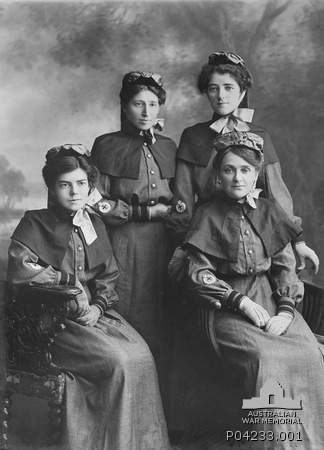
(Photo is of Australian World War I nurses; standing at the back on the right is Sister Constance Keys, who was mentioned in the post on Gallipoli. These nurses received military decorations for their heroism, and all made it back to Australia at the end of the war)

Finding Baby Names to Match Your Surname

05 Sunday May 2013

Posted by A.O. in Your Questions Answered

≈ 18 Comments

Tags

birth notices, birth registries, Charles Dickens, choosing baby names, classic names, colour names, Enid Blyton, flower names, Google, middle names, modern classics, nature names, nicknames, plant names, popular names, rare names, retro names, surname names, surnames, tree names, vintage names

wordlesqThis is a question frequently Googled: how to match baby names with your surname. After reading birth notices every week for more than a year, I’ve seen thousands of names, and often thought how nicely, or how awkwardly, their first and last names matched, so I feel reasonably well-qualified to share my views.

Although there’s many ways to approach this, I decided the best place to start is to work out what kind of surname you have, and then go on from there.

The Common Surname

If your surname is one of the most common, you have quite a bit of choice, since almost any type of first name will match it. Yearning for something slightly unusual? Amarantha Gray sounds just fine. Want something classic for a seamless match? George Anderson is perfect. Love contemporary popular names? Paige Hamilton is for you. Charmed by vintage style? Maybe you will like Harold Price.

Should you go down the common first name + common last name route, remember to whack in a rare middle name somewhere. This isn’t just so your child doesn’t end up with something that looks like the placeholder name on credit card brochures – it’s to help with identification. Otherwise Thomas James Martin could be in for a lifetime of proving who he is.

The Rare Yet Regular-Sounding Surname

There are some British surnames which sound ordinary but are extremely rare – even unique. The identity issue with these names is that it can be hard to maintain privacy, especially when matched with a rare first name. My preference for a rare surname is a first name which is normal-sounding, and neither obscure nor super common. As rare surnames are often of great antiquity, I like old-fashioned and retro names to match them, and family trees can be a great source of inspiration.

The Long Surname

For reasons of practicality, lengthy surnames tend to go best with shorter first names, if only so they can fit on government forms. Sure, you can always ask for extra paper, but do you really trust bureaucrats not to lose half your application? Extremely long names can even be rejected by Births, Deaths and Marriages.

The Short Surname

The general advice is that if you have a one-syllable surname, you need a longer first name to balance it. This seems to be thought especially necessary for girls, who apparently need something elegant and flowing in order to offset their petite surname.

I don’t think that’s obligatory, as I can’t see a problem with being called Jack Black, Claire Holt, Glenn Ford, Grace Wong, Charles Wood or Rose Byrne (yep these are all famous people). Two short names together can seem blunt, punchy and memorable, so if that’s your style, then go for it. If you want something longer, then that’s excellent too.

The Heavy, Ponderous Surname

If your surname is quite stodgy or cumbersome, like Trenchard or Blenkinsopp, don’t attempt to balance it with something fluffy, or double the problem by adding an equally heavy first name. Seek to soften the sound, rather than lighten it. I think these surnames go well with something plain, classic and elegant, when they can end up sounding very dignified.

The Cute Surname

With a surname that’s on the whimsical side, such as Pook or Dingle, a rare, eccentric, or very cute name can wind up sounding like something out of Charles Dickens or Enid Blyton. Be careful with alliteration or assonance, because Rupert Pook or Dorothy Dingle is hitting the Whimsy-o-Meter a little hard. Modern classics and popular names can act as ballast with these surnames.

The Surname Which is Commonly Known as a First Name

I think if you have a surname which is well known as a first name, you should avoid first names which were originally surnames. Cooper Henry seems certain to get his name muddled on a regular basis.

The Difficult to Spell or Pronounce Surname

There are two schools of thought on this one. One states that if your surname always needs to be spelled out, then the first name should be something very plain and simple so only one name needs explanation. The other says that since the person is going to be spelling their name out anyway, they might as well cover two names as one. As someone with a married surname that needs spelling out, I lean towards the first theory, as I’m glad of a simple first name in these situations.

The Common Surname with a Variant Spelling

Following this line of thought, if you are a Smyth or a Johnstone, I would avoid a first name that has multiple accepted ways of spelling it, such as Isobel or Kayden. Pick something that is nearly always spelled one way, such as Alice or William.

The Surname Which is Also a Word

Many English surnames are also words, and you have to be careful that you don’t accidentally turn your child’s name into a sentence or a description. Olive Carter is a job title, Isabella Plum a question which can only be answered with No, and Daisy Knight seems like an oxymoron.

If your surname is Woods, Forrest, Bush, Orchard, Garden or Gardener, that rules out flower and tree names. Body part names like Head, Neck and Legg can’t have colour names in front of them. We’ve all heard about Lee King and Joe King – but Milla King doesn’t sound too good either. Check the nickname as well, as there must be many parents who brought home a Robert Banks from the hospital, only to realise their mistake later.

Having Fun with a Word Surname (Enter At Your Child’s Risk)

Some people with word-name surnames are tempted to do something playful with it. Sometimes this can be cute but cheesy, as with Ruby Swann or Isla Fairweather. Other times it sounds lame, like Sonny Day or Will Power. Skye Light is just silly, and Honey Pye slightly cruel.

Before you turn your child’s name into a permanent joke, think carefully before going with Penny Lane, Forrest Greene, Strawberry Fields, or River Jordan. To be honest though, I think most people with these kind of names actually love them (or come to love them). Just make sure it’s a fun joke name, not a bad joke name – Mary Christmas is nicer than Candy Kane, Rusty Carr or Rainbow Trout.

The Surname Which Sounds Like a Word

Some surnames aren’t words, but they sound like words, and especially once said aloud, can fulfil the same function. For example, Clementine Daley sounds like a method of obtaining more Vitamin C. There is no connection between the surname Hoare and the word whore, and when I meet someone named Hoare, I don’t think of the word whore. Unless their name is Scarlett. And what were Misty Hyman‘s parents thinking?

The Problematic Surname

I’m not going to sugarcoat it, some surnames are going to attract attention, no matter what name is in front of them. Apart from making sure you aren’t falling into any of the usual “word name traps” (such as Adam Bastard, Blake Death or Mae Freak), I think if you have one of these slightly difficult surnames, you should choose something inconspicuous for the first name. James Glasscock is probably easier to live with than the more flamboyant Aloysius Glasscock.

The Non-Anglo Surname

Some people believe that if you have an Italian surname (for example), only an Italian first name sounds right with it. Others say that if you live in an English-speaking country but have a non-English name, your child’s first name needs to be English so they can fit in more easily.

I don’t really agree with either of these notions, as I think both can work, depending on what suits you. I think I have seen almost every combination of names by ethnic origin, and I’ve never once though, Oh no, Finnish and Fijian don’t go together, or You can’t have a Chinese surname with a Spanish first name! Your surname, no matter what country it originates from, doesn’t have to lock you into a box.

If you’ve read through this and realised that your surname is neither very common nor very rare, of moderate length, neither ponderous nor whimsical, not commonly used as a first name, easy to spell and pronounce, not a vocabulary word or otherwise problematic, and not from a different cultural background … well, you shouldn’t really have any major problems!

Will Sadie Always Be a Cleaning Lady?

04 Saturday May 2013

Posted by A.O. in Naming Assistance

≈ 2 Comments

Tags

choosing baby names, famous namesakes, fictional namesakes, flower names, Irish names, middle names, names from songs, nature names, nicknames, plant names, portmanteau names, retro names, sibsets, vintage names, virtue names

vintage-cleaningSamantha and Conall are expecting a baby in a couple of months, and if it’s a boy, he will be named Liam, which is a family name. Girls names are still not settled, as each name they like seems to have a few issues, but the middle name will be Patricia, which honours several relatives. Samantha and Connall have a surname starting with L and ending with R eg Lalor.

Their Short List

  • Sadie – Samantha loves this name to bits, but every time she mentions it to someone they bring up the song, Sadie the Cleaning Lady.
  • Eliza – Samantha also loves this name, but worries that Eliza Lalor doesn’t sound right. They are considering the name Elizabeth (a family name), but calling her Eliza.
  • Niamh – Samantha likes this name a lot, but worries that it is too Irish, and wonders whether spelling and pronunciation will prove troublesome.
  • Annie – Samantha thinks this name sounds almost too sweet.

Other Names That Seem Less Usable

  • Amity, Annabelle, April and Bonnie – Conall doesn’t seem so keen on these
  • Rose – a favourite name which has just been used by a close friend

Samantha would like to know what people think of their name list, and if there are any other names they might like they haven’t considered. The name has to fit their surname, suit the middle name Patricia, and not clash with Liam should they have a boy later. In general, Samantha doesn’t really like most of the girls names in the Australian Top 50.

~ ~ ~ ~ ~ ~ ~ ~

Your Name List

Sadie

Sadie is a very hip name at the moment, and you’re probably slightly ahead of the crowd on this one. If it’s any comfort, your daughter’s peers won’t know of the song, so it’s definitely not playground teasing material.

Eliza

I don’t think Eliza Lalor sounds horrible, but I agree it doesn’t seem quite right.  Elizabeth Lalor is lovely, but if you call her Eliza anyway, I’m not sure it really solves anything. Wouldn’t she still essentially be Eliza Lalor?

Niamh

This is a really gorgeous Irish name, and I don’t think there would be too many problems with spelling and pronunciation, although you probably would need to explain it sometimes. Niamh is reasonably well known and used in Australia – more than it is in Ireland at present, I believe.

Annie

You’re right, Annie is adorably sweet with your surname, although the name Annie is practical and homespun. I really like it, but saying it’s “too sweet” almost seems as if you’re looking for reasons to cross it off.

Other Names You Might Like

Zadie

This is an option to replace Sadie if you really can’t get over the “cleaning lady” association. Zadie had her heyday in the 19th century, and is probably most familiar from the writer Zadie Smith.

Maisie

Has something of the sound of Sadie and the feel of Annie. It’s not as hip as Sadie though.

Elsie

This short form of Elizabeth has a similar retro feel to Sadie and Annie.

Maeve

If you wanted an Irish name with a fashionable V sound but without the spelling/pronunciation issues, Maeve is generally well known now. Of course, that suggests that Niamh will be better understood in time too.

Nora

Has an Irish history, minimal spelling/pronunciation issues, and is hip and retro like Sadie.

Annabeth

This gives you a name that incorporates Elizabeth, but can still have Annie as a nickname. I think it’s pretty, and seems sweet and sophisticated at the same time.

Felicity

This is a virtue name like Amity with the elegance of Annabelle.

Hazel

A pretty nature name like Rose that sounds a bit like Sadie and Eliza. Like Rose, this is rising in popularity.

~ ~ ~ ~ ~ ~ ~ ~

It seems as if Sadie is easily your first choice. With the other three names on your list, the doubts you have about them are your own doubts – with Sadie, I wonder if your mind would already be made up without comments from other people.

It’s okay to change your mind about a name; it’s not cool to have your mind changed for you (except by your partner). Almost any interesting name is going to have some issue attached to it: if you want a controversy-free baby name that nearly everyone approves of, pick a name that’s in the Top 30 and rising.

For what it’s worth, I think Sadie sounds great with your surname, suits the middle name you have chosen, and would make a cute sibset with Liam. I would think long and hard before you allow outside interference to decide what you name your baby.

Good luck Samantha, and let us know what decision you make when the time comes!

UPDATE: Samantha and Conall had a boy named Liam, but later had a girl named Sadie!

POLL RESULTS
95% of respondents were not troubled by the connection between the name Sadie and the song Sadie the Cleaning Lady

47% of people had never heard of the song
25% were reminded of the song by the name Sadie, but didn’t think it was a big deal
18% did know the song, but didn’t immediately connect the name Sadie with it
6% were only reminded a little bit of the song by the name Sadie
5% of people were reminded of the song by the name Sadie, and thought it was a big problem

There was strong support for Samantha to stick with her favourite name, with 29% of readers saying that Sadie was the name the parents should choose.

Waltzing with … May

28 Sunday Apr 2013

Posted by A.O. in Waltzing with ...

≈ 11 Comments

Tags

anagram names, birth notices, double names, famous namesakes, flower names, middle names, month names, mythological names, name combinations, name popularity, nature names, nicknames, plant names, popular names, retro names, sibsets

eucalyptus-flower-bookIt will be May very soon, and whenever that month comes around, it reminds me of one of my favourite Australian authors from childhood – May Gibbs. Born in England, May grew up in Western Australia, and it was while riding her pony around the bush as a little girl that she began writing stories and drawing pictures based on the native flora.

After going to art school, she became a professional illustrator in the early twentieth century, and was most famed for her “gumnut babies” – plump little cherubs scantily dressed in gumnuts, gumblossom and gumleaves. She even produced postcards of the gumnut babies to support the war effort during WW I, and her house was called Nutcote.

Later she wrote stories to accompany her enchanting drawings, the best-known being the Snugglepot and Cuddlepie series. Adults are charmed by the stories’ sense of fun, but for small children, they are filled with adventure and excitement, and can even be frightening, due to the villains of the story, the wicked Banksia Men. Without being sickly or sentimental, the subtle message of the stories is always that we must care for each other, and for the world around us.

After growing up with May Gibbs’ picture books, it is impossible to walk through the Australian bush and not see it differently; she gave us our own fairy tales and our own mythology of nature. And because many eucalyptus trees flower in autumn (not to mention some banksia species), you can see “gumnut babies” and “banksia men” for yourself in May.

The name May appears to have begun life as a short form of names such as Mary and Margaret, but very soon was associated with the fifth month of the year.

The month of May is generally said to be named by the Romans in honour of the goddess Maia, whose name may mean “greater”. She probably didn’t have a connection to the Greek goddess Maia originally, but the two goddesses became gradually merged into one. Maia was a mother goddess, an earth goddess, and encouraged growth and abundance. May is in the spring in the northern hemisphere, so readily suggests the idea of fecundity.

The poet Ovid said that the month was named for the ancestors, also connected to the word for “greater”; I’m not sure if this was his own idea or one in wide circulation in his day. On the first of May, the Romans sacrificed both to the goddess Maia and to the ancestor spirits who were guardians of the city.

The first of May has quite a history as a day of celebration. In Ireland, it is the Celtic festival of Beltane, which marks the beginning of the summer; this is observed by Neo-Pagans around the world. Related to this is May Day, a European celebration of spring and fertility which often involves dancing around a phallic Maypole decorated in blooms, and choosing a Queen of the May, as if still honouring a spring goddess. In Catholic tradition, the month of May is sacred to the Virgin Mary and the flowering of her spirituality; a continuation of the devotion to floral mother figures.

Another floral connection is the word mayflower, which can refer to several different flowering species, but traditionally is the hawthorn, also known as may, mayblossom, may tree or may thorn. The hawthorn is one of the flowers associated with Beltane, and in Ireland you can make wishes on the maytree during this festival. It is also said that they are inhabited by fairies, especially if you see a lone hawthorn bush out in the wild. To bring us back full circle, hawthorn was sacred to the goddess Maia.

The name May was at its highest popularity in the 1900s, when it was #41 for the decade, and had left the Top 100 by the 1930s. It left the charts entirely between the 1960s and 1980s, but has remained in modest use since the 1990s. Currently it is #557 (11 births) in New South Wales and #489 (10 births) in Victoria.

I should have said in modest use as a first name, because May gets a real workout in the middle position. You can’t read through a few pages of birth notices without seeing name combinations such as Charlotte May, Emma May, Harper May, Pippa May and Zara May – not to mention double names like Gracie-May, Ella-May and Lily-May.

You might say that other names are similarly popular in the middle, such as Elizabeth, Grace and Rose – and Alice is quickly joining their ranks. However, all these names are in the Top 100 and either rising or stable, so they are clearly not being neglected as first names.

Poor May lies in the doldrums, with parents preferring Maya and Mia. Even May’s big sister Mary and anagram twin Amy are much more popular, and April is far more common as a name than the following month.

Yet there is something so simple and sweet about May; it sounds old-fashioned without being the least bit musty. If you would like an underused retro name which still seems fresh and youthful, why not consider rescuing May from the middle, and putting her front, rather than centre?

Name Combinations for May

May Amelia, May Elizabeth, May Kathleen, May Luella, May Sophia, May Victoria

Brothers for May

Charlie, George, Harry, Samuel, Tobias, William

Sisters for May

Alice, Clara, Lillian, Nettie, Rose, Sadie

POLL RESULT: May received an approval rating of 93% – just 1% behind the highest-rated girls name, Layla. 37% of people liked the name May, and 35% loved it.

Girls Names Which Rose in Popularity in 2012

14 Sunday Apr 2013

Posted by A.O. in Name Themes and Lists

≈ 25 Comments

Tags

celebrity baby names, classic names, english names, epithets, famous namesakes, fictional namesakes, Gaelic names, germanic names, Hollywood names, locational names, mythological names, name history, name meaning, name popularity, name trends, names from television, Native American names, nature names, nicknames, Old French names, Old Norse names, plant names, popular names, retro names, royal names, Scottish names, Slavic names, Spanish names, surname names, Twilight names, unisex names, vocabulary names

213495458_f0e01eb1bf_z-Cotswold-Cottage-2These names became noticeably more popular in Australia last year. If you are considering using any of them, don’t panic. Most are making solid progress rather than madly storming upward. It would be foolish to reject them based on their current popularity, and silly to fret if you chose one of these names in 2012.

The list indicates the diversity of girls’ names at present, with a mix of classic and modern; places and nature; Hollywood and royalty. There’s something for nearly everyone amongst these popular names.

Ivy

Ivy was the fastest-rising girl’s name both nationally and in Western Australia last year, and made the top 5 fastest-rising names in South Australia, Queensland and the Australian Capital Territory. It became more popular across the board in 2012, and nationally rose 18 places. This is its second time around in the Top 100 – Ivy was #17 in the 1900s, and didn’t leave the Top 100 until the 1940s. It vanished from the charts in the 1970s, but reappeared in the 1990s. Ivy soared during the 2000s, making the Top 100 by the end of that decade. It is currently #22 in Australia, #21 in NSW, #27 in Victoria, #25 in Queensland, #22 in SA, #28 in WA, #44 in Tasmania, and #30 in the ACT. Ivy is named for the plant, and like its namesake, is presently climbing; Beyonce‘s daughter Blue Ivy may have given the name publicity. Chances are we’ll be seeing more of this fresh, pretty retro name, which sounds similar to popular Ava, Eva and Evie.

Savannah

Savannah was in the top 5 fastest-rising names in South Australia, went up 9 places nationally, and increased in popularity in New South Wales, Victoria, Queensland, Western Australia and Tasmania. It is currently #35 in Australia, #38 in NSW, #74 in Victoria, #28 in Queensland, #43 in SA, #35 in WA and #94 in Tasmania. Savannah first charted in the 1990s, and climbed until it reached the Top 100 at the end of the 2000s. Savannah is an alternate spelling of the word savanna, referring to grasslands that have scattered trees, or where the trees are open to the sky; large tracts of northern Australia are savanna. The word comes from the Spanish sabana, derived from the Arawak (Native American) word zabana, which originally meant a treeless grassy plain. Savannah is a place name in the United States, most famously the city in Georgia. The city’s name comes from the Savannah River, which may be derived from the Shawnee people, or from Native American words for “southerner” or “salt”. The city featured in 1990s soap, Savannah, which probably accounts for its début in the charts that decade. While I imagine Savannah originally got its foot in the door because it sounds like Susannah, here it fit in with those other hip names of the ’90s, Ava and Sienna. Like Harper, this is another American South-inspired name, but also a royal one, because the queen’s first great-granddaughter is named Savannah.

Harper

Harper was the fastest-rising name in Tasmania and Victoria, made the top 5 fastest-rising names in South Australia and Western Australia, and became more popular in every state. Currently it is #39 in Australia, #37 in NSW, #29 in Victoria, #36 in Queensland, #44 in SA, #29 in WA, and #31 in Tasmania. Harper began as a surname from the English word for a professional harp player. The surname  originates from the west coast of Scotland, and is especially associated with the Clan Buchanan. The name also has Christian overtones, for heaven is said to be filled with the sound of harp music. Harper has been used as a first name since the 17th century, and was originally given to boys. The fame of (Nelle) Harper Lee, author of To Kill a Mockingbird, gave it a feminine slant. Harper only began charting in 2011, after David and Victoria Beckham welcomed their first daughter. Harper Beckham was named by her brothers after a character in Wizards of Waverley Place (although Victoria Beckham also happened to be working for Harper’s Bazaar at the time). The Beckhams said they wanted a name to honour their time in the United States, and chose this American-style name. Many Australians have followed in their footsteps.

Alice

Alice was the #1 fastest-rising name in South Australia, and has just joined the Top 20 in the Northern Territory, so it has gained popularity in central Australia. Intriguingly, the town of Alice Springs is in the middle of the Australia, offering food for thought. Alice also went up in popularity nationally, in Victoria, and in Tasmania. It is currently #43 in Australia, #49 in NSW, #34 in Victoria, #53 in Queensland, #34 in SA, #49 in WA, #41 in Tasmania, #20 in the NT and #43 in the ACT. Alice is a classic name which has never left the charts. It was #4 in the 1900s, and just missed out on the Top 100 in the 1940s, at #105. It reached its lowest point in the 1960s at #265, then began climbing, reaching the Top 100 for the second time in the 1990s. Since the beginning of the 2000s it has made staid but steady progress up the charts, and become middle name de jour. Alice is from the Old French name Aalis, short for Adelais, which is a short form of the Germanic name Adelheidis, meaning “noble kind” (which Adelaide is based on). Alice became popular in the Middle Ages, and got a boost during the 19th century after Queen Victoria had a Princess Alice. It’s been a favourite in fiction ever since Lewis Carroll penned Alice in Wonderland, and is the name of a main character in the Twilight series. Sensible, yet with a touch of magic, sweet Alice is one to keep your eye on.

Willow

Willow was in the top 5 fastest-rising names in Western Australia, went up  nationally, and increased in popularity in New South Wales, Victoria and the Australian Capital Territory. It is currently #44 in Australia, #43 in NSW, #33 in Victoria, #39 in Queensland, #32 in WA, #73 in Tasmania and #68 in the ACT. Willow first charted in the 1990s, and rose precipitously to make the Top 100 by the late 2000s. Willow is named for the genus of small trees and shrubs which symbolise both wisdom and deep loss. It has been used as a personal name since the 18th century, and was originally given equally to boys and girls. It has only ever charted for girls in Australia, but is still occasionally used for boys. The 1988 fantasy film Willow, which possibly played a role in Willow joining the charts in the ’90s, has a hero named Willow. In 2011, pop singer Pink welcomed a daughter named Willow, and that doesn’t seem to have done this name any harm. Flower names mostly didn’t do well in 2012; Ivy and Willow show that greenery is more appreciated than petals at present.

Mackenzie

Mackenzie made the top 5 fastest-rising lists in New South Wales and Victoria, and increased its popularity in other states and the Australian Capital Territory. Currently it is #46 in Australia, #57 in NSW, #44 in Victoria, #45 in Queensland, #33 in SA, #37 in WA, #45 in Tasmania, and #48 in the ACT. Mackenzie has charted since the 1990s, and zoomed up the charts to make the Top 100 by the early 2000s. It dipped out of the Top 100 in 2009, but was back the next year. Mackenzie is a Scottish surname, an Anglicised form of of the Gaelic Mac Coinnich, meaning “son of Coinneach” (Coinneach is the original form of Kenneth). The Clan Mackenzie is from the Highlands, and of Celtic origin; they trace their clan name back to the pagan god Cernunnos. Mackenzie has been used as a first name since the 18th century in Scotland; it was nearly always given to boys in the beginning, but not exclusively so. Mackenzie first charted in the US as a female name, popularised by actress (Laura) Mackenzie Phillips, who was in American Graffiti. Since then there have been other Mackenzies on our screens; most recently, Mackenzie Foy played Renesmee in Breaking Dawn – Part 2. 

Audrey

Audrey made the national Top 50 last year, and according to my estimate, rose almost as many places as Ivy. However, it’s harder to see where the gains were made than it is with Ivy, although Audrey made significant increases in New South Wales and Victoria, and modest ones in Tasmania and the Australian Capital Territory. Currently it is #50 in Australia, #36 in NSW, #32 in Victoria, #55 in Queensland, #96 in Tasmania and #35 in the ACT. Like Ivy and Alice, Audrey has been Top 100 before. Although it was #156 in the 1900s, it made the Top 100 the following decade, and shot up to peak at #32 in the 1920s. It sank faster than it had risen, and was #197 in the 1940s, reaching its lowest point in the 1980s with a ranking of #0. Since then it has climbed, and reached the Top 100 again at the end of the 2000s. It looks likely to overtake its earlier peak, but Audrey seems to be under the radar at present. This is one of those names which is probably more popular than you think, and has an Australian connection, for the famous Skipping Girl Vinegar neon sign in Melbourne is affectionately known as Little Audrey.

Mila

Mila was the #1 fastest-rising name in the Australian Capital Territory, and grew more popular in New South Wales, Western Australia and Tasmania. It is currently #59 in NSW, #46 in Victoria, #65 in Queensland, #44 in WA, #70 in Tasmania, and #48 in the ACT. Mila only began charting in 2011, so has been extremely successful in a brief space of time. The fame of Hollywood actress Mila Kunis must have had an impact; Mila entered the charts the year after Ms Kunis appeared in Black Swan. Mila is a short form of Slavic names containing the element mil, meaning “gracious, dear”. Mila Kunis’ full name is Milena, which is the feminine form of the Slavic name Milan, meaning something like “dear one”, and often translated as “sweetheart”. Mila sounds similar to other popular names such as Mia and Milla, and at the moment is doing very well.

Freya

Freya is a name just beginning to make an impression, for it joined the Top 100 in Tasmania and the Australian Capital Territory last year, and was in the top 5 fastest-rising names in Tasmania. Both these regions have small population sizes, so you can be forgiven for being a little sceptical; Freya is currently #174 in NSW and #129 in Victoria. Freya is the English spelling of the Old Norse goddess Freyja – her name means “lady”, and was originally an epithet. In Norse mythology, Freyja is a goddess of love, sex, beauty, fertility, sorcery, gold, war and death. Immensely beautiful and clever, she rules over a field in the afterlife. The name Freya has been popular in the UK for several years now, and is well known here due to Tasmanian actress Freya Stafford; it doesn’t seem too far-fetched that we should follow Britain’s lead, but we shall have to wait and see.

Josephine

Josephine just managed to squeeze onto the Top 100 in New South Wales last year. That may not sound impressive, but the amount Josephine climbed was phenomenal – it went up 99 places, far outstripping Ivy’s mere 18. For that reason alone, it deserves a place on this list. Josephine is a solid classic which has never been off the charts, or left the Top 200; on the other hand it has never enjoyed high popularity either. It was #86 for the 1900s, and peaked the following decade at #76. It just failed to reach the Top 100 of the 1940s at #103, and dipped in the 1980s to make #172. Its progress has been up and down, but never too high or low, and it reached its lowest point in the charts in 2011, at #199. It has more than made up for this by getting back to the Top 100 in 2012, where it hasn’t been since the 1930s. Currently it is #100 in NSW and #105 in Tasmania. Josephine has recently made its mark as a royal and celebrity baby name, with Josephine chosen for the daughter of Prince Frederik and Princess Mary of Denmark, and also the grand-daughter of former prime minister Kevin Rudd. Will Josephine continue its ascent? Historically it’s unlikely, for Josephine seems most comfortable in the low to mid 100s, and may very well drop back this year. Stay tuned!

POLL RESULT: People’s favourite names were Alice, Ivy, and Freya, and their least favourite were Harper, Savannah, and Mackenzie.

New South Wales Name Trends – Girls

13 Wednesday Mar 2013

Posted by A.O. in Name Data

≈ 1 Comment

Tags

classic names, famous namesakes, name trends, nicknames, popular names, retro names

Biggest Movers Up

  1. Josephine +99
  2. Olive +37
  3. Heidi +26
  4. Mackenzie and Madeleine +25
  5. Eden and Isabel +21
  6. Harper +20
  7. Aria +16 at least
  8. Audrey and Eve +16
  9. Amy and Claire +15
  10. Eloise +14

The big success story is classic Josephine, who has barely scraped onto the Top 100 in last position, but did so by climbing a whopping 99 places. Olive has returned to the Top 100 after a hiatus of some 70 years – pretty exciting stuff. Heidi and Amy also made significant gains to make their way back to Top 100 territory, while new girls Aria, Elise and Mariam have joined the 100 club for the first time (Elise after flirting around its edges since the 1980s). I did say that Lauren might get back to the Top 100 after Lauren Jackson’s prominence during the London Olympics, and for whatever reason, all those Laurens out there, your name has still got the goods!

Also Up

Willow, Ivy, Violet, Rose, Poppy, Piper, Aaliyah, Mariam, Layla, Kayla, Mila, Charlotte, Elise, Amelie, Amelia, Emily, Annabelle, Bella, Evelyn, Lauren, Lucy, Savannah, Alexandra, Victoria

Up Slightly

Chelsea, Eliza, Elizabeth, Evie, Indiana, Lola, Tahlia, Alexis, Charlie, Stella, Alyssa, Leah, Phoebe, Ruby, Scarlett, Sophia

Biggest Movers Down

  1. Natalie -41 at least
  2. Lillian -39 at least
  3. Ellie -37
  4. Madeline -31 at least
  5. Addison -23
  6. Jade -19
  7. Erin -18 at least
  8. Samantha -18
  9. Paige -17
  10. Lara -16

The names that lost the most places are a really mixed bag, from mum names like Natalie to nicknames like Ellie – who plunged, while Ella only lost a tiny bit of ground. While both Madison and Maddison were less popular, sound-alike Addison took a real dive. Another mystery is why Madeline was snubbed while sister name Madeleine was one of those that did best. Lara did poorly again; it seems as if the ACT is the only place which likes this name!

Also Down

Charli, Ashley, Alana, Anna, Maya, Maddison, Mikayla, Milla, Molly, Holly, Lilly, Imogen, Caitlin, Isabella, Gabriella, Georgia, Summer, Chloe, Jasmine, Jessica

Down Slightly

Amber, Abigail, Angelina, Ava, Madison, Mia, Sienna, Sofia, Hayley, Alice, Ella, Isabelle, Lily, Olivia, Sarah, Sophie, Zara

No Change in Position

  • Grace #13
  • Zoe #16
  • Emma #17
  • Matilda #18
  • Hannah #19
  • Isla #22

New or Returned to the List

  • Aria #85
  • Heidi #87
  • Amy #89
  • Mariam #94
  • Elise #96
  • Lauren #98
  • Olive #99
  • Josephine #100

Gone From the List

  • Natalie #60
  • Lillian #62
  • Madeline #70
  • Erin #83
  • Charli #87
  • Alana #88
  • Ashley #90
  • Amber #98

2012 Name Trends in Victoria – Girls

12 Saturday Jan 2013

Posted by A.O. in Name Data

≈ 4 Comments

Tags

Biblical names, celebrity baby names, famous namesakes, flower names, name popularity, name trends, nature names, nicknames, plant names, popular names, retro names, royal names

Biggest Movers Up

  1. Harper +72 at least
  2. Bella +35
  3. Mackenzie +34
  4. Pippa +28 at least
  5. Ebony +21 at least
  6. Victoria +21
  7. Mila +20
  8. Rose +20
  9. Paige +18
  10. Sophia +15

Also Up

Alexandra, Audrey, Ava and Evelyn, Eva and Eve, Eden, Emily, Layla, Kayla, Elizabeth, Isla, Savannah, Sofia, Bonnie, Millie, Billie, Charlie, Willow, Sara, Natalie, Kiara, Madeleine, Maddison, Maya, Mia, Molly, Zoe

Up Slightly

Alice, Eliza, Emma, Evie, Gemma, Hayley, Imogen, Isabelle, Jade, Jasmine, Lola, Ruby, Scarlett, Sophie, Stella, Stephanie, Summer

Victoria Beckham’s daughter Harper seems to have made a real impression on Victorian parents, and Mrs Beckham’s own name was also one of the biggest risers. You can see Victoria and Sophia as “royal sounding” names, but commoner Pippa Middleton seems to have won more hearts than any of the royals (although Elizabeth, Isla and Savannah all went up the charts). Isabella may have gone down, but Bella is surging upward. Eden and Eve seem inspired by Genesis, and while flower names in general seem to have wilted slightly, the lovely Rose is blooming. Back in the charts with a bang were long-time favourites Ebony and Kayla, who obviously have life in them yet.

Biggest Movers Down

  1. Samantha -68
  2. Abbey -43
  3. Amelie -30
  4. Isabel -30
  5. Mikayla -37
  6. Caitlin -27
  7. Holly -27
  8. Charli -20
  9. Lara -20
  10. Anna -19

Also Down

Abigail and Abby, Alana, Alexis, Alyssa, Amber, Angelina, Addison, Annabelle, Isabella, Caitlin, Claire, Georgia, Heidi, Daisy, Poppy, Violet, Olive, Lily, Lilly, Leah, Lucy, Madeline, Ella, Ellie, Jessica, Sienna, Zara


Down Slightly

Amy, Charlotte, Grace, Madison, Olivia, Phoebe, Tahlia

Samantha dropped the most places at 68, and fell off the list altogether. The #2 biggest fall from Abbey also took off her list, and Abby and Abigail fell too. In fact, A names in general didn’t do so well, with Amelie and Alana dropping from the list, and Addison, Anna and Alyssa falling significantly. Olive only debuted last year, and is already falling – perhaps a bit of “getting too popular” jitters, or another plant name to suffer; Daisy dropped her petals and her place on the list. Lara was the biggest riser in the ACT, but the name of Sydney socialite Lara Bingle fell 20 places in Victoria. While Kayla bounced back, Mikayla plunged.

No Change in Position

  • Chloe (4)
  • Amelia (8)
  • Matilda (16)
  • Hannah (20)
  • Ivy (27)
  • Milla (35)
  • Piper (75)
  • Indiana (78)

New to the List

  • Harper (29)
  • Pippa (73)
  • Billie (97)
  • Millie (99)
  • Bonnie (100)

While the celebrity names did best out of the newbies, down the bottom of the list are sweet retro names Bonnie and Millie, and Billie, which sounds like a cross between them. Millie and Bonnie have both been steadily rising in NSW, but I expected them to make the Top 100 in Victoria first. They managed to squeak in and prove me right by a whisker.

Back on the List

  • Ebony (80)
  • Kayla (88)
  • Sara (90)
  • Natalie (91)
  • Kiara (95)

Gone from the List

  • Amelie (64)
  • Mikayla (67)
  • Alana (73)
  • Samantha (75)
  • Caitlin (77)
  • Abbey (78)
  • Abby (98)
  • Angelina (98)
  • Daisy (98)
← Older posts
Newer posts →

Enter your email address to follow this blog

Categories

Archives

Recent Comments

A.O.'s avatarwaltzingmorethanmati… on Zarah Zaynab and Wolfgang…
Madelyn's avatarMadelyn on Zarah Zaynab and Wolfgang…
JD's avatardrperegrine on Can Phoebe Complete This …
A.O.'s avatarwaltzingmorethanmati… on Rua and Rhoa
redrover23's avatarredrover23 on Rua and Rhoa

Blogroll

  • Appellation Mountain
  • Baby Name Pondering
  • Babynamelover's Blog
  • British Baby Names
  • Clare's Name News
  • For Real Baby Names
  • Geek Baby Names
  • Name Candy
  • Nameberry
  • Nancy's Baby Names
  • Ren's Baby Name Blog
  • Sancta Nomina
  • Swistle: Baby Names
  • The Art of Naming
  • The Baby Name Wizard
  • The Beauty of Names
  • Tulip By Any Name

RSS Feed

  • RSS - Posts

RSS Posts

  • Celebrity Baby News: Melanie Vallejo and Matt Kingston
  • Names from the TV Show “Cleverman”
  • Can Phoebe Complete This Sibset?
  • Zarah Zaynab and Wolfgang Winter
  • Baby, How Did You Get That Name?
  • Celebrity Baby News: Media Babies
  • Celebrity Baby News: Adelaide Crows Babies
  • Celebrity Baby News: Chris and Rebecca Judd
  • Names at Work: Name News From the World of Business and Employment
  • Celebrity Baby News: Sporting Round Up

Currently Popular

  • Celebrity Baby News: Jacinta Allan and Yorick Piper
  • Celebrity Baby News: Jacinta Allan and Yorick Piper
  • Celebrity Baby News: Craig Thomson and Zoe Arnold
  • The Top 100 Names of the 1940s in New South Wales
  • Celebrity Baby News: Ed Husic and Bridget Tilley

Tags

celebrity baby names celebrity sibsets english names famous namesakes fictional namesakes honouring locational names middle names name combinations name history name meaning name popularity name trends nicknames popular names saints names sibsets surname names twin sets unisex names

Blog at WordPress.com.

Privacy & Cookies: This site uses cookies. By continuing to use this website, you agree to their use.
To find out more, including how to control cookies, see here: Cookie Policy
  • Subscribe Subscribed
    • Waltzing More Than Matilda
    • Join 517 other subscribers
    • Already have a WordPress.com account? Log in now.
    • Waltzing More Than Matilda
    • Subscribe Subscribed
    • Sign up
    • Log in
    • Report this content
    • View site in Reader
    • Manage subscriptions
    • Collapse this bar
 

Loading Comments...