• About
  • Best Baby Names
  • Celebrity Baby Names
  • Celebrity Baby Names – Current
  • Celebrity Baby Names – Past
  • Featured Boys Names
  • Featured Girls Names
  • Featured Unisex Names
  • Links to Name Data
  • Waltzing on the Web

Waltzing More Than Matilda

~ Names with an Australian Bias of Democratic Temper

Waltzing More Than Matilda

Tag Archives: popular names

Girls Names from Australian Children’s Literature

17 Sunday Aug 2014

Posted by A.O. in Name Themes and Lists, Requested Names

≈ 10 Comments

Tags

astronomical names, Babylonian names, Biblical names, classic names, english names, Etruscan names, fictional namesakes, flower names, French names, Greek names, hebrew names, Irish names, Italian names, Latin names, Median names, middle names, month names, mythological names, name history, name meaning, name popularity, name trends, names from television, nature names, nicknames, plant names, popular names, retro names, Roman names, royal names, Semitic names, Shakespearean names, underused classics, underused names, unisex names

HarrietYoullDriveMeWild01

This week it is Children’s Book Week, which is run by the Children’s Book Council of Australia. Librarians and teachers everywhere will be thinking up exciting new ways to encourage children to read, while the CBC has awarded prizes to the best new Australian children’s books. I thought it would be fun to join in the celebrations, and many of the books chosen are classics and award winners.

Amaryllis
I know two characters with this name. One is Amaryllis “Ryl” Mereweather, from H.F. Brinsmead’s Pastures of the Blue Crane (1964), about a teenage girl who inherits an old shack in northern New South Wales. (Name nerd bonus info: H.F. Brinsmead stands for Hesba Fay – Hesba is derived from the Greek hesperus, meaning “western”). The other is in Sally Odger’s fantasy Amy Amaryllis (1992), about an ordinary Australian girl named Amy Day who switches identities with a girl named Amaryllis Loveday, from a magical world named Ankoor. Amaryllis is a Greek name meaning “to sparkle”, perhaps to suggest sparkling eyes. In Virgil’s pastoral poems, The Eclogues, Amaryllis is a beautiful shepherdess, and the poet makes a play on words to suggest that her name comes from Latin amor, “love”. The amaryllis flower is often known as “Easter lily” in Australia; it is named after the literary character, so this is not just a simple flower name. Unusual and lovely, Amaryllis comes with a host of possible nicknames, including Amy, Ryl, Rylla, Lily, Lissy, and Mary.

Beatrice
In Playing Beatie Bow (1980) by Ruth Park, Beatie Bow is a local legend, a game that children play to frighten each other. But when teenage loner Abigail watches the game, she is brought to the Sydney of one hundred years earlier by a strange girl named Beatrice “Beatie” Bow. This classic is a YA time-travel historical mystery adventure with a dash of romance, and so firmly grounded in The Rocks area of Sydney that you can follow every step of Abigail’s journey. (Name nerd bonus info: Abigail’s parents named her Lynette, but when her parents separate, she chooses Abigail for herself, because it’s an “old witch” name). Beatrice is the Italian form of Beatrix, very famous because of the beautiful muse in Dante’s Divine Comedy. The name has been used in England since the Middle Ages, including by royalty; Princess Beatrice of York was named after a daughter of Queen Victoria, but itwas used in the royal family long before. It’s also a Shakespearean name, because in the comedy Much Ado About Nothing, Beatrice is the witty heroine. Beatrice was #50 in the 1900s, and left the Top 100 in the 1930s; by the 1960s it had left the charts. It made a modest comeback in the 1990s, after the birth of Princess Beatrice, and has remained around the 500-600 level. This is an elegant retro name which has long remained underused. Bea is the usual nickname, although Beatrice Prior from the Divergent series goes by Tris.

Blossom
Little Ragged Blossom is one of the main characters in May Gibbs‘ Snugglepot and Cuddlepie series (1918-40), featuring her plump “gum nut babies”. Blossom is a poor little gum-blossom girl, alone in the world until she gains the friendship and protection of gum-nut boys Snugglepot and Cuddlepie. From then on, she is part and parcel of their adventures, and not infrequently plays the role of damsel in distress, such as when she needs rescuing from the wicked Banskia Men. Even now, I cannot see a gum tree in bloom without imagining the flowers as little blossom girls … The word blossom is used for flowers that grow in masses and clusters, especially on trees, and evokes spring and freshness. Blossom has been used as a girl’s name since the 18th century, and is probably more common as a nickname, such as aviation engineer Maxine “Blossom” Miles, or a middle name, such as jazz singer (Margrethe) Blossom Dearie. On television, Blossom was one of the Powerpuff Girls, and Blossom Rosso the floppy-hatted heroine of sitcom Blossom. Ultra-feminine, quirky and cool, could Blossom be the ultimate flower name?

Celia
Feeling Sorry for Celia (2000) is Jaclyn Moriarty’s side-splittingly comic début epistolary YA novel. Private school girl Elizabeth spends most of her time fretting over her best friend Celia, whose life is one self-caused drama after another. However, a pen-pal programme with the local public school teaches Elizabeth how real friendship works. Celia is the feminine form of Caelius, a Roman family name traditionally derived from caelum, Latin for “heaven”. However, the Caelii traced their ancestry to the Etruscan hero Caeles Vibenna, so the name probably isn’t Latin in origin. It may come from Cel, the Etruscan earth goddess who is the equivalent of Gaia; her name means “honoured”, and the Etruscans named the month of Celi (September) after her. I like the idea of an earthy goddess becoming connected with heaven. Shakespeare used the name for an attractive, serious character in As You Like It, and Ben Jonson wrote the poem Song to Celia, which became Drink To Me Only With Thine Eyes. These writers sparked interest in Celia as an English name in the 17th century. This literary name is both rare and traditional, and doesn’t seem out of place next to popular names like Olivia and Sienna.

Dot
Ethel C. Pedley’s posthumous novel Dot and the Kangaroo (1899) is about a five-year-old girl named Dot who wanders off into the bush and gets lost. She is befriended by a kangaroo who has lost her joey, and gives Dot some magic berries that allow her to understand the speech of animals. It has a strong conservationist message in regard to our native flora and fauna, which is still very much needed. The book was the first to show Australian animals in a genuine Australian setting, and became an immediate favourite. Dot is a short form of Dorothy which dates to medieval times, and has been used as an independent name at least since the 17th century. This adorably pert little name could honour a Dorothy, and also works well in the middle.

Esther
Ethel Turner’s Seven Little Australians (1894) is the only Australian book to be continuously in print for more than a century. Featuring a family of mischievous, lovable army brats who live in Sydney’s outer suburbs, it is surprising how little it has dated. Blended families, teen rebellion, obsession with body image, schoolgirl crushes, and discipline problems … all topics of interest more than a hundred years ago too. The seven little Australians are Meg, Pip, Judy, Nell, Bunty, Baby, and The General; their father is stern Captain Woolcot and stepmother (The General’s mother) is Esther. Esther is beautiful and sweet, but barely older than her eldest step-children, and incapable of really mothering them. Hilarious, heart-warming, and tragic, this is one of Australia’s best-loved children’s books. In the Bible, Esther was a Jewish queen of a Persian king; her story is the basis for the Jewish holiday of Purim. The meaning of Esther is much debated. It may be from a Semitic word meaning “star, morning star”, or a Median word meaning “myrtle” (the translation of her Hebrew name, Hadassah). Another theory is that it comes from the Babylonian fertility goddess Ishtar (Ishtar also represents the morning star, Venus). Esther was #73 in the 1900s, and left the charts in the 1920s. It reached its lowest point in the 1950s and ’60s at #379, but has climbed since then, and isn’t far outside the Top 100 in Victoria. This underused classic is very much on trend at present.

Harriet
Harriet, You’ll Drive Me Wild (2000) is a picture book written by kidlit doyenne Mem Fox, illustrated by Marla Frazee. Harriet Harris is a toddler who doesn’t mean to be naughty, but trouble follows in her wake without her even trying. Harriet’s mother is a calm woman who doesn’t like to yell, but Harriet pushes her to breaking point. The book helps explain to littlies why parents lose their cool. (Name nerd bonus info: Mem Fox’s full name is Merrion, but she has always gone by Mem). Harriet is the English form of Henriette, the feminine form of French Henri, and thus a feminine form of Harry. Harriet was #122 in the 1900s, and left the charts in the 1930s. It returned in the 1970s, and has been climbing ever since. Last year it was one of the fastest rising names of 2013, and joined the Top 100 at #89. Cute and spunky, it can be shortened to Hallie or Hattie – Hattie is a hen in Mem Fox’s Hattie and the Fox (1986).

Josie
Josephine Alibrandi, known as Josie to her friends, features in Melina Marchetta’s breakthrough YA novel, Looking for Alibrandi (1992). A coming of age story, its smart-mouth heroine is in her last year of school, dealing with boys, family, exams, mean girls, and her father, who left when she was a baby and has suddenly reappeared in her life. Looking for Alibrandi was an instant success upon publication, and has been called “the most stolen library book”. Josie is a short form of Josephine, used as an independent name since the 16th century. It has sometimes been given to boys, as a short form of Joseph or Josiah. Josie first ranked in the 1920s at #291, and left the charts in the 1940s. It returned in the 1970s, and climbed before peaking in 2009 at #175. This is an underused retro name which doesn’t sound old-fashioned, but sassy and stylish.

Liesel
Liesel Meminger is the young girl in Markus Zusak’s The Book Thief (2005), set in Nazi Germany during World War II, and narrated by Death himself. Liesel is illiterate at the start of the story, but through learning to read, discovers a lifelong love of words, and finds solace in stealing books to share with others. Against a backdrop of fear and horror, the story shows that books can feed the soul even in our darkest hours. The story does end up having an Australian connection, and a specific Australian setting is used in a very unexpected way. Liesel is a German pet form of Elisabeth, pronounced LEE-zel. Although it’s never charted in Australia, this charming name is very familiar because of Liesl from The Sound of Music, and swimmer Leisel Jones.

Norah
Norah Linton is the heroine of Mary Grant Bruce’s Billabong series (1910-42). Making her début in A Little Bush Maid at the age of twelve, Norah lives at Billabong Station in northern Victoria. She’s a hardy, spirited tomboy who loves horse-riding, camping, and fishing, and is a total daddy’s girl. The books haven’t aged too well, but Norah is an ancestor of other feisty, independent Australian heroines, such as Ryl Merewether and Josie Alibrandi. Norah is a variant of Nora, a pet form of names such as Honoria and Eleanor. It’s often thought of as particularly Irish, and records show many Norahs of the 18th century were born in Ireland. Hip and arty, Norah is fast growing in popularity in both the UK and US, and already popular in Europe, but almost unknown in Australia. It deserves serious consideration by those keen to get ahead of the trends.

Thank you to Manday for suggesting the name Liesel be featured on Waltzing More Than Matilda, and for recommending The Book Thief be added to this list.

POLL RESULTS
The public’s favourite names were Beatrice, Harriet and Norah, and their least favourite were Josie, Blossom and Dot.

(Picture shows cover of Harriet, You’ll Drive Me Wild, from Mem Fox’s website)
Congratulations to Kara at The Art of Naming!

14 Thursday Aug 2014

Posted by A.O. in Blog News

≈ 6 Comments

Tags

name combinations, popular names, sibsets, The Art of Naming

tumblr_na6oi2G0391se940oo1_500Fellow blogger Kara, from The Art of Naming, welcomed her daughter yesterday at 12.35 am, weighing 6lb 1oz (6.24 kg).

Kara was interviewed on Waltzing More Than Matilda yesterday, where clues to her daughter’s name were given, so if you followed all of them, you will know her name is

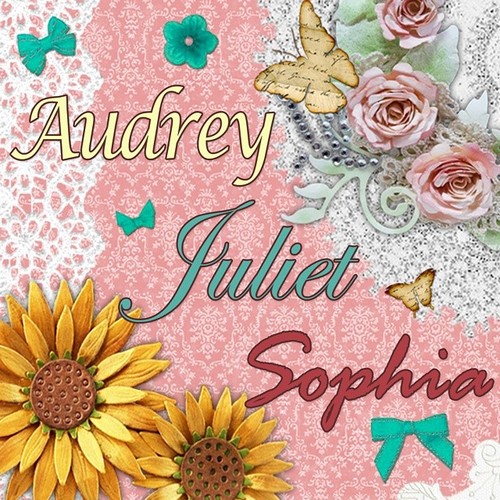
AUDREY JULIET SOPHIA,

sister to Maximus Alexander.

Audrey and Juliet were names chosen because Kara and her husband love them, while Sophia is in honour of the baby’s aunt. Kara once thought she would never give her baby a Top 100 name, but has found that once you find the right name, popularity just isn’t that important.

Congratulations to Kara and her family! I think you’ll agree they have chosen a beautiful name for their daughter.


Interview with Kara from The Art of Naming

10 Sunday Aug 2014

Posted by A.O. in Blog Reviews

≈ 6 Comments

Tags

baby name blogs, baby name books, baby name websites, Facebook, Instagram, middle names, name meaning, name popularity, Pinterest, popular names, rare names, The Art of Naming, The Sims, Tumblr, Twitter, US name popularity

IMG_8079

Kara is the bubbly, friendly blogger at The Art of Naming, which she has been regularly maintaining, along with a host of social media, for a year now. Kara genuinely loves helping parents find the perfect name, and as well as personal assistance, she provides name lists, birth announcements, and featured names which includes possible name combinations and sibsets. As you can tell from her photo, Kara is expecting a baby in the near future, and if you read this interview very carefully, you will find out what her name will be.

What is your name?

Kara Yvonne.

Have you ever wished you had a different name?

Yes! I’ve always wanted a different name but I’ve never been able to pinpoint which name would better suit me. Kara fits just fine, I’ve just never liked it or Yvonne. Sorry mom! I would consider changing it if I could find the perfect replacement.

How did you become interested in names?

I was into playing The Sims as a teen, so I began browsing naming sites to choose names for the characters. By seventeen, I was making long name lists for future children (or Sims), and it snowballed from there.

What inspired you to begin a name blog?

Once I discovered that I was somewhat good at forming first and middle name combinations, (or I at least really liked doing so), I began frequenting forums to help parents find the perfect name. Then I decided to focus all of that into one place and help people on my own turf. It’s been over a year since I started the blog and I’ve helped many people, which is why I started it to begin with.

Do you have a favourite post on The Art of Naming?

The only one that comes to mind recently was about the popularity of names and I included my own little confession in there regarding my daughter’s name. I spent a few hours compiling the data for the chart there and the hard work felt worth the time when I finished. I’m a sucker for data and number crunching.

Do you have any other blogs?

I’ve got social media everywhere! Even a secondary blog where I answer questions, just don’t ask how I find the time to keep up with all of them.
Facebook, Twitter, Tumblr, Pinterest, Instagram.

Do you have a pet peeve in regard to names?

I really dislike a misspelled name. I like names with standard spellings (with a few exceptions) and I like names to have some solid history behind them, and a good meaning. So I guess my pet peeve is made-up names, or those that you have to think about for a few minutes before you attempt to pronounce them.

What are some of your favourite names?

Some of my favourites that I won’t be using include girly names like Magnolia, Freya, Coraline, Esme, Lavinia, Aveline, and Amara. For boys, I like August/Augustus, Benedict, Caspian, Constantine, Dante, Jack, Rafferty, and Silas. I can’t help but love unexpected middle names like Essence, Wintress, Frost, or Marvel.

What names do you dislike?

I really can’t stand some of the more trendy names. The whole –aiden trend, for example. Any name with an unnecessary Y or H inserted in there is a no-no. I also dislike the majority of K names, except for Irish ones like Killian. I think that stems from the dislike of my own name, plus recent trends in pop-culture, like the influx of Kardashians. Don’t get me started on names like Nevaeh. I also am not a huge fan of unisex names.

Are there any names you love, but could never use?

There aren’t any names that I can think of that I could never use, there are only names I was never able to use. I like to believe that in another dimension, I totally used all the names on my guilty pleasure list. The weirder the better! I think we’re stopping at two kids for now so my actual naming days are quite possibly over. Maybe I’ll get some fish.

What are your favourite names in the US Top 100?

Girls: A secret! But third and fourth are Emma and Caroline.
Boys: James… no, Henry.. no, Jack!

What are your favourite names in the rest of the US Top 1000?

Girls: Juliet ….
Boys: Maximus and Vincent.

What are your favourite names that have never charted in the US?

Girls: Amabel.
Boys: Caius?

What is your son’s name?

Maximus Alexander. We chose it for a number of reasons but we also really loved the meaning: ”greatest defender of the people”. We’ve already tasked him with protecting his baby sister and he seems to like the idea, but then again he’s only two.

You’re currently expecting another child – are we allowed to know her name?

She will have a first name and two middle names. The first name is one that we mutually fell in love with and decided on when we first saw an ultrasound picture of her cute little face. The second name is Juliet. And the third name is after my husband’s sister, even though it is extremely popular. I’m sure I’ll reveal it on my page in the next week or two.

What is one thing we don’t know about you?

I am currently in the process of writing a name book. I just need to try a little harder to focus on finishing it. Writer’s block is killer when combined with pregnancy hormones, but I hope to be able to release it in the not-too-distant future! Stay tuned!

What advice would you give someone who was choosing a baby name?

I always encourage people to go with their instincts. If they really love a particular name and can’t get it out of their head, that’s the one. Do not let family or friends influence you. Do not share your names in advance if you can help it so that you can keep them safe: name theft is real! Compromise is difficult between partners but it is totally achievable. Keep your mind open to new name ideas but cling to those you love the most. Sentimental value is always most important; if you have a wonderful reason for loving your name choice, it doesn’t matter at all how popular it is or if someone else has used it. Go for it anyway!

(Picture is a recent photo of Kara, supplied by interviewee)

What Makes a Baby Name Trendy?

03 Sunday Aug 2014

Posted by A.O. in Your Questions Answered

≈ 3 Comments

Tags

Baby Name Explorer, Biblical names, classic names, modern classic names, name data, name popularity, name trends, names from popular culture, popular names, saints names, trendy names

trendy baby

Trendy baby names are a hot topic that’s leaving parents feeling anxious. Parents write in to the blog to say they don’t want a trendy name, or are worried that their favourite baby name might be too trendy.

Yet what exactly is a trendy baby name? Even the authors of articles on trendy baby names disagree on the subject, or are vague as to what “trendy” actually means (many seem to think it just means popular, although parents often say popularity doesn’t bother them, as long as the name isn’t trendy).

We could fall back on that old chestnut, “I know it when I see it”, but I thought we might try for something a little more concrete. So instead we’ll look at the factors which might be linked with a name being considered “trendy”.

Going up rapidly in popularity …

This is the one which nearly everyone first thinks of – a name which is going up steeply in popularity, so that its progress through the charts looks like a mountainside or a cliff; even more so, a name which suddenly jumps in popularity in a single year.

This gets some parents so worried that even a modest increase can have them fretting because a name went up seven or eight places, but I think a name has to go up at least twenty places before it really draws attention to itself. Names in this category from last year include Aria, Penelope, Louis, and Nathaniel.

Nathaniel rising

But here’s the good news: often after a huge boost in the charts, a name will settle down and continue rising at a steadier pace, or even stabilise. Names such as Harper, Flynn, Ivy, and Sienna have had a big jump in previous years, but are now just comfortably trundling along.

… only to come down just as rapidly …

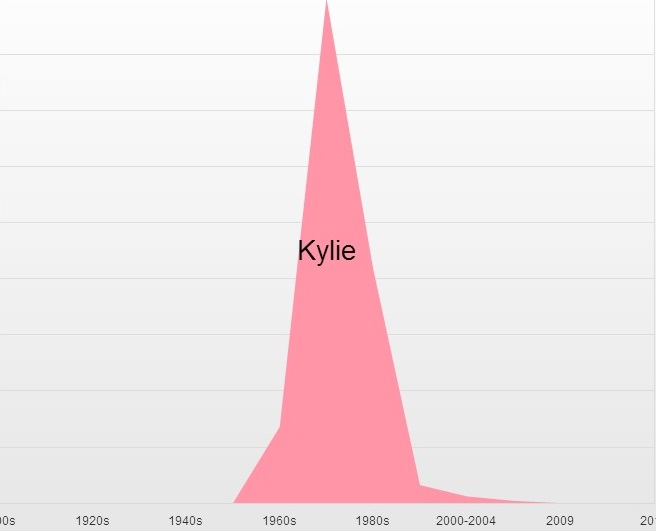
This really is a classic sign of a trendy name – it not only goes up the charts steeply, it comes down again at a similar rate, so that its progress through the charts has a cone shape; the skinnier the cone, the less years it was popular, and the more spectacular has been the name’s rise and fall. Kylie‘s cone, for example, looks quite thin.

kylie trendy

The trouble is that this isn’t very helpful for predicting whether a particular name will be trendy. It’s strictly a post mortem technique, so by the time you realise you chose a trendy name, it’s too late – your child is thirty six years old and nobody cares anyway.

Some people fear that any name going up steeply in popularity is sure to come down steeply as well, but this isn’t necessarily the case. For example, imagine you chose the name Jennifer for your daughter in the 1930s. It jumped straight into the Top 100 from nowhere, which seems very alarming, but it remained in the Top 100 for seven more decades. Your little Jenny would have collected her old age pension before her name stopped being popular, and even today Jennifer is only around the 200-300s and fairly stable. It never fell as dramatically as it rose.

Jennifer

For this reason, it seems a bit silly to avoid a name that’s trending upwards. If anything, the message seems to be to jump on a trend as early as possible, because it’s cooler to be a Jennifer born in 1935 than one born in 2000, even though the popularity was around the same in those two years.

… and has reached a certain level of popularity

Even though trendiness and popularity are not the same thing, it’s only once a name becomes reasonably popular that most people start to call it trendy, even if it’s been zooming up the charts for several years. It needs to be used by enough people that it can have those impressive rises in rank, as well as enough visibility to be considered trendy.

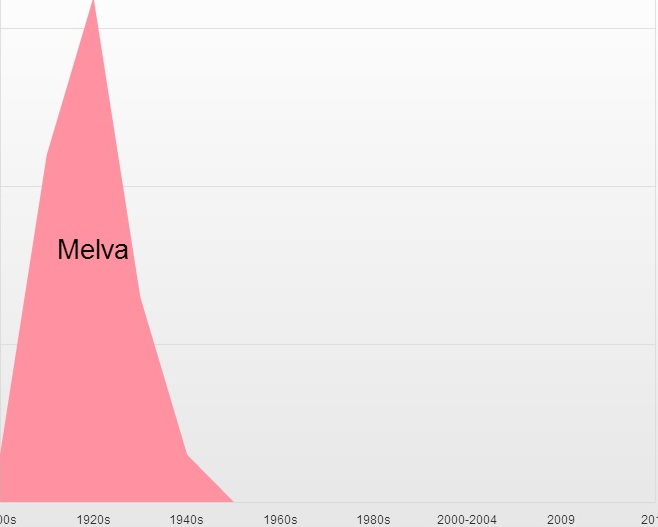
So Melva might have a steep rise and descent, but as it never reached the Top 100, it doesn’t get mentioned as a past trendy name. Persistently low usage does help protect a name against a charge of trendiness from most people (not all).

melva

New to the charts

I know many will disagree with this one, but I believe that no matter how rapidly a name is rising, it’s not trendy if it has previously been on the charts. Otherwise you get comments like “Leo is both classic and trendy“. Which is absurd when you think about it – like describing someone as an extremely tiny giant, or a colour as a very pale shade of black – because classic and trendy are opposing terms. I would say Leo is a rising contemporary classic, not a trendy classic.

Leo rising classic

Names that have been on the charts previously and disappeared before returning again are retro names. No matter how much Nathaniel may be zooming up the charts at present, I don’t consider it to be trendy, as it already has a history as a traditional name.

Inspired or boosted by popular culture

Any name that has suddenly got a boost in the charts (or even just in the public consciousness) due to a popular song, movie, TV show, celebrity, or celebrity baby is liable to be labelled “trendy”, whether it’s Elsa, Khaleesi, Penelope, Jagger, George, or Banjo.

I think that’s very unfair, because if you look through the history of naming, people have always named their children after the celebrities and culture of their day. By this standard, familiar names such as William, Eleanor, Alexander, Cordelia, Stanley, Fiona, Eric, and Rosamund have all been “trendy”. In fact, you could include all the Bible names and saints’ names in that group as well, since saints were the celebrities of the Middle Ages, and the Bible everyone’s favourite book.

Fitting in with one or more name trends

Another thing that can get a name labelled trendy, even if it’s in rare use, is if it fits in with current naming trends, especially with multiple trends. So you might claim that Liliana is a trendy name, because it fits in with the trend for L-L names for girls, like Lila, and with the trend for elaborate names for girls, like Isabella.

The trouble is that by this logic, practically every name being used today could be labelled as “trendy” – it’s very difficult to avoid ALL name trends.

This article mentions some of the current baby name trends in Australia: patriotic names, surnames as first names, place names as first names, nicknames as first names, and biblical names. Remove all those, and the choices dwindle significantly. And this isn’t even touching on mythological names, vintage names, unisex names, rare names, uniquely spelled names, literary names, virtue names, nature names, vocabulary names, and boys’ names ending with N.

* * * * * * * * * *

There you have it: six things might get your baby name labelled trendy. And the more categories it fits into, the more likely that it will seem trendy to somebody. So the current most “trendy” name in the Top 100 is Aria – it’s climbing fast, quite popular, new to the charts, inspired by popular culture, and fitting in with current trends, such as the AR sound in names.

Of course, in the 1970s there was a name which rocketed into the Top 100 from nowhere, had never been on the charts before, with use boosted by a popular singer, and whose sound fit in with other popular girls’ names such as Emily and Felicity. That name was Olivia, and although it may have been trendy in 1978, it isn’t any more. Aria could become equally as established, or even a modern classic, so there’s no guarantee that a trendy name will stay trendy.

Olivia

The big question is: what exactly is so terrible about a trendy baby name anyway? We’re always being told to avoid trendy baby names, and rarely are we given a reason. It’s just taken for granted that of course you don’t want to give your child a trendy name, in the same way that of course you don’t want them to put their hand on a hot stove.

About the only thing I can come up is that trendy names tend to become dated, except that a) sometimes they don’t eg William and b) most names date eventually anyway, even classics eg Susan.

And even if your name doesn’t become dated, it isn’t going to make your life especially wonderful. I have a non-trendy classic name which is still reasonably popular, and not only has it failed to provide me with a magically charmed life where nothing ever went wrong, its impact has been minimal at best. Meanwhile, my peers with the trendy names of our generation, such as Jodi and Jason, don’t seem to have had their lives ruined by their names.

* * * * * * * * * *

So there you have it – trendy names are something to be avoided, even though there’s no compelling evidence they’re particularly awful, or that a trendy name will remain trendy; there’s not even any real proof that trendy names actually exist as an objective phenomenon. And the criteria as to what is trendy is so broad that almost any name you can think of can be labelled as such.

Perhaps it’s time to put this baby name bogeyman behind us.

POLL RESULTS
The things that most people thought made a name trendy were:

* destined to fall as quickly as it rose – 23%
* rapidly rising in popularity – 13%
* boosted by popular culture – 12%

26% of people thought a name had to fulfil at least two or more of the stated requirements before being considered trendy, while 7% thought that it had to fulfil all six of the requirements to be a trendy name.

Just 1% of people thought that being new to the charts made a name trendy.

2% of people did not think there was any such thing as a “trendy” name.

(Popularity charts from Baby Names Explorer)

Requested Famous Name: Annabelle

23 Wednesday Jul 2014

Posted by A.O. in Famous Names, Requested Names

≈ 3 Comments

Tags

aristocratic names, famous namesakes, honouring, Latin names, modern classic names, name history, name meaning, name popularity, name trends, names of boats, popular names, portmanteau names, Scottish names, UK name popularity, US name popularity

Annabelle_Rankin

Famous Namesake
On July 28, it will be the 106th birthday of pioneering stateswoman Dame Annabelle Rankin, who was the first woman from Queensland to sit in the Parliament of Australia, the second female Australian Senator, and second female parliamentarian for the Liberal Party.

Annabelle was the daughter of Colin Rankin, a Scottish-born Queensland politician who served in both the Boer War and First World War; Annabelle was named after her mother. Her father encouraged her to travel, and when she left school, she went to China, Japan, England, Scotland, and continental Europe. With a background in community involvement, she worked in the slums of London, and with refugees from the Spanish Civil War.

Back in Australia, Annabelle was a volunteer during World War II, serving at air raid shelters and hospitals, and organised the YWCA’s welfare efforts for servicewomen. Her responsibilities involved travelling to military bases in Queensland and New South Wales, and she accompanied Eleanor Roosevelt, First Lady of the United States of America, and Lady Gowrie, wife of the governor-general, on their visits to the troops.

After the war, she stood as a candidate for the Liberal-Country Party, and entered the Senate on July 1 1947. Annabelle was the first woman in the British Commonwealth to be appointed as an opposition whip, and was the whip in the Senate from 1951 to 1966.

Dame Annabelle was appointed Minister for Housing in 1966, becoming the first woman in Australia to administer a government department. As minister, she worked to provide housing for old age pensioners, and introduced a housing system for Aboriginal Australians and new migrants. As a newspaper of the time helpfully noted: “She tackles men’s problems too”.

After retiring from parliament in 1971, Dame Annabelle was appointed high commissioner to New Zealand – the first woman in Australian to lead a diplomatic mission. She supported several community organisations, including the Australian Red Cross Society, Country Women’s Association, Girl Guides, Victoria League, and Royal Commonwealth Society.

She was for many years the President of the Queensland branch of the Children’s Book Council of Australia, and the Dame Annabelle Rankin Award for services to children’s literature in Queensland is given in her honour. Another of her namesakes is the Annabelle Rankin, one of the ferries on Sydney Harbour.

Dame Annabelle was easily recognisable from her auburn hair and warm brown eyes, and combined a cheerful, friendly demeanour with a strong, uncompromising will, and apparently tireless energy. She was an excellent orator, and very capable of handling the occasional heckler (by no means were all the hecklers male, either).

While researching the name Annabelle, I noticed quite a few people seemed to think that the name Annabelle sounded “unprofessional”, and predicted that a woman named Annabelle could never be taken seriously in public life. If nothing else, the career of Annabelle Rankin proves this to be completely untrue.

Name Information
Annabelle is a variant of the name Annabel, which originated in Scotland during the Middle Ages. Although it is sometimes treated as a cross between Anna and Belle, this isn’t plausible as it pre-dates the common use of the name Anna in Scotland.

It’s assumed to be a variant of the Latin name Amabel, meaning “lovable” – the long form of Mabel, and close relation to familiar Amy. It may have been influenced by the name Agnes (“pure”), which was said (and often spelled) Annas at that time.

The Annabelle spelling probably has been influenced by Anna and Belle in the modern era, and is often understood as meaning “graceful and beautiful”. Although this isn’t very good etymology, the name is a bit of a hodge-podge, and you might feel free to translate it as you wish.

The names Annabel and Annabelle have long been favourites with the British peerage, both English and Scottish, which gives them a rather aristocratic air. I tend to feel that Annabel is a bit more “posh”, while others may think that the Frenchified Annabelle seems more stylish and “finished”.

Annabelle has charted in Australia since the 1970s, when it debuted at #580. Since the 1980s it has risen steeply, and it entered the Top 100 in 2000, at #92. It entered the Top 50 in 2007, when it reached #46, and although it wobbled a little here and there, it is now at the highest point it has ever been.

Currently it is #44 nationally, #35 in New South Wales, #50 in Victoria, #43 in Queensland, #47 in Western Australia, #61 in Tasmania, and #36 in the Australian Capital Territory.

Annabelle is also Top 100 and climbing in the US and the UK, but is more popular here than anywhere else, making Annabelle one of those unexpectedly Australian names. Annabelle is also Top 100 in New Zealand, but isn’t rising in popularity.

Annabel has charted in Australia since the 1960s, entering the rankings at #420, but while it also rose steeply during the 1980s, hasn’t become popular, and is still in the 100s. Annabel is only just outside the Top 100 in the UK, but is stable rather than rising, which is probably similar to the situation here. In the US, it is rising steeply, but only in the high 400s, so a long way off popularity.

Annabelle is a pretty, elegant, ultra-feminine name that’s well on its way to becoming a modern classic (while Annabel is already there). It fits in so smoothly with the trend for -belle and -bella names that it’s become quite popular, and may become more so.

Although it wasn’t originally linked to the names Anna and Belle, it might be used to honour people with those names, or similar names. Possible short forms abound, but all the the Annabelles I’ve ever met have only used their full name – it strikes me as one of those relatively long names that are somewhat nickname-resistant. There’s plenty to love about adorable Annabelle!

Thank you to Brooke for suggesting the name Annabelle to be featured on Waltzing More Than Matilda

POLL RESULTS
Annabelle received an approval rating of 62%. 20% of people preferred the name Annabel, but 16% thought Annabelle was beautiful and feminine. Only person thought the name Annabelle was too popular. I wonder if Annabel would have done better – perhaps we will feature it another time.

(Photo is of Dame Annabelle Rankin)

Interview with Bree from The Beauty of Names

06 Sunday Jul 2014

Posted by A.O. in Blog Reviews

≈ 2 Comments

Tags

baby name blogs, baby name books, Bree, guilty pleasure names, Midwinter Names, pet peeves, popular names, Powder and Ink, rare names, The Beauty of Names

securedownloadBree is the blogger at The Beauty of Names; she’s still quite young, but already has several years of blogging experience under her belt. The Beauty of Names is a stylish, confident name blog which is the fruit of Bree’s name research, and contains lots and lots of lovely lists of names, many of them rare and unusual. There is a very popular series on names from European royalty, names from the world of art, names that Bree finds intriguing, and name profiles. Bree is an avid reader who dreams of being a famous writer, and she has an instinct towards the beauty of words and language which merges into her love of beautiful names.

What is your name?
Bree Eryn

Have you ever wished you had a different name?
I’ve always loved my name. Growing up, I never knew any other girls with the name Bree, and I loved how short and simple it was.

How did you first become interested in names?
I can’t remember my age exactly, but I was quite young. I came across a baby name book my parents had used to name my sister, and I was immediately fascinated. I read it from cover to cover, looking up all of my family members’ names to tell them the meanings and origins.

What inspired you to begin a name blog?
It seemed natural. I’ve always been into names, have been on multiple name sites through the years, so I thought, What if I wrote my own? And from there it became The Beauty of Names. I’ve had at least two other name blogs in the past, which I deleted because I got better at this whole blogging thing, and wanted to start fresh. One, Midwinter Names, is still up though.

Do you have a favourite post on The Beauty of Names?
So many! The one I had the most fun writing was definitely For the Shabby Aristocrat Family.

Do you have any other blogs?
Powder and Ink, where I basically write about anything I’m interested in (besides names), from literature to film to history.

What are some of your favourite places to find interesting names?
I mostly enjoy writing about names from mythology, literature, film, and art.

What is it that makes a name beautiful?
When it is a name you love, or has great meaning for you.

Do you have a pet peeve in regard to names?
I try not to be too judgmental of name choices, though it’s easier said than done. In the naming community, I dislike it when a name that is typically used by black people is disregarded as “trashy” or “uneducated”. There is so much history there, and I encourage everyone to look up where many of the trends come from, and maybe they would think differently.

What are some of your favourite names?
Currently Evelyn. I adore it, and have since I was young. I also love Margot, Felix, Jane, Cato, and Adele.

What names do you dislike?
Jacob and Avery.

Are there any names you love, but could never use?
Too many to list! Guinevere, Titania, Hippolyta, Endellion, Fisher, Hebe, Ferdinand, Lysander, Darwin, Aloysius, Gustav, Aubrey.

What are your favourite names in the US Top 100?
Girls: Evelyn, Emily, Amelia, Katherine, Ruby, Lydia.
Boys: William, Alexander, Gabriel, Christian, Jack, Wyatt, Adrian.

What are your favourite names in the rest of the US Top 1000?
Girls: Eleanor, Alice, Hadley, Ivy, Hazel, Josephine, Evangeline, Veronica, Jillian.
Boys: Silas, Roman, Ivan, Victor, Wesley, Jeremy, Emmanuel, Rowan.

What are your favourite names that have never charted in the US?
Girls: Pia, Xanthe, Maryweld, Felizitas.
Boys: Keats, Octave, Laszlo.

Do you have names picked out for your future children?
They change all the time, but right now they are Evelyn (middle name undecided), Felix Lowell, Margot Catherine, and more.

What is one thing we don’t know about you?
I was born at Easter, but am not really religious.

What advice would you give someone who was choosing a baby name?
The only thing that matters is how you feel about the name. Opinions do matter, but not as much as your own. If you love it, and there is no other name you feel the same way about, then that is the one.

(Photo is of Bree with her sister Abby; supplied by interviewee)

My Top 100 Predictions – How Accurate Were They?

29 Sunday Jun 2014

Posted by A.O. in Naming Issues

≈ 4 Comments

Tags

birth notices, name predictions, popular names

cfa-exam-december-2012-results

Before the 2013 birth data was released, I published my predictions of what names could be joining the Top 100 at some point, based on how frequently I’d seen them in birth notices that year. Now that all the data is out, I thought I’d go back and see how accurate this method was.

CORRECT

Indi/Indie
I only said that if all spellings were combined this name would already be Top 100, but Indie joined the national Top 100 at #94, and the Top 100 of New South Wales at #100. Meanwhile, both Indi and Indie joined the Queensland Top 100 at #92 and #90.

Louis/Lewis
This was another situation where if both these spellings were counted as one name, it would be a Top 100 name. As it happened, Louis not only joined the national Top 100 at #74, it was the fastest-rising name of the year. Lewis also joined the Top 100 at #97.

Harriet
I suggested it was ready to make the Top 100 this year, which it did – Harriet joined the national Top 100 at #89, and was one of 2013’s fastest-rising names to boot.

Elsie
I predicted Elsie would be in the national Top 100 within the next two years; it made #91 last year.

Pippa
I said that Pippa could make the national Top 100 within the next two years. It was quicker than that, making #95.

Indigo
This seemed likely to become a Top 100 name at some point, and it joined the national Top 100 at #96.

Peyton
I thought Peyton was a possibility to make Top 100 one day; it joined the national Top 100 at #98.

Parker
I picked this to become a future Top 100 name, and it joined the national Top 100 at #98.

PARTIALLY CORRECT

April
I thought April might join the national Top 100 this year, but it didn’t, although it was Top 100 in Queensland (new), Tasmania, and the Australian Capital Territory.

Asha
I thought this had a chance to join the national Top 100, which didn’t happen, although it did make the Top 100 in the Australian Capital Territory.

Spencer
I thought that Spencer had a shot at making the national Top 100, and although that didn’t happen, it was one of the fastest-rising names in Victoria, which does look promising for the future.

Theodore
This seemed like a possibility to make the Top 100 within five years. It joined the Top 100 in Queensland, and was one of the state’s fastest-rising names, which is very encouraging.

Alana
I said that if all spellings were combined this name would already be Top 100, but it did join the Top 100 in the Australian Capital Territory, scraping in at #99.

Lexi
As above. It joined the Top 100 in Victoria at #90.

Amity
I thought this was a possibility to make Top 100 one day: although it didn’t make the national Top 100, it did join the Queensland Top 100 at #86 and was one of the state’s fastest-rising names.

Jude
I thought perhaps this might make Top 100 at some point. It has already joined the Victorian Top 100.

INCORRECT

Bonnie
Because this was already Top 100 in Victoria, I thought it might keep rising and join the national Top 100 as well. It didn’t – in fact it left the Victorian Top 100 as well. It’s only on the Tasmanian Top 100.

Billie
This is another name which seemed as if it might take off since it was already on the Victorian Top 100. Like Bonnie, it fell instead.

Penelope
This was new to the national Top 100 and several state Top 100s, and one of the fastest-rising names of the year – in Victoria, it moved up more than 100 places! Did I see it coming? Nope; it moved much faster than I thought possible. I didn’t even see that many Penelopes in birth notices – maybe six or seven in the year, and never more than one in an individual week.

Nathaniel
This was new to the national Top 100 and several state 100s, and one of the fastest-rising names of the year. If I had seen enough examples in birth notices, I would have checked it and seen that it was only just outside the Top 100 and risng steeply. But I didn’t.

Ayla
This joined the national Top 100, and was one of the the fastest-rising names. I did notice several Aylas in birth notices, but there didn’t seem enough to make any firm predictions about it.

Daisy
This joined the Top 100, and was one of the fastest-rising names. There were quite a few Daisys in birth notices, and in retrospect, I should have paid more attention to the fact that it was only just outside the Top 100 in Victoria. Missing this one really was a careless mistake.

Ariana
This just scraped in at #100. There was little data on Ariana for me to be able to predict its future with any certainty, and I certainly don’t recall seeing more than a few in birth notices.

Nevaeh
I’m still scratching my head as to how this made the Top 100, when it only charted in Queensland – generally a name has to make the Top 100 in either New South Wales or Victoria to be in the national Top 100. No, I didn’t see it coming, didn’t see very many in birth notices, and frankly I still think there was an error somewhere!

There were eight hits, eight misses, and eight that weren’t exactly right, but didn’t seem quite wrong either. It seems as if predicting the future top names based on my own observations gave some mixed results, and although I still think it was a worthwhile exercise, I’m left with some doubts about its usefulness.

POLL RESULTS
71% of people thought using birth notices to predict future popularity was generally useful, with 50% saying it was mostly accurate, but with some notable misses, and a generous 21% thinking it was pretty much spot on.

Only 5% of people were totally unimpressed with the method, with 3% saying it was mostly inaccurate with some notable hits, and a harsh 2% seeing it as pretty much a complete failure.

24% hedged their bets by saying it was pretty much fifty-fifty each way.

Famous Name: Isaac

18 Wednesday Jun 2014

Posted by A.O. in Famous Names

≈ 8 Comments

Tags

Biblical names, famous namesakes, hebrew names, name history, name meaning, name popularity, nicknames, popular names, retro names, saints names, slang terms

SirIsaacIsaacs

On June 6 it was the 159th birthday of Sir Isaac Isaacs, who is famous for being the first Australian-born Governor-General of Australia. He is also our first Jewish Governor-General.

The appointment of Sir Isaac Isaacs in 1930 by Prime Minister James Scullin was a controversial one at the time, because it was fiercely opposed by the British government. They didn’t have anything much against Sir Isaacs personally (apart from being a bit old and unknown to them), but were greatly offended by the idea of an Australian representing the British monarch. However, Scullin stuck to his guns and eventually King George V agreed to the appointment with great reluctance.

This landmark moment led to the Statute of Westminster 1931 and the formal separation of the Crowns of the Dominions. From now on, the monarch would be bound by constitutional convention to accept the advice of the Australian Prime Minister on Australian constitutional matters.

Despite the stain of his Australianness, Sir Isaac Isaacs did everything he could to make himself agreeable. He was an ardent monarchist and, although very proud to be an Australian, a strong supporter of the British Empire. He agreed to accept a lower salary, and conducted himself very frugally, which went down well during the Great Depression. He was the first Governor-General to live permanently at Government House in Canberra, and the public approved of this, as well as his general air of austere dignity, while following his duties with obvious enjoyment.

I’d like to be able to say that after Sir Isaacs, all Governor-Generals were Australian, but conservative governments immediately reverted to appointing British Governor-Generals. There was only one more Australian-born Governor-General until 1965 – since then, they have all been Australian-born, except Sir Ninian Stephen, who emigrated here as a child.

Isaac has one of the better known name stories in the Bible, and is one of the few characters in the Bible to be named directly by God.

When the patriarch and prophet Abraham was ninety-nine years old, God made a covenant with him, that he would be a “father of many nations”, and that his descendants would possess the land of Canaan forever. As Abraham and his wife Sarah did not have any children, God promised he would bless them, so that Sarah would soon bear a son.

Abraham laughed when he heard that, for by the time the baby was due to be born, he would be one hundred years old, and Sarah would be ninety. Sarah secretly listened to this prophecy, and had a good chuckle to herself at the idea that a very old couple would be able to conceive a child together, and a woman long past her child-bearing years could give birth.

Despite their scepticism, the prophecy was fulfilled, and Abraham and Sarah had a son together. They gave him the name that God had chosen, which was Yitzhak, meaning “laughter” in Hebrew. In English the name is Isaac.

The other key story about Isaac is that during his childhood, God commanded Abraham to build an altar in the wilderness and sacrifice his son on it. However, just at the point the knife was raised above Isaac, an angel appeared and told Abraham that it had just been a test of his faith, and that he should sacrifice a ram which happened to be around at the time instead. Because of Abraham’s show of faith, and Isaac’s obedient willingness to be sacrificed, God blessed them both many times over.

Christians have tended to see Isaac as a forerunner of Christ, and both Jews and Christians see him as a model for the martyr, who goes willingly to the slaughter for his faith. Isaac is venerated as a saint in Catholicism, and revered by Muslims as a prophet of Islam.

The story of Abraham and Isaac has made Biblical commentators uncomfortable enough that they feel it needed to be explained. Some Jewish writers felt that human sacrifice was so revolting that God couldn’t possibly have requested it even as a test, and suggested that it must have been a delusion of Abraham’s imagination, or even some trickery by Satan. Others thought that Isaac was in fact sacrificed, but that God had resurrected him straight away.

Modern philosophers don’t seem to feel that the story shows God in a very attractive light. Some scholars believe that it preserves an ancient memory of a tradition of child sacrifice, with the “happy ending” tacked on later, when such sacrifice was viewed with abhorrence and needed to be explained away.

Isaac has been used as an English name in the Middle Ages, and became more common after the Protestant Reformation. One of its most famous namesakes is Sir Isaac Newton, the mathematician and scientific genius. This gives Isaac a rather brainy image – and Sir Isaac Isaacs was very intelligent too.

For many years, the name Isaac was particularly associated with Jewish people – to such an extent that even in the twentieth century, Jews were referred to in a derogatory way as ike or ikey (short for Isaac), in the same way that Catholics were called micks (short for Michael).

Isaac was #147 in the 1900s, and left the charts in the 1920s. It didn’t return until the 1970s, when its position was #326. It climbed very steeply in the 1980s, and joined the Top 100 in 1991 at #86. After pottering along in the bottom third of the Top 100, it suddenly gave a massive jump in 1997, when it made #25. Is it a coincidence that the teen pop band Hanson, with singer Isaac Hanson as the singer, had their biggest success in 1997? Hmm! Or should I say MMMBop?

After this Hanson-led surge of popularity, Isaac settled down, but remained in the Top 50; it has been fairly steadily climbing since 2005. It is currently #19 nationally, #14 in New South Wales, #28 in Victoria, #34 in Queensland, #23 in Western Australia, #41 in Tasmania, #17 in the Northern Territory, and #31 in the Australian Capital Territory.

In a rather cheeky post, I suggested that if Isaac kept climbing, it could be the #1 name by 2028. I’m not sure if it will, but it is a good strong name, and many people find the meaning of “laughter” attractive. In the Bible, Isaac was a true “miracle baby”, born to two people very late in life who never expected to be parents, making it an excellent choice for couples blessed with a surprise or against-the-odds baby. As well as the traditional Ike or Ikey, you could also use Iggy or Zac as the nickname, should you want one.

POLL RESULT
Isaac received an excellent approval rating of 84%, making it one of the highest-rated names of 2014. People saw the name Isaac as cute on a boy, but solid on a man (29%), strong and handsome (20%), intelligent and professional (16%), and having a very attractive meaning (12%). However, 8% were put off the name by the Bible story of Abraham and Isaac. Nobody thought the name Isaac sounded creepy or evil.

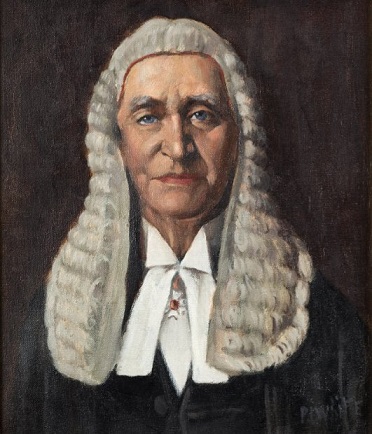
(Picture shows a portrait of Sir Isaac Isaacs from the Victorian Bar’s collection)

Irish Names for Boys

15 Sunday Jun 2014

Posted by A.O. in Name Themes and Lists

≈ 8 Comments

Tags

animal names, celebrity baby names, ethnonyms, famous namesakes, Gaelic names, hebrew names, Irish name popularity, Irish names, Latin names, modern classic names, mythological names, name history, name meaning, name popularity, name trends, names of political organisations, nicknames, Old Irish names, popular names, retro names, royal names, saints names, underused names, Welsh names

a07442ad-b5ca-4bfe-8a64-ab471fc44a87

It was very hard to choose just ten Irish boys’ names, as there are so many commonly used Irish names for boys in Australia, especially if you include Irish surnames. It’s not surprising when you consider our strong Irish heritage, and because the Irish were here from the beginning of European settlement, they were never marginalised as happened in other countries.

Famous Australians with Irish heritage include bushranger Ned Kelly, Peter Lalor who led the Eureka Rebellion, actor Erroll Flynn, artist Sidney Nolan, rock singer Doc Neeson, philanthropist Daisy Bates, and our greatest prime minister, Ben Chifley. Those alive today include Governor-General Peter Cosgrove, Nicole Kidman, Kylie Minogue, surfer Mick Fanning, Socceroo Lucas Neill, author Tom Keneally, and former prime ministers Paul Keating and Kevin Rudd.

A reminder I haven’t included any names with fadas (accent marks), as they aren’t permitted in all states and territories.

Aidan
Anglicised form of Aodhán, a pet form of Aodh or Áed, meaning “fire” in Old Irish; there are many characters from Irish mythology named Aodh. St Aidan of Lindisfarne was an Irish-born monk known as the Apostle of Northumbria; he was famous for converting people by simply walking from village to village, politely chatting with people and introducing them to Christian beliefs by helping them in their daily lives. The name Aidan first ranked in the 1970s at #533, and by the 1980s was already #177. Aidan joined the Top 100 in 1993 at #92, and peaked in 2008 at #51. Currently Aidan is #99 in Victoria and #102 in the Australian Capital Territory. The Aiden spelling is more popular: this first charted in the 1980s at #368, joined the Top 100 in 1997 at #62 and peaked in 2009 at #35. Currently Aiden is #41 nationally, #45 in New South Wales, #45 in Victoria, #65 in Queensland, #47 in Western Australia, and #39 in the Australian Capital Territory. Even combining spellings, Aidan/Aiden is only #51 nationally. This doesn’t seem as if Aidan is very popular, yet it still has a reputation as an “overused” name because of the massive trend for sound-alike names, such as Hayden, Brayden, Caden, Jayden, Zayden etc. Aidan is #50 in Ireland and #43 in Northern Ireland.

Cian
In Irish mythology, Cian was a god and father of the hero Lugh of the Long Hand. According to folk tales, Cian possessed a magical cow which produced a superabundance of milk. During a quest to recover his cow after she had been stolen, he seduced a princess who had been locked up in a tower (it was the princess’ father who had stolen the cow). The tale sounds very much like the Greek myth of Danae, and the princess was imprisoned for the same reason – a prophecy said that the princess’ father would be killed by his grandson. Lugh the Longhand was born from this union, and eventually the prophecy was fulfilled when Lugh killed his grandfather in revenge for locking his mother in a tower. The name Cian means “long, enduring, far, distant” in Gaelic, and is pronounced KEE-in. It is often anglicised to Kian, which is in the 400s in Victoria. Cian is #15 in Ireland.

Connor
Variant of Conor, Anglicised form of the Gaelic name Conchobhar, meaning “lover of hounds”. There have been several real life Irish kings with this name, including a High King, and also the legendary Conchobhar mac Nessa, who was unsuccessfully married to both Queen Medb and Deirdre, but had many other wives. The name is the basis for the Irish surname O’Connor, meaning “grandson of Conchobhar”, and the Clan O’Conchubhair is a royal Irish dynasty whose lineage has provided one hundred kings of Connacht, and two High Kings of Ireland: some members of the noble O’Conor family of Ireland are the living descendants of the last High King of Ireland. Connor is a truly royal name, which must have an influence on its use. The name Connor has charted since the 1980s, debuting at #418. It joined the Top 100 in 1994 at #83, and peaked at #21 in 2003. Currently it is #43 nationally, #74 in New South Wales, #61 in Victoria, #33 in Queensland, #31 in Western Australia, #40 in Tasmania, and #69 in the Australian Capital Territory. Connor is #97 in Northern Ireland; Conor is #5 in Ireland and #17 in Northern Ireland.

Darragh
Variant of Dara, derived from from the Gaelic for “oak grove”. The oak was sacred to the Celts, and the word druid is directly related to the word for oak. The city of Derry in Northern Ireland has the same meaning. Darragh can also be an Anglicisation of the Old Irish name Dáire, meaning “fertile, fruitful, virile, sexually aroused”, but also “agitated, raging, violent, tumultuous”. It’s a very explicit meaning in regard to masculine sexuality, suggesting a sort of bestial lust. The Darini were an ancient peoples from Northern Ireland, and it would seem that Dáire was their ancestor or ancestral god. Several Irish noble families and Scottish clans claim descent from the Darini, as do the current British royal family. There are many kings and heroes from Irish legend named Dáire, but folklorists believe they are ultimately versions of the same mythological figure, who may have been a god of the battlefield. Darragh can be pronounced DAH-ruh, or DA-ra, and may seem like an updated Darren to Australians. Darragh is #20 in Ireland and #30 in Northern Ireland; Dara is #86 in Ireland, and Dáire is #88 in Northern Ireland.

Finn
Both the older Irish and Anglicised form of Fionn, meaning “blond, fair, white, bright”. Its most famous namesake is the mythical warrior and giant Find mac Cumail, transcribed in English as Finn McCool. Finn was a nickname – his real name was Deimne, meaning “sureness, certainty”, and gained his nickname after his hair turned prematurely white. Finn was brought up by a warrior woman who trained him in war and hunting, then he studied under a poet and druid. One day Finn was cooking a mystical salmon for his master which would give him all the knowledge in the world: he burned his thumb in the process, and instinctively put his thumb in his mouth to cool it, swallowing a piece of salmon skin. This gave Finn the wisdom of the salmon, and whenever he needed to draw on its power, he needed only to suck his thumb. Finn’s followers were called the Fianna, and it is from them the Fenian Brotherhood gained their name. According to legend, Finn is sleeping in a cave beneath Ireland, and will one day awake to defend Ireland in her hour of greatest need. Finn first charted in the 1990s at #287, and by 1997 was already in the Top 100 at #88. Currently it is #62 nationally, #68 in New South Wales, #60 in Victoria, #76 in Queensland, #40 in Western Australia, and #30 in the Australian Capital Territory. This is a handsome popular name that has helped drive the popularity of names such as Flynn and Finlay. Finn in #38 in Ireland and #56 in Northern Ireland; Fionn is #27 in Ireland and #70 in Northern Ireland.

Lorcan
Anglicised form of Lorcán, derived from the Irish Gaelic word for “fierce”. There have two been ancient Irish kings named Lorcán, and a medieval saint Lorcán Ua Tuathail whose name is Anglicised to Lawrence O’Toole. St. Lorcán was of royal blood, and became Archbishop of Dublin. He played a prominent role in the religious reform of the 12th century, spearheading a movement of spiritual renewal while bringing the church in Ireland closer to Rome. He was admired by both members of the church and the secular community for his many acts of charity to the poor – much needed at the time due to a severe famine. This is a cool Irish name which could be an alternative to names as Lachlan, Liam, or Declan. Lorcán is #67 in Northern Ireland.

Malachy
Anglicised form of Máel Sechlainn, meaning “follower of St. Seachnall”. St. Seachnall is an obscure 5th century Irish bishop who seems to have been of Italian origin; his name may be an Irish form of the Latin name Secundus, meaning “second (born)”, as he is also known as St. Secundius. The modern spelling of Malachy has been influenced by the Hebrew name Malachi, meaning “my messenger”, and therefore understood as “my angel”. However, Malachy is pronounced MAL-uh-kee, not MAL-uh-kie. There have two medieval High Kings of Ireland named Malachy, and also a St. Malachy, who was the first native-born Irish saint to be canonised. The saint’s name is an Anglicisation of Máel Máedóc, meaning “follower of St. Madoc”; Madoc was a 7th century Irish monk, and his name may come from the Welsh for “fortunate”. Malachy is an attractive name in occasional use, and AFL footballer Liam Picken has a young son named Malachy.

Oscar
Believed to mean “deer friend”. In Irish mythology, Oscar was the son of the warrior Oisin (“young deer”) and the fairy queen Niamh; he was the grandson of Finn McCool, and one of his warriors. Oscar was killed by a member of the increasingly corrupt Fianna, and upon his death, Finn wept for the first time in his life. The name Oscar was popularised in the 18th century by the poems of James McPherson; Napoleon was a great admirer of McPherson and gave his godson Oscar as one of his middle names. Later Napoleon’s godson became Oscar I of Sweden, and the name Oscar became traditional in Scandinavia. The Irish writer Oscar Wilde may have received his name because his mother collected Irish folk tales, but perhaps also because his father had travelled in Sweden, where he received honours from King Carl XV – Carl had a son named Oscar, born two years before Oscar Wilde, and sadly the little prince died just months before Oscar Wilde’s birth. Oscar was #103 for the 1900s, and sank before leaving the charts in the 1940s. It returned in the 1970s at #478, joined the Top 100 in 1998 at #98, and the Top 50 in 2004 at #47. Currently Oscar is #24 nationally, #27 in New South Wales, #20 in Victoria, #39 in Queensland, #34 in Western Australia, #19 in Tasmania, and #20 in the Australian Capital Territory. This tough, masculine yet snuggly retro name is more popular than it has ever been. Oscar is #61 in Ireland and #64 in Northern Ireland.

Ronan
Anglicised form of Rónán. Irish and Scottish legend tells of selkies, who swim in the sea as seals, but can shed their sealskin and become human on land. Male selkies were handsome and seductive; female selkies were said to make excellent wives, but could never forget their true home, and would gaze longingly out to sea – selkie tales are nearly always romantic tragedies. The children born of selkie women were called ronans, or “little seals”. The lovely film The Secret of Roan Inish, set in Ireland, is about the selkie legend, and an Irish animated movie is due to come out this year on the same topic. St. Ronan was an educated Irish bishop who sought exile in Brittany and a peaceful life as a hermit. A magical fairytale name that sounds smooth and handsome, Ronan could replace popular Ryan; it will remind many of Irish singer Ronan Keating from The X-Factor. Ronan is #52 in Ireland and #40 in Northern Ireland.

Rory
Anglicised form of the Irish Gaelic name Ruaidhrí or Ruairí. The name means “red king”, referring to fox-coloured hair. There have been many Irish kings named Ruaidhrí, including Ruaidrí Ua Conchobair, the last High King of Ireland before the Norman invasion. Rory has charted since the 1950s, debuting at #289; after a bumpy start (when it sank to #420 in the 1960s) it began climbing steadily, and peaked in the late 2000s at #125. Currently it’s in the mid 100s, and this is a rare example of a modern classic which has never become popular. Not only underused, Rory is cute but with a “tough boy” vibe, and could be an alternative to popular Riley, or fashionable Remy. Rory is #42 in Ireland and #44 in Northern Ireland; Ruairí is #81 in Ireland and #74 in Northern Ireland.

POLL RESULTS
The public’s favourite names were Finn, Rory and Oscar, and their least favourite were Lorcan, Cian and Darragh.

(Picture of a Harbour Seal or Common Seal from the Belfast Telegraph)

Irish Names For Girls

08 Sunday Jun 2014

Posted by A.O. in Name Themes and Lists

≈ 10 Comments

Tags

classic names, famous namesakes, fictional namesakes, French names, Gaelic names, Irish Gaelic names, Irish name popularity, Irish names, Italian names, middle names, modern classics, mythological names, name history, name meaning, name popularity, nicknames, Old Irish names, popular names, royal names, saints names, underused classics, unisex names, vintage names

3478061055_c7f655e9d0

Irish people have played an important role in Australia’s history, with many arriving in the 18th century as convicts or free settlers. By the late 19th century, a third of Australia’s population was Irish, and today around 30% of us claim some Irish ancestry. It is said that Australia is the most Irish country in the world outside Ireland.

The Irish have made an indelible mark on our history, culture, religion, sport and perhaps most especially, our politics – six of our prime ministers have had Irish ancestors. They have also helped create much of our national character: both the good bits, like our dry sense of humour and love of language, and the bad bits, like our pessimism and thin-skinned “touchiness”. When I did Italian names, I said that I could imagine an Australian without an Italian history, I just didn’t care to, but it’s impossible to imagine Australia without an Irish history.

Here’s ten Irish girls’ names, some of which have become popular here, and others which are less common. Just a heads up that I haven’t included any fadas (accent marks) on any of the names, since they are not legal in all states.

Aisling
Modern name meaning “dream, vision” in Irish Gaelic. It can be seen as a literary name, because the aisling is a poetic genre developed in 17th century Ireland, where a woman appears in a vision and predicts a turn for the better in Ireland’s fortunes. Earlier, the dream-woman was young and beautiful, and didn’t have a political message, but symbolised nature or love. Aisling can be pronounced ASH-ling or ASH-leen, and to English-speakers, seems like a fresh alternative to Ashley; it has also spawned variants such as Ashlynn. Aisling is #41 in Ireland.

Aoife
From the Gaelic for “beauty, radiance”. In Irish legend, Aífe is a warrior woman, and rival of her (possible) sister Scáthach. Legend tells that she fought the hero Cú Chulainn, but he overcame her with trickery, and promised to spare her life if she stopped fighting with Scáthach, spent a night with him, and bore him a son. She fulfilled her side of the bargain, but the story didn’t end happily. In the tale of The Children of Lir, Aoife is the wicked queen who transformed her stepchildren into swans; she was cursed by being turned into a demon by her own father as punishment. Despite this unpleasant namesake, Aoife was used by medieval Irish nobility, with a notable example being Aoife MacMurrough. This 12th century Irish princess conducted battles on behalf of her husband, and is an ancestor of the current British royal family. Aoife is pronounced like EE-fuh; although complex to spell, it sounds rather like popular Eva, and has a lovely meaning. Aoife is #11 in Ireland and #10 in Northern Ireland.

Bridget
Anglicised form of the Old Irish name Brigit, meaning “high, exalted”. In Irish mythology, Brigit is a goddess; her name is derived from the word for “fire” and most likely her title. Brigit was a poet, and the inventor of keening – the lament over a body at a burial that is a mixture of singing and weeping. She is also patron of healing, smithing, arts and crafts, cattle and livestock, sacred wells, and serpents. She ruled all things high-reaching, as well as lofty attributes, such as intelligence, wisdom, excellence, knowledge, and skill. Brigit is associated with the home and hearth, and with early spring. Her special day is Imbolc, on February 1. She has become fused with St Brigid of Kildare, one of the patron saints of Ireland – probably an attempt to Christianise the goddess. St Brigid is patron of smiths, cattle, poets and scholars, and her feast day is February 1. In Ireland, the name Bridget was too sacred to use until the 17th century, but later became extremely popular – so much so that an Irishwoman was called a “Biddy“, just as an Irishman was called “Paddy”. Bridget was #104 in the 1900s, and dropped to its lowest ranking in the 1950s, at 0. It hit a minor peak in the early 2000s at #166, and is currently in the 200s in Victoria and the 400s in New South Wales. Bridget is an underused classic which has remained on the charts while never becoming popular.

Caitlin
Anglicised form of Caitlín, Irish form of Cateline, Old French pet form of Catherine. While the Irish say it something like kat-LEEN, English-speakers say KAYT-lin, and turn the Irish pronunciation into another name, Kathleen. Caitlin has been used in Ireland since the 19th century, and became well known in the 20th. In Australia, Caitlin has ranked since the 1970s, making its debut at #554, and soaring until it entered the Top 100 in 1987 at #86. By 1990 it was in the Top 50 at #38; by 1994 it was in the Top 20 at #15. It peaked in the late 1990s at #12, and since then has declined. Currently Caitlin is #99 nationally, #78 in New South Wales, and #103 in the Australian Capital Territory. Last year Caitlin was one of the names that fell the most in popularity, suggesting its day is coming to a close (although its many variant spellings would significantly boost its ranking). Caitlin is #64 in Ireland and #33 in Northern Ireland.

Ciara
Feminine form of Ciar, meaning “black”. There is a 6th century St Ciara and a 7th century one, or else just one long-lived St Ciara. According to legend, St Ciara was of royal blood, and founded an abbey; another story says that she (unless it is a different St Ciara) saved a town from a noxious fire through her prayers. Ciara is pronounced KEER-uh, and must be one of the most heavily Anglicised Irish names, for you rarely see it with its native spelling, but more often Keira or Kira. Although to me the Ciara spelling looks more elegant, it risks being confused with the Italian Chiara. Ciara fits in with Australian’s love of names such as Kirrily and Kirra, and has a native sound to our ears. Ciara is #32 in Ireland.

Deirdre
Deirdre of the Sorrows is a tragic heroine from Irish mythology. The daughter of King Conchobar’s bard, when she was a baby a druid predicted she would be very beautiful, but that much blood would be shed for her sake. Conchobar decided he wanted this beauty for himself, and had her brought up in seclusion. As an adult, Deirdre was as stunning as the druid had foreseen, and she fell in love with a handsome warrior named Naoise. The couple eloped, and were blissfully happy until the furious Conchobar tracked them down. In the ensuing battle, Naoise was amongst those killed. Conchobar triumphantly took his gorgeous wife home, but was angry that she remained cold and depressed. To teach her a lesson, he told her that he would give her to the man who had murdered Naoise – the man she hated above all others. On the journey to deliver her, the unhappy Deirdre threw herself from the chariot and split her head open. In some versions of the story, she simply wastes away with grief. Deidre is derived from the Gaelic name Derdriu, whose meaning is debated, but is implied in the original story as meaning “noise, murmuring”, related to the word for “storm”. It could thus be understood as “weeping, wailing, storm of tears”, and is often glossed as “sorrow”. Deirdre came into use as a girl’s name in the 19th century, and became more common in the 20th, when there had been many popular re-tellings of the legend. Deirdre first ranked in the 1930s at #183, peaked in the 1940s at #180, and hasn’t charted since the 1970s. This is a vintage name which has had very little use, so hasn’t become dated. It is rather lovely, although very sad.

Erin
Derived from Éirinn, from the Irish word for Ireland, Éire. Erin was used as a poetic and nationalistic name for Ireland, or the feminine personification of Ireland. According to folklore, the country’s name comes from Ériu, the mother goddess of Irish mythology, and a symbol of Irish sovereignty. Her name is believed to come from an ancient root meaning “fat”, to indicate that Ireland was a land of abundance. Erin came into common use as an Irish name in the 19th century. It has sometimes been given to boys, perhaps because it sounds like Aaron and Eric, but has only charted for girls. The name Erin first charted in the 1950s, debuting at #457, and reached the Top 100 in 1978, at #71. By 1980 it was in the Top 50 at #46, the following year it was in the Top 20 at #17, and it peaked in 1984 at #12. Erin has been a long-time favourite, and only left the Top 100 in 2012. This modern classic is no longer popular, but still getting a reasonable level of use. It is #39 in Ireland and #19 in Northern Ireland.

Maeve
Anglicised form of the Gaelic name Medb, meaning “intoxicating”, and related to the English word mead (a fermented honey drink). In Irish legend, Queen Medb was a powerful and seductive queen known for taking a succession of husbands as her consorts. She was once married to King Conchobar, from the story about Deirdre. Medb couldn’t stick him either and walked out; she ended up defeating Conchobar and ruling in his place. She demanded that her wealth be at least equal to her husbands’, and insisted her consorts be without fear, meanness, and jealousy – the last was very important, because Medb also took lovers to supplement her husbands. Folklorists believe that Queen Medb was originally a sovereignty goddess in a matrinlineal society who the king would symbolically “marry” in order to gain power over the land. This explains her many husbands. In modern times, she has become a feminist symbol of women’s power and female sexuality. This is a sweet, spunky name which fits in with the trend for names with a V in them, like Ava, and makes a great middle name. Maeve is in the 100s in Victoria, so not particularly unusual, while it is #100 in Ireland.

Orla
Anglicised form of Órfhlaith or Órlaith, meaning “golden princess”. Órlaith was a very popular name in medieval Ireland, and there are several queens and princesses from Irish history with this name. The famous High King of Ireland Brian Boru had a sister named Órlaith who married another High King (she unfortunately came to a sticky end after getting over-involved with her stepson), and Brian also had a daughter and a grand-niece named Órlaith. For some reason, Orla is a man in The Poems of Ossian by James McPherson, a young warrior and chieftain of Lochlin who falls in battle. In Scandinavia, Orla is used as a male name, and that might be because of McPherson’s poetry, which was very popular in Scandinavia. Orla is simple to spell and pronounce, and the princessy meaning would be attractive to many parents. Orla is #82 in Ireland.

Sinead
Anglicised form of Sinéad, the Irish form of Jeanette, the pet form of the French name Jeanne. It is the equivalent of the English name Janet, which is a pet form of Joan. In practice, Sinead is often understood as the Irish form of Jane or Jean; it has even been used as an Irish form of Jennifer since Jenny is an old pet form of Jane. The name is pronounced shi-NAYD. A famous Irish namesake is Sinéad de Valera, the wife of the Rebublican leader and Ireland’s third president, Éamon de Valera. A teacher of the Irish language, Mrs de Valera was named Jane by her parents, but changed her name to Sinéad not long after she was married. Sinéad de Valera was a successful children’s writer, who wrote in both English and Irish. She helped to popularise the name in Ireland, and the Irish singer-songwriter Sinéad O’Connor was named after her. Sinéad has lost popularity in Ireland in recent years, and has never charted in Australia, although still seen occasionally.

POLL RESULTS
The public’s favourite names were Maeve, Bridget and Aoife, and their least favourite were Ciara, Deirdre and Sinead.

(Picture shows detail from an Irish pound note, which bears the likeness of Queen Medb or Maeve; the pound hasn’t been used in Ireland since 2002 when the euro was introduced)

← Older posts
Newer posts →

Enter your email address to follow this blog

Categories

Archives

Recent Comments

A.O.'s avatarwaltzingmorethanmati… on Zarah Zaynab and Wolfgang…
Madelyn's avatarMadelyn on Zarah Zaynab and Wolfgang…
JD's avatardrperegrine on Can Phoebe Complete This …
A.O.'s avatarwaltzingmorethanmati… on Rua and Rhoa
redrover23's avatarredrover23 on Rua and Rhoa

Blogroll

  • Appellation Mountain
  • Baby Name Pondering
  • Babynamelover's Blog
  • British Baby Names
  • Clare's Name News
  • For Real Baby Names
  • Geek Baby Names
  • Name Candy
  • Nameberry
  • Nancy's Baby Names
  • Ren's Baby Name Blog
  • Sancta Nomina
  • Swistle: Baby Names
  • The Art of Naming
  • The Baby Name Wizard
  • The Beauty of Names
  • Tulip By Any Name

RSS Feed

  • RSS - Posts

RSS Posts

  • Celebrity Baby News: Melanie Vallejo and Matt Kingston
  • Names from the TV Show “Cleverman”
  • Can Phoebe Complete This Sibset?
  • Zarah Zaynab and Wolfgang Winter
  • Baby, How Did You Get That Name?
  • Celebrity Baby News: Media Babies
  • Celebrity Baby News: Adelaide Crows Babies
  • Celebrity Baby News: Chris and Rebecca Judd
  • Names at Work: Name News From the World of Business and Employment
  • Celebrity Baby News: Sporting Round Up

Currently Popular

  • Celebrity Baby News: Alisa Camplin and Oliver Warner
  • Rare Boys Names From the 1950s
  • Sad Celebrity Baby News (contents may cause distress)
  • The Top 100 Names of the 1930s in New South Wales
  • The Top 100 Names of the 1940s in New South Wales

Tags

celebrity baby names celebrity sibsets english names famous namesakes fictional namesakes honouring locational names middle names name combinations name history name meaning name popularity name trends nicknames popular names saints names sibsets surname names twin sets unisex names

Blog at WordPress.com.

Privacy & Cookies: This site uses cookies. By continuing to use this website, you agree to their use.
To find out more, including how to control cookies, see here: Cookie Policy
  • Subscribe Subscribed
    • Waltzing More Than Matilda
    • Join 517 other subscribers
    • Already have a WordPress.com account? Log in now.
    • Waltzing More Than Matilda
    • Subscribe Subscribed
    • Sign up
    • Log in
    • Report this content
    • View site in Reader
    • Manage subscriptions
    • Collapse this bar
 

Loading Comments...