• About
  • Best Baby Names
  • Celebrity Baby Names
  • Celebrity Baby Names – Current
  • Celebrity Baby Names – Past
  • Featured Boys Names
  • Featured Girls Names
  • Featured Unisex Names
  • Links to Name Data
  • Waltzing on the Web

Waltzing More Than Matilda

~ Names with an Australian Bias of Democratic Temper

Waltzing More Than Matilda

Tag Archives: nicknames

Famous Names: Ita and Cleo

08 Wednesday Feb 2012

Posted by A.O. in Famous Names

≈ 16 Comments

Tags

celebrity baby names, famous namesakes, Greek names, Irish names, nicknames, popular culture, saints names, unisex names

The Australian Academy of Cinema and Television Arts was established last year as a subsidiary of the Australian Film Institute; its job is to administer the AACTA Awards, which replace the old AFI Awards. Every news report on television seemed to feel it necessary to point out that AACTA is said just like the word actor, which I think most of us would have understood without help, seeing as they just said it aloud to us.

The Australian Academy has been deliberately set up in a similar way to the American Academy of Motion Picture Arts and Sciences, and the awards ceremony has been moved to late January, in order to fit in with the prize-giving season in the United States, which holds the Golden Globes and the Academy Awards in January and February. The AACTA Awards ceremony has been moved to Sydney and held at the Opera House, possibly because that seems more Hollywood than Melbourne. The AACTA statuette has also been remodelled, with some commenting that it looks like a flamboyant Australian Oscar.

Amongst the prize-winners was Asher Keddie, who won the Switched on Audience Choice Award for Best Performance in a Television Drama, for her role as Ita Buttrose in the mini-series Paper Giants: The Birth of Cleo. I must confess to not voting in this contest, or even knowing it existed until too late (obviously I’m not a very switched on audience member), but I do approve of the choice, as I thought Ms Keddie did an excellent job of portraying famous editor, Ms Buttrose.

Ita Buttrose, like Barry Humphries and Father Bob, is another super septuagenarian. She was named after her maternal grandmother, Ita Clare Rodgers (nee Rosenthal). Her ambition since the age of 11 was to be a journalist, and she began working as a copy girl at 15. Ita was a force in the Australian media for many years, including as youngest editor of The Australian Woman’s Weekly, the largest magazine in Australia. She became the first woman to edit a major metropolitan newspaper, the Daily Telegraph. Always perfectly presented, cultured and refined, she is instantly recognisable for her trademark lisp. She’s been granted several awards and honours, and supports a multitude of causes, from AIDS to Alzheimer’s. Ita is also an author of many practical books; her latest is a guide to etiquette.

Ita (IE-ta) is an Anglicisation of the Irish name Íte (EE-ta). Saint Ita of Killeedy was a 6th century Irish nun who headed a community of women. One of their tasks was to run a school for small boys; among her students was Saint Brendan the Navigator. According to tradition, Ita was of royal blood and baptised Deirdre; the name Ita she chose herself from the Old Irish word ítu, “thirst”. This was to signify her thirst for divine goodness. Today it sounds mildly vampiric.

Ita Buttrose became the founding editor of Cleo magazine in 1972, and made it an instant success – the first edition sold out in two days. Cleo was something new in Australian publishing: a magazine for women that spoke openly about sexuality. There were articles on masturbation, abortion, contraception and sex toys, and a nude centrefold – the first model for the centrefold was actor Jack Thompson. It made the sexual revolution accessible to the average woman. In Paper Giants, the title Cleopatra is suggested for the magazine, as befitting a strong yet sexual woman, but Cleo is chosen because it fits better on the masthead. It intrigues me that Cleo sounds similar to Ita’s middle name – Clare – and wonder whether she unconsciously selected a title that sounded like her own name. Cleo is also the name of Ita’s pet dog (Clare is her grand-daughter).

Cleo is usually thought of as being a short form of Cleopatra, but it can be short for any name beginning with Cleo-, such as Cleophas. It is therefore a unisex name, and there are several prominent men named Cleo, including American motorcyclist and World War I flying ace Cleo Pineau. The father of Elizabeth Short, the Black Dahlia murder victim, was named Cleo. It is from the Greek for “glory, fame, pride”. This gorgeous little name is right on trend for o-enders, and was also a celebrity baby name last year. It would make a great alternative to popular Chloe.

Celebrity Baby News: Geoff and Sara Huegill

06 Monday Feb 2012

Posted by A.O. in Celebrity Baby News

≈ 6 Comments

Tags

celebrity baby names, nicknames, Slavic names

Champion swimmer Geoff Huegill, and his wife Sara, welcomed their first child on January 20; a daughter named Mila.

Geoff Huegill established himself as one of the world’s great butterfly competitors, winning bronze and silver at the 2000 Summer Olympics, and winning seven gold medals at various Commonwealth Games. He has won 28 international medals, been world champion five times and set eight world records. In 2005, Geoff announced his retirement from swimming, after battling with his weight and failing to qualify for the Australian team. Retirement sent him into a deep depression, which he tried to deal with through drugs, alcohol and junk food. In 2008, he announced his comeback, having shed 40 kg (88 pounds) in readiness. By 2010, he had already won a national medal and won the Australian title. He went on to win an international medal, and then took two gold medals at the Delhi Commonwealth Games. He plans to compete at the London Olympics this year.

Sara Huegill, nee Hills, was in PR at a major fashion firm prior to her marriage, and has her own fashion blog. She and Geoff were married in Bali in April last year. Geoff credits his comeback to Sara’s support.

Mila is a pet form of Slavic names with mil in them, meaning “gracious, dear”. It’s fast becoming a fashionable favourite that sounds similar to popular Milla.

(Full story and photos in this week’s New Idea magazine).

Famous Name: Bob

31 Tuesday Jan 2012

Posted by A.O. in Famous Names

≈ 4 Comments

Tags

celebrity baby names, famous namesakes, name meaning, name trends, nicknames, palindromic names, vocabulary names

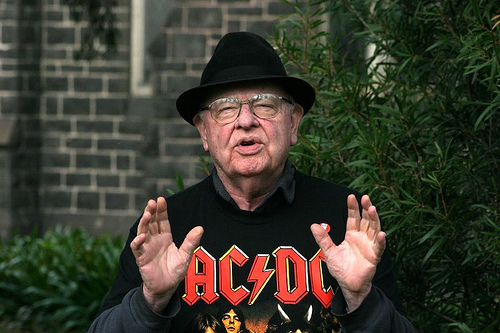
Last Sunday, Father Bob Maguire said his final mass at the church of Sts Peter and Paul’s in South Melbourne. At the age of 77, after nearly 40 years of service, he was forced to leave by the Catholic Church, which quotes canon law stating the official retirement age for priests is 75. He and his black standard poodle, Franklin, are temporarily homeless. At 77, Barry Humphries is awarded UK Australian of the Year; at the same age, Father Bob gets the boot.

Father Bob Maguire is one of the most famous and popular Catholic priests in Australia, and has devoted his life to helping others. His compassion, mischievous humour, bluntness, and eccentricities have made him loved by people from all religions, and none.

He has founded four charities, now amalgamated into the Father Bob Maguire Foundation, and inspired by a revolutionary approach to social justice. The Foundation’s workers are called The Bob Squad, and they care for the poor, the destitute, the homeless, and the mentally ill. Their catch cry is Viva la Bob!

Father has received an Order of Australia, and last year was named Victorian of the Year. Everyone thinks he’s super, except, apparently, the Catholic Church. Despite his massive popularity, Bob believes that the powers that be in the church hierarchy find him too much of a headache, because he has an unconventional approach to parish life which had him branded a maverick.

Some reasons the Church may have felt teased by Father Bob:

  • He put up a memorial on the parish front lawn to people who had died from drugs
  • He didn’t lock the church, because no matter how much stuff got stolen, he wanted it to be always available
  • People with mental illness or social problems were welcomed to church services
  • The collection plate was taken up by kids on roller skates
  • He gave the Occupy Melbourne protesters sanctuary
  • He said he would be happy to perform gay marriages in the church if that was legal
  • He publicly disagreed with the church’s ruling that secular songs not be permitted at Catholic funerals
  • Last year as an April Fool’s Day joke, he claimed that his church would be instituting “drive through confessionals” in order to keep pace with modern life
  • He has co-hosted a non-denominational religious TV programme with slightly controversial Jewish comedian John Safran
  • He finds parallel universes much more interesting to think about than life after death
  • When asked what Jesus might do if he were alive today, he quipped, “Get back in the tomb”

More than 1000 people attended Father Bob’s last mass, and many of them will not come to church again, because only Father Bob could make sense of it all for them. However, although he no longer has a church, he sees his Foundation as a “parish without borders”, and is also reaching people through his website, blog, Twitter, and his weekly radio spot on youth radio station Triple J.

I don’t presume to the theological qualifications which can judge whether Father Bob is a good Christian or not, but I do know he is a great Australian. And that (for the purposes of this blog) is more important.

Bob is a pet form of the name Robert, meaning “bright fame”. The old-fashioned nicknames for Robert were Hob, Dob and Nob, and Bob is a continuation of this trend to rhyme a name with others.

Bob is not only a palindrome, but also a vocabulary word. To bob means to “to move up and down”; it’s also the name for a short haircut, and pre-decimal slang for “a shilling” – a word still used by many older folk.

It’s well on trend as part of the vogue for 1930s nicknames, such as Bill, Joe, Sid, Dan and Jim. Knowing they will never call their child by a full form of the name, and loath to saddle them for life with a cutesy name like Billy, Joey or Danny, parents are opting for the simple monosyllabic nickname as an unpretentious choice.

As a middle name, Bob has even been used on a celebrity baby – name-fussy radio host Hayley Pearson called her son Austin Bob.

Waltzing with … Skyler

29 Sunday Jan 2012

Posted by A.O. in Waltzing with ...

≈ 5 Comments

Tags

American names, celebrity baby names, Dutch names, famous namesakes, fictional namesakes, name combinations, name history, name meaning, name popularity, name trends, nicknames, sibsets, surname names, UK name popularity, unisex names, US name popularity, US name trends

4c86fe452cad39ae2f1075e407eda5e1

This post was first published on January 29 2012, and heavily revised on February 10 2016.

Tomorrow school goes back in three different states and territories (Queensland has already been back a week), which means that the summer holidays are drawing to a close. I chose this name as suitable for the start of term, thanks to its educational meaning.

Name Information
Skyler is a variant of Schuyler; a Dutch surname of German origin meaning “scholar”, said SKIE-luh. This name was brought to what is now the United States by Dutch colonists, who settled in the east during the 17th century.

The Schuylers were a prominent New York family. Pieter Schuyler was the first mayor of Albany in New York, and a commander of the British forces at the Battle of La Prairie, near Montreal. His descendants were numerous and distinguished, including his grand-nephew Philip Schuyler, who was a general in the American Revolution and Senator for the state of New York. It is said that the first use of the names Schuyler and Skyler was in honour of this family.

Schuyler has only appeared on the US Top 1000 a smattering of times. It shows up first at the beginning of the twentieth century, and then again between the mid 1980s and mid 1990s, only charting as a male name, and never getting higher than the bottom of the Top 1000. Currently Schuyler is almost equally given to both sexes in the US – 17 girls and 15 boys last year.

Famous people with the name include Schuyler Colefax, the 17th US Vice-President, who was a distant cousin of Philip Schuyler, and Schuyler Wheeler, inventor of the electric fan. Schuyler has been chosen as a baby name by actors Michael J. Fox and Sissy Spacek – both times for daughters. The name is barely used outside the United States, and pronunciation would be a puzzle to most.

During the 1940s and 1950s there was a popular American radio and television series called Sky King, about an Arizona rancher and pilot called Schuyler “Sky” King. During the 1950s, the spelling variant Skyler begins showing up in the data. It’s tempting to imagine that people tuned into the show, and began spelling the name as it sounded, or in such a way as to make the nickname Sky more obvious.

Skyler joined the US Top 1000 in 1981 for boys, and for girls in 1990 – it began showing up in data as a girls name in the late 1970s, so it had a brisk rise as a girls name. Skyler peaked for boys in 1996 at #217, and is currently #351. For girls, it peaked in 2000 at #250, and is currently #302.

Famous Skylers include Skyler Green, a footballer who played for the Dallas Cowboys in the NFL, and actress Skyler Samuels, who played Gigi on Wizards of Waverley Place. A fictional Skyler is Skyler White from the TV series Breaking Bad, played by Anna Gunn. Fashion stylist Rachel Zoe has a son named Skyler.

In the UK, Skyler has charted for boys and girls since the late 1990s. Currently it is #406 for girls, while in 2014, there were 13 boys named Skyler. It is rising rapidly for both sexes.

Rising alongside Skyler is the variant Skylar. While it has never been higher for boys in the US than the 300s, and is currently #635, it is Top 100 for girls, being #48 and rising. A famous namesake is American singer and songwriter Skylar Grey, born Holly Hafermann – her stage name a reference to mysterious “grey skies”.

In the UK, Skylar is #212 for girls and rising steeply. It is occasionally used for boys, and in 2014 there were 5 baby boys named Skylar.

There are also spelling variants of Skyler/Skylar which are specifically feminine. Skyla is #531 in the US, #156 and rising in the UK, and in 2012 made the Top 100 in New Zealand. It is much more popular than Skylah, but that is rising rapidly as well.

Skyla and Skylah are much more common in Australia than any other spellings of Skyler, and the numbers in the UK and New Zealand suggest that this spelling makes the most sense for someone with a British/Commonwealth accent. I estimate that if Skyla and Skylah were added together, the name would be in the Australian Top 100 by now, or very close to it, while other spelling variants are extremely rare for either sex.

You can see that if all the different spellings of Skyler were added up, it would be an extremely common name in the English speaking world. So Skyla or Skylah may not be an original choice for girl, but a boy named Skyler would stand out in Australia. Some of the other spelling variants would be worth considering, although I think Schuyler will cause more problems than it is worth.

By now this name has become almost completely divorced from its true meaning, and we now connect it with such things as clear or cloudy skies, free-wheeling flight, and the wild blue yonder. The obvious nicknames are Sky and Skye, and it fits in with names like Shyla, Myla, Kayla, Kai, and Tyler. Its sound is at least part of the reason for its success.

POLL RESULTS
As a girl’s name Skyler received an approval rating of 52%. 38% of people thought it seemed okay, although only 5% of people actually loved it.

Skyler had a lower approval rating as a boy’s name, at 46%. 28% disliked Skyler on a boy, and only 4% loved it.

The favoured spelling of the name was Skyler, with 37% of the vote, although Schuyler was not far behind on 33%. The least popular was Skyla, which only one person voted for.

(Photo is of the NSW Schoolhouse Museum of Education in Sydney)

Waltzing with … Sunniva

25 Sunday Dec 2011

Posted by A.O. in Waltzing with ...

≈ 13 Comments

Tags

Anglo-Saxon names, Christmas names, name history, name meaning, name popularity, nicknames, saints names, scandinavian names

This blog post was originally published on December 25 2011, and revised and re-posted on December 23 2015.

From the very start I knew that I would have a name profile due on Christmas Day, and began thinking of suitable names for girls. Because Christmas is just after the Summer Solstice in Australia, and because Christmas is on a Sunday this year, I kept coming back to one name: Sunniva.

This lovely name is the Scandinavian form of the Anglo-Saxon Sunngifu, which means “gift of the sun”. As Christmas is a time for sharing gifts, and Australian Christmases can often be hot and sunny, and Christmas 2011 is on the Sun’s own day, it seemed perfect.

The story of Sunniva is one fraught with drama and high adventure. According to legend, there was once a 10th century Irish princess called Sunngifu, a virgin and very devout Christian. When her land was invaded by a pagan king who wished to marry her, she made a brave and rather desperate decision to escape. Along with a group of loyal companions, amongst them her brother Alban, she fled in a ship without oars or sails, trusting their destination to God.

After a few hairy encounters with Vikings, the pious company settled on the island of Selje, off the coast of Norway. They moved into an empty cave, and supported themselves with fishing and gathering wild foods, living a life of austerity and holiness. If you live in a comfortable house with a supermarket just down the road, this might sound a bit eccentric or at least cold and dismal, but Irish saints had a long and rich tradition of taking themselves off to remote windswept islands to worship in peace, so Sunniva and her crew were pretty normal by the standards of their time and place.

Unfortunately, the locals on the mainland believed these peaceful cave-dwellers were rustling their sheep and chowing down on ill-gotten roast mutton rather than the simple viands of nature. They came after them, intending to murder them as payback. Sunngifu and her company prayed to God to save them from the angry Norsemen. When the armed band arrived on the island, they found nobody there, and the cave sealed by a landslide. None of the exiles were ever seen alive again.

(This story may remind Australian readers both of Waltzing Matilda, with the accused sheep-thief preferring death to punishment by the authorities, and Picnic at Hanging Rock, which also ends with a mysterious disappearance in a cave which seals itself.)

Many years later, after reports of an unearthly light and heavenly fragrance in the area, King Olaf Tryggvason ordered that the cave be opened. Sunngifu’s body was found unharmed by the landslide and incorrupted, and as this was a clear sign of sainthood, King Olaf had a church built in her honour. Her relics were moved to Bergen Cathedral, where they performed another miracle by halting a fire (these useful relics disappeared at some point, unfortunately).

She became known in Scandinavia as Saint Sunniva, and is Norway’s first female saint. Saint Sunniva is the patron of Bergen, and the west coast of Norway. Her feast day is July 8 – appropriately enough, at the height of the northern hemisphere summer. The island of Selje is a place of pilgrimage, and you may see there the ruins of a Benedictine monastery dedicated to the saint, called Selje Abbey.

Sunniva has been well used as a girl’s name in Scandinavia, and is currently #68 in Norway, although falling in popularity, as it peaked at #32 in 2000.

Sunniva is pronounced SOON-ee-vah, but some people prefer to say it SUN-ee-va. Other popular pronunciations are soon-EE-va and sun-EE-va. You could also pronounce it soon-IE-va or sun-IE-va.

Sunniva has a happy meaning, well suited to summer and a land of sunshine.  It provides good ties with our English, Irish and Norwegian heritages (we have several popular celebrities of Norwegian ancestry, and bush poet Henry Lawson’s father was from Norway). It’s an unusual name in Australia, but doesn’t sound particularly strange, and isn’t hard to spell or pronounce, once you work out which pronunciation you’d like.

Attractive nicknames for Sunniva include Sue, Susie, Sunny, Eve, Eva, Evie, Neva, Neve, and Zuzu.

POLL RESULT
Sunniva received an approval rating of 81%, making it one of the highest-rated names of 2011. 30% of people loved the name Sunniva, while only one person hated it.

(Picture is from the cover of Emma’s Secret by Steena Holmes)

Baby Center Australia Releases Its Name List for 2011

10 Saturday Dec 2011

Posted by A.O. in Name Data

≈ 6 Comments

Tags

Baby Center Australia, Biblical names, famous namesakes, fictional namesakes, name data, name popularity, name trends, nature names, nicknames, popular culture, popular names, royal names, unique names, unisex names

There have been several stories in the press about how babycenter.au has revealed the top names of 2011. What they don’t say is that this isn’t based on birth data from registries, but just on names chosen and made public by the members of the website.

Baby Center also combines spelling of names, which in some ways gives a more accurate impression of the most popular names; on the other hand, it won’t necessarily gel with what the official data says. So yes, take notice of these trends (especially as they are the closest thing we have to a national survey) but they are not the final word on the subject by any means.

Most Popular Girls’ Names

  1. Chloe
  2. Sophie
  3. Ruby
  4. Charlotte
  5. Olivia
  6. Lily
  7. Ava
  8. Ella
  9. Emily
  10. Mia
  11. Sienna
  12. Amelia
  13. Isabella
  14. Lucy
  15. Zoe
  16. Grace
  17. Isabelle
  18. Maddison
  19. Emma
  20. Charlie (tied with Hannah)

Most Popular Boys’ Names

  1. Oliver
  2. Noah
  3. William
  4. Lachlan
  5. Ethan
  6. Jack
  7. Lucas
  8. Charlie
  9. Joshua
  10. Thomas
  11. Max
  12. Riley
  13. Jacob
  14. Aiden
  15. Liam
  16. Jackson
  17. Cooper
  18. Alexander
  19. Xavier
  20. Benjamin

Trends in Boys Names

Jack declines in popularity, and loses his position at #1 to Oliver. Old Testament names for boys continue to increase in popularity; big risers include Jacob, Noah and Joshua. William went to #3, which they attribute to the Royal Wedding, although William has been extremely popular for many years.

Dropping from the list are James, Samuel and Ryan, to be replaced by Alexander, Xavier and Benjamin. If Ryan really does drop significantly it will be interesting, as it has remained stable for around two decades.

Trends in Girls Names

Chloe moves into the #1 spot, while Lily declines in popularity. Isabella falls further down the charts, which Baby Center assures us is due to the Twilight series coming to an end. I’m not sure how they make this tally with the fact that Isabella was popular in the 1990s, while the first Twilight novel wasn’t published until 2005. Nor does this explain the increasing popularity of Jacob, which is also a name from Twilight.

Baby Center places Charlie for girls in the Top 20, because they combine it with the spellings for Charli. Although I think Charlie will be in the Girls Top 100 for 2011, I don’t think it will be Top Twenty. Baby Center also assures us most girls named Charlotte (#4) will be called Charlie in everyday life. I’m not sure where they have gained this information from.

Matilda and Georgia have dropped off the list altogether.

Unique Names

So if these are the popular names, what about the names that were given to only one baby on the website?

Boys: Audi, Brisbane, Fonzie, Harlem, Hawk, Haze, Hendrix, Hercules, Matisse, Rocky, Rome, Spirit, Toohey, Voltaire, Westin

Girls: Breeze, Clover, Deep, Halo, Justice, Lake, Oceana, Rain, Rainbow, Sailor, Serenity, Spring, Star, Storm, Vanilla, Zen

I somehow think that more than one baby received at least some of these names this year, although I expect all of them will be rare.

Famous Name: Douglas

03 Saturday Dec 2011

Posted by A.O. in Famous Names

≈ 22 Comments

Tags

aristocratic surnames, famous namesakes, locational names, name history, name meaning, name popularity, name trends, names of rivers, nicknames, Scottish names, surname names, UK name popularity, unisex names, US name popularity

doulass

This blog post was first published on December 3 2011, and substantially revised and reposted on December 10 2015.

Famous Namesake
Yesterday marked one hundred years since the Australasian Antarctic Expedition set sail from Hobart in the SY Aurora on December 2, 1911. It arrived at an unexplored region of Antarctica on January 8, 1912, and set up base camp. The site proved to be unrelentingly windy, with constant blizzards that made things hellish for the intrepid explorers.

Douglas Mawson was one of the leaders on the expedition. A geologist and lecturer from the University of Adelaide, he had been asked to join Robert Scott’s British expedition to find the South Pole (Scott was famously beaten to the punch by Norwegian Roald Amundsen). Mawson turned him down, as he thought it would be better to take his own team, and lead an expedition to the unexplored bits of Antarctica, which was most of it.

Douglas was part of a three-man sledging team called the Far-Eastern Party, which included Belgrave Ninnis, the son of a British arctic explorer, and Swiss mountaineer Xavier Mertz.

The group was making excellent progress when Ninnis fell into a snow-covered crevasse that the other two men crossed without incident; he took with him six huskies, a tent, most of the food and other essential supplies, and was never seen again. The glacier they were traversing is now called Ninnis Glacier in his honour.

Mawson and Mertz continued their frozen nightmare, forced to eat their huskies to supplement their scant rations. Although both men were unwell, Mertz became seriously ill and died in less than a week. It is thought that he may have died of an overdose of Vitamin A from eating husky liver, which Mawson solicitously fed him, in the fond belief that he was giving Mertz the best of the provisions.

Other theories are that Mertz died from hypothermia, from the shock of eating meat after being a vegetarian, or from the psychological stresses of the journey – especially the death of Ninnis, as the two men had been exceptionally good friends.

In the days before he died, Mertz became weak, exhausted, dizzy and delirious, even biting off the tip of one of his own fingers. He had dysentery, nausea, and stomach pain; his skin peeled away and his hair fell out – not surprisingly, another of his symptoms was depression. Whatever he died from, his demise caused him terrible suffering.

Douglas Mawson sledged the last 100 miles alone, falling into a crevasse on the way and having to climb out using the harness, only to see the boat he was to have returned on disappearing over the horizon. He had to spend another year in Antarctica.

Douglas was knighted in 1914 and The American Geographical Society awarded him a medal in 1916. The work he did was ground-breaking, and led to Australia getting its own portion of Antarctica, from where we still do important research.

For decades Sir Douglas Mawson was regarded unquestioningly as a hero, and his image is on the snow-white Australian $100 note. More recently his part in the expedition has been scrutinised, and attracted criticism. However there is no doubting his strength, courage, and determination to survive against all odds. He is remembered as an enthusiastic and kind man who never boasted of his remarkable exploits.

Name Information
Douglas is an Anglicisation of Scottish surname Dubhghlas meaning “dark river”. It originally belonged to the Douglas Water, which is a river in South Lanarkshire in southern Scotland. On its shores is a village named Douglas after the river, and the Douglas family took the village’s name as their surname when they moved here in the 12th century.

The Clan Douglas was one of the most powerful families of Scotland in the Middle Ages, often holding the real power behind the throne. The heads of the House of Douglas held the titles of the Earl of Douglas and the Earl of Angus, sometimes known as the Black Douglas and the Red Douglas. Their family estate was Castle Douglas, which Sir Walter Scott fictionalised as Castle Dangerous in his novel of the same name.

The Douglases are said to be descended from a Flemish knight, and fought with William Wallace and Rober the Bruce in the Wars of Independence. Sir James Douglas was the first to be labelled the Black Douglas by the English for what they considered his dark deeds: it was a title taken up with pride. The Douglases intermarried with the House of Stuart, gaining a royal connection.

The Douglases became so powerful they were seen as a threat. In 1440 the teenaged William Douglas, the 16th Earl of Douglas, and his younger brother were invited to dine with the ten-year-old King James I of Scotland. While they ate, a black bull’s head – symbol of death – was placed before the young earl. The Douglas boys were then dragged outside, given a mock trial and beheaded, so Clan Douglas lay siege to Edinburgh Castle. Called the Black Dinner, it is the inspiration for the Red Wedding in Game of Thrones.

Douglas has been used as a personal name at least since the 16th century, and seemingly originates in England rather than Scotland. It was originally a unisex name, given equally to boys and girls, and by the 17th century was primarily a female name. A famous example is Douglas Sheffield, Baroness Sheffield, who had an affair with Robert Dudley, the favourite of Queen Elizabeth I, and had a son by him. In the 18th century Douglas became more common for males than females, so this is an example of a name that went from the girls to the boys.

The name is a traditional one in the Hamilton family, which married into the Douglases in the 17th century; although the Hamiltons’ surname is now Hamilton-Douglas, they are actually Douglases by descent. The head of Clan Douglas today is the Duke of Hamilton, Alexander Douglas Douglas-Hamilton.

Douglas was #59 in the 1900s, and peaked in the 1920s at #28, during the career peak of actor Douglas Fairbanks, known as The King of Hollywood in that era. It remained on the Top 100 until the 1970s, and disappeared from the charts in 2010, although returning the following year. It is apparently now in rare use.

In the US Douglas has always been on the Top 1000. It was on the Top 100 from the end of the 1920s to the end of the 1980s. It peaked in 1942 at #23 – two wartime namesakes are General Douglas Macarthur, and Douglas Fairbanks son, Douglas Fairbanks Jr, who became a highly decorated naval officer. It is currently #598 and falling.

In the UK, Douglas was on the Top 100 from the 1880s to the 1970s, peaking in the 1920s. Although it got as low as 508 in 2008, it has been climbing ever since, and is now #276. A current famous namesake is the handsome British actor Douglas Booth.

Douglas is a strong and rugged sounding classic name that is no longer in fashion, but still in use. British trends suggest that it is due for a comeback, and thanks to Douglas Booth, perhaps we can once again see Douglas as a romantic, dashing name, as it was in the 1920s because of Douglas Fairbanks. The nickname Doug seems very dated, but Dougie is cute, and even Gus seems possible.

POLL RESULTS
Douglas received an approval rating of 49%. 22% of people thought it wasn’t ready for a comeback, and 15% saw it as dorky and nerdy, although 17% saw it as strong and rugged. In contrast, 10% of people thought it was ready for a comeback, and saw it as a hip choice most parents weren’t clued into yet.

Celebrity Baby News: Kate Dimond and Sam Cavanagh

24 Thursday Nov 2011

Posted by A.O. in Celebrity Baby News

≈ 5 Comments

Tags

celebrity baby names, nicknames

Radio host Kate Dimond, and her partner, radio producer Sam Cavanagh, welcomed their first child on November 22 – a son named Baxter. Baxter Dimond Cavanagh was born at 7 am weighing 3.1 kg (7 pounds) , and his parents, who both use short forms of their own names, apparently already refer to him as “Bax”.

Kate, nicknamed “Monty”, is the presenter of Saturday Morning Monty on Nova Radio. Sam is the producer of the Hamish & Andy Show on Fox FM; he has been friends with Hamish Blake since they were both in high school.

(Story from Digital Spy, November 24 2011 and Herald Sun, November 24 2011)

Names of Australian Fashion Designers

13 Sunday Nov 2011

Posted by A.O. in Name Themes and Lists

≈ 19 Comments

Tags

African names, Australian Aboriginal names, Biblical names, created names, Etruscan names, famous namesakes, French names, Gaelic names, Greek names, hebrew names, Korean names, Latin names, literary names, locational names, Maori names, mythological names, name history, name meaning, nicknames, Scottish names, surname names, unisex names, Zulu names

Last week we began our gender re-balancing with the names of some beautiful Australian models. Yet without the clever and creative designers, models would have nothing to wear. Here are ten female fashion designers whose names I found interesting in some way.

Arabella (Ramsay)

Arabella Ramsay grew up on a sheep farm in country Victoria; her family are all very creative, and she was encouraged to become a fashion designer. She did a course in textile design at RMIT, then spent a year in Paris studying fashion before opening her first store in Melbourne in 2006. This year, Arabella welcomed her first child, a daughter named Marlowe. The name Arabella originated in medieval Scotland, and it is thought that it is probably a variant of Annabel, meaning “lovable”. However, it is found in old documents in the forms Orable and Orabella, and from early on seems to have been influenced by the Latin word orabilis (also used as a name in the Middle Ages). This means “invokeable”, in the sense that a saint can be invoked by prayer. Arabella has never been a common name in Australia, despite our love of names from Scotland; I think it has seemed too old-fashioned or perhaps too upper-class. However, with -bella names all the rage, this looks like the perfect time for Arabella to shine.

Camilla (Franks)

Camilla Franks was a theatre actress who loved to design and make her own costumes, and formed her own fashion label in 2004. She is known as the “kaftan queen” because of her signature flowing lines in colourful prints, and hosts her own fashion shows in exotic locations around the world. Camilla sells internationally, and her designs are worn by celebrities such as Kate Hudson, Lily Allen, Beyonce and Oprah. In Roman mythology, Camilla was a virgin warrior queen of the Volscian tribe who was bound to be a votary of the goddess Diana since infancy. It is said that she was so fleet of foot that she could race across a field without bending a blade of grass, and could even run across water without getting her feet wet. We are told by the Romans that she was named Camilla because this is what the Etruscans called all their young priestesses (the male form is Camillus); if so, it seems to be more a title than a personal name. Queen Camilla’s mother’s name was Casmilla, and this seems significant. Once a favourite in literature, it’s best known today as the name of the Duchess of Cornwall. Milla and Millie are so popular at the moment that this may give Camilla more of a chance.

Collette (Dinnigan)

Collette Dinnigan was born in South Africa and moved to New Zealand as a child. After studying fashion design at Wellington Polytechnic, she moved to Sydney and worked for the Australian Broadcasting Corporation’s costume department. She opened her first store in 1992 and exported her fashions to New York, London and Hong Kong; she was the first Australian to launch a ready-to-wear collection in Paris. Her clothing lines sell in major department stores, and many Australian women will have at least one Collette Dinnigan piece in their wardrobes. The Australian government sent a Collette Dinnigan cardigan as their gift to French president Nicolas Sarkozy’s baby daughter, Giulia. Collette is a variant spelling of Colette, a French pet form of the name Nicole. The name Collette is well known as Australia as the stage name of lycra bike shorts-wearing pop singer Collette Roberts, who sang Ring My Bell, as well as the surname of actress Toni Collette. French names are very fashionable at the moment, but I wonder whether Collette is still sounding a bit dated. I think Nicollette might do better, maybe with Collette as the nickname.

Clea (Garrick)

Clea Garrick is originally from the Northern Territory, studied design in Brisbane, then moved to Melbourne where she set up the Limedrop label in 2005 with Nathan Price, who handles the marketing side of things. Limedrop has won a major award, sells around the world, and recently broke into the Tokyo market. Clea is a Greek name meaning “glorious”, and was the name of one of the Delphic oracles, who held the title of Pythia. These priestesses foretold the future at the town of Delphi in a temple dedicated to the god Apollo; it seems that some kind of shamanistic trance was used to foresee the future, and it has been speculated that hallucinogenic gases were involved. We are told by the ancients that these predictions tended to be ambiguously phrased, but usually gave good advice, and that the prophetic process was physically demanding on the Pythia – sometimes to the point where it killed her. We don’t know whether Clea was this priestess’ real name, or a name she adopted. I think Clea has a lot of potential – it’s underused, sounds similar to Claire and Leah, and is perhaps more feminine than its sister Cleo.

Elke (Kramer)

Elke Kramer is a Sydney-based jewellery designer known for her bold, chunky pendants and bracelets. She launched her label in 2004, and has a range of other creative pursuits, including art and illustration. Elke is the feminine form of the Hebrew name Elkanah, which is translated as “God has purchased”, and often interpreted as “belonging to God”, or “in God’s possession”. There are several men named Elkanah in the Old Testament, most notably the husband of Hannah, the father of the prophet Samuel. (Elkanah had another wife called Penninah, meaning “pearl”, but she was mean and jealous, so he didn’t like her as much as Hannah, even though Penninah gave him more children.) Elke is said EL-kuh, and it fits with popular names like Ella and the trend for EL sounds in girl’s names, but may possibly remind people of that large deer, the elk.

Jolet (Ucchino)

Jolet Ucchino is an independent fashion designer from Melbourne who launched her own label in 2008. She is committed to supporting local industry and using high-quality natural fabrics. It has been suggested that Jolet was originally a male name, derived from the French word joli, meaning “attractive”. It’s more common as a surname, but is still used as a personal name by both genders. Jolet Ucchino pronounces her name yo-LET. This is an unusual French name that’s a little like Yolande and a little like Juliet, and a fresh alternative to the name Jolie.

Kirrily (Johnston)

Kirrily Johnston studied at the Melbourne Institute of Textiles, and began her career in 1999 before moving to Sydney. She founded her own label in 2004, and was immediately met by rave reviews. Kirrily Johnston clothes sell in boutiques and department stores in Australia, the USA, UK, Asia and New Zealand, and are worn by stars such as Miranda Kerr, Nicole Kidman, Reese Witherspoon and Diane Kruger. This year Kirrily became a judge on Project Runway Australia. Kirrily is a much liked name here, and seems to be uniquely Australian. The origin is very uncertain. It could be a variant of the Maori name Kiri, which means “fruit skin, bark”, and is well known as the name of opera star Dame Kiri Te Tanawa. Kirri is the Maori word for “wild dog” and the South African word for “stick”, and also looks similar to kirra, an Aboriginal word meaning “leaf”, and Kirribilli, a Sydney suburb meaning “good fishing spot” in the local language. Most likely it came into use because it sounded similar to popular names of the 1960s and 1970s, such as Kylie, Kerry and Kelly. It has helped influence a new generation of soundalike names, such as Kirra-Lee, Keira-Leigh, Kirri-Li and Kyralee, of which you can find many examples given to recent babies and toddlers.

Lorna (Clarkson)

Lorna Jane Clarkson began her career as a dental therapist, but moved into fitness instruction. Finding the existing range of women’s activewear limited, she started making her own line of fashionable gym clothing. In 1990 she opened her own store, and today there are 122 Lorna Jane stores. The name Lorna was created by novelist R.D. Blackmore for his historical romance, Lorna Doone (1869). He may have based it on the Scottish place name Lorne, which is in a region once named Lorna, and is possibly based on the male name Loarn – Loarn mac Eirc was a legendary king who was one of the sons of the first Gael to arrive in Scotland from Ireland. Loarn may be from the Gaelic word latharn, meaning “fox”; perhaps a tribal totem. Lorna Doone is an exciting tale of a long-lost heiress, forbidden marriages, unexpected changes in fortune, and all manner of adventures. It was the favourite novel of Australian bushranger Ned Kelly, and he may even have got the idea of wearing armour from the book, as the outlaw Doone family are said to wear “iron plates on breast and head”. Lorna was an “old grandma” name when I was a little girl, which means another generation has gone by and maybe now it seems more usable. It really doesn’t sound much different to currently popular names such as Laura and Lauren, and has a surprisingly Australian significance.

Thulie (Ellis)

Thulie Ellis is an emerging fashion designer who was born in the Transkei Zulu region of South Africa, raised in New Zealand, and educated in Australia, studying at Sydney’s premier fashion school FBI. She debuted her first collection in 2009 and opened her online store the same year. Thulie is pleased that many of her clients are from the United States, as she has been in love with America since a trip there as a teenager. She hopes to expand further into the US market. Thulie’s name may be a pet form of Nokuthula, a common Zulu name meaning “peace and tranquillity”, although the word Thula (“peace”) is also used as a name, with Thuli or Thulie as the short form. Thulie is pronounced TYOO-lee; the first syllable is said like the word tulle, or the beginning of tulip. Exotic, yet simple, I can imagine many people being drawn to this pretty name.

Yeojin (Bae)

Yeojin Bae was born in Korea, and wanted to be a fashion designer when she was two years old; her grandfather was a designer, and both her parents worked in the industry. With their full support, she attended art school from the age of 4, and became the youngest student at the Whitehouse Institute of Fashion in Melbourne at the age of 14; she graduated when she was 17. She has done internships in New York with Marc Jacobs and Anna Sui, won the 2007 Tiffany and Co Young Designer of the Year Award, and in 2009 was nominated for the Prix de Marie Claire Designer of the Year Award. Her collections sell in major department stores in Australia, the UK, the USA and the UAE. Yeojin’s name means “beautiful treasure” in Korean. Her name is pronounced yo-jhin – at least in an Australian accent. I’ve included a short interview with Yeojin so you can hear her name said aloud.

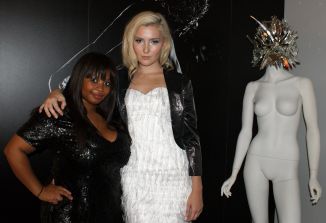
(Photo of Thulie Ellis with one of her garments at Rosemount Fashion Week from Southern Courier, May 10 2010)

Names of Australian Models

06 Sunday Nov 2011

Posted by A.O. in Name Themes and Lists

≈ 27 Comments

Tags

Cornish names, created names, famous namesakes, fictional namesakes, French names, hebrew names, Indian names, Italian names, Latin names, Maori names, mythological names, name history, name meaning, Native American names, nicknames, Shakespearean names, Tamil names, Welsh names

Because we had two sets of male names for Boys Names from the Australian Football League and Boys Names from the National Rugby League, we need to have two sets of female names to keep the numbers even. As the spring fashion collections are out now, and ladies are getting frocked up for the spring racing season, it seemed a good time of year to feature women’s names from the world of Australian fashion.

Bambi (Northwood-Blyth)

Bambi Northwood-Blyth is a young up and coming model from Melbourne. She became known once her photo started being seen in tabloids partying with her surfer boyfriend who owns a fashion label, and soon became an internationally known “it” girl. At 5 foot 7, Bambi is unusually short for a fashion model, has a very distinctive look with heavy dark eyebrows, and sports tattoos and facial piercings. Bambi is a diminutive of the Italian word bambina, meaning “girl child”; English equivalents of Bambi might be Babe or Lassie. A girl named Bambi (real name Francesca) is the heroine of 1914 novel, Bambi, by Marjorie Benton Cooke. It recounts the romantic adventures of a lively young society girl in New York, and seems an entertaining enough read. However, it’s been overtaken in the public consciousness by a male deer called Bambi, hero of a novel by Felix Salten which was made into an animated Disney movie. Since then, Bambi has taken on connotations of being doe-eyed, long-limbed and generally adorable, like a baby deer. Bambi is usually a nickname or stage name in real life, and this case is no exception: Bambi Northwood-Blyth’s real name is Stephanie.

Cheyenne (Tozzi)

Cheyenne Tozzi was raised in Sydney, and is the type of blonde bikini babe which makes her suitable to be the face of Mambo Goddess and Just Jeans. She’s been hailed as “the next Elle McPherson”, and seems to be dating someone new every time you open a gossip magazine, from Kanye West to Mickey Rourke to Brandon Davis to our own Taj Burrow. Cheyenne is the name of a Native American people from the Great Plains region. Their name is what the Dakota Sioux called them, and means something like “the people of an alien language” (literally, “red-talkers”). One of their most famous members was the chief Black Kettle, who tried to make peace with the American settlers, and was killed by General George Custer. It’s pronounced shy-AN, and seems to be have been first used as a name in 1950s TV western, Cheyenne, about a cowboy called Cheyenne Bodie. It’s now seen as a primarily feminine name, and you should be aware that many Native Americans find using tribal names as personal names culturally insensitive or even offensive.

Demelza (Reveley)

Demelza Reveley is from Wollongong, and won the fourth series of Australia’s Next Top Model. Despite winning the show, judges said she lacked the sophistication to be a top model, and was just young and pretty. She has posed for Cosmopolitan and Vogue, and is currently the face of Sydney’s fashionable Strand Arcade shopping centre. Demelza is the name of a Cornish village said to mean “fort of Maeldaf”. The name Demelza was used for a character in the Winston Graham’s Poldark novels, and it became well known after the novels were turned into a TV series in the 1970s; the part of Demelza Poldark was played by Angharad Rees. Part of the success of the name at the time may be because, in the story, Demelza is told that her name means “thy sweetness”. Demelza Reveley’s parents obviously like unusual names – her sister’s name is Tanith.

Elle (Macpherson)

Elle Macpherson (pictured) was born in Sydney, and first modelled in New York as a teenager to raise money for her law degree (soon abandoned). She became known for her girl next door looks and magnificent figure, which earned her the sobriquet of “The Body”. Elle became part of the generation of supermodels in the 1980s, and went on to control many business interests. Today she is a multimillionaire businesswoman with her own fashion label, and is the face of Revlon cosmetics. She lives in Britain with her two sons. Elle’s name is short for her real name of Eleanor. Elle is the name of the world’s largest fashion magazine, founded in Paris in 1945. At one time, Elle Macpherson appeared in every issue of the magazine for six years in a row, and at the age of 21, married its creative director, Gilles Bensimon. The magazine’s name is the French word for “she”.

Miranda (Kerr)

Miranda Kerr was raised in the country town of Gunnedah in New South Wales before her family moved to Brisbane. She won the 1997 Dolly magazine contest at the age of 13, became a swimwear model, and relocated to New York. She is the first Australian to become a Victoria’s Secret lingerie model. She is married to actor Orlando Bloom, and is the mother of Flynn Christopher Blanchard Copeland Bloom. The name Miranda was created by William Shakespeare for his play, The Tempest; Miranda is the teenage daughter of the duke Prospero, and the two of them have been exiled on a remote island since Miranda was a toddler. Miranda’s name is derived from Latin for “admirable, miraculous” – Prospero is a magician, and perhaps chose a rather magical sounding name for his daughter. Miranda seems to be a popular name in Australia, at least in fiction; there seems to be a lot of Mirandas in films and television shows, including the beautiful schoolgirl Miranda in Picnic at Hanging Rock, based on the novel by Joan Lindsay. As this movie is very mysterious, it adds up to Miranda being a remarkably magical and mystical name.

Myfanwy (Shepherd)

Myfanwy Shepherd is from Cairns; she auditioned for the fourth series of Australia’s Next Top Model, but was rejected, as judges didn’t believe she had what it takes. A few months later, she was on the runways of New York, London, Paris and Milan. Myfanwy is a medieval Welsh name revived in the 19th century. It is often translated as “my fine one” or “my rare one”, but this seems to be an imaginative gloss, as it is more likely from the Welsh for “beloved”. A 14th-century legend tells of Myfanwy Fychan, who was said to be the most beautiful woman in Powys, and vain enough to love nothing more than hearing her appearance praised. She took a fancy to a penniless bard because he could compose poems extolling her loveliness. Fickle as well as vain, she soon dumped him for someone richer and better looking, and the bard was left to wander around sadly composing poetry to his lost love. This rather unpleasant character’s story was turned into a popular song by Joseph Parry in the 19th century. The name is pronounced muh-VAHN-wee, however Australian Myfanwys have a range of pronunciations, including like Tiffany with an M at the front. Like Myfanwy Shepherd, they all seem to use Myf (said MIFF) as the nickname.

Pania (Rose)

Pania Rose is from Perth in Western Australia; she was discovered during a national teen covergirl contest. She’s posed for Marie Claire and Spanish Vogue, and is most famous for her 2006 Sports Illustrated Swimsuit Edition appearance. The name Pania is one from Maori mythology; Pania of the Reef was a beautiful sea maiden. She fell in love with a handsome son of a chieftain, and the pair became secretly married. These mortal-to-sea creature love affairs always seem to go horribly wrong in tales, and this one is no exception. Pania stayed with her husband every night, but during the day she needed to be in the sea in order to survive. Her frustrated husband got tired of not having a wife around during the day, and tried to force her to remain on land against her will. Horrified that he would risk her life, she fled from him into the ocean. There is a statue of Pania on the city of Napier’s Marine Parade that is sometimes compared to that of The Little Mermaid in Copenhagen. The name is said PAH-NEE-AH, and it may mean “polished”.

Tabrett (Bethell)

Tabrett Bethell was born in Sydney, and was a teenage model and cheerleader for the NRL Cronulla Sharks. After this she trained as an actress, has been in several films, and played a key role in the US fantasy TV show, Legend of the Seeker, where she gained a fan following. Tabrett’s unusual name came about because of an argument her parents had about what to name her. Her mother had chosen the name Siobhan, but her father preferred the name Murray. Her dad left the hospital and went for a drive, where he saw a sign for Tabrett Street. He drove back to the hospital, and suggested Tabrett instead, which her mother proved equally enthusiastic about. Tabrett is pronounced with the emphasis on the first syllable, and for many years, Tabrett was told her name was Welsh. I have read that it is derived from the Hebrew word tofe, for the hand drum that is used to praise Yahweh, and is interpreted as meaning “celebration”. Although Tabrett’s surname is Welsh, meaning “son of Ithel”, by coincidence it looks similar to the Hebrew for “house of God”, so there is some odd Welsh-yet-Hebrew/Hebrew-yet-Welsh theme to her name, I think.

Tahnee (Atkinson)

Tahnee Atkinson is from Perth, and is the winner of the fifth series of Australia’s Next Top Model. Tahnee has a curvaceous figure, and her weight was sometimes an issue during the course of the show. As part of her prize, she received a contract with Maybelline and a spread in Harper’s Bazaar, which retained exclusive rights to her for six months. Tahnee is a name that has long been a favourite in Australia; the oldest Tahnee I know is in her late fifties, and the youngest was born last year. The meaning of the name is uncertain, but Australians often fondly believe it to be Aboriginal or Maori in origin. Most likely, it just a variant of Tania; it is pronounced TAH-nee (like tardy with an N in it instead of a D).

Valli (Kemp)

Valli Kemp was born in Kenya to British parents, moved to London when she was seven and to Sydney when she was twelve. She was chosen Miss World Australia in 1970, and seen as the epitome of early ’70s glamour, with bedroom eyes and full lips. After moving to London for the Miss World finals (Grenada won), she became part of the “beautiful people” scene, and appeared in a few films, most notably cult horror flick Dr Phibes Rises Again, opposite Vincent Price. After moving back to Australia in the 1980s, she became a full-time artist and art teacher. The name Valli means “creeping plant” in Tamil, which refers to either a sweet potato or a yam; both of these grow on vines. Valli is a Hindu goddess in the mythology of South India and Sri Lanka. In the stories, a chieftain and his wife prayed for a child, and found a baby girl amongst the vines in the forest; they raised her as their own and she grew up to be princess of her tribe. She became the wife of Lord Murugan, the most loved deity in Sri Lanka – a brave warrior who protects even the most humble.

← Older posts
Newer posts →

Enter your email address to follow this blog

Categories

Archives

Recent Comments

A.O.'s avatarwaltzingmorethanmati… on Zarah Zaynab and Wolfgang…
Madelyn's avatarMadelyn on Zarah Zaynab and Wolfgang…
JD's avatardrperegrine on Can Phoebe Complete This …
A.O.'s avatarwaltzingmorethanmati… on Rua and Rhoa
redrover23's avatarredrover23 on Rua and Rhoa

Blogroll

  • Appellation Mountain
  • Baby Name Pondering
  • Babynamelover's Blog
  • British Baby Names
  • Clare's Name News
  • For Real Baby Names
  • Geek Baby Names
  • Name Candy
  • Nameberry
  • Nancy's Baby Names
  • Ren's Baby Name Blog
  • Sancta Nomina
  • Swistle: Baby Names
  • The Art of Naming
  • The Baby Name Wizard
  • The Beauty of Names
  • Tulip By Any Name

RSS Feed

  • RSS - Posts

RSS Posts

  • Celebrity Baby News: Melanie Vallejo and Matt Kingston
  • Names from the TV Show “Cleverman”
  • Can Phoebe Complete This Sibset?
  • Zarah Zaynab and Wolfgang Winter
  • Baby, How Did You Get That Name?
  • Celebrity Baby News: Media Babies
  • Celebrity Baby News: Adelaide Crows Babies
  • Celebrity Baby News: Chris and Rebecca Judd
  • Names at Work: Name News From the World of Business and Employment
  • Celebrity Baby News: Sporting Round Up

Currently Popular

  • Celebrity Baby News: Toby Allen and Darren Weller
  • Rare Boys Names From the 1950s
  • Celebrity Baby News: Bernard Fanning and Andrea Moreno
  • Rare Girls Names From the 1940s
  • Girls Names From Stars and Constellations

Tags

celebrity baby names celebrity sibsets english names famous namesakes fictional namesakes honouring locational names middle names name combinations name history name meaning name popularity name trends nicknames popular names saints names sibsets surname names twin sets unisex names

Blog at WordPress.com.

Privacy & Cookies: This site uses cookies. By continuing to use this website, you agree to their use.
To find out more, including how to control cookies, see here: Cookie Policy
  • Subscribe Subscribed
    • Waltzing More Than Matilda
    • Join 517 other subscribers
    • Already have a WordPress.com account? Log in now.
    • Waltzing More Than Matilda
    • Subscribe Subscribed
    • Sign up
    • Log in
    • Report this content
    • View site in Reader
    • Manage subscriptions
    • Collapse this bar
 

Loading Comments...