• About
  • Best Baby Names
  • Celebrity Baby Names
  • Celebrity Baby Names – Current
  • Celebrity Baby Names – Past
  • Featured Boys Names
  • Featured Girls Names
  • Featured Unisex Names
  • Links to Name Data
  • Waltzing on the Web

Waltzing More Than Matilda

~ Names with an Australian Bias of Democratic Temper

Waltzing More Than Matilda

Tag Archives: name trends

Name News: Baby Name Predictions, “Banned” Baby Names, and Grandparents Weigh In

21 Saturday Nov 2015

Posted by A.O. in Names in the News

≈ 2 Comments

Tags

Arabic names, banned names, family interference, name trends, rare names

081015_woman_with_baby-649x337

Name Trend Predictions for 2016
Social researcher Mark McCrindle, whose company collates the national Top 100 each year, has made his annual predictions on what name trends we will witness for next year.

1. Currently popular names will lose popularity
McCrindle says that names have about “a decade of popularity”. I’m guessing he’s referring to the Top 10 as “popular”, because it’s not uncommon for names to spend half a century or more in the Top 100. As such, Charlotte and Emily are slated to go down in popularity (these seem like VERY safe bets, as Charlotte has already gone down, while Emily has been decreasing in popularity since the late 2000s). Likewise, it’s bye-bye to Noah and Cooper.

2. Short names
Long names are generally declining, while short names are holding steady. He’s predicting more Eve, Gia, and Ivy for the girls, while Ash, Ed, and Max seem like reasonable bets for the boys.

3. The 1950s are back in style
Our grandparents names are now starting to seem a lot cooler, while still having that reassuring feel of familiarity. Why not Judith, Robyn, and Heather for girls, and Bernard, Stephen, and Andrew for boys?

4. Names with staying power
The babies being born now are predicted to have longer lifespans and continue working for longer than ever before. Solid names that sound equally good on a baby and an elderly person are advised for this generation. He thinks Audrey, Olivia, and Violet fit the bill for girls, while Daniel, Edward, and William are names for boys that will withstand the test of time.

5. Uncommon names will become more common
The number of babies with a Top 10 name shrinks each year, which means we’re selecting from an ever-wider pool of names. He suggests Olive and Sage for girls, Orson and Sawyer for boys (Olive is already in the Top 100, so not actually all that uncommon – could the pool be smaller than reported?). Also it looks like it’s nature names for girls, surname names for boys.

Predictions for 2016 from the Northern Territory
A rather confusingly-written article from the Northern Territory News says that it has a list of 60 “predictions” for next year’s popular baby names in the Territory. Where this list comes from they do not say – it may be a list of names actually registered this year, or perhaps a psychic vision from a local swami able to penetrate the birth registry through the Veil of Illusion with their Third Eye.

Some of the names on the list are Aspen, Cairo, Cleo, Darwin, Devon, Herbert, Khaleesi, Lawson, Miller, Monroe, Niles, Presley, Virginia, and Ziggy. Rather depressingly, the Arabic name Safiyaa is considered to be “made up”.

In any case, these sixty names will not all be on the popular list for next year, as the Northern Territory only has a Top 20.

Grandparents Naming Rights – Should They Have Any?
Seniors website Starts at Sixty discusses a naming trend they read about in the New York Times – rich people bribing their children with hefty financial incentives for the right to name their grandchildren. One reason for the trend is said to be the shift away from traditional naming practices towards choosing something more unusual.

The SAS writers have a bob each way by both condemning the practice, and saying that if their children were going to pick something outlandish like Apple, they’d be reaching for the chequebook quick smart. They suggest a compromise: grandparents can’t choose a name, but they get free right of veto.

Well sorry grandparents but I don’t even support a free veto, and if you read this article, you will see why! Some people would veto even common names.

I’m happy to say that most of the seniors who commented said that it was the parents’ right to name their own children, and reminded the website that they had already got to choose their own childrens’ names.

They also reminded us that this is hardly a new trend – one had a grandmother whose mother paid her to name her son Owen. Grandparent disapproval is nothing new either, as others reported that their own choice of baby name was greeted coldly by their parents. Others did report some success at suggesting baby names without resorting to bribery, so no need for grandparents to give up in despair either.

Banned Baby Names
There’s a list of banned baby names in Australia doing the rounds, copied from Scoopla. Supposedly these names were all banned in 2015, which is nonsense – I have seen these names before on lists going back for years. Some of them may be urban myths, as there is no source given for this (mis)information, while others may be simply hypothetical examples given by birth registries, and not actual names submitted for registration.

Read for fun, but with so many grains of salt that you will need to drink copious amounts of water for the rest of the day.

POLL RESULTS
People’s favourite baby name trend trend for 2016 was names that sound equally good on babies and the elderly, gaining 43% of the vote. Their least favourite was 1950s names, which 11% of people voted for.

Most people (62%) thought that grandparents should be free to make baby name suggestions, but with no expectation that they would be followed. However, a significant minority (36%) felt that they should stay out of the baby naming process altogether. 1% thought that grandparents should be allowed to veto a name they hated if it was very strange, and one person thought that if grandparents wanted to choose the baby name, they could pay for the privilege. Nobody was in favour of grandparents being allowed significant input into the baby naming process otherwise.

Fresh Surname Names For Boys

08 Sunday Nov 2015

Posted by A.O. in Name Themes and Lists

≈ 3 Comments

Tags

Anglo-Saxon names, celebrity baby names, Dutch names, European name popularity, famous namesakes, fictional namesakes, French names, Gaelic names, Harry Potter names, honouring, locational names, name history, name meaning, name popularity, name trends, names from comics, names from movies, nicknames, Old English names, Old Norse names, saints names, Scottish names, surname names, UK name popularity, unisex names, US name popularity

Calvin-Hobbes-calvin-and-hobbes-23762782-1280-800

Surname names for boys that aren’t popular in Australia and have never charted here, yet are rising internationally. These names only chart for boys at present, giving them a solidly masculine feel.

Beckett
English surname with several possible origins. It could be after a place name – Beckett in Berkshire means “bee cottage” in Old English, while Beckett in Devonshire means “Bicca’s cottage”; the Anglo-Saxon name Bicca means “pick axe”. It could also refer to someone who lived near a stream, because the word beck means stream. Finally, it could be derived from the surname Beake, a nickname for someone with a big nose. Beckett has been used as a first name since at least the 16th century, and may have been inspired by St Thomas Becket (also known as Thomas à Becket), the famous medieval archbishop murdered in Canterbury Cathedral by supporters of Henry II. You can find it in early records as a middle name for people called Thomas A. Beckett and so on. In the Artemis Fowl books, Beckett is the younger brother of Artemis, blessed with strength and dexterity. Although rare in Australia, Beckett is storming up the charts in both the US and the UK. The obvious nickname is Beck.

Calvin
From the French surname Cauvin, derived from chauve, French for “bald”. It has been in use as a first name since the late 16th century, inspired by the French theologian Jehan Cauvin, known as John Calvin by English-speakers (Calvin is the Latinised form of his name, from calvus, “bald”). He was a leader of the Protestant Reformation, and his thoughts on the value of hard work as part of a pious Christian life one of the factors in the rise of capitalism. Famous namesakes include former US president (John) Calvin Coolidge, fashion designer Calvin Klein, and rapper Calvin Broadus Jr, otherwise known as Snoop Dogg. However, many will be reminded of the mischievous little boy in the Calvin and Hobbes comic books, who lives in a fantasy world with his imaginary friend Hobbes, a tiger – both Calvin and Hobbes are named after famous philosophers. Around the 300s in Australia, Calvin is fairly stable in the US, UK, and France, and rose in all three countries last year, while Top 100 in Scotland. Similar in sound to familiar Callum, this also has the nickname Cal.

Emmett
May be derived from Emmot, a medieval pet form of the name Emma. There are several surnames derived from male names that we think suitable for girls (eg Addison, Mackenzie) so it makes sense that a surname derived from a female name is suitable for boys! It could also be a variant of Emmott, a place name in Lancashire meaning “junction of streams”. Emmett was originally a name for girls, but by the 19th century had become overwhelmingly a boy’s name, and much more common in the United States. The name Emmett was already rising in the US when Twilight was published in 2005, but had a definite surge after the release of the movie, with Kellan Lutz in the role of strong-man vampire Emmett Cullen. Still rising, it is now in the mid 100s in the US, while rising steeply in the UK since 2005. It’s around the 200s in Australia. Famous namesakes include outlaw Emmett Dalton, clown Emmett Kelly, and teenager Emmett Till, whose murder helped inspire the Civil Rights movement. And who could forget Dr Emmet Brown from Back to the Future?

Grayson
When Scottish, a corruption of Grierson, meaning “son of Grier”, with Grier a pet form of Gregory. When English, it might be from “son of the greyve” – greyve was the medieval word for “a steward”. The Scottish usage is supposedly older. Any connection with the word grey is apparently a coincidence, although Grayson might almost be considered a colour name. Grayson has been used as a boy’s name since the 18th century, and originates from the north of England on the border with Scotland, possibly lending some weight to the Scottish theory. Grayson has been in the US Top 1000 since 1984, a sound-alike successor to Jason. The name is now Top 100 in the US, and still climbing. In the UK, Grayson has charted since 2005 and is now in the 200s and climbing steeply. Although Grayson doesn’t chart here, the name is being seen more often, and is already popular in New Zealand. International trends suggest that Grayson is climbing in Australia too. A famous namesake is Dick Grayson, otherwise known as Batman’s junior sidekick, Robin.

Hendrix
Variant of the Dutch surname Hendriks, derived from Hendrik, a form of Henry. Although Hendrix has been used as a personal name since the 17th century, originating in The Netherlands, its current inspiration is 1960s rock star Jimi Hendrix, considered one of the greatest electric guitarists of all time. A pioneer and innovator of psychedelic rock, he is a guitar legend who has influenced many since. The name Hendrix joined the US 1000 in 2011, the year after Hendrix’s album Valleys of Neptune was posthumously released, reaching #1 on the US charts; Hendrix is now in the 500s in the US. In the UK, Hendrix has charted since 2004, and has been climbing steeply since 2011; it’s now in the 700s. Hendrix is around the 500s in Australia, and has been chosen for their sons’ names by Madeleine West and Natalie Bassingthwaighte. A musical name that’s a cool spin on popular Henry.

Jamison
Variant of Jameson, a Scottish surname meaning “son of James”. There is a famous father and son with this surname in Australian history. Thomas Jamison came here as a naval surgeon on the First Fleet; he was an Irishman of Scottish descent. He was surgeon to the Norfolk Island colony who published Australia’s first medical paper. Granted land, he became wealthy but got mixed up in the Rum Rebellion and returned to Britain. His son Sir John Jamison was also a naval surgeon appointed to Norfolk Island, and became Surgeon-General. As the first titled free settler, he immediately became the head of Australian society. There are a number of places named after one or other of these Jamisons. In use as a personal name since the 18th century, Jamison has a particular connection to Scotland. Jamison is around the 400s in Australia, and is in the 400s and climbing in the US, although in rare use in the UK. A possible way to honour a James, with a wealth of potential nicknames, including Jay and Jamie.

Kingsley
English surname from the village of Kingsley in Cheshire, whose name means “king’s meadow”. Famous people with the surname include novelist Charles Kingsley, and actor Sir Ben Kingsley (born Krishna Bhanji). Kingsley has been used as a personal name since the 18th century, and was a particular favourite in America. Famous namesakes include the satirical novelist Sir Kingsley Amis, and the YouTube comedy star Kingsley, whose real name is King. A famous fictional namesake is the cool, powerful wizard Kingsley Shacklebolt from the Harry Potter series, played by George Harris in the films. The name Kingsley has been on the US Top 1000 since 2010, the year after Kingsley first went viral on YouTube. It climbed last year and is now in the 700s. In the UK, Kingsley is in the 500s and climbing, while in Australia it is around the 300s. King- names are on trend, along with other nods towards royalty.

Knox
Scottish surname, perhaps after the place name Knock, which comes from the Gaelic An Cnoc, meaning “the hillock”; there is a village named Knock on the Isle of Lewis in the Hebrides of Scotland. It could also be given to someone who lived near a small hill. One of its most famous namesakes is 16th century theologian John Knox, who led the Protestant Reformation in Scotland; posh private schools are sometimes named after him. Another notable namesake is Henry Knox, who was the first US Secretary of War in the late 18th century – the famous Fort Knox in Kentucky is named in his honour, along with many other places. Knox has been used as a personal name since the 18th century. Knox rejoined the US Top 1000 in 2009, a year after Brad Pitt and Angelina Jolie named their son Knox (twin to Vivienne) – Knox was the middle name of Pitt’s grandfather. Since then it has screamed up the charts and is now in the 200s. Although rare in the UK, it has appeared on the England/Wales charts since 2009. In Australia, it is around the 600s. Apart from the Hollywood star factor, this is a smart name ending with a fashionable X, in line with names such as Max and Fox.

Marshall
An occupational surname. The English word marshal comes from the Old French word mareschal, which literally means “horse servant”, and originally referred someone who was in charge of taking care of horses. Later it came to mean both a blacksmith, and a high-ranking officer who was in charge of a medieval prince or lord’s cavalry, and later still, of his military forces – what we might call a general or field marshal. This duality in the name’s meaning meant that some Marshalls were of the nobility, especially in Scotland, and others had a more humble origin. Marshall has been used as a personal name since at least the 16th century, and even from its earliest days was sometimes given to girls, although it is now overwhelmingly considered male (perhaps partly because it sounds like the word martial, meaning “war-like, warrior-like”). Marshall Amplication is a famous English music company, while Marshall and Sons was a pioneering music retailer in Adelaide. Marshall was Jimi Hendrix’s middle name, and there’s also Marshall Mathers III, otherwise known as Eminem. Marshall is around the 300s in Australia, similar to its position in the US and UK: the name rose in both countries last year.

Tate
Derived from the Old English name Tata, of obscure meaning. There were a number of Anglo-Saxon kings called Tata as a nickname – just to make it slightly more confusing, Tate seems to be the feminine form, which was what a Queen Ethelburga was known as. It is conjectured that it might come from the Old English toetan, meaning “to caress”, so it could be an affectionate nickname like Sweetie or Cuddles. There is an identical sounding Scottish surname Tait, and this comes from the Old Norse name Teitr, meaning “glad” – it is not impossible that the Old English nickname Tata came from the same source, so might be a nickname along the lines of Happy or Merry. The two different surnames have probably become meshed, in any case. Tate is around the 200s in Australia, and in the 300s in the US and UK. In the US it has been generally on the rise since around the time of the 1991 film Little Man Tate (about a child genius named Fred Tate), and in the UK has been rising steeply since 2012 – the year after former Spice Girl Emma Bunton welcomed a son named Tate.

POLL RESULTS
People’s favourite names were Emmett, Beckett and Calvin, and their least favourite were Jamison, Knox and Kingsley.

Fresh Names For Boys

01 Sunday Nov 2015

Posted by A.O. in Name Themes and Lists

≈ 5 Comments

Tags

American names, angel names, Aramaic names, Biblical names, celebrity baby names, english names, European name popularity, famous namesakes, fictional namesakes, Greek names, hebrew names, imperial names, Latin names, literary names, locational names, modern names, mythological names, name history, name meaning, name popularity, name trends, names from films, names from television, names of bands, New Zealand name popularity, nicknames, papal names, Puritan names, Romani names, saints names, Spanish names, surname names, UK name popularity, US name popularity

DjangoUnchained_poster2

An audit of Featured Names on the site has revealed there are less boys names than girls, so I’m going to cover two lots of boys names this month to give them a chance to catch up. These names seem “fresh” because they don’t have a history of charting in Australia, aren’t popular, and are rising in other countries. They are ones to keep an eye on!

Arlo
May be a variant of the surname Arlow, a corruption of Harlow. Arlo is the Anglicised form of Aherlow, and the Glen of Aherlow is a picture-postcard valley in Ireland. Its name comes from the Irish eathralach, meaning “between two highlands”, as the valley is nestled between major peaks in the Galtee Mountains. The name became part of English literature when Edmund Spenser used Arlo Hill as a place name in his poem The Faerie Queene; Spenser’s estate in Ireland was near the Glen of Aherlow. Arlo has been used as a boy’s name since the 18th century, and originated in the United States: I think probably from Arlow, used at the same time, and in a couple of records the person is listed as both Arlow and Arlo. One of the its most famous namesakes is folk singer Arlo Guthrie, although you may also think of street skater Arlo Eisenberg, and agent Arlo Glass from TV series 24. Around the 200s in Australia, Arlo is climbing steeply in both the US and UK, and is already popular in New Zealand. Arlo fits in with the trends for an AR sound and O-ending, and being chosen for their sons by both Toni Colette and Kasey Chambers can only have helped.

Bodhi
In Buddhism, bodhi is the deep understanding gained about the true nature of reality; this understanding is part of the Buddha’s liberation on the path to Nirvana. It literally means “awakened” in Sanskrit and Pali, but is often translated as “enlightenment”. The great spiritual teacher Gautama Buddha is said to have attained bodhi while sitting under a sacred fig tree in India, now known as the Bodhi Tree, and Bodhi Day is celebrated by Buddhists on December 8. Bodhi has been used as a personal name since the 20th century, with a surge of interest in the 1970s, when all things Eastern became trendy. The name received a notable outing in the 1991 cult film Point Break, with Patrick Swayve as a rebel surf leader named Bodhi. The film ends at Bells Beach in Victoria, which may help explain why Bodhi is such a favourite in Australia, and around the 200s. It is much rarer in other countries, but climbing steeply in both the UK and US. Apart from the spiritual meaning, Bodhi fits in with names like Beau and Brody. Chosen for his son by actor Cameron Daddo, this is a relaxed surf-friendly name.

Casper
A form of the name Jasper, which has a huge number of European spelling variants. It’s been in use since the Middle Ages, when it was most common in Central Europe. Today Casper is a popular name in The Netherlands and Scandinavia, and rising briskly in the UK, where it is in the 200s. It is around the 400s here, and would make a great alternative to popular Jasper – especially as Casper the Friendly Ghost is no longer much of an issue.

Djanjo
Nickname of the great French jazz guitarist, born Jean Reinhardt. Reinhardt was of Romani descent, and his nickname means “I awake” in the Romani language”: it is pronounced JANG-go. There was a revival of interest in his “gypsy jazz”sound in the 1960s, and Django’s musical influence can barely be overstated; he has been an inspiration to generations of guitarists. His music has been used in movie soundtracks, and Djanjo himself is a character in Martin Scorcese’s Hugo, while being referenced in other films. Djanjo is the main character in a popular series of spaghetti Westerns, and got a reboot in Quentin Tarantino’s Django Unchained, with Jamie Foxx as freed slave Djanjo Freeman. Django isn’t common in any country, but has been rising in the UK since Tarantino’s 2012 film. Cool and on trend, this is a musical name with a cowboy vibe.

Ezra
In the Old Testament, Ezra was a scribe and priest, and according to Jewish tradition is credited with introducing several of the main aspects of Jewish law and teachings. This makes him a greatly respected figure in Judaism, and also in Islam and Christianity. His name is translated as “help”, although it may be a contraction of the Hebrew name Azaryahu, meaning “God helps”. Ezra has been in use as an English name since since at least the 16th century, and has been more common in the US; a famous namesake is the American poet Ezra Pound, and it’s referenced in the name of rock band Better Than Ezra. Ezra is around the 300s here, but is rising steeply in the US and UK; it is only just outside the US Top 100. This is becoming an increasingly hip choice.

Micah
In the Old Testament, Micah was a prophet of Israel. His name looks a lot like Michael, and has a similar meaning: “who is like Yahweh?”, while Michael means “who is like God?” (in both cases, it it is rhetorical, as nobody is God’s equal). Micah’s prophecies became especially relevant to Christians, as one was interpreted as meaning the Messiah would be born in Bethlehem, and Jesus referred to the Book of Micah several times in his teachings. Because of this, the prophet is regarded as a saint, and the name Micah has been used since the 17th century, introduced by the Puritans. Micah is around the 100s here, and is even more popular in the US, although not so common in the UK. The name has become a favourite in horror and fantasy works, and will appeal to people who like Michael, but want something with a more contemporary feel.

Rafael
From the Hebrew name Rafa’el meaning “God heals”; the name is often spelled Raphael, with Rafael most common in Spanish-speaking countries. In Jewish tradition, Raphael is one of the seven archangels, and mentioned in the Old Testament. He is an angel of healing and protection from demons, and venerated in Christianity and Islam as well as Judaism. Regarded as a saint in Catholicism, St Raphael is the patron of pilgrims and travellers, as well as of medical workers. The name Rafael has been in use since the Middle Ages and was common in Spain. A well-known contemporary namesake is Spanish tennis champion Rafael Nadal. Rafael is around the 100s here, and in the 200s in the US and UK. It is a popular name in Europe, especially in Portugal, and is rising in France and Switzerland. Romantic and with strong, positive associations, this comes with the obvious nicknames Raf and Rafe.

Roman
Derived from the Latin name Romanus, which simply means “a Roman” to signify a man from Rome or a citizen of the Roman Empire. There are a number of saints named Romanus, including an early martyr, as well as a pope and several Byzantine emperors. The name is particularly associated with Russia and Eastern Europe, as there were quite a few Russian, Romanian, and Bulgarian leaders named Roman. However use of the name was internationally quite widespread, and can be found in Spain, Germany, and England from early on. There are two famous film directors with this name: Roman Polanski and Roman Coppola, the son of Francis Ford Coppola. Roman is around the 200s here, and is rising very steeply in the US and UK, only just outside the Top 100 in both countries. Rom- names are on trend, and this is a stylish multicultural choice which was selected for her middle son by Cate Blanchett.

Silas
In the New Testament, Silas was an early Christian leader chosen to be a companion of St Paul. The pair were briefly imprisoned together, until a convenient earthquake broke their chains and burst the prison doors open. Paul refers to him by the Roman name Silvanus, which is from the Latin silva meaning “forest”; in Roman mythology, Silvanus was the god of forests. This would identify Silas as the same person as Saint Silvanus, who was one of the disciples of Jesus; tradition says he became a bishop and died a martyr. If so, Silas could be a nickname, or understood as a Greek form of Silvanus. However, Silas is a Greek form of the Hebrew name Saul, meaning “asked for, prayed for”, which was also Saint Paul’s birth name. Whether Silas was two people or one is a question for the scholars, but Silas became an English name by at least the 16th century because of this character. Here the name Silas is around the 500s, but it is far more popular in the US, and rising in the UK. In popular culture, it has become associated with villains – the creepy albino monk from The Da Vinci Code, and serial killer Silas Blisset in British soap Hollyoaks. The wicked factor has actually boosted the name’s popularity.

Thaddeus
In the New Testament, the Apostle Jude is usually identified as being the same person as the Apostle Judas Thaddeus, called so to differentiate him from Judas Iscariot. Thaddeus (said THAD-ee-us) seems to be derived from tadda, the Aramaic word for “breast, heart”, perhaps an affectionate nickname in the same way we might say dear heart or bosom buddy. It could also mean “hearty”, to suggest someone strong-hearted or warm-hearted. Perhaps the closest thing in English is the familiar piratical address my hearty, which has connotations of strength and courage, but also loyalty and camaraderie. Sometimes the name is given as Lebbeus, which could come from leb, the Hebrew word for “heart”, and thus be a translation of Thaddeus. Another theory is that it is from Todos, an Aramaic form of the name Theodore, although this fails to explain why the Bible also translates it as Lebbeus. It is unclear whether Judas Thaddeus is the same person as St Thaddeus, said to be one of the disciples of Jesus who was a missionary in Syria. In use as an English name since the 17th century, and given impetus by American Puritans, Thaddeus has a strong history in the United States. It is in the US Top 1000 and rising, and has been rising steeply in the UK since 2013. It’s very rare in Australia, but this is a handsome traditional name with a great meaning – Thad, Tad, Ted, and Teddy are obvious nicknames.

POLL RESULTS
People’s favourite names were Arlo, Rafael and Casper, and their least favourite were Bodhi, Thaddeus and Djanjo.

(Picture shows a poster for the movie Django Unchained, with helpful pronunciation guide)

Famous Names: Hugh and Margot

28 Wednesday Oct 2015

Posted by A.O. in Famous Names

≈ 1 Comment

Tags

aristocratic names, celebrity baby names, classic names, famous namesakes, Gaelic names, germanic names, Irish name popularity, name popularity, name trends, Old French names, royal names, saints names, UK name popularity, US name popularity

CMefIomWgAE2ttG

Last week I covered an Australian actor who hit the big time during Hollywood”s Golden Age. So I thought we would finish the month by looking at the names of two contemporary Hollywood film stars born in Australia.

Hugh Jackman had a career in stage musicals and on Australian television before he got the breakout role of Wolverine in the 2000 X-Men film. As well as gaining success with this franchise, he has continued in musical threatre, most famously portraying Australian singer-songwriter Peter Allen in The Boy From Oz.

Among his other major roles are the heroic Jean Valjean in the musical film Les Misérables, and leading man Drover in Baz Luhrmann’s romantic epic Australia – it came out in 2008, and in the same year Hugh was named Sexiest Man Alive by People magazine. Most recently he appeared in box office flop Pan as the wicked pirate Blackbeard. Not even super trouper Hugh could save this stinker.

Margot Robbie got her start on soap opera Neighbours – something which was offered to Hugh Jackman at the start of his career, but he turned down. Playing the kooky Donna Freedman for three years made Margot a household name in Australia and Britain, but her dream was always to go to Hollywood.

Her breakout year was 2013, when she appeared in About Time, and The Wolf of Wall Street. In both these films, her character was a focus of desire, and her stock soared. Next year we will see her as comic book villain Harley Quinn. She has just been named the Sexiest Actress Alive by Glamour Magazine – getting on a “sexiest list” was good publicity for Hugh, and hopefully for Margot too.

HUGH
English form of Hugues, Old French form of the Germanic name Hugo, meaning “mind, thought, sense, understanding”.

An early namesake is Hugh the Great, a 10th century Duke of the Franks and Count of Paris; his son Hugh Capet became the first King of France, forging the powerful House of Capet who were to produce thirteen generations of French kings. This royal seal of approval made the name popular amongst the Frankish nobility in the Middle Ages.

The name Hugh was brought to England by the Normans, where it was in common use for the Norman aristocracy – the English spelling comes from the Picardy form of the name. The name Hugh was used to Anglicise the Gaelic names Aodh and Uisdean, making it common in Scotland and Ireland as well.

The name was boosted by the popular St Hugh of Lincoln, a French nobleman who became bishop of Lincoln in the 12th century. He had an attractive personality, did many charitable works, tried to protect Jews from persecution, and was a great animal lover who befriended a wild swan. As a result, he is one of the most popular of the English saints. St Hugh’s College at Oxford University is named after him, as the college’s founder was the daughter of a Bishop of Lincoln.

Hugh is a classic name which has never left the charts. It was #65 in the 1900s, and left the Top 100 in the 1930s, reaching its lowest point in the 1970s at #212. After that it rose until it made a minor peak at #136 in 2009 (the year after Hugh Jackman starred in Australia) and is now around the mid-100s and fairly stable.

The name Hugh was been almost constantly on the US Top 1000, and was most popular in the late 19th century. It dropped off the charts in 2008, and is currently #869 and fairly stable. In the UK, Hugh had a solid run in the Top 100 from the middle of the 19th century until the 1960s, and has never been out of the Top 400. Currently it is #352 and stable. Hugh is probably most popular in Ireland, where it has been on and off the Top 100 in recent years.

Hugh is a classic name that has been in use for over a thousand years. Although it hasn’t been popular for almost a century, it’s barely been out of the Australian Top 200, and has been stable for years. That makes it a very reliable choice, quite different to the swift-rising popular Hugo. Of royal origin, Hugh is aristocratic, yet comfortably unassuming, and under the radar.

MARGOT
Pet form of Marguerite, the French form of Margaret, meaning “pearl”.

Margot was used amongst royalty and aristocracy: a famous example is the 16th century Margaret of France, who was named Marguerite, but called Margot. Beautiful and fashionable, Margot was queen both of France and Navarre, and wrote her memoirs during 18 years imprisonment by her brother. She helped inspire Shakespeare’s comedy, Love’s Labour Lost, and is the subject of Alexandre Dumas’ historical novel, La Reine Margot.

Margot first entered the charts in the 1930s at #233, when Dame Margot Fonteyn began her career at the Vic-Wells Ballet School, and was appointed principal dancer. It peaked in the 1950s at #218, and left the charts in the 1980s, when Dame Margot had retired, and no longer presenting TV shows on ballet. Margot was more popular in Victoria, where it made the Top 100 in the 1930s.

In the US, Margot has been on and off the Top 1000 several times without ever getting into the Top 500. Its most successful period was between 1929 and 1955, correlating with the peak of Dame Margot Fonteyn’s career: it reached its highest point in 1938 at #586. It returned to the Top 1000 in 2013, the year of Margot Robbie’s Hollywood success. Currently it is #747, and apparently rising.

In the UK, Margot has generally been on the rise since 1996, and had a significant boost into the Top 1000 in 2009, around the time Margot Robbie joined the cast of soap opera Neighbours. It began rising steeply in 2013, and is currently #415.

In 2012, Margot was in the 600s in Victoria, but seeing the very strong international trends, it would be remarkable if the name had not risen significantly in 2013 as it did in other countries, and is in all likelihood still rising.

This is another French royal name, but has quite a different feel to solid Hugh – far more glittering, and with a fashionable O-sound ending. Ushered onto the charts by a supremely talented dancer, it has again been brought into the spotlight, and given further starpower by being chosen as a celebrity baby name. Little wonder that parents are wondering just how popular Margot will become in the future.

As Margot Robbie has been such a strong influence on the name, it will be interesting to see how the elegant name Margot fares once Suicide Squad is released, with Margot Robbie playing the crazed super-villain Harley Quinn. Will it gain an ever wider audience of fans?

POLL RESULTS
Hugh received an excellent approval rating of 84%, making it one of the highest-rated names of 2015. 51% of people thought Hugh was a good name, and only one person thought it was terrible.

Margot received a very good approval rating of 75%, making it one of the highest-rated names of 2015. 45% of loved the name Margot, and 8% thought it was terrible.

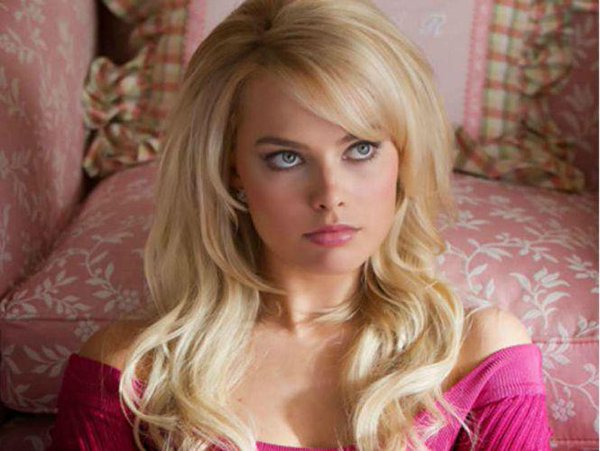
(Photo shows Margot Robbie in The Wolf of Wall Street)

(Some) Names From (Recent) Australian Teen and Young Adult Fiction

18 Sunday Oct 2015

Posted by A.O. in Naming Issues

≈ 4 Comments

Tags

fictional namesakes, Indian names, name trends, nicknames, sibsets, unisex names

cornerofwhite__span

If you want to turn this into a drinking game:

Drink if you see the same name used again
Drink if the character’s name provides a major plot point
Drink if there’s some quirky or interesting story behind a character’s name/nickname
Drink if the character is named after food
Drink if the character is named after an animal
Drink if the character’s nickname has nothing to do with their full name
Drink if the character’s name is highly unlikely for their age group

I, Wolf by Matt Boyd
A werewolf story. The hero is called Romy, short for Romulus (DRINK!), and he’s an Australian boy who has to move to Austria for health reasons. His love interest is Antonia, and friends are Dimitri and Nat.

One of my pet peeves is when the character’s name tells you what’s going to happen. However, after reading endless teen fiction where the heroine has some boyish nickname like Alex or Bill or George, it’s refreshing to read one where the hero has a nickname more common for girls.

Holier Than Thou by Laura Buzo
Heroine is Holly, a young social worker – her nickname is Holier-than-Thou (DRINK!). Her boyfriend is Tim, but she has unresolved feelings for her friend Liam, and finds herself attracted to a colleague, Nick (nicknamed Nickolarse).

The Roxy Ran series by Tiffany Hall
Roxy Ran is a teenage ninja, initiated into the mysteries of the Tiger Scrolls or something by Jackson Axe, who has a brother named Morgan. Roxy’s big sister is Electra (a samurai), and her friend is Cinnamon (DRINK!). The school bully’s name is Hero, which is a major plot point give away (DRINK!).

The Elly Pickering books by Wendy Harmer
The heroine is Eleanor “Elly” Pickering, who has a big sister named Matilda “Tilly“. Her friends are Carmelita and Rosie, while the popular “mean girl” is called Bianca, and love interest is a boy named Tyler. In one book, Elly gets a job which brings her into proximity with a Hollywood teen heart throb called Jake Blake.

For some reason Biancas are often unpleasant in fiction. I had an issue with movie star Jake Blake – it reminded me too strongly of Jack Black, so although he is meant to be a Zac-Efrony sort of guy, I was picturing something far different.

I’ll Tell You Mine by Pip Harry
Kate is the heroine, an upper middle class Goth teenager at boarding school. Her best friend is Maddy, and Maddy’s brother Lachy provides a love interest.

I have an aversion to heroines named some version of Katherine, but my very least favourite is Kate. It shows such a massive lack of imagination that I fear for the rest of the book.

And All the Stars by Andrea K. Höst
Madeleine “Maddie” (DRINK!) Cost is a teenage artist trying to win the Archibald Prize by painting her gorgeous and famous cross-dressing actor cousin Tyler (DRINK!). But forget most of that plot, as the book is actually about an alien invasion in central Sydney. The love interest is a science nerd named Fisher “Fish” (DRINK!) Charteris, and best friend a girl named Noi (a Thai name).

There’s a cast of dozens in this book. Most of them have nicknames, some of which are creative, such as a boy named Lee, who is called Pan (DRINK!) for the fairly unlikely reason he resembles the god Pan (DRINK!). You just know you’ve sent your kid to a superior school when their playground nickname is a Greek god.

The Mosquito Advertising books by Kate Hunter
Brisbane teenagers run an advertising agency. Heroine is Katie Crisp (DRINK!), and others on her team are best friend Lorraine Crabbe (DRINK!), neighbour Joel Maguire and his cousin Dominic Pyne-Davies, arty Clementine Bailey (DRINK!), and “bad girl” Jasmine Jolley. Katie’s mum is Vanessa, and Lorraine’s is Pippa (DRINK!). Clementine belongs to a brilliant family, and has siblings named James, Cordelia, Evangeline, Rupert, and Nathaniel. Dominic has twin little sisters named Janie and Susan (DRINK! DRINK!). Jasmine has big brothers named Eli and Byron who are famous rock musicians. Katie’s aunt and Vanessa’s sister is named Nancy (DRINK!).

Not only a variation of Katherine, but a variant of the author’s own name, which seems particularly lazy. The names are all of out of synch: a teenager named Lorraine, little girls named Janie and Susan, and a youngish aunt named Nancy, sister to Vanessa!

Divine Clementine by Hayley S. Kirk
Teenager Clementine (DRINK!) Footner falls apart when her beloved aunt Stella (DRINK!) dies (Stella is not much older than Clementine and is like a big sister). There’s also an aunt named Penny, an uncle named Dorian, and a niece named Auggie; friend is Thom.

The family is quite ahead of the curve, so look out for girls named Auggie in the future.

The Tribe series by Ambelin Kwaymullina
Set in a dystopian future world informed by the Australian Aboriginal Dreamtime. The heroine of the first book is Ashala Jane (DRINK!) Ambrose, otherwise known as Ashala Wolf (DRINK! DRINK!). Her friends are Ember Crow (DRINK!) and Georgie Spider (DRINK!), and they lead a tribe of environmentally-aware children. Love interest is Justin Connor – called by his surname – and Ember’s boyfriend is Jules ; the baddies are Neville Rose and Dr Miriam Grey.

It makes sense that everyone is still using the same names three hundred years in the future, as society broke down right about now. I do like Ashala, but it bothers me that she is called Wolf as a tribal name in Australia – we don’t have wolves!

Team Human by Justine Larbalestier and Sarah Rees Brennan
A vampire satire set in a town in Maine where humans and vampires live side by side: the vampires are immigrants to the US. The heroine is Mel (DRINK!), her best friends are Cathy (DRINK!) and Anna, and the vampire is Francis Duvarney (DRINK!). Mel’s love interest is a boy called Kit, whose name is short for Kitten (DRINK!) – it’s a long story (DRINK!).

You might chuckle over a vampire named Duvarney, because of the Victorian pulp-fiction classic, “Varney the Vampire”. Mel and Cathy are remarkably dated for teenagers; they seem very 1970s to me, as an Anna who went to school with about eighty Mels and Cathys (it feels like).

Losing It by Julia Lawrinson
Four 17-year-old best friends vow to lose their virginity before the end of the final school year, American Pie style. The girls are Zoe, Bree, Mala, and Abby. Abby has a brother named Zeke, and Mala has a cousin named Mo. The girls’ male friend is Matty.

Mala and Mo are from a different ethnicity, but it is never said what it is, although Mala is an Indian name, and Mo might be short for Mohandas?

The Convent by Maureen McCarthy
Set in the historic Abbotsford Convent in Melbourne, and based on the author’s own family history. It starts during World War I, when Sadie is forced to relinquish her daughter Ellen, who is brought up by the nuns at the convent. In the 1960s, Ellen’s only daughter Cecilia takes the veil at the convent and becomes Sister Annuniciata, and Cecilia’s daughter is Perpetua, called Peach (DRINK! DRINK!). Peach also has a connection with the convent, as she works at the arts centre now housed in its buildings. Peach’s sister is Stella (DRINK!), and her best friends are Cassie and Det.

It makes sense that great-grandmother’s name is popular again now, and also that a nun’s daughter should be given a saint’s name.

The Colours of Madeleine series by Jaclyn Moriarty
A fantasy series about teenager Madeleine Tully (DRINK!), who ran away from a world of opulence to live a simple life in Cambridge, England with her mother Holly (DRINK!). Madeleine’s best friends are Jack (an admirer) and Belle, but she has a pen-friend named Elliot Baranski in a parallel universe. Can anyone else guess that poor Jack does not stand a chance against a farm boy from a parallel universe who is heading a crew of loyal rebels?

I liked the way that people in the parallel universe had much the same names as we do – Elliot’s friends are Samuel and Keira, and his love interest is Kala. The princess is named Ko, but then she’s royalty. They like the letter K in the parallel universe.

Friday Brown by Vicki Wakefield
Liliane Brown is nicknamed Friday by her mother Vivienne because of a family curse that she will die on a Saturday (DRINK! DRINK!). Friday becomes a runaway street kid, and makes friends with a mute boy called Silence (DRINK!), and comes under the control of charismatic but unlikable young woman named Arden. The other street kids are AiAi, Darcy (female), Joe, Carrie, Bree (DRINK!), and Malik. The love interest is a boy named Wish (DRINK!).

Love-Shy by Lili Wilkinson
Penny (DRINK!) Drummond is a neurotic over-achieving student journalist, and she takes on a project of investigating/fixing a boy at her school named Nick (DRINK!) Rammage. Her friends are Rin and Hamish, who she tries to match up together. Other classmates are Rory, James (DRINK!), Clayton, Perry, Arabella, and Max. Penny’s dad is gay, and his partner is Josh.

Boys Names from International Destinations

04 Sunday Oct 2015

Posted by A.O. in Name Themes and Lists

≈ 2 Comments

Tags

animal names, Biblical names, Dutch names, english names, European name popularity, famous namesakes, honouring, Irish names, locational names, mythological names, name history, name meaning, name popularity, name trends, names from songs, names from video games, names of businesses, nicknames, saints names, Shakespearean names, slave names, superhero names, surname names, UK name popularity, unisex names, US name popularity

Ikuta Shrine

Arden
A region of Warwickshire in England, once thickly covered in trees and known as the Forest of Arden. It has strong Shakespearean connections, as William Shakespeare’s home town of Stratford-upon-Avon is one of the region’s main attractions. Furthermore, the Arden family were prominent in the area for centuries – they are one of the few landed families in England who can trace their lineage back to before the Norman Conquest. William Shakespeare’s mother, Mary Arden, was one of this family. Shakespeare’s comedy As You Like It is set in the Forest of Arden, a creative mixture of the real forest, a romanticised version of it, and the Ardennes Forest in central Europe. The name Arden is thought to come from the Ancient British word ardu, meaning “high land”; it has been used as a personal name since the 17th century, and had strong ties with Warwickshire. Arden is more popular for girls in the US (perhaps because of cosmetics company Elizabeth Arden), but is fairly even in the UK, and rising for both sexes. This matches my own observations in Australia, and it fits with both male and female name trends.

Boston
The capital of Massachusetts, one of the oldest and largest cities in the United States. Founded by Puritans in the 17th century, it was the scene of many of the key events in the American Revolution – perhaps most famously, the Boston Tea Party. Boston is one of the most economically powerful cities in the world, and a major educational centre, the home of top universities such as Harvard. It has been called “The Athens of America” for its contribution towards literature, art, music, and high culture in general. It is also known for its strong Irish history and culture: former President John F. Kennedy was from a Boston family of Irish Catholic heritage. The city is called after the town of Boston in Lincolnshire, whose name is said to be a contraction of “St Botolph’s town” – St Botolph was an obscure yet strangely popular Anglo-Saxon saint, and his name is believed to be an Old English one meaning “messenger wolf, herald wolf”. Also a surname, Boston has been in use since the 18th century. I saw this name more frequently after the Boston Marathon terrorist attacks in 2013, which matches the situation in the UK, although the name remained stable in the US.

Cairo
The capital of Egypt, and one of the largest cities in the world. Founded in the 10th century, it is close to several ancient sites, including the Pyramids, so that despite being a busy metropolis, it is often associated with the romance of Ancient Egypt. Cairo is a transliteration of the Arabic name for the city: al-Qāhirah, meaning “the victorious”. The reason for the name is because the planet Mars (in Arabic, Al Najm Al Qahir) was rising at the time of the city’s founding. The Egyptian name for the city is Khere-Ohe, meaning “place of combat”, referring to a battle which is supposed to have occurred here between the gods Set and Horus. Not only a strong, war-like name, Egyptian-themed names are very cool at present, and this might appeal to someone wanting a nod to African or Arabic culture. It fits very well with current trends in boys names and can be shortened to Cai.

Cuba
The largest island in the Caribbean, which was claimed for Spain by Christopher Columbus in 1492. It is an ethnically diverse nation with a tumultuous history, and has been under Communist rule since 1965. The island’s name comes from the indigenous Taino language, but the meaning is not certain: it may be from cubao, meaning “where fertile land is abundant”, or coabana, meaning “great place”. Cuba has become well known as a boy’s name due to Hollywood actor Cuba Gooding Jr. As his name tells you, Cuba was named after his father Cuba Gooding Sr, lead singer of the group The Main Ingredient. Cuba Sr’s father Dudley was from Barbados, but fled to Cuba, and met and married a woman there. After she was murdered because of their involvement in the Pan-African movement, Dudley promised her on her deathbed that he would name his first son Cuba. That is a very powerful name story for the name Cuba, and let’s face it, yours won’t be able to compete. However, Cuba has been used as a name since the 18th century, and in the US had strong ties to the African-American community: it may have originally been given as a slave name.

Denver
The capital of Colorado, and one of the largest cities in the American south-west. Set high in the Rocky Mountains, it has the distinction of being exactly one mile above sea level. The city was named after a 19th century politician, James W. Denver, in hopes of currying favour. The surname Denver is after a village in Norfolk, meaning “the passage of the Danes” in Old English – it’s a place on the River Ouse once crossed by Danish invaders. Famous people with the surname include Bob Denver from Gilligan’s Island, and singer John Denver (born Henry Deutchendorf). Denver Pyle played Jesse Duke in The Dukes of Hazzard, while a famous Australian namesake is Denver Beanland, a former Liberal politician from Queensland. The name isn’t particularly strongly tied to the city and can be seen just as easily as a surname name. In use in Australia since the 19th century, it has a reasonable history, so that it doesn’t seem too modern and trendy, despite having a fashionable letter V. Little wonder that it seems to be in quiet but steady use.

Harlem
An area of Manhattan in New York City which has been known as a major centre for African-American culture since the “Harlem Renaissance”of the 1920s. Originally a village settled by Dutch immigrants, it is named after the city of Haarlem in the Netherlands. Haarlem is the capital of North Holland, and historically the centre of the famous tulip industry. Its name probably means something like, “home on the forested dunes”, as it lies on a thin strip of land near the North Sea. It is also a surname; one example is former Norwegian prime minister Gro Harlem. I see this name fairly regularly, and that’s probably because it fits in so well with the strong trend for Har- sounds in boy’s names, such as Harvey, Harley, Harland, and so on. Not only similar to these, Harlem celebrates a place with a cool, and perhaps slightly dangerous image. The Harlem Shake memes could even be a contributing factor!

Jericho
A city in Palestine on the River Jordan. It is believed to be one of the oldest inhabited cities in the world, and the oldest walled city; archaeologists have found remains in Jericho dated to 9000 BC. Jericho features in a famous Bible story, which tells how Joshua, the general of Moses, took the city of Jericho. The Israelites marched around the city perimeter for six days with the Ark of the Covenant. On the seventh day, they marched around seven times, then the priests blew a ram’s horn and the Israelites raised a great shout. The walls of the city fell down, and the Israelites slaughtered almost all the inhabitants. There is a very rousing African-American spiritual about the incident, where the “walls came tumbling down” – an inspiration for the Thatcher era pop song. Archaeologists tell us that although Jericho’s famous walls have been brought down during various conflicts, Jericho was temporarily abandoned during the time that Joshua was supposed to have lived. Perhaps more importantly for the name, it fits in with the current fashion for names with an -o ending, and joined the US Top 1000 in 2013, as it has recently become known as one of the Teen Titan superheroes, and a common name in video games.

Kobe
A busy port in Japan, and one of the country’s largest cities. It is famous for its hot springs, which provide a tranquil retreat and have been in use since at least the 8th century, making them amongst Japan’s oldest. The city’s name is connected to its Ikuta Shrine, a Shinto shrine founded in the early 3rd century to venerate Wakahirume, the Japanese goddess of the rising sun and weaving. The city’s name is derived from kamube, an old name for the people who supported the shrine. It is also a Japanese surname, after the city. The name has been popularised by American basketballer Kobe Bryant, whose parents named him after Kobe beef, a very high quality meat from Japan, that they saw on a restaurant menu. Although the Japanese pronunciation is more like KO-BEH, English-speakers generally say it as a homophone of the name Coby, which is one of the name’s attractions. In fact, it is also a Dutch pet form of Jakob. Kobe is around the 100s in Australia, significantly more popular than in either the US or the UK, although it is a Top 50 name in Belgium.

Memphis
The largest city in the state of Tennessee. It is famous as a centre for popular music; because of this, almost a thousand songs are about Memphis, or mention it in some way, and Graceland, Elvis Presley’s famous estate, is a major tourist attraction of the city. Memphis is named after a a capital of ancient Egypt because the American city is situated on the Mississippi, just as the Egyptian one was situated on the River Nile. The Egyptian city is now in ruins, but was once a port and busy commercial centre. Memphis is the Greek transliteration of the Egyptian name Men-nefer, meaning “enduring and beautiful”, and Greek mythology personified it as a nymph named Memphis who founded the city along with her husband, a king and son of Zeus. Despite this feminine history for the name, Memphis is much more common as a male name than a female one, most likely because of Elvis. It is around the 600s for boys in Australia, more popular than in either the US or UK.

Tyrone
The largest county in Northern Ireland. Its name comes from Tir Eoghain, meaning “land of Eoghan”; according to Irish legend, Eoghan was a son of a great medieval king who claimed this land for himself. Eoghan may be derived from Eugene, and thus an Irish form of the Welsh name Owen; others say it is from the Old Irish, and means “born under the protection of the sacred yew tree”. Tyrone has been used as a personal name since the 18th century, and originated in the United States, presumably as an Irish heritage name. It later became used in Ireland too. The name was popularised by Hollywood actor Tyrone Power Jr; part of a long line of actors, the name Tyrone was traditional in his family. The original Tyrone Power, the great-great-grandfather of the Hollywood actor, was from a landed family in Ireland. Tyrone entered the charts in the 1960s at #413, and peaked in the late 2000s at #181. Currently around the 300s, it has never become popular, yet never gone out of use, pioneering, and still fitting in with, the well-worn trend for Ty- names for boys, such as Tyler and Tyson.

POLL RESULTS
People’s favourite names were Arden, Jericho and Boston, and their least favourite were Cairo, Harlem and Cuba.

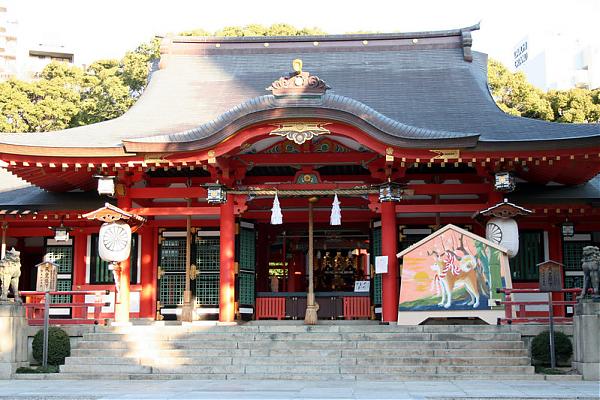
(Photo of the Ikuta Shrine in Kobe, Japan by Suguri F)

Naming a Baby of Two Continents

12 Saturday Sep 2015

Posted by A.O. in Naming Assistance

≈ 15 Comments

Tags

choosing baby names, name meaning, name popularity, name trends, sibsets, US name popularity

download

Sara and Jonathan are expecting their second child in a couple of months, and would like some name help. Sara is Australian and her husband is American: they currently live in the United States, but plan to move to Australia within the next few years. They think it likely their children will spend time in both countries as they grow up.

What they would like in a baby name:

*Not highly popular in either Australia or the US (eg no Lachlan or Aubrey)
* Sounds basically the same in either an American or Australian accent – Sara routinely has her name pronounced like Sarah or Serah in the US, and when she tries to correct people, in the confusion of unfamiliar vowels, they sometimes hear it as Zara, or even something completely different, like Claire
* the pronunciation is fairly obvious from seeing the name in writing
* the spelling is reasonably easy to guess from hearing the name said aloud

Sara and Jonathan already have a son named Felix, and frequently receive comments on what a great name he has, so feel some pressure to come up with something equally as good for their second child. Sara really likes that Felix can be translated as “happy”, and thinks it would be great if Felix’s brother or sister had a name with a positive meaning too.

So far they have these names on their lists:

Girls
Eleanor
Louise
Cora
Ivy
Talia

Boys
Leopold nn Leo
Edison
Bodhi
Sage

However, none of these names are really grabbing them at the moment. They have a number of family names they could use in the middle, and will go with one that matches the first name they eventually use.

Sara and Jonathan have a cute one-syllable surname starting with R eg Rudge. They would prefer a name that didn’t start with R.

They would love to hear of any suggestions that sound good with Felix, are suitable in both North America and Australia, and fit all their other criteria.

~ ~ ~ ~ ~ ~ ~ ~ ~ ~

It’s nearly always harder to choose the second child’s name, as there are so many factors to consider. When you chose Felix‘s name, you were naming a baby, but when you choose your next child’s name, you will effectively be naming a family. The name that you choose will put Felix’s name in context, so deserves careful thought.

One thing that occurs me to wonder is whether you want a sibset which sounds more Australian than American, more American than Australian, evenly American-Australian, a comfortable mix and match of the two, or neither American nor Australian.

The reason I ask is because Felix is much more popular in Australia than in the US. So if you went with another name which was more popular in Australia in the US, you would end up with a very Australian-sounding sibset.

For example, Ivy is another name that is much more popular here than in the US, so to me Felix and Ivy sounds like an Australian family. But Cora is much more popular in the US, so that sounds more of a mix-and-match: Felix ahead of the trends in the US, Cora ahead of the trends in Australia. Meanwhile, Eleanor has a similar popularity in both countries, so Felix and Eleanor sounds evenly American-Australian – it would be hard to pick which country they were from from their names.

None of these choices are right or wrong: it all comes down to what suits your family best. It might be quite good to have names like Felix and Ivy, where Australia is slightly ahead of the trends in the US, as they will sound quite fresh in America. However, if you come back to live in Australia, Felix and Ivy will fit in easily. That may not be a bad thing: having lived overseas, it might be nice for them to have names which are already popular here, giving them an immediate normality.

A different scenario would arise with a name like Leopold. Felix and Leopold doesn’t sound either Australian or American – the names sound quite European together. I think this is a rather attractive idea, as the names would sound fresh in both countries, and wouldn’t strongly mark them as being of either nationality.

The other issue to think about is that you have received rave reviews for the name Felix, and naturally want your second child’s name to be widely admired too. You don’t want your second child’s name to seem like the B side to Felix.

You might also find that people no longer judge Felix’s name on its own merits, but as part of a set. So people might think Felix and Ivy sounds hip, Felix and Eleanor sounds classy, and Felix and Leopold sounds distinguished. Be prepared to hear different things about Felix’s name when he’s a brother – but hopefully just as positive.

If you are really keen to have a repeat success with your second child’s name, I think the secret is to choose a name which is rapidly rising in popularity. These tend to be names which most people like (that’s why they’re rising), and I’ve noticed people often like having a name that’s rising in popularity too, due to them getting lots of love.

Felix is zipping up the charts in both the US and Australia, and it’s also a familiar name with a long history that hasn’t become overly popular yet. That makes it a “sweet spot” name which seems fresh without being too strange or challenging, and well-established without being stuffy or boring. Add a cool letter X which is right on trend, and no wonder you are getting compliments right and left.

I feel that I’ve probably given you a lot to think about, and possibly even more questions that you need answered!

You did ask for suggestions, so I will offer a few to give you some ideas.

BOYS

Jasper
I think Felix and Jasper are a perfect match as brothers. Like Felix, Jasper is rising steeply, and is another sweet spot name that has a bit of quirk to it. Means “master of the treasure house”.

August
Another fast-rising name. I think Felix and August sound quite European together. It has a positive meaning too: “venerable”. It’s also a month, which means that everyone can spell and pronounce it.

Maxwell
I couldn’t resist another X name. Rising Maxwell just hit the Top 100 in Australia and is only a little outside it in the US. The name ultimately comes from the Latin for “great” – very positive. Or would you prefer Maximus?

Theodore
Similar popularity to Maxwell in both countries, and has a very positive meaning – “gift of God” (it predates Christianity). The nickname Theo is very stylish; I love Felix and Theo.

Otto
A stylish, rising name that goes well with Felix, and means “riches, wealth”. There is a pronunciation difference in the US though, which makes me wonder if you’d prefer the rarer surname form Otis?

GIRLS

Thea
Short for Theodora or Dorothea, this is basically a feminine form of Theo. Rising very swiftly, this is a neat, stylish little name.

Hazel
This has just reached the Top 100 here, and is very close to it in the US. I just love how Felix and Hazel sound together. Hazel trees are symbolic of protection – quite similar to the original meaning of Felix.

Iris
Much less common than Ivy in Australia, but similar-sounding and very hip. Felix and Iris sounds adorable. Means “rainbow”.

Esme
This is big in the UK, but much less common in the UK or Australia, and would sound very British matched with Felix. Means “esteemed, loved”.

Eloise
Reminds me of Louise, and is a similar popularity to Felix when comparing countries. I think Felix and Eloise sound very elegant together. The name most likely means “healthy”.

Sara I hope that this has given you some ideas, or even led you to see your original name list in a new light. Do feel free to write in again before your due date, especially if you get a new name list or a front-runner. And we look forward to hearing all about your American-Australian baby!

NAME UPDATE: The baby was a boy, and his name is Sage!

German Names for Girls

23 Sunday Aug 2015

Posted by A.O. in Name Themes and Lists

≈ 9 Comments

Tags

Arabic names, aristocratic names, celebrity baby names, famous namesakes, fictional namesakes, German name popularity, German names, germanic names, honouring, international name trends, name history, name meaning, name popularity, name trends, names from fairy tales, names of boats, nicknames, pet names, royal names, saints names, screen names, stage names, vintage names

tumblr_loe3tdMJXq1qj5qvfo1_500

Germans have lived in Australia since the beginning of European settlement in 1788, and at least 73 of the convicts were German. Many more came to Australia as free settlers during the 19th century, often fleeing revolution or increased militarism in their homeland. By 1900, Germans were the fourth largest ethnic group in Australia, behind English, Irish, and Scots. Today almost a million Australians classify themselves as having German ancestry, about 4.5% of the population. That’s only a little less than the number of Australians with Italian ancestry, yet it is far more common to see Italian names in birth notices than German ones. Two world wars didn’t help, and neither does the clunkiness of some traditional German names, which are out of date in their country of origin. Yet here clunky is beginning to be cool again, and there are many cute and spunky German short forms that are right on trend.

Amalia
Latinised form of the name Amala, a short form of names beginning with the German element amal, meaning “vigour, courage”, with connotations of hard work and fertility. It is thus an older or more obviously German variant of Amelia. The name was traditional among German aristocracy and royalty, and is still used by modern European royals: Prince Felix of Luxembourg had a daughter named Princess Amalia last year. Although a popular name in Continental Europe since the Middle Ages, Amalia only became commonly used in Britain in the 18th century once Amelia had been introduced by the Hanoverian rulers. Amalia is around the 300s and seems to be gaining more use; it’s not only an alternative to popular Amelia, but is boosted by the trend for names such as Mahli and Mahlia. Rising in the US, Amalia is only just outside the Top 100 in Germany, and feels as if it is going places. It’s said the same way in Germany as here: ah-MAH-lee-uh.

Anneliese
Combination of the names Anna and Liese, a short form of Elisabeth. It’s been in use since the 18th century in Germany, and came into common use in the English-speaking world in the 20th century. A famous Australian namesake is the model Anneliese Seubert, who was born in Germany and moved here as a child; Anneliese has been a celebrity mum on the blog. Anneliese doesn’t chart in Australia, with parents preferring Annalise, which is around the 300s – the same spelling as the Australian model Annalise Braakensiek. The name has numerous spelling variants, including the name of the famous wartime diarist Annelies “Anne” Frank. This name is very pretty, and would be a good alternative to popular names like Anna and Annabelle, while also suitable for honouring an Anne and an Elizabeth at the same time. Germans say this name ah-na-LEE-zuh, but Australians may prefer AN-uh-lees or AN-uh-leez.

Gretel
Pet form of Grete, short for Margarete, a German form of Margaret. It’s probably best known from the Grimm’s fairy tale Hansel and Gretel. In the story, Hansel and Gretel are brother and sister whose impoverished father and stepmother abandon them in the woods. The hungry children are caught by a witch once they start nibbling her yummy-looking gingerbread house, and Gretel rescues her brother from being eaten with cleverness and courage. There’s been a recent reboot in the horror movie Hansel & Gretel: Witch Hunters, with Gemma Arteron as Gretel. A famous Australian namesake is heiress Gretel Packer, the sister of James Packer; Gretel is named after her grandmother, wife of media mogul Sir Frank Packer (Sir Frank entered yachts named Gretel in the America’s Cup in his wife’s honour). Another namesake is television presenter Gretel Killeen, who writes children’s books. Gretel seems like a cute yet sophisticated choice.

Leni
Short form of Helene or Magdalena. A famous namesake is the pioneering German film director Helene “Leni” Riefenstahl who made propaganda films for the Nazis during the 1930s. German supermodel Heidi Klum has a young daughter named Helene, who is called Leni. Leni is a popular name in Germany, and around the 300s here. It’s very much on trend, fitting in with cute short names like Evie, and L names like Layla. English-speakers tend to pronounce the name LAY-nee, which isn’t too different to how Germans say it: Laney and Lainey are variant spellings. It can be used as a nickname for names such as Eleni and Elena. Some parents pronounce it LEN-ee, and treat it as a feminine form of the male name Lenny.

Lulu
Pet form of Luise, the German form of Louise. It’s also an Arabic name meaning “pearls”, which may be written Lu’lu and is sometimes given as a nickname. Lulu is the main character in two plays by German playwright Frank Wedekind often combined into one called Lulu; they inspired the silent film Pandora’s Box with Louise Brooks as Lulu, the opera Lulu by Alban Berg, and was made into a film again in Germany in the 1960s. In the stories, Lulu is a prostitute and femme fatale. Lulu is often chosen as a stage name, such as the Scottish singer Lulu (born Marie Lawrie), or a nickname, such as Australian china painter Lucie “Lulu” Shorter. However, singer-songwriter Lulu Simon, daughter of Paul Simon, has Lulu as her full name. Lulu is around the 200s here – a cute, sexy, hip little name that gives Lola a run for its money. Can be used as a nickname for any name with a LU sound in it, from Lucinda to Eloise.

Mitzi
Pet form of Maria. Famous namesakes include Hollywood star Mitzi Gaynor (born Francesca Gerber), and child star Mitzi Green (born Elizabeth Keno), who was in the 1932 version of Little Orphan Annie. A famous Australian namesake is teenage actress Mitzi Ruhlmann from Home and Away and Dance Academy. Although in Germany Mitzi is more popular for cats and dogs than humans, itsy-bitsy Mitzi is a bright vintage charmer that will appeal to those wanting something a little different while still fitting in with current trends.

Ottilie
Modern form of the ancient Germanic name Odilia. This is often said to be a feminine form of Otto, but may actually be from the Germanic odal, meaning “fatherland”. There is a medieval Saint Odilia (one of those long-suffering young girl saints who are given a disturbingly hard time by their horrible fathers), and Ottilie was a traditional name among the German aristocracy during the Middle Ages. The name has been something of a favourite in fiction, being chosen by the authors Goethe, Truman Capote, John Wyndham, and Robert Louis Stevenson – in all these works, the woman named Ottilie is an object of desire in some way. You can say Ottilie in various ways, but OT-uh-lee and o-TILL-ee are probably the most common in Australia, and Tilly is a favoured nickname here. The German pronunciation is more like o-TEE-lee-uh.

Thea
Short form of Dorothea or Theodora. Famous German namesakes include Thea von Harbou, who wrote the screenplay for the silent film classic Metropolis, and Thea Rasche, Germany’s first female aerobatics pilot. Famous Australian namesakes include author Thea Astley, and artist Althea “Thea” Proctor, both distinguished in their respective fields. You might also know of Thea Slatyer, a retired footballer who played for the Matildas, and Dame Thea Muldoon, wife of New Zealand prime minister Sir Robert Muldoon. Simple yet substantial, Thea is gaining in popularity around the world. Just outside the Top 100 in Germany, Thea is popular in Scandinavia and New Zealand, and rising sharply elsewhere in the English-speaking world. It has been boosted here by a celebrity baby, daughter of model Kelly Landry. Usually said THEE-uh in Australia, but the German pronunciation is TEE-uh.

Wilhelmina
Feminine form of Wilhelm, the German equivalent of William. In the form Wilhelmine this was a traditional name amongst German royalty. A famous Australian namesake is Wilhelmina “Mina” Wylie, one of Australia’s first two female swimmers in the Olympics; she won silver in 1912, and received 115 swimming champion titles in all. Another is Wilhelmina “Mina” Rawson, who wrote books on cooking and household management, and was also the first swimming teacher in central Queensland. A great name for swimmers! For many years this name has been seen as too clunky, but popular Willow helps make it seem a lot more usable. Dignified yet quirky, Wilhelmina has a host of adorable nicknames, including Billie, Willa, Mina, Minnie, and Minka. This is a favourite name of Ebony from Babynameobsessed, and as she is a teenage name enthusiast, it bodes well for Wilhelmina’s future.

Zella
Short form of Marcella, a feminine form of the name Marcus. There are several famous musical namesakes from America: singer-songwriter Zella Day, country singer Zella Lehr, and gospel singer Zella Jackson Price. In the late 19th century, Zella fitted in with other names from that era, such as Zelda and Zelie; today it sounds like Zoe + Ella, or perhaps Zahli + Stella. A vintage name which now blends in seamlessly with current trends.

POLL RESULTS
People’s favourite names were Thea, Ottilie and Anneliese, and their least favourite were Gretel, Lulu and Mitzi.

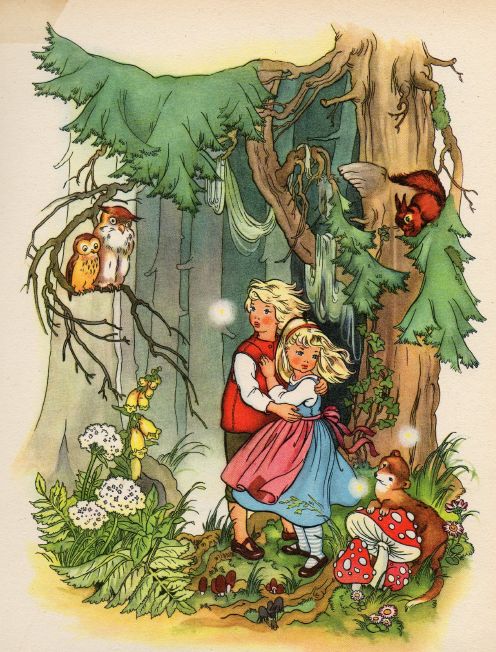
(Picture shows an illustration from Hansel and Gretel by Felicitas Kuhn-Klapschy)

Urgent Name Help Needed: A Sister for Bugsy and Jem!

22 Saturday Aug 2015

Posted by A.O. in Naming Assistance

≈ 7 Comments

Tags

choosing baby names, middle names, name combinations, name trends, nicknames, sibsets, vintage names

glencoevintage.345143240_std

Mia first wrote in to the blog a couple of years ago, looking for a sibling name to match their son Bugsy. Mia and Lachlan’s second son arrived in May 2013, and after some discussion, they decided to name him Jem.

Now Mia and Lachlan are expecting a baby girl any minute (she was due yesterday),and still haven’t decided upon a name for her. I thought they would be all ready if they ever had a girl, because Mia had her heart set on the name Margot if Jem had been a girl, but since then one of Mia’s best friends has had a baby girl named Margot, upsetting Mia’s plans.

These are the names on her baby name list:

Adeline
Lou (possibly short for Louella)
Elka
Autumn
Lottie
Astoria (nicknamed Story)
Lux

Besides Margot, other names that have been crossed off are:

Tessa (Lachlan thinks it’s a bit ho-hum)
Matilda (loves it, but it’s so popular ….)
Frankie (just not excited by it)

Middle name would most likely be Dorothy, Clementine, Jean, or Evangeline, depending on which one sounds best with the chosen first name.

Mia and Lachlan aren’t planning on having any more children, so Mia feels as if this name just has to be perfect.

* * * * * * * * * *

Mia, I’m almost as devastated as you that Margot got crossed off your list! I feel like suggesting that you still go with Margot – except that it does seem a bit different because Margot is a currently uncommon but rising name. I expect your friend might feel a bit miffed about it, as opposed to you both having daughters named something popular like Ella or Charlotte.

You did have Maisie on your list for a girl before – is it no longer on the table, as it seems like rather a good alternative to Margot? Or Marigold – that was on your original list too, and it’s gorgeous. Actually I liked Tilda from your original list too …

Thinking about sisters for Bugsy and Jem, it seems to me that both your sons have got quite original names, and it would be nice if their sister had one equally distinctive.

Adeline
This is a beautiful name, and Adeline Dorothy sounds really lovely. However, I should probably warn you that Adeline is much more common than the data suggests due to spelling variants. What with Adelynne, Addalyn, Addelyne, Addilyn, Ada-Lynne and so on, it really isn’t a very rare name. If you use Addie as a nickname, it sounds like all the Maddies, and the name fits in so neatly with Addison, Adelaide, Madison, and Madeline that it almost seems too on trend. Could I interest you in Ada? It’s two syllables like Bugsy, three letters like Jem, and begins and ends in a different sound to both those names, so it seems like a good match without being “matchy”. However, I must confess Ada is very like Ava, so you might think this is too much on trend as well.

Lou
Very cute, and Bugsy, Jem and Lou is quite delightful. I think I do prefer it as a nickname for something like Louella (which is very hip), because it seems a bit insubstantial on its own. Louella Clementine is nice, although Louella Jean is charming. I only hesitate because you already have a name in your family with a strong L-l sound in it, which makes we wonder if you are comfortable with that.

Elka
Great name, which goes well with almost your middles (except Elka Evangeline, which sounds too much). The only thing which makes me hesitate is that when I see it matched with Bugsy, it really makes me notice the BUG and the ELK in their names a lot more.

Autumn
Very pretty and underused in Australia, although it does seem quite modern matched with Bugsy and Jem. I don’t think that’s a problem though. Autumn Dorothy is an attractive combination. This was a hugely popular name when it was covered on the blog, getting one of the highest approval ratings ever – not one person hated the name, while almost 40% loved it. It seems like a name that’s easy to wear.

Lottie
Adorable, with that vintage vibe Bugsy and Jem have. Lottie Jean is nice – both hip and homely. Again, it’s an L name, so think about that carefully.

Astoria
Like Bugsy and Jem, this seems like an American-inspired name that also has a vintage feel, since the Waldorf Astoria Hotel in New York flourished during the 1930s. There’s something about it which makes me inwardly gasp a little, just like Bugsy and Jem, so it does seem like a natural sister to them. It’s a bit daring! I love the nickname Story, which seems like a good match with Bugsy and Jem, and this goes well with most of your middle name options.

Lux
Bright, shiny, glittering, lovely. I like Lux Clementine and Lux Evangeline, which both sound very glamorous to me, and I think it’s a natural match with Bugsy and Jem. Another L name, so do think about it.

Other names you might like:

Thea
Avalon
Winter
Mabel
Magnolia nn Maggie
Mamie
Mimi
Mae

Mia, I remember when Jem was born you originally chose a different name for him, but after he was born, you realised that Jem was the name that belonged to him. I wouldn’t be surprised if the same thing happened with your daughter – it’s hard to decide on a name now, but once you get to meet your baby, the right name may become obvious.

NAME UPDATE: The baby’s name was Tallulah, nicknamed Lou!

POLL RESULTS
The most popular choice for Bugsy and Jem”s sister was Astoria, nicknamed Story, which had 26% of the vote. Lou was the third-most popular choice with 22%, but I think would have got higher with a full name behind it.

(Photo from Lincoln Park Nannies)

Famous Names: Bowie and Pluto

20 Thursday Aug 2015

Posted by A.O. in Famous Names

≈ 2 Comments

Tags

astronomical names, Disney names, dog names, english names, famous namesakes, Gaelic names, Greek names, historical records, Irish names, middle names, mythological names, name trends, names of weapons, nicknames, rare names, Scottish names, slave names, stage names, surname names, UK name popularity, unisex names, US name popularity

get-ready-for-david-bowie-to-take-over-melbourne-1432194284

Names in the News
On July 14 this year NASA’s New Horizons space probe made its closest encounter with the dwarf planet Pluto. Australia was the first place on Earth to receive images of Pluto from New Horizons, at the CSIRO’s Canberra Deep Space Communication Complex at Tidbinbilla. The CDSCC has been tracking New Horizons since it was launched in 2006, and it will take more than a year to receive all the data.

Two days later, the David Bowie Is touring exhibition opened at Melbourne’s Australian Centre for the Moving Image, and broke all records for ticket sales before anyone stepped inside the doors. First staged at the Victoria and Albert Museum in London, it has already been seen by more than 1 million people around the world. The show includes costumes, video, photographs, and items from Bowie’s own collection, including notes and sketches.

David Bowie has a special significance in Melbourne. His first Australian tour was in 1978, and the biggest concert of his career to that point was at the Melbourne Cricket Ground. People queued for three weeks to buy tickets, and the fact that it poured with rain did nothing to dampen the spirits of 40 000 fans. His experiences in Australia in the 1970s inspired the music video for Let’s Dance, filmed in Sydney and outback Carinda).

Besides having key Australian events at around the same time, there isn’t an obvious connection between Bowie and Pluto. Except that Bowie has had so many references to space in his music – Space Oddity, Ashes to Ashes, Ziggy Stardust, Moonage Daydream, The Stars (Are Out Tonight), Life on Mars?, Star Man – that it doesn’t seem too much of a stretch to cover these names together.

BOWIE
Scottish surname derived from the Gaelic nickname Buidhe, meaning “yellow”, to denote someone blond or fair haired. It has also been used to Anglicise the Irish surname Ó Buadhaigh, meaning “son of Buadhach”, with Buadhach meaning “victorious”, although more commonly that’s Anglicised to Boyce. In rare cases it may be a variant of the English surname Bye, from the Old English for “bend”, referring to someone who lived on a river bend.

The Bowie surname originates from Kintyre in western Scotland, and the Bowie family were early colonists to America, with John Bowie Snr one of the founders of Maryland in the early 18th century. He was the grandfather of James “Jim” Bowie, who played a prominent role during the Texas Revolution, and died at the Battle of the Alamo in 1836.

The thick heavy blade known as a Bowie knife is named after Jim, who carried a hunting knife with him and had a reputation as a skilled knife fighter. His brother Rezin Bowie is supposed to have been the creator of the Bowie knife, although Bowie family history relates that it was Rezin’s blacksmith who created the knife.

David Bowie was born David Jones, and first performed as Davie Jones, which risked being confused with Davy Jones from The Monkees. He chose his stage name after seeing the movie The Alamo in 1963, with Richard Widmark as Jim Bowie; allegedly he wanted a name with a “cutting” feel to it, like Mick Jagger’s, and the Bowie knife gave it some edge. He deliberately chose the name of a famous American, as American music and culture had first inspired him.

Bowie has been used as a personal name since the 18th century, and originated in Scotland. Mostly used as a middle name, it was first given as a family name, but in 19th century America increasingly given to honour Jim Bowie: it was particularly found in the southern states. The name Bowie has been given to both sexes, but mostly to boys.

Jagger, Lennon, and Hendrix are reasonably common names, but even with the fame of David Bowie, the name Bowie is in rare use. It doesn’t chart in Australia, while in the UK there has been a smattering of Bowies on the charts since 2003; in 2013 there were 5 baby boys named Bowie. In the US last year, there were 59 baby boys named Bowie and 30 baby girls (numbers rose considerably for boys, but fell for girls).

It is slightly puzzling why Bowie isn’t used more. It sounds like familiar names like Beau, Bohdi, and Brodie, is a counterpoint to popular Archer, and as a knife it fits the trend for weaponry names like Blade.

One issue is that the pronunciation is slightly confused. In the US, Bowie tends to be said BOO-ee, the usual pronunciation of the surname and the Bowie knife. The British sometimes say the first syllable of David Bowie’s surname like the bough of a tree, whereas Bowie himself says it like bow and arrows.

PLUTO
In Greek mythology, Pluto is the god of the Underworld and the afterlife. His earlier name was Hades, but gradually this was used to mean the Underworld itself. Pluto is the Latinised form of the Greek Plouton, meaning “wealth, riches”, and the name is sometimes glossed as “giver of wealth”.

It makes sense that Pluto should be associated with wealth, because he has dominion over all the precious metals, gems, and resources under the earth, and all crops planted in soil. He was a god of abundance, and from early on was associated with agricultural fertility – which is why he was the natural husband for the agricultural goddess Persephone. Pluto and Persephone were revered as a divine couple with knowledge of the mysteries of birth and rebirth.

In the Christian era, there was often a horror of gods of death and the Underworld, who tended to be associated with Satan or demons. Pluto’s image, never a particularly cheerful one, became positively macabre, with Hades a place of torment. In Dante’s Inferno, Pluto rules the fourth circle of Hell, where those who have squandered their wealth are sent. Medieval English writers sometimes conflated Hades with Fairyland, giving Pluto a magical elf-king quality.

The dwarf planet Pluto was discovered in 1930 by a young astronomer named Clyde Tombaugh who had just started working at the Lowell Observatory in Arizona. It was named by an eleven-year-old Oxford schoolgirl named Venetia Burney. She made the suggestion to her grandfather Falconer Madan, retired from the University of Oxford’s Bodleian Library. He had the connections to ensure that Venetia’s idea got to the right people, they unanimously agreed, and Venetia was paid £5 (around $450 in today’s money). A big help was that the first two letters were PL – the initials of Percival Lowell, who had founded the observatory.

When Walt Disney studios created a pet dog for Mickey Mouse in 1930, he was named Pluto – apparently after the planet, although nobody is able to confirm that. So Pluto went from being a god name to a dog name!

Pluto is a gloomy god, a dwarf planet, a cartoon dog … but the name has also been rarely used for humans. The name is first found in colonial America in the 18th century, as a slave name. Pluto can be found in Australian historical records (Pluto Riches and Pluto Surprise are two interesting finds), and was also given to Aboriginal servants. Overall, Pluto has mostly been used in the United States. Use of the name, always low, fell after 1930 and never recovered, although it isn’t clear whether parents were put off by the astronomical body or the Disney character.

Pluto is probably too much of a space oddity to use as a first name, but would make a memorable middle.

Two rare names from the stars: which one will rate better?

POLL RESULTS
The name Bowie received an approval rating of 50%. 42% of people weren’t keen on it, although 17% loved it.

The name Pluto was much less popular, with an approval rating of 15%. 46% of people weren’t keen on it, and only 7% thought it was a good name.

(Picture of David Bowie in 1973 by Masayoshi Sukita; photo from Urban Walkabout)

← Older posts
Newer posts →

Enter your email address to follow this blog

Categories

Archives

Recent Comments

A.O.'s avatarwaltzingmorethanmati… on Zarah Zaynab and Wolfgang…
Madelyn's avatarMadelyn on Zarah Zaynab and Wolfgang…
JD's avatardrperegrine on Can Phoebe Complete This …
A.O.'s avatarwaltzingmorethanmati… on Rua and Rhoa
redrover23's avatarredrover23 on Rua and Rhoa

Blogroll

  • Appellation Mountain
  • Baby Name Pondering
  • Babynamelover's Blog
  • British Baby Names
  • Clare's Name News
  • For Real Baby Names
  • Geek Baby Names
  • Name Candy
  • Nameberry
  • Nancy's Baby Names
  • Ren's Baby Name Blog
  • Sancta Nomina
  • Swistle: Baby Names
  • The Art of Naming
  • The Baby Name Wizard
  • The Beauty of Names
  • Tulip By Any Name

RSS Feed

  • RSS - Posts

RSS Posts

  • Celebrity Baby News: Melanie Vallejo and Matt Kingston
  • Names from the TV Show “Cleverman”
  • Can Phoebe Complete This Sibset?
  • Zarah Zaynab and Wolfgang Winter
  • Baby, How Did You Get That Name?
  • Celebrity Baby News: Media Babies
  • Celebrity Baby News: Adelaide Crows Babies
  • Celebrity Baby News: Chris and Rebecca Judd
  • Names at Work: Name News From the World of Business and Employment
  • Celebrity Baby News: Sporting Round Up

Currently Popular

  • Rare Boys Names From the 1950s
  • The Top 100 Names of the 1920s in New South Wales
  • Celebrity Baby News: Ross Stevenson and Sarah Fallshaw
  • Arlo Robert Galafassi: A Son for Toni Collette and Dave Galafassi, a Brother for Sage Florence
  • The Top 100 Names of the 1940s in New South Wales

Tags

celebrity baby names celebrity sibsets english names famous namesakes fictional namesakes honouring locational names middle names name combinations name history name meaning name popularity name trends nicknames popular names saints names sibsets surname names twin sets unisex names

Create a free website or blog at WordPress.com.

Privacy & Cookies: This site uses cookies. By continuing to use this website, you agree to their use.
To find out more, including how to control cookies, see here: Cookie Policy
  • Subscribe Subscribed
    • Waltzing More Than Matilda
    • Join 517 other subscribers
    • Already have a WordPress.com account? Log in now.
    • Waltzing More Than Matilda
    • Subscribe Subscribed
    • Sign up
    • Log in
    • Report this content
    • View site in Reader
    • Manage subscriptions
    • Collapse this bar
 

Loading Comments...