• About
  • Best Baby Names
  • Celebrity Baby Names
  • Celebrity Baby Names – Current
  • Celebrity Baby Names – Past
  • Featured Boys Names
  • Featured Girls Names
  • Featured Unisex Names
  • Links to Name Data
  • Waltzing on the Web

Waltzing More Than Matilda

~ Names with an Australian Bias of Democratic Temper

Waltzing More Than Matilda

Tag Archives: name popularity

Is Grace Too Short, or Too Popular?

09 Saturday May 2015

Posted by A.O. in Naming Assistance

≈ 8 Comments

Tags

choosing baby names, classic names, famous namesakes, honouring, matching, middle names, name combinations, name popularity, nicknames, popular names
original_kids-rule-height-chart-mid-oak

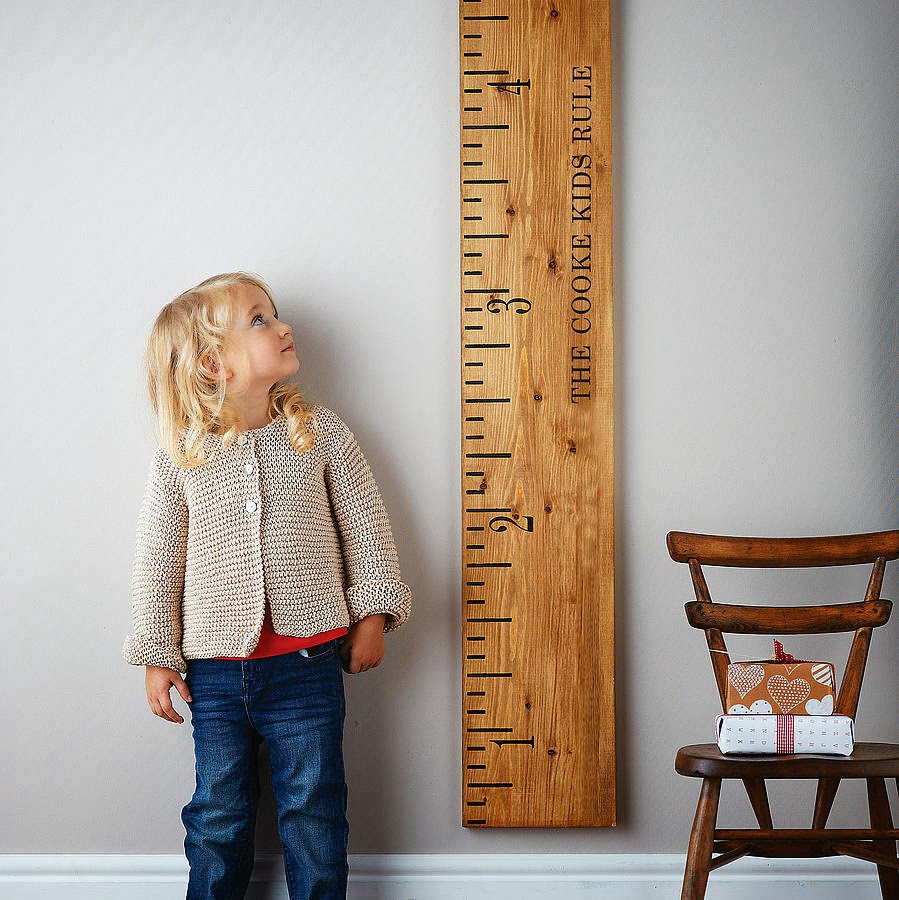
Kristel and David were told they couldn’t have children, but just as they gave up trying, they discovered they were expecting a baby girl, who will arrive in a few months. They are still a bit in shock, but naturally overjoyed.

There is only one name they have both agreed on – Grace. As soon as they found out the baby’s sex, Dave began calling her Gracie. As well as both of them liking the name Grace, it seems appropriate, since their daughter feels like something of a “miracle baby”.

However, Kristel is worried that the name Grace is too popular, and hates the thought that their daughter might have to share her name with four other girls named Grace in all her classes at school. She has suggested other names to Dave, such as Amelia, Elisa, and Stella, but he doesn’t care for them. Dave quite likes the name Estelle though.

Kristel believes this might very well be their only child, and she wants her daughter to have a suitable, traditional, classic, feminine name that she will hopefully like and feel proud of.

Another issue is that Kristel and Dave have a one syllable surname that sounds similar to a vocabulary word, such as Cooke, and people have told them that because of this, they need a longer first name to balance their short surname.

The middle name they have picked out is Audrey, a family name which the baby will share with three other generations. However, Kristel is open to suggestions.

~ ~ ~ ~ ~ ~ ~ ~ ~ ~

Kristel and David, congratulations on your wonderful and very unexpected news! After years of waiting, of course you want your baby to have the perfect name, and it’s natural to feel that this is your one chance to get it right.

My instinct is that you have got it right, because I immediately connected the name to your situation, with Grace implying a divine gift or blessing, related to the word grateful. The Greek goddesses known as the Graces were also connected with fertility, giving it another level of meaning.

Furthermore, Grace seems to tick all your boxes very neatly, because it’s a classic, traditional, and feminine name. Blog readers are in agreement that Grace is a beautiful timeless classic, simple yet sophisticated, suitable for all ages, and intelligent and professional, so it seems eminently suitable. I think Grace Audrey is a very attractive name combination as well, and love the idea of using a family name that has been passed down for several generations.

But what about its popularity? Grace is in the Top Ten if you look at names without combining spellings, and is #12 on the combined spellings list. That represents just a little over 1200 babies called Grace born in Australia during 2014 (about 0.8% of baby girls). There are around 7000 schools in Australia which accept primary school students, so statistically that isn’t even one Grace per Year 1 class. More good news is that Grace’s popularity has been stable for more than a decade, making it a safe, if popular, choice.

I can’t guarantee that your daughter will be the only Grace in her class, but I would be astounded if there were five girls called Grace. In the case of name-sharing in a classroom (or sports team etc), a nickname is often a help, so should it happen, Gracie could perhaps come to the rescue.

Is Grace too short? I haven’t been strongly persuaded by the argument that a short surname needs a longer name to balance it. Looking at famous women named Grace, singers Grace Jones, Grace Slick (born Grace Wing), and Grace Knight sound perfectly fine to me. In fact Grace Jones was born Beverly Jones, and she chose to use her “too short” middle name Grace instead.

Two short names together do sound quite strong and punchy, and I think there may be a touch of sexism involved, as people seem to be most keen that girls with a short surname be given a longer name. I wonder if you were having a boy instead, and were considering the name Miles, would you be given the same advice, or would Miles Cooke sound okay? If your daughter feels that Grace Cooke is too abrupt for her, she has the option to go by Gracie Cooke if she prefers – and I guess she could always go by her middle name if she wanted to.

In a case where they were worried about name length and popularity, some parents might choose to use Gracie as the name on the birth certificate, but is that the right choice for you? Because you say that you want a traditional classic name, that seems to point more towards Grace than cute Gracie. I get the feeling that you would prefer your daughter had a name like Grace, and kept Gracie as a nickname only.

Whether a name is too short or too popular is a matter of personal choice, and you and Dave are the only people who can answer these questions. But it feels as if you have really settled on Grace already. It’s the only name you agree on, and Dave seems to have begun getting emotionally attached to the name, already thinking of his daughter as little Gracie. I imagine it might be quite a wrench for him to think of her as anything else.

Although I can’t promise that your daughter will love her name, there is nothing wrong with the name Grace, and lots of things that are right. And I can’t imagine anyone not feeling proud to learn the special meaning of their name, and touched to know that their father was already calling them by their pet name before they were even born.

As you say, this is most likely your only child, and I would hate to see you compromise on another longer, less popular name together, such as Estella, and then regret it later. Deep in your hearts, do you already know that her name is Grace?

UPDATE: The baby’s name is Grace!

POLL RESULTS
96% of respondents didn’t think that Grace was too popular to use. 46% of people said not to even think about popularity once you’ve found the right name, 35% thought Grace was a little bit too popular, but still usable for someone who loved it, and 15% flat out said it wasn’t too popular. Only 4% of people thought Top 10 Grace was too popular to even consider.

93% of respondents didn’t think that Grace was too short matched with a one-syllable surname. 69% of people thought it sounded good, while 24% thought it seemed okay. 4% thought it did seem a bit odd, but not enough to worry about, while only 1% (one person) thought it sounded ridiculous. 2% of people weren’t sure.


Waltzing With … Rosemary

19 Sunday Apr 2015

Posted by A.O. in Waltzing with ...

≈ 2 Comments

Tags

Anzac Day names, celebrity baby names, Christmas names, famous namesakes, food names, holiday names, honouring, modern classics, name history, name meaning, name popularity, names from movies, names of herbs, nature names, plant names, portmanteau names, UK name popularity, US name popularity

gallipoli-rosemary-jim-molan

It will be Anzac Day this weekend, the centenary of the first Anzac landing at Gallipoli on April 25 1915. As well as services all over Australia and New Zealand, there will also be Anzac Day ceremonies in Turkey, and at Villers-Brettoneux in northern France.

The rosemary plant has long been connected with Anzac Day ceremonies, and it is traditional to wear a sprig in your coat lapel, pinned to your breast, or held in place by war medals. They are often sold by Legacy and the RSL. It is not known when this tradition first started, but it may date back to the very first Anzac Day commemoration in 1916.

According to the ancient Greeks, who drew on the work of Arabic physicians, rosemary improved the memory (students would wear it in their hair during exams), so it became associated with remembrance. Rosemary was thrown into graves or sprigs worn by mourners as a sign the departed person would never be forgotten (and to ward off the smell), and it’s famously referenced in Ophelia’s speech in Shakepeare’s Hamlet, where she says, “There’s rosemary, that’s for remembrance”.

Interestingly, rosemary’s connection with memory is more than mere superstition, because modern science has found that inhaling rosemary oil does significantly enhance memory, and that even small doses of rosemary improve cognitive function in the elderly.

While the connection with rosemary and remembrance for the dead is one that goes back thousands of years, it takes on a particular significance for Anzac Day, because rosemary grows wild on the Gallipoli Peninsula. The scent of rosemary, whether it is pinned to your clothes, planted in a garden as a memorial, or sprinkled over a traditional Anzac Day lamb roast, is the perfect mark of remembrance and commemoration.

Lest we forget.

Name Information
Rosemary can be seen as a combination of the names Rose and Mary, or as a reference to the aromatic herb. The plant rosemary has nothing to do with roses, because its name comes from the Latin ros marinus, meaning “dew of the sea”. This is because it grows naturally in dry coastal Mediterranean climates.

According to legend, Aphrodite was draped in rosemary as she rose from the sea foam. Perhaps because of this, and the association with everlasting memory and fidelity, rosemary was associated with love in the Middle Ages, and it was traditional for brides to wear rosemary wreaths, and for guests to wear a sprig of rosemary at a wedding – even now it’s said that a bit of rosemary in the wedding bouquet brings the bride good luck.

There are many love superstitions involving rosemary in folklore, including the charming one that a newly married couple should plant a rosemary branch in their garden together: if the branch takes root and flourishes, it is a good omen for their wedded life.

There are Christian legends about rosemary too. One tells how the flowers of the rosemary plant were originally white; the Virgin Mary spread her blue cloak on the bush while she rested, and when she removed it, the flowers had miraculously turned blue as a reward for their humble service. Another legend says that she placed the linen from the baby Jesus to dry on the bush, and ever after the plant carried a fresh aroma, while a legend from Spain says that the Virgin Mary sheltered beneath a rosemary plant during the escape to Egypt. It is sometimes called Mary’s rose because of these stories.

Rosemary was one of the plants associated with Christmas. Being an evergreen plant, it was suitable for winter time decorations, and rosemary has a habit of being able to flower even in cold weather. Christmas hot wines and ales were sometimes flavoured with rosemary, which was considered salubrious as well as festive. Rosemary was also a popular New Year’s gift in times past.

Whether it was because of the connection to the Virgin Mary, or because rosemary has such a strong, healthy odour, it was also seen as a protective plant: according to folklore, by planting rosemary in the garden you were safe from witches, although in Sicily they say fairies will live in rosemary. It is said that rosemary will not grow in the garden of an evil person.

With such strong connections to female power, the superstition developed that if rosemary thrived in a garden, it was a sign that the wife of the house was the boss! As rosemary is hardy and easy to grow, you would need to be a very bad gardener for your rosemary to do poorly, but my husband still likes to teasingly point out our healthy rosemary plants as a sign of who rules the home. He’s only joking, but in the past, some men would rip the rosemary from the kitchen garden in an effort to control their wives.

Rosemary’s history is connected to royalty, because according to tradition, it was introduced to England in the 14th century by Joan of Valois, Countess of Hainault. She sent cuttings of it to her daughter, Queen Phillipa, the wife of Edward III, along with instructions on how to grow it, and information on its many benefits. Rosemary was probably brought by the Romans many centuries before, but Queen Phillipa may have re-introduced it, or at least given it a solid royal seal of approval.

Although Rosemary was used as a personal name as early as the 17th century, it didn’t become common until the 19th, when flower and plant names were fashionable. It seems to have been a particular favourite with Catholic families, no doubt in reference to the Virgin Mary.

Famous Rosemarys include Princess Rosemary of Salm-Salm, cabaret singer Rosemary Clooney, actress Rosemary Harris, and children’s author Rosemary Sutcliffe. Famous Australian Rosemarys include poet Rosemary Dobson, gardener Rosemary “Bea” Bligh, human rights activist Rosemary Gillespie, director Rosemary Blight (The Sapphires), nutritionist Rosemary Stanton, and paralympian Rosemary Little.

Rosemary first entered the charts in the 1920s, when it debuted at #220 – it may have been a celebrity baby name, for the tragic Rose Marie, called “Rosemary”, had recently been born to prominent Boston businessman Joseph P. Kennedy. By the following decade it was already in the Top 100. It peaked in the 1950s at #60, when Rosemary Clooney’s career began, and left the Top 100 by the 1970s (it went down rapidly after horror movie Rosemary’s Baby, and real life horror story Rosemary West).

After this, it sunk in popularity until the late 2000s, when it recovered slightly, and is now around the 400s. At present, it appears to be fairly stable. In the US, Rosemary has been almost continually in the Top 1000, and is now in the 500s and rising, while in the UK it has been steadily falling, and is now in the 700s.

Rosemary is a modern classic with a vintage vibe, and US data suggests it may become one of the 1950s names which becomes fashionable in the future. You may think of it as a name to honour a Rose and a Mary simultaneously, or even as a name suitable for a baby girl born around Anzac Day.

It doesn’t really have a sweet old-fashioned feel, for the herb rosemary gives it a tang. Its connection to weddings and Christmas helps it feel festive, while its association with mourning and funerals adds depth.

Rosemary is strong, clear-minded, clean, and healthy – as fresh as a sea breeze, as lusty as a goddess rising from the waves, as pretty as a bride, as practical as a housewife, as dignified as a queen, as dear as memory, and as solemn as the grave made sweet by her scent.

POLL RESULT
Rosemary received an excellent approval rating of 89%, making it one of the highest-rated names of 2015. 37% of people thought the name Rosemary was okay, and only 3% hated it.

(Photo of rosemary at Anzac Cove from Friends of Gallipoli)

Famous Names: Rocket Zot

08 Wednesday Apr 2015

Posted by A.O. in Famous Names

≈ 3 Comments

Tags

celebrity baby names, english names, flower names, food names, Greek names, honouring, name history, name meaning, name popularity, names from comics, names from songs, names of weapons, nature names, nicknames, plant names, rare names, Russian names, scientific names, UK name popularity, unisex names, US name popularity, vegetable names, vocabulary names

July-2012-2-062

Names in the News
There are some celebrities whose baby names the media looks forward to learning with barely-disguised impatience. It might be a big star or a royal, in which case we all want to know what the baby is called, even if it’s quite boring. On the other hand, there are certain celebrities where we yearn to know the baby name they choose, because we can feel “a crazy celebrity baby name” coming up.

Recently it has been Lara Bingle and her husband Sam Worthington grabbing the baby name headlines, although the whole process began months ago, during what has been described as “the world’s longest pregnancy“. This was only increased by the Bingle-Worthingtons requesting privacy and not immediately announcing their baby name, which sent the rumour mill into overdrive.

I always think that if you’re going to be coy about announcing the baby’s name, it had better be something pretty epic, because I hate waiting for weeks, only to find out the baby is named Charlie. In this case, I was not disappointed because the baby’s name was reported as Rocket Zot.

Predictably, some sections of the media responded with outrage, denouncing the name. Was this a clever attempt to force Rocket’s cagey parents to confirm or deny the baby name? If so, it worked, because Lara Bingle immediately took to social media to defend their choice of name.

Public comments have generally been quite harsh, and on this blog, more than 84% of people have given it the thumbs down. But is Rocket Zot really such a bizarre name?

ROCKET
A rocket is any missile or vehicle propelled by a rocket engine. Although we may think of rockets as being quite space age, they have been existence since the Middle Ages, when they were used as weapons by the Chinese. Europeans found out about rocket technology when they were conquered by the Mongols, who themselves made the interesting discovery by conquering parts of China first.

It wasn’t until the twentieth century that anybody began serious research into using rockets for travelling through space. The Germans made the most progress in this area, and there was devastating proof of Germany’s proficiency in rocket use when they rained down V-2 rockets upon Allied countries in World War II, killing and wounding thousands in the process.

The United States was to benefit the most from Germany’s rocketry, because after the war they scooped up the majority of the German rocket scientists. The first American space rockets evolved directly from the V2, which just shows how important it is to conquer the right people during a war, and nick all their best technological innovations.

The word rocket comes from the Italian rochetta, meaning “little fuse”, a small firecracker developed by an Italian inventor in the 14th century. It is notable that for many years, the history of rockets and that of fireworks was virtually one and the same, as they both relied on gunpowder.

If all of this sounds a bit too violent, rocket is also a leafy green vegetable commonly added to salads, and a favourite since Roman times (maybe partly because it was believed to be an aphrodisiac). In this case, the name has nothing to do with rockets or fireworks, but is derived from Eruca, the Latin name for the plant, which means “caterpillar”.

London rocket is a wildflower whose common name was given because it grew in such profusion after the Great Fire of London in 1666. Another plant is called sweet rocket or dame’s rocket, abundantly blossomed with pretty fragrant mauve flowers. The attractive but toxic aconite, or wolfsbane, is sometimes called blue rocket, and the Chinese used its poison in warfare, just as they did explosive rockets.

Rocket has been used as a name since the 19th century, when it was much more common in North America. The United States national anthem, The Star Spangled Banner, with its mention of the “rockets’ red glare”, may have made the name seem particularly patriotic (the rockets in the song were from the British attacking Fort McHenry in Baltimore during the War of 1812). Independence Day fireworks also help to make rockets seem patriotically American. Rocket has been given to both sexes, but more commonly to boys.

In 2013, 16 boys were given the name Rocket in the US, while in the UK, less than 3 babies in any year have been named Rocket since 1996. In South Australia last year, there was just one baby boy named Rocket.

Although Rocket is rare, it has become quite prominent as a celebrity baby name. Douglas Adams named his daughter Polly Jane Rocket in 1994, a fitting tribute for the author of the Hitchhikers Guide to the Galaxy series. Director Robert Rodriguez has a son named Rocket Valentino born in 1995 (Rocket’s siblings include Rogue, Rebel, and Racer). Tom DeLonge from Blink-182 had a son named Jonas Rocket in 2006, and Pharrell Williams welcomed a son named Rocket Ayer in 2008, honouring the Rocket songs of Stevie Wonder, Elton John and Herbie Hancock, as well as Roy Ayers. Last year Beau Bokan from Blessthefall welcomed a baby girl named Rocket Wild. It’s not unknown as an Australian celebrity name, because fashion designer Yasmin Sewell had a son named Knox Rocket in 2011.

The name Rocket has been criticised for trying too hard to be a “cool” celebrity baby name, a name which no decent baby name book has listed. (I’m happy to be amongst the indecent baby name blogs to include Rocket). And yet is it really that outrageous? It’s very much like modern classic Rocco, and when Jett is a popular boy’s name, Rocket isn’t such a stretch. Weapon-related names such as Archer and Hunter are also on trend.

Depending on your point of view, Rocket might be too cool for the schoolyard, or fine for the famous but out for ordinary folk, or you might think this is an energetic, rocking firecracker of a name that fits in with current trends while still being a rare choice. Rock or Rocky are the obvious nicknames.

ZOT
If Rocket got a good going-over, Zot went down even less well, with the headline, Lara Bingle Doesn’t Give a Zot For Baby Name Traditions (since changed). Urban dictionaries were consulted, to discover that zot meant “kill, destroy”, or “spitball”. Of course you can also consult dictionaries to find that Bob is a woman’s haircut, John refers to a prostitute’s client, and Amelia means to be born without a limb, but the dictionary meanings are not usually applied to these personal names.

Lara Bingle was angered and upset by the journalist’s comments on Zot, since it was given in honour of her father Graham, who passed away from cancer a few years ago. Zot was apparently the nickname he went by.

Zot is actually a “real” name – it’s a short form of Izot, the Russian form of Greek Zotikos, meaning “full of life” (a masculine spin on Zoe). I think that makes it an exciting addition to Rocket, which is already quite a lively-sounding name.

Zot is also a comic book hero name, in this case, a contraction of the character’s real name of Zachary T. Paleozogt. A cheery blond teenager from a utopian world, Zot zips around on rocket boots with a laser gun to sort out the problems of our own rather more flawed planet.

It has been conjectured that the name Rocket is a nod to Sam Worthington’s father, Ronald Worthington, so that Rocket Zot may actually honour both fathers. The Herald Sun suggests that Ronny Graham, nicknamed “Rocket”, would have been a better honouring name. Given the choice, I think I prefer the more distinctive, affectionate, and personalised Rocket Zot.

POLL RESULTS
The name Rocket received an approval rating of 16%. 44% of people thought that Rocket was a terrible name, while 6% loved it.

Zot received a slightly higher approval rating of 20%. 61% of people thought that Zot was a terrible name, while 5% loved it.

53% of people preferred Ronny Graham as a name to honour Ronald Worthington and Graeme “Zot” Bingle, while 47% thought Rocket Zot had more zip.

(Photo shows Fourth of July fireworks to accompany the US national anthem)

Famous Name: Malcolm

01 Wednesday Apr 2015

Posted by A.O. in Famous Names

≈ 1 Comment

Tags

classic names, famous namesakes, name history, name meaning, name popularity, names from television, royal names, Scottish names, Shakespearean names, UK name popularity, underused classics, US name popularity

687166-malcolm-fraser

Famous Namesake
Just a few months after saying farewell to Gough Whitlam, the 21st Prime Minister of Australia, we sadly lost our 22nd Prime Minister, when John Malcolm Fraser, always known by his middle name, unexpectedly passed away after a brief illness in the early hours of March 20. He was 84.

You will remember he came to power in a controversial way, instructing Coalition Senators to delay government budget bills in hopes of forcing an early election. His plan worked when, after several months of political deadlock, governor-general Sir John Kerr suddenly sacked Prime Minister Gough Whitlam on November 11 1975, on the day that became known as The Dismissal.

Malcolm was sworn in as caretaker Prime Minister, and later led the Liberal-Country Party Coalition to a landslide victory, his 55 seat majority the largest yet in Australian history. He had a second victory in 1977, and the Liberal Party won a majority in their own right, not needing the support of the (National) Country Party, which is almost unheard of.

As Prime Minister, Malcolm was active in foreign policy, showing a commitment to racial equality that was to be a keynote of his character. He supported the campaign to abolish apartheid in South Africa, and strongly opposed white rule in Rhodesia, being one of the architects of the new Zimbabwe.

His policy was for humanitarian resettlement, allowing more refugees to enter Australia, and greatly expanding immigration from Asia. A strong believer in a multicultural Australia, he established government-funded multilingual radio and television, the Special Broadcasting Service (SBS). He also gave Indigenous Australians control of their traditional lands in the Northern Territory, was a supporter of environmental concerns, and banned whaling around the Australian coast.

Although he managed to win another election in 1980 with a greatly reduced majority, he lost the 1983 election to Bob Hawke in a heavy defeat. He was the last non-caretaker Prime Minister to come from a rural seat, and is remembered not just as a Prime Minister, but an excellent farmer from a distinguished pastoral family who understood the needs of regional Australia.

After leaving office, Malcolm served in key roles at the United Nations, with a focus on South Africa and other African nations. He helped to establish humanitarian agency CARE International in Australia, demonstrating again his commitment to helping vulnerable people around the world. He reconciled with his old enemy, Gough Whitlam, and the two men were able to be good friends, finding common ground on many issues.

At the same time, Malcolm gradually became estranged from the Liberal Party, with many of even his own party unable to forget the role he had played in The Dismissal. A man of conviction, Malcolm did not hesitate to speak out on important issues of the day, such as the human rights of asylum seekers in detention, civil liberties, and treatment of Aborigines, even when his opinions were at odds with those of the Liberals.

After years of criticising Liberal Party policy, bemoaning the lack of integrity in Australian politics, and supporting the campaign for a change of policy on Iraq, Malcolm finally handed in his Liberal Party membership in 2009, when Tony Abbot became the party’s leader, saying that it was no longer a liberal party, but a conservative party. In 2013, he endorsed a Green Party Senator and urged his Twitter followers to vote Green in the upcoming election.

Just before he died, Malcolm was working to set up a new political party called Renew Australia. It was to stand for an Australian republic, to reconcile with Indigenous Australians through a treaty, to support a larger population with an independent foreign policy and a post-carbon economy, recognising climate change and the urgent need to avoid its most catastrophic effects, as well as a central commitment to human rights obligations.

Malcolm’s memorial service was on March 27, and his son Hugh spoke of his father as someone who never ceased to care about current affairs, his strong sense of responsibility enduring to the end. According to Hugh Fraser, his father loved Australia, and was not merely one of its sons, but one of its most fervent custodians.

With the passing of Gough Whitlam and Malcolm Fraser, political giants who defined the 1970s (and physical giants, as they were our tallest prime ministers at 1.94 and 1.93 metres tall respectively), it does feel like the end of an era. Gough was the most progressive Labor prime minister, followed by Malcolm, the most progressive Liberal prime minister, and with them gone, the political future feels rather bleak.

Malcolm was famous for his quote from George Bernard Shaw: Life wasn’t meant to be easy. Most people forget that the quote continues … but take courage child, for it can be delightful. We must remember our courage now.

Name Information
Malcolm is the Anglicised form of the Scottish name Máel Coluim, meaning “follower of Saint Columba”. You will remember that Columba means “dove”. It was a traditional name amongst Scottish royalty and nobility, and there have been four medieval kings of Scotland with the name Malcolm.

Malcolm III is the basis for the King Malcolm who is the son of Duncan in William Shakespeare’s play Macbeth, although in real life he did not immediately avenge his father by killing Macbeth, as he was only a little boy at the time. Only after he had grown up did he kill Macbeth, and then Macbeth’s heir, so that he could take the throne at last. Malcolm III was the husband of the English princess who became Saint Margaret of Scotland. Despite Malcolm not being particularly religious, they had a strong and loving marriage, and Margaret is said to have died of sorrow after hearing of Malcolm’s death in battle.

The name Malcolm was #81 in the 1900s, and peaked in the 1950s at #52, when Malcolm Fraser entered parliament as the youngest MP, aged 25 (this was also the decade that Malcolm Young from AC/DC was born). It left the Top 100 by the 1980s, the time when Malcolm Fraser suffered the worst defeat of a non-Labor government since Federation, and lost the prime ministership. After that it fell steadily, and despite a small boost in the late 2000s, when the sit-com Malcolm in the Middle was aired, it has not charted since 2009, the year Malcolm Fraser left the Liberal Party.

There has been another prominent Malcolm in the Liberal Party, Minister for Communications Malcolm Turnbull, and celebrity grandfather on the blog. This may not have been a help to the name, as politicians generally don’t assist a name’s fortunes. The name can now be said to be in rare use.

In the UK, there were 14 baby boys named Malcolm in 2013, so it is uncommon there as well. Malcolm is most popular in the US, where it has never gone off the charts and is in the mid-400s; it is associated there with civil rights hero Malcolm X.

Malcolm is a strong, handsome underused Scottish classic with a slightly quirky feel. It honours one of our greatest statesman, a gentleman who had the courage to speak out and work towards constructive change, who was uncompromising yet compassionate, and who placed his duty higher than his popularity.

POLL RESULTS
Malcolm received an excellent approval rating of 81%, making it one of the highest-rated names of 2015. People saw Malcolm as a normal name that is still a bit quirky (27%), strong and handsome (22%), and a good Scottish heritage choice (22%). However, 14% thought it was harsh and ugly. Nobody thought the name Malcolm was too Scottish, and 3% were put off the name by former prime minister Malcolm Fraser.

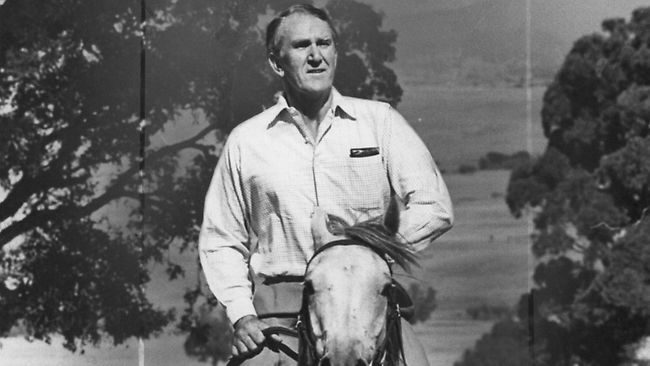
(Photo shows Malcolm Fraser on his rural property, Nareen Station, in 1982)

Famous Name: Aurora

25 Wednesday Mar 2015

Posted by A.O. in Famous Names

≈ 8 Comments

Tags

code names, Disney names, Disney princesses, European name popularity, Latin names, locational names, meteorological names, mythological names, name history, name meaning, name popularity, names from ballet, names from fairy tales, names of businesses, nature names, New Zealand name popularity, Roman names, scientific names, UK name popularity, US name popularity

w1200_h678_fmax

Name in the News
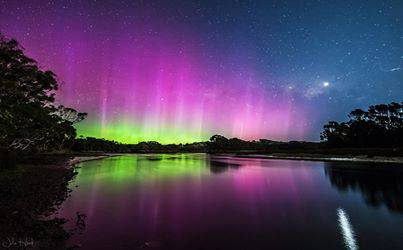
On March 17, a rare aurora australis was seen over New Zealand and Australia, swirling across the late night skies in patterns of red, green, blue, and purple. Aurora australis is also known as the Southern Lights, the southern hemisphere equivalent of the aurora borealis, or Northern Lights.

An aurora event occurs when rapidly moving particles that originated from the sun come in and strike the upper atmosphere, more than 100 kilometres above the earth. The energy from the particles striking molecules in the atmosphere are released as light, and the colours that you see depend on which molecules are struck – green and red come from oxygen, while blue and purple are from nitrogen.

Aurora events sometimes happen when large solar flares and explosions of material come off the sun, which is what occurred this week, setting off a geomagnetic storm. An aurora australis is usually best viewed from Antarctica, but moderate ones can be seen from Tasmania. However, this week’s aurora was so bright that it was visible as far north as Canberra, and Goulburn and Kiama in New South Wales, while even in Brisbane there was a red tinge to the sky.

In Aboriginal mythology, the aurora australis was often seen as fire in the sky, and conjectured to be bushfires in the spirit world, campfires glowing in the land of the dead, or fires lit by evil spirits. It seems to have been generally seen as an ill omen, or a sign of a god’s displeasure. In south-west Queensland, where aurorae are uncommon and less spectacular, it was thought that the spirits were able to transmit messages through an aurora, allowing communication with the ancestors.

Rare, awe-inspiring, and staggeringly beautiful, an aurora is a celestial phenomenon not to be missed. Little wonder that in the past it was seen as something mysterious and otherworldly.

Name Information
Aurora was the Roman goddess of the dawn, and her name literally means “dawn, sunrise, daybreak”. She is the equivalent of the Greek goddess Eos, and the Hindu goddess Ushas. The name comes from an ancient root meaning “shining one”, and is related to the English word east, as well as the Latin aurum, meaning “gold”. It has connotations of springtime, and the new year – all symbols of rebirth and new beginnings.

In Roman mythology, Aurora renews herself each morning and flies across the sky to announce the arrival of the sun, her brother. She often appears in poetry (Virgil describes her as having a “saffron bed”), and her beauty and desirability are such an important part of her image that it is thought she must originally have been a goddess of love, with the different aspects of dawn and eroticism becoming separated into Aurora and Venus.

One of her key myths involves her love affair with a Trojan prince named Tithonus. Wanting to be with Tithonus for all eternity, she asked Jupiter to make him immortal. He granted her request, but because Aurora did not ask for him to remain eternally youthful, he was doomed to be old forever. Aurora saved him from this fate by turning him into a grasshopper.

Although you may read of the goddess Aurora in Tennyson and Shakespeare, see paintings of her, and even hear of her from Bjork, the name is probably best known from the 1959 Disney film Sleeping Beauty, where the comatose princess is called Aurora. In the movie, the king and queen choose the name because their daughter has “filled their lives with sunshine”.

In Charles Perrault’s version of the fairy tale, the Sleeping Beauty was not given a name, but she bears the Prince two children named L’Aurore (“the dawn”) and Le Jour (“the day”). Tchaikovsky’s ballet gives the daughter’s name to the mother, so the Sleeping Beauty is called Princess Aurora, and Disney followed this, as well as the TV series Once Upon a Time. (In the German version of the tale, she is called Briar Rose, which Disney used as Aurora’s code name, and in the earliest Italian one, Talia, who had children named Sun and Moon).

Aurora has been used as a name since the 17th century, and from the beginning was an international choice, showing up in records in England, Italy, and Scandinavia, and by the following century was used in countries all over the world, but especially in Europe.

Currently, Aurora is popular in Norway and most popular in Italy, where it is #3. In the United States, Aurora has been almost constantly on the Top 1000, and is now #145. It has been rising steadily since 1995 – the same year that Disney’s Sleeping Beauty was re-released in cinemas. In England/Wales, Aurora has been on the charts since 2011, and is rising steeply at #257. Amongst English-speaking countries, Aurora is most popular in New Zealand, where it has been Top 100 since 2013 and was #77 last year.

In Australia, Aurora is around the mid-100s, so has a similar popularity to that in the US. As it is rising in other countries, it is most likely rising here too. Around the world, Aurora is often given as a name in scientific contexts, and in Australia it is well known as an energy company. Aurora Point on Macquarie Island is named after the SY Aurora used on Douglas Mawson’s Antarctic expedition, with the yacht itself named after the aurora australis.

Aurora is an internationally recognised name with a poetic meaning and many attractive associations – an alluring dawn goddess, a sunshiney fairy tale princess, an iridiscent light in the heavens. It’s elegant and enchanting, rich and frothy, a name that seems to shimmer with colour, shot through with the rosy pink and gold of daybreak. One drawback is that it not particularly easy to say, which is why Auroras nearly always seem to have a nickname, such as Aura, Auri, Rora, Rory, Ro, or Roo, adding a cute or tomboyish option to a flouncingly feminine name.

POLL RESULTS
Aurora received a decent approval rating of 66%. 21% of people saw the name Aurora as pretty or beautiful, but 16% found it too difficult to pronounce.

(Picture is of Aurora australis seen over the Forth River in Tasmania; photo taken by Julie Head and published in The Advocate).

Waltzing With … Matthew

15 Sunday Mar 2015

Posted by A.O. in Waltzing with ...

≈ 2 Comments

Tags

animal names, Biblical names, classic names, famous namesakes, hebrew names, Irish names, locational names, name history, name meaning, name popularity, names of cats, names of ships, nature names, patriotic names, popular names, saints names

Flinders-with-map-72-dpi

Famous Namesake
Tomorrow it will be the 241st birthday of the English explorer Matthew Flinders, who was the first to circumnavigate Australia.

He’s a historical figure that Australia has taken to its heart, and it’s very difficult not to find him almost immediately endearing. As a schoolboy, he read Robinsoe Crusoe and became enamoured of a desire to go to sea; apparently against all advice, he joined the navy at the age of fifteen. He never lost his love for Defoe’s novel – one of the last letters he ever wrote was to order a copy of the new edition.

Matthew first came to New South Wales in 1795, as midshipman on the Reliance, where he made a good impression as navigator and cartographer, became excellent friends with the ship’s surgeon, George Bass, and gained a black and white cat. Born on the ship, the kitten fell overboard, but was able to swim back and climb a rope to safety. Matthew saw it was intelligent with a strong survival instinct, and named it Trim after the butler in Lawrence Sterne’s Tristram Shandy, because of the cat’s faithful and affectionate nature.

Flinders and Bass made expeditions to Botany Bay and up the Georges River, from Port Jackson to Lake Illawarra, and to Moreton Bay, where their arrival on Coochiemudlo Island is still celebrated each year on Flinders Day.

The daring duo were sent to find a passage from the mainland to Tasmania (then Van Diemen’s Land). The passage they found is named Bass Strait, and its largest island is Flinders Island. Matthew charted all the islands, and he and George Bass were the first to circumnavigate Tasmania.

Matthew’s work gained the attention of the great scientists of the day, especially Sir Joseph Banks, who convinced the Admiralty to send Flinders to chart the entire coastline of New Holland. Matthew was promoted to commander, and given a slightly dilapidated ship called the Investigator (England was at war with France, and the navy was saving the really good ships for fighting).

Flinders wed his childhood friend Ann Chappell while in England (he named Mount Chappell Island in Bass Strait after her). Newly married, but with an expedition to command where women were strictly forbidden, he tried to smuggle Ann onto the Investigator. Sir Joseph Banks found out, and put an immediate stop to it. Ann was left at home: however, Matthew was allowed take Trim on the voyage.

The circumnavigation of Australia started on Cape Leeuwin in Western Australia, and continued eastward across the Great Australian Bight. Flinders ran into French explorer Nicolas Baudin in South Australia; although hostilities had temporarily ceased between England and France, both men thought their countries were still at war, but peacefully exchanged discoveries with each other. Matthew named the place where they met Encounter Bay.

Although circumnavigation was completed, it was not possible for Matthew to chart the entire coast, due to problems with the ship. Once back in Sydney in 1803, the Investigator was judged unseaworthy, and as he was unable to continue his work, Matthew set sail again on a ship called the Porpoise, which only made it as far as the Great Barrier Reef: the place was named Wreck Reef as a result. Flinders made it across open seas back to Sydney in the ship’s cutter, and (still accompanied by Trim), took command of the Cumberland to get home.

The Cumberland was also in poor condition, and Flinders was forced to put in at the Isle de France (now called Mauritius), just three months after Nicolas Baudin had died there. War had broken out with France again a few months previously, but Matthew Flinders thought that being on an important scientific mission, having a French passport, and knowing Nicolas Baudin would afford him diplomatic immunity.

The French governor disagreed, and detained Matthew there for years, even after Napoleon told him to release Flinders. Trim, who proved such a comfort to him, disappeared in mysterious circumstances, and the heartbroken Matthew believed he had been killed and eaten by the island’s slaves (not the first brave explorer to have met this fate, if true).

Finally, Matthew returned to England in 1810, his wife having waited more than nine years to see him again. Now in very poor health after his harsh imprisonment on Mauritius, he worked on completing his atlas.

It was during his voyages that Matthew Flinders began to use the name Australia to refer to the continent he was exploring. He wasn’t the first to use the name, but previously geographers used it for the whole South Pacific region.

Sir Joseph Banks, who had been such an interfering nuisance by not letting Ann accompany her husband Matthew on the Investigator, now turned out to disapprove of the name Australia. Despite Matthew’s objections, his book came out under the title A Voyage to Terra Australis. The final proofs came to him on his death bed, but by then he was unconscious; he died the day after his book was published, having never regained consciousness.

A Voyage to Terra Australis was the first book to use the name Australia for our continent, as Matthew Flinders was sure that there was no other great landmass in the area it could apply to. With his gift for nomenclature, he noted that the name Australia was “more agreeable to the ear” than any other. His chosen name stuck, and it was Governor Lachlan Macquarie who recommended that it be officially adopted, which took place in 1824.

Amongst all the places in Australia which Matthew charted, he never named one after himself, but that has been well and truly remedied, with more than a hundred places bearing the name Flinders – from the Flinders Ranges to Flinders Bay to the suburb of Flinders in Canberra, not to mention Melbourne’s Flinders Street, the Flinders Highway, and Adelaide’s Flinders University. There are more statues of Matthew Flinders in Australia than of any other man, and the only person to outdo him is Queen Victoria.

Even Trim the cat has not been forgotten, as he has a bronze statue at the Mitchell Library in Sydney, while the library has a cafe named after him, and sells a wide variety of Trim-related merchandise at their gift shop. Author Bryce Courtenay wrote a novel called Matthew Flinders’ Cat, in memory of the pet that Matthew Flinders called “the best and most illustrious of his race … and best of creatures … ever the delight and pleasure of his fellow voyagers”.

Name Information
Matthew is the English form of Matthaios, the Greek form of the Hebrew name Matityahu, meaning “gift of Yahweh”, and almost always translated as “gift of God”.

The name became common because of the Apostle Matthew. Matthew was one of the first to join Jesus’ ministry, and is described in the New Testament as a publican. In Roman times, this meant a public contractor, who was responsible for collecting duties and taxes. It’s possible that Matthew collected the taxes of the Hebrews on King Herod’s behalf.

Publicans were very unpopular – not only because nobody likes paying taxes, but because they were seen as traitors collaborating with the Roman Empire. It’s significant that Jesus chose a publican as one of his followers, because it suggests he was actively seeking out people on the fringes of Hebrew society, and those despised by others.

The New Testament mentions a tax collector named Levi who was called to join Jesus, and it is tempting to think that Levi and Matthew were the same person, but this is never made explicit. If so, he may have been born Levi, and taken (or been given) the name Matthew to symbolise his new life.

According to Christian tradition, Matthew was the author of The Gospel of Matthew; as a publican, he would probably have been literate enough to have written it. However, most modern scholars believe that the Gospel was written later, by someone who strove to emphasise that Jesus was part of Jewish tradition. This makes it seem as if it may have been written for a Jewish Christian community, to ensure that their Jewish laws were not lost in a church that was gradually losing touch with its Hebrew roots. It’s possible such a community would have venerated Matthew as a leader of a former generation, and kept records of his teachings and stories.

Tradition says that Matthew preached to Jewish communities in Judea, before travelling through other countries of the Middle East and eastern Europe: so many conflicting countries are mentioned that one wonders if he ever left Judea at all. He is regarded as a martyr, although no specific martyrdom is given for him, and many doubt this belief. Saint Matthew is the patron of accountants, bankers, tax collectors, and public servants (all important jobs which still don’t make you very popular).

Matthew has been in use as a name since the Middle Ages, and in Ireland has been used to Anglicise the Irish name Mathúin, meaning “bear”.

Never out of common use in the post-medieval era, Matthew is a classic which has remained on the charts since Federation, and never been out of the Top 200. It was #89 in the 1900s, and left the Top 100 in the 1910s, reaching its lowest point in the 1940s at #161. It climbed steeply to re-join the Top 100 by the 1960s, and peaked in the 1980s as the #1 name of the decade. It has fallen very gradually since then, and is still in the Top 50. Currently it is #48 nationally, #41 in New South Wales, #56 in Victoria, #55 in Queensland, #35 in Western Australia, #83 in Tasmania, and #55 in the Australian Capital Territory.

Matthew is a popular name in all English-speaking countries, but most popular in Northern Ireland, where it is in the Top 10. Its popularity in Australia is very similar to that in New Zealand and England/Wales.

Matthew is not only a strong, handsome, timeless classic, it honours a man who was daring enough to follow a childhood dream, and courageous enough to sail through seas unknown. He had the determination and tenacity to see through painstaking, detailed scientific work, and endured shipwreck, starvation and attack on his voyage, as well as cruel imprisonment which shortened his life.

Most importantly, he was the man who named us – we could not be Australia without him, making Matthew one of the most Australian names possible for a boy.

POLL RESULT
Matthew received an outstanding approval rating of 92%, making it one of the highest-rated names of 2015. 44% of people thought the name Matthew was okay, and only one person hated it.

(Photo shows the Matthew Flinders memorial, including his cat Trim, which was unveiled at Australia House last year, and is at Euston Station in London, above where Matthew Flinders is rumoured to be buried. Flinders University helped pay for the statue.)

Famous Name: Quentin Bryce

11 Wednesday Mar 2015

Posted by A.O. in Famous Names, Requested Names

≈ 3 Comments

Tags

adult name changes, Celtic names, english names, famous namesakes, French name popularity, French names, Gaulish names, historical records, honouring, Latin names, locational names, middle names, modern classics, name popularity, Roman names, saints names, Scottish names, stage names, surname names, UK name popularity, unisex names, US name popularity

Defence_of_Darwin_18_Feb_2012crop_Brice__MG_5761

Famous Namesake
It was International Women’s Day on Sunday, so this seems like a good chance to cover the name of a prominent and ground-breaking Australian woman.

Quentin Bryce (nee Strachan) was one of the first women admitted to the Queensland Bar, and became the first woman appointed as a faculty member of the law school where she had studied, at the University of Queensland. As well as her teaching role, she was appointed to the new National Women’s Advisory Council in 1978, becoming its convenor a few years later.

She went on to take up other key roles in women’s issues, such as becoming the first Director of the Queensland Women’s Information Service, and Queensland Director of the Human Rights and Equal Opportunity Commission. She served as Federal Sex Discrimination Commissioner for five years, then became founding chair and CEO of the National Childcare Accreditation Council. A surprise move saw her become principal and CEO of the Women’s College at the University of Sydney, where she was able to combine her academic interests with her skills in administration.

In 2003 she was appointed Governor of Queensland by Premier Peter Beattie, only the second woman to take the role (the first was Leneen Forde, in the 1990s). Peter Beattie’s successor offered her an extension of her five-year term, but by then Dame Quentin had another appointment, and so she was succeeded as Governor of Queensland by Penelope Wensley – the first time a female governor of the state made way for another woman.

In 2008, the Queen approved Quentin’s appointment as Governor-General, on the recommendation of Prime Minister Kevin Rudd, and so she became the 25th Governor-General of Australia, and the first female Governor-General of this country. The decision gained approval on all sides of politics, and was seen as a positive move by commentators. Towards the end of her term, she made headlines after giving the annual Boyer Lecture, when she implied that she looked forward to Australia becoming a republic, and legalising gay marriage.

When her term was completed last year, Quentin Bryce was made a Dame of the Order of Australia, on the recommendation of the current prime minister. Shortly afterwards, Dame Quentin was announced as the chair of a new task force to combat domestic violence in Queensland, so she continues her valuable work on behalf of Australian women.

QUENTIN
French form of the Roman name Quintinus, derived from Quintus, meaning “fifth” in Latin, and traditionally given to a fifth child.

Saint Quentin is a 3rd century saint, and according to legend he was a Roman citizen who went to Gaul as a missionary, where he settled in Amiens in northern France. After performing many miracles, he was tortured and martyred before his body was thrown into the marshes of the Somme. By miraculous means, his body was later discovered and a shrine erected in his honour.

The cult of Saint Quentin was an important one in the Middle Ages, and Saint Quentin’s tomb was a major pilgrimage site, much favoured by the Carolingians. There are many places named after the saint in northern France. Because of the saint, the Normans introduced the name Quentin to England, where it may have contributed to the surname Quentin, although that could also come from Quinton in Warwickshire, meaning “the queen’s settlement” in Old English.

The name Quentin has been in use since medieval times, overwhelmingly as a male name. It is in the Top 500 in the United States, while in England/Wales, 17 baby boys were named Quentin in 2013. The name is most popular in France, where it is in the Top 50. There are not many Quentins in Australian historical records, and they are all male.

Besides Quentin Bryce, there are many famous Australians named Quentin in the media. Quentin Spedding was a journalist in the 1920s and 1930s, while ABC journalists include Quentin Dempster, Quentin McDermott, and Quentin Hull. There’s also film-maker and producer Quentin Kenihan, who first rose to fame as a little boy being interviewed on television.

You might also be reminded of American film director Quentin Tarantino, or British illustrator Quentin Blake. Homosexual author and performer Quentin Crisp changed his name to Quentin (born Denis Pratt), while Quentin Cook changed his name to Norman, and performed under the stage name Fatboy Slim.

These are all men named Quentin, but as a surname, Quentin refers to a queen, and even as a first name, Quentin could be used as a form of the female Roman name Quintina. I only know two people named Quentin, and they are both female, so the name seems very usable for girls to me, in addition to being a splendid choice for a boy.

BRYCE
Surname derived from the male name Brice. Saint Brice was a Bishop of Tours during the Dark Ages. Acccording to legend, he was an orphan rescued by Saint Martin and raised in an monastery as St Martin’s pupil. He took over as bishop from St Martin, but proved rather worldly, so he was exiled to Rome for seven years to have his sins absolved by the pope. When he returned, he was a changed man, and served with such humility that he was venerated as a saint.

He is remembered in England because his feast day is November 13, and on that day in 1002 there was a mass killing of the Danes living in England ordered by King Ethelred the Unready, who was fed up with England being ravaged in Viking raids each year. It is known as the St Brice’s Day Massacre.

The meaning of Brice is not known for sure, although it is assumed to be Celtic. It may come from the Gaulish word briccus, meaning “speckled”. As a surname, Bryce is particularly associated with Scotland, and is understood as meaning “follower of Saint Brice”.

The name is very well known in Australia because of best-selling author Bryce Courtenay, who was born in South Africa – his name was Arthur, but went by his middle name. Before becoming a published writer, Bryce worked in advertising, and headed many award-winning campaigns, including Louie the Fly, The Milkybar Kid, and It’s Time, on behalf of Gough Whitlam. His most famous work is his first novel, The Power of One, which has been made into a film.

Bryce entered the charts in the 1960s, debuting at #274 – its similarity to Bruce is so striking that you might suspect it was a replacement for the name, which was still popular in the ’60s, but falling steeply. Bryce rose into the Top 100 by the 1990s, just as Bryce Courtenay began his career as an author, and left the Top 100 in 2000. It is now around the 200s, so still fairly common.

It’s more popular in the US, where it has fallen much more slowly, and is not far out of the Top 100. It is least common in England/Wales, where 19 boys and 3 girls were named Bryce in 2013 (the second time that Bryce has charted as a female name in the UK, probably because of American actress Bryce Dallas Howard, who has recently been in the Twilight series and The Help).

Modern classic Bryce is still getting reasonable use, along with old favourites like Brock and Brody, and is also on trend, fitting in with fashionable rising choices like Byron. It’s a great way to honour a Bruce and a Bryan simultaneously, and I see this name more commonly in the middle, as it goes well with so many first names.

Two medieval French saints names – but which one do you like best?

POLL RESULTS
Quentin received an approval rating of 51%. 40% of people weren’t keen on the name Quentin, but 21% thought it was a good name.

Bryce received an approval rating of 37%. 53% of people weren’t keen on the name Bryce, although 10% loved it.

Thank you to Brooke for requesting that the name Quentin be featured on Waltzing More Than Matilda, and Dame Quentin Bryce be featured as part of the Famous Name series

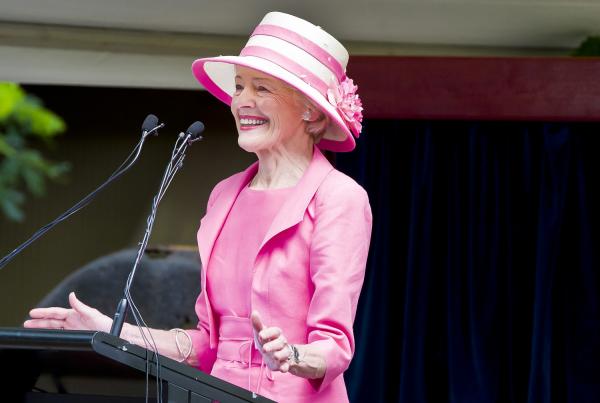
(Picture shows Dame Quentin Bryce opening the Defence Museum in Darwin)

Girls Names from the Top 100 of the 1940s

01 Sunday Mar 2015

Posted by A.O. in Name Themes and Lists

≈ 10 Comments

Tags

animal names, aristocratic names, Biblical names, classic names, colour names, controversial names, created names, dated names, english names, fictional namesakes, French names, gemstone names, German names, Greek names, hebrew names, Latin names, middle names, mythological names, name history, name meaning, name popularity, nature names, nicknames, plant names, rare names, retro names, royal names, saints names, Spanish names, underused classics, unisex names, vocabulary names

029692

These are names of babies born during World War II, and the first baby boomers, born in the years just after the war. If you are an older parent, your own mother might have been born in this decade, while young parents may see 1940s names as “grandma” names. For those wanting a name that’s ahead of the curve, there are rich pickings from this time period.

Coral
Coral is a gemstone made from the polished shells or exoskeletons of coral polyps – originally, and typically, Corallium rubrum, from the Mediterranean. Because this species has a pink or red colouring, the word coral also refers to a pinkish colour. The ancient Romans believed coral would protect children, and it was common for baby toys and teething rings to be made from coral, even in the 19th century. Coral jewellery has been worn since prehistoric times, although it was the Victorian era which made coral fashionable. Today, with greater awareness of the environmental impact of harvesting coral, many jewellers will no longer sell coral items, and consumers are urged to boycott jewellery made from coral. The name Coral was #194 in the 1900s, and joined the Top 100 in the 1930s. It peaked in the 1940s at #79, left the Top 100 the following decade, and was off the charts by the 1980s, perhaps partly due to growing environmental concerns. Leaving aside the gemstone, you could see this name as a way to celebrate our beautiful coral reefs, and marine environment.

Daphne
In Greek mythology, Daphne was a naiad; a nymph of fresh water, and daughter of a river god. Acording to legend, she was so beautiful that the god Apollo pursued her. Just as he was about to catch her, she pleaded with her father to help her, and he turned her into a laurel tree – Daphne literally means “laurel”, and it’s also the scientific name for the plant. The laurel became sacred to Apollo, and wreaths of laurel were traditionally given to those who had achieved victory. The name Daphne has been use since the 18th century, when classical names became fashionable, but only became common in the 19th, because of the interest in botanical names. Daphne was #82 in the 1900s, and peaked in the 1920s at #22. It was #76 in the 1940s, left the Top 100 the following decade, and was off the charts by the 1970s. Recently it been in the charts again, and is around the 300s. Charming retro Daphne makes a distinguished choice, not a daffy one.

Frances
Feminine form of Francis, often given in tribute to St Francis of Assisi, although St Frances of Rome provides a medieval female saintly namesake. The name was commonly used by the British aristocracy, with examples such as Frances Cobham, a close friend of Elizabeth I, and Frances Grey, the mother of queen-for-nine-days Lady Jane Grey. The great Restoration beauty Frances Stewart, Duchess of Richmond and Lennox, drove King Charles II batty with desire, but she refused to become his mistress. Her lovely face was used as the model for Brittania on coins, medals, and statues, and can still be seen today. In common use since the 16th century at least, Frances is a classic name which has never disappeared from the charts. It was #52 in the 1900s, and peaked in the 1940s at #47, leaving the Top 100 in the 1970s. It sank into obscurity in the late 2000s, but had a boost at the start of this decade which saw it move into the 500s, and is now around the 200s. More solid than Francesca, Frances is a quiet achiever which gets royal glamour from being the middle name of Diana, Princess of Wales, and offers the cool nickname Frankie.

Irene
From the Greek Eirene, meaning “peace”. In Greek mythology, Eirene was the personification of peace, depicted as a beautiful young girl carrying symbols of plenty. Another mythological Eirene was a daughter of Poisedon. The name was in use in ancient Greece, and one Eirene was a famous artist. There are a number of saints named Irene, with Irene of Thessalonica martyred with her sisters Love and Purity, so personifications of theological virtues. Originally more popular in eastern Christianity, it was the name of a Byzantine Empress, and has been used by European royalty. The name was originally pronounced e-REE-nee, but is usually said IE-reen now. Irene is a classic name which has never left the charts. It was #19 in the 1900s, and peaked the following decade at #17. It was #56 in the 1940s, and left the Top 100 in the 1960s. It reached its lowest point in the late 2000s at #684, and since then become more popular, perhaps because it’s been used for several fictional characters in the past few years. Currently it’s around the 400s. This is a hip, underused classic with a lovely meaning.

Lois
In the New Testament, Lois was the pious grandmother of Saint Timothy. It’s not known what the name means: it may be from the Greek meaning “more desirable, more agreeable”, and understood as “the most beautiful, the best”. However, as Lois was Jewish, it could be an attempt to Hellenise a Hebrew name. Lois is also a male name – an Occitan and Galician form of Louis. The female name Lois has been in use since the 16th century, and was used by Puritan families. Lois Lane, Superman’s love interest, has given the name publicity for many decades, but more recently it has become a “mum name” on TV, with Lois Wilkerson from Malcolm in the Middle, and Lois Griffin from Family Guy. Lois joined the charts in the 1910s, debuting at #181. It joined the Top 100 in the 1930s, when it peaked at #84, and was #93 in the 1940s. It left the Top 100 the following decade, and was off the charts by the 1970s. Soft sounding Lois would make an interesting alternative to popular names such as Eloise.

Marlene
German name combining Maria/Marie and Magdalene, so it commemorates Mary Magdalene from the New Testament, the chief female disciple of Jesus Christ. The German pronunciation is mahr-LE-nuh, but it is often said MAHR-leen in English. The name became well known in the English speaking world because of iconic German-American film star Marlene Dietrich, whose real name was Marie Magdalene. The name Marlene rocketed into the Top 100 from nowhere in the 1930s when Dietrich became a star after appearing as the uberdesirable Lola Lola in Josef von Sternberg’s movie The Blue Angel. It both debuted and peaked at #63 in the 1930s. The name Marlene was #68 in the 1940s, when Dietrich did valuable war work, such as performing for the troops and raising war bonds. By the 1950s, when Dietrich became a cabaret star, the name Marlene had left the Top 100. It left the the charts in the 1980s, when Dietrich’s career was over. Despite being a dated name which spiked in popularity only briefly, Marlene still seems glamorous and sexy, fitting in with modern names such as Marley and Elena.

Pamela
Created by Sir Philip Sidney for his 16th century epic, the Arcadia; in the story, Pamela is an attractive main character. It is usually thought that Sidney based the name on the Greek for “all sweetness”. The name was given publicity by Samuel Richardson’s best-selling 18th century novel, Pamela, where a lovely teenaged maidservant is threatened with rape by her employer, but she successfully resists him, and is rewarded for her virtue by being allowed to marry him. Not only are there so many things wrong with that sentence, it was apparently based on a true story. Pamela was originally pronounced pa-MEE-luh, but PAM-eh-luh is more usual now. Pamela has been used since the 17th century, and an early namesake was Lady Edward Fitzgerald; although her real name was Stephanie, she named her eldest daughter Pamela. Pamela joined the charts in the 1910s, debuting at #310, and peaked in the 1940s at #9. It left the Top 100 in the 1970s, and hasn’t been on the charts since the early 2000s. This is an elegant literary name which is dated, but still seems very usable.

Ruth
In the Old Testament, Ruth was the loyal widowed daughter-in-law of Naomi, who famously offered to follow her mother-in-law wherever she went. Naomi married Ruth to one of her relatives, who called Ruth a “noble character”; she is one of the nicest people in the Bible, blessed with a loving spirit. Her name comes from the Hebrew ru’at, meaning “friend, companion” – it seems chosen for the story, as she was such a good friend to Naomi. Ruth is also an English word meaning “mercy, compassion” – it’s one of those words which only seems to be used in its negative form, as we often describe people as ruthless, but rarely ruthful. Ruth has been in common use throughout the modern era, and is a classic name which has never left the charts. It was #66 in the 1900s, and peaked in the 1920s at #41. It was #58 in the 1940s, and left the Top 100 in the 1970s. It’s currently around the 500s. An underused classic with two lovely meanings and a sweet namesake, this is a great name. After all, you can’t spell truth without Ruth!

Thelma
Popularised by Marie Corelli’s 1887 novel Thelma; in Corelli’s romance, Thelma is an enchantingly beautiful, snow-pure Norwegian princess who marries an English nobleman. The name Thelma had been in use since at least the 18th century, but the meaning is not known. One theory is that it is based on the Greek word thelema, meaning “will”, but there is no evidence to support it. It may be a variant of Selma, since Selma is a common name in Scandinavia even today, and Thelma was used in Norway before the novel was published. The name Thelma was also used in Spanish-speaking countries before Corelli’s novel, and Anselma (the long form of Selma) is a Spanish name. Thelma was #18 in the 1900s and peaked the following decade at #9. It was #96 in the 1940s, left the Top 100 by the following decade, and was off the charts by the 1970s. With the name Selma now receiving a boost from the film, could its clunky sister Thelma be in with a chance?

Valerie
English form of the French name Valérie, from the Latin name Valeria, the feminine form of Valerius, meaning “strong, healthy”. It comes from the same source as the name Valentine. St Valerie was a legendary French saint who was martyred by beheading, then went for a walk carrying her head. This was a popular thing for French saints to do in medieval legends, so the name Valerie got quite a boost. Valerie is a classic name which has never left the charts. It was #180 in the 1900s, and joined the Top 100 the following decade. Peaking in the 1930s at #12, it was #38 in the 1940s. It left the Top 100 in the 1960s, and has remained in uncommon use. It had a small boost at the start of this decade, when it was in the 400s. Valerie is a classic with a rather luscious feel to it. It makes a great middle name too.

POLL RESULTS
People’s favourite names were Daphne, Coral and Frances, and their least favourite were Marlene, Thelma, and Pamela.

(Picture shows members of the Women’s Auxiliary Air Force working on a RAAF plane; photo from the Australian War Memorial)

Waltzing With … Anna

08 Sunday Feb 2015

Posted by A.O. in Waltzing with ...

≈ 1 Comment

Tags

Anglo-Saxon names, aristocratic names, Biblical names, British names, classic names, Disney names, Disney princesses, Etruscan names, European name popularity, famous namesakes, fictional namesakes, Greek names, hebrew names, Irish names, Latin names, mythological names, name days, name history, name meaning, name popularity, names from films, names of cakes, popular names, Roman names, royal names, unisex names

Pavlova RM90_01

Famous Namesake
On Thursday February 12, it will be the 134th birthday of the Russian prima ballerina Anna Pavlova. At a time when the rules of classical ballet were rigidly enforced, the dainty Anna performed in a graceful, romantic style, with less emphasis on precision and acrobatics. The principal artist with the Imperial Ballet and the Ballets Russes, she formed her own company and became the first ballerina to tour as an international star.

It was during one of her tours to Australia and New Zealand in the 1920s that Anna Pavlova would be honoured with the creation of an iconic Australasian dish, and in the process spark a rivalry between the two Trans-Tasman nations, who both claim it as their national dessert.

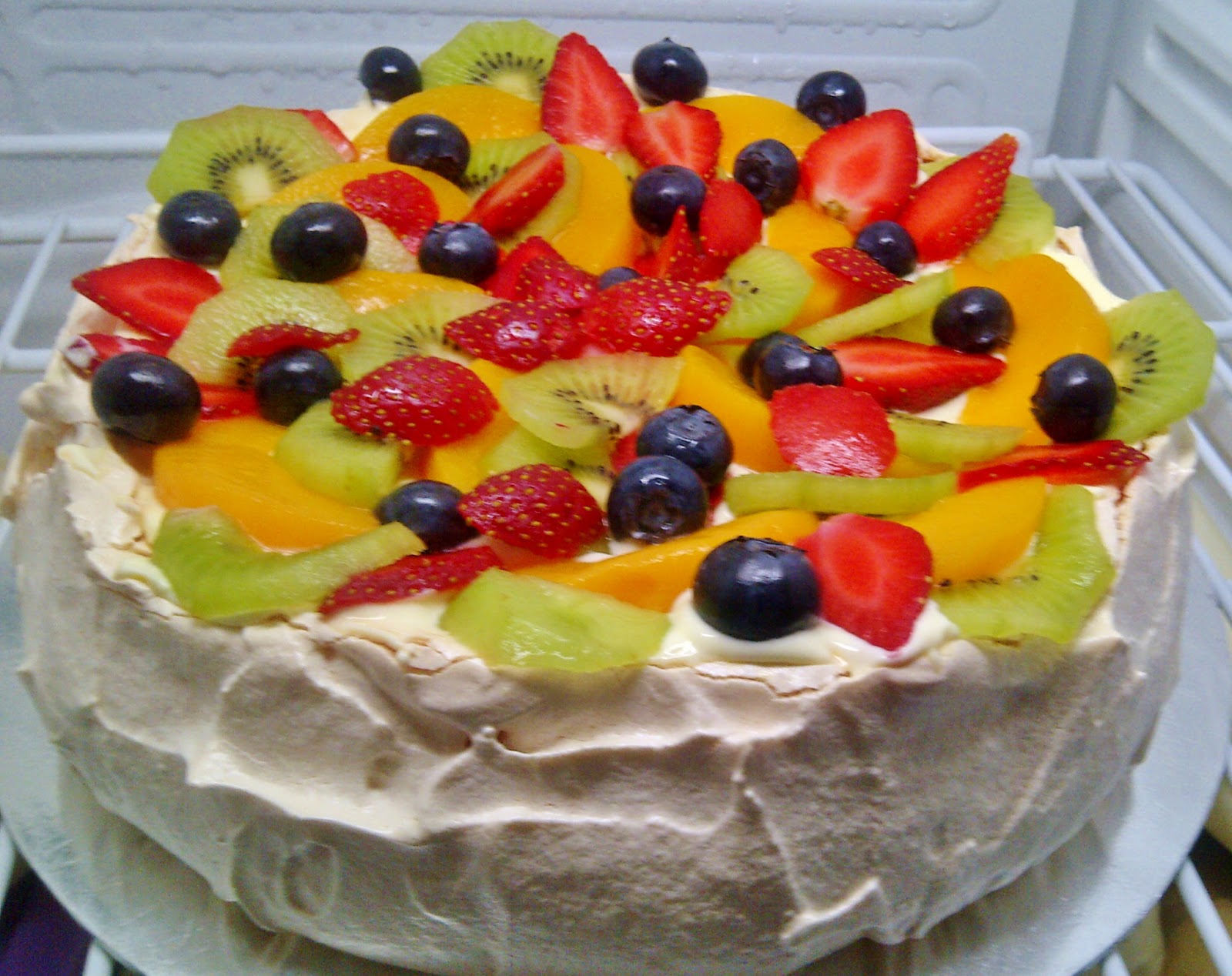
A pavlova is a meringue cake which has a crisp outer shell, and a soft marshmallow-y filling; a delectable, sweet, melt-in-your-mouth treat which is traditionally smothered in whipped cream and fresh summer fruit. Supposedly, the fragile pavlova was inspired by light-as-air Anna Pavlova, with its meringue casing designed to emulate the soft folds of her white ballet skirt.

Both New Zealand and Australia have some rather dubious stories as to how the pavlova first came to be made and named, but indefatigable research by a New Zealand food historian shows that it definitely originated in New Zealand, with a 1929 recipe being found in a New Zealand magazine. Meanwhile, it didn’t make an appearance in Australia until the early 1930s. So New Zealand gets the honours for inventing the pavlova, although it really does feel as if Australia has embraced the pavlova more heartily – it is a favourite choice to celebrate Australia Day.

I always have a pavlova for my Name Day cake: it not only reflects my name, Anna, but is perfect for a hot summery February Name Day. It’s also very appropriate, because my dad is from New Zealand and my mum born in Australia, so it symbolises the two countries coming together.

Name Information
Anna is the Latinised Greek form of the Hebrew name Hannah, meaning “favour, grace, graciousness”, sometimes translated more freely as “God has favoured me”, or “the grace of God”. The New Testament uses the Greek form Anna, in contrast to the Old Testament Hannah.

The Gospel of Luke tells of Anna the Prophetess, an old widow perhaps more than a century in age, who was very devout, and spent all her time fasting and praying. At the Presentation of Jesus in the Temple, celebrated as Candlemas in early February, she immediately recognised the infant Jesus as the redeemer, and gave thanks to God for having been allowed to see Jesus in her lifetime. Despite having a walk-on role in the Gospels, Anna is recognised as a saint.

According to Christian legend, the mother of the Virgin Mary was also named Anna (or Hannah), but she is usually referred to as Saint Anne in order to avoid confusion with Anna the Prophetess. The use of the name Anna was inspired by Saint Anne rather than the aged prophetess.

In classical mythology, Anna was the sister of Dido, Queen of Carthage; she appears in Virgil’s Aeneid. According to the poet Ovid, this Anna was the same being as the Roman goddess Anna Perenna, whose name refers to the “circle of the year” (per annum, in Latin). Her feast day marked the first full moon of the year, and people offered sacrifices so that the year should be successful.

Ovid relates that Anna escaped from Carthage to Italy, where she accidentally drowned and became a river nymph – he translated her name as meaning “perennial stream” (amnis perennis). Ovid says that the goddess was a tiny old woman who baked cakes, and that crude jokes and songs were sung at her festivals. She may have been a mother goddess, and originally Etruscan – if so, her name might be from the Etruscan nanas, meaning “to bear, to beget (a child)”.

Another mythological Anna is the half-sister of King Arthur, usually referred to as Morgause; in many stories she bears Arthur a son, to his downfall. Morgause seems to be a title, meaning “of the Orkneys”, so Anna would have been her personal name.

It may be that she is based on the Irish goddess Anu, sometimes called Ana or Annan. One possibility is that Anu is another name for the mother goddess Danu/Dana, while the war goddess the Morrigan was sometimes called Anand. The British had a winter storm goddess that they referred to as Gentle Annie or Annis, apparently from terror of her hideous powers (this is another link with the name Agnes in Britain). The name is speculated to come from the ancient Celtic anon, meaning “deity, spirit”.

While we’re looking at the name Anna in different cultures, it is worth mentioning that it is also a man’s name, because Anna (or Onna) was an Anglo-Saxon king. One theory is that his name was a nickname for Ethelmund, meaning “noble protection”, or one of the other Ethel- names. Don’t ask me how Anna is short for Ethelmund!

The name Anna has been in common use in the west since the Middle Ages, and has historically been more popular in Eastern Europe and Scandinavia, where it was used by the nobility. It was traditional in the Russian royal family, and the 18th century Empress Anna of Russia was a nasty piece of work. Apart from Anna Pavlova, another famous Russian Anna is the beautiful Anna Karenina, title character of the tragic novel by Leo Tolstoy, considered one of the greatest works of fiction ever written.

Anna is a classic name which has never left the charts. It was #208 in the 1900s, and sunk to its lowest level in the 1920s at #353. After that, it began climbing and joined the Top 100 in the 1950s at #89. The rise into popularity may have been influenced by the 1948 film version of Anna Karenina, starring Vivien Leigh, and helped along by the 1956 film The King and I, with Deborah Kerr in the role of Anna. These movies probably helped give Anna a touch of exoticism.

The King and I was based on the Broadway musical of the same name, in turn based on the book Anna and the King of Siam by Margaret Landon, from the memoirs of Anna Leonowens about her experiences as a royal teacher in Bangkok in the 1860s (Anna Leonowens lived for a few years in Western Australia). Anna and the King was made into a TV show in 1972, and although it flopped in the US, had a decent lifespan on Australian television as re-runs, giving the name Anna a fair amount of exposure during the 1970s.

Anna peaked at the start of the 1980s at #34, then gradually sank into the bottom half of the Top 100. It has not shown any signs of serious decline, but remained relatively stable. In 2013, Anna was #64 nationally, #60 in New South Wales, #81 in Victoria, #87 in Queensland, where it rejoined the Top 100 and was one of its fastest-rising names, #47 in Western Australia, and #71 in the Australian Capital Territory. Preliminary results for 2014 suggest Anna may have improved its position, and is one of Victoria’s fastest-rising names of last year.

One of the factors helping the name along must surely be Princess Anna from the 2013 hit Disney film Frozen, the younger sister of “snow queen” Elsa. Anna is an attractive heroine who is brave and hopeful, with a strong, loving heart. I know many little girls – and even some not so little ones – who adore Anna for being sweet and genuine, with an endearing awkwardness. I wonder how many baby Annas have had their name suggested by an older sister?

Anna is still popular and stable after many decades, and even shows signs of a recent boost. It is a popular name all over the world, but tends to be most popular in central and Eastern Europe, and is the #1 name in Austria. Last year blog readers voted Anna their favourite internationally recognisable girls’ name.

I have found Anna a very easy name to wear. It’s a common name never out of use, but has never been highly popular, so I don’t actually know many people with my name, although everyone has heard of it. Nobody has had any problems spelling it (I learned to write my name as a toddler in about a minute!), and everyone can pronounce it to my satisfaction, even those who don’t speak English. The biggest issue is that it sounds similar to other names, such as Hannah and Emma, which can cause a slight hold-up over the phone.

I can’t pretend that Anna is a very exciting name, but for such a short and simple one, I don’t think it is completely boring either. It’s a palindrome, which tickled me as a child, and it has quite an interesting history – it fascinates me that so many Annas from legend have been elderly women, sometimes with quite a dark side! Its “foreignness” made it popular in the mid twentieth century, and even now I think it has a slight touch of European exoticism: Disney chose it for a Scandinavian princess, after all.

POLL RESULT
Anna received a frankly unbelievable approval rating of 100%, making it the highest-rated girls name in the Waltzing With … category, the highest-rated girls name overall, and the highest-rated overall name of 2015. 46% of people loved the name Anna, and nobody disliked or hated it. I have trouble accepting that I have the perfect name, and can’t help thinking that everyone was too polite to say they didn’t like it!

(Picture shows a pavlova; photo from Just LilDaisy)

Famous Name: Philip

04 Wednesday Feb 2015

Posted by A.O. in Famous Names

≈ 3 Comments

Tags

animal names, Biblical names, classic names, Disney names, Disney princes, english names, European name popularity, famous namesakes, fictional namesakes, Greek names, honouring, locational names, middle names, name history, name meaning, name popularity, nicknames, royal names, surname names, UK name popularity, US name popularity

159088

Famous Namesake
Australia Day is a day not just to celebrate, but to honour Australians for their achievements and service to the community. However, this year even the Australian of the Year was almost completely forgotten as everyone was swept up in a media maelstrom when Prince Philip was named a Knight of Australia.

Former Prime Minister Gough Whitlam replaced the British honours system in 1975 with the Order of Australia, and Knights and Dames were added to it in 1976 by former prime minister Malcolm Fraser. Knights and Dames were then dumped by the Hawke government in 1986.

Last year Knights and Dames were re-instated by the current prime minister, who declared that they would celebrate pre-eminent Australians such as Governors-Generals, chief justices and the like. The prime minister didn’t consult his senior colleagues over the decision, which many felt to be a mistake which could come back to bite him. This is the moment it bit.

There are several reasons why declaring Prince Philip a Knight of Australia went down badly. For one thing, the prime minister didn’t consult any of his colleagues over the decision, which re-ignited fears of an arrogant leader making “captain’s calls” which could alienate his own cabinet. For another, Prince Philip wasn’t a pre-eminent Australian, so the appointment was outside the stated brief.

The prime minister’s decision has been widely criticised, and had scorn poured upon it. The decision has been described as “a time warp” and “ludicrous … cultural cringe” by some in the Opposition, while those on the prime minister’s own side labelled it “April Fool’s Day”, “total craziness”, and “a joke”. High profile supporters of the prime minister, such as conservative commentator Andrew Bolt and media baron Rupert Murdoch thought it was “pathetically stupid” and “an embarrassment”. No wonder the newspapers have dubbed it a “Knightmare“.

Comedian Adams Hills commented that, “Giving a Knighthood to Prince Philip is like giving a Beyonce CD to Jay-Z. Surely he could just pick one up at home”. In fact, Prince Philip, the Duke of Edinburgh, already has three British knighthoods, and has had knighthoods bestowed upon him numerous times by various countries, including Nepal, Peru, and a whole bunch of others you never knew cared.

So an Australian knighthood isn’t completely bizarre, and Prince Charles is already a Knight of Australia, while Prince Philip is a Companion of the Order of Australia. In fact, in Vanuatu Prince Philip is worshipped as a god, which makes a knighthood look pretty low-key in a “least we could do” sort of way.

The problem is that the prime minister was already floundering in a sea of unpopularity, and when you are in dangerous waters, you cannot afford to make a mistake. The knighthood to Prince Philip was the equivalent of a drowning swimmer cutting his leg open, and now (to continue this laboured metaphor), the sharks have the scent of blood and are circling in a menacing sort of way.

The Coalition have already lost the Victorian state election after only one term, and after the Prince Philip debacle, it performed so dismally in the Queensland state election that it is predicted to have lost its majority from a seemingly unassailable 78 seats, and former premier Campbell Newman has lost his seat and left politics. Many pundits are now predicting a federal leadership spill.

Name Information
Philip is the English form of the Greek name Philippos, meaning “friend of horses”. The name isn’t just about being an animal-lover – in ancient Greece, only the wealthiest people could afford to own horses, so the name proclaims a high status. (In the same way, knights are also high-status and connected with horses). Aptly, Prince Philip is a keen equestrian who still participates in carriage driving, a sport which he helped develop.

The name Philip was traditional in the Macedonian royal family, and Alexander the Great‘s father was named Philip. Because of this, it was a highly popular name in Macedonia, although common in the rest of the Hellenic world. Prince Philip was born in Greece to a prince of Greece and Denmark, so his royal Greek name is very suitable.

There are two saints named Philip from the New Testament. One is the Apostle Philip, who seems to have been a friend of Peter and Andrew; according to tradition, he was martyred by being crucified upside down. The other is Saint Philip the Evangelist, mentioned as being one of the deacons chosen to help care for the poor.

The name Philip came into common use in western Europe by the Middle Ages, and was a traditional name in several royal houses, including France, Spain, and Portugal. Philip was used in England from medieval times too, with a notable example being the Elizabethan courtier Sir Philip Sidney, who created the name Stella for a poem.

However, the name became less common for a time because of King Philip II of Spain, who tried to invade England, and whose Spanish Armada was famously defeated by the English in 1588. Philip had actually been king of England for a short time, due to his marriage to Mary I, and they hadn’t been a popular couple. However, under Philip’s rule Spain reached the peak of its power, and was called “the empire on which the sun never sets”. The Philippines is named after him.

By the 19th century, everyone was over the whole Spanish Armada thing, and Philip was completely rehabilitated, no doubt assisted by Phillip, the surname form of the name – which has an Australian link, thanks to Captain Arthur Phillip, the founder of Sydney (Phillip Island in Melbourne, and the suburb of Phillip in Canberra are named after him).

It’s not hard to think of famous Philips and Phillips, including poet Philip Larkin composer Philip Glass, self-help guru Dr Phil McGraw, novelist Philip Pullman, singer Phillip Everly from The Everly Brothers, actor Philip Seymour-Hoffman, and record producer Phil Spector, to name a few. Funnily enough, when I think of fictional Philips, most of them seem to be cartoons, such as Philip J. Fry from Futurama, Phillip Argyle from South Park, and Prince Phillip (!) from Sleeping Beauty.

Philip was #69 in the 1900s and Phillip was #95; they both peaked in the 1950s at #33 and #19 respectively. Philip left the Top 100 in 1989, while Phillip managed to last slightly longer, until 1996. Philip has fallen more dramatically, with not enough births since 2009 to show up in the records, while Phillip is around the 400s.

Philip is still getting reasonable use in the UK and US, but while Phillip has a similar popularity to Philip in the United States, in the 300s, Phillip (#709) is far less common in the UK than Philip (#288). One can only speculate why we all have taken a different position in regard to Philip and Phillip. Philip is most popular in Denmark and Norway.

As I already covered my brother Edward’s name, I will mention that Philip was the name my dad chose for my youngest brother, named for his cousin and best friend. Philip’s middle name is Andrew, after my mother’s favourite great-uncle, who was from the Scottish Highlands.

However, both these choices turned out to be superfluous, because almost as soon as Philip was brought home and settled into his cot, my dad said admiringly, “He’s so brown – like a little brown bear”, and from then on he was Little Brown Bear, and eventually just Bear. He never goes by Philip.

(I should probably add that my family are otherwise very fair skinned with light hair, so Philip’s handsome olive skin and dark hair seemed like an exciting novelty to us. This colouring turns up in many families of Cornish heritage, and legend has it that they are descendants of the Spanish Armada, or Moorish pirates, which is almost certainly complete fiction).

Philip is a classic name with ancient roots, a royal history, and a biblical heritage. It has become less common than its surname twin Phillip, although neither is used extensively. It has some great nicknames – if you’re not excited about Phil, there’s always Pip, the hero of Charles Dickens’ Great Expectations, while Philo, Flip and Pippin would also be possibilities.

POLL RESULTS
Philip received an approval rating of 57%. 21% of people saw Philip as too dated and old-fashioned, but 19% thought it was sensible and honest. 10% were put off the name by Prince Philip, while nobody thought the name was snobbish or stuck-up.

(Picture shows Prince Philip with a friend at the Royal Windsor Horse Show last year; photo from The Express).

← Older posts
Newer posts →

Enter your email address to follow this blog

Categories

Archives

Recent Comments

A.O.'s avatarwaltzingmorethanmati… on Zarah Zaynab and Wolfgang…
Madelyn's avatarMadelyn on Zarah Zaynab and Wolfgang…
JD's avatardrperegrine on Can Phoebe Complete This …
A.O.'s avatarwaltzingmorethanmati… on Rua and Rhoa
redrover23's avatarredrover23 on Rua and Rhoa

Blogroll

  • Appellation Mountain
  • Baby Name Pondering
  • Babynamelover's Blog
  • British Baby Names
  • Clare's Name News
  • For Real Baby Names
  • Geek Baby Names
  • Name Candy
  • Nameberry
  • Nancy's Baby Names
  • Ren's Baby Name Blog
  • Sancta Nomina
  • Swistle: Baby Names
  • The Art of Naming
  • The Baby Name Wizard
  • The Beauty of Names
  • Tulip By Any Name

RSS Feed

  • RSS - Posts

RSS Posts

  • Celebrity Baby News: Melanie Vallejo and Matt Kingston
  • Names from the TV Show “Cleverman”
  • Can Phoebe Complete This Sibset?
  • Zarah Zaynab and Wolfgang Winter
  • Baby, How Did You Get That Name?
  • Celebrity Baby News: Media Babies
  • Celebrity Baby News: Adelaide Crows Babies
  • Celebrity Baby News: Chris and Rebecca Judd
  • Names at Work: Name News From the World of Business and Employment
  • Celebrity Baby News: Sporting Round Up

Currently Popular

  • Girls Names From Native Australian Flowers
  • Girls Names of Australian Aboriginal Origin
  • Celebrity Baby News: Victoria Samba and Mitch Hoare
  • Celebrity Baby News: Katie Underwood and Darren McCoy
  • Flynn Christopher Bloom: A Son for Miranda Kerr and Orlando Bloom

Tags

celebrity baby names celebrity sibsets english names famous namesakes fictional namesakes honouring locational names middle names name combinations name history name meaning name popularity name trends nicknames popular names saints names sibsets surname names twin sets unisex names

Blog at WordPress.com.

Privacy & Cookies: This site uses cookies. By continuing to use this website, you agree to their use.
To find out more, including how to control cookies, see here: Cookie Policy
  • Subscribe Subscribed
    • Waltzing More Than Matilda
    • Join 517 other subscribers
    • Already have a WordPress.com account? Log in now.
    • Waltzing More Than Matilda
    • Subscribe Subscribed
    • Sign up
    • Log in
    • Report this content
    • View site in Reader
    • Manage subscriptions
    • Collapse this bar
 

Loading Comments...