• About
  • Best Baby Names
  • Celebrity Baby Names
  • Celebrity Baby Names – Current
  • Celebrity Baby Names – Past
  • Featured Boys Names
  • Featured Girls Names
  • Featured Unisex Names
  • Links to Name Data
  • Waltzing on the Web

Waltzing More Than Matilda

~ Names with an Australian Bias of Democratic Temper

Waltzing More Than Matilda

Tag Archives: name meaning

Popular Names for Girls

29 Sunday Apr 2012

Posted by A.O. in Name Themes and Lists

≈ 29 Comments

Tags

acronyms, Appellation Mountain, band names, Biblical names, celebrity baby names, created names, english names, Etruscan names, famous namesakes, fictional namesakes, flower names, French names, gemstone names, germanic names, Greek names, Italian names, Latin names, Linda Rosenkrantz, locational names, mythological names, name data, name history, name meaning, name popularity, name trends, Nameberry, nature names, nicknames, Norman names, popular culture, popular names, retro names, royal names, Shakespearean names, ship names, tribal names, vocabulary names
In honour of the name data being released, I thought I’d do lists of the most popular names in Australia for last year. I admit this was something of a last-minute decision, but it seemed like a good opportunity to cover some of the best-loved names.

People often ask how popular names got to be popular. I’m not sure there’s really a good answer to that – clearly people like the sound of them, and they fit in with current trends. Yet there must be many names, equally as nice-sounding and trend-friendly, that lurk around the 200s and don’t seem as if they are going anywhere much.

Although I cannot tell you what events caused these names to become popular, I can tell you some of the events which accompanied their rise. I’m definitely not trying to say that they were the cause of a name’s popularity, just that they coincide with it (and really sometimes it seems more than merely coincidental). Feel free to add other events you can think of, or any theories of your own!

Note: I’ve used data from New South Wales, but it must be broadly accurate for the rest of the nation too.

Lily

Lily seems to have begun as a pet form of Lilian, but must soon have become thought of as a flower name. The lily is sacred to the Virgin Mary, and Jesus urged his followers to “consider the lilies of the field” as a model in trusting Divine Providence. Lily has been almost continuously in the charts, only dropping out during the 1960s. It began rising in the 1980s – a decade when Princess Lily was the main female character in fantasy film Legend, and when Phil Collins and Kevin Costner welcomed daughters named Lily. A Top 100 name in the 1990s, it continued climbing, as Kate Beckinsale welcomed a daughter named Lily, while Johnny Depp named his baby girl Lily-Rose. By the early 2000s, Lily was already a Top 20 name, and during this decade, Lilly was the main character’s best friend in The Princess Diaries movie, Lily Potter was Harry’s mum in the Harry Potter movies, and pop singer Lily Allen released her first hit. Last year Lily was the most popular name for girls, once combined with the spelling Lilly. Delicate and pure, yet with several spunky namesakes, pretty Lily became a favourite.

Ruby

Ruby is named after the precious gemstone, whose name from Latin simply means “red”. Retro Ruby was popular during the 1900s, then dropped out completely during the 1960s and ’70s, despite being a popular name in songs; notably Ruby Tuesday and Ruby Don’t Take Your Love to Town. It began rising in the 1980s, as comedienne Ruby Wax barged her way onto our TV screens, and singer Rod Stewart welcomed a daughter named Ruby. The name climbed steeply during the 1990s, and turned up in more songs: Ruby Soho by Rancid, Thru’ the Eyes of Ruby, by The Smashing Pumpkins, and Ruby Wednesday by Eskimo Joe. By the early 2000s, Ruby was a Top 50 name, and by the late 2000s, it was Top 20. During this decade, the song Ruby was a hit for The Kaiser Chiefs, Renee Zellweger played Ruby in the movie Cold Mountain, and Ruby Buckton was a free spirited teen on popular soap, Home and Away. Charlotte Church, Tobey Maguire, and Harry Kewell all welcomed daughters named Ruby. Last year it was #2 for girls, once combined with the spelling Rubi. Flaunting Ruby sparkles, and is a name worth singing about.

Chloe

Chloe means “young green shoot” in Greek, and was one of the epithets of the earth goddess Demeter. From early on, it was a favoured literary name; Chloe is the heroine of the pastoral romance Daphne and Chloe, by the Ancient Greek writer Longus. The name was also considered suitable for use by the Puritans, because Chloe is an early Christian mentioned in the New Testament. Chloe first appeared on the charts in the 1970s; a decade when an arty French film, re-titled Chloe in the Afternoon, was released to English-speaking audiences. Chloe stormed up the charts and was Top 100 by the 1980s. During this decade, actress Candice Bergen and singer Olivia Newton-John both welcomed daughters named Chloe, and Chloe Jones was one of the characters in long-running soap, A Country Practice. By the 1990s it was Top 20, and Logie-winning actress Kristy Wright played the tragically troubled Chloe Richards on popular soap, Home and Away. Chloe was Top 5 by the early 2000s; it reached #1 in 2006. Fresh and spring-like, Chloe has been recommended at Appellation Mountain, and Linda Rosenkrantz from Nameberry named her daughter Chloe – some serious name-guru approval.

Mia

Mia seems to have become popularly known through actress Mia Farrow, the daughter of Australian film director John Farrow, and Irish actress Maureen O’Sullivan. Mia is short for Ms Farrow’s real name, Maria. Mia first appeared on the charts in the 1960s, after Mia Farrow began her career, but rose in popularity very gradually. An interesting link with another name on the list is that Princess Lily in Legend was played by actress Mia Sara; is it a coincidence that both names began climbing at the same time? It started making significant gains in the 1990s, a decade when Uma Thurman played Mia Wallace in Pulp Fiction. Although not yet Top 100 in the 1990s, by the early 2000s it was already Top 20. In this decade, we met Amelia “Mia” Thermopolis, heroine of The Princess Diaries movie, and Mia Toretto from The Fast and the Furious films. It was chosen as the name for their daughter by actress Bec Cartwright and tennis champion Lleyton Hewitt. Top 10 by the late 2000s, it reached #1 in 2008. Simple and cute, Mia has another Australian connection – it is an acronym for Made in Australia.

Olivia

Olivia is a name invented by William Shakespeare for a character in Twelfth Night. Olivia is a beautiful noble lady in mourning for her brother; through an amusing misunderstanding, she falls in love with a woman named Viola disguised as a man. Through another amusing misunderstanding, she marries Viola’s twin brother Sebastian by mistake, but fortunately he is so much like his sister in looks and personality that she is happy with the outcome. Famous Olivias include actress Olivia de Havilland and Olivia Arias, the widow of Beatle George Harrison. Olivia first appeared on the charts in the 1960s, just as singer Olivia Newton-John began her career, and rose steadily. Her popularity took off in the 1980s (perhaps by coincidence, the era when Ms Newton-John enjoyed her greatest success), and by the 1990s she was already a Top 20 name. During the 1990s, Denzel Washington and Lance Armstrong welcomed daughters named Olivia. In the early 2000s, Mariska Hargitay was playing Olivia Benson on Law and Order: SVU, and by 2005 Olivia had reached #1. Shakespeare had a knack with names, and this one is elegant; I picked it to be the Jessica of our time, and equally resilient.

Isabella

Isabella is a Latinate form of the name Isabel; it was a favourite amongst European royalty from the Middle Ages onwards. Isabella is a stock character in the Italian commedia dell’arte, the flirtatious and alluring female lover that men make fools of themselves over. She is named in honour of the actress, playwright and poet Isabella Andreini, who became famous in the role. Isabella has been on the charts almost continuously, although her last time in the Top 100 was in the 1900s. She dropped out completely during the 1950s, and then again in the 1970s. She made a recovery in the 1980s just as Italian actress Isabella Rosselini became internationally known, and then skyrocketed. Nicole Kidman and Tom Cruise adopted a daughter in the early 1990s and named her Isabella, and the name was comfortably Top 50 for that decade. When Stephenie Meyer’s novel Twilight was published in 2005, its heroine named Isabella “Bella” Swan, Isabella was already #7; Isabella reached #1 in 2009, the year after the Twilight film was released. Ornate and ultra-feminine, it is an Australian royal baby name, as Prince Frederik and Princess Mary of Denmark named their first daughter Isabella.

Charlotte

Charlotte is a French feminine form of Charles; a common name amongst European royalty, it was introduced to Britain in the 17th century by the Hanoverians. The Charlotte was one of the ships of the First Fleet, who reached Australia in 1788. Charlotte has been almost continuously on the charts, only disappearing in the 1950s. She began climbing gradually in the 1960s, a decade when English actress Charlotte Rampling’s film career began. The name grew steeply in the 1980s, a decade in which Charlotte “Charlie” Blackwood, played by Kelly McGillis, is the love interest to Tom Cruise’s Maverick in the movie Top Gun. It made the Top 100 by the 1990s, when actress Sigourney Weaver welcomed a daughter named Charlotte, and when the band Good Charlotte began their career. It was Top 20 in the early 2000s, while we got to know the romantically optimistic Charlotte York in Sex and the City, played by Kristin Davis; by the end of the decade it was Top 10, as as singer Charlotte Church progressed her career from classical to pop. Sophisticated yet sensible, with the option of a tomboy nickname, Charlotte has yet to make #1.

Sophie

Sophie is the French form of Sophia; the name was used in several European royal families. Sophie first entered the charts in the 1950s, and through steady growth, made the Top 100 by the 1980s. It was during this decade that William Styron’s Sophie’s Choice was made into a film; Meryl Streep won an Oscar for her performance as Zofia “Sophie” Zawistowski, the beautiful Polish immigrant with a tragic secret. The same year the film came out, Roald Dahl‘s book, The Big Friendly Giant was published; the heroine is called Sophie, named after Roald Dahl’s grand-daughter (later fashion model Sophie Dahl). During the 1990s Sophie took off, and was a Top 20 name during that decade. It was during the ’90s that the best-selling novel, Sophie’s World, was published, and actress Sophie Lee and singer-actress Sophie Monk both began their careers this decade. At the end of the 1990s, Sophie Rhys-Jones joined the British Royal Family when she married Prince Edward. Sophie was Top 10 by the early 2000s, and many are tipping sweet and simple Sophie to become the #1 name within the next few years.

Sienna

Sienna is the English name for the Italian city of Siena,in Tuscany. As a word, it refers to a type of clay used to make oil paints, and a shade of yellow-brown, after the hue of said clay. The city’s name comes from the Etruscan tribe who originally inhabited the area, the Saina, but the Romans derived it from the Latin for “old” (the same Latin root which gives us the word senile). Sienna first entered the charts in the 1980s, and climbed steeply during the ’90s. I think the name suited the aspirational nature of that era. Italy was very “big”; pizza was becoming a mainstream food, and the adults around me were guzzling Chianti and buying time-shares in Tuscan villas. British model-actress Sienna Miller is not responsible for the name’s popularity, because it had been climbing for some time, but can it be purely coincidental that it first joined the NSW Top 100 in 2002, the year after Ms Miller’s career began? From that point, its climb was so vertiginous that it was Top 10 by 2006. Smooth, modern Sienna seems certain to go higher still.

Ella

Ella is the Norman form of the Germanic name Alia, a short form of names with the element ali, meaning “other”. However, it can also be used as a short form for Eleanor, Ellen, Elizabeth or any name starting with El, and also the many names ending with -ella. It’s hard not to connect this name with jazz great, Ella Fitzgerald. Ella has been on the charts almost continuously, with her last time in the Top 100 in the 1900-10s. She was soon in rare use, although she only disappeared completely during the 1960s. She climbed slowly during the 1980s, and steeply during the 1990s. It was during the ’90s that Ella got a new singing namesake – Ella Hooper from rock band Killing Heidi. Ella was Top 20 by the early 2000s. She received several boosts around this time, for the movie Ella Enchanted was released, a re-telling of the Cinderella story. Warren Beatty, John Travolta, Mark Wahlberg and Ben Stiller all welcomed daughters named Ella, giving the name a distinct celebrity flavour. Top 5 in the second half of last decade, Ella feels as if she may have peaked, and is possibly on her way down again.

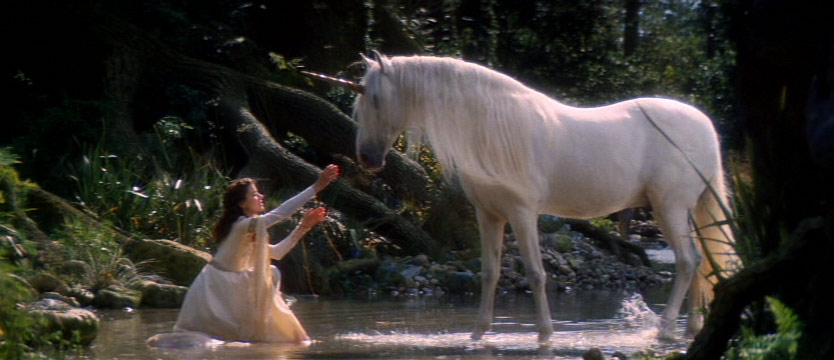
(Picture shows Princess Lily and unicorn, from Ridley Scott’s 1985 cult fantasy film Legend)

Requested Name: Anzac

25 Wednesday Apr 2012

Posted by A.O. in Requested Names

≈ 14 Comments

Tags

birth announcements, historical events, historical records, holiday names, honouring, middle names, military events, name combinations, name history, name meaning, nicknames, unisex names

Today is ANZAC Day, one of the most solemn and significant days on the Australian and New Zealand calendars. Originally a commemoration for the Australian and New Zealand Army Corps (ANZACs) who fought at Gallipoli during World War I, today it also honours all those who served and died for their country during military operations.

It marks the anniversary of the first major military action fought by Australian and New Zealand forces in 1915, as part of World War I. The Gallipoli Campaign took place on a peninsula near the Dardanelles in what is now Turkey, and was an attempt by the British and French to capture Constantinople (now Istanbul), and secure a safe route to Russia. The attempt was a failure for the Allies, and resulted in the loss of many lives.

While great military victories are often commemorated as national days of celebration, Australia and New Zealand instead remember this bitter military failure. Although Australia had been independent for thirteen years, and New Zealand for seven, when World War I broke out, many in both countries still thought of themselves as British (they had been, only a few years previous), and had a great deal of faith in the British Empire.

The miserable failure of the Gallipoli Campaign did much to shake that faith in British superiority. The stories of courage and heroism from the ANZACs bolstered a feeling of national pride, and a national identity which until then had been lacking. It is popularly said that although Australia officially became a nation in 1901, we only psychologically separated ourselves from Britain in 1915.

There is a long tradition of giving children a name to honour military events, and Anzac is another of these. Although the name Anzac is protected by the government to ensure it is not misused, it is permitted to use it on people. It would make a very patriotic name, especially for a child born on or near ANZAC Day.

Through reading the historical records, Anzac seems to have been most often given as a middle name. When used as a first name, it was almost always given to boys. As a middle name, it was much more even, but still more often given to boys than girls.

Although there seems to be have been a spate of baby Anzacs after the Gallipoli Campaign, it is a name still in use today, and I last saw a baby named Anzac in a birth announcement less than two years ago (a boy). For girls, Anne or Annie could be used as a nickname, and Zac seems most likely for a boy.

Some Anzac Name Combinations From the World War I Era

Female

Alma Anzac Myrtle

Annie Anzac

Anzac Cavel Vardon

Clover Anzac

Dardandella Anzac

Maple Anzac

Verdun Anzac Jane


Male

Anzac Gallipoli Claude

Anzac Kitchener

Lalbert Anzac

Valentine Anzac

Vivian Anzac Jasper

William Anzac France

Winston Anzac

Thank you to Larkin for suggesting the name Anzac back in early December, and waiting so patiently for ANZAC Day to arrive so that it could be covered!

(Image shows the Beach Cemetery at Anzac Cove, containing the remains of allied troops who died during the Battle of Gallipoli. Most of the graves are from the Australian Imperial Forces, and the first graves were dug here on the day of landing, April 25 1915)

Baby Name Dilemma: They Love a Name That Nobody Else Does

24 Tuesday Apr 2012

Posted by A.O. in Naming Assistance

≈ 23 Comments

Tags

Australian Aboriginal names, Bonds Baby Search, honouring, Indian names, locational names, Macquarie Aboriginal Words, middle names, name advice, name history, name meaning, nicknames, slang terms, surname names, unisex names

I recently received an e-mail from a father-to-be and blog-reader named Gabriel; technically I’m still on holiday, but this was urgent enough to bring me back early!

Gabriel and his wife Theresa are expecting a baby boy in only two weeks; unfortunately, the name they have picked out has met with a cool reception from family and friends.

The couple first met on Bondi Beach, and, like many Australians living near the coast, are strongly drawn to the ocean, which is cleansing and refreshing, and for a city-dweller especially, washes away the fatigue that comes from modern life. They want a name with a meaning connected to the beach and the sea. They are also very keen to use an Aboriginal Australian word for a name, feeling that this is a perfect way to honour their homeland.

They immediately fell in love with the idea of using Daku as a name. This is a name given to boys meaning “sand”, and apparently it is from one of the languages of north-west Western Australia. Not only did they love the sound of it, but the meaning seemed ideal. Not only did they meet and fall in love at the beach, but sand itself conveys the power of water, which gradually over millions of years wears down great rocks and boulders into fine grains. It therefore holds connotations of patience and persistence – qualities which they hope their son will learn to possess.

When they shared their choice with family and friends, others saw the name quite differently, and thought it was a choice which would lead to teasing. Basically their objections amounted to this:

  • Daku might be okay for a boy growing up in a hippie commune, but isn’t suitable for one growing up in a big city
  • It sounds like the phrase “dack you” – which in Australian slang, means that you are pulling someone’s pants down in a playful or spiteful manner
  • Daku is an Indian girl’s name, which could cause confusion further down the line
  • In Portuguese, daku is supposedly some sort of unsavoury slang (or maybe sounds similar to it)

Their families would much prefer a name which is clearly European and Christian – something along the lines of John, Paul, Daniel, or Xavier.

Gabriel and Theresa now have a dilemma on their hands: do they ignore everything their families and friends say and follow their hearts, or do they choose another name which will cause less controversy? With only a couple of weeks to go, they are starting to get a little stressed over it.

*********************************************************

Everyone has a particular bias in a debate, and I should declare mine straight away. I believe that it is the parents who get to choose their child’s name, not extended family, relatives, friends, or well-wishers.

I believe that loved ones have a perfect right to their own opinion, they have the right to (politely) make suggestions and share their concerns before the birth, and they have the right to be listened to respectfully. However, the final decision must lie with the parents.

Now you could take your story onto any name forum, and you will be able to find at least a dozen people who will advise you to just tell your family to butt out, shut up, and mind their own business in no uncertain terms, then move interstate so you don’t have to deal with them ever again. It’s easy advice to give, but I’m not sure it’s necessarily the best advice to follow.

For a start, obviously you love your family and don’t want to alienate them or cause a big family drama just as a baby is about to born and you need support more than ever. Second, occasionally the objections that family and friends offer have some validity, or make some sense. If you were planning to name your child Freddie Hoff or Penelope Ophelia Overton, a friendly hint might help you realise the mistake you were about to make. At the very least, they give you a taste of how others might see that name, and what response it could get. It’s better to have that information in advance.

As far as I can see, these are the choices the two of you have before you:

1. Go ahead with your original plan, and name your son Daku

Pros: You son will receive a name that you both love, and love hearing – moreover, a name which is a constant reminder of your love for each other. That’s incredibly special. You will have a wonderful story to share with your son when he asks, “Mum and dad, why did you call me Daku?” Maybe one day you can take him to Bondi and show him where his own unique life story and name story began, and when he hits a difficulty in life, perhaps you can show him the sand on the beach that he’s named after, and explain how it could only be made through the sea patiently grinding it down day after day, and never giving up.

Cons: Your family may not be happy with the choice you have made, or feel slighted that their dire warnings were not heeded. However, you have listened to everything they said and taken it on board, and you have also chosen his middle name, Rudolf, after Theresa’s father. You have pretty much already done your family duty. It’s not uncommon for family members to become reconciled or at least used to a “strange” name once they see it on their adorable grandson or nephew, and they may come up with their own pet name for him anyway.

I do feel that your family and friends have gone straight to the “worst case scenario” for the name, and some of their ideas are probably a little silly. I think Sydney is cosmopolitan enough to cope with the name Daku, and the slang issues seem a bit overboard to me.

“Dack you” is pretty dated slang now (although boys do seem to hang onto old slang more than girls), and in any case, most names sound a bit like something else. I find it hard to believe your son will suffer horribly because of his name, although naturally I can’t guarantee he will never be teased because of it. I must say that the name didn’t remind me of the phrase dack you.

The Portuguese slang term isn’t one I was able to find a reference to online, so doesn’t seem to be in general circulation. Unless you are planning to ship him to Portugal at some point, or you associate with many Portuguese people, perhaps this isn’t the big problem you fear.

Although Daku is a girl’s name in India, it’s a word and name used all over the world in many different cultures and in different contexts. In Japan it means “embrace, hug”; in Fiji it can mean “cousin”, and is also a place name; in Malay it means “I, me, myself”; in Hindi it can mean “bandit, pirate”; in Swahili it is related to the word “grasp, seize”; in ancient Sumerian it meant “executed”. It’s also a word in an invented language in the game World of Warcraft (no idea what it means).

When a word has this many meanings, it’s hard to get too worried if one or two are less pleasant than others. As well as a girl’s name, Daku is also a surname used all over the world, by people from a variety of ethnic backgrounds.

Realistically, what you will face with the name Daku is people not being sure how to spell it or stumbling over the pronunciation. When your son is very small, people may be unsure whether he’s a girl or a boy. People will say, “What an unusual name! Where does it come from?”.

I’m pretty sure once you explain it’s an Australian Aboriginal name meaning “sand”, 90% of people will just go, “Oh right then”. 10% will be interested enough to ask for more information (Most likely, “Do you have any Aboriginal heritage?” or “Why did you choose it?”). I do feel once they know the origin and meaning, most criticism they may have offered will be quashed.

I know that parents who have chosen unusual names find that although they do sometimes get some aggressive or rude comments, they also find many people who say, “Oh that’s a fantastic name”, “It’s so different”, “What a great meaning” and so on. It does tend to stick in people’s memories. You don’t usually get this kind of attention and enthusiasm if your child’s name is Daniel or John.

2. Please your family by choosing a standard European-style name

Pros: Your son will have a name that blends right in with everyone else’s. People will know how to say it and spell it. He won’t be questioned about his background or his name. His name will be in a style which fits in with his family and community.

I’d love to be able to say that your family will appreciate your sacrifice forever and shower you with praise and devotion, but they probably won’t. They may secretly despise you for giving in; they may resent you for resisting them until the last minute; they may figure that if you caved in on such a big issue, you will always cave in on smaller ones; some of them may still dislike the name you choose. They may forget all about the disagreements during the pregnancy, and in ten years will assume his name was always going to be Paul. If you try to remind them what a sacrifice you made, they may roll their eyes about the “big fuss” you keep making about it.

Cons: He will miss out on hearing that wonderful name story. When he asks, “Why did you name me Xavier?” you will say, “We did have another name picked out, but ended up going with something your grandma liked. The name we chose was meant to inspire you to always be persistent; ironically, we didn’t persist with the idea”.

3: Pick another name that is similar to Daku, but causes less family friction

You did say that if your son had been a girl, he would have been named Iluka, an Aboriginal word and place name said to mean “by the sea”.

You may not have realised this, but in Australia Iluka is generally accepted as a male name. It’s usually listed as a boy’s name in baby name books (although giving it to a girl would be fine). Because it sounds like the popular boy’s name Luca, it’s often taken as a native elaboration of that name, and is given the nicknames Luke or Lukey.

Iluka has a similar sound, origin and meaning to Daku, but it might be something your family could accept more readily, as it sounds like popular names Luca, Lucas and Luke, and has the same nicknames as them.

If you were worried about using a name you were reserving for a future sister, there are many, many pretty sea-oriented names for girls from Aboriginal languages.

If you were feeling very bold, you could give either a son or a daughter the name Bondi, which means “the sound of water breaking over rocks”. It’s one I saw given to a baby girl in the Bonds Baby Search, but seems unisex to me, and rare enough to be up for grabs by either gender.

The word used in the Sydney area for beach sand was marrang, and I’m afraid that’s all the beach-related Aboriginal words which sound like masculine names I can think of. I suggest that you buy a copy of Macquarie Aboriginal Words, which would make a useful reference tool.

I can’t make the choice for you, that is your privilege. I hope you at least feel a bit less stressed seeing your choices laid out in print with some possible outcomes attached.

Once your little boy arrives and is safely settled in, please please please let us know what you chose, and how it’s gone down with everyone on a real baby!

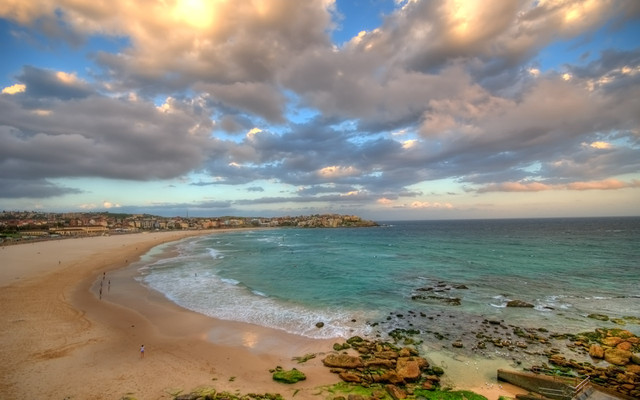
(Image of Bondi Beach from Beach Wiki)

Googly Gender-Bending: Your Questions on Unisex Names Answered

15 Sunday Apr 2012

Posted by A.O. in Your Questions Answered

≈ 20 Comments

Tags

blog reviews, classic names, famous namesakes, fictional namesakes, French names, Google, hebrew names, Hungarian names, Italian names, Japanese names, Latin names, Mer de Noms, mythological names, name meaning, name popularity, naming laws, nature names, nicknames, Nook of Names, place names, polynesian names, popular culture, surname names, unisex names

You may be expecting a blog review this week, and I hope you are not too disappointed that one isn’t appearing. The truth is, I feel quite burned out in regard to the reviews, and also think that several name blogs are currently in a state of flux. I hope that if I wait a few months, it will give new blogs a chance to catch up, and abandoned ones a chance to resume.

In the meantime, here I am starting yet another Category – this one, Your Questions Answered. I’ve noticed many interesting questions typed into Google, and although they got sent to my blog, alas, they received no answer here. So this is my chance to make good on their requests.

I thought I’d begin with a few of the many enquiries in regard to unisex names, since it is such a popular topic. I think it is worth mentioning that so far, nobody has Googled, “what is a male name I can steal for my daughter so there are no names left for parents of boys to use” or “how can I give my son a feminine name in order to scar him psychologically”, which is how some people seem to imagine the mental workings of the bestowers of unisex names.

The fact that so many people are so frequently searching suggests that far from using a unisex name in a frivolous way, a lot of thought is going into it. In turn, I’ve tried to put a lot of thought into answering them, steering a steady course between a laissez faire “anything goes” attitude, and a shrill denouncement of anyone daring to suggest that any name at all can be unisex.

In doing so, I’ve considered the origin, meaning, history, namesakes, and popularity of a name, both current and past. I’ve tended to go with the theory that surnames are unisex, unless they have a specifically gendered meaning, or are derived from specifically gendered personal names.

One thing I should make clear is that unlike some other countries, Australia has no naming laws in regard to gender. According to legislation, all names are unisex, and you are quite free to name your daughter Matthew or your son Chloe if you wish.

I’m presuming that when people ask if a name is male, female, or unisex, they are asking the community for their opinions on the subject. Of course, my opinions are just that – opinions. Feel free to leave your own opinions!

Note: Popularity of names based on Australian data.

I: BOYS TO GIRLS?

Henry as a girl’s name

At first glance, the idea of Henry as a girl’s name seems utterly potty. Henry is not only Top 100 for boys, but also a classic boy’s name which has charted for males for over a century, and been accepted as such for more than a thousand years. However, I do remember a Famous Five book where there was a female character named Henry – short for Henrietta.

My Verdict: A boy’s name, unless short for Henrietta

Luca as a girl’s name

Luca can be the Italian form of Luke, but also the Hungarian form of Lucia. In the latter case though, it is pronounced LOO-tsa, rather than LOO-ka. Luka seems to have a reasonable history of use as both a male and female name across a range of different cultures. I’d probably lean towards using Luka for a girl instead.

My Verdict: Both a boy and a girl name, but the two names are pronounced differently

Dylan as a girl’s name

Dylan was a Welsh god, so the name’s origins are masculine. Furthermore, Dylan has charted as a boy’s name since the 1960s, but never for girls. You could use the completely unrelated Irish surname Dillon though, which an English speaker would pronounce the same way anyway.

My Verdict: A boy’s name, sometimes used on girls

can Cadel be a girl’s name

It is a variant of Cadell, which for many centuries has been used and accepted as a male name. However, the explorer Francis Cadell has a few places in South Australia named after him – you could always claim Cadell as a place name. Place names based on surnames based on gendered personal names seem to be something of a grey area.

My Verdict: A boy’s name

can Myles be a girl name

In Greek legend, Myles was most definitely a man, and this name has a long history as a male name. However it’s now being used on girls – perhaps it seems like the “correct” form of Miley?

My Verdict: A boy’s name, currently being used on girls

II: GIRLS TO BOYS?

when can Hazel be a boy name?

I guess whenever you feel like using it as such. Hazel is a nature name and a surname, so seems quite unisex, and in fact does have some history as a male name. Having said that, it’s currently rising in popularity as a girl’s name, and has never charted for boys.

My Verdict: Technically unisex, but usage is almost entirely feminine

Can I call my boy Kaia

I think you can, but nobody seems to agree. Kaia seems unisex to me, but nearly everyone insists that it’s feminine. However, the name Kaya definitely is unisex, and worldwide seems to be used by more men than women. It’s used in so many different countries that it’s practically unicultural as well. I think I’d prefer to go with Kaya, although I don’t see why Kaia can’t be a variant of Kaya.

My Verdict: Your choice!

Noa as a boys name

Although Noa is a female name in Hebrew and Japanese, it’s also a Polynesian male name meaning “freedom”. There was a famous rugby league player from Fiji named Noa Nadruku, who played for Australian teams in the 1990s.

My Verdict: Both a boy and a girl name depending on origin

can Starr be a boy’s name?

Sure it can, it’s a surname as well as a place name. In fact, the surname seems to derive from a masculine first name which may mean “ox”, so if anything it’s more male than female. There’s a comic book hero called Starr the Slayer, a barbarian king. He seems pretty blokey.

My Verdict: Unisex, leaning towards male by history and meaning

is Kelly becoming popular as a boys name

Apparently not. It’s still charting as a girl’s name, although slowly declining, and has never charted as a boy’s name. I have seen some boys named Kelly though; it’s rare as a boy’s name, but not unheard of.

My Verdict: Unisex, but usage is almost entirely feminine

III: CONFUSED ON THE ISSUE

is Stacey more common as a boy or girl name

It isn’t common for either sex – currently it’s not on the charts at all. However, when it did chart, it was only as a female name.

My Verdict: Historically, much more common as a girl’s name

can a man’s name be Ashley or it that just a girls name

It can be used for both sexes. Famous Australian men named Ashley include tennis player Ashley Cooper, and swimmer Ashley Callus. It charts as both a male and female name, although as a female name it is still Top 100, and as a male name it is now in rare use. Historically it has been male for longer, but hit a higher peak of popularity as a female name.

My Verdict: Historically more common for boys, but currently more common for girls

Is Remy a boy name or a girl name

It’s based on the Latin name Remigius, so it’s usually a boy name. However, Kay from Nook of Names pointed out that it could just as easily be based on the female form Remigia. In its country of origin, France, Remy is occasionally used as a female name.

My Verdict: Most often a boy name, but can be used as a girl name

is Jade boy or girl

It’s a unisex name. Famous Australian men named Jade include soccer player Jade North and AFL player Jade Rawlings. Famous Australian women named Jade include swimmer Jade Edmistone and singer Jade McRae. Jade has charted for both sexes, but currently it’s Top 100 for girls, and in rare use for boys.

My Verdict: A name for both boys and girls, but much more common for girls

Is Darcy considered a boy or girl name

Ooh good question. Darcy charted as a unisex name from the 1900s to the 1950s, and then in the 1950s it became a male name only. Currently it generally seems to be rising as a female name and declining as a male name.

My Verdict: Originally unisex, and may be returning to that state

(Picture is of Australian androgynous model Andrej Pejic, who successfully models both male and female clothing)

More Eastertide thanks are due to the unisexily named Lou from Mer de Noms, for reblogging Boys Names of Australian Aboriginal Origin! (If you read that carefully, it’s a poem).

Waltzing With … Billy

08 Sunday Apr 2012

Posted by A.O. in Waltzing with ...

≈ 5 Comments

Tags

Easter names, english names, famous namesakes, fictional namesakes, Irish name popularity, name history, name meaning, name popularity, nicknames, rhyming slang, slang terms, UK name popularity, unisex names, US name popularity, vocabulary words

This article was first published on April 8 2012, and revised and re-posted on March 9 2016.

Fictional Namesake
The blog entry for Pasco looked at a religious side to Easter, so this one will be about a secular aspect of the holiday.

One of the most popular symbols of the season is the Easter Bunny; this was an old German custom, and originally a hare rather than a rabbit (which is why the word bunny is used, to cover both creatures). Hares and rabbits are famous for being prolific breeders, so they make obvious fertility symbols for a festival which occurs in the northern spring and celebrates new life.

However in Australia, this prolificness of the rabbit has made it an invasive pest and an environmental disaster. Rabbits first arrived on the First Fleet and were bred for food in hutches, but don’t seem to have become a problem in mainland Australia until 1859.

In this fateful year, some bright spark named Thomas Austin thought it would be utterly spiffing to release 24 English rabbits onto his country property in Victoria so that he could continue the rabbit hunting lifestyle he had enjoyed in England. Austin opined the rabbits would do little harm, and might provide a touch of “home”.

Austin released both wild grey rabbits and domestic rabbits; the two varieties intermingled to become an extremely hardy and resilient Super Rabbit. Even then it might not have been such a mess, except that all the landowners living around Austin got in on this new fad, and released stacks of rabbits onto their own farms.

Within a decade, there were so many rabbits that 2 million could be killed each year without making the slightest difference to their numbers. By Federation in 1901, they were already holding a Royal Commission to see how the “rabbit problem” could be brought under control.

Rabbits are thought to be the most significant factor in loss of native species. They kill young trees, compete with native animals for resources, and cause horrific soil erosion which takes centuries to recover. They cost the agricultural sector millions of dollars in damages each year.

During the 1980s and ’90s, the environmental movement in Australia made a stand by using a new Easter symbol – the Easter Bilby. Bilbies (pictured) are cute native marsupials with a long muzzle and long ears, and they are an endangered species. The Foundation for a Rabbit-Free Australia used the Easter Bilby to educate people about the damage that feral rabbits do to our delicate ecology.

Haigh’s Chocolates got on board by stopping making chocolate bunnies, and making the very first chocolate bilbies. Darrell Lea also make chocolate bilbies, with part of the profits going to the Save the Bilby Fund. You can buy cheap chocolate bilbies from supermarkets as well, but it’s probably a toss-up whether any of the money you spend will go towards helping real bilbies.

The campaign has been successful, because thirty years ago there was no such thing as a chocolate bilby, and now they are an established part of Easter. Schools and school holiday programs often use the Easter Bilby for egg hunts and other activities, as an opportunity to teach kids about the environment as they play games and munch chocolate. Buying a bilby instead of a bunny feels patriotic and environmentally responsible.

There have been many picture books about the Easter Bilby, but the first one, and the first mention of the Easter Bilby, was Billy the Aussie Easter Bilby, by Queensland children’s author Rose-Marie Dusting, in 1979. Rose-Marie’s first version of the story was written in 1968, when she was only nine years old. Most likely, Rose-Marie chose the name Billy because it sounds like the word bilby.

Name Information
Billy is a pet form of Bill, which is short for William; it has been used an an independent name since the 18th century. People often ask how Bill became short for William (which doesn’t start with a B), but nobody seems to know for sure. It is presumed to be part of that medieval initial letter swapping which saw Richard become Dick, and Robert become Bob.

Billy is also a vocabulary word which has a particular resonance in Australia – a billy is a cooking pot used to boil water on a campfire. It’s thought that the word billycan comes from the large cans used to transport bully beef (corned beef) on ships sent to Australia or during exploration in the outback.

It’s a word which reminds us of the outback and our history, and even now some older Australians will say they are going to put the billy on for tea, when they just mean the kettle. Billy Tea is a brand of strong tea which has been sold since the late 19th century, and many arcane methods are suggested for making the perfect brew of tea over a campfire. You can read of billies in the poems of Henry Lawson and Banjo Paterson, the most famous reference being the jolly swagman in Waltzing Matilda, who sang as he watched and waited ’til his billy boiled.

A billy lid is not just a lid for a billy, but also affectionate rhyming slang for “kid” (child). There’s also the Puffing Billy steam train network near Melbourne, a major tourist attraction, and billy buttons, a type of native daisy.

One of the most famous Australian men who went by the name was Billy Blue, the first Australian convict to become a celebrity. Described in the records as a “Jamaican Negro”, Billy claimed to be a freed slave with some Native American heritage who had fought with the British during the War of Independence. When convicted, he was living in London, and had stolen sugar to use in his chocolate-making business.

In Australia, he became popular with the government and the public for his whimsical personality and witty banter. When he completed his sentence, he became a ferryman, and was granted 80 acres of land in the North Sydney area – Blues Point and William Street are two of several local landmarks named after him.

Other namesakes include Billy the Native, a bushranger who passed into folklore as “the traveller’s friend”; Billy Lynch, an Aboriginal community leader in the Katoomba area with hundreds of proud descendants; Billy Sing, a Chinese-Australian soldier who served with distinction in the Gallipoli Campaign; Billy Thorpe, rock singer from the 1960s and 70s; Billy Elliot, the jockey who rode Phar Lap to victory seven times; and NRL star Billy Slater.

Billy entered the Australian charts in the 1970s at #427, and began climbing steeply. It hasn’t reached the national Top 100, but is often seen around the bottom of popularity charts in certain states, and would not be far off. William is a very popular name, and it is possible that some of those Williams also go by Billy.

In the US (home of Billy the Kid and fictional sailor Billy Budd), Billy has been almost continually on the charts, and was a Top 100 name from the early 1920s until the end of the 1970s, peaking in the 1930s at #20. After that very impressive run, it has been on the decline and is now #794. It also charted as a girl’s name (a variant of Billie) from the 1920s until the 1940s, peaking in 1930 at #527.

In the UK (home of Billy Idol and fictional schoolboy Billy Bunter), Billy was a Top 100 name in the 1990s; it left the Top 100 in 2009 and is currently #122, and has been occasionally used for girls. Billy is still a popular name in Ireland. In Australia, Billy has never had a long run of popularity as in other English-speaking countries, so feels a bit fresher here.

Billly is an environmentally-friendly Easter creation; a name from history; a name from poetry; a name from the landscape; the name of a host of colourful Australian characters. Billy is a name which says, “I’m coming at you world, ready or not!” He’s a true blue wild colonial boy who is cute as a button, and sweet as a chocolate bilby.

POLL RESULTS
Billy received an approval rating of 78%, making it one of the highest-rated names of 2012. 42% of people thought the name Billy was okay, while 11% hated it.

Boys Names from the Top 100 of the 1900s

01 Sunday Apr 2012

Posted by A.O. in Name Themes and Lists

≈ 12 Comments

Tags

Appellation Mountain, celebrity baby names, classic names, ethnonyms, famous namesakes, fictional namesakes, French names, German names, germanic names, Latin names, locational names, name data, name history, name meaning, name popularity, name trends, nicknames, Norman-French names, Old English names, Old Norse names, popular culture, popular names, Roman names, royal names, Sabine names, saints names, surname names, tribal names

This follows on from Girls Names from the Top 100 of the 1900s. Once again, I’ve tried to get a balance between those names coming back into fashion, and those which haven’t charted for a while; once again, it is based on data from New South Wales. If you are attracted to names like these for boys, you should check out Abby’s two parter at Appellation Mountain – Fetching Names: The Nevilles, as many of her suggestions are very much in tune with this style.

Albert

This is derived from the Germanic name Adalbert, meaning “noble and bright”, which was common amongst German royalty. It was introduced to England by the Normans, where it readily overtook the Old English form, Æðelbeorht. A rare name by the 17th century, it came back in the 19th, as Prince Albert was the name of Queen Victoria’s dearly loved husband, born in Germany. Famous Australians with this name include Albert Matthews, the last Gallipoli veteran to die, in 1997, and popular long-time entertainer, Bert Newton. Albert is a classic name which has never been out of use; it was #12 in the 1900s, and didn’t leave the Top 100 until the 1950s. It’s remained relatively stable for several decades, and is currently in the low 300s. Albert is one of those names which sound slightly “grandpa” while remaining steadily in use. It’s a good reliable choice, and Alby, Bertie and Bert all make cute nicknames.

Aubrey

The Norman-French form of Germanic Alberich, meaning “elf power” or “elf ruler”, which replaced the Old English equivalent, Ælfrīc. The name was used for both sexes during the Middle Ages, especially amongst the aristocracy, but gradually fell out of use. It was revived in the 19th century, possibly influenced by the surname. There have been a few famous men in Australia named Aubrey, including motorcycle racer Aubrey Lawson, and Australian rules footballer, Aubrey Mackenzie. Aubrey was #59 in the 1900s, and left the Top 100 in the 1930s. It hasn’t charted since the 1950s. Aubrey may seem old-fashioned and effete to some people; others may think it sounds feminine, due to the popularity of similar-sounding girls’ name, Audrey. However, this unisex name is certainly in use as a boys’ name, and I have actually seen it on more boys than girls, with parents of girls often preferring specifically feminine spellings such as Aubree or Aubrie. I think it sounds handsome and dashing, and Jack Aubrey from Master and Commander (played by Russell Crowe in the film) even helps give it a nautical air. The usual nickname is Aub or Auby.

Claude

The French form of the Roman family name Claudius. The Claudii interpreted their name as from the Latin claudus, meaning “lame, crippled”, but according to legend, the first of their house was not Roman, but Sabine, and his family name was Clausus or Closus. When he joined the Romans, his name was Latinised. The Claudii were very proud of their Sabine heritage, very powerful, and had a reputation for arrogance and haughtiness. The name Claude became common in France during the Middle Ages due to the 7th century Saint Claude of Besancon, a monk to whom many miracles are ascribed. The name was brought to Britain by the aristocratic Hamilton family of Scotland in the specifically male form Claud; being Scottish they naturally had ties to France. Australian Claude Choules was the last surviving male World War I veteran in the world until his passing last year. Claude was #49 in the 1900s, left the Top 100 in the 1930s, and hasn’t charted since the 1970s. The name still packs a patrician punch, and namesakes such as painter Claude Monet and composer Claude Debussy make it seem quite artistic as well.

Frank

Used as a short form of Francis or Franklin, but is a name in its own right, referring to the Germanic tribe of the Franks. They conquered most of Gaul, which was later named France in their honour. A powerful tribe, they were the ultimate founders of what would later become the Holy Roman Empire, controlling much of Europe. The meaning of their name is disputed; it may mean “javelin” after their weapon of choice (although the weapon might have been named after them, not the other way around). Another theory is that it meant “bold, fierce”; the Romans sometimes addressed or referred to them as “the fierce people”. The English word frank, meaning “free, honest” is named after the Franks, and is not the source of the name. The most well-known Australian called Frank is probably charming comedian Frank Woodley. Frank’s a classic that has never been off the charts; #27 in the 1900s, it didn’t leave the Top 100 until the 1970s. It’s currently having a growth spurt in the low 400s. Brisk, sensible Frank is a worthy choice for someone wanting an old-style replacement for popular Jack. The usual pet form is Franky.

Harold

Derived from the Old English name Hereweald, meaning “army leader”; the Old Norse form Haraldr was also common amongst Scandinavian settlers in England. It was popular amongst the royal houses of Norway and Denmark, and the two kings of England named Harold were of mixed Scandinavian and Anglo-Saxon ancestry. It was Harold II who was defeated and killed at the Battle of Hastings, leading to the Norman Conquest. Not surprisingly, the name died out almost immediately, but was revived by the Victorians. The most famous Australian with this name is former Prime Minister Harold Holt, who disappeared in 1967 at the beach, and is presumed drowned, although many conspiracy theories have existed. Oddly enough, there is a swimming centre named after him. Harold was #13 in the 1900s, peaked in the 1910s, left the Top 100 in the 1940s, and remained in (rare) use until the early 2000s, with a dampener put on it by Mr Holt’s watery demise. Until recently, I would have said Harold made a great way to get the popular nickname Harry – unfortunately, Harry is rapidly falling. It’s got some challenges, but I do like this noble and besieged name.

Reginald

From the Germanic name Raginald, meaning something like “well-advised ruler”. The Normans brought it to Britain in the forms Reinald and Reinold; there were already Old English and Norse forms in use there. Reginald is the Latinised form of all these variants, and is another of those names from the Middle Ages which made a comeback in the Victorian era. There are many well known Australian Reginalds, including popular actor Reg Livermore, and Sir Reginald Ansett, the founder of Ansett Airlines. Reginald was #20 in the 1900s, and left the Top 100 in the 1960s. It hasn’t charted since the 1980s. Reginald may seem very fusty and pompous – then again, that’s exactly what people would have said about Archibald a few years ago, and now it’s quite fashionable as a way to the nickname Archie. I don’t really see what makes Reggie any different from Archie, Alfie or Freddie, which makes Reginald a genuine contender.

Rupert

A German form of Robert, this was introduced to Britain in the 17th century by Prince Rupert of the Rhine, a nephew of King Charles II of England. When still young, he was appointed commander of the Royalist cavalry during the English Civil War; after the Restoration he returned and became a senior naval commander. Prince Rupert was a man of fashion who also was one of the founders of the Royal Society and a patron of the arts – he made the name seem distinctly aristocratic, and perhaps slightly flamboyant. Famous Australians with the name include artist Rupert Bunny and media mogul Sir Rupert Murdoch. Rupert was #97 in the 1900s, and left the Top 100 the following decade; it left the rankings in the 1940s. Very recently, it has entered the charts again, and is currently climbing in the 400s. Rupert seems to be making a comeback – perhaps Rupert Grint from the Harry Potter movies has given it a more likeable, down-to-earth image. It’s certainly handsome, and Ru would make a cute nickname.

Stanley

An English surname meaning “stony meadow”; it comes from the place name Stoneley in Staffordshire. It has quite an aristocratic heritage, for the Stanleys were Earls and Barons, prominent in the Conservative Party, and at times, one of the richest landowning families in Britain. Members of the Stanley family have held high political office, including Prime Minister, been connected to royalty, and generally a force through the pages of British history. Sir Lyulph Stanley was part of this august clan; he was Governor of Victoria and held several other important posts in Australia. Great men called Stanley from our nation include tennis champion Stanley Doust, and legendary cartoonist Stanley Cross; the Stanley Award for cartoonists is named in his honour. A classic which has never left the charts, Stanley was #22 in the 1900s and left the Top 100 in the 1950s. It has remained stable since the 1960s. It’s an oldie but goodie, made to seem quite cool since Dido gave her son this name last year, named after the song Stan, by American rapper Eminen. It seems eminently usable, and sturdy nickname Stan is right on trend.

Vincent

This is from the Roman name Vincentius, derived from the Latin for “to conquer”. Its meaning made it popular amongst early Christians, who no doubt wished to indicate that they were ready to conquer sin, and there are several martyrs of the church with this name. A later saint with this name is the 16th century French priest famous for his works of charity, St Vincent de Paul. Vincent was used in Britain in the Middle Ages, but didn’t become common until the 19th century. Vince Jones is an Australian jazz artist, and Vince Melouney was one of the founding members of Billy Thorpe & The Aztecs, so it’s a very musical name. Handsome and romantic, Vincent is a classic which has never left the charts or been out of the Top 200. It was #47 in the 1900s, and left the Top 100 in the 1950s; the lowest it’s ever been is #179 in the 1970s. It’s usage has been erratic, but generally improving since then, and it’s currently in the mid 100s. Prince Vincent of Denmark, son of Princess Mary, may help it along further. Vin, Vince and Vinnie are all used as nicknames.

William

From the Germanic name Willahelm, meaning something like “willing helmet”, or “strong-minded protection”. William of Gellone was a cousin of Charlemagne, and an 8th century Norman count who defeated an army of Moors and forced them to retreat to Spain; his deeds are immortalised in the epic poem, Chanson de Guillaume (Song of William). In case this didn’t make him famous enough, he founded a monastery, gave it a piece of the True Cross, and became a monk, being declared a saint after his death. This made William a favourite name amongst the Normans, and when a Duke of Normandy called William invaded England in 1066 and was crowned king, it became the most commonly-used name in his kingdom. There have been four kings of England/Britain called William, and if Prince William attains the throne, he will be William V. Australia has had two Prime Ministers named William – Hughes and McMahon. Solid classic William has never left the Top 50; it was the #1 name of the 1900s and is #1 today. This never out fashion name is very versatile, because although William is so dignified, its nicknames Will, Bill and Billy are simple and unpretentious.

(The picture is of a prospector on the gold fields in 1904; image held by Museum Victoria).

Girls Names From the Top 100 of the 1900s

25 Sunday Mar 2012

Posted by A.O. in Name Themes and Lists

≈ 18 Comments

Tags

Anglo-Saxon names, Arabic names, classic names, famous namesakes, fictional namesakes, flower names, gemstone names, germanic names, Google, honouring, Italian names, K.M. Sheard, Latin names, locational names, mythological names, name data, name history, name meaning, name popularity, name trends, nature names, nicknames, Old English names, Old French names, Old Norse names, plant names, popular names, retro names, royal names, saints names, Shakespearean names, Victorian names

There have been many Googled requests for names from the 1900s, so this is my selection of ten girls names that were Top 100 in the 1900s which I think are usable today. I’ve tried to get a balance between names which are currently rising in popularity, and those which haven’t charted for many decades. All the data comes from New South Wales – the only state which has made public its data kept since Federation.

Amelia

A variant of Amalia, the Latinised form of Germanic Amala, a pet form of any name beginning with Amal-, and meaning “work”. This was one of the many names introduced to Britain by the Hanoverians; part of its easy acceptance was that it was considered a variant of the unrelated Emilia, and indeed Princess Amelia of Hanover was called Emily in everyday life. In the 1900s, Amelia was #95, and it had left the Top 100 by the following decade. It has been on the rankings almost continuously, dropping out in the 1940s and ’50s. Rejoining in the the 1960s, it grew steadily in popularity, until it was in the Top 100 by the 1990s. It’s currently stable at #10. Famous Australians named Amelia include Amelia Best, who was one of the first women elected to the Tasmanian House of Assembly, and opera singer Amelia Farrugia. Amelia was under-appreciated for many years, but is now extremely popular, with a host of nicknames such as Amy, Melia, Millie, Mia and Lia. Pretty and unpretentious, it has a ready-to-wear quality that makes it a handy choice.

Bessie

A short form of the name Elizabeth, in use since the 16th century. The name Bessie was #78 in the 1900s, and grew in popularity during the 1910s. It took a nosedive in the 1920s, left the Top 100, and hasn’t been in the rankings since the 1940s. Famous Australians named Bessie include portrait painter Bessie Davidson, who was celebrated in France in the pre-war era, and Bessie Guthrie, a designer of the 1920s who was an ardent feminist and early proponent of solar energy and ecological balance. She founded the Viking publishing house, and in later life was a crusader for the rights of abused children, before finally, in old age, being able to join a movement of feminist political protest she had waited all her life for. Bessie is such a sweet yet spunky name for a girl, and one I saw recently mentioned as having been given to a baby in 2011. I think it’s one which is ready to shed its “old lady” image and be used once more.

Edith

Based on the Old English name Eadgyð, meaning “rich war”, this was popular amongst Anglo-Saxon royalty; Saint Edith was the illegitimate daughter of King Edgar the Peaceful, and Edith of Wessex was the wife of King Edward the Confessor. Unlike many Anglo-Saxon names, it remained in use after the Norman Conquest, and didn’t fall out of favour until the 16th century. It was revived in the 19th century by the Victorians. The most famous Australian with this name was Edith Cowan, the social campaigner and first woman elected to parliament; she was part of the group which helped give women the vote in 1899 (her picture is now on the $50 note). The name Edith was #16 in the 1900s, and remained Top 100 until the 1940s, leaving the rankings in the 1970s. Very recently, it has had a revival, and is now increasing in popularity in the 500s. Strong, patriotic, and still aristocratic-sounding, it’s fast becoming a fashionable favourite. The short form Edie seems to be even more popular.

Ida

This name was introduced to England by the Normans; it may come from the Old Norse word for “work”, or be related to the Norse goddess of youth, Iðunn. Folklorist Jakob Grimm theorised that her name may come from idis, a divine female being in Germanic mythology, meaning “respected woman”. Ida died out in the Middle Ages, but was revived in the 19th century. This may have been partly inspired by Alfred, Lord Tennyson’s poem on female education, The Princess, where the heroine is named Ida. Gilbert and Sullivan parodied the poem in their operetta, Princess Ida. Tennyson probably took the name from Mount Ida; there is one in Crete and one near ancient Troy, and both were sacred to the Mother Goddess Rhea or Cybele. According to K.M. Sheard, the name is from the Greek for “woodland”. Ida was #42 in the 1900s and fell rapidly, leaving the Top 100 in the 1920s. It hasn’t been on the charts since the 1950s. Ida Standley was a pioneering schoolteacher in Central Australia. Ida is similar to popular names such as Ivy, Eva and Ava; it can also be used as a form of the Irish name Ita.

Leila

This variant of the Arabic name Layla was introduced to English-speakers by Lord Byron, who used it in his poems The Giaour and Don Juan. In Don Juan, Leila is a little Turkish girl rescued and adopted by the hero; in The Giaour, Leila is a member of a Turkish harem who falls in love with a non-Muslim, and is punished for adultery by being sent to a watery grave (vampires also get a mention). As such, it seems exotic, romantic, Gothic, and literary. Leila was barely Top 100 in the 1900s at #99, but has remained in continuous use, although very rare in the 1950s and ’60s. It’s never managed to join the Top 100 since, but has been climbing sharply since the 1990s, and is currently only just outside it in the very low 100s. Famous Leilas include Leila Hayes, who was in soap opera Sons and Daughters, and Leila Mackinnon, Channel 9 journalist. Leila fits perfectly with current related favourites Layla and Lila, and I wouldn’t be surprised if it was back in the Top 100 soon. Pronunciations vary, and as far as I’m aware, LAY-luh, LY-la and LEE-la are all considered correct.

Louisa

A Latinate feminine form of Louis, this was another name introduced to Britain in the 18th century by the Hanoverian royal family. The most famous woman named Louisa from Australian history is undoubtedly Louisa Lawson, the mother of national poet, Henry Lawson. A poet and publisher in her own right, Louisa was also a leading feminist who was called The Mother of Suffrage in New South Wales, and helped bring women in her state the vote. It is generally believed that she is the prototype for all the kind, capable, and hard-working country women who appear in Henry Lawson’s stories. Louisa manages to be a classic, remaining constantly on the charts, while being underused, for it has not been Top 100 since the 1900s, when it was #79. It’s currently around the #500 mark. You really can’t go wrong with Louisa – it’s never been in vogue, yet never been out of style either, so it doesn’t sound old-fashioned. It’s pretty and sensible, and honours one of Australia’s heroines. Nicknames can range from brisk Lou, to cutesy Lulu, and anything in between.

Maud

This is another form of Matilda. The Old Germanic Mahtild became Maheud in Old French, and Anglicised as Maud. Matilda was thus the Latin and written form of the name, while Maud was the way the name was said aloud. For example, Matilda of England, the first female ruler of the English kingdom (her reign was brief), was known as Maud in everyday life. Although the name may remind you of the word maudlin, that is actually from the name Madeline (its original pronunciation). Maud became rare at the end of the Middle Ages, but was another old name which Alfred, Lord Tennyson helped revive, due to his tragic and enigmatic love poem, Maud. Maud McCarthy was a nurse who served with distinction during the Boer War and World War I, receiving several medals. Maud was #94 in the 1900s, and slipped off the Top 100 the following decade. It hasn’t charted since the 1930s. It’s a genuine antique, and if you are determined on Maddie as a pet name, Maud would make a far more distinguished “proper name” than Madison.

Myrtle

Myrtles are graceful, fragrant flowering evergreen bushes, which in ancient times were sacred to Aphrodite or Venus, the goddess of love. Perhaps because of this, they are traditionally included in wedding bouquets; they are always used at weddings amongst the British royal family, a custom began by Queen Victoria. Myrtle has been used as a name since the 19th century, when other flower and plant names became the fashion. A famous person with this name is Myrtle White, who wrote books describing her life on a remote outback station. Myrtle was #47 in the 1900s, and had left the Top 100 by the 1930s. It hasn’t charted since the 1950s. I added Myrtle to the list, not only because we have myrtle species native to Australia, but because Baz Luhrman’s remake of The Great Gatsby will be released soon. There is a character named Myrtle in it, and this may give the name a new image than that of Moaning Myrtle from the Harry Potter books and films.

Pearl

Pearls are produced by molluscs such as oysters and mussels; they are essentially calcium carbonate or limestone in crystalline form. Ones occurring naturally in the wild are very rare, so that they are considered extremely valuable gemstones. Pearl became used as a name in the 19th century, when other gemstone names became fashionable. It probably also had religious connotations, because pearls are mentioned in the Bible, and Jesus compares the Kingdom of Heaven to “a pearl of great price”. Australia still has a significant pearling industry in Broome, Western Australia. A famous Australian with this name is Pearl Gibbs, an Aboriginal leader and activist who focused on women’s and children’s rights. Pearl was #87 in the 1900s, and left the Top 100 the following decade. It did not chart in the 1960s and ’70s, but staged a comeback in the 1980s, and has been climbing precipitously in recent years. It’s currently in the mid 200s, and this name from the sea still has plenty of lustre. It’s similar to the more popular Ruby, but seems more delicate and lady-like.

Sylvia

A variant of the Latin Silvia, meaning “of the woods”. The mother of the legendary Romulus and Remus was called Rhea Silvia (Rhea of the woods), because it was supposedly in the woods that she was seduced by the god Mars. Saint Silvia was the mother of Pope Gregory the Great, famous for her great piety; according to her portrait made during her lifetime, she was beautiful with large blue eyes. A common name in Italy, Silvia was introduced to England by Shakespeare, in his play The Two Gentlemen of Verona. Famous Australians with this name include Sylvia Harper, a tennis champion of the 1920s, and Sylvia Breamer, who was a Hollywood actress from the silent film era. Sylvia is a classic which has never left the charts. It was #58 in the 1900s, and didn’t leave the Top 100 until the 1950s. It hit its lowest point in the early 2000s, and is currently gently rising in the 500s. It’s lovely seeing this pretty name gaining in use; it almost seems like a nature name, because of its woodsy meaning and silvery bell-like sound.

(Photo used is of a bride in 1906; image is held by Culture Victoria)

Famous Names: Sebastian and Jenson

21 Wednesday Mar 2012

Posted by A.O. in Famous Names

≈ 8 Comments

Tags

Disney names, english names, fictional namesakes, Google, honouring, Latin names Greek names, locational names, Mer de Noms, name history, name meaning, name popularity, nicknames, popular names, pseudonyms, royal names, saints names, Shakespearean names, surname names, UK popularity

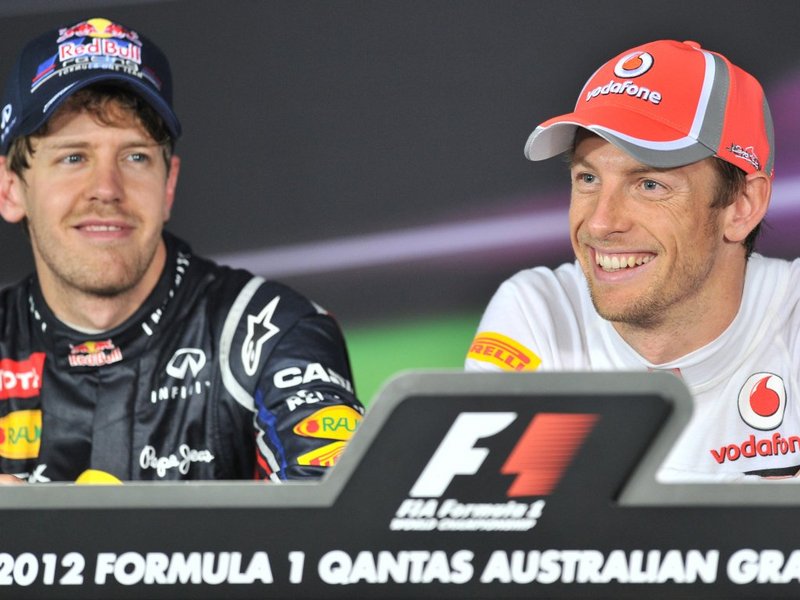
The Australian Grand Prix was held in Melbourne on the weekend, and before the event there was plenty of buzz in the media around German Sebastian Vettel, and British Jenson Button. These glamorous visitors from Europe always get a lot of attention, for both are handsome and charming; Vettel amusing and slightly mysterious, Button affable and quietly confident. In the end, Button opened the F1 season with a victory, winning comfortably against Vettel with a 2.2 second margin. It is his third Australian Grand Prix victory. (Picture has Vettel on the left in black).

I thought we’d take a look at the names of both these Formula One champions, because Sebastian and Jenson are Googled often to reach my blog, and so far I haven’t added any requested boys names to the Featured Names list, while I’ve been quite conscientious about adding the girls.

Sebastian is from the Latin name Sebastianus, which means “from Sebaste”. There were several places called Sebaste, because it is the Greek form of Augusta, named in honour of the Emperor Augustus. His adopted name meant “great, majestic, venerable”. There are towns in modern-day Turkey and Palestine with this name (or a version of it), still with ancient Roman ruins which can be visited.

The name became well known because of Saint Sebastian, a 3rd century Roman soldier originally from southern France. Skilled at converting people, according to legend he was shot through with arrows, yet did not die, so had to be martyred twice. He became popular in the Middle Ages because he was said to protect people from the plague, and also began to be depicted as a beautiful, semi-nude young man. (In early pictures, he looks like an ordinary bearded fully-clothed saint).

The name was popular amongst Continental royalty and nobility, and still retains a slightly upper-class image. Sebastian is Viola’s twin brother in Shakespeare’s gender-switching romantic comedy, Twelfth Night. Lord Sebastian Flyte is one of the main characters in Evelyn Waugh’s novel, Brideshead Revisited; beautiful and rather fey, the TV series and film makes it clear Sebastian is homosexual, although this is left ambiguous in the novel. Indeed, Saint Sebastian himself is considered a gay icon (for pretty flimsy reasons), and the name was a code for homosexuality; Oscar Wilde’s pseudonym was Sebastian Melmoth. So far, so androgynous.

However, the name got a watery overhaul when the name Sebastian was given to a Jamaican lobster in the Disney film, The Little Mermaid. Sebastian is a court composer, and a good friend and adviser to Ariel, the mermaid of the title. A Rastafarian who can lay down a reggae beat, he has given the name a new level of cool. The choice of his name seems like a deliberate reference to another famous composer: Johann Sebastian Bach. Incidentally, Sebastian is the lobster’s surname – his first name is Horatio (maybe after the American composer, Horatio Parker).

Sebastian first entered the charts in the 1960s and began steadily climbing, to become Top 100 by the 2000s. At #38 it still seems to be gaining in popularity – an elegant name that belongs to many people’s favourite Disney character.

Jenson is a lot more straightforward. It’s a surname which is basically a form of Johnson, being based on the name Jens, a short form of Johannes. According to Lou at Mer de Noms (rather a Jenson Button fan), the name Jenson has edged itself into the UK Top 100, and its growing popularity can be attributed almost solely to Mr Button himself. As to how he got his name, he was named after a family friend, Erling Jensen (father of F1 driver Steven Jensen). The spelling was altered so that it didn’t reference Jensen Motors, who made British sports cars until the 1970s.

It’s an attractive name, and one I think we’d be using in spades if Jenson Button was Australian. As it is, it’s one many parents are at least putting on their lists, although my personal feeling is that Jensen is slightly more popular, thanks to handsome American actor Jensen Ackles, from Supernatural. As I’ve said before, with female Jennifer become less popular, it gives male names starting with Jen- more of a chance.

When I try to decide which name I like best, Sebastian or Jenson, I find myself in private debate. If I take the side of Sebastian, it seems more sophisticated than Jenson, complex and multi-syllabled, romantic and princely. On the other hand, if I take the side of Jenson, it seems more laddish and chipper, down-to-earth and unpretentious, with oodles of cheeky British charm.

So I am content to say these are both very nice names, and I won’t force them to compete against each other in some Baby Name Grand Prix. When it comes to nicknames for them, I think of Seb and Bastian, and Jens and Sonny, respectively.

Saturday Sibset: The Family From the Emerald Isle

17 Saturday Mar 2012

Posted by A.O. in Sibsets in the News

≈ 5 Comments

Tags

classic names, fictional namesakes, Gaelic names, Irish names, locational names, mythological names, name history, name meaning, popular names, popularity in Ireland, saints names, sibsets

It’s Saint Patrick’s Day today, so of course this week’s sibset is from Ireland. The Hoban family moved to Australia in 2005 from the town of Wicklow, south of Dublin.

After selling their family business, Mr and Mrs Hoban wanted to show their four sons the world, so they went to Adelaide as temporary residents, where Mrs Hoban got a job as a nurse. However, life in Adelaide must have been good to them, because they decided to make it their permanent home.

They wanted to become citizens in 2007, but missed the cut-off by three days, after the law changed so that residents had to be living here for four years instead of two. Their fourth anniversary came up in October 2011, but they decided to delay just a bit further so that they could become citizens on Australia Day this year.

Mr Hoban says that leaving behind their friends, family and jobs was a “huge deal”, but now every time they leave Adelaide and come back, he is so happy he could “kiss the ground”. The youngest Hoban children have spent more than half their lives in Australia, and it means more to them than their country of birth.

Australia has a great fondness for Irish names, so we’ll have a look at the Hobans and see whether they have names already familiar here.

Kevin: Kevin is the father of the family, and as we well know, his name is considered a classic here, and still used fairly often. Luckily he didn’t migrate to Germany or one of the many other nations who don’t view Kevin kindly.

Tona: Tona is Kevin’s wife, and her name is usually taken to be a pet form of the name Antonia. However, there is a Scandinavian name Tona, meaning “fresh thunder”. Although Wicklow is said to have been settled by Vikings, the first one is probably more likely. It’s very similar to names such as Toni and Tonia.

Darragh (20): There are two possible sources for this name, pronounced DAH-rah, although in an Australian accent, I suspect it comes out as DARR-uh. One is that it’s a variant of the name Dara, which means “oak tree”. It is the same source as the name of the city of Derry or Londonderry in Northern Ireland. Oak trees were sacred in Celtic mythology, and there was a sixth century Saint MacDara (son of Dara), who was one of those reclusive island-dwelling hermit saints who flourished in Ireland. He has given his name to the tiny islet off the coast of Connemara on which he sequestered himself. Darragh can also be an Anglicised form of the name Dáire, meaning both “fruitful, fertile, rutting” and “tumult, rage, violence”. There are many kings and heroes of Irish legend with this name, and they may all go back ultimately to a god of the Otherworld. Despite its ancient origins, Darragh came into general use in Ireland fairly recently, so most of us wouldn’t have heard of it yet, although it is currently #16 in Ireland. However, it’s a wonderful name, extremely masculine, and one which I think Australians could easily embrace. It sounds comfortingly like that Aussie standard, Darren, and has also been Latinised as Darius.

Ryan (18): This name is very popular in both Ireland and Australia, although more popular in its country of origin, being #6 at present, while it’s #57 in South Australia.

Cian (14): This means “ancient” in Gaelic, and is pronounced KEE-an or KEEN. It’s another name from Irish legend, and is also recorded as the name of a Welsh poet. Cian is #14 in Ireland, and although it isn’t as popular here, it’s fairly well known and in use. There are also several variants and derivatives used, such as Kian, Keene, Keane, Keenan and so on.

Evin (12): This is the Anglicised form of the Gaelic name Éimhín, which may mean “swift”. There is a sixth century Saint Éimhín, who was from Munster, but a monk at an abbey in County Wexford. He is said to have written a biography of Saint Patrick, which makes it a great name for St Patrick’s Day. Evin is rare in both Ireland and Australia, although the name can also be Anglicised to its soundalike, Evan, and this name is #27 in Ireland and #95 in South Australia. Evin also has his dad’s name, minus the K – perhaps deliberate?

So out of six genuine Irish names, one is a classic, one is popular, one is in use, and the other three have a familiar sound to them and seem very usable.

Curl Up With a Good Book in the Nook of Names

11 Sunday Mar 2012

Posted by A.O. in Blog Reviews

≈ 6 Comments

Tags

Amazon, book reviews, choosing names, eymology, KM Sheard, Llewellyn's Complete Book of Names, locational names, mythological names, name advice, name books, name history, name meaning, nature names, Nook of Names, Pagan names, popular names, surname names

Most of us started our name blogs as a way to store and share our information, or as an extension of our online activities in forums, or even on a whim. Kay started her blog, Nook of Names, to promote the book she was preparing for publication: Llewellyn’s Complete Book of Names: For Pagans, Witches, Wiccans, Druids, Heathens, Mages, Shamans & Independent Thinkers of All Sorts Who Are Curious About Names from Every Place and Every Time.

That’s an impressive title, which embraces a wide spectrum of people who will want to read this book. If you are not a Pagan, Druid or Shaman, I hope at least you fit under the heading of being an Independent Thinker Who is Curious About Names. Slavish Non-Thinkers Who are Incurious About Names should leave now …. and in fact, how ever did you get here in the first place?

Because Kay has both a book and a blog, I am going to attempt to review both of them simultaneously. It sounds an insane plan, but in my defence I did try to do them separately. In the blog review, I kept needing to refer to the book, and in the book review, I needed to keep referring to the blog – the two are so intertwined that I felt compelled to combine them.

Kay started blogging on Midsummer Eve last year; although she says it is her first attempt, it is a beautiful and professional-level name blog. The Misty theme is a perfect match, the colours are soft and natural, and the background design from the book’s cover suitably mysterious. I must pay tribute to the illustrations for the blog; they are sumptuous and lovingly chosen works of art.

Nook of Names was set up to whet our appetites for The Complete Book of Names, with great success. The first post introduced The Complete Book of Names, the second explained why it wasn’t just for Pagans, and then began the process of providing some sneak peeks into the book’s contents based on names of people who connected to her on Facebook. For example, the entry on Estelle, also covers Stella and Esther, and hints that looking up the entries for Ishtar, Hester, Easter and Vanessa will prove rewarding.

Kay addresses the fact that a Complete Book of Names cannot ever literally contain every single name ever given on earth, and Nook of Names is thus her way of covering many names that couldn’t be included in the book. As a result, the blog has a huge number of names, and they are all indexed, from Abel to Zygus.

Llewellyn’s Complete Book of Names was published at the start of this year, and is available at Amazon and Amazon UK, as well as other good bookstores. UK-based readers can buy a signed copy of the book directly from Kay through Paypal. Australians can buy it from Angus and Robertson, which is rather pricey; if you don’t mind a longer waiting period, The Book Depository has free postage.

I have had my copy since the end of January, and for over a month it has been my constant bedtime companion. It’s a hefty tome – nearly 800 pages, and weighing almost 2 kg. It contains thousands of names, and a wealth of information for each one.

Massive reference books often come in small print, presumably in the belief you will only be looking something up for a few minutes, but Llewellyn have been very generous, and The Complete Book of Names is easy and pleasurable to read. The print is large and black on very white paper, and although there are many codes used to save repeating the same phrases, they are so commonsense that you can probably figure most of them out without consulting the key every time.

(I must confess to not actually using this key, as it is easy enough to decipher that ESW means English-speaking world, and Hist means historical – although having a quick glance at it now, I see it might be possible to confuse yourself, with Lat meaning Latvian and not Latin).

Each entry contains much more information than the usual “name book”, providing not just origin and meaning, but a mini-history of the name, with links to related names which may provide further elucidation. You may wonder what makes the book particularly Pagan; although there are plenty of “ordinary” names, like Henry and Katherine, and “modern” names like Sienna and Chase, the CBM includes many names from world mythologies, and also more nature names than are usual in a name book.

Pagans of all sorts are united by their love and respect for Nature, and so it is not surprising to see unusual name suggestions from the natural world, such as Paprika, Chaffinch, and Hypericon. Names of plants and gemstones often have magical associations, and it is fascinating to read that Parsley was dedicated to Persephone and used in funeral rites, or that Bears were sacred to Artemis, so that young initiates to her cult were called little she-bears. This gives a much deeper understanding of the “meanings” of such natural names.

Kay’s qualifications for writing the book are impressive. According to the back of the book, she is a scholar of history, Assyriology, Latin and Greek; a graduate of the University of Cambridge; and knows a number of modern and ancient languages. She also belongs to the Order of Bards, Ovates and Druids, and is a member of the British Pagan Federation. In other words, she is a pagan name expert.

Kay has her own theories on names, and that’s one of the things I most appreciated about her book. There’s nothing more annoying than looking up a name and being given the unhelpful entry: “meaning unknown”. I always feel like saying, “Surely you must have some idea?” Kay does have some idea, often several of them, and she’s happy to share her thoughts as to the most likely derivation of an obscure name. When the meaning is lost beyond all finding, she can still help explain its cultural context, and thus what it “means” on another level.

Despite her interest in languages and etymology, this is not just a “name dictionary” which gives a definition of a name. Although it is certainly a valuable reference work, it is intended to be used in choosing real life names, whether that be a name for yourself, a pen name, a name for a baby, names for literary characters, or even a name for a pet.

Although I’m sure most readers will be eager to dive right in to look up their favourite names, or skim through it for more name ideas, it’s worthwhile to read the excellent introduction. It contains a history of naming in the western world which I think everyone who is interested in names should read, and also has thoughtful advice on choosing a baby name. Even this has a certain Pagan flavour – most name books don’t suggest that you might like to consult an astrologer, or seek guidance from your tarot cards or rune stones!

And yet most of it is sensible advice that anyone would benefit from. Although Kay feels that Pagans are more likely to think deeply about their name choices, I’m sure most people do choose baby names with care, and certainly all of us should think deeply about it, and follow our intuition, even if we don’t necessarily use rune stones to do so. One of Kay’s principles of naming is that we don’t so much select a name for someone as undertake a journey to discover it, which I think is a wonderful way to see it, and also puts you in the right frame of mind and heart to find the perfect name.

This is a book that anyone who cares about names will want to own, and consult again and again. It’s filled not only with fascinating information on each name, but contains a multitude of creative naming ideas, including lists of names grouped together by meaning or theme. It may be written from a Pagan perspective, and no doubt fellow-Pagans will find it suits their needs better than any other name book, but it is a book for almost everyone. In short, I don’t know how any name aficionado or name blogger can live without this book.

Now with the book out, and hopefully walking off the shelves, does this mean that Nook of Names has served its purpose and will be laid to rest? There are no signs of it, because there are so many names out there in the world still waiting for Kay to document them. Besides, I bet she’s already working on a revised edition of The Complete Book of Names!

There’s a lot to discover at the Nook of Names. There are essays on onomastics, such as one on Surnames as First Names, which has generated alphabetical lists of English surnames which could make unusual and interesting personal names. There’s Pagan Name of the Month; these always show the pagan roots or pagan connotations of commonly used names such as Aidan or Ruby, making them pagan-friendly populars. Pick of the Week looks at a less usual name; it’s impossible to pick a favourite, but the one on Coventry stuck in my mind.

A series inspired by the runes gives interesting lists of names, there’s names from the world of fiction, including a two-parter on characters in Dickens (lots of cat names!), and inspiration from travel, such as this essay on the sacred landscape of Somerset. British name bloggers, perhaps because they are surrounded by such richness of history, seem remarkably skilled at finding name inspiration wherever they go.

There’s plenty of Paganesque entries, such as ones of names from Nature, names for Pagan festivals such as Imbolc, and names from the history of the Salem witch trials. Kay seems to enjoy starting a new Category as much as I do; however, like me, she sometimes bites off more than she can chew, and Witch of the Week still seems to be a work in progress. It’s an excellent start though, and the entry on Ceridwen was especially lovely, bringing in plenty of first-hand information from Wales, where Kay lives.

Many of these posts are a chance for her to expand on the entries in Complete Book of Names, so if you are a fan of the book, then Nook of Names is essential reading. On the other hand, if you can’t get enough of the blog, then you need to get yourself a copy of Complete Book of Names at once. Then curl up in a cosy nook, and lose yourself in Kay’s magical world of names.

Q & A WITH KAY

Name: Kay Michelle Sheard

Have you ever wished for a different name?: Frequently! I’ve come to like Kay more, as it has a lot of meaning when you start to dig. But I don’t like Michelle. There’s nothing wrong with it, but it’s never felt “me”.

When did your interest in names begin?: Like a lot of name buffs, I used to collect names as a child – not just first names, but surnames and place-names too. The whole concept of naming and how names began and evolved really fascinated me. It all goes hand in hand with my interest in etymology and social anthropology in general.

How did you first decide to write a book on names?: Writing a book about names was always at the back of my mind, but its birth was sparked by two things in August 2009. I was lamenting the lack of a really comprehensive book of names for Pagans/alternative-minded folk. Meanwhile, one of those Facebook apps offered to tell me what my name meant. I knew already, but did it for fun, and it came out with something so outrageously wrong that that was that!

How long did the book take?: The whole process has eaten up the best part of two years.

How did you find a publisher?: Finding a publisher was very straightforward. I approached Llewellyn in October 2009 with the idea, and was offered a contract in December.

Hardest thing about writing a book: Keeping a balance between work and everyday life. There were times when I ended up having to work on it virtually round the clock, and on more than one occasion I ended up working through the night, snatching an hour or two’s sleep when sheer exhaustion took over.

Your favourite blog entry at Nook of Names: Incan Inspiration – it was great fun to research and write. Plus, my sister-in-law had just got back from a trip to Peru and very kindly let me use some of her amazing photos of llamas.

Your pet naming peeve: Top of mine has to be the school of thought that tries to frighten people into choosing “safe names” with prophecies of doom and disaster, or howls of derision over the choice of something more unusual. The former, I feel, perpetuates the tendency to put the blame on victims for things like bullying, rather than on the perpetrators. And the latter demonstrates ignorance.

Your favourite names: My favourite names are those of Greek and Latin origin, especially those from Greek and Roman mythology. A close second are Welsh names, and names from Welsh mythology, born out of my Welsh heritage and love of all things Celtic.

Your least favourite names: Michelle – for reasons already stated (poor Michelle!). Other than that, I can’t say there’s anything I really despise, except, perhaps those that make a really strong statement about the parents’ world-view, like Neo-Nazis calling their son Adolf Hitler, and truly outrageous stuff like Talula Does The Hula From Hawaii.

Names you love, but can’t use for some reason: Ptolemy. Its meaning – “war” – I can’t embrace, no matter how much I try to persuade myself that the word has a broader meaning than just physical fighting, and that Ptolemy as a name has accrued many positive associations.

Your child’s name: I deliberately keep Small Child’s name private, as it belongs to her, not me. But I will reveal what she would have been called had she been a boy: Octavian Theodore Rhufon.

Did you and your husband/partner have any issues agreeing on names?: Not a great deal; we share similar tastes and attitudes. We came to an agreement that if Small Child was a girl, he’d get to choose her first name, and if it was a boy, I would. I was happy with that, as we both approved each other’s choices, and I got to choose all middle names regardless.

Names you are considering for future children: We probably won’t have any more, but if we did, there really are too many for me to say. However, I think it would be a safe bet to assume that his or her first name would probably be Greek or Latin, and they’d have at least one Welsh name too.

The one piece of advice you would give to someone choosing a name for their baby: Listen to your intuition – your heart – and don’t pay too much attention to what others say, be it family (other than your partner, of course), friends, books, articles or online forums. I can’t help feeling there is something in the notion that there’s a name that’s exactly right for each of us – unfortunately, not all of us get that name because our parents bowed to those external pressures, and that’s a shame.


← Older posts
Newer posts →

Enter your email address to follow this blog

Categories

Archives

Recent Comments

A.O.'s avatarwaltzingmorethanmati… on Zarah Zaynab and Wolfgang…
Madelyn's avatarMadelyn on Zarah Zaynab and Wolfgang…
JD's avatardrperegrine on Can Phoebe Complete This …
A.O.'s avatarwaltzingmorethanmati… on Rua and Rhoa
redrover23's avatarredrover23 on Rua and Rhoa

Blogroll

  • Appellation Mountain
  • Baby Name Pondering
  • Babynamelover's Blog
  • British Baby Names
  • Clare's Name News
  • For Real Baby Names
  • Geek Baby Names
  • Name Candy
  • Nameberry
  • Nancy's Baby Names
  • Ren's Baby Name Blog
  • Sancta Nomina
  • Swistle: Baby Names
  • The Art of Naming
  • The Baby Name Wizard
  • The Beauty of Names
  • Tulip By Any Name

RSS Feed

  • RSS - Posts

RSS Posts

  • Celebrity Baby News: Melanie Vallejo and Matt Kingston
  • Names from the TV Show “Cleverman”
  • Can Phoebe Complete This Sibset?
  • Zarah Zaynab and Wolfgang Winter
  • Baby, How Did You Get That Name?
  • Celebrity Baby News: Media Babies
  • Celebrity Baby News: Adelaide Crows Babies
  • Celebrity Baby News: Chris and Rebecca Judd
  • Names at Work: Name News From the World of Business and Employment
  • Celebrity Baby News: Sporting Round Up

Currently Popular

  • Rare Boys Names From the 1950s
  • Celebrity Baby News: Deborah Knight and Lindsay Dunbar
  • Celebrity Baby News: Toby Allen and Darren Weller
  • Girls Names of Australian Aboriginal Origin
  • Celebrity Baby News: Bernard Fanning and Andrea Moreno

Tags

celebrity baby names celebrity sibsets english names famous namesakes fictional namesakes honouring locational names middle names name combinations name history name meaning name popularity name trends nicknames popular names saints names sibsets surname names twin sets unisex names

Create a free website or blog at WordPress.com.

Privacy & Cookies: This site uses cookies. By continuing to use this website, you agree to their use.
To find out more, including how to control cookies, see here: Cookie Policy
  • Subscribe Subscribed
    • Waltzing More Than Matilda
    • Join 517 other subscribers
    • Already have a WordPress.com account? Log in now.
    • Waltzing More Than Matilda
    • Subscribe Subscribed
    • Sign up
    • Log in
    • Report this content
    • View site in Reader
    • Manage subscriptions
    • Collapse this bar
 

Loading Comments...