• About
  • Best Baby Names
  • Celebrity Baby Names
  • Celebrity Baby Names – Current
  • Celebrity Baby Names – Past
  • Featured Boys Names
  • Featured Girls Names
  • Featured Unisex Names
  • Links to Name Data
  • Waltzing on the Web

Waltzing More Than Matilda

~ Names with an Australian Bias of Democratic Temper

Waltzing More Than Matilda

Tag Archives: modern classics

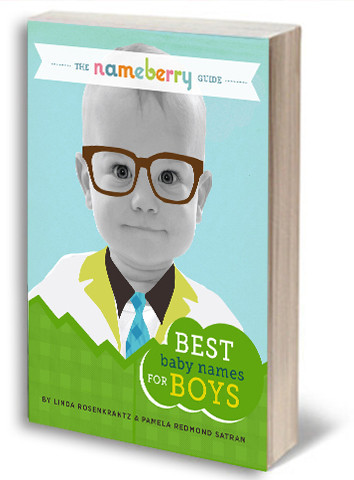
The Nameberry Guide to the Best Baby Names for Boys

07 Monday Oct 2013

Posted by A.O. in Name Resources

≈ 2 Comments

Tags

Amazon, baby name books, classic names, Google, Linda Rosenkrantz, modern classics, name forums, Nameberry, Pamela Redmond Satran, rare names, US name trends, vocabulary names

boybooktaller_grande

Look on parenting sites and name forums, and one of the most common complaints is, We can’t come up with any good names for boys. People even Google, Help – I have no boys names!, to reach this blog.

Enter this handy little e-book. There are nearly 20 000 boys names on the Nameberry database, and Linda Rosenkrantz and Pamela Redmond Satran have selected 600 that they consider the most appealing and usable – the best of boys names.

There are classic names like Henry and Thomas, modern classics like Liam and Benjamin, fashionable names like Cade and Jagger, hip names like Rufus and Barnaby, traditional names like Edmund and Solomon, and less common names, like Abraxas and Poe – not to mention plenty of names from non-Anglophone countries, like Stellan and Alonzo, and vocabulary names like Justice and Wolf.

That’s a pretty wide of selection of names – this isn’t one of those books which says there’s only one kind of name that’s good to choose for your son. I would say the majority of names are ones which are not popular, but not unusual either; but if you want popular or unusual, there’s plenty to choose from.

Entries give the meaning of the name, and note famous people with the name, as well as fictional namesakes. They also describes the style of the name, and how it fits in with current trends.

The book does mention how popular each name is internationally, but the trends are from a US perspective, and sometimes they don’t gel with what is fashionable or interesting here. However, most of the information would be helpful to Australian parents.

Each name is hyperlinked to the Nameberry database, and by clicking on the heading for that name, you will be taken to the Nameberry website, to receive more information about the name, and see if the name has been covered in blog entries or forum posts.

This e-book is available from the Nameberry store in several different formats, and if you would like a print version, it can be obtained from Amazon.

Questions About Names

14 Sunday Jul 2013

Posted by A.O. in Your Questions Answered

≈ 5 Comments

Tags

Australian Aboriginal names, banned names, celebrity baby names, Dutch names, famous namesakes, Google, Japanese names, locational names, middle names, modern classics, name days, names from songs, names of gangs, nicknames, planet names, popular names, rare names, royal baby names, royal names, Russian names, unisex names, varieties of flower

survey-2

This is a sample of the many random questions about names which get searched to reach the blog. I do try to answer them in posts if I can, but these are ones which I can’t see any way of subtly working into blog posts at this time.

Is it illegal to call your daughter Talula?

This gets Googled several times a month. I guess it’s because of the little girl from New Zealand called Talula Does the Hula From Hawaii whose name was changed by the courts. The Talula part wasn’t the problem, and it’s perfectly legal as a name.

Are girls named Georgia successful?

I’m sure any successful Georgia would be insulted by the suggestion that their name was entirely responsible for their achievements.

Are there any queens named Nyree?

Not any that rule as monarchs in an official capacity.

Why hasn’t there been an English king named after Alfred the Great?

Maybe because he was a king of Wessex, and not of England. Or because they didn’t want the obvious comparison to be made, in case the other King Alfred was nicknamed Not-So-Great.

What is the queen’s second name?

Ooh, I bet you were doing some royal baby name sleuthing. It’s Alexandra.

Ned Kelly‘s middle name?

He didn’t have one – he was just Edward Kelly.

What does Ballarat mean in Aboriginal language?

It’s thought to come from the local Wathaurong name for the area, balla arat, translated as “resting place”.

What other names were considered instead of Victoria for [the state of] Victoria in Australia?

I don’t think any other names were considered – it was named in honour of Queen Victoria because it was she who signed the Act of Parliament separating it from New South Wales in 1850.

What was the first name for South Australia?

The first Europeans to give it a name were the Dutch in 1627; they called it Pieter Nuyts Land after the chief explorer on their expedition.

What other things is Antarctica called?

The Antarctic, The South Pole (informal), The White Continent (poetic), The Ice (slang).

What is the name of the last [known] planet [in our solar system]?

Neptune, and if you count dwarf plants, Eris.

What was [notorious bank robber] Darcy Dugan’s gang’s name?

They sarcastically called themselves The Lavender Hill Mob or The Lavenders, after the 1951 movie starring Alec Guiness.

Abby, Abbie or Abbey – which is the correct spelling?

As far as I know, there isn’t a “correct” spelling, and these are all accepted short forms of Abigail.

What is the Australian spelling of the name Milly?

There isn’t a specifically Australian spelling, but Millie is more common here, as elsewhere.

How do you pronounce Mila in Australia?

MEE-lah or MEE-luh.

How do you pronounce the name Atticus?

AT-ih-kus.

How is Sadie a nickname for Sarah?

It doesn’t really make sense to me, either!

What name is more modern – Poppy, Sienna or Darcy?

Sienna.

Is Riley a classic name or a modern name?

As a boy’s name, it’s a modern classic.

What’s a girl name that starts with Fin-?

Finola.

Is there a flower named Maude?

There’s a variety of wisteria named Aunt Maude; it’s from the American south.

Is there a rose named Imogen?

Rosa indica v. Imogen was one of the first Australian-bred China tea roses, dating from the 1840s and created by John Bidwill, a friend of John Macarthur’s who was the first person to breed different varieties of plants in Australia. The “Imogen” rose was pure white, with clustered blooms. It doesn’t seem to exist any more.

Baby names that rhyme with Archie

Chachi, and the Japanese name Hachi – but it’s not an exact rhyme, because the stress is on the second syllable, not the first.

Will the name Beatrix become popular because of Fifi Box?

Probably not, but it’s so rare it would be significant if it even began charting.

Will Isabella become dated?

Chances are that it will, eventually. It’s never been this popular before, so I couldn’t put a timeline on it.

What is the name day for Azaria?

December 16.

Is the christening name commonly used in Australia?

If you mean, do most people who are christened in Australia use the name they were christened by as their everyday name, then I’m pretty sure the answer is yes. But if you mean, are most Australian babies christened, and therefore have a christening name to use, then I’m not sure. It’s certainly normal to be christened here, but also normal not to be.

Songs [for the] name Sophie

One is Song for Sophie by the Danish singer Aura Dione, who has spent some time in Australia.

Is the name Reginald used in Russia?

Not usually, but they have their own version of the name, Rengold.

Why do so many boys names become girls names?

I don’t think it’s the case that many boys names become used for girls (I can really only think of a handful of cases where that’s happened). However, unisex names do seem to become more often used by girls than by boys, and that’s because parents of boys have a tendency to stop using them once they become “too girly”. Having said that, there are several formerly unisex names that have become almost entirely masculine, such as Clarence and Elvis, so parents of girls must also sometimes decide that a name has become “too boyish” to use.

Do boys dislike having a unisex name?

I know quite a few boys under 15 that have a unisex name (including one of my nephews), and they are all fine with it. To be fair though, their names are ones which are mostly male, although considered acceptable to give to girls (eg Darcy), almost equally male and female (eg Remy), or so rare that they aren’t strongly associated with any particular gender (eg Bay).

Names of everyone who died in World War I

More than 37 million people (including civilians) died as a result of World War I – that’s a lot of names! I suggest you start at the Australian War Memorial, which has a roll of honour for all Australians killed in service, then ask the staff for help in accessing international war records.

Was there anyone named Mikayla on the First Fleet?

No.

Famous Name: Chelsea

22 Wednesday May 2013

Posted by A.O. in Famous Names

≈ 4 Comments

Tags

American names, celebrity baby names, english names, locational names, military events, modern classics, name history, name meaning, name popularity, names from songs, Old English names, popular names, UK name popularity, unisex names, US name popularity

article-2327391-19E40B7A000005DC-627_964x610Australian horticultural team, Flemings, have made history by taking out the top prize at the prestigious Chelsea Flower Show this year. It is the first time anyone from Australia has ever won Best in Show.

The winning garden is a landscape showing a gorge with giant boulders, ferns, wildflowers, and a billabong fed by a series of waterfalls. Overlooking it is a studio in the shape of a giant waratah flower, and the accompanying soundtrack is a chorus of Australian frogs. The garden promotes sustainability by collecting rainwater run-off and being powered by solar panels.

The judges were unanimous in voting for Flemings’ Trailfinders Australian Garden, designed by Phillip Johnson, and it was praised for its lush greenery, exuberant spirit and environmental message. Flemings will go out on a high, as this is their last year at Chelsea.

2013 is the centenary year of the Royal Horticultural Society Chelsea Flower Show (although the Society have been holding spring flower shows since the 1830s). More than a hundred thousand people visit the Chelsea Flower Show each year, with many chances of celebrity-spotting, and royal-spotting, as the royal family are patrons of the Show.

Chelsea is a district of West London which began as a Saxon village some miles from the town of London. The name of the area is from the Old English for “chalk wharf”, indicating a landing place for boats on the River Thames, and suggesting that it was used for the shipment of chalk.

The Manor of Chelsea is first mentioned in the Domesday Book as being a gift to the Abbot of Westminster during Anglo-Saxon times. King Henry VIII acquired the manor, and two of his wives lived at the manor house, as well as his daughter Elizabeth, destined to be Queen Elizabeth I. By the 17th century, it was a popular locale for the ultra-wealthy, and called “a village of palaces”, but still rural in nature, serving London as a market garden until the 19th century.

Chelsea gained a bohemian reputation in the 19th century, when it was an artist’s colony for painters such as Dante Gabriel Rossetti and poets such as Leigh Hunt. The area around around Cheyne Walk was the heart of the Pre-Raphaelite movement. Right into the first decades of the twentieth century, it was a place for radicals, artists, poets and bohemians.

Oscar Wilde began his career living in an artistic boarding house in Chelsea and feminist activist Sylvia Pankhurst had a house on Cheyne Walk. The occult Order of the Golden Dawn had members active in the area, including Pamela Colman Smith, who painted the designs for the Rider-Waite tarot cards.

However, it was the era of Swinging London in the 1960s and 1970s that really put Chelsea in the public consciousness as a cool place to be. This was centred around the King’s Road, where you could find groovy psychedelic fashion boutiques that catered to super-slim model Twiggy and the Rolling Stones.

The Chelsea Drugstore was a hip hangout that combined a pharmacy with a record store and a soda fountain; it features in the lyrics of Rolling Stones hit, You Can’t Always Get What You Want. In the 1970s, Vivienne Westwood and Malcolm McLaren ran their boutique SEX, which became a focal point for the punk movement; habitués of the store were formed by McLaren into punk band The Sex Pistols.

The hipness of Chelsea rapidly faded. Today it is inhabited by more investment bankers than avant-garde painters, you’re more likely to shop at The Gap in the King’s Road than a crazy boutique, and The Chelsea Drugstore has been replaced by a McDonalds.

Chelsea is first found as a personal name in the United States during the late 18th century, and was given equally to boys and girls. There is a city near Boston named Chelsea (named after the place in London), and the Battle of Chelsea Creek was fought here in 1775 during the American Revolution. American forces made one of their first captures of a British ship, which was a great boost to their morale. Perhaps Chelsea was originally given as a name in honour of this battle.

During the 19th century, Chelsea was much more commonly given to boys and in the first half of the 20th century, numbers of boys and girls named Chelsea became more even. It was in the 1960s, at the height of (London) Chelsea’s chicness, that the pendulum swung and Chelsea became overwhelmingly feminine.

In 1969, Chelsea made the US charts, debuting at #707. This was the same year that Joni Mitchell released Chelsea Morning – this time inspired by Chelsea in New York City, also named after Chelsea in London.

The song describes Mitchell’s room in Chelsea, with light filtering through a stained glass mobile. As the song has the phrase Wake up pretty baby in it, it probably helped cement Chelsea as feminine, although the name had been heading there anyway. Bill and Hillary Clinton named their daughter Chelsea after Mitchell’s song.

Chelsea first charted in Australia in the 1970s, debuting at #337. By the 1990s it was in the Top 100, where it remains to this day. Chelsea peaked in 2009 at #26, and since then has been gradually declining. Currently it is #34 in New South Wales, #47 in Victoria, #29 in Queensland, #42 in South Australia, #33 in Western Australia, #42 in Tasmania and #48 in the Australian Capital Territory, so it has yet to move out of the Top 50 in any state.

Australians have had an enduring affection for Chelsea unmatched by any other country, for it left the US Top 100 in 1999, and the UK Top 100 in 2005. (In both countries, it quickly fell, and is now around the #200 mark).

I’m not sure why, but for some reason, Chelsea seems to suit Australian conditions. Perhaps the -sea on the end subconsciously reminds us of the beach? There is a Chelsea in Australia too – a seaside suburb of Melbourne which does happen to have a beach.

Like the district of London, the name Chelsea has moved firmly into the mainstream and become a modern classic. It’s a simple, friendly and unpretentious choice which isn’t frilly or fussy.

POLL RESULT: Chelsea received an approval rating of 41%. People saw Chelsea as downmarket (21%), but also pretty or cute (15%). 13% of people could not shake the association with Chelsea Football Club and/or Chelsea buns. Only one person thought Chelsea could still be used as a boys name.

(Picture shows the winning garden at the Chelsea Flower Show; photo from The Daily Mail)

Finding Baby Names to Match Your Surname

05 Sunday May 2013

Posted by A.O. in Your Questions Answered

≈ 18 Comments

Tags

birth notices, birth registries, Charles Dickens, choosing baby names, classic names, colour names, Enid Blyton, flower names, Google, middle names, modern classics, nature names, nicknames, plant names, popular names, rare names, retro names, surname names, surnames, tree names, vintage names

wordlesqThis is a question frequently Googled: how to match baby names with your surname. After reading birth notices every week for more than a year, I’ve seen thousands of names, and often thought how nicely, or how awkwardly, their first and last names matched, so I feel reasonably well-qualified to share my views.

Although there’s many ways to approach this, I decided the best place to start is to work out what kind of surname you have, and then go on from there.

The Common Surname

If your surname is one of the most common, you have quite a bit of choice, since almost any type of first name will match it. Yearning for something slightly unusual? Amarantha Gray sounds just fine. Want something classic for a seamless match? George Anderson is perfect. Love contemporary popular names? Paige Hamilton is for you. Charmed by vintage style? Maybe you will like Harold Price.

Should you go down the common first name + common last name route, remember to whack in a rare middle name somewhere. This isn’t just so your child doesn’t end up with something that looks like the placeholder name on credit card brochures – it’s to help with identification. Otherwise Thomas James Martin could be in for a lifetime of proving who he is.

The Rare Yet Regular-Sounding Surname

There are some British surnames which sound ordinary but are extremely rare – even unique. The identity issue with these names is that it can be hard to maintain privacy, especially when matched with a rare first name. My preference for a rare surname is a first name which is normal-sounding, and neither obscure nor super common. As rare surnames are often of great antiquity, I like old-fashioned and retro names to match them, and family trees can be a great source of inspiration.

The Long Surname

For reasons of practicality, lengthy surnames tend to go best with shorter first names, if only so they can fit on government forms. Sure, you can always ask for extra paper, but do you really trust bureaucrats not to lose half your application? Extremely long names can even be rejected by Births, Deaths and Marriages.

The Short Surname

The general advice is that if you have a one-syllable surname, you need a longer first name to balance it. This seems to be thought especially necessary for girls, who apparently need something elegant and flowing in order to offset their petite surname.

I don’t think that’s obligatory, as I can’t see a problem with being called Jack Black, Claire Holt, Glenn Ford, Grace Wong, Charles Wood or Rose Byrne (yep these are all famous people). Two short names together can seem blunt, punchy and memorable, so if that’s your style, then go for it. If you want something longer, then that’s excellent too.

The Heavy, Ponderous Surname

If your surname is quite stodgy or cumbersome, like Trenchard or Blenkinsopp, don’t attempt to balance it with something fluffy, or double the problem by adding an equally heavy first name. Seek to soften the sound, rather than lighten it. I think these surnames go well with something plain, classic and elegant, when they can end up sounding very dignified.

The Cute Surname

With a surname that’s on the whimsical side, such as Pook or Dingle, a rare, eccentric, or very cute name can wind up sounding like something out of Charles Dickens or Enid Blyton. Be careful with alliteration or assonance, because Rupert Pook or Dorothy Dingle is hitting the Whimsy-o-Meter a little hard. Modern classics and popular names can act as ballast with these surnames.

The Surname Which is Commonly Known as a First Name

I think if you have a surname which is well known as a first name, you should avoid first names which were originally surnames. Cooper Henry seems certain to get his name muddled on a regular basis.

The Difficult to Spell or Pronounce Surname

There are two schools of thought on this one. One states that if your surname always needs to be spelled out, then the first name should be something very plain and simple so only one name needs explanation. The other says that since the person is going to be spelling their name out anyway, they might as well cover two names as one. As someone with a married surname that needs spelling out, I lean towards the first theory, as I’m glad of a simple first name in these situations.

The Common Surname with a Variant Spelling

Following this line of thought, if you are a Smyth or a Johnstone, I would avoid a first name that has multiple accepted ways of spelling it, such as Isobel or Kayden. Pick something that is nearly always spelled one way, such as Alice or William.

The Surname Which is Also a Word

Many English surnames are also words, and you have to be careful that you don’t accidentally turn your child’s name into a sentence or a description. Olive Carter is a job title, Isabella Plum a question which can only be answered with No, and Daisy Knight seems like an oxymoron.

If your surname is Woods, Forrest, Bush, Orchard, Garden or Gardener, that rules out flower and tree names. Body part names like Head, Neck and Legg can’t have colour names in front of them. We’ve all heard about Lee King and Joe King – but Milla King doesn’t sound too good either. Check the nickname as well, as there must be many parents who brought home a Robert Banks from the hospital, only to realise their mistake later.

Having Fun with a Word Surname (Enter At Your Child’s Risk)

Some people with word-name surnames are tempted to do something playful with it. Sometimes this can be cute but cheesy, as with Ruby Swann or Isla Fairweather. Other times it sounds lame, like Sonny Day or Will Power. Skye Light is just silly, and Honey Pye slightly cruel.

Before you turn your child’s name into a permanent joke, think carefully before going with Penny Lane, Forrest Greene, Strawberry Fields, or River Jordan. To be honest though, I think most people with these kind of names actually love them (or come to love them). Just make sure it’s a fun joke name, not a bad joke name – Mary Christmas is nicer than Candy Kane, Rusty Carr or Rainbow Trout.

The Surname Which Sounds Like a Word

Some surnames aren’t words, but they sound like words, and especially once said aloud, can fulfil the same function. For example, Clementine Daley sounds like a method of obtaining more Vitamin C. There is no connection between the surname Hoare and the word whore, and when I meet someone named Hoare, I don’t think of the word whore. Unless their name is Scarlett. And what were Misty Hyman‘s parents thinking?

The Problematic Surname

I’m not going to sugarcoat it, some surnames are going to attract attention, no matter what name is in front of them. Apart from making sure you aren’t falling into any of the usual “word name traps” (such as Adam Bastard, Blake Death or Mae Freak), I think if you have one of these slightly difficult surnames, you should choose something inconspicuous for the first name. James Glasscock is probably easier to live with than the more flamboyant Aloysius Glasscock.

The Non-Anglo Surname

Some people believe that if you have an Italian surname (for example), only an Italian first name sounds right with it. Others say that if you live in an English-speaking country but have a non-English name, your child’s first name needs to be English so they can fit in more easily.

I don’t really agree with either of these notions, as I think both can work, depending on what suits you. I think I have seen almost every combination of names by ethnic origin, and I’ve never once though, Oh no, Finnish and Fijian don’t go together, or You can’t have a Chinese surname with a Spanish first name! Your surname, no matter what country it originates from, doesn’t have to lock you into a box.

If you’ve read through this and realised that your surname is neither very common nor very rare, of moderate length, neither ponderous nor whimsical, not commonly used as a first name, easy to spell and pronounce, not a vocabulary word or otherwise problematic, and not from a different cultural background … well, you shouldn’t really have any major problems!

Italian Names for Girls

10 Sunday Mar 2013

Posted by A.O. in Name Themes and Lists

≈ 4 Comments

Tags

Arthurian legends, Arthurian names, Austrian name popularity, Belgian name popularity, Biblical names, birth notices, celebrity baby names, compound names, English idioms, famous namesakes, fictional namesakes, food names, French names, Greek names, Harry Potter names, hebrew names, Italian name popularity, Italian names, J.K. Rowling, locational names, modern classics, mythological names, name history, name meaning, names from movies, names from songs, nicknames, Orlando Furioso, Percy Bysshe Shelley, popular names, Roman names, saints names, Shakespearean names, The Sleeping Beauty, William Shakespeare

William_Dyce_-_Francesca_da_Rimini_-_Google_Art_ProjectItalian-Australians are the largest ethnic group in Australia after those of British and Irish heritage, and about a million people identify as having Italian ancestry – around 5% of the population. The first Italian migrants arrived in the 19th century (Australia’s first police officer was an Italian), but immigration soared after World War II. They have made an incalculable contribution to Australia’s economy and culture, with noteworthy Italians in business, politics, sport, the arts and entertainment. It’s not that I can’t imagine Australia without an Italian history; it’s just that imagining such an Australia appals me.

This is a selection of Italian names for girls which I think are usable in Australia, whether you have Italian ancestry or not.

Alessandra

Alessandra is the feminine form of Alessandro, the Italian form of Alexander. Alessandra has been popular in Italy for many years, remaining in the Top 10 throughout the 1970s. It is still in the Top 100 today, and has only recently slipped off the Top 30. I see many instances of this name in birth notices, particularly in families with Italian surnames (although not exclusively). Not only is it the Italian form of the popular Alexandra, but is well known due to Brazilian supermodel Alessandra Ambrosio, who is of part-Italian descent. It is also an Australian celebrity baby name, since Casey Stoner and his wife Adriana welcomed their daughter Alessandra Maria last year. This pretty name is an Italian modern classic, and the Italian pronunciation is ahl-e-SAHN-dra, although I suspect many Australians would say it more like al-uh-SAN-dra. Nicknames abound, including Allie, Alessa, Alessia and Lissa, and it is one of the names tipped to rise in the wake of Hurricane Sandy.

Arianna

Arianna is the Italian form of the Greek name Ariadne, meaning “most holy, utterly pure”. In Greek mythology, Ariadne was a princess of Crete, the daughter of King Minos, and helped the hero Theseus escape from the Minotaur (Ariadne’s monstrous half-brother). The two of them escaped together, but Theseus abandoned her on the island of Naxos, where she married the god Dionysus. It seems likely that Ariadne was originally an ancient Cretan mother goddess, and some suggest that she was a goddess of weaving, thus perhaps a goddess who ruled fate. Arianna is currently #24 in Italy, and although there are a few famous Italians with this name, it’s probably best known as the name of Arianna Huffington, who co-founded The Huffington Post. The Italian pronunciation is ah-RYAHN-na, and the English is ah-ree-AH-nuh or ar-ee-AN-uh, which allows Ari as the obvious nickname.

Bianca

Bianca is the Italian equivalent of the French name Blanche, meaning “white, fair”. The name was used amongst the Italian nobility during the Middle Ages and the Renaissance; one example being Bianca Visconti, a 15th century Duchess of Milan who is a distant ancestor of both Diana, Princess of Wales and Princess Michael of Kent. There are two characters named Bianca in the plays of Shakespeare, in Othello and The Taming of the Shrew, but the name doesn’t seem to have been used in Britain until the 19th century, during the Victorian veneration of the Bard and his works. It does seem to have been attractive to families with Italian ancestry from early on. The name Bianca did not chart here until the 1960s, and was in the Top 100 by the 1980s. It peaked in the 1990s at #45, and fell until it left the Top 100 in 2009. In 2011 it rose again to make #103, only just outside the Top 100. Bianca is a modern classic in Australia which hasn’t been lower than the 100s since the 1960s, although it is rather dated in Italy. The Italian pronunciation is something like BYAHN-ka, but here we say it bee-AN-ka.

Chiara

Chiara is the original Italian form of the names Clara, Clare and Claire, meaning “clear, bright, famous”. Chiara Offreduccio was one of the followers of Saint Francisof Assisi, and founded the Order of Poor Ladies; she is the first woman known to have written a monastic Rule. She was a great encouragement and support to Saint Francis, and nursed him during his final illness. Today we know her as Saint Clare, and her order is affectionately known as The Poor Clares. This medieval saint has a very modern connection, because she is the patron of television. Chiara has been a Top 10 name in Italy for several years now, and is currently #6. It is also Top 100 in Austria and Belgium. Chiara is one of the most popular Italian names that I see in Australian birth notices, and it is known to us as the name of cyclist Cadel Evans’ Italian wife. We say this name kee-AH-ra, which isn’t exactly the Italian pronuciation, but not too far off it either.

Eliana

Eliana is the Italian form of the Roman name Aeliana, the feminine form of Aelianus. The name is from the Roman family name Aelius, derived from the Greek word helios, meaning “sun”. One of the Titans was named Helios, a handsome sun god who drove his chariot across the skies each day. There is a Saint Eliana, an early Roman martyr. Eliana can also be understood as a modern Hebrew name meaning “my God has answered”. This name is not on the Italian Top 30, but I have seen many examples of it in Australian birth notices, with a variety of spellings. The Italian pronunciation is eh-LYAH-na, but I think most Australians would prefer el-ee-AH-na, as it opens the name up to nicknames such as Ella, Elle or Ellie.

Francesca

Francesca is the feminine form of Francesco, the Italian original of the name Francis. One of the most famous people with this name is Francesca da Rimini, whose story features in Dante’s Divine Comedy. Francesca was married off to a brave but crippled man named Giovanni, and fell in love with his younger brother, Paolo. Although Paolo was married too, they managed to carry on an affair for about ten years. Her story reached a tragic conclusion when her husband killed both she and her lover after finding them together in her bedroom. In Dante’s poem, he meets she and Paolo in the second circle of Hell, where those who have committed sins of lust are punished; Dante faints in pity at her sad plight. Her story has been turned into numerous operas, plays and artworks. Francesca has been on the Australian charts since the 1940s, but has never reached the Top 100. It peaked in the 1960s at #241; currently it is #245 and climbing, so looks likely to overtake this high point fairly soon. The name has been popular in Italy for many years, and is currently #12. The Italian pronunciation of frahn-CHES-ka, and the English fran-CHES-ka are both used here; Frankie is fast becoming the fashionable nickname.

Ginevra

Ginevra is the Italian form of Guinevere, so you can consider it to be the Italian Jennifer as well. By coincidence, it is also the Italian name for the Swiss city of Geneva. The Arthurian legends were known in Italy, and on the cathedral of Modena in Italy, it shows King Arthur rescuing Guinevere from her abduction by the villain Maleagant. A 15th century Florentine noblewoman named Ginevra de’ Benci was painted by Leonardo da Vinci and there was an also a 17th century Italian painter named Ginevra Cantofoli. There are several Ginevras in fiction, including Princess Ginevra of Scotland in Orlando Furioso, the Ginevra who has a tragic wedding day in the poem by Shelley, and Ginevra “Ginny” Weasley from the Harry Potter books. Ginevra is #25 and rising in Italy, but this romantic name is not often used in Australia. The Italian pronunciation is something like jeh-NEEV-rah, while the English pronunciation is ji-NEHV-ruh; I think both sound usable, and allow nicknames such as Jenny, Ginny, Ginger, June, Neve and Evie.

Lia

Lia is the Italian form of the Hebrew name Leah, who in the Bible was one of Jacob’s two wives, or it can be used as a short form of names such as Rosalia or Aurelia. I’m not sure how popular this name is in Italy (it’s not in the Top 30), but there are quite a few Australians named Lia, including politician Lia Finocchiaro. Italian girls names don’t have to be elaborate or ornate; here is one as sweet and simple as you could desire, fitting in perfectly with short popular names like Mia and Ava. Although Lia does not chart in Australia, Leah is in the Top 100 and has been climbing since the 1990s.

Mietta

Mietta is the Italian form of the French name Miette, which literally means “bread crumb”, but is a term of endearment, like “sweet little morsel, sweet little thing” (compare with how you might call a little girl muffin in English). One of the fairies in The Sleeping Beauty ballet is named Miettes qui tombent, meaning “falling breadcrumbs”. It presumably began life as a nickname, but at some point was accepted as a full name, probably because it seemed like a pet form of names such as Marie. In Australia we best know the name from the chef Mietta O’Donnell, whose parents were Italian migrants and restaurateurs. Mietta and her partner opened the famous Mietta’s restaurant during the 1970s, a Melbourne institution for twenty years. Mietta O’Donnell was not just a contributor to Australian cuisine, she changed and defined Australian cuisine and raised the standard immeasurably, as well as teaching people about good food through her restaurant guides and cookbooks. Mietta was a charismatic and ardent supporter of the arts in her city; little wonder I see so many birth notices for little Miettas in Melbourne. In O’Donnell’s case, Mietta was a nickname; her real name was Maria. The Italian pronunciation of this name is MYEHT-ah, but most Australians would prefer mee-EH-tah. The popularity of Mia must surely have made Mietta more appealing.

Rosabella

Rosabella combines the names (or words) Rosa and Bella, and even if you don’t know much Italian, you can probably figure out what Rosabella means – “beautiful rose”. The two original words were used together in a medieval Italian poem by Leonardo Giustiniani, O Rosa Bella, which later became a popular English chant. A 1940s Italian love song featuring the name is Rosabella Del Molise; the song tells of a beautiful woman from southern Italy loved by a shepherd; he begs Rosabella to marry him, and plans a wedding to be speedily followed by a bambino. A piece of film trivia is that in the Italian version of Citizen Kane, the sled is called Rosabella instead of Rosebud. I get the feeling that in Italy this is a very old-fashioned name, and as it is also a variety of luncheon meat, may even appear comical. However, I have seen this name several times in recent Australian birth notices, along with Rosa-Bella, Rosabel and Rosebelle. Here it seems like a compound of popular Rose with popular Isabella; it’s slightly operatic, but does fit the trend for frilly girls names, and has simple nicknames like Rosie and Bella.

POLL RESULT: People’s favourite names were Eliana, Arianna, and Francesca, and their least favourite were Bianca, Rosabella, and Mietta.

(Picture shows Francesca da Rimini (1837), painted by William Dyce)

She Says Clara, He Says Zara: Can You Help This Couple Resolve Their Baby Naming Differences?

18 Saturday Aug 2012

Posted by A.O. in Naming Assistance

≈ 8 Comments

Tags

choosing baby names, classic names, compromising on baby names, honouring, middle names, modern classics, name combinations, name popularity, nicknames, popular names, portmanteau names, retro names, sibsets

Kate and her husband Steve are expecting their second child in late January next year. Although it may seem they have plenty of time, they are currently at a stalemate when agreeing upon names for a baby of either sex.

They had these naming issues with their first child as well. They continued discussing and arguing over it for eight months of Kate’s pregnancy, and chose their daughter’s name while actually in the hospital. Feeling pressured by family expectations that they choose a name immediately, and with her husband refusing to back down, Kate agreed to Steve’s choice, which was Madeline – a name that he loved, and would consider nothing else. The middle name was a family one from Kate’s mother’s side given to all first-born daughters.

Although Kate is fond of her daughter’s name, it was not her first choice, and this time she really wants the baby’s name to be something that she loves. Steve is willing to let her choose whatever name she likes – providing that he doesn’t hate it. The problem is, Steve seems to hate most of Kate’s favourite names. She is getting frustrated that he seems to be vetoing almost every name she suggests, while not making many suggestions of his own.

Names for Girls Considered

  • Kate’s favourite names for girls are Clementine, Olive, Ivy, Mabel, May, Nell, Lillian, Clara, Maeve, Dorothy, and Eloise. Steve detests all of these, but least dislikes May and Eloise.
  • Steve has expressed a preference for Kayla, Eleni, Lani, or Zara. Kate dislikes these names, with the exception of Zara, which she can just tolerate.
  • Neither of them has a preference for a middle name, and they don’t really mind what it is.

Names for Boys Considered

  • Kate’s favourite names for boys are Henry, Flynn, Hugo, Sullivan, Oscar and Archie. Steve hates the name Henry, and doesn’t mind Sullivan or Archie, but isn’t thrilled about them either.
  • Steve hasn’t made any serious suggestions for boy’s names, but has mentioned Lachlan and Noah. Kate doesn’t dislike either name, but does feel that Top 10 is a bit too popular to consider.
  • They both like the names Jack and William – alas, everybody else seems to as well! If only Jack or William were Top 50 rather than Top 5, these would be their choices.
  • The middle name will be either John or Timothy, which both honour much loved family members. They will go with whatever middle name fits best with the name they eventually choose.

Kate and Steve’s surname begins with H and ends with -er.

~~~~~~~~~~~~~~~~~~~~~~~~~~

Kate, if it’s any consolation to you, your baby name problems are ones that many couples share. The most common complaint I hear from women is that they suggest name after name, and their other half rejects all of them, yet doesn’t seem to contribute many ideas of his own.

I think the situation with your daughter’s name isn’t that unusual either – while women often seem to have at least a dozen “favourite names”, if men have any at all, it’s often only one. With just one egg in their basket, they can be prepared to fight for it, and in this case, it seems as if Steve did fight for his favourite, and prevailed.

I think it’s lovely for a little girl to have a name chosen by her daddy, and her middle name is from your side of the family, so her name connects her to both of you. You can take heart that despite all your disagreements, you actually did a good job together, which means you’ll probably do a good job again. It was generous of you to agree to your husband’s choice on the very first baby – I’m not certain most wives would have done that.

It seems obvious that since Steve picked the first name, it’s only fair that it should be your turn to pick the second. Yet to be equally fair, Steve picked a name that you may not have loved, but are fond of – he didn’t force you to accept a name that you hated. And that’s the sticking point. Steve didn’t have to compromise on the name that he loved, but you may have to. Or else Steve will have to compromise this time around, which is something for you to negotiate together.

Another thing you might want to consider is that it can be harder choosing the second name, because you already have a child, and may want a name that goes well with hers. I know some people aren’t bothered by sibsets going together, so if you are one of them, just ignore this bit.

If you want a name that doesn’t clash with Madeline, or seem too matchy, there’s probably already a couple of names on both your lists that could be crossed off. I love the name Clementine, but I think it’s too matchy with Madeline because they almost rhyme, while to me, Eleni and Madeline is a style clash.

It seems it would be easier for you both to compromise on a girl’s name, since Steve has already picked his one favourite name, and should be more flexible this time around.

Possible Compromises

  • Since the girl’s middle name spot is vacant, you choose the name, and Steve picks the middle name. Dorothy Lani may sound a slightly odd combination, but big deal, you’d have a baby name chosen by both of you.
  • You use the two names of yours that Steve hates least, and call the baby Eloise May.
  • You use two names from each of your lists you least dislike, and call her Eloise Zara.
  • You combine the sounds of names from your list with ones from Steve’s list to make names that sound similar to both. For example: Olive + Kayla = Livia. Eleni + Clementine = Elaine. Dorothy + Zara = Daria. Lani + Eloise = Louise. And so on.
  • You choose a name that you like, but only if Steve is able to make a nickname from it that he likes eg Eloise nn Lulu, Olive nn Liv.

With boy’s names, it almost seems as if you are getting close to the right name. Steve has only completely vetoed Henry, and you’ve actually agreed on several names, only to be put off by the popularity. I think it’s just a matter of finding names in a similar style you both like, that aren’t in the Top 10. Or you may decide that a Top 10 name isn’t so bad after all – William has never left the Top 50 in 111 years, so it’s more of a perennial favourite than a trendy popular .

Once you’ve got a little list of possible names together, see which ones sound best with Madeline, with the chosen middle names, and with your surname. Out of what you’ve got so far, my pick would be Archie John.

If it was up to me, I’d say Eloise May for a girl, and Archie John for boy (or else William). But you didn’t write to me so I’d pick your baby name, you wrote to me for suggestions of names that I think both you and Steve might like. So here goes:

GIRLS

What I noticed you and Steve had in common was you both tended to like quite popular names, or names coming (back) into popularity. You also both preferred girl’s names that were recognisably feminine, but not particularly frilly. I tried to think of names that fit these criteria, and also seemed to make a nice match with Madeline’s name, while not sounding too awful with your surname. I also tried to pick names that were easy to make contemporary-sounding nicknames from, in case the nickname pleased more than the name itself.

It’s hard to find a perfect compromise between retro names and modern ones, so I concentrated on names that have never gone out of fashion, ones that are coming back into fashion, and modern classics. There’s a couple of wildcards thrown in, just on the off-chance!

  • Audrey
  • Cassandra
  • Cecily
  • Claudia
  • Daphne
  • Eleanor
  • Eloise (the one on your list your husband least hated, and goes best with Madeline)
  • Emmeline
  • Evelyn
  • Florence
  • Genevieve
  • Isobel
  • Josephine
  • Leila
  • Louisa
  • Lucia
  • Natalie
  • Penelope
  • Rosalie
  • Rose
  • Saskia
  • Sophia
  • Susannah
  • Victoria
  • Violet

BOYS

It felt like boys names were one you would have an easier time agreeding with, as you each identified certain groups of names that you either liked, or could live with.

Timeless classics, like Jack and William

  • Charles
  • Edward
  • George
  • James
  • Nicholas

Retro names like Archie

  • Austin
  • Felix
  • Frederick
  • Leo
  • Rex

Scottish names like Lachlan

  • Angus
  • Callum
  • Duncan
  • Lennox
  • Logan

Irish surnames like Sullivan

  • Cassidy
  • Quinn
  • Rafferty
  • Rowan
  • Tully

Simple Old Testament names like Noah

  • Abel
  • Ezra
  • Jude
  • Micah
  • Reuben

Homework for Kate and Steve:

I’d be very surprised if you read through this and said, Oh yes of course, Genevieve for a girl and Felix for a boy, that’s perfect. These lists are just for window-shopping, and for trying out names, so you can identify and narrow down what you both like and dislike. Don’t make a decision just yet, it’s far too early. Give yourselves more time to think things through, and keep trying out names. When the time’s right, I’m sure the perfect one will fit into place.

If you still feel stuck in early November, please write in again with your new improved name lists, and we’ll have another go. And whatever happens, don’t let yourselves be railroaded into a decision at the hospital again – you’ve got 60 days after the birth to pick a name, and there’s nothing wrong with taking the baby home with you before naming it. Absolutely no need to rush or panic!

Readers, what do you think is a fair system for Kate and Steve to compromise on choosing a baby name? And what names would you suggest to them?

NOTE: The baby’s name is Lewis John!

Sydney Suburbs That Could Be Used as Boy’s Names

22 Sunday May 2011

Posted by A.O. in Name Themes and Lists

≈ 19 Comments

Tags

Anglo-Saxon names, aristocratic titles, Australian Aboriginal names, birth notices, British names, celebrity baby names, english names, famous namesakes, fictional namesakes, French names, Gaelic names, honouring, Irish names, literary names, locational names, modern classics, name history, name meaning, name popularity, names of businesses, nicknames, Old English names, Old Norse names, Old Welsh names, popular culture, saints names, Scottish names, surname names, unisex names, US name popularity, vocabulary names

KyleBay

This blog post was first published on May 22 2011, and substantially revised and updated on May 14 2015.

Auburn
Auburn is in Sydney’s western suburbs. The commercial district contains many Middle Eastern and Asian shops and restaurants, and is a focal point for migrant groups. Auburn has the oldest Hindu temple in Australia, which opened in 1977, and one of its busiest mosques – the Auburn Gallipoli Mosque, built by the Turkish community in honour of the Gallipoli conflict of 1915. Auburn is named after an Irish village in Oliver Goldsmith’s poem The Deserted Village; the first line of the poem is, Sweet Auburn, loveliest village of the plain. Auburn was a tiny place near Athlone in Westmeath, and doesn’t seem to exist any more – perhaps it was too deserted. Auburn simply means “red-brown”, and usually refers to dark red hair colours. Auburn has been used as a personal name since the 17th century, more often given to boys. It sounds similar to Aubrey, Aubin, and Auberon, and seems quite distinguished, while its literary ancestor gives it a sentimental air.

Bexley
Bexley is a suburb in Sydney’s south, in the St George area. It was originally a land grant to Thomas Sylvester in the 1810s, who sold it to James Chandler in 1822. Lydham Hall, the oldest residence in the area, was part of the 1822 sale. Chandler got fed up with the bushrangers, escaped convicts and other undesirables who infested his personal paradise, and sold it to Charles Tindell. By 1856 Tindell was subdividing the land into lots for homes, and by the late 19th century, Bexley was a thriving town. Its best days are behind it, for this suburb has been on the decline since the 1980s. James Chandler named it Bexley after his birthplace in London; the name comes from the Old English, meaning “box tree meadow”. In uncommon use as a personal name since the 16th century, mostly for boys, Bexley has the fashionable X-factor.

Camden
Camden is a historic town in the Macarthur Region, in the far south of Sydney. It’s pretty and semi-rural with a “gentleman farmer” atmosphere. The Camden area originally belonged to the Gandangara people; European explorers first arrived in 1795. In 1805, Governor King rather begrudgingly gave 5000 acres to John Macarthur, who had been promised land by Secretary of State, Lord Camden. (The descendants of John Macarthur still live in their ancestral home at Camden Park). Macarthur’s wool industry was so successful, a town was necessary in order to support it. Founded in 1840, by the 1880s it was a thriving concern. Camden was named after its sponsor, Lord Camden – his title is from a Gloucestershire place name meaning either “enclosed valley” or “valley of encampments” in Old English. In use since the 17th century, Camden sounds like familiar choices such as Cameron and Caden, while retaining a hint of its aristocratic past. It is in the Top 100 in the US, and I am seeing it more frequently in birth notices here.

Carlton
Carlton is the next suburb to Bexley. It is most famous for being the home of the St George Illawarra Dragons National Rugby League team. Carlton was originally heavily timbered, and given as a land grant to Captain John Towson in 1808. When the railway opened in 1884, the land was subdivided and people began moving to the area. Carlton is named after a suburb of Nottingham; I’m not sure why, but assume that it was Captain Towson’s birthplace. The place name Charlton is very common in the UK, and is a linguistic mix of Anglo-Saxon and Old Norse meaning “settlement of free men”. In use since the 17th century, this is a spin on classic Charles, and a variant of Charlton, that I have seen a bit of lately. Like popular Cooper, it is the name of an Australian brewery.

Colebee
Colebee is a fairly new suburb in Sydney’s far west. It is named after an Aboriginal guide, the son of a tribal chief, who assisted William Cox when he surveyed the land across the Blue Mountains. Colebee also tried to bring a peaceful resolution to the years of conflict that existed between Aborigines and white settlers in the area. For his efforts as a geographer and diplomat, he received the first grant of land that the British made to an indigenous person. He received 30 acres on the South Creek; an area which would later become known as Blacktown, and the location of the suburb of Colebee. The meaning of Colebee is not certain, but I have read a theory that it came from the local word for sea eagle (gulbi). Europeans were struck by the fact it sounded exactly like the English name Colby. If you are considering the name Colby, this spelling not only gives the nickname Cole, but is an important part of Sydney’s history.

Kyle
Kyle Bay is a tiny picturesque suburb in Sydney’s south, in the St George area, and takes its name from the bay on the north shore of the Georges River. It is named after local shipbuilder Robert Kyle, who was granted land here in 1853. Kyle is a Scottish surname from the district of Kyle in Ayrshire. The name is from a common place name, usually translated as from the Gaelic word caol, meaning “narrows, channel, strait”. As there are no channels or straits in this district, the name may come instead from the legendary British king Coel Hen (“Coel the Old”), otherwise known as Old King Cole. His name is possibly from the Old Welsh coel, meaning “belief, omen”. In use as a personal name since the 18th century at least, it was originally given to both sexes in its native Scotland, but is now considered to be a male name. Kyle first charted in the 1960s, debuting at #233; its use seems to be heavily influenced by the female name Kylie, which was popular in that decade. Rising swiftly, Kyle was a Top 100 name by 1980, peaked at #27 in 1998, and left the Top 100 in 2006 – the year after obnoxious shock jock Kyle Sandilands became a judge on Australian Idol. It’s now around the 200s, so it’s a modern classic still in reasonable use.

Miller
Miller is a south-west suburb in the Liverpool area. It was part of the Green Valley Housing Estate built in the 1960s, and the suburb was established in 1965. It is named after Peter Miller, an Irish immigrant who was one of the first settlers in the Green Valley area. His surname of Miller is an occupational one, indicating the bearer worked at or managed a corn mill. In use as a first name since at least the 16th century, it has mostly been given to boys, although I have occasionally seen it given to girls because it is a homophone of the popular girls’ name Milla. Miller is around the mid-200s for boys, so not an unusual choice as a name, although not common either, meaning it might very well hit that sweet spot between “too strange” and “too popular”.

Nelson
Nelson is a suburb in the north-west of Sydney, in the affluent Hills District. Governor William Bligh received a land grant in this area, and the suburb is named after Admiral Horatio Nelson, as Bligh served under his command during the Battle of Copenhagen in 1801. Just in case he hadn’t made it clear enough how much he admired Nelson, he called his property Copenhagen Farm in his further honour. Either Nelson had really impressed him, or he was a total crawler. The surname Nelson means “son of Neil” – Neil being from a Gaelic name which may mean either “champion” or “cloud”. It has been in use as a name for boys since at least the 16th century, but Horatio Nelson helped give the name a boost in the 19th. World leader Nelson Mandela and philanthropist Nelson Rockefeller give this heroic name a lot of clout.

Oran
Oran Park is a suburb of Camden, once the colonial estate of John Douglas Campbell, and for many years the home of the Oran Park Raceway, which regularly hosted major motorsport events. Since 2011 it has been developed for residential housing. Oran Park is named after the village of Oran in Scotland; its name comes from the Scottish Gaelic word for “song”. Oran is also an Anglicised form of the Irish boys’ name Odhran, meaning “sallow, pale green”. Saint Odhran was a follower of St Columba, associated with the island of Iona. There is a strange legend which says he willingly allowed himself to be sacrificed by being buried alive, in what sounds like a pagan ceremony to ensure a chapel could be built, and then popped his head out to tell everyone there was no heaven or hell! St Columba hastily covered Odhran more securely in earth before he gave any more alarming information about the afterlife, or lack thereof. Said like Orange without the ge (OR-an), this attractive Scottish or Irish heritage choice may appeal to nostalgic motorsport fans.

Richmond
Richmond is a historic town to the north-west of Sydney, on the Hawkesbury River flats near the foot of the Blue Mountains. The Darug people lived in this area when Europeans arrived in 1788; in 1789 it was explored by the British. The first settlers came to live here in 1794, and by 1799 it was providing half the grain produced in the colony. Because of its long history, Richmond has many heritage-listed buildings, and the University of Western Sydney dates back to 1891. Richmond was named by Governor Phillip, in honour of Charles Lennox, the Duke of Richmond, who was Master General of Ordance in the British government. His title comes from a town in Yorkshire, which was named after the town of Richemont in Normandy; its name simply means “rich hill”. Similar to both Richard and Edmond, this name has a casually expensive feel, and works well in the middle position.

POLL RESULTS
People’s favourite names were Miller, Camden and Nelson, and their least favourites were Colebee, Kyle and Carlton.

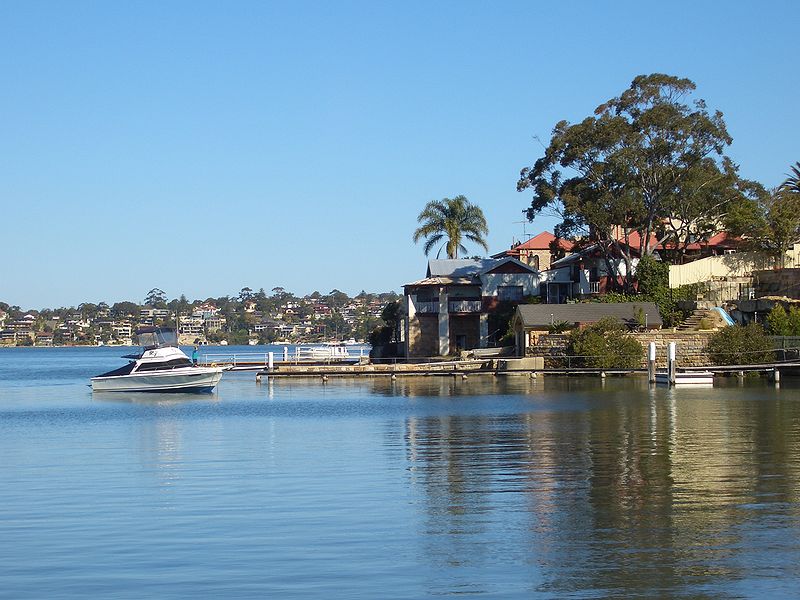
(Photo is of the waterfront at Kyle Bay)

Boys Names From Songs

13 Sunday Mar 2011

Posted by A.O. in Name Themes and Lists

≈ 20 Comments

Tags

classic names, created names, english names, famous namesakes, fictional namesakes, Gaelic names, germanic names, Greek names, hebrew names, Italian names, meteorological names, modern classics, name popularity, names from fairy tales, names from nursery rhymes, names from songs, names from television, nicknames, Old English names, Persian names, popular names, royal names, saints names, Scottish names, Shakespearean names, slang terms, underused modern classics, unisex names


This blog post was first published on March 13 2011, and heavily edited and updated on March 20 2015. Not being psychic, I did not know then of the vile crimes that Rolf Harris would be imprisoned for, otherwise he would not have been included.

Duncan
Slim Dusty’s country song Duncan is one of his two hits which went to #1.The song describes the great enjoyment experienced drinking at the atmospheric Town and Country pub with his mate Duncan. Although the narrator also drinks with Colin, Kevin, Patrick, and Robert to obtain similar effects, it is Duncan who will always be remembered as the mate Slim would “love to have a beer with”. Duncan is the Anglicised form of the Gaelic name Donnchadh; it may mean either “brown-haired warrior”, or “brown-haired chieftain”. A traditional name amongst Scottish nobility and royalty, there have two medieval Scottish kings named Duncan, with Duncan I the original of William Shakespeare’s King Duncan in Macbeth. Unlike in the play, Duncan was a young king, and not assassinated by his war leader Macbeth, but killed in battle against him. Saint Duncan was of royal blood too, and an abbot of Iona. Duncan was #134 in the 1900s, and peaked in the 1970s at #122. It doesn’t seem to have charted since 2009, so this is a handsome underused Scottish choice.

Erasmus
Erasmus is a 2006 song by alternative rock band You Am I, a nostalgic remembrance of the 1990s. Erasmus is derived from the Greek for “beloved”. Saint Erasmus of Formia was a bishop who, according to tradition, was martyred for his faith in the 4th century. He is more commonly known as Saint Elmo, the old Italian form of his name, and St Elmo’s Fire is named after him – the glowing electrical discharge that can appear around tall, pointed structures during thunderstorms. As it was known for appearing around the masts of ships in the days of sail, Saint Erasmus is a patron of sailors. A famous namesake is Erasmus of Rotterdam, a Catholic priest, theologian, and classical scholar of the Renaissance who is known as “The Prince of Humanists”. Charles Darwin‘s grandfather was Erasmus, named after an ancestor, and Charles’ brother also had the same name. This rare name has geek chic, with history, strength, bags of brain power, and of course, a beautiful meaning. Rasmus and Raz could be used as nicknames.

Harry
Lazy Harry’s, or, The Road to Gundagai is a traditional folk song with a connection to Banjo Paterson, as he was the first to have it published, in 1905. The song tells of two shearers from a Riverina station who set out for Sydney to spend their pay cheques, but get no further than Lazy Harry’s pub between Wagga Wagga and Gundagai before they’ve spent the lot. Harry is a medieval English form of Henry which has never gone out of use. It has also been used as a pet form of Henry and Harold, and more recently, of Harrison. Harry is a classic name which has never left the charts. It was #32 in the 1900s, left the Top 100 in the 1950s, and reached its lowest point in the 1970s at #234. It began rising in the 1980s after the birth of Prince Henry, always known by his nickname Harry, and joined the Top 100 in the early 1990s. It continued rising through the 2000s, along with the popularity of boy wizard Harry Potter, and peaked in 2010 at #27, although by 2013 it had only dropped one place, to #26. Classic Harry is royal and magical, yet also friendly and casual.

Henry
Henry Lee is Nick Cave & The Bad Seeds’s 1996 version of an English folk song called Young Hunting, which in the United States is usually titled Love Henry or Henry Lee. It is a macabre tale of sexual jealousy; a man tells his mistress that he is leaving her for another woman, and while offering him a farewell kiss, she stabs him and throws his body in a well. P.J. Harvey sings the woman’s part of this eerie duet. Henry is from the Germanic name Heimrich, meaning “home ruler”. It has been commonly used amongst European royalty, and there are many rulers of Germany, France, Spain and Portugal named Henry, or one of its equivalents. There have also been six Holy Roman Emperors named Henry, one of them a saint. Henry is a traditional name in the British royal family, and there have been eight English kings named Henry. Henry is a classic name which has never left the charts. It was #11 in the 1900s, and left the Top 100 in the 1950s, hitting its lowest point in the 1970s at #265. It was back on the Top 100 by the 1990s, and had reached #23 by 2013. Henry is a handsome classic which is slowly rising in popularity.

Jack
Adam Harvey’s 2001 country song The House That Jack Built went to #1. It’s inspired by the nursery rhymes The House That Jack Built and Jack and Jill, while giving them a modern twist. Jack is a short form of Jackin, which began as Jankin, a medieval pet form of John. It has been used as an independent name since the Middle Ages, and was so popular in that era that it became a slang word to mean “man, male”. Jack is a fairytale hero, such as Jack and the Beanstalk and Jack the Giant Killer, and a trickster figure, like a jack-in-the-box and the knave in a deck of cards. Jack has a particularly British association, because of the Union Jack which is on our flag. Suffice to say I could talk about Jack until you were completely jack of it! Jack is a classic name which has never left the charts. It was #24 in the 1900s, and left the Top 100 in the 1940s. It hit its lowest point in the 1960s at #277, and was Top 100 again by the 1980s. It hit its peak in the 2000s at #1 name, when there were many heroes on film and TV named Jack. By 2013 it had only fallen two places, to #3, so it has been extremely stable as well as extremely popular. Jack the lad is an everyman name, and a nickname with its own rich history.

Jake
Jake the Peg is a 1965 novelty song by Rolf Harris, based on the Dutch-Canadian song Ben van der Steen. It’s a simple tale of an unfortunate man born with three legs, and Harris performed it onstage with a theatrical prop which left the audience guessing as to which of the three legs was fake. It has been voted one of the best Australian singles of all time. Jake is a medieval variant of Jack, but today is often used as a short form of popular Jacob. Jake first joined the charts in the 1970s at #392, the same decade as Jacob, and just after the song’s release. It joined the Top 100 in the 1980s and peaked in the 1990s at #6. In 2013 it was #43. More boyish than Jacob, more rakish than Jack, this name lets you know that everything is “jake”.

Jessie
Rick Springfield’s pop song Jessie Girl was an instant hit, reaching #1 on the Billboard Hot 100 of 1981, and winning a Grammy. According to Springfield, Jessie’s Girl was inspired by a real-life admiration he had for his friend Gary’s girlfriend. He considered using Gary’s real name, until he saw a girl wearing a softball jersey with the name Jessie on it. The song has been featured in movies and TV shows, and named one of the best songs of the 1980s. As a boy’s name, Jessie is a variant of the Hebrew name Jesse, which may mean “gift”. It’s also a girl’s name which was originally a Scottish pet form of Jean, but also used as a pet form of Jane, and more recently, of Jessica. In Australia, Jessie charted as a unisex name until the 1950s, but since the 1970s and the rise of Jessica, has only charted for girls. It made the Top 100 in the 1990s, when Jessica was the #1 name, and is currently in the 300s. Still usable for boys, although the popular Jessica has given it a pink vibe.

Johnny
Men at Work’s 1982 rock song Be Good Johnny is an obvious reference to Chuck Berry’s Johnny B. Goode. The song is about a young boy, a seemingly troubled daydreamer who can’t relate to or listen to adult authority. It could be the anthem for ADHD kids, and in fact a cover version of the song is the theme tune to the reality TV series Supernanny. Johnny is a pet form of John, long used as an independent name. There’s been heaps of famous Johnnys in Australia – Johnny Diesel, Johnny O’Keefe, Johnny Young, Johnny Lewis and Johnny Warren, to name a few. Johnny has charted since the 1950s, when it debuted at #265. It has not yet become popular, and is currently in the 200s. Modern classic Johnny seems like it has a lot of potential to go further.

Normie
Rak Off Normie was written as a sequel to comedian Bob Hudson’s satirical narrative, The Newcastle Song, which was at #1 for four weeks in 1975. The Newcastle Song is about a young man called Normie looking for a date, and pokes fun at the working class youth culture in the city of Newcastle. Eager for further success, Bob Hudson rapidly penned Rak Off Normie from the point of view of the girl Normie is attracted to, and Maureen Elkner was chosen to sing it. The song reached #6 on the charts. Normie is a pet form of Norman, used as an independent name since the 19th century. It is well known in Australia from 1960s pop star Normie Rowe, and will probably only make a comeback if Norman does.

Sam
Olivia Newton-John’s Sam reached #1 on the Billboard Easy Listening chart of 1977. It’s a song about two people who have been (apparently deservedly) dumped by their respective lovers and are now lonely; the song implies that the two of them may get together in order to comfort each other. Sam can be used as a short form of names such as Samuel or Samson, and as short for the female name Samantha. It is also a Persian name meaning “very dark”, and is familiar from Frodo’s companion in The Lord of the Rings, whose name is short for Samwise (samwise is the Old English for “half-wise, half-wit”). Sam has long been used as an independent name, overwhelmingly given to boys. Sam first joined the charts in the 1950s at #301, and was Top 100 by 1986. It peaked at #62 in 1991, left the Top 100 in 2011, and is still only just outside the Top 100. Well known from Welsh children’s TV show Fireman Sam, which has an Australian rescue pilot in it, this is a modern classic with boyish charm.

POLL RESULTS
People’s favourite names were Jack, Harry, and Duncan, and their least favourite were Johnny, Jake, and Normie.

Newer posts →

Enter your email address to follow this blog

Categories

Archives

Recent Comments

A.O.'s avatarwaltzingmorethanmati… on Zarah Zaynab and Wolfgang…
Madelyn's avatarMadelyn on Zarah Zaynab and Wolfgang…
JD's avatardrperegrine on Can Phoebe Complete This …
A.O.'s avatarwaltzingmorethanmati… on Rua and Rhoa
redrover23's avatarredrover23 on Rua and Rhoa

Blogroll

  • Appellation Mountain
  • Baby Name Pondering
  • Babynamelover's Blog
  • British Baby Names
  • Clare's Name News
  • For Real Baby Names
  • Geek Baby Names
  • Name Candy
  • Nameberry
  • Nancy's Baby Names
  • Ren's Baby Name Blog
  • Sancta Nomina
  • Swistle: Baby Names
  • The Art of Naming
  • The Baby Name Wizard
  • The Beauty of Names
  • Tulip By Any Name

RSS Feed

  • RSS - Posts

RSS Posts

  • Celebrity Baby News: Melanie Vallejo and Matt Kingston
  • Names from the TV Show “Cleverman”
  • Can Phoebe Complete This Sibset?
  • Zarah Zaynab and Wolfgang Winter
  • Baby, How Did You Get That Name?
  • Celebrity Baby News: Media Babies
  • Celebrity Baby News: Adelaide Crows Babies
  • Celebrity Baby News: Chris and Rebecca Judd
  • Names at Work: Name News From the World of Business and Employment
  • Celebrity Baby News: Sporting Round Up

Currently Popular

  • The Top 100 Names of the 1930s in New South Wales
  • The Top 100 Names of the 1940s in New South Wales
  • Rare Boys Names From the 1950s
  • Girls Names From Stars and Constellations
  • Celebrity Baby News: Alisa Camplin and Oliver Warner

Tags

celebrity baby names celebrity sibsets english names famous namesakes fictional namesakes honouring locational names middle names name combinations name history name meaning name popularity name trends nicknames popular names saints names sibsets surname names twin sets unisex names

Blog at WordPress.com.

Privacy & Cookies: This site uses cookies. By continuing to use this website, you agree to their use.
To find out more, including how to control cookies, see here: Cookie Policy
  • Subscribe Subscribed
    • Waltzing More Than Matilda
    • Join 517 other subscribers
    • Already have a WordPress.com account? Log in now.
    • Waltzing More Than Matilda
    • Subscribe Subscribed
    • Sign up
    • Log in
    • Report this content
    • View site in Reader
    • Manage subscriptions
    • Collapse this bar
 

Loading Comments...