• About
  • Best Baby Names
  • Celebrity Baby Names
  • Celebrity Baby Names – Current
  • Celebrity Baby Names – Past
  • Featured Boys Names
  • Featured Girls Names
  • Featured Unisex Names
  • Links to Name Data
  • Waltzing on the Web

Waltzing More Than Matilda

~ Names with an Australian Bias of Democratic Temper

Waltzing More Than Matilda

Tag Archives: Italian names

Saturday Celebrity Sibset: Carla Zampatti – Italian Style

22 Saturday Sep 2012

Posted by A.O. in Sibsets in the News

≈ 5 Comments

Tags

celebrity baby names, celebrity sibsets, classic names, Italian names, name popularity, popular names

This is a celebrity sibset I’ve been wanting to cover for some time, as it’s been such an influential one.

Carla Zampatti is one of Australia’s most famous designers, and at 70, considered a matriarch of the industry. Originally from northern Italy, she moved to Australia during her childhood. Her first boutique opened during the early 1970s in Sydney, and she now has a chain of more than thirty stores across Australia. She has received many awards, including Designer of the Year, Businesswoman of the Year, and Australian Fashion Laureate, the highest honour in the Australian fashion industry.

Carla’s first husband was Leo Schuman, who she married in 1964 and divorced in 1970; their son is named Alexander (nn Alex) and he’s now on the board of his mother’s company.

In 1975 Carla married wealthy Liberal politician John Spender, a Yale graduate, barrister, and later, diplomat to France. They were divorced in 2010.

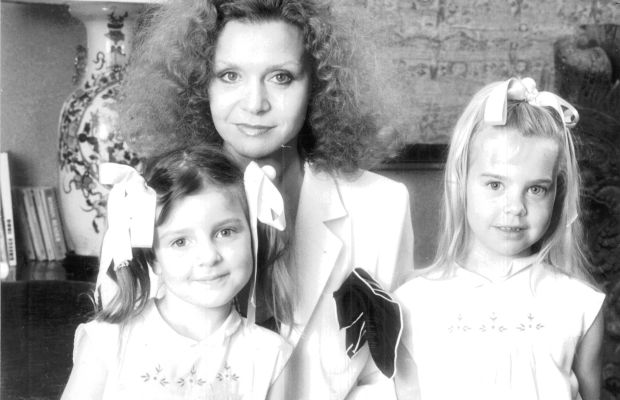
Their daughters are Allegra, who is now the General Manager of the company, and Bianca, who is a fashion designer and has her own label.

Alexander is a sturdy classic in Australia which has never left the Top 100. It was #29 for the 1900s, and reached its lowest point in the 1960s (when Alex Schuman was born) at #89. It surged upwards through the 1970s and ’80s to reach #17 in the 1990s. Since then it has remained stable, and is currently #16.

Bianca was in rare use in the 1960s, but in the 1970s, it absolutely skyrocketed to reach #139 for the decade. Top 100 by the 1980s, it peaked in the 1990s at #45. By 2010 it was still a very respectable #125, and last year it increased to #103, only just outside the Top 100.

Allegra has never been in the charts, but it is gaining in popularity, been chosen as a baby name by several celebrities, and has retained a great deal of cachet. Not only fashionable, it is also an appealing Italian heritage choice. I can’t help wondering if it is tomorrow’s Bianca?

Carla Zampatti has become a fashion institution by making classic clothes that can be worn for years, and she seems to have the same ability to select names that remain popular and stylish for decades. One of the amazing things about this sibset is that although the siblings are in their thirties and forties, you can easily imagine Alex, Allegra and Bianca as children born within the last couple of years.

(The picture shows Carla and her daughters around the mid-to late 1980s, I would guess; photo from David Jones, which has exclusive rights to both Carla Zampatti and Bianca Spender fashions)

MYTH: Australian Baby Names Follow English Trends More Closely Than American Ones

09 Sunday Sep 2012

Posted by A.O. in Baby Name Mythbusters

≈ 7 Comments

Tags

Arabic names, British Baby Names, Gone With The Wind, Greek names, international name trends, Italian names, Legitimate Baby Names, name data, name poopularity, name trends, popular names, Southern names, UK name trends, US name trends, Welsh names

Last time we went mythbusting, we looked at whether Australian names are becoming increasingly Americanised, and didn’t find a lot of evidence. This is the flip side to that myth – the one that comforts us that we are essentially more British in our ways than American, and so are our baby names. That despite an increasing tendency to call our children Jett and Harlow, most of us will trustingly follow dear old Mother England, and choose something like Archie, Evie, Callum or Isla.

Again, this myth sounded quite plausible to me. But we have to look and make sure, so once more I prepared myself to examine the Top 100 from each nation. The first hurdle is that both of us are slightly data-challenged, so I was forced to rely on data from Victoria only (the only state with stats going back to 1929), while the data from the UK would include both England and Wales, but not Scotland or Northern Ireland. I did feel that already the waters were getting slightly muddied, only to find that England/Wales doesn’t publicise historical Top 100s.

I express my heartfelt gratitude to Elea at British Baby Names, who has provided on her blog, through her own labours, Top 100s for England/Wales for each decade from 1904 to 1984. Upon e-mailing her to enquire where I might find the one for 1994, she very kindly sent me a copy of her own personal spreadsheets so I could have that one as well.

Now I acknowledge this leaves me with some flaws in my methodology before even starting. I only had data from one state of Australia; furthermore this state has a reputation of being slightly more “English” than average. I only had data from England/Wales, and only had access to years ending in a 4. As I had already examined the earlier myth using data from the United States in years ending with a 0, it was possible I wasn’t going to be comparing apples to oranges so much as bananas to hedgehogs to timeshare villas in Spain.

However, we won’t get too gloomy, but show a bit of British pluck and press on. No, this won’t be the most statistically persuasive thing you’ll read all year, but we’re not doing a study, not trying to prove anything, just having a keen yet amateurish look around us to see if anything obvious shows up. And after all, if the myth is clearly and inarguably true, then broad trends should be pretty obvious even through a fog of slightly dodgy data.

1934

Boys – 82% the same (17% higher than US)

Girls – 69% the same (18% higher than US)

1954

Boys – 75% the same (16% higher than US) – down 7% overall, down 1% relative to US

Girls – 68% the same (21% higher than US) – down 1% overall, up 3% relative to US

1974

Boys – 72% the same (16% higher than US) – down 3% overall, no change relative to US

Girls – 62% the same (11% higher than US) – down 6% overall, down 10% relative to US

1994

Boys – 67% the same (11% higher than US) – down 10% overall, down 3% relative to US

Girls – 61% the same (5% higher than US) – down 1% overall, down 6% relative to US

2011

Boys – 63% the same (4% higher than US) – down 4% overall, down 7% relative to US

Girls – 63% the same (16% higher than US) – up 2% overall, up 11% relative to US

Based on these numbers, I would say that’s a MYTH CONFIRMED – at no time in history did the the amount of popular names shared with the US overtake the amount of popular names shared with England/Wales.

However, you can clearly see that while the number of shared girls names went down only very slightly between 1934 and 2011, the number of shared boys names sunk by almost 20%. In fact, yes, we still share more boys names with England/Wales than with the United States, but only by 4% – four names! Statistically, that’s what I call a big-whooping-deal difference, and if this trend continues, future Australian boy’s names are going to look much more like those in the US than the Top 100 for England/Wales.

Girl’s name did not show this steady decline, and in fact last year had a slight increase since the 1990s, while also showing a significant gain relative to the US data. This makes me think that when we say that our names are more English than American, we are primarily thinking of our names for girls.

GENTLE MUSINGS

Last time I ended the article with “conclusions”; this now seems far too definite and perhaps arrogant considering that we are left with far more questions than answers. So I will not reach any conclusions, but merely gently muse on some of the issues that have been raised.

Questions

  • Many names are shared by the Top 100s of all three countries. Therefore, can you really label names such as Olivia, Jacob, Ella and Liam as “English” or “American”, or are they more properly “international trends”?
  • If determined to designate a name as “English” or “American”, do you rely upon the place which provided the cultural impetus for the name, or the place where it became popular first, or the place where it reached the highest levels of popularity? If the first, then many popular names could be classed as American; if the second or third, a large number would be classed as Australian more than anything else.
  • I used the example of Scarlett as an “American-style” name in the preceding article (I admit without much forethought), and Sebastiane from Legitimate Baby Names quite correctly pointed out that Scarlett was more popular in England than in the United States. Now, it cannot be disputed that Scarlett hails from the United States, because the name became known through Margaret Mitchell’s novel, Gone with the Wind, and was popularised by American actress, Scarlett Johansson. However, the name is #19 in Victoria, #25 in England/Wales, and #80 in the USA. It reached the Top 100 of both Victoria and England/Wales in the same year, 2004, New South Wales in 2005, but only became Top 100 in the USA last year. So which country, if any, claims it?
  • Sometimes my blog entries end up being copied and discussed in some odd places, so my Referrer stats tell me; occasionally they end up somewhere rather disturbing. I found the Mythbuster on Australian and US trends on a not-very-nice forum (not baby name or parenting related), where the poster claimed that supposedly “trashy” American names that were popular in Australia but not the USA (eg Beau) were in fact, not American, but “Southern” names. Did the Civil War not end? I wondered. Is the lower portion of America not part of the United States, but a separate nation? It does raise the issue, what qualifies as an “American” name? Must it be in the Top 100 of every state in the USA to be called American? In which case, I have a feeling that “American” names would end up being those that are popular internationally, like Michael and Emily.

Observations

  • Immigration made a difference between the Top 100s of England/Wales and Victoria. Mohammed and Abdul have been popular names since the 1930s in the UK, while post-war immigration saw names such as Antonio and Ioannis reach the Top 100 in Victoria during the 1970s.
  • Although Australia has a history of being very keen on Welsh-inspired names such as Mervyn and Gweneth, I was amused to notice that not only were these not popular in England/Wales, but they had Welsh names, presumably used by actual Welsh people, which we didn’t, such as Ivor and Glynis.
  • While we all are influenced by each other’s name trends, each country had its names that the others were seemingly oblivious to. The name Gillian seems to be a quintessentially English name, appearing decade after decade on their Top 100, whilst never making the Top 100 in Australia, or the Top 1000 of the US. Meanwhile the US had quite a thing for Melvin – a name which still ranks on their Top 1000. In turn, we had a long-standing fascination with the name Bronwyn.
  • Each country also had their own favourite names. Adrian was a name we took to early – it was Top 100 by the 1930s and stayed there until quite recently. In England/Wales, it took a bit longer to reach the Top 100 and they tired of it sooner. In the US, Adrian only reached the Top 100 in 1989. England/Wales had an inordinate passion for the name Derek, which continued for decades – a name that has never been Top 100 in Australia, and only reached the Top 100 of the USA in 1970, a good half-century after England/Wales. In the US, Douglas seemed to enjoy favour much longer than elsewhere, being still Top 100 as late as the 1980s.
  • In other words, we might all be influenced by international trends, but we also have our own tastes in names, and don’t necessarily abandon a favoured name just because everyone else is doing so.
  • I have noticed that some people, amongst them many Australians I’m sorry to say, assume that a name which becomes popular in England/Wales is somehow more “classy” or “stylish” that one whose popularity originated in the United States or Australia. Granted, whether a name is stylish or not is completely subjective, but I did not feel that this assumption stood up to even casual investigation. From my perusal of popular names from three places across seven decades, it seemed to me that all were capable of being inspired by names that have been considered stylish, and its opposite.
  • For example, the name Isabella became popular in Australia much earlier than elsewhere, and I think most people would say Isabella is a pretty, stylish name. Yet we were also the first (by many years) to jump aboard the Hayden/Aidan/Jayden/Brayden craze. While I don’t consider this the black hole of name taste that others do, I acknowledge it’s not generally thought of as a stylish trend. While England has some lovely aristocratic names on its Top 100s, such as Constance and Daphne, can a land which adored the name Derek really take the title of Stylemeister? America has brought us no end of cool names, from glamourpuss Marilyn to zippy Jett. There’s a freshness and vigour to American name trends which I love, and a world without their names would be a far less interesting one. However, sometimes they’re a trifle overenthusiastic – and besides, Derek was on their Top 100 for 15 years, so they forfeit the style crown too.
  • Oh, and Barry and Sheila? Barry was Top 100 in England/Wales for longer than it was here, and Sheila, although popular in both England/Wales and the United States, didn’t show up in the Australian data, because by the 1930s it had already peaked and dropped off our Top 100. Who’d have thunk it?

Names of Australian Male Olympic Medalists

19 Sunday Aug 2012

Posted by A.O. in Name Themes and Lists

≈ 9 Comments

Tags

American slang terms, aristocratic names, Arthurian names, Australian slang terms, Babylonian names, Biblical names, epithets and titles, famous namesakes, French names, Gaelic names, Greek names, hebrew names, Indian names, Irish names, Italian names, Korean names, Latin names, locational names, meteorological names, mythological names, name history, name meaning, name popularity, nicknames, Norman names, Norman-French names, Old Irish names, Old Norse names, Pictish names, popular culture, popular names, royal names, saints names, Scottish names, surname names, tribal names, unisex names, Welsh names

Bevan (George)

Bevan George is a hockey player who won gold at the Olympics in 2004, and bronze in 2008. Bevan is a Welsh surname meaning “son of Evan”; as Evan is a Welsh form of John, this is the Welsh form of Johnson. One of the most prominent people with this surname was Aneurin Bevan, a Welsh Labour Party politician most active in the 1950s. Recognised as one of the leaders of the party’s left-wing, he was a champion of social justice and the rights of working people. As Minister of Health, he was responsible for bringing in the National Health Service – that wonderful institution celebrated so effusively in the opening ceremony of the 2012 Olympics. For reasons unclear to me, this name seems to have been used more often in Australasia than anywhere else, and unfortunately, familiarity seems to have bred a certain amount of contempt, for in Queensland especially, Bevan is seen much in the same way that Kevin is perceived in the United Kingdom, the word bevan used to denote a lower-class person. As such, parents would rather use the name Evan.

Deveraux (Mytton)

Deveraux “Dev” Mytton won a bronze medal in sailing at the 1956 Olympics. The surname Deveraux is a variant of Devereux, and it’s Norman-French, meaning “from Évreux” in Normandy. The city of Évreux gained its present name from the Gallic tribe the Eburovici, whose name may be related to the word for “yew tree”, so the French city could have a similar meaning to that of York in northern England. According to the BBC, so many of the gold medal-winners from Team GB were from Yorkshire that if this historic county was its own nation, it would have finished 15th on the Olympics medal tally – ahead of South Africa and Brazil. The city of Évreux has its own Olympic champion – Didier Courrèges, who won gold as an equestrian in 2004. The surname is one with an aristocratic air to it, and in the early twentieth century would have been considered a very upmarket, perhaps even pretentious, name to bestow upon your son (a 1920s version of a “preppy” name). Pronounced DEV-er-oh, I cannot see this name coming into use, despite the fashionable ending, but Dev has a brisk sound to it.

Eli (Matheson)

Eli Matheson is a hockey player who won bronze at the 2008 Olympics. Eli is a Hebrew name which means “ascension”, and in the Old Testament, Eli is a judge and high priest of Israel who is the teacher and mentor of the prophet Samuel. Eli himself is regarded as a prophet also in Judaism. According to how it is written in Hebrew, Eli can also be a separate name which means “my God”. In Hebrew, it is said EH-lee, but English-speakers tend to pronounce the name EE-lie (probably so it doesn’t get confused with the girl’s name Ellie). One well known person with this name is Hollywood actor Eli Wallach, who starred in the westerns, The Good, the Bad and the Ugly, and The Magnificent Seven. As Old Testament names for boys gain increasing momentum, Eli continues to rise and rise. It first entered the charts in the 1970s, and joined the Top 100 in 2009. It’s already #45 and still forging ahead.

Fergus (Kavanagh)

Fergus Kavanagh is a member of the men’s hockey team, and won bronze medals in 2008 and 2012. Fergus is the Anglicised and Old Irish form of Fearghas, a Gaelic name meaning “man of vigour, strong virile man” – very apt for an Olympian. It was a name common amongst royalty in both ancient Ireland and Scotland, and is still often used amongst Scottish nobility. One of Queen Elizabeth II’s uncles was named Fergus, and another royal connection is Fergus Boyd, a friend and former flatmate of Prince William. There is a Saint Fergus, an 8th century Irish bishop who was a missionary in Scotland. King Arthur also had Sir Fergus as one of his knights, and he appears in a witty 13th century romance in which he appears valiant but lacking in sophistication. The name Fergus is currently gaining favour with the sort of parents who love Angus and Hamish, but are dismayed by their popularity. Aristocratic Fergus seems so much more select.

Hector (Hogan)

Hector “Hec” Hogan was a sprinter who was Australian champion seven times over in the 100 metres, and was able to equal the world record in this event. He attended the 1956 Olympics, and although he was already feeling strangely fatigued, still managed to win bronze. He was afterwards diagnosed with leukaemia, and died in hospital a few years later, while listening to the 100 metre sprint race at the Rome Olympics. In Greek mythology, Hector is a Trojan prince, and the greatest warrior of Troy, who slays Achilles in battle. A leader noted for his brave and noble nature, he is seen as far more worthy than his younger brother Paris, who caused the war. In Greek, Hector means “to hold”, and is interpreted as “holding firm, holding everything together”. It may be an epithet or title rather than a real name. In Scotland, Hector is used to Anglicise the Gaelic name Eachann, meaning “horse lord” or “brown horse”. Sir Hector is one of King Arthur’s knights in the legends, and is the brother of Sir Lancelot, while Arthur’s foster-father Sir Ector shows another form of the name. In Australia, Hector is the name of a cloud which forms each afternoon in the Tiwi Islands during certain months. This name is fast becoming seen as hip and quirky.

Ji (Wallace)

Ji Wallace is a gymnast who won a silver medal for trampolining at the 2000 Sydney Olympics. He later came out as gay, and was the first Australian to be an ambassador for the Gay Games; while attending the 2012 Olympics, he revealed that he is HIV-positive. Ji is a unisex Korean name which means “wisdom”; it’s also the word for an ancient Korean flute. This name sounds similar to the Indian name Jai, but manages to use even fewer letters, and is suitable for both boys and girls.

Kenneth (Wallace)

Kenneth “Ken” Wallace started out competing in Ironman, and switched to sprint canoeing while still in his teens. He won gold and bronze medals at the 2008 Olympics, and last year took part in Channel 7’s Australia’s Greatest Athlete. He came third, with Shannon Eckstein beating him to second place. Kenneth is the Anglicised form of two separate names. One is the Pictish Coinneach, meaning “handsome”; the other is Gaelic Cináed, meaning perhaps “born from fire” or “fire-head”, possibly to denote someone red-haired or hot-headed. According to tradition, the 9th century Kenneth MacAlpin was the first king of Scotland, and is known as Kenneth I (during his lifetime, he would only have been known as king of the Picts, however). There also two legendary saints named Kenneth, one Irish, one Welsh. For some reason, Kenneth became a “funny name” – perhaps because of uber-camp comic actor Kenneth Williams, from the Carry On movies. Kenneth was #38 for the 1900s, and peaked in the 1920s at #6. It left the Top 100 in the 1980s, and is currently #409. It rose last year, so things may be looking up for this attractive name.

Nimrod (Greenwood)

Nimrod Greenwood won bronze for rowing at the 1952 Olympics. In the Old Testament, Nimrod is a great-grandson of Noah, and king of several Mesopotamian cities. He is depicted as a man wielding great political power, a warrior, and a mighty hunter. Although the Bible never states this, according to tradition, he is the king for whom the Tower of Babel was constructed. This hubristic piece of engineering sought to build a tower into heaven itself, and so alarmed God that He scattered humanity over the globe, and made them speak different languages, to prevent further outbreaks of co-operation and harmony. It’s obviously a story to explain cultural differences, and there are similar myths around the world. The name Nimrod is traced to the Hebrew for “rebel”, but as he was Sumerian, this seems unlikely. The most convincing theory is that he is based on the Babylonian god Bel Marduk, one of whose titles was Bel-Nimrod, meaning “to pursue, to make someone flee before him”. Nimrod has entered our language to mean either a tyrant, a warrior, or a huntsman; however, in the United States it is slang for “idiot” – perhaps due to a 19th century play with a character called Nimrod Wildfire. It is still an Olympian name, for one of the Israeli swimmers at this year’s Olympics was Nimrod Shapira-Bar-Or.

Ralph (Doubell)

Ralph Doubell had a brief career in athletics, but was lucky enough to peak just as an Olympics came around. He won gold in 1968 in the 800 metres, and set a world record of 1:44.3. No other Australian has ever managed to equal this, and it’s stood as the Australian record for more than 40 years. Ralph is a contraction of the Old Norse name Ráðúlfr, meaning “wolf counsel”, which was introduced to England by Scandinavian settlers. When the Normans arrived, they brought with them their own form of the name, Radulf, and English Ralph can be seen as a continuation of both these names. Ráðúlfr is pronounced ra-THOOL-fer, and Radulf is said RAD-oolf; in the beginning Ralph was spelled Ralf and pronounced RAYF. By the 17th century the spelling had been changed to Rafe to reflect the pronunciation, and the Ralph spelling appeared in the 18th century. You are now free to pronounce this name either RAYF or RALF, but as far as I know, only one Ralph seems to say his name like Rafe, and that’s English actor Ralph Fiennes. The name was favoured by the ruling classes during the Middle Ages, but American pop culture has not been kind to it, often assigning it to comic or dim-witted characters. In American slang, ralph means “to vomit”, which can’t have done its image any good. Ralph was #91 in the 1900s, and peaked in the 1920s at #89. It left the Top 100 by the 1950s, and hasn’t ranked since the 1980s.

Verdi (Barberis)

Verdi “Vern” Barberis was a seven times Australian champion in weight-lifting, and took the bronze medal in the Lightweight category at the 1952 Olympics. He was the first Australian lightweight to clean and jerk over 300 lb (140 kg), which at that time exceeded his state’s heavyweight record. The name Verdi is an Italian surname, common in the north of Italy, and best known as that of the composer, Giuseppe Verdi. One of the most influential composers of the 19th century, he is famous for such operas as Rigoletto, Aida and La Traviata. The name means “green”, from the Latin viridis, related to the word virere, meaning “to bloom and flourish”. In the same way, the English word verdant, from the same Latin root, means “green”, but also has connotations of lush vegetation. It’s very much a name of freshness, spring time and new life. I think this rare unisex name is very appealing, and also begins with the fashionable V.

(Photo shows Ken Wallace after winning gold at the 2008 Olympics)

Famous Names: Sally and Malcolm

15 Wednesday Aug 2012

Posted by A.O. in Famous Names

≈ 4 Comments

Tags

english names, famous namesakes, fictional namesakes, hebrew names, Italian names, Latin names, name history, name meaning, name popularity, nicknames, royal names, Scottish names, Shakespearean names, vocabulary words

The 2012 Olympics came to an end on the weekend, and today our athletes came home, to be met by huge crowds at the airport, which included the Prime Minister and Leader of the Opposition. Although the London Olympics had many critics and doubters before they began, from the stunning Opening Ceremony onwards, all was forgotten as everyone agreed that London had done a bang-up job hosting the Summer Olympics.

Everything had gone smoothly, athletes were well taken care of, the historic capital looked grand and stately, the weather was good, and the wonderful volunteers ensured that, above all, it was a friendly and fun Olympics where people felt free to relax and enjoy themselves. No wonder that Rio has said that it watched and learned from London, as it prepares for its own hosting gig in 2016.

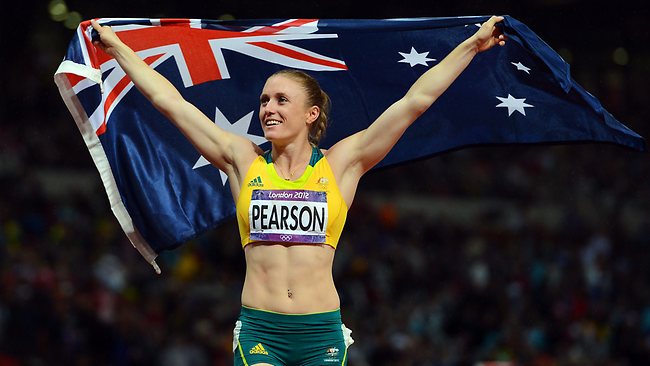
There were so many memorable moments from the Olympics, but from an Australian perspective, I am choosing two athletes who, for me, were the stand outs from our team. The first is hurdler Sally Pearson, simply because her race, which ended in a photo-finish, was nail-bitingly close. Nearly everyone I’ve spoken to has nominated Sally’s gold medal win as the most exciting of the Olympics. Sally not only set an Olympic record, she joined a select group of athletes who were world champions when they won at the Olympics, and is the first Australian woman to win Olympic gold in athletics since Cathy Freeman.

The other is sailor Malcolm Page, because our sailing team did so well at the Olympics, and it’s obvious their training regime really paid off. Malcolm is the first Australian sailor to win two gold medals at consecutive Olympic Games, and he was chosen as the Australian flag-bearer for the Closing Ceremony. Just as Sally was named the IAFF Female Athlete of the Year in 2011, Malcolm was inducted into the Australian Institute of Sport’s “Best of the Best”. Two sportspeople at the top of their game, and here’s a closer look at their names.

The name Sally is a pet form of Sarah, a Hebrew name meaning “princess”. It’s been used as an independent name since the 16th century, and seems to have been first used in the southern coastal areas of England. Since then, it has become a short form of almost any similar name, including the Italian male name Salvatore. It is also, by coincidence, an English vocabulary word, for sallies is an old word for “willow trees”, as in the W.B Yeats poem, Down by the Salley Gardens (the Latin for “willow” is Salix). In military terms, a sally is a sudden attack on an enemy, and we use this word to also mean to attack someone verbally in a witty way. To sally also means to rush off or venture out – very suitable for a sportswoman!

Like Jack, Sally is a name we are familiar with from dozens of cultural references. Sally has appeared in many popular songs, from the nursery rhyme Sally Goes Round the Sun, the traditional Sally in Our Alley, to the blues song Mustang Sally to the rock and roll Long Tall Sally. There is the traditional English fairground game, Aunt Sally, in which a ball is thrown to knock off a wooden woman’s head. We know many a fictional Sally, from wayward Sally Bowles in Cabaret, to Charlie Brown’s sister in the Peanuts cartoon, to the good-looking but annoying Sally Hayes in Catcher in the Rye, the Sally who was met by Harry in the romantic comedy, and the little sister of Dick and Jane in the vintage reading books.

Sally first entered the charts in the 1920s, and was Top 100 by the 1950s; it peaked in the 1970s at #53, and left the Top 100 in the 1990s. Currently it’s #492, and fell last year after a sharp rise in 2010. Sally is one of the most popular names Googled to reach my blog, and I can see the attraction – it’s a fresh, spunky little name that seems clean and wholesome, but not exactly goody-two-shoes. It’s girlish without being girly, and a fuss-free way to wear a princess name without sounding the slightest bit princessy.

Malcolm is the Anglicised form of the Scottish name Máel Coluim, meaning “devotee of Saint Columba”. Columba is a Latin name meaning “dove”. It was a common name amongst medieval royalty in Scotland, which has a long line of King Malcolms. The most well known is Malcolm III, for it is claimed that he is the historical person on which the character of Malcolm in Shakespeare’s Macbeth is based, and who becomes king of Scotland after Macbeth is killed. Although his second wife, Margaret, is recognised as a saint, King Malcolm does not seem to have been very religious.

Scottish-born Malcolm Young is famous in Australia as the brains behind rock band AC/DC, but although the name of his younger brother Angus is a popular favourite, Malcolm’s name has languished. Malcolm was #81 for the 1900s, and peaked in the 1950s at #52. It left the Top 100 in the 1980s, and hasn’t charted since 2009.

Part of the reason may be that Malcolm is a name well known in politics, which rarely seems to do a name any favours. Liberal Party Prime Minister Malcolm Fraser came to power in 1975, a time which saw a definite plummet in popularity for the name Malcolm. In recent times, Malcolm Turnbull has been the Liberal Party Leader of the Opposition, and is currently Shadow Minister for Communications and Broadband. He is known for being Australia’s wealthiest parliamentarian, and is the only sitting politician to make the BRW Rich List. Since he was elected in 2004, the name Malcolm has gone out of regular use altogether.

So although Scottish names for boys continue to be fashionable choices in Australia, the related name Callum, which is the Scottish form of Columba, has taken over from Malcolm – soaring in popularity during the 1980s as Malcolm sank. Is it purely coincidence that the 1980s was a decade in which Malcolm Fraser’s party suffered the worst defeat of a non-Labour party since Federation, and he was discovered in a confused condition in a seedy hotel in Memphis, wearing only a towel? I cannot help but feel neither of these things improved the prospects of the name Malcolm.

Celebrity Baby News: Musical Babies

09 Thursday Aug 2012

Posted by A.O. in Celebrity Baby News

≈ 1 Comment

Tags

celebrity baby names, celebrity sibsets, Italian names

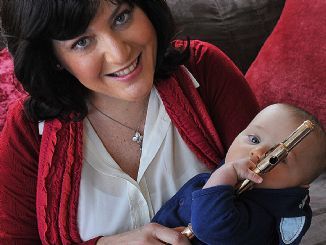
Flautist Bridget Bolliger, and her husband Anthony Heinrichs welcomed a son named Luca Raphael on January 31. Luca Heinrichs joins big brother Benjamin, aged 11.

Bridget studied music at the Sydney Conservatorium High School, then continued her studies at the Basel Music Academy in Switzerland. While still a student, she won several awards for music, and two prestigious scholarships. She lived and worked abroad from 1987-2003, and has been Principal Flute with the Gustav Mahler Youth Orchestra, the Schleswig Holstein Festival Orchestra, and guest principal with the European Community Youth Chamber Orchestra. She has also been appointed Principal Flute with the St Gallen Symphony Orchestra and the Sao Paulo Symphony Orchestra, and played Principal Flute with the Basel Symphony Orchestra, The Zurich Opera Orchestra, the Zurich Chamber Orchestra, the Australian Opera and Ballet Orchestra and the Queensland Orchestra. She has performed as a soloist and been recorded for radio and television throughout Europe, Brazil, and Australia. Bridget currently teaches at the Sydney Conservatorium of Music and freelances with Australian orchestras. She is a founding member of the New Sydney Wind Quintet, and the flute and guitar duo, Flutarre. She is also the founder and Artistic Director of the Sydney Chamber Music Festival, and last year was appointed Music Director of the Manly Music Club.

Anthony has been playing trumpet since he was ten, and at the age of 14 became a member of the West Australian Youth Orchestra. He studied at the West Australian Conservatorium of Music, and then later in Canberra, Japan, and Germany. He worked regularly with the West Australian Symphony Orchestra and has been Principal Trumpet with the Australian Youth Orchestra, Camerata Australia, the Canberra Symphony Orchestra, and the Pacific Music Festival, and has performed with the Frankfurt and Saarbrucken Radio Symphony Orchestras. He has been Principal Cornet with the Australian Opera and Ballet Orchestra. He has taught in Sydney and Newcastle, and has been with the Sydney Symphony Orchestra since 1995.

Another city, another state:

Cellist Tim Nankervis, and his wife Jacqui, welcomed a daughter named Mietta Susan on February 2.

Tim has been a cellist with Melbourne’s Seraphim Trio since 1994. They won a prize at the 2001 Australian National Chamber Music Competition, and since then have performed internationally and around Australia. The trio is regularly broadcast on ABC Classic FM.

Name tips from classical musicians: Stylish and Italian, with fashionable middle names.

MYTH: Australian Baby Names are Becoming Increasingly Influenced by American Trends

01 Sunday Jul 2012

Posted by A.O. in Baby Name Mythbusters

≈ 20 Comments

Tags

Australian names, Biblical names, classic names, created names, famous namesakes, fictional namesakes, flower names, French names, germanic names, Greek names, Irish names, Italian names, Mer de Noms, name data, name popularity, name trends, nicknames, Old English names, popular names, saints names, Scottish names, Spanish names, surname names, unisex names, US name trends, US popularity, Welsh names

Since I last went mythbusting, the 2011 name data from the United States has been released, and this week it’s American Independence Day. To celebrate both events, I decided to compare Australian and US name data. (Lou at Mer de Noms brought out her own comparison of the data for the United States and England/Wales in May, and did something pretty interesting with it.)

That Australians are becoming increasingly Americanised, including their choice of baby names, is something not debated, but accepted as a truism. It is often mourned by older generations that Australians used to call their children good solid Aussie names like Barry and Sheila, and now give them sleek American-style names like Logan and Scarlett.

It’s a myth which sounds very plausible – I certainly know far more children named Logan and Scarlett than I do Barry and Sheila (actually I don’t know any children called Barry or Sheila). But I thought we should try to get some numbers to back the myth up.

So I decided to look at the Top 100 names from both countries, in the years 1930, 1950, 1970, 1990 and 2011. If the number of names shared by both countries went steadily up, that could help support the theory that Australian names were becoming increasingly “American”. By no means conclusive proof, but it would be a start, and frankly I couldn’t think of any other way of doing it.

As I went through calculating the number of shared names, I also took note of those trends at work in Australia and the United States, where they were the same and where they differed. This gave me a picture of changing trends through the years. (The data is from Victoria, because theirs go back to 1929).

1930

MALE – 65% shared with US Top 100

1930 marked the highest percentage of shared names between the countries. This wasn’t because Australians were more “American” in 1930, but because in every year, the common denominator for both countries were classic names like John, Thomas and William, and these sort of names took up more space of both countries’ Top 100.

Trends noticeable on the Australian Top 100 were names from Ireland, Scotland and Wales, such as Kevin, Malcolm and Trevor, and aristocratic English surnames, such as Neville. Americans preferred prominent surnames of their own citizens, such as Elmer and Lee. Popular names from America we didn’t share were “cowboy” names – Wayne, Earl and Jesse. In America, nicknames for boys were all the rage, including Billy, Bob and Jimmie.

FEMALE – 51% shared with US Top 100

Popular girls names in both countries were homespun names such as Margaret and Dorothy, as well as plant names like Hazel and Rose.

Australian trends for girls included names from Ireland and Wales, such as Sheila and Gweneth, saints names such as Carmel and Veronica, and literary inventions like Doreen and Mavis. American trends were for Germanic names such as Emma and Clara, and the clunky Old English Mildred and Bertha. America’s Hispanic population meant that Delores and Juanita were Top 100 there.

1950

MALE – 59% shared with US Top 100 (down 6%)

American trends for boys we had picked up by 1950 include Gary, after Hollywood star Gary Cooper, and that supposed Australian favourite, Bruce, also popular in the US.

America continued its love of nicknames, with Bobby, Joe and Fred all Top 100. Several of the Irish boys names such as Kevin and Barry were now on the US Top 100 as well, but new Irish-style names such as Shane were still to gain American acceptance. Already in the US you can see a reluctance to use “feminine sounding” or unisex names such as Lindsay and Noel, which were Top 100 in Australia. In Australia, that same 1950s gender-anxiety produced the opposite result, with some unisex names like Leslie becoming male-only.

FEMALE – 47% shared with US Top 100 (down 4%)

The most noticeable shared trends for girls were those glamorous Hollywood names such as Marilyn (Monroe) and Rita (Hayworth). Even when Australians did take a name from America, such as Jennifer from Hollywood star Jennifer Jones, it didn’t always follow that Americans would embrace it as rapidly themselves. Jennifer was a 1950s name in Australia, but didn’t peak in the US until the 1970s.

Australian girls were being given French names like Annette and Jeanette, while Americans girls had Jacqueline. Another popular Australian “French” name was Lorraine, given in honour of St Joan of Arc, sometimes called The Maid of Lorraine. The American love of the nickname meant that names such as Judy and Peggy were Top 100 for girls.

1970

MALE – 56% shared with US Top 100 (down 3%)

Popular 1970 names which we think of as “American style” were in evidence on both charts, such as Bradley, Jason, Glenn, Darren and Craig.

Australian boys names not picked up in the US included Scottish-style names such as Ross, Graham, Stuart and Gavin, and the “feminine sounding” Ashley and Jamie. Differing ethnicities also made their mark, with Spanish Carlos in the US Top 100, and Italian and Greek names like Giovanni and Giorgio in the Australian Top 100. American nicknames powered on, with Larry, Terry and Jerry amongst them.

FEMALE – 51% shared with US Top 100 (up 4%, return to 1930 level)

It was the decade of those 1970s names Sharon and Tracey, although Sharon in particular had been popular in America for some time and we’d only just caught up.

Names such as Samantha and Amanda were already popular in Australia in 1970, but would have to wait until the 1980s to make it big in the US. Conversely, Amy was popular in the US, but wouldn’t be here until the 1980s. French Nicole was in vogue in both countries, and we’d caught up with Jacqueline; however Australia also had Danielle, Louise, Justine, Natalie, Simone and Josephine – typical 1970s girls names that were underused in the US. Scottish and Welsh names like Fiona, Megan and Bronwyn were popular here but didn’t get a look-in in the US. We were proudly using names of Australian origin, like Kylie and Narelle; naturally these were unknown in the US.

1990

MALE – 56% shared with US Top 100 (no change)

Trends from the US we were embracing were Old Testament names, such as Jacob and Zachary; and the new surname names, such as Ryan and Mitchell.

A new generation of “too feminine” boys names that were popular in Australia were ignored in the US, such as Shannon, Tristan and Leigh, as were more Scottish, Welsh and Irish-ish names, such as Lachlan, Rhys and Kane. Hayden and Jayden were already Top 100 in Australia, but not in the US. America had finally gone off nickname names, while Australia now had Jack, Jake and Ricky. American names Beau, Jackson and Tyson were popular then, as now, in Australia; of the three, only Jackson has hit the US Top 100 so far.

FEMALE – 56% the same as the US Top 100 (up 5%)

Names that both countries had in common were those typical 1990s names, like Tiffany, Brittany, Kayla and Caitlin.

Americana we were still to discover included unisex names for girls like Ariel, Shelby and Paige. Although the US had Danielle and Natalie by now, French names such as Monique, Elise, Renee and Madeleine which were popular here had apparently failed to make an impression. Although Welsh Caitlin was all the rage, the US were not on board with Tegan and Rhiannon, as we were. Most notably, Emma, Amelia, Charlotte, Sophie, Chloe and Zoe were missing from the US Top 100 – while American parents who chose these names in 1990 were ahead of the trends, in Australia, parents choosing these names in 1990 were just following the trends.

2011

MALE – 59% shared with US Top 100 (up 3%, return to 1950 level)

Congruence in popularity between the two nations has risen to 1950 levels, with many name trends in common, mostly a fresh crop of Biblical names, such as Elijah, and surname names, such as Mason.

American parents are now avoiding a new generation of Scottish names, such as Angus and Hamish, while Irish names like Declan and Flynn are also neglected in the US. Oddly enough, Kevin is still Top 100 in the US, while it’s considered a bit dated here. The scunner against nicknames continues as Americans shun Australian populars Charlie, Harry, Archie, Sam and Nate. No longer merely  shying away from “feminine sounding” names for boys like Bailey and Riley, parents in the US have actually given these names to their daughters in such numbers that they are now Top 100 for girls, while Top 100 for boys here. Several names we have taken from the US, such as Jett, Hudson and Jasper, are still not popular in America.

FEMALE – 47% shared with US Top 100 (down 9%, return to 1950 level)

Girls names have also returned to 1950s levels. Many names are shared because America has caught up with our popular names from 1990, but Australian parents have also begun to use unisex names for girls like Madison and Addison.

America has abandoned many names as “outdated” such as Amy, Jessica, Holly and Amber that have taken on “modern classic” status here. While America has accepted Lily, it is less keen on our popular plant names Daisy, Ivy, Violet, Willow, Olive and Rose. British-style names such as Isla and Imogen cut no mustard in the States. Meanwhile, popular American virtue names like Genesis, Serenity, Trinity, Nevaeh and Destiny do not resonate here. Perhaps they will in the future.

CONCLUSIONS

I did not manage to bust this myth, but neither did I find much evidence to support it, so I will give its status as MYTH UNCONFIRMED.

As I compared popularity charts from the two countries, I realised more and more that it was a case of apples and oranges. Names took longer to gain popularity in the US, and it was harder for them to stay in the Top 100; name popularity was a competitive environment there. Australia has a much smaller population size, which means that name trends show up faster here. We’re also more likely to hold onto our favourite names once we’ve found them, sometimes for generations.

I don’t think it’s an exaggeration to say that American parents are absolutely obsessed with getting ahead of the current trends, and can watch the slowly rising popularity of their chosen names with almost comical anxiety. This makes some sense, because trending names can take so long to reach the Top 100 that they have a good chance of having ten to twenty years before that happens. In Australia, this behaviour makes no sense at all, because as soon as a name begins to show up in the data, it’s basically already quite popular. As we keep names around for longer, there’s no real rush to “catch” a name on the way up either; we can always wait until it’s a cosy, familiar “classic”.

In any given year, Australia and the US will share around half the names on their respective Tops 100s, and this has not changed across time. We share many name trends, and since at least 1950, Australia has been drawn to names from America. Sometimes it took us a long time to get onto a particular trend from America, and other times we took to it with greater enthusiasm than Americans did themselves.

Both countries also have their own styles of naming. Australia has always been fond of Irish-inspired names, and although Barry and Sheila have fallen by the wayside, we now have Finn and Molly. Scottish names continue to be a growth area, with Angus, Hamish, Callum and Isla seeming rather stylish to us. Through the years, there were many names unique to the Australian popularity charts. Names that I thought of as typical of their period, such as Dulcie in 1930, Glenys in 1950, and Jacinta in 1970 seemed to be unknown in the US.

Americans are slow to adopt Irish names, but often touchingly faithful to them, and are wary of Scottish and Welsh names. They have a deep suspicion of unisex names for boys or anything that even sounds remotely feminine, while comfortable with briskly masculine names for girls. Flower names are not popular there; perhaps they seem too girlish even for girls.

Due to going overboard on nicknames in the past, America has developed almost a horror of them, much in the same way I can no longer stomach gingerbread after overindulging on it a few Christmases ago. As nicknames are currently internationally popular, this has seen them unfairly branded as a bit stuffy on the issue, when they’re really just over the whole thing.

We don’t have to try to follow American trends, and in fact a couple of them would be downright foolish for us to imitate. But the United States has proved a rich source of name inspiration for many decades, and I know it will continue to be so for many decades to come.

Less Commonly Used Boys Names

10 Sunday Jun 2012

Posted by A.O. in Name Themes and Lists

≈ 9 Comments

Tags

Anglo-Norman names, Apache names, Australian vocabulary words, celebrity baby names, english names, fabric names, famous namesakes, fictional namesakes, germanic names, Hindi names, Indian names, Italian names, Latin names, locational names, mythological names, name data, name history, name meaning, name popularity, Native American names, nicknames, popular culture, Roman names, saints names, slang terms, surname names, unisex names, US name popularity, vocabulary names, Welsh names, Yorkshire dialect names

This follows on from Less Commonly Used Girls Names. The names are from the bottom of the popularity charts in New South Wales, Victoria, Queensland and Tasmania, and in each case, the name was used less than ten times in 2011.

There seems to be a lot of musical references in this entry, so I’ve linked relevant names to YouTube videos of the person performing.

Atticus

This Roman name means “man from Attica” – Attica being the area of Greece surrounding the city of Athens. This name wasn’t uncommon in the ancient world; there is a Platonist philosopher called Atticus, and there is also a Saint Atticus, a soldier who died a martyr by being burned at the stake. However, today it is most associated with Atticus Finch, the principled lawyer and loving single father in Harper Lee’s novel, To Kill a Mockingbird. Atticus Finch, who defends a black man on a rape charge in a small Southern town during the 1930s, is considered a folk hero in legal circles. In the 1962 film adaptation, Atticus is played by Gregory Peck, who was a civil rights activist; Peck won an Academy Award for his performance, and in 2003 the American Film Institute voted his character the greatest hero in American film. It is that decent, understated heroism of Atticus Finch that makes him such a beloved character in literature and film. The character has inspired the names of both a clothing line run by musicians and an alternative rock band. It’s a hip choice which has been burning up the US popularity charts since 2004.

Bryn

Bryn is a modern Welsh name which means “hill”; as well as being a man’s name, it is also a common place name in Wales and England. A famous person with this name is Welsh opera star Bryn Terfel, a bass-baritone best known for his roles in the works of Mozart and Wagner. Apparently he applied to study music in Cardiff, but was so annoyed when they assumed he was a woman that he ended up studying in London instead. Bryn Terfel, whose first language is Welsh, is a patron of Welsh language and culture, and hopefully by now everyone in Wales recognises his name as male. Even though Bryn isn’t a common name in Australia, I don’t think it would seem too out of place either, as there are several boy’s name beginning with Br-, such as Brent and Brody. It looks rather like a cooler version of Irish Brian, which may have a similar meaning.

Corbin

Corbin is an English surname which started as a nickname based on the Anglo-Norman word for “raven”. It may have been given to someone who had raven-black hair, although less flattering possibilities also come to mind. Corbinus, the Latinised form, is found as a first name in the Domesday Book, so it has a long history of use. Despite being an old English name, this tends to be thought of as a modern American one, because it’s been solidly Top 500 in the US since the late 1980s. This may be because of television actor Corbin Bernsen, who began playing lawyer Arnold Becker on LA Law in 1986 and remained on the show until it finished in 1994. Another famous namesake is Corbin Harney, an elder and shaman of the West Shoshone people. He devoted his life to spreading a message about the dangers of nuclear energy, and the environmental issues facing the world. You may also know the name from Corbin Bleu, who was in High School Musical. This name is apparently so unusual in Australia that the article the information came from described it as a “bizarre” choice, although it seems a perfectly nice, normal name to me.

Denim

The fabric denim was originally called serge de Nîmes, after the French city where the tough cotton material was originally made by the Andre family. This was eventually shortened to denim. Denim is inextricably linked with jeans, which began life as sturdy clothing for workers, and then became fashion icons which symbolised teen rebellion. Today they are worn by pretty well everybody. Denim is an interesting name choice; it’s not really a “bad boy baby name” like Axe or Vandal, because while denim is worn by rebel icons like rock stars and bikers, it’s also worn by suburban mums and little kids. Also fabrics are usually thought of as girls names, like Velvet and Paisley, but denim is tough and hard-wearing. It’s definitely an ambiguous sort of name – one that, like the fabric, may grow with the person better than you’d expect. It’s also a soundalike with the surname and place name Denham.

Jagger

This English surname originated in Yorkshire, and means “hawker, carrier”, the word jagger being Yorkshire dialect for someone who carries a pack or load. It is claimed that most people with this surname are descended from a single family who came from Staniland, near Halifax. There was a high concentration of people named Jagger in Yorkshire, compared to the rest of England. The most famous person with this surname is undoubtedly Sir Michael “Mick” Jagger from The Rolling Stones, whose mother was born in Australia. I don’t know if this is correct, but Mick Jagger is said to be distantly related to Joseph Jagger, the 19th century British engineer famous for being “the man who broke the bank at Monte Carlo”. Joseph Jagger was indeed from Halifax in Yorkshire. The name Jagger is almost always given in relation to The Rolling Stones frontman, and may have been given a boost in 2011 from the Maroon 5 song, Moves Like Jagger, which is a tribute to Sir Mick. The number of baby boys named Jagger went from 5 to 8 in Queensland last year.

Naiche

Naiche was the last hereditary chief of the Chiricahua band of Apache Native Americans. He was an ally, protege and relative by marriage of Geronimo, the famous Apache leader and war chief. Naiche and Geronimo successfully went to war together in the 1880s, but Naiche ended up being imprisoned. Although he had resisted the process of being moved onto an “Indian Reservation”, eventually he was forced to give in, and ended his days on an Apache reservation in New Mexico. He lived only six years after moving there, and his descendants are still on the reservation. The name Naiche means “meddlesome one, mischief-maker” and it can apparently be pronounced NAY-chee, but I’m not sure if that’s the correct Apache pronunciation, or even whether it depends on which Apache accent you’re using. Naiche is for sure a very unusual name in Australia, but it has a fascinating namesake, and actually sounds slightly like Nate and Nathan. Pronunciation and spelling seem like they would be an issue.

Occy

Occy is the nickname of Australian surfer Marco “Mark” Occhilupo. Occy is short for his Italian surname, which means “eyes of the wolf”. At the same time, it is a play on the Australian word occy straps, short for octopus straps – those stretchy cords which are used by surfers to tie their surfboards onto their car’s roof rack. Mark Occhilupo was a precocious teenage surf god of the 1980s who lost his way for several years as his life spiralled out of control. In the mid-1990s, he made a comeback, and stunned everyone when he won a world title in 1999 at the age of 33. He considered retiring in 2005, but realised he still had a lot left in him. Now aged 45, he only competes part-time, but this year he made it into the final four of the Telstra Drug Aware Pro semi-finals, defeating top-ranked surfers to do so. Mark, also dubbed The Raging Bull, is an inspirational sporting icon who teaches us that mature experience can be more important than youthful talent, and that things are never over until you give up. Although Occy is a nickname and a slang term, it means so much more.

Pax

Pax is the Latin word for “peace”, and the Romans recognised a goddess of this name who symbolised peace, and was associated with the spring. The word pax also means “treaty, accord”, and the Pax Romana is the name given to the two-century period (approximately 27 BC to 180 AD) of stability and minimal military expansion in the Roman Empire. For the Romans, peace wasn’t about everyone holding hands and singing Imagine together in a field of daisies – it described that period during war when all your opponents had been thoroughly beaten and were no longer able to resist. It denoted ultimate military victory, rather than co-operation and unity. Today we see peace rather differently, and the name is probably given with the modern concept in mind rather than the ancient Roman one. In 2007, Angelina Jolie adopted a son from Vietnam and named him Pax Thien. Pax may be the name of a goddess, but this one has very much gone to the boys, as it fits so well with popular male names such as Max and Jax.

Veer

Veer is an Indian name meaning “bravest of the brave” in Hindi. Veer (“valour”) is one of the nine rasas of ancient Hindu philosophy. These emotional states are repositories of energy drawn from our life force, and by learning to master these energies, we gain emotional balance. The rasa of Veer stops us from running away from our problems, and instead face them head on; it also gives us the courage to not allow adversity to defeat us, but to get up after a fall, and continue on. It also allows us to have the healthy confidence and self-esteem needed to achieve in life. Veer Teja Ji is an Indian folk hero and saint, and the highly successful 2004 Bollywood film Veer-Zaara is about the star-crossed romance between Indian Air Force Squadron Leader, Veer Pratap Singh, and a wealthy Pakistani woman, Zaara Haayat Khan. Veer has a very positive meaning, and looks the same as the English word veer, meaning “to swerve”. It’s also a homonym of the English name Vere, so both sound and spelling are familiar to English-speakers, and it seems a very usable heritage choice.

Ziggy

Ziggy is a nickname for Germanic names such as Sigmund, but in practice is used for a variety of names starting with Z. It is famous as the name of pop star David Bowie’s alter ego, Ziggy Stardust. Bowie based the name on a London tailor’s shop called Ziggy’s that he saw from a train one day. The surname Stardust was taken from American country and western singer Norman Carol Odom, a weird novelty act billed as The Legendary Stardust Cowboy. Norman appealed to Bowie because he had a crazy band of misfits who barely understood music, and was unconsciously hilarious. The character of Ziggy was based on pioneering English rocker Vince Taylor, who modelled himself on Elvis Presley. Like so many after him, drugs proved his downfall, and he ended up believing he was the son of God, and existing solely on eggs. Bowie got to know him, and was impressed by his magnificent repertoire of dottiness. So Ziggy Stardust was a mixture of fashion, madness, outsider art, and rock and roll excess. Ziggy is also the nickname of Bob Marley’s son David, although in his case it was a drug reference. Cute name, with a solid musical background.

(Photo shows David Bowie’s final performance as Ziggy Stardust at the Hammersmith Odeon in London, 1973)

Less Commonly Used Girls Names

03 Sunday Jun 2012

Posted by A.O. in Name Themes and Lists

≈ 20 Comments

Tags

Abby Sandel, alphanumeric names, Arabic names, Baby Name Wizard, Bonds Baby Search, celebrity baby names, Celtic names, created names, english names, famous namesakes, fictional namesakes, French names, Greek names, hebrew names, Italian names, locational names, Mer de Noms, modern names, mythological names, name data, name history, name meaning, name popularity, Nameberry, Names from the Dustbin, nicknames, popular culture, pseudonyms, rare names, Scottish names, Semitic names, Shakespearean names, stage names, surname names, The Nameberry Nine, Turkish names, unisex names, vocabulary names

When all the name data for the most popular names was released, there were also several articles which looked at some of the names closer to the bottom of the popularity lists than the top. Dorcas at Names from the Dustbin calls these names Bottom of the Barrel – not meaning that they are necessarily of poor quality, but just low in the rankings.

Most names at the bottom of the lists are just re-spellings of common names, or short forms of names that are usually kept as nicknames rather than a full name. However, if you sift through these, there’s some interesting finds at the “bottom of the barrel”, and even some neglected gems.

These names are from the popularity charts of New South Wales, Victoria, Queensland, and Tasmania. Nearly all of them are taken from the very rarest names in their state.

Adeline

This is a pet form of the French name Adele; the French pronunciation is a-de-LEEN, but the English is AD-uh-line. The name is well known from the American ballad Sweet Adeline, which was a standard for Australian folk band, The Seekers. There’s also the piece, Ballade pour Adeline, written for the composer’s baby girl, which I had to thump out tunelessly with my chubby fingers during many a childhood music lesson. However, Adeline has got considerably cooler since then; Kasey Chambers has a song called Adeline, Green Day’s Adeline Records handles indie rock bands, and Elliot Smith released his own darker version of Sweet Adeline. I read at Abby’s Nameberry Nine that Simon Helberg from The Big Bang Theory welcomed a daughter named Adeline last month, making it an up-to-the minute celebrity baby name. Adeline has never been on the Top 100; it was #162 for the 1900s, and then sank until it was out of regular use by the 1940s. Today it fits in well with Adelaide, Addison, Madison and Madeline; however it may be difficult for short form Addie to stand out amongst the sea of Maddies and Abbies.

Allegra

Allegra means “cheerful, lively” in Italian, related to the musical term allegro, and has a long history as a celebrity baby name. Romantic poet Lord Byron re-named his illegitimate daughter Clara Allegra Byron (called by her middle name, and originally named Alba by her mother). Despite poor little Allegras’s life being brief and marked by neglect, the name seems to have been an apt one, because she was described as a vivacious child. Her story didn’t stop American poet Henry Longfellow from using it as his daughter’s middle name; in his poem The Children’s Hour, he describes her as “laughing Allegra”. The American inventor and designer, Buckminster Fuller, also gave this name to his daughter. Allegra Versace is the daughter of Italian designer Donatella Versace, and Allegra Kurer is the daughter of British radio host Vanessa Feltz. In Australia, news presenter Jessica Rowe chose it for her eldest daughter in 2007, and last year it was chosen for the daughter of Emmy Kubainski. Frothy and elegant, with a positive meaning, this fashionable favourite would also make a good Italian heritage choice.

Bonnie

Bonnie is taken from the Scottish word bonnie, meaning “pretty, beautiful”; it’s derived from the French bon, meaning “good”. Bonnie has been used as a personal name since the 19th century, and was even sometimes given to boys, but received a huge boost when it was used in Margaret Mitchell’s popular romance, Gone with the Wind. Bonnie Blue Butler is the daughter of Scarlett and Rhett, and receives her name because she has eyes the colour of the Bonnie Blue Flag – the banner of the Confederate States in the American Civil War. British rocker Billy Idol, who sang Rebel Yell, named his daughter Bonnie Blue, and we had a Bonnie Blue competing in the Bonds Baby Search. Another famous Bonnie is Bonnie Parker, one half of notorious crime duo Bonnie and Clyde. Bonnie has been on the charts almost continuously, albeit in rare use in the 1950s and ’60s. It had a peak in the 1920s at #172, then peaked again in the 1990s at #157; it’s currently climbing in the mid-100s in New South Wales, but is obviously rarer in other states. It’s a sweet old-fashioned name which is also linked to rebellion, giving it a spunkier image.

Cleopatra

This Greek name means “glory of the father”, and is almost impossible for us to disassociate from the famous Queen of Egypt. From a dangerously inbred family of Macedonian Greek origin, she ruled Egypt alongside her father, and then her brothers (who were also her husbands), but then seized control and reigned alone for many years. She was able to align herself with Rome as both ally and lover to both Julius Caesar and Mark Antony, but after Mark Antony’s death, is said to have poisoned herself before she could be captured and humiliated. According to tradition, she killed herself with an asp. Her story captured the imagination of William Shakespeare, who based his play Antony and Cleopatra on the last part of her life, and her story has been made into several films, including the lavishly dreadful one starring Elizabeth Taylor and Richard Burton. Cleopatra is always depicted as a woman of great beauty, although early traditions suggest her attractiveness was based more on enormous charm and sex appeal. This ancient, glamorous name carries a lot of weight, but with short form Cleo becoming fashionable, some parents may wish for a long form of the name.

Elif

This Turkish name is after Alif, the first letter of the Arabic alphabet, and has connotations of “tall and slender”, as if the person is shaped like the letter, which is a long vertical line. It is pronounced ay-LEEF. You probably recall that Natalie Portman had a son named Aleph last year; Aleph is the Hebrew form of the same letter. The meaning of the letter goes back to the West Semitic word for “ox”, as the cuneiform originally represented the shape of an ox’s head. In Arabic, the word is connected via folk etymology to the word for “coy, tamed”, giving it a subtly demure feeling. It’s a common girl’s name in Turkey, and there are several Turkish celebrities with this name. There’s also a town in Turkey called Elif. I’m not sure a non-Turkish person would ever use it, but it’s certainly an attractive name that is easy enough for an English-speaker to understand and pronounce, once they’ve learned how it’s said.

Harlow

This name is inspired by Jean Harlow, a Hollywood superstar of the 1930s. With her platinum hair and vampish image, she was the forerunner to many blonde bombshells of the movies. Despite her beauty and success, Harlow’s life contained much tragedy, and she died of kidney failure while only in her twenties. Harlow took her mother’s maiden name as her stage name; her birth name was Harlean Carpenter. The surname Harlow is from several places in England. Harlow in Yorkshire means “hill of rocks” in Old English, while the meaning of Harlow in Essex is disputed. One theory is that it means “army hill”, with the idea being that local landmark Mulberry Hill was a meeting place for the local people. Another is that it means “temple mound”, as there is an Iron Age burial mound in the area which later had a Roman temple built on the site. Harlow is a unisex name, but more common for girls; the name came to public attention when Nicole Richie named her daughter Harlow in 2008. There were 20 babies named Harlow in Queensland last year, up from 12 the year before. Although numbers are still low, that’s a significant jump.

Pixie

This name is after the small mythological being of English folklore, tales of which come from Cornwall and Devon. They are usually depicted as small sprites who could be mischievous, but were often helpful to humans. A famous Australian with this name was the prolific illustrator and artist Pixie O’Harris (aunt of singer-artist Rolf Harris). Her real name was Rhona Olive Harris, but when she migrated to Australia from Wales she changed her name to Pixie because she was nicknamed “the Welsh pixie” on the boat over. A printer’s error changed her name from Pixie O. Harris to Pixie O’Harris, and she stuck with it as her pseudonym. Last year, businesswoman Roxy Jacenko named her new baby Pixie-Rose. I think some people will find the name Pixie adorably cute, and others impossibly twee; it’s bound to get some interesting reactions, and does have the fashionable X in it.

Sippie

The only person I know of named Sippie is the blues singer Sippie Wallace, who was born Beulah Thomas. Her career spanned seven decades, and although she found fame as a young woman in the 1920s, she was rediscovered in the 1960s and ’70s and was a big influence on Bonnie Raitt, who went on tour with her. Her album Sippie won the Blues Album of the Year in 1983, so her comeback was a definite success. The name Sippie is one that she gained in childhood because the gap in her teeth meant that she had to “sip” all her food and drink. Coincidentally, there is a place on the Gold Coast called Sippy Downs; its name is a corruption of an Aboriginal word meaning “winged creatures”, and interpreted as meaning “birds”. As Sippie Wallace was billed as “The Texas Nightingale”, I find this juxtaposition very charming. Sippie is an unusual name, but what a wonderful namesake. This would be very suitable for a family who loves music, especially jazz and blues.

Torah

In Australia, this name is well known as belonging to snowboarder Torah Bright, who won gold at the 2010 Winter Olympics. Her parents named her after the Torah, which is the Jewish word for the first five books of the Old Testament. The word is from the Hebrew, meaning “teaching, instruction”, however, Torah Bright’s mother believed that it meant “bearer of a great message”. Torah Bright is a member of the Church of Latter Day Saints (Mormon), and lives in Salt Lake City, Utah. There was slight disbelief at this name on The Baby Name Wizard, with a couple of people feeling that it seemed rather offensive, or at least strange. Torah’s name was reported on in Washington Jewish Week; there was no mention of it being offensive to Jews, but they did appear to find it slightly amusing. Like calling your child Bible or Gospel, many will find this name a head-scratcher. It would be given in honour of our Olympic champion, but the religious ramifications may be lost on some people. The fact that it sounds as if it could be short for Victoria is probably a help.

Zahlia

This name is pronounced ZAH-lee-uh, and as far as I’m aware, it’s a modern invention. It seems to be an elaboration of the name Zali; Zali Steggall is Australia’s most internationally successful alpine skier (now retired). Her name has proven a great success here, and spawned many variants, such as Zarly, Zahlee, Zalie etc. It’s unclear where the Stegalls got the name Zali from, and to the best of my knowledge, it’s made up. Zahlia does well in Australia, because it sounds rather exotic, while also being similar to popular names such as Zara and Tahlia (it even looks like a combination of those names). Despite being listed as a rare name, I have seen some parents dismiss Zahlia as being “too common”; perhaps it’s not rare enough to seem “unique”, or perhaps the many variants and sound-alike names make it appear to be one of the pack.

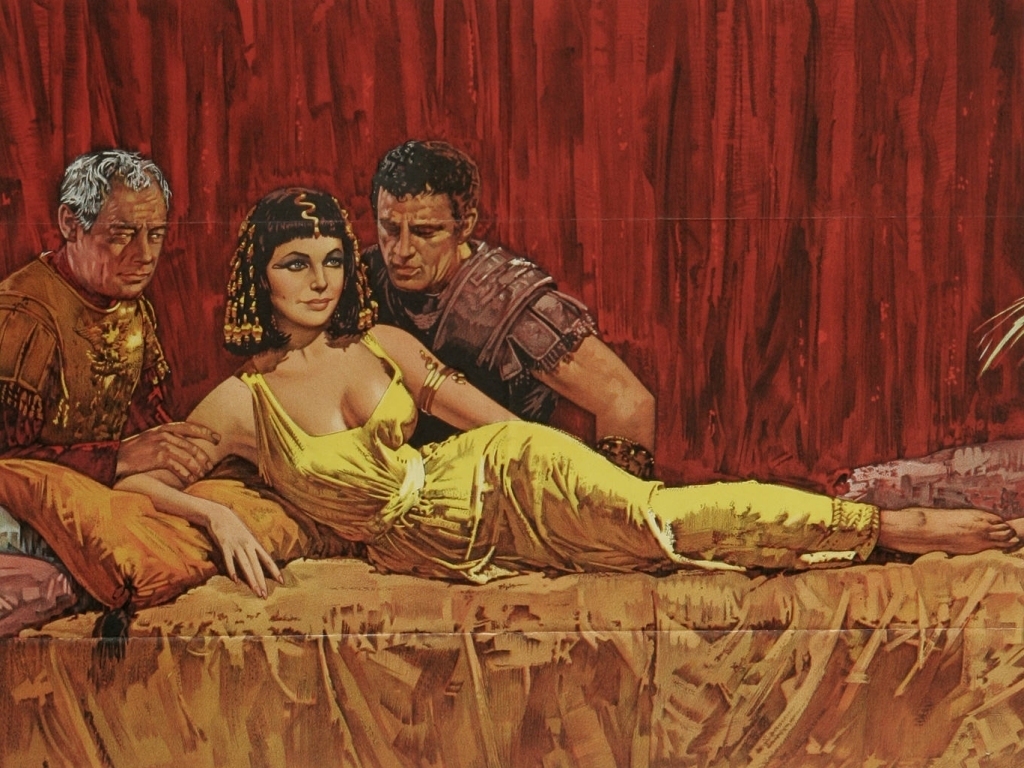
(Picture is from one of the posters for the 1963 movie Cleopatra)

Famous Name: Evelyn

16 Wednesday May 2012

Posted by A.O. in Famous Names

≈ 6 Comments

Tags

classic names, english names, famous namesakes, fictional namesakes, germanic names, Italian names, locational names, name history, name meaning, name popularity, name trends, nicknames, Norman names, Old French names, popular names, rose names, surname names, unisex names

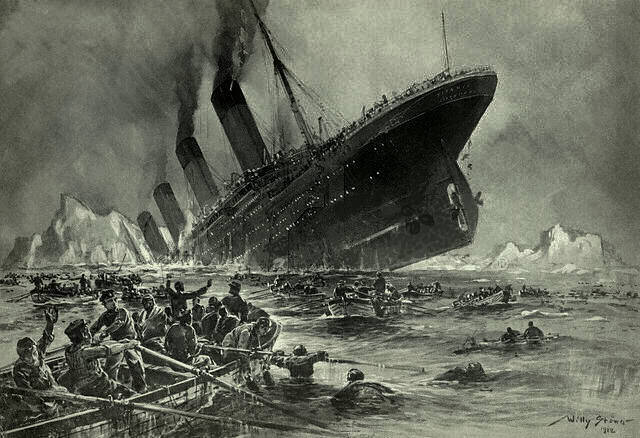
April 15 this year marked one hundred years since the sinking of the RMS Titanic. There were many exhibitions to mark the event, and James Cameron re-released his romantic film Titanic in 3-D form. As I read the many newspaper articles about  the centenary, and watched ceremonies being performed in various countries on television, I wondered whether there were any Australians aboard the ill-fated Titanic, and if so, had any of them survived?

It turned out that there were six Australians who travelled on the Titanic – four crew members, and two passengers. Crew members Donald Campbell, Alfred Nicols and Leonard White were drowned and their bodies never found, while second-class passenger Arthur McCrae also drowned, but his body was recovered and buried in Halifax, Canada. That left two survivors: third-class passenger Charles Dahl, and crew member Evelyn Marsden.

Although Charles had spent thirty years in Australia, he was born in Norway and was actually in the process of making his way back to his home country when he travelled on the Titanic (he eventually made it home and died in Norway many years later). This leaves Evelyn Marsden as the only female Australian survivor, the only surviving Australian crew member, and the only Australian-born survivor. That made me decide to choose Evelyn as my Famous Name to mark the centenary of the sinking of the RMS Titanic.

Evelyn was from country South Australia, and the daughter of a railway worker. As a young girl, she learned to row a boat on the Murray River while staying on a farm, and later trained as a nurse at Adelaide Hospital. She had previously worked on board the Titanic‘s sister-ship, the Olympic, and signed on to work as a stewardess on the Titanic on April 6 1912, aged 28. She also assisted as a nurse for the first class passengers.

During the sinking, Evelyn escaped on board Boat 16, which held about forty people. They were in the life boat all night, from about half past one in the morning until around seven in the morning, when they were picked up by the Carpathia. Evelyn’s rowing skills became necessary, because she helped row the boat, and also took care of a baby.

Shortly after the disaster, she married a doctor named Abel James who had also worked on board ocean liners, and they went to live in South Australia. Evelyn made a point of returning to the farm, and thanked them for teaching her to row. Evelyn and her husband ended up living in Bondi, Sydney, and when they both passed away in the late 1930s, they were buried in Waverley Cemetery. Their grave was unmarked until 2000.

Evelyn is an English surname derived from the female name Aveline. Aveline is the Norman French form of Germanic Avelina, a pet form of Avila. It’s not certain what Avila meant, but it’s generally thought (perhaps hopefully) that it meant “desired”, as in a child that was long hoped for. The name is possibly related to Ava.

Other theories I have heard are that the surname is derived from aveline, the Old French word for “hazelnut” (the word comes from the Italian city of Avella), or after a place in Shropshire, which the Normans are supposed to have named after a village in France, Ivelyn. In early records, the surname is found as both Ivelyn and Avelyn.

Evelyn was first given to boys in the 17th century, since Aveline was no longer in use as a woman’s name. In the 19th century it began to be bestowed on girls as well, quite possibly because Fanny Burney’s novel Evelina reminded everyone that the name had a possible feminine origin (Evelina is the Latinate form of Aveline). If you are a fan of the theory that the surname is after the hazelnut, then you may see the male name Evelyn and the female name Evelyn as having quite separate origins.

The most famous person with the surname Evelyn is probably 17th century English writer John Evelyn, best known for his diaries. He wrote on many other subjects as well, including gardening, and the Evelyn rose is named after him – a beautiful old-fashioned rose with clusters of large pinky-apricot blooms. There is currently a campaign to restore Evelyn’s own garden at Sayes Court, in east London.

Nearly everyone has heard of the male English novelist Evelyn Waugh (whose wife was famously also called Evelyn), and a famous Australian man named Evelyn is Evelyn Owen from Wollongong, who invented the Owen gun. Mr Owen was apparently known by the nickname Evo. A famous Australian woman named Evelyn was Evelyn Tazewell, a champion hockey player in South Australia for many decades. Miss Tazewell went by the nickname Taz.

Evelyn is a classic name which has never been out of the charts. It was Top 100 in the 1900s, and stayed there until the 1950s. It reached its lowest point in the 1980s, at #435, then began climbing again. Last year it joined the Top 100 for the first time since the 1940s, coming in at #67 (an impressive leap). It has never charted as a male name since Federation.

The pronunciation of Evelyn is up for discussion, because it can be said EEV-lin, EEV-uh-lin, EV-lin or EV-uh-lin. I have heard theories that EEV is the British way and EV the American way, but plenty of people in both places say it the other way around. Another theory is that EEV is the masculine pronunciation, and the girl’s name should be said with an EV. This advice sounds plausible to me, but surely rather outdated given that Evelyn hasn’t been a serious contender as a boy’s name for over 120 years?

Most people in Australia go with the EV-uh-lin pronunciation, although EV-lin gets used as well, because it’s a more “Irish” way of saying it (apparently). I must be very odd, because I naturally say EEV-uh-lin, as if the name was related to the name Eve. I don’t recommend following my (no doubt wrong) example, except that it does lead rather neatly into the popular nickname Evie. You could use Evvie for the other pronunciation, although to me that sounds as if you are saying heavy in a Cockney accent.

Classic Evelyn is very much back in fashion, and looks certain to soar. She fits right in with Ava, Eva, Eve, Evie, Eden, Eloise, Madeleine, Madison and Addison, yet has an elegant air all her own.

Popular Names for Girls

29 Sunday Apr 2012

Posted by A.O. in Name Themes and Lists

≈ 29 Comments

Tags

acronyms, Appellation Mountain, band names, Biblical names, celebrity baby names, created names, english names, Etruscan names, famous namesakes, fictional namesakes, flower names, French names, gemstone names, germanic names, Greek names, Italian names, Latin names, Linda Rosenkrantz, locational names, mythological names, name data, name history, name meaning, name popularity, name trends, Nameberry, nature names, nicknames, Norman names, popular culture, popular names, retro names, royal names, Shakespearean names, ship names, tribal names, vocabulary names

In honour of the name data being released, I thought I’d do lists of the most popular names in Australia for last year. I admit this was something of a last-minute decision, but it seemed like a good opportunity to cover some of the best-loved names.

People often ask how popular names got to be popular. I’m not sure there’s really a good answer to that – clearly people like the sound of them, and they fit in with current trends. Yet there must be many names, equally as nice-sounding and trend-friendly, that lurk around the 200s and don’t seem as if they are going anywhere much.

Although I cannot tell you what events caused these names to become popular, I can tell you some of the events which accompanied their rise. I’m definitely not trying to say that they were the cause of a name’s popularity, just that they coincide with it (and really sometimes it seems more than merely coincidental). Feel free to add other events you can think of, or any theories of your own!

Note: I’ve used data from New South Wales, but it must be broadly accurate for the rest of the nation too.

Lily

Lily seems to have begun as a pet form of Lilian, but must soon have become thought of as a flower name. The lily is sacred to the Virgin Mary, and Jesus urged his followers to “consider the lilies of the field” as a model in trusting Divine Providence. Lily has been almost continuously in the charts, only dropping out during the 1960s. It began rising in the 1980s – a decade when Princess Lily was the main female character in fantasy film Legend, and when Phil Collins and Kevin Costner welcomed daughters named Lily. A Top 100 name in the 1990s, it continued climbing, as Kate Beckinsale welcomed a daughter named Lily, while Johnny Depp named his baby girl Lily-Rose. By the early 2000s, Lily was already a Top 20 name, and during this decade, Lilly was the main character’s best friend in The Princess Diaries movie, Lily Potter was Harry’s mum in the Harry Potter movies, and pop singer Lily Allen released her first hit. Last year Lily was the most popular name for girls, once combined with the spelling Lilly. Delicate and pure, yet with several spunky namesakes, pretty Lily became a favourite.

Ruby

Ruby is named after the precious gemstone, whose name from Latin simply means “red”. Retro Ruby was popular during the 1900s, then dropped out completely during the 1960s and ’70s, despite being a popular name in songs; notably Ruby Tuesday and Ruby Don’t Take Your Love to Town. It began rising in the 1980s, as comedienne Ruby Wax barged her way onto our TV screens, and singer Rod Stewart welcomed a daughter named Ruby. The name climbed steeply during the 1990s, and turned up in more songs: Ruby Soho by Rancid, Thru’ the Eyes of Ruby, by The Smashing Pumpkins, and Ruby Wednesday by Eskimo Joe. By the early 2000s, Ruby was a Top 50 name, and by the late 2000s, it was Top 20. During this decade, the song Ruby was a hit for The Kaiser Chiefs, Renee Zellweger played Ruby in the movie Cold Mountain, and Ruby Buckton was a free spirited teen on popular soap, Home and Away. Charlotte Church, Tobey Maguire, and Harry Kewell all welcomed daughters named Ruby. Last year it was #2 for girls, once combined with the spelling Rubi. Flaunting Ruby sparkles, and is a name worth singing about.

Chloe

Chloe means “young green shoot” in Greek, and was one of the epithets of the earth goddess Demeter. From early on, it was a favoured literary name; Chloe is the heroine of the pastoral romance Daphne and Chloe, by the Ancient Greek writer Longus. The name was also considered suitable for use by the Puritans, because Chloe is an early Christian mentioned in the New Testament. Chloe first appeared on the charts in the 1970s; a decade when an arty French film, re-titled Chloe in the Afternoon, was released to English-speaking audiences. Chloe stormed up the charts and was Top 100 by the 1980s. During this decade, actress Candice Bergen and singer Olivia Newton-John both welcomed daughters named Chloe, and Chloe Jones was one of the characters in long-running soap, A Country Practice. By the 1990s it was Top 20, and Logie-winning actress Kristy Wright played the tragically troubled Chloe Richards on popular soap, Home and Away. Chloe was Top 5 by the early 2000s; it reached #1 in 2006. Fresh and spring-like, Chloe has been recommended at Appellation Mountain, and Linda Rosenkrantz from Nameberry named her daughter Chloe – some serious name-guru approval.

Mia

Mia seems to have become popularly known through actress Mia Farrow, the daughter of Australian film director John Farrow, and Irish actress Maureen O’Sullivan. Mia is short for Ms Farrow’s real name, Maria. Mia first appeared on the charts in the 1960s, after Mia Farrow began her career, but rose in popularity very gradually. An interesting link with another name on the list is that Princess Lily in Legend was played by actress Mia Sara; is it a coincidence that both names began climbing at the same time? It started making significant gains in the 1990s, a decade when Uma Thurman played Mia Wallace in Pulp Fiction. Although not yet Top 100 in the 1990s, by the early 2000s it was already Top 20. In this decade, we met Amelia “Mia” Thermopolis, heroine of The Princess Diaries movie, and Mia Toretto from The Fast and the Furious films. It was chosen as the name for their daughter by actress Bec Cartwright and tennis champion Lleyton Hewitt. Top 10 by the late 2000s, it reached #1 in 2008. Simple and cute, Mia has another Australian connection – it is an acronym for Made in Australia.

Olivia

Olivia is a name invented by William Shakespeare for a character in Twelfth Night. Olivia is a beautiful noble lady in mourning for her brother; through an amusing misunderstanding, she falls in love with a woman named Viola disguised as a man. Through another amusing misunderstanding, she marries Viola’s twin brother Sebastian by mistake, but fortunately he is so much like his sister in looks and personality that she is happy with the outcome. Famous Olivias include actress Olivia de Havilland and Olivia Arias, the widow of Beatle George Harrison. Olivia first appeared on the charts in the 1960s, just as singer Olivia Newton-John began her career, and rose steadily. Her popularity took off in the 1980s (perhaps by coincidence, the era when Ms Newton-John enjoyed her greatest success), and by the 1990s she was already a Top 20 name. During the 1990s, Denzel Washington and Lance Armstrong welcomed daughters named Olivia. In the early 2000s, Mariska Hargitay was playing Olivia Benson on Law and Order: SVU, and by 2005 Olivia had reached #1. Shakespeare had a knack with names, and this one is elegant; I picked it to be the Jessica of our time, and equally resilient.

Isabella

Isabella is a Latinate form of the name Isabel; it was a favourite amongst European royalty from the Middle Ages onwards. Isabella is a stock character in the Italian commedia dell’arte, the flirtatious and alluring female lover that men make fools of themselves over. She is named in honour of the actress, playwright and poet Isabella Andreini, who became famous in the role. Isabella has been on the charts almost continuously, although her last time in the Top 100 was in the 1900s. She dropped out completely during the 1950s, and then again in the 1970s. She made a recovery in the 1980s just as Italian actress Isabella Rosselini became internationally known, and then skyrocketed. Nicole Kidman and Tom Cruise adopted a daughter in the early 1990s and named her Isabella, and the name was comfortably Top 50 for that decade. When Stephenie Meyer’s novel Twilight was published in 2005, its heroine named Isabella “Bella” Swan, Isabella was already #7; Isabella reached #1 in 2009, the year after the Twilight film was released. Ornate and ultra-feminine, it is an Australian royal baby name, as Prince Frederik and Princess Mary of Denmark named their first daughter Isabella.

Charlotte

Charlotte is a French feminine form of Charles; a common name amongst European royalty, it was introduced to Britain in the 17th century by the Hanoverians. The Charlotte was one of the ships of the First Fleet, who reached Australia in 1788. Charlotte has been almost continuously on the charts, only disappearing in the 1950s. She began climbing gradually in the 1960s, a decade when English actress Charlotte Rampling’s film career began. The name grew steeply in the 1980s, a decade in which Charlotte “Charlie” Blackwood, played by Kelly McGillis, is the love interest to Tom Cruise’s Maverick in the movie Top Gun. It made the Top 100 by the 1990s, when actress Sigourney Weaver welcomed a daughter named Charlotte, and when the band Good Charlotte began their career. It was Top 20 in the early 2000s, while we got to know the romantically optimistic Charlotte York in Sex and the City, played by Kristin Davis; by the end of the decade it was Top 10, as as singer Charlotte Church progressed her career from classical to pop. Sophisticated yet sensible, with the option of a tomboy nickname, Charlotte has yet to make #1.

Sophie

Sophie is the French form of Sophia; the name was used in several European royal families. Sophie first entered the charts in the 1950s, and through steady growth, made the Top 100 by the 1980s. It was during this decade that William Styron’s Sophie’s Choice was made into a film; Meryl Streep won an Oscar for her performance as Zofia “Sophie” Zawistowski, the beautiful Polish immigrant with a tragic secret. The same year the film came out, Roald Dahl‘s book, The Big Friendly Giant was published; the heroine is called Sophie, named after Roald Dahl’s grand-daughter (later fashion model Sophie Dahl). During the 1990s Sophie took off, and was a Top 20 name during that decade. It was during the ’90s that the best-selling novel, Sophie’s World, was published, and actress Sophie Lee and singer-actress Sophie Monk both began their careers this decade. At the end of the 1990s, Sophie Rhys-Jones joined the British Royal Family when she married Prince Edward. Sophie was Top 10 by the early 2000s, and many are tipping sweet and simple Sophie to become the #1 name within the next few years.

Sienna

Sienna is the English name for the Italian city of Siena,in Tuscany. As a word, it refers to a type of clay used to make oil paints, and a shade of yellow-brown, after the hue of said clay. The city’s name comes from the Etruscan tribe who originally inhabited the area, the Saina, but the Romans derived it from the Latin for “old” (the same Latin root which gives us the word senile). Sienna first entered the charts in the 1980s, and climbed steeply during the ’90s. I think the name suited the aspirational nature of that era. Italy was very “big”; pizza was becoming a mainstream food, and the adults around me were guzzling Chianti and buying time-shares in Tuscan villas. British model-actress Sienna Miller is not responsible for the name’s popularity, because it had been climbing for some time, but can it be purely coincidental that it first joined the NSW Top 100 in 2002, the year after Ms Miller’s career began? From that point, its climb was so vertiginous that it was Top 10 by 2006. Smooth, modern Sienna seems certain to go higher still.

Ella

Ella is the Norman form of the Germanic name Alia, a short form of names with the element ali, meaning “other”. However, it can also be used as a short form for Eleanor, Ellen, Elizabeth or any name starting with El, and also the many names ending with -ella. It’s hard not to connect this name with jazz great, Ella Fitzgerald. Ella has been on the charts almost continuously, with her last time in the Top 100 in the 1900-10s. She was soon in rare use, although she only disappeared completely during the 1960s. She climbed slowly during the 1980s, and steeply during the 1990s. It was during the ’90s that Ella got a new singing namesake – Ella Hooper from rock band Killing Heidi. Ella was Top 20 by the early 2000s. She received several boosts around this time, for the movie Ella Enchanted was released, a re-telling of the Cinderella story. Warren Beatty, John Travolta, Mark Wahlberg and Ben Stiller all welcomed daughters named Ella, giving the name a distinct celebrity flavour. Top 5 in the second half of last decade, Ella feels as if she may have peaked, and is possibly on her way down again.

(Picture shows Princess Lily and unicorn, from Ridley Scott’s 1985 cult fantasy film Legend)

← Older posts
Newer posts →

Enter your email address to follow this blog

Categories

Archives

Recent Comments

A.O.'s avatarwaltzingmorethanmati… on Zarah Zaynab and Wolfgang…
Madelyn's avatarMadelyn on Zarah Zaynab and Wolfgang…
JD's avatardrperegrine on Can Phoebe Complete This …
A.O.'s avatarwaltzingmorethanmati… on Rua and Rhoa
redrover23's avatarredrover23 on Rua and Rhoa

Blogroll

  • Appellation Mountain
  • Baby Name Pondering
  • Babynamelover's Blog
  • British Baby Names
  • Clare's Name News
  • For Real Baby Names
  • Geek Baby Names
  • Name Candy
  • Nameberry
  • Nancy's Baby Names
  • Ren's Baby Name Blog
  • Sancta Nomina
  • Swistle: Baby Names
  • The Art of Naming
  • The Baby Name Wizard
  • The Beauty of Names
  • Tulip By Any Name

RSS Feed

  • RSS - Posts

RSS Posts

  • Celebrity Baby News: Melanie Vallejo and Matt Kingston
  • Names from the TV Show “Cleverman”
  • Can Phoebe Complete This Sibset?
  • Zarah Zaynab and Wolfgang Winter
  • Baby, How Did You Get That Name?
  • Celebrity Baby News: Media Babies
  • Celebrity Baby News: Adelaide Crows Babies
  • Celebrity Baby News: Chris and Rebecca Judd
  • Names at Work: Name News From the World of Business and Employment
  • Celebrity Baby News: Sporting Round Up

Currently Popular

  • Celebrity Baby News: Jacinta Allan and Yorick Piper
  • Celebrity Baby News: Jacinta Allan and Yorick Piper
  • Celebrity Baby News: Craig Thomson and Zoe Arnold
  • The Top 100 Names of the 1940s in New South Wales
  • Celebrity Baby News: Ed Husic and Bridget Tilley

Tags

celebrity baby names celebrity sibsets english names famous namesakes fictional namesakes honouring locational names middle names name combinations name history name meaning name popularity name trends nicknames popular names saints names sibsets surname names twin sets unisex names

Create a free website or blog at WordPress.com.

Privacy & Cookies: This site uses cookies. By continuing to use this website, you agree to their use.
To find out more, including how to control cookies, see here: Cookie Policy
  • Subscribe Subscribed
    • Waltzing More Than Matilda
    • Join 517 other subscribers
    • Already have a WordPress.com account? Log in now.
    • Waltzing More Than Matilda
    • Subscribe Subscribed
    • Sign up
    • Log in
    • Report this content
    • View site in Reader
    • Manage subscriptions
    • Collapse this bar
 

Loading Comments...