• About
  • Best Baby Names
  • Celebrity Baby Names
  • Celebrity Baby Names – Current
  • Celebrity Baby Names – Past
  • Featured Boys Names
  • Featured Girls Names
  • Featured Unisex Names
  • Links to Name Data
  • Waltzing on the Web

Waltzing More Than Matilda

~ Names with an Australian Bias of Democratic Temper

Waltzing More Than Matilda

Tag Archives: Google

A Girl’s Name from an Aboriginal Language Meaning “Star”

23 Thursday Aug 2012

Posted by A.O. in Naming Assistance

≈ 8 Comments

Tags

astronomical names, Australian Aboriginal names, dictionaries, famous namesakes, Google, Italian vocabulary words, name history, name meaning, nicknames, slang terms, Swedish slang terms

Anika has written in to the blog about a name she is considering but is unsure about. Her husband’s family is Indigenous Australian, one side being from the Wakka Wakka people of south-east Queensland. They have been told of a name Mirri Yannan meaning “falling star”, but it is from a language of northern New South Wales.

Anika adores the name Mirri, and its meaning of “star”, and would love to use it. However, when she did a search for the name, the meaning of “dog” was returned by Google. She doesn’t like the idea of her daughter thinking her name means dog, and now she’s not sure about it.

This is an issue I raised in my article about Australian Aboriginal names – there are lots of Aboriginal languages, and a word may mean something pleasant in one language, and less appealing in another. For example, Merinda can be taken from a Sydney-area language meaning “beautiful”, but in South Australia it means “leech”. This isn’t unique to Australian languages. Pippa is becoming a popular name in the English-speaking world as a short form of Phillipa, but in Swedish it is vulgar slang for “to have sexual intercourse”, while in Italian it means “masturbate, hand job”.

I read through some dictionaries and language guides in regard to the word mirri. It does mean “dog” in the Ngiyampaa and Wiradjuri languages of New South Wales. Mirri also means “face” in the Paakantyi language from New South Wales, and “sun” in the Gooniyandi language of northern Western Australia. So it has several meanings in different Australian languages.

I tracked it down in a dictionary from the Kamilaroi or Gamilaraay people from northern New South Wales. Their word for star is mirii, and mirii yanan means “shooting star” (meteor).

So I think you have a couple of options open to you. You could use Mirri or Mirii, which is said exactly the same way (I rang the very helpful Visitors Centre and asked).

If you are truly bothered by mirri meaning “dog” in another language, then mirii sounds like the solution to your dilemma, as well as being the word you were originally looking for.

I think Mirii makes an extremely pretty name for a girl, and I love its meaning of “star”. I hope you use the name, in whichever form you like best and feel most attracted to.

(Some information in the article from Macquarie Aboriginal Words, published 2006)

More About Matilda

29 Sunday Jul 2012

Posted by A.O. in Your Questions Answered

≈ 15 Comments

Tags

angel names, Australian Aboriginal names, Australian names, Biblical names, celebrity baby names, famous namesakes, fictional namesakes, germanic names, Google, Irish names, name combinations, name history, name meaning, name popularity, name trends, names of convicts, names of roses, names of ships, names of stars, names of trains, rhyming names, saints names, Shakespearean names, sibsets, US name popularity, Waltzing More Than Matilda

I love the title I chose for my blog, and as time goes by, it seems to be growing into its name even better. Although I don’t suffer from one ounce of name regret, an unintended side effect of its title is that it when people Google anything to do with the name “Matilda”, they often seem to be guided to Waltzing More Than Matilda.

They have been sent here under false pretences, because the blog isn’t dedicated to the name Matilda, or people named Matilda, or the song Waltzing Matilda. Even though Matilda is a Featured Name, in the wider scheme of things, it doesn’t rate too many mentions at all on the blog. I feel bad that so often, the information they are looking for just isn’t here.

So this is my attempt to answer as many of the Googled questions as I can about the name Matilda. They are all genuine questions, but I have added punctuation and corrected the odd typo to make things easier (it seemed fair enough as people don’t write their Google searches for publication). I’ve added information in brackets to make questions clearer, and where there were several questions asking similar things, I have amalgamated them into a generic enquiry.

I hope you enjoy learning more about Matilda; I ended up learning a great deal myself!

Matildas in the Bible/What is the Biblical significance of the name Matilda?

There aren’t any, and there is none.

Is Matilda the name of an angel?

No. Angels are always given male Hebrew names by tradition.

Is Matilda a saints name?

Yes. Saint Matilda was the wife of King Henry I of Germany, and she was therefore Queen Matilda too. She is said to have been very beautiful and virtuous, and was famous for her devotion to prayer and works of charity. Her feast day is March 14, and she is the patron saint of parents with large families, although she only had five children herself – Hedwig, Otto, Gerberga, Henry and Bruno.

Is there a character named Matilda in Shakespeare?

No.

Is there a star or constellation named Matilda?

No.

Is there a rose named Matilda?

Yes. There’s a hybrid named Rosa “Matilda” which was registered in France in 1988. It’s a hardy perennial shrub, and its scentless blooms are white with delicate pink edges.

Is Matilda an Irish or an Australian name?

Neither – it’s the Latinised form of a Germanic name, Mahthildis.

What is the Irish form of Matilda?

Maitilde. It was never a common name in Ireland though.

Why do Australians claim Matilda (as their own)? It’s not really Australian

It’s because of our national song, Waltzing Matilda. I’m sorry if it annoys you – you sound annoyed. You’re right that it’s not Australian, it’s German originally, but a German migrant to Australia helped to inspire the song.

What was Waltzing Matilda‘s first name?

As far as I know, the song’s title was always Waltzing Matilda.

Is Waltzing Matilda a train?

Not that I know of.

Did James Cook have a kid named Matilda?

No. His children were called James, Nathaniel, Elizabeth, Joseph, George and Hugh.

Were any of the convicts named Matilda?

When I searched the Australian Convict Collection at Ancestry.com.au, I got almost 2000 hits for the name “Matilda”. Some of those would be middle names, and some would be doubled-up entries, so maybe around 1000 convicts had the name Matilda.

There was also a convict ship named the Matilda; she came out in 1791 as part of the Third Fleet. However, she only carried male convicts, so there were no Matildas on the Matilda, alas.

How popular is the name Matilda in Australia?

It made #19 on the national chart for 2011.

A beautiful rocking Australian girl named Matilda?

I’m sure there’s absolutely tons of them.

Is there an Aboriginal name that’s the equivalent of Matilda?

It depends what you mean by “equivalent”. If you mean, Is there an Aboriginal girl’s name with the same meaning as Matilda?, then I don’t think so. Matilda means something like “strong in battle”, as the ancient Germanic tribes had a warrior culture. Aboriginal names tend to be inspired by nature.

However, if you mean, Is there a girl’s name of Aboriginal origin which, like Matilda, is considered to be a stereotypically Australian girl’s name?, then I would suggest that the name Talia fits that description, and Allira seems to be preparing to take its place.

Famous people named Matilda

One of the most notorious in Australia is Matilda Mary “Tilly” Devine, who was a prostitute and madam prominent in the 1920s and ’30s. The press called her “The Worst Woman in Sydney” and “The Queen of the Night”. Her colourful career continued until the late 1960s, and she died relatively well off.

Celebrity babies named Matilda

Matilda Esma Birmingham – Simon Birmingham (2011)

Matilda Thomson – Craig Thomson (2009)

Matilda Kewell – Harry Kewell and Sheree Murphy (2008)

Matilda Rose Ledger – Heath Ledger and Michelle Williams (2005)

Matilda Elizabeth Ramsay – Gordon Ramsay (2002)

In what year was Matilda a name?

Wow, that’s very specific. The name’s origins go back to the Dark Ages, but I’m not sure at which point it was Latinised as Matilda. I do know that it became an English name in 1066, as this was the name of William the Conqueror’s wife. However, her name was pronounced Maude. I think the modern-day pronunciation dates to the 18th century.

There must be a “first Matilda” – the first person with both the modern spelling and pronunciation of the name – but who she is, and what year she was born, I’m afraid I cannot say. I welcome input and suggestions from others more knowledgeable than myself.

Is Matilda too trendy?

No, I don’t think so. It’s trending downwards in Australia and the UK, and is still underused in the United States.

Will Matilda reach Top 100 in North America?

It’s been back on the US Top 1000 for only four years, and you are already worrying about it getting into the Top 100? Sheesh. It’s not even going up in popularity very quickly! If it does, it won’t be for years and years, so quit stressing already.

Is Matilda a boy or a girl name?/Matilda as a boy’s name/Any boys named Matilda?

It’s a girl’s name, and although you are free to use it on a boy, it’s an idea that doesn’t appeal to me. I’ve never heard of a boy named Matilda; they may all call themselves Matt to avoid terminal embarrassment.

What’s a good boy’s name to match with Matilda?

Angus, Banjo, Barnaby, Charlie, Darcy, Harry, Henry, Jack, Jasper, Lachlan, Liam, Sam, William

What girl names go good with Matilda?

Adelaide, Alice, Charlotte, Clementine, Harriet, Edith, Emmeline, Lucy, Poppy, Rose, Ruby, Sophie

An Aussie-style sibset for Matilda?

I think the quintessential Australian sibset is Jack, Matilda, Lachlan, and Ruby.

Names to go with the middle name Matilda?

Annabel Matilda, Caroline Matilda, Eloise Matilda, Jane Matilda, Phoebe Matilda, Violet Matilda

A boy’s name that rhymes with Matilda?

Bob the Builder? Seriously, I don’t think there is one.

Name of story about mean stupid couple who have nice smart kid called Matilda?

Matilda, by Roald Dahl. It was originally published in 1988, made into a film in 1996, and adapted as a musical in 2012.

What’s that song at the start of (the movie) Matilda where she makes stuff spin round?

Little Bitty Pretty One. It was written and originally recorded by Bobby Day; the movie features the 1957 version sung by Thurston Harris.

What are the cast of (the movie) Matilda all doing now?

The whole cast? For flip’s sake, that’s dozens of people! Go look it up at the Internet Movie Database or something.

Matilda is an awesome name

Too right it is!

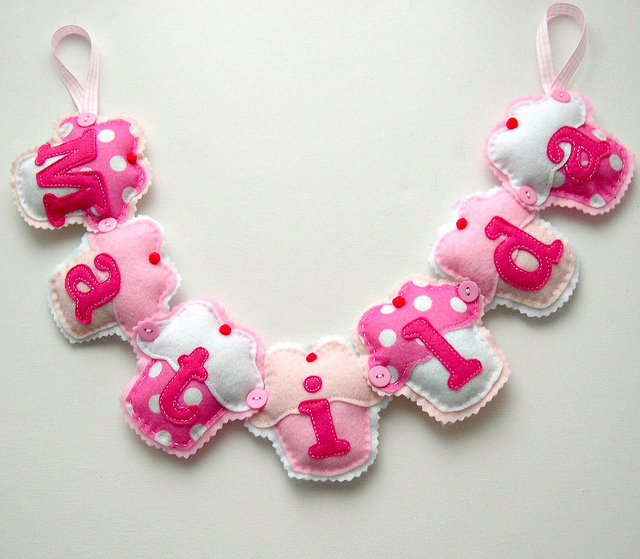
(Image from Flickr)

The Top Ten Girls Names of 2028

20 Sunday May 2012

Posted by A.O. in Your Questions Answered

≈ 9 Comments

Tags

classic names, colour names, famous namesakes, French names, future trends, Google, K.M. Sheard, Laura Wattenberg, name data, name popularity, name trends, Nook of Names, place names, popular culture, popular names, retro names, surname names, The Name Wizard, unisex names, US name trends

A couple of weeks ago as I was checking my stats, I saw that the release of all the 2011 name data had influenced someone to Google me a rather interesting question: What names will be popular in the future? Now if someone had asked me that a year ago, I would have been very much perplexed as how to answer. Even Laura Wattenberg from The Name Wizard suggests that guesswork is pretty much all we have to go on.

However, last October Kay from Nook of Names brought out her Top Ten for 2035, based on the US data. Kay’s method was simple, yet inspired – she looked at where the currently popular names were in 1985, and then found a name which is in a similar position today, in order to extrapolate them to their 2035 position. I thought I’d give her method a go, but also see check to see where each name was a decade previously to see if each name was following a similar trajectory. (I think Kay probably did this too).

I went into it very optimistically, but found it brought me a certain degree of angst, because it’s actually pretty difficult to find two names that follow the exact same path to success. However, I persevered, and found the closest possible matches available. In case you’re wondering why I hit on 2028, it’s because the New South Wales Top 100 goes back to 1995, so I went ahead 17 years from last year’s data. Of course, if you’ve just had a baby, 17 years will see it verging on adulthood – another reason it seemed like a good time period to evaluate.

Now, do I really think this is the New South Wales Top Ten for the year 2028? Well no, that’s just a sensationalist headline designed to grab your attention. Frankly I will be staggered (and slightly scared) if all these names simultaneously turn up in the Top Ten of the same year, let alone in this order! However, based on their current performance, I am tipping most of these names to increase in popularity – in some cases, to dramatically increase.

Current Top Ten

  • Chloe #22 in ’95, and #72 for the 1980s (a steady rise up the Top 100)
  • Ruby #107 for the 1990s, and #560 for the 1980s (a skyrocket from nowhere)
  • Olivia #26 in ’95, and #117 for the 1980s (a steady rise into the Top 100)
  • Isabella #34 in ’95, and #509 for the 1980s (a skyrocket from nowhere)
  • Mia #138 for the 1990s, and #320 for the 1980s (a steep rise)
  • Charlotte #87 in ’95, and #180 for the 1980s (a steady rise into the Top 100)
  • Sophie #25 in ’95, and #74 for the 1980s (a steady rise up the Top 100)
  • Sienna #402 for the 1990s, and barely in use in the 1980s (a new name, climbing exponentially)
  • Ava #466 for the 1990s, and barely in use in the 1980s (a new name, climbing exponentially)
  • Amelia #52 in ’95, and #118 for the 1980s (a steady rise into the Top 100)

FUTURE TOP TEN

1. ABIGAIL

Abigail is currently #27, and ten years ago she was #88. I thought that made her a good match with Chloe. Abigail is already a Top Ten name in the US, and although we’ve been lagging behind, by 2028 I think we’ll be well and truly caught up. I hesitated before nominating Abigail as the #1 name, but it does make sense, because of the rampant popularity of her many short forms.

2. OLIVE

Currently, Olive is probably somewhere in the 120s-130s, and a decade ago she was barely in use. That pattern doesn’t exactly match Ruby’s, but it isn’t too different either. If you’re looking for a meteoric rise to echo that of Ruby, Olive fits the bill better than any other candidate. I also like the idea of Ruby’s replacement being another vintage colour name. Even today, when Ruby is so hugely popular, there are grandparents meeting their new grand-daughter and saying, “But Ruby is an ugly old lady name!”. I predict similar reactions to all the baby Olives who will be born in the future.

3. EVA

Eva is currently #21, and a decade before she was somewhere in the 150s. Her climb has been steeper than Olivia’s, but she’s the best match I could find. That steeper climb may mean she peaks sooner than Olivia, but she’s also a classic name which has never left the charts, which I’m hoping will give her some ballast. She does almost seem like a shorter, snappier form of Olivia.

4. ISLA

Isla is currently #22, and ten years ago she was #445 for the early 2000s. This wasn’t a close enough match to please me, but no matter how I wrestled with the data, Isla was the closest equivalent, and did have a similar zoom up the charts, as well as looking like an updated Isabella. I can’t see any reason why Isla won’t continue to go higher, quite possibly to #1, and both Isabella and Isla have been chosen for royal babies. Of course, a major book and movie series with a main character called Isla wouldn’t hurt either, just for that extra buzz factor.

5. FREYA

Freya is currently around the 130s, and was #269 for the early 2000s. That’s not quite as steep a rise as Mia had, but it’s pretty darn close. Not only do Mia and Freya both have a northern European feel to them, but both are are associated with actresses as well – Mia with Mia Farrow, and Freya with Freya Stafford. I can see Freya doing very well indeed, and can easily picture her going to #1.

6. ELOISE

Eloise is currently #96, and a decade ago she was #140 for the early 2000s. I think that’s a fairly good match with Charlotte, which also went from the 100s into the lower portion of the Top 100 in ten years. Eloise seems a worthy successor to Charlotte, for both are elegant French names which manage to sound both strong and feminine. Eloise isn’t climbing as steeply as Charlotte, so we’ll have to see how far she manages to get in 17 years, but I think she will do well.

7. ZARA

In 2011, Zara was #26, and a decade ago in 2011 she was #83. This seems similar to Sophie’s steady rise from the bottom third of the Top 100 into the Top 20. Both Sophie and Zara have a French origin, with just a touch of the Middle East about them. I’m not sure whether Zara will keep climbing or if she’s peaked already and will begin a gentle decline; however, I have similar doubts about Sophie as well. If you’ve really been paying attention, you will see I could have easily swapped Abigail and Zara around, and after much deliberation, I decided Abigail seemed more likely to go to #1.

8. HAVANA

Now this is the part where my fortune-telling gets really sticky, because in 1995, Sienna was only used about 11 times per year in New South Wales. In other words, she may show up on the data now, but that’s only because of her success – in 1995 she wouldn’t have even been a blip on the radar, and in 1985, she was barely known. That means I had to come up with a name that is still little used, but feels as if it might be going somewhere. I wanted to pick a name similar to Sienna; I wanted a modern name just coming into use, and I hoped to find one that was also a place name. Quite a tall order, but eventually I decided upon Havana. Of course it’s a huge gamble picking a name so far in advance, but Havana seems like a pretty good bet. She’s similar to Heaven, Haven, Ava, Anna, Hannah, Savannah, Vanna and Ivana – in other words, she sound like a whole bunch of familiar words and names while having a very clear identity of her own. She doesn’t look out of place on this hypothetical Top Ten either, as she shares a V sound with Eva and Olive. Sienna only whizzed up the charts after Sienna Miller began her career, but in 17 years, it’s possible that a young model named Havana will be ready to take the world by storm. It could happen.

9. HARLOW

When it came to picking another Ava for the future, although I was looking for a name even rarer than Havana, I really had a much easier time of it. Ava was a name that we gained from America, so I simply went to the US Top 1000 for 1995 and saw where Ava was, then tried to find today’s equivalent. Of course, I was looking for one which was climbing like Ava, and if possible, had a similar feel to it. In 1995, Ava was #737, and ten years earlier, she wasn’t on the Top 1000, but just scraped in the year before. After much internal debate, I decided upon Harlow, which was #621 last year, and not on the Top 1000 in 2001. Although Harlow is climbing far more rapidly than Ava, she seemed the most likely candidate. Like Ava, she is a name redolant of Hollywood glamour, and she has the OH sound found in Eloise, while beginning with H like Havana. She fits on the list. At the moment, Harlow is very little used in Australia, and newspaper articles even discuss the strange unpopularity of Harlow. Like Ava, she may well fly under the radar, until one day we all wake up and suddenly realise Harlow is in the Top 100 and climbing. (Cue parental handwringing).

10. ROSE

Rose is currently #65, and she was #119 for the early 2000s. Not only does this look quite similar to Amelia’s pattern, but both these names are classic, pretty and wholesome. Rose is by no means shooting up the charts, but she is ascending in a calm and ladylike fashion, just like Amelia. Rose doesn’t have all the nickname options that Amelia does, so I’m not sure whether she will be Top 10 by 2028, but I am tipping her to continue rising.

My Tips for Coming Trends

  • OH sounds, as found in Eloise, Harlow and Rose
  • V sounds, as found in Olive, Eva and Havana
  • Short brisk names ending in -A, such as Eva, Isla, Freya and Zara (the new Mias)
  • Stronger influence from the UK than from the US, but with the US influence being far more spectacular in nature (much like today)
  • A nice balance between “old-fashioned names” like Olive and Rose, and modern inventions like Havana and Harlow (just like today).
  • Most popular girl’s names will be definitely feminine, but Harlow may show the potential for unisex names and surname names to break into the Top Ten for girls.

Boys Top Ten for 2028 will be next week!

Googly Gender-Bending: Your Questions on Unisex Names Answered

15 Sunday Apr 2012

Posted by A.O. in Your Questions Answered

≈ 20 Comments

Tags

blog reviews, classic names, famous namesakes, fictional namesakes, French names, Google, hebrew names, Hungarian names, Italian names, Japanese names, Latin names, Mer de Noms, mythological names, name meaning, name popularity, naming laws, nature names, nicknames, Nook of Names, place names, polynesian names, popular culture, surname names, unisex names

You may be expecting a blog review this week, and I hope you are not too disappointed that one isn’t appearing. The truth is, I feel quite burned out in regard to the reviews, and also think that several name blogs are currently in a state of flux. I hope that if I wait a few months, it will give new blogs a chance to catch up, and abandoned ones a chance to resume.

In the meantime, here I am starting yet another Category – this one, Your Questions Answered. I’ve noticed many interesting questions typed into Google, and although they got sent to my blog, alas, they received no answer here. So this is my chance to make good on their requests.

I thought I’d begin with a few of the many enquiries in regard to unisex names, since it is such a popular topic. I think it is worth mentioning that so far, nobody has Googled, “what is a male name I can steal for my daughter so there are no names left for parents of boys to use” or “how can I give my son a feminine name in order to scar him psychologically”, which is how some people seem to imagine the mental workings of the bestowers of unisex names.

The fact that so many people are so frequently searching suggests that far from using a unisex name in a frivolous way, a lot of thought is going into it. In turn, I’ve tried to put a lot of thought into answering them, steering a steady course between a laissez faire “anything goes” attitude, and a shrill denouncement of anyone daring to suggest that any name at all can be unisex.

In doing so, I’ve considered the origin, meaning, history, namesakes, and popularity of a name, both current and past. I’ve tended to go with the theory that surnames are unisex, unless they have a specifically gendered meaning, or are derived from specifically gendered personal names.

One thing I should make clear is that unlike some other countries, Australia has no naming laws in regard to gender. According to legislation, all names are unisex, and you are quite free to name your daughter Matthew or your son Chloe if you wish.

I’m presuming that when people ask if a name is male, female, or unisex, they are asking the community for their opinions on the subject. Of course, my opinions are just that – opinions. Feel free to leave your own opinions!

Note: Popularity of names based on Australian data.

I: BOYS TO GIRLS?

Henry as a girl’s name

At first glance, the idea of Henry as a girl’s name seems utterly potty. Henry is not only Top 100 for boys, but also a classic boy’s name which has charted for males for over a century, and been accepted as such for more than a thousand years. However, I do remember a Famous Five book where there was a female character named Henry – short for Henrietta.

My Verdict: A boy’s name, unless short for Henrietta

Luca as a girl’s name

Luca can be the Italian form of Luke, but also the Hungarian form of Lucia. In the latter case though, it is pronounced LOO-tsa, rather than LOO-ka. Luka seems to have a reasonable history of use as both a male and female name across a range of different cultures. I’d probably lean towards using Luka for a girl instead.

My Verdict: Both a boy and a girl name, but the two names are pronounced differently

Dylan as a girl’s name

Dylan was a Welsh god, so the name’s origins are masculine. Furthermore, Dylan has charted as a boy’s name since the 1960s, but never for girls. You could use the completely unrelated Irish surname Dillon though, which an English speaker would pronounce the same way anyway.

My Verdict: A boy’s name, sometimes used on girls

can Cadel be a girl’s name

It is a variant of Cadell, which for many centuries has been used and accepted as a male name. However, the explorer Francis Cadell has a few places in South Australia named after him – you could always claim Cadell as a place name. Place names based on surnames based on gendered personal names seem to be something of a grey area.

My Verdict: A boy’s name

can Myles be a girl name

In Greek legend, Myles was most definitely a man, and this name has a long history as a male name. However it’s now being used on girls – perhaps it seems like the “correct” form of Miley?

My Verdict: A boy’s name, currently being used on girls

II: GIRLS TO BOYS?

when can Hazel be a boy name?

I guess whenever you feel like using it as such. Hazel is a nature name and a surname, so seems quite unisex, and in fact does have some history as a male name. Having said that, it’s currently rising in popularity as a girl’s name, and has never charted for boys.

My Verdict: Technically unisex, but usage is almost entirely feminine

Can I call my boy Kaia

I think you can, but nobody seems to agree. Kaia seems unisex to me, but nearly everyone insists that it’s feminine. However, the name Kaya definitely is unisex, and worldwide seems to be used by more men than women. It’s used in so many different countries that it’s practically unicultural as well. I think I’d prefer to go with Kaya, although I don’t see why Kaia can’t be a variant of Kaya.

My Verdict: Your choice!

Noa as a boys name

Although Noa is a female name in Hebrew and Japanese, it’s also a Polynesian male name meaning “freedom”. There was a famous rugby league player from Fiji named Noa Nadruku, who played for Australian teams in the 1990s.

My Verdict: Both a boy and a girl name depending on origin

can Starr be a boy’s name?

Sure it can, it’s a surname as well as a place name. In fact, the surname seems to derive from a masculine first name which may mean “ox”, so if anything it’s more male than female. There’s a comic book hero called Starr the Slayer, a barbarian king. He seems pretty blokey.

My Verdict: Unisex, leaning towards male by history and meaning

is Kelly becoming popular as a boys name

Apparently not. It’s still charting as a girl’s name, although slowly declining, and has never charted as a boy’s name. I have seen some boys named Kelly though; it’s rare as a boy’s name, but not unheard of.

My Verdict: Unisex, but usage is almost entirely feminine

III: CONFUSED ON THE ISSUE

is Stacey more common as a boy or girl name

It isn’t common for either sex – currently it’s not on the charts at all. However, when it did chart, it was only as a female name.

My Verdict: Historically, much more common as a girl’s name

can a man’s name be Ashley or it that just a girls name

It can be used for both sexes. Famous Australian men named Ashley include tennis player Ashley Cooper, and swimmer Ashley Callus. It charts as both a male and female name, although as a female name it is still Top 100, and as a male name it is now in rare use. Historically it has been male for longer, but hit a higher peak of popularity as a female name.

My Verdict: Historically more common for boys, but currently more common for girls

Is Remy a boy name or a girl name

It’s based on the Latin name Remigius, so it’s usually a boy name. However, Kay from Nook of Names pointed out that it could just as easily be based on the female form Remigia. In its country of origin, France, Remy is occasionally used as a female name.

My Verdict: Most often a boy name, but can be used as a girl name

is Jade boy or girl

It’s a unisex name. Famous Australian men named Jade include soccer player Jade North and AFL player Jade Rawlings. Famous Australian women named Jade include swimmer Jade Edmistone and singer Jade McRae. Jade has charted for both sexes, but currently it’s Top 100 for girls, and in rare use for boys.

My Verdict: A name for both boys and girls, but much more common for girls

Is Darcy considered a boy or girl name

Ooh good question. Darcy charted as a unisex name from the 1900s to the 1950s, and then in the 1950s it became a male name only. Currently it generally seems to be rising as a female name and declining as a male name.

My Verdict: Originally unisex, and may be returning to that state

(Picture is of Australian androgynous model Andrej Pejic, who successfully models both male and female clothing)

More Eastertide thanks are due to the unisexily named Lou from Mer de Noms, for reblogging Boys Names of Australian Aboriginal Origin! (If you read that carefully, it’s a poem).

Those Mysterious Modern Monikers from the Bonds Baby Search

04 Wednesday Apr 2012

Posted by A.O. in Baby Contests

≈ 6 Comments

Tags

created names, Google, modern names, portmanteau names

Yesterday we had old school names, comforting and familiar. Today we have those names from our own era that are hard to pin down. They aren’t always included in baby name books. When you search for them, Google insists you must mean some other name. Baby name sites say the name might be Irish … then again, perhaps it’s Hawaiian. It might be a cross between these two names – or three completely different names. Often the answer just seems to be “modern”. But when you show them side by side, they sometimes show a remarkable similarity.

Wave of the future or flash in the pan? Only time can tell.

GIRLS

Acelyn

Adrielle

Ahrna

Ameeka

Amilea

Amoi

Arley

Arnika

Ataaliyah

Avalina

Brylee

Calleigh

Cartia

Daja

Donnicha

D’Chaeylyn

Heckayla

Helayla

Ilandea

Ileeyah

Indeaka

Indica

Jacey

Jaileigh

Jakayla

Jayneesha

Jazlyn

Jezaya

Jettika

Kaylee

Kiani

Kianna

Kristabella

Laahlee

La’Teesha

Lujayn

Makeely

Mirrah

Nimella

Oceanna

Rhianna

Santaysha

Serannah

Sevilo

Shahkeia

Shakiylah

Shandara

Sharleah

Shiola

Suvannah

Tahnee

Twyla

Uvoncka

Zailee

Zarayah


BOYS
Alyrik

Baiden

Baylin

Danyon

Deondre

Desean

Djakai

Dujah

Havarley

Jahvius

Jaren

Jahsean

Jermaine

Jettah

Juhsean

Kaivin

Kalden

Kayle

Kaylis

Kaysen

Keandre

Keontei

Khoder

Khotori

Kyan

Laiken

Lakey

Lebron

Maxx

Raice

Tarkyn

Taye

Ti

Trey

Tynuka

Zaikeb

Zarley

Zayden

Girls Names From the Top 100 of the 1900s

25 Sunday Mar 2012

Posted by A.O. in Name Themes and Lists

≈ 18 Comments

Tags

Anglo-Saxon names, Arabic names, classic names, famous namesakes, fictional namesakes, flower names, gemstone names, germanic names, Google, honouring, Italian names, K.M. Sheard, Latin names, locational names, mythological names, name data, name history, name meaning, name popularity, name trends, nature names, nicknames, Old English names, Old French names, Old Norse names, plant names, popular names, retro names, royal names, saints names, Shakespearean names, Victorian names

There have been many Googled requests for names from the 1900s, so this is my selection of ten girls names that were Top 100 in the 1900s which I think are usable today. I’ve tried to get a balance between names which are currently rising in popularity, and those which haven’t charted for many decades. All the data comes from New South Wales – the only state which has made public its data kept since Federation.

Amelia

A variant of Amalia, the Latinised form of Germanic Amala, a pet form of any name beginning with Amal-, and meaning “work”. This was one of the many names introduced to Britain by the Hanoverians; part of its easy acceptance was that it was considered a variant of the unrelated Emilia, and indeed Princess Amelia of Hanover was called Emily in everyday life. In the 1900s, Amelia was #95, and it had left the Top 100 by the following decade. It has been on the rankings almost continuously, dropping out in the 1940s and ’50s. Rejoining in the the 1960s, it grew steadily in popularity, until it was in the Top 100 by the 1990s. It’s currently stable at #10. Famous Australians named Amelia include Amelia Best, who was one of the first women elected to the Tasmanian House of Assembly, and opera singer Amelia Farrugia. Amelia was under-appreciated for many years, but is now extremely popular, with a host of nicknames such as Amy, Melia, Millie, Mia and Lia. Pretty and unpretentious, it has a ready-to-wear quality that makes it a handy choice.

Bessie

A short form of the name Elizabeth, in use since the 16th century. The name Bessie was #78 in the 1900s, and grew in popularity during the 1910s. It took a nosedive in the 1920s, left the Top 100, and hasn’t been in the rankings since the 1940s. Famous Australians named Bessie include portrait painter Bessie Davidson, who was celebrated in France in the pre-war era, and Bessie Guthrie, a designer of the 1920s who was an ardent feminist and early proponent of solar energy and ecological balance. She founded the Viking publishing house, and in later life was a crusader for the rights of abused children, before finally, in old age, being able to join a movement of feminist political protest she had waited all her life for. Bessie is such a sweet yet spunky name for a girl, and one I saw recently mentioned as having been given to a baby in 2011. I think it’s one which is ready to shed its “old lady” image and be used once more.

Edith

Based on the Old English name Eadgyð, meaning “rich war”, this was popular amongst Anglo-Saxon royalty; Saint Edith was the illegitimate daughter of King Edgar the Peaceful, and Edith of Wessex was the wife of King Edward the Confessor. Unlike many Anglo-Saxon names, it remained in use after the Norman Conquest, and didn’t fall out of favour until the 16th century. It was revived in the 19th century by the Victorians. The most famous Australian with this name was Edith Cowan, the social campaigner and first woman elected to parliament; she was part of the group which helped give women the vote in 1899 (her picture is now on the $50 note). The name Edith was #16 in the 1900s, and remained Top 100 until the 1940s, leaving the rankings in the 1970s. Very recently, it has had a revival, and is now increasing in popularity in the 500s. Strong, patriotic, and still aristocratic-sounding, it’s fast becoming a fashionable favourite. The short form Edie seems to be even more popular.

Ida

This name was introduced to England by the Normans; it may come from the Old Norse word for “work”, or be related to the Norse goddess of youth, Iðunn. Folklorist Jakob Grimm theorised that her name may come from idis, a divine female being in Germanic mythology, meaning “respected woman”. Ida died out in the Middle Ages, but was revived in the 19th century. This may have been partly inspired by Alfred, Lord Tennyson’s poem on female education, The Princess, where the heroine is named Ida. Gilbert and Sullivan parodied the poem in their operetta, Princess Ida. Tennyson probably took the name from Mount Ida; there is one in Crete and one near ancient Troy, and both were sacred to the Mother Goddess Rhea or Cybele. According to K.M. Sheard, the name is from the Greek for “woodland”. Ida was #42 in the 1900s and fell rapidly, leaving the Top 100 in the 1920s. It hasn’t been on the charts since the 1950s. Ida Standley was a pioneering schoolteacher in Central Australia. Ida is similar to popular names such as Ivy, Eva and Ava; it can also be used as a form of the Irish name Ita.

Leila

This variant of the Arabic name Layla was introduced to English-speakers by Lord Byron, who used it in his poems The Giaour and Don Juan. In Don Juan, Leila is a little Turkish girl rescued and adopted by the hero; in The Giaour, Leila is a member of a Turkish harem who falls in love with a non-Muslim, and is punished for adultery by being sent to a watery grave (vampires also get a mention). As such, it seems exotic, romantic, Gothic, and literary. Leila was barely Top 100 in the 1900s at #99, but has remained in continuous use, although very rare in the 1950s and ’60s. It’s never managed to join the Top 100 since, but has been climbing sharply since the 1990s, and is currently only just outside it in the very low 100s. Famous Leilas include Leila Hayes, who was in soap opera Sons and Daughters, and Leila Mackinnon, Channel 9 journalist. Leila fits perfectly with current related favourites Layla and Lila, and I wouldn’t be surprised if it was back in the Top 100 soon. Pronunciations vary, and as far as I’m aware, LAY-luh, LY-la and LEE-la are all considered correct.

Louisa

A Latinate feminine form of Louis, this was another name introduced to Britain in the 18th century by the Hanoverian royal family. The most famous woman named Louisa from Australian history is undoubtedly Louisa Lawson, the mother of national poet, Henry Lawson. A poet and publisher in her own right, Louisa was also a leading feminist who was called The Mother of Suffrage in New South Wales, and helped bring women in her state the vote. It is generally believed that she is the prototype for all the kind, capable, and hard-working country women who appear in Henry Lawson’s stories. Louisa manages to be a classic, remaining constantly on the charts, while being underused, for it has not been Top 100 since the 1900s, when it was #79. It’s currently around the #500 mark. You really can’t go wrong with Louisa – it’s never been in vogue, yet never been out of style either, so it doesn’t sound old-fashioned. It’s pretty and sensible, and honours one of Australia’s heroines. Nicknames can range from brisk Lou, to cutesy Lulu, and anything in between.

Maud

This is another form of Matilda. The Old Germanic Mahtild became Maheud in Old French, and Anglicised as Maud. Matilda was thus the Latin and written form of the name, while Maud was the way the name was said aloud. For example, Matilda of England, the first female ruler of the English kingdom (her reign was brief), was known as Maud in everyday life. Although the name may remind you of the word maudlin, that is actually from the name Madeline (its original pronunciation). Maud became rare at the end of the Middle Ages, but was another old name which Alfred, Lord Tennyson helped revive, due to his tragic and enigmatic love poem, Maud. Maud McCarthy was a nurse who served with distinction during the Boer War and World War I, receiving several medals. Maud was #94 in the 1900s, and slipped off the Top 100 the following decade. It hasn’t charted since the 1930s. It’s a genuine antique, and if you are determined on Maddie as a pet name, Maud would make a far more distinguished “proper name” than Madison.

Myrtle

Myrtles are graceful, fragrant flowering evergreen bushes, which in ancient times were sacred to Aphrodite or Venus, the goddess of love. Perhaps because of this, they are traditionally included in wedding bouquets; they are always used at weddings amongst the British royal family, a custom began by Queen Victoria. Myrtle has been used as a name since the 19th century, when other flower and plant names became the fashion. A famous person with this name is Myrtle White, who wrote books describing her life on a remote outback station. Myrtle was #47 in the 1900s, and had left the Top 100 by the 1930s. It hasn’t charted since the 1950s. I added Myrtle to the list, not only because we have myrtle species native to Australia, but because Baz Luhrman’s remake of The Great Gatsby will be released soon. There is a character named Myrtle in it, and this may give the name a new image than that of Moaning Myrtle from the Harry Potter books and films.

Pearl

Pearls are produced by molluscs such as oysters and mussels; they are essentially calcium carbonate or limestone in crystalline form. Ones occurring naturally in the wild are very rare, so that they are considered extremely valuable gemstones. Pearl became used as a name in the 19th century, when other gemstone names became fashionable. It probably also had religious connotations, because pearls are mentioned in the Bible, and Jesus compares the Kingdom of Heaven to “a pearl of great price”. Australia still has a significant pearling industry in Broome, Western Australia. A famous Australian with this name is Pearl Gibbs, an Aboriginal leader and activist who focused on women’s and children’s rights. Pearl was #87 in the 1900s, and left the Top 100 the following decade. It did not chart in the 1960s and ’70s, but staged a comeback in the 1980s, and has been climbing precipitously in recent years. It’s currently in the mid 200s, and this name from the sea still has plenty of lustre. It’s similar to the more popular Ruby, but seems more delicate and lady-like.

Sylvia

A variant of the Latin Silvia, meaning “of the woods”. The mother of the legendary Romulus and Remus was called Rhea Silvia (Rhea of the woods), because it was supposedly in the woods that she was seduced by the god Mars. Saint Silvia was the mother of Pope Gregory the Great, famous for her great piety; according to her portrait made during her lifetime, she was beautiful with large blue eyes. A common name in Italy, Silvia was introduced to England by Shakespeare, in his play The Two Gentlemen of Verona. Famous Australians with this name include Sylvia Harper, a tennis champion of the 1920s, and Sylvia Breamer, who was a Hollywood actress from the silent film era. Sylvia is a classic which has never left the charts. It was #58 in the 1900s, and didn’t leave the Top 100 until the 1950s. It hit its lowest point in the early 2000s, and is currently gently rising in the 500s. It’s lovely seeing this pretty name gaining in use; it almost seems like a nature name, because of its woodsy meaning and silvery bell-like sound.

(Photo used is of a bride in 1906; image is held by Culture Victoria)

Famous Names: Sebastian and Jenson

21 Wednesday Mar 2012

Posted by A.O. in Famous Names

≈ 8 Comments

Tags

Disney names, english names, fictional namesakes, Google, honouring, Latin names Greek names, locational names, Mer de Noms, name history, name meaning, name popularity, nicknames, popular names, pseudonyms, royal names, saints names, Shakespearean names, surname names, UK popularity

The Australian Grand Prix was held in Melbourne on the weekend, and before the event there was plenty of buzz in the media around German Sebastian Vettel, and British Jenson Button. These glamorous visitors from Europe always get a lot of attention, for both are handsome and charming; Vettel amusing and slightly mysterious, Button affable and quietly confident. In the end, Button opened the F1 season with a victory, winning comfortably against Vettel with a 2.2 second margin. It is his third Australian Grand Prix victory. (Picture has Vettel on the left in black).

I thought we’d take a look at the names of both these Formula One champions, because Sebastian and Jenson are Googled often to reach my blog, and so far I haven’t added any requested boys names to the Featured Names list, while I’ve been quite conscientious about adding the girls.

Sebastian is from the Latin name Sebastianus, which means “from Sebaste”. There were several places called Sebaste, because it is the Greek form of Augusta, named in honour of the Emperor Augustus. His adopted name meant “great, majestic, venerable”. There are towns in modern-day Turkey and Palestine with this name (or a version of it), still with ancient Roman ruins which can be visited.

The name became well known because of Saint Sebastian, a 3rd century Roman soldier originally from southern France. Skilled at converting people, according to legend he was shot through with arrows, yet did not die, so had to be martyred twice. He became popular in the Middle Ages because he was said to protect people from the plague, and also began to be depicted as a beautiful, semi-nude young man. (In early pictures, he looks like an ordinary bearded fully-clothed saint).

The name was popular amongst Continental royalty and nobility, and still retains a slightly upper-class image. Sebastian is Viola’s twin brother in Shakespeare’s gender-switching romantic comedy, Twelfth Night. Lord Sebastian Flyte is one of the main characters in Evelyn Waugh’s novel, Brideshead Revisited; beautiful and rather fey, the TV series and film makes it clear Sebastian is homosexual, although this is left ambiguous in the novel. Indeed, Saint Sebastian himself is considered a gay icon (for pretty flimsy reasons), and the name was a code for homosexuality; Oscar Wilde’s pseudonym was Sebastian Melmoth. So far, so androgynous.

However, the name got a watery overhaul when the name Sebastian was given to a Jamaican lobster in the Disney film, The Little Mermaid. Sebastian is a court composer, and a good friend and adviser to Ariel, the mermaid of the title. A Rastafarian who can lay down a reggae beat, he has given the name a new level of cool. The choice of his name seems like a deliberate reference to another famous composer: Johann Sebastian Bach. Incidentally, Sebastian is the lobster’s surname – his first name is Horatio (maybe after the American composer, Horatio Parker).

Sebastian first entered the charts in the 1960s and began steadily climbing, to become Top 100 by the 2000s. At #38 it still seems to be gaining in popularity – an elegant name that belongs to many people’s favourite Disney character.

Jenson is a lot more straightforward. It’s a surname which is basically a form of Johnson, being based on the name Jens, a short form of Johannes. According to Lou at Mer de Noms (rather a Jenson Button fan), the name Jenson has edged itself into the UK Top 100, and its growing popularity can be attributed almost solely to Mr Button himself. As to how he got his name, he was named after a family friend, Erling Jensen (father of F1 driver Steven Jensen). The spelling was altered so that it didn’t reference Jensen Motors, who made British sports cars until the 1970s.

It’s an attractive name, and one I think we’d be using in spades if Jenson Button was Australian. As it is, it’s one many parents are at least putting on their lists, although my personal feeling is that Jensen is slightly more popular, thanks to handsome American actor Jensen Ackles, from Supernatural. As I’ve said before, with female Jennifer become less popular, it gives male names starting with Jen- more of a chance.

When I try to decide which name I like best, Sebastian or Jenson, I find myself in private debate. If I take the side of Sebastian, it seems more sophisticated than Jenson, complex and multi-syllabled, romantic and princely. On the other hand, if I take the side of Jenson, it seems more laddish and chipper, down-to-earth and unpretentious, with oodles of cheeky British charm.

So I am content to say these are both very nice names, and I won’t force them to compete against each other in some Baby Name Grand Prix. When it comes to nicknames for them, I think of Seb and Bastian, and Jens and Sonny, respectively.

Newer posts →

Enter your email address to follow this blog

Categories

Archives

Recent Comments

A.O.'s avatarwaltzingmorethanmati… on Zarah Zaynab and Wolfgang…
Madelyn's avatarMadelyn on Zarah Zaynab and Wolfgang…
JD's avatardrperegrine on Can Phoebe Complete This …
A.O.'s avatarwaltzingmorethanmati… on Rua and Rhoa
redrover23's avatarredrover23 on Rua and Rhoa

Blogroll

  • Appellation Mountain
  • Baby Name Pondering
  • Babynamelover's Blog
  • British Baby Names
  • Clare's Name News
  • For Real Baby Names
  • Geek Baby Names
  • Name Candy
  • Nameberry
  • Nancy's Baby Names
  • Ren's Baby Name Blog
  • Sancta Nomina
  • Swistle: Baby Names
  • The Art of Naming
  • The Baby Name Wizard
  • The Beauty of Names
  • Tulip By Any Name

RSS Feed

  • RSS - Posts

RSS Posts

  • Celebrity Baby News: Melanie Vallejo and Matt Kingston
  • Names from the TV Show “Cleverman”
  • Can Phoebe Complete This Sibset?
  • Zarah Zaynab and Wolfgang Winter
  • Baby, How Did You Get That Name?
  • Celebrity Baby News: Media Babies
  • Celebrity Baby News: Adelaide Crows Babies
  • Celebrity Baby News: Chris and Rebecca Judd
  • Names at Work: Name News From the World of Business and Employment
  • Celebrity Baby News: Sporting Round Up

Currently Popular

  • Celebrity Baby News: Alisa Camplin and Oliver Warner
  • Rare Boys Names From the 1950s
  • Sad Celebrity Baby News (contents may cause distress)
  • Celebrity Baby News: Jacinta Allan and Yorick Piper
  • Celebrity Baby News: Nicki Gemmell and Andrew Sholl

Tags

celebrity baby names celebrity sibsets english names famous namesakes fictional namesakes honouring locational names middle names name combinations name history name meaning name popularity name trends nicknames popular names saints names sibsets surname names twin sets unisex names

Create a free website or blog at WordPress.com.

Privacy & Cookies: This site uses cookies. By continuing to use this website, you agree to their use.
To find out more, including how to control cookies, see here: Cookie Policy
  • Subscribe Subscribed
    • Waltzing More Than Matilda
    • Join 517 other subscribers
    • Already have a WordPress.com account? Log in now.
    • Waltzing More Than Matilda
    • Subscribe Subscribed
    • Sign up
    • Log in
    • Report this content
    • View site in Reader
    • Manage subscriptions
    • Collapse this bar
 

Loading Comments...