• About
  • Best Baby Names
  • Celebrity Baby Names
  • Celebrity Baby Names – Current
  • Celebrity Baby Names – Past
  • Featured Boys Names
  • Featured Girls Names
  • Featured Unisex Names
  • Links to Name Data
  • Waltzing on the Web

Waltzing More Than Matilda

~ Names with an Australian Bias of Democratic Temper

Waltzing More Than Matilda

Tag Archives: famous namesakes

Boys Names from International Destinations

04 Sunday Oct 2015

Posted by A.O. in Name Themes and Lists

≈ 2 Comments

Tags

animal names, Biblical names, Dutch names, english names, European name popularity, famous namesakes, honouring, Irish names, locational names, mythological names, name history, name meaning, name popularity, name trends, names from songs, names from video games, names of businesses, nicknames, saints names, Shakespearean names, slave names, superhero names, surname names, UK name popularity, unisex names, US name popularity
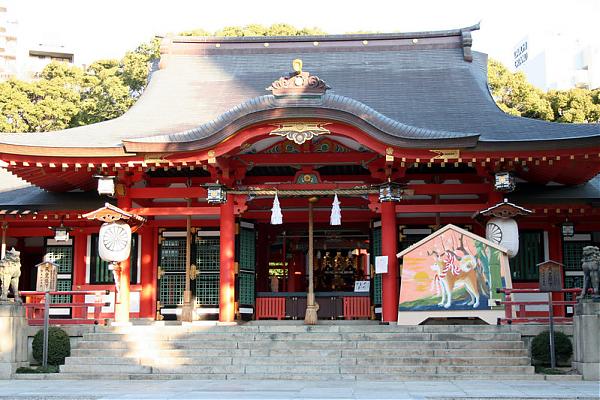
Ikuta Shrine

Arden
A region of Warwickshire in England, once thickly covered in trees and known as the Forest of Arden. It has strong Shakespearean connections, as William Shakespeare’s home town of Stratford-upon-Avon is one of the region’s main attractions. Furthermore, the Arden family were prominent in the area for centuries – they are one of the few landed families in England who can trace their lineage back to before the Norman Conquest. William Shakespeare’s mother, Mary Arden, was one of this family. Shakespeare’s comedy As You Like It is set in the Forest of Arden, a creative mixture of the real forest, a romanticised version of it, and the Ardennes Forest in central Europe. The name Arden is thought to come from the Ancient British word ardu, meaning “high land”; it has been used as a personal name since the 17th century, and had strong ties with Warwickshire. Arden is more popular for girls in the US (perhaps because of cosmetics company Elizabeth Arden), but is fairly even in the UK, and rising for both sexes. This matches my own observations in Australia, and it fits with both male and female name trends.

Boston
The capital of Massachusetts, one of the oldest and largest cities in the United States. Founded by Puritans in the 17th century, it was the scene of many of the key events in the American Revolution – perhaps most famously, the Boston Tea Party. Boston is one of the most economically powerful cities in the world, and a major educational centre, the home of top universities such as Harvard. It has been called “The Athens of America” for its contribution towards literature, art, music, and high culture in general. It is also known for its strong Irish history and culture: former President John F. Kennedy was from a Boston family of Irish Catholic heritage. The city is called after the town of Boston in Lincolnshire, whose name is said to be a contraction of “St Botolph’s town” – St Botolph was an obscure yet strangely popular Anglo-Saxon saint, and his name is believed to be an Old English one meaning “messenger wolf, herald wolf”. Also a surname, Boston has been in use since the 18th century. I saw this name more frequently after the Boston Marathon terrorist attacks in 2013, which matches the situation in the UK, although the name remained stable in the US.

Cairo
The capital of Egypt, and one of the largest cities in the world. Founded in the 10th century, it is close to several ancient sites, including the Pyramids, so that despite being a busy metropolis, it is often associated with the romance of Ancient Egypt. Cairo is a transliteration of the Arabic name for the city: al-Qāhirah, meaning “the victorious”. The reason for the name is because the planet Mars (in Arabic, Al Najm Al Qahir) was rising at the time of the city’s founding. The Egyptian name for the city is Khere-Ohe, meaning “place of combat”, referring to a battle which is supposed to have occurred here between the gods Set and Horus. Not only a strong, war-like name, Egyptian-themed names are very cool at present, and this might appeal to someone wanting a nod to African or Arabic culture. It fits very well with current trends in boys names and can be shortened to Cai.

Cuba
The largest island in the Caribbean, which was claimed for Spain by Christopher Columbus in 1492. It is an ethnically diverse nation with a tumultuous history, and has been under Communist rule since 1965. The island’s name comes from the indigenous Taino language, but the meaning is not certain: it may be from cubao, meaning “where fertile land is abundant”, or coabana, meaning “great place”. Cuba has become well known as a boy’s name due to Hollywood actor Cuba Gooding Jr. As his name tells you, Cuba was named after his father Cuba Gooding Sr, lead singer of the group The Main Ingredient. Cuba Sr’s father Dudley was from Barbados, but fled to Cuba, and met and married a woman there. After she was murdered because of their involvement in the Pan-African movement, Dudley promised her on her deathbed that he would name his first son Cuba. That is a very powerful name story for the name Cuba, and let’s face it, yours won’t be able to compete. However, Cuba has been used as a name since the 18th century, and in the US had strong ties to the African-American community: it may have originally been given as a slave name.

Denver
The capital of Colorado, and one of the largest cities in the American south-west. Set high in the Rocky Mountains, it has the distinction of being exactly one mile above sea level. The city was named after a 19th century politician, James W. Denver, in hopes of currying favour. The surname Denver is after a village in Norfolk, meaning “the passage of the Danes” in Old English – it’s a place on the River Ouse once crossed by Danish invaders. Famous people with the surname include Bob Denver from Gilligan’s Island, and singer John Denver (born Henry Deutchendorf). Denver Pyle played Jesse Duke in The Dukes of Hazzard, while a famous Australian namesake is Denver Beanland, a former Liberal politician from Queensland. The name isn’t particularly strongly tied to the city and can be seen just as easily as a surname name. In use in Australia since the 19th century, it has a reasonable history, so that it doesn’t seem too modern and trendy, despite having a fashionable letter V. Little wonder that it seems to be in quiet but steady use.

Harlem
An area of Manhattan in New York City which has been known as a major centre for African-American culture since the “Harlem Renaissance”of the 1920s. Originally a village settled by Dutch immigrants, it is named after the city of Haarlem in the Netherlands. Haarlem is the capital of North Holland, and historically the centre of the famous tulip industry. Its name probably means something like, “home on the forested dunes”, as it lies on a thin strip of land near the North Sea. It is also a surname; one example is former Norwegian prime minister Gro Harlem. I see this name fairly regularly, and that’s probably because it fits in so well with the strong trend for Har- sounds in boy’s names, such as Harvey, Harley, Harland, and so on. Not only similar to these, Harlem celebrates a place with a cool, and perhaps slightly dangerous image. The Harlem Shake memes could even be a contributing factor!

Jericho
A city in Palestine on the River Jordan. It is believed to be one of the oldest inhabited cities in the world, and the oldest walled city; archaeologists have found remains in Jericho dated to 9000 BC. Jericho features in a famous Bible story, which tells how Joshua, the general of Moses, took the city of Jericho. The Israelites marched around the city perimeter for six days with the Ark of the Covenant. On the seventh day, they marched around seven times, then the priests blew a ram’s horn and the Israelites raised a great shout. The walls of the city fell down, and the Israelites slaughtered almost all the inhabitants. There is a very rousing African-American spiritual about the incident, where the “walls came tumbling down” – an inspiration for the Thatcher era pop song. Archaeologists tell us that although Jericho’s famous walls have been brought down during various conflicts, Jericho was temporarily abandoned during the time that Joshua was supposed to have lived. Perhaps more importantly for the name, it fits in with the current fashion for names with an -o ending, and joined the US Top 1000 in 2013, as it has recently become known as one of the Teen Titan superheroes, and a common name in video games.

Kobe
A busy port in Japan, and one of the country’s largest cities. It is famous for its hot springs, which provide a tranquil retreat and have been in use since at least the 8th century, making them amongst Japan’s oldest. The city’s name is connected to its Ikuta Shrine, a Shinto shrine founded in the early 3rd century to venerate Wakahirume, the Japanese goddess of the rising sun and weaving. The city’s name is derived from kamube, an old name for the people who supported the shrine. It is also a Japanese surname, after the city. The name has been popularised by American basketballer Kobe Bryant, whose parents named him after Kobe beef, a very high quality meat from Japan, that they saw on a restaurant menu. Although the Japanese pronunciation is more like KO-BEH, English-speakers generally say it as a homophone of the name Coby, which is one of the name’s attractions. In fact, it is also a Dutch pet form of Jakob. Kobe is around the 100s in Australia, significantly more popular than in either the US or the UK, although it is a Top 50 name in Belgium.

Memphis
The largest city in the state of Tennessee. It is famous as a centre for popular music; because of this, almost a thousand songs are about Memphis, or mention it in some way, and Graceland, Elvis Presley’s famous estate, is a major tourist attraction of the city. Memphis is named after a a capital of ancient Egypt because the American city is situated on the Mississippi, just as the Egyptian one was situated on the River Nile. The Egyptian city is now in ruins, but was once a port and busy commercial centre. Memphis is the Greek transliteration of the Egyptian name Men-nefer, meaning “enduring and beautiful”, and Greek mythology personified it as a nymph named Memphis who founded the city along with her husband, a king and son of Zeus. Despite this feminine history for the name, Memphis is much more common as a male name than a female one, most likely because of Elvis. It is around the 600s for boys in Australia, more popular than in either the US or UK.

Tyrone
The largest county in Northern Ireland. Its name comes from Tir Eoghain, meaning “land of Eoghan”; according to Irish legend, Eoghan was a son of a great medieval king who claimed this land for himself. Eoghan may be derived from Eugene, and thus an Irish form of the Welsh name Owen; others say it is from the Old Irish, and means “born under the protection of the sacred yew tree”. Tyrone has been used as a personal name since the 18th century, and originated in the United States, presumably as an Irish heritage name. It later became used in Ireland too. The name was popularised by Hollywood actor Tyrone Power Jr; part of a long line of actors, the name Tyrone was traditional in his family. The original Tyrone Power, the great-great-grandfather of the Hollywood actor, was from a landed family in Ireland. Tyrone entered the charts in the 1960s at #413, and peaked in the late 2000s at #181. Currently around the 300s, it has never become popular, yet never gone out of use, pioneering, and still fitting in with, the well-worn trend for Ty- names for boys, such as Tyler and Tyson.

POLL RESULTS
People’s favourite names were Arden, Jericho and Boston, and their least favourite were Cairo, Harlem and Cuba.

(Photo of the Ikuta Shrine in Kobe, Japan by Suguri F)
Girls Names from International Destinations

27 Sunday Sep 2015

Posted by A.O. in Name Themes and Lists

≈ 2 Comments

Tags

Arabic names, car names, Celtic names, Dutch names, english names, ethnonyms, fabric names, famous namesakes, fictional namesakes, gemstone names, honouring, locational names, mythological names, name history, name meaning, name popularity, names of deserts, names of rivers, names of US states, Native American names, nicknames, Sanskrit names, Scottish names, slave names, stage names, surname names, unisex names, vocabulary names

alaska-mountains

Aberdeen
The third largest city in Scotland, often called The Energy Capital of Europe because of its North Sea oil reserves, and Scotland’s most important city economically. Another of its claims to fame is that it is the coldest city in the UK. The original name for Aberdeen was Aberdon, a Celtic name meaning “mouth of the Don” – the River Don empties into the North Sea north of Aberdeen’s original site. The river’s name may be derived from Devona, a Celtic deity whose name means “river goddess”. I saw a baby girl named Aberdeen in the newspaper, and her mother emailed me to explain that her name is in honour of Kurt Cobain, lead singer for the rock band Nirvana, who was born in Aberdeen, Washington (Aberdeen’s father is a great admirer). The American city’s name is after a salmon cannery which was named for the Scottish city, because it is also situated on a rivermouth. A rare name with a possible feminine origin which can be shortened to Abby or Deeni.

Alaska
The most northern state of the USA, separated from the continental US by Canada. First colonised by Russia, it was purchased by the United States in the 19th century, and eventually became a state in 1959. Once famous as a gold rush area and wild frontier, it is now known for its vast gas and oil reserves, and stunning natural beauty. The state’s name was adopted during the Russian colonial period, derived from an Aleut word meaning “mainland” (literally “that which the sea breaks against”). The name has become better known since the 2005 publication of John Green’s first young adult novel, Looking for Alaska, with the character of Alaska Young a beautiful but unstable teenage girl who is the hero’s love interest.

Calais
A town and major seaport in northern France and a major trading centre since the Middle Ages. It is famously located at the narrowest point of the English Channel, and a popular place to make for when swimming the Channel (or crossing by ferry). It was once a territory of England, and called “the brightest jewel in the English crown” for its rich commercial opportunities. The Romans called it Caletum, apparently in reference to the local Celtic tribespeople; it was from Calais that Caesar launched his invasion of Britain. Pronounced kal-ay, Calais sounds similar to names such as Callie and Carly while having the fashionable AY sound. Calais is also a boy’s name – in Greek mythology, Calaïs was a son of the North Wind, and one of the Argonauts. The name means “turquoise” or “chrysolithe” (another blue-green jewel), so is a rare masculine gemstone name. It is pronounced KAL-uh-ees. I’ve seen several boys in Australia named Calais, but more likely because of the car, the Holden Commodore Calais, than after the Greek hero.

Havana
The capital of Cuba, and a popular tourist destination that’s almost instantly recognisable from its colourful architecture and vintage cars. Under American occupation before the revolution, it was a playground for the middle classes, a sort of offshore Las Vegas with an exciting tinge of corruption and decadence. The city was founded by the Spanish in the early 16th century and named San Cristóbal de la Habana. Saint Christopher is the city’s patron, but the meaning of Habana isn’t certain. It may come from Habaguanex, the name of a Native American chief who controlled the region. The name has become fairly well known in Australia because of the DJ, singer, and dancer Havana Brown. Born in Melbourne to parents from Mauritius, Havana’s birth name is Angelique Meunier. The name Havana was #339 in Victoria in 2012. Pronounced huh-VAH-nuh, it fits in with the trend for names with a strong V sound, and looks like a natural successor to Ava and Harper.

Holland
A historic region of the Netherlands, sometimes informally used to refer to the country itself (Dutch people outside North and South Holland may not appreciate this, just as Scots don’t care for being told they’re from England). The name comes from the Middle Dutch holtland, meaning “wooded land”, but folk etymology connects it to the modern Dutch hol land, meaning “hollow land”, because the Netherlands is famously low-lying. Holland is also an area of Lincolnshire, similarly flat and famous for tulips, but its name comes from the Old English for “hill spur land, ridge land”. It is from this area that the English surname Holland comes, and you can see Holland as a surname name too. Both Holland Park in London and the Holland Tunnel in New York are from the Lincolnshire connection. Holland is also a fabric; this heavy linen was in the past often imported from the Netherlands. Long in use for both sexes, on a girl this name easily shortens to Holly.

India
India is named for the Indus River, one of the longest rivers of Asia, which flows from Tibet into the Arabian Sea; the Sanskrit name for the river is Sindhu, which means “body of trembling water”. Alexander the Great crossed the Indus, and the ancient Greeks called the people of present-day Pakistan and India Indoi, meaning “people of the Indus” – it’s the origin of the word for the Hindu religion as well. The Indus Valley was the birthplace for an ancient civilisation, the oldest urban culture in South Asia. In Britain, India was often given as a name in reference to the British Raj, and still has a rather upper class image in the UK. In the US, India had steady use in Indiana, but overall was more common in the south – a famous fictional namesake is India Wilkes from Gone With the Wind, the sister of Ashley. India was also given as a slave name in colonial America, perhaps because it was associated with a dark complexion. It’s always been a name which symbolises exoticism to Europeans, and is around the 200s in Australia, a natural successor to popular Indiana and sharing the nickname Indi.

Mississippi
An American state in the south, named for the Mississippi River, another inspiration for the name. The Mississippi is the chief river of North America, and one of the largest in the world, rising in Minnesota and meandering to the Gulf of Mexico. The Mississippi River Valley is one of the country’s most fertile areas, and was the focus for the steamboat era, brought to life in the works of Mark Twain. It features in songs such as Johnny Cash’s Big River, Creedence Clearwater Revival’s Proud Mary, and Charley Pride’s Roll on Mississippi. The river’s name comes from Misi-ziibi, the Objibwe or Algonquin for “great river”. Lengthy, and a spelling minefield for the unwary, this comes with two snappy nicknames: Missi and Sippi.

Odessa
A city in the Ukraine founded by Catherine the Great. It was named thus because of a belief that it was the site of an ancient Greek city called Odessos – Odessos is now thought to have been where Varna, in modern Bulgaria, is today. The name is probably pre-Greek, and its meaning and origin unknown. A free port, Odessa was a city where people of many cultures and languages mingled; its cosmopolitan nature made it a place for freethinkers to congregate, and Mark Twain predicted it would become one of the great cities of the world. The first tremors of the Russian Revolution could be felt here in 1905, after a workers’ uprising was put down with a brutal massacre. Odessa looks as if it could be related to all kinds of familiar names, and is sometimes even touted as a feminine form of Odysseus, so it feels like a “real name”. It’s right on trend and would make a great alternative to popular Olivia.

Sahara
The largest desert in Africa, and the largest hot desert of the world, the Sahara stretches right across northern Africa, often very beautiful in its shifting sandscapes. Its name is an intensifier of ṣaḥrā , the Arabic word for desert, to suggest “great desert”. The singer-songwriter Sahara Smith received her name because her father hiccuped while suggesting the name Sara, and liked the result. This is a pretty name which is so similar to names like Sara, Sarah, Zara and Zahara that its main issue is probably being confused with them.

Venice
A city in northern Italy built on a series of islands separated by a maze of canals and linked by bridges. It is seen as one of the most beautiful cities in the world and a very romantic destination, thanks to its ornate architecture and the gondolas providing transport through its waterways. A wealthy city for most of its history, it has a particularly strong connection with the arts and music, and has featured in many plays, novels, and films. The city’s name comes from the Veneti, the tribespeople who populated the area in ancient times. Etymologists believe their name comes from an ancient root meaning “strive, wish for, love” (to suggest strong kinship bonds), giving it a very attractive meaning as well. The name seems to have been used since the 16th century, although in at least some records, may have been confused with the related names Venus or Venetia. This artistic name would make a good alternative to rising Florence.

POLL RESULTS
People’s favourite names were Odessa, India and Holland, and their least favourite were Havana, Venice and Mississippi.

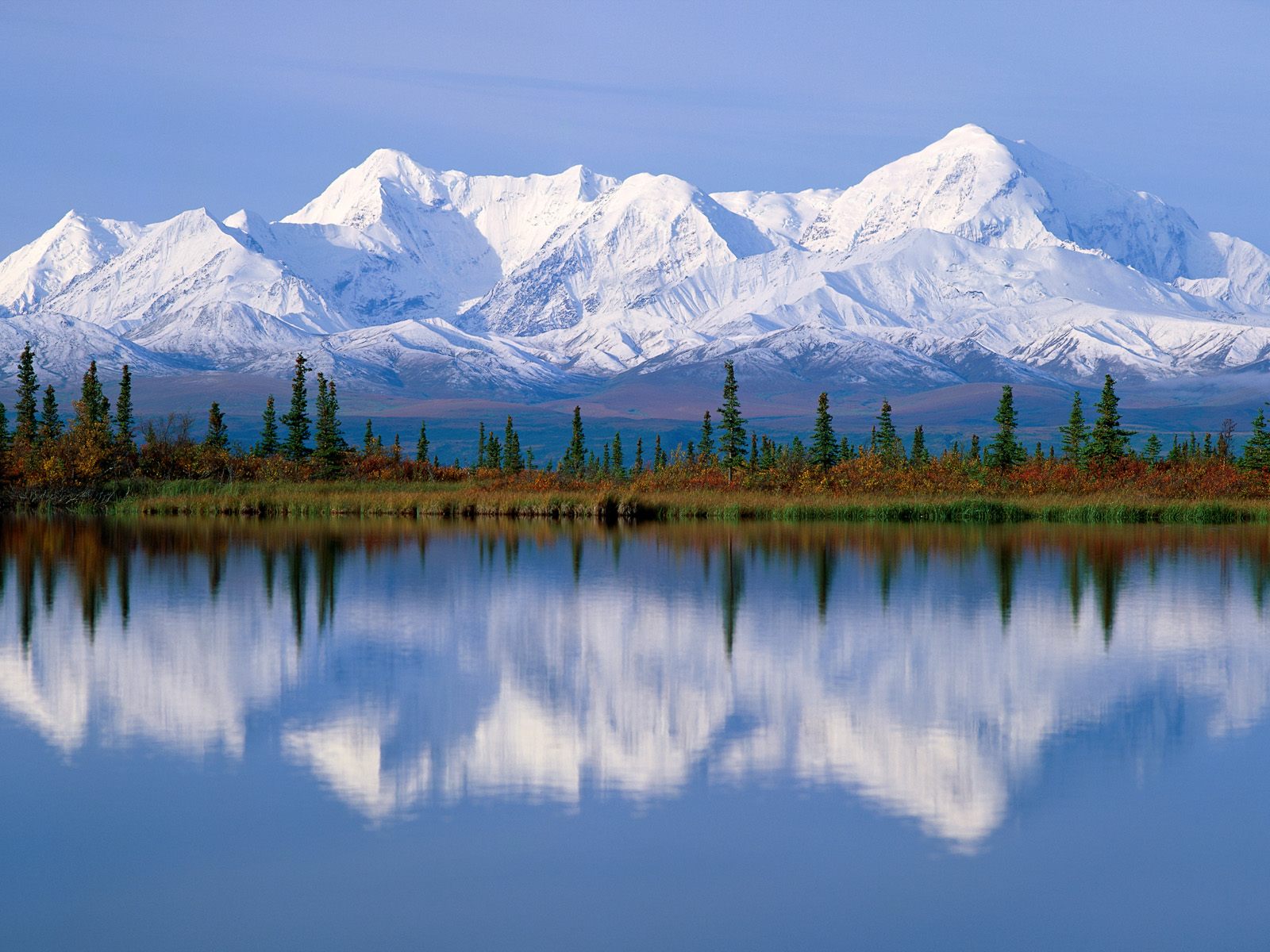
(Photo is of Denali National Park in Alaska)

Famous Name: David

23 Wednesday Sep 2015

Posted by A.O. in Famous Names

≈ 4 Comments

Tags

Biblical names, classic names, famous namesakes, hebrew names, international name popularity, mythological names, name history, name meaning, name popularity, popular names, royal names, saints names, Semitic names, US name popularity

David_Unaipon

Famous Namesake
Next week it will be the 143rd birthday of David Unaipon, who was born September 28 1872 – Unaipon is an Anglicised form of the name Ngunaitponi. David was a writer, mythologist, inventor, motivational speaker, lecturer, religious leader, and political activist; in his lifetime he was hailed as a genius. Yet he was given no schooling after the age of 13, and was often denied service because of the colour of his skin.

Born on a South Australian mission, his high intelligence was obvious even as a child. Frustrated by the scarcity of career paths open to him, and almost complete lack of educational ones, after work he would devour books on literature, science and philosophy until the early hours of the morning. He became obsessed with the idea of inventing a perpetual motion machine (a hot topic of the day), and this led to his first patented invention: an innovative design for shearing machines which is the basis for modern mechanical shears.

In all, David took out 19 provisional patents on his inventions, but could not afford to fully patent them: he made no money from his inventions, and received no credit apart from one newspaper article. His other inventions include a centrifugal motor, a multi-radial wheel, and a mechanical propulsion device. One of his ideas was a basic design for a helicopter in 1914, based on the spinning motion of a boomerang; this earned him the title of “Australia’s Leonardo”. A recognised authority on ballistics, he also had a great interest in lasers which he foresaw might one day have military applications – this was some years before Einstein’s pioneering work on lasers.

David worked as a lay preacher and missionary, but was also keen to educate white people on Indigenous mythology and culture. David compiled his versions of Aboriginal legends, influenced by his study of classical and Egyptian mythology, and written in a style reminiscent of John Milton. They were published in a series of booklets and articles, and eventually commissioned as Myths and Legends of the Australian Aboriginals in 1930: David was paid $150 for his work, but received no credit. He was the first Indigenous Australian writer to be published.

Urbane and cultured, dignified in bearing, formal of manner, and fastidious in speech, David defied the stereotypes then held about Aboriginal Australians, and confounded expectations. Even when sympathetic, the newspapers spoke of him in ways which now make us squirm.

He was not just a genius: he was a “black genius” or “Australia’s cleverest darkie”. One journalist calls him “a remarkably intelligent specimen of primitive man”, and writes that people can barely believe he is a “full blooded Aborigine”. “An outstanding representative of the primitive race”, and “remarkably able … even amongst superior whites”, it was made clear that he was an exception to every rule, and one fine shining hour for a people who were inevitably dying out.

David lived to the age of 94, packing many lifetimes into his generous span of years; he continued working on his inventions into old age, and right to the end remained determined to discover the secret of perpetual motion.

He had lobbied the government on Aboriginal rights, been the first Aboriginal person to attend a royal levee, and received a Coronation Medal. The David Unaipon Literary Award is given to an unpublished Indigenous author each year, and the David Unaipon College of Indigenous Education And Research at the University of South Australia is named after him. You may also have David in your wallet – he is on the $50 note.

An extraordinary Australian with an original mind, he was neither mute nor inglorious, yet his story is one of undeveloped potential. Howard Florey was sent to Oxford University as a Rhodes Scholar, and he changed the world: what might David Unaipon have done if given similar opportunities and advantages?

Name Information
David is derived from the Hebrew name Dawid, from the Semitic root dwd, meaning “to love”. It is usually translated as “beloved” or “my darling”. There were a number of Semitic deities with names from the same source, and it is possible the name David was originally given in honour of these gods, or came to be understood as “beloved of God”.

The name has come into common use because of the character from the Bible. In the Old Testament, David was an armour-bearer to Saul, the first king of Israel. David was a talented musician, and whenever Saul was feeling particularly wretched, David would play the lyre to him until he felt better. David was a great warrior, and Saul made him commander over his armies: eventually he became so popular that after Saul’s death David was anointed king.

A popular story from the Bible is about David’s youth. Saul’s armies were facing those of the Philistines, and their opponents sent their largest warrior to fight someone in single combat – a huge giant named Goliath (around six foot nine, or just over 2 metres tall). Everyone was afraid to take on the big boy, until David stepped forward and accepted the challenge. He brought Goliath down with a slingshot, then cut off his head using the giant’s own sword. In modern parlance, a David and Goliath battle is one where the underdog wins, and we all love a story where the “little guy” is victorious over someone more powerful.

King David is a central figure in Judaism, a symbol of Jewish kingship. According to the Hebrew canon, a descendant of King David will one day sit on the throne of Israel, heralding an era of global peace. Christianity views David as a divinely appointed king, and the ancestor of Jesus Christ. In Islam, David (Dāwūd) is revered as one of the great prophets.

David has been a popular figure in art and literature, most notably Michelangelo’s statue of him as a young man, the epitome of masculine strength and beauty. In the Bible, David is described as a handsome youth with beautiful eyes, and ruddy in colour. This has often been taken to mean David was red-haired (Jewish tradition makes David a redhead), but the word used refers to the same coppery-brown skin tone assigned to Adam. There is another connection between these two characters: Adam is the first name in the Bible, while David is the last.

David has been used as an English name since the Middle Ages; in medieval Europe, David was seen as the ideal chivalrous hero, and a model for kingship. Saint David is the patron saint of Wales, and his icons include the leek, a Welsh national symbol. A Welsh short form of his name, Taffy, was used to refer to a Welshman (often insultingly) for many years, just as a Paddy meant an Irishman. King Edward VIII went by David, which was his final middle name, given in honour of the national saint.

The name David also has a strong history in Scotland, as David I was a powerful medieval Scottish king who supported his niece, the Empress Matilda, in her claim to the English throne. A defender of the Scottish church’s independence from the English church, contemporary historians describe him as pious and just. He is regarded as a saint in Roman Catholicism.

David is a solid classic which has never left the Top 100. It was #28 in the 1900s, and peaked at #1 through most of the 1960s, making it the most popular boy’s name for that decade. Currently it is #91 nationally, #92 in New South Wales, #76 in Queensland (where it was one of the fastest rising names of last year), #98 in Tasmania, and #83 in the Australian Capital Territory.

Thanks to the fame of King David, David is a popular name around the world, including in eastern and western Europe, Scandinavia, and Latin America. It is most popular in Croatia, at #4. It is popular in all English-speaking countries, and most popular in the United States, at #18. It is still a popular name in Israel, and seems a patriotic choice as the national flag has a Star of David on it.

David is an attractive classic name with a beautiful meaning. An ancient name with a heroic royal namesake, it has never gone out of style and remains popular. Widely recognised around the world, it travels well and can work cross-culturally. A beloved name for thousands of years, it would not be surprising if this name was perfect for your darling son.

POLL RESULTS
David received a creditable approval rating of 70%. People saw the name David as a timeless classic which would never go out of style (27%), clean and wholesome (19%), and handsome or attractive (16%). However, 21% thought it was too common and boring. Only person thought David seemed too mature to give to a little boy, and just one thought it was too biblical.

(The photo of David Unaipon is the same one used for the bank note).

Famous Name: Eleanor

16 Wednesday Sep 2015

Posted by A.O. in Famous Names

≈ 3 Comments

Tags

aristocratic names, British Baby Names, classic names, created names, Eleanor Nickerson, famous namesakes, flower names, French names, germanic names, Greek names, honouring, name history, name meaning, name popularity, popular names, Provencal names, royal names, Sanskrit names, Sindarin names, UK name popularity, US name popularity

dsc04745

Famous Namesakes
Last month was the 114th birthday of author Eleanor Dark, who was born August 26 1901. Her most famous novel is The Timeless Land, published in 1941, the first in a trilogy about early European settlement. Sympathetic towards Aboriginal people and meticulously researched, the book was part of the high school curriculum for many years and is now considered an Australian classic. It even inspired the famous historian Manning Clark. It was turned into a successful TV series in 1980.

When Eleanor married Eric Dark, a widowed doctor, she asked for three things: an equal partnership, a child, and the freedom to write. Eleanor got a studio in the garden where she could write in peace, a maid to help with the housework, and emotional support and encouragement for her writing. Her other wish was granted when she and Eric had a son named Michael; they already had a son named John, from Eric’s first marriage.

Thoughtful and generous, the Darks shared progressive ideals. An active member of the Labor left, Eric wrote political books and pamphlets which attracted attention from the anti-communist Menzies government and ASIO, and the entire Dark family was probably under surveillance. Although she considered herself apolitical, Eleanor’s socialist and feminist views permeate her work, and she was a scathing critic of middle-class suburbia.

The Darks moved to Katoomba in the Blue Mountains in 1923, and enjoyed bush walking, camping, climbing, and exploring. Eleanor was one of the first gardeners to grow Australian native plants as well as exotics. In her novels, the Australian landscape is not just a backdrop but almost another character. She believed that as people change the environment, the environment also changes us, and that we are part of the country in both mind and body. In her books are some of the most beautiful and loving evocations of the bush; its scents and sounds, its silence and spirit.

After Eleanor died in 1985, her son Michael gave the Dark family home in Katoomba to the Eleanor Dark Foundation. Named Varuna after the Hindu god of the ocean, the night sky, and the underworld, the house sits on a ridge overlooking the valleys of the Blue Mountains. Varuna is now a residential retreat, where authors can find a room of their own, and uninterrupted writing time; Eleanor’s studio is still in use. It was a wonderful gift for Eleanor as an author, and now for many others too.

Name Information
Eleanor is the modern form of Éléonore, the Old French form of the Provençal name Aliénor. Eleanor of Aquitaine (born around 1122) is often identified as the first bearer of the name Aliénor, and a popular story is that her name came about because she was christened Aénor, and as her mother’s name was also Aénor, she was known as alia Aénor, meaning “the other Aénor”. This suggestion was labelled “ridiculous” by a French scholar in the 17th century, but is still going strong.

There were earlier women with similar names – Eleanor of Aquitaine’s own great-grandmother is listed as Aleanor. However, the records for these early Eleanors post-date Eleanor of Aquitaine, so their names could have been conveniently translated into Eleanor (or Alienor or Aleanor) by later writers.

Eleanor of Aquitaine’s great-grandmother’s name seems to have been more like Adenorde, sometimes written as Ainor. It would be a reasonable assumption that Aénor was a variant of this name, and Aliénor was too. The origin of Adenorde is obscure, but looks to be Germanic.

Eleanor “Elea” Nickerson from British Baby Names suggests it could be from the Germanic name element adal, meaning “noble”, or from ald, meaning “old, mature, grown up”. The norde looks like the Germanic for “north. Another of Eleanor Nickerson’s suggestions is that it could be related to those Germanic names starting with aud-, meaning “wealth, riches”.

Another popular theory is that Eleanor is a Provençal form of Helen, Ellen, or Elena – also of ancient and obscure origin. Helen is usually said to be from the Greek for “light, bright”, although it may be ultimately from Sanskrit and mean “running, swift” (quite suitable for a runaway bride like Helen of Troy!). The reason for the Eleanor = Helen idea is probably because Eleanor of Aquitaine had her name Latinised as Helienordis. At the very least it is possible that the name Eleanor was influenced by the various Helen names, becoming fused (or confused?).

At least everyone agrees that Eleanor of Aquitaine popularised the name Eleanor. One of the wealthiest and most influential women of the Middle Ages, Eleanor was Duchess of Aquitaine in her own right, making her such an eligible bride that she was snapped up by both Louis VII and Henry II, so she became a queen of France, then of England. She was the mother of Richard the Lionheart and King John, and one of her daughters was named after her – Eleanor who became queen of Castile, and was a similarly powerful figure.

Eleanor of Aquitaine was clever, charming, sophisticated, and high-spirited, and contemporary sources all agree that she was very beautiful. She survived into her eighties, and outlived both husbands and most of her children. She was perhaps more woman than most medieval men could handle, and she was let go by her first husband, and imprisoned for years by her second.

The name Eleanor became common amongst both French and English royalty and nobility. King John named one of his daughters Eleanor after his mother, and French noblewoman Eleanor of Provence married Henry III, becoming the mother of Edward I. Edward married Eleanor of Castile, who was named after her great-grandmother, the daughter of Eleanor of Aquitaine. In turn, Edward I named his eldest daughter Eleanor, and her daughter was given the name Eleanor; Edward II also named a daughter Eleanor after Eleanor of Aquitaine.

Eleanor is a classic name which has never left the charts. It was #98 in the 1900s, and reached its lowest point in the 1960s at #454. It climbed steadily until the 1990s, after which it levelled off for many years, remaining stable in the 100s. Eleanor joined the Top 100 for the first time since the 1900s last year, climbing 31 places to reach #84, the second-highest rise in rank after Ariana. It is #82 in New South Wales, where it was one of the fastest-rising names for the year, #77 in Queensland, where it was one of the fastest-rising names, #54 in Tasmania, and #45 in the Australian Capital Territory.

Eleanor also joined the US Top 100 last year, and is #78 there. It was popular in the US from the end of the 19th century until World War II, and peaked in 1920 at #25. Long-serving First Lady Eleanor Roosevelt gave it a lot of publicity; her first name was Anna, but she went by her middle name. Eleanor was popular in the UK from the middle of the 19th century until the 1930s, and returned to the Top 100 in the 1980s. It peaked at #18 in 1999, and is currently #60 in England/Wales.

Up until this year, I would have said that Eleanor was a perfect, classic, underused choice. It was too perfect and classic to remain underused forever, as it has now become a Top 100 name. You can understand why, as it has both strength and elegance, a marvellous royal namesake, and the option of nicknames such as Elle, Ella, Ellie, Elea, Nell, Nellie, and Nora.

Spelling variants such as Elinor and Ellanore are not unusual; the name Elanor is from The Lord of the Rings and means “sun star” in the invented Sindarin language – in Tolkien’s universe, an elanor was a small yellow pimpernel-like flower, and the name was given to Sam Gamgee’s golden-haired daughter. In Australia, Eleanor is usually said EL-uh-nawr, similar to the American pronunciation, although you will sometimes hear a British pronunciation here, which is more like EL-en-uh.

POLL RESULTS
Eleanor received an outstanding approval rating of 91%, making it the highest-rated Famous Name for girls in 2015, and the highest-rated Famous Name overall. People saw the name Eleanor as elegant and refined (28%), dignified and intellectual (23%), and beautiful or attractive (17%). However 5% thought it was too popular. Only one person thought Eleanor seemed snobbish or elitist, and likewise just one was bothered by the number of spellings and pronunciations.

(Photo of the Blue Mountains near Varuna from Hook to Book by Christine Bell; Christine gives a wonderful insight into what life is like as a writer at Varuna).

Famous Name: Howard

10 Thursday Sep 2015

Posted by A.O. in Famous Names

≈ 2 Comments

Tags

aristocratic surnames, dated names, english names, famous namesakes, fictional namesakes, germanic names, name history, name meaning, name popularity, names from films, names from television, nicknames, Old English names, Old Norse names, saints names, surname names, UK name popularity, US name popularity, vintage names

62-tvrrevbbc

Famous Namesakes
On September 24 it will be the 117th birthday of Howard Florey, the Australian scientist who was part of the team which developed penicillin for medical use. Although it was Sir Alexander Fleming who discovered the antibiotic properties of penicillin in 1928, it was Howard Florey and his research team who actually made penicillin into an effective medication.

While Professor of Pathology at Oxford, Howard and his team treated their first patient with penicillin in 1941. A police constable named Albert Alexander had been accidentally scratched with a rose thorn in his mouth, and was now suffering from severe infection, to such an extent that one of his eyes had to be removed. Within a day of receiving penicillin Albert began to recover, but due to the difficulties of making enough penicillin to continue treating him, he relapsed and died.

Let’s just take a moment to think about that. When did you ever hear of someone you knew who died from a scratch from a rose thorn? That was what the world was like before antibiotics – simple things like cuts, abrasions, and burns could kill you in prolonged, painful, and particularly nasty ways. If you somehow survived, you might be left chronically ill, crippled, or missing an eye or a limb.

It was too late to save Albert Alexander, but he hadn’t died in vain. Howard interested pharmaceutical companies in the United States in mass-producing quantities of penicillin, and the first patient was successfully treated for septicemia in 1942. By the end of World War II, penicillin had made a significant difference in saving the lives of wounded Allied forces, and Australia was the first country to make penicillin available for civilian use after the war.

In 1944 Howard was made a Knight Bachelor, and in 1945 shared the Nobel Prize for Physiology and Medicine with his fellow researcher Sir Ernst Chain, and with Sir Alexander Fleming. That same year he received the Lister Medal for contributions to surgical science, and in 1948 the US awarded him the Medal of Merit. Elected to the Royal Society in 1941, he became its president in 1958. In 1962 he became provost of Queen’s College at Oxford, and the college’s residential Florey Building was named in his honour.

In 1965 he was appointed a life peer, and became Baron Florey, as well as being appointed a Member of the Order of Merit. From that year until his death three years later, he was Chancellor of the Australian National University, and after he died he was given a memorial service at Westminster Abbey. The one thing that his discoveries didn’t bring him was money – he never patented penicillin, being advised that it would be unethical.

The discoveries of Howard Florey, along with Alexander Fleming and Ernst Chain, are estimated to have saved more than 82 million lives. Long-serving Australian Prime Minister Sir Robert Menzies said: In terms of world well-being, Florey was the most important man ever born in Australia.

I have particular reason to be grateful to Howard Florey, as one of that club with 82 million members. When I was a child, I contracted a serious lung infection, and only just pulled through, even with the assistance of modern antibiotics. Without them, I would have been toast. So if you enjoy reading this blog, give thanks to Howard Florey! It couldn’t exist without him.

Name Information
The English surname Howard could be derived from Huard or Heward: related to the name Hugh, it combines the Germanic elements hug, meaning “mind, heart, spirit” and hard, meaning “brave, tough”. It could thus be translated as “brave heart”. Another possibility is that it is from Haward, an English form of the Old Norse Hávarðr, meaning “high guardian, chief guardian”. The surname Howard is first found in Norfolk.

The Howards are an aristocratic family which have been in the English Peerage since the 15th century, and remain the Premier Dukes of the Realm. The Howard family holds the Dukedom of Norfolk, as well as numerous earldoms and baronies. They hold the title of Earl Marshal, the highest hereditary position in the United Kingdom outside the Royal Family, responsible for organising coronations, state funerals, and the State Opening of Parliament.

The family’s founder was John Howard, 1st Duke of Norfolk: on his father’s side he was descended from King John, and on his mother’s from King Edward I. John Howard was the great-grandfather of two English queens: Anne Boleyn and Catherine Howard, both married to King Henry VIII. Queen Elizabeth I was the first English monarch to be descended from John Howard, and Queen Elizabeth II the first British monarch to be one of his descendants.

After the English Reformation, many of the Howards remained in the Catholic faith, and they are still the highest profile Catholic family in England. Philip Howard, 20th Earl of Arundel, has been canonised as a saint and martyr: he was imprisoned for ten years by his second cousin Queen Elizabeth I, and died in the Tower of London. Philip’s grandson William Howard, 1st Viscount Stafford, was falsely implicated in a fictitious conspiracy to assassinate King Charles II, and executed: he has been beatified as a Catholic martyr.

The Howards dubiously claim descent from Hereward the Wake, a semi-legendary hero who led a resistance against the Normans after the Conquest. Hereward is an Old English name meaning “guardian of the army”. A possibly dodgy old pedigree says the Howards are descended from the Howarth family of Yorkshire – this surname means either “homestead on the hill” or “homestead with hawthorn hedges”. Howard has been used as a boy’s name since at least the 16th century, most likely due to the aristocratic family.

Famous namesakes include Howard Carter, the British archaeologist who discovered Tutankhamen’s tomb; classic film director Howard Hawks; and eccentric tycoon Howard Hughes. Fictional Howards tends to be dads (such as Howard Cunningham on Happy Days, Howard “Ward” Cleaver from Leave it to Beaver, and Howard Stark, the father of Iron Man superhero Tony Stark), or offbeat (like Howard the Duck, Howard Wolowitz from The Big Bang Theory, and Howard Moon from The Mighty Boosh).

In Australia, Howard was #122 in the 1900s, and peaked in the 1940s at #101; it hasn’t charted since the 1980s. In the UK, Howard was in the Top 100 from the late 19th century until the 1920s, but never got very high; in 2013 there were 16 babies named Howard born in England/Wales. The name has been much more popular in the United States: it was in the Top 100 from the late 19th century to 1958, peaked during World War I at #25, and has only been off the Top 1000 once, in 2013; it returned last year and is currently #986.

Howard is a dated name, although it has never been popular and might more properly be described as vintage. It sounds sturdy and dependable, has a good meaning, and can be shortened to either Howie or Ward. An issue in Australia is that it’s strongly associated with former conservative Prime Minister John Howard, whose term was from 1996 to 2007, often called the Howard Years or Howard Era; it may not be pure coincidence that the name disappeared from the charts in the 1980s when John Howard was Federal Treasurer.

POLL RESULTS
Howard received an approval rating of 51%. 18% of people thought the name Howard was too dated, while 16% were put off the name by former prime minister John Howard. However, 14% saw it as old-fashioned yet charming.

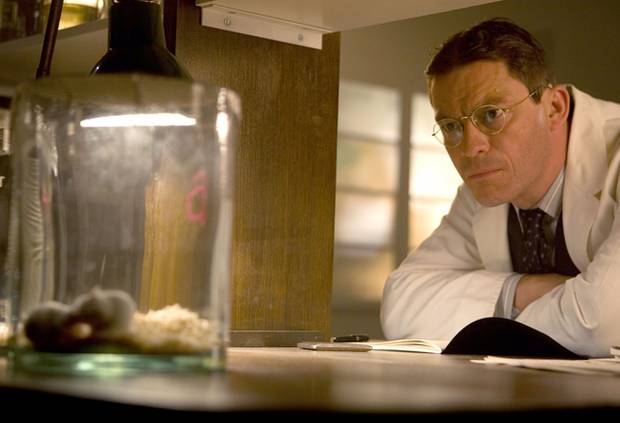
(Picture shows a scene from the 2009 film Breaking the Mould, with Dominic West as Howard Florey)

Waltzing With … Lachlan

06 Sunday Sep 2015

Posted by A.O. in Waltzing with ...

≈ 4 Comments

Tags

aristocratic names, celebrity baby names, classic names, famous namesakes, Gaelic names, name history, name meaning, New Zealand name popularity, nicknames, patriotic names, popular names, Scottish names, UK name popularity, US name popularity

2010-australia-post-booklet-governor-lachlan-macquarie-stamp-packs-and-booklets-a3440-1500x700

Famous Namesakes
The name Lachlan has a long history in Australia because of Lachlan Macquarie, a British military officer born in the Hebrides who served as the fifth and last Governor of New South Wales. While still a teenager, he served during the American War of Independence, and saw active service in India and Egypt, eventually being promoted to the rank of Major-General.

Lachlan served his term as Governor from 1810-1821, and he had plenty to cope with, as the colony was disorderly following the Rum Rebellion against the former Governor, William Bligh. There was also a severe drought during his term, which brought about a financial depression, and the end of the Napoleonic Wars in 1815 led to a huge increase in Australia’s population from both settlers and convicts. Despite these challenges, Lachlan loved Sydney’s climate and setting, and saw the colony in very positive terms.

This was the period of Australia’s history where it was in transition from a penal colony to a free settlement. Lachlan held liberal views towards convicts, pardoning them as often as possible. He scandalised settlers by accepting freed convicts into society, and appointing them to government positions – even as magistrates. He sponsored massive exploration, and established Bathurst, the first inland city.

He spent lavishly on public works, which the British government strongly opposed, as they still saw Australia as a dumping ground for convicts, to be run as cheaply as possible. Sydney’s layout is based on Lachlan’s street plan for the central city, and the colony’s most prestigious buildings were on Macquarie Street. He designed the Georgian-style Rum Hospital, which today is the state’s Parliament House, while its stables house the Sydney Conservatorium of Music. He also designed the city centre of Hobart in Tasmania.

So much of the modern Australia we know was first begun by Governor Macquarie. He established the British system of justice, and the first Supreme Court. He encouraged the creation of the colony’s first bank, The Bank of New South Wales (now Westpac), and produced Australia’s first official currency. Towards the end of his term, he decreed that all traffic should keep to the left in New South Wales in line with British custom.

Perhaps the most important change he made was a symbolic one – he recommended that the name Australia be formally adopted, giving the seal of approval to Matthew Flinders’ choice. Little wonder that on Lachlan Macquarie’s tomb on the Island of Mull in Scotland he is called The Father of Australia.

Happy Father’s Day! And Happy Father’s Day to Lachlan Macquarie, the father of our country.

Name Information
Lachlan is a Scottish name from the Highlands. It is from the Gaelic Lochlann, meaning “land of the lochs” (land of the lakes). It was originally given as a nickname for someone from Norway: Norway has almost half a million freshwater lakes, so it well deserves this epithet. The name is pronounced LOK-lun.

The word Lochlann was first used to indicate “a Viking, a raider”, but gradually came to mean anyone of Norse descent. There was a strong link between the neighbouring lands of Norway and Scotland during the Middle Ages, as both battled for control of the Western Isles of Scotland. As part of the effort to improve the Scotland-Norway relationship, there were diplomatic missions between the two nations, and even intermarriage between the royal houses.

The name Lachlan (or Lochlann) was commonly used amongst the noble families of Scotland, who were often of part Norse descent. The name was traditional in the Clan Maclean, an old Highland clan who owned land in Argyllshire and the Hebrides. (Lachlan Macquarie’s mother was the daughter of the chieftain of the Clan Maclaine, another spelling of Mclean, and his father was the chieftain’s cousin). The current chief of Clan Maclean is Sir Lachlan Maclean of Duart and Morven, 12th Baronet of Nova Scotia.

The name Lachlan is only popular in Australia and New Zealand (it is #27 in New Zealand). In the UK Lachlan was #546 in 2013, while Lochlan was #709; the name is fairly stable there. In the US, the name Lachlan first joined the Top 1000 in 2013, and is currently #902 – a long way off being popular, but gaining in popularity. In the US, the name was given to 14 girls last year, which seems very wrong from an Australian viewpoint!

The name Lachlan was #173 in the 1900s, and went off the charts altogether during the 1920s and ’30s. It returned in the 1940s at #220, and gradually increased in popularity. There was a surge in popularity during the 1970s, most likely because media magnate Rupert Murdoch named his eldest son Lachlan in 1971. Rupert’s grandfather was from Scotland, and the choice of Lachlan’s name may have been inspired by his Scottish heritage as much as a tribute to Lachlan Macquarie.

Lachlan first joined the Top 100 in 1982 at #96, joined the Top 50 in 1989, and the Top 25 in 1996 – fairly brisk progress up the charts. It suddenly leapt into the Top 5 in 1997, the year after Lachlan Murdoch joined the board of Newscorp. However, it never made #1, peaking at #2 in 2002 and 2005, and has now left the Top 10. Currently it #11 nationally, #15 in New South Wales, #10 in Victoria, #12 in Queensland, #7 in South Australia, #12 in Western Australia, #6 in Tasmania, #8 in the Northern Territory, and #4 in the Australian Capital Territory.

This is a strong handsome Australian classic with a connection to Australian colonial history. A popular name for many years, it is by no means fresh or original, but still a worthy choice.

POLL RESULT
Lachlan received an outstanding approval rating of 91%, making it one of the highest-rated names of 2015. 39% of people loved the name Lachlan, and only one person hated it.

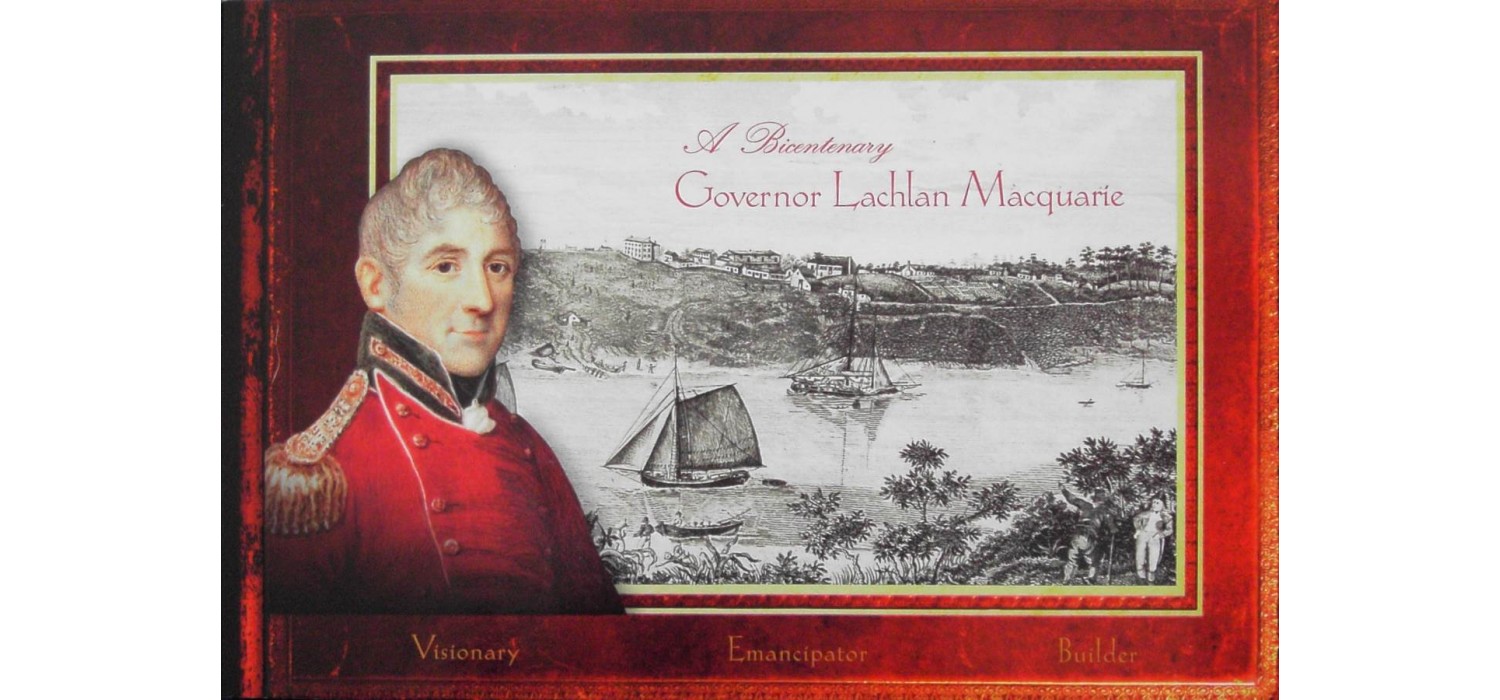
(Picture shows a 2010 stamp booklet issued in honour of Lachlan Macquarie’s bicentenary as governor)

Famous Name: Ceridwen

02 Wednesday Sep 2015

Posted by A.O. in Famous Names

≈ 1 Comment

Tags

Arthurian names, famous namesakes, fictional namesakes, mythological names, name history, name meaning, nicknames, rare names, Welsh names

194057-97833464-59ad-11e4-bb41-d2d878d2a380

Famous Namesake
Author Ceridwen Dovey was born in South Africa, raised both there and Australia, and was educated at Harvard University, doing postgraduate work at New York University. Living in Sydney, Ceridwen says Australia feels like home, but South Africa remains part of her, and she has ties to the United States as well.

Ceridwen’s book Only the Animals was published last year, has just come out in the UK, and will be released in the US later this month. It’s very unusual, with the souls of ten animals who have died in human conflicts telling their own stories. Each beast also pays tribute to a particular writer who has written about animals, from Henry Lawson to Virginia Woolf to Ted Hughes, and these can be playful as well as moving (imagine a mussell’s journey to Pearl Harbour in the style of Jack Kerouac, for example).

Only the Animals has been shortlisted for numerous awards, and won the Steele Rudd Award for a short story collection at the 2014 Queensland Literary Awards. It’s a beautiful, wise book which really gets under your skin and remains with you, long after you turn the last page. Hopefully it will be appreciated overseas as well.

Name Information
In Welsh legend, Ceridwen was an enchantress. According to a medieval tale, Ceridwen had a son named Morfran who was hideously ugly, and she sought to make him wise since he was never going to coast along on his looks.

She mixed up a magical potion in her cauldron which would give the gift of wisdom and poetic inspiration, and a long drawn-out process it was. The potion had to be boiled for a year and a day, and she outsourced the workload, having the fire tended by a blind man while a young boy named Gwion kept stirring it. Only the first three drops of the potion would confer wisdom: all the rest was deadly poison.

Three drops of the hot potion spilled onto Gwion’s hand as he stirred, and instinctively he put his thumb in his mouth to cool the burning. As soon as he did, he gained all the wisdom and knowledge that had been meant for Morfran. The first piece of knowledge he gained was that he’d better scram as Ceridwen was going to be peeved beyond belief. Correct! She was furious.

Gwion turned himself into a hare so he could run fast, but Ceridwen became a greyhound and ran even faster. He jumped into a river to swim away as a fish, but she transformed into an otter. When he turned into a bird to fly away, as quick as thought she was an eagle chasing after him.

Finally he turned himself into a grain of wheat. I know what you’re thinking: all the wisdom in the world, and the best he can come up with is wheat? I mean, come on, at least turn invisible or something. For some reason, Ceridwen turned herself into a chicken and ate the wheat. Not sure why she had to be a chicken to eat wheat; probably showing off.

When Ceridwen became pregnant, she knew it was that crafty little Gwion growing inside her. (I know wheat doesn’t go into your uterus when you eat it; you have to throw all rational thought out the window, because magic). Ceridwen planned to kill the baby as soon it was born, but he was so beautiful that she just couldn’t do it. Due to her wonderful nurturing instincts, she chucked him into the ocean instead, wrapped in a bag.

The bag washed up on shore, and a prince who was fishing caught him instead of a salmon, and took him home. He knew the kid was something special, because he recited poetry all the way back to the castle. He named him Taliesin, and Taliesin became the greatest of the Welsh bards, and later the chief bard at King Arthur’s court.

Ceridwen never bothered making another potion for Morfran, but if you’ve been worried about him all this time, don’t be. He became one of King Arthur’s warriors, had a beautiful white horse, and survived Arthur’s final battle because he was so hideous that people thought he must be a demon, and ran away in panic.

The oldest known version of the name is Cyrridven, translated as “crooked woman”, because cyrrid means “crooked, bent, hooked”, and ben or ven means “woman, female”. A popular theory is that the name is a corruption of cerdd, meaning “poetry, music”, and gwyn, meaning “white, blessed”, to be understood as “sacred poetry”. I find this etymology too convenient to modern sensibilities to be convincing.

In many ancient traditions, travelling in a crooked or winding path is considered a powerfully magical thing to do (think of labyrinths, for example), so “crooked woman” might be understood as meaning “woman of magic power” – spot on for an enchantress.

Ceridwen is a very magical figure, and her story has several ties to mythology. The thumb sucking leading to great, yet unlooked for, wisdom, reminds us of the Irish hero Finn McCool, who sucked hot oil off his thumb while cooking the Salmon of Knowledge. Is it just coincidence that the prince caught Taliesin while fishing instead of a salmon?

Another is the magical duel, where two sorcerers turn themselves into a succession of creatures until one takes a form the other cannot defeat. There is a faint echo of shamanism here, and it might remind you of the Irish legend of Fintan the Wise, who was able to turn himself into a salmon in order to escape the Great Flood. Another connection to salmon and wisdom!

Ceridwen really appealed to people’s imaginations, and she became seen as not just an enchantress but a goddess of poetry and wisdom. The Victorians identified her as an early pagan goddess, and in modern Paganism she is a goddess of rebirth, knowledge, and inspiration. This is a meaningful modern mythology for Ceridwen, although Welsh scholars tend to get a bit sniffy about it as a 19th century invention.

While the character was known in medieval literature, the name was not used in everyday life, and the form Ceridwen dates to the 16th century. Ceridwen has only been in use since the 19th century revival of old British names, and originated in Wales.

The name Ceridwen features is the novel How Green Was My Valley; Ceridwen is the narrator’s sister. The book is set in the Victorian era, and it is barely possible that a Welsh girl of that time would be called Ceridwen, as it was just coming into use. The author Ceridwen Dovey is named after the literary character.

Ceridwen is in sporadic use as a baby name in the UK, and in 2013 less than three babies were given the name Ceridwen. In the US last year, less than five babies were named Ceridwen.

Ceridwen is a genuine but rare name, and something of a contradiction, as it has medieval origins but is essentially modern – something which causes no end of trouble for the Renaissance Fair crowd, or at least the bodies which approve their names.

To me it seems like a “cool mum” name, which sounds wild and artistic on someone of around my generation, but is hard for me to imagine on a new baby. Perhaps it’s because it fits in so well with the name trends of the 1960s and ’70s, as it sounds rather like a cross between Kerry and Bronwen.

However, this is a name from Welsh legend which will appeal to those wanting a strong, unusual girl’s name which is magical and imaginative. The pronunciation is ker-ID-wen, but English-speakers may prefer KER-id-wen, which gives the obvious nickname Ceri.

POLL RESULTS
Ceridwen received a very good approval rating of 70%. 18% of people thought the pronunciation of Ceridwen was too much of an issue, but 17% saw it as wild and magical, 15% as powerful yet feminine, and a further 15% as a great Welsh heritage choice.

(Photo of Ceridwen Dovey from The Australian)

German Names For Boys

30 Sunday Aug 2015

Posted by A.O. in Name Themes and Lists

≈ 3 Comments

Tags

Ancient Germanic names, animal names, aristocratic names, Biblical names, birth notices, European name popularity, famous namesakes, fictional namesakes, German name popularity, German names, Greek names, hebrew names, imperial names, Latin names, name history, name meaning, name popularity, names from songs, nature names, rare names, Roman names, royal names, saints names

Wolf_Howling

Andreas
Latinised form of the Greek form of Andrew, meaning “manly”. Saint Andreas of Alexandria was an early martyr. The name has been used in Germany since the Middle Ages; a famous medieval namesake is Andreas Osiander, a Lutheran mystic and theologian, while a contemporary one is the German opera singer Andreas Scholl. The name Andreas was used in Britain too, although probably the name was still pronounced the same way as Andrew in everyday life. There is an Old English poem called Andreas about Saint Andrew, which turns him into an Old English warrior, battling the forces of evil. Another English literary connection is the 12th century author Andreas Capellanus (Andrew the Chaplain), who wrote a satirical treatise on the courtly love. Just outside the Top 100 in Germany, Andreas is a popular name in Austria and Scandinavia. It’s not often seen here, perhaps because of fears it will be be confused with its feminine counterpart, Andrea. Pronounced something like ahn-DRAY-ahs in Germany, this German classic seems like a fresh update to flagging Andrew, and has recently had some publicity from the disaster movie San Andreas.

Anton
The equivalent of Antony, used throughout Europe since the Middle Ages, and a traditional name amongst European nobility and royalty. Famous namesakes include the Austrian composer Anton Bruckner, and Russian writer Anton Chekhov. A famous Australian namesake is SBS journalist and anchorman Anton Enus, who was born in South Africa. Antons in fiction tend to be baddies, which isn’t a help to the name’s image. One exception is the American children’s book Summer of My German Soldier, where Anton is an escaped German POW who befriends a little Jewish girl. Anton is a popular name in Germany, and around the 400s here. A suave multicultural choice – and even the many villainous Antons in fiction give it a bit of an edge.

Florian
From from the Roman name Florianus, derived from Florus, which is from the Latin for “flower”. Florianus, or Florian, was one of the Roman emperors, and the noble von Blumenthal family from Brandenburg claimed descent from him via an imaginative legend whereby his sons fled to northern Germany, and taught everyone how to make wine. Saint Florian was a Roman soldier whose duties included organising fire brigades; he was martyred by drowning in a river which is now in Austria, and he is a favourite saint in central Europe. Saint Florian is the patron of Poland, and the city of Linz in Austria, and in Austria and Germany, Florian is used as a call sign for fire engines and stations. With such imperial, noble, saintly, patriotic, and rather butch firefighting associations, it’s little wonder Florian is a common name in Germany, and still on the Top 100. It’s rare here, but the rise of Florence in some ways gives it more familiarity, and I have seen an Australian baby named Florian. It seems hip and elegant.

Johannes
Latin form of Ioannes, the Greek form of the Hebrew name Yochanan, which in English is John. Famous German namesakes are seriously heavy duty achievers. Johannes Gutenberg, who introduced the printing press to 15th century Europe – it began a cultural revolution which changed the world and is largely responsible for most of us being able to read. Astronomer Johannes Kepler, a key figure in the 17th century scientific revolution whose works provided the foundations for the theory of gravitational force. Johannes Brahms, one of the great composers of the 19th century, honoured in the German hall of fame. A famous Australian namesakes is former Queensland premier Sir Johannes “Joh” Bjelke-Petersen, husband to Florence, and a force in conservative politics; he was of Danish descent. Popular in central Europe and Scandinavia, Johannes is #56 in Germany. It doesn’t chart here, but I do see it sometimes in birth notices. In Germany it’s pronounced yo-HAHN-nes, while here it may be pronounced in order to give the nickname Joe. A strong, handsome, intelligent classic.

Justus
Latin name meaning “just”. A Christian named Jesus Justus is mentioned by St Paul in the New Testament, while Joseph Justus is a disciple of Christ considered as a possibility to become an Apostle to replace Judas – he is venerated as St Justus of Eleutheropolis. There are quite a number of saints named Justus, including a Pope and an Archbishop of Canterbury. One of the most influential is a legendary one named Justus of Beauvais, who was beheaded as a child and went for a stroll holding his head: one of those fashionable saintly miracles which sent you straight to the top of the medieval pops for some reason. A famous German namesake is Justus Perthes, an 18th century publisher who founded the Almanach de Gotha, a directory of European royalty and nobility. An Australian namesake is Justus Jorgensen, who founded an artist’s colony in Melbourne called Montsalvat which is still open. Justus is #99 in Germany, and is on the US Top 1000. It seems like a solid alternative to the English virtue name Justice, although pronounced quite differently in Germany.

Karsten
German form of Christian. It is more common as a surname than a first name in Germany, and is rare here as well, but I do see it occasionally in birth notices, and one of the athletes we sent to the 2012 Olympics was named Karsten. That makes it seem unusual but normal, and it’s very much like familiar names such as Carson and Carter.

Klaus
Short form of Nikolaus, a German form of Nicholas. The patron saint of Switzerland is Saint Nicholas of Flüe, affectionately known as Brother Klaus. There are many famous German people with this name, including Klaus Neumann, Luftwaffe flying ace, artist and musician Klaus Voormann, who designed album covers for bands like The Beatles, Klaus Badelt, who composed the film score to the 2003 version of Ned Kelly, singer Klaus Meine from The Scorpions, and actor Klaus Kinski, father to Natassja Kinski. There are famous fictional characters with this name too, such as teen bookworm Klaus Bauldelaire from A Series of Unfortunate Events, vampire-werewolf hybrid Klaus Mikaelson from The Vampire Diaries, and Olympian athlete-cum-goldfish Klaus Heissler from American Dad. Slightly dated in Germany, this charming name is very rare in English-speaking countries, probably because it reminds people of Santa Claus. Klaus is said to rhyme with house though.

Otto
Modern form of the ancient Germanic name Audo or Odo, originally short forms of names beginning with aud-, meaning “wealth, riches, fortune”. A name in common use by German royalty and nobility, there have been four Holy Roman Emperors named Otto. Otto I, or Otto the Great, was the son of Saint Matilda, and married an English princess. Otto IV was the son of Matilda of England, the daughter of Henry II. Two famous writers had dads named Otto: Anne Frank and Sylvia Plath. The name might also remind you of statesman Otto von Bismarck or film director Otto Preminger. In fiction, Otto has often been used as a comedic or joke name, but “Big Otto” Delaney from Sons of Anarchy is an example of it being both serious and powerful. Currently #320 in Germany, Otto is popular in Scandinavia and gaining popularity in both the US and UK. It’s around the 200s here, and seems hip and rather quirky.

Rudolf
Modern form of the ancient Germanic name Hrodulf, translated as “famous wolf”. It was commonly used by German royalty and nobility, and Rudolf II was a Holy Roman Emperor. Although not generally considered a successful ruler, his patronage of the arts made him a key player in the Renaissance, while his interest in the occult and alchemy helped bring about the scientific revolution – there would be no chemists without alchemists! A famous namesake of modern times is the great ballet dancer Rudolf Nureyev, who partnered Margot Fonteyn. Another is the Austrian philosopher Rudolf Steiner, who sought to find a system of thought which would be both scientific and spiritual in nature. Anthony Hope’s novel, The Prisoner of Zenda, is about two men named Rudolf – one a European king, the other his distant cousin visiting from England who must impersonate him. Despite all these interesting Rudolfs, the name is rarely used here as it reminds people of the Christmas song, Rudolph the Red Nosed Reindeer. Rather a shame, as this name is strong and rather charismatic. I do know someone named Rudolf who has never been bothered by the song though.

Wolf
Short form of names such as Wolfgang (“wolf path) and Wolfram (“wolf raven”), sometimes used as an independent name. A famous Australian namesake is Wolf Blass, a German immigrant who founded the famous winery in South Australia; his name was short for Wolfgang. The word wolf is the same in English and German (although pronounced differently), and you can also see this as a vocabulary name referring to the animal. Humans have always been fascinated by wolves, and in various mythologies they can be symbols of both danger (such as in the fairy tale Red Riding Hood) and nurturing (like the wolf mother who suckled the twins Romulus and Remus). A common thread in many legends from around the world is that of humans descended from wolves, or humans in wolf form, including werewolves. The power of the wolf makes this an attractive name, and it’s right on trend along with other animal names.

POLL RESULTS
People’s favourite names were Otto, Wolf and Anton, and their least favourite were Justus, Johannes and Rudolf.

German Names for Girls

23 Sunday Aug 2015

Posted by A.O. in Name Themes and Lists

≈ 9 Comments

Tags

Arabic names, aristocratic names, celebrity baby names, famous namesakes, fictional namesakes, German name popularity, German names, germanic names, honouring, international name trends, name history, name meaning, name popularity, name trends, names from fairy tales, names of boats, nicknames, pet names, royal names, saints names, screen names, stage names, vintage names

tumblr_loe3tdMJXq1qj5qvfo1_500

Germans have lived in Australia since the beginning of European settlement in 1788, and at least 73 of the convicts were German. Many more came to Australia as free settlers during the 19th century, often fleeing revolution or increased militarism in their homeland. By 1900, Germans were the fourth largest ethnic group in Australia, behind English, Irish, and Scots. Today almost a million Australians classify themselves as having German ancestry, about 4.5% of the population. That’s only a little less than the number of Australians with Italian ancestry, yet it is far more common to see Italian names in birth notices than German ones. Two world wars didn’t help, and neither does the clunkiness of some traditional German names, which are out of date in their country of origin. Yet here clunky is beginning to be cool again, and there are many cute and spunky German short forms that are right on trend.

Amalia
Latinised form of the name Amala, a short form of names beginning with the German element amal, meaning “vigour, courage”, with connotations of hard work and fertility. It is thus an older or more obviously German variant of Amelia. The name was traditional among German aristocracy and royalty, and is still used by modern European royals: Prince Felix of Luxembourg had a daughter named Princess Amalia last year. Although a popular name in Continental Europe since the Middle Ages, Amalia only became commonly used in Britain in the 18th century once Amelia had been introduced by the Hanoverian rulers. Amalia is around the 300s and seems to be gaining more use; it’s not only an alternative to popular Amelia, but is boosted by the trend for names such as Mahli and Mahlia. Rising in the US, Amalia is only just outside the Top 100 in Germany, and feels as if it is going places. It’s said the same way in Germany as here: ah-MAH-lee-uh.

Anneliese
Combination of the names Anna and Liese, a short form of Elisabeth. It’s been in use since the 18th century in Germany, and came into common use in the English-speaking world in the 20th century. A famous Australian namesake is the model Anneliese Seubert, who was born in Germany and moved here as a child; Anneliese has been a celebrity mum on the blog. Anneliese doesn’t chart in Australia, with parents preferring Annalise, which is around the 300s – the same spelling as the Australian model Annalise Braakensiek. The name has numerous spelling variants, including the name of the famous wartime diarist Annelies “Anne” Frank. This name is very pretty, and would be a good alternative to popular names like Anna and Annabelle, while also suitable for honouring an Anne and an Elizabeth at the same time. Germans say this name ah-na-LEE-zuh, but Australians may prefer AN-uh-lees or AN-uh-leez.

Gretel
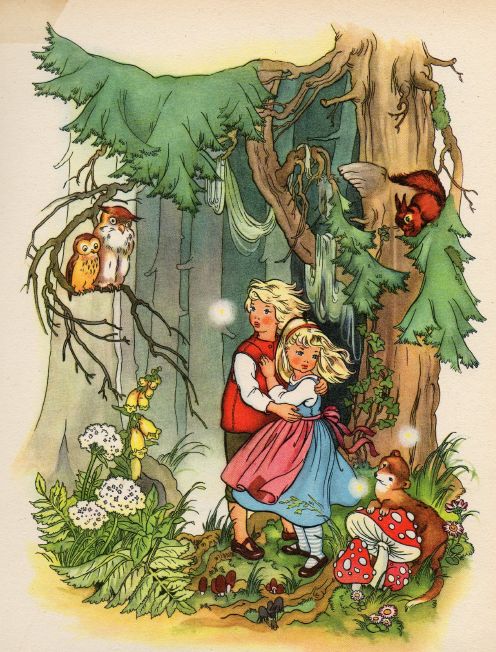
Pet form of Grete, short for Margarete, a German form of Margaret. It’s probably best known from the Grimm’s fairy tale Hansel and Gretel. In the story, Hansel and Gretel are brother and sister whose impoverished father and stepmother abandon them in the woods. The hungry children are caught by a witch once they start nibbling her yummy-looking gingerbread house, and Gretel rescues her brother from being eaten with cleverness and courage. There’s been a recent reboot in the horror movie Hansel & Gretel: Witch Hunters, with Gemma Arteron as Gretel. A famous Australian namesake is heiress Gretel Packer, the sister of James Packer; Gretel is named after her grandmother, wife of media mogul Sir Frank Packer (Sir Frank entered yachts named Gretel in the America’s Cup in his wife’s honour). Another namesake is television presenter Gretel Killeen, who writes children’s books. Gretel seems like a cute yet sophisticated choice.

Leni
Short form of Helene or Magdalena. A famous namesake is the pioneering German film director Helene “Leni” Riefenstahl who made propaganda films for the Nazis during the 1930s. German supermodel Heidi Klum has a young daughter named Helene, who is called Leni. Leni is a popular name in Germany, and around the 300s here. It’s very much on trend, fitting in with cute short names like Evie, and L names like Layla. English-speakers tend to pronounce the name LAY-nee, which isn’t too different to how Germans say it: Laney and Lainey are variant spellings. It can be used as a nickname for names such as Eleni and Elena. Some parents pronounce it LEN-ee, and treat it as a feminine form of the male name Lenny.

Lulu
Pet form of Luise, the German form of Louise. It’s also an Arabic name meaning “pearls”, which may be written Lu’lu and is sometimes given as a nickname. Lulu is the main character in two plays by German playwright Frank Wedekind often combined into one called Lulu; they inspired the silent film Pandora’s Box with Louise Brooks as Lulu, the opera Lulu by Alban Berg, and was made into a film again in Germany in the 1960s. In the stories, Lulu is a prostitute and femme fatale. Lulu is often chosen as a stage name, such as the Scottish singer Lulu (born Marie Lawrie), or a nickname, such as Australian china painter Lucie “Lulu” Shorter. However, singer-songwriter Lulu Simon, daughter of Paul Simon, has Lulu as her full name. Lulu is around the 200s here – a cute, sexy, hip little name that gives Lola a run for its money. Can be used as a nickname for any name with a LU sound in it, from Lucinda to Eloise.

Mitzi
Pet form of Maria. Famous namesakes include Hollywood star Mitzi Gaynor (born Francesca Gerber), and child star Mitzi Green (born Elizabeth Keno), who was in the 1932 version of Little Orphan Annie. A famous Australian namesake is teenage actress Mitzi Ruhlmann from Home and Away and Dance Academy. Although in Germany Mitzi is more popular for cats and dogs than humans, itsy-bitsy Mitzi is a bright vintage charmer that will appeal to those wanting something a little different while still fitting in with current trends.

Ottilie
Modern form of the ancient Germanic name Odilia. This is often said to be a feminine form of Otto, but may actually be from the Germanic odal, meaning “fatherland”. There is a medieval Saint Odilia (one of those long-suffering young girl saints who are given a disturbingly hard time by their horrible fathers), and Ottilie was a traditional name among the German aristocracy during the Middle Ages. The name has been something of a favourite in fiction, being chosen by the authors Goethe, Truman Capote, John Wyndham, and Robert Louis Stevenson – in all these works, the woman named Ottilie is an object of desire in some way. You can say Ottilie in various ways, but OT-uh-lee and o-TILL-ee are probably the most common in Australia, and Tilly is a favoured nickname here. The German pronunciation is more like o-TEE-lee-uh.

Thea
Short form of Dorothea or Theodora. Famous German namesakes include Thea von Harbou, who wrote the screenplay for the silent film classic Metropolis, and Thea Rasche, Germany’s first female aerobatics pilot. Famous Australian namesakes include author Thea Astley, and artist Althea “Thea” Proctor, both distinguished in their respective fields. You might also know of Thea Slatyer, a retired footballer who played for the Matildas, and Dame Thea Muldoon, wife of New Zealand prime minister Sir Robert Muldoon. Simple yet substantial, Thea is gaining in popularity around the world. Just outside the Top 100 in Germany, Thea is popular in Scandinavia and New Zealand, and rising sharply elsewhere in the English-speaking world. It has been boosted here by a celebrity baby, daughter of model Kelly Landry. Usually said THEE-uh in Australia, but the German pronunciation is TEE-uh.

Wilhelmina
Feminine form of Wilhelm, the German equivalent of William. In the form Wilhelmine this was a traditional name amongst German royalty. A famous Australian namesake is Wilhelmina “Mina” Wylie, one of Australia’s first two female swimmers in the Olympics; she won silver in 1912, and received 115 swimming champion titles in all. Another is Wilhelmina “Mina” Rawson, who wrote books on cooking and household management, and was also the first swimming teacher in central Queensland. A great name for swimmers! For many years this name has been seen as too clunky, but popular Willow helps make it seem a lot more usable. Dignified yet quirky, Wilhelmina has a host of adorable nicknames, including Billie, Willa, Mina, Minnie, and Minka. This is a favourite name of Ebony from Babynameobsessed, and as she is a teenage name enthusiast, it bodes well for Wilhelmina’s future.

Zella
Short form of Marcella, a feminine form of the name Marcus. There are several famous musical namesakes from America: singer-songwriter Zella Day, country singer Zella Lehr, and gospel singer Zella Jackson Price. In the late 19th century, Zella fitted in with other names from that era, such as Zelda and Zelie; today it sounds like Zoe + Ella, or perhaps Zahli + Stella. A vintage name which now blends in seamlessly with current trends.

POLL RESULTS
People’s favourite names were Thea, Ottilie and Anneliese, and their least favourite were Gretel, Lulu and Mitzi.

(Picture shows an illustration from Hansel and Gretel by Felicitas Kuhn-Klapschy)

Famous Names: Bowie and Pluto

20 Thursday Aug 2015

Posted by A.O. in Famous Names

≈ 2 Comments

Tags

astronomical names, Disney names, dog names, english names, famous namesakes, Gaelic names, Greek names, historical records, Irish names, middle names, mythological names, name trends, names of weapons, nicknames, rare names, Scottish names, slave names, stage names, surname names, UK name popularity, unisex names, US name popularity

get-ready-for-david-bowie-to-take-over-melbourne-1432194284

Names in the News
On July 14 this year NASA’s New Horizons space probe made its closest encounter with the dwarf planet Pluto. Australia was the first place on Earth to receive images of Pluto from New Horizons, at the CSIRO’s Canberra Deep Space Communication Complex at Tidbinbilla. The CDSCC has been tracking New Horizons since it was launched in 2006, and it will take more than a year to receive all the data.

Two days later, the David Bowie Is touring exhibition opened at Melbourne’s Australian Centre for the Moving Image, and broke all records for ticket sales before anyone stepped inside the doors. First staged at the Victoria and Albert Museum in London, it has already been seen by more than 1 million people around the world. The show includes costumes, video, photographs, and items from Bowie’s own collection, including notes and sketches.

David Bowie has a special significance in Melbourne. His first Australian tour was in 1978, and the biggest concert of his career to that point was at the Melbourne Cricket Ground. People queued for three weeks to buy tickets, and the fact that it poured with rain did nothing to dampen the spirits of 40 000 fans. His experiences in Australia in the 1970s inspired the music video for Let’s Dance, filmed in Sydney and outback Carinda).

Besides having key Australian events at around the same time, there isn’t an obvious connection between Bowie and Pluto. Except that Bowie has had so many references to space in his music – Space Oddity, Ashes to Ashes, Ziggy Stardust, Moonage Daydream, The Stars (Are Out Tonight), Life on Mars?, Star Man – that it doesn’t seem too much of a stretch to cover these names together.

BOWIE
Scottish surname derived from the Gaelic nickname Buidhe, meaning “yellow”, to denote someone blond or fair haired. It has also been used to Anglicise the Irish surname Ó Buadhaigh, meaning “son of Buadhach”, with Buadhach meaning “victorious”, although more commonly that’s Anglicised to Boyce. In rare cases it may be a variant of the English surname Bye, from the Old English for “bend”, referring to someone who lived on a river bend.

The Bowie surname originates from Kintyre in western Scotland, and the Bowie family were early colonists to America, with John Bowie Snr one of the founders of Maryland in the early 18th century. He was the grandfather of James “Jim” Bowie, who played a prominent role during the Texas Revolution, and died at the Battle of the Alamo in 1836.

The thick heavy blade known as a Bowie knife is named after Jim, who carried a hunting knife with him and had a reputation as a skilled knife fighter. His brother Rezin Bowie is supposed to have been the creator of the Bowie knife, although Bowie family history relates that it was Rezin’s blacksmith who created the knife.

David Bowie was born David Jones, and first performed as Davie Jones, which risked being confused with Davy Jones from The Monkees. He chose his stage name after seeing the movie The Alamo in 1963, with Richard Widmark as Jim Bowie; allegedly he wanted a name with a “cutting” feel to it, like Mick Jagger’s, and the Bowie knife gave it some edge. He deliberately chose the name of a famous American, as American music and culture had first inspired him.

Bowie has been used as a personal name since the 18th century, and originated in Scotland. Mostly used as a middle name, it was first given as a family name, but in 19th century America increasingly given to honour Jim Bowie: it was particularly found in the southern states. The name Bowie has been given to both sexes, but mostly to boys.

Jagger, Lennon, and Hendrix are reasonably common names, but even with the fame of David Bowie, the name Bowie is in rare use. It doesn’t chart in Australia, while in the UK there has been a smattering of Bowies on the charts since 2003; in 2013 there were 5 baby boys named Bowie. In the US last year, there were 59 baby boys named Bowie and 30 baby girls (numbers rose considerably for boys, but fell for girls).

It is slightly puzzling why Bowie isn’t used more. It sounds like familiar names like Beau, Bohdi, and Brodie, is a counterpoint to popular Archer, and as a knife it fits the trend for weaponry names like Blade.

One issue is that the pronunciation is slightly confused. In the US, Bowie tends to be said BOO-ee, the usual pronunciation of the surname and the Bowie knife. The British sometimes say the first syllable of David Bowie’s surname like the bough of a tree, whereas Bowie himself says it like bow and arrows.

PLUTO
In Greek mythology, Pluto is the god of the Underworld and the afterlife. His earlier name was Hades, but gradually this was used to mean the Underworld itself. Pluto is the Latinised form of the Greek Plouton, meaning “wealth, riches”, and the name is sometimes glossed as “giver of wealth”.

It makes sense that Pluto should be associated with wealth, because he has dominion over all the precious metals, gems, and resources under the earth, and all crops planted in soil. He was a god of abundance, and from early on was associated with agricultural fertility – which is why he was the natural husband for the agricultural goddess Persephone. Pluto and Persephone were revered as a divine couple with knowledge of the mysteries of birth and rebirth.

In the Christian era, there was often a horror of gods of death and the Underworld, who tended to be associated with Satan or demons. Pluto’s image, never a particularly cheerful one, became positively macabre, with Hades a place of torment. In Dante’s Inferno, Pluto rules the fourth circle of Hell, where those who have squandered their wealth are sent. Medieval English writers sometimes conflated Hades with Fairyland, giving Pluto a magical elf-king quality.

The dwarf planet Pluto was discovered in 1930 by a young astronomer named Clyde Tombaugh who had just started working at the Lowell Observatory in Arizona. It was named by an eleven-year-old Oxford schoolgirl named Venetia Burney. She made the suggestion to her grandfather Falconer Madan, retired from the University of Oxford’s Bodleian Library. He had the connections to ensure that Venetia’s idea got to the right people, they unanimously agreed, and Venetia was paid £5 (around $450 in today’s money). A big help was that the first two letters were PL – the initials of Percival Lowell, who had founded the observatory.

When Walt Disney studios created a pet dog for Mickey Mouse in 1930, he was named Pluto – apparently after the planet, although nobody is able to confirm that. So Pluto went from being a god name to a dog name!

Pluto is a gloomy god, a dwarf planet, a cartoon dog … but the name has also been rarely used for humans. The name is first found in colonial America in the 18th century, as a slave name. Pluto can be found in Australian historical records (Pluto Riches and Pluto Surprise are two interesting finds), and was also given to Aboriginal servants. Overall, Pluto has mostly been used in the United States. Use of the name, always low, fell after 1930 and never recovered, although it isn’t clear whether parents were put off by the astronomical body or the Disney character.

Pluto is probably too much of a space oddity to use as a first name, but would make a memorable middle.

Two rare names from the stars: which one will rate better?

POLL RESULTS
The name Bowie received an approval rating of 50%. 42% of people weren’t keen on it, although 17% loved it.

The name Pluto was much less popular, with an approval rating of 15%. 46% of people weren’t keen on it, and only 7% thought it was a good name.

(Picture of David Bowie in 1973 by Masayoshi Sukita; photo from Urban Walkabout)

← Older posts
Newer posts →

Enter your email address to follow this blog

Categories

Archives

Recent Comments

A.O.'s avatarwaltzingmorethanmati… on Zarah Zaynab and Wolfgang…
Madelyn's avatarMadelyn on Zarah Zaynab and Wolfgang…
JD's avatardrperegrine on Can Phoebe Complete This …
A.O.'s avatarwaltzingmorethanmati… on Rua and Rhoa
redrover23's avatarredrover23 on Rua and Rhoa

Blogroll

  • Appellation Mountain
  • Baby Name Pondering
  • Babynamelover's Blog
  • British Baby Names
  • Clare's Name News
  • For Real Baby Names
  • Geek Baby Names
  • Name Candy
  • Nameberry
  • Nancy's Baby Names
  • Ren's Baby Name Blog
  • Sancta Nomina
  • Swistle: Baby Names
  • The Art of Naming
  • The Baby Name Wizard
  • The Beauty of Names
  • Tulip By Any Name

RSS Feed

  • RSS - Posts

RSS Posts

  • Celebrity Baby News: Melanie Vallejo and Matt Kingston
  • Names from the TV Show “Cleverman”
  • Can Phoebe Complete This Sibset?
  • Zarah Zaynab and Wolfgang Winter
  • Baby, How Did You Get That Name?
  • Celebrity Baby News: Media Babies
  • Celebrity Baby News: Adelaide Crows Babies
  • Celebrity Baby News: Chris and Rebecca Judd
  • Names at Work: Name News From the World of Business and Employment
  • Celebrity Baby News: Sporting Round Up

Currently Popular

  • Rare Boys Names From the 1950s
  • The Top 100 Names of the 1930s in New South Wales
  • Celebrity Baby News: Toby Allen and Darren Weller
  • Celebrity Baby News: Jason Morrison and Heidi Tiltins
  • The Top 100 Names of the 1920s in New South Wales

Tags

celebrity baby names celebrity sibsets english names famous namesakes fictional namesakes honouring locational names middle names name combinations name history name meaning name popularity name trends nicknames popular names saints names sibsets surname names twin sets unisex names

Create a free website or blog at WordPress.com.

Privacy & Cookies: This site uses cookies. By continuing to use this website, you agree to their use.
To find out more, including how to control cookies, see here: Cookie Policy
  • Subscribe Subscribed
    • Waltzing More Than Matilda
    • Join 517 other subscribers
    • Already have a WordPress.com account? Log in now.
    • Waltzing More Than Matilda
    • Subscribe Subscribed
    • Sign up
    • Log in
    • Report this content
    • View site in Reader
    • Manage subscriptions
    • Collapse this bar
 

Loading Comments...