• About
  • Best Baby Names
  • Celebrity Baby Names
  • Celebrity Baby Names – Current
  • Celebrity Baby Names – Past
  • Featured Boys Names
  • Featured Girls Names
  • Featured Unisex Names
  • Links to Name Data
  • Waltzing on the Web

Waltzing More Than Matilda

~ Names with an Australian Bias of Democratic Temper

Waltzing More Than Matilda

Tag Archives: famous namesakes

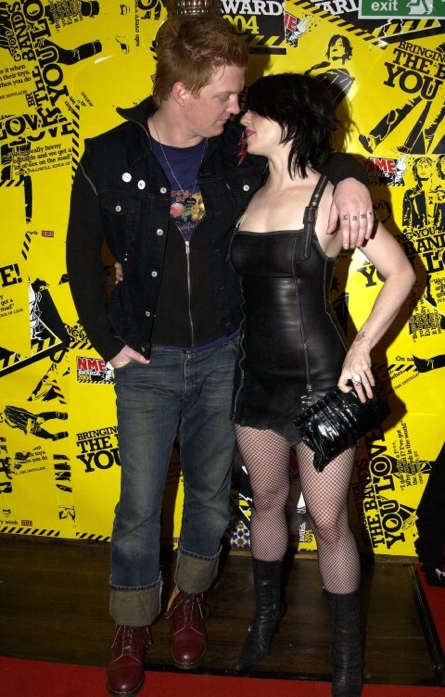
Saturday Celebrity Sibset: The Rockers – Brody Dalle and Josh Homme

03 Saturday Mar 2012

Posted by A.O. in Sibsets in the News

≈ Comments Off on Saturday Celebrity Sibset: The Rockers – Brody Dalle and Josh Homme

Tags

famous namesakes, honouring, nicknames, pseudonyms, unisex names

This is yet another celebrity baby from 2011 I didn’t see, so made it a Celebrity Sibset instead.

Brody Dalle is a punk rocker who is originally from Melbourne. Her parents named her Bree, and she picked the unisex name Brody for herself as a teenager. Apparently as a child she was called Breezy Wheezy by her family because she had asthma, which rather ruined the name Bree for her.

She has used the middle names Leslie and Joanna Alice; I’m not sure if either of them are her original middle name/s. She has managed an impressive seven surnames during her life, and it’s unclear what the original surname was. She went by Pucilowski, Mayer and Robinson just as a teenager. Eventually she chose Dalle in reference to Béatrice Dalle, her favourite actress. Béatrice Dalle is best known for the film Betty Blue.

Brody began her career in punk at the age of thirteen, and at sixteen she met Tim Armstrong, the vocalist for punk rock band Rancid at a music festival. They began a relationship, although Tim was more than thirteen years her senior. They married when Brody turned 18, and she moved to Los Angeles with her husband, where she founded the band The Distillers. Brody and Tim divorced six years later.

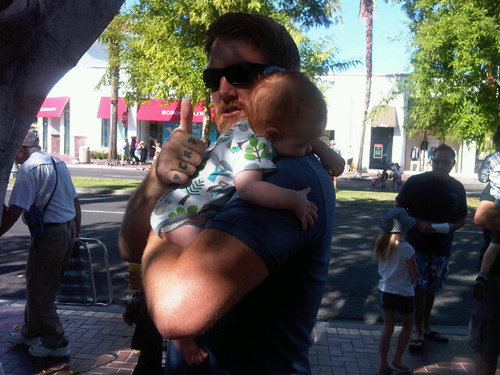
In 2007, Brody married Josh Homme, lead singer from rock band Queens of the Stone Age, and founded the indie rock band Spinnerette; the couple live in Palm Springs, California.

Josh also has an interesting name – he was named after the town he was born in, Joshua Tree, in the Mojave Desert of California. He pronounces his Norwegian surname to rhyme with Tommy, although the Norwegian pronunciation is to rhyme with puma. He has adopted the pseudonym Carlo von Sexron for some of his work, and his nicknames include King Baby Duck, J. Ho, Joe’s Hoe, and the Ginger Elvis.

Brody and Josh have two children, and as they have enjoyed re-naming themselves so much, it’s interesting to see what names they would choose for their children.

Camille Harley Joan was born in 2006. Camille is named after Josh’s grandmother, and Josh collects motorcycles, which probably explains Harley. Although Joan looks like Brody’s middle name Joanna, it also reminds me of rock queen Joan Jett, who must have had some influence on Dalle herself. However, for all I know it’s another family name.

Orrin Ryder was born in 2011. Rumour has it that just as Camille is named after Josh’s grandma, Orrin is named for his grandfather, but I can’t confirm that. Josh has both his grandmother’s and grandfather’s nicknames tattooed on his knuckles – CAM and CAP – so it does have some symmetry. It’s hard not to connect the name Ryder with Josh’s motorcycle hobby as well.

Being called after a family member seems cosy and non-punk, although being named after Dad’s tattoos and motorbikes gives them a bit more of a rock edge.

I wonder if Camille and Orrin will follow the family tradition of giving new names to themselves, and what names they will choose?

Famous Name: Kevin

29 Wednesday Feb 2012

Posted by A.O. in Famous Names

≈ 21 Comments

Tags

classic names, famous namesakes, international naming laws, Irish names, Mer de Noms, name history, name meaning, name perceptions, name popularity, name studies, saints names, The Name Station

Over at The Name Station, there is an article quoting two studies which demonstrate that Kevin is the worst possible name to have in Germany. For some reason, this name really gets up the noses of Central European schoolteachers and cyber-daters.

As it turns out, the Germans aren’t exactly Robinson Crusoe in this regard. According to Lou at Mer de Noms (niece of a Kevin), the French also look down their noses at the name Kevin, and say, Non, non, non! Across the Channel, Kevin is considered a chavvy (bogan) name, to the point where kev is a synonym of chav, innit?

And if we hop over the Pond, American TV shows such as Daria and South Park depict Kevins as either dumb jocks or disposable meaningless characters. Oddly enough, in the United States Kevin is disliked for the exact opposite reason as in Europe – far from being too lower-class and urban, Kevin is seen as too middle-class and suburban.

A persistent Internet rumour is that the name Kevin is banned in Mexico because it will lead to “teasing and ridicule”. Actually the Chihuahua state government forbids parents from using any non-Spanish name without a Spanish middle name, and for some reason, reporters always seem to use Kevin as an example, hence the confusion. That may say more about how the name Kevin is viewed by the reporters than how it is in Mexico.

Apparently vast tracts of the Northern Hemisphere are infected by an intense loathing of people named Kevin. Here, another group who has joined the We Hate Kevin Club is the Australian Labor Party Caucus, who on Monday morning voted against Kevin Rudd’s bid for the leadership, two votes to one. So much do they detest Kevin Rudd that they profess a preference to losing an election without Rudd than winning one with him.

Their vote in support of Julia Gillard is not so much a ringing endorsement of her leadership as it is a sign of their determination to vote for ABK – Anyone But Kevin.

Kevin Rudd was elected Prime Minister of Australia in a landslide victory in 2007, his supporters running with the slogan Kevin ’07. Soon his non-stop work ethic led to him being labelled Kevin 24/7, and his frequent diplomatic trips around the world Kevin 747. Some papers sneeringly called him Kevin 7-11 for catering to the public a little too readily, like a convenient corner shop, and rumour had it he was Kevin 007 – a double-agent leaking information that could damage his enemies.

However, his authoritarian work style and biting insults made him anything but loved by his Labor colleagues, who ousted him the minute his popularity slipped in the polls and replaced him with his Deputy, Julia Gillard. This was all done so quickly that Rudd supporters have some basis for seeing him as stabbed in the back, as happens so often in the workplace.

Since his dumping, there has remained the vague threat (or hope) that he would one day rise up and take back his power. When Julia Gillard’s own popularity plummeted to record lows, he suggested he might run for party leader (and thus Prime Minister).

Polls done in the lead-up to Monday morning’s ballot showed great public support for Kevin Rudd, with the majority of people preferring him to either Julia Gillard or Tony Abbot, the Opposition Leader. The Pro-Kevin lobby reached fever-pitch. He was treated like a rock star wherever he went, received messages from people all over the country in his support, and was proclaimed the People’s Prime Minister. However, the people’s support is useless without the support of your party. That’s politics.

Maybe the Germans, the French, the British, the North Americans, and possibly the Mexicans can’t stand Kevin, but it seems Australians are pretty okay with it. We elected a Kevin Prime Minister, even though Dame Edna Everage expressed some doubts about the idea (she was probably catering to the anti-Kevin prejudices of her chiefly British audience). And even though he’s gone, he was never voted out, and clearly a sizeable chunk of the population would like him back.

The media love the name Kevin as well – it’s so useful for catchphrases and headlines. Not only Kevin ’07, Kevin 24/7, Kevin 747, Kevin 7-11 and Kevin 007, but also in the headlines were Kevingate, The Kevinator, Good Heaven’s It’s Kevin, Kevin Heaven, Kevin in Heaven, A Kevinly Sign from Above, Knocking on Kevin’s Door, and Kevenge (an act of revenge committed by someone named Kevin).

Australians have never had problems with names of Irish origin (as the list of Famous Names is starting to make pretty obvious). Kevin is the Anglicised form of the Irish name Caoimhin, a form of the older Cóemgein, which can be translated as “gentle” or “handsome”. Saint Kevin is the patron saint of Dublin, and is sometimes called the Irish St Francis of Assisi for his love of animals and nature. According to legend, an angel turned up at his baptism and instructed that he should be called Kevin, which the bishop naturally felt obliged to go along with. Maybe Kevin truly is a name from heaven? (A more plausible tale is that his name was bestowed upon him by fellow monks in tribute to his sweet nature).

In Australia, Kevin is a classic name which has never left the charts since record-keeping began in 1900. It first joined the Top 100 in the 1910s, and peaked in the 1930s at #6. It remained a Top 100 name for nine decades until the early 2000s, when it just dipped out at #101. Currently it’s #154.

In Queensland, which is Mr Rudd’s home state, there were twice as many babies named Kevin last year than babies named Julia, his deposer. And I have noticed in the birth announcements how common Kevin is as a middle name for boys.

Are they being named after a father, an uncle, a grandfather … or a lost Prime Minister who may still return, like the once and future king? Rudd Redux?

NOTE: Kevin is a Top 100 name in at least nine different countries, two of which, France and the United States, supposedly despise it. Go figure. Maybe this whole anti-Kevin thing is a beat-up.

Names Spotted Over the Summer, at Home and Abroad

28 Tuesday Feb 2012

Posted by A.O. in Names Spotted at Home and Abroad

≈ 14 Comments

Tags

Buddhist names, english names, famous namesakes, fictional namesakes, Hindu names, Indian names, Irish names, mythological names, name trends, nicknames, popular culture, popular names, Romani names, Sanskrit names, Tibetan names, virtue names, vocabulary names

Interesting names of babies I spotted in the papers over the summer:

When the popular name lists came out, newspapers also liked to dwell on the less popular names (more coming on that score). One of the babies with an uncommon name was the splendidly Arthurian Lancelot Palmer, from Wagga Wagga in New South Wales. Lancelot is named after his mother’s grandfather, who passed away a few years ago.

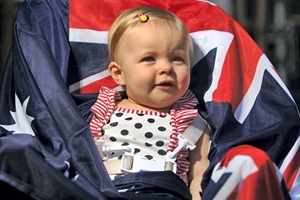
To publicise Australia Day events in Tasmania, The Examiner had a photo of an eight-month-old baby girl named Uma Paech, from Lauceston (pictured). It’s a celebrity name, because of Hollywood actress Uma Thurman, but also shows the growing popularity of names from Asia. Uma Thurman was raised in a Buddhist household, and her father was the first Westerner to become a Tibetan Buddhist monk. Her name is taken from the Tibetan phrase Dbuma Chenpo, meaning “Great Middle Way”; one of the guiding principles of Buddhist practice. (The Db is silent). Uma is also one of the titles of the Hindu goddess Parvati.

In early February, an official report on publicly funded home births was prepared by the Homebirth Advisory Group from the Northern Rivers district of New South Wales. The story interviewed Jade Trapp of Lismore, who gave birth to her son Django at home with a midwife two years ago. This is another name which comes from a famous person. It was the nickname of Belgian jazz guitarist Jean Baptiste Reinhardt, and it is Romani for “I awake”. Although Django died in the 1950s, his gypsy jazz is still hot, and he has been portrayed or alluded to in several films, including The Triplets of Belleville and Martin’s Scorscese’s Hugo. His music has been used for the soundtrack of movies such as The Matrix, Chocolat, Kate and Leopold and Stardust Memories. This is a hyper-hipster name oft suggested on Nameberry, and one with a cheery sound to it.

Meme and Soemyint Theloep are recent refugees from Burma who live in the Illawarra region surrounding the city of Wollongong in New South Wales. This month, they were caught in the floodwaters that flowed into their flat, and Soemyint had to carry his three-week-old daughter to safety in a baby sling. Although their English is still only basic, they knew enough to give their baby an English name – Blessing. What a beautiful tribute to their new home and refuge (despite the occasional flood). It’s a name that makes me smile and smile.

Monica Carduff Gonzalez, professionally known as DJ Monski Mouse, has been playing classic vinyl tracks at events such as the Edinburgh Fringe Festival for ten years now. She is now starting up an event called Baby Disco Dance Hall, which plays funky tunes suitable for the under-five crowd. Monica’s own daughter is named Monalisa (didn’t you just somehow guess her baby wouldn’t be named Emily or Mia?). Apart from the famous painting by da Vinci, Mona Lisa is also an award-winning Nat King Cole song, and it was playing while Monica and her husband, magician Tony Roberts, were choosing baby names; the new baby smiled, and they took that as her seal of approval. I love this cool name and the story attached to it (which I got off her website).

And an interesting name attached to an adult:

I read a short article on parenting about the myths of motherhood. It’s good advice telling us not to worry so much about being perfect. What interested me more was the author’s name, which was Benison O’Reilly. Her name is a vocabulary word which means “blessing, benediction”. According to her website, it’s a favourite name amongst the O’Reilly family. I think it’s a great name and obviously has a very positive meaning.

Names of babies encountered over the summer in real life:

Annabel: the original form looks crisp, classic and very English after so many Frenchified Annabelles.

Cael: I always thought this Irish name was said like the word keel, but Cael’s family say his name like the word kale.

Lacey: I feel as if the long-term popularity of Lucy is helping the rise of pretty Lacey.

Purity: this name reminded me of purity rings, but her name was chosen with the idea of purity in the sense of “pure and natural, uncontaminated by the artificial”. Purely herself!

Zeke: not short for Ezekiel, just plain Zeke. Very cowboy.

Names of new babies welcomed by people I know (family/friends/colleagues/neighbours etc) over the summer:

Bethany

Brock

Eleanor

Finn

Isla

Laila

Leilani

Stella

According to a new article Abby has at Appellation Mountain, the baby names chosen by the people around you will likely tend to be similar, and also not unlike the names you are apt to choose yourself (leading to much angst and accusations of name stealing and so forth – see Lou at Mer de Noms, as to whether to “call dibs” or not).

I think some of these names do “go together”, as in I can imagine Finn and Isla as siblings, and also Eleanor and Stella. There’s a strong L sound in all of them except Bethany, Brock and Finn, who thus also seem to be matched. Laila and Leilani are particularly similar.

Boys Names of Australian Aboriginal Origin

26 Sunday Feb 2012

Posted by A.O. in Name Themes and Lists

≈ 18 Comments

Tags

Australian Aboriginal names, Buddhist names, famous namesakes, fictional namesakes, Indian names, Indonesian names, Japanese names, Korean names, locational names, Maori names, name history, name meanings, Native American names, New Zealand names, nicknames, Quechuan names, Samoan names, scandinavian names, scientific names, seasonal names, Slavic names, South American names, Spanish names, surname names, unisex names

This follows on from last week’s list, Girls Names of Aboriginal Origin. It was more challenging to find boys’ names, because many, if not most, Aboriginal words end in a vowel, and easily conform to we think of a “feminine sounding” name. They are similar to names in Hebrew, Arabic, and in the Indian languages in that regard, and even now you will find people who insist that Ezra must be a female name, because it ends in -a.

These are not traditional or tribal Aboriginal names for men, but rather words from Aboriginal languages that I thought could be used as names by people from any culture. Some of them coincide with words or names from other languages, as I thought people may be interested to know that a word from their own heritage has a distinct Australian meaning as well.

Dural

Dural is a pleasant semi-rural suburb of Sydney, and its meaning has been in some dispute. It is said that dural was a word from the Dharug language, meaning “gully, valley”, and this information came from a traditional owner of the land in the 19th century. It was also said to mean “burning logs”, from the word dooral dooral, but this belief only dates from the 1940s, and is taken from the Wiradjuri language. As the Wiradjuri people are from central New South Wales, the local meaning is claimed to be the correct one. Translations of this name as “hollow tree” or “burned out tree” in baby name books can be safely discarded as invention. I think Dural seems very usable as a personal name, and I considered it for Sydney Suburbs That Could Be Used as Boy’s Names. It sounds like familiar names such as Darrell, and sturdily similar to the word endure.

Jarli

This word means “barn owl” in the Jiwarli language of northern Western Australia. As in many other societies, several Australian Aboriginal cultures saw owls as symbols of wisdom, mystery, secrets and sacred knowledge; messengers from one world to another, and companions of the medicine men. The owl features in several myths and legends, and is sometimes depicted in Aboriginal art. This name seems familiar to us, because Jarli is also a Scandinavian boy’s name based on the word for “earl”, and I have seen one or two boys with this name. I like the sound and the meaning of this name, and it is similar to another Jiwarli word: jali, meaning “friend”.

Kaiya

This word from a Queensland language refers to a spear with two barbs, and is pronounced KY-uh. It has been used in the Latin name for a species of caddisfly – Chimarra kaiya – who is so called because of its distinctive barb-like projections. In the Kaurna language of South Australia, the similar sounding kaya means “spear”, although in Nyungar it means “hello; yes”. This is always listed as a girl’s name in baby name books, but the name Kai makes this name look masculine to me. I don’t see how the sound of it is any more “girly” than, say, Hezekiah. The meaning does not seem feminine either. I would say it is a unisex name, and suitable for a boy.

Kuparr

This means “red earth, burnt earth” in the Ngiyampaa language of New South Wales. It refers to the ochre used for making body paint for the Coroborees; the sacred ceremonies of Indigenous Australians involving ritual, dance and music. Red ochre is also used in other Aboriginal forms. Kuparr was the basis for the name of the mining town Cobar, and because copper was mined there, it has also been suggested that it may have been the local way of translating the word copper. Most likely the similarity between the words is a coincidence though. The attraction of this name is that it sounds a bit like Cooper. If you like the sound of Cooper but think it seems a bit boring or surnamey, Kuparr might be for you.

Miro

Miro (MEE-roh) is a Nyungar word for a type of spear thrower which propels the aim of the gidgee; a fearsome qaurtz-tipped spear about 8 feet long. Miro exists as a name or word in several other languages. It’s a Slavic name which is short for Miroslav, meaning “glorious peace”. In Japanese, it’s short for Miroku, a Japanese form of Maitreya, the fifth (future) incarnation of the Buddha. In New Zealand, it’s the name for a species of conifer tree. In Korea, it means “maze”. It’s also the surname of Spanish artist, Joan Miró i Ferrà (Joan was a man) – his surname was short for Ramiro, the Spanish form of a Germanic name meaning “famous counsel”. It’s very multicultural, and none of the meanings that I’ve seen are negative. I think it’s attractive. We had a baby boy in a recent birth announcement named Finn Joseph Miro, so it’s considered usable in Australia.

Monti

This is one of the Aboriginal names for the Black-necked Stork, which is found across the tropical north of Australia, and is the only stork species native to Australia. I have not been able to track down which language it is from, except that it’s not from the Northern Territory, where this bird is called a jabiru. It’s therefore either from Queensland or northern New South Wales, as the only other places where this bird exists. It’s listed as one of the Indigenous names by museums, so I feel fairly confident it’s authentic. The stork is mentioned in several Aboriginal legends, one of them an extremely touching love story. The attraction of this name is that it sounds exactly like the fashionable name Monty, but has its own significance.

Tarka

This means “eggshell” in the Kaurna language of South Australia. I thought of it because I have seen the name Tarka used in the birth announcements from the London Telegraph. It has a number of meanings in other contexts. There is a well-loved English children’s book called Tarka the Otter, so famous that it has given its name to a railway line and a bike path in the West Country. It was made into a film in the 1970s. In the book, Tarka’s name was meant to suggest the barking sound that an otter makes. In India, tarka is a word for seasoning added to a meal, and in Quechuan, a tarka is a type of flute played by the Indigenous people of the Andes. Tarka Cordell was a British musician who died in tragic circumstances a few years ago; I’m not sure where his name was taken from, or whether he is the inspiration for British children having Tarka as one of their names. This is the second name with the meaning of “eggshells” I have suggested; the other was Keid. Because eggshells appear so fragile, and yet are surprisingly strong under compression, I find this meaning very evocative.

Tau

Means “evening, dusk, twilight” in the Kaurna language of South Australia, and is said to rhyme with the word cow. In Maori, it can mean a number of different things, including “sweetheart”, “song, chant”, “string”, or “ridge”. In one of the Indigenous languages of Indonesia, it means “man”. In Samoan, it can mean “anchor” or “war”. It’s known to many people in the context of the Tau Cross, a symbol of life which was used by the Egyptians, and became important in a number of different religions and spiritual paths, including Christianity. I have met men named Tau, but I’m not sure which meaning was associated with their names. I think Tau fits in very well with other popular names for boys, such as Ty, Tai and Taj, and would be readily accepted.

Warragul

Warragul, pronounced WOHR-uh-guhl, is a town in the West Gippsland region of rural Victoria, the birthplace of legendary Aboriginal boxer Lionel Rose. Its name is said to come from a local word, warrigal, meaning either “wild” or “wild dog”, referring to the dingo. The dingo is Australia’s largest predator on land, and its ancestor is thought to have been introduced to Australia by seafarers from south east Asia thousands of years ago, when dogs were less domesticated and more closely related to wolves. Dingoes play a major role in Aboriginal myths and legends; in stories they are often guardians of humans who can warn them of the supernatural or evil spirits. There are also myths of dingo-people shapeshifters, or “were-dingoes”, and often the dingo in legends is a rebel or trickster figure. In everyday life, dingoes were tamed and kept in Aboriginal camps as guard dogs. They were treated with great affection, given names, slept with their human companions, and were even breastfed. At least sometimes they were buried alongside humans. I saw someone in a parenting forum say they had already used Warragul as a baby name.

Warrin

Warrin meant “winter, cold and frosty season” in one the language spoken around the Sydney region when Europeans first arrived. However, there are a number of similar words used throughout Indigenous languages. Warran or Warrung was the original name for the place we call Sydney Cove, and by extension, Sydney itself; it is said to mean “the other side [of the harbour]”. In the Brisbane area, Warun was a place name in the suburb now called Redcliffe; it may have meant “neck”. There are historical records of a man from south-west Queensland named Warun, so it was used as a personal name. In the Melbourne area, warun meant “eel” in the local language, a fish prized as a valuable food source; there is a suburb of Geelong named Warun Ponds. I have also seen the word warun translated to mean “diving ducks” in the Northern Territory. Baby name books translate Warun as meaning “sky”, but I don’t know which language they are deriving it from. From this I deduce that the English name Warren is the most “indigenous sounding” of our names, and perhaps it deserves a closer look.

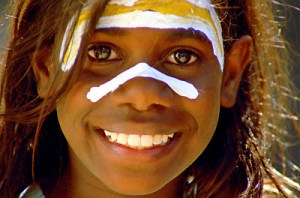
(The photo is of young actor Brandon Walters, who starred in Baz Luhrman’s film, Australia).

Saturday Sibset: The Children Born of Elvis and Silence

25 Saturday Feb 2012

Posted by A.O. in Sibsets in the News

≈ 8 Comments

Tags

African names, english names, famous namesakes, name meaning, Puritan names, Shona names, sibsets, unisex names, virtue names, vocabulary names, Zimbabwean names

Just as I began writing this article, Nameberry tweeted: Did you hear a name today you’d never heard before? Most days, my answer would be, Nope, pretty much the same old, but that day I could proudly say, Yes indeedy. Well actually I didn’t tweet back because I was too busy writing this, but I’m saying it now.

The Australia Day citizenship ceremonies are always a wonderful source for discovering new names. This is one where some of the childrens’ names were new to me, but the parents’ names were familiar. And yet it was the parents’ names that knocked me for six.

The Matanhire family moved here from Zimbabwe in 2006; they came from the predominantly Shona-speaking city of Mutare, whose name translates as “gold”. They started off in Melbourne, but are now happily settled in Adelaide.

The Matanhire family admit to being motivated by a spirit of adventure, loving to travel and see new places. Mrs Matanhire used to tour African countries as a nurse, educating other healthcare professionals about HIV and AIDS. When a relative who lived in Sydney told them how beautiful Australia was, it seemed like another adventure for them.

Mr Matanhire said becoming a citizen was like “taking a step into a new life”. “It feels very good, you feel like you can plan your life,” he said. Mrs Matanhire said becoming a citizen meant “you belong to the country; you belong to Australia”.

Elvis (aged 45): This is Mr Matanhire’s first name, which was covered as a Famous Name around the time of The King’s birthday anniversary. Once I would have thought this was too over-the-top for a regular person’s name, but now I actually love seeing it in general use. You pretty much assume the parents of anyone called Elvis were massive Presley fans, and this (rightly or wrongly) is how I am picturing Mr Matanhire’s mum and/or dad.

Silence (aged 41): Mrs Matanhire’s first name is a virtue name I saw covered at Names from the Dustbin. When I saw it, I admit to being quite horrified, because as a parent, the thought of your baby becoming completely silent is your worst nightmare. And as a Puritan name almost exclusively given to girls, it has connotations of women being forced into silence in an oppressive way. However, seeing it on an attractive, confident, well-travelled adult, who is clearly not being kept silent and in fact had to do a lot of talking as part of her career, I have softened a little. Now I can see a certain beauty in it, and it makes me think of the inner silence that comes through prayer and meditation.

Caroline (19): Usually the name Caroline doesn’t stand out in a family, but in this case it seems unusual compared to the others. Being the eldest born, I wonder if Caroline was given a family name.

Anesu (15): This is a Shona name which can be given to both boys and girls. For boys, it is the pet form of Isheanesu; for girls, the pet form of Anesuishe. In either case, it means “God is with us”. This Anesu is a boy.

Rumbidzai (4): A female name which means “praise”. I have read that it was originally a royal name, but don’t know if that’s correct. Rumbidzai was born in Australia, so is already a citizen.

Edret: Edret is Elvis’ sister who lives with the family; it’s possible she was the person who first suggested they come to Australia. Her name is a complete mystery to me, mostly because the Edrets I found online tended to be Hispanic men. Perhaps it is short for a longer name. Elvis and Edret make an impressive sibset.

Famous Name: Gunner

22 Wednesday Feb 2012

Posted by A.O. in Famous Names

≈ 8 Comments

Tags

dog names, english names, famous namesakes, military terms, scandinavian names, slang terms, stage names, vocabulary names

Sunday February 19 marked the 70th anniversary of the bombing of Darwin by the Japanese. Both the first and the single largest attack against Australia by a foreign power, it is often referred to as “Australia’s Pearl Harbor”. However, Darwin was bombed more heavily than Pearl Harbor, and almost 100 air raids were to follow. Numbers of the dead are disputed, but the official toll is just under 300, with maybe 300 to 400 injured. Amongst the casualties were men on the USS Peary, whose memorial President Obama visited in Darwin last year.

One of the lesser-known heroes of the Darwin air raids was a young black and white kelpie, who was found distressed and with a broken leg under a bombed mess hut on February 19 1942. He was taken to a field hospital, and immediately inducted into the Australian Air Force so that he could receive medical treatment. He was named Gunner, and given the serial number 0000.

Leading Aircraftman Percy Westcott, one of two men who found Gunner, became the dog’s master and handler. I think Gunner was just expected to be a pet and a mascot for the air base, and probably a much-needed distraction for the men. However, about a week after he came to live with them, Gunner began to demonstrate his remarkable hearing skills.

Time and time again, Gunner would whine and jump whenever he heard Japanese aircraft approaching. Long before the air raid siren sounded, Gunner would become agitated and head for shelter. He was able to warn Air Force personnel that the Japanese planes were coming up to 20 minutes before they appeared on the radar, and was so reliable that Percy was given permission to sound an alarm whenever Gunner gave his signal.

You’d think that living on an airbase, Gunner would soon get used to the sound of planes taking off and landing, but he only behaved like this when he heard Japanese planes – Allied ones didn’t faze him at all.

Gunner was accepted as a full member of the Air Force: he slept under Percy’s bunk, showered with the men, attended the movies with them, and regularly went up with pilots during practice flights.

Percy was posted to Melbourne 18 months later, and Gunner remained with the RAAF in Darwin, being cared for by the Air Force butcher, who had access to plenty of meat to feed Gunner. It’s not known what happened to Gunner when the war ended; I hope he lived a long happy life.

In the Air Force, the gunner is the person who operates the machine gun or cannon during air battles, although a Gunner is also any non-commissioned member of the air force in a Regiment. It’s often used as a slang term in several different ways, including in sport – for example, the word Gunner describes a certain specialist in gridiron, and the Gunners is a nickname for Arsenal Football Club. Gunners is also slang for a fans of the rock band Guns ‘n’ Roses.

Gunner has been used as a stage name in professional wrestling, such as by Gunner Scott (real name Brent Albright). It also sounds like the Scandinavian name Gunnar, which combines the elements for “war” and “warrior” together, to sound extra-warlike.

I’m not sure I would have suggested this as a possible baby name, except that I saw a baby called Gunner Phoenix in an Adelaide birth announcement last month.

I can see this as a wonderful way to honour a military connection in a family. Gunner sounds all boy … although according to some people, it sounds all dog! But we have established that the line between dog and human names has become increasingly blurred, and if you were going to give your baby the name of a dog, then what cooler canine than an Australian kelpie who became a wartime hero?

(Gunner’s story appears in the book Animal Heroes, by Anthony Hill. Photo of Gunner with Percy held by the Australian War Memorial)

Girls Names of Australian Aboriginal Origin

19 Sunday Feb 2012

Posted by A.O. in Name Themes and Lists

≈ 52 Comments

Tags

Australian Aboriginal names, famous namesakes, fictional namesakes, locational names, name history, name meaning

It is not difficult to find little lists of Aboriginal words that can be used as personal names, accompanied by their purported meanings; what is harder is to ascertain their origins. Even reliable baby name books are content to say that such-and-such a name comes from “an Aboriginal language”, without specifying which one. Often it seems that no-one knows: as languages became extinct, certain words and phrases were recorded for posterity, without any knowledge of which peoples the words were spoken by, and perhaps even without an understanding that there were different Indigenous peoples.

Historian Watkin Tench, a British officer who arrived on the First Fleet, noted that many Aboriginal names and words sounded pleasing and even familiar to the ears of English speakers, and recorded that the chaplain’s wife was so taken with the name of an Aboriginal woman she met named Milba that she christened her own baby, born in the new colony, Milba Maria Johnson.

It’s therefore not a new phenomenon for non-indigenous people to use words from Aboriginal languages as personal names, although some people may find the idea inappropriate or disrespectful. I’ve chosen names very conservatively, tending to pick out ones that are already in common use as personal names, as place names, or as business and organisation names.

You should also be aware that a word from one language may mean something completely different in another part of the country, so you may believe your child’s name means “desert flower”, but someone who speaks a different language may tell you that it means “swamp” or “elbow”. Hopefully it won’t be anything worse than those.

Names from Aboriginal languages tend to be easy for us to spell and pronounce. Because Aboriginal languages were not written down, they are now spelled exactly as they sound. The emphasis is placed very much as it is in familiar names, so that Kalinda is kuh-LIN-da, just like Amanda or Samantha. That could very well be due to European influence; I’m not sure.

This is my first Name List done under my resolution to rely on failed Google searches for blog entry ideas. “Aboriginal baby names” has been Googled many times to get to my blog, but I never felt that I knew enough about the subject to devote a blog entry to it. I still don’t know enough, but I now realise that waiting until I do know enough may mean never doing it at all.

Allira

This name is a corruption of the word allirea meaning “clear crystal quartz” and comes from the languages from around the Melbourne area of Victoria. There are extensive quartz supplies in the area around Melbourne, and Aborigines would have mined them for spear and knife edges. Quartz crystal was also used in rain-making ceremonies, and was both practical and spiritual in nature. However, in the language of the Arrernte people from Alice Springs, Allira means “niece”, and there is a character from legend with this name. Allira is not infrequently used as a brand name, which may be one reason why so many spelling variants exist for it: Alira, Allyra, Aleera, Aleerah, and so on. Another is probably to make the pronunciation clearer – uh-LEER-uh. Allira is commonly used as a girl’s name in Australia. Prominent people called Allira include glamour model Allira Cohrs, and surf Ironwoman Allira Richardson.

Bindi

Bindi is said to mean “little girl” in an Aboriginal dialect, and that is how it seems to be understood by Indigenous people, although I cannot discover what dialect it is from. Famous people with the name include Bindi Irwin, the daughter of conservationist Steve Irwin, and Aboriginal artist Bindi Cole. In the Nyungar language from the area around Perth in Western Australia, bindi bindi means “butterfly”, and I can imagine using just one of the bindis to make a name. There was a West Australian Aboriginal activist in the early twentieth century called Daisy Bindi, and her surname was taken from a nickname given to her by her husband. Something that usually crops up in relation to this name is that bindi, or bindii, is also the name of different types of noxious weed. These have nasty prickles that get stuck in your feet, and I presume it means “horrible spiky things” in some Indigenous language. These are an introduced species though, so the name of the plant only dates to the mid 19th century. Bindi isn’t an unusual name for girls to have in Australia.

Lowanna

In the Gumbaynggir language from mid-north New South Wales, this means “girl”. There is a village near Coffs Harbour called Lowanna. In one of the dialects from Tasmania, it meant “woman”. I have seen Indigenous people translate it as “beauty” or “beautiful woman”, but do not know which languages they are drawing upon. There was a school story for girls from the 1920s about a rich, worldly girl called Lowanna Laurenson who ends up working in films in America, and this may have brought the name to people’s attention. It’s a popular name for businesses and organisations, and is also a type of strawberry. A prominent person with this name is Lowanna Gibson, a figure skater from an Indigenous background, but I’ve seen quite a few Aboriginal girls and women with this name.

Kalinda

According to Australian Aboriginal Words and Place Names and Their Meanings by Sydney J. Endacott (1955), this word means, “See!”, as if someone is exclaiming at something they have espied and wish to draw other’s attention to it. Endacott’s little book is a pamphlet which lists all the words and their meanings, but doesn’t give any further information about them or their origins. Baby name books gloss it as “a lookout”, and some add with a touch of imagination, “a lookout over the sea”. It’s commonly used as a place name and organisation name, and is popular as a name for houses which have a nice view. A prominent person with this name is Kalinda Griffiths, who last year won the Northern Territory Young Australian of the Year Award. Kalinda is of part-Aboriginal heritage, and is carrying out research in Indigenous health. There’s also a left-wing writer called Kalinda Ashton.

Kirra

Kirra Beach is the name of a seaside suburb on the Gold Coast in Queensland, and kirra is said to mean either “leaf” or “boomerang” in a local language. According to The Australian Race by Edward M. Curr, kirra means “white cockatoo”; this is another book which gives lists of words and meanings, with no indication of which language or origin they are from. In the Murri language of southern Queensland, kirra means “to live”. This is a well used name in Australia, because it fits in so well with popular name such as Keira; Kirra-Lee is a common double name, and you can see how this fits in with Kirrily. Prominent people named Kirra include artist Kirra Jamison, and photographer Kirra Prendergast (both are from Byron Bay).

Maya

Maya (MY-uh) means “house, home” in the Jiwarli language of Western Australia’s Kimberley region. However, there are a number of similar words in other languages to denote some kind of hut or shelter, including maya or mia in Nyungar, and mya, mai, and mimi amongst the peoples of Victoria around Melbourne (often duplicated into maya-maya, mia-mia etc). It may help to explain why the names Maya and Mia are so popular in Australia – they have a native sound to our ears.

Merindah

This word means “beautiful”, and seems to be from one of the languages around the Sydney area, although I’m not sure which one. Apart from being used as a girl’s name, it is often used as a place name or name for businesses and houses as well. It sounds very similar to the name Miranda. It’s common to spell it Mirinda; however in the Kaurna language from the Adelaide area of South Australia, mirinda means “leech”. Prominent people named Merindah include Merindah Donnelly, who was nominated for NSW Young Australian of the Year for her work promoting social justice for Indigenous people, and photographer Merindah Bernoth.

Merri

Merri Creek is in southern Victoria and joins the Yarra River, which flows through the city of Melbourne. The point where the creek and river meet was traditionally an important meeting place for the Wurundjeri people, and it is thought to be where an important treaty between Indigenous Australians and Europeans took place. Unfortunately, this creek was very badly treated, and became heavily polluted, but efforts are now being made to turn things around, with some promising results. Its name comes from the local phrase merri merri, “very rocky”; the doubling of a word is usually an intensifier in Indigenous languages. Although the meaning is not particularly feminine, it sounds similar to the name Mary, and of course exactly like the English word merry. If you like the sound of Merry, but worry it seems too light and frivolous, Merri gives it a little more oomph. The pollution aspect I admit is not appealing, but things are changing, and it is a testament to the resilience of nature. Merri is a surprisingly tough little name.

Rianna

This means “small caterpillar” in a Tasmanian dialect. Caterpillars are important in the mythology of some Aboriginal cultures, because they are the precursor to the butterfly, which is seen as a soul of the departed. I haven’t been able to find out if they were especially important to the Tasmanians, but they may very well have been used as a food source. I haven’t seen anyone use Rianna in this way, but it seems to me an attractive name with a rather sweet meaning that isn’t too cutesy or pretty-pretty.

Tarni

Tarni-warra is an onomatopoeic word to describe the sound of the surf in the Kaurna language of South Australia. Tarni is therefore taken to mean “surf, wave, breaker”, and is often assumed to be one of the influences upon the name Tahnee. I can’t confirm that, but Tarni Warra is a common name for houses on or near the beach, and Tarni is used as a place and business name as well as a personal name. Prominent people named Tarni include ice hockey player Tarni Loreggian, and Tarni Carter who sings with rock band Radio Flyer, but it’s not difficult to find Australian women and girls with this name. It does not seem to be heavily used by Indigenous people.

Celebrity Baby News: Late Baby News

18 Saturday Feb 2012

Posted by A.O. in Celebrity Baby News

≈ 8 Comments

Tags

famous namesakes, fictional namesakes, locational names, nicknames, unisex names


NRL player John Sutton, the co-captain of the South Sydney Rabbitohs, and his partner Stacey Shumack, welcomed a daughter named Pippi Rae 10 months ago.

Comedienne Sarah Kendall, and her fiancé, comedian Henry Naylor, welcomed a daughter named Viv 20 months ago. Sarah has been living and working in London for twelve years now, which I assume is why we have not heard of Viv’s birth until now. Sarah is currently visiting Australia to perform her show, Persona.

Henry Naylor is a Cambridge Footlights alumnus and one of its former Presidents. He is best known in the UK for his comedy partnership with Andy Parsons and their BBC radio show Parson’s and Naylor’s Pull-Out Sections. He has also written for several TV shows, including Dead Ringers.

Viv Naylor is named after her mother’s favourite fashion designer, Vivienne Westwood, the punk pioneer who set up shop in once-fashionable Chelsea, and her father’s favourite cricketer, Viv Richards, the scintillating former batsman for the West Indies side.

Saturday Celebrity Sibset: A Taste of Scotland – Leigh McClusky and Simon Haigh

18 Saturday Feb 2012

Posted by A.O. in Sibsets in the News

≈ Comments Off on Saturday Celebrity Sibset: A Taste of Scotland – Leigh McClusky and Simon Haigh

Tags

celebrity sibsets, famous namesakes, fictional namesakes, food names, nature names, plant names, Scottish names, surname names, twin sets, unisex names

Last year we featured celebrity mum, Rosanna Mangiarelli, who took maternity leave from Channel 7’s current affairs show, Today Tonight, after the birth of her second daughter, Olivia.

The Today Tonight presenter that Rosanna took over from was Leigh McClusky, who was the show’s anchor from 1995 to 2007. She left when she became pregnant with twins, and later founded her own media and public relations firm in Adelaide. Leigh is currently the host of SA Life, a lifestyle show promoting South Australia. On her team of presenters is Michael Keelan, Grant Cameron, Briony Hume, Rosa Matto, and Pete Michell.

In 2000, Leigh married Simon Haigh, owner of Haigh’s Chocolates. This family-owned boutique chocolate business was started by Simon’s great-great grandfather, Alfred Ernest Haigh in 1915, and continued on by his son Claude. He left the business to John, Simon’s father, who trained in Switzerland, and now Simon and his brother Alister run the business together.

The family motto? “If you’re born a Haigh, you eat dark chocolate,” says Simon.

I’m so glad I am not writing this story at the age of six, for I would have cried with jealousy at children who had a dad with his own chocolate factory, and where you inherit a family tradition of eating dark chocolate.

Now grown-up, and unable even to finish my Valentine chocolates without generous assistance, I feel I can press on without too many tears.

The Haighs chocolate-inheriting children are:

Murdoch (born 2002)

Sigourney (born 2006)

Jock and Tansy (born December 2007, and 18 months younger than Sigourney)

The twins were born with the help of IVF, and according to Leigh, made their different personalities apparent even as new babies – Jock serious, Tansy laid-back.

There’s a Scottish theme going with the boy’s names, suitable for sons of someone named McClusky. Interestingly for the son of a journalist, Murdoch also has the name of a famous family of media magnates; most of us will have heard of Keith Rupert Murdoch, so often in the news recently because of his newspaper, The Sun. Leigh never seems to have worked for the Murdochs, so it may just be a coincidence. Jock seems to have been given the Scottish version of the popular boy’s name Jack.

Sigourney reminds us of American actress Sigourney Weaver. Ms Weaver’s real name was Susan, and she chose Sigourney as a stage name from an off-page character barely mentioned in F.Scott Fitzgerald’s The Great Gatsby, Mrs Sigourney Howard, who is the aunt of the sporting Jordan Baker. It’s a surname occasionally used as a first name, often for males. Because of the actress and the classic novel, it seems very American, although Sigourney Weaver is of Scottish heritage too.

Tansy is the name of a bitter and toxic herb, considered useful in cooking, gardening and medicine for thousands of years. It has cheery yellow flowers, and is a good companion plant as it keeps away insects. A tansy is also a type of sweet omelette pudding, flavoured with the herb; British comedian Sue Perkins got slightly poisoned eating one on the entertaining Supersizers Go … series. The plant grows abundantly wild in Scotland.

(Both photos from the Herald Sun archives).

Famous Name: Magda

15 Wednesday Feb 2012

Posted by A.O. in Famous Names

≈ 7 Comments

Tags

Aramaic names, famous namesakes, hebrew names, name history, name meaning, nicknames, saints names

Yesterday was Saint Valentine’s Day, a day for thinking about love and marriage, and for declaring your true feelings. It was the day that film and TV star Magda Szubanski chose to come out on national television and identify herself as “absolutely gay” to Channel 10’s The Project.

Although her family, friends and colleagues have known this for a long time, it has never before been made public knowledge. It was obviously something important that would make her decide to share this aspect of her life with the public after so many years, and in a statement to newspapers yesterday in support of Australians for Marriage Equality, Magda made an impassioned plea for gay marriage to be legalised.

“The law means that you could be a serial killer and have killed all of your spouses and yet you would still be considered fit to marry,” she said. “But if you are gay, then you are not worthy of these same rights.”

Her “coming out” comes a day after two separate bills to legalise same-sex marriage were introduced in federal parliament. Magda made it clear that she is currently single, and not expecting to get married any time soon.

Now aged fifty, Magda has been delighting audiences since her university days. A gifted comedienne, she created a number of memorable characters for television sketch shows such as ditzy sports reporter Pixie-Anne Wheatley, heavily made-up infomercial saleswoman Chenille, penny-pinching whiskey-swilling Scot, Mary Macgregor, and vile mother Lynne Postlethwaite.

On the popular sit-com Kath and Kim, Magda played netball nerd, Sharon Strzelecki, who was often the butt of her friend Kim’s jibes. As well as hosting several of her own shows, Magda has had roles in Hollywood films such as Babe, Happy Feet and The Golden Compass, and sci-fi TV show Farscape. The public have voted her Most Popular Comedy Personality three times at the Logie Awards, and she has won an AFI Award for her role on Kath and Kim.

In 2003 and 2004 she was voted the most recognisable Australian personality, which helped her become spokesperson for a number of companies, most recently, weight-loss company Jenny Craig, through which she lost 36 kg. Despite being overweight, she has always been a strong and energetic person who enjoys being active.

The Australian public love her for her quick wit, sense of fun, and lively personality, her enormous smile that lights up her face and her big loud infectious laugh. We love her most when she is unselfconsciously being herself, and Magda has been overwhelmed by the public support she has received since coming out yesterday.

Magda’s name is short for her full name Magdalene, which is the title of Saint Mary Magdalene. Mary Magdalene was a very important disciple of Jesus in the New Testament, and the only person privileged to first see the arisen Christ. The Catholic church places her on a short list of saints declared to be “equal to the Apostles”.

Traditionally, her name is said to mean that Mary came from the village of Magdala, which means “tower, fortress” in Hebrew. However, in Aramaic magdala means “high, great, magnificent”, so it’s possible her name was supposed to be “Mary the Great”. I have also seen the suggestion that the name was meant to denote that physically Mary Magdalene was taller than average.

Magda is a pet name commonly used in central and eastern Europe, and although she was born in England and her mum is Scottish, Magda’s father is from Poland, and was in the Polish Resistance during World War II.

Magda is a strong and beautiful name which has cultural ties to Europe, and honours one of the most prominent early Christian women. It also has the familiar nicknames Maddie and Maggie. However, like Edna and Ita, Magda Szubanski is very famous and has such a distinctive name that we would know her from her first name alone. Does her fame overpower the name, I wonder?

Short news report on Magda’s announcement:

← Older posts
Newer posts →

Enter your email address to follow this blog

Categories

Archives

Recent Comments

A.O.'s avatarwaltzingmorethanmati… on Zarah Zaynab and Wolfgang…
Madelyn's avatarMadelyn on Zarah Zaynab and Wolfgang…
JD's avatardrperegrine on Can Phoebe Complete This …
A.O.'s avatarwaltzingmorethanmati… on Rua and Rhoa
redrover23's avatarredrover23 on Rua and Rhoa

Blogroll

  • Appellation Mountain
  • Baby Name Pondering
  • Babynamelover's Blog
  • British Baby Names
  • Clare's Name News
  • For Real Baby Names
  • Geek Baby Names
  • Name Candy
  • Nameberry
  • Nancy's Baby Names
  • Ren's Baby Name Blog
  • Sancta Nomina
  • Swistle: Baby Names
  • The Art of Naming
  • The Baby Name Wizard
  • The Beauty of Names
  • Tulip By Any Name

RSS Feed

  • RSS - Posts

RSS Posts

  • Celebrity Baby News: Melanie Vallejo and Matt Kingston
  • Names from the TV Show “Cleverman”
  • Can Phoebe Complete This Sibset?
  • Zarah Zaynab and Wolfgang Winter
  • Baby, How Did You Get That Name?
  • Celebrity Baby News: Media Babies
  • Celebrity Baby News: Adelaide Crows Babies
  • Celebrity Baby News: Chris and Rebecca Judd
  • Names at Work: Name News From the World of Business and Employment
  • Celebrity Baby News: Sporting Round Up

Currently Popular

  • Celebrity Baby News: Mick and Angie Molloy
  • Rare Boys Names From the 1950s
  • Girls Names From Stars and Constellations
  • The Top 100 Names of the 1940s in New South Wales
  • Girls Names of Australian Aboriginal Origin

Tags

celebrity baby names celebrity sibsets english names famous namesakes fictional namesakes honouring locational names middle names name combinations name history name meaning name popularity name trends nicknames popular names saints names sibsets surname names twin sets unisex names

Create a free website or blog at WordPress.com.

Privacy & Cookies: This site uses cookies. By continuing to use this website, you agree to their use.
To find out more, including how to control cookies, see here: Cookie Policy
  • Subscribe Subscribed
    • Waltzing More Than Matilda
    • Join 517 other subscribers
    • Already have a WordPress.com account? Log in now.
    • Waltzing More Than Matilda
    • Subscribe Subscribed
    • Sign up
    • Log in
    • Report this content
    • View site in Reader
    • Manage subscriptions
    • Collapse this bar
 

Loading Comments...