• About
  • Best Baby Names
  • Celebrity Baby Names
  • Celebrity Baby Names – Current
  • Celebrity Baby Names – Past
  • Featured Boys Names
  • Featured Girls Names
  • Featured Unisex Names
  • Links to Name Data
  • Waltzing on the Web

Waltzing More Than Matilda

~ Names with an Australian Bias of Democratic Temper

Waltzing More Than Matilda

Tag Archives: famous namesakes

Famous Names: Ita and Cleo

08 Wednesday Feb 2012

Posted by A.O. in Famous Names

≈ 16 Comments

Tags

celebrity baby names, famous namesakes, Greek names, Irish names, nicknames, popular culture, saints names, unisex names

The Australian Academy of Cinema and Television Arts was established last year as a subsidiary of the Australian Film Institute; its job is to administer the AACTA Awards, which replace the old AFI Awards. Every news report on television seemed to feel it necessary to point out that AACTA is said just like the word actor, which I think most of us would have understood without help, seeing as they just said it aloud to us.

The Australian Academy has been deliberately set up in a similar way to the American Academy of Motion Picture Arts and Sciences, and the awards ceremony has been moved to late January, in order to fit in with the prize-giving season in the United States, which holds the Golden Globes and the Academy Awards in January and February. The AACTA Awards ceremony has been moved to Sydney and held at the Opera House, possibly because that seems more Hollywood than Melbourne. The AACTA statuette has also been remodelled, with some commenting that it looks like a flamboyant Australian Oscar.

Amongst the prize-winners was Asher Keddie, who won the Switched on Audience Choice Award for Best Performance in a Television Drama, for her role as Ita Buttrose in the mini-series Paper Giants: The Birth of Cleo. I must confess to not voting in this contest, or even knowing it existed until too late (obviously I’m not a very switched on audience member), but I do approve of the choice, as I thought Ms Keddie did an excellent job of portraying famous editor, Ms Buttrose.

Ita Buttrose, like Barry Humphries and Father Bob, is another super septuagenarian. She was named after her maternal grandmother, Ita Clare Rodgers (nee Rosenthal). Her ambition since the age of 11 was to be a journalist, and she began working as a copy girl at 15. Ita was a force in the Australian media for many years, including as youngest editor of The Australian Woman’s Weekly, the largest magazine in Australia. She became the first woman to edit a major metropolitan newspaper, the Daily Telegraph. Always perfectly presented, cultured and refined, she is instantly recognisable for her trademark lisp. She’s been granted several awards and honours, and supports a multitude of causes, from AIDS to Alzheimer’s. Ita is also an author of many practical books; her latest is a guide to etiquette.

Ita (IE-ta) is an Anglicisation of the Irish name Íte (EE-ta). Saint Ita of Killeedy was a 6th century Irish nun who headed a community of women. One of their tasks was to run a school for small boys; among her students was Saint Brendan the Navigator. According to tradition, Ita was of royal blood and baptised Deirdre; the name Ita she chose herself from the Old Irish word ítu, “thirst”. This was to signify her thirst for divine goodness. Today it sounds mildly vampiric.

Ita Buttrose became the founding editor of Cleo magazine in 1972, and made it an instant success – the first edition sold out in two days. Cleo was something new in Australian publishing: a magazine for women that spoke openly about sexuality. There were articles on masturbation, abortion, contraception and sex toys, and a nude centrefold – the first model for the centrefold was actor Jack Thompson. It made the sexual revolution accessible to the average woman. In Paper Giants, the title Cleopatra is suggested for the magazine, as befitting a strong yet sexual woman, but Cleo is chosen because it fits better on the masthead. It intrigues me that Cleo sounds similar to Ita’s middle name – Clare – and wonder whether she unconsciously selected a title that sounded like her own name. Cleo is also the name of Ita’s pet dog (Clare is her grand-daughter).

Cleo is usually thought of as being a short form of Cleopatra, but it can be short for any name beginning with Cleo-, such as Cleophas. It is therefore a unisex name, and there are several prominent men named Cleo, including American motorcyclist and World War I flying ace Cleo Pineau. The father of Elizabeth Short, the Black Dahlia murder victim, was named Cleo. It is from the Greek for “glory, fame, pride”. This gorgeous little name is right on trend for o-enders, and was also a celebrity baby name last year. It would make a great alternative to popular Chloe.

Famous Names: Michael and Jane

04 Saturday Feb 2012

Posted by A.O. in Famous Names

≈ 9 Comments

Tags

angel names, english names, famous namesakes, hebrew names, name history, name meaning, name popularity, Old French names, saints names

It’s been a satisfying summer of test cricket for Australia, as we convincingly trounced India in all four matches. One nice thing is that we played on January 26, which is not only Australia Day, but also Independence Day in India, so we shared our national days.

One of the highlights was team captain Michael Clarke scoring a triple hundred, modestly declaring on 329, just a few runs shy of Don Bradman’s top score of 334. It was the 100th test match to be played at the Sydney Cricket Ground, and Clarke’s score was both the highest ever in an Australia vs India test series, and the highest ever at the SCG. He followed up the triple century with a double century in Adelaide.

The name Michael is from Hebrew, and is translated as “who is like God?” – a rhetorical question with the obvious answer of “No-one is like God”. It is therefore a symbol of humility. In the Bible, Michael is an archangel, and very important in both Jewish and Christian traditions. In the Old Testament, he is said to be the protector of Israel, and in the New Testament Michael is the leader of the angelic hosts who defeat Satan in a war in Heaven. Michael is also mentioned in the Koran.

Michael is venerated as a saint in the Roman Catholic and Eastern Orthodox faiths; he is a patron of the military and also the sick and suffering. Some Protestant denominations believe he is identical with either Jesus or Adam. He has made a number of apparitions, including, according to legend, at St Michael’s Mount in Cornwall, and Mont Saint Michel in Normandy.

Michael has long been popular in Ireland (it’s currently #12 there), and considered to be a typically Catholic name – so much so that Mick is disparaging slang for a Roman Catholic of Irish descent.  We also say taking the Mickey or taking the mick, which is Cockney rhyming slang from “Mickey Bliss” ie “taking the piss” (to tease or mock).

Michael is a classic name which has never been out of the Top 100. It was #44 in the 1900s, reached its lowest point in the 1920s at #66, peaked in the 1970s at #1, and is currently #38.

Unbelievably, as Michael Clarke hit his record-breaking triple century, he had no sponsorship on his bat, having just been dumped by a cash-strapped Dunlop Slazenger. The only markings on his bat were promotional stickers for Jane McGrath Day, or Pink Stumps Day.

Jane McGrath was the first wife of former cricket player Glenn McGrath; an English air hostess prior to marriage, she became an Australian citizen on Australia Day 2002. That was the same year she and Glenn founded the McGrath Foundation to raise money for breast cancer. She died in 2008 after battling breast cancer for more than a decade; she was 42 years old.

The McGrath Foundation has raised more than $12 million, and the third day of the first test match at the SCG each year is Jane McGrath Day. The stands are filled with tens of thousands of fans wearing pink to show their support, many guys sporting Real Men Wear Pink signs, and over a million dollars is expected to be raised by cricket clubs.

Jane is a feminine form of John, an Anglicisation of Old French Jehanne. Although in use since the Middle Ages, it only became the standard form in the 17th century after being taken up by the aristocracy; until then, Joan was the more common name. Plain Jane is 20th century slang for an average or ordinary looking woman, which must have irritated many a Jane over the years.

Jane peaked in the 1960s at #33, was out of the Top 100 by the 1990s, and quite recently dropped off the rankings altogether. Its real success is probably as a middle name.

Note: Michael Clarke later gained sponsorship by a little-known sporting goods company from Wollongong named Spartan.

Famous Name: Bob

31 Tuesday Jan 2012

Posted by A.O. in Famous Names

≈ 4 Comments

Tags

celebrity baby names, famous namesakes, name meaning, name trends, nicknames, palindromic names, vocabulary names

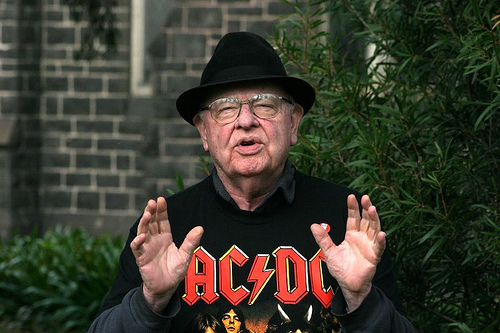
Last Sunday, Father Bob Maguire said his final mass at the church of Sts Peter and Paul’s in South Melbourne. At the age of 77, after nearly 40 years of service, he was forced to leave by the Catholic Church, which quotes canon law stating the official retirement age for priests is 75. He and his black standard poodle, Franklin, are temporarily homeless. At 77, Barry Humphries is awarded UK Australian of the Year; at the same age, Father Bob gets the boot.

Father Bob Maguire is one of the most famous and popular Catholic priests in Australia, and has devoted his life to helping others. His compassion, mischievous humour, bluntness, and eccentricities have made him loved by people from all religions, and none.

He has founded four charities, now amalgamated into the Father Bob Maguire Foundation, and inspired by a revolutionary approach to social justice. The Foundation’s workers are called The Bob Squad, and they care for the poor, the destitute, the homeless, and the mentally ill. Their catch cry is Viva la Bob!

Father has received an Order of Australia, and last year was named Victorian of the Year. Everyone thinks he’s super, except, apparently, the Catholic Church. Despite his massive popularity, Bob believes that the powers that be in the church hierarchy find him too much of a headache, because he has an unconventional approach to parish life which had him branded a maverick.

Some reasons the Church may have felt teased by Father Bob:

  • He put up a memorial on the parish front lawn to people who had died from drugs
  • He didn’t lock the church, because no matter how much stuff got stolen, he wanted it to be always available
  • People with mental illness or social problems were welcomed to church services
  • The collection plate was taken up by kids on roller skates
  • He gave the Occupy Melbourne protesters sanctuary
  • He said he would be happy to perform gay marriages in the church if that was legal
  • He publicly disagreed with the church’s ruling that secular songs not be permitted at Catholic funerals
  • Last year as an April Fool’s Day joke, he claimed that his church would be instituting “drive through confessionals” in order to keep pace with modern life
  • He has co-hosted a non-denominational religious TV programme with slightly controversial Jewish comedian John Safran
  • He finds parallel universes much more interesting to think about than life after death
  • When asked what Jesus might do if he were alive today, he quipped, “Get back in the tomb”

More than 1000 people attended Father Bob’s last mass, and many of them will not come to church again, because only Father Bob could make sense of it all for them. However, although he no longer has a church, he sees his Foundation as a “parish without borders”, and is also reaching people through his website, blog, Twitter, and his weekly radio spot on youth radio station Triple J.

I don’t presume to the theological qualifications which can judge whether Father Bob is a good Christian or not, but I do know he is a great Australian. And that (for the purposes of this blog) is more important.

Bob is a pet form of the name Robert, meaning “bright fame”. The old-fashioned nicknames for Robert were Hob, Dob and Nob, and Bob is a continuation of this trend to rhyme a name with others.

Bob is not only a palindrome, but also a vocabulary word. To bob means to “to move up and down”; it’s also the name for a short haircut, and pre-decimal slang for “a shilling” – a word still used by many older folk.

It’s well on trend as part of the vogue for 1930s nicknames, such as Bill, Joe, Sid, Dan and Jim. Knowing they will never call their child by a full form of the name, and loath to saddle them for life with a cutesy name like Billy, Joey or Danny, parents are opting for the simple monosyllabic nickname as an unpretentious choice.

As a middle name, Bob has even been used on a celebrity baby – name-fussy radio host Hayley Pearson called her son Austin Bob.

Waltzing with … Skyler

29 Sunday Jan 2012

Posted by A.O. in Waltzing with ...

≈ 5 Comments

Tags

American names, celebrity baby names, Dutch names, famous namesakes, fictional namesakes, name combinations, name history, name meaning, name popularity, name trends, nicknames, sibsets, surname names, UK name popularity, unisex names, US name popularity, US name trends

4c86fe452cad39ae2f1075e407eda5e1

This post was first published on January 29 2012, and heavily revised on February 10 2016.

Tomorrow school goes back in three different states and territories (Queensland has already been back a week), which means that the summer holidays are drawing to a close. I chose this name as suitable for the start of term, thanks to its educational meaning.

Name Information
Skyler is a variant of Schuyler; a Dutch surname of German origin meaning “scholar”, said SKIE-luh. This name was brought to what is now the United States by Dutch colonists, who settled in the east during the 17th century.

The Schuylers were a prominent New York family. Pieter Schuyler was the first mayor of Albany in New York, and a commander of the British forces at the Battle of La Prairie, near Montreal. His descendants were numerous and distinguished, including his grand-nephew Philip Schuyler, who was a general in the American Revolution and Senator for the state of New York. It is said that the first use of the names Schuyler and Skyler was in honour of this family.

Schuyler has only appeared on the US Top 1000 a smattering of times. It shows up first at the beginning of the twentieth century, and then again between the mid 1980s and mid 1990s, only charting as a male name, and never getting higher than the bottom of the Top 1000. Currently Schuyler is almost equally given to both sexes in the US – 17 girls and 15 boys last year.

Famous people with the name include Schuyler Colefax, the 17th US Vice-President, who was a distant cousin of Philip Schuyler, and Schuyler Wheeler, inventor of the electric fan. Schuyler has been chosen as a baby name by actors Michael J. Fox and Sissy Spacek – both times for daughters. The name is barely used outside the United States, and pronunciation would be a puzzle to most.

During the 1940s and 1950s there was a popular American radio and television series called Sky King, about an Arizona rancher and pilot called Schuyler “Sky” King. During the 1950s, the spelling variant Skyler begins showing up in the data. It’s tempting to imagine that people tuned into the show, and began spelling the name as it sounded, or in such a way as to make the nickname Sky more obvious.

Skyler joined the US Top 1000 in 1981 for boys, and for girls in 1990 – it began showing up in data as a girls name in the late 1970s, so it had a brisk rise as a girls name. Skyler peaked for boys in 1996 at #217, and is currently #351. For girls, it peaked in 2000 at #250, and is currently #302.

Famous Skylers include Skyler Green, a footballer who played for the Dallas Cowboys in the NFL, and actress Skyler Samuels, who played Gigi on Wizards of Waverley Place. A fictional Skyler is Skyler White from the TV series Breaking Bad, played by Anna Gunn. Fashion stylist Rachel Zoe has a son named Skyler.

In the UK, Skyler has charted for boys and girls since the late 1990s. Currently it is #406 for girls, while in 2014, there were 13 boys named Skyler. It is rising rapidly for both sexes.

Rising alongside Skyler is the variant Skylar. While it has never been higher for boys in the US than the 300s, and is currently #635, it is Top 100 for girls, being #48 and rising. A famous namesake is American singer and songwriter Skylar Grey, born Holly Hafermann – her stage name a reference to mysterious “grey skies”.

In the UK, Skylar is #212 for girls and rising steeply. It is occasionally used for boys, and in 2014 there were 5 baby boys named Skylar.

There are also spelling variants of Skyler/Skylar which are specifically feminine. Skyla is #531 in the US, #156 and rising in the UK, and in 2012 made the Top 100 in New Zealand. It is much more popular than Skylah, but that is rising rapidly as well.

Skyla and Skylah are much more common in Australia than any other spellings of Skyler, and the numbers in the UK and New Zealand suggest that this spelling makes the most sense for someone with a British/Commonwealth accent. I estimate that if Skyla and Skylah were added together, the name would be in the Australian Top 100 by now, or very close to it, while other spelling variants are extremely rare for either sex.

You can see that if all the different spellings of Skyler were added up, it would be an extremely common name in the English speaking world. So Skyla or Skylah may not be an original choice for girl, but a boy named Skyler would stand out in Australia. Some of the other spelling variants would be worth considering, although I think Schuyler will cause more problems than it is worth.

By now this name has become almost completely divorced from its true meaning, and we now connect it with such things as clear or cloudy skies, free-wheeling flight, and the wild blue yonder. The obvious nicknames are Sky and Skye, and it fits in with names like Shyla, Myla, Kayla, Kai, and Tyler. Its sound is at least part of the reason for its success.

POLL RESULTS
As a girl’s name Skyler received an approval rating of 52%. 38% of people thought it seemed okay, although only 5% of people actually loved it.

Skyler had a lower approval rating as a boy’s name, at 46%. 28% disliked Skyler on a boy, and only 4% loved it.

The favoured spelling of the name was Skyler, with 37% of the vote, although Schuyler was not far behind on 33%. The least popular was Skyla, which only one person voted for.

(Photo is of the NSW Schoolhouse Museum of Education in Sydney)

Famous Name: Edna

28 Saturday Jan 2012

Posted by A.O. in Famous Names

≈ 14 Comments

Tags

Biblical names, famous namesakes, fictional namesakes, hebrew names, Irish names, mythological names, name history, name meaning, name popularity, saints names

Each year on Australia Day, an Australian of the Year is chosen from amongst our highest achievers. The United Kingdom also chooses its own Australian of the Year, and we seem to send them so many people that there are plenty to choose from.

This year the winner was Barry Humphries, who, at the age of 77, accepted his award with the words, “It’s about time, really”.

Barry Humphries has created many comedy characters: vulgar Sir Les Patterson; gentle Sandy Stone; underground film-maker Martin Agrippa; sleazy trade unionist Lance Boyle; and failed tycoon Owen Steele, amongst others. But the most famous and successful is Dame Edna Everage.

Edna began in the 1950s as the average Melbourne housewife, and if she had stayed that way, would soon have become as quaint and irrelevant as a comic char or a music hall “turn”. The genius of Dame Edna is that she has continued to re-invent and update herself, whilst never losing the integrity of the character or even the back-story which accompanies her.

From her humble beginnings, she has evolved into a glamorous Gigastar, icon and diva in an ever-more extravagant wardrobe , while retaining the trademark wisteria-coloured hair, cats-eye spectacles, bunches of gladioli and cheery “Hello, possums!” greeting.

I feel her evolution owes a certain debt to Lady Thatcher at the the height of the powers – in particular the almost limitless self-confidence and meaningless charm, combined with an iron determination to remain “nice”.

Edna is a vehicle for Humphries to utilise his powers of satire against the cult of celebrity and modern vapidity, but also to make sly jests at the expense of his friends, and take gentle stabs at his enemies; sometimes, perhaps, even to slip in his real opinions on issues that he only dares to offer in the guise of Edna. As a result, you are never quite sure what Edna will say, and this glittering unpredictability is part of her fascination. It goes without saying that many of her sharpest barbs are aimed accurately at Australia.

Barry Humphries called his creation Edna after his childhood nanny, and Everage of course is the word average said in an Australian accent (or at least an Australian accent of the 1950s). Edna peaked in the 1910s in Australia, so in the 1950s she was supposed to be middle-aged, although by now the name sounds elderly – in fact, Edna must be nearing a century by now.

Edna is the name of several women in the Biblical apocrypha, including the wife of Methusaleh. It’s a Hebrew name translated as “pleasure”, and some believe the name for Eden comes from the same source, as if it was one of the “pleasure gardens” of the ancient Middle East.

However, in Ireland it has been used to Anglicise the name Edana; St Edana is an obscure saint from the west of Ireland. She may be linked to or named after a goddess called Eadaoin (AY-deen), and although it’s not at all certain, this name may be a feminine linguistic relative of Aidan.

In Australia, the Edana connection is far more likely as a source for Edna, as obscure Irish names are more common here than obscure Biblical ones.

Call me crazy, but I think if it wasn’t for La Grand Dame, Edna could be coming into vogue now, as others from her era have. It’s not too different from Edith, Edie and Eden, which are getting quite fashionable, it may be related to popular Aidan, and could ride on the back of Ed- male names, such as Edward and Eddie.

I won’t try to suggest Edna, but could I interest anyone in an Edana?

Celebrity Baby News: Aaron and Laura Payne

28 Saturday Jan 2012

Posted by A.O. in Celebrity Baby News

≈ Comments Off on Celebrity Baby News: Aaron and Laura Payne

Tags

celebrity baby names, famous namesakes, mythological names, Slavic names

NRL star Aaron Payne, and his wife Laura, welcomed their first child on January 25. Their daughter Naida was born at 2.20 pm weighing 2.5 kg (5 pounds 6 ounces).

Aaron is the hooker and vice-captain for the North Queensland Cowboys, and has played with them for the ten years of his career. He has been named their Player of the Year twice. Shortly after the birth of his daughter, he received the call-up to join the NRL All Stars, which plays the pre-season All Stars Match against the Indigenous All Stars. Players for both squads are chosen largely by votes from the public.

Aaron and Laura were married in December 2005, and shortly after her marriage, Laura apparently told an interviewer she was not planning on having children as she wanted the walls in her new house to stay white and clean! However, they did buy a house with four bedrooms ….

At the time of their marriage, Laura Payne (nee Richardson) was an occupational therapy student at James Cook University.

Naida is apparently related to the word naiad, meaning “water nymph”, from Greek mythology. It’s a popular name in Slavic countries, but seems to be fairly well used in Australia, especially Queensland (for example, the mother of Queenslander Governor-General Quentin Bryce has Naida as her middle name). It’s pronounced NY-dah.

(Photo from the North Queensland Cowboys website).

Names of Convicts on the Second Fleet

22 Sunday Jan 2012

Posted by A.O. in Name Themes and Lists

≈ 8 Comments

Tags

angel names, astronomical names, Biblical names, celebrity baby names, famous namesakes, germanic names, Greek names, hebrew names, Irish names, Italian names, literary namesakes, mythological names, name history, name meaning, name popularity, popular names, Provencal names, Roman names, royal names, saints names, Shakespearean names, surname names, virtue names, vocabulary names

The Second Fleet arrived in Sydney in June 1790, and proved something of a disaster. The colony founded by the First Fleet was already struggling and in the grip of starvation, and the Second Fleet was sent partly to aid them with further supplies. The first ship to arrive was the Lady Juliana, which contained female convicts. It took such a leisurely route that although it left months before the other ships, it arrived only a couple of weeks before them.

The convicts on the Lady Juliana provided Australia with its first sex scandal, because the women and ship’s crew consorted freely together, some of the women sold themselves for money or alcohol, and whenever the ship made a port of call, the women entertained men from other ships. Several gave birth on the ship, and many were pregnant by the time they reached Australia.

The women were well treated on board, but on arriving in Sydney, the Lady Juliana was called “a floating brothel”, and its female occupants “damned whores”. A cargo of more than 200 women when provisions were wanted, the ladies couldn’t have been more unwelcome.

Worse was to follow. While the First Fleet had been an effort of the British government, and generally well-organised, the Second had been handed over to private contractors. They had little concern for the convicts’ welfare, and although only a small number died on the first voyage (the unfortunate Ishmael Colman being the exception rather than the rule), the mortality rate on the second was 40%. The ship carrying the majority of the supplies, such as livestock, hit an iceberg en route and was wrecked.

When the remaining convicts reached Sydney, the colonists were horrified to see that the new batch was in terrible condition – starved, filthy, sick with scurvy, covered in lice, and bearing the marks of cruelty on their emaciated bodies. Instead of being the saviours of the colony, the people of the Second Fleet were instead a great drain on its resources. A Third Fleet had to be sent (amazingly, they chose to use the same private contractors again).

More than 165 000 convicts were sent to Australia over eighty years. This is a tiny number compared to the number of free settlers. For many years, convict ancestry was something of which people were deeply ashamed, and it was hidden from the family histories. These days, people are proud of their convict ancestors, and there’s a wealth of information available to them.

WOMEN

Dorcas (Talbot)

At the age of 39, Dorcas was convicted at the Old Bailey of stealing sixty yards of material from a shop, and sentenced to seven years transportation. Dorcas was sent to the penal colony on Norfolk Island, a place of untold horror and abject misery. In 1804 she married John Hatcher, who had arrived on the First Fleet. She died on Norfolk Island in 1811. The name Dorcas is a Greek translation of the Aramaic name Tabitha, meaning “gazelle”. In the New Testament, Dorcas (or Tabitha) was one of the disciples of Jesus; the Bible makes her seem important, and she may have been a leader in the early church. It is said that she was a widow who did charitable works, and Dorcas Aid International is an organisation which raises money for the poor and needy. Dorcas is regarded as a saint in some denominations. Often used in fiction, Dorcas is a shepherdess in Shakespeare’s The Winter’s Tale. She has also given her name to a species of gazelle – the dorcas gazelle, meaning “gazelle gazelle”.

Isabella (Manson, aka Isabella Smith)

At the age of 28, Isabella was convicted at the Old Bailey for stealing clothes and sentenced to 7 years transportation; she seemed to have a male partner, but took full responsibility for the crime. She married John Rowe in Sydney in 1790. John had arrived on the First Fleet, and there was a scheme of marrying off the “best” Second Fleet convict women to the “best” remaining First Fleet men and giving them farmland to work. John and Isabella ran a farm together without much success, and had three children named John, Joseph and Sarah, and possibly another named Mary. They have many living descendants. Isabella died a widow in Gosford in 1847. The name Isabella is the Latinate form of Isabel, a medieval Provencal form of Elizabeth. It was commonly used by royalty, and is the name of Princess Mary of Denmark’s eldest daughter. Isabella has been on the charts since 1900, dropping from it in the 1950s and ’70s. In 1900 it was #75, and today it is #1; its big jump in popularity occurred in the 1990s, although rising since the 1980s. Nicole Kidman and Tom Cruise naming their daughter Isabella in 1992 may have assisted.

Phoebe (Williams)

At the age of 41, Phoebe was convicted at the Old Bailey of stealing 5 yards of cloth and sentenced to seven years transportation. She married Edward MacLean, a First Fleeter, in 1790, and they ran a farm together in Parramatta. Edward died in 1794 and Phoebe died in Parramatta in 1798. The name Phoebe is from the Greek for “bright, shining”. In mythology, Phoebe is one of the Titans, a moon goddess who was the grandmother of Artemis; her name was given to one of the moons of Saturn. Phoebe was also one of Artemis’ titles, and there are several Phoebes in legend, including an Amazon, and the sister of the beautiful Helen of Troy. In the New Testament, Phoebe was a deacon in the early church regarded as a saint by several denominations. It was used by Shakespeare for another of his shepherdesses in As You Like It. Phoebe was #148 in the 1900s and by the 1930s was off the charts altogether. It made a comeback in the 1960s, and climbed at such a rate that it was in the Top 100 by the 2000s. It is maintaining its position around the #50 mark.

Rosamond (Dale, aka Rosina Dale, aka Mary Woods)

At the age of 22, Rosamond was convicted at the court in Lincoln, and sentenced to seven years transportation. She married James Davis from the First Fleet, and they were sent to the penal colony on Norfolk Island, where she died. The name Rosamond is a variant of Rosamund, a Germanic name meaning “horse protection” which was introduced to England by the Normans. From early on, the name was associated with the Latin phrases rosa munda (“pure rose”) and rosa mundi (“rose of the world”), referring to the Virgin Mary. Rosa mundi was transferred from the cult of the goddess Isis who was worshipped throughout the Roman Empire; roses were sacred to her, as they became for Mary as well. There is a heritage rose called the Rosa Mundi which has existed since the 1500s. One of the old Gallica roses, it has red and white striped petals.

Violetta (Atkins)

Violetta was a servant. She was convicted of stealing from her employer at the Old Bailey and sentenced to seven years transportation. I think Violetta must have either died on the voyage, or soon after her arrival in Sydney. Violetta is the Italian form of Violet. Violetta Valéry is the main character in Verdi’s 1853 opera La Traviata, based on the play adapted from the novel La Dame aux camélias by Alexandre Dumas, fils. It’s a romantic and emotionally wrought tale of a courtesan who finds true love, but tragically dies of tuberculosis.

MEN

Ephraim (Lindsay)

Ephraim was convicted by the court in Northampton and sentenced to seven years transportation. In the Old Testament, Ephraim was a son of Joseph, born during his years in Egypt. Ephraim’s mother was a priest’s daughter named Asenath; their marriage was arranged by the Pharaoh. A Christian story is that she converted from paganism to the worship of Yahweh; it’s a fanciful tale involving an angel and some magical bees. According to Jewish tradition, she was actually Joseph’s half-niece, conceived in rape. How she got to Egypt involves yet another angel who leaves her under a bush wearing a necklace inscribed with an explanation of her origins; the priest finds and adopts her. You can see there is some discomfort with the idea of Joseph’s bloodline being “besmirched” by an Egyptian. Ephraim can be pronounced several ways, including EE-free-im and EE-fruhm. It seems like a good alternative to popular Ethan.

Janus (Everard)

Janus was convicted at the Middlesex Guild Hall and sentenced to transportation for life. Janus was the Roman god of beginnings, and thus all points of transition, such as gates and doors. He is famously depicted as having two faces, to indicate that he looks forward to the future and backward to the past simultaneously – a rather neat visualisation of the flow of time, which Janus oversees. The Latin name for “door”, janua, is named after him, and thus doorkeepers and caretakers of building are sometimes known as janitors. Janus was an important deity, and when the Roman calendar was regulated, the first month of the year was called Januarius in his honour. We still start the year off in January, making Janus suited to this month.

Ormond (Burcham)

Ormond was convicted of stealing five bushels of barley and sentenced to death by the court of Norfolk. This was commuted to seven years transportation. Ormond is an Irish surname named after the ancient Irish kingdom in Munster. It simply means “east Munster”, and was a hereditary title within the Irish aristocracy. It may also have become (perhaps deliberately) confused with the Irish surname O’Ruadh, meaning “son of the red one”. Francis Ormond was a philanthropist who founded the college which later became the Royal Melbourne Institute of Technology, as well as endowing Ormond College at the University of Melbourne. There is a 6th century French abbot named Saint Ormond, however, this is an Anglicisation of Armand, the French form of Herman.

Traverse (Spileye)

Traverse was convicted of attempting to steal five dozen tallow candles by the court in Nottingham and sentenced to seven years transportation. This may be a Puritan virtue name, very interesting if so, because they are rarely found in Australia compared to the United States. As the word traverse means to travel, it could refer to pilgrimage, or the soul’s journey through life, or perhaps even the Israelites traversing the desert for forty years. However, I can’t help wondering if it is just a variant of the surname Travers, coming from the French for “to cross”; it was an occupational name for someone who collected tolls at crossing places such as city gates and river fords. There is a Puritan connection with this surname, because Walter Travers was an English Puritan theologian.

Uriel (Barrah, aka Uziel Baruch)

Uriel was a Jewish butcher with a long history of being convicted for debt and theft, although he had also been a constable. His wife’s name was Judith. He was convicted of theft by the Old Bailey and sentenced to seven years transportation. He was originally going to be sent to a penal colony in Africa, an idea the British tried which didn’t work out, so he was sent to Australia instead. When he completed his sentence he returned to England; a relative seems to have taken over his butcher shop during his absence. Uriel is one of the archangels in Jewish and Christian tradition; he isn’t mentioned in the scriptures. He is given several interesting roles, one of which is to guard the gates of Eden with a flaming sword so that none living may enter; he is said to have buried Adam and Abel there. In Jewish mystical tradition, he is called the Angel of Poetry. Uriel appears several times in literature, including Milton’s Paradise Lost. His name means “light of God”.

Names of Convicts on the First Fleet

15 Sunday Jan 2012

Posted by A.O. in Name Themes and Lists

≈ 31 Comments

Tags

Aramaic names, Biblical names, english names, famous namesakes, fictional namesakes, germanic names, Greek names, hebrew names, Latin names, locational names, mythological names, name history, name meaning, name popularity, popular names, royal names, saints names, Shakespearean names, Spanish names, surname names

It is Australia Day next week, and so my name lists for January are names of convicts from the First and Second Fleets.

Convicts were the prisoners who filled overcrowded British prisons in the 18th and early 19th centuries. Because the death penalty was applied even to what we would consider minor offences, people were sent to prison for what we would consider to be misdemeanours, such as petty theft, or not crimes at all, such as being in debt.

Many convicts were disposed of by sending them to the colonies as cheap labour – nearly always North America – until the term is now understood as those prisoners sent to the colonies. The American War of Independence putting an end to America as a colony, another place had to be thought up to send convicts, and the east coast of Australia seemed a likely spot.

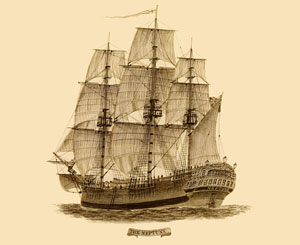
The First Fleet sailed from Portsmouth, Hampshire on May 13 1787, and consisted of eleven ships, led by Captain Arthur Phillips. Aboard were around 1487 people, including 778 convicts (192 women, 586 men). They travelled 24 000 km (15 000 miles) across the sea for 252 days.

On January 26 1788, the ships sailed into Port Jackson, which Phillips called “the finest harbour in the world” – an opinion many have shared since. They anchored in a sheltered place they called Sydney Cove, after British Home Secretary, Lord Sydney.

Life was very difficult in the new colony, and punishments could be extremely harsh. Convicts were basically slaves, mostly used on public works, but also assigned to individuals as a personal labour force.

The names of the convicts were those common in Britain in the 18th century, with names from the Bible being often used. Rather than cover historically famous convicts, I chose people for their names, giving a rather random selection of ordinary people and their unremarkable fates.

[All convicts’ names can be found here. Information on convicts from the First Fleet Database].

WOMEN

Deborah (Elam/Ellam/Elias)

At the age of 20, Deborah was found guilty of stealing 36 shillings worth of clothing, and sentenced by the court in Chester to seven years transportation. She sailed to Australia on the Prince of Wales. She married a fellow convict and brought a complaint against him; it was judged to be “trivial” and she received 25 lashes in punishment. The couple had seven children and have many descendants. Deborah died in 1819, “universally respected by her numerous friends and acquaintances”. The name Deborah means “bee” in Hebrew, and in the Old Testament Deborah was a prophetess, judge, advisor and warrior. The Song of Deborah, which she is said to have composed, may be the earliest Hebrew poetry we know of. Deborah didn’t rank in Australia until the 1940s, and peaked in the 1960s at #12. It left the Top 100 in the 1980s and hasn’t ranked since the 1990s.

Dorothy (Handland aka Dorothy Gray)

Dorothy made her living as a dealer in old clothes. In her early 60s, she was found guilty of perjury at the Old Bailey and sentenced to 7 years transportation. She sailed to Australia on the Lady Penrhyn. Dorothy is believed to be the oldest convict, and despite her age, she survived the voyage and returned to England when she had completed her sentence. Dorothy is the English form of Dorothea, from the Greek meaning “gift of God”. There are three saints named Dorothea, one of whom we call Saint Dorothy. A legendary virgin martyr of the 4th century, said to be of surpassing beauty, her cult spread across Europe in the Middle Ages. The name Dorothy was #2 in the 1900s and 1910s, and remained Top 100 until the 1950s. It has been unranked since the 1980s.

Flora (Lara/Larah, aka Laura Zarah)

Flora is thought to have been Jewish. She was found guilty of stealing a mahogany tea chest and money to the value of 5 shillings, and sentenced by the court in Westminster to seven years transportation. She sailed to Australia on the Prince of Wales. She was described in the court records as being of an evil disposition; she married in Australia and left the colony in 1801. Flora was the Roman goddess of spring, married to the west wind, Zephyr; her name is from the Latin for “flower”. Flora is the scientific term for all plant life. Flora was first used as a personal name in France, and it’s especially famous in Scotland, because of Jacobite heroine Flora MacDonald. Flora has never been Top 100 in Australia – it peaked at #112 in the 1900s, and left the charts in the 1950s.

Lydia (Munro, aka Letitia Munro)

At the age of 17 Lydia was found guilty of stealing material to the value of 20 shillings. She was sentenced to death by the court in Kingston-upon-Thames, which was later commuted to 14 years transportation. She sailed to Australia on the Prince of Wales. The convict records show that she was the victim of a sexual assault and attempted rape by another convict. She married, and she and her husband went to Tasmania where they raised a family of eleven children; they have numerous descendants. She died in 1856. Lydia of Thyatira is a character in the New Testament, regarded as the first convert to Christianity in Europe. She was a successful merchant who was baptised by St Paul and became a deacon in the early church; she is considered a saint by several denominations. Her Greek name is after the place name Lydia, an area of the ancient world now part of modern Turkey. Lydia has charted almost continually without ever hitting the Top 100. It peaked in the 1900s at #137, disappeared from the rankings in the 1930s and ’40s, and is currently #322.

Rachel (Earley/Early/HurleyHarley/Arrly)

At the age of 25 Rachel was found guilty of stealing tea and silk worth 3 shillings, and sentenced by the court in Reading to seven years transportation. She sailed to Australia on The Friendship, and spent time in irons onboard, for the twin crimes of “theft and dirtyness”. As a convict, she once received 10 lashes for not obeying orders. She married twice, and had a daughter, but was left by both husbands; she has living descendants. She died in Tasmania in 1842. In the Old Testament, Rachel was one of the wives of Jacob. Her name is Hebrew for “ewe”, perhaps with connotations of purity and submissiveness, although in the Bible Rachel did literally take care of her father’s sheep. Rachel is said to have been of overwhelming beauty, and Jacob loved her best of his wives. She was plagued by infertility issues, but managed to give birth to Joseph and Benjamin, her husband’s favourite children. Unfortunately, she died in childbirth, and her tomb is still a place of pilgrimage. The name Rachel has charted almost continually since 1900, dropping from the rankings during the 1940s. It peaked in the 1970s at #19, and is currently #118.

MEN

Barnaby (Denison/Dennison/Deneson)

At the age of 28 Barnaby was found guilty of “intent to rob”, and sentenced by the court in Bristol to seven years transportation. He sailed to Australia on the Alexander. According to the convict records, he was once sentenced to 50 lashes for “singing loudly at an improper time”, and became a night watchman. He died in 1811. The name Barnaby is a medieval English form of Barnabas. In the New Testament, Barnabas was a companion of St Paul and fellow missionary. His name was Joseph, but when he converted from Judaism to Christianity he was given the name Barnabas, which is a Greek form of Aramaic, and can be translated as “son of prophecy” or “son of encouragement”. There are many literary characters named Barnaby, most notably Dickens’ eponymous Barnaby Rudge.

Cooper (Handy/Handley/Henley)

Cooper made his living as a weaver. At the age of 33 he was found guilty of assault and highway robbery to the value of 20 shillings and sentenced to death by the court in Salisbury. This was commuted to seven years transportation, and he sailed to Australia on the Friendship. Cooper was held in a hulk at Dunkirk before he left, and at one point managed to escape during an uprising, but was recaptured. His report says that he behaved “remarkably well” otherwise. Not long after his arrival in Australia, Cooper was killed by Aborigines while gathering greens. Cooper is an English surname referring to someone who makes barrels as their occupation. Apart from being a popular name, Cooper is well known in Australia as the surname of the family who owns Cooper’s Brewery in South Australia. The name Cooper first joined the charts in the 1990s and peaked in 2009 at #4. It’s currently #7.

Ferdinand (Dowland/Dowlan/Doolan)

Ferdinand was a dustman. At the age of 32 he was found guilty of stealing a horse worth 30 shillings. He was sentenced to death at the Old Bailey, commuted to seven year’s transportation, and sailed to Australia on the Scarborough. He died in 1827. The name Ferdinand is from the Spanish form of a Germanic name meaning “daring journey”. Brought to Spain by the Visigoths, it was used amongst the royal houses of Spain and Portugal, and through them became common in the Hapsburg family, rulers of the Holy Roman Empire. One of its most famous namesakes is Ferdinand Magellan, a Portuguese explorer whose expedition was the first to circumnavigate the globe (although Ferdinand himself did not survive the voyage). Ferdinand is also a character in Shakespeare’s play The Tempest; a prince who is shipwrecked on Propsero’s island, and falls in love with his daughter Miranda.

Ishmael (Colman)

At the age of 32 Ishmael was found guilty of stealing woollen blankets worth 14 shillings, and sentenced to seven years transportation by the court in Dorchester. Ishmael was held in a hulk at Dunkirk before sailing, where he was described as “decent and orderly”. He died after only 16 days at sea on the Charlotte; the report from the ship’s doctor says that his death was brought about through his long confinement before the trip, which had brought about “low spirits and debility”. Ishmael is a name from the Bible which is translated as “God has heard”. In the Old Testament, Ishmael was the son of Abraham and his wife’s handmaiden, Hagar; Ishmael and his mother are two Biblical characters who get a raw deal, being cast into the wilderness to fend for themselves and not receiving any inheritance from Abraham. According to tradition, he is the father of the Arabic people, and is considered such in Islam, Judaism and Christianity, although this isn’t historically accurate. The prophet Muhammad traced his bloodline from Ishmael, and he is one of the prophets of Islam. In literature, Ishmael is the brooding narrator of Herman Melville’s famous novel, Moby Dick.

Job (Hollister)

At the age of 21 Job was found guilty of stealing tobacco and sentenced to seven years transportation by the court in Gloucester. He sailed to Australia on the Alexander. When he completed his sentence, Job left the colony and migrated to Vancouver Island in Canada. Job is another Old Testament character who has a miserable time. A righteous man, God allows Satan to take away his wealth, his children and his health in an effort to tempt him to curse his Creator. He never does so, although he is aggrieved by the process, and spends a lot of time wondering why all these dreadful things keep happening to him. The story ends happily, with God rewarding him many times over, but with no reasonable explanation for his treatment. Although the tale bears all the hallmarks of an allegory on the human condition, Job is regarded as a prophet in Judaism and Islam, and is given a saint’s day in several Christian denominations. In line with the narrative, Job’s name is translated as “hated, persecuted”.

Image is of The First Fleet in Sydney Cove, January 27, 1788 by John Allcott (1938). Painting held by the National Library of Australia.

Famous Name: Elvis

14 Saturday Jan 2012

Posted by A.O. in Famous Names

≈ 12 Comments

Tags

famous namesakes, honouring, Irish names, Latin names, mythological names, name history, name meaning, saints names, surname names, UK name popularity, unisex names, US name popularity

This article was first published on January 14 2012, and substantially revised and re-posted on September 14 2016.

Famous Festival
On January 11, the 20th annual Elvis Festival kicked off in the country town of Parkes, west of Sydney – an annual celebration of Elvis Presley’s life and music. For five days in the second week of January, the population of Parkes is swelled by Elvis impersonators, women with big hair, and people wearing blue suede shoes. There are parades, contests, dancing, singing, hip swivelling, and a mass renewal of wedding vows performed by a celebrant in an Elvis costume.

The festival began in 1992, when a small group of local Elvis fans decided to hold a festival on the day of the star’s birthday, January 8.  The next year the festival attracted 200 people from around the country; by 2005 they came in their thousands, by 2007 it had been extended to five days, and now there are more than a hundred events, and the town’s population of 10 000 more than doubles during the Elvis Festival.

The townspeople were originally lukewarm on the Elvis Festival idea. Parkes is the proud owner of an observatory, which has at times assisted NASA on space missions (as fictionalised in the movie The Dish), and had always seen itself as devoted to science and research. An Elvis Festival seemed a bit frivolous.

However by now Parkes has fully embraced the festival, and the whole town gets into the fun by dressing up and decorating the buildings. It’s one of the mayor’s roles to dress as an Elvis impersonator and meet the train from Sydney, where all the similarly-attired fans have travelled together.

People flock here from all over the globe to come to the self-proclaimed Elvis Capital of the World. It injects millions into the economy of the town, and in 2007 they set a record for the most number of Elvis impersonators in one place.

In 2017 the Festival will celebrate its 25th birthday and the theme will be Viva Las Vegas.

Name Information
Elvis Presley was one of those performers lucky enough to have been given such a distinctive name that he had no need to choose a stage name. He was named for his father Vernon, whose middle name was Elvis.

Elvis is an Anglicisation of the Irish name Ailbhe, said like Alva: the meaning is not known for sure, but may derive from the Gaelic albho, meaning “white” – it is also Anglicised as Albus, the Latin for “white”. The name Ailbhe could be given to either sex, and in Irish legend there is a female warrior and follower of Finn McCool named Ailbhe.

A male example of the name is Saint Ailbhe, nearly always known as Saint Elvis. He was a 6th century bishop venerated as one of the four great patron saints of Ireland. Saint Ailbe’s legend is quite fairy-tale – cast out by his royal father (like Oedipus), he was raised by a she-wolf (like Romulus and Remus), and at the end of his life voyaged by ship to the Otherworld (like King Arthur going to Avalon). There is a Welsh village named St Elvis in the saint’s honour, as he is said to have baptised Saint David, the patron of Wales, in this area.

The English surname Elvis does not seem to be derived from the Irish name, and is probably a variant of the surname Elwes, which comes from the female name Heloise or Eloise.

Elvis has been used as a name since perhaps the 18th century, and in Ireland seems to have been used as a female name, although it wasn’t common (today Ailbhe is a popular name for girls in Ireland). However in England the name was mostly masculine, suggesting that there the surname was the primary influence.

The name Elvis went on to become most commonly used in the United States, and was usually a boy’s name. Despite the feminine origin of the surname, it probably sounded like male names such as Alvis and Alvin, giving it a masculine feel.

In Australian records Elvis was nearly always given to girls in the late 19th and early 20th centuries which makes sense considering our strong Irish heritage. It also fit in with turn-of-the-century name trends for girls, such as Alva and Elva. Once Elvis Presley became famous in the 1950s, the name virtually disappeared from records as a girl’s name.

In the US, the name Elvis has charted on and off in the Top 1000 for boys since the late 19th century, becoming more established there around 1910. Before Elvis Presley became famous, its highest peak was #584 in 1919, and it was #900 in 1935, the year Elvis Presley was born.

The name Elvis went off the charts around the time Elvis Presley began his career in 1954, but returned in 1955, so the star did affect the name’s popularity. Elvis peaked in 1957 at #312, the year after Presley released number one hits such as Heartbreak Hotel and made his film debut in Love Me Tender – female fans screamed with excitement non-stop during the movie, even though it had quite a serious plot and a sad ending.

The name Elvis last charted in the US Top 1000 in 2011. Last year in the US there were 180 baby boys given the name Elvis, and numbers are fairly stable.

In the UK, the name Elvis has charted since the 1990s, and the name made the Top 1000 in the early 2000s, peaking at #761 in 2003, and again in 2008 when it made #943. It rose steeply last year, and was back on the Top 1000 at #873.

In Australia, Elvis is not a common name, but I generally see two or three examples of it as a baby name per year – enough to convince me it isn’t a rare name either, and probably has a similar popularity to the UK. A famous Australian with the name is former mixed martial artist Elvis Sinosic.

Elvis has two other musical namesakes. One is British star Elvis Costello, who was born Declan MacManus, and the other is American folk singer Elvis Perkins, the son of actor Anthony Perkins (Elvis Perkins was born the year before Elvis Presley died). Costello’s manager chose the stage name Elvis in reference to Presley, while Anthony Perkins was an Elvis fan.

Elvis, if you forget about its most famous namesake for a moment, sounds like a vintage name ready for revival, complete with fashionable V. And yet it never can be separated from Mr Elvis Aaron Presley. The name will always conjure images of white satin bodysuits covered in rhinestones, brilliantined dark hair, and a heart-stopping smile.

Even though Elvis is not a rare or unusual name, it’s still something of a bold choice as it’s likely to elicit some strong opinions. But you’ll have to tell the naysayers you’d like a little less conversation about it, because you can’t help falling in love with the name Elvis. It’s a truly royal name because it belongs to the one and only king, baby!

POLL RESULTS
Elvis received an approval rating of 42%. 35% of people thought the name was too closely associated with Elvis Presley, although 9% thought it was either handsome or cute. Only one person thought the name Elvis sounded redneck.

(Picture shows Elvis impersonators at the Parkes Elvis Festival, with the Observatory in the background)

Famous Names: Tully and Yasi

07 Saturday Jan 2012

Posted by A.O. in Famous Names

≈ 8 Comments

Tags

Australian name trends, created names, cyclone names, famous namesakes, Fijian names, Game of Thrones names, Irish names, locational names, name history, name meaning, names of rivers, nature names, pen names, rare names, Roman names, surname names, tree names, UK name popularity, unisex names, US name popularity

This blog entry was first posted on January 7 2012, and revised and republished on August 31 2016.

TULLY
On January 3, the town of Tully in Queensland celebrated the upgrade of its famous Golden Gumboot, which was damaged by Cyclone Yasi nearly a year ago. The tourist attraction is a 7.9 metre (26 feet) high gumboot, painted gold, built to commemorate the town’s 1950 highest recorded annual rainfall level of 7.9 metres (310 inches), earning Tully the distinction of being Australia’s wettest town.

When the Golden Gumboot was re-opened, it had received a fresh coat of paint and a new viewing platform. Fittingly, it rained heavily throughout the ceremony.

The town of Tully is named after the nearby Tully River, which received its name from Surveyor-General William Alcock Tully. William Tully was originally from Dublin, and arrived in Hobart as religious instructor on a convict ship in 1850 before embarking on a career of conscientious public service.

Tully is an Anglicised form of an Irish surname, originally MacTully, and having a host of variants, which is often derived from tuile, the Gaelic word for “flood”. Another theory is that it has been mistranslated from toile, meaning “will” (as in the will to keep going). However, some Tullys are so convinced of the first interpretation that they have hyper-Anglicised their surname to Flood.

The meaning of “flood” is very appropriate for the name of a river, and a town famous for its sogginess. In Game of Thrones, the Tully family is one of the Great Houses and as it is the principal house in the Riverlands and their ancestral home is Riverrun, perhaps George R.R. Martin also had the Irish surname and meaning in mind.

Tully has been used as a personal name since the late 18th century. Although the name can be found in early records from Ireland, it seems to have been more frequently used in the United States.

One inspiration for it may have been the Founding Father Alexander Hamilton, who wrote patriotic pamphlets under the pen name Tully – in his case, a reference to the Roman philosopher Marcus Tullius Cicero, whose name was occasionally Anglicised to Tully. The Tullia took their surname from the legendary Roman king Servius Tullius; the name is so ancient we do not know its meaning.

Tully has never been a common name. Last year in the US there were 8 boys named Tully with no girls listed with the name since 2013. In the UK the name has been in sporadic use, and in 2014 there were 4 baby boys named Tully. No girls are listed as having been given the name since 2009.

In Australia I have seen a roughly equal number of boys and girls with this name, and the name may be more evenly unisex here than elsewhere. One boost to the name for girls is women’s basketball champion Tully Bevilaqua, and after the attractive but controversial Tully Smyth competed on Big Brother in 2013, I heard many Australian parents refer to Tully as a “girl’s name”. Perhaps more importantly, it fits with the Australian trend for female names with a T-L pattern, such as Talia, Tilly, and Tallina.

YASI
The town of Tully was one of the worst affected by Cyclone Yasi, which hit the coast of northern Queensland early in the morning on February 3 2011. The town suffered extensive damage to its main street, and the area’s banana crops were completely flattened. Because Cyclone Yasi originated in Fiji, it was a Fijian cyclone forecaster called Misaeli Funaki who chose its name.

If you think naming a baby is difficult, spare a thought for the meteorologists who name cyclones. The cyclone had to start with Y, and nobody could think of an appropriate name for either gender.

So Mr Funaki suggested Yasi, which is the Fijian word for “sandalwood”. It didn’t have a history as a personal name in Fiji, but with no other candidates, his nomination was accepted by the ruling UN body. And so a new name was created.

Sandalwood is a tree with fragrant wood native to Asia and the Pacific. Australia has a sandalwood industry; the tree’s oil is used to make incense, soaps and cosmetics. Its antibacterial properties make it excellent as a skin cleanser, and Australian Aborigines eat its fruit as a bush food. Sandalwood is also used in the rituals of several eastern religions.

Yasi is neither used for boys or girls in Fiji. The cyclone forecasters were looking for a male name when they chose it, but they often resort to unisex names, and probably meant Yasi to be one. It’s commonly said to rhyme with Darcy, but seems to be more correctly pronounced YAH-zee.

During Cyclone Yasi, one doctor was apparently very keen for all babies born during the cyclone to be named Yasi, but there is no record of anyone following his advice. However you can find people around the world with the name Yasi, mostly female – perhaps a short form of names such Yasmin.

These are two short unisex names important to Australia’s history, especially connected with Queensland, rain, and storms. Tully is uncommon, but not unheard of, while Yasi is a true rarity, but not unusable.

POLL RESULTS
Tully received a very good approval rating of 70%. 46% of people thought it was a good name, while not one person hated it. Yasi was far less popular, with an approval rating of 22%. 53% of people weren’t keen on the name, and only one person loved it.

(Photo shows the Golden Gumboot in Tully, Queensland)


← Older posts
Newer posts →

Enter your email address to follow this blog

Categories

Archives

Recent Comments

A.O.'s avatarwaltzingmorethanmati… on Zarah Zaynab and Wolfgang…
Madelyn's avatarMadelyn on Zarah Zaynab and Wolfgang…
JD's avatardrperegrine on Can Phoebe Complete This …
A.O.'s avatarwaltzingmorethanmati… on Rua and Rhoa
redrover23's avatarredrover23 on Rua and Rhoa

Blogroll

  • Appellation Mountain
  • Baby Name Pondering
  • Babynamelover's Blog
  • British Baby Names
  • Clare's Name News
  • For Real Baby Names
  • Geek Baby Names
  • Name Candy
  • Nameberry
  • Nancy's Baby Names
  • Ren's Baby Name Blog
  • Sancta Nomina
  • Swistle: Baby Names
  • The Art of Naming
  • The Baby Name Wizard
  • The Beauty of Names
  • Tulip By Any Name

RSS Feed

  • RSS - Posts

RSS Posts

  • Celebrity Baby News: Melanie Vallejo and Matt Kingston
  • Names from the TV Show “Cleverman”
  • Can Phoebe Complete This Sibset?
  • Zarah Zaynab and Wolfgang Winter
  • Baby, How Did You Get That Name?
  • Celebrity Baby News: Media Babies
  • Celebrity Baby News: Adelaide Crows Babies
  • Celebrity Baby News: Chris and Rebecca Judd
  • Names at Work: Name News From the World of Business and Employment
  • Celebrity Baby News: Sporting Round Up

Currently Popular

  • Celebrity Baby News: Mick and Angie Molloy
  • Rare Boys Names From the 1950s
  • Girls Names From Stars and Constellations
  • The Top 100 Names of the 1940s in New South Wales
  • Girls Names of Australian Aboriginal Origin

Tags

celebrity baby names celebrity sibsets english names famous namesakes fictional namesakes honouring locational names middle names name combinations name history name meaning name popularity name trends nicknames popular names saints names sibsets surname names twin sets unisex names

Create a free website or blog at WordPress.com.

Privacy & Cookies: This site uses cookies. By continuing to use this website, you agree to their use.
To find out more, including how to control cookies, see here: Cookie Policy
  • Subscribe Subscribed
    • Waltzing More Than Matilda
    • Join 517 other subscribers
    • Already have a WordPress.com account? Log in now.
    • Waltzing More Than Matilda
    • Subscribe Subscribed
    • Sign up
    • Log in
    • Report this content
    • View site in Reader
    • Manage subscriptions
    • Collapse this bar
 

Loading Comments...