• About
  • Best Baby Names
  • Celebrity Baby Names
  • Celebrity Baby Names – Current
  • Celebrity Baby Names – Past
  • Featured Boys Names
  • Featured Girls Names
  • Featured Unisex Names
  • Links to Name Data
  • Waltzing on the Web

Waltzing More Than Matilda

~ Names with an Australian Bias of Democratic Temper

Waltzing More Than Matilda

Tag Archives: controversial names

Famous Names: Heston and Tex

10 Wednesday Dec 2014

Posted by A.O. in Famous Names

≈ Comments Off on Famous Names: Heston and Tex

Tags

American names, birth notices, code names, controversial names, english names, famous namesakes, historical records, locational names, middle names, name history, name meaning, name popularity, name trends, names of American states, Native American names, nicknames, Old English names, rare names, screen names, surname names, UK name popularity, unisex names, US name popularity

653922-f8a752f2-67cc-11e4-b8fc-0b9f02c7ac0d

In 2014 Melbourne was named the world’s most liveable city by the Economist Intelligence Unit for the fourth year in a row. Their annual survey rates 140 cities out of 100 in healthcare, education, stability, culture and environment, and infrastructure, and Melbourne received 97.5 overall, with perfect scores in healthcare, education, and infrastructure.

To celebrate Melbourne’s continuing success, I thought we’d look at two names that have recently made the news there. Melbourne is not only a very cultured city, it’s also rather quirky, so I picked a couple of cultured, quirky guys.

HESTON
Heston Blumenthal is a multi award-winning British chef at the forefront of the “New Cookery”. Inspired by the playful nature of historic British cuisine, he follows a rigorously scientific approach to cooking, and has unleashed on an appreciative public such delicacies as snail porridge, chocolate wine, and bacon and egg ice cream.

Well known from his television shows, Heston has also been a celebrity chef on MasterChef Australia, been a guest at food festivals in Australia, and you can also buy his products through Coles (maybe you have already purchased one of his Christmas puddings). A great admirer of Australia, Heston has told Britons of Aussie food trends they should copy, including charcoal chicken, Tim Tams, quality beef, street food, and good coffee [article expired].

Early this year it was announced his triple Michelin-starred restaurant The Fat Duck, recognised as the best in Britain, will be temporarily relocated to Melbourne’s Crown Casino next February. He made a savvy move taking The Fat Duck to Melbourne, which has a marvellous foodie culture. The tasting menu is $525 per person (not including drinks), making The Fat Duck the most expensive eatery in Melbourne, more than twice as pricey as its current premier restaurant, Shannon Bennett‘s Vue du Monde.

Despite this hefty price tag, demand was so strong that a ballot system was introduced, with potential patrons having to register before the end of October. Unfortunately some scammers managed to hack into the ballot system, and are now scalping reservations for up to $1000 (you still have to pay for your food on top of that). However, never fear people with more than $1500 to spend on one meal, after six months the restaurant will morph into Dinner by Heston Blumenthal.

Heston is an English surname which comes from a place name; originally a Saxon village, Heston is now a suburb of west London. One of its claims to fame is that British prime minister Neville Chamberlain flew from Heston Aerodrome to Germany in 1938 for uselessly appeasing talks with Adolf Hitler. Naturalist Sir Joseph Banks, who discovered so many species of Australian plants and has the banksia flower named after him, is buried at St Leonards church in Heston.

Heston is usually thought to mean “enclosed settlement” in Old English, because it was part of an area surrounded by forest and woodland. For the same reason, another theory is that it meant “brushwood farm”.

The surname is strongly associated with Hollywood legend Charlton Heston, who starred in films such as The Ten Commandments, Ben-Hur, and Planet of the Apes. Born John Charles Carter, and known as Chuck or Charlie, he created his screen name by combining his mother’s maiden name, Charlton, with his stepfather’s surname.

Heston Blumenthal (who wasn’t rapt with his name as a child) asked his mother if he had been named after Charlton Heston, but she replied that she simply liked the name. When asked about the origins of his name, Blumenthal joked that perhaps his parents had a night out in London and parked at Heston Services (a motorway service station). The headline on the front cover of The Times was Top Chef Named After Parents’ Love of Motorway Services, requiring many apologies from Heston to his mum and dad.

Heston may be unusual, but it is by no means unique, being found thousands of times in historical records going back to the 16th century. There are a few examples of Heston being used as a first name in Australian records, although it is more common in the middle.

It’s a surname name for boys which is is rare yet on trend, and seems pretty cool, although I do think it will instantly remind everyone of the chef. Just like Mrs Blumenthal, you may be required to repeat that you just liked the name. Heston has also highlighted another issue with his name – American actress Tina Fey told him it translates as “shit on you” in Greek, so this is a name which does not travel well, at least not to Greece.

TEX
Tex Perkins is an Australian rock star, best known for fronting The Beasts of Bourbon and The Cruel Sea, but part of many other innovative musical acts. Recently he threw his hat in the ring as an independent candidate for the marginal seat of Albert Park in last month’s state election. His single policy? To get funding for the Palais Theatre in St. Kilda, a heritage-listed concert venue which needs a $40 million refurbishment.

Having gained the sitting Labor candidate’s promise of partial funding if he was elected, Tex directed his preferences to the ALP, then told people not to vote for him, but for Labor instead, and on election day, his How to Vote card instructed them to place the ALP first on the ballot paper. That’s taking self-effacement to a new level. His plan worked – Labor was elected, both in Albert Park and across the state. Let’s hope they honour their promise to the Palais. (Tex still got more than 1000 votes).

Tex is a nickname which is short for Texas, the US state. The state’s name comes from a Native American word in the Caddo language, tejas, meaning “friends, allies”. It was the name the Spanish called the Caddo, and the land they lived on, in today’s East Texas.

There is a Texas in Australia too, a town in southern Queensland. It is said that the name came about because of a territorial dispute between the owners of the land and some squatters – once the legalities were sorted out, the owners humorously called their land Texas because the United States and Mexico had a dispute over Texas, settled by the Mexican-American war. The town of Texas has featured in several country music songs, including one by James Blundell, who has spent quite a bit of time there.

The nickname Tex can be given to someone from the state of Texas, but can also be taken as a code name, and is a favourite for people with a cowboy, country, or Western persona, such as country music stars, cowboy actors, and rodeo promoters.

British soldier Keith “Tex” Banwell was the son of an Australian soldier, and lived in Australia for a few years as a child. A World War II hero who acted as General Montgomery’s double, he helped the Dutch Resistance, and was taken prisoner a few times, spending several months in Auschwitz after refusing to betray his friends. A character straight out of an adventure novel, Tex was his wartime code name.

Tex Morton (born Robert Lane) was a country music pioneer in New Zealand and Australia, and had a career that lasted from the 1930s to the 1970s. Dubbed the Singing Cowboy Sensation, the New Zealand-born yodelling whipcracker and sharpshooter performed at the Grand Old Opry and was a major contributor to the Australian country music scene. Tex Perkins (born Gregory Perkins) followed this lead, as he began in cowpunk, and has taken a Johnny Cash tribute show on the road.

Tex was in the US Top 1000 around the 1940s, but is now a rare name – only 11 boys were named Tex last year, although a further 11 were named Texas, perhaps called Tex on an everyday basis. It’s even less common in the UK, where less than three boys (maybe none) have ever been named Tex, although 19 girls (a meteoric rise) were named Texas, and maybe have Tex as a nickname.

In Victoria, 6 boys were named Tex in 2012, and it’s a name I see fairly regularly in birth notices; to me it seems as if the numbers might even have risen. Perhaps Tex Perkins is helping the name along, although I don’t know if any have actually been named in honour of the rock star. Tex is a great little nickname name, with a cool X-ending like Max, Rex, or Fox. It has a bit of a cowboy feel to it, although Tex Perkins makes it seem a bit rockstar too.

Two cool, charismatic boys names that are a little out of the ordinary – but which one do you prefer?

POLL RESULTS
Both Heston and Tex received approval ratings of 40%, but more people loved the name Tex.

(Picture shows Tex Perkins outside the Palais Theatre; photo from the Herald Sun)

Name News: Changing Names and Sharing Names

04 Thursday Dec 2014

Posted by A.O. in Names in the News

≈ 1 Comment

Tags

adult name changes, African names, birth notices, changing a child's name, Congolese names, controversial names, gender reassignment name changes, name meanings, name social groups, social media, unisex names

254164-9e56e8e0-34b8-11e4-b602-27137950fdd4

Elizabeth No More  

It’s not often that an entry in the birth notices of the newspaper is reported in the media, but one in Brisbane’s Courier Mail this week has gone viral and made the news section of KIIS FM’s website. It retracts the name given to the child nineteen years ago, and informs the world of their new one. Here’s the full text, which is accompanied by a photo:

A retraction – Bogert –

In 1995 we announced the arrival of our sprogget, Elizabeth Anne, as a daughter. He informs us that we were mistaken. Oops! Our bad. We would now like to present, our wonderful son – Kai Bogert.

Loving you is the easiest thing in the world. Tidy your room.

The message of unconditional love is warming hearts, while name nerds must be excited about a new way of relaying name information.

He’s No Longer Harry

Another name change story from the AFL’s website. Brazilian-born Collingwood star Harry O’Brien has reclaimed his birth name at the age of 27, and from now on will be known as Heritier Lumumba. When he was nine, he had his surname changed to his stepfather’s surname of O’Brien, but has decided to revert to his biological father’s Congolese surname. He explains:

The name Heritier means the inheritor or the heir … the inheritor is the inheritor of the Lumumba name and the name Lumumba is a very famous one in Africa, in particular the Democratic Republic of Congo.

Heritier has found connecting with his original name quite empowering, and feels that it is more truthful to go back to where he started. His team mates have been supportive, and are gleefully anticipating hearing the commentators pronounce his name.

Same Name, Different People

Do you know someone who has the exact same name as someone famous? One of my uncles has the same name as a prominent businessman in his city, and he has had to get used to hearing his name on radio and TV advertisements. And once at the airport he obediently trotted over to the front desk as requested by the loudspeaker, only to find the message wasn’t for him after all, but for the other man. By the time they got it sorted out, he had missed his flight.

A few months ago, news.com.au had a feature on ordinary Australians who have the same name as celebrities. Apart from everyone thinking it must be new information for you (“Did you know you have the same name as Jessica Simpson?”), the main drawback seems to be how difficult it is to get noticed online, as your social media profiles and websites get sent to the back of the queue by the sixteen billion jagillion hits for your more famous namesake.

The main perks were the ability to get through to absolutely anyone on the phone due to the star power of their name, and to get good tables at restaurants. In two cases, the ordinary person met or had contact with their celebrity namesake, and got an extremely frosty reception, or were forced to change their name professionally – apparently celebs don’t like us common folk “stealing” their names!

A common theory is that people’s names will influence their destiny – the old Your daughter won’t be a doctor if you call her Candy Starr routine. That does of course call into question why everyone named Catherine Middleton isn’t married to a prince – shouldn’t everyone with the same name have the same destiny? On the other hand, there are occasionally a few intriguing parallels between the famous and not-so-famous.

People with Embarrassing Names

Kerry Parnell from the Sunday Telegraph muses over all the people in the world whose name, which seemed so normal to their parents when they wrote it on the birth certificate, attracts unwanted attention or ridicule. She’s talking about people like Isis Leskien, who was mentioned in a previous bout of Name News, and found her name is now frowned upon. Kerry notes she knows a parent of another Isis who has changed her daughter’s name.

Then there’s the Harry Potters, the Justin Biebers, and the Edward Snowdens of the world – talking of sharing your name with someone much more famous than you, sometimes for reasons you don’t want to be associated with, especially when proffering your passport. And the people whose name is perfectly reasonable in their own country, but once they travel abroad, find that Kim Dong-Suk, Mario Turdo, or Argelico Fucks is greeted with sniggers.

Kerry herself had problems with her name when she emigrated from Britain to Australia twenty years ago, and discovered to her surprise that she now had “a man’s name”, thanks to the very powerful and famous businessman Kerry Packer. Kerry wonders if a Sydney doctor named Kerri Parnell is ever embarrassed by sharing her name.

Ms Parnell has brisk advice for those saddled with such names – change it or own it. She obviously decided on the latter course.

They All Have the Same Name

And then there’s people who share the same name, and love it. The first Shirley Club was formed in Western Australia in 1996, with others following their lead nationally and worldwide. The ABC reported that the Port Augusta Shirleys held their twice-annual luncheon in October, with a dozen ladies named Shirley meeting at a local hotel.

They know only one child named Shirley in Port Augusta, so understand that the club has a definite shelf life. However, perhaps in the future there will be an Emily Club, or an Ava Club to replace them. By the way, only women ever seem to start these clubs – I have yet to hear of a group of men forming the Happening Harolds or the Brian Brigade. Why is this?

(Photo shows two Kate Middletons – can you spot the difference?)

Interesting Girls Names From the 2014 Birth Announcements

30 Sunday Nov 2014

Posted by A.O. in Name Themes and Lists

≈ 2 Comments

Tags

Arabic names, Biblical names, birth notices, celebrity baby names, controversial names, Disney names, epithets and titles, famous namesakes, fictional namesakes, flower names, French names, German names, germanic names, Greek names, hebrew names, Indian names, Latin American names, Latin names, locational names, mythological names, name history, name meaning, names from ballet, names from films, names of businesses, names of cocktails, nature names, nicknames, plant names, rare names, Roman names, saints names, Sanskrit names, Spanish names, surname names, unisex names, yoga names

ArtworkGraphic19PurpleRobe

I’m always on the look-out for unusual names in the birth notices, and here are a dozen that are little used, but have intriguing histories. If you are looking for a rare yet genuine name, but fear choosing something too strange, you can take heart that these names have all been recently used by real life Australian parents.

Anjali
Sanskrit name meaning “divine offering”, from the word anj, meaning “to honour, to celebrate”. The Añjali Mudrā is a gesture of respect used in India as a greeting, where the palms join over the heart. If you go to yoga classes, you may greet each other with an Añjali Mudrā; it’s also part of several yoga positions. Anjali is quite a common name in India, and you may know the name as that of the wife of Indian cricket star, Sachin Tendulkar. A pretty Indian name that works very well in English-speaking countries, it is usually pronounced UN-juh-lee, although English-speakers may prefer an-JAH-lee.

Cataleya
Latin American form of cattleya, a type of South American tropical orchid with large, showy flowers. The orchid is named after English horticulturist William Cattley, who was the first European to successfully bring one into bloom. His surname comes from Catley in Herefordshire, meaning “wildcat wood”. Readers of Marcel Proust may recall that in Swann’s Way, the courtesan Odette wore a cattleya as decoration on her gown one evening, and her lover Swann removed it for her. As one thing led to another, they used cattleya as a private word between them for lovemaking. Cataleya was the highest-rising girls’ name in the United States last year, rocketing into the Top 500 from nowhere. The reason is the 2011 action film Colombiana, where the heroine is the assassin Cataleya, who leaves a cattleya as her calling card. Exotic and with a tough girl namesake, it is pronounced kah-tah-LAY-uh.

Damaris
In the New Testament, a woman named Damaris is mentioned as a convert of Saint Paul in Athens. Very little is known about her, although it is assumed she was a woman of high social status, but she is recognised as a saint in the Orthodox faith, and there is a street named after her in Athens. Her name is a matter of debate: the most popular theory is that is from the Greek word damalis, which literally means “heifer”, but is understood as “young girl”. Another is that it is derived from damar, the Greek word for “wife”. Once fashionable in 17th century England, this is a little-used biblical name that has gained modern glamour by American swimsuit model Damaris Lewis. The name is pronounced DAM-uh-ris.

Esperanza
Spanish form of the Latin name Sperantia, meaning “to hope”; esperanza is the Spanish vocabulary word for “hope”. The name got some publicity in 2010 because of Campamento Esperanza (“Camp Hope”), set up in Chile by friends and relatives after a cave-in at a mine; many weeks later their prayers were answered when all 33 miners were rescued. The following year, jazz singer Esperanza Spalding was named Best New Artist at the Grammy Awards. The name also has a motherly vibe, for Esperanza is the wife of Zorro, and mother of his beloved daughter Elena in The Mask of Zorro, while the mare who gives birth to the stallion Spirit in the animated movie is named Esperanza. Another famous mum is Oscar Wilde’s mother, who wrote under the pen name Speranza. Esperanza is a cool name that’s unusual, but not unfamiliar.

Farrah
Variant of Farah, a unisex Arabic name meaning “joy”. The name is well known because of the glamorous 1970s actress Farrah Fawcett, who passed away a few years ago. Farrah Fawcett posed for an iconic photograph wearing a red Speedo swimsuit, so there is an Australian connection to her. More recently, Farrah King from the hip hop outfit Cherish has given it fresh publicity. Soft and pretty, Farrah is an Arabic name which works well cross-culturally.

Fauve
Modern French name, which is pronounced to rhyme with the word mauve. Fauve literally means “wild beast” in French, referring to beasts of prey, and especially the big cats, such as lions and tigers. The word has a very artistic heritage, because in the early twentieth century, les Fauves were a group of modern artists who were known for their bold use of bright colours; they got their name because their work was criticised as looking like something a wild beast would produce. Henri Matisse is one of the most famous of this group. However, fauve has another meaning in French, and that is “yellowish-brown” – a tawny lion colour which would suit someone with dark blonde hair. Fauve is an uncommon name in France, and a rare one here, although not unheard of. It’s very daring, but also on trend.

Jerusha
In the Old Testament, Jerusha was the daughter of a high priest, and a queen of Judah, the wife of King Uzziah. Uzziah was considered one of the greatest rulers of the kingdom, but he became too proud, and began to usurp the role of the priests. Struck down with a disfiguring skin disease, he was replaced by his son Jotham, who is listed as one of the ancestors of Jesus in the New Testament. The name means “possession” in Hebrew, in the sense of something precious, and is said jeh-ROO-sha. A literary namesake is the teenage girl in the children’s book Daddy Long-Legs: she goes by the name Judy, although Roo would be a very Australian nickname.

Odette
French name which is a pet form of the Germanic names Oda or Odilia. These names may both be feminine forms of names which became the German name Otto, meaning “wealth”, although Odilia might instead mean “fatherland”. The name is forever associated with swans, because Princess Odette is the White Swan in the ballet Swan Lake; a sweet, gentle girl, she has been transformed into a swan, and can only take human form at night. Only true love can break the spell, but thanks to nefarious scheming by the baddies, Odette’s story ends in tragedy. Odette is a dated name in France, but to English-speakers, sounds glamorous and romantic. The Disney movie The Swan Princess, based on the ballet, makes it more accessible as well.

Persephone
In Greek mythology, Persephone was the daughter of the agriculture goddess Demeter, and she is central to one of the oldest myths. Legend says that Demeter kept her daughter hidden away from the other gods, so the two could live in companionship with nature. Hades, the god of death, fell in love with Persephone, and one day when she was gathering flowers, he kidnapped her and took her to live in the Underworld as his wife. Demeter was so grief-stricken that she neglected the earth, and nothing would grow: seeing that people were starving to death, Zeus demanded that Persephone be returned. However, Persephone had eaten a few pomegranate seeds in the Underworld, and having tasted its food, was obliged to spend several months of the year with Hades. While Persephone is underground, Demeter mourns for her, and it is winter: when she returns in spring, life is renewed. This ancient myth of death and rebirth comes from the Near East: many rituals and mystery traditions are associated with it, with special significance for girls and women. The name Persephone is interpreted as “female thresher of corn”, because she is an agricultural goddess, but another theory is that her name means “bringer of death”, as she is goddess of the Underworld. The Greeks had so many forms of her name that it would seem they had trouble pronouncing it, suggesting that her name was pre-Greek; it is said per-SEF-uh-nee. Beautiful and elaborate, primal to the human urge for life everlasting, this would be a wonderful choice for someone who thought that Penelope had become too popular to use.

Reeva
Variant of Riva, a pet form of Rivka, modern Hebrew form of the familiar name Rebecca. This comes from the Hebrew word ribhquh, which literally means “a connection”; it can thus be understood as “joining together, securing”. Reeva is also used as a name in India, a variant of Reva, which is Sanskrit for “one who moves”, and often translated as “swift, agile”. It is one of the epithets of Rati, the Hindu goddess of love. The name came into the public eye in a shocking way when South African model Reeva Steenkamp was shot and killed by her boyfriend, world renowned paralympian Oscar Pistorius, now serving a prison sentence for culpable homicide. Due to the notoriety of the high-profile legal trial, Reeva became the fastest-rising girls’ name in England and Wales last year. Reeva fits in with popular names like Ava and Eva, but the very public tragedy of Reeva Steenkamp’s death may make some parents uneasy about using it.

Sephora
Greek form of Zipporah, variant of the Hebrew name Tzipporah, meaning “bird”. In the Old Testament, Zipporah is mentioned as the daughter of the priest Jethro, and the wife of Moses. When Moses fled Egypt after killing an Egyptian man, he took refuge in the desert country of Midian, on the Arabian Peninsula. When Zipporah and her sisters went to water their flocks, they were driven off by shepherds who wanted the water for themselves, and Moses went to their defence. Moses ended up living with Jethro and working for him, and was given Zipporah in marriage. Zipporah had problems with the in-laws, because Moses’ sister Miriam criticised him for marrying a dark-skinned woman, but she was struck down with leprosy in punishment, showing that God approved of the marriage. Sephora is more popular in France than elsewhere, because of the Parisian cosmetics company of that name, but this lovely name isn’t common anywhere.

Vesper
Roman form of the Greek name Hesperus. In Greek mythology, Hesperus was the personalification of the Evening Star (the planet Venus as seen in the evening); his half-brother Phosphorus was the Morning Star. Vesper can be intepreted as “evening, supper time, west”, and Vespers is the name for the evening prayer service in the Christian church. You may know the poem Vespers by A.A. Milne, about Christopher Robin saying his nightly prayers: it was made part of the minature library collection for Queen Mary’s Doll House. Although a rare name in real life, Vesper has had several outings in the world of fiction. Vesper Lynd was James Bond’s lover in Casino Royale, played by Eva Green in the 2006 movie; her parents gave her the name because she was born on a “dark and stormy night”. The famous “shaken not stirred” martini that Bond invents is named the Vesper after her. Vesper has been picked used as a celebrity baby name – one is the daughter of American rock musician Sam Farrar, whose parents are Australian.

POLL RESULTS
The public’s favourite names were Persephone, Odette and Vesper, and their least favourite were Cataleya, Damaris and Jerusha.

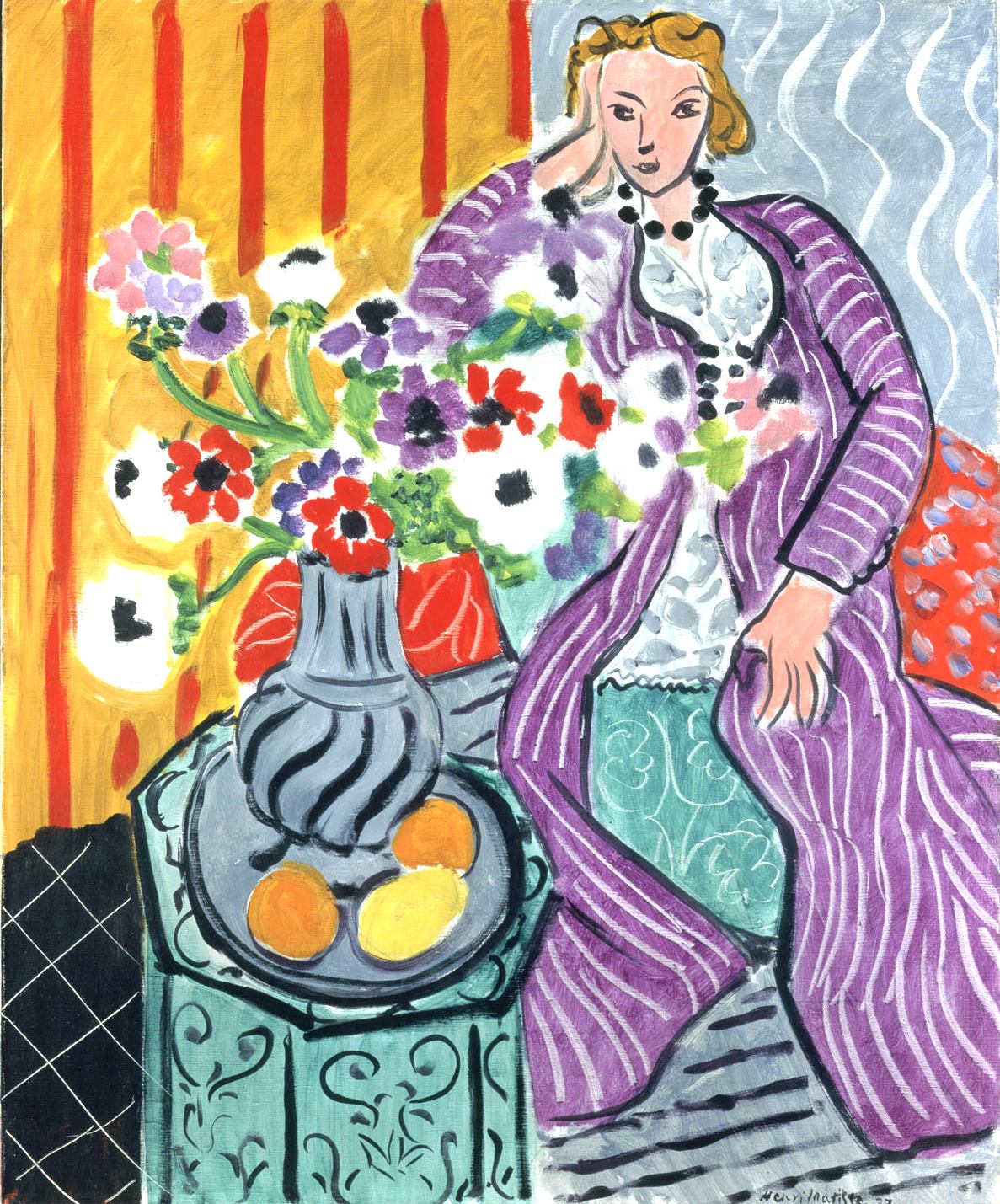
(Picture shows Purple Robe and Anemones by Fauvist Henri Matisse – 1937)

Famous Name: Caleb

19 Wednesday Nov 2014

Posted by A.O. in Famous Names

≈ Comments Off on Famous Name: Caleb

Tags

animal names, baby name books, Biblical names, controversial names, famous namesakes, fictional namesakes, hebrew names, modern classics, name history, name meaning, name trends, nicknames, popular names, saints names, tribal names

148170-a35f84fa-ca7d-11e3-9aee-4ab1c4ff1b91

Duckbour Caleb James Shang, known as Caleb, or by his Chinese name Lee, or the nickname “Charlie”, was one of the more unlikely heroes of World War I. Quiet, soft-spoken and shy, the slightly-built Queenslander from far north Cairns was 170 cm tall and weighed 51 kg. Furthermore, as the son of a Chinese-born father and Australian-born mother, nobody expected him to even enlist, as only those of European ancestry were considered eligible for military service at this time, and it was unusual for people of Asian ancestry to join the armed forces.

Yet both Caleb and his brother Sidney enlisted in 1916, and in 1917 Caleb joined the 47th Battalion in time to join heavy fighting in Flanders on the Western Front. He later fought on the Somme during the heaviest attack ever faced by Australian soldiers, and after his battalion was disbanded due to severe casualties, he served in the 45th Battalion during the Battle of Amiens. Here he was wounded, and evacuated to England before being sent back to Australia when the war was over.

Caleb was a runner, signaller, and scout, tirelessly running messages and bringing supplies at all hours, signalling while exposed to the enemy, constantly volunteering for dangerous missions into enemy territory, and attacking snipers in broad daylight. The runner’s job was one of the most dangerous on the Western Front, and had a terrifying casualty rate, yet for most of his war service, Caleb got through these perilous situations without a scratch.

Caleb’s outstanding endurance, contempt for danger, gallantry, skilful resourcefulness, and devotion to duty inspired those around him, and earned him the admiration of both the officers and men. The first Australian soldier of Chinese descent to be decorated, the most highly decorated Chinese Australian soldier of World War I, and the most highly decorated Queensland soldier of his time, he received the Distinguished Conduct Medal twice, and was awarded the Military Medal.

When he returned home to Cairns in 1919, Private Caleb Shang received a hero’s welcome, with 3000 people turning out to jubilantly greet him on the wharf at dawn. The mayor was there, as were the Returned Soldiers League, and the Cairns Citizen Brass Band played See the Conquering Hero Comes. The Cairns Post raised a subscription fund to start him off in civilian life, and more than £45 was raised by the townspeople.

During World War II, Caleb served with the Volunteer Defence Force in Cairns; during his service he suffered several head injuries, which may explain why he later spent time in a psychiatric hospital. In the 1940s, there was heightened anti-Asian feeling due to the war against Japan, and Caleb was sometimes the target of racist slurs, as few people knew of his distinguished war record and volunteer service. In 1943, he attended his only Anzac Day parade, apparently in response to the racism he encountered during World War II.

According to Caleb’s sister Alma, he never talked about the war to his family. In 2002, Caleb’s daughter Delta, then in her 70s, described her father as reserved, modest, understanding, kind and gentle, speaking very little about his war service. She could not guess what motivated him to enlist, but knew that her father loved a challenge.

Caleb Shang’s story is not completely unlike that of Caleb in the Bible. According to the Old Testament, Caleb was one of twelve spies sent out by Moses into the land of Canaan. Each spy was the head of one of the twelve tribes of Israel, and Caleb represented the tribe of Judah. Ten of the spies reported back that it would be impossible to conquer the land, but Joshua and Caleb brought back encouraging reports to Moses. Because of Caleb and Joshua’s courage and faith, they were the only two ancient Israelites allowed to reach the Promised Land, and Caleb was granted lands around Hebron, now in Palestine.

There is another Caleb mentioned in the Bible, the great-grandson of Judah. Jewish tradition says these two Calebs are the same person, which would explain why Caleb was the head of the tribe. However, biblical scholars find this unlikely – in fact, they are not even sure that Caleb the spy was an Israelite by birth, as the Bible indicates he was a Kenizzite, from a desert tribe. He might have been accepted into the tribe of Judah, and if so, becoming its head would have indicated someone of really superior ability. That’s more impressive than just inheriting the role from great-granddaddy.

Bible historians believe the story of Caleb represents the movement of a clan which invaded Palestine from the south, settled around Hebron, and became gradually absorbed into the tribe of Judah. According to Bible genealogies, the Calebites were descendants of Esau, twin brother to Jacob, so were closely related to the Israelites, and natural friends and allies. (Nabal, the grumpy first husband of the prophetess Abigail, was a Calebite). The Bible story is a way to explain how a non-Israelite desert people became part of the tribe of Judah.

The original Hebrew spelling of the name Caleb is identical with the Hebrew word kelev, meaning “dog”. Animal names are not unusual in the Old Testament, although nobody knows for sure why Caleb might have been called this. Considering his non-Israelite origins, it’s possible that his name was non-Hebrew, and just sounded like the Hebrew word for dog.

However, some scholars think it may have been given to indicate his original tribal totem as an ethnic signifier; if so, the totem would have referred to the Canaan dog. This is a breed of pariah dog which has existed since biblical times, and is one of the oldest breeds of dog in the world. The Old Testament makes several references to these dogs, both wild ones roaming in packs through the desert, and those which worked alongside humans. The Canaan dog is modern Israel’s national dog.

Canaan dogs are strong, athletic, agile and healthy, with a well-developed survival instinct. Highly intelligent and naturally defensive, they make excellent watch dogs, who bark readily as a warning. They are not aggressive towards humans, being cautious and even docile, and remain strongly attached and loyal to their owners. They are still used as sheep dogs by the Bedouins.

For a tribe to take the Canaan dog as their totem, they would have seen themselves as survivors in the harsh desert – not fighters ready to attack, but willing to defend their territory. Baby name books are generally reluctant to admit the meaning of “dog” to Caleb, and often gloss it as “faithful” or “devoted to God”. Although you can see the Caleb from the Bible story as having canine faithfulness, the original tribal totem seems much more likely to indicate a people tough enough to get through anything.

Caleb has a long history as a Christian name, because a 5th century king of Axum (around modern-day Ethiopia) was named Kaleb; he is considered a saint in the Orthodox tradition. Caleb has been used as an English name since at least the 16th century, and became much more common after the Protestant Reformation (Kaleb has been used almost as long by English-speakers, but not so widely).

A fictional namesake is the hero of William Godwin’s radical 18th century novel, Things as They Are, or The Adventures of Caleb Williams. A raging commercial success, the book was both condemned as dangerous anarchist propaganda, and glorified as an inspiring work of genius. Another is Caleb “Cal” Trask from John Steinbeck’s East of Eden, portrayed on film by James Dean. There have been many other Calebs in fiction, right up to the present, with Pretty Little Liars, and Divergent.

Caleb has charted since the 1970s, when it debuted at #443. It rose steeply until joining the Top 100 in 1996 at #83, but has never been higher than #50. Currently it is #72 nationally, #71 in New South Wales, #95 in Victoria, #66 in Queensland, #61 in Tasmania, where it was one of the fastest-rising boy’s names of last year, and #78 in the Australian Capital Territory.

This is a handsome modern classic – one of the Old Testament biblical names for boys which sounded fresher and more exotic than the familiar Bible classics. Despite being popular for many years, it has remained relatively stable in the bottom half of the Top 100, making it a safe choice. Perhaps the meaning has dogged its footsteps, but I can’t really see any problem as dogs are our beloved companions, known for their beautiful, faithful natures. Cal, Cale or Cabe can be used as nicknames.

POLL RESULTS
Caleb received an excellent approval rating of 84%, making it one of the highest-rated names of 2014. People saw the name Caleb as a modern classic with plenty of history (30%), strong and masculine (19%), and handsome or cute (13%). However, 9% thought it was too popular. 15% of people thought the possible meaning of “dog” wasn’t a problem, as dogs are faithful, smart, and loving, while 6% were really bothered by the canine connection. Nobody thought the name Caleb was harsh or ugly.

Name News – War Time Edition

13 Thursday Nov 2014

Posted by A.O. in Names in the News

≈ 1 Comment

Tags

baby name campaigns, birth notices, controversial names, Facebook, famous name trends, middle names, mythological names, name petitions, name trends, names of terrorist organisations, popular names, vintage names

Article Lead - narrow6119138610g24r1410499067381.jpg-300x0

Honour a War Veteran … With a Baby
ABC Radio publicised an interesting new campaign for the centenary of World War I. Martin Hamilton-Smith, the South Australian Minister for Veterans Affairs, has a plan to encourage new parents to give their children the names of World War I Anzac soldiers as a way to honour the country’s war veterans.

Martin’s own parents gave him the idea, because they bestowed on him the middle name of his paternal and maternal grandfathers, one of whom served on the Western Front in World War I, and the other who was a Rat of Tobruk in World War II. Martin followed their pattern, giving his son Thomas the middle name Theodore, which was the name of Martin’s great-uncle who was killed in France, and has been able to pass on to his son stories and letters about Theo.

He is calling on parents to consider giving their baby either the first or middle name of an ancestor who served in World War I, and to post their story to his Facebook page. He encourages those who don’t have a direct ancestor to go to a war memorial and pick the name of a soldier. Girls could be named after a nurse who served in World War I, or after a wife or mother bereaved by the war, or who cared for their returned loved ones, many of whom were left with injuries or post-traumatic stress.

The national secretary of the RSL thinks it’s a good idea, but wonders whether children will find it an honour, or a burden. In his wife’s family, a boy has been named after a great-uncle killed in World War I, and it doesn’t seem to have affected him in a negative way.

ABC Radio pictures the playgrounds of the near future filled with children named Bert, Clarry, Reg, Olive, and Edith, but Olive is already in the Top 100, and vintage names are on trend, so it may be difficult to gauge how much influence this campaign will wield on baby names.

POLL RESULTS
57% of people would consider naming their baby after a World War I veteran. 43% saw it as a way to connect their child to our history, while 14% saw it as a way to honour our heroes.
12% were in favour of the idea, but didn’t think it was suitable for their family.
19% of people were against the idea, with 17% saying that children deserved their own identity and a name all their own, while 2% thought it was too much of a burden.
12% weren’t sure how they felt about the idea.
Nobody thought that names from World War I were too old-fashioned for modern children.

Hot Baby Name Trend, 1914 Style
The Canberra Times had a column looking at the events of a century ago. Back in 1914, British army officer Earl Kitchener was the face of the war effort, and a popular subject for Toby jugs, statuettes, and souvenirs. The newspaper looked at the patriotic column of “Clio” in Melbourne’s humorous Punch magazine:

Do you know the baptismal names of Lord Kitchener?”

Not one person in a dozen does. Horatio Herbert. Perfectly appalling names, aren’t they? Shakespeare was perfectly right, you know, when he pertinently inquired, “What’s in a name?” for after all it is not the name but the man who bears it that matters most; and if Lord Kitchener bore any other names … he would still be the most splendid figure in English history to day.

Horatio Herbert is to be the fashionable name for boy babies this year. It is a curious medical fact that during war there are more boys born than girls, and mothers delight in choosing the name of some great soldier for their sons. And so this year the fad is in full swing. It began last week in the birth columns of a daily paper, when the announcement of the birth of a son was followed by his name in brackets (Earl Kitchener). But most mothers are quite content to drop the title, and bestow on their babies the plain names ‘Horatio Herbert.’

I did not find an Earl Kitchener born in 1914 (he might still be alive, or the story might refer to a British newspaper), but there were several born during World War I, and one born during the Boer War, where Earl Kitchener also played a leading role. I only found one Horatio Herbert, and he was born in the 1870s; however, Earl Kitchener went by his middle name, and there are quite a number of Herbert Horatios, and many Herbert Kitcheners. More than a hundred babies were given Kitchener as their middle name, and quite a few had Kitchener as their first name.

Note: “Clio” does not seem to have realised that there are always more boys born than girls, with an estimated 107 boys born for every 100 girls. There is some backing for their statement that more boys than usual are born during war-time, although the reason why is not known. However an Australian newspaper reported in 1941 that Australia bucked this trend, as numbers of boy babies decreased here during World War I, and the first years of World War II.

POLL RESULTS
People’s top choice to honour Earl Kitchener was to make Kitchener the middle name, with a third of respondents voting for it. The least favourite choice was the name combination Herbert Horatio, which got only one vote.

The First Casualties of War Are … Names
And on a very sombre note, a baby name which has been a casualty of war: Isis. The Daily Mail reports that an eight-year-old girl from Sydney named Isis Leskien has suffered the effects of her name.

I know it seems absolutely stupid (because it is), but since the terrorist group often referred to as ISIS has been in the news, people have been distancing themselves from her family, scared to be associated with her. Her brother Maximus has noticed that when they go to soccer together people stare when they hear the name Isis, and mum and dad Sheridan and Frank remember the days when people used to say, “What a beautiful name”, when they heard the name Isis; alas, not any more.

In the US, a petition has been started by a woman named Isis Martinez to ask media outlets to stop referring to the terrorist organisation as ISIS – it currently has more than 35 000 signatures, and the Leskiens are urging people to sign it. Whether it’s the petition or not, I have noticed that on the news here the organisation is now usually called ISIL or the Islamic State, but that may be slender comfort to people called Isis, as the name ISIS continues to be commonly used elsewhere.

POLL RESULTS
66% of people said they didn’t feel any differently about the name Isis
17% said the name Isis now made them feel very uncomfortable
15% said the name Isis now made them feel a little uncomfortable
2% said the name now made them feel so extremely uncomfortable that they would prefer to avoid someone named Isis

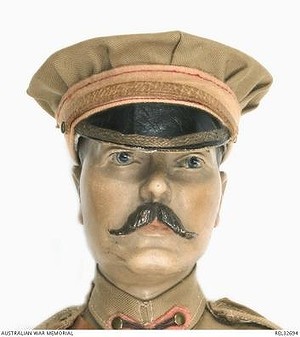
(Photo is of a statuette of Earl Kitchener, from the Australian War Memorial)

Boys Names From Native Australian Flowers

02 Sunday Nov 2014

Posted by A.O. in Name Themes and Lists

≈ 7 Comments

Tags

Australian slang terms, birth notices, celebrity baby names, classic names, controversial names, english names, famous namesakes, fictional namesakes, flower names, Gaelic names, Greek names, honouring, Irish names, Latin names, locational names, mythological names, name history, name meaning, name trends, names from songs, names from television, nature names, nicknames, patriotic names, plant names, popular names, rare names, scandinavian names, scientific names, Scottish names, sibsets, surname names, tree names, underused classics, unique names, unisex names, Welsh names

Millstream-Chichester-National-Park-2013-05-15-003

This follows on from Girls Names From Native Australian Flowers. If you thought it would be hard for me to find floral boys’ names, you were right, and many hours were spent poring over gardening books and field guides. I did notice that several of the names come from plants that are traditionally used as female names, so this might be a way to find a boy’s name which honours a Daisy, Iris, or Lily, for example.

Bailey
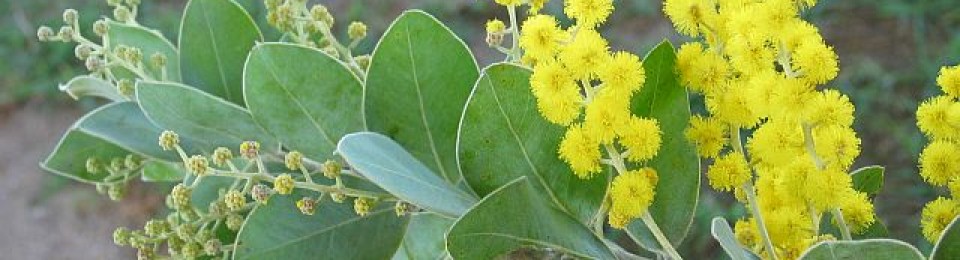
Acacia baileyana is the scientific name for Cootamundra Wattle, a small tree with silvery-green leaves and masses of golden blossom in the spring. It is native to New South Wales around the town of Cootamundra, which holds a Wattle Time Festival every year when the wattle blooms. However, it is extremely adaptable, and will grow almost everywhere – if anything it grows a little too well, and can escape into the bush and become an invasive weed. Its scientific name honours Frederick Manson Bailey, a colonial botanist in Queensland. Bailey is an occupational surname originally designating someone who was a bailiff, the officer executing the decisions of a lower legal court (these days such duties are usually carried out by local councils). It has been used as a personal name since at least the 18th century, and Bailey has charted in Australia since the 1990s, when it was catapulted straight into the Top 50 from almost nowhere, debuting at #32 in 1997. It peaked in 2004-2005 at #27, and is currently #77. Although only popular for boys, Bailey is sometimes used for girls. Bailey provides a way for boys as well as girls to be named after the patriotic acacia tree.

Carex
Carex is the scientific name for grass-like plants commonly known as true sedges. Sedges are common all over the world, and nearly always found in wetlands; if you’ve ever walked around a swamp or lake, sedge is the dense stiff grassy stuff along the edge which might cut your hands if you try to gather it. Although sedges are not usually thought of as terrifically exciting – hardly anyone hopes for a bouquet of sedges on Valentine’s Day – they are vitally important to the ecology of our wetlands. Anyone working on a project to save a wetlands area will need native sedges to plant along lakes and riverbanks to stabilise the soil, and they are also around dams and garden ponds. They bloom in spring; the flowers are tiny, and appear on short spikes. I have seen a boy named Carex in a birth notice, and this is a daring and environmentally aware choice that is on trend for boy’s names ending in -x, like Felix and Max.

Eric
Banksia ericifolia is the scientific name for Heath Banksia, a medium to large shrub with eye-catching orange or red flowers which bloom in autumn or winter. Banksias are famous for their flower spikes; each spike can have hundreds or even thousands of individual flowers, looking overall like a large brush. Banksia ericifolia was one of the original banksia species collected by botanist Sir Joseph Banks around Botany Bay, and the subspecies ericifolia is native to the area around Sydney. It has been adopted as the city’s official plant, and can be seen in parks and public spaces. Heath Banksia is reasonably easy to grow; if your garden is too small for a regular Heath Banskia, there is a dwarf cultivar called “Little Eric”. The eric in ericifolia comes from Ericaceae, the family of heath and heather. The name Eric is an English form of the Scandinavian name Erik, usually translated as “eternal ruler”. Although known in England since the Middle Ages, it didn’t become popular until the 19th century, after the publication of a moralising children’s book called Eric, or Little by Little. Eric is a classic which has never left the charts. It was #21 in the 1900s, and peaked in the 1910s at #19. It didn’t leave the Top 100 until th 1970s, when it hit its lowest point of #149. Since then, Eric has improved slightly in popularity, and remains stable in the 100s – an extremely safe choice.

Evan
The Hawkesbury Daisy (Brachyscome multifida) grows on the east coast; it has matted foliage with the daisy flowers rising above it in mauve, pink, or white, blooming in autumn and winter. They are very popular garden plants, as they are are quite hardy and look great in borders and mass plantings. One of its cultivars is “Evan”, which was named after the son of the founder of the Australian Daisy Study Group. “Evan” is mauve with small flowers and compact foliage, easy to grow, and perfect for rockeries and hanging baskets. The name Evan is the Anglicised form of Iefan, a Welsh form of John. Evan is an underused classic in Australia – it has never left the charts, but never reached the Top 100 either. The highest it has ever been is #103 in the 1980s, and it’s never been lower than it was in the 1900s at #194, making it a handsome, solid choice which hasn’t been out of the 100s for well over a century. Evan is the poster boy for “normal but not overused” names.

Heath
Common Heath (Epacris impressa) is a small shrub native to south-east Australia; it has red, pink, or white tubular flowers which bloom from late autumn to early spring. A pink-flowered form called “pink heath” is the floral emblem for the state of Victoria. Common Heath is tricky to grow in the garden, and perhaps best enjoyed in its natural setting. Heath is an English surname which can refer to someone who lived on or near a heath, or was from one of the many English towns called Heath. Heath is an underused modern classic which has charted consistently since the 1960s without ever becoming popular. It peaked in the 1970s at #101, possibly because of Heathcliff from Emily Bronte’s Wuthering Heights, serialised on television that decade, and a hit song by Kate Bush in 1978. Actor Heath Ledger, born in 1979, was named after Heathcliff, with his sister Kate named after Catherine from the novel. Heath dropped to its lowest level in the 1990s at #279, but picked up the next decade when Heath Ledger’s film career took off, and gained momentum from Dan Ewing‘s performance as Heath Braxton in Home and Away. Heath is a strong, simple nature name which has long been associated with intense, hunky guys.

Orestes
Caladenia orestes is the scientific name for the Burrinjuck Spider-orchid, native to New South Wales. These small, delicate flowers with dark red colouring are listed as vulnerable, so count yourself lucky if you ever find one in the bush. In Greek mythology, Orestes was the son of Agamemnon Greek commander during the Trojan War. Their family had been placed under a curse, so that their line was a rich source of Greek tragedy. Agamemnon sacrificed his daughter Iphigenia to obtain fair winds to Troy; when he got home from the Trojan War, Agamemnon’s wife Clytemestra murdered him in retribution. When Orestes grew into a young man, he murdered his mother to avenge his father’s death. According to legend, Orestes was pursued by the Furies in punishment for his crime, but he got a good lawyer in the goddess Athena, who put his case before the gods and got him acquitted (slightly rigged, as Athena was one of the judges). He was often seen by Greek writers as a dutiful son to his father, and an example of someone forced by circumstances to commit a terrible act. The name Orestes means “of the mountains”, which is the reason for the orchid’s name. An unusual and possibly controversial choice.

Paterson
Patersonia is the scientific name for the Australasian flower commonly called Native Iris. It was named in honour of William Paterson, the first Lieutenant Governor of New South Wales, and most species are from Western Australia. Patersonia has small flowers that are usually mauve, and can look very attractive in the garden. Paterson is a common Scottish surname which means “son of the follower of Saint Patrick“, and the Clan Paterson is from Lowland Scotland. Sir William Paterson founded the Bank of England, but perhaps the most famous episode in the Clan’s history is when Sir Hugh Paterson entertained Bonnie Prince Charlie, and his niece nursed the prince through a bad cold, becoming his mistress and bearing him an illegitimate daughter. The name Paterson could honour our national poet Banjo Paterson, and would naturally shorten to Paddy. A possible issue is another flower, the attractive but toxic purple weed commonly known as Paterson’s Curse.

Smith
Syzygium smithiim is the scientific name for the Lilly Pilly, an ornamental tree which is a member of the myrtle family; its name honours botanist Sir James Edward Smith. Lilly Pilly is native to the east coast of Australia, and has glossy leaves and cream or pink flowers which bloom in spring and summer. However, it is best known for the fruit which follows the flower – attractive edible berries with a deep pink colour. Smith is the most common English surname, and originated in northern England and Scotland. Although it later came to specifically refer to a blacksmith, the word means any craftsman in metal, hence goldsmith or swordsmith, and more generally, any creator, hence wordsmith. Metalworkers have historically been seen as magical in their skill to transform through fire, and there are several smith gods and heroes, such as Vulcan and Wayland; Cain is said to have been the father of metalsmiths. The name always reminds me of J.R.R. Tolkien’s bittersweet fairy tale, Smith of Wooton Major. Smith has often been thought too common a surname to be used as a personal name, but gained recent familiarity through Sex and the City’s handsome Smith Jerrod (real name Jerry Jerrod). Hawthorn’s Sam Mitchell has a son named Smith.

Sturt
Sturt’s Desert Pea (Swainsona formosa) is native to the deserts of inland Australia, and highly recognisable from its striking deep red pea flowers. According to an Aboriginal legend, the flowers sprang from the blood of two murdered lovers and their child. Sturt’s Desert Pea is the floral emblem of South Australia, and is a popular subject for arts, crafts, and decorative motifs. Although it grows in such profusion in the harsh desert, Sturt’s Desert Pea is difficult to establish in the garden. It is named after the explorer Captain Charles Sturt, who recorded seeing masses of the flower during his explorations. The surname Sturt comes from the Old English for a promontory – a raised mass of land with a sharp slope on one side – and this could be given to someone who lived near such a landmark, or from a town named after one. Similar to Stuart, this is a lesser-used surname which is given meaning by the flower.

Tucker
Tuckeroo (Cupaniopsis anacardioides) is an Australasian flowering tree in the soapberry family. It has greenish-yellow flowers which bloom in winter, followed by orange berries in the spring and summer which are a source of food for native birds. Tuckeroo is a popular ornamental tree for gardens which gives good shade and looks attractive all year round, and is often grown along streets in coastal towns of New South Wales and Queensland. The English surname Tucker is an occupational one referring to someone who softened cloth for the wool industry by tramping on it in water; the word comes from the Old English for “to torment (the cloth)”. As an Irish derivation, Tucker comes from the Gaelic O’ Tuachair, meaning “son of the brave one”. Tucker seems problematic as a first name, breaking the rule of “no names that rhyme with rude words”, but it does have a very Australian meaning, as it is slang for “food”, derived from “to tuck in”. Some people might think that’s another problem with the name in Australia. I’m not sure … any takers for Tucker?

POLL RESULTS
The public’s favourite names were Heath, Evan and Tucker, and their least favourite were Carex, Orestes and Sturt.

(Picture shows Sturt’s Desert Pea; photo from Our Naked Australia)

Baby Names That Don’t Always Travel Well

12 Sunday Oct 2014

Posted by A.O. in Naming Issues

≈ 5 Comments

Tags

African names, banned names, brand names, classic names, controversial names, dog names, famous namesakes, fictional namesakes, international slang terms, locational names, names of businesses, Nancy's Baby Names, nicknames, Russian names, Scottish names, slave names, unisex names, Upswing Baby Names

suitcase-man-desert

Last month I had an article on baby names that are widely popular all over the world, and this post is its opposite – a look at some baby names which are common or accepted in Australia, but can be problematic in other countries.

While an international name means that most people understand your name easily, these are names that not everyone are going to immediately “get”. They may need explanation, a thick skin, and in some cases, a nickname or more appropriate middle name to the rescue.

I often see Australians having a laugh at foreigners with “funny” names, so this is a reminder that one day your child could be the foreigner with the funny name!

BOYS

Banjo
It’s the name of our national poet, but let’s face it, it will sound weird to people in other countries.

Connor
Sounds very much like the French word connard, which is an extremely rude insult.

Duncan
In Australia this is an underused classic. However, in many parts of the world, the American company Dunkin’ Donuts makes people associate the name with sugary deep-fried dough. It’s enough for Nancy from Nancy’s Baby Names to consider the name unusable – she’s from New England, which is where Dunkin’ Donuts originated. Dunkin’ Donuts are rapidly expanding through the United States, and sold in many countries around the world. They used to be here too, and I can’t remember the name being an issue – maybe I didn’t eat enough doughnuts.

Hamish
Although popular here for decades, this is a very rare name in the United States, and according to Nameberry, is seen as “redolent of Olde Scotland”. Even Angela Mastrodonato from Upswing Baby Names sees Hamish as much too stereotypically Scottish for American use. In German, Hamish sounds just like the word hämisch, meaning “bitter, spiteful”.

Harry
In many parts of the United States, this name is commonly pronounced the same way as the word hairy. It is enough of a problem that the city of Fort Wayne in Indiana decided not to name a government building, or any streets, after a popular mayor named Harry Baals (Baals pronounced like the word “balls”). However, there is a Harry Ball [baseball] Field in Massachusetts which doesn’t seem to have caused any issues.

Kai
Kai is a common name for boys and girls in many countries of the world – but not New Zealand. Why? Because it’s the Maori word for “food”.

Kevin
This Australian classic that we were happy to elect to high public office seems to be the most internationally despised name, with Germans in particular discriminating against Kevins. They even have a word for it: Kevinism (like racism, but more socially acceptable). In the UK, it’s short form Kev is another word for chav.

Luke
In Russian it sounds the same as the word for man hole.

Ned
In Scotland, ned is very derogatory slang for “thug, lout”, and even in parts of England isn’t viewed favourably (rather in the fashion of Kevin).

Rex
A classic name in Australia, but considered to be a dog’s name in Central and Eastern Europe: in Germany, they cannot seem to disassociate it from German Shepherd star, Inspector Rex. We also have a tradition of dogs called Rex, and Inspector Rex is on here television here too. Go figure.

GIRLS

Allegra
An allergy medication in the United States – it’s sold as Telfast here.

Bebe
In French, this is the word for baby. Comedian Adam Hills has a daughter called Beatrice, nicknamed Bebe, and during this year’s comedy festival in (French-speaking) Montreal, he noted the puzzled and disdainful reactions he received when announcing his daughter’s name (much like here if you told people you’d called your baby, Baby). In Finland, a bebe is a type of cake.

Harriet
Harriet was one of the fastest-rising names of last year. But in Iceland it became a huge problem for one family, with the threat of Harriet’s passport being cancelled. Harriet doesn’t make sense grammatically in Icelandic, so it is on the list of banned baby names. Of course, that only applies to babies born to at least one Icelandic parent – it won’t stop someone named Harriet living in Iceland. However, English people who work in Iceland and have names that aren’t on the official list say their names have made communication very difficult, due to the problems with Icelandic grammar. I suspect that in countries which have official lists of names, anyone with a name that doesn’t make the list might be seen in a negative light, as they won’t have a “real name”.

Jemima
Fashionable Jemima is a “problem name” in the United States, where Aunt Jemima is a highly popular brand of breakfast foods. The image for Aunt Jemima is an African-American woman, originally a stereotyped figure from a minstrel show. Even though the modern icon of Aunt Jemima is quite different, many white Americans still feel uncomfortable about the brand’s racially-loaded history. They may also be discomfited that Jemima was a “slave name” – probably an Anglicisation of one of the many similar-sounding African names. African-Americans seem less conflicted about using the name Jemima, and can even feel positive towards the affirming side of the trademark.

Lola
Means “grandmother” in the Philippines – it’s the opposite problem to Bebe.

London
In Britain this is considered a “weird name”. Well fair enough – imagine if you met an Englishwoman named Canberra Smith! (I think it would be cool, but still weird).

Nikita
Although nearly always a female name here, in Russia and eastern Europe it is a male name. Rocking up and declaring yourself to be a girl named Nikita is the same as a woman in Australia explaining she’s named Nicholas.

Piper
Sounds very similar to the Dutch word pijpen, which literally means “playing the flute”, but is also vulgar slang for oral sex. Apparently sounds enough like it to be readily confused by Dutch speakers.

Pippa
This just entered the Top 100 in Australia, rising since the royal wedding in 2011. However, in Sweden it is a vulgar word for sexual intercourse, and in Italy, slang for masturbation or a hand job. In Poland, the word pipa is pronounced just like Pippa, and means “vagina”; as in English, this word can be used as an insult against a person.

Poppy
In German, Poppy sounds similar to poppen, a vulgar slang term for sexual intercourse. Names with a P-p sound seem to be a bit of an issue.

What names do you know of that might be a problem in other countries?

Perth Suburbs That Could Be Used As Girls Names

13 Sunday Jul 2014

Posted by A.O. in Name Themes and Lists

≈ 5 Comments

Tags

Anglo-Norman names, Anglo-Saxon names, Australian Aboriginal names, controversial names, english names, famous namesakes, French names, Gaelic names, historical records, Irish names, Italian names, Latin names, locational names, Lycian names, middle names, mottos, mythological names, name history, name meaning, name popularity, name trends, names of rivers, nicknames, Old English names, royal names, surname names, unisex names

quinns rocks beach

Aveley
Aveley is a neighbourhood of the town of Ellenbrook – an outer suburb in the north-east which is projected to be a future satellite city. Avely is named after a small town in Essex, where the Belhus estate was located: this stately home was once visited by Queen Elizabeth I, and had grounds landscaped in the 18th century by the famous Capability Brown. One of the early settlers to the Swan River Colony in 1829 was Edward Pomeroy Barrett-Lennard, the grandson of Lord Dacre, who owned Belhus. Edward Barrett-Lennard was assigned more than 13 000 acres in the Swan Valley, and his eldest son George purchased a large tract of land which he named Belhus after the family estate: it is this which eventually became Aveley. The name Aveley is Old English and means “Aelfgyth’s meadow”; Aelfgyth is an Anglo-Saxon woman’s name meaning “elf battle”. Avely is also a surname, and has been in rare use as a personal name since at least the 16th century. Historically more common for males, Aveley fits so well with current trends in female names that it seems more suitable for girls. Pronounced AV-uh-lee, this is a pretty, modern-sounding name with a feminine meaning and interesting history.

Carine
Carine is an affluent suburb 14 km north of the city. The area was once owned by the wealthy Hamsersley family, who came to the Swan River Colony in 1837, and before being developed in the 1960s, it was primarily used for farms and market gardens. The suburb’s name comes from the local wetlands, which are now known as Big Carine Swamp and Small Carine Swamp. Their names are a corruption of Careniup, the Noongar name for the wetlands, which means “the place where bush kangaroos graze”; it has the same origin as nearby Lake Karrinyup. The tranquil wetlands provide a home for rare water-birds and other native wildlife. Carine is already used as a girl’s name, the French form of Carina; it can be said in several different ways, but the Australian Carine is kuh-REEN. You would be hard pressed to find anything more Australian than “kangaroo” as part of a name’s meaning, and this is attractive, although perhaps slightly dated-sounding, due to its similarity to Karen, Caroline, and Corinne.

Floreat
Floreat is an exclusive suburb 8 km north-west of the city, close to beaches and filled with parkland. As well as swanky boutiques, it is also well known for its sporting facilities, including Perry Lakes Stadium, which was used for the 1962 Empire and Commonwealth Games, and has now been replaced with the Western Australian Athletics Stadium. The suburb’s name is Latin for “let it flourish, let it prosper”, which is the official motto for the City of Perth (and has been fulfilled, for the city has grown rich on the back of the mining boom). Floreat has been occasionally used as a unisex name since the 18th century. In Australian records, it has mostly been used as a middle name, and examples from Perth may have been named for the city’s motto. In Australia, Floreat has been more commonly used as a girl’s name, due to its similarity to Florence, which has the same Latin origins and meaning. With Florence now fashionable, and girl’s names ending with a T sound, like Charlotte and Violet, popular, Floreat seems a surprising choice as a name, but not an outrageous one.

Jindalee
Jindalee is a new outer suburb in Perth’s far north. Because development has only just begun, the beaches are almost untouched, and it is surrounded by bush, scrub, and heathland. The name Jindalee is believed to mean “a bare hill” in an unknown Aboriginal language of New South Wales; there is a town of Jindalee in New South Wales, and a suburb of the same name in Brisbane. The name may refer to Eglinton Hill in Jindalee, which provides views of the sea. I only found one person in Australian records with the name Jindalee, and it was in the middle; although he was a man, to me Jindalee seems feminine, and could be shortened to Jinny or Jindy. This is a lively name which seems quintessentially Australian in its flavour.

Kiara
Kiara is a quiet leafy suburb in Perth’s northern suburbs. Its name is from an Aboriginal word for “white cockatoo”, and it is not a Western Australian word, but one recorded in the Coffs Harbour region of New South Wales. The “white cockatoo” in question is probably the sulphur-crested cockatoo, a large, handsome, intelligent, curious, and very loud bird, native to the eastern states and far north of Australia. Australian parents seem to have a great fondness for girls’ names beginning with K, and this name sounds much like Italian Chiara, but with a distinctive Australian meaning. The name Kiara has charted since the 1980s, and first joined the Top 100 in 1999 at #67, peaking in 2005 at #49. It left the Top 100 in 2011, and is currently in the low 100s. It’s no longer popular, but still getting plenty of use.

Leda
Leda is one of the suburbs of the City of Kwinana, a coastal centre in Perth’s far south known as a working-class industrial area. Several of Kwinana’s suburbs are named for ships, and the brig Leda brought settlers to the Swan River Colony in 1830. The name was appropriate, because in Greek mythology, Leda was a queen of Sparta whose beauty attracted the attention of the god Zeus, who seduced her in the guise of a swan. Queen Leda didn’t have any unnatural interest in swans – the god-swan fell into her arms for protection while escaping from an eagle. Swans are one of the few birds which have a penis outside their body, like mammals do, and after this the specifics are left to our imaginations. Some artists and poets have depicted the act as a rape, while others show Leda as not just consenting, but positively enthusiastic. The same night, Leda lay with her husband, and from these biologically confused couplings, she gave birth to two eggs – one of which contained the ravishing Helen of Troy. Helen’s birth was commemorated by her father Zeus, who placed the constellation Cygnus, the Swan, in the sky. The meaning of the name Leda is not known for sure; it may be from the Lycian for “woman, wife”, and is pronounced LEE-duh. Simple and elegant, this is a name from Western Australian history which also references Perth’s Swan River.

Myaree
Myaree is a light industrial suburb 11 km south of the city. Its name is said to come from an Australian Aboriginal word meaning “plant leaves, foliage, greenery” (rather inaptly, given the suburb’s purpose). Myaree has been used as a baby name, although not apparently in Australia: it may have been an Anglicisation of an Arabic girl’s name, or a name created from other name elements. Apart from the pleasant meaning of Myaree, and its multicultural possibilities, in many ways it seems quite on trend, because of popular Maya, trendy Marley, and fashionable Myra. In other ways, it seems slightly dated, because of its similarity to names such as Maree and Nyree. To me it’s rather appealing and contemporary, while not unfamiliar in sound.

Quinn
Quinns Rocks is in the outer northern suburbs of Perth. It was first settled in the 19th century by a family of sheep farmers called the Clarksons, who used it as pasturage. In the 1930s it was a place for seaside holidays, with many people building beach shacks along the coast. It began to be developed as a residential area in the late 1950s, and was declared a town in the 1960s. The beautiful white beach is the suburb’s major feature, and still attracts holidaymakers. The suburb gets its name from an offshore reef, and is believed to have been called after Robert Quin, a 19th century government surveyor who made the first records of the area. Another theory is that it is named after Mick Quinn, one of the Clarksons’ shepherds who had a shack in the area. Why it should be named after this shepherd in particular is not related, and the congruence of names seems most likely. Quinn is a common Irish surname, an Anglicised form of the Gaelic mac Cuinn, meaning “son of Cuinn”. Cuinn (which is Anglicised to Conn) means “head, chief”. The surname’s originator is Art mac Cuinn, a High King of Ireland; according to legend, he and his father Conn of the Hundred Battles, also a High King, had dealings with a fairy woman. The Quins were one of the noble families of Ireland, but the line came to an end a few years ago. Quinn is rising rapidly as a unisex name, and currently seems to be almost equal between the genders, while also performing well as a middle name. Expect to see more Quinns in the future.

Serpentine
Serpentine is a small town on the very fringes of the metropolitan area, 55 km south-east of the city, on the railway line between Perth and Bunbury. The town is named after the nearby Serpentine River, so called because of its meandering course. Serpentine has been used sparingly as a name since the 19th century, and in Australian records is found mostly as a middle name, divided fairly evenly between males and females. Most of the Serpentines were from the Perth area, making me think they were named after the river. Serpentine is a problematic name, because while serpentine means “winding, curving” (like a serpent), it can also mean “crafty, deceitful”. The second meaning is an obvious allusion to the serpent in Genesis, who leads Eve into temptation. While this may give some people the jitters, serpents are also ancient symbols of wisdom and healing, and are often depicted guarding sacred places; a serpent holding its tail in its mouth is a symbol of eternity. In Australian Aboriginal myths, the Rainbow Serpent is a significant deity, symbolising life and fertility. Strong and mysterious, sinuous Serpentine may be easier to bear as a middle name.

Viveash
Viveash is a secluded riverside suburb in the city’s north-west. It is named after Dr Samuel Waterman Viveash, a prominent pioneer who arrived in the Swan River Colony in 1838, and took up farming. Viveash is an English surname whose origins are disputed; it may be Anglo-Norman, and come from the French vivace, meaning “lively, vigorous”. However, because it is pronounced like “five ash” with a V instead of an F at the start, it is often linked to places in southern England called Five Ash Trees. Viveash has been used as a personal name for both sexes, almost exclusively found in the middle position. Examples from Australian records are all from Western Australia, and nearly all from the Perth area, making it likely they were named in honour of Dr Viveash. Viveash is a very unusual name, but is vaguely similar to Vivian and Ashley, while having a distinct sound and feel of its own.

POLL RESULTS
The public’s favourite names were Quinn, Aveley and Leda, and their least favourite were Jindalee, Serpentine and Viveash.

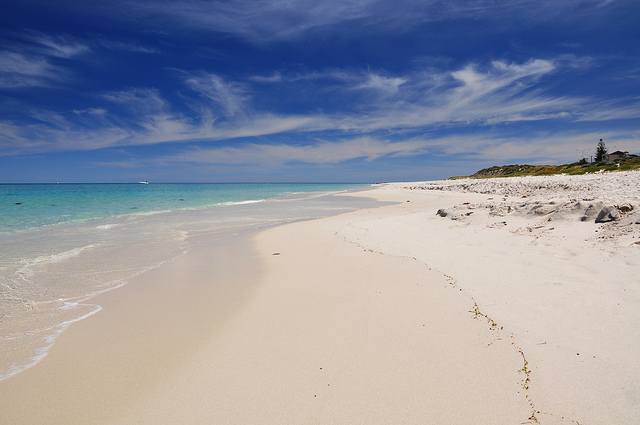
(Photo is of the beach at Quinns Rocks)

Famous Name: Digger

30 Wednesday Apr 2014

Posted by A.O. in Famous Names

≈ 5 Comments

Tags

Australian slang terms, birth notices, birth registries, choosing baby names, controversial names, english names, historical records, middle names, military terms, name history, name meaning, nicknames, vocabulary names


4120733_origLast Friday it was Anzac Day, marking 99 years since the landing at Anzac Cove for the Gallipoli Campaign. One of the enduring military terms from the conflict, still very much in use today, is Digger, to refer to an Australian soldier who has seen active service. More than that, the word is patriotic, symbolising a particular type of Australian-ness that is rugged, resilient, and resourceful.

The word Digger has a relatively long history in Australia, dating to the goldfields of the 1850s to refer to miners. Already it had an aura to it, for the Diggers of the Eureka Stockade were a powerful symbol of grass-roots democracy. A Digger was not only tough enough to thrive in the harsh conditions of the goldfields, he was ready to stand up for his mates and resist oppressive authority. Furthermore, the blue work clothes of the miners which were used to make the Eureka Flag were part of the inspiration for the phrase “true blue Australian” – the working man who fought for his rights.

How the word became used for the Anzacs is a matter of some debate. It is documented that British commander General Ian Hamilton urged the Anzac leader William Birdwood, You have got through the difficult business [of landing], now you have only to dig, dig, dig until you are safe. This advice was handed down through the ranks, and official war historian Charles Bean believed that it was the troop’s dry sense of humour which led them to refer to themselves as Diggers.

Another view is that the word came into use even before Australians reached Gallipoli. A former soldier recalled an occasion when Birdwood addressed the men of the 11th Battalion near Cairo, in preparation for the landings on Gallipoli. Birdwood warned the troops that they had to be good diggers and good soldiers. The soldier insisted that the term caught on from that point, and it seems likely that the impetus to dig and tunnel at Gallipoli made the term more widespread.

Australians must have gained a reputation for their digging, because in 1915 it was reported of Australian soldiers in Gallipoli, They are the best trench diggers in the [British] Army. They work like bullocks, fight like tigers … yet are so cheerful and work together like old pals.

Although Digger may have originated as a military term at Gallipoli, it first came into prominence in 1916 on the Western Front, possibly following a speech by Brigadier James Cannan, commander of the 11th Brigade, about the digging prowess of the 44th Battalion in the trenches of northern France, who were then derisively labelled the diggers. Many of these men had been miners in the Western Australian goldfields before enlisting, so these miners-turned-soldiers may be a direct connection between the use of Digger for miners, and for soldiers.

By mid-1917, Digger was in wide use amongst Australian soldiers, and became the accepted mode of address for the Anzacs. While Australian and New Zealand soldiers called each other Digger, the British called only the Australians Diggers, and the New Zealanders Kiwis. (One soldier wrote home from France: … the name Digger came from the Tommies [British], who think we Australians are all miners or cowboys.)

Digger was already recognised in Australia as a term for miners, and already part of the Australian image. This might explain why Australians so warmly embraced the word, and why it became such a vital part of the Anzac identity.

After the war, the word Digger became part of the Anzac legend, embodying the qualities of endurance, courage, ingenuity, good humour, and mateship. Many Australians who had served in the war were nicknamed Digger, and Prime Minister Billy Hughes was proud that he had been called “The Little Digger” by the troops. There was an entertainment troupe of Australian and New Zealander World War I veterans called The Diggers. They went on to make several “Digger” films, which received poor reviews from the critics, but were popular with audiences, especially in rural areas. It was even suggested in Parliament that that the rank of Private in the Australian Army should be re-named Digger.

Digger can often be found as a name in Australian records, yet rarely as an official baby name. Digger has been commonly used as a nickname, not only by returned servicemen, but on children as well. Despite this, I could only find Digger on a very few birth records, and each time only as a middle name. (There was a baby in the Birth Announcements with Digger as his middle name too).

It’s interesting that while we are apparently very happy to call men and boys Digger, there doesn’t seem much evidence of us putting it down on the birth certificate as a first name. I wonder if parents worry it will seem disrespectful to Australian soldiers or the Anzacs, or if they have even been dissuaded at the birth registry. A little while ago, I received an e-mail from someone who was considering the name Digger for her baby – did they choose the name in the end?

I think Digger seems cute yet masculine as a name, and it shouldn’t be forgotten that it can be used as an endearment, like mate or cobber – nor that the word was in use even before World War I. Some may find the name quite heavily value-laden in Australian society, perhaps too heavily.

I have read this definition of the Digger: “A man for whom freedom, comradeship, a wide tolerance, and a strong sense of the innate worth of man, count for more than all the kingdoms of the world, and the glory in them.” That’s quite a big meaning for a name to carry, but what a magnificent meaning for your son’s name to hold.

POLL RESULT
Digger received an approval rating of 35%. 28% of people thought it was only suitable as a nickname, but 21% saw it as uniquely Australian.

(Photo shows Western Australian miners who enlisted in 1916).

Interview with Alexia Mae at Baby Names from the Bible

23 Sunday Mar 2014

Posted by A.O. in Blog Reviews

≈ 10 Comments

Tags

Anne of Green Gables, baby name blogs, baby name books, Baby Names from the Bible, Biblical names, choosing baby names, Clare's Name News, controversial names, fictional namesakes, honouring, Instagram, pen names, popular names, rare names, US name popularity, YouTube

Interview-PhotoAlexia Mae is the warm and enthusiastic blogger behind Baby Names from the Bible, devoted to all the great names in the Good Book, whether familiar or unusual. I usually allow blog readers to decide which blogger is interviewed, but last month Alexia Mae was kind enough to invite me to be interviewed at Baby Names from the Bible, so this is a return visit – although she would have been chosen next time anyway. Alexia Mae passed her 100th post a month ago, so let’s hope there are many more.

What is your name?

Alexia Mae. I’m the “Dear Abby” of baby names, as Alexia Mae is my pen name.

Have you ever wished you had a different name?

My real one? Oh, yes. It’s not too common a name; it’s only ever made it to #30. But the spelling of it is unique, which catapults it outside the Top 1000 for all time. Add a filler family middle, and the annoyance of people misunderstanding my name, and I begged to be called Alexia as a kid. Fast forward to me needing a pen name … Bob’s your uncle, I had one. Mae is in honour of my grandma. Now that I’m an adult I appreciate my given name more. I was almost a Kasia, which I would have loved, too.

How did you become interested in names?

I blame my name craziness on Shane, my kindergarten crush. He was the ruddy-haired Irish kid with the leather necklace, the dude everyone wanted to be friends with. In a classroom of boring names from the ’80s, Shane stuck out. I suddenly became very aware of people’s names.

When I was thirteen, my mom got pregnant. My brother Aaron and I were close in age, but now I was way older for this new brother, and boy, was I ready to help name the kid! Shot down, but kept on trying. Their choice? Another A name, Andrew. A perfect recipe for my mom to never get our names right. But, after stealing (I mean permanently borrowing) a name book my mom picked up, I came down with full blown name-nuttiness. It’s been downhill ever since.

How did you become interested in biblical names?

That first baby name book I got my hands on happened to be about biblical names. And it was literally four pieces of paper. (Maybe that’s why my parents never got out of the As.) It was small. But it had a big impact. To see the meaning of names, and to be able to go to the Bible and see them used, just blew me away. It was my own “sawdust trail moment” for names. They have proved themselves to be real gems, and have a power in their age and timelessness.

Do you have a favourite baby name book?

The Holy Bible 😉 My email inbox is also swarmed with name people I’m subscribed to, and I rely on Clare’s Scoop for everything else. (That gal needs an award.) [WMTM: She got one! She has a gold ribbon saying her page is one of the most highly-recommended in the Society topic on Scoop].

What inspired you to begin a name blog?

My husband Josiah and I both love the idea of using biblical names for our children. When I was first married I searched for biblical baby name books, and couldn’t find any. Zilch. Zip. Nada. Not even the one that I originally had. Then I began to think about that original name book, and thought it was awfully small compared to the actual Bible. I mean, the Book of Numbers wouldn’t even fit in there, and it’s practically nothing but names.

I kept asking myself, if I can’t find them, who else will? Why is no one celebrating the biblical names I know must exist? So I began logging the names I was coming across for my own use, and I really wanted to share them … and Baby Names from the Bible was born.

Do you have a favourite blog entry on Baby Names from the Bible?

The post that I’m the most proud of is one I wrote a couple of years ago, Why Name Your Baby a Biblical Name? I take a moment to stand on my soap box and talk about why people, even those who aren’t religious, should take another look at baby names from the Bible. Forget about Zerubbabel. How about Junia? Rissah? Ardon? There are names galore for anyone thirsty for a good name.

Are there any other ways to stay in touch with you online?

I’m @NamesDaily on Instagram, and I post names every day, both biblical and not. Instagram has been an amazing experience. I have a growing following of over 2000 people. I’m getting the opportunity first hand to see names that knock your socks off, and some, that well, just don’t. I’m also on YouTube.

Do you have a pet peeve in regard to names?

Yhess. Yoonique namez. If I have to read it more than once to get what name you’re actually trying to say, I’ve got to stand up and get a cup of coffee. It literally makes my skin crawl. Jaycein? I am somebody who has zero adrenaline tolerance for awkwardness in any way, so I have to get up and walk it off. True stuff.

In the name community, I feel sometimes it’s like Eskimos marketing ice to fellow Eskimos who live in the same igloo. I want to find ways to branch out and actually talk to parents who have never even owned a baby name book. I think that’s why I love being on Instagram so much, because it’s exactly that. I enjoy so many people in the baby name community, but I want to find ways to branch out, too. (We need an annual name conference.)

What are some of your favourite names?

Boys: Judah and Josiah, of course. Abel.

Girls: Juniper. Ellowyn. Cassia. Maewyn. I really love Naphtali for a girl, but can’t bring myself to use it because no one would be able to pronounce it or spell it. It’s like Natalie with an F. I’m drawn to biblical names, but I enjoy other names, too.

What names do you dislike?

Delilah. I see the appeal, but I would never use it. The same with Jezebel. That one makes my skin crawl when I hear someone nonchalantly talking about using it. Whether you believe in the Bible or not, the connotation still exists. Jezebel was a murderer, and it would be like naming your child Hitler. I just don’t think you should do it.

What are your favourite names in the US Top 100?

Girls: Biblical – Leah (#33). Other – Harper (#24) and Lillian (#25)

Boys: Biblical – Josiah (#79). Other – Landon (#34)

What are your favourite names in the rest of the US Top 1000?

Margaret (#178) and Judah (#273)

What are your favourite names that don’t currently chart?

Blythe (never charted) and Clive (hasn’t charted since 1935)

What is your son’s name?

Judah David. Our story of Judah’s name is a fun and interesting one, and you can read about it at So There’s This Name ….

If you found out you were pregnant right now, what names would you be considering?

I would be trying to convince Josiah to like Blythe Salomae. We have boys names we like, but like we did with Judah, we’re not telling anyone.

What is something we don’t know about you that you would like to share?

I love the Anne of Green Gables series and have read them probably too much. Tell me Lucy Maud Montgomery wasn’t a name nut. Ludovic Speed? Gilbert ❤ Is this why I love the name Blythe? I will never tell.

What advice would you give someone choosing a baby name?

If you can’t use the one you love, use it anyway. Never, ever settle. Unless it’s Jezebel or Kidneigh Bean, and then I’d say maybe keep looking. Valuable life lessons also apply to names. You are giving your babies the first impression they will have on people. Give them something that makes them proud. Something that makes you proud. And like weak coffee, name regret stinks. I’ll brew down some Starbucks, and you can come over and we can talk more about names!

(Picture shows Alexia Mae with her son Judah; photo supplied by Baby Names from the Bible)

← Older posts
Newer posts →

Enter your email address to follow this blog

Categories

Archives

Recent Comments

A.O.'s avatarwaltzingmorethanmati… on Zarah Zaynab and Wolfgang…
Madelyn's avatarMadelyn on Zarah Zaynab and Wolfgang…
JD's avatardrperegrine on Can Phoebe Complete This …
A.O.'s avatarwaltzingmorethanmati… on Rua and Rhoa
redrover23's avatarredrover23 on Rua and Rhoa

Blogroll

  • Appellation Mountain
  • Baby Name Pondering
  • Babynamelover's Blog
  • British Baby Names
  • Clare's Name News
  • For Real Baby Names
  • Geek Baby Names
  • Name Candy
  • Nameberry
  • Nancy's Baby Names
  • Ren's Baby Name Blog
  • Sancta Nomina
  • Swistle: Baby Names
  • The Art of Naming
  • The Baby Name Wizard
  • The Beauty of Names
  • Tulip By Any Name

RSS Feed

  • RSS - Posts

RSS Posts

  • Celebrity Baby News: Melanie Vallejo and Matt Kingston
  • Names from the TV Show “Cleverman”
  • Can Phoebe Complete This Sibset?
  • Zarah Zaynab and Wolfgang Winter
  • Baby, How Did You Get That Name?
  • Celebrity Baby News: Media Babies
  • Celebrity Baby News: Adelaide Crows Babies
  • Celebrity Baby News: Chris and Rebecca Judd
  • Names at Work: Name News From the World of Business and Employment
  • Celebrity Baby News: Sporting Round Up

Currently Popular

  • Celebrity Baby News: Jacinta Allan and Yorick Piper
  • Celebrity Baby News: Jacinta Allan and Yorick Piper
  • Celebrity Baby News: Craig Thomson and Zoe Arnold
  • The Top 100 Names of the 1940s in New South Wales
  • Celebrity Baby News: Ed Husic and Bridget Tilley

Tags

celebrity baby names celebrity sibsets english names famous namesakes fictional namesakes honouring locational names middle names name combinations name history name meaning name popularity name trends nicknames popular names saints names sibsets surname names twin sets unisex names

Create a free website or blog at WordPress.com.

Privacy & Cookies: This site uses cookies. By continuing to use this website, you agree to their use.
To find out more, including how to control cookies, see here: Cookie Policy
  • Subscribe Subscribed
    • Waltzing More Than Matilda
    • Join 517 other subscribers
    • Already have a WordPress.com account? Log in now.
    • Waltzing More Than Matilda
    • Subscribe Subscribed
    • Sign up
    • Log in
    • Report this content
    • View site in Reader
    • Manage subscriptions
    • Collapse this bar
 

Loading Comments...