• About
  • Best Baby Names
  • Celebrity Baby Names
  • Celebrity Baby Names – Current
  • Celebrity Baby Names – Past
  • Featured Boys Names
  • Featured Girls Names
  • Featured Unisex Names
  • Links to Name Data
  • Waltzing on the Web

Waltzing More Than Matilda

~ Names with an Australian Bias of Democratic Temper

Waltzing More Than Matilda

Tag Archives: birth notices

Famous Name: Rebel

01 Wednesday May 2013

Posted by A.O. in Famous Names

≈ 2 Comments

Tags

birth notices, celebrity sibsets, english names, famous namesakes, historical records, Hollywood names, middle names, name history, name meaning, Old French words, popular culture, royal names, unisex names, vocabulary names

omRebel Wilson seems to be in the papers ever time I open it. Just in the past few weeks, she’s hosted the MTV Awards (and won a couple of them too), attended an official function at the White House, a Vanity Fair party, and a Hollywood première, been chosen to appear in Kung Fu Panda 3, had a glamorous makeover, is tipped to have a sex scene in upcoming Pain & Gain, performed on Late Night, and been interviewed on The View and BET.

Browsing through the headlines, I read that she is funny and wonderful, wows on the red carpet, has captivated audiences everywhere, loves being a gay icon, is now a certified international star, a great dancer and the toast of Hollywood, and it’s a proven scientific fact that she is the greatest living thing on the planet and reviewers wish she could star in every film. I am also reliably informed by some pundit that if you don’t love Rebel Wilson, you’re stupid.

It seems that Rebel has “arrived” in Hollywood, and in the uncertain world of acting, comedy and entertainment, she has gained enough success to be counted as a famous person.

It’s all a long way from her beginnings on Australian television, playing the controlling wife Toula on the SBS comedy Pizza. I could appear very clever by claiming that I always knew that Rebel would make it in Hollywood, but I can’t, because I didn’t. It never crossed my mind, even as I noted that she was a scene-stealer on the show, and by far the funniest thing about the TV special Pizza World.

To be fair, I don’t think anyone else from her early days predicted it either. A maths whiz who went on to study law, she spent a year in South Africa as a Rotary Youth Ambassador. She claims that while suffering hallucinations during a bout of malaria, she saw herself winning an Oscar. After that, she pursued acting, and when she got laughs during a serious performance, realised she had a gift for comedy.

So far, there’s been no Oscar, but she has received an acting scholarship funded by Nicole Kidman, got her big break in Bridesmaids after she wrote and starred in her own TV show, Bogan Pride, and won the MTV Movie Award for Best Breakthrough Performance in Pitch Perfect – past alumni of this award include George Clooney, Jennifer Garner, Isla Fisher and Zac Efron.

Rebel’s parents named her after a girl who sang at their wedding, and Ms Wilson’s siblings are named Ryot, Liberty and Annachi (her brother Ryot and sister Liberty have been contestants on The Amazing Race).

Professional dog showers with a surprisingly conservative streak, the Wilsons gave all their children middle names from English royalty – Rebel’s is after the present queen, and at school she was known as Elizabeth. I recently saw a birth notice for a little Rebel Elizabeth, so maybe this is a name combination which works well.

A rebel is someone who resists or defies authority, often with connotations of doing so violently. The word comes from Old French, and is ultimately from the Latin for “I fight back”.

The name Rebel became much more common in the American southern states after the American Civil War. The soldiers in the Confederate army were known as the Rebels, and personified as Johnny Rebel or Johnny Reb. It could thus be seen as a patriotic name for some Americans, and was given to both sexes, but mostly boys.

In Australia, it appears rarely in the records, mostly in the middle, and is much more common as a girl’s name. There is a female Australian film producer named Rebel Russell-Penfold, and mum Rebel Wylie writes for Kidspot.

Tough baby names like Bandit, Rocket, Blade and Maverick are fashionable, and the classic teen movie Rebel Without a Cause, western TV show The Rebel, and pop song He’s a Rebel give this name a certain retro rockabilly vibe (rebels were clearly a real fad of the 1950s and early ’60s).

Although unisex, it tends to read female in Australia, and the current success of Rebel Wilson only strengthens that. I think it can still work as a boy’s name though – it certainly doesn’t have an ultra-feminine meaning, and The Rebels is a popular name for sports teams, and also a biker club.

If you fancy the idea of having your own little Rebel, it’s a name which is on trend, and a little different without being too strange. The recent success of Rebel Wilson means that most people have heard of it, although some parents may fear that the larger-than-life comedienne could overshadow the name.

POLL RESULT: Rebel received an approval rating of 32%. People saw the name Rebel as unprofessional (19%), ridiculous (17%), and over the top (16%). However, 13% thought it was different and cool. 12% thought Rebel Wilson made the name seem more usable, while 3% were put off the name by the actress.

Waltzing with … May

28 Sunday Apr 2013

Posted by A.O. in Waltzing with ...

≈ 11 Comments

Tags

anagram names, birth notices, double names, famous namesakes, flower names, middle names, month names, mythological names, name combinations, name popularity, nature names, nicknames, plant names, popular names, retro names, sibsets

eucalyptus-flower-bookIt will be May very soon, and whenever that month comes around, it reminds me of one of my favourite Australian authors from childhood – May Gibbs. Born in England, May grew up in Western Australia, and it was while riding her pony around the bush as a little girl that she began writing stories and drawing pictures based on the native flora.

After going to art school, she became a professional illustrator in the early twentieth century, and was most famed for her “gumnut babies” – plump little cherubs scantily dressed in gumnuts, gumblossom and gumleaves. She even produced postcards of the gumnut babies to support the war effort during WW I, and her house was called Nutcote.

Later she wrote stories to accompany her enchanting drawings, the best-known being the Snugglepot and Cuddlepie series. Adults are charmed by the stories’ sense of fun, but for small children, they are filled with adventure and excitement, and can even be frightening, due to the villains of the story, the wicked Banksia Men. Without being sickly or sentimental, the subtle message of the stories is always that we must care for each other, and for the world around us.

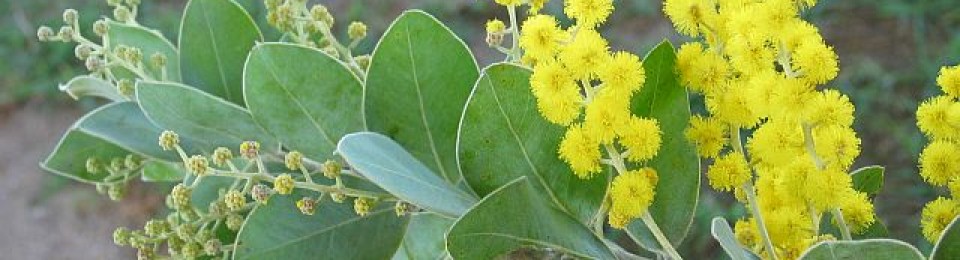
After growing up with May Gibbs’ picture books, it is impossible to walk through the Australian bush and not see it differently; she gave us our own fairy tales and our own mythology of nature. And because many eucalyptus trees flower in autumn (not to mention some banksia species), you can see “gumnut babies” and “banksia men” for yourself in May.

The name May appears to have begun life as a short form of names such as Mary and Margaret, but very soon was associated with the fifth month of the year.

The month of May is generally said to be named by the Romans in honour of the goddess Maia, whose name may mean “greater”. She probably didn’t have a connection to the Greek goddess Maia originally, but the two goddesses became gradually merged into one. Maia was a mother goddess, an earth goddess, and encouraged growth and abundance. May is in the spring in the northern hemisphere, so readily suggests the idea of fecundity.

The poet Ovid said that the month was named for the ancestors, also connected to the word for “greater”; I’m not sure if this was his own idea or one in wide circulation in his day. On the first of May, the Romans sacrificed both to the goddess Maia and to the ancestor spirits who were guardians of the city.

The first of May has quite a history as a day of celebration. In Ireland, it is the Celtic festival of Beltane, which marks the beginning of the summer; this is observed by Neo-Pagans around the world. Related to this is May Day, a European celebration of spring and fertility which often involves dancing around a phallic Maypole decorated in blooms, and choosing a Queen of the May, as if still honouring a spring goddess. In Catholic tradition, the month of May is sacred to the Virgin Mary and the flowering of her spirituality; a continuation of the devotion to floral mother figures.

Another floral connection is the word mayflower, which can refer to several different flowering species, but traditionally is the hawthorn, also known as may, mayblossom, may tree or may thorn. The hawthorn is one of the flowers associated with Beltane, and in Ireland you can make wishes on the maytree during this festival. It is also said that they are inhabited by fairies, especially if you see a lone hawthorn bush out in the wild. To bring us back full circle, hawthorn was sacred to the goddess Maia.

The name May was at its highest popularity in the 1900s, when it was #41 for the decade, and had left the Top 100 by the 1930s. It left the charts entirely between the 1960s and 1980s, but has remained in modest use since the 1990s. Currently it is #557 (11 births) in New South Wales and #489 (10 births) in Victoria.

I should have said in modest use as a first name, because May gets a real workout in the middle position. You can’t read through a few pages of birth notices without seeing name combinations such as Charlotte May, Emma May, Harper May, Pippa May and Zara May – not to mention double names like Gracie-May, Ella-May and Lily-May.

You might say that other names are similarly popular in the middle, such as Elizabeth, Grace and Rose – and Alice is quickly joining their ranks. However, all these names are in the Top 100 and either rising or stable, so they are clearly not being neglected as first names.

Poor May lies in the doldrums, with parents preferring Maya and Mia. Even May’s big sister Mary and anagram twin Amy are much more popular, and April is far more common as a name than the following month.

Yet there is something so simple and sweet about May; it sounds old-fashioned without being the least bit musty. If you would like an underused retro name which still seems fresh and youthful, why not consider rescuing May from the middle, and putting her front, rather than centre?

Name Combinations for May

May Amelia, May Elizabeth, May Kathleen, May Luella, May Sophia, May Victoria

Brothers for May

Charlie, George, Harry, Samuel, Tobias, William

Sisters for May

Alice, Clara, Lillian, Nettie, Rose, Sadie

POLL RESULT: May received an approval rating of 93% – just 1% behind the highest-rated girls name, Layla. 37% of people liked the name May, and 35% loved it.

Famous Name: Thor

17 Wednesday Apr 2013

Posted by A.O. in Famous Names

≈ 2 Comments

Tags

Ancient Germanic names, birth notices, celebrity baby names, historical records, mythological names, name history, name meaning, name trends, Nameberry, names from movies, Old English names, scandinavian names

kinopoisk.ruThe Hollywood movie Thor came out a couple of years ago; last year it was followed by The Avengers, and a sequel will be coming out at the end of this year. The movie character is based on the Marvel Comics superhero, created by the famous Stan Lee, and the films place ancient gods in the modern world, interacting with humans and having spectacular magic vs science showdowns.

The Australian connection to this story is that Thor is played by Chris Hemsworth, who appeared on the blog as a celebrity dad last year, after welcoming daughter India Rose with his lovely wife Elsa. Thor‘s world premiere was held in Sydney.

In Norse mythology, Thor is the god of thunder, lightning, storms, oak trees, strength, healing and fertility. He is a protector of humanity, and the god who makes things holy. He is generally depicted as a large, muscular, red-haired and red-bearded man with fierce eyes, wielding a hammer that can pretty much smash through, well, everything.

Medieval epics describe Thor’s exploits in battle, and his fearsome wrath with anyone who crosses him. He is no steroidal oaf though, and capable of outwitting others and being clever with words; he sits as a judge at the foot of the World Tree. It is foretold that at the world’s destruction, Thor will do battle with his arch-enemy The Great Serpent and slay it, but will succumb to its venom and meet his end.

I think it’s too tempting for us moderns to imagine Thor as some sort of beefcake with anger management problems, but to his worshippers he was a source of strength and protection for their homes and possessions, giving security to family and community, and warding off plague and famine.

As the product of a divine marriage between the sky god Odin, and the earth mother Fjörgyn, he was a potent fertility symbol, and like lightning, he was a conduit between the heavens and the earth. The storms he brought with him watered the fields and made life grow.

Thor was worshipped by Germanic peoples, including those in Anglo-Saxon England, and the Vikings of Scandinavia, but it is from Norse mythology that most of our information about him is gained. His name is derived from an Ancient Germanic word for “thunder”; the Old English form of Thor is Thunor (pronounced THOO-nor), which makes the connection even more obvious.

It is a testament to his vast popularity how many names used in Britain there were that derived from Thor. A few that have survived into modern times, although rare, are Thora, a feminised form of Thor; Thurstan, meaning “Thor’s stone”; and Torquil, meaning “Thor’s cauldron”. His name is also in Thursday, meaning “Thor’s day”.

In Scandinavia the name Thor isn’t uncommon, and is pronounced TOR. Some famous Thors you may have heard of are Norwegian ethnographer Thor Heyerdahl (who crossed the Pacific on a raft named Kon-Tiki), Norwegian cyclist Thor Hushovd, Danish poker player Thor Hansen, Venezuelan human rights activist Thor Halvorssen, and Belgian singer Thor Salden.

Although the name Thor continued to be occasionally used in Britain, it is much more common in the United States, which has had significant migration from Scandinavia. Quite a few people named Thor can be found in Australian records, and most of them have Scandinavian surnames, or emigrated here from Scandinavia.

I recently saw a birth announcement for a baby boy named Thor, born in Tasmania; remarkably there was a Loki announced that same week, and an Odyn the following week.

Not long ago, Nameberry announced Thor was shaping up as one of the hot names of 2013 (along with other mythological names), and at the end of last year, told us that Scandinavian would be the ethnic name group most likely to rise in popularity. Meanwhile Abby’s Nameberry Nine this week pointed out that boy’s names are getting cooler all the time – even her little girl has noticed.

If you are considering the name Thor for your son, it is not only strong and interesting, with an ancient history that plugs in to European culture, but also right on trend.

With the Chris Hemsworth movies in the public consciousness, Thor is a name we’re all more familiar with, and for dads who hanker after a tough cool baby name, they might find it easier to persuade their partners if they have been smitten by Hemsworth’s hunkiness.

POLL RESULT: Thor received an approval rating of 59%. People were divided on the name Thor, with 16% thinking it was unusual, but something we’ve all heard of, while the same percentage thought it was over the top. 11% thought the god Thor gave the name greater substance and dignity, while 8% thought the god made the name seen heavy and oppressive. 7% considered that the movie made the name seem more accessible, while 5% saw the movie as making the name geekier.

Italian Names for Boys

17 Sunday Mar 2013

Posted by A.O. in Name Themes and Lists

≈ 15 Comments

Tags

Austrian name popularity, Belgian name popularity, birth notices, celebrity baby names, Chilean name popularity, Dutch name popularity, english names, ethnonyms, famous namesakes, fictional namesakes, French name popularity, germanic names, Greek names, Hungarian name popularity, Hungarian names, Italian name popularity, Italian names, Latin names, locational names, mythological names, name history, name meaning, name popularity, nicknames, Orlando Furioso, Portuguese names, Roman names, saints names, Scottish name popularity, Shakespearean names, Spanish name popularity, Spanish names, surname names, The Divine Comedy, theological names, tribal names, UK name popularity, unisex names, William Shakespeare

romeo_and_juliet_01Angelo

Angelo is the Italian form of the Latin name Angelus, meaning “angel”. The Angelus is a Christian devotion, which traditionally involves praying three times a day, accompanied by the the ringing of church bells. It was common during the Middle Ages, so the name can be seen as after the prayer as much as after the heavenly creature. Angels are mentioned in the Old Testament as spiritual beings who bring communications from God; the word angel is derived from the Greek for “messenger”. Angels play a much bigger role in the New Testament, where they make several important announcements, including the birth and resurrection of Christ. A famous Italian named Angelo was Father Angelo Secchi, a 19th century astronomer and one of the first scientists to state that the sun is a star. Cricket fans know the name well from Angelo Matthews, the Sri Lankan captain. The name is rarely used in Australia, where angel-type names for boys aren’t common – even though angels are traditionally masculine. However, singer Adele welcomed a baby boy last year, rumoured to be named Angelo, and this may be a help. The Italian and English pronunciation are very similar – AHN-jel-oh and AN-jel-oh.

Dante

Dante is a short form of Durante, the Italian form of the Latin name Durans, meaning “enduring”. Its most famous namesake is undoubtedly medieval Italian poet, Dante degli Alighieri, nearly always known by his first name only. His Divine Comedy is considered the greatest work of Italian literature, and in Italy he is known as il Poeto (“the Poet”), just as Shakespeare is called The Bard in England. He is famous for his adoration of Beatrice, a girl he knew only slightly and who died in her twenties; he plays an important role in the literature of “courtly love”. Dante is a name which seems to be gaining more use in recent years, perhaps because of the number of fictional characters named Dante on TV and in video games. I see this handsome name quite a bit in birth notices, and have met a number of small boys named Dante, from a variety of backgrounds. The Italian pronunciation is DAHN-tay, and this is commonly used in Australia, but I have heard it said DAN-tay as well.

Eduardo

Eduardo is the Italian form of the English name Edward. The name is used in Spanish and Portuguese-speaking countries as well, where it is much more popular than in Italy – it is a Top 100 name in Spain and Chile. Famous Italians include actor, playwright and screenwriter Eduardo De Filippo; songwriter Eduardo di Capua, who composed the famous song O Sole Mio; and quantum physicist and cyberneticist Eduardo Caianiello (all these Eduardos were from Naples). The name is pronounced ed-WARD-oh, with the ward part rhyming with hard rather than horde. Last year, Australian soccer player Vince Grella welcomed a son named Eduardo, and so far it’s the only celebrity baby boy’s name which has been rated as “perfect” by blog readers.

Lorenzo

Lorenzo is the Italian form of the Roman name Laurentius, which means “from Laurentum”; Laurentum was an ancient city in Italy, south of Rome, and its name probably comes from the laurel, or bay tree. Laurel wreaths were used by the Romans as a symbol of victory. The English form of the name is Laurence. One of the most famous Italian namesakes is Lorenzo de Medici, known as Lorenzo the Magnificent. A Florentine ruler during the Renaissance, he was famed for presiding over Florence’s Golden Age, and for being a great patron of the arts. Lorenzo’s grandson also bore his name; he is best known for being the ruler to whom Machiavelli dedicated his practical political handbook, The Prince. Lorenzo has been in the Top 5 in Italy for several years, and is currently #4; it’s also Top 100 in France. The Italian pronunciation is loh-REN-tso, and in English it’s pretty much the same except we say the final syllable -zo. Reality TV star Snooki, from Jersey Shore, welcomed a baby boy named Lorenzo last year. Possible nicknames include Enzo, Ren, Renzo and Zo.

Luca

Luca is the Italian equivalent of the name Luke, derived from the Greek name Loukas, meaning “from Lucania”. Lucania was an ancient district of southern Italy, and the name comes from the tribe of the Lucani who inhabited the area. One theory is that the tribe’s name comes from the Greek word for “wolf”; another that it means “sacred wood” in Latin. A famous Italian with this name is medieval sculptor Luca della Robbia; another is Fra Luca de Pacioli, a mathematician and Franciscan friar who worked with Leonardo da Vinci. You may also know the name from Luca Cordero di Montezemolo who is chairman of Ferrari. Luca is incredibly popular internationally: it is #12 in Italy, and also makes the Top 100 in the UK, Scotland, Austria, Belgium, the Netherlands and France. It has charted in Australia since the 1980s, and joined the Top 100 in the late 2000s; currently it is #79. You will sometimes see Luca described as a unisex name, and that’s because it is also the Hungarian form of Lucia, and is #10 for girls in Hungary. However, the two names are pronounced differently – the Italian boy’s name is said LOO-kah, while the Hungarian girl’s name is said LOO-tsah.

Massimo

Massimo is the Italian form of Maximus, a Roman family name derived from the Latin for “greatest”. There is a very old and noble Roman family named Massimo, and they claim to be descended from the Maximi family of ancient Rome, including the famous general Fabius Maximus. This cannot be proven, as the family history only goes back about a thousand years, but what’s on the record is impressive enough. Extremely rich and influential, great patrons of the arts, they have produced numerous cardinals, ambassadors, politicians and military leaders, and have married into some of the most important royal houses of Europe, so that the family now bears a princely title. Massimo is one of the most common Italian boy’s names I see in birth notices, with Massi the usual nickname. It is pronounced mahs-SEE-mo.

Orlando

Orlando is the Italian form of Roland, a Germanic name meaning “famous land” or perhaps “fame of his country”. According to history, Roland was a Frankish military commander in Charlemagne’s army, responsible for defending France against the Bretons; he died in a skirmish against the Basques after Charlemagne was defeated in a battle against Islamic forces. His death must have captured people’s imaginations, because while history says very little about Roland, legend says much. His life became an epic drama about a great nobleman of royal blood who dies in battle, defending his land and faith from Muslims. Just in case this seemed a bit tame, legend gave him a magic sword and threw in a giant, and the story was a massive medieval minstrel-sung hit all across western Europe. In Italy, he not only appears in Dante’s Divine Comedy, but starred in a whole line of epics as Orlando. The most famous of these is Orlando Furioso (it basically means Crazy Orlando) by Ludovico Ariosto. As the title suggests, Orlando goes doolally from unrequited love of a pagan princess and gallops around the world in a frenzy. There’s wizards and hippogriffs and sea monsters and a trip to the moon involved, and the story was hugely influential in European literature. We know this name well from actor Orlando Bloom, married to Miranda Kerr, and since their wedding I see this attractive name regularly in birth notices. The Italian pronunciation is or-LAHN-do, and the English or-LAND-oh.

Rocco

Saint Rocco is an Italian saint who was born a nobleman but came to Rome on a pilgrimage. Turning up while the city was suffering from a plague, he spent his time tending the sick. When he succumbed himself, he was banished from populated areas, but miraculously provided with water, and a dog who brought him food and licked his wounds, which cured him. Returning home, he was thrown into prison as a spy and died, refusing to reveal his noble identity. However, he was recognised by a cross-shaped birthmark, and canonised as a saint by popular acclaim. When the Black Death swept through Europe, it was said that this plague could be averted by praying to Saint Rocco, and when a town was apparently spared in this manner, his popularity went through the roof. Although his cult had begun in northern Italy, it soon spread across Europe; in France his name became Roch, in Spain Roque, and in England, Rock. You’d be forgiven for thinking Rocco had something to do with rocks, but it’s an ancient Germanic name meaning “rest”, and pronounced ROK-ko. Even though the Black Death isn’t such a worry any more, Saint Rocco is still popular as a healer of the sick and patron of dogs. Rocco has charted in Australia since the 1940s, hitting a peak in the 1960s at #193. Since the early 2000s, when Madonna welcomed her son Rocco, it has been climbing steeply and is currently #228. Expect to hear more of this cute yet macho name in the future.

Romeo

Romeo is the Italian form of the Latin name Romaeus, meaning “pilgrim to Rome”. When we hear the name Romeo, we think of the young and ardent lover from William Shakespeare’s Romeo and Juliet, whose pubescent romance goes so tragically wrong. Shakespeare’s plot wasn’t original – he based it on retellings of 16th century Italian romances, and in turn, these used the story of Pyramus and Thisbe from Roman mythology as inspiration. However, one of the Italian authors, Luigi Da Porto, fell for an enchanting young woman at a ball and she returned his feelings; things never got off the ground because their families were feuding. By the time he had the chance to write about Romeus and Giulietta in Verona, the object of his desire had been married off to someone else. His version of the story, including the principals’ names, proved enduring – perhaps because it had the personal touches of someone who has loved and lost. Romeo is such an ultra-romantic name that it’s used as an epithet for any male lover. David and Victoria Beckham welcomed their son Romeo in 2002, giving this name some star appeal as well. We say it RO-mee-oh, but we know the Italian pronunciation of ro-MAY-oh from the car manufacture, Alfa Romeo.

Valentino

Valentino is the Italian form of the Latin name name Valentinus, the saint of lovers, also called Valentine. It got an extra helping of Latin Loverboyishess from Italian actor Rudolph Valentino, a seductive sex symbol and star of the silent screen. He made women swoon, and men snipe at his annoying amount of attractiveness. The gals screamed with desire during his movies; the guys stormed out in disgust and threw hissy fits. We know the name well from Italian motorcycle racer and MotoGP World Champion, Valentino Rossi, giving this name quite a sporty image as well. I don’t know if it’s because of Rossi, but I do see the name Valentino quite often in birth notices, where it seems to be especially popular in the middle position.

POLL RESULT: People’s favourite names were Luca, Rocco, and Massimo, and their least favourite were Orlando, Valentino, and Eduardo.

(Picture shows scene from Baz Luhrman’s Romeo + Juliet)

Italian Names for Girls

10 Sunday Mar 2013

Posted by A.O. in Name Themes and Lists

≈ 4 Comments

Tags

Arthurian legends, Arthurian names, Austrian name popularity, Belgian name popularity, Biblical names, birth notices, celebrity baby names, compound names, English idioms, famous namesakes, fictional namesakes, food names, French names, Greek names, Harry Potter names, hebrew names, Italian name popularity, Italian names, J.K. Rowling, locational names, modern classics, mythological names, name history, name meaning, names from movies, names from songs, nicknames, Orlando Furioso, Percy Bysshe Shelley, popular names, Roman names, saints names, Shakespearean names, The Sleeping Beauty, William Shakespeare

William_Dyce_-_Francesca_da_Rimini_-_Google_Art_ProjectItalian-Australians are the largest ethnic group in Australia after those of British and Irish heritage, and about a million people identify as having Italian ancestry – around 5% of the population. The first Italian migrants arrived in the 19th century (Australia’s first police officer was an Italian), but immigration soared after World War II. They have made an incalculable contribution to Australia’s economy and culture, with noteworthy Italians in business, politics, sport, the arts and entertainment. It’s not that I can’t imagine Australia without an Italian history; it’s just that imagining such an Australia appals me.

This is a selection of Italian names for girls which I think are usable in Australia, whether you have Italian ancestry or not.

Alessandra

Alessandra is the feminine form of Alessandro, the Italian form of Alexander. Alessandra has been popular in Italy for many years, remaining in the Top 10 throughout the 1970s. It is still in the Top 100 today, and has only recently slipped off the Top 30. I see many instances of this name in birth notices, particularly in families with Italian surnames (although not exclusively). Not only is it the Italian form of the popular Alexandra, but is well known due to Brazilian supermodel Alessandra Ambrosio, who is of part-Italian descent. It is also an Australian celebrity baby name, since Casey Stoner and his wife Adriana welcomed their daughter Alessandra Maria last year. This pretty name is an Italian modern classic, and the Italian pronunciation is ahl-e-SAHN-dra, although I suspect many Australians would say it more like al-uh-SAN-dra. Nicknames abound, including Allie, Alessa, Alessia and Lissa, and it is one of the names tipped to rise in the wake of Hurricane Sandy.

Arianna

Arianna is the Italian form of the Greek name Ariadne, meaning “most holy, utterly pure”. In Greek mythology, Ariadne was a princess of Crete, the daughter of King Minos, and helped the hero Theseus escape from the Minotaur (Ariadne’s monstrous half-brother). The two of them escaped together, but Theseus abandoned her on the island of Naxos, where she married the god Dionysus. It seems likely that Ariadne was originally an ancient Cretan mother goddess, and some suggest that she was a goddess of weaving, thus perhaps a goddess who ruled fate. Arianna is currently #24 in Italy, and although there are a few famous Italians with this name, it’s probably best known as the name of Arianna Huffington, who co-founded The Huffington Post. The Italian pronunciation is ah-RYAHN-na, and the English is ah-ree-AH-nuh or ar-ee-AN-uh, which allows Ari as the obvious nickname.

Bianca

Bianca is the Italian equivalent of the French name Blanche, meaning “white, fair”. The name was used amongst the Italian nobility during the Middle Ages and the Renaissance; one example being Bianca Visconti, a 15th century Duchess of Milan who is a distant ancestor of both Diana, Princess of Wales and Princess Michael of Kent. There are two characters named Bianca in the plays of Shakespeare, in Othello and The Taming of the Shrew, but the name doesn’t seem to have been used in Britain until the 19th century, during the Victorian veneration of the Bard and his works. It does seem to have been attractive to families with Italian ancestry from early on. The name Bianca did not chart here until the 1960s, and was in the Top 100 by the 1980s. It peaked in the 1990s at #45, and fell until it left the Top 100 in 2009. In 2011 it rose again to make #103, only just outside the Top 100. Bianca is a modern classic in Australia which hasn’t been lower than the 100s since the 1960s, although it is rather dated in Italy. The Italian pronunciation is something like BYAHN-ka, but here we say it bee-AN-ka.

Chiara

Chiara is the original Italian form of the names Clara, Clare and Claire, meaning “clear, bright, famous”. Chiara Offreduccio was one of the followers of Saint Francisof Assisi, and founded the Order of Poor Ladies; she is the first woman known to have written a monastic Rule. She was a great encouragement and support to Saint Francis, and nursed him during his final illness. Today we know her as Saint Clare, and her order is affectionately known as The Poor Clares. This medieval saint has a very modern connection, because she is the patron of television. Chiara has been a Top 10 name in Italy for several years now, and is currently #6. It is also Top 100 in Austria and Belgium. Chiara is one of the most popular Italian names that I see in Australian birth notices, and it is known to us as the name of cyclist Cadel Evans’ Italian wife. We say this name kee-AH-ra, which isn’t exactly the Italian pronuciation, but not too far off it either.

Eliana

Eliana is the Italian form of the Roman name Aeliana, the feminine form of Aelianus. The name is from the Roman family name Aelius, derived from the Greek word helios, meaning “sun”. One of the Titans was named Helios, a handsome sun god who drove his chariot across the skies each day. There is a Saint Eliana, an early Roman martyr. Eliana can also be understood as a modern Hebrew name meaning “my God has answered”. This name is not on the Italian Top 30, but I have seen many examples of it in Australian birth notices, with a variety of spellings. The Italian pronunciation is eh-LYAH-na, but I think most Australians would prefer el-ee-AH-na, as it opens the name up to nicknames such as Ella, Elle or Ellie.

Francesca

Francesca is the feminine form of Francesco, the Italian original of the name Francis. One of the most famous people with this name is Francesca da Rimini, whose story features in Dante’s Divine Comedy. Francesca was married off to a brave but crippled man named Giovanni, and fell in love with his younger brother, Paolo. Although Paolo was married too, they managed to carry on an affair for about ten years. Her story reached a tragic conclusion when her husband killed both she and her lover after finding them together in her bedroom. In Dante’s poem, he meets she and Paolo in the second circle of Hell, where those who have committed sins of lust are punished; Dante faints in pity at her sad plight. Her story has been turned into numerous operas, plays and artworks. Francesca has been on the Australian charts since the 1940s, but has never reached the Top 100. It peaked in the 1960s at #241; currently it is #245 and climbing, so looks likely to overtake this high point fairly soon. The name has been popular in Italy for many years, and is currently #12. The Italian pronunciation of frahn-CHES-ka, and the English fran-CHES-ka are both used here; Frankie is fast becoming the fashionable nickname.

Ginevra

Ginevra is the Italian form of Guinevere, so you can consider it to be the Italian Jennifer as well. By coincidence, it is also the Italian name for the Swiss city of Geneva. The Arthurian legends were known in Italy, and on the cathedral of Modena in Italy, it shows King Arthur rescuing Guinevere from her abduction by the villain Maleagant. A 15th century Florentine noblewoman named Ginevra de’ Benci was painted by Leonardo da Vinci and there was an also a 17th century Italian painter named Ginevra Cantofoli. There are several Ginevras in fiction, including Princess Ginevra of Scotland in Orlando Furioso, the Ginevra who has a tragic wedding day in the poem by Shelley, and Ginevra “Ginny” Weasley from the Harry Potter books. Ginevra is #25 and rising in Italy, but this romantic name is not often used in Australia. The Italian pronunciation is something like jeh-NEEV-rah, while the English pronunciation is ji-NEHV-ruh; I think both sound usable, and allow nicknames such as Jenny, Ginny, Ginger, June, Neve and Evie.

Lia

Lia is the Italian form of the Hebrew name Leah, who in the Bible was one of Jacob’s two wives, or it can be used as a short form of names such as Rosalia or Aurelia. I’m not sure how popular this name is in Italy (it’s not in the Top 30), but there are quite a few Australians named Lia, including politician Lia Finocchiaro. Italian girls names don’t have to be elaborate or ornate; here is one as sweet and simple as you could desire, fitting in perfectly with short popular names like Mia and Ava. Although Lia does not chart in Australia, Leah is in the Top 100 and has been climbing since the 1990s.

Mietta

Mietta is the Italian form of the French name Miette, which literally means “bread crumb”, but is a term of endearment, like “sweet little morsel, sweet little thing” (compare with how you might call a little girl muffin in English). One of the fairies in The Sleeping Beauty ballet is named Miettes qui tombent, meaning “falling breadcrumbs”. It presumably began life as a nickname, but at some point was accepted as a full name, probably because it seemed like a pet form of names such as Marie. In Australia we best know the name from the chef Mietta O’Donnell, whose parents were Italian migrants and restaurateurs. Mietta and her partner opened the famous Mietta’s restaurant during the 1970s, a Melbourne institution for twenty years. Mietta O’Donnell was not just a contributor to Australian cuisine, she changed and defined Australian cuisine and raised the standard immeasurably, as well as teaching people about good food through her restaurant guides and cookbooks. Mietta was a charismatic and ardent supporter of the arts in her city; little wonder I see so many birth notices for little Miettas in Melbourne. In O’Donnell’s case, Mietta was a nickname; her real name was Maria. The Italian pronunciation of this name is MYEHT-ah, but most Australians would prefer mee-EH-tah. The popularity of Mia must surely have made Mietta more appealing.

Rosabella

Rosabella combines the names (or words) Rosa and Bella, and even if you don’t know much Italian, you can probably figure out what Rosabella means – “beautiful rose”. The two original words were used together in a medieval Italian poem by Leonardo Giustiniani, O Rosa Bella, which later became a popular English chant. A 1940s Italian love song featuring the name is Rosabella Del Molise; the song tells of a beautiful woman from southern Italy loved by a shepherd; he begs Rosabella to marry him, and plans a wedding to be speedily followed by a bambino. A piece of film trivia is that in the Italian version of Citizen Kane, the sled is called Rosabella instead of Rosebud. I get the feeling that in Italy this is a very old-fashioned name, and as it is also a variety of luncheon meat, may even appear comical. However, I have seen this name several times in recent Australian birth notices, along with Rosa-Bella, Rosabel and Rosebelle. Here it seems like a compound of popular Rose with popular Isabella; it’s slightly operatic, but does fit the trend for frilly girls names, and has simple nicknames like Rosie and Bella.

POLL RESULT: People’s favourite names were Eliana, Arianna, and Francesca, and their least favourite were Bianca, Rosabella, and Mietta.

(Picture shows Francesca da Rimini (1837), painted by William Dyce)

Celebrity Baby News: Darren and Alicia Glass

24 Saturday Nov 2012

Posted by A.O. in Celebrity Baby News

≈ 7 Comments

Tags

birth notices, celebrity baby names, celebrity sibsets

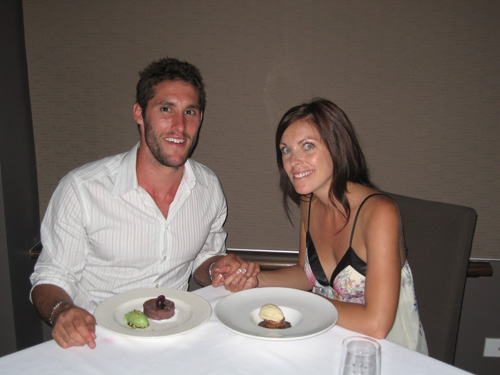
AFL star Darren Glass, captain of the West Coast Eagles, and his wife Alicia, welcomed their son Nixon John at the start of the month. Nixon Glass joins big sisters Mila and Zara, who have been previously mentioned on the blog.

I remember this sibset was quite a hit with blog readers, and wonder what you think about the addition of baby Nixon?

This is the second celebrity baby named Nixon this year, and it’s a name I have often seen in birth notices. Can anyone tell me why Nixon is suddenly the new Jaxon?

(Photo from Eating WA website)

Famous Name: Bede

07 Wednesday Nov 2012

Posted by A.O. in Famous Names

≈ 5 Comments

Tags

Anglo-Saxon names, Australian Dictionary of BIography, birth notices, english names, famous namesakes, historical records, name history, name meaning, name popularity, Old English names, popular names, royal names, saints names

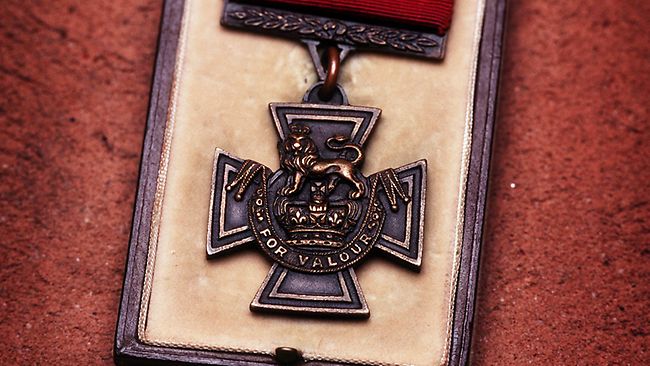
On November 1, Corporal Daniel Keighran became the third Australian soldier serving in Afghanistan to receive the Victoria Cross, the highest military decoration awarded for bravery in Australia. Corporal Keighran is the first member of the Royal Australian Regiment, and the 99th Australian, to receive a VC, and did so with great modesty and humility. Daniel’s wife Kathryn had no idea of the courage her husband had displayed under fire in battle two years ago until she learned he was about to be decorated for it. The Victoria Cross was awarded in a ceremony at Government House in Canberra.

Watching this story on the news reminded me to look at the list of those Australians awarded the Victoria Cross in the past, as I wanted to cover the name of a World War I hero for Armistice Day, which is on Sunday. As I ran my eye down the list, one name stuck out because it has been in my Request file for ages, and I briefly covered it in my article at Nameberry a short time ago. So it was quite an easy choice for me to select Bede as this week’s Famous Name.

Corporal Thomas James Bede Kenny, always known as Bede, was born in Sydney in 1896. The son of a butcher, he had just begun training as a chemist’s assistant when he enlisted with the Australian Imperial Force in 1915. He initially served in Egypt, then was sent to northern France in 1916 to take part in the second phase of the battle of Pozières, in the battalion bombing platoon.

It was in the spring of 1917, as British and Australians captured the outpost villages of the Hindenberg Line, that he performed the acts of valour that were to earn him the Victoria Cross. In the attack on Hermies, his platoon came under heavy fire from a machine-gun post which caused severe casualties. Bede rushed at the enemy single-handed, hurling three bombs, the last of which knocked out the post. He then took the surviving Germans prisoner, his actions contributing significantly to the success of the operation.

Later he was injured in battle and invalided home to Australia, arriving in Sydney to a hero’s welcome a few weeks before the Armistice. He was offered the chance to join the military police, and rejected it immediately, as for some reason he had a great dislike of them.

In civilian life, he worked as a salesman, and was happily married; he is remembered as a popular man with many friends, and a fondness for innocent pranks. He was left partially deaf from the war, and also suffered the effects of trench foot throughout his life. The great tragedy of his life was the deaths of two of his three children, which he never recovered from.

Like Corporal Keighran, Corporal Kenny never talked about his wartime experiences, and the only sign that he was proud of his military service was that he always led the VC winners at the Sydney Anzac Day marches. He died in 1953, and by a cruel irony, his pallbearers were military policemen.

The most famous person with the name Bede is the 7th/8th century English saint, Venerable Bede. Although it is not certain, it is thought that his Anglo-Saxon name, Beda, is from the Old English word bēd, meaning “prayer”. If so, it’s possible that his parents chose a religious life for him from his birth. The name wasn’t a common one, but interestingly, one of the kings of Lindsey, in England’s north, was named Beda; as Venerable Bede was from this area, it’s tempting to wonder if he was named after an ancestor, or a famous local namesake.

Venerable Bede is most famous for his prolific writing career, eventually completing over sixty books, most of which have survived. He wrote on a wide variety of subjects, including science, history, grammar, hagiography and theology; his best known work is An Ecclesiastical History of the English People, which begins with Caesar’s invasion of Britain, and ends with Bede’s own times. His use of AD to refer to events after the birth of Christ helped it become standard. He was also a teacher, a music lover, and was said to be accomplished at singing and poetry recitation, even writing some poetry of his own.

Bede is the only Englishman to be declared a Doctor of the Church; he is also the only Englishman to be mentioned in Dante’s Paradiso, where he appears amongst the theologians and doctors of the church. He is regarded as a saint in both the Catholic and Anglican churches.

If you are thinking that Bede (pronounced BEED) sounds a lot like the word bead, you would be correct. That’s because the Old English word bede, meaning “prayer” is the source of the modern word bead – because beads are used as a means of keeping count of prayers, a practice in Christianity which dates to the 5th century (although prayer beads are ancient and used in many religions). Because of this, you will sometimes see the name Bede interpreted as “bead” or “prayer bead”.

Bede isn’t a common name in Australia; at the same time, it isn’t all that unusual either. There are plenty of Bedes in the records, and if you go to the Australian Dictionary of Biography, you will find quite a few famous Australians with Bede as part of their name. What you primarily notice is that these Bedes tend to be from Catholic backgrounds (and some High Anglicans), and that Bede is usually one of their middle names. It is also the name of Bede Durbidge, who won Surfer of the Year a few years ago, giving the name a more cool laidback image.

I can imagine some people thinking that Bede sounds weird and ungainly; something only a staunchly Catholic family would use; a name best suited to leaving in the middle position. Which sounds perfectly reasonable – except that less than half a century ago, there was another boy’s name that seemed weird and ungainly, was used almost exclusively by Catholics, and generally relegated to the middle position, usually after Francis.

That name was Xavier, which is now #22 and rising. Could Bede be the Xavier of the future?

It’s a very old name with a solid history of use in Australia, part of the Catholic tradition, and with spiritual associations. It’s short yet substantial, clunky yet surprisingly cool. It’s the name of our heroes, our leaders, our intellectuals, our athletes, our artists, our businessmen, and for many of us, our dads and uncles and grandfathers too.

Wherever it might be headed, I see this name often enough in birth notices to know that it is not going away, which gives me a strange feeling of comfort.

(Photo of the Victoria Cross from The Australian)

Is Cressida a Girl Name or a Car Name?

03 Saturday Nov 2012

Posted by A.O. in Naming Assistance

≈ 25 Comments

Tags

birth notices, car names, choosing baby names, French names, Latinate names, middle names, name meaning, name popularity, nicknames, popular culture, Scottish names, sibsets, vintage names

Emily and David are expecting a baby girl in three weeks, and still haven’t settled on a name for her. They’ve thought of lots of nice names they could use, but each one seems to have its drawbacks, and they keep crossing names off their list and changing their minds. So far, they don’t really love one name more than another; none of them seem to jump out and say, “I’m the one – stop looking!”.

When they chose their first child’s name, it was much easier. David suggested the name Clementine, Emily loved it too, and straight away it seemed perfect and they never considered anything else. This time it’s been quite different, and they’ve found the process more worrisome.

At the moment they have on their list:

  • Cressida – Emily is slightly bothered by the car called the Toyota Cressida
  • Ottilie – concerned about spelling and pronunciation issues
  • Josephine – like it a lot, but doesn’t seem very exciting
  • Isadora – worried about references to Dora the Explorer, or that she’ll be yet another Izzy in a sea of Isabellas and Isabels
  • Mathilda – David loves Mathilde, but Emily thinks it’s too French and won’t be pronounced correctly; also aware of the popularity of Matilda, which isn’t a problem if it’s the right name
  • Francesca – loved it for ages, but a friend has just used it

Their name style is for names that have been forgotten by most people, a bit quirky, and with a vintage feel. They would like a name that is interesting and offbeat, but not “made up”. They seem to be leaning towards three-syllable names ending with -a, and Emily loves names that have a European/French vibe to them but don’t sound out of place in an English-speaking country.

David and Emily have a typically Scottish surname, such as Baxter, Cameron or Ramsay.

~ ~ ~ ~ ~ ~ ~ ~ ~ ~ ~

Emily and David, I know you probably feel slightly desperate, with your baby due in only a few weeks, and still no name picked for her. However, I think you’re actually doing really great. You know what your name style is, and you have very compatible tastes in names. You’ve already drawn up a list of lovely names, and if your daughter was born tomorrow, you could probably use any of them for her.

I think you had such a dream run choosing the name for your first child that your expectations are slightly unrealistic. Sometimes the perfect name drops into your lap from the heavens, but you can’t expect that to happen every time. Finding little niggling things wrong with the names you like best is completely normal.

I’d stop trying to find the perfect name that ticks absolutely every box and has no flaws of any kind, and concentrate on finding one that you both like, and that you can imagine saying every day for the rest of your lives. A name that your daughter can grow into and grow up with, and a name that fits into your family and lifestyle. It doesn’t have to be “perfect” – it just needs to work for you.

Let’s have a look at your name list:

Cressida

I’m extremely biased, as this is one of my favourite names and has been for many years. I love the upper-class eccentric feel of the name, and the crisp sound of the first syllable. The meaning of the name – “golden” – is also beautiful.

I know you’re a bit worried about the Toyota Cressida, but they stopped making them 20 years ago, which seems like ancient history to me. The Cressida isn’t a famous or classic car, and I haven’t heard it mentioned for decades (I actually forgot this car even existed) . In Australia, the car isn’t said the same way as the name either – it’s pronounced kreh-SEE-dah, whereas the girl’s name is KREHS-ih-dah (in the US, they say the car name “correctly”). On the one hand, that makes the human name distinct from the car; on the other hand, some people may try to say your daughter’s name like the car, and would need gentle correction.

The fact that you feel a bit excited about this name is a good sign, and the way it breaks one of your “rules” is also encouraging. You didn’t want another name starting with C, so the fact you are still seriously considering it means you must be very interested. I would definitely keep this one on your list for now.

Ottilie

I love the idea of this name, but like you, I’d be concerned about the pronunciation. I’ve listened to it being said by people from around the world on forvo, and it seems to be said quite differently in each country. The only English-speaking nation to contribute is the USA, and they seem to have two pronunciations – OTT-uh-lee, and aw-TIL-ee-uh. I actually don’t know how to pronounce this name correctly, and I’m unclear as to whether there even is a correct way to say it. I’ve tried saying all the pronunciations in my standard Australian accent, and I’m not impressed with the results. I think you’d have to be really certain you knew how it was going to be said, prepared to educate people on it, and to be forgiving if they mangled it. If this doesn’t daunt you, then you obviously love the name dearly, and should keep it on your list.

Josephine

This is a great name, and a classic which has never gained high levels of popularity. However, I dislike it as a sister match to Clementine, as to me the endings of the names are too similar.

Isadora

I think this name is gorgeous, and would make a lovely match with Clementine, and with your surname. I don’t think she would be “yet another Izzy”, as most girls called Isabella go by Bella as their nickname. I think you are worrying way too much about Dora the Explorer – Dora the Explorer is a positive character! She’s smart, kind, friendly and helpful. I would definitely keep this one your list, and give it serious consideration.

Mathilda

I sympathise with David – he’s right, Clementine and Mathilde are a great match. On the other hand, you’re right about the French pronunciation. Mathilda seems like a good compromise, and I think it’s worth keeping this one on your list too.

Francesca

The fact that your friend has used the name, and you still have it on your list, shows that you have quite an attachment to it. Understandable – it’s a lovely name, and like Clementine, is fashionable without being popular. Whether you use it or not depends on how you and your friend feel about sharing your childrens’ names; whether you think that seems cute and fun and a wonderful bond between you, or whether it would cause problems in your relationship. It probably depends a lot on what kind of a friendship you have, and maybe even how often you see each other. If both of you are happy to share, then I’d keep it on your list.

You asked for more name ideas: I feel as if you have already thought of everything by now, having already crossed off a long list of possible names. However, here’s some more:

Aurelia

Like Cressida, this name means “golden”, and is a nice match with Clementine. To me it seems European, vintage and quirky. I’ve seen a few people in birth notices choose Aurelia as a middle name, so I can tell that parents like it, but haven’t quite the confidence yet to use it as a first name. I’d like to see it move out of the middle name spot.

Elodie

You considered Eloise at one point; I thought this seemed an alternative to that. It’s pretty, French, and like Clementine is fashionable and underused at present.

Lilias

You might think this is a bit corny, but I couldn’t resist matching your Scottish surname with a Scottish name. Lilith was on your reject list, and this has a very similar sound. As a clementine is a type of mandarin, Clementine and Lilias is a sweet “fruit and flower” sibset.

Miranda

This is a Latinate name like Clementine, and I think Clementine and Miranda make a pretty and romantic sibset. Miranda is a name which is currently gaining in popularity while not being heavily used yet, and I think it would meet with widespread approval.

Rosamund or Rosamond

You already rejected Rosalie and Rosalind, so I thought I’d try you with another Rose name. It’s European, aristocratic and slightly off-beat, and Clementine and Rosamund make an elegant sibset.

Sylvia or Silvia

To me, this has a similar feel to many names on your reject list. It’s European and vintage, and definitely isn’t heavily used. I like the woodsy meaning, and the silvery sound of the name. Like Clementine, it’s not a nature name, but it somehow feels like one.

Readers, when you hear the name Cressida, do you think “girl” or “car”? Which names on Emily and David’s list do you like best, or which names would you recommend to them?

NOTE: The baby’s name was Isadora Mathilde!

Famous Name: Jobe

26 Wednesday Sep 2012

Posted by A.O. in Famous Names

≈ 2 Comments

Tags

Biblical names, birth notices, english names, English words, famous namesakes, French words, middle names, name history, name meaning, nicknames, sibsets, surname names

On Monday evening, the Australian Football League held its presentation night, with the highest honour, the Brownlow Medal for the fairest and best player, going to Jobe Watson of Essendon. Jobe comes from a footballing family, with his father being the great Tim Watson, who played for Essendon for many years, and is now a popular media personality. He was Victorian Father of the Year in 1993. Jobe’s uncle Larry also played for Essendon, and unfortunately his cousin Jake was a promising young player until he unexpectedly died during a game. Football was the family business, Essendon the family firm.

Jobe was drafted to Essendon in 2002 under the father-son rule, which allows preferential recruiting access to sons of senior players. He was considered a bit chubby, too slow, and a poor kicker; his woes were compounded by a succession of injuries. It looked as if he was always to remain in the shadow of his famous father, until both his coach and his dad handed him the blunt advice that he had to step up to prove himself. After that, things turned around, and in 2009 he was named the club’s fairest and best and became team captain. 2012 was an outstanding season for Jobe, who not only won the Brownlow, but also the Lou Richards medal for most valuable player.

While rewards can come easily for those blessed with natural talent, others have to work at it, and it makes success all the sweeter when it is won. Now if only Jobe Watson’s struggling team could do better, as they didn’t even make the top eight for this season.

Jobe is an English surname, with a number of possible origins. The most obvious one is that it is based on the personal name Job. As Job was given rather a bad time in the Bible, it is theorised that that the surname could be based on an Old French nickname based on the name meaning “sad wretch”, given to someone who was especially unlucky (or perhaps made too much of his misfortunes). Another theory is that because one of Job’s many trials was being cursed with boils, that it was a nickname given to someone with boils or skin disfigurations. I would have thought that if this was the case, the surname would be a lot more common than it is!

Apart from the Biblical namesake, it could also be an occupational surname with the same meaning as Cooper, because a jobbe was a four-gallon jug. Oddly enough, it strikes me that Jobe and Cooper would sound quite good together as brothers. Further insulting theories are that it could have been a nickname for a heavy drinker, or for someone fat and round, like a big jug. Finally, it could be an occupational surname for someone who made jubes or jupes – a jupe was a loose woollen jacket or tunic for men. The word comes from the Spanish, and ultimately from Arabic.

You might wonder whatever happened to jupes: it is the basis for the word jumper, originally a loose woollen smock worn by labouring men, and standard garb for Australian miners during the Gold Rush era. We now use the word for a wool pullover, while in the United States it retained its old meaning of a woollen smock or pinafore dress, which became women and children’s clothing. Men’s tailored jackets still have jupe panels in them, while in France, the word for apron or skirt is jupe. So one way or another, most of us are still wearing jupes!

The Jobe surname, if not originating in these places, seems to have been prevalent from early on in the West Country areas of Cornwall and Devon, and in Sussex. Today, it is most common in the Tyneside area of England in the far north, but with plenty of Jobes still in Cornwall. Many Jobes who emigrated to Australia seem to be either from Cornwall or Northumberland, although it’s not a common surname.

I have been seeing quite a few baby boys in birth notices called Jobe lately, and the Brownlow Medal will probably give it some more publicity. Actually there’s a footballer in another code with the name, because Jobe Wheelhouse is a soccer player who is the captain of the Newcastle Jets.

Both Jobes are footballers, midfielders, team captains, and have a surname starting with W; interestingly, both have had injury problems, and turned their careers around, because Jobe Wheelhouse was likewise rated poorly in the beginning, but is now a very impressive player. It almost seems to echo the Biblical story rather spookily, as poor old Job was put through the wringer, but carried on like a trouper, and rewarded lavishly in the end.

I think this is quite an attractive name; it’s not flashy, but seems solid, honest, and hard-working. I actually like the sound of the name Job, but the miserable meaning of the name (“persecuted”), worrying story attached to the Biblical character, and  fact that it looks exactly like the word job (with sexual and scatological references) would definitely put me off using it.

Jobe seems to be a way of getting the same sound, while having a subtly different feel, and a range of possible meanings of which you are free to ignore the insulting ones. It’s an alternative to the popular Jacob, or to nickname Joe, and would also make a good middle name.

The People’s Choice of Boy’s Names

23 Sunday Sep 2012

Posted by A.O. in Name Themes and Lists

≈ 15 Comments

Tags

African-American names, alphanumeric names, American slang, anagram names, Anglo-Saxon names, animal names, aristocratic names, Australian Aboriginal names, Australian slang terms, banned names, bird names, birth notices, Bonds Baby Search, celebrity baby names, computer hacker names, controversial names, created names, english names, famous namesakes, germanic names, Google, Greek names, historical records, Indian names, J.R.R. Tolkien, locational names, Maori names, meteorological names, middle names, mythological names, name history, name meaning, nature names, nicknames, Old English names, Old Norse, polynesian names, popular culture, royal names, saints names, scandinavian names, slang terms, Spanish dialect words, surname names, tree names, unisex names, US name popularity, vintage names, vocabulary words, Welsh names

Adolf

A form of the Germanic name Adalwolf, meaning “noble wolf”. The Old English form is Æthelwulf, and there are a few famous men of this name in English history, most notably the father of Alfred the Great. The name was often used amongst the royal houses of northern Europe, and the Latinised form Adolphus turns up in the monarchy of the United Kingdom. There is a saint called Adolf of Osnabrück, a 9th century German monk. Up until the mid-twentieth century, the name was common in central and northern Europe, and can be found in Australia due to immigration from Germany and Scandinavia. The reason this name has been included is because barely a day goes by without someone Googling: “Is it legal to call your child Adolf?”, to which I can say, yes, it is legal here, and you can find quite a few Australians in the records with this name – including ones born during and shortly after World War II. I have met a man named Adolf (born around the early 1960s), and I believe he was named after his grandfather. The other chestnut is, “Is it legal to call your child Adolf Hitler in Australia?” to which I reply, Why would you want to do that? Seriously, why? As the name Ned Kelly is banned because he is considered too wicked, I’m pretty sure Adolf Hitler would also be illegal here.

Buster

This spunky name has more history than you might think. In England, it was first used in the middle position; Buster is a variant of the surname Bustard, after the bird. In 18th century America, it seems to have been more common for African-Americans, and may have started as a pet name in the sense of “breaker”. Later it took on the meaning of “unusual, prodigious, amazing”. Buster is used to address males in the same way as pal or fella (“Now listen up, buster”). This comes from the Spanish dialect busté, meaning “you”. It’s gone on to have negative connotations. One of the most famous men with this name is actor Joseph “Buster” Keaton, who started his career in vaudeville as a small child. He claimed to have received his nickname as a toddler from Harry Houdini, after falling down a flight of stairs unhurt. Houdini allegedly remarked, “That was a real buster!”, meaning “a fall with the potential to cause injury”. So Keaton’s name indicated he was tough enough to take a tumble. Buster Brown was a cartoon strip boy who was an angelic-looking blond prankster. In Australian slang, come a buster means to fall or fail by misfortune, while buster is a term for a strong wind – especially the Southerly Buster. This is a name Sydneysiders give to the abrupt cool change that sometimes blows in from the south during the warmer months. Vintage name Buster has recently become rather an Australian favourite for boys, although in the novel, The Shiralee, by D’arcy Niland, Buster is a little girl.

Chester

Chester is a city in Cheshire, England, founded by the Romans as a fortress in 79; its size has led some historians to speculate that the Romans intended it to be the capital, rather than London. Its current name comes from the Old English Ceaster, meaning “Roman fort”, and its early history was very military, with wars seemingly constant. Even King Arthur is supposed to have won a major battle here, and it was the last city to fall to the Normans during the Conquest. Today it’s a thriving modern city which still tries to preserve its historic buildings. Chester has been used as a personal name since the 16th century, probably after the surname, although early births in Cheshire suggest they may have been named directly for the city itself. Although it’s been a popular name in the US in its time, and only left the Top 1000 in the mid-1990s, for some reason it never caught on in a big way here. I was surprised to see it on a baby in the Bonds Baby Search Competition this year. For some reason, this baby name is often Googled, although the slang term chester is an impediment to its use.

Digby

An English surname from a place name meaning “settlement by the ditch”, derived from a combination of Old English and Old Norse. The name seems to have been first given in honour of the aristocratic Digby family, Anglo-Irish peers whose family seat in Coleshill, Warwickshire was granted to them by Henry VII. It is from the town of Coleshill that the personal name originates in the 17th century. One of the most famous of this clan was Sir Kenelm Digby, a Catholic philosopher considered a great eccentric for his exuberant personality and fascination with science, which extended to studying alchemy, astrology and magic (not considered incompatible with science then); he was the first person to note the importance of oxygen to plants. A man of action as well as thought, he became a privateer, and killed a man in a duel; he also wrote several cookbooks, invented the modern wine bottle and managed to fit in a secret romance to a famous beauty which led to their marriage. A true all-rounder. This name regularly appears in birth notices here, especially from Victoria, and may be encouraged by comedienne Cal Wilson, who welcomed a son named Digby a few years ago. People seem to either loathe this name or find it irresistibly cute; I must confess to being in the second category.

Elfyn

This is the Welsh form of the Old English name Ælfwine, meaning “elf friend”; it went out of use after the Norman Conquest. J.R.R. Tolkien liked to think of the name as meaning “friend of the elves”, and invented two fictional characters with this name who formed close bonds with elves. Modern forms include Alvin and Elvin, both taken from the surname form of the name. There are several famous people in Wales with Elfyn as either their first name or surname, including young rally driver Elfyn Evans and poet Menna Elfyn. For reasons I cannot explain, it is Googled several times a week.

Jharal

Jharal Yow Yeh is an NRL star who plays for the Brisbane Broncos. An Aboriginal Australian from the Margany people of Queensland, he also has Torres Straits Islander, Vanuatuan and Chinese heritage. Now aged 22, he has been playing for the Broncos since 2009, for the Indigenous All-Stars since 2010, and for both the Queensland state team, the Maroons, and the Australian national side, the Kangaroos, since last year. Early this season he sustained a serious leg injury, and is still recovering. People Google Jharal’s name all the time, asking for its meaning, and often querying whether it’s of Indigenous origin. In fact, his name was created for him by his grandmother. His mother couldn’t decide what to call him, so she asked nana Iris to name him. Iris cleverly arranged the letters of all the strongest men in her family into a name, and came up with Jharal. It is taken from the initials of James, Harold, Anthony, Reece, Arthur and Linc. The name is pronounced JHUH-rahl, and Iris says that most people think it is an Indian name. In fact, by coincidence, a jharal is a mountain goat from India. Names created for celebrities often seem too unique for others to use, but I have seen Jharal a few times in birth notices recently. Looking for a nickname? Jharal is known to his family as Joe.

Koa

This unisex name has several different origins. There is a Hawaiian male name Koa meaning “strong, brave, fearless”, and it’s also the name of a Hawaiian tree, the Acacia koa. The wood was traditionally used to make dug-out canoes and certain types of surfboards. In Maori, the word koa means “happiness”. In the Kaurna language of South Australia, the word koa means “crow”, and the Koa people come from south-east Queensland, so it’s also a tribal name. There has been a sudden proliferation of this name in Australian birth notices, and that might be because Tom Dumont from No Doubt welcomed a son named Koa last year. However, I am beginning to see far more girls named Koa in birth notices than boys. This may be because of model and actress Koa Whelan, a contestant on this year’s dating show, Please Marry My Boy. I think this works equally well for boys and girls, although the first meaning is male only.

Neo

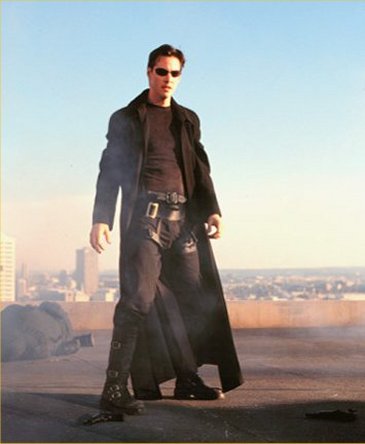
This is from an Ancient Greek prefix meaning “new, young, fresh”. It turns up in words such as neonatal, meaning “pertaining to the newborn”, or neologism, meaning “a freshly coined word”. The name has become well-known since 1999 because Neo is the protagonist of the cyberpunk Matrix film series. In the films, the character’s name is Thomas Anderson, and Neo is his computer hacker identity (Anderson does have the letters N, E and O in it). Neo is also an anagram of One, and the films seek to discover whether Neo is “The One”, a Messiah-like figure who will be able to rescue humanity. The films have become cult classics, and intermingle a range of philosophical and spiritual ideals from the East and the West – it’s even spawned its own religion, Matrixism. From the amount of times that people have Googled neo baby name or neo for a boy, there are quite a few parents considering using this name. Neo fits right in with current trends, and doesn’t sound any stranger than Leo. It is very strongly associated with the film character though. However, Australians have a solid history of gaining name inspiration from the movies, and most of The Matrix series was filmed in Sydney, giving it an Australian connection.

Rune

A Scandinavian name derived from Old Norse meaning “secret”. The runes are the letters of the runic alphabets, which were used to write different Germanic languages, dating from at least the first or second century AD. Runic inscriptions seem to have been for magical and divinatory use, and perhaps their knowledge was restricted to an elite in early times. According to Norse mythology, the runes were originally stolen from the god Odin. They are part of English history, because the Anglo-Saxons had their own runic alphabet. If you have read The Hobbit, you will have seen Anglo-Saxon runes used on a dwarven map; Tolkien later invented his own runic alphabet which appears in The Lord of the Rings. Rune stones are  used for divination today, often in a similar way to tarot cards. The name isn’t unusual in Scandinavia, and you may know the name from the Polish speedway rider Rune Holta, born in Norway. I think this is a simple, attractive name with layers of history and meaning.

Zephyr

A zephyr is a light, warm wind. It comes from the name Zephyrus, who was the Greek god of the west wind – the gentlest of breezes, which served as a harbinger of spring. He married both Iris, the goddess of the rainbow, and Chloris, the goddess of flowers – who is also seen as a deity of spring (and named Flora by the Romans). Children may know the name as that of a bat in the Silverwing book series, and, in the form Zephir, as the monkey in the Babar the Elephant stories. Grown ups may be reminded of The Zephyr Song by the Red Hot Chilli Peppers. If you take the name as derived directly from the god, then it is male, but if you accept it as a nature name and vocabulary name, it is unisex. It only seems to be Googled to my blog as a male name however. Pronounced ZEF-uhr, this name is unsual but not outrageous; it seems like a breezy alternative to popular Z names like Zachary, Zeke or Zane. The obvious nickname is Zeff or Zeffy.

(Picture shows actor Keanu Reeves in his role of Neo from The Matrix; Sydney skyline in background)

← Older posts
Newer posts →

Enter your email address to follow this blog

Categories

Archives

Recent Comments

A.O.'s avatarwaltzingmorethanmati… on Zarah Zaynab and Wolfgang…
Madelyn's avatarMadelyn on Zarah Zaynab and Wolfgang…
JD's avatardrperegrine on Can Phoebe Complete This …
A.O.'s avatarwaltzingmorethanmati… on Rua and Rhoa
redrover23's avatarredrover23 on Rua and Rhoa

Blogroll

  • Appellation Mountain
  • Baby Name Pondering
  • Babynamelover's Blog
  • British Baby Names
  • Clare's Name News
  • For Real Baby Names
  • Geek Baby Names
  • Name Candy
  • Nameberry
  • Nancy's Baby Names
  • Ren's Baby Name Blog
  • Sancta Nomina
  • Swistle: Baby Names
  • The Art of Naming
  • The Baby Name Wizard
  • The Beauty of Names
  • Tulip By Any Name

RSS Feed

  • RSS - Posts

RSS Posts

  • Celebrity Baby News: Melanie Vallejo and Matt Kingston
  • Names from the TV Show “Cleverman”
  • Can Phoebe Complete This Sibset?
  • Zarah Zaynab and Wolfgang Winter
  • Baby, How Did You Get That Name?
  • Celebrity Baby News: Media Babies
  • Celebrity Baby News: Adelaide Crows Babies
  • Celebrity Baby News: Chris and Rebecca Judd
  • Names at Work: Name News From the World of Business and Employment
  • Celebrity Baby News: Sporting Round Up

Currently Popular

  • Celebrity Baby News: Alisa Camplin and Oliver Warner
  • Rare Boys Names From the 1950s
  • Sad Celebrity Baby News (contents may cause distress)
  • Celebrity Baby News: Jacinta Allan and Yorick Piper
  • Celebrity Baby News: Nicki Gemmell and Andrew Sholl

Tags

celebrity baby names celebrity sibsets english names famous namesakes fictional namesakes honouring locational names middle names name combinations name history name meaning name popularity name trends nicknames popular names saints names sibsets surname names twin sets unisex names

Create a free website or blog at WordPress.com.

Privacy & Cookies: This site uses cookies. By continuing to use this website, you agree to their use.
To find out more, including how to control cookies, see here: Cookie Policy
  • Subscribe Subscribed
    • Waltzing More Than Matilda
    • Join 517 other subscribers
    • Already have a WordPress.com account? Log in now.
    • Waltzing More Than Matilda
    • Subscribe Subscribed
    • Sign up
    • Log in
    • Report this content
    • View site in Reader
    • Manage subscriptions
    • Collapse this bar
 

Loading Comments...