• About
  • Best Baby Names
  • Celebrity Baby Names
  • Celebrity Baby Names – Current
  • Celebrity Baby Names – Past
  • Featured Boys Names
  • Featured Girls Names
  • Featured Unisex Names
  • Links to Name Data
  • Waltzing on the Web

Waltzing More Than Matilda

~ Names with an Australian Bias of Democratic Temper

Waltzing More Than Matilda

Tag Archives: Arabic names

What I Know About Australian Names

09 Sunday Feb 2014

Posted by A.O. in Naming Issues

≈ 13 Comments

Tags

Appellation Mountain, Arabic names, Australian Aboriginal names, birth notices, blogging, middle names, name trends, popular names, royal baby names, unisex names, vintage names, Waltzing More Than Matilda

1000posts

This will be my 1000th blog post since I started blogging nearly three years ago in 2011 – something which fills me with a certain amount of awe, coupled with a strong feeling I may have posted too often!

When Abby from Appellation Mountain reached her 1000th blog post in 2010, she decided to share a few of the things she had learned about names as a blogger. I thought about doing that, then realised how embarrassing it would be to admit how little I knew to begin with. And I’ve learned so many things that I’d need another blog with 1000 blog posts to explain all that I’ve learned writing this blog.

So instead I will share a few things I have learned about Australian names.

1. Australia, like other countries, has its own unique name trends

Matilda, Lachlan and Banjo mean more to us than in other countries. Darcy is a boy’s name here, Asher is unisex, and Avery is only for girls. We have a special connection with Talia, but prefer to spell it Tahlia.

Adrian was popular here for much longer than in other countries; Mitchell and Chelsea are still popular here while they have disappeared from the Top 100s of other places; Mervyn and Dulcie were only ever popular in Australia, while Derek and Gillian never became popular here.

Because of our relatively small population size, name trends often show up earlier in Australia than elsewhere, so that names such as Isabella and Jayden were Top 100 here long before anywhere else. Does that mean that current Australian favourites like Amity and Braxton will become popular elsewhere? Only time will tell!

Although Australia’s name trends are heavily influenced by both the UK and US, and sometimes by Europe, only one country can claim to be our baby name twin, and that is New Zealand. It’s seldom acknowledged, but we share more than 70% of our popular names with our Trans-Tasman cousins.

2. Every state and territory is a little different when it comes to names

Queensland is crazy for royal baby names – any name chosen by royalty will invariably rise in popularity this state. New South Wales is the only state with Arabic names in the Top 100 – Muhammad would be in the Top 30 there if all spellings were combined. Tasmanians adore vintage names, Western Australians tend to shun the classics for the contemporary, the Northern Territory has many names of Indigenous significance, and South Australians love a quirky middle name. The ACT has the strictest naming laws, and are therefore the most conservative at choosing baby names. Victorians are the name nerds of Australia – they are deeply interested in name trends, worry about popularity, and are the most likely to announce their baby’s name in the newspapers. I probably couldn’t function (as a blogger) without them.

3. Rural and regional Australians are the best at choosing interesting names

I love name stories and birth notices from country Australia, because they always have the most diverse selection of names, and the most unusual names and colourful name combinations. If it wasn’t for local newspapers, I don’t think I could keep doing the Birth Announcements each week.

4. Australians are patriotic namers

When I first started Waltzing More Than Matilda, I couldn’t help wondering if anyone would be interested in a blog about Australian names, and more importantly, I wasn’t sure if Australians would be interested!

Happily, my doubts have been proven wrong, because every day people come to the blog searching for Indigenous Australian names, names of Australian plants, names of Australian towns and cities, names of famous Australians, and asking for “patriotic Australian names” to use for their son or daughter.

It seems that there are many people at least considering a name with an Australian “flavour” for their children.

5. Australian parents are AWESOME namers!

There’s a vocal, mean-spirited and ignorant group of people who think it’s fun (or funny) to insist that Australians are too stupid or tasteless to be allowed to name their own children. According to this mob, who often seem to work in the media, you only have to read a few birth notices to see that Australian babies are given increasingly bizarre “made up names” with a bewildering range of spellings and punctuation that render them barely comprehensible.

Well, I read birth notices every day, and have done for years, and I can tell you that that is absolute tripe. Most babies are given fairly common names like Emily and Liam, and even less common names are usually traditional like Walter and Patricia, familiar like Axel and Clementine, or are from other cultures, like Malini and Ngemba. Variant spellings are generally low-key and easily coped with, such as Scarlette or Jaxson – out of the thousands of babies’ names I read each year, perhaps four or five have given me real difficulties in understanding them.

Australian parents, let me tell you that you are doing a great job! A brilliant job! An outstanding job at naming your babies! You make reading birth announcements a joy and an adventure!

Whether you chose the name Audrey or Behati. Whether you preferred Thomas or Zephyr. If you picked Felix or Kylen or Huckleberry or Lenny or Percival or Diamond. Opted for Eloise or Mietta or Taiyah or Rafferty or Storm or Xanthe. If your heart told you that the perfect name was Acacia or Digger or Lawson. Or you knew straight away that only Jack or Charlotte or Hamish would do. You all did the right thing, and you all did very well.

You impress and amaze me every day. Thank you.

Famous Name: Adam

29 Wednesday Jan 2014

Posted by A.O. in Famous Names

≈ 4 Comments

Tags

Akkadian names, Arabic names, Assyrian names, Babylonian names, Biblical names, hebrew names, Irish names, modern classics, name history, name meaning, name popularity, popular names, royal names, Scottish names, Semitic names

14Goodes2501_Hero

On Australia Day, the Australian of the Year for 2014 was announced, and it was AFL footballer Adam Goodes, who plays for the Sydney Swans.

Adam is a distinguished player who has experienced a great deal of success in his field, and is very active in the Sydney Indigenous community, providing leadership and guidance to troubled Indigenous youth, including those in youth detention. He has also started an Indigenous football academy, and he and his cousin Michael O’Loughlin founded the Goodes O’Loughlin Foundation which focuses on education, employment and healthy life choices. Adam plans to use his profile as Australian of the Year to help raise awareness of the push for constitutional recognition of Indigenous Australians.

Adam is well known to almost everyone, even those with no religious background, as the first human mentioned in the Bible. He was created by God out of earth, and placed in the paradisical Garden of Eden with his companion Eve. However, they were expelled from the Garden after disobeying God’s commands, and went on to become founders of the human race. Adam is also seen as the first human in Islam, which regards Adam as a prophet, and the first Muslim.

In Hebrew, āḏām is the word for “human”, and the creation story in Genesis uses this word for “mankind”, “humanity”, “a man”, and the person named Adam, in an ambiguous and complex play of meaning. The word comes from a Semitic root meaning “red, fair, handsome”, and is also the masculine form of the Hebrew word adamah, meaning “ground, earth”, related both to the word for “red”, and the word for “blood”. In Arabic, Adam means “made from the earth”.

Putting this all together, the impression one gets from the name is that Adam is a signifier for all men, and all humans, a handsome man created from the red earth, the colour suggesting that of life-giving blood (the clay become flesh), and perhaps even implying that his skin tone was meant to be a coppery, reddish-brown – which seems reasonable given the story’s Middle Eastern origins.

Genesis emphasises Adam’s connection to the earth, for God set Adam to work on the land, to get his hands dirty, scratched by thorns in order to eat and survive. God’s curse was From dust you were made and to dust you will return, meaning that humans were condemned to mortality (still echoed in the funeral service, ashes to ashes, dust to dust). Adam is separated from nature by his humanity, yet inextricably part of nature and still tied to the earth and his earthy instincts – a succinct précis of the human condition.

The first historical person named Adam we know of is an Assyrian king named Adamu, who lived more than 4000 years ago (it is probably worth mentioning that the Babylonian creation story, many centuries older than Genesis, has the same main features, and there the first man is named Lullu, meaning “man, human being”; when the Assyrians copied the story, they called the first man Adami, possibly from the Akkadian for “to make”).

The name Adam came into common use in Britain in the Middle Ages, and became more popular after the Protestant Reformation. It has particularly strong ties to Scotland, perhaps because it was used to Anglicise the Irish name Áedán (an older form of Aidan), traditional amongst the royal houses and nobility of medieval Scotland.

Although in rare use early in the twentieth century, Adam only began charting in Australia in the 1940s. It raced up the charts during the 1950s to make #51 for the 1960s. It peaked in the 1980s at #10, and is still in the Top 100. It is #66 nationally, #55 in New South Wales, #57 in Victoria, #99 in Queensland, #44 in Western Australia, #84 in Tasmania, and #60 in the Australian Capital Territory.

Adam is a modern classic, yet it is an ancient name – the oldest name in the Book! Brief, strong and primal, it is earth and blood, flesh and bone, birth and death, innocence and guilt: the most human of all names, with its hands buried in the soil and its soul yearning for paradise. Adam is all man and all men; we are all Adam and the children of Adam; and yet Adam is still too archetypal to ever become an Everyman name.

It will always remind us of the first man in one of the oldest stories we know. A man whose descendants have continued to live and die and toil and survive – and remember paradise.

POLL RESULT
Adam received an approval rating of 64%. 30% of people saw it as strong and handsome, but 14% thought it was too common.

True Blue Names for Boys

26 Sunday Jan 2014

Posted by A.O. in Name Themes and Lists

≈ 10 Comments

Tags

animal names, Arabic names, Australian idioms, Biblical names, celebrity baby names, colour names, english names, fabric names, famous namesakes, fictional namesakes, fish names, geographic names, Greek names, hebrew names, historical records, metal names, modern classic names, mythological names, name history, name meaning, name popularity, names from movies, names from television, nature names, popular names, Roman names, surname names, tree names, unisex names, vocabulary names

016

Happy Australia Day! Here are ten names for boys which are associated with the colour blue, in honour of the saying, a true blue Aussie.

Bay

A bay is a scoop in the shoreline, much prized for providing safe anchorage and opportunities for fishing. Having a long coastline, Australia has many bays, including the Great Australian Bight which forms the southern edge of the continent, and Botany Bay in Sydney – there is even a Blue Bay on the Central Coast of New South Wales. Although bay also describes the colour of a horse’s coat (coppery brown with black markings), and bay tree is another word for a laurel bush, I tend to think of the name Bay as being influenced more by the geographic term, at least in Australia. Bay can also be from the surname – the first English people with the surname Bay took their name from baille, an enclosed courtyard as part of a Norman castle’s fortifications. Although Bay can be used for both sexes, I have only ever seen it on boys, perhaps because it sounds as if could be short for Bailey.

Blue

Blue is a colour of the spectrum, and a primary colour. Because it is the colour of the sky, it has often been seen as representing heaven and divinity. It has been connected to the “blue collar” working class, but also with the wealthy, and “blue blooded” nobility. Blue is a popular colour for uniforms, and the navy, air force, and police traditionally wear blue. Blue can also mean “sad, melancholy”; hence blues music, which arose out of suffering. The Australian flag and Eureka flag are both blue, blue heelers are tough, loyal Australian cattle dogs, and it is an Australian irony that a red-headed man is called Blue or Bluey – some say because of the redhead’s reputation for temper, as a blue is Australian slang for a fight. Since World War II, blue has been seen as the colour for boys (with pink for girls), giving the name Blue a boyish feel – although celebrity baby Blue Carter shows it works well for girls too.

Dean

The Blue Mountains are to the west of Sydney, part of the Great Dividing Range down the eastern side of Australia. Their name comes from the blue-grey haze which can be seen when the mountains are viewed from a distance, believed to be caused by the diffusion of eucalyptus oils from the trees. One of the most prominent is the Mountain Blue Gum (Eucalptus deanei), a tall forest tree. Its scientific name comes from Henry Deane, an Australian engineer who first collected specimens in the late 19th century. The English surname Dean or Deane comes from dene, meaning “valley” – the Mountain Blue Gum grows in sheltered valleys. Dean has been used as a boys name since the 17th century, and seems to have been initially most popular amongst non-Anglican Protestants. Dean first ranked in Australia in the 1950s, probably because of Hollywood star James Dean; it debuted at #134. By the following decade it had reached the Top 50, and peaked in the 1970s at #34. It didn’t leave the Top 100 until the early 2000s, and since then has gently declined into the mid-100s. It has recently got some exposure via Dean Winchester from the television show Supernatural, played by Jensen Ackles; the character is named after Dean Moriarty, from Jack Kerouac’s On the Road. A simple, clean modern classic, this still has a touch of Hollywood.

Drake

Drake has been used as a boys name since the late 16th history in honour of the heroic sea captain, Sir Francis Drake – the first babies with this name were born around the time of Sir Francis’ death. His surname is from the Old English nickname Draca, meaning “dragon, serpent, sea serpent”, coming from the Latin draco. The word goes back to an ancient root meaning “to see” – perhaps suggesting that dragons had a mesmerising gaze. In European mythology, dragons are serpentine rather than lizard-like, so the word drake covers a range of creatures. The name would have been given to someone who was very bold and fierce, for dragons were generally viewed as evil. They were often shown guarding a hoard of treasure with avaricious ferocity. In the post-Christian era, they became associated with Satan, but in modern fantasy stories, dragons nearly always seem to be noble and friendly. Although dragons are cool, this name reminds me of the watery Rainbow Serpent of Indigenous cultures, depicted as a blue serpent on Sydney’s coat of arms.

Levi

Levi Strauss was the German-American businessman who founded the first company to manufacture blue denim jeans, which gain their colour from indigo dye. Originally sturdy workwear for labourers, jeans became iconic fashion items, and are now essential clothing for almost everyone. In the Old Testament, Levi was the son of Jacob and Leah, and the founder of the Tribe of Levi. The Levites became the priestly caste of the Hebrews – perhaps the most famous members of the Tribe of Levi are Moses, and his siblings Aaron and Miriam. The name Levi is traditionally understood as “he will join”, because Jacob joined with Leah to produce Levi, but Biblical scholars believe it simply means “priest”, and comes from Arabic. Levi has charted in Australia since the 1970s – this was the decade that Levi jeans were first manufactured in Australia, and the brand name probably had more impact than the Biblical figure. Levi was #243 for the 1980s, and climbed steeply to make the Top 100 by the early 2000s, where it remains stable. It is #26 nationally, #31 in New South Wales, #30 in Victoria, #24 in Queensland, #40 in South Australia, #22 in Western Australia, #23 in Tasmania, #13 in the Northern Territory, and #53 in the Australian Capital Territory.

Marlin

Blue marlin are one of the world’s largest fish, blue-black with a silvery white underside, and an elongated upper jaw. They can reach more than 500 kg in weight, and have few predators, apart from humans. Because of their size, power, and elusiveness, they are considered to be one of the most highly prized targets for sports fishing. Found in many oceans of the world, blue marlin have been captured as far south as Tasmania. However, the greatest numbers have been caught off the Gold Coast in Queensland, and the largest ones in Bateman’s Bay, on the south coast of New South Wales. Blue marlin are considered be a threatened species, due to overfishing, and most anglers in Australia use the tag and release method. If you would like to use Marlin as a boy’s name, it doesn’t seem too different from Marlon in sound. The word marlin is short for marlinspike fish, as a marlinspike is a pointed tool used by sailors to separate strands of rope; it comes from the Dutch for “fasten, secure”. Like to use this as a girl’s name? What about Makaira, the Latin name for marlin?

Ocean

Australia is entirely surrounded by ocean, and more than 80% of our population live near the sea. 71% of the planet is covered by ocean, which holds most of Earth’s water. Integral to life on the planet, it is believed that life first arose in its waters. It is not known where all the water on our planet came from, but it must have played a major role in cooling it and making it possible for anything to live here. It still continues to moderate our climate and weather patterns, so we can keep living here. From space, Earth appears to be a marbled blue colour, earning it the moniker The Blue Planet. The word ocean comes from Oceanus, which the ancient Greeks and Romans believed was an enormous river encircling the world. In Greek mythology, this world-ocean was personified as a Titan, depicted as a large, muscular man with a long beard and horns, having a serpent for his lower body. He is the father of the ocean nymphs, and all the rivers, fountains and lakes of the world. Despite these masculine origins, the name Ocean is given to both boys and girls.

River

Although it has around a hundred of them, Australia cannot be said to be a land of great rivers – river beds are often dry, and even our largest rivers tend to be on the thin side. Of course, this means that every single one of them is especially precious. It seems slightly cheating to include them on a list of Blue Names, as every river I have seen here was brown or green in colour. However, rivers are marked in blue on maps, and if you saw one from a distance with a quantity of blue sky reflected in it, from the right angle it would probably look blue-ish. The word river is Anglo-Norman, from the Latin for “riverbank, shore”; it is ultimately from an ancient root meaning “scratch, tear, cut”. River has been used as a first name since the 17th century, and from the beginning seems to have been used with the geographic term in mind, since people named River Banks and River Jordan turn up quite early in the records. The name is unisex, but historically much more common for boys – in Australia, it seems to be more than twice as common for boys as for girls.

Steel

Steel is an alloy of iron and carbon. Steel production began on an experimental basis in Australia in the 19th century, but didn’t really get going until World War I, when BHP opened the first steelworks in Newcastle. Its boom years were after World War II, but since the 1980s our steel production has decreased significantly due to global competition. During its heyday, steelworks provided mass employment and were a source of great pride for workers; it was from the steelworkers that the modern working class emerged. Blue steel is steel that has been given a dark finish, in order to increase toughness. Although we often connect blue steel with guns and other weapons, it is used in many useful capacities, such as on the steel-capped toes of work boots. It gives its name to a colour – steel blue, a shade of blue-grey. Last year I saw several boys named Steel or Steele in birth notices, after the release of the Superman movie, Man of Steel.

Suede

Suede is a soft napped leather, popular for making accessories such as shoes and handbags. It was originally used for women’s gloves, and the word comes from the French gants de Suède, meaning “gloves from Sweden”, since this is where the gloves were imported from. Suede features in the Carl Perkins song, Blue Suede Shoes, considered one of the first rockabilly records, and the first million-selling country song to hit the R&B charts. Perkins wrote the song based on a suggestion from Johnny Cash, and a real life encounter with a man who didn’t want anyone stepping on his blue suede shoes. It was soon afterwards recorded by Elvis Presley, who made it a hit all over again, and the song has gone on to become a rock and roll classic. I have met a little boy named Suede, and once I got used to it, found it rather cool and rockabilly. Suede was named in honour of the song, as his parents are Elvis fans. They probably attended the recent Elvis Presley Festival in Parkes.

POLL RESULTS
The public’s favourite names were Levi, River and Bay, and their least favourite were Ocean, Steel and Suede.

The 2013 Matilda Awards

16 Thursday Jan 2014

Posted by A.O. in Blog News

≈ 4 Comments

Tags

Arabic names, Biblical names, celebrity baby names, celebrity sibsets, classic names, German names, germanic names, Irish names, name combinations, nicknames, popular names, rare names, royal names, sibsets, surname names, twin sets, underused classics

165256Welcome to the Matilda Awards, where we discover which names featured on the blog proved most popular with the public during 2013.

Waltzing With … Category

The most popular names featured in the Waltzing With … Category were LAYLA, which scored a 94% approval rating, and SULLIVAN, which scored a 96% approval rating – not just the highest-rated name for the category, but the highest-rated for the whole year.

Layla is an Arabic name with a romantic history, both in Muslim literature and popular culture; it is comfortably established in the Top 50. Sullivan is an Irish surname used as a first name; it was #306 in Victoria for 2012, and is rising in both the US and UK.

Layla and Sullivan did well not because they were deeply loved by the public, but because so few people hated them – in fact not a single respondent said they disliked the name Sullivan.

Famous Names Category

The most popular names featured in the Famous Names Category were MIRIAM, which scored an approval rating of 91%, and HENRY, which scored an approval rating of 95%.

Miriam is an ancient Biblical name, the name of one of the strongest and most interesting Old Testament heroines; it is an underused classic which has never left the charts yet never reached the Top 100. Henry is an English name of Germanic origin, long known as a royal name (and was featured as the name of a visiting prince); it is a popular classic which is gently rising in the Top 50.

Miriam was praised for being both strong and intelligent, and pretty and feminine; people also noted its many nickname options. Almost nobody disliked the name Henry.

Name Themes and Lists Category

The most popular names which were featured in the Names Themes and Lists Category were ALICE and AUGUST. Alice won convincingly, and also managed to win the original poll, while August received almost twice as many votes as its nearest opponent.

Alice is an English name of Germanic origin which has been used by royalty and aristocracy; it is currently rising in the Top 50, and was one of the fastest-rising names of 2012. August is a German short form of Augustus which featured as a rare royal name from history; it does not chart in Australia, but is currently rising in the US and UK.

Celebrity Babies

The most popular names for celebrity twins were HARVEY AND ROXANNE WELLER ALLEN, the son and daughter of singer Toby Allen and actor Darren Weller. They were the only celebrity twin names to be judged “adorable” by a majority of people – quite an achievement as there were an unusually high number of celebrity twins last year.

The most popular celebrity baby girl name was TESS CLEMENTINE HUGHES, the daughter of comedian and broadcaster Dave Hughes, and journalist Holly Ife. She was picked as favourite by 20% of respondents, who loved her hip name. Tess has a big sister named Sadie, and a big brother named Rafferty – what a cool sibset.

The most popular celebrity baby boy name was SEBASTIAN TANDER, the son of champion racing drivers Leanne and Garth Tander. He was picked as favourite by 30% of respondents, who found his smooth, stylish name appealing. Sebastian has a big sister named Scarlett – a sleek modern sibset.

From the Baby Name Round-Ups, the winning baby names were FREYA ROSE GOWER and SAMUEL ELLIOT. Freya is the daughter of NRL player Craig Gower, and model Amanda Flynn, and the name Freya has recently become a favoured choice for sporting celebrities. Samuel is the son of national women’s team cricketer Sarah Elliot, and cricket coach Rob Elliot.

Birth Announcements

The most popular names for multiples were MAGNOLIA MARY AND HENRY JOSEPH, who had a narrow win. Readers of Waltzing More Than Matilda are a broad-minded lot, and don’t believe Mary and Joseph are “too matchy” for twins. Or maybe they couldn’t resist voting for Henry once more.

In the girls name section, ETTA JUNE had a very comfortable win. Vintage, hip and extremely cute, Etta fits in with popular names such as Ella.

In the boys name section, JUDE WINTER absolutely trounced the opposition, gaining a massive 40% of the vote. This is a very stylish name combination, with Winter working just as well on a boy as it does on girls. Etta and Jude came from the same set of birth announcements in July – both their middle names seem inspired by the winter season, and both have a JOO sound in their names. Magnolia and Henry came from another set of July birth announcements – a victory for midwinter babies!

The most popular names in a sibset were ELSIE, NED, TILLY AND GUS, which just scraped through by a couple of votes. A very charming vintage short form sibset, these sisters and brothers were featured the day after Anzac Day.

What type of names did people like? Quite a variety, but royal names, vintage names, classic names, short form names, popular and rising names seem like the big winners.

The People’s Choice of Boys Names

22 Sunday Dec 2013

Posted by A.O. in Name Themes and Lists

≈ 9 Comments

Tags

African names, Akkadian names, Albanian names, Arabic names, Armenian names, celebrity baby names, Christmas names, english names, epithets and titles, famous namesakes, fictional namesakes, Finnish names, French names, Greek names, Hawaiian names, hebrew names, Indian names, Irish names, Kurdish names, Latin names, Maori names, mythological names, name history, name meaning, name popularity, name trends, nicknames, Old Norse names, polynesian names, saints names, scandinavian names, Semitic names, Slavic names, surname names, unisex names

3 kings

A selection of boys names that have been searched for several times to reach the blog. I chose names from different backgrounds that aren’t on the Top 100.

Ari

This little name has several origins. It is a Hebrew name meaning “lion”, an Armenian name meaning “brave”, a Scandinavian name from Old Norse, meaning “eagle”, an Albanian name meaning “bear”, a Maori name meaning “clear, visible”, or an Indian name meaning either “sun-like” or “free from sin”. It is also a Finnish form of Aaron and Adrian, a Kurdish short form of the name Arian, meaning “Aryan”, and is commonly used as a short form of any name begining with Ari-, such as Aristotle. There have been quite a few characters named Ari in popular culture, starting way back in the 1950s, with Ari Ben Canaan as the hero of Leon Uris’ novel Exodus, about the founding of the state of Israel; based on Israeli military leader Moshe Dayan, in the movie he was played by Paul Newman. This simple multicultural name is rising like other Ar- names such as Archer, Arlo and Arthur, and is #135 in Victoria.

Balthazar

Variant of Belshazzar, the Hebrew form of the Akkadian name Bel-sarra-usur, meaning “Ba’al protect the king”. Ba’al is a Semitic title for any god, meaning “lord, master”, and in the Old Testament, the early Hebrews used the term to apply to the God of Israel. Later the term became seen as a heretical one, with a clear divide drawn between the Hebrew Yahweh and the Phoenician Ba’al. In Christian legend, Balthazar is the name given to one of the Magi – the three wise men who followed a mysterious star to visit the baby Jesus, bringing him gifts. The story appears in the New Testament, but no name (or even number) is ascribed to the Magi in the Bible. According to some traditions, Balthazar was an Arabian or Ethiopian scholar who brought the gift of frankincense to symbolise Christ’s role as a high priest. He is usually depicted as middle-aged and dark-skinned. One story is that Balthazar later converted to Christianity and was ordained a bishop; like the other Magi, he is regarded as a saint. Usually pronounced BAL-ta-zar in Australia, this is a seriously cool Christmas name.

Dragan

Slavic name meaning “precious, dear one”. It is usually pronounced DRAH-gahn, although I have heard people give it the same pronunciation as the word dragon. This reminds me that there is a sympathetic character named Dragan in the novel, Girl With a Dragon Tattoo; in the American film version, he is played by Croatian actor Goran Višnjić. Dragan Roganović is the real name of award-winning Serbian-Australian DJ Dirty South, and unfortunately the name has had a bit of bad publicity in Australia due to accused Serbian-Australian war criminal Dragan Vasiljković “Captain Dragan”, currently imprisoned in Australia awaiting extradition to Croatia. Despite this, Dragan is an attractive heritage choice with a very sweet meaning.

Kalani

Unisex Hawaiian name meaning “the sky, the heavens”. It’s a name often connected with surfing, because of Hawaiian surfers Kalani Robb, Kalani Chapman, Kalani Vierra and Kalani David, and young Australian surfer Kalani Ball. Mark Gasnier, former NRL player for the St George Illawarra Dragons, welcomed a son named Kalani two years ago. These are all guys, but surfer Kalani Miller, girlfriend of Kelly Slater, is a reminder that it’s a girl’s name as well – in fact, Kalani seems more common as a girl’s name in Australia, making #570 for girls in Victoria and not ranking as a boy’s name. Then again, Victoria is not famous for its surf culture – in northern New South Wales or Queensland, boys named Kalani may be more common. It’s a great name for either sex.

Leander

Greek name meaning “lion man”, featured in the tragic tale of Hero and Leander. Hero was a priestess of Aphrodite who lived in a tower in Sestos, on the European side of the Dardanelles, while her lover Leander was from Abydos, on the other side of the strait. Leander swam across the Hellespont every night to be with Hero, while she lit a lantern at the top of her tower to guide his way. Their love affair lasted all through the summer nights, but winter weather proved an obstacle to swimming. Desperate to be with his sweetheart, Leander braved the icy waters and was drowned during a storm, while the savage winds blew out Hero’s lantern. The distraught Hero plunged from her tower into the waves to join him in his watery grave. The story has inspired many writers, including Ovid, John Donne, Christopher Marlowe, and John Keats. Lord Byron recreated the swim by crossing from Sestos to Abydos, a distance of just over 1 km, which he turned into a poem; although he did it in May, according to his poem it was still difficult and he ended up with a chill. Leander was obviously made of sterner stuff. This is a handsome and romantic name with a very masculine meaning.

Mandela

The surname of inspirational world leader Nelson Mandela, his surname the name of his grandfather, the son of a king. Mandela was a lawyer and prominent campaigner against the apartheid government when he was arrested and sentenced to life imprisonment for crimes against the state. He served more than 27 years, released in 1990 after an international campaign had lobbied the South African government on his behalf. He joined negotiations to abolish apartheid and establish multiracial elections, becoming South Africa’s first black president. Deeply loved in his own country, where he was called Tata, or “father””, he was a respected figure on the world stage. He received more than 250 awards and honours during his lifetime, including the Nobel Peace Prize; he was appointed Honorary Companion of the Order of Australia in 1999. His passing this month at the age of 95 after a long illness has only highlighted the global reverence he attained. This is a worthy namesake whose name I have seen given to a boy – a name that Africa has given to the world.

Oisin

Anglicised form of Oisín, an Irish name translated as”young deer”. In Irish mythology, Oisín was a warrior and the greatest poet in Ireland. He was the son of the hero Fionn mac Cumhaill, and a woman named Sadbh, who had been turned into a deer by a malevolant druid. Fionn caught Sadbh as a deer, and she turned back into a human; all was well until the druid caught up with her and made her a deer while she was still pregnant. Sadhbh returned to the wild, and gave birth to Oisín while in deer form – hence his name. Eventually Fionn got to meet his son, and Oisín joined dad’s band of warriors. Oisín’s most famous adventure is when he fell in love with a fairy queen named Niamh, who took him to live in the Land of Youth. Although he thought he only lived with her for three years, three centuries passed in Ireland during his absence. Acording to some tales, Oisín lived long enough to meet Saint Patrick and tell him of his exploits. Oisín, or Ossian, is the narrator of the famous poem series by Scottish author James Macpherson, who made the Gaelic myths so popular in the 18th century. Pronounced OSH-een or USH-een, this a popular name in Ireland and would be well-received in Australia.

Remy

Anglicised form of Rémy, French form of the Latin name Remigius, meaning “oarsmen”. Saint Remigius was a 5th century Gallo-Roman bishop, a highly-educated man of noble blood. According to tradition, he converted and baptised Clovis, the King of the Franks. Clovis was baptised on Christmas Eve; such was his status that 3000 Franks were baptised that day with him. Because of this story, Saint Remigius is credited with France becoming a Christian country, and there are numerous places named Saint-Rémy his honour, as well as Saint-Rémy being a French surname. The name can also be spelled Rémi, and in France the second one is more popular. In Australia, both Remy and Remi are unisex, and roughly even for both sexes (Remy – 19 girls and 14 boys in Victoria; Remi – 11 boys and 7 girls). Although some get upset about Remy and Remi being used for girls, the names could just as easily be short forms of Remigia – the feminine form of Remigius. In Australia, they are usually pronounced RAY-mee or REH-mee.

Wyatt

English surname derived from the personal name Wyot, the medieval form of the Old English name Wigheard, meaning “brave in battle”. The Wyatt family were a prominent one in Britain; the Tudor poet Thomas Wyatt was one of their number. Sir Francis Wyatt was another, and he became Governor of Virginia, so the surname became well known in the United States as well. As a first name, Wyatt is famous because of Western lawman Wyatt Earp, who was Deputy Marshal of Tombstone in Arizona, and is known for the Gunfight at the O.K. Corall, in which three outlaw cowboys were killed. Wyatt was never injured in a gunfight, adding to his mystique, and after his death he gained legendary status as the toughest and deadliest gunman in the West. The name had a boost from popular culture through the television series Charmed, where Wyatt Halliwell was the son born to Piper and her White-Lighter husband Leo; the baby was named from his father’s earthly surname, and seems like a play on the word white, in the sense of “good, angelic”. Wyatt is #252 in Victoria.

Zayd

Arabic name meaning “abundance, growth, increase”. This name is important in Islam, because Zayd ibn Harithah was from an Arabian tribe, and after being abducted, sold into slavery while only a young boy. He was eventually sold to one of the wives of the Prophet Muhammad, and when she married, she gave Zayd to Muhammad as a wedding present. The Prophet became very fond of Zayd, even calling him “the beloved”. One day Zayd’s grieving family managed to track him down, and Muhammad asked him to choose his fate; Zayd told his family he did not want to leave his owner. Zayd’s family accepted his choice, and Muhammad legally adopted him as a son, making him a free man. After Muhammad received his divine revelations from the angel Gabriel, Zayd was one of the first converts to Islam, the only one of Muhammad’s companions who are mentioned by name in the Qur’an, and the first Muslim to be killed fighting for Islam on foreign soil. The name can also be spelled Zaid, and elaborated as Zayden or Zaiden – which fits right in with the -ayden trend. Zayd is #650 in Victoria, while Zaid is #648.

POLL RESULT: People’s favourite names were Ari, Leander and Remy, and their least favourite were Dragan, Kalani and Mandela.

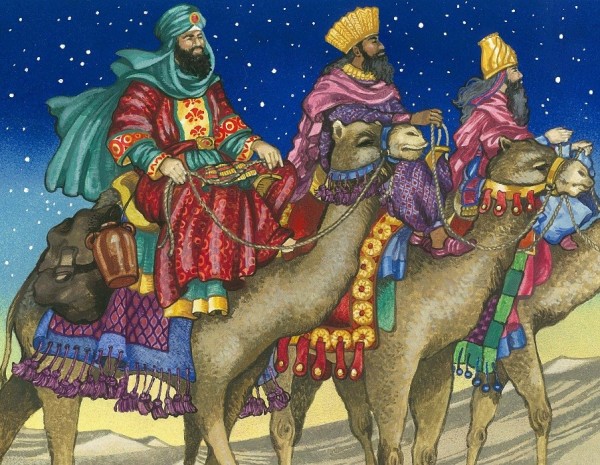
(Picture shows the Magi travelling to see the infant Jesus)

The People’s Choice of Girls Names – 2

15 Sunday Dec 2013

Posted by A.O. in Name Themes and Lists

≈ 11 Comments

Tags

African names, American names, Arabic names, astronomical names, British names, celebrity baby names, created names, Creek names, Disney names, Dutch names, english names, epithets and titles, famous namesakes, fictional namesakes, French names, germanic names, Greek names, hebrew names, honouring, Indian names, Italian names, Latin names, locational names, Maori names, middle names, mythological names, name history, name meaning, name popularity, names from ballet, names from films, names of rivers, Native American names, nicknames, Old Norse names, Persian names, Roman names, royal names, saints names, Sanskrit names, scandinavian names, screen names, Shakespearean names, surname names, Tibetan names, Tiv names, unisex names, virtue names, vocabulary names, Welsh names

Queensland_Ballet_presents_Giselle

Here are ten names for girls which have been often searched for to reach my blog. I chose names that aren’t in the Top 100, and come from a range of origins.

Anouk

Dutch and French short form of Anna. A famous namesake is celebrated French actress Anouk Aimée; she was born Françoise Dreyfus, and took the name Anouk from the first character she portrayed on film. The name became better known in the English-speaking world after the publication of the award-winning 1999 novel Chocolat, by British author Joanne Harris, in which there is a little girl named Anouk. The character of Anouk is based on the author’s daughter Anouchka, whose name is another pet form of Anna. The book was made into a movie in 2000. Actor and author Andrew Daddo has a daughter named Anouk, born a year after the film was released. Pronounced a-NOOK or an-ook, this exotic name doesn’t have an obviously “French” sound to it, and seems quite sophisticated.

Blythe

Variant of Blithe, an English virtue name meaning “cheerful, merry” which is first found in 16th century Norfolk, stronghold of the Puritans. Although the name began as a girls name, it has been given to boys as well, particularly in the United States, and overall is fairly evenly divided between the sexes, although more common for girls. In the case of boys, the name probably comes from the surname, which is derived from any of the places called Bligh, Blyth or Blythe; they get their name from the River Blyth in Northumberland, the River Blythe in Warwickshire, or the River Blithe in Staffordsire. The names of the rivers simply come from the word blithe, so in either case the name has the same pleasant meaning. A famous namesake is American actress Blythe Danner, mother of Gwyneth Paltrow; her name is a middle name of Gwyneth’s daughter, Apple. This is a fresh, sprightly name which has a modern feel despite its long history.

Cordelia

Cordelia is a princess in William Shakespeare’s King Lear, a loyal daughter who is disowned by her father because she will not make flattering speeches to him, with tragic results. The character is based on Queen Cordeilla, a legendary queen of the Britons who appears in Geoffrey of Monmouth’s History of Britain. According to Geoffrey, Cordelia ruled Britain as queen, but came to grief because the rule of a woman was deemed unacceptable. Cordelia is also mentioned in Edmund Spenser’s epic poem, The Fairie Queene, where her role as heroic British queen was probably a compliment to Queen Elizabeth I. The first Cordelias were born around the time The Faerie Queene was published, and were from upper-class families. There is a popular but unsubstantiated theory that Geoffrey of Monmouth based the name Cordeilla on that of Creiddylad (said cree-THIL-ahd), a character in Welsh Arthurian legends who was the daughter of the god Lud, and considered the most beautiful girl in Britain. Another idea is that Geoffrey may have based the name on that of Saint Cordula, a legendary companion of Saint Ursula whose name is from the Latin for “heart” (Cordeilla is also found spelled Cordoyla, which offers this some support). Still another is that it may be derived from the Roman name Cordus, meaning “late born”, with the implication that as Cordelia was King Lear’s youngest daughter, he had her late in life. Although all these suggestions are attractive, the last one may appeal most to older parents. If you are a fan of L.M. Montgomery’s Anne books, you will remember that the heroine wished her name was Cordelia – because it is “perfectly elegant”. This literary name still seems refined, and can be pronounced cor-DEE-lee-uh, or cor-DEEL-yuh.

Giselle

Derived from the Germanic name Gisela, meaning “pledge, hostage”. Although the word hostage has rather alarming associations today, in the past it was common for political treaties to be accompanied by the exchange of political hostages, as a guarantee of good faith and to maintain peace. Often the children of the ruling classes, even princes and princesses, would be handed over to be raised and educated by a foreign court, with hopes of greater cultural understanding between nations. Gisela and Gisèle (the French form) were popular names amongst medieval nobility and royalty. The name received a huge boost in the 19th century, because of the romantic ballet, Giselle. It tells of an innocent village girl named Giselle who dies of a broken heart after being betrayed by her lover. However, as a sign of her forgiving nature, after her death she protects the man she loves from the spirits of vengeance, and saves his life. Another fictional Giselle is the sweet peasant girl who makes a happy-ever-after transition from cartoon fantasy land to gritty real world in the Disney film, Enchanted. Graceful and fairytale, Giselle is usually pronounced ji-ZEL in Australia, and is #161 in Victoria.

Ingrid

Derived from the Old Norse name Ingríðr, meaning something like “beloved of Ing, beauty of Ing, delight of Ing”. Ing is an older name for the Norse god Freyr – perhaps his true name, because Freyr means “lord” and is his title. Freyr was a phallic fertility god who brought peace and pleasure, and was associated with sacred kingship, male sexuality, prosperity, and sunshine. In Norse legend, Ing is the god followed by the Germanic peoples of the area which is now Denmark and its surrounds, and he is claimed as the first king of Sweden, as well as the progenitor of the Anglian kings. Ingrid is a traditional name amongst Scandinavian royalty and nobility, and there is a young Princess Ingrid of Norway, who is expected to one day be queen. A famous namesake is beautiful Swedish-born movie star Ingrid Bergman, who starred in many Hollywood movies, including Casablanca. Ingrid has a strong and chiselled beauty, and is #481 in Victoria.

Piata

Maori name meaning “shine, glisten”. It isn’t unusual in New Zealand, and is still given to girls today; it can also be found as a surname. It’s not common in Australia, but I think it would work well here, and has a pleasingly cross-cultural feel, since it is similar to Italian Pia and Pieta. I believe it is pronounced pee-AH-ta.

Soraya

Persian form of the Arabic name Thurayya, meaning “the Pleiades”. The Pleiades is the familiar group of stars in the constellation Taurus, sometimes known as The Seven Sisters. The name became better known in the west because of two royal Sorayas. Soraya Tarzi was a liberal Muslim and feminist who married into the monarchy of Afghanistan and became queen; she appeared in public alongside her husband as an equal and together they tried to modernise their country. Afghanistan wasn’t quite ready for it, and the couple went into exile in Rome in 1929. Even more influential was Soraya Esfandiary-Bakhtiari, who was Queen of Iran as the second wife of the last Shah. Very attractive and western-educated, Soraya and her husband were forced to divorce in 1958 because she was apparently infertile. She also went into exile, under the name Princess Soraya, and lived in France, where her story evoked much sympathy. Her divorce inspired a song, I Want to Cry Like Soraya, and a variety of sunflower was named in her honour. A beautiful star name, Soraya is similar to familiar names like Sarah and Zara, and in Australia is usually pronounced soh-RAY-uh.

Tallulah

A place name of Native American origin, this probably means “town” in the Creek language. Tallulah Falls is a small town in Georgia, in the United States, which has attracted tourists since the late 19th century. Parts of the film Deliverance were filmed there, so you may even have seen it on screen. Tallulah has been used as a girls name since the 19th century, and records show that the name originated in the southern states, with most Tallulahs born in Georgia. The most famous namesake is flamboyant actress and party girl Tallulah Bankhead, who was from Alabama, and named after her grandmother. Despite being a name of American origin, Tallulah has never charted in the US, and is far more popular in the UK. Tallulah Bankhead was a huge celebrity in 1920s London, and her name is very fashionable in England, chosen as a baby name by the upper classes and minor royals. Spunky, sexy and fun to say, this fits in with familiar names such as Tully and Tahlia, and comes with cute nicknames like Lula and Lulu.

Uma

This Indian name is one of the epithets of the benevolent mother goddess Parvati, the wife of Shiva. Its original meaning is “mother (goddess, wife of) Shiva”. Because Parvati is a goddess of light, the name Uma also came to be understood as meaning “light, radiance”. In a previous incarnation, the goddess (then called Sati) committed suicide by throwing herself on a sacrificial fire, and her ashes became the sacred spice turmeric; because of this the name Uma came to be understood as meaning “turmeric”. The meaning of Uma is also glossed as “O child, do not (practice austerities)!”, because as a young girl Parvati’s mother chided her for the extreme ascetisim she practicised in order to please her future husband, Shiva. By coincidence, uma is literally translated as “flax” in Sanskrit, although this doesn’t seem to have any connection to the goddess. The most famous namesake is American actress Uma Thurman, whose name is said to have a different origin. Uma’s father was the first westerner to become a Buddhist monk, and the term uma chenpo means “Great Middle Way” in Tibetan – one of the guiding principles of Buddhism. In modern Hebrew, uma means “nation”, and in Israel Uma is a patriotic unisex name. In the Tiv language of West Africa, the name Uma means “life”, and can be used for both sexes. Simple yet multi-layered, this is a fascinating cross-cultural name which isn’t common in any country of the world.

Xanthe

Ancient Greek name meaning “yellow, yellow-brown”, often translated as “blonde, fair-haired”. There are several figures from Greek mythology with the name. Xanthe was one of the Oceanides, the three thousand daughters of the Titan sea gods Oceanus and Tethys. The Oceanides were nymph-like goddesses who were responsible for the world’s fresh water, and were often pictured married to river gods. In some sources, Xanthe is imagined as presiding over the yellow clouds that can be sometimes be seen at sunrise or sunset. Xanthe is also given as the name of one of the Amazon warriors, and Hesiod mentions Xanthe as being the mortal wife of Asclepius, the god of medicine. Actress Madeleine West welcomed a daughter named Xanthe last year. This quirky, stylish name is usually pronounced ZAN-thee in Australia, and comes with the cool nickname Xan or Zan. The name is #469 in Victoria.

POLL RESULT: People’s favourite names Blythe, Cordelia and Xanthe, and their least favourite were Giselle, Piata and Uma.

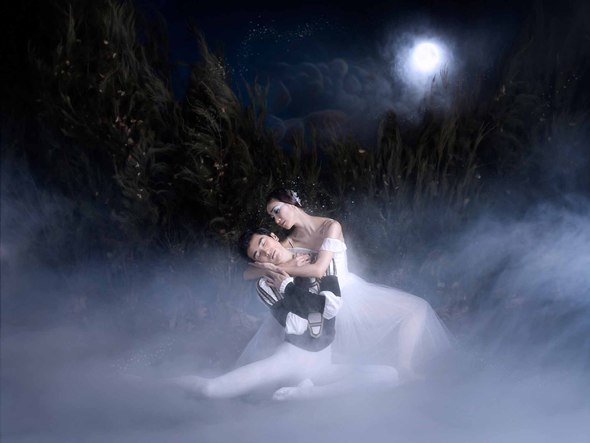
(Photo shows a scene from the ballet Giselle, performed by the Queensland Ballet)

Old Names Are New … And New Names Are Old News

26 Thursday Sep 2013

Posted by A.O. in Names in the News

≈ 5 Comments

Tags

Arabic names, created names, famous namesakes, fictional namesakes, French names, Latin names, locational names, name data, name trends, Polish names, retro names, Roman names, saints names, Spanish names, spellcheck software, Stars Wars, surname names, titles, Twitter, UK trends, US trends, vocabulary names

Old Fashioned Names

When it comes to baby names, the newspapers generally run with one of two stories. Either they tell us that “normal” baby names are “back in fashion” (what a relief!), or else they give us dire warnings of “bizarre” baby names which are definitely the sign of the apocalypse, or can at least make us feel all smug and superior for five minutes.

It’s not often they run with both these at once, but in a journalistic triumph, they brought forth two opposing baby name stories within two days of each other. I’m not sure whether they didn’t bother co-ordinating, or hoped nobody would notice the obvious incongruity.

The Daily Telegraph told us that in the future, baby names will no longer be odd hyphenations or spelling variants, because when they looked through the New South Wales data, most of the names popular during the 1940s and ’50s, which had almost disappeared by the early 2000s, have had a resurgence in the past decade.

Henry has almost tripled from 106 in 2002, to 276 in 2012; Evelyn is up from 17 to 112; and Matilda has skyrocketed from 68 to 265. Of the twenty traditional names they chose to look at, only Samuel and Beatrice had suffered a slight decline.

This trend, we are told, reflects a desire for individuality, substance, and “a bit of class”. It has been spearheaded by the young royals, William and Catherine, although they weren’t even engaged at the turn of the century, so I’m not sure how they managed to influence an entire decade of baby names.

Furthermore, we can be assured this signals a return to conservative values, discipline being back in vogue, school uniforms, and clearly defined gender roles (which apparently means girls wearing pink and boys wearing blue).

Generation X parents get the gong for doing their research and picking out good solid names that you can yell from the soccer match sidelines without embarrassment, and which will, it seems, affect their children’s entire destinies and even give them a good Twitter handle. Goodness. Who would thought calling your kid Mabel was so significant?

Meanwhile, over the border, the Courier Mail interviewed an anonymous schoolteacher from Logan (love the old anonymous schoolteacher as a source – can’t be proved they exist, can’t be proved they don’t), and she says names have become increasingly bizarre over the past 20 years, and now spellcheck software can’t even recognise them. I find most names aren’t recognised by spellcheck – where is this spellcheck software which can recognise all the names in the world?

Then comes a long list of names of children who we are told are enrolled at Logan schools, and are meant to be horrified by.

One of them is Romaine – a French name, the feminine of Roman. Another is Cassius, a Roman name and also a saints’s name; it’s gaining in popularity in both the US and the UK. I say thumbs up to Romaine and Cassius’ parents! Felicitas is another Roman saint’s name, with the meaning “fortunate” in Latin. How does a schoolteacher not recognise these as names? That to me is the scary part.

There are names from other cultures, such as Alareal, a Spanish surname derived from the word for “royal”; Jadzia, a Polish form of Hedwig; Santiana, a Spanish surname which means “St. Anna”; Thiery, a French form of Theodoric. Qaira is Arabic, and Zenen is Spanish, but I don’t know anything more than that.

There’s quite a few vocabulary names, including Beautiful, Bravado, Brilliance, Cherish, De Ja Vu, Freedom, Gorgeous, Heritage, Miracle, Precious, Sapphire, Styles, and Twinkle. A spellchecker will recognise them, and they’re all words with positive meanings. When you think of it, most names start out as vocabulary words anyway.

There’s two titles as names: Caesar and Marquis. I’m mentioning these since it’s said Australians can’t use titles as names, but clearly we can in some cases.

There’s real place names: Australasia, which is patriotic; Avantika, the ancient name for a city in India; Jetiis, a village in Indonesia. And a fictional place name: Ataria, an island in Star Wars.

There’s names of celebrities, such as Beyonce, and Kahu, which is a tribute to Brisbane Broncos NRL star Jordan Kahu, and Kovee, after the musician.

There’s Caylis, who is one of the Neopets, Darian, derived from Darius, Hawke, a surname, and Jezzer, a short form of Jeremy.

There’s some variant spellings, such as Bayleigh, Emmerson, Izack, Kaelani, Khaileb, Khynan, and Psalmz, which I don’t find too outrageous.

There’s some “tweaking” of names such as Leilesha, Mikaiah, Shaylani, Tanyce and Taylay, which don’t offend me. I notice there is a Congresswoman in the US named Tanyce, so it doesn’t seem to impede your progress in life.

There’s some names I don’t recognise, although that doesn’t necessarily make them “bad” names, and I can see that they are in use elsewhere: Kalaize, Millieka, Narvasha, and Shizia.

Finally, we end with Sambo, which I agree seems a bit unfortunate, but does have a number of origins, and L-Car, pronounced Ledashcar (although wouldn’t it be Eldashcar???). Anyway I have already made my views known on this subject, and won’t repeat them here.

So there you go – either names are becoming more and more conservative, or they are becoming ever more strange and confusing. You can decide for yourself which one is correct, if either is.

POLL RESULTS
29% believed that names were not becoming either more conservative or more bizarre, but were staying much the same
24% thought that names were becoming both more conservative, and more bizarre
20% thought they were becoming more conservative for the middle classes, but more diverse for the lower classes
12% didn’t know, and felt confused
7% felt that names were in fact all becoming more bizarre across the board
The remaining 8% (representing three people) chose options where they were the only person to have that opinion

Famous Names: Muhammad

04 Wednesday Sep 2013

Posted by A.O. in Famous Names

≈ 4 Comments

Tags

Arabic names, celebrity baby names, famous namesakes, name data, name discrimination, name history, name meaning, name popularity, name studies, NSW name popularity, popular names, saints names, UK name popularity, US name popularity

PMUZ058

The name Muhammad joined the national Top 100 last year, which was also its first time in the New South Wales Top 100. However, data from the NSW Registry of Births, Deaths and Marriages shows that, if you combine all the variant spellings, Muhammad has been in the Top 25 of the state since 2010, giving it a similar level of popularity to Xavier, Jayden, Mason and Charlie.

This trend looks likely to continue, with 161 baby boys named Muhammad, Mohamed, Muhammed or Mohammed already born in the state this year between January and August.

Muslin leader and community spokesperson, Keysar Trad, who has a son named Muhammad, believes that these statistics are a sign that Australian Muslims are becoming more confident in giving their children Islamic names.

He thinks that they show a greater acceptance of Muslim names in the wider community, and a healthier connection with their religion amongst Muslims.

Mr Trad says that religious names not only allow an expression of devotion to God, but allow parents to reclaim an aspect of their culture.

By choosing the name of a significant religious figure, they hope that their child will share in the good qualities of that name, and perhaps be inspired to learn more about it when they get older.

“You think that one day, maybe they will read up on the significance on the name,” he said.

The prophet Muhammad’s full name was Abū al-Qāsim Muḥammad ibn ʿAbd Allāh ibn ʿAbd al-Muṭṭalib ibn Hāshim, and he was a 6th century leader from Mecca in Arabia who unified his country under Islam.

According to his own testimony, at the age of 40, he began receiving revelations from God through the archangel Gabriel, and a few years later began preaching these revelations. He proclaimed that “God is One”, and that complete surrender to Him was the only acceptable path to God – the word Islam itself means “surrender”. Muhammad declared himself a prophet, and a messenger sent by God.

The revelations which Muhammad reported receiving until his death in his early 60s form the Quran, which is the basis of the Muslim religion, and regarded by Muslims as the Word of God.

The name Muhammad means “praised, praiseworthy” in Arabic, and it is a very popular name amongst Muslims. It has a variety of transliterations and spellings because of the different languages used in the Islamic world.

It is believed that Muhammad, counting all variant spellings, is the most common personal name in the world, with an estimated 150 million men and boys bearing the name. It is the most common boys name in England/Wales, and in the United States, if all the spelling variants were combined, Muhammad would be in the Top 200 and rising, with a similar popularity to Silas, Maddox, Weston and Greyson.

There is a popular theory that names which are too “ethnic” sounding should be avoided lest they lead to discrimination, and you can find studies which show that in many cases, it can be harder to get a job interview if the name on your resume looks “foreign” (although this Australian study showed it depended where you lived and what kind of “ethnic” your name was).

Kayser Trad acknowledged that there have been cases where people with an obviously Muslim name had trouble getting a job, but he doesn’t believe the answer is to “go into hiding”, or change your name to Charlie Edwards to get an interview.

It also occurs to me that this theory assumes that all businesses are owned and all industries are controlled by people from an Anglo background, and that all people in charge of such businesses would prefer not to employ non-Anglo people. That just isn’t true.

I watched the daily business report on television yesterday, and noted that of the half dozen spokespeople from major businesses interviewed, four of them had ethnic names, including two with Arabic names. Furthermore, many businesses are owned by people from non-Anglo heritages, and having a Muslim name may prove an advantage in some areas.

Businesses in areas with a strong migrant community could prefer to hire people from a similar background for greater rapport with and understanding of their customer base, and your name shouldn’t be any disadvantage in the public and non-profit sector – about 25% of the workforce, and in some areas, up to 80% of the workforce.

Muhammad joining the Top 100 is a watershed in Australian society, but it should also be remembered that the majority of names on the boys Top 100 are of Jewish or Christian origin, with many names of pagan origin only coming into popular use through saints, such as George and Aidan, and even surname names developing because of saints, such as Mitchell and Jackson.

If you are interested how names of other religious figures fare in New South Wales, during the 2000s more than one baby each year, but less than six, were named Jesus or Moses, and in the same period most years saw about 7-11 babies named Abraham. By July this year, 10 babies named Krishna had been born. Hmm, this could be another growth area …

POLL RESULT: Muhammad received an approval rating of 49%. 27% of people thought the name Muhammad connected its bearer to his culture, and as a result, 24% believed the name was only suitable for Muslims. 14% saw the name as “too Muslim”.   

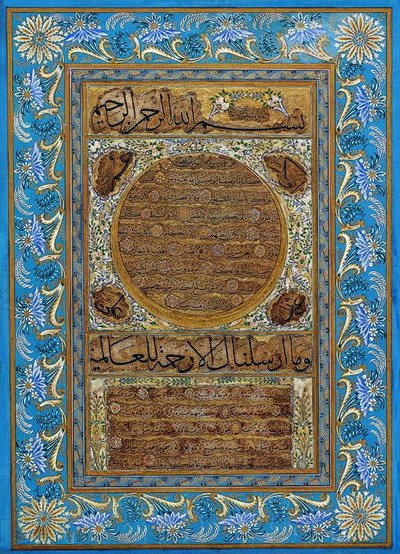
(The picture shows a 17th century Ottoman calligraphy panel by Hafiz Osman, describing the physical appearance of the prophet Muhammad; it is not permitted to show images of Muhammad in Islam)

Waltzing with … Layla

07 Sunday Jul 2013

Posted by A.O. in Waltzing with ...

≈ 3 Comments

Tags

Arabic names, fictional namesakes, name combinations, name history, name meaning, name popularity, name trends, names from songs, popular names, sibsets

Layla-And-Other-Assorted-Love-Songs-Remastered-Super-Deluxe-Edition-CD3-coverThis Tuesday is the start of Ramadan, the ninth month of the Islamic calendar, and considered the holiest of the year. During Ramadan, Muslims are expected to fast during daylight hours, and abstain from smoking and sexual relations between sunrise and sunset. They are also encouraged to donate to charity or do volunteer work, and to read the Qur’an.

Muslim history in Australia predates 1788, for traders and fishermen from Indonesia are believed to have had contact with Indigenous Australians hundreds of years before European settlement, leaving their mark in language, culture and even genetics on the peoples of northern Australia.

However, Muslim emigration is usually dated from the mid-19th century, when Central Asians were brought here to work as camel-drivers in the desert – they were known as Afghans, although they were mostly from India. The train from Adelaide to Darwin is called The Ghan in their memory, and the first mosque was built in 1861 in South Australia for the “Afghan” community.

Immigration from Muslim countries increased during the 1970s, and today about 1.5 million Australians identify as Muslim, or 2.2% of the population. It is an ethnically, culturally and linguistically diverse religious group, with Lebanese-Australian Muslims the largest group within it (although most Lebanese-Australians are Christian). Around half of Muslims in Australia live in Sydney.

The most blessed night during Ramadan is Laylat al-Qadr, which can be translated as Night of Destiny (August 3 this year). It commemorates the night when Muslims believe Allah revealed the Qur’an to the prophet Muhammad, and it is a night to pray for blessings and salvation.

Layla means “night” in Arabic. It is sometimes interpreted by Arabic writers as “one who works by night”, with connotations of matters which are kept hidden or secret. Others see it as a name describing a dark beauty, or suitable for someone born during the hours of night – or even for a girl born on Laylat al-Qadr.

The name Layla is prominent in Arabic literature because of a medieval love story (supposedly based on real events) whose title can be roughly translated as Crazy for Layla. According to the legend, Qays and Layla were from the same Arabian tribe, and fell in love. The smitten Qays began obsessively composing poems in his sweetheart’s honour, to the point where he gained a reputation as being not quite right in the head. As a result, he acquired the moniker Majnun (“madman”).

When Majnun asked for Layla’s hand in marriage, her father refused, because he didn’t want a poetry-mad nutter as a son-in-law, and married her off to someone more stable. Poor lovesick Majnun began wandering alone in the desert, and could occasionally be sighted muttering poems to himself or writing what was presumed to be more poetry in the sand with a stick. Layla became ill and eventually died; some said she had died of a broken heart. Majnun was found dead in the wilderness in 688, near Layla’s grave. His last poems were carved on a rock near Layla’s final resting place.

The story is best known from the work of the 12th century Persian poet Nizami Ganjavi, who adapted it into a long narrative poem called Leyli o Majnun (“Layla and the Madman”). Nizami Gangavi’s poem is considered a literary masterpiece, and brings the story vividly to life. In his version, the lovers fell for each other while still in school, and were not permitted to marry because of a feud between their families – very much like Romeo and Juliet.

The romance was extremely popular, and mystics used it to illustrate spiritual truths, so that Majnun became a symbol not only for poets and lovers, but also for those seeking higher truths. Layla and Manjun are often referenced in literature, and the story has gained wide appeal in India, where it has inspired many films.

The story of Layla gained a new audience in 1970, when Eric Clapton’s song Layla was released. Based on his infatuation with model Pattie Boyd, then married to George Harrison, it uses the story of Layla and Majnun to illustrate madly despairing unrequited love. Another song from the same album, I Am Yours, quotes directly from Nizami Gunjavi. Unlike Layla and Majnun, Eric and Pattie did later wed, but the marriage didn’t last.

Layla has charted since the 1980s, when it debuted at #752. It was #353 for the 1990s, and #147 for the early 2000s. Layla entered the Top 100 in 2004, when it got to #98, and made the Top 50 in 2009, at #47. Currently it is #38 nationally, #28 in New South Wales, #42 in Victoria, #32 in Queensland, #32 in South Australia, #24 in Western Australia, #36 in Tasmania, and #35 in the Australian Capital Territory.

Layla has zoomed up the charts to become established as a popular girls name. Apart from its musical heritage, it fits in with the trend for girls name with an AY sound in them, such as Ava, Hayley and Kayla, and also with the L-L trend, such as that found in Lily, Lila and Lola. That means a Layla may be the only one in her class, but the other girls around her could have similar-sounding names.

Layla is pretty and simple with a nice meaning and a very romantic history, and it works well cross-culturally too. It’s popular, but its position has stabilised, so it’s not rocketing upwards any longer. If you have fallen deeply in love with the name Layla, then I don’t think anyone will think you are crazy for choosing it.

Name Combinations for Layla

Layla Carys, Layla Elise, Layla Jade, Layla Peri, Layla Scarlett, Layla Zoe

Brothers for Layla

Fabian, Jett, Ryder, Skandar, Tariq, Xavier

Sisters for Layla

Aaliyah, Evie, Jasmine, Sophie, Willow, Zara

Note: Middle names and sibling names partially based on real life examples

POLL RESULT: Layla received an approval rating of 94%, making it the highest-rated featured girls name of 2013. 34% of people liked it, and nobody hated it.

(Picture is of the cover of the album, Layla and Other Assorted Love Songs, by Derek and the Dominoes)

Names Spotted at Home and Abroad (Autum Edition)

27 Thursday Jun 2013

Posted by A.O. in Names Spotted at Home and Abroad

≈ 7 Comments

Tags

Arabic names, Arthurian names, Biblical names, Cornish names, english names, hebrew names, Japanese names, locational names, Maori names, name meaning, names from movies, names from television, portmanteau names, rare names, Scottish names, Slavic names, Spanish names, stage names, surname names, terms of endearment, unisex names, vocabulary names, Welsh names

982951-130420-twam-honeyNames of Babies and Children

The winners of the 2013 Bonds Baby Search were announced during the autumn, and some of the interesting names I saw amongst them were Ramsey, Cielo and Azriel. Ramsey is a Scottish surname from an English town meaning “wild garlic island” – at last, it’s an anti-vampire name! Cielo means “sky”, in Spanish, but it’s also a term of affection, meaning “my heaven”. Azriel is a Hebrew Biblical name which means “help of God”. Although male in the Bible, its similarity to Azaria and Ariel probably makes it seem unisex, or even female.

A baby girl born rather suddenly in a hospital car park in Adelaide was named Lowenek, a Cornish name said to mean “joyfulness”. South Australia has a strong Cornish heritage, and I wonder if little Lowenek was named with this in mind?

A poor little baby had a rather awful time in hospital. Her name is Venice, which I think is really pretty. We just saw a Verona in a birth announcement, and I saw a Vienna at For Real Baby Names – Valencia must be just around the corner.

This story on a mum who went all out to lose her baby weight, getting super fit in the process, says that she has a toddler son named Jatticus, and a baby daughter named Atlantis. I’ve seen people use Jatticus as a user name online, but never seen it on a baby before, and Atlantis is pretty wow.

A story on a Sydney family with a dozen children did not give all their names, but did mention one boy named Taiawhio, which is a Maori name meaning “go around, encircle”.

An article on baby naming laws in Australia from Lifehacker mentioned a few rare baby names that were registered last year – Hurricane, J’Adore, Couture, Excel, Burger, Google, Tron, Hippo. Are these unique baby names? Nope, they were each registered more than once. Remember, no matter how unusual you think your baby name is, someone else has probably thought of it.

Names of Adults

A story on a baby’s difficult birth mentioned the midwife as being named Oki Rose. Oki is a Japanese name which means “offing” – the offing is the distant sea which is still visible from the shoreline. It’s a surname in Japan, as well as a place name, the Oki Islands. It’s a name which strangely appeals to me, and as parents sometimes call their babies after the midwife in gratitude, I wonder if there are any little Okis in her area?

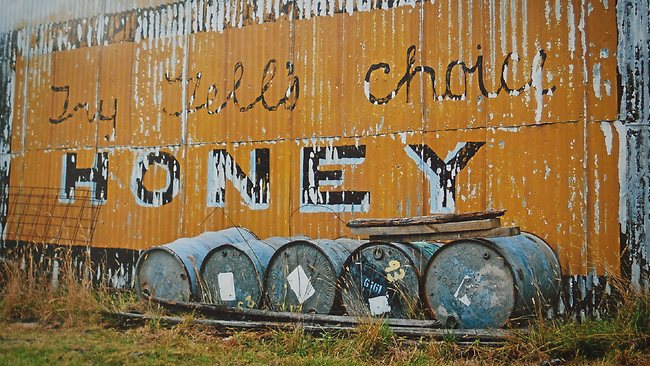
There was a profile on a novelist named Honey Brown. People always ask her if it’s a pen name, but it’s the name she was given at birth. Her dad was driving down a country road when he saw a sign advertising honey painted on a roadside shed, and he went home and told his pregnant wife that if they had a girl, her name had to be Honey. If that isn’t sweet enough, for her 40th birthday, Honey’s sister tracked down the original sign and took a photo of it. I love a name with a story behind it.

Another writer, this time a teenage fashion blogger from Perth named Willabelle Ong. She’s been blogging since she was 15, has more than 60 000 subscribers, racks up over 115 000 views a month, and has been featured in Teen Vogue and the New York Times. I’m not usually a fan of portmanteau names, but Willabelle is really quirky and charming.

There was a story on a young rapper whose stage name is Iggy Azalea, which is pretty cool. Her real name is Amethyst Kelly, which is cool too. Would you prefer to be called Iggy or Amethyst?

A story on new Australian citizens in Queensland mentioned one with the intriguing name of Ginny Lovelady. It puts an interesting picture in your mind. Other names of new Australians were Craig, Manjula, Marriette, Brigette, Albert, Melissa and Almari.

While watching RPA, I saw a young man, still in his teens, having a tumour removed from his leg. Luckily, his limb was able to be saved. He had the romantically Arthurian name Galahad, which some interpret as being from the Welsh for “hawk of summer”. Galahad is the only knight who is pure enough to find the Holy Grail, and some see him as a Christ-figure. Guinevere is becoming accepted as a “normal” name now, so how about Galahad for the guys?

On the news, there was a brief interview with the father of an unsuccessful criminal who was foiled by a quick-thinking young lady. The dad’s name was Trampas, which seemed to me very unusual (okay, utterly bizarre). Turns out the name had quite a vogue in its day, because Trampas was one of the main characters in the 1960s TV cowboy series, The Virginian. It’s from a place name meaning “traps” in Spanish, and there’s some famous Americans with this name, who were born while the TV show was on. There’s also several Australians with the name in historical records. Perhaps in 50 years a name blogger will exclaim over a stout middle-aged lady named Katniss, and wonder where on earth she got her “weird” name from.

Speaking of names from books, a friend complained that she couldn’t finish the novel she’d started because of the heroine’s name – Ava. She found it ridiculous that a grown woman should have a “little girl” name – sooo unbelievable. The funny thing is, I know an Ava who’s 32, not to mention a Ruby who’s 28 , a Keeley who’s 29, and an Oliver and a Tyson in their mid-forties. These popular baby names had to start out somewhere! The grown-up Ava I know has a toddler named Jessica – I wonder how many people get their names confused?

Interesting Names Spotted in Real Life

Akira – a Japanese name meaning “bright, clear”. It can be unisex, but I saw it on a boy.

Ebenezer – I was so rapt to see this on a little boy! It really doesn’t seem any different to Biblical names like Ethan, Elijah, Ezra etc.

Malik – an Arabic name meaning “chieftain, king”. Does it remind you of Slumdog Millionaire or One Direction?

Riven – a girl’s name from the online game, League of Legends. Literally it means “split asunder” in English, which kind of freaks me out, but I can see it sounds a lot like River and Rivendell. Maybe her parents think riven means “full of rivers”?

Zora – a Slavic name meaning “dawn”. A nice alternative to popular Zara.

Names of Babies Born to People I Know or Know Of:

Girls: Autumn, Mabel, Xanthe

Boys: Calvin, Lennon, Theo, Wyatt

(Picture shows the original sign which inspired Honey Brown’s name)

← Older posts
Newer posts →

Enter your email address to follow this blog

Categories

Archives

Recent Comments

A.O.'s avatarwaltzingmorethanmati… on Zarah Zaynab and Wolfgang…
Madelyn's avatarMadelyn on Zarah Zaynab and Wolfgang…
JD's avatardrperegrine on Can Phoebe Complete This …
A.O.'s avatarwaltzingmorethanmati… on Rua and Rhoa
redrover23's avatarredrover23 on Rua and Rhoa

Blogroll

  • Appellation Mountain
  • Baby Name Pondering
  • Babynamelover's Blog
  • British Baby Names
  • Clare's Name News
  • For Real Baby Names
  • Geek Baby Names
  • Name Candy
  • Nameberry
  • Nancy's Baby Names
  • Ren's Baby Name Blog
  • Sancta Nomina
  • Swistle: Baby Names
  • The Art of Naming
  • The Baby Name Wizard
  • The Beauty of Names
  • Tulip By Any Name

RSS Feed

  • RSS - Posts

RSS Posts

  • Celebrity Baby News: Melanie Vallejo and Matt Kingston
  • Names from the TV Show “Cleverman”
  • Can Phoebe Complete This Sibset?
  • Zarah Zaynab and Wolfgang Winter
  • Baby, How Did You Get That Name?
  • Celebrity Baby News: Media Babies
  • Celebrity Baby News: Adelaide Crows Babies
  • Celebrity Baby News: Chris and Rebecca Judd
  • Names at Work: Name News From the World of Business and Employment
  • Celebrity Baby News: Sporting Round Up

Currently Popular

  • Celebrity Baby News: Toby Allen and Darren Weller
  • Rare Boys Names From the 1950s
  • The Top 100 Names of the 1900s in New South Wales
  • Girls Names of Australian Aboriginal Origin
  • Celebrity Baby News: Jason Morrison and Heidi Tiltins

Tags

celebrity baby names celebrity sibsets english names famous namesakes fictional namesakes honouring locational names middle names name combinations name history name meaning name popularity name trends nicknames popular names saints names sibsets surname names twin sets unisex names

Create a free website or blog at WordPress.com.

Privacy & Cookies: This site uses cookies. By continuing to use this website, you agree to their use.
To find out more, including how to control cookies, see here: Cookie Policy
  • Subscribe Subscribed
    • Waltzing More Than Matilda
    • Join 517 other subscribers
    • Already have a WordPress.com account? Log in now.
    • Waltzing More Than Matilda
    • Subscribe Subscribed
    • Sign up
    • Log in
    • Report this content
    • View site in Reader
    • Manage subscriptions
    • Collapse this bar
 

Loading Comments...