Names Spotted at Home and Abroad (Summer 2013/14)

Tags

, , , , , , , , , , , , ,

434407-32707c74-6464-11e3-be16-1445237cc09f

Stories in the papers on the most popular names often have a look at the other end, and tell us which names were least common in 2013. Some of them included:

BOYS: Clinchy, Jetta, Kayos, Magick, Rampage, Shanakee, Xenophon

GIRLS: Asterix, Blendin, Bonniebell, Euphemia, Lingo, Passion, Shiny, Tiger Lily, Vogue, Zipporah

A story from Ballarat focused on mothers who had “bonus babies” long after they thought their families were complete. One of the mums was named Peace, which I thought was a lovely serene virtue name. Another was parenting author Pinky McKay, who has a very colourful name (her hair matches).

‘Tis the Season

The first baby born in Wollongong Hospital on Christmas Day was Fenix Cooper Brudenell. Fenix has a very pop culture name: his first name is after Marcus Fenix from the Gears of War video games, while his second is after Sheldon Cooper, from The Big Bang Theory. Fenix’s siblings are Megan and Austin.

Jonathan Butler and Tahani Curtis, from the Tweed Heads region of New South Wales, were expecting a child on Christmas Day, and seriously considered calling him Jesus if they had a boy. Is this the ultimate Christmas name? They had a girl instead, and named her Matilda.

Saint James the Great church in Melbourne invited people to bring their pets to celebrate Christmas Mass, because baby Jesus was born in a stable amongst animals. Nick Haines and Michelle Nichol brought their three poodles, because as Nick says, “these are our children”. The poodles are named George, Poppy and Lilly – surely some are giving their “fur babies” the names they would have given human children, as this sounds like an adorable sibset … er, pupset.

Fighting Fit Families

Bec Hyatt from Brisbane took up cage fighting in order to lose 80 kg of baby weight. She is now set to become the first Australian woman in the UFC, earning more than $100 000 per fight. Bec’s two sons are Enson and Zake – Enson may be named after American MMA champ Enson Inoue, while Zake is a variant of the Arabic name Zaki, meaning “pure”. It sounds like a cousin of Jake, Zac and Zeke.

Still on the subject of competitive fighting: the children of the Metcalf family from Sutherland Shire are all boxers. Raised by a single dad, and with their trainer as a second father, three of them have fought their way to champion status, with the youngest a promising up-and-comer. Their names are Marizza, aged 18, Axx, aged 16, Lolli, aged 14, and Electra-Shenika, aged 11. If you’ve ever wondered what a sibset that can beat your kids up would sound like, this is it.

Expat Americana

Adam Preston lived in New York City for seven years, with his first apartment over a hot dog joint called Crif Dogs in the East Village [pictured], which calls itself “NYC’s  #1 Weiner”. When he married his Canadian wife Jessica two years ago, they eloped to New York, which has so many memories for Adam. Of course he took her to Crif Dogs, and when they had a baby boy soon after, they named him Crif Benjamin Klaver Preston. The name Crif Dogs came about when owner Brian Shebairo tried to say Chris, his former business partner’s name, while chewing a hot dog. Crif sounds more up-to-date as a baby name than Chris, and even a hot dog place can evoke sentimental memories to be commemorated as a baby name.

Yvette Aubusson-Foley, a former journalist from Dubbo, has been living in the US for more than 18 months, and uneasily watching her three children adapt to local conditions in Tucson, Arizona. They dress up as little pilgrims, develop a slight American accent, and (to Yvette’s horror) happily recite the Pledge of Allegiance – although one defiantly wears an Australian flag for Spirit of America Day. Yvette’s children are daughter Jett, and her sons Phoenix and Dash; names which somehow seem ready to assimilate. Would an Indi, Banjo and Taj remain more stubbornly Aussie, I wonder?

Television

Have you ever watched an episode of Australian reality television show Real Housewives of Melbourne? It tends to get people a little excitable, mostly because the women taking part in the show aren’t actually housewives, don’t have much left of themselves that’s real, and only live in a very limited part of Melbourne. One of the women, Andrea, who runs a plastic surgery clinic and is originally from New York, has three children named Budd, Kiff and Buster (who somehow require five nannies). Their names have caused predictable Internet outrage – especially Kiff, with many demanding to know “what culture” Kiff is from: it’s a short form of Christopher, and therefore a linguistic relation to Crif.

Children’s quiz show Pyramid featured a team consisting of two girls named Eugenie and Prudence. Isn’t that a fantastic pairing of gal-pal names?

Lilou Wren and Scarlett June Dove

Tags

, , , ,

Superb Fruit-dove

Twins

Alfred and George

Mabel and Edith

Monty and Florence

Reginald James and William David

Theodora Marie and Sophia Angela

Walter Albert and Audrey Margaret (Alice)


Girls

Aria Giselle

Beau Brenda Ruthie

Briar Elizabeth

Briganza Brina

Charlotte India Rose (Thomas)

Damaris Pia

Eleanor Anne (Elizabeth, Edward)

Eloise Marjorie (Imogen)

Estelle Sophia

Harper Love

Harriet Bee

Khloe Nova

Latifa Nelly Abdi

Lilou Wren

Maggie Katherine (Isobel)

Renelle Nathara

Roberta Christine (Blake, Michaela, Ila)

Rosemary Evelyn

Ruby Lou (George)

Scarlett June Dove (Zoe, James)

Senara Rain Byard

Sydney Patricia (Delilah)

Temperance May

Winter Ash

Zoe Winnetta


Boys

Aston Maxwell

Aquil Forest

Bade Emery (Kobe, Tate)

Calais James Orr

Cassin Sean

Chase Payne

Creedence Zavier

Cruz Van Every

Ethan Bracken

Finbar Ronan

Griffith Patrick (Scarlett)

Havoc Ronald

Hudson Jai Willow (Kayla, Ella, Brayden, Ashton)

Indiana Jones

Jazarl Nicholas (Taite)

Koda Stone

Nate Zekai (Ethan, Ryder)

Patrick Thurkettle

Phoenix Storm

Quade Anthony Ray (Mathieu, Teigan, Kody, Jordyn)

Rhythm

Seeley John

Shire Bailey

Vee Eight

Zen Noah

Thank you to Brooke at Baby Name Pondering, who contributed some of these names from the Herald Sun.

Note: Many of these names are from Bonds Baby Search 2014.

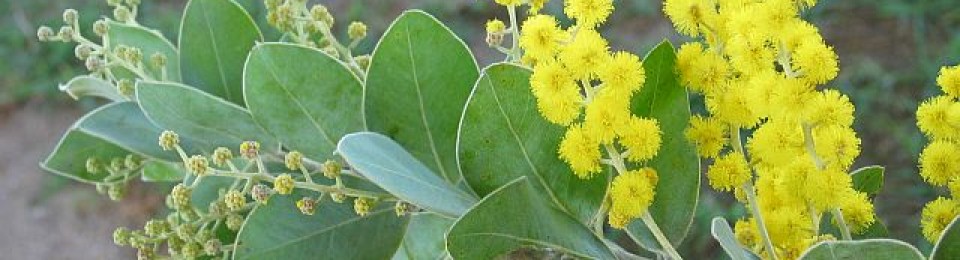
(Photo shows a male Superb Fruit Dove, native to the rainforests of Queensland and northern New South Wales)

Famous Name: Samuel

Tags

, , , , , , , , , , , , ,

wide-LYS13-310-620x349

Last month, on Valentine’s Day, actor Samuel Johnson broke a world record by riding a unicycle more than 15 000 km on a zig-zagging route across Australia for 364 days. How did it all start? His sister Constance set him the toughest challenge she could think of. It started as a joke, and turned into a promise.

You see, Sam’s beloved sister Connie has cancer. She has fought it three times in her life, beginning from the age of 11, but now she is dying, and doesn’t have much time left. So Samuel promised he would raise a million dollars towards breast cancer, with his unicycle challenge dubbed Love Your Sister.

So far he has raised almost 1.5 million dollars for breast cancer research through the Garvan Institute, and plans to work full time for the charity. Even better, Connie’s cancer is stable, and her oncology team are surprised and very pleased with how well her treatment is going. They say there is a good chance she still has a year left, maybe more.

The reason I chose to cover this story, apart from the chance to record a key moment in unicycling history, and because I had been looking for an opportunity to feature the name Samuel, is because of the wonderful sibsets involved. Connie has two small boys named Willoughby “Wib” and Hamilton. Samuel’s two sisters are Constance and Hilde.

Samuel is a character from the Bible whose story starts before he is even conceived. His mother Hannah was barren, and prayed for a baby in the doorway of a religious shrine, vowing that if her prayer was answered, she would dedicate the child to God. A priest of the shrine named Eli heard her, and offered a blessing, suggesting that her prayer would be answered. Hannah gave birth to a son that she named Samuel; in fulfilment of her promise, she gave Samuel to Eli once the child was weaned (about the age of three).

Eli brought Samuel up to work in the shrine, where he proved a devoted and highly intelligent assistant. While still a child, Samuel woke up in the night to hear a voice calling his name. Thinking it was Eli calling him, he went to ask him what he wanted. After this happened a few times, Eli realised that it was God calling Samuel, and instructed him in how to respond, so he could hear the word of God.

God’s first message turned out to be a piece of unwelcome news for Samuel’s mentor Eli, because it was foretold that both his sons, who were corrupt priests, would come to a bad end. During Samuel’s youth, the Israelites were defeated by the Philistines, who took control of the land and ransacked the shrine. During the conflict, both of Eli’s sons were killed, and the old man, now blind and about ninety, died of shock when he heard the report.

Samuel became publicly recognised as a great prophet and seer, and after twenty years of oppression, he organised the Israelites into an army and led them in battle against the Philistines. There was a decisive victory for the Israelites, and for many years afterwards there was peace in the land. Samuel became a judge of the Israelites, and all went well for ten years, until the people demanded a king to rule over them instead. Samuel (after warning everyone what a terrible idea having a king was) anointed both Saul and David as the first and second kings of Israel.

Samuel was the last judge and the first prophet of the Hebrews, and the founder of a kingdom. He is revered in Judaism, Christianity, and Islam, and regarded as a saint in the Catholic and Orthodox faiths.

Samuel is the English form of the Hebrew name Shemu’el. The Bible tells us that the name Samuel means “asked of God”, which Hannah chose to indicate that Samuel was an answer to her prayer. However, this is not correct, and is rather the meaning of the name Saul. It would seem that the names of the first prophet and first king have got confused, and perhaps even their narratives have too.

Samuel can be translated as either “heard by God”, or “hearer of God” – the first one to suggest that Hannah’s prayers were heard and answered by God; the last one to signify his role as prophet. It can also be understood as “son of God”, which makes sense as Samuel was raised from early childhood in God’s shrine.

Although in some use in Britain in the late Middle Ages, Samuel became far more common after the Protestant Reformation. Famous English Samuels include lexicographer Dr Samuel Johnson, satirical poet Samuel Butler, and diarist Samuel Pepys. Samuel was one of the very earliest English names to travel to the American colonies, and famous American Samuels include Samuel Adams, one of the founding fathers of the United States, Samuel Morse, the inventor of Morse code, and Samuel Langhorne Clemens, otherwise known as the beloved author Mark Twain. The United States itself even became personified as a Samuel – Uncle Sam.

Samuel is a classic name which has never left the charts. It was #46 for the 1900s, and dropped out of the Top 100 during the 1930s. It reached its lowest level in the 1960s at #164, but was back in the Top 100 by the 1970s. It was #14 for the 1990s, and since then has remained extremely stable, hovering around that position.

Currently it is #12 nationally, #20 in New South Wales, #15 in Victoria, #12 in Queensland, #18 in Western Australia, #11 in Tasmania, #16 in the Northern Territory, and #14 in the Australian Capital Territory. It is of similar popularity in the UK and the US, and is a Top 100 name in many countries, making this a very international name.

Samuel is a handsome name which has strength, but also softness. A timeless classic, it is currently at its historic height of popularity, and has been stable for decades, making it a very safe choice. It is so commonly used around the world that it has no particular image attached to it. That means that when it comes to picturing a Samuel, he could be any age, of any appearance, and be anything; an athlete, writer, doctor, traveller, builder, or prime minister. The short form Sam is commonly used as a full name for boys, and is currently only just outside the Top 100.

POLL RESULT
Samuel received an outstanding approval rating of 88%, making it one of the highest-rated names of 2014, and the highest-rated boys name of the year. People saw the name Samuel as handsome and classic (27%), strong yet gentle (17%), ageing well (16%), a “nice guy” name (15%), and suiting a variety of people (13%). However, 6% thought it was too common and boring. Nobody thought that the name Samuel wasn’t masculine enough.

Waltzing with … Bran

Tags

, , , , , , , , , , , , , , , , , , , ,

360029

There always seems to be lots of crows and ravens around at the end of summer, finishing off the remains of those creatures who have not survived the blazing heat and drought – a very important job that we don’t appreciate as much as we should. This put me in mind to write about a name connected to these highly intelligent birds, who feature in many mythologies, for as carrion birds, they are often seen as harbingers of death, with mysterious knowledge of the afterlife.

Brân the Blessed is a heroic figure from Welsh mythology; a giant, probable god, and High King of Britain. Legends tell of how he travelled to Ireland with a host of warriors in order to rescue his sister Branwen, who was being mistreated by her husband, an Irish king. The battle was brutal, and only seven men from the rescue party survived: Branwen herself died of a broken heart.

Brân was mortally wounded in the foot, and told his men to cut off his head, so that it could be returned to Britain. They took the head to “White Hill”, thought to be where the Tower of London now stands. The head was buried there, facing France, because as long as it remained, Britain would be protected from invasion. King Arthur later dug the head up, declaring that only his strength was needed to protect the land. This was seen as a disastrous decision, because when Arthur had gone, the land was invaded by the Saxons.

Brân is connected to many figures from British legend. He is seen as a forerunner to King Arthur as High King of Britain, and many have noted his similarity to the mysterious Fisher King of Arthurian legend, who is sometimes identified as a man named Bron. The Fisher King had a wounded leg, and in some tales, the Grail he possessed had the power to restore the fallen – a parallel with Brân, who had a cauldron that could bring warriors back to life. Some stories report that Percivalfound a severed head in the Fisher King’s castle instead of the Grail.

Others scholars see Brân as connected to the Irish hero Bran mac Febail, who embarked on a journey to the Otherworld, and when he returned, so many years had passed that the Irish people know him only as a legend. After telling his story, he sailed away across the sea, never to return. The tale was an apparent inspiration for the Voyage of Saint Brendan, a legendary quest the saint undertook to the Isle of the Blessed, or Saint Brendan’s Isle. Although this may not immediately remind you of Brân the Blessed, in British legends, a voyage to Ireland (in the west) is often an allegory for a journey to the Otherworld – and Brân did die there.

The severed head of Brân the Blessed is important, because some believe the human head played a significant role in Celtic religion. Greek historians tell how Celtic warriors could cut off the heads of their enemies in battle, and that these heads would be embalmed and placed on display. Archeologists theorise that ownership of a head gave one power over the dead person, or that the head was venerated as the seat of the soul and a symbol of the Otherworld.

The head of Brân the Blessed possessed powers of mystical protection, and some connect this to the ravens in the Tower of London, because the name Brân means “crow, raven” in Welsh. There are seven ravens at the Tower, and according to tradition, they protect the Crown and the Tower. Superstition warns that should the ravens of the Tower be lost or fly away, the Crown will fall and Britain with it.

Supposedly the ravens have been kept at the tower since the 17th century, but historical evidence points to them being a Victorian innovation, possibly a gift from an earl with links to Druidic scholarship who consciously chose them as representations of Brân the Blessed. Another theory is that they were simply pets of the 19th century Tower staff. And alas for the superstition, the Tower records show that just after World War II, there were no ravens left (an apparent crow-napping), yet the monarchy and Britain have managed to soldier on.

The Welsh name Bran, from Brân, is said BRAHN, while the Irish Bran, of the same derivation and meaning, is said BRAN. The name Brendan, the saint whose legend was influenced by that of Bran mac Febail, comes from the Welsh word for “prince”. This is rather interesting, because another theory about Brân the Blessed was that his name was actually a title: to be understood as meaning The Raven in the sense of The Prince, The Chieftain (as King Arthur’s father was known as The Pendragon, head dragon or war leader).

A character named Bran from contemporary fiction is Bran Stark, from George R.R. Martin’s A Song of Fire and Ice; in the television drama series A Game of Thrones, he is played by Isaac Hempstead-Wright. Despite his mythologically rich name, Bran is just short for Brandon, an English surname which comes from several places named Brandon in the United Kingdom.

Most of these come from the Old English for “gorse hill”, although Brandon in Lincolnshire means “steep hill”. However, there are places in Ireland with Brandon in their name, and these are said to be connected to Saint Brendan, although they don’t seem to have contributed to the surname. The surname Brandon also exists in continental Europe, and in these cases, it may be derived from the Germanic name Brando, meaning “sword”. The English surname does seem to be older than these though, and predates the Norman Conquest.

Bran is a strong, simple name from legend and literature with layers upon layers of evocative meaning and association. It has limited use in the UK, and is elsewhere almost unknown. If you are worried that it is too much like the cereal husks, you can use the Welsh pronunciation, or even the Arthurian Bron. Another possibility is the Irish surname name Brannan or Brannon, which in some cases means “son of Bran”. The girls name Branwen (sister of Bran) means “fair raven”.

POLL RESULT
Bran received a respectable approval rating of 69%. 28% of people liked the name, while 20% loved it.

(Photo is of an Australian raven, one of several Corvid species native to Australia)

He Says Ari, She Says Arlo: Can You Help This Couple Agree on a Baby Name?

Tags

, , , , ,

Ari

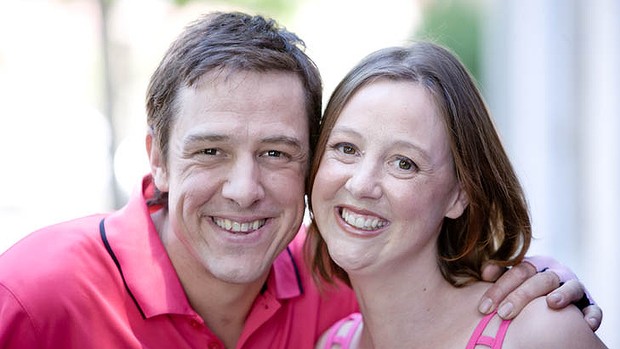
Rebecca and Daniel are expecting their second child in about a month, a brother for their son Xavier, and are having a very difficult time agreeing on a name for him. When they chose Xavier’s name, it took them the entire pregnancy to decide on a list of six names, and they picked his name after he was born.

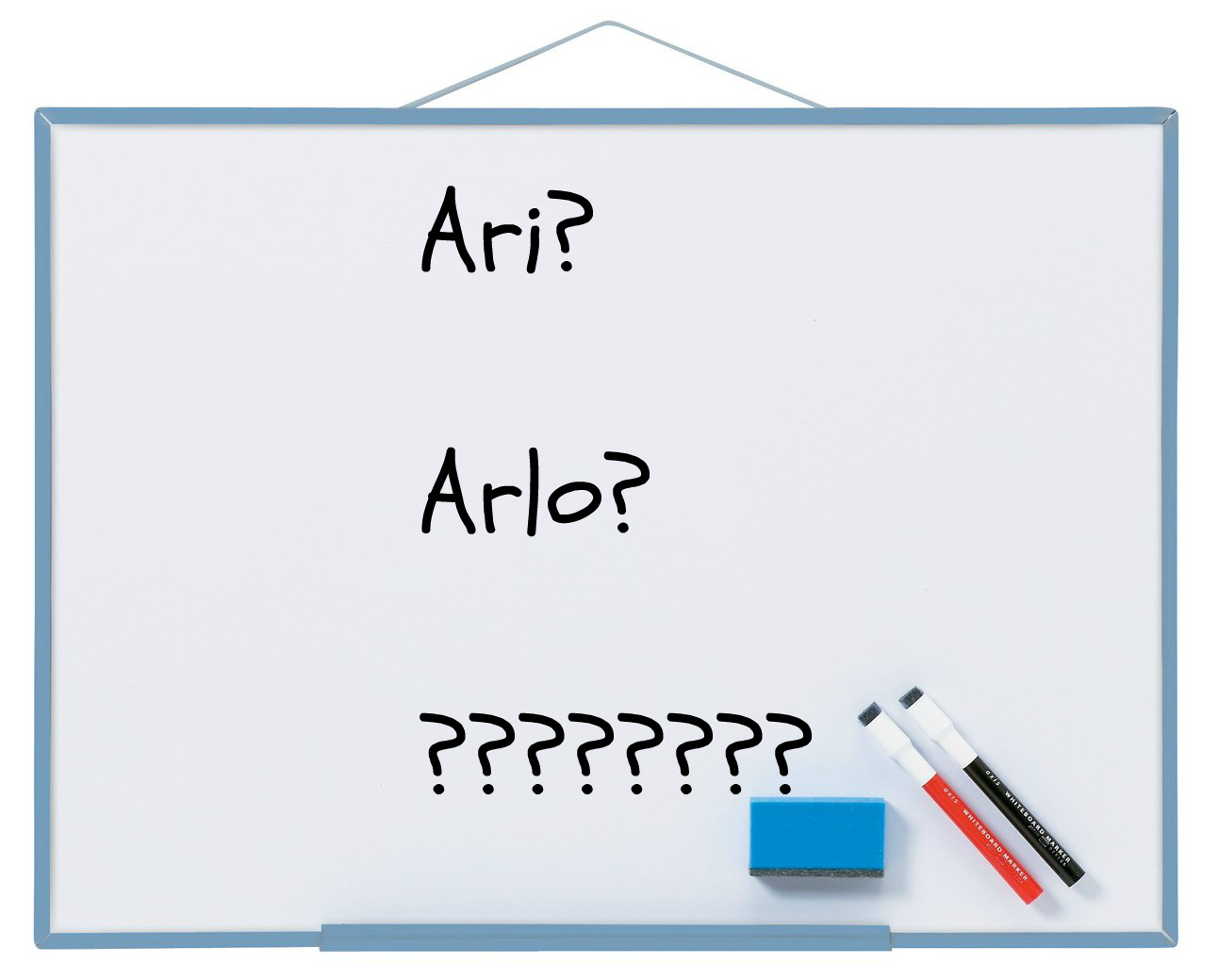
At the moment, Rebecca’s choice for the baby’s name is Arlo, while Daniel’s is Ari. Rebecca doesn’t mind Ari, but finds it a bit nicknamey, and her cousin has a son with that name. Daniel thinks Arlo sounds good on a child, but won’t suit an adult.

They have a list of names they have made together, but they don’t love any of them, and none of them feel like Xavier’s brother:

  • Alexander (a bit boring with Xavier?)
  • Beau
  • Lucas (good name, but too popular)
  • Nash
  • Nate (maybe as a nickname for Nathaniel)
  • Oscar (Rebecca loves it, but Daniel says it’s good for a child, not an adult)
  • Quinn
  • Sebastian (too soft next to Xavier?)
  • William (too popular)

Rebecca has been passionate about baby names all her life, and has had a list of names picked out since she was about fourteen. Unfortunately, Daniel hates almost every name on that list, so their current list doesn’t really reflect her personal naming style. She would love a boy’s name that is strong and unusual, but not so obscure that nobody has ever heard of it.

It’s also hard finding a name that goes with their surname, which sounds like Gibbon, but doesn’t start with G.

Rebecca hopes that people will be able to suggest some names that provide a middle ground between Ari and Arlo, and suit both she and Daniel. Although what she’d really like is a rock-solid case for using Arlo that will convince Daniel it’s the perfect name!

* * * * * * * * * *

I don’t have a rock-solid case, but I agree with you that Arlo is a great name, and would make a fantastic match with Xavier. It’s hip, spunky, cool, and to me, happy sounding. I think it’s possible Daniel finds it hard to visualise on an adult because it’s so much more common for children at the moment, so he thinks of it as a “little kid” name – the opposite problem to names like Mildred or Herbert, that we tend to think of as “old person” names, because we know so few younger people with those names.

I think it was on Upswing Baby Names that I saw a tip from Angela about trying to visualise a name on different age groups (I can’t find the post now, so I apologise if I am getting this twisted in some way). I think she suggested using the Google Image search to look for real life examples of a particular name.

When I Googled Arlo, I did find tons of children and babies, but also some adult Arlos. There’s soccer player Arlo White, skater Arlo Eisenberg, singer Arlo McKinley, this conservationist, this managing director with a PhD from Cambridge, this computer science PhD candidate at Berkeley, and this guy photographed with his fiancée. Having a good look at them, I think the name still suits them all as adults, and that the name fits them just as much as it does an Arlo in nappies, or an Arlo on his tricycle.

But to be fair, I think Ari is an equally great name that would be an equally fantastic match with Xavier. I don’t think of it as a “nicknamey name” – I know Jewish people often use it as a short form of the Hebrew name Ariel, but it’s also a name in its own right in several different languages and cultures. And even as short for Ariel, I don’t think it’s “nicknamey” in a cutesy or child-like way. To me it seems strong and masculine, yet in an intelligent and romantic way, rather than a butch way.

I wonder if the real problem for you is that it is the name of your cousins’s son? It may be hard for you to imagine on your own child because of that.

While the easiest solution would be for one of you to magically change your minds, and say, Actually I now think Arlo is pretty perfect, or On further reflection, Ari would make a great name for our baby, if one of you isn’t keen on a name, sad to say, it can’t be the perfect name for you, no matter how much the other one loves it.

Ari and Arlo are such similar-sounding names that you’d think the perfect way to meet in the middle would be with Archer or Arthur. But reading your email, I got a feeling of deja vu, because about 18 months ago, I wrote an article called She Says Clara, He Says Zara about a couple who were having problems agreeing on a name.

In the end, they had a boy (named Lewis), but they did agree on a girls name, and although I can’t reveal it, it wasn’t Lara or Kara, but something completely different to either Clara or Zara, with a little of the feel of both those names in style.

So I wonder whether it might be an idea to think of something completely different to both Ari and Arlo, but somewhat alike in style?

From your name list, I couldn’t see much wrong with any of the names. The problem is that you say neither of you love the names, and that you can’t imagine them as your Xavier’s brother. That sounds like none of them are right for you. They might be right for another family named Gibbon, or perfect for someone else with a Xavier, but not for you.

It seemed to me that Ari and Arlo are alike in more ways than just the initial sound: they are both cool and funky, boyish and smart sounding. They are both quite fashionable names, and they’re not in the Top 100 but not too far away from it either.

Here are some names I thought of that somehow reminded me of both Ari and Arlo, and that I liked with Xavier, and with your surname:

  • Felix
  • Dashiell
  • Atticus
  • Hugo
  • August
  • Otis
  • Wyatt
  • Jude
  • Miles
  • Axel
  • Rafael
  • Rory
  • Silas
  • Jarvis

Even if none of these names are right either, perhaps they will help get the ball rolling in thinking of more names that don’t necessarily sound like Ari and Arlo, but have something in common with both of them.

Good luck Rebecca and Daniel, and do feel free to write in again when you have a name list that you feel more enthusiastic about.

UPDATE: The baby’s name was Elijah!

POLL RESULT: Most people preferred the name Arlo, with 60% of the vote, and 25% preferring the name Ari. The remaining 15% liked both names equally.

Avoca Poppi Breeze and Harlow Curl Curl

Tags

, ,

DSC_33191_1

Twins

Arya and Milly

Envy and Bliss

Faith and Harmony

Florence and Henry


Girls

Allura Unita

Amnesty

Antonia Jehanne

April Graves

Avoca Poppi Breeze

Caprice Evangelina

Diamond Skyy

Eadie Coco (Olive)

Elliot Sawyer

Gigi Pearl

Grove

Hallanah Bloom

Harlow Curl Curl

Havana Adele

Indigo Zahara

Lania Berylanne Serap

Lucy Gloria

Maisie Elma

Maniah Lee

Nevaeh Te Kapua Hou Taane

Persephone

Sage Gaia

Seattle

Xin Yan

Wynter Joy


Boys

Abel Winter

Albie Ace Bettenay

Carney Bear

Denver Reid

Gus Hugo (Finlay)

Harlem Justice

Hunter Stark

Kenzo Nathanael

Knox Anchor Waqa

Levi Colt

Maverick William

Maximus Danger

Oakley Zane (Addison)

Orion Corey Paul

Oscar Blyth (Tyson)

Pharrell Everett

Rafferty Andrew Sylvester (Archie, Hugo, Georgia, Isabella, Flynn)

Rocco Harley

Romeo Ari

Thor Summerton

Trace Arthur

Uriah Dean

Van Mackie

William Lark

Wulfric

Note: Many of these names are from Bonds Baby Search 2014 – you are welcome to search the database and send in your own favourite names for possible inclusion in a future post.

(Picture is of Curl Curl, a suburb in the Northern Beaches area of Sydney – the name is thought to be from an Aboriginal phrase meaning “the river of life”. Avoca is a beachside town in New South Wales named after a place in Ireland).

Famous Name: Henrietta

Tags

, , , , , , , , , , , ,

henrietta_dugdale-australian-feminist-suffrageThis Saturday, March 8, marks International Women’s Day. I haven’t covered a name specifically for Women’s Day before, but thought it would be a good opportunity to look at one of Australia’s early feminists.

Henrietta Dugdale was originally from London, and arrived in Melbourne in the early 1850s, becoming a pioneer of the women’s movement in Victoria in 1869, after separating from her second husband. She formed the Victorian Suffrage Society in 1884, and became its president; this was the first Australian organisation to work towards voting equality for women. By this time, women could vote on Norfolk Island, and South Australia had brought in limited female suffrage.

(It should be remembered that male suffrage was only introduced during the 1850s, so women weren’t so far behind, although obviously they didn’t want to be behind at all).

Henrietta was confident, passionate and quick-witted in her quest for an equal society, and believed in the possibility of a Utopian future which could be achieved through the use of reason, and co-operation between the sexes. She fought for female suffrage as an essential step towards female emancipation, and bitterly spoke against the Victorian courts, and their failure to protect women from violent crimes. She noted that women’s anger was compounded by the fact that those who inflicted violence on women had a share in making the laws, while their victims did not.

Henrietta believed that women’s lives could be improved through gaining access to the professions, sensible clothing, birth control, and harsh penalties for sexual assault. She was a proponent of temperance, universal education, a more equal distribution of wealth, and the eight hour day as means towards improving the lives of the working class. A member of the Secular Association, she saw Christianity as an oppressive force in women’s lives, and also opposed monarchy and imperialism.

In her private life, she was a wife, and mother to three sons. She made her own clothes, grew her own vegetables, was a skilled carpenter, and an excellent chess player. She outlived three husbands and was over 90 when she died – a good advertisement for teetotalism and fresh vegetables!

Henrietta was recognised as a pioneer of female suffrage when the Commonwealth gave women the vote in 1902, shortly after Federation. Australia was the second country in the world to grant women equal voting rights, after New Zealand, in 1893; however we were the first in the world to allow women to stand for parliament. Henrietta’s own state of Victoria was the last to grant women the vote, in 1908.

When you look at modern Australian society, there must be much of which Henrietta Dugdale would approve. Women can vote, and be elected to power; they can enter the professions, have access to birth control, and don’t have to wear corsets. Presumably she would give the thumbs up to state school education, Dry July, Family Planning clinics, the fall of the Empire, and the rise of secularism.

However, the fight against violence towards women still has a long way to go. 57% of Australian women have experienced physical or sexual violence. One in three will suffer violence in an intimate relationship. The incidence of sexual violence against women in this country is more than double the global average. In Victoria, domestic violence is the leading contributor of death, injury and illness amongst women aged 15-44. Almost every week, a woman will die at the hands of her spouse or partner.

The Dugdale Trust for Women & Girls in Victoria was set up last year to to reduce violence against women and girls, with women and men working to address the root causes of violence. It is proudly named in honour of Henrietta Dugdale, and I am sure she would applaud this initiative.

Henrietta is a feminine form of the Germanic Henry. Although a traditional name amongst European royalty, the name only became widely used in England after the marriage of Charles I to Henriette-Marie of France, the youngest sister of the future King Louis XIII. In England, her name was Anglicised to Henrietta Maria; the king called her Maria, and the English public thought of her as Queen Mary.

Henriette-Marie wasn’t a popular queen, due to her Frenchness, which included staunch Catholicism, and failure to learn English very well. Nonetheless her name made an impact, and she bestowed it on her daughter Princess Henrietta of England, who married the son of Louis XIII, Phillipe I, Duke of Orleans. Unlike her mother, Henrietta seemed popular in her adopted country, although she died young, possibly from poisoning.

Another (semi) royal Henrietta was the illegitimate daughter of King James II, an ancestor of Diana, Princess of Wales, and her sons William and Henry (Harry). The name Henrietta became commonly used amongst the English nobility, and still has a rather aristocratic air. It isn’t particularly common in English-speaking countries, and has been less popular in Australia than in either the United States, where it left the charts in the 1960s, or in England/Wales, where it has remained fairly stable since the 1990s, and is currently in the 500s.

In New South Wales, Henrietta was #158 in the 1900s, and fell in popularity so that it had left the charts altogether by the 1930s. You could call it a dated name, as it hasn’t charted for more than 80 years, but as it was never popular, I prefer to think of it as a vintage name. In Victoria, there were 7 babies named Henrietta in 2012.

Although Henrietta could never be accused of trendiness, it feels like a great time to give your daughter this name. Vintage and retro names are in style, four-syllable names for girls are popular, and there is a fresh appreciation for names associated with royalty. Princess Mary of Denmark has a daughter whose second name is Henrietta: not named for a queen or princess, but for Mary’s mother, Henrietta Donaldson.

This is a lovely dignified vintage name with a royal history and the attraction of never having become popular. The short form Etta is very fashionable (Henrietta Donaldson’s nickname), Hettie would be adorable, Hennie is sweet, and I have even seen a little girl named Henri in a birth notice.

POLL RESULT
Henrietta received an excellent approval rating of 77%, making it one of the highest-rated names of 2014. People saw the name Henrietta as strong and intelligent (21%), classy and dignified (17%), beautiful and charming (16%), and a vintage name ready for revival (16%). However, 7% of people thought it was ugly and frumpish.

Celebrity Baby News: Canberra Sporting Babies

Tags

,

ajk-artwide-tongue2-20140301191733510682-620x349

Retired rugby league footballer Alan Tongue, and his wife Katie, welcomed their fourth child about a month ago, and have named their daughter Lola. Lola joins big sisters Becky, aged 8, and Heidi, aged 6, and big brother Gem, nearly 3; Gem’s birth was announced on the blog. Alan played his entire decade-long career with the Canberra Raiders, where he made captain, and retired in 2011.

Basketballer Michelle Cosier, and her husband Simon, welcomed their second child on February 27, and have named their son Levi Jackson. Levi joins big brother Brodie, aged 4. Michelle has played for the Canberra Capitals for several years, and hopes to make a comeback to the WMBL next season. Simon runs a sportswear company, and is also a basketball referee.

(Picture shows Alan with his daughter Lola, who he has just signed up as a Canberra Raider member; Canberra Raider Jack Wighton holds Lola’s brother Gem)

Name Update: Love Was More Important Than Future Popularity

Tags

,

Vincent_van_Gogh_-_Olive_Trees_with_Yellow_Sky_and_Sun

Sophie and Michael wanted to use the name Olive for their baby if they had a girl, but Sophie worried that Olive might become too popular in the future, and wrote in to the blog to ask what people thought.

In the end, they did have a girl, and decided to go with their first choice anyway, so they now have a little

OLIVE,

younger sister to Mary.

Sophie was prompted to send an update when she saw Kelly’s story about finding a name for the sister of their daughter Olive, and thanked us for our advice.

Congratulations Sophie and Michael, and I’m so glad you followed your heart rather than worrying about what might happen in the future.

(Painting is Olive Trees with Yellow Sky and Sun by Vincent Van Gogh, 1889)

International Names for Boys

Tags

, , , , , , , , , , , , , , , , , , , , , , , , , , , , ,

castaway1

These are names chosen from my e-book, International Baby Names for Australian Parents – names which are familiar in other countries, but rarely used here. I chose ten that I particularly like, or find interesting, or think very usable. If you haven’t read the book, it gives you an idea as to what’s inside, and if you have read it, it’s a chance for me to provide more information than is possible in a book.

Ajay

Indian boys name meaning “he who cannot be defeated” in Sanskrit; also commonly used as a short form of longer Indian names beginning with Ajay-. It is pronounced uh-JAY. Ajay is also an English modern name (presumably) based on the initials AJ, and said ay-jay. It can be used for either sex, and a female example is media personality Ajay Rochester (born Leigh Towler). Initial names are growing in popularity, and this is also an Indian heritage choice which fits in with current trends (although it may present some minor pronunciation issues). The name Ajay charts in the UK for boys.

Barnaby

Medieval English form of Barnabas, which is derived from Aramaic. Saint Barnabas was one of the earliest Christian followers in Jerusalem, and the New Testament tells us he was one of the Seventy Apostles of Christ, and a companion of Saint Paul. According to tradition, Barnabas was martyred in Cyprus, and is claimed as the founder of the Cypriot Orthodox Church. The Bible explains that his birth name was Joseph (or Joses, the Greek form), but the Apostles gave him the name Barnabas, which may mean “son of the prophet”. However, in the New Testament, it says his name means “son of encouragement” – early Christians saw a link between prophecy and encouragement. The name is pronounced BAHR-nuh-bee. There are several Barnabys in fiction, most notably Barnaby Rudge, in Charles Dickens novel of the same name. Fictional characters named Barnaby tend to be cute, simple, absent-minded, or comical (Barnaby Rudge is a village idiot). Two famous Australians with this name are former AFL footballer Barnaby French, and National Party politician Barnaby Joyce. This name manages to be both hip and cuddly, and it charts in the UK, where it is rising.

Conrad

Germanic name meaning “bold counsel”. The 10th century Conrad I is recognised as the first ruler who can be called a King of Germany, although he never claimed that title. Related to every other subsequent monarch of Germany, it is little wonder his name became traditional amongst medieval German royalty and nobility. There are several saints named Conrad, with the first one Conrad of Constance, a bishop from the same powerful family as Conrad I. A story is told that he once drank some communion wine at mass after a spider had fallen in it; at that time, spiders were believed to be fatally poisonous, but Conrad drank the wine as a sign of faith. With our current knowledge, his survival no longer seems particularly miraculous. Conrad is the protagonist of The Corsair by Lord Byron, probably the most Byronic of all Byron’s heroes. An outlaw pirate fighting a chivalrous battle against mankind, he is a man of mystery, leading a life of adventure and passion. Because of the cult of Saint Conrad of Constance, the name was used in England during medieval times, and has been revived since the 19th century. Strong and intelligent, it charts in both the UK and the US.

Darius

From the Greek form of the Persian name Dārayavahush, meaning “holding firmly onto goodness”. It was traditional amongst kings of the Persian Achaemenid Empire, and Darius I was also known as Darius the Great, ruling the empire at the height of its power, and often remembered for his defeat by the Greeks at the Battle of Marathon. He is mentioned several times in the Old Testament, so you can see this as a Biblical name as well. Darius III was the last king of the Achaemenid Empire, being defeated by Alexander the Great. Musical Dariuses include French composer Darius Milhaud, British singer Darius Campbell, and Darius Rucker from American band Hootie & the Blowfish. A famous Australian with this name NRL footballer Darius Boyd, who plays for the Newcastle Knights. There are attractive fictional Dariuses in the The Hunger Games trilogy, and the House of Night vampire series. You can pronounce this elegant name DAR-ree-us, DAH-ree-uhs, or duh-RY-us, and it charts in both the US and the UK.

Gideon

Hebrew name meaning “hewer (of wood”) or “feller (of trees)”; often translated as “woodsman”, but other times more freely as “warrior, destroyer”, with the thought that the hewing and felling could be against enemies. In the Old Testament, Gideon was a hero who is listed amongst the Judges of the Hebrews. Born into humble circumstances, Gideon doesn’t seem to have had much confidence in himself, and when God chose him to free his people from oppression, Gideon asked for proof of God’s will through three miracles. Once convinced that God had really chosen him, Gideon led an army of Israelites against the oppressing Midianites. Contrary to standard military tactics, God commanded Gideon to send away most of his army, because it was so large that victory was virtually assured. Instead, he went in to battle with just three hundred men, so that when they won, they were certain it was accomplished through God’s power. Gideon is considered a saint in the Roman Catholic and Eastern Orthodox faiths, and the name came into use in Britain through the Puritans. Gideons International is the evangelical organisation which distributes free Bibles; you’ve probably found one in your hotel room at some point. Gideon is a stylish Biblical name; usually pronounced GID-ee-uhn, it charts in the US, where it is rising, and in the UK.

Iestyn

Welsh form of Justin, from the Latin name Justinus, derived from Justus, meaning “just”. All of these names were borne by numerous saints. Iestyn ap Gwrgant was the last ruler of the Welsh kingdom of Morgannwg, in South Wales, before it was taken over by the Normans. His coat of arms forms the modern flag of Glamorgan, and part of the flag of Cardiff. Saint Iestyn was a Welsh hermit who flourished in either the 6th or 7th century, and is said to have been of royal blood. He founded two churches in north Wales. Pronounced YEST-in, this is a positive-sounding name which could honour someone named Justin, or be an appealing Welsh heritage choice. Iestyn charts in the UK.

Orson

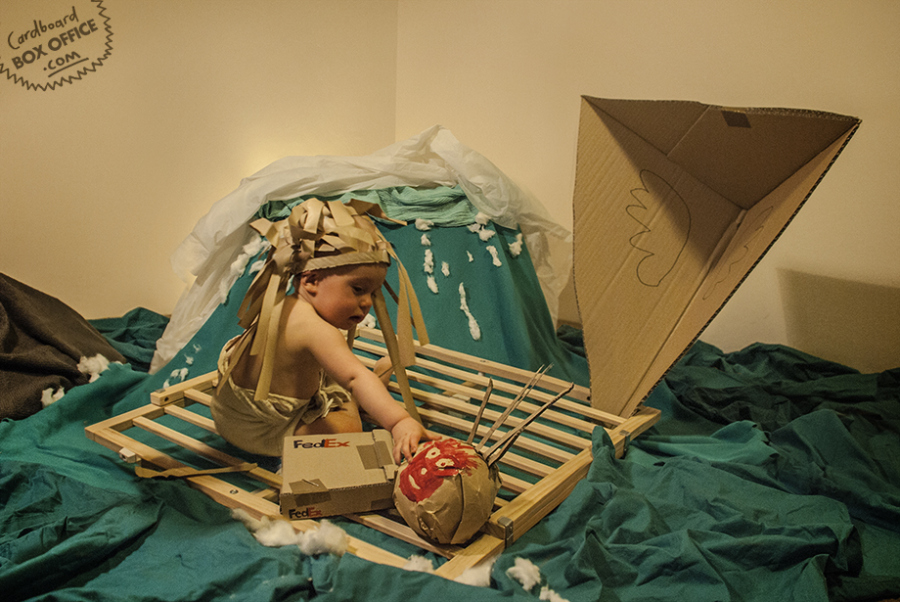
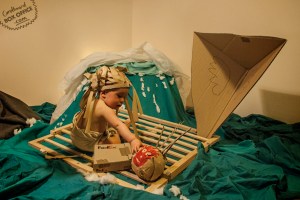
English surname which was originally a nickname, from the Norman French for “bear cub”. In the medieval romance Valentine and Orson, Orson is a wild man raised by bears, and twin brother to the knight Valentine, brought up in a royal French court. Originally, the “wild brother” didn’t have a name, and it seems to be an English innovation to give him a name to reflect his ursine upbringing. Orson has been used as a boy’s name since at least the 17th century, and has historically been more common in the United States. There are several famous men named Orson, including the American actor and director Orson Welles, who directed Citizen Kane and the notorious War of the Worlds radio broadcast – his first name was George, and he went by his middle name. Others include American television actor Orson Bean (real name Dallas Burrows), who lived in Australia during the 1970s, and American sci-fi author Orson Scott Card, who wrote Ender’s Game. You may also have heard of Internet sensation Orson Mackie, an Australian baby who stars in familiar movie scenes created by his parents from cardboard boxes. This masculine name is warm, snuggly, yet strong. It charts in the UK, where it is rising.

Roc

Catalan form of Rocco. Roc Brazilianos was a notorious 17th century Dutch pirate who operated from Jamaica. A cruel and debauched buccaneer, he raised terror on the high seas for many years before mysteriously disappearing with his ship and crew. His real name is not known for sure, but historians think he may have been Gerrit Gerritszoon, who moved to Dutch-controlled Brazil with his parents. Rather less spectacularly, a famous Australian with the name is visionary entrepreneur Roc Kirby, who founded Village Roadshow cinemas, and supported the Australian film renaissance. In his case, Roc is short for Roscoe. A roc is also a gigantic mythological bird which appears in Arabian fairy tales, and is well known to anyone who has read the One Thousand and One Nights. Pronounced like the word rock, this is a cool bad-boy choice which can also be seen as a nature name. It is popular in Catalonia, where it is rising.

Sixten

Swedish name which comes from the Old Norse Sigsteinn, meaning “victory stone”. Sixten Ehrling was one of Sweden’s most famous conductors, known for his difficult, yet witty, personality, and Sixten Sason was a super stylish Swedish designer who created the smooth lines of the Saab in the 1960s. Another famous namesake is the Swedish street artist Sixten, who at one time lived and worked in Melbourne. This is a smart-sounding Swedish heritage choice which provides few problems with pronunciation, as it’s said much as it looks. It is popular in Sweden, where it is rising.

Titus

Roman name of unknown meaning. According to tradition, the name was introduced to Rome by Titus Tatius, the Sabine king who attacked Rome, but later made peace with the legendary Roman king Romulus, the city’s founder. There were three Roman Emperors named Titus, and the Roman historian Livy’s full name was Titus Livius. Saint Titus is mentioned in the New Testament as a companion of Saint Paul. As you can probably tell from all these name bearers, Titus was an extremely common name in ancient times, and used by all social classes. The name gained an unpleasant reputation from Titus Oates, the perjurer who falsely claimed that Catholics were plotting to assassinate King Charles II; more honourable associations are Sir Titus Salt, the manufacturer and philanthropist, and Titus Brandsma, the Catholic priest (now a saint) who spoke out against Nazi ideology and died in a concentration camp. A contemporary namesake is American television actor Titus Welliver, from Sons of Anarchy and The Good Wife. Titus Andronicus is Shakespeare’s first tragedy, one of his most violent and gory plays. Titus charts in the US, where it is rising.

POLL RESULTS
The public’s favourite names were Gideon, Orson and Conrad, and their least favourite were Ajay, Sixten and Roc.

(Photo shows Orson Mackie depicting a scene from the movie Cast Away, on the blog Cardboard Box Office).