My Top 100 Predictions – How Accurate Were They?

Tags

, ,

cfa-exam-december-2012-results

Before the 2013 birth data was released, I published my predictions of what names could be joining the Top 100 at some point, based on how frequently I’d seen them in birth notices that year. Now that all the data is out, I thought I’d go back and see how accurate this method was.

CORRECT

Indi/Indie
I only said that if all spellings were combined this name would already be Top 100, but Indie joined the national Top 100 at #94, and the Top 100 of New South Wales at #100. Meanwhile, both Indi and Indie joined the Queensland Top 100 at #92 and #90.

Louis/Lewis
This was another situation where if both these spellings were counted as one name, it would be a Top 100 name. As it happened, Louis not only joined the national Top 100 at #74, it was the fastest-rising name of the year. Lewis also joined the Top 100 at #97.

Harriet
I suggested it was ready to make the Top 100 this year, which it did – Harriet joined the national Top 100 at #89, and was one of 2013’s fastest-rising names to boot.

Elsie
I predicted Elsie would be in the national Top 100 within the next two years; it made #91 last year.

Pippa
I said that Pippa could make the national Top 100 within the next two years. It was quicker than that, making #95.

Indigo
This seemed likely to become a Top 100 name at some point, and it joined the national Top 100 at #96.

Peyton
I thought Peyton was a possibility to make Top 100 one day; it joined the national Top 100 at #98.

Parker
I picked this to become a future Top 100 name, and it joined the national Top 100 at #98.

PARTIALLY CORRECT

April
I thought April might join the national Top 100 this year, but it didn’t, although it was Top 100 in Queensland (new), Tasmania, and the Australian Capital Territory.

Asha
I thought this had a chance to join the national Top 100, which didn’t happen, although it did make the Top 100 in the Australian Capital Territory.

Spencer
I thought that Spencer had a shot at making the national Top 100, and although that didn’t happen, it was one of the fastest-rising names in Victoria, which does look promising for the future.

Theodore
This seemed like a possibility to make the Top 100 within five years. It joined the Top 100 in Queensland, and was one of the state’s fastest-rising names, which is very encouraging.

Alana
I said that if all spellings were combined this name would already be Top 100, but it did join the Top 100 in the Australian Capital Territory, scraping in at #99.

Lexi
As above. It joined the Top 100 in Victoria at #90.

Amity
I thought this was a possibility to make Top 100 one day: although it didn’t make the national Top 100, it did join the Queensland Top 100 at #86 and was one of the state’s fastest-rising names.

Jude
I thought perhaps this might make Top 100 at some point. It has already joined the Victorian Top 100.

INCORRECT

Bonnie
Because this was already Top 100 in Victoria, I thought it might keep rising and join the national Top 100 as well. It didn’t – in fact it left the Victorian Top 100 as well. It’s only on the Tasmanian Top 100.

Billie
This is another name which seemed as if it might take off since it was already on the Victorian Top 100. Like Bonnie, it fell instead.

Penelope
This was new to the national Top 100 and several state Top 100s, and one of the fastest-rising names of the year – in Victoria, it moved up more than 100 places! Did I see it coming? Nope; it moved much faster than I thought possible. I didn’t even see that many Penelopes in birth notices – maybe six or seven in the year, and never more than one in an individual week.

Nathaniel
This was new to the national Top 100 and several state 100s, and one of the fastest-rising names of the year. If I had seen enough examples in birth notices, I would have checked it and seen that it was only just outside the Top 100 and risng steeply. But I didn’t.

Ayla
This joined the national Top 100, and was one of the the fastest-rising names. I did notice several Aylas in birth notices, but there didn’t seem enough to make any firm predictions about it.

Daisy
This joined the Top 100, and was one of the fastest-rising names. There were quite a few Daisys in birth notices, and in retrospect, I should have paid more attention to the fact that it was only just outside the Top 100 in Victoria. Missing this one really was a careless mistake.

Ariana
This just scraped in at #100. There was little data on Ariana for me to be able to predict its future with any certainty, and I certainly don’t recall seeing more than a few in birth notices.

Nevaeh
I’m still scratching my head as to how this made the Top 100, when it only charted in Queensland – generally a name has to make the Top 100 in either New South Wales or Victoria to be in the national Top 100. No, I didn’t see it coming, didn’t see very many in birth notices, and frankly I still think there was an error somewhere!

There were eight hits, eight misses, and eight that weren’t exactly right, but didn’t seem quite wrong either. It seems as if predicting the future top names based on my own observations gave some mixed results, and although I still think it was a worthwhile exercise, I’m left with some doubts about its usefulness.

POLL RESULTS
71% of people thought using birth notices to predict future popularity was generally useful, with 50% saying it was mostly accurate, but with some notable misses, and a generous 21% thinking it was pretty much spot on.

Only 5% of people were totally unimpressed with the method, with 3% saying it was mostly inaccurate with some notable hits, and a harsh 2% seeing it as pretty much a complete failure.

24% hedged their bets by saying it was pretty much fifty-fifty each way.

Jake Benge and Rocco Ted

Tags

, ,

005129-3043f080-faa4-11e3-94a6-266deb5ccac3

Twins
Frankie Joy and Rosie Winter (Milo, Archie, Jasper)

Girls
Alira Joan
Arabella Kit
Bonnie Gwen (Harry, Maya)
Desia (Sophia, George)
Eleanor Jean (Charlotte)
Elsie Peach
Georgina Katherine Beatrice
Lillian Kate (Charlie, Elle Rose, Tommy)
Lucinda Jane (Freddie)
Mila Kenzie
Montana Maree
Phoenix Laura Lucy (Scout, Nash)
Peggy Attiah (Louie)
Pippa Julia May
Rokaya
Sadie Noeline Elizabeth
Sasha Ivy Grace
Tilley Rose (Kai, Indi, Koda)
Violet Florence
Zahli Alyssa

Boys
Arlo Thomas (Henry)
Blyth James (Jade)
Darby William
Eddie Harrison (James)
Elroy Henry Jude
Frederick Samuel
Hype
Jake Benge (Aliyah, Sean, James, Caitlin)
Jordy Luke
Julian Hugh (Berrick, Madlyn)
Kane Archie
Lawson Jack
Louis Kenneth
Maximus Hunter “Max”
Nathaniel Erik Mathias
Oscar Edward Patrick (Thomas)
Rocco Ted (Cleo, Lola)
Spencer Julien
Spiro Stamati
Zameer

Note: Thank you to blog reader Jessie May Storm for her contribution of the twin names.

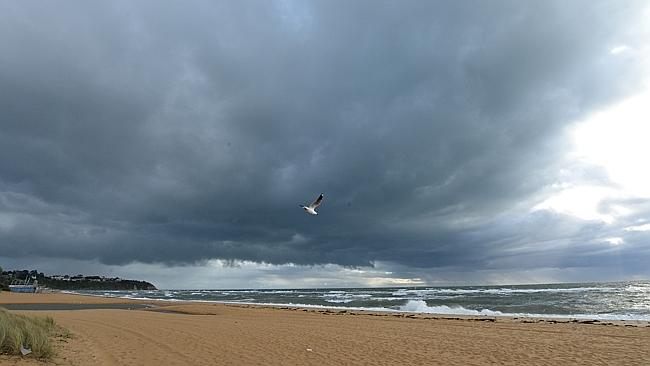
(Picture shows a recent storm rolling in over the Mornington Peninsula near Melbourne, Victoria; photo from the Herald Sun)

Celelebrity Baby News: Nathan and Jerri Jones

Tags

893662-e7bd3f1e-fb3a-11e3-85eb-f305a31fe088

AFL star Nathan Jones, and his wife Jerri, welcomed their first child on June 23, and have named their daughter Bobbi Grace. Bobbi Jones weighed 3.3 kg (7lb 3oz) at birth.

Nathan has played for Melbourne since 206, and is the team’s co-captain. He won the trophy for best and fairest in 2012 and 2013. Jerri and Nathan are high school sweethearts, and were married in 2012.

Famous Name: June

Tags

, , , , , , , , , , , , , , , , ,

art-353-june-300x0

Here we are at the end of June, and our last chance to cover the name of this month. On Sunday, I covered the winter solstice, where I said how mild it was – June was all blue skies and sunshine then. Little did I know the very next day a blizzard would hit, with massive snowfalls in the mountains, and freezing, gale-force winds and heavy rain elsewhere. So winter has definitely started now.

June Wright was once Australia’s queen of crime fiction; her first novel, Murder in the Telephone Exchange, was the best-selling mystery novel of 1948 in Australia, outselling the latest Agatha Christie. It featured feisty telephonist-turned-amateur-detective Maggie Byrnes, and was set during a blazing hot February in post-war Melbourne. These were the days when young working ladies lived in boarding houses where gentleman callers were not permitted, and leaving your bedroom clad only in pyjamas and dressing gown was an absolute no-no.

June went on to write five more novels, including a second Maggie Byrne mystery where the post-war housing shortage leads her into another interesting case to solve. The Devil’s Caress, which has a female doctor as the detective, was described as making Murder in the Telephone Exchange look like a bedtime story, and her last three novels featured Mother Mary St. Paul, an unassuming yet strong-willed Catholic nun detective that June Wright based on the head of the maternity ward where she gave birth to twins.

While June’s wartime experience as a telephone operator was the inspiration for Murder in the Telephone Exchange, it was her career as housewife and mother to six children, one severely intellectually disabled, that was seized upon by the women’s magazines of the day, who brought out articles with titles like “Wrote Thriller With Baby on Her Knee” and “Books Between Babies”. The writer of dark, gory murder mysteries with strong female protagonists was careful to present herself as charming and and feminine, and pointed out that both housewives and writers had to be practical, disciplined, and used to monotony.

June’s last novel was published in 1966. Her husband had a nervous breakdown, and June went back to work as a telephonist to support the family, before she and her husband started a cleaning business together. Although there are no hints she regretted having to abandon her literary career, she lived a long life (she only passed away recently), and it’s hard not to think of the many years she could have kept writing under different circumstances.

June lapsed into literary obscurity, and her works have been out of print for many years. However, in February this year Murder in the Telephone Exchange was re-issued by Dark Passage, an imprint of US publisher Verse Chorus Press. They will be bringing out all her novels, including previously unpublished Duck Season Death.

I haven’t bought my own copy yet, but this is welcome news for lovers of vintage fiction, women’s fiction, and Australian crime fiction. I think the books would be especially interesting for Melburnians from a historical perspective.

The name June is after the sixth month of the year. The Romans called the month Junius, commonly believed to be named in honour of the goddess Juno, the wife of Jupiter and queen of the gods. Do you remember the Happy June group, who celebrated June Day on June 1 every day? Well, on the first day of June, the ancient Romans had a festival dedicated to Juno’s “birthday”, in her role as goddess of war and protector of the state. So in a way, there is a “June Day” just as much as a “May Day”.

Because Juno was the goddess of marriage, the month of June was thought an auspicious time for weddings. This makes a lot of sense in the northern hemisphere, where it is early summer: in the United States, June is the most popular month for weddings, and in Italy, June is still a popular month to be married. In Australia, November is the most popular month for weddings (just to confuse things, in the United Kingdom August is the traditional wedding month – in Italy this is considered incredibly bad luck and very unhealthy).

As June is the start of summer in the northern hemisphere, there the name June may seem ripe and womanly, full of vitality and promise – as the song says, June is Bustin’ Out All Over. Here June is the start of winter, and to me it seems cool and fresh as a mountain breeze, and pure as snow.

June has been commonly used as a girl’s name since the 19th century, and part of its appeal must have been that it sounded similar to popular names such as Joan and Jane. It would have also seemed like a “real name” because of Latin names such as Junia – Saint Junia is venerated in the Orthodox tradition, and is mentioned in the New Testament as having a leadership role in the early Christian church. In the US, June has also been used as a male name, derived from Junius.

In Australia, June began charting in the 1910s, debuting at #162, and climbing so steeply that it was #15 for the 1920s. It peaked in the 1930s at #10, fell until it left the Top 100 in the 1950s, and last charted in the 1970s.

June does not chart in either Australia or the UK, but in the US June is already in the 300s and rising very briskly after only re-joining the Top 1000 in 2008. The United States is leading the way, and I think this is an American name trend well worth considering.

June is sweet and charming, and has the fashionable OO sound in it, like Ruby and Lulu. This is a hip vintage choice, and also a simple nature name, like Wren or Rain. Not only can it be used to honour a relative named June, or for cases where June is a special month for you, this would make a great name for someone who wanted something that was traditional and “old-fashioned”, while still seeming fresh and underused.

June could be used as a short form of names such as Juniper, Junia or Juno, and is getting some use as a middle name, but it would be lovely to see it up front as the full name. Junie is the usual pet form.

POLL RESULTS
June received an excellent approval rating of 80%, making it one of the highest-rated names of 2014. People saw the name June as vintage and hip (26%), sweet and charming (23%), traditional yet fresh (15%), and pretty or cute (10%). However, 9% saw it as only a middle name. Only one person thought the name June was too trendy.

Waltzing With … Winter

Tags

, , , , , , , , , , , , , , , ,

flat,550x550,075,f (1)

Yesterday was the winter solstice, so we are now embarking on the coldest part of the year. In Hobart they celebrated the winter solstice with an icy nude swim at sunrise, and declared that being half frozen to death was quite exhilarating.

It’s been a fairly mild winter so far (hopefully in Hobart too), although winter still came as a shock to me as we’d had such a warm autumn. There’s lots to enjoy about winter: the grass which was dry and brown in summer is now a lush green; the sunshine is warm, but doesn’t burn; the clear blue skies of winter are more beautiful than in summer.

I look forward to making soup, walking for miles without getting hot and sweaty, footy season, weekends ski-ing, and cold nights at home by the fire. I love the eerie look of trees looming through fog, waking up to find a glitter of ice on the lawn, snow capping the mountains, or falling softly on the house like icing sugar.

Of course, I also hate going to work in the pitch dark, finding the frost has killed all the vegetables in the garden, everyone tracking mud and dead leaf mush into the house, and miserable grey days where the sun doesn’t appear until 3.30 pm, then sets at 4. But on a sunny winter Sunday, it’s easy to forget all that.

I planned to do the name Winter today back in January, but yesterday a blog reader considered the name Winter for one of her twin daughters, and on Friday there was a boy with Winter as one of his middle names, so what with the winter solstice, this does seem like the weekend for Winter.

Winter is an English word derived from Ancient Germanic. The original meaning is not known for sure: it may come from an ancient word for “water”, possibly to denote “wet season”.

The English surname Winter started out as a nickname for someone who was of a cold or miserable “wintry” temperament – not very flattering! As an Irish surname, Winter can be an Anglicisation of the Gaelic Mac Giolla Gheimhridh, meaning “son of the servant of Gheimhridh”, with the personal name Gheimhridh meaning “winter”. Winter can also be a German-Jewish surname after the season. The surname is frequently spelled Wynter, making this a variant spelling with a long history.

Winter has been used as a first name since at least the 16th century, and according to early records, most people named Winter were born during the winter months. Later records don’t seem to show much correlation between the name Winter being chosen and the season of birth.

Winter is historically much more common as a male name, suggesting that the surname was more influential than the season. These days, Winter is more often thought of as a female name, and it charts in the United States as a girl’s name only, where it is rising. In the UK, Winter is more common for girls (more than three times as many Winters are girls), but is rising steeply for both sexes. Interestingly, the less common spelling Wynter has been much more evenly given to both sexes through history (although still more common for males).

Winter was in the 200s in Victoria in 2012 – there were almost as many baby girls named Winter just in this state as in the whole of the UK. I see Winter used mostly as a girl’s name in Australian birth notices, but it seems more common as a boy’s name in the middle position, showing its great versatility.

Even though Winter is currently more common as a girl’s name, it still seems very usable for boys. It sounds similar to Winston, is a surname, and the season of winter isn’t generally thought of as particularly feminine. It is sometimes personalised as Old Man Winter or Father Winter, and another “winter character” of folklore is Jack Frost. This always reminds me of the Australian bird, the Jacky Winter – another boyish-sounding winter connection.

I can think of two famous female characters connected to winter, and they are both from the fairy tales of Hans Christian Anderson. One of them is the beautiful yet deadly Ice-Maiden, and the other is the Snow Queen. Although the Snow Queen is a seemingly malevolent character, she is an attractive one: beautiful, strong, and intelligent, she is a “queen bee”. Because of these two characters, we call an alluring yet frosty woman an “ice maiden” or “snow queen”, and rumour has it that Anderson based both these characters on the opera singer Jenny Lind, and her rejection of him.

The Snow Queen recently received a reboot in the Disney film Frozen, with a completely different plot and characters from Anderson’s fairy tale. The stranger-danger theme of a beautiful cold woman in a sleigh seducing, abducting, and imprisoning a little boy had already been co-opted by C.S. Lewis for The Lion, the Witch and the Wardrobe, so something different was necessary.

Frozen has been a huge hit, with its appealing characters, fun dialogue, heart-warming coming-of-age story, and catchy songs. As Ebony from Babynameobsessed has pointed out, that has had an effect on the naming world. The name Elsa is becoming more popular, Arendelle suddenly seems usable as a baby name, and perhaps we can expect more winter-inspired names such as Snow, Frost, Ivy, June … and Winter.

Winter is a clean-sounding name that conjures up the purity of virgin snow, mysterious fog descending on the earth like a white blanket, the crisp sparkle of morning frost. Or maybe it reminds you of invigorating hikes in the cold air, and the thrill of downhill ski-ing, or of hot cocoa drunk before a blazing fire, and snuggling under the quilts at night while listening to a storm roaring outside.

When I think of stories connected with winter, apart from ice maidens, snow queens, white witches and frost fairies, I think of the white bear in the tale East o’ the Sun and West o’ the Moon, of the frost giants of Norse legend, of William Shakespeare’s comedy The Winter’s Tale, with its frozen queen, and Mark Helprin’s New York fantasy, Winter’s Tale.

There are so many fantasy stories about winter, perfect for recounting before the fire on cold nights, that there seems something magical it. Anything is possible in a winter wonderland – it’s a season of miracles.

POLL RESULT
Winter received an extremely good approval rating of 78%. 28% of people loved the name, while a further 24% liked it. Less than 10% of people hated the name.

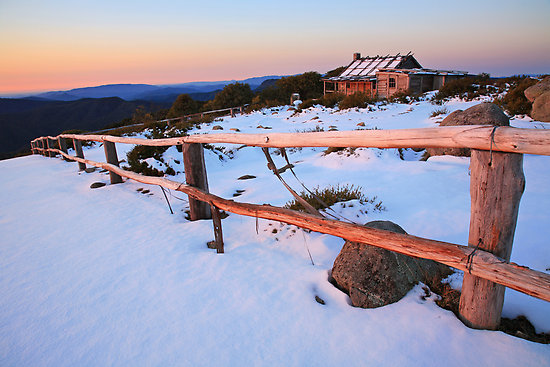
(Picture shows Craig’s Hut at Thredbo, New South Wales; photo from Red Bubble)

What Do You Think of These Names for Twin Girls?

Tags

, , , ,

1239206772_73d2cd57f8

Constance is obsessed with names, and now she is living out many a name nerd’s fantasy – she and her partner Sean are expecting twin girls next month.However, she’s finding the reality is a lot more stressful than you might think!

Connie and Sean have different name preferences, which is proving tricky to co-ordinate with twin’ names. Sean’s favourite name for a girl is Martha, which Connie thinks is lovely, but has found that other people aren’t so welcoming towards it.

Her own favourite for a girl is Winter – nice and straightforward, yet being a name nerd, she can’t help dreaming up lists of other possible twin combinations. She feels that she has lost sight of which names she really loves, and which are just passing name crushes. (Any of this sounding familiar???)

What Constance and Sean would like in a name:

  • universally recognised, if possible
  • an established name which isn’t too common, or too faddish
  • easy to pronounce
  • has a positive meaning and name history
  • possess some character, such as being strong even though feminine

Connie and Sean already have a son named Christian, and they like that his name is well known, established, but not too common. However, they aren’t fussed if the twins’ names don’t “match” with Christian.

Some twin combinations Constance is considering:

  • Ursula and Wilhelmina (nn Ursi and Willa)
  • Alexandra and Raphaelle
  • Olivia and Winter
  • Olive and Winter
  • Posie and Martha
  • Isis and Olive
  • Frances and Sophia
  • Bridget and Anabel
  • Delphi and Sophia
  • Theodora and Aurora (nn Teddy and Rory)
  • Noa and Isa
  • Violet and Mabel

Connie finds middle names a lot easier, and she likes them to be a little more flamboyant than the first name eg Winter Raphaelle, Martha Primrose. The surname ends an EE sound eg Raleigh, so Connie doesn’t want a name that ends with that sound.

Connie feels as if she is going around in circles, while Sean has had enough of it all and has simply given up.

* * * * * * * * * *

I don’t blame you both for feeling overwhelmed – naming even one child is a challenge, and having to do two at once is exponentially harder. I wonder if being a name nerd is making you feel even more pressured than usual, as if you must come up with twin names that are perfect in every way. I think that’s how I might feel in your position, at least.

I admire both the name Sean likes best, and the one you like best, and there’s a part of me that would like to be able to say, Well why not have twin girls called Martha and Winter? They are both lovely names, and would be given with love. And yet …. that might be being too idealistic.

People have a horrible tendency to judge twins against each other, especially female twins. The tiniest differences will be remarked on, so that a twin 2 inches smaller than her sister can be called the “short twin”, or one preferring to read while her sister loves sports will be called the “nerdy twin”.

I’m labouring this point because I notice that in several of your twin pairings, one twin has a name which is noticeably more clunky, or less popular, or less feminine, or less “cute” than the other. Part of me isn’t bothered by it, and would like to live in a world where one twin having a clunkier name, or one twin being shorter or more freckled or thinner or sportier, just doesn’t matter. Both are equally good, both are equally precious and loved.

Then there’s the part of me of that worries how the world will judge things. I know it’s not possible to ensure your children’s’ names are equal in every way (and if they are too even, then they seem “matchy”), but I think it’s worth keeping in mind.

Ursula and Wilhelmina (nn Ursi and Willa)
I really love this – these names are both quite substantial, but also elegant and sophisticated. I just wish there was a better nickname for Ursula: Willa is quite fashionable as a name in its own right, while Ursi seems more obviously “just a nickname”.

Alexandra and Raphaelle
Very pretty combination, although Raphaelle is a bit more exotic than popular Alexandra. I wonder if giving if it a little twist, such as Alessandra or Alexandria, might even things up a bit?

Olivia and Winter
I think this is a real crowd-pleaser: I can imagine very few people disliking this set of twin names. Because Olivia is a name from Shakespeare, and The Winter’s Tale is one of his plays, it even seems quite literary. Olivia is a very popular name, which does break one of your “rules”, but perhaps that won’t seem as important as you thought.

Olive and Winter
I can see you’ve gone for a less popular form of Olivia, and I do like these as twin names, but somehow I keep thinking Olivia seems like a more natural fit.

Posie and Martha
This is absolutely charming, although Martha seems a much sturdier choice than pretty Posie, and Posie also seems more nicknamey. To me it works though; they seem to balance each other without being too much of a clash. Posie does end with an EE sound like your surname – would a formal name like Josephine help?

Isis and Olive
To me it seems unfair for one twin to be named after a goddess, and the other after a tree.

Frances and Sophia
I love the way these two names sound together, with one beginning and the other ending with a S. Sophia is obviously a lot more popular than Frances though.

Bridget and Annabel
These are both very attractive vaguely Celtic names, although Bridget probably does fall under the “clunkier name than the other twin” category. I’m not sure it matters though.

Delphi and Sophia
I love the shared PH sound in the middle and the Greek origin of these names: both very meaningful as well. There’s quite a difference in popularity of course.

Theodora and Aurora (nn Teddy and Rory)
Love the tomboy nicknames for these elaborate formal names, but Theodora and Aurora do actually rhyme with each other. Not that it’s as noticeable as Fay and May, or Sallie and Hallie.

Noa and Isa
These seem very different from the other names you’ve chosen, so neat and simple, and even unisex. However, to me Noa seems like a name, while Isa is “just a nickname”.

Violet and Mabel
I like this pairing of retro names very much, they seem perfectly matched without being matchy. And they are pretty without being fluffy – they’ve got some sass to them.

I can why you keep going round in circles, because you like a wide variety of names, from rare to the Top 5, from frilly and feminine to sturdy and clunky, from long and elaborate to short and snappy. It’s one of the perils of name nerdism.

I wonder if it would help if you focused on those names and styles you like best, and concentrated on those. You did say that Winter was your favourite name, so what about if you tried to find a match for it, rather than thinking of all the possible name combinations?

What about:

  • Winter and Annabel
  • Winter and Sophia
  • Winter and Elodie
  • Winter and Scarlett (both surnames, a white/red combo)
  • Winter and Clementine (clementines are a winter fruit)
  • Winter and Posie (an allusion to winter and spring)
  • Winter and Violet (another winter/spring combination)
  • Winter and Lark (another winter/spring combination)
  • Winter and Aurora (an allusion to darkness and dawn)
  • Winter and Eden (another beginning/end combo, both unisex names)

I know poor Sean has become exhausted by it all and retreated, but once he’s had a good rest I hope you can persuade him to start talking names again. It’s a big task to name two babies all on your own, and I think you need his input and feedback. He might find it less overwhelming to discuss something specific, like, What name sounds nicest with Winter?, rather than What possible combinations could we think up for the twins?

Both you and Sean have got fantastic taste in names, even if your tastes don’t always synchronise, and I know you are going to pick beautiful names for your girls.

Readers, what do you think would be good names for the twin girls?

UPDATE: The twins names are Martha Primrose “Posie” and Winter Raphaelle!

POLL RESULT: The public’s choice for the twins’ names was Mabel and Violet.

Reeva Jade and Van Malachi Winter

Tags

, ,

Late fog in the hills, Australia

 
Twins
Adele Narelle and Bonnie Murray (Archie)
Lucy and Polly

Girls
Angel Shirley
Annika (Saphira)
Elsie Clementine (Clare Elisabeth)
Evelyn Patricia
Isla Kiera Beatrice (Neve, Connor)
Ivy Nell (Olive Sue)
Jolie Mai (Molly, Emmaline)
Livia Marina
Luella Clare
Maggie Gayle
Mieke Emilia (Olita)
Myfanwy Rosemary “Miffy” (Felix)
Octavia Joyce Margaret (Jai, Eli, Zac)
Puhi Te Aewa Rose
Reeva Jade (Pippa)
Ruby Alice (Mitchell, Emily)
Sabrina (Sebastian)
Sahara Pearl
Willow Gracie
Zara Lily

Boys
Abraham Rex
Andreas Nicholas
Carmelo Anthony (Angelo, Maria)
Clay James
Fox Elias (Jack)
Hudson Lars (Heaven-Lee, Yasmin, Edan)
Hugo Edward
Ian Thomas
Jack Alan Christopher
James Frank
Kingston William (Angus, Iyla)
Kyan Hayden Douglas (Evah Maree)
Lennox George
Leroy Steven (Maddison)
Max Julian (Ari)
Noah Francesco
Owen Robert
Rupert Francis (Lucien)
Thomas Hunter (Ethan)
Van Malachi Winter (Ziggy)

NOTE: Thank you to Brooke from Baby Name Pondering for her contributions from the Herald Sun.

(Photo shows winter fog in the hills of a Victorian farm; from Just This Side of Chaos)


Famous Name: Isaac

Tags

, , , , , , , , , ,

SirIsaacIsaacs

On June 6 it was the 159th birthday of Sir Isaac Isaacs, who is famous for being the first Australian-born Governor-General of Australia. He is also our first Jewish Governor-General.

The appointment of Sir Isaac Isaacs in 1930 by Prime Minister James Scullin was a controversial one at the time, because it was fiercely opposed by the British government. They didn’t have anything much against Sir Isaacs personally (apart from being a bit old and unknown to them), but were greatly offended by the idea of an Australian representing the British monarch. However, Scullin stuck to his guns and eventually King George V agreed to the appointment with great reluctance.

This landmark moment led to the Statute of Westminster 1931 and the formal separation of the Crowns of the Dominions. From now on, the monarch would be bound by constitutional convention to accept the advice of the Australian Prime Minister on Australian constitutional matters.

Despite the stain of his Australianness, Sir Isaac Isaacs did everything he could to make himself agreeable. He was an ardent monarchist and, although very proud to be an Australian, a strong supporter of the British Empire. He agreed to accept a lower salary, and conducted himself very frugally, which went down well during the Great Depression. He was the first Governor-General to live permanently at Government House in Canberra, and the public approved of this, as well as his general air of austere dignity, while following his duties with obvious enjoyment.

I’d like to be able to say that after Sir Isaacs, all Governor-Generals were Australian, but conservative governments immediately reverted to appointing British Governor-Generals. There was only one more Australian-born Governor-General until 1965 – since then, they have all been Australian-born, except Sir Ninian Stephen, who emigrated here as a child.

Isaac has one of the better known name stories in the Bible, and is one of the few characters in the Bible to be named directly by God.

When the patriarch and prophet Abraham was ninety-nine years old, God made a covenant with him, that he would be a “father of many nations”, and that his descendants would possess the land of Canaan forever. As Abraham and his wife Sarah did not have any children, God promised he would bless them, so that Sarah would soon bear a son.

Abraham laughed when he heard that, for by the time the baby was due to be born, he would be one hundred years old, and Sarah would be ninety. Sarah secretly listened to this prophecy, and had a good chuckle to herself at the idea that a very old couple would be able to conceive a child together, and a woman long past her child-bearing years could give birth.

Despite their scepticism, the prophecy was fulfilled, and Abraham and Sarah had a son together. They gave him the name that God had chosen, which was Yitzhak, meaning “laughter” in Hebrew. In English the name is Isaac.

The other key story about Isaac is that during his childhood, God commanded Abraham to build an altar in the wilderness and sacrifice his son on it. However, just at the point the knife was raised above Isaac, an angel appeared and told Abraham that it had just been a test of his faith, and that he should sacrifice a ram which happened to be around at the time instead. Because of Abraham’s show of faith, and Isaac’s obedient willingness to be sacrificed, God blessed them both many times over.

Christians have tended to see Isaac as a forerunner of Christ, and both Jews and Christians see him as a model for the martyr, who goes willingly to the slaughter for his faith. Isaac is venerated as a saint in Catholicism, and revered by Muslims as a prophet of Islam.

The story of Abraham and Isaac has made Biblical commentators uncomfortable enough that they feel it needed to be explained. Some Jewish writers felt that human sacrifice was so revolting that God couldn’t possibly have requested it even as a test, and suggested that it must have been a delusion of Abraham’s imagination, or even some trickery by Satan. Others thought that Isaac was in fact sacrificed, but that God had resurrected him straight away.

Modern philosophers don’t seem to feel that the story shows God in a very attractive light. Some scholars believe that it preserves an ancient memory of a tradition of child sacrifice, with the “happy ending” tacked on later, when such sacrifice was viewed with abhorrence and needed to be explained away.

Isaac has been used as an English name in the Middle Ages, and became more common after the Protestant Reformation. One of its most famous namesakes is Sir Isaac Newton, the mathematician and scientific genius. This gives Isaac a rather brainy image – and Sir Isaac Isaacs was very intelligent too.

For many years, the name Isaac was particularly associated with Jewish people – to such an extent that even in the twentieth century, Jews were referred to in a derogatory way as ike or ikey (short for Isaac), in the same way that Catholics were called micks (short for Michael).

Isaac was #147 in the 1900s, and left the charts in the 1920s. It didn’t return until the 1970s, when its position was #326. It climbed very steeply in the 1980s, and joined the Top 100 in 1991 at #86. After pottering along in the bottom third of the Top 100, it suddenly gave a massive jump in 1997, when it made #25. Is it a coincidence that the teen pop band Hanson, with singer Isaac Hanson as the singer, had their biggest success in 1997? Hmm! Or should I say MMMBop?

After this Hanson-led surge of popularity, Isaac settled down, but remained in the Top 50; it has been fairly steadily climbing since 2005. It is currently #19 nationally, #14 in New South Wales, #28 in Victoria, #34 in Queensland, #23 in Western Australia, #41 in Tasmania, #17 in the Northern Territory, and #31 in the Australian Capital Territory.

In a rather cheeky post, I suggested that if Isaac kept climbing, it could be the #1 name by 2028. I’m not sure if it will, but it is a good strong name, and many people find the meaning of “laughter” attractive. In the Bible, Isaac was a true “miracle baby”, born to two people very late in life who never expected to be parents, making it an excellent choice for couples blessed with a surprise or against-the-odds baby. As well as the traditional Ike or Ikey, you could also use Iggy or Zac as the nickname, should you want one.

POLL RESULT
Isaac received an excellent approval rating of 84%, making it one of the highest-rated names of 2014. People saw the name Isaac as cute on a boy, but solid on a man (29%), strong and handsome (20%), intelligent and professional (16%), and having a very attractive meaning (12%). However, 8% were put off the name by the Bible story of Abraham and Isaac. Nobody thought the name Isaac sounded creepy or evil.

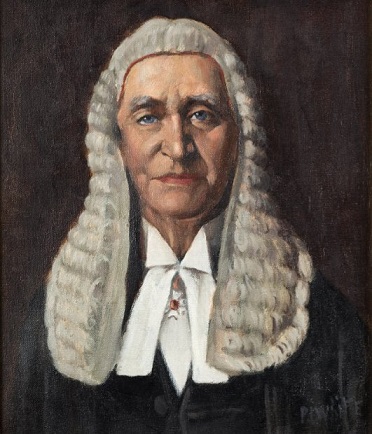
(Picture shows a portrait of Sir Isaac Isaacs from the Victorian Bar’s collection)

Irish Names for Boys

Tags

, , , , , , , , , , , , , , , , , , , , , , ,

a07442ad-b5ca-4bfe-8a64-ab471fc44a87

It was very hard to choose just ten Irish boys’ names, as there are so many commonly used Irish names for boys in Australia, especially if you include Irish surnames. It’s not surprising when you consider our strong Irish heritage, and because the Irish were here from the beginning of European settlement, they were never marginalised as happened in other countries.

Famous Australians with Irish heritage include bushranger Ned Kelly, Peter Lalor who led the Eureka Rebellion, actor Erroll Flynn, artist Sidney Nolan, rock singer Doc Neeson, philanthropist Daisy Bates, and our greatest prime minister, Ben Chifley. Those alive today include Governor-General Peter Cosgrove, Nicole Kidman, Kylie Minogue, surfer Mick Fanning, Socceroo Lucas Neill, author Tom Keneally, and former prime ministers Paul Keating and Kevin Rudd.

A reminder I haven’t included any names with fadas (accent marks), as they aren’t permitted in all states and territories.

Aidan
Anglicised form of Aodhán, a pet form of Aodh or Áed, meaning “fire” in Old Irish; there are many characters from Irish mythology named Aodh. St Aidan of Lindisfarne was an Irish-born monk known as the Apostle of Northumbria; he was famous for converting people by simply walking from village to village, politely chatting with people and introducing them to Christian beliefs by helping them in their daily lives. The name Aidan first ranked in the 1970s at #533, and by the 1980s was already #177. Aidan joined the Top 100 in 1993 at #92, and peaked in 2008 at #51. Currently Aidan is #99 in Victoria and #102 in the Australian Capital Territory. The Aiden spelling is more popular: this first charted in the 1980s at #368, joined the Top 100 in 1997 at #62 and peaked in 2009 at #35. Currently Aiden is #41 nationally, #45 in New South Wales, #45 in Victoria, #65 in Queensland, #47 in Western Australia, and #39 in the Australian Capital Territory. Even combining spellings, Aidan/Aiden is only #51 nationally. This doesn’t seem as if Aidan is very popular, yet it still has a reputation as an “overused” name because of the massive trend for sound-alike names, such as HaydenBrayden, Caden, Jayden, Zayden etc. Aidan is #50 in Ireland and #43 in Northern Ireland.

Cian
In Irish mythology, Cian was a god and father of the hero Lugh of the Long Hand. According to folk tales, Cian possessed a magical cow which produced a superabundance of milk. During a quest to recover his cow after she had been stolen, he seduced a princess who had been locked up in a tower (it was the princess’ father who had stolen the cow). The tale sounds very much like the Greek myth of Danae, and the princess was imprisoned for the same reason – a prophecy said that the princess’ father would be killed by his grandson. Lugh the Longhand was born from this union, and eventually the prophecy was fulfilled when Lugh killed his grandfather in revenge for locking his mother in a tower. The name Cian means “long, enduring, far, distant” in Gaelic, and is pronounced KEE-in. It is often anglicised to Kian, which is in the 400s in Victoria. Cian is #15 in Ireland.

Connor
Variant of Conor, Anglicised form of the Gaelic name Conchobhar, meaning “lover of hounds”. There have been several real life Irish kings with this name, including a High King, and also the legendary Conchobhar mac Nessa, who was unsuccessfully married to both Queen Medb and Deirdre, but had many other wives. The name is the basis for the Irish surname O’Connor, meaning “grandson of Conchobhar”, and the Clan O’Conchubhair is a royal Irish dynasty whose lineage has provided one hundred kings of Connacht, and two High Kings of Ireland: some members of the noble O’Conor family of Ireland are the living descendants of the last High King of Ireland. Connor is a truly royal name, which must have an influence on its use. The name Connor has charted since the 1980s, debuting at #418. It joined the Top 100 in 1994 at #83, and peaked at #21 in 2003. Currently it is #43 nationally, #74 in New South Wales, #61 in Victoria, #33 in Queensland, #31 in Western Australia, #40 in Tasmania, and #69 in the Australian Capital Territory. Connor is #97 in Northern Ireland; Conor is #5 in Ireland and #17 in Northern Ireland.

Darragh
Variant of Dara, derived from from the Gaelic for “oak grove”. The oak was sacred to the Celts, and the word druid is directly related to the word for oak. The city of Derry in Northern Ireland has the same meaning. Darragh can also be an Anglicisation of the Old Irish name Dáire, meaning “fertile, fruitful, virile, sexually aroused”, but also “agitated, raging, violent, tumultuous”. It’s a very explicit meaning in regard to masculine sexuality, suggesting a sort of bestial lust. The Darini were an ancient peoples from Northern Ireland, and it would seem that Dáire was their ancestor or ancestral god. Several Irish noble families and Scottish clans claim descent from the Darini, as do the current British royal family. There are many kings and heroes from Irish legend named Dáire, but folklorists believe they are ultimately versions of the same mythological figure, who may have been a god of the battlefield. Darragh can be pronounced DAH-ruh, or DA-ra, and may seem like an updated Darren to Australians. Darragh is #20 in Ireland and #30 in Northern Ireland; Dara is #86 in Ireland, and Dáire is #88 in Northern Ireland.

Finn
Both the older Irish and Anglicised form of Fionn, meaning “blond, fair, white, bright”. Its most famous namesake is the mythical warrior and giant Find mac Cumail, transcribed in English as Finn McCool. Finn was a nickname – his real name was Deimne, meaning “sureness, certainty”, and gained his nickname after his hair turned prematurely white. Finn was brought up by a warrior woman who trained him in war and hunting, then he studied under a poet and druid. One day Finn was cooking a mystical salmon for his master which would give him all the knowledge in the world: he burned his thumb in the process, and instinctively put his thumb in his mouth to cool it, swallowing a piece of salmon skin. This gave Finn the wisdom of the salmon, and whenever he needed to draw on its power, he needed only to suck his thumb. Finn’s followers were called the Fianna, and it is from them the Fenian Brotherhood gained their name. According to legend, Finn is sleeping in a cave beneath Ireland, and will one day awake to defend Ireland in her hour of greatest need. Finn first charted in the 1990s at #287, and by 1997 was already in the Top 100 at #88. Currently it is #62 nationally, #68 in New South Wales, #60 in Victoria, #76 in Queensland, #40 in Western Australia, and #30 in the Australian Capital Territory. This is a handsome popular name that has helped drive the popularity of names such as Flynn and Finlay. Finn in #38 in Ireland and #56 in Northern Ireland; Fionn is #27 in Ireland and #70 in Northern Ireland.

Lorcan
Anglicised form of Lorcán, derived from the Irish Gaelic word for “fierce”. There have two been ancient Irish kings named Lorcán, and a medieval saint Lorcán Ua Tuathail whose name is Anglicised to Lawrence O’Toole. St. Lorcán was of royal blood, and became Archbishop of Dublin. He played a prominent role in the religious reform of the 12th century, spearheading a movement of spiritual renewal while bringing the church in Ireland closer to Rome. He was admired by both members of the church and the secular community for his many acts of charity to the poor – much needed at the time due to a severe famine. This is a cool Irish name which could be an alternative to names as Lachlan, Liam, or Declan. Lorcán is #67 in Northern Ireland.

Malachy
Anglicised form of Máel Sechlainn, meaning “follower of St. Seachnall”. St. Seachnall is an obscure 5th century Irish bishop who seems to have been of Italian origin; his name may be an Irish form of the Latin name Secundus, meaning “second (born)”, as he is also known as St. Secundius. The modern spelling of Malachy has been influenced by the Hebrew name Malachi, meaning “my messenger”, and therefore understood as “my angel”. However, Malachy is pronounced MAL-uh-kee, not MAL-uh-kie. There have two medieval High Kings of Ireland named Malachy, and also a St. Malachy, who was the first native-born Irish saint to be canonised. The saint’s name is an Anglicisation of Máel Máedóc, meaning “follower of St. Madoc”; Madoc was a 7th century Irish monk, and his name may come from the Welsh for “fortunate”. Malachy is an attractive name in occasional use, and AFL footballer Liam Picken has a young son named Malachy.

Oscar
Believed to mean “deer friend”. In Irish mythology, Oscar was the son of the warrior Oisin (“young deer”) and the fairy queen Niamh; he was the grandson of Finn McCool, and one of his warriors. Oscar was killed by a member of the increasingly corrupt Fianna, and upon his death, Finn wept for the first time in his life. The name Oscar was popularised in the 18th century by the poems of James McPherson; Napoleon was a great admirer of McPherson and gave his godson Oscar as one of his middle names. Later Napoleon’s godson became Oscar I of Sweden, and the name Oscar became traditional in Scandinavia. The Irish writer Oscar Wilde may have received his name because his mother collected Irish folk tales, but perhaps also because his father had travelled in Sweden, where he received honours from King Carl XV – Carl had a son named Oscar, born two years before Oscar Wilde, and sadly the little prince died just months before Oscar Wilde’s birth. Oscar was #103 for the 1900s, and sank before leaving the charts in the 1940s. It returned in the 1970s at #478, joined the Top 100 in 1998 at #98, and the Top 50 in 2004 at #47. Currently Oscar is #24 nationally, #27 in New South Wales, #20 in Victoria, #39 in Queensland, #34 in Western Australia, #19 in Tasmania, and #20 in the Australian Capital Territory. This tough, masculine yet snuggly retro name is more popular than it has ever been. Oscar is #61 in Ireland and #64 in Northern Ireland.

Ronan
Anglicised form of Rónán. Irish and Scottish legend tells of selkies, who swim in the sea as seals, but can shed their sealskin and become human on land. Male selkies were handsome and seductive; female selkies were said to make excellent wives, but could never forget their true home, and would gaze longingly out to sea – selkie tales are nearly always romantic tragedies. The children born of selkie women were called ronans, or “little seals”. The lovely film The Secret of Roan Inish, set in Ireland, is about the selkie legend, and an Irish animated movie is due to come out this year on the same topic. St. Ronan was an educated Irish bishop who sought exile in Brittany and a peaceful life as a hermit. A magical fairytale name that sounds smooth and handsome, Ronan could replace popular Ryan; it will remind many of Irish singer Ronan Keating from The X-Factor. Ronan is #52 in Ireland and #40 in Northern Ireland.

Rory
Anglicised form of the Irish Gaelic name Ruaidhrí or Ruairí. The name means “red king”, referring to fox-coloured hair. There have been many Irish kings named Ruaidhrí, including Ruaidrí Ua Conchobair, the last High King of Ireland before the Norman invasion. Rory has charted since the 1950s, debuting at #289; after a bumpy start (when it sank to #420 in the 1960s) it began climbing steadily, and peaked in the late 2000s at #125. Currently it’s in the mid 100s, and this is a rare example of a modern classic which has never become popular. Not only underused, Rory is cute but with a “tough boy” vibe, and could be an alternative to popular Riley, or fashionable Remy. Rory is #42 in Ireland and #44 in Northern Ireland; Ruairí is #81 in Ireland and #74 in Northern Ireland.

POLL RESULTS
The public’s favourite names were Finn, Rory and Oscar, and their least favourite were Lorcan, Cian and Darragh.

(Picture of a Harbour Seal or Common Seal from the Belfast Telegraph)

What Would You Name a Sister for Allegra?

Tags

, , , , , , , ,

IRISES-SAINT-REMY-C-1889_03

Imogen and Charles are expecting their second child later this year, and while they have had no difficulty choosing a boy’s name, they are struggling with girls’ names.

The couple already have a daughter named Allegra, and her name was always such a stand out for them that nothing else ever had a chance. Now they wish they could find that perfect name again: one that is strong, but still feminine, and not in the Top 100. It also has to be something that isn’t overshadowed by Allegra. Allegra has two family names as her middle names, one of which is Claire.

Imogen and Charles’ Short List

  • Iris
  • Clara
  • Margot
  • Greta
  • Greer

Other names they like (as an idea of their tastes):

  • Celine
  • Viola
  • Virginie
  • Sloane
  • Inneka

Charles favours the name Margot, while Imogen prefers Clara, Greta, and Greer. However, they have recently come up with Iris together, and at the moment this is their front runner.

Claire is a middle name which all the women in Imogen’s family carry, and they will use it again, unless they choose Clara as the first name. Their surname begins with H and ends with an -ee sound eg Hillary, Hardesty.

Imogen would love to know what people think of their name list, and if they have suggestions for other names they might like.

* * * * * * * * * *

This is such a common problem with a second baby – the name you chose for your first child was so utterly perfect it didn’t need to be thought about, but the name for the second doesn’t come as easily. Of course you want your second daughter to have a name as equally beautiful, distinctive and loved as her elder sister, and it will happen, even if it takes a bit more work to get there.

Iris
I went for a walk this morning, and saw a garden where there were some winter-blooming blue irises; I thought what beautiful flowers irises are, and what a lovely name Iris makes. I know Iris is your front-runner at the moment , and it’s probably my favourite on your list too. It does seem both strong and feminine, and I don’t believe it’s overshadowed by Allegra – it has its own style, and a beauty all it own. I also like that it’s a name you both chose together.

Clara
This is one of my favourite names, but I’m not sure about it with Allegra. You probably know that Allegra was the daughter of the poet Lord Byron, and her name was actually Clara Allegra – she went by her middle name. To me the two names seem a bit too much as sisters, especially as poor little Clara Allegra didn’t have a long life.

Margot
This is interesting, because just a few weeks ago a couple wrote in to the blog considering the name Margot for their second daughter. Margot suddenly feels like a name of the moment! No wonder, as it’s such a beautiful, stylish choice, and a great favourite with the public too, if the poll attached to the earlier post is anything to go by. I do like the way Margot sounds with your surname, and Allegra and Margot are gorgeous together.

Greta
Greta is definitely a strong name, and isn’t overshadowed by Allegra. Somehow when I say the two names together, they sound rather alike to me … They both have a strong GR and short e sound in them, and end with an -a sound. Some people really like similar-sounding sibling names like this, but I must admit to preferring them to sound more distinctive.

Greer
You seem to really like the GR sound in names! In theory, Greer should be the best match with Allegra as neither of them have ever charted, but to me this has the same issue as Greta, but even more so. Allegra and Greer almost seem to run into each other, as if Greer is the final syllable in Allegra given a little twist.

Other names you might like

  • Beatrice or Beatrix
  • Celia or Cecilia
  • Cora (a little like Clara)
  • Cosima (another Italian name, like Allegra)
  • Dahlia (another flower name like Iris)
  • Genevieve
  • Ingrid or Sigrid (other GR names)
  • Isadora
  • Marguerite (as you seem to like “Margaret” names)
  • Miriam
  • Pearl (literal meaning of Margaret)
  • Saskia
  • Seraphina or Sapphira
  • Theodora or Thea
  • Vivian or Vivienne

To me, all these names are very feminine, but still have strength to them, and they don’t seem mis-matched as sisters to Allegra. None of them are any more popular than the 200s; most are lower than that, and many don’t chart at all or have never charted.

However, I wonder if you have already picked out the perfect name? Good luck with your name search, and do let us know what name you eventually choose.

Readers, what do you think of the names Imogen and Charles are considering, and do you have any suggestions of names they might like?

UPDATE
The baby was a boy, and his name is Fitzpatrick!

POLL RESULTS
People’s favourite choice for a girl’s name to go with Allegra was Iris, with 39% of the vote, and Margot was close behind at 35% of the vote.

(Painting shown is Irises by Vincent Van Gogh, 1889)