Atreyu Alexander and Max Vader

Tags

, , ,

heimat-chalets

Twins

Tekoah and Ezekiel

Girls
Adeline Lily (Matthew)
Alice Jemima
Bella Ruby (Olivia)
Cienna Lucia Maree
Eliza Poppy (Georgia)
Elle Harper (Logan, Ethan)
Esther Ruth (Lachlan, Samuel, Charlotte)
Francesca Violet
Georgina Helen (Henry)
Gwenna Jean (Leilah)
Lola Charlize
Maisy Kate (Tyler, Reuben)
Mia Stefania
Millie Rose (Evie, Lola)
Remi May (Nash)
Rose Annabelle
Sabella Ivy (Leilani, Cooper)
Sylvia Teresa
Vala Lovelle (Myka)
Zoey Dimitra (Stephanie)

Boys
Angus Ferguson (William)
Asten Ray
Atreyu Alexander
Benhamin James
Chad Charles Elliot
Copeland Joseph (Ava)
Dan Bryan (Meg, Tom, Lachlan, Archer, Kepler)
Douglas Malcolm
Easton Hutch
Egan Patrick
Isaiah Samuel (Brielle)
Jedd Kane (Jack)
Lenny Michael (Ruby, Tessa)
Miles William
Max Vader
Perrin Johannes
Reid Nathaniel
Sebastian John Hendrick
Tristan Tommy
Zander Christopher Jarvis (Izaiah, Aleira)

Note: Birth notice for Max Vader from Brooke’s blog, Baby Name Pondering.

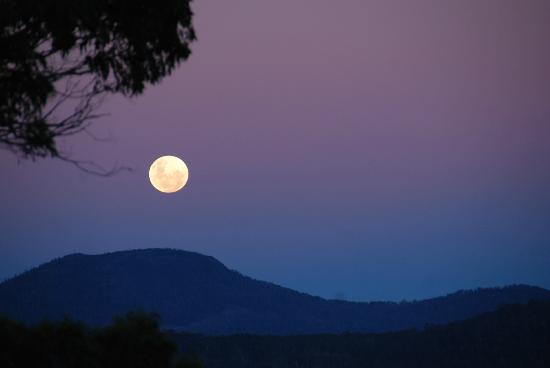
(Photo shows the full moon over New Norfolk, Tasmania; tonight it is a full moon on Friday 13th!)

Celebrity Baby News: Matthew Le Nevez and Michelle Smith

Tags

096261-d19e6214-e968-11e3-873b-5e8c286cce93

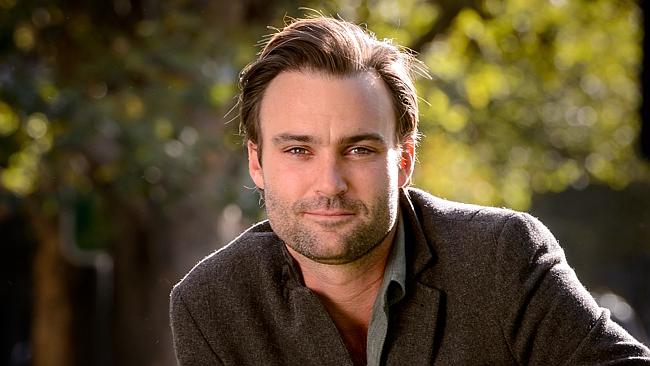
Actor Matthew Le Nevez, and his partner Michelle Smith, welcomed their first child last month and have named their son Levi.

Matthew is a NIDA graduate who has appeared in several films and television series. He won an AFI Award for the mini-series Marking Time, and a Logie for the television movie The Society Murders. He has appeared in sci-fi show Farscape, and fantasy series The Seeker. Matthew became a fan favourite after joining the cast of hit drama series Offspring in 2011 as Dr Patrick Reid, and there was an outpouring of grief when Patrick was killed off last year. Despite leaving Offspring to pursue acting in the United States, Matthew will be joining the cast of Australian drama series Love Child, and has made appearances on Offspring in imagination sequences, with more appearances tipped for the future.

Michelle is an American who works in hospital equipment supply; she and Matthew live together in Los Angeles.

Famous Name: Honoré

Tags

, , , , , , , , , ,

vb-31

On June 6 it was the 70th anniversary of D-Day – the beginning of the invasion of Normandy by the Allied forces during World War II. D-Day was a turning point in the war, as the Normandy invasion provided a decisive victory for the Allied forces. More than 3000 Australians fought in the campaign, mostly in the air force.

D-Day veterans from all over the world gathered at the beaches of Normandy for the D-Day commemorations, and Australian former pilots Robert Cowper, Stuart Davis, Phillip Elger, Francis Evans, Ronald Houghton, Billy Purdy, and Frederick Riley joined the Australian Prime Minister on his visit to France for the official international ceremony. Six of these men were awarded France’s highest decoration, the Legion of Honour, for their part in D-Day’s aerial assault (Robert Cowper had already received the Legion of Honour in 2012).

The day after the commemorations, the Prime Minister continued his tour of France by visiting a town near Amiens, the scene of a 1918 battle on the Western Front which was a crucial turning point in World War I. Two Australian brigades took part in the counter-attack, with many losing their lives in the successful attempt to secure the town of Villers-Bretonneux, ending the German offensive in the Somme, and keeping the town out of enemy hands for the rest of the war.

After World War I, money donated by school children in Victoria was used to build a new school in Villers-Bretonneux, called the Victoria School. A plaque at the school pledges Australian friendship with France, and in the playground, and above every blackboard, is written Do not forget Australia. The townspeople never have forgotten: kangaroos decorate the town hall where the Australian flag flies, a service is held every Anzac Day, and the town maintains a war memorial to commemorate all Australians who died on the Western Front with no known grave.

To thank the people of Villers-Bretonneux for their kindness and warm welcome given to all Australian visitors to their town, and in recognition of the D-Day veterans given the Legion of Honour, today I am covering a name from northern France associated with honour.

Honoré is a French form of the Latin name Honoratus, meaning “esteemed, distinguished, honoured”. There are two French saints named Honoratus, and I will look at the one who was a 6th century bishop of Amiens – not only because of where he was born, but because he is most often called St. Honoré (the other one tends to be known as St. Honorat).

St Honoratus of Amiens was born in the Somme to a noble family, and is said to have been virtuous from birth. Because he was so humble, he didn’t want to become a bishop, considering himself unworthy of the role, but once he had been elected, a beam of light descended on his forehead and he found himself anointed with a mysterious sacred oil. That pretty much sealed the deal.

Legend says that when his hometown heard he been proclaimed bishop, his childhood nursemaid, who was baking bread at the time, refused to believe it. She said that she would believe the news only if the wooden shovel she was using to put the loaves of bread in the oven put down roots and turned into a tree.

Sure enough, when she planted the shovel in the ground, it turned into a mulberry tree which produced both flowers and fruit. The tree was still being shown to visitors in the 16th century, which is an extradordinarily long lifespan (some might say, suspiciously long) for a mulberry tree.

The cult of St Honoratus really took off after 1060 when the saint’s body was exhumed, and many miracles were said to have occurred. Reputedly, processions of his relics managed to prevent both droughts and floods, ensuring good wheat harvests, and therefore happy bakers.

In 1202, a baker donated land to the city of Paris to build a chapel in honour of St Honoratus. It became one of the richest chapels in the city, and gave its name to the rue du Faubourg Saint-Honoré, now one of the most fashionable streets in the world, as it is filled with high-end boutiques.

In 1400 the bakers of Paris established their guild in the church of St Honoratus, and in 1659 Louis XIV ordered that every baker celebrate the feast day of St Honoratus on May 16, and give donations in the saint’s name to benefit the community. Even in modern France, bakers hold bread and pastry festivals on May 16, and during that week, bakers hold their annual meeting.

You may know the name of St. Honoré from the Gateau St. Honoré, a classic French dessert which has a puff pastry base with a ring of choux pastry around the edge. On top are small cream puffs dipped in caramelised sugar, and traditionally it is filled with crème pâtissière and whipped cream. It’s a popular birthday cake in France, and is also traditionally served at first communion parties.

The cake is said to have been created in the 19th century by the famous pastry chef Monsieur Chiboust, who named it both in honour of the saint, and because his own shop was on Rue St. Honoré in Paris – the street gaining its name from the church dedicated to St. Honoratus.

Honoré was a traditional name in the royal family of Monaco, and one its most famous namesakes is 19th century French novelist Honoré de Balzac. This is also an Australian celebrity baby name, because radio host Kate Langbroek has a son named Art Honore.

Honoré is an elegant, sophisticated boy’s name which could honour your French heritage, a connection to France, or even a family tradition of baking. The name is pronounced on-eh-RAY or o-no-RAY, making Onni or Ray fairly natural nicknames for an English-speaker. Although it might seem too challenging as a baby name in Australia, we have grown accustomed to Remy as a name here, so why not another French saint? Something to think about it is that, like Remy, Honoré has historically been used as a unisex name in Australia.

POLL RESULT
Honoré received an approval rating of 56%. 22% of people thought it was too feminine to be used as a boy’s name, but 17% saw it as a great French heritage choice. Only one person believed the name Honoré was too closely associated with the Gateau St. Honoré dessert.

(Photo shows the plaque at the Victoria School in Villers-Bretonneux)

Celebrity Baby News: NRL Babies

Tags

,

488671-akuila-and-tatianna-uate

Newcastle Knights player Akuila Uate, and his wife Samantha, recently welcomed their daughter Miriama Alumeci, a sister for Tatianna, aged 3; Tatianna’s birth was announced on the blog. Akuila is originally from Fiji, and moved to Australia to play rugby league while still a schoolboy. Even as a teenager, he was tipped to become a future star of the game. He has been with the Newcastle Knights for all his career so far, since 2008, and has won Winger of the Year three years in a row, in 2010, 2011, and 2012. Akuila has also played for Fiji, Australia, New South Wales, Country Origin, the NRL All Stars, and the Prime Minister’s XIII. The family’s surname is said yoo-AH-tay.

Former player Luke Patten, and his wife Rebecca, recently welcomed their son Brody Zane. Brody Patten’s birth was announced on ABC’s Grandstand this evening. Luke began his career playing for the Illawarra Steelers in 1998, and for the St George Illawarra Dragons after the clubs’ merger in 1999. He was with the Canterbury Bulldogs for almost ten years, and ended his career in the UK, playing for the Salford City Reds. When he retired in 2010, he was one of the last remaining former Illawarra Steelers players in the NRL. Last year, Luke took up a new role as a video referee, and often appears on Grandstand and other ABC shows to explain reffing decisions.

(Photo shows Akuila with his daughter Tatianna, from The Daily Telegraph)

Irish Names For Girls

Tags

, , , , , , , , , , , , , , , , , , , , , ,

3478061055_c7f655e9d0

Irish people have played an important role in Australia’s history, with many arriving in the 18th century as convicts or free settlers. By the late 19th century, a third of Australia’s population was Irish, and today around 30% of us claim some Irish ancestry. It is said that Australia is the most Irish country in the world outside Ireland.

The Irish have made an indelible mark on our history, culture, religion, sport and perhaps most especially, our politics – six of our prime ministers have had Irish ancestors. They have also helped create much of our national character: both the good bits, like our dry sense of humour and love of language, and the bad bits, like our pessimism and thin-skinned “touchiness”. When I did Italian names, I said that I could imagine an Australian without an Italian history, I just didn’t care to, but it’s impossible to imagine Australia without an Irish history.

Here’s ten Irish girls’ names, some of which have become popular here, and others which are less common. Just a heads up that I haven’t included any fadas (accent marks) on any of the names, since they are not legal in all states.

Aisling
Modern name meaning “dream, vision” in Irish Gaelic. It can be seen as a literary name, because the aisling is a poetic genre developed in 17th century Ireland, where a woman appears in a vision and predicts a turn for the better in Ireland’s fortunes. Earlier, the dream-woman was young and beautiful, and didn’t have a political message, but symbolised nature or love. Aisling can be pronounced ASH-ling or ASH-leen, and to English-speakers, seems like a fresh alternative to Ashley; it has also spawned variants such as Ashlynn. Aisling is #41 in Ireland.

Aoife
From the Gaelic for “beauty, radiance”. In Irish legend, Aífe is a warrior woman, and rival of her (possible) sister Scáthach. Legend tells that she fought the hero Cú Chulainn, but he overcame her with trickery, and promised to spare her life if she stopped fighting with Scáthach, spent a night with him, and bore him a son. She fulfilled her side of the bargain, but the story didn’t end happily. In the tale of The Children of Lir, Aoife is the wicked queen who transformed her stepchildren into swans; she was cursed by being turned into a demon by her own father as punishment. Despite this unpleasant namesake, Aoife was used by medieval Irish nobility, with a notable example being Aoife MacMurrough. This 12th century Irish princess conducted battles on behalf of her husband, and is an ancestor of the current British royal family. Aoife is pronounced like EE-fuh; although complex to spell, it sounds rather like popular Eva, and has a lovely meaning. Aoife is #11 in Ireland and #10 in Northern Ireland.

Bridget
Anglicised form of the Old Irish name Brigit, meaning “high, exalted”. In Irish mythology, Brigit is a goddess; her name is derived from the word for “fire” and most likely her title. Brigit was a poet, and the inventor of keening – the lament over a body at a burial that is a mixture of singing and weeping. She is also patron of healing, smithing, arts and crafts, cattle and livestock, sacred wells, and serpents. She ruled all things high-reaching, as well as lofty attributes, such as intelligence, wisdom, excellence, knowledge, and skill. Brigit is associated with the home and hearth, and with early spring. Her special day is Imbolc, on February 1. She has become fused with St Brigid of Kildare, one of the patron saints of Ireland – probably an attempt to Christianise the goddess. St Brigid is patron of smiths, cattle, poets and scholars, and her feast day is February 1. In Ireland, the name Bridget was too sacred to use until the 17th century, but later became extremely popular – so much so that an Irishwoman was called a “Biddy“, just as an Irishman was called “Paddy”. Bridget was #104 in the 1900s, and dropped to its lowest ranking in the 1950s, at 0. It hit a minor peak in the early 2000s at #166, and is currently in the 200s in Victoria and the 400s in New South Wales. Bridget is an underused classic which has remained on the charts while never becoming popular.

Caitlin
Anglicised form of Caitlín, Irish form of Cateline, Old French pet form of Catherine. While the Irish say it something like kat-LEEN, English-speakers say KAYT-lin, and turn the Irish pronunciation into another name, Kathleen. Caitlin has been used in Ireland since the 19th century, and became well known in the 20th. In Australia, Caitlin has ranked since the 1970s, making its debut at #554, and soaring until it entered the Top 100 in 1987 at #86. By 1990 it was in the Top 50 at #38; by 1994 it was in the Top 20 at #15. It peaked in the late 1990s at #12, and since then has declined. Currently Caitlin is #99 nationally, #78 in New South Wales, and #103 in the Australian Capital Territory. Last year Caitlin was one of the names that fell the most in popularity, suggesting its day is coming to a close (although its many variant spellings would significantly boost its ranking). Caitlin is #64 in Ireland and #33 in Northern Ireland.

Ciara
Feminine form of Ciar, meaning “black”. There is a 6th century St Ciara and a 7th century one, or else just one long-lived St Ciara. According to legend, St Ciara was of royal blood, and founded an abbey; another story says that she (unless it is a different St Ciara) saved a town from a noxious fire through her prayers. Ciara is pronounced KEER-uh, and must be one of the most heavily Anglicised Irish names, for you rarely see it with its native spelling, but more often Keira or Kira. Although to me the Ciara spelling looks more elegant, it risks being confused with the Italian Chiara. Ciara fits in with Australian’s love of names such as Kirrily and Kirra, and has a native sound to our ears. Ciara is #32 in Ireland.

Deirdre
Deirdre of the Sorrows is a tragic heroine from Irish mythology. The daughter of King Conchobar’s bard, when she was a baby a druid predicted she would be very beautiful, but that much blood would be shed for her sake. Conchobar decided he wanted this beauty for himself, and had her brought up in seclusion. As an adult, Deirdre was as stunning as the druid had foreseen, and she fell in love with a handsome warrior named Naoise. The couple eloped, and were blissfully happy until the furious Conchobar tracked them down. In the ensuing battle, Naoise was amongst those killed. Conchobar triumphantly took his gorgeous wife home, but was angry that she remained cold and depressed. To teach her a lesson, he told her that he would give her to the man who had murdered Naoise – the man she hated above all others. On the journey to deliver her, the unhappy Deirdre threw herself from the chariot and split her head open. In some versions of the story, she simply wastes away with grief. Deidre is derived from the Gaelic name Derdriu, whose meaning is debated, but is implied in the original story as meaning “noise, murmuring”, related to the word for “storm”. It could thus be understood as “weeping, wailing, storm of tears”, and is often glossed as “sorrow”. Deirdre came into use as a girl’s name in the 19th century, and became more common in the 20th, when there had been many popular re-tellings of the legend. Deirdre first ranked in the 1930s at #183, peaked in the 1940s at #180, and hasn’t charted since the 1970s. This is a vintage name which has had very little use, so hasn’t become dated. It is rather lovely, although very sad.

Erin
Derived from Éirinn, from the Irish word for Ireland, Éire. Erin was used as a poetic and nationalistic name for Ireland, or the feminine personification of Ireland. According to folklore, the country’s name comes from Ériu, the mother goddess of Irish mythology, and a symbol of Irish sovereignty. Her name is believed to come from an ancient root meaning “fat”, to indicate that Ireland was a land of abundance. Erin came into common use as an Irish name in the 19th century. It has sometimes been given to boys, perhaps because it sounds like Aaron and Eric, but has only charted for girls. The name Erin first charted in the 1950s, debuting at #457, and reached the Top 100 in 1978, at #71. By 1980 it was in the Top 50 at #46, the following year it was in the Top 20 at #17, and it peaked in 1984 at #12. Erin has been a long-time favourite, and only left the Top 100 in 2012. This modern classic is no longer popular, but still getting a reasonable level of use. It is #39 in Ireland and #19 in Northern Ireland.

Maeve
Anglicised form of the Gaelic name Medb, meaning “intoxicating”, and related to the English word mead (a fermented honey drink). In Irish legend, Queen Medb was a powerful and seductive queen known for taking a succession of husbands as her consorts. She was once married to King Conchobar, from the story about Deirdre. Medb couldn’t stick him either and walked out; she ended up defeating Conchobar and ruling in his place. She demanded that her wealth be at least equal to her husbands’, and insisted her consorts be without fear, meanness, and jealousy – the last was very important, because Medb also took lovers to supplement her husbands. Folklorists believe that Queen Medb was originally a sovereignty goddess in a matrinlineal society who the king would symbolically “marry” in order to gain power over the land. This explains her many husbands. In modern times, she has become a feminist symbol of women’s power and female sexuality. This is a sweet, spunky name which fits in with the trend for names with a V in them, like Ava, and makes a great middle name. Maeve is in the 100s in Victoria, so not particularly unusual, while it is #100 in Ireland.

Orla
Anglicised form of Órfhlaith or Órlaith, meaning “golden princess”. Órlaith was a very popular name in medieval Ireland, and there are several queens and princesses from Irish history with this name. The famous High King of Ireland Brian Boru had a sister named Órlaith who married another High King (she unfortunately came to a sticky end after getting over-involved with her stepson), and Brian also had a daughter and a grand-niece named Órlaith. For some reason, Orla is a man in The Poems of Ossian by James McPherson, a young warrior and chieftain of Lochlin who falls in battle. In Scandinavia, Orla is used as a male name, and that might be because of McPherson’s poetry, which was very popular in Scandinavia. Orla is simple to spell and pronounce, and the princessy meaning would be attractive to many parents. Orla is #82 in Ireland.

Sinead
Anglicised form of Sinéad, the Irish form of Jeanette, the pet form of the French name Jeanne. It is the equivalent of the English name Janet, which is a pet form of Joan. In practice, Sinead is often understood as the Irish form of Jane or Jean; it has even been used as an Irish form of Jennifer since Jenny is an old pet form of Jane. The name is pronounced shi-NAYD. A famous Irish namesake is Sinéad de Valera, the wife of the Rebublican leader and Ireland’s third president, Éamon de Valera. A teacher of the Irish language, Mrs de Valera was named Jane by her parents, but changed her name to Sinéad not long after she was married. Sinéad de Valera was a successful children’s writer, who wrote in both English and Irish. She helped to popularise the name in Ireland, and the Irish singer-songwriter Sinéad O’Connor was named after her. Sinéad has lost popularity in Ireland in recent years, and has never charted in Australia, although still seen occasionally.

POLL RESULTS
The public’s favourite names were Maeve, Bridget and Aoife, and their least favourite were Ciara, Deirdre and Sinead.

(Picture shows detail from an Irish pound note, which bears the likeness of Queen Medb or Maeve; the pound hasn’t been used in Ireland since 2002 when the euro was introduced)

Gemma and Jewel

Tags

, , , , , ,

WoodenFood_m

Twins
Luella Miette and Emmeline Maeve

Girls
Alina Dawn (Nicholas, Kiara)
Anika Josephine (Tane, Kieran)
Bonnie Lola
Camilla Elizabeth (Gus, Claudia)
Coco Zara
Doreen “Dora”
Eriana Jade
Essie Florence (Henry)
Gemma Catherine
Greta Geni
Halle Sofia (Rafael)
Isabelle Rosalie (Eva)
Ivy Meyer
Jewel Grace (Chanel)
Kora Mae
Luna Piper
Lydia Ashleigh (Kyra)
Matia Rose (Charli)
Orla McIntosh
Pia Joan (Lenny)

Boys
Ash Julian (Tori, Taj)
Axel William
Beau Francis
Billy McGuffie
Callan George (Hayden)
Chaz Isaac (Zoe, Ikaia, Levi)
Dominik Ivan (Abbey, Sammi, Luka, Hudson)
Ewan Jack (Milla)
Finnlay Karoly (Cailin, Riley)
Harry Lennox
Innes James (Leliyn, Maya)
Jack Dao (Frances)
Jase Leo (Thomas)
KC Robald
Kiah Aaron (Caitlin, Jacob, Sophia)
Kingsley Ryan
Miller Thomas (Charlotte)
Monty Carlin (Saylah, Maya, Elky)
Nash Kyle (Quinn, Archer)
Tanner Reid (Harry, Kaden, Jarran)

Note: Thank you to Abby Sandel from Appellation Mountain for contributing the twins’ names via Twitter.

(Photo of little girls having a tea party from Tiger Tribe toy company, from their Facebook page)

Celebrity Baby News: Artistic Babies

Tags

, , ,

d870038eb17511e3a90f12d3efa47a40_8

Alternative country-rock singer Henry Wagons, and his wife Melvis Crawford, welcomed their daughter Casper Henrietta eight months ago. Henry refers to his daughter as “Casper the friendly girl”. Henry is the front man for Melbourne band Wagons, who are about to release their sixth studio album, and are on an Australian tour. Melvis was once a DJ on the Team Disgusting radio show on Life FM in the UK, which included alternative comedian Noel Fielding.

Artist Bindi Cole, and her husband Daniel Chocka, welcomed a baby boy named Eli earlier this year. Bindi is an award-winning Melbourne artist who works principally with photography, and her works have been exhibited at the National Gallery of Australia, Gallery of Modern Art, Art Gallery of Western Australia, and Horsham Regional Art Gallery. Many of her works explore Indigenous culture and heritage, and also her Christian faith. Bindi’s name has been covered on the blog, and it is worth mentioning that her father ascribes the meaning “morning star” to it.

(Photo of Henry, Melvis, and Casper from Melvis Crawford’s Facebook page)

Famous Names: Azalea and Amethyst

Tags

, , , , , , , , , , , , , , , , , ,

May-purpleazalea

Australian rapper and model Iggy Azalea has been in the news recently, as she performed at the Billboard Music Awards last month. Her song Fancy recently reached #1 on the Billboard Top 100 in the same week that Ariana Grande’s Problem, which features Azalea, made #2. This makes Iggy Azalea the first act to reach #1 and #2 simultaneously since the Beatles did it in 1964 with I Wanna Hold Your Hand, and She Loves You.

Iggy grew up in the hippie town of Mullumbimby in northern New South Wales, and began rapping at the age of fourteen after developing an obsession with Tupac when she was eleven. Unsuccessful and unpopular at school, Iggy dropped out. Shortly before her sixteenth birthday, she left for a “holiday” in the United States, during which she phoned her parents and broke it to them that she wasn’t coming home, but going to seek her fortune as a professional rapper. She lived in the southern states, and developed a southern American accent for professional purposes.

As a rapper in America, Iggy was at first unsuccessful and unpopular, but Mullumbimby had accustomed her to this, and it didn’t faze her. Later she moved to Los Angeles, and began uploading her own videos to YouTube: her career began to grow when her first official music video, for her song Pu$$y, went viral. Her first studio album, The New Classic, was released in April this year and debuted at #3 on the Billboard charts, also making #1 on Billboard’s Top R&B/Hip-Hop albums, and Top Rap Albums. She is the first non-American female rapper to reach the summit of these charts.

We are told that screen names are no longer necessary in Hollywood, but stage names are still common in the world of rap and hip-hop. Iggy Azalea invented hers using the old chestnut of combining her pet dog’s name with the name of the street she grew up on (her family still lives on Azalea Street in Mullumbimby). While some people might use this method and end up with something uninspiring, like Pickles Main or Mr. Bunny Wunny Commercial Estate, Iggy Azalea got pretty lucky with hers, although her real name of Amethyst Kelly seems marketable enough.

I have been seeing quite a few Azaleas and Amethysts in birth notices in the past few years, and wonder whether Amethyst Kelly aka Iggy Azalea has had an effect? I haven’t seen any girls named Iggy though.

The azalea is a flowering ornamental shrub native to Asia, Europe and North America; it is a member of the rhododendron family. Azaleas bloom in the spring, and have beautiful frilly flowers in shades of pink, purple, and white.

Its name comes from the Greek for “dry”, because it grows in dry soil and is tough enough to thrive in harsh conditions. In Chinese culture, azaleas are a symbol of womanhood and love for the home. Azalea festivals are held in Japan, China, Korea, and in many cities of the United States; the azalea is the state wildflower of Georgia in the US.

Azalea has been used as a girl’s name since the 18th century, originating in both Britain and the US. Although there is some dispute as to when azaleas were introduced to England from the Americas, they were definitely imported by the early 18th century. Azalea first turns up in Ohio in the US, where there is a small town named Azalea, so it can be seen as a place name. The name Azalea is currently rising in popularity in the United States.

As a name, Azalea seems flouncy and feminine, and also quite tough – the “dry” meaning seems very appropriate in Australia. It can be pronounced either uh-ZAY-lee-uh or uh-ZAYL-yuh, and fits in with trendy names such as Zalia and Zahlia, so that it seems a little exotic but doesn’t sound particularly strange. Zay or Zaylie could be used as short forms.

An amethyst is a semi-precious gemstone which is a violet-shaded quartz, ranging from a pinkish colour to a deep purple. The name comes from Greek, and means “not intoxicated”, due to a belief that amethysts were a protection against drunkenness.

The ancient Greeks and Romans drank wine from cups made from amethyst, thinking this would stop them being affected by alcohol. In medieval times, amethyst amulets were worn in battle, in the belief that they had healing properties, and kept the wearer cool-headed; they are supposed to have the ability to dispel illusions.

Amethysts are mined all over the world, with the highest quality coming from Brazil and Sri Lanka. You can fossick for amethysts yourself in Australia, with the most promising locations being in northern Queensland. You can also find “desert amethysts” – very old glass bottles which have baked in the sun until they turn a pretty violet colour.

Amethysts seem to capture the imagination of writers, and there are many stories and poems about them, even in ancient times. If you have read the Anne of Green Gables books by L.M. Montgomery, you will remember that as a child, Anne thought that diamonds would be “purply-sparkling” like amethysts and was disappointed to find they were colourless. One of her fancies was that amethysts were the souls of good violets.

Amethyst has been used as a personal name since the 19th century, when other gemstone names were fashionable; it can be shortened to Amy. Although amethysts are not rare or valuable, there is something pure and wholesome about them, even spiritual. As Anne says: “I think amethysts are just sweet”.

Two pretty nature names starting with A, both belonging to the same person. Which one do you prefer?

POLL RESULT
Azalea received a very good approval rating of 74%, but people were less enthusiastic about Amethyst, which had an approval rating of 43%.

azalea-st

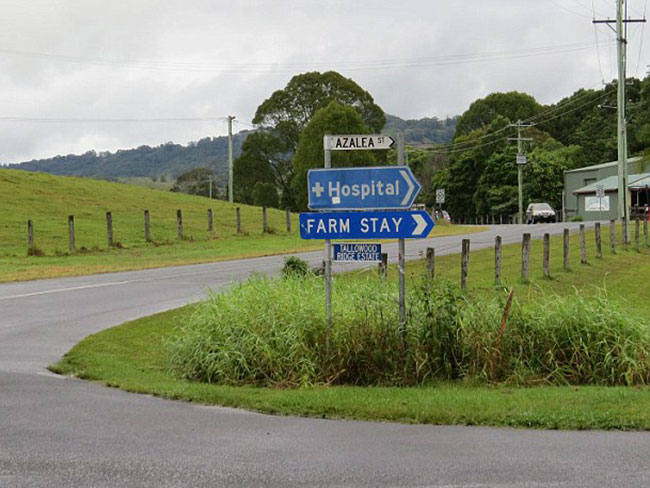
(Top photo shows purple azalea flowers; bottom photo shows Azalea Street in Mullumbimby)

Celebrity Baby News: Kate Waterhouse and Luke Ricketson

Tags

1401500390830.jpg-620x349

Journalist and socialite Kate Waterhouse, and her husband Luke Ricketson, welcomed their first child on May 30, and have named their daughter Sophia Edie. Sophia Ricketson was born at the Mater Hospital in Sydney, weighing 3.1 kg (7 lb).

Kate is a freelance fashion journalist with her own blog, and has a weekly interview column at The Sun-Herald called Date With Kate. She is the daughter of horse trainer Gai Waterhouse and former bookmaker Robbie Waterhouse, and is the sister of bookmaker Tom Waterhouse. Tom and his wife Hoda had a baby girl named Rose last year, who is Sophia’s cousin.

Luke is a former rugby league star and captain of the Sydney Roosters who began his career in the 1990s. He was chosen for City and New South Wales in rep football, and played for both Australia and Ireland internationally. Luke retired in 2005 after playing 301 games with the Roosters, which still stands as the club record. He is the son of Doug Ricketson, who played rugby league for the Eastern Suburbs and Penrith in the 1960s. Kate and Luke were married in Italy in 2012.

Interview with Nancy from Nancy’s Baby Names

Tags

, , , , , , , , , , , , , ,

canyon75

Nancy is the anthroponomastic maven at Nancy’s Baby Names, a rich repository of name information delivered with a wry sense of humour. Nancy has been blogging indefatigably since 2006, making Nancy’s Baby Names one of the oldest baby name blogs out there. She has thousands of blog posts on all manner of names, but especially loves hunting down rare and unusual names, and discovering the stories behind them. Nancy also adores name data – there’s popular names from around the world, and tons of US data from well beyond the Top 1000. At Nancy’s blog you will find names that are bizarre, puzzling, curious … and they are all real.

What is your name?

Nancy Man.

Have you ever wished you had a different name?

I didn’t like the name Nancy when I was young, and I remember asking my parents for permission to legally change it. They laughed at me. These days I don’t mind my name as much, so I no longer think about changing it.

How did you first become interested in names?

The graveyards are what got me hooked, though I don’t think I would have been so fascinated by the names on the headstones had I not been so dissatisfied with my own name.

I was unhappy with my own name because I’d been named for the wrong grandmother (or so I believed throughout childhood). I got the name of the distant grandmother we hardly knew, not the awesome grandmother (Helen) we saw all the time. This was a problem.

The upside, though, was that it made me very curious about names in general. So when I began using a local graveyard as a short cut through town (around age twelve) I couldn’t help but check out all the names. I was especially attracted to the unfamiliar and bizarre names I’d never seen before – Peleg, Huldah, Zenas, Experience, etc.

After exploring that first graveyard thoroughly, I began visiting other graveyards, where I discovered even more curious names, and … that’s how the name obsession began.

What inspired you to begin a name blog?

I had an interest in names and a writing habit, so I started a blog in early 2006 to put the two together. My first posts were mostly tongue-in-cheek, but I began to take things more seriously once I started getting traffic and comments.

You seem to have a special fascination with unusual names of real people – how did that come about, and what is the most unusual name you have ever found on a real person?

It must have been the graveyards. In a sea of Sarahs and Johns, you can’t help but wonder about the one random Flavilla or Micajah.

The most unusual name? Wow, that’s tough. I’ll go with one I blogged about recently: Laxative Bromo Quinine. He was born in rural Texas in the early 1900s and named after the medicine that his mother credited with saving his life.

Do you have a favourite post on Nancy’s Baby Names?

I really like the Kasara/Casara post. That name had me stumped for a long time until it finally dawned on me that Kasara was a mondegreen. My extensive knowledge of long-forgotten ’80s pop hits finally comes in handy!

Are there are any other ways to follow you online?

Twitter is probably the best way. Pinterest is another option.

Do you have a pet peeve in regard to names?

My only pet peeve is that the U.S. Social Security Administration doesn’t release all its name data. Other countries do it, SSA, why not us? Come on! Privacy, shmivacy.

What are your favourite names?

I have two types of favourites.

One type, of course, would be the bizarre names: Zeppelina, Captivity, Oleomargarine, Emancipation Proclamation and the like. I especially love the ones that come with cool stories and explanations.

The other would be short, simple classics like Jane, John, Adam, Emma, Paul, and Rose. They’re familiar, unpretentious, and easy to live with. These are the names I’m always recommending to people in real life.

What names do you dislike?

I don’t care for names that are easy to make fun of. Not a fan of Abcde, for example.

Are there any names you love, but could never use?

Duncan. I’ve always loved the name, but I can’t say it without mentally adding “Donuts.” (Dunkin’ Donuts is a coffee/donut chain very popular in the North-eastern U.S., where I grew up.)

What are your favourite names in the US Top 100?

Girls: Elizabeth (#10). Runners-up: Hannah (#23) and Sarah (#48).

Boys: Thomas (#61). Runners-up: James (#13) and Sebastian (#45).

What are your favourite names in the rest of the US Top 1000?

Girls: Jane (#355). Runners-up: Daphne (#397) and Catherine (#172).

Boys: Duncan (#821). Runners-up: Paul (#198) and Theodore (#170).

What are your favourite names that have never charted in the US?

Girls: Mehitable. It’s a variant of the biblical Mehetabel, though I actually prefer the Mehitable spelling because that’s the way I always see it written on the headstones back home. (I kinda prefer Phebe to Phoebe for the same reason.) I’m slightly surprised that the belle/bella trend hasn’t brought Mehetabel back, even just a little. I wonder if spelling it Mehetabelle or Mehetabella would help…?

Boys: Chucknorris. I was so happy when I discovered this name in the wild, years after wondering aloud (via the blog) if it could possibly exist. It’s like that Walt Disney quote, “If you can dream it, you can do it,” except my version is “If you can dream it, you can find it on a birth certificate.”

If you found out you were pregnant right now, what names might you be considering?

I like classic names, but my husband prefers trendy names, so finding a name that suits both his tastes and mine would be the goal. I know Chloe would be a contender – it’s been a favourite of his for a while, and it happens to fit my criteria pretty well.

What is something we don’t know about you?

I cannot drink soda, beer, champagne, or anything carbonated. It’s like swallowing shards of glass to me. I’m amazed that so many people find bubbly beverages refreshing.

What advice would you give someone who was choosing a baby name?

This one is tricky to answer without a specific person in mind. For instance, the advice I’d give to the person deciding between Emma and Claire would be completely different from the advice I’d give the person seriously considering Kardashianette.

(Photo shows Nancy at the Grand Canyon, from her blog)