• About
  • Best Baby Names
  • Celebrity Baby Names
  • Celebrity Baby Names – Current
  • Celebrity Baby Names – Past
  • Featured Boys Names
  • Featured Girls Names
  • Featured Unisex Names
  • Links to Name Data
  • Waltzing on the Web

Waltzing More Than Matilda

~ Names with an Australian Bias of Democratic Temper

Waltzing More Than Matilda

Category Archives: Name Themes and Lists

Boys Names from Stars and Constellations

18 Sunday Dec 2011

Posted by A.O. in Name Themes and Lists

≈ 21 Comments

Tags

Akkadian names, Arabic names, astronomical names, Chinese names, colour names, english names, fictional namesakes, gemstone names, Greek names, Latin names, locational names, mythological names, name history, name meaning, popular culture, popular names, surname names, unisex names, vocabulary names

It is only a few days until the Christmas holidays, or the holidays have already begun. Although the stars seem more crisp and vivid in winter, and some constellations of spring and autumn are spectacular, it is summer I connect with star-gazing. The warm nights and long lazy Christmas holidays seem to go with lying in your backyard looking upwards, or watching the night sky glittering above you on camping trips. Little wonder that the stars of summer are often the first we learn to identify, and the first we yearn towards as we gaze into infinitude.

This is the companion list to Girls Names from Stars and Constellations, and should be read in conjunction with it. Need a super quick guide to the southern skies? Go here! The picture used is a Christmas card created by Thomas Le, a refugee from Vietnam. He donated this artwork to help other migrants, and it is on show at the Museum of Victoria.

Altair

Altair is the common name for Alpha Aquila, the brightest star in the constellation Aquila (“The Eagle”), and one of the brightest overall. Altair is a translation of the Arabic for “the flying eagle”, and the identification of the star with an eagle goes back to the Babylonians and Sumerians, who called Altair “The Eagle Star”. The Kulin people of central Victoria also saw the star as an eagle; it is Bunjil, their creator, who was blown into the sky by a great wind and became a star. Other peoples of southern Australia saw Altair as a hunter; it is his Boomerang thrown across the sky which became the constellation in which Gemma can be found. This cool star name can either be said al-TAH-yir, or al-TARE, and is also on the list Boys Names from Video Games. You can see Altair from Australia in winter and spring, and it’s in the north of the Milky Way.

Asterion

Asterion is the common name for Beta Canes Venatici, the second-brightest star in the constellation Canes Ventatici. This constellation began as the club of the constellation Boötes (“The Herdsman, The Ploughman”). However, due to a number of errors in translation from Greek to Arabic to Latin, “club” became “dogs”. Having invented these dogs, astronomers had a good squint and decided that the constellation looked like two greyhounds. It’s never explained why a herdsman would have hunting dogs rather than herding dogs. Astronomers named one star Chara (“dear”) and the other Asterion (“starry”) – then they swapped the names around to create further confusion. In Greek mythology, Asterion was the personal name of the Minotaur, a bull-headed monster who was the product of an unnatural coupling between a queen of Crete and a bull. It’s a flamboyant name, but it is actually a star name with a starry meaning; it’s said as-TEH-ri-on. Canes Ventatici is visible in the autumn from Australia, but its stars are not bright or easy to see.

Atlas

Atlas is the common name for 27 Tauri, a triple-star system in the constellation Taurus and part of the Pleiades cluster. As well as the Seven Sisters, which include Maia, the Pleiades cluster contains their parents, Atlas and Pleione. Atlas was one of the Titans, and after warring against the Olympians, he was sentenced to hold up the heavens on his shoulders (before this, the Sky and the Earth, parents of the Titans, were free to lie together in a lingering embrace, so Atlas is basically being used as a birth control device for deities). He has come to be a symbol of superhuman strength and stoic endurance. The name is so ancient that its meaning is very uncertain, but it may mean “endure”, “support”, or “sea”. Atlas has given his name to the Atlas Mountains in North Africa, and the Atlantic Ocean, as well as the word for a book filled with maps. The name is starting to have a mild vogue here. You will be able to see Atlas in the Pleiades during summer in Australia.

Garnet

The star Mu Cephei is commonly known as Herschel’s Garnet Star, because when astronomer William Herschel described it, he wrote that it was “a very fine deep garnet colour”. Indeed it is, being a red supergiant that is one of the largest in the Milky Way. It’s in the constellation Cepheus, which represents Andromeda’s father. Without doubt he is the dullest creature in the whole Andromeda drama, but I guess since they put the sea monster in the sky, it would have seemed rude to leave him out. You may recall that the aliens in TV comedy 3rd Rock From The Sun came from a planet in a galaxy on the Cepheus border. Unfortunately, Cepheus is only visible in the northern hemisphere, so we cannot see the Garnet Star from here. The colour garnet is named for the red gemstone; its name is said to be derived from the (also red) pomegranate fruit which means “seeded apple”. It’s a unisex name, but historically better known as masculine in Australia.

Keid

Keid is a common name for Omicron2 Eridani, or 40 Eridani, a triple star system in the constellation Eridanus consisting of two red dwarfs and a white dwarf. Eridanus represents a great river, and is meant to be the water pouring from the jar of the Water Bearer, the constellation Aquarius. In ancient times, it was said to be the path of souls. Eridanus can be easily seen from Australia; it is virtually overhead during the summer months. You can see one of the red dwarf stars in Keid with the naked eye; however the other two stars can only be viewed through a telescope. In the TV series Star Trek, 40 Eridani is the location of the planet Vulcan, home of Mr Spock. Eridanus is also a system of planets in the video game Halo, so it’s got sci-fi credentials galore. Keid is from the Arabic word for “eggshells”, and can be pronounced KYED or KEED. I prefer KEED, but KYED sounds like popular Kai (maybe too much, as people will no doubt confuse the two names).

Kio

Kio (KEE-oh) is the ancient Chinese name for Spica, the common name for Alpha Virginis, a blue giant binary star and the brightest in the constellation Virgo. While Spica means “ear of wheat” in Latin, Kio comes from the Chinese for “horn, spike”, as it was seen as “the horn of Jupiter”. Spica was the star used to discover the precession of the equinoxes, and the constellation Virgo contains the spring equinox point (autumn equinox in the northern hemisphere). The constellation has represented a goddess holding sheaves of grain from the earliest beginnings of astronomy in Babylonia. Not only is Kio one of those perky three-letter names that appeal to many people, but the Chinese saw Spica as a “lucky star” – what could be more positive than being named after a lucky star? The constellation Virgo can be seen throughout autumn and winter in Australia, and the very brightness of Spica makes it easy to find.

Leo

Leo is a familiar constellation, because it is one of those in the zodiac. It’s already in the list Boys Names From the Top 100 of the 1930s, however I think it is worth revisiting from an astronomical viewpoint. The constellation’s name means “lion”, and seems to have been pictured as a lion by many ancient civilisations. I’m not sure if there was a single original Lion in mythology, but the Babylonians had many leonine protective gods, and a winged lion was the symbol for the city of Babylon. The Ancient Greeks identified it with the Nemean lion, a monstrous beast, both fierce and cunning, which was killed by Heracles as the first of his twelve labours. Its hide was impervious to attack, so Heracles wore it as his armour. The constellation Leo is truly majestic, and contains many bright stars. The chief of these is Regulus, also called The King Star, and The Heart of the Lion. Leo can be seen for most of the year, but is easiest to view in late summer to early autumn from Australia.

Nash

Nash is a common name for Gamma Sagitarrii, an orange giant binary star in the constellation Sagittarius. Sagittarius depicts a centaur, said to represent the wise teacher and healer Chiron. The Milky Way is at its densest in Sagittarius, as this is where the centre of the galaxy lies, so it contains many star clusters and nebulae. In Australia this impressive constellation is easy to find, and we also get the best view of it, being able to see the Milky Way so much more clearly. Look in the west part of the sky in the early evening, halfway between the horizon and the point directly overhead. Its brightest stars form a recognisable shape which is called The Teapot; Nash is the spout of this teapot. Sagittarius is most visible in the middle of winter, and bright enough that you can see it even if there is a moon. The name Nash is from the Arabic for “arrowhead”, for this star is the tip of the archer’s arrow, which points toward the star Antares, in Scorpius. It’s also a surname derived from the word for “ash tree”.

Orion

Orion is a constellation representing a character from Greek mythology. This gigantic hunter seems to be a bawdy folk hero – larger than life and twice as natural. It is lusty Orion who pursued the Pleiades, so that Zeus had to turn them to stars for their protection. One version of his ending is that Orion boasted of being able to kill any animal on Earth, and so the Earth goddess, in her displeasure, created the Scorpion to sting him to death. Both Orion and the Scorpion were placed in the sky as constellations. Orion contains many brilliant stars, such as Betelgeuse, Rigel and Bellatrix, and even the astronomical novice can locate the three stars forming Orion’s Belt; I was taught these were The Three Sisters (a South African name). Orion is clearly visible in the summer from Australia, and because it is positioned differently in the southern hemisphere, we sometimes call this constellation The Saucepan. The name Orion is from the Akkadian for “heaven’s light”.

Perseus

Perseus is a constellation representing a character from Greek mythology; he was a hero, the son of Zeus and a mortal princess. Perseus led an extremely exciting life, part fairytale, part soap opera, but he is probably best known for killing the Gorgon Medusa, a woman who had snakes on her head, and thus had a permanent bad hair day of epic proportions. Perseus had nifty flying sandals to zip around on, although much later people liked to imagine him riding the flying horse Pegasus (this never actually happened in the legends). Perseus rescued and married Princess Andromeda, and the constellation has his hand reaching up to Andromeda’s foot, to show the moment of deliverance. The star Algol in Perseus is called The Demon Star, and represents the head of Medusa. We can see the constellation in late spring and summer from Australia, and the meaning of Perseus is not certain; it may mean “to destroy”. Percy is the obvious nickname, and the one used in the novel series Percy Jackson and the Olympians by Rick Riordan.

Phoenix

Phoenix is a minor constellation in the southern sky named after the mythical bird. The Phoenix can be found in the mythologies of many lands, from Egypt to China to Russia, and is famous for being able to renew itself in fire, which made it a popular symbol of resurrection in Christianity. Its name is from the Greek for “crimson”. Phoenix has become a popular name lately; it’s unisex, but used more for boys. It’s hard not to connect it to The Order of the Phoenix in the Harry Potter books; Fawkes the phoenix is the loyal pet of Albus Dumbledore. A phoenix is also a major character in the children’s book The Phoenix and the Carpet by Edith Nesbit. The constellation Phoenix can be seen from Australia during the summer, however it is faint and only possesses two stars bright enough to be seen with the naked eye.

Sirius

Sirius is the common name for Alpha Canis Majoris, a binary star which is the brightest in the constellation Canis Major (“Great Dog”), and the brightest in the sky, being almost twice as bright as Canopus, the second-brightest. Canis Major is seen as one of the dogs following the hunter Orion, with Sirius representing its doggy nose. However, Sirius was considered to be a dog in his own right, and is called The Dog Star. In the northern hemisphere, Sirius rises in summer, and so the very hottest time of year is called “the dog days”. Although Sirius rises in the winter here, we don’t call the coldest time of year the dog days, although strictly speaking, we should! In July, you can see Sirius both evening and morning. Almost every culture in the world has connected Sirius with dogs or wolves, but the Boorong people of Victoria saw it as part of a constellation representing the Wedge-Tailed Eagle – one of the most important of the spirit elders. The Sirius was also the flagship for the First Fleet to Australia, giving it another Australian connection. Its name comes from the Greek for “burning, scorching”.


Girls Names From Stars and Constellations

11 Sunday Dec 2011

Posted by A.O. in Name Themes and Lists

≈ 32 Comments

Tags

Arabic names, Aramaic names, astronomical names, Biblical names, British Baby Names, celebrity baby names, famous namesakes, flower names, Greek names, Latin names, literary namesakes, locational names, mythological names, name history, name meaning, nature names, popular culture, popular names, Sanskrit names, Slavic names, Spanish names, surname names

Christmas is a time for stars – we put stars on our Christmas trees, sing about stars in carols, send cards with glittering stars on them, and cut gingerbread in the shape of stars. Elea at British Baby Names has a post on starry names up on her lovely Advent calendar; she also had a post on astronomical names back in October, which contains many star names. If you name your child after a star, you will want to show them “their” star when they get older, so I’ve given a few hints as to the best time to view the star from Australia; to learn more, two great resources are the Skynotes newsletter from the Melbourne Planetarium (includes video), and the Beginner’s Guide to the Night Sky at ABC Science. I normally do ten names per list, but because it’s the last set for the year I’ve done twelve – besides, stars naturally seem to go in groups of twelve, don’t they?

Alya

Alya is a common name for the yellow binary star Theta Serpentis in the constellation Serpens (“The Serpent”). Its name comes from the Arabic word alyah, meaning “fat tail of the sheep”. Arab astronomers saw this part of the sky as a pasture, with Alya representing a sheep’s tail. The Arabs have cooked with the rich fat from a sheep’s tail for centuries, and it is still considered a delicious comfort food. It might seem like calling your daughter Lard, but it fits in with the popular Aaliyah variants, while being simpler to pronounce and spell. You can always tell people the baby is named after a star that represents a sheep gambolling in a field; however vegetarians may not be able to get past the fact that the Arabs were looking up at the star and thinking, “Yum yum yum”. Serpens is visible in Australia in the middle of winter, and its stars are not easy to see.

Andromeda

Andromeda is a constellation named after a character from Greek mythology. This princess was chained naked to a rock for a sea monster to gobble, thanks to her rather stupid mother’s boasting of her beauty. The hero Perseus, on his way home from other heroic deeds, saw her in distress, and did the traditional hero’s rescue-and-marry-damsel manoeuvre. An awkward detail was that Andromeda was already engaged to her uncle, but Perseus turned him into stone, which got rid of him nicely. The name is pronounced an-DROHM-eh-da, and is said to mean “to think as a man” in Greek, interpreted as meaning to be as intelligent or brave as a man – which sounds a bit sexist, but the story isn’t exactly a feminist fairytale, and it’s clearly meant to be complimentary. Andromeda is a stunning name which can easily be shortened to Andie, Annie, Meda, Mia or Romy; it will remind people of the Andromeda Galaxy, which you can see best in November from Australia, along with the constellation.

Capella

Capella is a common name for the yellow star Alpha Aurigae, the brightest in the constellation Auriga (“The Charioteer”). It means “little she-goat” in Latin, and represents the divine goat Amalthea from Roman mythology. Amalthea was the foster-mother of the god Jupiter, and provided him with milk. When Jupiter broke off one of her horns, it became the ‘”horn of plenty”, which provided its owner with whatever food they desired. For the Boorong people of Victoria, this star was Purra, a kangaroo who is chased and killed by the twins in the constellation of Gemini; the tracks of Purra form the bed of the Wimmera River. Capella is a small town in central Queensland named after the star, so it’s a surprisingly Australian choice as a star name. It’s a fresh twist on Capri or Caprice, with the popular -ella ending. You can see Capella on the northern horizon during summer in Australia, and it’s bright enough to be clearly visible.

Carina

Carina is a constellation of the southern hemisphere; its name is Latin for “keel”, and it represents part of the ship, the Argo, sailed by Jason and the Argonauts in Greek legend. The most prominent star in the constellation is Canopus, the brightest star of southern skies, clearly visible and high in the sky. If you live in the far south of Australia, Canopus will never set. The Bibbulum people of south-western Australia saw Canopus as their ancestor Waa Wahn, the trickster crow. The Maoris called it Atutahi, or “Stand Alone”, because of its brightness. Carina also has meteor showers which peak around Australia Day, and contains the Diamond Cross, sister to the Southern Cross. Considering that the winged keel on Australia II is said to have won us the America’s Cup in 1983, Carina adds up to being a patriotic star name (and suitable for boaties). As Carina is also a name related to either Cara or Katherine, it has the added advantage of sounding like a “regular name”.

Gemma

Gemma is a common name for the binary star Alpha Coronae Borealis, the brightest in the constellation Corona Borealis (“The Northern Crown”). In Greek mythology, Corona Borealis represents a crown worn by Ariadne when she married the wine god Dionysus; Gemma is Latin for “jewel”, so it’s “the jewel in the crown”. Australian Aborigines called this constellation The Boomerang, because of its shape (being in the southern hemisphere, we see the constellation upside-down). Gemma is a popular name in Australia, and the star association helps give it another layer of meaning, while also showing that you don’t need to have a strange or rare name to be named after a star. The constellation is best viewed in winter from Australia, and its difficult to see without practice.

Lucy

In the constellation Centaurus (“The Centaur”) is a tiny white dwarf star, smaller than the Earth, with the boring name of BPM 37093. Its carbon atoms are believed to have formed a crystalline structure, and because diamonds are also carbon arranged in crystalline formation, astronomers have nicknamed this star Lucy – as in Lucy in the Sky with Diamonds. It’s a fun star and song reference for a very popular name, and as you probably know, Lucy means “light”, which seems apt for a star. Because of its size, you can only see Lucy with a telescope; however the constellation Centaurus is the most magnificent in the southern hemisphere, with two of the brightest stars, Alpha and Beta Centauri. You can see a great portion of the Milky Way in Centaurus, and on a moonless autumn night, it will be easy enough to point at Lucy’s general location. Does it matter if it cannot be seen? The Little Prince told us that what is essential is invisible to the eye …

Lyra

Lyra is a small constellation whose name is Greek for “lyre”. It is associated with the myth of Orpheus, a legendary musician, poet and prophet who is best known for his descent into the Underworld in search of his wife, Eurydice. According to some accounts, he died being ripped apart by savage Bacchantes, the female worshippers of the god Dionysus; the Muses gave him a proper burial, and he was finally reunited with his beloved. The Muses took his lyre to heaven and placed it amongst the stars in his honour. In Australia, you can see Lyra low in the northern sky during winter. The name has become well known since Lyra Belacqua is the young heroine of Philip Pullman’s His Dark Materials Trilogy. English model Sophie Dahl named her daughter Lyra in May this year.

Maia

Maia is the common name for 20 Tauri, a blue giant in the constellation Taurus, and the fourth-brightest star in the Pleiades cluster. In Greek mythology, the Pleiades were seven beautiful nymphs who were sisters. They were pursued by the hunter Orion, and Zeus changed them first into doves, and then into stars – where they are still chased by the constellation Orion. The Pleiades are often called the Seven Sisters, and you can see them clearly in summer from Australia. The Aborigines have several legends about the Pleiades, and one involves seven sisters being pursued by a man, just like the Greek myth. Maia was the eldest of the Pleiades, and the mother of the god Hermes. The meaning of the name is uncertain; it may be a respectful title for a mature lady. Maia the star appears as a character in Mary Poppins by P.L. Travers – an Australian writer who clearly loved stars, because the Mary Poppins books are filled with them. Maia is said like the popular Maya (MY-ah), but seems more elegant and literary.

Mimosa

Mimosa is a common name for the yellow binary star Beta Crucis, the second-brightest in the constellation Crux (“Cross”). Crux is the smallest of the constellations, but very significant in Australia, as it is our dear Southern Cross, represented on the national flag as well as the Eureka flag (Mimosa is the left-hand arm of the Cross). Various Aboriginal peoples saw the Cross as an eagle’s footprint, a stingray, a possum in a tree, or two brothers cooking a fish on their campfire. The Aborigines of Eastern Australia called it Mirrabooka; Mirrabooka was a kind and clever man who was placed in the sky by the creator Biami so he could watch over the earth. Because the Southern Cross is always visible here, Mirrabooka never leaves us. The Maoris call it The Anchor; it anchors the Milky Way. The star Mimosa received its name because of its colour; the mimosa is another name for the silver wattle. The name is from the Greek for “mimic”. It’s an extravagant name that’s very patriotic; you could use Mim, Mimi, Mia or Mo as nicknames.

Mira

Mira is the common name for Omicron Ceti, the most notable star in the constellation Cetus. It’s a binary star consisting of a red giant and a white dwarf; the closest symbiotic pair of stars to the Sun. Mira is a variable star; like other red giants, its surface oscillates so that its brightness increases and decreases. Mira was the first variable star ever observed in modern times, and so it gained its name, for Mira means “wonderful, astonishing” in Latin, and is said MEE-rah. The constellation Cetus depicts the sea monster that was going to eat Andromeda: for some reason it has also been immortalised in the stars, and placed worrying close to its intended victim. It’s a large constellation, but not very bright or easy to see; it’s best viewed in Australia in November. At its brightest, you can see Mira with the naked eye; at its dimmest, you will need powerful binoculars to view it. Mira is also a Sanskrit name meaning “ocean”, and a Slavic name possibly meaning “peace”.

Talitha

Talitha is one of the common names for Iota Ursae Majoris, a yellow and purple star system in the constellation Ursa Major consisting of two binary stars orbiting around each other. The name is Arabic, and means “the third leap”, referring to a gazelle jumping about, which is how Arab astronomers saw this portion of the sky. Talitha is also the Aramaic for “little girl”, and is taken from the New Testament when Jesus raises a child from the dead by saying Talitha cumi (“Little girl, get up”). Talitha is pretty, and fits in with popular names like Talia and Taia; it’s pronounced TAH-lith-ah. Ursa Major, or the Great Bear, is one of the best known and loved constellations of the northern hemisphere, but in Australia it can only be viewed in April/May, and is so low on the northern horizon we see only part of it; we cannot see Talitha at all.

Vega

Vega is the common name for Alpha Lyrae, the brightest star in the constellation Lyra, and fifth-brightest star in the sky. The name is from Arabic, and means “falling” or “landing”, referring to the constellation Arab astronomers called The Alighting Vulture. Lyra was seen as a descending vulture; an idea dating back to ancient Egypt and ancient India. Even when the Greeks said it was a lyre, it was still often pictured as a vulture or eagle holding the instrument in its talons. The Boorong people saw Vega as a Mallee Fowl, and knew that once the star disappeared in October, it was time to collect that bird’s eggs. Vega is also a Spanish surname meaning “meadow-dweller”; it’s familiar from the Spanish playwright Lope de Vega, and folk singer Suzanne Vega. Vega is a glamorous-sounding name that’s strongly associated with its star. Once you learn to find Lyra, it will be easy to spot Vega because of its luminosity.

Names of Australian Fashion Designers

13 Sunday Nov 2011

Posted by A.O. in Name Themes and Lists

≈ 19 Comments

Tags

African names, Australian Aboriginal names, Biblical names, created names, Etruscan names, famous namesakes, French names, Gaelic names, Greek names, hebrew names, Korean names, Latin names, literary names, locational names, Maori names, mythological names, name history, name meaning, nicknames, Scottish names, surname names, unisex names, Zulu names

Last week we began our gender re-balancing with the names of some beautiful Australian models. Yet without the clever and creative designers, models would have nothing to wear. Here are ten female fashion designers whose names I found interesting in some way.

Arabella (Ramsay)

Arabella Ramsay grew up on a sheep farm in country Victoria; her family are all very creative, and she was encouraged to become a fashion designer. She did a course in textile design at RMIT, then spent a year in Paris studying fashion before opening her first store in Melbourne in 2006. This year, Arabella welcomed her first child, a daughter named Marlowe. The name Arabella originated in medieval Scotland, and it is thought that it is probably a variant of Annabel, meaning “lovable”. However, it is found in old documents in the forms Orable and Orabella, and from early on seems to have been influenced by the Latin word orabilis (also used as a name in the Middle Ages). This means “invokeable”, in the sense that a saint can be invoked by prayer. Arabella has never been a common name in Australia, despite our love of names from Scotland; I think it has seemed too old-fashioned or perhaps too upper-class. However, with -bella names all the rage, this looks like the perfect time for Arabella to shine.

Camilla (Franks)

Camilla Franks was a theatre actress who loved to design and make her own costumes, and formed her own fashion label in 2004. She is known as the “kaftan queen” because of her signature flowing lines in colourful prints, and hosts her own fashion shows in exotic locations around the world. Camilla sells internationally, and her designs are worn by celebrities such as Kate Hudson, Lily Allen, Beyonce and Oprah. In Roman mythology, Camilla was a virgin warrior queen of the Volscian tribe who was bound to be a votary of the goddess Diana since infancy. It is said that she was so fleet of foot that she could race across a field without bending a blade of grass, and could even run across water without getting her feet wet. We are told by the Romans that she was named Camilla because this is what the Etruscans called all their young priestesses (the male form is Camillus); if so, it seems to be more a title than a personal name. Queen Camilla’s mother’s name was Casmilla, and this seems significant. Once a favourite in literature, it’s best known today as the name of the Duchess of Cornwall. Milla and Millie are so popular at the moment that this may give Camilla more of a chance.

Collette (Dinnigan)

Collette Dinnigan was born in South Africa and moved to New Zealand as a child. After studying fashion design at Wellington Polytechnic, she moved to Sydney and worked for the Australian Broadcasting Corporation’s costume department. She opened her first store in 1992 and exported her fashions to New York, London and Hong Kong; she was the first Australian to launch a ready-to-wear collection in Paris. Her clothing lines sell in major department stores, and many Australian women will have at least one Collette Dinnigan piece in their wardrobes. The Australian government sent a Collette Dinnigan cardigan as their gift to French president Nicolas Sarkozy’s baby daughter, Giulia. Collette is a variant spelling of Colette, a French pet form of the name Nicole. The name Collette is well known as Australia as the stage name of lycra bike shorts-wearing pop singer Collette Roberts, who sang Ring My Bell, as well as the surname of actress Toni Collette. French names are very fashionable at the moment, but I wonder whether Collette is still sounding a bit dated. I think Nicollette might do better, maybe with Collette as the nickname.

Clea (Garrick)

Clea Garrick is originally from the Northern Territory, studied design in Brisbane, then moved to Melbourne where she set up the Limedrop label in 2005 with Nathan Price, who handles the marketing side of things. Limedrop has won a major award, sells around the world, and recently broke into the Tokyo market. Clea is a Greek name meaning “glorious”, and was the name of one of the Delphic oracles, who held the title of Pythia. These priestesses foretold the future at the town of Delphi in a temple dedicated to the god Apollo; it seems that some kind of shamanistic trance was used to foresee the future, and it has been speculated that hallucinogenic gases were involved. We are told by the ancients that these predictions tended to be ambiguously phrased, but usually gave good advice, and that the prophetic process was physically demanding on the Pythia – sometimes to the point where it killed her. We don’t know whether Clea was this priestess’ real name, or a name she adopted. I think Clea has a lot of potential – it’s underused, sounds similar to Claire and Leah, and is perhaps more feminine than its sister Cleo.

Elke (Kramer)

Elke Kramer is a Sydney-based jewellery designer known for her bold, chunky pendants and bracelets. She launched her label in 2004, and has a range of other creative pursuits, including art and illustration. Elke is the feminine form of the Hebrew name Elkanah, which is translated as “God has purchased”, and often interpreted as “belonging to God”, or “in God’s possession”. There are several men named Elkanah in the Old Testament, most notably the husband of Hannah, the father of the prophet Samuel. (Elkanah had another wife called Penninah, meaning “pearl”, but she was mean and jealous, so he didn’t like her as much as Hannah, even though Penninah gave him more children.) Elke is said EL-kuh, and it fits with popular names like Ella and the trend for EL sounds in girl’s names, but may possibly remind people of that large deer, the elk.

Jolet (Ucchino)

Jolet Ucchino is an independent fashion designer from Melbourne who launched her own label in 2008. She is committed to supporting local industry and using high-quality natural fabrics. It has been suggested that Jolet was originally a male name, derived from the French word joli, meaning “attractive”. It’s more common as a surname, but is still used as a personal name by both genders. Jolet Ucchino pronounces her name yo-LET. This is an unusual French name that’s a little like Yolande and a little like Juliet, and a fresh alternative to the name Jolie.

Kirrily (Johnston)

Kirrily Johnston studied at the Melbourne Institute of Textiles, and began her career in 1999 before moving to Sydney. She founded her own label in 2004, and was immediately met by rave reviews. Kirrily Johnston clothes sell in boutiques and department stores in Australia, the USA, UK, Asia and New Zealand, and are worn by stars such as Miranda Kerr, Nicole Kidman, Reese Witherspoon and Diane Kruger. This year Kirrily became a judge on Project Runway Australia. Kirrily is a much liked name here, and seems to be uniquely Australian. The origin is very uncertain. It could be a variant of the Maori name Kiri, which means “fruit skin, bark”, and is well known as the name of opera star Dame Kiri Te Tanawa. Kirri is the Maori word for “wild dog” and the South African word for “stick”, and also looks similar to kirra, an Aboriginal word meaning “leaf”, and Kirribilli, a Sydney suburb meaning “good fishing spot” in the local language. Most likely it came into use because it sounded similar to popular names of the 1960s and 1970s, such as Kylie, Kerry and Kelly. It has helped influence a new generation of soundalike names, such as Kirra-Lee, Keira-Leigh, Kirri-Li and Kyralee, of which you can find many examples given to recent babies and toddlers.

Lorna (Clarkson)

Lorna Jane Clarkson began her career as a dental therapist, but moved into fitness instruction. Finding the existing range of women’s activewear limited, she started making her own line of fashionable gym clothing. In 1990 she opened her own store, and today there are 122 Lorna Jane stores. The name Lorna was created by novelist R.D. Blackmore for his historical romance, Lorna Doone (1869). He may have based it on the Scottish place name Lorne, which is in a region once named Lorna, and is possibly based on the male name Loarn – Loarn mac Eirc was a legendary king who was one of the sons of the first Gael to arrive in Scotland from Ireland. Loarn may be from the Gaelic word latharn, meaning “fox”; perhaps a tribal totem. Lorna Doone is an exciting tale of a long-lost heiress, forbidden marriages, unexpected changes in fortune, and all manner of adventures. It was the favourite novel of Australian bushranger Ned Kelly, and he may even have got the idea of wearing armour from the book, as the outlaw Doone family are said to wear “iron plates on breast and head”. Lorna was an “old grandma” name when I was a little girl, which means another generation has gone by and maybe now it seems more usable. It really doesn’t sound much different to currently popular names such as Laura and Lauren, and has a surprisingly Australian significance.

Thulie (Ellis)

Thulie Ellis is an emerging fashion designer who was born in the Transkei Zulu region of South Africa, raised in New Zealand, and educated in Australia, studying at Sydney’s premier fashion school FBI. She debuted her first collection in 2009 and opened her online store the same year. Thulie is pleased that many of her clients are from the United States, as she has been in love with America since a trip there as a teenager. She hopes to expand further into the US market. Thulie’s name may be a pet form of Nokuthula, a common Zulu name meaning “peace and tranquillity”, although the word Thula (“peace”) is also used as a name, with Thuli or Thulie as the short form. Thulie is pronounced TYOO-lee; the first syllable is said like the word tulle, or the beginning of tulip. Exotic, yet simple, I can imagine many people being drawn to this pretty name.

Yeojin (Bae)

Yeojin Bae was born in Korea, and wanted to be a fashion designer when she was two years old; her grandfather was a designer, and both her parents worked in the industry. With their full support, she attended art school from the age of 4, and became the youngest student at the Whitehouse Institute of Fashion in Melbourne at the age of 14; she graduated when she was 17. She has done internships in New York with Marc Jacobs and Anna Sui, won the 2007 Tiffany and Co Young Designer of the Year Award, and in 2009 was nominated for the Prix de Marie Claire Designer of the Year Award. Her collections sell in major department stores in Australia, the UK, the USA and the UAE. Yeojin’s name means “beautiful treasure” in Korean. Her name is pronounced yo-jhin – at least in an Australian accent. I’ve included a short interview with Yeojin so you can hear her name said aloud.

(Photo of Thulie Ellis with one of her garments at Rosemount Fashion Week from Southern Courier, May 10 2010)

Names of Australian Models

06 Sunday Nov 2011

Posted by A.O. in Name Themes and Lists

≈ 27 Comments

Tags

Cornish names, created names, famous namesakes, fictional namesakes, French names, hebrew names, Indian names, Italian names, Latin names, Maori names, mythological names, name history, name meaning, Native American names, nicknames, Shakespearean names, Tamil names, Welsh names

Because we had two sets of male names for Boys Names from the Australian Football League and Boys Names from the National Rugby League, we need to have two sets of female names to keep the numbers even. As the spring fashion collections are out now, and ladies are getting frocked up for the spring racing season, it seemed a good time of year to feature women’s names from the world of Australian fashion.

Bambi (Northwood-Blyth)

Bambi Northwood-Blyth is a young up and coming model from Melbourne. She became known once her photo started being seen in tabloids partying with her surfer boyfriend who owns a fashion label, and soon became an internationally known “it” girl. At 5 foot 7, Bambi is unusually short for a fashion model, has a very distinctive look with heavy dark eyebrows, and sports tattoos and facial piercings. Bambi is a diminutive of the Italian word bambina, meaning “girl child”; English equivalents of Bambi might be Babe or Lassie. A girl named Bambi (real name Francesca) is the heroine of 1914 novel, Bambi, by Marjorie Benton Cooke. It recounts the romantic adventures of a lively young society girl in New York, and seems an entertaining enough read. However, it’s been overtaken in the public consciousness by a male deer called Bambi, hero of a novel by Felix Salten which was made into an animated Disney movie. Since then, Bambi has taken on connotations of being doe-eyed, long-limbed and generally adorable, like a baby deer. Bambi is usually a nickname or stage name in real life, and this case is no exception: Bambi Northwood-Blyth’s real name is Stephanie.

Cheyenne (Tozzi)

Cheyenne Tozzi was raised in Sydney, and is the type of blonde bikini babe which makes her suitable to be the face of Mambo Goddess and Just Jeans. She’s been hailed as “the next Elle McPherson”, and seems to be dating someone new every time you open a gossip magazine, from Kanye West to Mickey Rourke to Brandon Davis to our own Taj Burrow. Cheyenne is the name of a Native American people from the Great Plains region. Their name is what the Dakota Sioux called them, and means something like “the people of an alien language” (literally, “red-talkers”). One of their most famous members was the chief Black Kettle, who tried to make peace with the American settlers, and was killed by General George Custer. It’s pronounced shy-AN, and seems to be have been first used as a name in 1950s TV western, Cheyenne, about a cowboy called Cheyenne Bodie. It’s now seen as a primarily feminine name, and you should be aware that many Native Americans find using tribal names as personal names culturally insensitive or even offensive.

Demelza (Reveley)

Demelza Reveley is from Wollongong, and won the fourth series of Australia’s Next Top Model. Despite winning the show, judges said she lacked the sophistication to be a top model, and was just young and pretty. She has posed for Cosmopolitan and Vogue, and is currently the face of Sydney’s fashionable Strand Arcade shopping centre. Demelza is the name of a Cornish village said to mean “fort of Maeldaf”. The name Demelza was used for a character in the Winston Graham’s Poldark novels, and it became well known after the novels were turned into a TV series in the 1970s; the part of Demelza Poldark was played by Angharad Rees. Part of the success of the name at the time may be because, in the story, Demelza is told that her name means “thy sweetness”. Demelza Reveley’s parents obviously like unusual names – her sister’s name is Tanith.

Elle (Macpherson)

Elle Macpherson (pictured) was born in Sydney, and first modelled in New York as a teenager to raise money for her law degree (soon abandoned). She became known for her girl next door looks and magnificent figure, which earned her the sobriquet of “The Body”. Elle became part of the generation of supermodels in the 1980s, and went on to control many business interests. Today she is a multimillionaire businesswoman with her own fashion label, and is the face of Revlon cosmetics. She lives in Britain with her two sons. Elle’s name is short for her real name of Eleanor. Elle is the name of the world’s largest fashion magazine, founded in Paris in 1945. At one time, Elle Macpherson appeared in every issue of the magazine for six years in a row, and at the age of 21, married its creative director, Gilles Bensimon. The magazine’s name is the French word for “she”.

Miranda (Kerr)

Miranda Kerr was raised in the country town of Gunnedah in New South Wales before her family moved to Brisbane. She won the 1997 Dolly magazine contest at the age of 13, became a swimwear model, and relocated to New York. She is the first Australian to become a Victoria’s Secret lingerie model. She is married to actor Orlando Bloom, and is the mother of Flynn Christopher Blanchard Copeland Bloom. The name Miranda was created by William Shakespeare for his play, The Tempest; Miranda is the teenage daughter of the duke Prospero, and the two of them have been exiled on a remote island since Miranda was a toddler. Miranda’s name is derived from Latin for “admirable, miraculous” – Prospero is a magician, and perhaps chose a rather magical sounding name for his daughter. Miranda seems to be a popular name in Australia, at least in fiction; there seems to be a lot of Mirandas in films and television shows, including the beautiful schoolgirl Miranda in Picnic at Hanging Rock, based on the novel by Joan Lindsay. As this movie is very mysterious, it adds up to Miranda being a remarkably magical and mystical name.

Myfanwy (Shepherd)

Myfanwy Shepherd is from Cairns; she auditioned for the fourth series of Australia’s Next Top Model, but was rejected, as judges didn’t believe she had what it takes. A few months later, she was on the runways of New York, London, Paris and Milan. Myfanwy is a medieval Welsh name revived in the 19th century. It is often translated as “my fine one” or “my rare one”, but this seems to be an imaginative gloss, as it is more likely from the Welsh for “beloved”. A 14th-century legend tells of Myfanwy Fychan, who was said to be the most beautiful woman in Powys, and vain enough to love nothing more than hearing her appearance praised. She took a fancy to a penniless bard because he could compose poems extolling her loveliness. Fickle as well as vain, she soon dumped him for someone richer and better looking, and the bard was left to wander around sadly composing poetry to his lost love. This rather unpleasant character’s story was turned into a popular song by Joseph Parry in the 19th century. The name is pronounced muh-VAHN-wee, however Australian Myfanwys have a range of pronunciations, including like Tiffany with an M at the front. Like Myfanwy Shepherd, they all seem to use Myf (said MIFF) as the nickname.

Pania (Rose)

Pania Rose is from Perth in Western Australia; she was discovered during a national teen covergirl contest. She’s posed for Marie Claire and Spanish Vogue, and is most famous for her 2006 Sports Illustrated Swimsuit Edition appearance. The name Pania is one from Maori mythology; Pania of the Reef was a beautiful sea maiden. She fell in love with a handsome son of a chieftain, and the pair became secretly married. These mortal-to-sea creature love affairs always seem to go horribly wrong in tales, and this one is no exception. Pania stayed with her husband every night, but during the day she needed to be in the sea in order to survive. Her frustrated husband got tired of not having a wife around during the day, and tried to force her to remain on land against her will. Horrified that he would risk her life, she fled from him into the ocean. There is a statue of Pania on the city of Napier’s Marine Parade that is sometimes compared to that of The Little Mermaid in Copenhagen. The name is said PAH-NEE-AH, and it may mean “polished”.

Tabrett (Bethell)

Tabrett Bethell was born in Sydney, and was a teenage model and cheerleader for the NRL Cronulla Sharks. After this she trained as an actress, has been in several films, and played a key role in the US fantasy TV show, Legend of the Seeker, where she gained a fan following. Tabrett’s unusual name came about because of an argument her parents had about what to name her. Her mother had chosen the name Siobhan, but her father preferred the name Murray. Her dad left the hospital and went for a drive, where he saw a sign for Tabrett Street. He drove back to the hospital, and suggested Tabrett instead, which her mother proved equally enthusiastic about. Tabrett is pronounced with the emphasis on the first syllable, and for many years, Tabrett was told her name was Welsh. I have read that it is derived from the Hebrew word tofe, for the hand drum that is used to praise Yahweh, and is interpreted as meaning “celebration”. Although Tabrett’s surname is Welsh, meaning “son of Ithel”, by coincidence it looks similar to the Hebrew for “house of God”, so there is some odd Welsh-yet-Hebrew/Hebrew-yet-Welsh theme to her name, I think.

Tahnee (Atkinson)

Tahnee Atkinson is from Perth, and is the winner of the fifth series of Australia’s Next Top Model. Tahnee has a curvaceous figure, and her weight was sometimes an issue during the course of the show. As part of her prize, she received a contract with Maybelline and a spread in Harper’s Bazaar, which retained exclusive rights to her for six months. Tahnee is a name that has long been a favourite in Australia; the oldest Tahnee I know is in her late fifties, and the youngest was born last year. The meaning of the name is uncertain, but Australians often fondly believe it to be Aboriginal or Maori in origin. Most likely, it just a variant of Tania; it is pronounced TAH-nee (like tardy with an N in it instead of a D).

Valli (Kemp)

Valli Kemp was born in Kenya to British parents, moved to London when she was seven and to Sydney when she was twelve. She was chosen Miss World Australia in 1970, and seen as the epitome of early ’70s glamour, with bedroom eyes and full lips. After moving to London for the Miss World finals (Grenada won), she became part of the “beautiful people” scene, and appeared in a few films, most notably cult horror flick Dr Phibes Rises Again, opposite Vincent Price. After moving back to Australia in the 1980s, she became a full-time artist and art teacher. The name Valli means “creeping plant” in Tamil, which refers to either a sweet potato or a yam; both of these grow on vines. Valli is a Hindu goddess in the mythology of South India and Sri Lanka. In the stories, a chieftain and his wife prayed for a child, and found a baby girl amongst the vines in the forest; they raised her as their own and she grew up to be princess of her tribe. She became the wife of Lord Murugan, the most loved deity in Sri Lanka – a brave warrior who protects even the most humble.

Unique Boys Names from Tasmania, 2010

09 Sunday Oct 2011

Posted by A.O. in Name Themes and Lists

≈ 12 Comments

Tags

astronomical names, Australian Aboriginal names, celebrity baby names, created names, Danish names, famous namesakes, fictional namesakes, German names, Greek names, hebrew names, Irish names, Latin names, Maori names, mythological names, name history, name meaning, nature names, Old English names, place names, popular culture, saints names, surname names, Tibetan names, unique names, vocabulary names

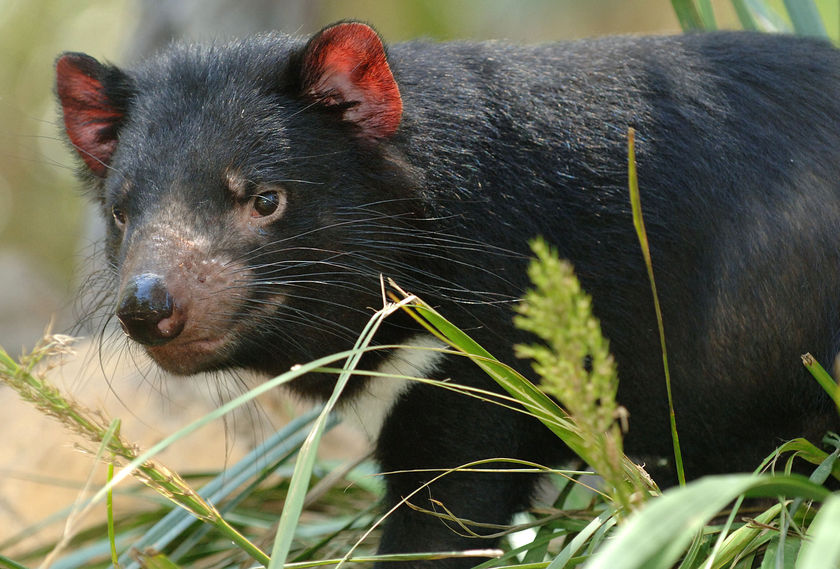
This follows on the previous list, Unique Girls Names from Tasmania, 2010. Please read the notes attached to that to see how names were chosen. Although there were fewer unique names for boys, they were much more likely to be genuine names, and not just variant spellings of common names. Whether you like these names or not, it’s nice to know that not everyone calls their children by names from the Top 100. There’s a lot of variety out there once you start looking. (If you are unsure what the animal in the photo is, it is a Tasmanian devil). 

Ambrose

This is the English form of a Latin name derived from the Greek, meaning “immortal”. It is connected linguistically to ambrosia, the food or drink of the gods in mythology, and is said to not only taste delicious, but to have a delightful aroma. In fact, it has been argued that ambrosia means “fragrant”, rather than “immortal”. If ambrosia had any basis in reality, it may be describing a honey product, although another theory is that it refers to the hallucinogenic mushroom, Amanita muscaria. The most famous namesake is probably Saint Ambrose of Milan, a 4th century Doctor of the Church who converted Saint Augustine. Interestingly, according to legend, bees swarmed on Ambrose’s face as a baby, leaving behind a drop of honey; this does seem to link the saint with the mythical ambrosia. An old-fashioned name, this fits in with the antique name revival, and the S/Z-ending for boys names. The meaning, and its associations with divine sweetness, is also hard to resist.

Other Latin names: Adrian, Augustus, Cassius, Ignatius, Maxmilian, Roman, Rufus, Silas, Sylvester

Anakin

This is the name of a Jedi knight in the Star Wars movies, father of Luke and Leia Skywalker, who crossed over to the Dark Side, and went on to become the heavy-breathing evil villain known as Darth Vader. Annikkin Starkiller was the name that George Lucas has originally chosen for Luke Skywalker, and when there was a major plot change and Darth Vader became Luke’s dad, a slight change of spelling meant that Darthy could have Luke’s old name. It’s sometimes claimed that George Lucas took Anakin’s name from his friend, Brtish film director Ken Annakin, but Lucas denies this. Although it’s tempting to give this name all number of foreboding meanings, we should remember it was originally planned as the hero’s name. It wasn’t clear in the beginning what kind of person the protagonist was going to be, and in one version it was an old man, and in another, a woman, so the name predates the character and the plot. Most likely, George Lucas just made it up.

Other sci-fi names: Auron, Draven, Grayson, Jango, Lex, Navi, Neo, Obi, Quillam

Bon

This is the name of the Scottish-born Australian rock musician, Bon Scott, who was the lyricist and lead singer for AC/DC, until his death in 1980, aged 34. AC/DC dedicated their next album, Back in Black, to him, which is the best-selling rock album of all time. Bon Scott is regarded as one of the greatest lead vocalists, has been inducted posthumously into the Rock and Roll Hall of Fame, and been honoured in both his home town of Fremantle, Western Australia, and his birthplace of Kirriemuir, Scotland. Bon was born Ronald Belford Scott, and his nickname was given to him in primary school. As there was already a classmate called Ronald, and as Scott had recently emigrated from “Bonnie Scotland”, he was dubbed Bon. The Scottish word bonnie means “beautiful, fair, fine”, and is taken from the French word bon, meaning “good”. Not only honouring a rock legend, this name seems similar to Beau in meaning and origin.

Other celebrity names: Cadel, Cassidy, Denzel, Dre, Elvis, Hammond, Joaquin, Keanu, Leland, Maddox, Makaveli, Orlando, Otis, Sylvain, Tander, Tex, Ziggie Other Scottish names: Dougal, Jock

Clancy

This is from an Irish surname meaning “son of Flannchadh”, with Flannchadh being a Gaelic name meaning “red warrior”. The name is well known in Australia, because of the poem Clancy of The Overflow, by Banjo Paterson; The Overflow is the name of a station where Clancy, a drover, works. It’s based on the true story of Paterson, a lawyer, sending a letter to Thomas Gerald Clancy of The Overflow, and imagining Clancy’s enviable life in the bush, under the “glory of the everlasting stars”. The reply that he received to his letter – “Clancy’s gone to Queensland droving and we don’t know where he are” – delighted Paterson, and was included in the poem. Clancy also appears briefly in The Man from Snowy River, and when that poem was made into a movie, the role of Clancy was played by Jack Thompson. Clancy of the Overflow is a romanticised image of bush life as dreamed of by the city dweller, and probably seems a patriotic choice as a name.

Other Irish names: Fionbharr, Niall, Rafferty, Ronan, Sullivan

Diesel

This is the name for the fuel used in diesel engines, which are named after their inventor, French-born Rudolf Diesel. His German surname is said to be based on a short form of either Matthias or Dietrich. As it sounds quite tough and butch, and has connotations of being able to keep going like a mechanical engine, it’s been a popular nickname or assumed name, for celebrities such as American actor Vin Diesel, Australian rock singer Diesel, American basketball player Shaquille “The Diesel” O’Neill, and AFL player Greg “Diesel” Williams. Diesel is also a popular name for dogs, and with “dog names” for boys in style, Diesel seems very usable. US Olympian softabller, Jennie Finch, called her second son Diesel Dean Daigle, so now it’s a celebrity baby name as well.

Other vocabulary names: Ace, Buddy, Gray, Spike Other car-related names: Holden, Jag

Esmond

An Old English name meaning “gracious protection”, this fell out of use after the Norman Conquest, and became best known as a surname. Thackery’s History of Henry Esmond is a historical novel set in the time of Queen Anne, where the hero spends the whole book in love with his foster-sister and cousin, but marries his foster-mother instead (also his cousin). This surname is part of Australian history, because James Esmond was an Irish-Australian who was one of the first people to find gold during the Victorian goldrush. He was also politically prominent in the miner’s organisation, and commanded a section of miners in the Eureka Stockade rebellion. It’s tempting to wonder if baby Esmond is a descendant of James, or whether the name was chosen in honour of this famous rebel.

Other Old English names: Bede, Edgar, Edwin, Winston

Iluka

This is a small coastal town on the Clarence River in New South Wales, and its name is derived from an Aboriginal word meaning “by the sea”. It is pronounced eye-LOO-ka. Iluka is a popular tourist destination, blessed with beaches and rainforest, and people who live in the chilly southern parts of Australia may enjoy spending their winters here. Maybe the parents of Iluka spent a happy holiday in the town? It’s easy to see the appeal of it as a name, because it is so similiar to the popular Luka, but has a distinctive Australian meaning.

Other place names: Carlisle, Clyde, Griffith, Hamilton, Maitland, Memphis, Meredith, Nelson, Preston, Ripley, Weston, Wilson, Windsor Other Aboriginal names: Wirra

Manuka

This is the name of a small tree or shrub native to New Zealand and south-east Australia – including, of course, Tasmania. It’s scientific name is Leptospermum scoparium, and it’s also called tea tree (not the same tea tree that tea tree oil is made from). The name manuka is Maori, and comes from history, where one of the sea-going canoes that brought the Maoris to New Zealand is said to have been called Mānuka. It’s pronounced mahn-OO-ka. Manuka honey is not only delicious, but recently it’s been discovered to have powerful antibacterial properties, and you can now buy medical-grade manuka honey to apply to wounds. There is a town in Tasmania near Hobart called Tea Tree, which may be named after this useful plant.

Other nature names: Aspen, Brae, Nullah, Reef, Stone, Sunny, Tiger Other Polynesian names: Loti, Kalani, Tavita

Namkha

Meaning “sky, heaven” in Tibetan, a namkha is a yarn or thread cross used in Buddhism as a sacred weaving, used in ritual or placed on an altar. “Thread” is the literal translation of the word tantra, and the threads of the mankha symbolise the warp and weft of time and space. A famous bearer is Tibetan Buddhist teacher, Rigdzin Namkha Gyatso Rinpoche.

Other Asian names: Anshuman, Arjuna, Ba, Dravid, Khan, Omita, Yang, Yasir, Zusong

Shem

One of Noah’s sons in the Old Testament, Shem is Hebrew for “name”. It can refer to someone’s fame and reputation, and also to their essential nature and being. While Noah is one of the most popular boy’s names, the names of his sons, Shem, Ham and Japeth, have had only occasional use. This may be because from early on, these three men were seen as the progenitors of the various races (as that vague and inaccurate word was understood at the time). Different writers have claimed Shem as the source of either the “Semitic” peoples, all Europeans, Germans, Greeks, Persians, or Indians; some texts even say that God made Shem brown skinned, Japeth fair skinned and Ham dark skinned. These ideas on race and ethnicity now look rather embarrassing, or even offensive; at the very least, we know them to be scientifically wrong. In the Bible, Shem is said to be an ancestor of Abram, who founded the Abrahamic religions. The name is pronounced SHAYM, and although uncommon, sounds not unlike familiar names such as Sean, Sheamus and Shane.

Other Biblical names: Abel, Amos, Elihu, Gideon, Hezekiah, Jairus, Jotham, Matthias, Raphael, Simeon

Soren

This is an anglicised form of the Danish name Søren, which is a form of the Roman name family Severinus, derived from the personal name Severus, meaning “stern” in Latin. Certain Harry Potter fans may see this as a way of using the name of grim Potions Master, Professor Snape, without actually calling their son Severus. The name has been used several times in recent popular culture; most notably the vampire Soren in the Underworld films. In the Charlie and Lola books and TV series, Soren Lorensen is little Lola’s imaginary friend. If these namesakes seem a bit lightweight, Søren Kierkegaard was a 19th century philosopher and theologian who has been enormously influential in shaping our ideas of the self and subjectivity. It’s pronounced SOH-ren.

Other Scandinavian names: Anders, Thor

Titan

According to Greek mythology, the Titans were a race of gods that ruled in the legendary Golden Age. They were the Elder Gods who were overthrown by the Olympians; this myth of a “war in heaven”, where one group of gods replaces another, exists in many cultures across Europe and the Middle East. The meaning of their name is uncertain, but is often intepreteted as “to stretch”; the Greek poet Hesiod refers to them as “the Stretchers”, because they stretched out their power. Other scholars believe it comes from the Greek for “white earth, white clay, gypsum”; they believe that this white dust was used in ancient shamanistic rituals, and it is from these almost-forgotten rites that the myth of the Titans grew. The name has been given to a moon of Saturn, and inspired the name of the element, titanium. The Titans, often imagined as gigantic figures, are part of popular culture, and you may find Titans in comic books, science fiction movies, and video games, as well as sports teams – including the Gold Coast Titans. Although the name may seem too big for a little boy, it sounds similar to names such as Tate, Tyrone and Titus.

Other Greek names: Constandinos, Eugene, Leonidas, Orion

Unique Girls Names from Tasmania, 2010

02 Sunday Oct 2011

Posted by A.O. in Name Themes and Lists

≈ 18 Comments

Tags

astronomical names, Australian Aboriginal names, english names, famous namesakes, fictional namesakes, Flemish names, Greek names, Irish names, Latin names, locational names, musical names, mythological names, name history, name meaning, name popularity, nature names, Nook of Names, Old Norse names, popular culture, royal names, Sanskrit names, surname names, unique names, virtue names, vocabulary names

Many parents say that they are looking for a “unique” name, but what they mean by that seems to differ from person to person. Some say it’s a name you don’t see every day; others define it as any name not in the Top 100; and still others refuse to say what it means to them, but will “know it when they see it”. According to the dictionary, “unique” means that only one person possesses it, and names of which the world holds but one example are few and far between. However, names do not have to be particularly strange or rare to be unique in a certain context. For example, the name Savannah is unique within the British royal family. Here are some names from baby girls born in Tasmania last year; in each case, only one child was given these names. For their state, and in the year they were born, these girls possess unique names. I usually do ten names per list, but this time there was so much choice I did twelve; I’ve also listed other unique names from the same state and year that are similar in some way to the main entry.

Bird

Not only referring to our feathered friends, a “bird” is English slang for a woman, although in the 19th century it was slang for a man, which makes it seem unisex. Another slang term is to “give someone the bird”, meaning to raise the middle finger in an obscene gesture; this has been a favoured way of insulting others since the time of the Ancient Greeks, at least. Being a bird-lover, I find this name simple and homely, and it does remind me of birdsong.

Other nature names: Acacia, Autumn, Clover, Fern, Honey, Maple, Misty, Opal, Pearl, Rosemary, Sage, Storm

Capri

This is the name of an island off the coast off Naples, famous for its stunning natural beauty. Inhabited since prehistoric times, it was a pleasure resort during the days of the Roman Empire, but the first modern tourist didn’t arrive until the 17th century. It was a popular place for artists and writers in the 19th century, and also a haven for gay men and women who formed a community where they could feel more open. A popular 1930s romantic song was The Isle of Capri, which was covered by The Gaylords, aptly enough. Capri pants were all in the rage in the 1950s as cool beachwear suitable for this resort island. No doubt the Ford Capri was also meant to suggest insouciant summer fun. The name of the island may mean either “wild boar” (from Greek) or “goats” (from Latin); there’s even a tiny possibility it means “rocky” (from Etruscan). But clearly it’s the history and associations of the name that are more important than the meaning. It’s a name that spells beauty, romance, art, fashion and freedom.

Other place names: Arizona, Baltimore, Bethany, Cheyenne, Florence, Ireland, Israel, Italia, London, Olympia, Petra, Sierra

Faithful

The virtue name Faith is familiar, but the adjective Faithful is one new to me as a name for a real person. Faithful is a (male) character in John Bunyan’s classic work, The Pilgrim’s Progress. He’s a friend of the protagonist who is executed as a martyr. He is meant to be represent those Christians who remain faithful to their beliefs, even should that lead to death. The Latin for “I am faithful” is Fido, traditionally given to dogs – apparently after Abraham Lincoln gave this name to his canine companion. As a child, I read the YA novel, Cinnamon and Nutmeg, by Anne de Roo, about a young girl growing up on a farm. The heroine wrote a story for school called “Old Faithful” about the touching death of her beloved dog. Unfortunately, she spelled “Faithful” as Fatful, and the teacher read her story mockingly to the class, with every “faithful” replaced by fatful, so that the children screamed with laughter at the tale of her dog dying. As a youngster, this struck me as the epitome of cruelty, and today makes me hope that nobody mis-spells little Faithful’s name.

Other adjective name: Innocent

Fritha

This is an Old Norse name often translated as “love, peace”, but more accurately it refers to the harmonious social order which leads to peace. It was a rare name during the Viking era, and only seems to have become commonly used in Scandinavia after the coming of Christianity – which suggests that it was connected to Christian ideals of peace and brotherhood. Fritha is a main character in the novella, The Snow Goose, by American author Paul Gallico; a sentimental tale of friendship blooming against the backdrop of World War II which was very popular in England. There was a British actress called Fritha Goodey who you may have caught a glimpse of in the movie About a Boy, starring Hugh Grant. Sadly, she died a few years ago in tragic circumstances while still quite young. There’s also a musician, Fritha Jenkins, who played with UK pagan heavy metal band, Skyclad. Because of these associations, Fritha seems like a very “English” name, despite its origins, and also quite artsy.

Other Scandinavian name: Inka

Halle

This is famous for being the name of gorgeous award-winning Hollywood actress, Halle Berry. Ms Berry’s birth name was Maria Halle Berry, but legally switched around to Halle Maria Berry when she was five. Her parents chose the name Halle from Halle Brother’s department store, a local landmark at that time in her home town of Cleveland, Ohio. Founded in the 19th century by Samuel and Salmon Halle, it became an upmarket emporium, but was liquidated in the 1980s. The brothers’ surname is originally Flemish, and is after the village of Halle in Belgium. Of Old Norse origin, Halle means “manorial hall”, and is the equivalent of the English surname Hall. Pronounced HAL-ee, it sounds the same as the girl’s name Hallie, a short form of Harriet.

Other celebrity names: Angelina, Gwyneth, Jolie, Shakira

Justice

This can either be seen as an occupational surname meaning “judge”, or an English vocabulary word. Some people see this name as a Christian virtue name, referring to God’s righteousness; others connect it with social justice; others see it as simply describing the person as fair-minded and honourable. I remember Kay at Nook of Names got rather alarmed at Australian naming laws and thought the name Justice wouldn’t be permitted here, so I wanted to reassure her that it definitely is, even though not a common name.

Other virtue names: Constance, Honor, Prudence, Temperance, Verity

Namaha

This is a Sanskrit word which is an element of sacred Vedic mantras. It means “to surrender with love”, and literally, “to bow (in a gesture of homage and respect)”. It is a negation of one’s ego, and an affirmation of the greater Self becoming one with the Cosmic Soul. It is pronounced nah-ma-hah, with unstressed syllables.

Other Asian names: Jaya, Megumi, Mika, Nilu, Palpasa, Sakura

Nerida

This Australian Aboriginal name means “waterlily”, and features in a legend from Victoria. Nerida and Berwain are two young lovers, about to marry. Wahwee, the spirit of thunder who lives in the mud pool where the couple meet to gather mussels, develops an overpowering desire for Nerida. Because she will not give herself to him, he transforms her into a waterlily, and her lover Berwain into rushes. A superstition is that if you pick a waterlily, you must also pick the rushes growing nearby so that Nerida and Berwain never be divided in death. The waterlily is used as a food source by Aborigines as a traditional bush food; the roots can be roasted, and the stem and seeds eaten raw. Nerida was used as a female name by Aborigines, and also by Europeans, who may have been charmed by the fact it is so similar to Nereida, the name of a nymph in Greek mythology (the scientific name for waterlily is Nymphaea, another pleasing coincidence). Pronounced NEHR-uh-duh, it’s a bit old-fashioned now, but clearly still in use.

Pallas

The epithet of the Greek goddess Athena, this may mean “maiden”. The original Pallas was the daughter of sea-god Triton, and foster-sister to Athena. During a friendly fight between the two goddesses, Athena received divine protection from her father Zeus, but she mortally wounded Pallas. Out of her deep sadness, she created the palladium, a statue made in the likeness of Pallas, which was given to the city of Troy to act as its protector and guardian. This sacred statue was stolen by the Greeks during the Trojan War, otherwise they could never have conquered it. Some stories say that the palladium became the property of Rome, and there are rumours that it was transferred to Constantinople. Pallas is also one of the largest asteroids, and the name of one of the Moon’s craters. Sailor Pallas is a character in the Sailor Moon manga who is named after the asteroid as well the Greek goddess, so it is an astronomical name and one from popular culture.

Other classical names: Athena, Camilla, Cassandra, Lucia, Melanie, Melissa, Octavia, Olympia, Penelope, Sylvia, Valentine, Veronica, Xanthe, Zephyr

Saoirse

This modern Irish name means “freedom”, and came into use in Northern Ireland during the 1920s as a Republican political slogan. Depending on your accent, you can pronounce it SEER-sha, SAIR-sha or SOR-sha, with SEER-sha being the Northern Irish way of saying it, and therefore (some would argue) the “correct” one. Although spelling and pronunciation may be an issue for some, the name sounds enough like names such as Sasha and Sarah to not seem out of place. Its recent use probably owes a lot to young actress Saoirse Ronan, who has impressed critics with her sensitive performances in movies such as Atonement and The Lovely Bones. Saoirse Ronan pronounces her name SUR-sha, just to confuse things further. I suspect the political and religious implications of this name have not been considered much outside Ireland.

Other Irish and British names: Arwen, Ciara, Cordelia, Fiona, Maeve, Sabrina, Shona, Sian, Una

Satanica

This is the Latinised feminine form of the word “satanic”, which can either literally mean giving veneration to Satan, or more generally, suggestive of being diabolical in nature. Satan is from the Hebrew, meaning “the adversary, the opposer, the obstructor”, and in the Hebrew portion of the Bible, Satan is an agent of God whose thankless task it is to tempt humankind and then accuse it before Heaven. In Christianity, he is seen as the Devil, the personification of all evil. Satanica is often used in black metal music as a title, and there is band with this name. There is also a manga series called La Satanica, so it can be seen as a name from popular culture. Satanica cannot help but be controversial as a baby name, and I think it is a heavy burden to place on a child; this name even made me feel depressed just thinking about it, which almost never happens.

Other Latinate names: Amanda, Clementine, Felicia, Mirabella

Tango

This is a dance which arose in the working class neighbourhoods of Buenos Aires, Argentina, in the mid-19th century. It is claimed that the tango is a mixture of South American popular dances influenced by the African community, and by European immigrants. Although the word tango could be Spanish in origin, it may very well come from Nigeria, where temgu means “to dance” in the Ibibio language. The tango arrived in Paris early in the twentieth century, and soon spread to other world capitals, where it was thought to be shockingly intimate (as nearly all new dances seem to be thought). Another tango reference is the scandalously erotic film, Last Tango in Paris, starring Marlon Brando. Even though tango, as a dance form, is dark and sensual, the name Tango isn’t – it sounds chipper and bouncy, and I’m sure has been given as a name to more animals than humans.

Other musical names: Allegra, Aria, Melody Other verb names: Cherish, Treasure Other O-enders: Indigo, Marlo

NOTE: I didn’t count variant spellings of more common names as unique, and I also disqualified double names, as well as names that had also been given to boys.

Boys Names from the National Rugby League

04 Sunday Sep 2011

Posted by A.O. in Name Themes and Lists

≈ 14 Comments

Tags

Arabic names, astronomical names, celebrity baby names, english names, famous namesakes, French names, Gaelic names, germanic names, Hungarian names, Indian names, Irish names, Latin names, locational names, mythological names, name history, name meaning, nicknames, polynesian names, saints names, Sanskrit names, surname names, Tongan names, unisex names, Welsh names

Bodene (Thompson) – Gold Coast Titans

Bodene Thompson was born in New Zealand, and began playing rugby league in high school after his family moved to Australia. He made his début with the Titans in 2009, and last year he played for the New Zealand Maori team against England. His name is something of a mystery to me. It may be a variant of the Germanic surname Boden, taken from the Frisian for “messenger”. On the other hand, I have seen some people using Bodene as a form of the surname Beaudoin, a French form of Baldwin. It’s also hard not to wonder if it’s been chosen as a portmanteau of Beau and Dean – which make the obvious nicknames for this country-sounding name.

Braith (Anasta) – Sydney Roosters

Braith Anasta was born in Sydney, and is of Greek-Australian heritage (his surname was originally Anastasakis). He made his début in 2000, and first played for the Roosters in 2005. He is currently captain of his team. He is eligible to play for Greece internationally, but has done so only once, playing for Australia four times. He has played for New South Wales nine times, and for City six. He won the Dally M Rookie of the Year medal in 2001, the Jack Gibson Medal, and the Supporters Club Player of the Year in 2007, the Players Player of the Year in 2008, and last year won the Dally M Captain of the Year. Braith is a unisex Welsh name meaning “speckled”; however I’m not clear on the Welsh pronunciation. Braith pronounces his name BRAYTH. Braith can also come from the Gaelic word for “British” and the Old Norse for “broad”; both these words appear in various English surnames and place names, such as Braithwaite and Gilbraith, and these are exactly as Anasta’s name is said. Brief and brusque, this seems a name born to command, although it does sound a touch lispy.

Bronx (Goodwin) – St George Illawarra Dragons

Bronx Goodwin was born in the country town of Parkes in New South Wales. He made his début in 2007, and joined the St George Illawarra Dragons last year. He played for the New Zealand Maori side in 2008. The Goodwin family are well known for their involvement in, and success at, rugby league over several generations in the Illawarra region. Bronx’s name is taken from the borough of New York City called The Bronx. It receives its name from the Bronx River, which was named for an early settler from Sweden called Jonas Bronck. His surname is a variant of Brink, from the Low German meaning “edge, slope, waterside grazing land”, and would have been given to someone who lived on the edge of a waterway (rather appropriate for a river). The Bronx is an area known for its cultural diversity, and has a tough image. The name Bronx is blunt and masculine and sounds very sturdy; it has the X at the end which has become such a name trend. Bronx was born many years before Pete Wentz and Ashlee Simpson named their son Bronx Mowgli, so the Goodwins were obviously ahead of their time.

Constantine (Mika) – Newcastle Knights

Constantine Mika is a New Zealander of Samoan descent. He didn’t have any luck at getting into the New Zealand first grade team, so moved to Australia and joined the Knights in 2009. The name Constantine is well known from history due to Constantine the Great, famously the first Roman Emperor to convert to Christianity. Although historians are divided as to just how “Christian” Constantine was, and whether he had a dramatic conversion or not, there is no doubt that his rule was a significant turning point in history. He also moved the capital of the empire from Rome to Byzantium, in the east; the city was renamed Constantinople in his honour (today it is known as Istanbul, in Turkey). Constantine is venerated as a saint in Eastern Orthodoxy and the Eastern rites of the Roman Catholic church. His name is from the Latin for “constant, steadfast”. This is a very rich and indeed, imperial-sounding name, redolent of Byzantine marble and gold. Constantine Mika uses the usual Con as the short form, but Stan would also work well.

Drury (Low) – Canberra Raiders

Drury Low is originally from New Zealand and grew up in Melbourne. He made his début in 2010 with the Canberra Raiders, and was also chosen for the Junior Kiwis (New Zealand’s second national team) the same year. His name is an English surname from an Old French word meaning “love, friendship”; by the 12th century it meant a love token or a sweetheart. Sir William Drury was an English statesman and soldier in the time of Elizabeth I, and his house in London gave its name to the famous street, Drury Lane. It has theatrical associations, for the name of the street is often used to refer to The Theatre Royal, which has been located in Drury Lane since the 17th century; it’s shown popular works from Shakespeare to Monty Python, and currently showcases West End musicals. You may also know this street as the home of The Muffin Man in the nursery rhyme, which was made familiar in the Shrek movies, but also makes an appearance in Jane Austen’s Persuasion. Drury is a small town near Auckland in New Zealand, but I don’t know whether this was the inspiration for Low’s name.

Fuifui (Moimoi) – Parramatta Eels

Fuifui Moimoi was born in Tonga and grew up in New Zealand (pictured). He made his début for Parramatta Eels in 2004, and has proved himself a valuable player. He is eligible to play rugby league for Tonga, Australia, New Zealand, the United States and Samoa, but so far has only played for Tonga and New Zealand. While watching a game recently, I heard the commentator explain that Fuifui’s name means “love love” in the Tongan language (as if to say, doubly loved). Not only is this a fantastic meaning for a name, but Fuifui Moimoi is without doubt the funnest name to say I have ever heard. Fuifui’s name is pronounced FOO-EE FOO-EE MOY MOY; you say it quickly and all the syllables have equal emphasis. It’s a name that you can’t help but smile as you say it. Fuifui goes by Fui in everyday life.

Krisnan (Inu) – New Zealand Warriors

Krisnan Inu was born in Auckland, New Zealand, to Samoan parents, and grew up in the western suburbs of Sydney. He made his debut in 2007, and began playing for the Warriors this season. He also plays for the New Zealand national team. A devout Mormon, he decided to forgo becoming a missionary, believing he can accomplish more for the church as a role model by remaining in the NRL. Krisnan is a variant of the Indian name Krishna, which means “black, dark, dark blue” in Sanskrit. Krishna is a central figure in Hinduism, believed to be the earthly manifestation of the supreme deity, Vishnu. He is said to have written the Hindu scriptures, the Bhagavad Gītā. Krisnan Inu calls himself Kris, and he has an interesting middle name too – Nevada!

Sandor (Earl) – Penrith Panthers

Sandor Earl was raised in the eastern suburbs of Sydney, and attended St Gregory’s College, a famous “nursery” for rugby league, where it is the dominant sport. Sandor made his début in 2009, and went to the Panthers last year, where he was named the club’s top rookie player. In 2010 he was part of the New Zealand Maori team which played against England, and is also reportedly eligible to play for Russia. Off the field, he works part-time as an underwear model. Sandor’s name is a Hungarian form of Alexander, and is pronounced SHAHN-dor. This is a form of the popular Alexander you don’t hear every day; it sounds like an exotic alternative to Xander to me.

Shea (Moylan) – Brisbane Broncos

Shea Moylan just made his début for the Brisbane Broncos this season. Shea is an Anglicised form of the Irish name Seaghdha, said to mean “hawk-like” in Old Gaelic, with connotations of being brave and fierce, and is pronounced SHAY. Although Seaghdha is a masculine name, the Anglicised form must sound slightly feminine to some people, as it is listed as a unisex name. However, I have personally only ever seen this name on boys, with Australian parents usually opting to use feminised creations such as Shaylie or Shayla for girls. I have also witnessed a wide range of variant spellings, including Shae, Shay, Shaye, Sheye and Shai. Although this has been a reasonably well-known name here, I get the impression it’s not being used as much as it was. It’s an attractive name, pleasantly soft, and sounds enough like Shane and Sean to seem familiar to most people.

Tariq Sims – North Queensland Cowboys

Tariq Sims is from Gerringong, in the Illawarra area of New South Wales, and is of part-Fijian descent. He made his début with the North Queensland Cowboys this season; his brothers Ashton and Korbin also play rugby league. Tariq is an Arabic name translated as “he who knocks on the door”, related to the Arabic word for “nightcomer” (in the sense that someone who comes by night will need to knock on the door to wake you up). Tariq is also the name given to the Morning Star, because it comes at the end of the night, but this star (planet) is also used as a metaphor for a great man or chieftain. In the Qur’an, the Morning Star is used to refer to the Prophet Mohammad. Tariq ibn-Ziyad was a military leader who conquered Spain for the Moors; Gibralter is named after him, for it is the Spanish derivation of “mountain of Tariq”. Tariq Sims pronounces his name tuh-REEK. This name has a mysterious meaning with positive associations and interesting namesakes; it’s exotic, but not difficult to spell or say. The Sims were ahead of the curve with Ashton and Korbin – Tariq may be next to become popular.

A very happy Father’s Day to all the dads! Here’s hoping you get spoiled rotten, and may your name suggestions always be taken seriously.

Boys Names from the Australian Football League

28 Sunday Aug 2011

Posted by A.O. in Name Themes and Lists

≈ 13 Comments

Tags

Biblical names, Egyptian names, english names, famous namesakes, fictional namesakes, German names, hebrew names, Irish names, mythological names, name history, name meaning, nicknames, popular culture, surname names, vocabulary names, Welsh names

Writer, critic and broadcaster, Clive James, wrote in his “Unreliable Memoirs” that Australian boys tend to be named after athletes. Although much has changed since his birth during World War II, and naming practices have considerably broadened, plenty of baby boys are named after sportsmen in Australia even now. In the period leading up until Father’s Day, we’re going to have lists of boys names from the two main (rival?) football codes to look at some of the less common names found amongst the players. (Don’t worry – at some point we’ll have two lists of girls names to balance it).

Alwyn (Davey) – Essendon Bombers

Alwyn Davey is from Darwin in the Northern Territory, and his tribal ancestry can be traced to the Kokatha Mula people from the Eyre Peninsula in South Australia. He was a late starter to professional football, being considered a bit short. He was picked up by Essendon in 2007, and at 22, was thought to be a little old to make of a success of it. He quickly gained a cult following due to his explosive speed, and won the AFL Army Award (for bravery) in the year of his debut. Alwyn was named after his father, and surely must have a connection with Wales, for his full name looks very Welsh. Alwyn is said to be derived from the name of the River Alwen, which may mean “winding and fair”, but could also be influenced by the name of a Celtic god of healing and prophecy, Alaunos. The meaning of the god’s name is extremely unsure, and may mean “pale, faded”, “brilliant white”, “dark grey”, or possibly “treasure”. A soft and lilting name, this sounds a bit like Alan and Alvin, and is easily shortened to Al or Ally, although personally I like Wyn.

Amon (Buchanan) – Brisbane Lions

Amon Buchanan is from the country town of Colac, west of Melbourne, and his brother Liam plays cricket for the state team. He made his debut in 2002, and was traded to the Lions in 2009. In Egyptian mythology, Amon is a fertility god who was believed to be father of all the Pharoahs. So popular was he that he became combined with the sun god Re into the supreme solar deity Amon-Re, and was worshipped devotedly as a protector of the poor and weak. His name means “the hidden one”, and is pronounced AH-mun. Amon is also the Greek form of a Hebrew name meaning “skilled workman”. In the Old Testament, Amon was one of the kings of Judah, and gets a bad rap for idolatry and general depravity. However, in the New Testament he is listed as one of the ancestors of Jesus. Amon has a bit of baggage, and might seem slightly overweening, but it’s a nice simple name that doesn’t sound too different from Harmon, Eamon or Aidan.

Chance (Bateman) – Hawthorn Hawks

Chance Bateman is from Perth in Western Australia (pictured). He was Hawthorn’s first indigenous player to play 100 games, the first Aboriginal life member, and the club’s longest-serving recruit from WA. He is one of Hawthorn’s most valuable players because of his speed and hardness. He is notable for his dreadlocks, which he once cut off for charity and donated to the Rioli Fund for Aboriginal health. Chance is a surname of Old French origin, derived from a nickname given to someone blessed with good fortune. The English word “chance” can mean a stroke of luck or good opportunity, but now also has connotations of accident or randomness. This is one of those names that people tend to either love or hate, find cool or ridiculous. Nearly always the name is given meaningfully, and boys called Chance often have a story attached to how their name was chosen.

Maverick (Weller) – Gold Coast Suns

Maverick Weller is a young player from Burnie in Tasmania, and made his debut this season. The word “maverick” refers to someone unconventional, independent or even controversial in their thinking; someone who follows their own rules. The word comes from the name of Samuel Maverick, a Texas lawyer who refused to brand his cattle. (In reality, Samuel wasn’t so much an independent thinker as uninterested in ranching). His surname may be Welsh, and derived from the Gaelic name Muirgheas, meaning “seafarer”, or from the Welsh Mawr-rwyce, meaning “valiant hero”. It’s been used as the title of both a Western TV series starring James Garner and a Western movie starring Mel Gibson, so still has rather a “cowboy” image. Maverick Weller seems to have been named after Tom Cruise’s callsign in the movie Top Gun, as he has a tattoo of his namesake. It’s another vocabulary name that can draw strong opinions from people – no doubt, just like the original Mister Maverick!

Kade (Simpson) – Carlton Blues

Kade Simpson is from Melbourne, and was drafted by Carlton in 2002. He has the club record for most consecutive games played, and won the Jim Stynes Medal in 2008 for best player on the Australian national team. His name is a variant of Cade, a surname which began as a form of the personal name Cada, coming from the Germanic for “swelling, lump”. This slightly unflattering name may have begun life as a nickname for someone overly plump, but to me it almost sounds like a “womb name” – the sort of epithet you might fondly give the baby swelling your belly out (“my little lumpkin”). The surname has another source, the Old French word cade meaning “barrel”; although this also has connotations of stoutness, it’s an occupational name for someone who made barrels, and thus is the same as Cooper. There is another meaning which parents might find more appealing: a cade is a baby farm animal reared by hand; these pet lambs and calves tend to be cossetted and well-fed little darlings. It’s a name filled with cute, cuddly, childish and chubby connotations; however I’m guessing most people will assume it’s a short form of Kaden.

Kepler (Bradley) – Fremantle Dockers

Kepler Bradley is from West Australia, was drafted in 2003, and began playing for Fremantle in 2007. Tall and agile, he won the Lark Medal for players 18 and under in 2003. Kepler is a German surname meaning “hooded cloak”; it’s an occupational name for someone who made such garments. The name is given in honour of Johannes Kepler, a mathematician, astronomer and astrologer. A key figure in the 17th century scientific revolution, his laws of planetary motion helped set the stage for Isaac’s Newton’s laws on gravity. A devout Lutheran who had considered becoming a church minister before his obvious talent for mathematics pushed him into an academic career, he was banished from Graz for refusing to convert to Catholicism, but found refuge in tolerant Linz. His mother was a herbalist who was imprisoned as a witch, but Kepler’s extensive defense got her released, adding “legal mastermind” to his already impressive list of accomplishments. This is a strong, unusual name that celebrates a hardworking polymath of powerful imagination, known for his cheerful and affectionate nature. Kip is the obvious nickname.

Marlon (Motlop) – Port Adelaide Power

Marlon Motlop is from the Northern Territory, and traces his tribal ancestry to the Larrakia people, from the Darwin area. He was drafted in 2007 and is the youngest player drafted to Port Adelaide. He won the Allan McLean Medal for players under 16 in 2006. The name Marlon is another surname, this time coming from place names called Moreland, common in the north of England and southern Scotland, meaning “moor land”. The name is strongly associated with American screen legend Marlon Brando, who starred in movies such as A Streetcar Named Desire and On the Waterfront. Actor Marlon Brando was named after his father; of German-Dutch origins, the family surname was originally Brandeau. It’s also the name of Michael Jackson’s older brother, singer Marlon Jackson, who gave the name Marlon to his youngest son, Marlon Jackson Jnr. This name may seem almost too famous to use, but it’s a name that’s been good enough to be handed down from father to son at least twice, and you can also use Marley as a nickname, thus honouring another famous singer.

Sharrod (Wellingham) – Collingwood Magpies

Sharrod Wellingham is from Western Australia, and was selected for the 2006 rookie draft. Since 2008, he has become a valuable asset for Collingwood. Sharrod looks like a cross between Sharon and Jarrod, but is yet another surname. This could be a variant of either of two different surnames. One is Sherrard, which has been found in Ireland from the 17th century onwards. The meaning is unknown, but has been interpreted as a combination of English and French meaning “bright, fair”. Another possibility is Sherrod, based on the French surname Cherot, meaning “wagoner”. Sherrard, Sherrod and Sharrod have all been used in the past as personal names, but mostly in the United States. In fact, there is an American basketball player called Sharrod Ford only a few years older than Sharrod Wellingham, so the name seems to have floating around in the public consciousness during the 1980s.

Tadhg (Kennelly) – Sydney Swans

Tadhg Kennelly is from County Kerry in Ireland, and already had a background in Gaelic football when he signed with the Sydney Swans in 1999. He made his debut in 2001, and became a high-profile player, writing articles for the Swans’ website entitled Talking with Tadhg. After the death of his father, Tadhg returned to Ireland in 2009 where he won a National Football League medal, but came back to Australia in the 2010 season. Tadhg is an Irish name that means “poet”; Tadhg was a medieval king of Connacht. The name does have pronunciation issues in Australia, where people tend to want to say it to sound like the word tie, or the name Ty. However, it is pronounced TIEG, like the first syllable in the word tiger. Australia has a great fondness for Irish names and Irish culture, and I think this name would be accepted and admired once people understood the pronunciation. It has a romantic meaning, yet sounds masculine, and it’s short without being cute.

Zephaniah (Skinner) – Western Bulldogs

Zephaniah Skinner is a young player from the Kimberley region of Western Australia who moved to Darwin, and was drafted last year. Zephaniah is a Hebrew name that means “Yahweh has hidden, Yahweh has concealed”, or slightly more ominously, “Yahweh lies in wait”. There are several people of this name in the Old Testament, the best known being a minor prophet who features in the very brief Book of Zephaniah. These three chapters give the teachings of Zephaniah, who seemed pretty keen on a universal Judgement Day, and as is usual with prophets, warned that widespread repentence is necessary to avoid this catastrophe. Another famous namesake is British Rastafarian poet, Benjamin Zephaniah. He supports veganism, animal rights, anti-racism, a British Republic, a change to the first-past-the-post voting system, and the UK Green Party. Boys names from the Old Testament are very popular at the moment, and although Zephaniah is quite rare, it isn’t any more unusual-sounding than Zachariah. Zeph or Zeff seems like a pretty cool nickname as well.

Boys Names That Only Chart in Australia

31 Sunday Jul 2011

Posted by A.O. in Name Themes and Lists

≈ 28 Comments

Tags

Arabic names, Biblical names, celebrity baby names, english names, famous namesakes, Gaelic names, hebrew names, honouring, Irish names, literary namesakes, locational names, name data, name history, name meaning, name popularity, nicknames, popular names, Scottish names, surname names

Campbell

This is a Scottish surname, which was originally a Gaelic nickname, Caimbeul, meaning “wry, twisted or crooked mouth”. A p was later added to the spelling in the belief the name was from the French for “beautiful field”. I suppose that meaning seemed a lot more appealing. The Clan Campbell was one of the largest and most powerful of the Highland clans, and the chief of the clan became Duke of Argyll. There are many prominent Australians with this surname. Campbell is #60 in Tasmania, which is very proud of its Scottish heritage, and has a historic town called Campbell. Campbell is on the US Top Top 1000, but only as a girl’s name. As a boy’s name, it has appeared only sporadically, peaked in 1885 at #700, and hasn’t been seen there since 2005.

Darcy

An English surname, from a French place name meaning “town of the bear”, which was introduced by the Normans as the surname of one of William the Conqueror’s barons. It can also be interpreted as an anglicised form of a Gaelic surname meaning “son of the dark one”, and this is a more likely origin in Australia. Although romantics cannot help connecting this to Mr Fitzwilliam Darcy from Jane Austen’s Pride and Prejudice, the most famous Australian with this surname is probably Les Darcy, the folk hero boxer. There are a number of notable Australian men called Darcy, including D’Arcy Niland, the roving novelist, Darcy Ward, the motorcyclist, Darcy Lussick, the rugby league player, and Darcy Dugan, the notorious bank robber. As you can see, although Darcy is unisex, it’s a very manly name here, and only Top 100 for boys. It’s #94 in New South Wales, #57 in Victoria, #97 in South Australia, #75 in Tasmania and #54 in the ACT. Darcy as a male name hasn’t been on the US Top 1000 since 1970, and it peaked in 1968 at #868.

Eamon

The Irish form of Edmund, this is pronounced AY-muhn. It’s use today is probably influenced by the sprint swimmer Eamon Sullivan (pictured). An Olympic athlete, Eamon is not only a good-looking underwear model, he also proved he was a fantastic cook by winning Celebrity Master Chef. Little wonder that he then went on to claim Cleo‘s Bachelor of the Year Contest. It’s #71 in the ACT, and has never charted in another country.

Flynn

An Irish surname meaning “son of Flann”; the name Flann means “red” and was the name of a 9th century Irish king. In Australia, it’s most strongly associated with the Tasmanian-born Hollywood film legend, Erroll Flynn. His name was bestowed upon Disney prince Flynn Rider in honour of Erroll Flynn, as the character has much in common with the actor. As this name has been given to Miranda Kerr and Orlando’s Bloom’s son, Flynn Christopher Bloom, I can see it gaining further in popularity. It’s #94 in Victoria, #79 in Tasmania and #80 in the ACT. It’s never charted in another country.

Hamish

This is the anglicised form of Seumas, which is the Scottish form of James; it’s pronounced HAY-mish. Its current popularity is almost certainly due to a well-known comedian who stars on both radio and television, called Hamish Blake. Multi-award winning, he was recently voted the most recognisable celebrity, and will be included in this year’s issue of Who’s Who. The name is #60 in New South Wales, #49 in Victoria, #45 in South Australia, #28 in Tasmania and #34 in the ACT. Hamish only just made it onto the list – it’s only recently left the Top 100 for Scotland.

Jai

A Hindi name which means “victory”, it can apparently be pronounced either JAY or JY. Jai has been in use in Australia since the 1970s. Jai Abberton is a former pro surfer who is a member of the notorious Bra Boys Gang. Jai Koutrae is an actor who’s appeared in several popular soap operas. Jai Ayoub plays rugby for Western Harbour. Jai Larkan is the lead singer of folk-rock band, The Wishing Well. Jai Taurima is a retired athlete who won silver at the 1998 Commonwealth Games. Lots of guys called Jai! It’s currently #98 in Victoria and #95 in South Australia. It only ever seems to have charted in Australia.

Jed

The short form of the Hebrew name Jedidiah, which means “beloved of Yahweh”. In the Bible, this was a term of endearment given to King Solomon by the prophet Nathan. In use in Australia since the 1980s, there are a number of athletes with this name, including AFL player Jed Adcock (who this year welcomed a daughter named Lily Rose). There’s also some rock singers with the name Jed, including Jed Kurzel, who did the music for the film Snowtown. It’s #99 in Tasmania, whose rural population seems suited to the rustic charms of this name. Jed was on the US Top 1000 from 1947-1989; it peaked in 1978 at #481.

Lachlan

This is a Highland Scottish name from the Gaelic Lochlann, which was used as a nickname for someone from Norway – “the land of the lochs (lakes)”. It’s pronounced LOHK-luhn. There was a strong relationship between the neighbouring lands of Norway and Scotland during the Middle Ages, as both battled for control of the Western Isles of Scotland. There were diplomatic missions between the two nations, and even intermarriage between the royal houses. The name Lachlan has a long history in Australia, owing much to Lachlan Macquarie, a British military officer from the Hebrides who served as Governor of New South Wales from 1810-21, in the period when it was transitioning from a penal colony to a free settlement. He therefore played a major role in the shaping of Australian society, and his liberal views toward ex-convicts and lavish expenditure on public works had a great impact on New South Wales. There are 30 places in Australia named after him, and 6 named after his wife, Elizabeth; on his tomb in Scotland he is called “The Father of Australia”. (American readers may be interested to know that he fought very successfully during the American War of Independence – on the British side of course). When media magnate Rupert Murdoch chose Lachlan as his eldest son’s name, he was perhaps drawing on his own Scottish heritage and honouring a great man from Australian history. Forty years later, this name is still going strong, and there is another generation of well-known Lachlans giving it new impetus, such as soap actor Lachlan Buchanan, and fullback for the Penrith panthers, Lachlan Coote. The name is #6 in New South Wales, #13 in Victoria, #5 in South Australia, #5 in Queensland, #12 in Tasmania and #3 in the ACT. It’s never charted in any other country.

Nate

A short form of Nathan, which is a Hebrew name from the verb “to give”; it can be interpreted as “given”, in the sense that God has given a child. Less persnickety baby name sites often interpret it as meaning “gift”, or “gift from God”, which is a more user-friendly way of putting it. The short form has proved very popular here recently, and I can’t help wondering if that’s partly because Australian baby name sites sometimes list Nate as meaning “little gift”, which I think is taking looseness of interpretation a bit far! Nate has a similar level of popularity to Nathan, and if you’re wondering why I don’t mention Nathaniel as a source of Nate, that’s because it’s not well enough known here to have a nickname yet. A famous Nate is Nate Myles, who plays for the Sydney Roosters in the NRL. It’s #60 in Victoria, #52 in South Australia, #44 in Western Australia, #58 in Tasmania and #50 in the ACT. It’s never charted in any other country.

Taj

An Arabic name meaning “crown”, it’s probably best known from the Taj Mahal in India, the name meaning “crown of buildings”. Taj Burrow is an Australian surfer, and as he’s from Western Australia, it’s not surprising that the name is #42 in that state. Taj has only been on the US Top 1000 twice, in 1976 and 1998, and never got higher than #951.

Zac

The short form of Zachary, the English form of Hebrew name Zechariah, meaning “Yahweh remembers”. In the New Testament, Zechariah is the father of John the Baptist. This seems to have done particularly well as a full name here. It’s been around long enough to have some famous Zacs already, such as Zac Dawson, who plays for St Kilda in the AFL, and Zac Drayson, an actor on the popular soap opera, Home and Away. American actor Zac Efron probably isn’t doing it any harm either. Early this year, V8 ute racer Craig Dontas named his second son Zac Michael. It’s #76 in New South Wales, #52 in Victoria, #77 in South Australia and #80 in Tasmania. It hasn’t charted in any other country.

Close But No Cigar

These names don’t make the top 1000 in the United States, but do chart in countries besides Australia

Angus – #75 in Scotland

Archie – #24 in England/Wales, #43 in Scotland

Reuben – #67 in N. Ireland, #71 in England/Wales

Tom – #10 in France, #18 in Belgium, #38 in Netherlands, #62 in Ireland, #93 in N Ireland

Harvey – #47 in England/Wales

NOTE

Please also read Girls Names That Only Chart in Australia, as it contains information relevant to this blog entry. Since then, the 2010 list for England/Wales has been released.

Girls Names That Only Chart in Australia

24 Sunday Jul 2011

Posted by A.O. in Name Themes and Lists

≈ 29 Comments

Tags

African names, Arabic names, Australian Aboriginal names, celebrity baby names, colour names, created names, english names, famous namesakes, fictional namesakes, Greek names, hebrew names, holiday names, Indian names, Irish names, Latin names, locational names, Mer de Noms, mythological names, name data, name history, name meaning, name popularity, nature names, nicknames, plant names, popular culture, popular names, saints names, Sanskrit names, surname names, Swahili names, unisex names, vocabulary names

Recently, Lou at Mer de Noms has had a couple of articles on names that are in the UK Top 150, but fail to make the US Top 500. It’s an interesting look at differences in name popularity between the two countries. I thought about doing the same thing from an Australian perspective, but found the list became too long for my purposes. So I made my conditions a bit tighter – these are names that are on a Top 100 list in Australia, but don’t make the Top 100 in any other country, and aren’t on the US Top 1000.

Asha

Asha has two different origins and meanings. It can be seen as an Indian name from the Sanskrit for “hope, wish, desire”, or an East African name from the Swahili word for “life”. Either way it has a beautiful meaning, and both Indian and Swahili names are becoming fashionable in Australia. It fits in well with other popular Ash- names, such as Ashley, Ash, Asher and Ashton. There’s an attractive TV presenter in Australia called Asha Kuerten (pictured), which has probably helped it gain momentum here. Asha is currently #89 in Victoria, #77 in South Australia, and #68 in the ACT. It’s never been higher than #794 on the US Top 1000 (in 1989), and hasn’t charted there since 2003.

Bridie

This is a pet form of the Irish name Brighid or its anglicised form, Bridget, which means “exalted one”. In Irish mythology, Brighid was the goddess of fire, poetry and wisdom. There was a 5th century Irish saint called Brigid, who is the patron saint of Ireland, and whose feast day on February 1 coincides with the pagan festival of Imbolc (possibly this day was sacred to the goddess of the same name). As around 30% of Australians claim Irish heritage, the name Bridie isn’t too unusual here, and there are several well-known women with this name, including Bridie Carter, a popular soap actress. Bridie is #70 in Tasmania, which has a particularly strong Irish community. It doesn’t chart in any other country.

Ebony

This is from the English word for the valuable black wood which comes from the ebony tree; different species are native to India, Sri Lanka, Indonesia, Mauritius, and West Africa. Although Ebony is often said to be used mostly by African-Americans in the United States, in Australia it is not connected to a person’s skin tone and is just seen as another colour name, like Ruby, Jade or Amber, or a plant name, like Rose or Holly. The exoticism of this name seems to have possessed a strange fascination for Australian parents, and it has been a Top 100 name since the early 1980s. Perhaps popular songs from that decade, such as Ebony Eyes and Ebony and Ivory, helped give it a boost. It’s #63 in South Australia and #55 in Tasmania. In the United States, Ebony got as high as #132 in 1982, and hasn’t been on the Top 1000 since 2005.

Indiana

The name of an American state, it means “land of the Indians”, because of the high Native American population in the area at the beginning of the 19th century (unfortunately, not to last). Indiana was used as a girl’s name (at least in fiction) before the American state was founded: Fanny Burney’s 1795 classic novel, Camilla, features a beautiful but shallow character called Indiana Lynmere. Possibly the name was intended as an elaboration of India, then part of the British Empire. French author George Sand also gave a character this name in her first novel, Indiana (1832). In this book, Indiana is a beautiful, romantic Creole from Reunion, of part-Indian descent. Here, there is a young TV actress called Indiana Rose Evans, and early this year, former NRL player Glenn Hall had a daughter named Indiana Maree. This name has only been Top 100 since last year, and it’s #98 in Victoria. Indiana has not been on the US Top 1000 since the late 19th century.

Jorja

The name Georgia, also an American state name (the state is named after King George II), is more popular in Australia than anywhere else in the world, hovering around the #20 mark on most lists, and Top 100 since the early 1980s. The phonetic spelling Jorja has also proved popular here. It’s currently #88 in Tasmania. Jorja has only been on the US Top 1000 once, in 2006, when it was at #976.

Lucinda

This is an elaboration of the Latin name Lucia, meaning “light”. Always a rather literary name, it was created by Miguel de Cervantes for his 1605 novel, Don Quixote for a character in a farcical romantic subplot. The 17th century Spanish poet Lope de Vega wrote love sonnets to a woman he called “Lucinda” to protect her identity. In more recent fiction, Lucinda is the rather silly fairy godmother in the children’s novel Ella Enchanted, later made into a movie. Australian novelist Peter Carey’s Oscar and Lucinda won the 1988 Booker Prize, and was made into a film directed by Gillian Anderson. Another Australian connection is that Lucinda is the name of a small coastal town in Queensland. As Lucy is so popular, Lucinda seems like a pretty alternative which will allow Lucy/Lucie as a nickname. It was chosen for the name of lifesaver and reality TV star Dean Gladstone’s daughter Lucinda May. It’s # 67 in Tasmania. Lucinda hasn’t been on the US Top 1000 since 1987, and peaked in 1881 at #153.

Tahlia

The name Talia can come from a range of origins. It’s a variant of the Hebrew name Talya, which means “dew from God”; it’s the Italian form of Greek Thalia, which means “to blossom” (Thalia was one of the nine Muses); and it can also be a short form of Natalia, a Latin name which means “Christmas Day”. However, In Australia, Talia is often taken as coming from an Aboriginal word meaning “near water”. Talia has become hugely popular in many parts of Australia; it has a certain patriotic flavour, and is pleasingly multicultural, suiting a variety of backgrounds. Yet it is not found consistently on the Top 100 because it has so many variant spellings. Tahlia is the most common of these variants, and is beginning to overtake Talia because it makes the favoured pronunciation more clear. It’s #47 in New South Wales, #41 in Victoria, #39 in South Australia, #35 in Western Australia, #84 in Tasmania, and #52 in the ACT. Tahlia has never charted in any other country.

Tayla

A specifically feminine form of the popular unisex name Taylor, this may have been coined in imitation of Kayla and related names. However, I can’t help thinking it’s taking off in Australia partly because it looks similar to Talia and Tahlia. It’s #68 in South Australia, #40 in Western Australia, and #94 in Tasmania. Tayla has only been on the US Top 1000 twice – in 1998 and 2006, and was never higher than #924.

Zahra

This is an Arabic name usually translated as “radiance”. The meaning is gorgeous, and Arabic names are becoming increasingly fashionable here with our growing Islamic population. However, almost certainly the reason for its popularity in Australia is due to its similarity to the name Zara. Zara has been used in Britain since the 18th century, where it is the English form of the French name Zaïre, created by the author Voltaire in 1732 for his hugely successful play of the same name, and possibly based on the name Zahra. The drama was soon translated as Zara: A Tragedy, and proved a big hit with English audiences too, being staged well into the 19th century. For some reason, Zara has been a favourite in Australia for over a century, and there are several famous women from Australian history called Zara, including the glamorous wife of former Prime Minister Harold Holt. Zara is more popular in Australia than in any other country, and Zahra is rising on the basis of its success. It’s #82 in the ACT. Zahra has never charted in the United States.

Also Qualifying

Bronte and Lara, which were covered on earlier Name Lists – Bronte in Sydney Suburbs That Can Be Used as Girls Names, and Lara in Girls Names from Video Games. Bronte is #68 in Tasmania. Lara is #43 in New South Wales, #80 in Victoria, #79 in Tasmania and #52 in the ACT. Neither has ever charted in another country.

Close But No Cigar

These names don’t make the top 1000 in the United States, but do chart in countries besides Australia

Freya – #19 in Scotland, #21 in England/Wales, #68 in Ireland, #70 in N. Ireland

Harriet – #89 in England/Wales

Imogen – #32 in England/Wales, #77 in Scotland

Maisie – #34 in England/Wales, #36 in Scotland

Milla – #48 in Norway

Poppy – #22 in England/Wales, #47 in Scotland, #60 in N. Ireland

NOTE

There are some serious statistical issues facing anyone doing comparisons between countries. Australia doesn’t produce a national Top 100, states and territories have different population sizes, not all states and territories provide their Top 100, and one has refused to divulge any of its name data. Countries don’t all release their popularity charts for the year at the same time, so we are still waiting for the ones from England/Wales, for example, and I had to use the one for 2009. I used popularity charts from Behind the Name, and sometimes they are slow in updating their data as well. Not only that, but there is no data available for many countries.

So rather than getting into a mathematical tangle, this is only intended to be of general interest and show a few broad trends.

← Older posts
Newer posts →

Enter your email address to follow this blog

Categories

Archives

Recent Comments

A.O.'s avatarwaltzingmorethanmati… on Zarah Zaynab and Wolfgang…
Madelyn's avatarMadelyn on Zarah Zaynab and Wolfgang…
JD's avatardrperegrine on Can Phoebe Complete This …
A.O.'s avatarwaltzingmorethanmati… on Rua and Rhoa
redrover23's avatarredrover23 on Rua and Rhoa

Blogroll

  • Appellation Mountain
  • Baby Name Pondering
  • Babynamelover's Blog
  • British Baby Names
  • Clare's Name News
  • For Real Baby Names
  • Geek Baby Names
  • Name Candy
  • Nameberry
  • Nancy's Baby Names
  • Ren's Baby Name Blog
  • Sancta Nomina
  • Swistle: Baby Names
  • The Art of Naming
  • The Baby Name Wizard
  • The Beauty of Names
  • Tulip By Any Name

RSS Feed

  • RSS - Posts

RSS Posts

  • Celebrity Baby News: Melanie Vallejo and Matt Kingston
  • Names from the TV Show “Cleverman”
  • Can Phoebe Complete This Sibset?
  • Zarah Zaynab and Wolfgang Winter
  • Baby, How Did You Get That Name?
  • Celebrity Baby News: Media Babies
  • Celebrity Baby News: Adelaide Crows Babies
  • Celebrity Baby News: Chris and Rebecca Judd
  • Names at Work: Name News From the World of Business and Employment
  • Celebrity Baby News: Sporting Round Up

Currently Popular

  • Girls Names From Stars and Constellations
  • Rare Boys Names From the 1950s
  • Girls Names From Native Australian Flowers
  • The Top 100 Names of the 1900s in New South Wales
  • The Top 100 Names of the 1930s in New South Wales

Tags

celebrity baby names celebrity sibsets english names famous namesakes fictional namesakes honouring locational names middle names name combinations name history name meaning name popularity name trends nicknames popular names saints names sibsets surname names twin sets unisex names

Blog at WordPress.com.

Privacy & Cookies: This site uses cookies. By continuing to use this website, you agree to their use.
To find out more, including how to control cookies, see here: Cookie Policy
  • Subscribe Subscribed
    • Waltzing More Than Matilda
    • Join 517 other subscribers
    • Already have a WordPress.com account? Log in now.
    • Waltzing More Than Matilda
    • Subscribe Subscribed
    • Sign up
    • Log in
    • Report this content
    • View site in Reader
    • Manage subscriptions
    • Collapse this bar
 

Loading Comments...