• About
  • Best Baby Names
  • Celebrity Baby Names
  • Celebrity Baby Names – Current
  • Celebrity Baby Names – Past
  • Featured Boys Names
  • Featured Girls Names
  • Featured Unisex Names
  • Links to Name Data
  • Waltzing on the Web

Waltzing More Than Matilda

~ Names with an Australian Bias of Democratic Temper

Waltzing More Than Matilda

Tag Archives: US name popularity

Waltzing With … Darwin

26 Sunday Aug 2012

Posted by A.O. in Waltzing with ...

≈ 1 Comment

Tags

Anglo-Saxon names, english names, famous namesakes, locational names, name history, name meaning, surname names, UK name popularity, US name popularity

This blog post was first published on August 26 2012, and revised and re-posted on May 18 2016.

Famous City, Famous Namesake
Today is the last day of the Darwin Festival, a Top End cultural extravaganza of art, music, dance, comedy, film, theatre, cabaret, and festivities. The city of Darwin is known for its laid-back lifestyle and unique multicultural mix, with people of over fifty nationalities living side-by-side and intermingling.

If you attended the festival, you could have learnt how to make Chinese dumplings, watched an Aboriginal drag queen, got a make-over at an African beauty salon staffed by children, picnicked with teddy-bears, been seduced at a Bollywood burlesque show, swum at a pool party, gone to a Rio-style cabaret, and attended a rock concert in someone’s back yard.

Darwin is the capital of the Northern Territory, the smallest Australian capital, and the most northerly of our capital cities. It looks towards Asia, across the Timor Sea, and is geographically closer to the capital cities of five other countries than it is to the capital of its own.

It has the highest Indigenous population of any capital city, with perhaps 10% of the city’s residents being Aboriginal, and has a significant Asian population from China, Indonesia, Vietnam and the Philippines. Darwin swelters in tropical heat year-round, and is one of the most lightning-prone areas of the world. Having been bombed by the Japanese in World War II, and flattened by Cyclone Tracey in 1974, it’s been rebuilt twice and looks very modern.

The first British person to see Darwin harbour was Lieutenant John Stokes in 1839, who was on HMS Beagle. The ship’s captain, John Wickham, named the port after naturalist Charles Darwin, who had sailed with them on the Beagle‘s previous voyage. Charles Darwin had spent almost five years sailing the world on the Beagle, and it was his adventure of a lifetime.

He accumulated enough specimens to make his reputation and keep him occupied for years, not to mention surviving an earthquake and discovering a new species of dolphin. In Australia, he found the platypus and kangaroo-rat so odd that it seemed to him two distinct Creators must have been at work making life on earth – a radical thought for someone who had just finished studying to become a clergyman (not surprisingly, he went with a scientific career instead).

Darwin returned to England a celebrity, but what he didn’t do on his trip was discover evolution, for that idea was decades old, and familiar to Darwin’s own grandfather, Erasmus. What he did (when he got home) was come up with natural selection as a means to help explain the mechanism behind evolutionary theory.

His masterwork On the Origin of Species proved a bestseller, but Darwin avoided using the word evolution in case it proved too controversial, and only vaguely alluded to humans being part of the evolutionary framework. However, it resonated with both the scientific community and popular imagination, inspired the ideas of others, and made evolutionary theory an established part of the modern world-view.

Name Information
The English surname Darwin has two separate meanings. Originally it was from the Anglo-Saxon personal name Deorwine, meaning “dear friend”. Later it was taken from the town of Darwen, which stands on the river of that name in Lancashire. The river’s original name seems to have been Darwent, from the British meaning “valley thickly grown with oaks”. The surname Darwin is most often found in the north of England, suggesting the origin from the town is more common.

Darwin has been used as a personal name since at least the 18th century, and in England was first associated with Lincolnshire. Charles Darwin was descended from the Darwins of Lincolnshire, and he inherited the family estate there, which came down to him through his grandfather.

Even in the 19th century, a link with Lincolnshire continued, but the name became more common in the Midlands, a focal point for the Darwin family as it married into the Wedgwood family, famous for its pottery. So many Darwins went on to do interesting and worthy things that it isn’t possible to say everyone called Darwin had their name inspired by Charles Darwin – it might well have been another admired family member.

The name Darwin has always been more common in the United States, where it was first associated with the New England area. Although some of the towns and natural features in America called Darwin are named in honour of Charles Darwin, unlike in other countries, several are named are local people whose first name was Darwin.

The name Darwin has been on and off the US Top 1000 since the 19th century, with a long continuous stretch from the early 20th century until the mid 1990s. It peaked in 1938 at #279. It has been on the Top 1000 again since 2001; it is currently #876 and generally fairly stable. In the UK, the name Darwin has been generally rising, and 27 baby boys were given the name Darwin in 2014.

In Australia, Darwin is extremely rare as a first name, and only slightly more common as a middle name. Although it can be found a handful of times in records, most Australians probably think of it as a “modern” name. While Adelaide and Sydney are accepted as baby names here, I suspect for many people Darwin seems more of a “place” name than a “person” name. However, Darwin is genuinely Australian, and honours a wonderful namesake – a great thinker and humanitarian scientist who changed our world forever.

POLL RESULT
Darwin received a decent approval rating of 68%. 26% of people thought the name was okay, and 14% hated it.

(Picture of a storm over Darwin from the NT News; the photo was snapped from Darwin’s Evolution Building)

Famous Name: Adelaide

22 Wednesday Aug 2012

Posted by A.O. in Famous Names

≈ 15 Comments

Tags

celebrity baby names, famous namesakes, Frankish names, French names, germanic names, honouring, locational names, name history, name meaning, name popularity, nicknames, retro names, royal names, saints names, US name popularity

Tomorrow the city of Adelaide will welcome their Olympic athletes home with a street parade. That’s a good enough excuse as any to cover the name Adelaide, which has been sitting in my Request file for many months now.

Adelaide is the capital of South Australia, and it’s a pleasant coastal city which has been voted the Most Liveable and judged Most Affordable capital city in Australia. It was planned in the 19th century as the capital of a British province of free settlers, and is the only state capital not to have a history of convict settlement – something of which it is still very proud.

Its early history was marked by a commitment to religious freedom and political civil liberties, which led to its nickname of The City of Churches. Despite this moniker, the last census revealed that almost a third of Adelaideans had no religious affiliation at all, making it one of our least religious cities.

From early on, Adelaide attracted many European immigrants escaping religious persecution, most notably from Germany. The Germans brought with them the vine cuttings which were planted to found the famous wineries of the Barossa Valley. After World War II, there were many more immigrants, including Italian, Greek, Dutch, and Polish. The names in the birth notices from Adelaide tell me that South Australians remain very aware of their cultural heritage, because there are always lots of German and Italian baby names.

Adelaide is famous for its many festivals, celebrating music, art, theatre, comedy, sport, food, wine and just about anything else you can think of. When not having a festival, Adelaide tends to be on the sedate side, although quite sophisticated for a small city. If you enjoy somewhere quiet and clean, with good food and wine, attractive beaches, plenty of parkland, lots of outdoor activities and generally friendly people, you will like Adelaide. Please don’t drink the water though; it’s not unsafe but it tastes like it is.

The name Adelaide is from the French form of the Germanic name Adalheidis, meaning “noble kind”. The Frankish nobility were keen to stress their daughters’ high-born pedigree, as it made them more marriageable, and thus names starting with Adel- abound.

There are several Adelaides from history amongst the ruling classes of Europe, including Adelaide of Aquitane, who married Hugh Capet, elected king of France and the founder of one of the most important royal dynasties of that country. Saint Adelaide was the wife of the Holy Roman Emperor Otto, and she ruled the Empire for several years as her grandson’s guardian. (Saint Adelaide’s daughters were Emma and Matilda, which both sound very contemporary).

The name wasn’t particularly common in England until the 19th century, when William IV, then the Duke of Clarence, married Princess Adelaide of Saxe-Meiningen, a small state of Germany. Adelaide was less than half William’s age, and had to accept his ten illegitimate children as part of the bargain, but despite this, the couple were devoted to each other, and led a life of domestic harmony.

After William became king and Adelaide queen consort, the name got a huge boost. The English people loved Adelaide – she was dignified, modest, charitable, and gained public sympathy for being unable to produce a surviving heir. However, she was very fond of her niece, who would one day reign as Queen Victoria. Queen Victoria’s first child had Adelaide as one of her middle names, in her aunt’s honour.

It is this Adelaide that the city of Adelaide is named after; the city was founded in 1836, just a few years after Adelaide became queen. The city has never forgotten its royal namesake: there is a bronze statue of Queen Adelaide in the foyer of the Town Hall, and the Queen Adelaide Club provides an exclusive social club for women.

Each year the city celebrates Queen Adelaide’s birthday on August 13, held in the Queen Adelaide Room of the Town Hall. There is a tea party given, and everyone who bears the name Adelaide is invited to attend as an honoured guest. This year, on Queen Adelaide’s 220th birthday, 30 Adelaides came, up from 22 last year; the eldest was in her eighties, and the youngest only 17 days old. Over the past 15 years, more than 50 girls in South Australia have been named Adelaide.

In New South Wales, Adelaide was #132 in the 1900s, and then sank in popularity until it was out of regular use between the 1930s and the 1970s. During the 1980s, it was #792, representing about one Adelaide born each year. During the 1990s, it increased to #447, and continued rising. It peaked in 2010 at #154, and last year suddenly dropped to #232, so it may be losing popularity before reaching its 1900s ranking.

Australian actress Rachel Griffiths and artist Andrew Taylor welcomed a daughter named Adelaide Rose in 2005. As Adelaide Taylor was born in Los Angeles, she became part of a growing trend, because her name joined the US Top 1000 the year she was born. It has continued to rise, and is currently #407. I wonder if beleaguered MP Craig Thomson having a baby girl named Adelaide in 2011 damaged the brand in NSW – it was going so well until last year?

This is a stylish, ladylike name that manages to sound both “old fashioned” and contemporary. It’s never been on the Top 100, and doesn’t seem likely to join it at this stage. You could use Addie as a nickname, in which case it would blend right in with all the Addisons and Madisons, but many would prefer Ada, Adele, Dell, Della, or no nickname at all.

Names of Australian Female Olympic Medalists

12 Sunday Aug 2012

Posted by A.O. in Name Themes and Lists

≈ 11 Comments

Tags

American names, Appellation Mountain, astronomical names, Australian names, celebrity baby names, created names, english names, famous namesakes, fictional namesakes, flower names, folklore, French names, Hindi names, idioms, Indian names, Latin names, locational names, middle names, modern names, mythological names, name history, name meaning, name popularity, national symbols, Native American names, nature names, nicknames, plant names, portmanteau names, Roman names, Russian names, Sabine names, saints names, Sanskrit names, scandinavian names, Scottish names, surname names, unisex names, US name popularity, vocabulary names

Chantal (Meek)

Chantal Meek is originally from Britain, and won a bronze medal in 2008 for sprint canoeing. The name Chantal was originally given in honour of Saint Jane Frances de Chantal (her non-saint name was Jeanne-Françoise Frémiot, Baronne de Chantal). Jeanne-Françoise was of the nobility, and married a baron; she devoted herself to prayer and charity, and later in life founded a religious order. Not only kind and sensible, she was known for her great sense of humour. The place name Chantal is from Old Provençal cantal, meaning “stony”, but people often imagine it is from the French word chant, meaning “song”. Chantal was first used as a personal name in France in the 1920s, and was most popular there during the 1940s-60s. The name entered the US Top 100 in 1968, the same year Marie-Chantal Miller was born to American millionaire and socialite, Robert Warren Miller (Marie-Chantal later became Crown Princess of Greece). Chantal (shan-TAHL) has never charted in Australia, with the preference here being for the variant Chantelle (shan-TEL).

Clover (Maitland)

Clover Maitland has won gold twice for hockey, in 1996 and 2000. Although usually thought of as a nature name, Clover was originally from the surname. It was an occupational name given to an official mace-bearer (a mace was called a clavia), or to a timber-worker, with the origin being from the word cleave. This accounts for boys named Clover. The plant of this name plays a role in folklore, for it is said that to find a four-leafed clover is lucky. The shamrock is a clover variety which is one of the symbols of Ireland, and proudly displayed on Saint Patrick’s Day. The word clover ultimately goes back to a Proto-Indo-European word meaning “sticky” – quite apt, as white clover flowers make excellent honey. Clover is also used in farming and gardening to enrich the soil, and so good for stock to eat that we say someone is living in clover if their life is one of ease and prosperity. So many positive things attached to this fresh green plant – another one is that it contains the word love. Clo, Cloey, Clove and Lola could all be used as nicknames.

Maree (Fish)

Maree Fish is a hockey player who won gold at the 1988 Olympics. The name Maree is typically Australasian, and so little known elsewhere that Abby at Appellation Mountain even asked about it, as she was puzzled why so many baby girls in Australian birth announcements had Maree in their names. There are several possibilities. The original pronunciation of Maree was MAH-ree, so it could be an Anglicisation of the Scottish Màiri, which is a form of Mary, and can be pronounced the same way. On the other hand, MAH-ree is how the name Marie was pronounced in England until the early twentieth century, and is also a common Gaelic and Irish pronunciation of the name. There is a Loch Maree in the Scottish Highlands, named after Saint Maree – however, he was a man, and his name is the Anglicised form of Máel Ruba, which roughly means “red haired monk” (sometimes it’s Anglicised as Rufus). These days, Maree is usually pronounced muh-REE, as a variant spelling of Marie. Maree entered the charts in the 1920s and was Top 100 by the 1940s. It peaked in the 1960s at #62, and left the Top 100 the following decade. It hasn’t charted since 2009. Like Marie, it’s much more common as a middle name.

Nova (Peris-Kneebone)

Nova Peris began her sporting career in hockey, becoming the first Indigenous Australian to win an Olympic gold medal when the Australian team won at the 1996 Olympics. She then switched to athletics, and although she won gold twice at the Commonwealth Games as a runner, she never received another Olympic medal. The name Nova is from the Latin word for “new”, and the word nova is well known in astronomy to describe a nuclear explosion in a white dwarf star. This makes it another “star” name. Although a rare name here, it has been on the US Top 1000 since the 1880s, and last year returned at #882, after not being seen there since before World War II. It now seems very usable, with its fashionable O and V sounds – it fits right in with popular girls’ names such as Ava and Eva, and can also be seen as an unusual nature name. It may remind some Australians of the radio station, Nova FM, but I’m unsure whether that would bother anyone.

Rohanee (Cox)

Rohanee Cox is a basketball player with the national women’s team who won silver at the 2008 Olympics. She is the first Indigenous Australian to win an Olympic medal in basketball. She has been awarded many sporting honours, including NAIDOC Sportsperson of the Year in 2010. Rohanee, pronounced ro-HAH-nee, is an Indian girl’s name which is a variant of Rohane, based on Rohana, meaning “sandalwood”. Sandalwood trees are native to southern India, and incense made from the tree is used in Hindu ceremonies, while devotees wear a paste made from it on their bodies, so the name has spiritual connotations. Another person with the name is Rohanee Walters, the sister of actor Brandon Walters, who served as his stand-in during the making of Baz Luhrmann’s Australia. Like Ms Cox, Miss Walters is from Broome in Western Australia, and I think is young enough to have been named after local sports star Rohanee Cox – although I don’t know if that’s what happened.

Shirley (Strickland)

Shirley Strickland is one of our most famous athletes, gaining more Olympic medals than any other Australian woman in track and field. She won silver and two bronze at the 1948 London Olympics, gold and bronze at the 1952 Olympics, and two gold at the Melbourne Olympics in 1956. Shirley is a surname from a common English place name meaning “bright clearing”. It was a rare male name until Charlotte Brontë’s 1848 novel Shirley was published. In the story, the lively young heiress Shirley Keeldar has been given a boy’s name, because her parents had no son to pass the family name on to. The US Top 1000 shows Shirley as a unisex name from the 1880s onwards, with 1957 being the last year it appears as a male name. The name began steadily rising just before World War I, coinciding with the 1908 publication of L.M. Montgomery’s novel, Anne of Green Gables, with its imaginative red-haired heroine, Anne Shirley (in a later book, Anne calls her youngest son Shirley). In Australia, Shirley was in rare use in the 1900s, and skyrocketed in popularity to be #10 for the 1920s. It peaked in the 1930s at #3, and had left the Top 100 by the 1960s. It hasn’t charted since 2009.

Taryn (Woods)

Taryn Woods was a member of the women’s water polo team which won gold a the 2000 Sydney Olympics. Taryn is a name popularised by Hollywood matinee idol, Tyrone Power, and his second wife, Linda Christian. They gave the name to their second daughter in 1953, and the name Taryn first appears on the US Top 1000 in 1955. Her name is presumed to be a feminised form of the name Tyrone, which is the name of an Irish county. Taryn is found in ultra-ultra-rare use before that as a unisex name, and similar-sounding names such as Taren, Terrian, Toreen and Torunn were common in the 1940s and ’50s, so the Powers did seem to be tapping into a mid-century zeitgeist. Many of these names look to be inspired by Scandinavian links to the Norse god of thunder, Thor, or perhaps combinations of names, such as Terri and Karen. Taryn first entered the Australian charts in the 1960s, and peaked in the 1980s, at #230. It hasn’t charted since 2009. The name seems to have been more popular in Australia than anywhere else, although its only tenuous Aussie connection is that Linda Christian was one of Erroll Flynn’s lovers.

Tatiana (Grigorieva)

Tatiana Grigorieva was a national hurdler in Russia, but when she migrated to Australia in 1997 she took up pole vaulting. Within a year of picking up a pole for the first time, she won a medal at an international competition. After winning silver at the 2000 Sydney Olympics, she became a household name, and her blonde good looks made her very marketable. Tatiana is the feminine form of Tatianus, derived from the Roman family name Tatius. The name may be of Sabine origin, and the meaning is unknown. Saint Tatiana is supposed to have been a 3rd century Roman Christian who was martyred for her faith. She was venerated in Orthodox Christianity, and her name has been commonly used in Russia and surrounding areas. Although Tatiana is unusual in Australia, its forms Tania and Tanya both peaked in the 1970s in the Top 100. Last year, NRL star Akuila Uate welcomed a baby girl named Tatianna, and its short form Tiana peaked in the early 2000s.

Virginia (Lee)

Virginia Lee is a rower who won bronze at the 1996 Olympics. The name Virginia is the feminine form of the Roman family Verginius; the meaning may be “bend, turn toward”, but modern writers often spell it Virginius, to make it seem as if it is derived from virgo, Latin for “virgin”. According to legend, Verginia was a beautiful Roman girl murdered by her father to protect her honour. Virginia was the name of the first English colony in North America. In 1584, Sir Walter Raleigh’s expedition to what is now North Carolina brought word of a Native American chief named Wingina. The first Native American leader to meet English settlers, he died by their hand soon after, setting an unhappy precedent for future cultural relations. Queen Elizabeth I called the new colony Virginia in her own honour, due to her status as Virgin Queen; it is thought that Wingina’s name may have helped inspire her choice. The original colony stretched from North Carolina into Canada, but the modern American state of Virginia is of more modest proportions. The first child born in the Americas to English parents was Virginia Dare, named after the colony, and her fate is a mystery, for all the colonists disappeared a few years later. Because of its origins, Virginia has been more popular in the United States than elsewhere. In Australia, it first charted in the 1920s, and peaked in the 1950s at #94 – the decade when Virginia McKenna starred in A Town Like Alice. It hasn’t ranked since the early 2000s.

Wendy (Schaeffer)

Wendy Schaeffer is an equestrian who won gold in eventing at the 1996 Olympics. The early history of the name Wendy is rather murky, and it’s usually suggested that it began as a pet form of Gwendoline or Wanda. Unfortunately for this theory, the first Wendy I can find was born in 1615 in Cambridgeshire, and was male. He may have been named after the Cambridgeshire hamlet of Wendy, meaning “island on the river bend”. In fact, boys named Wendy in 18th century England did tend to come from Cambridgeshire. The earliest woman named Wendy I can find died in Essex, and is estimated to have been born around 1711. Wendy is also a surname which is most commonly found in Essex – as this county is next to Cambridgeshire, could it be inspired by the place name? Leaving aside this mysterious origin, the name’s popularity is due to author J.M. Barrie. He knew a wee lass called Margaret Henley, and she called Barrie “fwendy”, as a childish way of saying “friend”. Margaret died aged five, and Barrie named the heroine of his 1904 play, Peter Pan, Wendy Darling; the novelisation of the play was published in 1911. In Australia, Wendy first entered the charts in the 1920s, and was Top 100 by the following decade. It peaked in the 1950s at #15, and left the Top 100 in the 1980s. It is still in rare use.

(Photo shows Tatiana Grigorieva after winning silver at the Sydney Olympics in 2000)

Famous Name: Gale

08 Wednesday Aug 2012

Posted by A.O. in Famous Names

≈ 3 Comments

Tags

astronomical names, Baby Name Ponderings, famous namesakes, idioms, legal terms, locational names, middle names, name history, name meaning, nature names, nicknames, Norman names, Norman-French names, Old English names, plant names, popularity, surname names, The Hunger Games, unisex names, US name popularity, vocabulary names, weather terms

On August 6 the Curiosity rover, which had been launched by NASA at the end of November last year, successfully landed on the planet Mars. As with the 1969 moon landing, Australian scientists played a crucial role in this international endevour, and NASA administrator Charlie Balden made special mention of the Canberra Deep Space Communications Complex at Tidbinbilla, which is part of NASA’s Deep Space Network. Tidbinbilla was the only space station which was facing Mars for the descent, making it uniquely positioned to transit data from Mars to the Earth.

Curiosity landed on the Gale crater, which is believed to be more than 3 billion years old. The main goal of the mission is to determine whether life could ever have existed on Mars, and it is thought by some scientists that the Gale crater could have contained water at some point. If they are correct, this would make life on Mars a real possibility.

The Gale crater is named after Walter Frederick Gale, an early twentieth century amateur astronomer from Sydney. A banker by profession, Walter Gale made several important astronomical observations, including discovering seven comets. He also examined the surface of Mars, and was a keen supporter of the idea that the planet could contain life.

The surname Gale can be from an Old English nickname for someone who was cheerful, merry or fun-loving by nature. The Normans had a male personal name Geil, meaning the same thing, and that can be another source of the name. Another possibility is that is from the Norman-French word for “gaol”, perhaps denoting someone who worked as a gaoler, or even lived near a gaol. The surname Gale is mostly found in the southern coastal areas of England, but it is also commonly found in Yorkshire, leading to the possibility that there it may be from the Norse word geil, meaning “deep ravine”.

As a vocabulary word, gale has more meanings than you may suspect. It is an old dialect word meaning “to sing”, with connotations of “charm, enchant”, but also referring to birdsong. Gale Day is an old legal term, meaning the day that a tenant’s rent was due to be paid. Sweet gale is another name for the bog myrtle (Myrica gale); a shrub which typically grows in peat bogs. Its sweet scent has seen it used to flavour beer, and to make perfumes, and it’s one of the plants traditionally used in Royal wedding bouquets.

Of course, when we hear the word gale, we most likely think of a strong wind, especially those which feature in storms. It may also remind us of the phrase gales of laughter, which seems to tie in pretty neatly with its original meaning of “cheerful, merry”.

Gale was originally a male name, and taken directly from the surname. It isn’t found as a female name on the US charts until the 1930s – not surprisingly, this correlates with the rise in popularity of the female Gail, used as a short form of Abigail (Gail was also used for boys as a variant of Gale). In the US, despite the popularity of Gail as a girl’s name, male and female Gales existed together until the name disappeared from the charts for both sexes around the same time – 1969 for boys, and 1970 for girls.

In Australia, Gail was a popular girl’s name which peaked in the 1950s at #26, and I suspect for people born around that era, and perhaps a decade or so later, Gale would sound feminine to their ears. However, Gail hasn’t been on the charts since the 1990s, and Abby is the popular short form of Abigail today. If you look on the current Top 100 for the name that sounds most like Gale, it’s a male one – Gabriel.

Gale is an interesting name that by meanings, associations and sound, manages to present itself as both masculine and feminine, depending on how you think of it. I do like the idea of using it as a boy’s name, because English names are lacking male forms which have connotations of joy and happiness, compared to the numbers of female ones. Perhaps also because the Gale Crater is on the planet Mars, a name associated with masculinity for thousands of years.

However, this name is up for grabs by both genders, and does honour a great Australian star-gazer. If you can only think of this as meaning “a strong wind”, it would be on trend as one of the one-syllable nature name, which go so well in the middle position.

UPDATE: Blue Juniper from Baby Name Ponderings has reminded me that of course, Gale Hawthorne is one of the main characters in The Hunger Games trilogy. The best friend and hunting partner of protagonist Katniss Everdeen, Gale is played by Australian actor Liam Hemsworth in the film version. (Liam is the younger brother of Chris Hemsworth).

As Blue Juniper points out, this gives a current-day Gale much more of a masculine edge.

Famous Name: Lauren

01 Wednesday Aug 2012

Posted by A.O. in Famous Names

≈ 7 Comments

Tags

famous namesakes, Mer de Noms, name history, name popularity, popular culture, unisex names, US name popularity

Last Friday night in London was the opening ceremony of the 2012 Olympics, and wasn’t it a corker? I got up at 5.30 am on Saturday to watch it, and was glued to the screen in wonder, and sometimes fits of laughter at its cheekiness. Our own Lou from Mer de Noms was front and centre for this historic event, as she is volunteering at the Games over the summer. She chummed up with her seatmate, a friendly Londoner named Osama, who you can hear on her video of the event.

The Australian flag bearer during the Parade of Nations was basketball star Lauren Jackson. She is the first female flag bearer from Australia for quite some time, as the last four standard-bearers have been male. Indeed, beach volleyball player and five-time Olympian Natalie Cook threatened to boycott the ceremony if a woman wasn’t chosen. I’m not sure whether her threats influenced the decision-making or not, but during the ruckus which followed, it turned out that the men’s basketball players fly business class, while the women’s national team, which have a higher ranking worldwide, has to fly economy, due to lower funding.

Maybe there was an uncomfortable feeling amongst sports administrators that female athletes were getting rather ripped off. This neglect is an utter disgrace, because Australia has been blessed with scores of talented sportswomen, and without them, our medal tally at any Olympics would look pretty lame. I think choosing a female flag-bearer was the absolute least that they could do.

Lauren Jackson was an admirable choice. The daughter of two national basketball players, and the granddaughter of another, she has been playing since the age of four and competing since six. She joined the under-20 national team when only 14, and the women’s national team at 16. She plays for the Seattle Storm in the WMBA, and has also played basketball in Russia, Spain and Korea. Widely acknowledged as Australia’s best basketball player, London is her fourth Olympics, and she has three Olympic silver medals so far. Can she make it gold in 2012 with the help of her team? Only time will tell.

The name Lauren began life as a male name, a short form of Laurence. However, that all changed with Hollywood star Lauren Bacall. Born Betty Joan Perske, she was working as a fashion model under the name Betty Bacall when Nancy Hawks, the wife of director Howard Hawks, spotted her on the cover of Harper’s Bazaar. Once she passed her first audition, the elegant socialite Nancy took her under her wing and taught her how to behave, speak and dress for success. Nancy also changed her name from girl-next-door Betty to the more stylish Lauren.

Lauren Bacall’s first movie, the wartime romance To Have and Have Not, came out in 1944. At this time, Lauren was #772 for boys on the US Top 1000. The very next year, Lauren had entered the US charts as a girl’s name at #355. Lauren wasn’t a popular boy’s name (it had never been in the Top 500) and Betty Perske’s screen name finished it off. It hasn’t charted for boys in the US since 1989.

In Australia, we were obviously just as taken with Lauren Bacall, and the name Lauren was #357 for the 1940s in New South Wales. It rose through the 1950s and ’60s, and took off during the 1970s, to become the #9 name of the 1980s in New South Wales, and the #5 name of the 1980s in Victoria. Perhaps as Ms Bacall’s career gracefully waned, the name became less closely associated with its famous namesake, helping its popularity grow – or maybe it was a matter of a generation who had grown up watching Bacall becoming parents.

Because of its high popularity, there are many successful Australian women named Lauren, and many of them seem to be involved in sport, such as sprinter Lauren Hewitt, netball player Lauren Nourse, and Olympic gymnast Lauren Mitchell, who was covered at Ebony’s blog, babynameobsessed. In the field of entertainment, we have Lauren Newton, daughter of Bert Newton, singer Lauren Buckley who competed on Australian Idol, and Lauren Brain, who is a member of Dave Hughes‘ radio show.

Lauren maintained its Top Ten status for the 1990s, peaking as the #7 name in New South Wales, but dipping to #8 in Victoria. It has been declining since then, and last year it disappeared from the Top 100 altogether as it dropped to #109. This puts us out of step with the rest of the English-speaking world, because Lauren is still Top 100 in the United States, Canada, New Zealand, England/Wales, Scotland, Northern Ireland and Ireland.

It’s a shame that we have tired of Lauren so easily compared to other countries. Part of the reason may be because its fortunes were closely tied with its twin name, Laura. Both names rose at the same time at similar rates, and fell at similar rates too. Laura is currently #118 – just nine places lower than Lauren.

It seem unlikely that Laura and Lauren can stage a comeback – but if Lauren lifts even a little in the rankings next year, I will attribute it to the Olympian Lauren Jackson.

More About Matilda

29 Sunday Jul 2012

Posted by A.O. in Your Questions Answered

≈ 15 Comments

Tags

angel names, Australian Aboriginal names, Australian names, Biblical names, celebrity baby names, famous namesakes, fictional namesakes, germanic names, Google, Irish names, name combinations, name history, name meaning, name popularity, name trends, names of convicts, names of roses, names of ships, names of stars, names of trains, rhyming names, saints names, Shakespearean names, sibsets, US name popularity, Waltzing More Than Matilda

I love the title I chose for my blog, and as time goes by, it seems to be growing into its name even better. Although I don’t suffer from one ounce of name regret, an unintended side effect of its title is that it when people Google anything to do with the name “Matilda”, they often seem to be guided to Waltzing More Than Matilda.

They have been sent here under false pretences, because the blog isn’t dedicated to the name Matilda, or people named Matilda, or the song Waltzing Matilda. Even though Matilda is a Featured Name, in the wider scheme of things, it doesn’t rate too many mentions at all on the blog. I feel bad that so often, the information they are looking for just isn’t here.

So this is my attempt to answer as many of the Googled questions as I can about the name Matilda. They are all genuine questions, but I have added punctuation and corrected the odd typo to make things easier (it seemed fair enough as people don’t write their Google searches for publication). I’ve added information in brackets to make questions clearer, and where there were several questions asking similar things, I have amalgamated them into a generic enquiry.

I hope you enjoy learning more about Matilda; I ended up learning a great deal myself!

Matildas in the Bible/What is the Biblical significance of the name Matilda?

There aren’t any, and there is none.

Is Matilda the name of an angel?

No. Angels are always given male Hebrew names by tradition.

Is Matilda a saints name?

Yes. Saint Matilda was the wife of King Henry I of Germany, and she was therefore Queen Matilda too. She is said to have been very beautiful and virtuous, and was famous for her devotion to prayer and works of charity. Her feast day is March 14, and she is the patron saint of parents with large families, although she only had five children herself – Hedwig, Otto, Gerberga, Henry and Bruno.

Is there a character named Matilda in Shakespeare?

No.

Is there a star or constellation named Matilda?

No.

Is there a rose named Matilda?

Yes. There’s a hybrid named Rosa “Matilda” which was registered in France in 1988. It’s a hardy perennial shrub, and its scentless blooms are white with delicate pink edges.

Is Matilda an Irish or an Australian name?

Neither – it’s the Latinised form of a Germanic name, Mahthildis.

What is the Irish form of Matilda?

Maitilde. It was never a common name in Ireland though.

Why do Australians claim Matilda (as their own)? It’s not really Australian

It’s because of our national song, Waltzing Matilda. I’m sorry if it annoys you – you sound annoyed. You’re right that it’s not Australian, it’s German originally, but a German migrant to Australia helped to inspire the song.

What was Waltzing Matilda‘s first name?

As far as I know, the song’s title was always Waltzing Matilda.

Is Waltzing Matilda a train?

Not that I know of.

Did James Cook have a kid named Matilda?

No. His children were called James, Nathaniel, Elizabeth, Joseph, George and Hugh.

Were any of the convicts named Matilda?

When I searched the Australian Convict Collection at Ancestry.com.au, I got almost 2000 hits for the name “Matilda”. Some of those would be middle names, and some would be doubled-up entries, so maybe around 1000 convicts had the name Matilda.

There was also a convict ship named the Matilda; she came out in 1791 as part of the Third Fleet. However, she only carried male convicts, so there were no Matildas on the Matilda, alas.

How popular is the name Matilda in Australia?

It made #19 on the national chart for 2011.

A beautiful rocking Australian girl named Matilda?

I’m sure there’s absolutely tons of them.

Is there an Aboriginal name that’s the equivalent of Matilda?

It depends what you mean by “equivalent”. If you mean, Is there an Aboriginal girl’s name with the same meaning as Matilda?, then I don’t think so. Matilda means something like “strong in battle”, as the ancient Germanic tribes had a warrior culture. Aboriginal names tend to be inspired by nature.

However, if you mean, Is there a girl’s name of Aboriginal origin which, like Matilda, is considered to be a stereotypically Australian girl’s name?, then I would suggest that the name Talia fits that description, and Allira seems to be preparing to take its place.

Famous people named Matilda

One of the most notorious in Australia is Matilda Mary “Tilly” Devine, who was a prostitute and madam prominent in the 1920s and ’30s. The press called her “The Worst Woman in Sydney” and “The Queen of the Night”. Her colourful career continued until the late 1960s, and she died relatively well off.

Celebrity babies named Matilda

Matilda Esma Birmingham – Simon Birmingham (2011)

Matilda Thomson – Craig Thomson (2009)

Matilda Kewell – Harry Kewell and Sheree Murphy (2008)

Matilda Rose Ledger – Heath Ledger and Michelle Williams (2005)

Matilda Elizabeth Ramsay – Gordon Ramsay (2002)

In what year was Matilda a name?

Wow, that’s very specific. The name’s origins go back to the Dark Ages, but I’m not sure at which point it was Latinised as Matilda. I do know that it became an English name in 1066, as this was the name of William the Conqueror’s wife. However, her name was pronounced Maude. I think the modern-day pronunciation dates to the 18th century.

There must be a “first Matilda” – the first person with both the modern spelling and pronunciation of the name – but who she is, and what year she was born, I’m afraid I cannot say. I welcome input and suggestions from others more knowledgeable than myself.

Is Matilda too trendy?

No, I don’t think so. It’s trending downwards in Australia and the UK, and is still underused in the United States.

Will Matilda reach Top 100 in North America?

It’s been back on the US Top 1000 for only four years, and you are already worrying about it getting into the Top 100? Sheesh. It’s not even going up in popularity very quickly! If it does, it won’t be for years and years, so quit stressing already.

Is Matilda a boy or a girl name?/Matilda as a boy’s name/Any boys named Matilda?

It’s a girl’s name, and although you are free to use it on a boy, it’s an idea that doesn’t appeal to me. I’ve never heard of a boy named Matilda; they may all call themselves Matt to avoid terminal embarrassment.

What’s a good boy’s name to match with Matilda?

Angus, Banjo, Barnaby, Charlie, Darcy, Harry, Henry, Jack, Jasper, Lachlan, Liam, Sam, William

What girl names go good with Matilda?

Adelaide, Alice, Charlotte, Clementine, Harriet, Edith, Emmeline, Lucy, Poppy, Rose, Ruby, Sophie

An Aussie-style sibset for Matilda?

I think the quintessential Australian sibset is Jack, Matilda, Lachlan, and Ruby.

Names to go with the middle name Matilda?

Annabel Matilda, Caroline Matilda, Eloise Matilda, Jane Matilda, Phoebe Matilda, Violet Matilda

A boy’s name that rhymes with Matilda?

Bob the Builder? Seriously, I don’t think there is one.

Name of story about mean stupid couple who have nice smart kid called Matilda?

Matilda, by Roald Dahl. It was originally published in 1988, made into a film in 1996, and adapted as a musical in 2012.

What’s that song at the start of (the movie) Matilda where she makes stuff spin round?

Little Bitty Pretty One. It was written and originally recorded by Bobby Day; the movie features the 1957 version sung by Thurston Harris.

What are the cast of (the movie) Matilda all doing now?

The whole cast? For flip’s sake, that’s dozens of people! Go look it up at the Internet Movie Database or something.

Matilda is an awesome name

Too right it is!

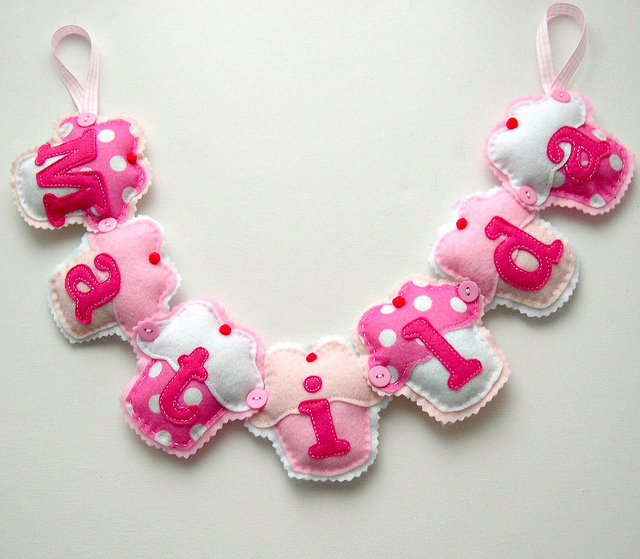
(Image from Flickr)

Waltzing With … Olivia

22 Sunday Jul 2012

Posted by A.O. in Waltzing with ...

≈ 5 Comments

Tags

anagram names, created names, english names, European name popularity, famous namesakes, fictional namesakes, Latin names, locational names, name combinations, name history, name meaning, name popularity, New Zealand name popularity, popular names, saints names, Shakespearean names, sibsets, tree names, UK name popularity, US name popularity

This blog post was first published on July 22 2012, and substantially revised and re-posted on May 4 2016.

This Friday, July 27, it is Schools Tree Day. I always think this is a great way to start off the Spring Term, as it gets students out of the classroom and connecting with nature. This year there will be an emphasis on programs where children plant and care for trees in public bushland, teaching them about the environment and community responsibility.

National Tree Day (on Sunday July 29), and its “junior partner”, Schools Tree Day, are Australia’s biggest tree-planting events. National Tree Day was co-founded by pop singer Olivia Newton-John and Australian environmental group Planet Ark in 1996; since then more than 3.8 million people have planted over 22 million trees and shrubs.

Olivia Newton-John is an ambassador to the United Nations Environmental Program, and has won awards for her efforts on behalf of the environment from the Environmental Media Association and the Rainforest Alliance. This year she was named one of Australia’s Living Treasures by the National Trust. In honour of Ms Newton-John’s achievements and charity work, I am taking a closer look at her first name.

Name Information
Olivia is a name invented by William Shakespeare for his play Twelfth Night. It is generally believed that Shakespeare based it on the Latin name Oliva, meaning “olive” and pronounced oh-LEEV-ah.

Oliva of Brescia was a Roman saint martyred in the 2nd century. Interestingly, the saint is now often known as Saint Olivia, to distinguish her from a legendary saint from the 9th century called Oliva of Palermo, and known as Blessed Olive.

Blessed Olive was a beautiful thirteen year old girl of noble family who was kidnapped by Muslims and martyred by them after the usual imprisonment and torture. It’s clearly a piece of propaganda, but she is still a patron saint of music. Confusingly, sometimes she is also known as Saint Olivia, to distinguish her from Saint Oliva of Brescia.

Shakespeare chose the name Olivia for a beautiful countess of Illyria, an ancient land in the Balkans on the Adriatic Coast, where Slovenia, Croatia, Montenegro and Albania are now. As its name suggests, Twelfth Night was written as an entertainment for the end of the Christmas season; its first performance was after Candlemas in 1602.

The eve of Epiphany was supposed to be a time when all the usual rules were turned topsy-turvy, so it is not surprising that cross-dressing plays a big part in the plot. The countess Olivia falls in love with a woman named Viola (an anagram of Oliva, while Olivia is an anagram of I, Viola) believing her to be a man named Cesario. The joke in Shakespeare’s day, when only males were permitted on stage, was that the role of Viola was played by a boy pretending to be a woman pretending to be man.

Olivia is such a stunning beauty that Viola’s twin brother Sebastian marries her virtually on sight, in an almost dreamlike state, while she thinks he is “Cesario”. They both marry under false pretences, but it is less illegal than Olivia marrying Viola. It’s a comedy, so everything works out.

The name Olivia was too good not be used by other writers, so a character named Olivia is in William Wycherley’s 1676 play The Plain Dealer, cleverly utilising a similar plot to Twelfth Night. In Oliver Goldsmith’s 1766 novel The Vicar of Wakefield, Olivia is the vicar’s strikingly beautiful daughter. In an impetuous rush of passion, she is tricked into a fake marriage with a womanising squire; luckily, it turns out the squire himself was tricked and the marriage is real.

A real marriage to an evil womaniser doesn’t sound like much of a happy ending for Olivia, but it’s happier than not being married at all, it seems. Arresting beauty and dodgy weddings seem the hallmark of the literary Olivia.

Olivia has been in use as an English name since the 17th century, and became more common in the 19th. An early famous namesake was the English socialite Olivia Devenish, who married Thomas Raffles, the vice-governor of Java.

Olivia Miss Newton-John emigrated to Australia from Britain in the 1950s, and during the 1960s was a regular on Australian radio and television before becoming a successful country-pop singer overseas. The name Olivia first appeared on the Top 100 in 1978 at #64, the same year that Olivia starred as Sandy in the hit musical film Grease.

The name Olivia was only on the Top 100 sporadically in the 1980s, never getting any higher than its initial position (Newton-John’s “sexy” image in this decade probably wasn’t a help). It began rising in the 1990s after Olivia’s career quietened down and she put away the spandex, shooting up to #46 in 1990. By 1998 it was in the Top 10 at #5, and it peaked at #1 in 2005, and then again in 2014.

Currently Olivia is #2 nationally, #2 in New South Wales, #1 in Victoria, #2 in Queensland, #3 in South Australia, #1 in Western Australia, #26 in Tasmania, #6 in the Northern Territory, and #4 in the Australian Capital Territory.

In the US, the name Olivia has charted consistently in the Top 1000 since the 19th century, rarely leaving the Top 500. It has been in the Top 100 since the 1990s, and is currently at its peak position of #2. In the UK it has been in the Top 100 since the 1990s, and peaked at #1 in 2008-2010. It is currently #2. Olivia is also #2 in New Zealand, and is popular across the English-speaking world as well as East and West Europe, and Scandinavia. Olivia is a name that travels very well.

Coincidentally or not, the rise and stability of Olivia looks similar to the trajectory of the name Oliver, which is now at #1 – in fact, the two names were #1 together in 2014. Olivia’s success may have helped her twin sister Olive rise through the ranks, for this retro charmer began zooming up the charts in the 2000s, and is now in the Top 100.

Other famous namesakes include Hollywood star Olivia de Havilland; author Olivia Manning; George Harrison’s widow, Olivia Harrison; and actresses Olivia Wilde and Olivia Williams. Although there are many fictional Olivias, one of the most famous is the adorable pig from the children’s book and TV series, named after the author’s niece (I’ve noticed many baby Olivias seem to get toy pigs as gifts).

Lovely Olivia has become one of our modern classics, currently at the peak of its success and still stable after 17 years in the Top 10. I think, like that other Shakespearean coinage Jessica, it will be with us for some time to come.

POLL RESULT
Olivia scored an approval rating of 89%, making it the most popular girl’s name of 2012 in this category. 35% of people thought the name Olivia was okay, while only 4% hated it.

(Picture shows old olive trees in Albania).

Famous Name: King

04 Wednesday Jul 2012

Posted by A.O. in Famous Names

≈ 8 Comments

Tags

english names, famous namesakes, Gaelic names, illegal names, Irish names, name history, name meaning, surname names, title names, US name popularity, vocabulary names

It’s a big week in North America, because Canada Day was on July 1, and today is Independence Day in the United States. I thought we’d look at the name of someone from our history who hailed from the North American continent, and is one of the most colourful and mysterious characters in Australian politics – King O’Malley.

According to his own account, King O’Malley was brought up by an uncle and aunt in New York, and began working in their bank. He then became an insurance salesman, and according to him, was an extremely successful one who worked his way across the United States. In Texas, he founded his own church, with the extravagant title of the Waterlily Rockbound Church – the Redskin Church of the Cayuse Nation. The story he told was that he performed many miracles, and married a beautiful young devotee, who unfortunately soon died of tuberculosis.

O’Malley was told he had contracted the disease himself, and had six months to live. Apparently, going to Australia was #1 on his bucket list, and he arrived here around 1888, being perhaps thirty years old (there is no birth certificate to verify his age). Far from dying, he established himself (once again?) as a successful and well-known insurance agent. His interest in politics grew, and in 1896 he announced he would be running for the South Australian state parliament.

This was a bit awkward, because he had told everyone he was an American, which made him ineligible as a candidate. He changed his story, and said that, now he thought of it, he had actually been born in Quebec, Canada, making him a British citizen. He had merely been raised in the United States. It seems nobody asked to see any paperwork, and he was duly elected as an Independent.

Soon after the election, a man who had known him in the US claimed that O’Malley was an American citizen who had fled the country on embezzlement charges. O’Malley sued, but refused to allow himself to be cross-examined. He won his case, but people surely had to be a little suspicious that financial scandal was the cause of his migration to Australia. This might be why he had trouble getting re-elected.

Nothing daunted, he moved to Tasmania and joined the Australian Labor Party, where he began to make his mark, being elected to Australia’s first national parliament in 1901. In fact, one of his lasting legacies is that the ALP spells Labour the American way. He convinced them it looked more modern, and differentiated the party from the labour movement. He was also a leading proponent of the need for a national bank, and the government founded the Commonwealth Bank in 1911.

Made responsible for the planning of the national capital, he at first said that Canberra was so dry a crow on vacation would need to bring its own water bottle, but then became an enthusiastic supporter. He approved the designs for the city by fellow American, Walter Burley Griffin.

Today a suburb of Canberra, O’Malley, is named after him, and there is also an Irish pub in the capital named King O’Malley’s which sports a picture of him on its signboard. This is something of an inside joke, as O’Malley was a member of the temperance movement, and introduced prohibition to the city of Canberra – something which made him extremely unpopular.

His political career ended after World War I, at least partly because of his pacifist views. Although only 59, he retired, and spent the rest of his life building up and embellishing his own legend, telling tall stories of his feats that were eagerly believed by his trusting supporters. He died in 1953, which would make him ninety-five by his own reckoning – it’s hard not to wonder if he put his age up a bit in order to fit in more years in which his exploits could have occurred. He was honoured with a state funeral.

O’Malley was an arresting character with a mischievous, mocking personality that many people found almost instantly annoying. His politics were considered radical to the point of charlatanism, and his oratorical style was a cross between P.T. Barnum and a revivalist preacher, with a rich range of original expressions, such as calling alcohol stagger-juice, and pubs drunkeries.

The secret to his success was that he was a massive hit with the ladies, and had no trouble at all getting the female vote. Tall, fashionably-dressed, flamboyant and loquacious, women went slightly ga-ga around him. He also had a number of policies which appealed to women, such as trying to pass a law that barmaids couldn’t be too attractive.

His commitment to women’s interests was probably genuine. When he married, he bought his wife several cottages so that she could be financially independent and have her own career, and after his death, he left in his will a trust fund for scholarships for female students of Home Economics.

O’Malley told so many stories about himself that I’m not sure the truth about him can be found now; I don’t think we even know who he really was. He had the hubris to give himself American Independence Day, July 4, as his birthday, although at other times it seemed to be July 2. It is now believed that he was from Kansas, that place about which another American story-teller would create a dream of a magical land with a fraudulent ruler in its Emerald City. King O’Malley was our Wizard of Oz – a mountebank, but a harmless one. He was a bounder, a fraud, a rapscallion, and a politician. But I repeat myself.

The name King is usually taken from the surname, which comes directly from the English word king, originally meaning a tribal chieftain. It’s very unlikely the ancestors of people named King were actually royal – the name may have denoted people who worked in the king’s household as his servants, or given as a nickname to someone who acted in a regal and perhaps arrogant manner.

In America, the surname King was often given to Irish immigrants to Anglicise an Irish name, such as Conroy (although the –roy in Conroy sounds like the French roi, meaning “king”, the name means “son of the keeper of hounds” or “servant of the keeper of hounds” in Gaelic). This seems significant in light of King O’Malley’s Irish surname.

King O’Malley claimed to be the son of Irish immigrant William O’Malley and Ellen King, with the implication that he had received his mother’s maiden name as his first name. This cannot be verified, as no such people can be found in the US census of the time. King may have been his middle name, or he may have made it up. Soon after his arrival in Australia, he styled himself as the Arizona Kicker King – the Arizona Kicker was a newspaper that O’Malley purported to have worked for.

It may sound fantastically over-the-top to us, but the name King was on the US Top 1000 from 1880 until the mid-1960s, and recently made a comeback in 2006. Since then use has steadily increased, and it is currently #389 (just one position behind Phoenix).

Although King Vidor was a famous Hollywood director, I wonder whether use of the name might be inspired by iconic civil rights leader, Martin Luther King. Jesus Christ is also known as The King of Kings in Christianity, which might give it a religious connotation.

King is one of those names that are not permitted to be registered in Australia, as King is an official title as well as a word. It might be possible to use it as a middle name though, and if King is a name in your family, that could give you a personal connection to it.

(Picture of King O’Malley from the ACT Museum and Art Gallery)

More of Your Questions on Unisex Names Answered

24 Sunday Jun 2012

Posted by A.O. in Your Questions Answered

≈ 7 Comments

Tags

classic names, english names, famous namesakes, Irish names, locational names, mythological names, name meanings, name popularity, nature names, nicknames, Old French names, Old Norse names, sibsets, surname names, The Name Agender, unisex names, US name popularity, vocabulary names

It’s been more than two months since my first foray into answering questions on unisex names, and as I just started a new page for them, it seemed like a good opportunity for another lot. In the interval, the number of questions on this subject has piled up alarmingly, so it’s obviously topic de jour.

As with my first entry on this topic, I consider the origin, meaning, history, namesakes and popularity of a name to determine whether it’s male, female, or unisex.

Keep in mind that by law all names are unisex, and it is purely personal choice and social convention which dictate whether they are given to boys or girls. Unless otherwise specified, popularity of names is based on Australian data.

I: GIRLS OR BOYS?

Flynn as a girl’s name

Flynn is an Irish surname meaning “son of Flann“, so it’s a boy’s name.

Is Chase a unisex name? Are there any girls called Chase?

Technically it’s male, as the surname is an occupational one given to a huntsman, from the Old French for “hunter” (male form). However, you could argue that the name is given directly from the vocabulary word, meaning “to pursue”. I have also seen parents say that on a girl, Chase is short for Chastity. There are most certainly girls named Chase in the world.

Sutton as a girls name

There’s no reason why this surname can’t be used on either a boy or a girl, as it is taken from a common English place name meaning “south settlement”. In Australia, Sutton is a small village in country New South Wales on the Yass River. There is an American actress named Sutton Foster who has appeared in the show, Flight of the Conchords.

Peter as a girl’s name is that Aussie?

No, it’s not. In Australia, Peter is a classic name for boys which has never been off the charts, peaked at #1 in the 1950s and is currently in the 100s. It’s never charted for girls. You may be thinking of the female form, Peta, which was on the charts from the 1930s to the late 2000s. It peaked in the 1970s at #73, the only decade it was in the Top 100. It does seem to be a name from the Southern Hemisphere, as it only seems to have been popular in Australia, New Zealand and South Africa.

Gunner as a girl’s name

Gunner is one of those rare surnames which can be taken as coming from a woman’s name, the Old Norse Gunvor, meaning “female battle warrior”. However, we usually think of it as coming from the occupational name for a soldier who manned the cannons during war. So I think this can be either a girl’s name or a boy’s name.

II: BOYS OR GIRLS?

Can Sky be a guy’s name?

Yes it can. In Greek mythology, Uranus was the god of the sky, seen as male compared to the earth goddess Gaia. So if anything, the sky seems to be masculine in Western culture. Sky can also be be short for Schuyler or Skyler.

Is Addison a boy’s name?

It means “son of Adam”, so yes it is a boy’s name. However, it is currently Top 100 for girls, and doesn’t rank for boys, so it’s much more commonly given to females. We had a celebrity baby boy named Addison this year.

Any dudes named Courtney?

A famous Australian one that springs to mind is singer Courtney Murphy, who was on Season 2 of Australian Idol. Another is the triathlete Courtney Atkinson, and Courtney Johns plays Australian rules football for Essendon.

Stolen boys name – Kelly?

I don’t think it’s possible to “steal” a name from one gender – it’s usually more about the name being rejected or neglected on behalf of its original gender.

However, let’s assume that “gender stealing” actually exists. For a name to be classified as “stolen” from the boys, it would have to be popular as a male name, and then show the name in decline for boys, accompanied by a corresponding rise in the use of the name for girls. That doesn’t seem to be case with Kelly – it has never charted as a male name in Australia, and has charted as a female name since the 1950s.

In the US, which has data going back to the 19th century, Kelly has been on the Top 1000 since 1880, and only stopped charting for boys in 2003. It began charting for girls in the 1940s, but as the name rose for girls during the 1950s, it also continued rising for boys.

Kelly for boys peaked in 1968 when it just scraped into the Top 100, which corresponds to it also hitting a peak for girls at #12. That doesn’t fit the profile of a “stolen” name – that fits the profile of a unisex name. Kelly for girls peaked again in the late 1970s, but by that time Kelly for boys was on the wane.

You could say that was because it was remaining fairly popular as a girl’s name – but that doesn’t explain all those years that both names grew in popularity together. Nor does it explain the many, many decades that Kelly spent as a male name only, free of all feminine interference, without ever gaining any level of significant popularity.

Having said that, Kelly actually is a male name, although usage is now primarily female. So whether it’s “stolen” or not depends on your perspective.

Chelsea can be for boys? Is Chelsea a boy name too? (asked multiple times in various ways)

There’s really nothing especially feminine about the place name Chelsea, which means “chalk wharf” and is the name of a football club, so by meaning and association this name seems unisex, and it has been occasionally given as a male name. In fact, the blogger at The Name Agender is a man named Chelsea, and he has written an article about growing up as a boy named Chelsea, as well as an interesting article on several men and boys named Chelsea, including a celebrity baby from last year.

III. JUST PLAIN CONFUSED

Is there more boys or girls named Taylor?

More girls – Taylor has always been much more popular as a girls name than a boys name in Australia.

Is Edith a unisex name?

No, it’s a woman’s name, and has a history of over a thousand years being given to females. In Australia it has only ever charted as a girl’s name.

Is Bailey a girls or boys name in Australia based on statistics?

Based on Australian statistics, it’s a boy’s name. It has only ever charted for boys, and never for girls.

Mackenzie boy or girl name?

It means “son of Kenneth“, so it’s a boy’s name. However, it has only ever charted as a female name, so it’s much more commonly given to girls.

I named my daughter Riley can I use a unisex name again?

Well of course, nobody is going to stop you. You can name your children exactly as you please, and there is no “One Unisex Name Per Family” law. But if you are asking for an opinion, this is mine:

If your next child is a girl, I would advise choosing another unisex name to match her sister’s, like Cameron or Alex. I’ve noticed girls often tend to get a bit jealous if one sister has a girly name and the other one has a boyish name – or at least it is made an excuse for sisterly jealousies.

However, if your next child is a boy, I would advise choosing a name that is unambiguously male, like Jake or Brendan. This is purely my own preference, but I think a boy should have a name that is more masculine than his sister/s.

Just for practical reasons, if you tell someone, “I have a daughter and a son; their names are Riley and Avery”, the person would be confused as to which one was the girl and which the boy, and it’s considered rude to ask.

Well, those are my opinions: what are yours? Do you prefer Edith for a boy and Peter for a girl? Has Kelly been stolen? How many dudes named Courtney do you know? And what would you name the siblings of a girl called Riley?

(Picture shows Katherine Hepburn in the 1935 movie, Sylvia Scarlett, in which Hepburn must disguise herself as a boy, despite the difficulties involved when it comes to public toilets).

Famous Name: Azaria

20 Wednesday Jun 2012

Posted by A.O. in Famous Names

≈ 8 Comments

Tags

1001 Unusual Baby Names, baby name books, Biblical names, hebrew names, honouring, name history, name meaning, The Complete Book of Names, unisex names, US name popularity

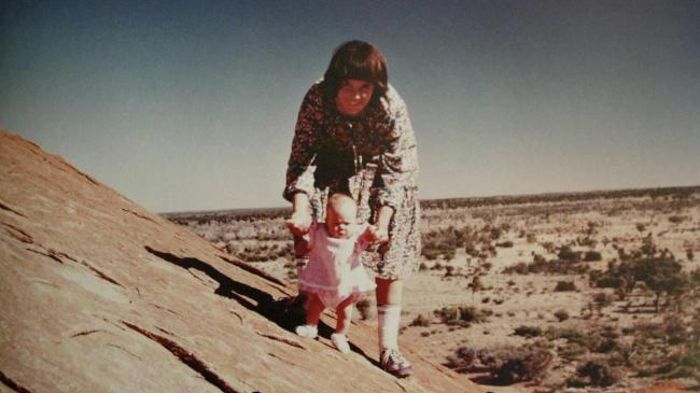
On June 12 this year, a very long legal case finally came to an end, when coroner Elizabeth Morris ruled that Azaria Chantel Loren Chamberlain had been taken by a dingo on August 17 1980. Azaria was nine weeks old when she died, and June 12 was the day after what would have been Azaria’s thirty-second birthday, had she lived.

The disappearance and death of baby Azaria in the Northern Territory was a case which generated mass hysteria, divided the nation, and led to a cruel media-driven witch hunt against Azaria’s grieving parents, Lindy and Michael. It remains an ugly stain on our national psyche, and a lesson in not being too ready to believe the worst about the latest media “villain”. A lesson we unfortunately never seem to learn.

The Chamberlains had been on a camping holiday at Uluru (Ayers Rock) with their three young children when Lindy screamed that a dingo had taken her baby from their tent. Witnesses at the time believed her implicitly; there were warning signs everywhere about the dangers of dingoes, and six weeks earlier, a three year old named Amanda Cranwell had been dragged from her parents’ car by a dingo and had to be driven off. Azaria’s brother Aidan said that he heard a dingo in the tent with them, and Aboriginal trackers reported that she had been dragged by an animal.

A coronial inquest found that Azaria had been taken by a dingo, but her missing body disposed of by unknown human means. That should have been the end of this family’s tragedy, but instead it had just begun. For reasons unclear to me, the Northern Territory police refused to accept the findings, and charged the Chamberlains with murder.

Michael was a pastor in the Seventh Day Adventist Church. People didn’t know much about this minority religion, and mistrusted the Chamberlains as somehow “different”. Lindy maintained the calm dignity of someone who knew she was innocent and believed that God was on her side. This was taken as unnatural – why didn’t she shriek and cry hysterically like a proper woman? Why did she never squeeze out at least a few tears? Why did she seem so assured when she was only a housewife?

Wild rumours began to circulate, and the media gleefully reported each one. One was that the Chamberlains’ religion demanded a child sacrifice, and they had gone into the outback with the express purpose of murdering their baby daughter. Another was that they weren’t Christians at all – they were Satanists, devil worshippers or into black magic; being religious was just a front. Another notion was that perhaps their religion forbade medical assistance (it doesn’t), and that they had killed a terminally ill Azaria rather than let her suffer a slow death. One of the sickest was that Azaria’s brothers Aidan and Reagan, then aged six and four, had killed her and her parents covered it up.

It is shocking and heartbreaking that people in modern times could be so ignorant, gullible and superstitious; it beggars belief that anyone could think a mother would kill her daughter in front her other children, and have the audacity to do so in broad daylight surrounded by witnesses, washing off all blood and disposing of all evidence within ten minutes. However, so convincing was this view of the evil, unnatural Lindy that she was found guilty and sentenced to prison in 1982. Four years later, some of Azaria’s missing clothing was found in a dingo’s lair, and Lindy was released.

The Chamberlains’ marriage did not survive and both remarried. The fate of Azaria was still listed as “unknown”, and her story became urban legend; she was part of the horrors of the outback, she was our nightmare and our collective guilt. She was a meme, a joke, a rumour, a punchline, a subject of gossip, a tee-shirt slogan, an industry which brought out books, tea towels, movies, TV shows and even an opera.

Last week Azaria’s extraordinary story ended, and she was at last declared officially dead and given a death certificate. The coroner offered her heartfelt sympathies to the Chamberlains for the loss of their daughter and sister, however the Northern Territory government refuses to apologise for the events which followed that loss.

Azaria is a variant of the Hebrew name Azariah, which means “Yahweh has helped”; however Azariah is pronounced az-uh-RY-uh, and most people say Azaria a-ZAHR-ree-uh. Despite Azariah being a male name in the Old Testament, Azaria is more commonly used as a girl’s name.

During the hysteria surrounding the Chamberlain case, it was falsely claimed that the name Azaria meant “sacrifice in the wilderness”, with the obvious conclusion  that the Chamberlains had marked their daughter from birth for ritual infanticide. (I would have thought that if you actually were planning to do that to your baby, you’d choose a name that drew less attention to your nefarious scheme).

The original coroner made a finding that Azaria did not in fact mean “sacrifice in the wilderness”, making it one of the few times in legal history when a court has made a ruling on the meaning of a name. Lindy found the name in 1001 Unusual Baby Names, where it was identified with standard baby name book laxness as the feminine form of Azariah, meaning “blessed by God”. The current edition of the book is called The Complete Book of Baby Names, now boasts over 100 000 entries, and has updated Azaria to mean “helped by God”.

Azaria’s name was an unusual name when she was born, and it is still uncommon. I have seen the name a few times in birth announcements, using both the Azaria and Azariah spellings, and given to both girls and boys. Azaria has been on the US Top 1000 since the mid-2000s, suggesting that the name is on the rise internationally rather than being an Australian phenomenon.

The first time I saw the name given to a new baby I gave an unconscious start of shock, but then rationality kicked in and I could see that the name deserves to be used again, and it would be ridiculous to avoid it. Until I saw Azaria with the middle name Chamberlain. Maybe it was a family name, maybe it was honouring an unfortunate victim, but even 32 years later, for me it was too soon.

← Older posts
Newer posts →

Enter your email address to follow this blog

Categories

Archives

Recent Comments

A.O.'s avatarwaltzingmorethanmati… on Zarah Zaynab and Wolfgang…
Madelyn's avatarMadelyn on Zarah Zaynab and Wolfgang…
JD's avatardrperegrine on Can Phoebe Complete This …
A.O.'s avatarwaltzingmorethanmati… on Rua and Rhoa
redrover23's avatarredrover23 on Rua and Rhoa

Blogroll

  • Appellation Mountain
  • Baby Name Pondering
  • Babynamelover's Blog
  • British Baby Names
  • Clare's Name News
  • For Real Baby Names
  • Geek Baby Names
  • Name Candy
  • Nameberry
  • Nancy's Baby Names
  • Ren's Baby Name Blog
  • Sancta Nomina
  • Swistle: Baby Names
  • The Art of Naming
  • The Baby Name Wizard
  • The Beauty of Names
  • Tulip By Any Name

RSS Feed

  • RSS - Posts

RSS Posts

  • Celebrity Baby News: Melanie Vallejo and Matt Kingston
  • Names from the TV Show “Cleverman”
  • Can Phoebe Complete This Sibset?
  • Zarah Zaynab and Wolfgang Winter
  • Baby, How Did You Get That Name?
  • Celebrity Baby News: Media Babies
  • Celebrity Baby News: Adelaide Crows Babies
  • Celebrity Baby News: Chris and Rebecca Judd
  • Names at Work: Name News From the World of Business and Employment
  • Celebrity Baby News: Sporting Round Up

Currently Popular

  • Celebrity Baby News: Alisa Camplin and Oliver Warner
  • Rare Boys Names From the 1950s
  • The Top 100 Names of the 1930s in New South Wales
  • Sad Celebrity Baby News (contents may cause distress)
  • Girls Names From Stars and Constellations

Tags

celebrity baby names celebrity sibsets english names famous namesakes fictional namesakes honouring locational names middle names name combinations name history name meaning name popularity name trends nicknames popular names saints names sibsets surname names twin sets unisex names

Blog at WordPress.com.

Privacy & Cookies: This site uses cookies. By continuing to use this website, you agree to their use.
To find out more, including how to control cookies, see here: Cookie Policy
  • Subscribe Subscribed
    • Waltzing More Than Matilda
    • Join 517 other subscribers
    • Already have a WordPress.com account? Log in now.
    • Waltzing More Than Matilda
    • Subscribe Subscribed
    • Sign up
    • Log in
    • Report this content
    • View site in Reader
    • Manage subscriptions
    • Collapse this bar
 

Loading Comments...