• About
  • Best Baby Names
  • Celebrity Baby Names
  • Celebrity Baby Names – Current
  • Celebrity Baby Names – Past
  • Featured Boys Names
  • Featured Girls Names
  • Featured Unisex Names
  • Links to Name Data
  • Waltzing on the Web

Waltzing More Than Matilda

~ Names with an Australian Bias of Democratic Temper

Waltzing More Than Matilda

Tag Archives: unisex names

Name Trends from Baby Center Australia – Boys

02 Tuesday Apr 2013

Posted by A.O. in Name Data

≈ Comments Off on Name Trends from Baby Center Australia – Boys

Tags

Baby Center Australia, celebrity baby names, famous namesakes, fictional namesakes, name trends, names from movies, popular names, surname names, unisex names

Biggest Movers Up

  1. James +14 at least
  2. Cooper +11
  3. Xavier +9
  4. Jackson +8
  5. Liam and Thomas +6

Also Up

Benjamin, Lucas, Samuel, Ethan, Mason

James returned to the Top 20 after dropping off it in 2011 – Baby Center suggests the 50th anniversary of James Bond films may be a factor, which doesn’t seem too implausible. Samuel is also back on the list, no theories as to why. Xavier was new to the list last year, and continues his ascent; Benjamin was new too, and went up slightly. Baby Center believes this because of model Gisele Bundchen’s son Benjamin, born in 2009. Cooper and Jackson are two surname names doing well, with Mason new to the Top 20. Liam made modest gains, which Baby Center attributes to the success of One Direction. As Harry is suddenly doing really well in the official data, this seems fairly convincing.

Biggest Movers Down

  1. Riley -25
  2. Charlie -11
  3. William -9
  4. Aiden -8
  5. Alexander and Jack -8

Also Down

Lachlan, Max, Jacob, Joshua, Noah

Riley really stood out, diving 25 places right off the Top 20, and Charlie also fell more than 10 places, so it became less popular for both sexes. Old favourites William and Jack took a bit of a tumble, while Alexander, new to the Top 20 last year, left it this year. Oliver was the only name to stay at the same position, maintaining his presence as the #1 name. Baby Center noted that there were fewer alternative spellings for boys’ names in 2012, suggesting a shift back to basics.

New or Returned to the Top 20

  • Samuel #18
  • Mason #20

Gone from the Top 20

  • Riley #12
  • Alexander #18

No Change in Position

  • Oliver #1

Names Spotted at Home and Abroad (Summer Edition)

25 Monday Mar 2013

Posted by A.O. in Names Spotted at Home and Abroad

≈ 3 Comments

Tags

animal names, Australian Aboriginal names, changing names, culinary names, english names, ethnonyms, famous namesakes, fictional namesakes, fish names, floral emblems, flower names, food names, French names, German names, honouring, initials, Japanese names, Latin names, locational names, makes of cars, name combinations, name meaning, names of horses, names of spices, names of weapons, Native American names, nature names, nicknames, Persian names, plant names, rare names, rose varities, sibsets, surname names, types of boats, unisex names, vocabulary names

297602-baby-namesThe first baby born in Wollongong for 2013 was Rumi Vassilakoglou; he is named after the medieval mystical Persian poet, whose moniker means “from Rome” (this name for him is not used in Muslim countries, by the way). Rumi’s mum is named Leila, and his younger sibling is Mahli.

Your baby disappearing is every parent’s worst nightmare, but little Minowa Worthington’s story ended happily. Minowa is the name of a Japanese town, and a Japanese surname, but baby name books tell me it also Native American for “one with a moving voice”. They don’t say which language it is from, but I have seen Native Americans online with Minowa as their surname.

A Gold Coast baby born in the Queensland floods was named Sabre Smith. Although his name can be after the sword, putting it in the same genre as Blade or Steel, a sabre is also a class of racing boats – which seems apt for a baby born surrounded by water.

Another water baby is Dwight Anderson, who was born in the bath. I was a tiny bit surprised to see such an old-fashioned name in use … much more surprised to see that Dwight is a girl. Dwight’s sister is named Billie-Jo.

Allegra Bluebelle from Canberra, born in the city’s centenary year, has a middle name after its floral emblem, the royal bluebell. A little girl born on the city’s birthday seven years ago has the same initials as the Australian Capital Territory – Aisha Caitlyn Truselsen. A fisherman has a daughter named Makaira Indica, which is the scientific name for the black marlin (this isn’t connected to Canberra, so not sure why they mentioned it, but there you go).

The Hallett family changed their name by deed poll to Holden, in honour of the make of car. Not content with that, they have given their children Holden-related names too. Their son is named Toree, after the Torana, and his little sister is named Elcee – after the LC generation of Toranas.

An article about “unique” names quoted brothers named Mac and Fonzii. I have no idea why Mac is supposed to be unique, but Fonzii does seem slightly out of the ordinary. He’s not named about Fonzie from Happy Days, which reminds me of the baby named Tinkabell not named after the fairy. Other unusual names of real babies mentioned were Dragon, Justus, Porch, Ever, Notorious, Cash, Lychee and Bandit.

Another article on the same subject, with much the same information, featured a baby boy named Ace Bear Johnson, which strikes me as both cute and sporty (Ace’s sister is named Esmee). There was also a baby girl named Annecy Belle Easton [pictured], named after a French town that her parents fell in love with after they stayed there. She is called Annie for short, and Annecy’s mum also has the name of a French town – Nancy. Article also mentions real babies named Batman, Blaze and Charisma.

Darwin schoolteacher Wendy Green named her racehorse Rogan Josh, after the Indian spice mix, which she saw at the supermarket. She claims that in Tennant Creek, she was asked to baptise a baby, which she did using champagne, and named the baby Rogan Josh as well. You may take this story with as many grains of salt as you wish – but Rogan Josh really isn’t too bad a name. It literally means “boiling oil” in Persian.

Friday’s birth notices included a new baby named Passion Brinessa Ajayla Quinatee Martin, who is the 12th child in her family. The rest of the family are Samantha Jayne (18), twins Shantelle Victoria and Stephanie Catherine (15), Jenaya Lee (11), Shania Kay (10), Brandon Bradley (7), Brandi Shyla Molly Robyn (6), Cruz Richard (5), Clayton Adam Logan (4) and Diammond Sparckle Zedekeyah Lilly Ann (3). Mum is named Brinessa, which is a variety of rose, and quite an unusual name too. She admits she did find it difficult to come up with original names, and turned to an iPhone application for inspiration.

Names of Adults

Lyra Benbow is a primary schoolteacher in the Melbourne suburb of Digger’s Rest who is just about to spend her Easter break doing volunteer work in Uganda. Is anyone else just loving her name? It sounds like something out of a fantasy novel.

Another awesome name from the papers: Eugenie Pepper, who runs a children’s fashion business named Plum. I feel like ringing her number to hear if she answers, “Hello, this is Pepper of Plum”.

Last year, Cressida Moneypenny attended the Anzac Day commemorations in Turkey. Originally from the Gold Coast, Ms Moneypenny was drawn to her name’s spiritual home, and moved to London. Ian Fleming never gave his Miss Moneypenny a name, but I feel sure it should have been Cressida …

The Melbourne Comedy Festival will feature eight comedians named Dave. Why so many funny guys named Dave? Dave O’Neil was a David until he started in comedy – then he became Dave, which seemed more man of the people. Dave Hughes also began as a David, but said he couldn’t make it stick – people just expect a comedian of a certain age to be a Dave, apparently. All the Daves agreed they had been stuck with an uncool name – while a David can be hip or sexy, a Dave is always daggy.

Names From Real Life

A pair of sisters named Ilse and Matine, which I thought went together really well without being in the least matchy. Ilse is a German nickname for Elizabeth, while Matine is based on the French word for “morning”.

Another cute sibset, this time a little hippyish – Lotus, Jewel and Sunny (two girls and a boy). They are names which just make you smile.

Someone I know told me they have a new niece named Berrilee, which is the name of a suburb of Sydney (and one I missed!). It is derived from an Aboriginal word meaning perhaps “mouth” or “food”, and far from being a modern innovation, baby Berrilee is named after an ancestor.

A name I saw on a class list at the start of the school year – Phonique. It’s French for “phonic”, as pertaining to sound, and is used by a (male) DJ in Europe. To me it almost seems like a portmanteau of phony and unique …. and quite technological.

In spring it was Aryan … here’s another name I saw some people find controversial – Gypsy. This is a name more common in Australia than it is in the UK and other European countries, which have significant populations of Romanis or Travellers (who sometimes refer to themselves as gypsies). Romanis are not in fact from Egypt, which is what Gypsy literally means – their origins are from the Indian subcontinent.

Names of Babies Born to People I Know or Know Of:

Girls: Florence, Harriet, Lola, Marina

Boys: Arlo, Gus, Huxley

Famous Name: Gabriel

21 Thursday Mar 2013

Posted by A.O. in Famous Names

≈ 3 Comments

Tags

angels names, Biblical names, famous namesakes, fictional namesakes, French names, hebrew names, Italian names, name history, name meaning, name popularity, names from movies, nicknames, popular names, saints names, unisex names

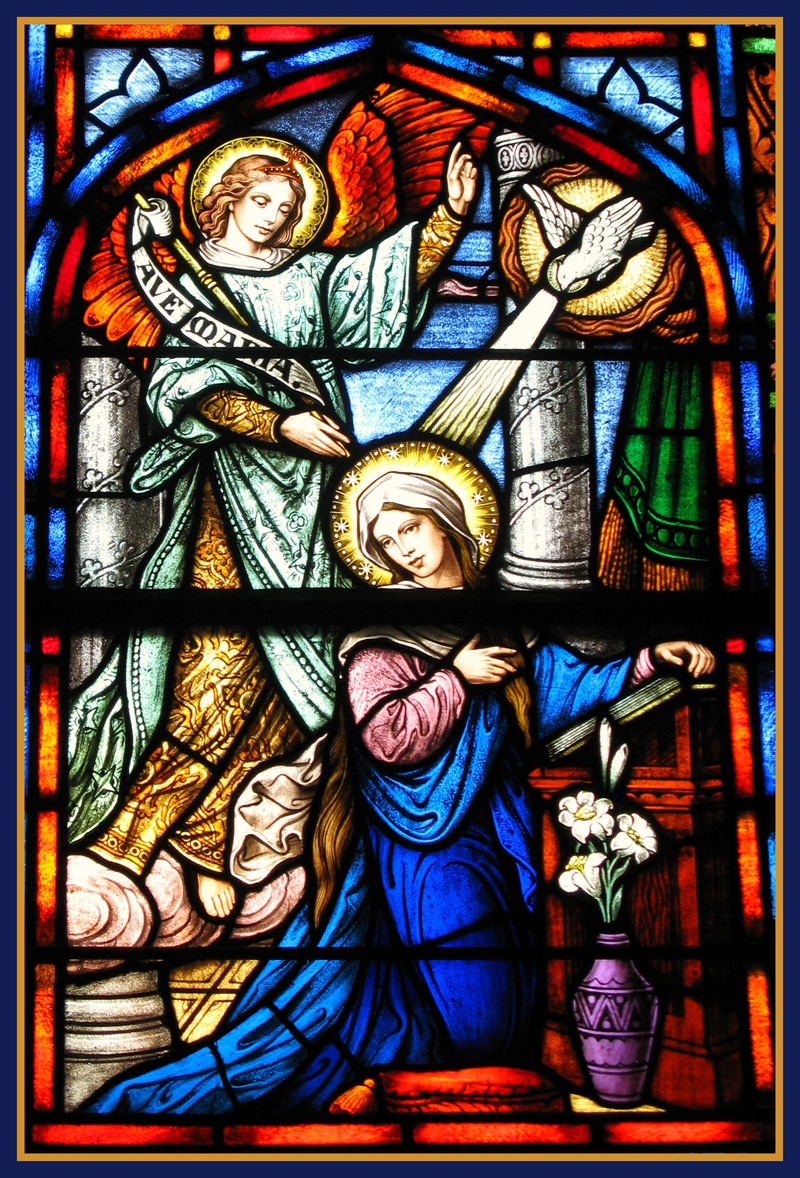
The AnnunciationOn Monday March 25, it will be the Feast of the Annunciation, which celebrates the angel Gabriel announcing to the Virgin Mary that she will conceive a son; Gabriel also tells her that the child is to be called Jesus. This was staggering enough news, but the big shock for her was that this would happen through the Holy Spirit and not via the usual route to conception.

This is the story told in Luke, while Matthew tells the story from a different angle. According to this gospel, Mary found herself pregnant and her betrothed, Joseph, was considering breaking things off. But then an angel came to him in a dream, and explained the situation to him.

Although the Bible doesn’t say so, it’s generally assumed that this angel was also Gabriel. Further assumptions are that he was the angel who appeared to the shepherds at the Nativity, and the one who came to Jesus to give him strength as he prayed in the garden before the Crucifixion.

The Feast of the Annunciation is held nine months before Christmas, to symbolise the length of a pregnancy. It is also called Lady Day, and until 1752, it was New Year’s Day in Britain. It’s obviously a hard habit to break, because in the UK they still start the financial year on April 6, which is Lady Day on the old (Julian) calendar.

The Annunciation isn’t Gabriel’s first appearance in the Bible, or even in the New Testament. In the Book of Daniel he interprets Daniel’s visions for him, and earlier in the Gospel of Luke he appears to Zachariah, a priest, and the husband of the Virgin Mary’s kinswoman. He tells Zachariah that his wife Elizabeth, for many years barren, would bear a son named John; this would be John the Baptist, who was to prepare the way for Jesus.

According to Islamic teachings, the angel Gabriel dictated the Koran to Muhammad, and led him on his “Night Journey”, or great spiritual vision of the heavens. So the angel is important to all three Abrahamic religions.

There is a tradition that Gabriel will blow his trumpet to announce Judgement Day, which comes from John Milton’s Paradise Lost. In Jewish legend, Gabriel is said to pluck new souls from the Tree of Life so that they may be conceived as new babies. So you can see Gabriel as both the beginning and end of Life – although the end is only to make way for a new beginning.

Gabriel is the English form of the Hebrew name Gavri’el, which is variously interpreted as “man of God”, “strong man of God”, “hero of God”, “champion of God”, “warrior of God”, or “strength of God”. The image you get from it is of a mighty being, using their immense strength to serve God. In the Old Testament, words such as great, might, power and strength are used to describe Gabriel, and in Jewish tradition he is an angel of judgement and punishment.

However, Christian tradition sees Gabriel differently. As he appears in the New Testament to bring people news of great joy, and to bring comfort to those burdened by great worry, he is viewed as an angel of mercy and consolation.

Angels are spiritual beings, not physical, so they cannot be said to have a sex, although in the Bible they always take on the appearance of human males when communicating with people. However, you might say that in Jewish tradition, Gabriel gives off a very masculine “energy”, while Christians get more of a feminine “vibe” from the angel. (If you doubt this, consider how many Nativity plays you’ve seen where a female plays the role of the announcing angel).

Because of this certain level of gender ambiguity, Gabriel has, for centuries, sometimes been used as a female name in the English-speaking world, and in fact Tom Waterhouse’s mother, the horse trainer Gai Waterhouse, is named Gabriel (in case you were wondering what Gai was short for). There are also specifically feminine forms of the name we have imported from other languages, such as French Gabrielle and Italian Gabriella.

The name Gabriel has charted in Australia since the 1960s, and joined the Top 100 in 2001 at #97. I’m not sure if this was an influence, but it joined the Top 100 a year after the movie The Patriot came out, starring Australian actor Heath Ledger as Gabriel Martin. It peaked in 2009 at #60, and since then has been on a decline. Last year it made #88.

Two feminine forms of the name have been more successful. Gabrielle has charted since the 1920s, and joined the Top 100 in the 1990s, when it peaked at #49. It left the Top 100 in 2010, and in 2011 was at #111, still only just outside the Top 100.

Gabriella has charted since the 1940s, but didn’t begin really climbing until the 1980s. It joined the Top 100 in 2006 at #89 (there were just as many baby girls named Gabriella as Gabrielle that year). It peaked the same year as Gabriel, in 2009, and only one place higher, at #59. However, its decline has been more gentle, and last year it made #71.

I do think the greater success of Gabrielle and Gabriella has not been helpful to the popularity of the male name Gabriel. I have noticed that many people hear the name Gabriel as Gabrielle, or think that the two names are so alike as to make Gabriel sound “feminine”. I have to admit this annoys me, because I much prefer Gabriel to either of his sister-names.

Gabriel seems to be more appealing to mothers as a baby name than it is to fathers, with many women complaining that their partner strongly vetoed the name Gabriel for their sons, even as a middle name.

I think it might suffer a little from what we might call The Valentino Factor – women are more likely to find the name Gabriel handsome, charming and even sexy, while men are more likely to find it foofy and irritatingly ornate.

Another issue is the nickname, because the standard shortening is Gabe, and many parents dislike it. Some worry it sounds too much like the word gay or the word babe, others think that it sounds dim-witted or redneck, and others just find it ugly.

It would be easy to suggest some other nickname, but chances are he’s going to get called Gabe once he leaves the house anyway, if he gets a nickname at all. Personally I don’t think Gabriel needs any nickname.

Gabriel is a beautiful, indeed, a heavenly name. It’s a name of great masculinity and strength, yet at the same time has a wonderful sweet tenderness as well. One thing that occurs to me is that there is a theme of the angel Gabriel bringing joyful news of unexpected pregnancies, and a miraculous childbirth. I think it would make a great name for someone expecting a baby they never thought they would ever have, a baby which defied all logic to make his way into the world.

For those who never thought their miracle baby would ever arrive, Gabriel says, Fear not, for behold, I bring you good tidings of great joy!

POLL RESULT: Gabriel received a very good approval rating of 76%. People saw the name Gabriel as strong yet tender (23%), handsome and heavenly (19%), sexy (12%), and powerful (11%). However, 9% thought the name was a little bit girly, and 7% that it didn’t have any good nicknames.

(Picture shows The Annunciation on a window at St Mary’s Church, Denville, New Jersey)

Italian Names for Boys

17 Sunday Mar 2013

Posted by A.O. in Name Themes and Lists

≈ 15 Comments

Tags

Austrian name popularity, Belgian name popularity, birth notices, celebrity baby names, Chilean name popularity, Dutch name popularity, english names, ethnonyms, famous namesakes, fictional namesakes, French name popularity, germanic names, Greek names, Hungarian name popularity, Hungarian names, Italian name popularity, Italian names, Latin names, locational names, mythological names, name history, name meaning, name popularity, nicknames, Orlando Furioso, Portuguese names, Roman names, saints names, Scottish name popularity, Shakespearean names, Spanish name popularity, Spanish names, surname names, The Divine Comedy, theological names, tribal names, UK name popularity, unisex names, William Shakespeare

romeo_and_juliet_01Angelo

Angelo is the Italian form of the Latin name Angelus, meaning “angel”. The Angelus is a Christian devotion, which traditionally involves praying three times a day, accompanied by the the ringing of church bells. It was common during the Middle Ages, so the name can be seen as after the prayer as much as after the heavenly creature. Angels are mentioned in the Old Testament as spiritual beings who bring communications from God; the word angel is derived from the Greek for “messenger”. Angels play a much bigger role in the New Testament, where they make several important announcements, including the birth and resurrection of Christ. A famous Italian named Angelo was Father Angelo Secchi, a 19th century astronomer and one of the first scientists to state that the sun is a star. Cricket fans know the name well from Angelo Matthews, the Sri Lankan captain. The name is rarely used in Australia, where angel-type names for boys aren’t common – even though angels are traditionally masculine. However, singer Adele welcomed a baby boy last year, rumoured to be named Angelo, and this may be a help. The Italian and English pronunciation are very similar – AHN-jel-oh and AN-jel-oh.

Dante

Dante is a short form of Durante, the Italian form of the Latin name Durans, meaning “enduring”. Its most famous namesake is undoubtedly medieval Italian poet, Dante degli Alighieri, nearly always known by his first name only. His Divine Comedy is considered the greatest work of Italian literature, and in Italy he is known as il Poeto (“the Poet”), just as Shakespeare is called The Bard in England. He is famous for his adoration of Beatrice, a girl he knew only slightly and who died in her twenties; he plays an important role in the literature of “courtly love”. Dante is a name which seems to be gaining more use in recent years, perhaps because of the number of fictional characters named Dante on TV and in video games. I see this handsome name quite a bit in birth notices, and have met a number of small boys named Dante, from a variety of backgrounds. The Italian pronunciation is DAHN-tay, and this is commonly used in Australia, but I have heard it said DAN-tay as well.

Eduardo

Eduardo is the Italian form of the English name Edward. The name is used in Spanish and Portuguese-speaking countries as well, where it is much more popular than in Italy – it is a Top 100 name in Spain and Chile. Famous Italians include actor, playwright and screenwriter Eduardo De Filippo; songwriter Eduardo di Capua, who composed the famous song O Sole Mio; and quantum physicist and cyberneticist Eduardo Caianiello (all these Eduardos were from Naples). The name is pronounced ed-WARD-oh, with the ward part rhyming with hard rather than horde. Last year, Australian soccer player Vince Grella welcomed a son named Eduardo, and so far it’s the only celebrity baby boy’s name which has been rated as “perfect” by blog readers.

Lorenzo

Lorenzo is the Italian form of the Roman name Laurentius, which means “from Laurentum”; Laurentum was an ancient city in Italy, south of Rome, and its name probably comes from the laurel, or bay tree. Laurel wreaths were used by the Romans as a symbol of victory. The English form of the name is Laurence. One of the most famous Italian namesakes is Lorenzo de Medici, known as Lorenzo the Magnificent. A Florentine ruler during the Renaissance, he was famed for presiding over Florence’s Golden Age, and for being a great patron of the arts. Lorenzo’s grandson also bore his name; he is best known for being the ruler to whom Machiavelli dedicated his practical political handbook, The Prince. Lorenzo has been in the Top 5 in Italy for several years, and is currently #4; it’s also Top 100 in France. The Italian pronunciation is loh-REN-tso, and in English it’s pretty much the same except we say the final syllable -zo. Reality TV star Snooki, from Jersey Shore, welcomed a baby boy named Lorenzo last year. Possible nicknames include Enzo, Ren, Renzo and Zo.

Luca

Luca is the Italian equivalent of the name Luke, derived from the Greek name Loukas, meaning “from Lucania”. Lucania was an ancient district of southern Italy, and the name comes from the tribe of the Lucani who inhabited the area. One theory is that the tribe’s name comes from the Greek word for “wolf”; another that it means “sacred wood” in Latin. A famous Italian with this name is medieval sculptor Luca della Robbia; another is Fra Luca de Pacioli, a mathematician and Franciscan friar who worked with Leonardo da Vinci. You may also know the name from Luca Cordero di Montezemolo who is chairman of Ferrari. Luca is incredibly popular internationally: it is #12 in Italy, and also makes the Top 100 in the UK, Scotland, Austria, Belgium, the Netherlands and France. It has charted in Australia since the 1980s, and joined the Top 100 in the late 2000s; currently it is #79. You will sometimes see Luca described as a unisex name, and that’s because it is also the Hungarian form of Lucia, and is #10 for girls in Hungary. However, the two names are pronounced differently – the Italian boy’s name is said LOO-kah, while the Hungarian girl’s name is said LOO-tsah.

Massimo

Massimo is the Italian form of Maximus, a Roman family name derived from the Latin for “greatest”. There is a very old and noble Roman family named Massimo, and they claim to be descended from the Maximi family of ancient Rome, including the famous general Fabius Maximus. This cannot be proven, as the family history only goes back about a thousand years, but what’s on the record is impressive enough. Extremely rich and influential, great patrons of the arts, they have produced numerous cardinals, ambassadors, politicians and military leaders, and have married into some of the most important royal houses of Europe, so that the family now bears a princely title. Massimo is one of the most common Italian boy’s names I see in birth notices, with Massi the usual nickname. It is pronounced mahs-SEE-mo.

Orlando

Orlando is the Italian form of Roland, a Germanic name meaning “famous land” or perhaps “fame of his country”. According to history, Roland was a Frankish military commander in Charlemagne’s army, responsible for defending France against the Bretons; he died in a skirmish against the Basques after Charlemagne was defeated in a battle against Islamic forces. His death must have captured people’s imaginations, because while history says very little about Roland, legend says much. His life became an epic drama about a great nobleman of royal blood who dies in battle, defending his land and faith from Muslims. Just in case this seemed a bit tame, legend gave him a magic sword and threw in a giant, and the story was a massive medieval minstrel-sung hit all across western Europe. In Italy, he not only appears in Dante’s Divine Comedy, but starred in a whole line of epics as Orlando. The most famous of these is Orlando Furioso (it basically means Crazy Orlando) by Ludovico Ariosto. As the title suggests, Orlando goes doolally from unrequited love of a pagan princess and gallops around the world in a frenzy. There’s wizards and hippogriffs and sea monsters and a trip to the moon involved, and the story was hugely influential in European literature. We know this name well from actor Orlando Bloom, married to Miranda Kerr, and since their wedding I see this attractive name regularly in birth notices. The Italian pronunciation is or-LAHN-do, and the English or-LAND-oh.

Rocco

Saint Rocco is an Italian saint who was born a nobleman but came to Rome on a pilgrimage. Turning up while the city was suffering from a plague, he spent his time tending the sick. When he succumbed himself, he was banished from populated areas, but miraculously provided with water, and a dog who brought him food and licked his wounds, which cured him. Returning home, he was thrown into prison as a spy and died, refusing to reveal his noble identity. However, he was recognised by a cross-shaped birthmark, and canonised as a saint by popular acclaim. When the Black Death swept through Europe, it was said that this plague could be averted by praying to Saint Rocco, and when a town was apparently spared in this manner, his popularity went through the roof. Although his cult had begun in northern Italy, it soon spread across Europe; in France his name became Roch, in Spain Roque, and in England, Rock. You’d be forgiven for thinking Rocco had something to do with rocks, but it’s an ancient Germanic name meaning “rest”, and pronounced ROK-ko. Even though the Black Death isn’t such a worry any more, Saint Rocco is still popular as a healer of the sick and patron of dogs. Rocco has charted in Australia since the 1940s, hitting a peak in the 1960s at #193. Since the early 2000s, when Madonna welcomed her son Rocco, it has been climbing steeply and is currently #228. Expect to hear more of this cute yet macho name in the future.

Romeo

Romeo is the Italian form of the Latin name Romaeus, meaning “pilgrim to Rome”. When we hear the name Romeo, we think of the young and ardent lover from William Shakespeare’s Romeo and Juliet, whose pubescent romance goes so tragically wrong. Shakespeare’s plot wasn’t original – he based it on retellings of 16th century Italian romances, and in turn, these used the story of Pyramus and Thisbe from Roman mythology as inspiration. However, one of the Italian authors, Luigi Da Porto, fell for an enchanting young woman at a ball and she returned his feelings; things never got off the ground because their families were feuding. By the time he had the chance to write about Romeus and Giulietta in Verona, the object of his desire had been married off to someone else. His version of the story, including the principals’ names, proved enduring – perhaps because it had the personal touches of someone who has loved and lost. Romeo is such an ultra-romantic name that it’s used as an epithet for any male lover. David and Victoria Beckham welcomed their son Romeo in 2002, giving this name some star appeal as well. We say it RO-mee-oh, but we know the Italian pronunciation of ro-MAY-oh from the car manufacture, Alfa Romeo.

Valentino

Valentino is the Italian form of the Latin name name Valentinus, the saint of lovers, also called Valentine. It got an extra helping of Latin Loverboyishess from Italian actor Rudolph Valentino, a seductive sex symbol and star of the silent screen. He made women swoon, and men snipe at his annoying amount of attractiveness. The gals screamed with desire during his movies; the guys stormed out in disgust and threw hissy fits. We know the name well from Italian motorcycle racer and MotoGP World Champion, Valentino Rossi, giving this name quite a sporty image as well. I don’t know if it’s because of Rossi, but I do see the name Valentino quite often in birth notices, where it seems to be especially popular in the middle position.

POLL RESULT: People’s favourite names were Luca, Rocco, and Massimo, and their least favourite were Orlando, Valentino, and Eduardo.

(Picture shows scene from Baz Luhrman’s Romeo + Juliet)

Requested Famous Name: Naomi

27 Wednesday Feb 2013

Posted by A.O. in Famous Names, Requested Names

≈ 3 Comments

Tags

Biblical names, classic names, famous namesakes, hebrew names, Japanese names, name history, name meaning, name popularity, unisex names

85th Annual Academy Awards - Arrivals

Name in the News
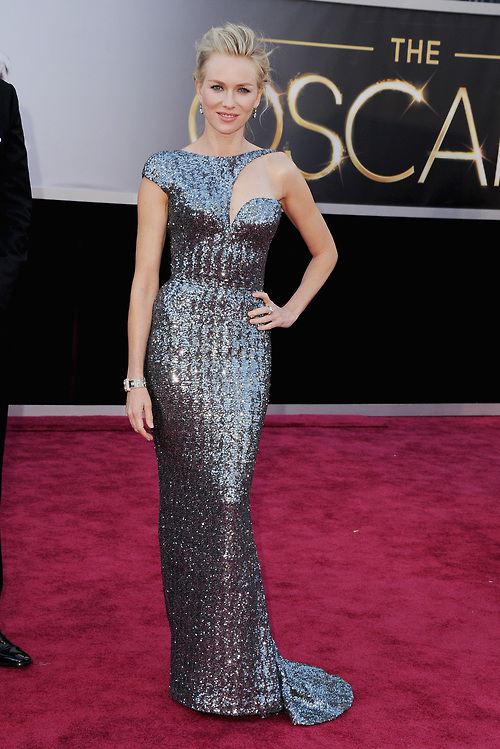
The 85th Academy Awards ceremony was held on February 24, and as with every year at this time, there was intense speculation in the Australian media as to whether any Australians would manage to win an Oscar.

One who was under consideration was actress Naomi Watts, who was born in England and came to Australia as a teenager, where she attended high school in Sydney (Nicole Kidman was one of her classmates). Her first acting jobs were in Australia, gaining experience in film and television. In the 1990s she moved to Los Angeles to continue her career; her big break came when she was chosen as the star of Mulholland Drive.

This year, she was nominated for the Academy Award for Best Actress, for her role of Maria Bennett in The Impossible. She lost to Jennifer Lawrence, but has won several other awards for the film, as well as being judged one of the best-dressed on the red carpet at the Oscars.

Name Information
Naomi is a Hebrew name interpreted as “pleasant, agreeable, sweet”. In the Old Testament, Naomi is a central character in The Book of Ruth, and despite the lovely meaning of her name, things went so wretchedly for her that she told others to call her Mara, meaning “bitterness”.

Because of a famine in Judea, Naomi and her family travelled to the land of Moab, where her husband and both her sons died, leaving her alone with her daughters-in-law Orpah and Ruth. Although her daughters-in-law were foreigners and pagans, they did not desert Naomi, and when she told them she was going back to her own people at Bethlehem, both girls offered to accompany her.

Naomi managed to convince Orpah that she should return to her family and her own customs, but Ruth famously says:

Entreat me not to leave thee, or to return from following after thee: for whither thou goest, I will go; and where thou lodgest, I will lodge: thy people shall be my people, and thy God my God: Where thou diest, will I die, and there will I be buried: the LORD do so to me, and more also, if ought but death part thee and me.

Naomi must have been a pretty wonderful mother-in-law to have evoked such love and loyalty. As mother-in-laws tend to get a bad rap, she really stands out as something special.

When Naomi returned to Bethlehem with Ruth (the famine was over by then), both of them were destitute, and poverty and misery had changed Naomi’s appearance so much that she was barely recognisable; no wonder that she felt she had been treated bitterly and deserved a bitter name.

However, she made lemonade from the lemons life had given her. She arranged for one of her husband’s relatives to marry Ruth, and after the happy couple had a child, she became the little boy’s nanny, caring for him as devotedly as if he had been her own son. I hope the rest of her life was as pleasant as her name.

Naomi is a Japanese name too, most frequently translated as “honest and beautiful” or “beautiful above all”. It is said differently to the Hebrew name, for while we generally pronounce Naomi as nay-OH-mee, the Japanese name is said something like NOW-mee. Although it is a unisex name, it seems to be much more common as a female name in Japan. You will often see Naomi suggested as a cross-cultural baby name for couples where one person is Japanese and the other from an English-speaking country.

Naomi is a classic girl’s name in Australia which has never left the charts. In rare use in the 1900s, it reached the Top 100 in the 1970s, and peaked in the 1980s at #67. It left the Top 100 in the early 2000s, and since then has been up and down the popularity charts in the 100s – most recently up, when it reached #152 in 2011.

As Naomi peaked in the 1970s and ’80s, it would be easy to dismiss it as a “mum” name. However, it never reached the Top 50, and is still in the 100s; it hasn’t been lower than the 100s since the 1950s. I think it manages to avoid being dated by never becoming highly popular, nor uncommon, so it seems very usable. I feel as if this name could belong to someone of almost any age group.

Despite being a familiar name, Naomi still seems slightly unusual, even exotic. It doesn’t sound like other Old Testament girls’ names which have reached the Top 100, like Deborah, Sarah, Rachel, Rebecca or Hannah. These seem solid and homely, perhaps to some ears, even stodgy. If you had never heard the name Naomi before, I wonder if you would guess it to be a name from the Bible? I might have picked it as Polynesian or Native American, if I didn’t know otherwise.

Naomi is a classic name with a distinctive sound and even a distinctive narrative, for the Old Testament Naomi has a Bible story quite unlike other Biblical heroines. I think this is a great choice of baby name for someone who wants something slightly different, yet not at all obscure.

Thank you to Brooke for suggesting Naomi as a featured name.

POLL RESULT
Naomi received an excellent approval rating of 84%, making it one of the best-liked names of the year. The name Naomi was seen as beautiful and distinctive (24%), still suitable as a baby name (17%), a good cross-cultural choice (15%), having an inspiring Bible story (15%), and a pretty classic (13%). However, 9% were put off by the fact that the name is “I moan” backwards. Nobody thought the Bible story of Naomi was depressing.

(Picture shows Naomi Watts at the 2013 Oscars)

Waltzing with … Orange

17 Sunday Feb 2013

Posted by A.O. in Waltzing with ...

≈ 2 Comments

Tags

Banjo Paterson, Celtic names, colour names, Devon names, english names, famous namesakes, French names, fruit names, historical records, locational names, middle names, mythological names, name combinations, name history, name meaning, name trends, nature names, patriotic names, plant names, rare names, royal names, Sanskrit names, sibsets, surname names, tree names, unisex names, vocabulary names

Orange jacket Postcard autumn leavesToday is Banjo Paterson’s birthday, and as we have already covered his name, I thought it would be interesting to look at the name of his birthplace.

At the time of Paterson’s birth, his parents were living at Buckinbah Station, near the town of Yeoval (then known as Buckinbah). Because of the station’s isolation, Banjo’s mother Rose went to stay with her aunt and uncle, Rose and John Templer, at their homestead Narrambla, and it was here that she gave birth to her son. Narrambla is about 2 miles from the centre of Orange, and today lies on the city’s outskirts. Rose herself was born on a homestead near Orange, so it was rather a family tradition.

Orange is a city in the Central West region of New South Wales. It was founded in the early 1820s as a convict settlement, and farmers began settling in the area in 1829. The first discovery of gold in Australia was made in 1851 near Orange, leading to the gold rush. Orange became a trading centre for gold, and continued growing due to its good position for agriculture. It was declared a city in 1946. Orange is known for its fruit growing, especially apples, pears and stone fruits; ironically it is too cool to grow oranges in Orange. It is also a thriving wine making area, and has both gold and copper mining. It is a sister city to Orange in California.

Orange was first called Blackman’s Swamp, after John Blackman, the guide who brought the first explorers there. The name was changed to Orange by the Surveyor-General Sir Thomas Mitchell, in honour of William, Prince of Orange. Mitchell and the Prince had both been aides-de-camp to the Duke of Wellington during the Peninsular War in Spain in the early 19th century. The Prince of Orange later became the first King of the Netherlands.

The Prince’s title originally came from the Principality of Orange in the south of France. It began life as a settlement called Arausio, named after a local Celtic water god; the god’s name is said to mean “temple”, meaning the temples that are on the forehead, not a temple as in a building for worship.

The town’s name was corrupted into Orange, and by the Middle Ages, conflated with the word orange, which comes from the Sanskrit for “orange tree”, naranga. The colour was named after the fruit, and first used this way in the 16th century.

As a personal name, Orange has a longer history than you might imagine, for the girl’s names Orenge and Orengia are found in the 13th century. As this predates the name for the fruit, their etymology is extremely uncertain, and possibly has the same source as the French town, which first became a principality of the Holy Roman Empire in the 12th century.

The surname Orange is either from the place name, or derived from the female name, and when the English name Orange appears in the early 17th century, it may have been after the surname. The name first arises in Devon, and in the beginning was exclusively given to girls, although the name became unisex after William III of England, or William of Orange, gave it a masculine feel.

As a first name, Orange is extremely rare in Australian records, and given to only a few girls, but as a middle name is much more common, and given to boys in almost equal numbers as girls (the middle name Orange was sometimes combined with William in the case of boys, showing that William of Orange still had some naming clout).

Colour names for girls are popular at the moment, with many little girls named Scarlet or Jade; tree names such as Olive and Willow are in the girls’ Top 100, surnames such as Marlowe and Quinn are fashionable for girls, and it’s not unusual to see baby girls named after European cities, such as London or Vienna. Orange seems a more vibrant continuation of these trends. Indeed, you could see it as a hyper juiced-up Clementine.

Orange is such a bright, outgoing, fun colour that it seems very cheerful as a person’s name, but it also has a more serious side, because orange is connected to religion and spirituality. There’s a real yin/yang, East/West dichotomy with the name Orange. Is it as crazy as a clown’s wig? Or as serene as a meditating Buddhist monk?

Orange fruit gains its colour from carotenes, the same thing which makes deciduous leaves turn orange. By chance, the city of Orange is known for its spectacular displays of autumn leaves, and it is therefore known as “The Colour City” (also a play on its name). You might see Orange as a name that evokes the changing of the seasons, and the turn of the year.

Although Orange started life as a girl’s name, it did become unisex, and is so rare that it could be worn by either boys or girls. If you are shy about using this vivid name, it would make an eye-catching middle.

Orange is a bold choice as a baby name, though not without shades of subtlety, and it celebrates Australian geography and history. I think Orange is one of the more distinctive of the patriotic names, and has a real tang to it.

Name Combinations for Orange

Orange Beatrice, Orange Eliza, Orange Lily, Orange May, Orange Ruby, Orange Victoria

Brothers for Orange

Eden, Hartley, Fitzroy, Paterson, Sunny, Tennyson

Sisters for Orange

Audley, Breeza, Corindi, Junee, Kendall, Marinna

Note: Name combinations from historical documents; just for fun, sibsets include names of other towns in New South Wales

POLL RESULT: Orange received an approval rating of only 27% – the lowest-rated featured name of 2013, and the only one to score less than 50%. 40% of people hated the name Orange, and nobody loved it.

(Picture shows a postcard from the city of Orange)

Underused Names for Boys

10 Sunday Feb 2013

Posted by A.O. in Name Themes and Lists

≈ 14 Comments

Tags

Anglo-Saxon names, Arthurian legends, Arthurian names, band names, Biblical names, British names, celebrity baby names, Celtic names, Cornish names, english names, famous namesakes, fictional namesakes, French names, German names, Gothic names, Greek names, hebrew names, Jakob Grimm, Latin names, locational names, mythological names, name history, name meaning, nicknames, Old English names, Old French names, Roman names, royal names, Sabine names, saints names, Scottish names, Shakespearean names, Sir Walter Scott, surname names, unisex names, William Shakespeare

Time-For-Bed-Said-ZebedeeThis follows on from last week’s Underused Names for Girls; to briefly recap, they are names which aren’t common here (used less than six times in the 2012 Victorian data, have never charted in Australia), but still have a history of use in Australia (can be found in historical records).

Alaric

Alaric is from the Gothic name Alareiks, meaning “ruler over all”. Alaric I was the king of the Visigoths who sacked Rome in 410, and his great-grandson, Alaric II, was ruler of the Visigothic kingdom, covering most of Spain and the south of France. Another Alaric was a legendary king of Sweden, skilled in battle and sport, and a masterful horseman. He had a brother Eric, and for some unknown reason, the pair of them killed each other with their horses’ bridles, which seems an awfully strange choice of weapon. The name Alaric is far commoner in fiction than in real life, where it tends to be either chosen for comedies, in the belief that the name Alaric sounds amusingly high-faluting, or science-fiction/fantasy, in the belief that it sounds geekily exotic. In the TV series, The Vampire Diaries, there is a character named Alaric; he says his name uh-LAHR-ik, although most sources say the name is pronounced AL-uh-rik. Powerful and commanding, this is unusual, but sounds similar to familiar names like Alan and Eric.

Blaise

In Arthurian legend, Blaise was the priest who baptised the wizard Merlin, became his tutor and friend, then took the trouble to write down all Merlin’s deeds for posterity. There is a Saint Blaise, who is a saint of healing, as he cures sore throats (the saint was a doctor as well as a bishop). He seems to have been quite popular in England, perhaps because his feast day of February 3 is right after the Celtic festival of Imbolc and the Christian feast of Candlemas, and often marked by bonfires. Blaise sounds like the word blaze, so a pleasing coincidence for fire-lovers. The most famous namesake is Blaise Pascal, the French theologian and philosopher. The meaning could be from either Latin or Greek. If Latin, it means “stuttering, lisping”; if Greek it means “bow-legged”, so either way it’s not flattering. Saint Blaise was Greek, but the Blaise of Arthurian legend is probably meant to be Roman or Romanised, so you can take your pick. It’s a name loved for its sound, namesakes and associations rather than its meaning.

Corin

Corin is a French surname derived from Quirinus; Saint Quirinus was part of a Roman missionary group sent to convert Gaul, and legend has attached to this popular saint all the standard saintly stories, such as killing a dragon and going for a stroll after getting his head chopped off. The original Quirinus was an early Roman god, probably a Sabine war deity. The Sabines had an altar to Quirinus on the Quirinal Hill, one of the Seven Hills of Rome. The Romans considered him to be a deified Romulus, and in the early days he was a major god, although they gradually lost interest in worshipping him. However, even after the fall of Rome, the Quirinal Hill remained a place of power, so that it was chosen as the seat of royalty, and later the residence of the Presidents of the Italian Republic. The name is linked to the name of the Sabine town Cures, and may come from the Sabine word for “spear”. There is a shepherd named Corin in Shakespeare’s As You Like It, and a Prince Corin in C.S. Lewis’ The Horse and His Boy. You can also see this name from another perspective, for in British legend, Corineus was a great warrior and giant-killer who founded Cornwall; his name may be an echo of Cernunnos, the Celtic god, whose name is usually translated as “horn”, or “horned one”. There are several place names in Cornwall apparently derived from Cernunnos (including Cornwall itself), and the name Corin enjoyed early popularity in Cornwall and Devon – so you can see this as a British name just as much as a French one. This packs a double mythological punch, and doesn’t seem much different than names such as Corey or Colin.

Edgar

Edgar is an Old English name meaning “rich spear”. Saint Edgar the Peaceful was a king of England; a Scottish King Edgar was a son of Saint Margaret. The name became rare after the Norman Conquest, but had a revival in the 19th century, after Sir Walter Scott’s historical novel, The Bride of Lammermoor, told the story of tragic lovers Lucy and Edgar – a tale which ends in madness, murder and quicksand. Edgar is also a character in William Shakespeare’s King Lear; disinherited by his father, he wanders the heath disguised as a babbling madman. Noble and clever, he is also enigmatic with a touch of darkness; he enjoys playing the crazy beggar just a little too much. The most famous person named Edgar is probably the American writer, Edgar Allen Poe, said to have been named after Shakespeare’s character. Poe’s works are also quite dark and enigmatic, dealing with topics such as grief, guilt, mystery, murder, madness, doom, death, drugs, and being buried alive. Edgar is related to the other Ed- names, such as Edward and Edwin, but seems more vintage, a bit edgier, and a touch more Gothic. This name might be uncommon, but it’s also traditional and comes with all the usual Ed and Eddie nicknames.

Giles

This is based on the Latin name Aegidius, derived from the Greek for “young goat”. Aegidius was a 7th century hermit from Athens who lived in the south of France with a tame deer; in Old French his name became Gidie, then Gide, and finally Gilles; when the Normans took his name to Britain, it became Giles. A noted miracle worker, Saint Giles was very popular in the Middle Ages, and his name became common; it was also given quietly but steadily to girls (even into the 20th century). Although we often think of Giles as a terribly “English” name, Saint Giles is the patron saint of Edinburgh, and the name Giles is traditional in Scotland; many Gileses in Australian records have Scottish surnames. The English haven’t done this name many favours, as it’s a favourite in English books and TV shows for good-natured upper class twits. However, this doesn’t reflect the reality of the name, or the Australian experience of it, and I think it’s possible to see Giles in quite a different light. I can see Giles as a solid country-style name, a brother to Archie and Will, or slightly hipster, a brother to Hugo and Barnaby. If you crossed Gus with Miles, you might end up with something that looks a little like Giles …

Huxley

Huxley is an English surname. The Huxley family were Normans who came to Britain after the Conquest and settled in Cheshire, taking their name from a village near Chester, which was originally named Holdesieia, and corrupted into Huxley. The original name may be from the Anglo-Saxon for “sloping land”, and Huxley is believed to mean’s “Hucc’s wood”, with Hucc being an Anglo-Saxon nickname meaning “insult, taunt”. Huxley has been used as a personal name since the 18th century, and early examples are from the Cheshire area, suggesting they may have been named directly after the village. The Huxley family have produced an astonishing number of brilliant thinkers, from the biologist T.H. Huxley, supporter of Charles Darwin, to the author Aldous Huxley, who wrote Brave New World. T.H. Huxley came to Australia as a young man, and did such excellent work in natural history that he was made an immediate Fellow of the Royal Society on his return (Mount Huxley in Tasmania is named in his honour). T.H. Huxley’s distant cousin, Sir Leonard Huxley, migrated to Australia in childhood, and became one of our most distinguished physicists. With its fashionable X and intellectual pedigree, this name seems very hip, and comes with the nicknames Huck or Hux.

Jethro

Jethro is translated as “excellence, abundance” in Hebrew, and in the Old Testament, Jethro is the father-in-law of Moses, and a priest (it is never made clear in what religion he was a priest, but by the end he accepted Yahweh as his God). Jethro is revered as a prophet in Islam, and is held in the highest regard by the Druzes. The most famous person with this name is Jethro Tull, an English agricultural pioneer who helped bring about the British Agricultural Revolution which formed the basis of modern farming practices. The rock band Jethro Tull is named after him. You may also remember the dull-witted Jethro Bodine from The Beverly Hillbillies. Jethro is a little bit hick and a whole lot hip – it’s hickster.

Rufus

Rufus started life as a Roman nickname, but afterwards became a family name; it’s from the Latin for “red haired”. There are many famous men with the surname Rufus, including the Stoic philosopher Gaius Musonius Rufus. His views on philosophy were moderate and practical, encouraging all men and women to follow a philosophical life, and giving advice on all manner of topics, including diet (vegetarian, raw) and hairstyles (long, beardy). He was so highly-regarded that when all other philosophers were expelled from Rome by the Emperor Vespasian, Rufus was allowed to stay. There are at least ten saints named Rufus, one of whom is mentioned in the New Testament as a disciple of St. Paul; his father was the man who carried the cross for Jesus on the way to Calvary. There is also the Gaelic saint Mael Ruba, whose name is Anglicised as either Maree or Rufus. King William II of England was nicknamed “Rufus” for his ruddy complexion. Famous people named Rufus include the Canadian-American singer Rufus Wainwright, and the British actor Rufus Sewell; Roger Taylor from Queen has a son named Rufus Tiger. With names ending in -us becoming fashionable, Rufus looks set to become the new Atticus.

Wolfgang

Wolfgang is a German name meaning “wolf path, wolf journey”, and interpreted by folklorist Jakob Grimm as being the name of a hero who follows in the wake of the “wolf of victory”. It has two heavy-duty namesakes: composer Wolfgang Amadeus Mozart, and writer Johann Wolfgang von Goethe; there is also a Saint Wolfgang, one of the patrons of Germany. Eddie Van Halen chose this name for his son. Nearly all Wolfgangs in Australian records have German surnames, and although this would make a striking heritage choice, it could work even if you don’t have a scrap of German ancestry. Wolfgang is one of those names that people seem to either love or loathe, so it attracts some extreme reactions. The usual nicknames are Wolf or Wolfie.

Zebedee

In the New Testament, Zebedee was a fisherman, and the father of the Apostles John and James. He is mentioned as being left behind in the boat when Jesus called the brothers to “become fishers of men”; we never learn whether he was supportive of his sons’ career change, or thought they should have remained fishers of fish. Zebedee’s wife was one of the women present at the crucifixion. The name Zebedee is the Greek form of the Hebrew name Zebadiah, meaning “Yahweh has bestowed”, and nearly always interpreted as “gift of God”. There is an English painter named Zebedee Jones and an English newsreader named Zebedee Soanes; both these Zebedees were born in the 1970s, when the cult children’s show, The Magic Roundabout, was first on television. In the show, Zebedee was a jack-in-the-box who is popularly recalled as ended the show by bouncing down out of nowhere and intoning, “Time for bed, children” (although I’m not sure how often this occurred). With Old Testament names for boys becoming a bit old hat, it could be time to consider some of the more unusual New Testament names. This one is full of zest, and the nickname Zeb is as cowboy cool as Zeke and Jed.

POLL RESULT: People’s favourite names were Huxley, Alaric, and Corin, and their least favourite were Wolfgang, Zebedee, and Giles.

(Picture shows Zebedee from The Magic Roundabout)

Underused Names for Girls

03 Sunday Feb 2013

Posted by A.O. in Name Themes and Lists

≈ 20 Comments

Tags

Arabic names, Arthurian legends, celebrity baby names, Disney names, english names, ethnonyms, famous namesakes, fictional namesakes, flower names, French name popularity, French names, German names, germanic names, Greek names, historical records, How Green Was My Valley, Italian names, Latin names, mythological names, name data, name history, name meaning, name popuarity, names from movies, nature names, nicknames, Old French names, Old Welsh names, Oz: The Great and Powerful, plant names, Poldark, popular culture, Puritan names, rare names, royal names, saints names, Shakespearean names, surname names, The Iliad, The Wizard of Oz, tribal names, unisex names, virtue names, vocabulary names, Welsh names, William Shakespeare

sabine women detailLast week we had names from Victoria which were used less than ten times in 2012. Those names are uncommon – but what if you wanted something even rarer? These are names which don’t appear even once in the Victorian data from last year, and have never charted in Australia. However, they are not strange or obscure, and all of them can be found in Australian historical records.

Angharad

Angharad is an Old Welsh name meaning “greatly loved”. It was reasonably common in medieval times, and there are several Angharads in Welsh history. In Welsh mythology, Angharad Golden-Hand is the lover of Peredur, one of King Arthur’s knights. Angharad Morgan is a main character in How Green Was My Valley, and in the film version was played by Maureen O’Hara. Actress Angharad Rees became well known in the 1970s for playing the role of Demelza in the TV series Poldark. Lots of famous Angharads, yet I could find only one woman named Angharad in Australian records. The pronunciation, ang-HAH-rad, may have caused some concern. This is a strong and unusual name with a lovely meaning. It would definitely stand out.

Beatrix

Beatrix is based on the name Viatrix, the feminine form of the Latin name Viator, meaning “voyager, traveller”. Early on, the spelling was altered to associate it with the Latin word beatus, meaning “blessed”, and it was common amongst early Christians. Some baby name books sandwich these two meanings together and interpret it as “blessed traveller”. Saint Beatrix was an early Roman martyr; according to legend, she was strangled by her servants. The name became less common in England after the Middle Ages, but was revived in the 19th century. One of the most famous people with this name is Beatrix Potter, the children’s writer and illustrator, who gave us such delightful characters as Peter Rabbit, Jemima Puddleduck, Squirrel Nutkin and Mrs. Tiggy-Winkle. As well as these talents, she was also a scientific researcher, conservationist, farmer, and sheep breeder. Queen Beatrix of the Netherlands helps give this name a royal touch, and a famous literary character is Beatrix “Trixie” Belden, girl detective. To me, this charming name seems spunkier and more eccentric than her sister Beatrice.

Cressida

In Greek mythology, Chryseis was the daughter of a Trojan priest named Chryses, and she was captured by the Greek champion Agamemnon as part of the spoils of war; he refused to give her back even after being asked nicely. Chryseis’ dad prayed like blazes to the god Apollo, who obligingly sent a plague through the Greek soldiers until Chryseis was returned. A later legend says that she bore Agamemnon a son. Her name given in the Iliad simply means “daughter of Chryses”; appropriately for a priest of Apollo, Chryses’ name means “golden”, perhaps in reference to sunlight. Some writers say Chryseis’ real name was Astynome, meaning “possessor of the city”. When medieval authors retold the tale of the Trojan War, this story had a complete rewrite. Chryseis became Cressida (KRES-ih-duh), and one corner of a tragic love triangle; she is made the epitome of the false woman and the whore. Some authors were sympathetic to Cressida’s plight, and in Shakespeare’s version, Cressida is complex, highly intelligent and witty. A famous Australian with this name is the artist Cressida Campbell. I find this literary name quite bewitching.

Emmeline

Emmeline is the Old French form of the Germanic name Amelina, based on the word for “work”; it is therefore related to the name Amelia, and not to Emily. The name was introduced to Britain by the Normans, and many people prefer to give it a slightly French pronunciation as EM-uh-leen, while others seek to Anglicise the way it is said as EM-uh-line (like Caroline). My experience is that the British tend to say leen, Americans tend to say line, and Australians have a bob each way and can usually cope with either. There were several prominent suffragists named Emmeline, including Emmeline Pankhurst, Emmeline Pethick-Lawrence and Emmeline Wells. Australia mountaineer Emmeline Du Faur was the first woman to climb Mount Cook (in record time), and the first person to climb several peaks – always dressed in a skirt. Emmeline Pethick-Lawrence was a keen hiker and woodcrafter, and to me the name Emmeline sounds vigorous, healthy, and practical. Emmeline has a solid history of use in Australia, being commonly found in old records, and today its nickname Emmie means it fits in with popular names such as Emily, Emma and Emmerson.

Isadora

Isadora is a variant of the name Isidora, the feminine form of Isidore, from the Greek for “gift of Isis”; the Egyptian goddess Isis was worshipped widely in the ancient world, and she was also important to the Greeks and Romans. Saint Isidora was a 4th century Egyptian nun, considered to be a “holy fool”, and treated with contempt by the other nuns for her eccentric ways, such as wearing a dirty dishrag on her head instead of a veil, and eating only leftovers instead of proper meals. When a visiting saint came to the nunnery, he immediately picked out Isidora as the only person holier than himself; upset by the praise and attention, Isidora ran away into the desert to be a hermit, and nothing more is known of her. The most famous Isadora is the American dancer Isadora Duncan, who developed her own unique style of dance, based on the natural movements of the human body. Like the saint, she was considered eccentric and radical, and danced to the beat of her own drum. Isadora is a beautiful, glamorous and individualistic name!

Lavender

Lavender has been used as a personal name since the 17th century, and was given to both sexes. It may have originally been derived from the surname, which is Norman-French and based on the word lavandier, referring to a worker in the wool industry who washed the raw wool (this is an occupation that both men and women had). Even in the middle of the 20th century, you can still find boys named Lavender. By now, however, it is almost entirely thought of as a girl’s name, and considered to be from the flower. The flower name comes from the Old French lavendre, possibly from the Latin for “blue-coloured”, lividius, but also influenced by lavare, meaning “wash”, because lavender was used in washing clothes. Lavender is often used to scent soaps and beauty products, and has been used as a relaxation aid for thousands of years. The colour lavender is associated with sensuality and decadence, and at one time, was considered symbolic of homosexuality. Like Rose, this is a pretty old-fashioned flower name that is more complex that it first appears.

Sabine

Sabine is a French and German form of Sabina, the feminine form of the Latin name Sabinus, meaning “Sabine”. The Sabines were an Italian tribe who inhabited the region where the city of Rome stands today, and some of them fought against Rome for their independence. According to legend, the Romans abducted Sabine women to populate the city of Rome; the war between the Romans and Sabines ended when the women threw themselves and their children between the armies of their fathers and those of their husbands. The history behind the legend is that the conquered Sabines assimilated with the Romans, beginning a new line of inheritance. Many of the noble Roman families traced their ancestry to Sabine origins, and at least some of the deities and rituals of Rome came from the Sabines. The Sabines were said to have taken their name from the hero Sabus, who was worshipped as a deity. Although it is too long ago to be sure, one theory is that the tribal name Sabine meant “us, ourselves, our own people”. You can either say this name the French way, sa-BEEN, or the German way, za-BEE-nuh; most English-speakers use the French pronunciation. There is at least one famous man named Sabine – the writer Sabine Baring-Gould, whose name was after the surname (derived from the personal name). You can find both men and women named Sabine in Australian records. Sabine is smooth and sophisticated, but comes with a cute nickname – Bean.

Theodora

Theodora is the feminine form of the Greek name Theodoros, meaning “gift of God”. The name pre-dates Christianity, but its meaning appealed to early Christians, and there are a few saints with this name. One of them was Saint Theodora, who as punishment for her pious celibacy, was dragged into a brothel. Her first “customer” was a Christian man, who had came to save her; they were both martyred, but their virtue remained intact. This story is probably fictional, and may have been inspired by sacred prostitution, of which Christians obviously disapproved. An Eastern Orthodox Saint Theodora disguised herself as a man and joined a monastery. Her identity as a woman was only discovered after her death. The name was a very popular one for Byzantine empresses, and Theodora I is also regarded as a saint. A Roman Theodora was a senator, and supposedly the lover of one of the early popes. She was harshly condemned for daring to “exercise power like a man”. The hussy! The image you get from these historical Theodoras is of very strong, independent, determined women – which might explain why Disney has chosen this name for the Wicked Witch of the West in Oz: The Great and Powerful. Pop star Robbie William welcomed a daughter named Theodora Rose last year, called Teddy; he wanted a dignified full name for the cuddly nickname, and Theodora fit the bill perfectly.

Verity

Verity is an English word meaning “truth”, especially in regard to religious truth or doctrine. It has been used as a personal name since the 17th century, and would have been given as a virtue name by the Puritans. However, it was most likely also given in honour of the surname, for births of Veritys in Yorkshire are suggestive, given that the Verity family is a prominent one in that county. The surname is Anglo-Norman, and has the same meaning as the personal name. Originally, Verity was a unisex name, and in early records is given equally to boys and girls. The first Verity I can find born in the United States was a boy, and his family were Puritans in Massachusetts. You can find the name Verity given to both sexes in Australian records, but only as a middle name for boys, and it has never been very common here. Famous Australian women named Verity include the politicians Verity Barton and Verity Firth, the ABC presenter Verity James, and the actress Verity Hunt-Ballard, who played Mary Poppins in the Australian version of the musical. This is a crisp, clean name which sounds intelligent and upper-class to me.

Zia

Zia is a variant of the Arabic name Ziya, meaning “light, shine, splendour” – more specifically, it refers to light which shines by its own illumination, and is connected to the sun and sunlight. Traditionally, Zia is a male name, but Arabic baby name sites usually list it as female, and the name charts in France only for girls. There are quite a few people called Zia in Australian records, and they are not all Arabic men. There are women called Zia from different cultures, including Italian, where Zia may be short for a name such as Annunzia (zia means “aunt” in Italian, but this doesn’t seem to have been a hindrance to its use by Italians). Most women called Zia in the records seem to be of British descent, and I’m guessing either it was seen as a short form of other names, or parents just liked the sound of it. I can imagine parents today also liking the sound of it, because it is so similar to popular names such as Zara and Mia – indeed, it almost seems like a cross between these names. This is a zippy name which sounds a bit different, but won’t seem out of place in the playground.

POLL RESULT: People’s favourite names were Beatrix, Emmeline, and Isadora, and their least favourite were Lavender, Zia, and Angharad.

(Picture shows a detail from The Intervention of the Sabine Women (1799) by Jacques-Louis David)

Baby Names from Victoria Used Less Than 10 Times in 2012

27 Sunday Jan 2013

Posted by A.O. in Name Data

≈ 5 Comments

Tags

name popularity, name popularity - Victoria, nicknames, rare names, unisex names

More fun with the Victorian data – all those names which were used more than 5 times, but less than 10 times last year. Looking for a rare name? You just might find it here.

I did not include variant spellings of more popular names, names where the variant spellings added up to more than 9 uses, or unisex names where the numbers of boys and girls together added up to more than 9.

I did include short forms and elaborations of more popular names, and forms of more popular names from different countries/languages.

Used 9 Times

Girls

  • Agnes
  • Amna
  • Ananya
  • Anaya
  • Astrid
  • Autumn
  • Cadence
  • Camilla
  • Elif
  • Ellen
  • Josie
  • Lisa
  • Marina
  • Martha
  • Melissa
  • Mira
  • Salma
  • Sapphire
  • Sylvie
  • Tina

Boys

  • Aarush
  • Ansh
  • Cassius
  • Darby
  • Dhruv
  • Edison
  • Francesco
  • Frank
  • Harris
  • Hector
  • Jace
  • Joe
  • Jordy
  • Kane
  • Maddox
  • Mahmoud
  • Massimo
  • Monty
  • Nikhil
  • Paddy
  • Samarth
  • Sid
  • Silas
  • Solomon
  • Taylan
  • Tony
  • Troy
  • Vince
  • Walter

Used 8 Times

Girls

  • Aadya
  • Alkali
  • Amity
  • Angelique
  • Ariella
  • Brylee
  • Carly
  • Cassandra
  • Cassidy
  • Demi
  • Jiya
  • Kalani
  • Kelsey
  • Kyla
  • Libby
  • Louisa
  • Luciana
  • Mannat
  • Mariana
  • Myla
  • Nancy
  • Ngoc
  • Paris
  • Rihanna
  • Ruth
  • Sahar
  • Shiloh
  • Tasneem
  • Wendy
  • Zol

Boys

  • Abraham
  • Aleksandar
  • Alessio
  • Amos
  • Ash
  • Carlos
  • Cash
  • Chance
  • Colby
  • Cole
  • Cristiano
  • Dimitri
  • Drake
  • Duke
  • Dusty
  • Francis
  • Gavin
  • Hao
  • Imran
  • Jeremiah
  • Jim
  • Johan
  • Jovan
  • Landon
  • Long
  • Marcel
  • Maxim
  • Nelson
  • Nixon
  • Oakley
  • Raiden
  • Shane
  • Stanley
  • Tanner
  • Trent
  • Veer
  • Willem
  • Wilson
  • Yahya

Used 7 Times

Girls

  • Adelaide
  • Aditi
  • Anita
  • Ann
  • Aubrey
  • Beatrice
  • Casey
  • Elektra
  • Esme
  • Estella
  • Hafsa
  • Henrietta
  • Jenny
  • Joyce
  • Judy
  • Kavya
  • Kyra
  • Linda
  • Malak
  • Marissa
  • Mercy
  • Montana
  • Noor
  • Saffron
  • Sahara
  • Samira
  • Sharni
  • Tanya
  • Vienna

Boys

  • Aditya
  • Alessandro
  • Archibald
  • Caelan
  • Daksha
  • Darren
  • Denzel
  • Emre
  • Fabian
  • Gilbert
  • Giuseppe
  • Hendrix
  • Jamal
  • Jedidiah
  • Jun
  • Karim
  • Kelvin
  • Lakyn
  • Lennon
  • Lucian
  • Marlon
  • Milton
  • Neel
  • Rayan
  • Royce
  • Scott
  • Steve
  • Taha

Used 6 Times

Girls

  • Katerina
  • Kiana
  • Kitty
  • Krishna
  • Kyah
  • Liv
  • Mahi
  • Margot
  • Meadow
  • Melinda
  • Meredith
  • Nadine
  • Nia
  • Nikki
  • Portia
  • Rani
  • Rania
  • Rhea
  • Rosa
  • Sandra
  • Saoirse
  • Serene
  • Shreya
  • Sneha
  • Stacey
  • Sumaya
  • Susan
  • Tamika
  • Tanisha
  • Thu
  • Vera

Boys

  • Jarrah
  • Jonas
  • Julius
  • Keanu
  • Kenny
  • Knox
  • Koda
  • Luis
  • Magnus
  • Mahdi
  • Memphis
  • Mikail
  • Milan
  • Murray
  • Musa
  • Neil
  • Novak
  • Odin
  • Quade
  • Rehan
  • Reyansh
  • Saad
  • Santiago
  • Shaurya
  • Siddharth
  • Steele
  • Stirling
  • Talon
  • Tarkyn
  • Tex
  • Tim
  • Wade

How Unisex is a Unisex Name?

20 Sunday Jan 2013

Posted by A.O. in Naming Issues

≈ 15 Comments

Tags

name data, name popularity, name popularity - Victoria, name trends, popular names, unisex names

boy_girl_symbolsI intimated that we’d probably do a couple of things with the complete 2012 name data from Victoria, now that it’s been released, and something I thought might be interesting would be to look at the unisex names in the data, and see whether they were used more often for girls or boys, or evenly for both.

Unisex Names More Popular for Girls

  1. Addison – 76 girls, 7 boys
  2. Ashley – 31 girls, 13 boys
  3. Eden – 65 girls, 7 boys
  4. Harper – 144 girls, 25 boys
  5. Sasha – 30 girls, 6 boys
  • There are only five names used by both sexes that are significantly more popular for girls.
  • Some parents chose names for their sons which had a reasonable history of being established as feminine by usage, and which are gaining rapidly in popularity for girls, such as Addison and Eden.
  • Ashley is the only one of these names which has a reasonable history of usage by both sexes.
  • The most feminine unisex name is Harper, which has the biggest gap between the sexes.

Unisex Names More Popular for Boys

  1. Alex – 89 boys, 9 girls
  2. Bailey – 93 boys, 15 girls
  3. Casey – 16 boys, 7 girls
  4. Charlie – 264 boys, 63 girls
  5. Darcy – 78 boys, 10 girls
  6. Hunter – 156 boys, 8 girls
  7. Jamie – 31 boys, 6 girls
  8. Jordan – 120 boys, 13 girls
  9. Phoenix – 48 boys, 14 girls
  10. Riley – 217 boys, 9 girls
  11. River – 21 boys, 9 girls
  • There are more than twice as many names used by both sexes that are significantly more popular for boys.
  • Casey, Charlie, Darcy, Jamie and Jordan have a reasonable history of usage as unisex names.
  • Most of these “more boyish” names, even if still popular, are falling in popularity for boys; Charlie and Hunter are the ones who buck this trend, and are still increasing in male popularity.
  • The most masculine unisex name is Riley, which has the biggest gap between the sexes – a much bigger gap than between the boys and girls called Harper.
  • Some parents will choose a name for their child which is Top 100 for the opposite sex (such as Harper or Bailey), so name popularity isn’t always a factor in whether a name is considered a “boy” name, or a “girl” name.

Unisex Names Given Fairly Evenly to Girls and Boys

  1. Ariel – 12 boys, 11 girls
  2. Asher – 35 boys, 26 girls
  3. Blair – 15 boys, 12 girls
  4. Brooklyn – 17 girls, 15 boys
  5. Emerson – 14 girls, 8 boys
  6. Frankie – 12 boys, 9 girls,
  7. Morgan – 13 boys, 11 girls
  8. Quinn – 30 boys, 24 girls
  9. Remi – 11 boys, 7 girls
  10. Remy – 19 girls, 14 boys
  11. Taylor – 31 girls, 20 boys
  12. Tully – 10 girls, 8 boys
  13. Yi – 10 boys, 8 girls
  14. Zi – 7 girls, 7 boys
  • These 14 names could be considered “truly unisex”, in that they are used by both sexes in roughly equal numbers.
  • None of the names are popular, which makes me wonder if once a name gains a high level of use, it will tend to skew towards one sex rather than another.
  • The most unisex name is the Chinese name Zi, with the same number of boys and girls possessing it.

Theoretically Unisex Names Overwhelmingly Used by Girls

  1. Alexis – 112 girls, 5 or less boys
  2. Allie – 12 girls, 5 or less boys
  3. Allison – 12 girls, 5 or less boys
  4. Ally – 11 girls, 5 or less boys
  5. Angel – 21 girls, 5 or less boys
  6. Arya – 19 girls, 5 or less boys
  7. Aubrey – 7 girls, 5 or less boys
  8. Avery – 11 girls, 5 or less boys
  9. Bonnie – 52 girls, 5 or less boys
  10. Brooke – 24 girls, 5 or less boys
  11. Cassidy – 8 girls, 5 or less boys
  12. Chelsea – 104 girls, 5 or less boys
  13. Chelsey – 12 girls, 5 or less boys
  14. Clare – 18 girls, 5 or less boys
  15. Cleo – 34 girls, 5 or less boys
  16. Clover – 12 girls, 5 or less boys
  17. Coco – 23 girls, 5 or less boys
  18. Courtney – 12 girls, 5 or less boys
  19. Crystal – 15 girls, 5 or less boys
  20. Dakota – 25 girls, 5 or less boys
  21. Dana – 12 girls, 5 or less boys
  22. Ebony – 66 girls, 5 or less boys
  23. Elisha – 9 girls, 5 or less boys
  24. Erin – 31 girls, 5 or less boys
  25. Esme – 7 girls, 5 or less boys
  26. Evelyn – 68 girls, 5 or less boys
  27. Florence – 26 girls, 5 or less boys
  28. Gigi – 12 girls, 5 or less boys
  29. Ginger – 8 girls, 5 or less boys
  30. Harlow – 18 girls, 5 or less boys
  31. Indiana – 68 girls, 5 or less boys
  32. Indie – 29 girls, 5 or less boys
  33. Indigo – 36 girls, 5 or less boys
  34. Indy – 21 girls, 5 or less boys
  35. Iris – 20 girls, 5 or less boys
  36. Jade – 53 girls, 5 or less boys
  37. Jessie – 14 girls, 5 or less boys
  38. Joyce – 7 girls, 5 or less boys
  39. Kalani – 8 girls, 5 or less boys
  40. Kelly – 14 girls, 5 or less boys
  41. Kelsey – 8 girls, 5 or less boys
  42. Koa – 11 girls, 5 or less boys
  43. London – 11 girls, 5 or less boys
  44. Madison – 134 girls, 5 or less boys
  45. Maria – 26 girls, 5 or less boys
  46. Marley – 40 girls, 5 or less boys
  47. Mary – 42 girls, 5 or less boys
  48. Mika – 11 girls, 5 or less boys
  49. Miley – 22 girls, 5 or less boys
  50. Mischa – 11 girls, 5 or less boys
  51. Nicola – 13 girls, 5 or less boys
  52. Nikita – 27 girls, 5 or less boys
  53. Nikki – 6 girls, 5 or less boys
  54. Noor – 7 girls, 5 or less boys
  55. Olive – 53 girls, 5 or less boys
  56. Paige – 85 girls, 5 or less boys
  57. Paris – 8 girls, 5 or less boys
  58. Payton – 7 girls, 5 or less boys
  59. Pearl – 21 girls, 5 or less boys
  60. Peyton – 24 girls, 5 or less boys
  61. Piper – 68 girls, 5 or less boys
  62. Reese – 7 girls, 5 or less boys
  63. Ruby – 419 girls, 5 or less boys
  64. Sage – 13 girls, 5 or less boys
  65. Scarlet – 6 girls, 5 or less boys
  66. Scarlett – 256 girls, 5 or less boys
  67. Shelby – 19 girls, 5 or less boys
  68. Shiloh – 8 girls, 5 or less boys
  69. Skye – 43 girls, 5 or less boys
  70. Stacey – 6 girls, 5 or less boys
  71. Stevie – 16 girls, 5 or less boys
  72. Sydney – 8 girls, 5 or less boys
  73. Teagan – 13 girls, 5 or less boys
  74. Tegan – 9 girls, 5 or less boys
  75. Tia – 23 girls, 5 or less boys
  76. Vivian – 19 girls, 5 or less boys
  77. Wendy – 8 girls, 5 or less boys
  78. Willow – 129 girls, 5 or less boys
  79. Winter – 22 girls, 5 or less boys

The most feminine unisex name is Ruby, which is #3 for girls and in very rare use for boys (quite possibly, no boys at all). Ruby does have some usage as an Australian male name in the 19th century.

Theoretically Unisex Names Only Used by Boys

  1. Adrian – 37 boys, 5 or less girls
  2. Aiden – 144 boys, 5 or less girls
  3. Ali – 65 or less boys, 5 or less girls
  4. Arlo – 28 boys, 5 or less girls
  5. Ash – 8 boys, 5 or less girls
  6. Beau – 75 boys, 5 or less girls
  7. Blake – 163 boys, 5 or less girls
  8. Bodhi – 19 boys, 5 or less girls
  9. Brodie – 55 or less boys, 5 or less girls
  10. Brody – 35 boys, 5 or less girls
  11. Cameron – 53 boys, 5 or less girls
  12. Campbell – 35 boys, 5 or less girls
  13. Chance – 8 boys, 5 or less girls
  14. Chase – 94 boys, 5 or less girls
  15. Chris – 18 boys, 5 or less girls
  16. Clancy – 13 boys, 5 or less girls
  17. Coby – 17 boys, 5 or less girls
  18. Cody – 48 boys, 5 or less girls
  19. Colby – 8 boys, 5 or less girls
  20. Cooper – 248 boys, 5 or less girls
  21. Dallas – 13 boys, 5 or less girls
  22. Dion – 12 boys, 5 or less girls
  23. Dusty – 8 boys, 5 or less girls
  24. Dylan – 146 boys, 5 or less girls
  25. Elliot – 41 boys, 5 or less girls
  26. Elliott – 24 boys, 5 or less girls
  27. Evan – 50 boys, 5 or less girls
  28. Ezra – 13 boys, 5 or less girls
  29. Finlay – 18 boys, 5 or less girls
  30. Finley – 23 boys, 5 or less girls
  31. Francis – 8 boys, 5 or less girls
  32. Harley – 53 boys, 5 or less girls
  33. Hayden – 119 boys, 5 or less girls
  34. James – 381 boys, 5 or less girls
  35. Jay – 18 boys, 5 or less girls
  36. Jesse – 65 boys, 5 or less girls
  37. Joey – 10 boys, 5 or less girls
  38. Jonty – 15 boys, 5 or less girls
  39. Jude – 60 boys, 5 or less girls
  40. Julian – 70 boys, 5 or less girls
  41. Kai – 89 boys, 5 or less girls
  42. Koby – 51 boys, 5 or less girls
  43. Kody – 10 boys, 5 or less girls
  44. Logan – 178 boys, 5 or less girls
  45. Luca – 113 boys, 5 or less girls
  46. Luka – 53 boys, 5 or less girls
  47. Mason – 266 boys, 5 or less girls
  48. Max – 283 boys, 5 or less girls
  49. Maxwell – 49 boys, 5 or less girls
  50. Memphis – 6 boys, 5 or less girls
  51. Micah – 32 boys, 5 or less girls
  52. Milan – 6 boys, 5 or less girls
  53. Miller – 21 boys, 5 or less girls
  54. Musa – 6 boys, 5 or less girls
  55. Myles – 16 boys, 5 or less girls
  56. Noah – 409 boys, 5 or less girls
  57. Oakley – 8 boys, 5 or less girls
  58. Parker – 31 boys, 5 or less girls
  59. Rafferty – 17 boys, 5 or less girls
  60. Reece – 17 boys, 5 or less girls
  61. Reed – 7 boys, 5 or less girls
  62. Reid – 9 boys, 5 or less girls
  63. Reilly – 6 boys, 5 or less girls
  64. Rory – 36 boys, 5 or less girls
  65. Rowan – 12 boys, 5 or less girls
  66. Ryan – 228 boys, 5 or less girls
  67. Sam – 66 boys, 5 or less girls
  68. Saxon – 26 boys, 5 or less girls
  69. Shane – 8 boys, 5 or less girls
  70. Sean – 32 boys, 5 or less girls
  71. Sidney – 7 boys, 5 or less girls
  72. Sunny – 12 boys, 5 or less girls
  73. Toby – 78 boys, 5 or less girls
  74. Tristan – 38 boys, 5 or less girls
  75. Troy – 9 boys, 5 or less girls
  76. Zion – 15 or less boys, 5 or less girls

The most masculine unisex name is Noah, which is #6 for boys, and very rare for girls (perhaps not used at all). Noah can also be a Hebrew name for girls, from a completely different derivation than the male name Noah. I was not able to find any women named Noah in Australian records, but this might be because the high volume of male ones obscured them.

So … how unisex is a unisex name? Disappointingly, the answer seems to be “not very”. Most unisex names are in fact used much more by one sex over another, and those that are given fairly equally to both boys and girls do not have a high level of use.

I see no reason why a boy cannot be called Sage, or a girl Memphis, but even these obviously unisex names are skewed either female or male in the data.

Some people worry that girls are “taking all the boys names“, which will lead to some kind of naming cataclysm of epic proportions. Others look forward to an era when parents feel free to choose whatever name they like, unconstrained by gender.

So far, there is little evidence of either this fear or hope coming into being. Although we all seem to know a boy named Jade or a girl named Arlo, their numbers are too insignificant to show up in the data.

← Older posts
Newer posts →

Enter your email address to follow this blog

Categories

Archives

Recent Comments

A.O.'s avatarwaltzingmorethanmati… on Zarah Zaynab and Wolfgang…
Madelyn's avatarMadelyn on Zarah Zaynab and Wolfgang…
JD's avatardrperegrine on Can Phoebe Complete This …
A.O.'s avatarwaltzingmorethanmati… on Rua and Rhoa
redrover23's avatarredrover23 on Rua and Rhoa

Blogroll

  • Appellation Mountain
  • Baby Name Pondering
  • Babynamelover's Blog
  • British Baby Names
  • Clare's Name News
  • For Real Baby Names
  • Geek Baby Names
  • Name Candy
  • Nameberry
  • Nancy's Baby Names
  • Ren's Baby Name Blog
  • Sancta Nomina
  • Swistle: Baby Names
  • The Art of Naming
  • The Baby Name Wizard
  • The Beauty of Names
  • Tulip By Any Name

RSS Feed

  • RSS - Posts

RSS Posts

  • Celebrity Baby News: Melanie Vallejo and Matt Kingston
  • Names from the TV Show “Cleverman”
  • Can Phoebe Complete This Sibset?
  • Zarah Zaynab and Wolfgang Winter
  • Baby, How Did You Get That Name?
  • Celebrity Baby News: Media Babies
  • Celebrity Baby News: Adelaide Crows Babies
  • Celebrity Baby News: Chris and Rebecca Judd
  • Names at Work: Name News From the World of Business and Employment
  • Celebrity Baby News: Sporting Round Up

Currently Popular

  • Celebrity Baby News: Alisa Camplin and Oliver Warner
  • Rare Boys Names From the 1950s
  • The Top 100 Names of the 1930s in New South Wales
  • Sad Celebrity Baby News (contents may cause distress)
  • Girls Names From Stars and Constellations

Tags

celebrity baby names celebrity sibsets english names famous namesakes fictional namesakes honouring locational names middle names name combinations name history name meaning name popularity name trends nicknames popular names saints names sibsets surname names twin sets unisex names

Create a free website or blog at WordPress.com.

Privacy & Cookies: This site uses cookies. By continuing to use this website, you agree to their use.
To find out more, including how to control cookies, see here: Cookie Policy
  • Subscribe Subscribed
    • Waltzing More Than Matilda
    • Join 517 other subscribers
    • Already have a WordPress.com account? Log in now.
    • Waltzing More Than Matilda
    • Subscribe Subscribed
    • Sign up
    • Log in
    • Report this content
    • View site in Reader
    • Manage subscriptions
    • Collapse this bar
 

Loading Comments...