• About
  • Best Baby Names
  • Celebrity Baby Names
  • Celebrity Baby Names – Current
  • Celebrity Baby Names – Past
  • Featured Boys Names
  • Featured Girls Names
  • Featured Unisex Names
  • Links to Name Data
  • Waltzing on the Web

Waltzing More Than Matilda

~ Names with an Australian Bias of Democratic Temper

Waltzing More Than Matilda

Tag Archives: surname names

Less Commonly Used Boys Names

10 Sunday Jun 2012

Posted by A.O. in Name Themes and Lists

≈ 9 Comments

Tags

Anglo-Norman names, Apache names, Australian vocabulary words, celebrity baby names, english names, fabric names, famous namesakes, fictional namesakes, germanic names, Hindi names, Indian names, Italian names, Latin names, locational names, mythological names, name data, name history, name meaning, name popularity, Native American names, nicknames, popular culture, Roman names, saints names, slang terms, surname names, unisex names, US name popularity, vocabulary names, Welsh names, Yorkshire dialect names

This follows on from Less Commonly Used Girls Names. The names are from the bottom of the popularity charts in New South Wales, Victoria, Queensland and Tasmania, and in each case, the name was used less than ten times in 2011.

There seems to be a lot of musical references in this entry, so I’ve linked relevant names to YouTube videos of the person performing.

Atticus

This Roman name means “man from Attica” – Attica being the area of Greece surrounding the city of Athens. This name wasn’t uncommon in the ancient world; there is a Platonist philosopher called Atticus, and there is also a Saint Atticus, a soldier who died a martyr by being burned at the stake. However, today it is most associated with Atticus Finch, the principled lawyer and loving single father in Harper Lee’s novel, To Kill a Mockingbird. Atticus Finch, who defends a black man on a rape charge in a small Southern town during the 1930s, is considered a folk hero in legal circles. In the 1962 film adaptation, Atticus is played by Gregory Peck, who was a civil rights activist; Peck won an Academy Award for his performance, and in 2003 the American Film Institute voted his character the greatest hero in American film. It is that decent, understated heroism of Atticus Finch that makes him such a beloved character in literature and film. The character has inspired the names of both a clothing line run by musicians and an alternative rock band. It’s a hip choice which has been burning up the US popularity charts since 2004.

Bryn

Bryn is a modern Welsh name which means “hill”; as well as being a man’s name, it is also a common place name in Wales and England. A famous person with this name is Welsh opera star Bryn Terfel, a bass-baritone best known for his roles in the works of Mozart and Wagner. Apparently he applied to study music in Cardiff, but was so annoyed when they assumed he was a woman that he ended up studying in London instead. Bryn Terfel, whose first language is Welsh, is a patron of Welsh language and culture, and hopefully by now everyone in Wales recognises his name as male. Even though Bryn isn’t a common name in Australia, I don’t think it would seem too out of place either, as there are several boy’s name beginning with Br-, such as Brent and Brody. It looks rather like a cooler version of Irish Brian, which may have a similar meaning.

Corbin

Corbin is an English surname which started as a nickname based on the Anglo-Norman word for “raven”. It may have been given to someone who had raven-black hair, although less flattering possibilities also come to mind. Corbinus, the Latinised form, is found as a first name in the Domesday Book, so it has a long history of use. Despite being an old English name, this tends to be thought of as a modern American one, because it’s been solidly Top 500 in the US since the late 1980s. This may be because of television actor Corbin Bernsen, who began playing lawyer Arnold Becker on LA Law in 1986 and remained on the show until it finished in 1994. Another famous namesake is Corbin Harney, an elder and shaman of the West Shoshone people. He devoted his life to spreading a message about the dangers of nuclear energy, and the environmental issues facing the world. You may also know the name from Corbin Bleu, who was in High School Musical. This name is apparently so unusual in Australia that the article the information came from described it as a “bizarre” choice, although it seems a perfectly nice, normal name to me.

Denim

The fabric denim was originally called serge de Nîmes, after the French city where the tough cotton material was originally made by the Andre family. This was eventually shortened to denim. Denim is inextricably linked with jeans, which began life as sturdy clothing for workers, and then became fashion icons which symbolised teen rebellion. Today they are worn by pretty well everybody. Denim is an interesting name choice; it’s not really a “bad boy baby name” like Axe or Vandal, because while denim is worn by rebel icons like rock stars and bikers, it’s also worn by suburban mums and little kids. Also fabrics are usually thought of as girls names, like Velvet and Paisley, but denim is tough and hard-wearing. It’s definitely an ambiguous sort of name – one that, like the fabric, may grow with the person better than you’d expect. It’s also a soundalike with the surname and place name Denham.

Jagger

This English surname originated in Yorkshire, and means “hawker, carrier”, the word jagger being Yorkshire dialect for someone who carries a pack or load. It is claimed that most people with this surname are descended from a single family who came from Staniland, near Halifax. There was a high concentration of people named Jagger in Yorkshire, compared to the rest of England. The most famous person with this surname is undoubtedly Sir Michael “Mick” Jagger from The Rolling Stones, whose mother was born in Australia. I don’t know if this is correct, but Mick Jagger is said to be distantly related to Joseph Jagger, the 19th century British engineer famous for being “the man who broke the bank at Monte Carlo”. Joseph Jagger was indeed from Halifax in Yorkshire. The name Jagger is almost always given in relation to The Rolling Stones frontman, and may have been given a boost in 2011 from the Maroon 5 song, Moves Like Jagger, which is a tribute to Sir Mick. The number of baby boys named Jagger went from 5 to 8 in Queensland last year.

Naiche

Naiche was the last hereditary chief of the Chiricahua band of Apache Native Americans. He was an ally, protege and relative by marriage of Geronimo, the famous Apache leader and war chief. Naiche and Geronimo successfully went to war together in the 1880s, but Naiche ended up being imprisoned. Although he had resisted the process of being moved onto an “Indian Reservation”, eventually he was forced to give in, and ended his days on an Apache reservation in New Mexico. He lived only six years after moving there, and his descendants are still on the reservation. The name Naiche means “meddlesome one, mischief-maker” and it can apparently be pronounced NAY-chee, but I’m not sure if that’s the correct Apache pronunciation, or even whether it depends on which Apache accent you’re using. Naiche is for sure a very unusual name in Australia, but it has a fascinating namesake, and actually sounds slightly like Nate and Nathan. Pronunciation and spelling seem like they would be an issue.

Occy

Occy is the nickname of Australian surfer Marco “Mark” Occhilupo. Occy is short for his Italian surname, which means “eyes of the wolf”. At the same time, it is a play on the Australian word occy straps, short for octopus straps – those stretchy cords which are used by surfers to tie their surfboards onto their car’s roof rack. Mark Occhilupo was a precocious teenage surf god of the 1980s who lost his way for several years as his life spiralled out of control. In the mid-1990s, he made a comeback, and stunned everyone when he won a world title in 1999 at the age of 33. He considered retiring in 2005, but realised he still had a lot left in him. Now aged 45, he only competes part-time, but this year he made it into the final four of the Telstra Drug Aware Pro semi-finals, defeating top-ranked surfers to do so. Mark, also dubbed The Raging Bull, is an inspirational sporting icon who teaches us that mature experience can be more important than youthful talent, and that things are never over until you give up. Although Occy is a nickname and a slang term, it means so much more.

Pax

Pax is the Latin word for “peace”, and the Romans recognised a goddess of this name who symbolised peace, and was associated with the spring. The word pax also means “treaty, accord”, and the Pax Romana is the name given to the two-century period (approximately 27 BC to 180 AD) of stability and minimal military expansion in the Roman Empire. For the Romans, peace wasn’t about everyone holding hands and singing Imagine together in a field of daisies – it described that period during war when all your opponents had been thoroughly beaten and were no longer able to resist. It denoted ultimate military victory, rather than co-operation and unity. Today we see peace rather differently, and the name is probably given with the modern concept in mind rather than the ancient Roman one. In 2007, Angelina Jolie adopted a son from Vietnam and named him Pax Thien. Pax may be the name of a goddess, but this one has very much gone to the boys, as it fits so well with popular male names such as Max and Jax.

Veer

Veer is an Indian name meaning “bravest of the brave” in Hindi. Veer (“valour”) is one of the nine rasas of ancient Hindu philosophy. These emotional states are repositories of energy drawn from our life force, and by learning to master these energies, we gain emotional balance. The rasa of Veer stops us from running away from our problems, and instead face them head on; it also gives us the courage to not allow adversity to defeat us, but to get up after a fall, and continue on. It also allows us to have the healthy confidence and self-esteem needed to achieve in life. Veer Teja Ji is an Indian folk hero and saint, and the highly successful 2004 Bollywood film Veer-Zaara is about the star-crossed romance between Indian Air Force Squadron Leader, Veer Pratap Singh, and a wealthy Pakistani woman, Zaara Haayat Khan. Veer has a very positive meaning, and looks the same as the English word veer, meaning “to swerve”. It’s also a homonym of the English name Vere, so both sound and spelling are familiar to English-speakers, and it seems a very usable heritage choice.

Ziggy

Ziggy is a nickname for Germanic names such as Sigmund, but in practice is used for a variety of names starting with Z. It is famous as the name of pop star David Bowie’s alter ego, Ziggy Stardust. Bowie based the name on a London tailor’s shop called Ziggy’s that he saw from a train one day. The surname Stardust was taken from American country and western singer Norman Carol Odom, a weird novelty act billed as The Legendary Stardust Cowboy. Norman appealed to Bowie because he had a crazy band of misfits who barely understood music, and was unconsciously hilarious. The character of Ziggy was based on pioneering English rocker Vince Taylor, who modelled himself on Elvis Presley. Like so many after him, drugs proved his downfall, and he ended up believing he was the son of God, and existing solely on eggs. Bowie got to know him, and was impressed by his magnificent repertoire of dottiness. So Ziggy Stardust was a mixture of fashion, madness, outsider art, and rock and roll excess. Ziggy is also the nickname of Bob Marley’s son David, although in his case it was a drug reference. Cute name, with a solid musical background.

(Photo shows David Bowie’s final performance as Ziggy Stardust at the Hammersmith Odeon in London, 1973)
Famous Name: Diamond

06 Wednesday Jun 2012

Posted by A.O. in Famous Names

≈ 11 Comments

Tags

British Baby Names, english names, famous namesakes, fictional namesakes, gemstone names, Greek names, honouring, Mer de Noms, name history, name meaning, nature names, surname names, US name popularity, vocabulary names

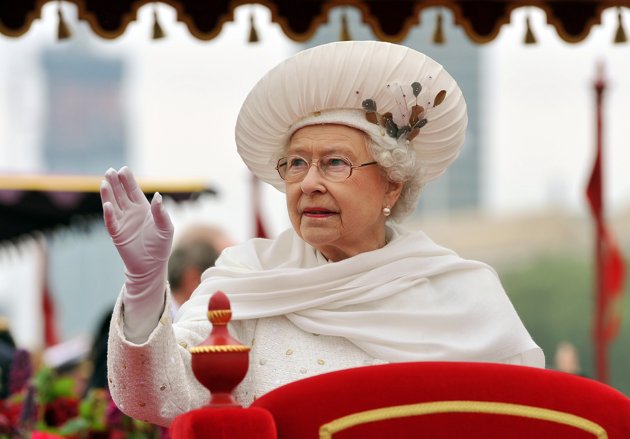
Queen Elizabeth II is only the second monarch since Queen Victoria to reign for sixty years. Last weekend, it was the Queen’s Diamond Jubilee celebration, where the British enjoyed four days of triumphant pageantry, horse-drawn carriages, royal barges, processions, church services, street parties, luncheons, concerts, festivities and general revelry. Naturally the Brits didn’t allow a bit of very British rain to stop the fun.

We also celebrated here, in a more humble and low-key sort of way, and even managed to have wet weather, in a meteorological show of sympathy. We sent a detachment of the New South Wales Mounted Police to represent us at the pageant, and Indigenous performer Gurrumul came on stage for Sing, a song written especially for the Jubilee featuring 200 artists from the Commonwealth; Kylie Minogue and Rolf Harris also performed at the concert (not together).

Australia has another connection to the Queen’s Jubilee: earlier this year, the largest pink diamond ever mined in Australia was found at Rio Tinto’s Argyle mine in the north-west of Western Australia (which is the source of most of the world’s supply of pink diamonds). The diamond is 12.76 carat, and, in honour of the Diamond Jubilee, has been dubbed the Argyle Pink Jubilee diamond. It was cut and polished in Perth, and will be sold later this year; pink diamonds cost about 20 times more than equivalent white diamonds.

The name Diamond is ultimately from the Greek adamas, meaning “unbreakable, invincible” (although the Greeks probably used the word to refer to other gemstones). It is from this that we get the words adamant, meaning “determined, unyielding”, and adamantine, meaning “as hard as diamond”. Diamonds are famous for their hardness, as well as their clarity and fiery white lustre.

It is thought that diamonds were first recognised and mined in India, where they have been used in Hindu religious icons for thousands of years. India remained the only source of diamonds until the 18th century, when they were discovered in Brazil, and today most of the world’s diamonds are cut and polished in India.

Diamonds have been used for jewellery since ancient times, and one of the most famous of their uses is for engagement rings. Medieval Italians called the diamond the “stone of reconciliation”, saying that it would maintain harmony between husband and wife. Diamonds were therefore recommended for betrothal rings, although they could only be afforded by royalty and aristocracy. It was the marketing campaign of De Beers begun in 1938 that sold us the idea that everyone needed to have a diamond engagement ring; such a campaign was necessary because of the large quantities of diamonds being brought in, especially from South Africa.

Mention of Africa brings up a grim factor of the diamond industry: the blood diamonds. In politically unstable countries of central and west Africa, revolutionary groups have taken over control of diamond mines, using the proceeds to fund their operations. Processes are in place to prevent blood diamonds from entering the mainstream market, and although they aren’t perfect, your chance of actually buying a “blood diamond” from a reputable jeweller is probably fairly remote.

However, the ethics of diamond mining are still pretty murky in many areas. Mines in India and South Africa not infrequently use child labour, working conditions can be cruel, and miners and gemstone cutters earn a pittance in relation to the value of the stones they help produce. De Beers have built mines in areas where they have forcefully displaced the indigenous people of the region, so even an “ethical diamond” may not be as ethical as you hoped.

For some reason, the name Diamond seems to get more negative reactions than other gemstone names, like Ruby or Pearl. The very hardness and sparkle which makes real diamonds so valuable, somehow makes the name Diamond appear “cheap” or “rough”. When diamonds symbolise so many positive things – strength, beauty, eternal love – that seems a foolish distinction to make.

Diamond is a gemstone name that works equally well for boys. For a start, the English surname Diamond is specifically masculine, and comes from an Anglo-Saxon personal name Dayman, meaning “man who takes care of livestock”. In Ireland, the surname is based on the personal male name Dermot, while the surname taken directly from the gemstone was adopted by some Jewish families from Eastern and Central Europe.

George McDonald’s enchanting fairy tale At the Back of the North Wind has a little boy named Diamond as its hero, and the movie I Am Sam has Dakota Fanning playing a girl named Lucy Diamond Dawson, her name a direct reference to the Beatle’s song, Lucy in the Sky with Diamonds.

Another connection with diamonds and royalty is a little girl named Diamond Ann Marshall, who was chosen to meet Catherine, Duchess of Cambridge on the royal tour of Canada. Diamond wrote the duchess a nice letter, and when she met her, gave her a big hug. Diamond was a cancer patient at the time, but is now in remission. Diamond’s name was given to her in honour of Princess Diana – I’m guessing Diamond Ann sounded like the name Diana to her parents.

Diamond as a girl’s name has been on the US Top 1000 since 1986, and peaked at #150 in 1999. It’s currently #760 and falling. It may be on the wane in America, but I hope that the Jubilee year inspires a spike of baby Diamonds in Commonwealth countries.

Looking for some more baby names for the Diamond Jubilee? Go check out these blogs from Elea at British baby Names, and Lou at Mer de Noms.

Less Commonly Used Girls Names

03 Sunday Jun 2012

Posted by A.O. in Name Themes and Lists

≈ 20 Comments

Tags

Abby Sandel, alphanumeric names, Arabic names, Baby Name Wizard, Bonds Baby Search, celebrity baby names, Celtic names, created names, english names, famous namesakes, fictional namesakes, French names, Greek names, hebrew names, Italian names, locational names, Mer de Noms, modern names, mythological names, name data, name history, name meaning, name popularity, Nameberry, Names from the Dustbin, nicknames, popular culture, pseudonyms, rare names, Scottish names, Semitic names, Shakespearean names, stage names, surname names, The Nameberry Nine, Turkish names, unisex names, vocabulary names

When all the name data for the most popular names was released, there were also several articles which looked at some of the names closer to the bottom of the popularity lists than the top. Dorcas at Names from the Dustbin calls these names Bottom of the Barrel – not meaning that they are necessarily of poor quality, but just low in the rankings.

Most names at the bottom of the lists are just re-spellings of common names, or short forms of names that are usually kept as nicknames rather than a full name. However, if you sift through these, there’s some interesting finds at the “bottom of the barrel”, and even some neglected gems.

These names are from the popularity charts of New South Wales, Victoria, Queensland, and Tasmania. Nearly all of them are taken from the very rarest names in their state.

Adeline

This is a pet form of the French name Adele; the French pronunciation is a-de-LEEN, but the English is AD-uh-line. The name is well known from the American ballad Sweet Adeline, which was a standard for Australian folk band, The Seekers. There’s also the piece, Ballade pour Adeline, written for the composer’s baby girl, which I had to thump out tunelessly with my chubby fingers during many a childhood music lesson. However, Adeline has got considerably cooler since then; Kasey Chambers has a song called Adeline, Green Day’s Adeline Records handles indie rock bands, and Elliot Smith released his own darker version of Sweet Adeline. I read at Abby’s Nameberry Nine that Simon Helberg from The Big Bang Theory welcomed a daughter named Adeline last month, making it an up-to-the minute celebrity baby name. Adeline has never been on the Top 100; it was #162 for the 1900s, and then sank until it was out of regular use by the 1940s. Today it fits in well with Adelaide, Addison, Madison and Madeline; however it may be difficult for short form Addie to stand out amongst the sea of Maddies and Abbies.

Allegra

Allegra means “cheerful, lively” in Italian, related to the musical term allegro, and has a long history as a celebrity baby name. Romantic poet Lord Byron re-named his illegitimate daughter Clara Allegra Byron (called by her middle name, and originally named Alba by her mother). Despite poor little Allegras’s life being brief and marked by neglect, the name seems to have been an apt one, because she was described as a vivacious child. Her story didn’t stop American poet Henry Longfellow from using it as his daughter’s middle name; in his poem The Children’s Hour, he describes her as “laughing Allegra”. The American inventor and designer, Buckminster Fuller, also gave this name to his daughter. Allegra Versace is the daughter of Italian designer Donatella Versace, and Allegra Kurer is the daughter of British radio host Vanessa Feltz. In Australia, news presenter Jessica Rowe chose it for her eldest daughter in 2007, and last year it was chosen for the daughter of Emmy Kubainski. Frothy and elegant, with a positive meaning, this fashionable favourite would also make a good Italian heritage choice.

Bonnie

Bonnie is taken from the Scottish word bonnie, meaning “pretty, beautiful”; it’s derived from the French bon, meaning “good”. Bonnie has been used as a personal name since the 19th century, and was even sometimes given to boys, but received a huge boost when it was used in Margaret Mitchell’s popular romance, Gone with the Wind. Bonnie Blue Butler is the daughter of Scarlett and Rhett, and receives her name because she has eyes the colour of the Bonnie Blue Flag – the banner of the Confederate States in the American Civil War. British rocker Billy Idol, who sang Rebel Yell, named his daughter Bonnie Blue, and we had a Bonnie Blue competing in the Bonds Baby Search. Another famous Bonnie is Bonnie Parker, one half of notorious crime duo Bonnie and Clyde. Bonnie has been on the charts almost continuously, albeit in rare use in the 1950s and ’60s. It had a peak in the 1920s at #172, then peaked again in the 1990s at #157; it’s currently climbing in the mid-100s in New South Wales, but is obviously rarer in other states. It’s a sweet old-fashioned name which is also linked to rebellion, giving it a spunkier image.

Cleopatra

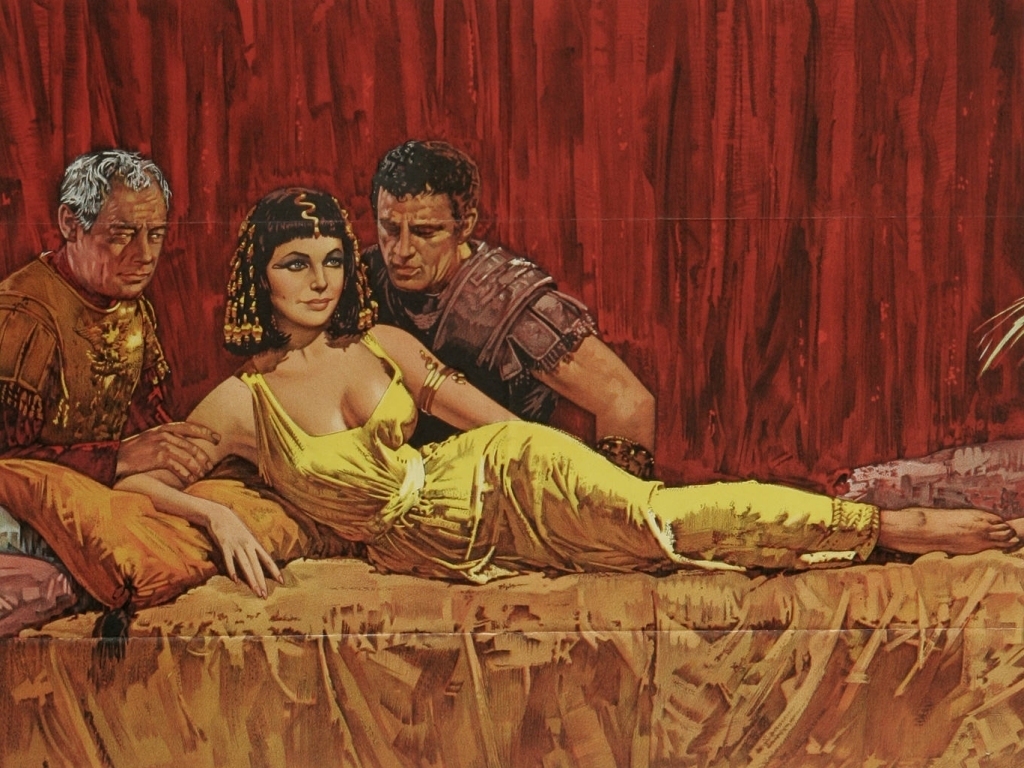
This Greek name means “glory of the father”, and is almost impossible for us to disassociate from the famous Queen of Egypt. From a dangerously inbred family of Macedonian Greek origin, she ruled Egypt alongside her father, and then her brothers (who were also her husbands), but then seized control and reigned alone for many years. She was able to align herself with Rome as both ally and lover to both Julius Caesar and Mark Antony, but after Mark Antony’s death, is said to have poisoned herself before she could be captured and humiliated. According to tradition, she killed herself with an asp. Her story captured the imagination of William Shakespeare, who based his play Antony and Cleopatra on the last part of her life, and her story has been made into several films, including the lavishly dreadful one starring Elizabeth Taylor and Richard Burton. Cleopatra is always depicted as a woman of great beauty, although early traditions suggest her attractiveness was based more on enormous charm and sex appeal. This ancient, glamorous name carries a lot of weight, but with short form Cleo becoming fashionable, some parents may wish for a long form of the name.

Elif

This Turkish name is after Alif, the first letter of the Arabic alphabet, and has connotations of “tall and slender”, as if the person is shaped like the letter, which is a long vertical line. It is pronounced ay-LEEF. You probably recall that Natalie Portman had a son named Aleph last year; Aleph is the Hebrew form of the same letter. The meaning of the letter goes back to the West Semitic word for “ox”, as the cuneiform originally represented the shape of an ox’s head. In Arabic, the word is connected via folk etymology to the word for “coy, tamed”, giving it a subtly demure feeling. It’s a common girl’s name in Turkey, and there are several Turkish celebrities with this name. There’s also a town in Turkey called Elif. I’m not sure a non-Turkish person would ever use it, but it’s certainly an attractive name that is easy enough for an English-speaker to understand and pronounce, once they’ve learned how it’s said.

Harlow

This name is inspired by Jean Harlow, a Hollywood superstar of the 1930s. With her platinum hair and vampish image, she was the forerunner to many blonde bombshells of the movies. Despite her beauty and success, Harlow’s life contained much tragedy, and she died of kidney failure while only in her twenties. Harlow took her mother’s maiden name as her stage name; her birth name was Harlean Carpenter. The surname Harlow is from several places in England. Harlow in Yorkshire means “hill of rocks” in Old English, while the meaning of Harlow in Essex is disputed. One theory is that it means “army hill”, with the idea being that local landmark Mulberry Hill was a meeting place for the local people. Another is that it means “temple mound”, as there is an Iron Age burial mound in the area which later had a Roman temple built on the site. Harlow is a unisex name, but more common for girls; the name came to public attention when Nicole Richie named her daughter Harlow in 2008. There were 20 babies named Harlow in Queensland last year, up from 12 the year before. Although numbers are still low, that’s a significant jump.

Pixie

This name is after the small mythological being of English folklore, tales of which come from Cornwall and Devon. They are usually depicted as small sprites who could be mischievous, but were often helpful to humans. A famous Australian with this name was the prolific illustrator and artist Pixie O’Harris (aunt of singer-artist Rolf Harris). Her real name was Rhona Olive Harris, but when she migrated to Australia from Wales she changed her name to Pixie because she was nicknamed “the Welsh pixie” on the boat over. A printer’s error changed her name from Pixie O. Harris to Pixie O’Harris, and she stuck with it as her pseudonym. Last year, businesswoman Roxy Jacenko named her new baby Pixie-Rose. I think some people will find the name Pixie adorably cute, and others impossibly twee; it’s bound to get some interesting reactions, and does have the fashionable X in it.

Sippie

The only person I know of named Sippie is the blues singer Sippie Wallace, who was born Beulah Thomas. Her career spanned seven decades, and although she found fame as a young woman in the 1920s, she was rediscovered in the 1960s and ’70s and was a big influence on Bonnie Raitt, who went on tour with her. Her album Sippie won the Blues Album of the Year in 1983, so her comeback was a definite success. The name Sippie is one that she gained in childhood because the gap in her teeth meant that she had to “sip” all her food and drink. Coincidentally, there is a place on the Gold Coast called Sippy Downs; its name is a corruption of an Aboriginal word meaning “winged creatures”, and interpreted as meaning “birds”. As Sippie Wallace was billed as “The Texas Nightingale”, I find this juxtaposition very charming. Sippie is an unusual name, but what a wonderful namesake. This would be very suitable for a family who loves music, especially jazz and blues.

Torah

In Australia, this name is well known as belonging to snowboarder Torah Bright, who won gold at the 2010 Winter Olympics. Her parents named her after the Torah, which is the Jewish word for the first five books of the Old Testament. The word is from the Hebrew, meaning “teaching, instruction”, however, Torah Bright’s mother believed that it meant “bearer of a great message”. Torah Bright is a member of the Church of Latter Day Saints (Mormon), and lives in Salt Lake City, Utah. There was slight disbelief at this name on The Baby Name Wizard, with a couple of people feeling that it seemed rather offensive, or at least strange. Torah’s name was reported on in Washington Jewish Week; there was no mention of it being offensive to Jews, but they did appear to find it slightly amusing. Like calling your child Bible or Gospel, many will find this name a head-scratcher. It would be given in honour of our Olympic champion, but the religious ramifications may be lost on some people. The fact that it sounds as if it could be short for Victoria is probably a help.

Zahlia

This name is pronounced ZAH-lee-uh, and as far as I’m aware, it’s a modern invention. It seems to be an elaboration of the name Zali; Zali Steggall is Australia’s most internationally successful alpine skier (now retired). Her name has proven a great success here, and spawned many variants, such as Zarly, Zahlee, Zalie etc. It’s unclear where the Stegalls got the name Zali from, and to the best of my knowledge, it’s made up. Zahlia does well in Australia, because it sounds rather exotic, while also being similar to popular names such as Zara and Tahlia (it even looks like a combination of those names). Despite being listed as a rare name, I have seen some parents dismiss Zahlia as being “too common”; perhaps it’s not rare enough to seem “unique”, or perhaps the many variants and sound-alike names make it appear to be one of the pack.

(Picture is from one of the posters for the 1963 movie Cleopatra)

Famous Name: Winton

30 Wednesday May 2012

Posted by A.O. in Famous Names

≈ 6 Comments

Tags

Anglo-Saxon names, Banjo Paterson, Bonds Baby Search, British-Roman names, english names, famous namesakes, locational names, name history, name meaning, Old English names, popular culture, surname names, Waltzing Matilda

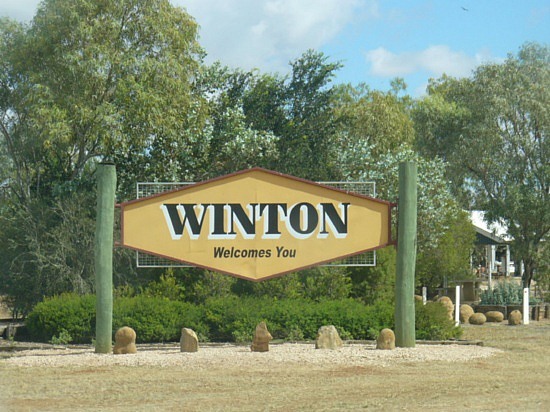
The small town of Winton in outback Queensland has played a pivotal role in Australian literature and the development of an Australian legend, for it was at a cattle station named Dagworth Homestead, just to the north of the town, that A.B. “Banjo” Paterson wrote Waltzing Matilda, and it was set to music (based on a traditional tune) by Christina Macpherson in 1895.

Indeed, the very plot of the song is said to have been inspired by events which took place at Dagworth Homestead during the Great Shearer’s Strike of 1891, when three policemen gave chase to a swagman named Samuel Hoffmeister, who shot and killed himself at the waterhole rather than allow himself to be arrested. It is thought that Christina and her brother Bob told Banjo Paterson the story during his stay at the station.

The folklore of the song and its creation is the pride of Winton, which has its own museum, the Waltzing Matilda Centre. Waltzing Matilda received its first public performance in Winton’s North Gregory Hotel, on April 6 1895, and this year, the town of Winton held its inaugural Waltzing Matilda Day on April 6, to honour and celebrate our national song.

In fact, the town’s mayor, Ed Warren, has asked that Waltzing Matilda Day be declared a public holiday. A worthy notion, but even someone as keen on holidays as me cannot help noticing we already have Easter and Anzac Day that month, so April seems a little full up.

The town of Winton was named by postmaster Robert Allen, supposedly after his birthplace in England, a suburb of the seaside town of Bournemouth in Dorset. The suburb is named after Winton Castle in Scotland, home to the Earl of Winton, a relative of local Dorset family, the Talbots. Winton Castle is near Edinburgh, and was originally owned by one of the oldest families in Scotland, the Setons; it was built in 1480 on lands the family had acquired in 1150. It is now an award-winning hotel and conference centre.

However, as it turns out, Robert Allen was actually born in Winchester in Hampshire, which was also known as Winton. This lovely cathedral town’s name is a mixture of British-Roman and Anglo-Saxon, and means “market town”.

The surname Winton is famous in Australia as belonging to Western Australian novelist Tim Winton. He has won a swag of literary prizes, including the NBC Banjo Award for Cloudstreet. He has been named a Living Treasure by the National Trust, and awarded the Centenary Medal for services to literature and the community.

While writers who have found literary acclaim aren’t always popular with the ordinary reading public, nearly everyone I know who reads at all lists Tim Winton as one of their favourite authors. He manages to combine wonderful storytelling with a uniquely spare prose style

As well as writing and winning awards, Tim also finds time to support the environmental movement. As a patron of the Australian Marine Conservation Society, he has raised awareness about sustainable seafood consumption and campaigned against shark finning; he is also patron of Stop the Toad Foundation and has contributed to The Last Whale website. He has been prominent in the campaigns to save Moreton Bay and Ningaloo Reef.

Mr Winton writes novels for grown ups, and also children’s books, most notably the Lockie Leonard stories, about young surf rat Lockie who moves from the city to the coastal south-west of Western Australia (probably not coincidentally, this is exactly what Tim Winton did when he was twelve). The TV series based on the books is filmed in Albany, where Tim grew up, and has also won a stack of well-deserved awards.

The English surname Winton can come from Winton in Lancashire, whose name means “willow wood farm” – a place where willow trees were farmed for their extremely useful wood. Winton in Westmoreland, however, means “Wina’s pasture”. The name Wina meant “friend” in Old English. It is from this personal name that Winton Castle in Scotland is also named, which seems to have brought us full circle.

I saw the name Winton on a baby boy who competed in the Bonds Baby Search. It’s very similar to the aristocratic Winston, yet with its own connections to the world of Australian literature, the Australian coast and the Australian outback. It seems like an unusual yet stylish choice.

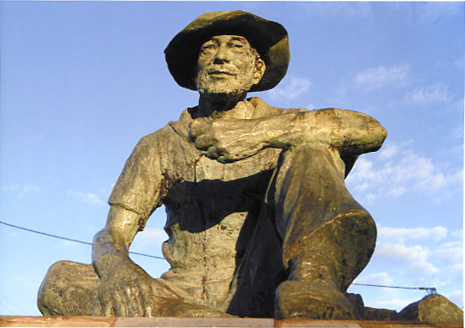
(Photo above shows the statue of the Jolly Swagman in Winton, sculpted by Daphne Mayo)

The Top Ten Boys Names of 2028

27 Sunday May 2012

Posted by A.O. in Your Questions Answered

≈ 16 Comments

Tags

name data, name popularity, name predictions, name trends, nicknames, popular culture, popular names, surname names, UK name popularity, UK name trends, Upswing Baby Names, US name data, US name popularity, vocabulary names

This follows on from The Top Ten Girls Names of 2028, so if you want to know the methods used, and what this is all about, and whether it’s really the Top 10 of 2028, then go read that first. If you’ve read it, you’ll know I ran into a few frustrations doing the girls names, and if anything, the boys names ended up being even more of a headache.

Angie, the discerning blogger behind Upswing Baby Names, was kind enough to leave me a long and thoughtful comment, which in part wondered whether posting predictions itself could change the future.

For example, a parent worried about a name they like gaining popularity may avoid it, even if the name is currently under-used. Therefore, names tipped to become popular are less likely to actually become popular. (Hmm, if this is true, pick a name that is touted as being popular in the future, because that will scare everyone else off!)

Angie herself, in her article Warning: Your Baby’s Name Could Become #1, notes that the number of popular names is shrinking markedly each decade, and that in effect, the popularity of names is virtually meaningless today. Yet somehow, we worry about it more than ever. Pretty crazy, huh?

Now I didn’t fret myself too much over Angie’s concerns, because I didn’t really imagine many people would read my blog entry, and didn’t think those that did would pay any attention. So I was somewhat disconcerted to see that it had been posted on a parenting forum, in part as an alert that the name a woman had chosen for her daughter, Freya, had been pegged for potential eventual #1 status by yours truly.

Fortunately, at least one of my predictions was proved right, because nobody appeared to pay much attention to me, and several flat-out said I was wrong. (These tended to be the type of people who didn’t think Olivia was popular, because they hardly knew anyone of that name, so their views on name popularity may not be particularly au courant).

The overwhelming advice given was exactly what I would have said myself: Don’t worry about whether a name will be popular in the future, that isn’t something you are able to control, and it would be foolish to avoid using a name you love for fear of what may happen later.

Sage, sane and sensible advice. Follow it!

Current Top Ten

  • William #24 in ’95 and #37 for the 1980s (gradual rise up the Top 50)
  • Lucas #87 in ’95 and #105 for the 1980s (steady rise into the Top 100)
  • Lachlan #26 in ’95 and #75 for the 1980s (steady rise up the Top 100)
  • Ethan #61 in ’95 and #323 for the 1980s (precipitious rise into the Top 100)
  • Oliver #75 in ’95 and #140 for the 1980s (steep rise into the Top 100)
  • Jack #7 in ’95 and #91 for the 1980s (steady rise up the Top 100)
  • Noah #161 for the 1990s and in rare use for the 1980s (new name that skyrockets)
  • Thomas #6 in ’95 and #27 for the 1980s (gradual rise into the Top 10)
  • Joshua #1 in ’95 and #11 for the 1980s (gradual rise to #1)
  • Cooper #125 for the 1990s, in rare use in the 1980s (new name that skyrockets)

1. ISAAC

Isaac is currently #19, and in 2001 he was #40. This is pretty close to William’s stately progress through the Top 50, and as such, I am picking him as the #1 name of the future. It did come as a bit of surprise to me, but it’s the only name that even comes near to matching William’s pattern. When I checked the Top 100 for the US and England/Wales, both of them still have Isaac around where he was for us ten years ago, but making similar progress. The popularity of Isaac may become apparent here earlier due to our smaller population size.

2. KAI

Kai is #83 right now, and he was #105 for the early 2000s. This is an extremely good match with Lucas, almost perfect in fact. Now the question is, will Kai shoot up the Top 100 the way Lucas did? I’m a bit sceptical, because I can’t help feeling that Lucas got quite a big boost from popular culture. I think someone is going to have to produce a TV show with a likeable main character named Kai. Even without such a TV show, it’s clear that Kai is doing very well for himself.

3. LOGAN

Logan is currently #34, and in 2001 he was #78. That’s not quite a good enough match to please me, but it’s the best I could get. Although the two names sound a bit alike, I don’t think Logan is going to be the next Lachlan, because Logan simply doesn’t mean as much in Australia as Lachlan does; it doesn’t have the same history and resonance. As you can see, it hasn’t climbed as high in the same space of time either. However, Logan is a common place name in Australia, and I’m still tipping it to continue rising.

4. CHASE

Chase is currently #85, and he was #407 for the early 2000s. I couldn’t find a name which mimicked Ethan very closely, and Chase was the best I could do. As you can see, he has actually climbed faster than Ethan did, and Ethan was no slouch. If Chase continues at his current rate, he will be Top Ten sooner than 2028. We’ll have to wait and see.

5. HUGO

Hugo is currently #90, and he was #143 for the early 2000s. This is a similar pattern to Oliver, but Hugo hasn’t climbed quite as high as Oliver did in the same space of time. However, you can see that he is still making good progress, and looks set to continue. He also has the fashionable OH sound we saw on the girls’ list – although can anyone really believe in a Top Ten which contains both a Harlow for girls and a Hugo for boys? It boggles the mind.

6. LUCAS

Lucas is currently #2, and ten years ago he was #82. This looks quite similar to Jack’s climb from the bottom of the Top 100 into the Top 10. Jack has of course proved himself a real stayer, and we’ll have to see whether Lucas has similar powers of endurance. I was going to say I doubted it, and then I looked back through the blog and saw I had earlier tipped Lucas to be only just outside the Top 10 in thirty years, based on comparisons with the Top Ten of 1982. So for reasons of consistency, I now feel compelled to say that yes, Lucas will still be in the Top Ten seventeen years later.

7. BENTLEY OR GRAYSON (???)

I knew I was going to hit a horrible snag at some point, and this was the point where that occurred. I needed to find a name that, like Noah in 1995, is around #160 at the moment, but ten years ago, did not even chart. The trouble is, it’s not possible to find that on the present chart, because it’s too new to show up yet. Left struggling in the dark, all I could think of was that since Noah was a name that became popular in the United States before it did here, I would see where Noah was on the US charts in 1995. It had just scraped its way onto the very bottom of the Top 100, after climbing a very brisk 59 places. I had a look at the 2011 US chart to see if there were any names that looked similar to that, which might possibly be around #160 here, and drew a blank. The names on the US Top 100 which climbed the highest last year were Bentley and Grayson, but only 25 places – not even half what Noah managed. Are Bentley and Grayson in the mid-100s here at the moment? I have no idea. If I go down just outside the Top 100, Easton (#102) climbed 43 places, and Jace (#106) climbed 40 places, which comes closer to Noah, but I can’t really see either of them in the mid-100s. I don’t think there is an equivalent to Noah, but without any solid data to draw on, I’m left dangling. Your guess is very much as good (or bad) as mine – and that is all this is, complete guesswork.

8. ETHAN

Ethan is currently #4, and in 2001 he was #17. That isn’t a perfect match with Thomas, but it does show Ethan moving up the Top 50 into the Top 10, like Thomas. I could have chosen either Oliver or Noah, but the idea of having both Olive and Oliver in the Top 10 seemed ludicrous, and I was quite out of patience with poor Noah by this stage. I also saw that I had earlier tipped Ethan to be a real stayer, so once more felt that I had little choice but to choose him again.

9. WILLIAM

William is currently the #1 name, and in 2001 he was #10. This is virtually a perfect match with long-lasting Joshua, who was #1 in 1995, and #11 for the 1980s. Basically if trends in boys’ names continue as they have been, 30% of the Top 10 in seventeen years will consist of names that are in the present Top 10. I feel as if boys’ names are becoming less conservative and there will be greater change coming in the future, but that may just be wishful thinking on my part.

10. ARCHER

With finding an equivalent for Cooper, I was in a similar position to finding an equivalent to Noah (ie there would be no data available at this early stage). However, I felt I had more freedom to choose, because Cooper seems to be a name which is much more popular in Australia than anywhere else. Therefore, there was no need to look through overseas data, or do any number crunching – it was just a matter of thinking of a new name which has grown wildly in popularity over the past few years, yet isn’t in the Top 100 yet. I was also hoping it would be an English surname/vocabulary name like Cooper. It really didn’t take much thought to light upon Archer; after reading birth announcements for months, I can see Archer is a name taking off like wildfire, and anyone can see it will be in the Top 100 within a few years or so. Can I see it reaching the Top 10? Yes, easily. It has better nickname options than Cooper, and a more romantic meaning, so I wouldn’t be surprised if it does better than Cooper.

My Tips for Coming Trends

  • IE sounds, as in Isaac and Kai
  • OH sounds, as in Logan and Hugo
  • Hard K sounds, as in Isaac, Kai and Lucas
  • S-enders, like Chase and Lucas
  • The rise and rise of the surname name for boys
  • Stronger influence from the US than from the UK
  • The names that are popular now still hanging on and becoming standards

Famous Name: Lockyer

23 Wednesday May 2012

Posted by A.O. in Famous Names

≈ 6 Comments

Tags

english names, famous namesakes, honouring, locational names, name history, name meaning, name popularity, name trends, nicknames, surname names

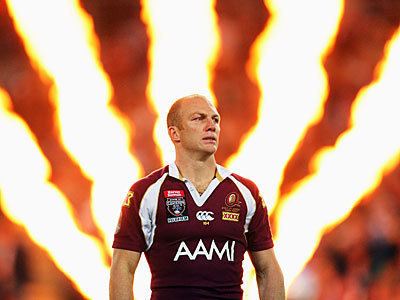
Tonight is the first game in the best-of-three State of Origin Series for the National Rugby League, which pits traditional rival states, Queensland (the Maroons) and New South Wales (the Blues), against each other. Mention of the series tends to make people from New South Wales a little prickly and defensive, for they are all too conscious that for the past six years, they have been bested by a superior Queensland side.

Some may be hoping desperately for a reprieve this year, because Queensland’s former captain, Darren Lockyer, retired at the end of the 2011 season. Generally acknowledged as the greatest rugby league player in history, he has set the record for most number of games played during his seventeen season career, and his list of achievements rolls on and on like the credits at the end of a movie, including a slab of stats that reduces everyone to a sort of silent awe.

Amongst his many well deserved honours include being named in the Queensland Team of the Century, a 2 metre tall bronze statue of his likeness at Suncorp Stadium in Brisbane, and part of the Warrego Highway being re-named Darren Lockyer Way.

As well as his feats of athleticism and natural talent, his inner strength and personal courage, he was also a model of good sportsmanship, a consummate professional, a successful leader, and a gentleman of the game. He is a champion, a king, and a legend of rugby league, who has left behind a legacy of which to be proud.

Lockyer is an English surname which can either refer to someone who was a locksmith by trade, or who was a lock-keeper on a river or canal (or possibly even someone who lived near a lock on a river or canal). It’s pronounced very much as it looks: LOCK-yehr.

According to Ancestry.com, it is a name originating in Dorset, and if you check the British census records, there do seem to be many Lockyer families in the West Country of England compared to the rest of the nation. Although Lockyer is a fairly common name in England and Australia, it appears to be quite rare in the United States.

Apart from Darren Lockyer, the name is well known in Queensland, because the Lockyer Valley is an area of rich farmland in the Brisbane region. It is named after Edmund Lockyer, who came to Australia in the early 19th century as captain of the 57th regiment (he was from Devon, so the West Country heritage theory is holding firm). One of his first tasks was to explore the Brisbane River area, which is why the valley bears his name.

I thought of adding the name Lockyer because I have already seen reports of parents choosing it for a baby name, and seen it on babies in birth announcements and baby contests. One man commented in a sports news forum that his neighbours had named their son Lockyer in honour of Darren Lockyer; his response was Why Lockyer for chrissake? What’s wrong with calling him Darren?

It’s pretty obvious – Darren is currently out of favour, in the low 400s and falling. Meanwhile, the enormous popularity of Lachlan has made similar-sounding names very usable. Australian babies named Loki, Loic and Link, although unusual, do not seem strange or out of place here.

Lockyer fits in perfectly with this trend, and seems like a name that would go down very well in Queensland, or anywhere which appreciates the greats of National Rugby League. The nickname Locky, shared with Darren Lockyer himself, almost makes it seem like a variant of Lachlan, which has the nicknames Lachie and Lockie.

The Top Ten Girls Names of 2028

20 Sunday May 2012

Posted by A.O. in Your Questions Answered

≈ 9 Comments

Tags

classic names, colour names, famous namesakes, French names, future trends, Google, K.M. Sheard, Laura Wattenberg, name data, name popularity, name trends, Nook of Names, place names, popular culture, popular names, retro names, surname names, The Name Wizard, unisex names, US name trends

A couple of weeks ago as I was checking my stats, I saw that the release of all the 2011 name data had influenced someone to Google me a rather interesting question: What names will be popular in the future? Now if someone had asked me that a year ago, I would have been very much perplexed as how to answer. Even Laura Wattenberg from The Name Wizard suggests that guesswork is pretty much all we have to go on.

However, last October Kay from Nook of Names brought out her Top Ten for 2035, based on the US data. Kay’s method was simple, yet inspired – she looked at where the currently popular names were in 1985, and then found a name which is in a similar position today, in order to extrapolate them to their 2035 position. I thought I’d give her method a go, but also see check to see where each name was a decade previously to see if each name was following a similar trajectory. (I think Kay probably did this too).

I went into it very optimistically, but found it brought me a certain degree of angst, because it’s actually pretty difficult to find two names that follow the exact same path to success. However, I persevered, and found the closest possible matches available. In case you’re wondering why I hit on 2028, it’s because the New South Wales Top 100 goes back to 1995, so I went ahead 17 years from last year’s data. Of course, if you’ve just had a baby, 17 years will see it verging on adulthood – another reason it seemed like a good time period to evaluate.

Now, do I really think this is the New South Wales Top Ten for the year 2028? Well no, that’s just a sensationalist headline designed to grab your attention. Frankly I will be staggered (and slightly scared) if all these names simultaneously turn up in the Top Ten of the same year, let alone in this order! However, based on their current performance, I am tipping most of these names to increase in popularity – in some cases, to dramatically increase.

Current Top Ten

  • Chloe #22 in ’95, and #72 for the 1980s (a steady rise up the Top 100)
  • Ruby #107 for the 1990s, and #560 for the 1980s (a skyrocket from nowhere)
  • Olivia #26 in ’95, and #117 for the 1980s (a steady rise into the Top 100)
  • Isabella #34 in ’95, and #509 for the 1980s (a skyrocket from nowhere)
  • Mia #138 for the 1990s, and #320 for the 1980s (a steep rise)
  • Charlotte #87 in ’95, and #180 for the 1980s (a steady rise into the Top 100)
  • Sophie #25 in ’95, and #74 for the 1980s (a steady rise up the Top 100)
  • Sienna #402 for the 1990s, and barely in use in the 1980s (a new name, climbing exponentially)
  • Ava #466 for the 1990s, and barely in use in the 1980s (a new name, climbing exponentially)
  • Amelia #52 in ’95, and #118 for the 1980s (a steady rise into the Top 100)

FUTURE TOP TEN

1. ABIGAIL

Abigail is currently #27, and ten years ago she was #88. I thought that made her a good match with Chloe. Abigail is already a Top Ten name in the US, and although we’ve been lagging behind, by 2028 I think we’ll be well and truly caught up. I hesitated before nominating Abigail as the #1 name, but it does make sense, because of the rampant popularity of her many short forms.

2. OLIVE

Currently, Olive is probably somewhere in the 120s-130s, and a decade ago she was barely in use. That pattern doesn’t exactly match Ruby’s, but it isn’t too different either. If you’re looking for a meteoric rise to echo that of Ruby, Olive fits the bill better than any other candidate. I also like the idea of Ruby’s replacement being another vintage colour name. Even today, when Ruby is so hugely popular, there are grandparents meeting their new grand-daughter and saying, “But Ruby is an ugly old lady name!”. I predict similar reactions to all the baby Olives who will be born in the future.

3. EVA

Eva is currently #21, and a decade before she was somewhere in the 150s. Her climb has been steeper than Olivia’s, but she’s the best match I could find. That steeper climb may mean she peaks sooner than Olivia, but she’s also a classic name which has never left the charts, which I’m hoping will give her some ballast. She does almost seem like a shorter, snappier form of Olivia.

4. ISLA

Isla is currently #22, and ten years ago she was #445 for the early 2000s. This wasn’t a close enough match to please me, but no matter how I wrestled with the data, Isla was the closest equivalent, and did have a similar zoom up the charts, as well as looking like an updated Isabella. I can’t see any reason why Isla won’t continue to go higher, quite possibly to #1, and both Isabella and Isla have been chosen for royal babies. Of course, a major book and movie series with a main character called Isla wouldn’t hurt either, just for that extra buzz factor.

5. FREYA

Freya is currently around the 130s, and was #269 for the early 2000s. That’s not quite as steep a rise as Mia had, but it’s pretty darn close. Not only do Mia and Freya both have a northern European feel to them, but both are are associated with actresses as well – Mia with Mia Farrow, and Freya with Freya Stafford. I can see Freya doing very well indeed, and can easily picture her going to #1.

6. ELOISE

Eloise is currently #96, and a decade ago she was #140 for the early 2000s. I think that’s a fairly good match with Charlotte, which also went from the 100s into the lower portion of the Top 100 in ten years. Eloise seems a worthy successor to Charlotte, for both are elegant French names which manage to sound both strong and feminine. Eloise isn’t climbing as steeply as Charlotte, so we’ll have to see how far she manages to get in 17 years, but I think she will do well.

7. ZARA

In 2011, Zara was #26, and a decade ago in 2011 she was #83. This seems similar to Sophie’s steady rise from the bottom third of the Top 100 into the Top 20. Both Sophie and Zara have a French origin, with just a touch of the Middle East about them. I’m not sure whether Zara will keep climbing or if she’s peaked already and will begin a gentle decline; however, I have similar doubts about Sophie as well. If you’ve really been paying attention, you will see I could have easily swapped Abigail and Zara around, and after much deliberation, I decided Abigail seemed more likely to go to #1.

8. HAVANA

Now this is the part where my fortune-telling gets really sticky, because in 1995, Sienna was only used about 11 times per year in New South Wales. In other words, she may show up on the data now, but that’s only because of her success – in 1995 she wouldn’t have even been a blip on the radar, and in 1985, she was barely known. That means I had to come up with a name that is still little used, but feels as if it might be going somewhere. I wanted to pick a name similar to Sienna; I wanted a modern name just coming into use, and I hoped to find one that was also a place name. Quite a tall order, but eventually I decided upon Havana. Of course it’s a huge gamble picking a name so far in advance, but Havana seems like a pretty good bet. She’s similar to Heaven, Haven, Ava, Anna, Hannah, Savannah, Vanna and Ivana – in other words, she sound like a whole bunch of familiar words and names while having a very clear identity of her own. She doesn’t look out of place on this hypothetical Top Ten either, as she shares a V sound with Eva and Olive. Sienna only whizzed up the charts after Sienna Miller began her career, but in 17 years, it’s possible that a young model named Havana will be ready to take the world by storm. It could happen.

9. HARLOW

When it came to picking another Ava for the future, although I was looking for a name even rarer than Havana, I really had a much easier time of it. Ava was a name that we gained from America, so I simply went to the US Top 1000 for 1995 and saw where Ava was, then tried to find today’s equivalent. Of course, I was looking for one which was climbing like Ava, and if possible, had a similar feel to it. In 1995, Ava was #737, and ten years earlier, she wasn’t on the Top 1000, but just scraped in the year before. After much internal debate, I decided upon Harlow, which was #621 last year, and not on the Top 1000 in 2001. Although Harlow is climbing far more rapidly than Ava, she seemed the most likely candidate. Like Ava, she is a name redolant of Hollywood glamour, and she has the OH sound found in Eloise, while beginning with H like Havana. She fits on the list. At the moment, Harlow is very little used in Australia, and newspaper articles even discuss the strange unpopularity of Harlow. Like Ava, she may well fly under the radar, until one day we all wake up and suddenly realise Harlow is in the Top 100 and climbing. (Cue parental handwringing).

10. ROSE

Rose is currently #65, and she was #119 for the early 2000s. Not only does this look quite similar to Amelia’s pattern, but both these names are classic, pretty and wholesome. Rose is by no means shooting up the charts, but she is ascending in a calm and ladylike fashion, just like Amelia. Rose doesn’t have all the nickname options that Amelia does, so I’m not sure whether she will be Top 10 by 2028, but I am tipping her to continue rising.

My Tips for Coming Trends

  • OH sounds, as found in Eloise, Harlow and Rose
  • V sounds, as found in Olive, Eva and Havana
  • Short brisk names ending in -A, such as Eva, Isla, Freya and Zara (the new Mias)
  • Stronger influence from the UK than from the US, but with the US influence being far more spectacular in nature (much like today)
  • A nice balance between “old-fashioned names” like Olive and Rose, and modern inventions like Havana and Harlow (just like today).
  • Most popular girl’s names will be definitely feminine, but Harlow may show the potential for unisex names and surname names to break into the Top Ten for girls.

Boys Top Ten for 2028 will be next week!

Can You Suggest an Australian-Themed Name for the Third Triplet?

18 Friday May 2012

Posted by A.O. in Naming Assistance

≈ 28 Comments

Tags

angel names, constellation names, famous namesakes, fictional namesakes, Greek names, holiday names, mythological names, name history, name meaning, name popularity, name trends, nature names, nicknames, patriotic names, plant names, Spanish names, surname names, themes for triplets, tree names, triplet sets, unisex names, US name popularity, vocabulary names

Gabbi is an ex-pat Aussie originally from Perth, in Western Australia; she lives in the United States with her husband and six children. The family will be welcoming children 7, 8 and 9 in a few months, because they are expecting fraternal triplets – two boys and a girl.

Now if Gabbi had been having boy-girl twins, there would be no naming problem, because they have already chosen gorgeous names for the girl and one boy baby: Clover and Jasper.

The names fit together perfectly, because both reference the number three (Jasper was one of the three wise men, and clovers usually have three leaves), and both are associated with luck or gifts. They both bring to mind particular colours as well, because jasper stones are red, and clover is of course green; furthermore, they are both connected to special days of the year (Epiphany on January 6, and St Patrick’s Day on March 17).

Gabbi is now very concerned that the third triplet receives a name which has a special meaning of its own: even if it doesn’t fit in exactly with Clover and Jasper, it needs to be meaningful and have its own significance, rather than just being an afterthought. She would love it if the third triplet receive a name which is connected to Australian culture and celebrates Gabbi’s heritage, without being anything too obvious, like Sydney or Jack.

Other name preferences

  • Nothing too popular – one of Gabbi’s sons has a name which became very popular, and she doesn’t want that to happen again. (Gabbi actually stipulated that the name had to be outside the 300s, but I thought that was too strict, especially considering Jasper is in the 200s, so I restricted myself to names outside the Top 250).
  • Nothing too unusual that will really stick out in America – no Bluegum or Gallipoli
  • Nothing too obviously political, he’s not a bumper sticker
  • The family has a long, complicated surname, so the name needs to be simple to spell and pronounce

Names that have already been considered and rejected

  • Alister (dislikes nn Al)
  • Archer (too trendy, dislikes nn Archie)
  • Asher (too popular)
  • Finn (too popular)
  • Flynn (too connected to its namesake, Erroll Flynn)
  • Jonah (too popular)
  • Micah (too popular)
  • Miller (loves the name, but not the beer connection in the US)
  • Sawyer (too popular, too often used as a girl’s name)
  • Sayer (worries it looks “made up”)
  • Zephyr (Gabbi’s husband has vetoed as “too weird”)

The other children in the family tend to have names which are fairly popular in Australia, but underused in the United States. They are quite “cute” sounding, and even if unisex, used far more by one gender than the other.

Although Gabbi is interested to see what names I come up with, she would also love blog-readers to contribute any thoughts or ideas they have.

MY SUGGESTIONS

Felix

I think this goes with Jasper and Clover rather nicely, and is by far my top choice for Triplet Number Three. Felix means “lucky”, and Australia Felix is the name given to lush pastureland; there’s also a Great Australian Novel called Australia Felix, by Henry Handel Richardson (like George Eliot, Henry was a woman). It also reminds me of Felix the Cat, which was an Australian-American creation, and in LA, Felix the Cat is used on a three-sided sign. Although Top 100 in Australia, Felix is only #311 in the US.

Phoenix

A similar sound to Felix, but it references the colour red, which fits with Jasper. In China, the phoenix is a symbol of luck, and has great significance in terms of immortality and resurrection. The Phoenix is one of the constellations of the Southern Hemisphere, and is most visible around Christmas time – I thought this fitted in rather nicely with Jasper’s Christmassy meaning. Although quite popular in Australia, it is only #388 in the United States. However, you may be bothered by the fact that it also charts for girls in America, and possibly Phoenix the city in Arizona is also an issue for you.

Orion

This is another constellation name, one which references the number 3, because Orion is famous for having three stars in his belt, and even the absolute beginner (or a small child) can locate them easily in the night sky. Like the Phoenix, Orion is another constellation which is most visible around Christmas time. The RAAF have a plane called the Orion, while in the USA, it is the name of a ship, and a rocket. Orion seemed like a name from Greek mythology which might be less “weird” than Zephyr. It is #471 in the US.

Finlay

This seemed like an obvious alternative to Flynn and Finn, with a similar sound and origin, yet not even on the Top 1000 in the US. Because Finlay is connected to the colour white, it also seems a nice match with Jasper and Clover. There’s a rather nice connection to Gabbi’s home state as well, because Garfield Finlay was a World War I flying ace who lived in Perth, Western Australia, before the war.

Rafael

Names starting with Raf- are very much on trend in Australia, yet not over-used in the United States. This is the Spanish form of Raphael, the name of a healing archangel, and seems just as special as Jasper and Clover to me. An Australian connection is that Raphael Aimbari was an Ori man who helped Australian soldiers on the Kokoda Campaign during World War II; there is a statue of him in Brisbane. I think Rafe makes a very dashing nickname. Rafael is #274 in the US, but has been stable for some time and isn’t climbing up the way Jasper is. Raphael is #668, but seems harder to spell than Rafael.

Lawson

There are said to be three great Australian poets – Banjo Paterson, C.J. Dennis, and Henry Lawson. Banjo seems too out-there for you, and Dennis is a bit old-fashioned, but Lawson seems like a nice Australian replacement for Sawyer (both surnames, similar vowel-sounds). The surname means “son of Laurence”, and the name Laurence is connected by meaning to the bay tree, a symbol of success. It’s a subtle nature-themed name which again makes me think of a colour. It’s #580 in the US.

Shepherd

Another surname; this one reminds me of the conservation organisation, Sea Shepherd, which operates in Australia and the US. Interestingly, Sea Shepherd has three ships in its main fleet. It is a subtle environmental name, reminding us that we are all guardians of life on earth. At the same time, it’s another “Christmas-themed” name to go with Jasper. This name hasn’t been on the US Top 1000 since the 19th century.

Franklin

Another environmental namesake, because the successful fight against the proposal to dam the Franklin River in the Tasmanian wilderness was a landmark in Australian environmental activism. Aptly, the surname Franklin means “free man”, and the call of the activists was to let the Franklin River run free. This has a wonderful American connection too, because of Benjamin Franklin. It also reminds me of the word frankincense, as brought by the Three Wise Men. The name is #504 in the US, but I somehow feel the nickname Frank isn’t going to appeal to you.

Ash

This is another nature name which references a colour, and seems like a replacement for Asher. In Australia, it reminds me of the Ash Wednesday bushfires, which like the Phoenix, became another symbol of resurrection, of rising from the ashes. It also reminds me of the mountain ash, the tallest of all eucalypt trees, and one of the tallest trees in the world. Ash isn’t on the US Top 1000, but may be too unisex for you. You might consider it for a middle name though.

Talon

This is another nature name which is on trend in Australia, but underused in the United States. The main reason it occurred to me is because an eagle’s claw has three talons which are used to hold prey (the fourth is used for balance). The Wedgetail Eagle is very important in Aboriginal mythology, as Bunjil the Wedgetail Eagle is a creator deity. Of course, the Bald Eagle is the national bird of the United States, making it an important symbol for both countries. Talon is #516 in the US.

Which of these names do you think is the best match with Jasper and Clover? Or maybe you have your own suggestion for Jasper and Clover’s brother. If so, let’s hear it! All ideas are welcome.

NOTE: The triplets’ names are Clover, Jasper and Ash!

Famous Name: Evelyn

16 Wednesday May 2012

Posted by A.O. in Famous Names

≈ 6 Comments

Tags

classic names, english names, famous namesakes, fictional namesakes, germanic names, Italian names, locational names, name history, name meaning, name popularity, name trends, nicknames, Norman names, Old French names, popular names, rose names, surname names, unisex names

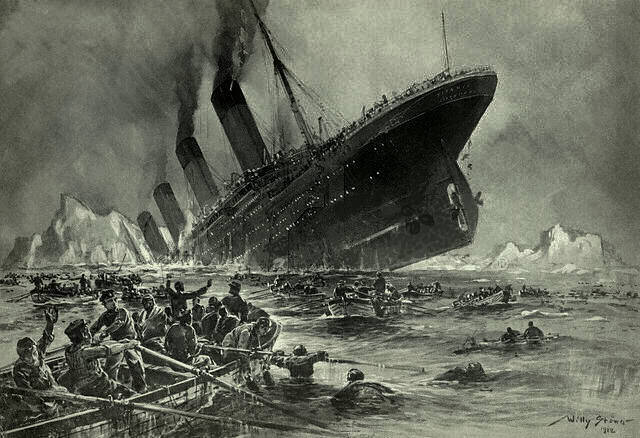
April 15 this year marked one hundred years since the sinking of the RMS Titanic. There were many exhibitions to mark the event, and James Cameron re-released his romantic film Titanic in 3-D form. As I read the many newspaper articles about  the centenary, and watched ceremonies being performed in various countries on television, I wondered whether there were any Australians aboard the ill-fated Titanic, and if so, had any of them survived?

It turned out that there were six Australians who travelled on the Titanic – four crew members, and two passengers. Crew members Donald Campbell, Alfred Nicols and Leonard White were drowned and their bodies never found, while second-class passenger Arthur McCrae also drowned, but his body was recovered and buried in Halifax, Canada. That left two survivors: third-class passenger Charles Dahl, and crew member Evelyn Marsden.

Although Charles had spent thirty years in Australia, he was born in Norway and was actually in the process of making his way back to his home country when he travelled on the Titanic (he eventually made it home and died in Norway many years later). This leaves Evelyn Marsden as the only female Australian survivor, the only surviving Australian crew member, and the only Australian-born survivor. That made me decide to choose Evelyn as my Famous Name to mark the centenary of the sinking of the RMS Titanic.

Evelyn was from country South Australia, and the daughter of a railway worker. As a young girl, she learned to row a boat on the Murray River while staying on a farm, and later trained as a nurse at Adelaide Hospital. She had previously worked on board the Titanic‘s sister-ship, the Olympic, and signed on to work as a stewardess on the Titanic on April 6 1912, aged 28. She also assisted as a nurse for the first class passengers.

During the sinking, Evelyn escaped on board Boat 16, which held about forty people. They were in the life boat all night, from about half past one in the morning until around seven in the morning, when they were picked up by the Carpathia. Evelyn’s rowing skills became necessary, because she helped row the boat, and also took care of a baby.

Shortly after the disaster, she married a doctor named Abel James who had also worked on board ocean liners, and they went to live in South Australia. Evelyn made a point of returning to the farm, and thanked them for teaching her to row. Evelyn and her husband ended up living in Bondi, Sydney, and when they both passed away in the late 1930s, they were buried in Waverley Cemetery. Their grave was unmarked until 2000.

Evelyn is an English surname derived from the female name Aveline. Aveline is the Norman French form of Germanic Avelina, a pet form of Avila. It’s not certain what Avila meant, but it’s generally thought (perhaps hopefully) that it meant “desired”, as in a child that was long hoped for. The name is possibly related to Ava.

Other theories I have heard are that the surname is derived from aveline, the Old French word for “hazelnut” (the word comes from the Italian city of Avella), or after a place in Shropshire, which the Normans are supposed to have named after a village in France, Ivelyn. In early records, the surname is found as both Ivelyn and Avelyn.

Evelyn was first given to boys in the 17th century, since Aveline was no longer in use as a woman’s name. In the 19th century it began to be bestowed on girls as well, quite possibly because Fanny Burney’s novel Evelina reminded everyone that the name had a possible feminine origin (Evelina is the Latinate form of Aveline). If you are a fan of the theory that the surname is after the hazelnut, then you may see the male name Evelyn and the female name Evelyn as having quite separate origins.

The most famous person with the surname Evelyn is probably 17th century English writer John Evelyn, best known for his diaries. He wrote on many other subjects as well, including gardening, and the Evelyn rose is named after him – a beautiful old-fashioned rose with clusters of large pinky-apricot blooms. There is currently a campaign to restore Evelyn’s own garden at Sayes Court, in east London.

Nearly everyone has heard of the male English novelist Evelyn Waugh (whose wife was famously also called Evelyn), and a famous Australian man named Evelyn is Evelyn Owen from Wollongong, who invented the Owen gun. Mr Owen was apparently known by the nickname Evo. A famous Australian woman named Evelyn was Evelyn Tazewell, a champion hockey player in South Australia for many decades. Miss Tazewell went by the nickname Taz.

Evelyn is a classic name which has never been out of the charts. It was Top 100 in the 1900s, and stayed there until the 1950s. It reached its lowest point in the 1980s, at #435, then began climbing again. Last year it joined the Top 100 for the first time since the 1940s, coming in at #67 (an impressive leap). It has never charted as a male name since Federation.

The pronunciation of Evelyn is up for discussion, because it can be said EEV-lin, EEV-uh-lin, EV-lin or EV-uh-lin. I have heard theories that EEV is the British way and EV the American way, but plenty of people in both places say it the other way around. Another theory is that EEV is the masculine pronunciation, and the girl’s name should be said with an EV. This advice sounds plausible to me, but surely rather outdated given that Evelyn hasn’t been a serious contender as a boy’s name for over 120 years?

Most people in Australia go with the EV-uh-lin pronunciation, although EV-lin gets used as well, because it’s a more “Irish” way of saying it (apparently). I must be very odd, because I naturally say EEV-uh-lin, as if the name was related to the name Eve. I don’t recommend following my (no doubt wrong) example, except that it does lead rather neatly into the popular nickname Evie. You could use Evvie for the other pronunciation, although to me that sounds as if you are saying heavy in a Cockney accent.

Classic Evelyn is very much back in fashion, and looks certain to soar. She fits right in with Ava, Eva, Eve, Evie, Eden, Eloise, Madeleine, Madison and Addison, yet has an elegant air all her own.

Famous Names: Blake

09 Wednesday May 2012

Posted by A.O. in Famous Names

≈ 9 Comments

Tags

english names, famous namesakes, fictional namesakes, name history, name meaning, name popularity, nicknames, Old English names, popular names, surname names, unisex names

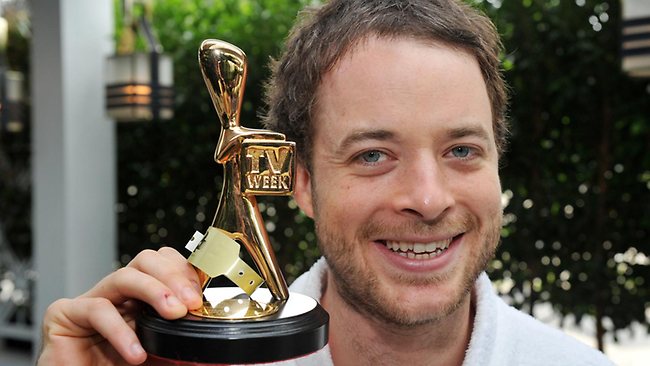
Comedian Hamish Blake has cropped up several times on the blog. His name was included in the post Boys Names That Only Chart in Australia, and we also took a look at how successful his name is. He’s had a dream run in the not-usually-lucrative field of comedy ever since he dropped out of a double degree in Science and Commerce to buddy up with Andy Lee as a comedic duo. Together they have had a ratings winning drivetime radio show filled with prank calls and the like, and several successful TV shows, most recently, Hamish and Andy’s Gap Year. Eventually it all paid off for at least one of them when Hamish won the Gold Logie for being the Most Popular Personality on Australian Television at this year’s Logie Awards.

Blake is an English surname which has two different origins of opposing meanings. Both of them began as nicknames. One is the Old English blæc, meaning “black”, referring to someone with black hair or a dark complexion. The other is from blāc, meaning “pale”, referring to someone with very blond hair or a fair complexion. One theory is that the two nicknames were ethnically based, with the first denoting the dark Celts, and the second denoting the fairer Jutes, who were from Jutland (today it’s Denmark, and the bits of Germany that join on to Denmark).

Although you’ve no doubt twigged that blæc became our English word black, it may not have immediately occurred to you that blāc is related to our English word bleak. Late in the Middle Ages, the two words were merged into blake, moving us closer toward the modern word black, but somehow immersing in it a word meaning the opposite. However, if you consider black and bleak together, they don’t seem quite so contradictory.

The Blakes are an Irish aristocratic family, dating back to the Norman Conquest of Ireland, so you could see the first name Blake as derived from this aristocratic surname. However, those of a literary bent are more likely to see it as honouring William Blake, the visionary English poet and painter who was a seminal influence on the Romantics. If you are something of a sci-fi fan, the name may remind you of Roj Blake, from the popular 1970s and ’80s TV series, Blake’s 7.

Blake reminds me of the much-loved illustrator Quentin Blake, as I was raised reading Roald Dahl‘s books, with the enchanting Mr Blake’s humorous drawings, which convey life and movement so effortlessly. My childish desire was to look as cheerfully plain and lank as the children that Quentin Blake drew; however to my disgust, my parents insisted on lots of fresh air, exercise and home grown produce, so that I remained obstinately tanned, rosy-cheeked and sturdy. Luckily I didn’t know enough about genetics to realise it was also their fault I wasn’t plain!

Another Blake from the era of the 1980s was Blake Carrington from American soap opera, Dynasty. This ruthlessly wealthy oil tycoon, whose life revolved around kidnappings, comas and the search for Nazi gold, seems to have given the name a rather “preppy” image in the United States. We don’t have the word preppy here, but as far as I can work out, it means “offensively middle-class”. Perhaps someone more knowledgeable can enlighten me on this one? I suspect that here its image is a bit more relaxed (although rebel Blake Dean from Home and Away managed to have a rather tortured time in Summer Bay, even without any Nazi gold).

Blake is often listed as a unisex name on international sites, although it is Top 100 for boys, and the only female Blake ever mentioned is actress Blake Lively from Gossip Girl. There is nothing especially boyish about the meaning of the name Blake, but its consonant-vowel-K sound has the same pattern as names such as Jack, Luke and Jake, giving it a masculine intonation (although it is a bit like Brooke, too). Although I could accept it as unisex, it’s seen as a male name in Australia, and you may get some resistance to using it for a girl. The similarity between Blake and the word bloke could well be keeping it in the boy’s club.

Blake first entered the charts in the 1950s, and took off in the 1970s (hmm, Blake’s 7, anyone?), so that it was Top 100 by the 1980s. It reached its peak in the 1990s, just outside the Top 20. Since then, it has fallen in popularity, although it is still in the Top 50 (and more popular in Australia than anywhere else in the world). Perhaps surprisingly, Hamish Blake doesn’t seem to have helped the popularity of the name, even though the name Hamish is doing pretty well for itself in the charts.

Although statistically Blake has passed its prime, to many it fits into that handy category of Popular But Not Too Popular Names, and has many namesakes from popular culture which have garnered it affection. It’s a nice, short, simple name which sounds sporty, surfer and skater, but still has some room for art and poetry. I tend to think its real strength is as a middle name, however.

← Older posts
Newer posts →

Enter your email address to follow this blog

Categories

Archives

Recent Comments

A.O.'s avatarwaltzingmorethanmati… on Zarah Zaynab and Wolfgang…
Madelyn's avatarMadelyn on Zarah Zaynab and Wolfgang…
JD's avatardrperegrine on Can Phoebe Complete This …
A.O.'s avatarwaltzingmorethanmati… on Rua and Rhoa
redrover23's avatarredrover23 on Rua and Rhoa

Blogroll

  • Appellation Mountain
  • Baby Name Pondering
  • Babynamelover's Blog
  • British Baby Names
  • Clare's Name News
  • For Real Baby Names
  • Geek Baby Names
  • Name Candy
  • Nameberry
  • Nancy's Baby Names
  • Ren's Baby Name Blog
  • Sancta Nomina
  • Swistle: Baby Names
  • The Art of Naming
  • The Baby Name Wizard
  • The Beauty of Names
  • Tulip By Any Name

RSS Feed

  • RSS - Posts

RSS Posts

  • Celebrity Baby News: Melanie Vallejo and Matt Kingston
  • Names from the TV Show “Cleverman”
  • Can Phoebe Complete This Sibset?
  • Zarah Zaynab and Wolfgang Winter
  • Baby, How Did You Get That Name?
  • Celebrity Baby News: Media Babies
  • Celebrity Baby News: Adelaide Crows Babies
  • Celebrity Baby News: Chris and Rebecca Judd
  • Names at Work: Name News From the World of Business and Employment
  • Celebrity Baby News: Sporting Round Up

Currently Popular

  • Girls Names From Stars and Constellations
  • Celebrity Baby News: Ross Stevenson and Sarah Fallshaw
  • The Top 100 Names of the 1940s in New South Wales
  • The Top 100 Names of the 1900s in New South Wales
  • The Top 100 Names of the 1930s in New South Wales

Tags

celebrity baby names celebrity sibsets english names famous namesakes fictional namesakes honouring locational names middle names name combinations name history name meaning name popularity name trends nicknames popular names saints names sibsets surname names twin sets unisex names

Create a free website or blog at WordPress.com.

Privacy & Cookies: This site uses cookies. By continuing to use this website, you agree to their use.
To find out more, including how to control cookies, see here: Cookie Policy
  • Subscribe Subscribed
    • Waltzing More Than Matilda
    • Join 517 other subscribers
    • Already have a WordPress.com account? Log in now.
    • Waltzing More Than Matilda
    • Subscribe Subscribed
    • Sign up
    • Log in
    • Report this content
    • View site in Reader
    • Manage subscriptions
    • Collapse this bar
 

Loading Comments...