• About
  • Best Baby Names
  • Celebrity Baby Names
  • Celebrity Baby Names – Current
  • Celebrity Baby Names – Past
  • Featured Boys Names
  • Featured Girls Names
  • Featured Unisex Names
  • Links to Name Data
  • Waltzing on the Web

Waltzing More Than Matilda

~ Names with an Australian Bias of Democratic Temper

Waltzing More Than Matilda

Tag Archives: Roman names

Names of Australian Birds for Boys

06 Sunday Apr 2014

Posted by A.O. in Name Themes and Lists

≈ 7 Comments

Tags

animal names, astronomical names, Biblical names, bird names, colour names, english names, fictional namesakes, German names, Greek names, historical records, Irish names, Latin names, modern classics, mythological names, name history, name meaning, name popularity, names of rivers, nature names, nicknames, Roman names, saints names, scientific names, Scottish names, surname names, unisex names

Wedge-tailed-Eagle

Aquil
Aquila is the scientific name for eagles; large, powerful raptors found all over the world which are often used as symbols of kingship and empire. The eagle was the bird sacred to Zeus, and it is recognised as a Christian symbol of strong, enduring spirituality. Australia’s best known eagle is the Wedge-tailed Eagle, one of the largest birds of prey in the world. Easily recognised by its size and diamond-shaped tail, Wedge-tails can weigh up to almost 13 kg (28 lb), and wingspans have measured more than 250 cm (over 9 feet). Fierce defenders of their territory, Wedge-tails have been known to attack small aircraft. The Wedge-tail Eagle is an emblem of the Northern Territory Parks and Wildlife Service, the New South Wales Police Force, the Northern Territory Correctional Services, La Trobe University, and the Royal Australian Air Force. Aquila is a Latin name meaning “eagle”; it was fairly common amongst the Romans, and was also the name of the Roman military standard. Aquila is mentioned as one of the early Christians in the New Testament, and he is regarded as a saint. I have seen Aquil a few times as a boy’s name, perhaps because Aquila might be misunderstood as feminine, and it can be said uh-KWIL or uh-KEEL. It’s a strong, masculine name after a noble bird.

Callum
Columba is the scientific name for pigeons and doves; the word comes from the Greek for “dive, swim”, because pigeons make a swimming motion in the air as they fly. Australia has many native pigeons, but only one of them belongs to the Columba genus, and that is the White-Headed Pigeon. There are several saints named Columba, most notably the Irish missionary credited with spreading Christianity in Scotland. Columba is a Latinisation of his Irish name Colm Cille, meaning “dove of the church”. In Scotland, his name became Calum, and the variant Callum is a common name. Callum first charted in Australia in the 1960s, and first ranked in the 1970s at #467. It soared to make the Top 100 in the 1990s and peaked in the early 2000s at #56; it has just left the Top 100. However, it is a handsome modern classic with a lovely meaning, and is one of the softer boy’s names.

Cygnus
Cygnus is the scientific name for swans; large, graceful water birds which often feature in myth and legend. Helen of Troy was born from a swan’s egg after her mother was seduced by Zeus in the disguise of a swan, while the sun god Apollo drove a chariot drawn by swans. Irish and Australian Aboriginal legends both tell of people transformed into swans, and Hans Christian Anderson wrote about an “ugly duckling” who discovered he was really a beautiful swan. Swans are seen as holy in Norse mythology, and in Hinduism are revered as sacred. It was a belief in classical literature that the swan would sing beautifully upon death (hence the phrase “swan song” to mean a final performance), and the poet Juvenal sarcastically said that a good woman was as rare as a black swan. Of course, in Australia, black swans are not rare at all, although that doesn’t mean good women are more common here. The black swan is the state emblem of Western Australia, and Perth’s river is named the Swan in its honour. There are several characters from Greek mythology named Cygnus, many of which were turned into swans: one was a musician who was placed among the stars as the constellation Cygnus. This is an unusual bird name that sounds a little like Sidney and Silas, and as swans are symbols of love and fidelity, has attractive associations.

Finch
There are many small Australian birds named finches, although they are unrelated to the finches of the northern hemisphere. One of the most common is the Zebra Finch, found across the continent in drier areas; they live in large flocks, mostly in grasslands. Zebra Finches are grey with black and white stripes, hence their name, and males can be distinguished by a chestnut patch on their cheek. Male Zebra Finches are loud, boisterous singers, with each male having a unique song, which he learns from his father, and then gives it his own variation, so that there are recognisable similarities between the songs of bloodlines. Their singing is used as part of courtship, and the uniqueness of their songs has made them a popular subject for scientific research. Their singing also makes Zebra Finches popular as pets. Finch has been used as a boy’s name since the 16th century, and the surname has probably been of significant help. Current use may be inspired by Atticus Finch from To Kill a Mockingbird, a worthy namesake.

Jaeger
The Skuas are a group of sea birds resembling large, dark gulls. They are strong, agile fliers, and aggressive in defending their nests. The American term for the three smaller species of Skua is Jaeger, which is a German word meaning “hunter”. In Australia, we seem to use the American term rather than the British Skua. Jaegers hail from the Arctic and tundra, but come to the southern hemisphere during the northern winter, when their homelands are covered in snow and ice. It’s quite exciting to see one, if only because they have travelled such a vast distance to be here. The Jaeger is pronounced YAY-ger in English, although the German word is said more like YEH-ger. However, Jaeger is a common surname too, and many people pronounce it JAY-ger (quite a few people say the bird the same way). Not only is the English form of Jaeger, Hunter, a popular name for boys, but when said JAY-ger, it doesn’t sound too different from Jagger. Although deciding on pronunciation could be an issue, this is an interesting choice that isn’t as unusual as it might first appear.

Kestrel
The Kestrel is a small, slender bird of prey which is found in many parts of the world. The Australian Kestrel, also called the Nankeen Kestrel, is amongst the smallest of the falcons, and one of the rare raptors which can hover over its prey. Kestrels are found all over Australia, and are in the top ten of the most common Australian birds; its adaptability to a wide variety of environments is the key to its continued success. Kestrel has been used as a personal name since the 19th century, and the earliest record I can find for it is from Australia, used as a man’s middle name. It has been used fairly equally for both sexes, and because kestrels are quite dainty falcons, seems just as good for a girl as for a boy.

Peregrine
The Peregrine Falcon is a bird of prey found all over the world; it is the most widespread raptor, and one of the most widely found bird species. It is faster than any other creature on the planet when it is diving towards its prey, reaching speeds of over 320 km (200 miles) per hour. Peregrines have been used as hunting birds for thousands of years, and during the Middle Ages, was considered the bird most appropriate for a prince to hunt with. The Peregrine Falcon can be found all over Australia, although it isn’t common, and it often nests on cliffs – it will even nest on high buildings in cities. The name Peregrine comes from the Latin for “to wander, to travel”, perhaps because Peregrines can travel widely, or because their nests are difficult to find. Peregrine is also the English form of the Latin name Peregrinus, meaning “wanderer, traveller”. There have been several saints named Peregrine, who no doubt chose the name because it can be understood as “pilgrim”. This is an aristocratic boy’s name that has the charming Perry as its short form.

Philemon
Philemon is the scientific name for the Friarbirds, which are native to Australasia. The most conspicuous of them is the Noisy Friarbird, which as its name suggests, can kick up a heck of a racket. Noisy Friarbirds are not considered beautiful, being dull brownish-grey with a bald black head, a little horn on its bill, and bright red eyes. They are often considered to be pests because of their constant cackling, and voracious love of fruit. Yet I love their comical ugliness and gregarious chatter. I even enjoy sharing our fruit with them, because they prefer the old fruit rotting on the ground, on which they become hilariously tipsy: it’s always a party with the Friarbirds. Philemon is a Greek name which means “loving, affectionate”, and in a fable by the Roman poet Ovid, Philemon was a old man of Ancient Greece. He and his wife Baucis showed great hospitality to the gods, despite their poverty, and as reward, were granted their dearest wish, which was to die together. When they did, they were transformed into two trees, which intertwined in a show of affection. There are two saints named Philemon, one of whom was a church leader in the New Testament. With Philomena and Phillipa hip names for girls, why not Philemon for a boy?

Robin
Australasian Robins look slightly similar to, but are not closely related to the European Robin, or to the American Robin (which is a thrush). Some Robins have a red or pink breast, like their northern hemisphere namesakes, while others are yellow, grey, or white-breasted. They are fairly common in suburbia, and charming because of their small size and bright colouring. Many are inquisitive and confident around humans, and will become quite tame. Robin was originally used as a pet form of Robert, and given to boys: it is well known because of the English folk hero Robin Hood, Batman’s sidekick, Robin the Boy Wonder, and Winnie-the-Pooh’s friend, Christopher Robin. It can be given to both sexes after the bird. Robin charted as a unisex name in Australia from the 1920s to the 1970s without reaching the Top 100 for either sex, but was markedly more popular for boys. It peaked for both sexes in the 1950s. Although it stopped charting for girls in the 1980s, it only left the charts for boys in the late 2000s. I have seen a few baby boys named Robin in recent birth notices, and this is a traditional, yet somewhat whimsical, name.

Teal
Teal are ducks found in several different areas in the world. There are two species of Teal native to Australia, and they can be found in wetlands, freshwater lakes, and marshes. Teal is also a blue-green colour, named after the Eurasian Teal which has this greenish colour around its eyes. Teal has been used as a personal name since the 18th century, and has been used for males and females in almost equal numbers. It was originally much more common for boys (I noted an Australian named Teal Wang on the blog, but don’t know whether it was a man or a woman). Ducks are charming and lovable birds, and teal is a beautiful colour – I think this is a nice, simple name for either sex.

POLL RESULTS
The public’s favourite names were Callum, Peregrine and Robin, and their least favourite were Aquil, Cygnus and Philemon.

(Photo shows a Wedge-tail Eagle in flight)
Famous Name: Clarice

26 Wednesday Mar 2014

Posted by A.O. in Famous Names

≈ 5 Comments

Tags

famous namesakes, fictional namesakes, Latin names, name history, name meaning, names from movies, Old French names, Roman names

Clarice_Beckett_-_Punt_Road_Bridge,_Yarra_River

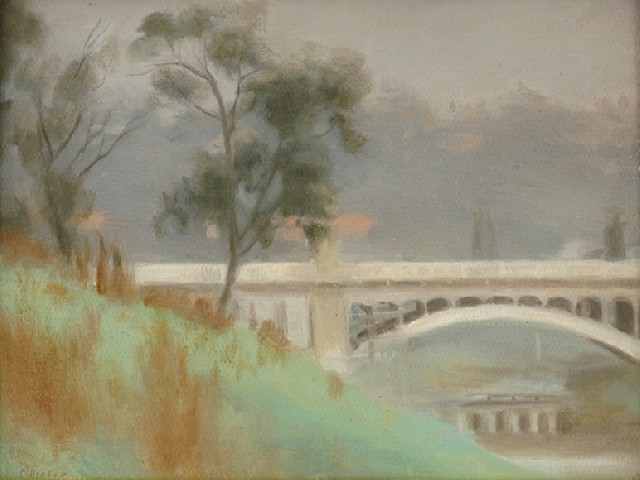
As we move into misty autumn, we will look at an Australian artist who worked in obscurity, and whose 127th birthday was on this year’s Equinox, March 21. Clarice Beckett was born into a comfortably-off Victorian family – her grandfather was the master builder who designed and built Como House.

Her father’s only ambition for his daughter seems to have been that she would marry into wealth, but her mother, a hobbyist painter, encouraged her artistic talents. Clarice studied art in Melbourne, including three years under Frederick McCubbin, and was a student of the controversial artist Max Meldrum, who argued that painting was a pure science, most reliant on tone, and with colour the least important component.

In 1918, Clarice’s father retired, moving his family to the Melbourne bayside suburb of Beaumaris. Her parents were ill and demanding, so that Clarice took responsibility for most of the household chores. Mr Beckett seems to have been disappointed in his career, and to have been a very difficult man. He wouldn’t allow Clarice to have a studio, telling her that the kitchen table was good enough.

Clarice built herself a little cart filled with painting equipment, which she used as a portable studio. She tended to go out very early and late, the only times she was free from domestic duties, to paint scenes from her local area, finding endless inspiration in the sea, beaches and suburban streets, bathed in the soft light of dawn and dusk. Her style was simple and original, and her paintings strongly atmospheric, often set on misty days.

Clarice was never taken seriously as an artist in her lifetime, with critics occasionally sneering at her “continual state of fog”, but most ignoring her completely. Sales of her work were pitifully small. Even her mentor Max Meldrum, who was supportive of her work, made it known that there would never be a great female artist, as women lacked the necessary capacity to be alone. Yet he praised Clarice for “working like a man”, and defended her fiercely. Her artist friends saw her as beautiful, unassuming and intelligent; sharply witty, but with the aloofness of extreme shyness.

In 1934, Mrs Beckett died from a stroke, and Clarice was severely affected by her mother’s death. The two had become very close, and Clarice was left alone with her invalid father, who became jealous of anything which might take his daughter away from him. She stopped attending art classes or social events, and when friends came to the house, Mr Beckett ordered them to leave. Clarice was now completely isolated, and she admitted to feeling a failure.

Clarice still painted whenever she could and one night, a year after her mother’s death, she continued working outdoors even though a storm had set in. She caught a chill which developed into pneumonia; her heart was already weak, and she died five days later, aged 48. The doctor believed that she might have survived, had her will to live been stronger.

It was not until 1971 that an exhibition of Clarice Beckett’s paintings were held, after more than 2000 of her canvases were found rotting away in a country barn. A leading critic hailed her as “a remarkable modernist”, and the Australian National Gallery purchased 14 of her paintings. The public were so enthusiastic that viewing hours were extended and the exhibition sold out. Since then, there have been several more public exhibitions of her work; she is regarded as one of Australia’s finest artists, and it is promised that she will never be forgotten again.

Clarice is a medieval form of the name Clara, a Roman name which comes from the Latin meaning “clear, bright”. Clarice is thought to be based on the Old French form, Claritia – just as the medieval name Lettice was based on Letitia. It was brought over by the Norman aristocracy, who were big fans of “Clare” names, and it can be found by the early 12th century, sometimes spelled Claris. Clara itself doesn’t seem to have been used in Britain until slightly later.

The name Clarice became well known in 1991 with the release of the Oscar-winning movie, The Silence of the Lambs, whose heroine is the beautifully named Clarice Starling, an FBI trainee on the trail of a serial killer. Clarice Starling was listed by the American Film Institute as one of the Top 100 movie heroes, and is the highest female on the list.

A rather different fictional Clarice is the equally delightfully named Clarice Bean Tuesday, from the children’s books by English author Lauren Child, who also penned the popular Charlie and Lola series. Clarice Bean is the middle child in her family, who longs for space and privacy, but instead finds herself in all kinds of amusingly chaotic situations.

If you like a name that has a song attached to it, you can sing along to Clarice, by Transatlantic folk-rockers, America. Like all songs by this band, I find it pleasant enough, but have little idea what it is about, although the lyrics don’t seem negative at all.

There are two pronunciations of Clarice. It can be said KLA-ris, to rhyme with Paris, which is a more British pronunciation, or it can be said kluh-REES, to rhyme with Denise, which is far more common in the United States. You’re welcome to choose either pronunciation, but to my mind, the first one sounds far more stylish and contemporary, while the second one reminds me of those pseudo-French names like Shanice and Fonice, which seem a bit daggy and dated.

Clarice is a strong yet elegant name which seems intelligent and dignified. It’s a very old name, but to me doesn’t seem “old-fashioned”. I can imagine it sounding adorable on a little girl, like Clarice Bean, but also perfect for an adult, like Clarice Beckett. It would make a great alternative to popular-yet-falling Claire, or fashionable-and-rising Clara for anyone who would like a traditional name which is still a little out of the ordinary.

POLL RESULT
Clarice received an approval rating of 54%. The name reminded 23% of people too strongly of Silence of the Lambs, but 15% thought the name was pretty and feminine. Nobody thought the name Clarice was tacky and tasteless.

(Picture is Punt Road Bridge, Yarra River by Clarice Beckett)

True Blue Names for Boys

26 Sunday Jan 2014

Posted by A.O. in Name Themes and Lists

≈ 10 Comments

Tags

animal names, Arabic names, Australian idioms, Biblical names, celebrity baby names, colour names, english names, fabric names, famous namesakes, fictional namesakes, fish names, geographic names, Greek names, hebrew names, historical records, metal names, modern classic names, mythological names, name history, name meaning, name popularity, names from movies, names from television, nature names, popular names, Roman names, surname names, tree names, unisex names, vocabulary names

016

Happy Australia Day! Here are ten names for boys which are associated with the colour blue, in honour of the saying, a true blue Aussie.

Bay

A bay is a scoop in the shoreline, much prized for providing safe anchorage and opportunities for fishing. Having a long coastline, Australia has many bays, including the Great Australian Bight which forms the southern edge of the continent, and Botany Bay in Sydney – there is even a Blue Bay on the Central Coast of New South Wales. Although bay also describes the colour of a horse’s coat (coppery brown with black markings), and bay tree is another word for a laurel bush, I tend to think of the name Bay as being influenced more by the geographic term, at least in Australia. Bay can also be from the surname – the first English people with the surname Bay took their name from baille, an enclosed courtyard as part of a Norman castle’s fortifications. Although Bay can be used for both sexes, I have only ever seen it on boys, perhaps because it sounds as if could be short for Bailey.

Blue

Blue is a colour of the spectrum, and a primary colour. Because it is the colour of the sky, it has often been seen as representing heaven and divinity. It has been connected to the “blue collar” working class, but also with the wealthy, and “blue blooded” nobility. Blue is a popular colour for uniforms, and the navy, air force, and police traditionally wear blue. Blue can also mean “sad, melancholy”; hence blues music, which arose out of suffering. The Australian flag and Eureka flag are both blue, blue heelers are tough, loyal Australian cattle dogs, and it is an Australian irony that a red-headed man is called Blue or Bluey – some say because of the redhead’s reputation for temper, as a blue is Australian slang for a fight. Since World War II, blue has been seen as the colour for boys (with pink for girls), giving the name Blue a boyish feel – although celebrity baby Blue Carter shows it works well for girls too.

Dean

The Blue Mountains are to the west of Sydney, part of the Great Dividing Range down the eastern side of Australia. Their name comes from the blue-grey haze which can be seen when the mountains are viewed from a distance, believed to be caused by the diffusion of eucalyptus oils from the trees. One of the most prominent is the Mountain Blue Gum (Eucalptus deanei), a tall forest tree. Its scientific name comes from Henry Deane, an Australian engineer who first collected specimens in the late 19th century. The English surname Dean or Deane comes from dene, meaning “valley” – the Mountain Blue Gum grows in sheltered valleys. Dean has been used as a boys name since the 17th century, and seems to have been initially most popular amongst non-Anglican Protestants. Dean first ranked in Australia in the 1950s, probably because of Hollywood star James Dean; it debuted at #134. By the following decade it had reached the Top 50, and peaked in the 1970s at #34. It didn’t leave the Top 100 until the early 2000s, and since then has gently declined into the mid-100s. It has recently got some exposure via Dean Winchester from the television show Supernatural, played by Jensen Ackles; the character is named after Dean Moriarty, from Jack Kerouac’s On the Road. A simple, clean modern classic, this still has a touch of Hollywood.

Drake

Drake has been used as a boys name since the late 16th history in honour of the heroic sea captain, Sir Francis Drake – the first babies with this name were born around the time of Sir Francis’ death. His surname is from the Old English nickname Draca, meaning “dragon, serpent, sea serpent”, coming from the Latin draco. The word goes back to an ancient root meaning “to see” – perhaps suggesting that dragons had a mesmerising gaze. In European mythology, dragons are serpentine rather than lizard-like, so the word drake covers a range of creatures. The name would have been given to someone who was very bold and fierce, for dragons were generally viewed as evil. They were often shown guarding a hoard of treasure with avaricious ferocity. In the post-Christian era, they became associated with Satan, but in modern fantasy stories, dragons nearly always seem to be noble and friendly. Although dragons are cool, this name reminds me of the watery Rainbow Serpent of Indigenous cultures, depicted as a blue serpent on Sydney’s coat of arms.

Levi

Levi Strauss was the German-American businessman who founded the first company to manufacture blue denim jeans, which gain their colour from indigo dye. Originally sturdy workwear for labourers, jeans became iconic fashion items, and are now essential clothing for almost everyone. In the Old Testament, Levi was the son of Jacob and Leah, and the founder of the Tribe of Levi. The Levites became the priestly caste of the Hebrews – perhaps the most famous members of the Tribe of Levi are Moses, and his siblings Aaron and Miriam. The name Levi is traditionally understood as “he will join”, because Jacob joined with Leah to produce Levi, but Biblical scholars believe it simply means “priest”, and comes from Arabic. Levi has charted in Australia since the 1970s – this was the decade that Levi jeans were first manufactured in Australia, and the brand name probably had more impact than the Biblical figure. Levi was #243 for the 1980s, and climbed steeply to make the Top 100 by the early 2000s, where it remains stable. It is #26 nationally, #31 in New South Wales, #30 in Victoria, #24 in Queensland, #40 in South Australia, #22 in Western Australia, #23 in Tasmania, #13 in the Northern Territory, and #53 in the Australian Capital Territory.

Marlin

Blue marlin are one of the world’s largest fish, blue-black with a silvery white underside, and an elongated upper jaw. They can reach more than 500 kg in weight, and have few predators, apart from humans. Because of their size, power, and elusiveness, they are considered to be one of the most highly prized targets for sports fishing. Found in many oceans of the world, blue marlin have been captured as far south as Tasmania. However, the greatest numbers have been caught off the Gold Coast in Queensland, and the largest ones in Bateman’s Bay, on the south coast of New South Wales. Blue marlin are considered be a threatened species, due to overfishing, and most anglers in Australia use the tag and release method. If you would like to use Marlin as a boy’s name, it doesn’t seem too different from Marlon in sound. The word marlin is short for marlinspike fish, as a marlinspike is a pointed tool used by sailors to separate strands of rope; it comes from the Dutch for “fasten, secure”. Like to use this as a girl’s name? What about Makaira, the Latin name for marlin?

Ocean

Australia is entirely surrounded by ocean, and more than 80% of our population live near the sea. 71% of the planet is covered by ocean, which holds most of Earth’s water. Integral to life on the planet, it is believed that life first arose in its waters. It is not known where all the water on our planet came from, but it must have played a major role in cooling it and making it possible for anything to live here. It still continues to moderate our climate and weather patterns, so we can keep living here. From space, Earth appears to be a marbled blue colour, earning it the moniker The Blue Planet. The word ocean comes from Oceanus, which the ancient Greeks and Romans believed was an enormous river encircling the world. In Greek mythology, this world-ocean was personified as a Titan, depicted as a large, muscular man with a long beard and horns, having a serpent for his lower body. He is the father of the ocean nymphs, and all the rivers, fountains and lakes of the world. Despite these masculine origins, the name Ocean is given to both boys and girls.

River

Although it has around a hundred of them, Australia cannot be said to be a land of great rivers – river beds are often dry, and even our largest rivers tend to be on the thin side. Of course, this means that every single one of them is especially precious. It seems slightly cheating to include them on a list of Blue Names, as every river I have seen here was brown or green in colour. However, rivers are marked in blue on maps, and if you saw one from a distance with a quantity of blue sky reflected in it, from the right angle it would probably look blue-ish. The word river is Anglo-Norman, from the Latin for “riverbank, shore”; it is ultimately from an ancient root meaning “scratch, tear, cut”. River has been used as a first name since the 17th century, and from the beginning seems to have been used with the geographic term in mind, since people named River Banks and River Jordan turn up quite early in the records. The name is unisex, but historically much more common for boys – in Australia, it seems to be more than twice as common for boys as for girls.

Steel

Steel is an alloy of iron and carbon. Steel production began on an experimental basis in Australia in the 19th century, but didn’t really get going until World War I, when BHP opened the first steelworks in Newcastle. Its boom years were after World War II, but since the 1980s our steel production has decreased significantly due to global competition. During its heyday, steelworks provided mass employment and were a source of great pride for workers; it was from the steelworkers that the modern working class emerged. Blue steel is steel that has been given a dark finish, in order to increase toughness. Although we often connect blue steel with guns and other weapons, it is used in many useful capacities, such as on the steel-capped toes of work boots. It gives its name to a colour – steel blue, a shade of blue-grey. Last year I saw several boys named Steel or Steele in birth notices, after the release of the Superman movie, Man of Steel.

Suede

Suede is a soft napped leather, popular for making accessories such as shoes and handbags. It was originally used for women’s gloves, and the word comes from the French gants de Suède, meaning “gloves from Sweden”, since this is where the gloves were imported from. Suede features in the Carl Perkins song, Blue Suede Shoes, considered one of the first rockabilly records, and the first million-selling country song to hit the R&B charts. Perkins wrote the song based on a suggestion from Johnny Cash, and a real life encounter with a man who didn’t want anyone stepping on his blue suede shoes. It was soon afterwards recorded by Elvis Presley, who made it a hit all over again, and the song has gone on to become a rock and roll classic. I have met a little boy named Suede, and once I got used to it, found it rather cool and rockabilly. Suede was named in honour of the song, as his parents are Elvis fans. They probably attended the recent Elvis Presley Festival in Parkes.

POLL RESULTS
The public’s favourite names were Levi, River and Bay, and their least favourite were Ocean, Steel and Suede.

The People’s Choice of Girls Names – 2

15 Sunday Dec 2013

Posted by A.O. in Name Themes and Lists

≈ 11 Comments

Tags

African names, American names, Arabic names, astronomical names, British names, celebrity baby names, created names, Creek names, Disney names, Dutch names, english names, epithets and titles, famous namesakes, fictional namesakes, French names, germanic names, Greek names, hebrew names, honouring, Indian names, Italian names, Latin names, locational names, Maori names, middle names, mythological names, name history, name meaning, name popularity, names from ballet, names from films, names of rivers, Native American names, nicknames, Old Norse names, Persian names, Roman names, royal names, saints names, Sanskrit names, scandinavian names, screen names, Shakespearean names, surname names, Tibetan names, Tiv names, unisex names, virtue names, vocabulary names, Welsh names

Queensland_Ballet_presents_Giselle

Here are ten names for girls which have been often searched for to reach my blog. I chose names that aren’t in the Top 100, and come from a range of origins.

Anouk

Dutch and French short form of Anna. A famous namesake is celebrated French actress Anouk Aimée; she was born Françoise Dreyfus, and took the name Anouk from the first character she portrayed on film. The name became better known in the English-speaking world after the publication of the award-winning 1999 novel Chocolat, by British author Joanne Harris, in which there is a little girl named Anouk. The character of Anouk is based on the author’s daughter Anouchka, whose name is another pet form of Anna. The book was made into a movie in 2000. Actor and author Andrew Daddo has a daughter named Anouk, born a year after the film was released. Pronounced a-NOOK or an-ook, this exotic name doesn’t have an obviously “French” sound to it, and seems quite sophisticated.

Blythe

Variant of Blithe, an English virtue name meaning “cheerful, merry” which is first found in 16th century Norfolk, stronghold of the Puritans. Although the name began as a girls name, it has been given to boys as well, particularly in the United States, and overall is fairly evenly divided between the sexes, although more common for girls. In the case of boys, the name probably comes from the surname, which is derived from any of the places called Bligh, Blyth or Blythe; they get their name from the River Blyth in Northumberland, the River Blythe in Warwickshire, or the River Blithe in Staffordsire. The names of the rivers simply come from the word blithe, so in either case the name has the same pleasant meaning. A famous namesake is American actress Blythe Danner, mother of Gwyneth Paltrow; her name is a middle name of Gwyneth’s daughter, Apple. This is a fresh, sprightly name which has a modern feel despite its long history.

Cordelia

Cordelia is a princess in William Shakespeare’s King Lear, a loyal daughter who is disowned by her father because she will not make flattering speeches to him, with tragic results. The character is based on Queen Cordeilla, a legendary queen of the Britons who appears in Geoffrey of Monmouth’s History of Britain. According to Geoffrey, Cordelia ruled Britain as queen, but came to grief because the rule of a woman was deemed unacceptable. Cordelia is also mentioned in Edmund Spenser’s epic poem, The Fairie Queene, where her role as heroic British queen was probably a compliment to Queen Elizabeth I. The first Cordelias were born around the time The Faerie Queene was published, and were from upper-class families. There is a popular but unsubstantiated theory that Geoffrey of Monmouth based the name Cordeilla on that of Creiddylad (said cree-THIL-ahd), a character in Welsh Arthurian legends who was the daughter of the god Lud, and considered the most beautiful girl in Britain. Another idea is that Geoffrey may have based the name on that of Saint Cordula, a legendary companion of Saint Ursula whose name is from the Latin for “heart” (Cordeilla is also found spelled Cordoyla, which offers this some support). Still another is that it may be derived from the Roman name Cordus, meaning “late born”, with the implication that as Cordelia was King Lear’s youngest daughter, he had her late in life. Although all these suggestions are attractive, the last one may appeal most to older parents. If you are a fan of L.M. Montgomery’s Anne books, you will remember that the heroine wished her name was Cordelia – because it is “perfectly elegant”. This literary name still seems refined, and can be pronounced cor-DEE-lee-uh, or cor-DEEL-yuh.

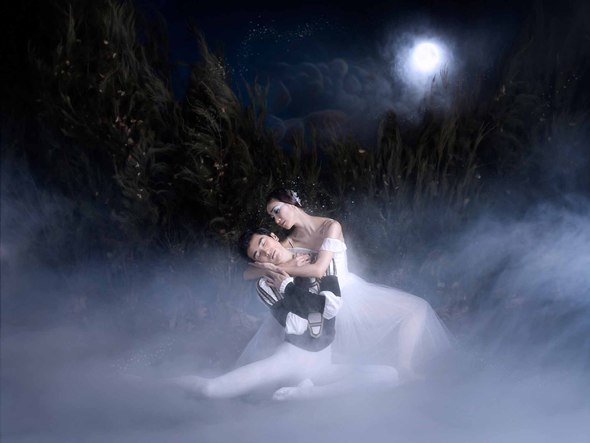
Giselle

Derived from the Germanic name Gisela, meaning “pledge, hostage”. Although the word hostage has rather alarming associations today, in the past it was common for political treaties to be accompanied by the exchange of political hostages, as a guarantee of good faith and to maintain peace. Often the children of the ruling classes, even princes and princesses, would be handed over to be raised and educated by a foreign court, with hopes of greater cultural understanding between nations. Gisela and Gisèle (the French form) were popular names amongst medieval nobility and royalty. The name received a huge boost in the 19th century, because of the romantic ballet, Giselle. It tells of an innocent village girl named Giselle who dies of a broken heart after being betrayed by her lover. However, as a sign of her forgiving nature, after her death she protects the man she loves from the spirits of vengeance, and saves his life. Another fictional Giselle is the sweet peasant girl who makes a happy-ever-after transition from cartoon fantasy land to gritty real world in the Disney film, Enchanted. Graceful and fairytale, Giselle is usually pronounced ji-ZEL in Australia, and is #161 in Victoria.

Ingrid

Derived from the Old Norse name Ingríðr, meaning something like “beloved of Ing, beauty of Ing, delight of Ing”. Ing is an older name for the Norse god Freyr – perhaps his true name, because Freyr means “lord” and is his title. Freyr was a phallic fertility god who brought peace and pleasure, and was associated with sacred kingship, male sexuality, prosperity, and sunshine. In Norse legend, Ing is the god followed by the Germanic peoples of the area which is now Denmark and its surrounds, and he is claimed as the first king of Sweden, as well as the progenitor of the Anglian kings. Ingrid is a traditional name amongst Scandinavian royalty and nobility, and there is a young Princess Ingrid of Norway, who is expected to one day be queen. A famous namesake is beautiful Swedish-born movie star Ingrid Bergman, who starred in many Hollywood movies, including Casablanca. Ingrid has a strong and chiselled beauty, and is #481 in Victoria.

Piata

Maori name meaning “shine, glisten”. It isn’t unusual in New Zealand, and is still given to girls today; it can also be found as a surname. It’s not common in Australia, but I think it would work well here, and has a pleasingly cross-cultural feel, since it is similar to Italian Pia and Pieta. I believe it is pronounced pee-AH-ta.

Soraya

Persian form of the Arabic name Thurayya, meaning “the Pleiades”. The Pleiades is the familiar group of stars in the constellation Taurus, sometimes known as The Seven Sisters. The name became better known in the west because of two royal Sorayas. Soraya Tarzi was a liberal Muslim and feminist who married into the monarchy of Afghanistan and became queen; she appeared in public alongside her husband as an equal and together they tried to modernise their country. Afghanistan wasn’t quite ready for it, and the couple went into exile in Rome in 1929. Even more influential was Soraya Esfandiary-Bakhtiari, who was Queen of Iran as the second wife of the last Shah. Very attractive and western-educated, Soraya and her husband were forced to divorce in 1958 because she was apparently infertile. She also went into exile, under the name Princess Soraya, and lived in France, where her story evoked much sympathy. Her divorce inspired a song, I Want to Cry Like Soraya, and a variety of sunflower was named in her honour. A beautiful star name, Soraya is similar to familiar names like Sarah and Zara, and in Australia is usually pronounced soh-RAY-uh.

Tallulah

A place name of Native American origin, this probably means “town” in the Creek language. Tallulah Falls is a small town in Georgia, in the United States, which has attracted tourists since the late 19th century. Parts of the film Deliverance were filmed there, so you may even have seen it on screen. Tallulah has been used as a girls name since the 19th century, and records show that the name originated in the southern states, with most Tallulahs born in Georgia. The most famous namesake is flamboyant actress and party girl Tallulah Bankhead, who was from Alabama, and named after her grandmother. Despite being a name of American origin, Tallulah has never charted in the US, and is far more popular in the UK. Tallulah Bankhead was a huge celebrity in 1920s London, and her name is very fashionable in England, chosen as a baby name by the upper classes and minor royals. Spunky, sexy and fun to say, this fits in with familiar names such as Tully and Tahlia, and comes with cute nicknames like Lula and Lulu.

Uma

This Indian name is one of the epithets of the benevolent mother goddess Parvati, the wife of Shiva. Its original meaning is “mother (goddess, wife of) Shiva”. Because Parvati is a goddess of light, the name Uma also came to be understood as meaning “light, radiance”. In a previous incarnation, the goddess (then called Sati) committed suicide by throwing herself on a sacrificial fire, and her ashes became the sacred spice turmeric; because of this the name Uma came to be understood as meaning “turmeric”. The meaning of Uma is also glossed as “O child, do not (practice austerities)!”, because as a young girl Parvati’s mother chided her for the extreme ascetisim she practicised in order to please her future husband, Shiva. By coincidence, uma is literally translated as “flax” in Sanskrit, although this doesn’t seem to have any connection to the goddess. The most famous namesake is American actress Uma Thurman, whose name is said to have a different origin. Uma’s father was the first westerner to become a Buddhist monk, and the term uma chenpo means “Great Middle Way” in Tibetan – one of the guiding principles of Buddhism. In modern Hebrew, uma means “nation”, and in Israel Uma is a patriotic unisex name. In the Tiv language of West Africa, the name Uma means “life”, and can be used for both sexes. Simple yet multi-layered, this is a fascinating cross-cultural name which isn’t common in any country of the world.

Xanthe

Ancient Greek name meaning “yellow, yellow-brown”, often translated as “blonde, fair-haired”. There are several figures from Greek mythology with the name. Xanthe was one of the Oceanides, the three thousand daughters of the Titan sea gods Oceanus and Tethys. The Oceanides were nymph-like goddesses who were responsible for the world’s fresh water, and were often pictured married to river gods. In some sources, Xanthe is imagined as presiding over the yellow clouds that can be sometimes be seen at sunrise or sunset. Xanthe is also given as the name of one of the Amazon warriors, and Hesiod mentions Xanthe as being the mortal wife of Asclepius, the god of medicine. Actress Madeleine West welcomed a daughter named Xanthe last year. This quirky, stylish name is usually pronounced ZAN-thee in Australia, and comes with the cool nickname Xan or Zan. The name is #469 in Victoria.

POLL RESULT: People’s favourite names Blythe, Cordelia and Xanthe, and their least favourite were Giselle, Piata and Uma.

(Photo shows a scene from the ballet Giselle, performed by the Queensland Ballet)

Brisbane Suburbs That Could Be Used as Boys Names

13 Sunday Oct 2013

Posted by A.O. in Name Themes and Lists

≈ 7 Comments

Tags

aristocratic names, Biblical names, english names, famous namesakes, fictional namesakes, French names, Gaelic names, hebrew names, Irish names, Latin names, locational names, middle names, name history, name meaning, name popularity, names from films, names from television, nicknames, Old English names, Old Norse names, popular names, rare names, Roman names, saints names, Scottish names, surname names, unisex names, US name popularity, Welsh names

857092-121013-wap-hamilton

Augustine

Augustine Heights is a new suburb of Ipswich, and gained its name from St Augustine’s Catholic Church and College. The name Augustine is from the Roman name Augustinus, derived from Augustus, meaning “great, venerable”. Its most famous namesake is the theologian Saint Augustine of Hippo, considered one of the most important Church Fathers. He describes his conversion to Christianity in his Confessions, which has become a classic of Christian literature. The name became popular in England in the Middle Ages because of Saint Augustine of Canterbury, a 6th century founder of the English church known as the Apostle to the English. It is probably because of him that there is an English form of Augustine – the popular Austin. In France, Augustine is a girls name, the feminine form of Augustinus.

Bowen

Bowen Hills is an inner-city suburb of Brisbane. It is named after Sir George Bowen, an Irishman who was the first Governor of Queensland. Tactful and democratic, with a great love of the outdoors, he made himself popular enough to be invited to serve two more years when his term had expired. There are a few places in Queensland named after Sir Bowen, including Bowen Park, a pleasure garden in Bowen Hills. The surname Bowen can be Welsh, meaning “son of Owen“, or it can be Irish, in which case it is an Anglicised form of the Gaelic O’Buadhachain, meaning “son of Buadhach”. The name Buadhach means “victory, triumph”. This name reminds me of the Bowen Technique, an alternative massage treatment developed by Australian Tom Bowen, although Bowen is a knight and dragon-slayer in the movie Dragonheart. Rarely seen here, Bowen is in the Top 1000 and rising for boys in the US. It gives the unisex nickname Bo, and for some reason I see this as a girls name just as much as a boys.

Chandler

Chandler is a semi-rural outer suburb of Brisbane. It is named after Sir John Beals Chandler, a successful businessman with a chain of electrical goods stores, and who owned several radio stations. He was elected to the Queensland Parliament in the 1940s, and Lord Mayor of Brisbane in the 1940s and early ’50s. Chandler is an English occupational surname, which denoted someone who made and sold candles, or someone who was responsible for the wax, soap, candles and lighting in a medieval great house. This name will remind many of Chandler Bing, from popular sit-com, Friends.

Crosby

Mount Crosby is an outer suburb of Brisbane adjoining the state forest. It is named after its dominant natural feature, Mount Crosby. The first settlers to this area were from the village of Crosby-on-Eden, near the Scottish border, and it seems likely that they named their new home after their original one. The surname Crosby is after the place name, a common one in northern England and southern Scotland. The name is of Old Norse origin, and means “settlement by the cross”; as we learned from Cruz, these stone crosses were often used as markers. Famous Crosbys include entertainer Bing Crosby and musician David Crosby. The name has recently begun charting in the US, after drama series Parenthood was shown on television there. The show has a character called Crosby Braverman, played by Dax Shephard, and the name must have resonated, because it went up 69 places last year. Crosby is rare in Australia (I’ve only seen it on a child once), but maybe Parenthood will have an effect here too.

Ebenezer

Ebenezer is a suburb of Ipswich. It had been a preaching place on the Methodist Church circuit since 1863, and by 1882 a church had been built named the Wesleyan Ebenezer Church. It is from this church that the suburb gets its name. In the Old Testament, Eben-Ezer is a place mentioned as the scene of battles between the Israelites and the Philistines; its modern day location is not known, but it is probably in Palestine or Arabic Israel. Eben-Ezer is from the Hebrew for “stone of help”, and it is theorised that a stone dedicated to Yahweh may have been located here to give it its name. Its most famous namesake must be Ebenezer Scrooge from Charles Dicken’s A Christmas Carol, the cold-hearted miser redeemed by three spirits of Christmas. I think the name Ebenezer sounds pretty hip now, and an Old Testament boys name which has been overlooked for too long. Eben and Ben would make good nicknames.

Hamilton

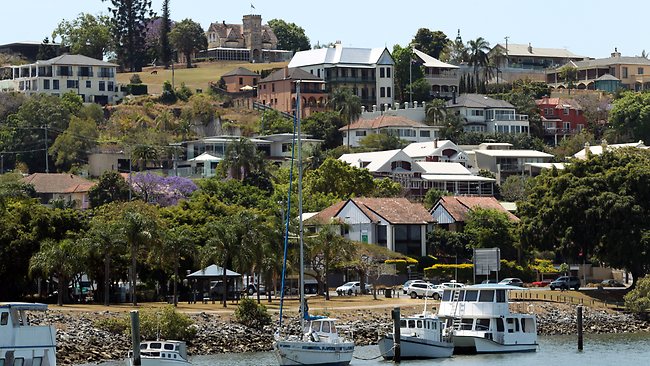
Hamilton is a hilly inner-city suburb of Brisbane on the Brisbane River which was built by convict labour. It soon became known for its upper-class country houses and estates, ornamental shade trees, picturesque location and fine views of the city. Hamilton is associated with “old money”, and has the highest mean income of any suburb in Queensland. It is named after the Hamilton Hotel, built in 1865 by Gustav Hamilton, a wealthy solicitor who owned most of the land in the area. It soon became known as a meeting place for the horse racing world, as the Turf Club is nearby, and is still popular today. Hamilton is an English and Scottish surname after the village of Hamilton in Leicestershire; its name means “crooked hill” in Old English. The aristocratic Hamilton family gained lands in Lanarkshire, Scotland, and gave their name to the town of Hamilton there. The Hamiltons married into the Scottish royal family, and the Duke of Hamilton and Brandon is the highest peer in Scotland. A famous person with the name is Hamilton Hume, an early Australian explorer of New South Wales who was a top-notch bushman and formed friendly relationship with Aboriginal peoples. This is a name with an impressive pedigree.

Logan

The city of Logan is halfway between Brisbane and the Gold Coast. It began as a penal settlement, and farming soon followed; it was developed for housing in the 1960s due to its laissez-faire planning laws. Logan is named after Captain Patrick Logan, the Scottish commandant of the original penal settlement, who had a reputation for being strict to the point of cruelty. He was a great explorer and was killed on one of his expeditions, most likely by Aborigines who had repeatedly told him to get off their land. News of his death was met with wild joy from the convicts. Logan is a Scottish surname; the Clan Logan comes from the “lands of Logan” in Ayrshire, which may be from the Gaelic for “hollow”, or even of Norman origin. In Ireland, it is considered to come from the Gaelic O’Leoghain, meaning “grandson of the warrior”. This name has many namesakes from popular culture, including the dystopian sci-fi film Logan’s Run, where Logan is played by Michael Yorke, and Logan aka Wolverine from the X-Men films, played by Hugh Jackman. Logan has charted since the 1970s (when Logan’s Run first screened), and ranked in the 1980s at #344. It climbed steeply through the 1990s and made the Top 100 by the 2000s. It is currently #38 nationally, #36 in New South Wales, #33 in Victoria, #65 in Queensland, #46 in South Australia, #28 in Western Australia, #17 in Tasmania, and #50 in the Australian Capital Territory.

Sherwood

Sherwood is a suburb on Oxley Creek. Its name comes from a farm which was named after Sherwood Forest in Nottinghamshire, England. A Royal Forest, and remnant of an older and much larger royal hunting forest, it is one of England’s most ancient, having survived since the end of the last Ice Age. It is famous for its association with legendary folk hero Robin Hood, who is supposed to have lived in Sherwood, according to some sources. Sherwood in Brisbane even made its own Sherwood Forest Park, which is now, less romantically, the Sherwood Arboretum. The name Sherwood means “shire wood”. A famous person with the name is American author Sherwood Anderson.

Tennyson

Tennyson is a riverside suburb named in honour of Alfred, Lord Tennyson. Tennyson was Poet Laureate of Great Britain and Ireland during Queen Victoria’s reign, and has the record for length of tenure as a Laureate at 42 years. Revered in his own time, he remains one of the popular English poets. One of his much-loved works is the Idylls of the King, a cycle of blank verse poems inspired by the legends of King Arthur; many of the streets in Tennyson have Arthurian names in compliment of the Idylls. For those amused by these coincidences, the Queensland Tennis Centre is located in Tennyson, and was once the Tennyson Tennis Centre. The English surname Tennyson means “son of Tenney”, with Tenney a pet form of the name Denis. Actor Russell Crowe has a son named Tennyson, after his favourite poet. This is a handsome and unusual name, with a great namesake, and would make an excellent middle name too.

Windsor

Windsor is an inner-city suburb of Brisbane, with many old homes, and containing several heritage-listed sites. It was named Windsor in 1887, most likely after Windsor Castle in Berkshire, England, as it was Queen Victoria’s Golden Jubilee Year. Windsor Castle was built by William the Conqueror, and was originally a fortification to protect the outskirts of London, with strategic views of the River Thames and access to the royal hunting forest of Windsor. Since the rule of Henry I, William’s son, it has been a royal residence, and is the largest inhabited castle and longest-occupied palace in Europe. Today it is a royal palace and weekend retreat for Elizabeth II, and state banquets and official entertainments are often held there – it is also a major tourist attraction. The castle is named after the nearby village of Windsor, once the site of a palace for the Saxon kings. Its name means “winding shores, winch shores” in Old English, because boats were pulled by windlass up the river. Famously, Windsor is the surname of the British royal family: the name was changed from Saxe-Coburg and Gotha by George V in 1917, due to anti-German sentiment during World War I. The final straw was when Germany used the Gotha G. IV aircraft to bomb London – just four months later, the Saxe-Coburg-Gothas had become the Windsors, the name taken from the royal palace. A famous person named Windsor is British actor Windsor Davies, best known as the sergeant on It Ain’t Half Hot Mum. Royal names are all the rage, and you can’t get any more royal than Windsor.

POLL RESULT: People’s favourite names were Tennyson, Augustine, and Windsor, and their least favourite were Sherwood, Hamilton, and Ebenezer.

(Photo shows the suburb of Hamilton)

Old Names Are New … And New Names Are Old News

26 Thursday Sep 2013

Posted by A.O. in Names in the News

≈ 5 Comments

Tags

Arabic names, created names, famous namesakes, fictional namesakes, French names, Latin names, locational names, name data, name trends, Polish names, retro names, Roman names, saints names, Spanish names, spellcheck software, Stars Wars, surname names, titles, Twitter, UK trends, US trends, vocabulary names

Old Fashioned Names

When it comes to baby names, the newspapers generally run with one of two stories. Either they tell us that “normal” baby names are “back in fashion” (what a relief!), or else they give us dire warnings of “bizarre” baby names which are definitely the sign of the apocalypse, or can at least make us feel all smug and superior for five minutes.

It’s not often they run with both these at once, but in a journalistic triumph, they brought forth two opposing baby name stories within two days of each other. I’m not sure whether they didn’t bother co-ordinating, or hoped nobody would notice the obvious incongruity.

The Daily Telegraph told us that in the future, baby names will no longer be odd hyphenations or spelling variants, because when they looked through the New South Wales data, most of the names popular during the 1940s and ’50s, which had almost disappeared by the early 2000s, have had a resurgence in the past decade.

Henry has almost tripled from 106 in 2002, to 276 in 2012; Evelyn is up from 17 to 112; and Matilda has skyrocketed from 68 to 265. Of the twenty traditional names they chose to look at, only Samuel and Beatrice had suffered a slight decline.

This trend, we are told, reflects a desire for individuality, substance, and “a bit of class”. It has been spearheaded by the young royals, William and Catherine, although they weren’t even engaged at the turn of the century, so I’m not sure how they managed to influence an entire decade of baby names.

Furthermore, we can be assured this signals a return to conservative values, discipline being back in vogue, school uniforms, and clearly defined gender roles (which apparently means girls wearing pink and boys wearing blue).

Generation X parents get the gong for doing their research and picking out good solid names that you can yell from the soccer match sidelines without embarrassment, and which will, it seems, affect their children’s entire destinies and even give them a good Twitter handle. Goodness. Who would thought calling your kid Mabel was so significant?

Meanwhile, over the border, the Courier Mail interviewed an anonymous schoolteacher from Logan (love the old anonymous schoolteacher as a source – can’t be proved they exist, can’t be proved they don’t), and she says names have become increasingly bizarre over the past 20 years, and now spellcheck software can’t even recognise them. I find most names aren’t recognised by spellcheck – where is this spellcheck software which can recognise all the names in the world?

Then comes a long list of names of children who we are told are enrolled at Logan schools, and are meant to be horrified by.

One of them is Romaine – a French name, the feminine of Roman. Another is Cassius, a Roman name and also a saints’s name; it’s gaining in popularity in both the US and the UK. I say thumbs up to Romaine and Cassius’ parents! Felicitas is another Roman saint’s name, with the meaning “fortunate” in Latin. How does a schoolteacher not recognise these as names? That to me is the scary part.

There are names from other cultures, such as Alareal, a Spanish surname derived from the word for “royal”; Jadzia, a Polish form of Hedwig; Santiana, a Spanish surname which means “St. Anna”; Thiery, a French form of Theodoric. Qaira is Arabic, and Zenen is Spanish, but I don’t know anything more than that.

There’s quite a few vocabulary names, including Beautiful, Bravado, Brilliance, Cherish, De Ja Vu, Freedom, Gorgeous, Heritage, Miracle, Precious, Sapphire, Styles, and Twinkle. A spellchecker will recognise them, and they’re all words with positive meanings. When you think of it, most names start out as vocabulary words anyway.

There’s two titles as names: Caesar and Marquis. I’m mentioning these since it’s said Australians can’t use titles as names, but clearly we can in some cases.

There’s real place names: Australasia, which is patriotic; Avantika, the ancient name for a city in India; Jetiis, a village in Indonesia. And a fictional place name: Ataria, an island in Star Wars.

There’s names of celebrities, such as Beyonce, and Kahu, which is a tribute to Brisbane Broncos NRL star Jordan Kahu, and Kovee, after the musician.

There’s Caylis, who is one of the Neopets, Darian, derived from Darius, Hawke, a surname, and Jezzer, a short form of Jeremy.

There’s some variant spellings, such as Bayleigh, Emmerson, Izack, Kaelani, Khaileb, Khynan, and Psalmz, which I don’t find too outrageous.

There’s some “tweaking” of names such as Leilesha, Mikaiah, Shaylani, Tanyce and Taylay, which don’t offend me. I notice there is a Congresswoman in the US named Tanyce, so it doesn’t seem to impede your progress in life.

There’s some names I don’t recognise, although that doesn’t necessarily make them “bad” names, and I can see that they are in use elsewhere: Kalaize, Millieka, Narvasha, and Shizia.

Finally, we end with Sambo, which I agree seems a bit unfortunate, but does have a number of origins, and L-Car, pronounced Ledashcar (although wouldn’t it be Eldashcar???). Anyway I have already made my views known on this subject, and won’t repeat them here.

So there you go – either names are becoming more and more conservative, or they are becoming ever more strange and confusing. You can decide for yourself which one is correct, if either is.

POLL RESULTS
29% believed that names were not becoming either more conservative or more bizarre, but were staying much the same
24% thought that names were becoming both more conservative, and more bizarre
20% thought they were becoming more conservative for the middle classes, but more diverse for the lower classes
12% didn’t know, and felt confused
7% felt that names were in fact all becoming more bizarre across the board
The remaining 8% (representing three people) chose options where they were the only person to have that opinion

Waltzing with … Augusta

15 Sunday Sep 2013

Posted by A.O. in Waltzing with ...

≈ 3 Comments

Tags

epithets and titles, famous namesakes, fictional namesakes, historical records, honouring, imperial titles, Latin names, middle names, name combinations, names of boats, nicknames, Roman names, royal names, sibsets

Lady Augusta_steamer

September 17 marks the maiden voyage of the first paddle-steamer down the Murray River, in 1853. The Murray is Australia’s longest river at 2508 km long; it has its source in the Alps, meanders across the southern inland plains where it forms most of the border between Victoria and New South Wales, and ends at Lake Alexandrina in South Australia, which empties into the Southern Ocean near Goolwa.

Europeans first discovered the Murray in 1824, and Captain Charles Sturt became the first explorer to follow the river’s course down to Lake Alexandrina, in 1828-29. In 1851, the South Australian government offered 2000 pounds reward to the first steamship to reach the junction of the Murray and Darling Rivers, at Wentworth.

The Scottish explorer Francis Cadell, who had already navigated part of the Amazon and sailed to China and Singapore by this time, heard about the reward in 1852. Nobody had claimed the money yet, and Cadell was determined to give it a shot. He had a steamer built in Sydney, and during its construction, did a test run on the Murray in a canvas boat.

Just to make things more exciting, a British-born Australian named William Randell who had lived near the Murray River also threw his hat in the ring. He built his own steamboat in 1852, even though he had no experience in boat construction, and had never seen a paddle-steamer before. He was the first person to actually put a steamboat in the river. Randell didn’t even know about the reward until later – it was a personal goal.

Cadell had much greater flair for public relations. While Randell named his craft Mary Ann after his mother, Cadell cannily called his the Lady Augusta, in honour of the South Australian governor’s wife, Lady Augusta Sophia Young (the town of Port Augusta in South Australia is also named after this lady). On the Lady Augusta‘s maiden voyage, Cadell took as his passengers the governor and his wife, members of the Legislative Council, and a journalist to give him a good write-up.

Cadell set out from Goolwa on August 25 1853. For most of the way he and Randell were neck-and-neck; however, on September 17, the Lady Augusta arrived in Swan Hill a few hours before the Mary Ann.

Swan Hill is 1000 miles from the sea, and although they were still ages from Wentworth, the governor decided the contest was over, and Cadell had won. He was deemed the first person to successfully navigate the Murray River in a practicable steamboat, and the governor arranged for gold medals to be awarded to Cadell, the Legislative Council, and himself. He then gave Cadell another 2000 pounds to build another boat.

William Randell kept going, and although he didn’t reach Wentworth either, he went further than Cadell. Due to a general feeling that Randell had been treated unjustly, he was given 300 pounds, and then another 400 when public sentiment continued to mutter about it. In fact neither Cadell or Randell had fulfilled the requirements of the contest, and this must surely rank as one of the unfairest competitions of all time.

Both Francis Cadell and William Randell attracted investors and went into business running steamships on the Murray, and because of their efforts, the Murray was opened up as an avenue of transportation. Perhaps it doesn’t really matter that Francis Cadell was the first official steamboat navigator of the Murray River in the Lady Augusta. I still think it stinks though.

Augusta is the feminine form of Augustus, from the Latin for “great, venerable, majestic”. Just as Augustus was used as a title by the Roman emperors, Augusta was a title bestowed upon some women attached to the imperial families of Rome and the Greek dynasties. It was the highest honour that could be conferred, signalling not only power, but a goddess-like status – indeed, many goddesses were given the title of Augusta.

The first woman to receive the title was Livia Drusilla, the widow of the Emperor Augustus, who became known as Julia Augusta. By all accounts she was very proud and regal, with a commanding personality. She had a lot of political influence, and enjoyed wielding power and being showered with honours. She was a direct ancestor of a dynasty of emperors, including Tiberius (her son), Caligula, Claudius and Nero.

The name Augusta was introduced to Britain in the 18th century through the Hanoverian rulers. George III gave the name Augusta to his sixth child and second daughter, Augusta Sophia. The town of Augusta on Western Australia’s south-west coast is named after her, and I fancy that Lady Augusta might have been too. Princess Augusta was named after her grandmother, Princess Augusta of Saxe-Gotha – Augusta, Georgia, in the United States, which hosts The Masters golf tournament, is named after her.

Augusta has been a traditional name in the British royal family, and was common amongst the aristocracy. However, we often think of it as a comically “difficult” old lady name. Oscar Wilde may have begun it, in his comedy, The Importance of Being Earnest, where Lady Bracknell is the main characters’ haughty Aunt Augusta.

Growing up, it seemed that every second children’s book had an Aunt Augusta in it, who would be crabby, or eccentric, or snooty, or fun-suppressing. The name almost seemed to be code for such an aunt, in the same way you would expect a fictional lab assistant named Igor to be hunch-backed and attached to a mad scientist. J.K. Rowling followed this English kidlit tradition by giving Neville Longbottom a dominating, hard-to-please grandma named Augusta.

And before I could even read anything much, life followed (or preceded?) art by giving me a Great Aunt Augusta who, in true literary fashion, was stern and austere, hated noise, mess and light, thought that children should be neither seen or heard, and scared the stuffing out of me when I was four.

For ages it didn’t seem possible to me that you could name a baby Augusta; it didn’t seem so much an “old lady name” as an “old bag name”. But Augusta was once an elegant young lady’s name, and could be again. With August a stylish choice for boys and girls, and Gus a fashionable name for boys, Augusta’s chances look better than they have in a long time.

Augusta isn’t the right choice for me as a family name, but maybe it is for you. Maybe your Great-Aunt Augusta was warm and loving and made you cinnamon buns, or cool and funny and gave you rides on her motorbike, you lucky punk. Point is, it could be the perfect name for someone else.

Augusta is a rare vintage name which still seems patrician and dignified, but comes with spunky nicknames Gus and Gussie, and the quirky Augie and Oggy. It would also make a sensational middle name. I don’t think Augusta’s everyone cup of tea and biscuit, but I imagine those who are drawn to it would be passionate supporters. You can’t fall halfheartedly in love with Augusta – she’s too strong for that.

Name Combinations for Augusta

Augusta Caroline, Augusta Geraldine, Augusta Harriet, Augusta Florence, Augusta Mabel, Augusta Ottilie

Brothers for Augusta

Charles, Ernest, Frederick, Henry, Leopold, Octavius

Sisters for Augusta

Beatrice, Cecilia, Elizabeth, Georgiana, Helena, Victoria

Note: The name combinations are from Australian historical records, while the siblings are from the British royal family.

POLL RESULT: Augusta received an approval rating of 77%. 29% of people loved the name, and a further 29% liked it.

(Photo is of the Lady Augusta on the Murray River; image from the State Library of South Australia)

Rare Royal Names for Boys

08 Sunday Sep 2013

Posted by A.O. in Name Themes and Lists

≈ 11 Comments

Tags

alphanumeric names, anagram names, Anglo-Saxon names, Arthurian names, Biblical names, birth notices, classic names, Danish names, english names, famous namesakes, fictional namesakes, German names, germanic names, Greek names, hebrew names, Latin names, middle names, mythological names, name history, name meaning, name popularity, names of months, nicknames, Old English names, popular names, rare names, Roman names, royal names, saints names, Scottish names, stage names, surname names, unisex names

Franz_Xaver_Winterhalter_Family_of_Queen_Victoria

Alastair

Alastair Windsor was a great-grandson of Queen Victoria through his father, and a great-great-grandson of Victoria through his mother. Although born a prince, he was stripped of his royal titles while still a toddler, after the regulations were tightened up. Alastair went into the army, and died during World War II on active service, in unconventional circumstances. He had been sent to Canada as aide-de-camp to the Governor General, who was a relation of his. Both his regiment and the Governor General had rejected him as incompetent, and he fell out of a window while drunk. It can get very cold in Canada, and Alastair succumbed to hypothermia overnight. Alastair is the Anglicised form of Alasdair, a Scottish form of Alexander. Alasdair Mòr Mac Dòmhnaill is the ancestor of the Clan MacAlister. I think Alastair very handsome, and in a country where Lachlan and Hamish are common, it doesn’t seem out of place. If the alas at the start bothers you, it can also be spelled the more common Alistair.

Athelstan

Although there had been many English kings before him, Athelstan the Glorious was the first ruler of all England, and the first who can be called king of the English. He was the grandson of Alfred the Great, and like his grandfather, had a reputation as a man of great intelligence and justice. His household was a centre for learning, he created the most centralised government England had yet had, maintained social order, encouraged literature, was an unbeaten military leader, and a key player in international affairs. He gets rave reviews from medieval historians, and even foreign writers of his time were eager to sing his praises. He is a king worthy of admiration, yet while the name Alfred was successfully revived and is still used now, Athelstan went out of use after the Norman Conquest, and remains extremely rare. Just doesn’t seem fair, does it? Athelstan is the modern form of the Anglo-Saxon name Æþelstan, meaning “noble stone”; it was very common amongst Anglo-Saxon royalty and nobility, and there are quite a few other kings with the name. I admit it does seem a little unwieldy, but it comes with the nickname Stan.

August

August was the second name of Prince Ernst August, a great-great grandson of George III and cousin of George V. As a member of the Hanoverian family, he was born a prince of Britain and Ireland, but during World War I, anti-German sentiment convinced the British royal family to strip the titles from their German relatives. However, the Hanoverians didn’t consider themselves bound by British rules, and continued to call themselves princes and princesses. To this day, the Hanoverians ask the British monarch for permission to marry, like other royals. It’s a bit of an odd situation. Prince Ernst was the last reigning monarch of the House of Hanover, and his marriage to Princess Victoria of Prussia the last large gathering of European royals before World War I broke out – he was very much the end of an era. August is the German form of Augustus, a traditional middle name in the Hanoverian royal family which continues to be handed down. You can also see August as after the month, in which case it can be given to both sexes.

Axel

Axel was the final middle name of Prince Georg Wilhelm Ernst August Friedrich Axel, the son of Prince Ernst August. He married Princess Sophie of Greece and Denmark, who was Prince Philip’s sister. The name Axel is the medieval Danish form of the Hebrew name Absalom. In the Old Testament, Absalom was a son of King David, staggeringly handsome and extremely charming. He rebelled against his father; it’s a pretty awful story involving incest, rape and murder, and not one of the most uplifting parts of the Bible. Absalom was killed when he got his head stuck in a tree, which is meant to be very ironic for some reason. To me the ironic part is his name means “my father is peace”, and he went to war against his father. Axel is not a popular name in Australia, but I feel as if it will be in a few years, based on how frequently I see it in birth notices – it is #164 in Victoria. Its use seems to be influenced by singer Axl Rose, whose stage name is famously an anagram.

Edmund

Edmund the Magnificent was half-brother to Athelstan the Glorious, and his successor to the throne. He only ruled for a few years before he was murdered, but in that short time he had important military victories in the north, established peace with Scotland, began reviving the monasteries and helped restore Louis IV to the throne of France. His great-grandson Edmund Ironsides fought valiantly against the Danes, and although ultimately defeated by King Canute, was a skilled and inspiring leader. Edmund is an Old English name meaning “rich protector”, and it was common amongst Anglo-Saxon royalty and nobility. Saint Edmund the Martyr was a King of East Anglia killed by the Danes, and was the patron saint of England until Saint George got the gig – there is a movement in East Anglia to reinstate him. Unlike many other Anglo-Saxon names, Edmund remained in use after the Conquest (probably because of the saint), and was even used in the royal family. It’s surprising how rare this name is compared to classic, popular Edward, but it’s a very handsome and noble one. Narnia fans will know it as the name of the treacherous Pevensie brother, who redeems himself and becomes a king of Narnia. Edmund “Ted” Gyngell is a recent celebrity baby, sometimes called Edmund the Magnificent after his namesake.

Emmanuel

Emmanuel was the final middle name of Francis Albert Augustus Charles Emmanuel of Saxe-Coburg and Gotha, otherwise known as Prince Albert. He married his cousin Victoria, who was the heir to the British throne at the time. Victoria had the choice of two cousins to wed, and chose Albert as the most handsome and charming. Queen Victoria was devoted to Albert, and he was a great support to her, holding quite a bit of power behind the throne. A progressive and liberal thinker, he helped bring in many reforms, set the example that monarchy must be above politics, and made a huge success of the Great Exhibition of 1851. He died while only in his early 40s, and Queen Victoria was devastated. She wore mourning for the rest of her days and withdrew from public life. Emmanuel is a Hebrew name meaning “God is with us”; the Old Testament gives the name in a prophecy, and the New Testament attached it to Jesus Christ as the Messiah. The name was common amongst European royalty, but less often used in Britain. In Australia it’s possibly best known as a surname, from guitarist Tommy Emmanuel.

Eustace

Eustace was the eldest son of King Stephen, and a great-grandson of William the Conqueror. Stephen had become king of England in a rather controversial way. After the heir to the throne had drowned in a disastrous shipwreck, Stephen had himself declared king by popular acclaim and was speedily crowned before anyone knew what was happening. The Empress Matilda had been next in line, but she was only a woman, and Stephen thought he should rule instead. Matilda didn’t agree, and their subsequent battle for power threw England into a state of anarchy for nearly two decades. Stephen had Eustace declared his co-king, but the church refused to ratify this, and nearly everyone was greatly relieved when the teenaged Eustace unexpectedly died. Generally perceived as rather a blot, his welcome demise allowed peace negotiations to go ahead. Even more conveniently, Stephen died the following year leaving Matilda’s son, Henry II, as ruler. Eustace is the English form of Greek Eustachios, meaning “rich crop”, a name chosen for himself by a 2nd century Roman general and martyr who had been born Placidus, and is known as Saint Eustace; because of him, the name was common during the Middle Ages. This is another name from The Narnia Chronicles, because Eustace Scrubb was a rather annoying character who, like the saint, was converted from his previous beliefs. Hardly anybody seems to like the name Eustace, and even C.S. Lewis made fun of Eustace Scrubb’s name.

Leopold

Prince Leopold was a son of Queen Victoria, named after his great-uncle, Leopold I of Belgium, who had helped arrange the marriage of Victoria and Albert. Leopold’s birth is famous because his mother used chloroform during labour, giving the royal seal of approval for women to seek pain relief during childbirth. Prince Leopold inherited the family condition of haemophilia and also had mild epilepsy; he became a patron of the arts, literature and chess. He knew Alice Liddell, famous as the inspiration for Lewis Carroll’s Alice books (one of which revolves around chess), and some believe he considered marrying her, although others say it was her older sister Edith who was his intended wife. Queen Victoria arranged for him to marry Princess Helena of Waldeck and Pyrmont, a distant cousin. Leopold’s marriage was happy, and he and Helena had a daughter named Alice, but he died as a result of haemophilia after only a few years. He passed away just before his son Charles was born. Alice inherited the haemophilia gene, and passed it on to her son Rupert, who also died young. Leopold is a Germanic name meaning “bold people”; it was common amongst German royalty. This rather grandiose name has popular Leo as the nickname.

Magnus

Magnus was a son of King Harold II and Edith the Fair, or Edith the Gentle Swan, sometimes (wrongly) called Edith Swan-neck. Harold and Edith were married in a traditional manner known as handfasting, and although Edith was regarded as Harold’s wife by regular people, and their children as princes and princesses, the clergy saw her only as his mistress because they hadn’t wed in a Christian ceremony. Harold did have another wife, also called Edith, but this was a marriage of political convenience, and not a love match as it was with Edith the Fair. According to legend, after Harold was killed at the Battle of Hastings, only Edith the Fair could identify his body by markings she knew, so Harold was able to have a Christian burial. Magnus is a Latin name meaning “great”; Magnus Maximus was a 4th century Western Roman Emperor who became important in British folklore and Welsh legend, and is part of the mythology of King Arthur. There are several saints named Magnus, and it was a traditional name in the royal families of Norway and Sweden. The name is often thought of as Scottish, and one of the Saints Magnus was from Scotland. This is a great name, rich in history and legend, strong and interesting, and a good alternative to Max.

Octavius

Prince Octavius was the thirteenth child of King George III, and doted upon by his adoring parents. At the age of four, he was inoculated against the smallpox virus, and as vaccination was still in its experimental stages, became ill and died, the last member of the British royal family to suffer from smallpox. The sudden death of the tiny prince caused his family immense grief, and during his later bouts of madness, King George even had hallucinations about Octavius. What made it harder for them was they had lost Octavius’ younger brother Alfred in exactly the same way six months previously. Octavius is a Roman name coming from the Latin for “eight”; Octavius was the eighth son of King George III. Octavius seems very hip – fresher than Atticus and Orlando, with a distinct feel of its own. It would be a good choice for an eighth child or grandchild, or someone born in August (the 8th month) or October.

POLL RESULT: People’s favourite names were August, Magnus, and Alastair, and their least favourite were Octavius, Athelstan and Eustace.

(Picture shows a portrait of Prince Albert and his royal family by Franz Xaver Winterhalter)

Rare Royal Names for Girls

01 Sunday Sep 2013

Posted by A.O. in Name Themes and Lists

≈ 11 Comments

Tags

Anglo-Saxon names, Christmas names, Danish names, english names, famous namesakes, fictional namesakes, French names, germanic names, Greek names, honouring, Latin names, locational names, middle names, mythological names, name history, name meaning, names from television, nicknames, Old English names, Old Norse names, rare names, Roman names, royal names, saints names, scandinavian names, Star Trek

Berengaria

Royal babies have been on everyone’s mind lately, and we recently saw two babies born in the royal family within less than a month of each other.

Not only have been people been doing web searches for Prince George and Maud Windsor, they’ve been searching for royal baby names in general, uncommon royal names, and royal names that nobody else is using.

So here is a list of queens and princesses connected to English royal houses by either birth or marriage, whose names aren’t popular or common in Australia (although I can’t promise nobody else will use them).

Adeliza

Adeliza of Louvain married Henry I, and became queen of England. She was considered pretty, but didn’t manage to produce any royal heirs. However, after Henry’s death she re-married, and had seven children; she is an ancestor of many of the noble English families. William the Conqueror had a daughter called Adeliza, named after his sister – the name wasn’t uncommon amongst Norman-French aristocracy. Adeliza is a medieval English form of Adelais, a short form of Adelheidis, the original old Germanic form of Adelaide. It’s pronounced ad-uh-LEE-za. Although it doesn’t have any connection to the name Elizabeth, it looks like a combination of Adele and Eliza, and might feel like a way to honour relatives who have variants of these names. It’s rare, but doesn’t seem unfamiliar.

Berengaria

Berengaria of Navarre was Queen of England through her marriage to Richard I, “the Lionheart”. She is the only English queen never to set foot in the country, since she only visited England after her husband’s death, when she was no longer queen. Richard himself spent only a few months in England during his marriage, as he was busy Crusading. Richard and Berengaria never had any children, and it is not known if their marriage was ever consummated, as they spent so much time apart. Richard’s family seem to have liked her, and there are a few other royal English Berengarias, perhaps named after her. Berengaria was a traditional name amongst Spanish royalty, and is the feminine form of Berengar, an ancient Germanic name meaning “bear spear”. It is pronounced behr-en-GAR-ee-uh, and the name has been bestowed upon a planet in the Star Trek universe inhabited by dragon-like creatures. This doesn’t sound like any currently popular names, and the nickname Berry is appealing.

Christabel

Christabel was the middle name of Princess Alice, wife of Prince Henry, Duke of Gloucester, a son of George V. Princess Alice was born into the aristocracy on both sides of her family, and was a direct descendant of Charles II, through an illegitimate line. She is related to Sarah, Duchess of York, the wife of Alice’s great-nephew, Prince Andrew. Just after the Second World War, Prince Henry was appointed Governor-General of Australia, and he and Princess Alice lived in Canberra for two years. The name Christabel is a combination of Christina with a -bel suffix, but Princess Alice was given this name because was born on December 25, and the name suggests Christmas bells. Her niece Princess Alexandra was also born on Christmas Day, and shares the middle name Christabel. Apart from the Christmas connection, this pretty name might seem like a good way to honour a Christine and an Isobel (for example) simultaneously.

Elfreda

Elfreda was one of the wives of Edgar I, and she was the first king’s wife to be crowned and anointed as Queen of England. Beautiful and powerful, she was unfortunately linked with the murder of her stepson Saint Edward the Martyr, and ever after appears in medieval history in the role of evil stepmother. Her own son, replacement to the martyred Edward, was Ethelred the Unready, only a child when he took the throne. Elfreda was a traditional name amongst Anglo-Saxon royalty, and Alfred the Great of Wessex had a daughter named Elfreda, an ancestor of Queen Matilda, the wife of William the Conqueror; through Matilda, the monarchs of England are descendants of the House of Wessex. There is a Saint Elfreda, an Anglo-Saxon princess. Elfreda is a modern spelling of the Anglo-Saxon name Ælfþryð, meaning “elf strength”. The name went out of use after the Norman Conquest, but was revived in the 19th century, although it never became popular. Freda would make a good nickname – unfortunately, sweet Elfie would probably be misheard as Alfie, leading to confusion.

Eugenie

Eugenie was the second name of Victoria Eugenie, a grand-daughter of Queen Victoria who married Alfonso XIII and became Queen of Spain. Her grandson Juan Carlos I is the current king of Spain. Unfortunately, her marriage to Alfonso wasn’t particularly happy, and she didn’t enjoy great popularity with the Spanish people – she was greeted with an assassination attempt on her wedding day. After the Republicans gained power, Victoria Eugenie went into exile with the rest of the Spanish royal family. Queen Victoria Eugenie’s middle name was in honour of her godmother, Maria Eugenia “Eugénie” de Montijo, empress consort to Napoleon III. Eugénie was a member of the Spanish nobility, and after the defeat of the Second French Empire, she lived in England, where she became friendly with the British royal family. The name remains well-known because of Princess Eugenie of York, daughter of Prince Andrew, who was named after Victoria Eugenie. Eugenie is the Anglicisation of Eugénie, the French form of Eugenia, which is the feminine form of Greek Eugenius, meaning “well born, of noble birth”. This elegant name is said yoo-JEE-nee, and Gina or Genie could be used as nicknames.

Marina

Princess Marina of Greece and Denmark was a cousin of Prince Philip. Like her cousin, she married into the British royal family when she wed Prince George, the Duke of Kent, an uncle of Queen Elizabeth II; she was the last foreign-born princess to marry into the British royal family. Princess Marina was attractive and stylish, earning her a place in the International Best Dressed List Hall of Fame, and her favourite shade of blue-green became known as “Marina blue”. Princess Marina’s mother was the grand-daughter of Tsar Alexander II of Russia, and Marina may have been named after Princess Marina of Russia. Princess Marina and the Duke of Kent were married in 1934, and a year later, Swiss water-ski champ Marina Doria was born, which looks more than coincidental. Oddly enough, Marina Doria also became Princess Marina, when she married a prince of Naples. Marina’s name has been passed down to her grand-daughter, Maud Elizabeth Daphne Marina Windsor, and I have seen a birth announcement for a Scarlett Marina this week. Marina is the feminine form of the Roman name Marinus, which may be from the Latin for “of the sea”. There are two saints named Marina, and it’s also the name Saint Margaret is known by in the Orthodox church. Marina is a very beautiful name, and familiar in Australia due to entertainer Marina Prior.

Melita

Princess Victoria Melita was a grand-daughter of both Queen Victoria and Tsar Alexander II, making her Princess Marina’s great-aunt. Her love life was one of great turmoil, because she fell in love with her cousin Kirill, Grand Duke of Russia, but was forced to marry her cousin Ernest, Grand Duke of Hesse instead. The marriage wasn’t a success, as Victoria Melita preferred Kirill, and Ernest preferred young boys. Soon after Victoria and Ernest ‘s divorce, Kirill was almost killed during the Russo-Japanese War, and this brush with death made him realise that nothing was more important than being with his true love. He defied his family, and married Victoria Melita, much to his parents’ rage and disgust. Although their marriage and family life was happy, the Russian Revolution and subsequent exile was a setback, and the couple rather naively supported the Nazi Party. More emotional pain followed for Victoria when Kirill was unfaithful to her, which she never got over. Her life contained some bitterness, but Victoria Melita’s middle name has a sweet meaning. Melita is the Latin name for the island of Malta, thought to come from its Greek name, Melite, meaning “sweet as honey”; Malta was famous for its honey production. This doesn’t sound out of place next to popular names like Mila and Layla, and would be a great way to honour Maltese ancestry; you could use Millie or Lita as nicknames.

Sibylla

Princess Sibylla (born Sibylle) was a great-granddaughter of Queen Victoria who married her second-cousin Prince Gustaf Adolf (known as “Edmund”) of Sweden; her son Carl XVI Gustaf is the current king of Sweden. The couple don’t seem to have been very popular in Sweden, being plagued by rumours of Nazi sympathising, of which there is no proof. Unfortunately, Sibylla did have quite a few relatives in the Nazi Party in Germany, who threw her a big fat Nazi wedding, and this can’t have been a help at soothing suspicions. The name Sibylla (or Sybilla) has been used amongst European royalty and nobility since the Middle Ages, and has been connected with the British royal family from early on. William the Conqueror’s son Robert was married to a Sybilla, and Henry I had an illegitimate daughter named Sybilla, who married Alexander I of Scotland. Sibylla is from the Greek word for a female prophet of the ancient world who uttered divine revelations in a state of frenzy; the word became sibyl in English. During the Middle Ages, it was thought that the Greek and Romans sybils had been precursors to Christian prophecy, and therefore gained respectability as a Christian concept and name. This name (and its variants), though uncommon, is quite trendy in Australia, being known from actress Sibylla Budd, and the heroine of My Brilliant Career, Sybylla Melvyn, whose name inspired feminist publishing house, Sybylla Press.

Sigrid

The splendidly-named Sigrid the Haughty was supposedly the wife of Sweyn Forkbeard, who ruled England before the Conquest, in the days when the Danish royal house held the throne. It’s not clear if Sigrid was her real name, because it seems that Sweyn’s wife was actually Polish rather than Scandinavian, and in fact we can’t be sure if “Sigrid the Haughty” even existed. She may well be a fictional character, but her story is compelling. Beautiful and proud, Sigrid was a woman of great political power, who tended to wreak terrible revenge on those who annoyed her, and is supposed to have burned two of her suitors to death to discourage others. It could be that this fascinating lady of legend was tacked on to a real Polish woman who married Sweyn, and became the mother of King Canute the Great. Sigrid is from the Old Norse name Sigríðr, meaning “beautiful victory”. This is another name familiar in Australia because of an actress – the very famous Sigrid Thornton. The usual nicknames are Siri and Sigi.

Thyra

Thyra was the daughter of Sigrid and Sweyn Forkbeard, the sister of Canute the Great. She was married to Godwin, the first Earl of Essex, the father of King Harold who fell at the Battle of Hastings. She didn’t live very long, and she and Godwin didn’t have any children together, so she’s rather a footnote in the history books. She may have been named after Thyra, the wife of King Gorm the Old of Denmark; they were the parents of Harald Bluetooth, the father of Sweyn Forkbeard. According to at least one source, Queen Thyra was English, the daughter of King Ethelred of Wessex. She was said to be a smart and sensible woman who led an army against the Germans, and was described as the “pride of Denmark”. According to legend, one of Thyra’s daughters was captured by trolls and carried off to their kingdom in the far north. Thyra is from the Old Norse name Þýri, derived from the name of the god Thor, and possibly meaning “Thor’s war”. The name is pronounced TEE-rah, and I think it’s attractive and contemporary-sounding, although pronunciation may be an issue, with people trying to say it THY-rah.

POLL RESULT: People’s favourite names were Marina, Adeliza, and Christabel, and their least favourite were Elfreda, Thyra, and Berengaria.

(Picture is a drawing of Queen Berengaria)

Famous Name: Julia

03 Wednesday Jul 2013

Posted by A.O. in Famous Names

≈ 5 Comments

Tags

Biblical names, classic names, famous namesakes, Latin names, mythological names, name history, name meaning, name popularity, names of months, Old Latin names, Roman names, saints names, Shakespearean names, surname names

349237-julia-gillardJulia Gillard, who became Australia’s first female prime minister in 2010, is our prime minister no longer. Just as she became prime minister by ousting Kevin Rudd, so she was deposed in her turn when Kevin staged his long-threatened comeback and was reinstated.

Her name deserves to be covered as a “famous name” because she made Australian history by dint of her sex. As well as being the first woman prime minister, she is the first Australian PM to never be married; she is in a domestic relationship with her partner, Tim Mathieson. She is the first prime minister since Billy Hughes (1915-23) to be born overseas, because she is originally from Wales; Welsh politician Aneurin Bevan is one of her political heroes.

Much has been made of the fact that Ms Gillard is childless by choice, and an atheist, but that isn’t too unusual for an Australian prime minister. Stanley Bruce, James Scullin, Ben Chifley and John McEwen didn’t have children either, and Gough Whitlam, John Curtin, John Gorton and Bob Hawke all identified as either atheists or agnostics. She isn’t even the first redheaded prime minister – James Scullin had red hair.

Kevin Rudd also made history by returning as prime minister, because he is the first to do so since Robert Menzies in 1949, and is only the second Labor prime minister to ever do so – Andrew Fisher was the last, in 1914.

Even for those who do not agree with Julia Gillard’s politics or policies, it is admirable how hard she has worked, and what she has managed to achieve. Operating from a minority government which was tipped to do very little, she managed to get almost 500 pieces of legislation through parliament during her time in office, requiring great diplomacy and bipartisan support. (Here’s another history factoid: the last hung parliament was in 1940).

Throughout her term in office, Julia Gillard was often pilloried and treated vilely by opposition supporters. She proved to be extremely courageous and tough in the face of it, and always remained graceful under  fire. Unfortunately, her strength and dignity was probably misread by the electorate as coldness and formality, and her government failed to sell its many successes to the public.

Nevertheless, Julia Gillard has left an impressive legacy behind, including a model for other women to reach for high political office in Australia. A pity her opponents have made it unlikely any of them will want it.

The Iulia or Julia was one of the most ancient and noble families of ancient Rome, and their most famous member is Gaius Julius Caesar, the dictator who ruled the Roman Republic and helped bring about the Roman Empire. Julius Caesar gave his name to July, which makes Julia a suitable name to cover this month.

The Julii came from one of the leading houses of the Alban Hills near Rome, and gained their name from a mythical ancestor named Iulus. When it became fashionable in Rome to claim a divine origin for your noble family, the Julii decided that they were descended from Ascanius, the son of Aeneas, who according to legend founded the ancient city of Alba Longa. Aeneas was the son of a prince named Anchises, from a kingdon near Troy, and the goddess Venus. To make things easier, their ancestor Iulus was identified as being the same person as Ascanius.

The meaning of Iulus can’t be known for sure, due to its great antiquity, but it is possibly related to the name of the god Jupiter, identified as meaning “O father sky-god” in Old Latin. On the top of Monte Cavo, the dominant peak of the Alban Hills, was a very ancient shrine to Jupiter, suggesting that he had been their most important deity since time immemorial.

There are several famous women named Julia who were members of the Julia family. One was the mother of Mark Antony, another the aunt of Julius Caesar, while Julius Caesar had two older sisters named Julia, and also called his only daughter Julia, a lady renowned for great beauty and virtue.

The name Julia wasn’t uncommon in the Roman Empire, and there were many first century queens and princesses bearing the name. Saint Paul mentions an early Christian named Julia living in Rome, and there are at least two saints named Julia, who were martyrs. Julia is a character in William Shakespeare’s Two Gentlemen of Verona, another of his cross-dressing girls, and this time with a very fickle lover.

Julia is a classic name in Australia, which has never left the charts. It was #119 in the 1900s, and got as low as #205 in the 1920s before rising. It reached the top 100 in 1995 at #99, and peaked in 2000 at #64 before suddenly dropping out of the Top 100 the following year.

Since then, it has been on the decline (with a small upward blip in 2010, when Julia Gillard became the first female Prime Minister), and is currently #211, the lowest point it has ever reached. It is #153 in Victoria, the state where Julia Gillard launched her political career, and in Queensland, Mr Rudd’s home state, there are fewer babies called Julia than Kevin.

Politics rarely seems to do baby names any favours, and the name Julia appears to be rapidly losing popularity. Yet it is a classic which has never been out of the 200s, so it doesn’t seem dated. Simple and elegant, Julia travels well internationally, and on the right person, this can be a jewel of a name.

POLL RESULT: Julia received an approval rating of 72%. People saw the name Julia as classy and elegant (34%), and simple and understated (15%). However, 12% thought it was frumpy and middle-aged. 2% of people were put off the name because of Julia Gillard.

(Photo of Julia Gillard from news.com.au)

← Older posts
Newer posts →

Enter your email address to follow this blog

Categories

Archives

Recent Comments

A.O.'s avatarwaltzingmorethanmati… on Zarah Zaynab and Wolfgang…
Madelyn's avatarMadelyn on Zarah Zaynab and Wolfgang…
JD's avatardrperegrine on Can Phoebe Complete This …
A.O.'s avatarwaltzingmorethanmati… on Rua and Rhoa
redrover23's avatarredrover23 on Rua and Rhoa

Blogroll

  • Appellation Mountain
  • Baby Name Pondering
  • Babynamelover's Blog
  • British Baby Names
  • Clare's Name News
  • For Real Baby Names
  • Geek Baby Names
  • Name Candy
  • Nameberry
  • Nancy's Baby Names
  • Ren's Baby Name Blog
  • Sancta Nomina
  • Swistle: Baby Names
  • The Art of Naming
  • The Baby Name Wizard
  • The Beauty of Names
  • Tulip By Any Name

RSS Feed

  • RSS - Posts

RSS Posts

  • Celebrity Baby News: Melanie Vallejo and Matt Kingston
  • Names from the TV Show “Cleverman”
  • Can Phoebe Complete This Sibset?
  • Zarah Zaynab and Wolfgang Winter
  • Baby, How Did You Get That Name?
  • Celebrity Baby News: Media Babies
  • Celebrity Baby News: Adelaide Crows Babies
  • Celebrity Baby News: Chris and Rebecca Judd
  • Names at Work: Name News From the World of Business and Employment
  • Celebrity Baby News: Sporting Round Up

Currently Popular

  • Rare Boys Names From the 1950s
  • Celebrity Baby News: Toby Allen and Darren Weller
  • The Top 100 Names of the 1930s in New South Wales
  • Celebrity Baby News: Antonia Kidman and Craig Marran
  • Celebrity Baby News: Jason Morrison and Heidi Tiltins

Tags

celebrity baby names celebrity sibsets english names famous namesakes fictional namesakes honouring locational names middle names name combinations name history name meaning name popularity name trends nicknames popular names saints names sibsets surname names twin sets unisex names

Create a free website or blog at WordPress.com.

Privacy & Cookies: This site uses cookies. By continuing to use this website, you agree to their use.
To find out more, including how to control cookies, see here: Cookie Policy
  • Subscribe Subscribed
    • Waltzing More Than Matilda
    • Join 517 other subscribers
    • Already have a WordPress.com account? Log in now.
    • Waltzing More Than Matilda
    • Subscribe Subscribed
    • Sign up
    • Log in
    • Report this content
    • View site in Reader
    • Manage subscriptions
    • Collapse this bar
 

Loading Comments...