• About
  • Best Baby Names
  • Celebrity Baby Names
  • Celebrity Baby Names – Current
  • Celebrity Baby Names – Past
  • Featured Boys Names
  • Featured Girls Names
  • Featured Unisex Names
  • Links to Name Data
  • Waltzing on the Web

Waltzing More Than Matilda

~ Names with an Australian Bias of Democratic Temper

Waltzing More Than Matilda

Tag Archives: Old English names

Boys Names Which Rose in Popularity in 2012

21 Sunday Apr 2013

Posted by A.O. in Name Themes and Lists

≈ 8 Comments

Tags

astrological names, Biblical names, celebrity baby names, Celtic names, Disney names, english names, famous namesakes, fictional namesakes, hebrew names, Hollywood names, honouring, Irish Gaelic names, Irish names, Latin names, locational names, name history, name meaning, name popularity, name trends, names from movies, names from television, nicknames, Old English names, Old Gaelic names, popular names, saints names, Scottish names, soap opera names, unisex names

586419-river-boysThese are the boys’ names which became markedly more popular last year. I think the list lacks the depth of the one for girls, with far less diversity. There is only one classic name for boys, and eight of the names are surnames – six of these ending in N. While the girls’ list shows names which are currently trending, I think a couple of these could be legitimately identified as trendy.

Braxton

Braxton is without doubt 2012’s Name of the Year, joining the national Top 50 from nowhere. It was the #1 fastest-rising name nationally, in New South Wales and South Australia; made the top 5 fastest-rising names in Victoria, Queensland, and Western Australia; and went up in Tasmania and the Australian Capital Territory. Currently it is #31 in Australia, #51 in NSW, #81 in Victoria, #25 in Queensland, #44 in SA, #34 in WA, #65 in Tasmania and #70 in the ACT. Braxton is an English surname of disputed origin. It is a corruption of an English place name; perhaps Branxton in Northumberland, meaning “Branoc’s settlement” (Branoc is a Celtic personal name derived from the word for “raven”). Braxton has been used as a personal name since the late 18th century, and originated in the United States – Carter Braxton was one of the signatories to the American Declaration of Independence. Here it is known from the Braxton brothers on soapie Home and Away; three members of a thuggish surfer gang, and sexually desirable “bad boys” (based on the real-life Bra Boys). The characters were introduced in 2011, and last year Steve Peacocke won a Logie for his role of Darryl “Brax” Braxton. Braxton is new to the charts, although short form Brax had been in the Top 100 before. I wonder if it will keep going, or will parents hit the panic button after its massive surge in popularity?

Jaxon

Jaxon was the #1 fastest-rising name in Victoria and Tasmania, made the top 5 fastest-rising names in New South Wales and South Australia, and increased in popularity in Western Australia and the Australian Capital Territory. Currently it is #37 in Australia, #54 in NSW, #52 in Victoria, #42 in Queensland, #31 in SA, #17 in WA, #33 in Tasmania and #92 in the ACT. Jaxon is a variant of the surname Jackson; although sometimes derided as a “mis-spelled Jackson”, it is a legitimate surname particularly associated with East Anglia, and possibly with the Puritans. Jaxon has been used as a first name since the 17th century, and originated in Norfolk – then an area with a high Puritan population. Jaxon has charted in Australia since the 1990s, and rose steeply to make the Top 100 in 2011. It continues to capitalise on its trendy X, and may even overtake big brother Jackson. It’s interesting that it is most popular in Western Australia, for there is a large construction company in that booming state named Jaxon.

Mason

Mason was the #1 fastest-rising name in Queensland; it increased in popularity nationally, and in every state and territory. Currently it is #15 in Australia, #24 in NSW, #18 in Victoria, #15 in Queensland, #10 in SA, #12 in WA, #8 in Tasmania, #15 in the NT and #28 in the ACT. Mason first charted in the 1980s, and rose steadily to make the Top 100 by the mid-2000s. Mason is an occupational surname for someone who worked as a stonemason. The Mason family settled in Kent, on lands granted to them by William the Conqueror for their part in the Battle of Hastings. Mason has been used as a first name for boys since at least the 16th century, and originated in East Anglia; it possibly had Puritan significance. It’s much more common in the United States, where the distinguished Mason family played a prominent role in American politics. George Mason IV was one of the Founding Fathers of the United States, and an author of the Bill of Rights. Recently it has been often used as a celebrity baby name, boosting and cementing its popularity.

Hunter

Hunter was the #1 fastest-rising name in Western Australia, amongst the top 5 fastest-rising names nationally and in Queensland, and increased in popularity in New South Wales, Victoria, South Australia, Tasmania and the Australian Capital Territory. It is currently #24 in Australia, #35 in NSW, #39 in Victoria, #19 in Queensland, #27 in SA, #22 in WA, #7 in Tasmania and #50 in the ACT. Hunter is a surname based on the English word for a man who hunts professionally, and originated in Scotland. The Clan Hunter were from Normandy and settled in Ayrshire in the 11th century; experts in hunting and fieldcraft, they were invited there by King David I, who had been brought up in a Norman court. Hunter has been used as a personal name since the early 18th century, and seems to have been most popular in the northern counties of England. The Hunter Valley is the area around the city of Newcastle; the Hunter River is named after Governor John Hunter, and as his surname suggests, he was a Scotsman. Hunter has charted in Australia since the 1990s, and made the Top 100 by the late 2000s. It shows no signs of losing steam.

Hudson

Hudson was in the top 5 fastest-rising names nationally, in New South Wales, Victoria and Western Australia, and increased in popularity in South Australia and Tasmania. Currently it is #43 in Australia, #74 in NSW, #50 in Victoria, #45 in Queensland, #36 in SA, #31 in WA, and #67 in Tasmania. Hudson is an English surname which means “son of Hudde”. Hudde can be an old nickname for Hugh or Richard, or it can be derived from the common Old English name Huda; the surname is traditionally associated with Yorkshire. Hudson has been used as a first name since the early 17th century; although these births coincide with English explorer Henry Hudson’s first voyages, it can’t be known whether he inspired them. Hudson was new to the charts last year, having gained massive popularity after pop singer Guy Sebastian welcomed his son in 2012. The inspiration for Hudson Sebastian’s name came from the Hudson River in New York, (named after Henry Hudson), as Guy and his wife Jules love New York City. However, it has an Australian connection as well, because Sir Hudson Fysh, a World War I hero, founded Qantas, so Hudson could be used to honour a family tradition in the aviation industry.

Flynn

Flynn was in the top 5 fastest-rising names in Victoria and South Australia, and increased in popularity nationally, in New South Wales, Western Australia, Tasmania and the Australian Capital Territory. It is currently #41 in Australia, #46 in NSW, #36 in Victoria, #34 in Queensland, #43 in SA, #35 in WA, #22 in Tasmania and #28 in the ACT. Flynn has been in the charts since the 1990s, and after hitting a plateau for a few years, it suddenly shot up into the middle of the Top 100 in 2011, after Miranda Kerr and Orlando Bloom welcomed their son Flynn. Flynn is a common Irish surname which is an Anglicised form of the Old Gaelic Ó Floinn, meaning “son of Flann”. Flann means “red, ruddy” in Irish Gaelic, and is the name of one of the High Kings of Tara. The name is strongly associated with swashbuckling Tasmanian actor Erroll Flynn, known for his success with the ladies. He helped inspire the character of Flynn Rider from the Disney film Tangled. Interestingly, Flynn is most popular in Tasmania.

Archer

Archer was in the top 5 fastest-rising names in South Australia and the Australian Capital Territory; it also increased in popularity in New South Wales, Victoria and Tasmania. Currently it is #92 in NSW, #47 in Victoria, #61 in Queensland, #47 in SA, #47 in Tasmania and #46 in the ACT. The name was new to the Top 100 this year. Archer is an occupational surname denoting a professional bowman, and was brought to England at the time of the Norman Conquest; the Archer family settled in Wiltshire. Archer has been used as a first name since the 17th century, and seemed to be much more common in the southern counties surrounding London. Archer may remind you of legendary bowmen such as Robin Hood and William Tell, or it could remind you of the zodiac sign Sagittarius, called The Archer. In Australia, the Archer River is on the Cape York Peninsula in far north Queensland, and the first horse to win the Melbourne Cup was named Archer. Archer’s popularity is growing partly because it’s a great way to get the popular nickname Archie.

Eli

Eli was in the top 5 fastest-rising names in Australia, and increased in popularity in Western Australia, Tasmania and the Australian Capital Territory. Currently it is #34 in Australia, #53 in NSW, #83 in Victoria, #27 in Queensland, #48 in SA, #38 in WA, #32 in Tasmania and #27 in the ACT. Eli has been in the charts since the 1970s, and reached the Top 100 in the late 2000s; since then it has gliding smoothly upward. Eli is a Hebrew name meaning “ascent”, and in the Old Testament, Eli was a high priest who is regarded as a judge and prophet in Judaism, and the teacher of the prophet Samuel. In Scandinavia, Eli is a girl’s name, used as a short form like Ellie, and pronounced EE-lee. Some Australian namesakes include rally driver Eli Evans, Olympian hockey player Eli Matheson, soccer player Eli Babalj, and kickboxer Eli “Mad Dog” Madigan. At a time when Old Testament boys’ names are slumping, Eli stands out as a Biblical success story, and tended to rise when Elijah did too.

Patrick

Patrick was in the top 5 fastest-rising names in South Australia, and increased in popularity nationally, in New South Wales, Victoria, Western Australia, Tasmania, and the Australian Capital Territory. Currently it is #42 in Australia, #47 in NSW, #34 in Victoria, #53 in Queensland, #35 in SA, #47 in WA, #53 in Tasmania, and #25 in the ACT. In Australia, Patrick is a sturdy classic which has never left the Top 100. It was #36 in the 1900s, and peaked in the 1990s at #34; the lowest it has ever been is #68, in 2009. Patrick is from the Latin name Patricius, meaning “nobleman”, and its fame today is entirely down to one man – Saint Patrick. Saint Patrick was a 5th century Romanised Briton brought up in a Christian family. As a teenager, he was captured and carried off as a slave to Ireland, where he remained for six years. He managed to escape back to Britain, but returned to Ireland as an ordained bishop to undertake missionary work. Called the Apostle of Ireland, he is the major patron saint of Ireland, and such a vital part of Irish identity that his feast day on March 17 is seen as a celebration of Irish culture.

Harrison

Harrison was in the top 5 fastest-rising names in Queensland, and increased in popularity nationally and in South Australia. Currently it is #22 in Australia, #25 in NSW, #26 in Victoria, #16 in Queensland, #13 in SA, #27 in WA, #34 in Tasmania and #40 in the ACT. Harrison has charted since the 1980s, and skyrocketed into the middle of the Top 100 during the 1990s. It peaked at #23 in the early 2000s, then fell before starting to climb again, so it’s now on its second wind. Harrison is a surname meaning “son of Harry”, with Harry itself being a short form of Henry. Harrison has been used as a first name since the 16th century, and over time became greatly more popular in the United States than in Britain. This may be because of the Harrison family of Virginia, who were related to King Edward I. They managed to produce numerous state governors, as well as two presidents – Benjamin Harrison and William Henry Harrison. The popularity of Harrison as a first name is probably due to actor Harrison Ford – the name began charting just after he starred in the first Star Wars movie, and boomed during the Indiana Jones series.

POLL RESULT: People’s favourite names were Flynn, Archer, and Patrick, and their least favourite were Braxton, Mason, and Jaxon.

(Photo shows the Braxton brothers from Home and Away)

Famous Name: Thor

17 Wednesday Apr 2013

Posted by A.O. in Famous Names

≈ 2 Comments

Tags

Ancient Germanic names, birth notices, celebrity baby names, historical records, mythological names, name history, name meaning, name trends, Nameberry, names from movies, Old English names, scandinavian names

kinopoisk.ruThe Hollywood movie Thor came out a couple of years ago; last year it was followed by The Avengers, and a sequel will be coming out at the end of this year. The movie character is based on the Marvel Comics superhero, created by the famous Stan Lee, and the films place ancient gods in the modern world, interacting with humans and having spectacular magic vs science showdowns.

The Australian connection to this story is that Thor is played by Chris Hemsworth, who appeared on the blog as a celebrity dad last year, after welcoming daughter India Rose with his lovely wife Elsa. Thor‘s world premiere was held in Sydney.

In Norse mythology, Thor is the god of thunder, lightning, storms, oak trees, strength, healing and fertility. He is a protector of humanity, and the god who makes things holy. He is generally depicted as a large, muscular, red-haired and red-bearded man with fierce eyes, wielding a hammer that can pretty much smash through, well, everything.

Medieval epics describe Thor’s exploits in battle, and his fearsome wrath with anyone who crosses him. He is no steroidal oaf though, and capable of outwitting others and being clever with words; he sits as a judge at the foot of the World Tree. It is foretold that at the world’s destruction, Thor will do battle with his arch-enemy The Great Serpent and slay it, but will succumb to its venom and meet his end.

I think it’s too tempting for us moderns to imagine Thor as some sort of beefcake with anger management problems, but to his worshippers he was a source of strength and protection for their homes and possessions, giving security to family and community, and warding off plague and famine.

As the product of a divine marriage between the sky god Odin, and the earth mother Fjörgyn, he was a potent fertility symbol, and like lightning, he was a conduit between the heavens and the earth. The storms he brought with him watered the fields and made life grow.

Thor was worshipped by Germanic peoples, including those in Anglo-Saxon England, and the Vikings of Scandinavia, but it is from Norse mythology that most of our information about him is gained. His name is derived from an Ancient Germanic word for “thunder”; the Old English form of Thor is Thunor (pronounced THOO-nor), which makes the connection even more obvious.

It is a testament to his vast popularity how many names used in Britain there were that derived from Thor. A few that have survived into modern times, although rare, are Thora, a feminised form of Thor; Thurstan, meaning “Thor’s stone”; and Torquil, meaning “Thor’s cauldron”. His name is also in Thursday, meaning “Thor’s day”.

In Scandinavia the name Thor isn’t uncommon, and is pronounced TOR. Some famous Thors you may have heard of are Norwegian ethnographer Thor Heyerdahl (who crossed the Pacific on a raft named Kon-Tiki), Norwegian cyclist Thor Hushovd, Danish poker player Thor Hansen, Venezuelan human rights activist Thor Halvorssen, and Belgian singer Thor Salden.

Although the name Thor continued to be occasionally used in Britain, it is much more common in the United States, which has had significant migration from Scandinavia. Quite a few people named Thor can be found in Australian records, and most of them have Scandinavian surnames, or emigrated here from Scandinavia.

I recently saw a birth announcement for a baby boy named Thor, born in Tasmania; remarkably there was a Loki announced that same week, and an Odyn the following week.

Not long ago, Nameberry announced Thor was shaping up as one of the hot names of 2013 (along with other mythological names), and at the end of last year, told us that Scandinavian would be the ethnic name group most likely to rise in popularity. Meanwhile Abby’s Nameberry Nine this week pointed out that boy’s names are getting cooler all the time – even her little girl has noticed.

If you are considering the name Thor for your son, it is not only strong and interesting, with an ancient history that plugs in to European culture, but also right on trend.

With the Chris Hemsworth movies in the public consciousness, Thor is a name we’re all more familiar with, and for dads who hanker after a tough cool baby name, they might find it easier to persuade their partners if they have been smitten by Hemsworth’s hunkiness.

POLL RESULT: Thor received an approval rating of 59%. People were divided on the name Thor, with 16% thinking it was unusual, but something we’ve all heard of, while the same percentage thought it was over the top. 11% thought the god Thor gave the name greater substance and dignity, while 8% thought the god made the name seen heavy and oppressive. 7% considered that the movie made the name seem more accessible, while 5% saw the movie as making the name geekier.

Underused Names for Boys

10 Sunday Feb 2013

Posted by A.O. in Name Themes and Lists

≈ 14 Comments

Tags

Anglo-Saxon names, Arthurian legends, Arthurian names, band names, Biblical names, British names, celebrity baby names, Celtic names, Cornish names, english names, famous namesakes, fictional namesakes, French names, German names, Gothic names, Greek names, hebrew names, Jakob Grimm, Latin names, locational names, mythological names, name history, name meaning, nicknames, Old English names, Old French names, Roman names, royal names, Sabine names, saints names, Scottish names, Shakespearean names, Sir Walter Scott, surname names, unisex names, William Shakespeare

Time-For-Bed-Said-ZebedeeThis follows on from last week’s Underused Names for Girls; to briefly recap, they are names which aren’t common here (used less than six times in the 2012 Victorian data, have never charted in Australia), but still have a history of use in Australia (can be found in historical records).

Alaric

Alaric is from the Gothic name Alareiks, meaning “ruler over all”. Alaric I was the king of the Visigoths who sacked Rome in 410, and his great-grandson, Alaric II, was ruler of the Visigothic kingdom, covering most of Spain and the south of France. Another Alaric was a legendary king of Sweden, skilled in battle and sport, and a masterful horseman. He had a brother Eric, and for some unknown reason, the pair of them killed each other with their horses’ bridles, which seems an awfully strange choice of weapon. The name Alaric is far commoner in fiction than in real life, where it tends to be either chosen for comedies, in the belief that the name Alaric sounds amusingly high-faluting, or science-fiction/fantasy, in the belief that it sounds geekily exotic. In the TV series, The Vampire Diaries, there is a character named Alaric; he says his name uh-LAHR-ik, although most sources say the name is pronounced AL-uh-rik. Powerful and commanding, this is unusual, but sounds similar to familiar names like Alan and Eric.

Blaise

In Arthurian legend, Blaise was the priest who baptised the wizard Merlin, became his tutor and friend, then took the trouble to write down all Merlin’s deeds for posterity. There is a Saint Blaise, who is a saint of healing, as he cures sore throats (the saint was a doctor as well as a bishop). He seems to have been quite popular in England, perhaps because his feast day of February 3 is right after the Celtic festival of Imbolc and the Christian feast of Candlemas, and often marked by bonfires. Blaise sounds like the word blaze, so a pleasing coincidence for fire-lovers. The most famous namesake is Blaise Pascal, the French theologian and philosopher. The meaning could be from either Latin or Greek. If Latin, it means “stuttering, lisping”; if Greek it means “bow-legged”, so either way it’s not flattering. Saint Blaise was Greek, but the Blaise of Arthurian legend is probably meant to be Roman or Romanised, so you can take your pick. It’s a name loved for its sound, namesakes and associations rather than its meaning.

Corin

Corin is a French surname derived from Quirinus; Saint Quirinus was part of a Roman missionary group sent to convert Gaul, and legend has attached to this popular saint all the standard saintly stories, such as killing a dragon and going for a stroll after getting his head chopped off. The original Quirinus was an early Roman god, probably a Sabine war deity. The Sabines had an altar to Quirinus on the Quirinal Hill, one of the Seven Hills of Rome. The Romans considered him to be a deified Romulus, and in the early days he was a major god, although they gradually lost interest in worshipping him. However, even after the fall of Rome, the Quirinal Hill remained a place of power, so that it was chosen as the seat of royalty, and later the residence of the Presidents of the Italian Republic. The name is linked to the name of the Sabine town Cures, and may come from the Sabine word for “spear”. There is a shepherd named Corin in Shakespeare’s As You Like It, and a Prince Corin in C.S. Lewis’ The Horse and His Boy. You can also see this name from another perspective, for in British legend, Corineus was a great warrior and giant-killer who founded Cornwall; his name may be an echo of Cernunnos, the Celtic god, whose name is usually translated as “horn”, or “horned one”. There are several place names in Cornwall apparently derived from Cernunnos (including Cornwall itself), and the name Corin enjoyed early popularity in Cornwall and Devon – so you can see this as a British name just as much as a French one. This packs a double mythological punch, and doesn’t seem much different than names such as Corey or Colin.

Edgar

Edgar is an Old English name meaning “rich spear”. Saint Edgar the Peaceful was a king of England; a Scottish King Edgar was a son of Saint Margaret. The name became rare after the Norman Conquest, but had a revival in the 19th century, after Sir Walter Scott’s historical novel, The Bride of Lammermoor, told the story of tragic lovers Lucy and Edgar – a tale which ends in madness, murder and quicksand. Edgar is also a character in William Shakespeare’s King Lear; disinherited by his father, he wanders the heath disguised as a babbling madman. Noble and clever, he is also enigmatic with a touch of darkness; he enjoys playing the crazy beggar just a little too much. The most famous person named Edgar is probably the American writer, Edgar Allen Poe, said to have been named after Shakespeare’s character. Poe’s works are also quite dark and enigmatic, dealing with topics such as grief, guilt, mystery, murder, madness, doom, death, drugs, and being buried alive. Edgar is related to the other Ed- names, such as Edward and Edwin, but seems more vintage, a bit edgier, and a touch more Gothic. This name might be uncommon, but it’s also traditional and comes with all the usual Ed and Eddie nicknames.

Giles

This is based on the Latin name Aegidius, derived from the Greek for “young goat”. Aegidius was a 7th century hermit from Athens who lived in the south of France with a tame deer; in Old French his name became Gidie, then Gide, and finally Gilles; when the Normans took his name to Britain, it became Giles. A noted miracle worker, Saint Giles was very popular in the Middle Ages, and his name became common; it was also given quietly but steadily to girls (even into the 20th century). Although we often think of Giles as a terribly “English” name, Saint Giles is the patron saint of Edinburgh, and the name Giles is traditional in Scotland; many Gileses in Australian records have Scottish surnames. The English haven’t done this name many favours, as it’s a favourite in English books and TV shows for good-natured upper class twits. However, this doesn’t reflect the reality of the name, or the Australian experience of it, and I think it’s possible to see Giles in quite a different light. I can see Giles as a solid country-style name, a brother to Archie and Will, or slightly hipster, a brother to Hugo and Barnaby. If you crossed Gus with Miles, you might end up with something that looks a little like Giles …

Huxley

Huxley is an English surname. The Huxley family were Normans who came to Britain after the Conquest and settled in Cheshire, taking their name from a village near Chester, which was originally named Holdesieia, and corrupted into Huxley. The original name may be from the Anglo-Saxon for “sloping land”, and Huxley is believed to mean’s “Hucc’s wood”, with Hucc being an Anglo-Saxon nickname meaning “insult, taunt”. Huxley has been used as a personal name since the 18th century, and early examples are from the Cheshire area, suggesting they may have been named directly after the village. The Huxley family have produced an astonishing number of brilliant thinkers, from the biologist T.H. Huxley, supporter of Charles Darwin, to the author Aldous Huxley, who wrote Brave New World. T.H. Huxley came to Australia as a young man, and did such excellent work in natural history that he was made an immediate Fellow of the Royal Society on his return (Mount Huxley in Tasmania is named in his honour). T.H. Huxley’s distant cousin, Sir Leonard Huxley, migrated to Australia in childhood, and became one of our most distinguished physicists. With its fashionable X and intellectual pedigree, this name seems very hip, and comes with the nicknames Huck or Hux.

Jethro

Jethro is translated as “excellence, abundance” in Hebrew, and in the Old Testament, Jethro is the father-in-law of Moses, and a priest (it is never made clear in what religion he was a priest, but by the end he accepted Yahweh as his God). Jethro is revered as a prophet in Islam, and is held in the highest regard by the Druzes. The most famous person with this name is Jethro Tull, an English agricultural pioneer who helped bring about the British Agricultural Revolution which formed the basis of modern farming practices. The rock band Jethro Tull is named after him. You may also remember the dull-witted Jethro Bodine from The Beverly Hillbillies. Jethro is a little bit hick and a whole lot hip – it’s hickster.

Rufus

Rufus started life as a Roman nickname, but afterwards became a family name; it’s from the Latin for “red haired”. There are many famous men with the surname Rufus, including the Stoic philosopher Gaius Musonius Rufus. His views on philosophy were moderate and practical, encouraging all men and women to follow a philosophical life, and giving advice on all manner of topics, including diet (vegetarian, raw) and hairstyles (long, beardy). He was so highly-regarded that when all other philosophers were expelled from Rome by the Emperor Vespasian, Rufus was allowed to stay. There are at least ten saints named Rufus, one of whom is mentioned in the New Testament as a disciple of St. Paul; his father was the man who carried the cross for Jesus on the way to Calvary. There is also the Gaelic saint Mael Ruba, whose name is Anglicised as either Maree or Rufus. King William II of England was nicknamed “Rufus” for his ruddy complexion. Famous people named Rufus include the Canadian-American singer Rufus Wainwright, and the British actor Rufus Sewell; Roger Taylor from Queen has a son named Rufus Tiger. With names ending in -us becoming fashionable, Rufus looks set to become the new Atticus.

Wolfgang

Wolfgang is a German name meaning “wolf path, wolf journey”, and interpreted by folklorist Jakob Grimm as being the name of a hero who follows in the wake of the “wolf of victory”. It has two heavy-duty namesakes: composer Wolfgang Amadeus Mozart, and writer Johann Wolfgang von Goethe; there is also a Saint Wolfgang, one of the patrons of Germany. Eddie Van Halen chose this name for his son. Nearly all Wolfgangs in Australian records have German surnames, and although this would make a striking heritage choice, it could work even if you don’t have a scrap of German ancestry. Wolfgang is one of those names that people seem to either love or loathe, so it attracts some extreme reactions. The usual nicknames are Wolf or Wolfie.

Zebedee

In the New Testament, Zebedee was a fisherman, and the father of the Apostles John and James. He is mentioned as being left behind in the boat when Jesus called the brothers to “become fishers of men”; we never learn whether he was supportive of his sons’ career change, or thought they should have remained fishers of fish. Zebedee’s wife was one of the women present at the crucifixion. The name Zebedee is the Greek form of the Hebrew name Zebadiah, meaning “Yahweh has bestowed”, and nearly always interpreted as “gift of God”. There is an English painter named Zebedee Jones and an English newsreader named Zebedee Soanes; both these Zebedees were born in the 1970s, when the cult children’s show, The Magic Roundabout, was first on television. In the show, Zebedee was a jack-in-the-box who is popularly recalled as ended the show by bouncing down out of nowhere and intoning, “Time for bed, children” (although I’m not sure how often this occurred). With Old Testament names for boys becoming a bit old hat, it could be time to consider some of the more unusual New Testament names. This one is full of zest, and the nickname Zeb is as cowboy cool as Zeke and Jed.

POLL RESULT: People’s favourite names were Huxley, Alaric, and Corin, and their least favourite were Wolfgang, Zebedee, and Giles.

(Picture shows Zebedee from The Magic Roundabout)

Australian Beaches That Could be Used as Boys Names

06 Sunday Jan 2013

Posted by A.O. in Name Themes and Lists

≈ 2 Comments

Tags

adjective names, aristocratic names, banned names, celebrity baby names, Celtic names, english names, ethnonyms, famous namesakes, fictional namesakes, Gaelic names, historical records, locational names, name history, name meaning, name popularity, names of ships, nicknames, Old English names, Old Gaelic names, Old Norse names, Scottish names, surname names, unisex names, vocabulary names

SetWidth960-Kangaroo-on-the-beach-Lucky-Bay-Esperance-Western-AustraliaCheviot

Cheviot Beach is on Melbourne’s Mornington Peninsula, and will forever be remembered in Australian history as the place where our seventeenth Prime Minister, Harold Holt, disappeared without trace on December 17 1967, presumed drowned. To the best of my knowledge, we are the only country to have had a national leader disappear in modern times. The beach is named after the SS Cheviot, which was wrecked here in 1887, 35 people losing their lives. Not surprisingly, the public is not permitted access to Cheviot Beach, because the seas are far too dangerous – Harold Holt was only allowed to swim here because he was the Prime Minister, and as we see, it wasn’t a good idea. The SS Cheviot was named after the Cheviot Hills on the border between England and Scotland. They feature in The Ballad of Chevy Chase, which tells of a medieval battle between the English and the Scottish here. The name Cheviot is almost certainly Celtic, but the meaning is not known. This seems like an interesting way to get the nickname Chevy – which I’ve seen several times on baby boys.

Elliott

Elliott Heads is a small town in Queensland, set amongst farmland and sugarcane fields. The beach at Elliott Heads is family friendly, popular for swimming, fishing, sailboarding and jet skiing. The town is at the mouth of the Elliott River, with the river supposedly named after Gilbert Eliott, who was the first Speaker of the Queensland Parliament. If so, I’m not sure why it is spelled differently. Eliott came from a long line of Scottish barons and baronets, and being calm, courteous and dignified, avoided nearly all political controversy, and was extremely popular. The surname Elliott can be derived from a number of different personal names. One is Ellis, a medieval English form of the name Elijah. It can be from the Old English Athelgeat, a male name meaning “noble Geat” (the Geats were a tribe who inhabited what is now Sweden). Another source is Old English Athelgyth, a female name meaning “noble battle”. It can be from Old English Aelfwald, meaning “elf ruler”. Finally, in Scotland it can be from the Gaelic surname Elloch, meaning “dweller by the mound”. Elliott has never charted in Australia, with parents preferring the spelling Elliot for their sons, currently #181.

Henley

Henley Beach is a pleasant suburb of Adelaide, and its white sandy beach has gentle water for swimming and a jetty for fishing. The public square next to the beach is lined with shops, hotels and restaurants. A well-established older suburb, it was first advertised in 1860 as being “free of noxious smells”, but as you can see, it’s got a lot more going for it than that. Henley was named after Henley-on-Thames in Oxfordshire, a famous centre for rowing, with the Henley Royal Regatta held each summer. Sir Ninian Stephen, former Governor-General of Australia, was born in Henley, and came to Australia during his childhood. The name Henley means “high wood” in Old English, because the town is in the Chiltern Hills. Henley was in use as a boy’s name in the 19th century, and it is found in some rather aristocratic-sounding name combinations in Australian records (and the less inspired Henry Henley). It was a classy name choice 150 years ago – could it be again?

Kingston

Kingston is a commuter town just south of Hobart in Tasmania; Kingston Beach is one of its suburbs. The area was settled in the 19th century by a family who were evacuated from Norfolk Island. Norfolk Island was at first a convict settlement like Sydney, but it ran into such difficulties that settlers were eventually forced to relocate to Tasmania. Being sent from a balmy subtropical island to freezing Tasmania must have come as a shock, but the pioneers obviously flourished. After World War II, many Dutch immigrants moved to Kingston, and it is a sister city to Grootegast in The Netherlands. Kingston Beach is the first swimming beach south of Hobart. Kingston was nostalgically named after the capital of Norfolk Island, which gained its appellation from its founder, Lieutenant Philip King. As we know, it’s not possible to name your child King in Australia, but you can call a baby Kingston, and it’s reasonably well-used in the records – one girl from Tasmania was even named Revie Josephine Kingston Beach. Quite common as a middle name for girls, only boys seem to have received it as a first name, including Kingston Rainbow, who managed to get two beachy names from my lists.

Lennox

Lennox Head is a village in the Northern Rivers district of New South Wales near the town of Ballina. Lennox Head Beach is more popularly known as Seven Mile Beach, although technically it’s only 5.3 miles long. The head, often called Lennox Point, provides panoramic views and a world-class point break, which makes this a famous surfing destination. Young surfers can look forward to the Rusty Gromfest in Lennox Head, known as the original and best youth surfing event in the country, and boasting alumni such as Stephanie Gilmore and Joel Parkinson. People also use Lennox Point for hang-gliding, and dolphin and whale watching. Lennox Head was named after Charles Gordon-Lennox, Duke of Lennox and Richmond, a soldier and politician. The dukedom is named for the district of Lennox in Scotland, near Glasgow; its name comes from the Old Gaelic for “field of elm trees”. Lennox is a very cool name for boys at the moment, which not only has the fashionable X, but also gives the trendy nickname Lenny; it was chosen as a baby name by racing driver Jason Bright. Handsome and aristocratic, it’s a great choice, and one I’m sure we’ll be seeing more of in the future.

Lorne

Lorne is a seaside town on the stunning Great Ocean Road in Victoria. Settled in the mid 19th century, it was visited by Rudyard Kipling in 1891, who mentions it in his poem The Flowers. Kipling was obviously ahead of the trends, because the town only opened up to tourists in the 1930s. Lorne is one of Victoria’s most popular tourist destinations, and its beach one of the main attractions, offering good swimming, surfing and fishing. In January, the town holds the Pier to Pub swim, which, with a 1.2 km course, attracts thousands of entrants, and is listed in the Guinness Book of Records as the largest organised ocean swim in the world (Kieren Perkins won in 1992). Lorne is named in honour of the Marquess of Lorne, to commemorate his marriage to Princess Louise, daughter of Queen Victoria. The Marquess became a very popular Governor-General of Canada; the Candian press feared he and his princess bride would be horribly snooty, but the young couple turned out to be sociable, relaxed, and flatteringly enchanted by Canada’s natural beauty. The district of Lorne in Scotland may have gained its name from Loarn mac Eirc, a Dark Ages ruler of a kingdom in Argyllshire. The Celtic name Loarn is said to mean “fox”, a clan totem animal. Lorne is a name comparatively well-used in Canada, which has close ties to the Marquess, and probably best known for many years as the screen name of Canadian actor, Lorne Greene. Others may remember it as Andy Hallett’s character’s name on the TV series, Angel – the joke is that his demonic face is green.

Lucky

Lucky Bay is in Cape Le Grand National Park, not far from Esperance on the Southern Ocean coast of Western Australia. Australia has more than its fair share of beautiful beaches, but Lucky Bay must be one of the most magnificent – over five kilometres long, it is a perfect crescent of white sand lapped by clear, sparkling turquoise water. Surrounded by bushland inhabited by pygmy possums and bandicoots, you may have to share the beach with kangaroos, who enjoy lazing on the sands. Lucky Bay received its name from the navigator Matthew Flinders, who discovered it in 1802. He had been sailing in the hazardous Archipelago of the Recherche, the place where Australia’s only pirate operated from, in the 1830s. Although Flinders didn’t have to negotiate wth pirates, he had trouble enough to deal with. Sailing through the labyrinth of islets and rocks, and with night falling, Flinders took the risky step of sailing straight to the coast, in the hope that he could find safe anchorage on a beach. All was well, and he dubbed his welcome haven Lucky Bay. Most explorers in Australia haven’t been as fortunate, and therefore it is littered with forbidding place names such as Mount Disappointment, Misery Creek, Mount Hopeless, Miserable Island, Starvation Lake, Point Torment, Dismal Swamp, and Mount Destruction. Lucky Bay is unusually upbeat for an Australian place name chosen by an explorer. Lucky is a rare unisex name, and a very happy one – well suited to a baby whose birth circumstances seem particularly auspicious.

Preston

Preston Beach is a hamlet in the south of Western Australia, between Mandurah and Bunbury. It was developed in the late 1950s as a private estate, and its beach is known locally for being a good fishing spot. It was named after nearby Lake Preston, in Yalgorup National Park; the lake is named after Lieutenant William Preston, who discovered it in 1829. The surname Preston is from a very common place name in England, and means “priest town”. It may have either denoted a village which had its own priest, or one which belonged to the Church. Preston is well-known in Ireland as an aristocratic surname, and it is fairly common in Australian records from the 19th and early 20th centuries. It strikes me as a rather sleek, understated surname name for boys, in a similar mould to Parker and Spencer.

Tallow

Tallow Beach is near Byron Bay in northern New South Wales. Once a hard-working and rather environment-destroying centre for logging, sand-mining, dairying, slaughtering, fishing and whaling, in the 1960s Byron began attracting surfers to its beaches. This began its new life as a tourist destination, and in the early 1970s the counter-culture Aquarius Festival was held in nearby Nimbin. From then on, it was known as a hippy, alternative town. Today in Byron, barely a weekend goes by when they are not holding a yoga or meditation retreat, pagan gathering, music festival, film festival, writers festival, surf festival, triathlon, underwater photo festival or art fair. Tallow Beach, in Bouddi National Park is a long stretch of wild, windswept shoreline with huge waves. It got its name when the Volunteer was wrecked there in 1864, and 120 casks of tallow were washed ashore. Tallow is rendered meat fat, once used to make candles, and still used today for biodiesel, soap and skincare products. I have occasionally seen Tallow used as a unisex name – it has the fashionable -oh sound ending with homespun appeal, and is  similar to names such as Talon, Tallis, Talia and Tully. Because Tallow was used for candles, it seems like another name with an association of “light”.

Trigg

Trigg is a northern suburb of Perth in Western Australia, and Trigg Beach one of the city’s most popular beaches for surfing and bodyboarding. The suburb is named after Henry Trigg, who was the Superintendent of Public Works in the 1830-1850s. A wealthy builder, Henry was able to emigrate to Australia and take up a large land grant. His son, also named Henry, was his partner in the building trade, and an architect who designed many of the buildings in Perth city. The surname Trigg is from the Old Norse surname Triggr, meaning “trustworthy, faithful, true”, and the personal name Trig has been used in England since medieval times. The American politician Sarah Palin has a son named Trig, which brought this very old name to new public attention. It has an attractive meaning, and is part of Western Australian history. I think it might appeal to people who like short, unusual names for boys, such as Kip, Dex or Zed.

(Picture shows kangaroo relaxing on the beach at Lucky Bay)

Names of Australian Female Olympic Swimmers

25 Sunday Nov 2012

Posted by A.O. in Name Themes and Lists

≈ 11 Comments

Tags

Babylonian names, Biblical names, classic names, english names, famous namesakes, fictional namesakes, flower names, French names, hebrew names, Hollywood names, Latin names, locational names, mythological names, name meaning, name popularity, names in songs, Old English names, Old Norse names, popular names, portmanteau names, Portuguese names, Roman names, royal names, Russian names, Sabine names, scandinavian names, screen names, Spanish names, Sumerian names, surname names, The Canterbury Tales, time of day names, unisex names, vocabulary names

During the winter, I compiled lists of names from Olympic medalists, and perhaps you noticed that no swimmers were included. That’s because swimmers are such a big part of our team, and historically the big medal winners, so that they really needed lists all to themselves. Now that it’s hot again, maybe they will inspire you to hit the pool!

Alva (Colquohuon)

Alva Colquhuon won silver at the 1960 Olympics. Alva is the feminine form of the Scandinavian name Alf, from the Old Norse for “elf”. Alva is also a male name, a variant of the Hebrew name Alvah, meaning “his highness”. As a male name, it is best known as the middle name of American inventor Thomas Alva Edison. Today it almost seems like a cross between Ava and Alba.

Brittany (Elmslie)

Brittany Elmslie is a young swimmer who attended her first Olympics this year, where she won a gold and two silvers. Brittany is the name of a region in north-west France, which in French is known as Bretagne. It was once known as Little Britain in order to distinguish it from Great Britain, hence its name. The Breton language is Celtic, related to Welsh and Cornish, and the history of the land and its people is intimately connected to Great Britain. Even today, Brittany retains its own identity and culture within France. Brittany has been used as an English girl’s name since the late 18th century – perhaps originally because Brittany was known for its resistance to the French Revolution. The name first entered the charts in the 1970s, making #245 by the 1980s. It peaked in the 1990s at #31, then sharply dropped, leaving the Top 100 in the early 2000s. It hasn’t charted at all since 2009 (the year actress Brittany Murphy died), and this is a good example of a name which reaches popularity very quickly, then becomes just as rapidly dated.

Dawn (Fraser)

Dawn Fraser is one of our most famous swimmers, who has received many honours; she is considered the greatest sprint swimmer of all time. She won two golds and a silver at the 1956 Olympics, a gold and two silvers in 1960, and a gold and a silver at the 1964 Games, setting two world records and two Olympic records. She is well known for her blunt speech and larrikin character, and one of the ferries on Sydney Harbour is named after her. Dawn is the period just before sunrise, where there is pale sunlight, but the sun itself is still below the horizon. The word comes from the Old English for “to become day”. The name is found from the 16th century onwards, and must at least sometimes have been given to girls born at daybreak. Dawn first entered the Australian charts in the 1910s, reaching #103 for the 1920s. It peaked in the 1930s at #32, and left the Top 100 in the 1950s. It hasn’t ranked since the 1980s, and the 1970s song Delta Dawn, about a crazy middle-aged woman, probably didn’t do its image any good – although covering it gave Australian singer Helen Reddy her first #1 hit. I wonder whether it might be time for a revival of this 1930s name? Apart from the fragile beauty of dawn, the word is filled with hope and optimism, and a sense of renewal.

Emily (Seebohm)

Emily Seebohm has been a champion swimmer since 14 and is now 20. She won gold at the 2008 Olympics, and a gold and two silvers at the London Games. Emily is the English form of the Roman name Aemilia, the female form of the family name Aemilius. The Aemilii were one of the noblest and most ancient patrician houses of Rome, and were probably of Sabine origin. They interpreted their name as meaning “persuasive”, and others derived it from Latin aemulus, meaning “rival”, but most likely these are both false etymologies. The English form is first found in Chaucer’s Canterbury Tales; he adapted it from a character named Emilia in a poem by Giovanni Boccaccio, where two men are rivals for the affections of the same woman. Although in use from early on, it didn’t become popular until the Hanoverians came to the throne in the 18th century, as Princess Amelia, daughter of George II, was called Emily by her family. Emily was #36 for the 1900s, but fell until it had left the Top 100 by the 1930s. It reached its lowest point in the 1950s at #455, then climbed steeply; it skyrocketed to make #26 for the 1980s. Emily peaked at #1 in 1998, and remained there for most of the early 2000s. Currently this pretty classic is #12.

Hayley (Lewis)

Hayley Lewis was at her peak during the 1990s, when she won many medals internationally, but although she attended three Olympics, only won silver and bronze at the 1992 Games. Hayley is now the host of Channel Ten’s weight-loss show, The Biggest Loser. Hayley is an English surname from a common English place name meaning “hay clearing” in Old English; the surname dates from the 13th century and is especially associated with Yorkshire. It’s been used as a personal name for both boys and girls since the early 18th century, but only became popular in the 20th century, and only as a girl’s name. This was because of English actress Hayley Mills, who was the most popular child star of the 1960s, and made several Disney films as a teenager. Hayley first entered in the charts in the 1960s, when Mills began her career, debuting at #489. It climbed steeply during the 1970s, and was Top 100 by the 1980s. Hayley peaked in 2005 at #21, and is currently #50. It dropped just one place in 2011, and looks set to maintain a graceful decline that could see it in the Top 100 for several more years.

Jacinta (van Lint)

Jacinta van Lint won silver at the 2000 Olympics. Jacinta is the feminine form of the name Jacinto, a Spanish/Portuguese name meaning “hyacinth”. The Spanish pronunciation is something like ha-SEEN-tah, but in English we say it juh-SIN-tah. It is best known as the name of Blessed Jacinta Marto, who was one of the three children of Fátima in Portugal, who reported witnessing visions of an angel and the Virgin Mary in 1916-17. Jacinta has been rather a favourite in Australasia, first entering the charts in the 1950s, and climbing until it peaked at #101 for the early 2000s. It fell to #197 in 2009, and since then has picked up slightly, to make #189 last year. The fact that it entered the charts in the 1950s makes me wonder if use of the name was originally inspired by the 1952 Hollywood movie, The Miracle of Our Lady of Fatima, which starred Sherry Jackson as Jacinta (the name had the English pronunciation in the film). It’s a pretty name which has had steady use without ever becoming highly popular in New South Wales – although more common in Victoria.

Lisbeth (Trickett)

Lisbeth “Libby” Trickett won gold and bronze at the 2004 Olympics, two golds, a silver and a bronze in 2008 while setting a world record, and gold at the London Games this year. Lisbeth is a variant spelling of Lisbet, a Scandinavian short form of Elisabeth. The name has recently become well-known due to Lisbeth Salander, the antiheroine of Swedish author Stieg Larsson’s crime thriller Millennium series. The first novel, The Girl with the Dragon Tattoo, was turned into a Hollywood movie last year, with Rooney Mara as Lisbeth. Lisbeth Salander is a disturbed computer hacker with a punk-Goth style, and a victim who refuses to lie down, but instead turns vigilante. It’s definitely given sweet Lisbeth a far more dangerous and edgy image.

Marilyn (Wilson)

Marilyn Wilson won silver at the 1960 Olympics. Marilyn is a portmanteau name combining Mary and Lynn. It can be found from the late 18th century, and seems to have sprung up in several countries almost simultaneously, so that an origin for the name isn’t obvious. Its most famous namesake is Hollywood sex symbol Marilyn Monroe, and thanks to Elton John’s Candle in the Wind, nearly everyone knows her birth name was Norma Jeane. The name Marilyn was chosen for her by a studio executive because she reminded him of Broadway beauty Marilyn Miller (oddly enough, Marilyn later married writer Arthur Miller). Marilyn Miller was born Mary, and combined her name with her mother’s middle name to create her stage name. Marilyn first entered the charts in the 1920s, when Marilyn Miller began her career, and by the 1930s was #146. It skyrocketed to make the Top 100 in the 1940s, and peaked in the 1950s, the era in which Monroe enjoyed her greatest success, at #44. It then plummeted into the 200s during the 1960s after Monroe’s death, and hasn’t ranked at all since the 1980s. This is a dated name, yet still possesses some of the lustre of its two glamorous namesakes.

Nadine (Neumann)

Nadine Neumann had to battle against the odds, first recovering from chronic fatigue syndrome as a teenager, then breaking her neck before she could attend the 1992 Olympics. She made it to the 1996 Games, but failed to win a medal. After retiring, Nadine became an educator and writer. Nadine is the French form of the Russian name Nadia, a short form of Nadezdha, meaning “hope”. The French pronunciation is na-DEEN, but in Australia we usually say it nay-DEEN. Its most famous namesake is South African novelist and political activist Nadine Gordimer, who won the Nobel Prize for Literature in 1991. In the 1960s, the name got its own popular song when Chuck Berry released Nadine, describing his object of desire as moving “like a wayward summer breeze”. Nadine first charted in the 1950s, the decade that Nadine Gordimer published her first novel; it debuted at #535. The name peaked in the 1970s at #145, and by 2009 no longer charted at all. However, Nadine recently made a minor comeback, reaching #573 last year. Irish singer Nadine Coyle, from pop group Girls Aloud, may have been a help; her first solo album was released at the end of 2010.

Sarah (Ryan)

Sarah Ryan won silver at the 1996 Olympics, silver in 2000 and gold in 2004. In the Bible, Sarah was the wife of the prophet Abraham, and a woman of surpassing beauty; she is honoured in Judaism, Christianity and Islam. She was barren until extreme old age, when God blessed her and Abraham with a son named Isaac. Her name was originally Sarai (said suh-RYE), but when she and Abraham made their covenant with God, her name was changed to Sarah. As both names have the same meaning (“woman of high rank, female ruler of the court”, translated as “princess”), it is unclear what the purpose of the change was. It’s possible the ah sound in Sarah suggested the name of Yahweh more closely, as if to demonstrate she was now a woman of the Lord, not of the world. In fact, Sarah is the only prophetess in the Bible who is spoken to directly by God. Although Sarah is a Hebrew name, its origins are Babylonian, and some scholars identify the Biblical Sarah with the goddess Ishtar. This vaguely fits with the Old Testament story, which says Abraham and his wife were originally pagans from Sumeria. Sarah was #43 in the 1900s, but had left the Top 100 by the 1920s, and reached its lowest point in the 1940s at #284. By the 1960s it was Top 100 again, and peaked in the 1980s at the #1 name. Currently it is #31, and remains a lovely classic.

(Picture is of Dawn Fraser at the 1956 Olympics in Melbourne; photo from Wikimedia Commons)

Famous Name: Bede

07 Wednesday Nov 2012

Posted by A.O. in Famous Names

≈ 5 Comments

Tags

Anglo-Saxon names, Australian Dictionary of BIography, birth notices, english names, famous namesakes, historical records, name history, name meaning, name popularity, Old English names, popular names, royal names, saints names

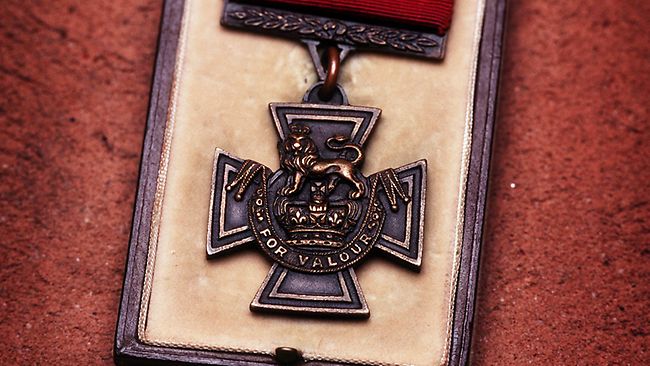
On November 1, Corporal Daniel Keighran became the third Australian soldier serving in Afghanistan to receive the Victoria Cross, the highest military decoration awarded for bravery in Australia. Corporal Keighran is the first member of the Royal Australian Regiment, and the 99th Australian, to receive a VC, and did so with great modesty and humility. Daniel’s wife Kathryn had no idea of the courage her husband had displayed under fire in battle two years ago until she learned he was about to be decorated for it. The Victoria Cross was awarded in a ceremony at Government House in Canberra.

Watching this story on the news reminded me to look at the list of those Australians awarded the Victoria Cross in the past, as I wanted to cover the name of a World War I hero for Armistice Day, which is on Sunday. As I ran my eye down the list, one name stuck out because it has been in my Request file for ages, and I briefly covered it in my article at Nameberry a short time ago. So it was quite an easy choice for me to select Bede as this week’s Famous Name.

Corporal Thomas James Bede Kenny, always known as Bede, was born in Sydney in 1896. The son of a butcher, he had just begun training as a chemist’s assistant when he enlisted with the Australian Imperial Force in 1915. He initially served in Egypt, then was sent to northern France in 1916 to take part in the second phase of the battle of Pozières, in the battalion bombing platoon.

It was in the spring of 1917, as British and Australians captured the outpost villages of the Hindenberg Line, that he performed the acts of valour that were to earn him the Victoria Cross. In the attack on Hermies, his platoon came under heavy fire from a machine-gun post which caused severe casualties. Bede rushed at the enemy single-handed, hurling three bombs, the last of which knocked out the post. He then took the surviving Germans prisoner, his actions contributing significantly to the success of the operation.

Later he was injured in battle and invalided home to Australia, arriving in Sydney to a hero’s welcome a few weeks before the Armistice. He was offered the chance to join the military police, and rejected it immediately, as for some reason he had a great dislike of them.

In civilian life, he worked as a salesman, and was happily married; he is remembered as a popular man with many friends, and a fondness for innocent pranks. He was left partially deaf from the war, and also suffered the effects of trench foot throughout his life. The great tragedy of his life was the deaths of two of his three children, which he never recovered from.

Like Corporal Keighran, Corporal Kenny never talked about his wartime experiences, and the only sign that he was proud of his military service was that he always led the VC winners at the Sydney Anzac Day marches. He died in 1953, and by a cruel irony, his pallbearers were military policemen.

The most famous person with the name Bede is the 7th/8th century English saint, Venerable Bede. Although it is not certain, it is thought that his Anglo-Saxon name, Beda, is from the Old English word bēd, meaning “prayer”. If so, it’s possible that his parents chose a religious life for him from his birth. The name wasn’t a common one, but interestingly, one of the kings of Lindsey, in England’s north, was named Beda; as Venerable Bede was from this area, it’s tempting to wonder if he was named after an ancestor, or a famous local namesake.

Venerable Bede is most famous for his prolific writing career, eventually completing over sixty books, most of which have survived. He wrote on a wide variety of subjects, including science, history, grammar, hagiography and theology; his best known work is An Ecclesiastical History of the English People, which begins with Caesar’s invasion of Britain, and ends with Bede’s own times. His use of AD to refer to events after the birth of Christ helped it become standard. He was also a teacher, a music lover, and was said to be accomplished at singing and poetry recitation, even writing some poetry of his own.

Bede is the only Englishman to be declared a Doctor of the Church; he is also the only Englishman to be mentioned in Dante’s Paradiso, where he appears amongst the theologians and doctors of the church. He is regarded as a saint in both the Catholic and Anglican churches.

If you are thinking that Bede (pronounced BEED) sounds a lot like the word bead, you would be correct. That’s because the Old English word bede, meaning “prayer” is the source of the modern word bead – because beads are used as a means of keeping count of prayers, a practice in Christianity which dates to the 5th century (although prayer beads are ancient and used in many religions). Because of this, you will sometimes see the name Bede interpreted as “bead” or “prayer bead”.

Bede isn’t a common name in Australia; at the same time, it isn’t all that unusual either. There are plenty of Bedes in the records, and if you go to the Australian Dictionary of Biography, you will find quite a few famous Australians with Bede as part of their name. What you primarily notice is that these Bedes tend to be from Catholic backgrounds (and some High Anglicans), and that Bede is usually one of their middle names. It is also the name of Bede Durbidge, who won Surfer of the Year a few years ago, giving the name a more cool laidback image.

I can imagine some people thinking that Bede sounds weird and ungainly; something only a staunchly Catholic family would use; a name best suited to leaving in the middle position. Which sounds perfectly reasonable – except that less than half a century ago, there was another boy’s name that seemed weird and ungainly, was used almost exclusively by Catholics, and generally relegated to the middle position, usually after Francis.

That name was Xavier, which is now #22 and rising. Could Bede be the Xavier of the future?

It’s a very old name with a solid history of use in Australia, part of the Catholic tradition, and with spiritual associations. It’s short yet substantial, clunky yet surprisingly cool. It’s the name of our heroes, our leaders, our intellectuals, our athletes, our artists, our businessmen, and for many of us, our dads and uncles and grandfathers too.

Wherever it might be headed, I see this name often enough in birth notices to know that it is not going away, which gives me a strange feeling of comfort.

(Photo of the Victoria Cross from The Australian)

The People’s Choice of Boy’s Names

23 Sunday Sep 2012

Posted by A.O. in Name Themes and Lists

≈ 15 Comments

Tags

African-American names, alphanumeric names, American slang, anagram names, Anglo-Saxon names, animal names, aristocratic names, Australian Aboriginal names, Australian slang terms, banned names, bird names, birth notices, Bonds Baby Search, celebrity baby names, computer hacker names, controversial names, created names, english names, famous namesakes, germanic names, Google, Greek names, historical records, Indian names, J.R.R. Tolkien, locational names, Maori names, meteorological names, middle names, mythological names, name history, name meaning, nature names, nicknames, Old English names, Old Norse, polynesian names, popular culture, royal names, saints names, scandinavian names, slang terms, Spanish dialect words, surname names, tree names, unisex names, US name popularity, vintage names, vocabulary words, Welsh names

Adolf

A form of the Germanic name Adalwolf, meaning “noble wolf”. The Old English form is Æthelwulf, and there are a few famous men of this name in English history, most notably the father of Alfred the Great. The name was often used amongst the royal houses of northern Europe, and the Latinised form Adolphus turns up in the monarchy of the United Kingdom. There is a saint called Adolf of Osnabrück, a 9th century German monk. Up until the mid-twentieth century, the name was common in central and northern Europe, and can be found in Australia due to immigration from Germany and Scandinavia. The reason this name has been included is because barely a day goes by without someone Googling: “Is it legal to call your child Adolf?”, to which I can say, yes, it is legal here, and you can find quite a few Australians in the records with this name – including ones born during and shortly after World War II. I have met a man named Adolf (born around the early 1960s), and I believe he was named after his grandfather. The other chestnut is, “Is it legal to call your child Adolf Hitler in Australia?” to which I reply, Why would you want to do that? Seriously, why? As the name Ned Kelly is banned because he is considered too wicked, I’m pretty sure Adolf Hitler would also be illegal here.

Buster

This spunky name has more history than you might think. In England, it was first used in the middle position; Buster is a variant of the surname Bustard, after the bird. In 18th century America, it seems to have been more common for African-Americans, and may have started as a pet name in the sense of “breaker”. Later it took on the meaning of “unusual, prodigious, amazing”. Buster is used to address males in the same way as pal or fella (“Now listen up, buster”). This comes from the Spanish dialect busté, meaning “you”. It’s gone on to have negative connotations. One of the most famous men with this name is actor Joseph “Buster” Keaton, who started his career in vaudeville as a small child. He claimed to have received his nickname as a toddler from Harry Houdini, after falling down a flight of stairs unhurt. Houdini allegedly remarked, “That was a real buster!”, meaning “a fall with the potential to cause injury”. So Keaton’s name indicated he was tough enough to take a tumble. Buster Brown was a cartoon strip boy who was an angelic-looking blond prankster. In Australian slang, come a buster means to fall or fail by misfortune, while buster is a term for a strong wind – especially the Southerly Buster. This is a name Sydneysiders give to the abrupt cool change that sometimes blows in from the south during the warmer months. Vintage name Buster has recently become rather an Australian favourite for boys, although in the novel, The Shiralee, by D’arcy Niland, Buster is a little girl.

Chester

Chester is a city in Cheshire, England, founded by the Romans as a fortress in 79; its size has led some historians to speculate that the Romans intended it to be the capital, rather than London. Its current name comes from the Old English Ceaster, meaning “Roman fort”, and its early history was very military, with wars seemingly constant. Even King Arthur is supposed to have won a major battle here, and it was the last city to fall to the Normans during the Conquest. Today it’s a thriving modern city which still tries to preserve its historic buildings. Chester has been used as a personal name since the 16th century, probably after the surname, although early births in Cheshire suggest they may have been named directly for the city itself. Although it’s been a popular name in the US in its time, and only left the Top 1000 in the mid-1990s, for some reason it never caught on in a big way here. I was surprised to see it on a baby in the Bonds Baby Search Competition this year. For some reason, this baby name is often Googled, although the slang term chester is an impediment to its use.

Digby

An English surname from a place name meaning “settlement by the ditch”, derived from a combination of Old English and Old Norse. The name seems to have been first given in honour of the aristocratic Digby family, Anglo-Irish peers whose family seat in Coleshill, Warwickshire was granted to them by Henry VII. It is from the town of Coleshill that the personal name originates in the 17th century. One of the most famous of this clan was Sir Kenelm Digby, a Catholic philosopher considered a great eccentric for his exuberant personality and fascination with science, which extended to studying alchemy, astrology and magic (not considered incompatible with science then); he was the first person to note the importance of oxygen to plants. A man of action as well as thought, he became a privateer, and killed a man in a duel; he also wrote several cookbooks, invented the modern wine bottle and managed to fit in a secret romance to a famous beauty which led to their marriage. A true all-rounder. This name regularly appears in birth notices here, especially from Victoria, and may be encouraged by comedienne Cal Wilson, who welcomed a son named Digby a few years ago. People seem to either loathe this name or find it irresistibly cute; I must confess to being in the second category.

Elfyn

This is the Welsh form of the Old English name Ælfwine, meaning “elf friend”; it went out of use after the Norman Conquest. J.R.R. Tolkien liked to think of the name as meaning “friend of the elves”, and invented two fictional characters with this name who formed close bonds with elves. Modern forms include Alvin and Elvin, both taken from the surname form of the name. There are several famous people in Wales with Elfyn as either their first name or surname, including young rally driver Elfyn Evans and poet Menna Elfyn. For reasons I cannot explain, it is Googled several times a week.

Jharal

Jharal Yow Yeh is an NRL star who plays for the Brisbane Broncos. An Aboriginal Australian from the Margany people of Queensland, he also has Torres Straits Islander, Vanuatuan and Chinese heritage. Now aged 22, he has been playing for the Broncos since 2009, for the Indigenous All-Stars since 2010, and for both the Queensland state team, the Maroons, and the Australian national side, the Kangaroos, since last year. Early this season he sustained a serious leg injury, and is still recovering. People Google Jharal’s name all the time, asking for its meaning, and often querying whether it’s of Indigenous origin. In fact, his name was created for him by his grandmother. His mother couldn’t decide what to call him, so she asked nana Iris to name him. Iris cleverly arranged the letters of all the strongest men in her family into a name, and came up with Jharal. It is taken from the initials of James, Harold, Anthony, Reece, Arthur and Linc. The name is pronounced JHUH-rahl, and Iris says that most people think it is an Indian name. In fact, by coincidence, a jharal is a mountain goat from India. Names created for celebrities often seem too unique for others to use, but I have seen Jharal a few times in birth notices recently. Looking for a nickname? Jharal is known to his family as Joe.

Koa

This unisex name has several different origins. There is a Hawaiian male name Koa meaning “strong, brave, fearless”, and it’s also the name of a Hawaiian tree, the Acacia koa. The wood was traditionally used to make dug-out canoes and certain types of surfboards. In Maori, the word koa means “happiness”. In the Kaurna language of South Australia, the word koa means “crow”, and the Koa people come from south-east Queensland, so it’s also a tribal name. There has been a sudden proliferation of this name in Australian birth notices, and that might be because Tom Dumont from No Doubt welcomed a son named Koa last year. However, I am beginning to see far more girls named Koa in birth notices than boys. This may be because of model and actress Koa Whelan, a contestant on this year’s dating show, Please Marry My Boy. I think this works equally well for boys and girls, although the first meaning is male only.

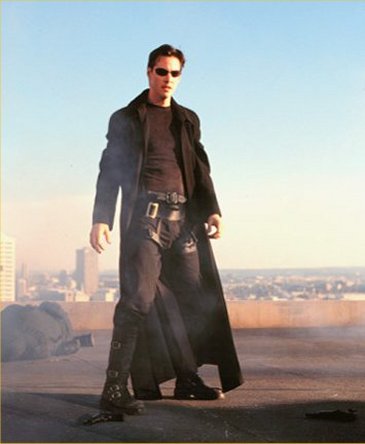
Neo

This is from an Ancient Greek prefix meaning “new, young, fresh”. It turns up in words such as neonatal, meaning “pertaining to the newborn”, or neologism, meaning “a freshly coined word”. The name has become well-known since 1999 because Neo is the protagonist of the cyberpunk Matrix film series. In the films, the character’s name is Thomas Anderson, and Neo is his computer hacker identity (Anderson does have the letters N, E and O in it). Neo is also an anagram of One, and the films seek to discover whether Neo is “The One”, a Messiah-like figure who will be able to rescue humanity. The films have become cult classics, and intermingle a range of philosophical and spiritual ideals from the East and the West – it’s even spawned its own religion, Matrixism. From the amount of times that people have Googled neo baby name or neo for a boy, there are quite a few parents considering using this name. Neo fits right in with current trends, and doesn’t sound any stranger than Leo. It is very strongly associated with the film character though. However, Australians have a solid history of gaining name inspiration from the movies, and most of The Matrix series was filmed in Sydney, giving it an Australian connection.

Rune

A Scandinavian name derived from Old Norse meaning “secret”. The runes are the letters of the runic alphabets, which were used to write different Germanic languages, dating from at least the first or second century AD. Runic inscriptions seem to have been for magical and divinatory use, and perhaps their knowledge was restricted to an elite in early times. According to Norse mythology, the runes were originally stolen from the god Odin. They are part of English history, because the Anglo-Saxons had their own runic alphabet. If you have read The Hobbit, you will have seen Anglo-Saxon runes used on a dwarven map; Tolkien later invented his own runic alphabet which appears in The Lord of the Rings. Rune stones are  used for divination today, often in a similar way to tarot cards. The name isn’t unusual in Scandinavia, and you may know the name from the Polish speedway rider Rune Holta, born in Norway. I think this is a simple, attractive name with layers of history and meaning.

Zephyr

A zephyr is a light, warm wind. It comes from the name Zephyrus, who was the Greek god of the west wind – the gentlest of breezes, which served as a harbinger of spring. He married both Iris, the goddess of the rainbow, and Chloris, the goddess of flowers – who is also seen as a deity of spring (and named Flora by the Romans). Children may know the name as that of a bat in the Silverwing book series, and, in the form Zephir, as the monkey in the Babar the Elephant stories. Grown ups may be reminded of The Zephyr Song by the Red Hot Chilli Peppers. If you take the name as derived directly from the god, then it is male, but if you accept it as a nature name and vocabulary name, it is unisex. It only seems to be Googled to my blog as a male name however. Pronounced ZEF-uhr, this name is unsual but not outrageous; it seems like a breezy alternative to popular Z names like Zachary, Zeke or Zane. The obvious nickname is Zeff or Zeffy.

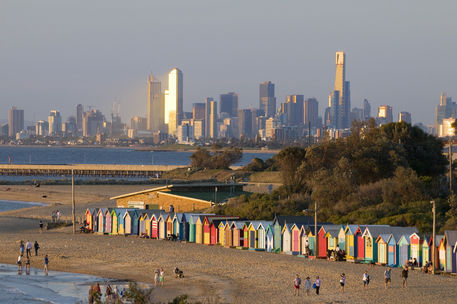
(Picture shows actor Keanu Reeves in his role of Neo from The Matrix; Sydney skyline in background)

Famous Name: London

12 Wednesday Sep 2012

Posted by A.O. in Famous Names

≈ 6 Comments

Tags

Arthurian legends, British names, celebrity baby names, Celtic names, Disney names, english names, fictional namesakes, germanic names, J.R.R. Tolkien, locational names, mythological names, name history, name meaning, Old English names, Roman names, surname names, unisex names, US name popularity

The Olympics and Paralympics have come to a triumphant end, climaxing with a a concert, grand parade and a spectacular fireworks display which lit up the sky over the Thames and Tower Bridge. The sporting festival has been a golden summer for the city of London, which has gained new confidence after putting on a fantastic Olympic Games, followed by the most successful Paralympics Games ever. The city of London itself looked richly alluring, with its parks and gardens in leaf under the sun, or its historic buildings looking grand yet discreet in the grey drizzle.

I know many people who couldn’t wait to visit London, or visit it again, after watching the coverage of the Olympic Games, and it’s a city which has drawn many Australians to it, for holidays, to work, and sometimes to live permanently. Since the post-war era, it seems as if we have been sending Australians to Britain in droves, and most of them seem to end up in London. They give us a bunch of convicts, and in return they get Barry Humphries, Kylie Minogue and a ton of drunk Aussie backpackers. Whether this is a fair trade or not only history can decide.

London was first established as a town around 47 AD by the Romans, who called it Londinium. It is almost certain that they based it on a local name for the area, which may be Celtic, or perhaps even older. What that name may have signified has taxed the brains of etymologists for many years, with none of them coming up with a theory that has gained widespread acceptance.

The very first theory put forward was by medieval chronicler Geoffrey Monmouth in his History of the Kings of Britain. He asserted that the name is derived from the name of King Lud, who once ruled the area. It would thus mean “Lud’s fortress”, although there is no evidence of Londinium ever being fortified, and in fact seems to have been built as a civic and mercantile centre; perhaps “Lud’s valley” would be more accurate. The name Lud may be connected to a mythological figure named Llud Llaw Eraint, who is the Welsh version of a British god named Nodens.

Nodens was a Celtic god of the sea, hunting, dogs, and healing, and a patron of amputees, and there is a ruined temple complex in his honour in Gloucestershire, while other artefacts connected to him have been found in Lancashire and on Hadrian’s Wall. He is sometimes identified with the Fisher King of medieval myth, who features so enigmatically in Arthurian legend.

J.R.R. Tolkien derived the name Nodens from a Germanic root meaning “acquire, own, utilise” from an earlier word with connotations of “catch, entrap”. This would certainly fit in with Nodens as a god of hunting, and at this point most scholars seem to be in general agreement with the meaning proposed by Tolkien.

Several places in Britain and Ireland derive their names from Nodens, and it doesn’t seem too far-fetched that London might too. The reason Geoffrey of Monmouth’s theory has been given short shrift is that like many medieval chroniclers, his work is quite fanciful, and riddled with errors in etymology. For example, he latched onto Lud as the origin of London because of Ludgate in the London Wall; most likely it’s a corruption of the Old English for “swing gate”. However, even though Geoffrey of Monmouth got a lot of things wrong, he may have been drawing on genuine traditions of London being sacred to Nodens in ancient times.

According to Geoffrey of Monmouth, the Romans built a temple to Lud, but if so, it remains elusive. There are statues of Lud and his sons, once adorning Ludgate, which are now on a church porch in Fleet Street, while a pub at Ludate Circus was once called Old King Lud. Although the building now houses a Leon restaurant, medallions commemorating King Lud can still be seen on its roofline and over its doors. So King Lud aka Nodens still maintains a presence in London town.

If I may stick my own ignorant oar into the debate, I can’t help noticing that names of places near a river nearly always have a meaning connected to it. As Nodens was a god of the sea, and the part of the Thames near London is a tidal river, this notion of mine does not cancel out the idea that it was connected to Nodens in some way. The Museum of London tells us that finds of prehistoric artefacts dredged from the Thames provide copious evidence that they were placed there as votive offerings, and that the deity presiding over the river was worshipped.

Could this hypothetical deity have been Nodens? Possibly, but it’s all getting very speculative, so I think we have reached the end of our investigations for now. In my uneducated opinion, London’s name is probably connected to its river, and quite possibly to the deity presiding over it, who may very well be Nodens. Apart from that I can say no more, except that Britain’s capital is a vital part of its ancient and rich mythology.

London has been used as a first name since at least the 17th century, and was first given to boys, most likely from the surname London, after the city. It’s possible that even early Londons were named directly in honour of the city, as many were born in London districts.

From very early on, London was used for both genders, and although I can easily understand it as a unisex name, I have slightly more trouble comprehending why it has become so much more popular for girls. While cities such as Paris and Florence have a certain “feminine” vibe, to me, London has quite a “masculine” feel – solid, serious, the seat of business and government. The name London also fits the pattern for many of our popular male names – two syllables, ending with an -n, such as Aidan, Mason, Logan or Nathan. In fact it’s only one letter different from a male name – Landon, while its last three letters form a male nickname – Don.

I have been told that the reason for this is the character of London Tipton, from the Disney TV series, The Suite Life of Zack & Cody. However in the US the name was always more popular for girls, even before the show came on air – although its popularity as a girl’s name certainly increased markedly after the show started. I suspect that for many parents, London seemed like a more “classy” version of the name Paris, whose image had become slightly tarnished. Intriguingly, Miss Paris Hilton apparently plans to name her first-born daughter London; I wonder what effects that might have, if it ever happened?

London has charted as a baby name for both sexes in the US for over ten years, and currently it’s #560 for boys and #94 for girls. Although it’s not such a popular name in Australia (although it’s seen more use than you might expect), I wouldn’t be surprised if a similar gender disparity wasn’t apparent here too. Early this year we welcomed celebrity baby London Joy Polak, partly named in honour of the city, where her grandfather was from.

Despite its long history, London still seems a very “modern” name, and one that would be especially suitable for anyone who has a connection to the city. I think it works well as a name for both boys and girls, and matches nicely with a wide variety of middle names. Although the thought of your child sharing their name with Paris Hilton’s future offspring might give some people second thoughts.

NOTE: Not all Australian backpackers in London are drunk, at least not all the time, but that is the not totally undeserved reputation they carry.

Famous Name: Gale

08 Wednesday Aug 2012

Posted by A.O. in Famous Names

≈ 3 Comments

Tags

astronomical names, Baby Name Ponderings, famous namesakes, idioms, legal terms, locational names, middle names, name history, name meaning, nature names, nicknames, Norman names, Norman-French names, Old English names, plant names, popularity, surname names, The Hunger Games, unisex names, US name popularity, vocabulary names, weather terms

On August 6 the Curiosity rover, which had been launched by NASA at the end of November last year, successfully landed on the planet Mars. As with the 1969 moon landing, Australian scientists played a crucial role in this international endevour, and NASA administrator Charlie Balden made special mention of the Canberra Deep Space Communications Complex at Tidbinbilla, which is part of NASA’s Deep Space Network. Tidbinbilla was the only space station which was facing Mars for the descent, making it uniquely positioned to transit data from Mars to the Earth.

Curiosity landed on the Gale crater, which is believed to be more than 3 billion years old. The main goal of the mission is to determine whether life could ever have existed on Mars, and it is thought by some scientists that the Gale crater could have contained water at some point. If they are correct, this would make life on Mars a real possibility.

The Gale crater is named after Walter Frederick Gale, an early twentieth century amateur astronomer from Sydney. A banker by profession, Walter Gale made several important astronomical observations, including discovering seven comets. He also examined the surface of Mars, and was a keen supporter of the idea that the planet could contain life.

The surname Gale can be from an Old English nickname for someone who was cheerful, merry or fun-loving by nature. The Normans had a male personal name Geil, meaning the same thing, and that can be another source of the name. Another possibility is that is from the Norman-French word for “gaol”, perhaps denoting someone who worked as a gaoler, or even lived near a gaol. The surname Gale is mostly found in the southern coastal areas of England, but it is also commonly found in Yorkshire, leading to the possibility that there it may be from the Norse word geil, meaning “deep ravine”.

As a vocabulary word, gale has more meanings than you may suspect. It is an old dialect word meaning “to sing”, with connotations of “charm, enchant”, but also referring to birdsong. Gale Day is an old legal term, meaning the day that a tenant’s rent was due to be paid. Sweet gale is another name for the bog myrtle (Myrica gale); a shrub which typically grows in peat bogs. Its sweet scent has seen it used to flavour beer, and to make perfumes, and it’s one of the plants traditionally used in Royal wedding bouquets.

Of course, when we hear the word gale, we most likely think of a strong wind, especially those which feature in storms. It may also remind us of the phrase gales of laughter, which seems to tie in pretty neatly with its original meaning of “cheerful, merry”.

Gale was originally a male name, and taken directly from the surname. It isn’t found as a female name on the US charts until the 1930s – not surprisingly, this correlates with the rise in popularity of the female Gail, used as a short form of Abigail (Gail was also used for boys as a variant of Gale). In the US, despite the popularity of Gail as a girl’s name, male and female Gales existed together until the name disappeared from the charts for both sexes around the same time – 1969 for boys, and 1970 for girls.

In Australia, Gail was a popular girl’s name which peaked in the 1950s at #26, and I suspect for people born around that era, and perhaps a decade or so later, Gale would sound feminine to their ears. However, Gail hasn’t been on the charts since the 1990s, and Abby is the popular short form of Abigail today. If you look on the current Top 100 for the name that sounds most like Gale, it’s a male one – Gabriel.

Gale is an interesting name that by meanings, associations and sound, manages to present itself as both masculine and feminine, depending on how you think of it. I do like the idea of using it as a boy’s name, because English names are lacking male forms which have connotations of joy and happiness, compared to the numbers of female ones. Perhaps also because the Gale Crater is on the planet Mars, a name associated with masculinity for thousands of years.

However, this name is up for grabs by both genders, and does honour a great Australian star-gazer. If you can only think of this as meaning “a strong wind”, it would be on trend as one of the one-syllable nature name, which go so well in the middle position.

UPDATE: Blue Juniper from Baby Name Ponderings has reminded me that of course, Gale Hawthorne is one of the main characters in The Hunger Games trilogy. The best friend and hunting partner of protagonist Katniss Everdeen, Gale is played by Australian actor Liam Hemsworth in the film version. (Liam is the younger brother of Chris Hemsworth).

As Blue Juniper points out, this gives a current-day Gale much more of a masculine edge.

Melbourne Suburbs That Could Be Used as Boy’s Names

15 Sunday Jul 2012

Posted by A.O. in Name Themes and Lists

≈ 1 Comment

Tags

Ancient Celtic names, Anglo-Saxon names, Appellation Mountain, Australian Aboriginal names, birth announcements, birth records, British Baby Names, celebrity baby names, Celtic names, english names, fictional namesakes, Gaelic names, Gypsy names, Harry Potter names, Irish names, K.M. Sheard, locational names, mythological names, name history, name meaning, nicknames, Norman names, Norse names, Old English names, popular culture, Scottish names, sibsets, surname names, unisex names, Upswing Baby Names, Victorian name trends, virtue names, vocabulary names

Albion

Albion is right next to the suburb of Sunshine, and was developed by H.V. McKay as part of his Sunshine Estate. His own house was in Albion, showing that he was not too proud to live alongside his workers. Albion is the oldest known name for the island of Great Britain. The meaning, which comes from Ancient Celtic, may either mean “white”, perhaps referring to the white cliffs of the southern shores, or “hill”. According to K.M. Sheard, it should be interpreted as “white upper world”, to distinguish it from the dark Underworld (and thus similar to the Midgard of Norse mythology, which became the Middle Earth of Tolkien’s fantasy world). It’s related to a Welsh word which simply means “earth, world”. The Ancient Greeks and Romans knew of Albion, and even in their time, it was considered a name of great antiquity. Today Albion is often used as a poetic term for Britain, such as in our national anthem – “when gallant Cook from Albion sail’d”. In British mythology, Albion was a giant who ruled Britain and gave his name to the island. It’s an imposing heritage choice, very suitable for a baby born in a Jubilee year.

Baxter

Baxter is a rural locality on the Mornington Peninsula, and received its name because it was founded by pastoralist Benjamin Baxter, who came here as a member of the 50th Regiment. The property he owned, and the cottage he and his wife Martha lived in, are both still in existence today. The township developed in the late 19th century once the railway arrived. Baxter is an occupational surname from the English word bakester, originally referring to a female baker, as opposed to the male baker, but very soon accepted as meaning both men and women, and then as masculine only. The surname is most common in Scotland, and the northern counties of England, especially Yorkshire. There are several famous Australians with the surname Baxter, including the explorer John Baxter, who was killed on the expedition across the Nullarbor Plain. With its fashionable X and nickname Bax fitting in with Max and Jax, this now seems a pretty cool option as a boy’s name. This was chosen as a celebrity baby name last year by radio host Kate Dimond.

Brighton

Brighton is a beachside suburb named after the English seaside town. Brighton is from the Old English, meaning “Beorhthelm’s farmstead” (Beorhthelm is a man’s name meaning “bright helmet”). The suburb was bought by an Englishman named Henry Dendy in 1840, who got it for 1 pound an acre, sight unseen. He chose the name Brighton, hoping this would also become a fashionable seaside resort. Unfortunately, there was a depression at the time and Dendy was forced to sell the land to his agent. Dendy died a pauper, but his dream did come true, because very soon Brighton began attracting wealthy residents, and it remains a very exclusive address, full of luxury mansions. One of its most notable sights is the 82 colourful bathing boxes, which have been on Dendy Street Beach since the 19th century. These can only be owned by rate-paying residents, and will set you back at least a couple of hundred thousand dollars. Brighton is the home of many of the rich and famous, including former athlete Catherine Freeman. I’ve been seeing this bright, right-on name quite a bit lately in birth announcements for boys, and the suburb does give it a swanky air.

Elwood

Elwood did not have the most glamorous beginning. A piece of swampland, the first settlers came here because of fever. It was Victoria’s first quarantine station, and the area’s first cemetery. Elwood became a working class suburb with such lovely features as an abattoir, a very smelly canal, and, before sewage, a dumping ground for human waste. However, today the Art Deco houses, pleasant beach, leafy streets, and busy cafe strip make it a very upmarket suburb. It’s thought to have been named after the Quaker poet Thomas Ellwood, because Governor La Trobe, who named it, had a thing for Quakers. The surname can be after Ellwood in Gloucestershire, which means “elder wood”, or derived from the Anglo-Saxon man’s name Aelfweald, meaning “elf ruler”. As elder trees play a big part in folklore, and The Harry Potter books feature the Elder Wand, it’s a very magical sort of name. I saw this at Mer de Noms and in a birth announcement, then it was covered by Upswing Baby Names, and then at Appellation Mountain. Perhaps because of the Blues Brothers, this name is seemingly now very hip. Please do not match it with a brother named Joliet or Jake though.

Fingal

Fingal is a rural suburb that may be named after the Irish county of Fingal; the county’s name means “foreign territory”, because the Vikings settled in the area. However, Fingal is also the Anglicised form of the Gaelic name Fionnghall, meaning “white stranger”. This also refers to the blonde Viking settlers, and Fingal mac Gofraid, a ruler in the Scottish Hebrides, was part of this same Norse dynasty. The name has a distinct literary air, as Fingal is the hero of James McPherson’s epic poem Fingal, and Irish author Oscar Wilde had Fingal as one of his middle names (Oscar is another name from McPherson’s poetry). McPherson claimed to have based Fingal on the legends of Irish folk hero, Fionn mac Cumhaill – Fionn’s name simply means “white”, and was a nickname; his real name was Deimne (meaning “sureness, certainty”). Fingal’s Cave in the Hebrides is named for the epic hero, and the sea echoes there so melodiously that it inspired a piece by composer Felix Mendelssohn. Irish names starting with Fin- are very fashionable right now, but I haven’t really seen Fingal in use. It seems poetic, musical, and quite fairytale to me.

Gilderoy

Gilderoy is a rural locality in the outer suburbs; it’s a rare variant of the Irish surname Gilroy, an Anglication of two possible Gaelic names which either mean “son of the red haired servant” or “son of the king’s servant”. As a first name, Gilderoy was used by British Gypsies, and a man who rejoiced in the name Gilderoy Scamp was King of the Kentish Gypsies in the late nineteenth and early twentieth centuries. Of course, this name will remind many of Gilderoy Lockhart, the vain and boastful fraud from the Harry Potter books. J.K. Rowling apparently named him after the handsome Scottish highwayman, Patrick Macgregor, whose nickname was Gilderoy (from the Gaelic Gillie Roy – “red-haired lad”). Both Lockhart and Macgregor had reputations for winning women’s hearts undeservedly, and one of Macgregor’s smitten female fans is supposed to have written the song Gilderoy about him. Perhaps Rowling was also thinking the name sounds like the English word gild, meaning to give a thin veneer of gold (to cheaper materials). I don’t know if anyone will actually use this name, but it’s a pretty fabulous one, with some very colourful namesakes.

Harkaway

Harkaway was settled by German immigrants, and is now an attractive suburb with large distinguished houses and extensive parkland. I first saw this name given to a minor character in Stella Gibbons’ hilarious novel, Cold Comfort Farm, and found it fascinating. Another famous literary Harkaway was Jack Harkway, from the Victorian era “penny dreadfuls” – a schoolboy who ran away to sea and had a life of adventure. There is also the novelist Nick Harkaway, although it’s a pseudonym; he’s a son of writer John Le Carre, and his real name is Nicholas Cornwell. Hark away! is a cry traditionally used in hunting to encourage the hounds; to hark means “to hear, heed, listen”. It’s a genuine, although rare, surname, and I presume an occupational one to denote someone who worked with fox hounds. I have seen this used as a man’s name in old records from the United States; I’ve only seen it used as a middle name in Australia. This is a really unusual vocabulary name which, with its meaning of “to listen”, almost qualifies as a virtue name as well. It isn’t much like any name on the Top 100, but it continues to fascinate me.

Ivanhoe

Ivanhoe is a suburb with many old homes and an Art Deco town hall, famous for the extravagant Christmas lights display it puts on each year. It was named by a Scottish settler after Sir Walter Scott’s 1819 novel, Ivanhoe. The book is a romance about one of the few remaining Saxon noble families at a time when the English nobility were almost all Norman. The protagonist is the Saxon Wilfred of Ivanhoe, who has sworn allegiance to King Richard I, and amongst the many characters are Robin Hood and his merry men. The novel is credited for starting the medieval revival of the 19th century – hence the number of Victorian babies named Alfred or Edith. Although the book is set in Yorkshire and Nottinghamshire, the English village of Ivinghoe is in Buckinghamshire. The village’s name is Anglo-Saxon, and means “Ifa’s hill spur”. The Anglo-Saxon Ifa later merged with the Norman Ivo, both names meaning “yew bow”. It’s dashing and looks like Ivan with a fashionable OH sound, but will the -hoe at the end prove problematic? If you are stuck for sibling ideas, Elea at British Baby Names has many suggestions!

Skye

Skye is named after the Isle of Skye in Scotland, the largest island in the Inner Hebrides. It was at one time ruled by Vikings, and even the Gaelic clans who were chieftains here have Norse ancestry. The island’s name is an etymological tangle of several languages. However, the Norse referred to it as skuyö – “the isle of cloud” – and this looks a lot like the English name for the island. The ruggedly beautiful Isle of Skye has spectacular Highland scenery and abounds in wildlife such as red deer and golden eagles; a popular tourist destination, it was recently voted the fourth best island in the world. It is known for its castles, including Dunvegan, which has an ancient flag supposedly gifted by the fairies, and is the oldest Scottish castle continuously occupied by a single family (since the 13th century). The island features in the lovely Skye Boat Song, which tells of the Jacobite heroine Flora McDonald helping Bonnie Prince Charlie escape “over the sea to Skye”, after the defeat of the Jacobite rising. This attractive unisex name is more often given to girls, but to me it seems equally suitable for boys.

Yannathan

Yannathan is a rural area in the Shire of Cardinia, and its name, from a local Aboriginal language, is translated as “to walk about, wander, travel, journey, roam”. Walkabout is a term from Indigenous culture which is understood to mean a journey undertaken as a rite of passage; a deeply meaningful spiritual quest which involves connecting with the traditional land and understanding cultural obligations. Australians of British descent also use the term loosely and colloquially to mean anything from going on holiday to escaping your customary obligations to disappearing without apparent cause (as in “the scissors seem to have gone walkabout”). I am not sure if yannathan was meant in any other way than just to take a walk or go on a journey, but it’s a word which may resonate with many Australians. Pronounced YAN-a-thun, it sounds like a variant of Jonathan, and seems very usable. It’s yet another name you could get the popular nickname Nate from.

(Photo shows the iconic bathing boxes in Brighton)

← Older posts
Newer posts →

Enter your email address to follow this blog

Categories

Archives

Recent Comments

A.O.'s avatarwaltzingmorethanmati… on Zarah Zaynab and Wolfgang…
Madelyn's avatarMadelyn on Zarah Zaynab and Wolfgang…
JD's avatardrperegrine on Can Phoebe Complete This …
A.O.'s avatarwaltzingmorethanmati… on Rua and Rhoa
redrover23's avatarredrover23 on Rua and Rhoa

Blogroll

  • Appellation Mountain
  • Baby Name Pondering
  • Babynamelover's Blog
  • British Baby Names
  • Clare's Name News
  • For Real Baby Names
  • Geek Baby Names
  • Name Candy
  • Nameberry
  • Nancy's Baby Names
  • Ren's Baby Name Blog
  • Sancta Nomina
  • Swistle: Baby Names
  • The Art of Naming
  • The Baby Name Wizard
  • The Beauty of Names
  • Tulip By Any Name

RSS Feed

  • RSS - Posts

RSS Posts

  • Celebrity Baby News: Melanie Vallejo and Matt Kingston
  • Names from the TV Show “Cleverman”
  • Can Phoebe Complete This Sibset?
  • Zarah Zaynab and Wolfgang Winter
  • Baby, How Did You Get That Name?
  • Celebrity Baby News: Media Babies
  • Celebrity Baby News: Adelaide Crows Babies
  • Celebrity Baby News: Chris and Rebecca Judd
  • Names at Work: Name News From the World of Business and Employment
  • Celebrity Baby News: Sporting Round Up

Currently Popular

  • Celebrity Baby News: Toby Allen and Darren Weller
  • Rare Boys Names From the 1950s
  • The Top 100 Names of the 1900s in New South Wales
  • Girls Names of Australian Aboriginal Origin
  • Celebrity Baby News: Jason Morrison and Heidi Tiltins

Tags

celebrity baby names celebrity sibsets english names famous namesakes fictional namesakes honouring locational names middle names name combinations name history name meaning name popularity name trends nicknames popular names saints names sibsets surname names twin sets unisex names

Create a free website or blog at WordPress.com.

Privacy & Cookies: This site uses cookies. By continuing to use this website, you agree to their use.
To find out more, including how to control cookies, see here: Cookie Policy
  • Subscribe Subscribed
    • Waltzing More Than Matilda
    • Join 517 other subscribers
    • Already have a WordPress.com account? Log in now.
    • Waltzing More Than Matilda
    • Subscribe Subscribed
    • Sign up
    • Log in
    • Report this content
    • View site in Reader
    • Manage subscriptions
    • Collapse this bar
 

Loading Comments...